
When a bride tells me she wants an 1800s dress, my first question is which part of the 1800s, because the century changed shape about every twenty years. The 19th century never had one bridal look. Early brides wore light, high-waisted gowns that followed ordinary formal fashion; by mid-century skirts had grown wide over petticoats and hoops, with fitted bodices, lace, gloves, veils and orange blossom; later still, the volume moved to the back into a bustle. Queen Victoria’s white satin wedding in 1840 made white the aspiration, yet plenty of brides kept marrying in blue, gray, brown and lavender for decades. The twenty-five looks below run through all of it, with the shoes, gloves and hair that complete each one, whether you want a period-accurate gown or a modern dress with a historical accent.
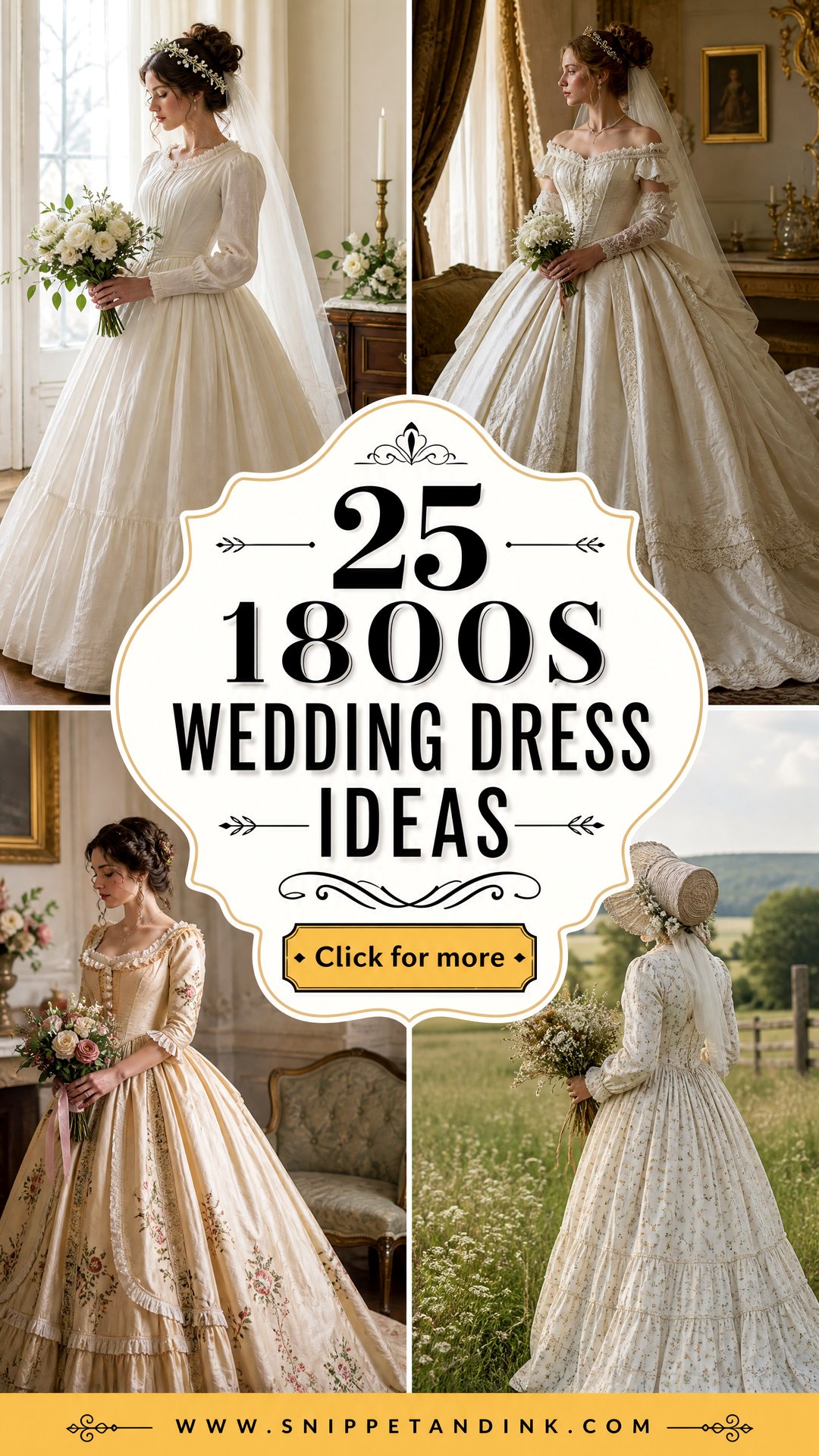
The Silhouette Is Built Underneath
The single biggest difference between a convincing 1800s gown and a costume-shop copy is what goes under it. Historical shapes came from foundation garments, and the dress was cut to sit on top of them. Skip the foundations and even a well-made gown will hang wrong.
- Regency and early 1800s: short stays or a well-fitted modern bra that lifts and separates. The empire line depends on it.
- 1840s and 1850s: a corset plus several starched petticoats to build the bell shape before hoops arrived.
- 1860s: a cage crinoline or a hooped petticoat. Wide, light and awkward in doorways.
- 1870s and 1880s: a bustle pad or small cage at the back, with a narrower petticoat in front.
I bring the foundations to the very first fitting, not the last. Every measurement changes once a corset or hoop is on, and a gown fitted without them never sits right. If you dislike the idea of a corset, a modern boned bodice can give the same line with much less restriction, and a hooped petticoat from a bridal shop is far lighter than a historical cage.
1. 1800s Regency Empire Waist Wedding Dress
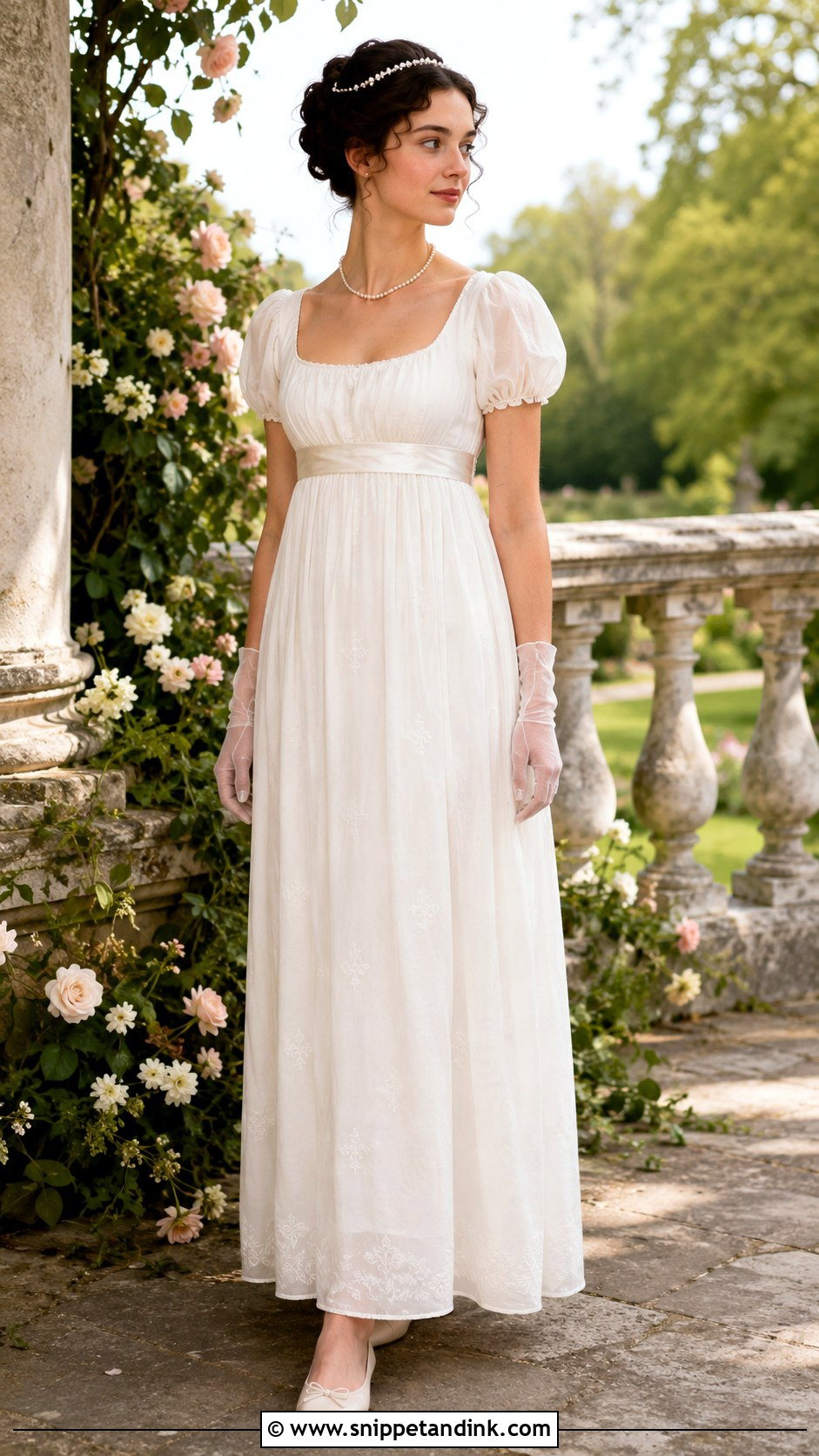
The Regency empire waist wedding dress is the lightest thing on this list, and the most comfortable. The waist sits just below the bust, the skirt falls in soft gathers, and the neckline is square or scooped. White cotton muslin, silk voile or light satin gives that early-1800s air. Short puff sleeves, delicate gloves, ribbon-tie slippers and a single pearl strand are all it needs, with a sheer shawl for the shoulders and soft curls pinned up with a ribbon. The fit point I watch is the bust: the whole line depends on support right under it, so a well-fitted bra or short stays matters more than the dress itself. Lovely in a garden; chilly in a stone church in November.
2. 1800s White Muslin Wedding Dress
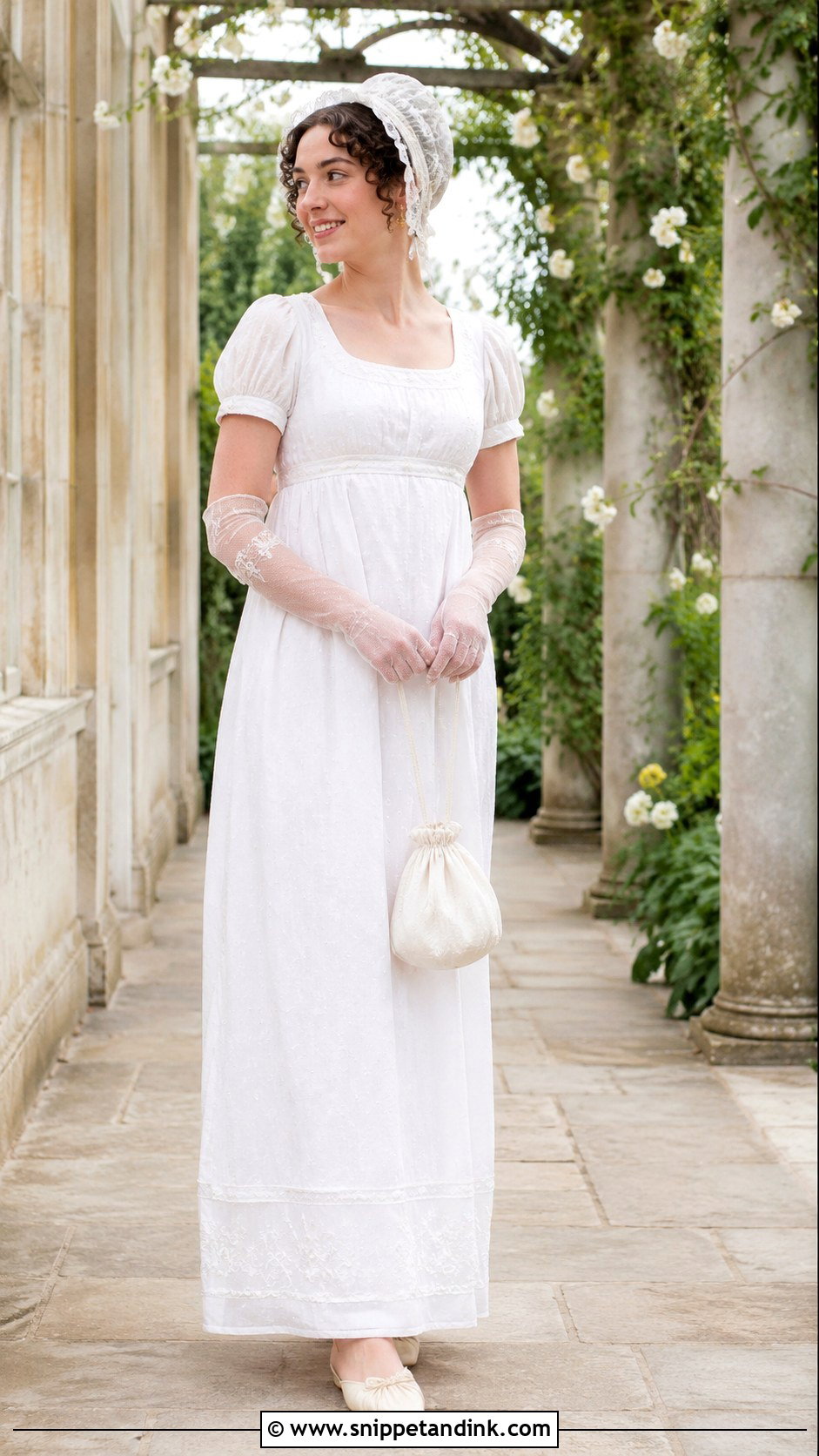
Muslin is about as close to a Regency bride’s actual cloth as you can get today. It should feel light, breathable and slightly translucent, cut with a high waist, gentle gathers and a floor-length skirt that moves when you walk. Subtle whitework embroidery at the hem, neckline or sleeves adds a handmade touch. Flat satin slippers, sheer gloves and a small drawstring reticule, plus a lace-trimmed cap or a floral wreath. Translucent means you need a slip; I fit the underlayer at the same time as the dress, because a slip in the wrong shade of white shows straight through in daylight photos.
3. 1800s Jane Austen Wedding Dress
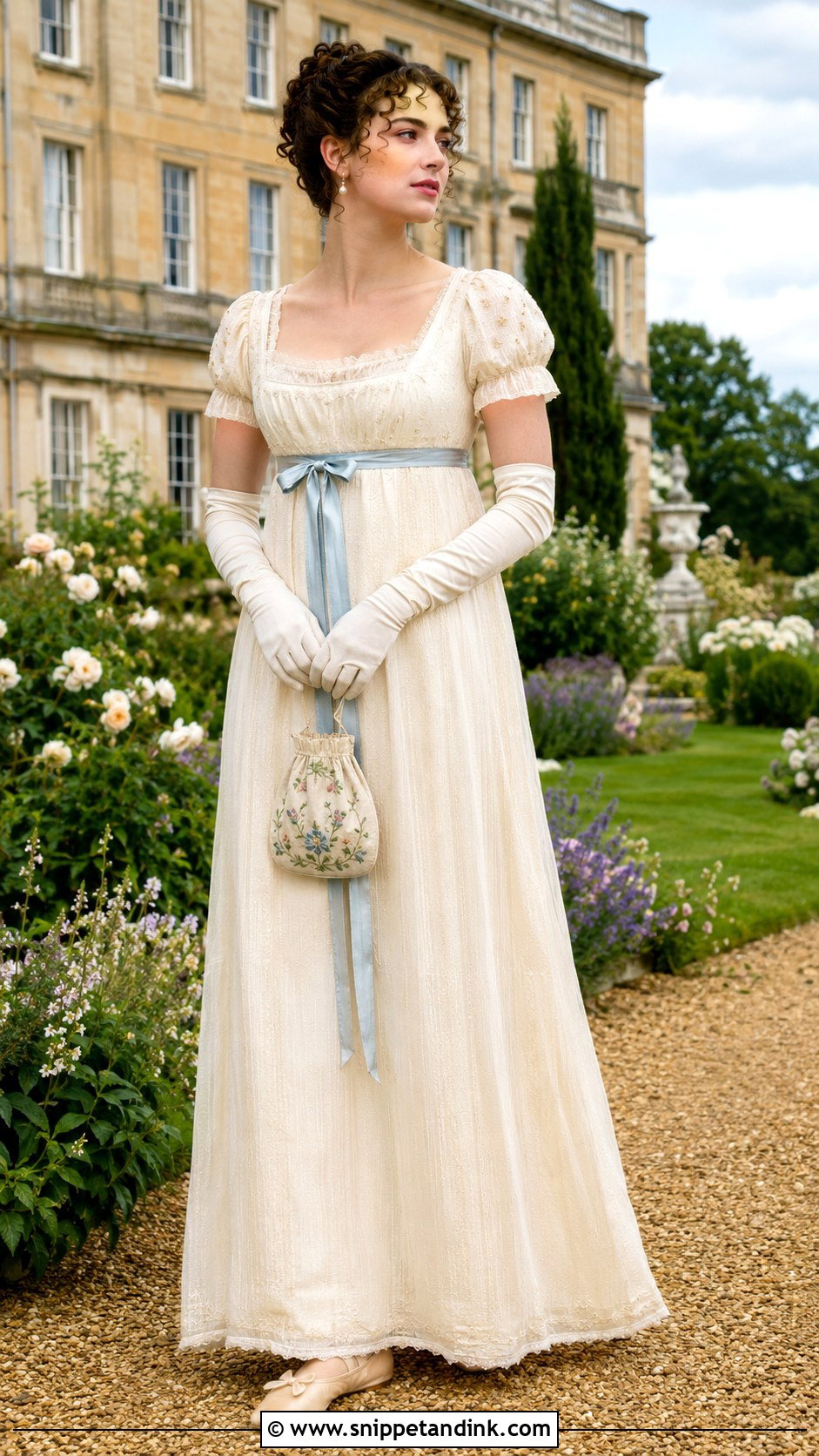
This is the gown people picture when they think of Austen’s heroines, and it is gentler and less formal than a Victorian ball gown. A cream or ivory empire waist with short puff sleeves, a gathered bodice and a skirt falling straight from the bust is the base. A satin sash in ivory, pale blue or blush gives contrast. Ballet-style slippers, elbow-length gloves and a tiny embroidered bag. Face-framing curls and a pinned-up back for hair, and a light shawl over the arms. My one caution is the sash: on an empire line, a wide sash drops the waist visually, so keep it narrow and tie it right under the bust.
4. 1800s Queen Victoria Wedding Dress
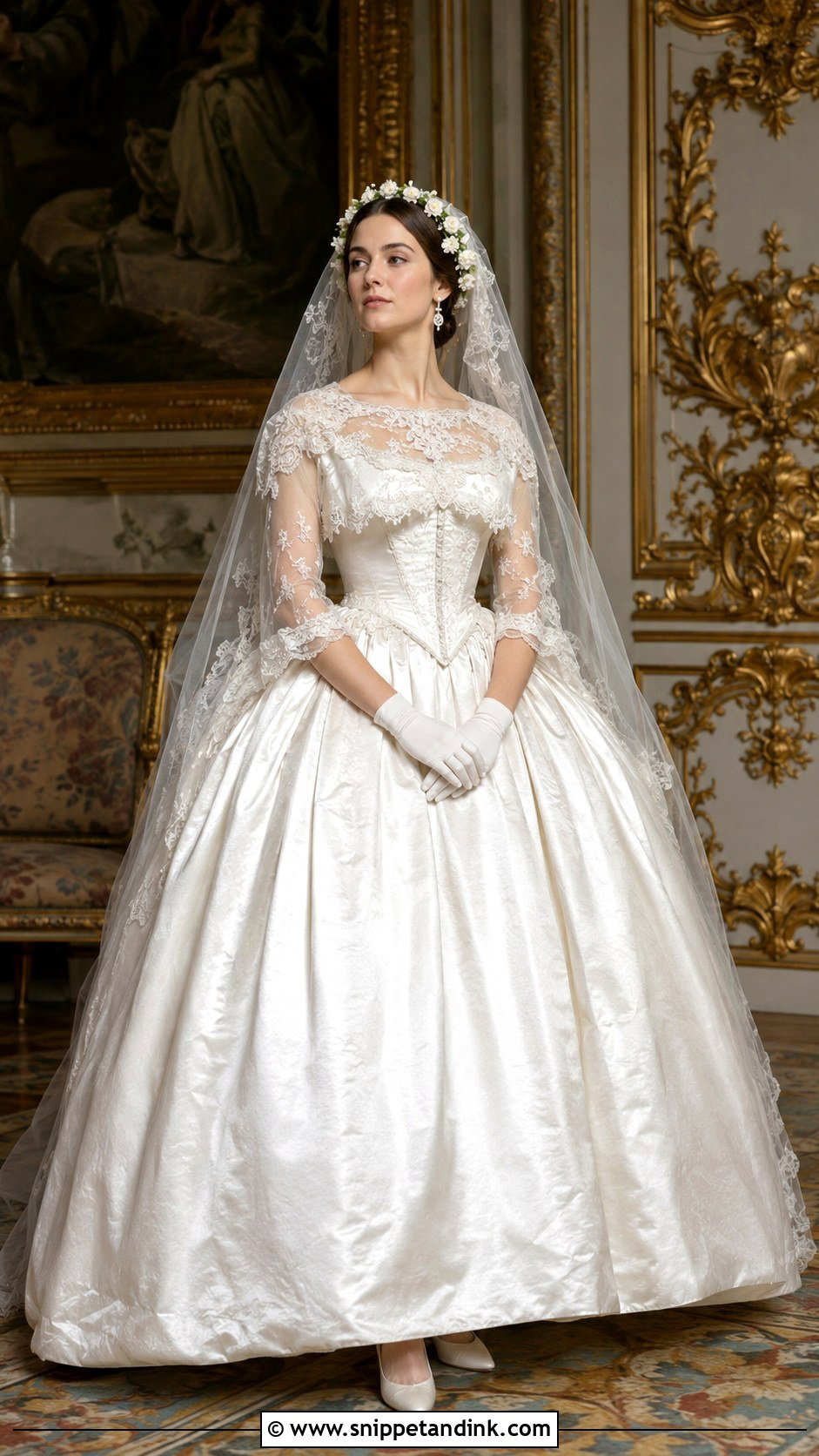
A Queen Victoria wedding dress is the template most people still carry in their heads. A fitted bodice and a wide skirt in white or ivory satin, lace at the neckline and sleeves, a long lace veil, orange blossom in the hair. White gloves, low satin shoes and refined pearls or a small pendant finish it. Her actual gown had a low, wide neckline and short sleeves, which surprises people; if you want coverage, you are borrowing the mood rather than copying the dress. Getting the skirt width right is the hard part, and that comes from petticoats, not from the skirt fabric.
5. 1800s Honiton Lace Wedding Dress
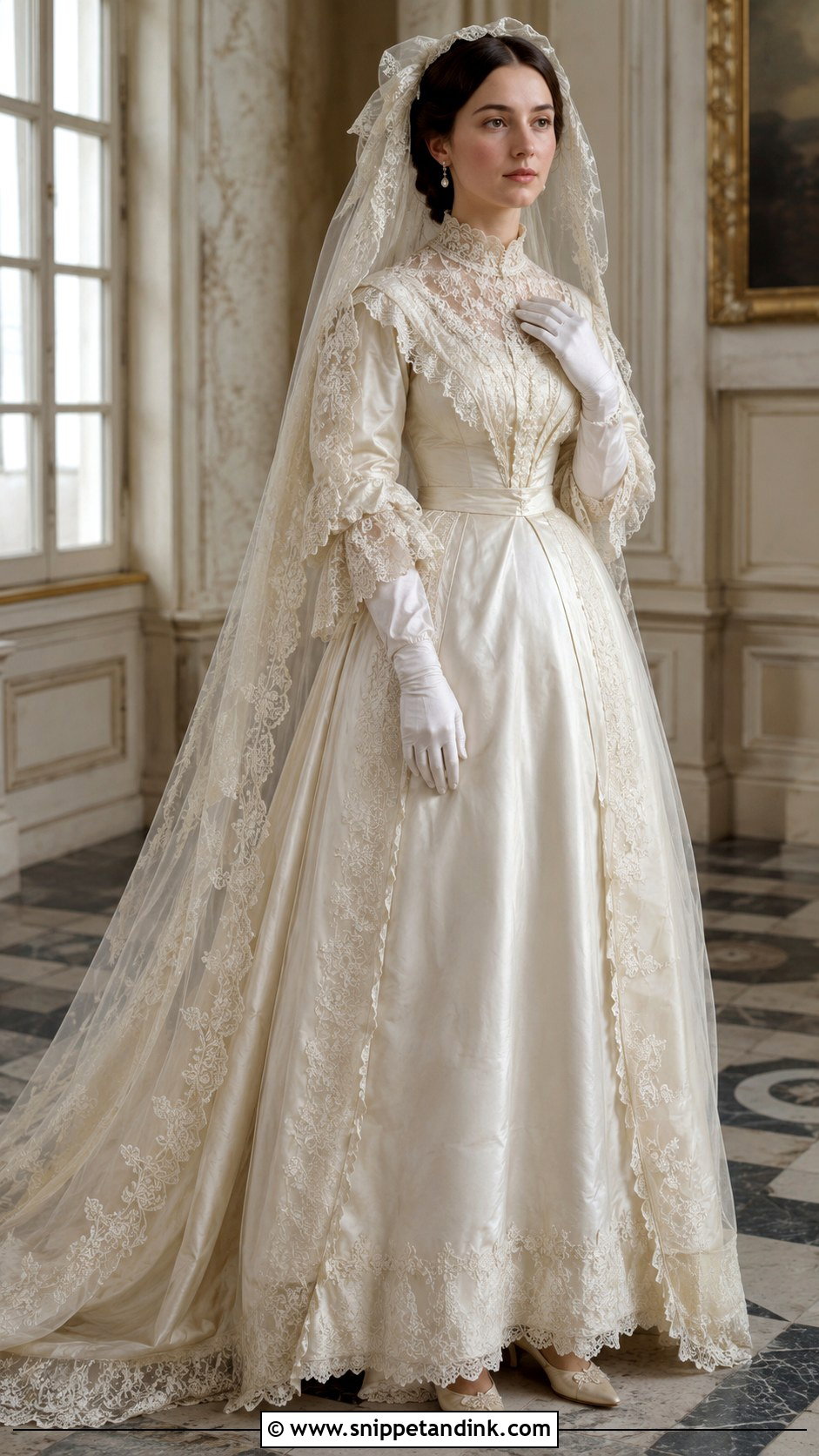
Honiton lace is a fine English bobbin lace, and it is famous here because Victoria’s wedding lace came from that tradition. Today, an ivory satin or silk gown with lace at the neckline, sleeves, bodice and hem gives the same effect. Fitted bodice, full skirt. A long lace veil, pearl drop earrings, white kid-style gloves and simple ivory shoes, with a center-parted low bun and small flowers. Genuine antique lace is fragile and expensive; I’d suggest a good reproduction for the dress and keep any real heirloom lace for the veil, where it takes no strain.
6. 1800s Full Skirt Victorian Wedding Dress
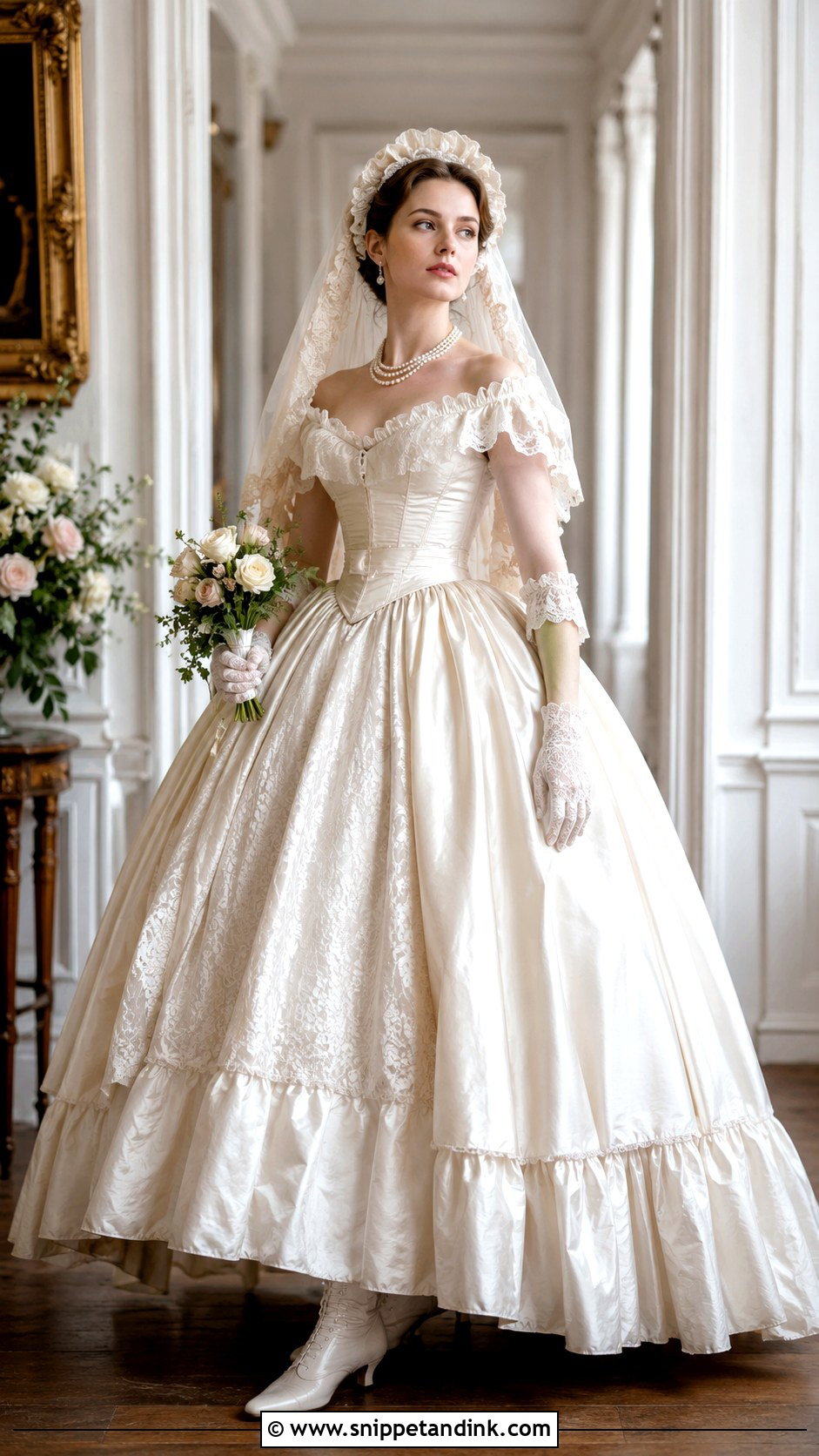
The full bell skirt is the mid-century shape, and it only works with the right support underneath. A fitted bodice with a defined waist sits over a wide skirt held out by layered petticoats or a hoop. Silk satin, taffeta or polished cotton in white, ivory or cream, with long sleeves and a modest neckline. Lace gloves, a structured veil, pearls and low-heeled boots or satin slippers, plus a small pale bouquet. Plan your seating with a skirt this wide; a hoop needs space at the aisle, in the car and at the top table, and I always rehearse sitting down in it at a fitting.
7. 1800s High Neck Wedding Dress
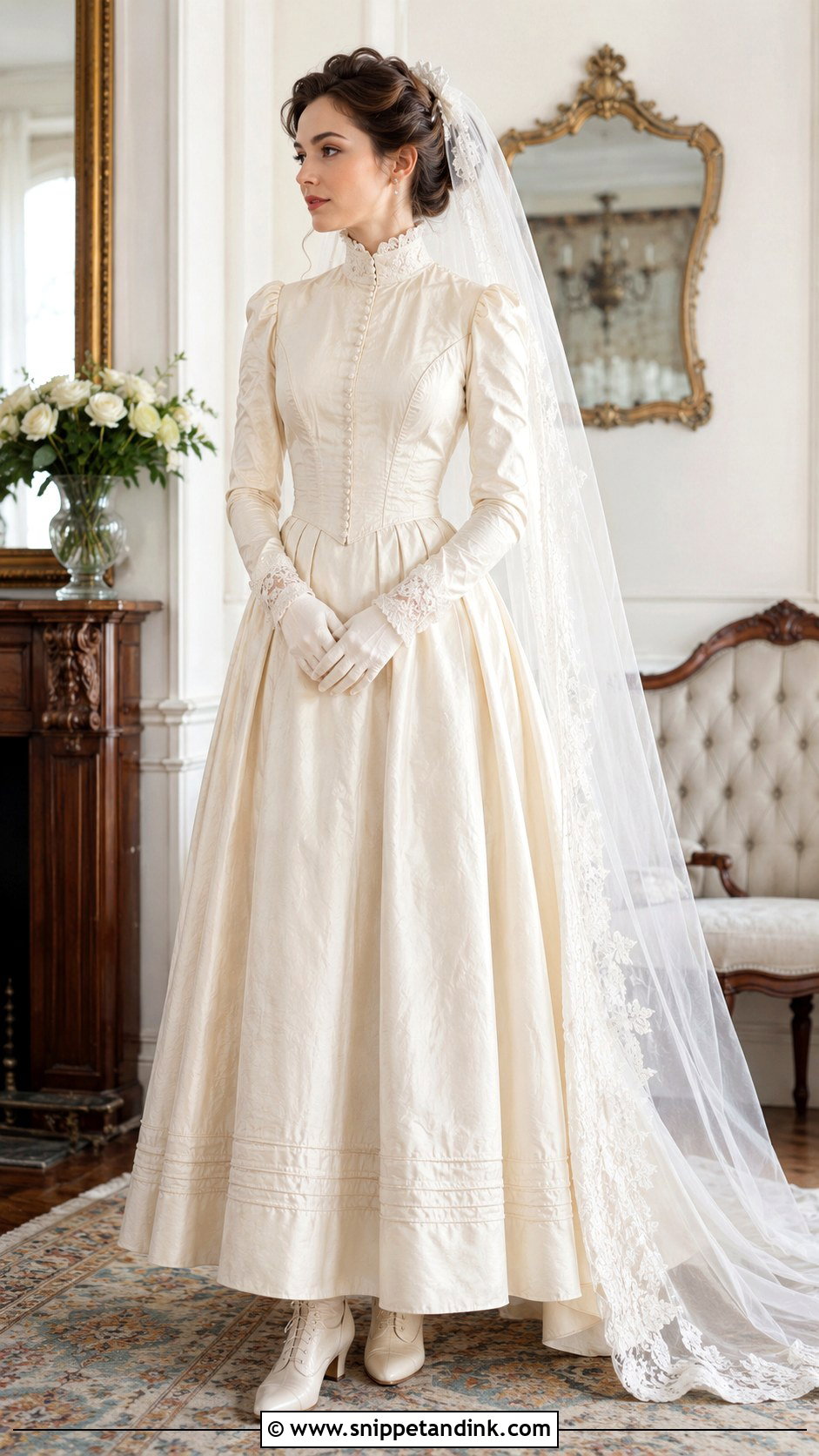
A high neck reads as modest and quietly formal. The bodice should be fitted, with covered buttons, lace trim and long sleeves; the skirt can be full and rounded for an earlier look or narrower for a later one. Ivory satin, cream silk or embroidered cotton. Lace gloves, pearl studs, a long veil and neat ankle boots, with a smooth low bun and a floral comb or small lace cap. Covered buttons up a back look wonderful and take an age to fasten. Count on ten minutes and a patient helper, or ask for a hidden zip under the button placket.
8. 1800s Long Sleeve Wedding Dress
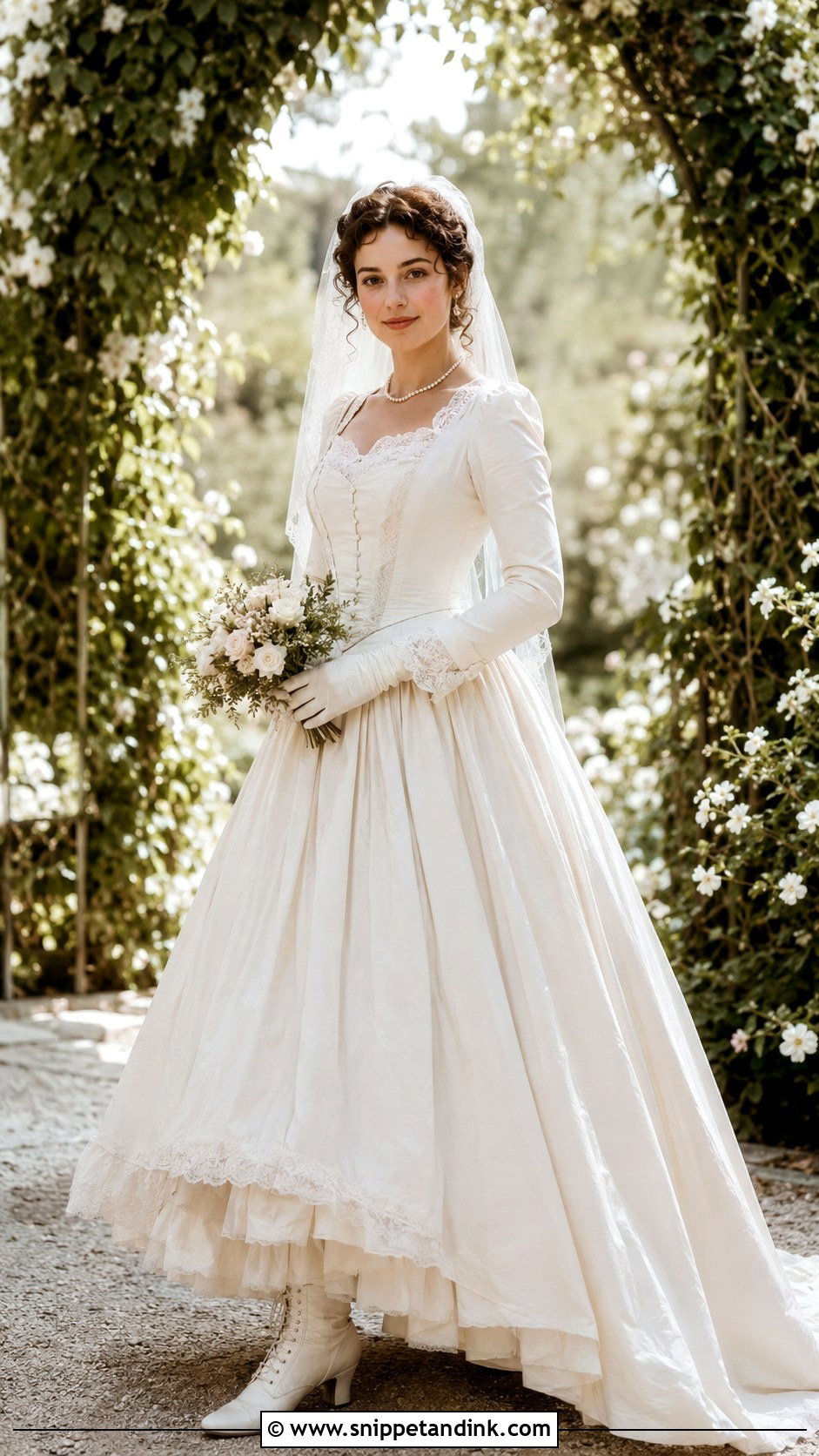
Of all the historical looks, long sleeves are the easiest to wear to a modern wedding. They can be fitted, slightly puffed at the shoulder or finished with lace cuffs. A pointed waist and full skirt make it Victorian; ivory silk, satin or fine cotton keeps it soft. White gloves, pearls, a lace veil and low button boots, plus a small bouquet of roses, lilies or orange blossom. Victorian sleeves were set into the armhole quite tightly, and a faithful copy can stop you lifting your arms; I ask for a little more ease there so you can hug people and throw the bouquet.
9. 1800s Off Shoulder Wedding Dress
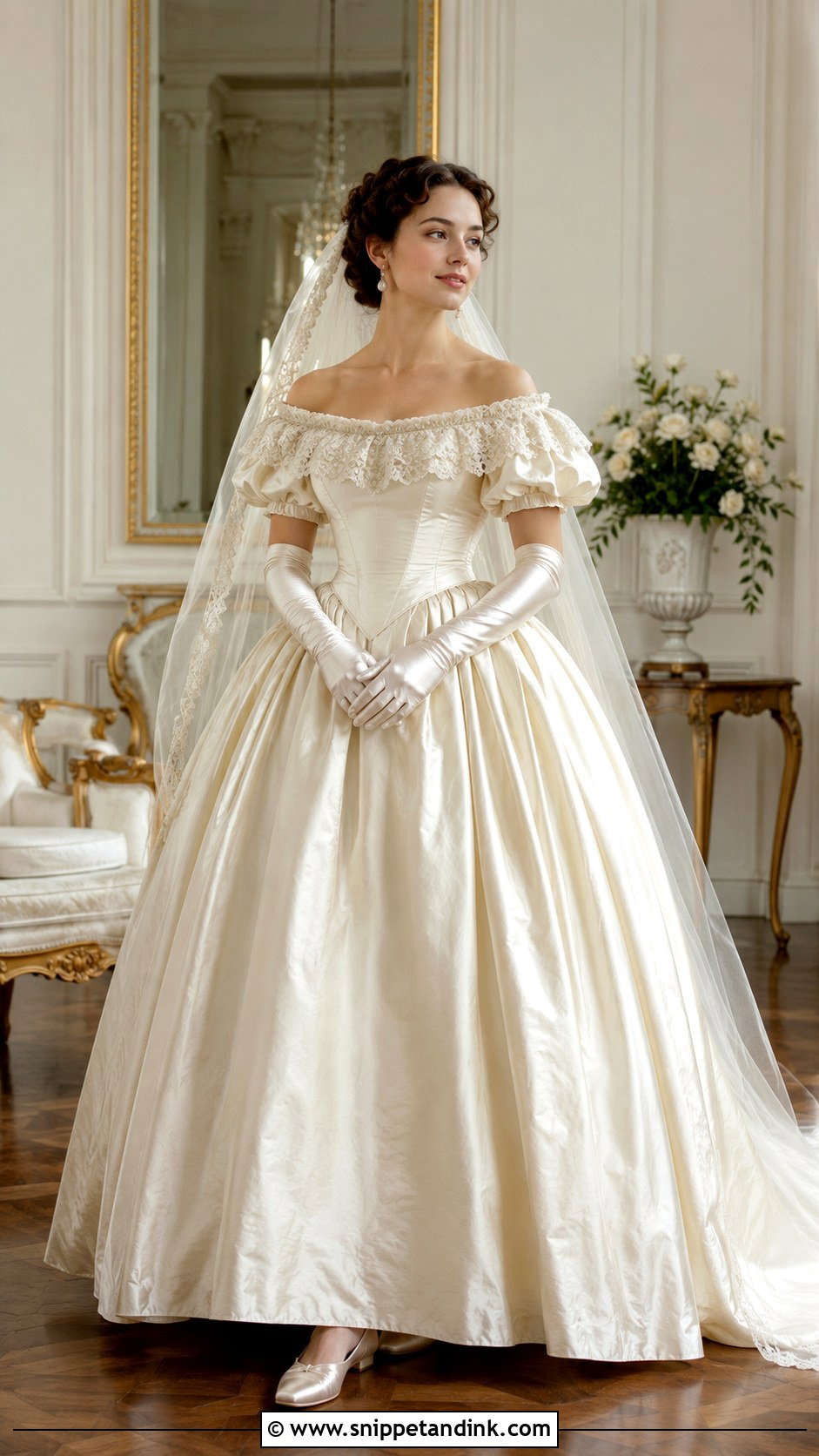
Off the shoulder was evening dress in the Victorian period, so this one feels the most formal. A fitted bodice, a wide neckline, short puff sleeves and a full skirt in silk satin or taffeta, ivory or pale cream. A lace bertha collar around the neckline is the authentic detail. Opera-length gloves, delicate pearl earrings, satin slippers and a long veil pinned behind soft curls. The fitter needs to build the bodice so it stays up on its own. If you find yourself tugging it in the mirror at the first fitting, it will be worse after three hours of dancing.
10. 1800s Ball Gown Wedding Dress
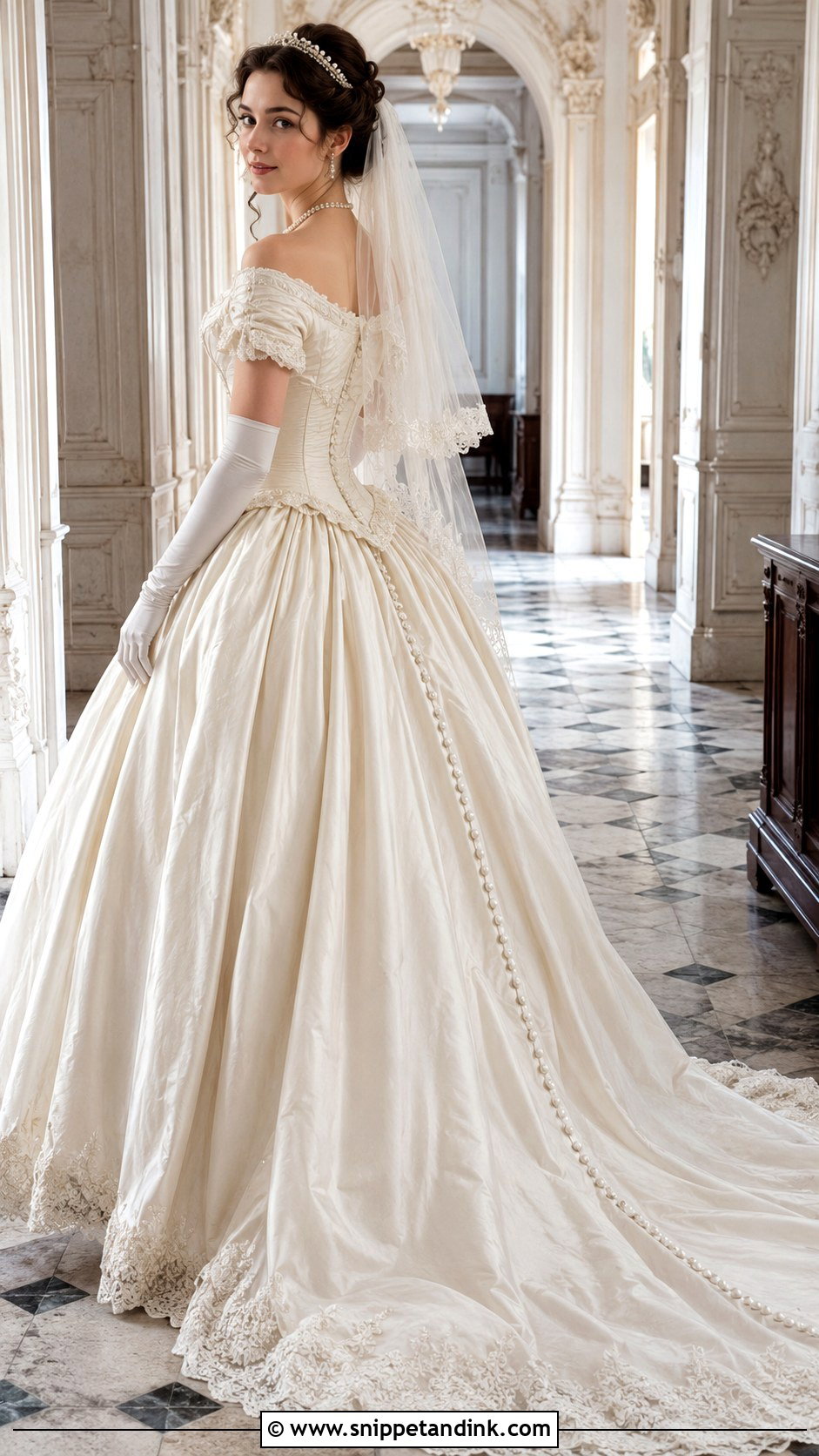
If you want full drama, the ball gown is it. A structured bodice, a narrow waist and a sweeping skirt over layers of petticoats in white satin, ivory silk or moiré. Lace edging, covered buttons and a small train add ceremony. Gloves, pearls, a veil, delicate heeled slippers and smooth hair with a center part or pinned curls. Moiré is a ribbed silk with a watery pattern that shows best in moving light, so it suits a candlelit evening better than a flat midday photo. Plan on several petticoats; they make the weight noticeable by the end of the night.
11. 1800s Civil War Wedding Dress
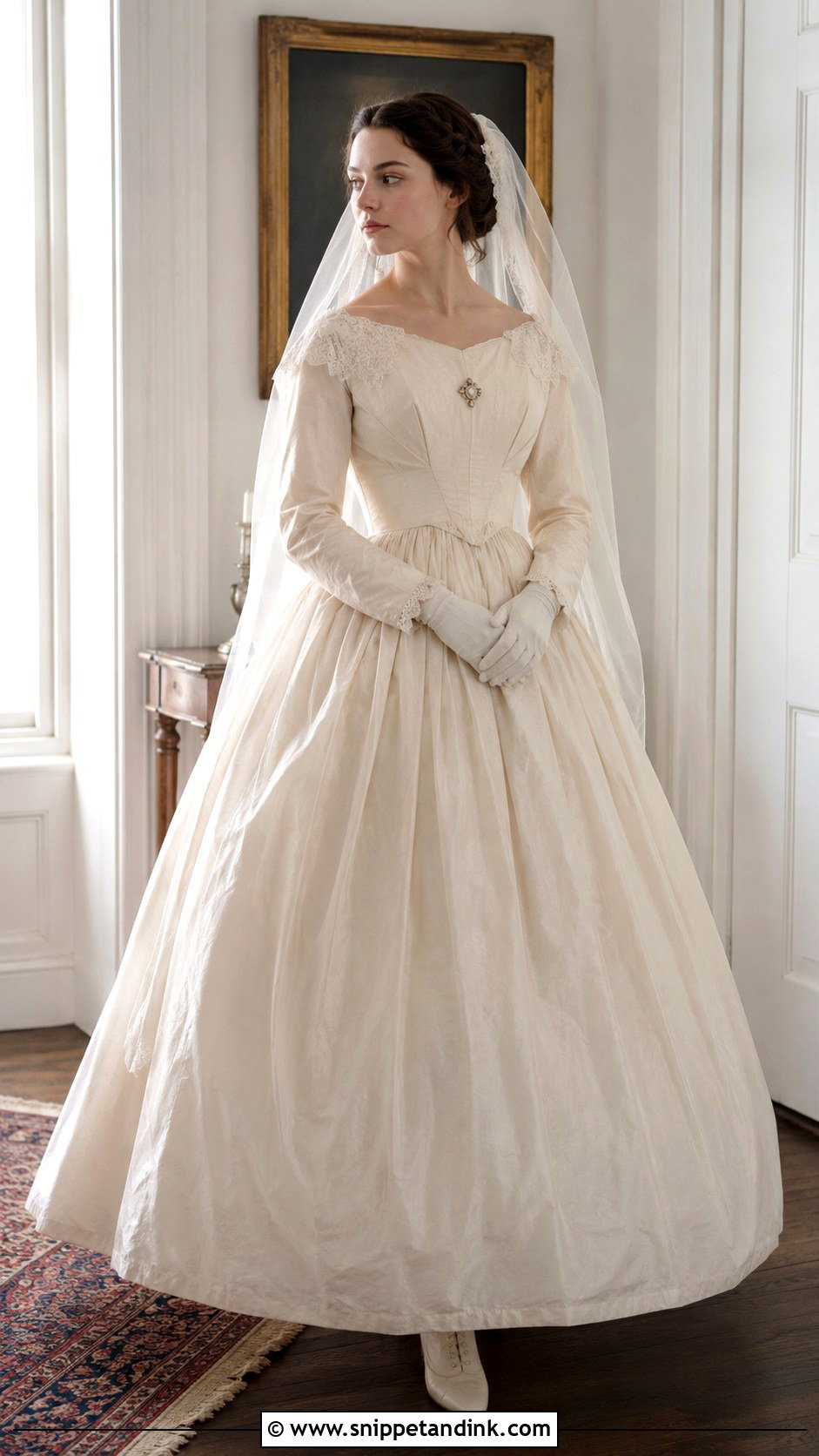
A Civil War era wedding dress usually has a fitted bodice, a dropped shoulder line and a full, dome-shaped skirt. White was fashionable, but gray, brown, blue or lavender are just as historically sound. Cotton, silk or taffeta depending on formality. A modest bonnet or veil, gloves, a lace collar, ankle boots and a small brooch at the neckline. The dropped shoulder seam sits below the natural shoulder and limits how high you can raise your arms; reenactors accept that, but a bride who wants to dance freely may prefer it eased slightly.
12. 1800s Colored Wedding Dress
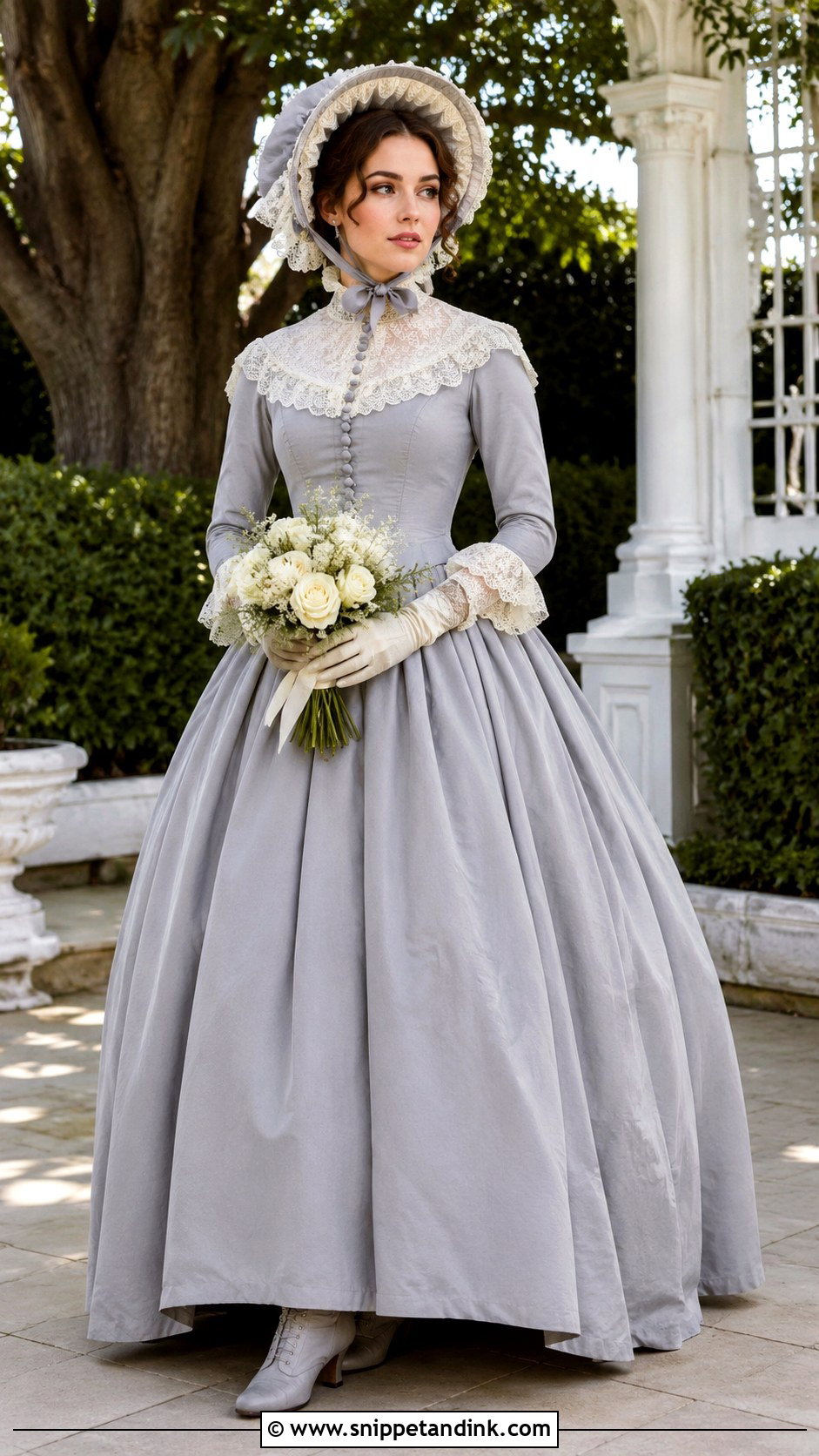
Plenty of 1800s brides married in color, often in a dress they planned to wear again on Sundays and visits. Soft blue, dove gray, lavender, brown and blush were all common, and deeper practical shades too. Keep the silhouette historical with a fitted bodice and a full or bustle skirt, then add lace cuffs, a high neckline, gloves and a matching bonnet or veil. Fabric slippers or button boots in a coordinating shade. I find color gives a historical gown a lot of honesty. It looks like a real woman’s best dress rather than a costume.
13. 1800s Blue Wedding Dress
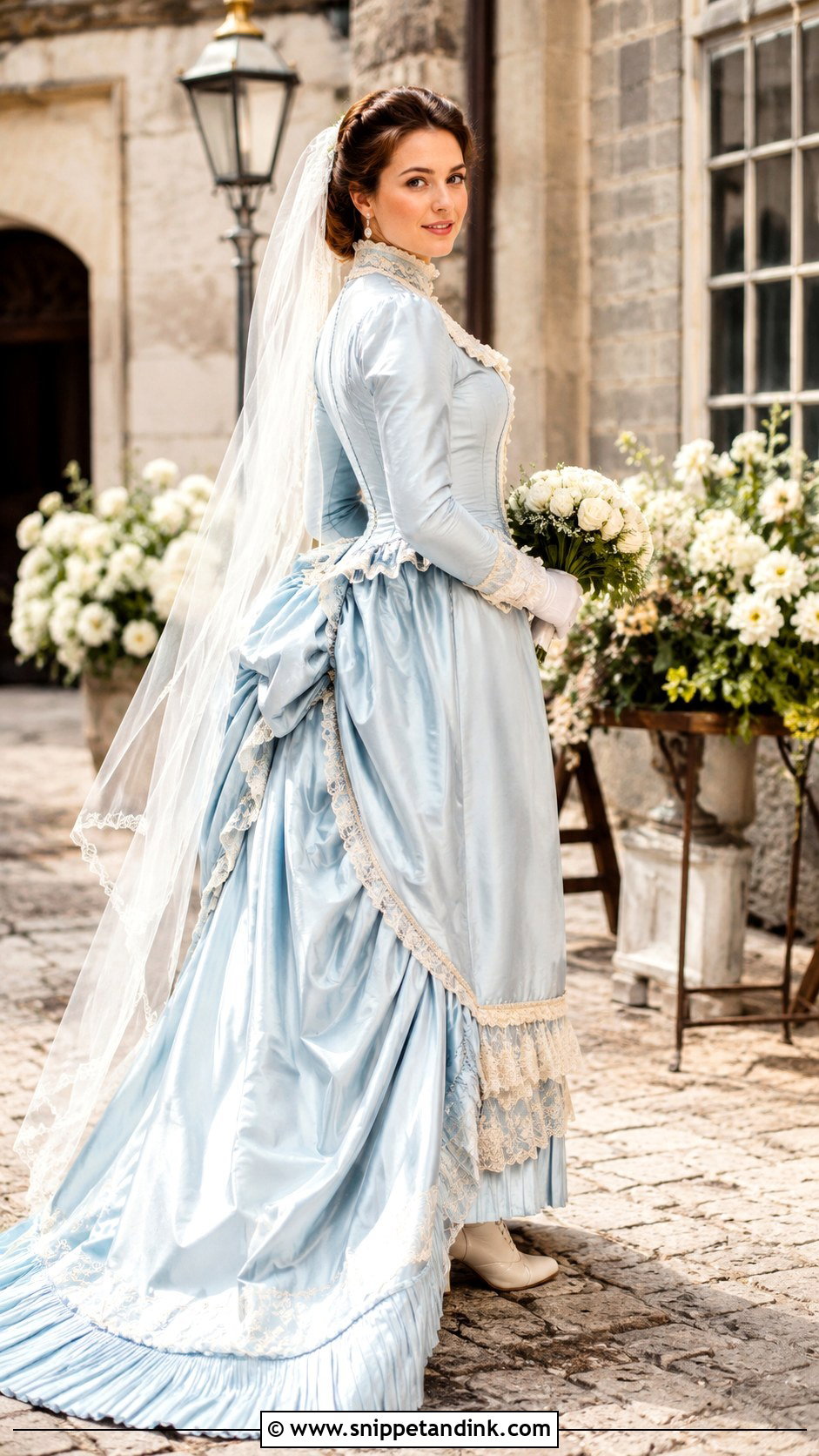
Blue changes character with its weight. Pale blue silk or satin looks delicate, deeper blue taffeta looks rich. For an early Victorian version, choose a fitted bodice and full skirt; for later in the century, a princess-line bodice with a small bustle. Ivory lace trim, pearl earrings, white gloves and blue or ivory boots. I’d add a white veil, which keeps the look clearly bridal and frames the face. Silk taffeta in blue can water-spot easily, so carry an umbrella for outdoor photos even if the sky looks clear.
14. 1800s Black Wedding Dress
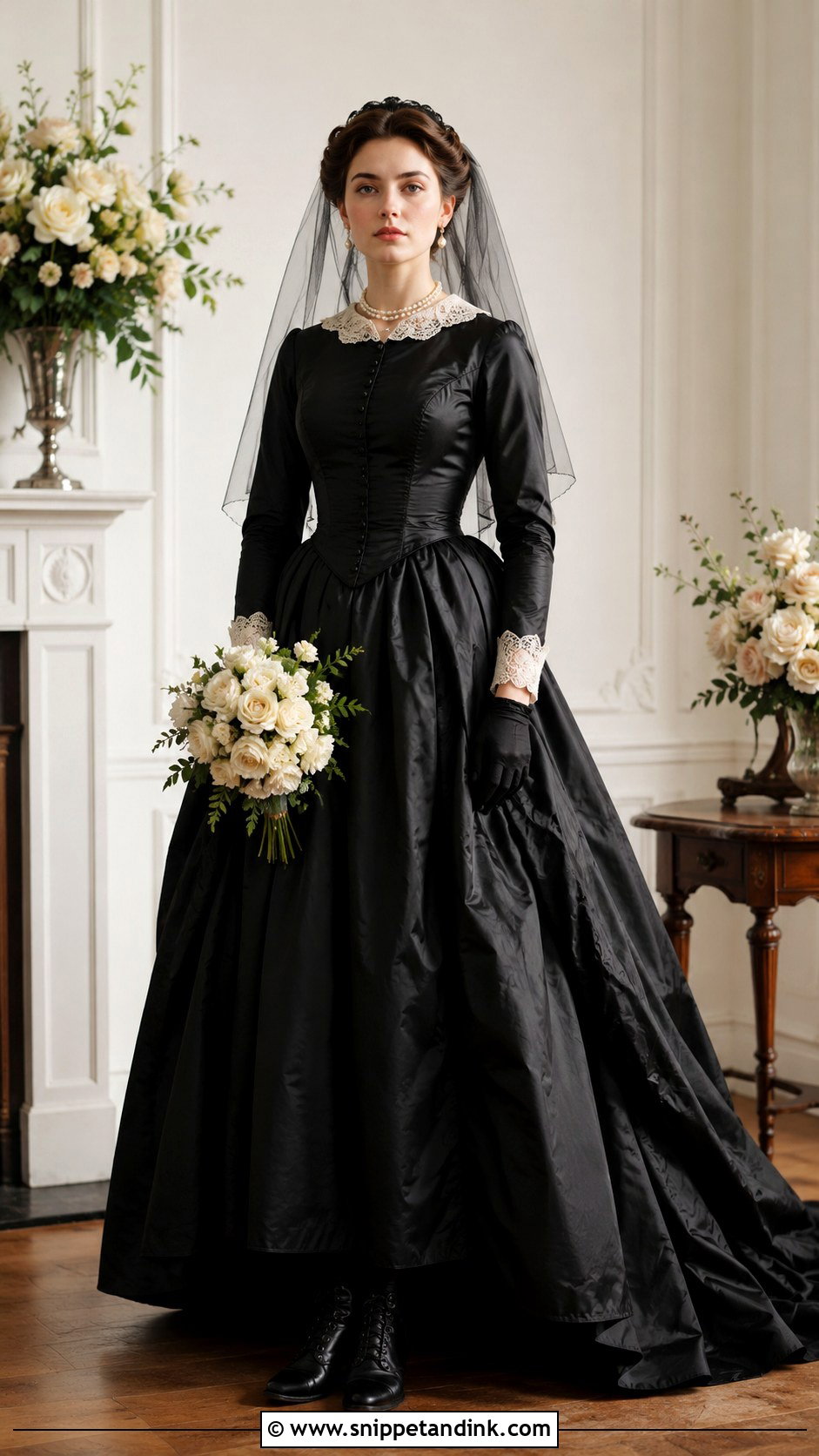
Black needs careful styling, and it has real history behind it. Darker dresses made sense when a bride expected to wear the gown again for years. Black silk, wool or taffeta with a fitted bodice, long sleeves and a full or bustle skirt, softened by ivory lace at the collar and cuffs. Black button boots, pearls, gloves and a small veil or bonnet, with a pale bouquet for contrast. Photographers need to know you are wearing black so they expose for the detail in the fabric. Ask your family how they will feel about it before you commit.
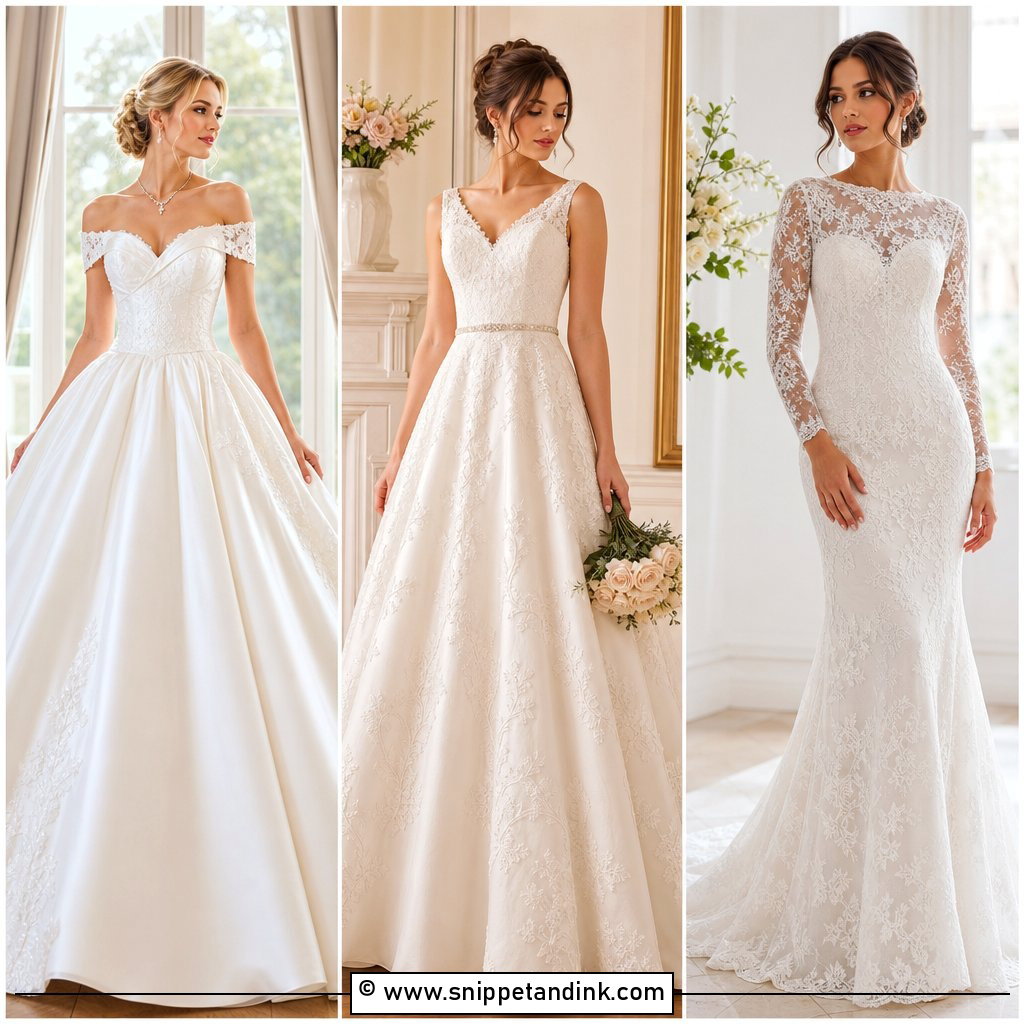
15. 1800s Bustle Wedding Dress
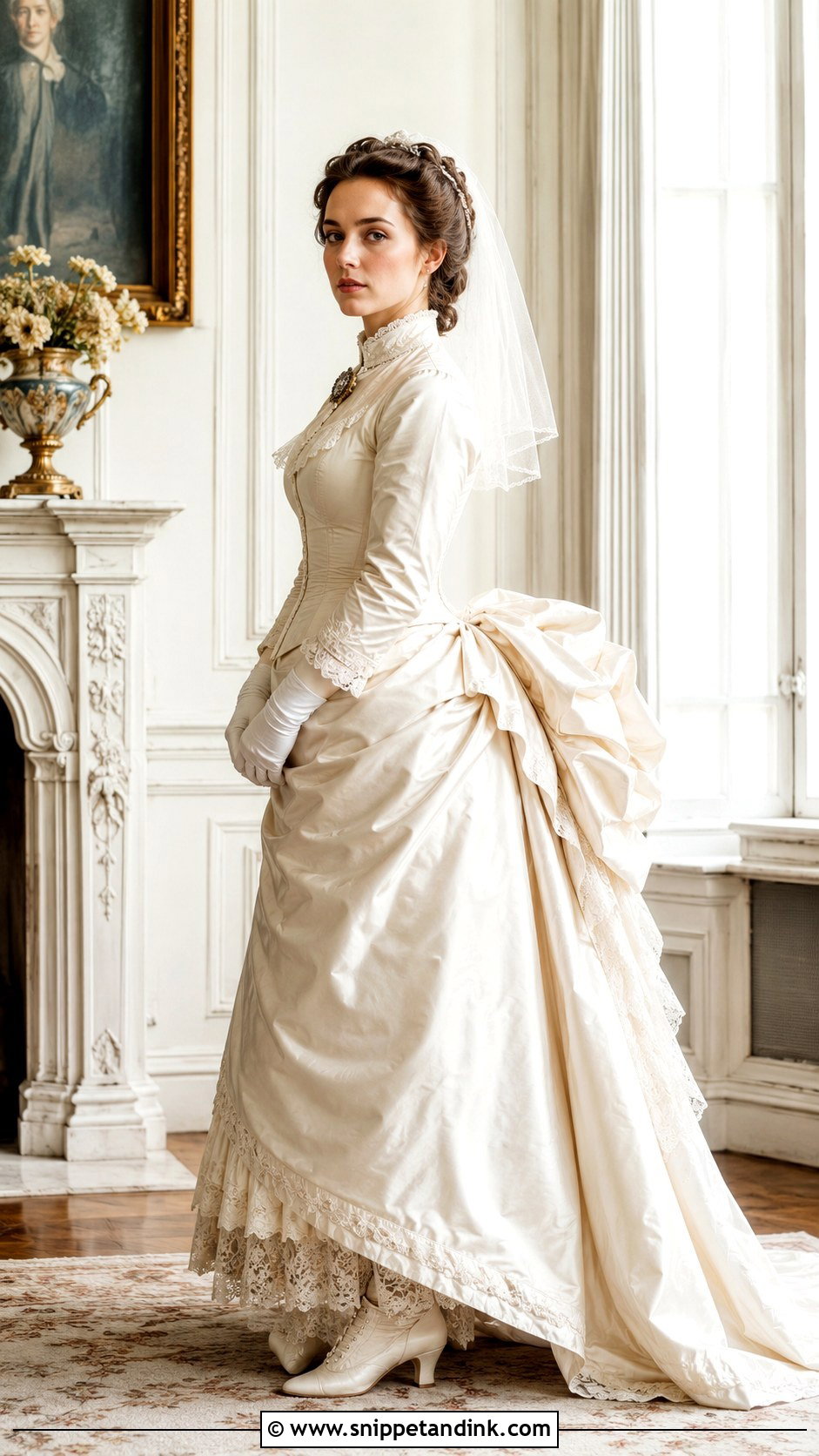
A bustle wedding dress is pure late century: the front of the skirt lies smooth and close, and the volume gathers at the back. Ivory satin, cream taffeta or pale blue silk; a structured bodice with long sleeves and a high neckline or delicate lace. Heeled button boots, gloves, a small hat or veil and a brooch at the collar. It looks best from the side and back, so I tell the photographer to plan profile shots. Sitting is the catch. A real bustle pad or cage makes chairs awkward, so a reproduction with a soft, collapsible bustle is far kinder for a long reception.
16. 1800s Princess Line Wedding Dress
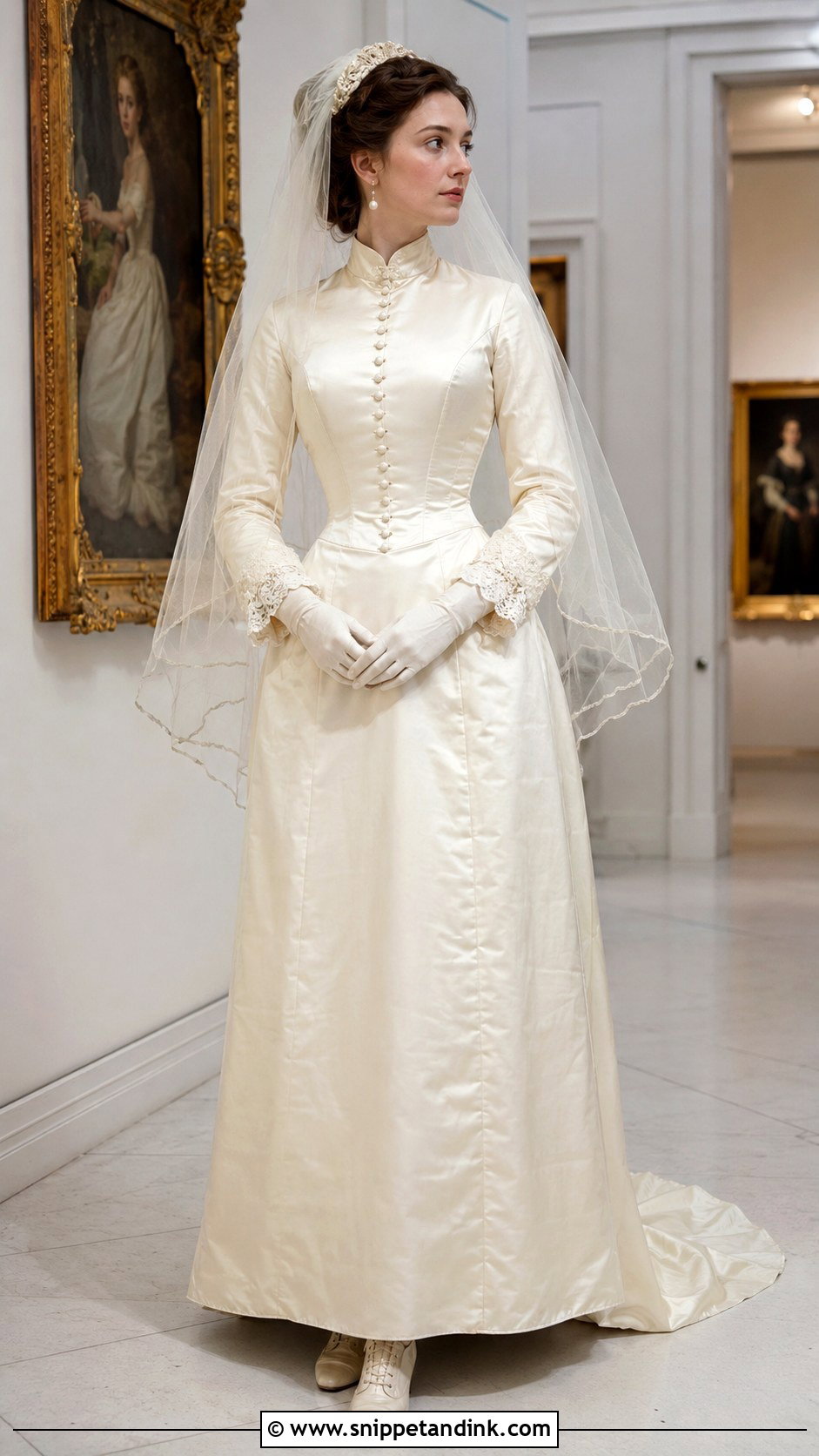
The princess line drops the waist seam entirely; long panels run from shoulder to hem and shape the body in one smooth line. It is the sleekest late-Victorian silhouette, and the one that sits most easily in a modern venue. Ivory silk, satin or brocade, with a small train, lace cuffs and covered buttons. Gloves, pearl earrings, a structured veil and button boots; a polished low bun or upswept curls. Because there’s no waist seam to adjust, the fit relies on the panel seams, so this style needs a skilled dressmaker and at least two fittings.
17. 1800s Tea Gown Wedding Dress
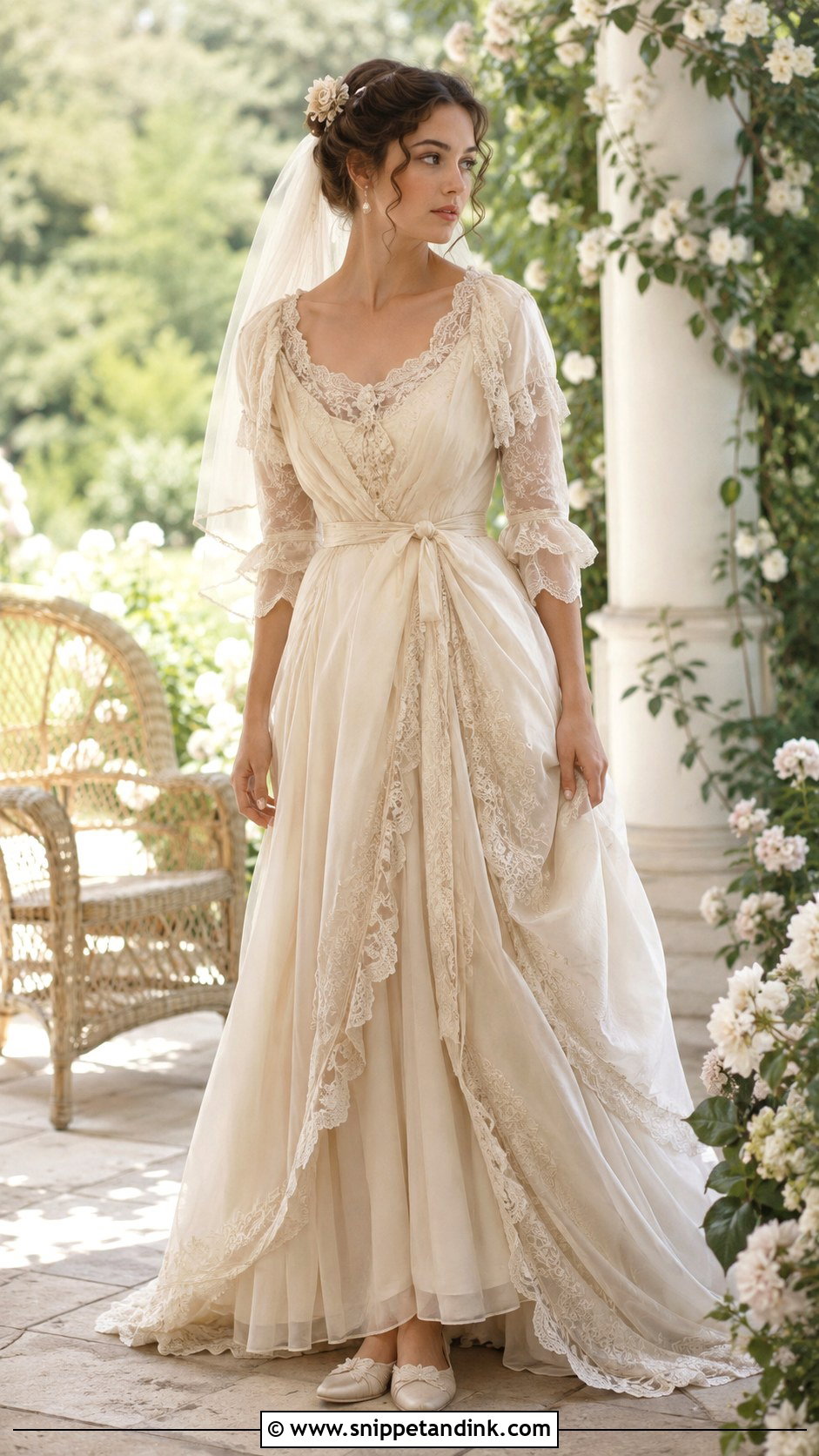
The tea gown was what a Victorian woman wore at home in the afternoon, looser than her corseted daywear and often quite artistic. As a wedding dress, it’s the relaxed option. Flowing silk, cream lace or embroidered cotton, lace inserts and gentle draping, with a sash, soft slippers, pearl earrings and a loose veil or floral piece. The skirt falls smoothly with just enough volume. I like it for small weddings and garden ceremonies, and for any bride who wants the period feel without a corset.
18. 1800s Lace Veil Wedding Dress
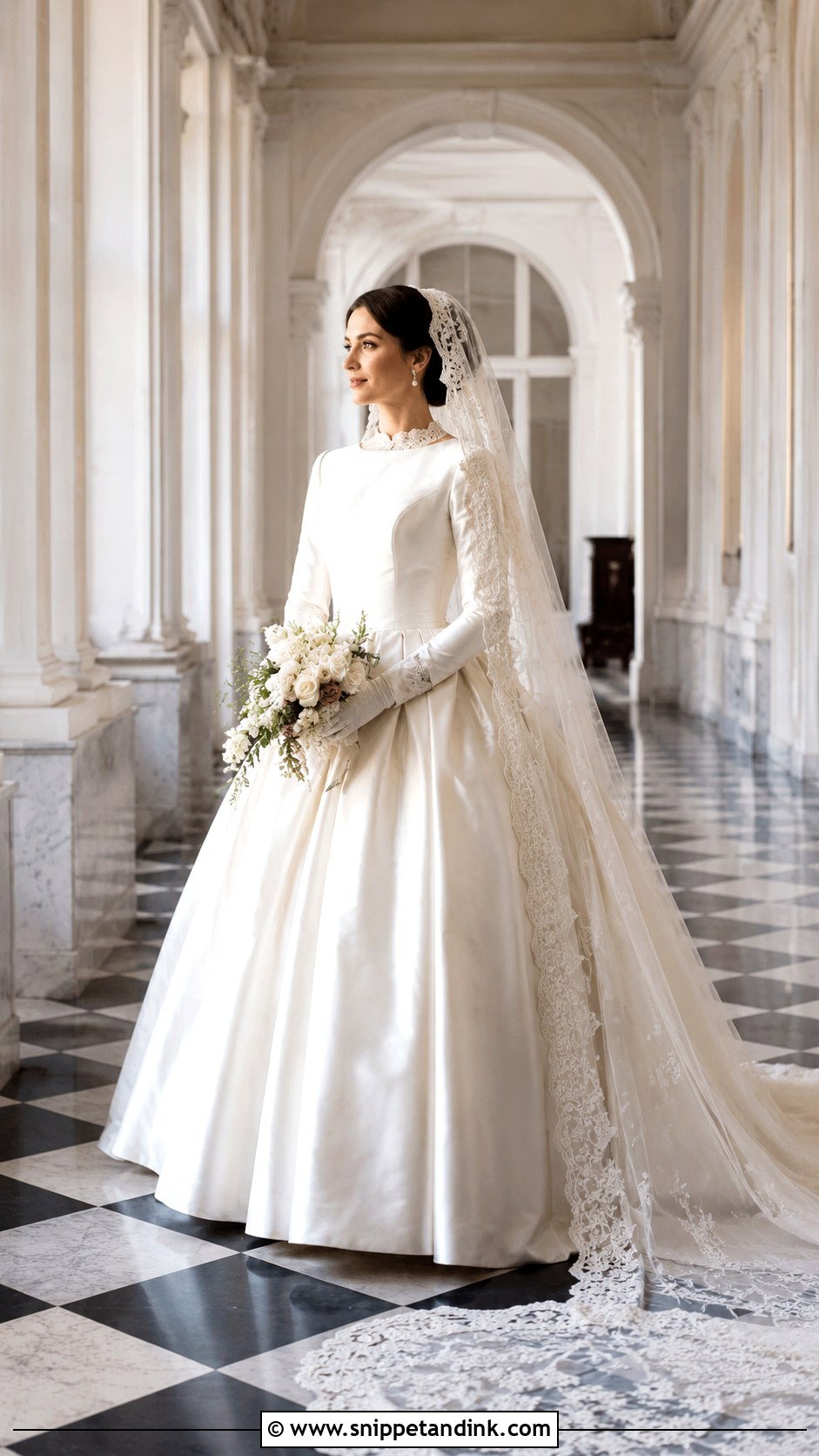
Here the veil leads and the dress steps back. Start with a simple ivory satin or silk gown, fitted at the bodice with a full skirt and long sleeves, then add a long lace veil that falls past the shoulders or trails behind. Pearl earrings, gloves, low heels and a soft bouquet; keep everything else minimal. A long lace veil is heavy at the comb, so I anchor it into a firm base of pins or a small bun rather than loose hair, otherwise it drags the style backward as you walk. An heirloom veil works especially well with this look.
19. 1800s Orange Blossom Wedding Dress
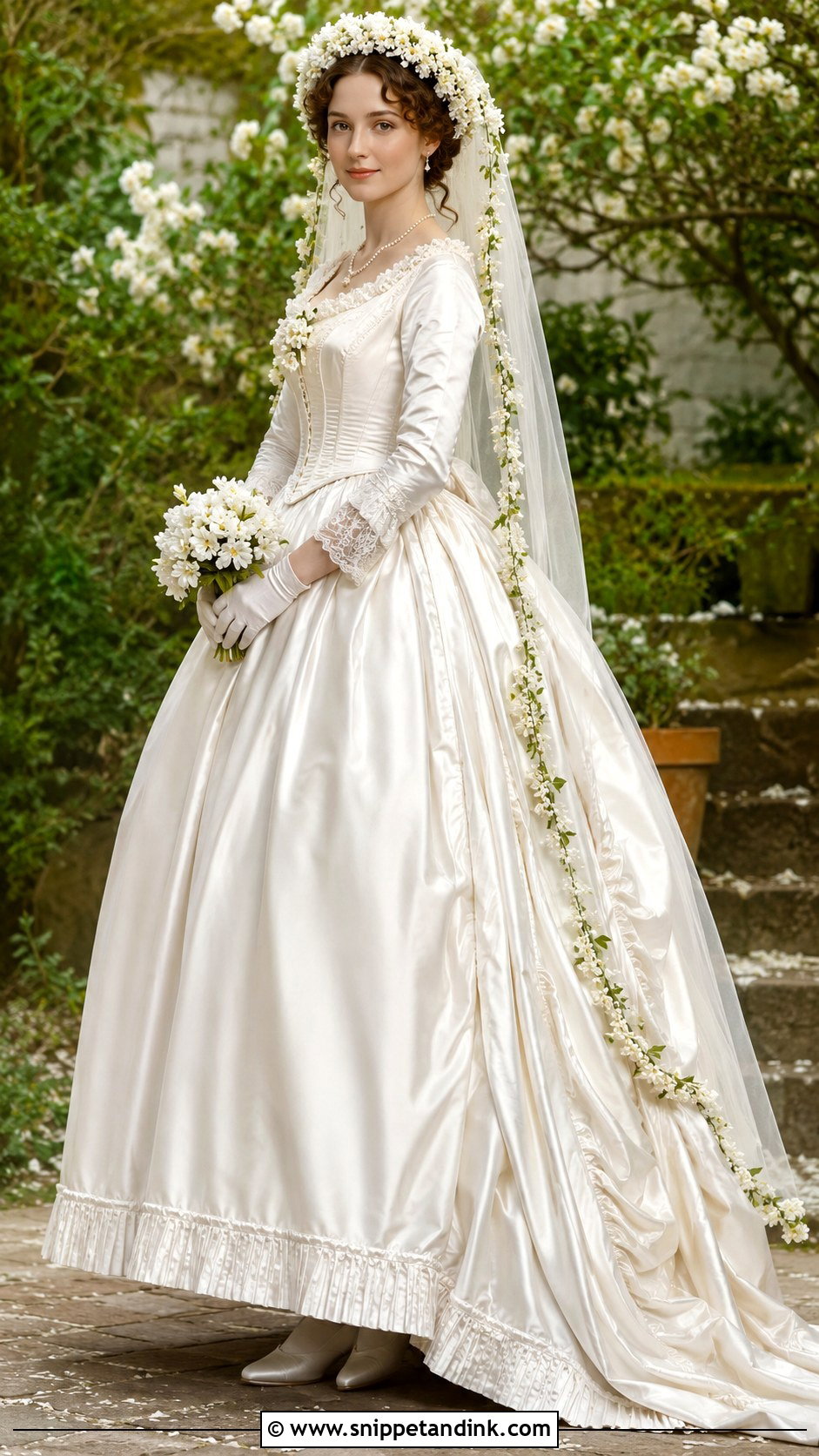
Orange blossom was the Victorian bridal flower. The gown can be white satin, ivory silk or cream cotton with a fitted bodice and full skirt; the styling is in the blossom wreath, a floral comb or delicate trim along the veil. Gloves, pearls, satin shoes and a small bouquet that repeats the flowers. Real orange blossom is seasonal and bruises quickly, which is exactly why Victorian brides often wore wax or fabric versions. A good silk or porcelain blossom piece looks right and lasts the day. Keep the dress itself plain so the flowers stay fresh rather than busy.


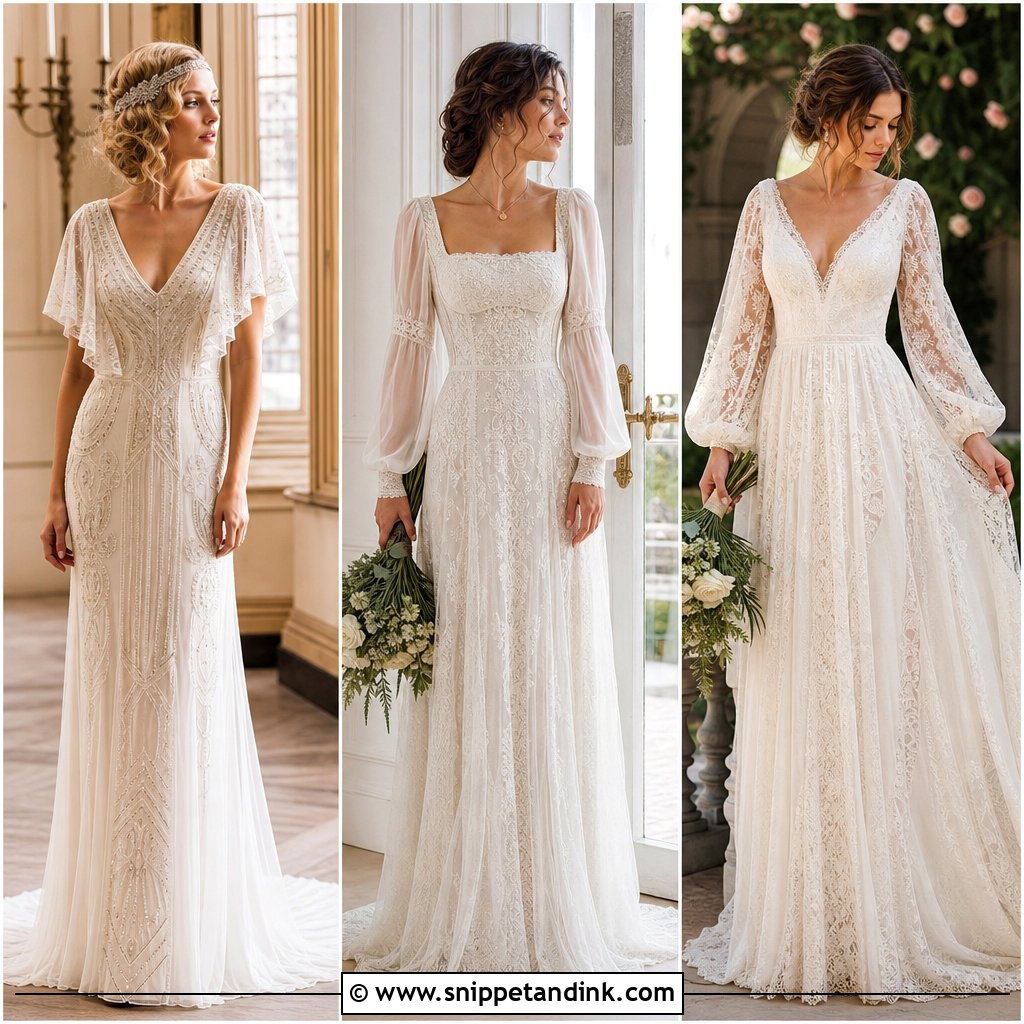

20. 1800s Satin Wedding Dress
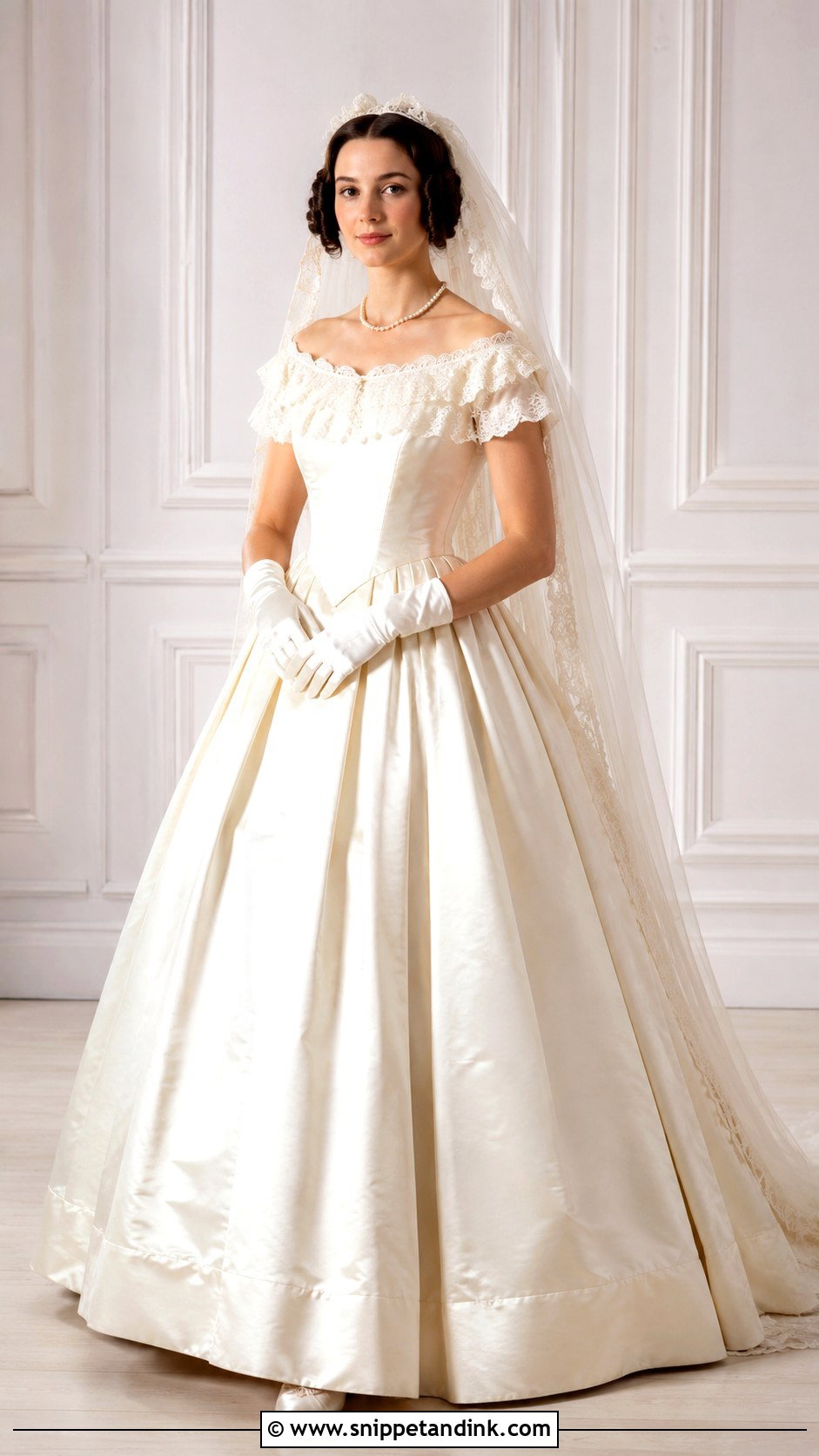
Satin gives the smoothest, most polished finish. White or ivory, with a fitted bodice, defined waist and full skirt; lace at the neckline, cuffs or hem softens the shine. Satin slippers, gloves, pearls and a long veil. A structured underlayer keeps the skirt holding its shape. Satin creases as soon as you sit, and the creases show in raking light, so I steam it immediately before the ceremony and seat the bride as late as possible. Heavier duchess satin creases less than a thin bridal satin.
21. 1800s Silk Taffeta Wedding Dress
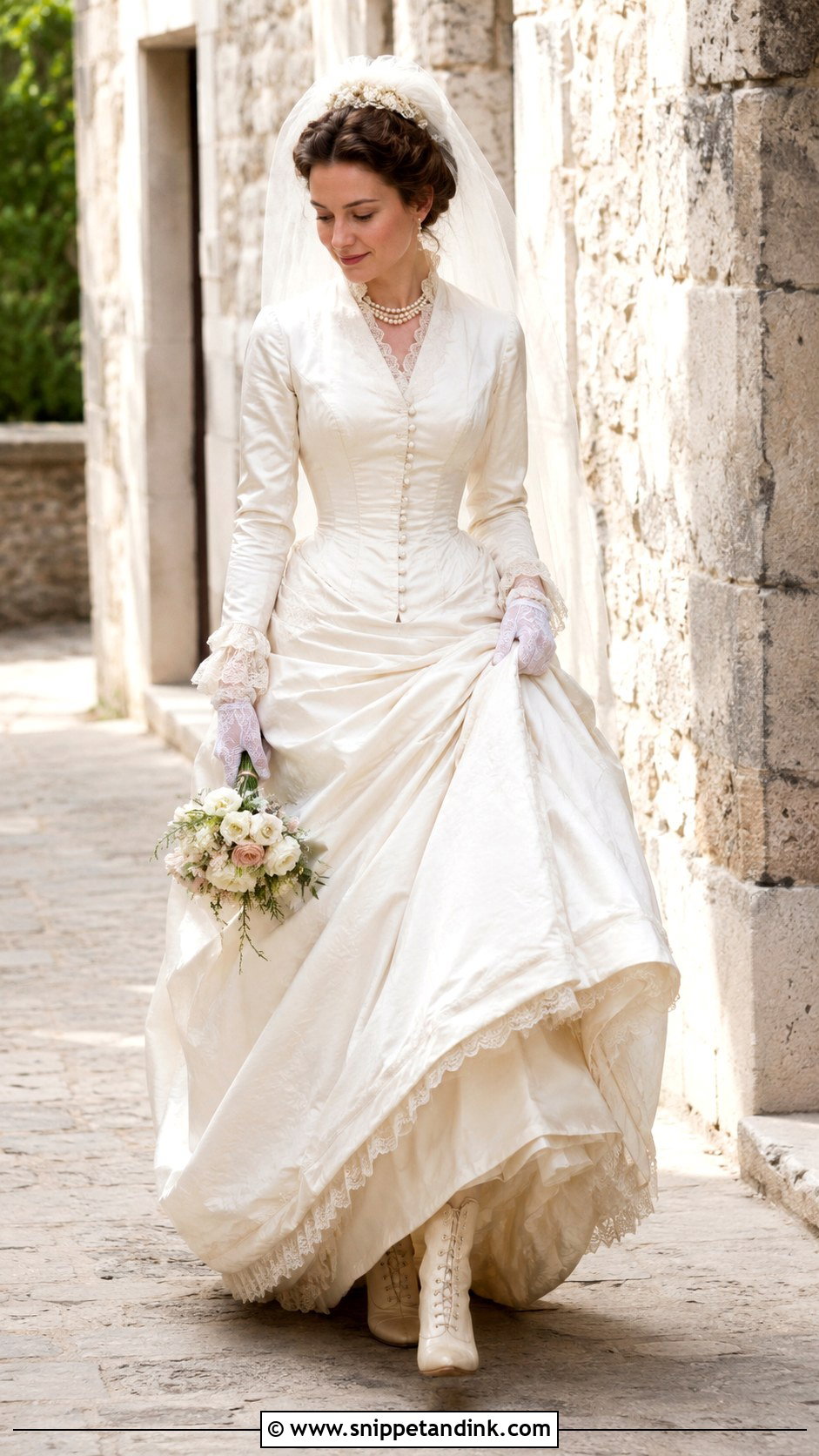
Silk taffeta has a crisp hand and the rustle that people associate with Victorian skirts. It holds structure well, so it takes full skirts, pleated trims, puffed sleeves and bustles. Ivory, cream, pale blue or champagne. Lace gloves, a fitted bodice, button boots, a veil and a small pearl necklace; a pleated hem or ruched overskirt adds depth without decoration. Taffeta is also unforgiving: it marks with water, shows every crease and frays at the seams, so I’d only choose silk taffeta if you are happy with a dressmaker who finishes seams properly.
22. 1800s Embroidered Wedding Dress
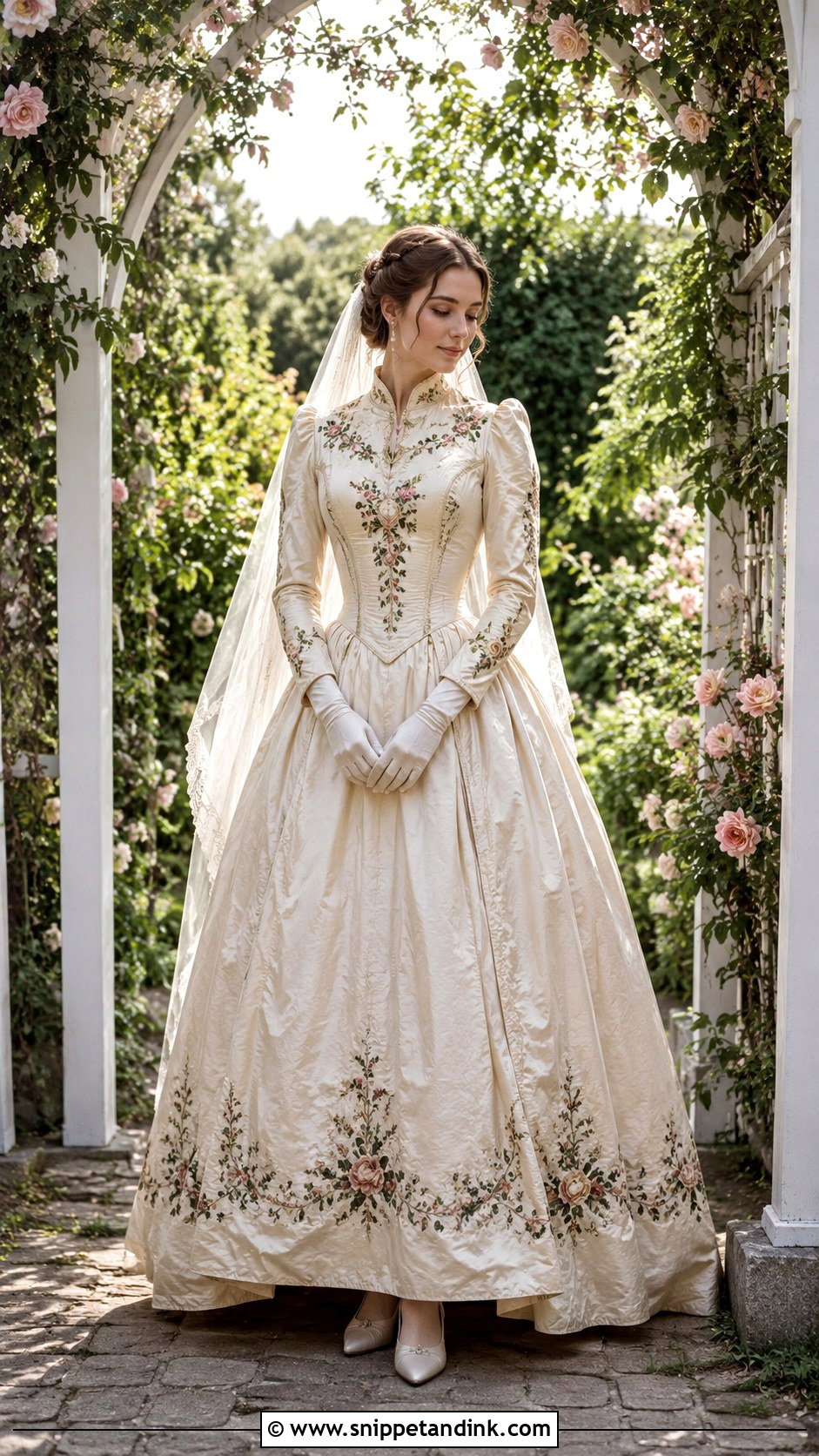
Embroidery is the detail people notice up close, so I put it where hands and faces are: bodice, sleeves, hem or the veil’s edge. Fine cotton, muslin, silk or satin all take it. White-on-white is traditional and subtle; pale blue or silver thread is more decorative. Simple gloves, pearl earrings, delicate shoes and a soft updo. Choose an empire waist for early-century inspiration or a fitted bodice and full skirt for Victorian. Hand embroidery takes time to make, so order early if it is being worked to your design.
23. 1800s Bonnet Wedding Dress
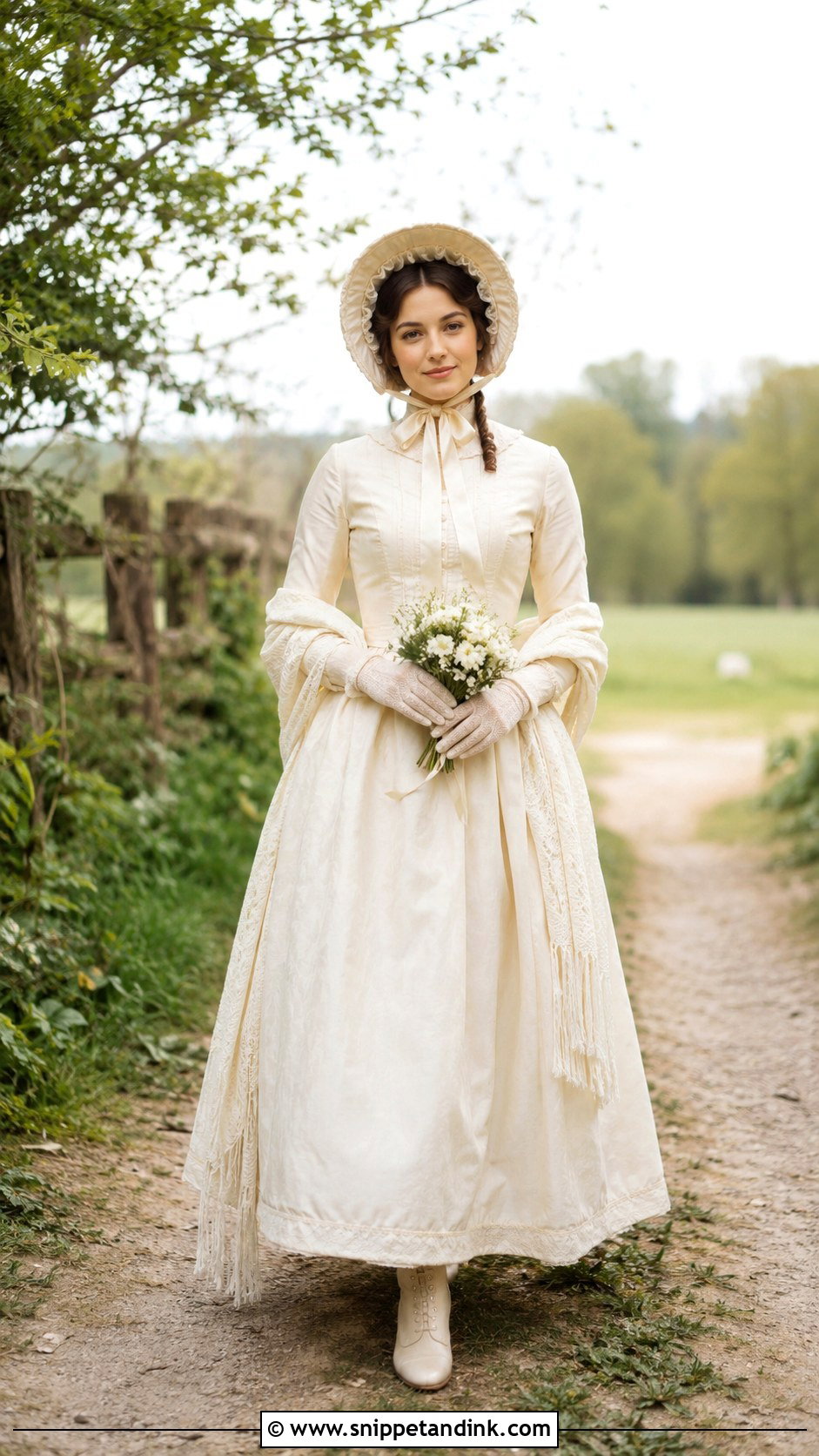
A bonnet is the most modest headpiece here, and it suits a countryside wedding or a historical photo shoot. A cream or ivory gown with long sleeves, a fitted bodice and a full skirt, a lace-trimmed bonnet tied under the chin with satin ribbon, gloves, button boots, a small bouquet and a shawl. Bonnet brims shade the face, which looks soft and pretty in person but can leave your eyes in shadow in photos, so I tip it slightly back for portraits. It’s a gentle, covered alternative to a veil or crown.
24. 1800s Button Boot Wedding Dress
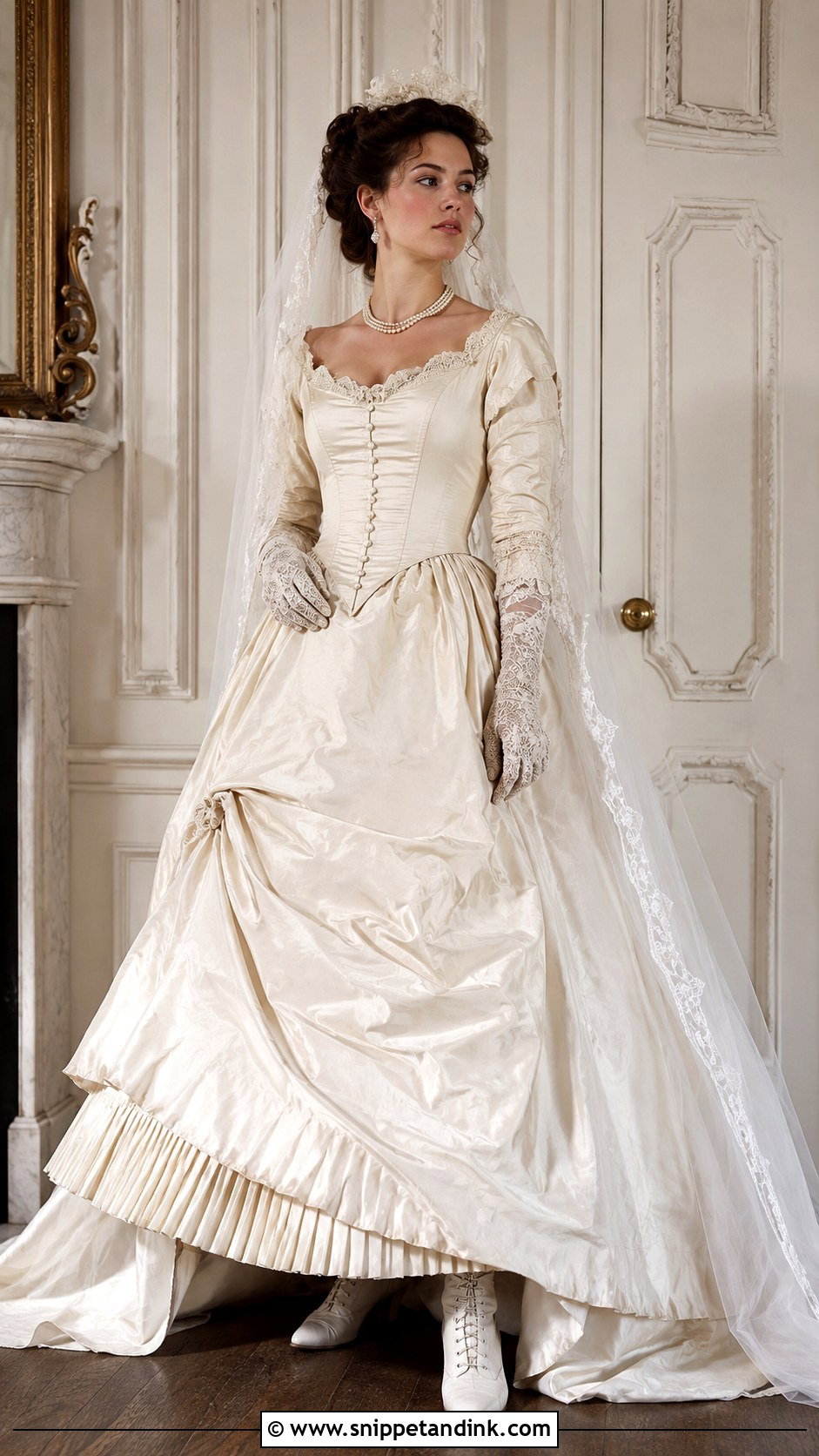
Button boots are the accessory that tells everyone you meant the historical look. A tea-length historical skirt shows them all the time, while a full-length Victorian gown flashes them as you walk. Ivory or cream boots look bridal; black boots are more authentic. Pair them with a fitted bodice, long sleeves, lace gloves and a small veil or bonnet, and a skirt with slight volume or a bustle. Break the boots in at home for a week. New leather with a row of buttons up the ankle pinches badly by the evening, and you’ll need a buttonhook to get them on.


25. 1800s Prairie Wedding Dress
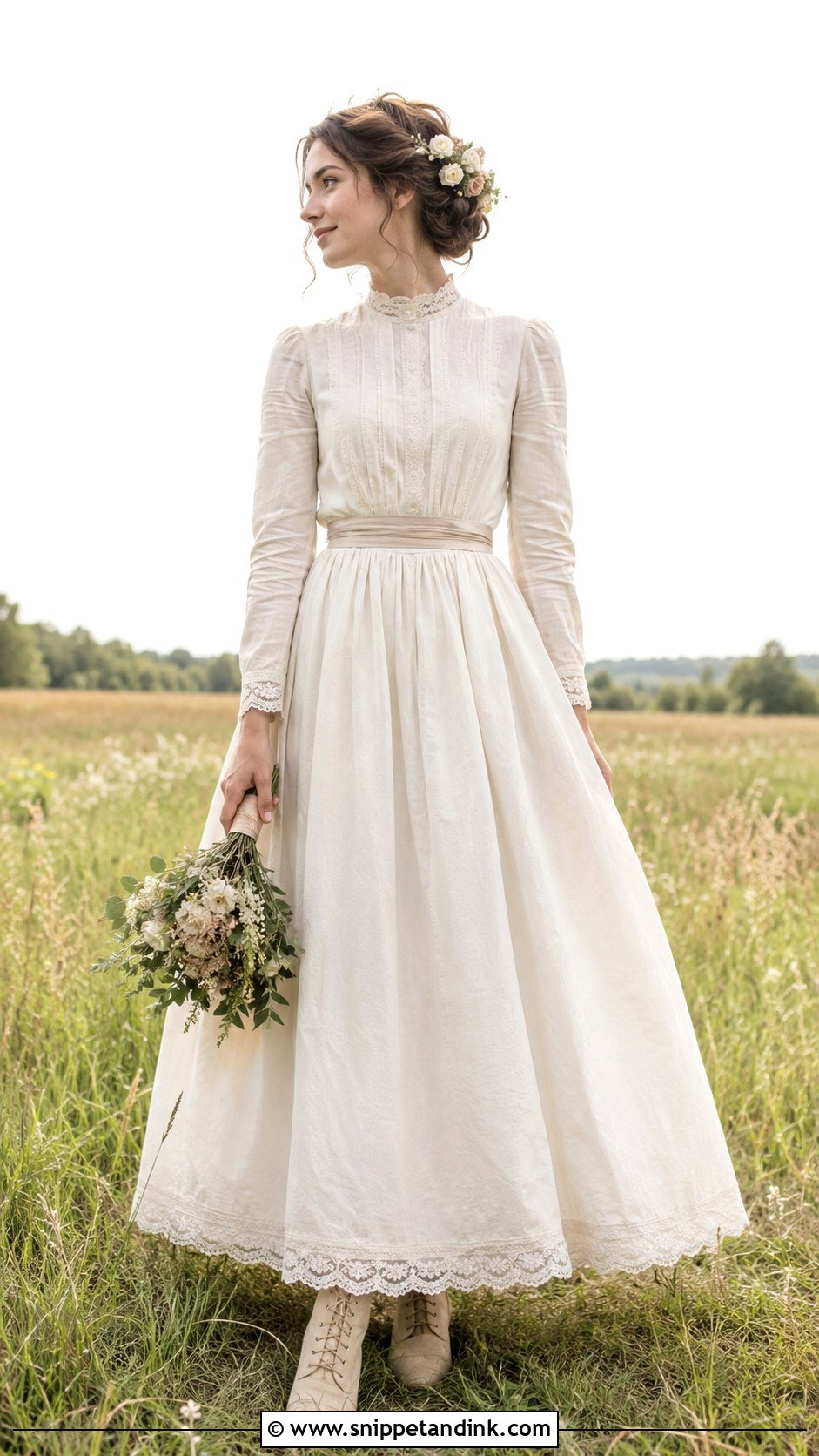
The prairie dress is the everyday 19th century: cotton, linen or light muslin in white, cream or soft beige, with a high neck, long sleeves, a gathered waist and a full but plain skirt. Lace edging, a ribbon sash, ankle boots and a simple bonnet or floral piece, with a shawl or capelet. It suits outdoor weddings and brides who want something humble rather than royal. Linen wrinkles the minute you put it on. I’d embrace that and not chase every crease with a steamer, because a slightly lived-in look is part of its charm.
Wearing a Real Antique Gown, or Commissioning a Copy
Some brides want an original 19th-century dress, and I understand the pull. But I’d be honest about the risks before anyone falls in love with one.
Original gowns
Much late Victorian silk was weighted with metallic salts to give it body, and over time that silk splits and shatters along every fold. A dress that looks perfect on a hanger can tear the first time it is stretched over shoulders. Original gowns are also usually small, cut for a corseted waist, and there is very little seam allowance to let out.
- Have a textile conservator check the fabric before you buy, not after.
- Never wash or steam an antique gown yourself. Heat and water can do permanent damage.
- If it is too fragile to wear, keep an heirloom piece for the veil, a sash, a handkerchief or a panel stitched into the bouquet wrap.
Reproductions
A dressmaker who works from period patterns can give you the right silhouette in fabric that will survive a full wedding day and a dry cleaner afterward. Ask to see historical work they have made before, and allow several months, since period construction takes longer than a standard bridal gown. Bring your foundations and shoes to every fitting so the hem is set at the right height.
History Works Best When You Can Still Breathe
Most of these 1800s Wedding Dress Ideas come down to one decision: which decade, and how faithful you want to be. Regency muslin is light and simple; a Victorian satin ball gown, a bustle dress or a lace-trimmed high neck is grander and more work to wear. White grew popular after 1840, but colored dresses, practical fabrics, bonnets, boots and gloves all have an honest place in the story. Pick the version that suits your venue, your season and how much structure you are willing to wear for ten hours, then let the details do the period talking.
You'll Like These Ideas:





Leave a Reply