
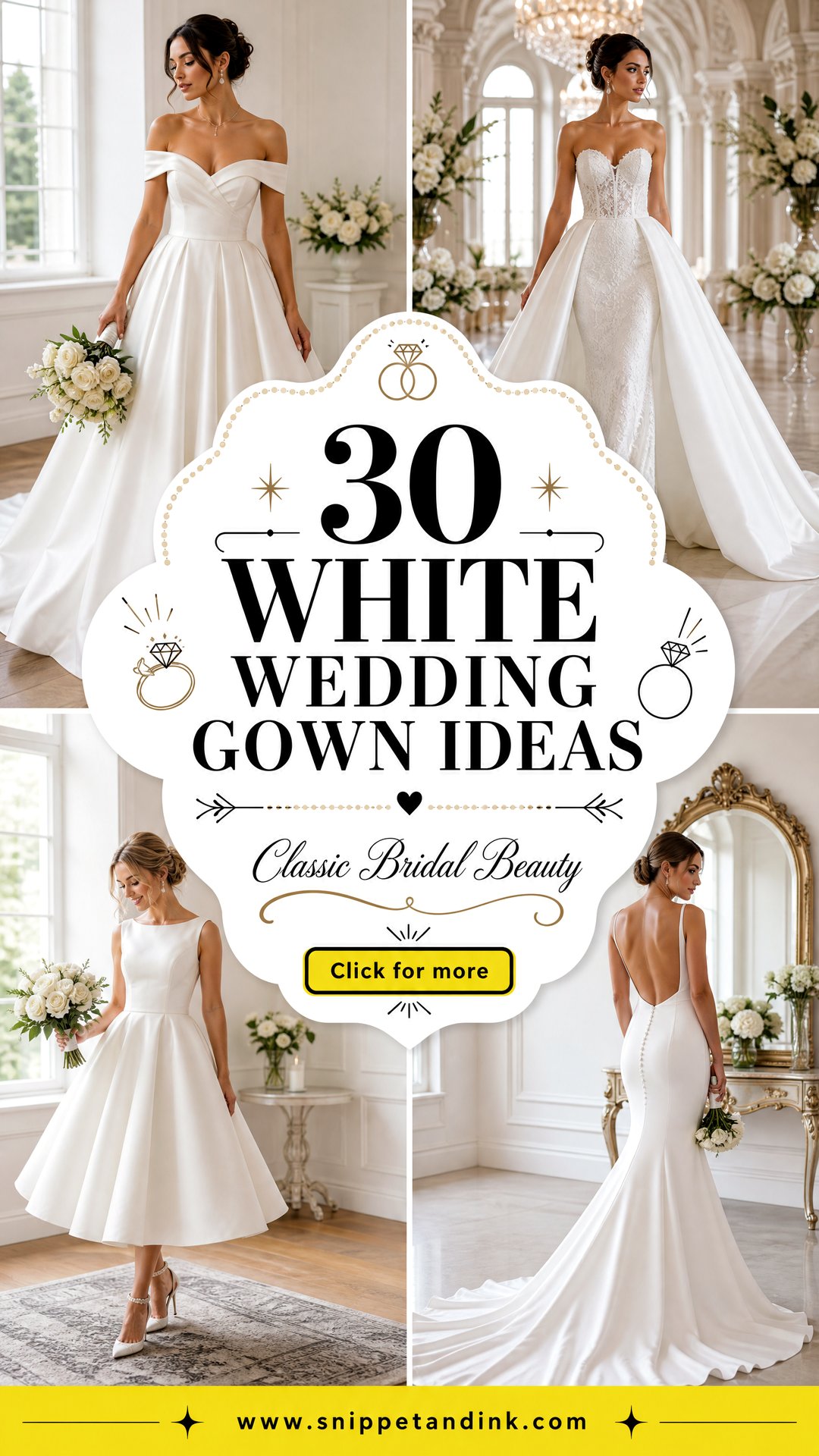
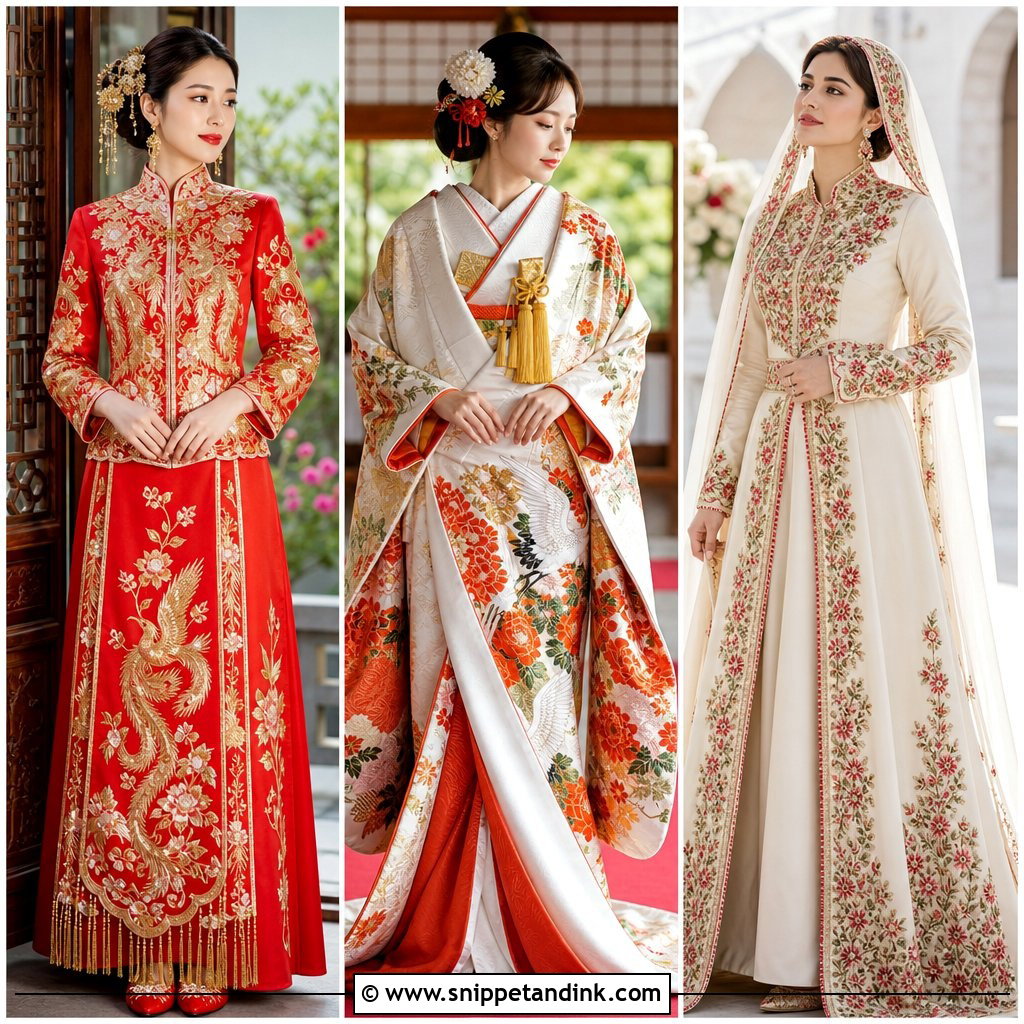
Most brides arrive at their first appointment with one silhouette in mind and leave having fallen for another. That’s normal. A gown that looks right on a hanger or a screen can feel wrong the moment you sit, climb a step or lift your arms, and the opposite happens just as often. Below are the thirty shapes and details I pull most: satin columns, lace sleeves, corset bodices, basque waists, tulle skirts, pearl work and short reception dresses. For each one I’ve noted what I check on a real body, because fit, fabric and movement decide far more than the photo does. Read them with your venue and your shoes in mind.
Shades of White Look Different in a Shop Mirror
Bridal white is not one colour. Every shop carries several, and the names vary by designer, but most fall into the same few families. I hold samples against a bride’s face in daylight before she tries anything on, because the wrong white can make skin look tired in photos.
- Pure or optic white is the brightest. It can look stark on very fair or warm skin, and it shows marks fastest.
- Diamond or natural white is a slightly softer white, often the default for satin and crepe. It suits most skin tones.
- Ivory has a creamy warmth. It flatters warmer and deeper complexions and reads classic in silk and lace.
- Ivory over champagne or nude lining looks white from across a room and warm up close. It makes lace patterns stand out.
Bridal shops are usually lit warm and bright, which flatters everything. Ask to stand by a window, or take a photo with your phone’s flash, to see how the shade reads in real light. Match your veil to the gown with a fabric swatch, not by eye; a veil that’s one shade whiter makes an ivory gown look yellowed in every picture.
1. White Satin Ball Gown
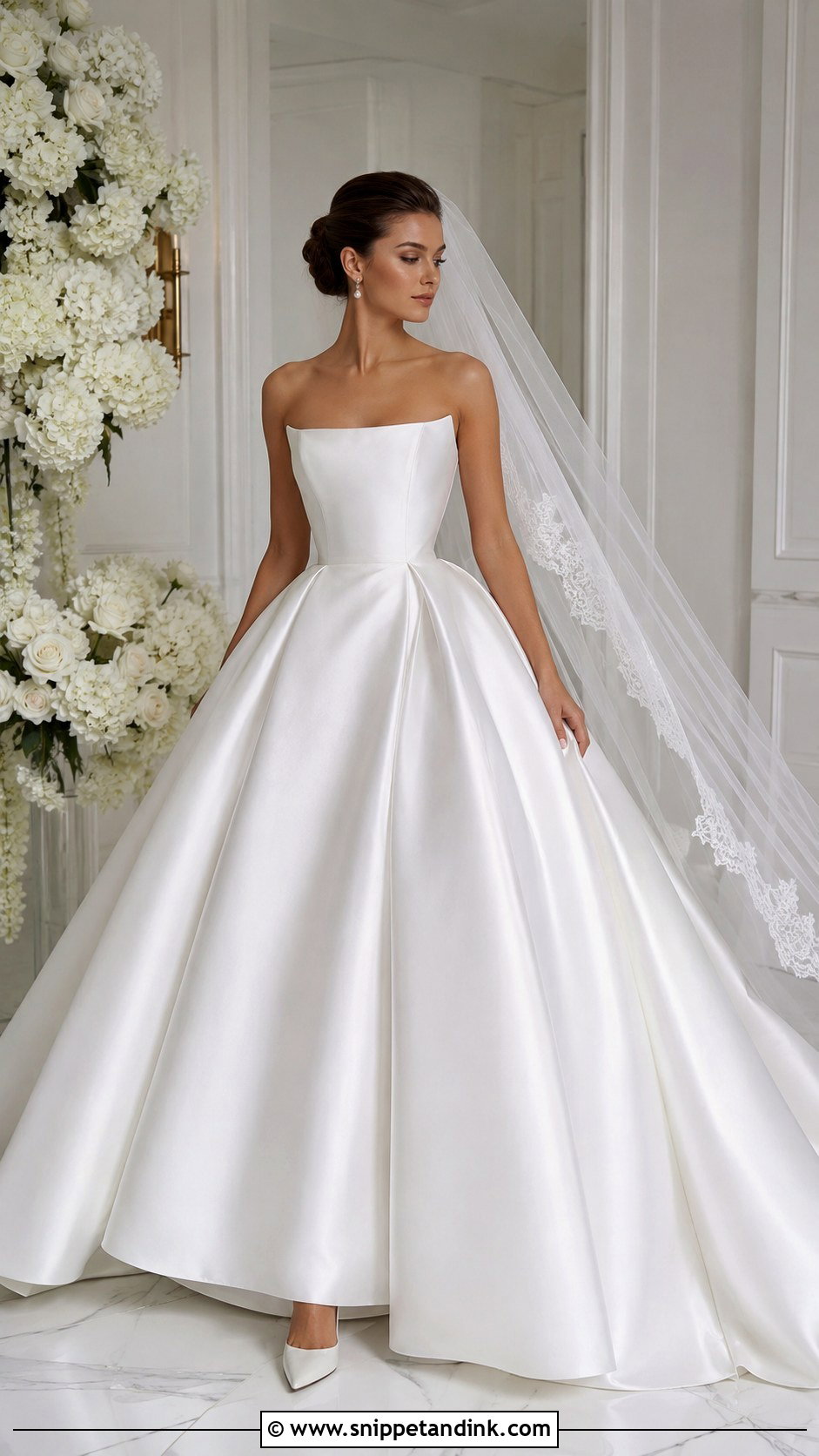
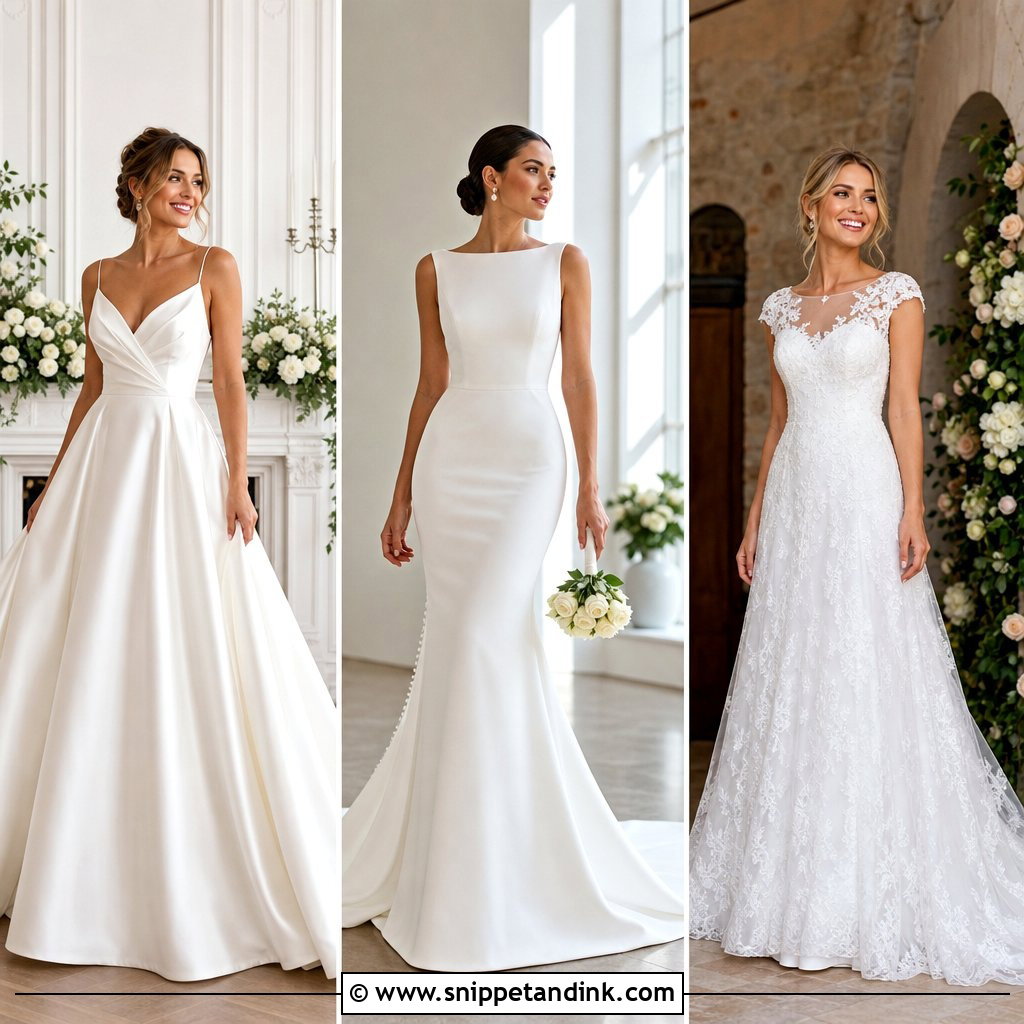
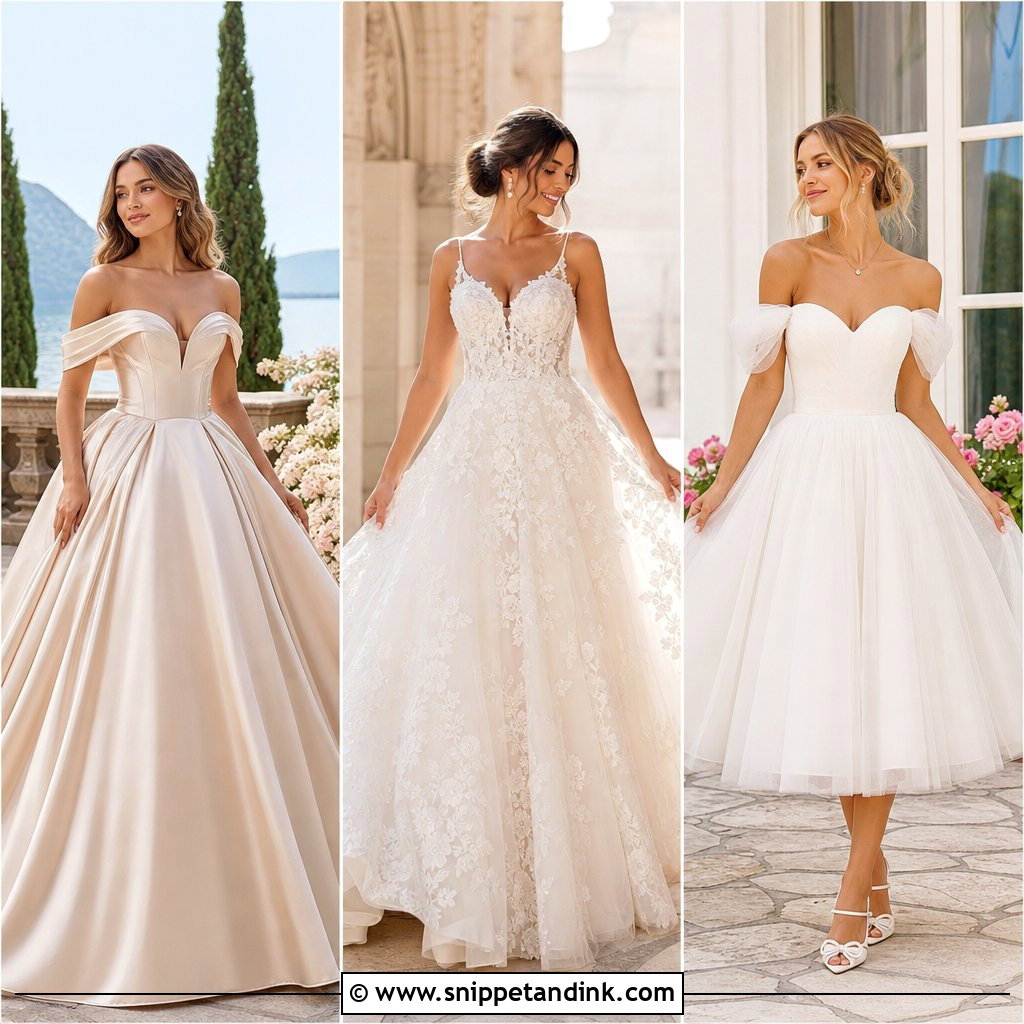
Satin is the fabric that shows fit most honestly. A white satin ball gown reflects light across the skirt, so any pull at the bodice seams shows up as a shiny ripple in photos. When it’s fitted properly, nothing feels more formal in a grand venue. I’d choose a structured bodice and a skirt with enough petticoat to hold its shape without a heavy crinoline. Pointed satin heels, pearl studs and a plain cathedral veil keep the line clean. With a strapless neckline, drop earrings or a slim tennis bracelet add enough light. Keep the bouquet small; the skirt is the statement.
2. White Lace Long Sleeve Gown
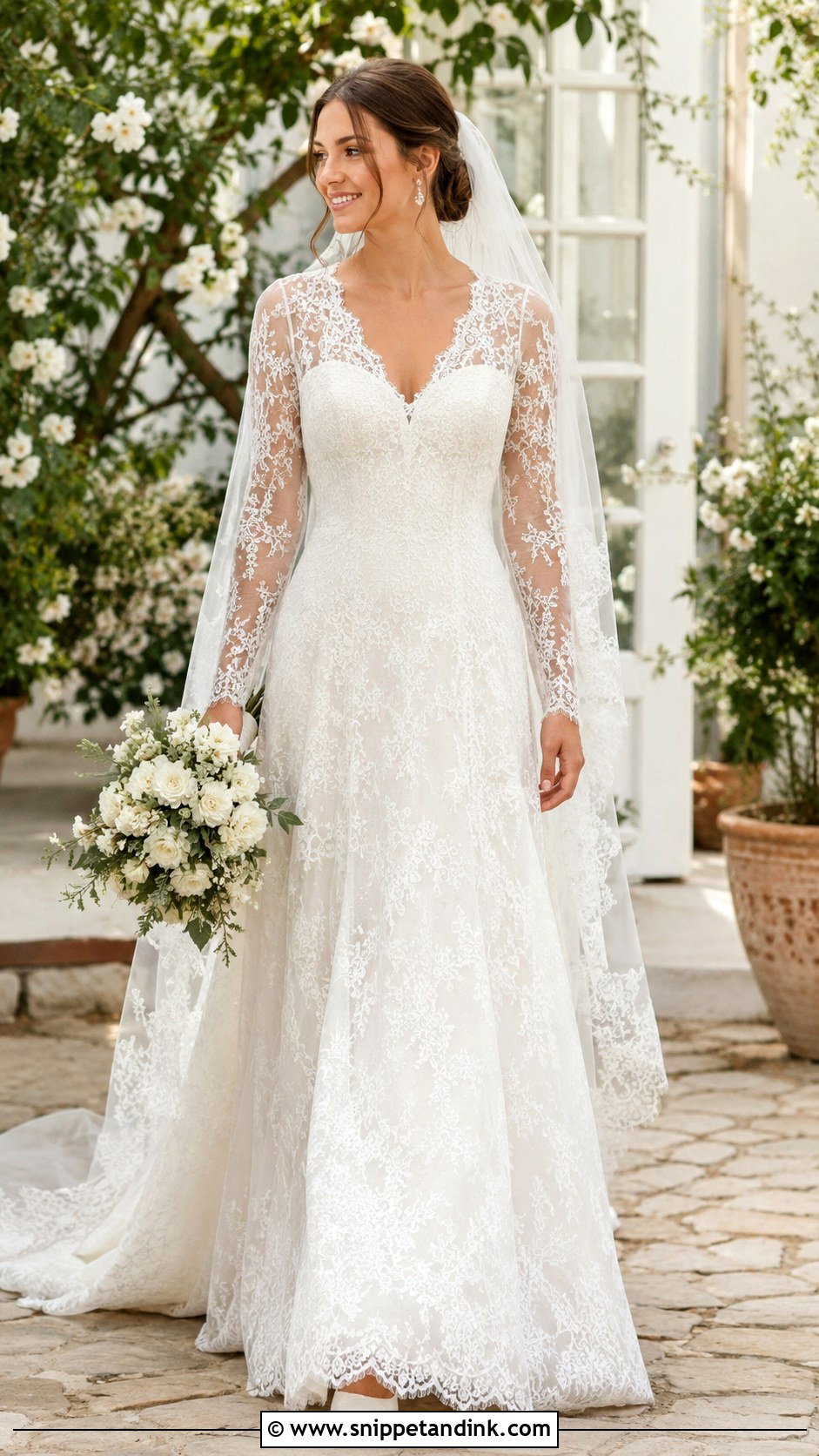
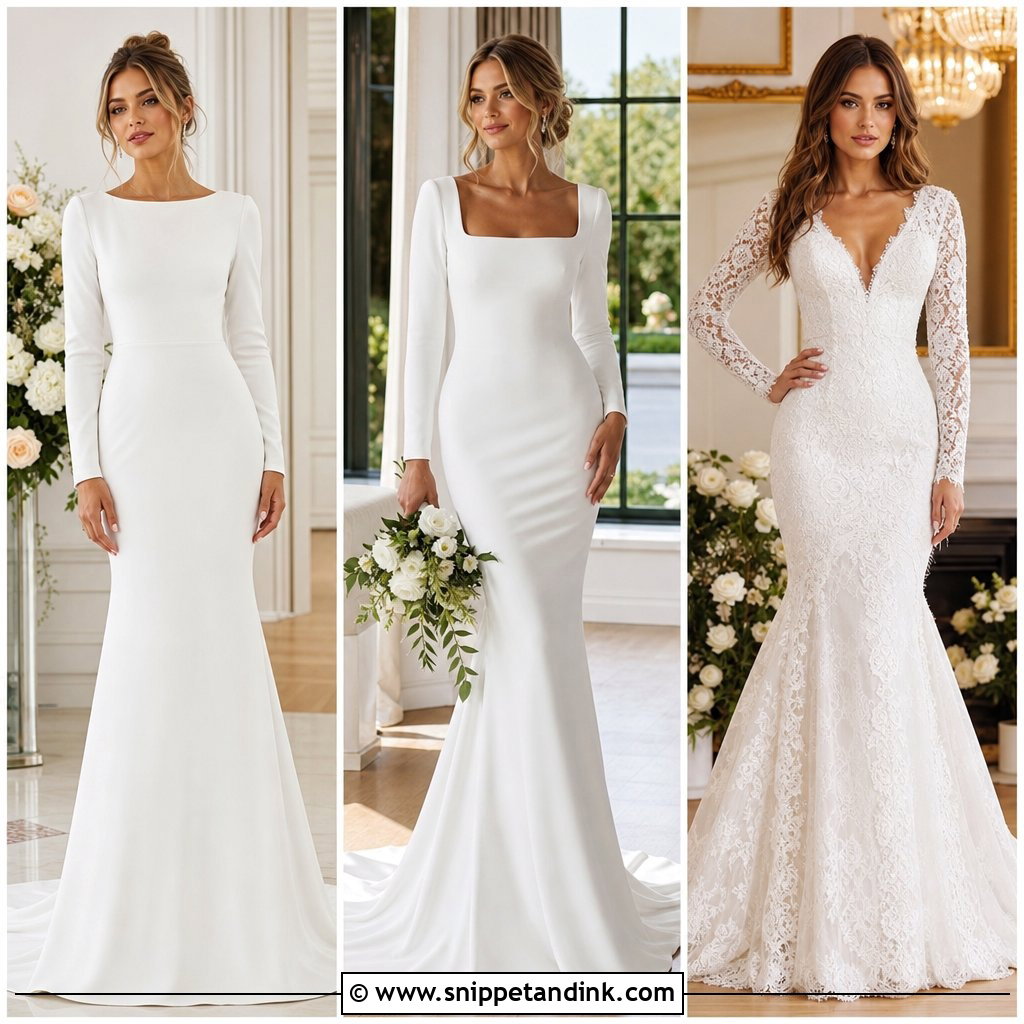
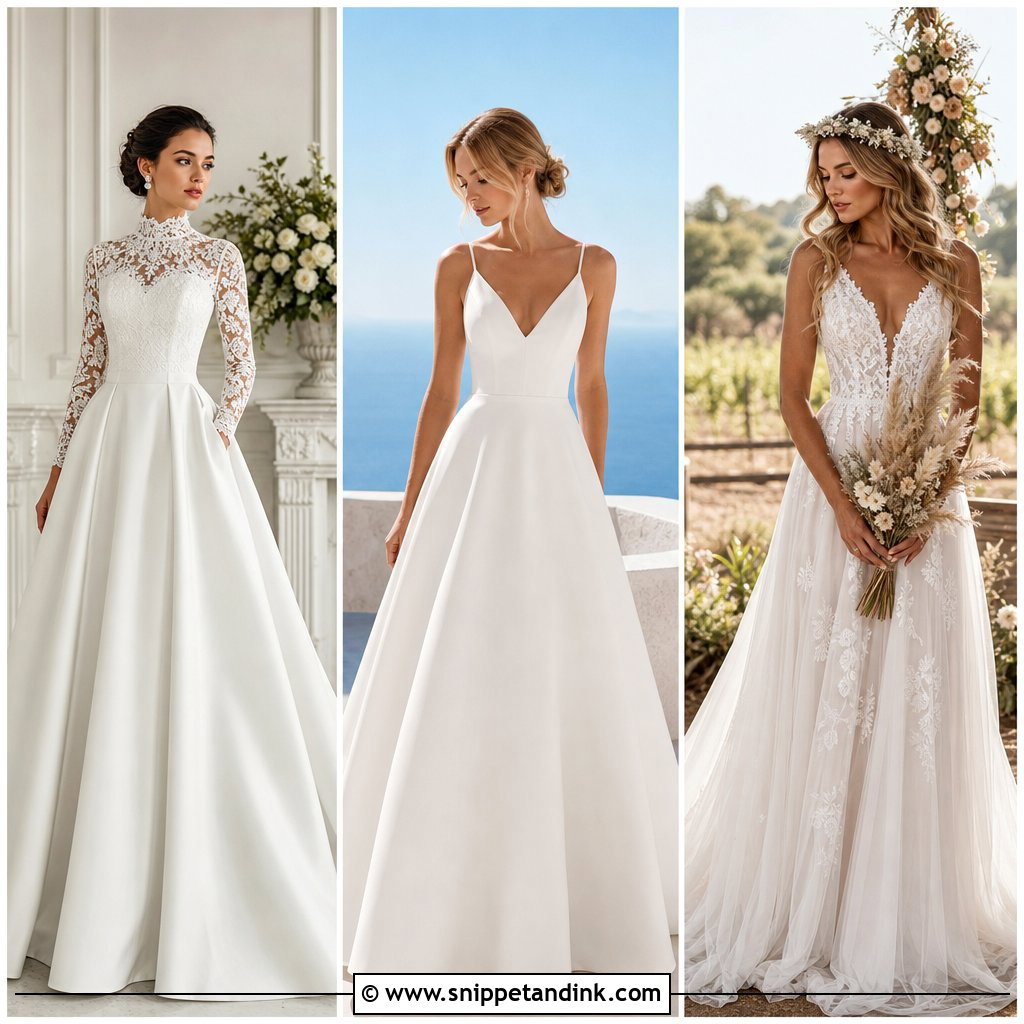
Lace sleeves are where I spend the most fitting time. They must let you raise your arms, hug and hold a bouquet without the shoulder seam cutting in. Sheer sleeves look airy; lined sleeves give a more traditional, covered finish. A scalloped neckline over a fitted bodice and flowing skirt frames the face well. Low pearl heels, a lace-edged veil and small crystal earrings suit it, and I’d keep the rest bare so the lace texture has space. Historic buildings and garden venues are where this one feels most at home.
3. White Minimalist Crepe Gown
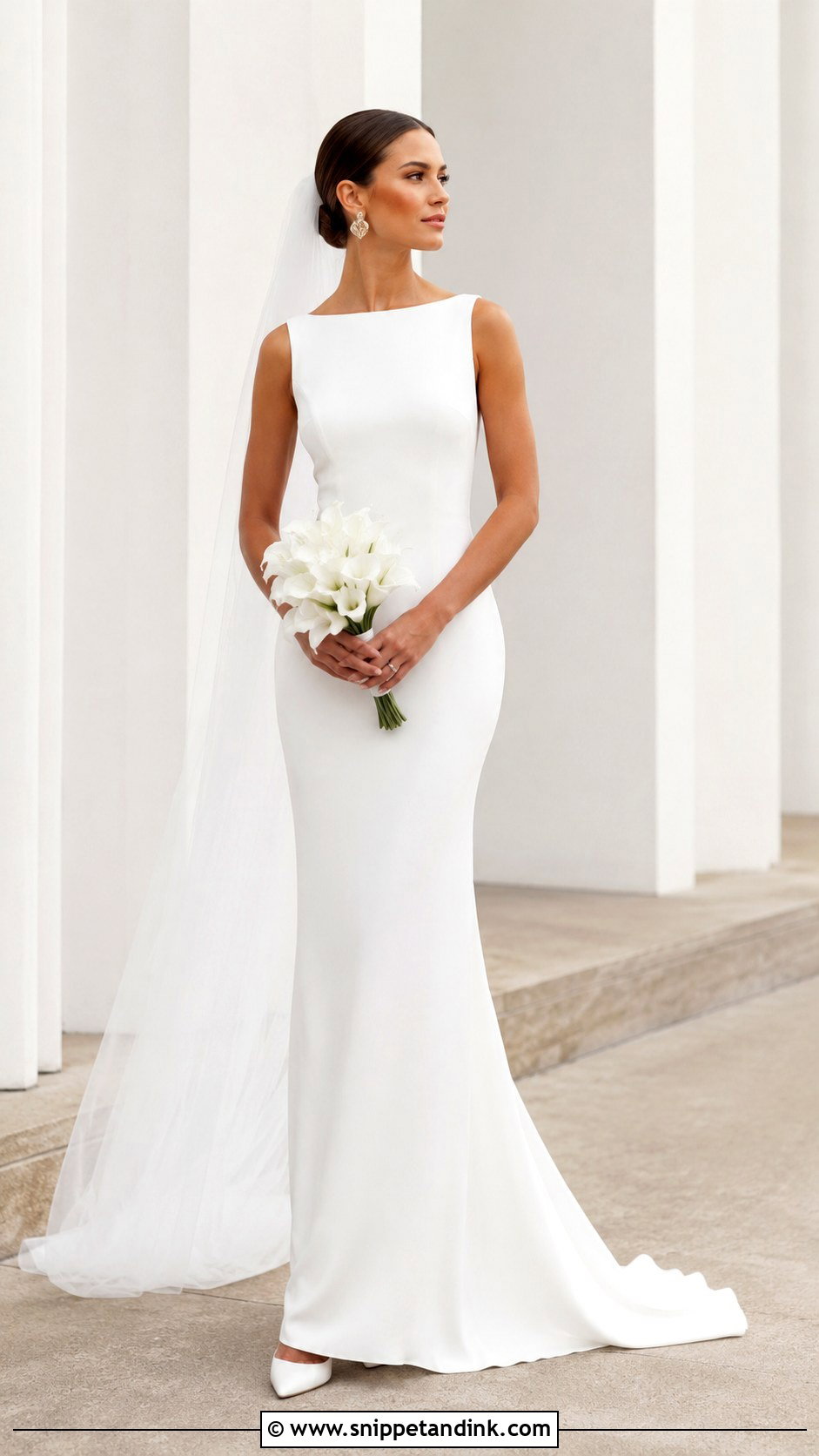
Crepe is unforgiving in one specific way: it shows everything underneath. With a minimalist crepe gown, I sort out the undergarments before the first fitting, because a visible line ruins the whole point of the dress. Its matte surface reads modern, and a square, bateau or slim-strap neckline keeps it fresh. Sleek white pumps, a smooth low bun and one sculptural pair of earrings finish it. A long plain veil adds drama without adding clutter. This is the gown for a bride who wants no lace, no sparkle and no layers.
4. White Strapless Corset Gown
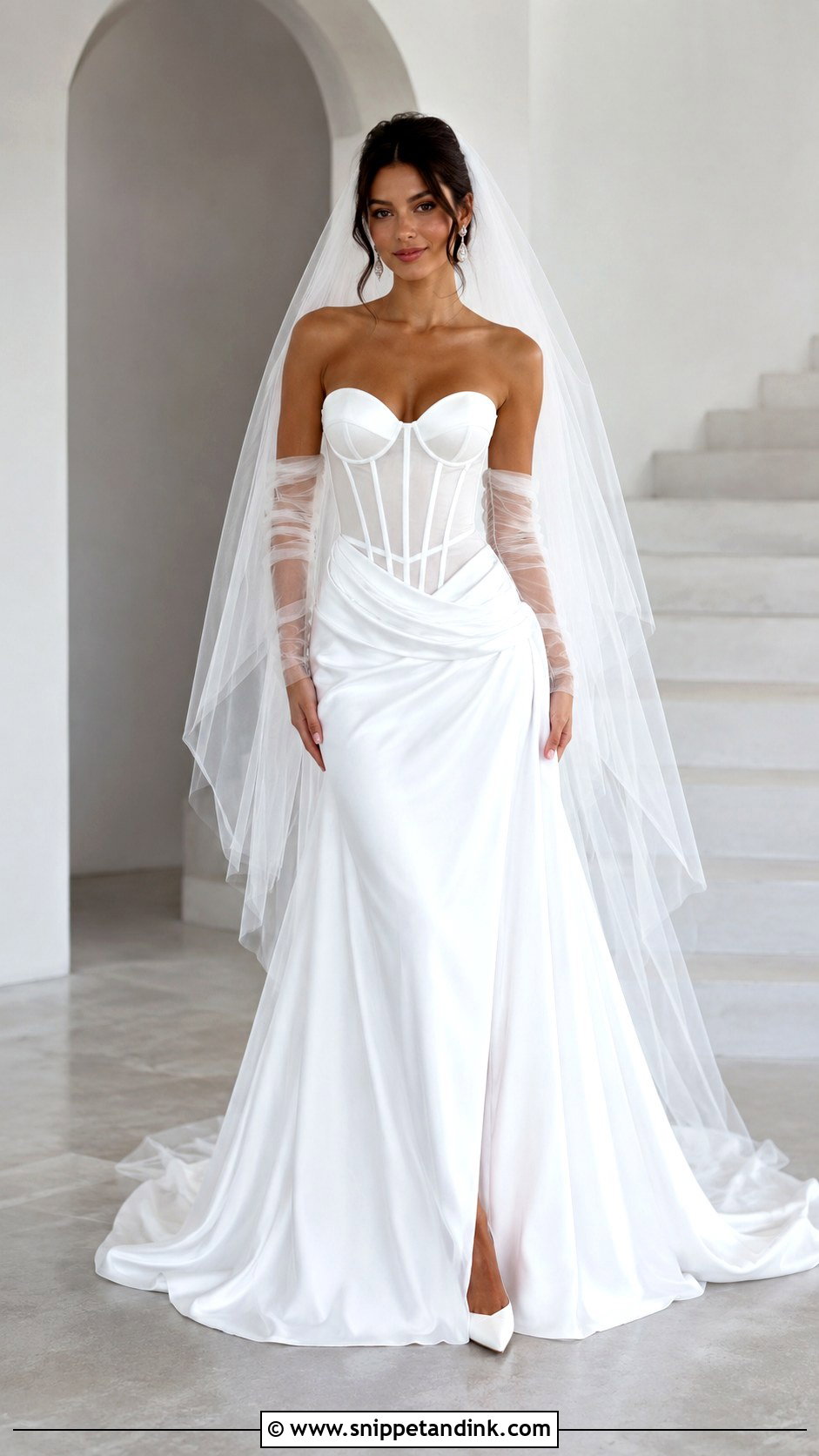
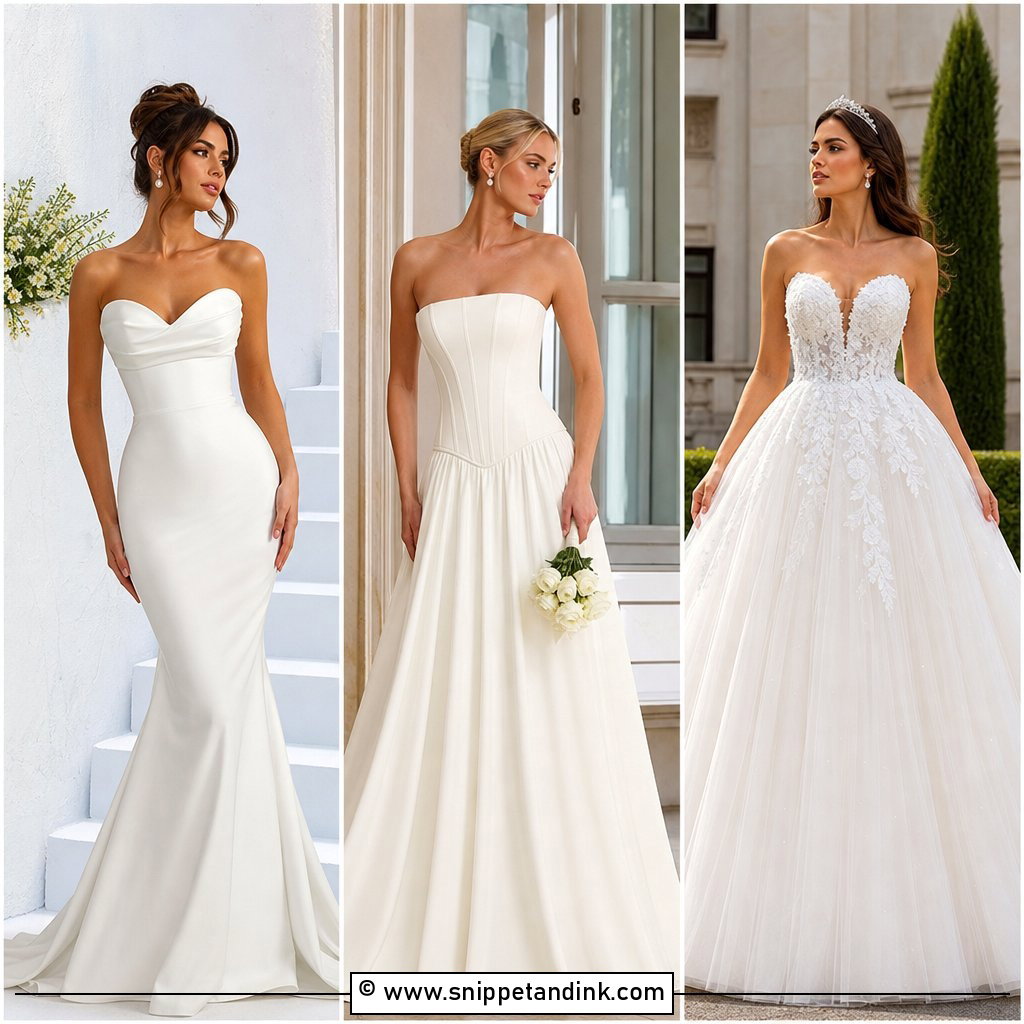
The real question with a white strapless corset gown is how it holds you up. Good corsetry grips at the waist and ribcage, so you never have to hitch the neckline. Visible boning looks fashion-led in satin, mikado or lace. The skirt can be slim, A-line or full. Pointed heels and delicate drop earrings suit every version, with either a short veil or a long sheer one. If you want more coverage for a religious ceremony, detachable off-the-shoulder sleeves or a sheer wrap solve it without changing gowns. Sit and eat during your fitting; a corset that’s too tight at the waist will tell you within ten minutes.
5. White Basque Waist Gown
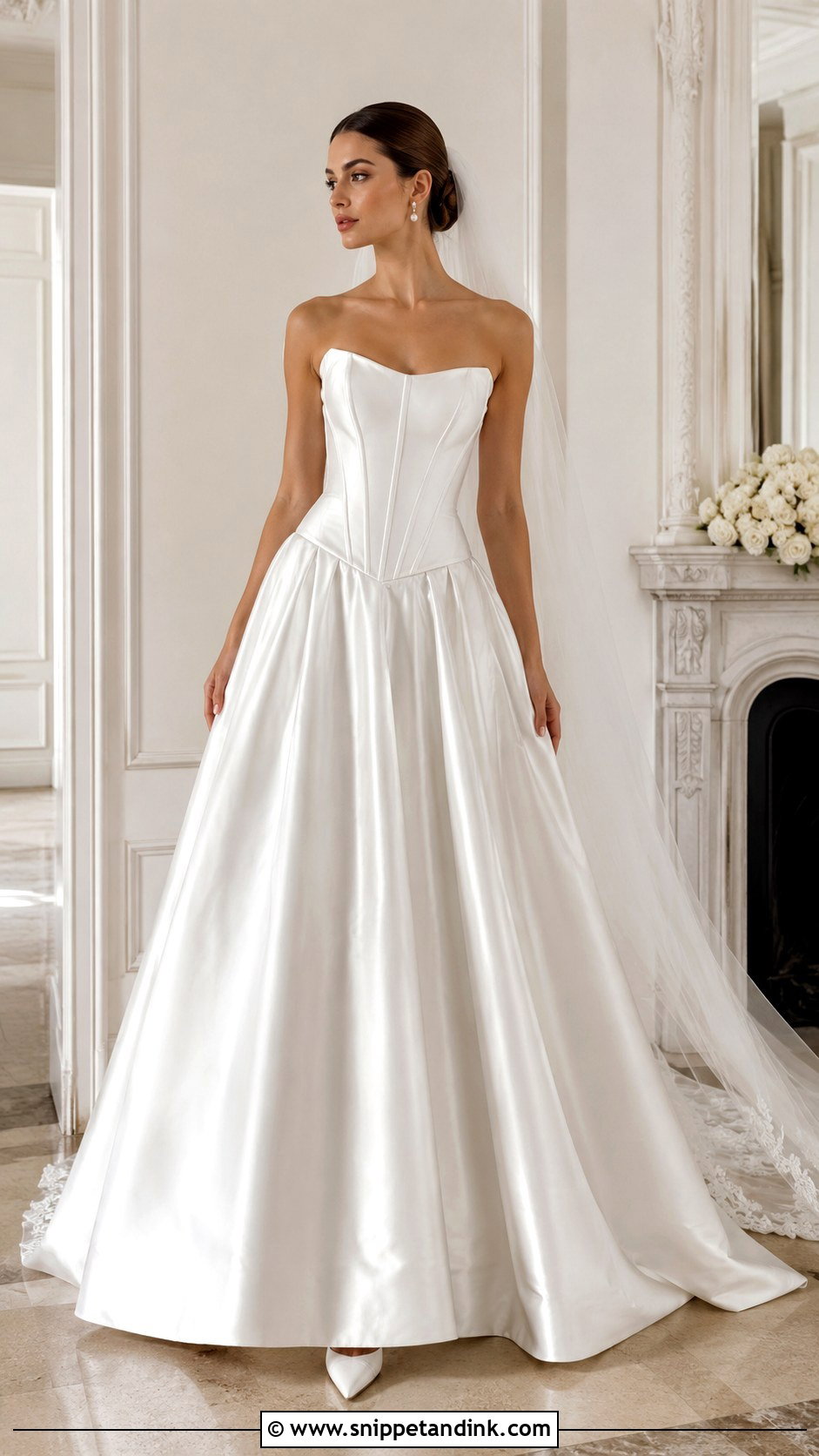
A basque waist dips into a point or a U below the natural waistline, and it lengthens the torso noticeably. I find it most flattering on brides with a shorter waist, because it adds visual length where they need it. Pair it with a corset bodice and full skirt for a regal effect, or a softer A-line for easier movement. Avoid belts or heavy embellishment at the middle; the dip is the detail. Satin heels, pearl earrings and a long veil set just behind the crown keep the line uninterrupted.
6. White Off Shoulder Gown
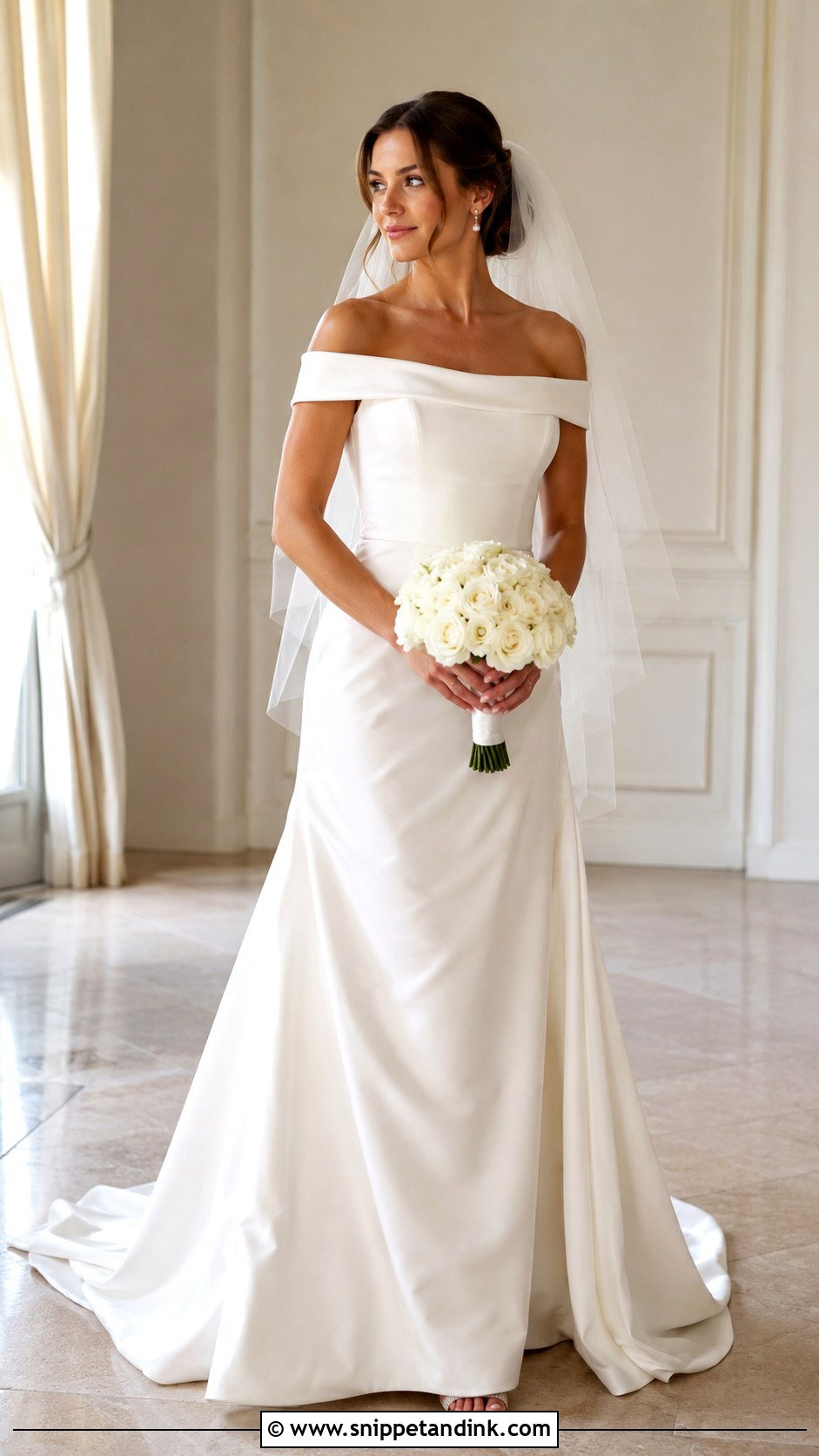
Off-the-shoulder necklines are flattering, but they do restrict how high you can lift your arms, so try a full hug at the fitting. Satin makes them formal, lace makes them sweeter and crepe keeps them sleek. A neat updo, pearl drops and elegant heels keep the collarbone open. I’d pick a medium-length veil so the shoulders stay visible. For a cooler season, detachable sleeves or a matching wrap give you warmth without losing the neckline in photos.
7. White A Line Tulle Gown
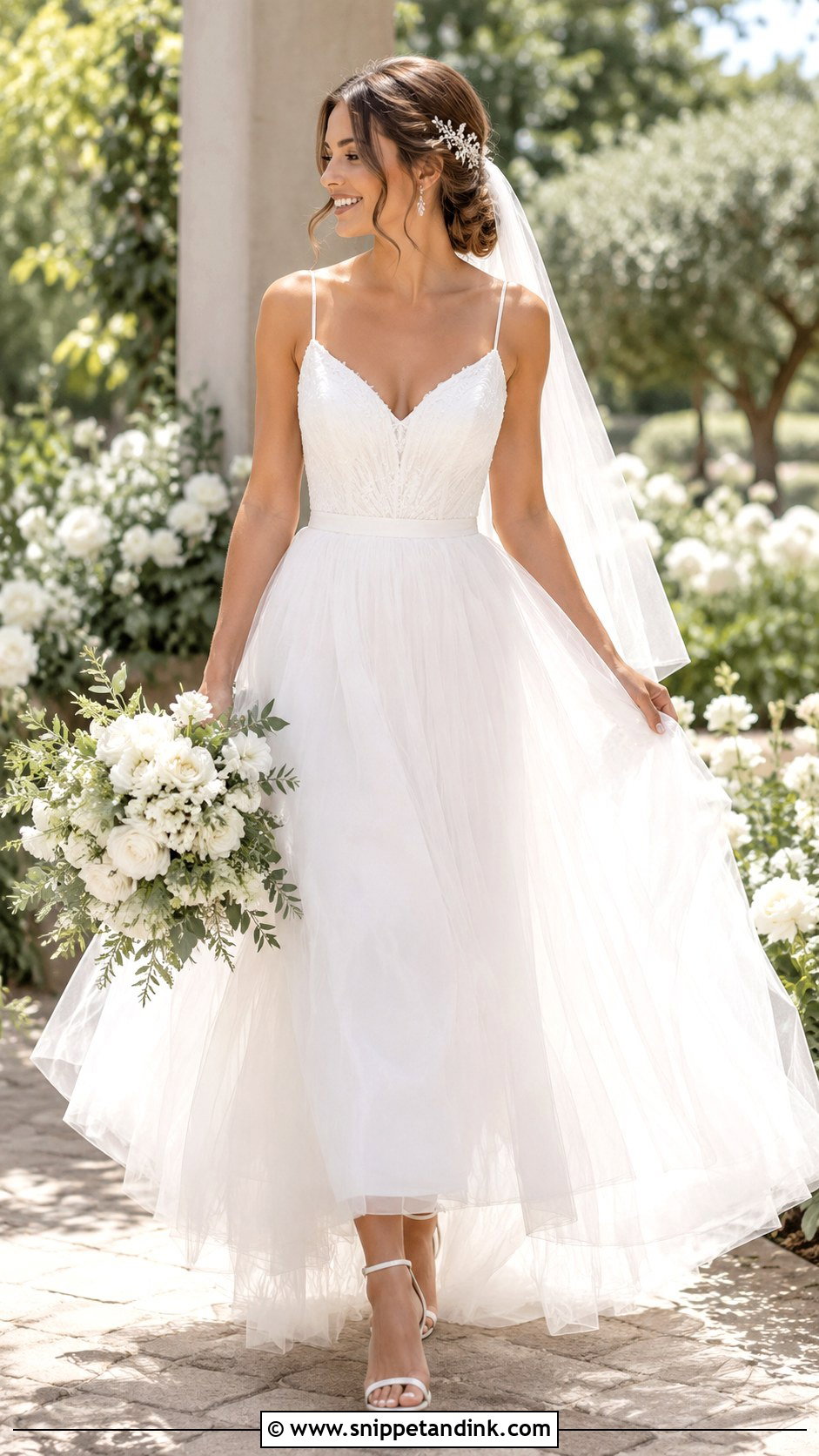
A-line tulle is the shape I recommend most often to brides who aren’t sure where to start. It defines the waist and then falls away from the hips without clinging. The quality of the tulle matters: several layers of soft, fine tulle move like air, while stiff netting looks puffy and crackles when you walk. Ankle-strap heels keep you steady on uneven ground, and dainty earrings with a soft veil finish it. If the bodice is plain, a small floral pin in the hair works. Outdoor weddings suit this gown best.
8. White Mermaid Wedding Gown
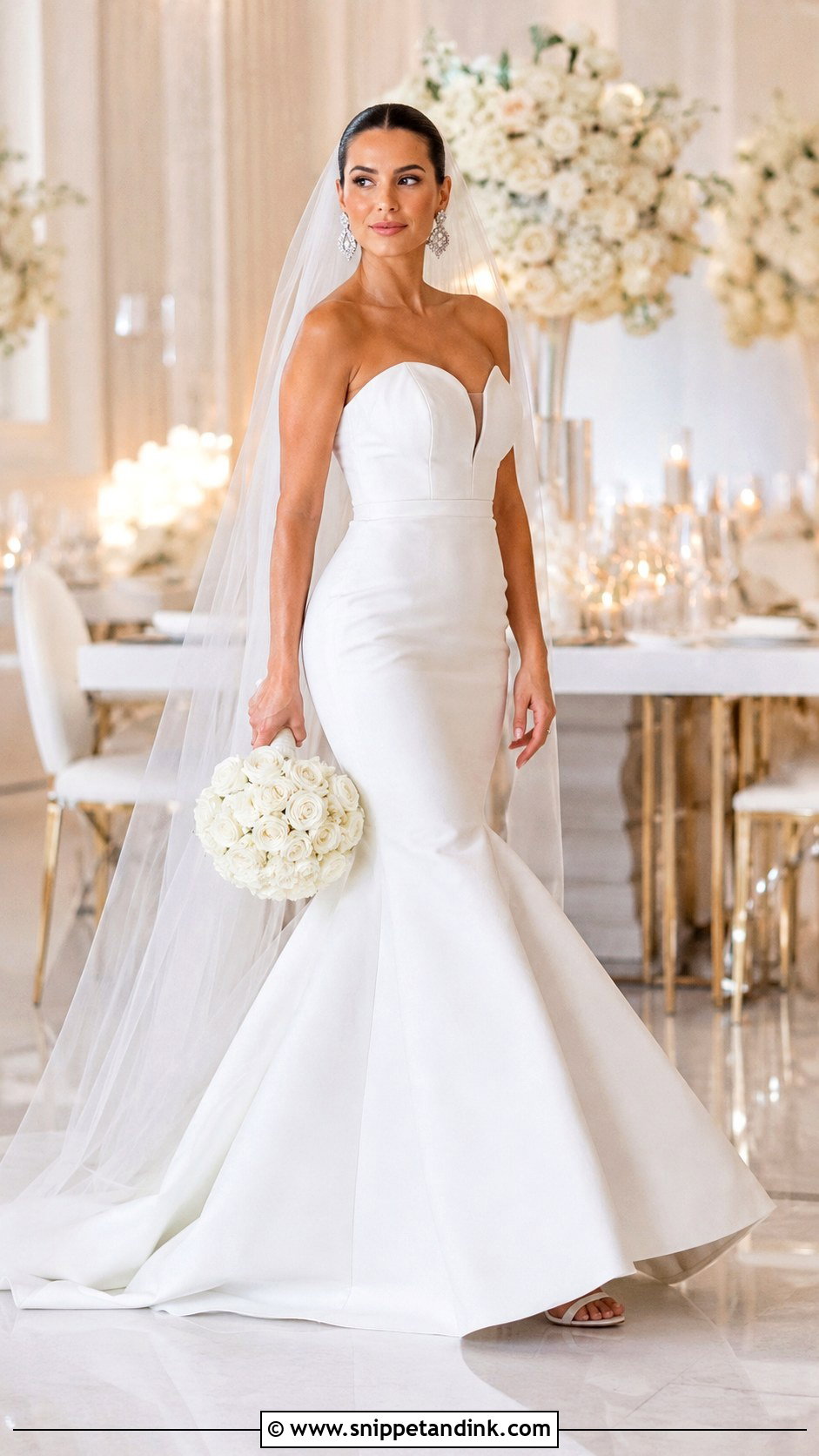
Mermaid gowns follow the body to the knee or just below, then flare. They’re glamorous, and they ask more of you than any other shape here. I always have brides sit, walk a few steps and try a dance move at the fitting. Stretch crepe is the most comfortable version; satin adds shine and lace adds texture. High heels, statement earrings and a sleek veil falling behind the shoulders suit it. Keep the bouquet and jewelry clean. If climbing stairs means lifting the whole skirt, ask whether the flare can be lowered slightly.
9. White Column Wedding Gown
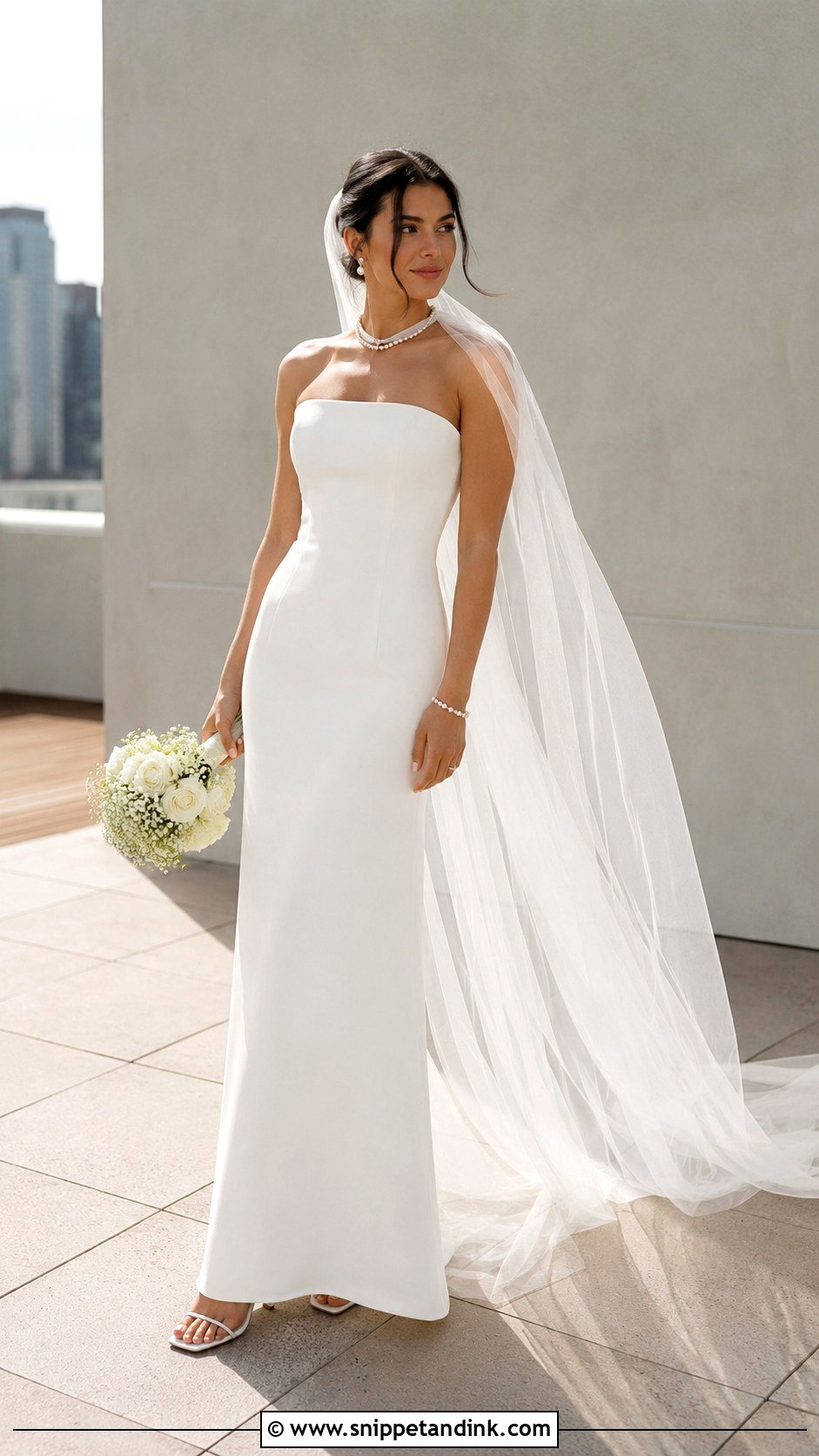
A column gown falls close to the body without a flare, so the cut and the fabric do all the work. When the fit is precise, it looks expensive; when the hips or hem are off by a little, it looks unfinished. High, square or cowl necklines all suit the shape. Strappy heels, a small structured clutch for portraits and clean gold or pearl jewelry finish it. A fingertip or cape veil adds movement without breaking the line. City hotels and rooftops are where I’d put this one.
10. White Slip Wedding Gown
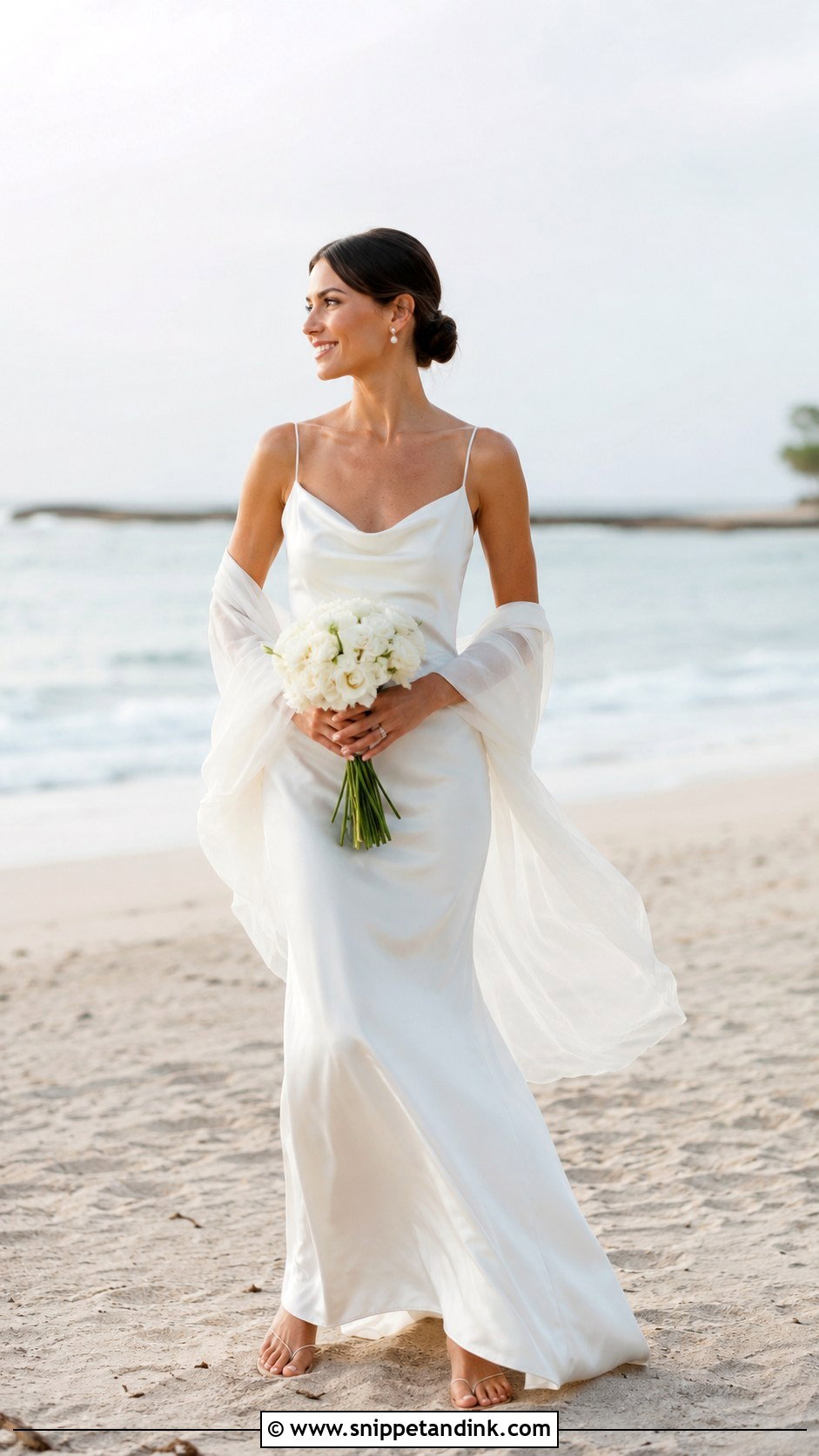
Slip gowns are cut on the bias, which is what makes them pour over the body, and also what makes them stretch and twist if the hem isn’t left to hang before it’s finished. Silk or satin gives the movement, especially with a cowl neckline or fine straps. Barely-there heels, pearl studs and a chiffon shawl for the ceremony suit it, with soft waves or a low bun. Tailoring matters more here than on any structured gown: the length, the bust fit and the drape have to be exact. It suits beaches, courthouses and small dinners.
11. White High Neck Gown
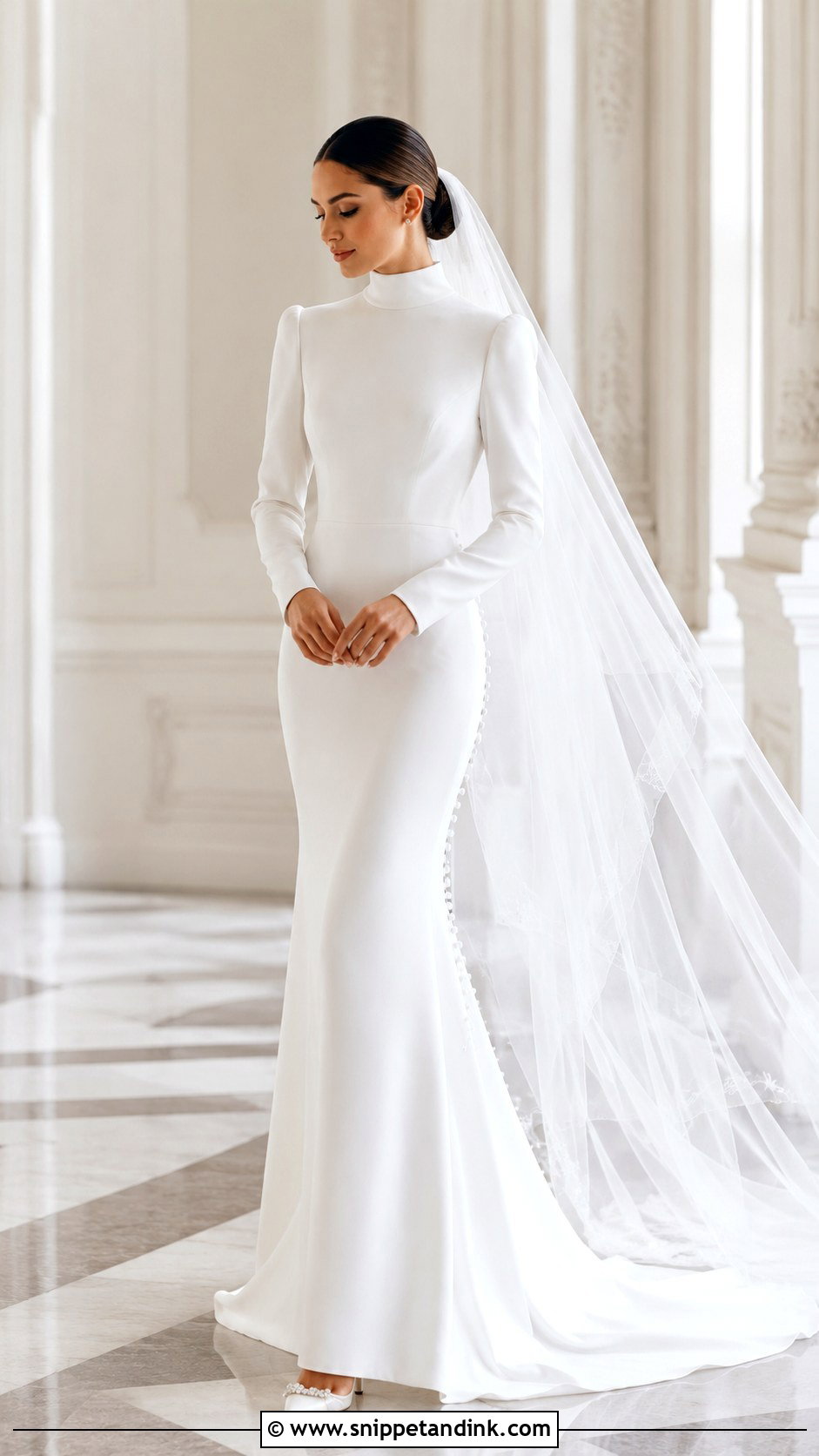
A high neck pulls the eye up to the face and makes the shoulders look long. Crepe versions read modern; lace versions feel vintage. Skip the necklace, wear a sleek bun and keep the earrings small. Pointed heels balance the covered top. The interest usually sits at the back, in buttons or an open keyhole, and that’s where I’d let a long veil fall. One practical note: a high neck in summer heat can feel close, so check the lining fabric and choose a breathable one.
12. White Square Neck Gown
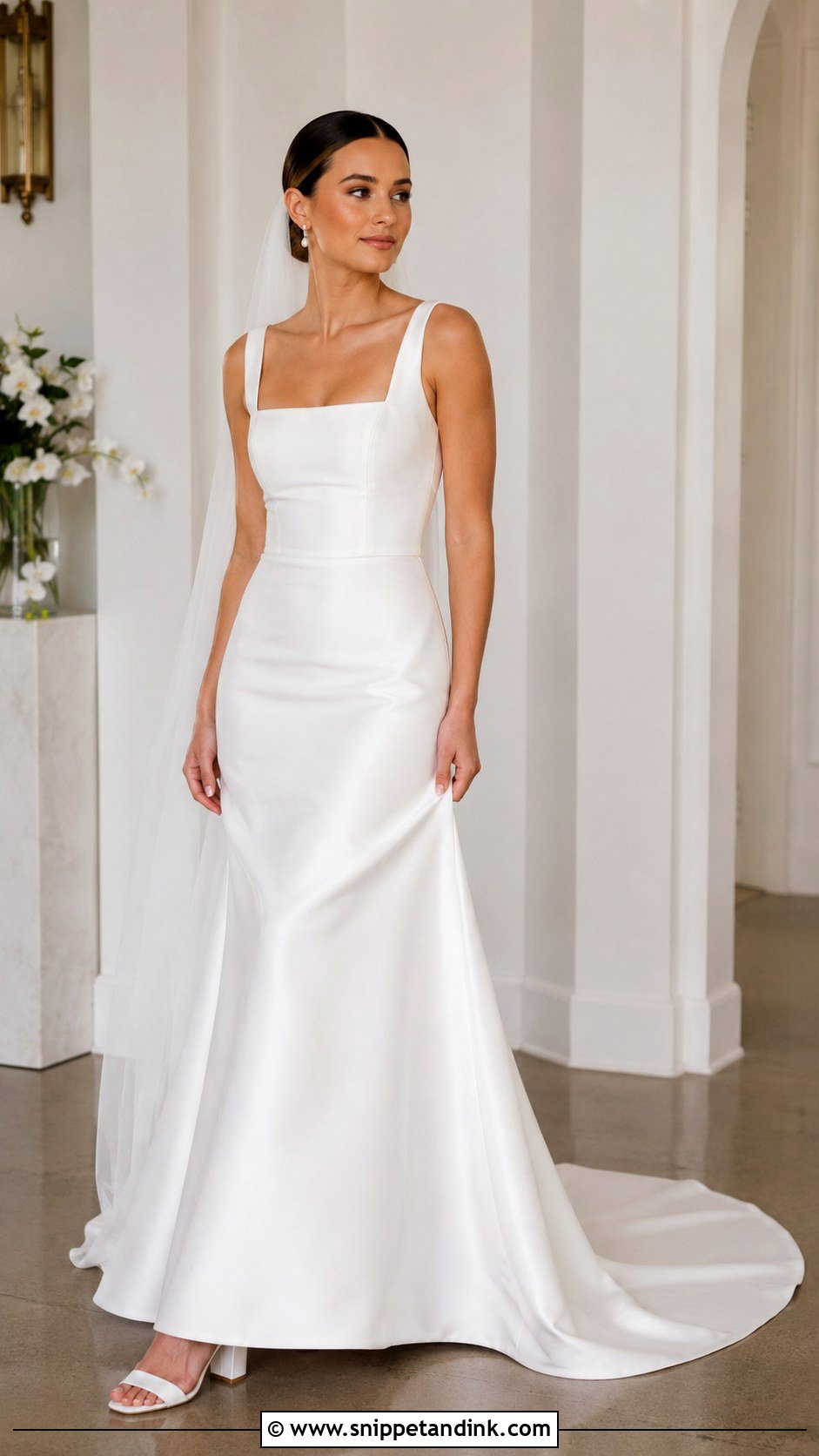
Square necklines suit almost everyone, which is why I keep at least one in every pull. The straight edge frames the collarbone and gives the dress an architectural feel in satin, crepe, mikado or lace. Slim straps look modern; wider straps give a bigger bust more support. Block heels, pearl earrings and a smooth veil that doesn’t crowd the neckline finish it, with a soft updo or tucked-back waves. It’s traditional enough for a church and plain enough for a garden.
13. White V Neck Wedding Gown
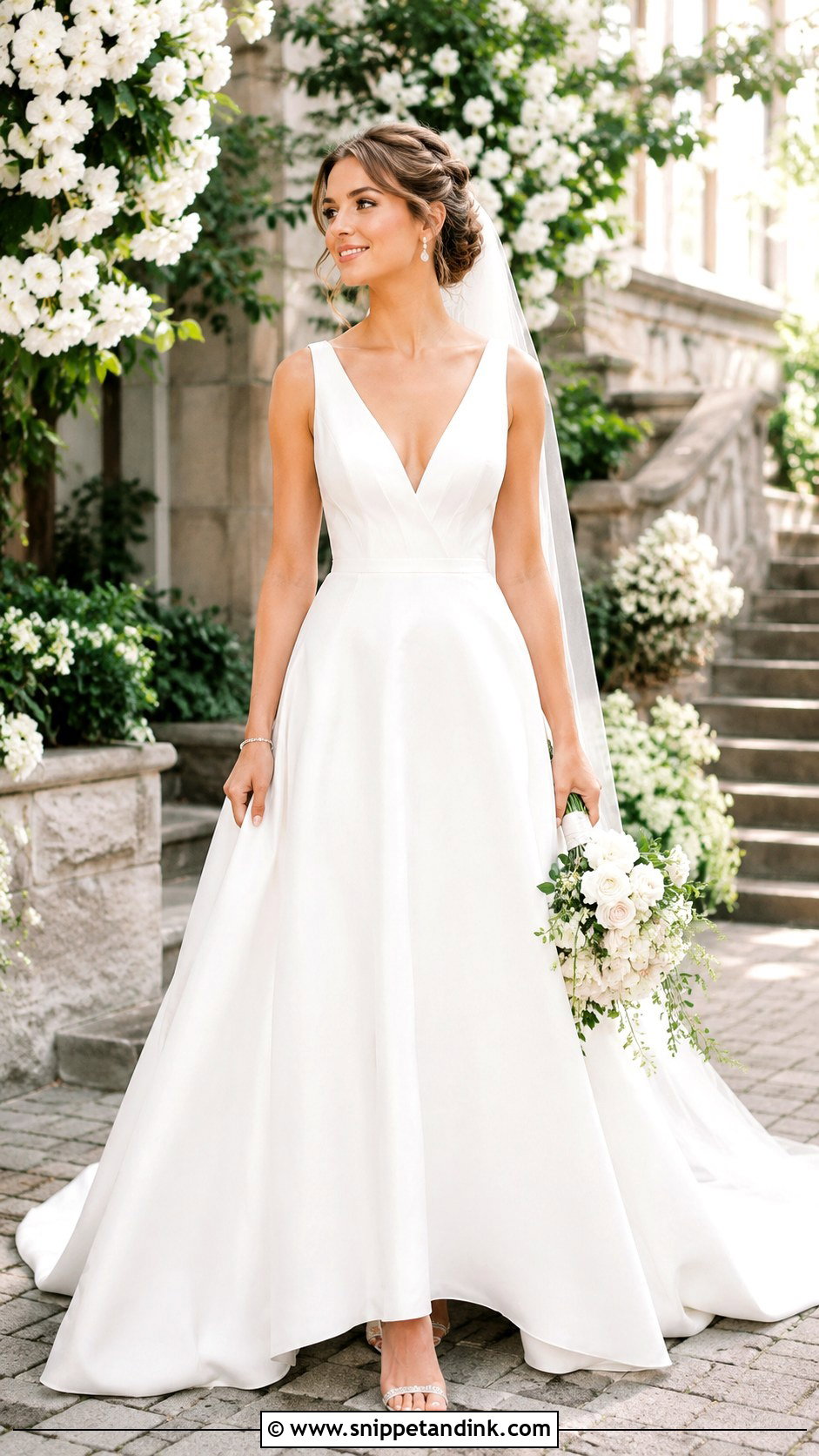
A V neck lengthens the upper body. A shallow V is classic and easy; a deep V needs construction, usually a mesh panel or built-in cups, and I’d ask for both rather than relying on tape. An A-line skirt makes it romantic, a fitted skirt makes it sleek. Choose earrings that echo the V, like a slim drop, and keep the bracelet thin. I find a deep V works best on a smaller bust; on a fuller bust I usually suggest a softer V so you can move freely all night.
14. White Halter Wedding Gown
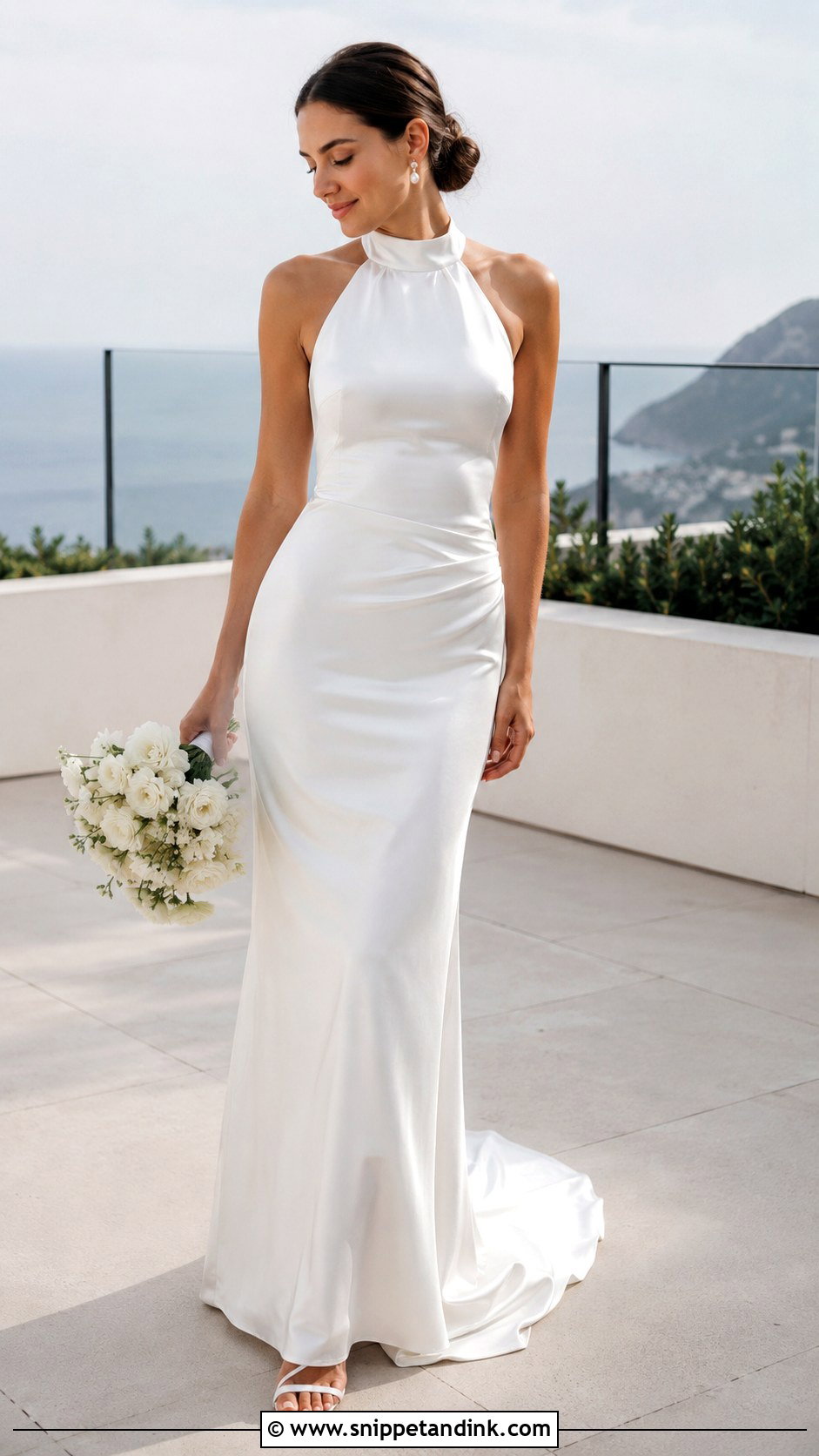
Halters show the shoulders and frame the face, and they feel clean and slightly sporty. Satin reads evening; lace reads softer. Wear the hair low, in a bun, so the neck strap isn’t hidden, and skip the necklace. A veil set low at the back of the head sits beneath the halter line. Check the strap at the neck on a long day; a heavy skirt hangs partly from it, and a thin strap can start to dig in by the reception.


15. White One Shoulder Gown
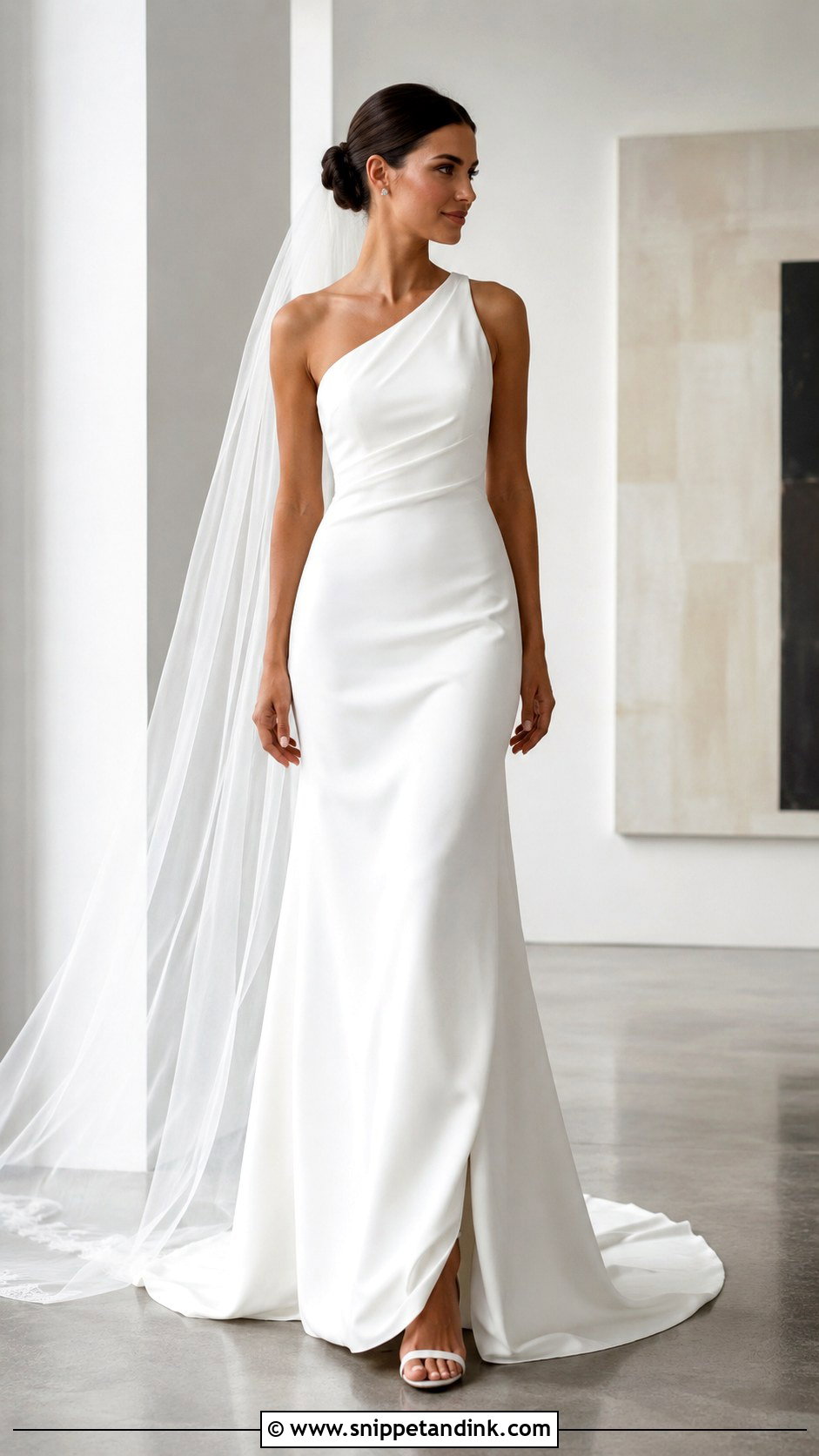
One-shoulder gowns are asymmetric by design, so I keep the jewelry asymmetric too: a single statement earring on the bare side, or small matching studs if you’d rather not commit. Crepe, satin and mikado all hold the angled neckline cleanly. A slim skirt keeps it sleek; an A-line softens it. No necklace. A polished bun or side-parted waves finish it. Ask your photographer to favour your open shoulder in portraits, since one side of this gown always looks stronger.
16. White Beaded Wedding Gown
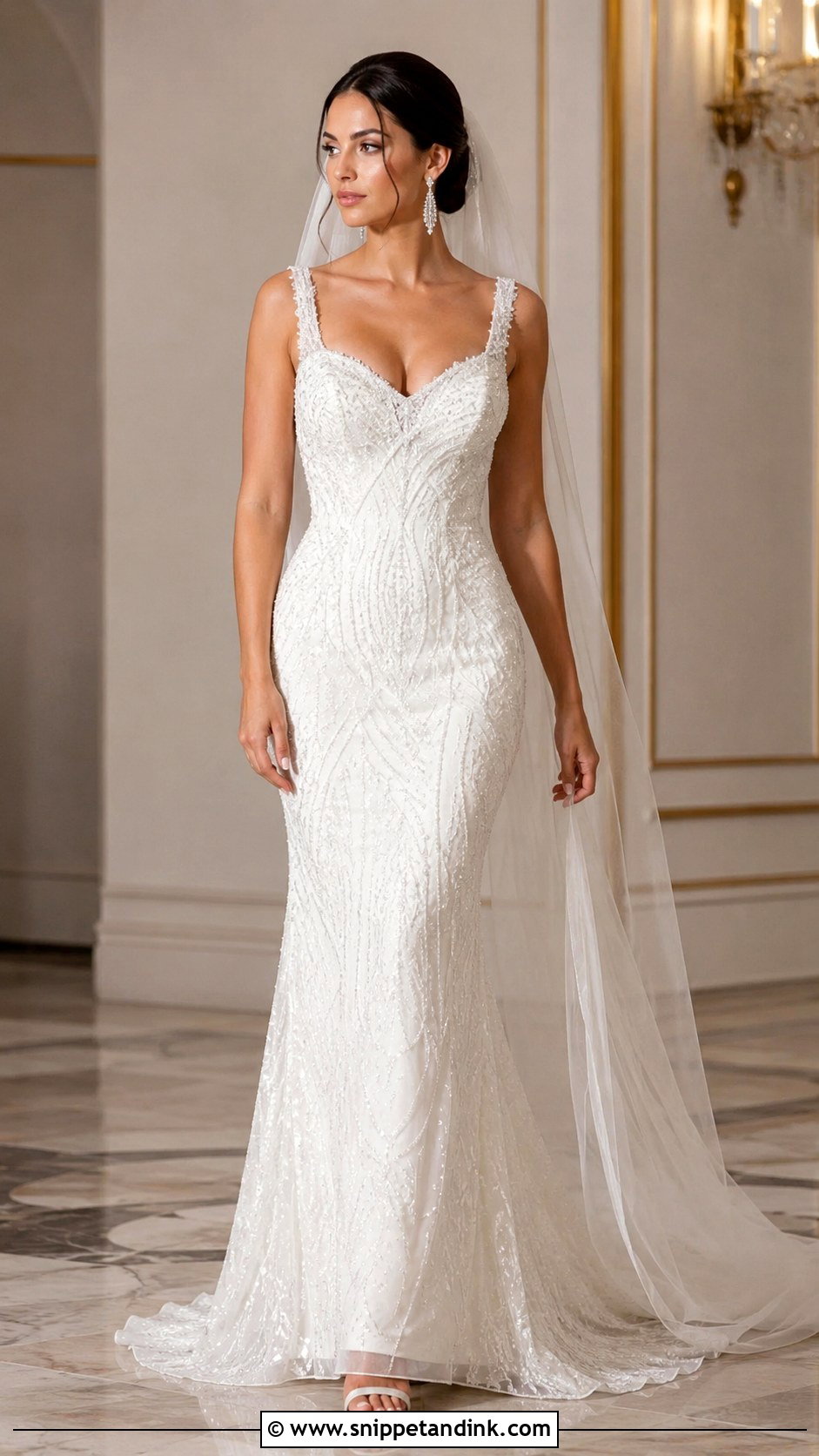
Beading looks refined when it follows the lines of the gown, the bodice seams, the waist or the fall of the skirt, and messy when it’s scattered evenly everywhere. That’s my first check. A fitted beaded gown reads glamorous; a beaded A-line reads classic. Satin heels, small crystal earrings and a plain veil let the beading carry the light. Beaded bodices are heavy and need firm structure to stay put, and they usually need specialist cleaning afterward. It’s at its best under evening and ballroom lighting.
17. White Pearl Wedding Gown
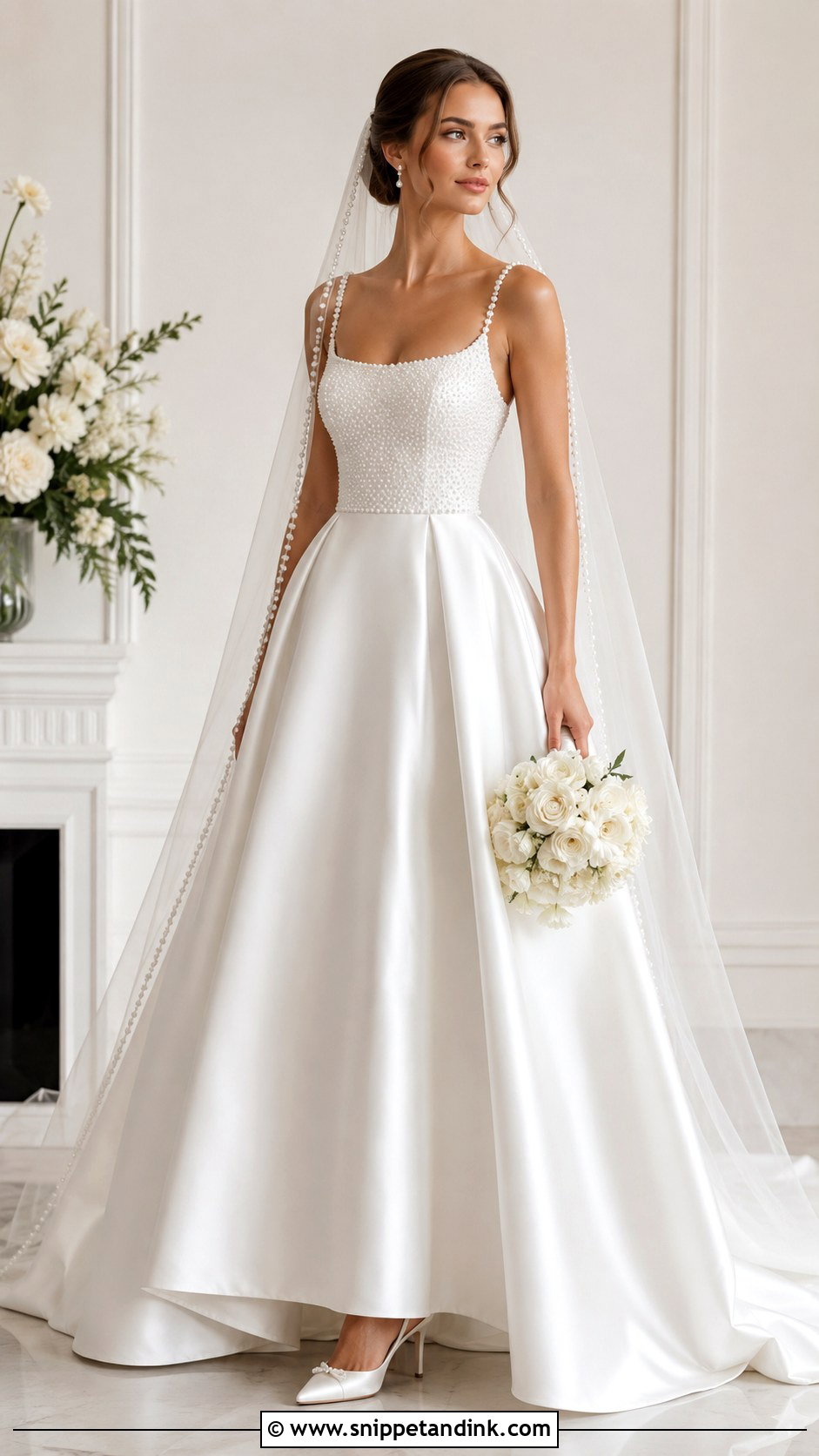
Pearls give a soft glow rather than sparkle, and they can sit on the bodice, sleeves, straps or veil. A clean silhouette makes them feel modern; a tulle skirt makes them romantic. Choose pearl earrings and satin shoes to tie it together, but don’t stack pearls everywhere: if the gown and veil both have them, keep the jewelry plain. Sewn-on pearls can snag on lace or catch hair, so I check where the veil sits against them. Natural daylight shows pearl detail best.
18. White Floral Applique Gown
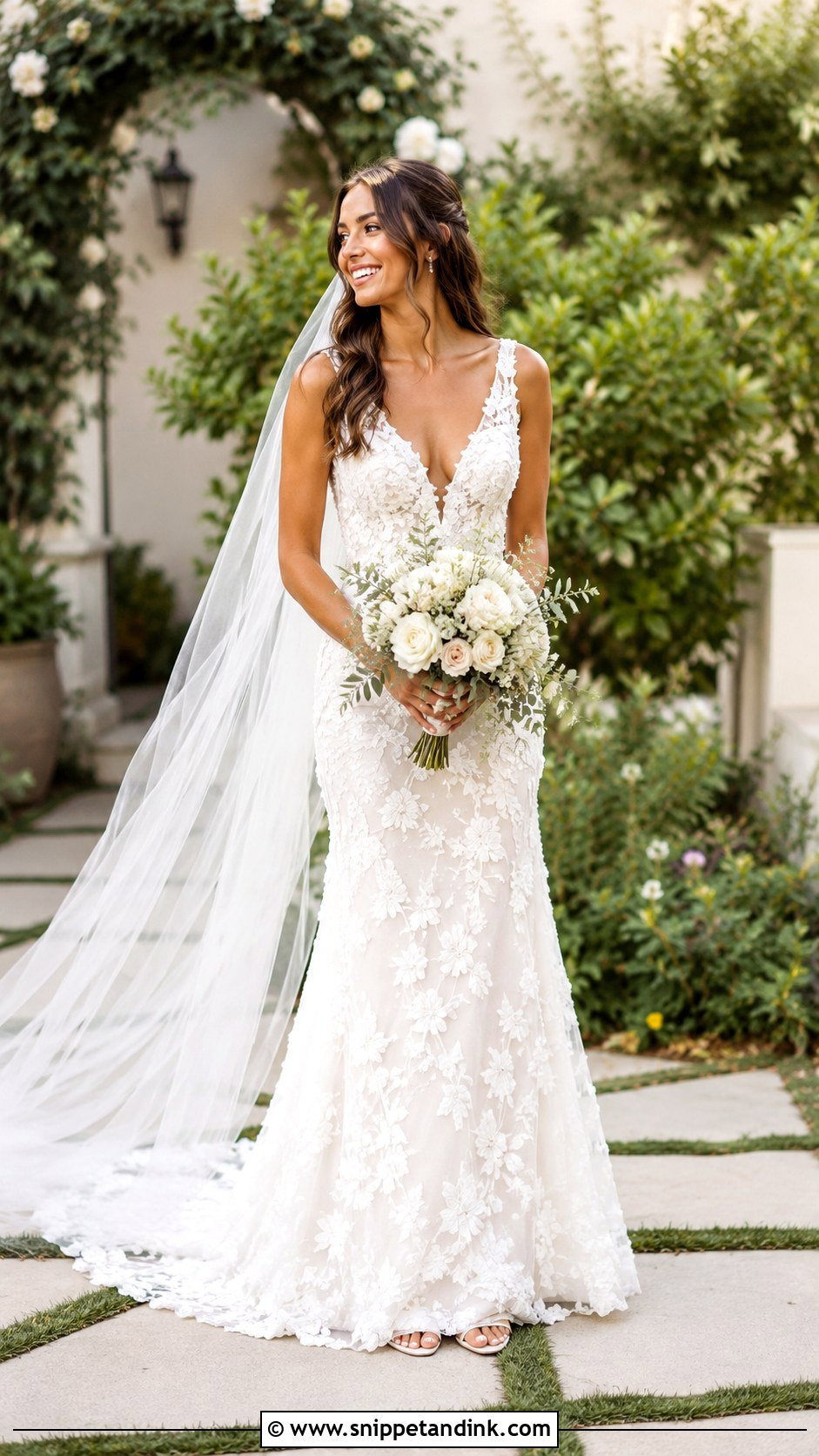
Floral appliqués are cut-out lace or fabric flowers stitched onto tulle, and their placement changes everything. Scattered lightly on sheer tulle, they’re subtle; massed across a full skirt, they’re bold. Keep the shoes and earrings simple, and choose a veil with no appliqué or only a few at the edge, so the two don’t fight. A soft bouquet with greenery suits the garden mood. Appliqués are hand-sewn, so if you hem one of these, the seamstress may need to move flowers rather than simply cut.
19. White 3D Floral Gown
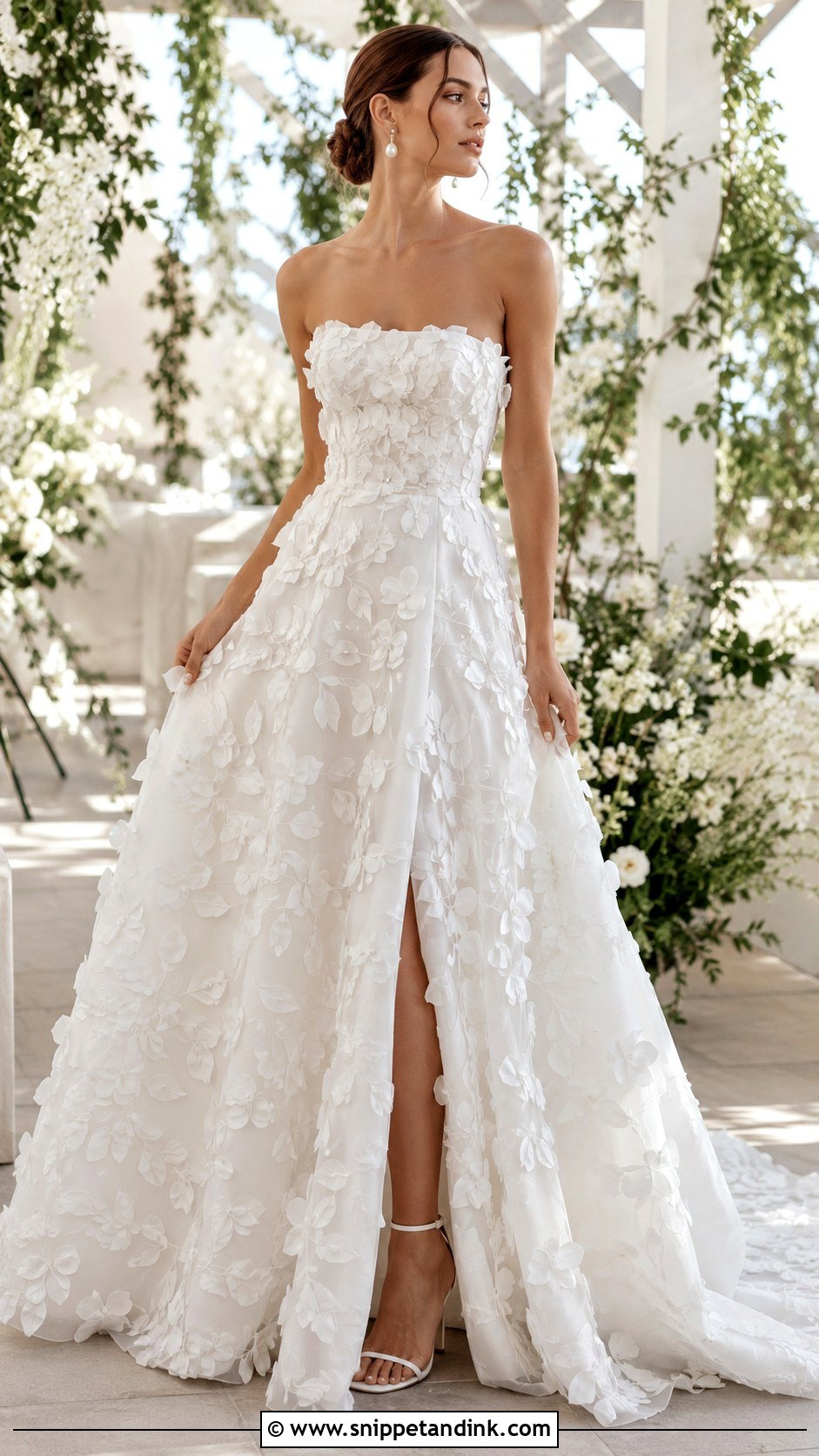
3D florals stand off the fabric, so they cast tiny shadows and look different from every angle. That depth reads well in photos and badly in a tight car or a crowded dance floor, where petals crush. Keep the silhouette simple, a strapless A-line or a fitted column, if the flowers are large. White heels, clean pearl earrings and a plain veil, or no veil at all, let them breathe. Slick bun or soft waves both suit it. Editorial portraits and outdoor venues are its best setting.


20. White Bow Back Gown
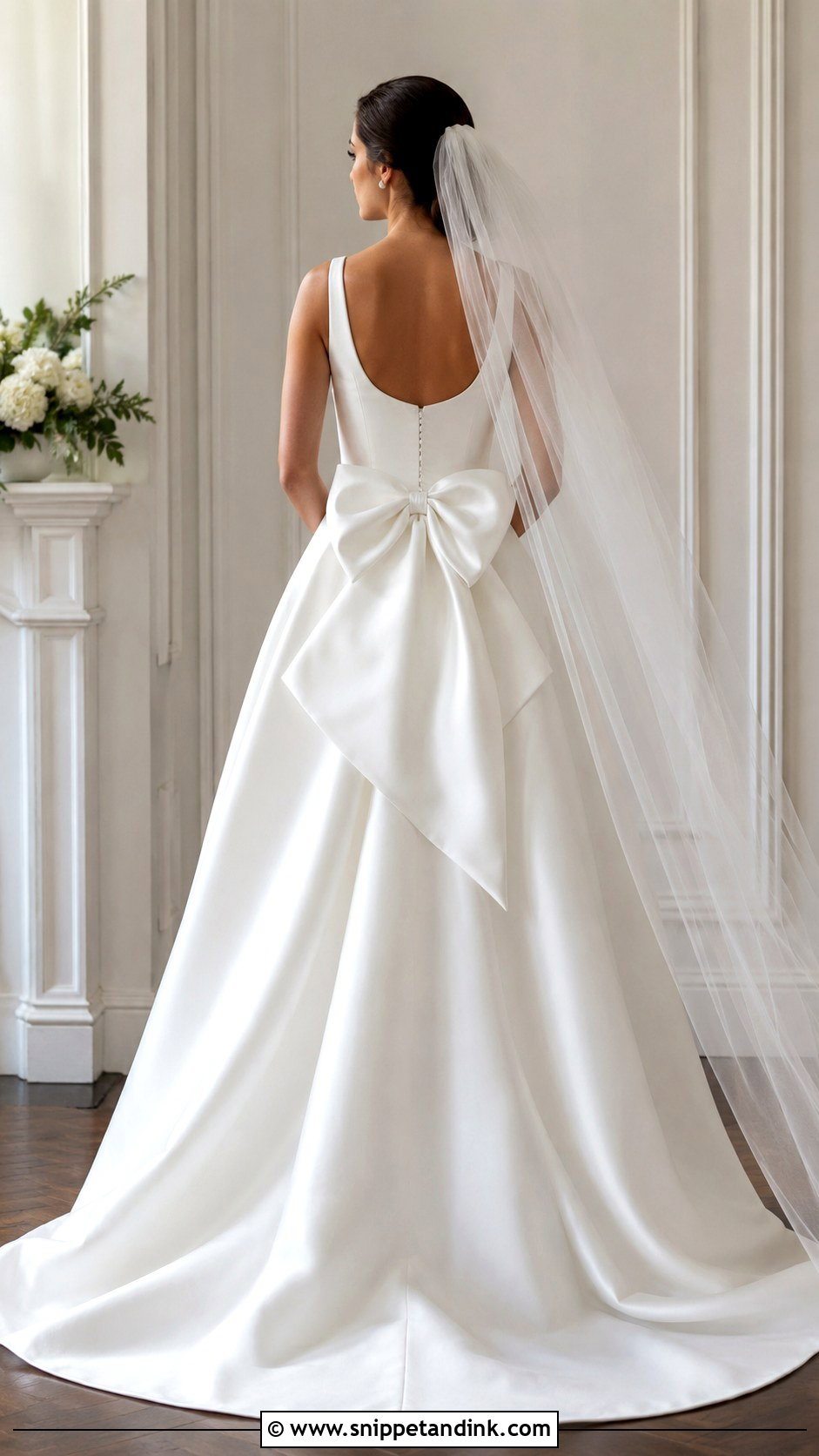
A bow on the back gives a crisp focal point, and it only stays crisp in a fabric with body, like satin or mikado. Soft fabrics droop by the first hour. Position decides the veil: if the bow sits at the waist, the veil can go above it; if it’s high on the back, set the veil lower or skip it so the bow isn’t covered. Keep the front of the gown minimal with a large bow. Pearl studs and simple heels finish it. Ask your photographer for back-view shots during the processional.
21. White Puff Sleeve Gown
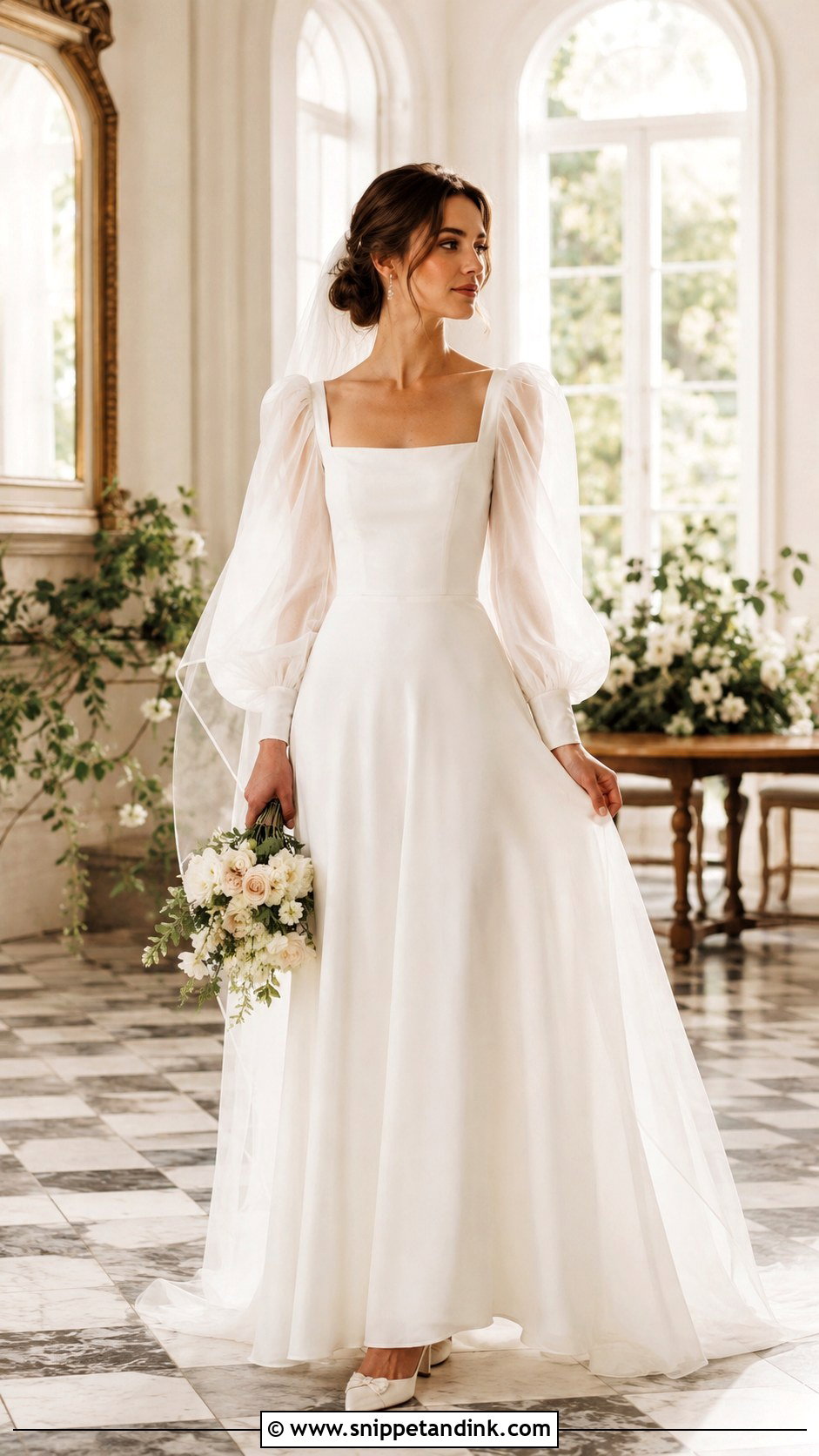
Puff sleeves add volume at the shoulder, so the rest of the gown should stay calm, with a simple skirt and a clean bodice. They come detachable, sheer, short or full-length. A soft updo keeps the shoulders visible, and low heels, small earrings and a clean veil finish it. Puffs crush in travel, so I steam them from the inside on the morning of the wedding. They give a romantic outline that still lets you move and dance freely.
22. White Detachable Sleeve Gown
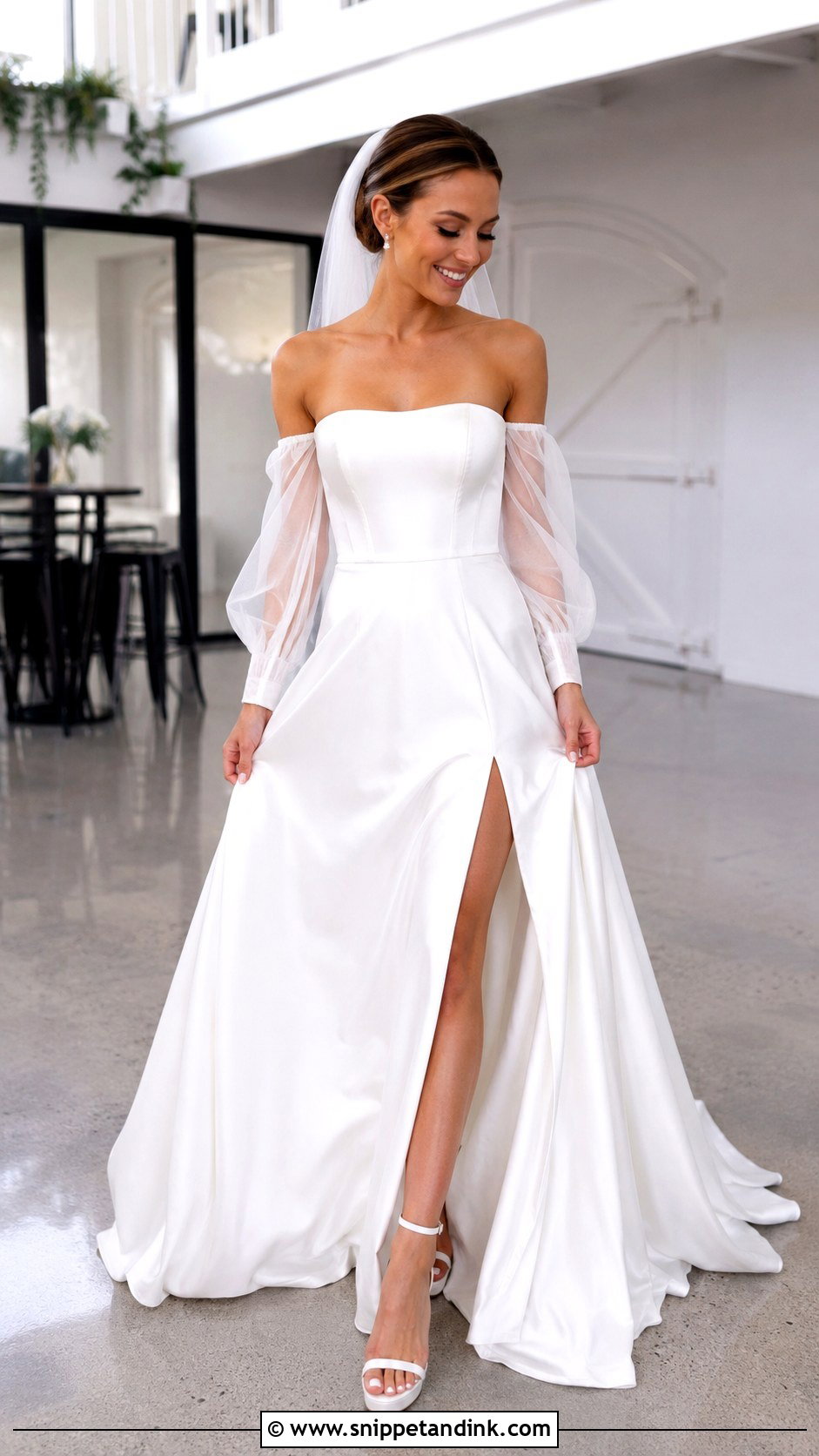
Detachable sleeves are my favourite answer to a ceremony that asks for coverage and a party that doesn’t. Wear them down the aisle, then take them off for the reception. Off-the-shoulder, tulle puff sleeves or fitted lace sleeves all attach with snaps or small hooks at the bodice. Practise removing them at your final fitting, with the person who’ll help you on the day, because hooks hidden under lace are fiddly. Choose jewelry and a hairstyle that suit both versions, and keep the veil simple.
23. White Cape Wedding Gown
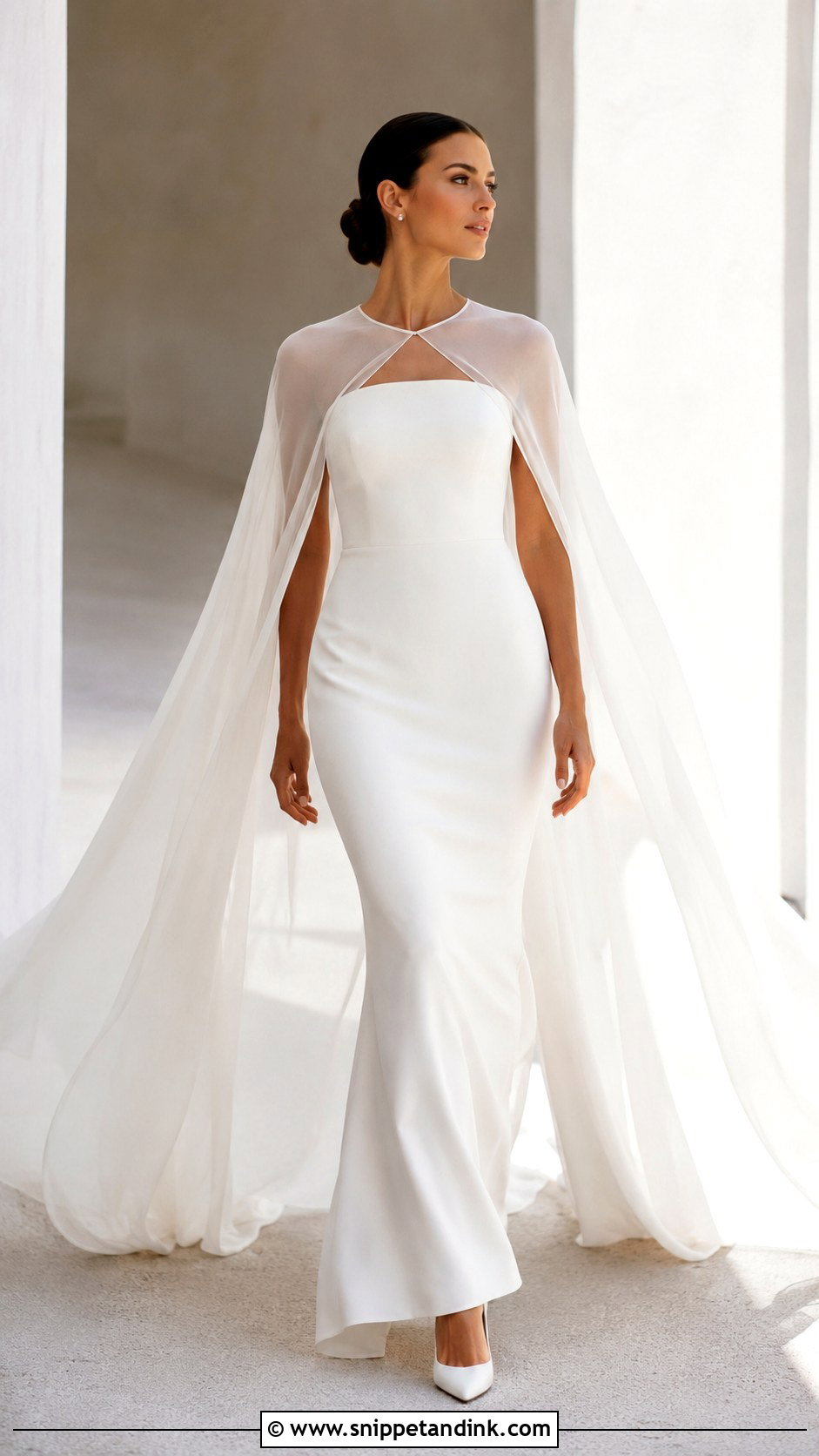
A cape can replace a veil entirely, and it gives coverage with real movement as you walk. It attaches at the shoulders, neckline or back. Sheer capes feel romantic, structured ones look editorial. Underneath, a plain crepe or satin gown keeps the outfit calm. Pointed heels, small earrings and sleek hair keep the cape the main feature. I’d test how it falls when you sit, since a long cape bunches behind you and can pull the neckline backward if it’s attached too high.
24. White Overskirt Wedding Gown
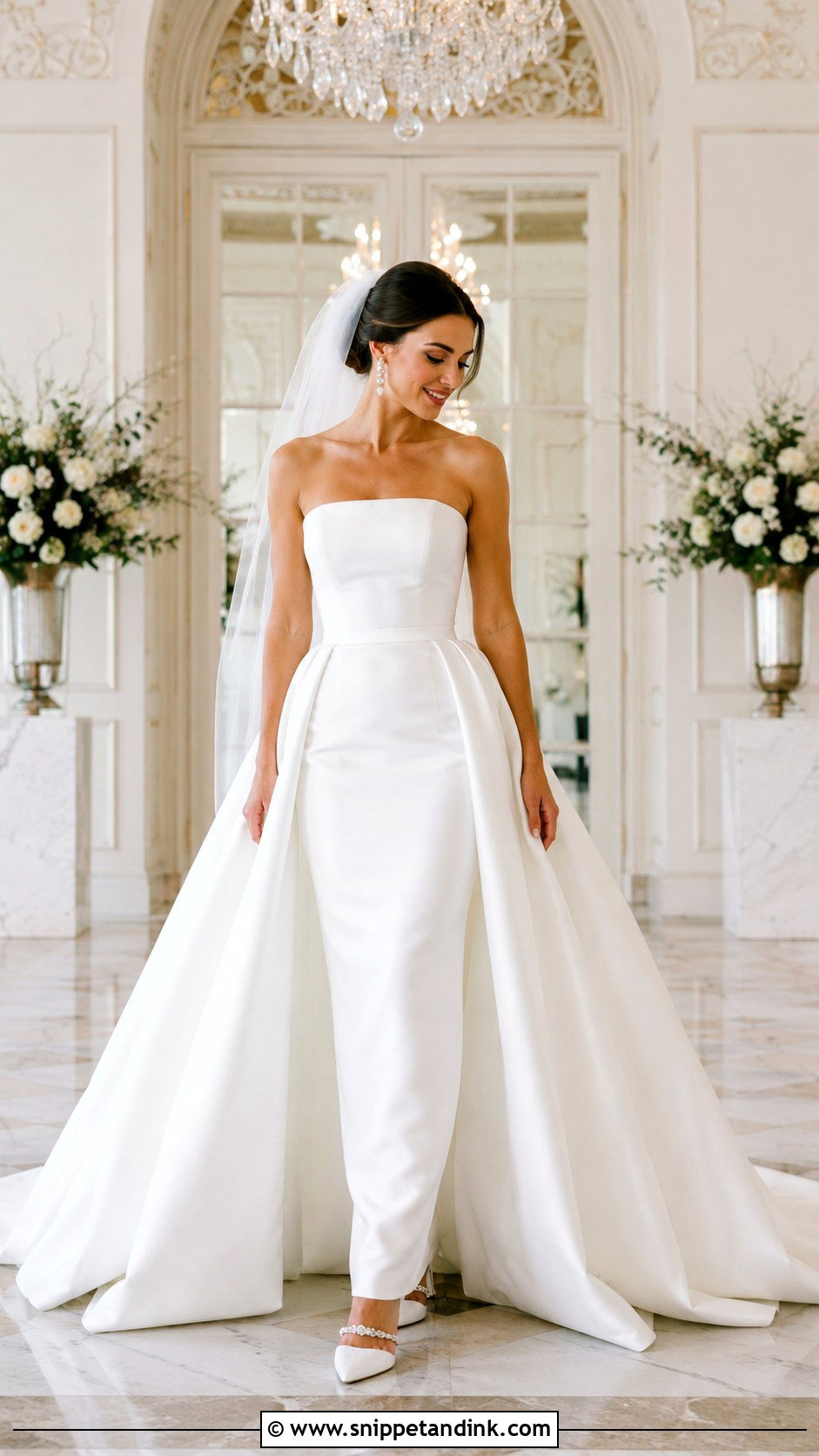
An overskirt gives a full aisle look and a lighter reception dress without a second gown. The base is usually fitted or column-shaped, and the removable skirt adds volume and a train. It fastens at the waist with hooks or snaps. Plan who will remove it and where, and if you keep it on for a while, make sure it has its own bustle. Comfortable heels, earrings that work with both looks and a simple veil are enough, since the overskirt already does the dramatic part.


25. White Short Wedding Gown
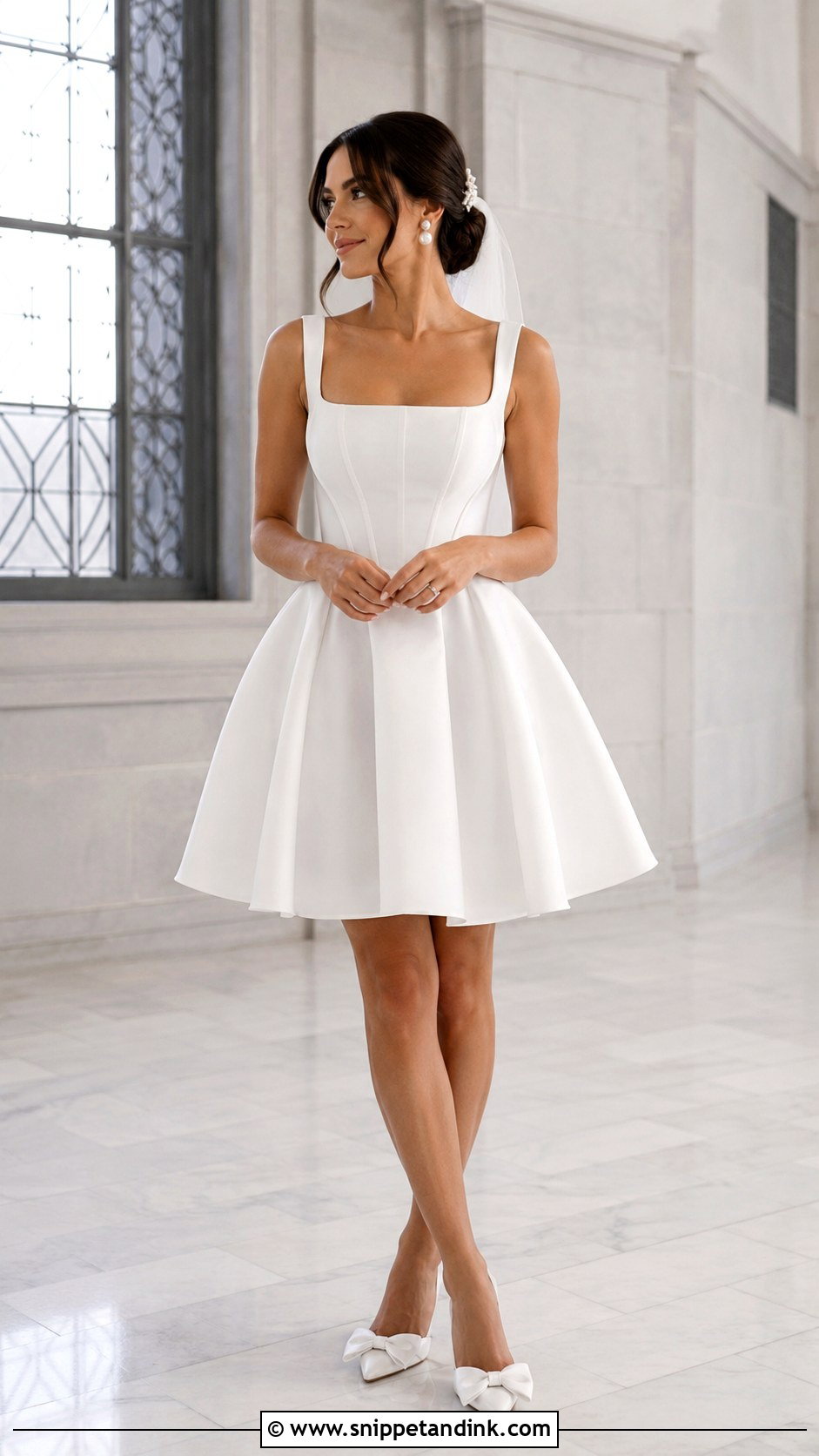
Short gowns put the shoes and the legs on show, so I treat the shoes as half the outfit. It’s a natural choice for courthouse weddings, elopements, receptions and after-parties. Pick a tailored mini, a lace tea-length or a structured short dress with a full skirt. Bow heels, pearl earrings and a short veil make it read bridal. A very plain short dress wants one extra element, gloves or a statement hair piece. Practise sitting and stepping out of a car; the hem rides up faster than you expect.
26. White Tea Length Wedding Gown
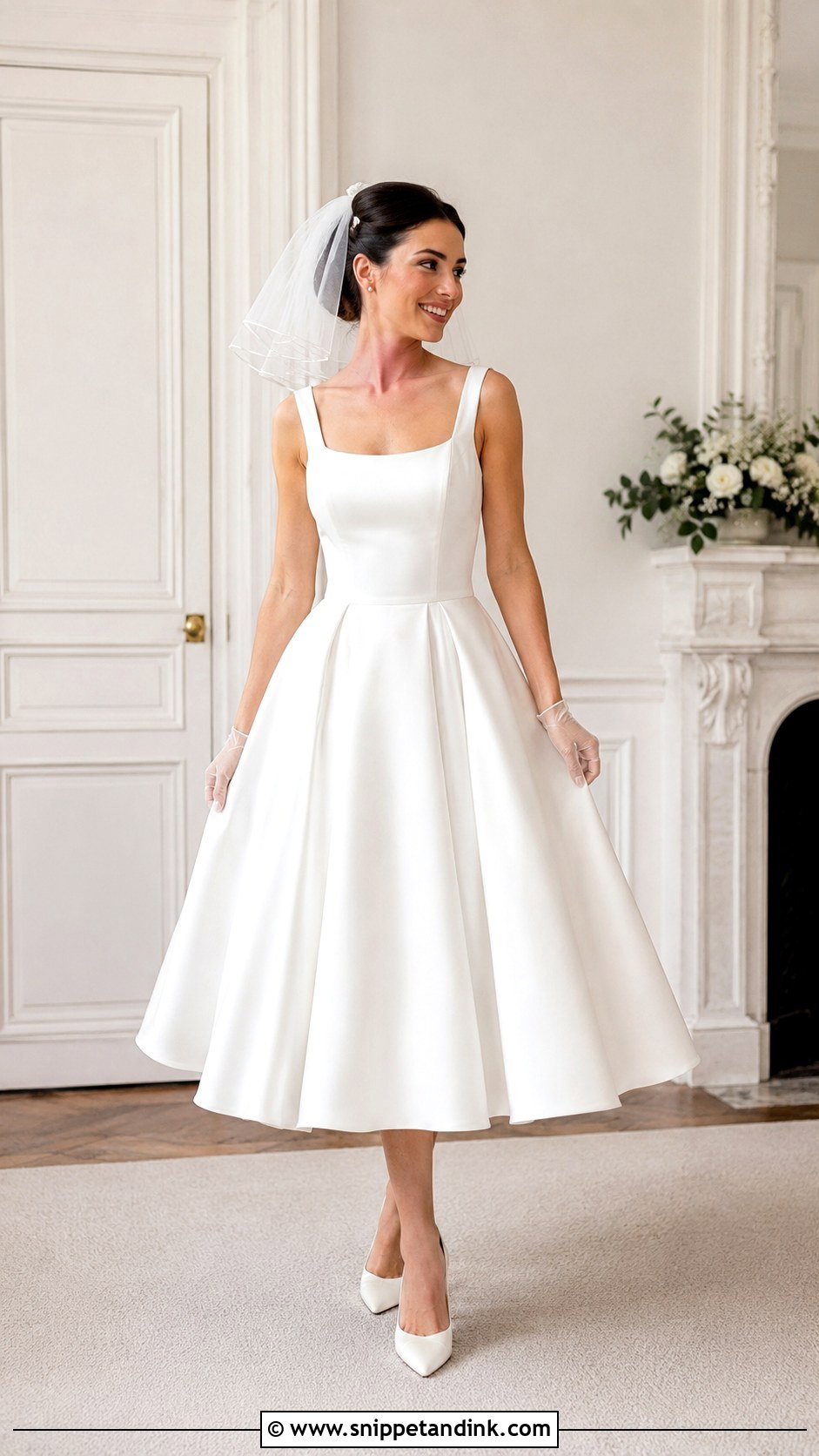
Tea length sits between the knee and the ankle and has a fifties feel. Its practical advantage is huge: no hem to step on, no bustle, no grass stains on a train. A fitted bodice and full skirt is the classic form; lace softens it, satin sharpens it. Pointed pumps, pearl studs and a short veil or hair bow finish it. The exact hem point matters, though. I mark it on each bride’s leg at the narrowest point of the calf, which keeps the length flattering rather than cutting.
27. White Ruffle Wedding Gown
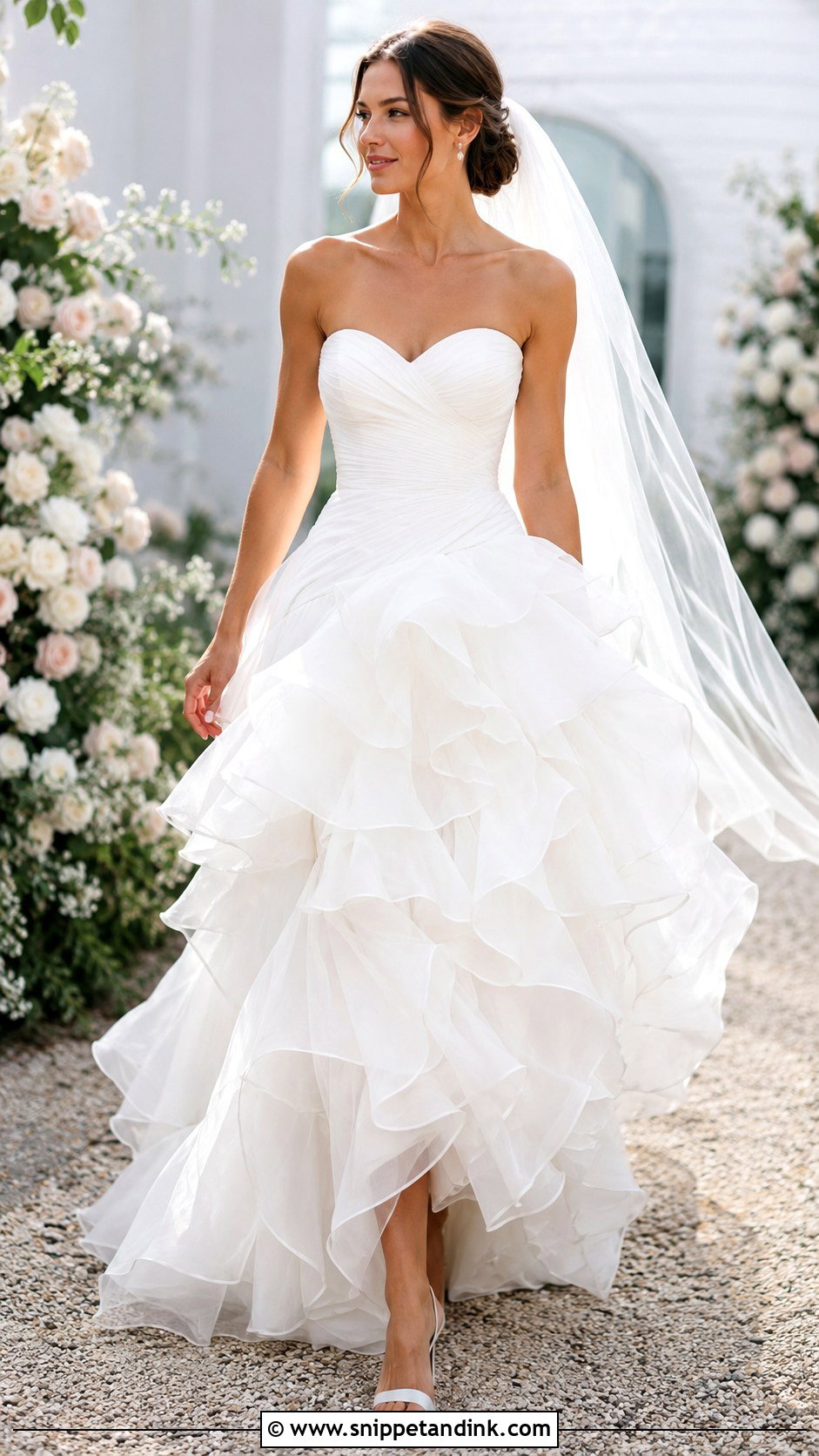
Ruffles bring movement without weight, which is their advantage over heavy beading. Placement is the decision: on the skirt, neckline, sleeves or train. A tiered skirt looks airy; a single sculptural ruffle reads modern. I keep everything else simple, plain heels, small earrings and a smooth veil, and I keep the hair controlled when the ruffles sit near the shoulders, because loose curls tangle in them. Ruffles look best in motion, walking and dancing.
28. White Mikado Wedding Gown
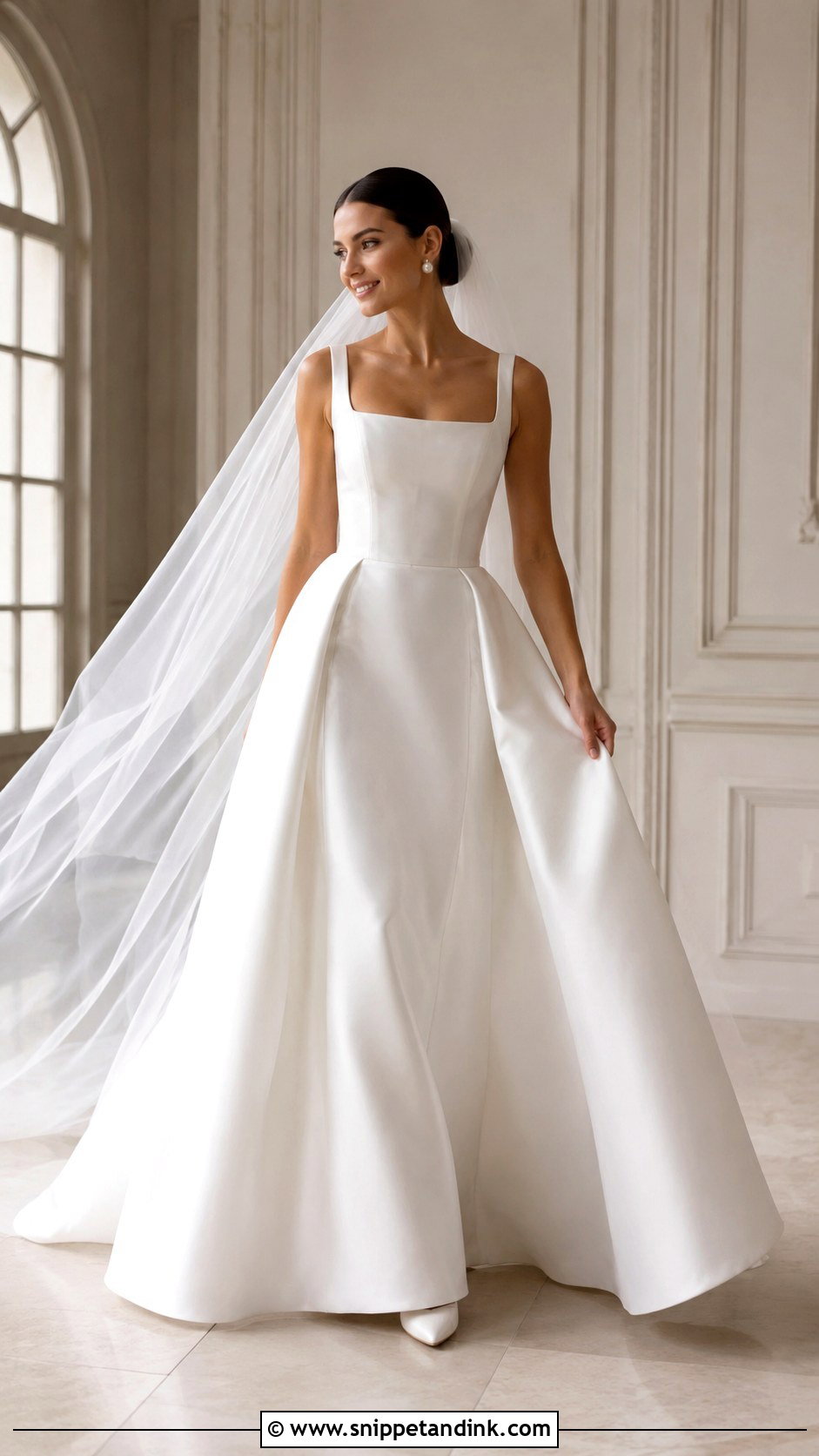
Mikado is a heavy silk or silk-blend with a low sheen, and it holds structure like nothing else. A white mikado wedding gown stays sharp in ball gowns, A-line skirts, square necklines and strapless cuts. It needs very little decoration. Satin pumps, pearl earrings and a long veil give a classic finish; pockets, a bow back or a sculpted neckline make it modern. Mikado is heavier and warmer than tulle or crepe, so it suits cooler months and air-conditioned venues better than a midsummer garden.
29. White Sheer Bodice Gown
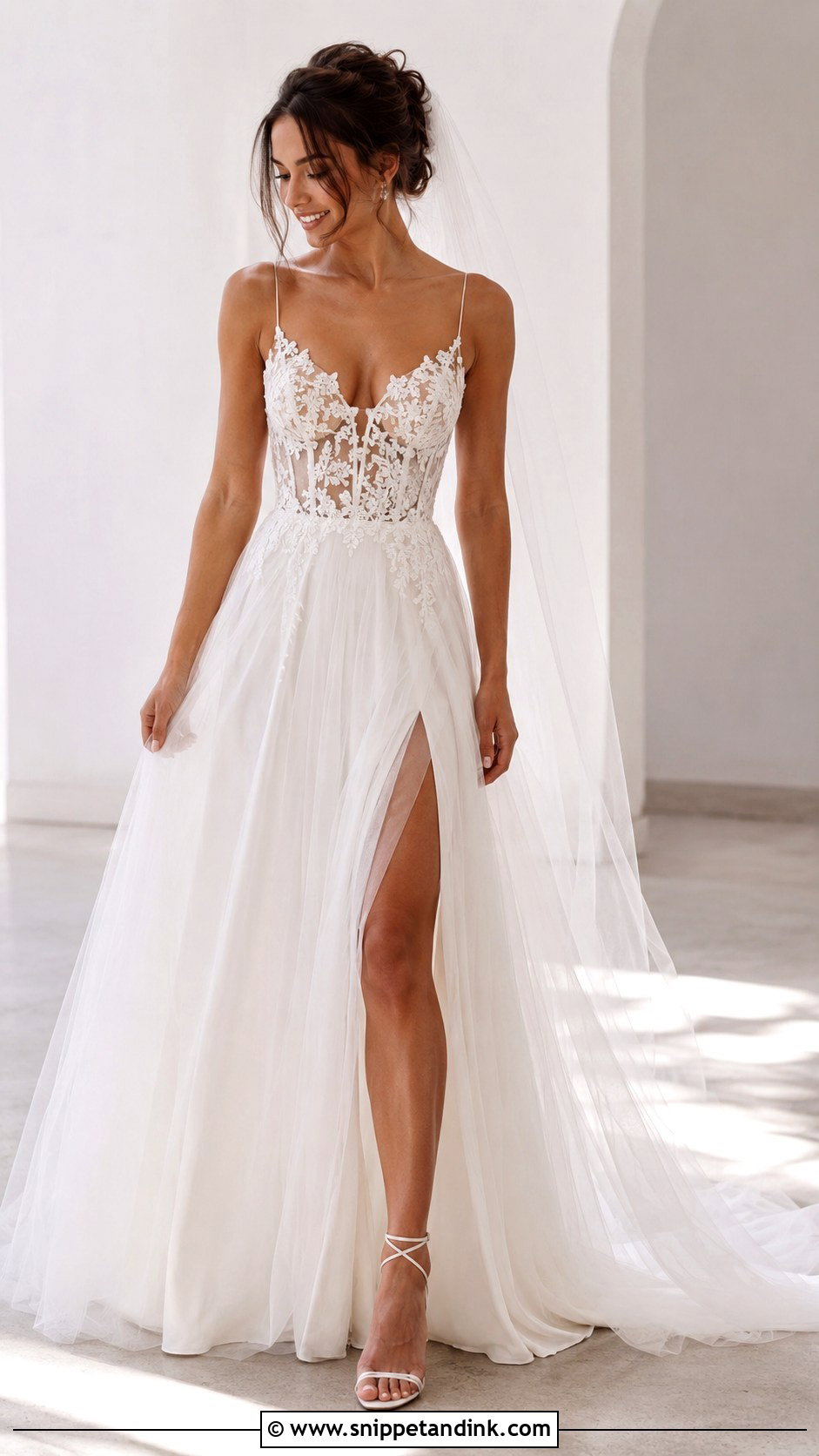
A sheer bodice works when coverage is designed into it, with lace, appliqués, boning or beadwork placed where you need them. Tell your consultant exactly how much skin you’re comfortable showing; good shops can add lining or move motifs. Balance it with a full or a clean fitted skirt. Elegant heels, small earrings and a veil that doesn’t hide the bodice finish it. The fit must be secure from every angle, and I’d always check it in the flash of a phone camera, which shows sheer panels more clearly than a mirror does.
30. White Low Back Wedding Gown
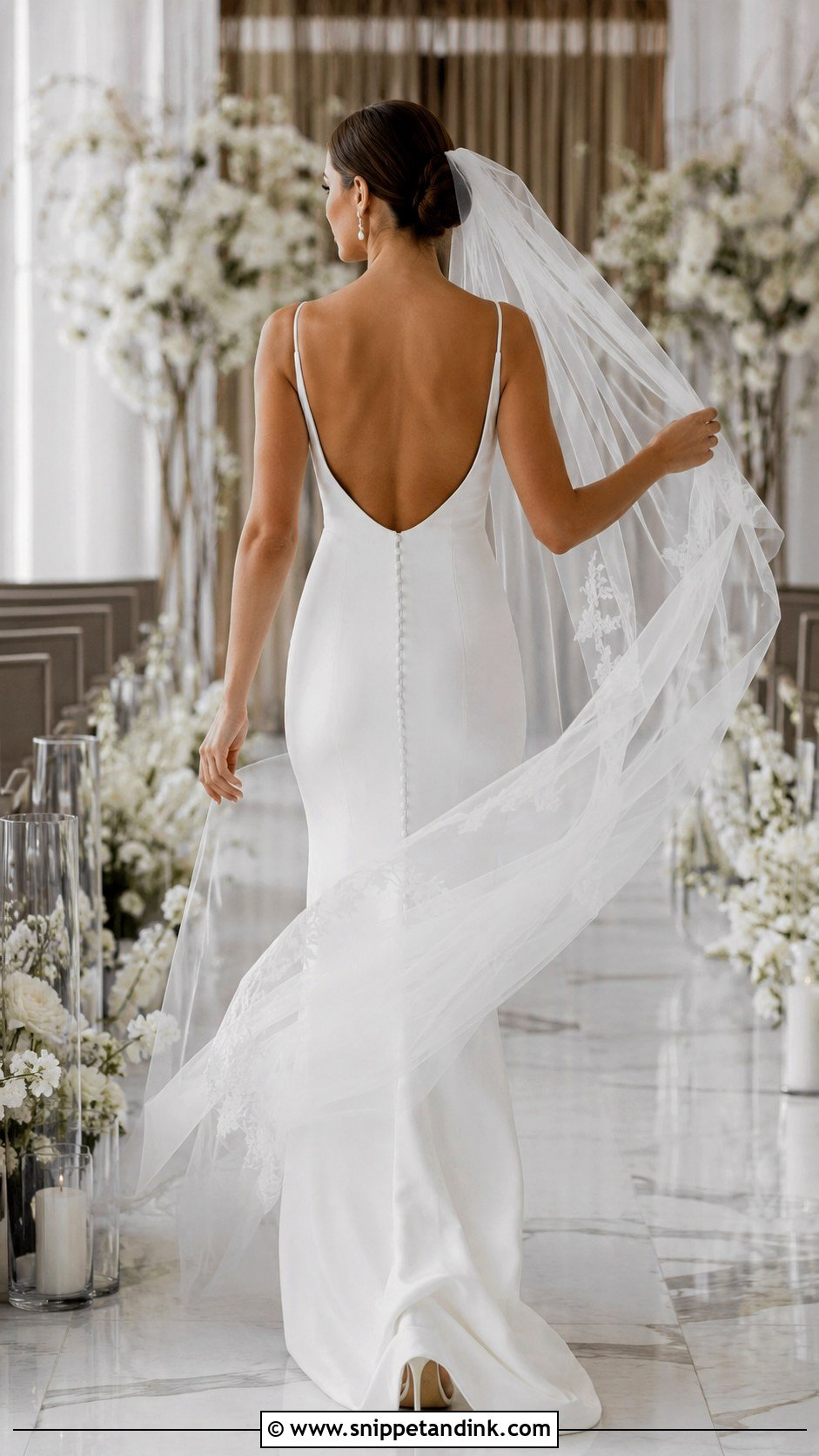
Low backs make the exit and the back-view photos. The front can be simple, high-necked, square or fitted, while the back does the talking. Sort out undergarments early; sewn-in cups are usually more reliable than adhesive options over a long day. A low bun keeps the back clear, back-drop earrings add a detail you’ll see in photos, and a veil can be lifted for portraits. A row of covered buttons down to the low point is a classic touch. Watch your posture in the fitting mirror; a low back shows when you slouch.
Working Backward From the Wedding Date
Most made-to-order gowns take several months to arrive after you order, and alterations need their own window after that. Timelines vary a lot by designer and shop, so ask yours directly, but this is the rough order I plan around.
- Start trying on around nine to twelve months ahead. That leaves room for delivery delays and doesn’t rush the decision.
- Order once you’ve chosen, and ask the shop for the expected arrival date in writing.
- Book your first fitting for roughly two to three months before the wedding. Bring the exact shoes and undergarments you’ll wear.
- Expect two or three fittings in total. Lace hems, bustles and boned bodices often need the full number.
- Have the final fitting a few weeks out, and bring the person who will bustle your gown so they can learn it there.
The ten-minute sit-down test
At every fitting, I ask the bride to sit for ten minutes, eat something small, raise both arms and walk a staircase if the shop has one. Mirrors only show you standing still. Ten minutes seated tells you whether a corset bites, a mermaid flare pulls or a strapless neckline slips. It’s a small habit that saves a lot of discomfort at hour six.
Try the Shape You Didn’t Screenshot
A wedding gown is really a complete outfit, shaped by your body, venue, comfort and taste together. Try at least one neckline, fabric and skirt shape you didn’t plan to, because small changes shift the whole look. Bring your shoes, think about the veil, and test how you sit, walk and hug. Use the ideas above to start the conversation with your consultant, then let the fittings finish it.
You'll Like These Ideas:







Leave a Reply