
Dressing a Myanmar bride starts with the textile, not the silhouette. The fitted eingyi and the wrapped skirt are familiar shapes; what changes from bride to bride is the silk, the weave and how much tradition the family wants to see. Some brides wear a fully traditional acheik htamein, others want lace sleeves and a long train, and some draw on Shan, Kachin, Chin, Mon or Rakhine textiles from their own heritage. The ceremony setting, family customs and how much you’ll be moving all shape the right choice. Below are 25 bridal looks, with notes on fabric, fit and what each one asks of you on the day.
Wrapped or Stitched? How the Htamein Changes the Way You Move
A traditional htamein is a length of cloth wrapped around the body and secured at the waist with a fold. Worn ankle length and fitted, it shortens your stride, which is part of its graceful look and also the reason brides trip on stairs. Many bridal versions are now stitched into a fitted tube with a hidden zip or hooks, so nothing loosens over a long day.
- If you wear the wrapped version, have someone who knows how to tie it dress you, and practice walking, kneeling and climbing a step before the wedding.
- Ask your tailor for a small hidden pleat or back opening at the hem to give your stride a little more room without changing the line.
- Expect a fitted eingyi to need more than one fitting. It sits close across the back and under the arms, and you’ll be raising your hands to bow and greet guests.
- Choose shoes before the final hem. Even a small change in heel height shows clearly on an ankle-length skirt.
1. Traditional Myanmar Wedding Dress
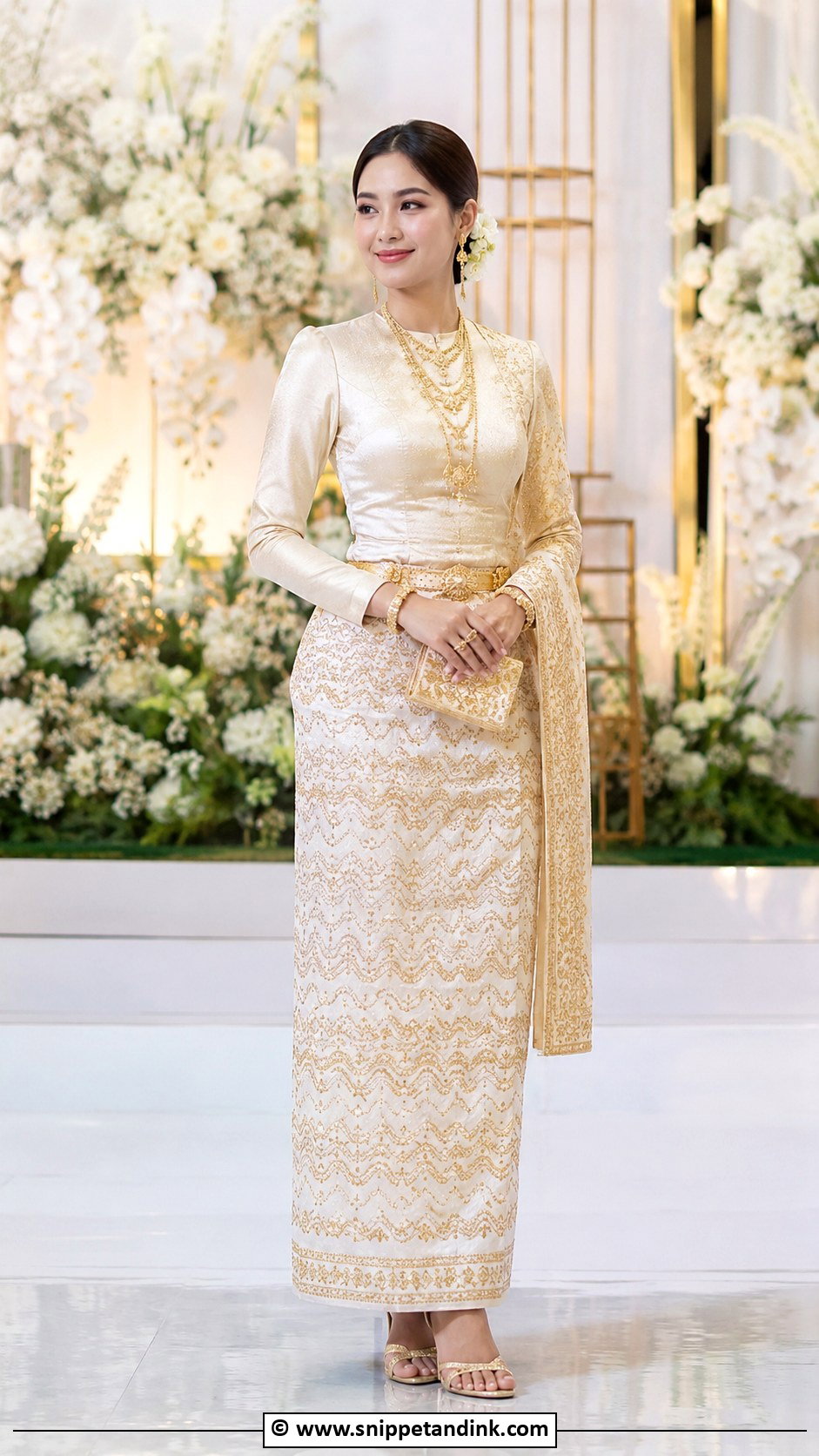
The classic pairing is a fitted silk blouse with a matching htamein and gold jewelry, and it still carries a main ceremony better than anything else. Acheik is the obvious skirt because its woven wave pattern moves as you walk, which shows in photos. Ivory, champagne, ruby, emerald and soft blush all work for a formal day. The thing I check first is the blouse fit across the back, because a traditional eingyi is close-fitted and you’ll be raising your hands to bow and greet. A neat updo with fresh flowers and embellished sandals complete it.
2. Gold Myanmar Wedding Dress
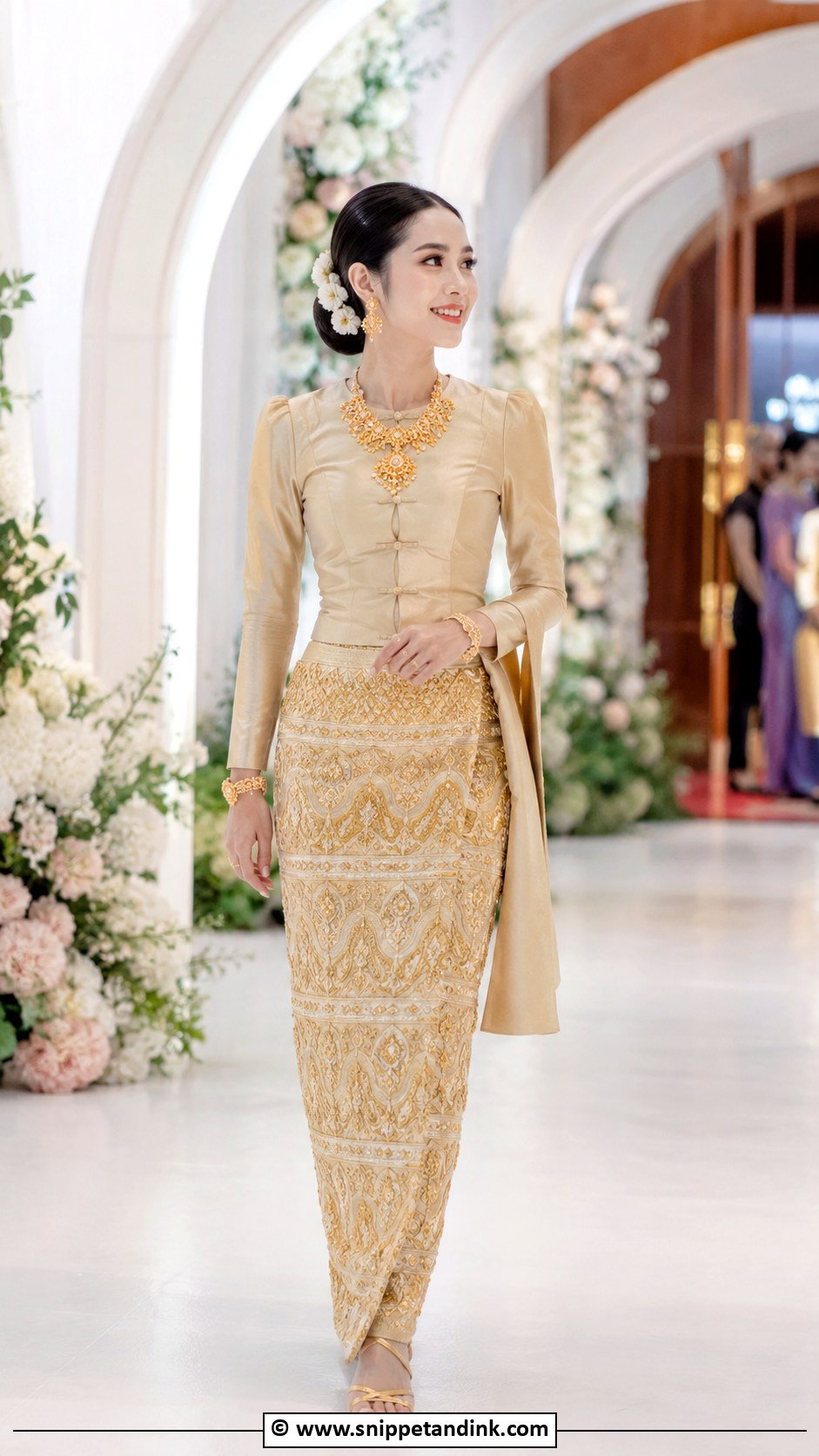
Gold silk looks regal under hall lights and in bright outdoor portraits, but a strong yellow-gold can overwhelm some skin tones. I usually suggest pale gold, champagne or antique gold for brides with cooler or fair complexions. Pair a gold acheik htamein with a matching silk blouse or soft ivory lace. Layered gold necklaces and drop earrings are traditional here, so keep the hair sleek: a low bun with small white flowers stops the whole look tipping into heavy.
3. White Myanmar Wedding Dress
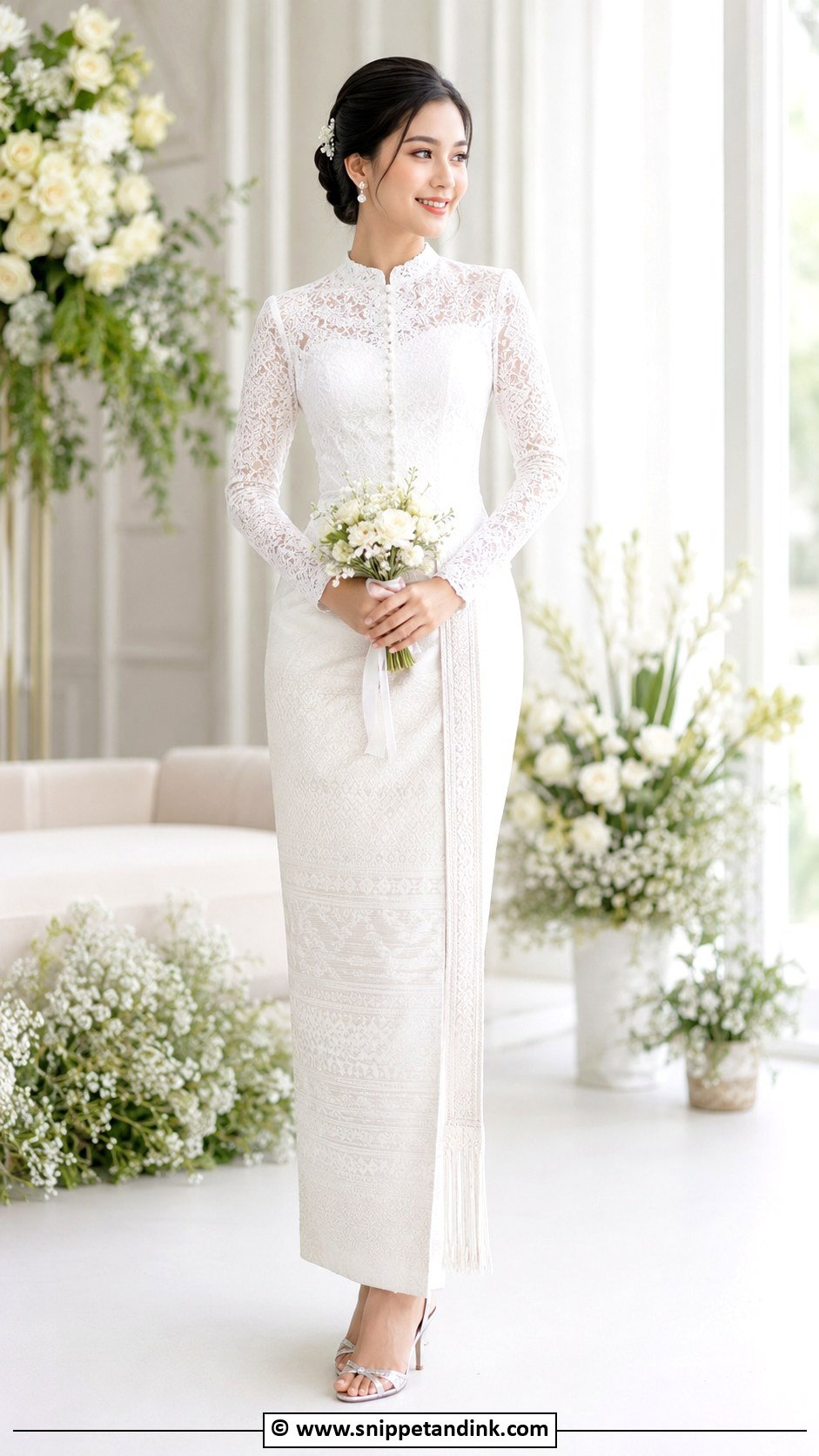
White suits a bride who wants a clean look but still a Myanmar shape rather than a Western gown. A white silk htamein with a fitted blouse, lace overlay or beaded shoulder detail reads modest and fresh. Pearls soften it far better than heavy gold. White silk marks easily, so I ask brides to dress after makeup and keep a clean cloth in their bag for sitting. A sheer shawl or back drape adds movement for a formal ceremony.
4. Red Myanmar Wedding Dress
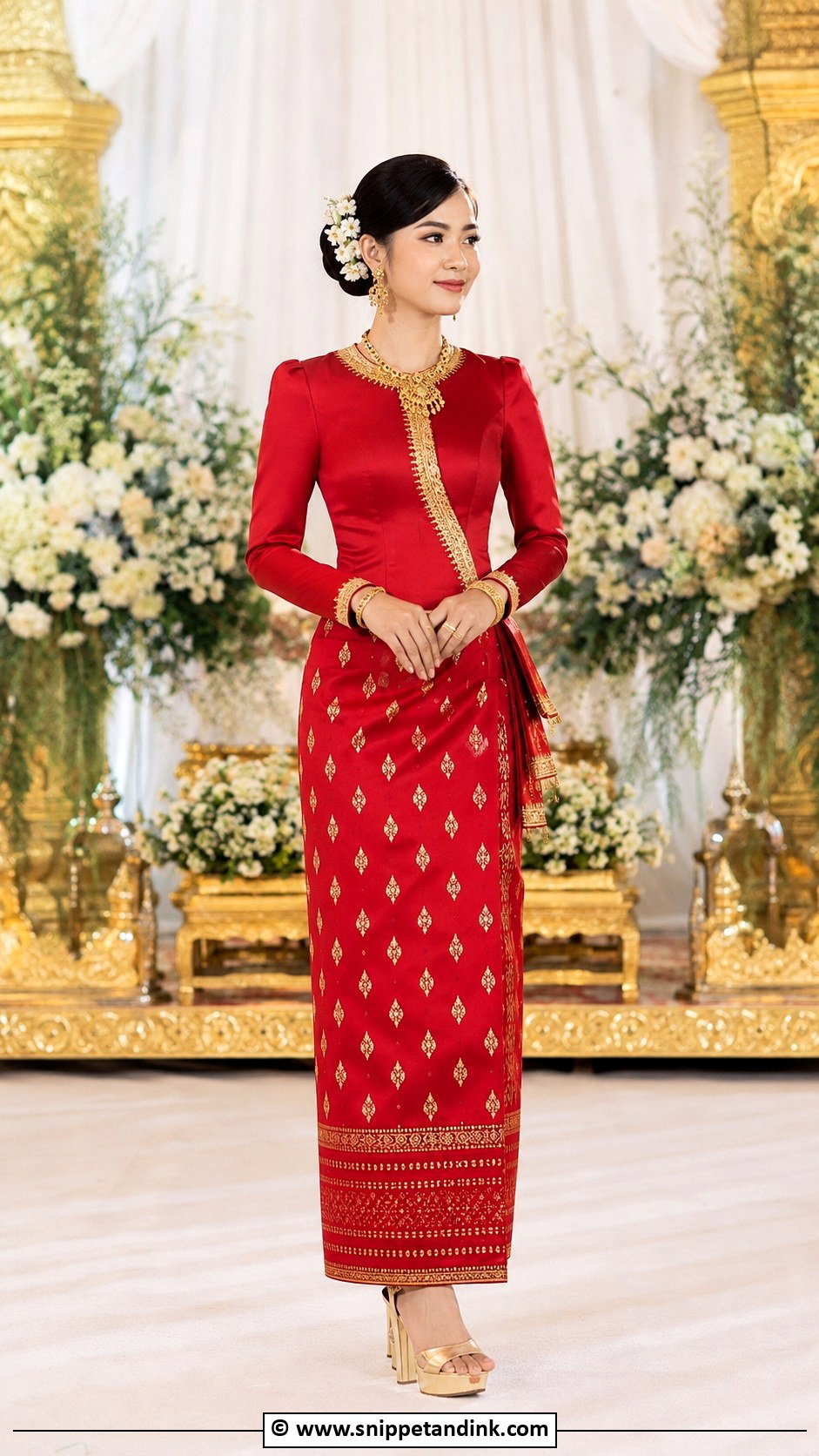
Red is joyful and confident, and it photographs richly against gold jewelry and flowers. Deep ruby and maroon tend to look more expensive on camera than bright crimson, which can bleed into a slightly orange cast in warm light. A red acheik htamein with gold woven detail and a fitted blouse with structured shoulders is the traditional route; sheer sleeves soften it. Jasmine or white orchids in a smooth bun give needed contrast against so much color.
5. Pink Myanmar Wedding Dress
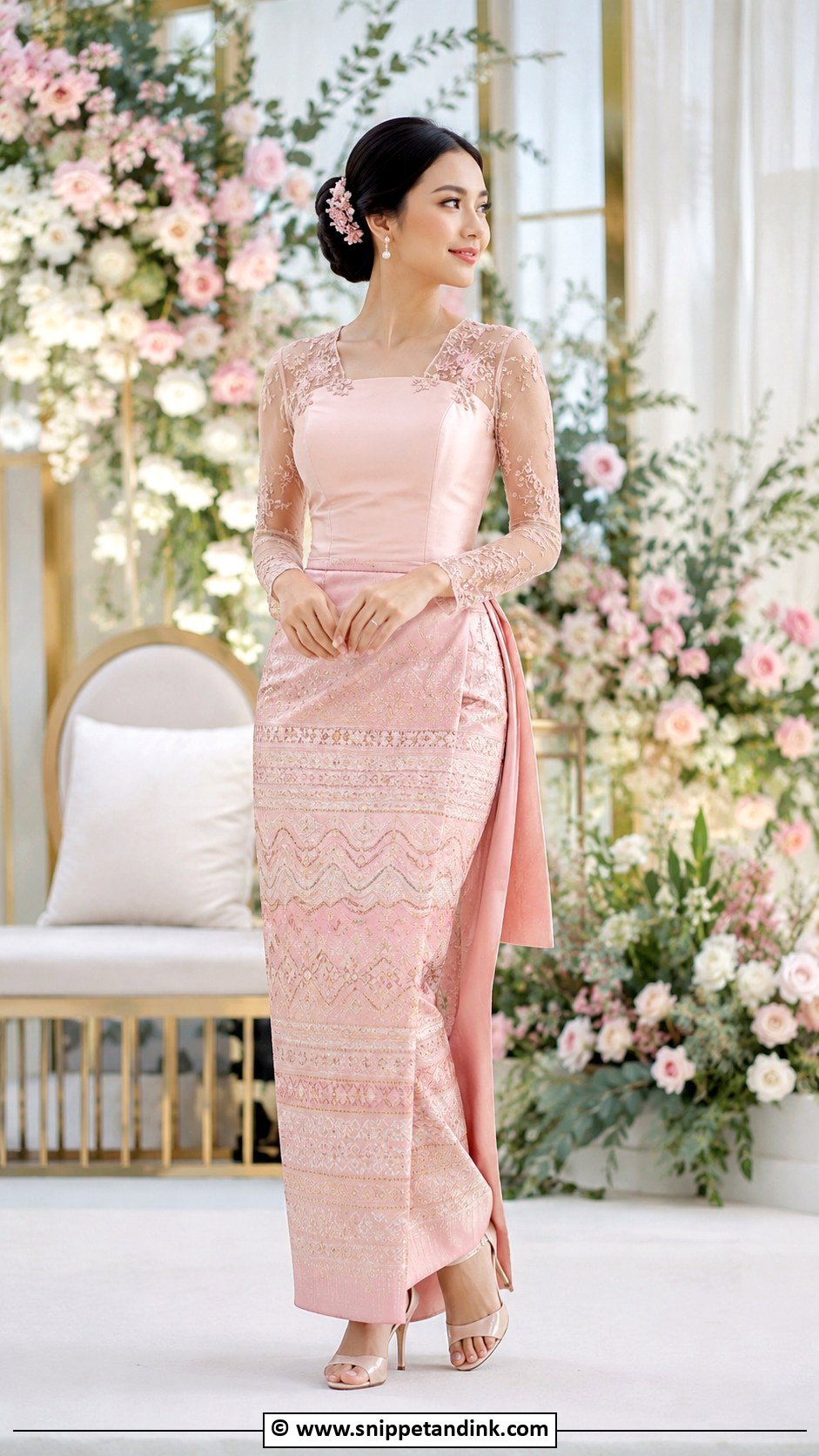
Pink is the color I suggest most for daytime and engagement events. Soft rose, blush, dusty pink and lotus pink all flatter in natural light, and they let gold or pearls carry the formality. A pink silk htamein with a matching blouse looks unified; ivory lace sleeves give a mixed-texture version. Nude or champagne heels lengthen the leg under an ankle-length skirt. A floral hairpiece in white or pale pink finishes it.
6. Blue Myanmar Wedding Dress
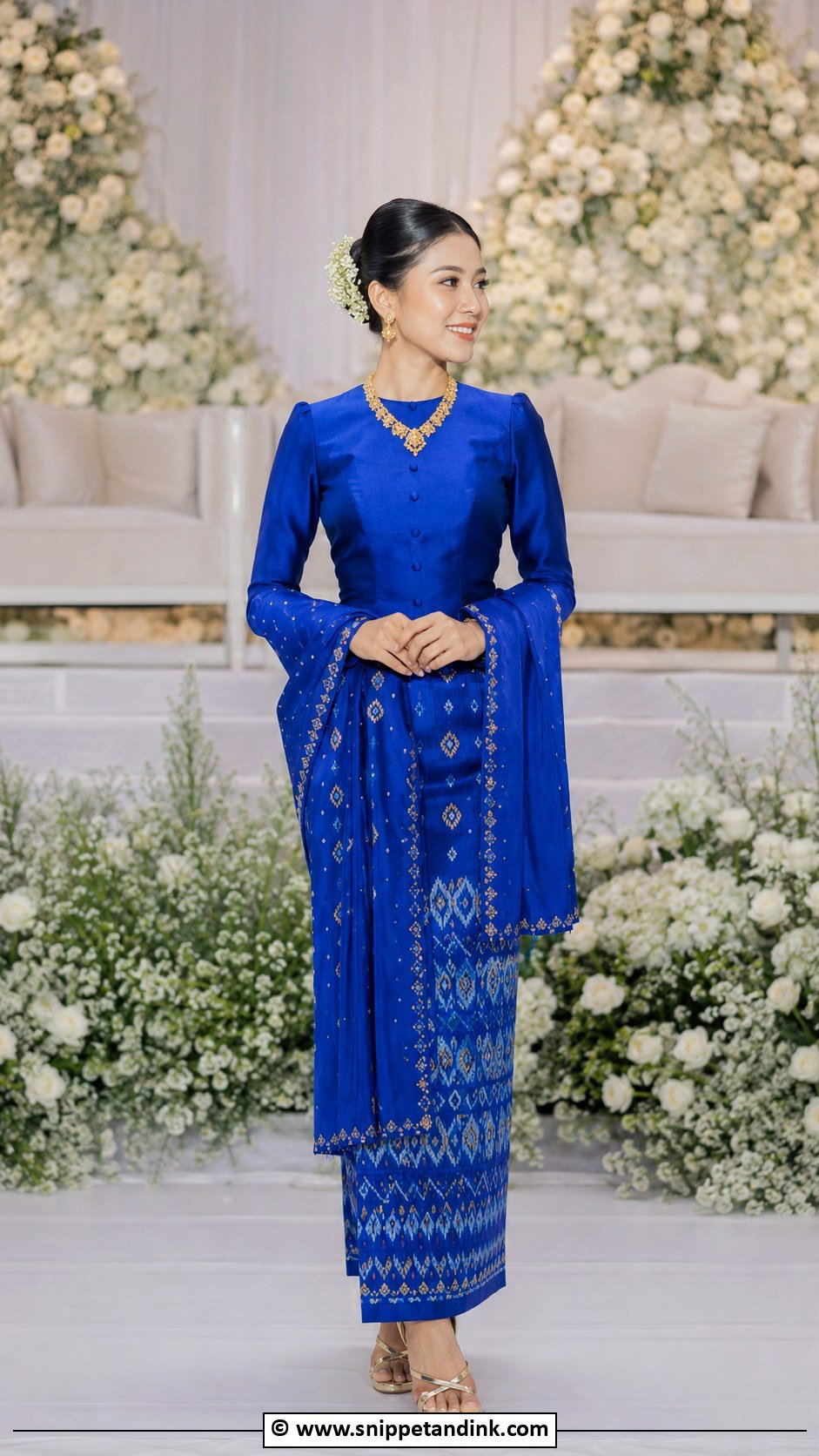
Blue has a calm, composed feel. Royal blue and sapphire carry gold acheik patterns well, while powder blue looks fresh with silver or pearls. Teal sits between the two. Blue silk can shift noticeably between shop lighting and daylight, so check the fabric outdoors before you commit. A clean neckline, a structured htamein, a neat updo and metallic sandals complete it. In a hall full of white flowers, blue stands out without shouting.
7. Green Myanmar Wedding Dress
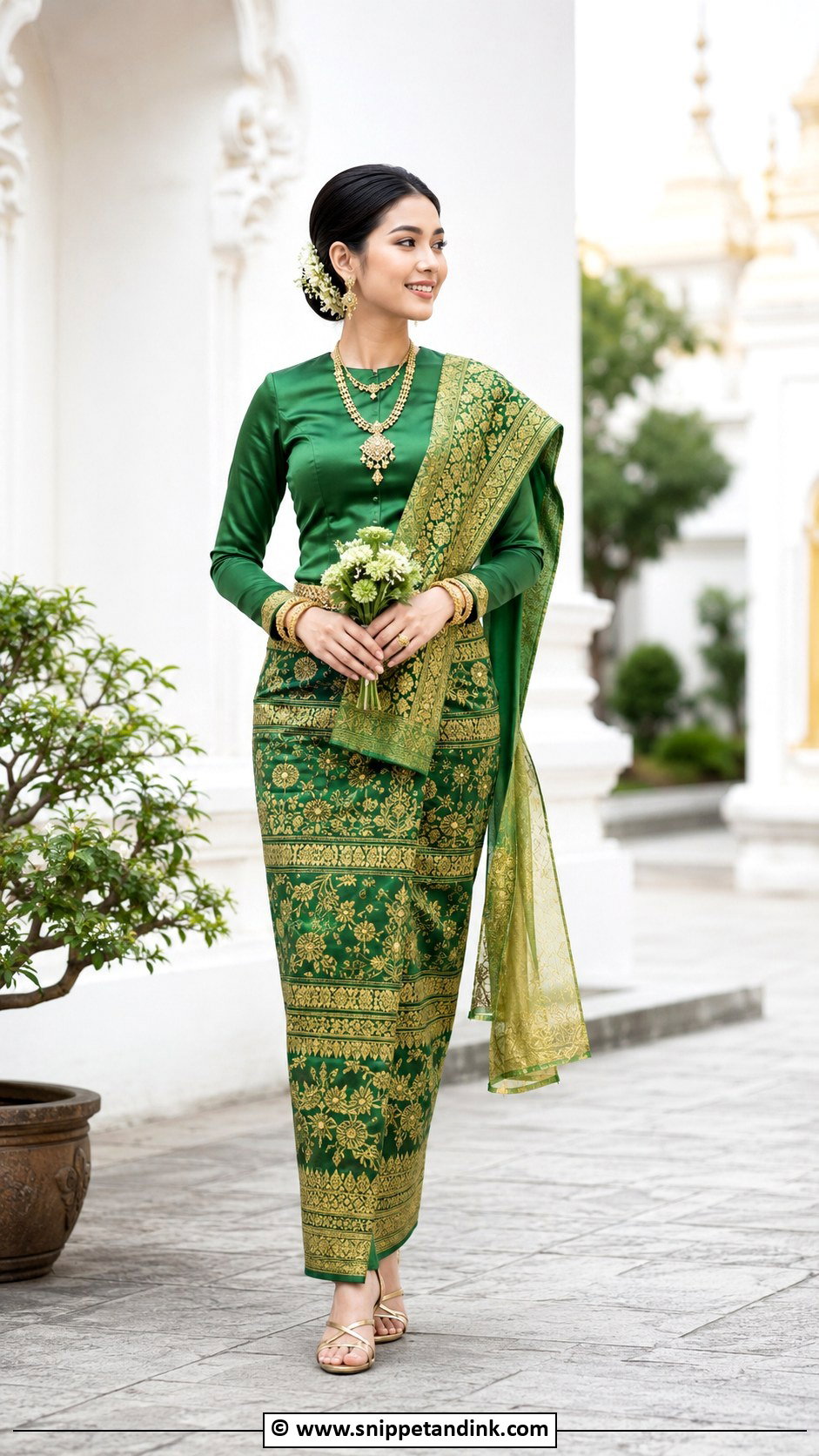
Green ranges from grand to gentle depending on shade: emerald for a formal evening, jade or mint for a daytime ceremony, olive for something earthier. A green acheik htamein with gold threads pairs naturally with gold jewelry and a matching blouse. Because the color already carries so much interest, I keep the hair smooth and add only white flowers or a couple of gold pins. Nude, gold or cream heels suit it.
8. Purple Myanmar Wedding Dress
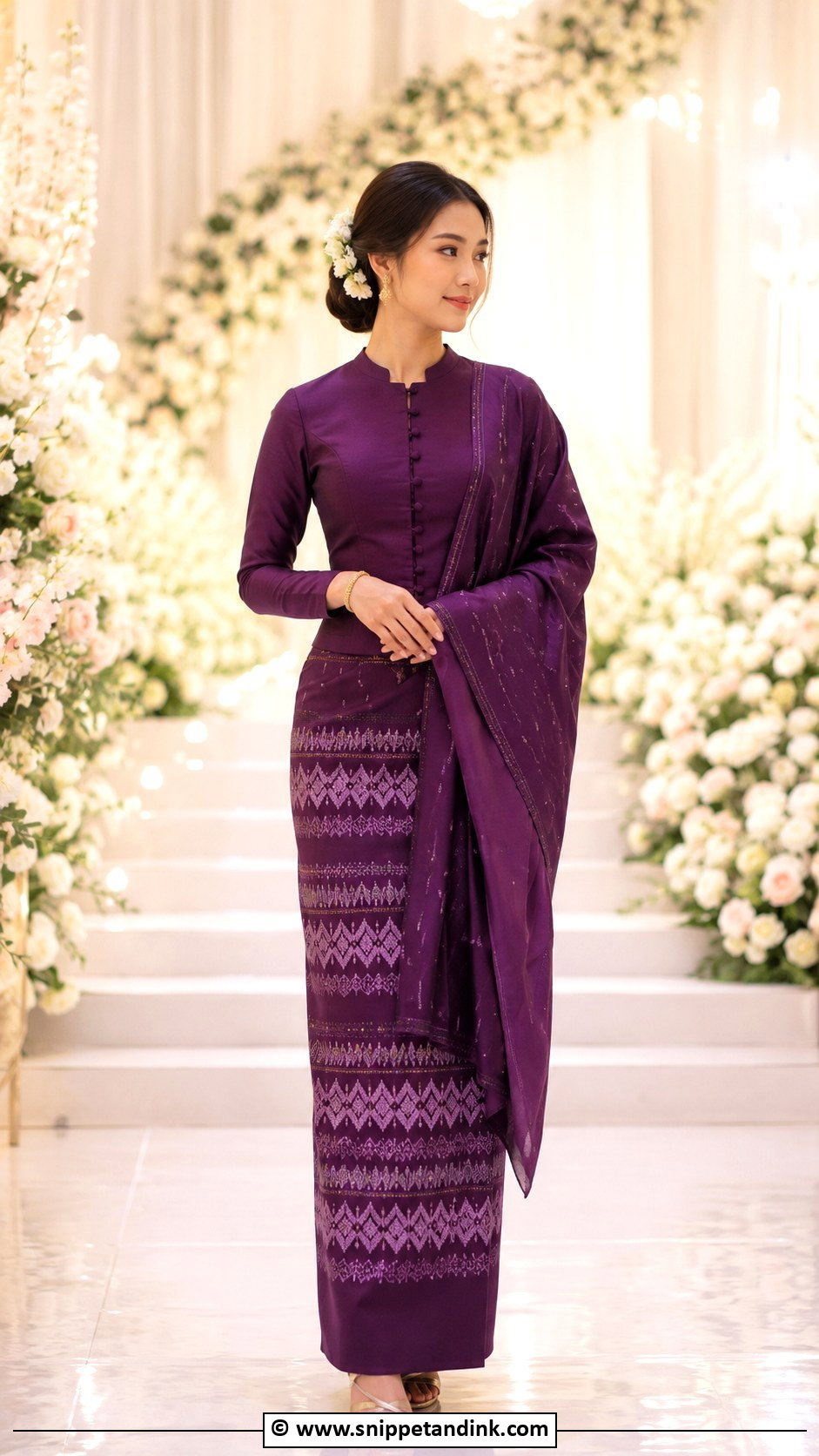
A purple Myanmar wedding dress gives a bride something different from red or gold while still looking traditional. Deep plum or violet silk with gold detail suits an evening celebration; a lavender blouse with a lighter skirt feels softer by day. Purple silk shows sweat marks more than most colors, so for a hot day or a long outdoor ceremony I’d lean toward a patterned weave over plain silk. Keep accessories modest if the fabric is busy.
9. Ivory Lace Myanmar Wedding Dress
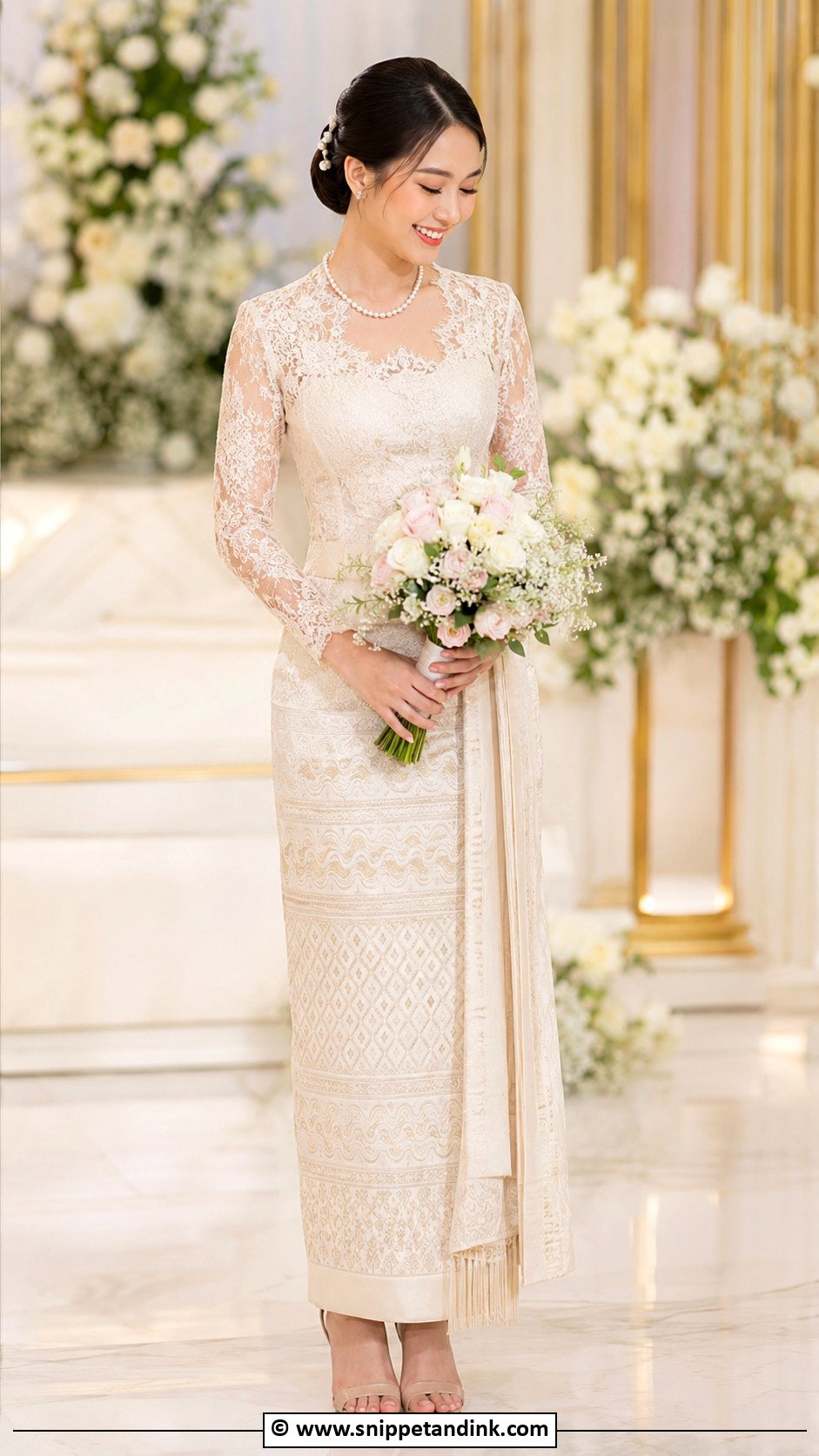
Ivory lace on the blouse with a traditional skirt gives a modest, modern finish. The htamein can be ivory silk, champagne acheik or a pale gold weave; the blouse might carry lace sleeves, a high neckline or fine beadwork. Ivory photographs bright without the starkness of pure white. Check that the lace blouse is lined right to the edges, since unlined lace can scratch at the underarm over a long day. Pearl earrings and a low bun with small flowers keep it refined.
10. Modern Myanmar Wedding Dress
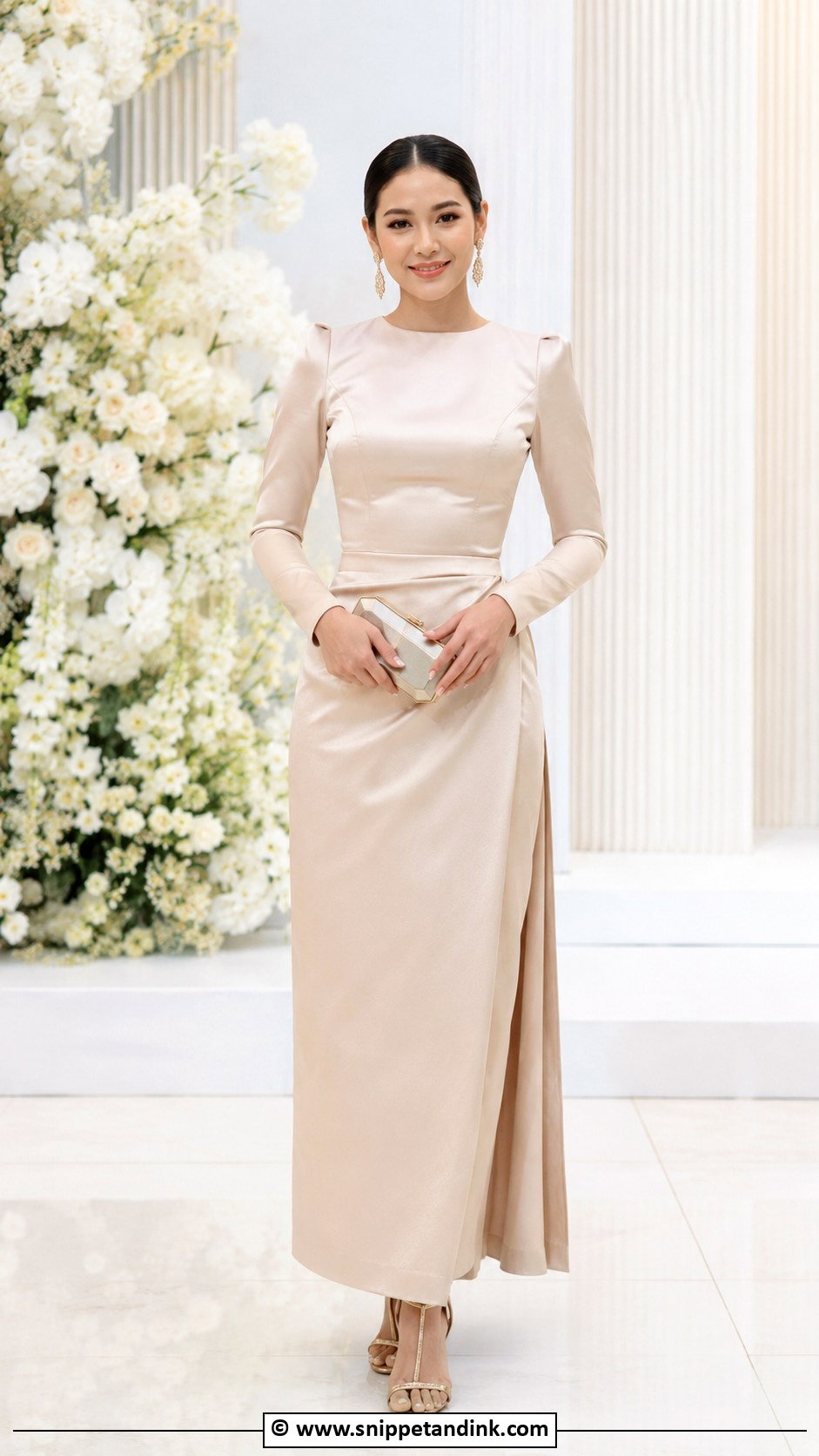
A modern version keeps the traditional silhouette and pares back the detail: clean satin, soft lace, minimal beading, a sculpted blouse and a htamein with a sleek, close drape. Neutral colors suit it best. Replace layered gold with one statement necklace or bold earrings. Many modern htamein are stitched with a hidden zip rather than wrapped, which is easier to wear all day, though some families prefer the traditional wrap for the ceremony itself, so ask before you order.
11. Myanmar Wedding Dress With Train
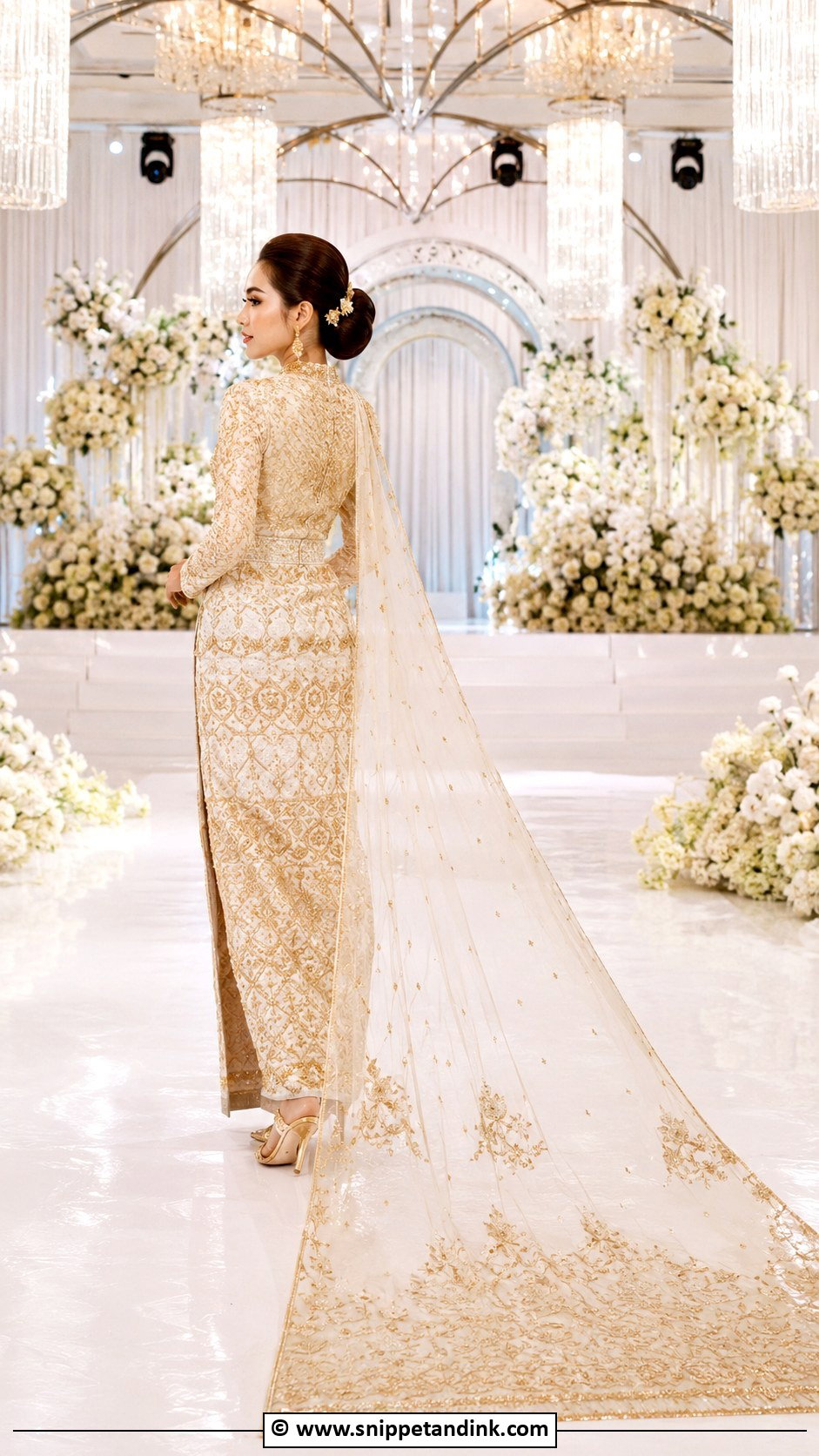
A train adds drama while keeping the outfit rooted in Myanmar dress. It can attach at the blouse, layer over the htamein or fall as a long back panel. Silk, lace and sheer embroidered fabric carry it well. I always add a small wrist loop or hidden hook so the bride can lift the train while moving between ceremony and reception, because dragging silk picks up dirt fast. Heels that lift the hem slightly help. It’s at its best for a grand entrance and on a reception stage.
12. Myanmar Wedding Dress With Long Sleeves
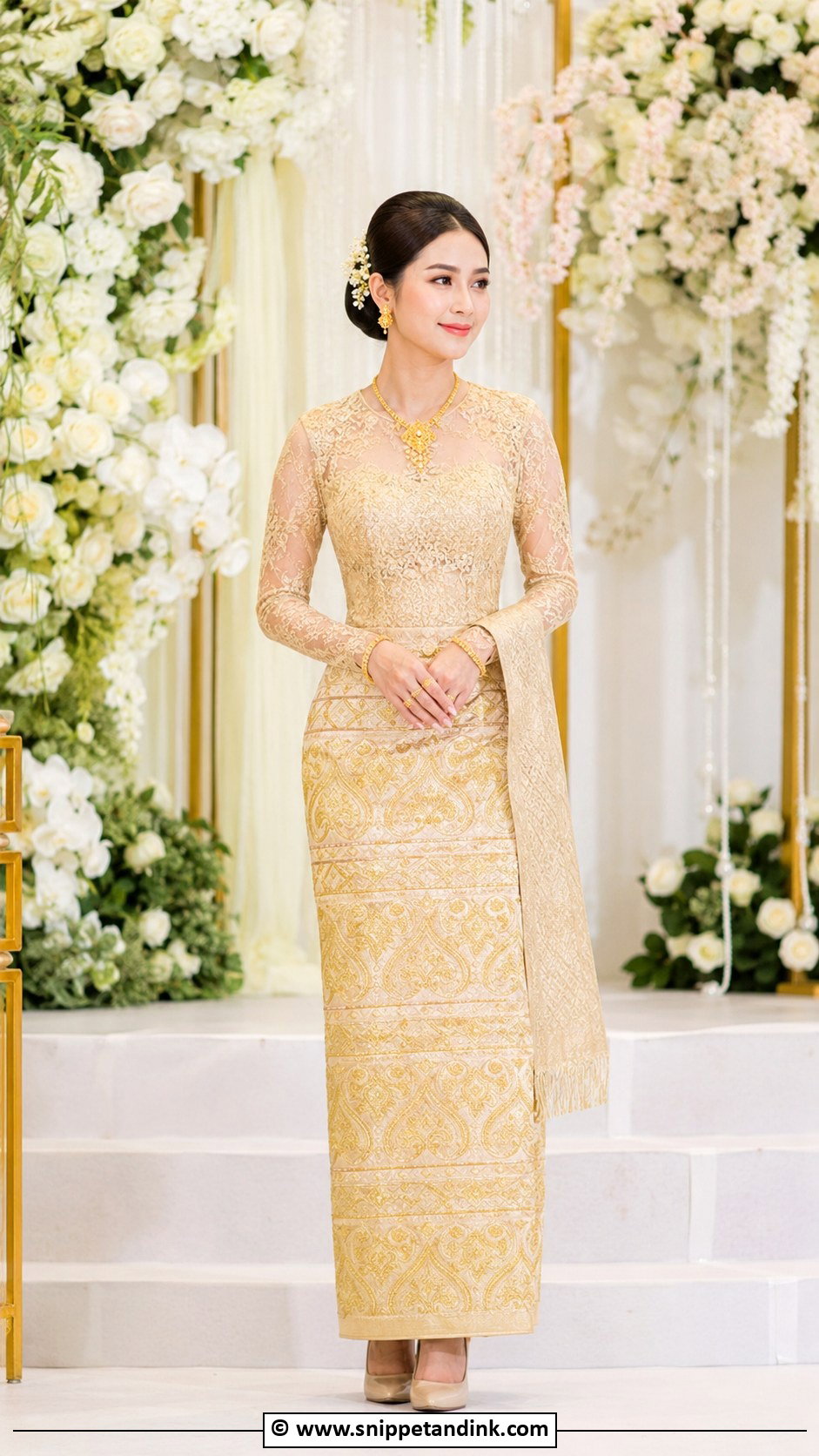
Long sleeves in silk, lace, sheer fabric or embroidered netting look graceful and modest. Pair a fitted long-sleeve blouse with an acheik htamein in a matching or complementary color: soft ivory, pink or light gold by day, deep red, emerald or plum at night. Many brides who want coverage choose this for a temple or monastery visit on the wedding morning. Keep bracelets slim so they don’t snag delicate lace at the wrist.
13. Myanmar Wedding Dress With Off Shoulder Blouse
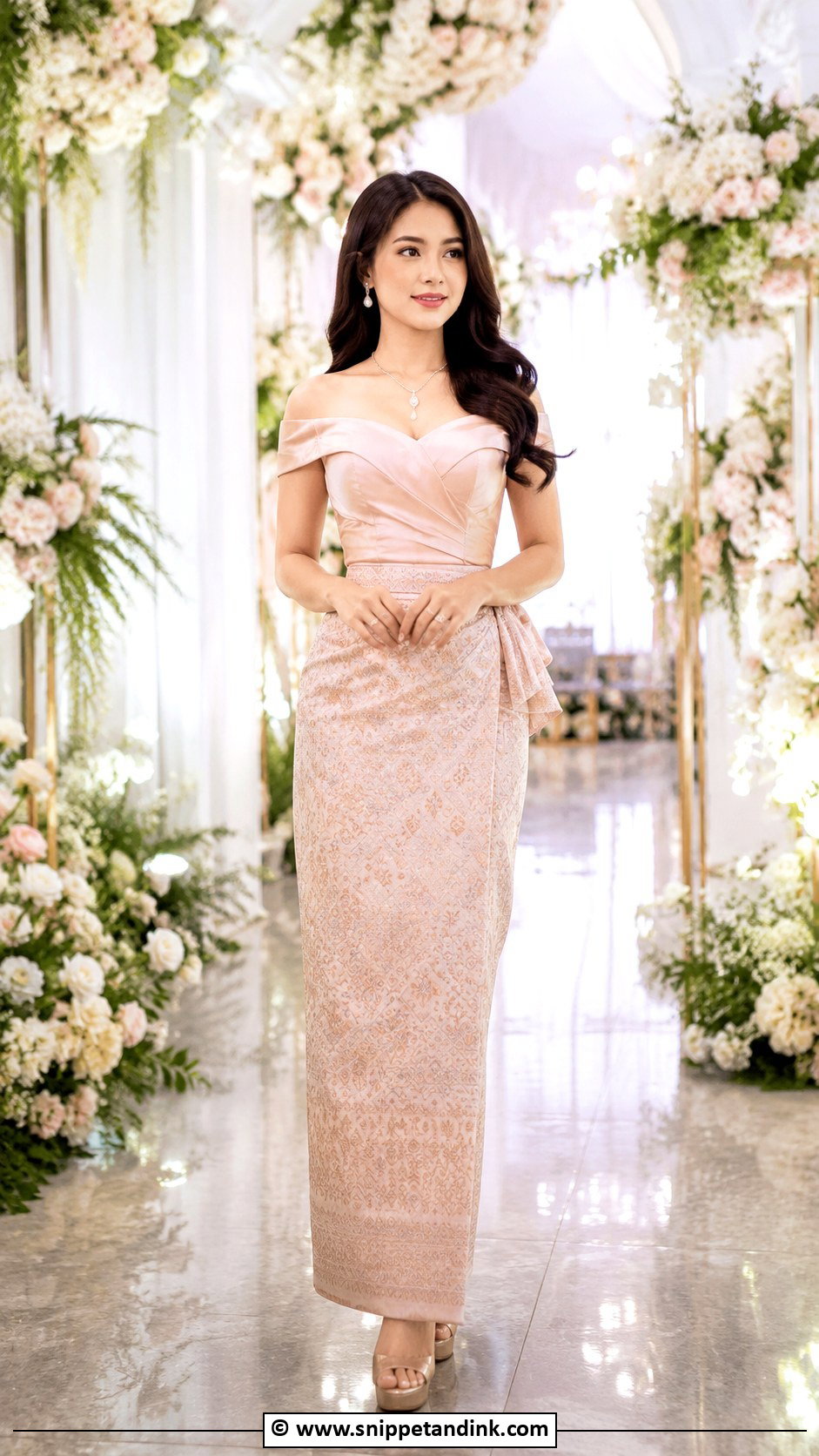
An off-shoulder blouse updates the htamein, but it needs real structure inside, or it slides down every time you raise your hands to greet or bow. I’d keep it for the reception or portraits rather than a religious blessing, where covered shoulders are expected. Pair it with a quality silk htamein in gold, blush, ivory or emerald, and a delicate necklace for the open neckline. Hair pulled back keeps the shoulders clear.
14. Myanmar Wedding Dress With Peplum Blouse
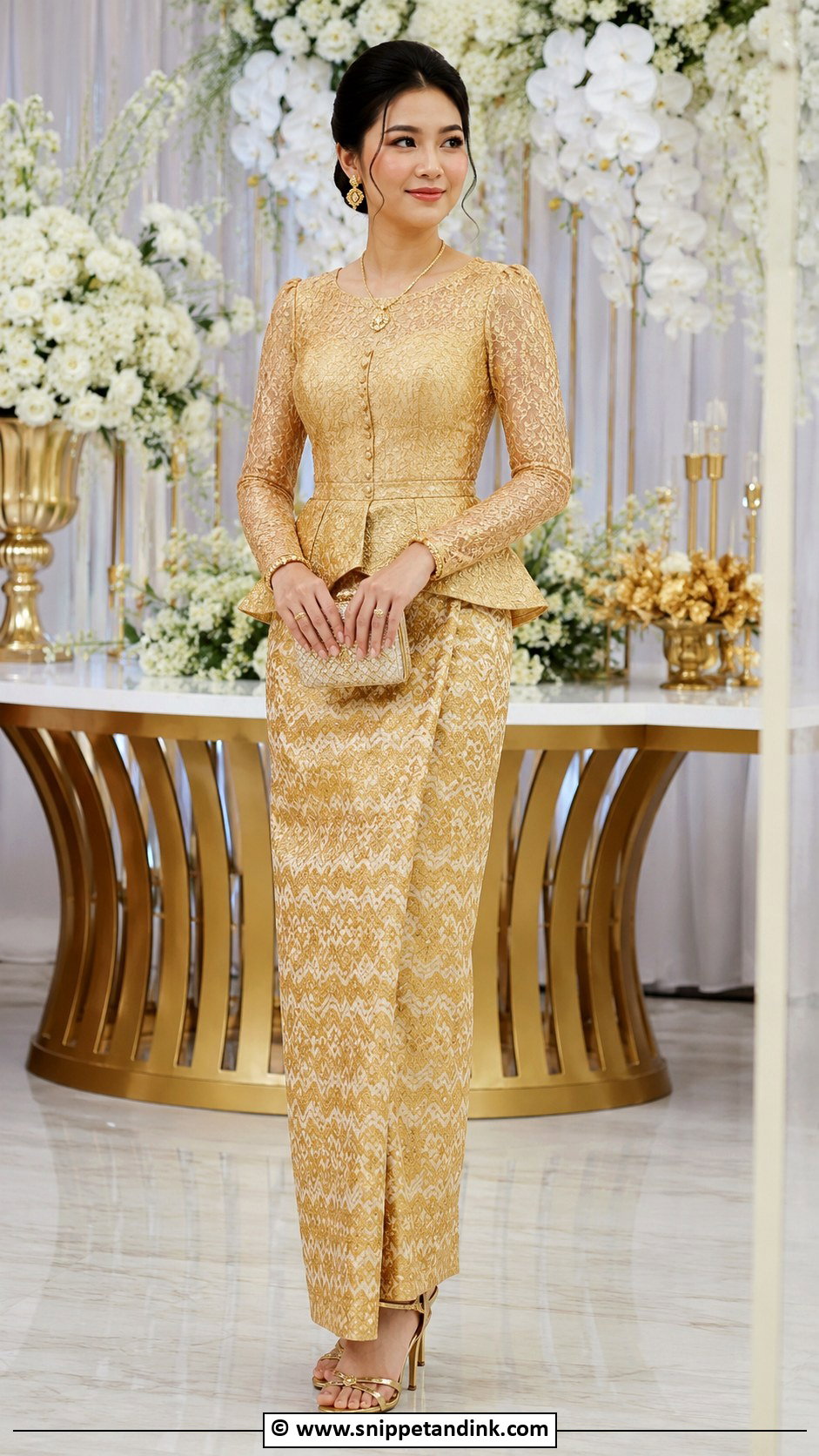
A Myanmar wedding dress with a peplum blouse defines the waist without the close fit of a traditional eingyi, which many brides find more comfortable for a long day. The peplum flares over the top of a straight htamein, and it also hides the waist fold of a wrapped skirt. A gold or ivory peplum with a patterned acheik skirt looks graceful. Silk keeps it classic; lace and beadwork make it more bridal. Mid-height heels suit the proportion.
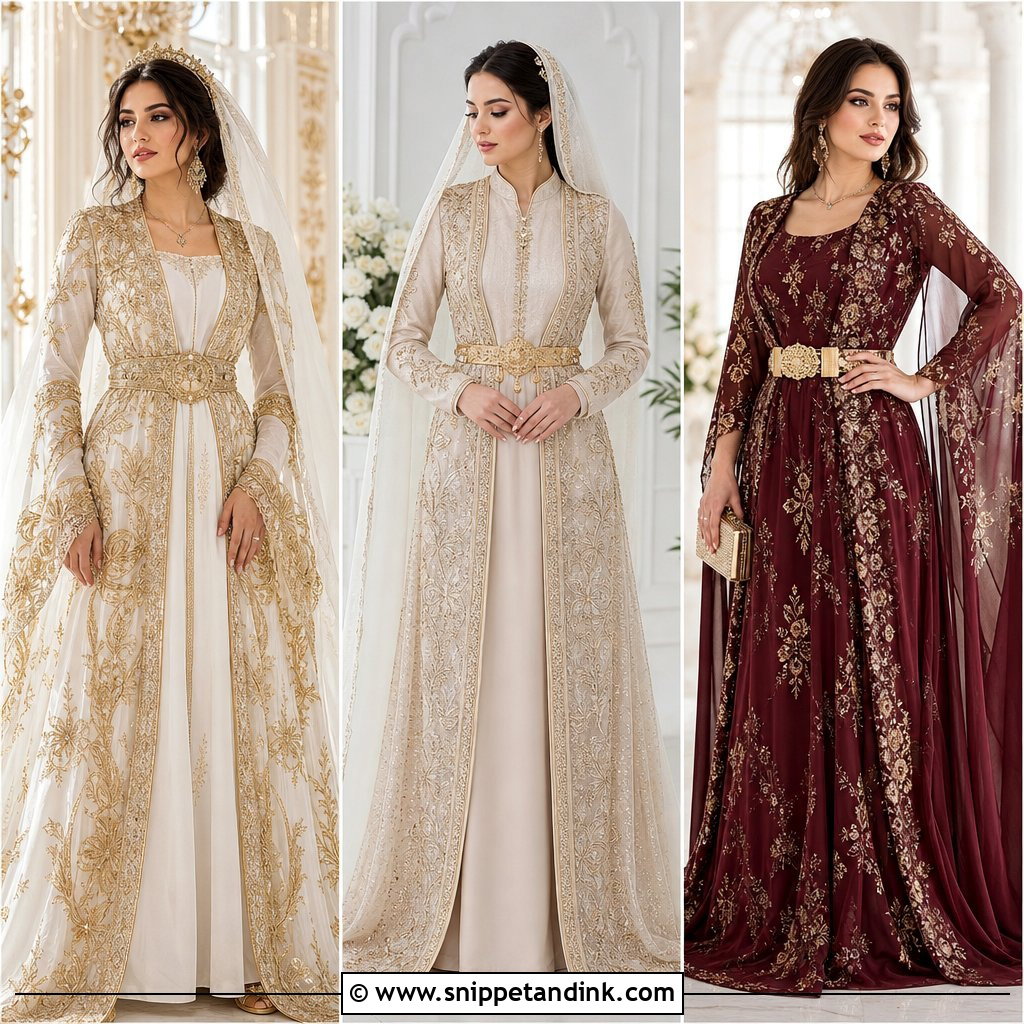
15. Acheik Myanmar Wedding Dress
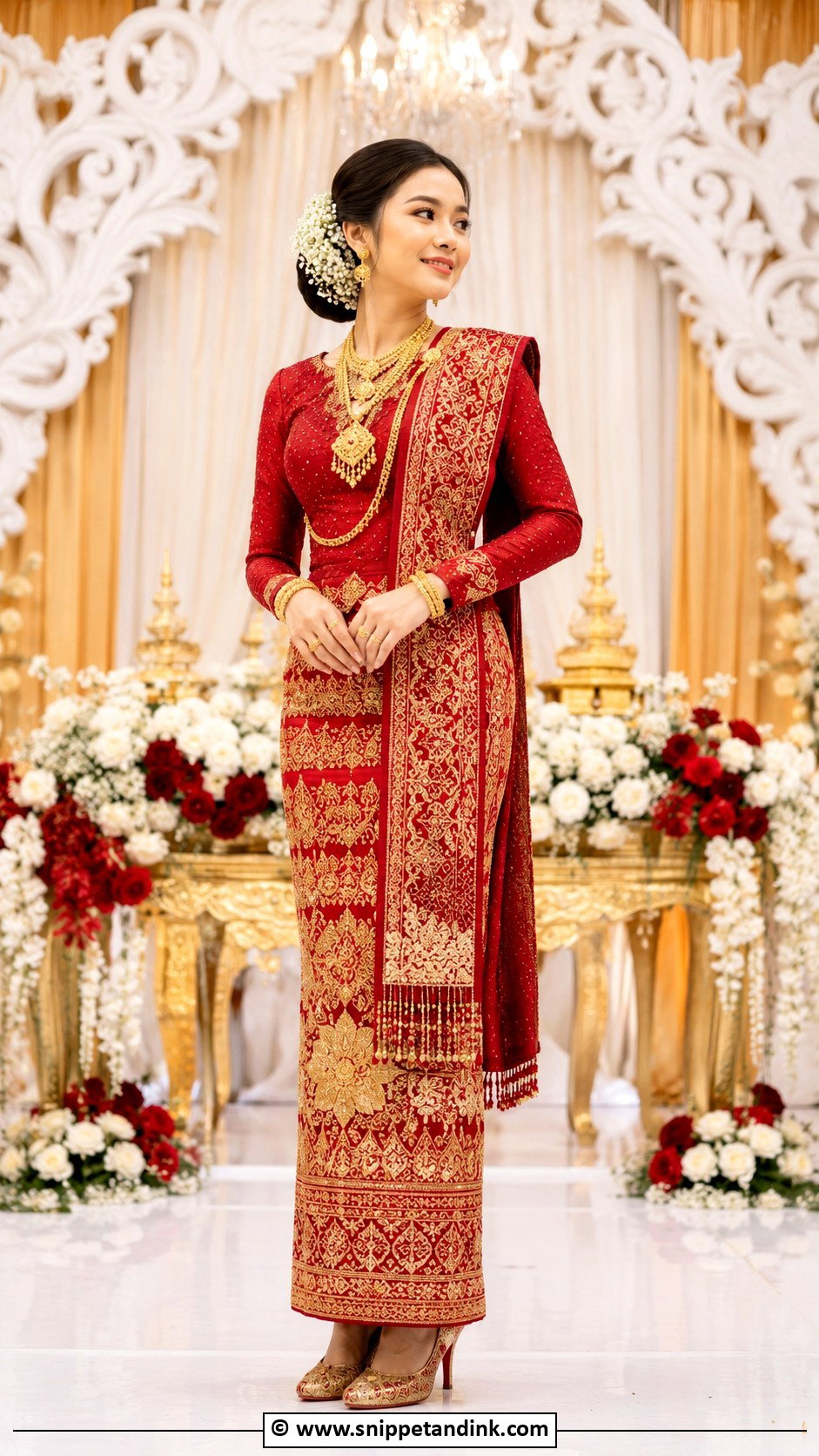
Acheik is the most recognizable bridal textile in Myanmar. The flowing wave pattern is hand-woven using many small shuttles, which is why genuine pieces take a long time to make and cost far more than printed imitations. Gold, red, green, purple, pink and blue all appear in acheik. If the skirt is very detailed, keep the blouse simpler so the weave can be seen. Gold jewelry, a traditional updo and embroidered heels complete it. Order early, since handwoven lengths can’t be rushed.
16. Silk Myanmar Wedding Dress
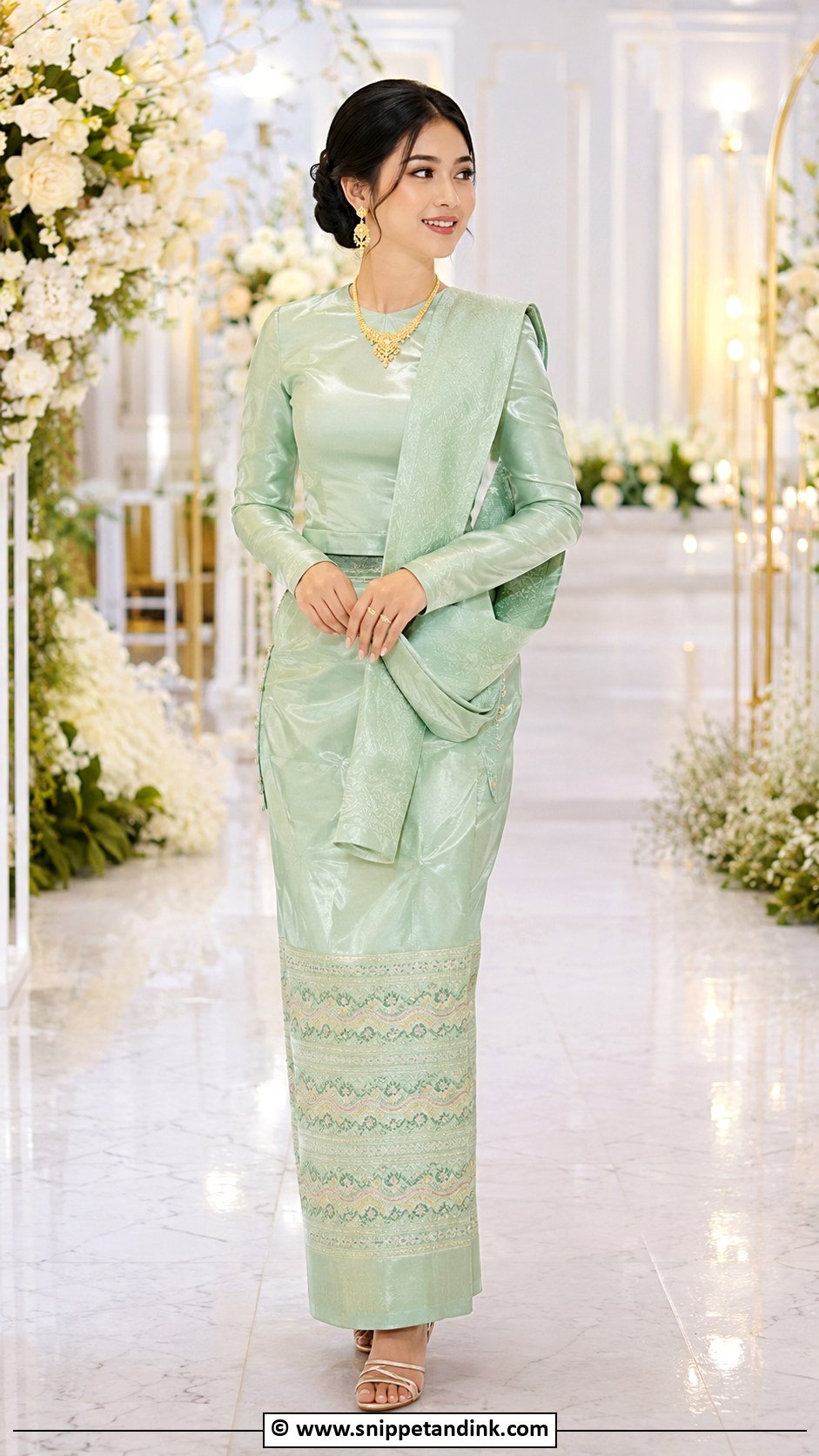
Silk holds color deeply, so even a plain design looks expensive. A matching silk blouse and htamein is the classic outfit; a plain silk blouse with a patterned skirt adds depth. Champagne, ruby, ivory, jade and royal blue all photograph well. Silk does crease where you sit, and at a wedding you sit often, so I suggest a heavier silk or a lined skirt. A gold necklace, earrings and polished heels are enough with the natural shine.
17. Beaded Myanmar Wedding Dress
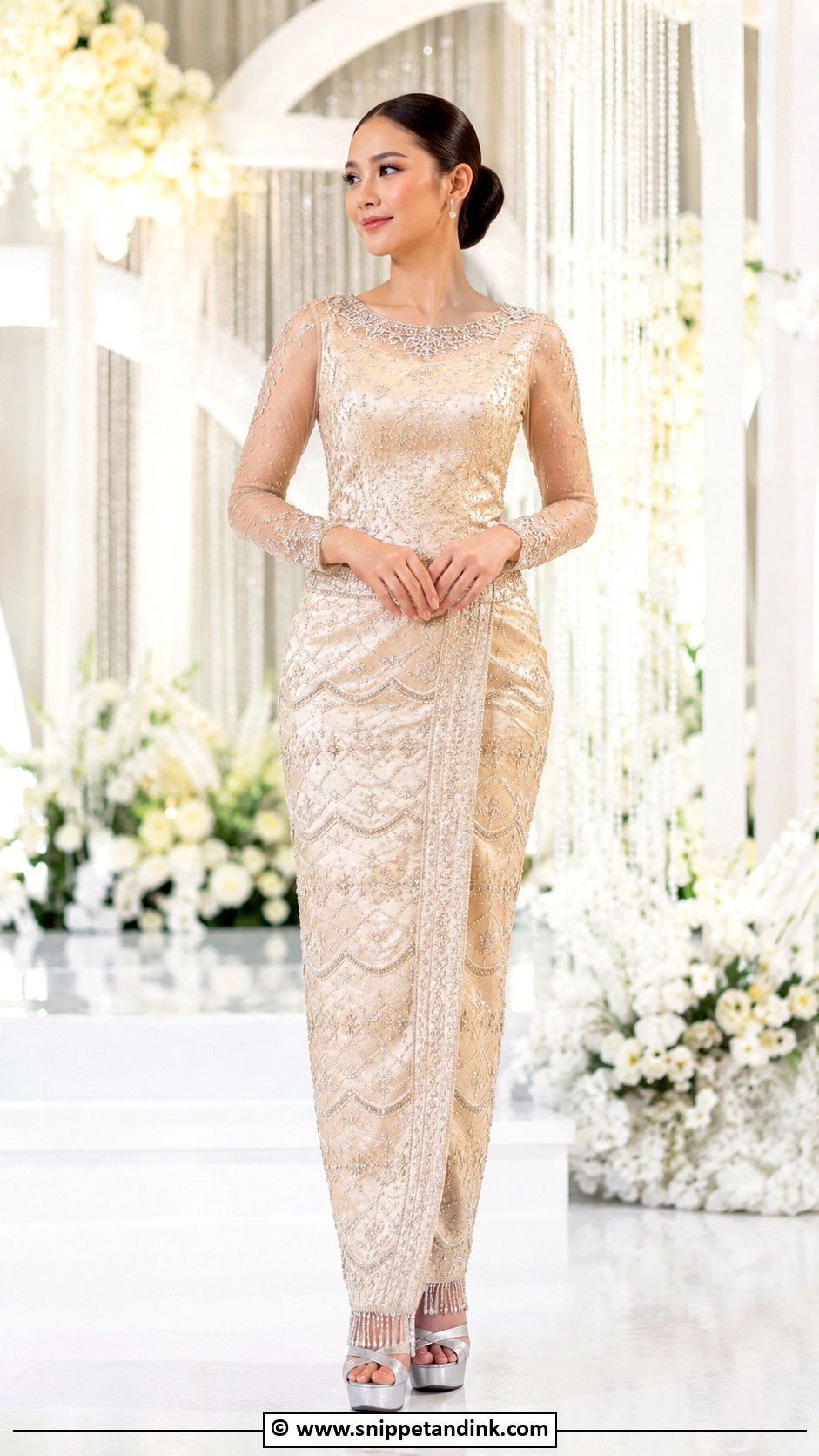
Beading can sit on the blouse, sleeves, neckline, waistband or back panel, and it catches stage lighting at an evening reception. Pair a beaded blouse with a silk htamein that drapes cleanly, and keep jewelry lighter if the beadwork is heavy. Ivory, champagne and blush give a soft glow; red or emerald with gold beading is more dramatic. Check the inside of the arms for scratchy beads before the final fitting, especially if you’ll be hugging relatives all evening.
18. Floral Myanmar Wedding Dress
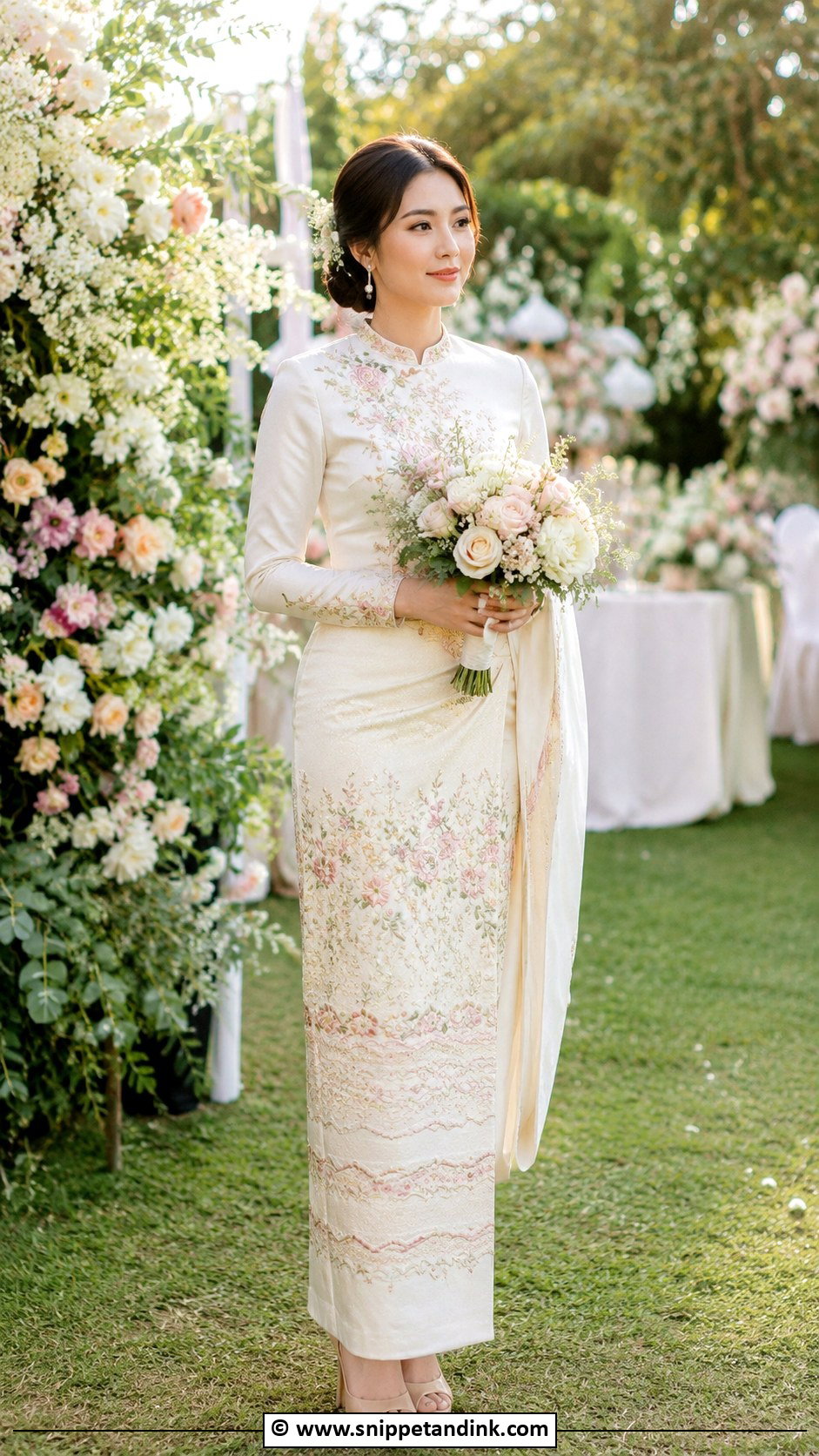
Floral details can be embroidered, woven into silk, appliquéd in lace or printed on a softer htamein. Subtle tones like ivory, blush, gold or pale green look bridal. Put the florals on one piece only: floral sleeves with a plain skirt, or an embroidered skirt with a simple top. Floral hair pins and pearl earrings carry the theme. Morning ceremonies and garden receptions suit it, especially for pre-wedding photos outdoors.
19. Shan Wedding Dress
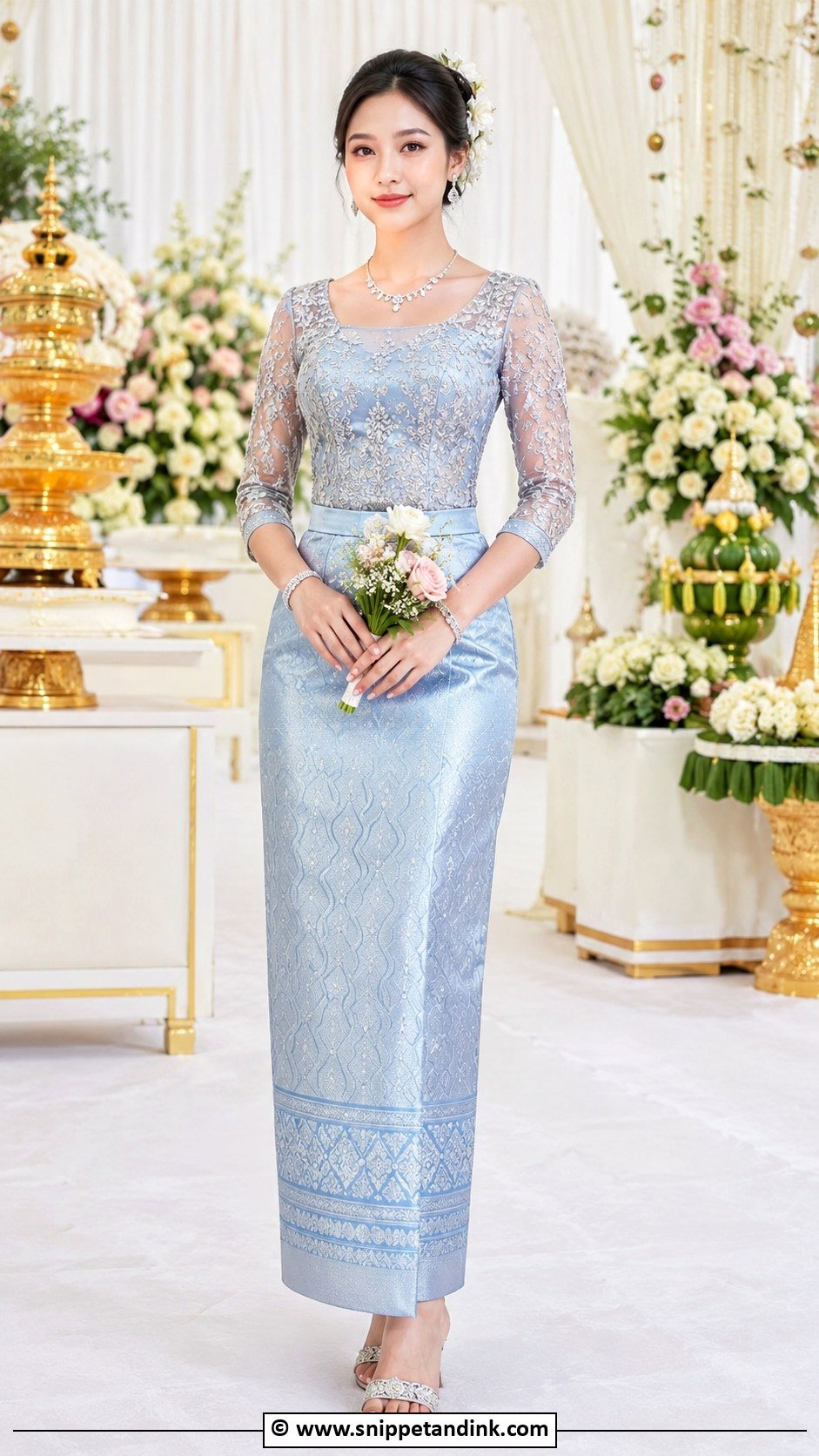
Shan-inspired bridal looks tend to center on the textile: a silk tube skirt with fine woven or embroidered detail, worn with a fitted blouse or a jacket-style top. Soft blue, green, silver, pink and gold suit the fabrics. Match silver or gold jewelry to the weave. Comfortable sandals matter if the celebration involves walking between family homes. For a bride of Shan heritage, the most authentic version usually comes from family pieces and makers within the community.

20. Kachin Wedding Dress
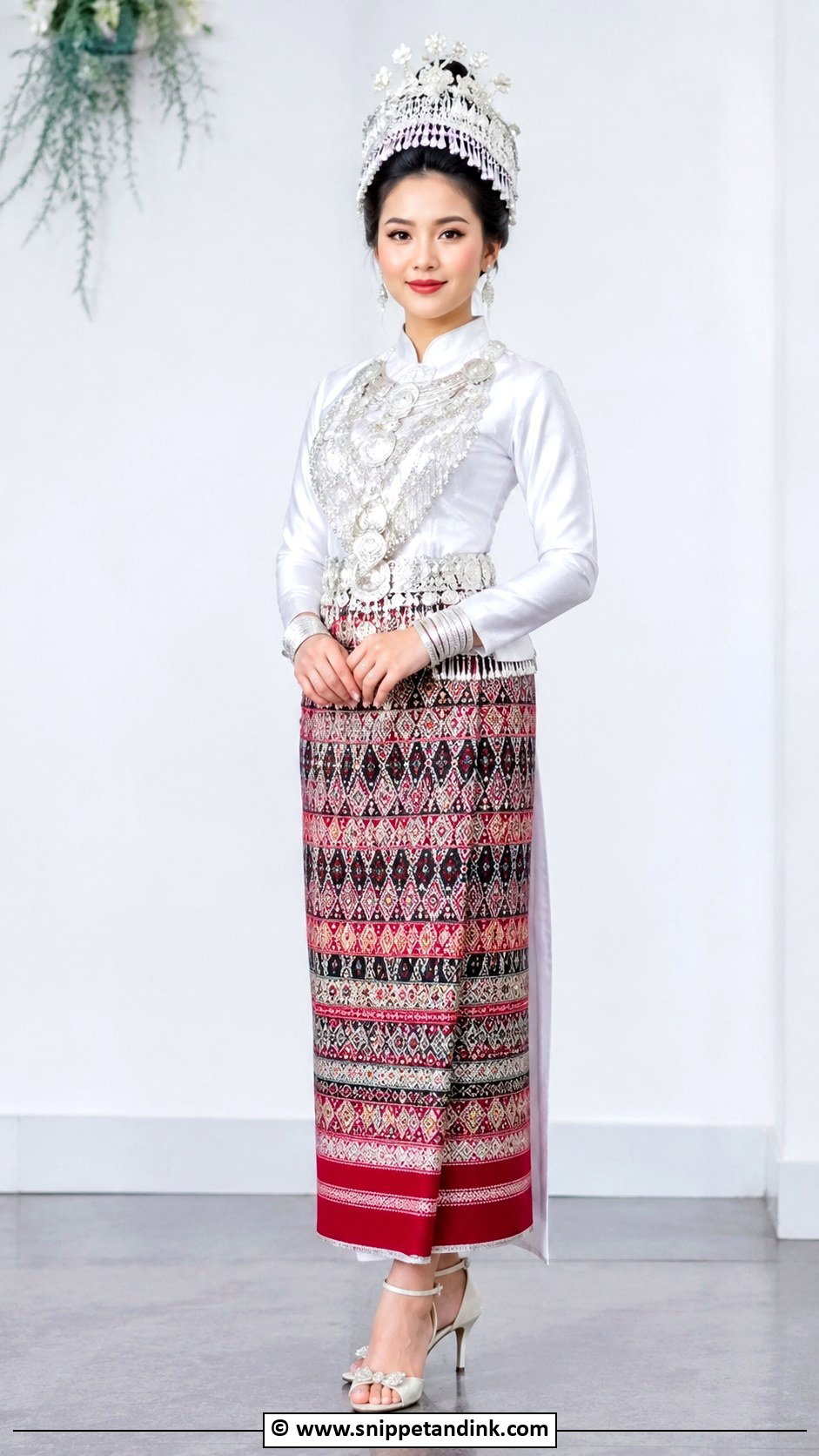
Kachin bridal dress is bold: strong woven patterns, contrasting color, silver ornaments and decorative headpieces. A patterned Kachin textile skirt with a fitted ceremonial blouse or jacket makes a complete look, often in red, black and white with bright accents. Keep the shoes plain because the textiles and silver already dominate. The headpiece and silver can be heavy, so the hair needs a firm structure underneath. It’s best for brides honoring Kachin heritage, ideally with an elder guiding the details.
21. Chin Wedding Dress
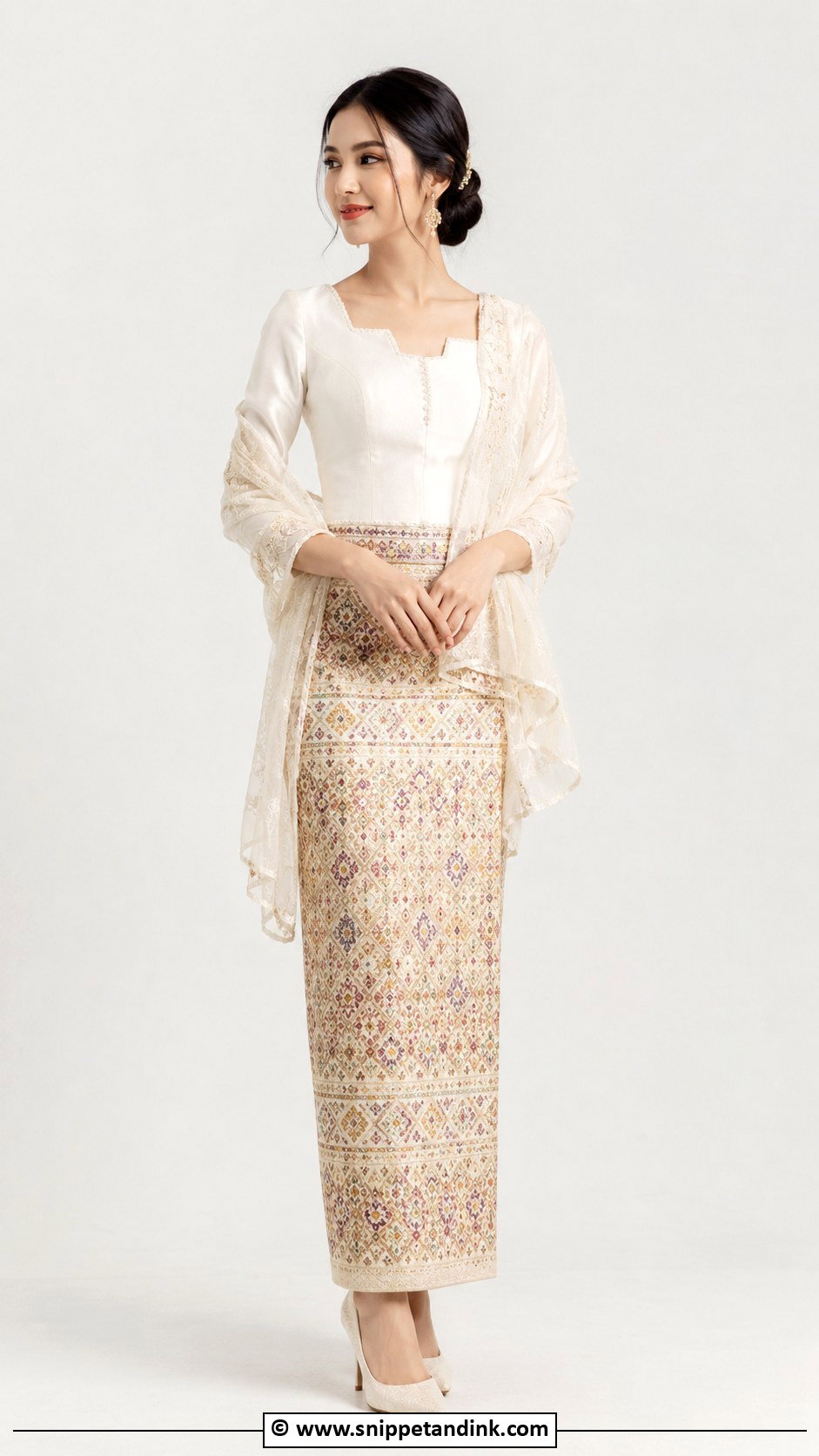
Chin textiles carry distinctive woven patterns and a strong community identity, which makes them meaningful and also something to handle with care. A bridal outfit might pair a patterned woven skirt with a fitted blouse and a shawl layer. Red, black, white, green and earthy tones are common. Some patterns belong to particular communities or families, so ask before borrowing a design that isn’t yours. Simple shoes, natural makeup and a neat hairstyle keep attention on the textile.
22. Mon Wedding Dress
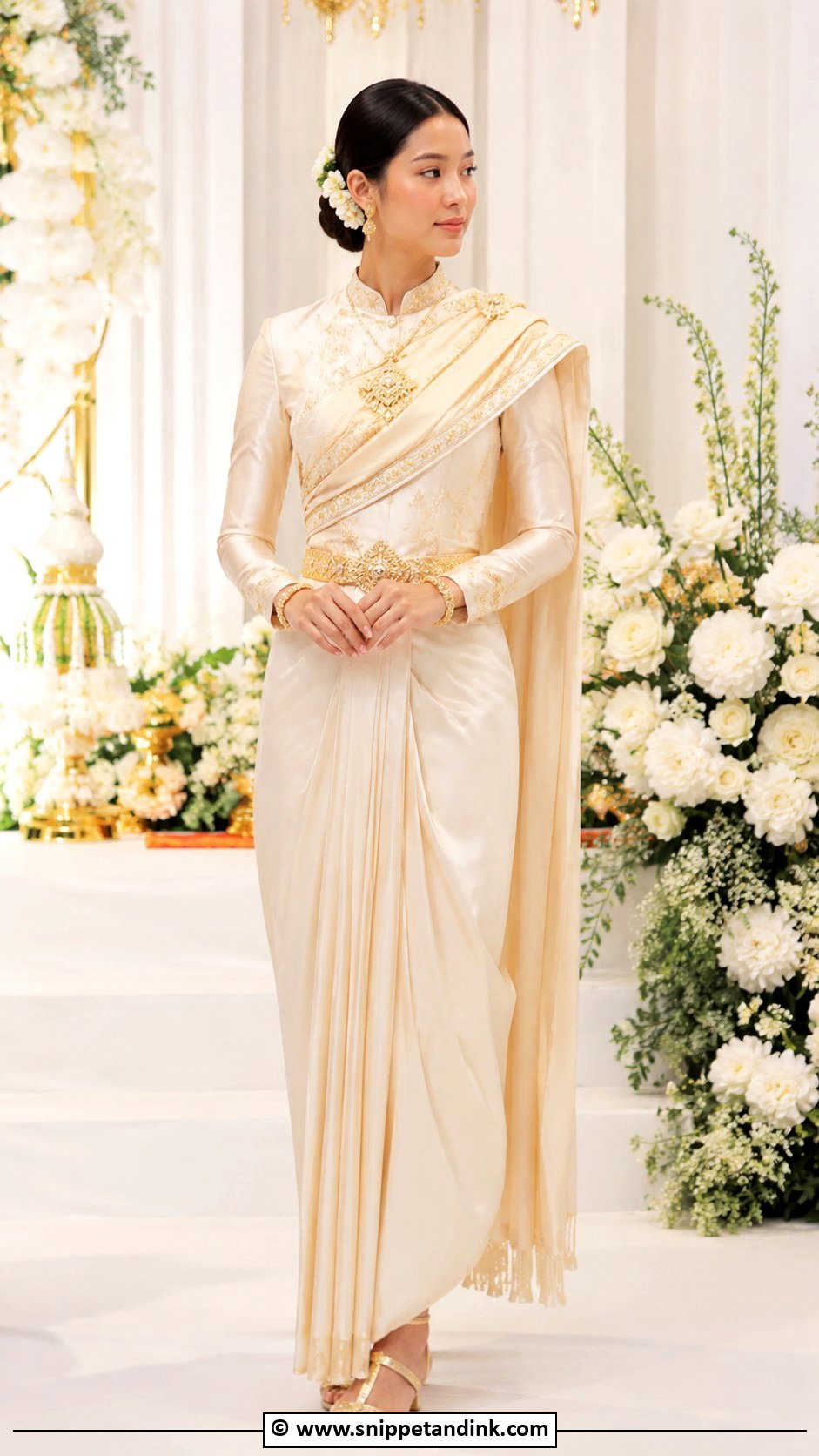
A Mon-inspired bridal outfit has a soft, graceful feel: a draped skirt, a fitted blouse and refined jewelry, often in soft gold, ivory, red, pink or green. If you’re using specific Mon textile details, choose them with family guidance. A neat bun with flowers, gold earrings and elegant sandals balance the look. Restraint matters more than adding pieces; the outfit should feel polished, not crowded. It suits family ceremonies and heritage portraits.
23. Rakhine Wedding Dress
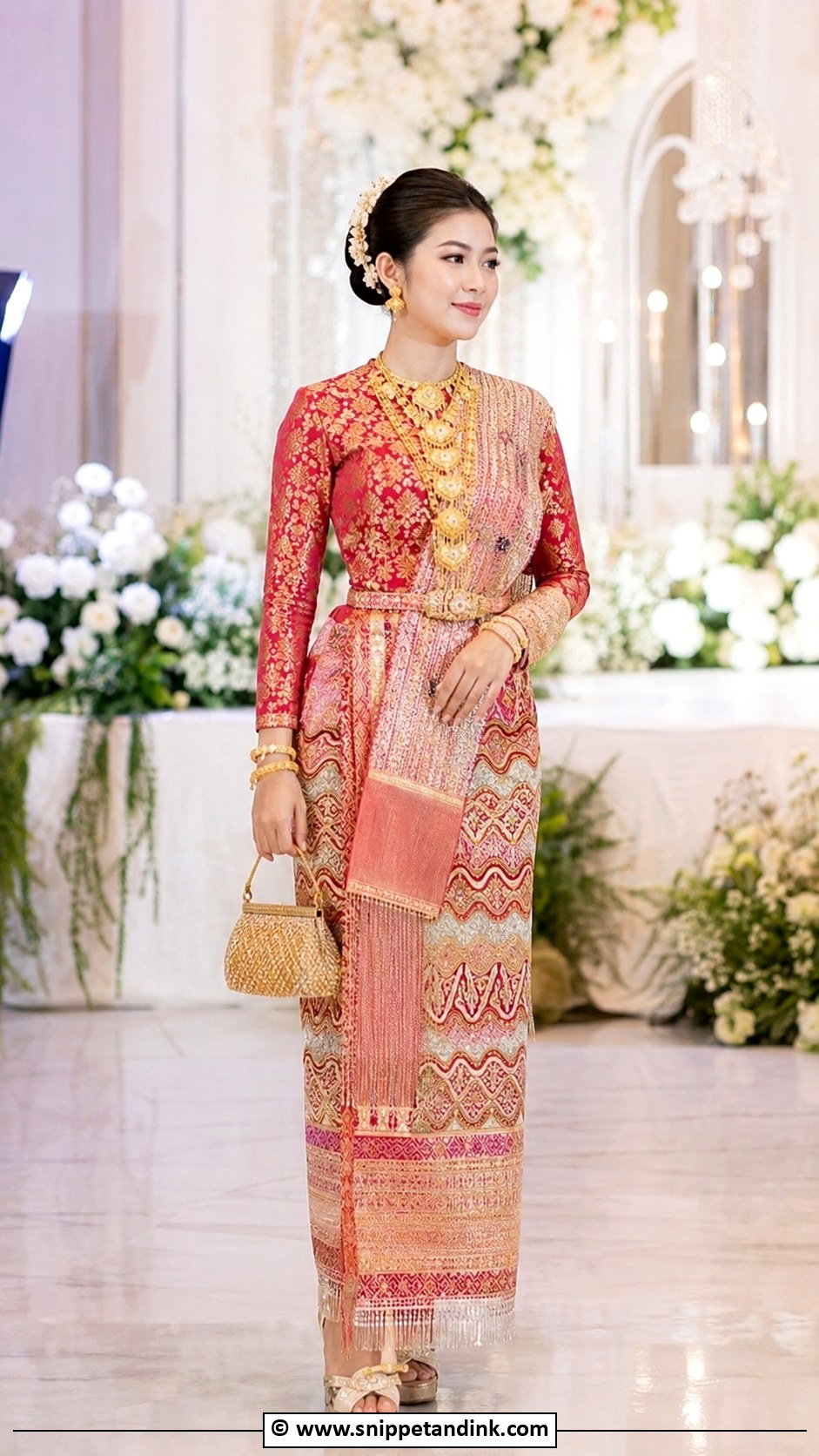
A Rakhine bridal look can be bright and expressive: a fitted blouse, a patterned htamein and jewelry chosen to complement the weave rather than hide it. Gold, white, red, blue and soft pink all appear in Rakhine textiles. Work with a knowledgeable maker or family member when choosing woven elements so the details are appropriate. A low bun, floral hairpiece and gold jewelry finish it. Metallic heels suit a reception setting.
24. Myanmar Reception Wedding Dress
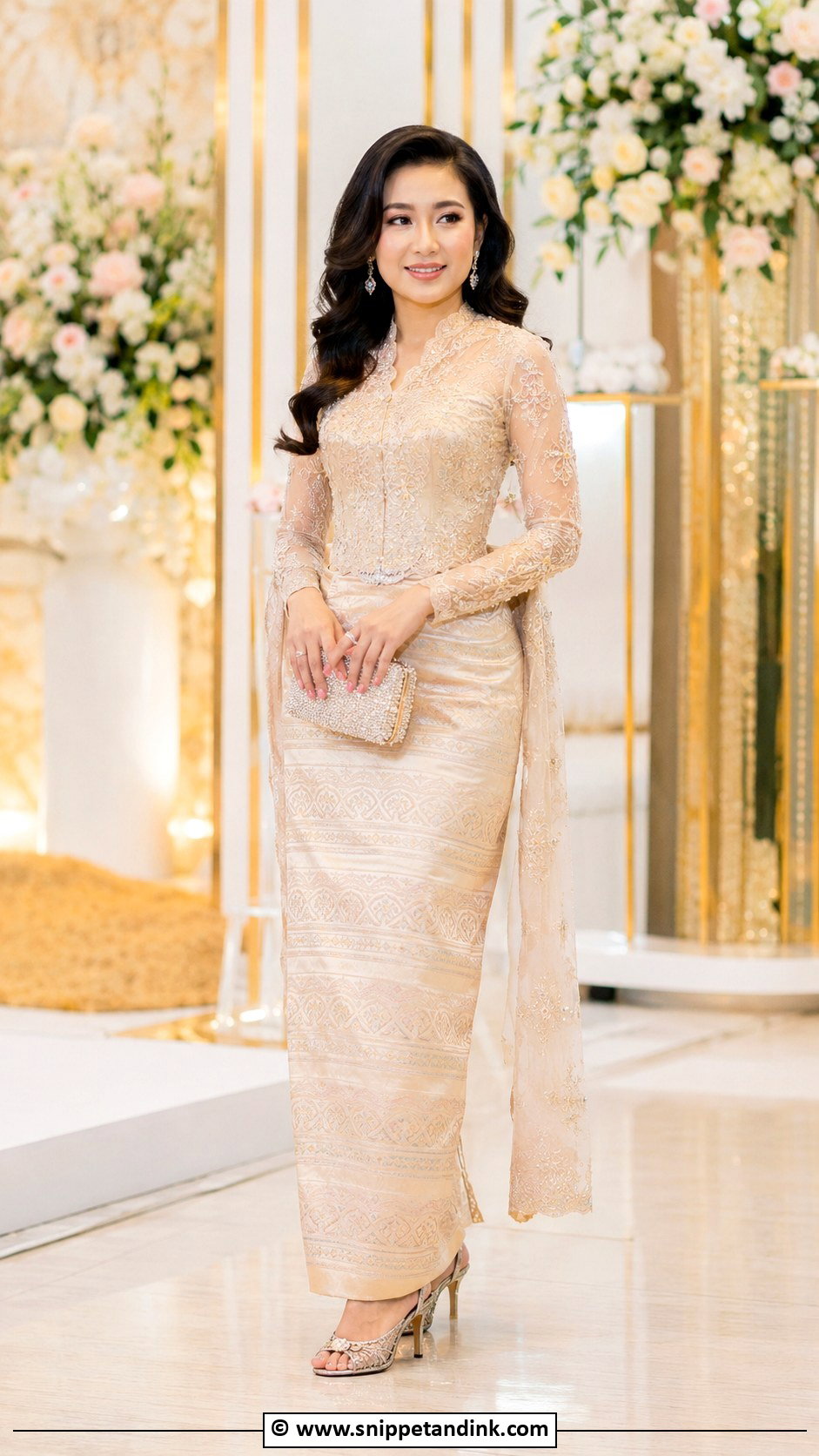
The reception outfit can be lighter and easier to move in than the ceremony dress, since you’ll be walking table to table and posing for photos for hours. A silk htamein with a lace blouse, a beaded modern top or a soft peplum all work. Champagne, blush, silver, emerald and royal blue glow under reception lighting. This is the moment to switch to lighter jewelry, because heavy gold earrings that felt fine at the morning blessing can ache by evening.
25. Myanmar Engagement Wedding Dress
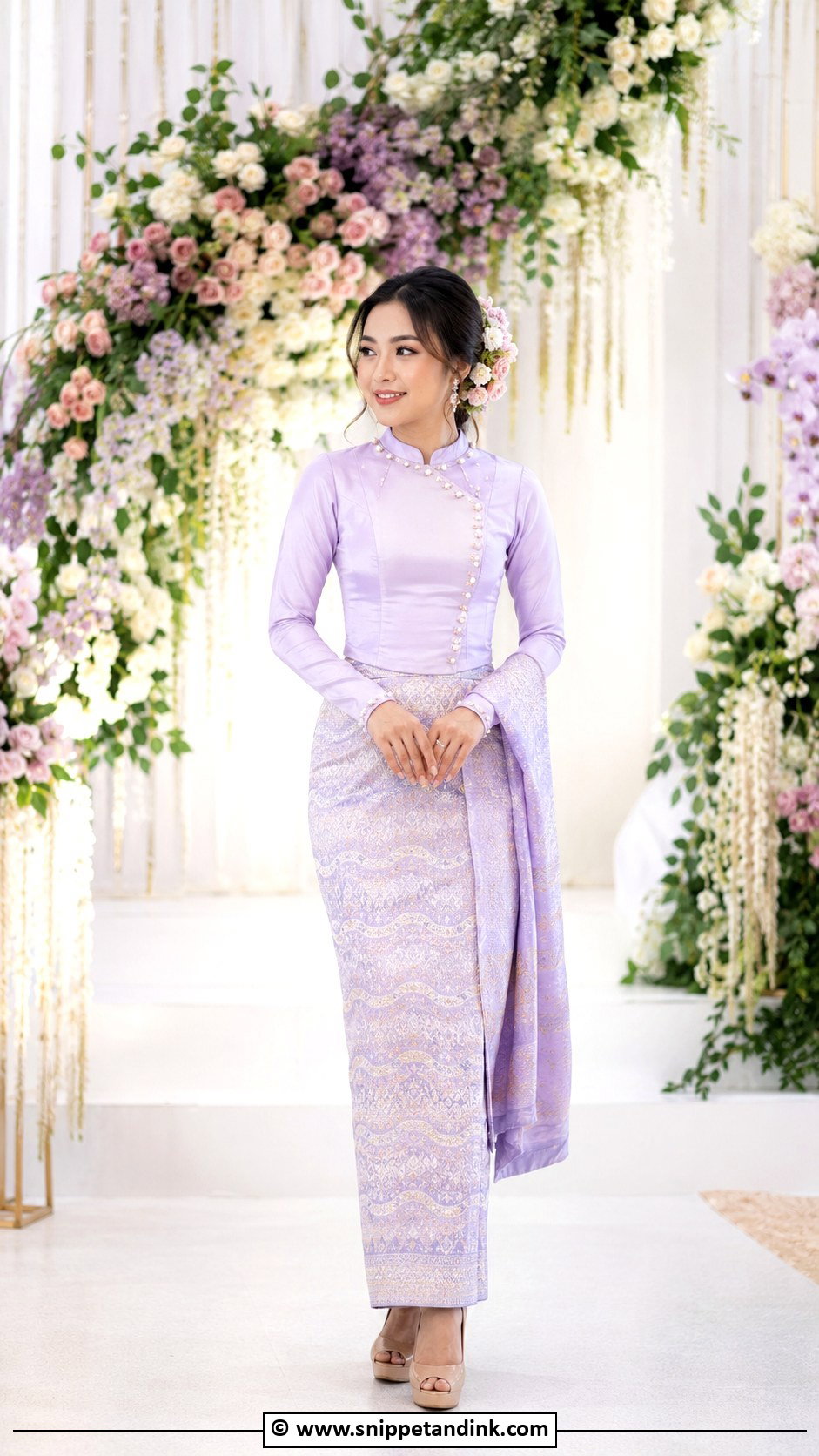
An engagement outfit should feel special but softer than the main bridal look. Blush, pale gold, lavender, mint, ivory and soft blue suit daytime family gatherings. A fitted blouse with a silk htamein reads polished and traditional; lace sleeves or pearls add romance. Keep jewelry light, especially if elders will be visiting through the day. A fresh flower hairpiece and simple heels are all it needs, and the outfit can be worn again for family blessings later.
Dressing for the Morning Blessing as Well as the Reception
Many Myanmar weddings include time with monks or elders before the celebration, and that part of the day asks different things of an outfit than the reception stage does. Covered shoulders are expected in religious settings, and you may sit on a floor mat with your legs folded to one side or kneel to pay respect to parents and elders.
That’s why so many brides change outfits: a modest, sleeved blouse with a comfortable htamein for the blessing, then a lighter or more dramatic look for the reception. If you’ll wear one outfit all day, test it by kneeling and rising without using your hands. A skirt that pulls tight across the thighs or a blouse that rides up at the back will show you where it needs easing.
Storing Acheik Silk So It Lasts for the Next Generation
Hand-woven silk is often passed down, so care starts the week after the wedding. Have it cleaned by someone experienced with fine silk, and point out any stains so they can be treated early. At home, roll the skirt around a tube padded with acid-free tissue rather than folding it, since fold lines in silk can weaken over the years. Store it in a breathable cotton bag away from sunlight, which fades strong colors like red and purple, and spray perfume before dressing, never directly onto the fabric.
Tradition First, Then the Details That Make It Yours
A good Myanmar bridal outfit honors its tradition and still feels natural on the woman wearing it. Classic acheik silk, ivory lace, red, gold or an ethnic textile can all be right; what matters is that the look balances from head to toe. Prioritize fit, comfort for kneeling and sitting, fabric quality and respectful handling of cultural details. Choose hair, shoes and jewelry that support the silk instead of competing with it.
You'll Like These Ideas:





Leave a Reply