
Flowers are the decoration couples ask me about more than any other, and floral wedding cakes range much further than a few roses on the top tier. Some couples want a fresh cascade of ranunculus down one side. Others want pressed petals, hand-modelled sugar flowers, painted blooms or piped buttercream that echoes the bouquet. What decides the right one is rarely the photo you’ve saved; it’s the room temperature, the season, the length of time the cake sits out and who is handling the stems. The twenty designs below come with the practical notes I’d give at a tasting, including where real flowers need a barrier between stem and frosting.
Which Flower Medium Can Handle Your Room Temperature
Before I sketch anything, I ask where the cake will stand and for how long. The decoration medium has to survive that, and each one fails in its own way.
- Fresh flowers wilt in heat and need wrapping or picks so stems never touch the frosting. They go on at the venue, not the night before.
- Piped buttercream petals droop first in a warm room, long before a smooth coat shows trouble.
- Sugar flowers hate humidity and the fridge. A cool, dry room keeps them crisp for days.
- Wafer paper curls when it meets moisture, so it needs a set surface and a dry room.
- Pressed and painted flowers are the most stable, since they sit flat and carry no weight.
Summer weddings in a tent or garden are where I steer couples toward ganache-set tiers with sugar or painted flowers, and away from lots of piped buttercream. Indoors with air conditioning, almost anything here will hold.
1. Pressed Flower Wedding Cake
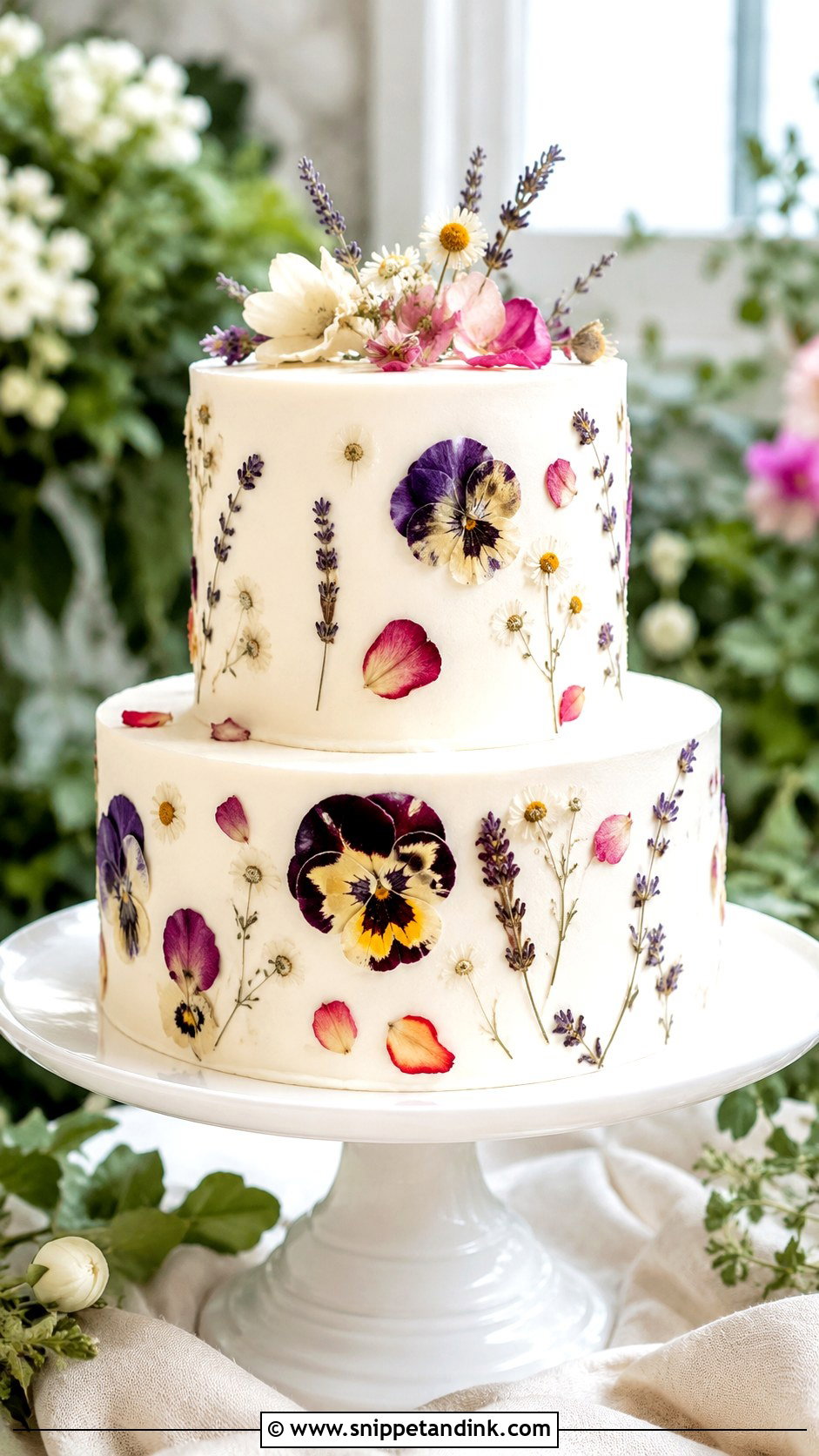
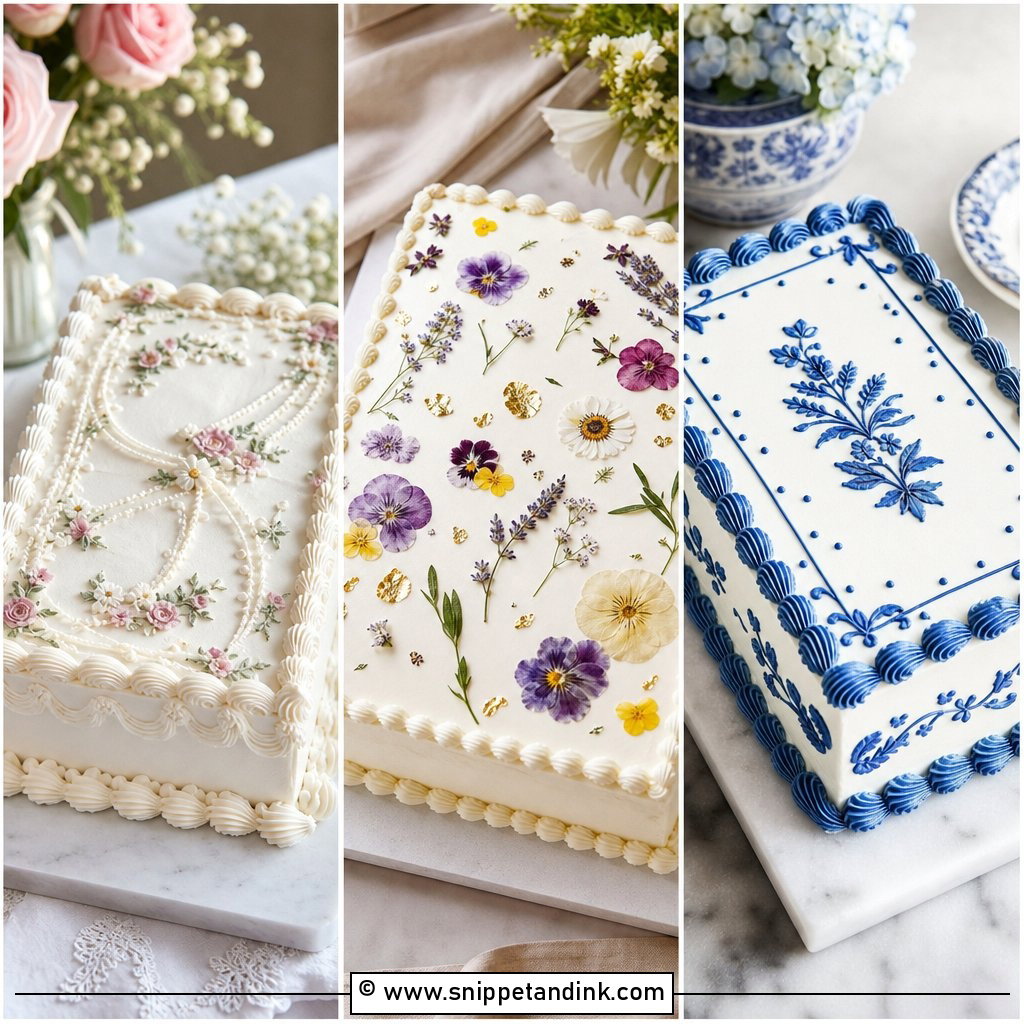
Pressed flowers lie flat, so they need a flat canvas. Smooth buttercream or fondant lets every petal show its outline, while texture breaks them up. Use edible pressed flowers chosen for color against the bouquet: pansy, viola, cornflower, rose petals, chamomile, small herb leaves. A white or pale blush base keeps them from looking busy. I press them onto the cake shortly before it’s boxed, since petals sitting on buttercream for days can draw moisture and darken. Space them with intent; a cake plastered edge to edge loses the delicacy that makes this style work.
2. Fresh Flower Cascade Wedding Cake
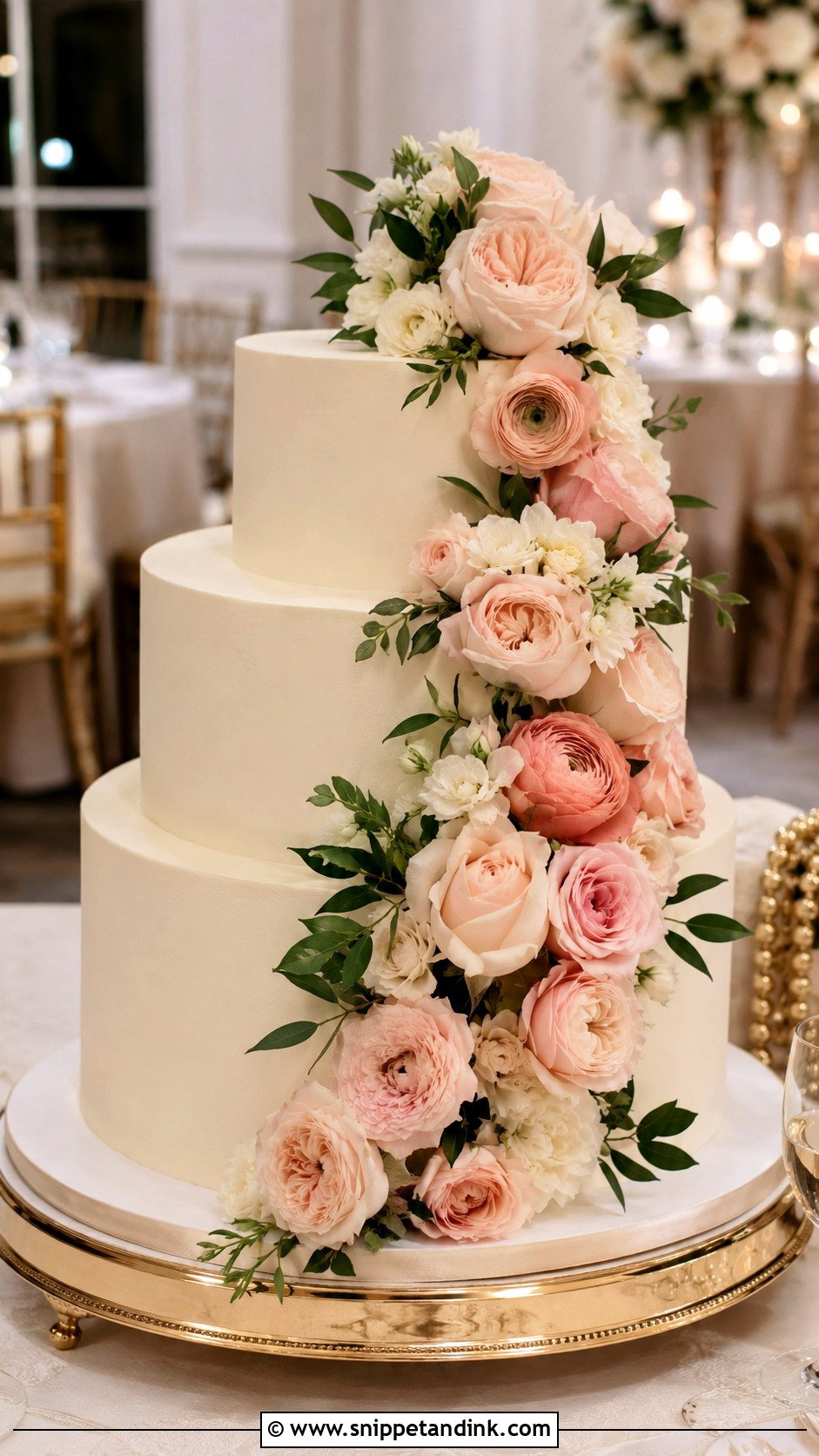
A cascade runs from the top tier down one side like a bouquet wrapped around the cake, usually roses, ranunculus, lisianthus, orchids and trailing greenery. Two to four tiers all work, and a plain white buttercream base lets the flowers carry the design. The part couples underestimate is preparation. Every stem should be wrapped in floral tape or set into a food-safe pick so sap and any florist treatment never touch the frosting. Agree in writing whether your florist or your baker does this, because it’s the step most often left to the other person.
3. Buttercream Flower Wedding Cake
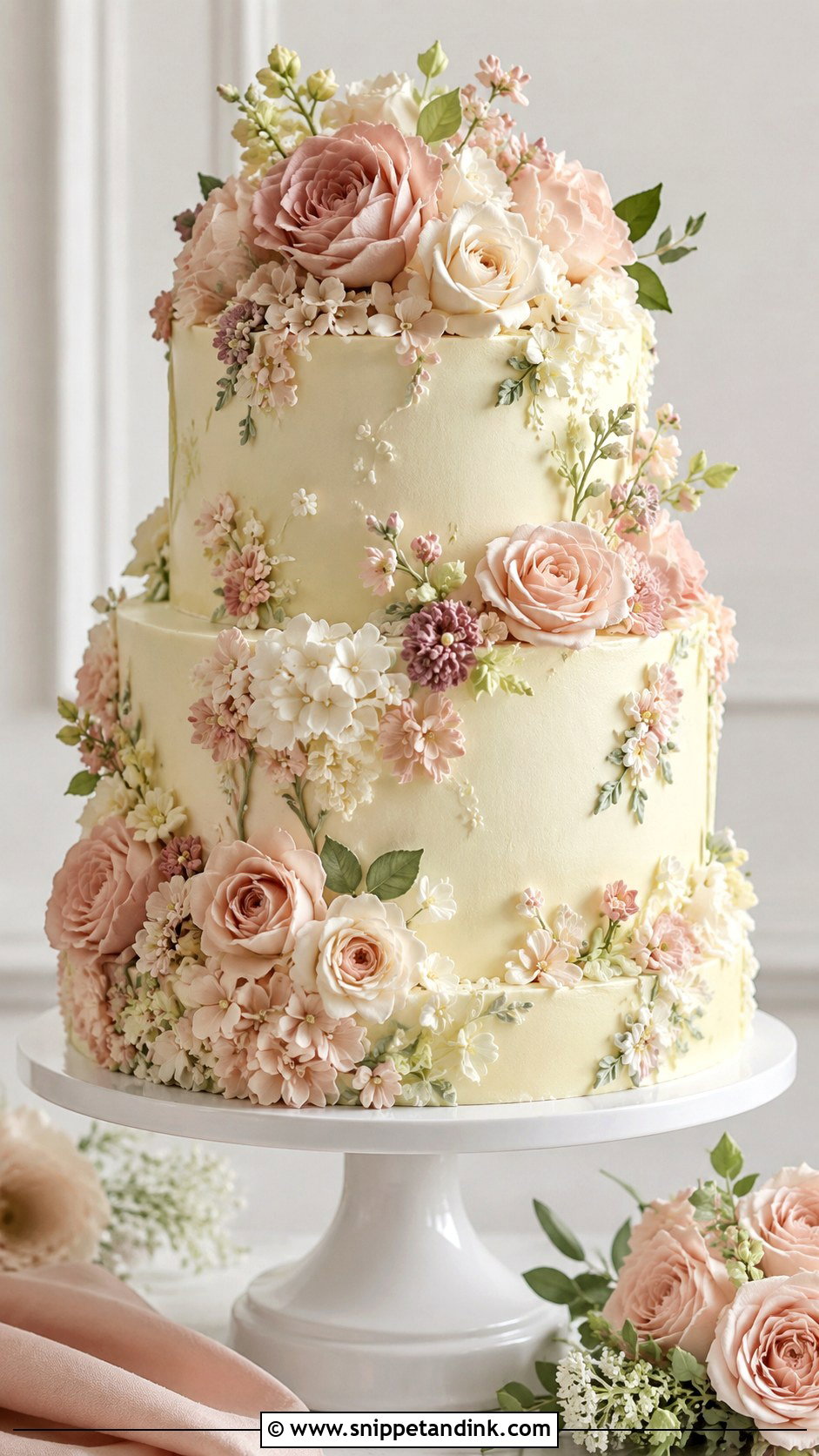
Piped buttercream flowers keep the whole cake edible. I pipe roses, peonies, hydrangea florets and tiny fillers in colored buttercream straight onto the tiers, matched to the palette. A textured base gives them movement, and a smooth one reads more modern. They’re the obvious answer for couples who don’t want stems near food. Heat is their weakness. Buttercream petals start to droop well before a smooth coat shows any problem, so I’d only choose this for an air-conditioned room or a cool season.
4. Sugar Flower Wedding Cake
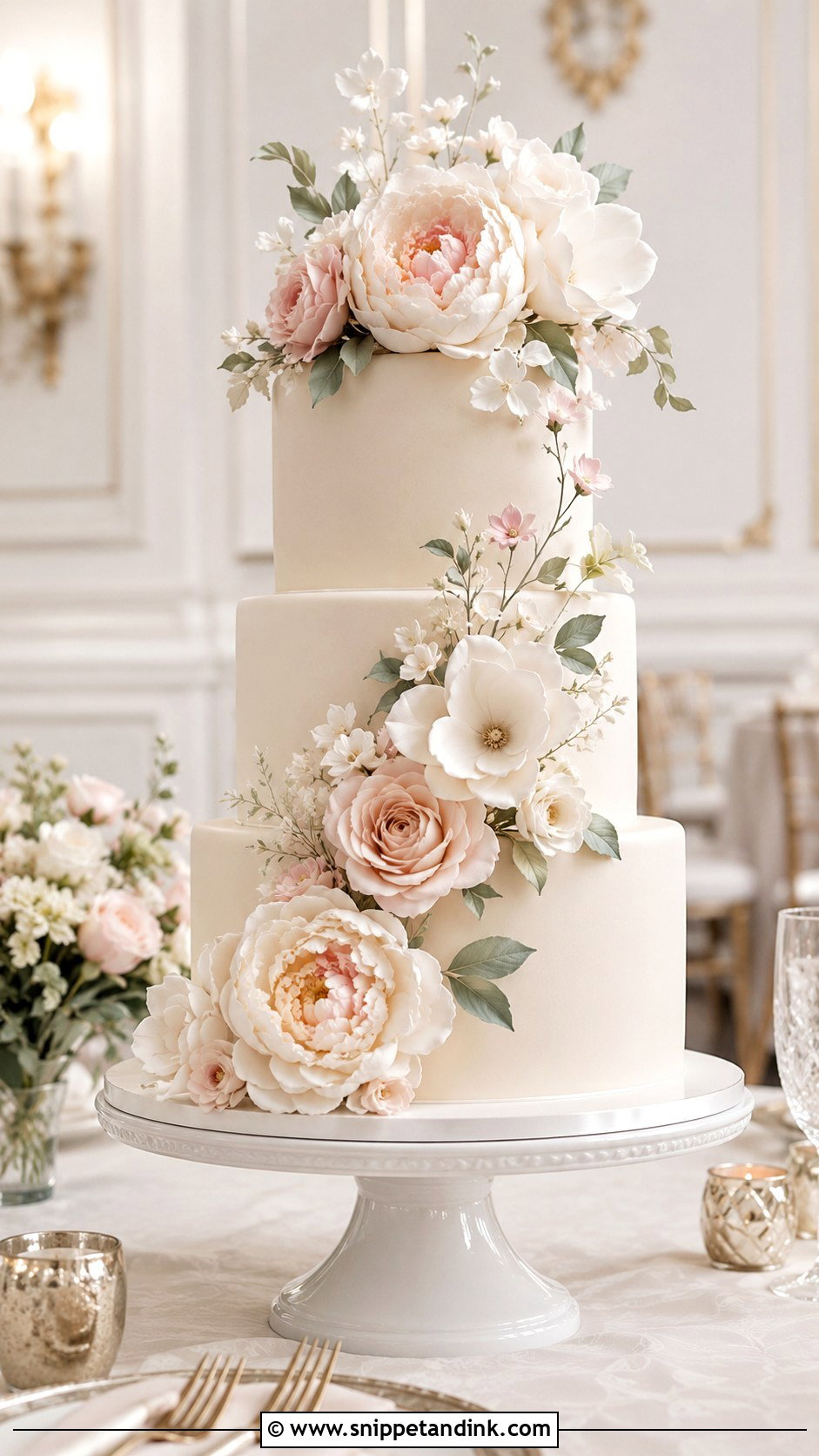
Sugar flowers are modelled petal by petal from gum paste, dried, then dusted with color, and they can be matched exactly to a dress, linen or bridesmaid shade. Peonies, garden roses, magnolias, orchids and sweet peas translate especially well. They take serious time, so I make them weeks before the wedding. Two cautions: they contain wires, so they come off before cutting, and humidity softens them. Never let anyone refrigerate a cake decorated with sugar flowers; condensation on the way out can wilt the petals. Kept dry afterward, they make a keepsake that lasts for years.
5. Wildflower Wedding Cake
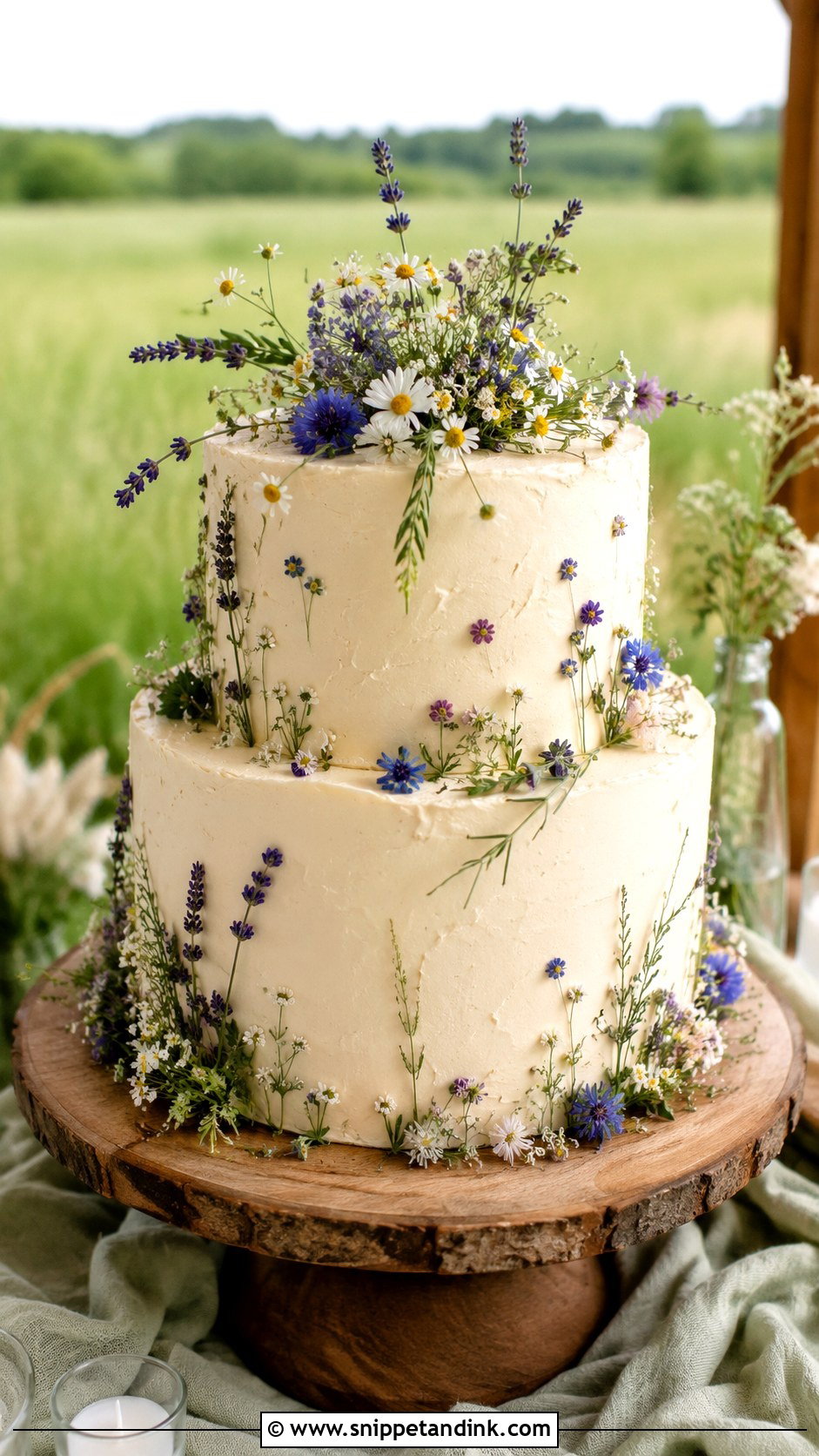
Wildflower cakes look as if someone picked the decoration on a walk: tiny blooms, airy grasses, soft herbs and deliberately uneven placement. Smooth buttercream, light texture or a semi-naked finish all suit it, and the semi-naked version does dry out faster, so it should be finished as close to the event as possible. Soft yellow, pale blue, lavender, cream and blush make a gentle meadow palette. Barns, backyards and mountain venues are its natural home. The difference between relaxed and messy is negative space, so I leave more bare frosting than you’d expect.
6. Rose Wedding Cake
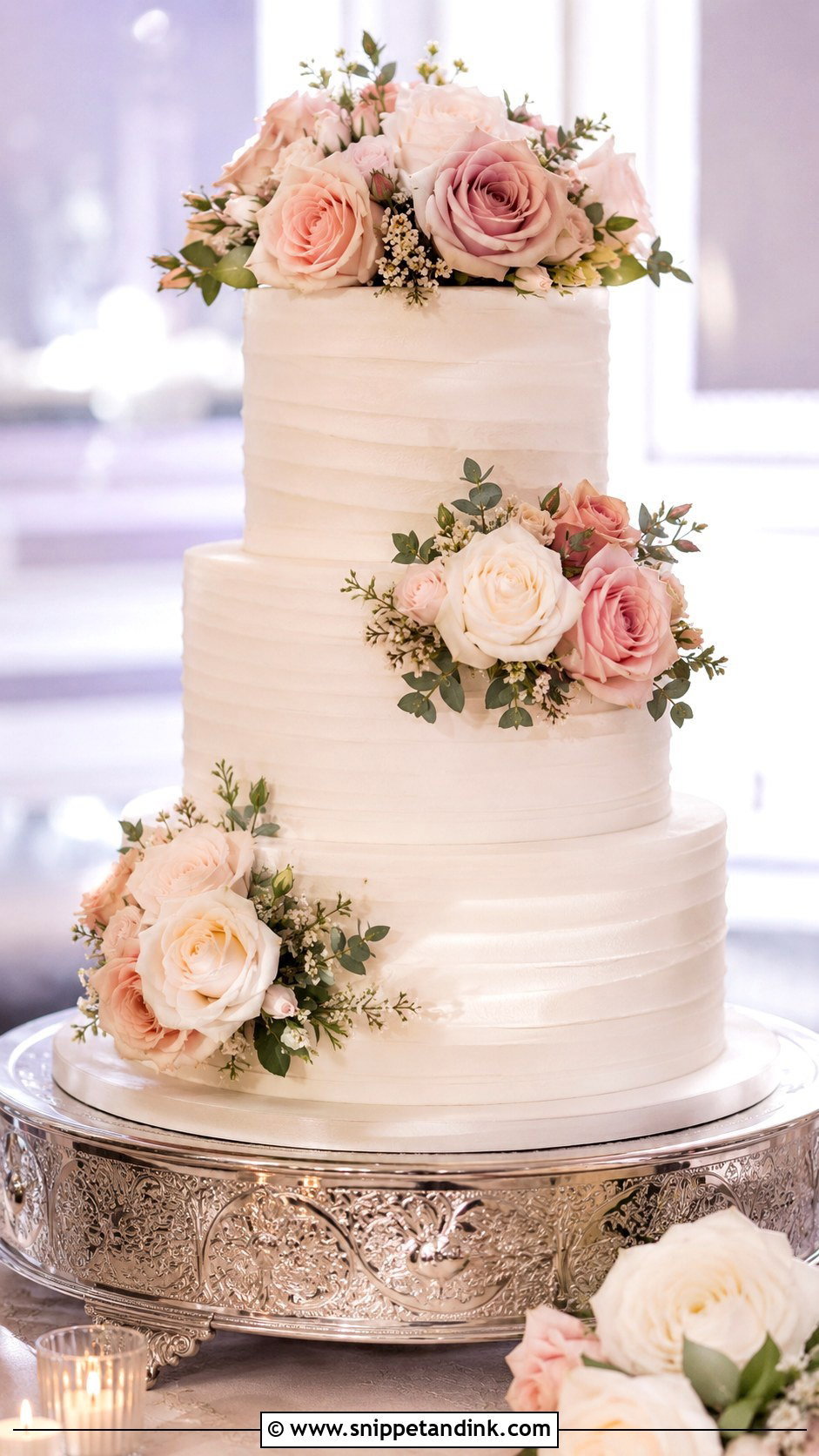
Roses have stayed popular because they fit everything from a courthouse lunch to a ballroom. Ivory buttercream with blush, white or champagne roses at each tier is the classic version; red, mauve, peach or dusty pink with clean spacing reads bolder. Roses also come in every medium, fresh, sugar, piped or painted, so the design can follow your budget and the venue’s rules on fresh flowers. On flavor, they pair naturally with vanilla, almond, lemon, champagne or raspberry fillings. Grouping the roses in clusters, rather than dotting single blooms around each tier, looks far more confident.
7. Peony Wedding Cake
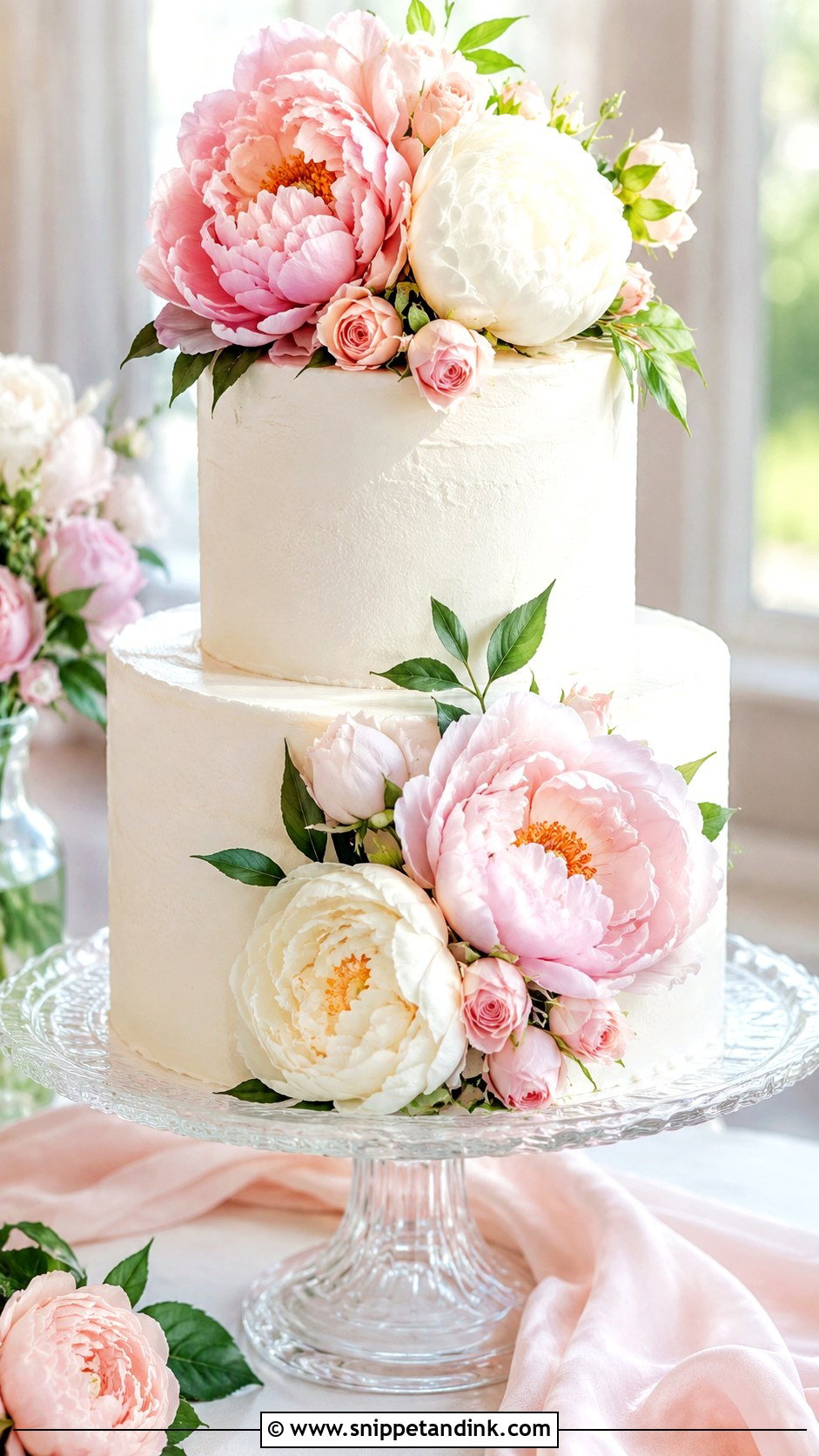
Peonies are big enough that three or four blooms finish a tier, which keeps the cake from looking crowded. They look rich on white or ivory with blush, coral, cream or pink petals. Fresh peonies have a short season and open quickly once they’re warm, so outside late spring and early summer I usually recommend sugar peonies. Cluster them on the top tier and at the base for balance. Fresh or sugar, peonies shed petals easily, which is worth remembering if the cake will be moved after decorating.
8. Orchid Wedding Cake
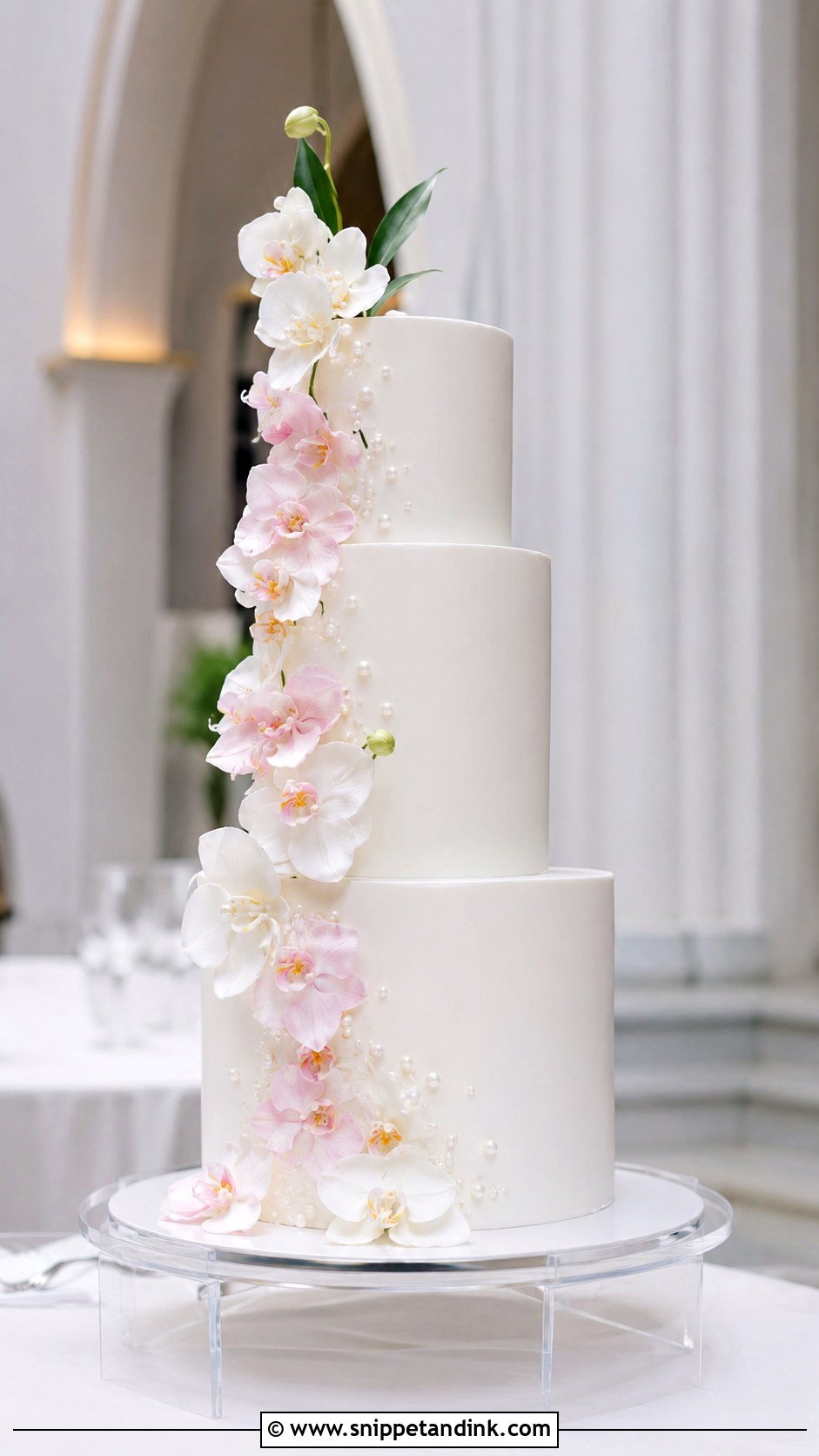
Orchids give an orchid wedding cake a clean, sculptural line with very little clutter. Their shape suits tall tiered cakes, especially arranged as a vertical cascade. White feels classic; pale pink, purple or peach leans tropical. Smooth fondant, satin-finish buttercream or a pearl finish all work underneath. Hotels, beach venues and evening receptions suit it well. Keep the rest of the decoration minimal, because a crowded orchid cake loses exactly the clean silhouette that makes the flower worth choosing.
9. Daisy Wedding Cake
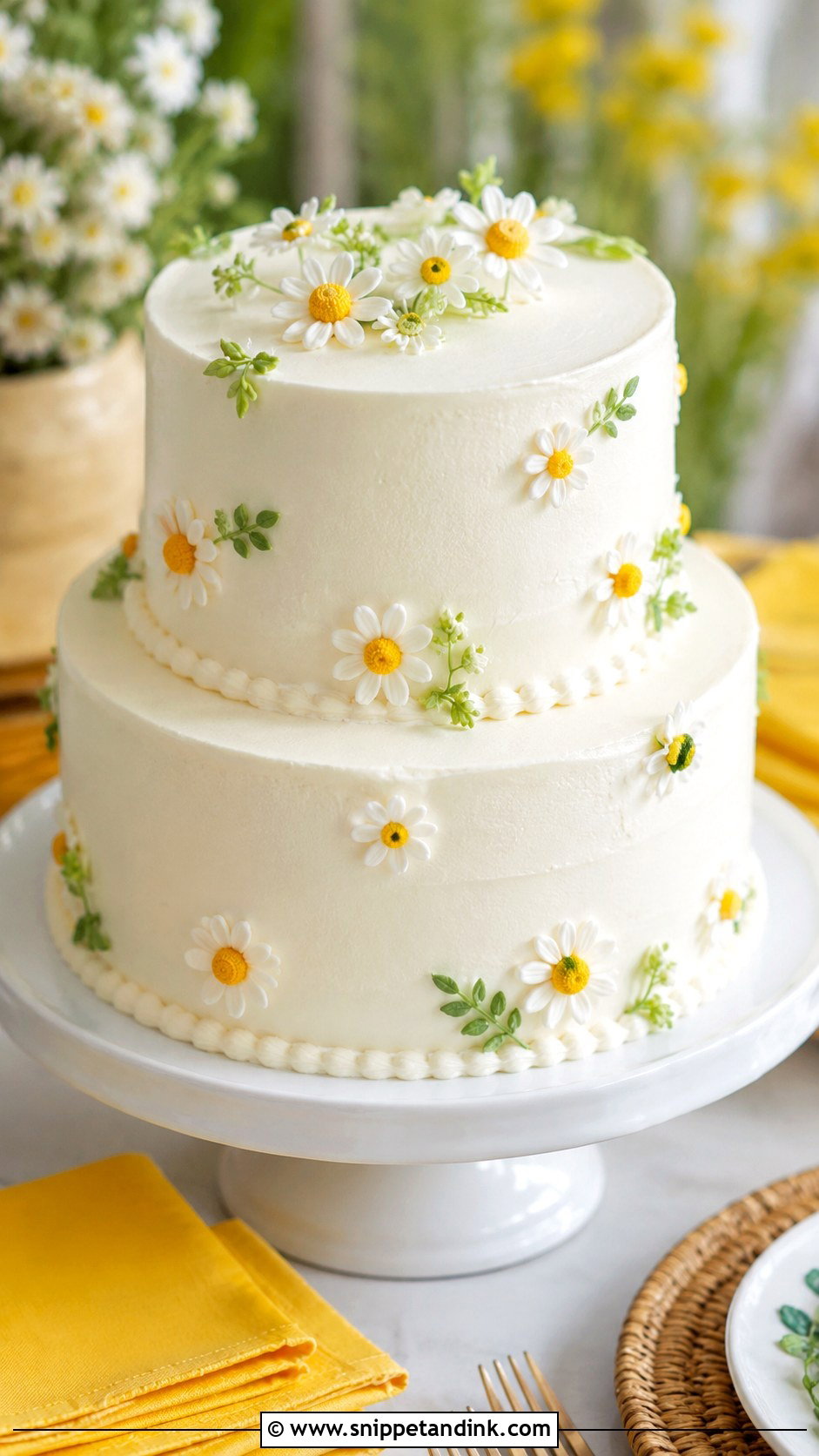
A daisy wedding cake is cheerful rather than formal, which makes it right for picnic-style, backyard and summer garden weddings. Small white daisies with yellow centres sit neatly on smooth white buttercream, and pastel daisies give a softer color story. They can be piped, made from sugar, pressed onto the sides or placed fresh with food-safe protection. Two tiers with light texture and a little greenery is the size I find suits daisies best, since tiny flowers get lost on a tall cake. Lemon, honey, vanilla or berry flavors keep it bright.
10. Lavender Wedding Cake
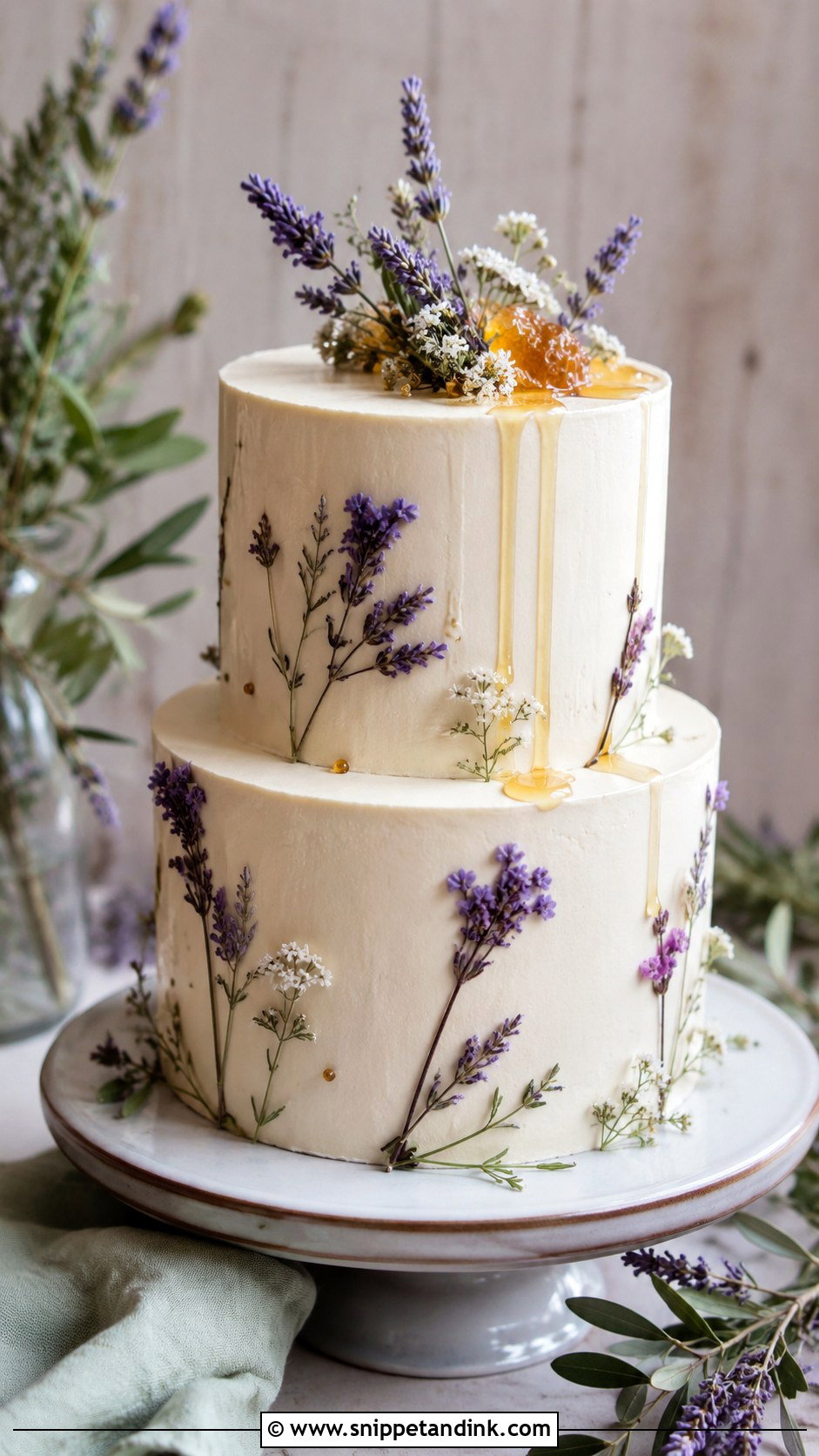
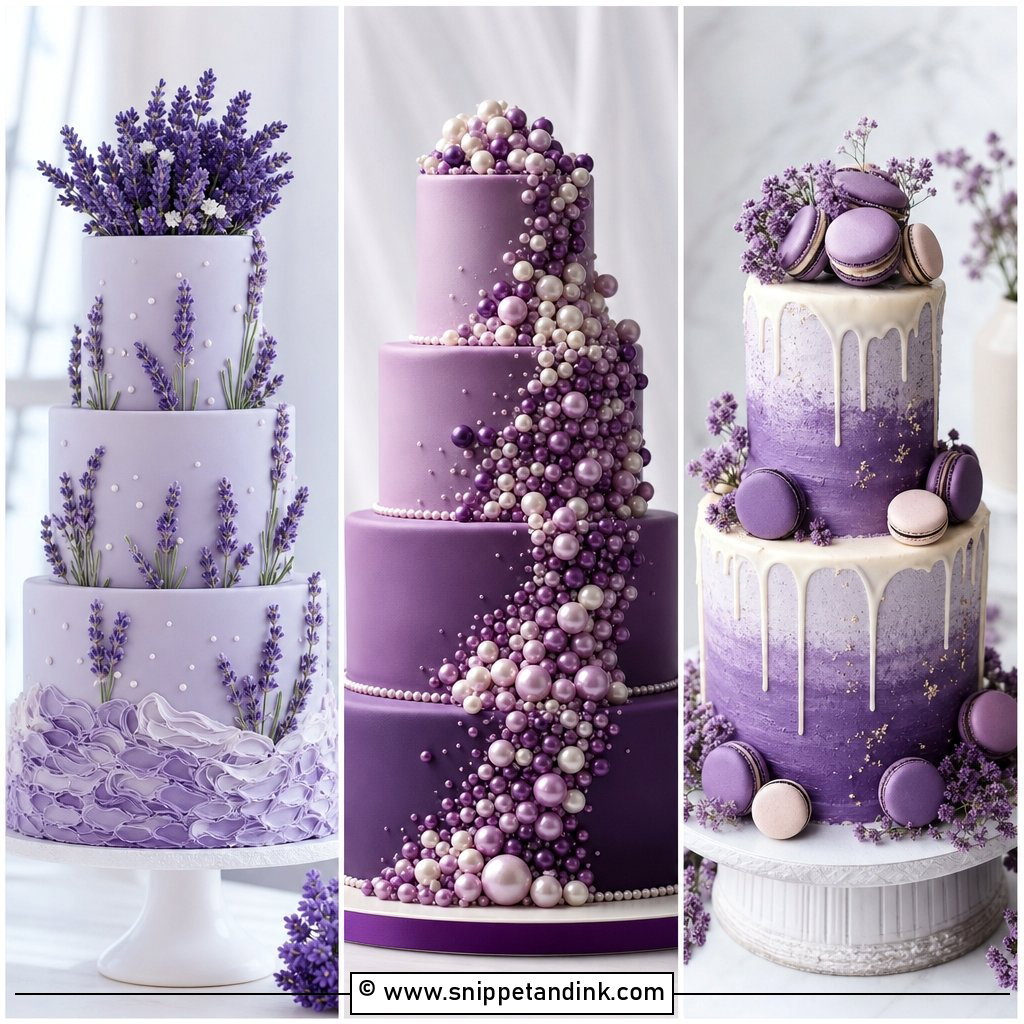
A lavender wedding cake can carry the flower in the frosting color, in fresh or pressed culinary lavender sprigs, or in pale purple sugar flowers. It sits well with ivory, sage, dusty blue and soft gray palettes. In the sponge or syrup I use lavender sparingly. Too much tastes soapy, and a lemon lavender or honey lavender pairing keeps it floral without perfume. Fresh sprigs dry out and drop buds over a long reception, so I add them last.
11. Garden Wedding Cake
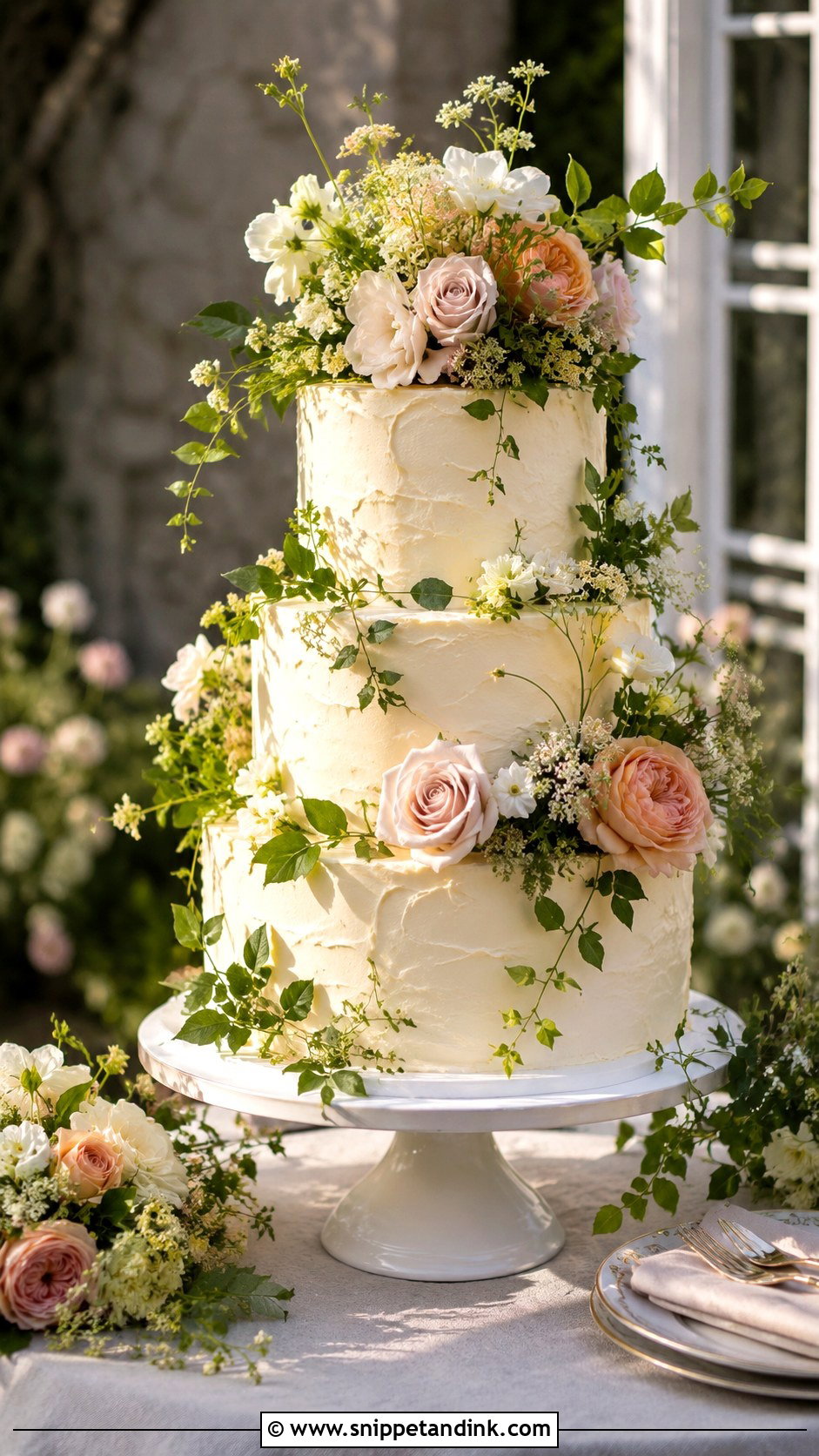
Garden cakes combine several elements at once: roses, ranunculus, herbs, trailing vines, tiny blossoms and layered greenery. The base can be smooth buttercream, textured buttercream or pale fondant depending on how formal the day is. Three tiers give climbing florals room to travel; two feel more intimate. I ask the florist for a list of the actual ceremony flowers so the cake repeats them instead of inventing a new palette. Abundant but controlled is the target, which usually means one clear direction of flow rather than flowers on every face of every tier.
12. Minimal Floral Wedding Cake
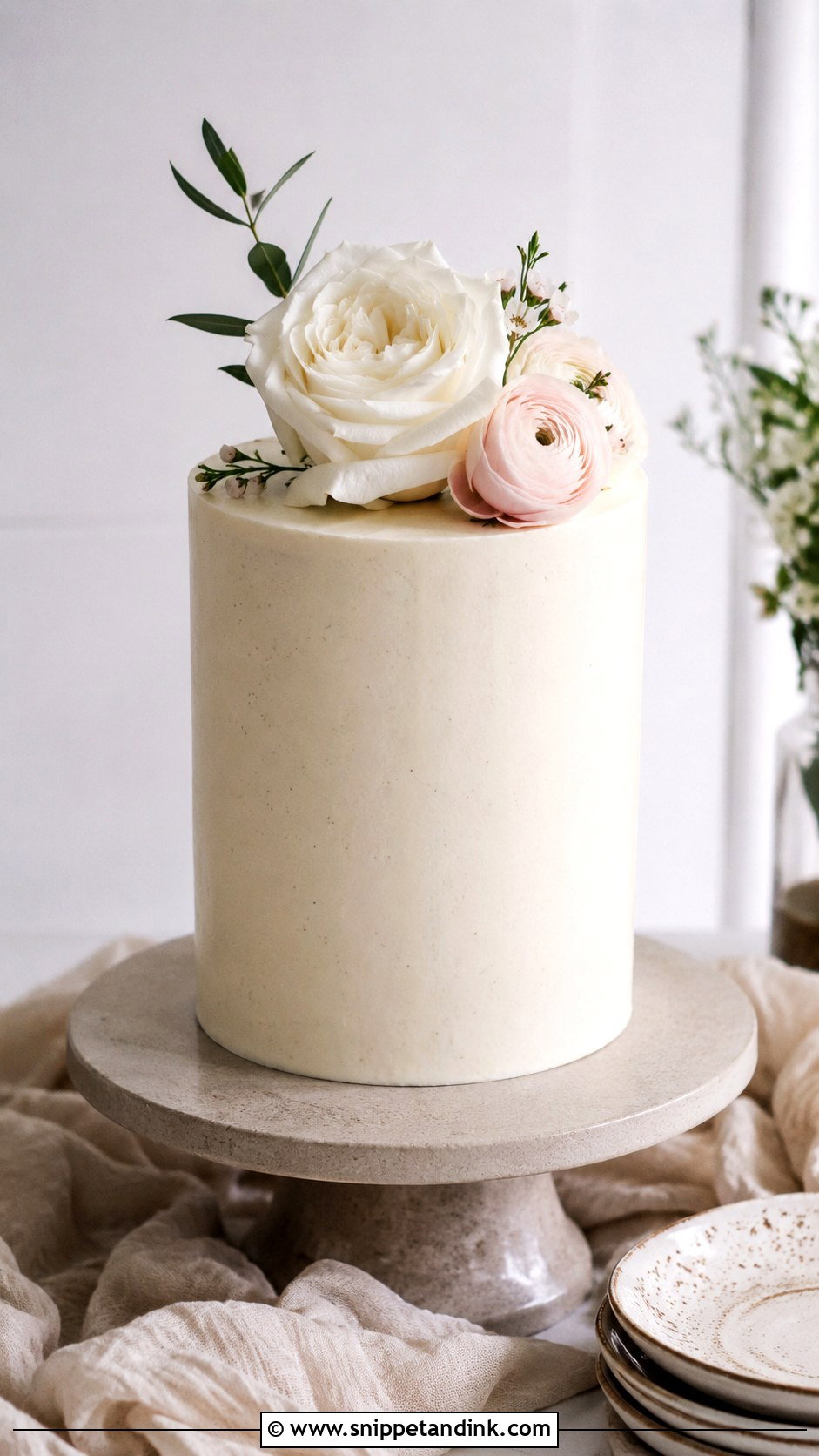
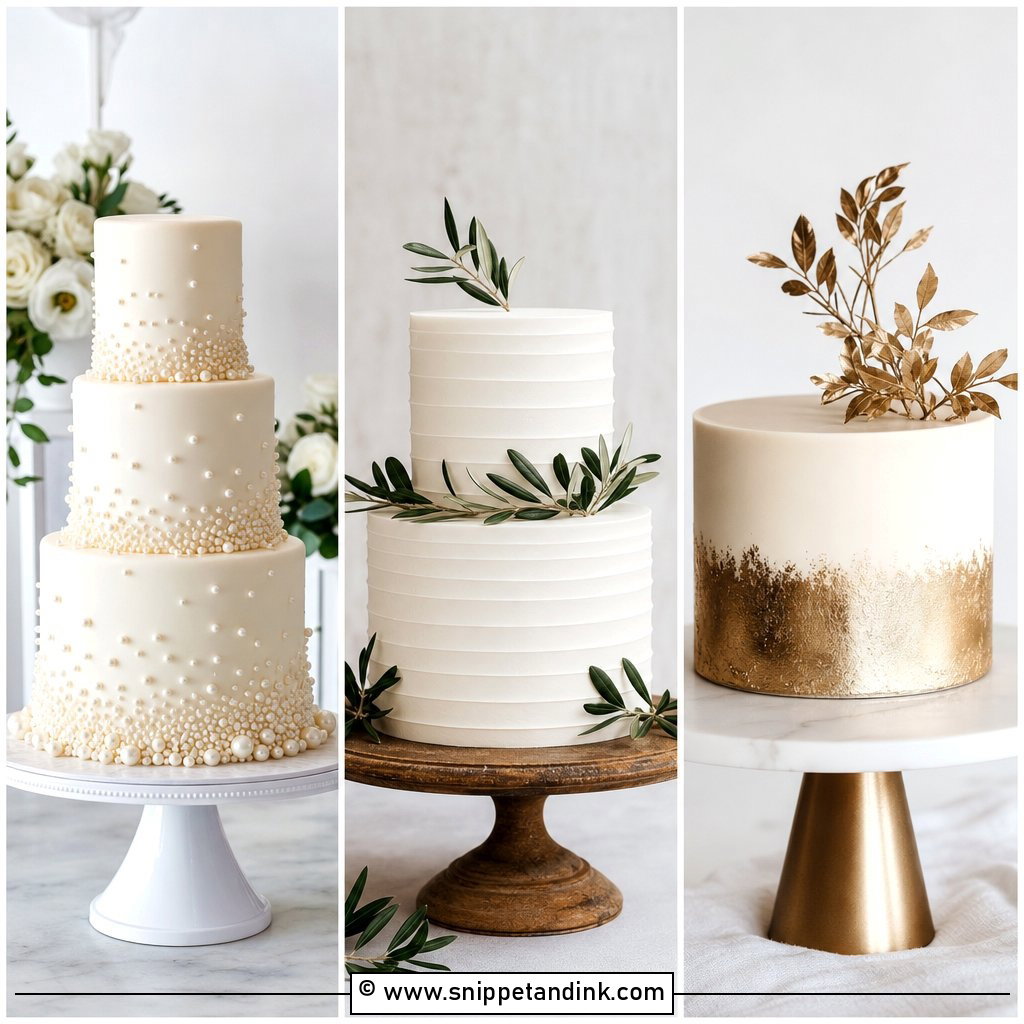
Minimal floral cakes rely on restraint: a clean white, ivory or soft beige finish with one or two placed clusters. A single bloom on the top tier, a small side arrangement or an accent at the base can be enough. Modern venues, city weddings and micro-weddings suit it. Because there’s so little decoration, the finish has to be flawless; every air bubble and soft edge shows. I’d put the budget into sharp edges and one excellent flower rather than five average ones.
13. Floral Lambeth Wedding Cake
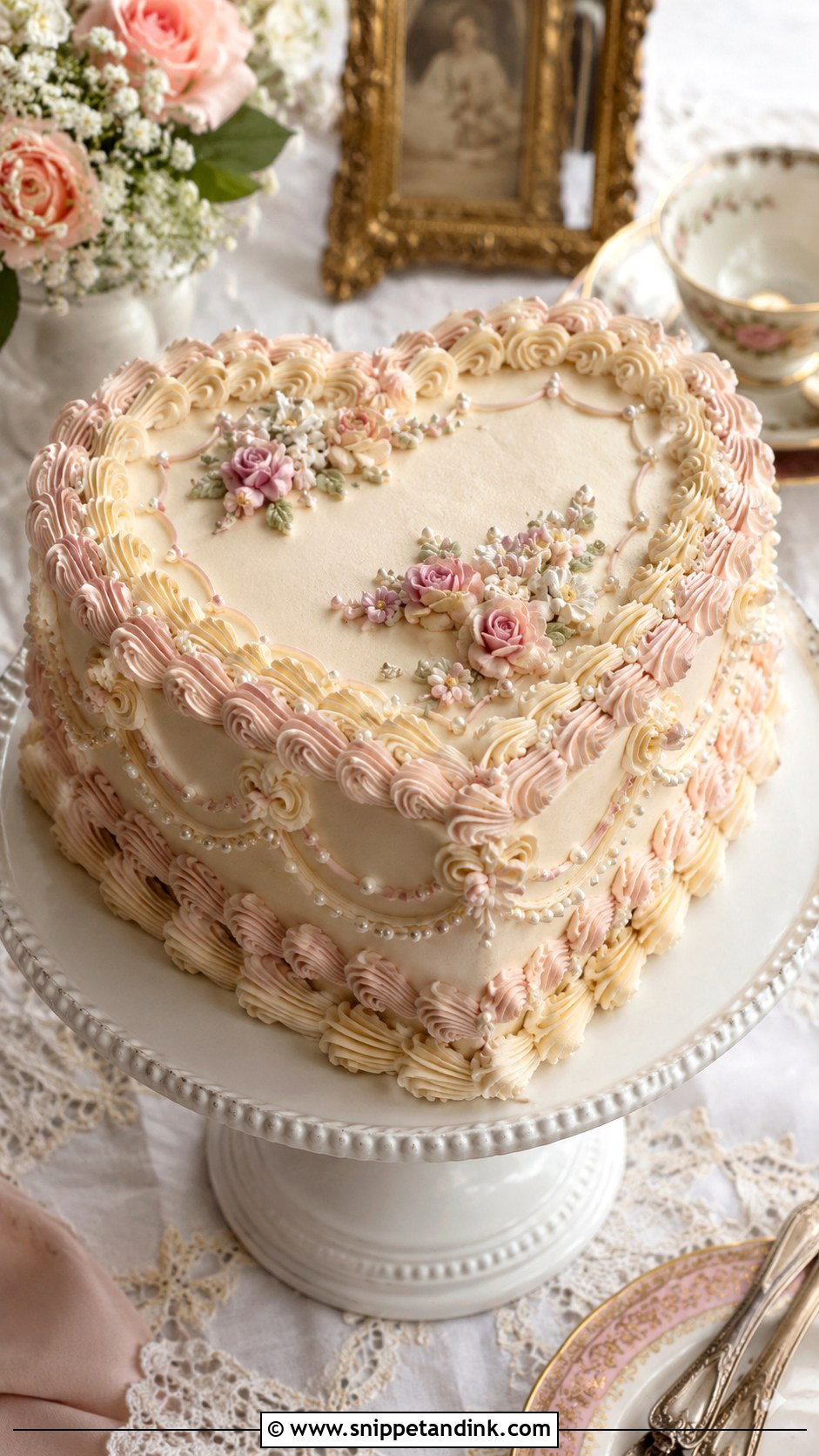
Lambeth is the layered, overpiped style of vintage piping: shell borders, swags, ruffles, pearls and stacked buttercream detail, here mixed with flowers so it feels nostalgic and current at once. Flowers can be piped into the design or added as sugar blooms, small fresh stems or pressed petals. Round, heart-shaped and tall tiered cakes all take it. Soft colors like ivory, blush, pale blue or butter yellow keep it bridal. Heavy Lambeth work uses a lot of buttercream, so it needs a stable recipe and a cool room or the swags begin to sag.
14. Watercolor Floral Wedding Cake
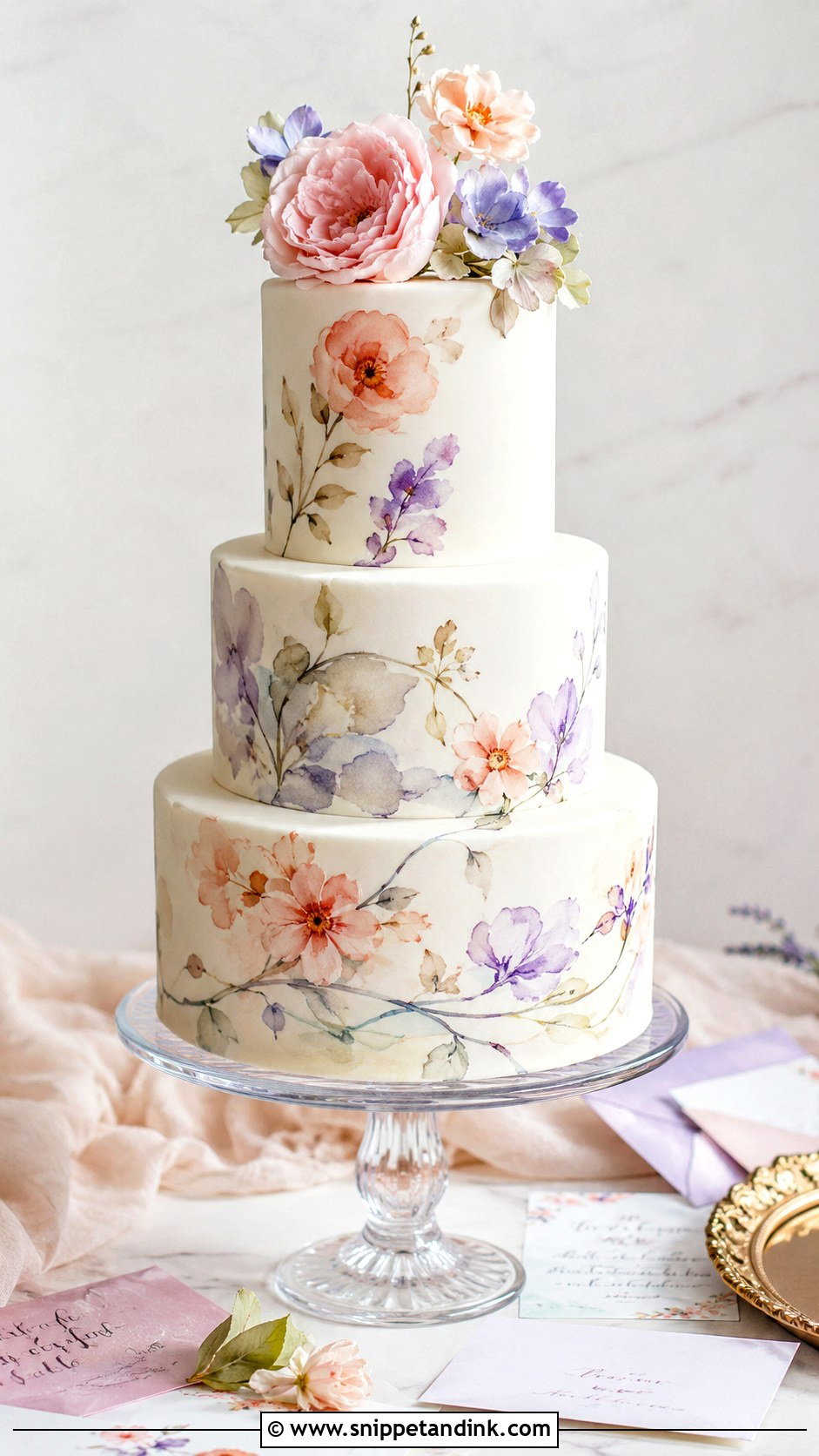
Watercolor cakes are painted with edible color on fondant or very smooth buttercream: blurred petals, vines and soft garden washes. They give floral detail without any weight or stems. Blush, lavender, peach, sage and dusty blue suit the technique, and a few sugar flowers can add dimension. Painting on buttercream is harder than on fondant, because the surface has to be chilled firm first or the brush drags. The best versions stay airy; heavy, dark washes start to look muddy.
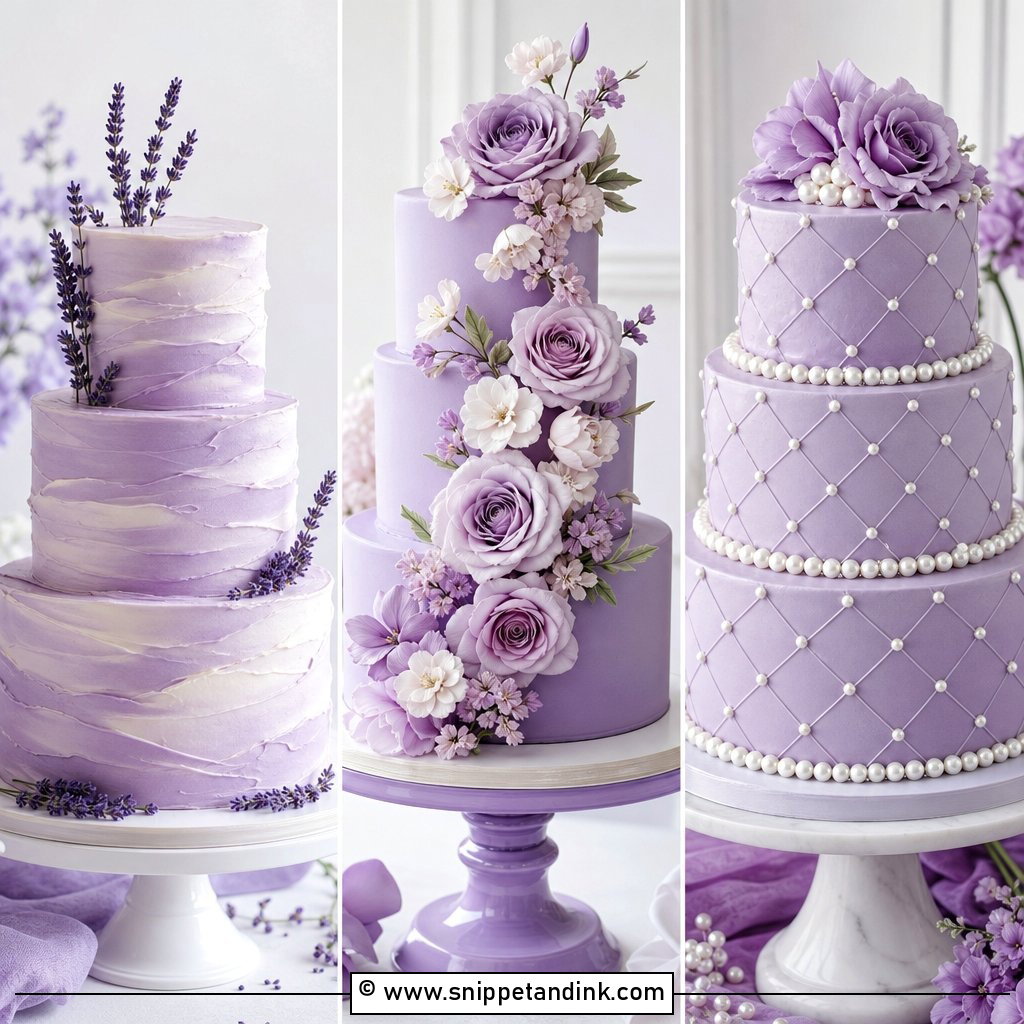


15. Palette Knife Floral Wedding Cake
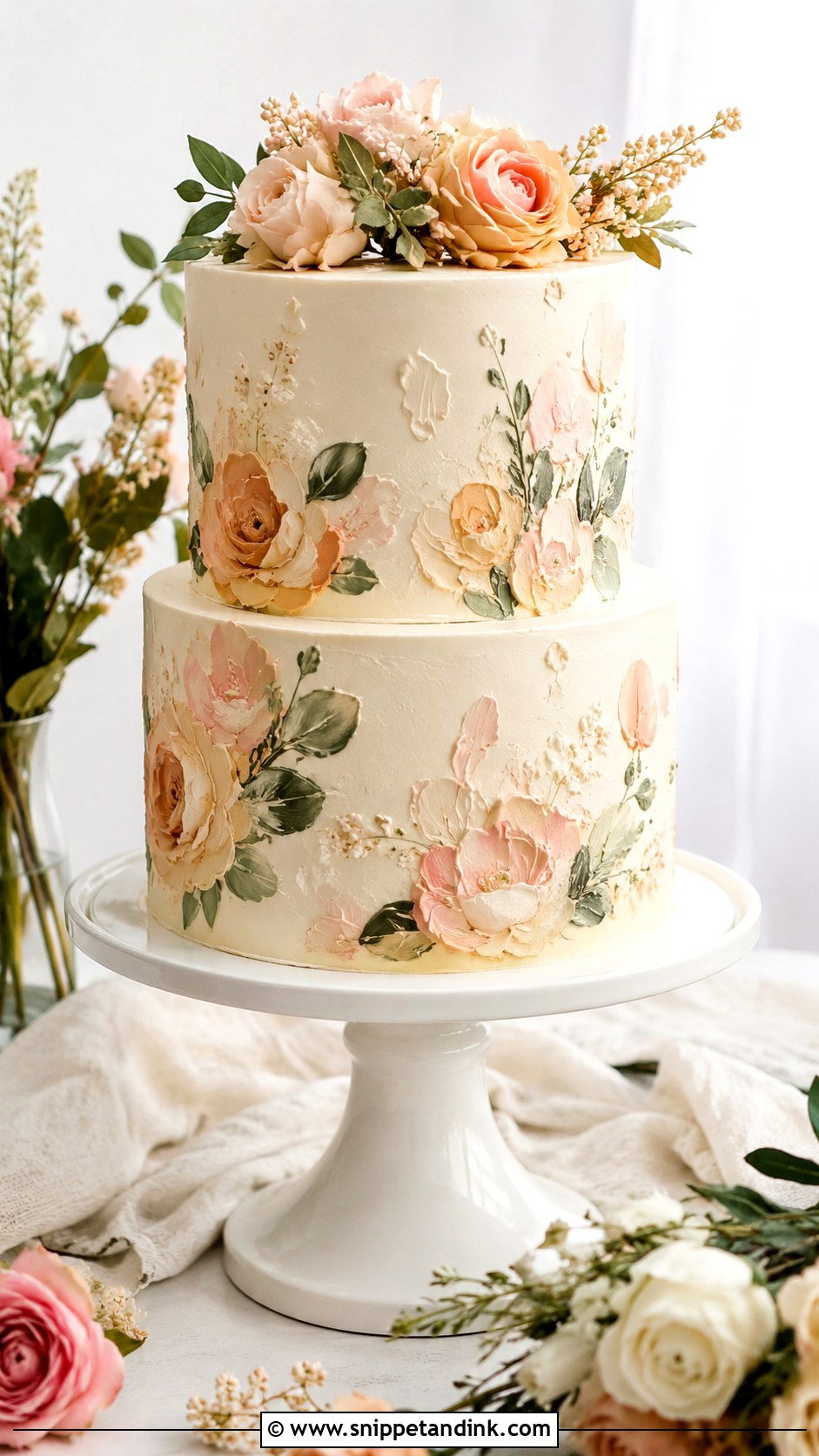
Palette knife flowers are spread rather than piped. I build each rose, leaf and petal by laying buttercream on with a small spatula, so the surface keeps visible strokes like a painting. It suits a smooth base in white, ivory, blush or pale pastels, and it can be a few flowers or a full arrangement across the tiers. Echo the bouquet colors to tie it in. The technique needs a firm, cold surface to work on, and the finished petals are thick, which means they also soften quickly in a warm marquee.
16. Wafer Paper Flower Wedding Cake
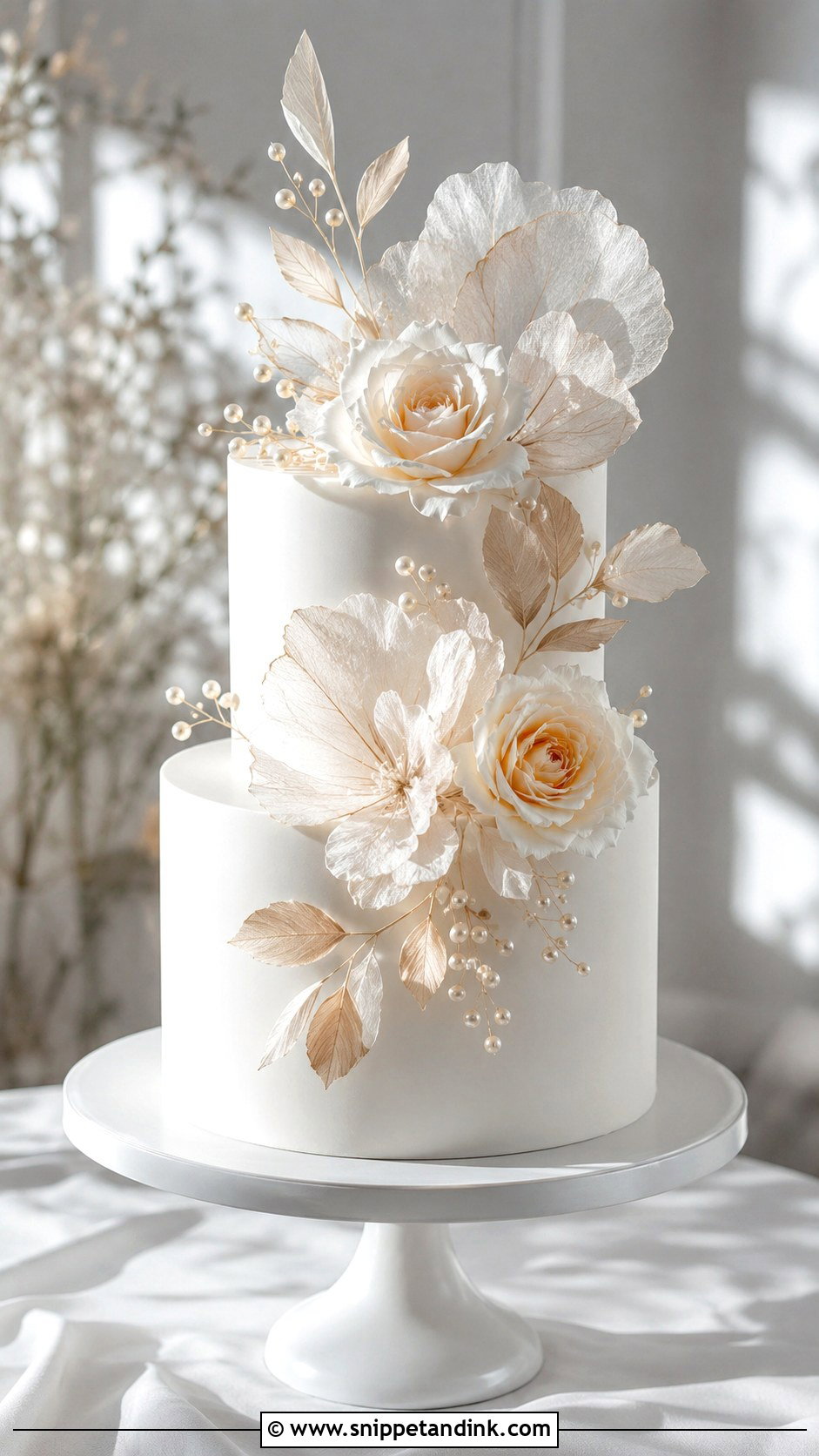
Wafer paper is made from potato starch, so it shapes into petals, ruffles, leaves and oversized blooms that weigh almost nothing. That makes it useful on tall tiers and for sculptural pieces that would be too heavy in sugar paste. Leave it pure white or dust it lightly with blush, champagne or gold. The catch is moisture: wafer paper curls and dissolves in humidity or on wet buttercream, so it goes onto a crusted or ganache-set surface and stays away from steamy rooms.
17. Floral Sheet Cake Wedding Cake
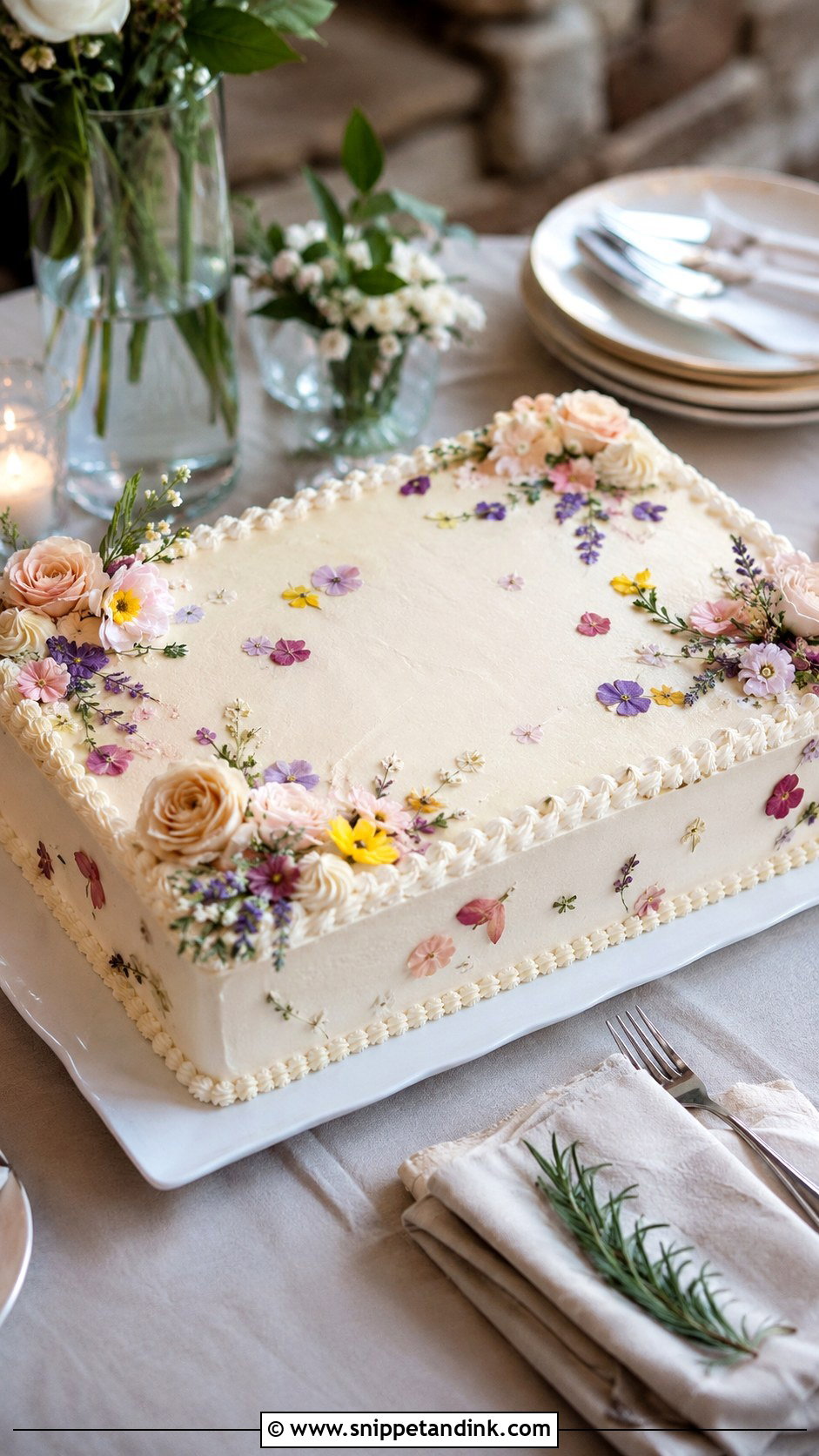
A floral sheet cake spreads the decoration across a rectangle like a garden bed. It’s the most practical cake on this list. Cutting into neat squares is fast, it travels flat, and it’s easy to keep cool. Buttercream flowers, pressed petals, piped borders and small fresh blooms all work. Intimate weddings, brunch receptions and dessert tables with other sweets suit it. Arrange the flowers in rows, corner clusters or a loose meadow, and set it on a good tray or board so it still looks like a wedding cake.
18. Two Tier Floral Wedding Cake
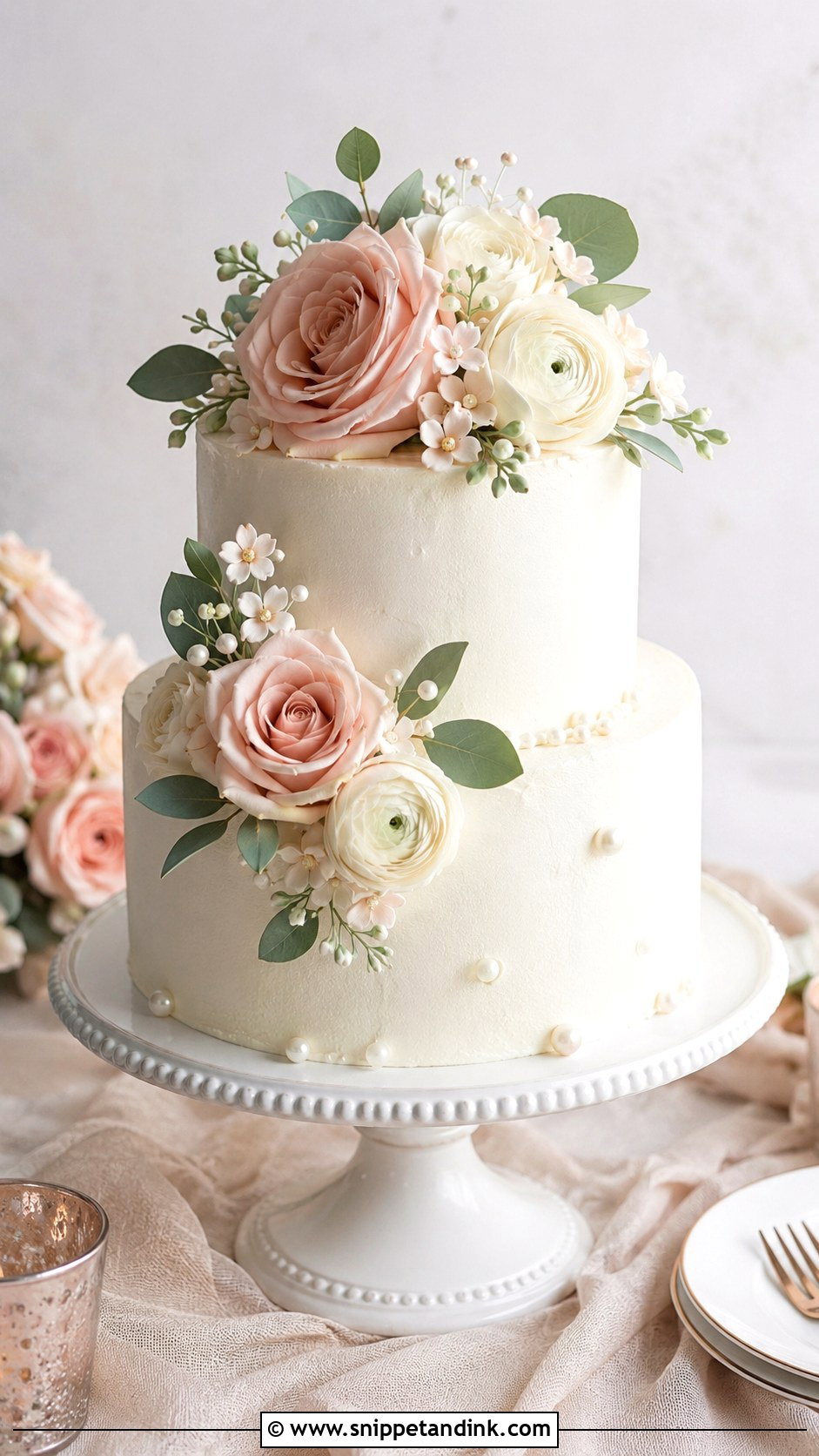
Two tiers give enough height to feel celebratory without taking over the table or the budget, which is why it’s the size I’m asked for most for smaller weddings. Fresh clusters, pressed blooms, sugar roses, piped flowers or a small cascade all fit. The best two-tier designs use plain frosting and one strong floral moment, often flowers on top running down one side. Restaurant receptions, backyards and micro-weddings suit it, and a raised stand gives it presence on a long table.
19. Three Tier Floral Wedding Cake
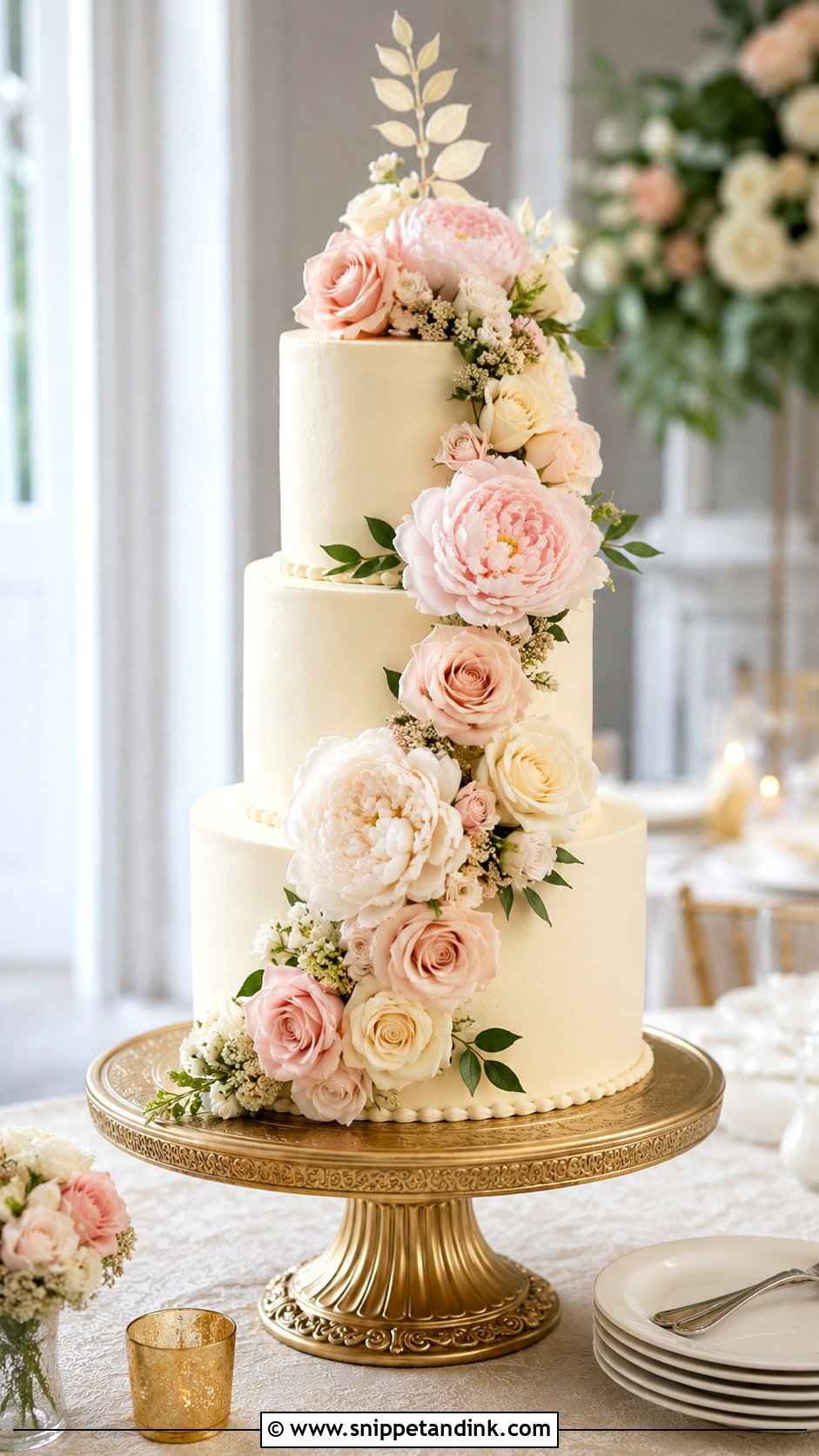
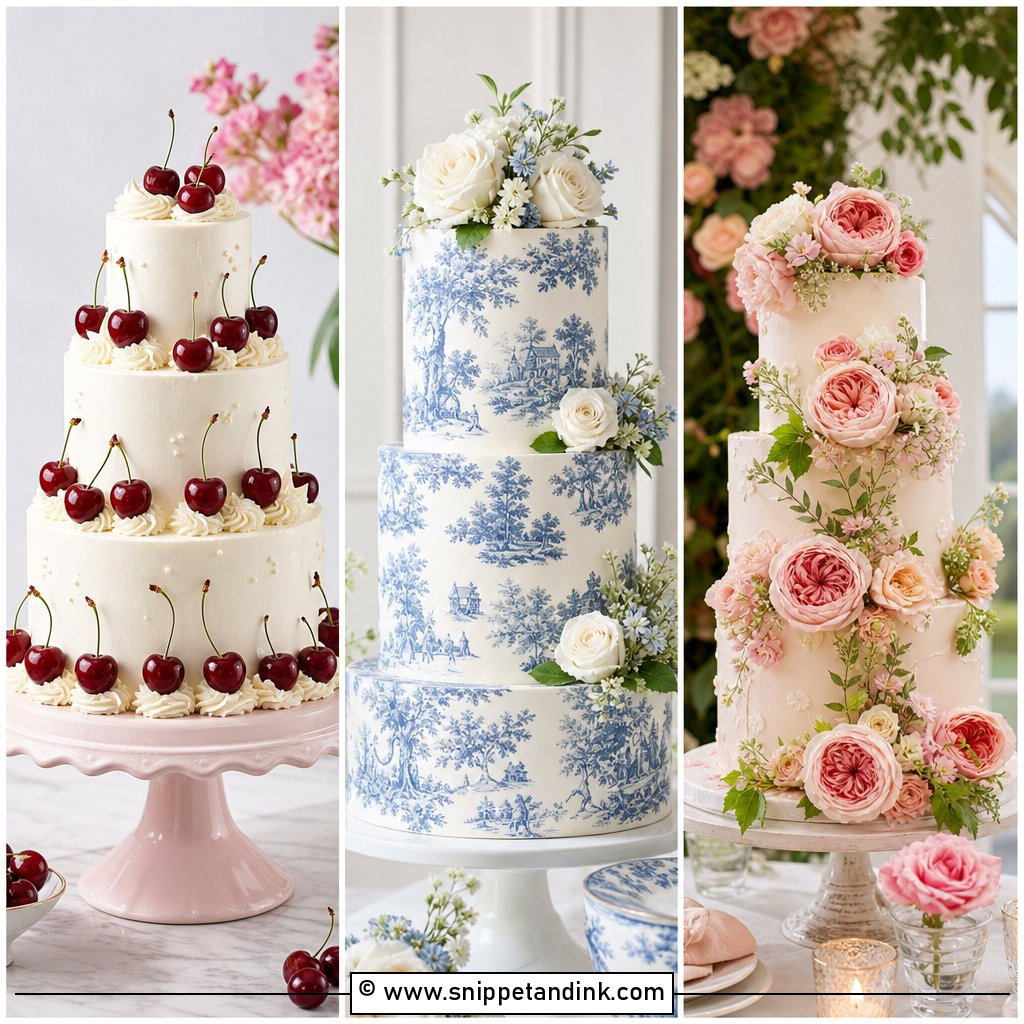
Three tiers give you the traditional centrepiece and plenty of room for a cascade, scattered blooms, piped flowers, painted petals or sugar clusters. Smooth ivory is the classic base; light texture feels warmer. It’s a comfortable size for a medium guest list, especially if the kitchen cuts extra from a back-up sheet cake. Repeat flowers from your bouquet or arch, and plan a clear visual path for them. Seen from the side where guests stand at the cutting, a path reads as design; flowers on every surface read as clutter.
20. Edible Flower Wedding Cake
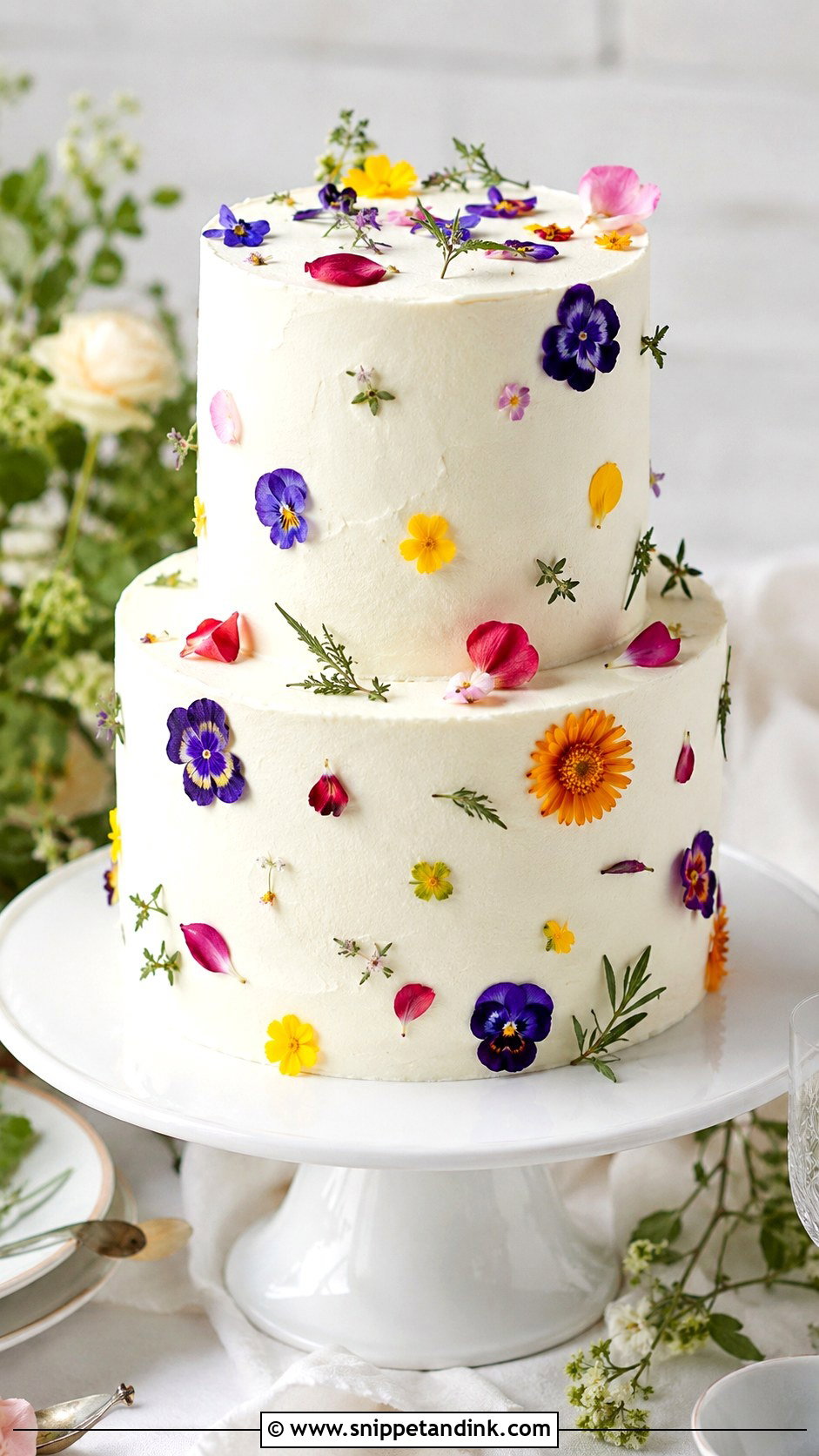
Edible flower cakes are decorated only with blooms grown for eating: pansies, violas, calendula, rose petals, cornflowers and lavender, depending on season and supply. I buy them from a grower who sells them as food, never from ordinary florist stock, because decorative flowers are often treated with chemicals that shouldn’t go near a plate. A light scatter of petals over smooth buttercream looks fresh and natural. Expect delicate petals to wilt within hours in warm air, so they go on at the venue.
Who Puts Real Stems on the Cake, and How
Fresh flowers on a cake sit between two vendors, and that’s exactly where things get missed. Settle three things weeks ahead: who supplies the flowers, who prepares the stems, and who places them at the venue. Many florists send a small box of cake flowers along with the centrepieces and leave placement to the baker, which works well as long as everyone knows that’s the plan.
Prepared properly, each stem is cut short, sealed with floral tape and pushed into a food-safe pick or straw so nothing touches the sponge. Some flowers shouldn’t go near a cake even with a barrier, because they’re toxic: lily of the valley, foxglove, hydrangea, oleander, daffodils and sweet peas among them. If your bouquet relies on one of these, I recreate it in sugar instead.
Cutting and keeping
All decorative flowers come off before the cake is sliced. Wired sugar flowers and fresh stems must never reach a plate, so tell your caterer which flowers are edible and which aren’t. If you’d like to keep the sugar flowers, lift them off gently, let them rest uncovered for a day, then store them in a box away from sunlight and damp. They’ll hold their shape for years.
Flowers Are Only Half of the Cake Brief
Floral cakes can be simple, dramatic, vintage, modern or painterly, but the right one also fits your season, venue, guest count and the flowers already in your plan. Pressed petals feel delicate, cascades feel romantic, sugar flowers feel formal and piped buttercream keeps everything edible. Bring your baker a photo of the bouquet, the invitation and the room, then talk through flavor, structure, delivery and how the cake will cope with the heat. Those answers usually narrow twenty ideas down to two or three very quickly.
You'll Like These Ideas:








Leave a Reply