
A black wedding cake is less of a risk than couples think, and more work than most realize. On my side of the counter, black is a technical color: it takes time to develop, it shows every fingerprint and dusting of sugar, and it reacts to heat faster than ivory. Done well, it’s one of the most striking things you can put on a cake table. The finish decides the mood. A matte black tier reads clean and fashion-led, while black buttercream with flowers feels softer and more approachable. Gold, sugar flowers, pearls, fruit, lace piping and sculptural textures all keep it from feeling heavy. Below are the designs I’d talk a couple through, with what each one asks of the baker and of you.
Why True Black Frosting Takes a Day to Make
Couples often assume black is just a color the baker adds at the end. In practice it’s the slowest color I make, and how it’s made affects taste, teeth and photos.
Color Deepens Overnight
Gel color keeps developing after mixing. A buttercream that looks charcoal grey in the bowl is usually close to black the next day. I color a day ahead and let it rest, instead of adding more and more gel on the morning to force it. Forcing it is how black buttercream ends up bitter.
Grey Smiles in the Cake-Cutting Photos
Heavily colored black frosting can tint tongues and teeth for a while. Starting from black cocoa cuts the amount of gel needed. You can also go further and ask for the black only on the outside, as fondant or a thin coat, with a lighter crumb coat and frosting inside. Guests get a normal-looking slice, and the couple’s first bite doesn’t show up grey in photos.
What to Ask at Your Tasting
- Can I taste the black frosting itself, not just the cake flavors?
- Is the black built on black cocoa, or on gel color alone?
- Which decorations are edible, and which must be removed before cutting?
- How will the cake travel, and how long can it sit out at my venue?
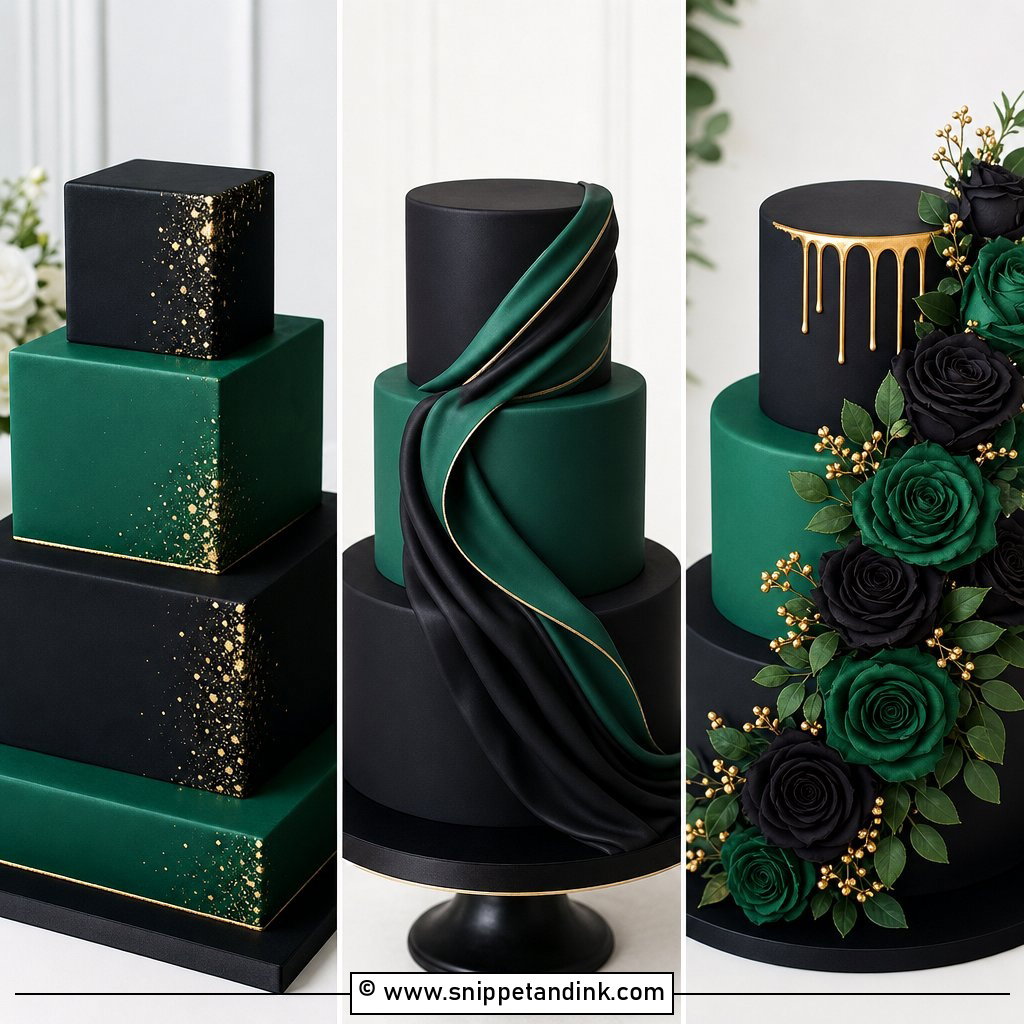
1. Black And Gold Wedding Cake
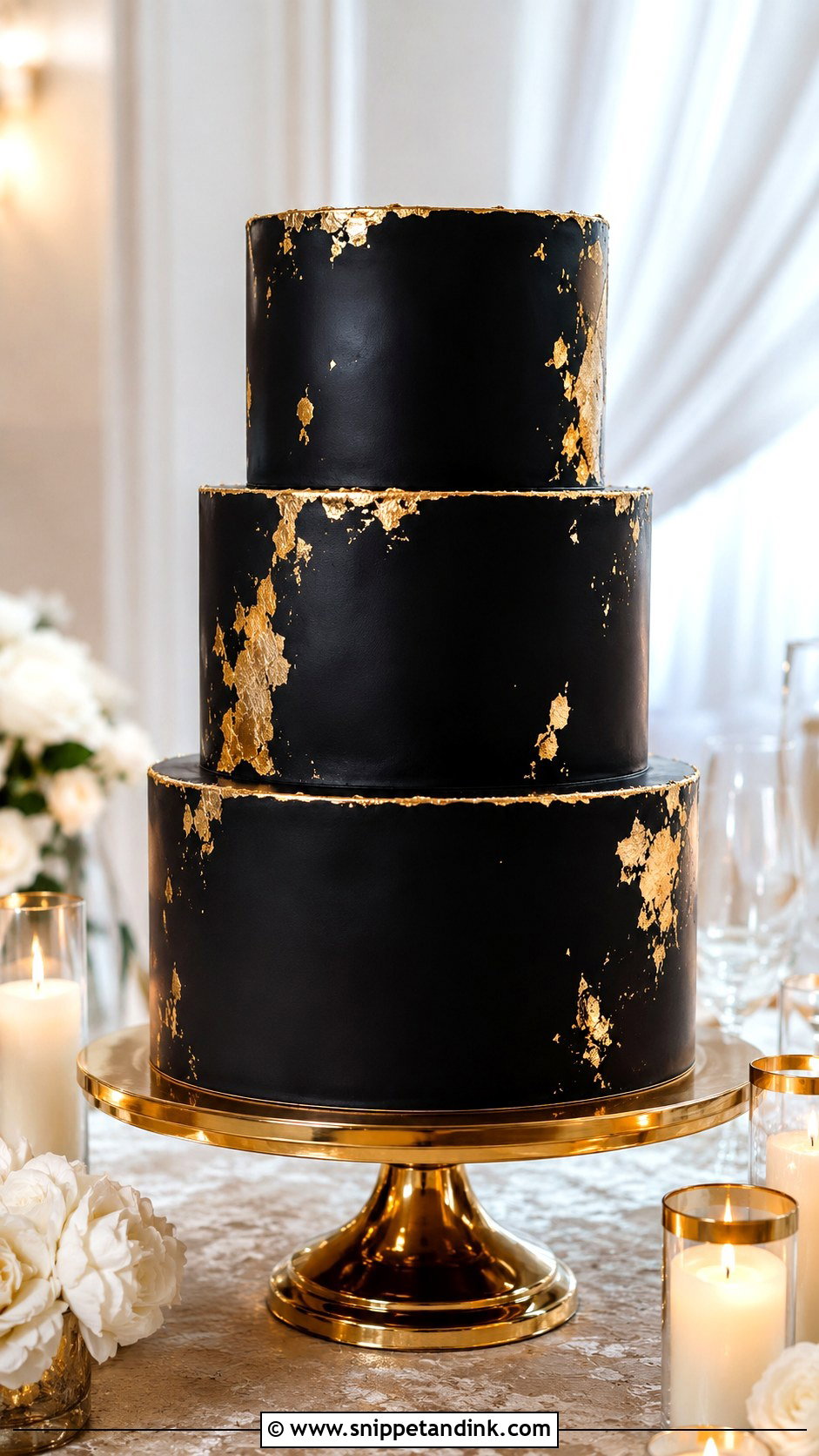
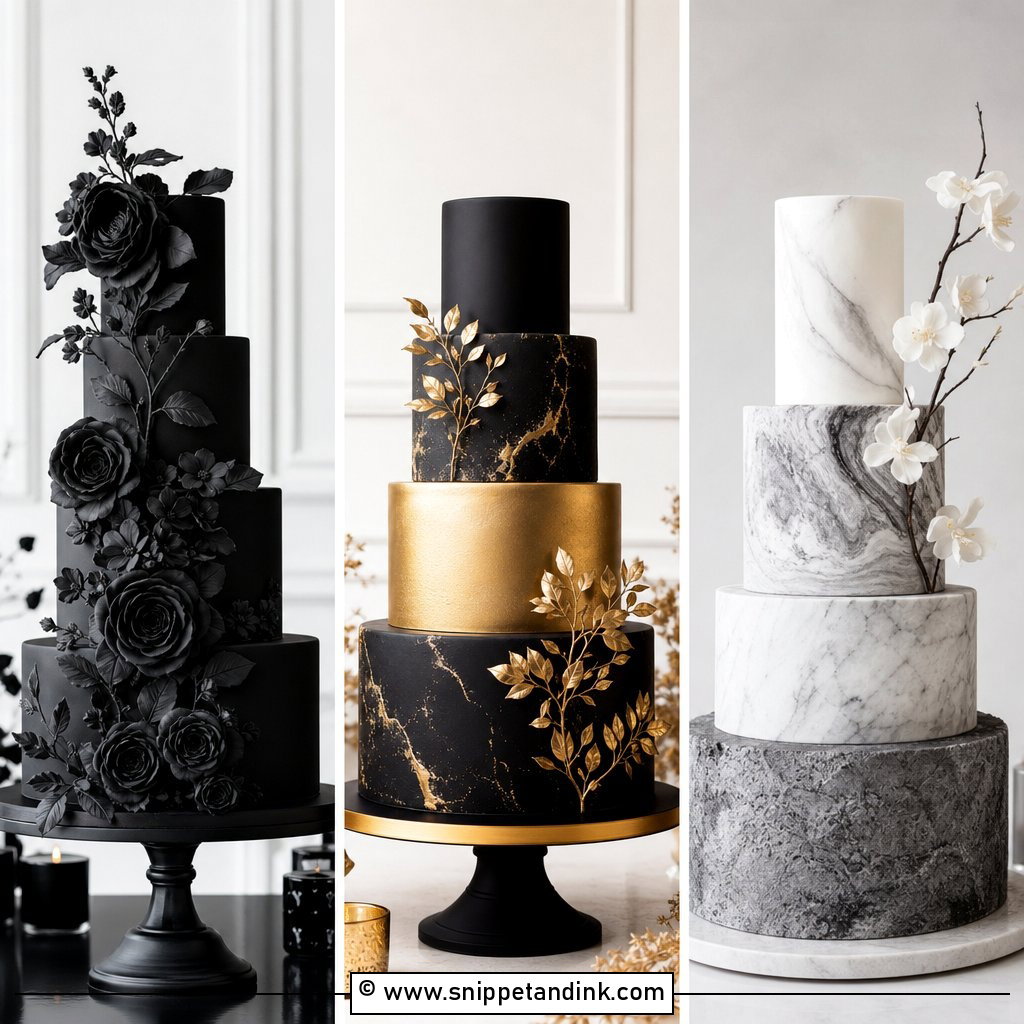
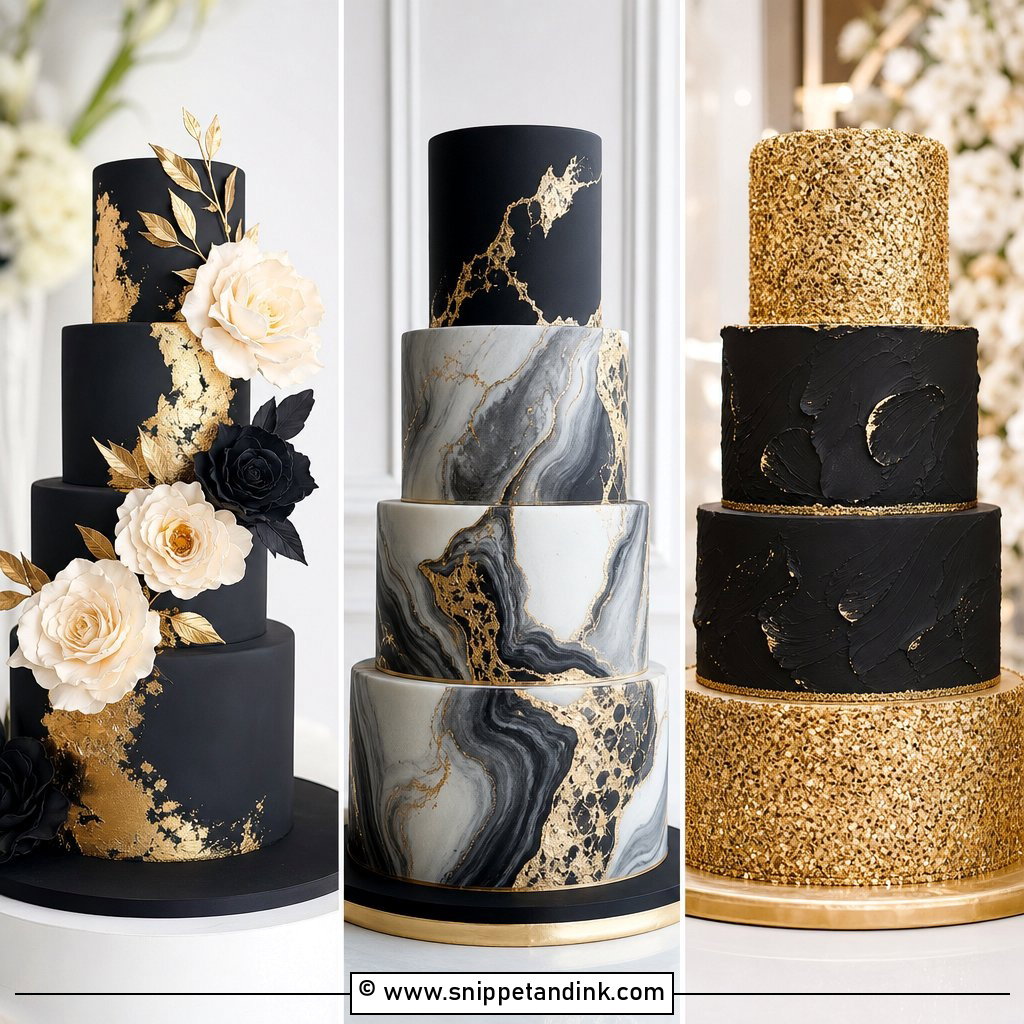
Black and gold is the quickest way to make a cake feel formal without making it cold. The black gives depth; gold leaf, painted edges or fine metallic lines bring warmth back. I’d always say gold as an accent rather than a cover-up, because a cake buried in leaf stops reading as black at all. One thing worth asking your baker: is the gold edible leaf, or a decorative dust marked non-toxic? Those aren’t the same, and the second kind should only go on parts that get removed before serving. It suits evening, ballroom and black-tie receptions, in clean tiers or soft ruffles.
2. Matte Black Wedding Cake
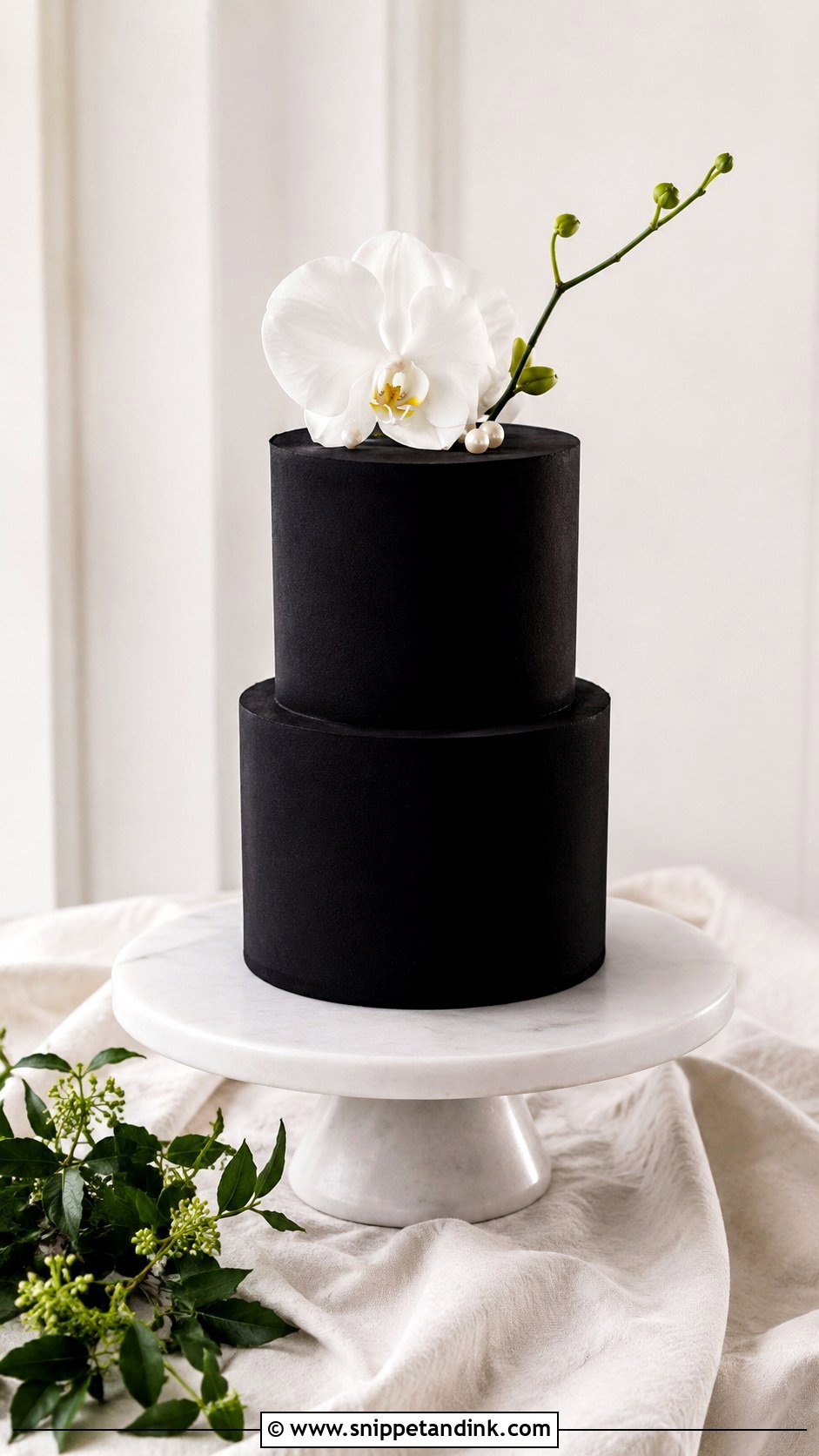
Matte black is quiet luxury in cake form. There’s no shine to hide behind, so the impact comes entirely from the silhouette, which is why I prefer it in two or three tiers rather than five. It also shows every flaw. A dent, a fingerprint or a dust of icing sugar is visible on matte black in a way it never is on white, so I smooth it with shortening rather than powdered sugar and handle it with gloves. Pair it with ivory roses, white orchids, dried grasses or one dramatic floral cluster. Buttercream gives a softer matte; fondant gives the crisper edge.
3. Black Wedding Cake With White Flowers
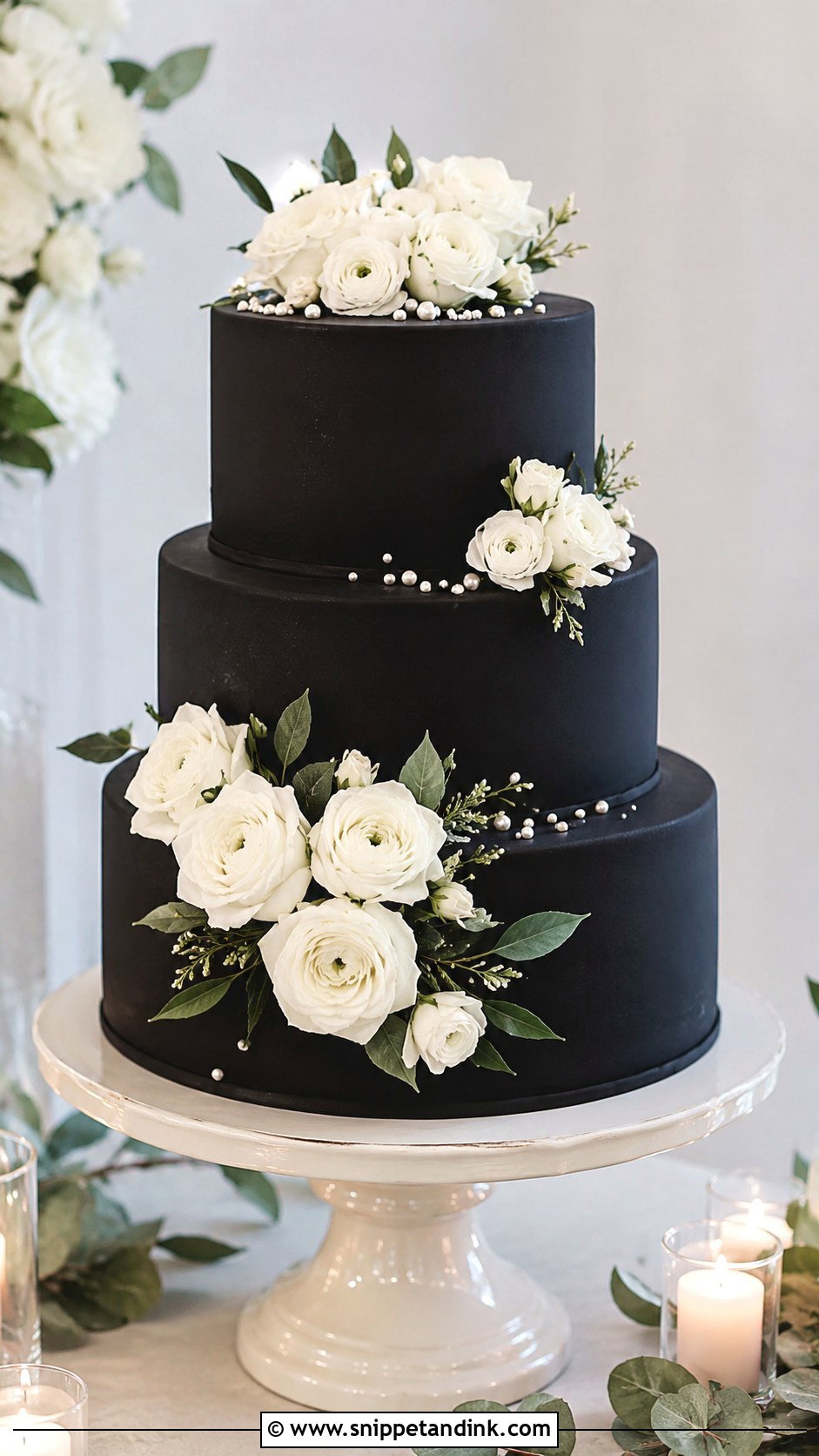
Black with white flowers is the contrast I’d recommend to a couple who wants a dark cake that still reads as bridal. Every petal stands out against the base, especially roses, orchids, ranunculus and anemones, whether fresh or sugar. Keep the surface smooth, or add a little ribbed buttercream or soft fondant folds for texture. If you’re using fresh flowers, ask your florist and baker to agree on which stems go on the cake. Some popular wedding flowers aren’t safe near food, and anything that touches the cake needs a barrier such as floral tape or a food-safe pick. A white stand and candles nearby finish it.
4. Black Wedding Cake With Red Roses
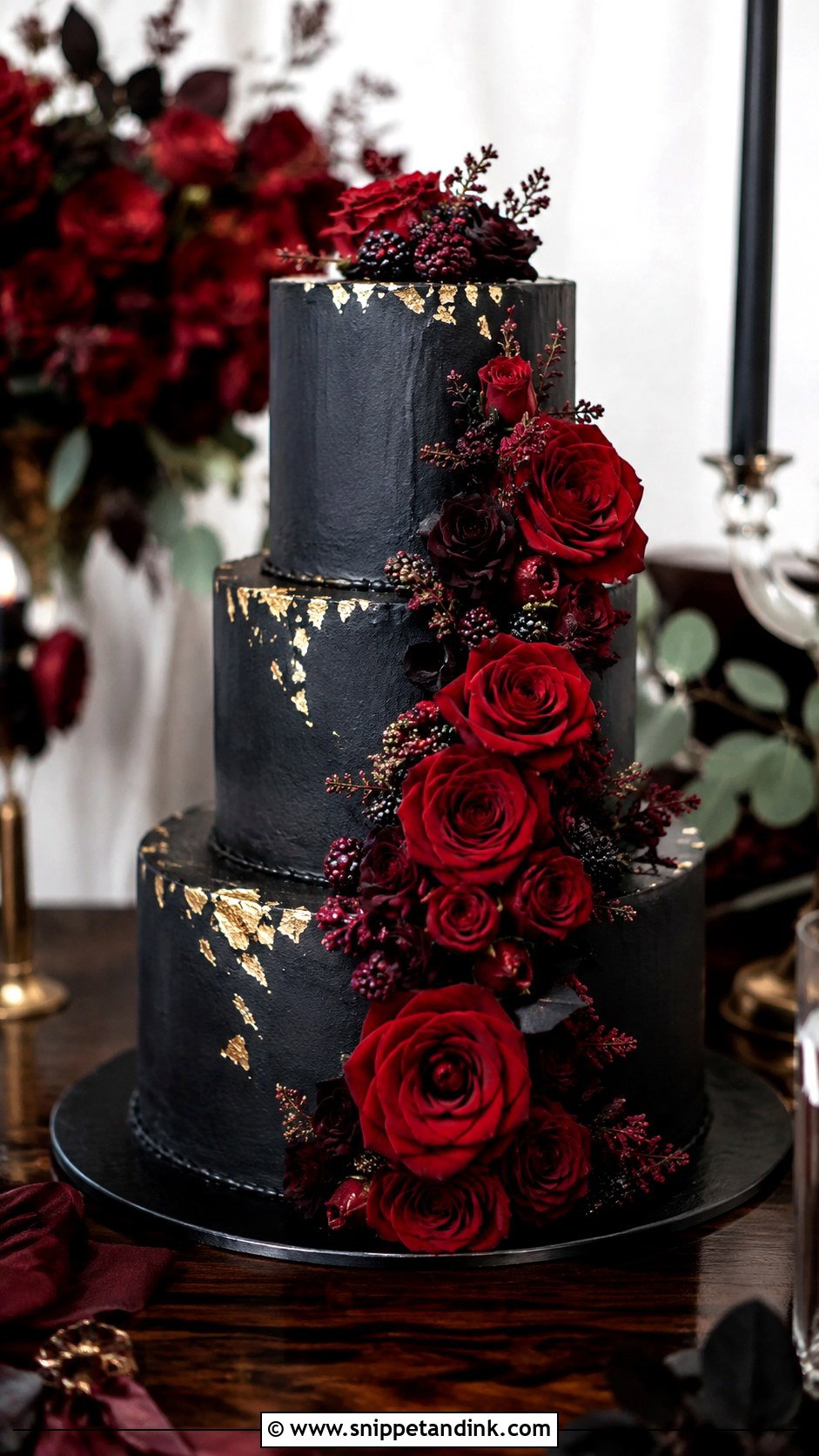
Red roses on black are the most theatrical version here, and it suits couples who like moody, slightly gothic palettes. The roses warm the black surface and create an instant focal point. Restraint is what keeps it elegant. I’ll do one cascade down one side or one cluster on top, never roses scattered all over every tier, because red against black gets busy very quickly. Dark greenery, a few blackberries or tiny touches of gold add depth without crowding. Deep red roses also lose their color fast out of water, so I place them as close to the reception as I can.
5. Black And White Wedding Cake
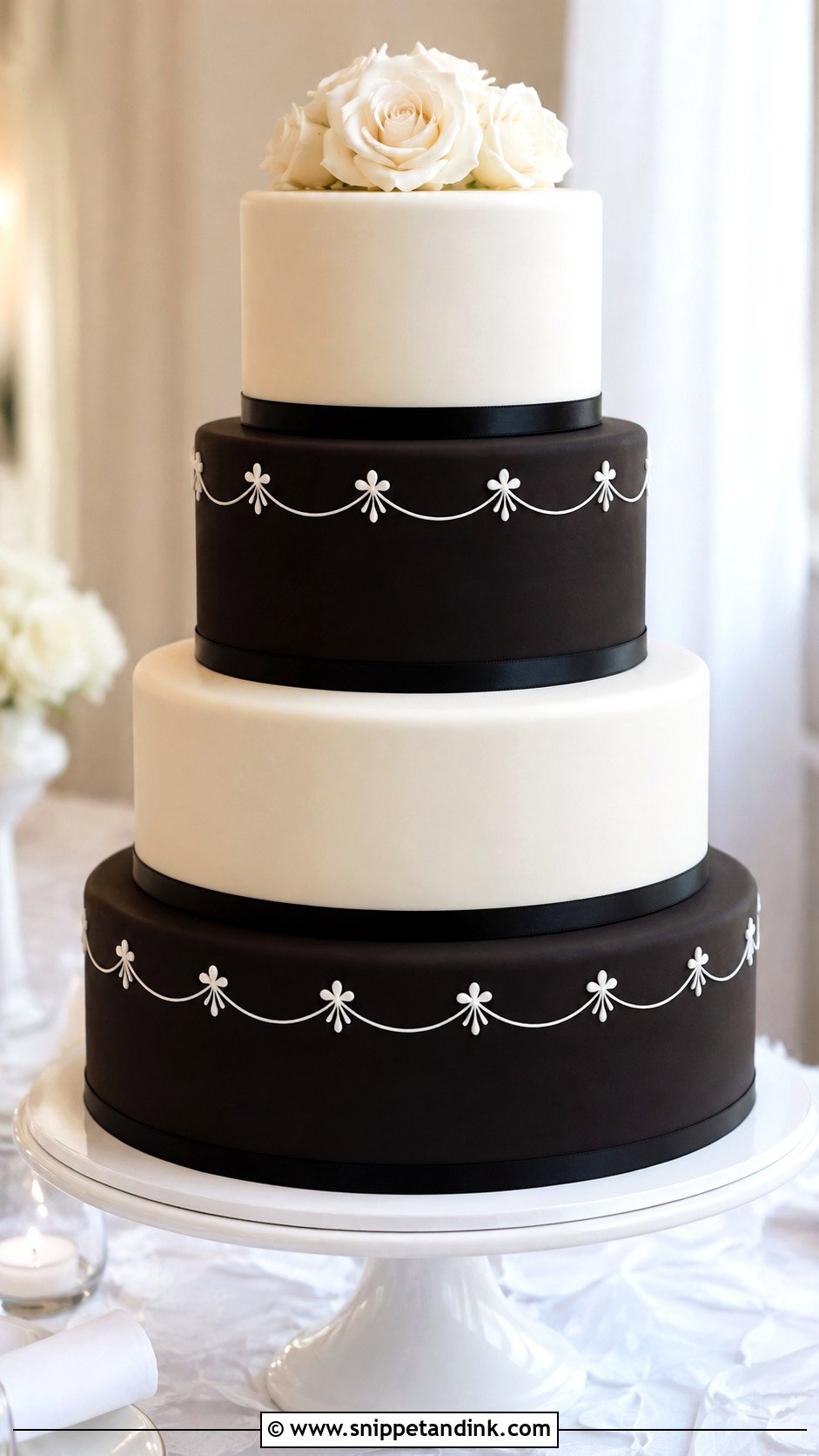
A black and white wedding cake gives you drama with balance. Split it into alternating tiers, or pipe black over white sections for a softer read. Sharp stripes and checkerboard details are bold; white lace piping over black fondant leans romantic. In practice the hardest part is the color line. Black coloring can bleed into white buttercream in warm rooms, so where the two meet I either put a ribbon or border on the join or use fondant, which holds a crisp edge. The palette goes with almost any flower, from ivory roses to blush peonies or burgundy blooms.
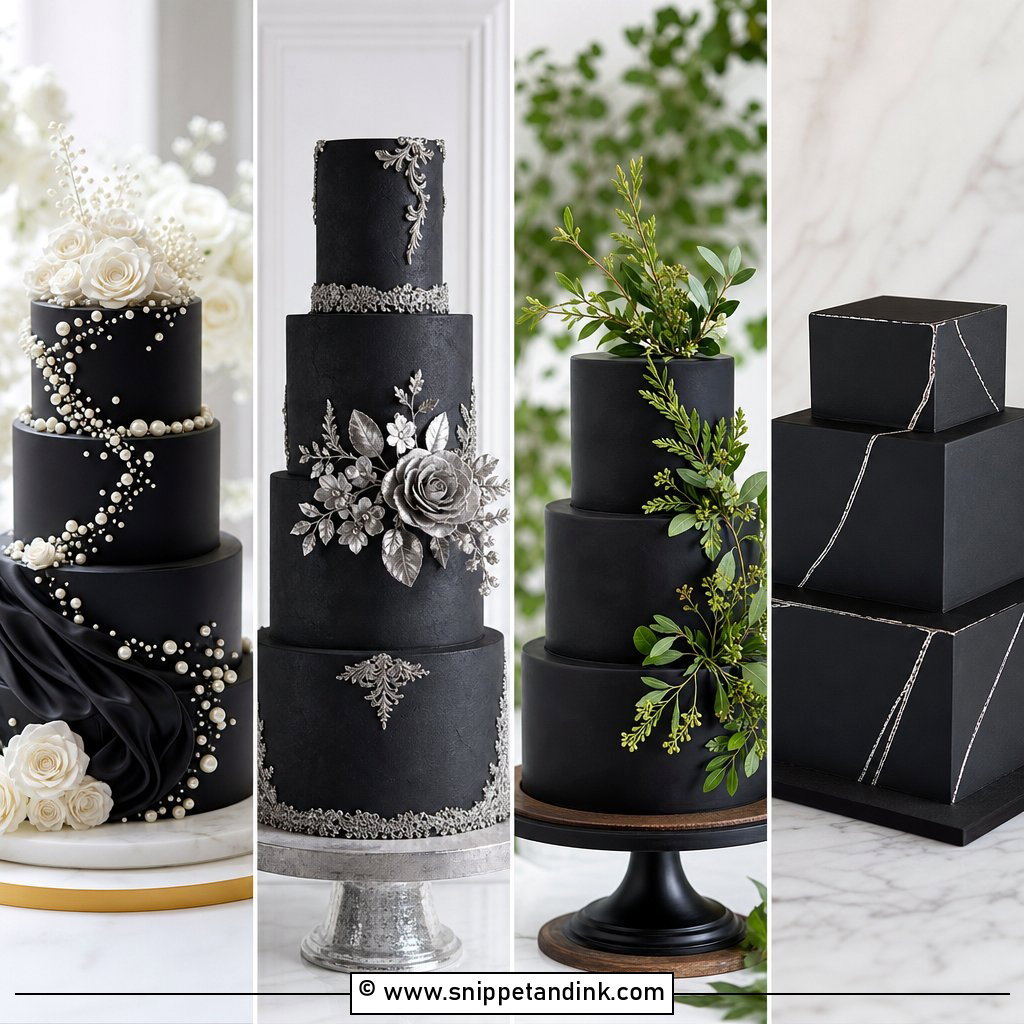
6. Black Lace Wedding Cake
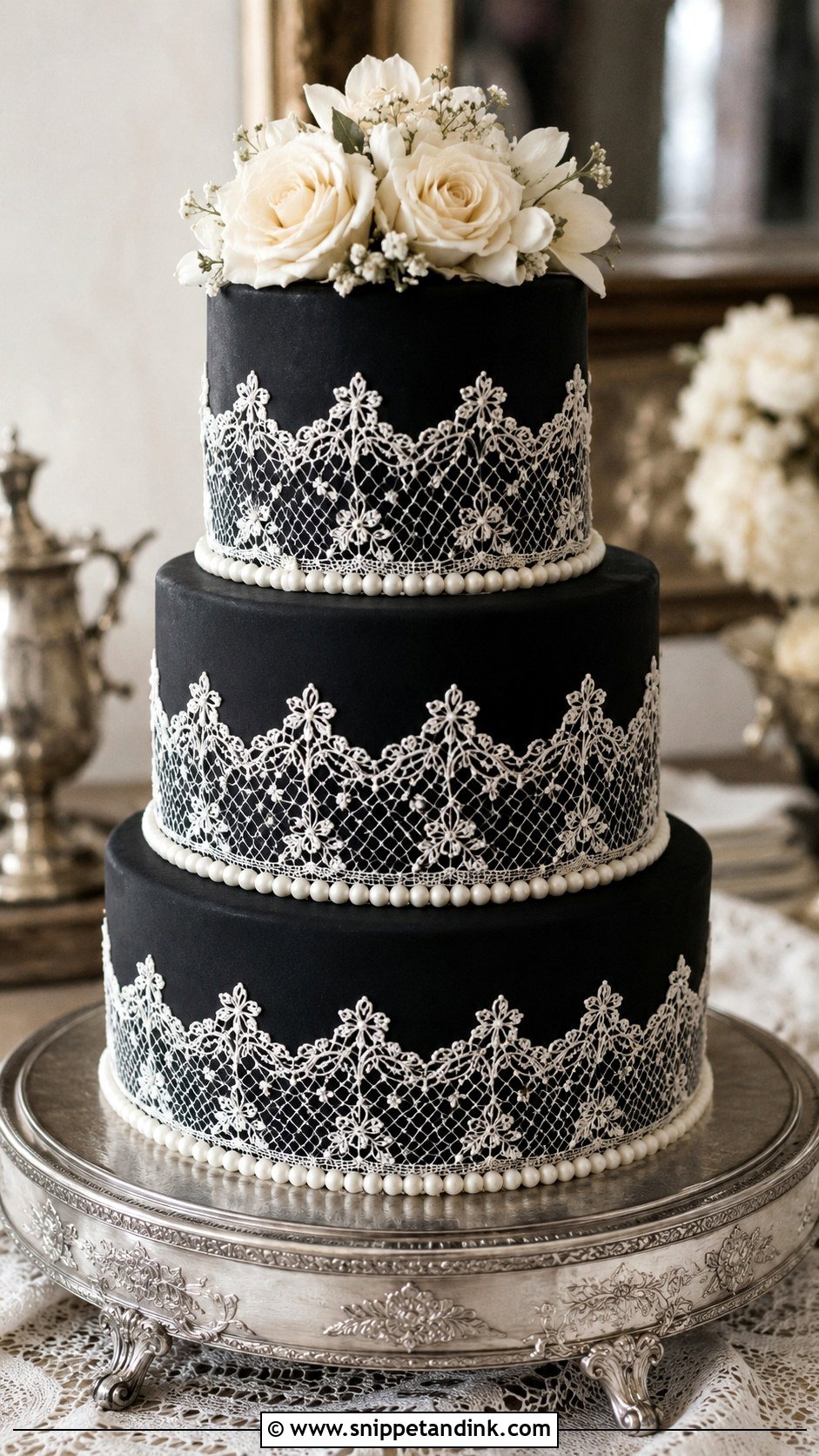
Lace work is where black shows off a baker’s piping hand. I pipe it black over a dark base for a tone-on-tone finish you only notice up close, or white over black for strong contrast that reads from across the room. Patterns can be fine and delicate or bold enough to look like fabric wrapped around each tier. Because the detail is intricate, simple round tiers let it stand out best. Pearls, a few soft flowers or a satin ribbon complete it. Hand-piped lace on several tiers takes many hours, so it’s one of the designs I’d book well ahead.
7. Black Buttercream Wedding Cake
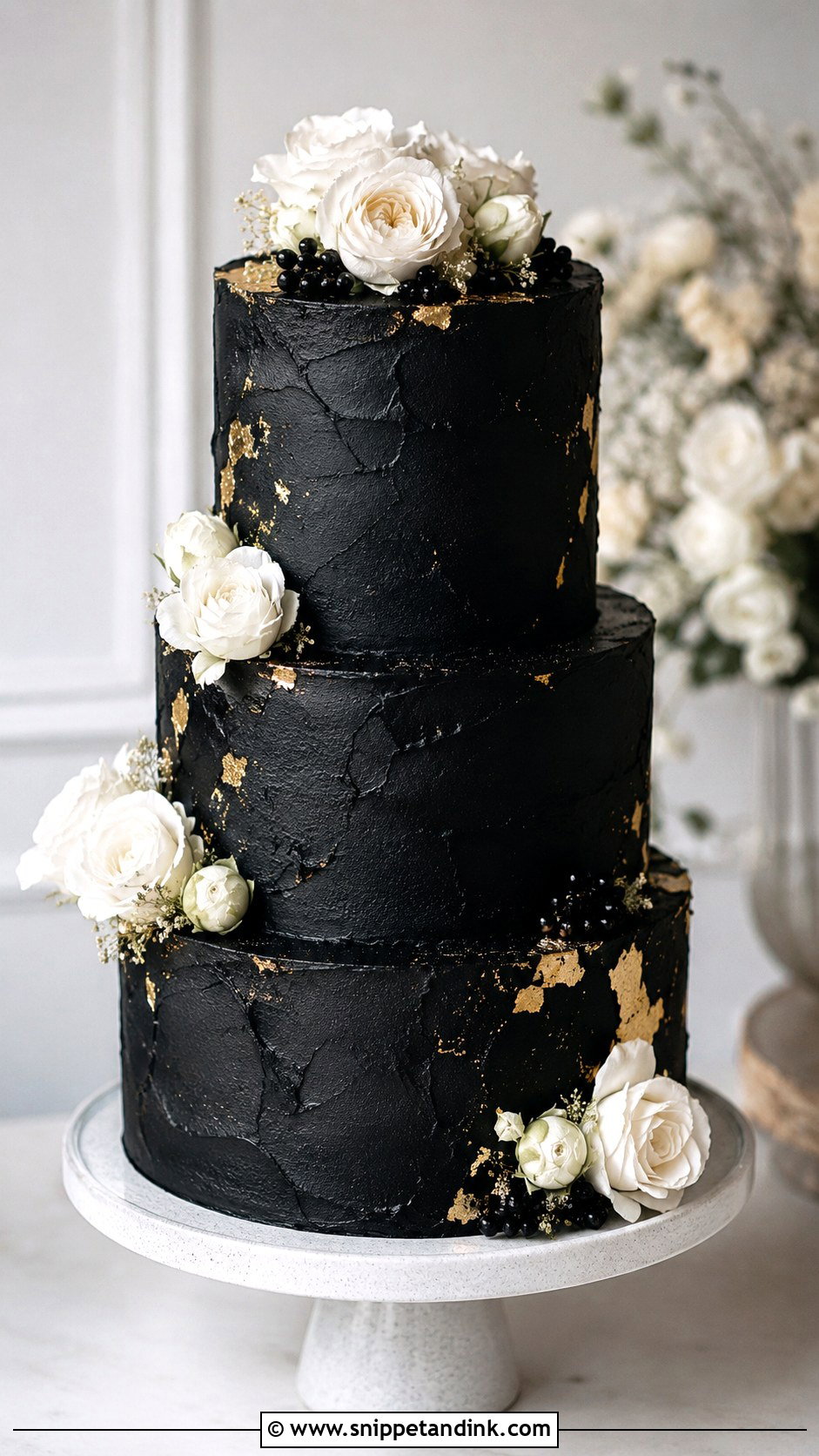
Black buttercream looks softer and more handmade than fondant, and many guests prefer how it eats. I build the black from a black cocoa base, which already gets the color most of the way there and tastes like dark chocolate, then finish with a smaller amount of gel color. That matters, because a white buttercream colored black with gel alone can taste bitter and stain everyone’s teeth. Finish it smooth, ribbed or with loose palette-knife strokes. Fresh flowers, silver leaf, gold flakes or black sugar pearls all suit it. Movement in the surface catches light and photographs better than a flat finish.
8. Black Fondant Wedding Cake
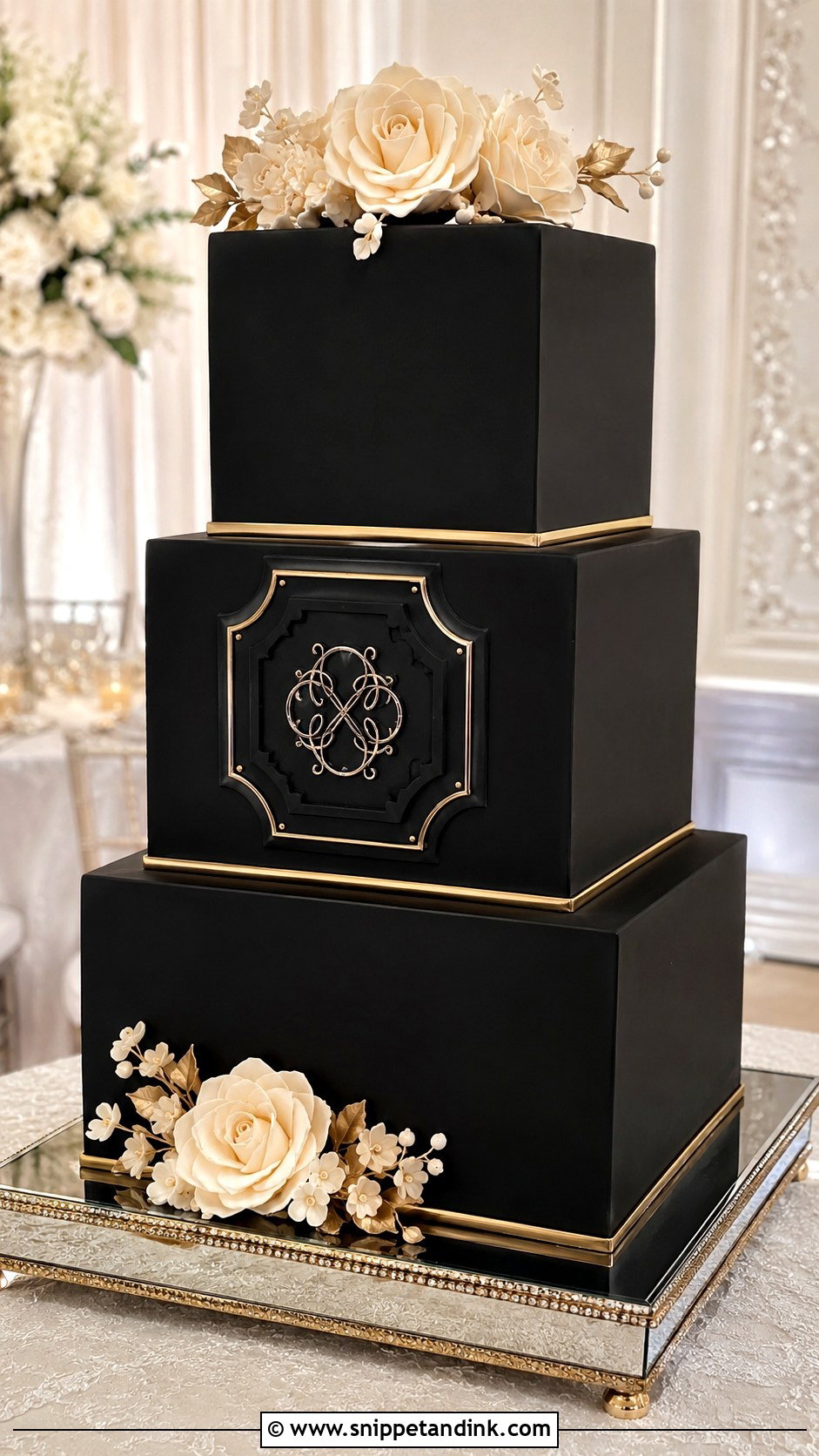
Black fondant is about crisp lines and sharp structure. It gives a polished surface for geometric patterns, metallic detail, lace appliqués and sculptural shapes. I always cover a firm ganache coat underneath, because fondant only looks as sharp as whatever it’s sitting on. It’s also worth knowing that black fondant shows condensation as white or shiny patches when a chilled cake meets a warm room, so the delivery plan matters more than with lighter colors. Balance the intensity with white flowers, pale greenery, gold edges or a lighter tier.
9. Black Marble Wedding Cake
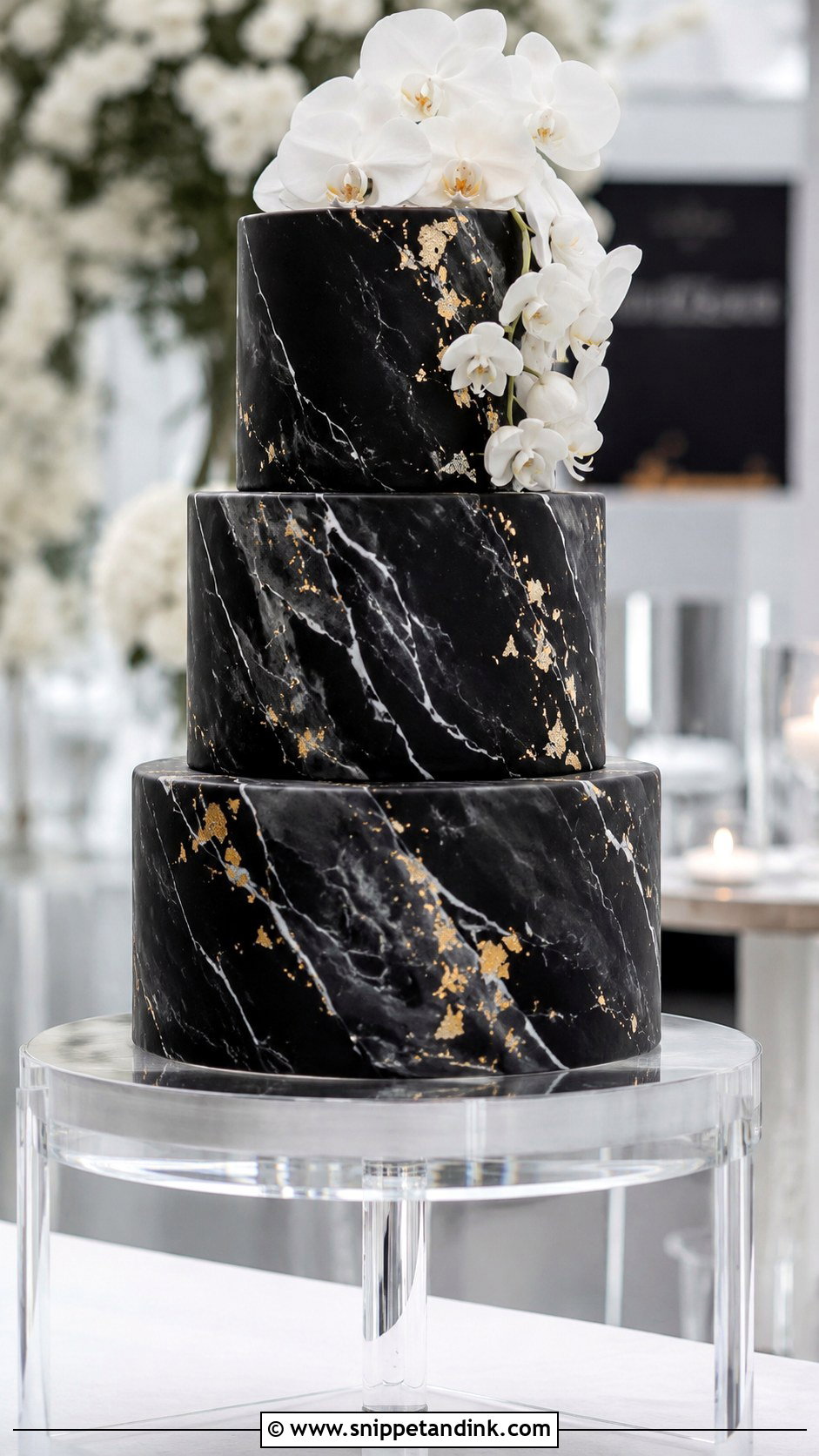
Marble brings movement without needing much decoration. The veining can be white, grey, charcoal, gold or silver, and the cake reads like polished stone. Each marbled tier comes out slightly differently, which I like, but if you need a specific look, send your baker a photo of the exact vein density you want. Keep the decoration minimal so the pattern stays the feature: a few white orchids, gold flakes or a clear acrylic stand. It’s very much at home in hotels and modern venues.
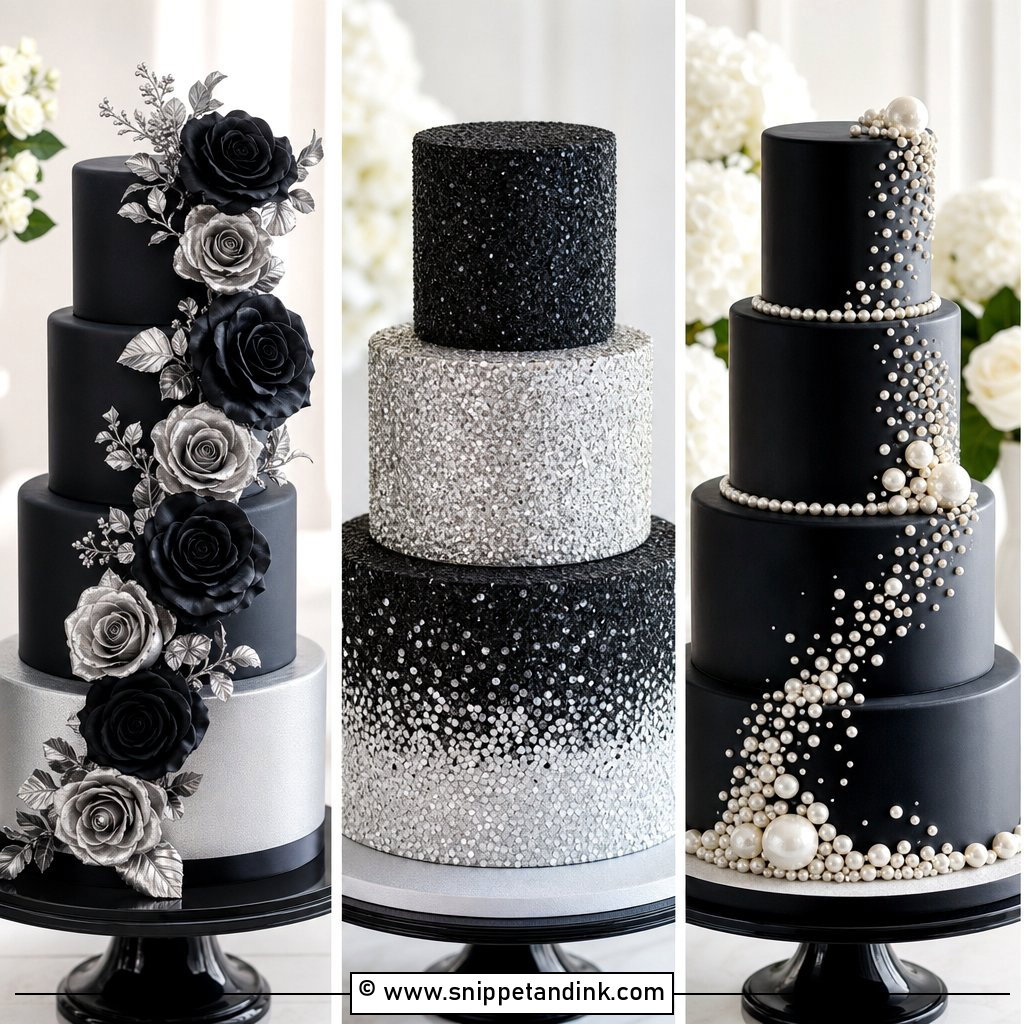
10. Black Wedding Cake With Pearls
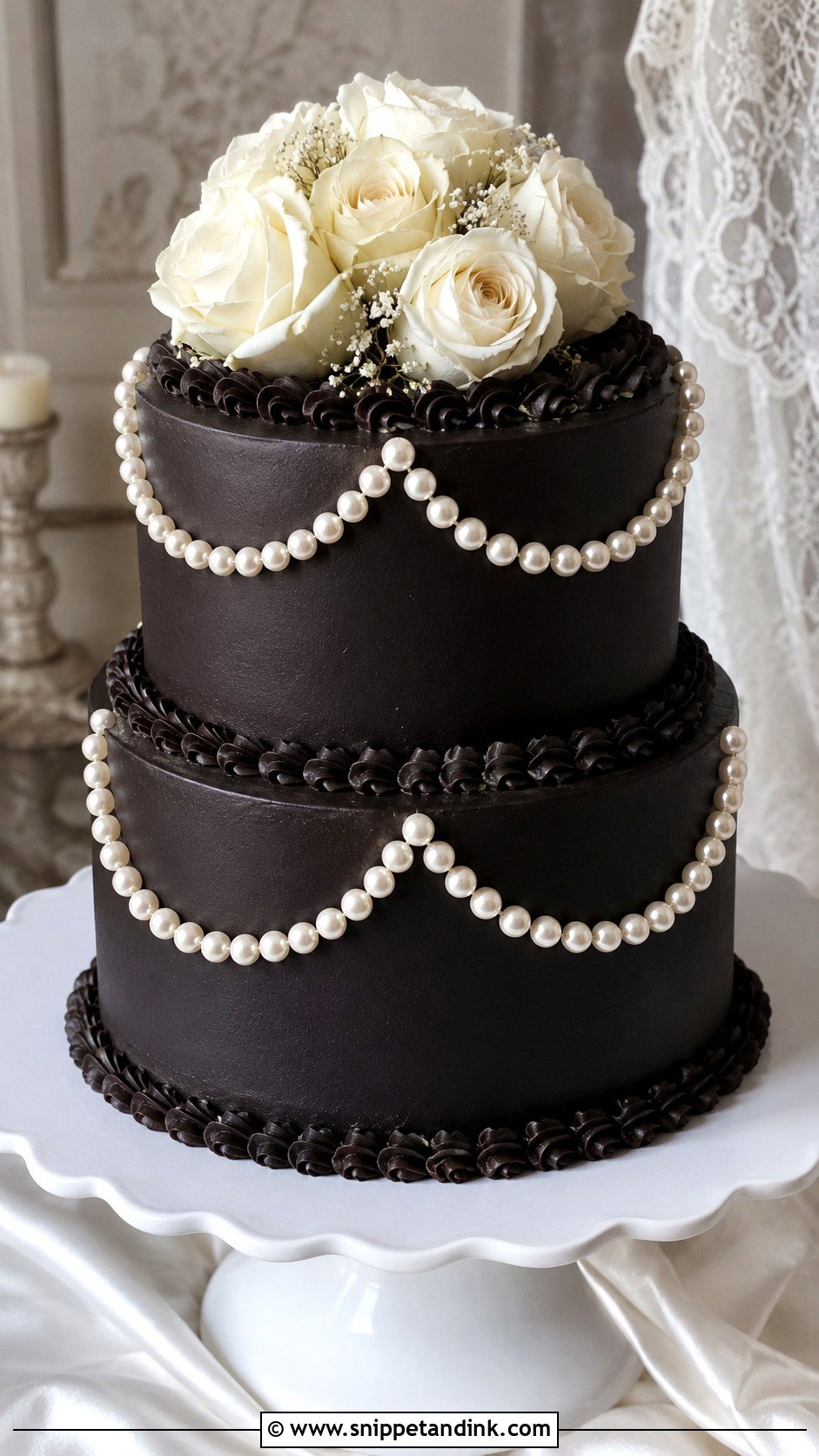
Pearls soften black more than any other decoration on this list. They can be scattered lightly, set in rows or combined with vintage piping in a Lambeth-style design. Black buttercream with ivory pearls makes a softer contrast; black fondant with pearl borders looks more tailored. Sugar pearls are hard, so I keep them away from where guests bite in, or use soft fondant pearls on the lower tiers. A few white flowers or a simple bow add grace. It gives a very different feel from a white cake while still looking unmistakably like a wedding.
11. Black Vintage Wedding Cake
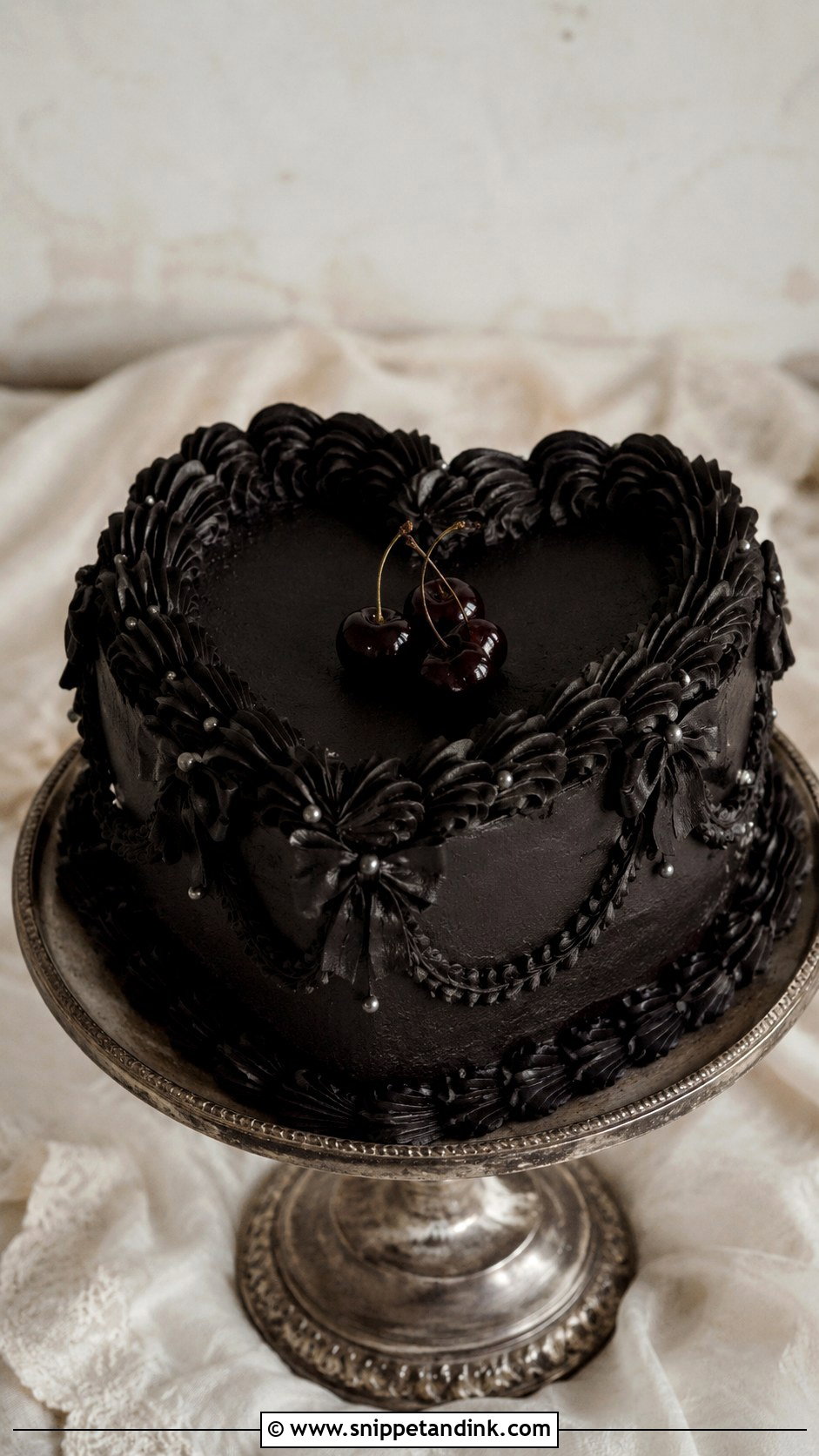
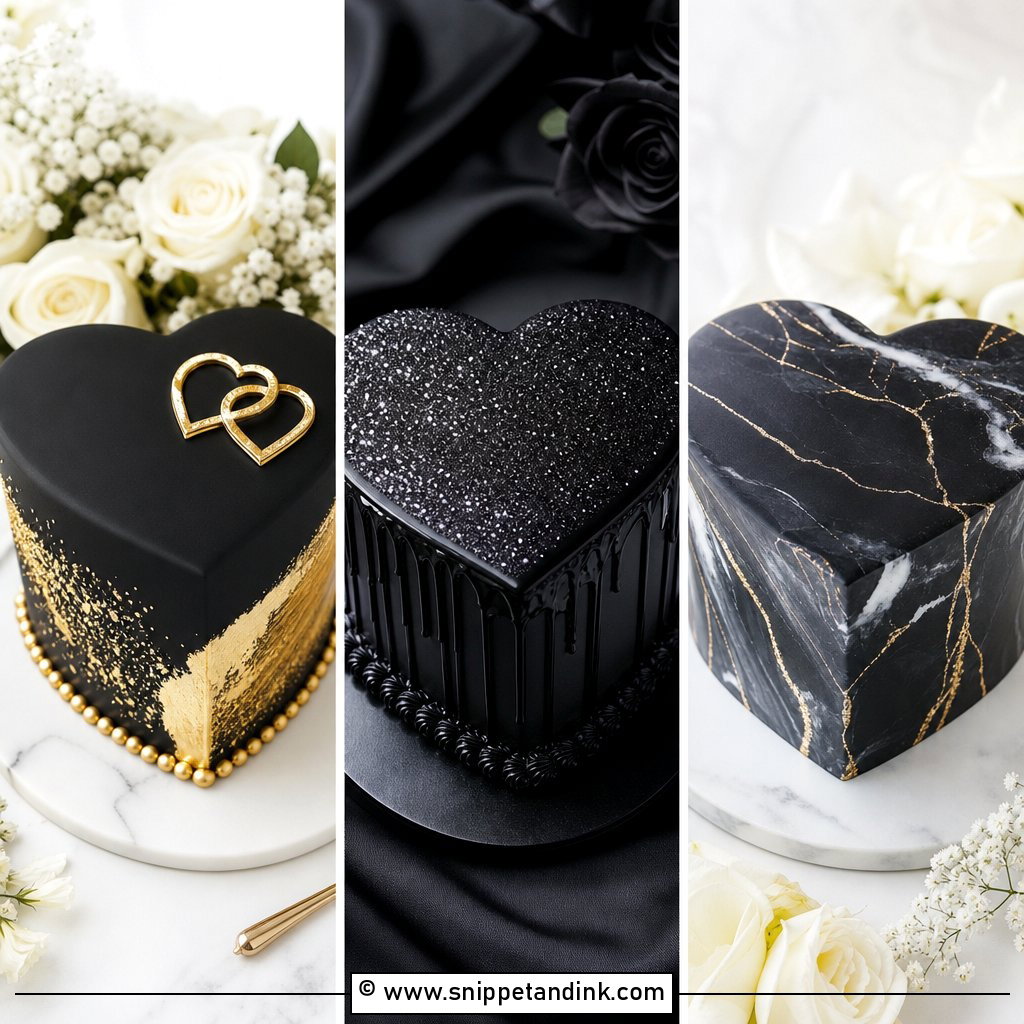
A black vintage wedding cake puts old-fashioned piping into a modern color. Shell borders, swags, bows, pearls and layered buttercream details all feel less sugary and more dramatic in black. This style is everywhere in editorial and retro wedding shoots right now. A heart shape feels playful; round tiers feel formal. Pipe tone-on-tone for a moody effect or use white piping for contrast. A practical note from my bench: heavy piping in black buttercream softens faster in heat than in white, so an antique stand under candlelight indoors is safer than a garden table.
12. Black Floral Wedding Cake
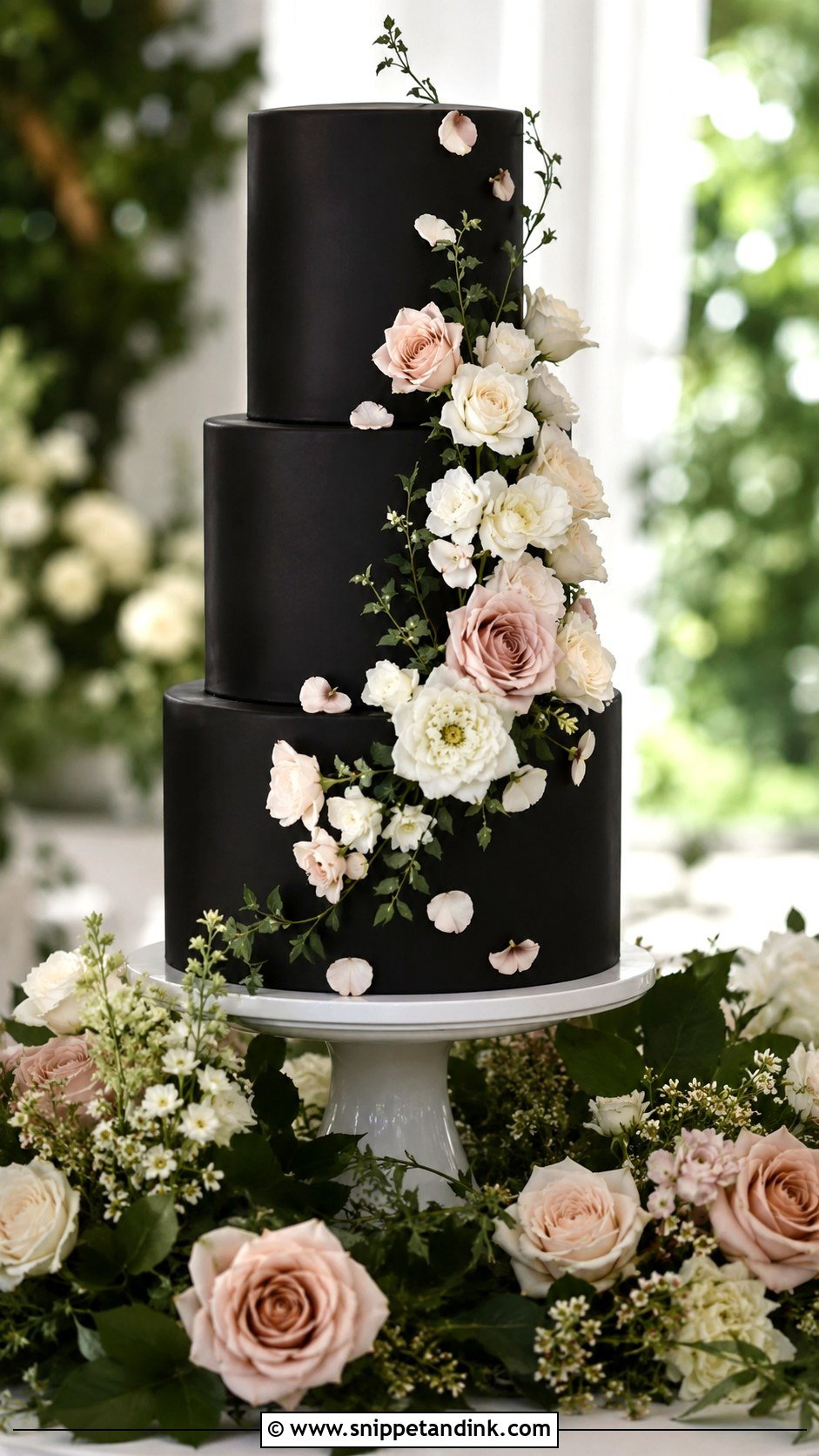
The flowers you choose decide the tone of a black floral cake: white is classic, blush is romantic and burgundy is moody. Sugar flowers give you exact colors with no food-safety worries, and they can be kept afterward. A diagonal arrangement adds movement, while a meadow of blooms around the base looks lush. The black background makes petals and leaves look more detailed, so it’s a good design for linking the cake to the bouquet. I ask for a photo of the bouquet once the florist has finalized it, so the sugar petals match the real ones.
13. Black Drip Wedding Cake
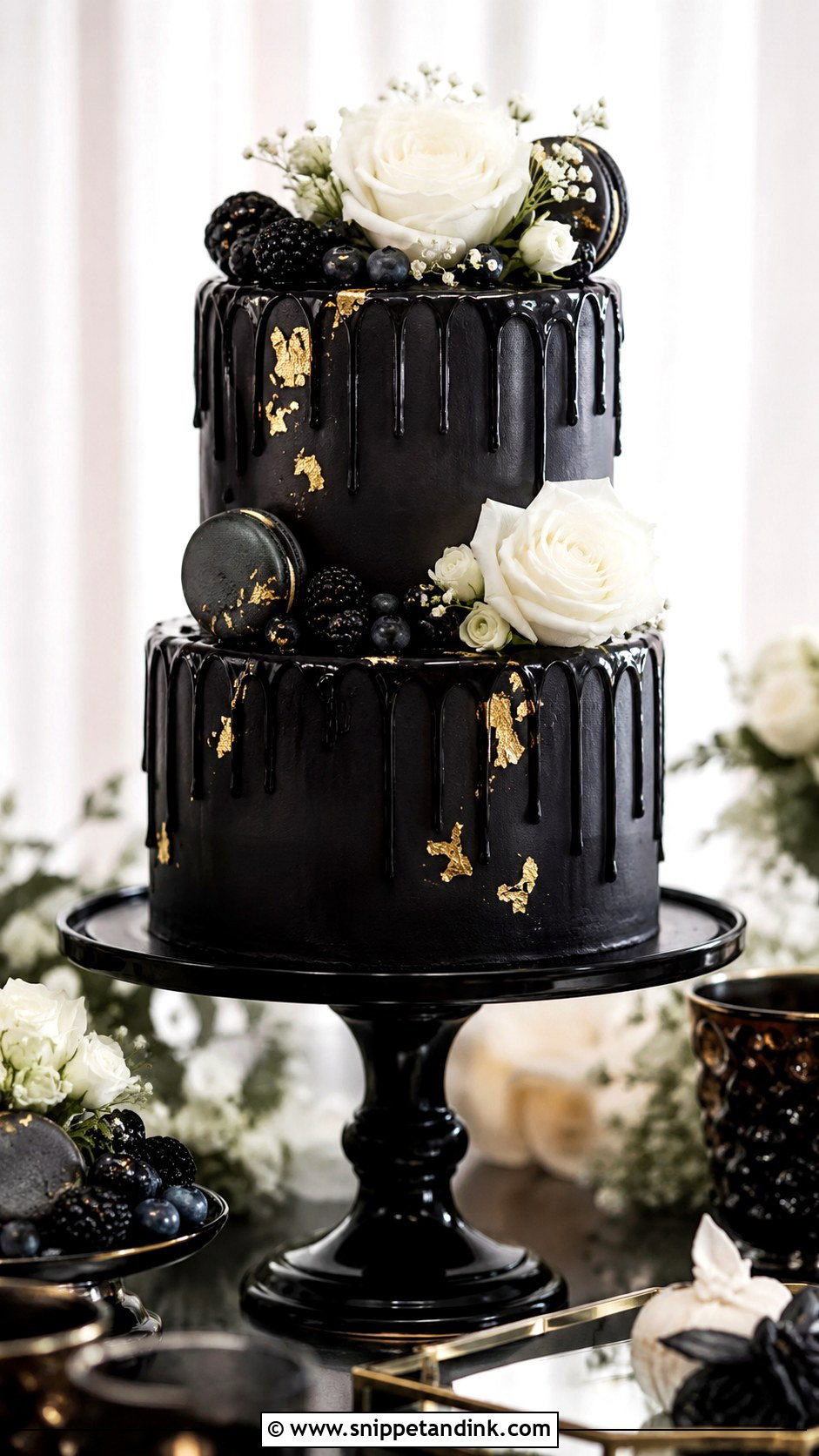
A black drip cake has a modern dessert-table feel. The drip can be glossy black over a matte black base for subtle texture, or metallic gold over black for contrast. Ganache suits it naturally, which is good news for chocolate lovers. Temperature is everything with a drip: too warm and it runs to the board, too cool and it stops in thick blobs. For a wedding I keep the drips short and even rather than casual. Macarons, berries, flowers or gold flakes go on top. It works best for smaller weddings where the cake can be playful and still formal.
14. Black And Silver Wedding Cake
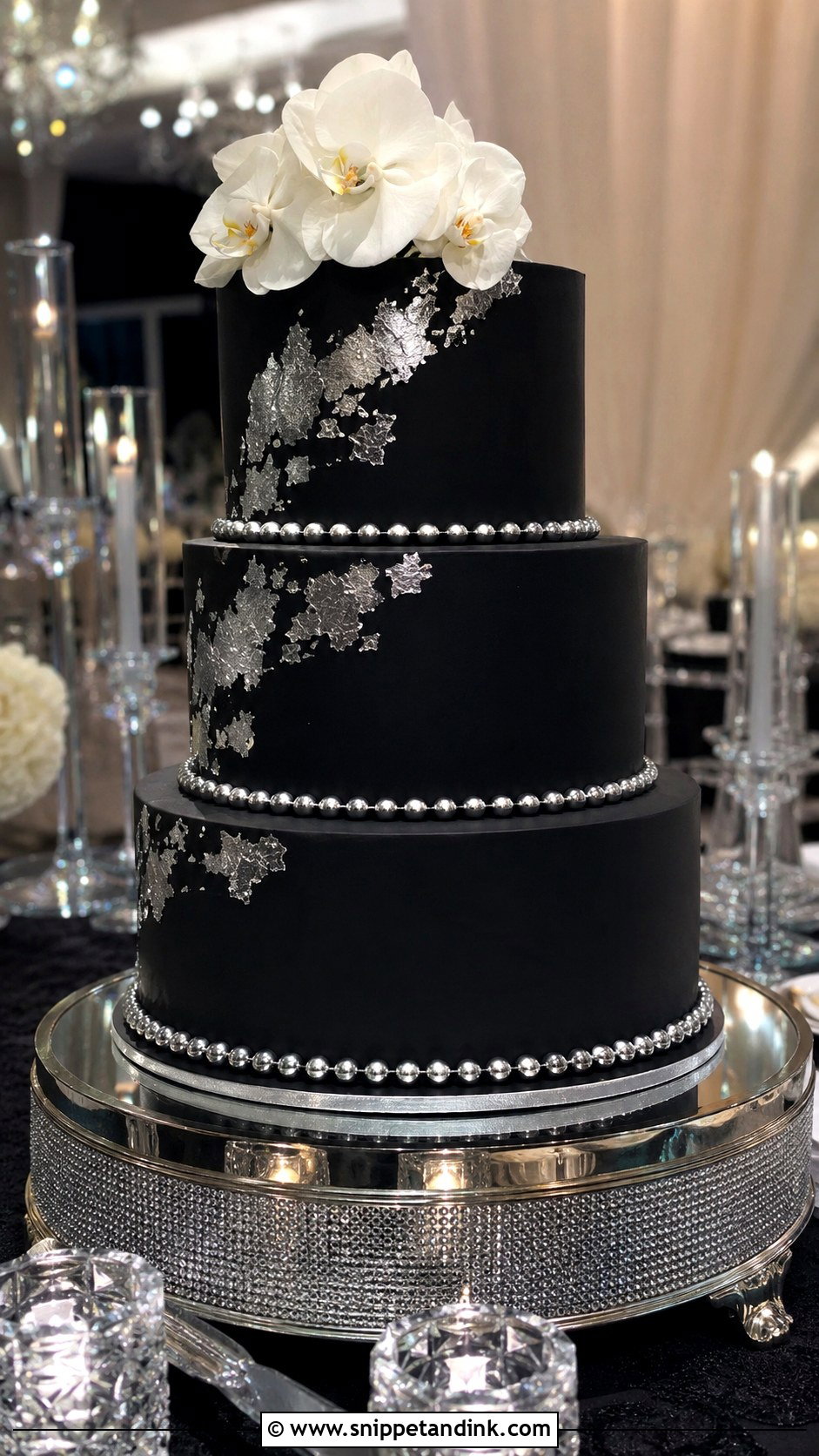
Silver gives black shine without the warmth of gold, so the whole cake reads cooler and sleeker. It belongs with winter weddings, modern receptions and evenings with crystal or mirrored décor. Use silver leaf, silver pearls, metallic brushstrokes or thin silver borders. Silver leaf tarnishes slightly over time, so I apply it on the day of delivery or the day before. Pair it with white flowers or pale grey sugar petals for softness, or geometric patterns and a mirrored stand for something stronger. Kept clean, black and silver looks very refined.
15. Black Wedding Cake With Greenery
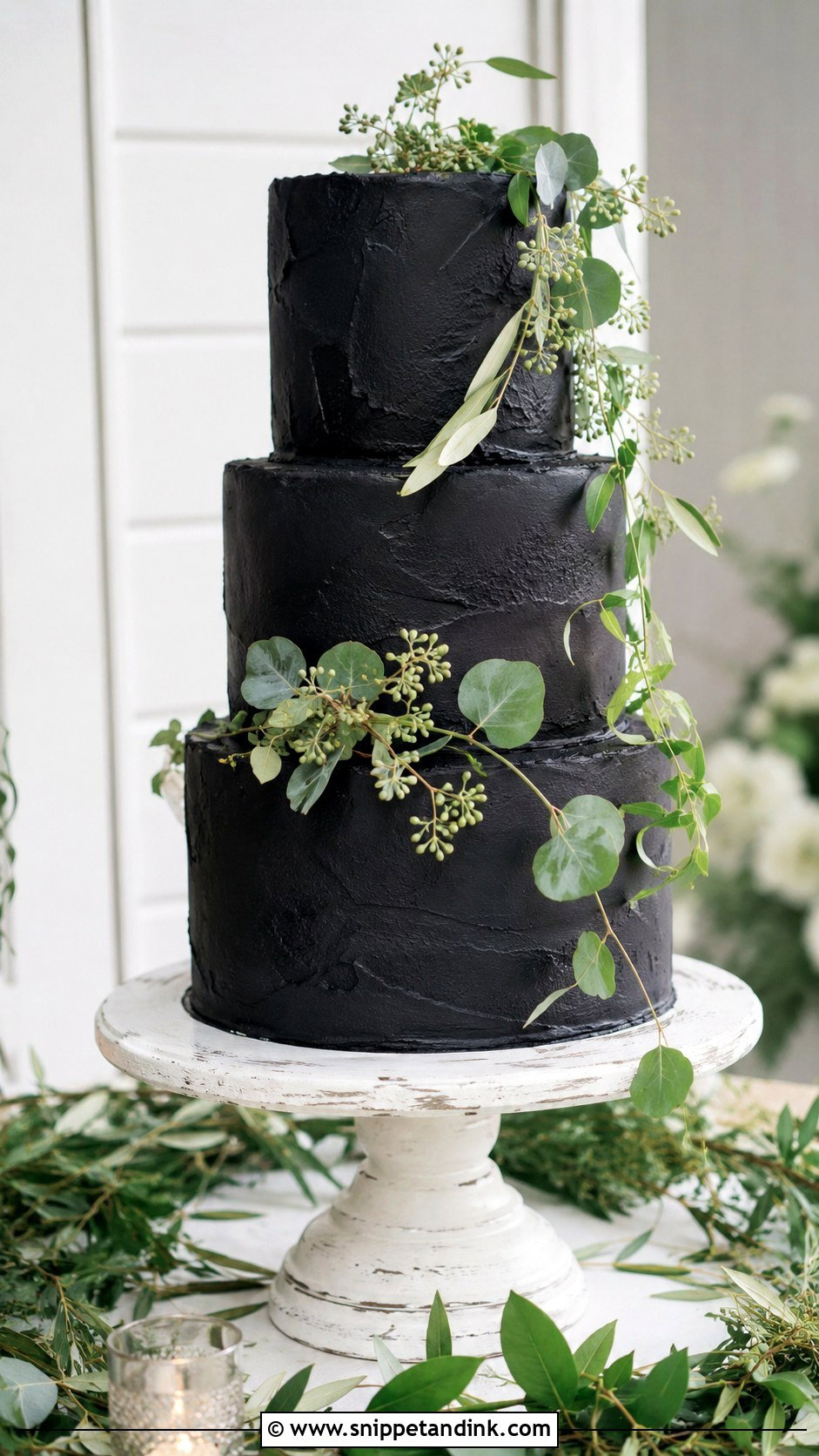
Greenery keeps black from feeling heavy and gives a natural edge to a dramatic cake. Eucalyptus, olive leaves, ferns and trailing vines all sit well against a dark surface. I keep the frosting smooth or lightly textured so the leaves look placed rather than scattered. One caution I give every couple: not every foliage is safe on food. Eucalyptus is commonly used but shouldn’t touch the frosting directly, so I wrap stems and use a barrier where leaves rest on the cake. Add white flowers for a bridal note, or leave it mostly green. It suits garden, modern rustic and outdoor receptions.
16. Black Wedding Cake With Burgundy Flowers
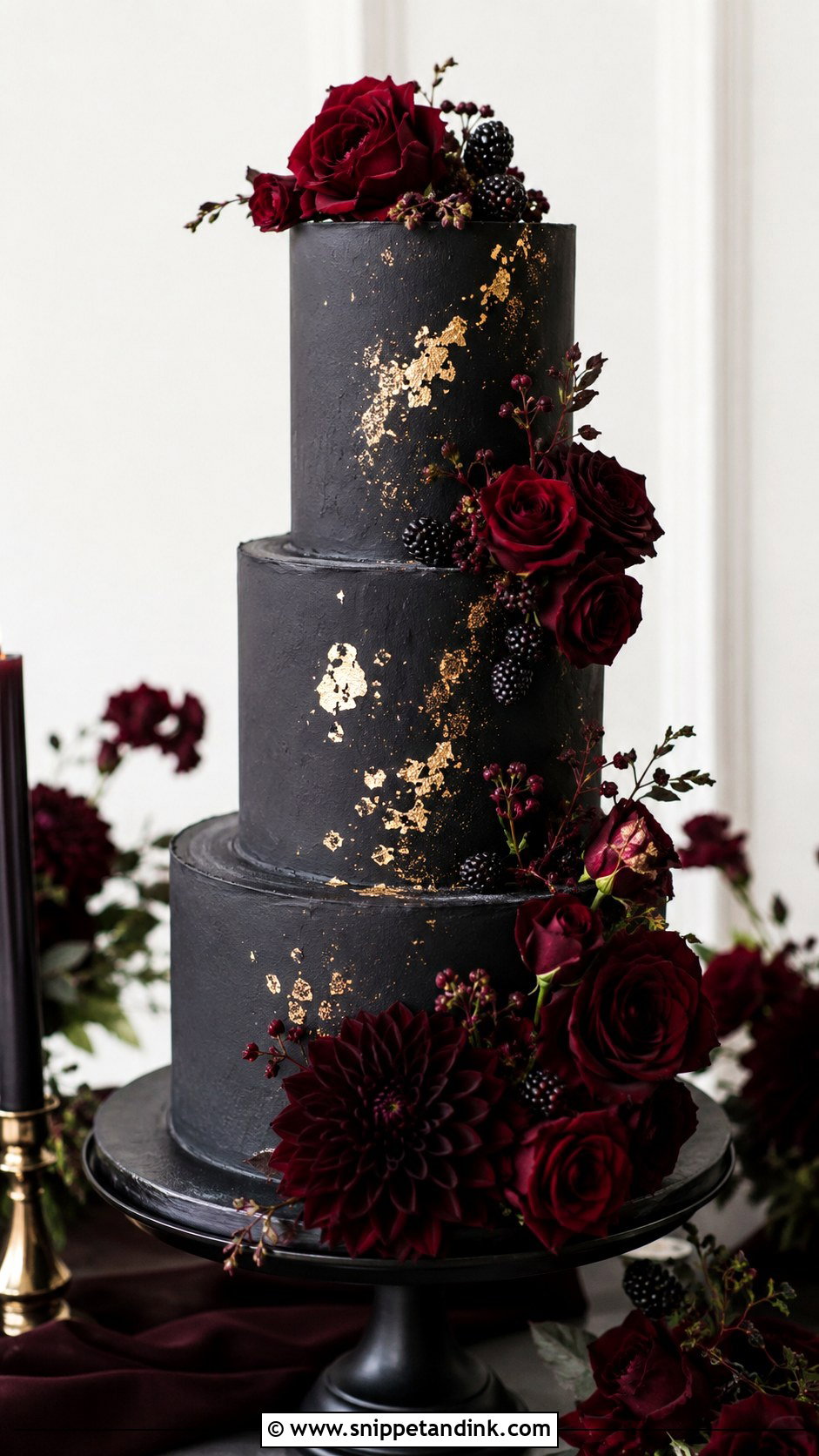
A black cake with burgundy flowers has a richness that suits fall weddings, evening receptions and moody floral themes. Burgundy roses, dahlias, ranunculus and dark berries create depth against black without needing much metallic detail. Antique gold or soft blush flowers can add warmth if it starts to feel too dark. A cascade works on tall tiers; a low cluster feels more modern. Dark flowers on a dark cake can merge in dim lighting, so I’d plan a spotlight or candles near the table, or the arrangement will vanish in evening photos.
17. Black Geometric Wedding Cake
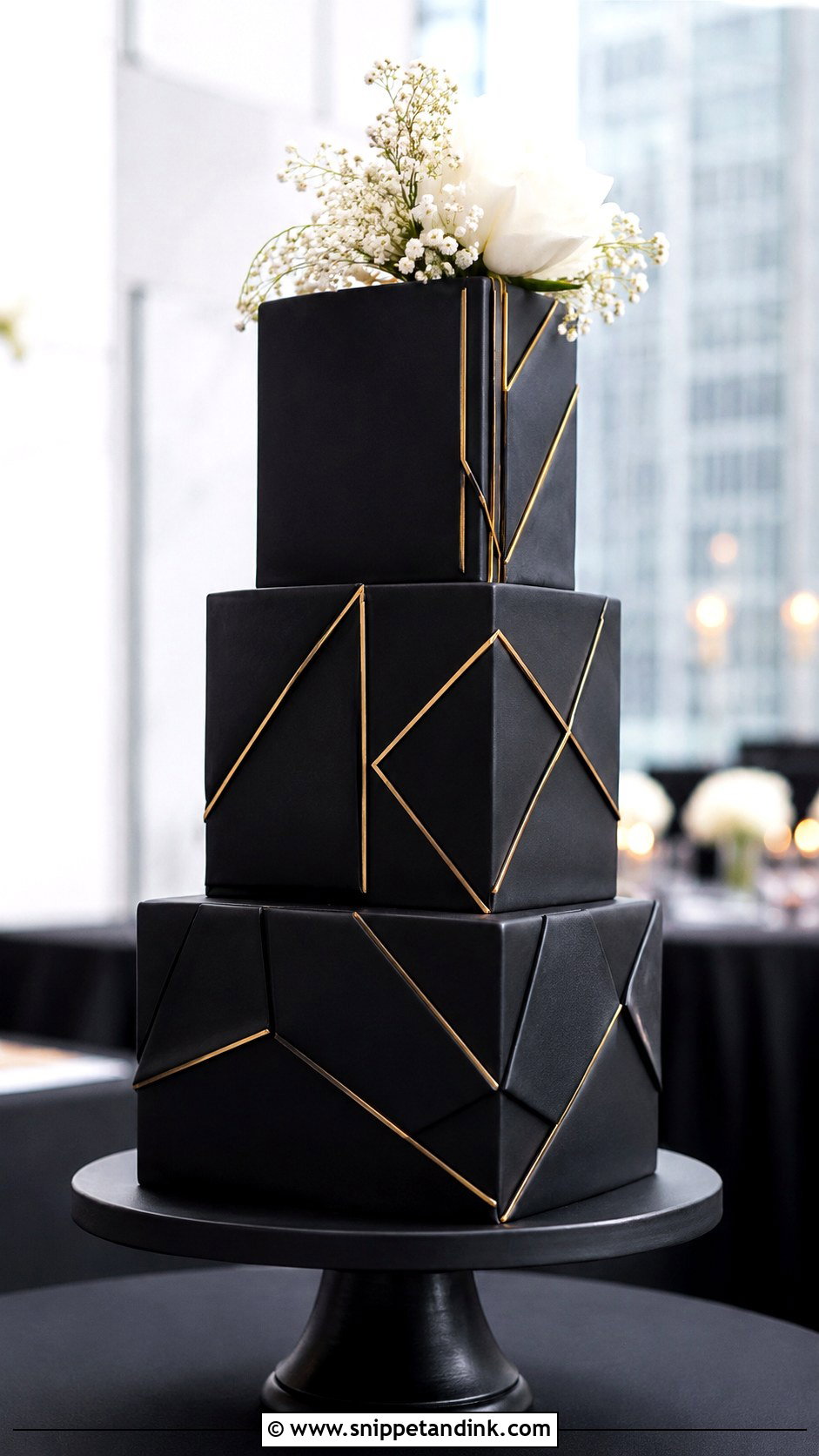
A black geometric wedding cake leans on clean lines: hexagon tiers, angular gold lines, raised panels or sharp black-on-black patterns. It feels structured, almost like a sculpture, and belongs in industrial venues, city lofts and minimalist receptions. Precision is the whole look, so this is the design where a baker’s fondant skills show most clearly. Ask to see photos of sharp-edged cakes they’ve made, not just round ones. A small floral cluster or a little metallic shine softens the hard angles enough for a wedding.
18. Black Ombre Wedding Cake
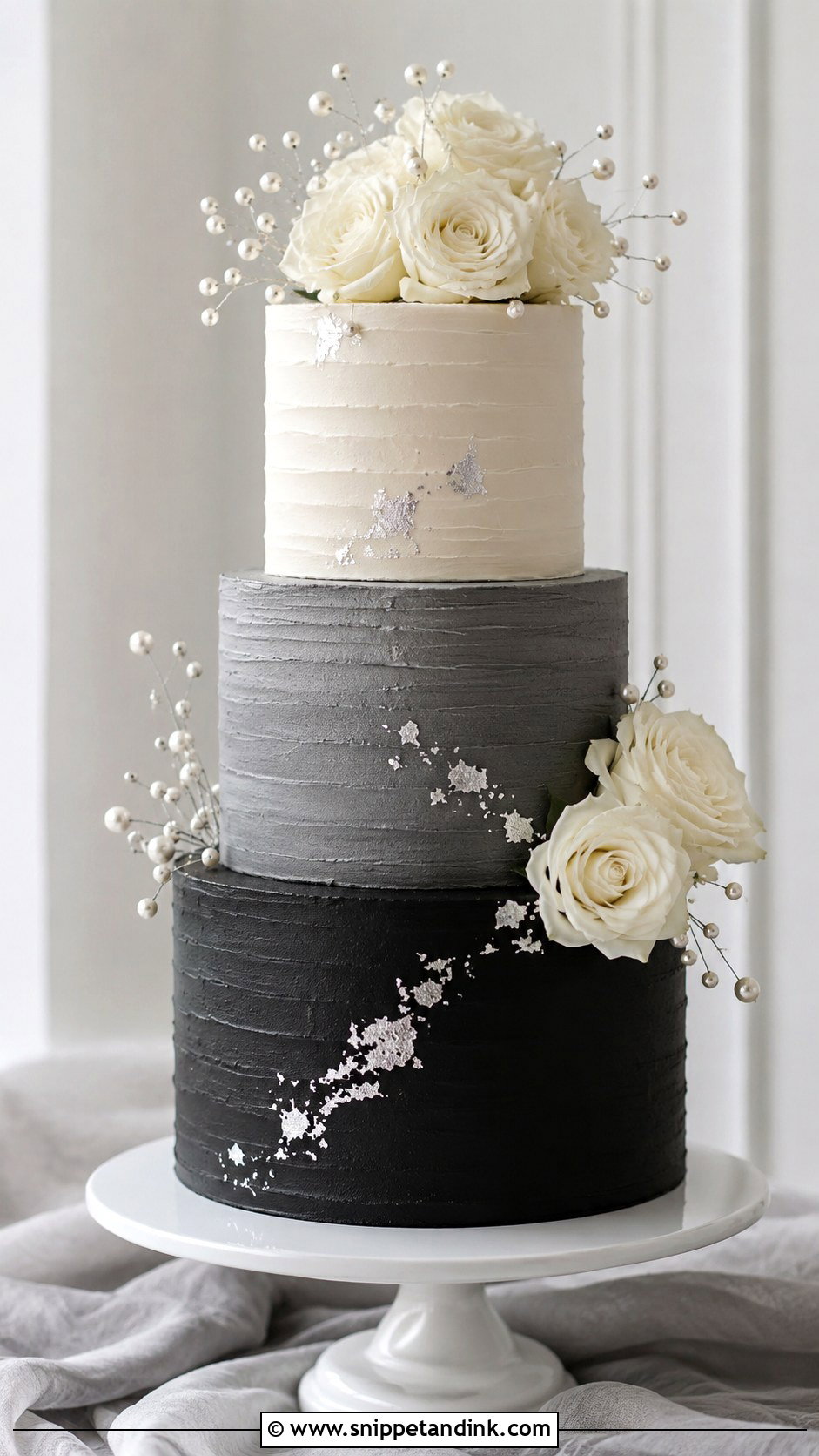
Ombre is the gentlest way into a dark cake. Instead of solid black, the tiers fade from ivory through grey and charcoal to black. It works best in buttercream, where the blended texture looks soft. White flowers, silver leaf or simple piping keep it elegant. Getting even steps between shades is harder than it looks. I mix each tone from one batch of black so the greys stay the same undertone and don’t drift green or blue. It’s a good fit for couples who like the idea of a black cake but want less intensity, and it ties together palettes with grey, ivory, silver or blush.
19. Black Single Tier Wedding Cake
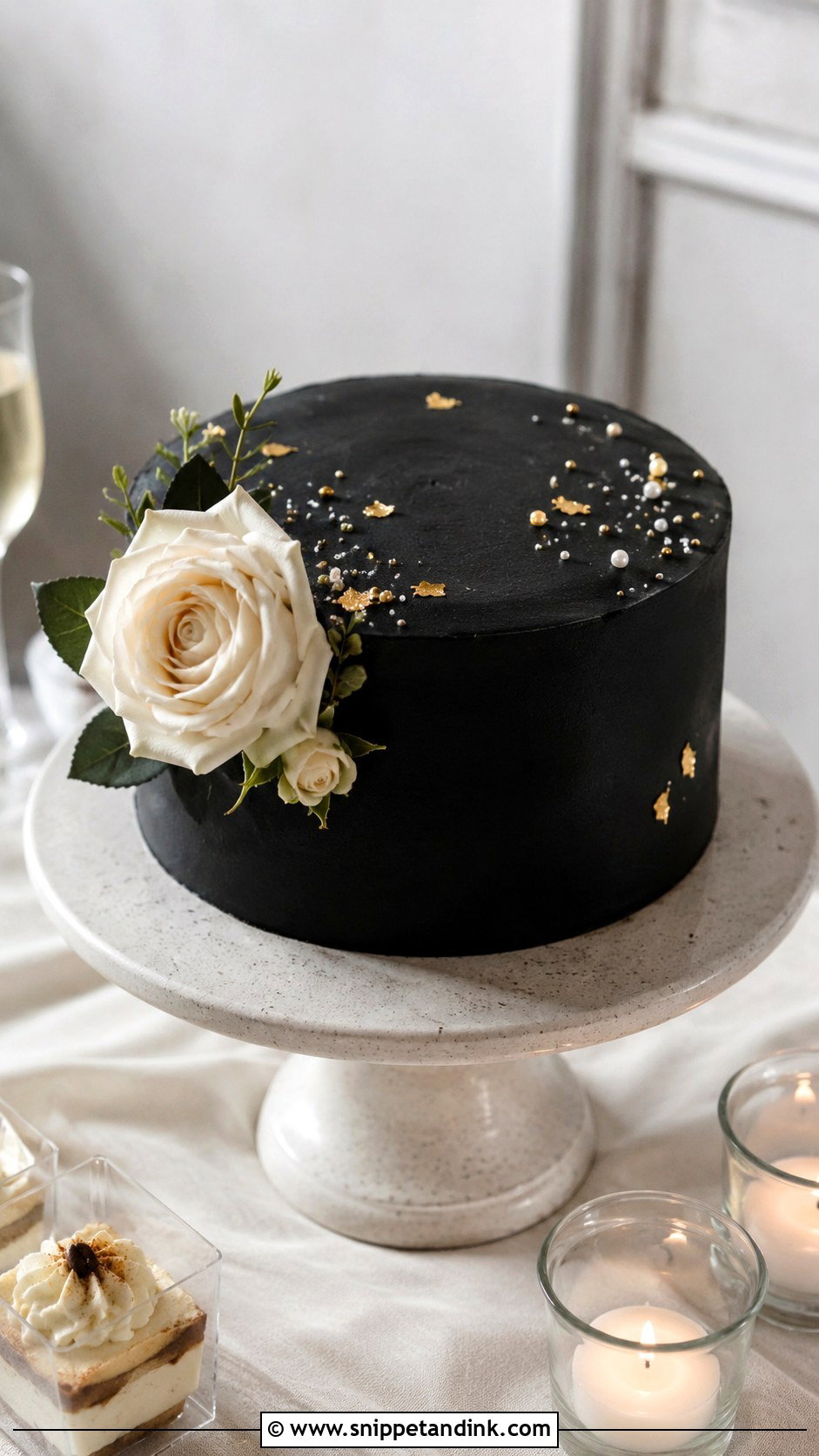
A single tier can still be striking, and it suits elopements, intimate weddings, courthouse celebrations and couples serving a dessert table. With one tier every decoration counts. Try a smooth matte finish with one large floral cluster, a vintage heart with piped borders or a petite round cake with gold leaf. Make sure the stand lifts it high enough to be seen: a small black cake on a low board disappears among the table décor. Surround it with candles, flowers or mini desserts.
20. Black Square Wedding Cake
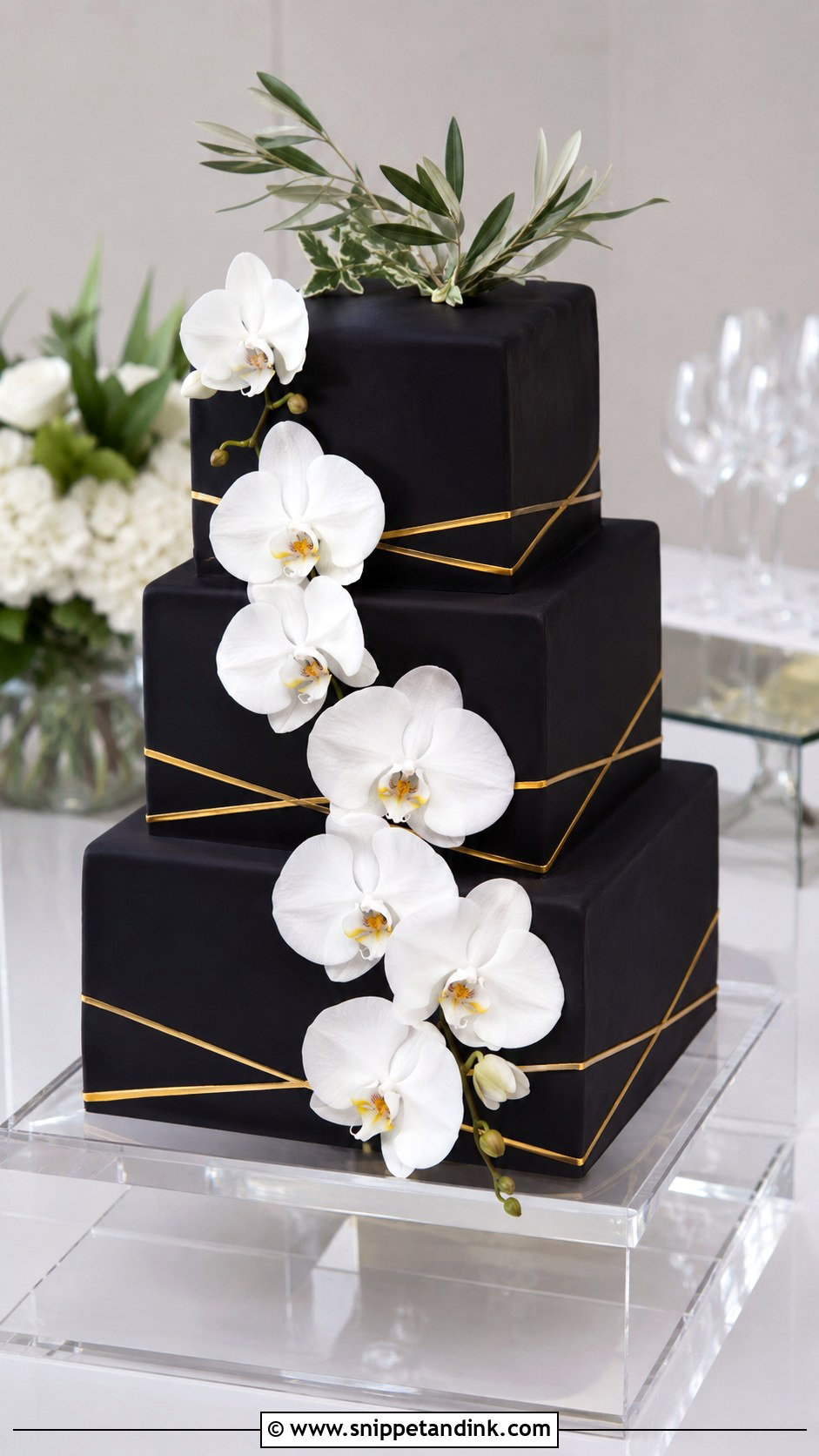
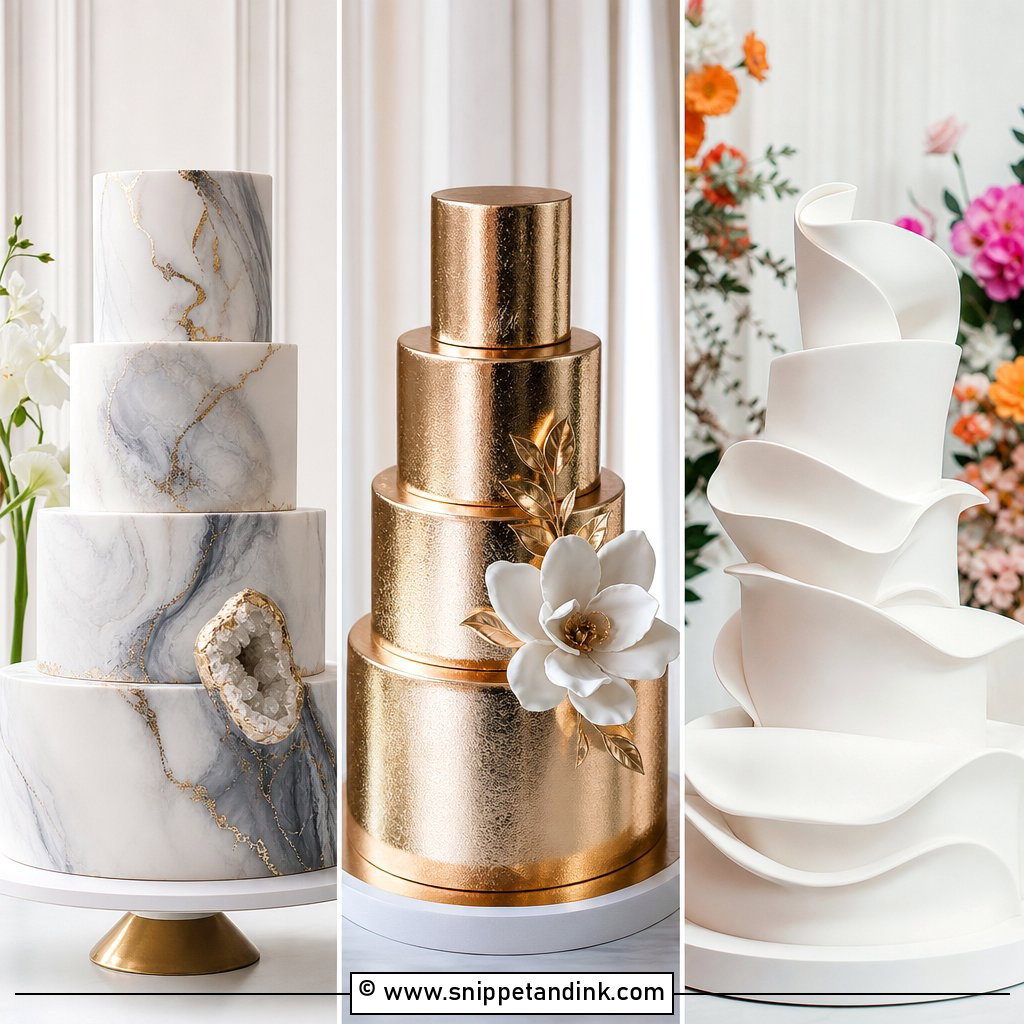
Square tiers make black look even sharper, because the straight edges catch light differently on each face. Metallic lines, marble, structured florals or clean fondant panels all suit the shape, in a ballroom or a city venue. I’ll be honest that square cakes are harder to cover and to cut neatly than round ones, so they cost more labor and need a confident hand with fondant at the corners. Cascading white flowers or greenery down one corner softens the shape; one strong accent on a plain cake feels more editorial.
A Dark Cake in a Warm Room
Black absorbs heat. A dark cake sitting in sunlight warms up noticeably faster than an ivory one beside it, and buttercream softens, piping slumps and drips start to slide. Most of the problems I see with black cakes at receptions come from where the table was placed, not from the cake.
- Keep the cake table away from windows, heaters and the path of afternoon sun. A tent wall in July can be as warm as a window.
- Don’t group pillar candles tightly around the base. They look romantic but add heat right where the cake sits.
- Ask for a late delivery time on hot days, so the cake spends as little of the day out of the fridge as possible.
- Expect a fondant cake to look shiny or spotted for a short while after leaving the fridge. That’s condensation, and it dries if it’s left alone; wiping it smears the color.
- If the venue only has an outdoor spot, a buttercream-free design such as ganache under fondant is far sturdier.
On lead times, anything with hand-piped lace, sugar flowers or sharp geometric work books up early with busy cake makers, often months ahead, and the timing varies from studio to studio. I’d make the first inquiry as soon as your date and venue are set.
How Much Black Does Your Cake Need?
Black has become a confident choice rather than an alternative one, and the right version depends on the mood of your wedding. Gold feels luxurious, white flowers feel classic, pearls lean vintage and greenery keeps it fresh. Matte gives modern drama; buttercream texture makes the cake feel softer. If you’re nervous, start with ombre, marble or black and white, or a single black tier on a lighter cake. Taste the black frosting at your tasting, plan where the cake will sit and how it gets there, and it will be one of the most talked-about details of the night.
You'll Like These Ideas:


Leave a Reply