
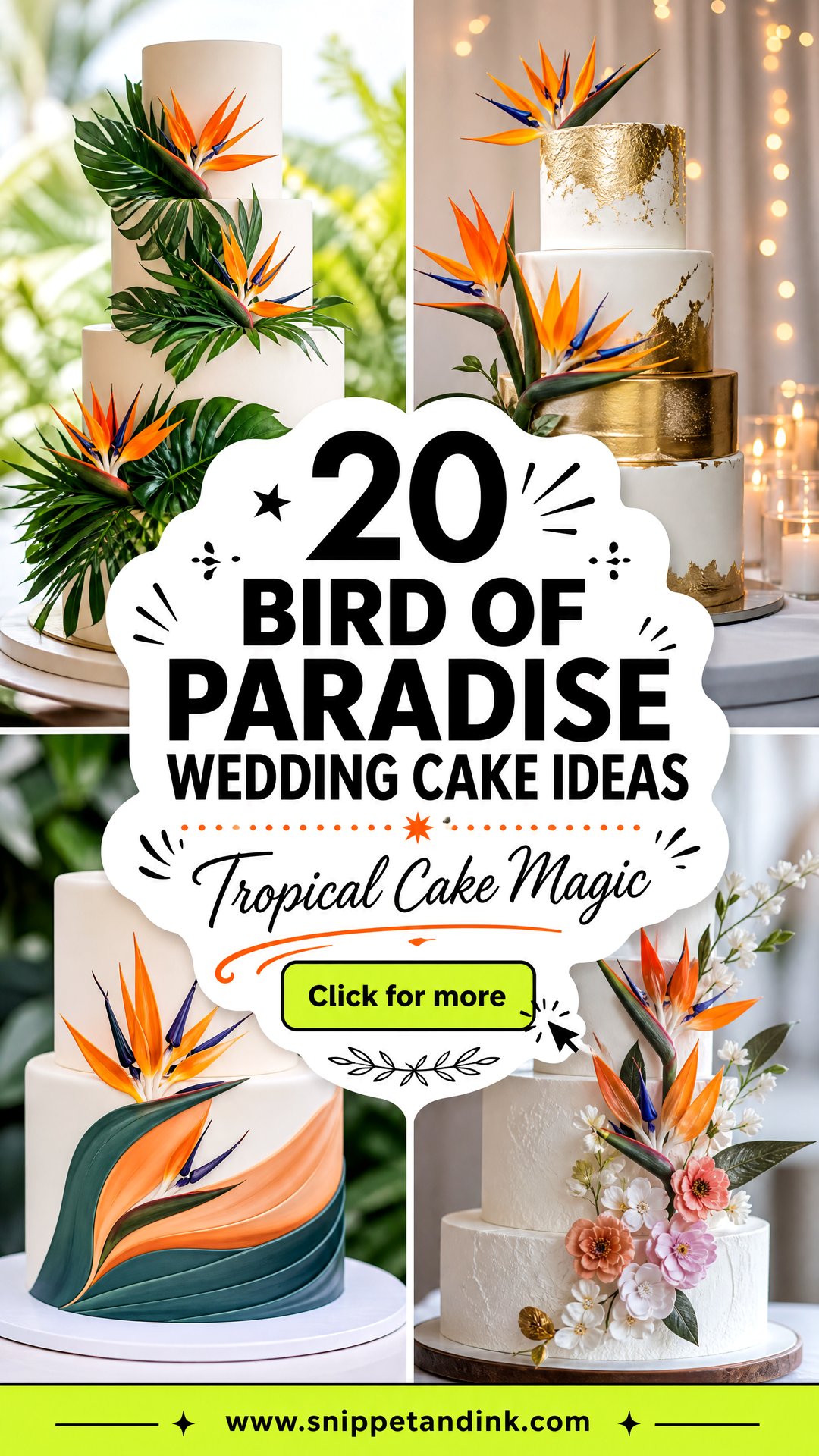
Bird of paradise is a flower with opinions. That orange crest, the flash of blue and the beak-like shape give a plain white cake an edge that roses and peonies never will, which is why it turns up at beach weddings, resort receptions and modern garden parties. It is also heavy, stiff and not a flower you want touching frosting, so how it gets onto the cake matters as much as where. These designs show the range, and my notes say what each one asks of the baker and the florist.
Fresh Strelitzia or Sugar Copies on Your Cake?
Bird of paradise, the plant sold as strelitzia, is not an edible flower. It is listed as mildly toxic, mainly the seeds and fruit, and no fresh stem should go straight into a cake people will eat. That doesn’t rule out the real thing. It just changes how I put it on.
If you want real flowers
- Every stem goes into a food-safe flower pick or a small sealed tube, never into bare sponge.
- Where petals rest against frosting, I slip a thin disc of acetate or wafer paper underneath.
- Ask your florist to open the florets a few days early. A fresh head often has only one crest showing, and a good florist can ease the next one out.
- The stems are heavy. Cut them short and expect a few to need wiring so they don’t tip the top tier.
When sugar makes more sense
Sugar versions are lighter, completely edible and colour-matched to your scheme, and they can travel already fixed in place. They take days to make, and they dislike damp air, so for a humid outdoor venue I’d still keep them boxed until setup. A mix also works well: sugar blooms on the cake itself, fresh stems on the cake table around it.
1. Bird Of Paradise Wedding Cake With White Buttercream
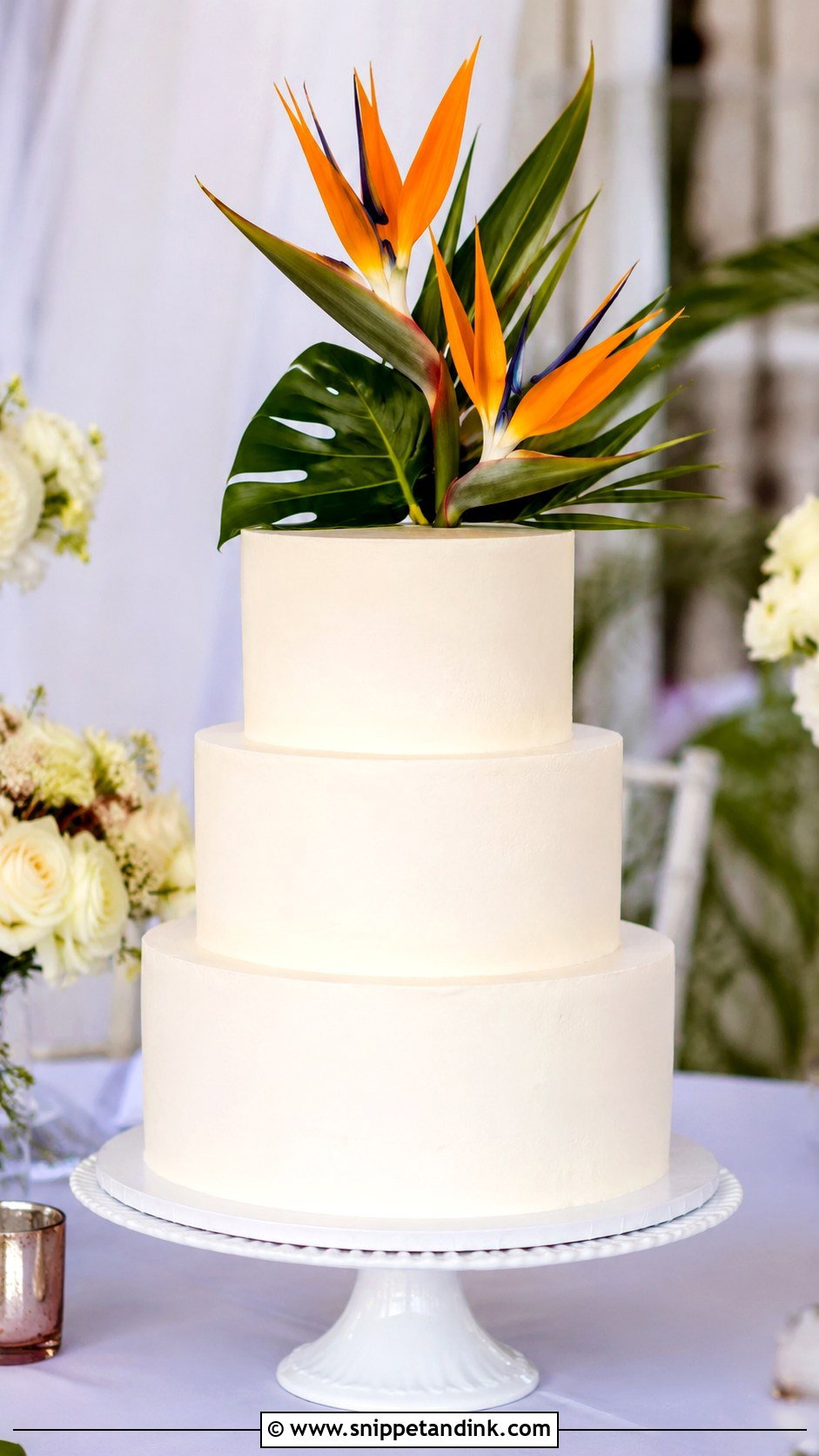
White buttercream is the cleanest stage for this bloom, and I’d start most tropical couples here. Two to four tiers is plenty; the flowers climb from the bottom tier to the top, so you don’t need extra height. Smooth sides read modern, a lightly combed finish feels more relaxed. Because the stems are rigid and weighty, I seat each one in a food-safe flower pick rather than pushing it into the cake, then tuck a few glossy leaves in to frame it. Simple and bright, and it photographs crisply against a white backdrop.
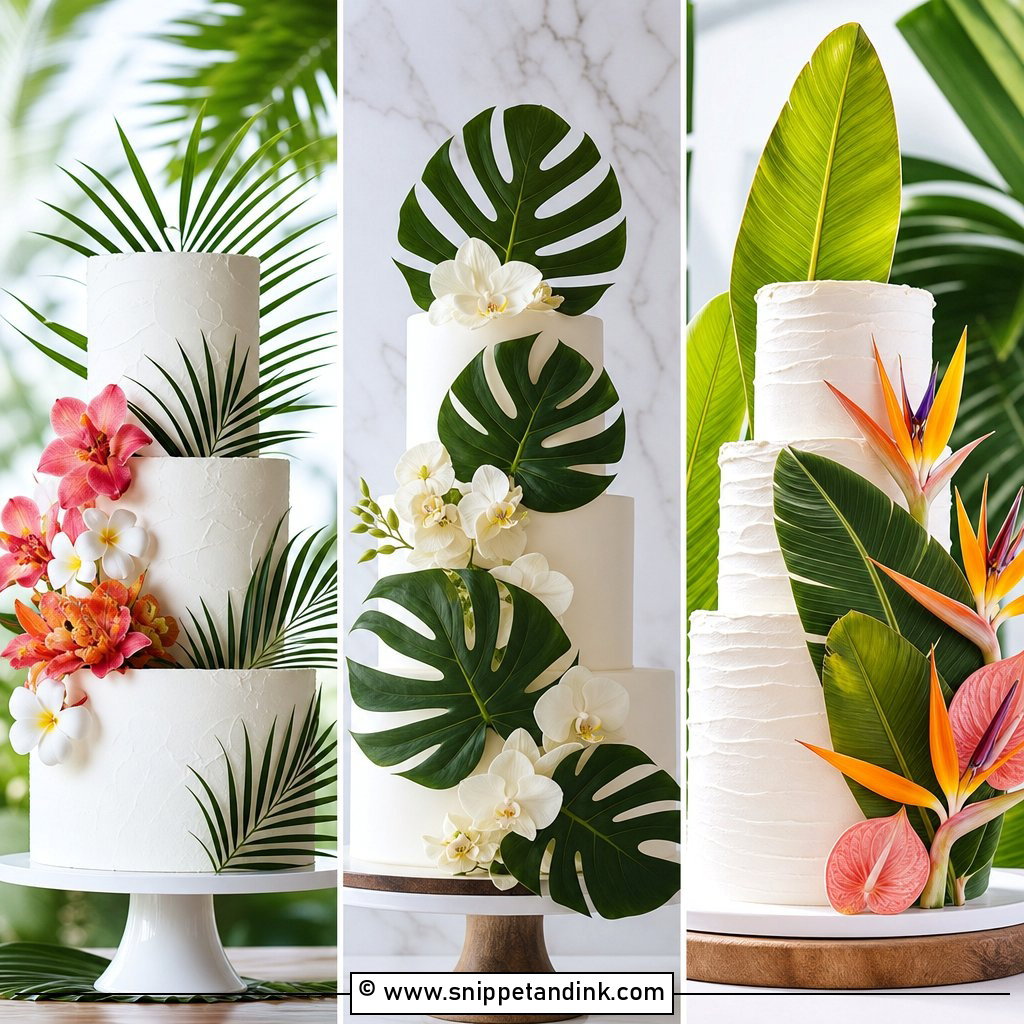
2. Bird Of Paradise Wedding Cake With Tropical Leaves
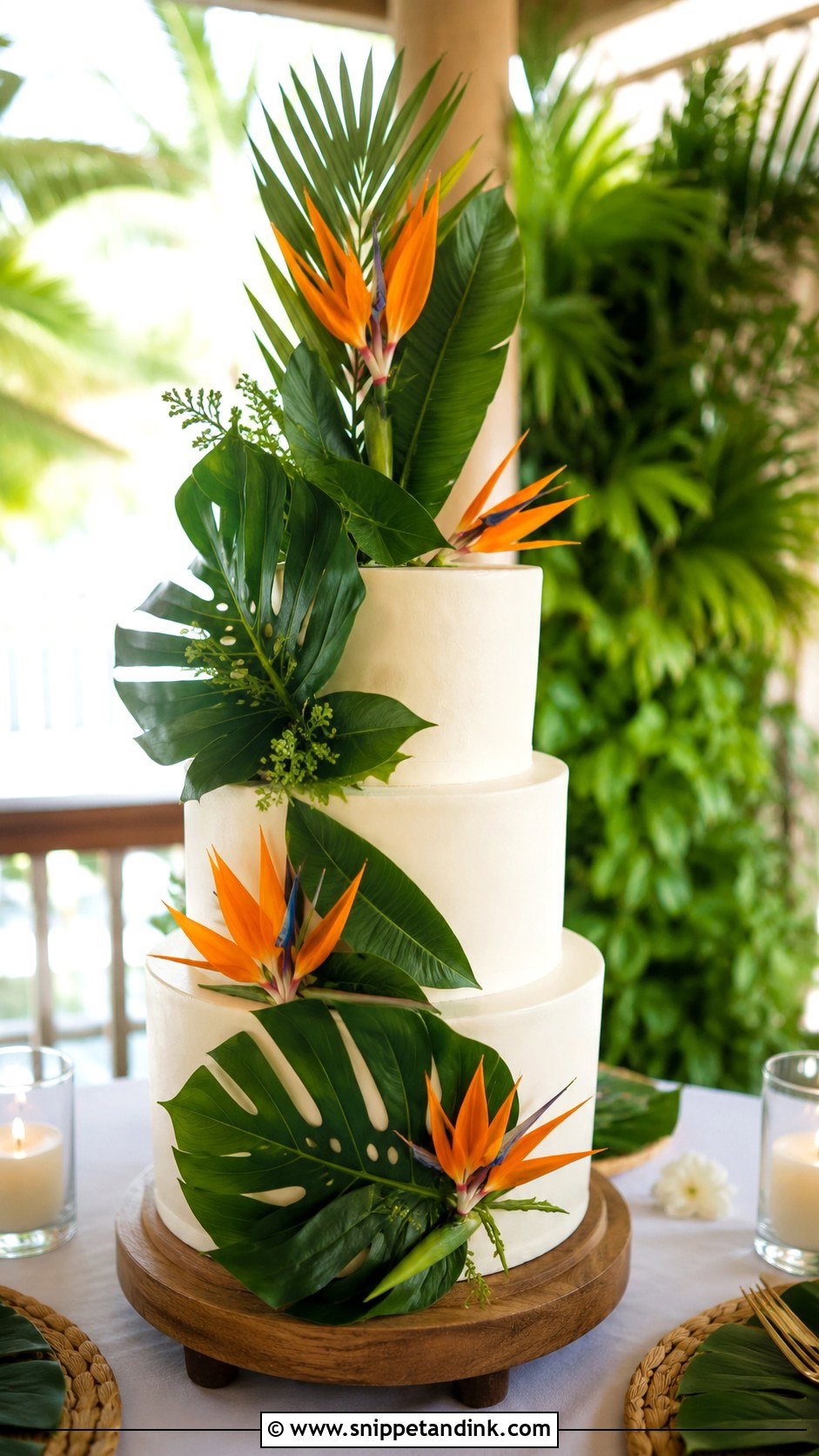
Tropical leaves make the arrangement feel grown rather than placed. Monstera, palm fronds and banana leaves layered in clusters give an island fullness that suits beach and resort venues. My one rule is height: the bird of paradise should sit just above or beside the foliage so its silhouette stays readable, because a monstera leaf behind it swallows the shape. Keep the cake white or ivory so all that green doesn’t feel heavy. Leaves also go on last, at the venue, since cut foliage curls quickly in heat.
3. Bird Of Paradise Wedding Cake With Orange Flowers
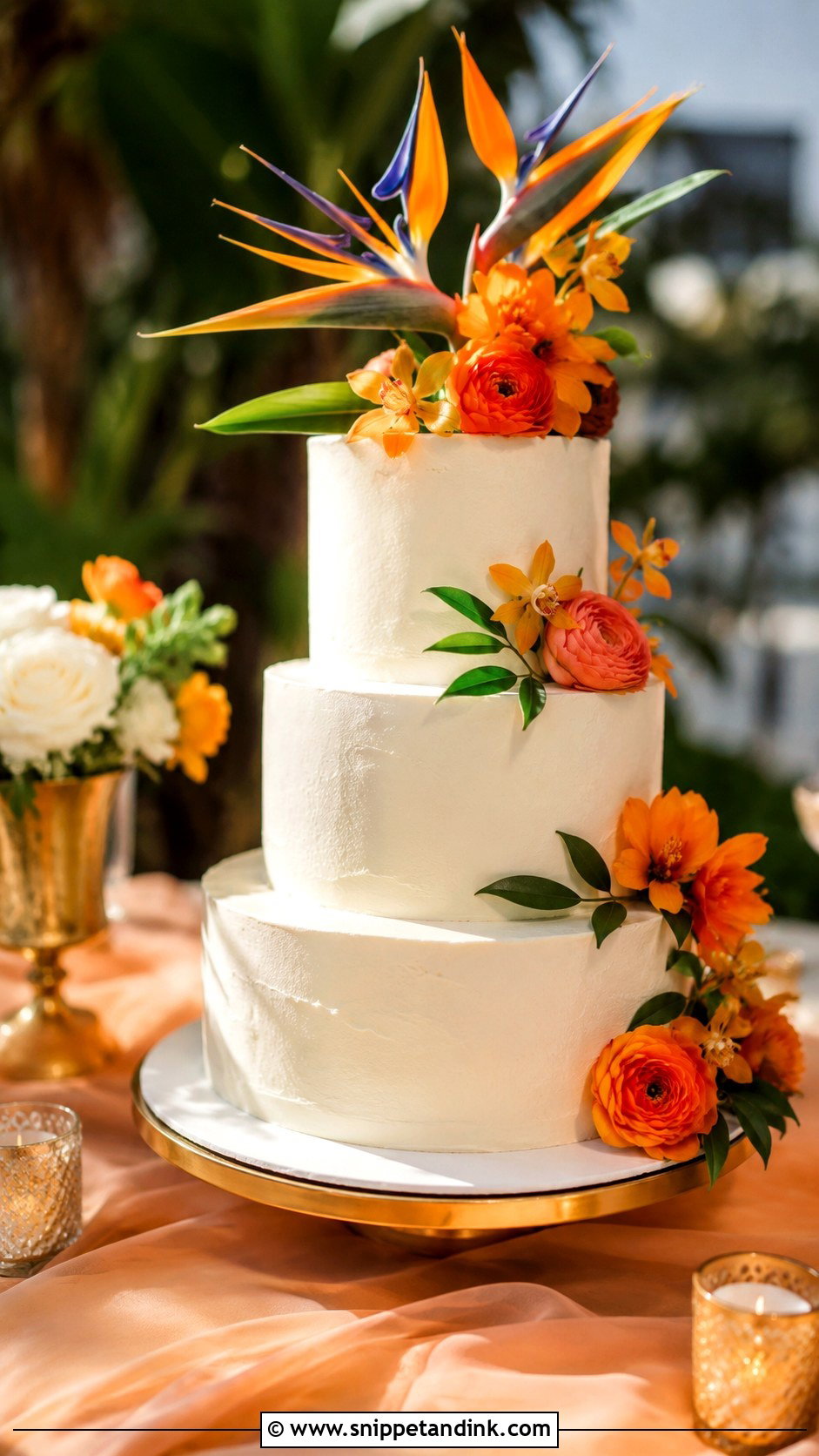
Orange on orange can turn muddy if every flower is the same shade, so I mix temperatures. Pair the bird of paradise with orange orchids, ranunculus, lilies or marigold-toned edible blooms, then let one paler flower break up the colour. Lilies need their pollen-heavy stamens removed before they go anywhere near icing, as the pollen stains. A white base keeps the orange crisp, while peach or pale coral frosting warms everything up for a terracotta or sunset palette. Set the arrangement slightly off-centre and it looks gathered rather than arranged.
4. Bird Of Paradise Wedding Cake With Blue Accents
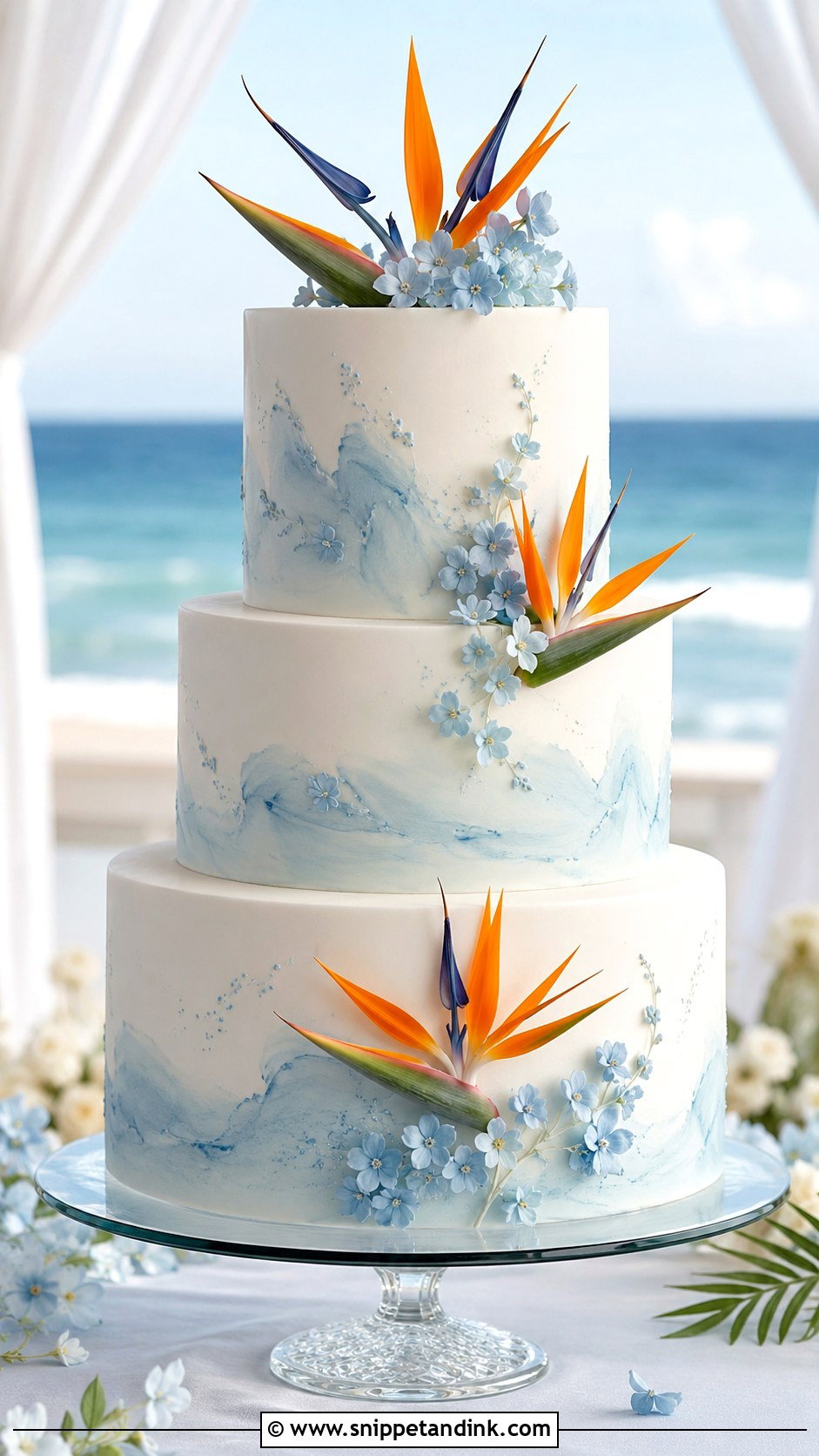
The thin streak of blue in the flower is the cue for this palette. I pick up that blue in brushstrokes, a pale fondant band or a watercolour wash, but always lighter than the bloom itself, otherwise the cake competes with the flower it is meant to frame. Keep the main frosting white, ivory or the faintest blue. Small blue sugar flowers or painted leaves add depth. At a beach wedding, the blue settles the hot orange down and connects the cake to the water behind it.
5. Bird Of Paradise Wedding Cake With Gold Details
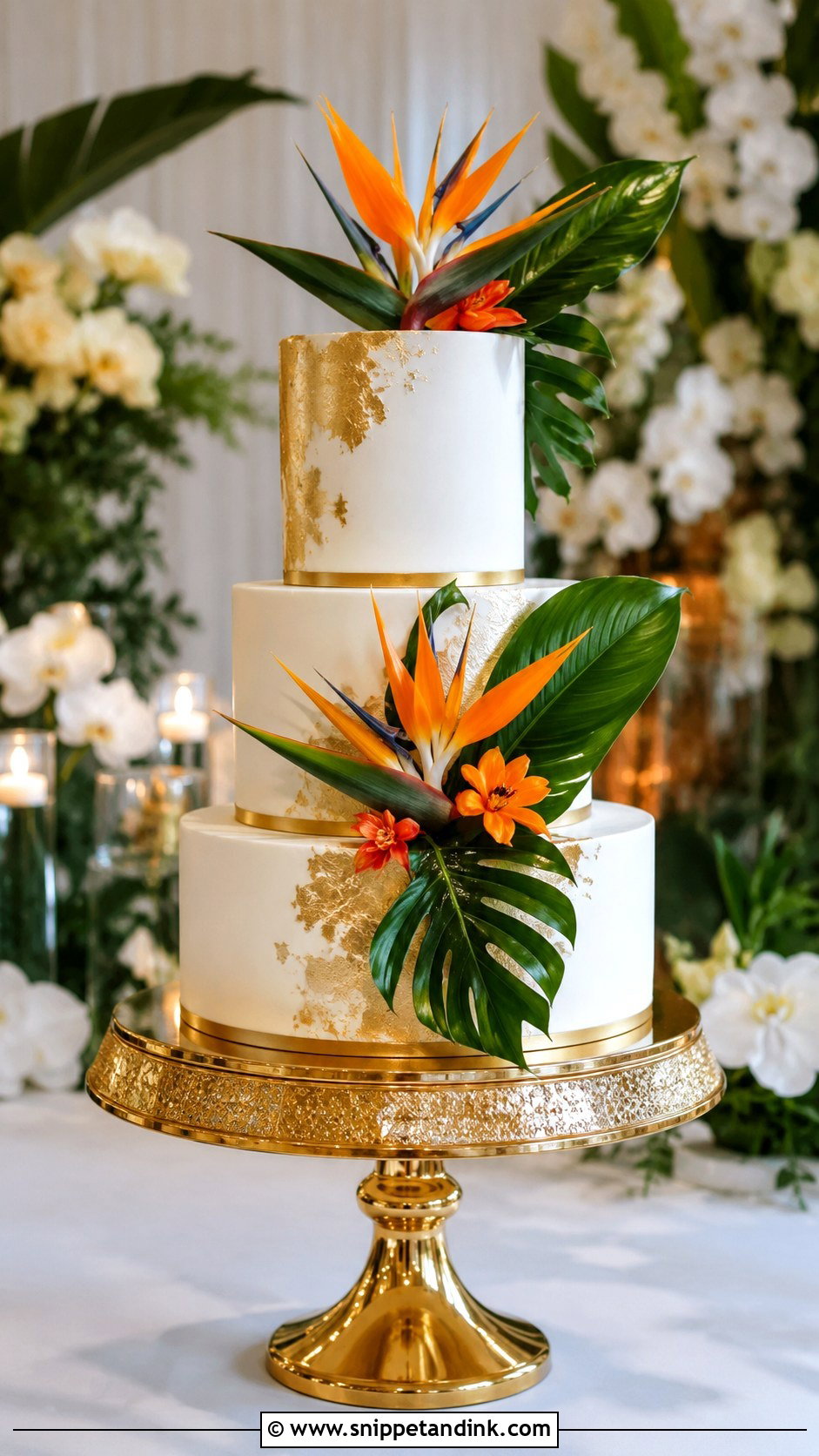
Gold works with this flower because its warm tone sits right next to the orange petals. A plain white tiered cake can take thin gilded edges, a brushed patch of leaf or simply a metallic stand. I keep the gold to one or two places, since the bird of paradise is already the loudest thing on the table. Evening ballroom receptions and upscale tropical themes suit it best. Three stems, a few glossy leaves and clean tiers are usually all it needs.
6. Bird Of Paradise Wedding Cake With Fresh Orchids
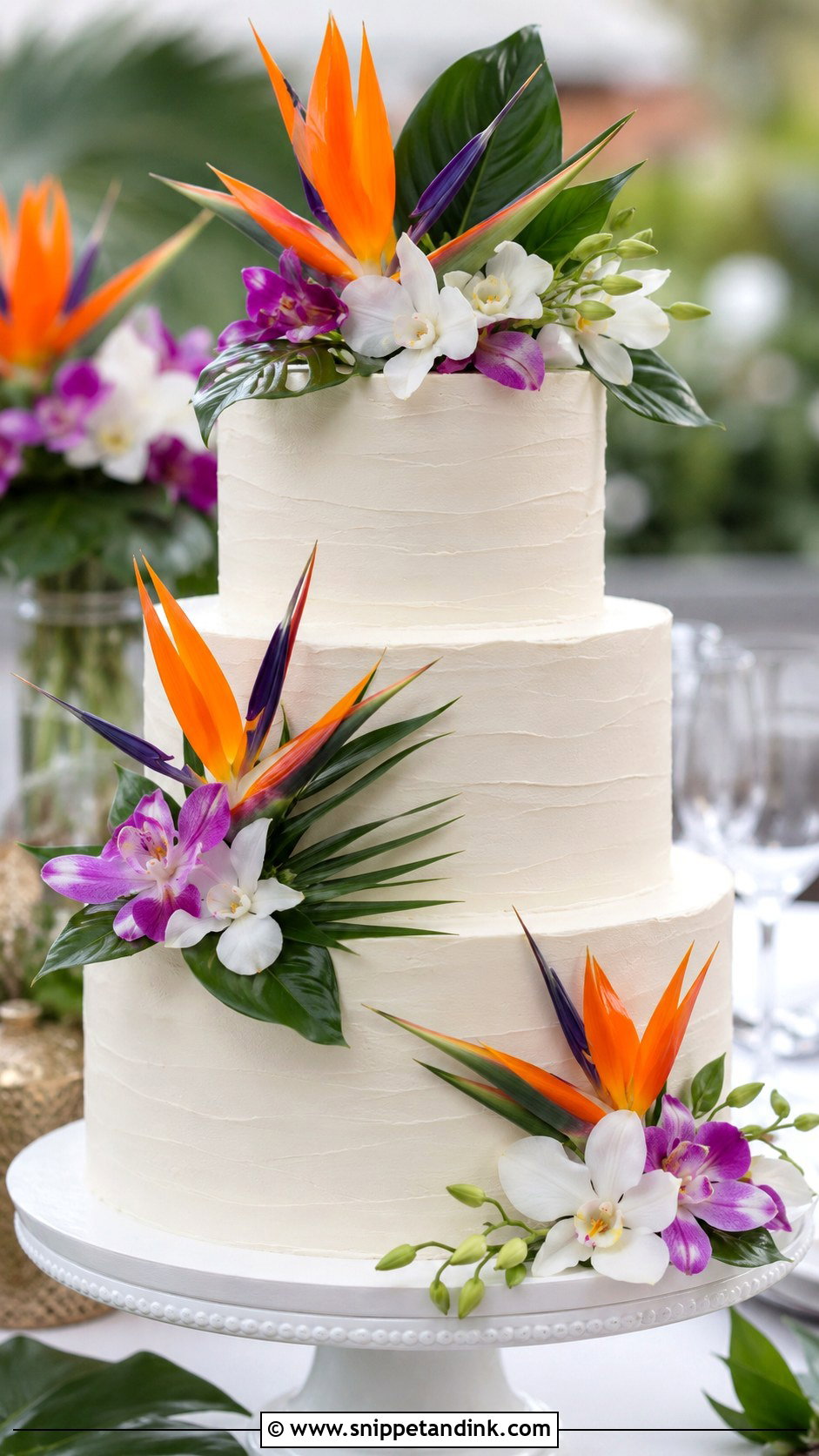
Orchids soften what the bird of paradise makes sharp. The bird gives height and structure; the orchids fall in small cascades between them. Dendrobium orchids are the ones I reach for, because they are light and widely sold for food decoration, whereas heavier cymbidium heads can drag a buttercream surface. White, purple, green and coral orchids all work, depending on your palette. Use smooth buttercream or fondant underneath so the flowers carry the design.
7. Bird Of Paradise Wedding Cake With Hibiscus Flowers
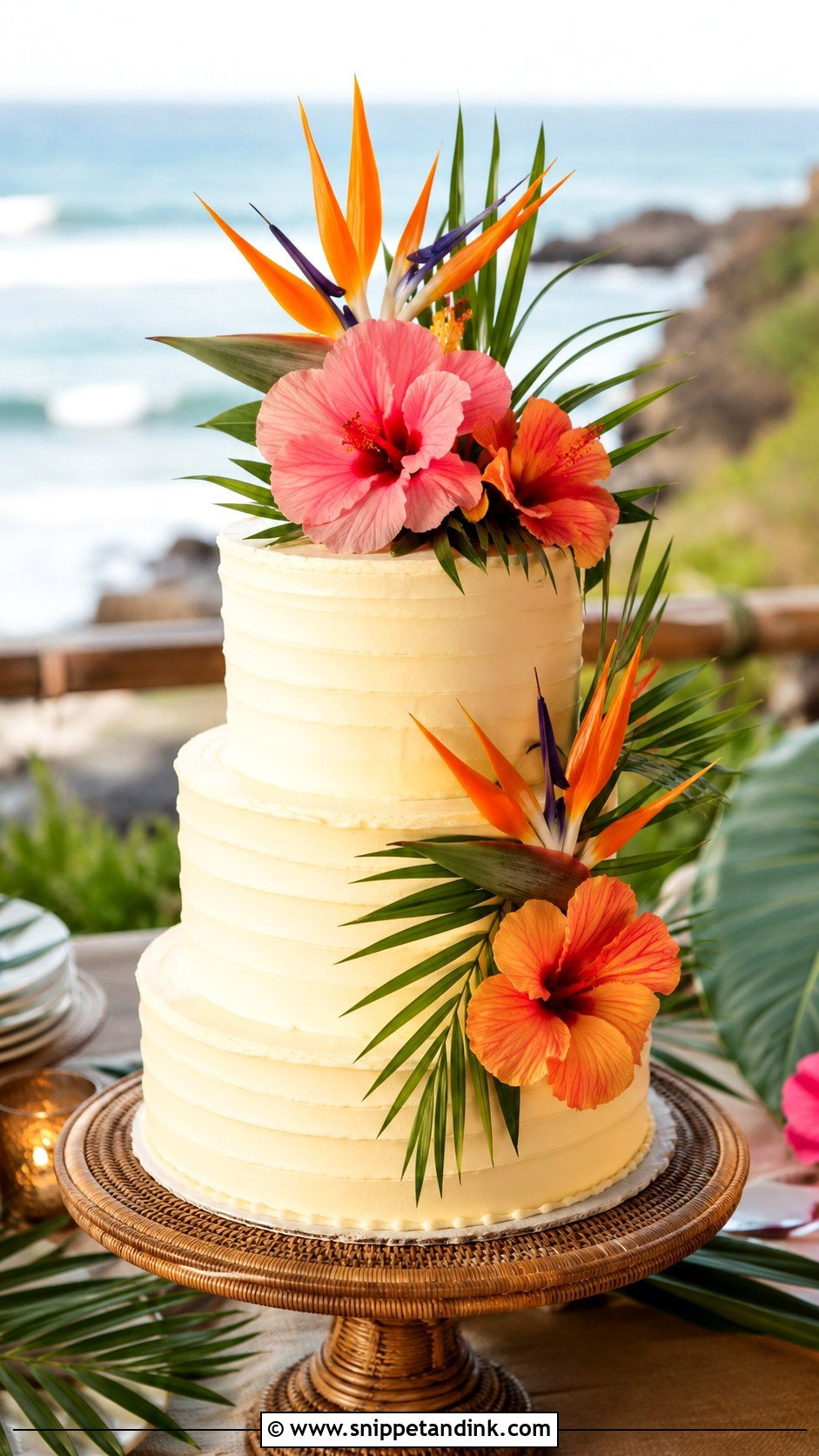
Hibiscus is one of the few flowers in this list that is genuinely edible, which makes it easy to place right against the frosting. The catch is lifespan: a cut hibiscus bloom often lasts only a day, sometimes less in heat, so I source it the morning of the wedding and add it on site. Its wide, flat petals contrast nicely with the sharp, beaked main bloom. A white or pale yellow base makes orange, pink or red hibiscus look festive, and small leaves tie the clusters together. Leave space between clusters so the cake stays airy.
8. Bird Of Paradise Wedding Cake With Semi Naked Frosting
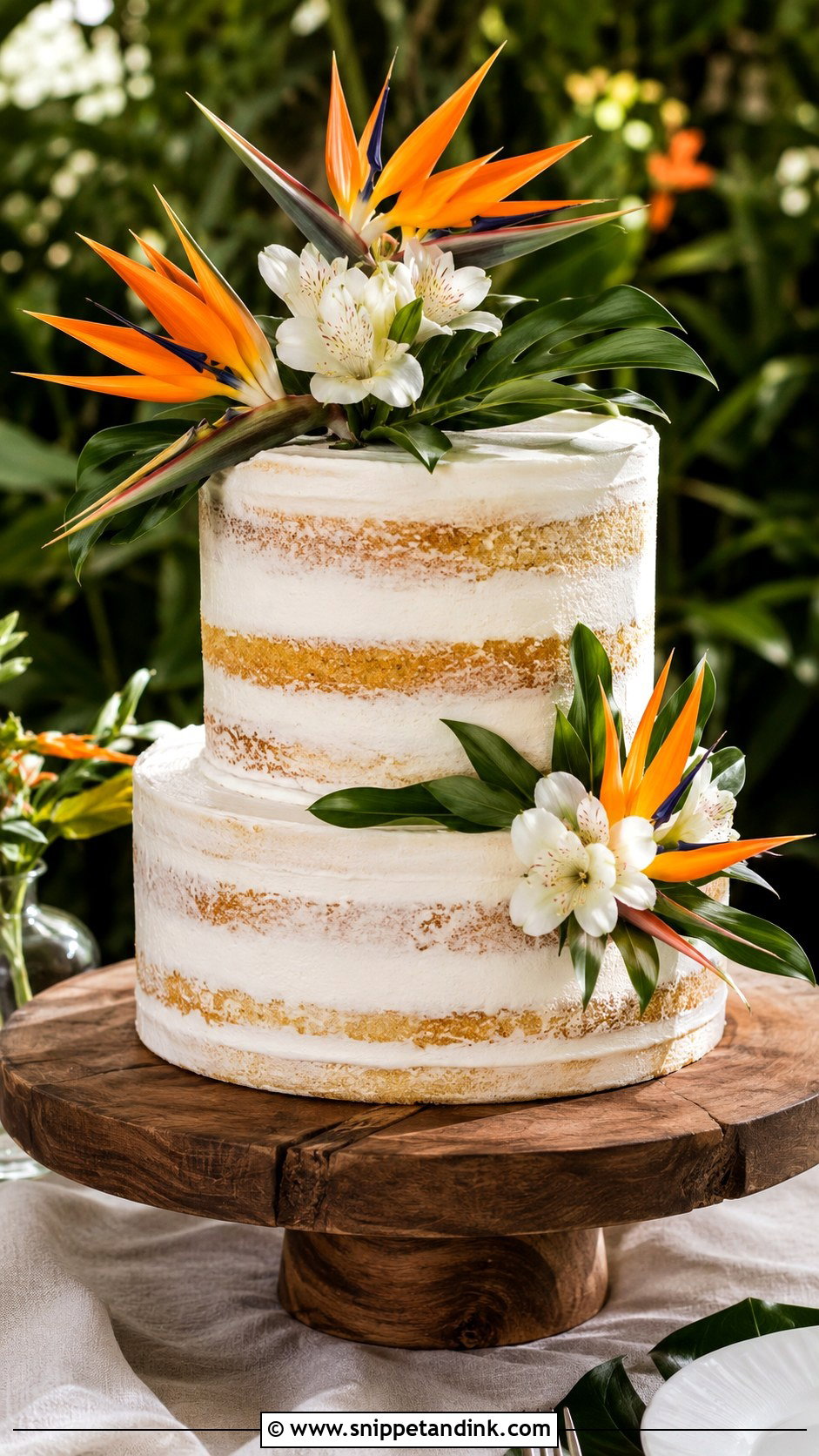
A semi naked cake lets the sponge show through a thin scrape of frosting, which suits rustic tropical and garden receptions. Vanilla, coconut or banana layers fit the theme. The thin coat dries out faster than a fully frosted cake, so I wrap and chill the tiers until the last possible moment and brush the layers with syrup during assembly. Keep the flowers to one main cluster with a few leaves for balance. It’s less formal than fondant but still looks deliberate.
9. Bird Of Paradise Wedding Cake With Fondant Finish
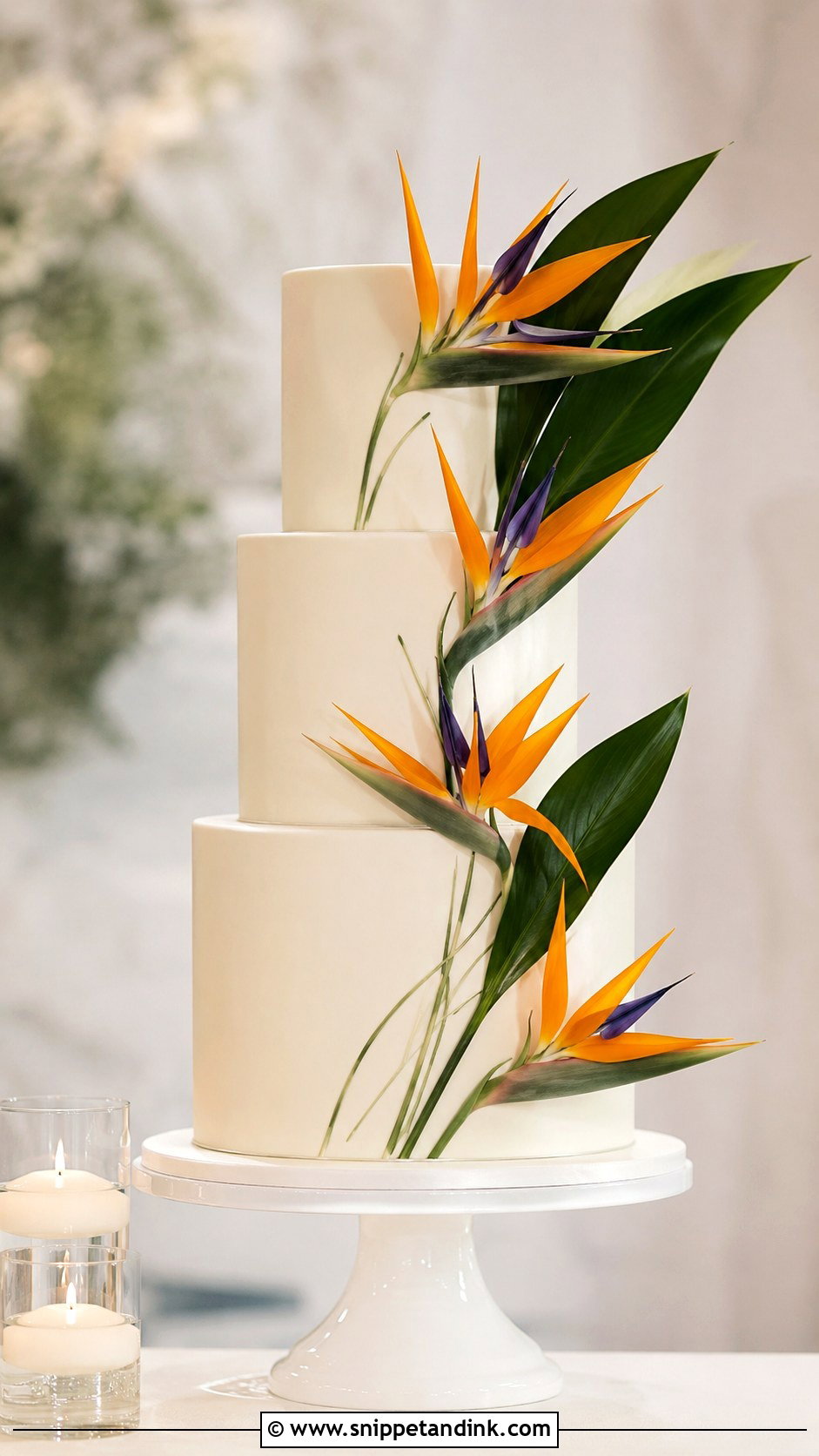
Fondant gives sharp tiers that echo the angles of the bloom, and that geometry is what makes this version look high-end. White is the classic choice; ivory, pale peach or soft sage also sit well beside orange. I like a strong diagonal line of flowers across the tiers for movement, with perhaps a subtle embossed texture or thin painted stems for extra detail. Fondant also copes better than buttercream in tropical humidity, which matters at formal destination weddings.
10. Bird Of Paradise Wedding Cake With Sugar Flowers
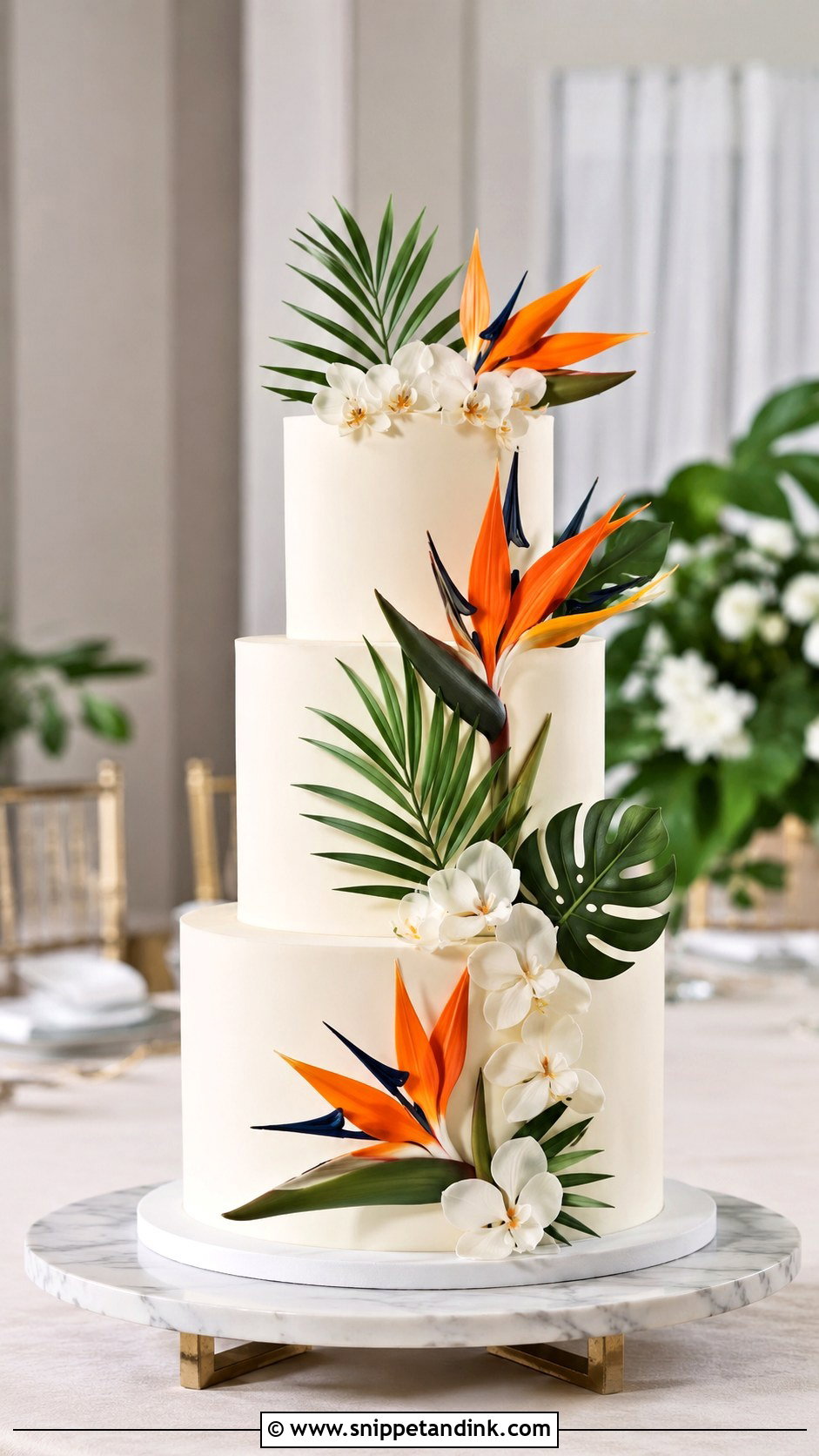
Sugar bird of paradise flowers solve two problems at once: the real flower isn’t edible, and in some regions it is hard to buy in season. A sugar artist builds each petal, stem and leaf separately, wires them together and colour-matches them to your palette, which takes days, so order well ahead. They can be placed far more precisely than fresh stems, which suits modern tiered cakes. Keep the base simple so the work shows. Humidity is their enemy, though; in a hot, damp venue, sugar petals can soften and droop, so I keep them boxed with a desiccant until setup.
11. Bird Of Paradise Wedding Cake With Watercolor Tiers
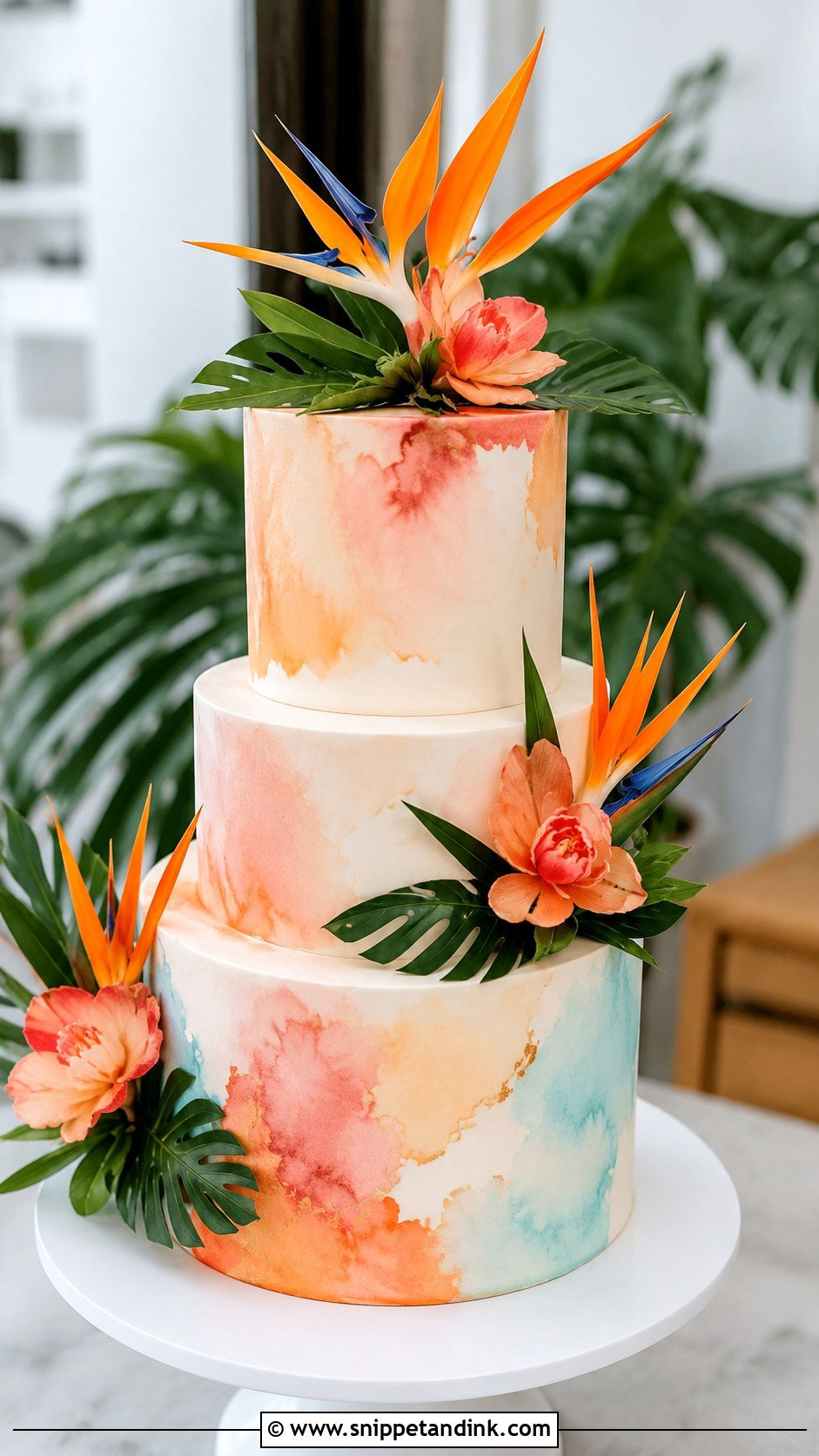
Watercolour tiers give the bold flower a soft painted backdrop. Warm washes of orange, peach, coral and pale blue echo the bloom’s own colours. I paint with thinned food colour on a firm, chilled buttercream or on fondant; on soft buttercream the brush drags and lifts the surface. The wash can be a few gentle patches or run across every tier. Lay a couple of real or sugar blooms over the painted area and every side of the cake has colour.
12. Bird Of Paradise Wedding Cake With Beach Theme
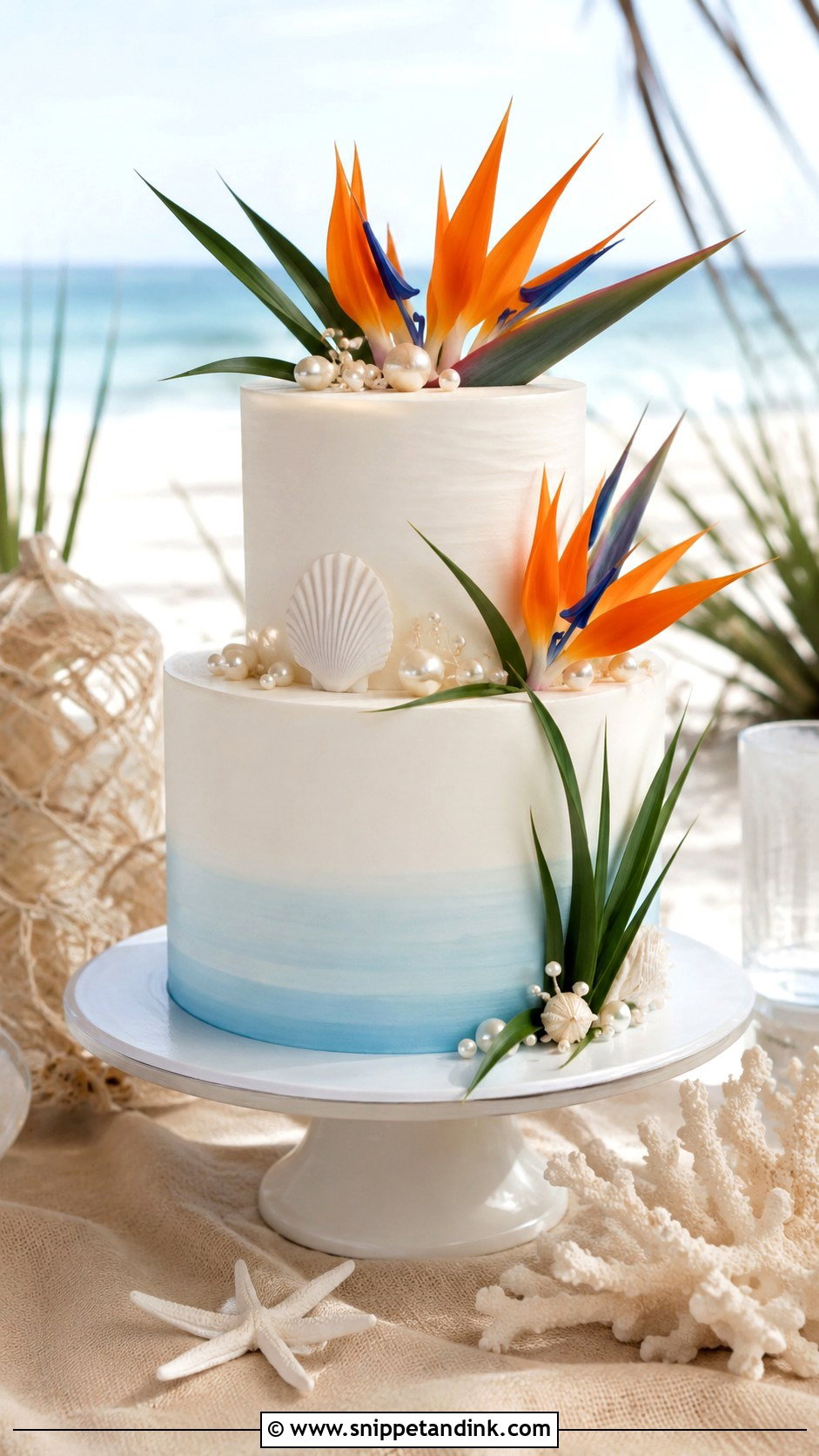
For a beach cake, let the flowers tell people where you are. Ivory frosting, tropical blooms, soft greenery and a stand dressed in sand-coloured linen are enough; shells and starfish quickly tip into theme-party territory. A few pearls or a pale blue ombré at the base hint at the sea. The practical concern on a beach is sun. I’d keep this cake in shade until it’s cut, as buttercream softens fast outdoors and the flower picks can shift in soft frosting.
13. Bird Of Paradise Wedding Cake With Coconut Flavor
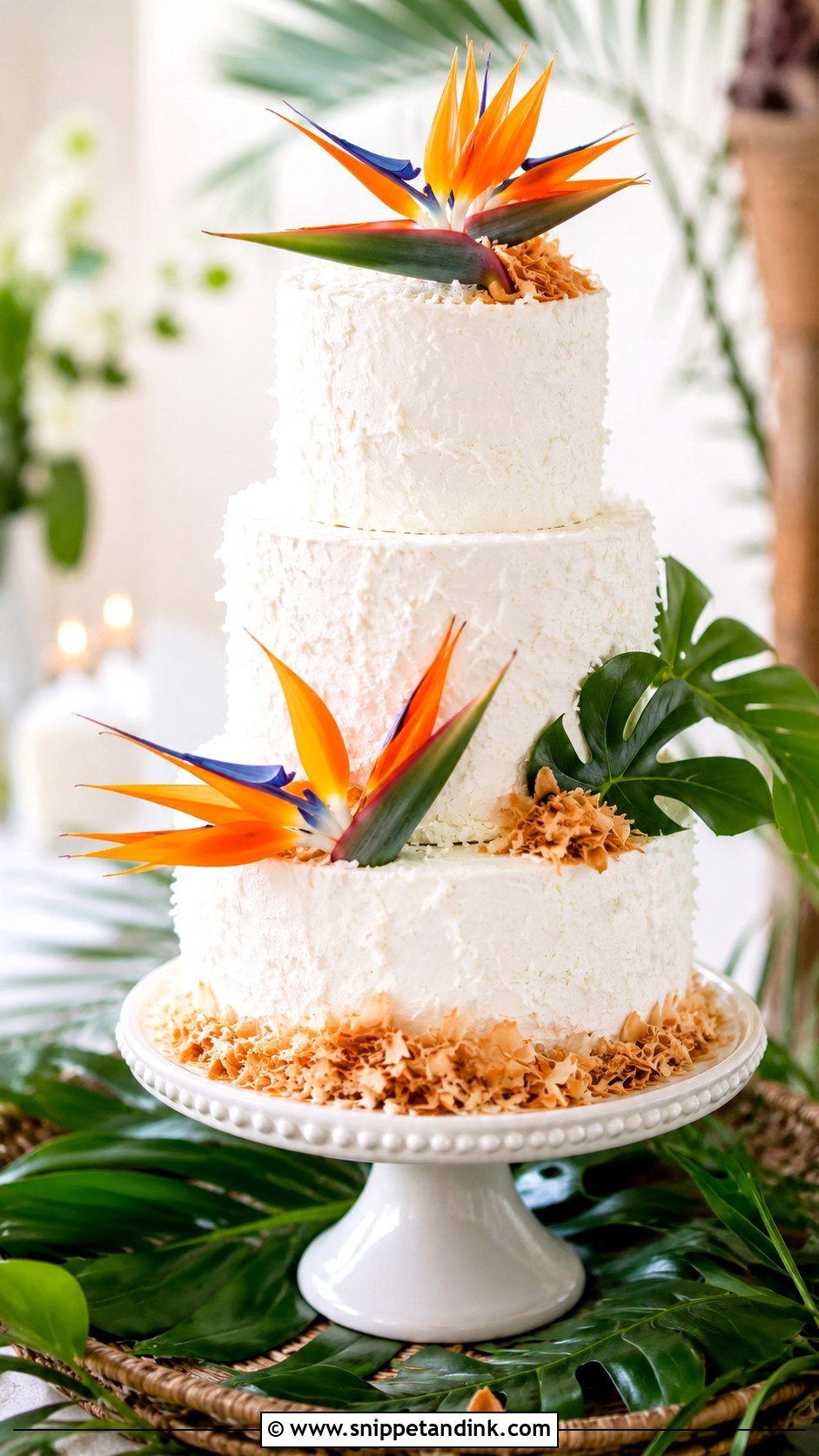
Coconut cake is the natural flavour pairing here: a soft white crumb with coconut buttercream and a light island note. Toasted coconut flakes pressed around the base give texture and hide the join between cake and board. Smooth frosting feels refined, a rougher finish feels more beachy. Coconut is listed as a tree nut for allergen labelling in the US, so I flag it on the menu card and tell the caterers, because guests with nut allergies will ask.
14. Bird Of Paradise Wedding Cake With Mango Filling
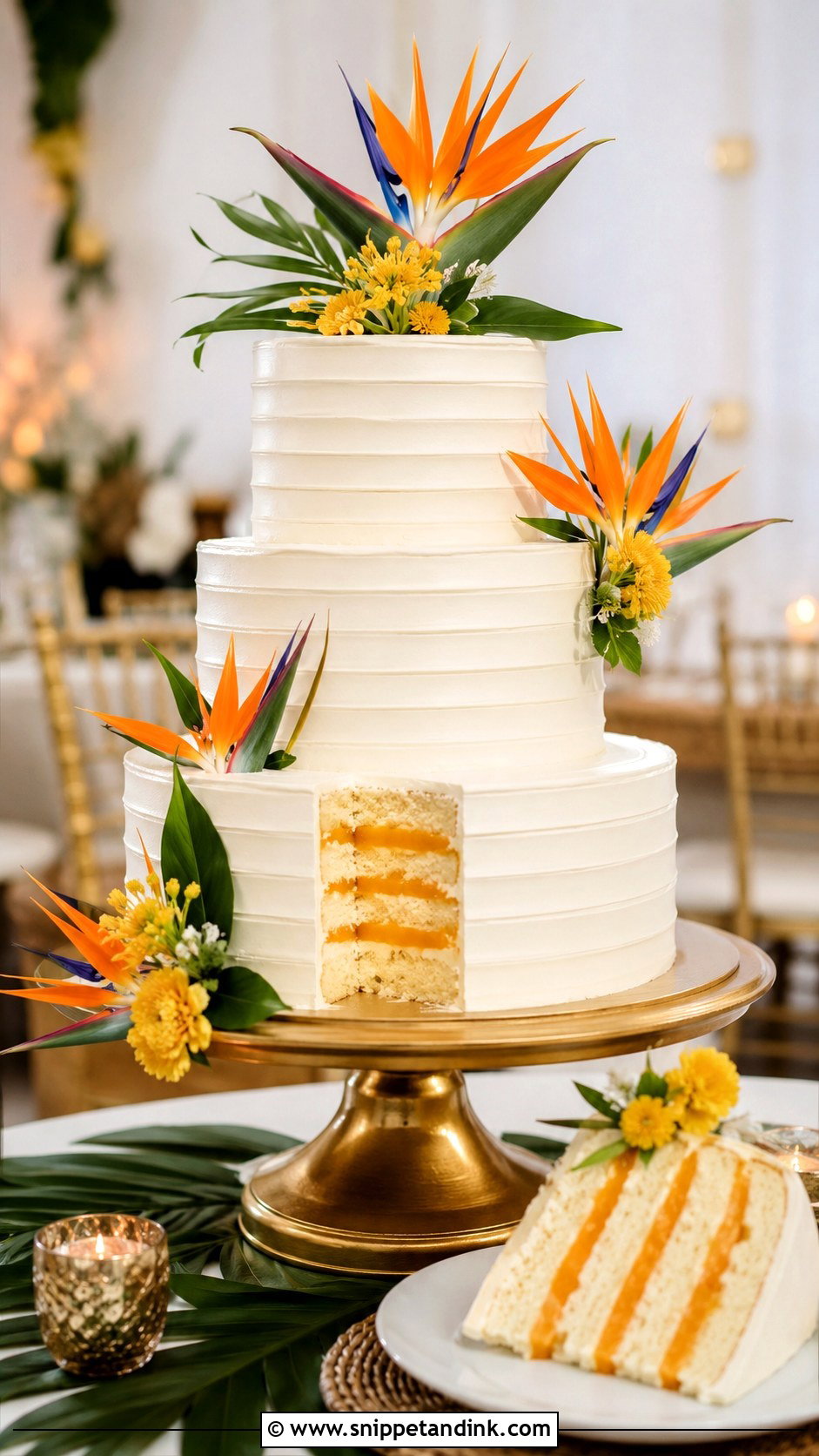
Mango filling keeps the outside calm and saves the surprise for the cut. Vanilla, coconut, passion fruit or lime sponge all pair with it. I use a cooked mango curd or a thickened mango compote rather than fresh slices, because fresh mango weeps and can make the layers slide in a warm room. A cake with fruit filling also has to stay refrigerated until display. Outside, small orange or yellow blooms beside the bird of paradise hint at what’s inside without spelling it out.
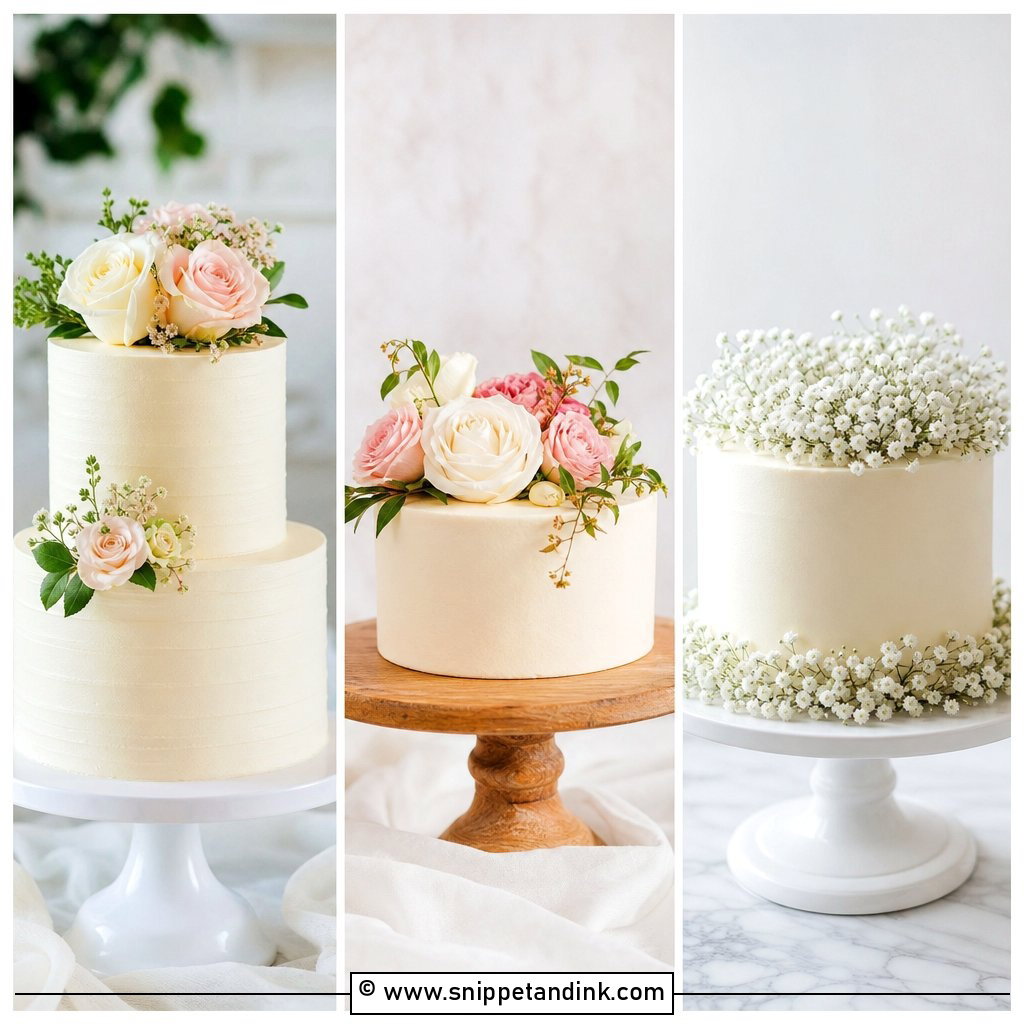
15. Bird Of Paradise Wedding Cake With Greenery Garland
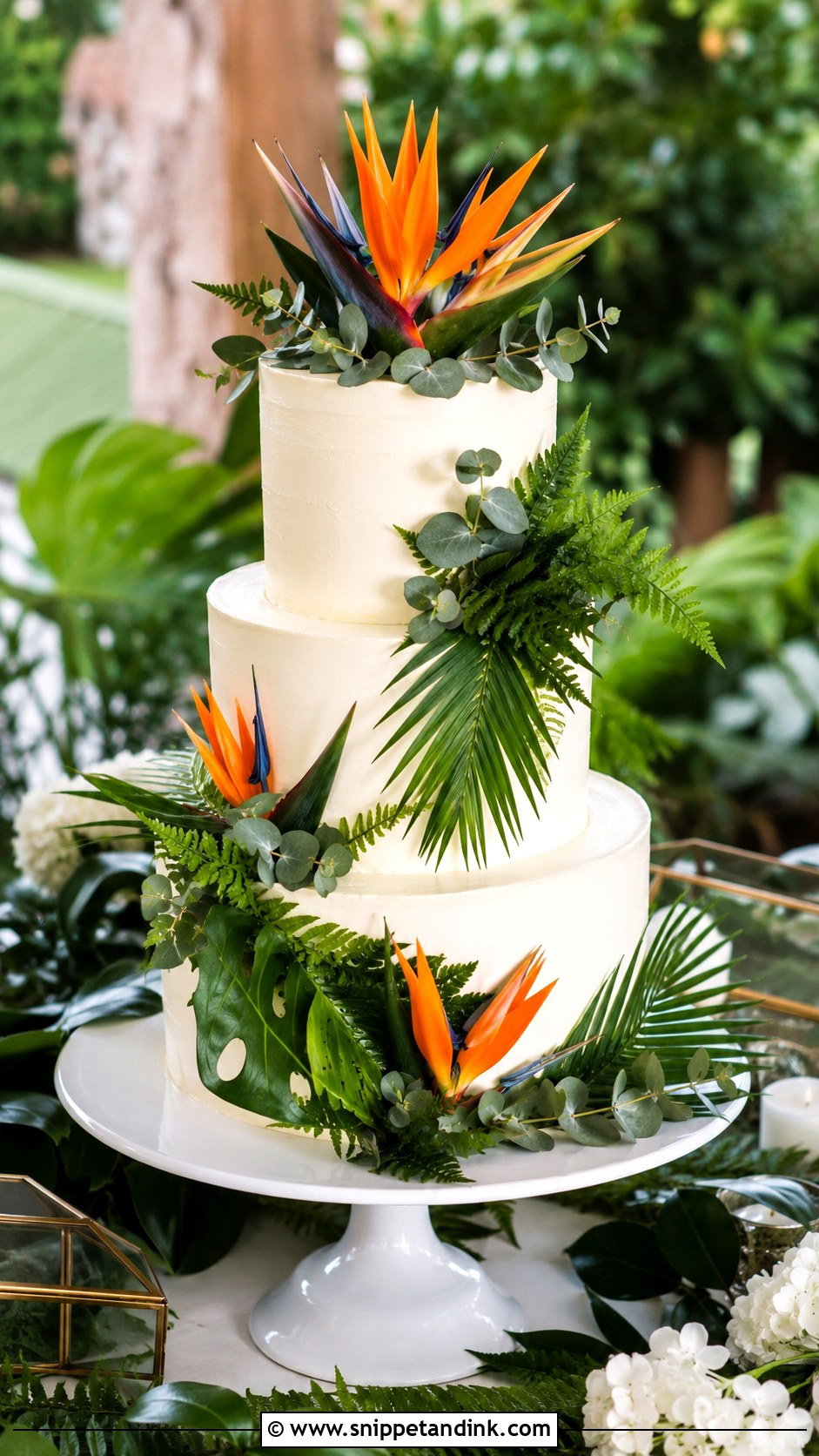
A greenery garland gives the cake a flowing line, either wrapped around the tiers or running down one side with the bird of paradise as accents along it. Eucalyptus, fern, palm and monstera suit different moods. Eucalyptus is not safe to eat, and few cut greens are, so I lay the garland over a strip of baking paper or acetate where it meets the frosting. Space the blooms deliberately along it, and match the greens to your bouquet so the cake connects to the rest of the flowers.
16. Bird Of Paradise Wedding Cake With Black And White Tiers
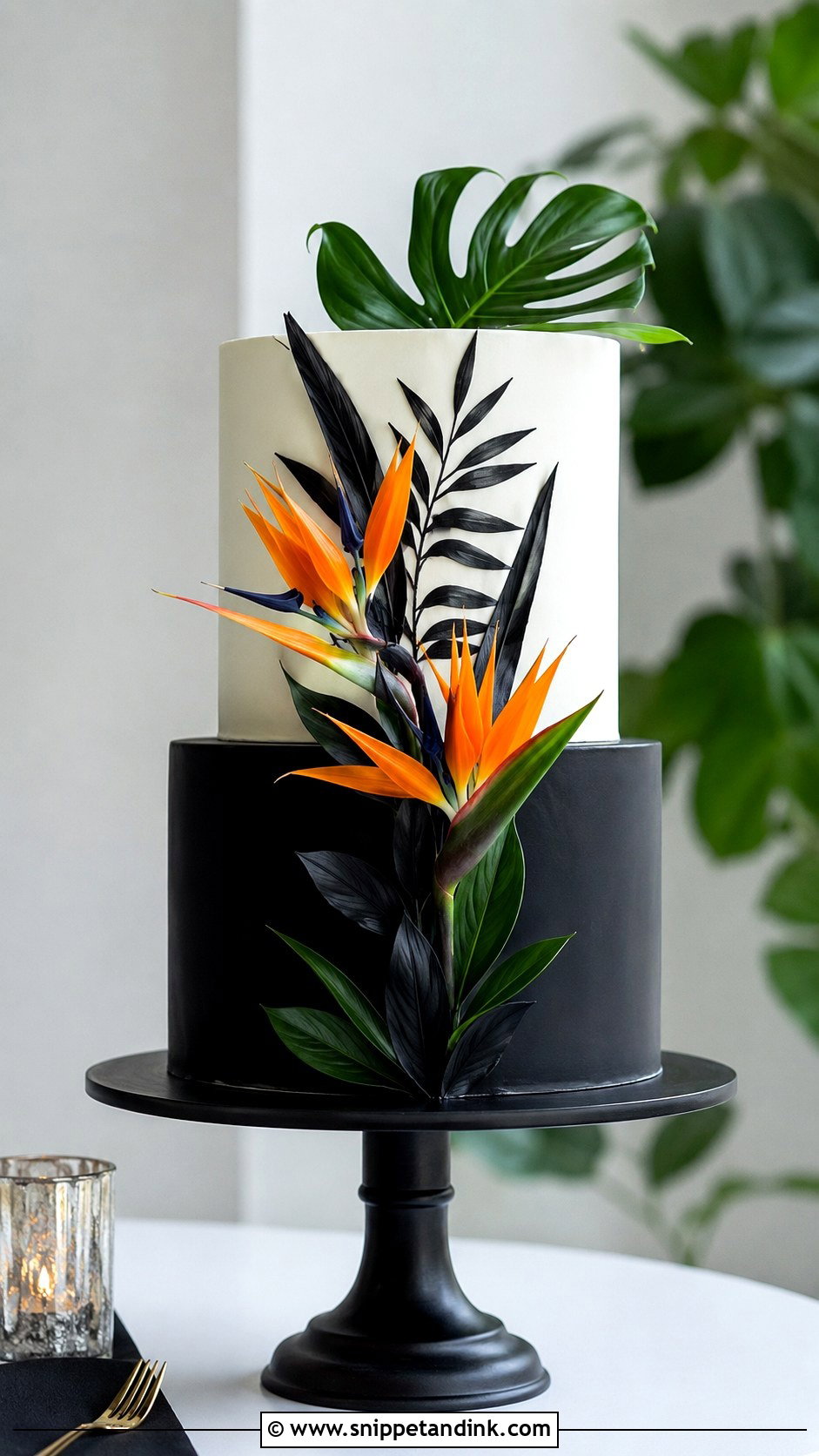
Black and white tiers turn the orange and blue of this flower up to full volume. White tiers with black ribbon, painted black leaves or one matte black accent tier all work. If you want a black tier, I’d do it in fondant rather than black buttercream, which needs so much colouring that it can stain mouths and taste bitter. Keep the flowers sculptural and sparse; a few green leaves soften the contrast. This one suits modern receptions with bold styling.
17. Bird Of Paradise Wedding Cake With Tall Tiers
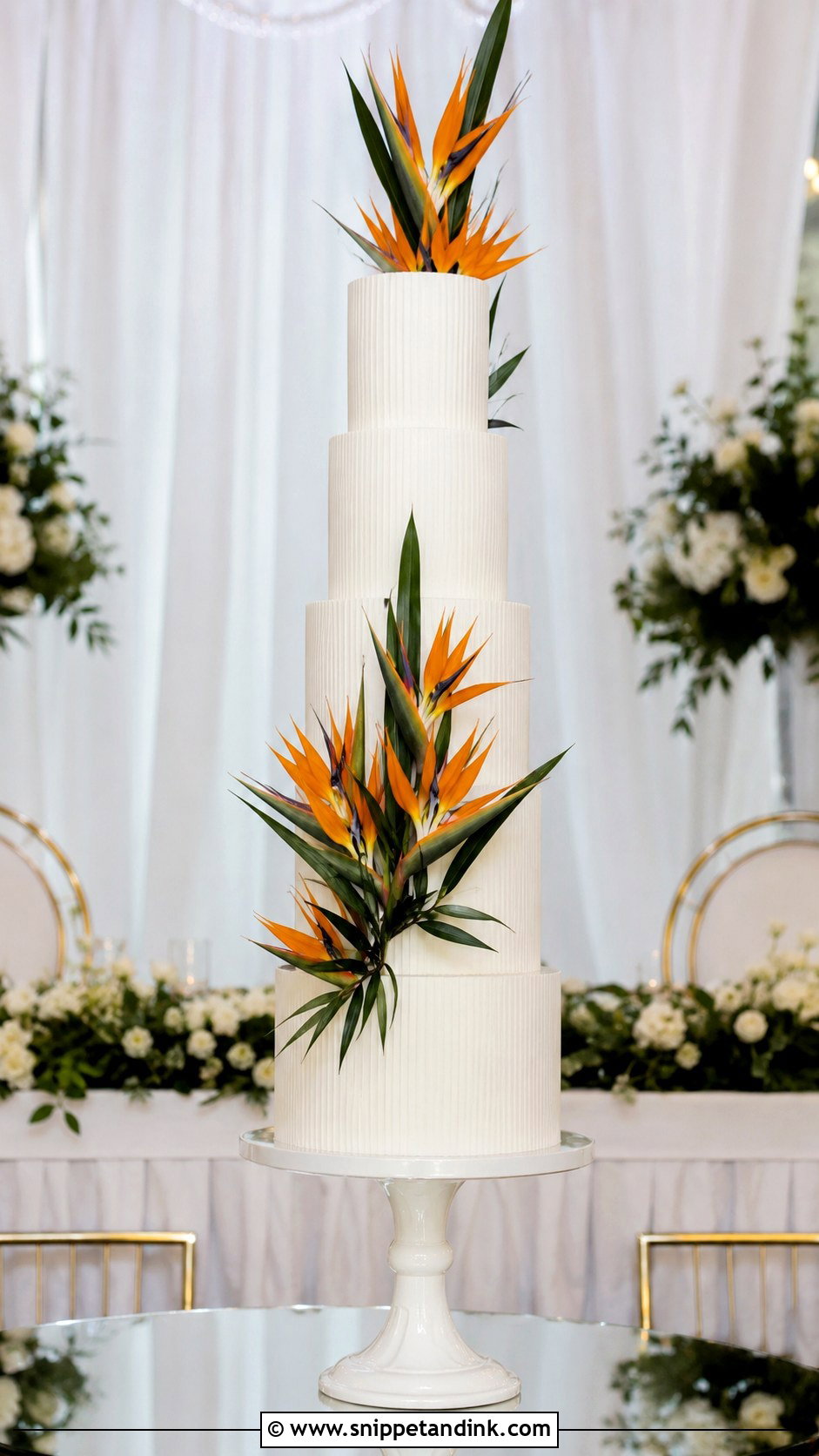
The upright shape of the bloom suits tall tiers, because the stems have room to point upward the way they grow. Smooth buttercream, fondant or a subtle vertical texture all work. On a tall cake I set one cluster near the middle and another near the top, and keep the palette simple so the height doesn’t look busy. Extra-tall tiers, the double-height kind, need their own internal board and dowels halfway up, so tell your baker early if you want that profile.
18. Bird Of Paradise Wedding Cake With Tropical Fruit
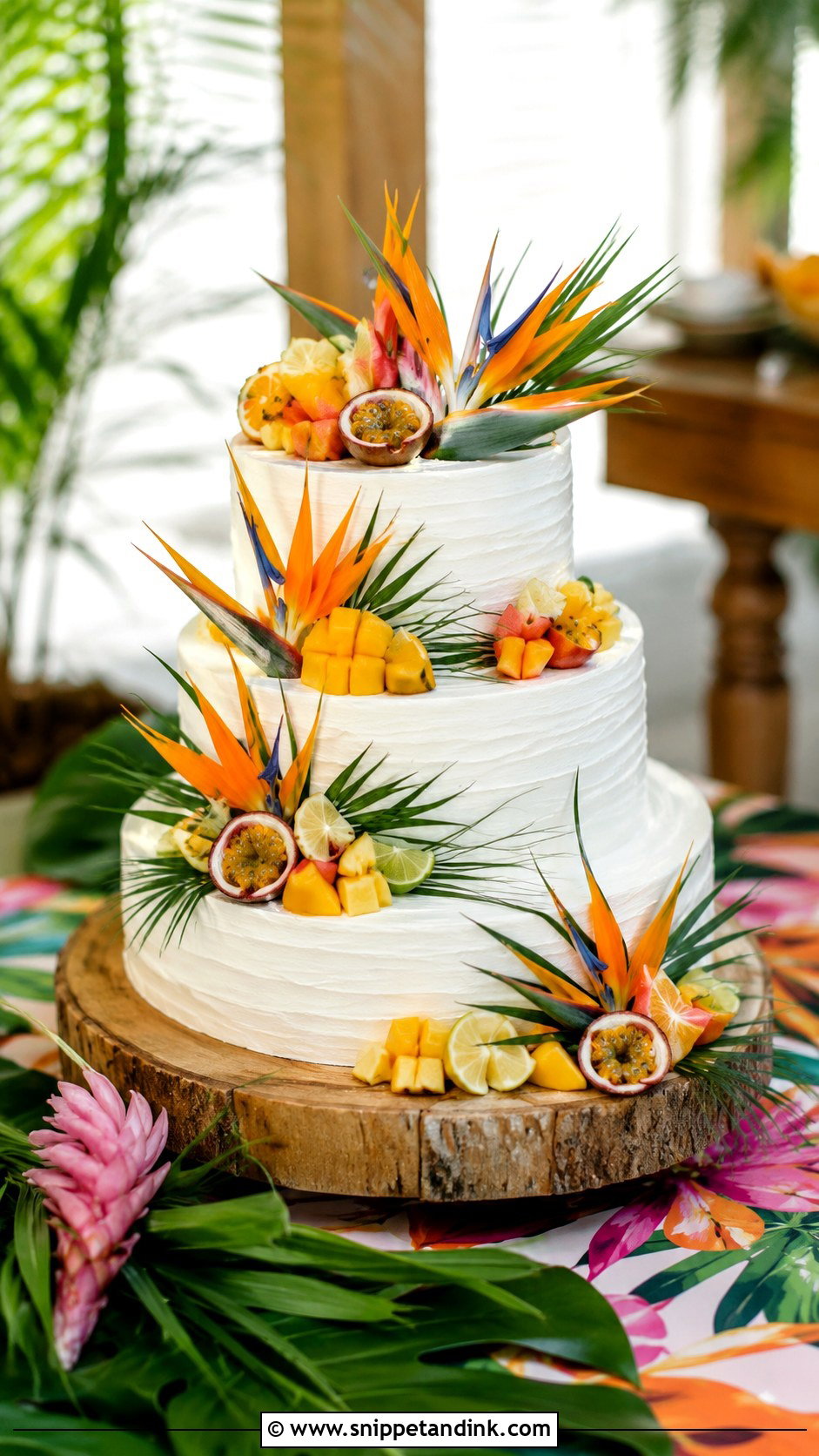
Tropical fruit adds colour and a reason to come back for seconds. Mango, passion fruit halves, pineapple, papaya and citrus can sit beside the flowers, best on buttercream or semi naked cakes where the fruit looks at home. Cut tropical fruit is very juicy, and fresh pineapple and papaya contain enzymes that break down cream-based frostings over time, so I add it at the last moment and keep it on small barriers. Use it sparingly; the bird of paradise should stay the focus, not a fruit platter.
19. Bird Of Paradise Wedding Cake With Minimal Flowers
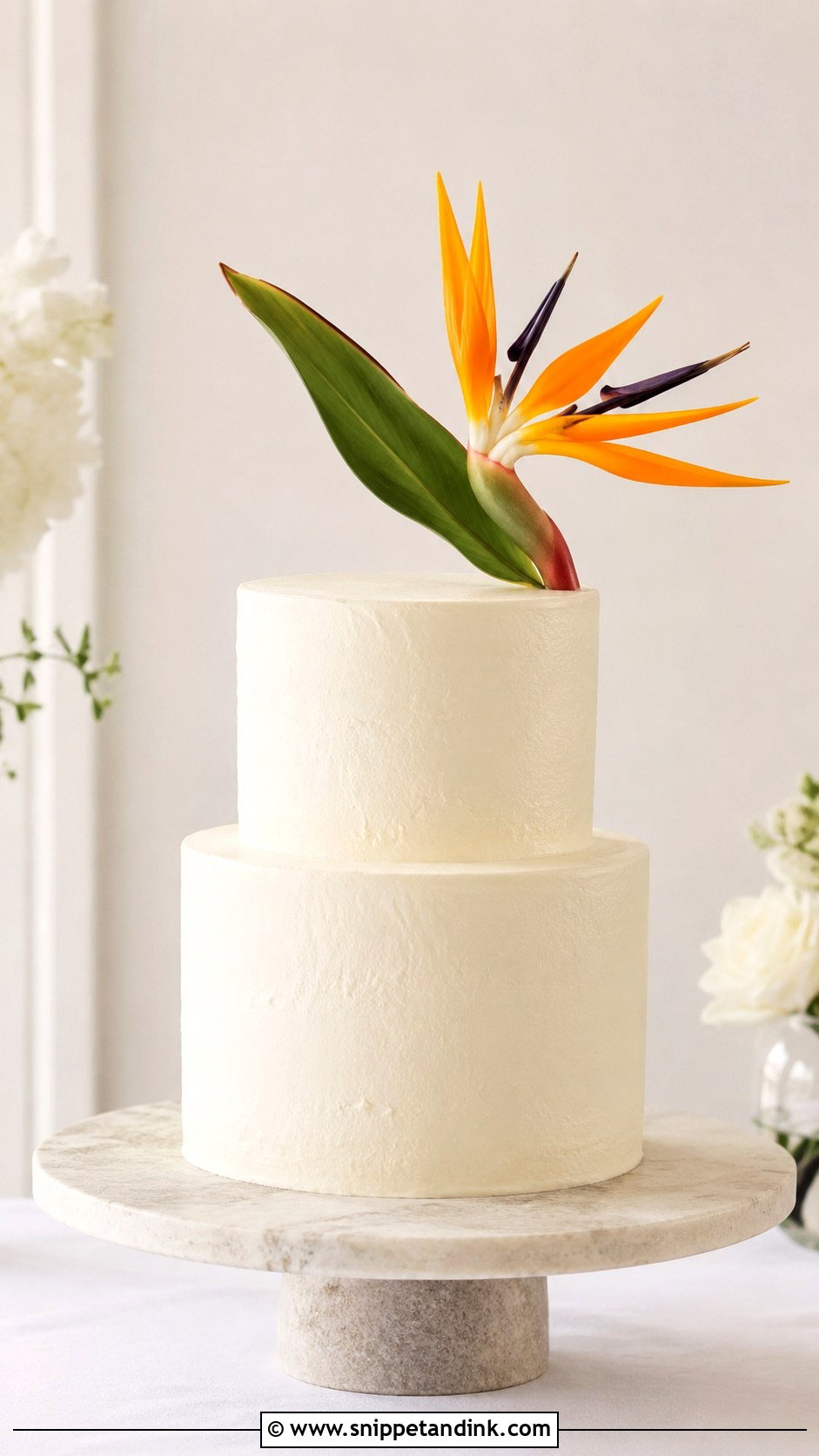
Minimal is where this flower is at its most dramatic. One or two stems on a smooth white cake, a thin texture or plain fondant, and lots of empty space around the bloom so its shape reads like a sculpture. It’s the version I’d suggest for small weddings and city receptions, or for couples who love the tropical feel but not the excess. With so few elements, placement has to be exact, so I mark the position on my sketch and fix the stems in picks before delivery.
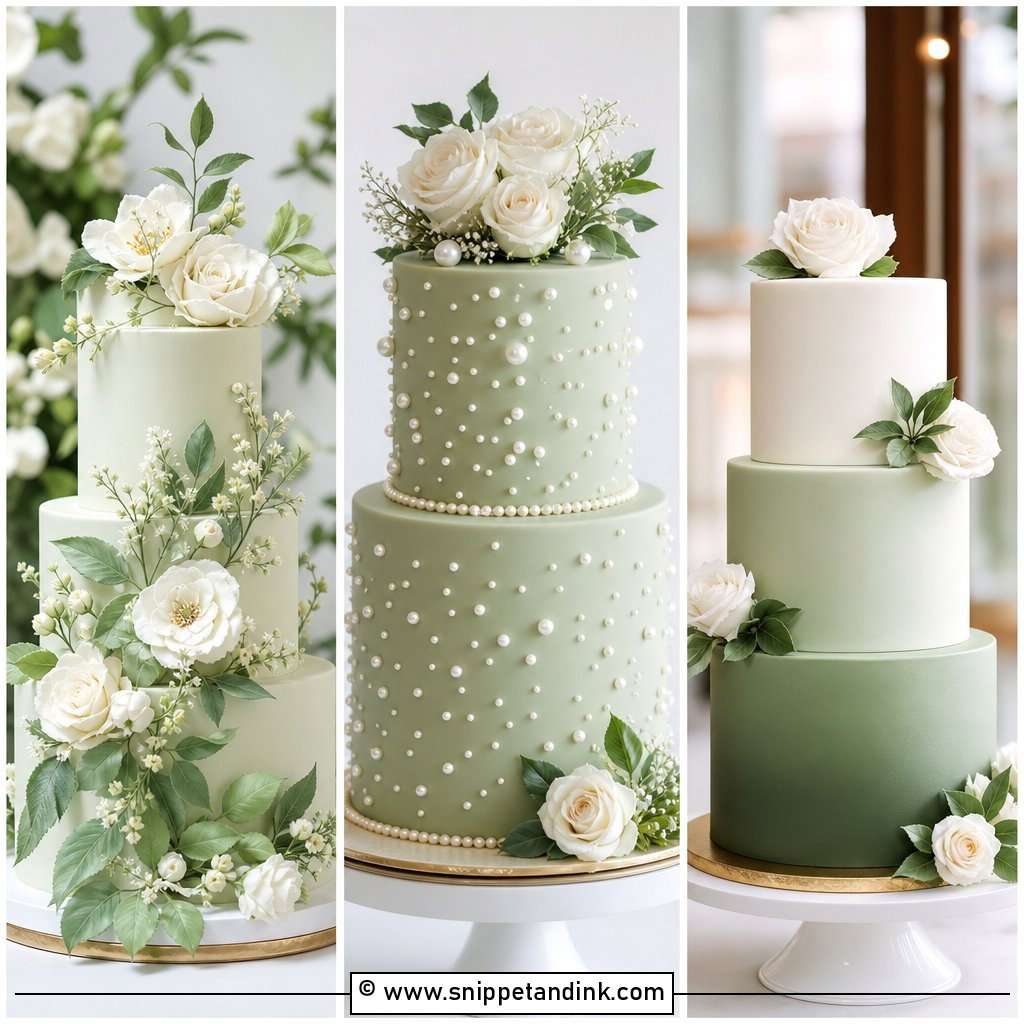


20. Bird Of Paradise Wedding Cake With Cascade Flowers
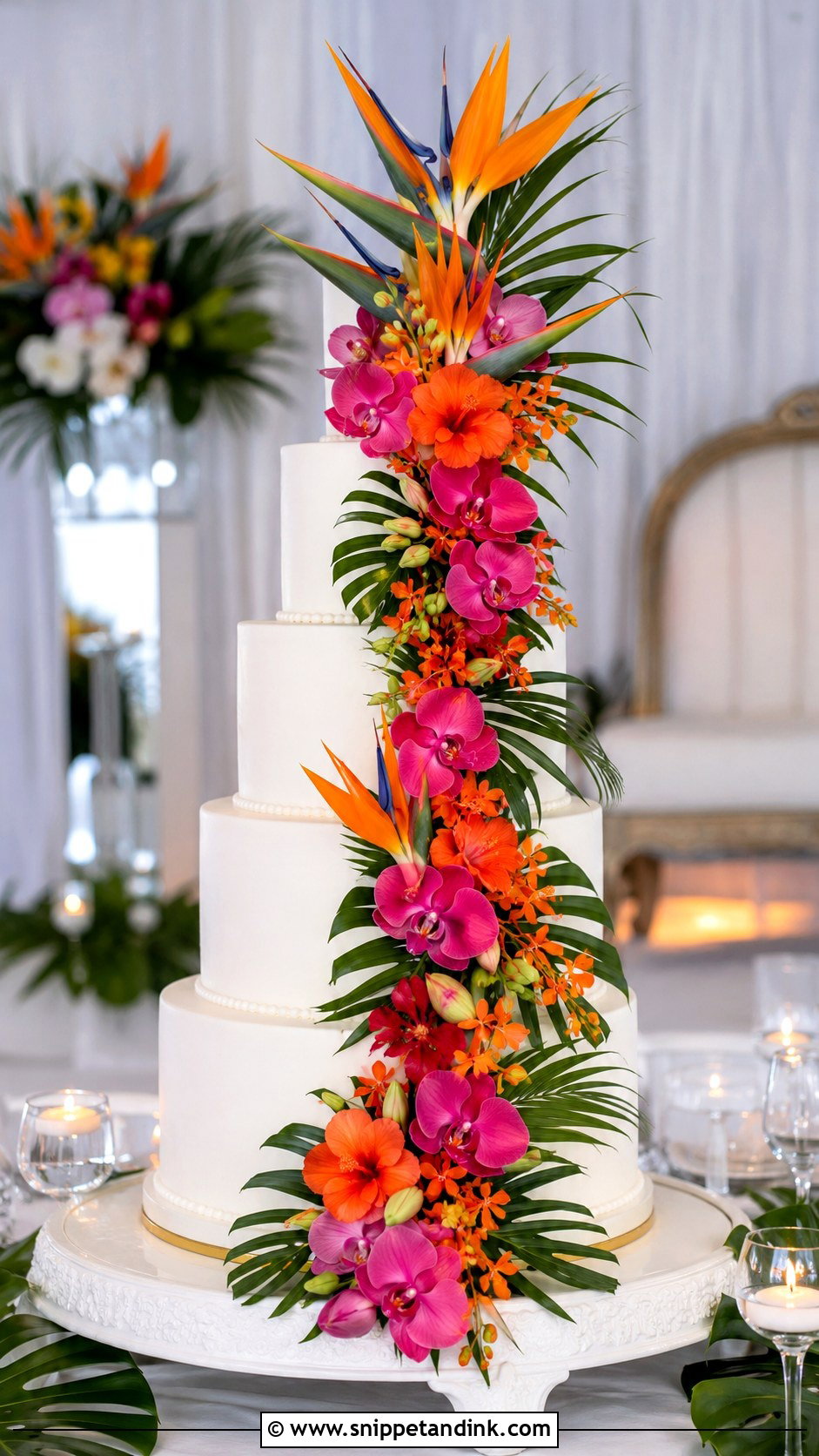
A floral cascade is a classic cake design, and this bloom makes it tropical. The flowers run from the top tier down one side, mixed with orchids, hibiscus, greenery or small orange blooms. Three or four tiers give the cascade enough length to move. A full cascade of fresh stems is heavy, so I wire it in sections and fix each into picks on its own tier, which also means the cake can be cut without dismantling the whole arrangement. Keep the frosting simple underneath.
Tropical Fillings That Hold Up at a Hot Reception
Most bird of paradise weddings are warm ones, and the inside of the cake feels that heat before the outside does. At the tasting, I steer couples toward fillings that taste of the tropics but stay put:
- Mango, passion fruit or lime as a cooked curd, which sets firmly, rather than fresh fruit layers that slide.
- Coconut as a flavour in the sponge or buttercream, not loose flakes between layers, which make cutting messy.
- Ganache or Swiss meringue buttercream around anything soft; American buttercream crusts but turns greasy in high heat.
- No whipped cream or mousse fillings for an outdoor display, however good they taste.
Then plan the timing. Any cake with a fruit curd should stay refrigerated until it goes out, and spend as little time as possible on display. At a beach or garden reception, I ask the venue for an air-conditioned room close by, bring the cake out shortly before the cutting, and let the flowers and greenery dress the table during the earlier part of the evening instead.
One Bloom, Twenty Ways to Set It on a Cake
This bloom can look relaxed on a semi naked coconut cake, sharp on white fondant, colourful beside hibiscus and orchids, or modern against black and white tiers. What holds every version together is balance between that dramatic flower and the finish underneath. If your wedding already has tropical florals, greenery or a destination palette, the cake can quietly repeat it. One statement stem or a full cascade, the conversation with your baker and florist should start with the same question: fresh, sugar or a mix of both.
You'll Like These Ideas:




Leave a Reply