
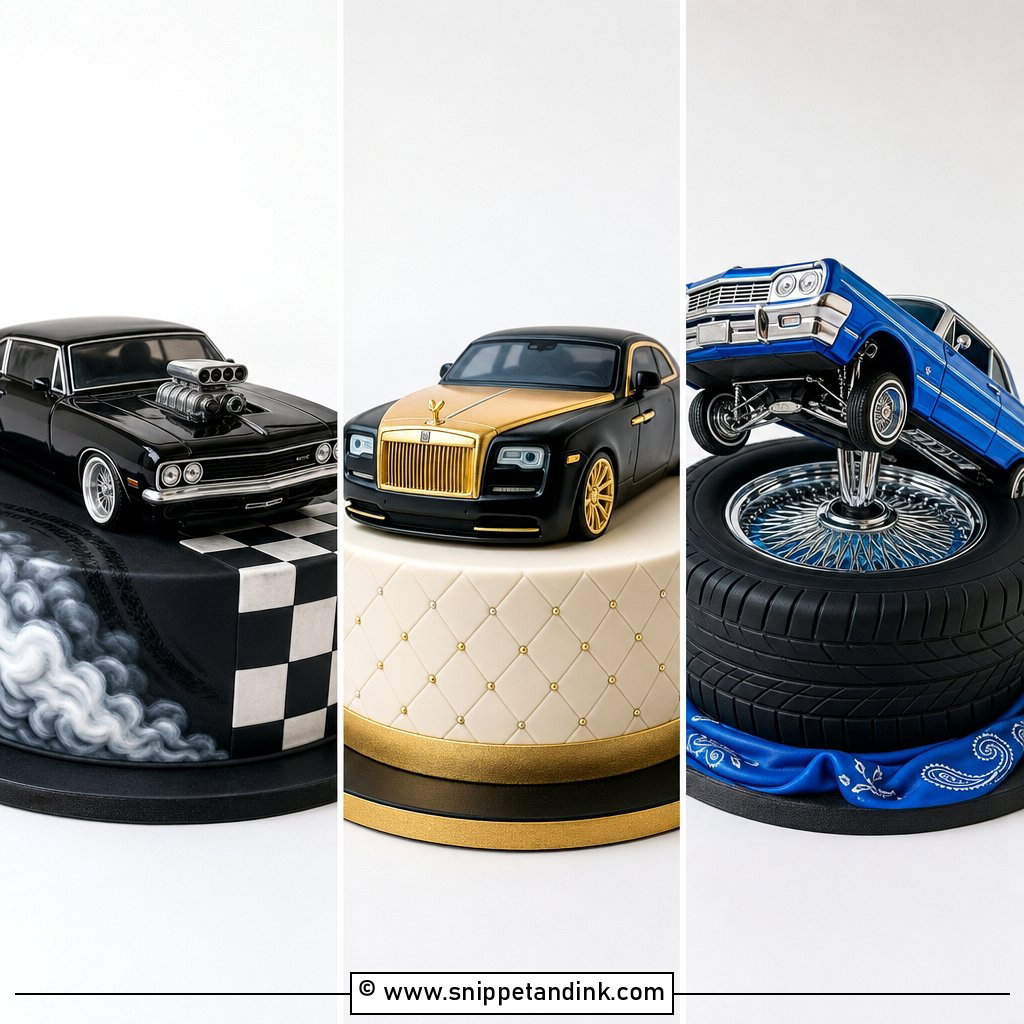
Grooms who ask me for a masculine cake rarely mean a cake shaped like a car. Usually they mean something with weight: strong shapes, deep colour, sharp structure, real texture and flavours that aren’t sugary. Matte black buttercream, stone finishes, square tiers, navy fondant, brushed bronze, woodgrain, and inside, chocolate, espresso, caramel, pistachio, spice or dark berry. Here are 30 directions I’d offer at a consultation, from loft and rooftop receptions to barns and black-tie ballrooms, with notes on how each finish behaves once it leaves my kitchen.
Dark Icing Without Grey Teeth in Every Photo
Almost every cake in this list leans dark, and dark icing behaves differently from white. It’s worth knowing what you’re asking for before the tasting.
How black and navy are actually made
True black buttercream needs a lot of colouring, which can make it taste bitter and leave lips and teeth grey for the rest of the night. I get around it by starting with a chocolate or black cocoa base so far less colour is needed, or by keeping the black on the outside in fondant and serving a pale filling inside. Dark colours also deepen as they sit, so I mix them a day ahead and match shades once they’ve settled.
Light, heat and the cake table
- Strong sunlight can fade navy, purple and some greens within hours, so dark cakes belong away from windows and out of the sun.
- Buttercream softens in warm rooms. For summer or outdoor receptions, ask about a ganache coat, which stays firmer.
- Fondant can bead with moisture when a chilled cake moves into a warm, humid room. It dries on its own if left alone, so nobody should wipe it.
1. Black Wedding Cake
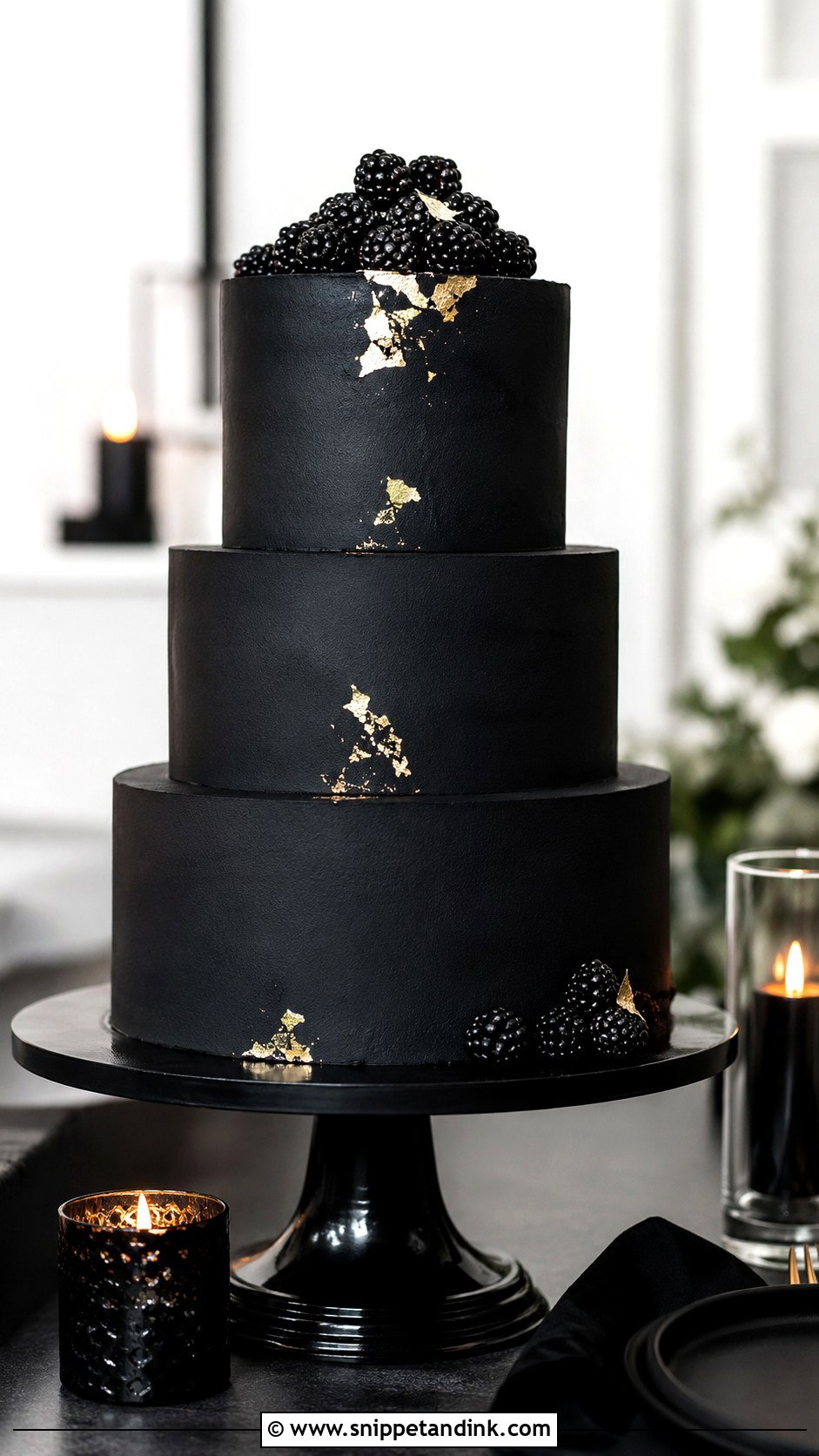
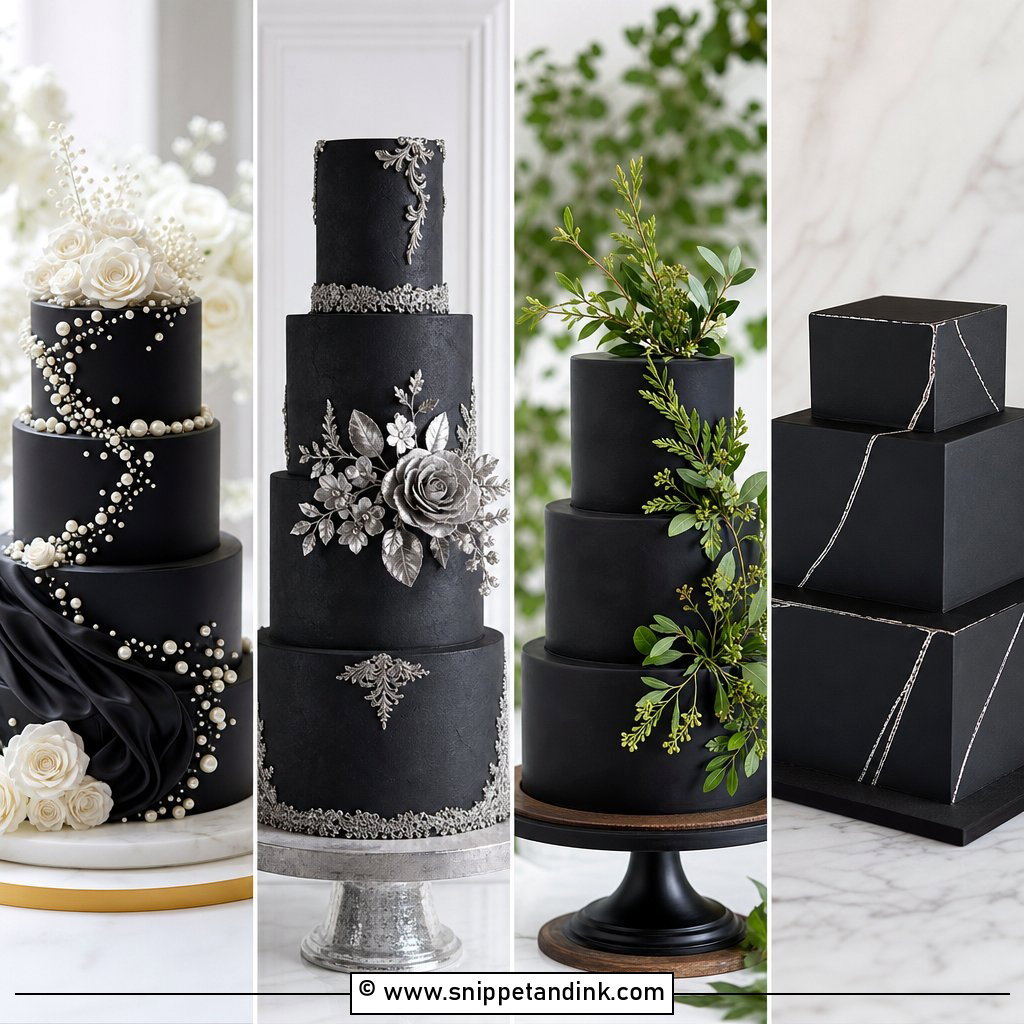
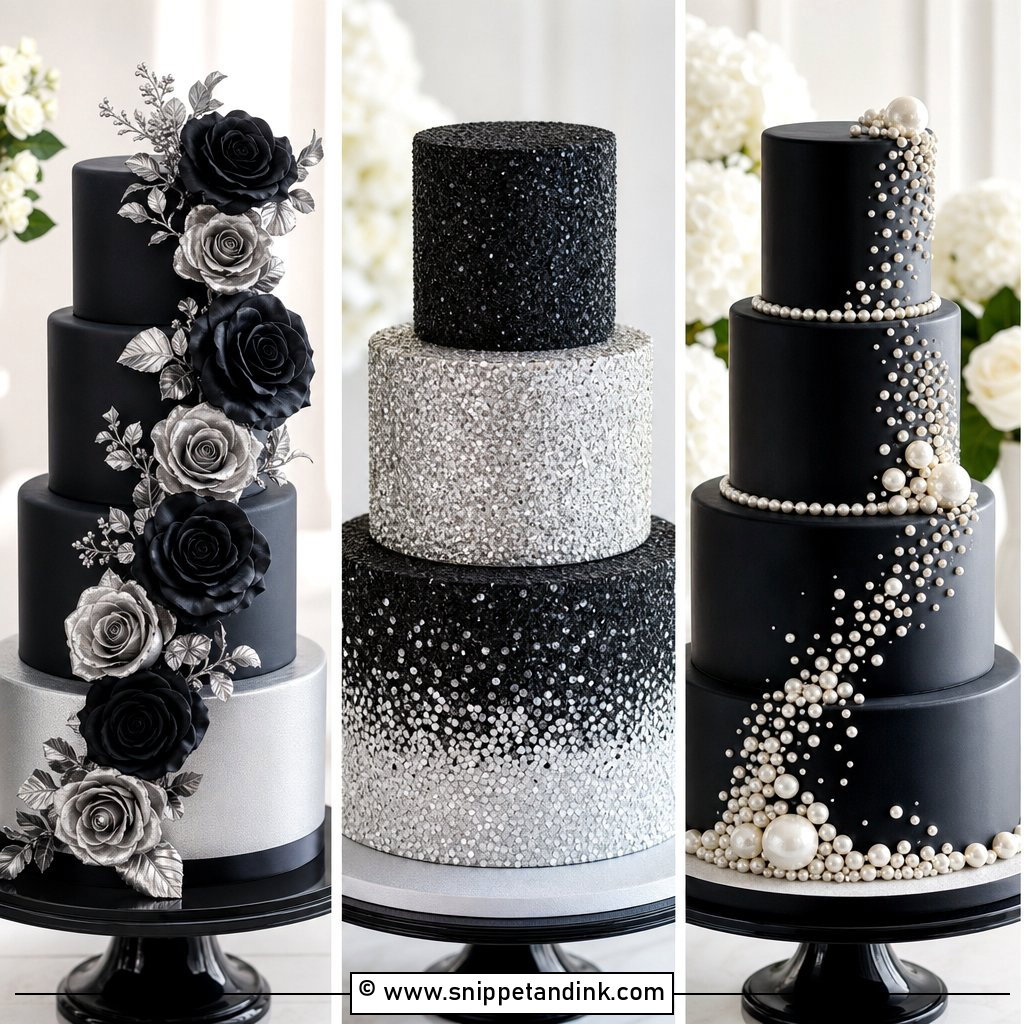
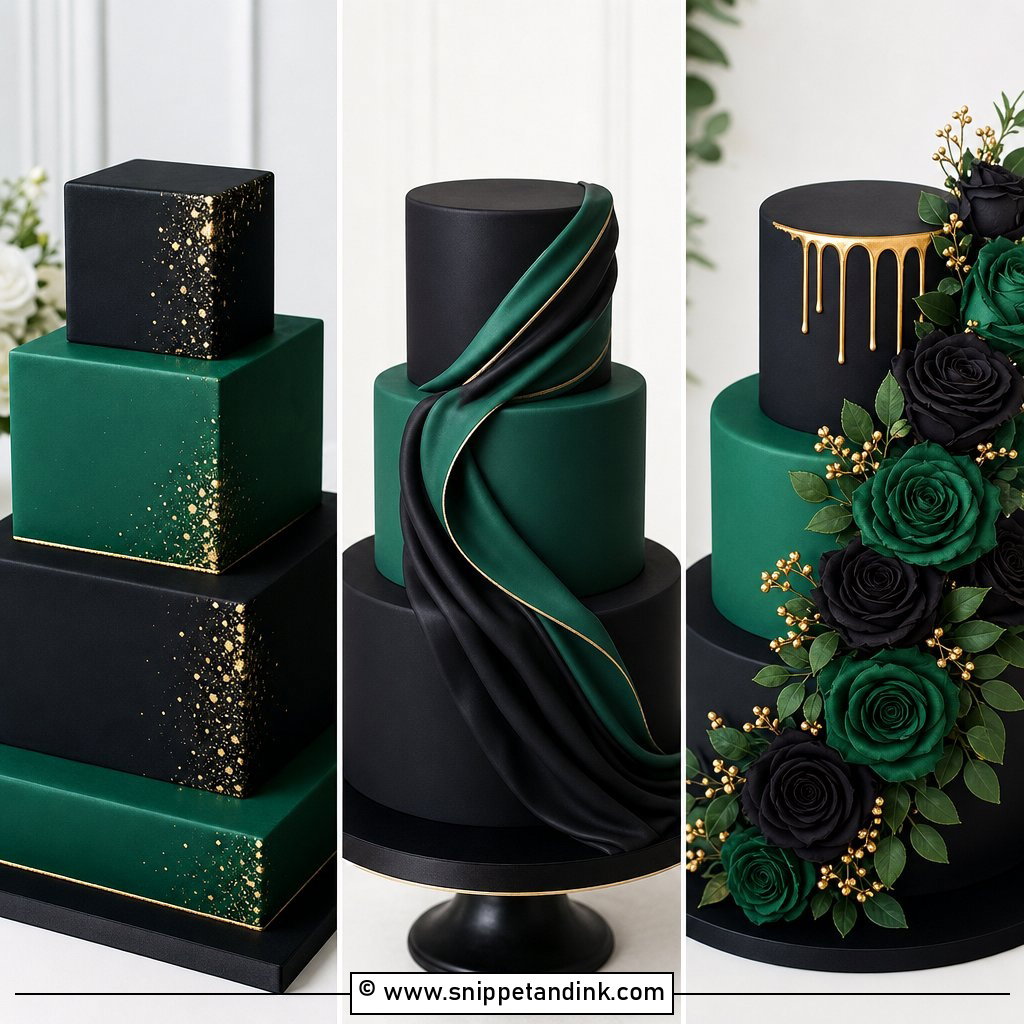
Black is the cake that silences a room when it’s wheeled in. Matte black buttercream reads soft and velvety; black fondant gives a sharper, tailored edge. I always build black on a chocolate or black cocoa base, because getting white buttercream to true black takes so much colouring that it turns bitter and stains everyone’s mouths. Restrained metal stops it looking like a theme: a little brushed gold leaf, a bronze edge, or a slim silver separator between tiers. It belongs in a candlelit room, a city loft or a minimal space where it can stand alone.
2. Navy Blue Wedding Cake
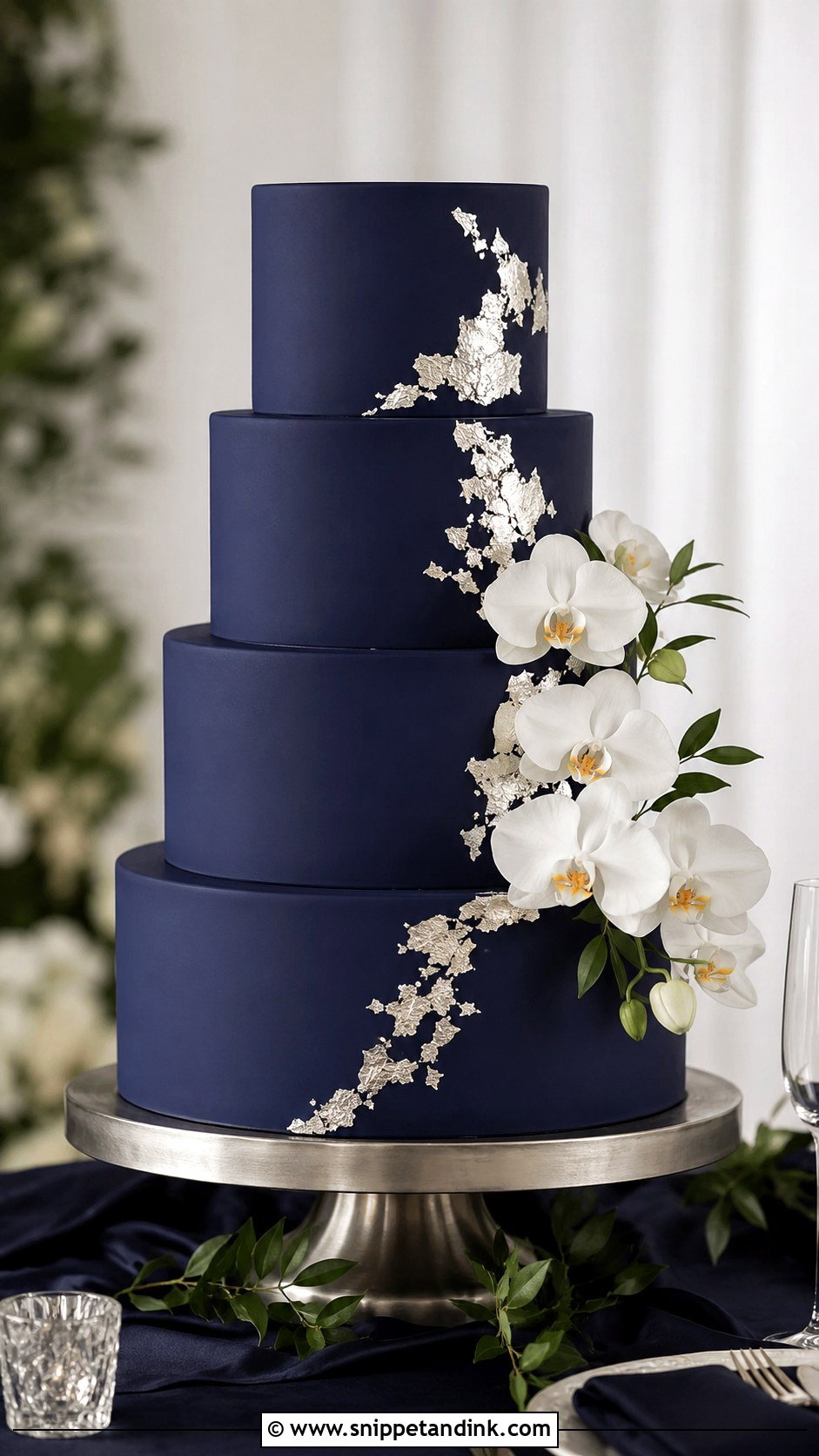
Navy has depth without black’s severity, and it matches suits, linens and invitations more easily than almost any other dark colour. Smooth navy fondant suits stacked round tiers; textured navy buttercream is more relaxed for coastal or rustic weddings. One caution from experience: deep blues and purples can fade if the cake sits in strong sunlight or near a window, so I ask where the cake table will stand. Champagne gold, white orchids, silver leaf or dark foliage give contrast. Vanilla bean, blueberry, lemon or dark chocolate all fit inside.
3. Charcoal Gray Wedding Cake
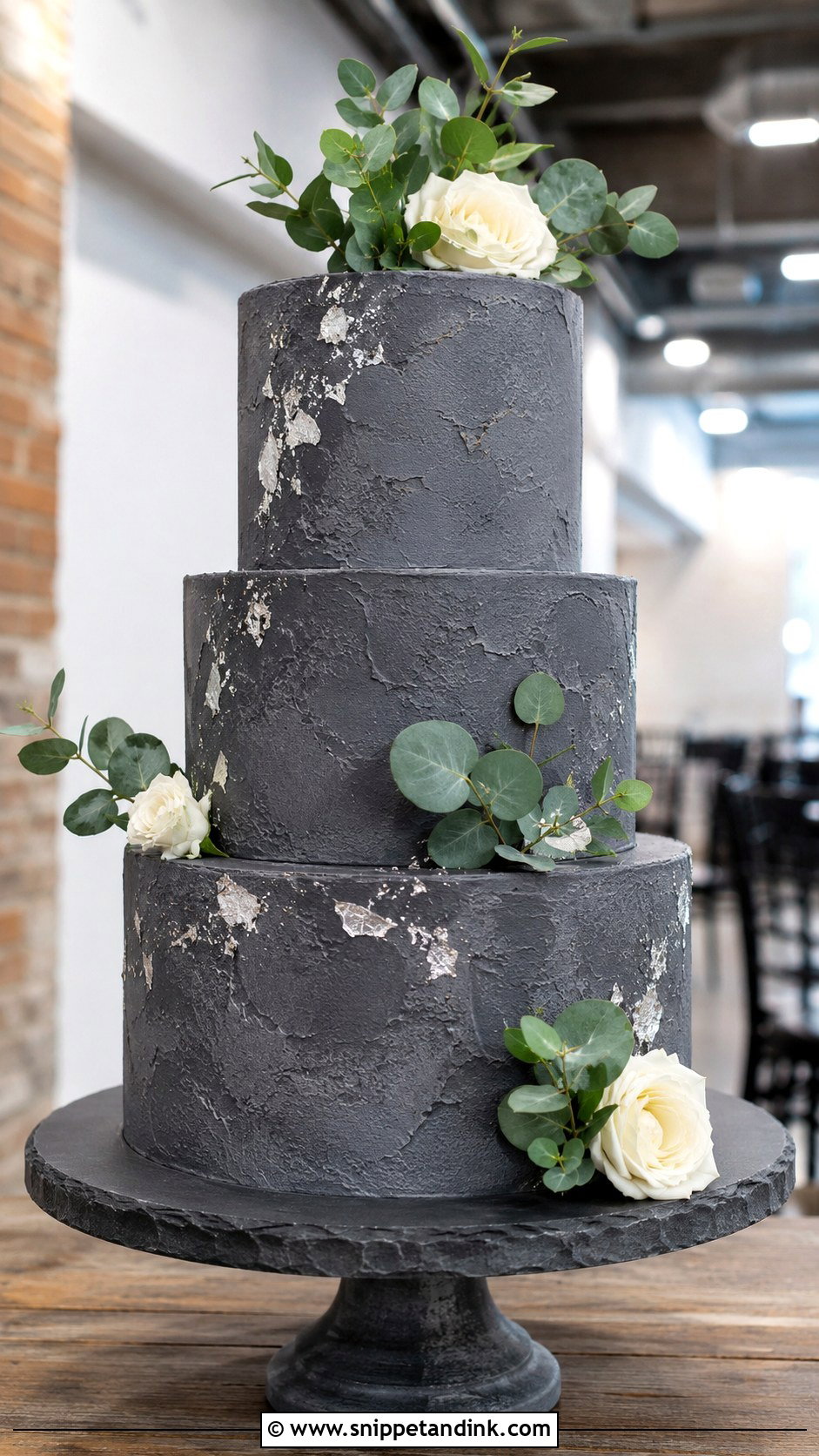
Charcoal gray sits between moody and severe, which is why it’s often where nervous couples land. It takes on a stone quality whether I finish it in rough buttercream, smooth fondant or a concrete texture. Three charcoal tiers can be softened with ivory flowers or a little white piping, or kept stark with black accents and brushed silver. Inside, chocolate ganache, Earl Grey, almond or salted caramel all suit it. Industrial spaces, modern barns, rooftops and winter weddings are where the darker tone looks most at home.
4. Marble Wedding Cake
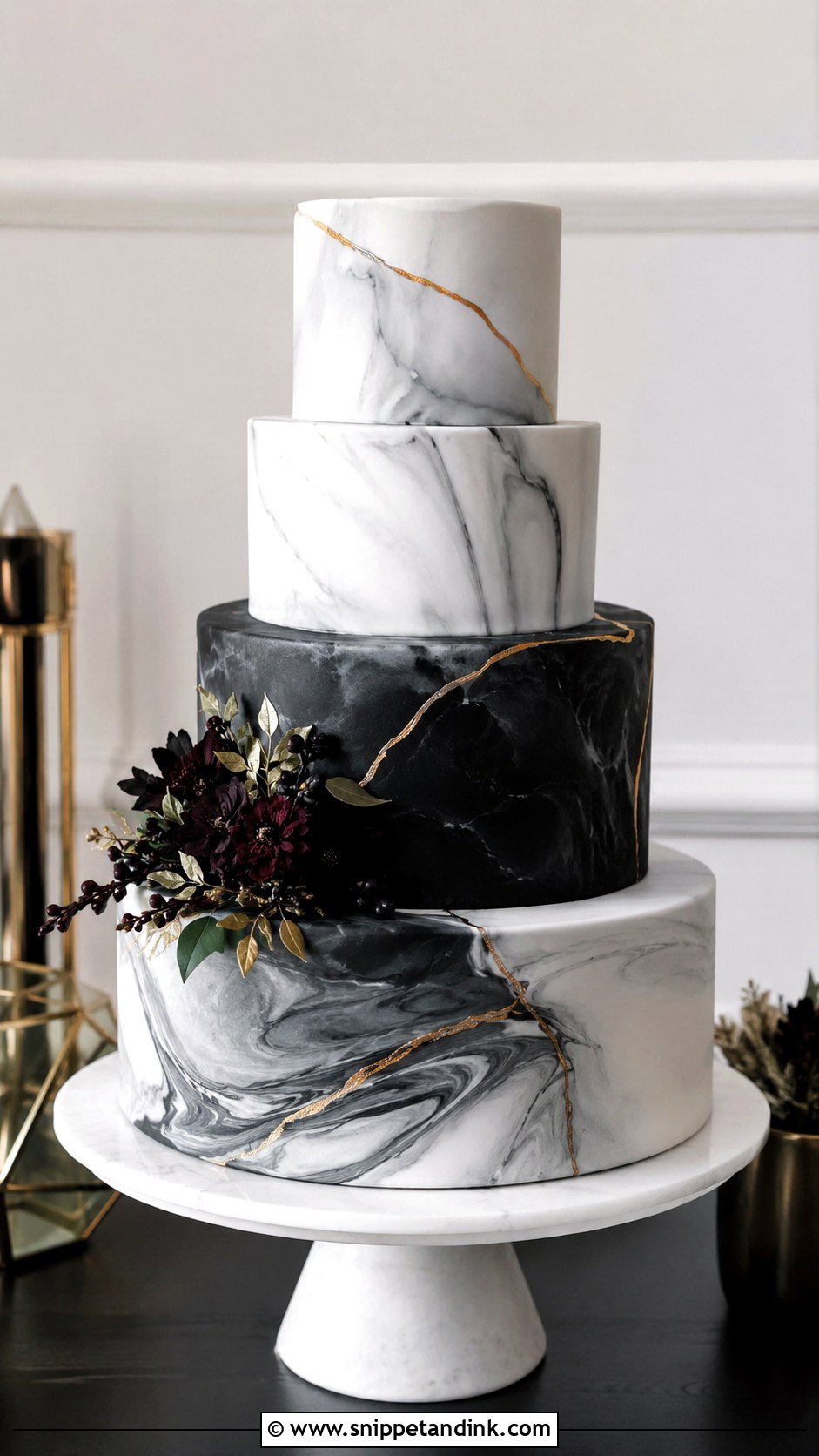
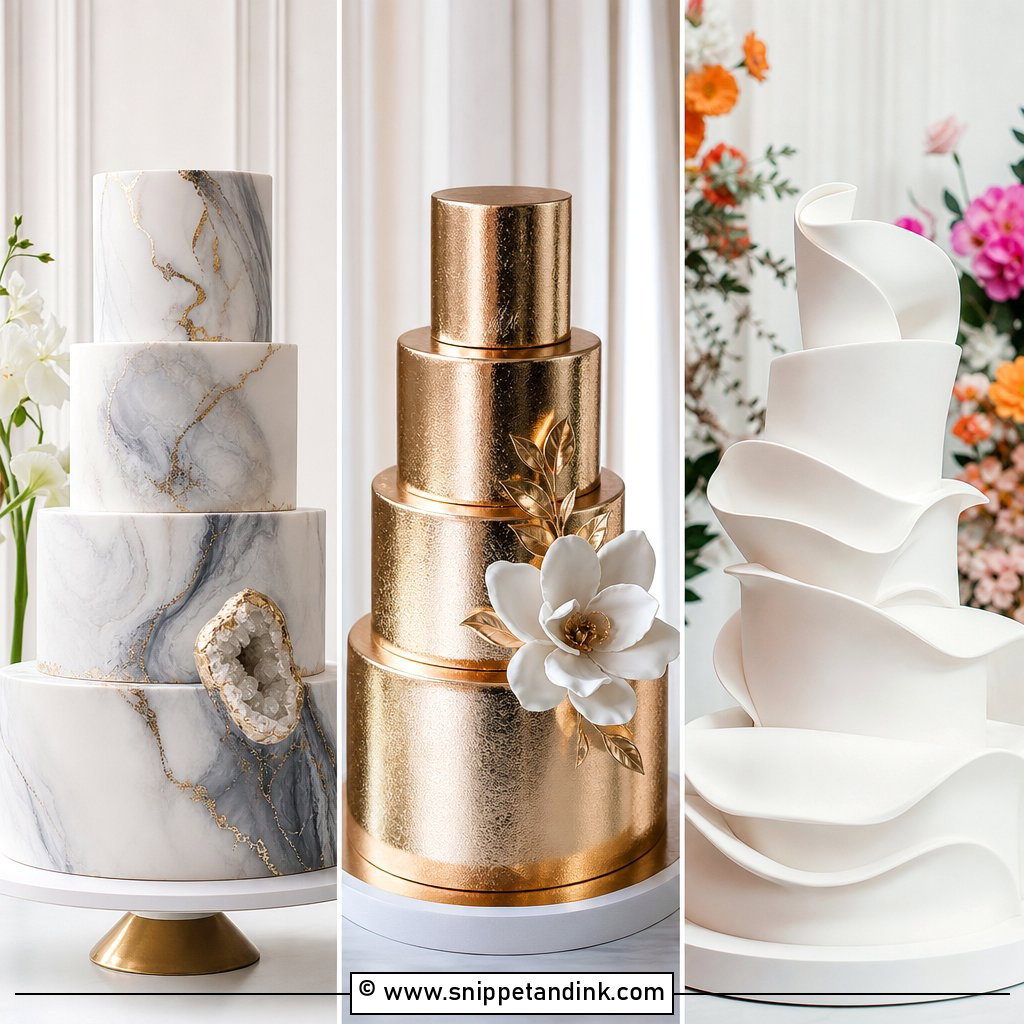
Marble gets a luxury feel without any decoration at all. Grey, black, white or deep green veining all work, as long as the veins wander naturally. Perfectly even veining looks printed. I marble the fondant itself by twisting coloured pieces together before rolling, which gives more realistic depth than painting veins on afterwards. A thin gold line, a black base tier or a small cluster of dark flowers balances it. Chocolate, vanilla, pistachio or almond keeps the inside approachable.
5. Concrete Wedding Cake
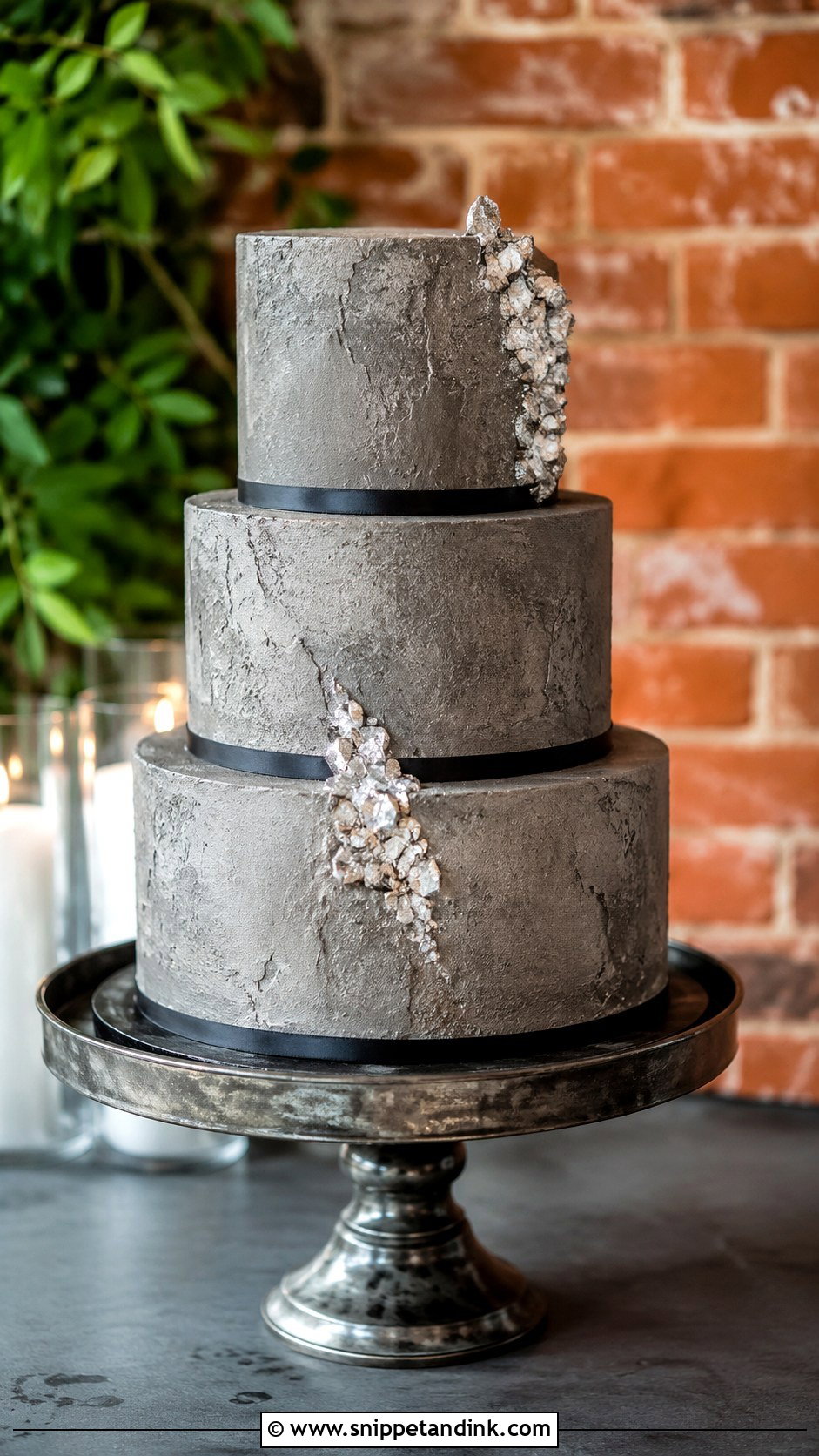
A concrete finish is grey, quietly textured and almost undecorated, and that restraint is the point. I create it with textured buttercream, an airbrushed fondant or a stone-effect coating, then add a black ribbon, some silver leaf, slate-coloured sugar shards or one sculptural stem. Espresso, dark chocolate, hazelnut and vanilla bean taste right with it. Warehouses, galleries and modern restaurants suit it, and so do couples who are more interested in good design than in romance.
6. Geometric Wedding Cake
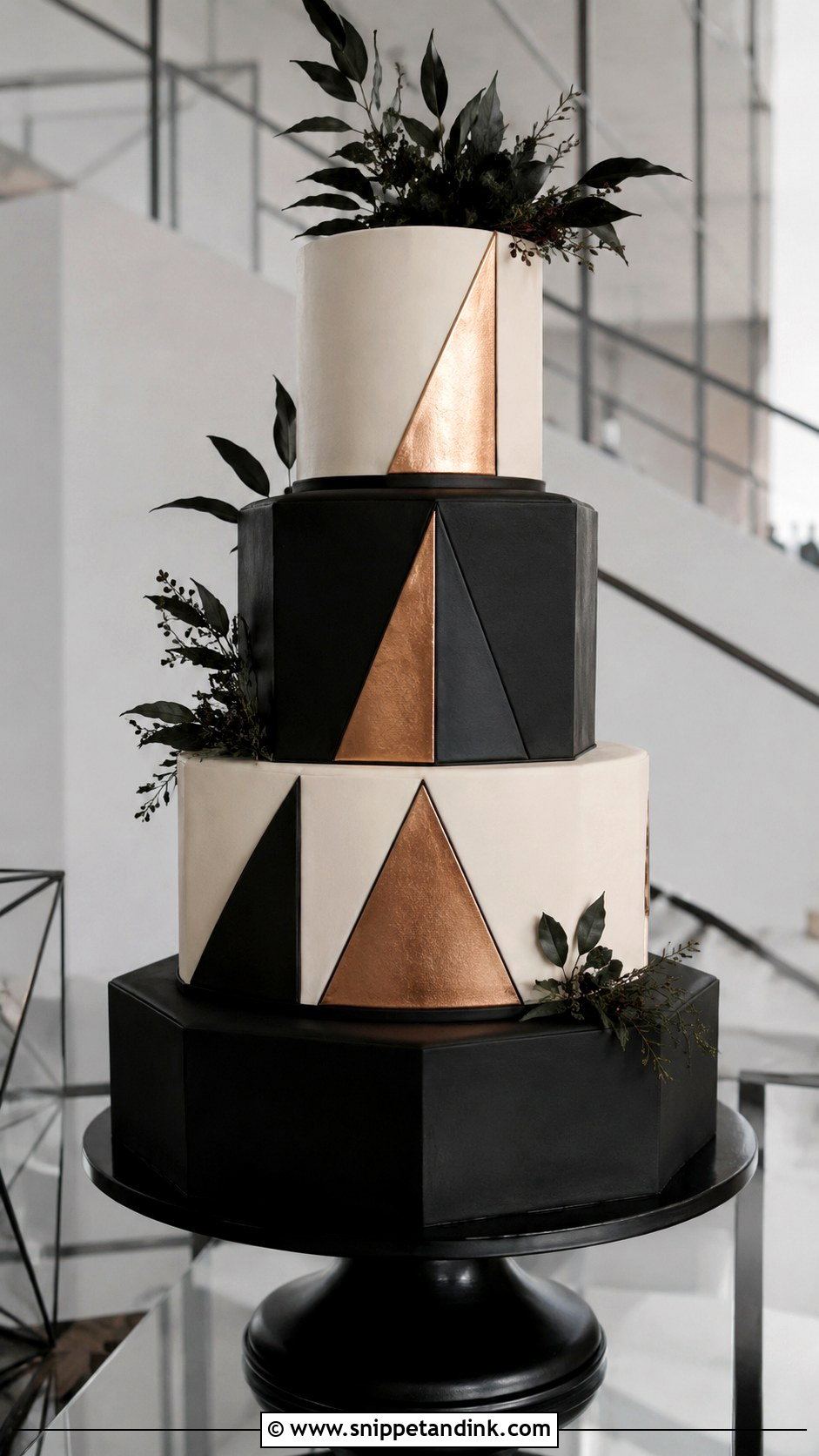
Geometric cakes need crisp edges, and crisp edges need fondant over a firm ganache base; buttercream alone softens at the corners as the room warms. Hexagonal tiers, triangle panels, stacked squares and angular lines can be tone on tone for subtlety or picked out in black, grey, navy and metallics for drama. Edible geometric shapes pressed onto smooth buttercream give a gentler version. Chocolate, coffee, pistachio and almond suit it, and it looks at home in museums and art spaces.
7. Square Wedding Cake
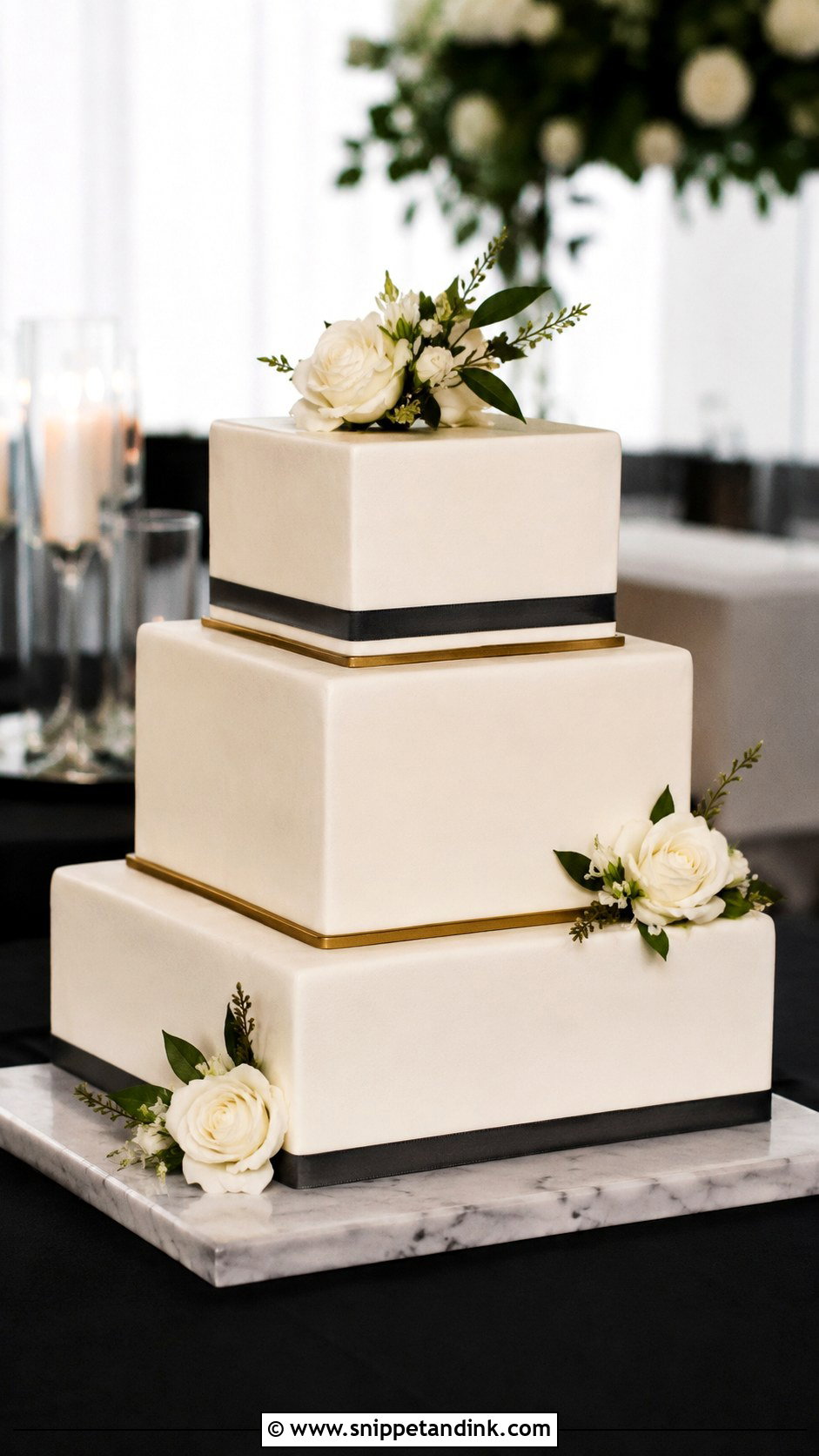
Square tiers immediately look tailored. They are also harder work than rounds: getting truly sharp corners takes time, and a square tier serves more people than a round of the same width, so you may be able to go a size smaller. Stack them evenly for classic, or turn each tier slightly for a modern offset. Black, ivory, charcoal, navy and forest green all suit the shape. Keep decoration minimal, perhaps a slim metallic border or one textured tier, and choose dark chocolate, vanilla bean, red velvet or caramel inside.
8. Forest Green Wedding Cake
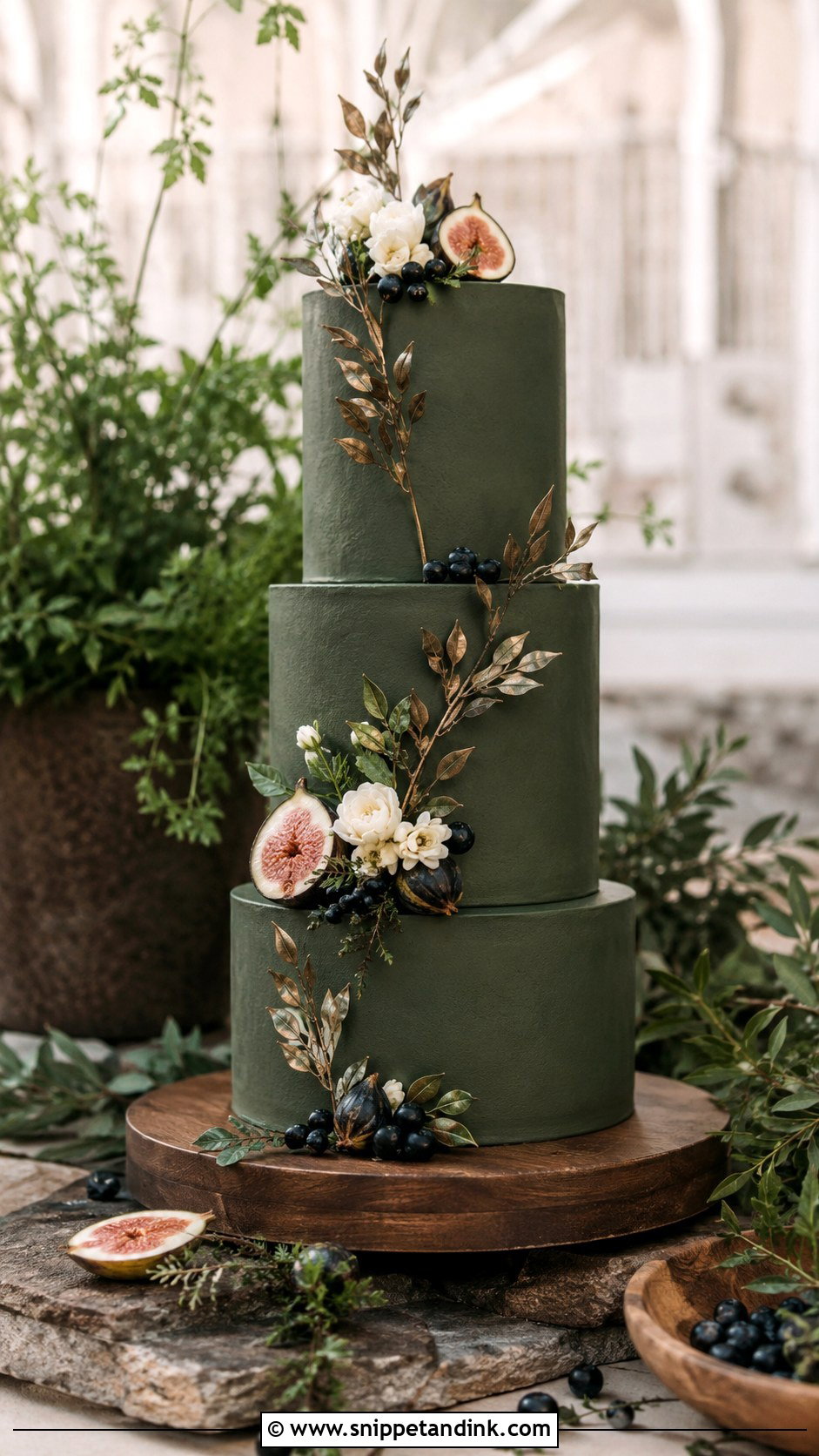
Forest green reads natural but still formal, especially next to black, ivory, bronze or gold. A smooth forest green fondant cake looks refined; textured buttercream feels more organic. Deep greens are hard to mix evenly in large batches, so I colour all the icing for a cake in one go rather than tier by tier, or the shades won’t match. Foliage, figs, dark berries or a few white flowers balance it. Pistachio, chocolate, vanilla, pear or spice all pair well, and it suits autumn, lodges and moody garden venues.
9. Rustic Wood Wedding Cake
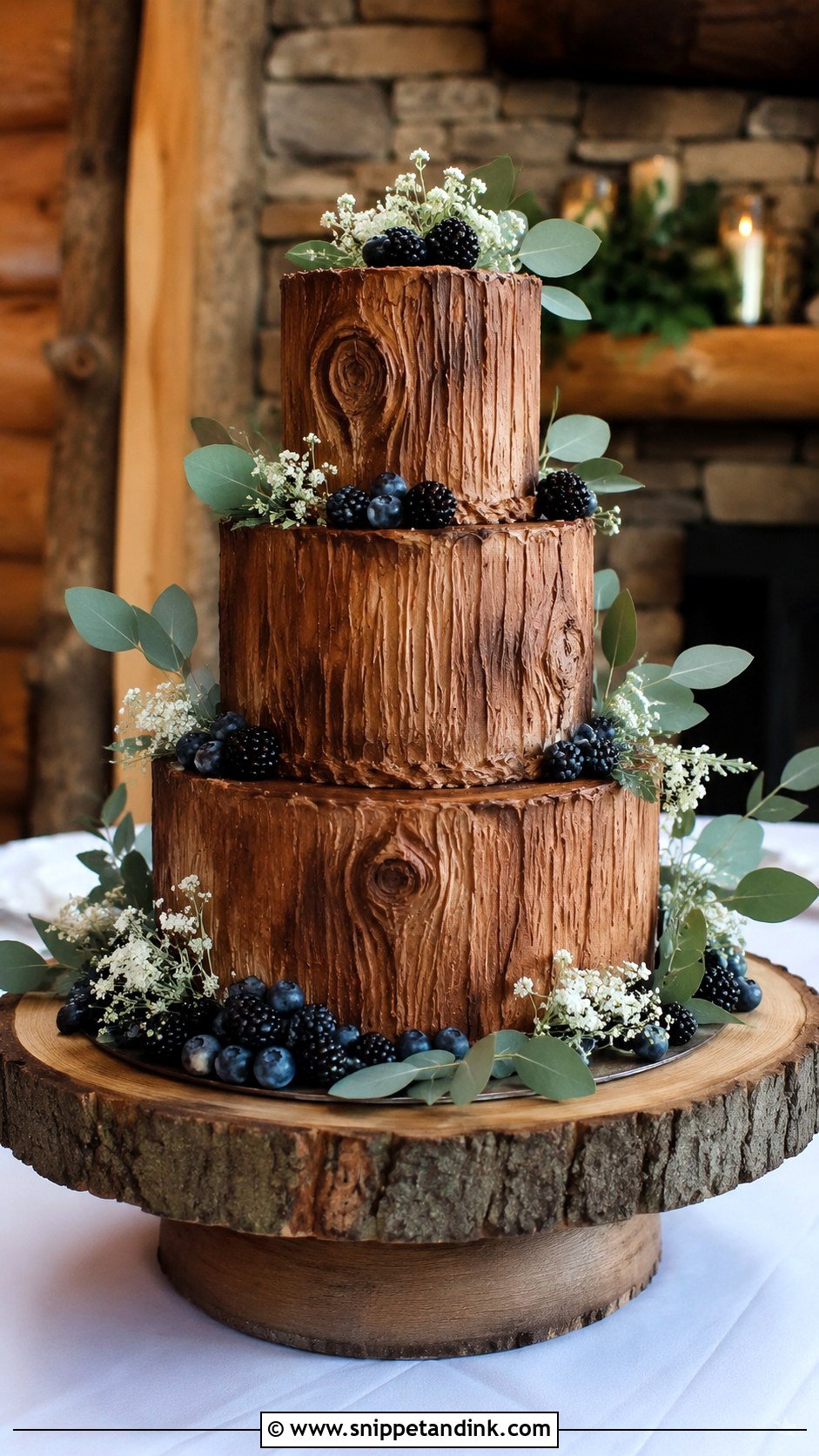
Wood can look rustic or it can look like a craft project, and the difference is in the restraint. A rustic wood wedding cake might use a bark texture combed into buttercream, a woodgrain fondant or a semi-naked finish on a wooden stand. I keep the extras polished: foliage, dark berries, a few small white flowers or a bronze touch. Spice, carrot, chocolate, maple or brown butter vanilla belong inside. Barns, forest ceremonies, mountain venues and lodges suit it.
10. Black And Gold Wedding Cake
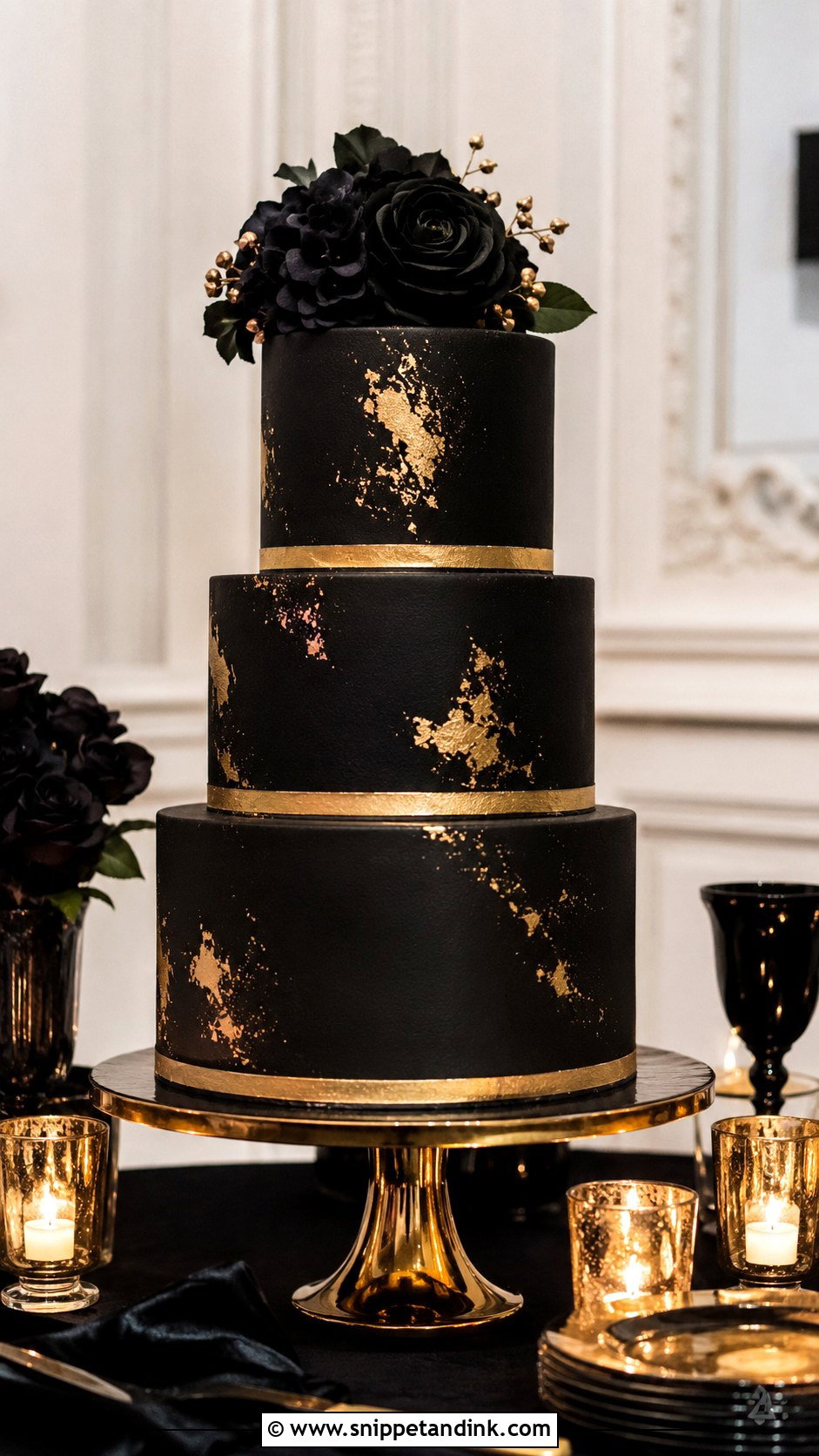
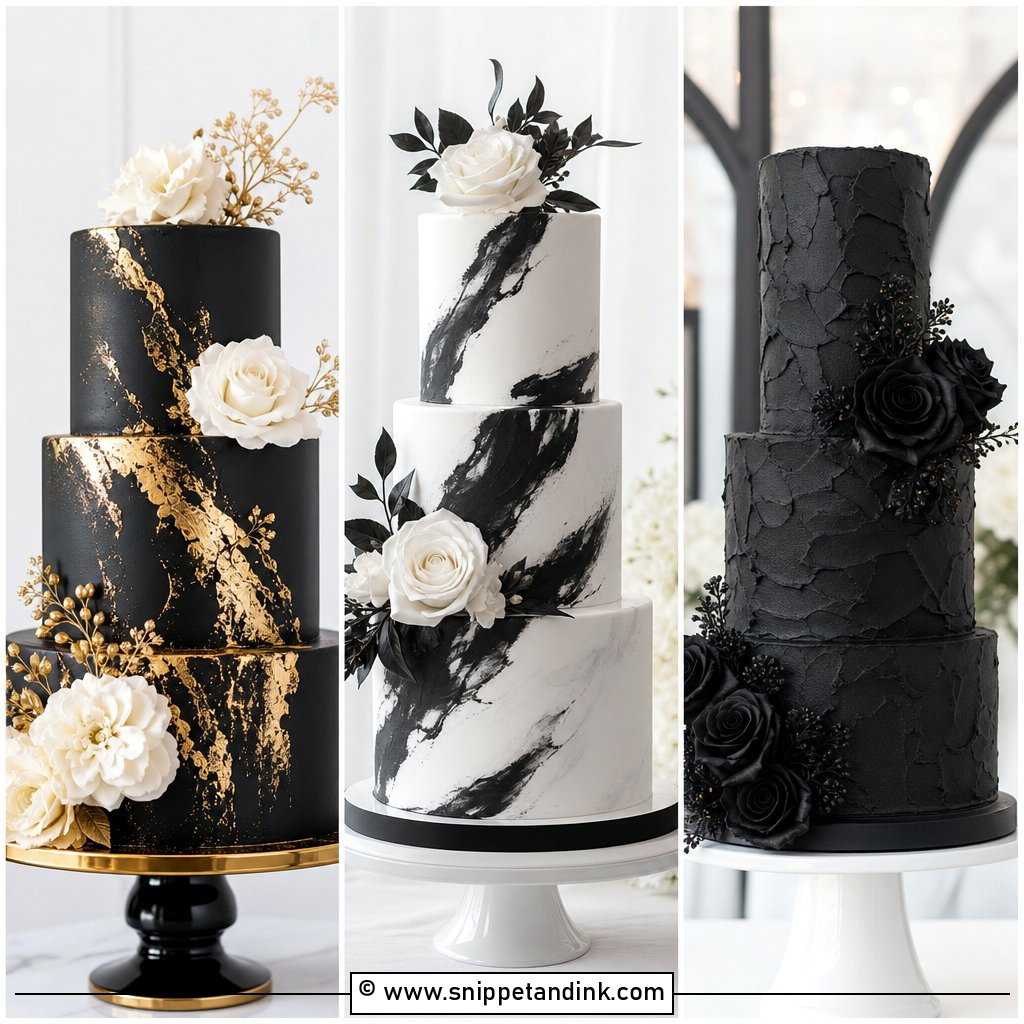
Black and gold only works when black is clearly in charge. I use gold as an accent: leafing, a few brush strokes, a thin border on each tier or a clean geometric line. Gold everywhere starts to look like a party supply shop. Dark chocolate, espresso or salted caramel layers match the mood. It sits well with black suits, gold flatware and candlelight in a ballroom at night.
11. Matte Black Wedding Cake
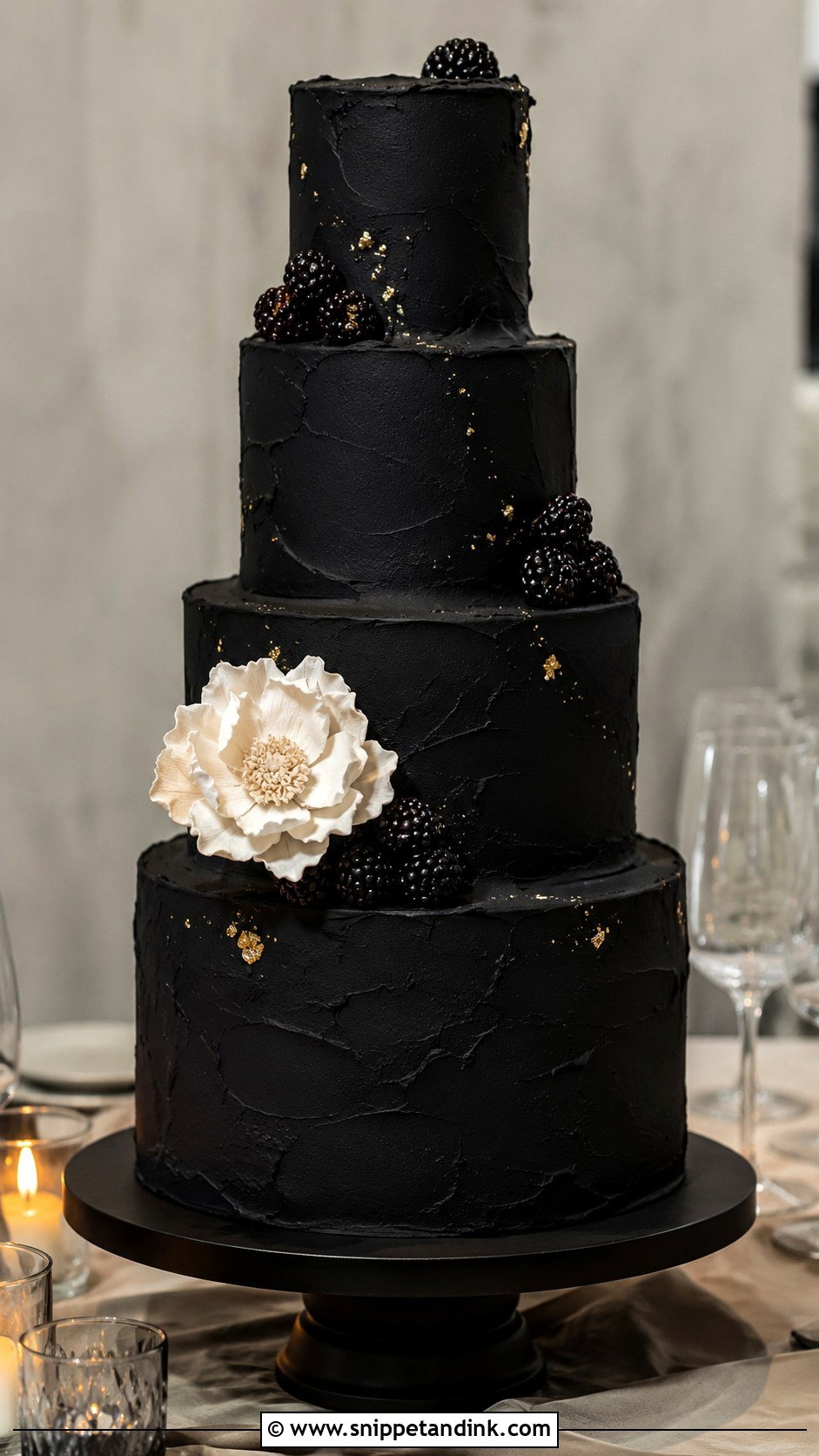
Matte black absorbs light, so the silhouette, the tier heights and any texture become the design. Smooth matte fondant looks modern and formal; matte black buttercream looks handmade and intimate. The risk with matte black is that it can look flat in photos, so I add one thing that catches light: blackberries, gold flecks, a dark flower or a single ivory detail. Black cocoa, chocolate truffle, mocha or dark cherry inside taste as strong as it looks.
12. Industrial Wedding Cake
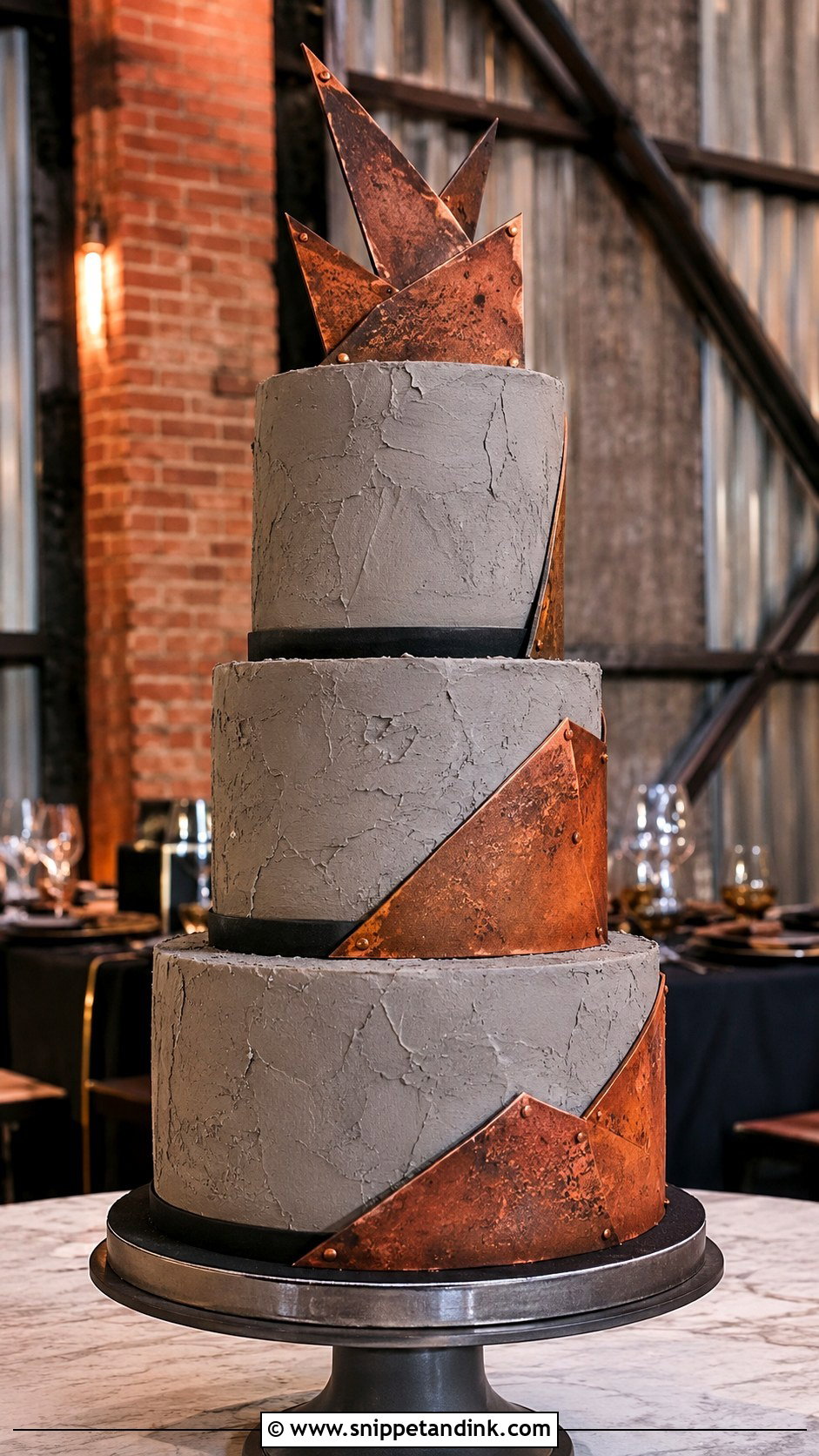
Industrial cakes are about raw texture and plain structure: concrete-grey buttercream, black trim, copper details, tiers that look deliberate rather than pretty. I’ll add rough palette-knife marks, edible metal panels or a simple angular topper. Espresso, chocolate, hazelnut and brown butter caramel bring warmth to a cool-looking cake. It fits warehouses, lofts and spaces with exposed brick, steel beams and warm lighting.
13. Minimalist Wedding Cake
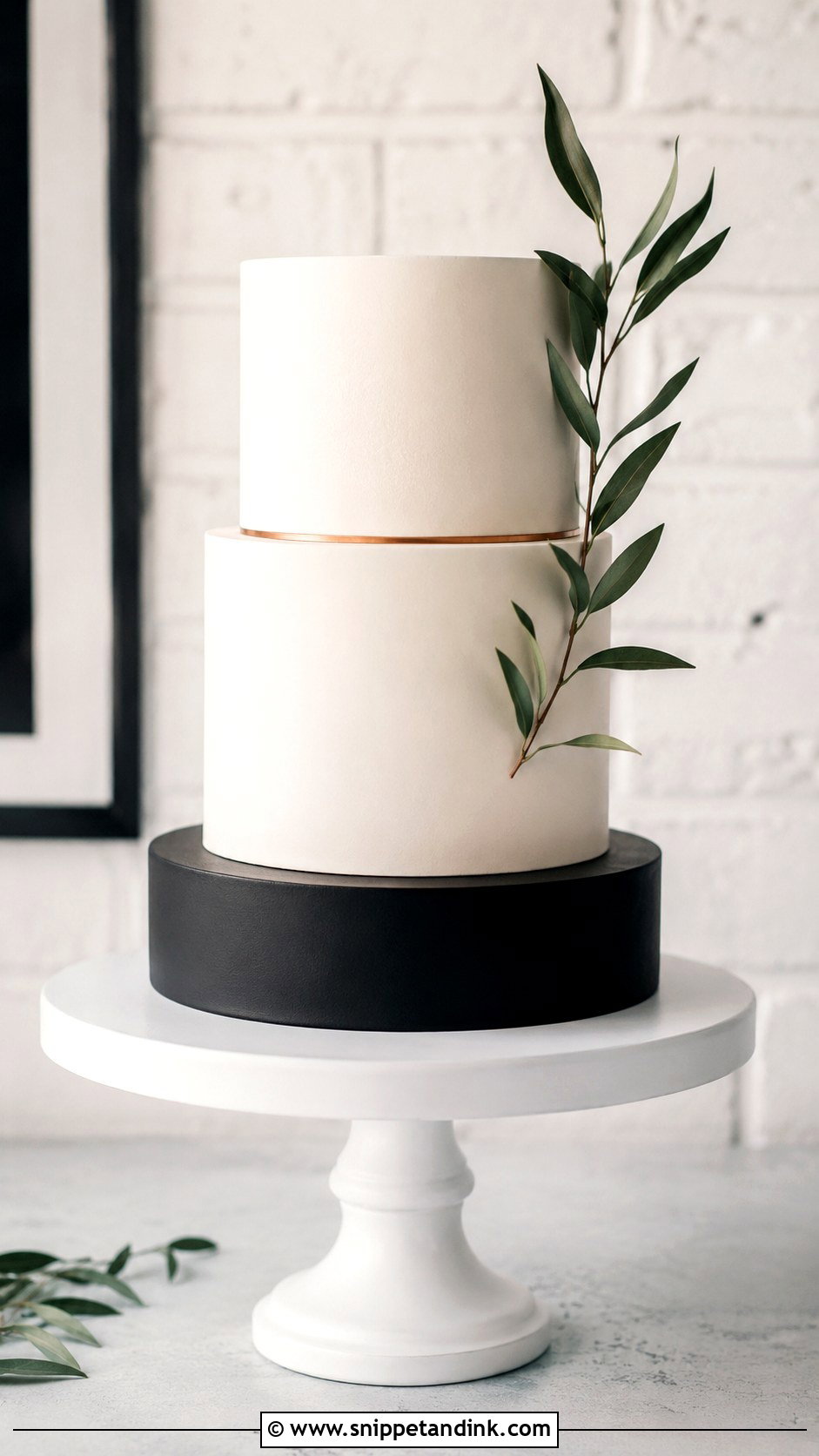
Minimal doesn’t have to mean dark. A white cake with a black base tier, a charcoal ribbon or one bronze line can feel stronger than a cake covered in flowers. With nothing to hide behind, the finish has to be flawless, so I’d only do this one in a fondant or a very sharp buttercream, with clean tiers and edges. Vanilla bean, almond, lemon or chocolate all work because the plain exterior doesn’t dictate flavour.
14. Modern Black White Wedding Cake
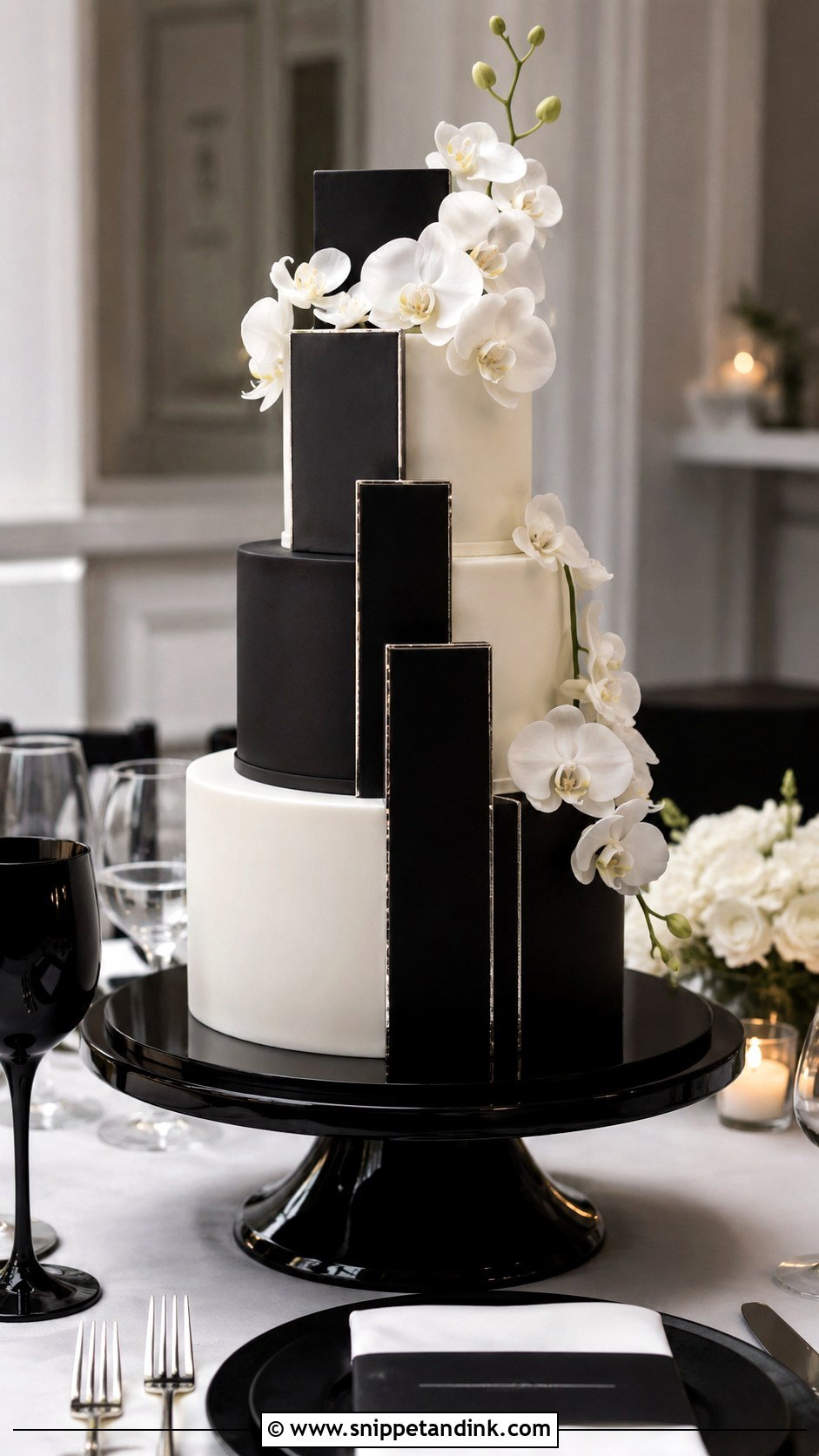
Black and white is crisp and graphic, and it mirrors black-tie clothing. I prefer blocks of colour to busy patterns: a white top tier over a black bottom tier, vertical black stripes, or white tiers with black fondant panels. Where black meets white, I use a fine edge or ribbon to hide the join, as black can bleed slightly into white buttercream on a warm day. White orchids, blackberries or silver edging finish it. Vanilla, chocolate, cookies and cream or almond inside.
15. Dark Chocolate Wedding Cake
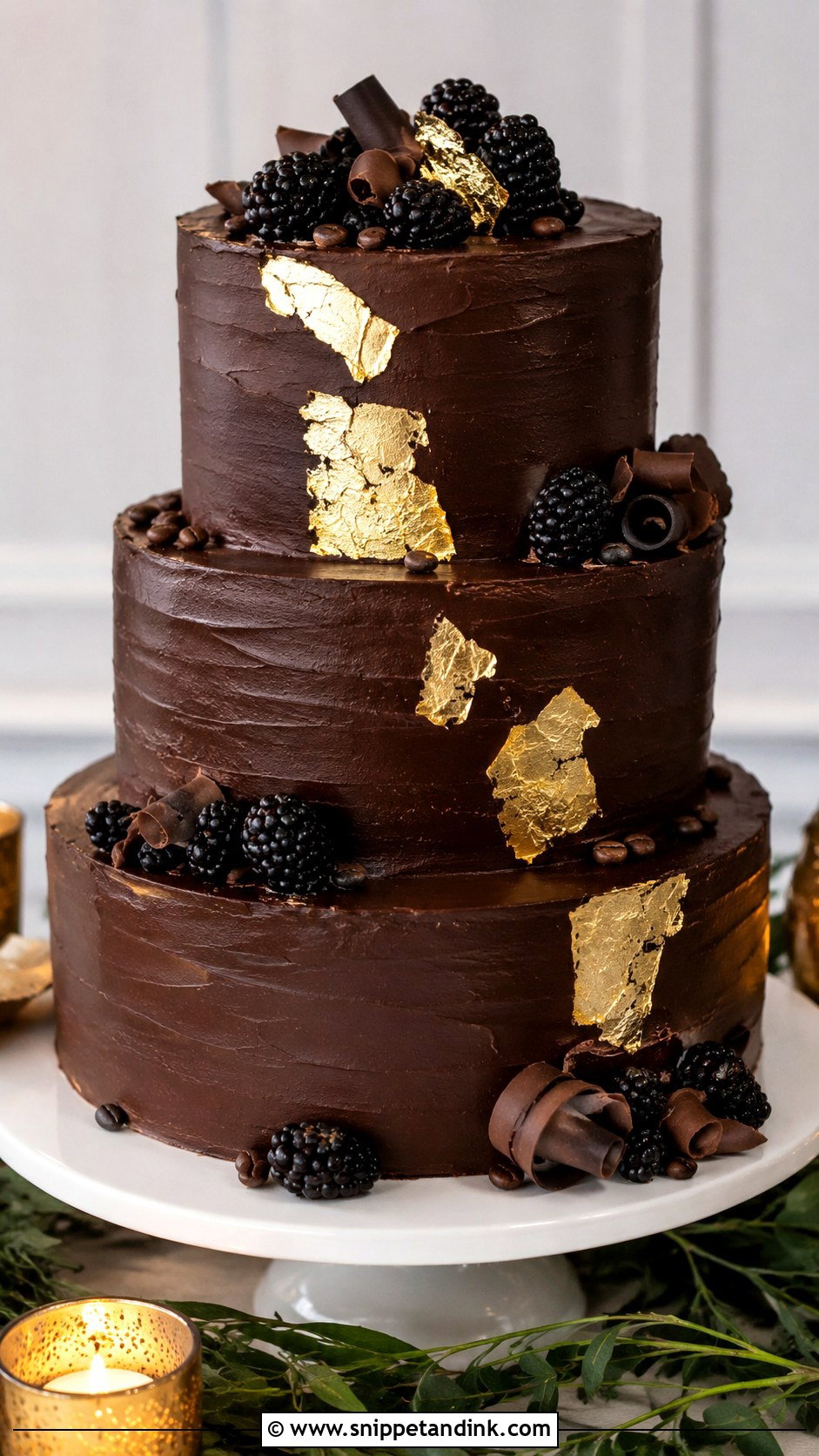
A dark chocolate wedding cake is masculine in flavour as much as looks. Glossy ganache, textured chocolate buttercream or smooth dark cocoa frosting all work, dressed with chocolate curls, blackberries, gold leaf or a few espresso beans. Ganache is my preferred coat for summer weddings because it holds up in warmth far better than buttercream. Salted caramel, mocha, raspberry or hazelnut cream fillings add depth without extra sweetness.
16. Espresso Wedding Cake
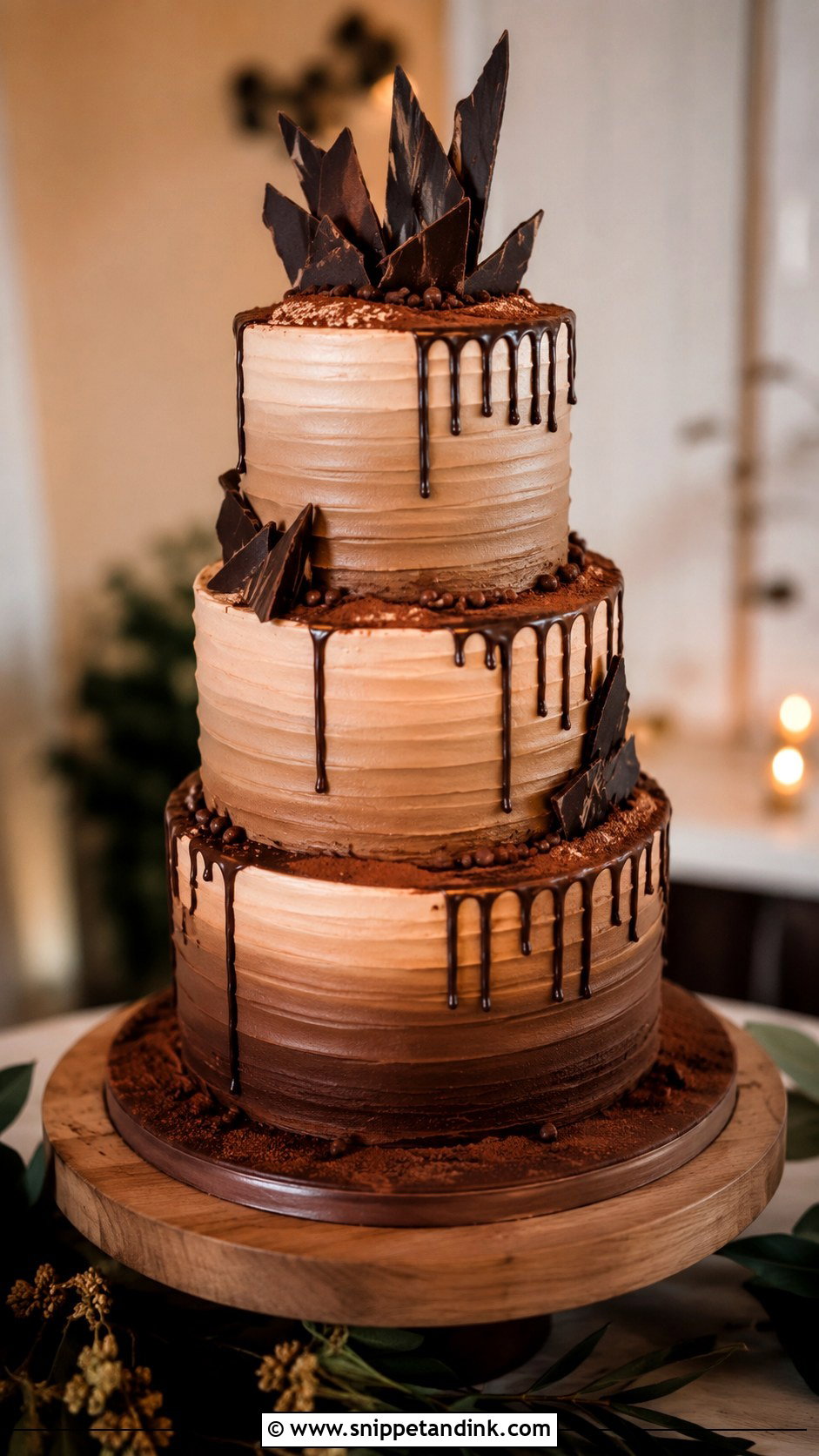
Espresso suits couples who live on coffee. Mocha buttercream, coffee-toned ombre tiers, a dark chocolate drip or a smooth taupe fondant carry it, finished with a dusting of cocoa, chocolate shards, bronze or a few dark berries. I make the coffee flavour with a strong espresso reduction rather than instant granules, which taste harsh. Chocolate, vanilla, caramel, hazelnut and mascarpone fillings all pair with it. Brown suits, black decor and warm neutral tables are natural partners.
17. Leather Look Wedding Cake
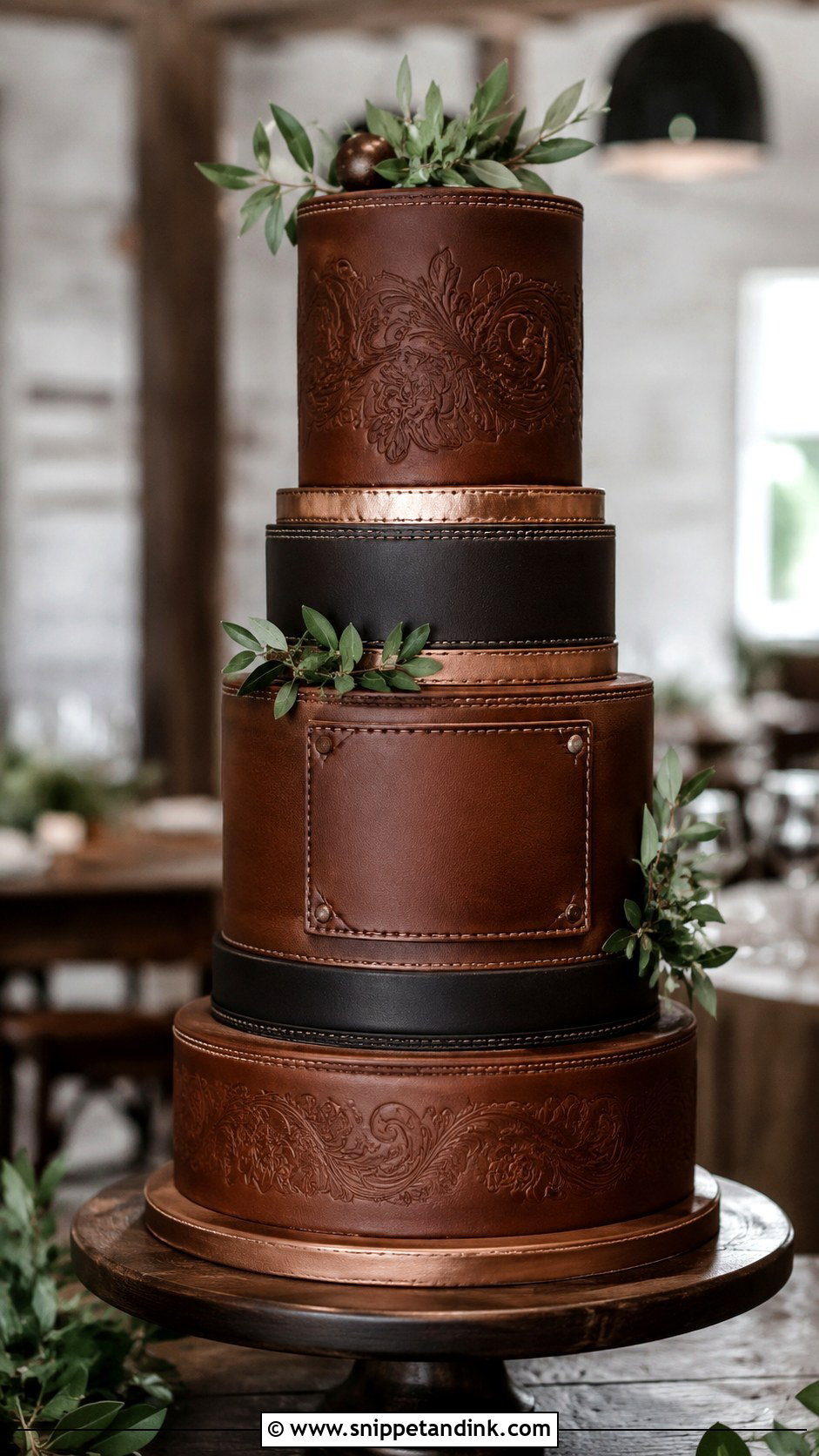
Leather is easy to overdo. Done well, it’s brown fondant panels with a faint embossed grain, a stitched edge and a caramel tone, set beside smooth black tiers, bronze separators or some foliage. Done badly, it looks like a saddle. Chocolate, caramel, spice, maple or brown butter vanilla belong inside. It suits ranches, rustic venues and modern lodges, provided the texture stays subtle.
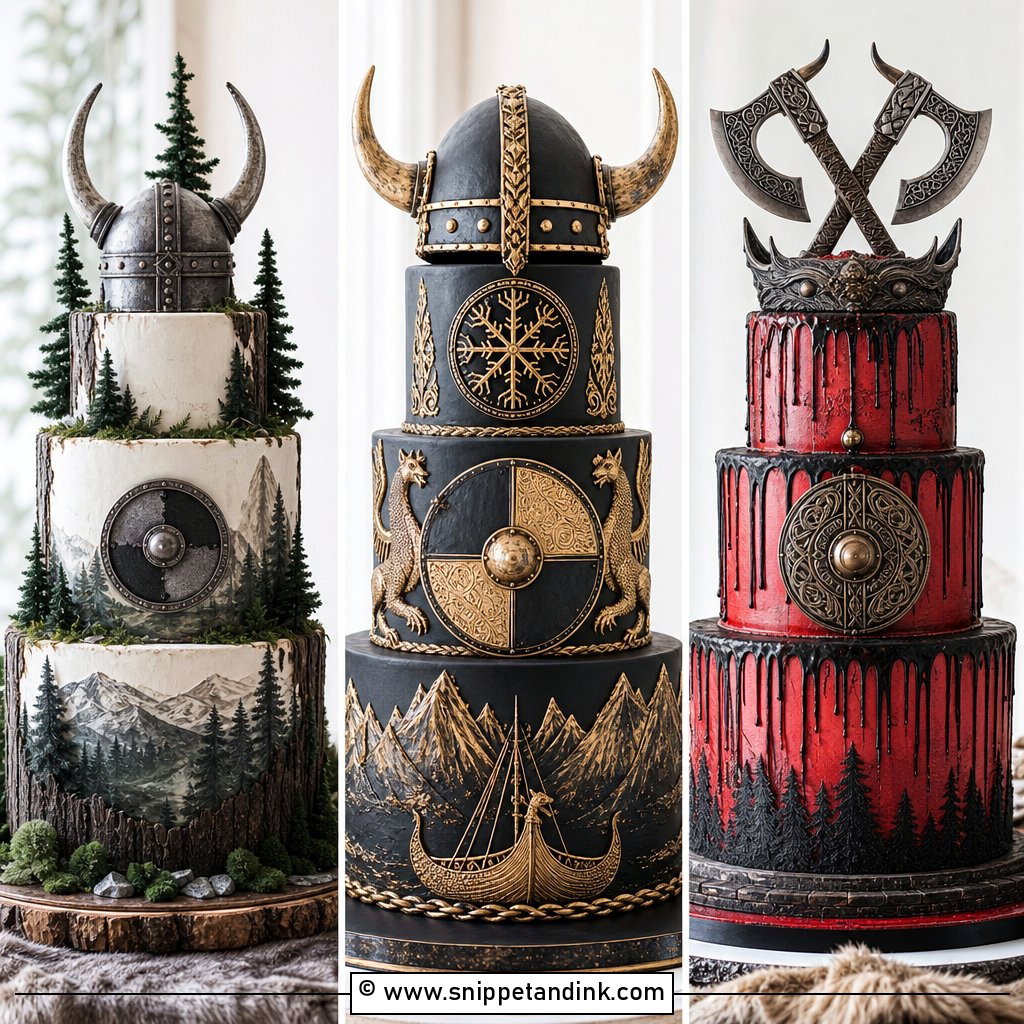
18. Mountain Wedding Cake
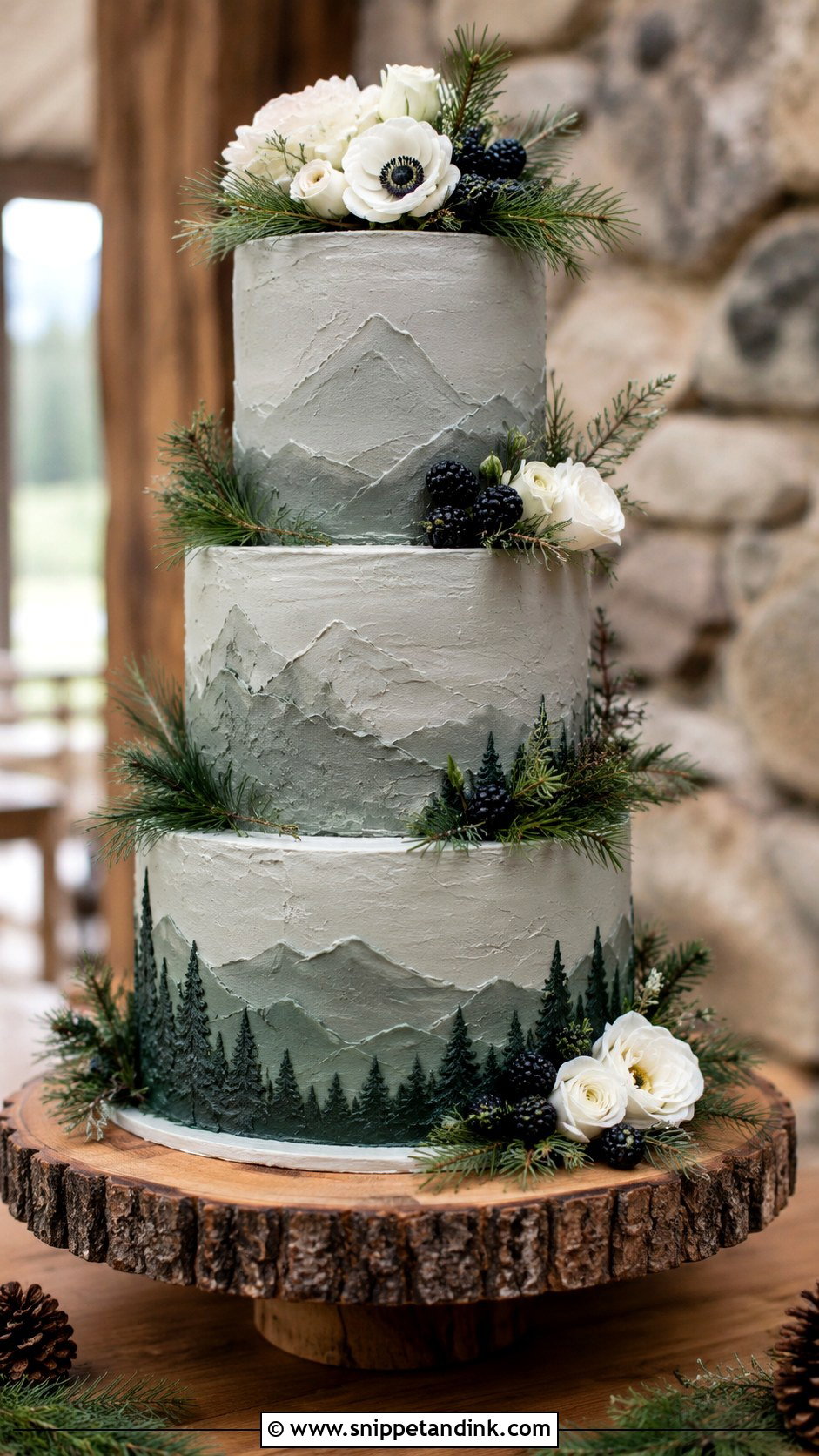
A mountain wedding cake can mean textured grey buttercream, a painted ridge line, forest green tiers or stone-effect fondant. I keep the details close to real: pine sprigs, dark berries, small white flowers, a wooden stand. Chocolate, spice, maple, vanilla or huckleberry suit the setting. Mountain venues bring one practical issue. At altitude, sponges rise and dry differently, so if your baker is local to the mountain, ask whether they’ve adjusted their recipes for it.
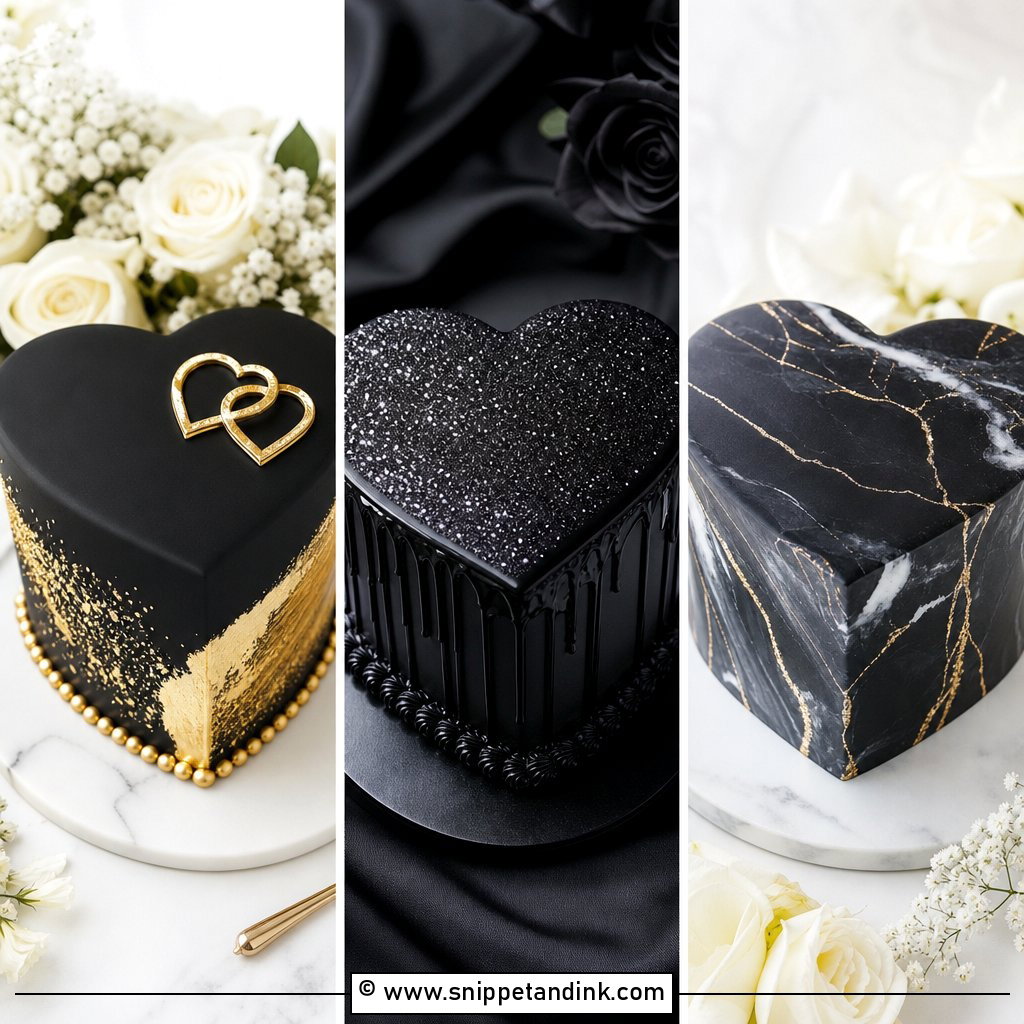
19. Black Marble Wedding Cake
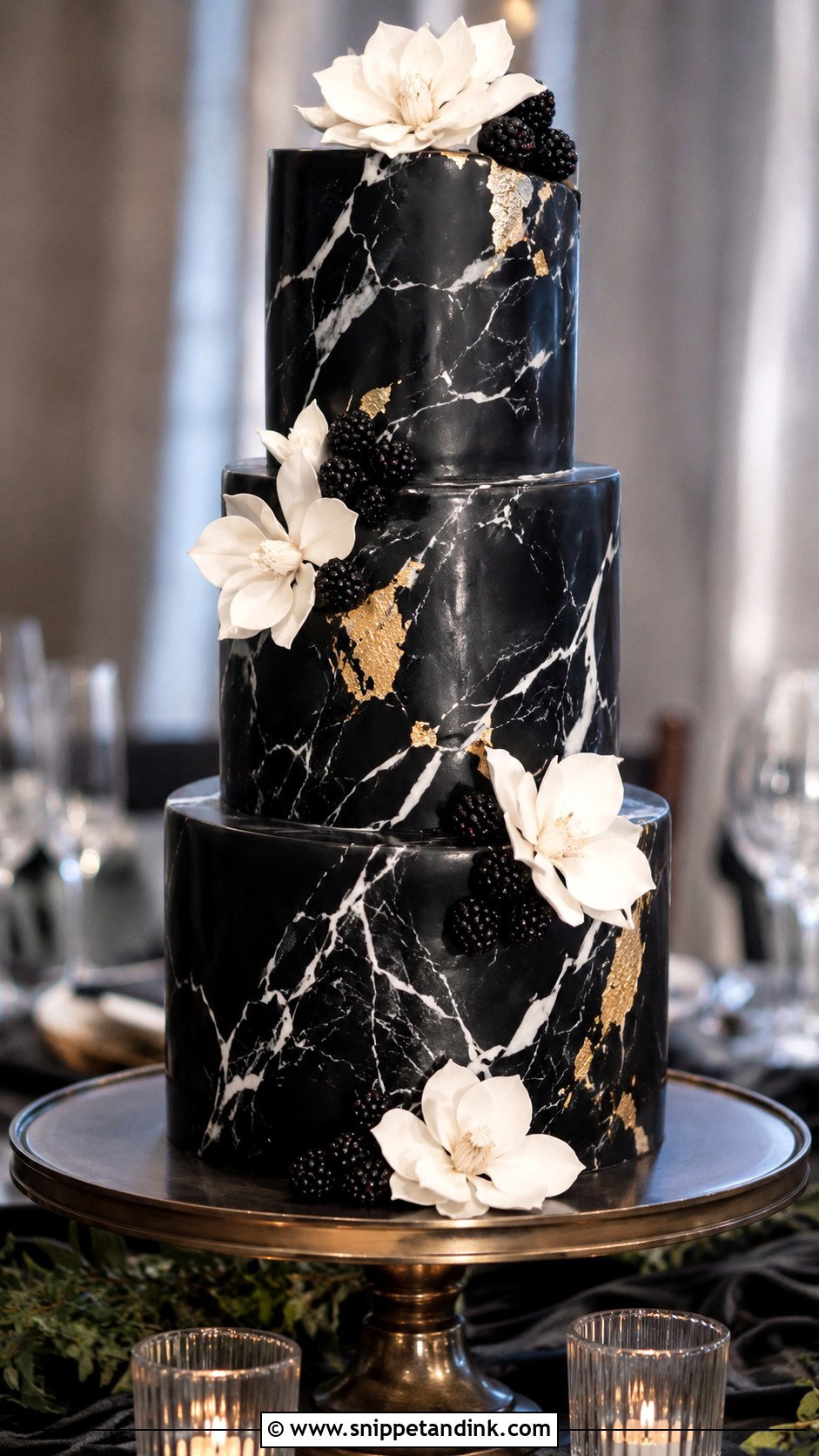
Black marble is dramatic and polished at once. The dark base gives strength and the veining gives movement. White, grey or gold veins read from across the room; darker veins vanish. A smooth fondant shows the pattern cleanly, and I’d keep decoration light so the marble stays in charge: blackberries, a little gold leaf, a white sugar flower or a bronze stand. Dark chocolate, vanilla bean, espresso or black sesame suit a black-tie evening.

20. Bronze Wedding Cake
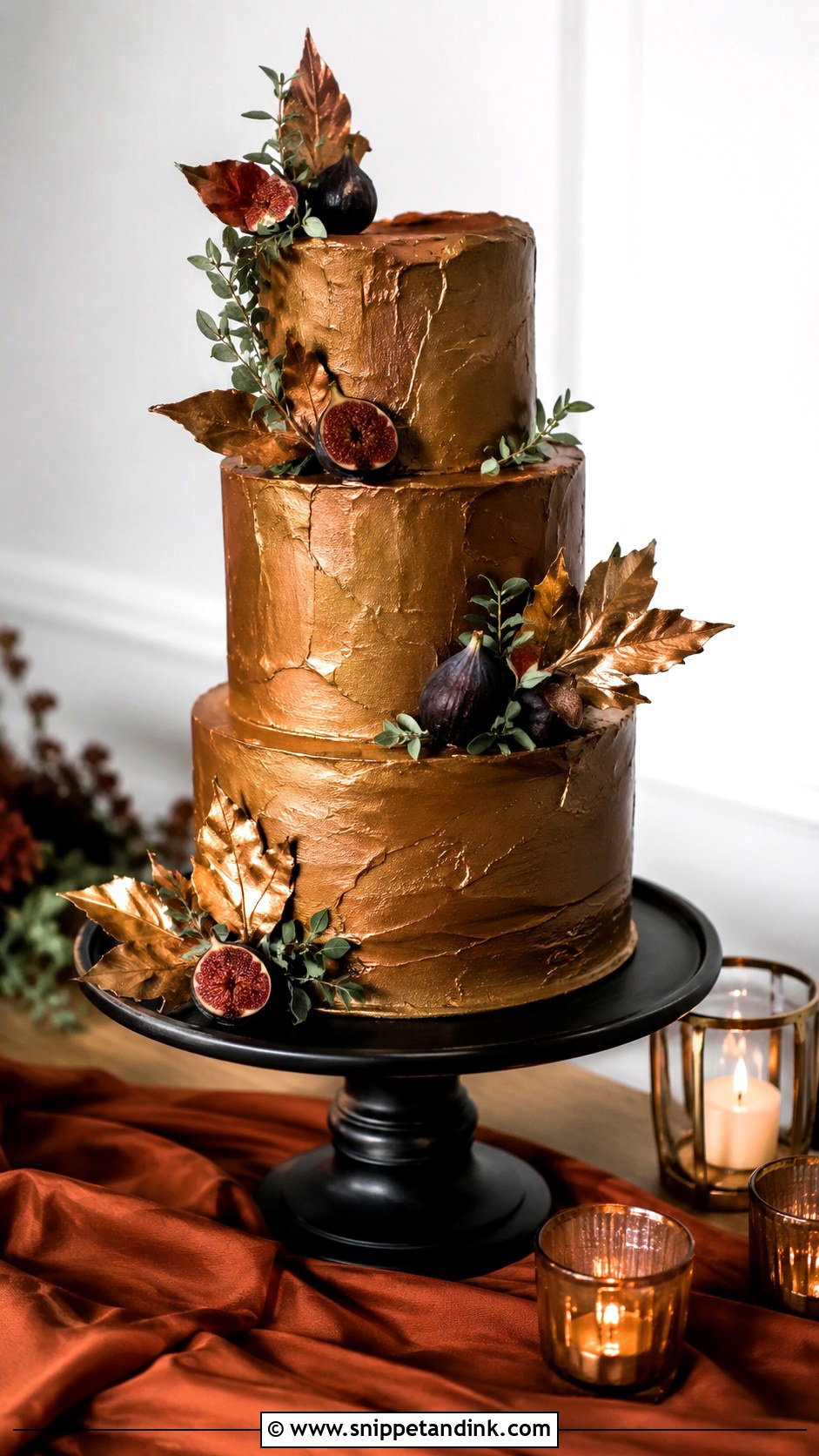
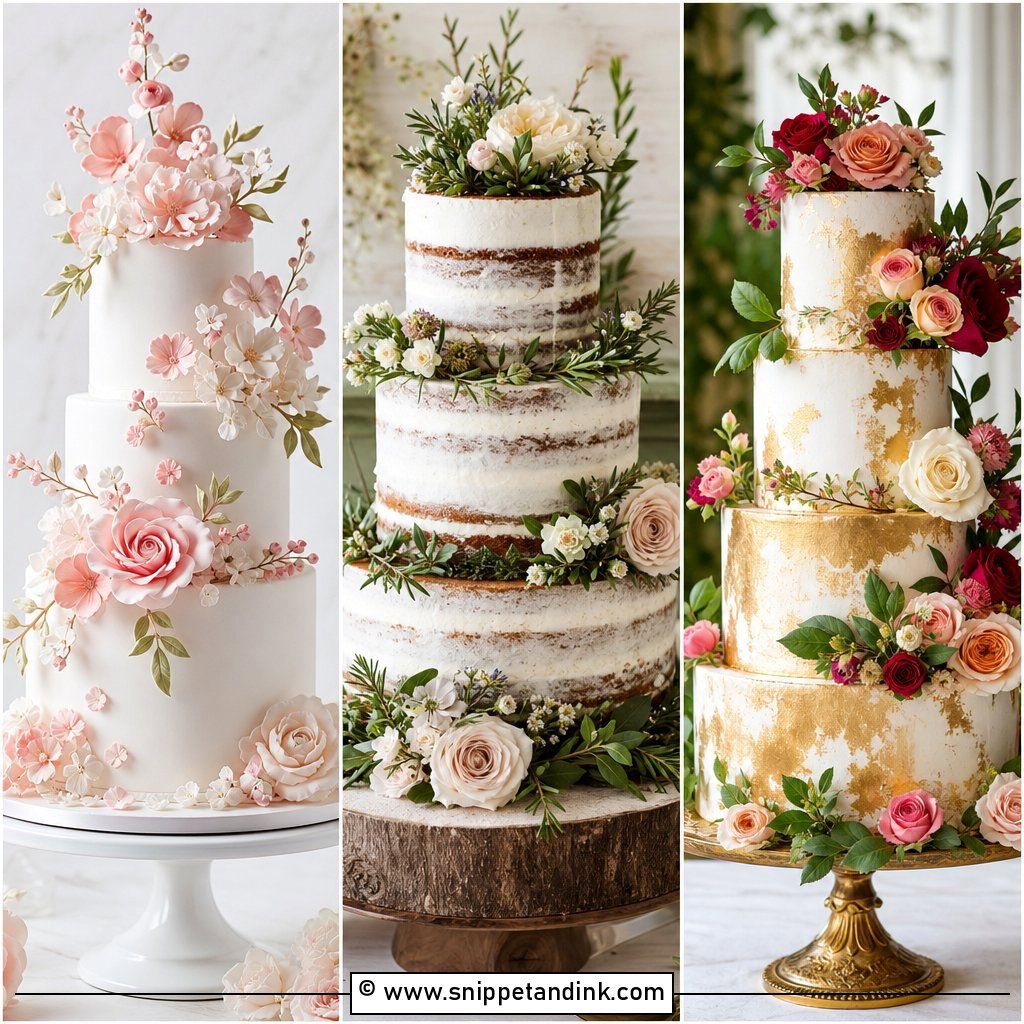
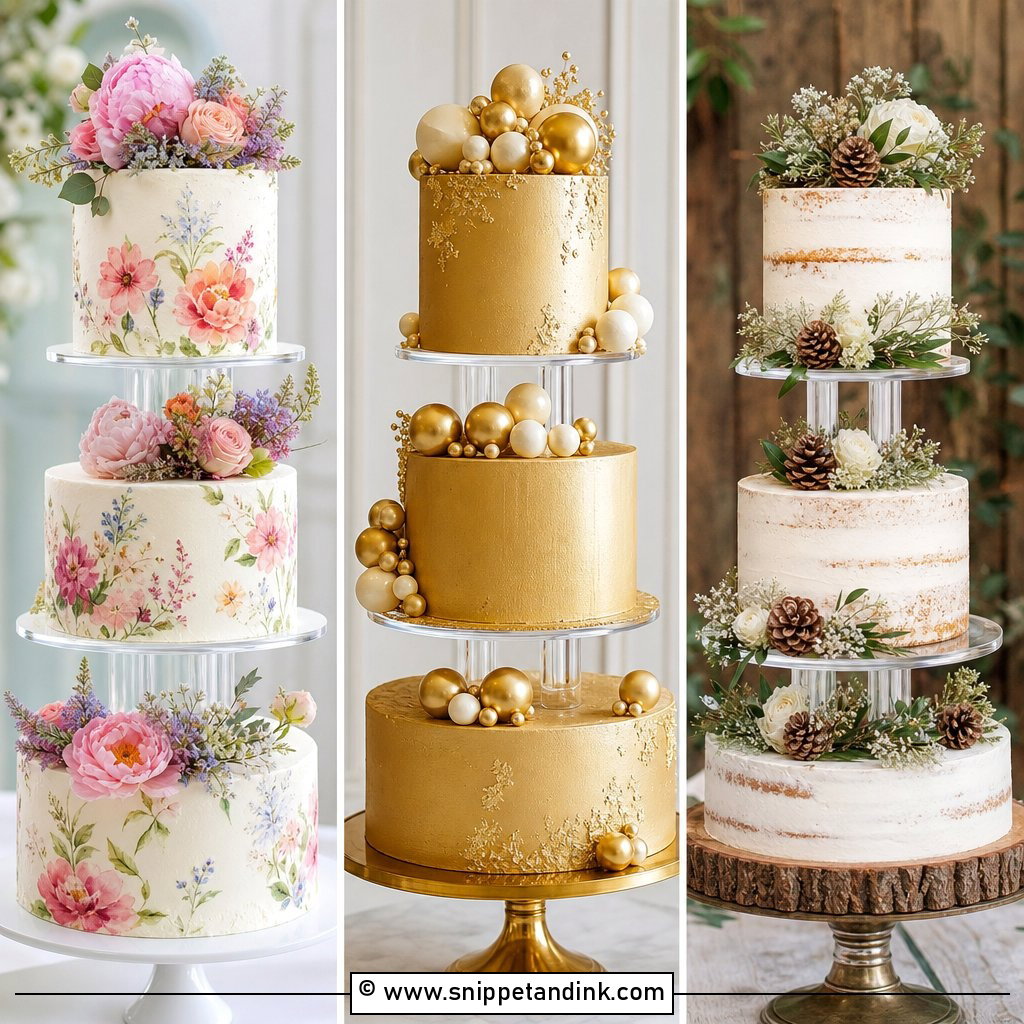
Bronze is warmer and quieter than yellow gold. I use it as a brushed metallic fondant, painted accents, tier borders or textured panels, alongside black, charcoal, ivory, navy or deep green. Edible metallic paints are usually lustre dust mixed with alcohol, and they show every brush stroke, so I apply them in long single passes. Chocolate, caramel, spice and hazelnut fit the palette. Decorate with greenery, dark figs or bronze sugar leaves.
21. Art Deco Wedding Cake
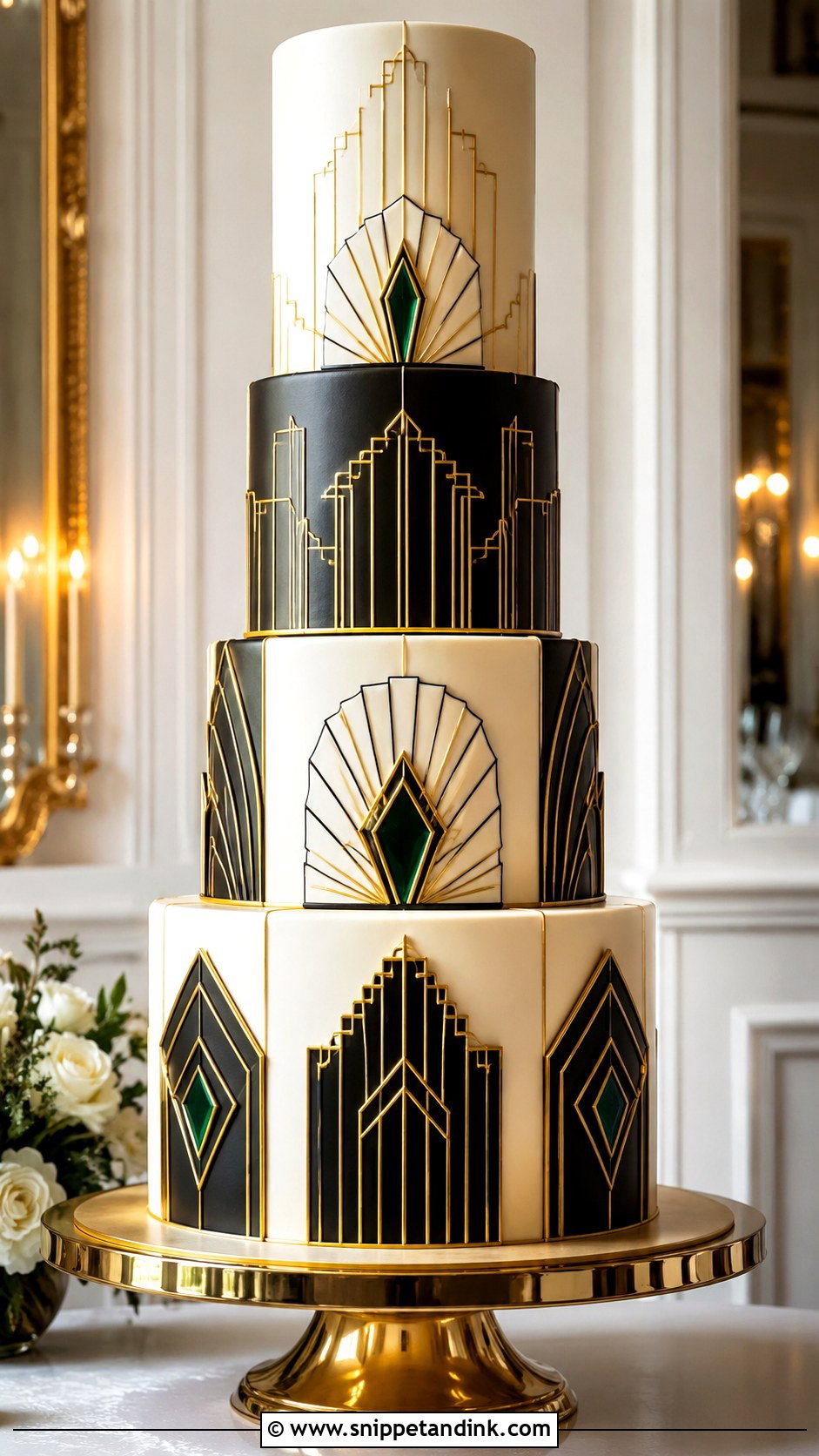
Art Deco is all symmetry, fans, stepped shapes and fine metallic lines in black, ivory, gold, silver or emerald. To keep it on the masculine side, I skip the delicate flowers and lean on structure: square or tall tiers and geometric details. Precision is what sells the style, so the lines are measured and cut, not freehand. Chocolate, vanilla bean, espresso, almond or caramel suit it, and it belongs at a formal evening reception in a grand room.
22. Tall Tiered Wedding Cake
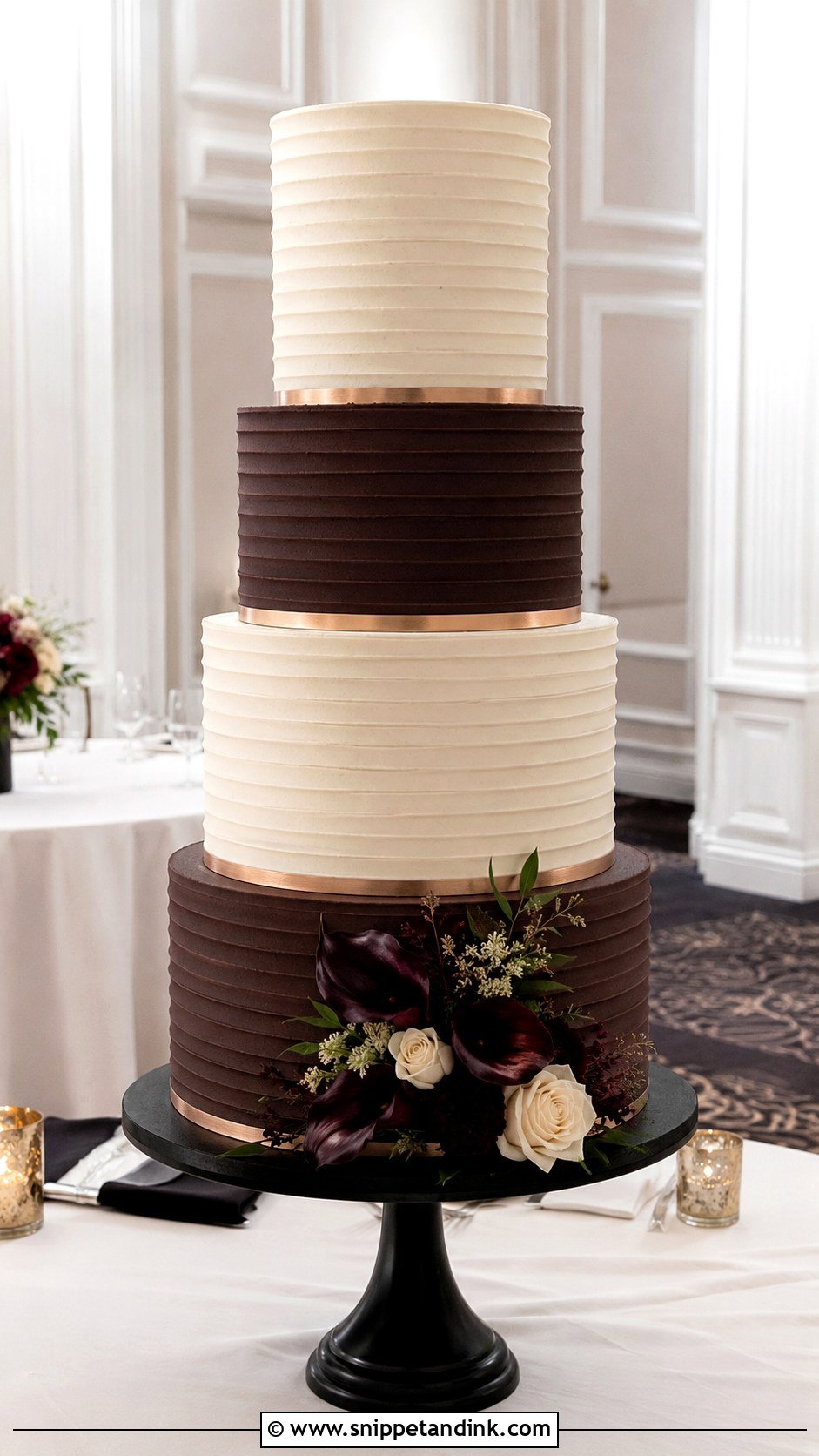
A tall cake fills a ballroom from across the room. Four tiers in black, charcoal, navy or ivory with clean vertical lines, subtle ribbed buttercream or slim metallic bands look powerful without crowding. If you want flowers, place one cluster low on the cake. Height needs engineering: every tier sits on its own board with internal dowels, and very tall cakes usually get a central dowel too, so they travel and stand safely. Mixing flavours between tiers, say chocolate, vanilla, espresso and caramel, gives guests a choice.
23. Textured Buttercream Wedding Cake
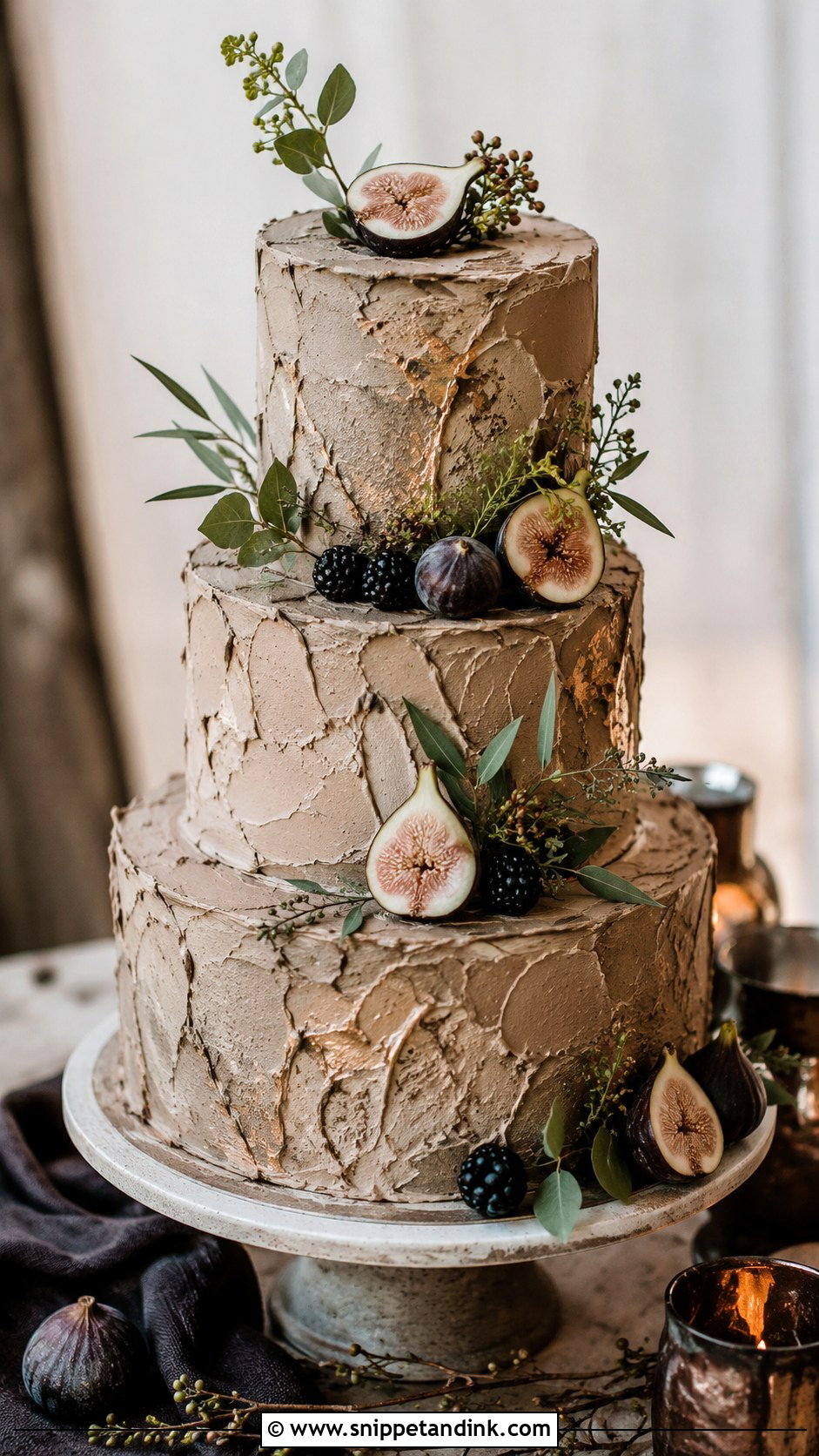
Textured buttercream gives you strength without the stiffness of fondant. Palette-knife strokes, horizontal ridges, stucco or stone-like swirls all add depth, in charcoal, ivory, taupe, forest green or mocha. I make texture with a firm Swiss meringue buttercream, which holds its marks. Foliage, figs, berries or a small metallic touch are enough decoration. Vanilla bean, chocolate, carrot, spice and brown butter caramel all suit buttercream, and the ridges catch light in photos. It sits as comfortably at a rustic wedding as a modern one, handmade but polished.
24. Semi Naked Wedding Cake
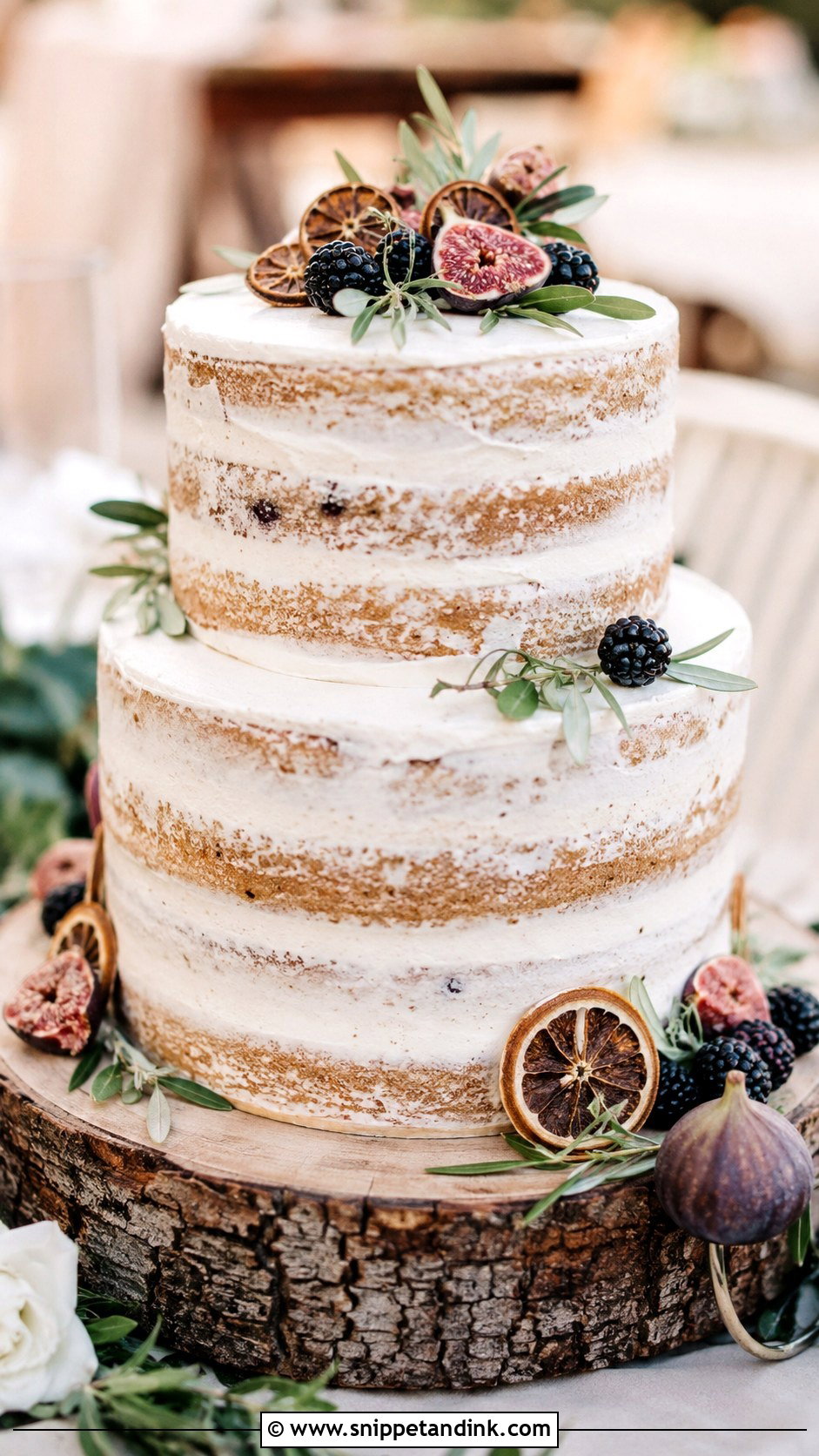
A semi naked wedding cake leans masculine with earthy flavours, sturdy tiers and simple natural decoration. The thin scrape of buttercream shows the layers, so they have to be level and even. The honest downside is that exposed sponge dries out, so I finish semi-naked cakes as close to delivery as I can and keep them out of the sun. Chocolate, spice, vanilla bean, carrot or almond, with foliage, dark berries, figs, dried citrus or a wooden stand, suit barns and outdoor receptions.



25. Greenery Wedding Cake
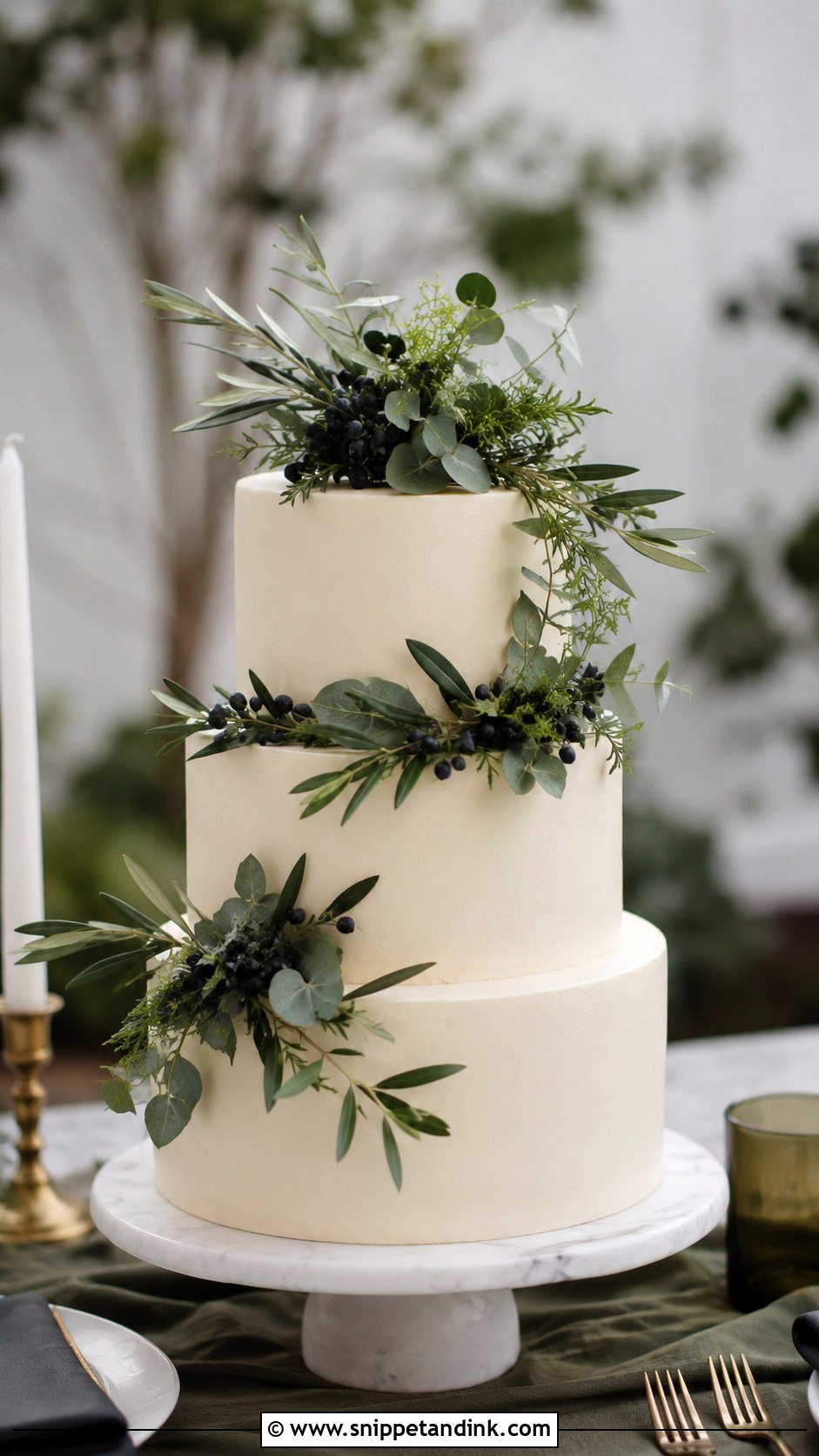
Greenery keeps a cake grounded and not too sweet-looking, on ivory, charcoal, navy, black or forest green tiers. Olive leaves, rosemary and fern-like sprigs give structure. Eucalyptus looks wonderful but it’s not food safe, so if you want it, it has to be wrapped or set on a barrier and must never touch the sponge. I arrange foliage in deliberate placements rather than scattering it, which keeps the cake looking finished. Vanilla, lemon, pistachio, chocolate or almond suit the fresh look.
26. Black Drip Wedding Cake
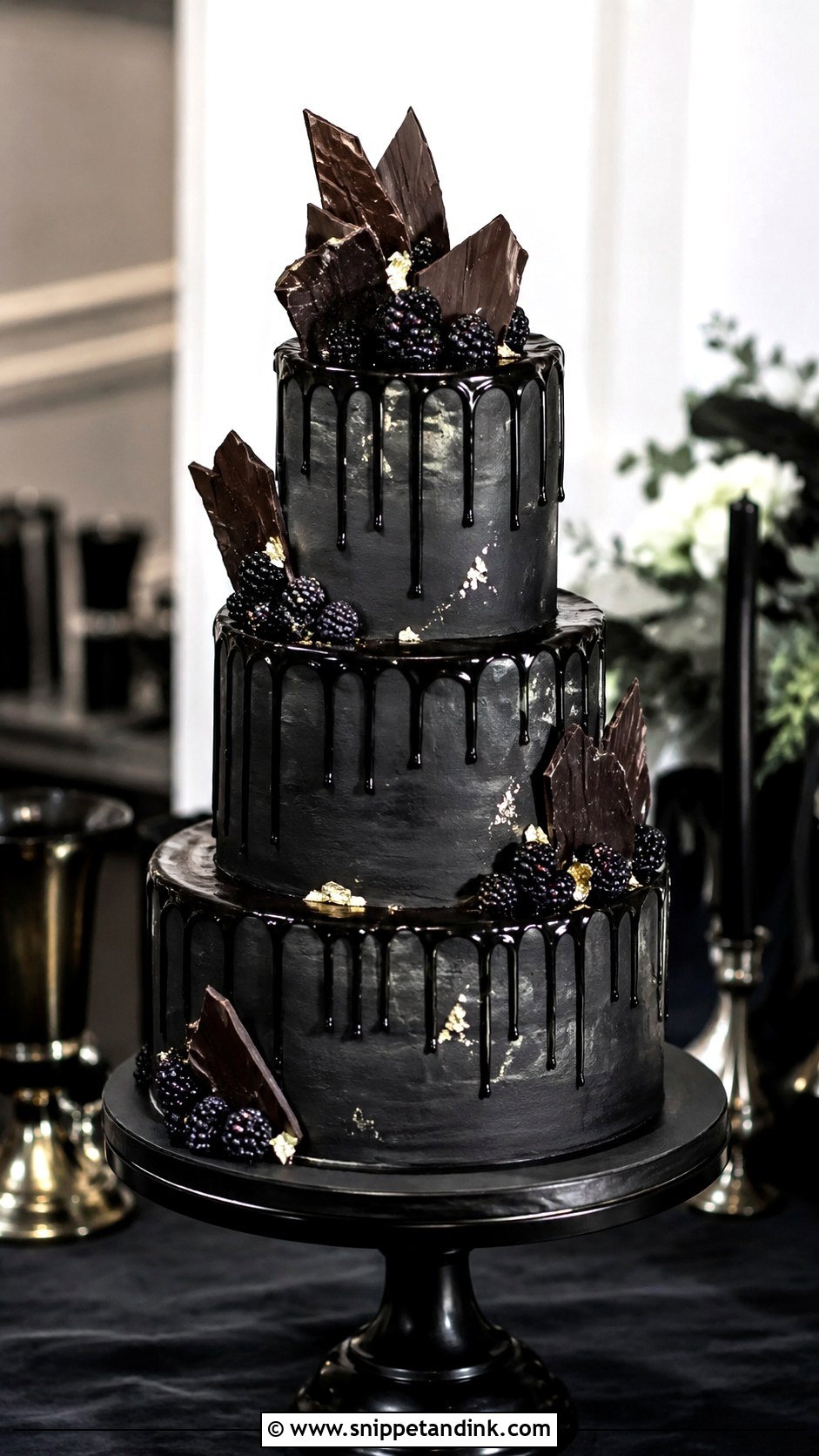
A black drip is glossy black ganache run over a charcoal, white, navy or dark chocolate cake. The ganache temperature decides everything: too warm and it races to the board, too cool and it stops in fat blobs. For a masculine finish I keep the drips short and controlled. Blackberries, chocolate shards, metallic flecks or a few flowers top it. Chocolate fudge, cookies and cream, espresso or salted caramel inside suit how rich it already looks.
27. Plaid Wedding Cake
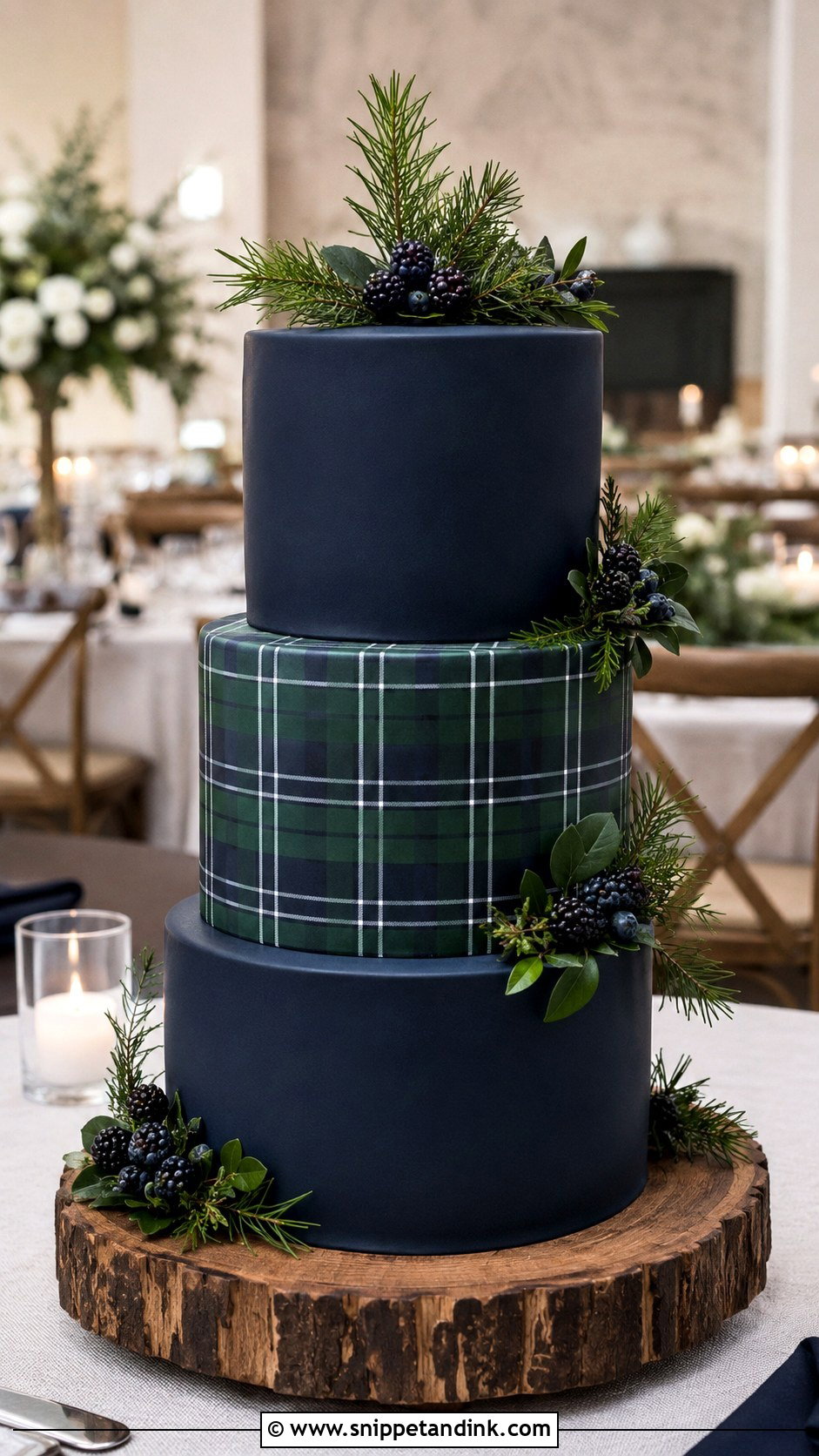
Plaid works when it’s one tier, not the whole cake. I put a single plaid tier among solid black, ivory, navy or forest green tiers, made from fondant strips, painted lines or a faint edible print. Painted plaid takes several layers of thin colour to look woven rather than striped. Foliage, dark berries or a wooden stand keep it rustic, with chocolate, maple, spice, vanilla or caramel inside. It suits autumn, lodges and mountain venues.
28. Monochrome Wedding Cake
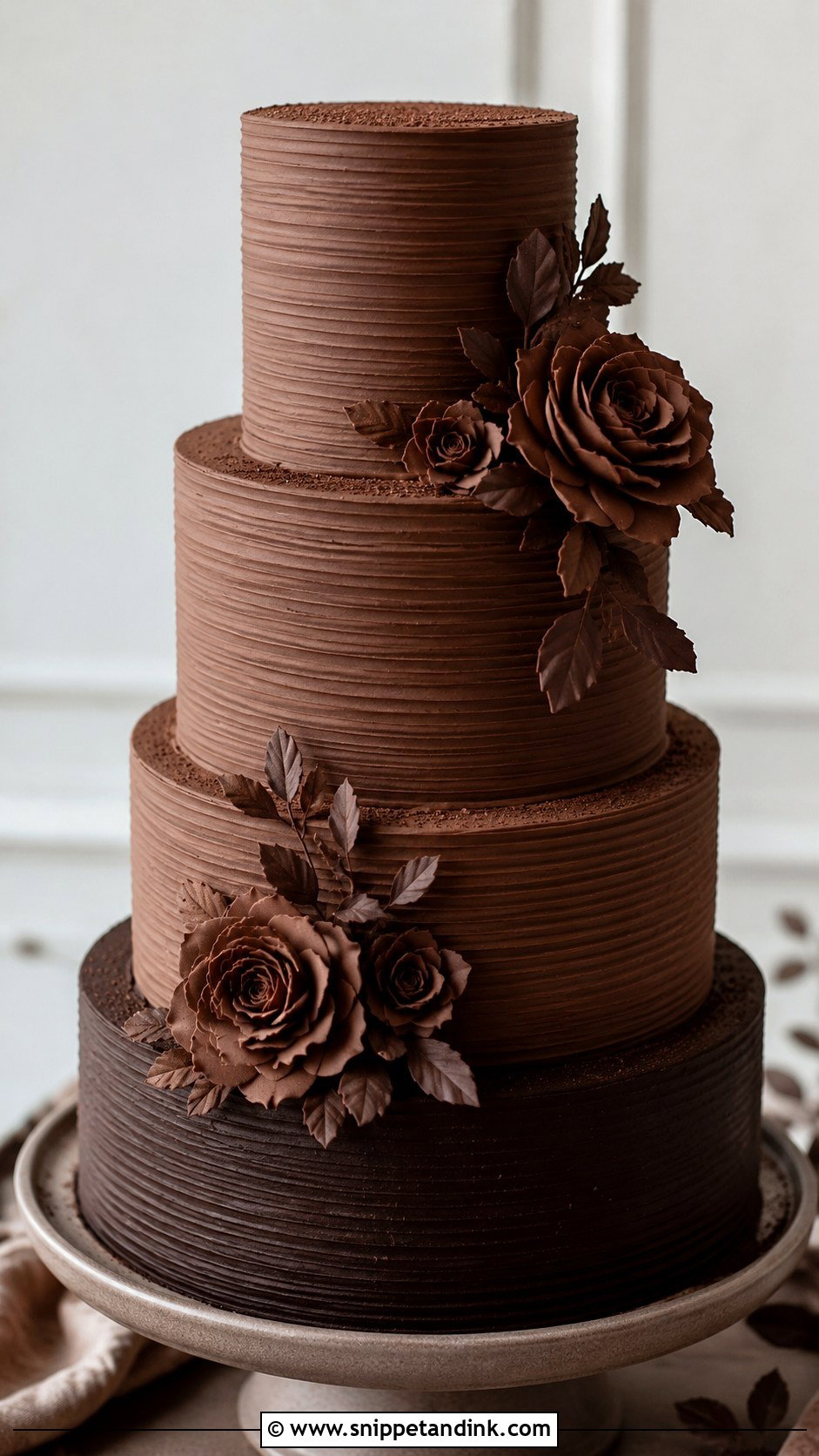
Monochrome uses one colour family top to bottom: black, grey, navy, taupe, mocha or forest green. With no contrast to lean on, interest has to come from texture, tier height and small shifts of shade. A matte finish, ribbed buttercream or smooth fondant all work, with one tonal detail such as same-colour sugar flowers, a matching drip or a darker base tier. Flavours can echo the colour: chocolate, coffee, pistachio or vanilla.
29. Stone Effect Wedding Cake
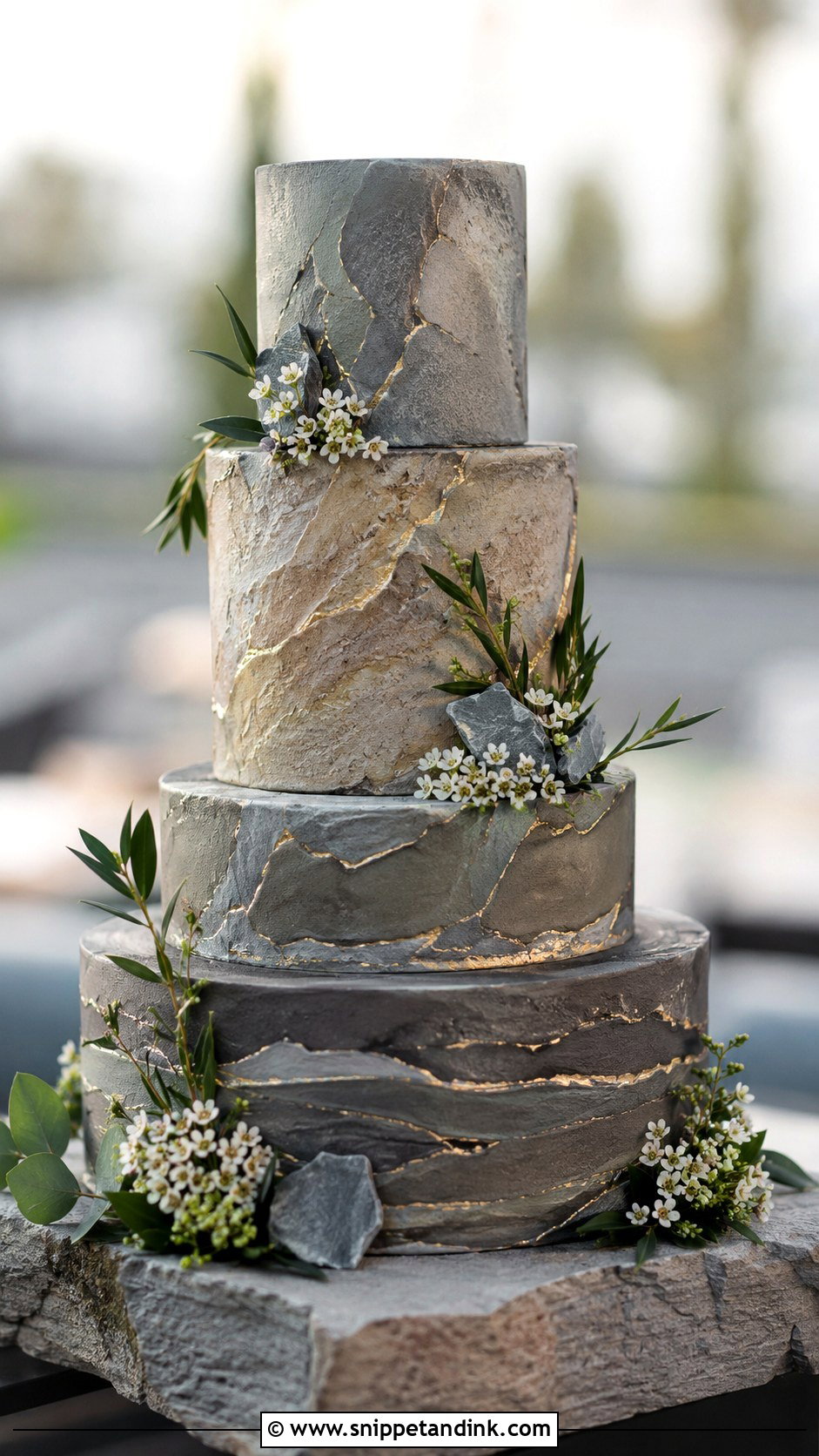
Stone finishes borrow from slate, granite, limestone or weathered rock, depending on the colours and how rough I make the surface. Grey, black, ivory, taupe and moss green tones work. I build the effect in layers of sponged and dry-brushed colour so it has depth rather than looking painted on. Foliage, white flowers, edible gold cracks or sugar stones are enough decoration. Chocolate, almond, vanilla, coffee or hazelnut balance the earthy look. Outdoor venues, galleries and modern spaces suit it.
30. Moody Floral Wedding Cake
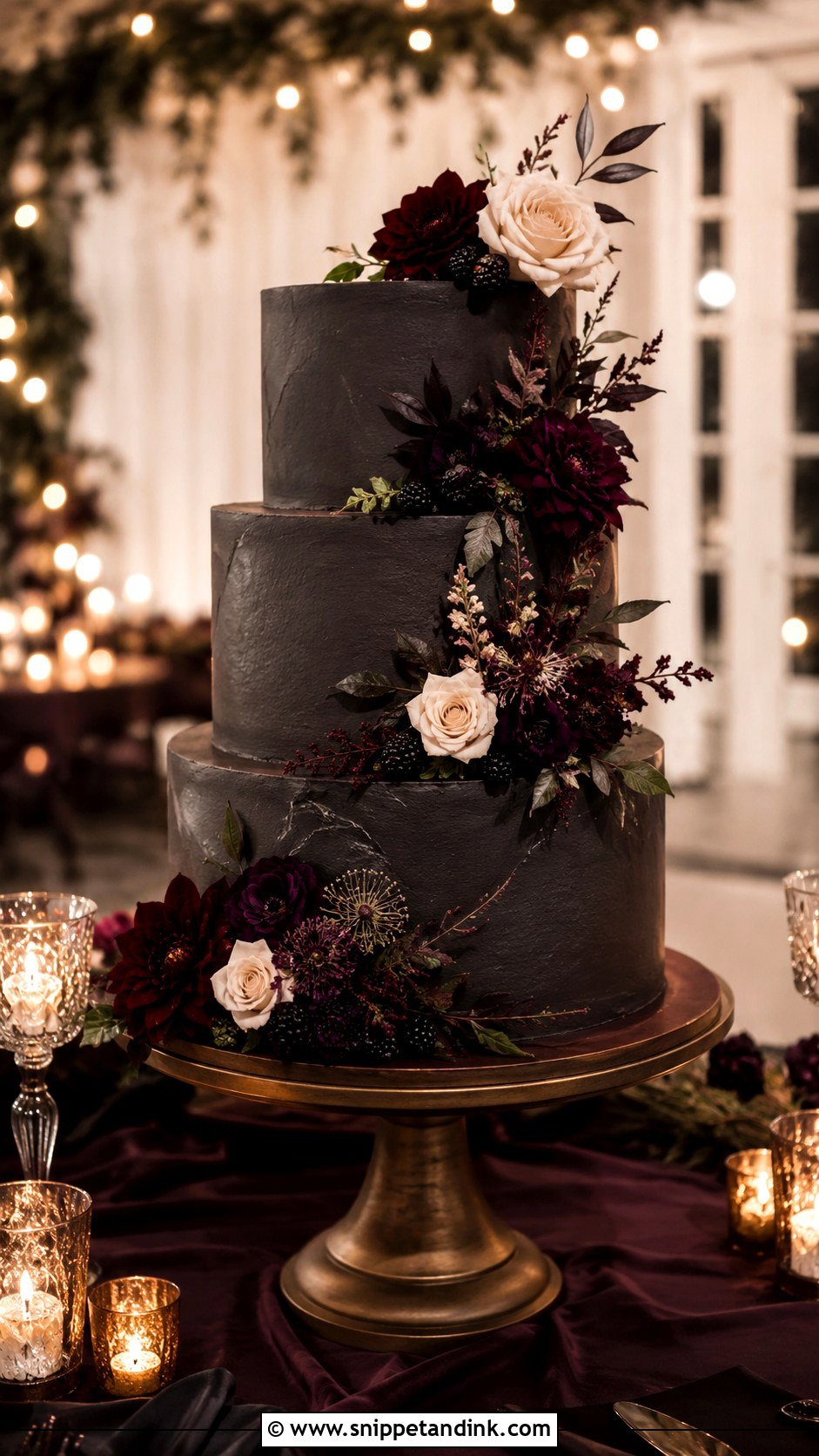
Moody florals let you have flowers without going soft. Start with a dark cake in black, charcoal, navy, mocha or deep green, and add burgundy, ivory, rust, plum or deep red blooms in a tight arrangement rather than a loose cascade. Any fresh flowers must be pesticide-free and kept off the sponge with a barrier or picks, which is why many couples choose sugar flowers for this look. Chocolate, red velvet, espresso, spice or dark berry inside. It suits autumn evenings and candlelit rooms.
Square Corners, Tall Tiers and the Drive Over
Bold, structured cakes are heavier and less forgiving than a soft round cake with flowers, and that changes the logistics. Here’s what I’d raise with any couple choosing one of the sharper designs above.
- Order early. Sharp fondant, hand-cut geometric panels and sugar flowers take far longer than a plain buttercream finish, so popular cake designers book up months ahead.
- Ask how the tiers are supported. Each tier should sit on its own board with dowels, and tall cakes often need a central dowel.
- Agree who delivers and sets up. Tall and square cakes are usually stacked at the venue rather than carried assembled.
- Check the floor and table. A heavy four-tier cake on a wobbly folding table is a real risk.
- Plan servings honestly. Dark chocolate and espresso cakes are rich, and many guests take smaller slices, so you may need less cake than you think.
Foliage, Flowers and What Should Never Touch the Sponge
Greenery and dark florals turn up all over this list, and not every pretty plant belongs on food. Eucalyptus, many lilies, hydrangea and anything sprayed by a florist should never be pressed directly into cake. I wrap stems, put them in food-safe picks, or rest them on a small barrier, and I remove them before cutting. Herbs like rosemary and edible blooms are safer choices for the tiers themselves. If you love the look of something that isn’t food safe, sugar versions are an honest alternative and they won’t wilt under lights.
Bring the Suit Swatch to the Tasting
The couples who end up happiest with a masculine cake usually choose in a particular order: flavour first, then colour, then shape, then decoration. Black, navy, charcoal, bronze, forest green, stone, geometric lines and dark chocolate are all strong starting points, but they need to suit the room and the season. Bring a fabric swatch from the suits and a photo of the venue lighting to your tasting so we can match the dark tones properly. One strong idea, carried out with care, beats five ideas competing on the same cake.
You'll Like These Ideas:



Leave a Reply