
What people usually mean by Korean style bridal fashion is restraint: clean lines, smooth satin or light tulle, a sleeve or a neckline doing the work instead of beading everywhere. Many brides wear a Western gown for the main ceremony and change into a hanbok, or something hanbok-inspired, for the family ceremony, portraits or the reception. When I style this look, the fit carries almost everything, because there is so little decoration to hide behind. The ideas below run from minimal satin to modern hanbok, and the right one depends on your venue, the season and how many changes your day includes.
One Wedding, Three Outfits: Studio Shoot, Ceremony and Paebaek
Korean weddings often involve more than one dress, and planning them together saves a lot of stress. Many couples do pre-wedding portraits in a photo studio weeks before the date, usually in gowns rented through the studio. Then comes the main ceremony gown, and for many families, a hanbok for the paebaek, where the couple bows to the elders and receives their blessings.
Each moment asks something different of the dress. Studio shoots favor drama, because the gown only has to look good standing still under controlled light, so big ball gowns and long trains make sense there. The ceremony gown has to walk, sit and hug for hours. The paebaek outfit has to kneel and bow on the floor.
Planning the changes
- Use the studio shoot for the dramatic silhouette you’d never manage at a full reception.
- Pick the ceremony gown for comfort and fit first, since you’ll wear it longest.
- Wedding halls often run tight time slots, so ask how long you’ll have between ceremony and paebaek before choosing a gown with dozens of buttons.
- Choose one hairstyle that works under both a veil and traditional hair ornaments, or book your stylist for a quick change.
1. Korean Minimalist Satin Wedding Dress
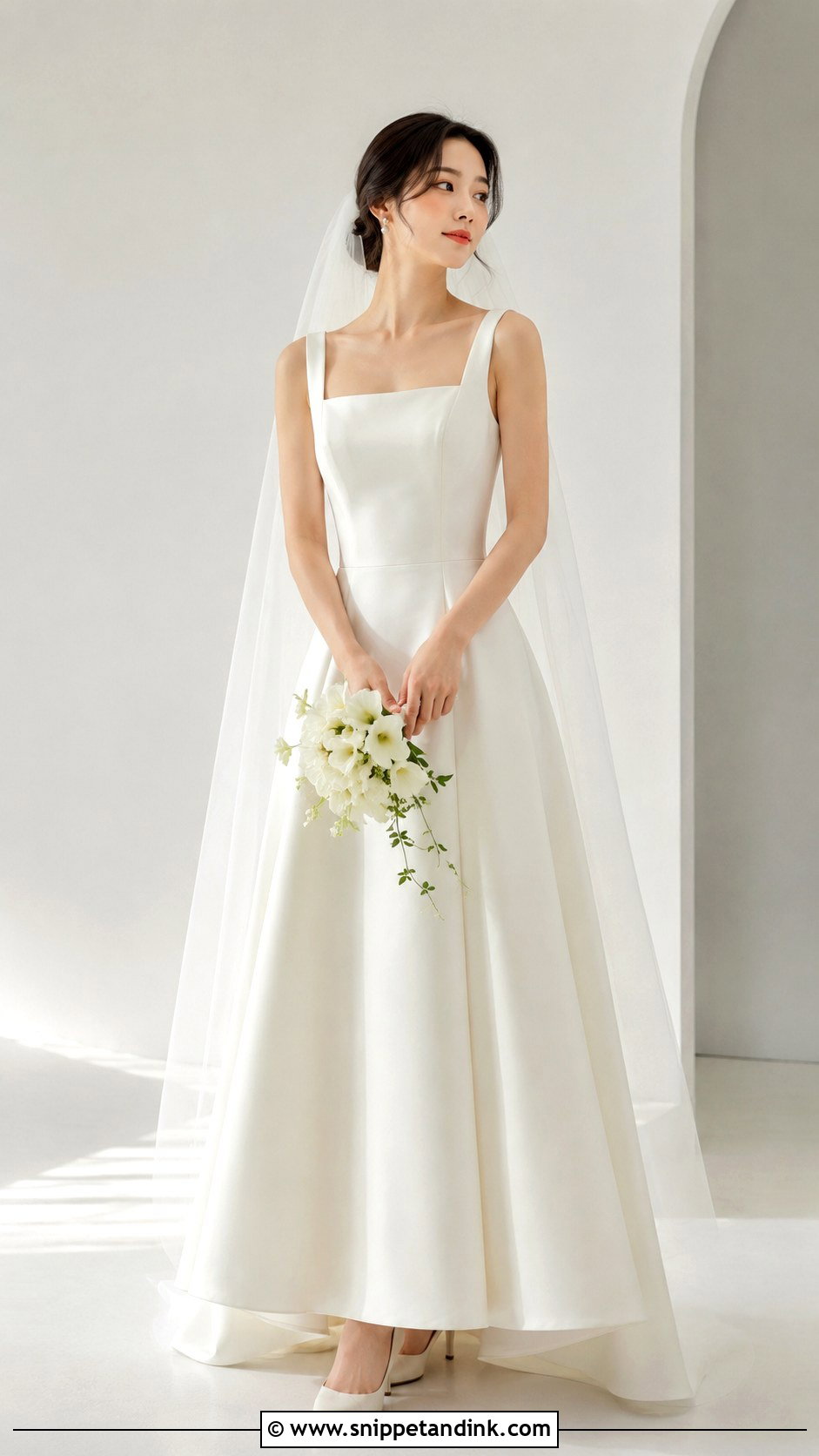
Plain satin is the purest version of the Korean bridal look, and the least forgiving. With no beading or lace, the eye goes straight to the seams, so a satin gown needs a proper fitting at the bust and waist; a ripple across the bodice will show in every photo. A square neck, bateau neck or soft off-shoulder all suit it, over an A-line or column skirt. Pearl studs, a low bun, a sheer veil and satin pumps are all it needs. Hotel ballrooms and city venues with even lighting show satin at its best.
2. Korean Lace Long Sleeve Wedding Dress
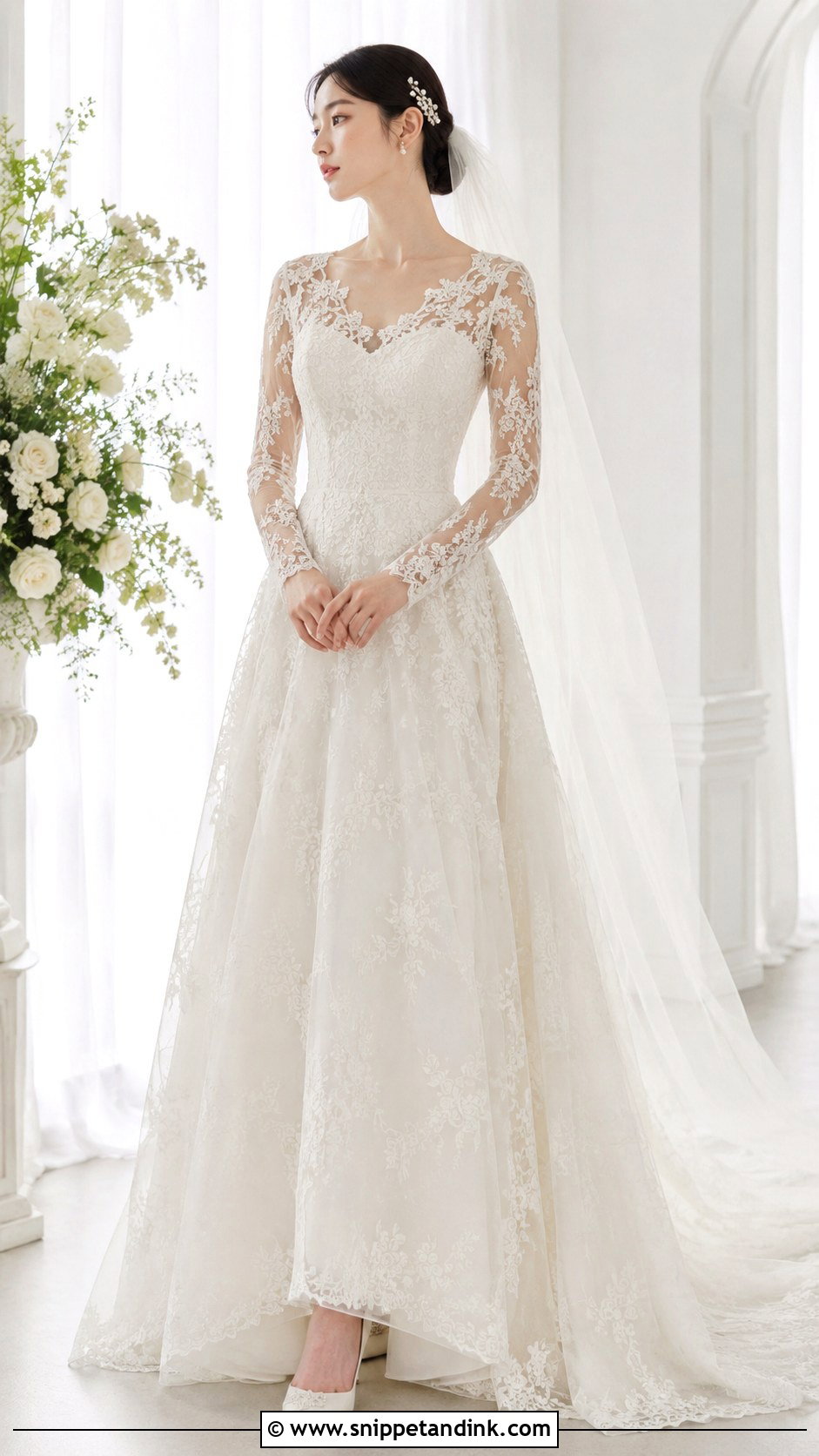
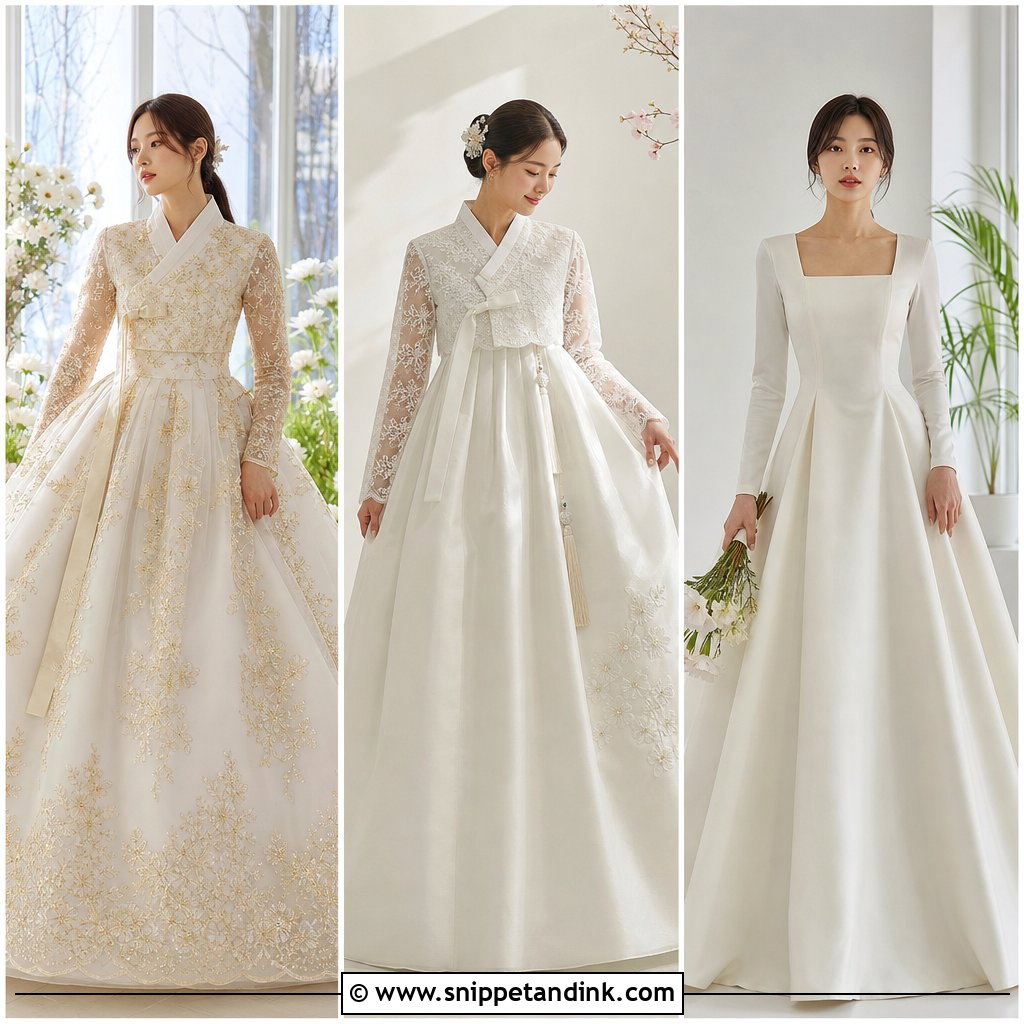
Sheer lace sleeves give coverage and detail without weight, which is why so many brides choose them for spring, autumn and formal indoor ceremonies. A fitted lace bodice above a chiffon or tulle skirt keeps the balance right. I steer most brides toward small-scale lace on the sleeve; big floral motifs on a thin arm can look crowded. The lace edge at the wrist should sit flat on the back of the hand, not bunch. A neat updo, pearl pins and pointed heels finish it.
3. Korean Off Shoulder Ball Gown Wedding Dress
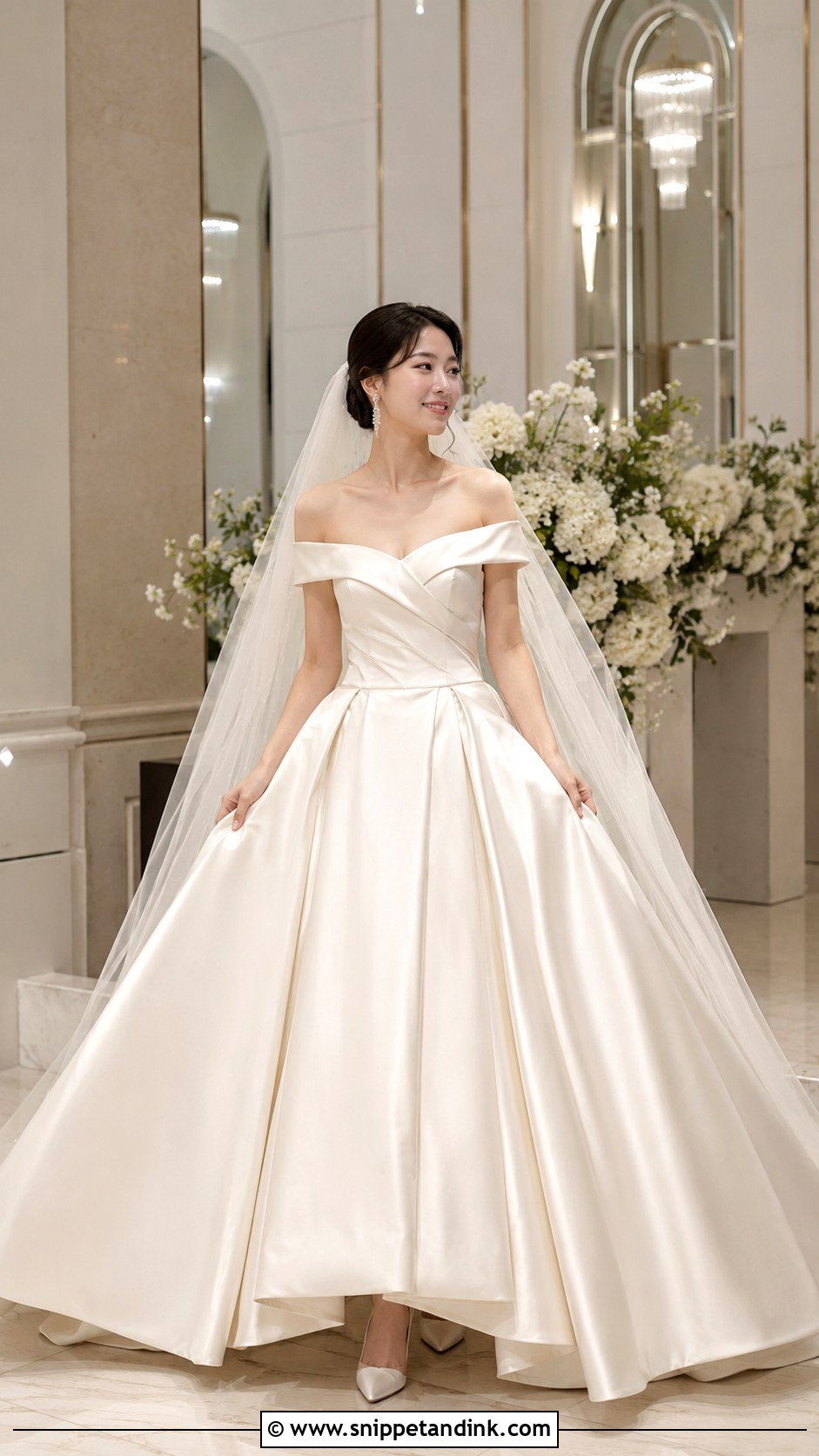
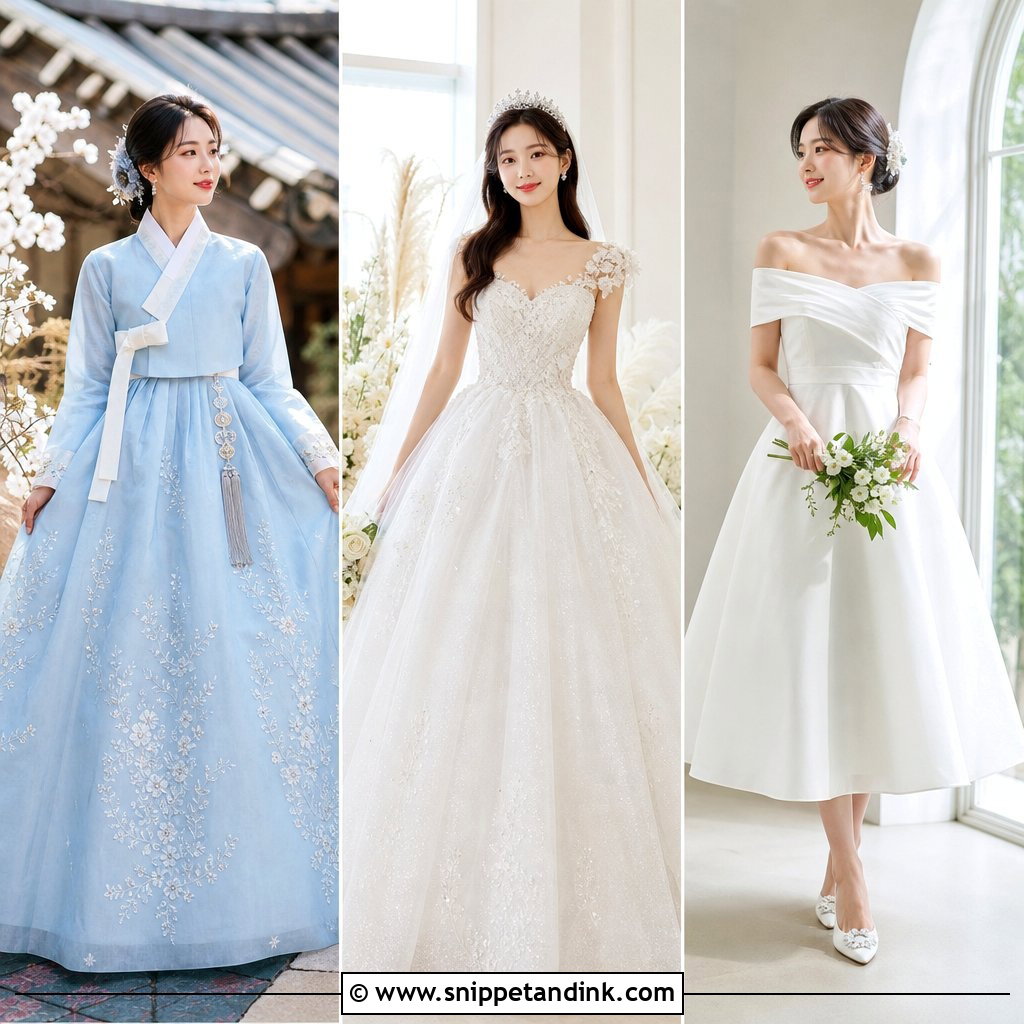
An off-shoulder ball gown gives the princess shape, and the Korean way of wearing it keeps the sparkle low: smooth fabric, controlled volume, maybe a little shimmer. Satin or mikado gives a crisp formal outline; layered tulle is lighter and softer. The neckline needs either a stay strap or a well-boned bodice, or you’ll be hitching it up between photos. A simple necklace, drop earrings and a long veil complete it. Grand halls and studio portraits give the skirt room to spread.
4. Korean A Line Tulle Wedding Dress
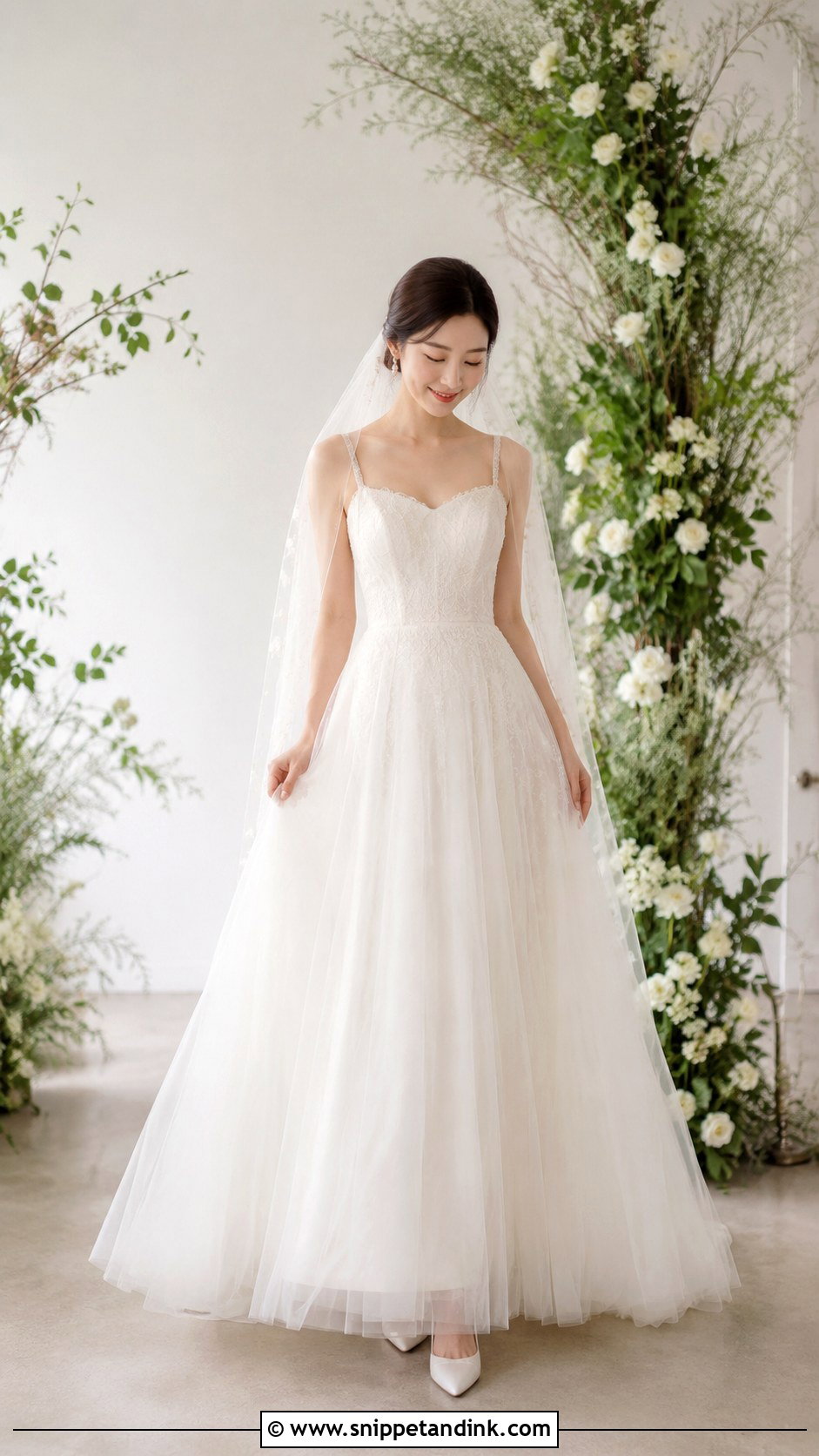
Tulle A-lines suit more body shapes than any other gown I fit. The bodice defines the waist and the skirt falls away softly, so it moves well without feeling dramatic. Keep the bodice clean, with delicate straps or a scattering of lace appliqué. Tulle crushes when you sit, so a skirt with several layers recovers its shape faster than a single thin one after the car ride. A sheer veil, natural makeup and soft waves or a low bun suit garden and chapel ceremonies.
5. Korean Square Neck Wedding Dress
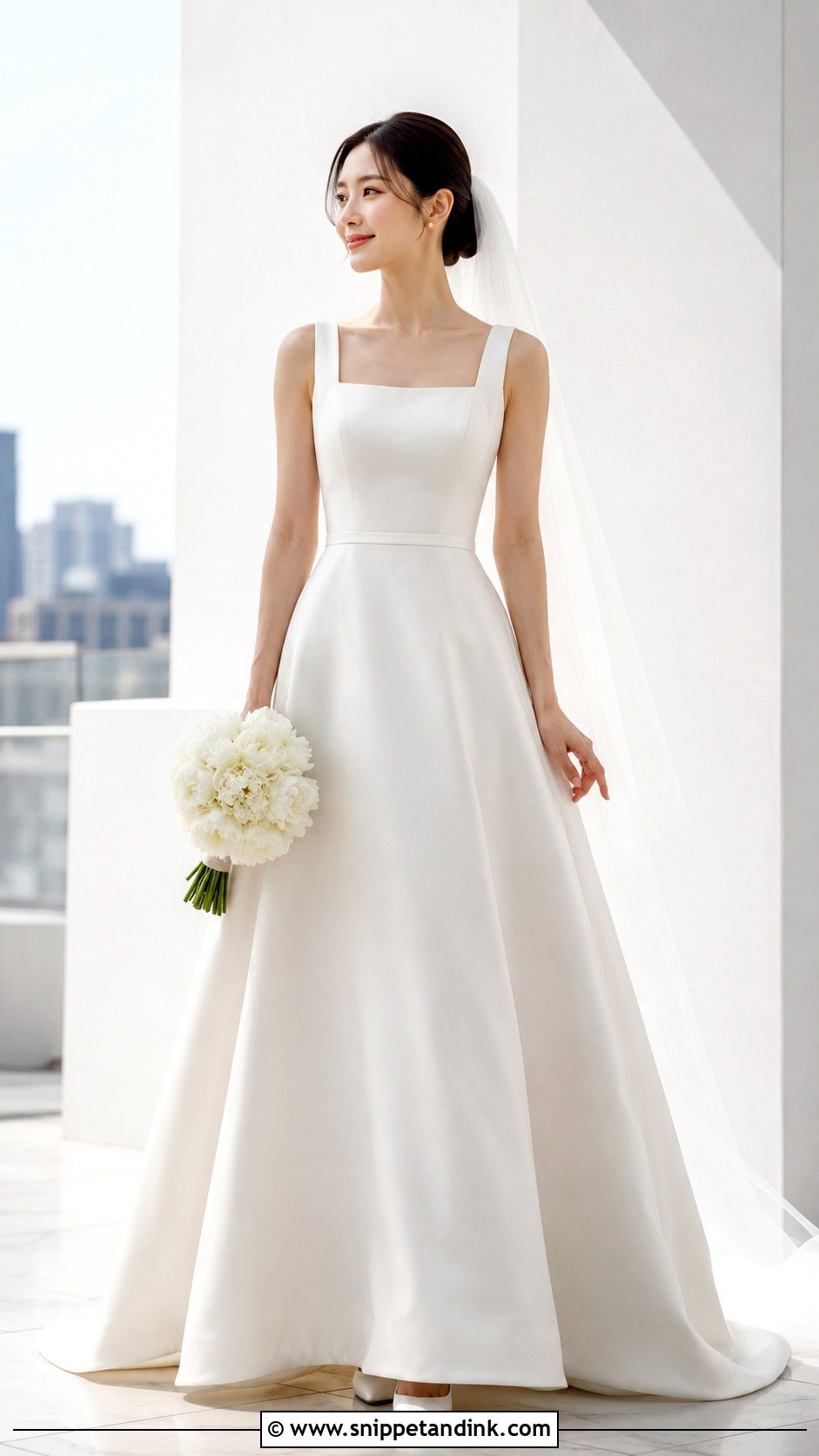
A square neckline adds architecture to a plain gown, and it looks sharpest in fabrics that hold an edge: satin, crepe or mikado. Thin straps feel delicate; wide straps give better support for a fuller bust and stop the corners from pulling inward. A fitted waist and A-line skirt make the classic Korean bridal shape. Pearl earrings, sleek heels and a soft veil keep it understated. Watch the corners in the mirror as you raise your arms; a square neck that lifts or gapes needs taking in at the side seams.
6. Korean High Neck Lace Wedding Dress
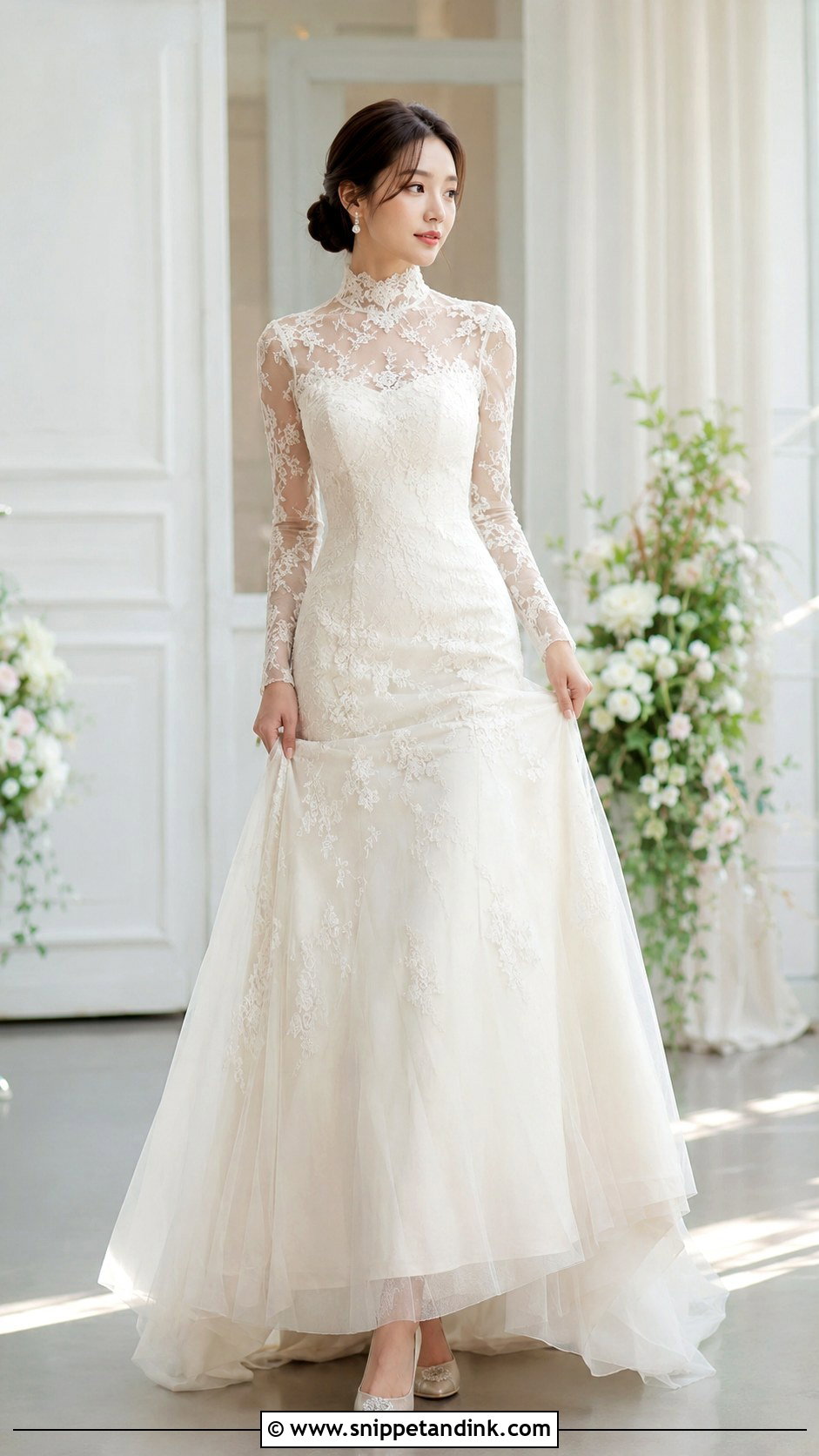
High neck lace has a vintage feeling, and in Korean styling it stays light because the lace is sheer and fine. A fitted bodice, long sleeves and a flowing skirt give it shape. Choose small floral patterns over bold motifs if you want delicacy. The neckline closure is what I check first: a row of tiny buttons at the back of the neck needs to sit flat without pulling, and the collar shouldn’t press against the throat when you look down. A low chignon shows it off, with pearl drops and a simple veil. It suits cooler months and formal portraits.
7. Korean Hanbok Wedding Dress
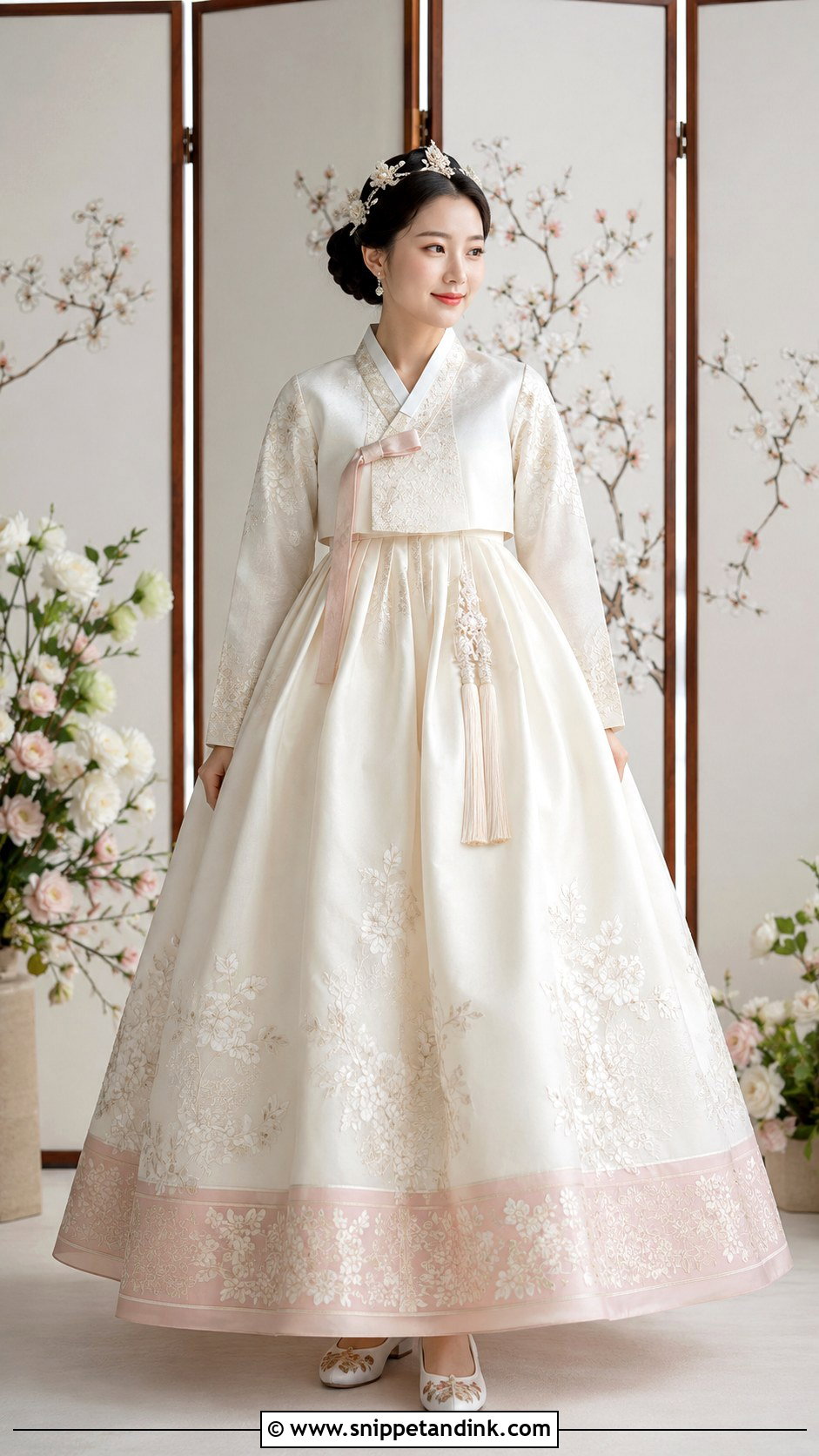
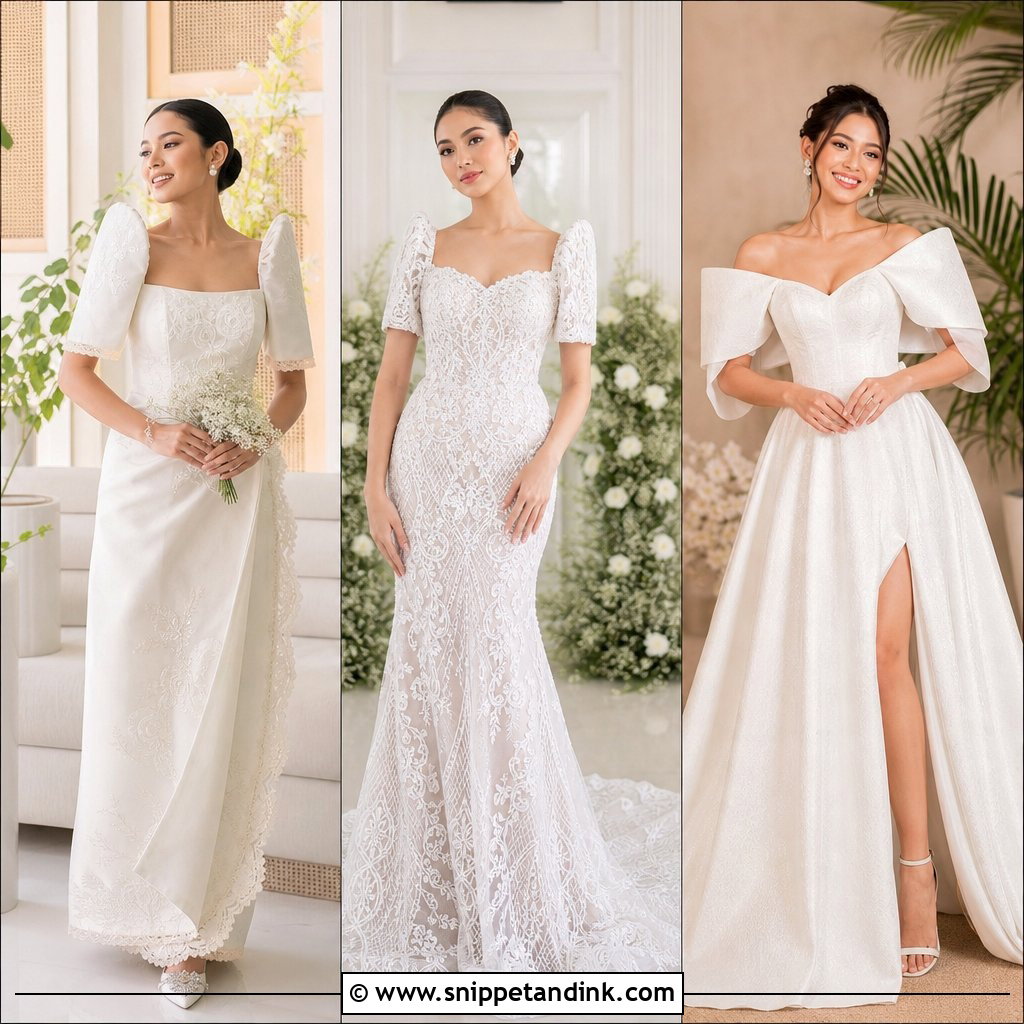
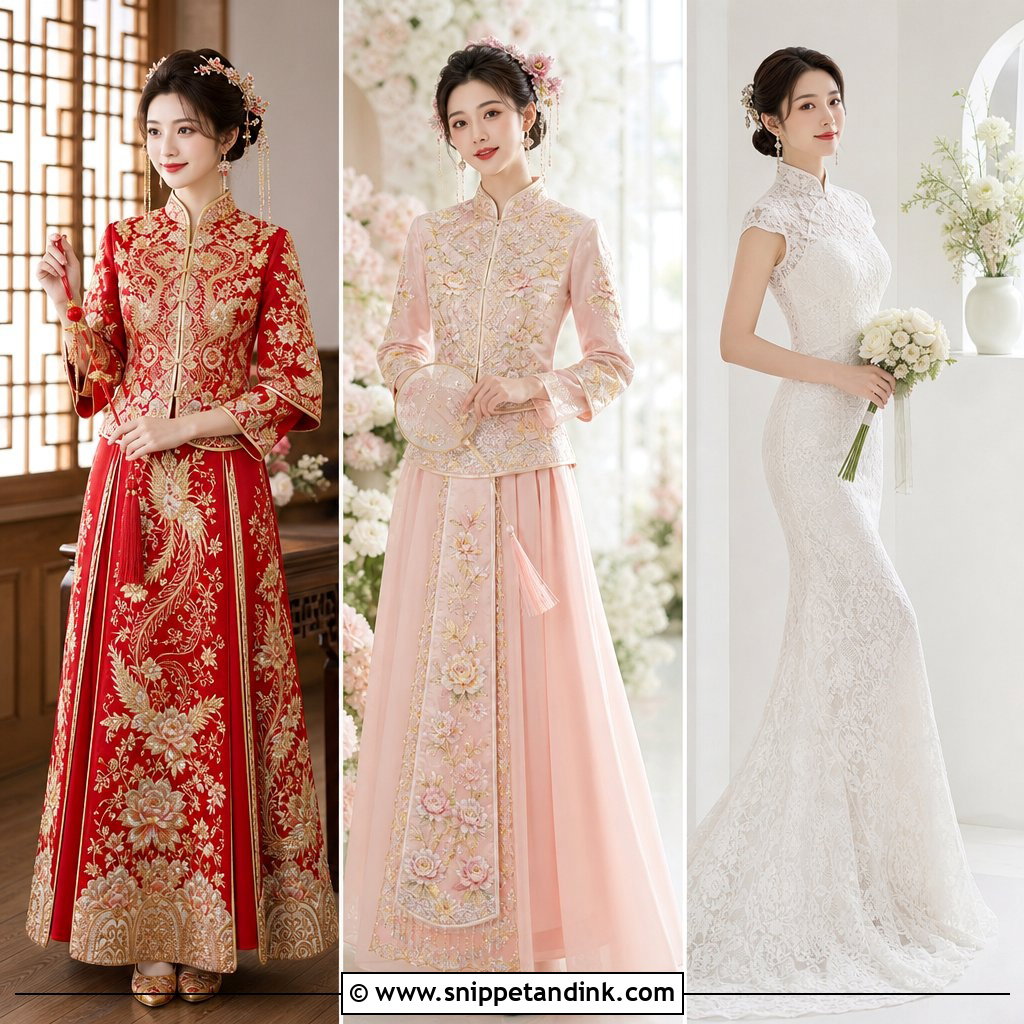
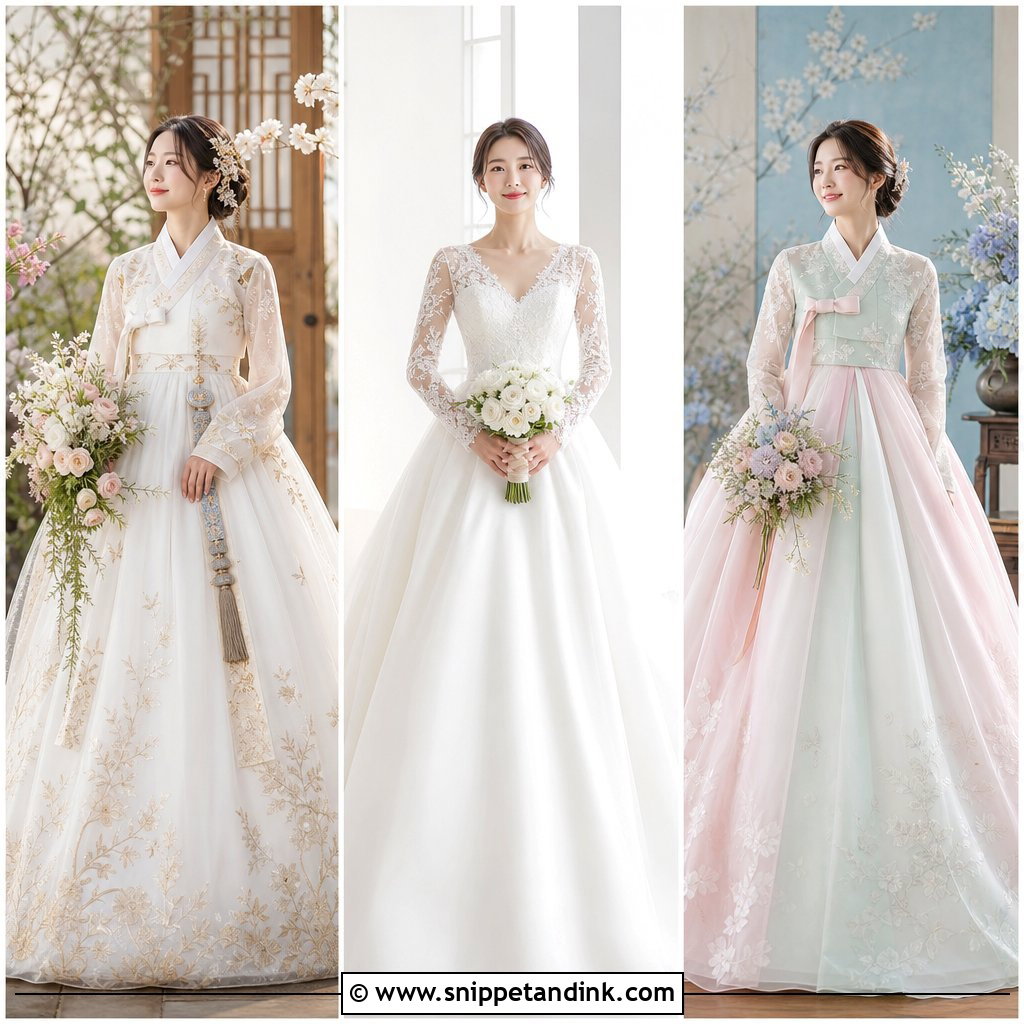
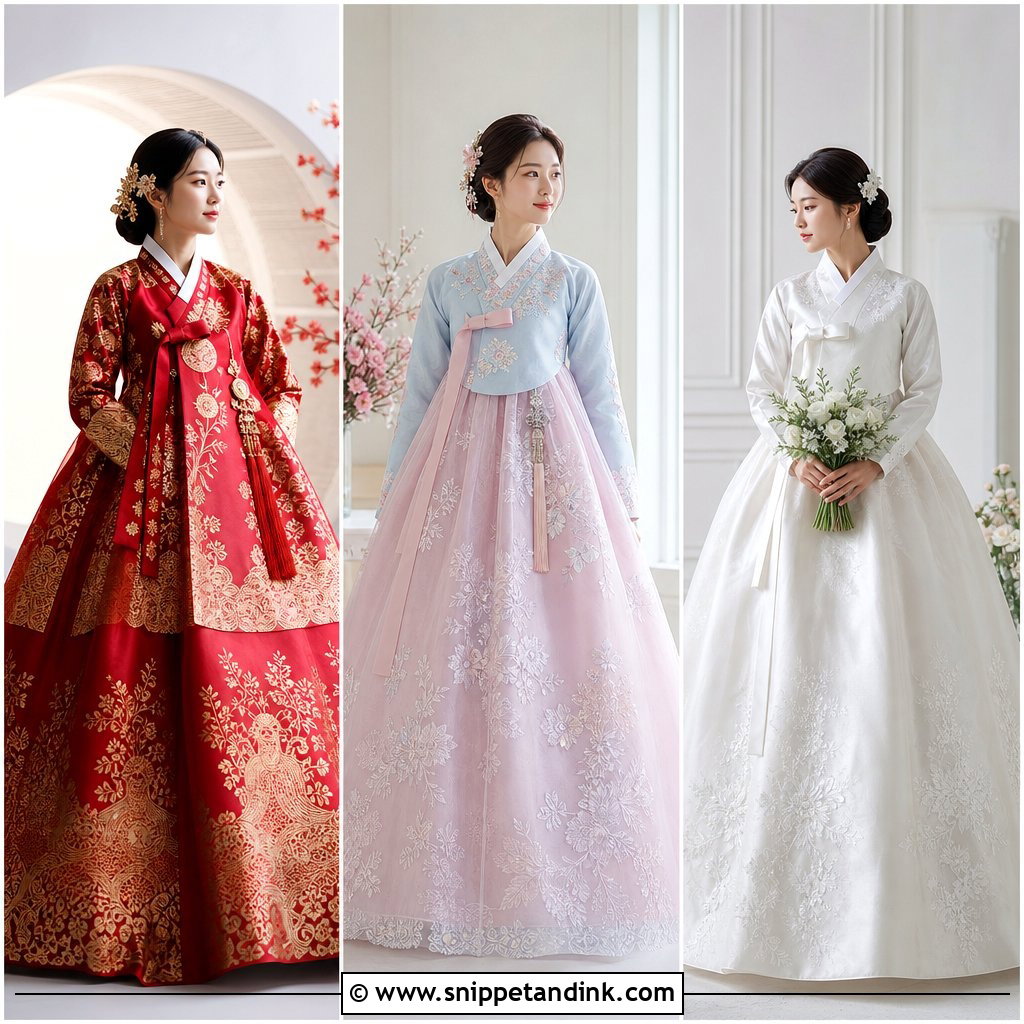
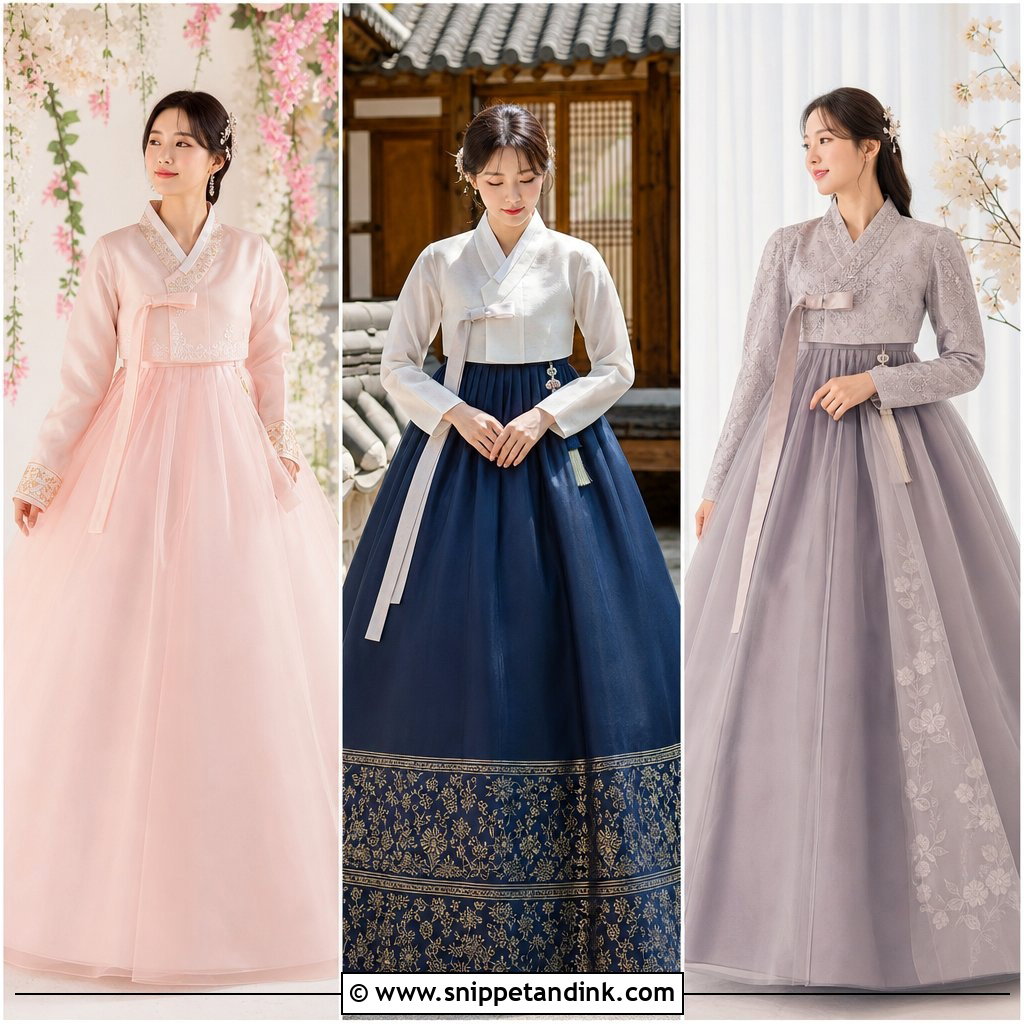
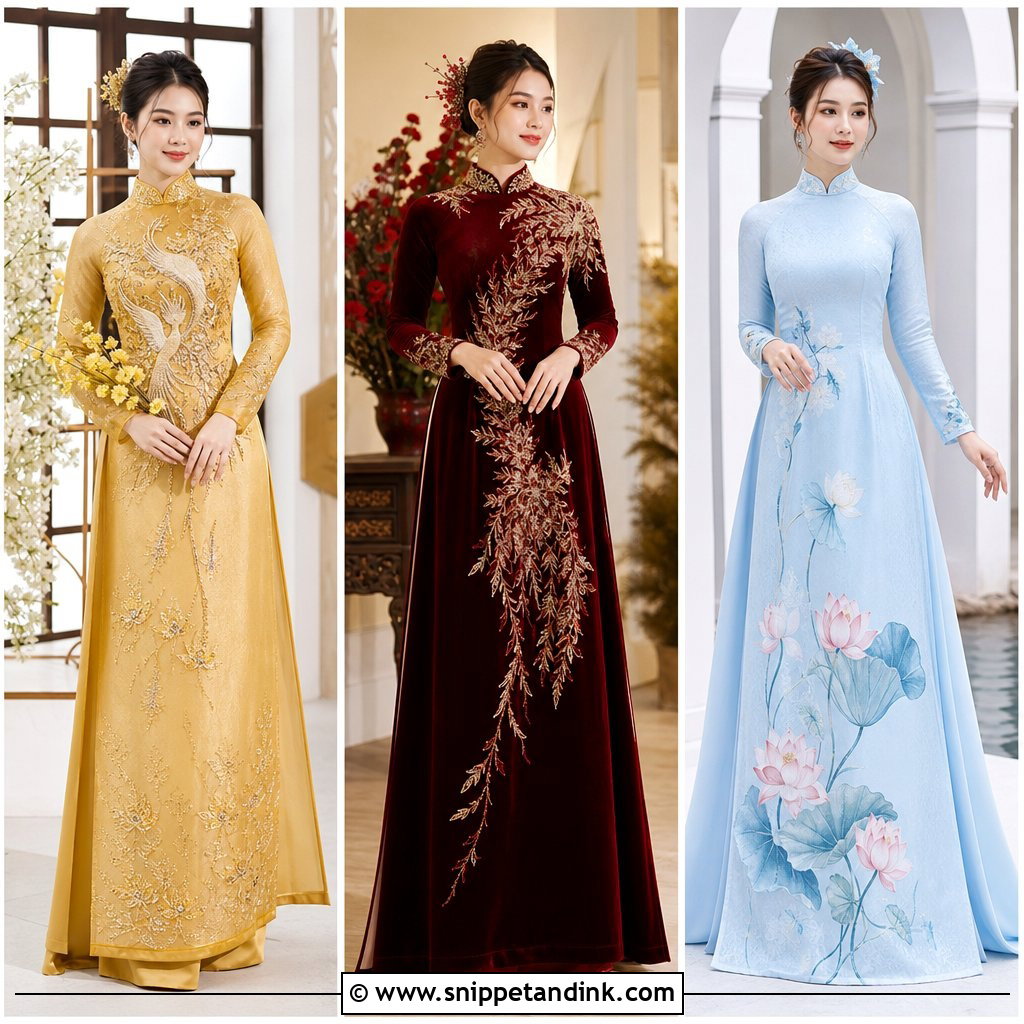
Wearing a Korean hanbok wedding dress honors tradition in the most direct way. The classic shape is a short jacket, the jeogori, over a full high-waisted skirt, the chima. Brides often wear it for the paebaek, the family ceremony after the main wedding, or for cultural portraits. Modern versions use ivory, blush or soft blue instead of the bold traditional colors, in silk, organza or jacquard. Traditional hair ornaments or a simple low bun complete it. If family elders will be present, I always suggest asking which colors and accessories they expect before choosing.
8. Korean Modern Hanbok Wedding Dress
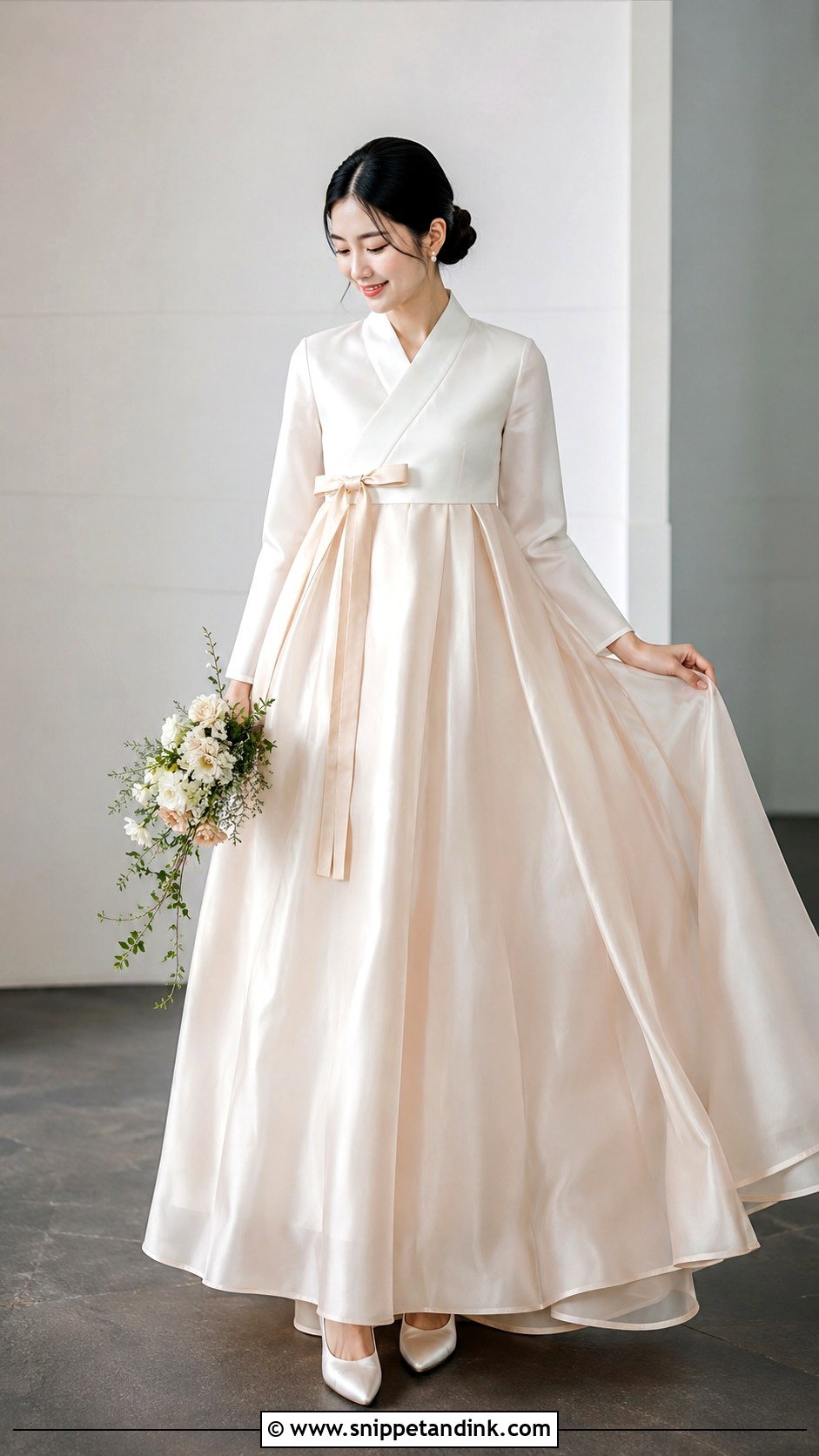
A modern hanbok-inspired gown borrows the details rather than the whole garment: a raised waistline, a wrap bodice, a ribbon tie like the goreum, or a full flowing skirt finished like a wedding gown. It suits brides who want a cultural thread without the formality of full traditional dress. Ivory, champagne, powder pink and pale gold all work. The silhouette can be A-line, empire or softly structured. Simple earrings, satin heels and smooth hair keep it polished. It is a natural choice for fusion weddings, reception changes and portraits.
9. Korean Pearl Detail Wedding Dress
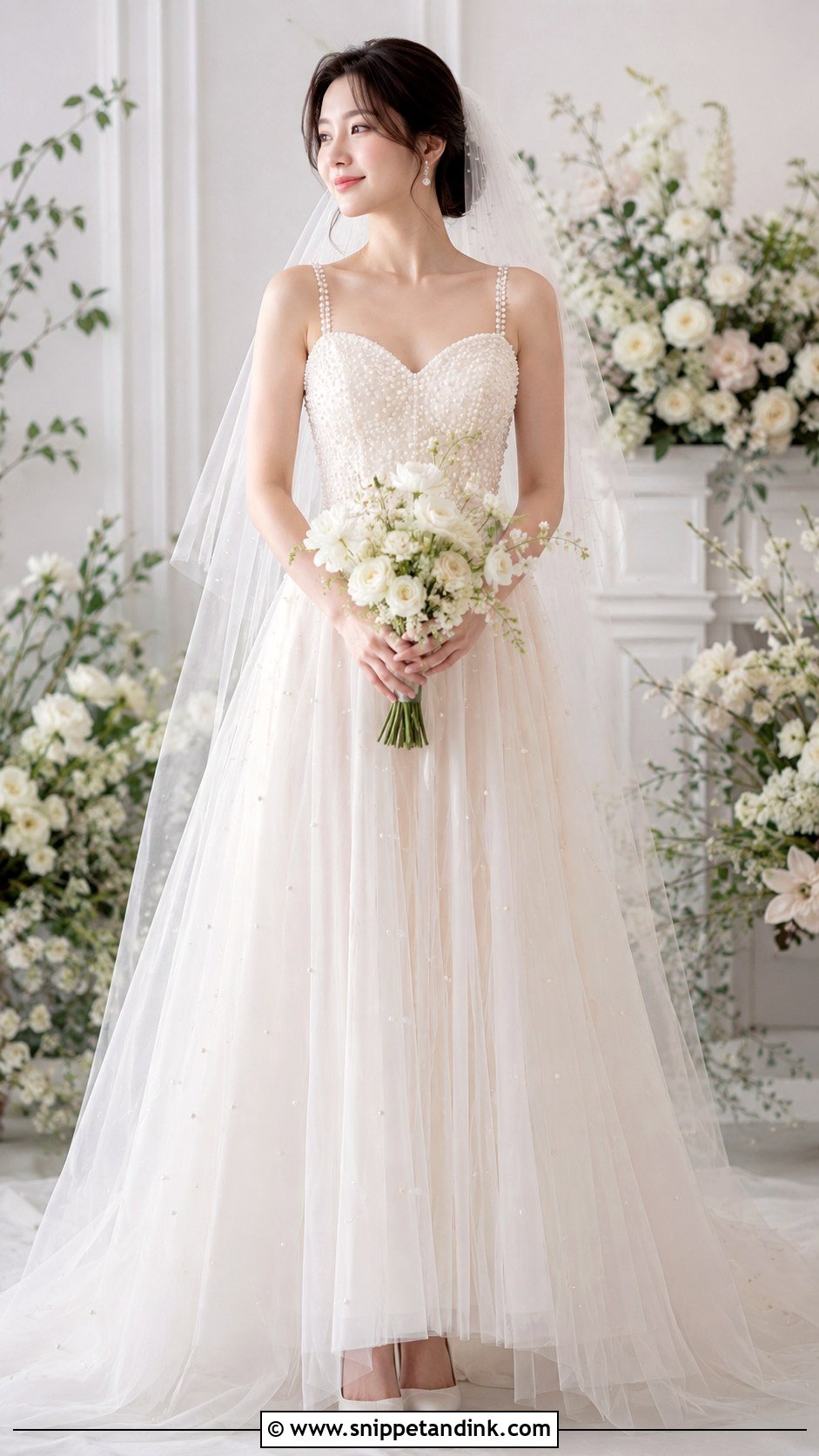
Pearls suit Korean styling because they add light without glitter. They can run down the back as buttons, trim the straps, sit embroidered on the bodice or scatter over tulle. Keep the rest of the dress plain so the pearls read refined rather than busy. Pearl buttons look lovely but take a long time to fasten, so whoever zips you in should know there are thirty-odd loops to do and allow ten minutes. Pearl earrings, a sheer veil and soft pink makeup finish it.
10. Korean Bow Back Wedding Dress
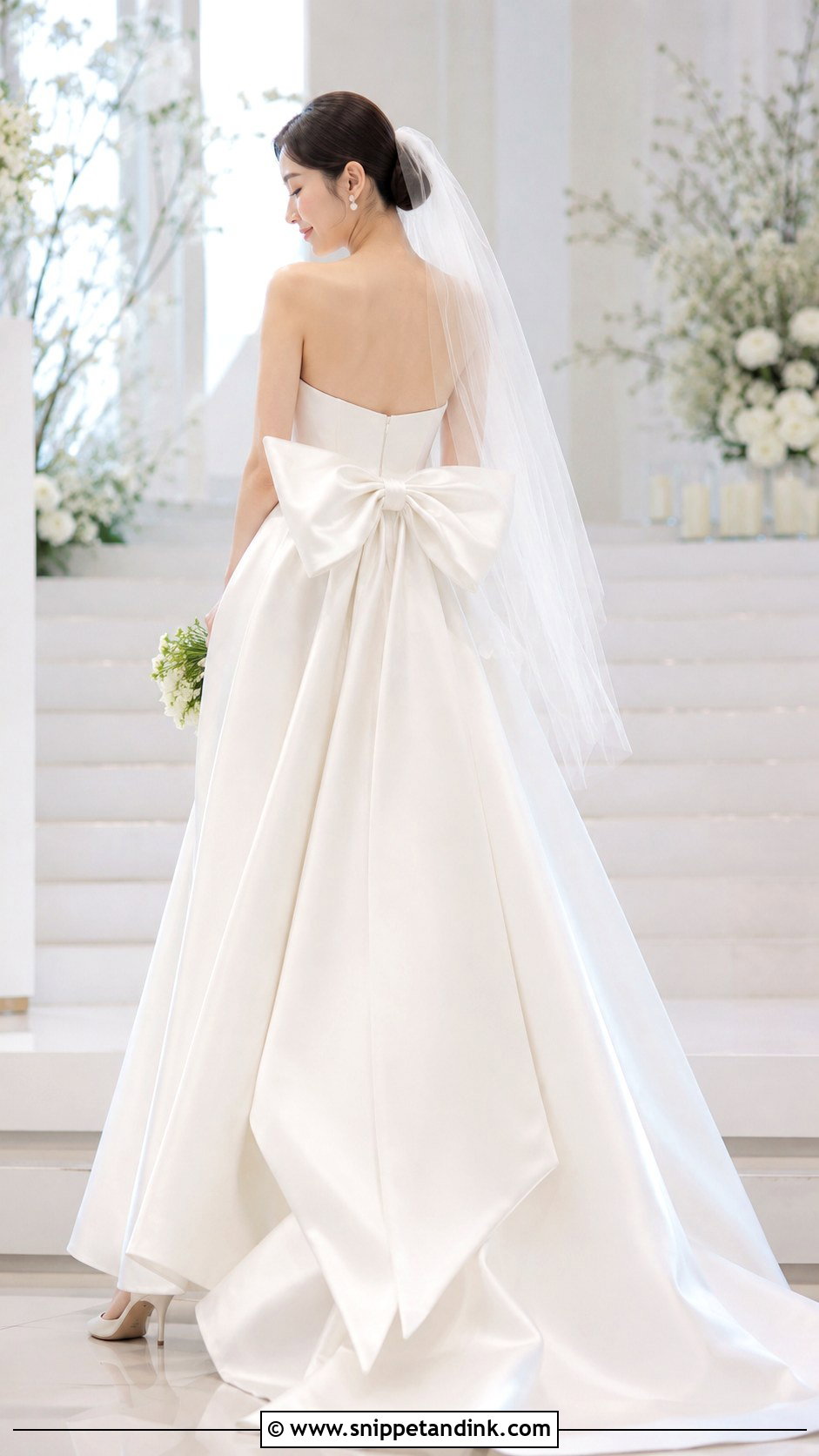
A bow at the back gives a clean-fronted gown a surprise as you walk away. Large bows read dramatic, small ones delicate. They work best on satin or mikado, which hold a crisp loop; a bow in soft fabric collapses within hours. Make sure it is stitched to the dress rather than pinned, and check how it sits under the veil, since a big bow and a long veil can fight. A soft bun and minimal jewelry keep the focus on it, and aisle photos from behind become the highlight.
11. Korean Strapless Wedding Dress
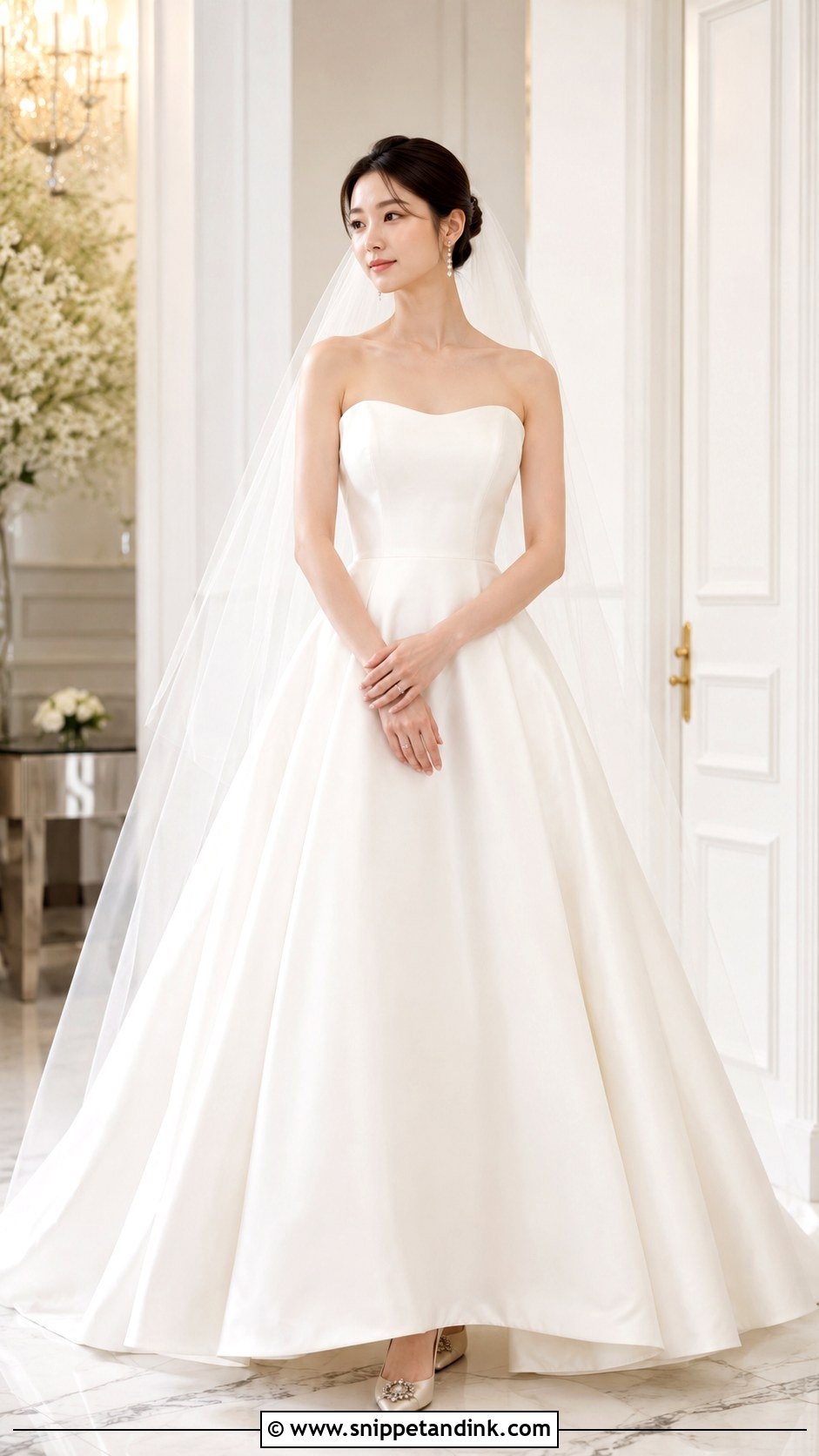
Strapless gowns rely entirely on construction. A structured bodice with internal boning and a waist stay is what keeps the neckline up; without them, you’ll be pulling at it all evening. A satin ball gown reads formal, a column reads modern. Korean styling keeps jewelry light here, with delicate earrings, a soft veil and a neat hairstyle. If you have a fuller bust, a slightly curved or sweetheart neckline gives more support than a straight one. Sit, bend and hug in it at the fitting.
12. Korean Mermaid Wedding Dress
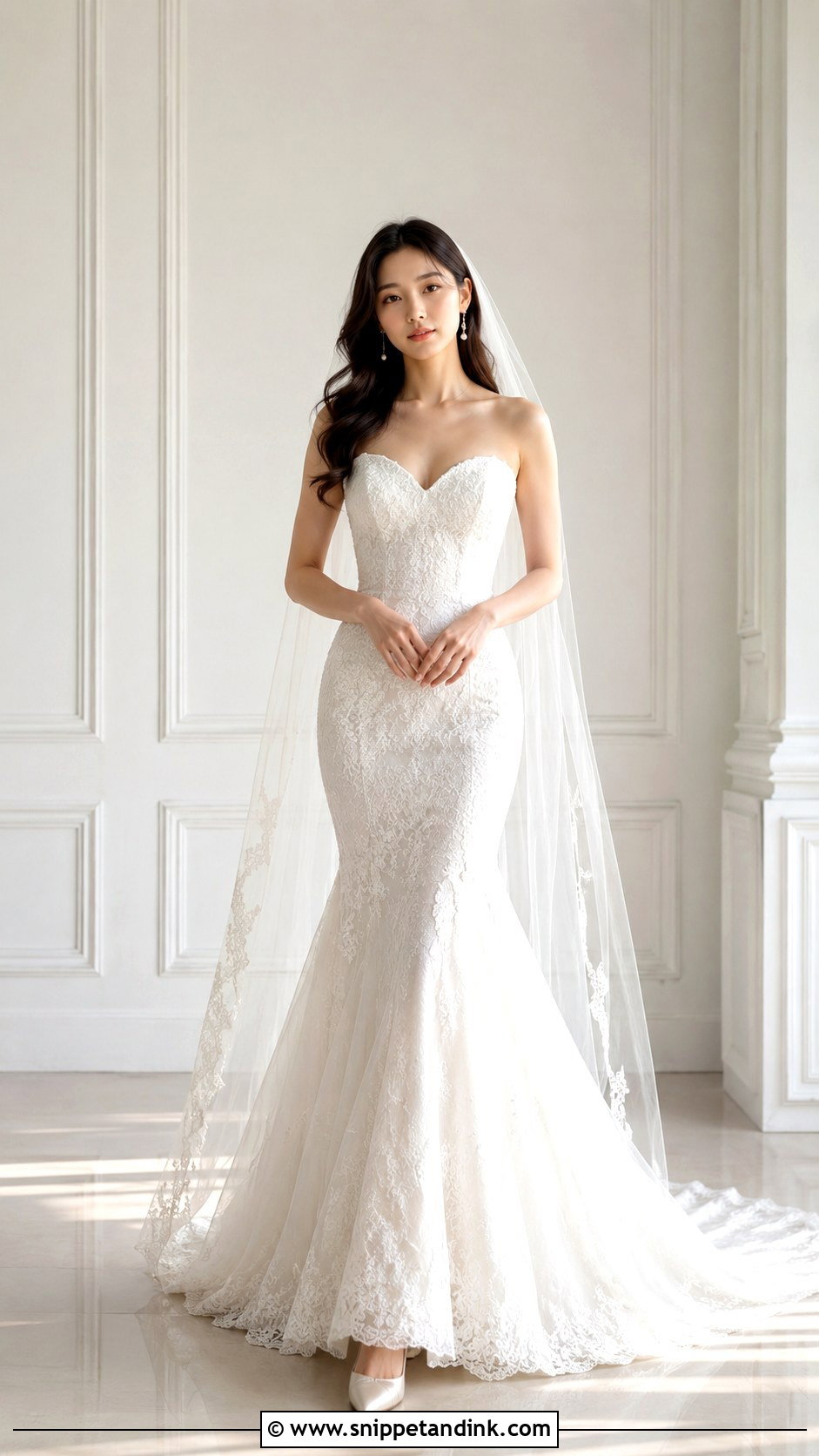
Mermaid gowns follow the body through the hips and flare at the knee, and the Korean version stays soft: smooth satin, fine lace or very light beading. A sweetheart, off-shoulder or long lace sleeve neckline all work. The knee line decides how comfortable you’ll be, so walk, climb a step and sit before final alterations. Hall weddings often involve stairs or a raised aisle. Sleek waves, drop earrings and pointed heels suit studio and formal venues.
13. Korean Simple Crepe Wedding Dress
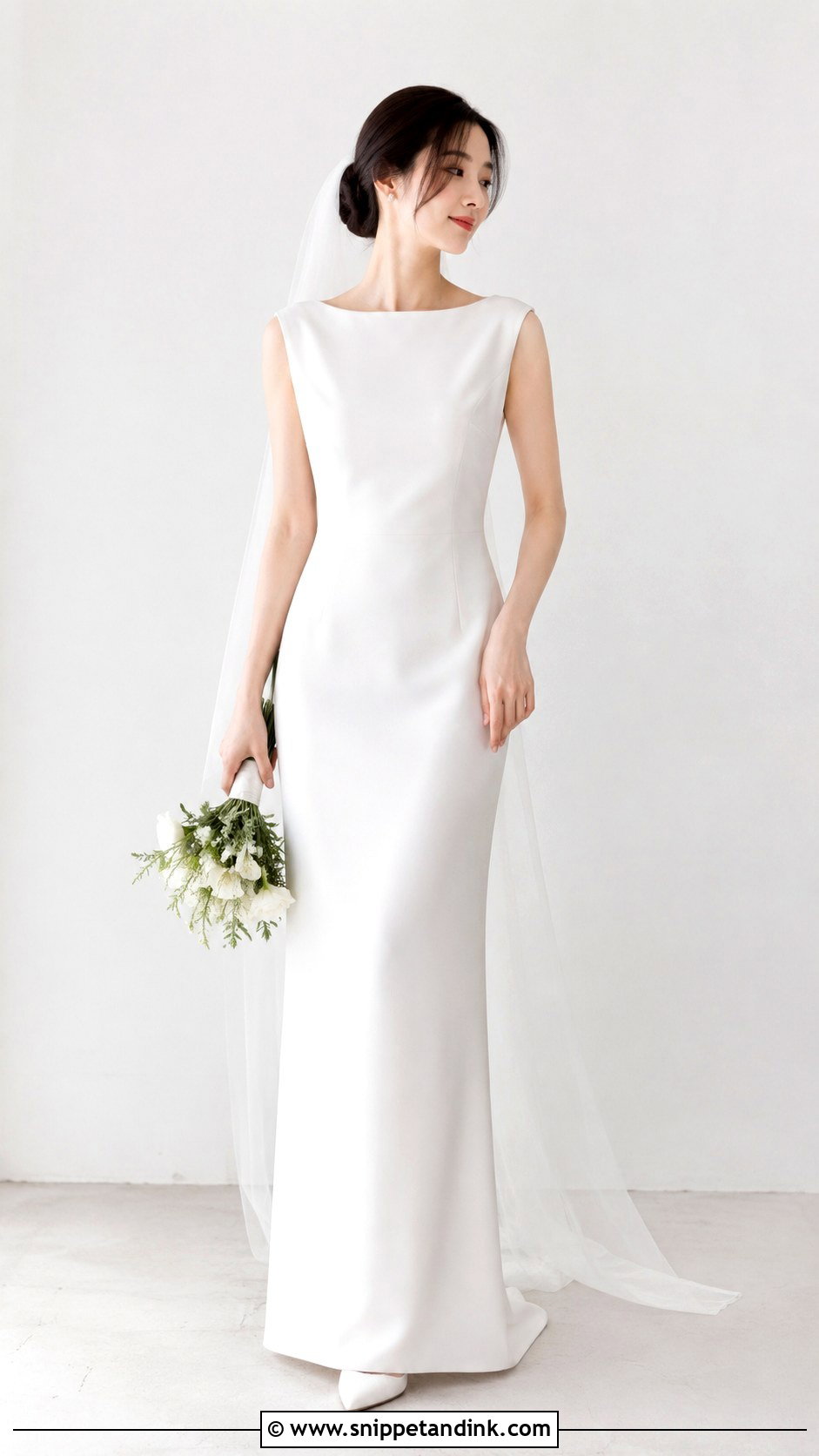
Crepe has a matte, smooth surface that makes the cut the main detail. It suits column, sheath and fitted A-line shapes. A bateau neck, square neck or long sleeve makes it look grown up. Crepe is honest about fit: it skims every line underneath, so smooth, flat-edged underwear and a final fitting in it matter. Pearl studs, a slim veil and white heels keep it minimal, which suits courthouse and intimate ceremonies.
14. Korean Puff Sleeve Wedding Dress
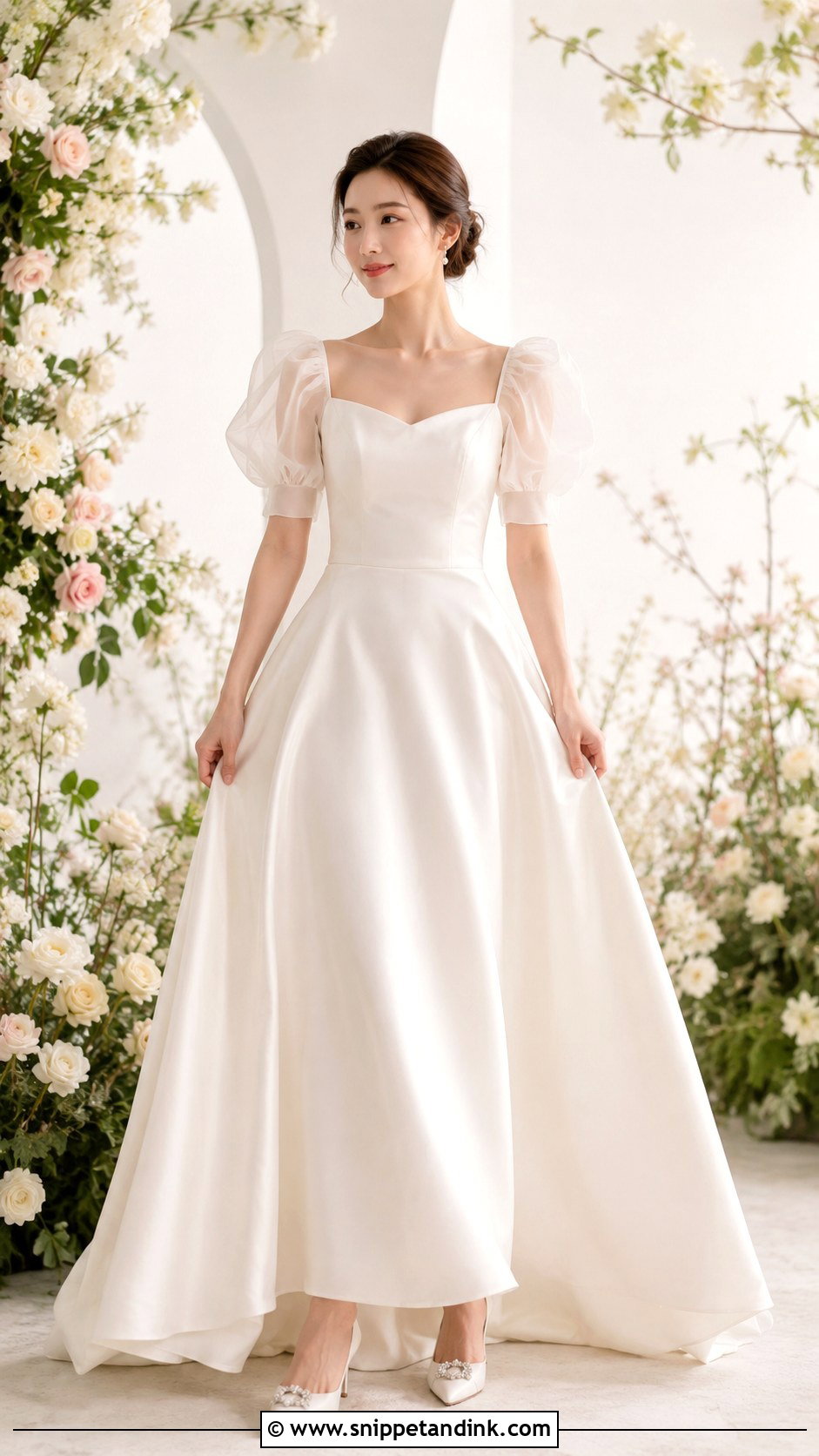
Puff sleeves bring a slightly youthful mood. They can be sheer, short, long or detachable; detachable ones are worth considering because you can remove them for the reception. Korean bridalwear keeps them light in tulle, organza or satin rather than bulky fabric. Organza holds volume best. A simple skirt, dainty earrings and a low bun balance them. They suit spring weddings and studio photos, but check that the puff doesn’t widen your shoulders past your hips if your frame is petite.
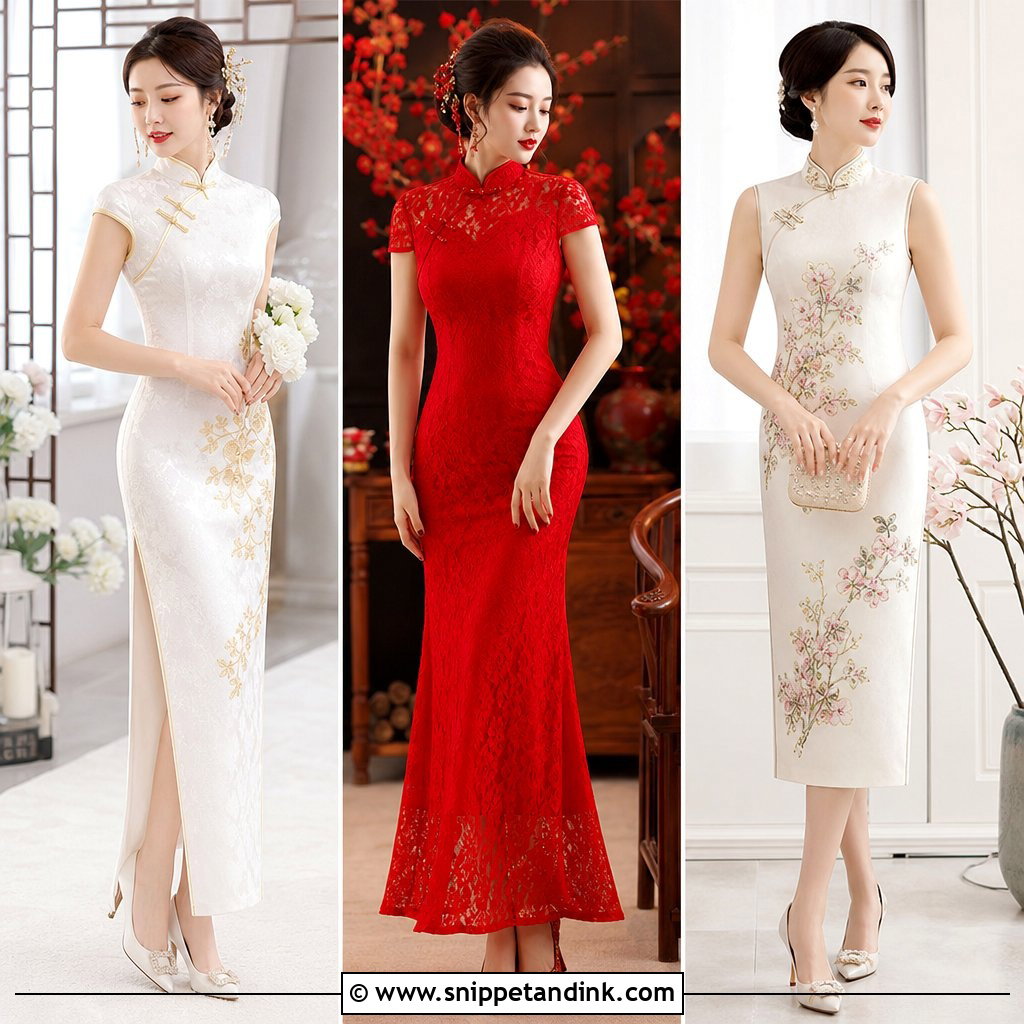
15. Korean Tea Length Wedding Dress
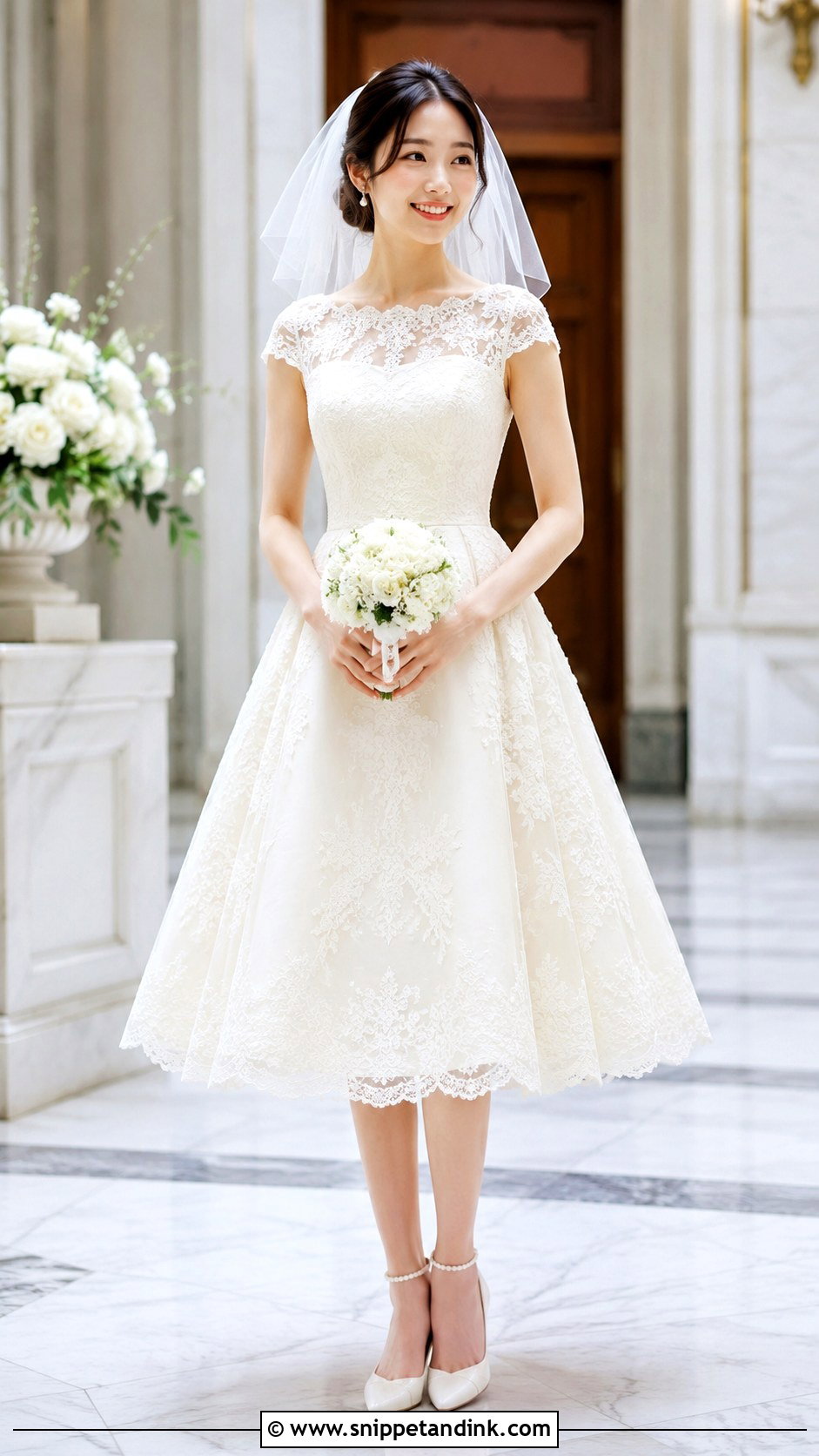
Tea length falls between knee and ankle and puts your shoes on show, so satin pumps, bow heels or pearl ankle straps become part of the outfit. A fitted bodice and flared skirt give a vintage shape; clean fabric, fine lace or a small bow keep it in the Korean mood. A petticoat underneath helps the flare hold all day. It is comfortable for civil ceremonies, receptions and smaller weddings, and it leaves you free to walk without lifting a hem.
16. Korean Reception Mini Wedding Dress
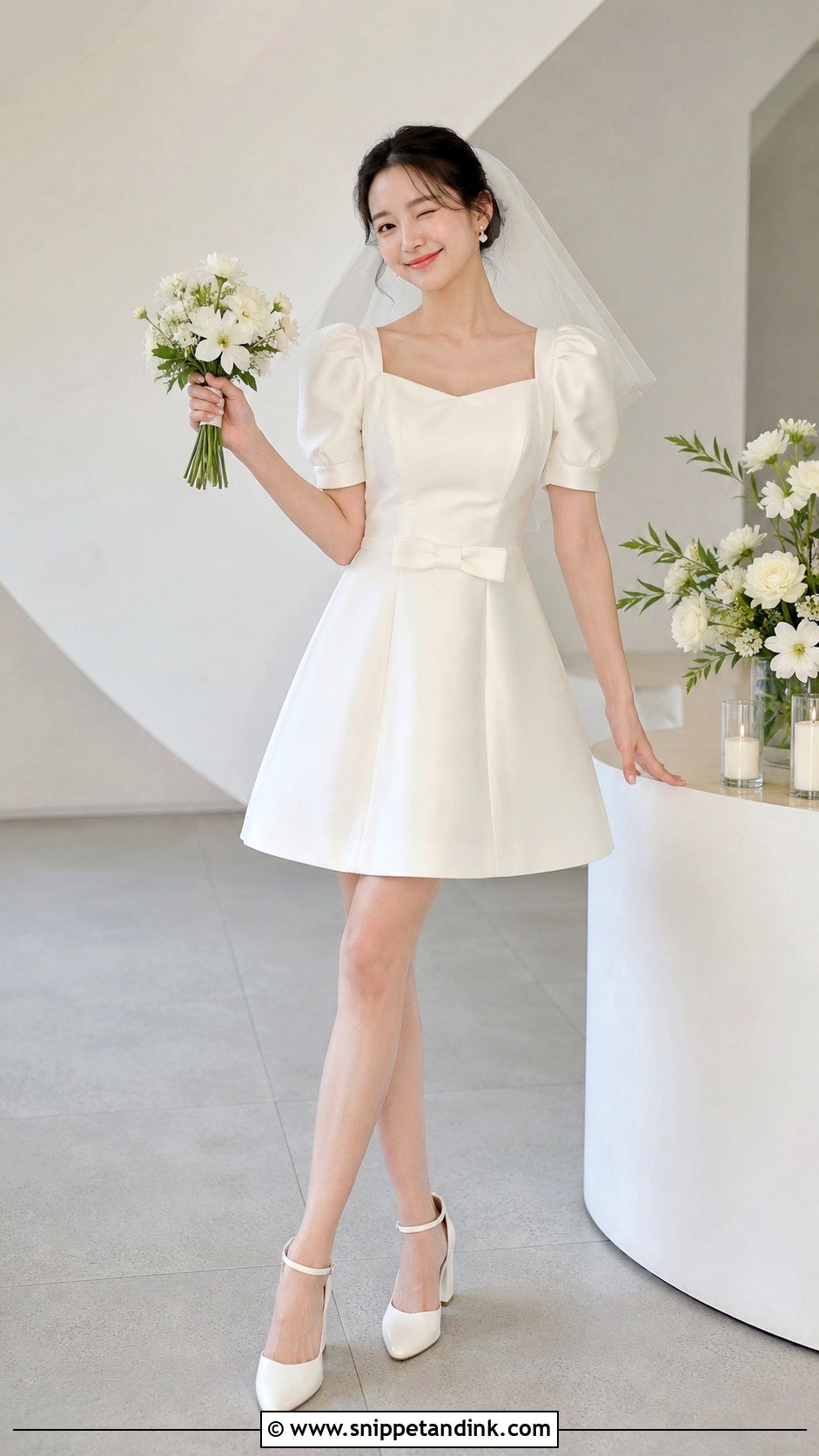
Plenty of Korean brides change after the ceremony, and a short dress is a happy second look for greeting guests and photos. Clean satin, soft tulle, puff sleeves, bows or pearls are all common details. A structured A-line mini looks sweet; a fitted one looks sleek. Plan the change: a mini with a back zip takes a couple of minutes, while undoing a buttoned gown and redoing hair can take far longer. White heels, pearl earrings and a small bag finish it, with a short veil or ribbon if you want it to read bridal.
17. Korean Floral Lace Wedding Dress
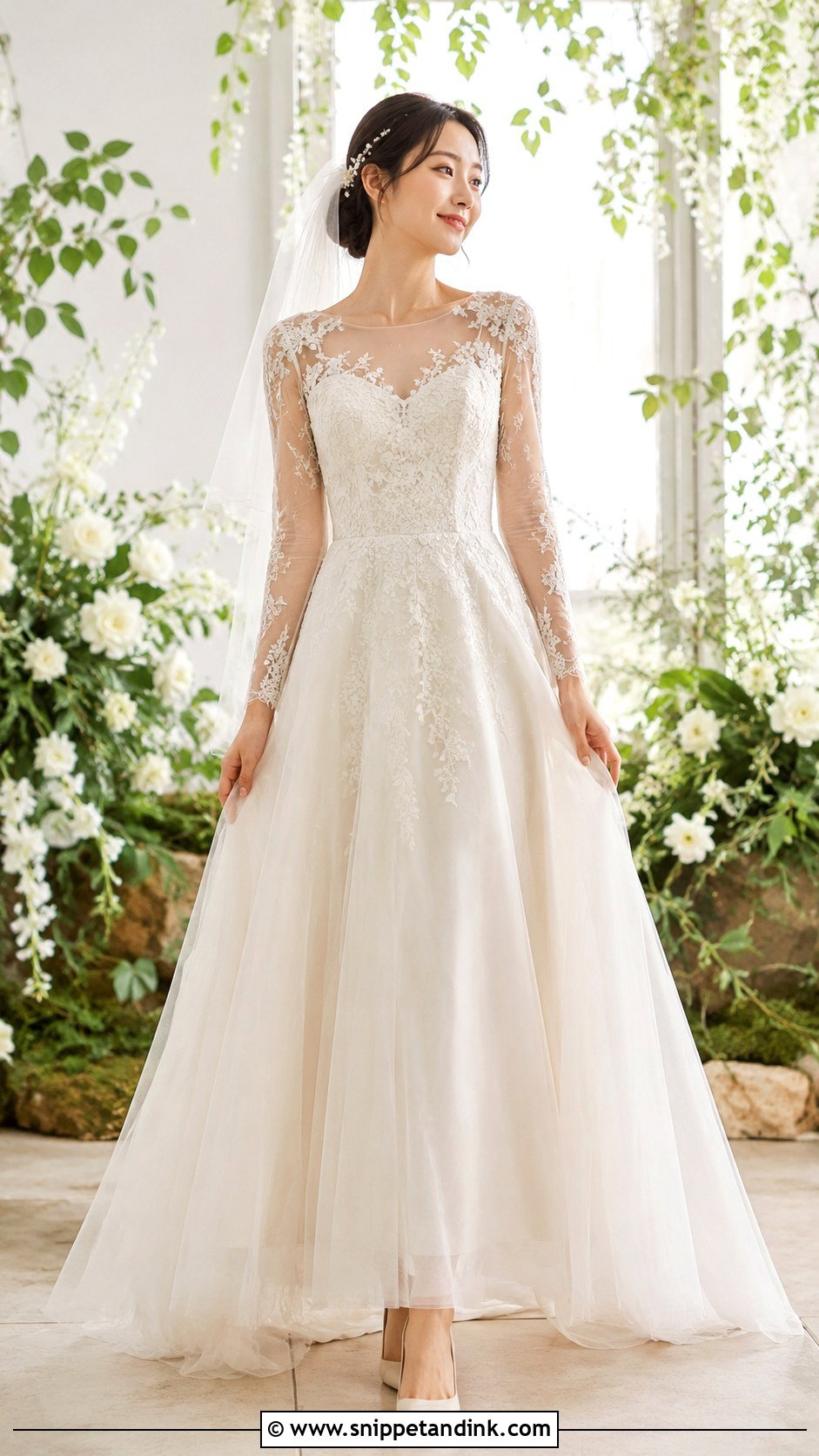
Floral lace gives a garden mood without clutter when the pattern is delicate and placed with intent: on sheer sleeves, across the bodice or over a light tulle skirt. An A-line in floral lace suits most body types; a fitted lace gown feels more formal. I check where the lace motifs fall on the body, since a flower placed right on the bust point or hip bone draws the eye there. Natural makeup, pearl pins and a sheer veil complete it.
18. Korean Corset Bodice Wedding Dress
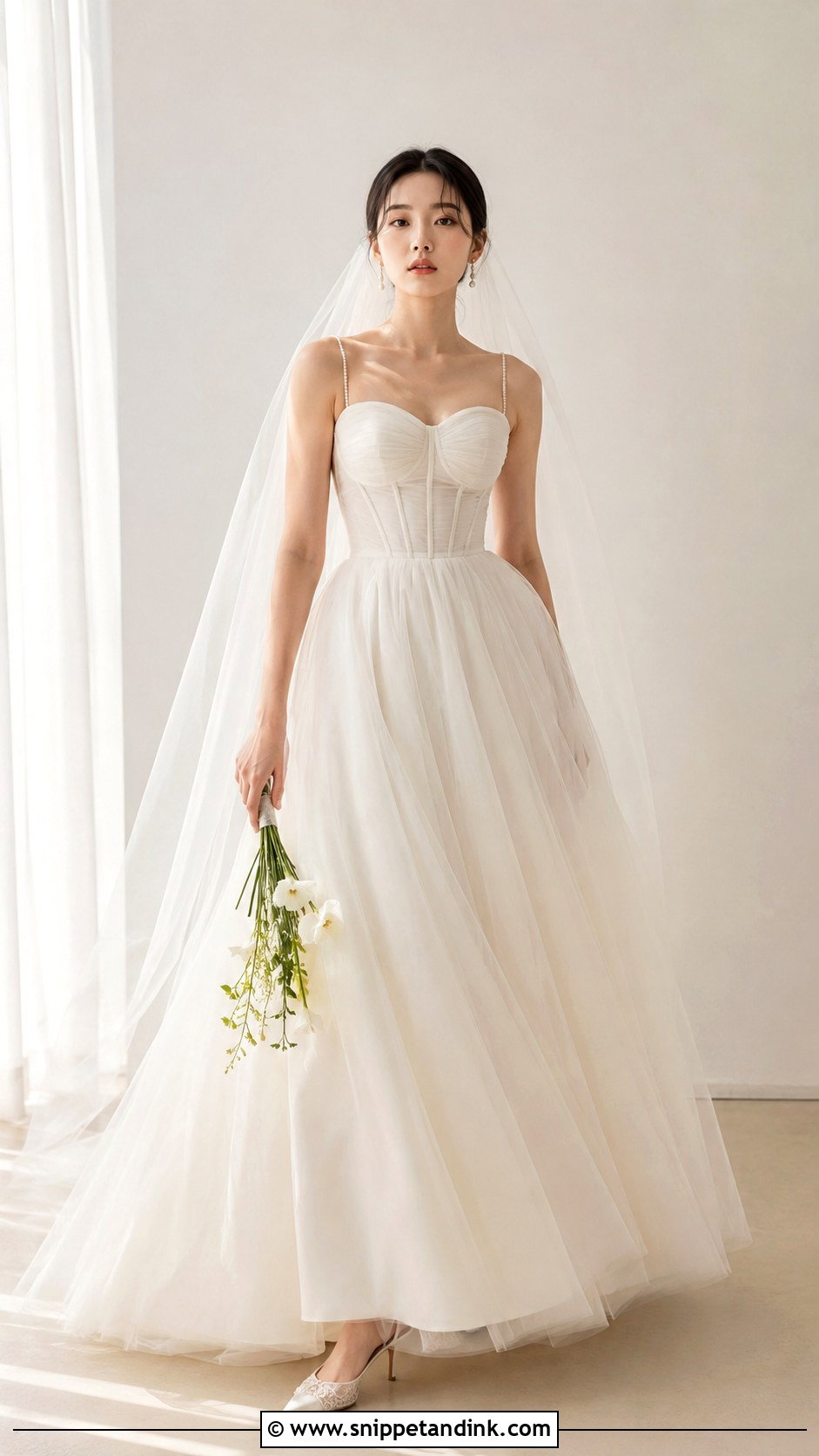
A corset bodice gives shape and support, and in Korean styling it stays subtle: internal structure and a defined waist rather than visible lacing and exposed boning. A satin A-line, soft tulle or lace overlay balances the fitted top. A lace-up back is the most adjustable option for fit on the day, which helps if your weight shifts before the wedding. Delicate earrings, soft curls and a simple veil keep it gentle. Sit down to eat in it at the fitting; a corset tight enough to look sculpted may be too tight for a three-course dinner.
19. Korean Sheer Sleeve Wedding Dress
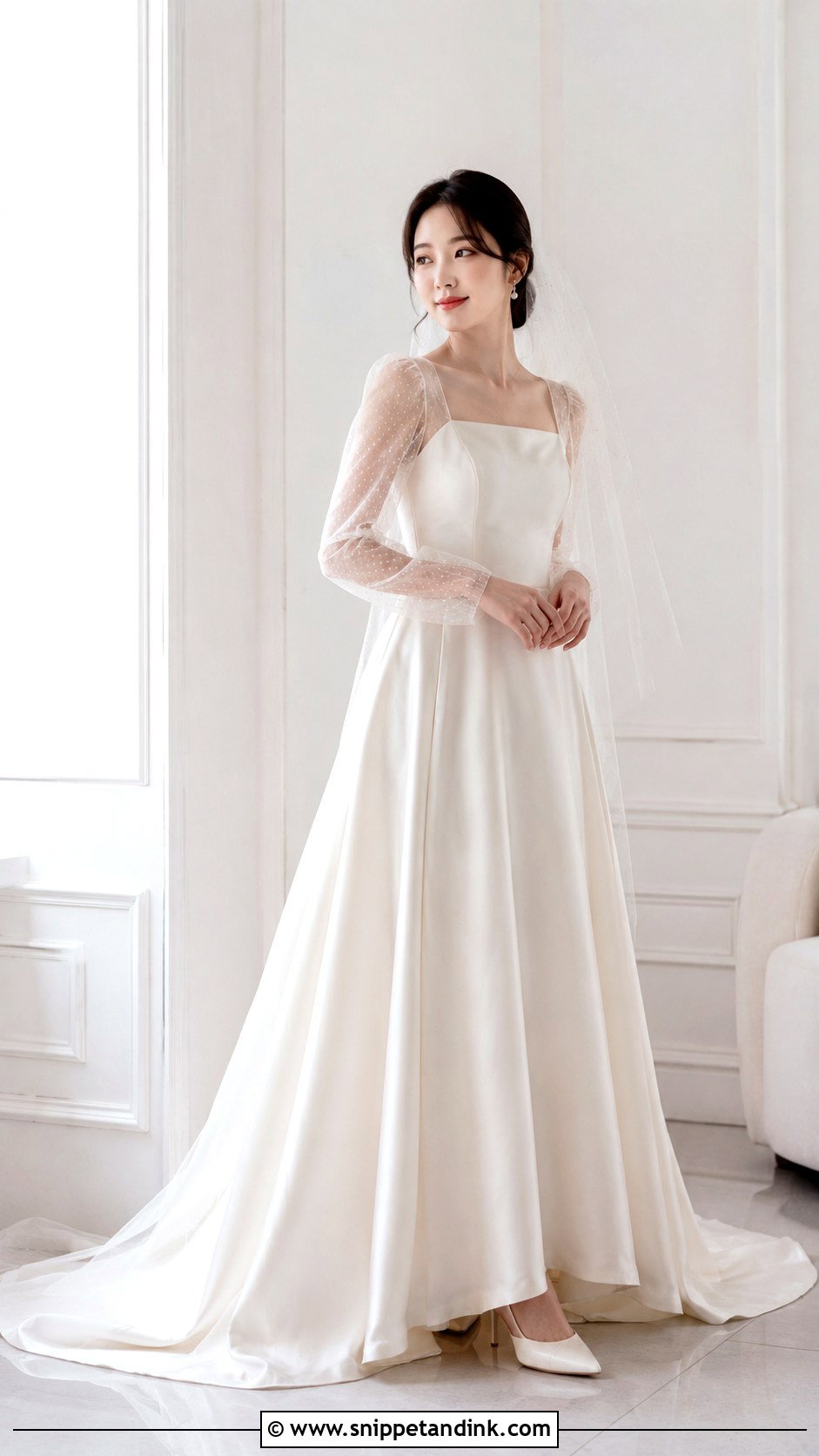
Sheer sleeves add gentle coverage without weight. They can be plain tulle, dotted mesh, lace or organza. A plain bodice with sheer sleeves looks clean; lace appliqué on them adds romance. They suit A-line, ball gown and sheath shapes. Sheer tulle shows skin tone through it, so match the tulle shade to your arms; a mismatch reads as a gray or pink film in photos. A neat hairstyle keeps the sleeve visible, with pearl earrings and satin heels.
20. Korean Blush Wedding Dress
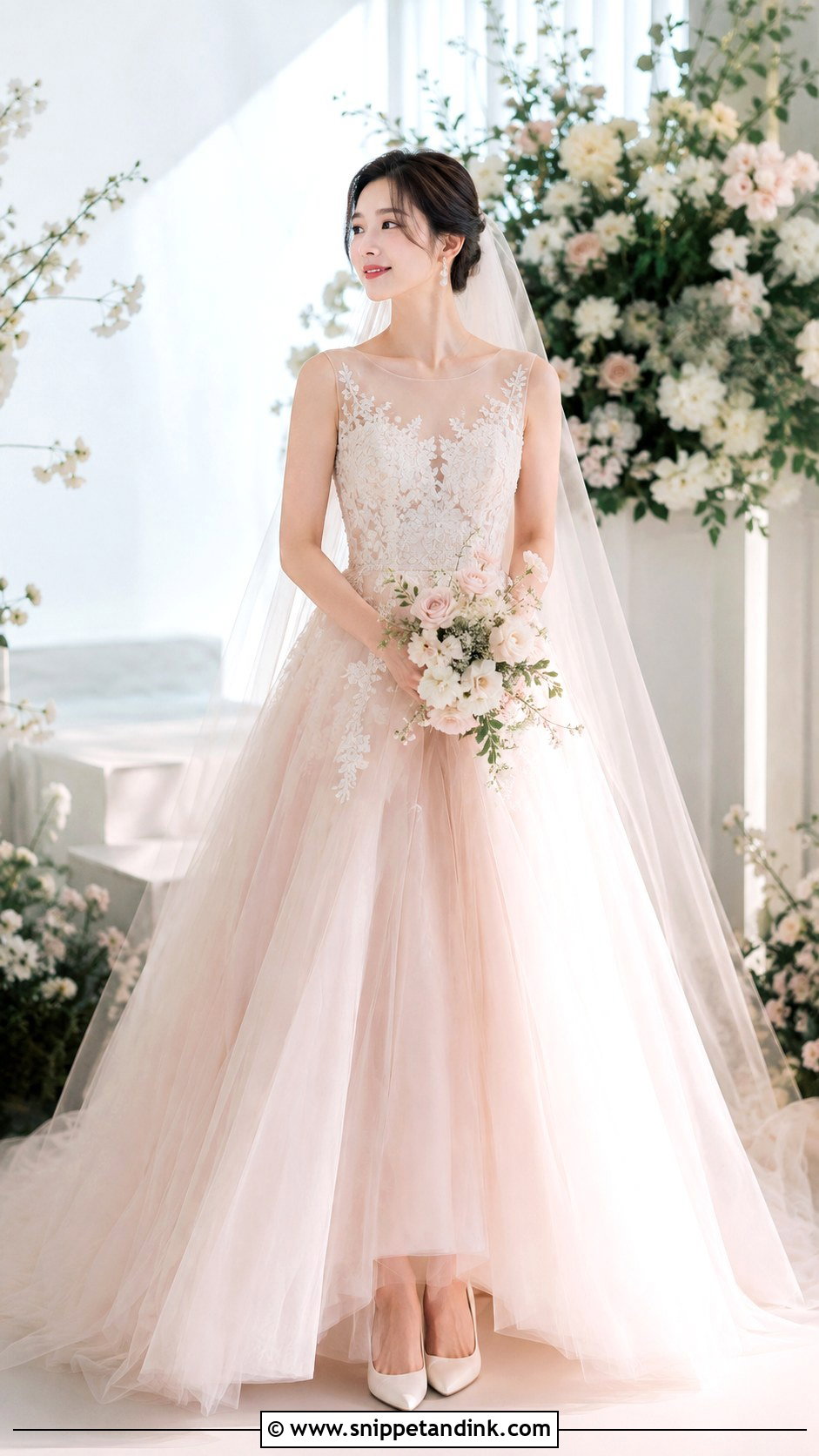
Blush gives color while staying bridal. Pale pink, dusty rose and barely-there blush flatter many skin tones, though very warm complexions often look better in a peachy blush than a cool one. Tulle, organza and layered skirts carry the color softly. Keep the silhouette clean and the accessories simple, with rose-toned makeup, pearls and ivory heels. Look at the gown in daylight before ordering; blush can disappear to white under bright flash or turn salmon under warm bulbs.
21. Korean Champagne Wedding Dress
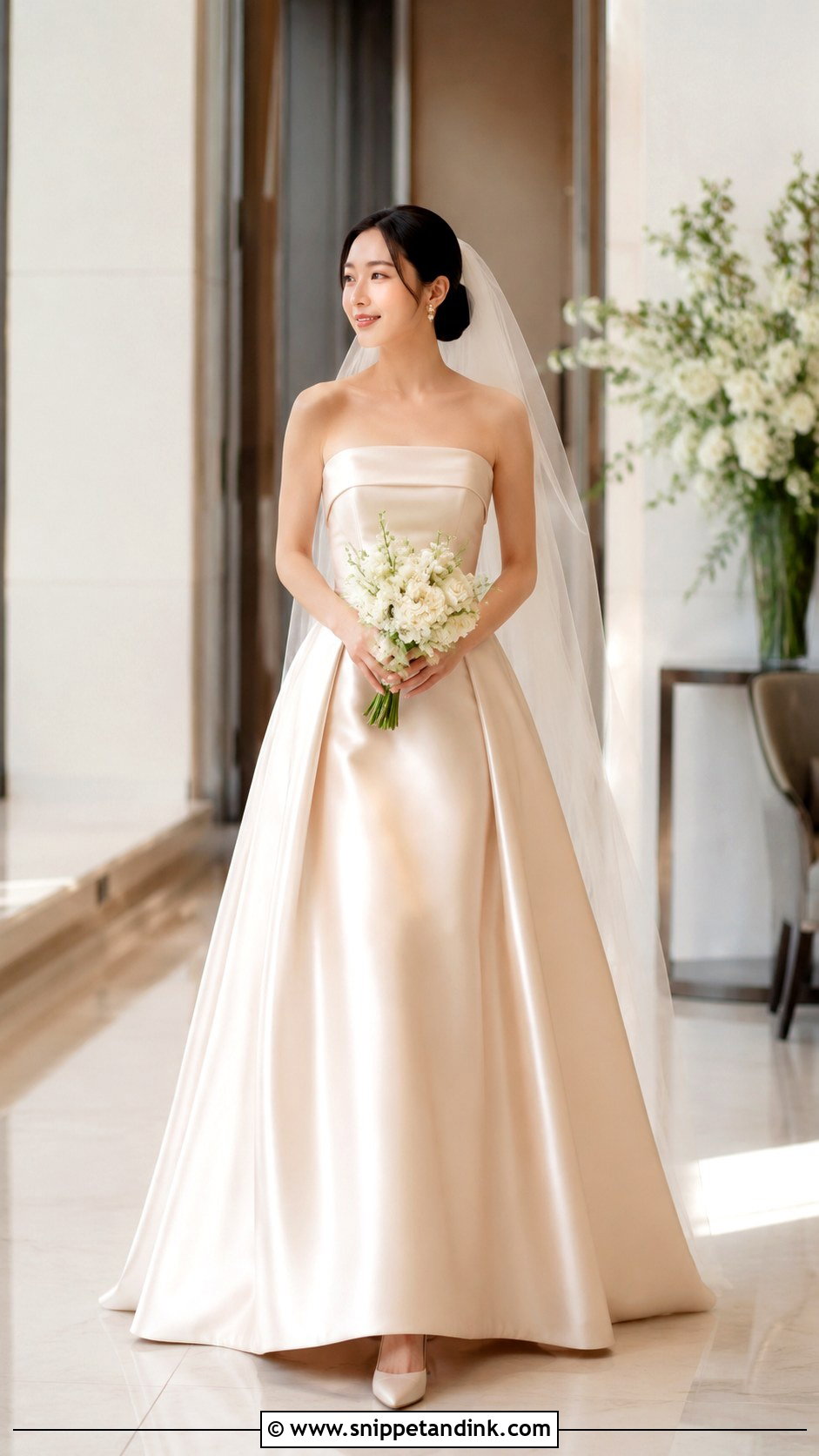
Champagne is warmer than white and glows under indoor lighting. It works in satin, silk, tulle and fine beading. A champagne A-line feels romantic; a fitted champagne crepe feels sleek. The shade varies widely, from nearly ivory to a definite gold, so compare swatches against your skin, not just against each other. Gold-toned earrings, ivory heels and a sheer veil balance it. It suits brides drawn to quiet glamour rather than heavy embellishment.
22. Korean Embroidered Wedding Dress
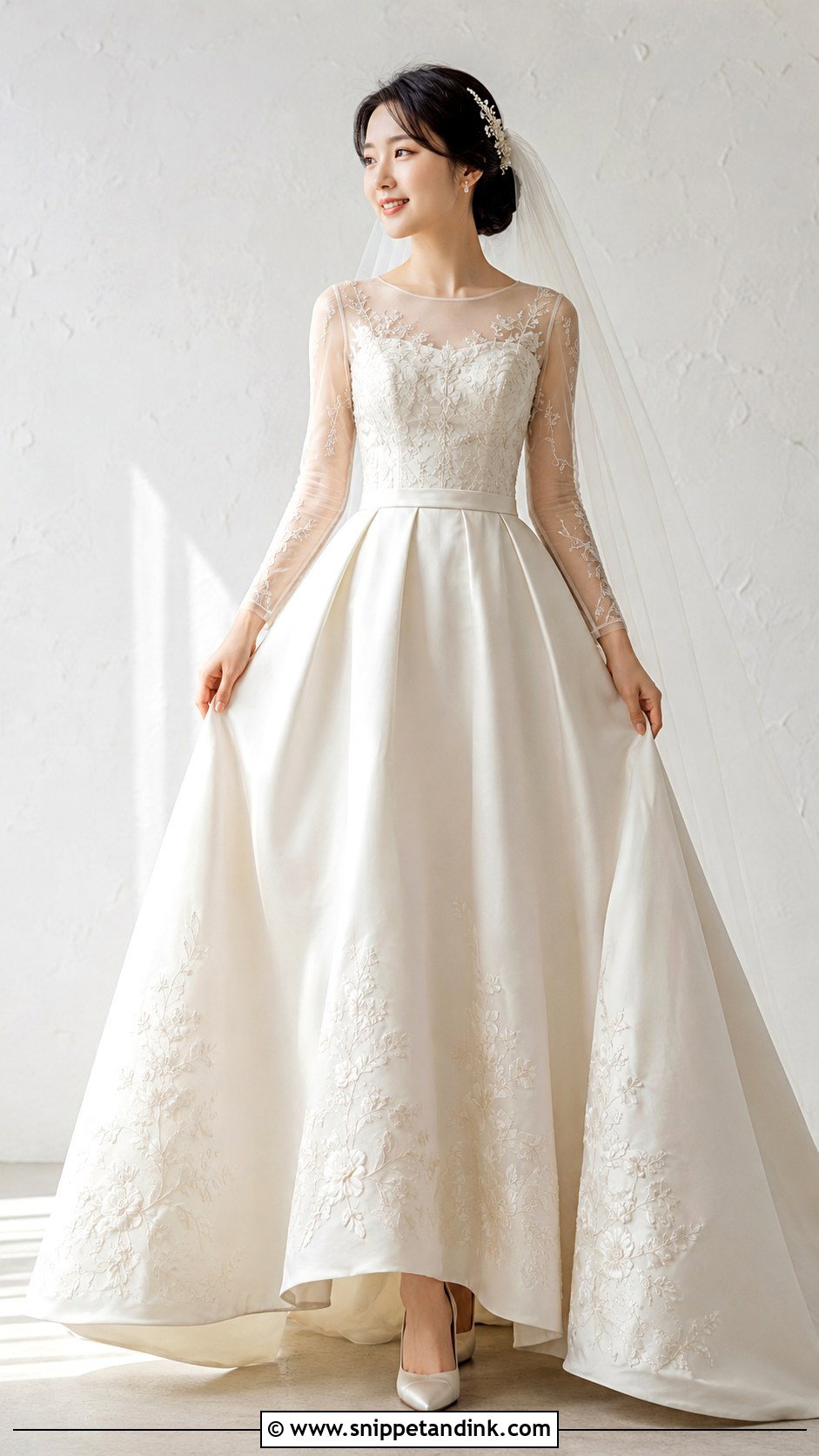
Embroidery rewards a close look, which makes it a favorite for portraits. Floral vines, fine patterns, traditional motifs or tone-on-tone texture all work. For the Korean look, keep it light and placed, on a sheer bodice, along the sleeves or at the hem, rather than covering the gown. Ask your photographer for close detail shots; tone-on-tone embroidery barely shows in wide frames. A soft veil, pearl hair accessories and plain shoes keep the focus on the needlework.
23. Korean Cape Wedding Dress
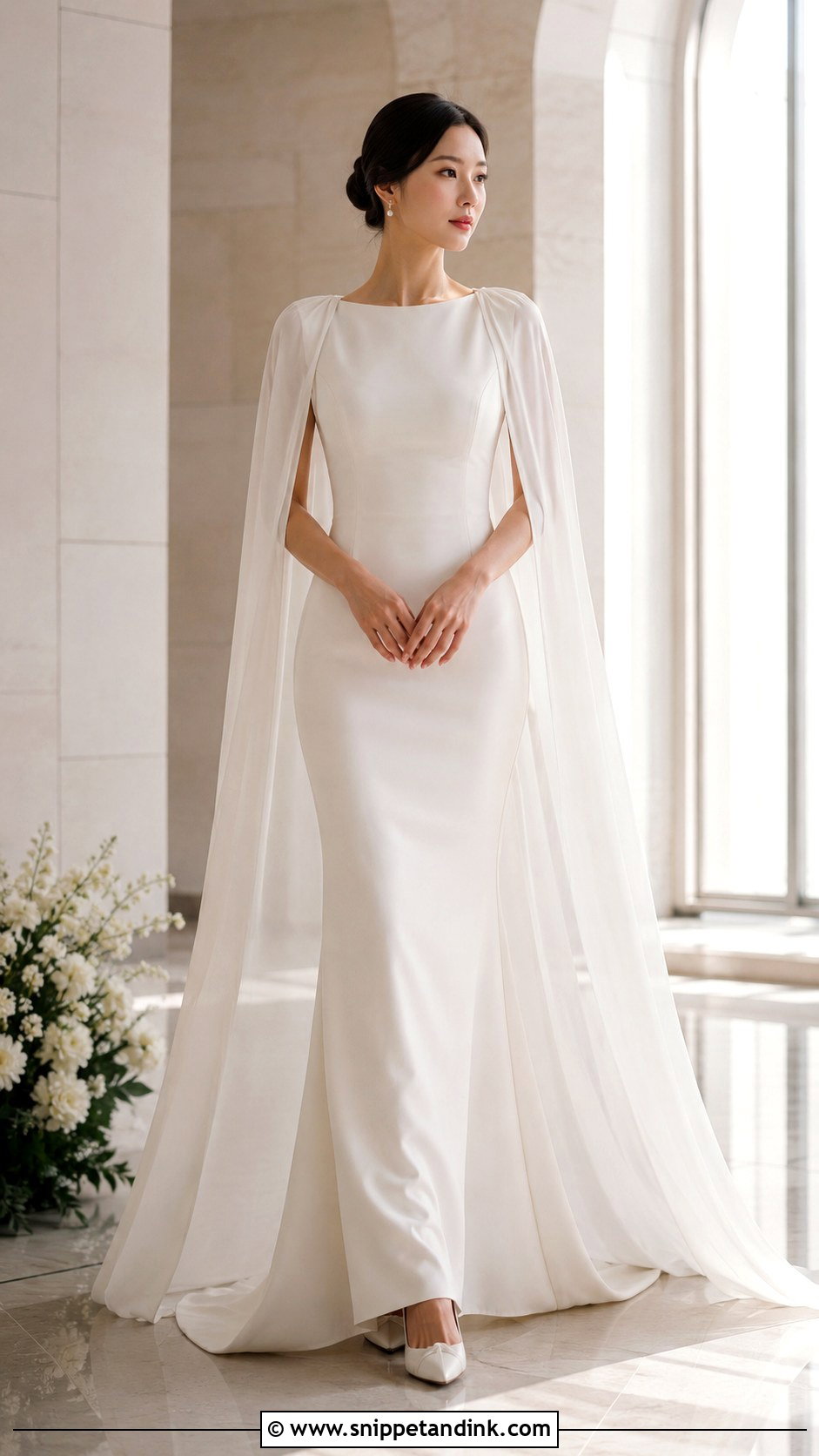
A cape can stand in for a veil, falling from the shoulders, neckline or back. It adds movement without decoration and covers the arms and shoulders while the gown stays sleek. A sheer cape over plain satin or crepe looks modern; lace edges or light pearls make it romantic. Check how the cape is attached. Snaps or hidden loops let you remove it for the reception; a cape sewn into the shoulder seams stays on all night. Minimal earrings and smooth hair complete it.
24. Korean Two Piece Wedding Dress
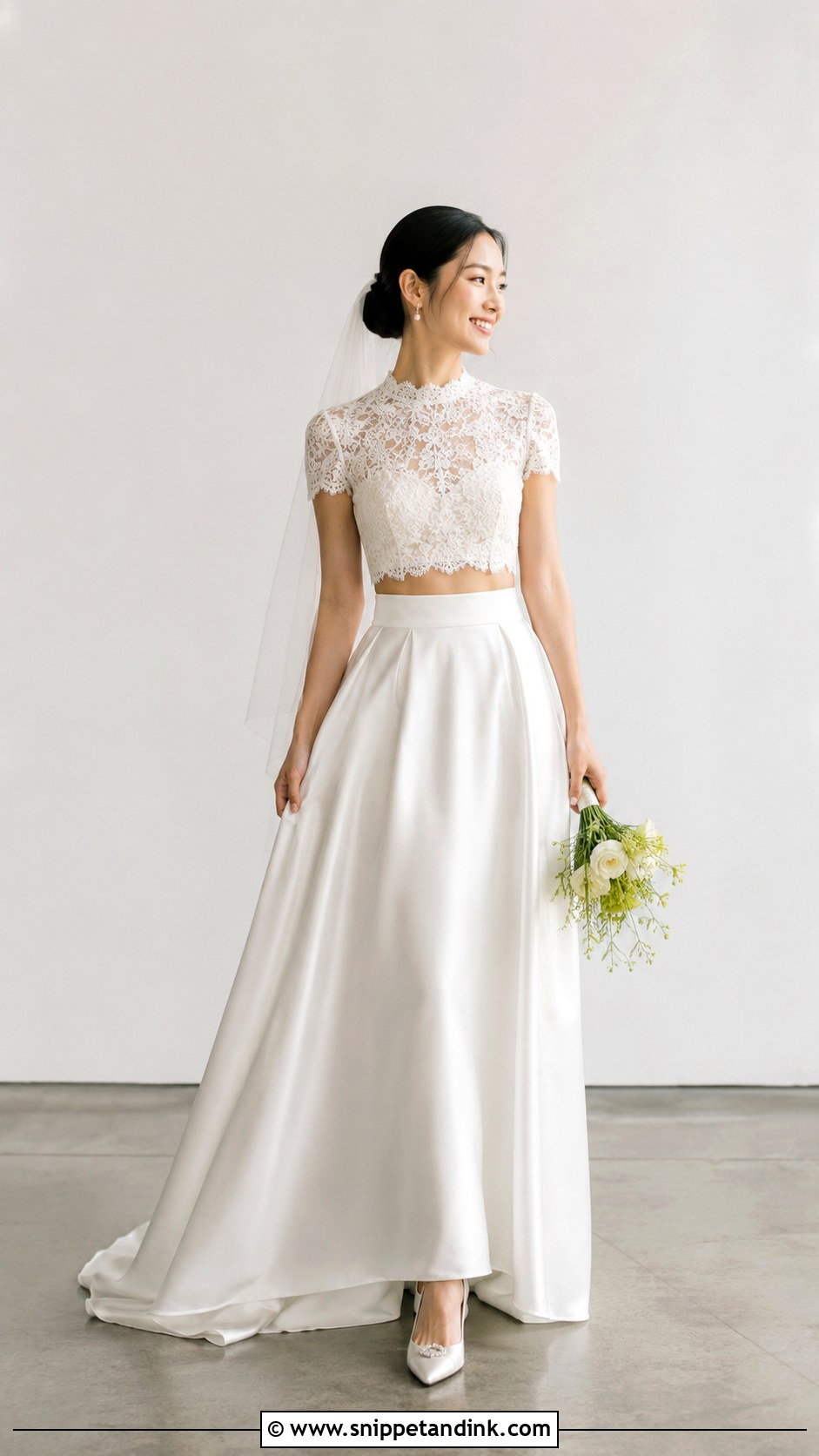
Separates give you a modern bridal outfit and a fitting advantage, because top and skirt can be sized independently. Common pairings are a cropped lace top over a high-waisted skirt, a satin blouse with a full skirt, or a hanbok-inspired top over a flowing bridal skirt. Make sure the waistband sits high enough that the top covers it when you lift your arms. Soft fabrics, clean lines, pearl earrings, satin heels and a low bun keep it polished. It suits reception changes and smaller weddings.
25. Korean Wedding Dress With Detachable Train
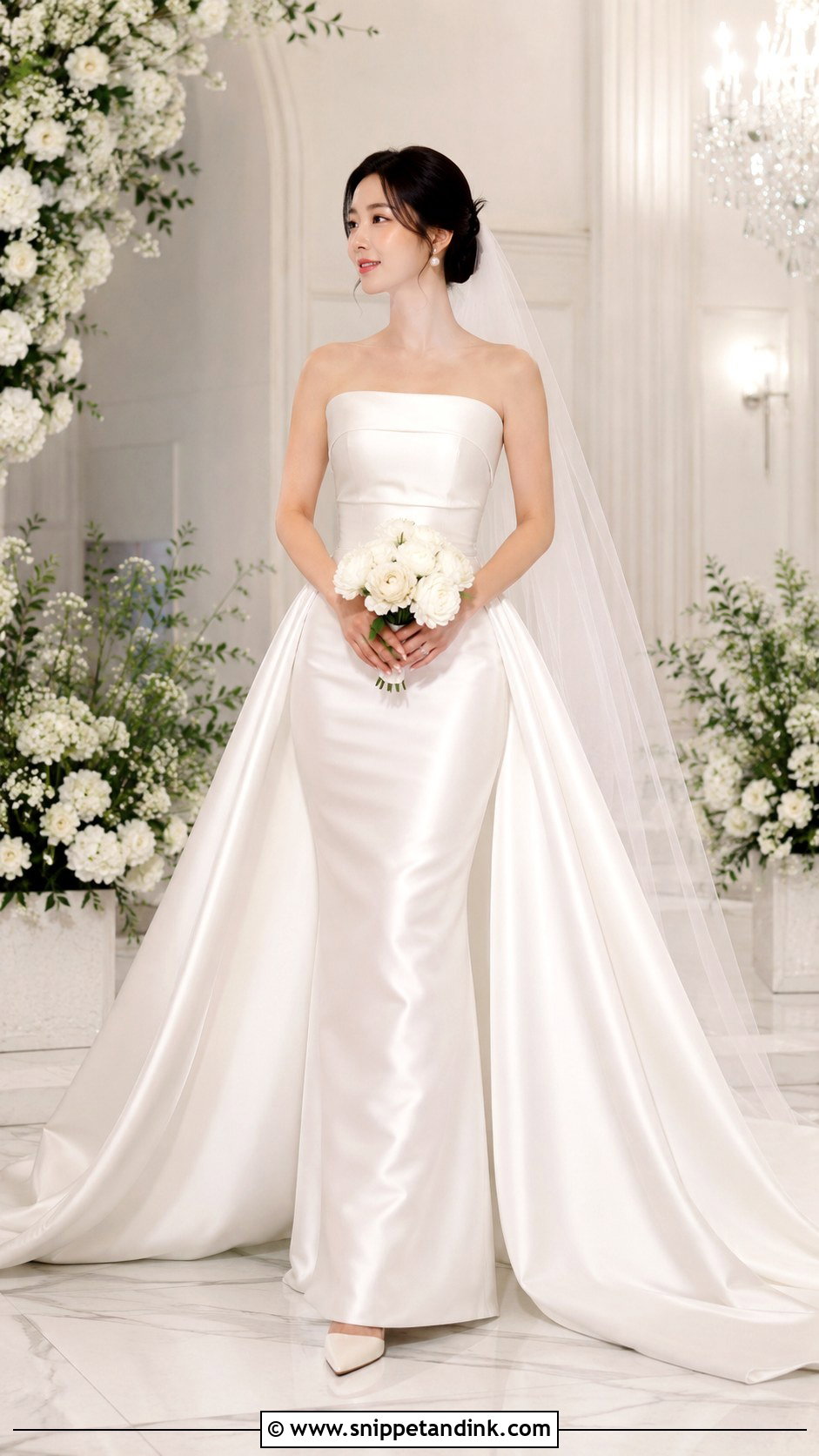
A detachable train gives you a ceremony entrance and a reception you can move in. That matters at hotel weddings, restaurant receptions and small venues where a long train gets stepped on between tables. A simple satin gown with a detachable overskirt is the cleanest version; a lace gown with a removable train reads more formal. The base dress has to look complete on its own, so judge it without the train at the fitting. Practise the attachment with whoever will remove it; hooks under a waistband are fiddly with nervous fingers.
How a Hanbok Should Sit When You Kneel and Bow
A hanbok is designed around movement on the floor, and at the paebaek you’ll kneel, bow deeply and stand again several times. The full skirt hides the knees and spreads around you when you sit, which is why it suits the ceremony so well. At the end, elders traditionally toss dates and chestnuts for the couple to catch in the bride’s skirt, so the chima needs enough fabric to hold out in front of you.
Details I check at a hanbok fitting
- The chima should wrap high, just under the bust, and fall to the floor without dragging when you walk.
- A petticoat underneath gives the skirt its soft bell shape; without one, silk clings.
- The goreum, the long ribbon on the jacket, is tied in a particular loop. Practise it once, or ask the hanbok shop to show whoever dresses you.
- The jeogori sleeves should reach the wrist when your arms are bent in a bow.
Color etiquette matters to many families. Traditionally, the bride’s mother wears pink or red tones and the groom’s mother wears blue tones, and some families still expect this. If you’re coordinating a modern pastel hanbok with family outfits, ask the mothers before you order, since a quick conversation now avoids a mismatch in the family photos.
Fit Does the Work When the Dress Stays Quiet
Korean-style bridalwear comes down to balance and careful detail. Classic satin, romantic lace, a modern hanbok shape or a playful reception mini can all belong to it, as long as the fit is right and the accessories stay quiet. Soft fabric and a calm silhouette do most of the work. Think about the ceremony setting, family traditions, how many outfit changes you want and how easily you need to move. With good fitting and restrained styling, the dress will look like you from the first photo to the last dance.
You'll Like These Ideas:


Leave a Reply