
Korean bridal fashion covers a wider range than most people expect. At one end sits the ceremonial hwarot worn for a pyebaek; at the other, a plain white gown that borrows a single hanbok idea, like a wrap neckline or a high waist. When I style a bride who wants that Korean feeling, the first thing I ask is which part of the day each outfit has to work for, because a dress built for a hotel aisle and a robe built for deep bows on a floor cushion are solving different problems. The 25 ideas below run from fully traditional to quietly inspired, with notes on fabric, fit and who each one suits.
Does Your Day Include a Pyebaek? Plan the Outfit Change First
The pyebaek is the family ceremony where the couple bows deeply to their parents, often while kneeling on a cushion, and parents toss dates and chestnuts that the couple tries to catch in the bride’s skirt. If one is on your schedule, it shapes everything else. A fitted mermaid or a strapless ball gown is close to impossible to bow in, so most brides change into a hanbok, sometimes with a hwarot or wonsam over it, for that part of the day.
When I plan this with a bride, I work out three things early:
- Where the change happens. You need a private room near the pyebaek space, with a mirror and somewhere to hang the gown so the skirt does not sit crushed on a chair.
- How long it takes. Getting out of a corseted gown and into a hanbok, with the hair adjusted for a jokduri, takes most brides half an hour or more with help. Build that gap into the timeline rather than squeezing it.
- Who helps. Someone who has tied a goreum before is worth more than three bridesmaids who haven’t. If the hanbok is rented, the shop will often show one person how to dress you.
If you want one outfit for the whole day, choose a gown with a full A-line or hanbok-style skirt and no boning below the waist, then do a practice bow at your fitting. If you can kneel and rise without stepping on the hem, it will work.
1. Traditional Korean Wedding Gown With Hwarot
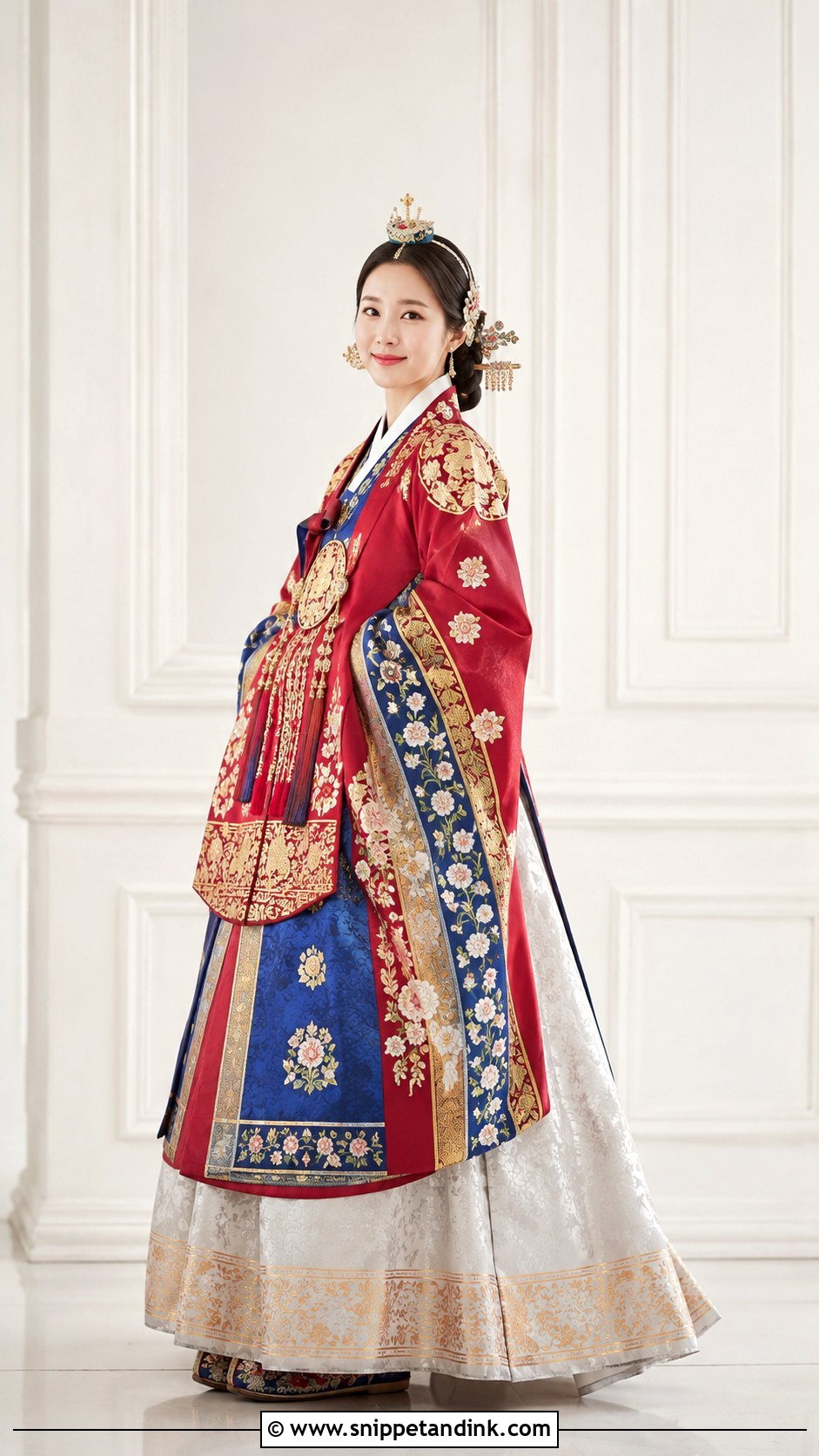
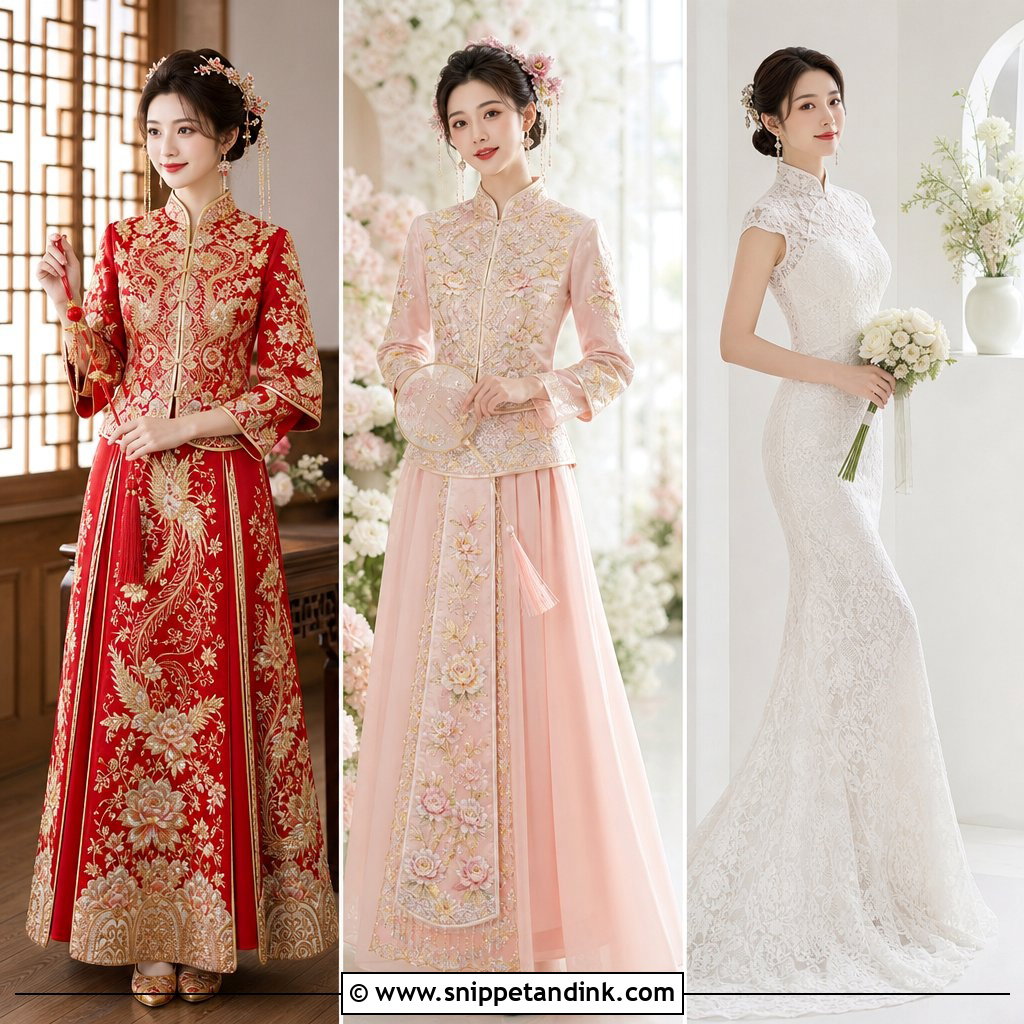
A traditional Korean wedding gown with a hwarot is the most ceremonial outfit on this list. The hwarot is a long embroidered robe with wide sleeves, usually red, worn over a full hanbok, and the motifs on it (peonies, lotus, paired birds) carry wishes for the marriage. It’s heavy. When I dress a bride in one, I check that the jeogori and chima underneath are fastened flat, because any bunching shows through the robe once she kneels. Pair it with embroidered shoes, a smooth low bun and a jokduri or floral pins, and keep makeup defined but soft so the embroidery stays the focus. It belongs at a pyebaek or a heritage portrait session, not on a dance floor.
2. Modern Korean Wedding Gown With Hanbok Skirt
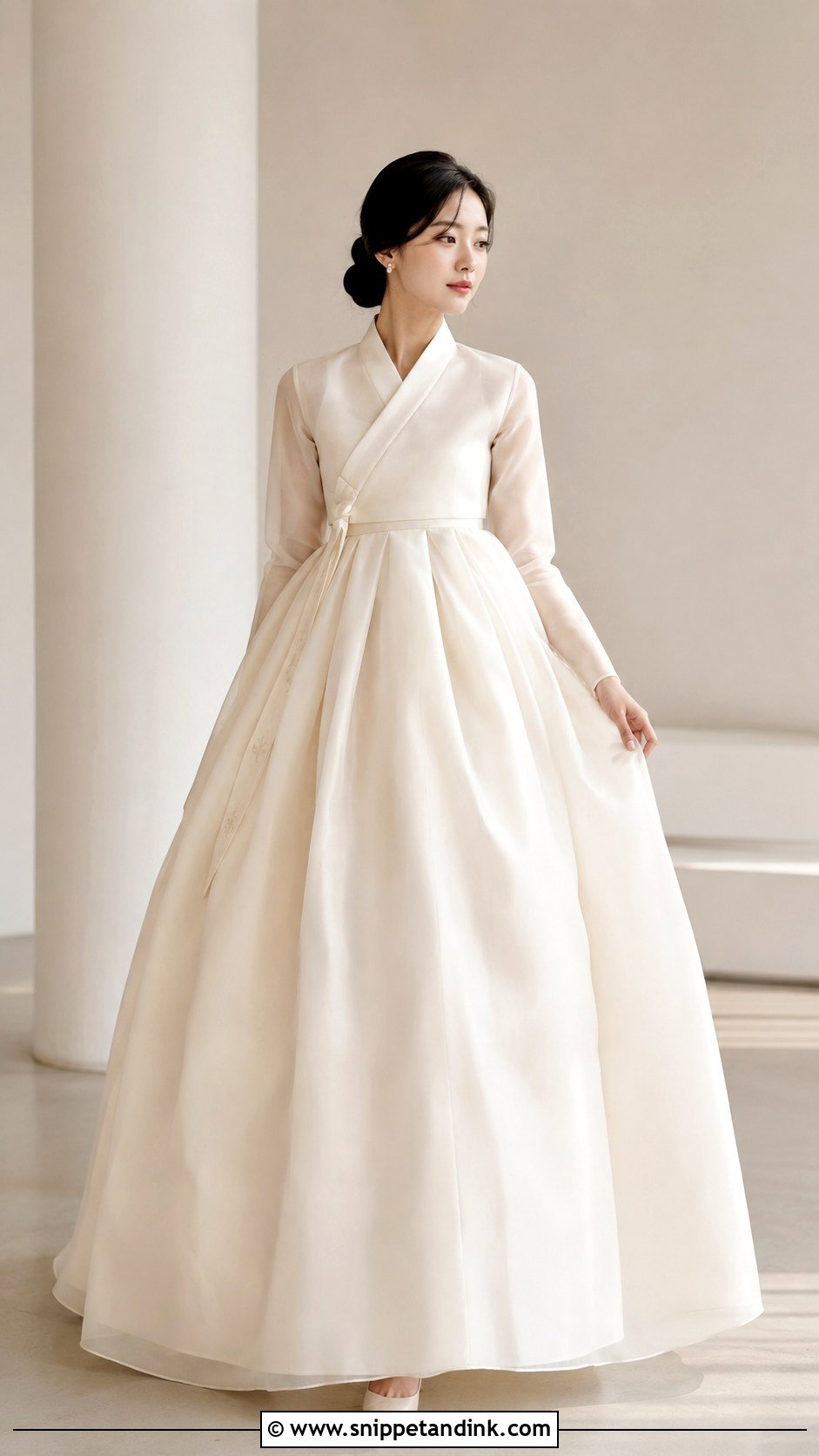
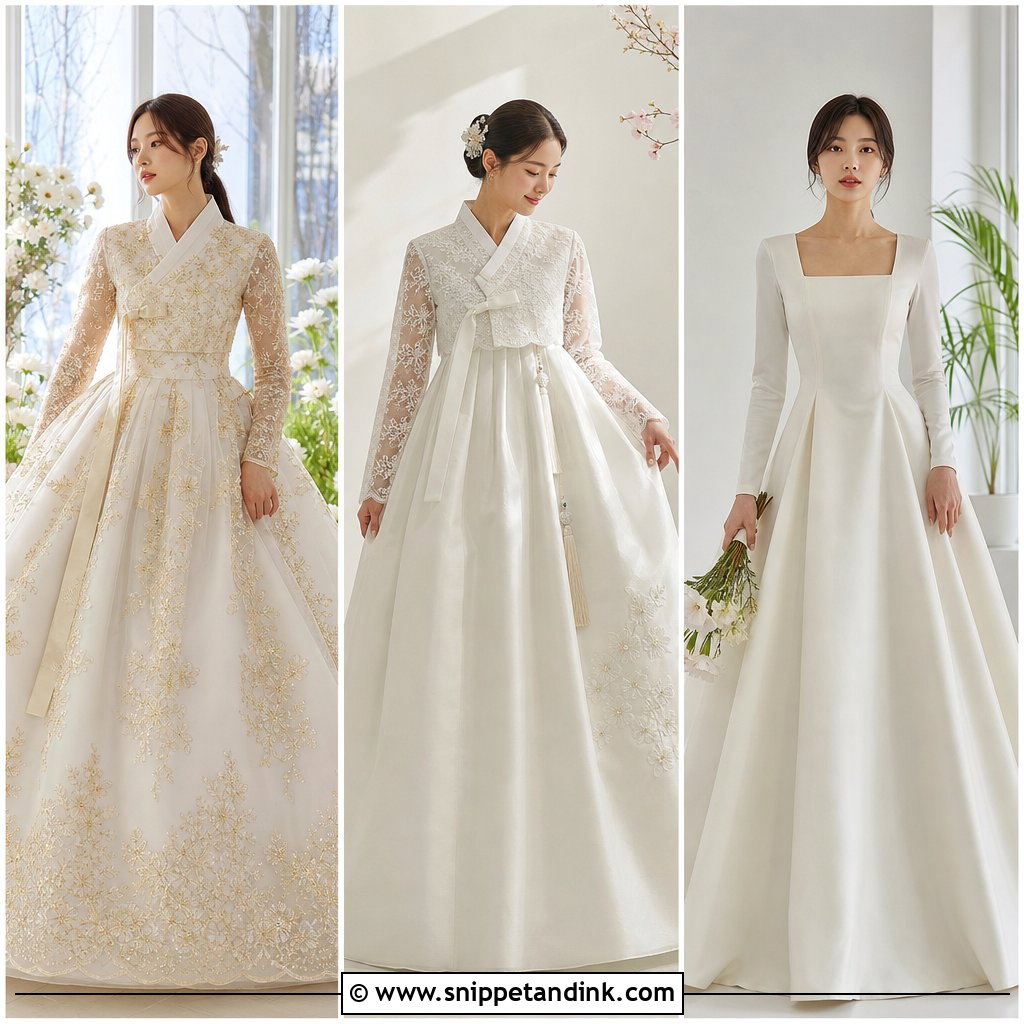
Think of this as tradition you can actually sit down in. A modern gown with a hanbok skirt takes the volume of the chima and puts it under a fitted or wrap bodice, so you get the shape without the full ceremonial layers. The skirt should stand away from the body; if it clings at the hip, the seamstress has cut too little fabric or used too soft a lining. Ivory, blush, champagne and pale blue all read as bridal. I finish it simply with pearl earrings, satin heels and a low bun.
3. White Korean Wedding Gown With Jeogori Top
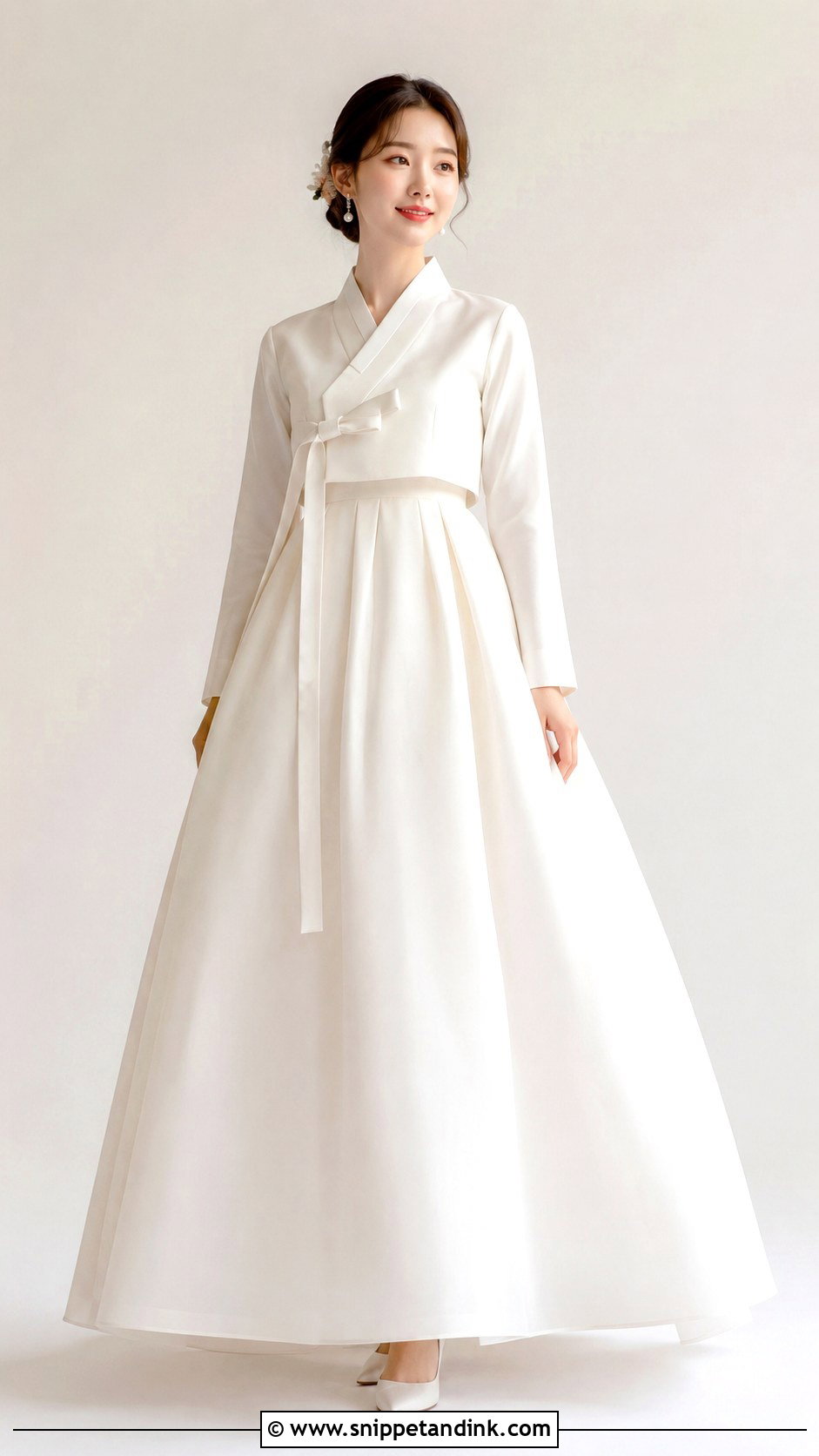
A white gown with a jeogori-inspired top relies on proportion. The cropped wrap bodice, curved collar and ribbon tie all sit high, so the skirt has to be full enough to balance a short top, and an A-line usually does that best. Silk, satin or organza all work. The detail I watch at fittings is the ribbon: a real goreum is tied in a specific flat loop, and a fussy bow made by a bridal shop that has never tied one looks wrong straight away. Style it with white heels, pearl drops and a sleek center-part bun for a civil ceremony or a studio shoot.
4. Korean Wedding Gown With Long Sleeves
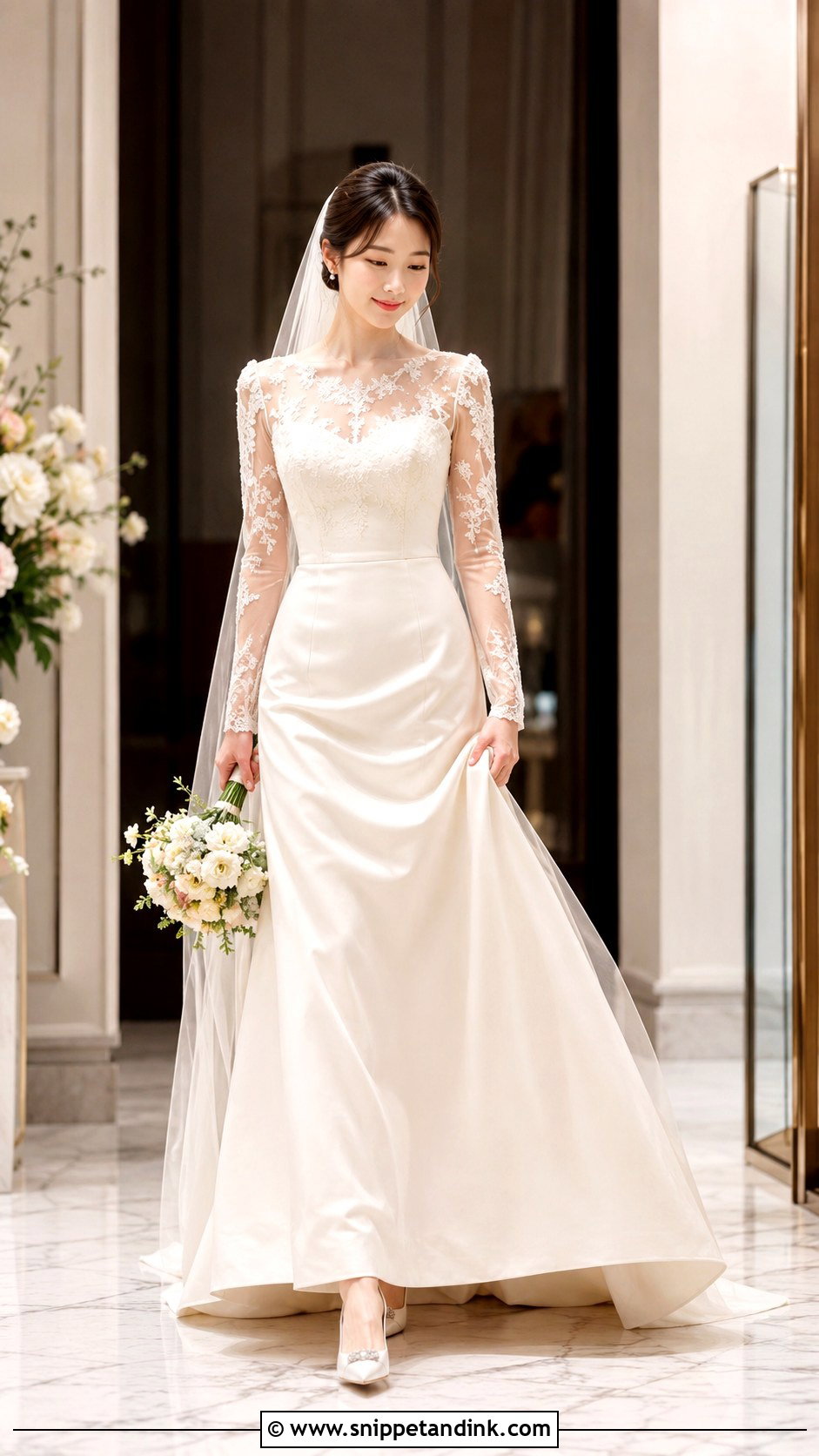
Long sleeves give coverage without tipping into costume. Sheer lace, soft organza or satin with a little volume at the wrist all fit the Korean mood, and the bodice can stay plain. Before you commit, raise both arms and hug someone at the fitting. Set-in sleeves cut too close restrict movement at the armpit, and you’ll be lifting your arms for bouquets, embraces and the first dance. I add pointed heels, a delicate veil and simple earrings. It suits cooler months and formal indoor venues best.
5. Korean Wedding Gown With High Neck
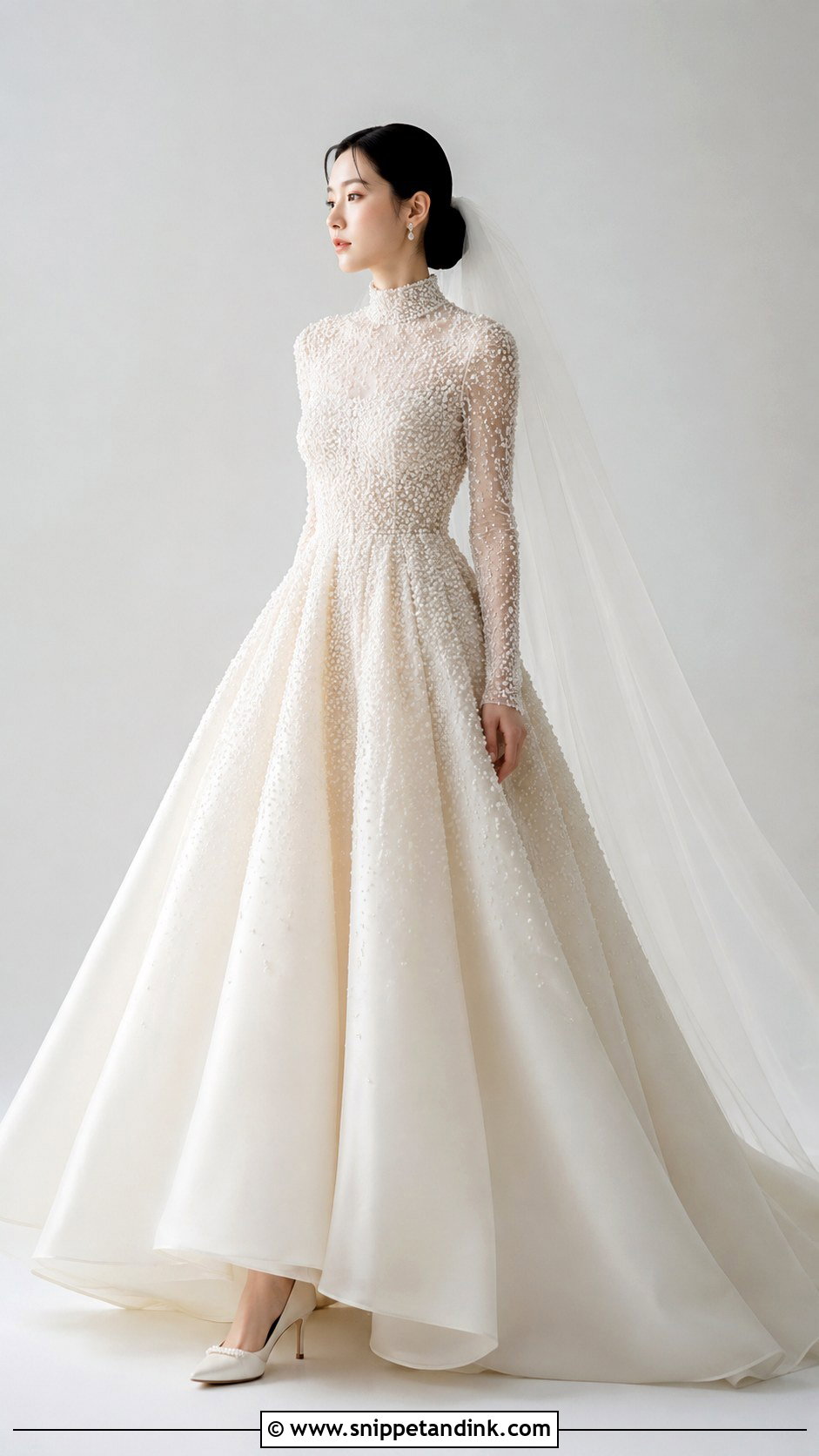
A high neckline needs very little decoration to look finished. Lace, pearl beading, sheer mesh or smooth crepe all sit well on it, and a structured bodice with soft shoulders or a small ribbon at the back adds the Korean touch. One thing I’m strict about: a high neck closes the space for jewelry and hair, so I wear the hair up and attach the veil low at the bun, otherwise everything crowds the jaw. A slim skirt keeps it modern, while a full one gives more presence at the ceremony. Add small pearl studs and nothing else.
6. Korean Wedding Gown With Pearl Details
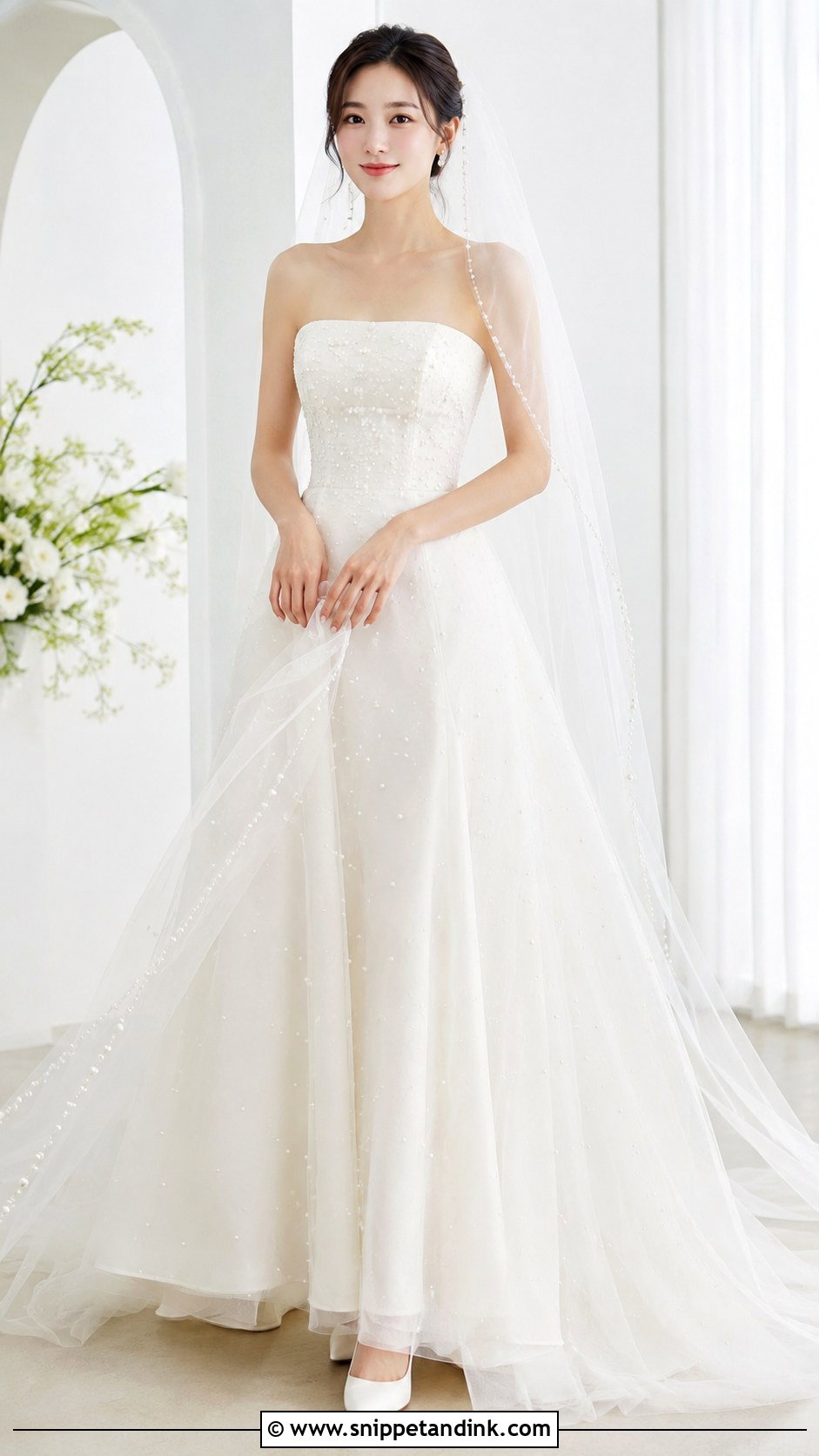
Pearls give texture without glare, which is why they suit the restrained Korean look. Beaded sleeves, a pearl neckline, pearl buttons down the back or scattered accents across tulle all work, and a simple silhouette keeps it from looking busy. Ask how the pearls are attached. Glued pearls pop off when the dress is packed or steamed, and hand-sewn ones survive a long day. I’d pair it with pearl earrings, satin heels and a sheer veil edged in tiny pearls, indoors or out.
7. Korean Wedding Gown With Lace Bodice
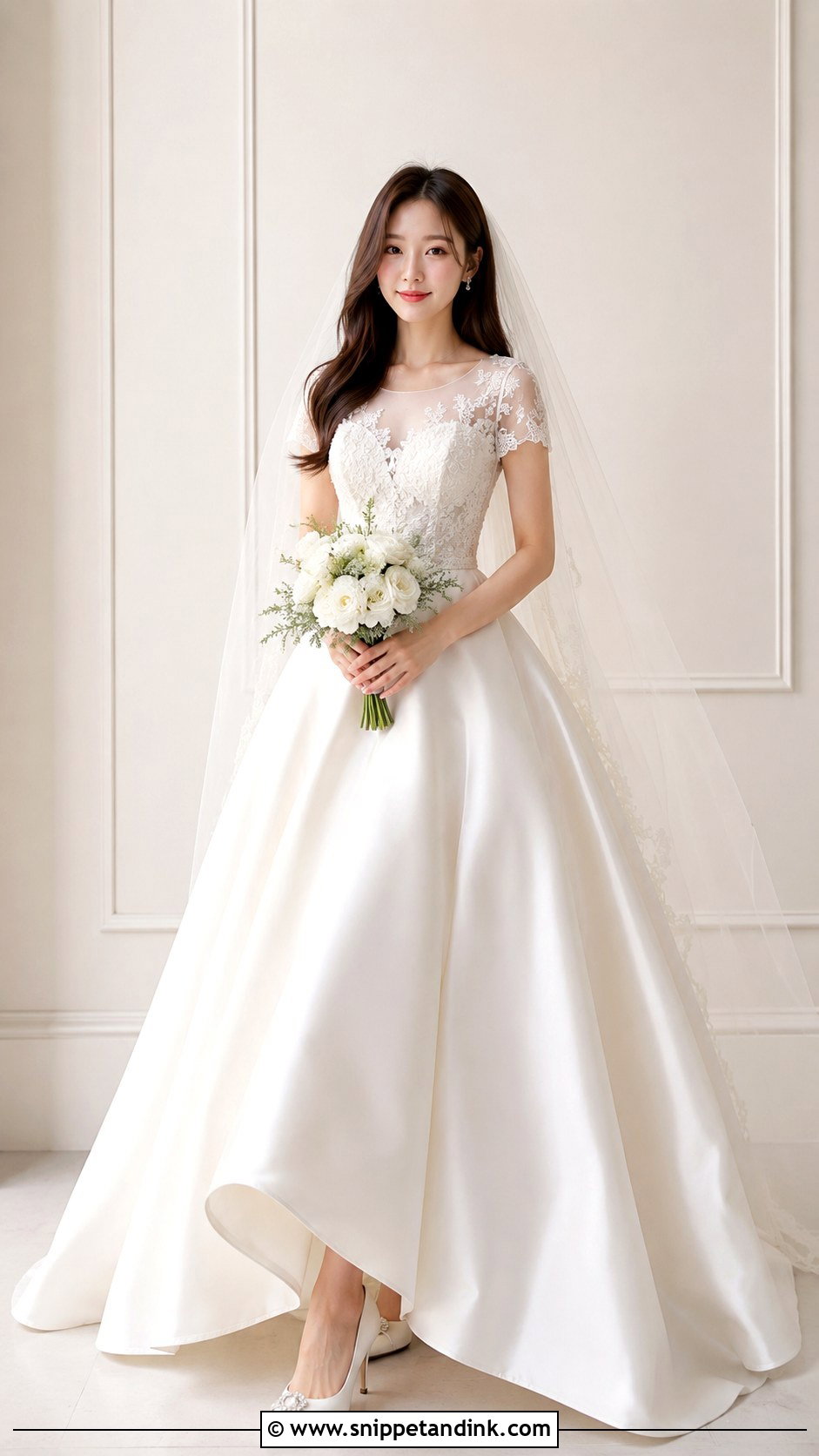
My rule with lace is one zone only. A floral lace bodice above a smooth satin or organza skirt looks cleaner and more Seoul-studio than lace from neck to hem, and the contrast lets the lace pattern actually show. Sweetheart, high illusion and gentle square necklines all suit it. Check the lace edges at the neckline: scalloped, hand-trimmed edges sit flat against skin, while machine-cut ones can curl after a few hours of body heat. Soft waves, a sheer veil and ivory heels finish it.
8. Korean Wedding Gown With Satin Ball Gown Skirt
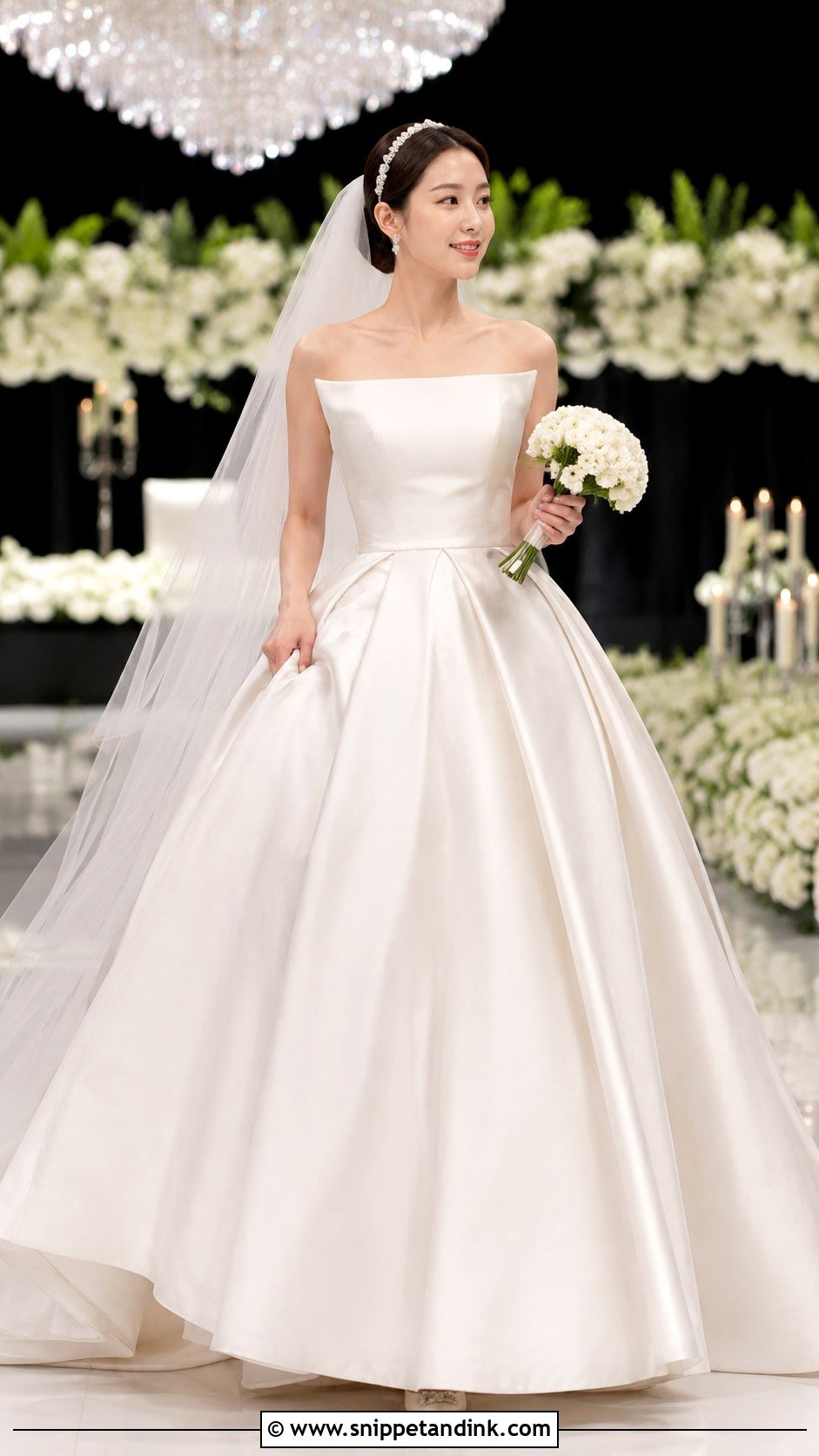
A satin ball gown skirt is about shape, and the shine of the fabric does the rest, so it needs very little embellishment. Balance the skirt with a fitted bodice, a soft off-shoulder line or a plain strapless top. Heavy satin shows every crease, and a bride who sits in a car for half an hour will arrive with lines across her lap, so I travel with a handheld steamer for this one. It suits grand halls, hotels and formal portraits. Keep accessories refined: crystal earrings, a smooth veil, satin pumps.
9. Korean Wedding Gown With Off Shoulder Neckline
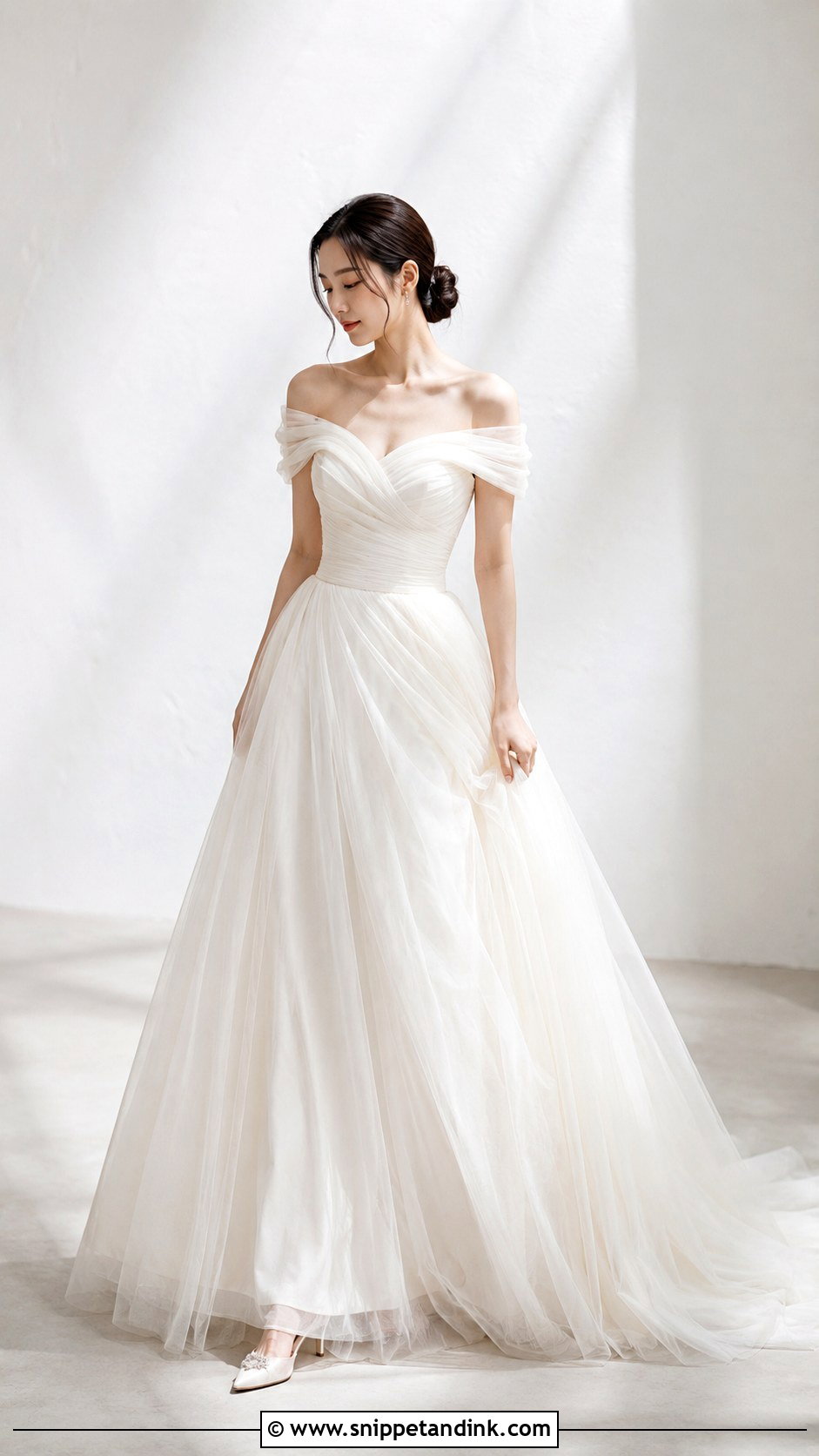
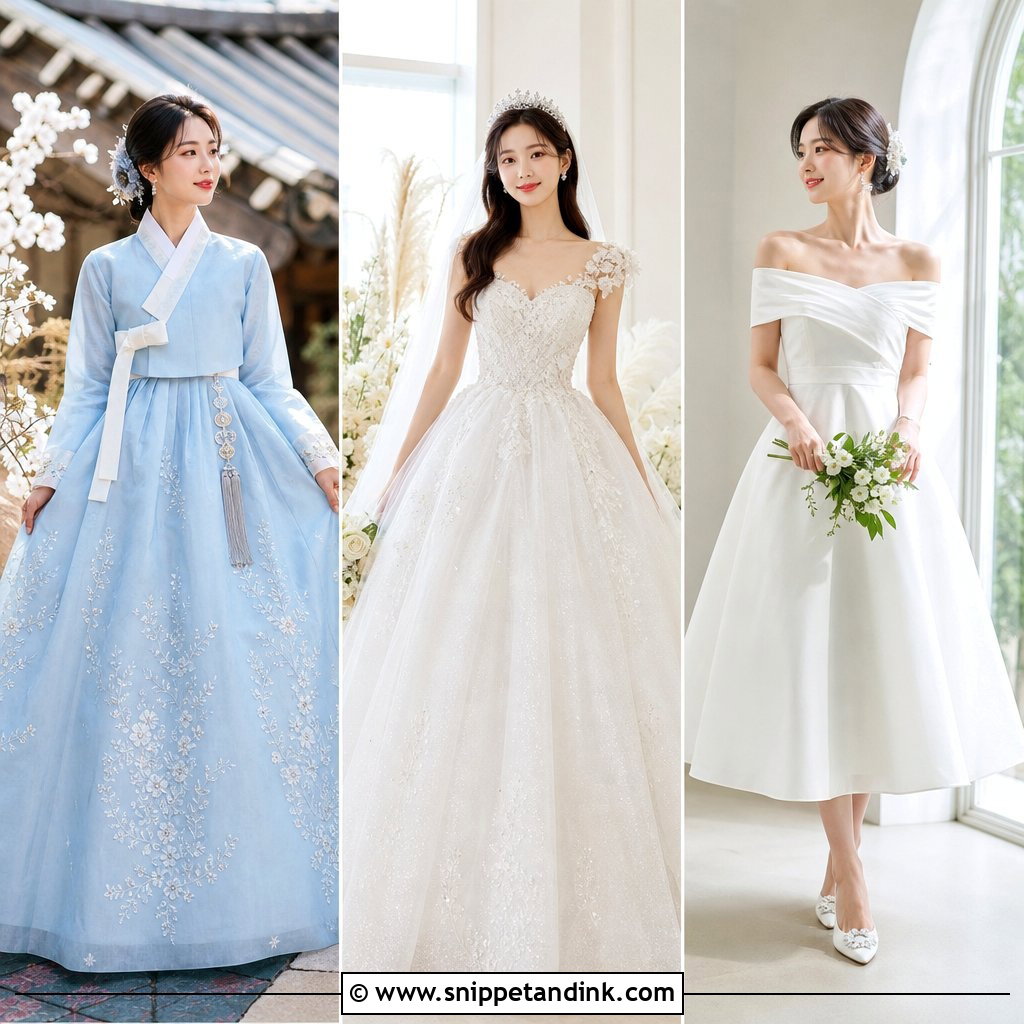
Off-shoulder necklines open the collarbones and frame the face, which is why they photograph well. For the Korean mood, use soft draping, a gentle corset bodice or a smooth A-line skirt in tulle, satin or mikado. The engineering matters here. If the bodice isn’t boned and fitted closely, the sleeves slide up onto the shoulders every time you raise your arms, so I test that at every fitting. Add a necklace only if the neckline is completely plain. A low bun, soft veil and pointed heels complete it.
10. Korean Wedding Gown With Square Neck
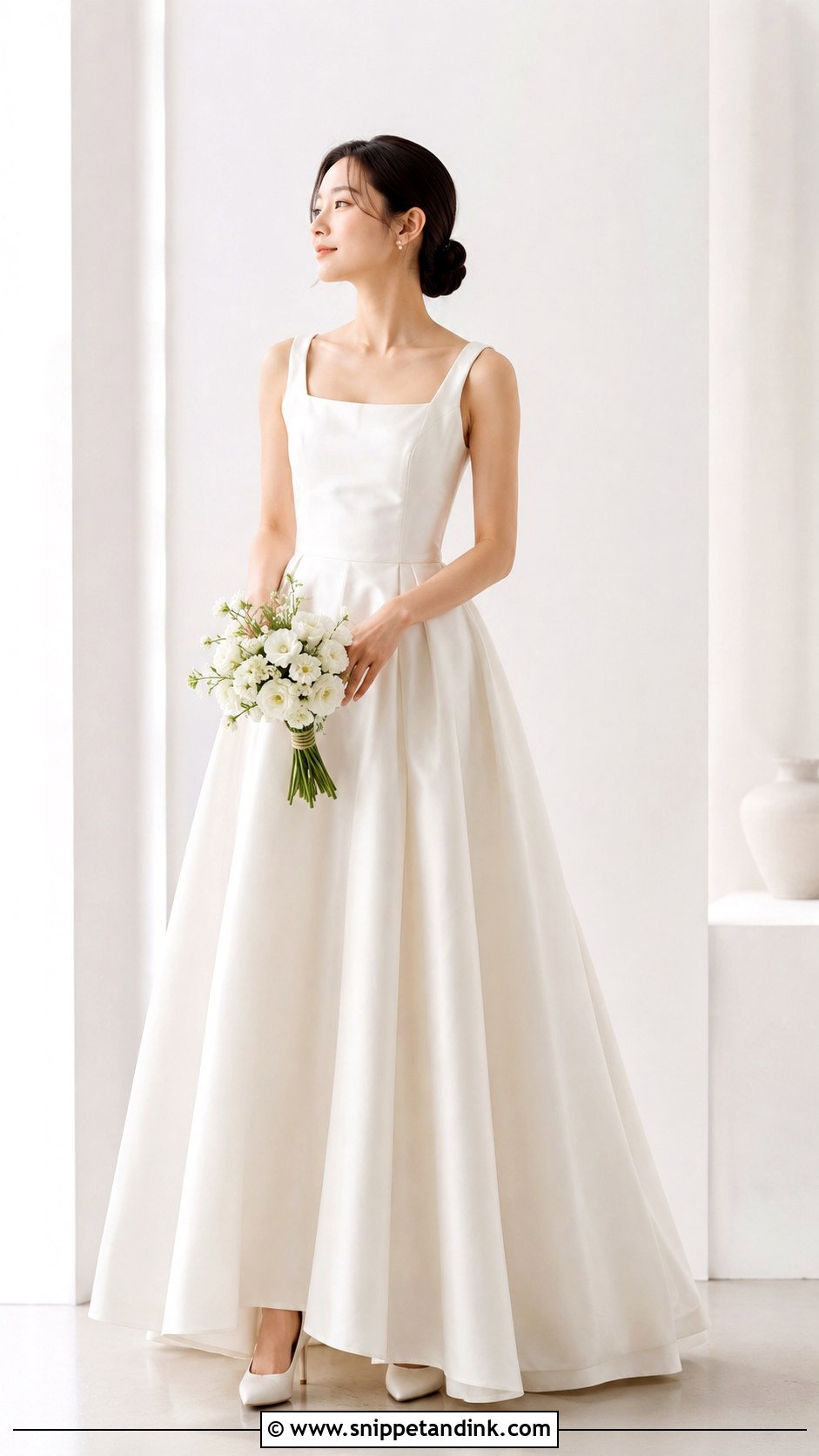
A square neck suits brides who like structure. It frames the collarbone and holds its line best in satin, crepe or heavy silk, because thinner fabrics let the corners droop. I check the corners while the bride is seated, since that’s when they gape. Add a softly gathered skirt, minimal pearl earrings and a neat bun for the Korean finish. Long sleeves make it more modest; slim straps make it lighter. It carries from ceremony to reception without a change.
11. Korean Wedding Gown With Ribbon Back
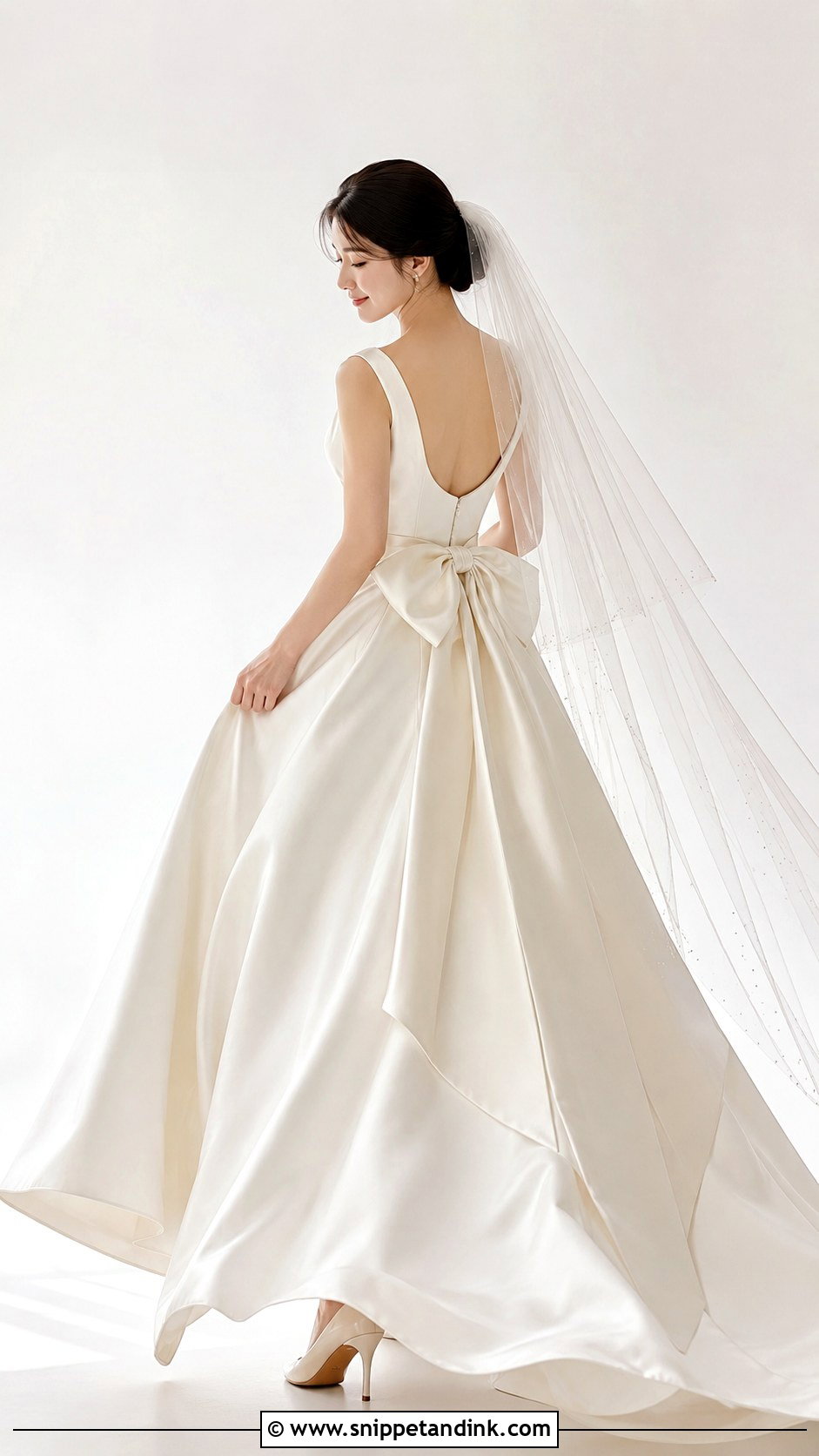
Ribbon ties come straight from the hanbok, where the goreum closes the jeogori, so a ribbon-back gown bridges traditional and modern dress quite naturally. A large satin bow at the back, ribbon straps or a tie at the waist all work, and the front can stay plain so the back carries the design. Tie it, then sit and stand a few times at the fitting. A bow made from soft satin collapses after an hour unless it has interfacing inside. Pair it with a smooth updo, drop earrings and heels; the bow shows best in walking shots.
12. Korean Wedding Gown With Embroidered Flowers
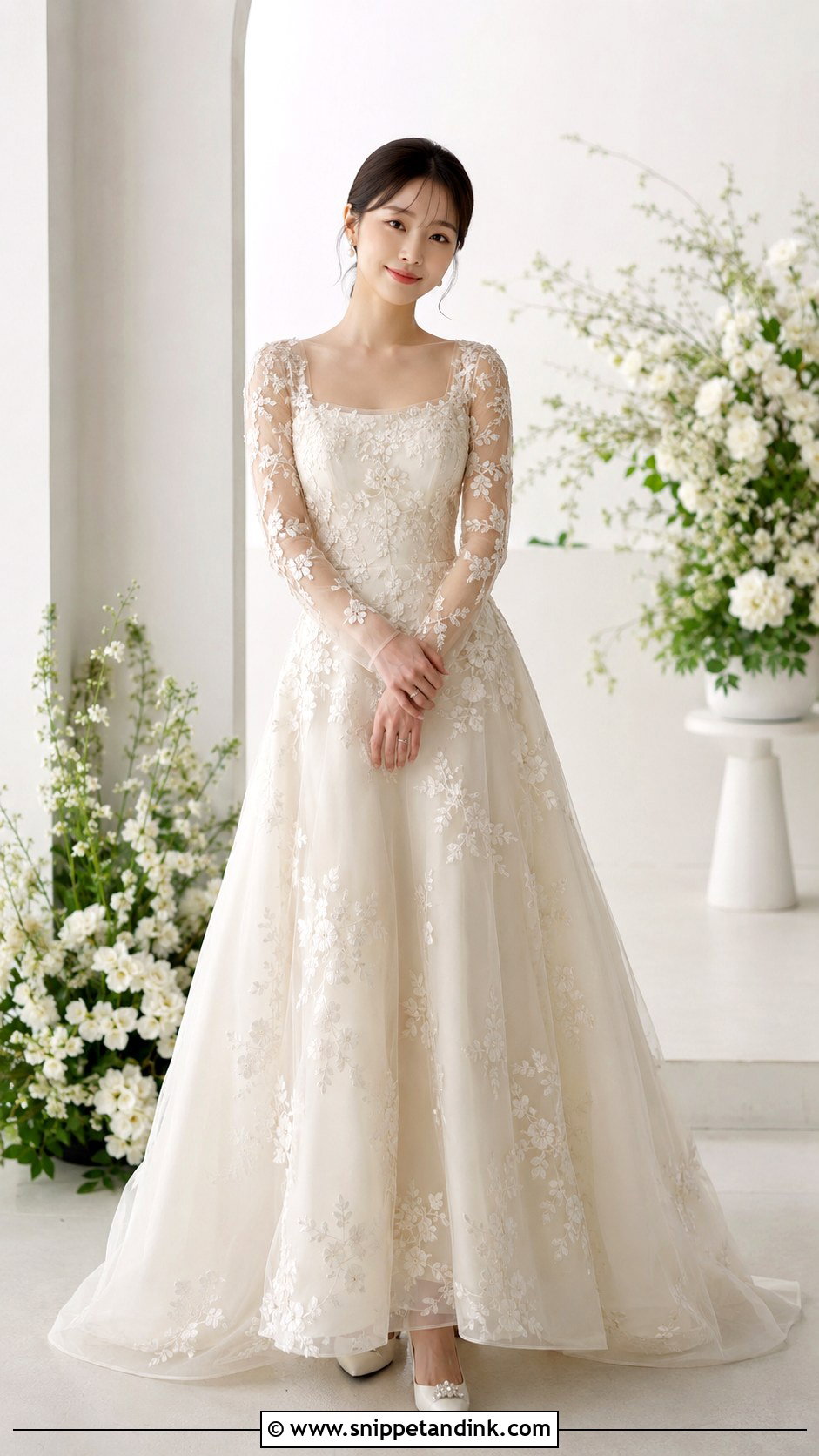
Embroidery is where a gown can carry real meaning. Peonies, plum blossoms and lotus motifs all appear in Korean textiles, and choosing one gives the dress a story. For a modern look, use ivory thread on white, pastel threads on sheer sleeves or colored flowers on a hanbok-style skirt. Keep the silhouette clean so the embroidery reads as special rather than busy. I’d ask for a stitched sample on your actual fabric before ordering, because the same thread can look flat on satin and luminous on organza. Simple heels, pearl earrings and fresh makeup finish it.
13. Korean Wedding Gown With Pastel Hanbok Colors
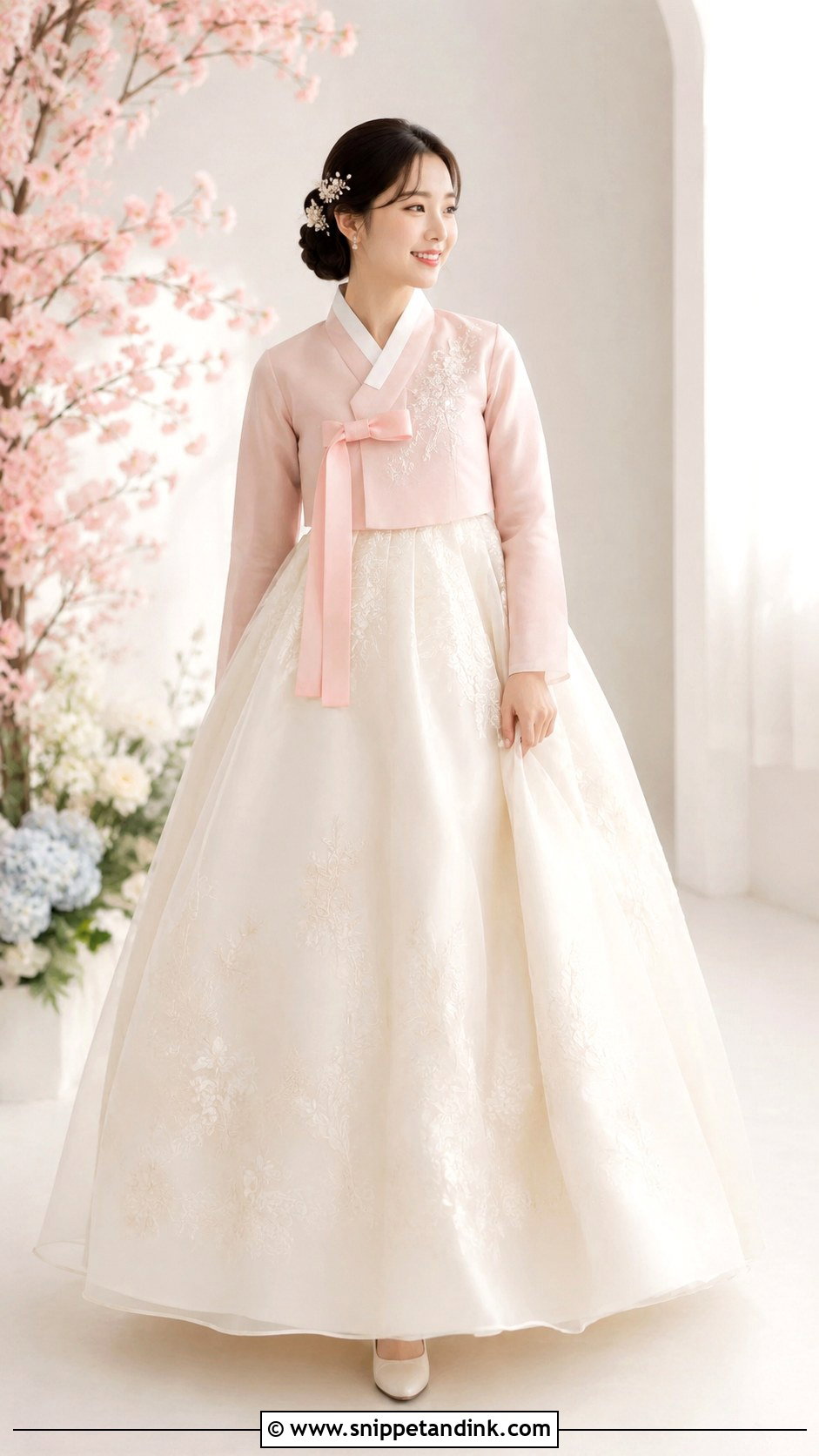
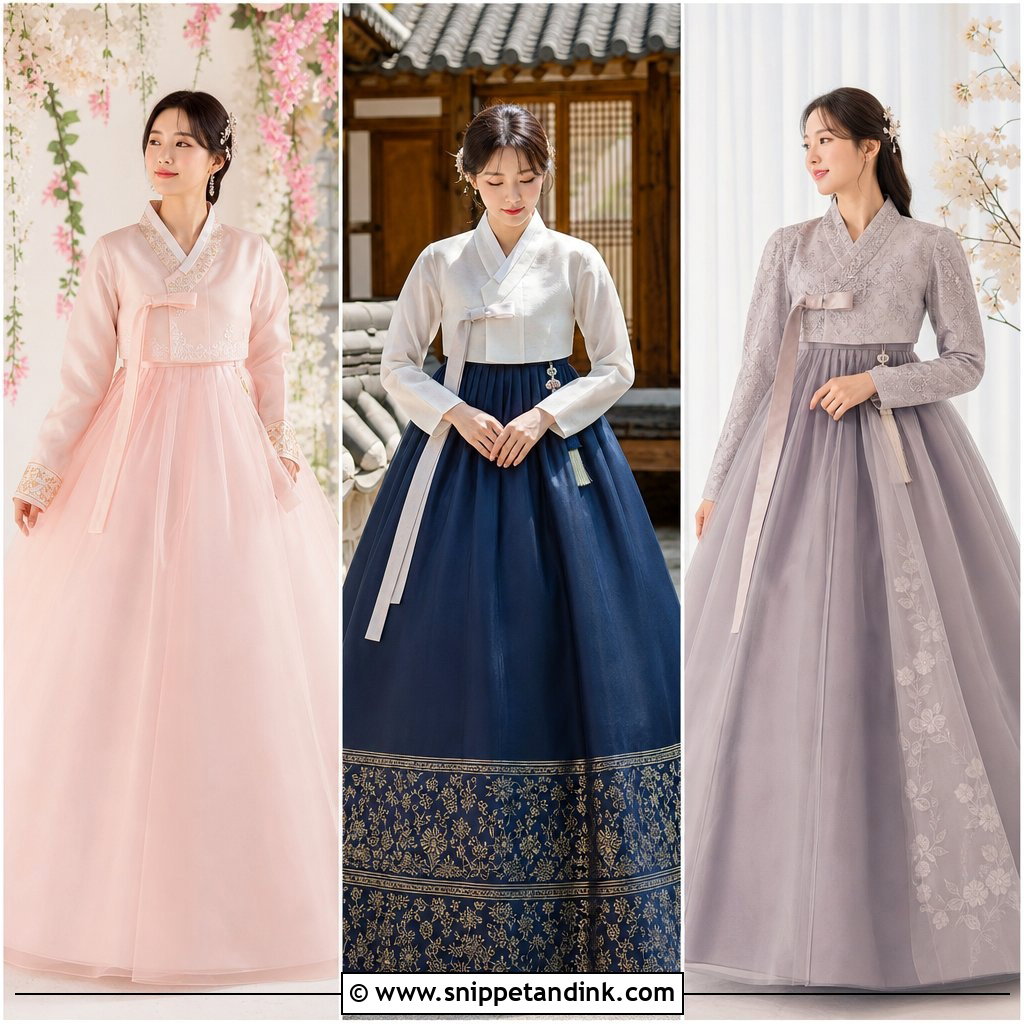
Pastel hanbok colors bring color in gently. Pale pink, powder blue, mint, lavender and creamy yellow all feel bridal when they’re used in sheer layers or subtle skirt panels, such as a pastel jeogori-style bodice over an ivory skirt or pastel embroidery on white. Test pastels in daylight. Under warm indoor lighting, mint and lavender can turn grey, while pink and yellow hold up better. Satin shoes, pearl hairpins and natural makeup suit it, especially for spring weddings.
14. Korean Wedding Gown With Blush Tulle Skirt
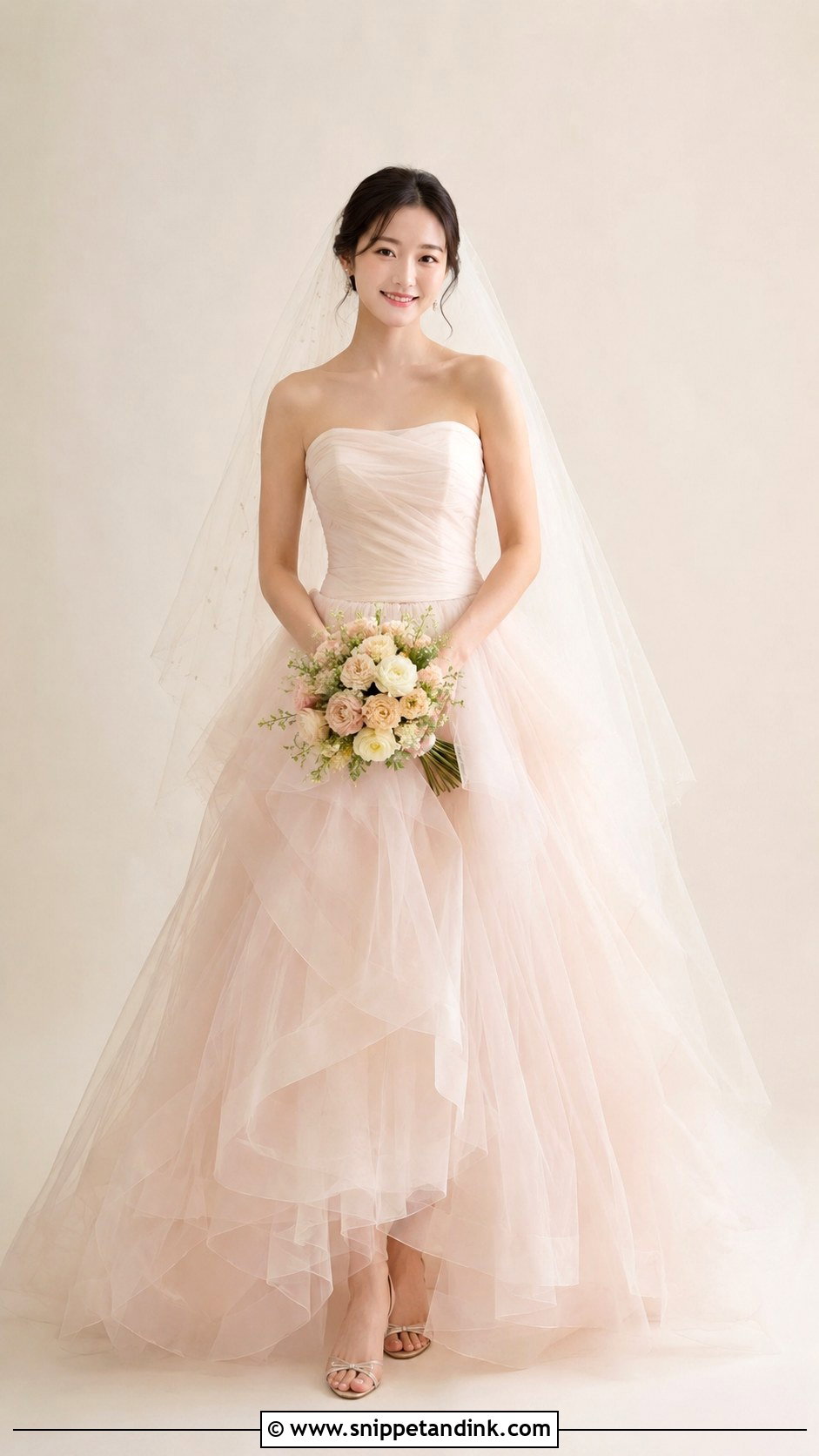
Blush tulle adds warmth that pure white doesn’t have, and it still reads as bridal. Layer it under an ivory fitted bodice with a sweetheart neckline, thin straps or off-shoulder sleeves. Tulle shades vary a lot between makers, and blush that looks pink on a hanger can look almost nude against warm skin, so hold a swatch to your face in natural light before ordering. Clear heels, pearl earrings and a sheer veil keep it light. This is the closest you’ll get to a K-drama wedding scene.
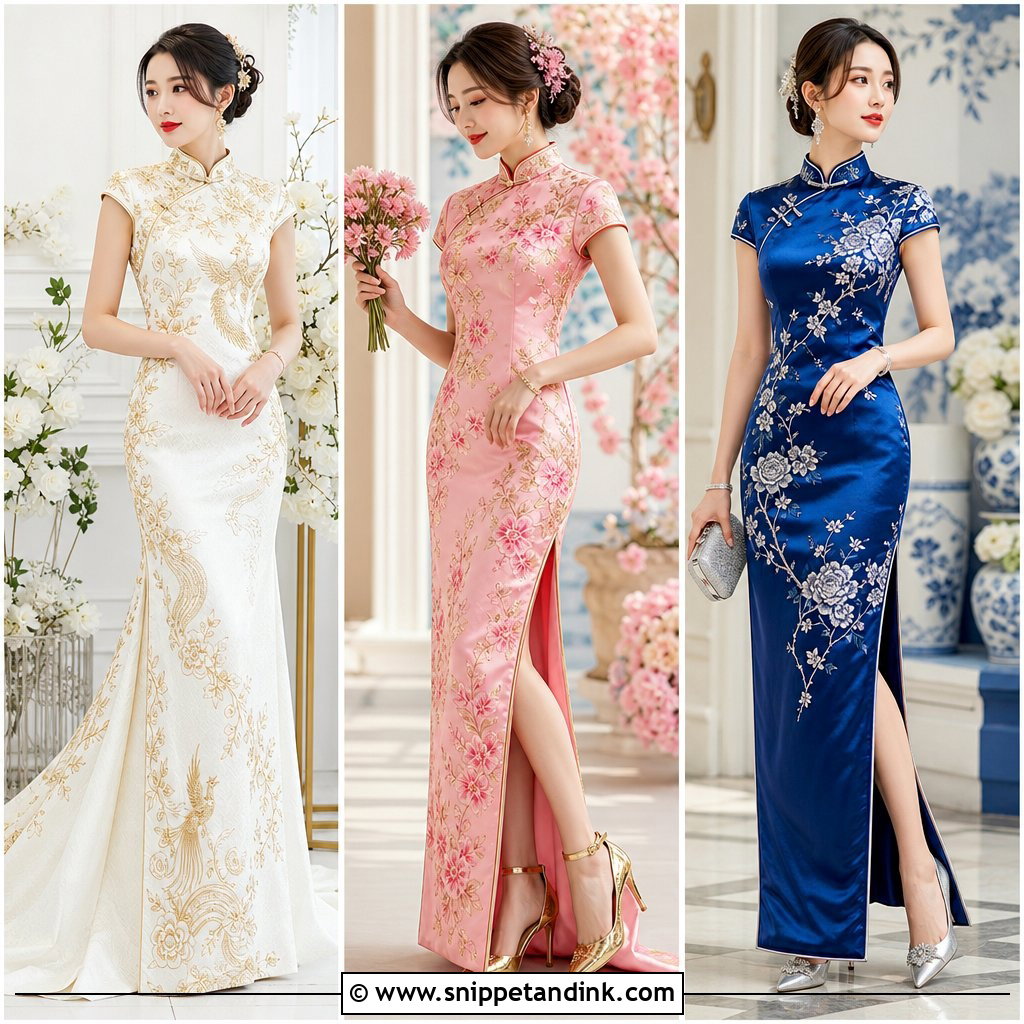
15. Korean Wedding Gown With Cape Sleeves
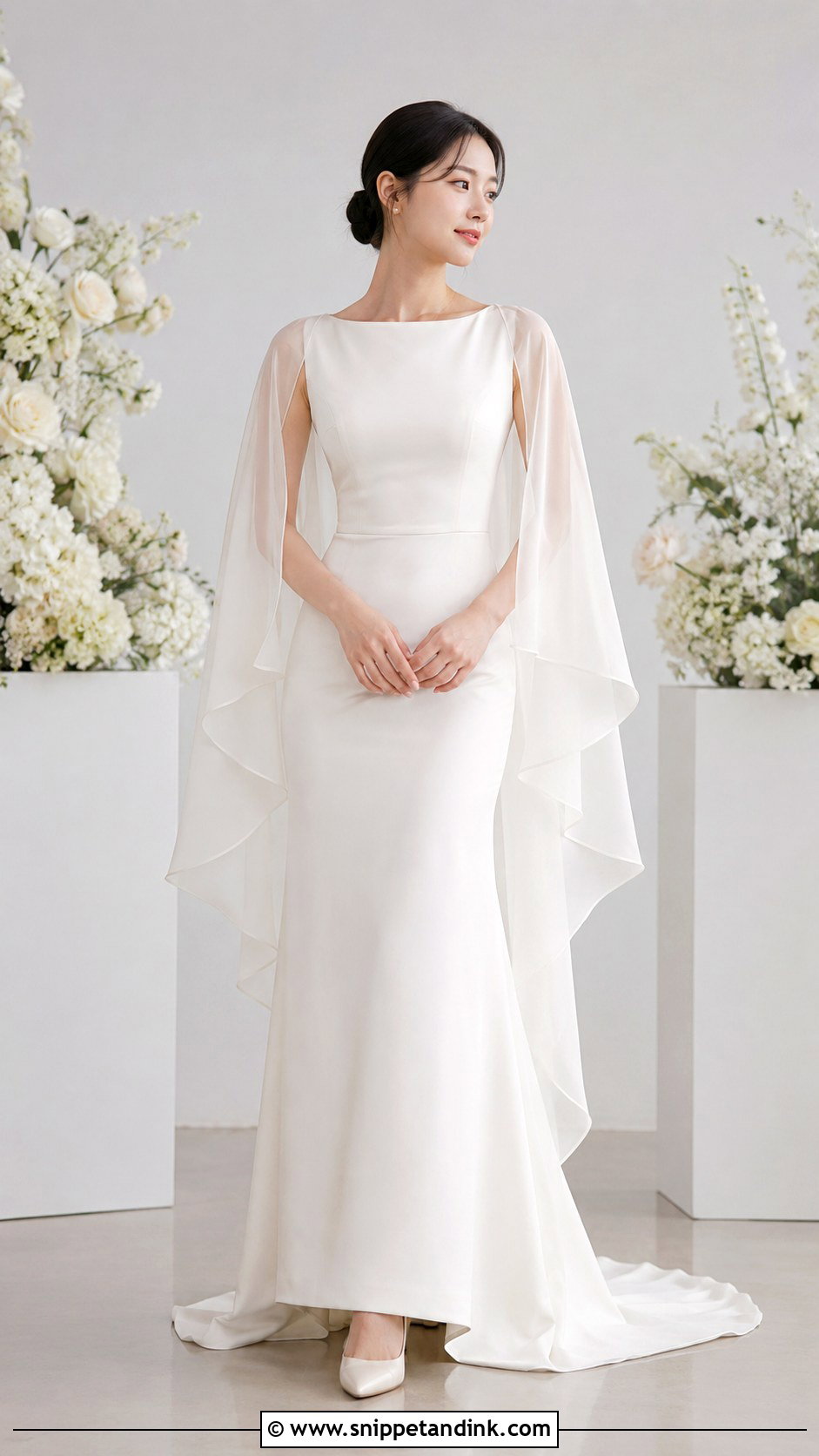
Cape sleeves give movement without a long veil. Sheer organza attached at the shoulders, a short capelet over a fitted dress or longer panels that trail behind all work, and they look best on plain satin or crepe where the cape is the only detail. Watch the attachment points. Snaps or hook loops let the cape come off for the reception, but sewn-in panels can’t, and they catch on chair backs at dinner. A low bun, sleek heels and small earrings keep the rest quiet.
16. Korean Wedding Gown With Sheer Organza Layers
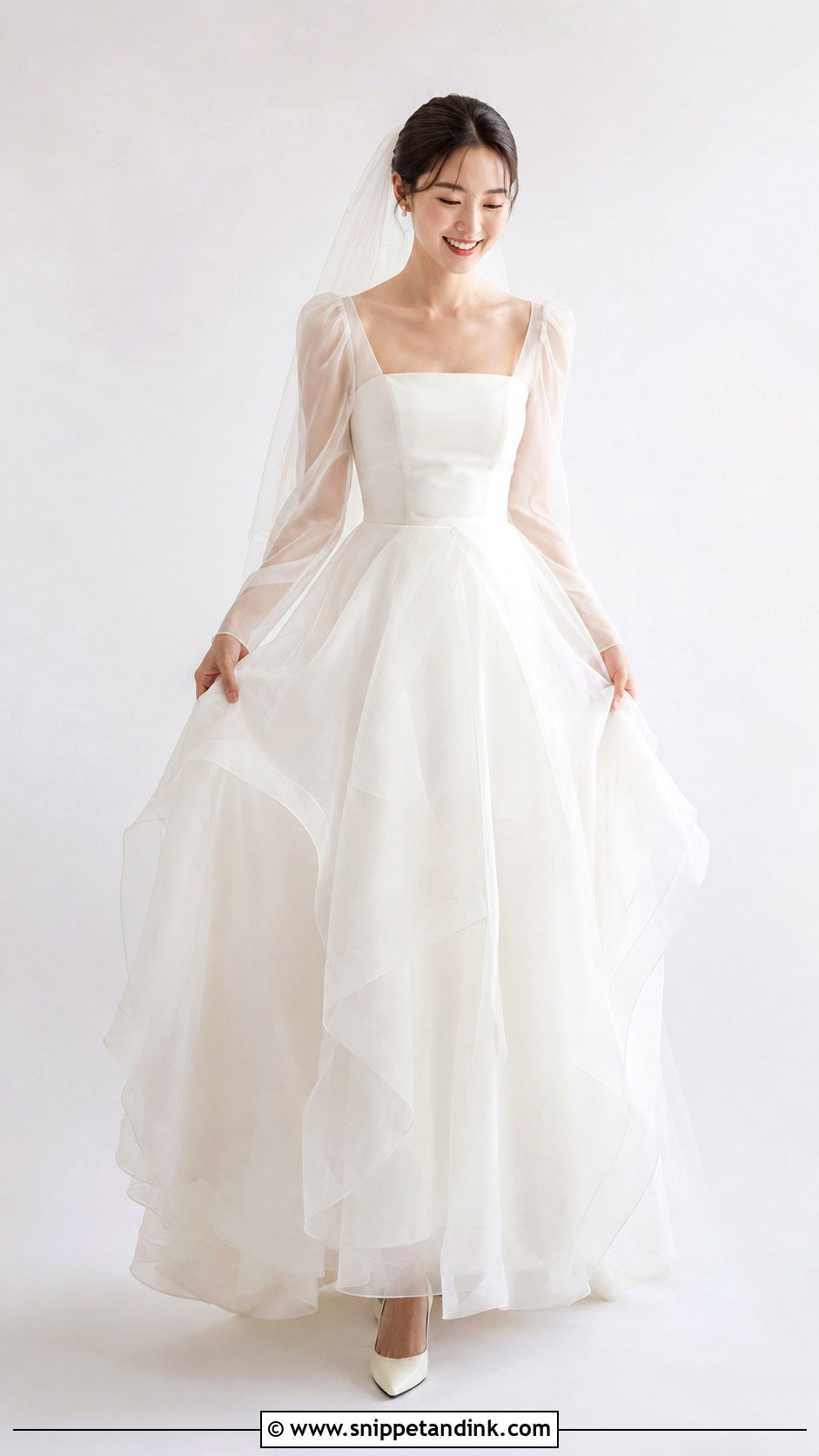
Organza layers float, which suits the light, structured feel of Korean bridal wear. An organza overskirt over a fitted base gives both shape and movement, and a simple bodice keeps it modern, while sheer sleeves add a little romance. Silk organza and polyester organza behave differently. Silk holds a soft crisp shape; polyester can look stiff and shiny under flash, so I always ask which one a sample is. Ivory heels, delicate earrings and an airy veil complete it. You get volume without carrying the weight of a ball gown.
17. Korean Wedding Gown With Minimal Silk Dress
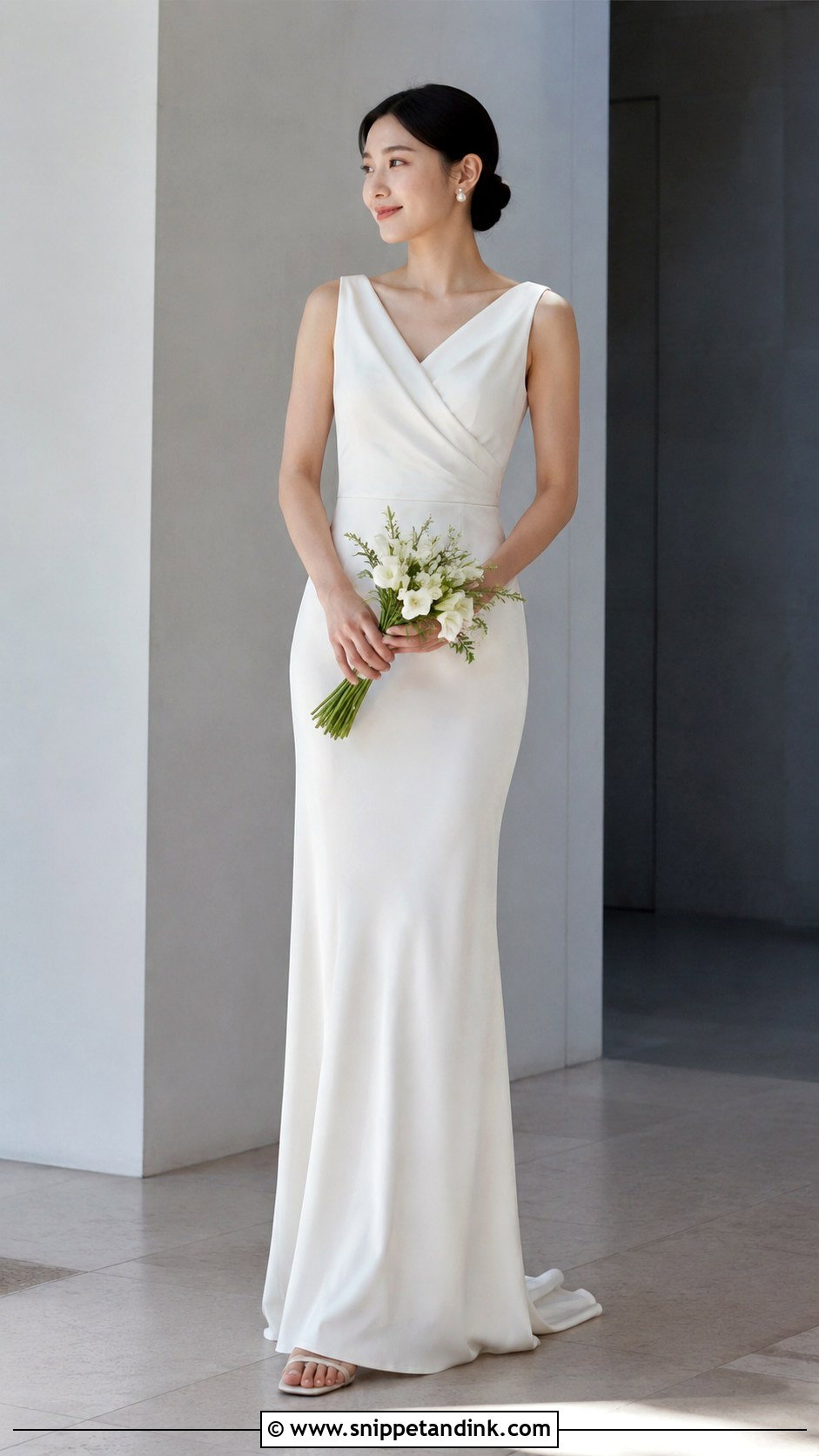
A minimal silk dress depends almost entirely on fit, because there’s nothing to hide behind. A slip, a column or a soft A-line can all work, with a wrap neckline, ribbon tie or covered buttons as the single Korean detail. Silk charmeuse shows every line of underwear and every sweat mark, so I fit this one over the exact shapewear the bride will wear, and I’d steer an anxious, warm-handed bride toward a heavier crepe instead. Sleek hair, small pearls and barely-there heels suit a city wedding or a private ceremony.
18. Korean Wedding Gown With Tea Length Skirt
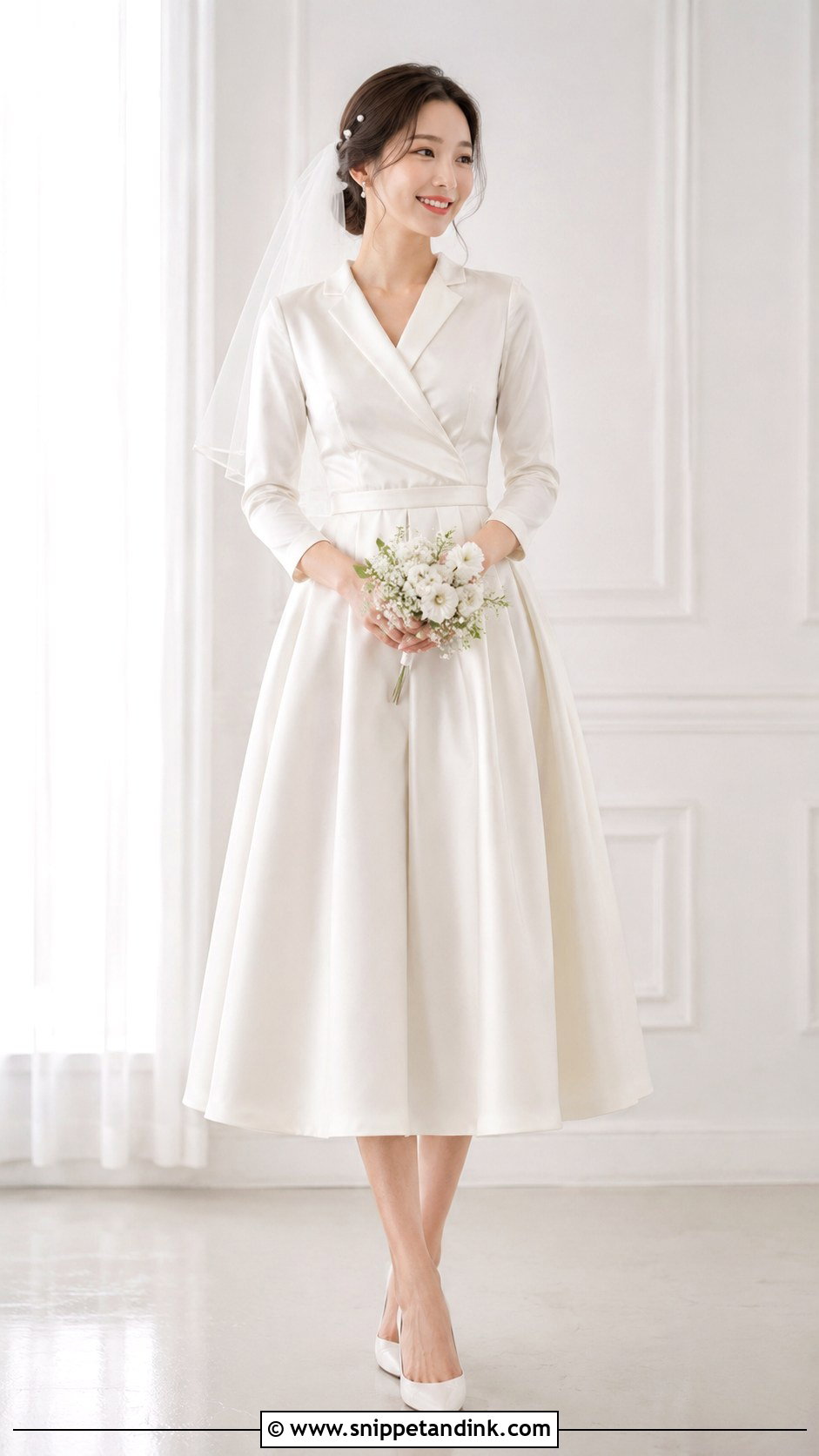
Tea length falls between the knee and the ankle, so it’s easy to walk in and shows off your shoes. It suits courthouse weddings, receptions and second outfits. Hemming is the tricky part: tea length looks intentional at mid-calf and accidental just above the ankle, so I set the hem with the actual wedding shoes on. Keep the Korean influence clear with a wrap bodice, bow or high hanbok waistline, and add pointed heels, pearl hair clips and a short veil.
19. Korean Wedding Gown With Fitted Mermaid Skirt
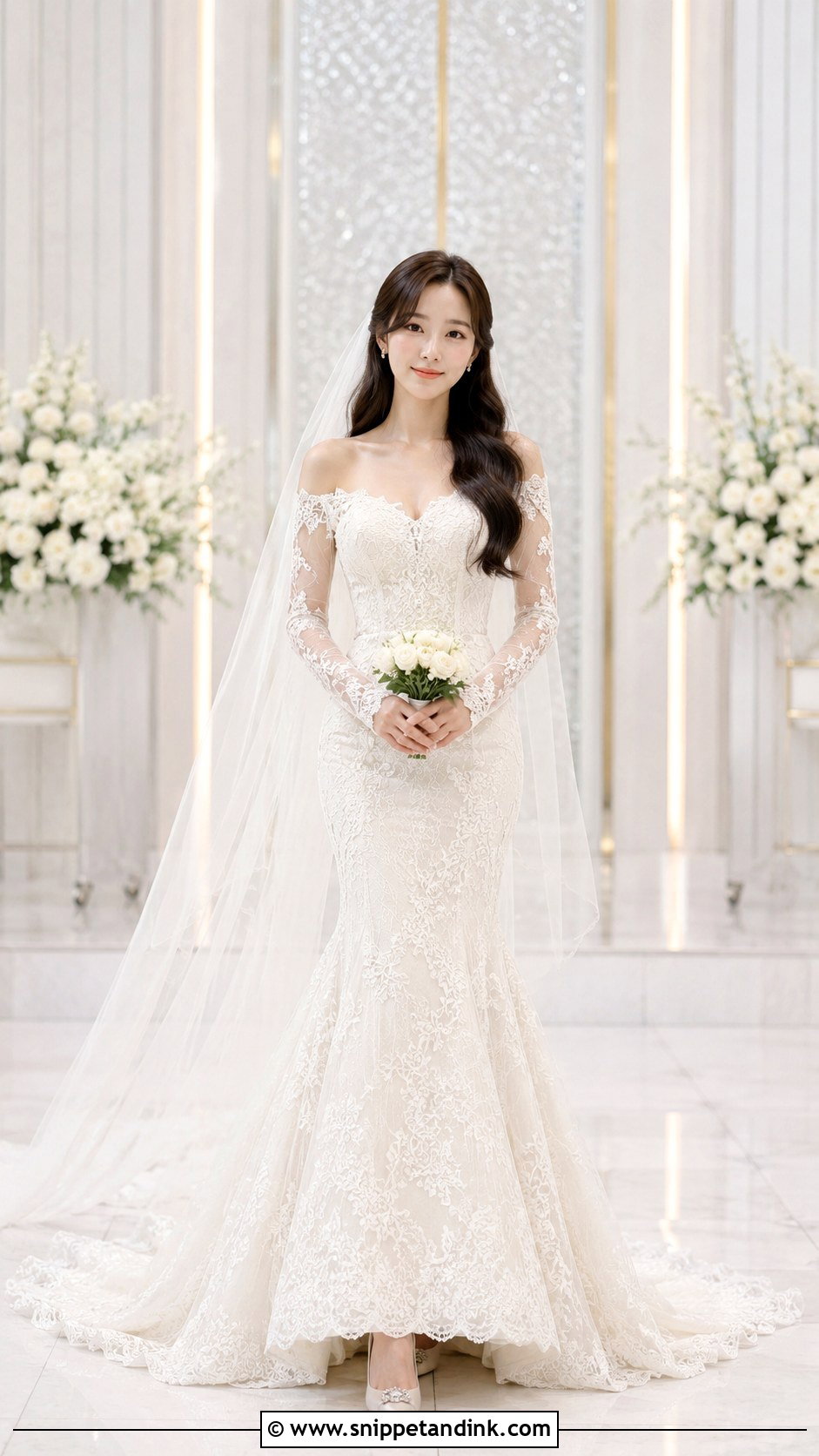
A mermaid gown follows the body to the knee and then flares, which looks dramatic and asks a lot of the fit. I’d only recommend it to a bride who’s comfortable walking in short steps for a few hours, because the flare restricts stride and stairs need a hand. Lace sleeves, pearl details or a delicate off-shoulder line soften it. Clean white or ivory fabric keeps it refined. Add high heels, a long veil and polished waves or a low bun for an evening venue.
20. Korean Wedding Gown With A Line Skirt
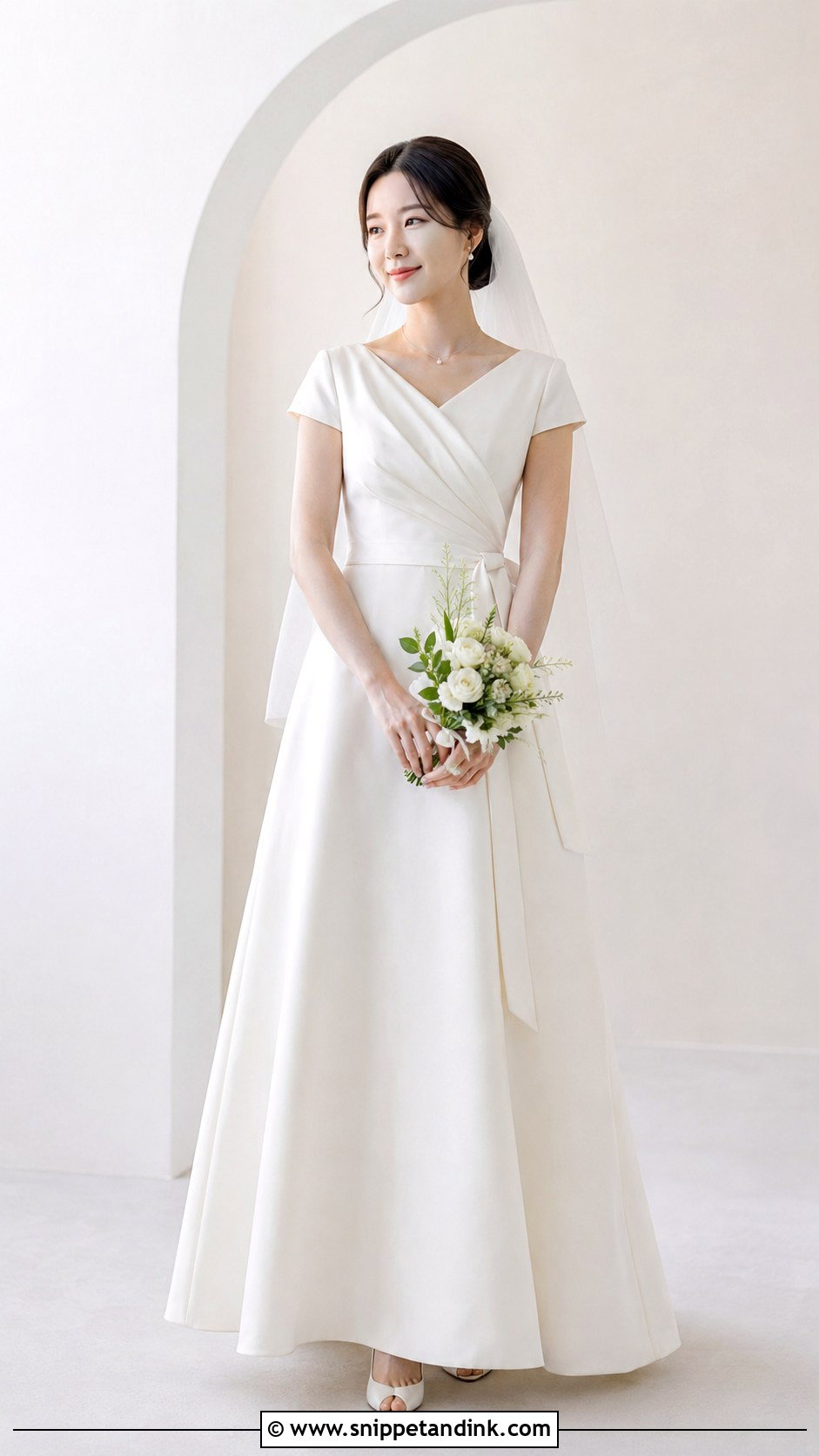
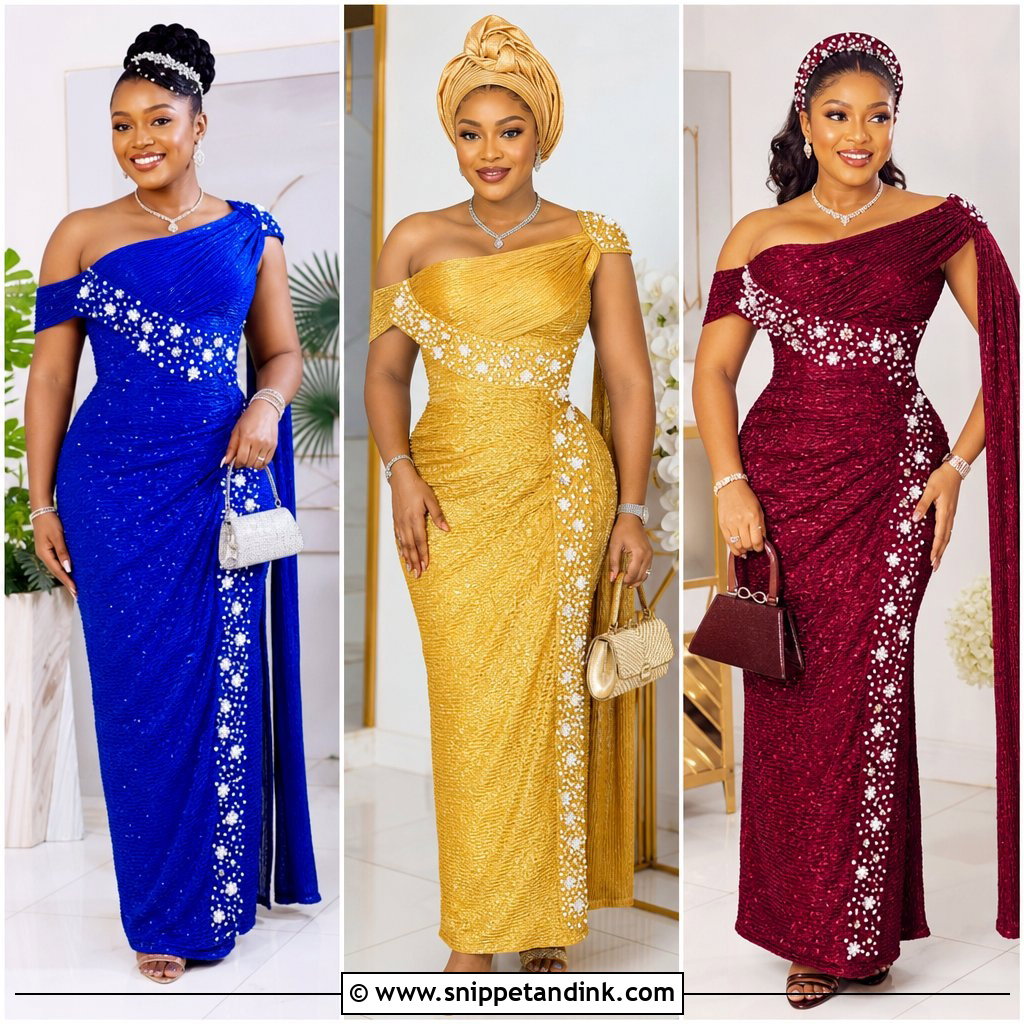
An A-line is the shape I suggest when a bride isn’t sure. It defines the waist, skims the hips and lets her sit, dance and climb stairs without help. For the Korean touch, choose a softly wrapped bodice, a delicate ribbon belt or a little hanbok-style volume in the skirt. Satin looks classic; tulle looks softer. Comfortable heels, a long veil and simple jewelry finish it, and it works for ceremony photos and twelve hours of wear alike.
21. Korean Wedding Gown With Detachable Overskirt
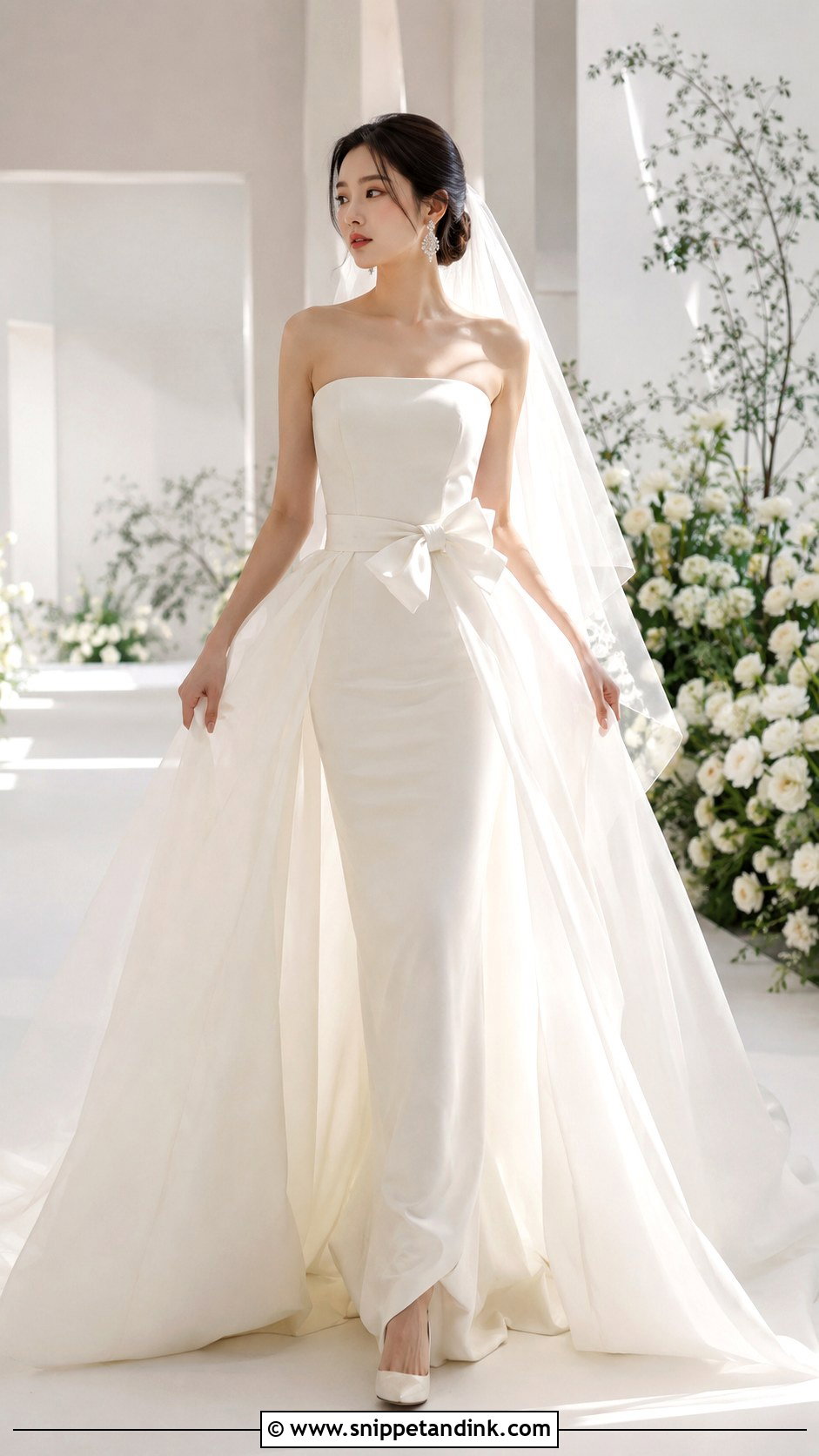
A gown with a detachable overskirt gives you two looks in one: the full skirt for the ceremony, the slimmer base dress for the reception. Practice removing it before the day. Most overskirts close with hooks or a hidden zip at the back waist, and a bridesmaid should know exactly where they are, because fumbling in a hallway eats into photo time. A fitted base under tulle, satin or organza works well, with a waist bow or hanbok-style volume. Pair with heels, statement earrings and a veil for the ceremony.
22. Korean Wedding Gown With Short Reception Dress
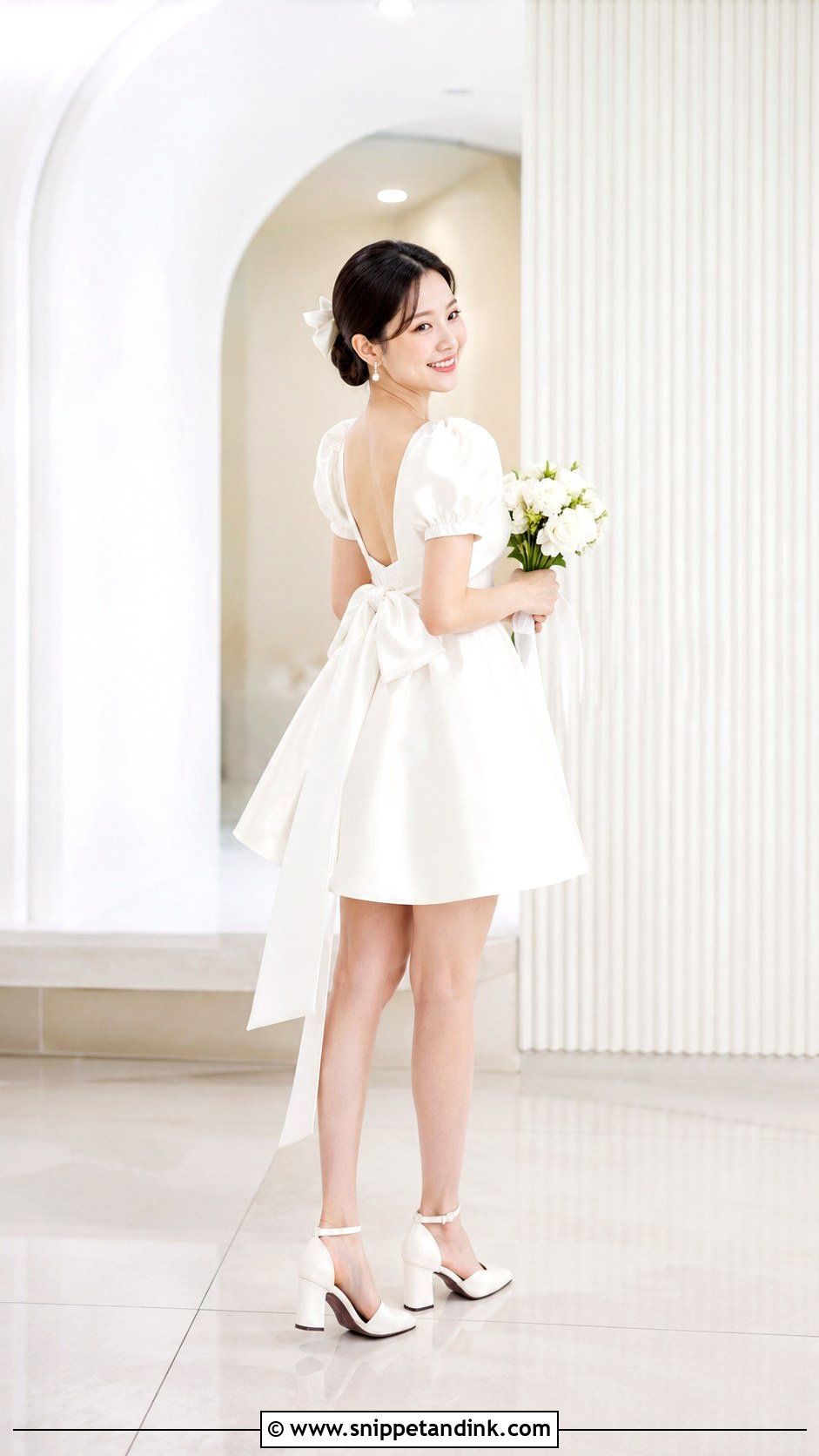
A short reception dress is the one you’ll dance in. A mini or knee-length style with pearl trim, satin, puff sleeves or a bow at the back keeps it bridal, and a wrap bodice or a softly structured hanbok-style sleeve brings in the Korean feel. I’d plan the change for right after dinner, before the first dance. Block heels, pearl earrings and a small hair bow suit it, and you’ll feel noticeably lighter after a formal gown.
23. Korean Wedding Gown With Royal Blue Hanbok Accent
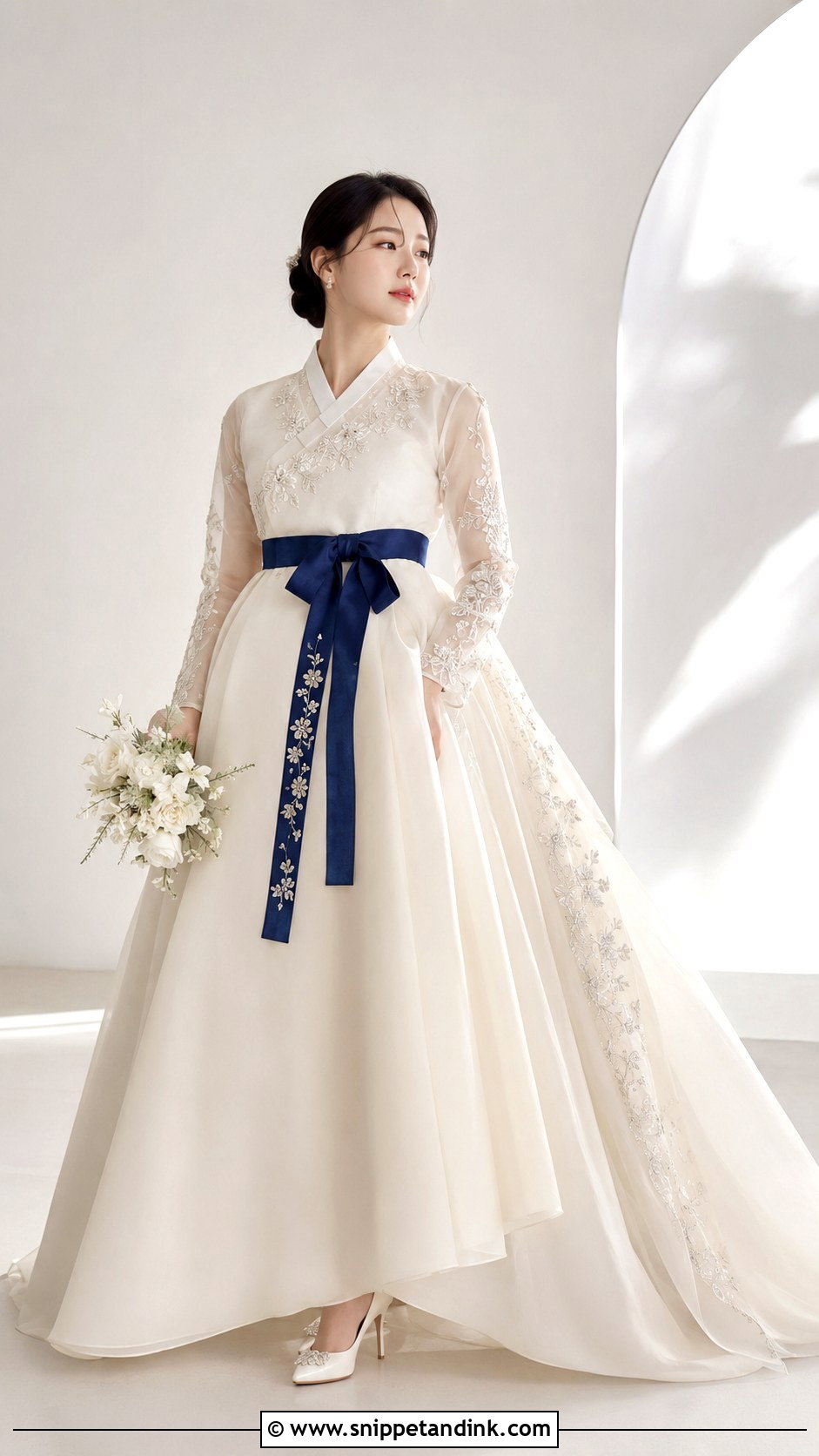
Blue has a long history in Korean dress and sits well beside ivory, white and red. Use it in a hanbok-style sash on a white gown, a blue embroidered overskirt or a jeogori top over a full ivory skirt. Royal blue is a strong color, so I keep accessories quiet: pearl earrings, satin shoes, a clean hairstyle. Check the dye on silk before you wear it in warm weather, because deep blues can bleed onto ivory where they touch when the fabric gets damp. It gives ceremony presence without a full traditional robe.
24. Korean Wedding Gown With Red Hanbok Accent
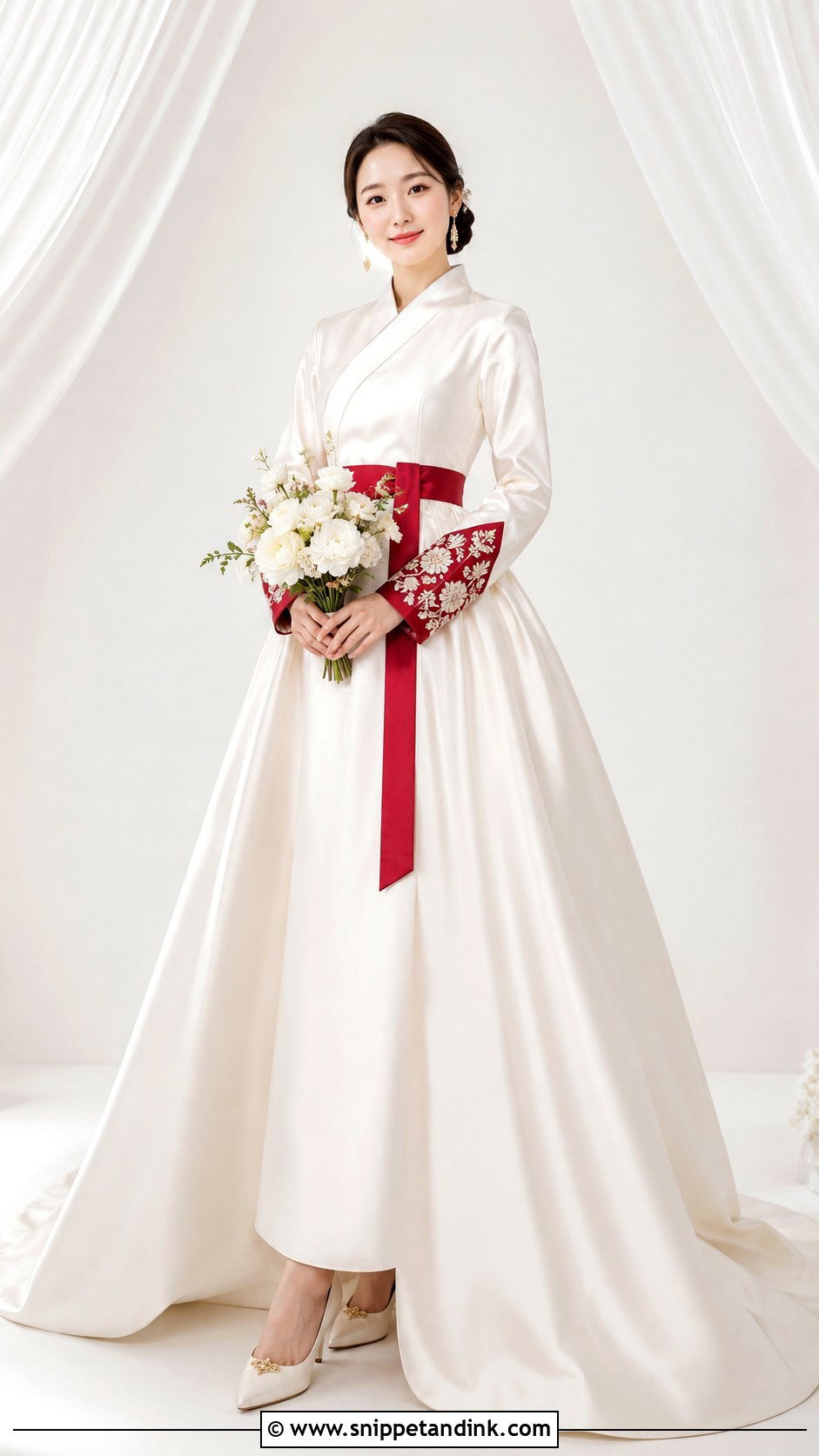
Red is the color of the traditional bridal robe, so even a small red accent reads as ceremonial. It can sit in a sash, embroidered sleeve detail, floral motif or layered skirt panel, and it shows best against ivory satin or sheer white organza. Keep the gown shape simple and let the red carry the meaning. Gold earrings, soft makeup and elegant heels finish it. If the red is on organza, I’d test it next to skin in photos first, since a bright red so close to the face can cast a pink tint on the jaw.
25. Korean Wedding Gown With K Drama Bridal Look
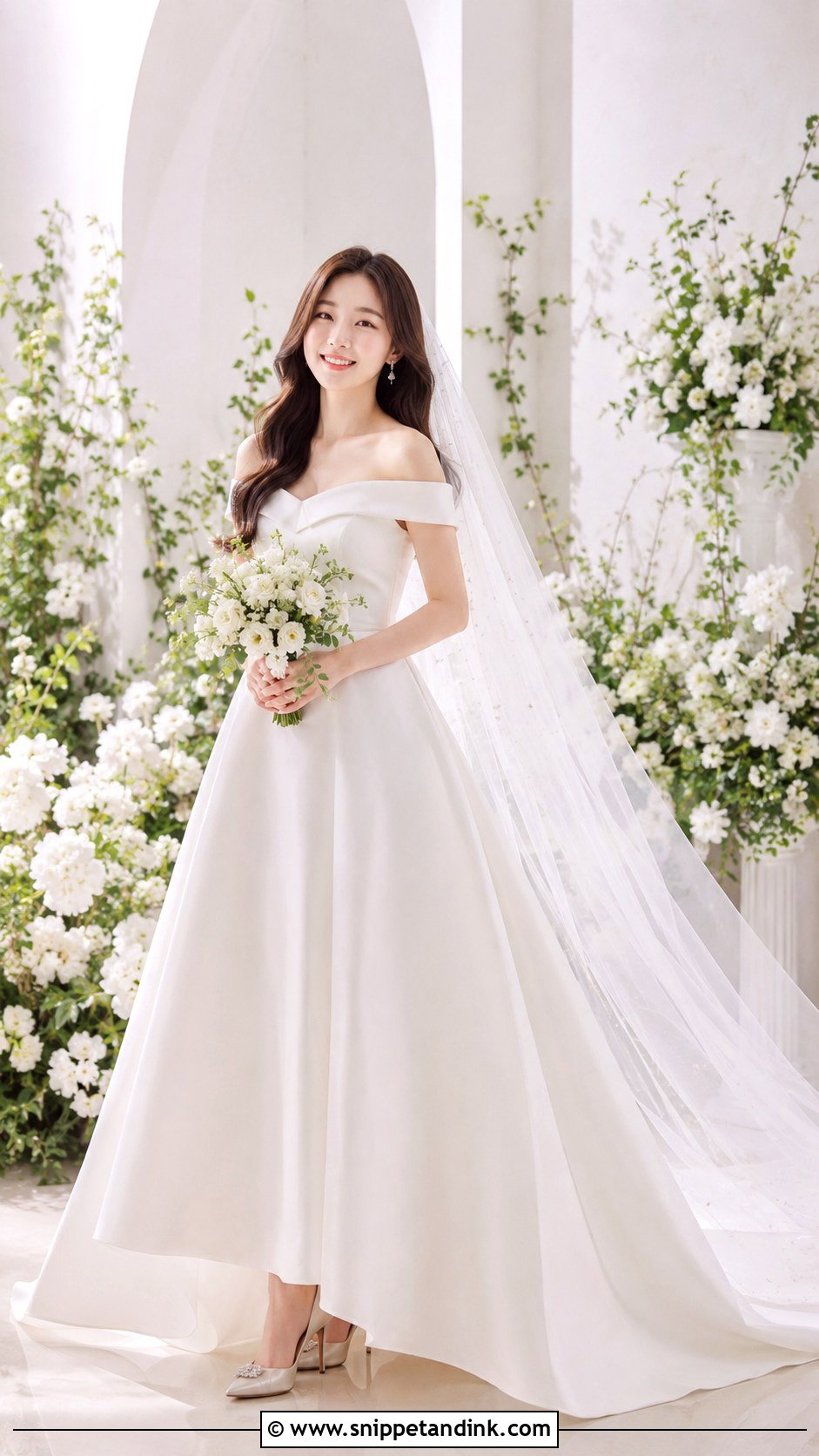
The K-drama bridal look is mostly about restraint and close-up detail. Think clean white fabric, a flattering neckline, a delicate veil and small touches that hold up when the camera is a foot away. A-line, satin ball gown, pearl-trimmed or off-shoulder shapes all suit it. Makeup matters as much as the dress here: glowing skin, soft brows, a gradient lip. Pair with soft waves or a neat bun, dainty earrings and heels, and ask your photographer for close portraits as well as full-length ones.
How Hanbok Silk and Gown Satin Hold Up Over Ten Hours
Every fabric on this list behaves differently once you start moving, sitting and hugging people. This is what I warn brides about at the final fitting.
Satin and mikado
Both crease where you sit. Heavy duchess satin shows lap lines after a car ride, and mikado is a little more forgiving. I ask brides to stand during the ride if they can, or to sit on the back of the skirt rather than the front, and I pack a small steamer for a touch-up before portraits.
Silk organza and tulle
These hold volume well but crush under weight. Avoid bundling the skirt into a small car, and fluff the layers by hand before you walk in. Organza also catches on rough stone and bark, so watch the hem in outdoor portraits.
Traditional hanbok silk
Hanbok silks are often lighter and crisper than Western bridal fabrics. They wrinkle less but mark easily with water, makeup and the oil from your hands. Keep a clean white handkerchief close, and don’t let anyone spot-clean a stain on the day, because rubbing a water mark onto silk often leaves a ring that is harder to remove than the original stain.
After the wedding, get both outfits to a cleaner who handles silk within a few weeks, before sweat and makeup set. Store them in breathable cotton, not plastic, away from sunlight, and lay a heavy hwarot flat rather than hanging it so the embroidery doesn’t pull on the shoulders.
Letting the Ceremony Set How Korean the Gown Reads
No single shape, color or tradition defines a Korean wedding gown. A full hwarot, a modern hanbok gown, white satin, pastel tulle and a sleek K-drama silhouette all fit, and many brides wear two of them across one day. Start from the ceremony and how much you need to move, kneel or dance, then let fabric and detail follow. I’d rather see a bride in a simple dress she can bow in than in an intricate one she spends the day adjusting.
You'll Like These Ideas:


Leave a Reply