
An Indian bridal outfit feels royal through colour, handwork and how the jewelry sits with it, far more than through sheer weight of embroidery. The looks below move from classic lehengas to handwoven Kanjeevaram, Banarasi and Paithani sarees, regional ensembles, sharara and gharara sets, and a reception gown, because bridal dressing across India is genuinely varied. Red, antique gold, jewel tones and pastels can all look regal. When I style a bride, the questions come before the colour: which rituals she’ll sit through, how hot the venue gets and how long she’ll be dressed. Careful draping and edited jewelry stop even a heavily worked outfit from looking crowded.
Lead Times for Handwork, Handloom and the Blouse
Hand embroidery and handloom weaving both take far longer than brides expect. A heavily worked zardozi lehenga is stitched by hand over many weeks, and a custom order from a designer often needs several months. Handwoven Kanjeevaram and Banarasi sarees are woven on a loom piece by piece, so a specific colour combination may not be in stock. I suggest starting to shop around six months out for a custom piece, and earlier during the busy wedding season, though every designer and weaver works to their own calendar.
The blouse is a separate job with its own fittings. Leave time for at least two: one to set the fit and one with the jewelry and the actual undergarments, since a choker or heavy necklace changes where a neckline should sit.
Questions I ask before a bride buys silk
- Is it pure silk, and does it carry a silk authenticity tag?
- Is the zari real (a silver core plated with gold) or tested zari made with copper or polyester? Both are fine; the price should match.
- How heavy is the finished lehenga with its can-can, and can you sit in it for the pheras?
- Will the shop finish the fall and pico on the saree, and how long does that take?
1. Red Zardozi Bridal Lehenga
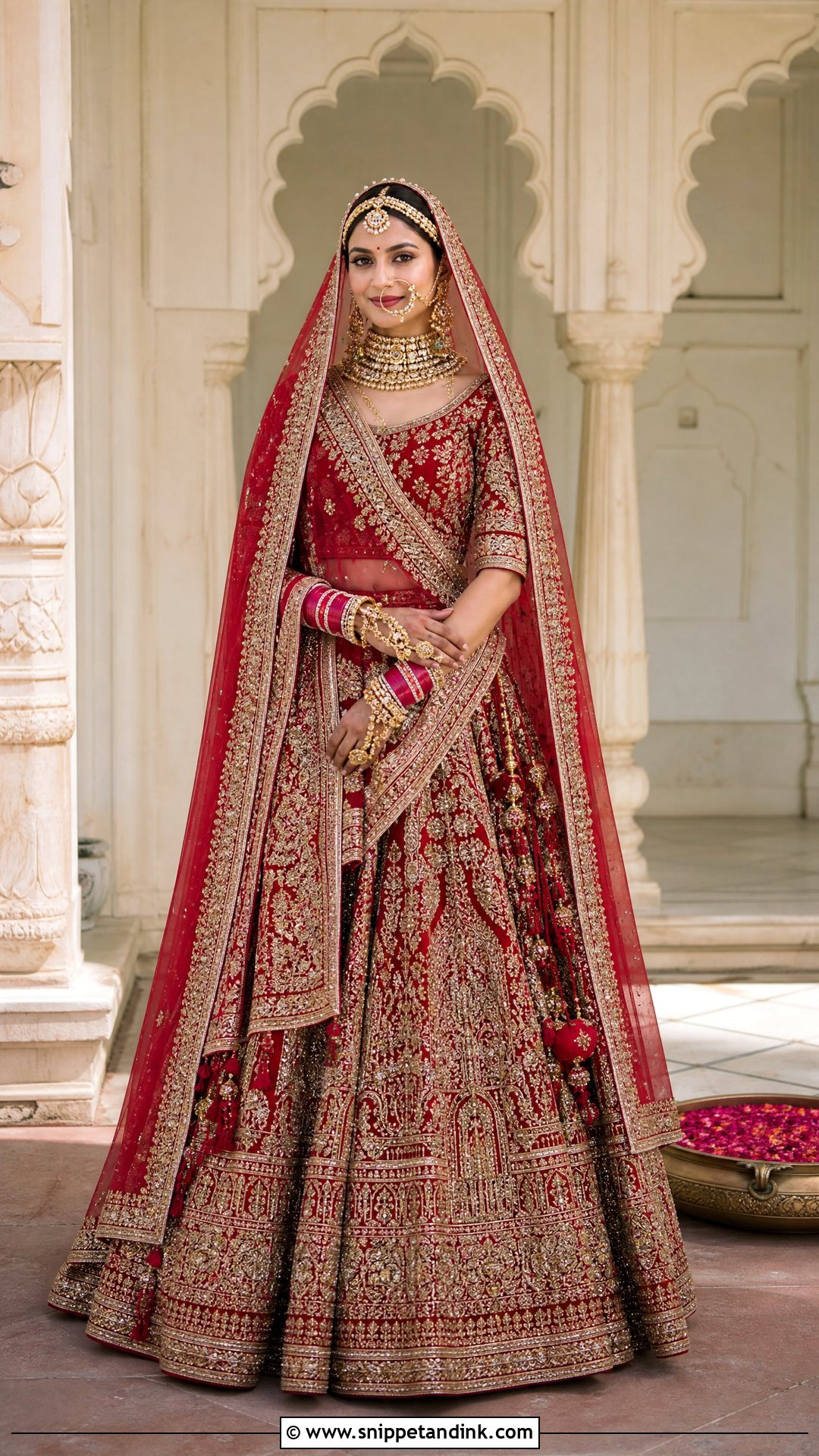
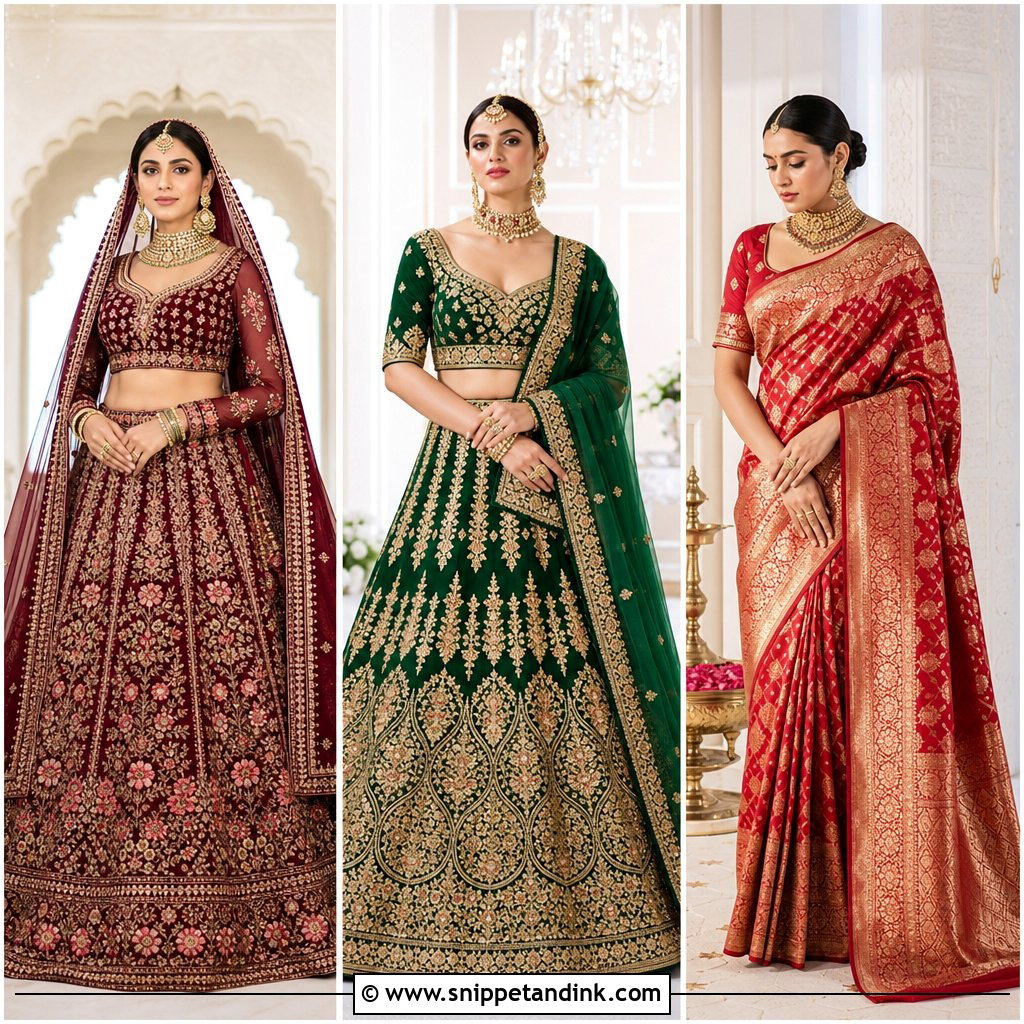
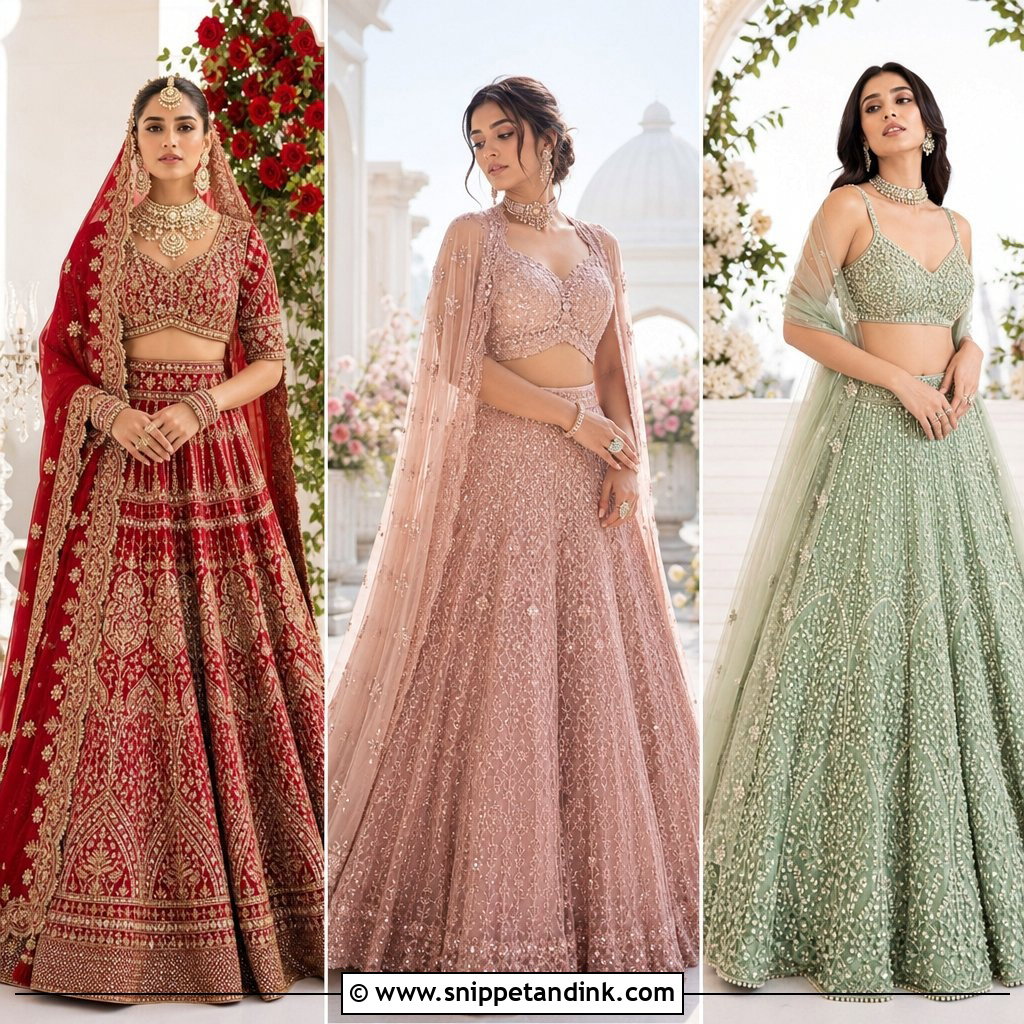
Zardozi is metal thread couched onto fabric by hand, and it adds real weight, so I always ask brides to hold the skirt before falling for it. A full red skirt with the work spaced out moves better than one solid with embroidery. A structured blouse with elbow sleeves gives a stately line, and a scalloped dupatta softens the face. Wear one dupatta over the head and a second across the torso. Antique kundan, a statement nath, red bangles and embroidered juttis complete it, with luminous skin, defined eyes and a red lip. A sleek center-parted bun with fresh flowers lets the jewelry lead.
2. Maroon Velvet Bridal Lehenga
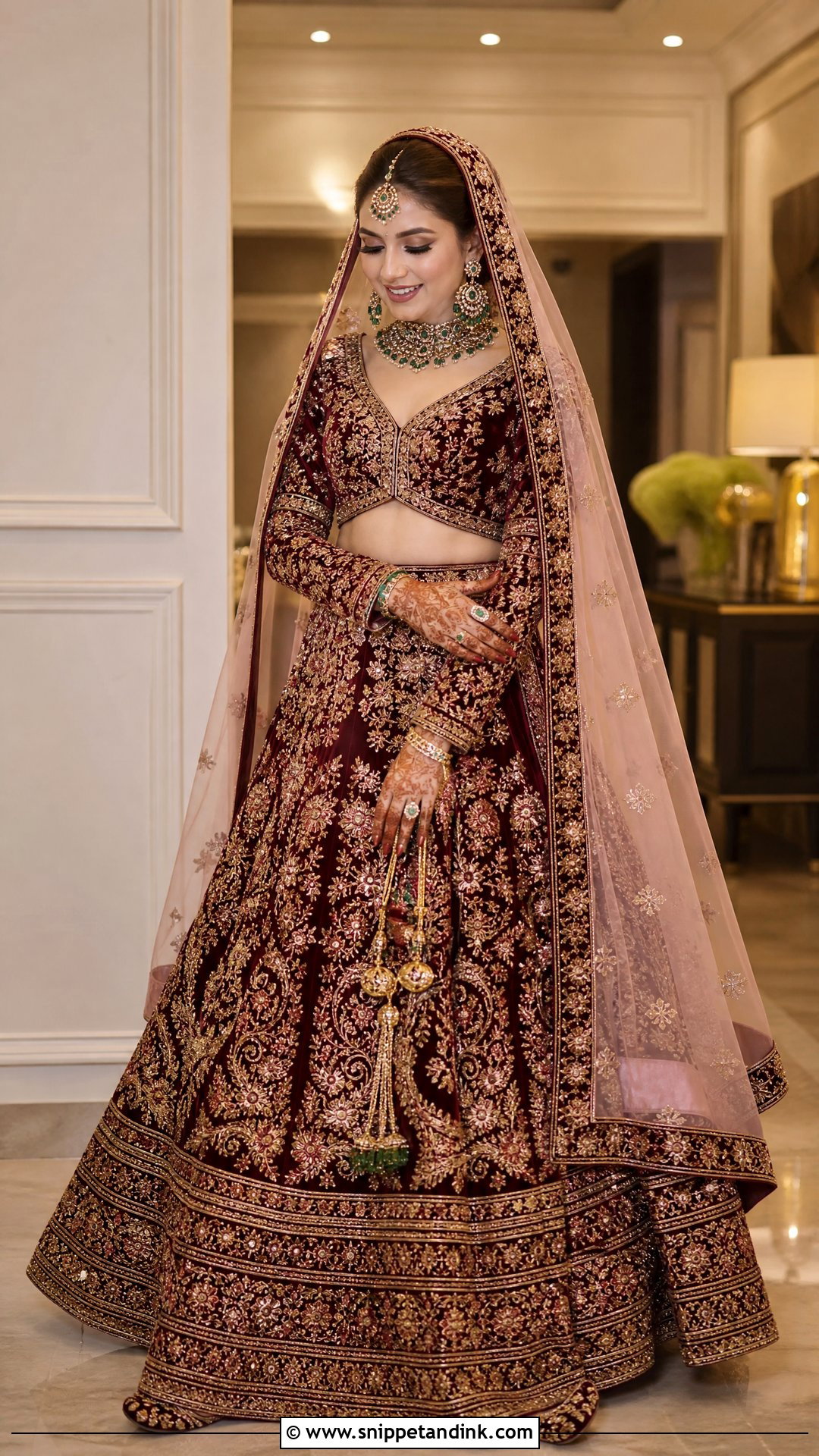
Velvet traps heat. That makes maroon velvet a winter evening choice, and I’d steer you away from it for a summer afternoon pheras outdoors. The pile already looks rich, so the embroidery should stay at the hem, neckline and sleeves. A paneled skirt with a fitted blouse moves comfortably. Keep the dupatta in light net, maroon or muted rose, so the outfit doesn’t look heavy. Polki with emerald accents gives contrast against the deep red. A low bun, soft brown eyes, a berry lip and maroon juttis finish it; it reads richly against palace architecture or plain floral stages.
3. Ivory And Gold Bridal Lehenga
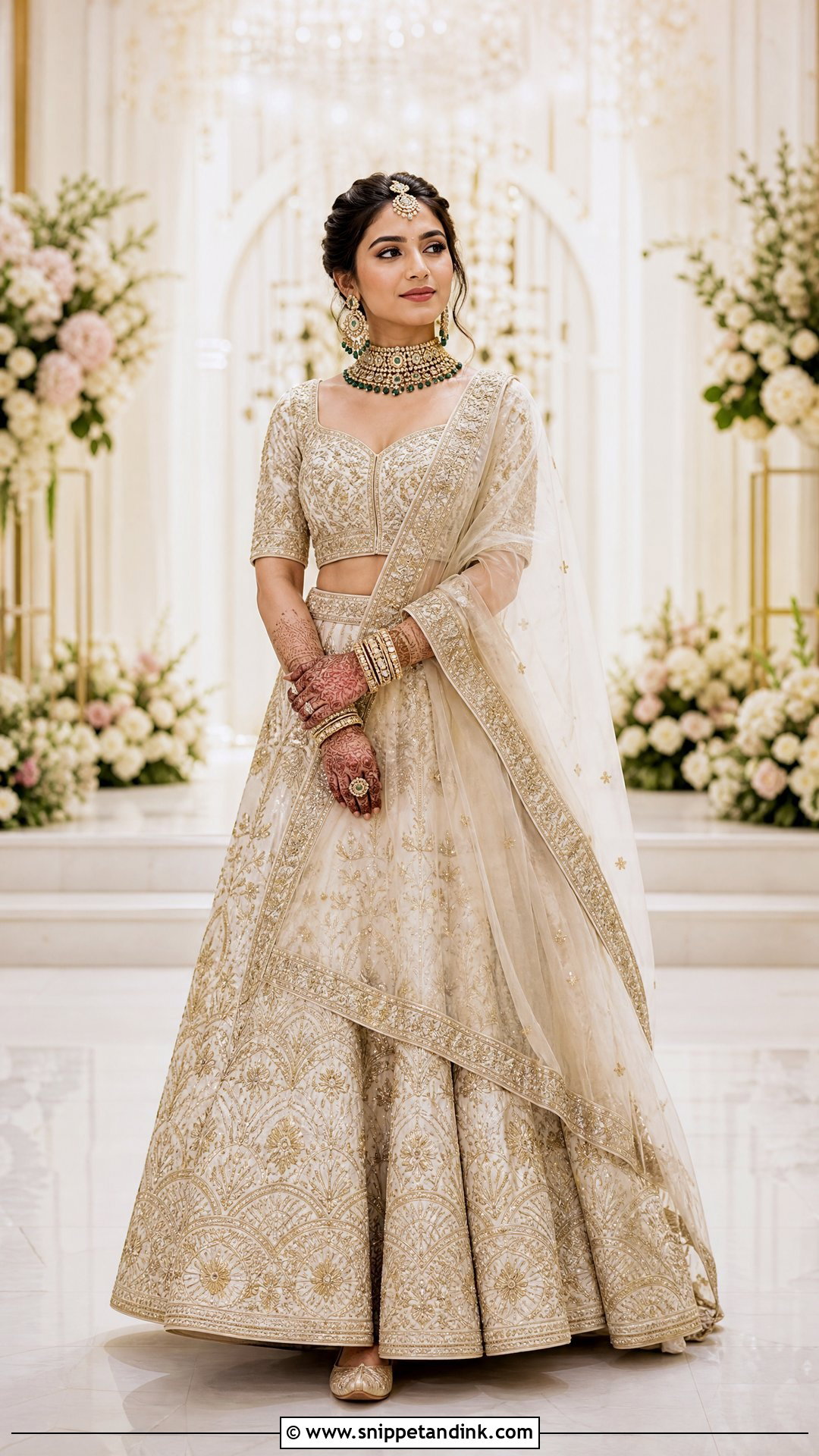
Ivory and gold relies on spacing. Gold threadwork, fine sequins or traditional motifs need open ground around them, or the whole lehenga turns into one shimmering beige blur in photos. Pair it with a fitted blouse and a sheer dupatta with a wide embroidered border, then bring colour in through the stones: emerald, ruby or pale pink. A gold choker, earrings, maang tikka and stacked bangles complete the jewelry. Champagne heels or embellished juttis go underneath, with bronze eyes, a rose lip and a neat bun or polished waves.
4. Blush Pink Floral Bridal Lehenga
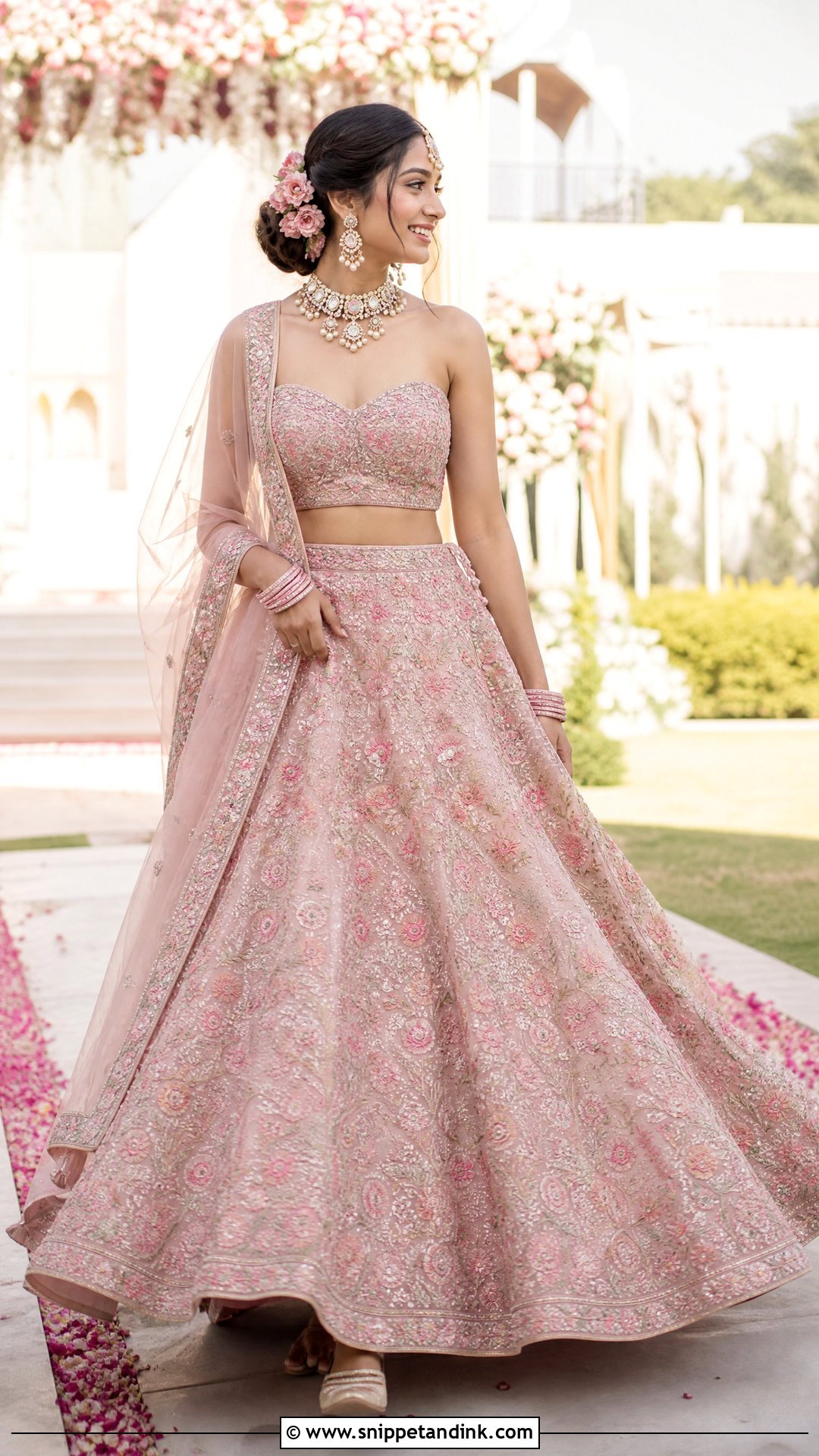
Blush with floral threadwork suits daylight, spring and gardens; under hard evening lights the soft pink can wash out. Choose a flowing skirt with multicoloured thread and only a touch of metallic, a sweetheart or curved neckline, and a sheer blush dupatta. Pearl-detailed kundan, a small maang tikka, pink bangles and neutral juttis keep it light. Fresh roses or baby’s breath around a low bun suit the mood. I keep the makeup rosy and the eyes soft here, since dramatic colour fights the embroidery.
5. Emerald Green Bridal Lehenga
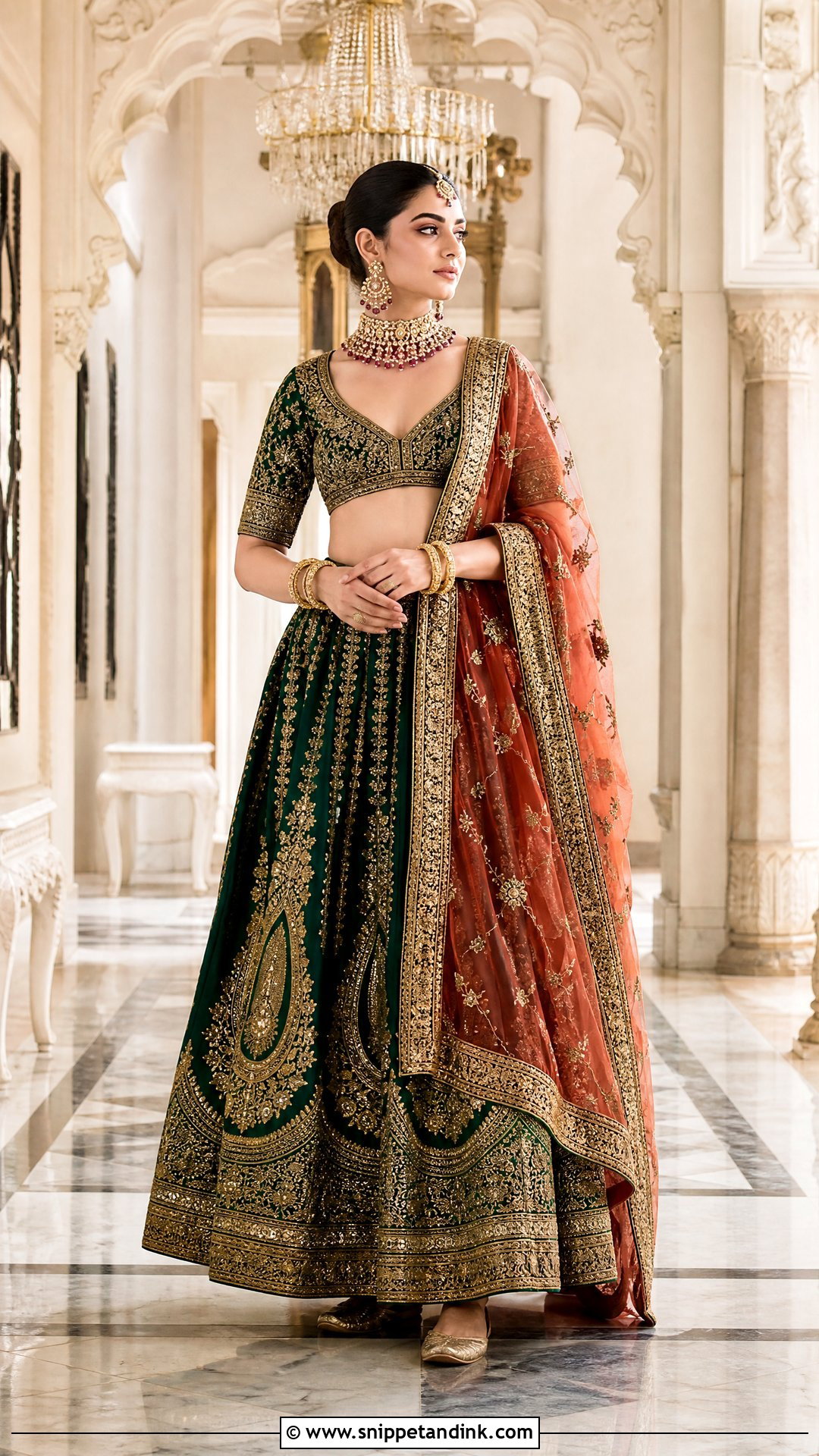
Emerald is the strongest alternative to red, and antique gold embroidery shows up clearly against it. Rich silk, raw silk or velvet all hold the colour well. A high-waisted skirt and fitted blouse define the shape, and a rust, peach or muted gold dupatta adds depth. I like ruby-accented polki with green because a single tone of green from head to toe looks flat in photographs. A statement choker, earrings, a centered maang tikka, gold bangles and metallic juttis complete it, with softly smoked eyes and a muted red lip.
6. Royal Blue Bridal Lehenga
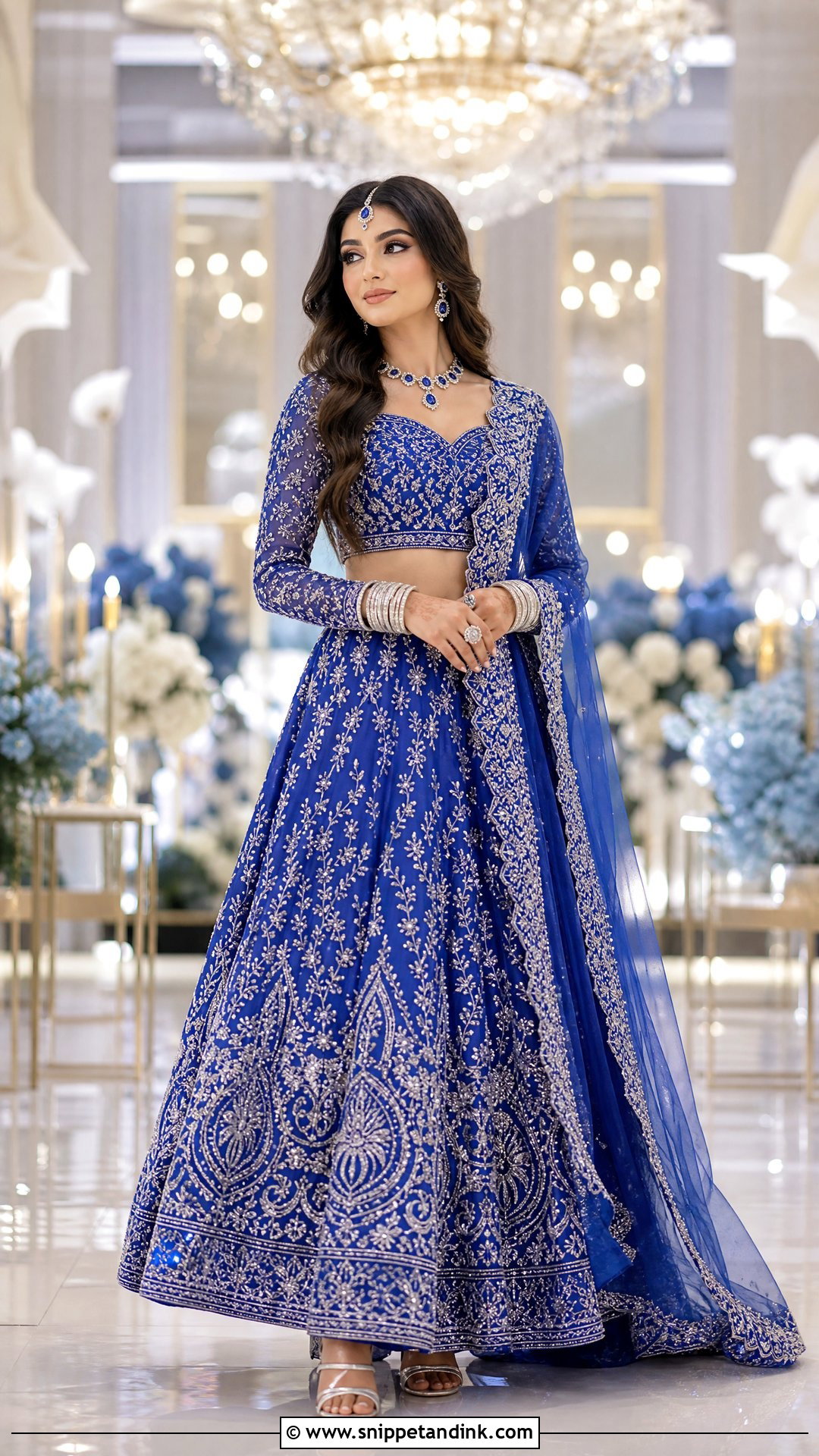
Royal blue belongs to evening: a sangeet, a reception or a night ceremony where silver embroidery and tonal sequins can catch the light. Keep the skirt’s volume controlled and the blouse structured, with full sleeves or a modest square neck. The dupatta should be light with only a narrow embellished edge. Diamond-style jewelry with sapphire accents and silver bangles coordinate easily. Silver heels suit a short reception; for a long night, blue juttis are kinder. A sleek ponytail, soft waves or a center-parted bun all work, with defined lashes and a mauve or berry lip.
7. Gold Kanjeevaram Bridal Saree
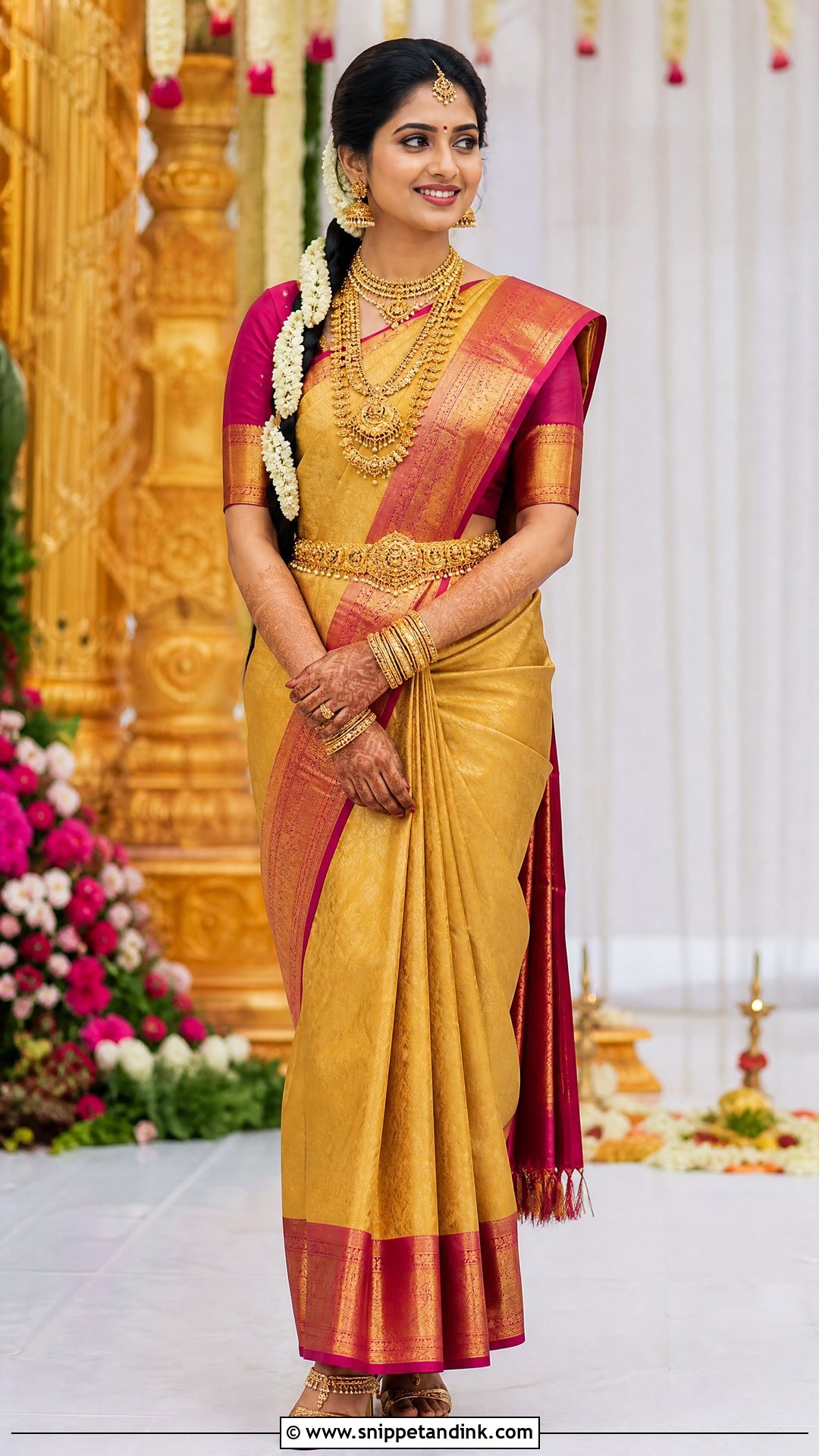
A gold Kanjeevaram is heavy silk woven with zari, and it drapes with a crispness softer silks don’t have. It belongs naturally with temple jewelry. Pick a body with a red, green or magenta border so the gold has an edge, and a contrasting silk blouse with elbow sleeves and zari work. Layer a long temple necklace under a shorter choker, then add jhumkas, a waist belt (vaddanam), bangles, anklets and hair ornaments. Arrange jasmine around a long braid or bun. Thick silk pleats need more pins than a light saree, so I set aside extra time for the drape.
8. Red Banarasi Bridal Saree
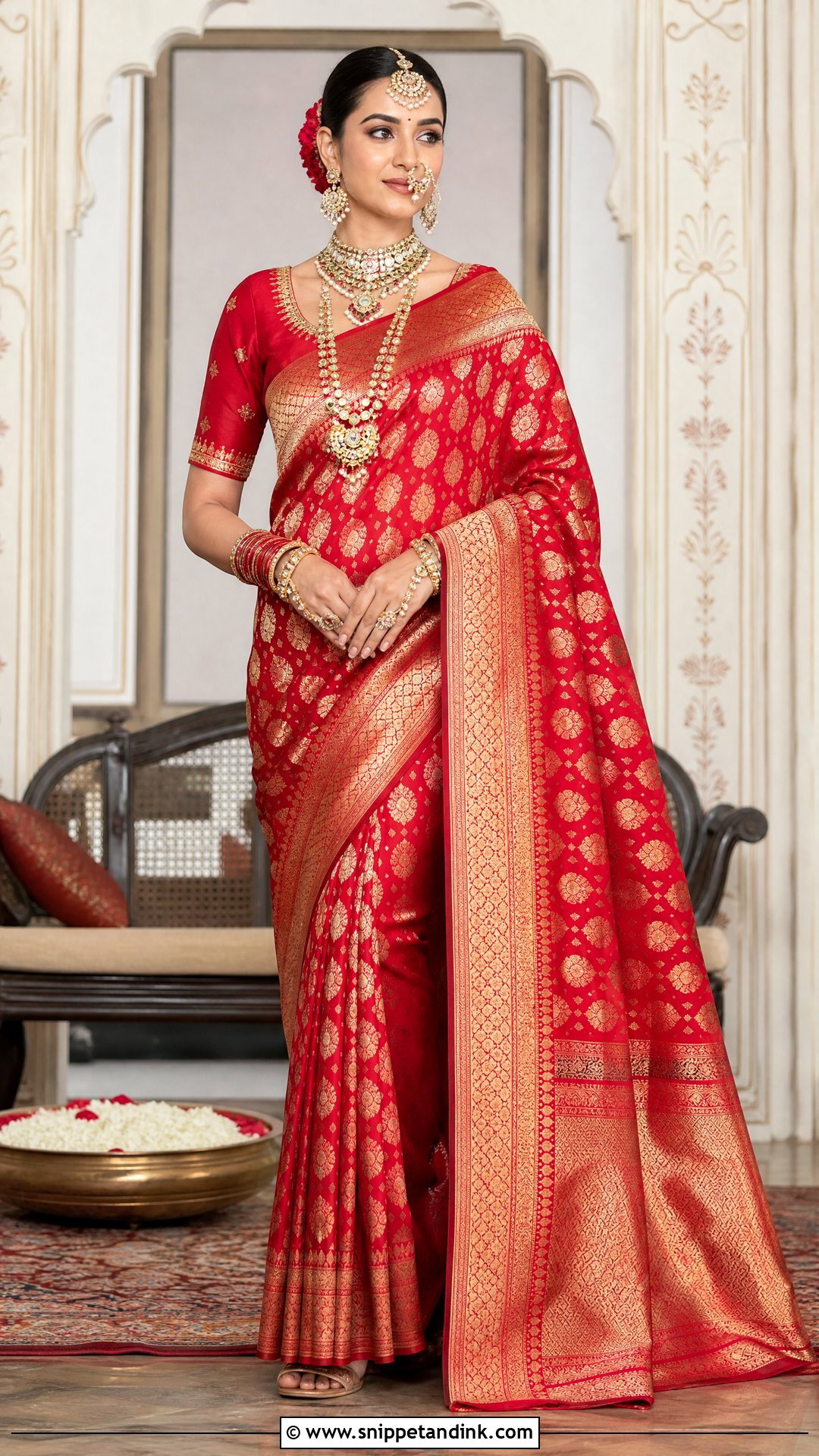
A red Banarasi gives traditional richness in a slimmer silhouette than a lehenga, which suits brides who’d rather not carry a big skirt. Its woven gold buttas and border do the decorating, so heavy embroidery isn’t needed. It’s especially loved in North Indian and Bengali weddings. Pair it with a red or antique gold blouse with a structured neckline, then a kundan choker, a long necklace, statement earrings, a maang tikka and red-and-gold bangles. When I pleat a Banarasi, I line the border up carefully, because a crooked border is the first thing the camera catches.
9. Red Bengali Bridal Saree
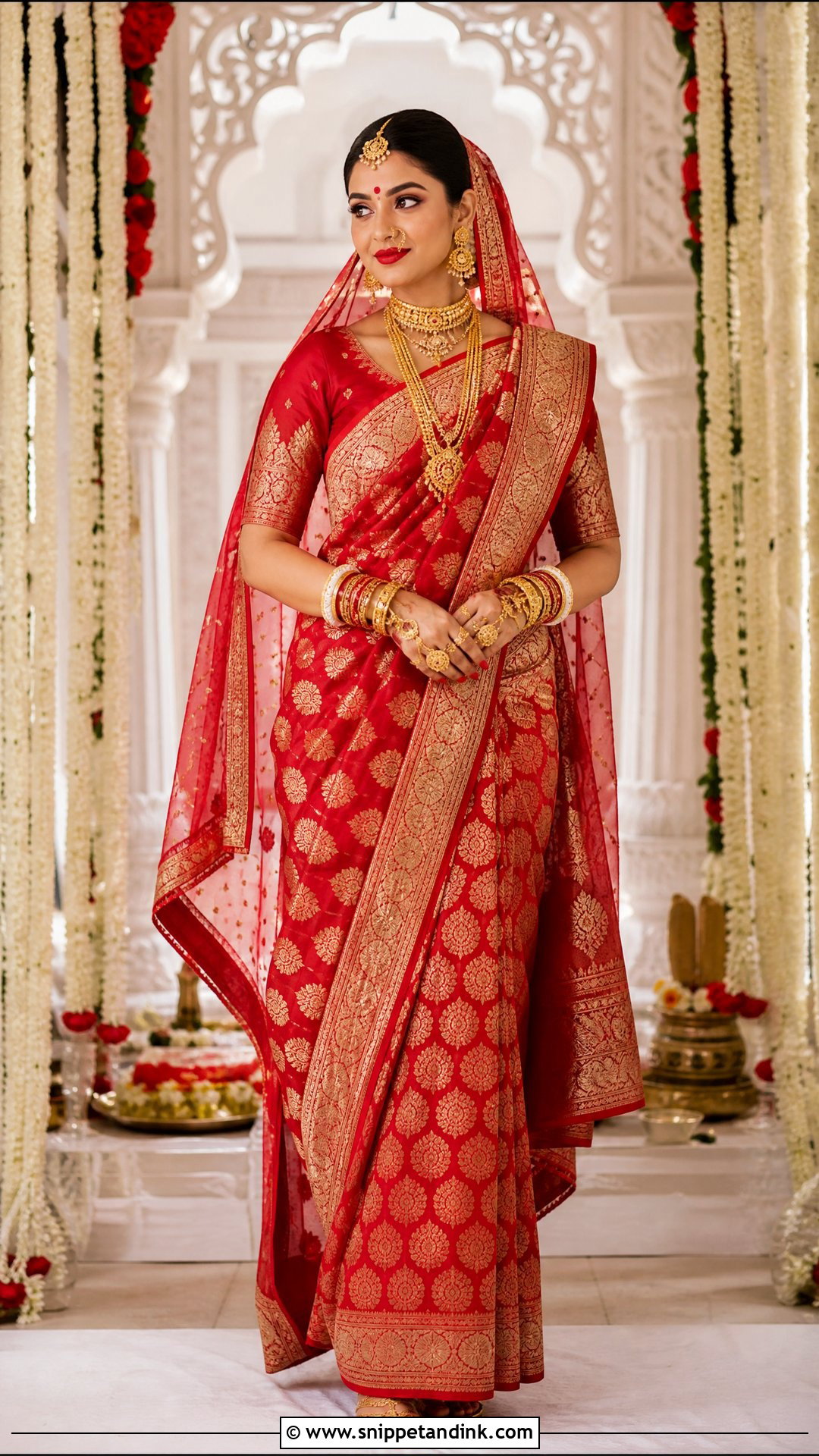
A Bengali bride in red and gold has one of the most recognisable looks in India, and the details matter. Choose a red Banarasi or silk saree with a strong woven border and a blouse with elbow sleeves, then drape the pallu so the border stays visible from the front. Gold jewelry is central: layered necklaces, statement earrings, bangles and the forehead ornament your family’s tradition calls for. A red veil can go over the head for the ceremony without hiding the main motifs. The traditional forehead decoration is painted on, so I schedule it after base makeup and before the veil.
10. Maharashtrian Paithani Bridal Saree
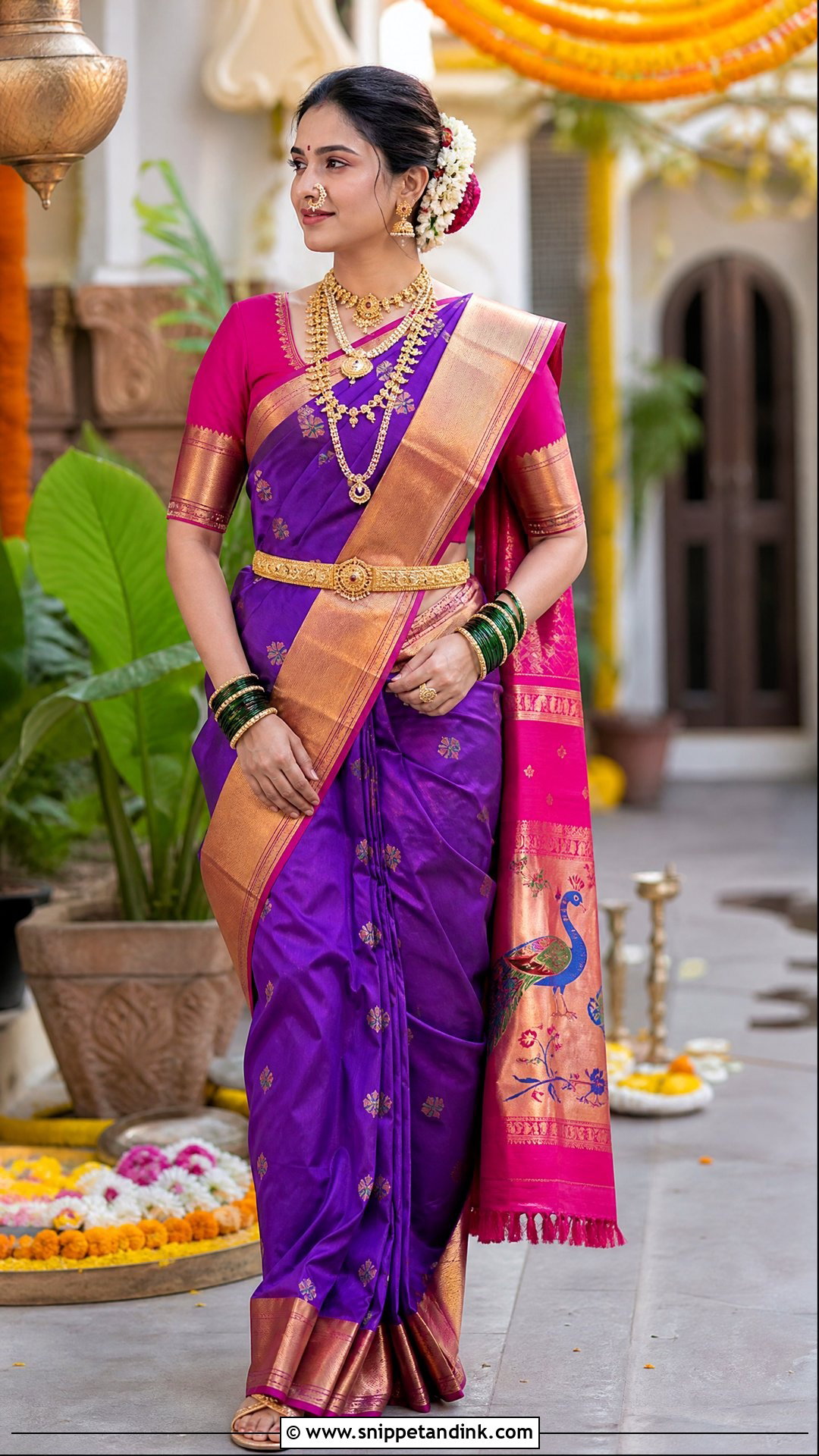
A Paithani saree is known for its peacock motifs and silk that shifts colour as you move. Magenta, purple, leaf green and deep red are the classic bridal shades, each with a contrasting woven border. A matching or contrast blouse with elbow sleeves keeps it traditional. Style it with a nath, layered gold necklaces, green glass and gold bangles and a waist belt, plus the crescent forehead detail and a neat bun with flowers. Low gold sandals help for a long ceremony. Paithani pallus are the showpiece, so I drape to show as much of it as possible.
11. Red Bandhani Bridal Lehenga
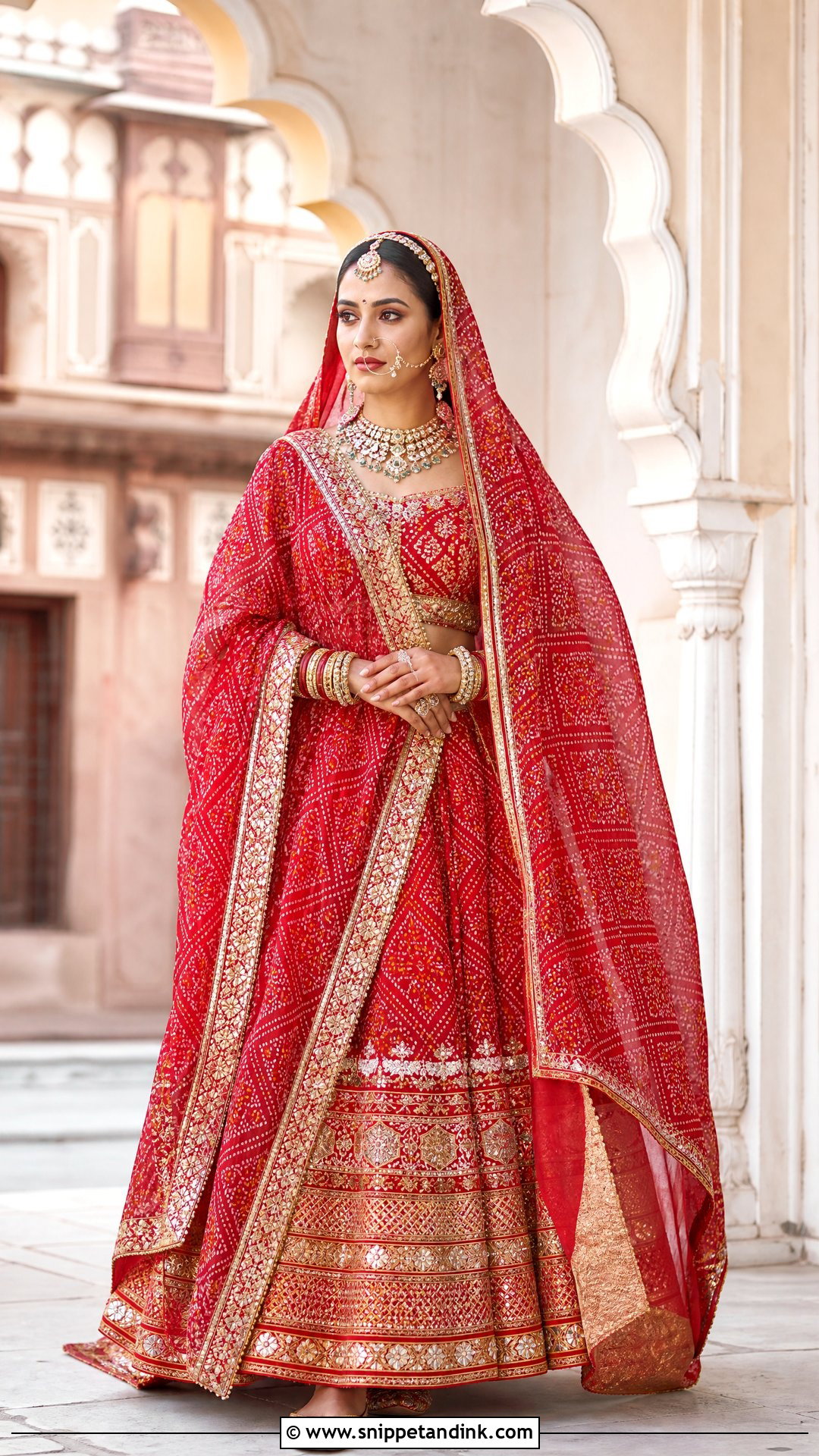
Bandhani is tie-dyed in thousands of tiny resist dots, so the lehenga has texture before a stitch of embroidery goes on. Look for red, vermilion or deep pink with gota patti, mirror work or a broad gold border, and a blouse that repeats the pattern more quietly. A Bandhani dupatta over the head, plus a plain net dupatta at the waist, gives a ceremonial finish. Kundan, a prominent nath, stacked bangles and embroidered juttis suit it. Natural dyes in Bandhani can bleed if they get wet, so I keep it away from water and sweaty hands as much as possible.
12. Mughal Anarkali Bridal Outfit
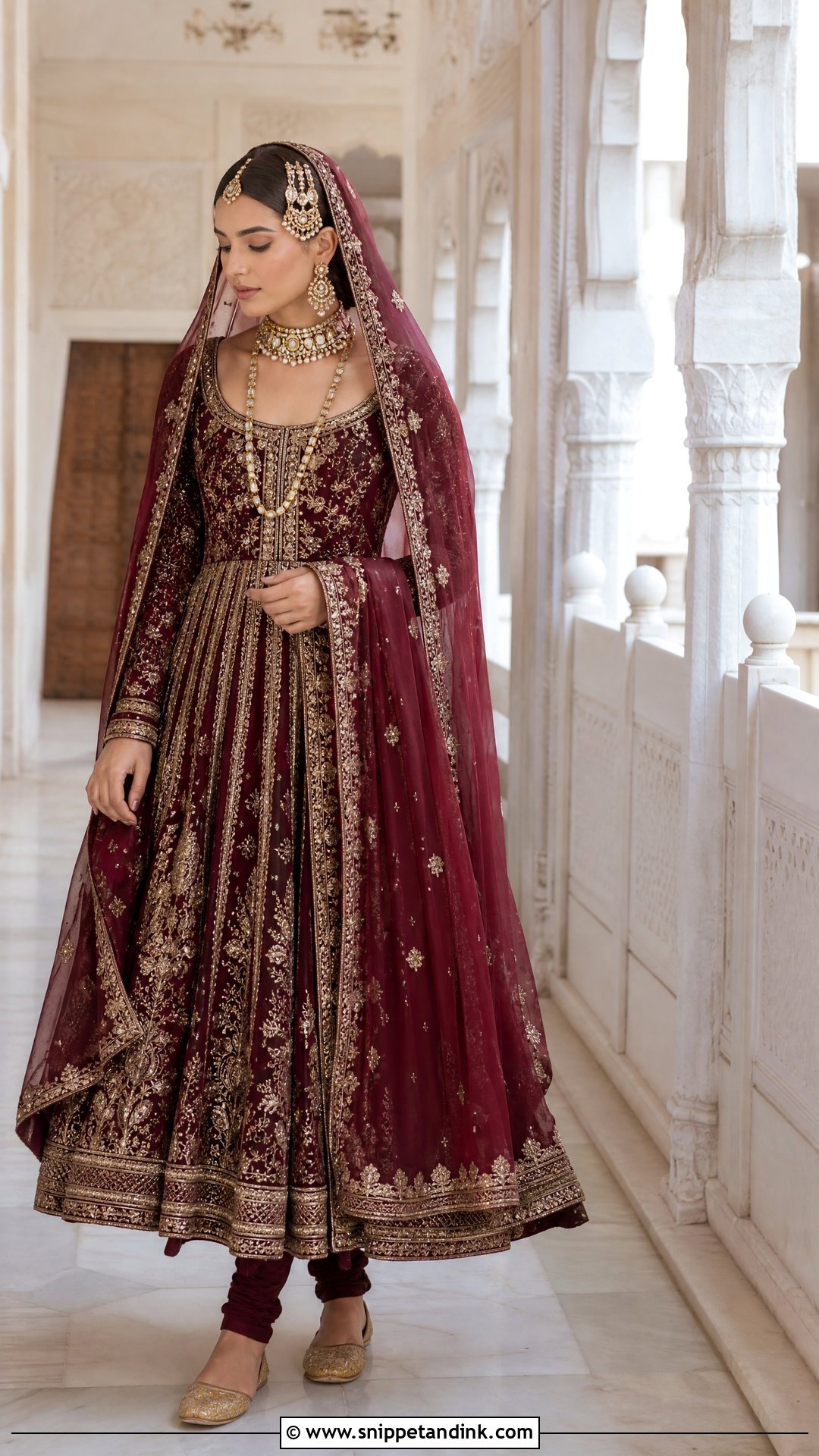
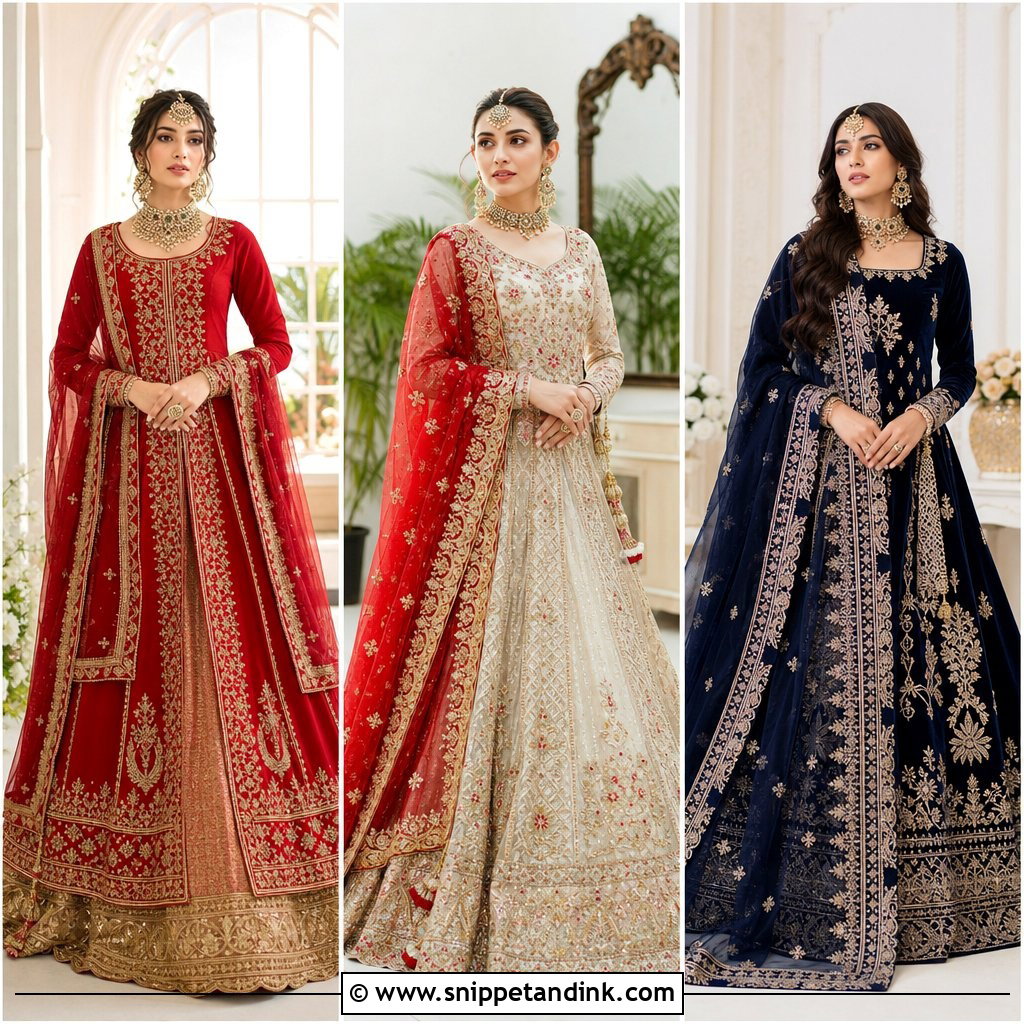
An embroidered floor-length Anarkali gives full coverage and lovely movement without a separate skirt. Choose deep red, maroon, emerald or ivory with a fitted bodice and a generous flare; zardozi borders and detailed sleeves give a courtly look. Slim churidar and embroidered juttis underneath stay comfortable all day. Drape a sheer dupatta over one shoulder or lightly over the head. A passa, polki choker, long necklace and statement earrings suit the Mughal shape. The thing I check on an Anarkali is the flare: it needs enough panels that it swings, not just hangs, when you turn.
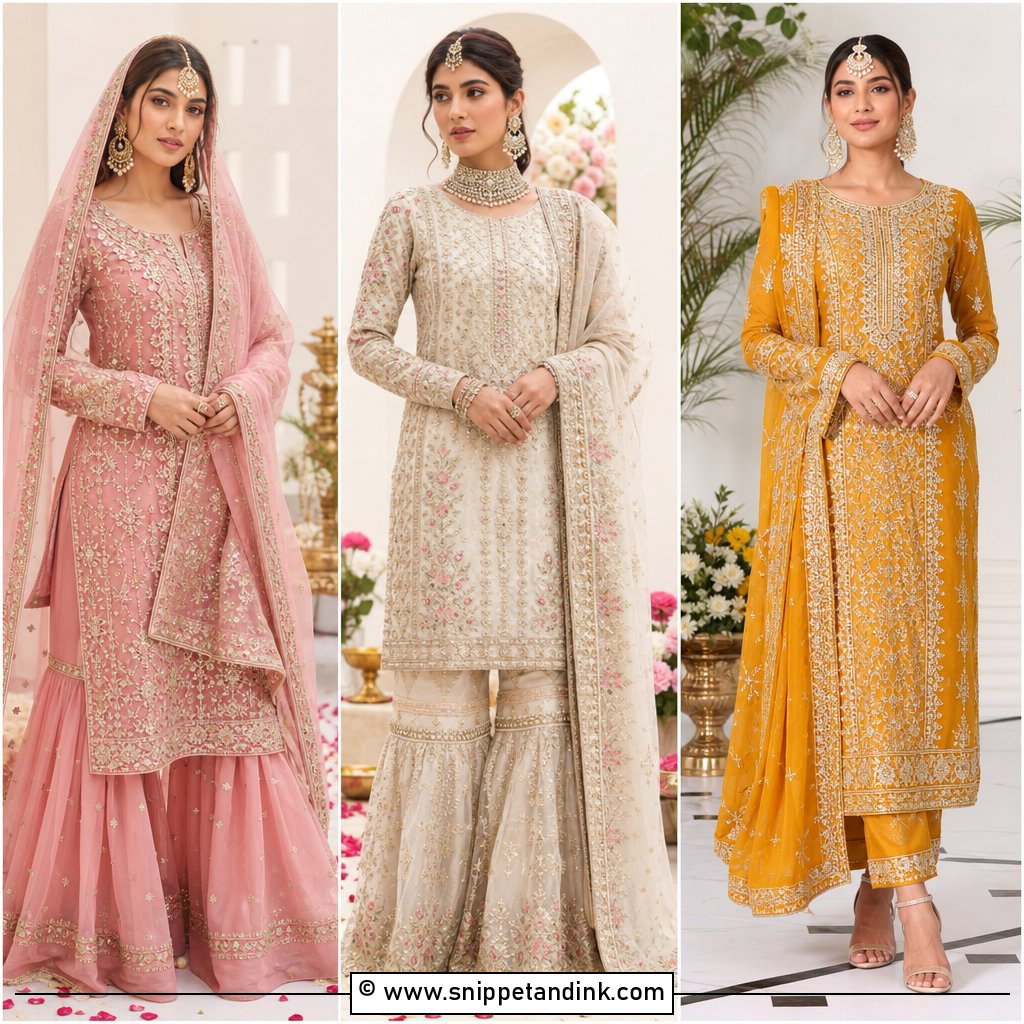
13. Bridal Sharara With Long Kurta
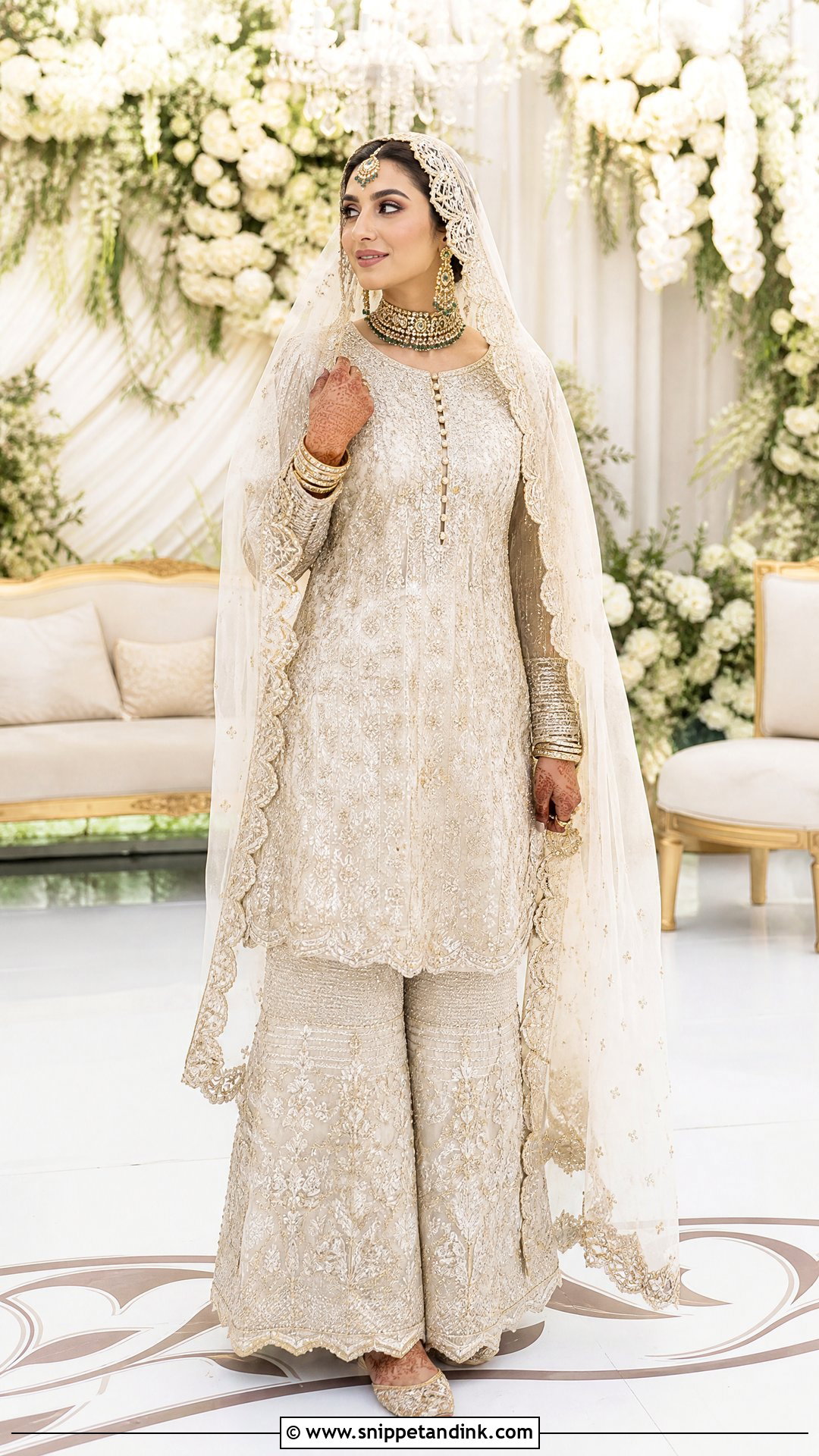
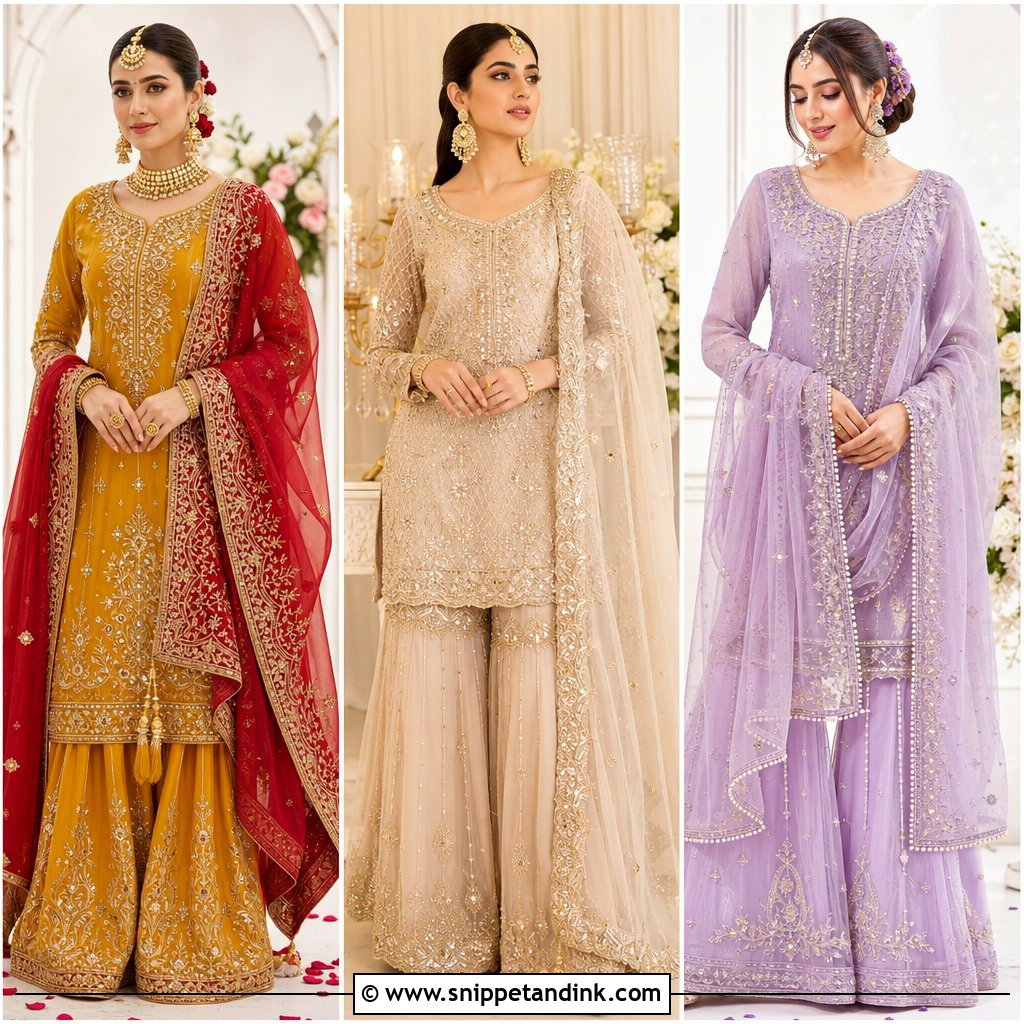
A sharara swings as you walk, which is why it suits a nikah, reception or smaller ceremony. Choose wide flared pants with the heavy embroidery below the knee and a long fitted kurta with side slits that show it. Ivory and gold feel calm; deep green, maroon or rose feel grander. Drape a scalloped dupatta over the head and one shoulder, then add a kundan or polki choker, long earrings, bangles and a passa. Juttis stay visible as the sharara moves, so choose ones you like. Practise stairs in it: wide hems catch under the heel more than you’d expect.
14. Bridal Gharara With Short Kurti
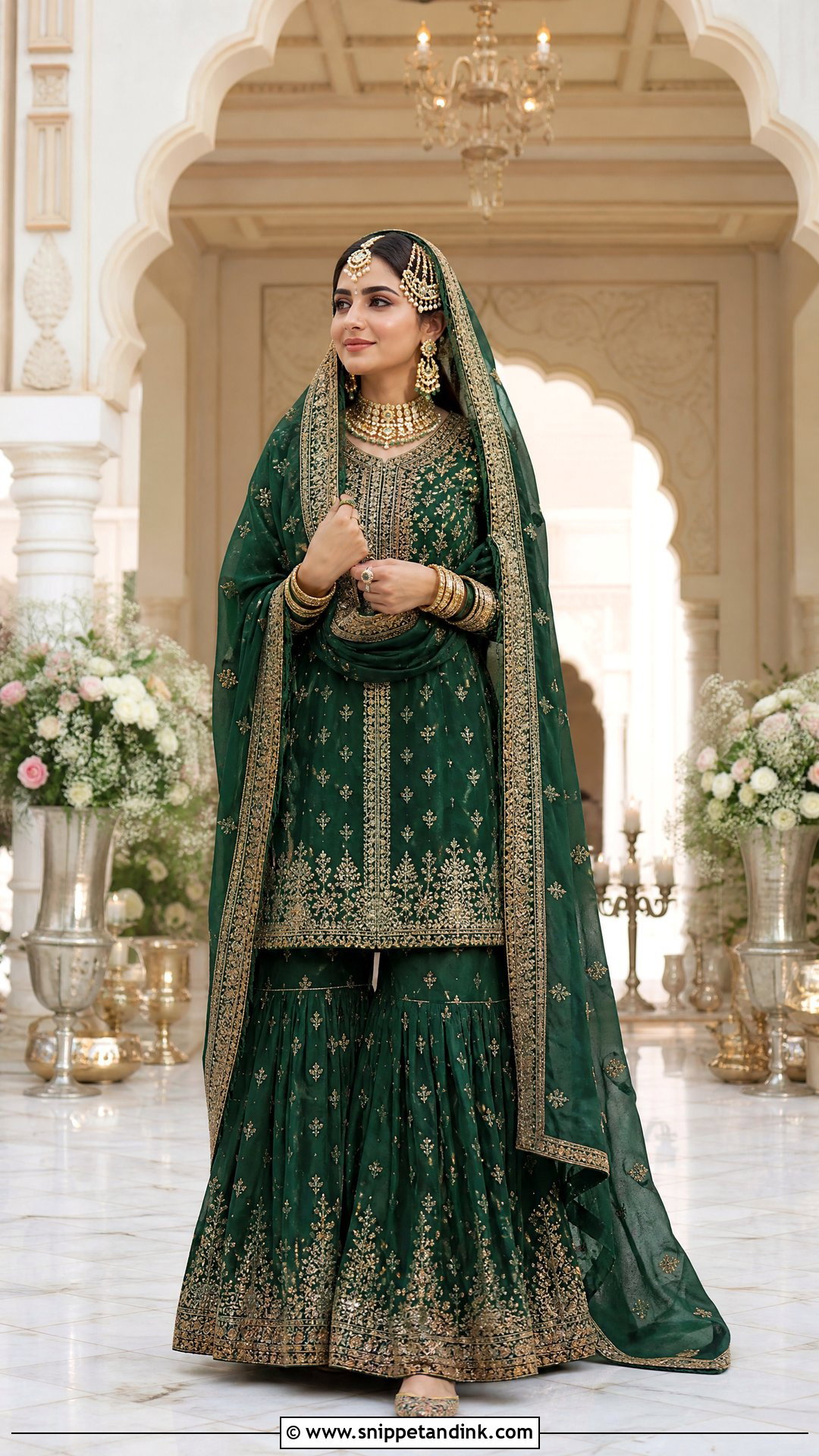
Would you like structure and heritage in the same outfit? A gharara is gathered at the knee before flaring out, and a short kurti shows that join clearly. Silk, brocade or tissue in gold, deep red, bottle green or dusty rose all suit it. Keep the kurti rich at the neckline, sleeves and hem, and choose a slightly lighter dupatta, draped over the head with one side falling down the arm. Polki, a passa, stacked bangles and pointed juttis finish it, with a low bun and smoked eyes. The knee gathers are the point, so I tailor the kurti length to stop just above them.



15. Jacket Style Bridal Lehenga
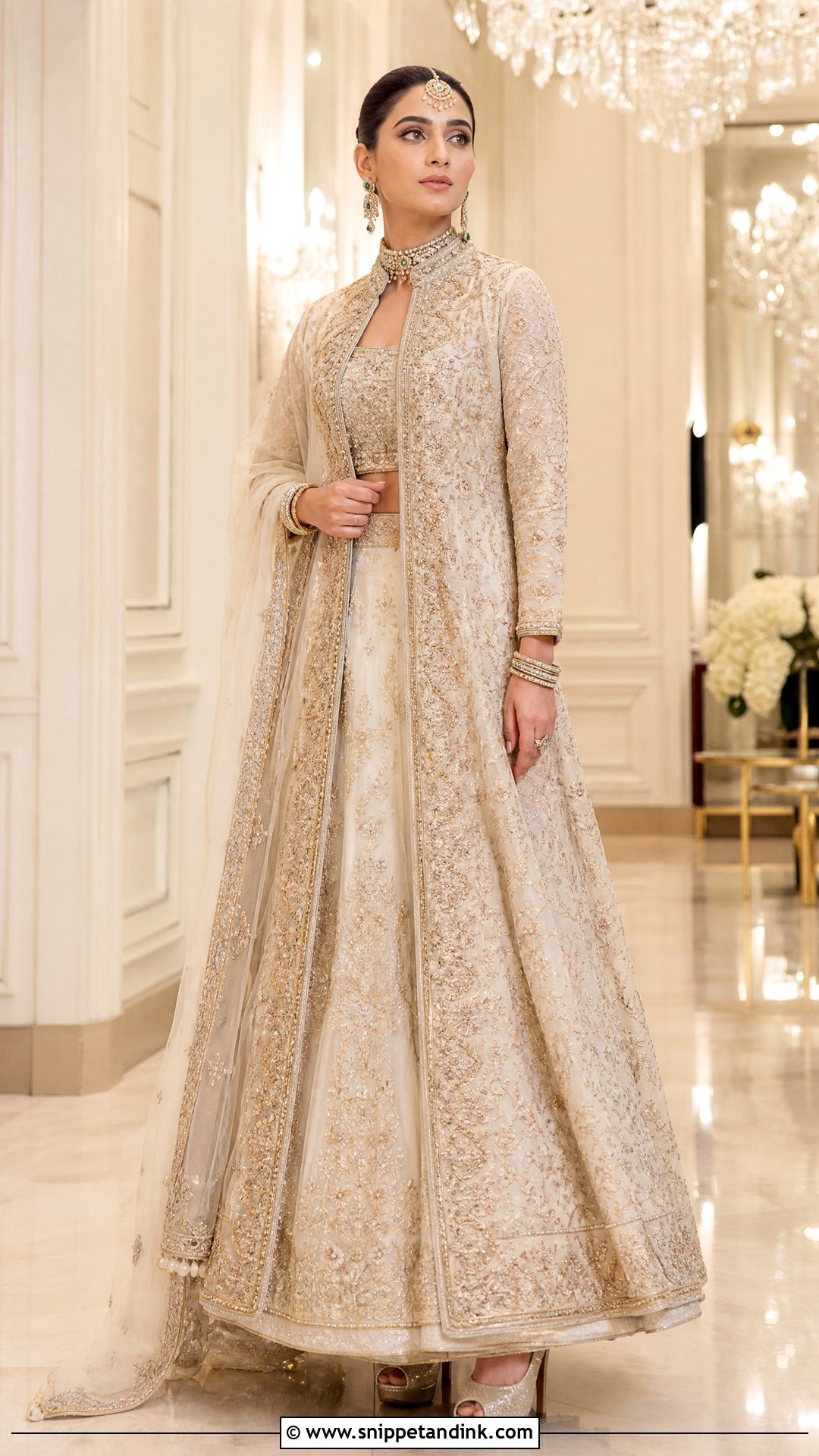
A floor-length jacket over a lehenga creates long vertical lines and an instant sense of ceremony. Keep the skirt streamlined and the blouse matching, then add a jacket worked in zardozi, thread or crystals. Open-front feels lighter; closed-front gives more coverage and almost reads as a gown. Ivory and gold suit a reception, ruby, emerald or navy an evening. Drape the dupatta over one shoulder so it doesn’t fight the jacket. I’d check the armholes carefully, because a jacket over a fitted blouse can bind when you raise your hands for rituals. In winter it doubles as warmth.
16. Double Dupatta Bridal Lehenga
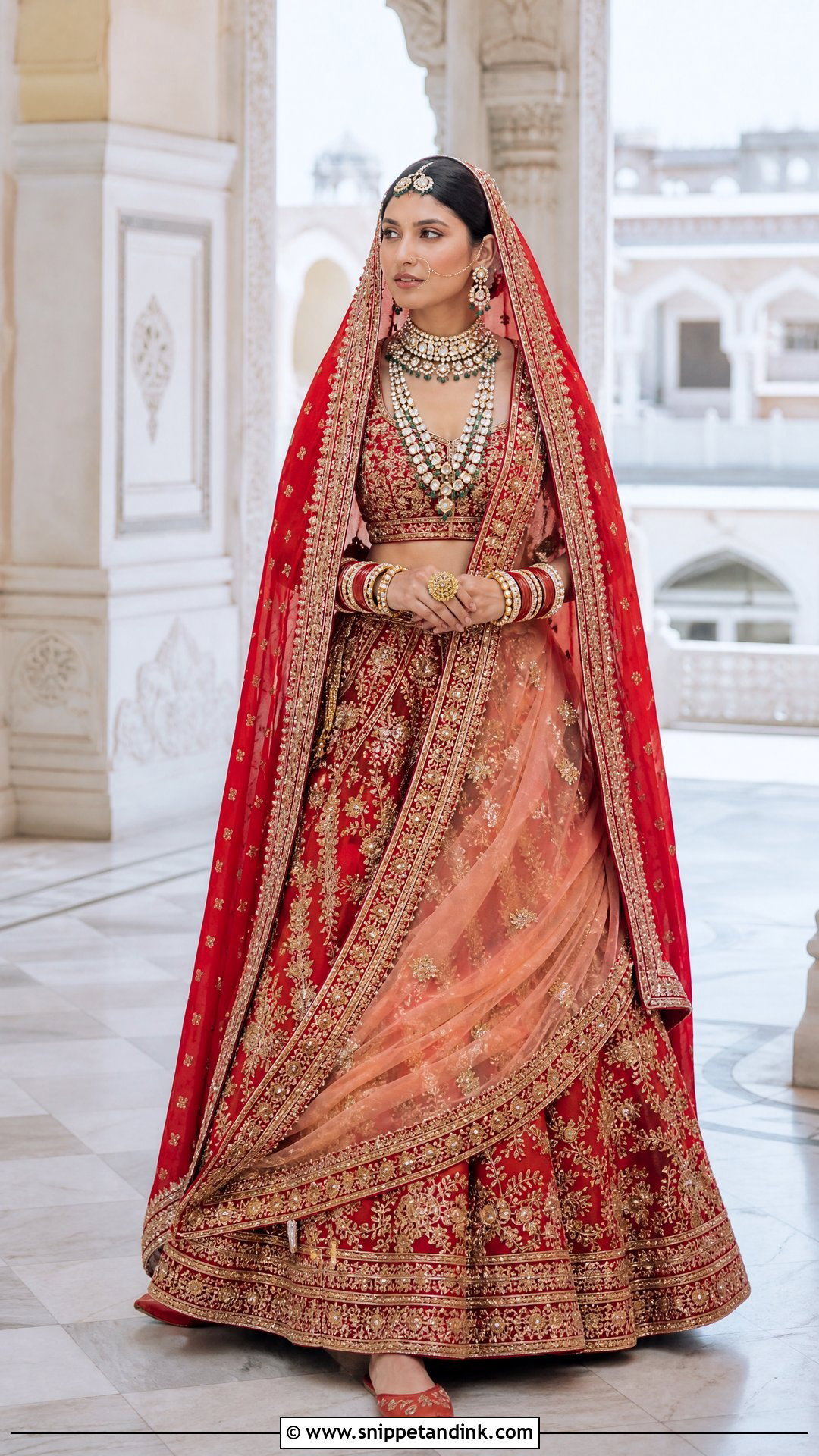
Two dupattas give a layered, formal look, but they also double the pinning. One light veil goes on the head with a border that frames the face; the second sits on the shoulder or wraps the waist, either matching or in a complementary shade such as peach with red or green with gold. Keep both fabrics light, especially over a heavily embroidered skirt. Add a choker, a longer necklace, earrings, maang tikka, bangles and comfortable juttis. I pin the head dupatta into the bun at several points and tack the shoulder one to the blouse, so neither shifts during seated rituals and greetings.
17. Kerala Kasavu Bridal Saree
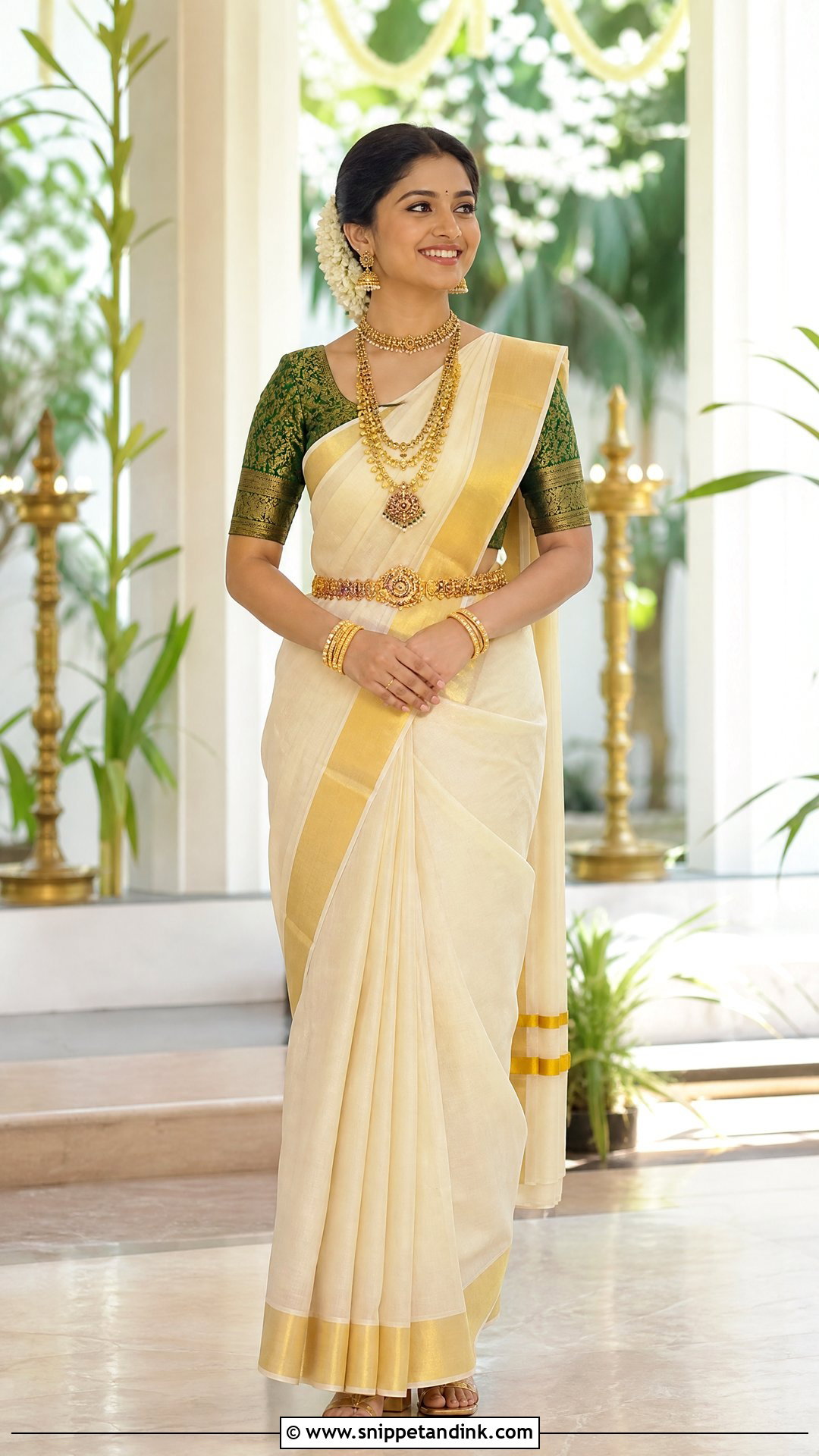
Kasavu is crisp ivory cotton or silk edged with gold, and it looks regal through restraint. A broader gold border suits the main ceremony. Pair it with a fitted blouse in ivory, red, green or gold; brocade adds texture without spoiling the clean lines. Layer traditional gold necklaces in different lengths and add jhumkas, bangles, a waist belt and small hair ornaments, with jasmine around a low bun. Cotton kasavu creases quickly in humid weather, so I steam it right before draping and ask the bride to sit carefully between rituals. Kohl-lined eyes and a rich red lip complete it.
18. Assamese Mekhela Sador Bridal Outfit
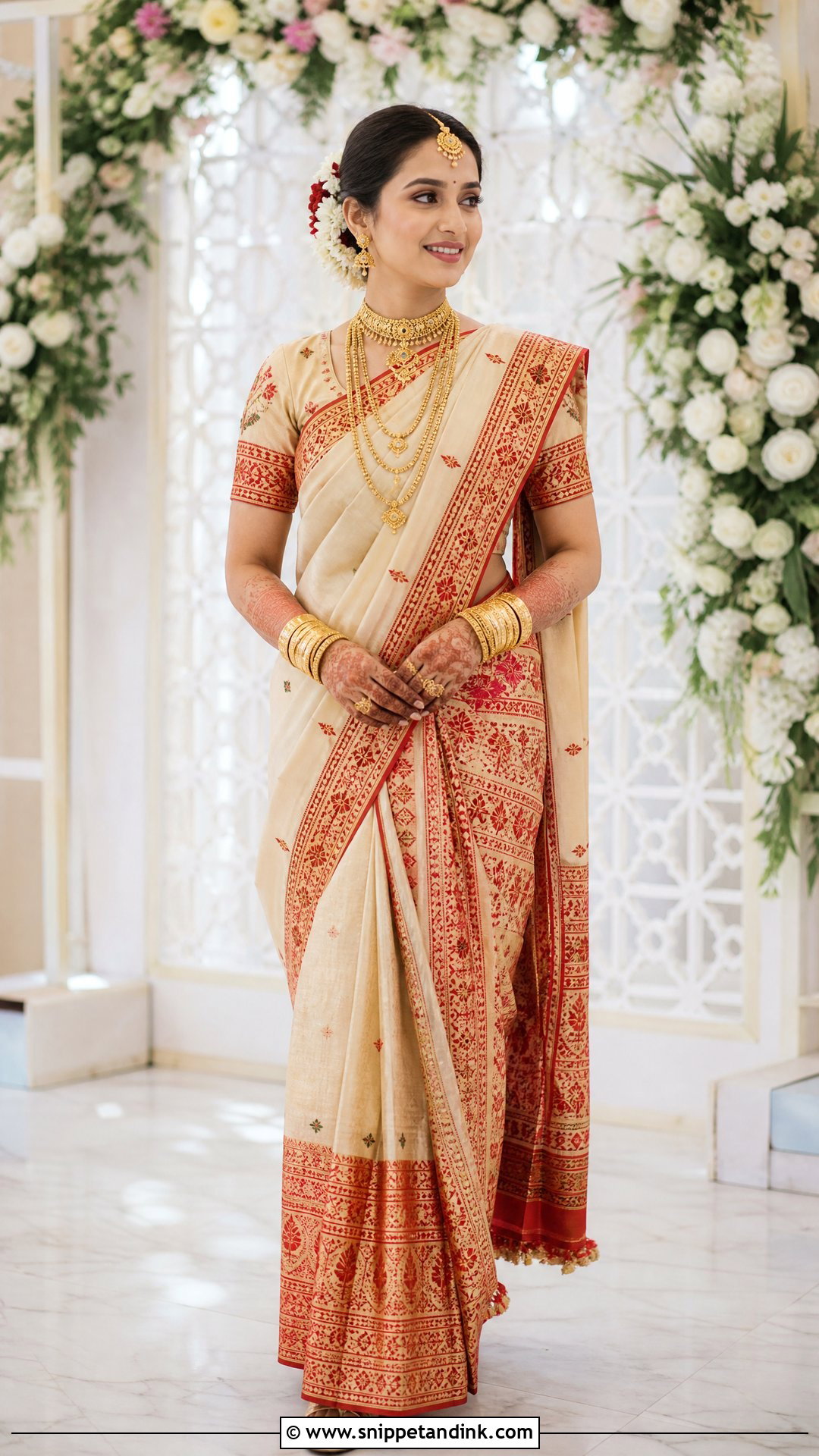
An Assamese Mekhela Sador is a two-part woven ensemble with real structure and a strong sense of place. Cream, ivory or soft gold with red woven motifs and a detailed border is the bridal classic. The mekhela is pleated at the waist, and the sador is arranged so its richest woven section falls across the front; that placement takes practice, so I rehearse it before the day. Traditional gold jewelry, layered necklaces, earrings, bangles and a forehead ornament suit the weave. A polished bun with flowers and gold sandals complete it, with soft gold eyes and a red lip.
19. Rajasthani Rajput Bridal Lehenga
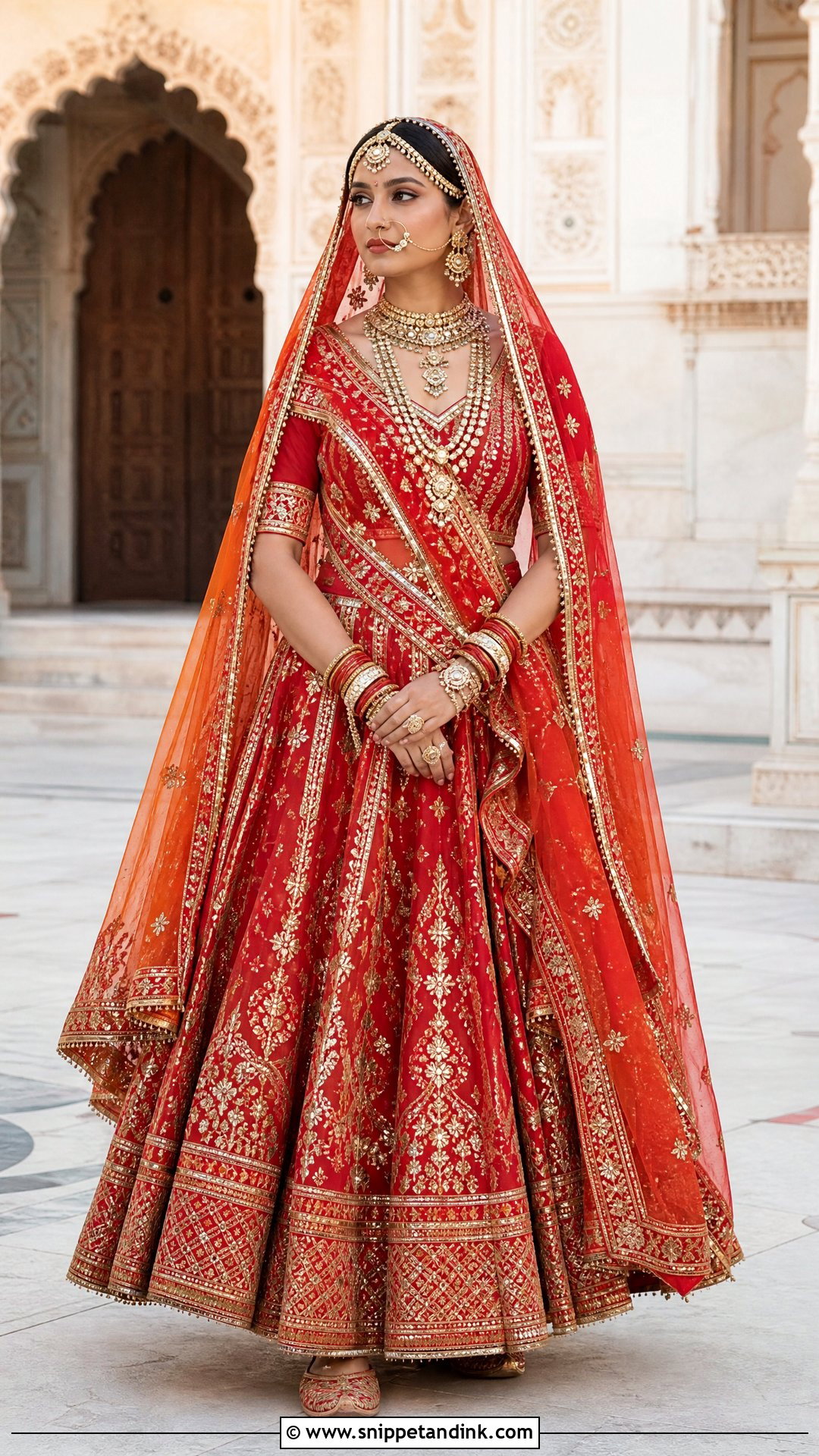
A Rajput-inspired bridal lehenga is built around the odhani, the veil that gives it that composed, covered silhouette. Choose red, orange or deep pink with gota patti, zari borders or heritage motifs, a fitted kanchli-style blouse and a richly edged odhani secured over the head. Keep the front of the drape sheer enough to show the face and jewelry. The borla maang tikka sits high on the forehead, so I build the center-parted bun to hold it level. Layered kundan, a nath, bajuband armlets, bangles and embroidered juttis complete it. Courtyards and palace backdrops suit it naturally.

20. Gold Embroidered Bridal Reception Gown
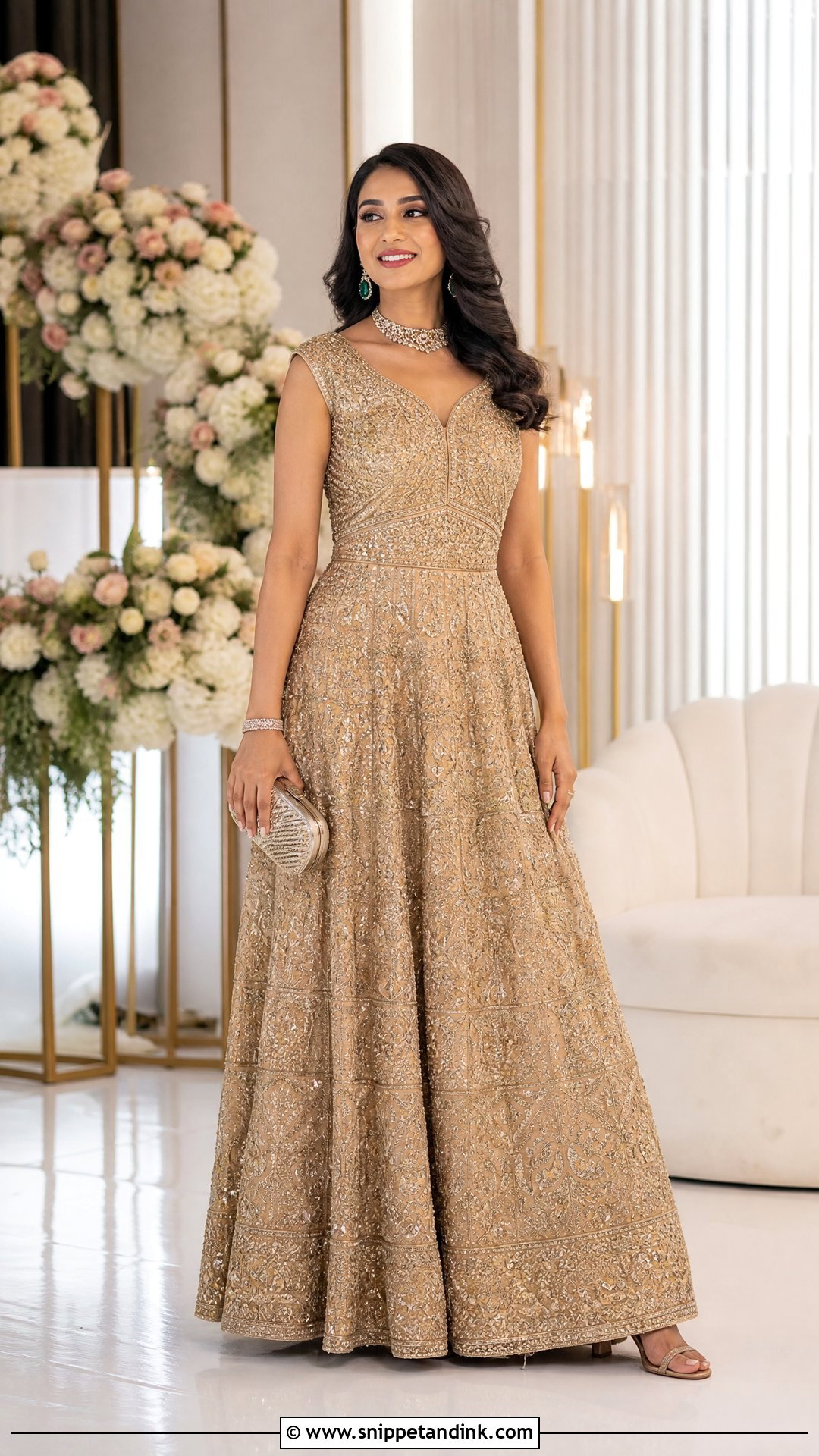
For the reception, a gold embroidered gown gives modern glamour without repeating the wedding lehenga. Choose a floor-length design with a fitted, Indian-inspired bodice, a structured waist and a flowing skirt; zardozi motifs, tonal sequins or fine crystals tie it back to the rest of the wardrobe. Keep the neckline simple enough for a diamond-style choker or an emerald necklace. Add matching earrings, a slim bracelet, a metallic clutch and comfortable heels hidden under the hem. Soft waves feel relaxed, a sleek bun formal. I’d fit the gown with the choker on, since a high necklace changes where the neckline should sit.
The Order I Dress a Bride In on the Morning
Indian bridal dressing has more layers than most western styling, and the order decides whether anything has to be redone. This is the sequence I work to, adjusted for each family’s rituals:
- Hair base and makeup in a front-buttoning shirt, so nothing goes over the face later.
- Blouse, petticoat or lehenga skirt with its can-can, and a quick restroom break before draping.
- Saree pleats or the lehenga dupatta at the waist, pinned to the petticoat and blouse.
- Heavy necklaces and earrings, then maang tikka, matha patti or borla set into the hair.
- The head dupatta or veil last, pinned into the bun at several points.
- Bangles, kaleere or haath phool once the bride has stopped using her hands for dressing.
Allow more time than the artist quotes; one tangled pin on a heavy dupatta can cost twenty minutes. Keep a small kit with safety pins in two sizes, U-pins, double-sided tape and a spare earring back, and give it to the one person who’ll stay close to you all day.
Afterwards, fold silk and zari outfits in soft muslin rather than plastic, and refold them along different lines every few months so the metal thread doesn’t crack at the creases.
Your Traditions First, the Embroidery Second
The heaviest or costliest outfit isn’t automatically the most memorable. The one that works carries the bride’s traditions, suits her comfort and fits the setting, from a red zardozi lehenga or a Banarasi saree to a regional weave, a sharara or a reception gown. Before you finalise anything, wear the whole outfit together: blouse, drape, jewelry, shoes and hair. Sit, walk, raise your arms and bend as you would for rituals, then note what needs changing. Let one or two elements lead and keep the rest supporting. With good tailoring and balanced styling, any bride can look regal and still be comfortable all day.
You'll Like These Ideas:








Leave a Reply