
A Ghanaian bridal wardrobe gives you more room to play than almost any other tradition I dress for. Ghanaian wedding fashion can mean handwoven kente cut into a mermaid gown, a kaba and slit for the engagement rites, a crisp white gown for church, or a mix of all three across one weekend. Newer looks bring in corsetry, organza overlays, sculpted sleeves and trains that come off for the party. Before I sketch anything with a bride, I ask which ceremony each outfit is for and whether the family has a cloth or colour they expect to see, because that answer shapes everything else. The ideas below are full looks, so you can see how fabric, cut and accessories work together.
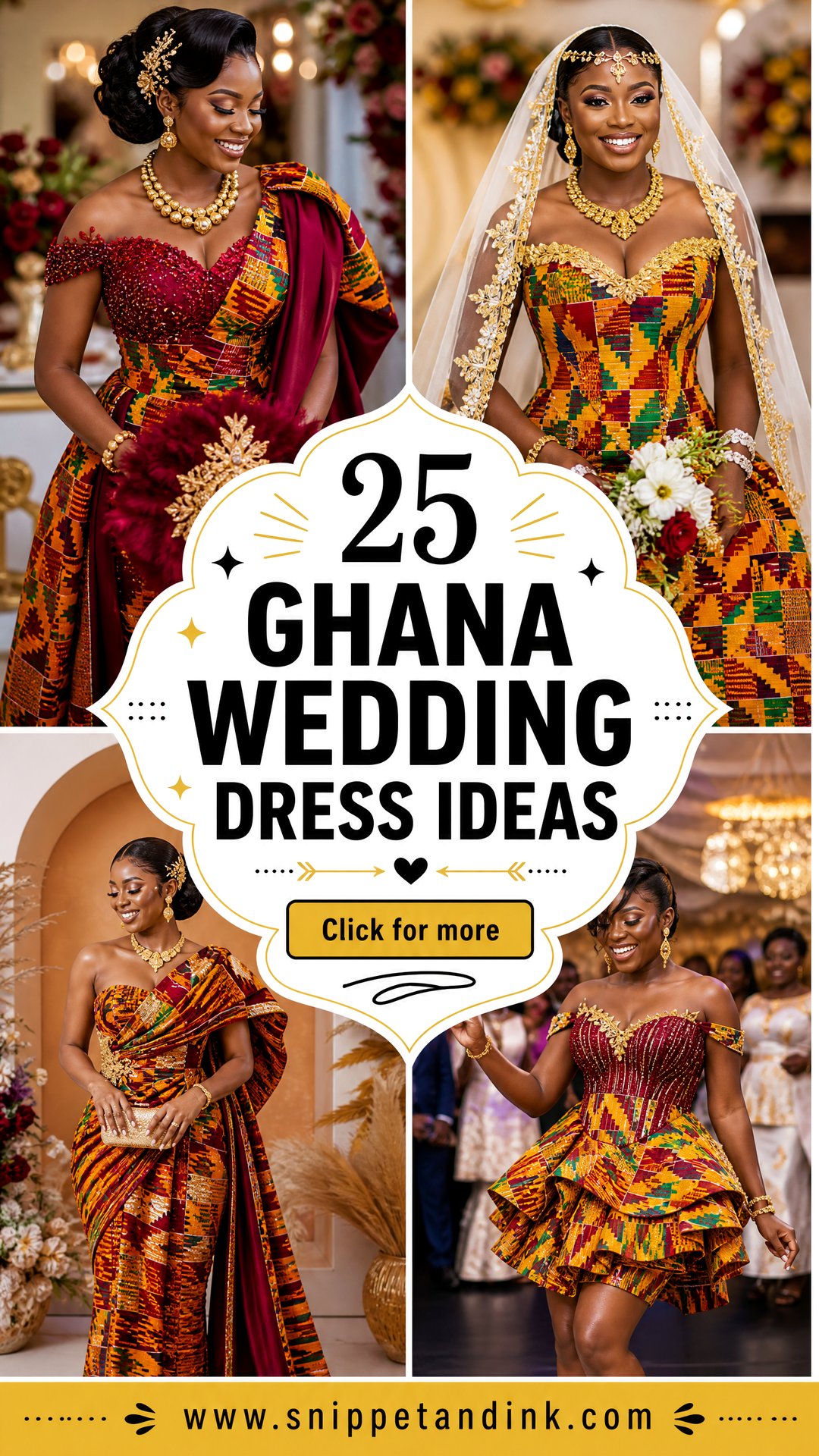
Ordering Handwoven Kente Early Enough for a Custom Gown
Most of the ideas below start with cloth, not a pattern. Handwoven kente is made on narrow-strip looms, each strip only a few inches wide, and the strips are sewn edge to edge into a full cloth. That’s why the motifs come in blocks, and why a designer needs extra length to line them up across a bodice and skirt. I tell brides to buy the cloth first and design around it, not the other way round.
Weaving a full set for a bride and groom takes time, and a weaver may already have other orders. I’d allow several months between ordering cloth and your first fitting, longer if you want a custom colourway. Printed kente-style fabric is quicker and lighter, which can suit a reception dress, but it doesn’t drape or hold structure the way true woven cloth does.
Questions I ask the weaver before paying
- What is this pattern called, and does it carry a meaning the families should know about?
- Is the thread silk, rayon or cotton? That affects sheen, weight and how warm the dress will be.
- Is the colour fast? I always ask for a small offcut to test with a damp white cloth.
- How many strips or yards for a gown with matched motifs, plus the groom’s cloth?
- Can the same colourway be woven again if we need extra for a cape or sash?
One Bride, Two Ceremonies: Planning the Traditional and Church Outfits
Many Ghanaian couples hold a traditional marriage rite with both families and a church or white wedding, sometimes on the same weekend. Each one asks something different of the dress. For the traditional rite you’ll be seated, presented to elders and often kneeling, so I plan a kaba and slit or kente gown with room to bend and a skirt vent. For church, a longer train and veil make sense because you have an aisle and fewer outfit changes.
Talk to both families before you design. Some expect a specific cloth or colour, sometimes chosen by the groom’s side, and some have relatives in coordinated fabric. If that’s the case, I build the bride’s palette so it stands out from the family cloth rather than blending into it. Groomswear also matters: if he’ll wear kente draped over one shoulder, his pattern should complement yours, not compete. Agree on that before either cloth is ordered.
1. Gold Kente Ghana Wedding Dress
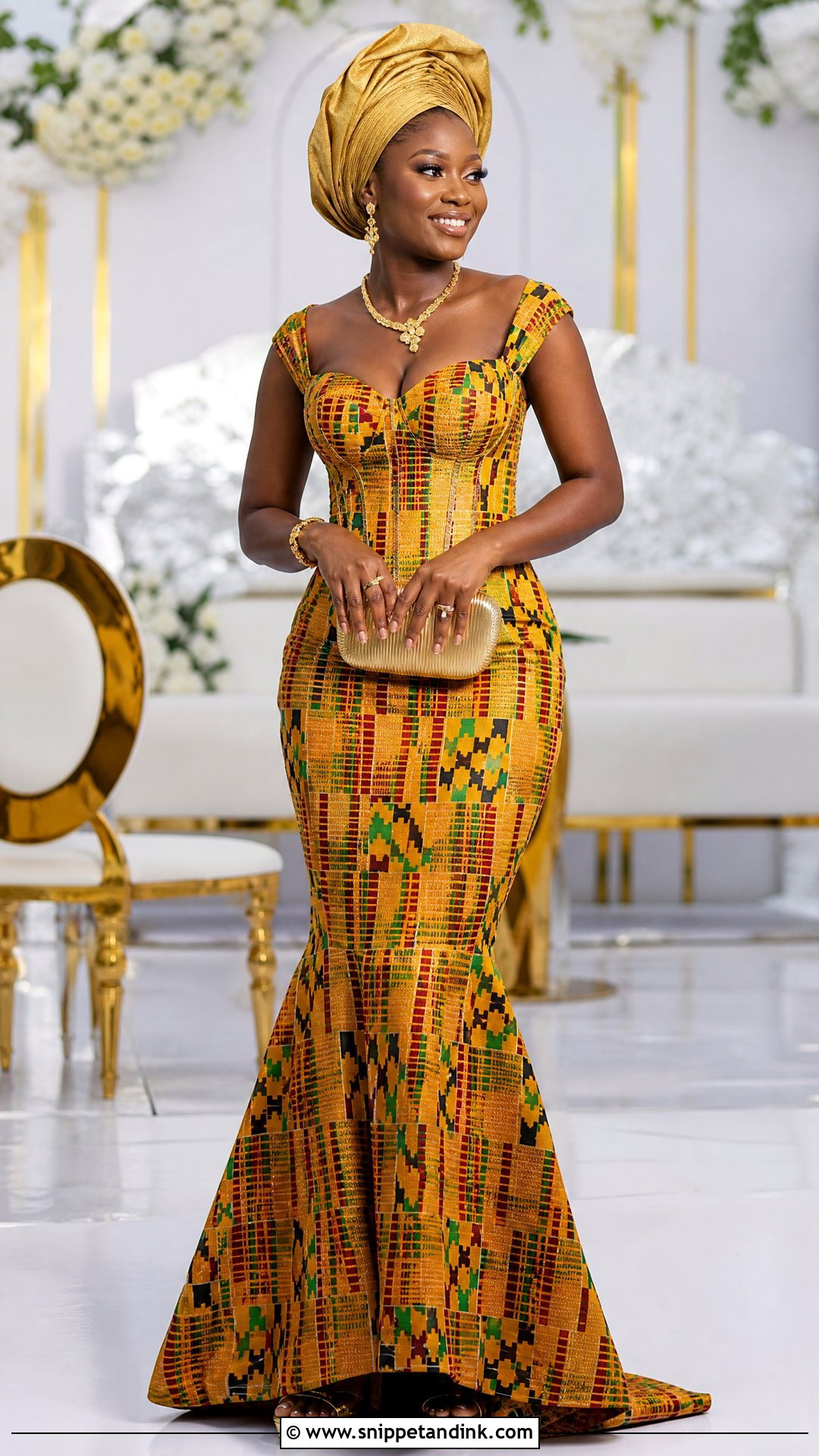
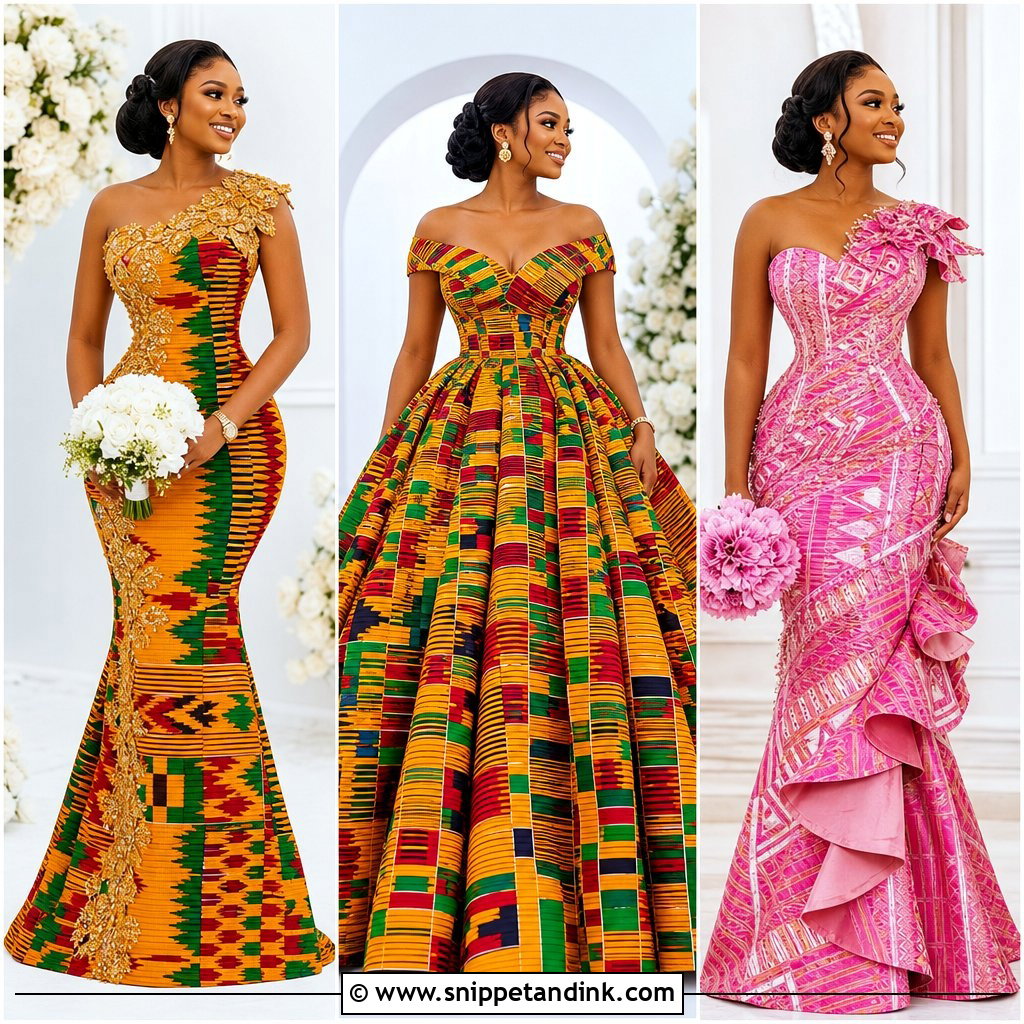
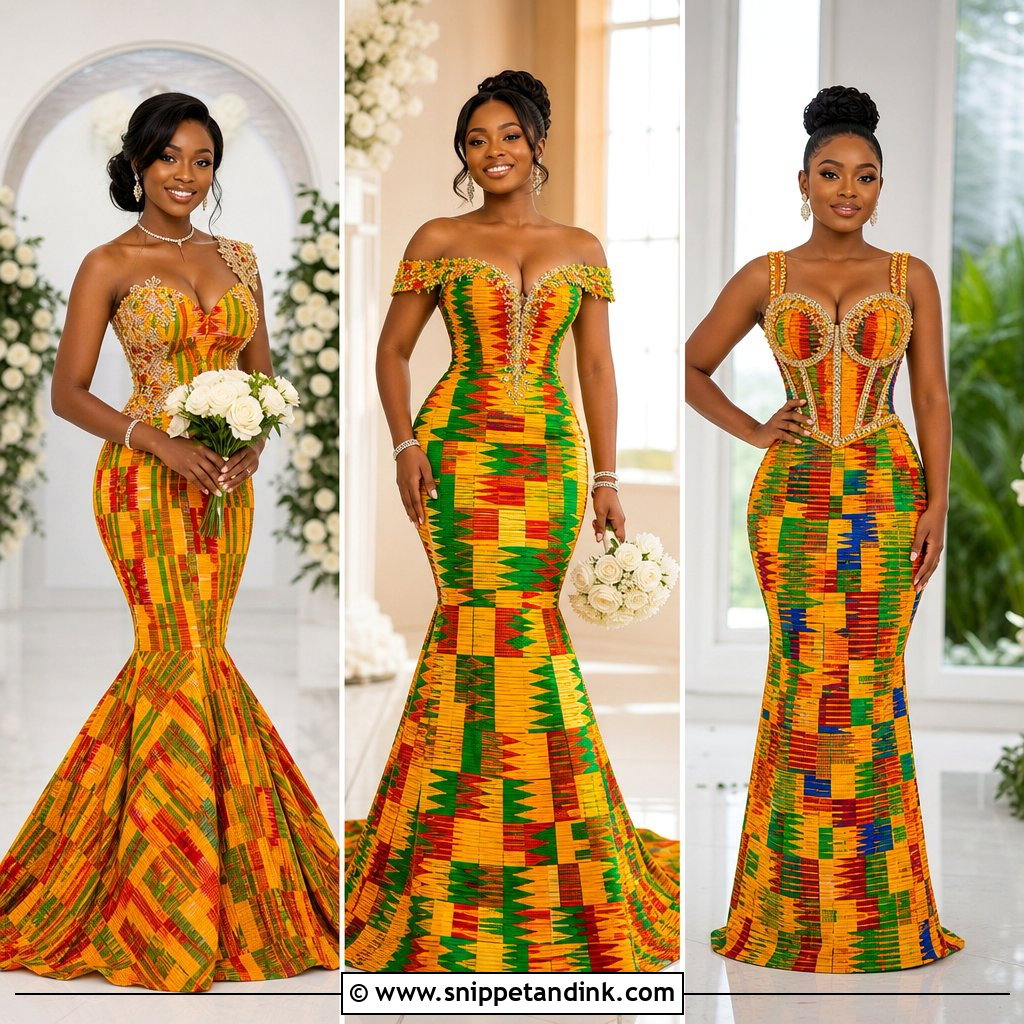
Gold-dominant kente has a weight and sheen that printed fabric never quite matches, so I let it carry the whole dress. A mermaid cut works here because the cloth holds its shape through the hip without much help from boning. Keep any red, green or black in the weave as accents rather than adding more colour in the accessories. Metallic block heels and a structured gold clutch are enough. The detail I watch most closely is motif alignment: the woven blocks should line up across the bodice seam and down the skirt, and that needs extra cloth, so order more than the pattern says.
2. Off-Shoulder Kente Ghana Wedding Dress
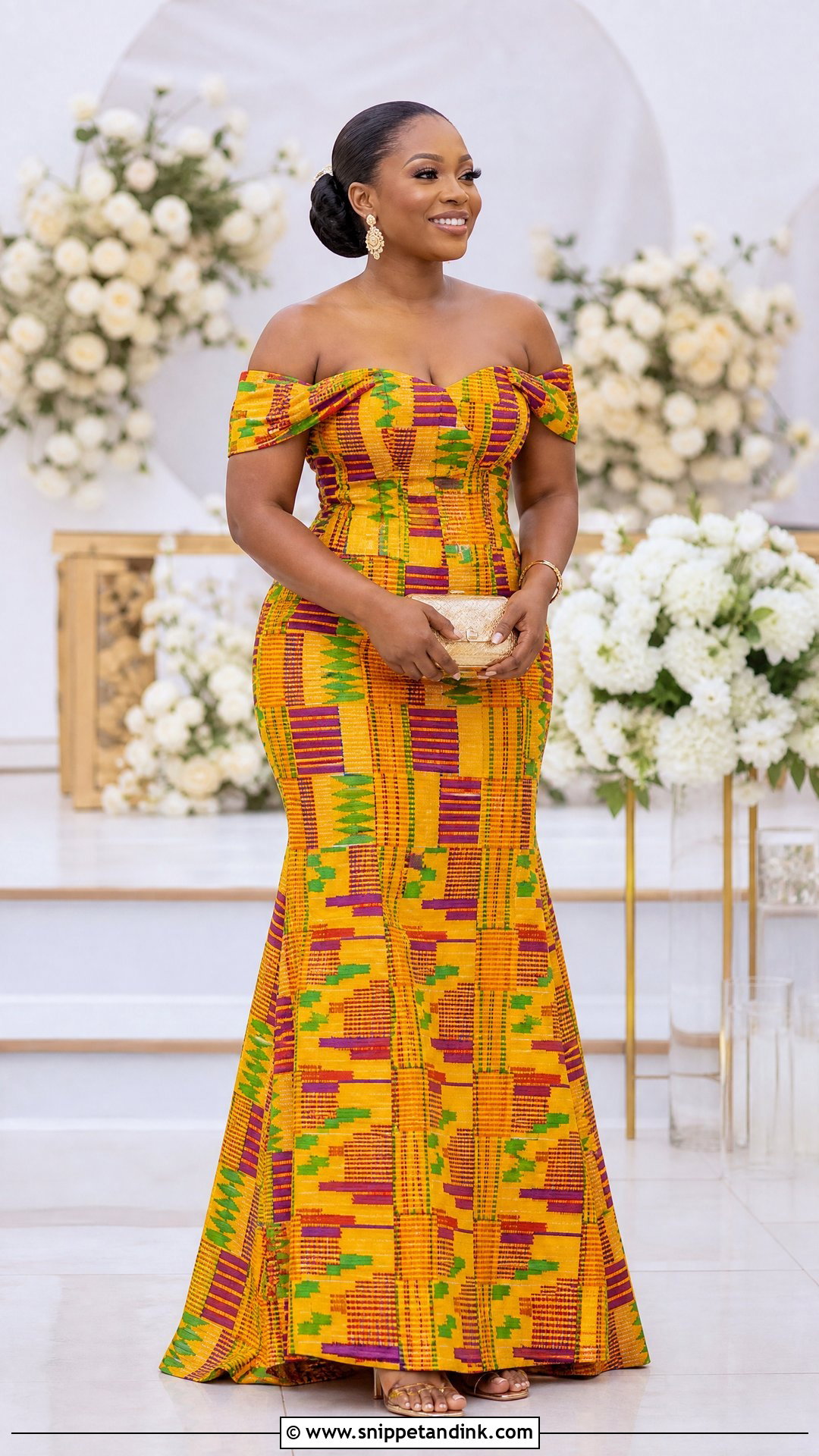
Off-shoulder necklines are where kente fittings go wrong most often. The cloth is stiff, so a loose band gapes the moment you lift your arms to hug someone. I prefer a folded sleeve that grips the upper arm, sitting on internal boning and a firm lining, with an A-line or soft flare below so you can move through greetings and dancing. A low bun keeps the shoulders clear. If you want a necklace, choose one piece and keep beading to the neckline or waist so the weave still leads.
3. Corset Kente Ghana Wedding Dress
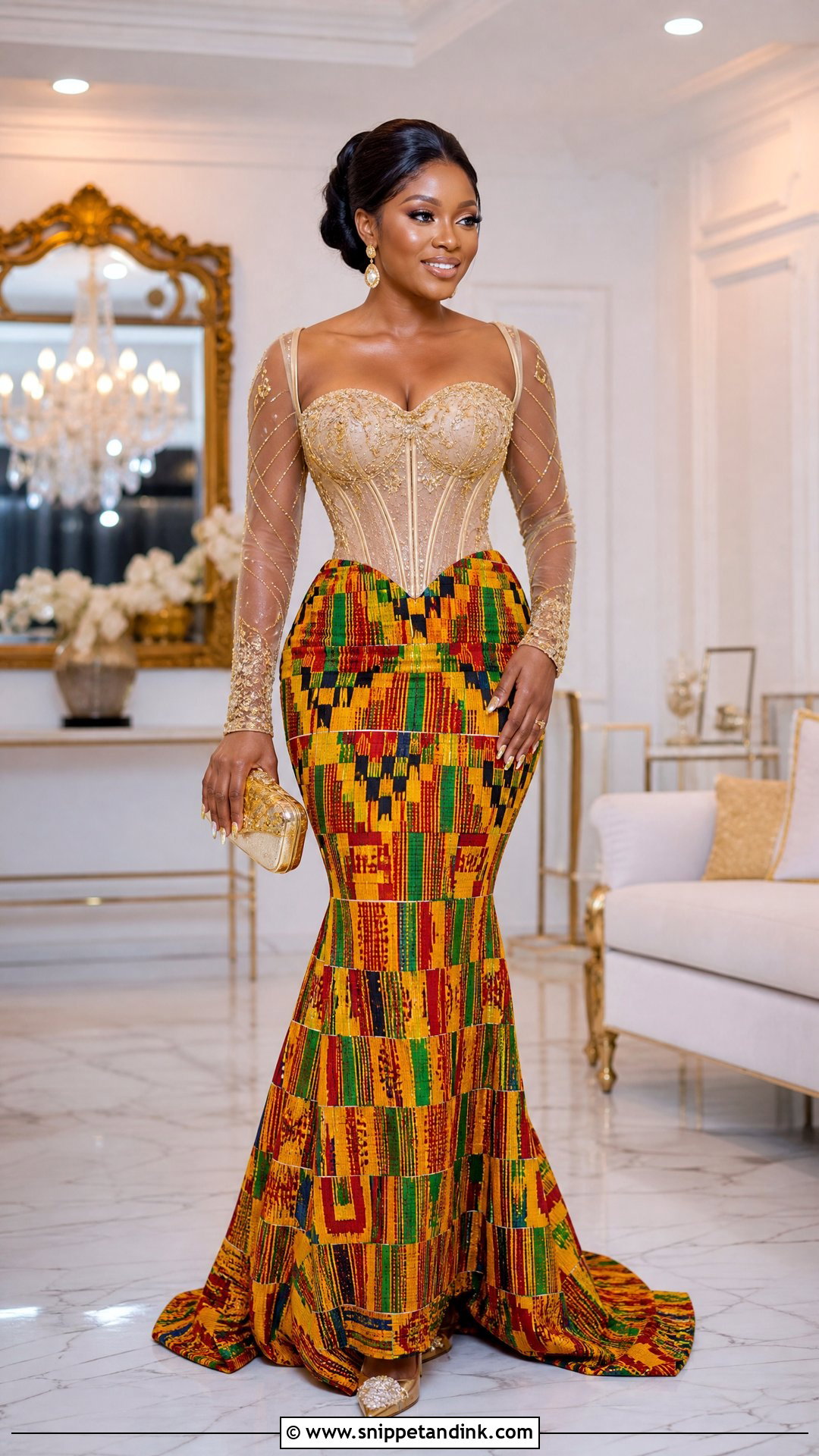
A corset bodice gives kente its sharpest silhouette, but it needs real construction, not just tight seams. I insist on spiral or plastic boning, a smooth lining and enough room to sit through a long ceremony and still eat. Pair it with a fishtail that opens around the knee, or a straight skirt with a train you can unhook later. Sheer sleeves or a sweetheart edge soften the structure. Plan on at least two fittings, because handwoven strips stretch differently from bolt fabric and the fit can shift after the first wear-in.
4. One-Shoulder Kente Ghana Wedding Dress
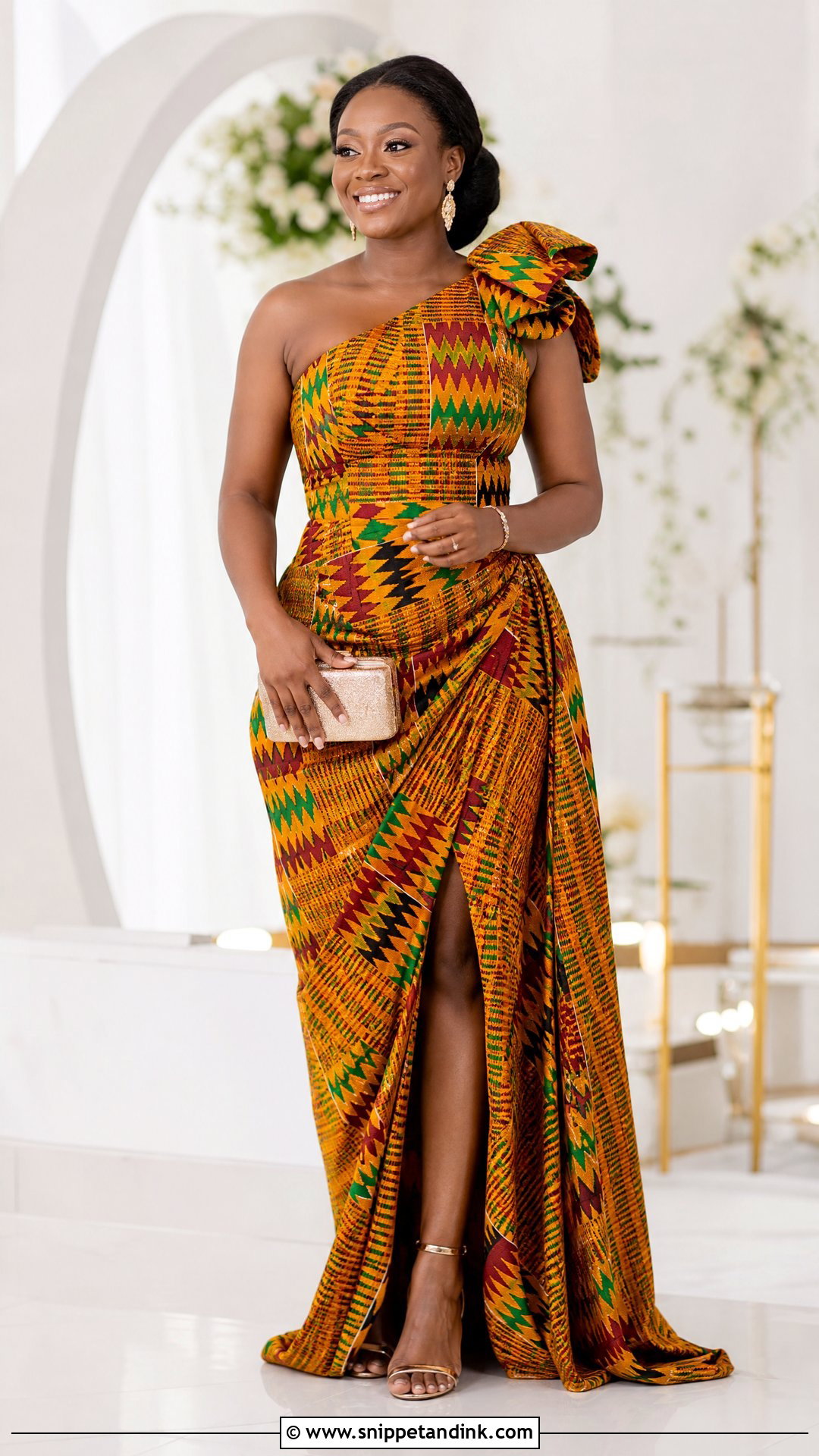
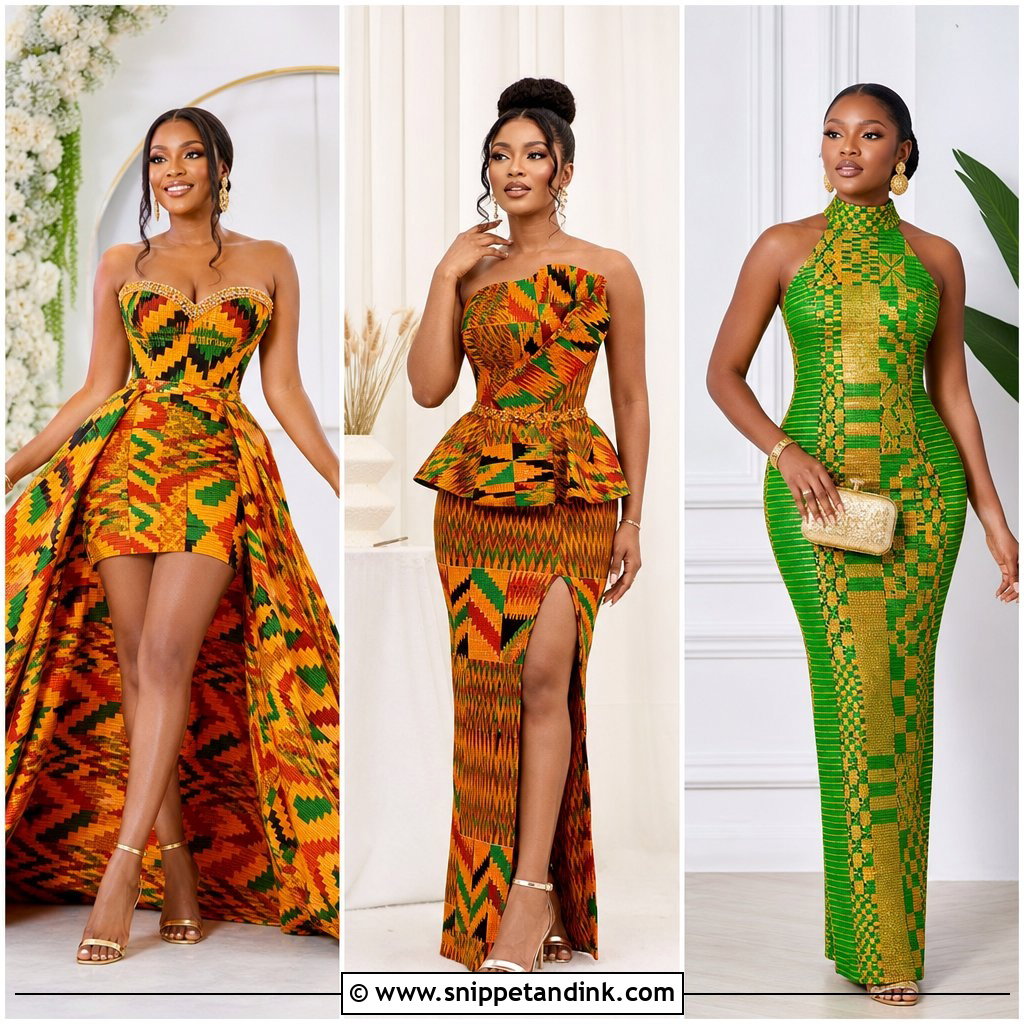
One shoulder, one strong line. I keep the bodice fitted and let the skirt either drape slightly to one side or open into a modest front slit, never both. Choose one feature for the shoulder itself: a pleated fold, a beaded band or a small bow. A single statement earring on the bare side balances the shape, and hair goes away from the decorated shoulder. Ask your tailor to reinforce that strap with a hidden elastic or grip tape, since the full weight of a kente bodice hangs from it all day.
5. Strapless Kente Ghana Wedding Dress With Organza Skirt
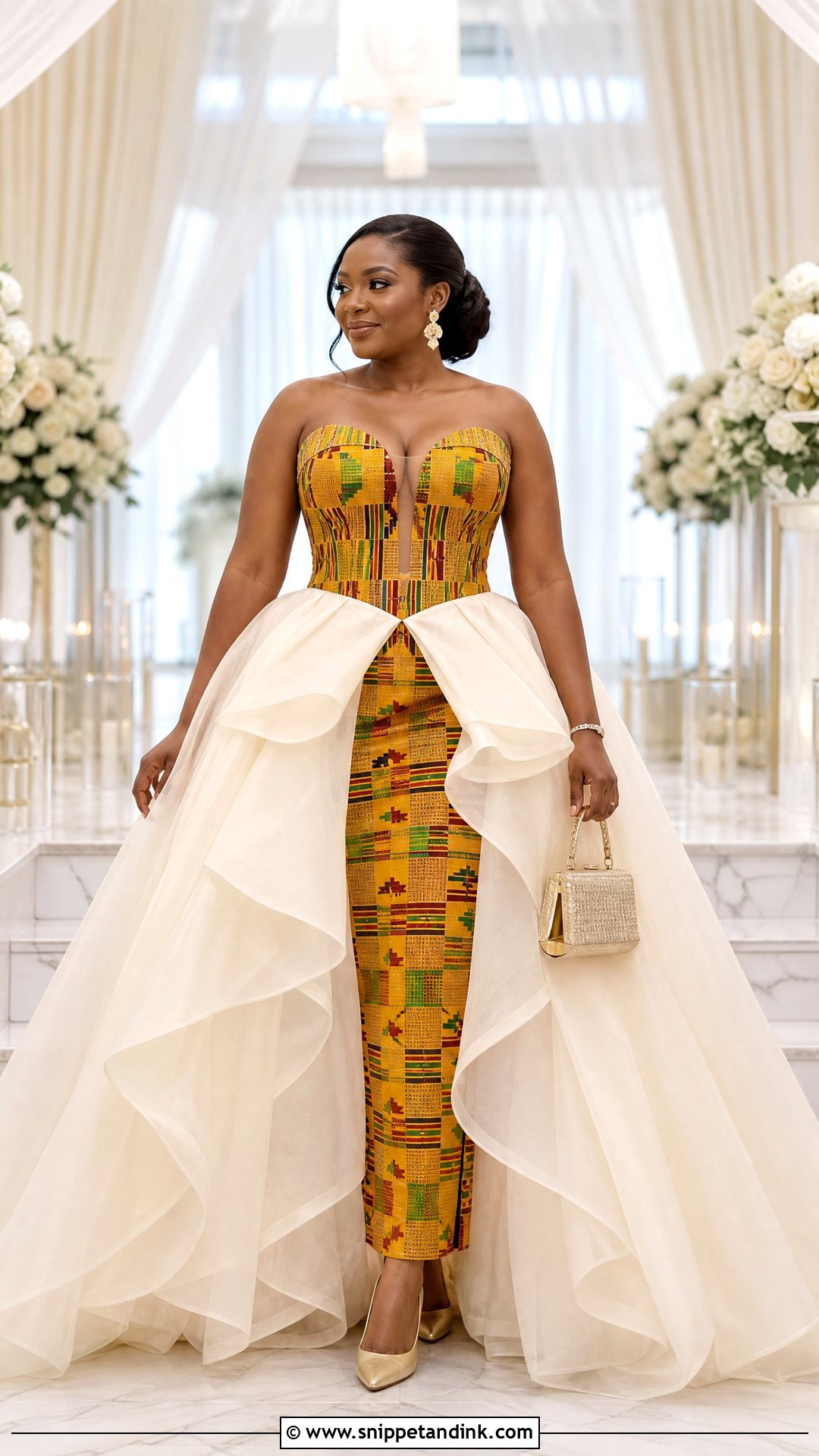
A kente corset on top and ivory organza below gives you the cultural focal point and a soft, moving skirt in one dress. I usually pull the organza colour from the lightest thread in the weave rather than defaulting to white. A removable organza overskirt is worth the extra cost: full volume for the processional, then a slimmer fitted underskirt for the reception. Organza crushes when you sit, so I build a fitted inner skirt underneath to hold the line. The strapless top edge needs a waist stay and silicone grip at the bust, or it will slide as the night goes on.
6. Long-Sleeve Kente Ghana Wedding Dress
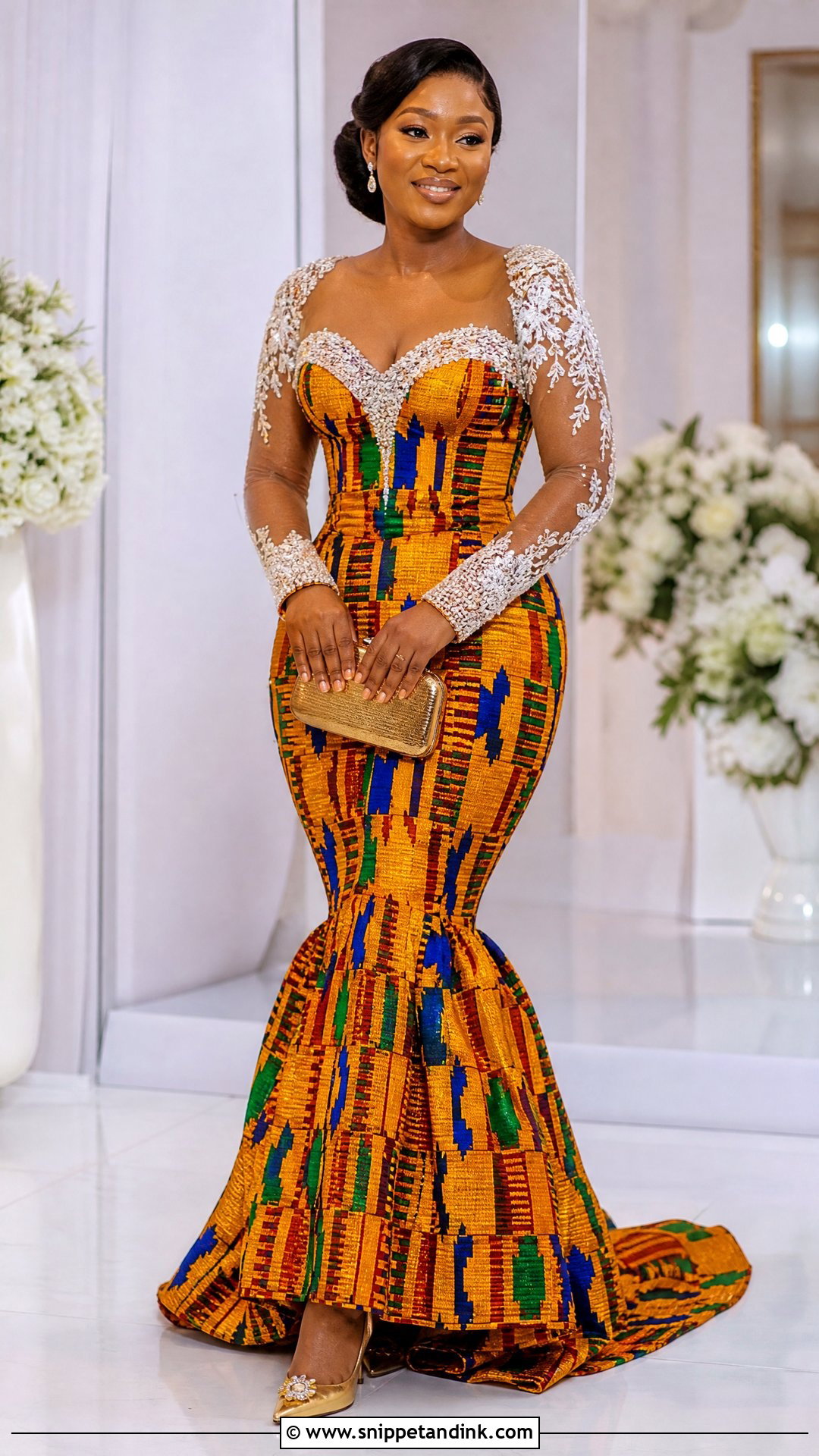
Long sleeves cut from solid kente can feel heavy and hot, which is why I usually switch to sheer tulle or lace for the arm and keep the woven cloth on the body. Beaded cuffs pick up one of the kente colours and tie the two fabrics together. A trumpet or gentle flare suits the length. With a high neckline, skip the necklace and wear an updo. The fitting test I always do is a hug: arms around someone, then both arms above your head. If the sleeve pulls at the elbow or armhole, it needs more ease.
7. Kaba And Slit Ghana Wedding Dress
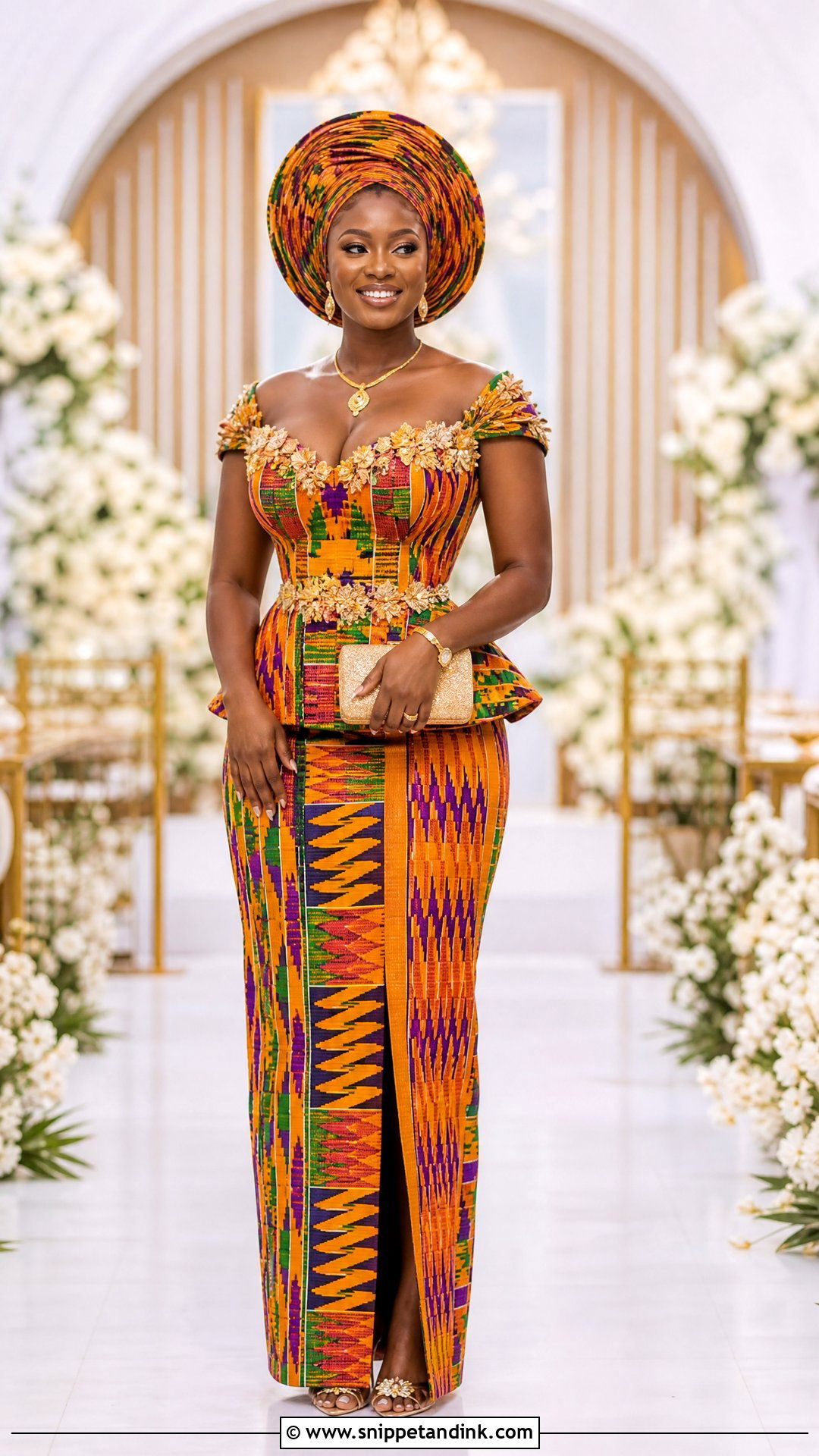
For the traditional engagement, a kaba and slit is still the outfit I see most families hoping for. The kaba should end with a peplum that sits exactly at the natural waist; if it lands lower it adds bulk over the hips. A straight, full-length slit skirt with a back vent lets you walk and kneel during the rites. Beading along the neckline marks it as bridal without hiding the pattern, and a wrapped headpiece finishes it. To link the couple, repeat a single colour or motif from your cloth in the groom’s attire rather than matching fabric exactly.
8. Beaded Kente Ghana Wedding Dress
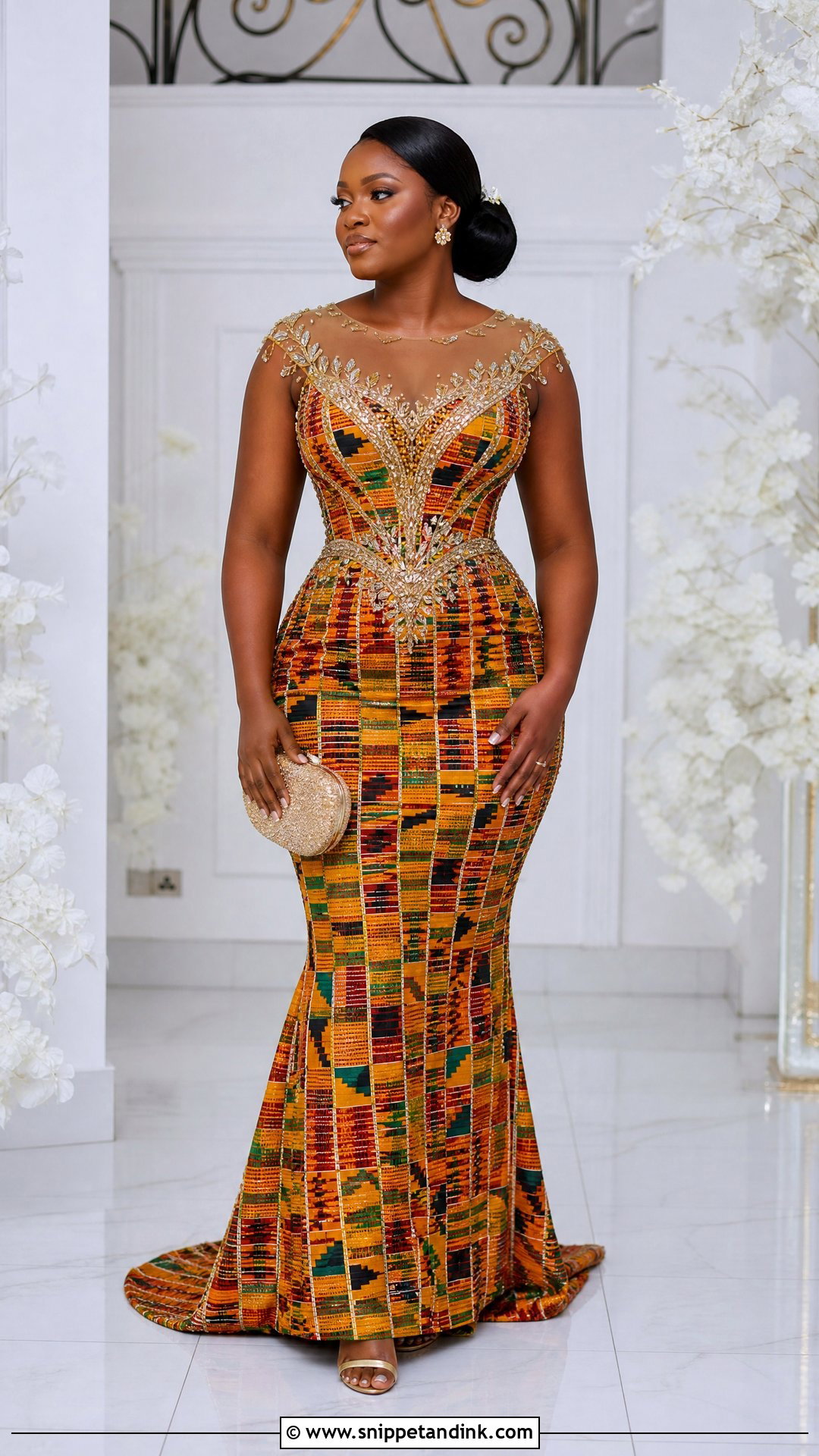
Beading on kente needs restraint. The cloth is already busy and dense, and every bead adds weight. I place crystals or pearls where the eye should land, at the neckline, waist or cuffs, and leave the skirt panels mostly clear. A straight or mermaid base gives the embellishment a clean frame. At the fitting, walk past someone in a sheer veil or a lace shirt; beads with sharp settings snag fine fabric, and it’s easier to swap them now than on the day.
9. Pink Kente Ghana Wedding Dress
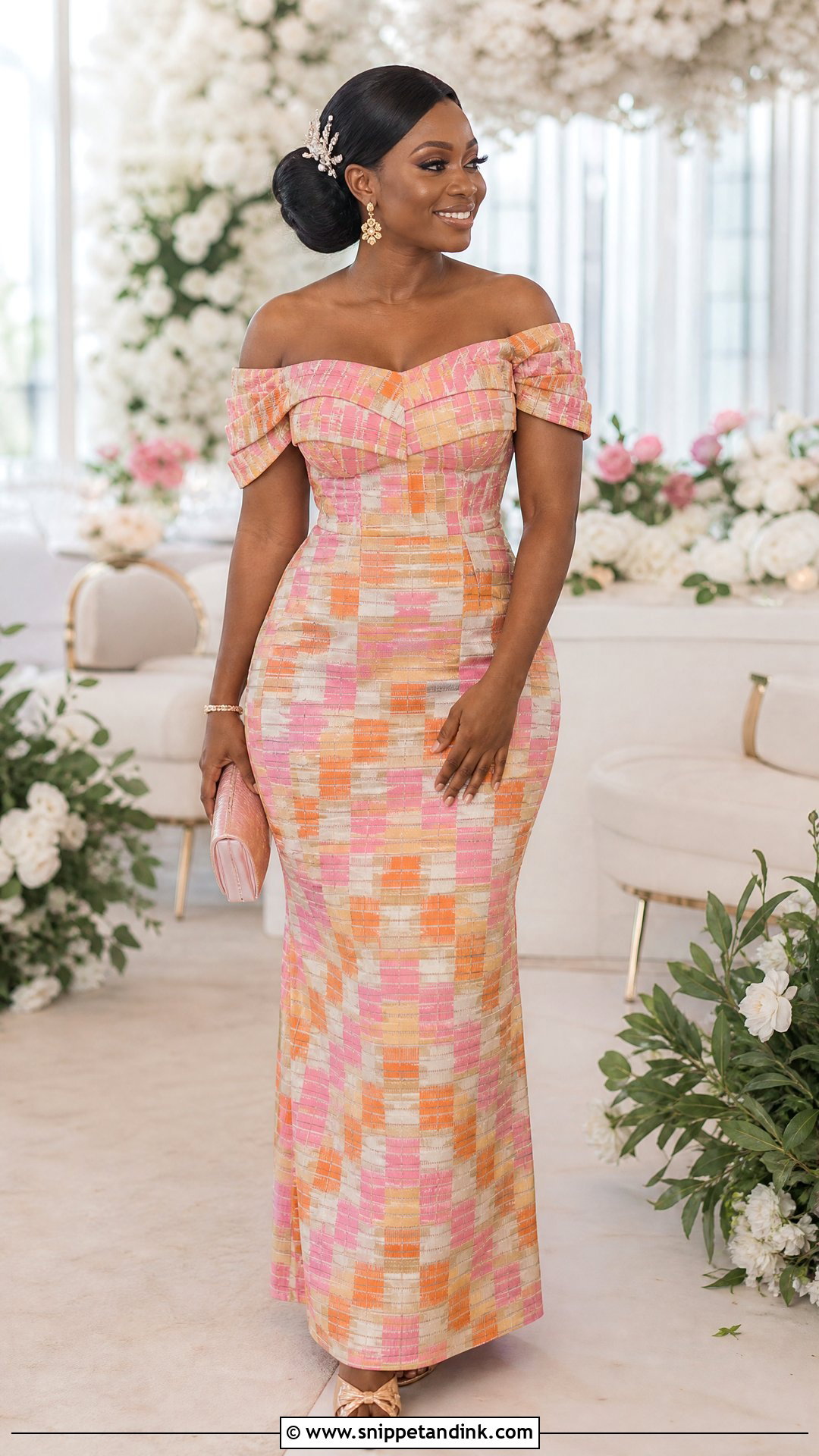
Pink kente reads warm and celebratory, and the weaves I like best mix pink with orange, gold or a deep purple so it doesn’t look flat. An off-shoulder gown with a flared hem feels current, while a peplum top and long skirt stays closer to tradition. When the cloth has several bright tones, I pick accessories from the quietest one, usually gold or cream, so the outfit doesn’t fight itself. Soft rose makeup echoes the fabric without matching it outright. A low bun with a jewelled comb or a headwrap in the same kente keeps the finish tidy.
10. Blue Kente Ghana Wedding Dress
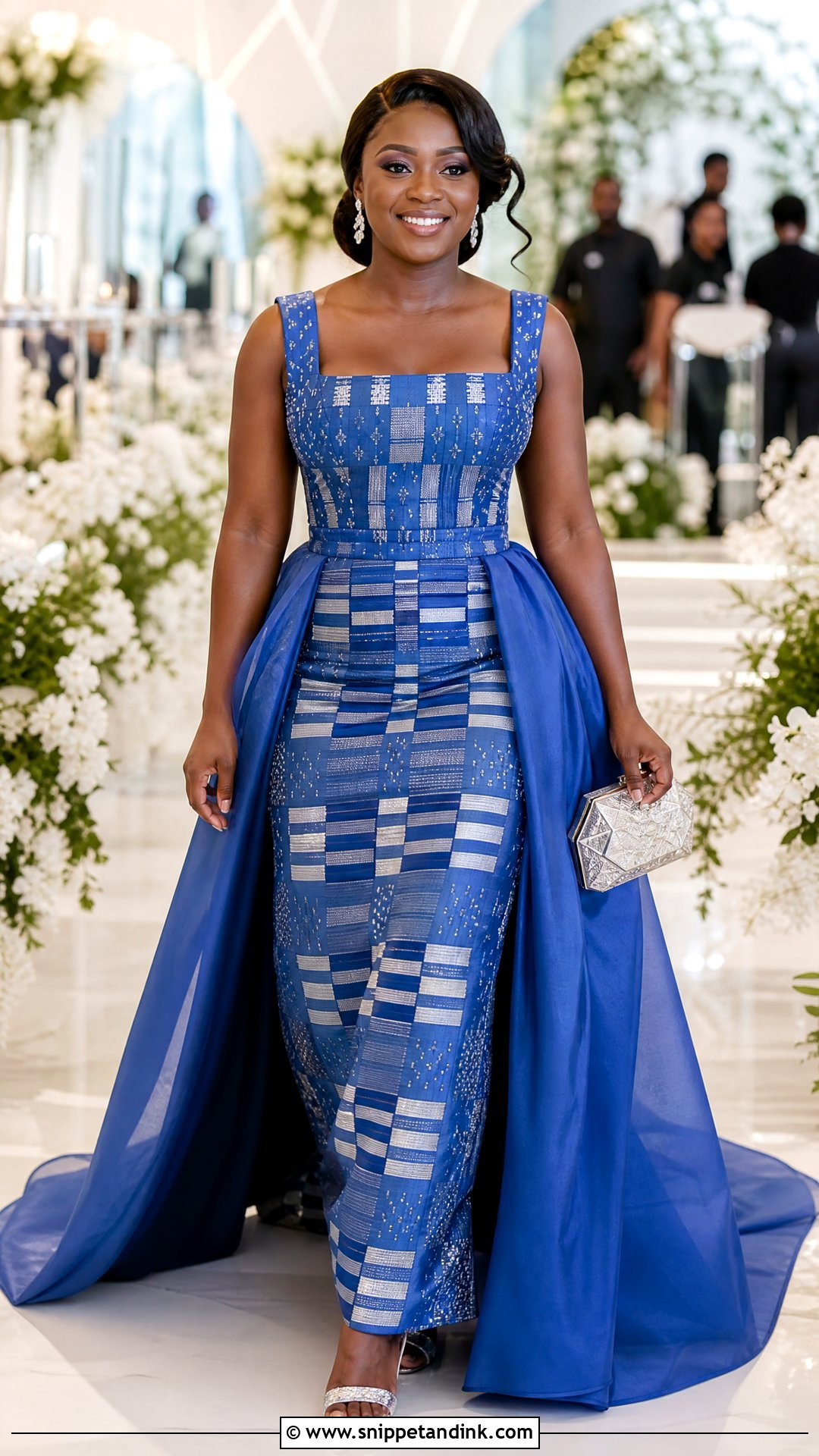
Blue kente changes more under different light than any other colour I work with. Navy and silver can look almost black in a dim hall, then bright and cool in afternoon sun. So before approving a cloth, I take a sample outside and under warm indoor bulbs and photograph it in both. A structured A-line with a fitted waist moves well, and a square neckline frames the weave cleanly. Silver heels and crystal earrings suit the cool palette. A detachable sheer blue train adds drama if the venue allows the space.
11. Emerald Kente Ghana Wedding Dress
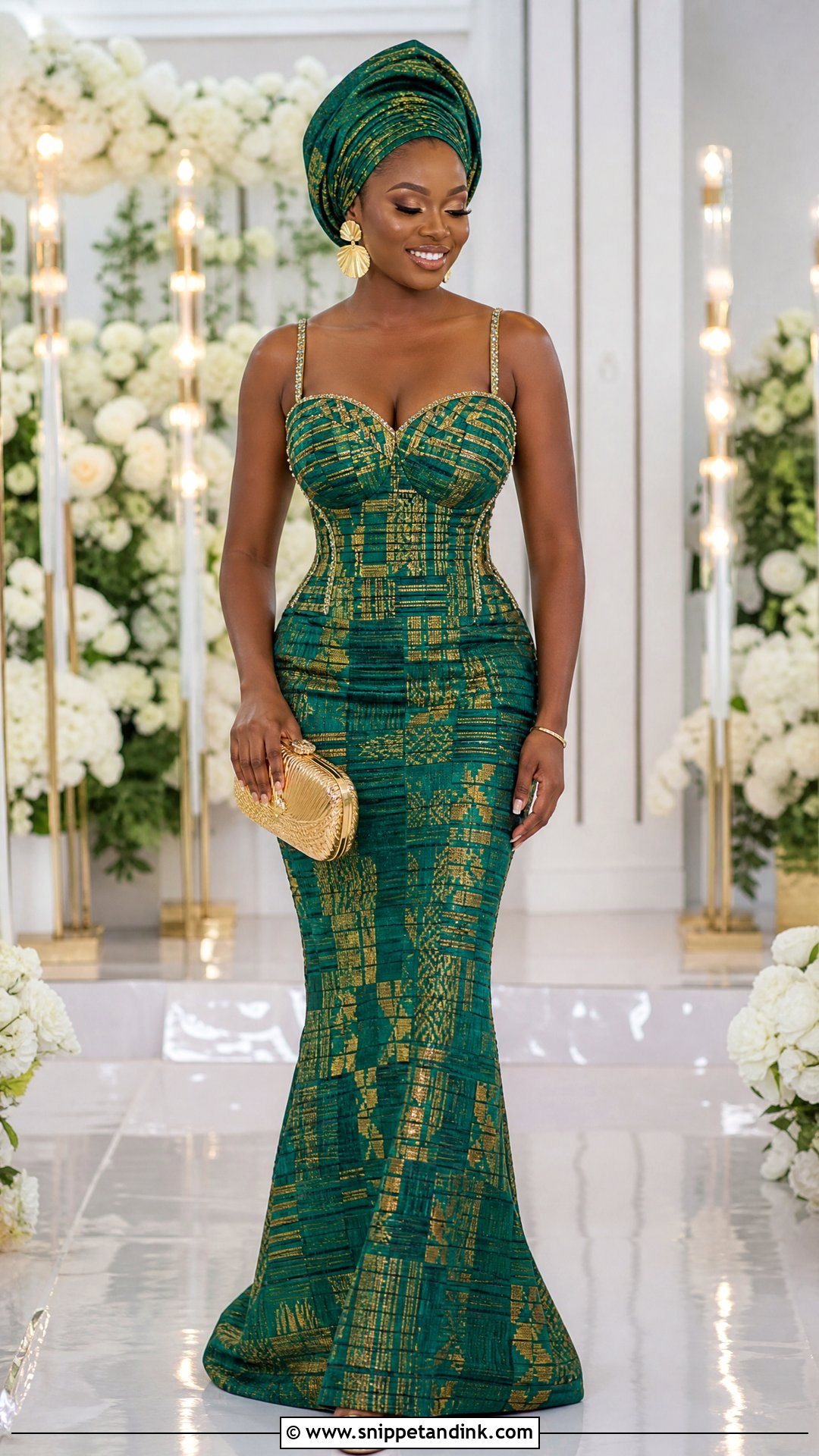
Emerald woven with gold is formal before you add a single accessory. I like a trumpet cut with the pattern running vertically, because vertical stripes lengthen and keep the green from reading as a block. Choose the neckline by coverage: sweetheart with straps, or sheer fitted sleeves. A matching emerald headwrap gives a strong traditional finish; a sleek bun is quieter. Ask for a breathable cotton lining and a little ease through the hips, since a tight trumpet in heavy cloth gets uncomfortable fast once you sit.
12. Burgundy Kente Ghana Wedding Dress
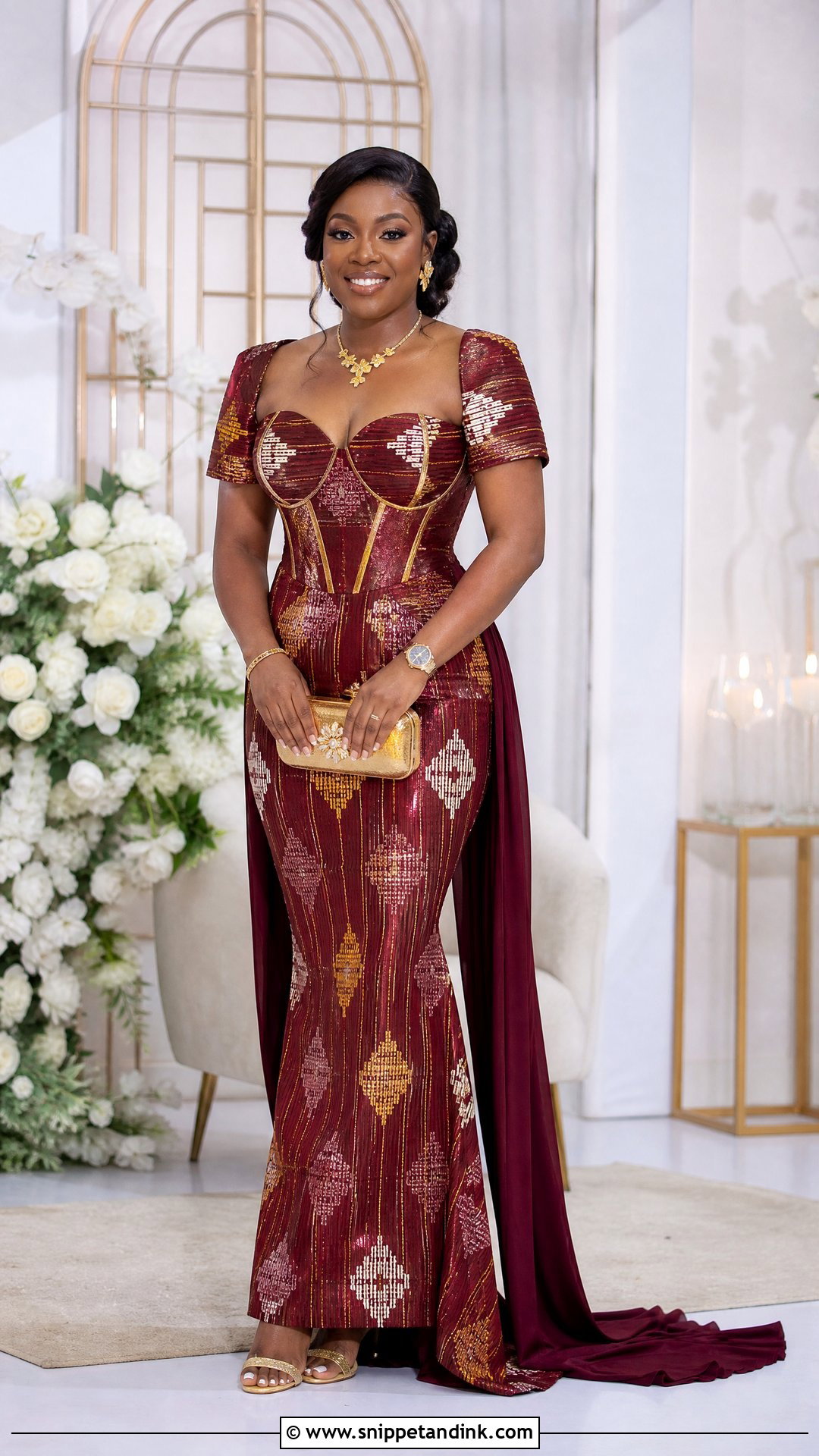
Burgundy suits a bride who wants strong colour without the brightness of red. Woven with gold, cream or muted green, it looks rich in both daylight and candlelight. A corseted bodice with a mermaid skirt gives definition, and short structured sleeves balance the shoulders. For an outdoor ceremony in the heat, I cut back the petticoat layers under the skirt; burgundy cloth absorbs sun and you will feel it by the photos. A light organza train keeps the drama without the weight.
13. Ivory Kente Ghana Wedding Dress
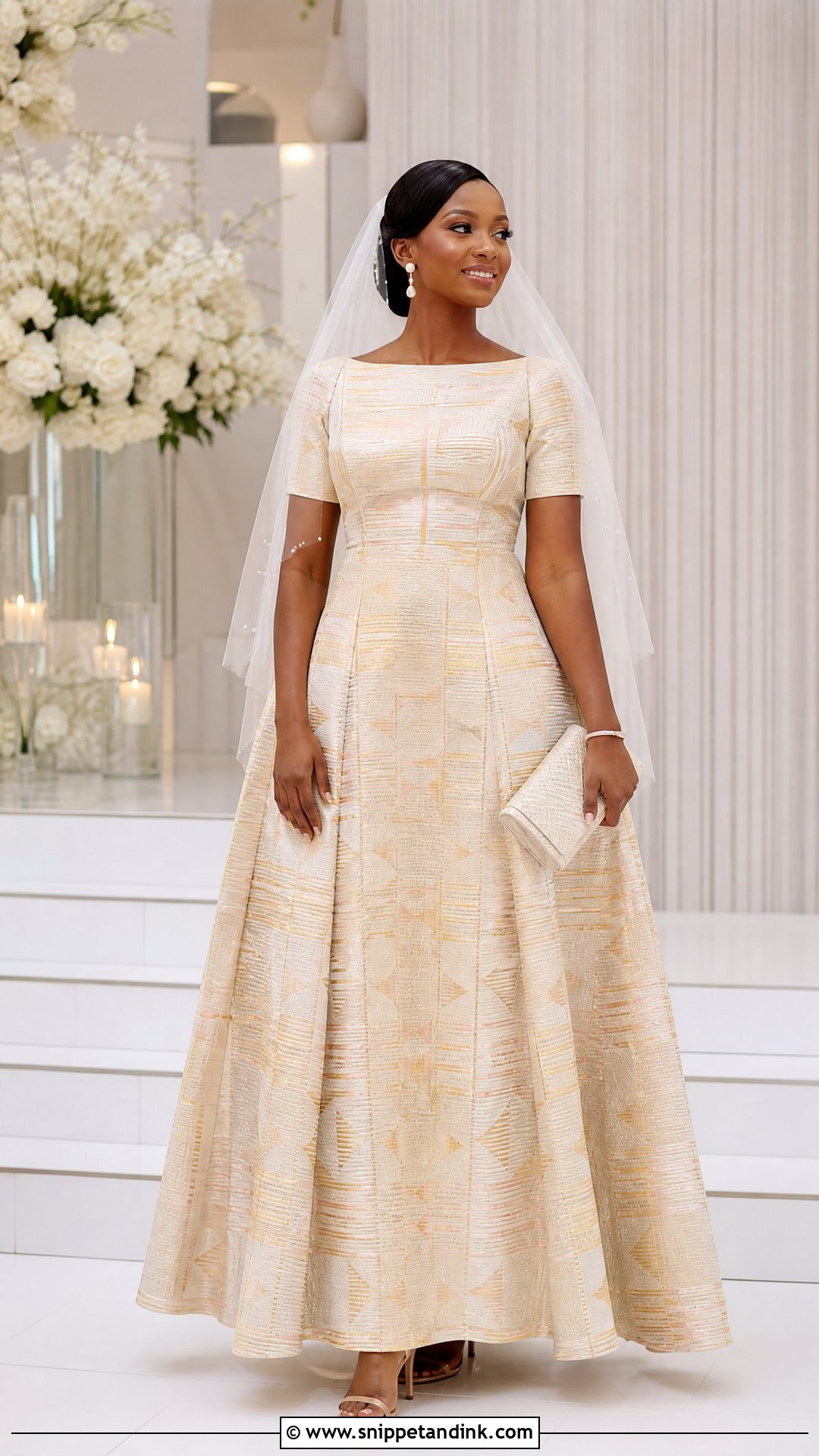
Ivory kente is the quieter route, mixing cream, soft gold and pale blush into a weave that still carries meaning. I shape it into an A-line or softly fitted gown with a bateau neckline and short sleeves. Pale handwoven cloth has small gaps between threads that light passes through, so I always line it fully in a shade close to the bride’s skin. Then I take a phone photo outdoors with the sun behind her. If you can see legs through the skirt, the lining needs another layer. Pearl earrings and a small headpiece or delicate veil complete it.
14. White Ghana Wedding Dress With Kente Cape
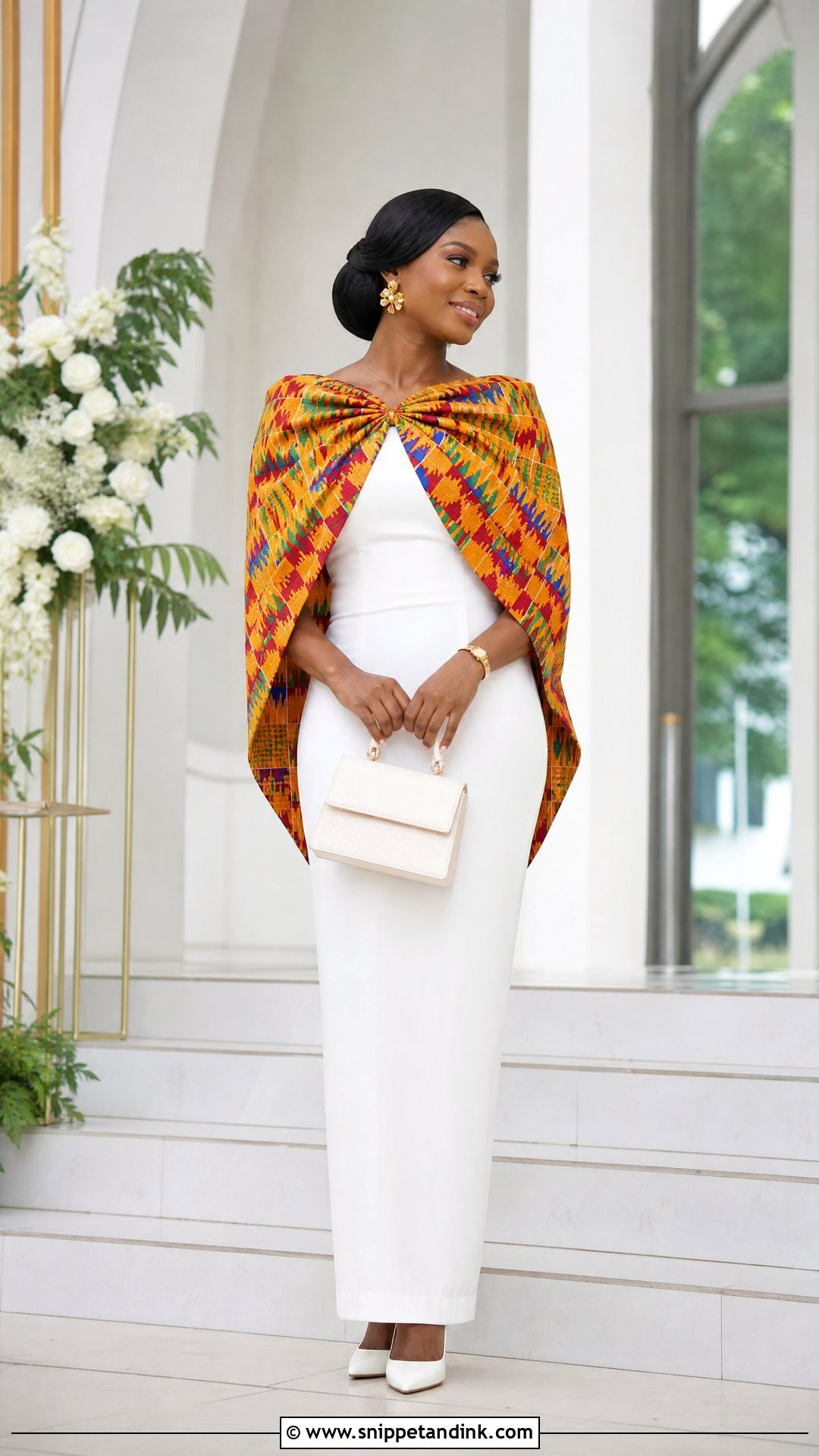
A plain white gown with a kente cape is one of the easiest ways to honour both a church ceremony and family heritage in one outfit. I keep the gown simple, in crepe, satin or lace, so the cape is the thing people remember. It can fasten at the neck, sit across the shoulders or sweep from one side like a ceremonial wrap. A long veil fights with a cape at the back, so go short or skip it. Make the cape detachable with hidden hooks; by the second hour of dancing you will want it off.
15. Kente Ghana Wedding Dress With Veil
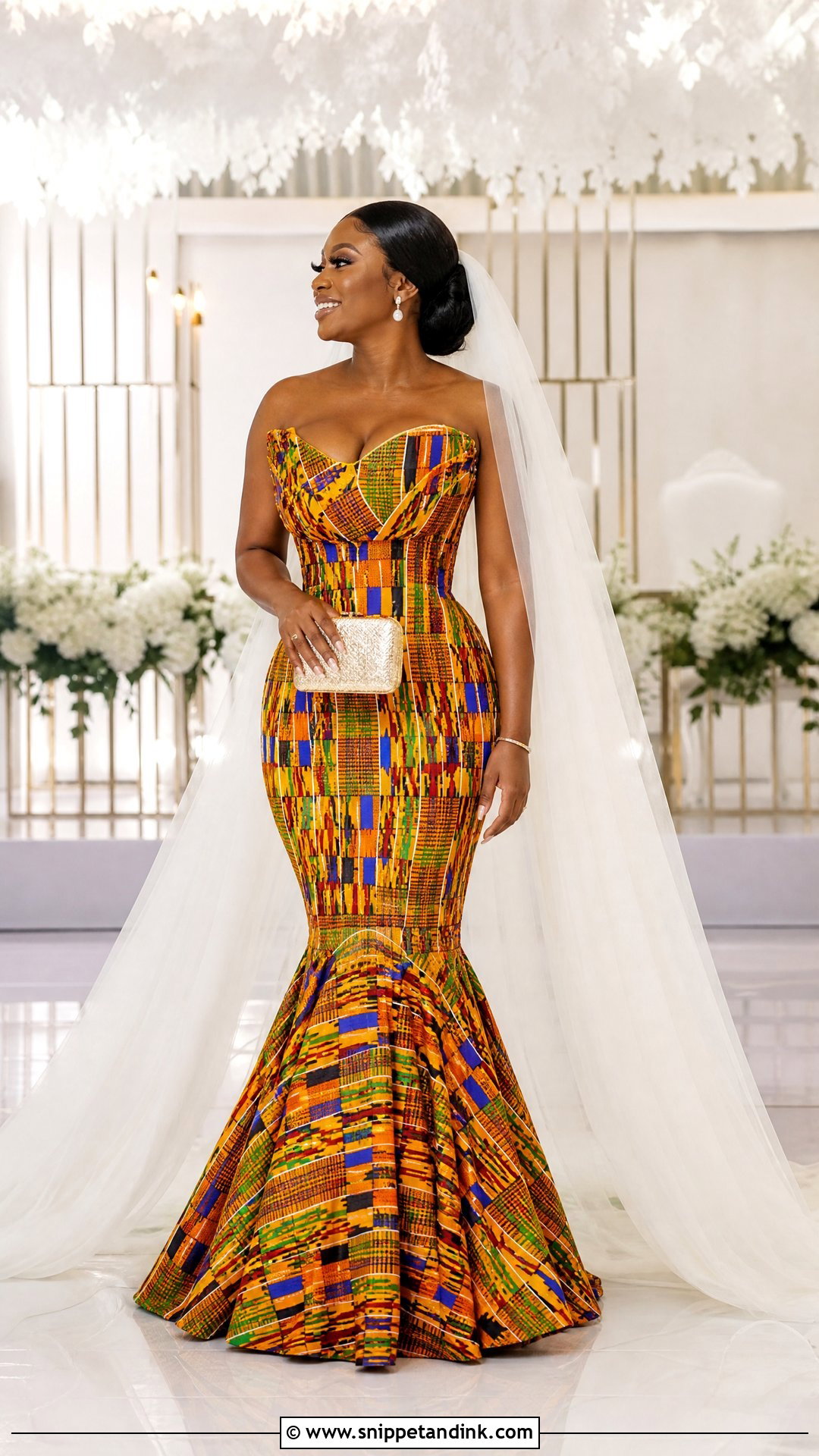
A veil over kente is what tells everyone at a glance that this is the bride. Because the cloth is bold, I choose a plain ivory, white or champagne veil without heavy lace edging. Fingertip length suits a fitted gown; a cathedral veil works if you also have a long train and a formal venue. Earrings should follow the main metallic thread in the weave. Bring the actual veil to your final fitting, since champagne tulle can look grey or pink depending on the kente beside it.
16. Detachable Train Kente Ghana Wedding Dress
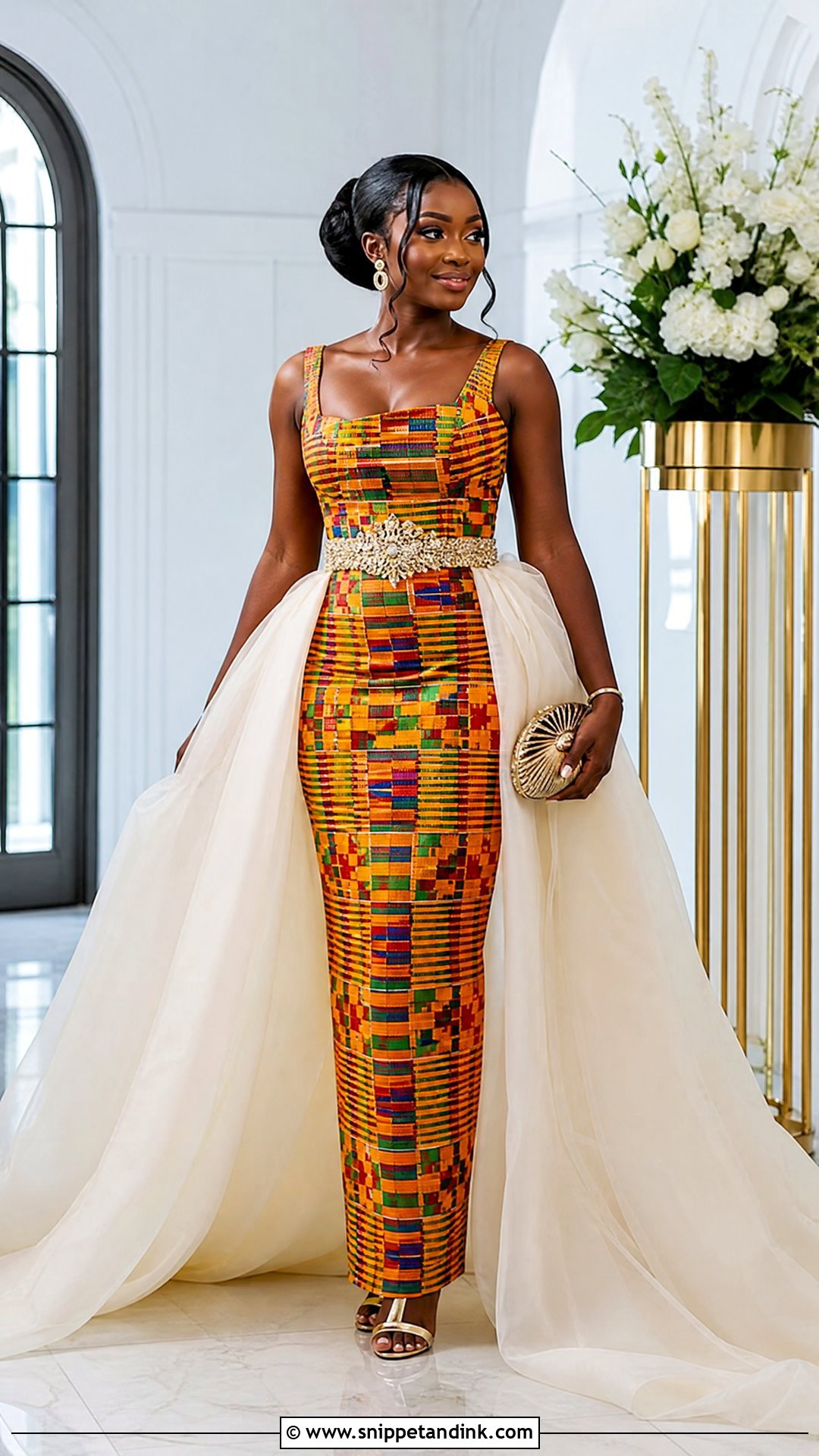
A detachable train gives you a ceremony dress and a party dress without a full change. The base gown, midi, column or mermaid, has to stand on its own once the train comes off, so I design it first and add the train second. Organza, satin, tulle or matching kente all work as long as the join is clean. I hide hooks or snaps under a belt or beaded waistband. Practise taking it off with whoever will help you on the day, because fumbling with a dozen hooks at the reception doorway costs ten minutes of photos.
17. Two-Piece Kente Ghana Wedding Dress
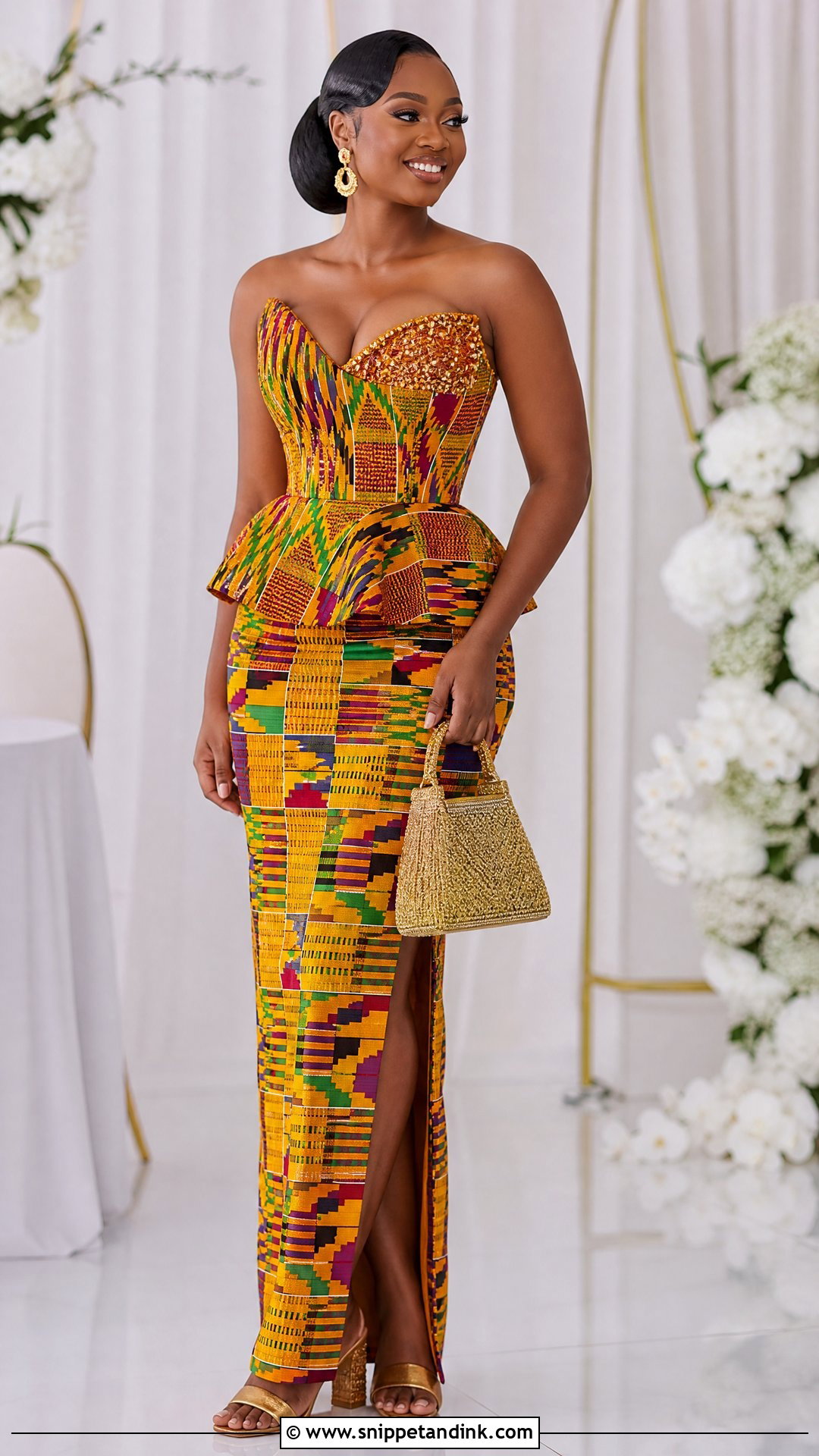
A two-piece kente bridal outfit gives you the most movement of any shape here, and it’s the one my brides rewear most. A fitted corset or peplum top sits over a high-waisted, floor-length skirt, in the same weave or with satin panels set into the skirt. Keep the gap between the pieces small for a ceremony look. If you add a side slit, sit down in it at the fitting and check where it falls, since slits ride up more when seated. Later, the top works with a plain skirt for another family event.
18. High-Neck Kente Ghana Wedding Dress
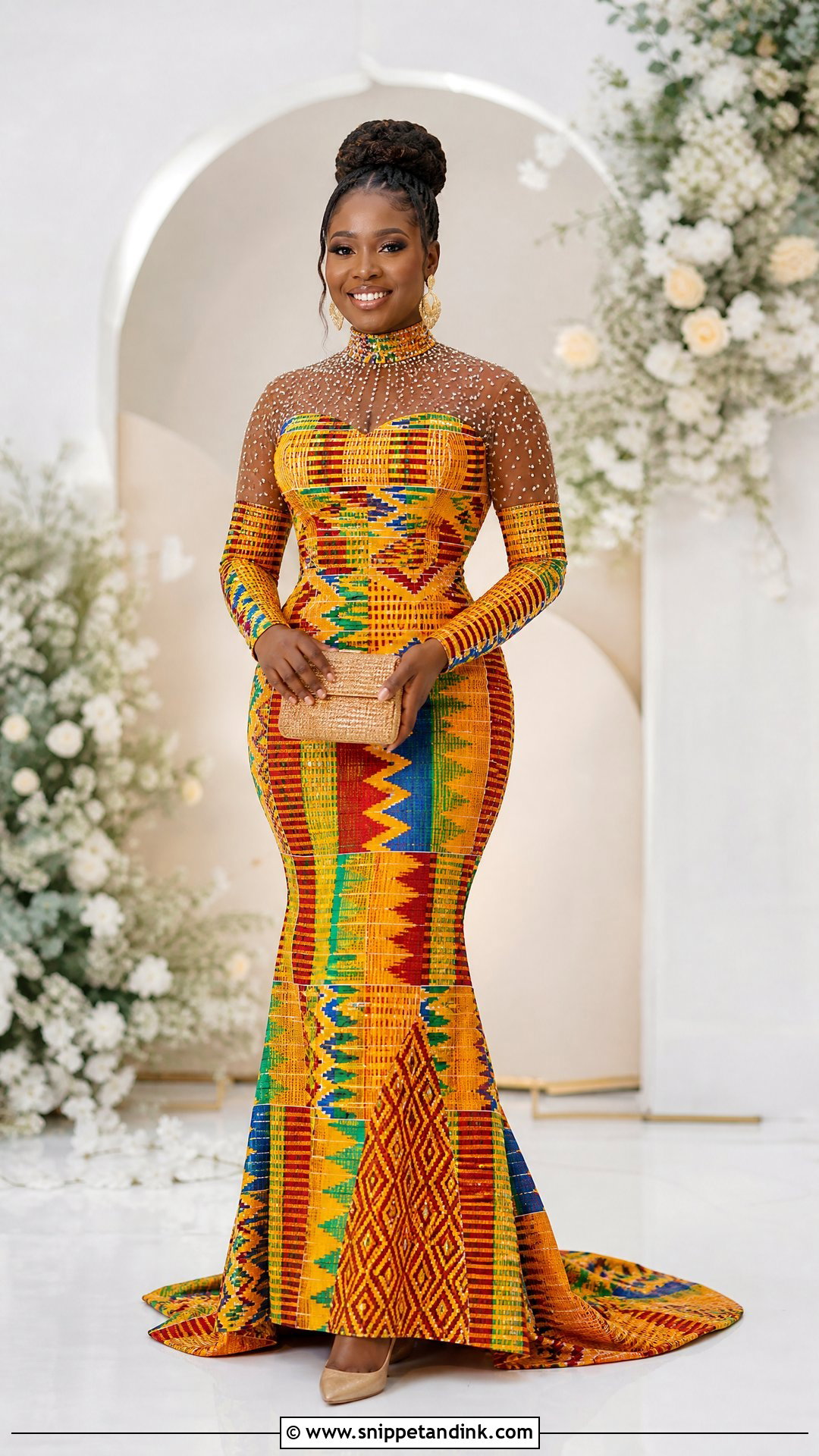
High necklines in kente create a long, statuesque line, but the collar is where comfort lives or dies. Woven cloth against bare skin can scratch over hours, so I line the collar in soft cotton or silk and leave a finger’s width of room. If the pattern feels heavy near the face, a sheer yoke between the neck and bodice gives breathing space. A column or trumpet skirt balances the coverage. Skip the necklace, wear statement earrings, and put the hair up high to lengthen the neck.
19. Puff-Sleeve Kente Ghana Wedding Dress
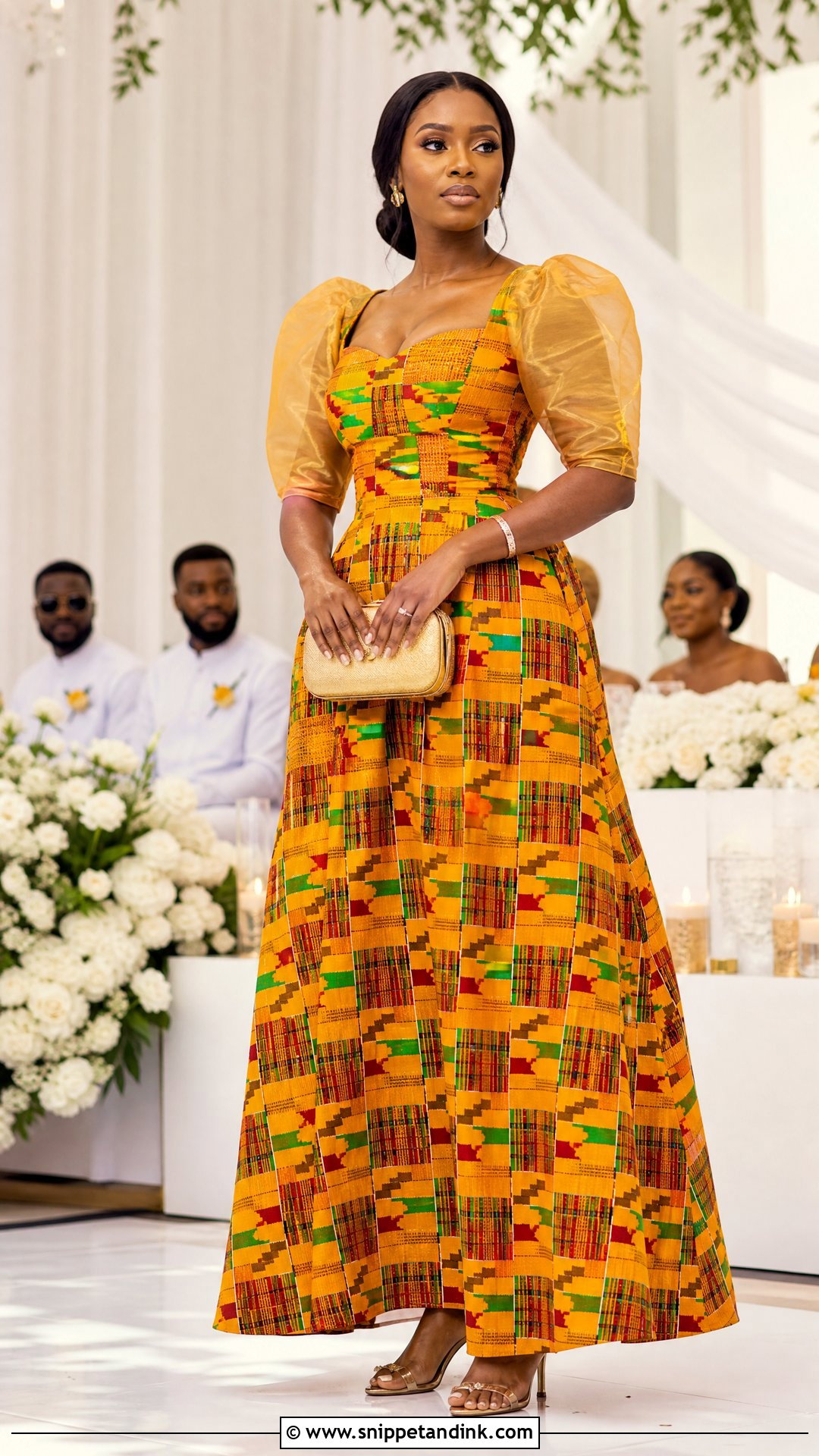
Puff sleeves add personality, and the trick is to give them shape without letting them swallow the weave. I keep them short or elbow-length and often build the volume in organza layered over kente, which holds air without the bulk of doubled cloth. A fitted bodice and an A-line or mermaid base keep the waist clear. Hair goes up so the shoulder line reads. At the fitting, reach forward as if hugging, then raise both arms; a sleeve that’s set too tight will pin you during greetings.
20. Draped Kente Ghana Wedding Dress
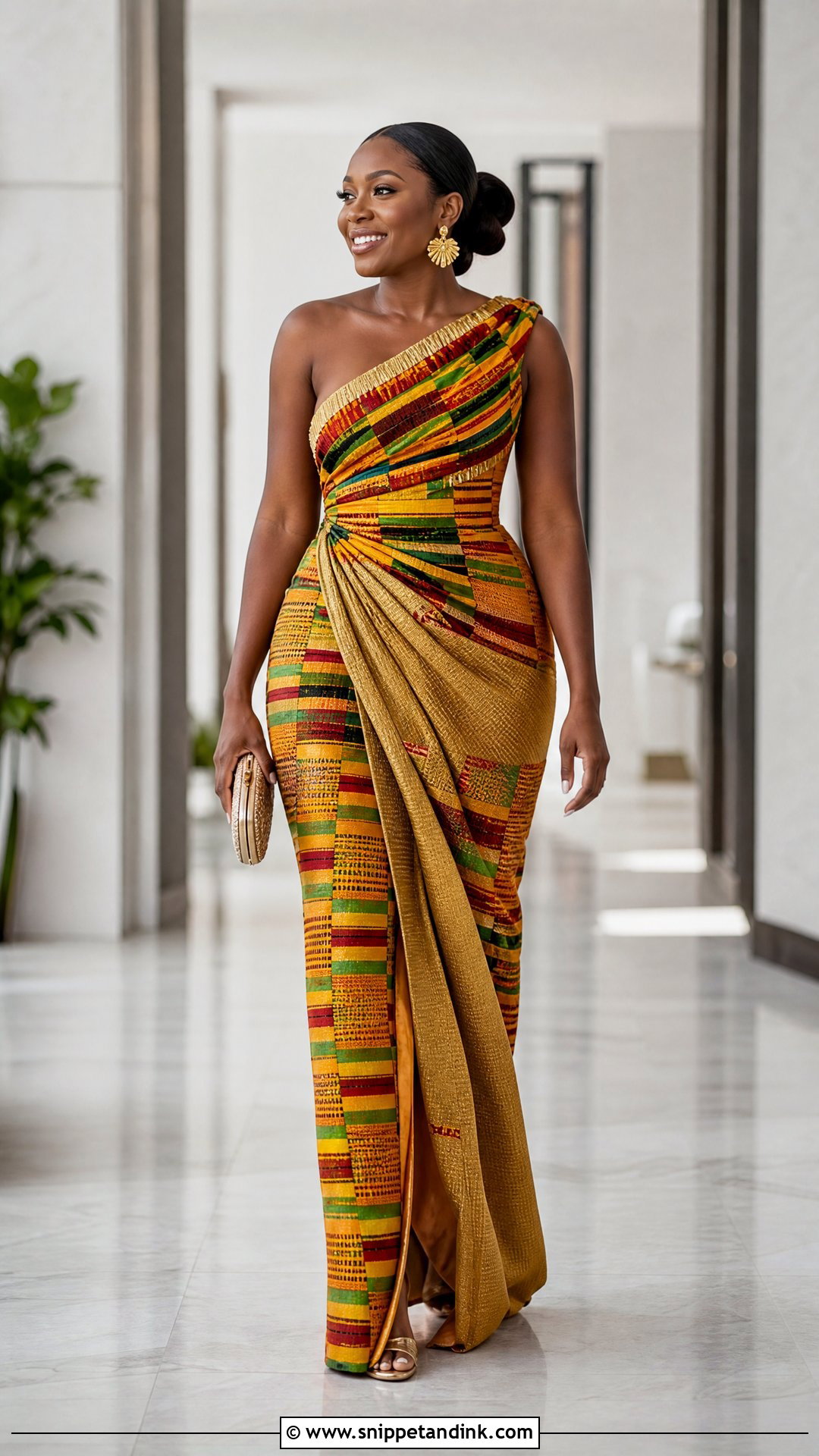
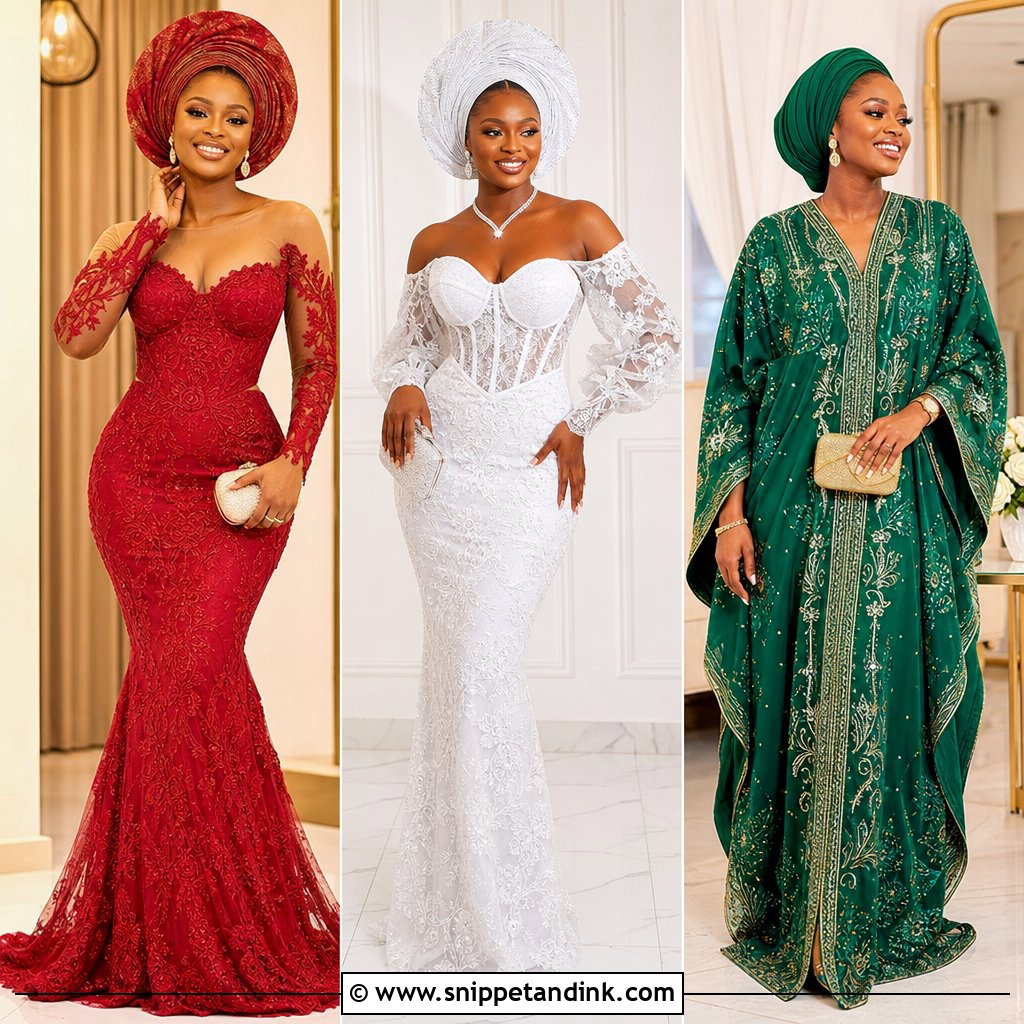
Draped kente looks like wrapped cloth but behaves like a tailored dress, and that’s the point. A one-shoulder bodice gathered into the waist and falling to the floor gives the effect without bulk. I let the direction of the woven stripes guide the folds so the main motifs stay visible rather than disappearing into a pleat. A concealed slit or back vent under the drape helps with walking. Ask your designer to stitch every fold in place; pins work loose after an hour of sitting and greeting.
21. Smock Fabric Ghana Wedding Dress
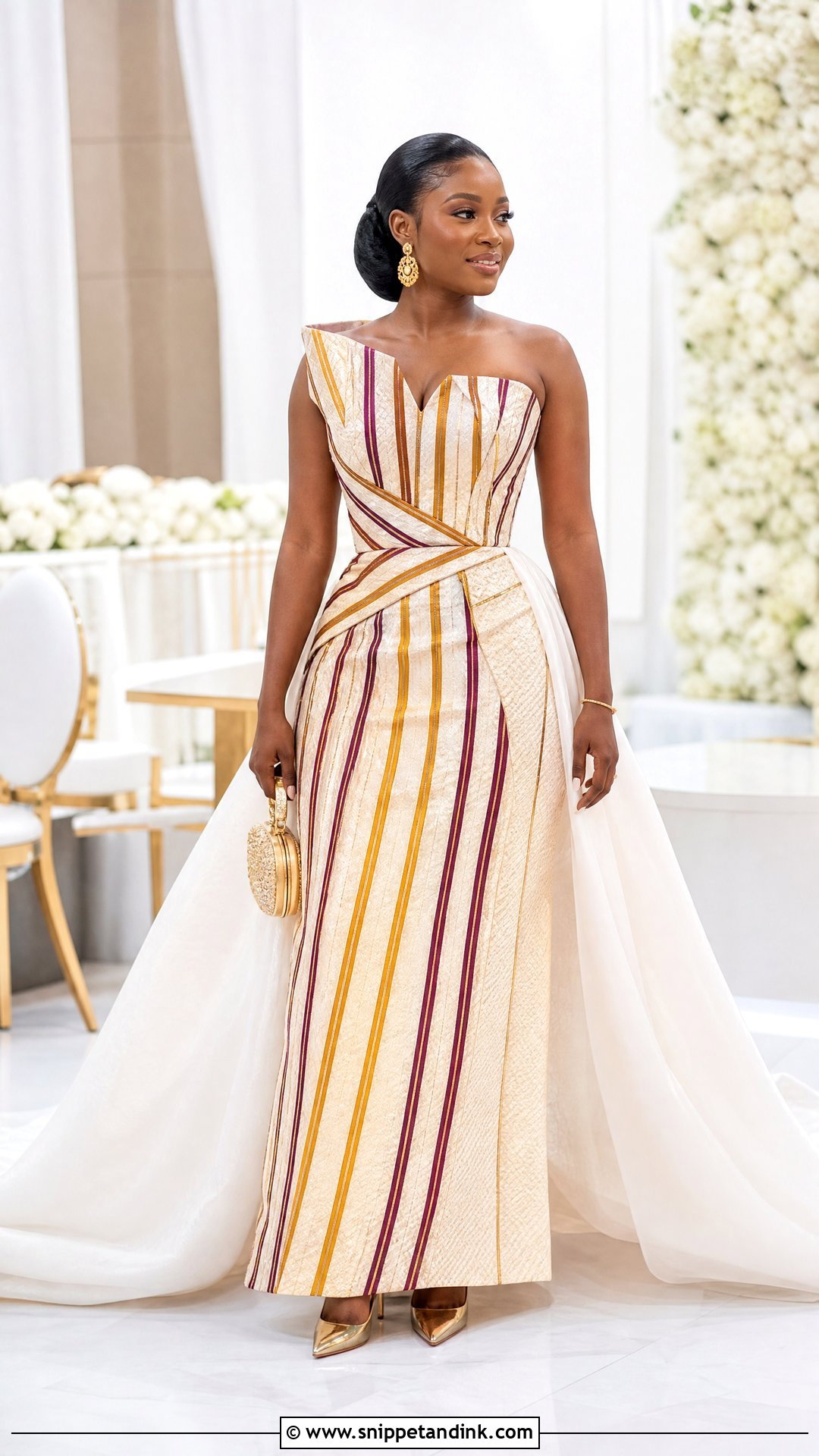
Smock cloth, the striped handwoven fabric from northern Ghana, gives a texture and rhythm that kente doesn’t. It’s heavier and more matte, so I use it for structured shapes: a fitted bodice, paneled A-line skirt or fit-and-flare. The stripes do the decorating, so keep the neckline and jewellery plain. A plain organza train softens the stripes and adds movement. Choose a designer who has joined smock panels before; mismatched stripes at the side seams are obvious from across a room. Talk with older relatives about the cloth’s meaning before committing.
22. White Mermaid Ghana Wedding Dress With Kente Appliqué
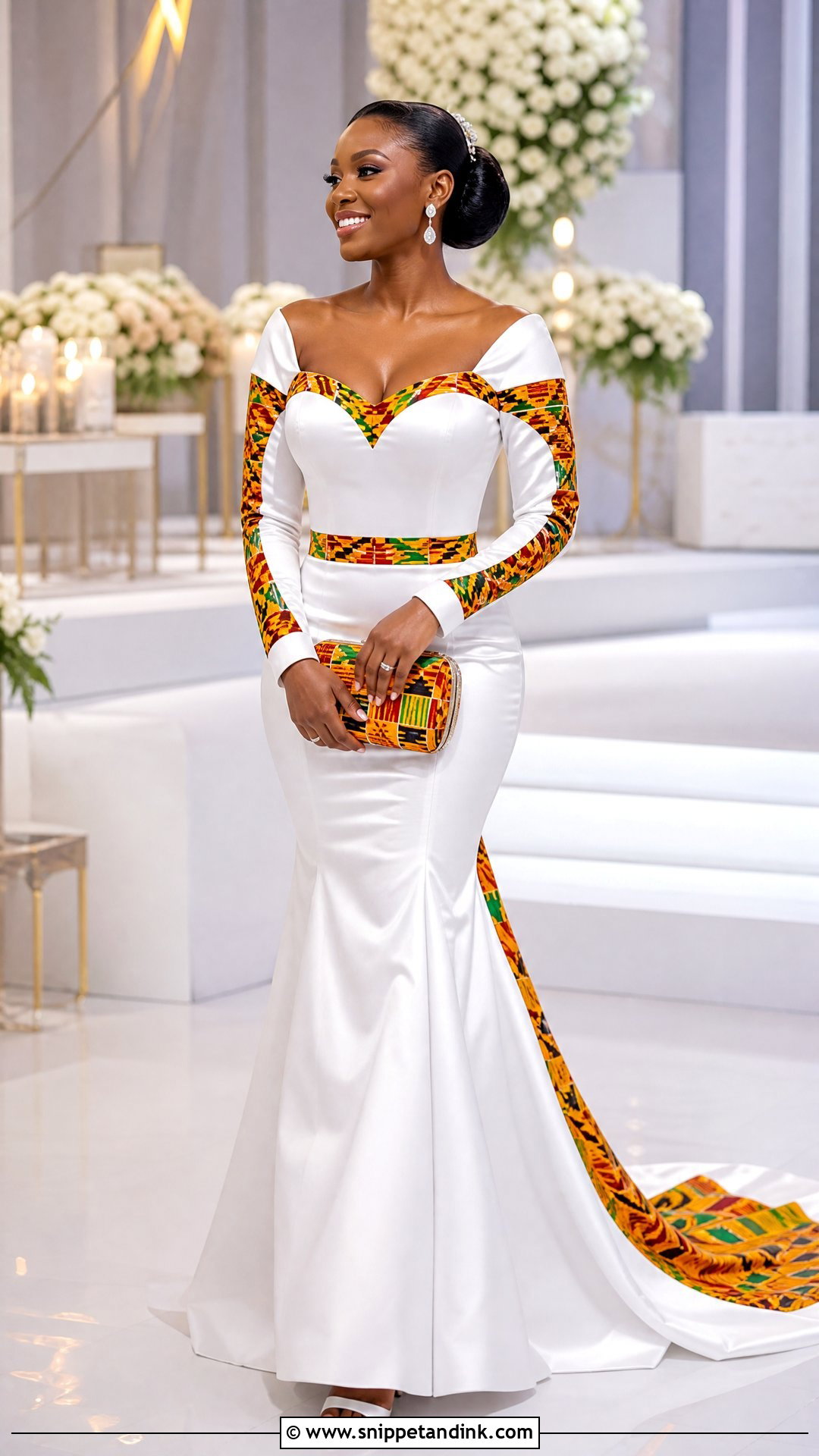
Kente appliqué on a white mermaid gown is how I bring colour into a mostly Western look. The base is smooth crepe or satin, fitted through the hips and flaring near the knee. Cut panels of kente go along the neckline, waist, sleeves or train edge. I always pin the pieces on first and let the bride see them in a mirror before anything is sewn, because moving a panel two inches changes the whole balance. The edges should be bound and pressed flat. Repeat the cloth once more on a clutch or the groom’s pocket square.
23. Beaded White Ghana Wedding Dress
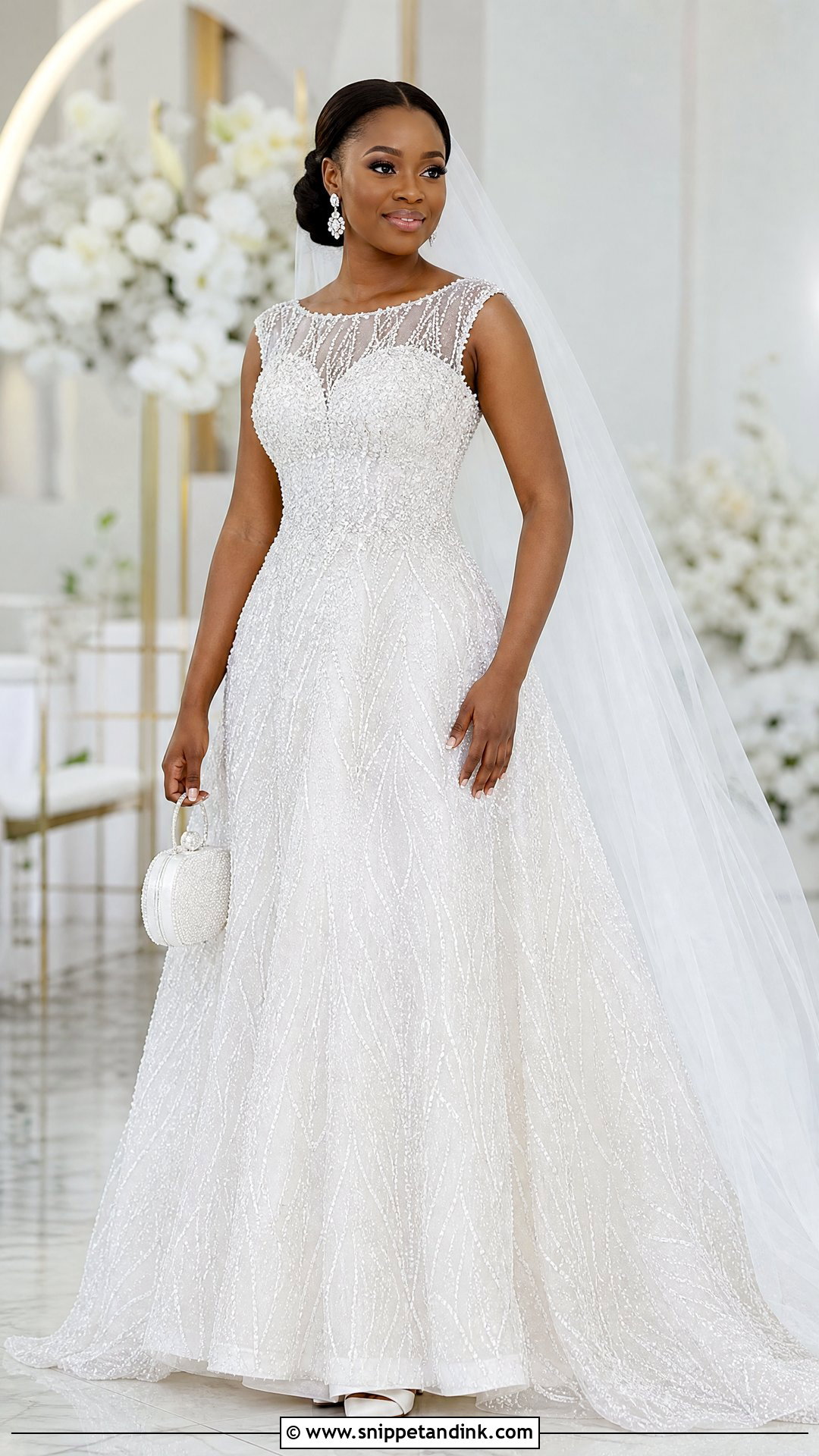
A beaded white gown adds classic glamour to a Ghanaian wedding weekend, often for the church ceremony. I prefer beading concentrated on the bodice and fading down into the skirt, with a lined illusion neckline for support. Heavily beaded gowns can weigh a lot, so I pair them with a light skirt lining and a moderate train. Test it under a camera flash at the fitting; some glass beads bounce light back as white spots. Keep the veil plain and the makeup fresh so the work on the dress gets the attention.
24. Minimalist White Ghana Wedding Dress
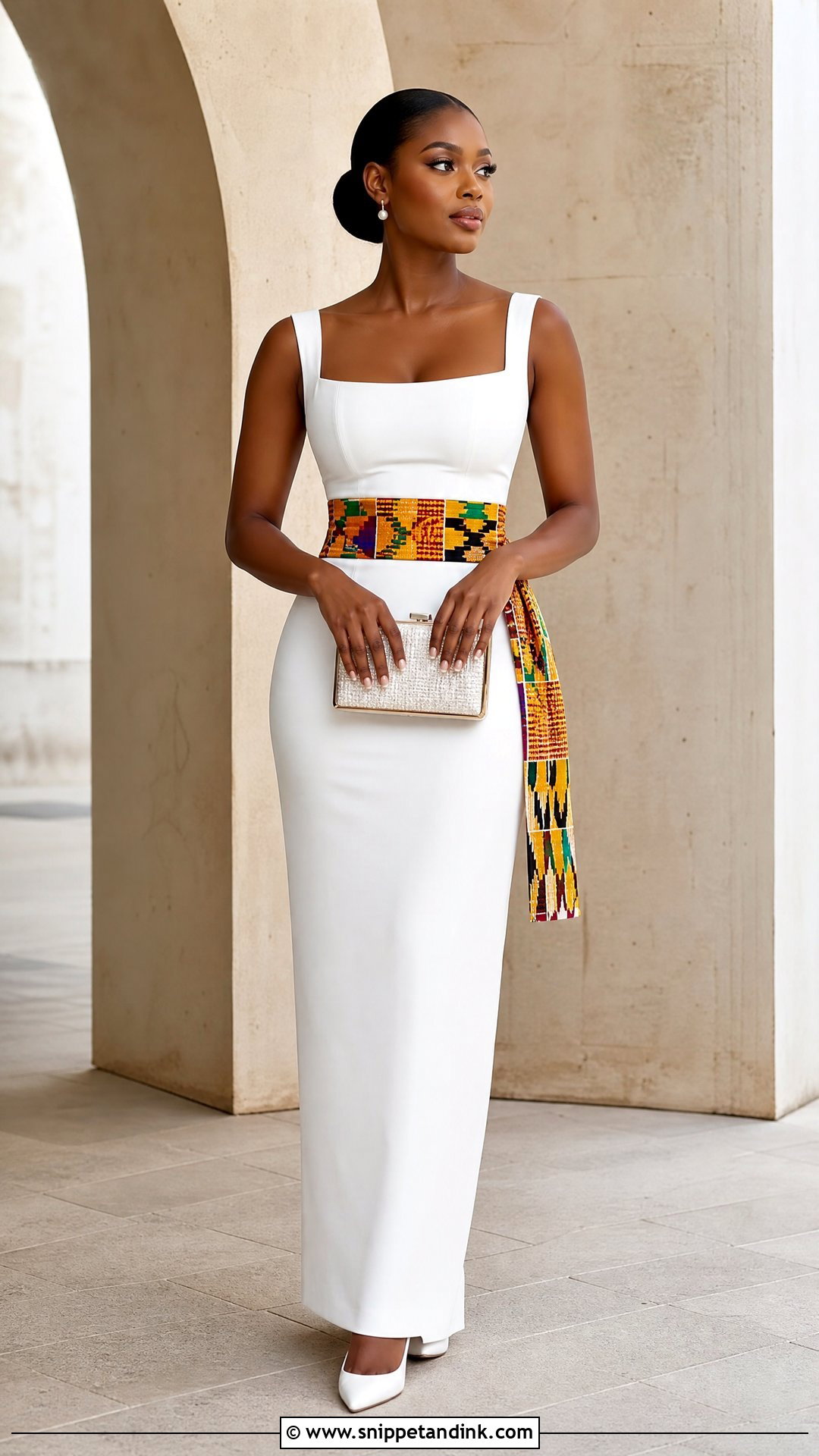
A plain dress is the hardest one to get right. A minimalist white Ghana wedding dress in crepe or satin shows every seam, pucker and pull, so tailoring matters more here than in any beaded gown. A square-neck column, long-sleeved fitted dress or low-back A-line all work. Buy your undergarments before the final alteration, because changing a bra later changes the fit. Heritage can come through smaller pieces: a removable kente sash, a woven bracelet or a kente-trimmed veil. Sit, walk and lift your arms in it before you sign off.

25. Short Kente Ghana Wedding Reception Dress
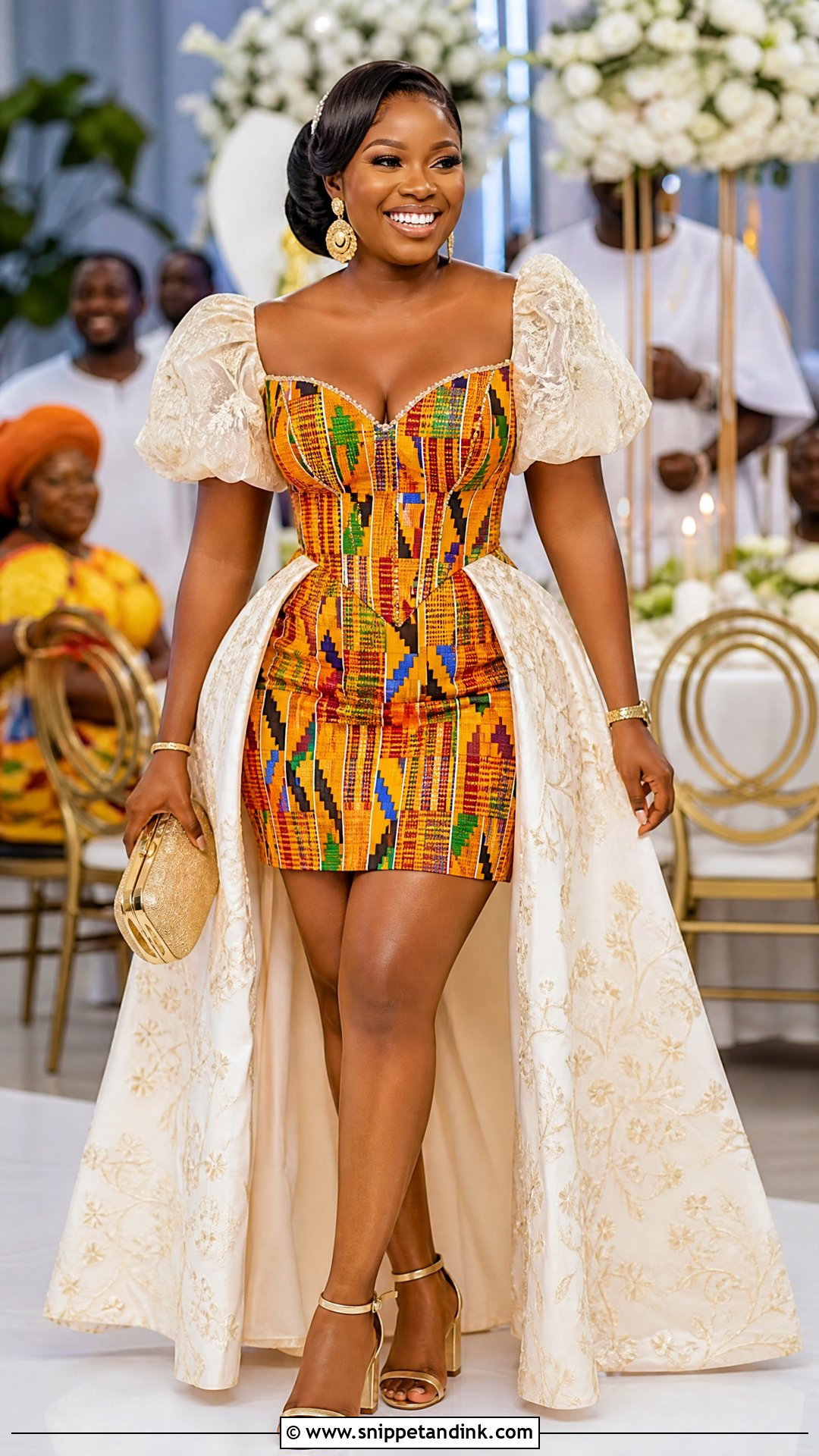
A short kente dress is the outfit for the second half of the night, when the dancing starts. A knee-length or modest mini with a structured corset and flared skirt moves freely, and a removable bow or puff sleeves add fun. I always check that the neckline holds when the bride jumps and turns, because you won’t want to tug at it all evening. If the ceremony gown used a specific kente, repeat it here; if not, pick a palette that sits well with the décor and the groom’s second outfit. Block heels save your feet.
How Handwoven Kente Should Be Cleaned and Stored
A kente wedding gown often becomes a family piece, so the care after the day matters. I advise against home washing of anything structured or beaded. Take it to a cleaner who handles hand-loomed and silk pieces, and point out every stain, especially food or makeup at the neckline. If you must spot-clean, use cold water and a white cloth, dab rather than rub, and never wring woven strips.
- Remove detachable trains, capes and sashes and store each separately.
- Roll loose kente cloth around an acid-free tube rather than folding it; sharp folds weaken the threads over years.
- Wrap the gown in breathable cotton or unbleached muslin, not a plastic garment bag.
- Keep it in a dark, dry cupboard, away from sunlight that fades the brighter colours.
- Refold or reroll every few months so creases don’t set in the same place.
If the dress will be passed on, keep a note with the pattern’s name and who wove or tailored it. That story is often what the next bride in the family wants most.
Cloth, Ceremony and Fit Come Before the Accessories
Every look here, from a kente mermaid gown to a kaba and slit or a white gown with a kente cape, can be right if it’s built for the ceremony you’ll wear it to. Settle that first, then the cloth, then the cut, and only then the accessories. Work with a designer who knows how to place woven motifs and how heavy handwoven strips behave in a bodice. Book more than one fitting, rehearse every detachable piece, and sit and walk in the finished outfit. The dress you can move freely in is the one you’ll enjoy wearing.
You'll Like These Ideas:


Leave a Reply