
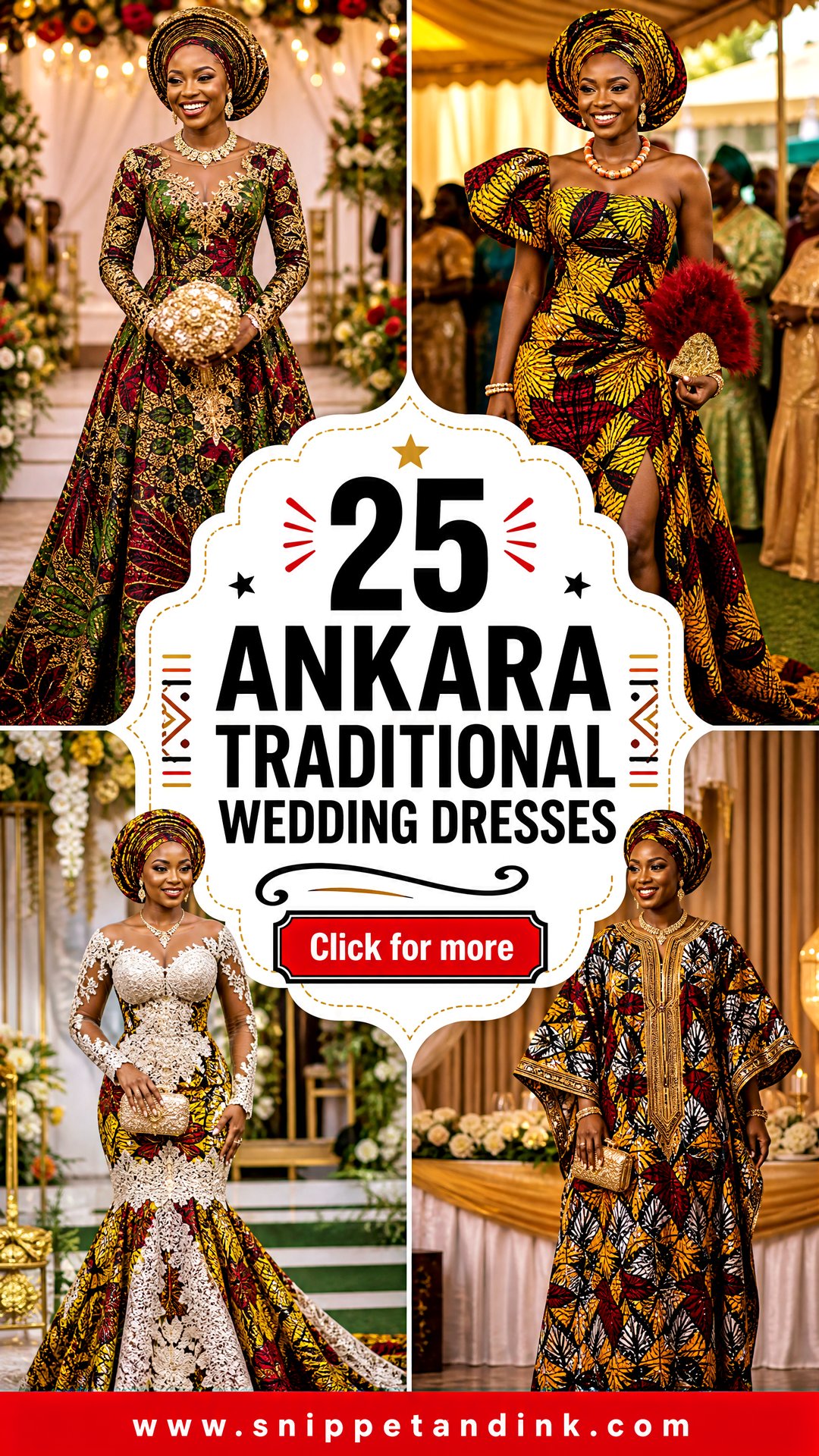
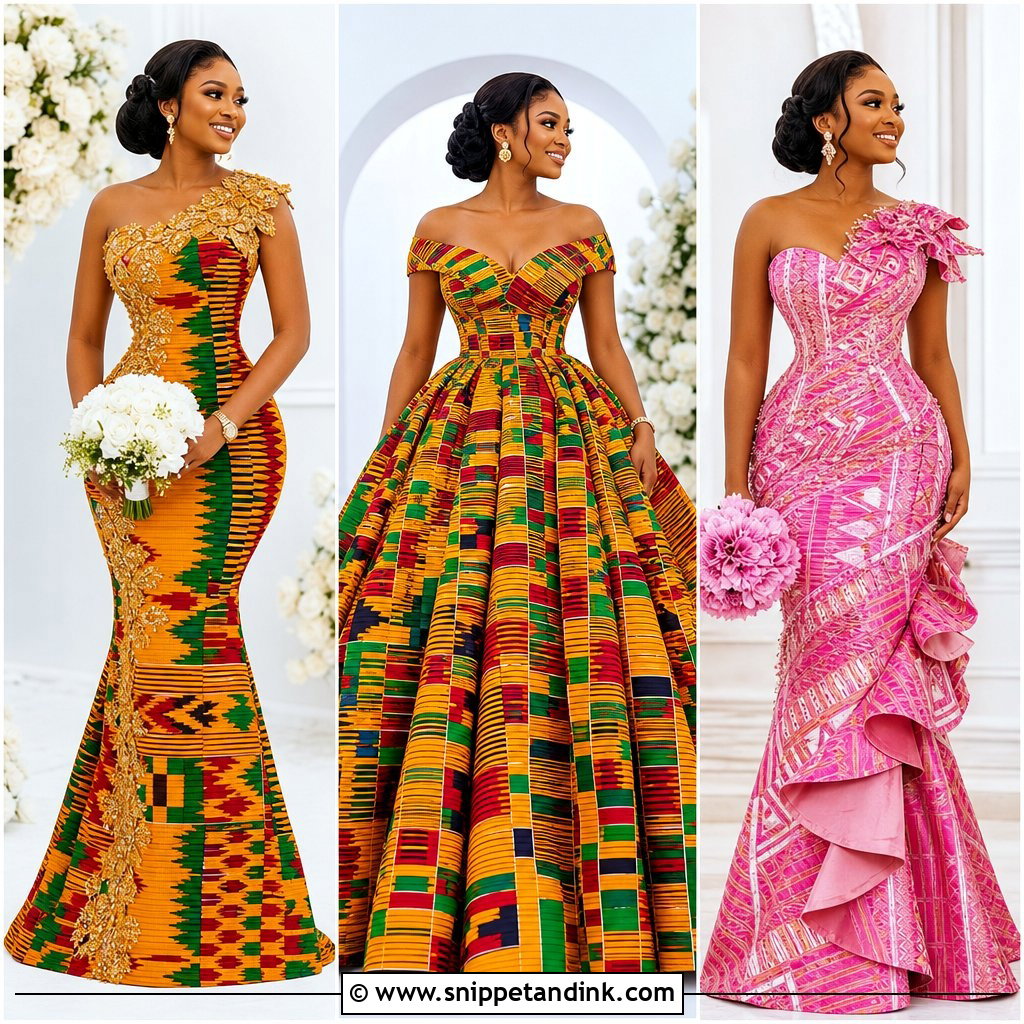
Ankara is the fabric I reach for when a family wants color you can see from the back of the hall and a print that carries meaning for them. It is a waxed cotton, so it holds a tailored shape better than people expect, and the same yardage can become a fitted mermaid gown, a wrapper set or a full ball skirt. My first question at any consultation is what you will actually be doing in the outfit: kneeling for blessings, dancing in with the family, greeting a long line of guests. Fit, neckline, gele and shoes all get planned against that answer. Treat these 25 Ankara Traditional Wedding Dresses as the starting point for that conversation with your tailor.
Buying the Fabric and Briefing a Tailor for an Ankara Gown
Ankara is usually sold in six-yard pieces. A fitted gown or a blouse and wrapper set will normally come out of one piece, but a ball gown, a long train or a cape almost always needs a second, so I tell clients to buy double when they fall in love with a print for a big silhouette. Running out halfway through and finding the design gone is the most avoidable disappointment in this whole process.
Quality varies a lot. A good wax print shows the design almost as clearly on the back as on the front, feels firm in the hand and has a slight sheen. Thinner, cheaper prints often look sharp only on one side and lose body after a wash. Rub a corner between your fingers in the shop; if the color comes away or the cloth feels papery, keep looking.
- Wash or soak the fabric before cutting if you plan to wash the finished outfit later. Cotton can shrink, and you want that to happen before the tailor measures.
- Bring photos of the cut you want and tell the tailor where you want the biggest motif to sit. A large flower landing on the bust or seat is a placement choice, not an accident.
- Ask how the print will be matched at the side seams and the zip. Matching takes extra fabric, so raise it before cutting.
- Plan at least two fittings, and do the last one in the shoes and undergarments you will wear on the day.
For a bride, I would start the conversation with a tailor around three months out. Good tailors get booked up in wedding season, and structured bodices, beading and lace work take time to do well.
1. Ankara Mermaid Wedding Dress
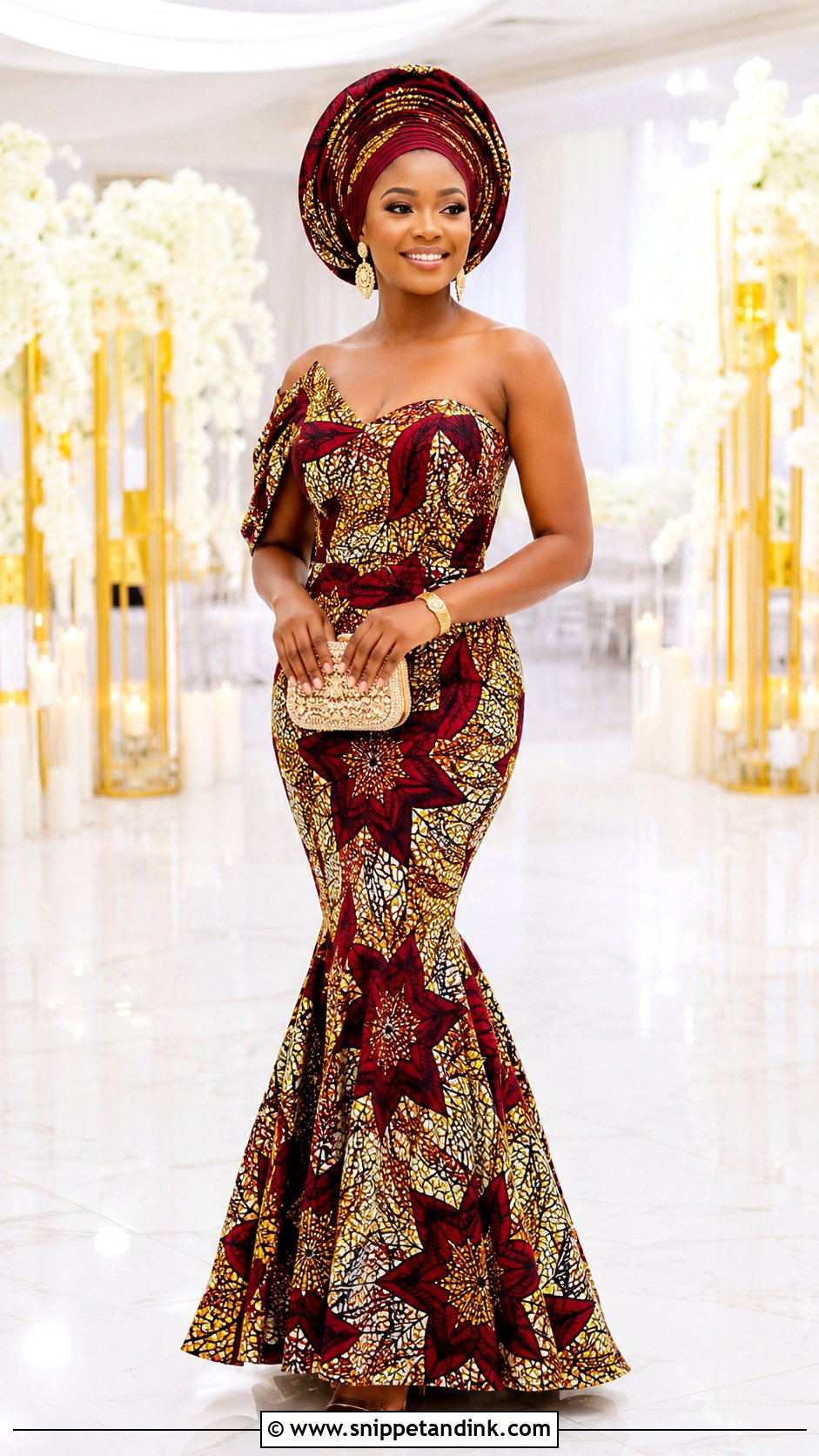
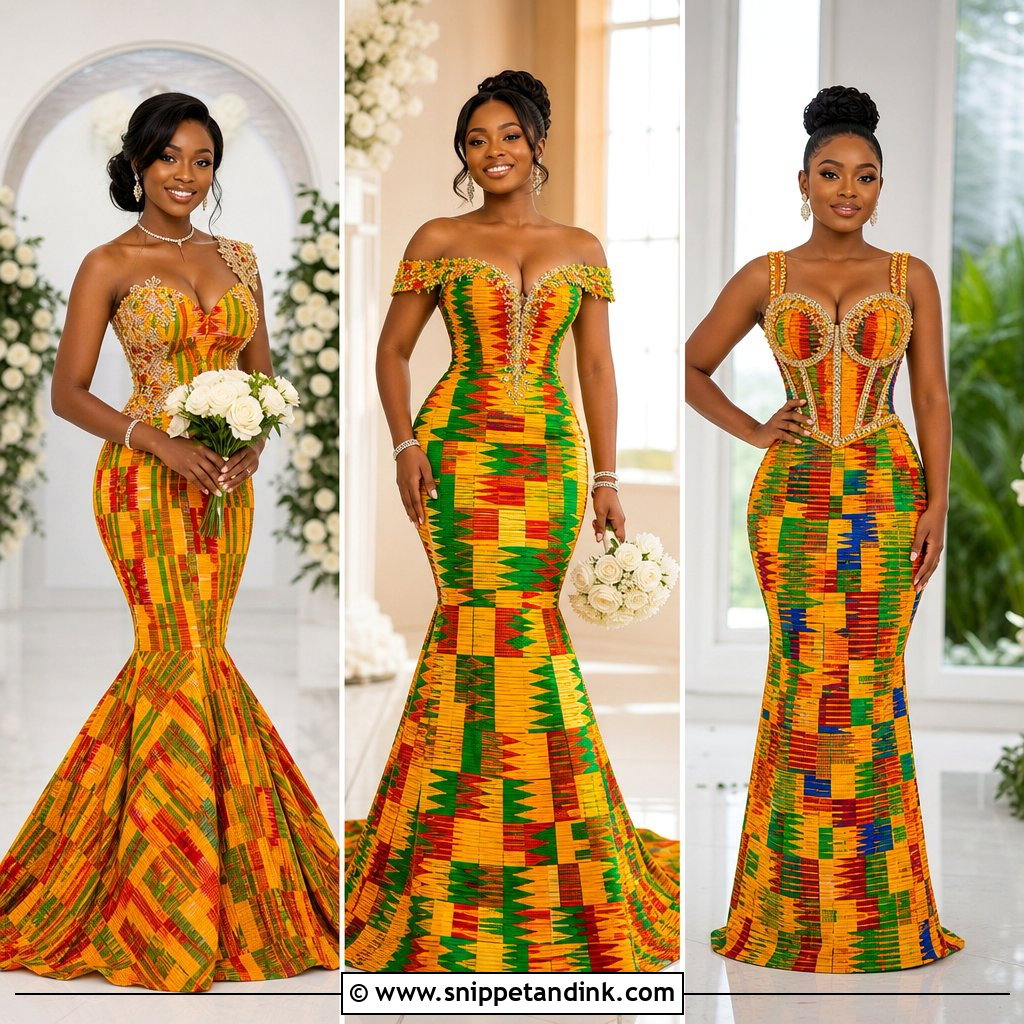
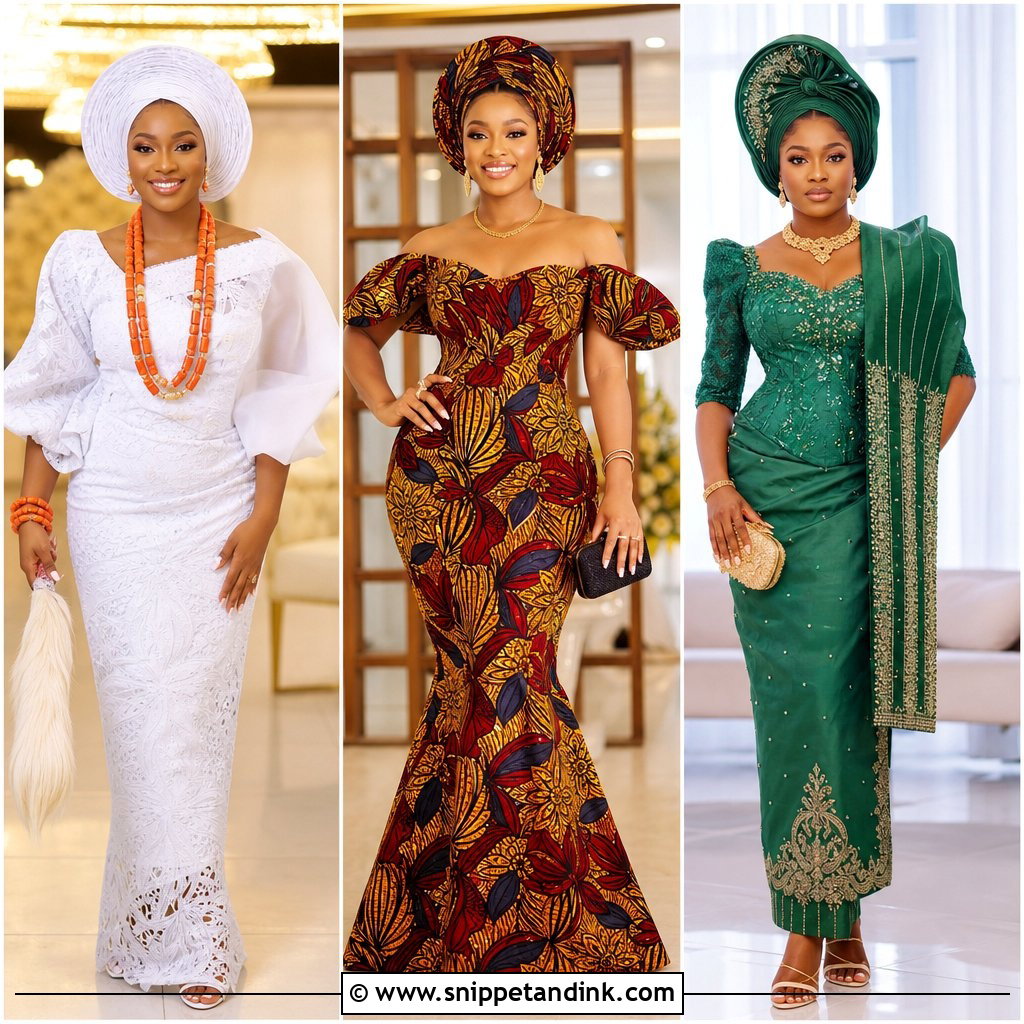
The mermaid is where Ankara’s stiffness works hardest for you. Wax cotton holds the line through the waist and hips and gives the flare real body, so the print follows your curves instead of collapsing against your legs. At fittings I watch exactly where the flare begins: set too high, it looks dropped; set too tight above the knee, you will shuffle and struggle with steps. Lace or beaded appliqué at the neckline pushes it toward bridal, and a structured gele with drop earrings and metallic heels finishes it. As a guest, pull the accessories right back, because a fitted print gown already says plenty.
2. Ankara Ball Gown Wedding Dress
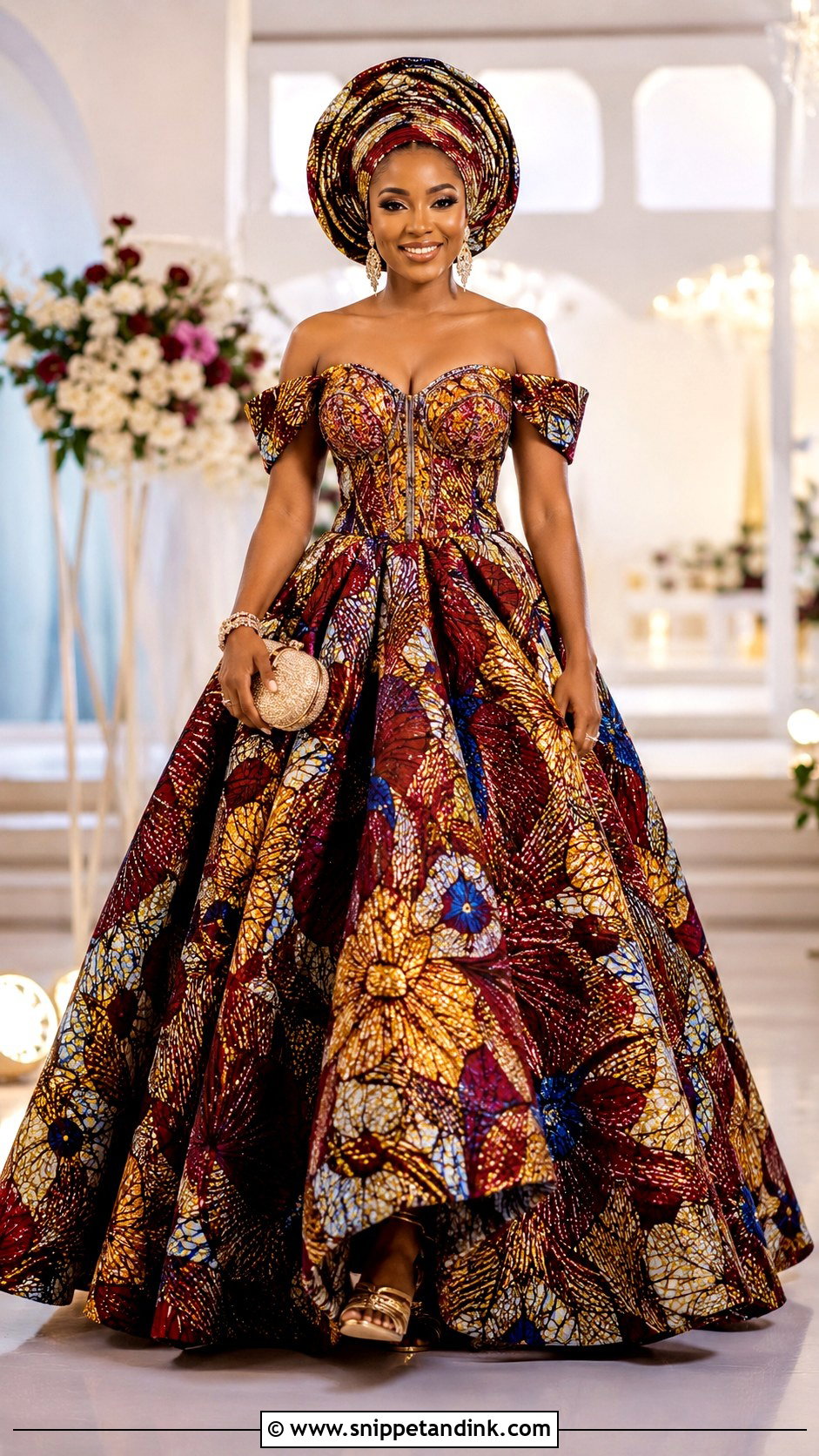
A full ball gown in Ankara makes the royal entrance many brides picture for a traditional ceremony. Large-scale prints suit it best, since a big motif needs a wide skirt to read properly; a small, busy print on that much fabric turns into visual noise from across a room. Ask your tailor about petticoats or a crinoline, because cotton alone will not hold a dome shape through a day of sitting. A sweetheart or square neckline softens all that volume. Keep jewelry clean, and check the venue first: a skirt this wide needs aisle space and a chair that does not crush it.
3. Ankara Off Shoulder Wedding Dress
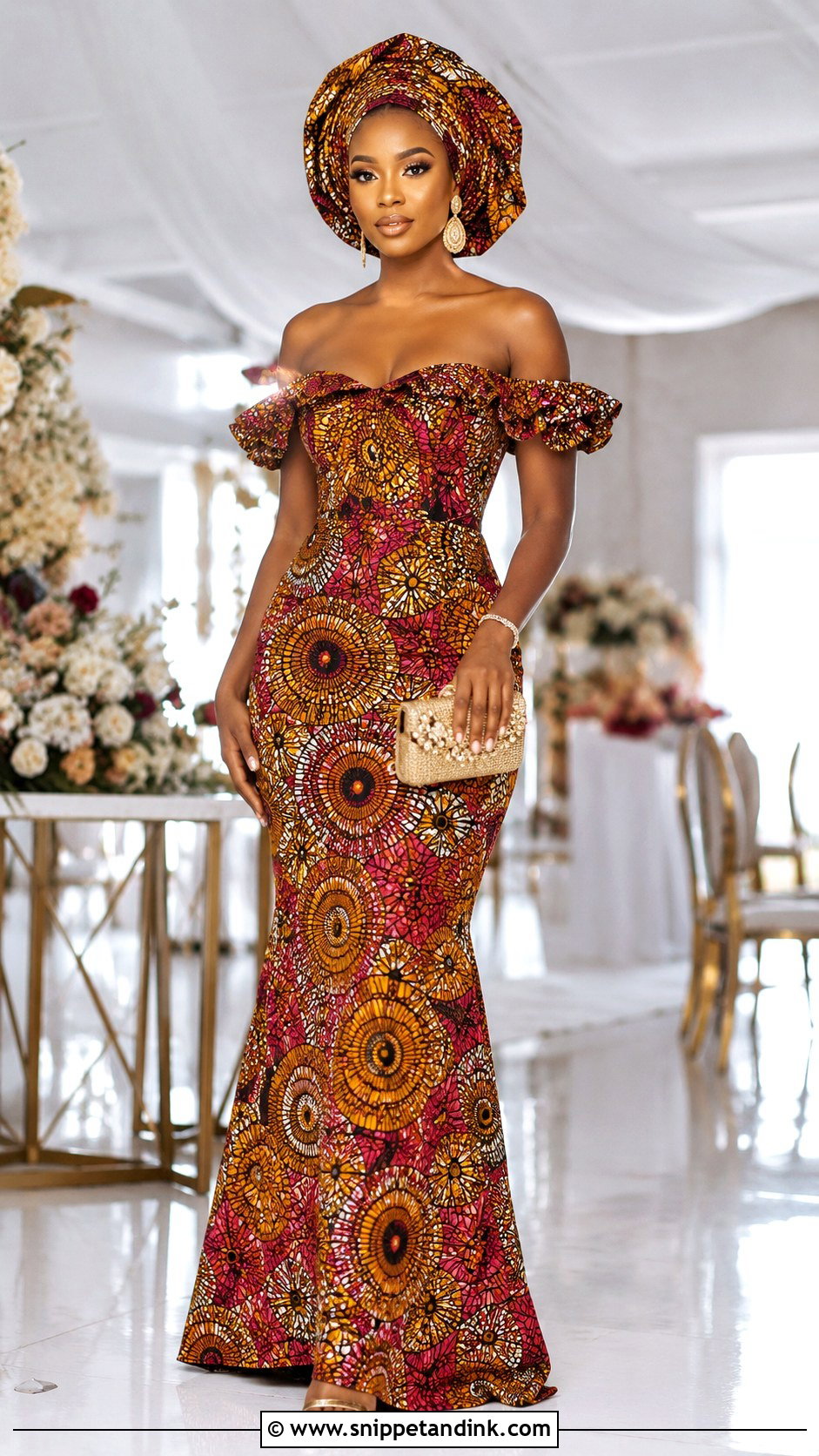
Off the shoulder is the neckline I fit most carefully, because Ankara has very little stretch and a band that sits on the upper arm will ride up every time you lift your hands to dance or adjust your gele. I ask for boning in the bodice and a silicone grip strip along the inside of the band. Get those right and it pairs with a pencil cut, a mermaid or a flared midi. Brides can add beaded trim or a detachable train; guests need only a sleek clutch and simple heels. Wear a high gele or a low bun so the collarbone stays clear.
4. Ankara Peplum Wedding Dress
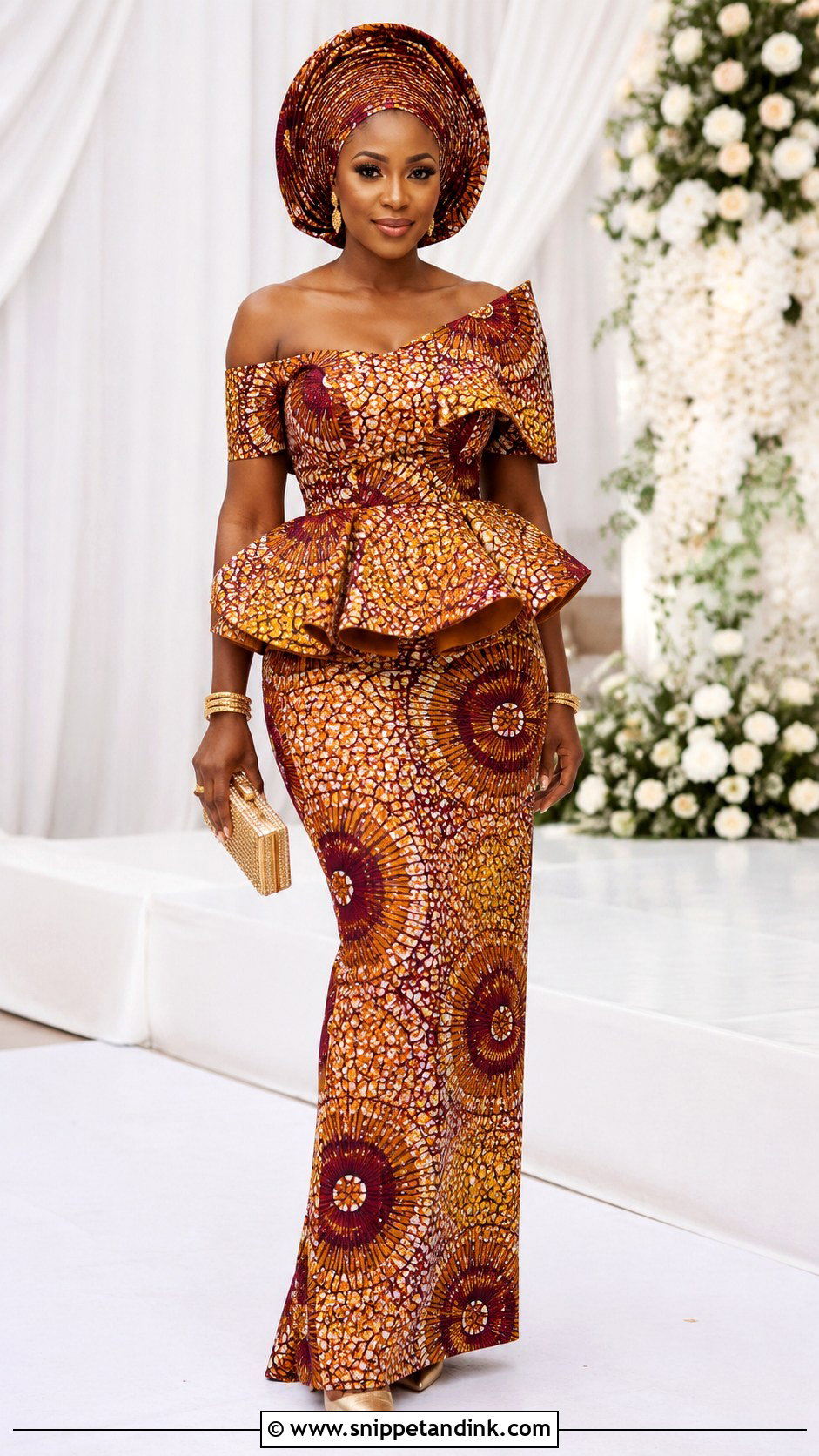
Waist definition is what An Ankara peplum wedding dress does best. The flare sits over the hip and moves into a fitted skirt, which gives a little coverage at the midsection without hiding the structure of the outfit. The mistake I see most is a peplum seam stitched below the natural waist, which shortens the legs in every photo; I always mark it on the body, never from a measurement chart. Add lace sleeves or a floor-length skirt for the bride, or keep it knee length for a guest who wants to move freely. A matching gele and gold jewelry are all it needs.
5. Ankara Wrapper And Blouse Wedding Dress
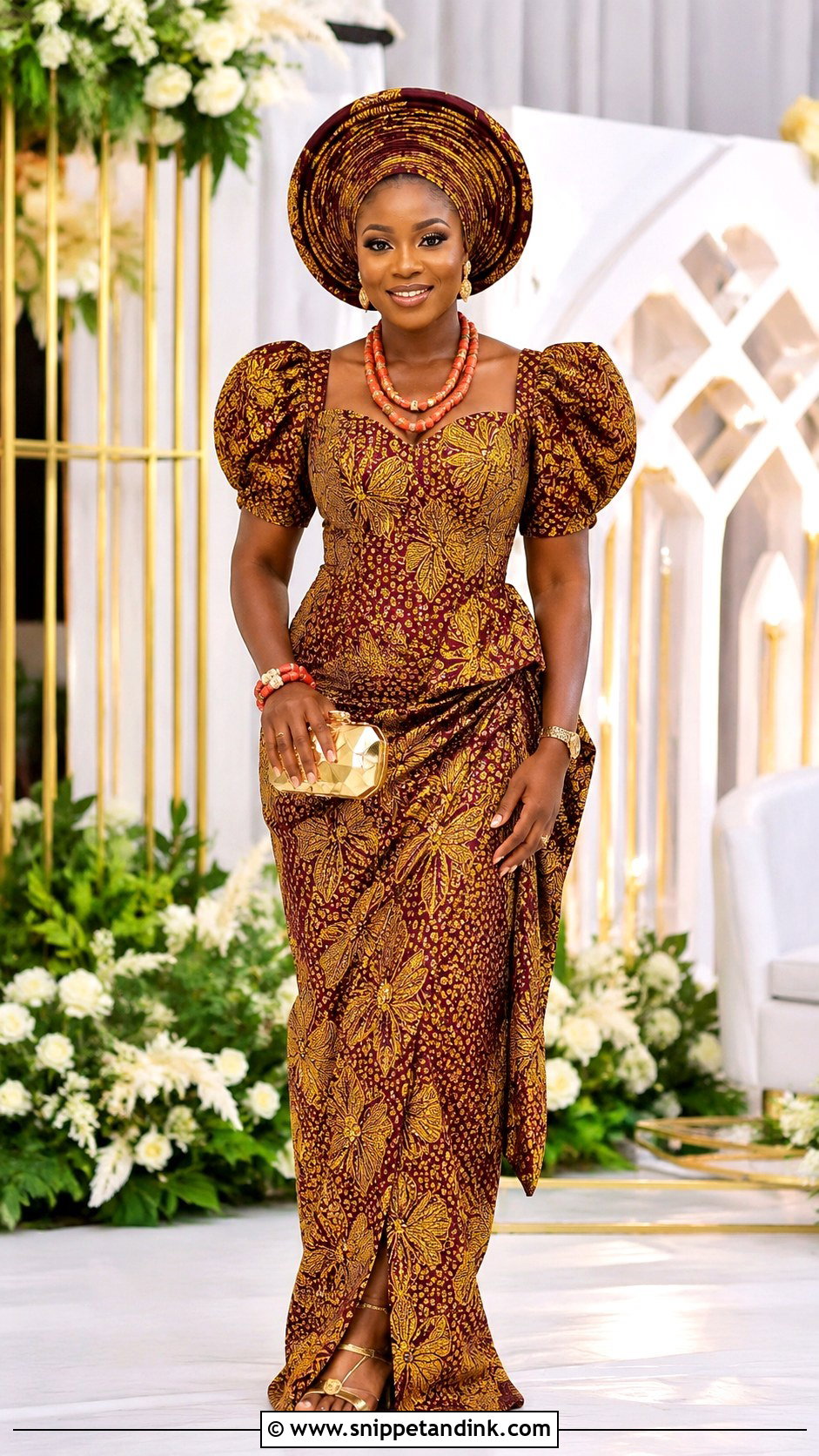
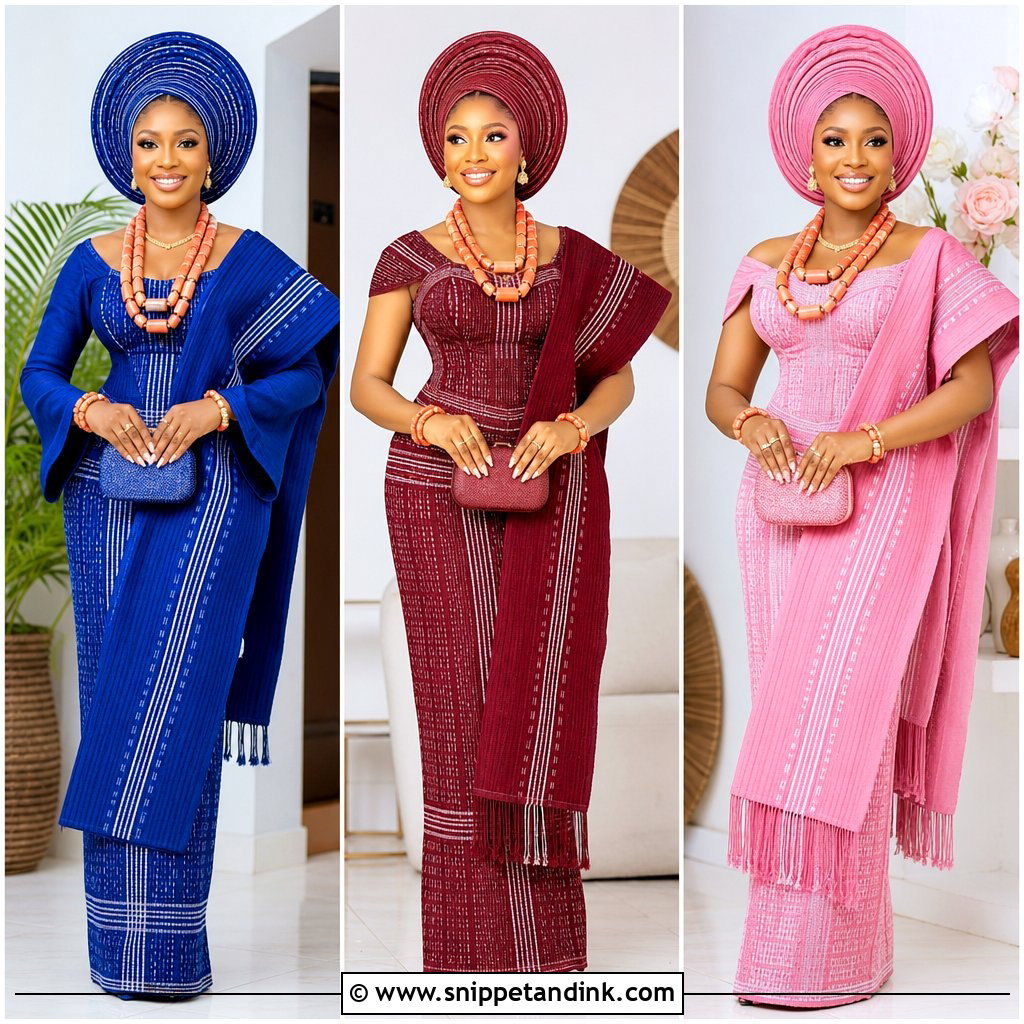
Wrapper and blouse is the classic I would never talk anyone out of, especially a bride or her mother at a traditional ceremony. The wrapper gives cultural weight and the blouse is where the tailoring happens, with puff sleeves, lace panels or a corset bodice. Before the day, practice tying the wrapper and walking in it, then try sitting and standing. A wrapper cut too narrow at the hem is the thing that trips people on the dance floor, so have it measured with your stride in mind. Coral beads, gold bangles and a matching gele complete it.
6. Ankara Corset Wedding Dress
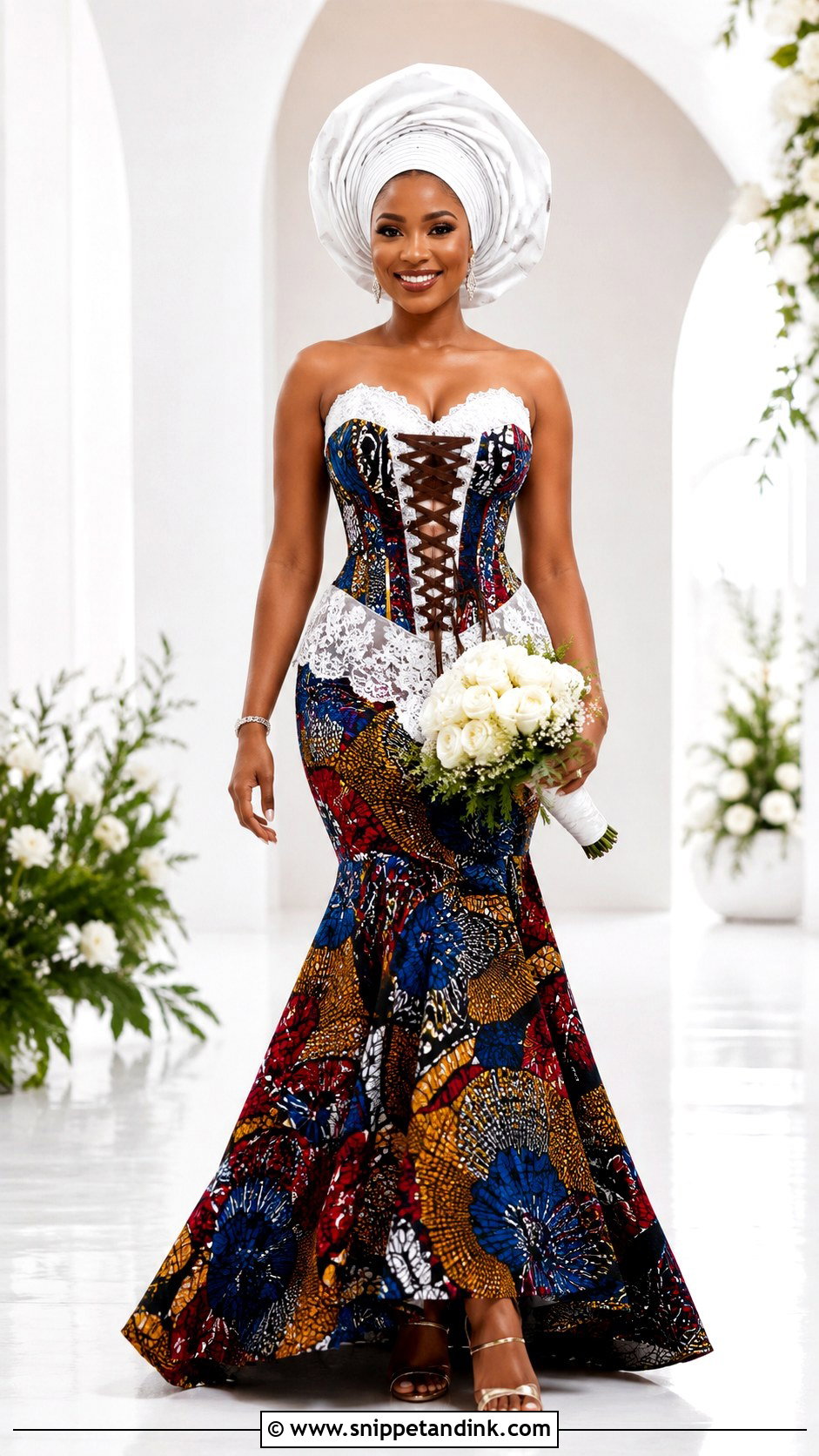
Corset bodices are where I see the biggest gap between a good tailor and a rushed one. Proper boning, a firm lining under the Ankara and a waist tape stop the bodice from rolling down when you sit, and that matters more than any decorative lacing at the back. Once the structure is right, the skirt can go fitted, flared or full. I would match the shoes to one color pulled from the print and stop there, since a corset is already the focal point. Plan a fitting where you sit for ten minutes and eat something; that is the real test of whether it will last the day.
7. Ankara High Low Wedding Dress
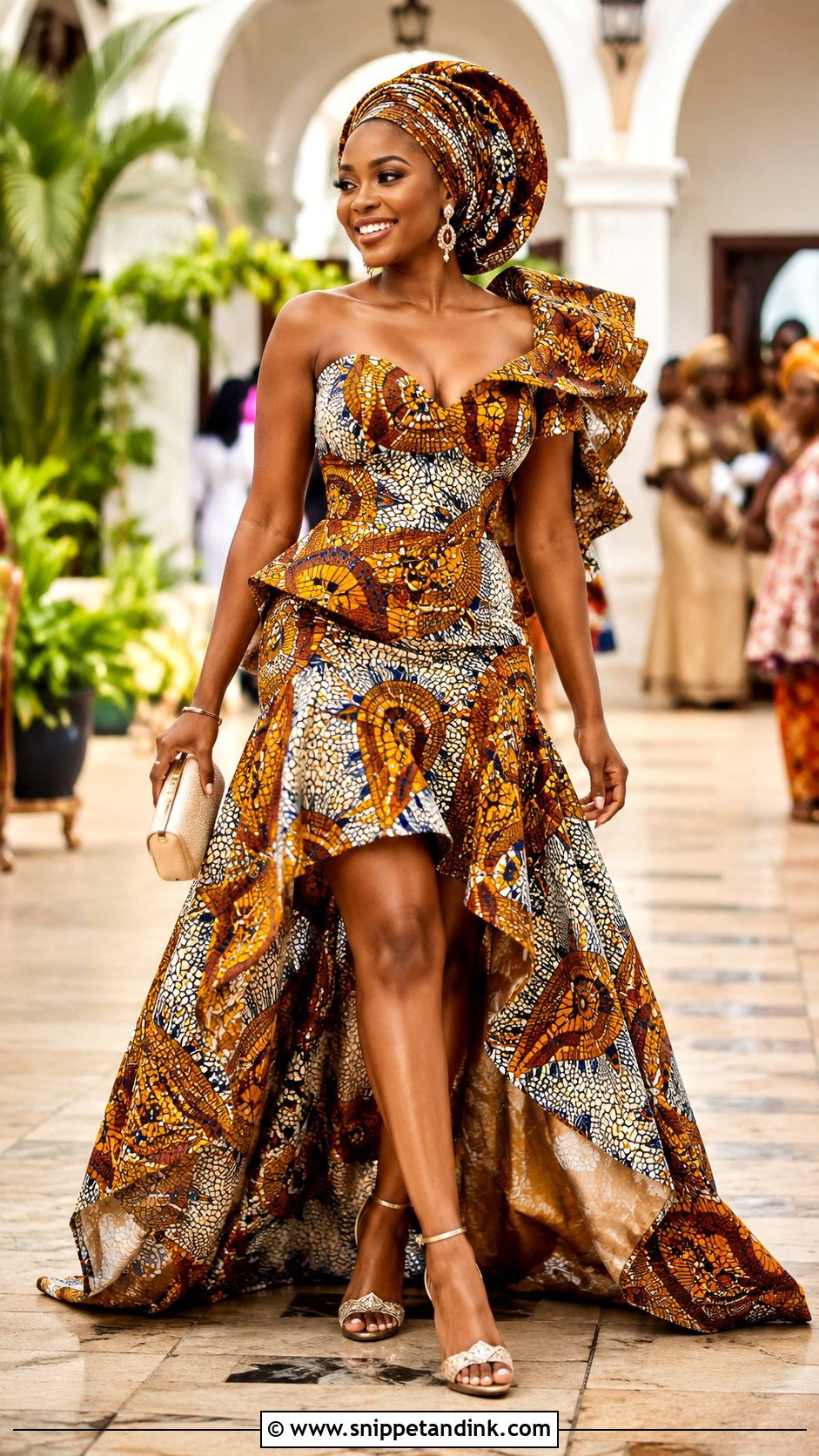
The short front of a high low hem shows off the shoes while the long back keeps the outfit formal, and it moves well on a lively dance floor. I like it most for bridesmaids and for a bride’s reception change. The cut has to be deliberate: the curve from front to back should be smooth and symmetrical, or it reads as a hemming mistake rather than a design. If the print is loud, keep shoes in a solid shade such as gold or nude. A neat gele and a small clutch are enough.
8. Ankara Long Sleeve Wedding Dress
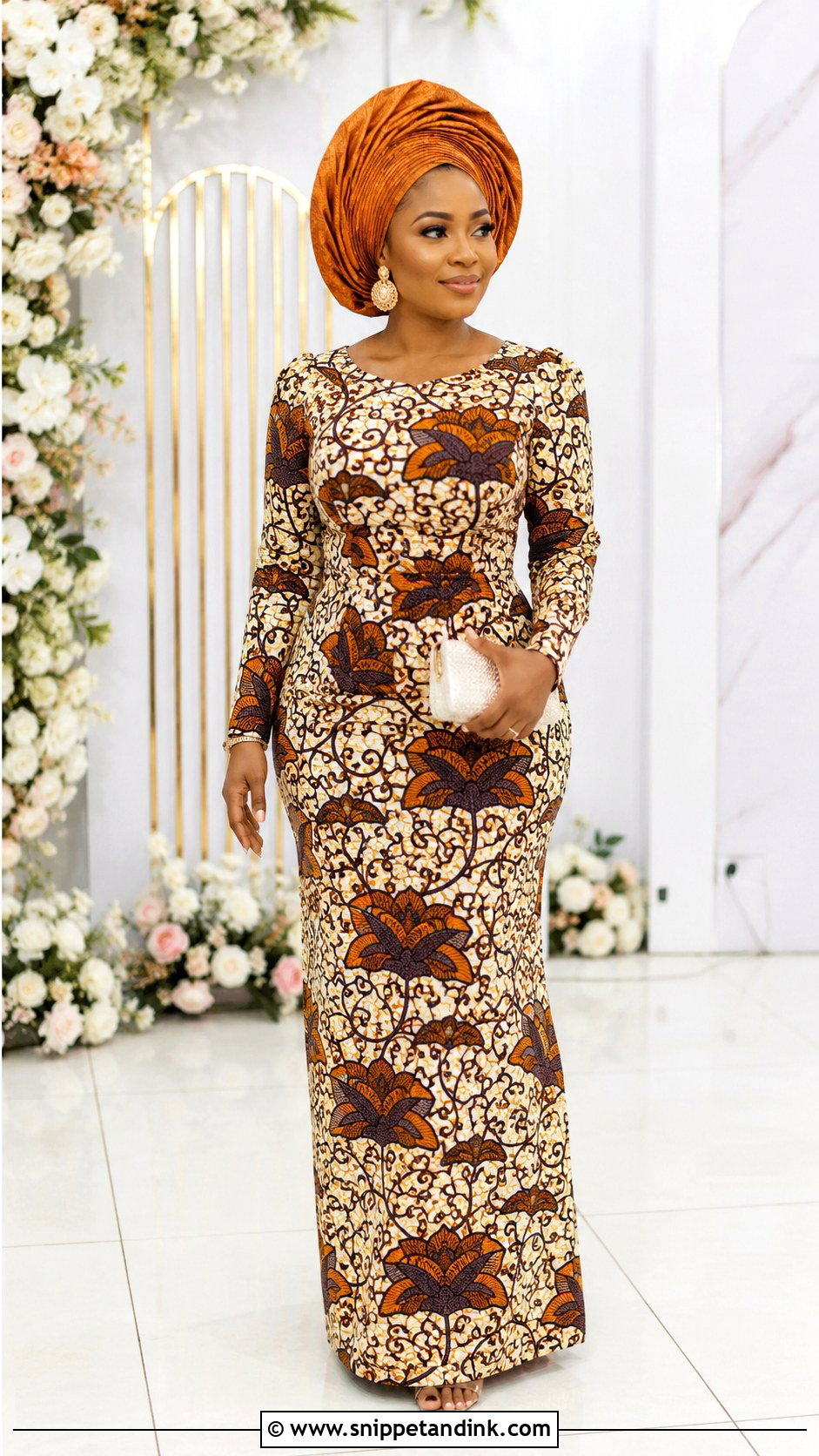
Long sleeves bring a modest, formal feel to a traditional ceremony and suit cooler weather or indoor halls where the family prefers more coverage. In Ankara, the sleeve fit is the detail I check first: woven cotton does not give, so a sleeve fitted tight to the wrist can stop you lifting your arms to dance or to receive gifts. Leave enough ease at the elbow, or choose a sheer or slightly flared sleeve. Pair a dramatic sleeve with a plain neckline and a structured gele. A floor-length skirt makes it bridal; midi keeps it easier for guests.
9. Ankara Puff Sleeve Wedding Dress
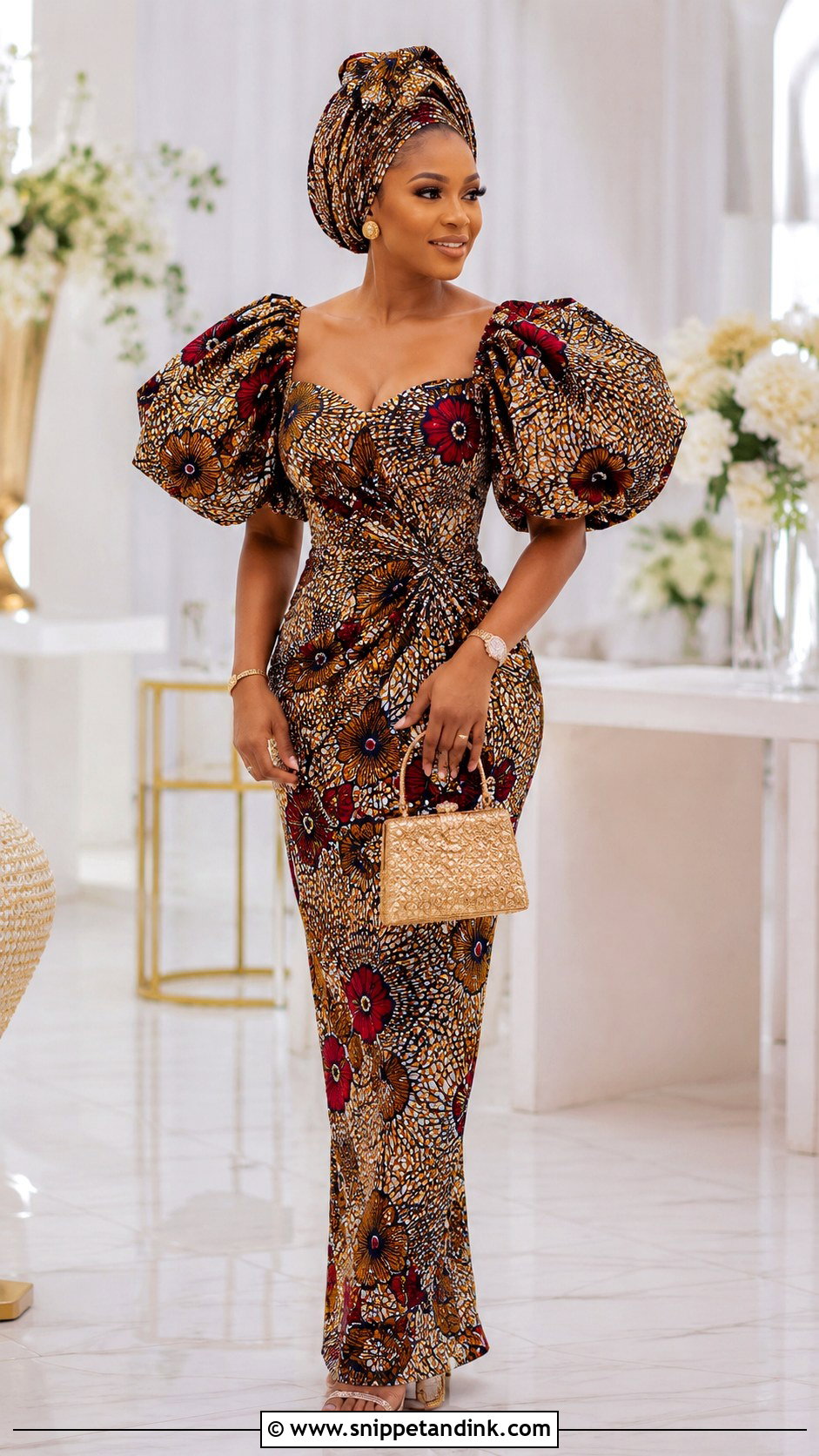
Puff sleeves build a strong shoulder line that balances a pencil or mermaid skirt, so you get drama without a huge skirt to manage. Ankara is crisp enough to hold the puff on its own, though I usually add a layer of tulle or organza inside so it does not flatten after hours of hugging relatives. The bodice must stay fitted; a loose bodice under big sleeves swallows the figure. Keep earrings small so they do not fight the sleeves. A sleek updo or neat gele and slim heels complete it.
10. Ankara Cape Wedding Dress
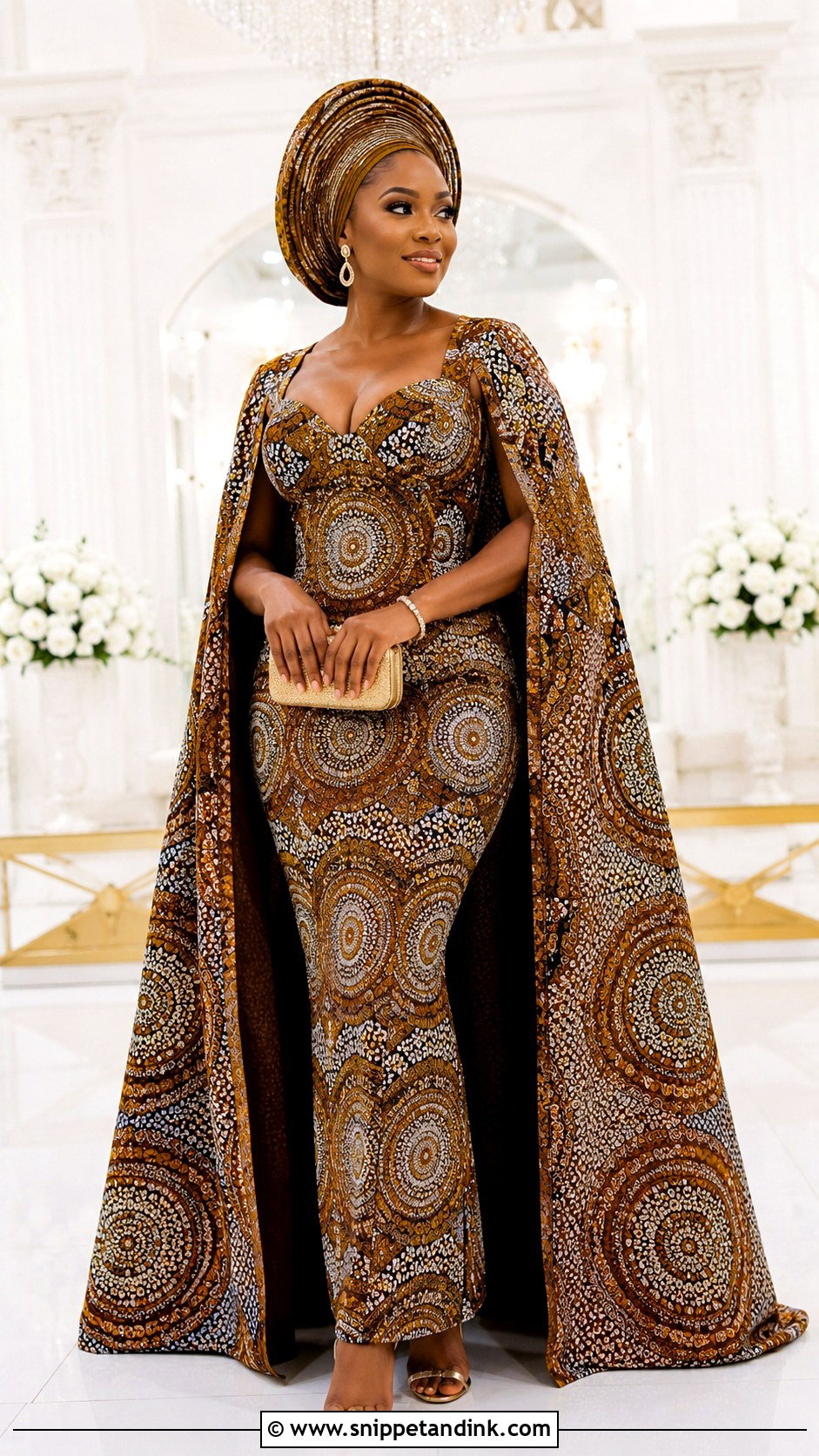
A cape adds movement and coverage at once, which is why I suggest it to brides and senior family members who want presence without baring the arms. Weight is the thing to settle with your tailor. A full Ankara cape can drag on the shoulders by evening, so I often line it lightly or make it from organza or lace instead, which also softens the look. In the same print as the gown, the outfit reads bold and unified. Attach it with hooks rather than stitching so it can come off for the reception.
11. Ankara One Shoulder Wedding Dress
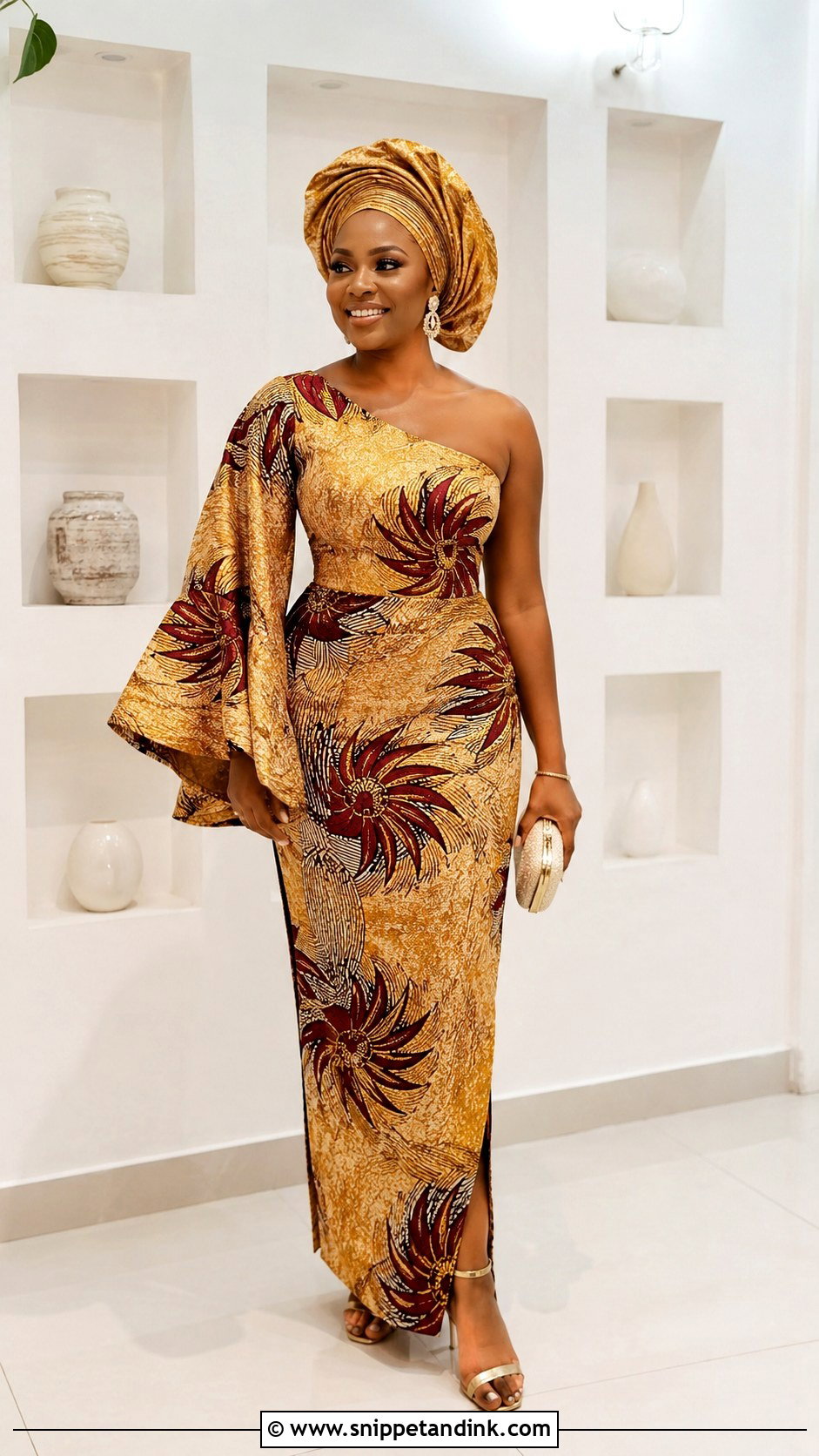
One shoulder feels modern and draws the eye upward, but it is only as good as its anchor. I have the strap cut slightly short and stabilized inside so the weight of the bodice does not drag it off the shoulder by mid-afternoon. It pairs well with fitted gowns, wrap skirts and a tasteful high slit. Choose one strong accessory, a bold cuff or statement earrings, rather than several. A side-swept gele or low bun shows off the neckline.
12. Ankara A Line Wedding Dress
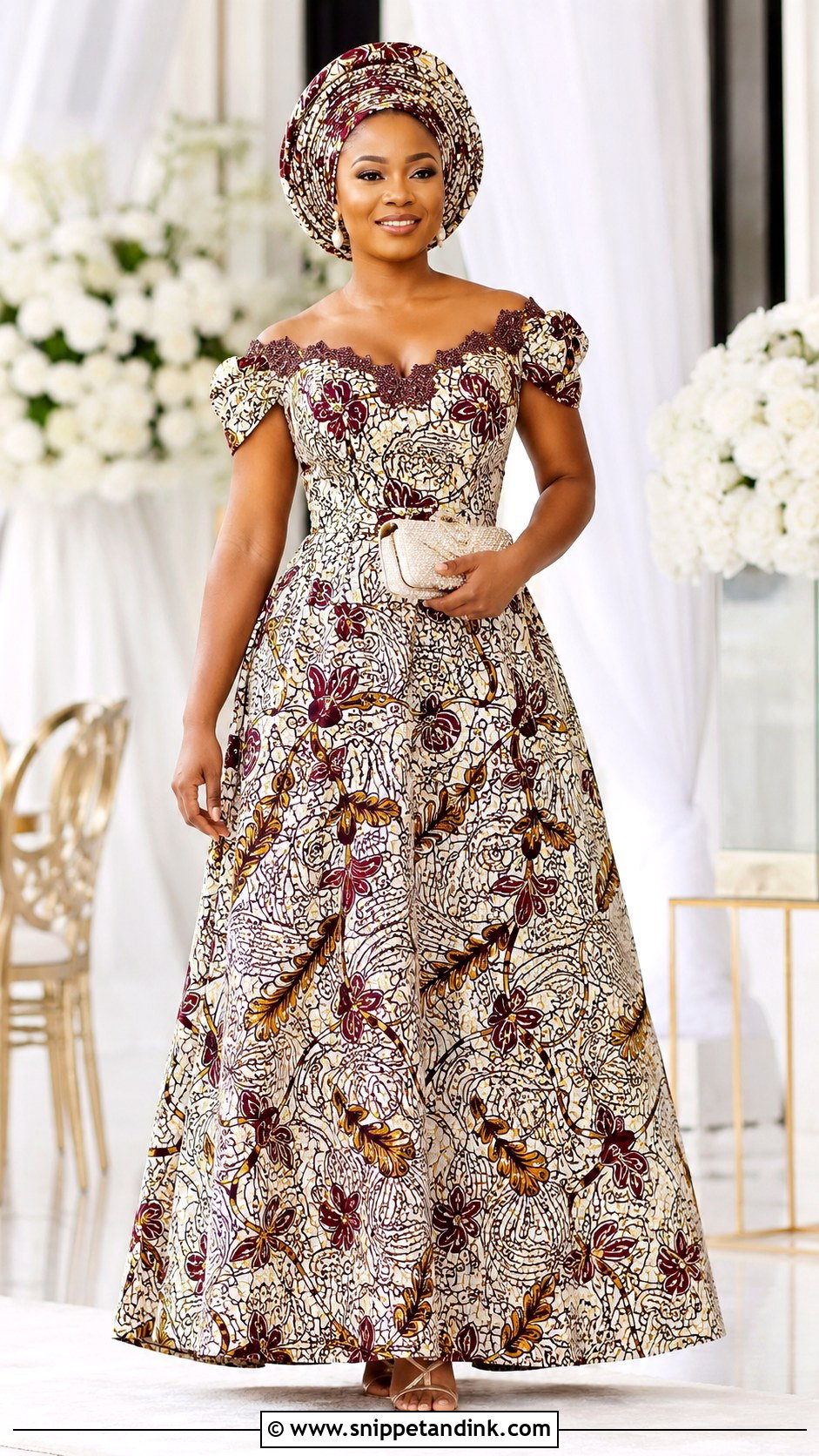
If someone is unsure about their shape or simply wants to breathe and dance, I usually steer them to an A line. The fitted top and gently flared skirt give definition without clinging, and the cut forgives a few pounds gained or lost between fittings, which a mermaid will not. It works across bridesmaids of different builds too. A square, V or bateau neckline all sit well on it. Keep the rest simple: matching gele, pearl or gold earrings, heeled sandals.
13. Ankara Two Piece Wedding Dress
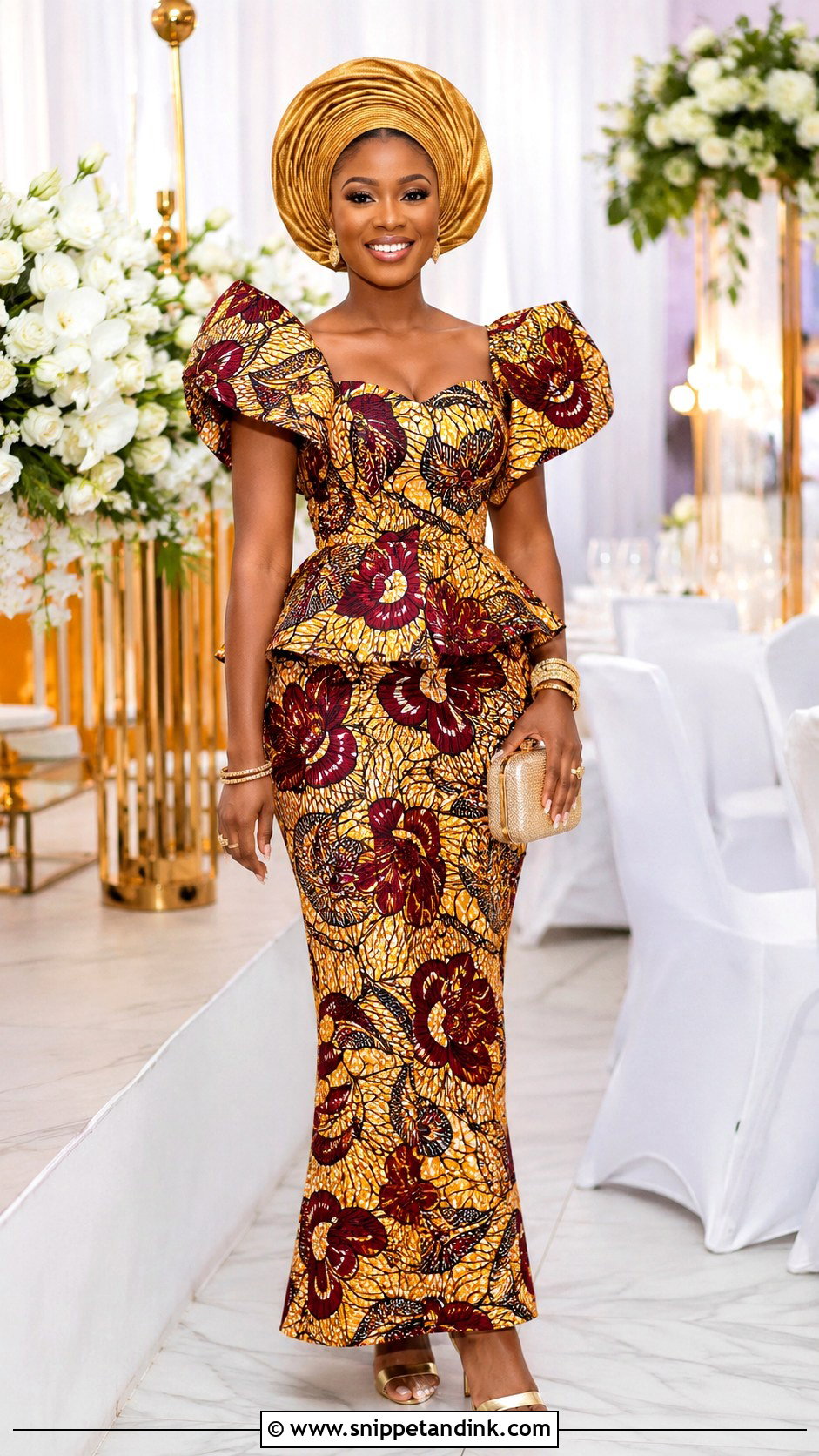
Two pieces give you flexibility, and the separates are easy to wear again after the wedding, which most families appreciate. A crop blouse with a high-waist skirt reads younger; a longer blouse over a fitted skirt reads more traditional. For a bride I would go full skirt with a structured bodice. For a guest, a pencil skirt and peplum top moves easily and looks polished. Ask the tailor to line up the print across the waist seam so the two pieces read as one outfit, and match your jewelry to the strongest color in the print.
14. Ankara Lace Combination Wedding Dress
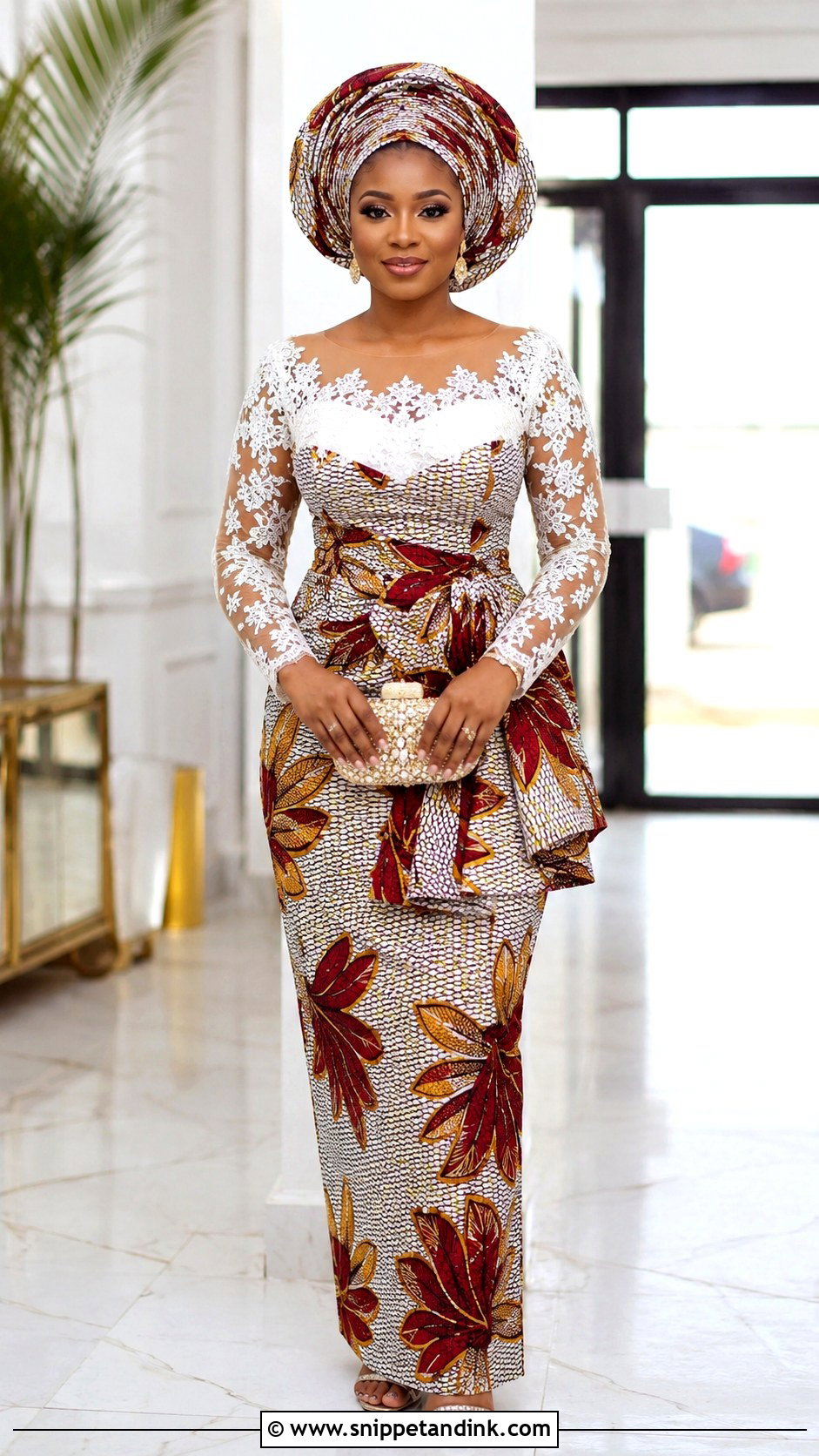
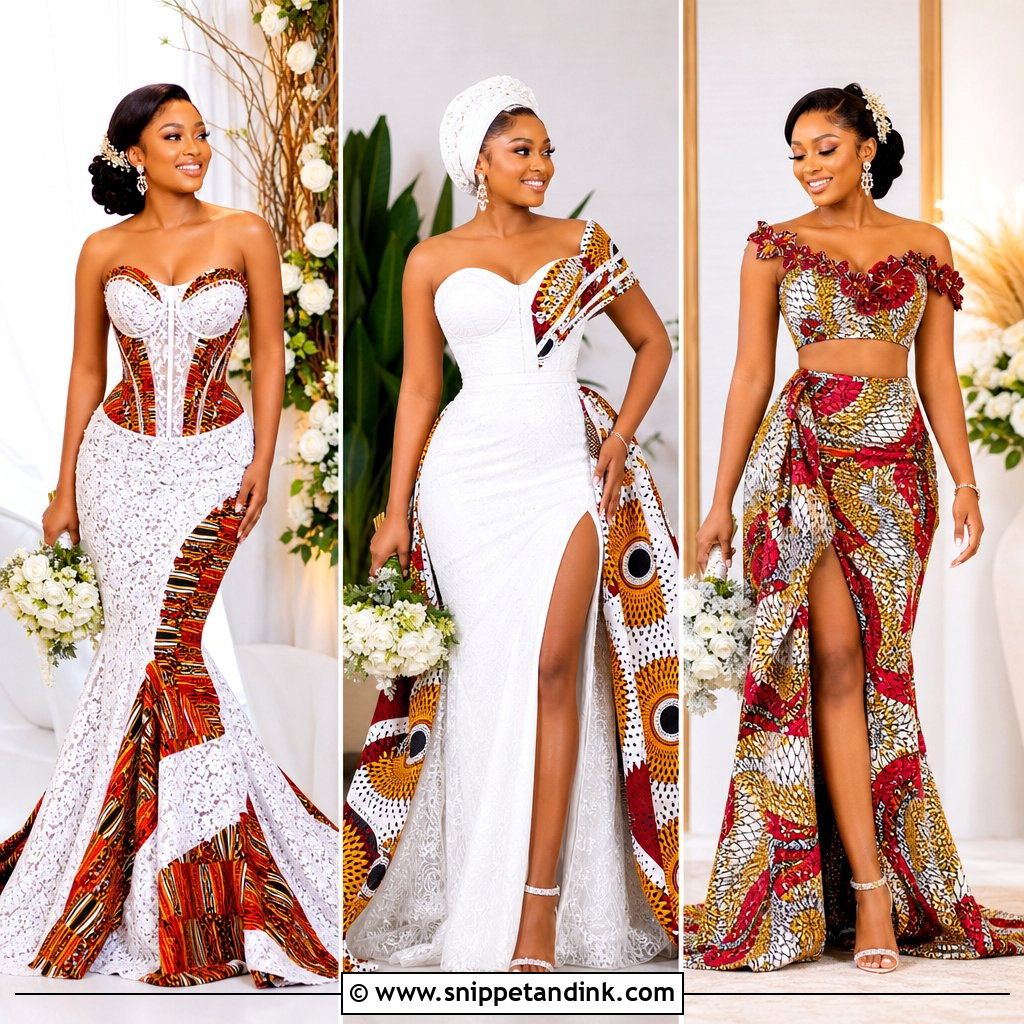
Adding lace is the most common way to make Ankara feel bridal. It can go on the sleeves, bodice, neckline, hem or train, and the lace color changes the mood a great deal: ivory softens a print, gold warms it, black sharpens it. My rule is to let lace sit in one or two zones only. Lace on every edge makes the outfit look busy and hides the print you chose. Since lace is more delicate than wax cotton, ask your tailor to back it where it meets the heavier fabric so the seam does not pucker.
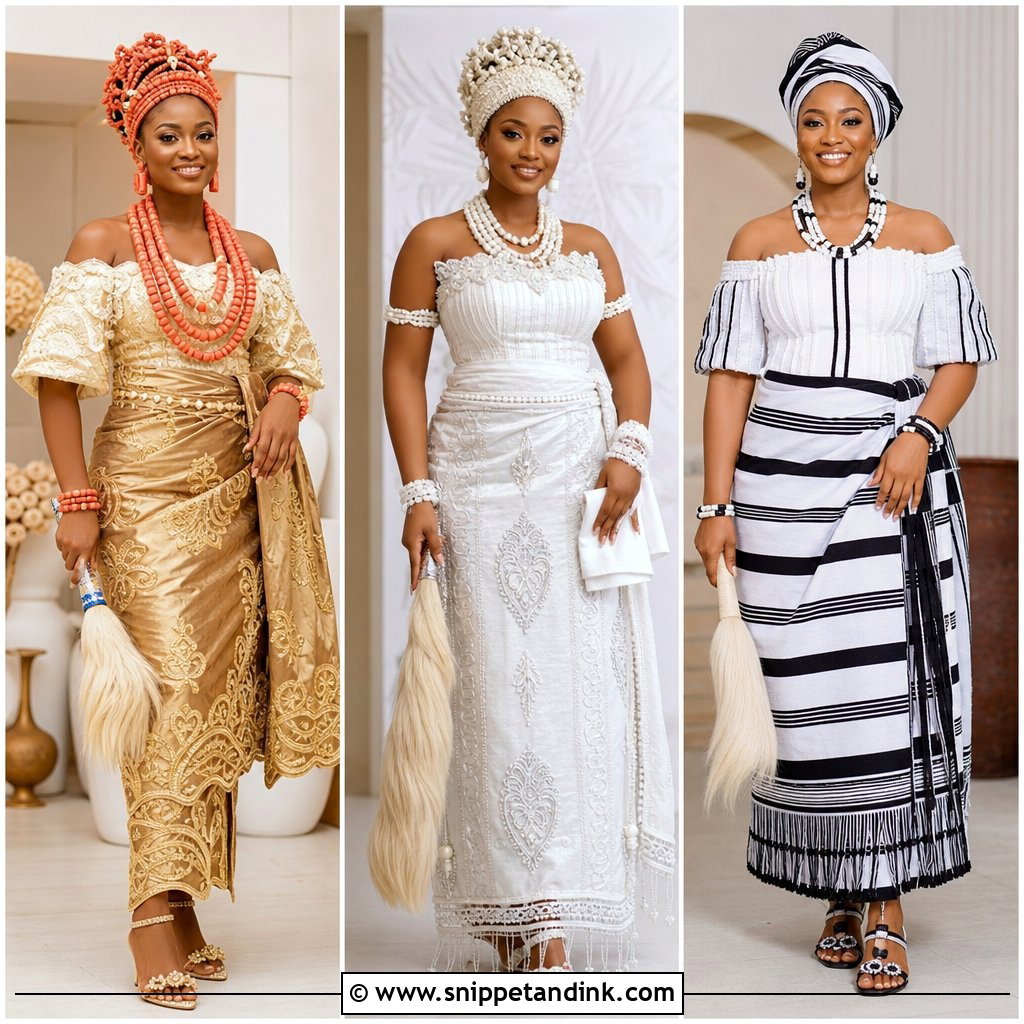
15. Ankara Tulle Wedding Dress
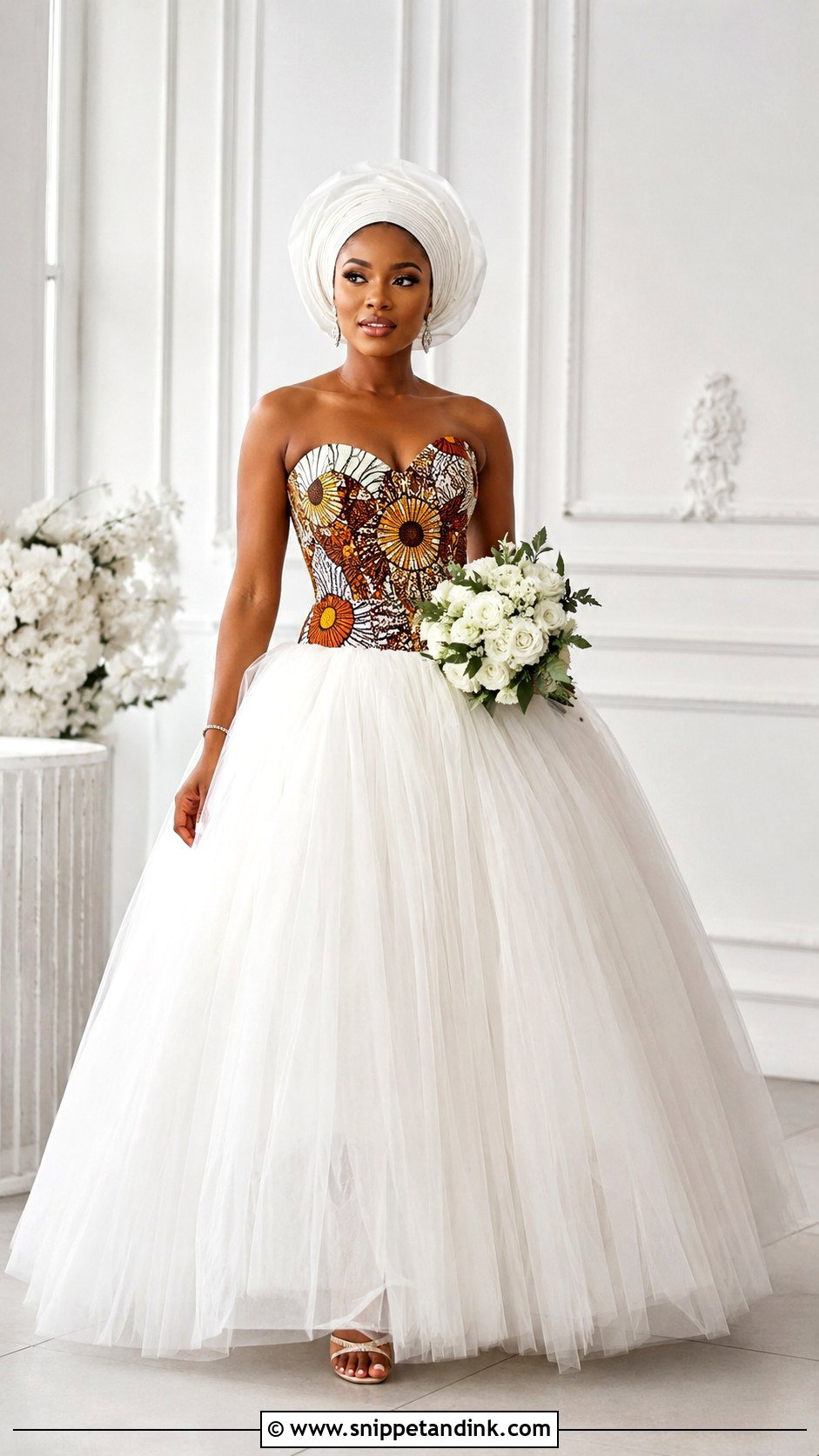
Tulle gives the dreamy volume many brides want from a white gown while the Ankara keeps the cultural thread, usually as a corset bodice, waist panel or sleeve detail over a full tulle skirt. Color matching is where this goes wrong. I take a swatch of the print to the fabric shop and hold tulle against it in daylight, because a tulle that looks right under shop lights can turn grey or muddy next to the print outdoors. Since the skirt already has volume, skip oversized accessories. It photographs best at engagement ceremonies and evening receptions.
16. Ankara Sequin Wedding Dress
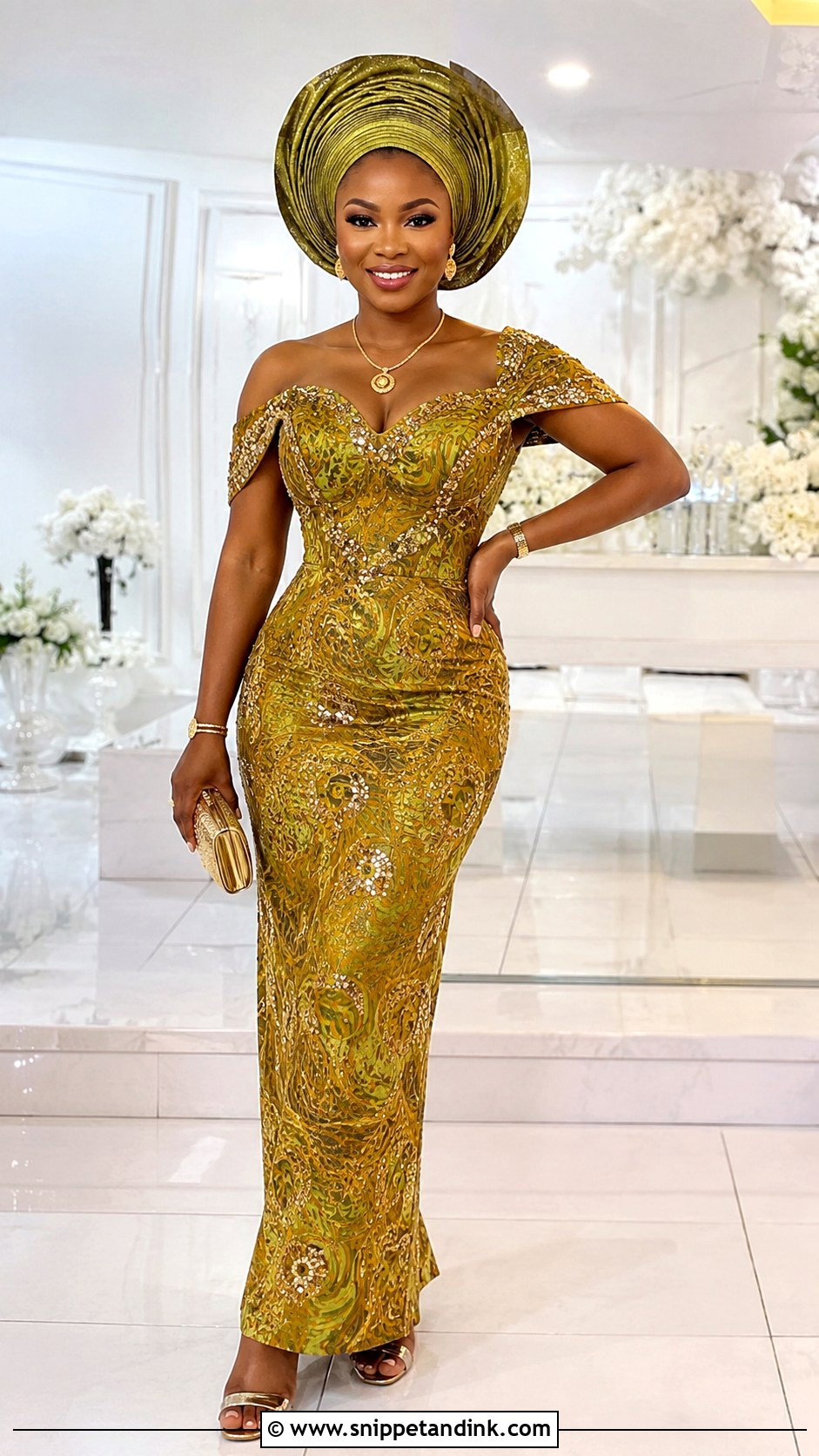
Sequins and wax print can work together, but only as an accent. I keep them to the bodice, cuffs, waist or hem so the print stays readable; a fully sequinned Ankara gown is heavy and stiff and hides the very fabric you paid for. Be aware that sequins scratch the inner arms during long hugs, so ask for a soft lining on the underside of the sleeves. A fitted or mermaid base suits the sparkle best. A solid-color structured gele calms the shine, and this is an evening outfit rather than a morning ceremony one.
17. Ankara Ruffle Wedding Dress
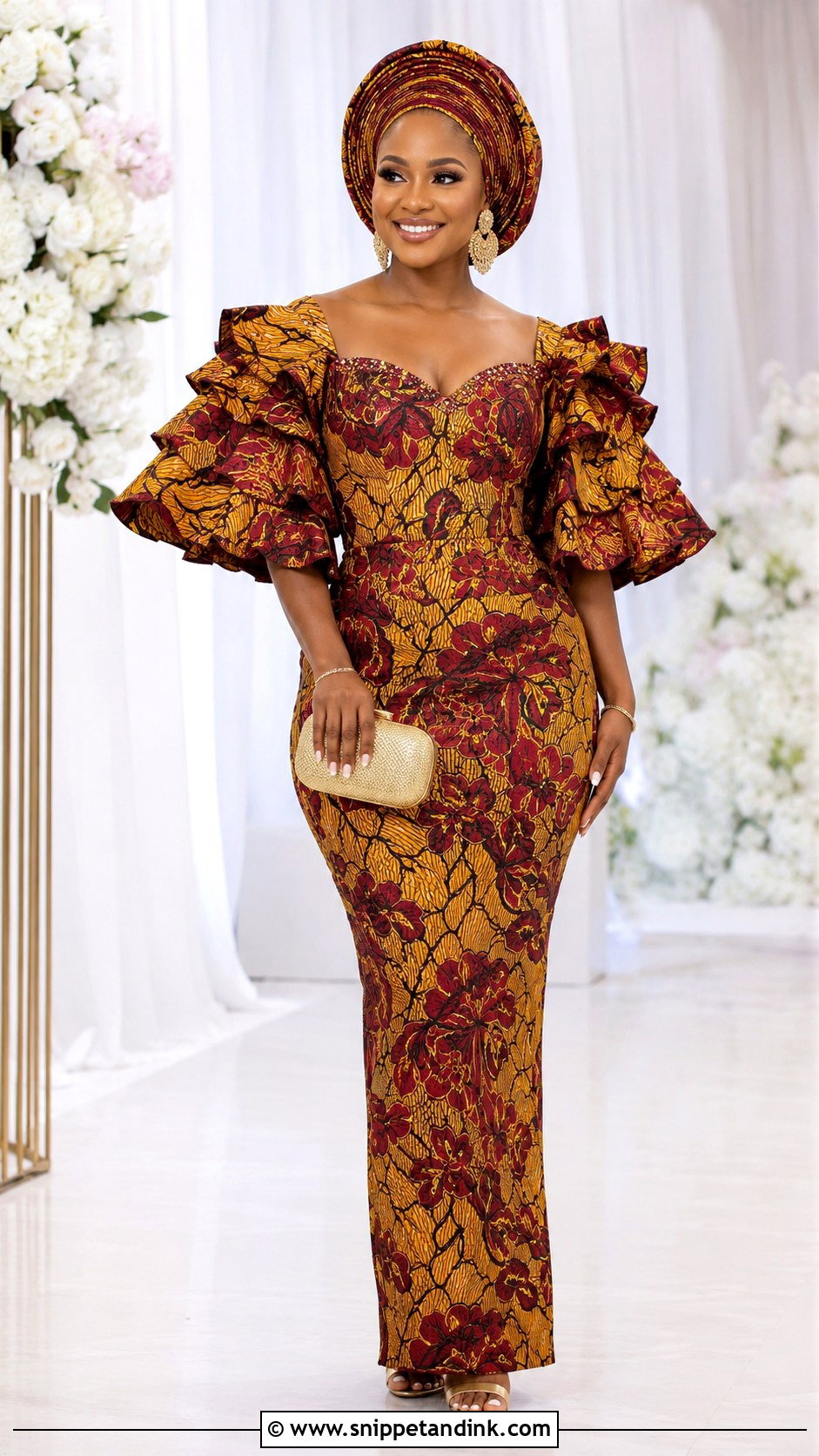
Ruffles add movement and a playful feel, from one neat ruffle at the neckline to layered tiers down the skirt. One ruffle reads refined; several tiers are bolder and better suited to sisters of the bride and confident guests. In stiff wax cotton, ruffles stand out more than they would in chiffon, so I usually cut them narrower than the client first asks for. Keep the placement clean enough that the print and silhouette still read clearly. Slim heels and a clutch are all it needs.
18. Ankara Train Wedding Dress
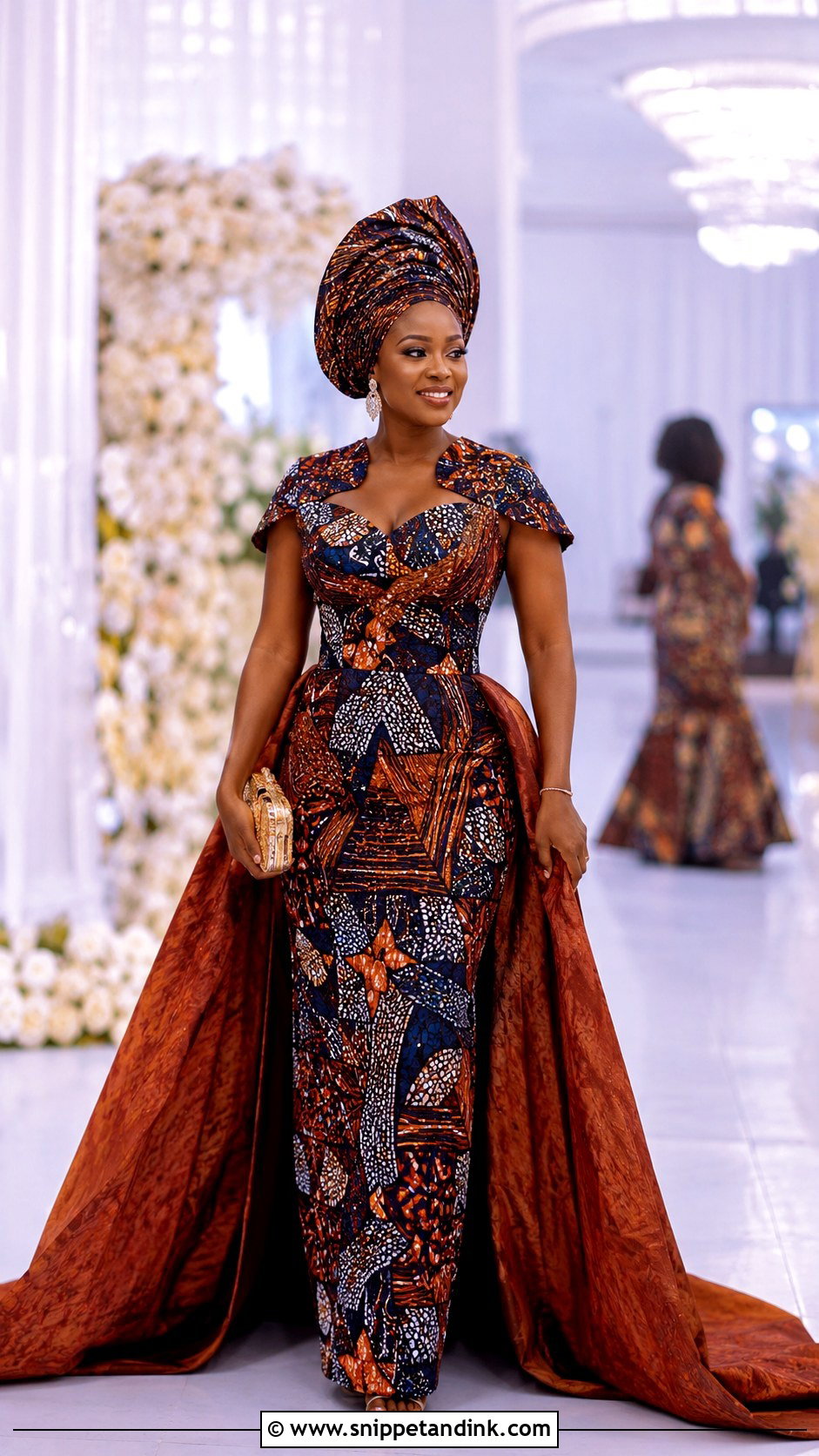
A train makes the bride easy to spot and turns the entrance into an event, and it can sit on a mermaid, ball gown, sheath or wrapper-style outfit. I always recommend a detachable one. Wax cotton picks up dust and grass quickly, and a long train gets stepped on the moment the dancing starts, so you want it off after the main photos. Have it fully lined with a wrist loop or bustle point. If the print is bold, keep the train shape plain so the outline stays clean.
19. Ankara Maxi Wedding Dress
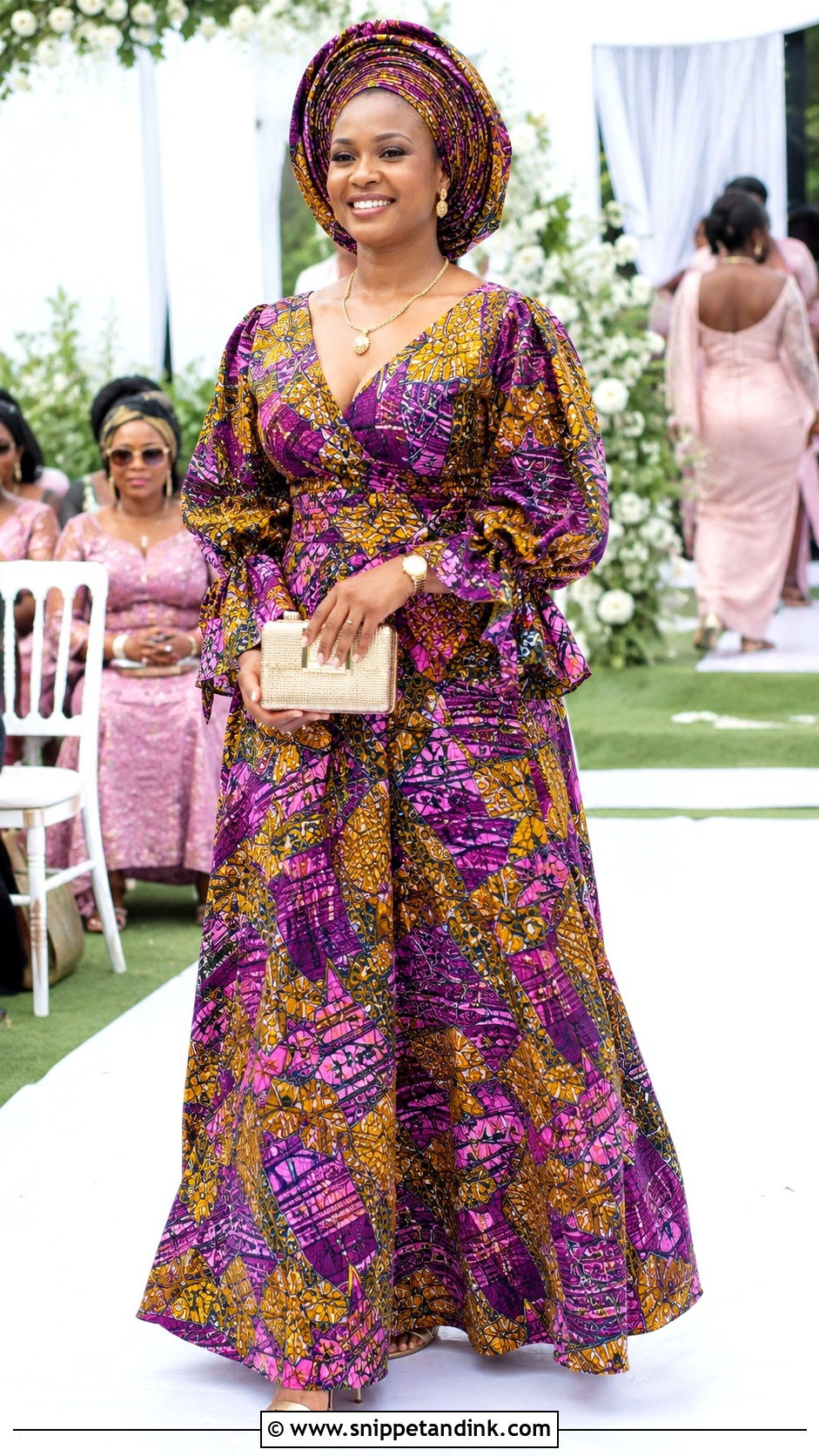
An Ankara maxi wedding dress is the easiest long outfit to wear all day, and it suits outdoor ceremonies, family introductions and receptions where comfort counts. It can be fitted, belted, tiered or loosely flared. What separates a wedding maxi from a casual one is the waistline. I place it exactly at the natural waist or just above, with a little shaping, so it reads tailored rather than relaxed. Brides can choose richer embellishment, while guests can wear it plainer with a wrapped headscarf and block heels.

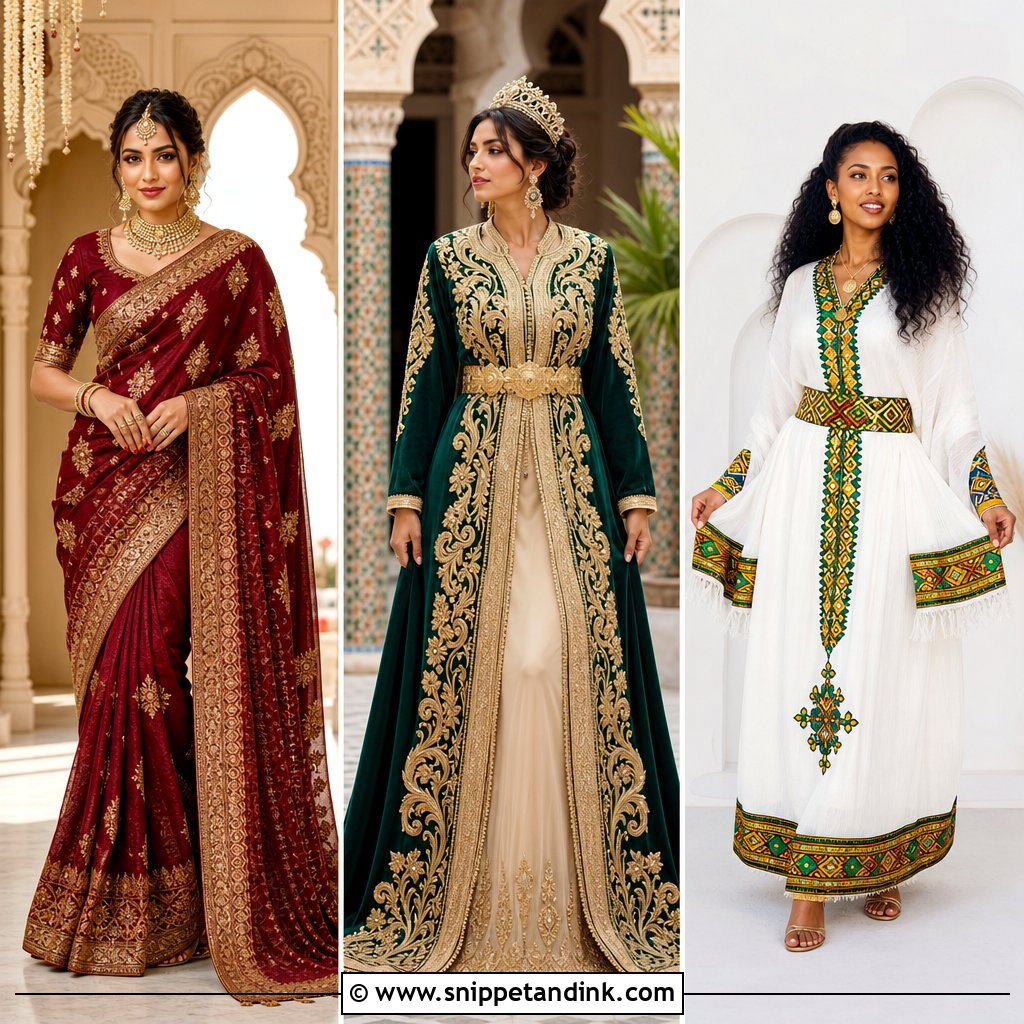
20. Ankara Midi Wedding Dress
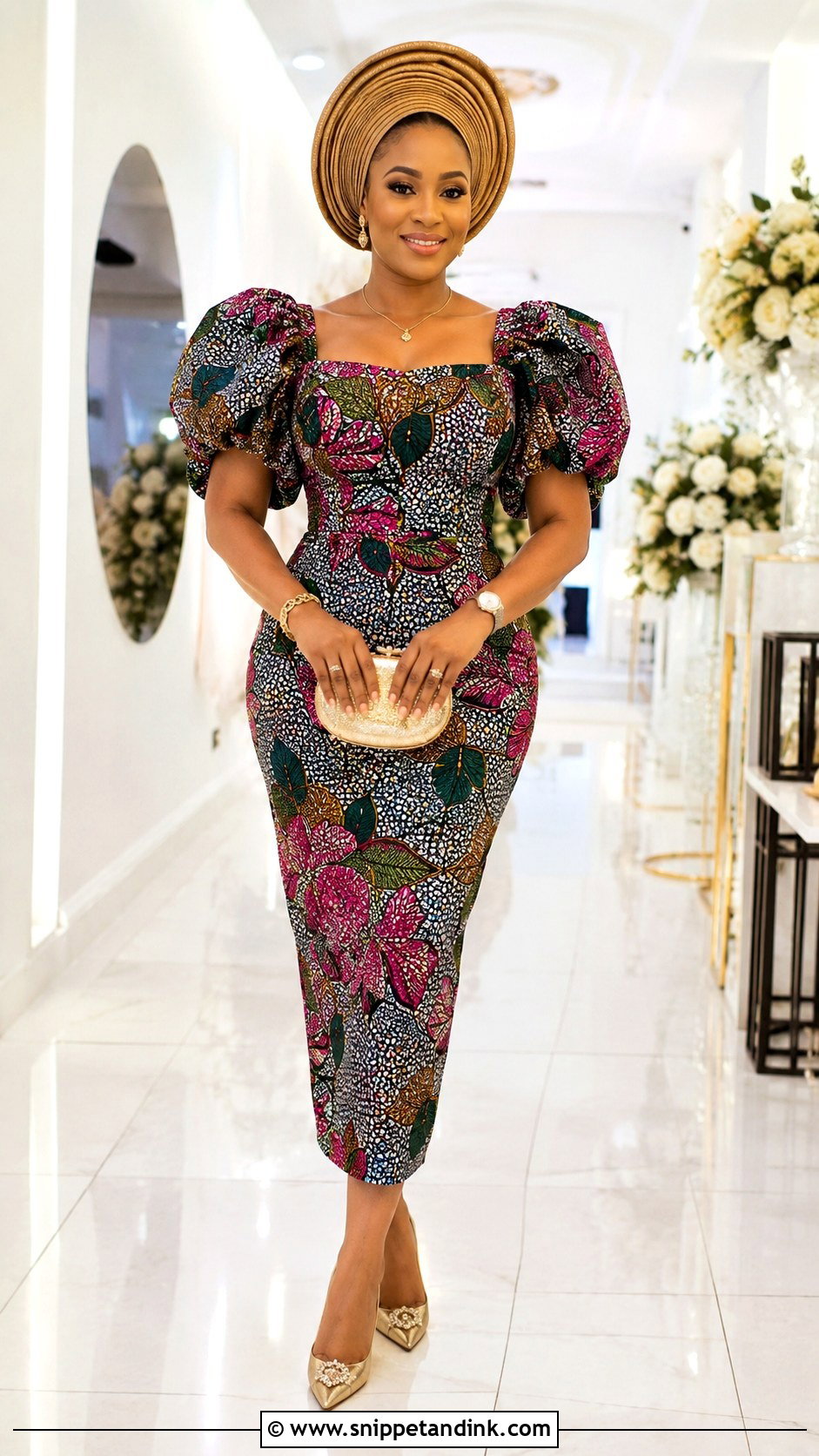
Below the knee or mid-calf, a midi is the length I suggest when someone will be on their feet greeting guests and dancing for hours. It suits fitted shapes with puff sleeves, a peplum or an off shoulder neckline, and it lets the shoes be seen. The one risk is fabric: a soft, washed-out Ankara in a midi cut looks like daywear, so pick a crisp piece and insist on a lined, tailored fit. It works for guests, smaller cultural ceremonies and a second reception look.
21. Ankara Short Wedding Dress
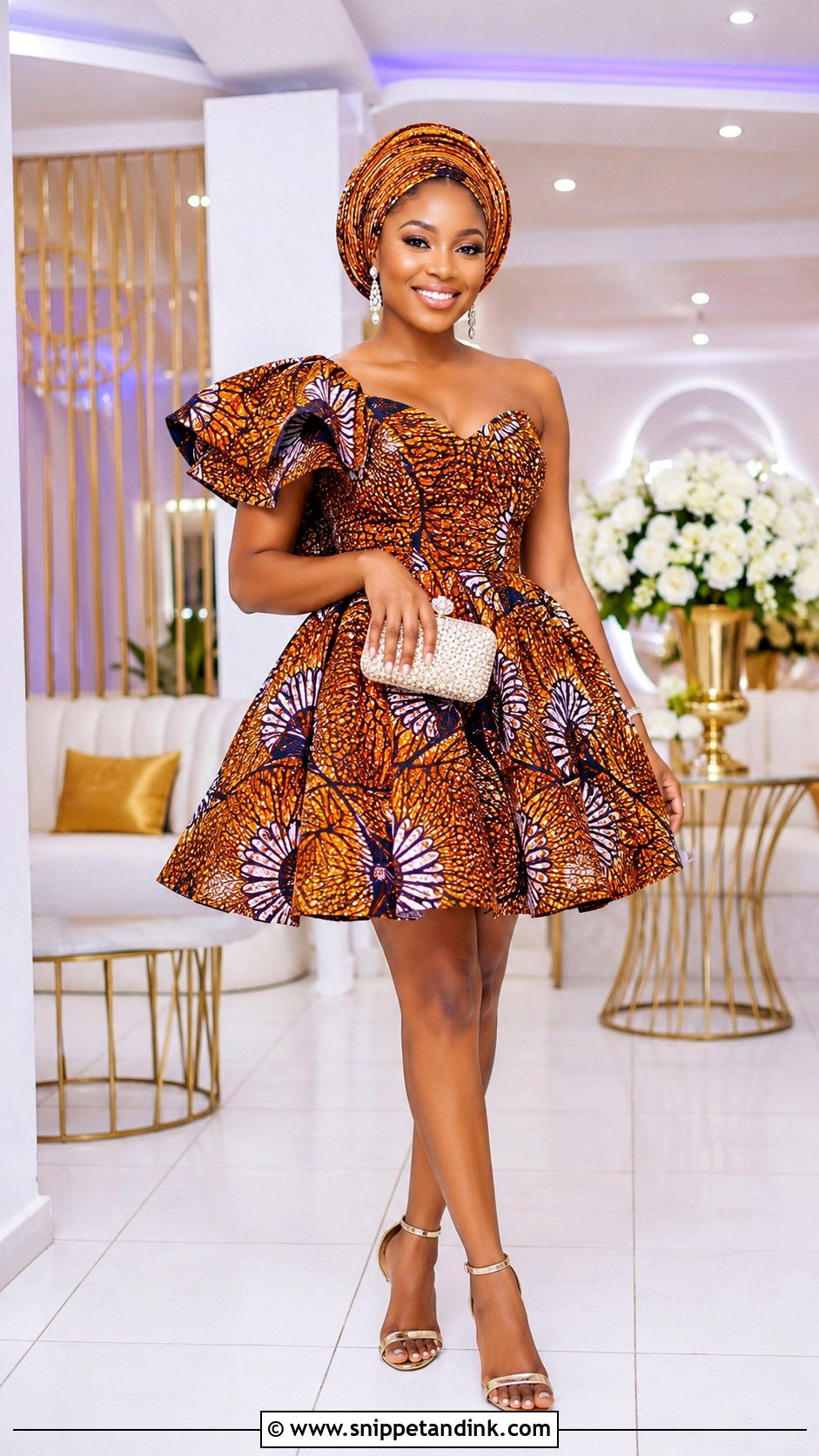
Short Ankara dresses belong to receptions, bridal showers and after-parties. A fit-and-flare, a puff-sleeve mini or a tailored shift all work, finished with a neat headwrap or mini gele and statement heels. My favorite trick for brides is a detachable overskirt in the same print: long for the ceremony, removed for the party. Guests should check the dress code with the family, as a very short hem can feel wrong at a traditional event even when it suits the reception crowd.
22. Ankara Boubou Wedding Dress
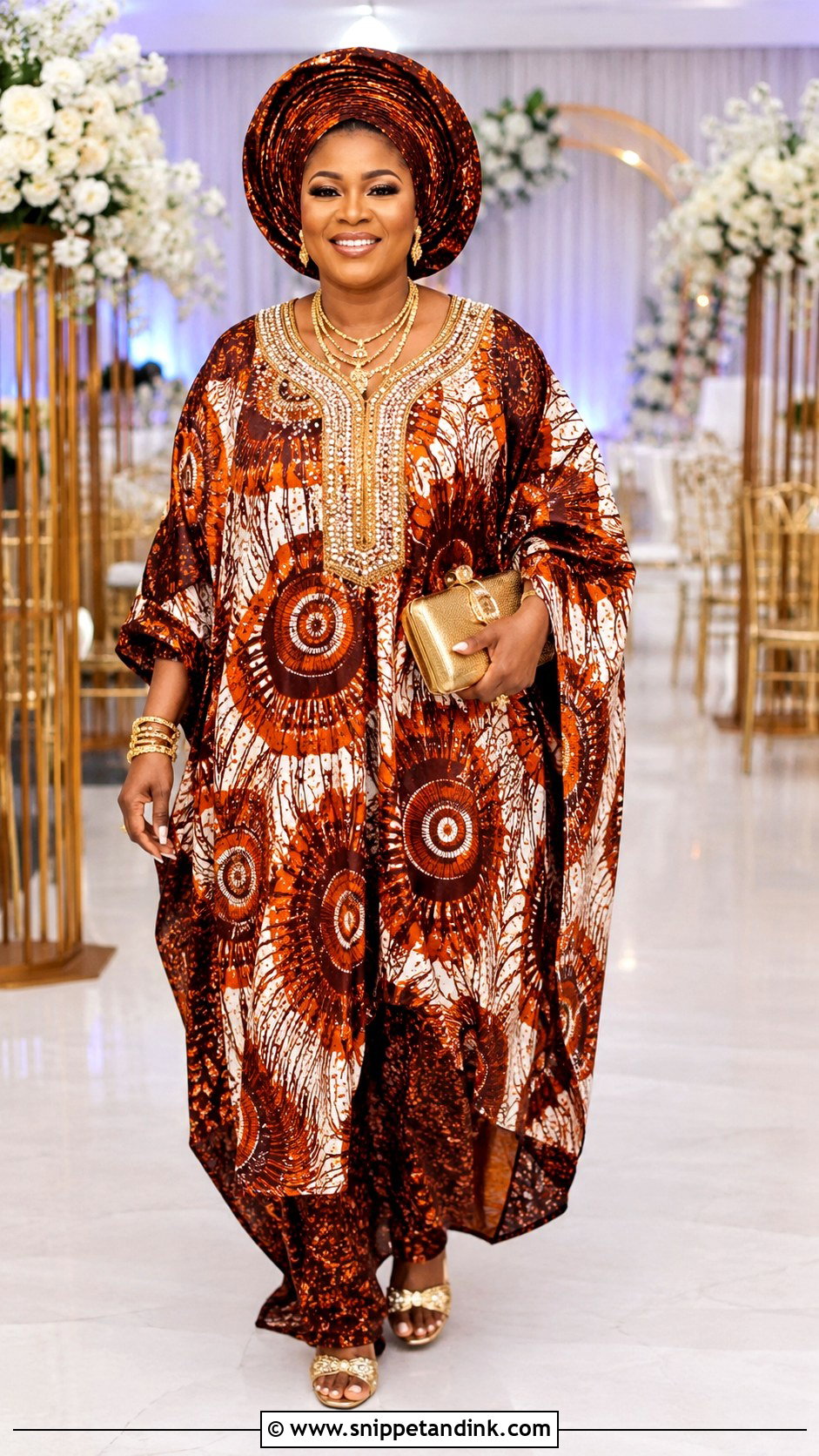
An Ankara boubou wedding dress is the outfit I suggest to women who want grace and complete ease. The loose shape never clings, and in a rich wax print it still feels ceremonial. Embroidery, beading or lace trim at the neckline and sleeves lifts it for the occasion. The skill is in the cut: a good boubou is wide but drapes from the shoulders in clean lines, while a poorly cut one looks shapeless and swamps a smaller frame. Brides might choose a more structured neckline; mothers and guests can keep it classic with a matching gele.
23. Ankara Kaftan Wedding Dress
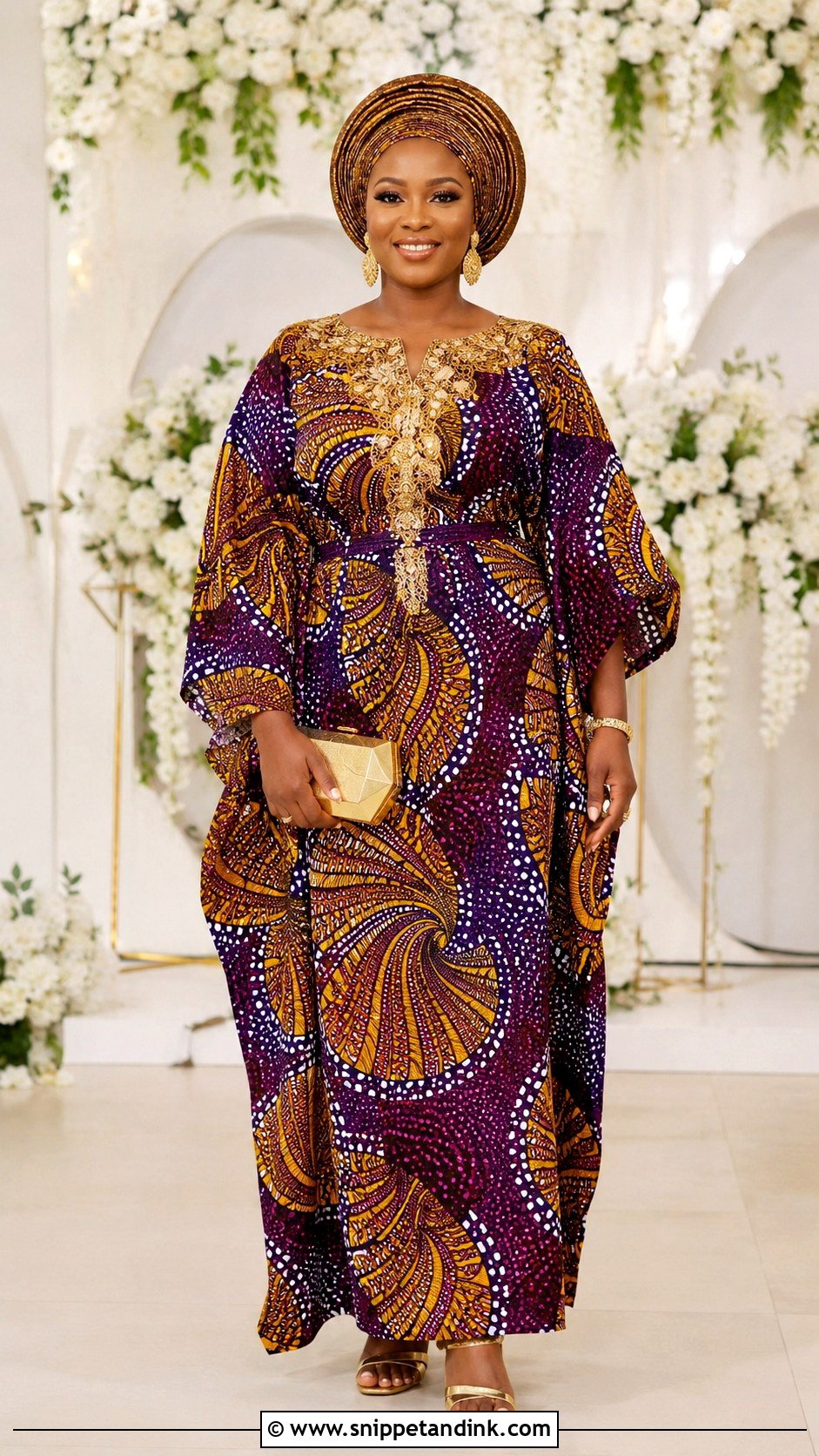
A wedding kaftan needs more tailoring than people assume. Unlike a holiday kaftan, it should have a defined neckline, finished seams and some shaping, such as a belted waist or a side drape, so it skims the body rather than hanging off it. Many mothers and aunties prefer it because it is dignified and easy to sit in through a long ceremony. Choose a print with deep, rich colors for a formal effect. Gold sandals, a structured clutch and statement earrings complete it.
24. Ankara Bridesmaid Wedding Dress
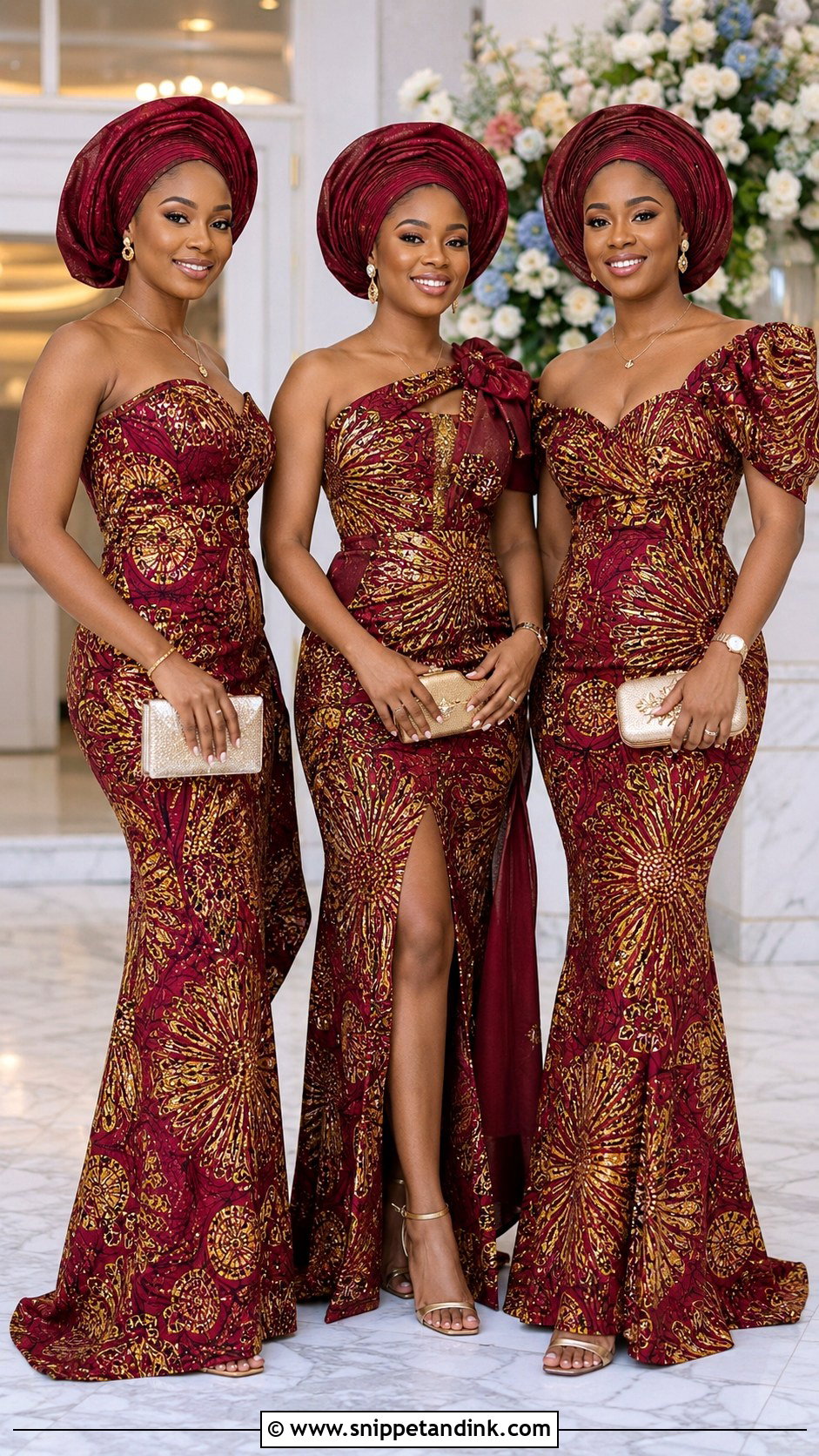
For bridesmaids, I nearly always suggest one print in different cuts. One woman wears an A line, another a fitted midi, another an off shoulder gown, all from the same fabric, and the group still looks unified because the print does that work. Buy all the fabric in one go from the same batch, since a second purchase of the same design can come out a shade off. Matching gele and consistent accessories hold the group together in photos. The bride’s outfit should still carry more detail than the bridesmaids’.
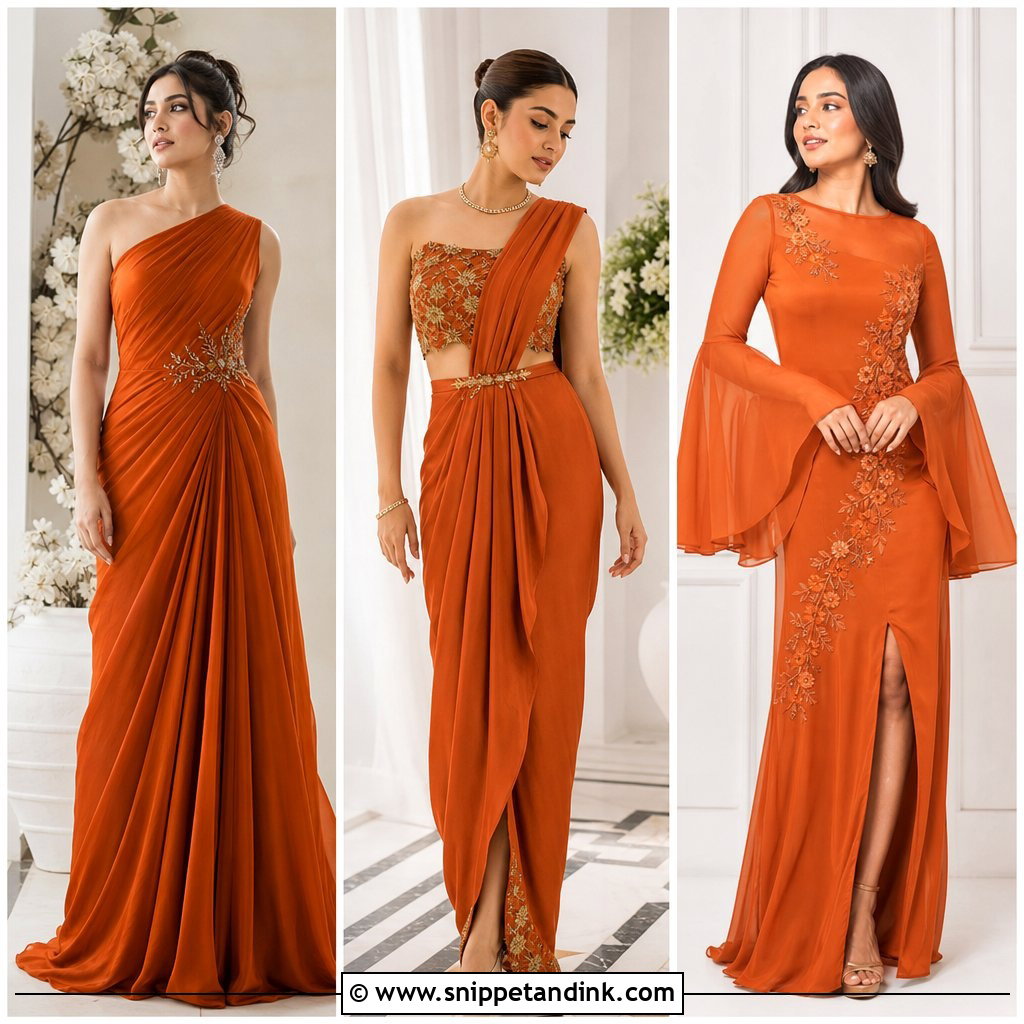
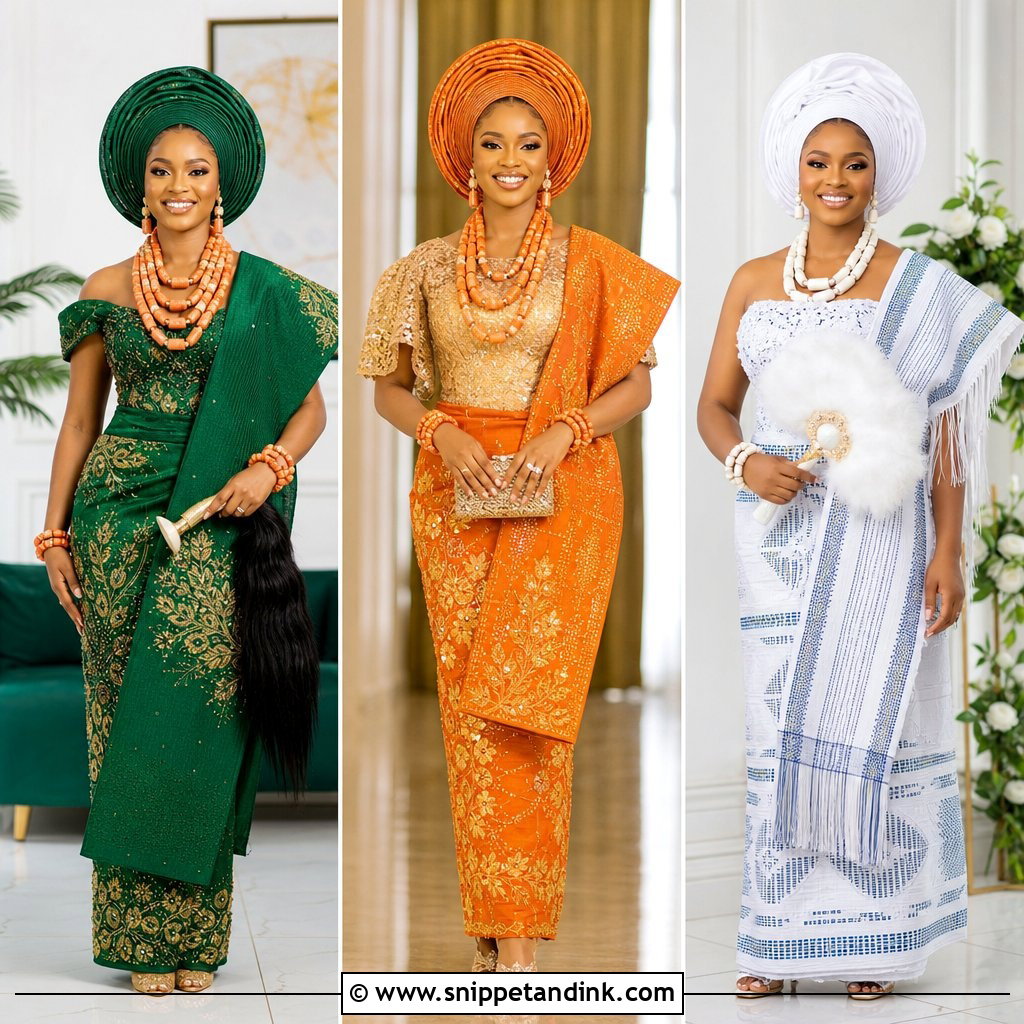
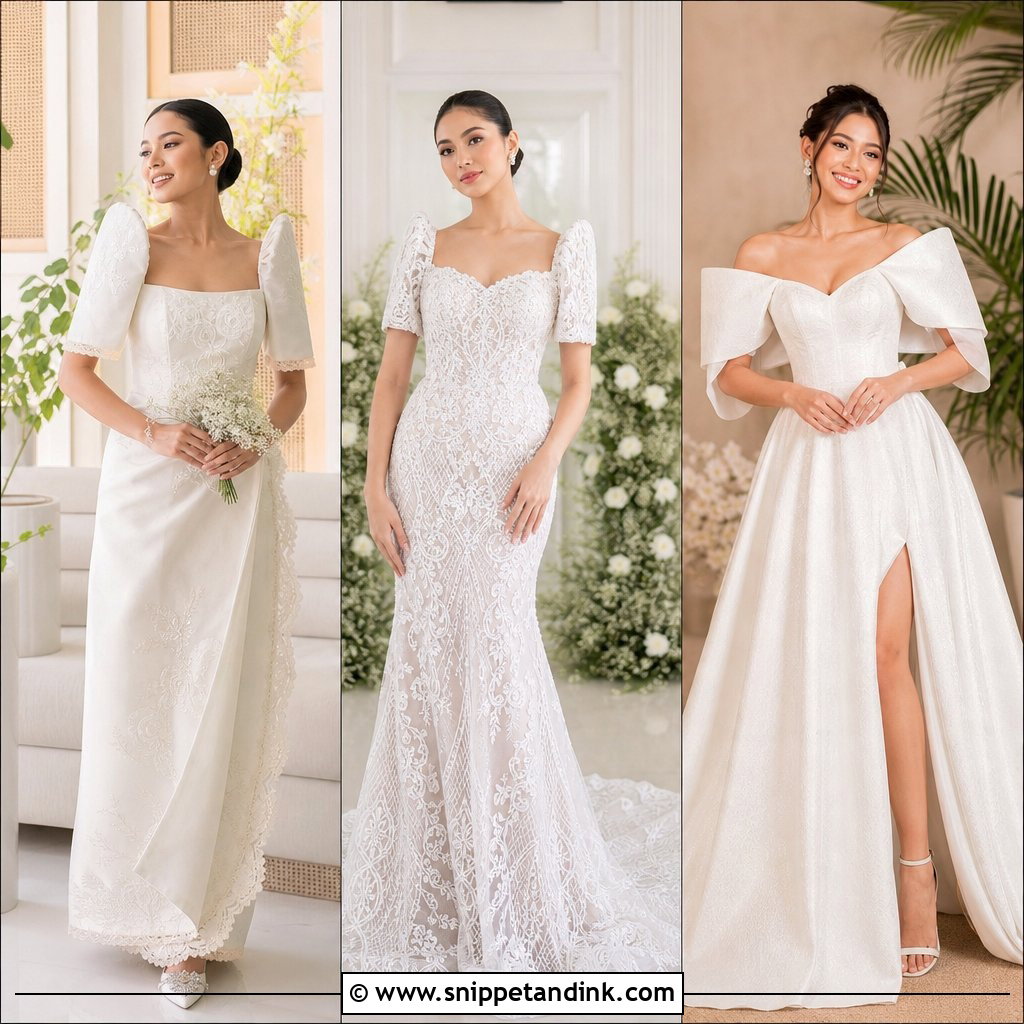
25. Ankara Mother Of The Bride Wedding Dress
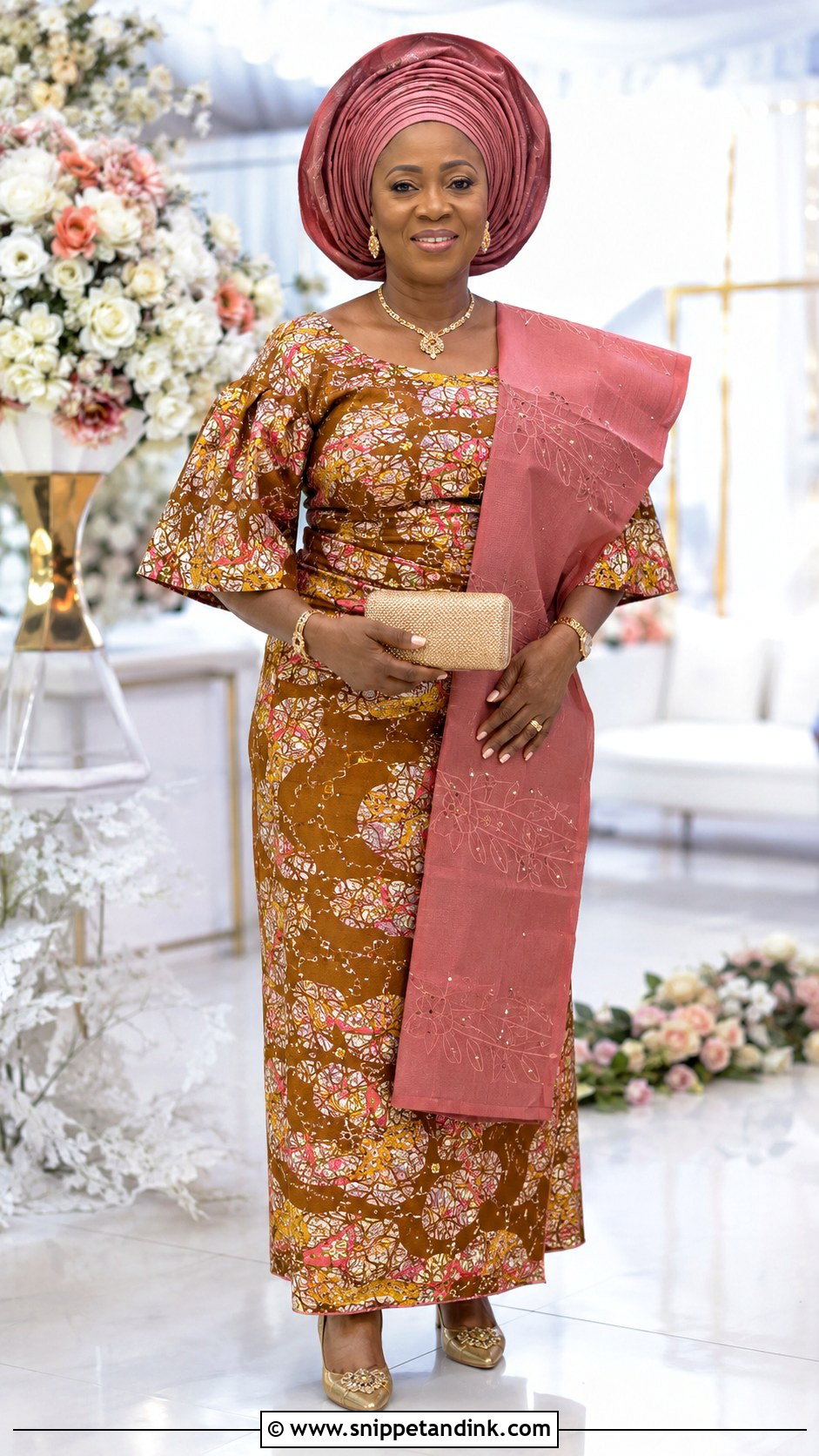
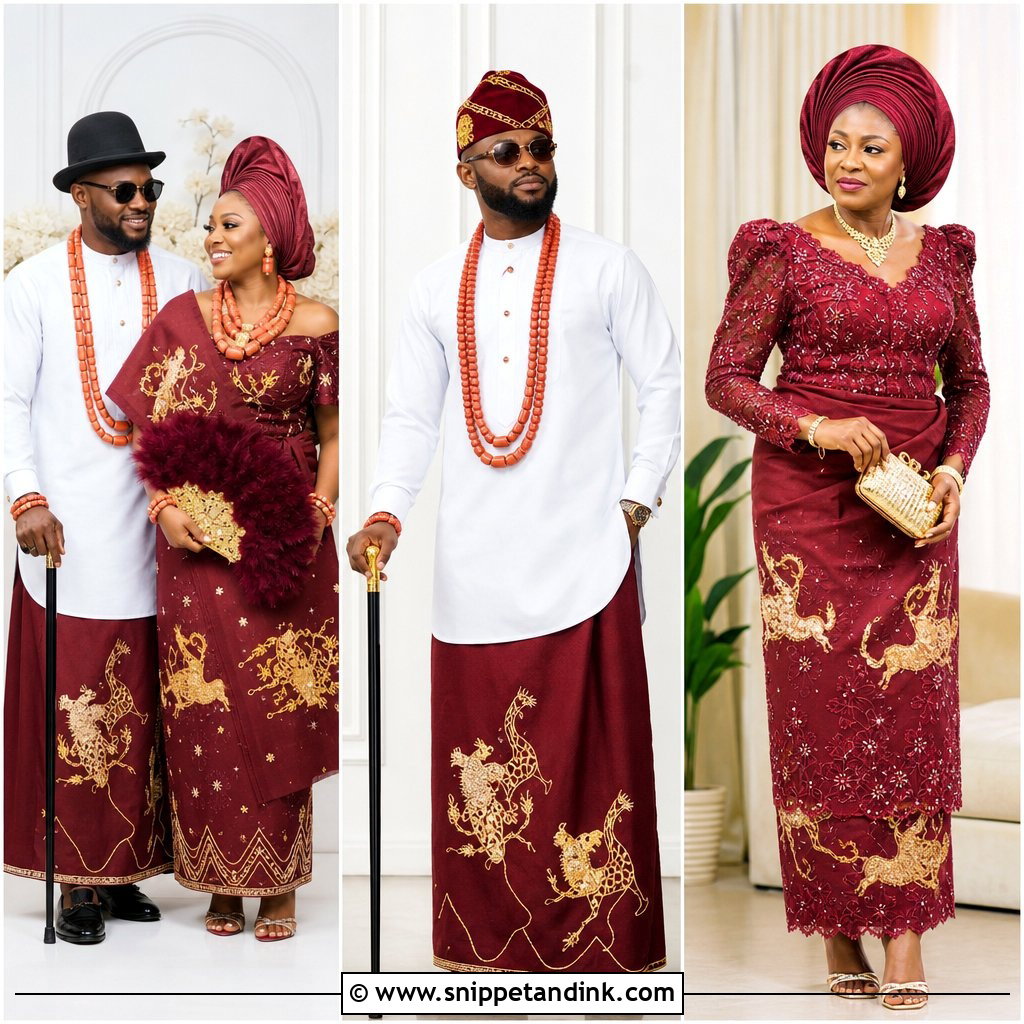
The mother of the bride needs an outfit that looks special in family photos but does not compete with her daughter. Good choices include a wrapper and blouse, boubou, kaftan, peplum gown or a long-sleeve floor-length dress. Prints with gold, burgundy, navy, emerald or purple tend to look regal. Because she will be greeting guests, dancing and taking part in rites, I build in extra ease at the arms and hips. A grand gele and comfortable dressy sandals let her stay on her feet all day.
How Wax Print Holds Up Through a Long Celebration
Traditional ceremonies run long, and cotton tells the truth about a day. It breathes better than satin or polyester, which is a real advantage in a hot hall, but it creases. A fitted skirt will show lines across the lap after the first long sit, so I steam outfits on the morning itself and ask the bride to stand for the main portraits before the ceremony starts, while everything is still crisp.
- Tie the gele after the outfit is on, never before, so you are not pulling a fitted bodice over a finished headpiece.
- Keep a small kit nearby: safety pins, a needle with thread in the main print color, blotting paper and a stain pen.
- If guests will be spraying money during the dance, sequins and loose beading catch notes and threads, so check embellishment is stitched down firmly.
- Carry flat shoes for the later dancing; a hem cut for heels will drag on the floor, so lift it a little when you switch.
Caring for the Outfit Once the Party Is Over
Hand-wash plain Ankara in cold water with a mild detergent, inside out, and dry it in the shade. Strong sun fades wax print faster than washing does. Anything with lace, beads, sequins or boning I send to a dry cleaner who handles embellished work, and I point out any stains, because food oil on cotton sets quickly if it sits.
Store it folded in a cotton bag or wrapped in acid-free tissue rather than plastic, which traps moisture. Refold it a different way every few months so permanent lines do not form along the creases. Many women recut a bridal Ankara outfit into a skirt or blouse later, so keep any leftover fabric with it; that offcut is often the only match you will ever find.
A Tailor You Trust Matters More Than the Print
Every silhouette here can be cut for the bride, her mother, the bridesmaids or a guest; what decides whether it works is fit, fabric quality and how well the whole outfit is planned from gele to shoes. Pick a print that means something to you, a shape that lets you move through the rites, and accessories that stop before they crowd the fabric. Then give your tailor time and at least two fittings. That is what turns a striking piece of cloth into an outfit you can wear all day.
You'll Like These Ideas:



Leave a Reply