
Orange is the color I enjoy most in autumn, and also the one that goes wrong most easily. Pushed too bright, a wedding cake looks like a Halloween bake; pulled back to burnt orange, terracotta or rust beside plenty of ivory, it looks warm and grown-up under candlelight. The cakes below use that range with dried citrus, figs, pampas, copper and seasonal flowers, mostly for barns, vineyards, farms and garden receptions. If you want autumn on the cake table without a theme-party feel, these rustic orange cakes are where I’d start.
Will Your Orange Match the Dahlias?
Orange is a wide family, and three vendors will each picture a different one. The florist’s rust dahlia, the linen company’s terracotta and my burnt orange buttercream only match if we’re all looking at the same physical sample.
Buttercream made with real butter is slightly yellow, so every orange I mix into it leans warmer than the same color on white fondant. That’s why I ask for something I can hold:
- A fabric swatch from the bridesmaid dresses or napkins, not a screenshot.
- A photo of the actual flower variety your florist has ordered, taken in daylight.
- A note on the lighting: candles warm orange further, while cool LED uplighting can turn terracotta muddy.
Pigments can fade if a cake sits in strong sunlight for hours, so if the cake will be near a window, I mix a shade deeper to allow for it.
At the tasting, ask to see a small iced sample in your chosen shade next to the swatch. It takes the baker ten minutes and saves an awkward conversation on the day, when a pumpkin-bright cake arrives beside rust napkins and nobody can fix it.
1. Burnt Orange Buttercream Wedding Cake
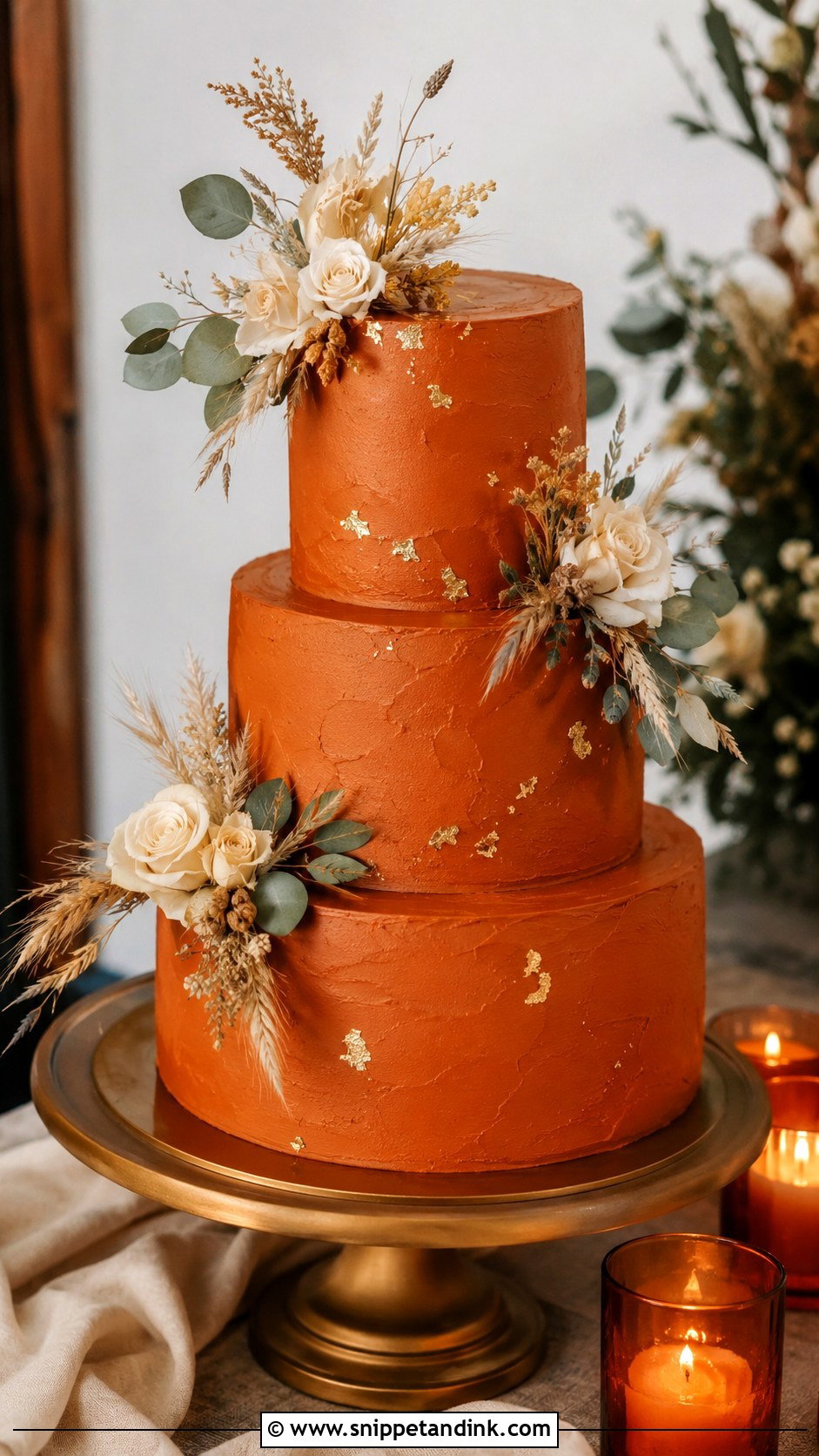
Burnt orange buttercream is the simplest way to bring the season in, and the shade has to be mixed deliberately. A plain orange gel straight into buttercream gives a pumpkin brightness; I knock it back with a touch of brown so it reads as burnt orange. A hand-smoothed, slightly uneven finish on two or three tiers suits the color better than razor-sharp edges. Ivory roses, dried grasses, small gold leaves or eucalyptus finish it, though eucalyptus shouldn’t touch the icing directly. The color matches spice cake, carrot cake, pumpkin cake or vanilla with cinnamon buttercream inside. A wood, ceramic or matte gold stand keeps the attention on the frosting.
2. Rustic Orange Naked Wedding Cake
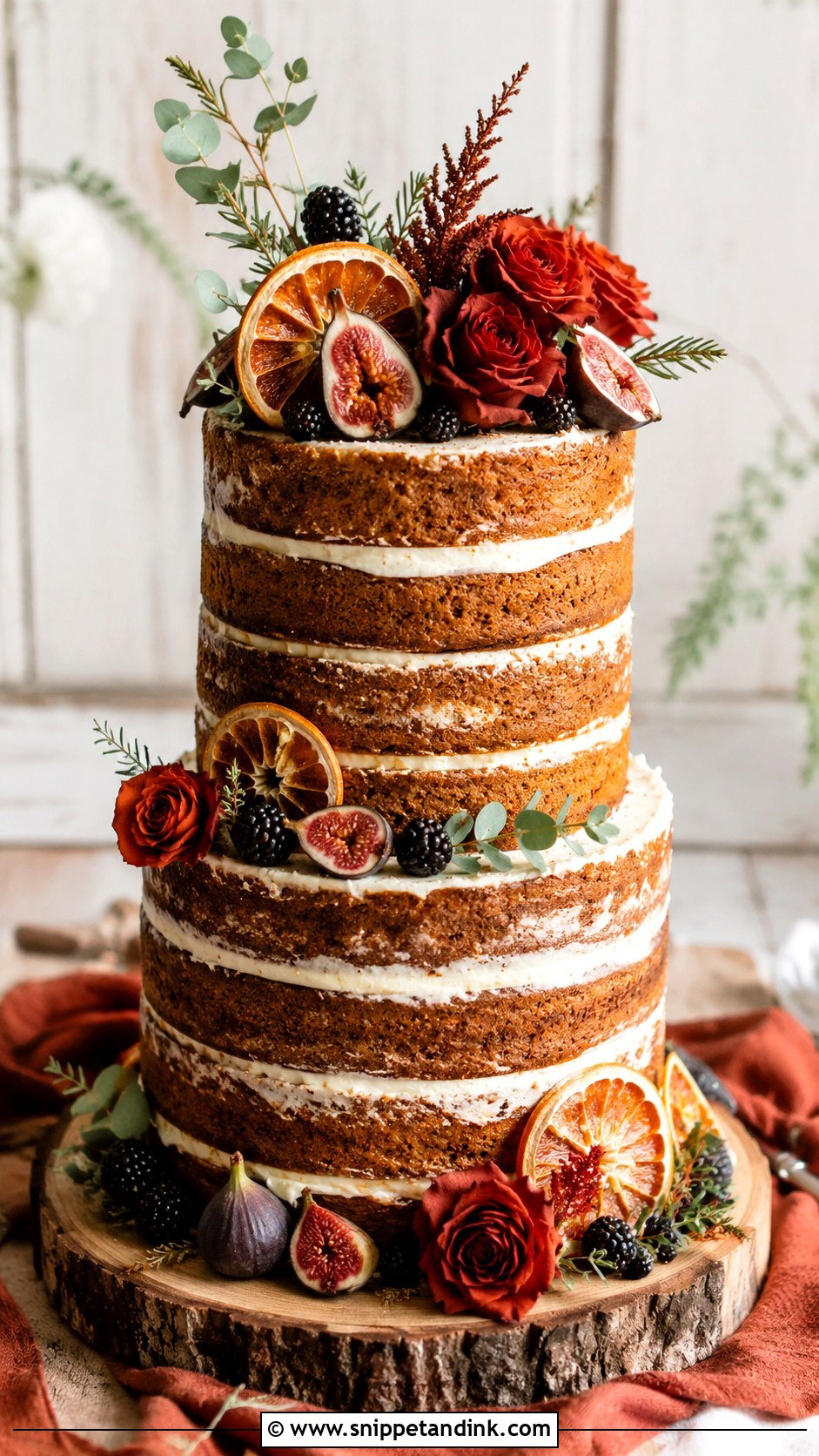
Visible layers give a naked cake its homemade charm, and on a barn table that’s exactly the point. Orange comes in through the decoration rather than the icing: burnt orange roses, dried orange slices, figs, blackberries and small sprigs of greenery. Between the layers, a thin spread of cream cheese frosting, cinnamon buttercream or maple frosting. Spice, carrot or pumpkin sponge has a warmer crumb that looks good exposed. The trade-off is that bare sponge dries out in a warm room, so I syrup the layers and set the cake out late.
3. Terracotta Wedding Cake With Flowers
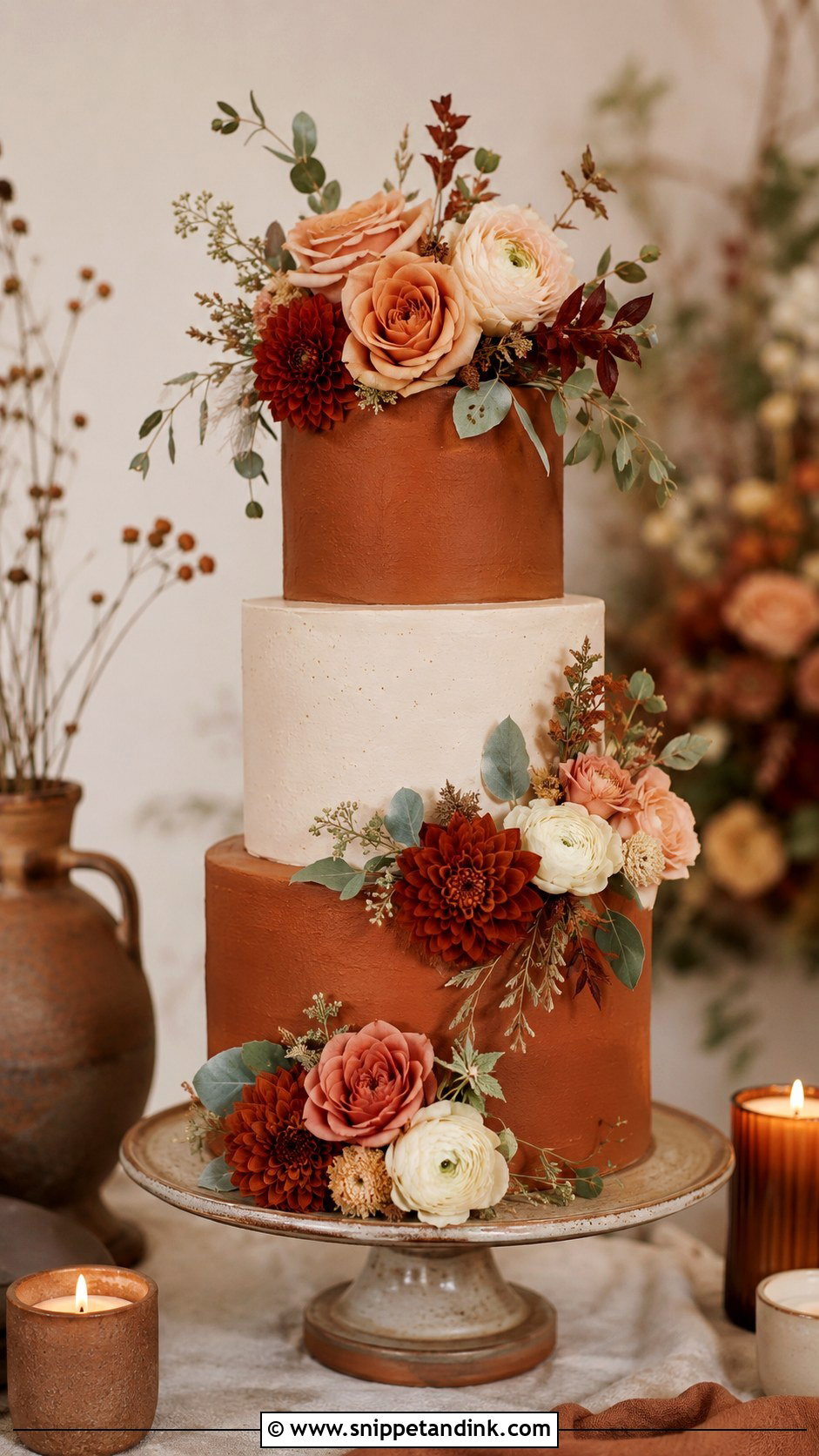
Terracotta is orange with the volume turned down, muted and earthy, and it’s the shade I suggest when a couple says they love orange but worry it will look loud. Buttercream takes it well, and a lightly textured finish gives it a handmade, clay-like look. Ivory, peach, rust and dusty rose flowers with dahlias, garden roses, ranunculus and dried stems round out the palette. It sits comfortably at a vineyard or on wood tables with linen runners. In photos, terracotta holds its color better than bright orange, which can blow out to yellow in sunlight.
4. Orange Fall Wedding Cake With Pampas Grass
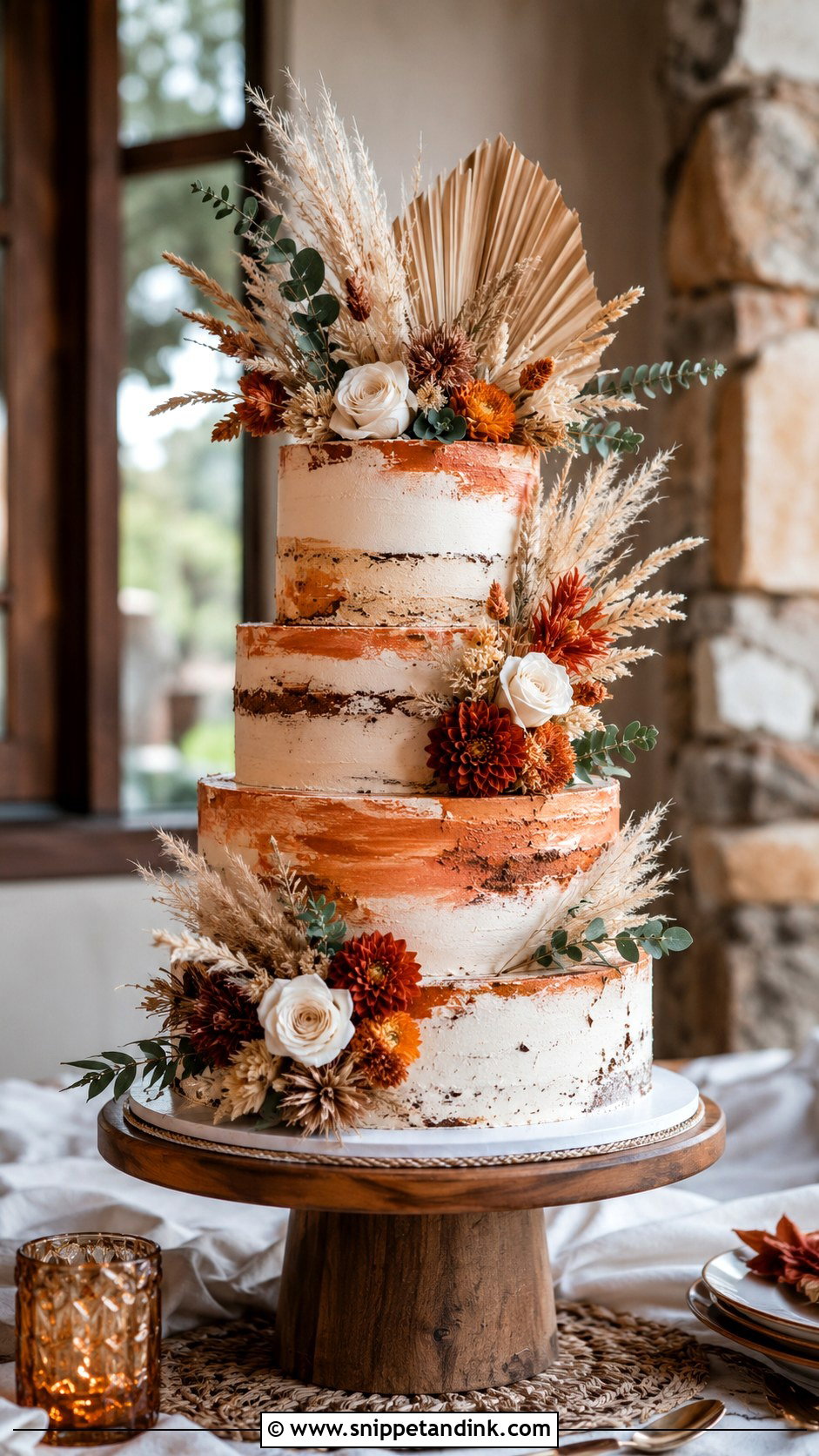
Pampas makes a cake taller and a little wilder. Use burnt orange or ivory tiers with pampas, dried palms, rust flowers and some greenery, enough to feel full without crowding. Tall tiers or a slim two-tier cake carry the dried pieces best. Pampas sheds fine fibres and isn’t food-safe, so I insert it into picks or a small posy holder well away from the cutting area. Semi-naked frosting reads rustic, smooth buttercream reads modern. A wood slice and a few amber candles nearby complete the table.
5. Rustic Orange Wedding Cake With Dried Citrus
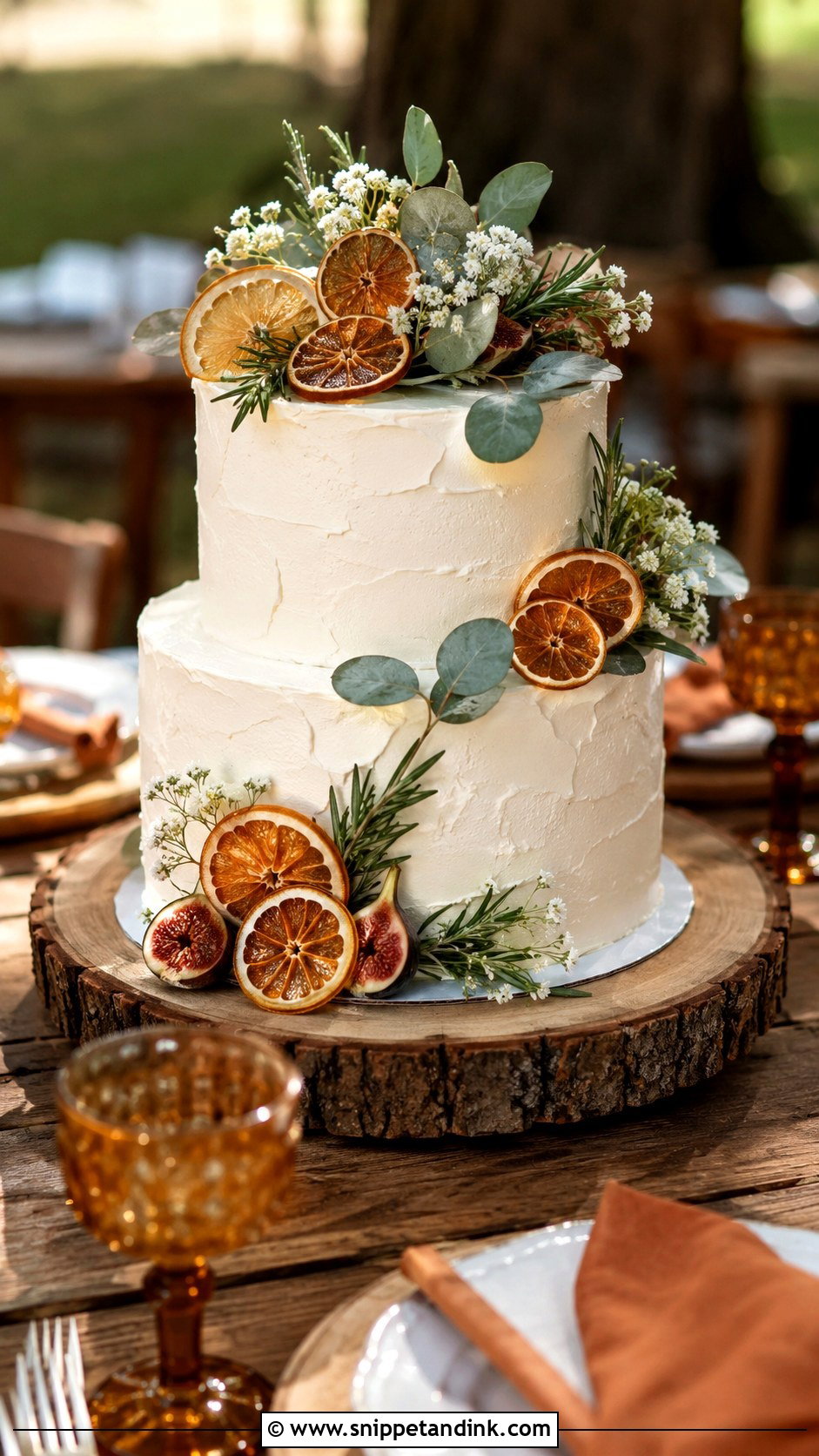
Dried orange slices are my favourite fall decoration because they glow when light passes through them. They look sharpest on ivory buttercream, terracotta frosting or a semi-naked finish, layered with rosemary, thyme, figs and small flowers. Oven-dried slices need to be fully crisp; slightly tacky ones weep sugar onto the icing over a few hours. Inside, orange almond cake, spice, honey cake or vanilla with orange curd keeps the flavor tied to the decoration. It’s a good route for couples who want a seasonal cake that isn’t mainly flowers.
6. Burnt Orange Wedding Cake With Gold Leaf
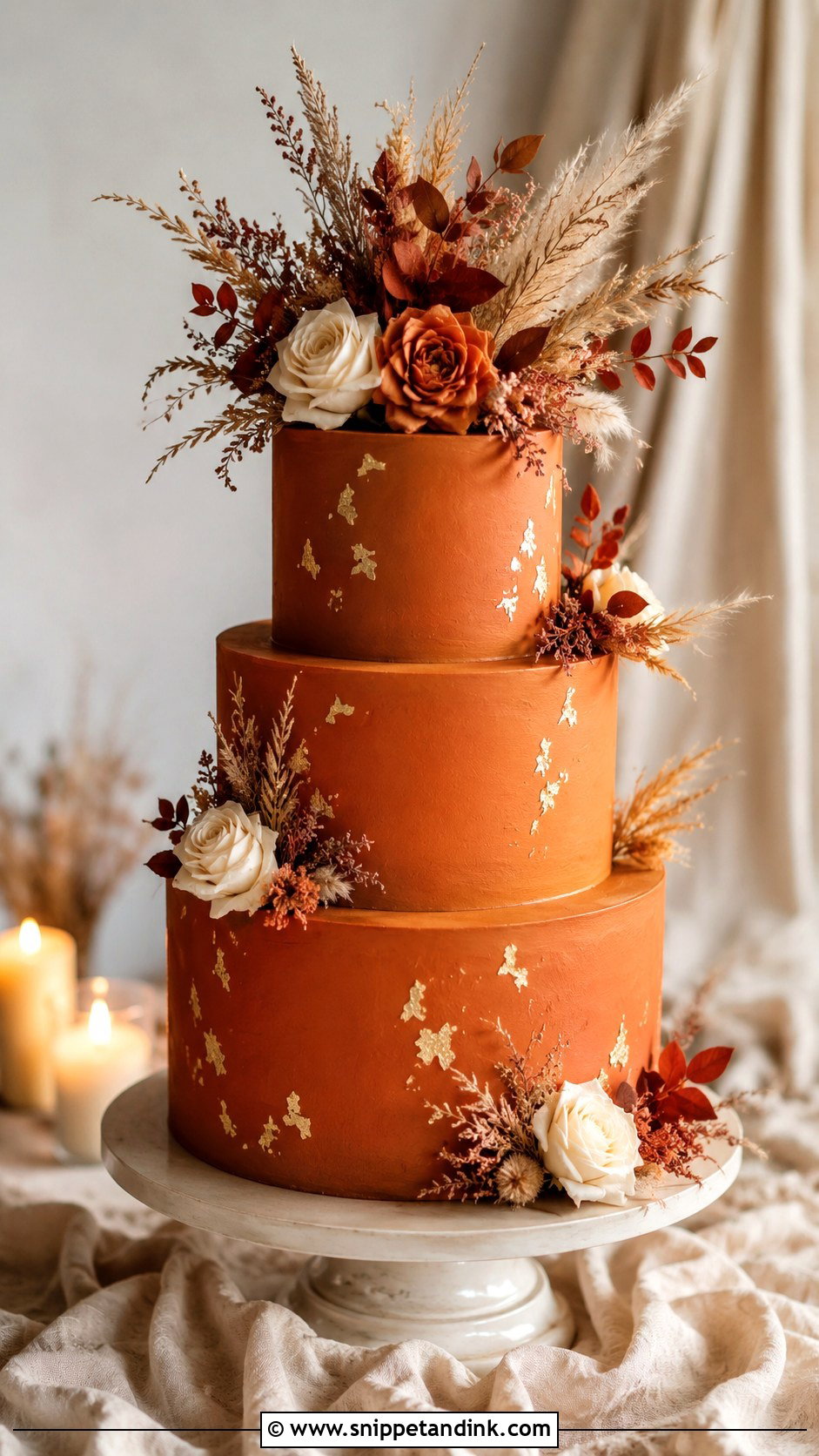
Matte burnt orange against small flecks of edible gold leaf is a combination that comes alive at night. I apply the leaf with tweezers or a dry brush in a scatter, never a full coat, so the cake keeps its rustic feel. Ivory flowers, dried grasses or rust blooms soften it. It suits an evening reception where candlelight catches the metal, and it scales from a single tall tier to a three-tier cake. Gold leaf sticks to buttercream best when the icing is just set but still slightly tacky.
7. Orange Ombre Fall Wedding Cake
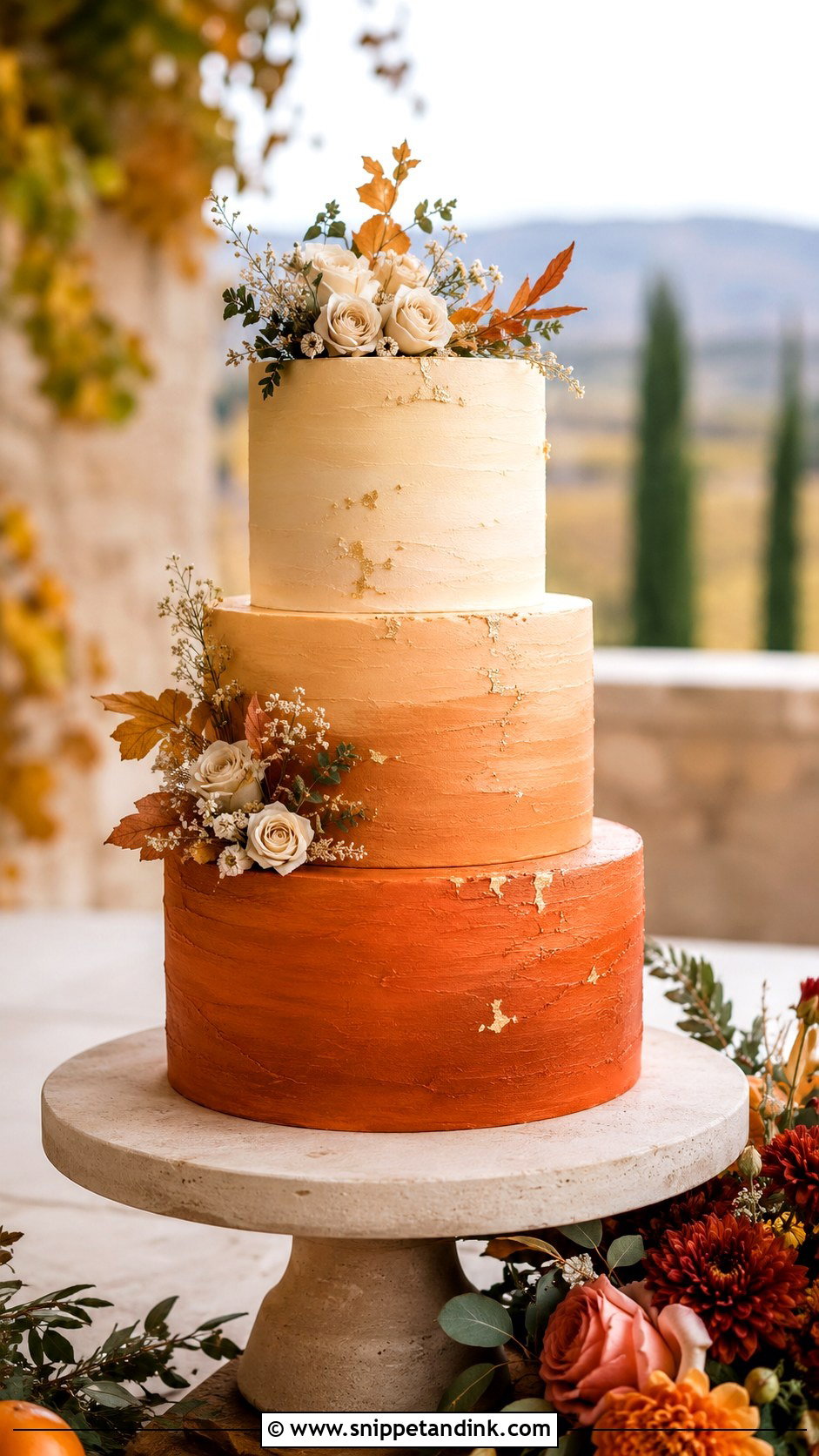
An ombré that fades from ivory through peach and terracotta to burnt orange gives a sunset effect on the tiers. Buttercream is the right medium because it blends; fondant ombré tends to look striped. The hard part is keeping each tier evenly toned, which means mixing all the shades from one batch before any icing goes on. A few flowers, dried leaves or gold accents are enough, since the gradient is the decoration. It fits a vineyard or sunset ceremony, and feels artistic rather than trendy.
8. Rustic Orange Wedding Cake With Autumn Leaves
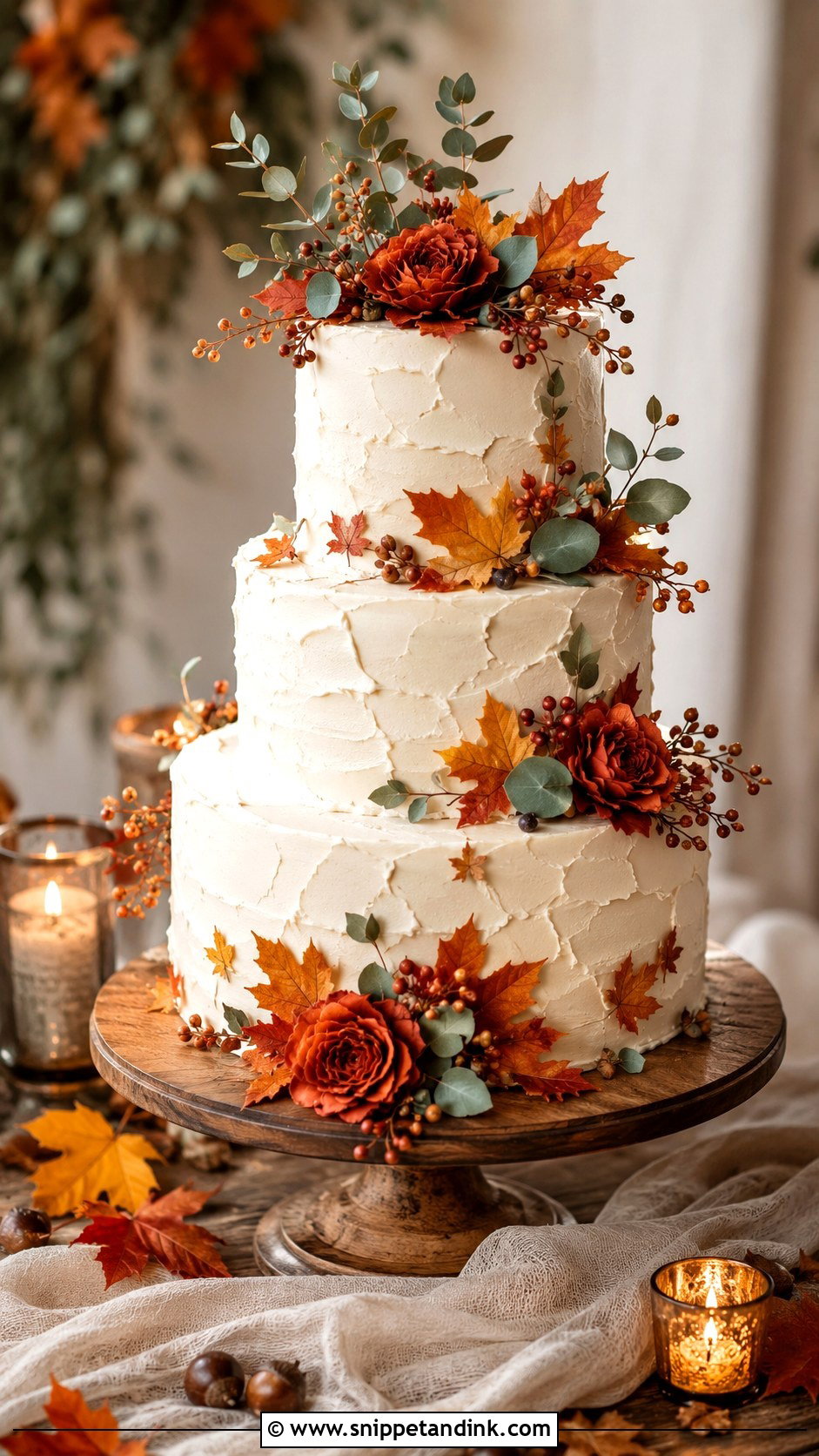
Leaves are the most obvious fall motif, so restraint matters. Sugar leaves, hand-painted leaves or small fondant cutouts in rust, copper, amber and deep gold look refined on an ivory, cream or soft terracotta base. I vein sugar leaves and dust them in two or three tones so they look like real foliage, not cutter shapes. A textured buttercream finish makes the cake cozy. Add a few berries or small flowers for depth. Too many leaves and it tips into a harvest-festival bake.
9. Orange Wedding Cake With Burgundy Flowers
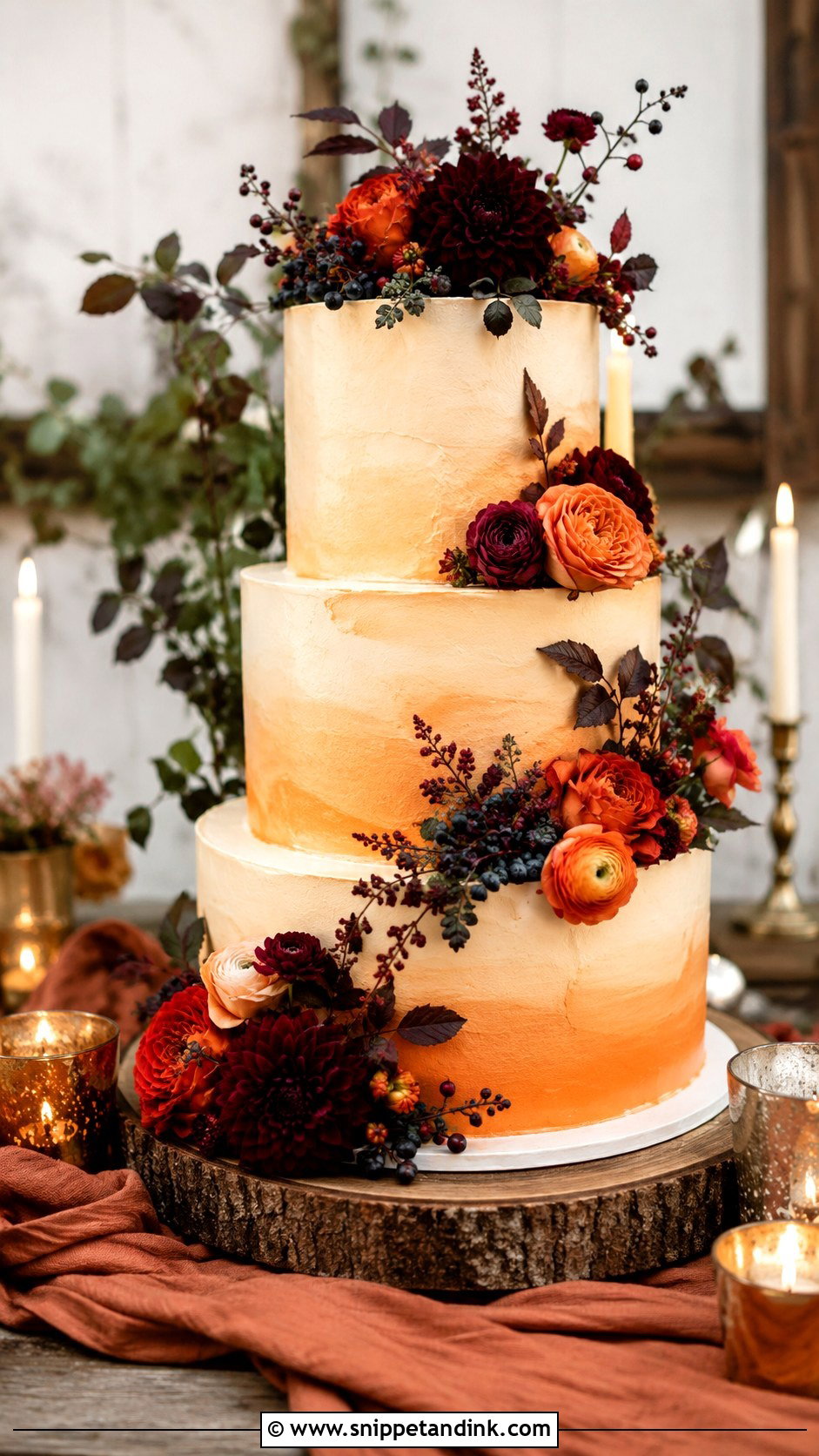
Burgundy deepens orange into something moody. On ivory, cream or soft orange buttercream, burgundy dahlias, rust roses, peach ranunculus and dark greenery give strong contrast that still reads warm. It suits barns, lodges and wooden tables, and the flower colors hold clearly in photos. Very dark flowers can bleed pigment onto pale icing if they sit there for hours, so I put a small barrier under the heaviest blooms. Chocolate spice, pumpkin or vanilla with caramel filling all pair well.
10. Terracotta And Ivory Wedding Cake
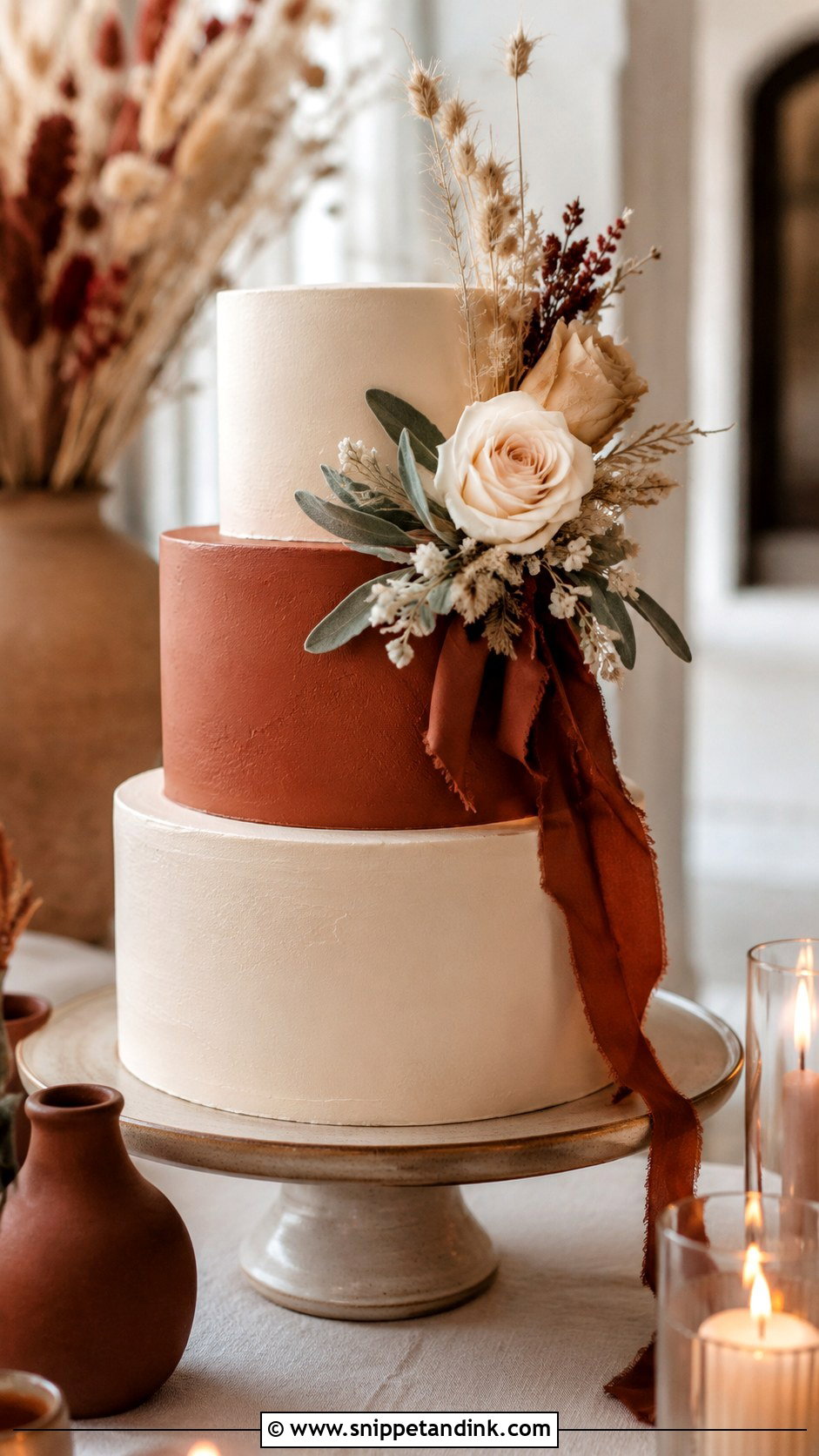
Mostly ivory with a single terracotta element keeps the cake light while still clearly autumn. I’d bring the color in through one middle tier, a few floral accents, a ribbon or painted buttercream strokes, and leave the rest bare so the design breathes. Dried flowers, soft roses and sage greenery finish it. It sits naturally with neutral linens, wood chairs, clay vases and cream candles. For couples who want warmth without a dark palette, it’s the most forgiving option here.
11. Orange Pumpkin Wedding Cake
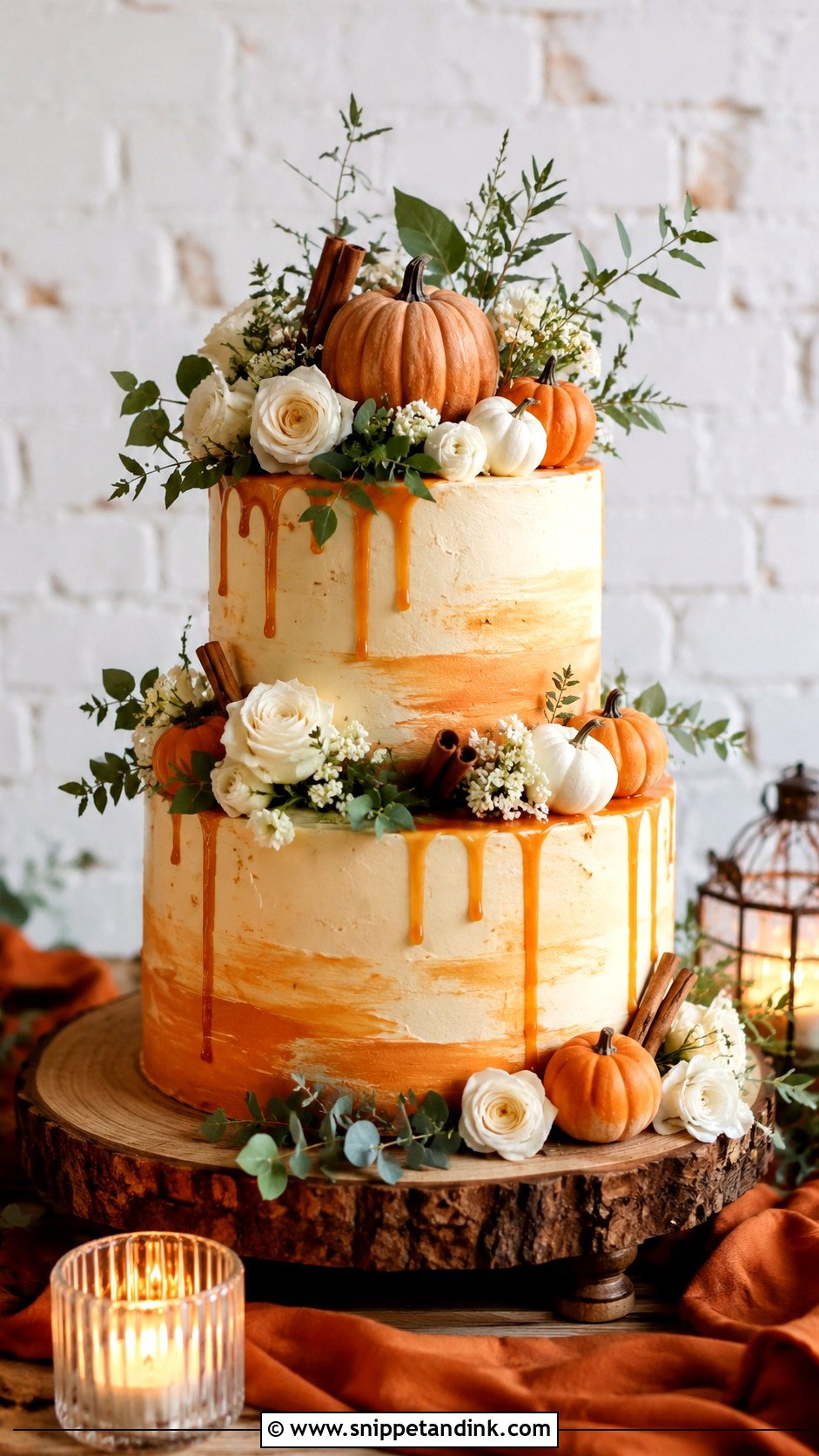
Pumpkins on a wedding cake can turn cute very quickly. Keep them small and sculptural: a few modelled sugar pumpkins in muted orange or ivory, natural greenery and plain buttercream, not cartoon faces or bright candy colors. Spice, pumpkin or brown sugar sponge makes the inside match, with caramel drizzle, cinnamon buttercream or maple filling. Pumpkin sponge is denser and moister than vanilla, so it needs good support when stacked. Barn weddings, farm receptions and October dates suit it best.
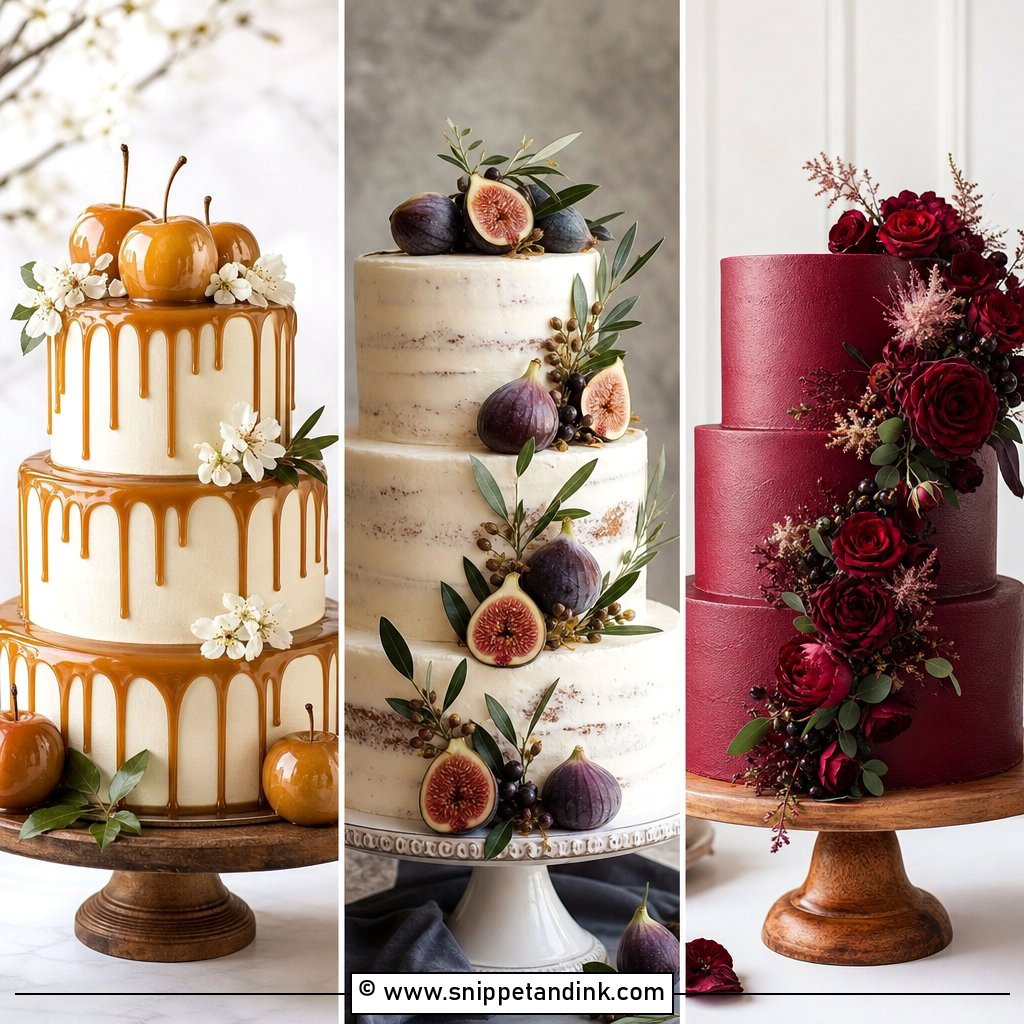
12. Rustic Orange Wedding Cake With Figs
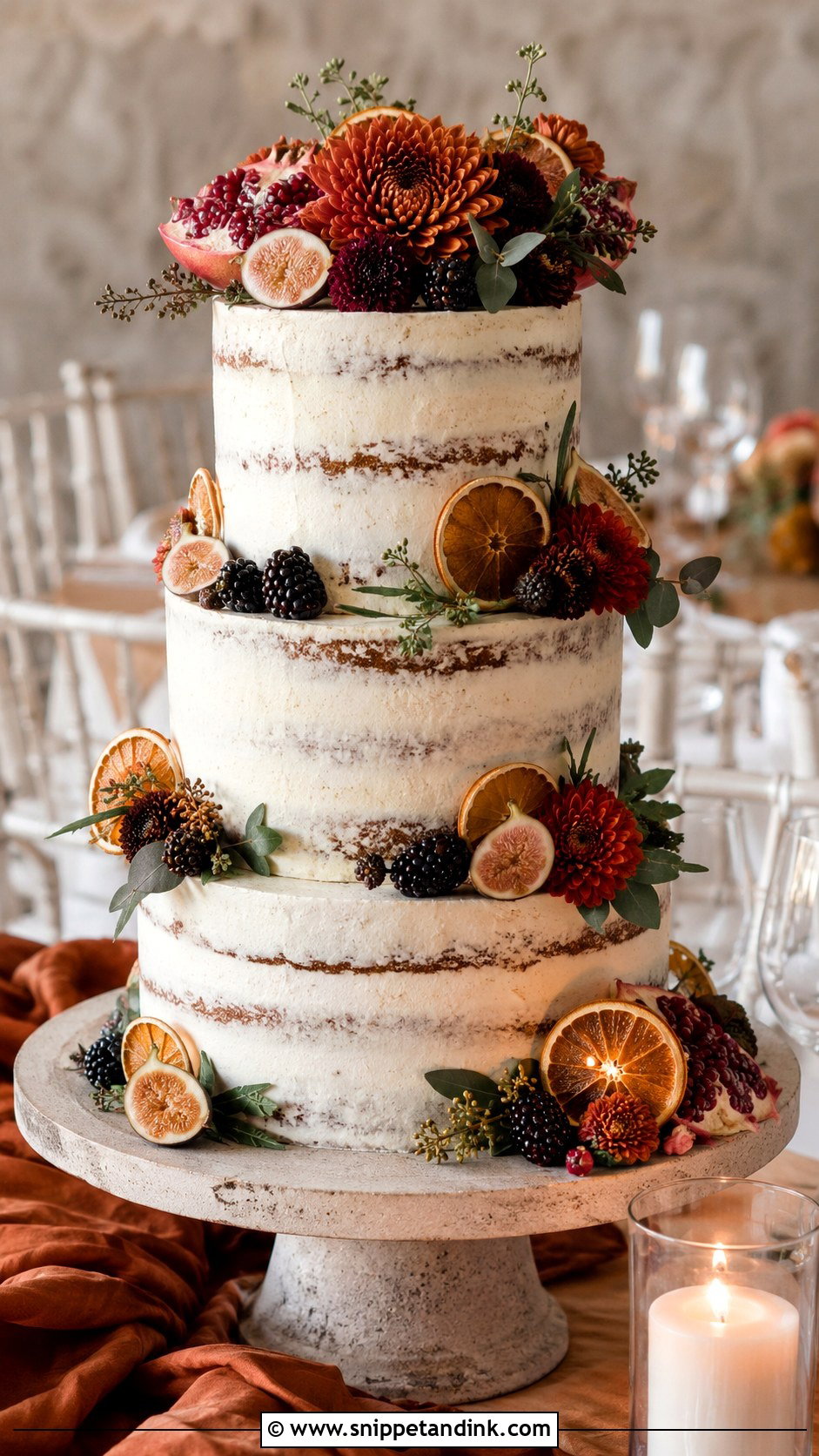
Figs are moodier than anything else in this collection. Purple skins and warm centers sit well on burnt orange, ivory or a semi-naked cake, with blackberries, pomegranate seeds, dried orange slices and a few rust flowers. Cut figs leak juice, so I halve them at the venue and blot the faces before they go on. The look is abundant without clutter, at home at a vineyard dinner or candlelit reception. Honey, spice, almond or vanilla with fig jam continues the theme inside.
13. Burnt Orange Drip Wedding Cake
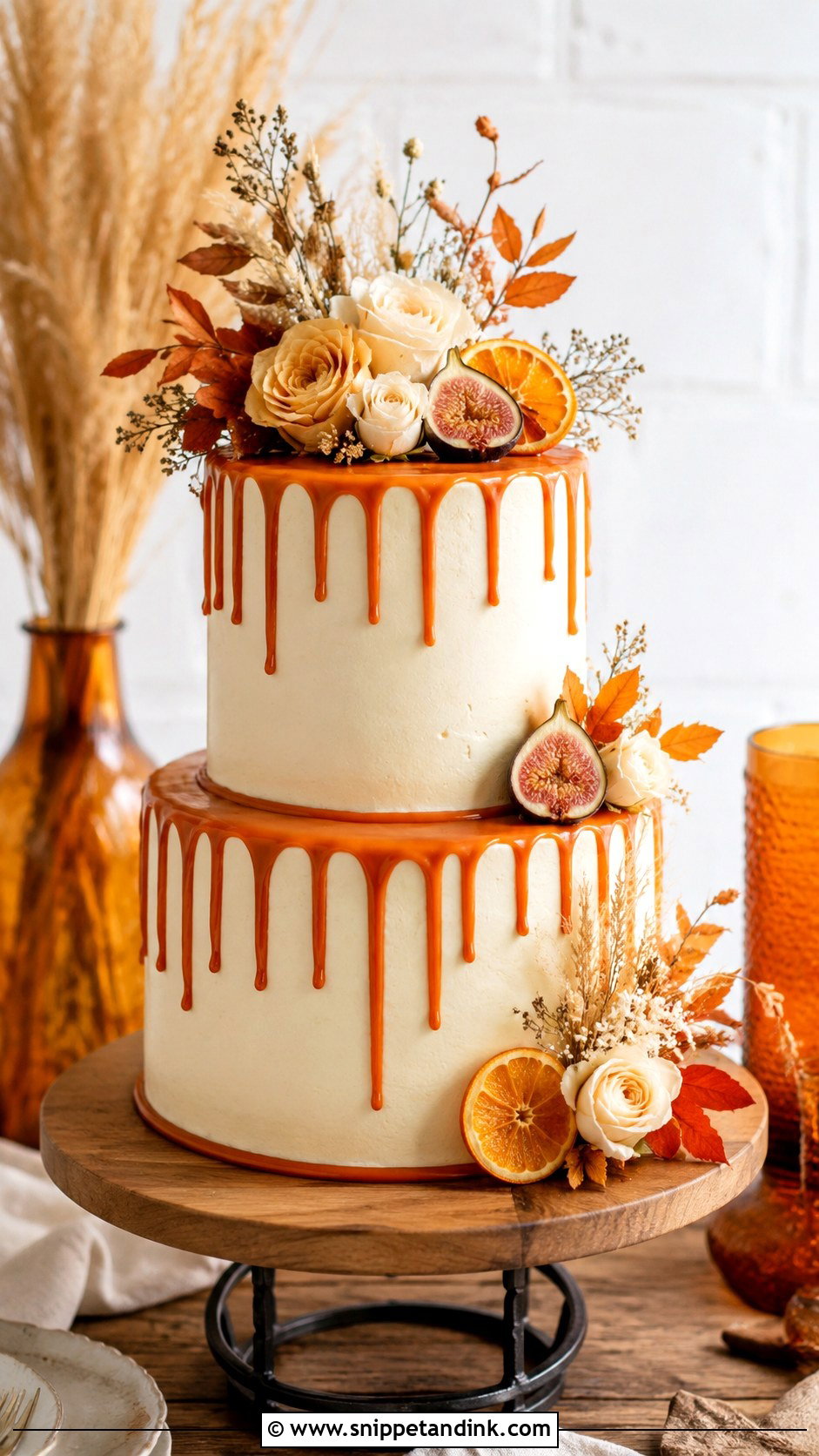
A drip gives rustic fall a modern edge. Ivory or cream buttercream with a smooth burnt orange drip, on the top tier or running over several, is made from tinted white chocolate ganache or caramel. White chocolate takes color unpredictably and can seize with water-based dyes, so I use oil-based or powdered color for it. Dried florals, small roses, figs or citrus slices finish the top. Wood trays, amber glass and candles around it make the dessert table.
14. Orange Rustic Wedding Cake With Succulents
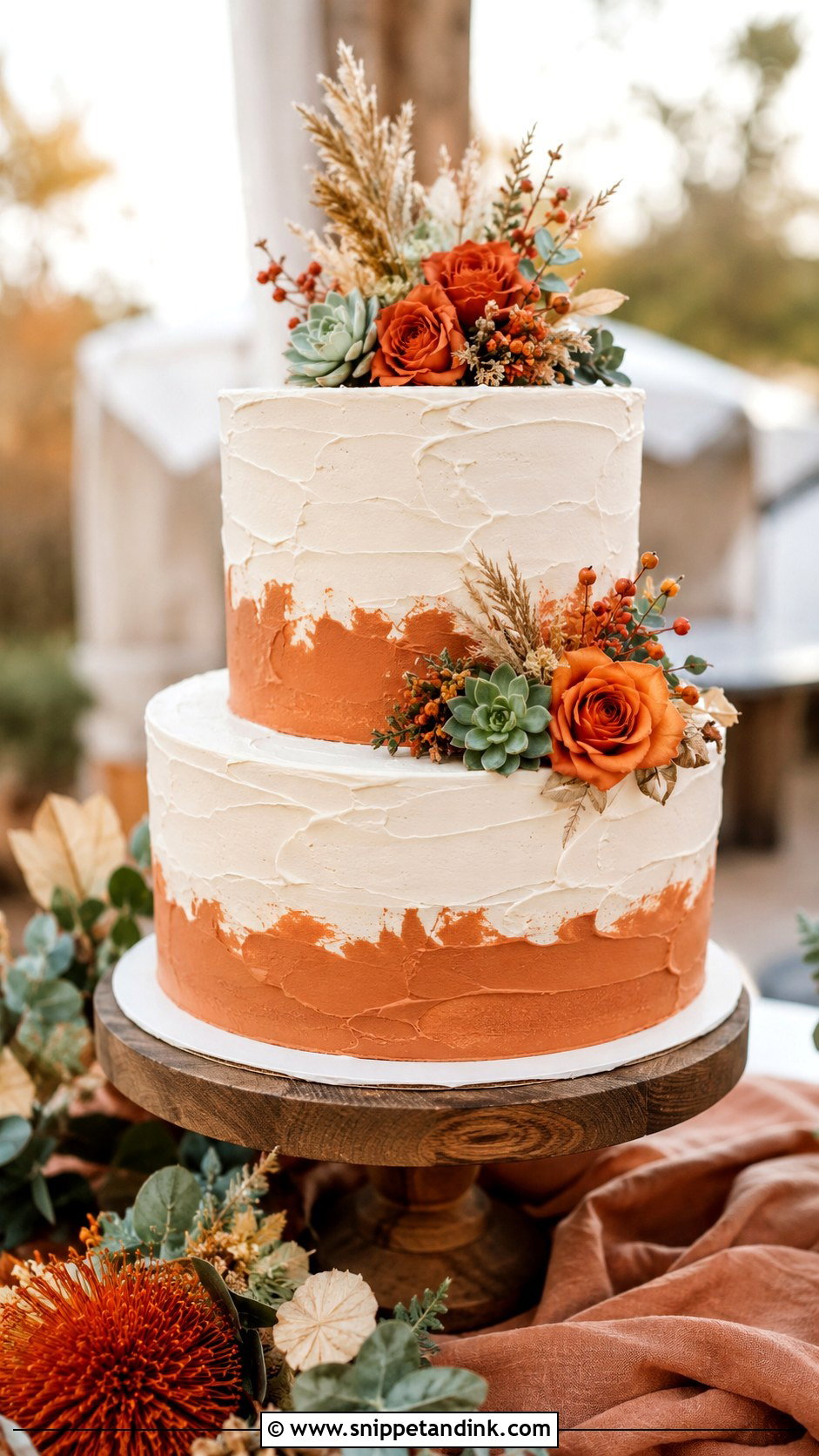
Succulents cool the orange down. Their soft greens and dusty blues sit against burnt orange, terracotta and rust without competing. On an ivory or semi-naked base, small succulents go in with orange roses, dried grass and a few berries. Real succulents carry soil and aren’t edible, so I wrap the bases or use sugar versions, which hold their shape perfectly. A textured buttercream finish keeps it relaxed. Vanilla bean, almond, carrot or cinnamon spice all suit it, and it looks right at a desert venue or garden reception.
15. Rustic Orange Wedding Cake With Wooden Stand
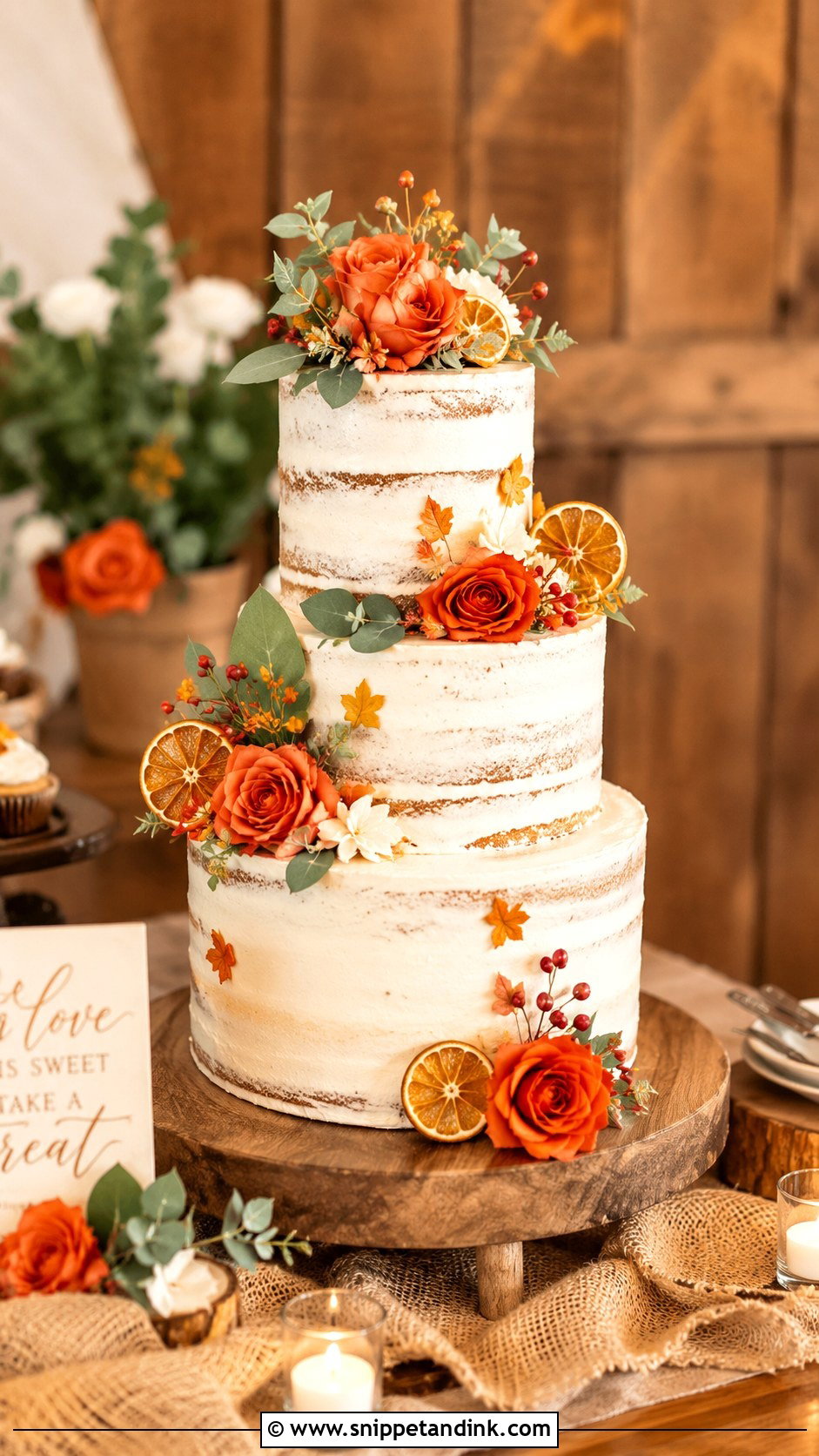
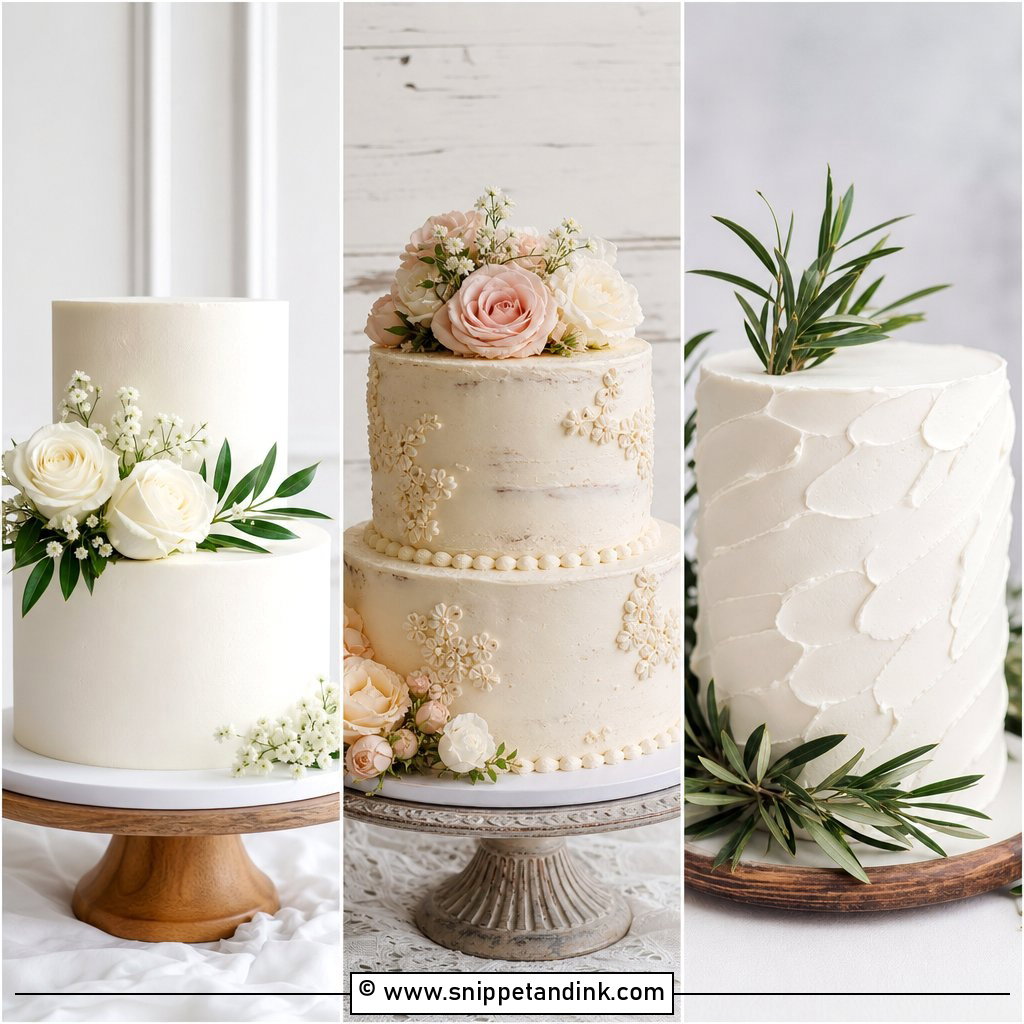
The stand often decides whether a cake reads rustic at all. Burnt orange buttercream, ivory semi-naked layers or terracotta frosting on a wooden stand fits barns, forests and fall venues with no extra effort. A wood slice must be sealed and completely flat; an uneven slice tips a tiered cake, and raw wood can bleed sap. I always put a cake board on top. Orange roses, dried citrus, berries and greenery around the base finish it, and the height helps it stand out on a crowded dessert table.
16. Orange Fall Wedding Cake With Copper Accents
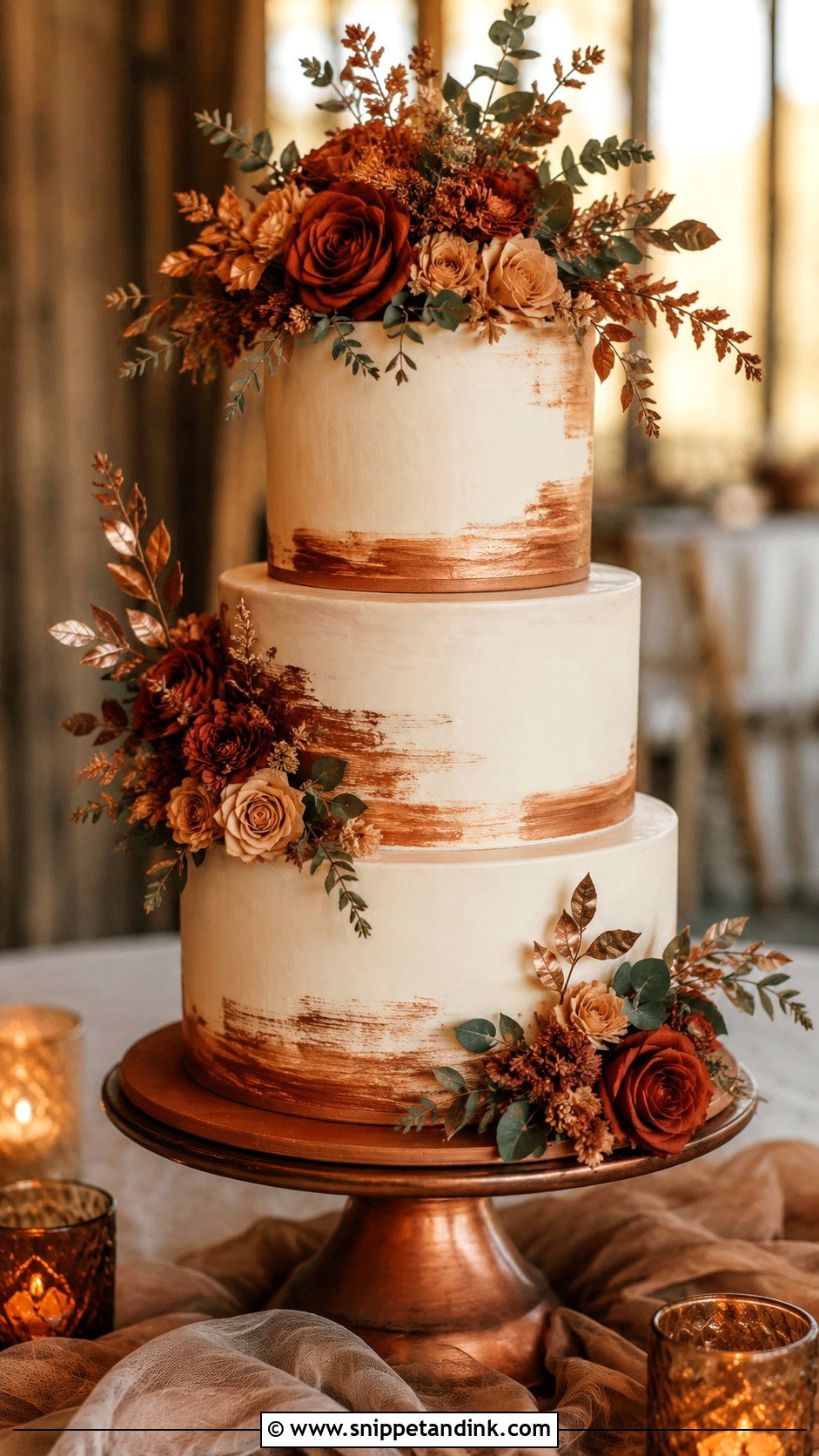
Copper shares orange’s warm undertone, so the two never clash. I use it sparingly: painted brushstrokes, a little foil, a slim topper or a metallic ribbon at each tier base. Burnt orange buttercream, ivory frosting or terracotta fondant all work under it. Dried flowers, rust roses and warm greenery stop it looking too shiny. Copper ribbon should sit on a strip of food-safe film or fondant, because metallic fabric can stain buttercream. It pairs well with bronze chargers and amber glass at an evening reception, giving a polished, modern finish to a rustic cake.
17. Orange Wedding Cake With Cream Cheese Frosting
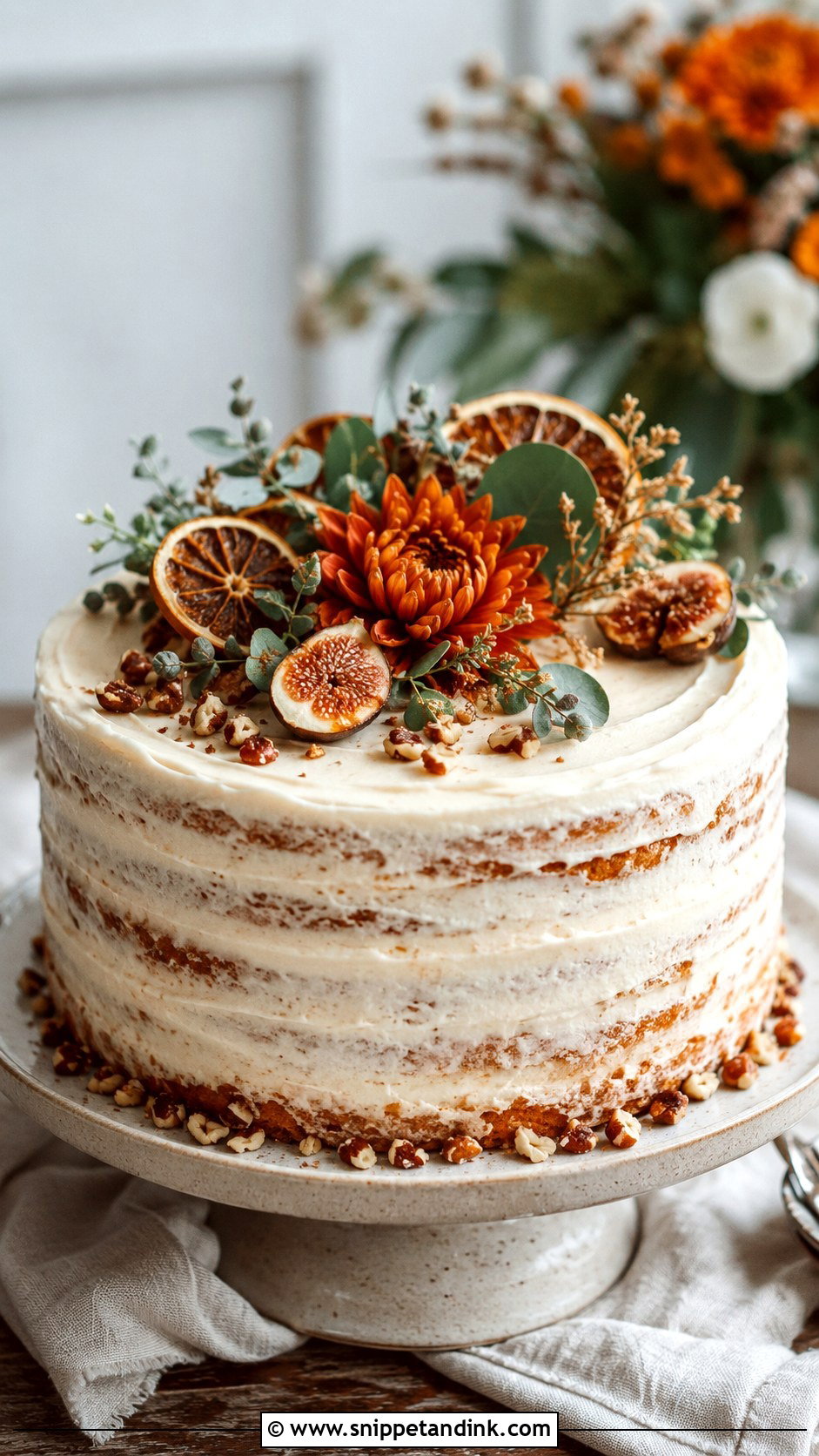
Cream cheese frosting tastes like autumn baking, and it belongs on carrot, pumpkin, spice or red velvet. A lightly textured finish with burnt orange flowers, pecans, dried citrus or a few figs suits it; I don’t fight for a perfectly smooth coat, since a few natural swirls look warmer. It is softer than buttercream and should stay chilled until close to serving, which makes it a better fit for a cool barn than a warm tent. When the couple cares most about taste, this is the one I’d point them to.
18. Rustic Orange Cupcake Wedding Cake
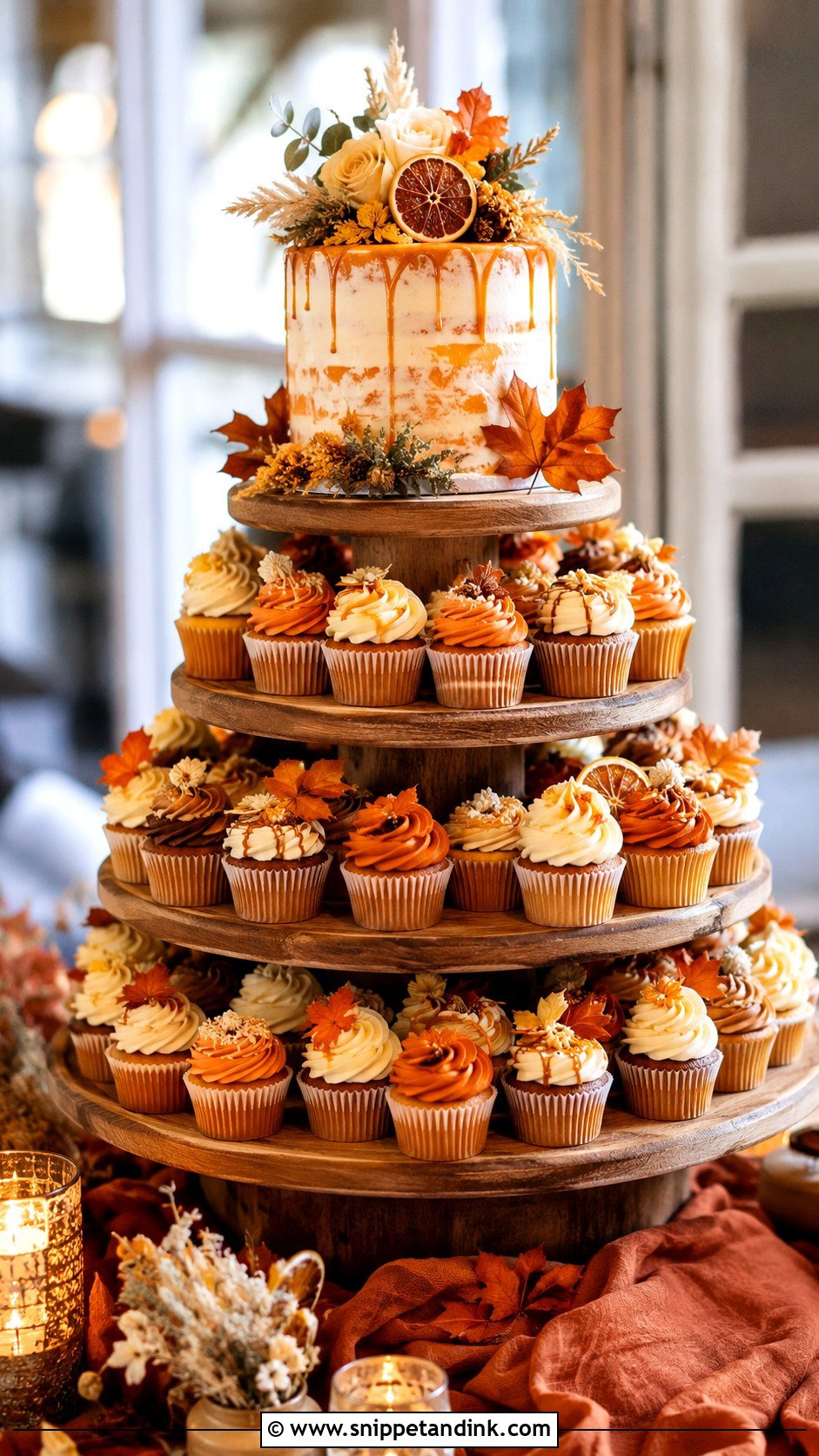
A rustic orange cupcake wedding cake gives you height and easy serving in one. Cupcakes fill a tiered wood or metal stand with a small cutting cake on top, decorated in burnt orange buttercream, ivory frosting, cinnamon swirls or terracotta piped flowers. Dried flowers, tiny citrus slices, sugar maple leaves or caramel drizzle carry the season. Guests help themselves, which suits a backyard or barn reception. Make sure the stand’s tiers are spaced tall enough for piped swirls, or they’ll get crushed.
19. Orange Floral Wedding Cake With Buttercream
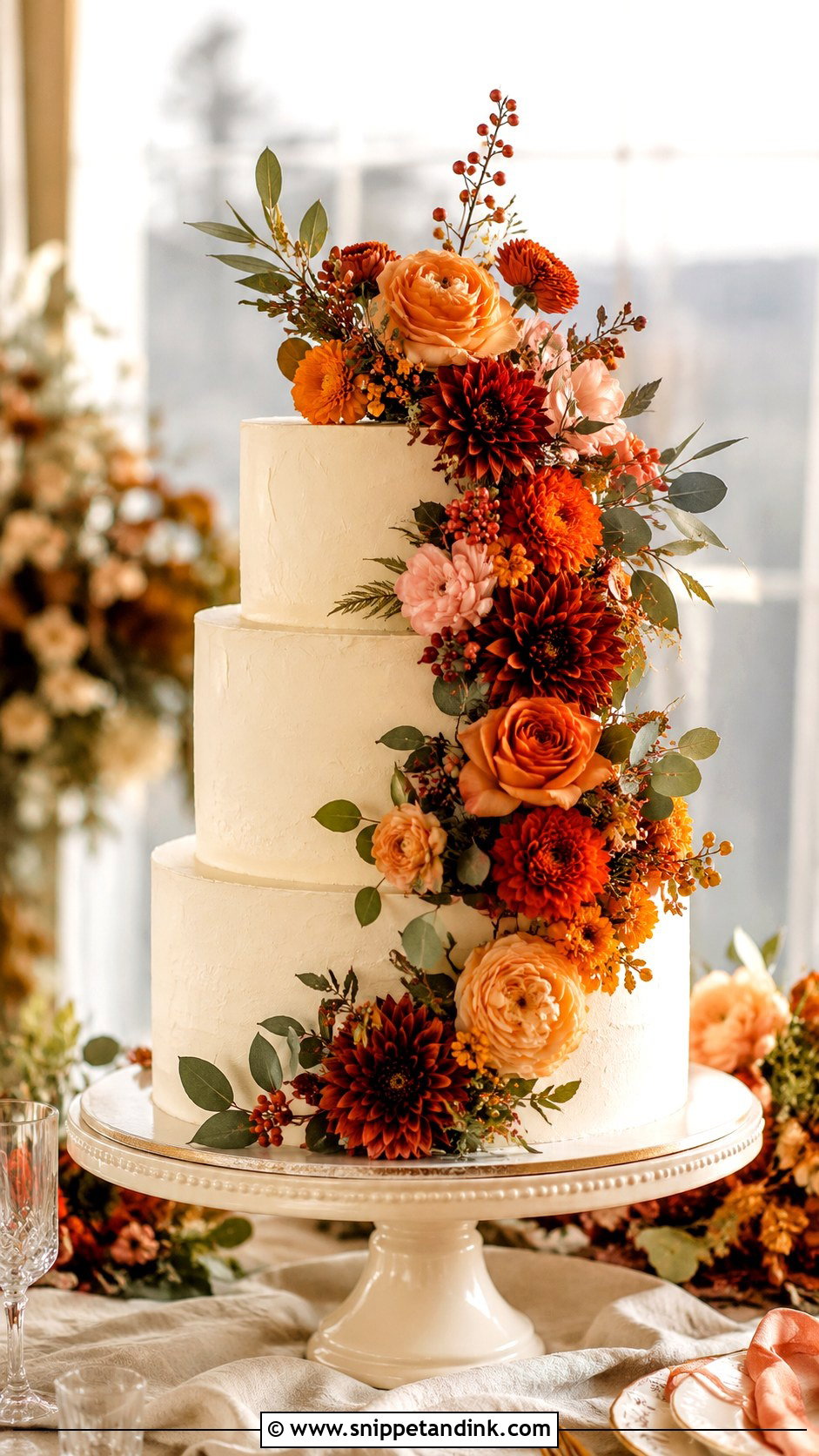
Smooth ivory or soft terracotta buttercream with a single cascade of orange flowers is a classic shape that’s easy to tailor. Roses, dahlias, marigolds, ranunculus and mums all work; dahlias and mums hold up better out of water than ranunculus. Mix them with dried grasses, eucalyptus kept off the icing, or small berries. Keep piping light so it doesn’t compete with the flowers. It fits nearly any fall venue and stays warm without looking overdone.


20. Small Rustic Orange Wedding Cake
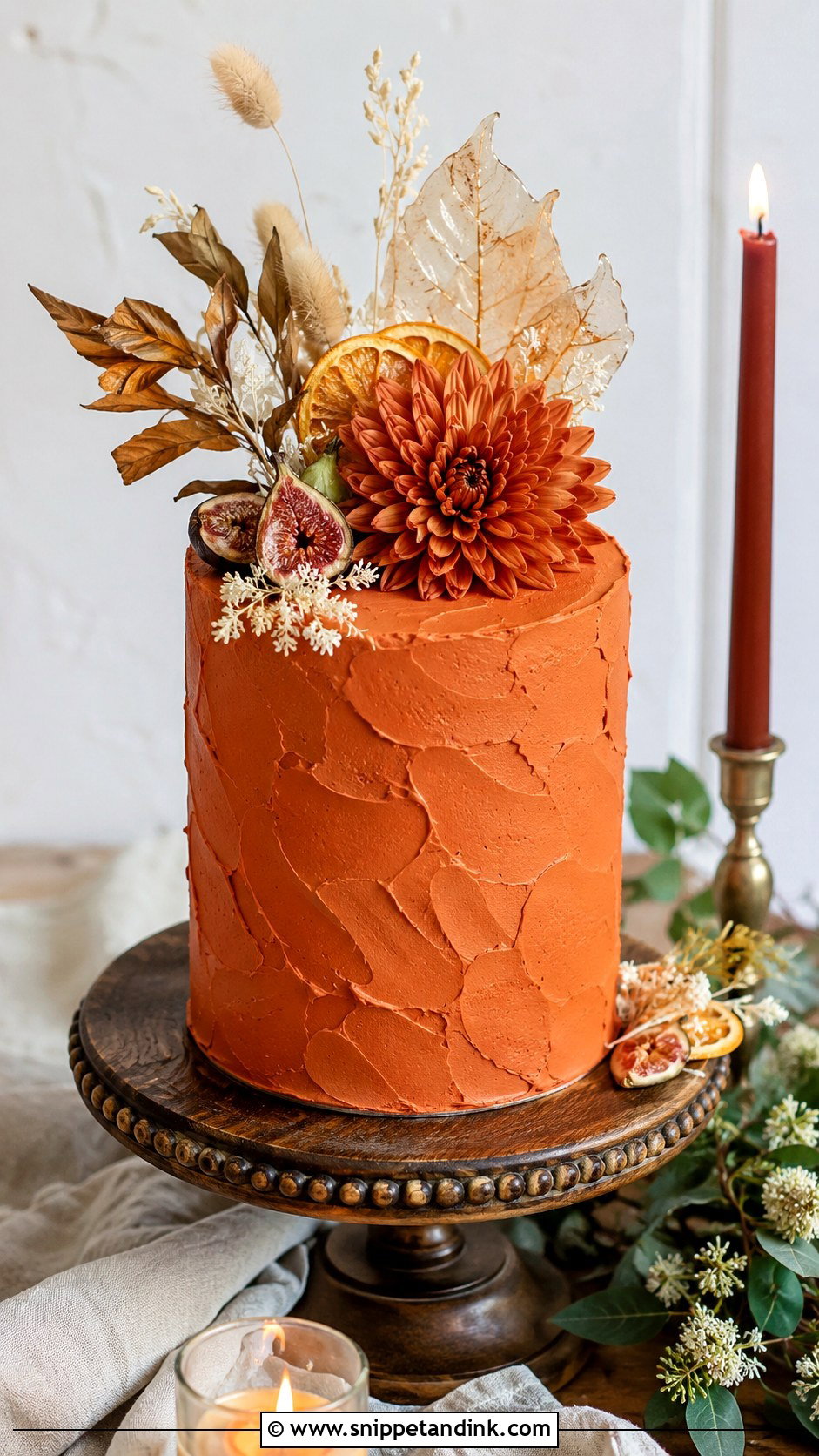
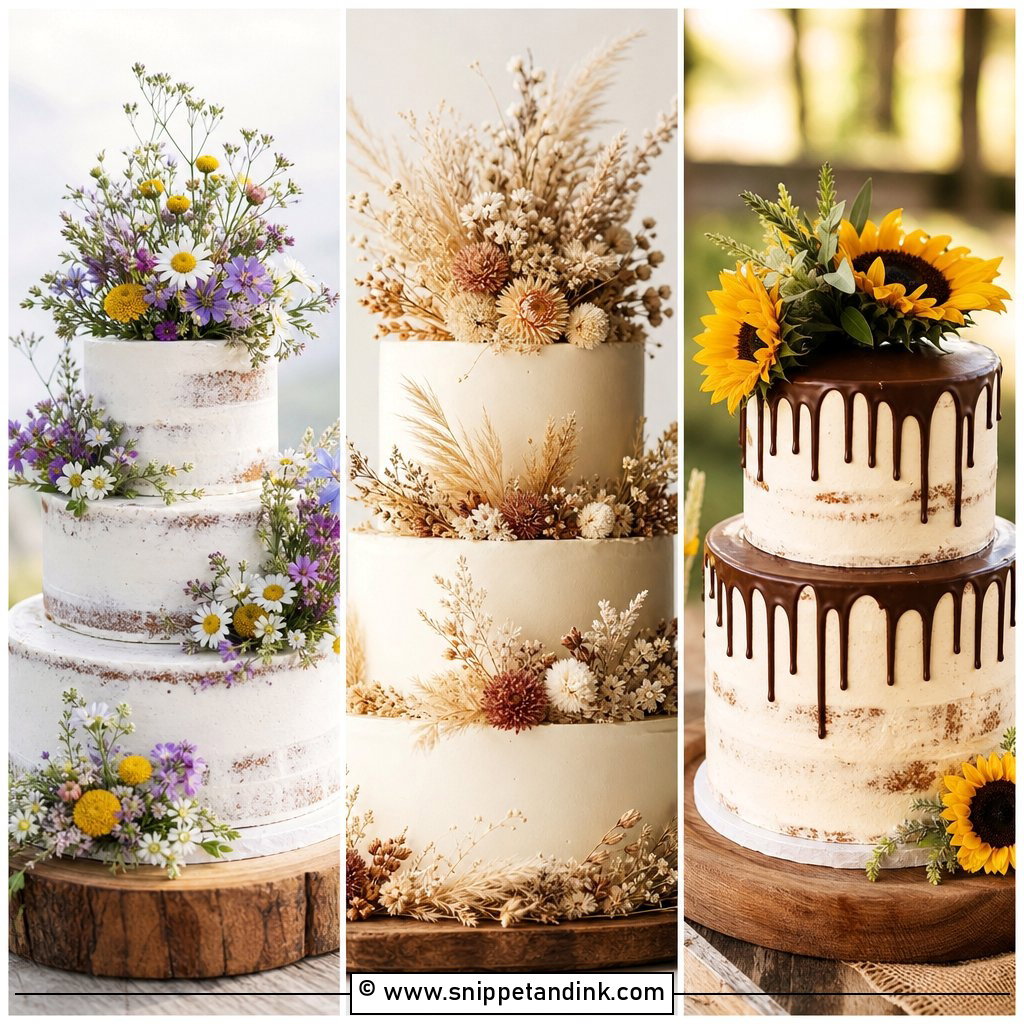
Small cakes suit elopements and intimate receptions, and a tall single tier or petite two-tier can carry as much presence as a big one. Burnt orange buttercream, ivory semi-naked or a terracotta textured finish all suit it. One statement flower plus a few dried stems, figs, citrus slices or sugar leaves is enough; on a small cake, too many elements look crowded fast. A wood stand with candles and linen frames it. You don’t need a huge dessert to mark the moment.
Pampas, Eucalyptus and Cut Figs Near the Icing
Fall cakes borrow a lot from the florist’s bucket, and not all of it belongs near food. My rule is that anything not edible sits on a barrier, in a pick, or on the board beside the cake.
Keep off the icing
- Eucalyptus, which is not safe to eat; lay it on the board or on a strip of parchment.
- Pampas and dried grass, which shed fibres into the frosting.
- Real succulents, which carry soil at the root.
- Florist-grade flowers that may have been sprayed; wrap every stem.
Edible, with timing
Figs, blackberries and pomegranate seeds go on at the venue, because their juice runs once they’re cut. Dried orange slices and sugar leaves can travel on the cake. If the barn is cold in the morning and warm by evening, ask for the cake to arrive late; moving a chilled fondant cake into a warm, crowded room makes it sweat.
Your Venue Already Chose Half the Palette
Orange in autumn can go soft with terracotta and ivory, bold with burnt orange buttercream, romantic with flowers or natural with figs, dried citrus and pampas. Let the venue lead. A barn suits semi-naked layers on a wooden stand. A vineyard suits figs and gold leaf. A cozy fall reception suits pumpkin, spice, maple and cream cheese frosting. Choose the flavor you love first, then dress it in the orange that fits the room.
You'll Like These Ideas:




Leave a Reply