
Indian wedding clothes have become lighter and sharper without losing the craft. Pre-draped sarees, cape dupattas, separates you can rewear, sculpted blouses and pared-back lehengas all sit next to heavy bridal pieces now, and most of them are far easier to dance in. I dress brides and their families for the whole run of functions, and the question I always start with is simple: which event, what weather, and are you the bride or a guest? A bride can carry dense embroidery and layered jewellery; a guest usually looks better with one strong detail. The 20 outfits below are styled from earrings to shoes, with notes on who each one suits.
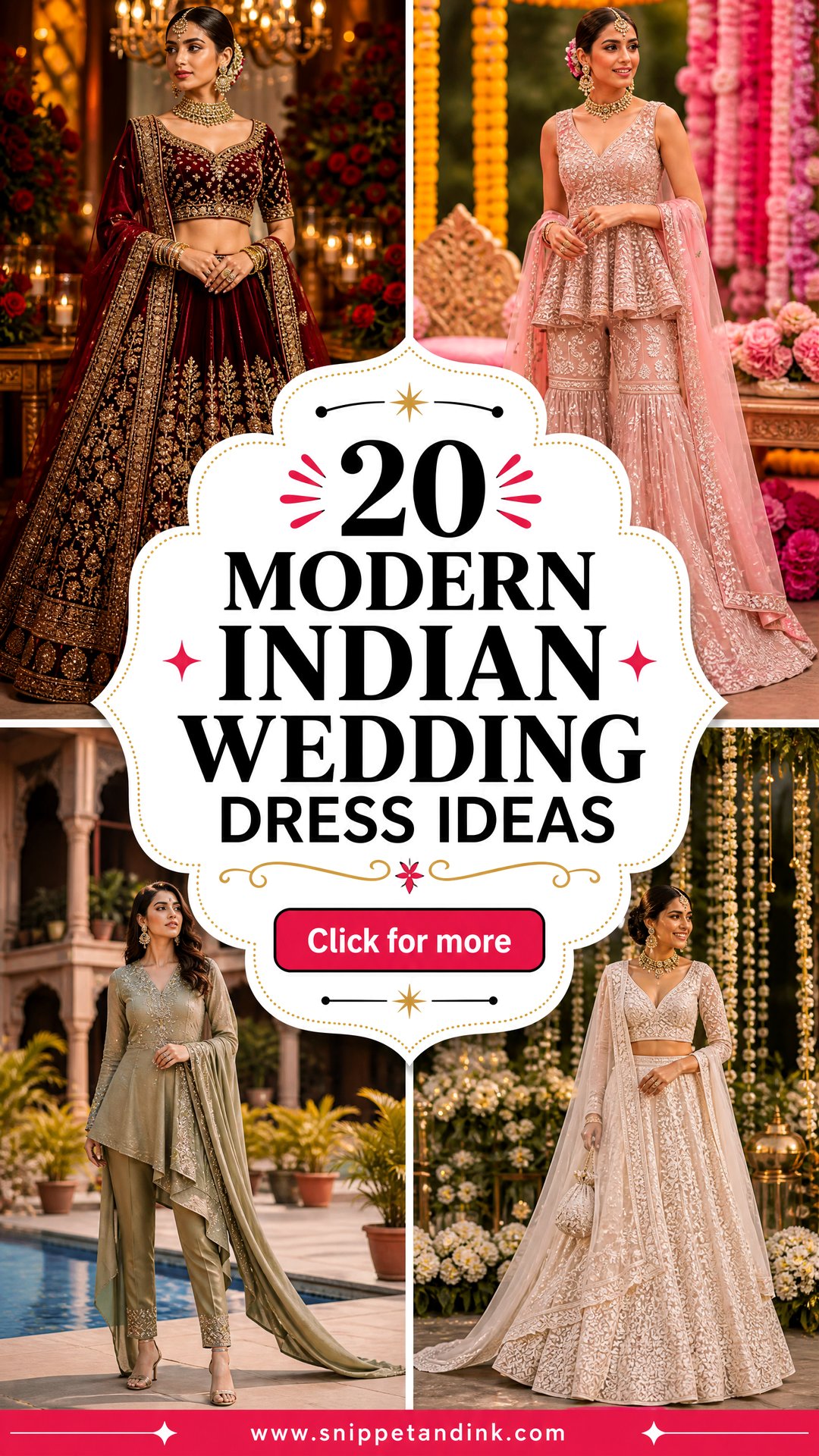
Haldi to Reception: What Each Function Asks of an Outfit
Most Indian weddings stretch over several functions, and the right outfit for one can be a poor choice for the next. This is how I plan wardrobes when I’m dressing a family:
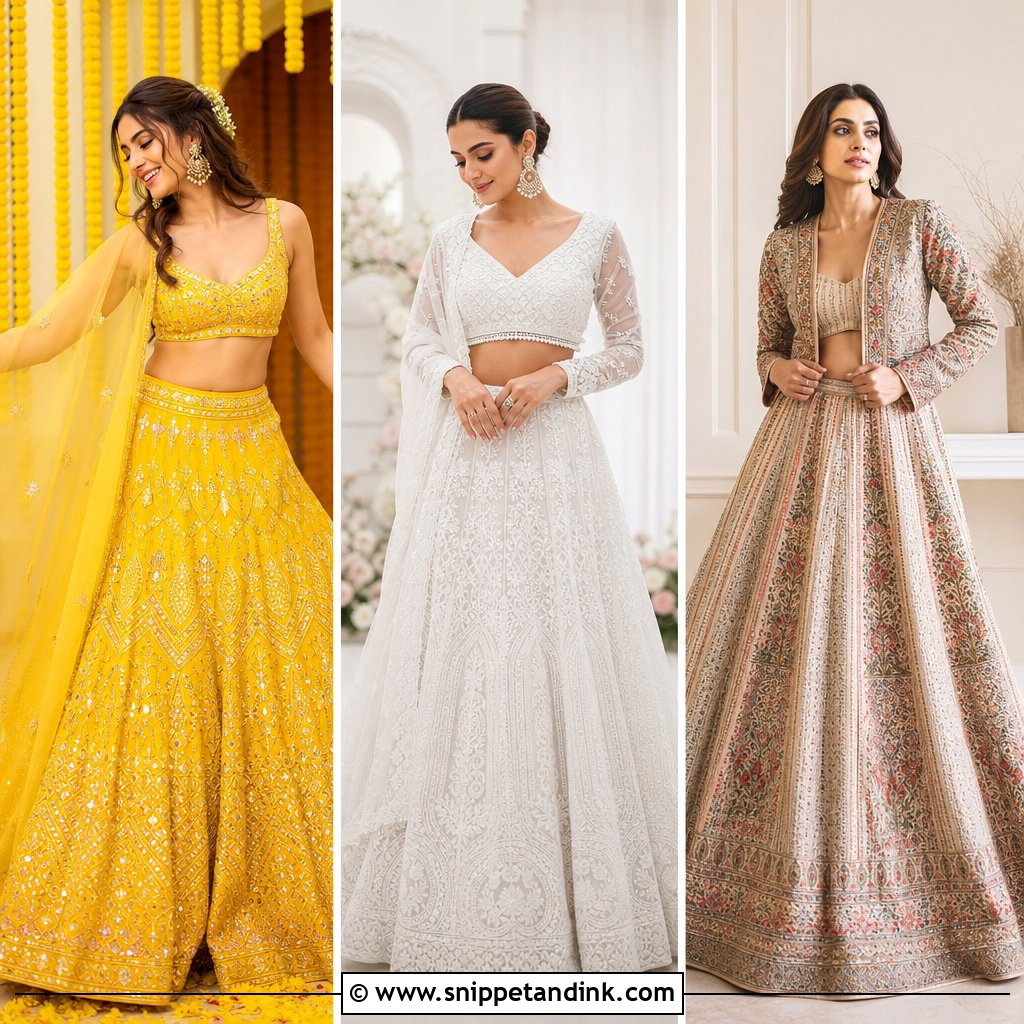
- Haldi: turmeric paste stains silk and pale fabric for good. Wear yellow or a washable cotton you don’t mind marking, and leave the good jewellery in the room.
- Mehndi: the bride sits still for hours while the henna dries, so choose short or elbow sleeves and a skirt that lets her sit cross-legged. Guests getting henna should avoid long trailing sleeves too.
- Sangeet and garba: movement first. Shararas, dhoti sets and light lehengas with secured dupattas cope with hours of dancing.
- Ceremony: expect to sit on the floor or a low mandap seat, sometimes for a long time. Check that your blouse and skirt let you do that without strain.
- Reception: this is where heavier embroidery, velvet and saree gowns belong, since you mostly stand, greet and pose.
If you can only buy one statement piece, put it on the function you’ll be photographed at most and keep the rest simpler.
1. Pastel Embroidered Lehenga Outfit
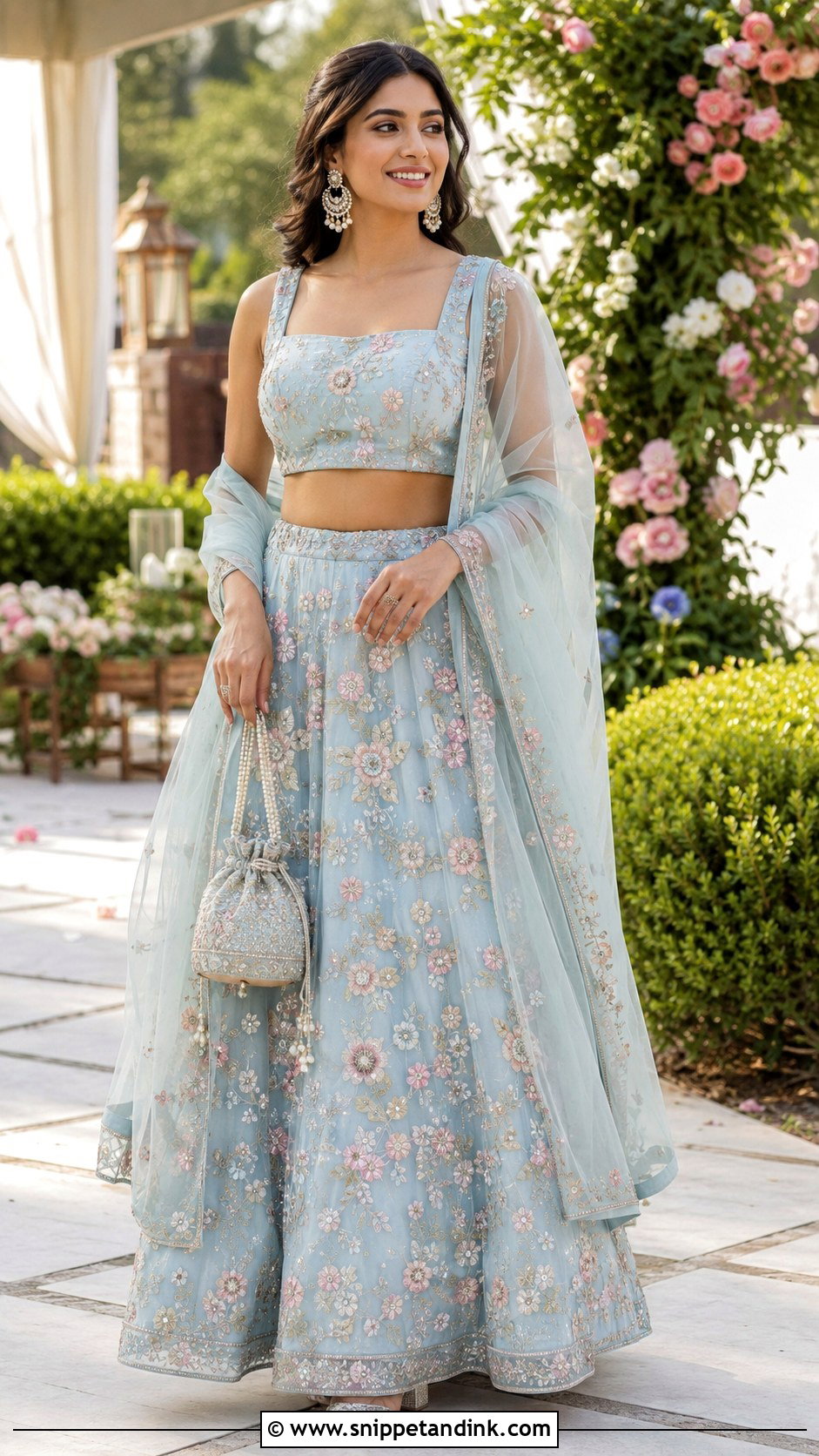
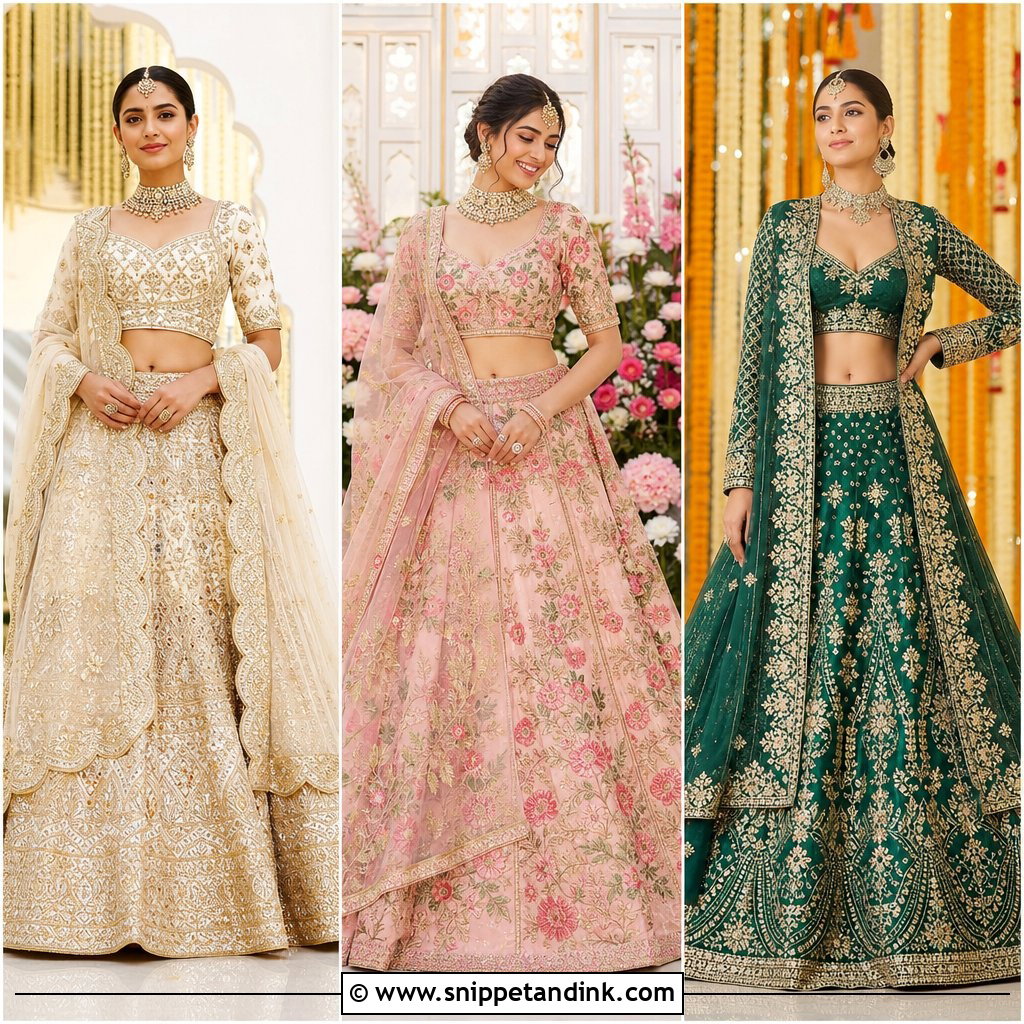
Pastels are my default for a daytime function, because heavy jewel tones can look flat in midday sun while powder blue, mint, peach or lilac glow. Scattered floral embroidery on a high-waisted skirt keeps it lighter than all-over work. A square-neck or short-sleeved blouse and a sheer organza dupatta over one shoulder let the embroidery show. Pearl chandbalis, a small potli and metallic block heels finish it. One warning: pale silks show every drop of sweat and every turmeric smudge, so I wouldn’t send a pastel lehenga to a haldi.
2. Pre-Draped Saree Wedding Outfit
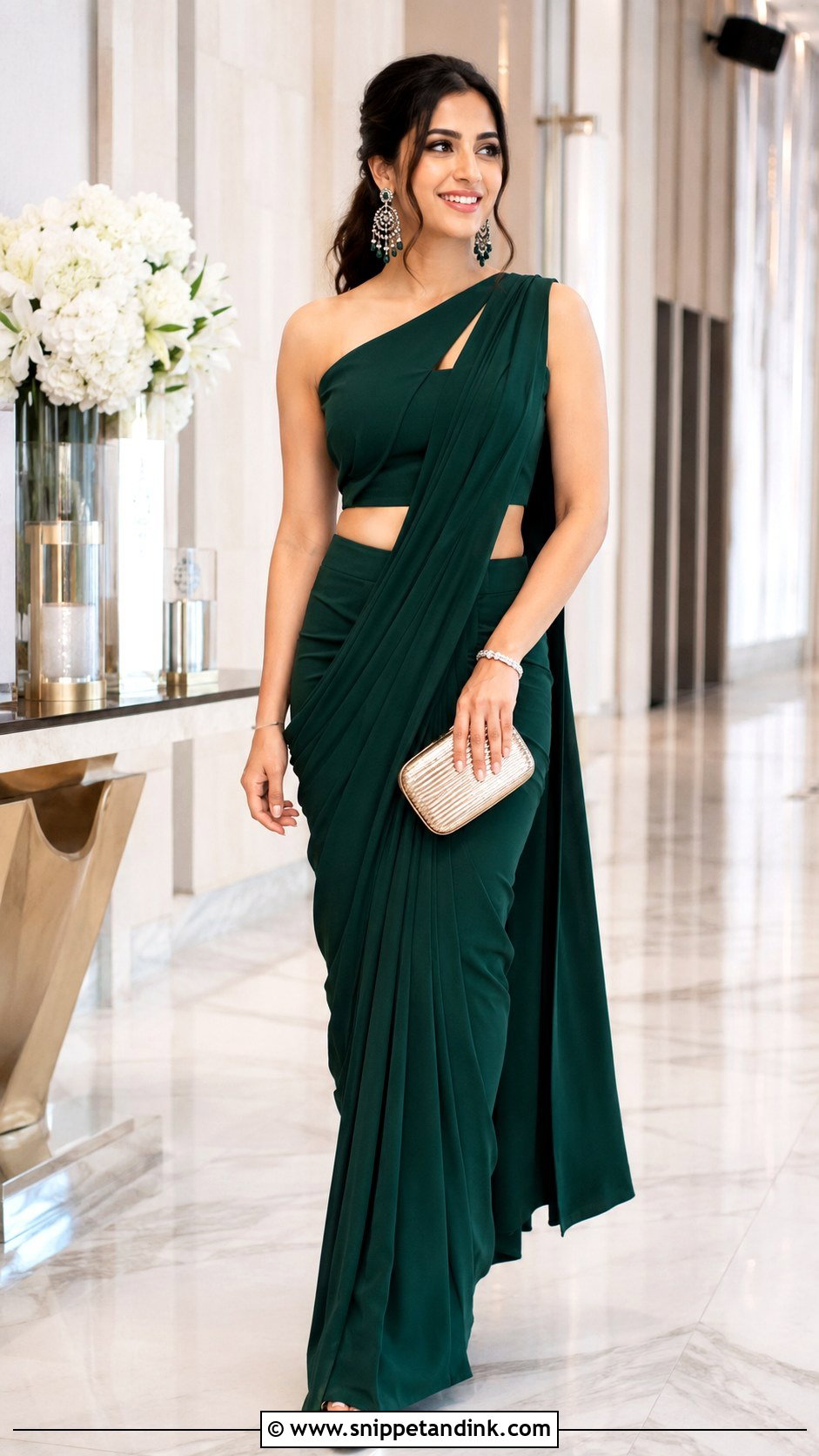
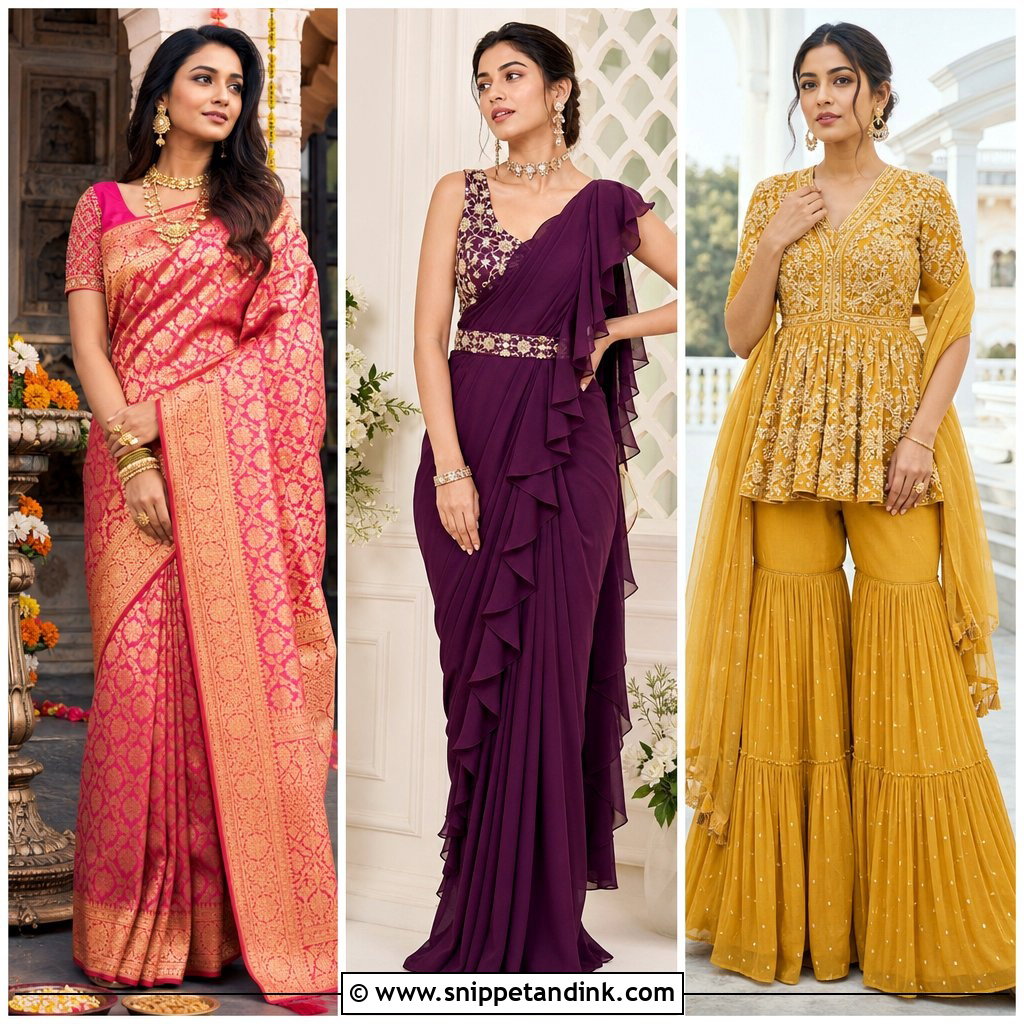
Pleating a saree well takes practice, and on a long night the pleats start to drift. A pre-draped saree is stitched into shape, so you zip it on and it stays put. Satin, crepe, georgette or a light metallic all drape cleanly. Pair it with a structured blouse, perhaps an asymmetric neckline or fitted full sleeves. Deep emerald or plum for evening, champagne or dusty rose earlier in the day. I’d add platform heels rather than stilettos, since the hem is cut to one shoe height and you can’t adjust it later. Sleek hair, statement earrings, done.
3. Cape Lehenga Wedding Outfit
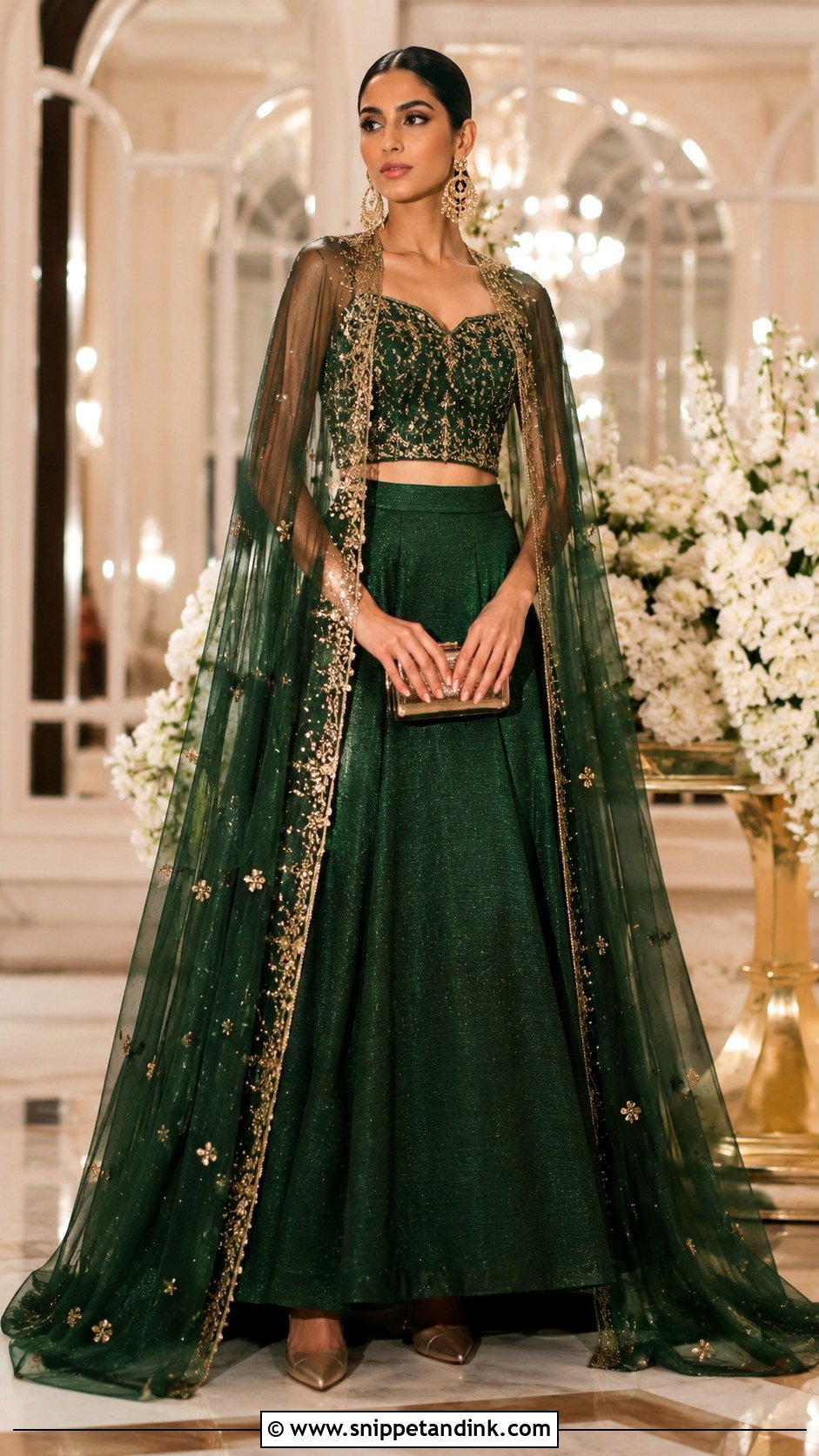
The cape replaces the dupatta, which is the real advantage: nothing to re-drape or catch on a chair. Start with a fluid A-line skirt and a fitted blouse in jewel-toned satin, raw silk or georgette, then add a sheer embroidered cape. Length is about height. On a petite frame I stop the cape at the waist or just below; taller women can take it to the floor. Deep green, navy or berry for evening. Skip the necklace and keep the hair off the neck so the cape’s neckline reads clearly.
4. Modern Sharara Set Outfit
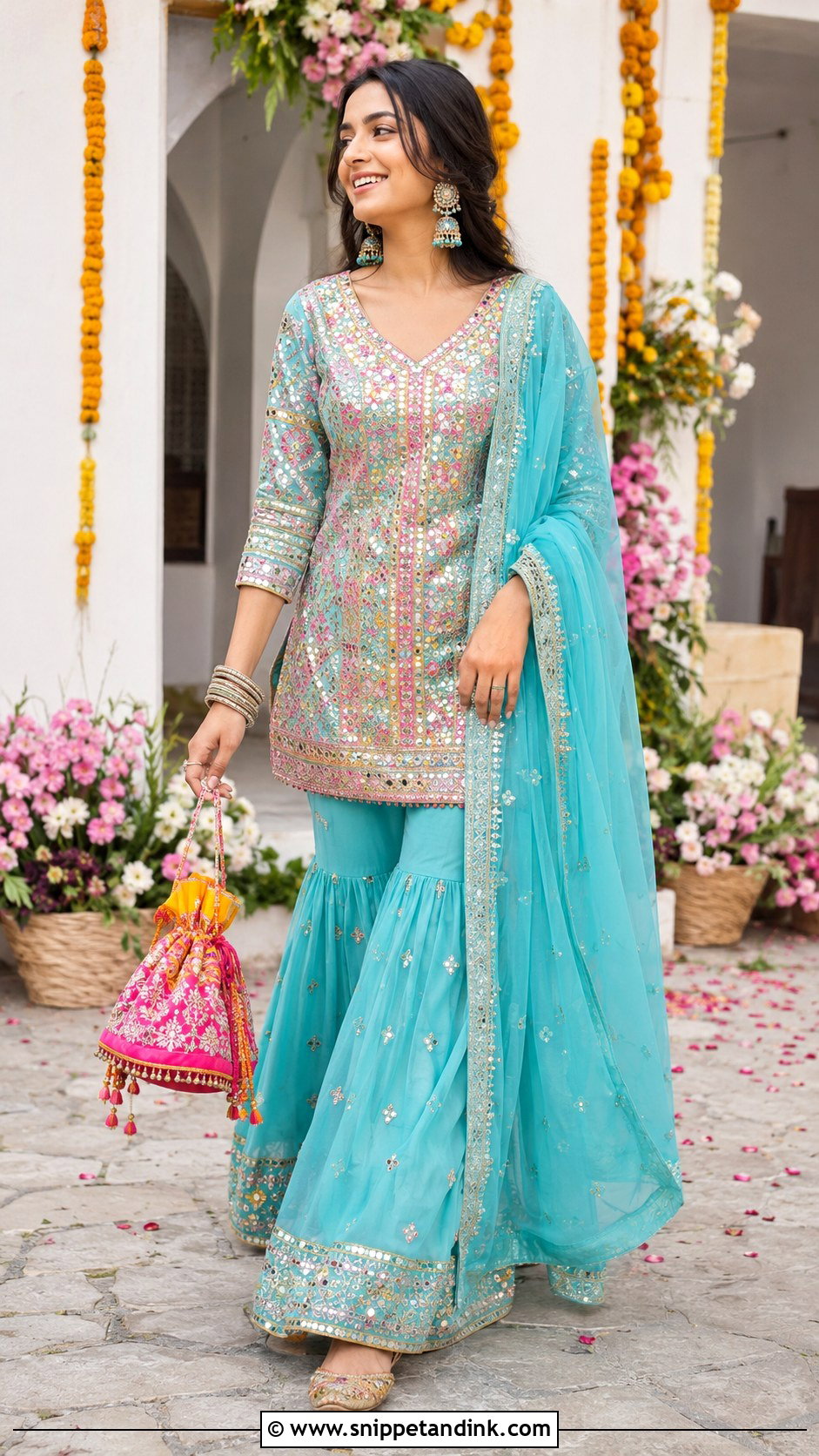
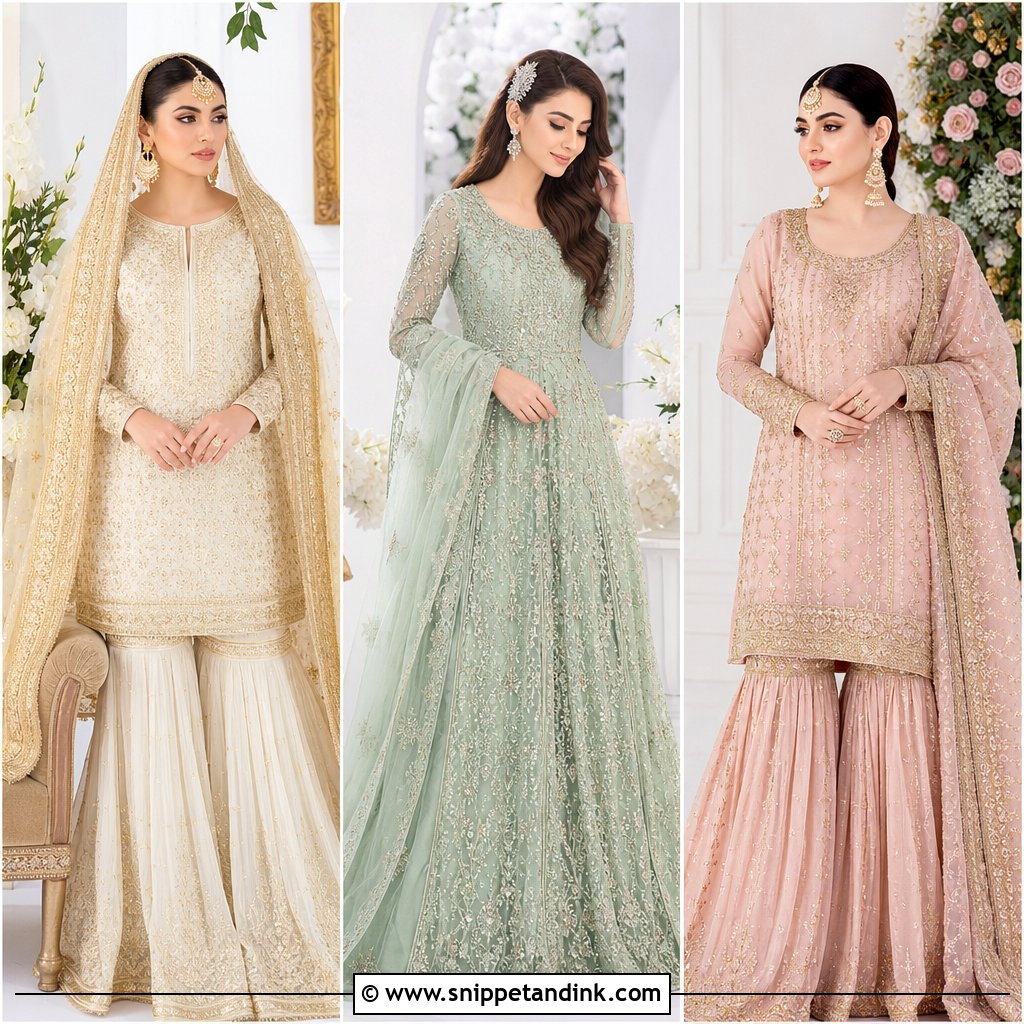
A sharara is the outfit I suggest when someone tells me they intend to dance all night. Wide flared pants move like a skirt, a shorter kurti keeps the proportions tidy, and there is no hem to trip on. Choose a sweetheart, scoop or soft halter kurti with a dupatta edged in a neat border. Mirror work suits a sangeet; thread embroidery is better for daytime. Juttis are the right shoe here. Because the kurti and pants are cut separately, each can be tailored to a different size, which makes it one of the easiest sets to fit across body types.
5. Silk Saree With Corset Blouse Outfit
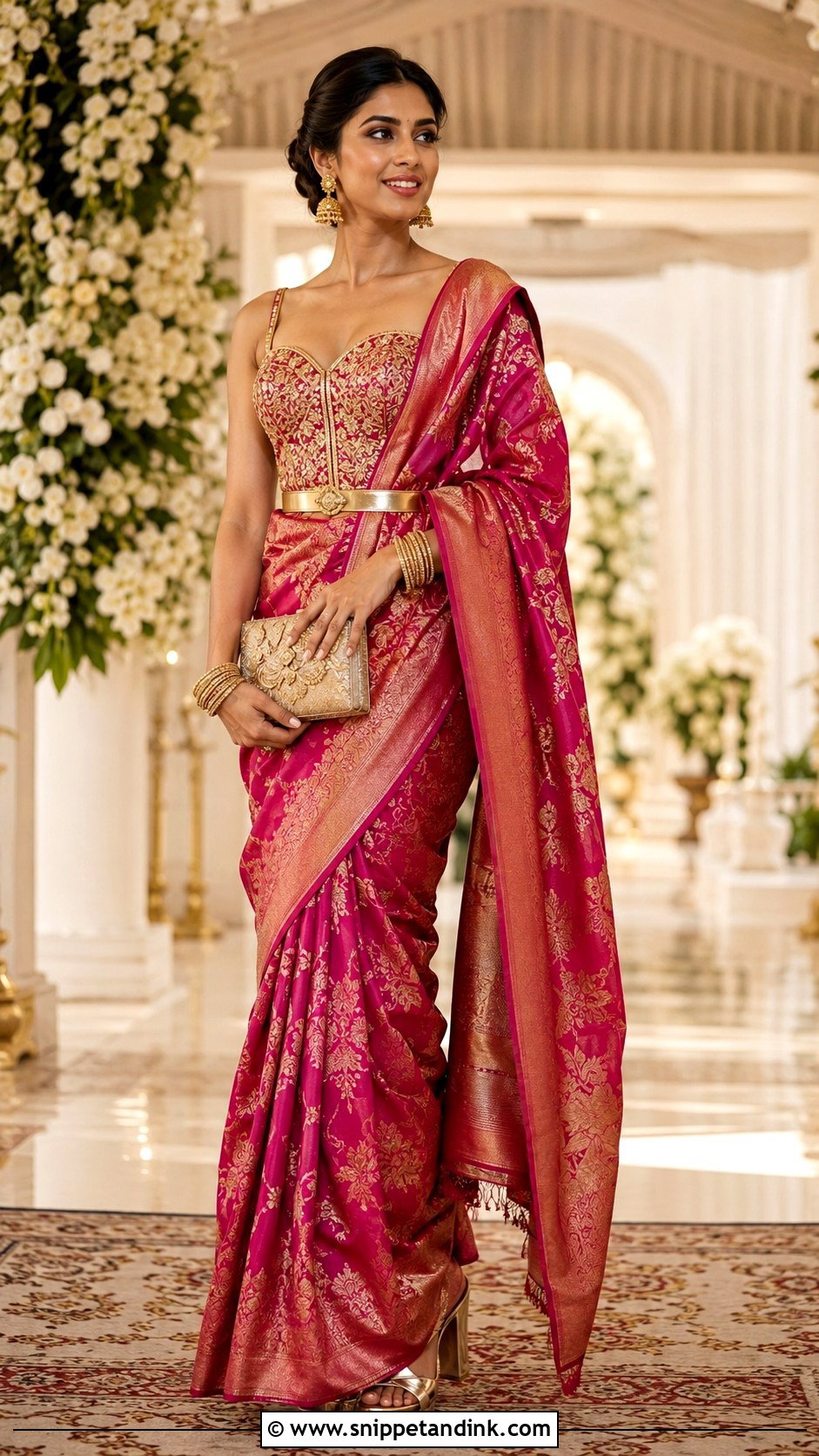
Heritage silk with a corset blouse is a strong pairing, but it only works when the saree is clearly traditional. Start with a Banarasi, Kanjeevaram, or tissue silk saree in ruby, teal, mustard or magenta, then choose a structured corset blouse with broad straps and a secure neckline. I always have clients sit, bend and raise their arms in the blouse, because boning that looks perfect standing can dig into the ribs within an hour. A woven border keeps the look rooted. A waist belt holds the pleats, and a low bun with fresh flowers pulls it back toward tradition.
6. Floor-Length Anarkali Gown Outfit
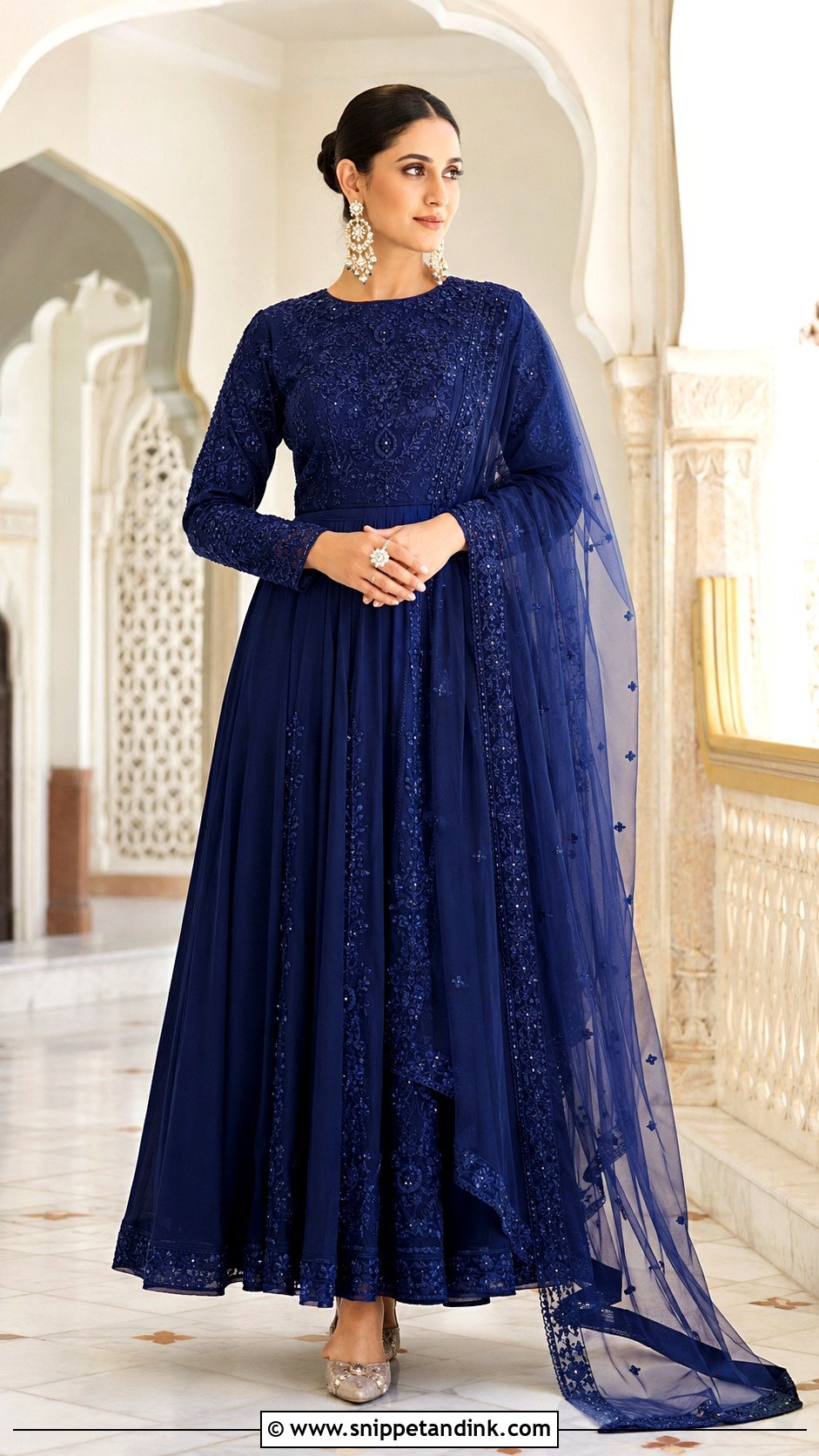
An Anarkali is one piece, no draping, and it still has real presence when the flare is full. Look for a fitted bodice and a skirt starting at the natural waist; a waistline cut too low shortens the legs. Silk, chiffon, georgette and organza move easily. Maroon, midnight blue, olive or mauve with tonal embroidery feel refined, and a metallic border at the hem gives weight to the swing. Add a dupatta only if the neckline is plain. Low heels or pointed flats are enough under that length.
7. Jacket Lehenga Wedding Outfit
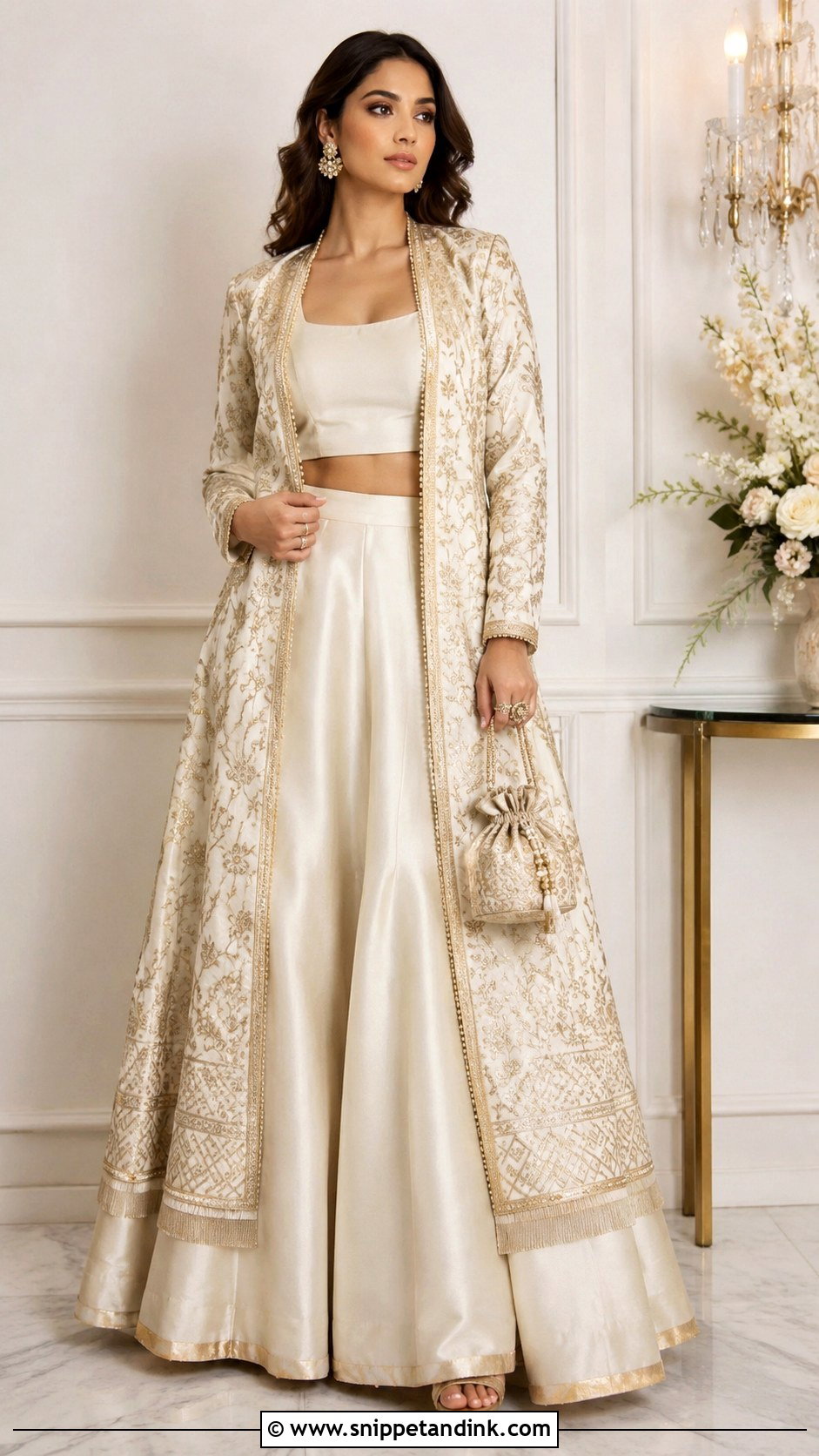
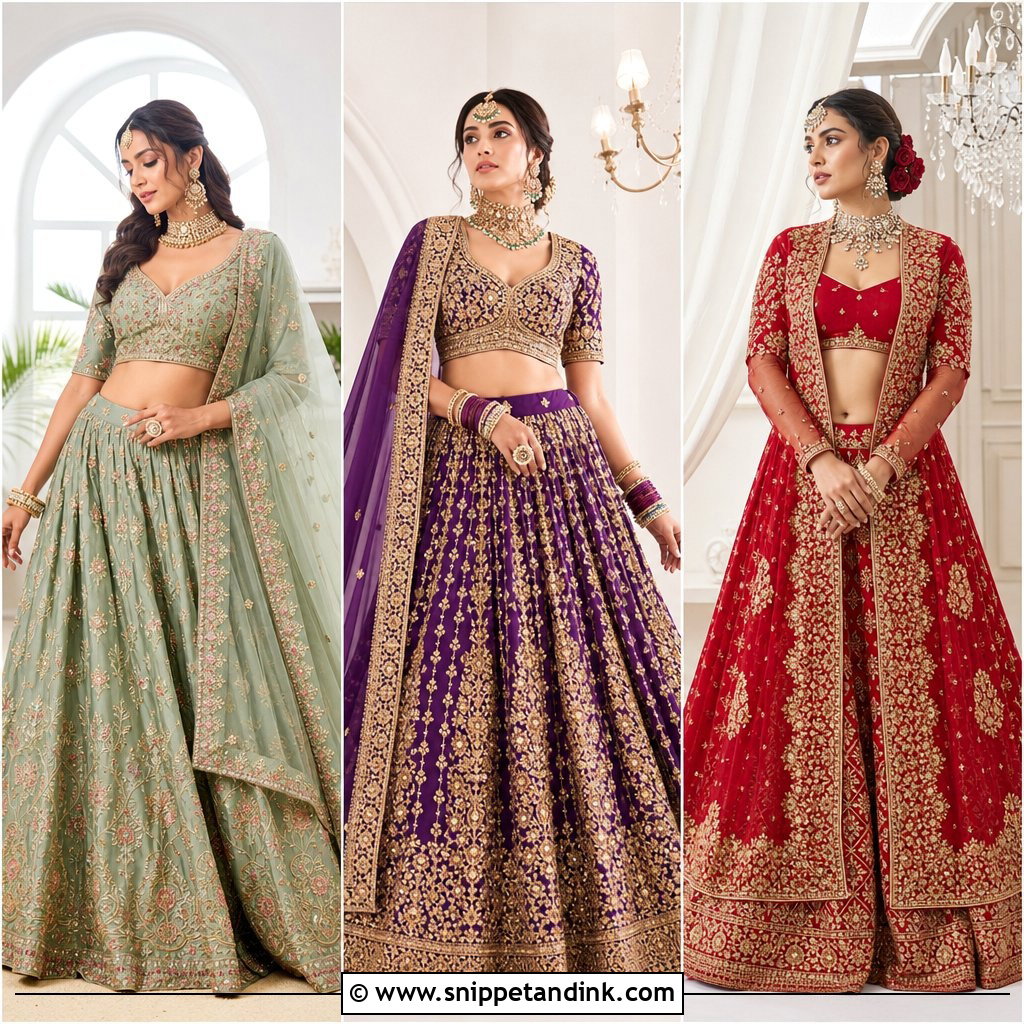
Cold evenings and fierce air-conditioning are where a jacket lehenga earns its place. Keep the skirt lightly embellished and the blouse simple, then layer a long embroidered jacket worn open for a long vertical line. A fitted jacket looks structured; flowing organza is softer. I keep all three pieces in one colour family, ivory and gold or navy and silver, because three contrasting colours plus embroidery is a lot. The jacket covers the shoulders, so most people can drop the dupatta entirely. Pull the hair back so the collar isn’t buried.
8. Dhoti Pants And Crop Top Outfit
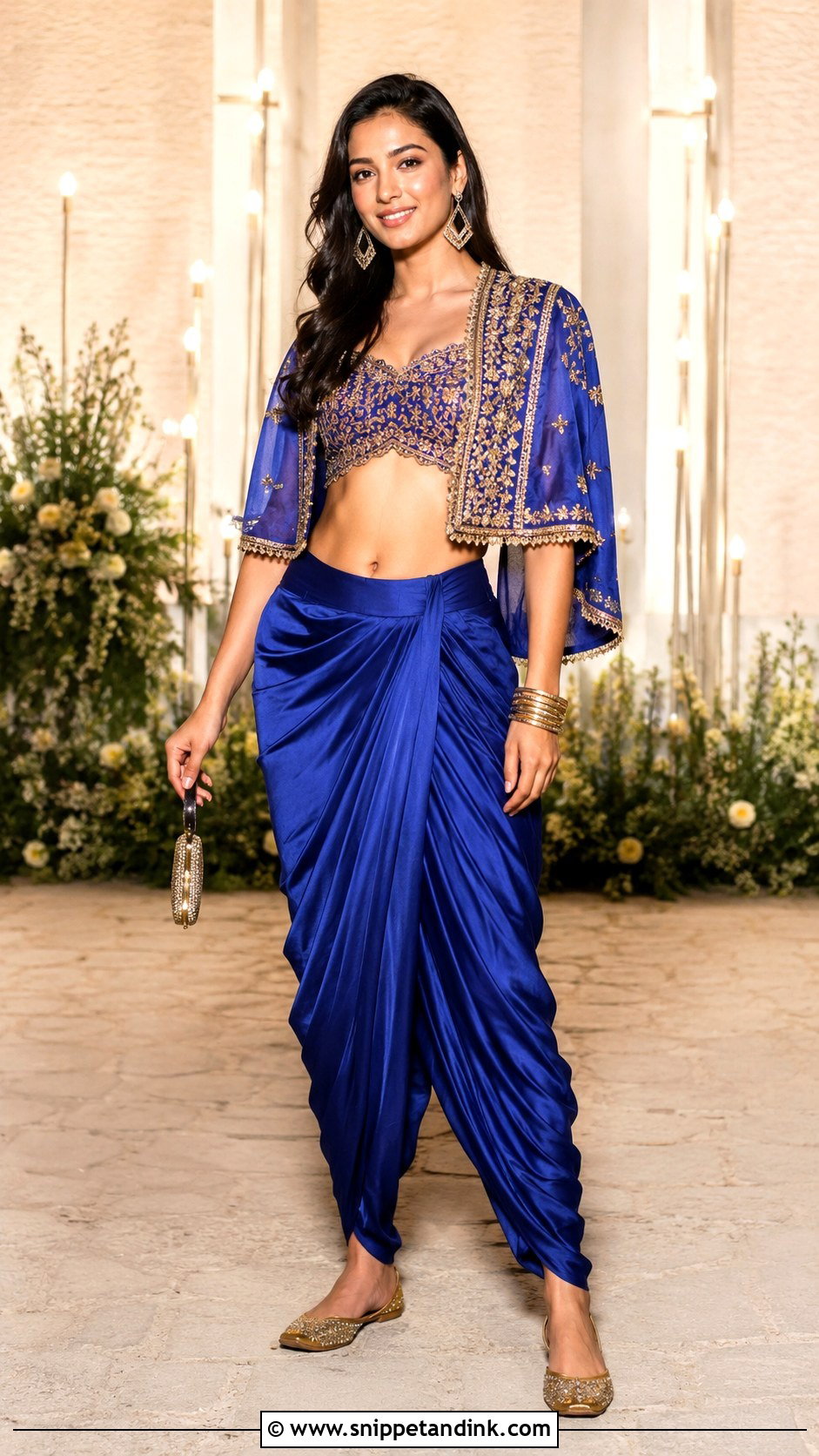
For the louder pre-wedding nights, dhoti pants and a crop top are hard to beat. High-waisted draped pants in satin, silk or crepe with a fitted embroidered blouse give you room to move, and a short asymmetric jacket or one-shoulder cape adds coverage. Bright pink, cobalt, orange or lime suit mehndi and sangeet. The balance rule is strict: the pants carry the volume, so the top must fit close. A tiny wristlet or potli, a high ponytail or textured braid, and heeled juttis finish it.
9. Floral Organza Saree Outfit
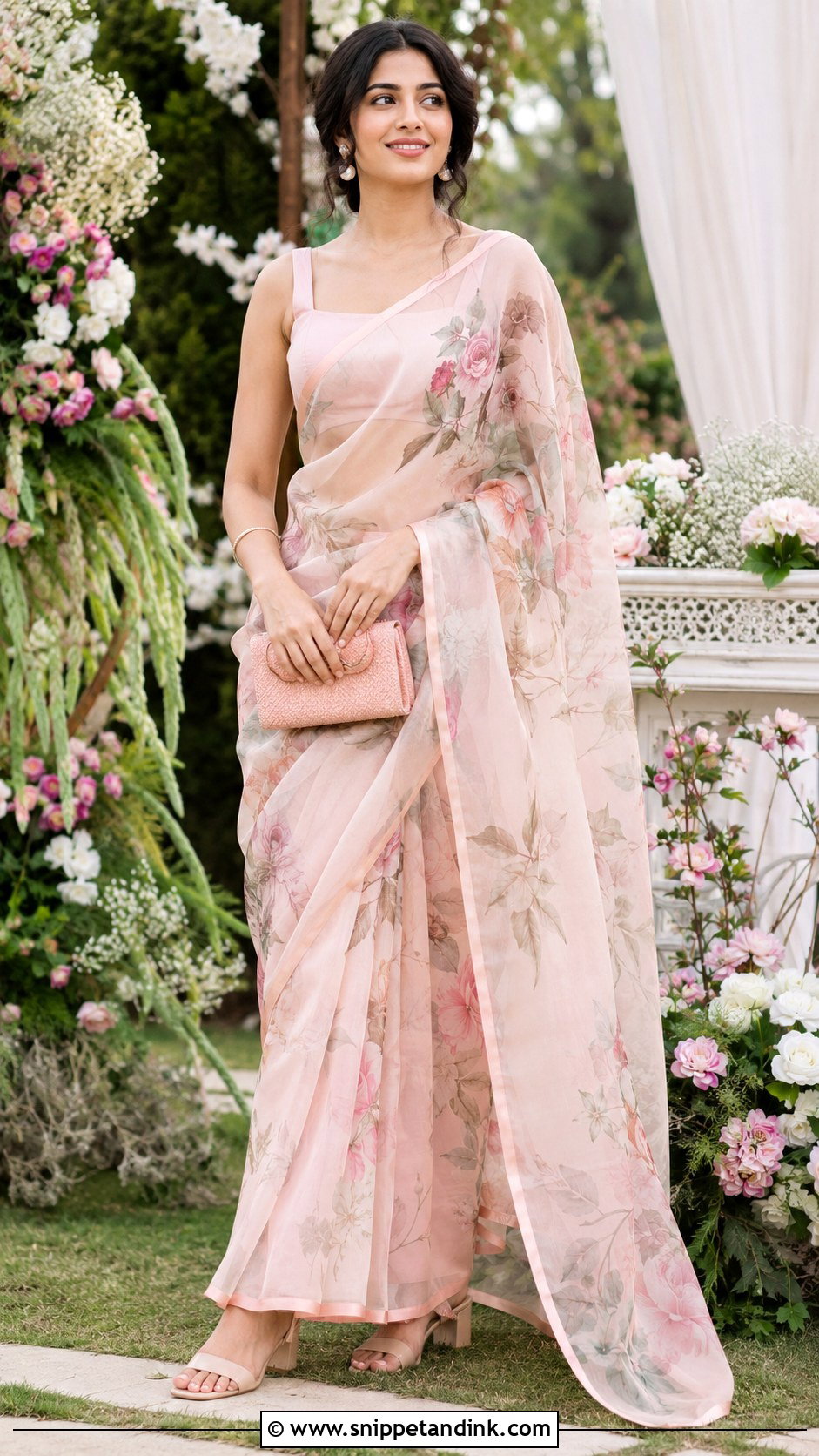
Organza is at its best outdoors, where light comes through it. A printed floral or embroidered vine saree with a solid blouse picked from one colour in the print suits a garden ceremony. Boat-neck, square-neck or elbow-sleeve blouses add enough structure to balance the sheer fabric. The detail most people miss is the petticoat. Match it and the blouse lining closely to the saree, because a contrasting petticoat shows straight through organza in daylight. Pearls, nude block heels and a pastel clutch are plenty.
10. Velvet Lehenga Wedding Outfit
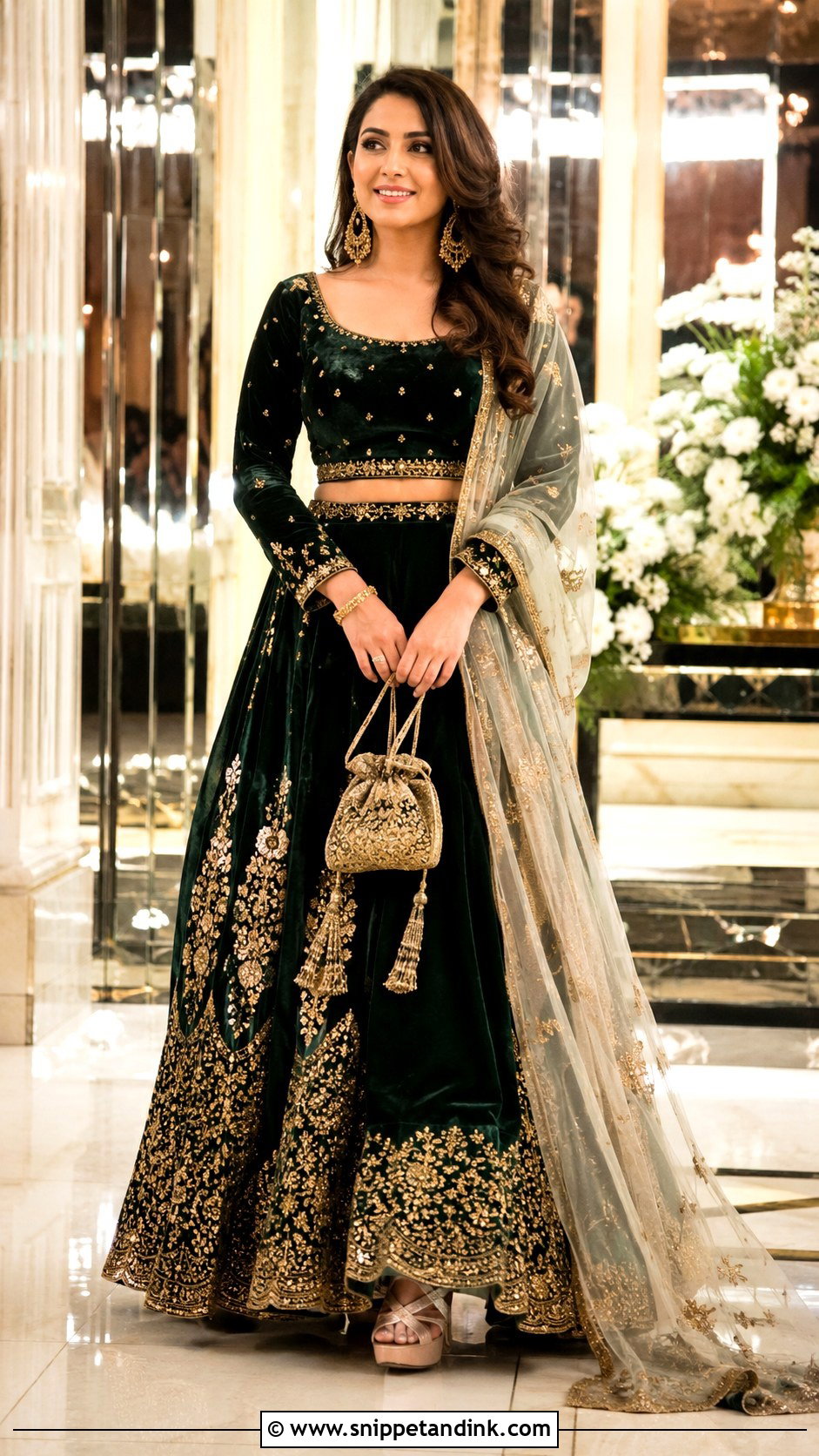
Velvet is a winter fabric, and I’d only suggest it for a cool evening or a well-heated hall. Burgundy, forest green, navy, aubergine or deep brown with placed zari work look rich without trying. A velvet blouse is warm but heavy; a silk blouse lightens the whole outfit. A sheer net dupatta stops it feeling like a block of colour. Antique gold earrings, a structured potli and platform heels finish it, and brides can layer a necklace where guests should stop at one strong piece. Velvet also marks easily, so press it on the reverse over a towel, never directly.
11. Peplum Sharara Wedding Outfit
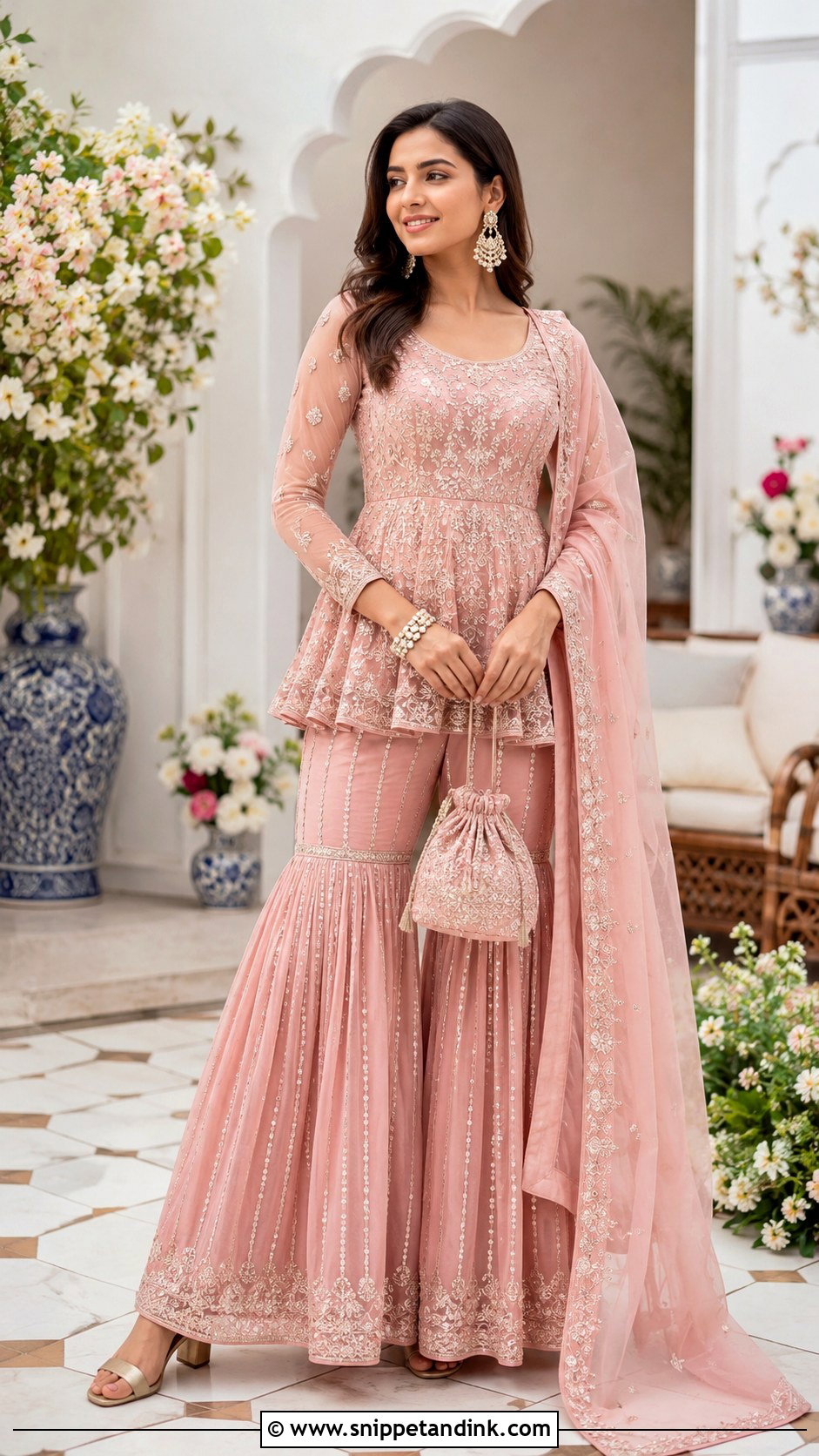
A peplum top gives a sharara a waist. The seam should land right at your natural waist and the flare should end around the upper hip; even an inch too low makes the hips look wider. Put the dense embroidery at the neckline and waist and keep the sharara moderate in volume. Ivory, rose, teal, mustard or powder blue suit guests and close family alike. Carry the dupatta over one arm rather than wrapping it. Drop earrings, one statement bangle, an embroidered potli and low block heels are enough.
12. Indo-Western Jumpsuit Wedding Outfit
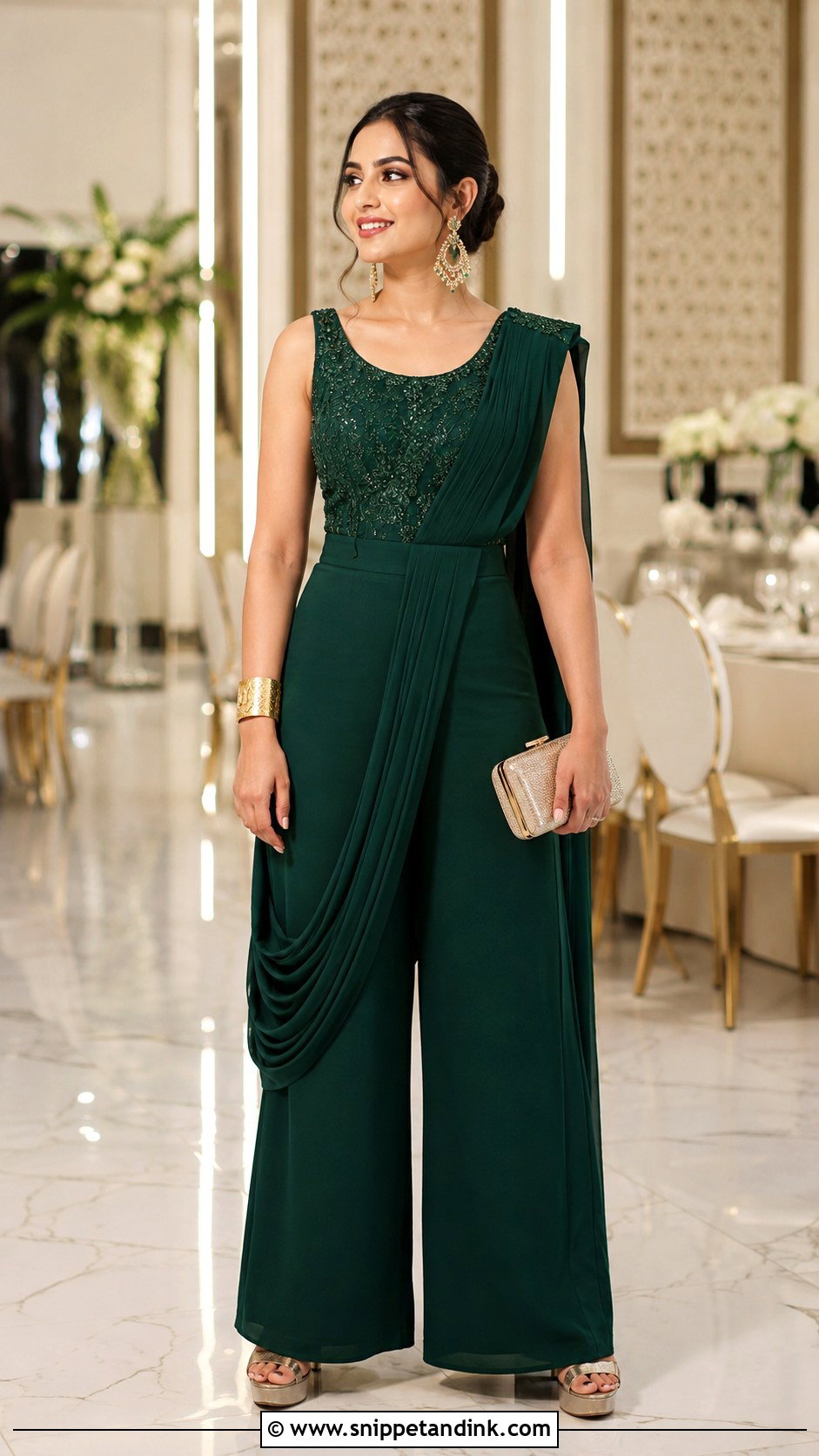
Some guests simply prefer trousers, and an Indo-Western jumpsuit gives them a festive option in one piece. Look for wide legs, a defined waist and a draped or embellished bodice; a pleated shoulder panel, attached cape or saree-style sash brings in the Indian detail without a separate dupatta. Black and gold for cocktails, emerald for a reception, purple for a sangeet. Hem it to the exact platform sandals you’ll wear. A wide leg that drags under your heel is the main way people fall on a dance floor in these.
13. Banarasi Saree With Belt Outfit
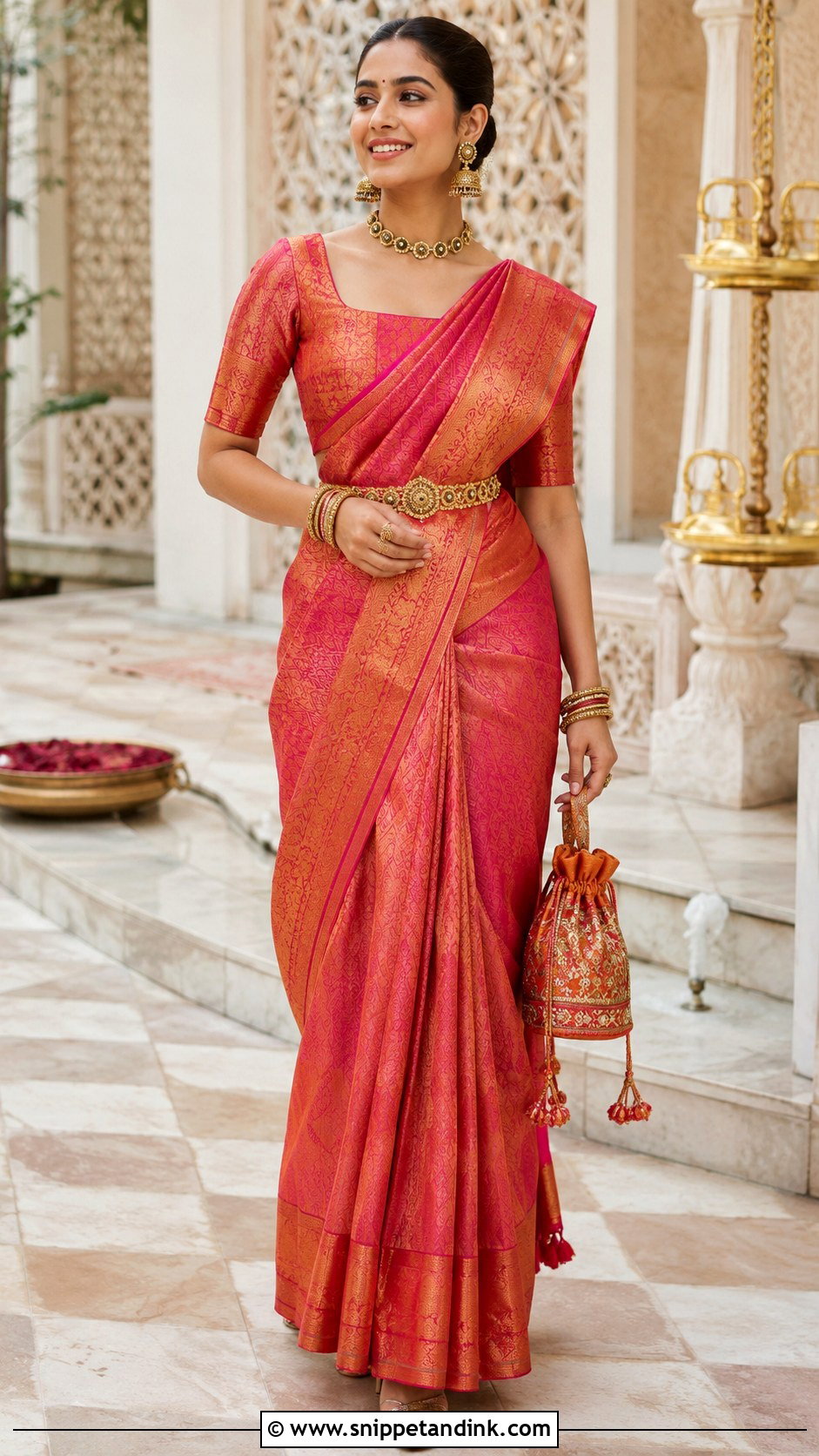
A slim belt makes a Banarasi saree look tailored and solves a practical problem at the same time: it holds the pallu and pleats in place through hours of greetings. Pair a traditionally woven saree with a clean blouse, square, high or softly scooped. Pleat the pallu neatly first, then fasten the belt at the natural waist. Pink with orange or green with gold are classic for formal ceremonies. A belt cut from the blouse fabric looks the most considered; a delicate metallic one should echo your jewellery metal. Jhumkas and a low bun with flowers finish it.
14. Mirror Work Lehenga Outfit
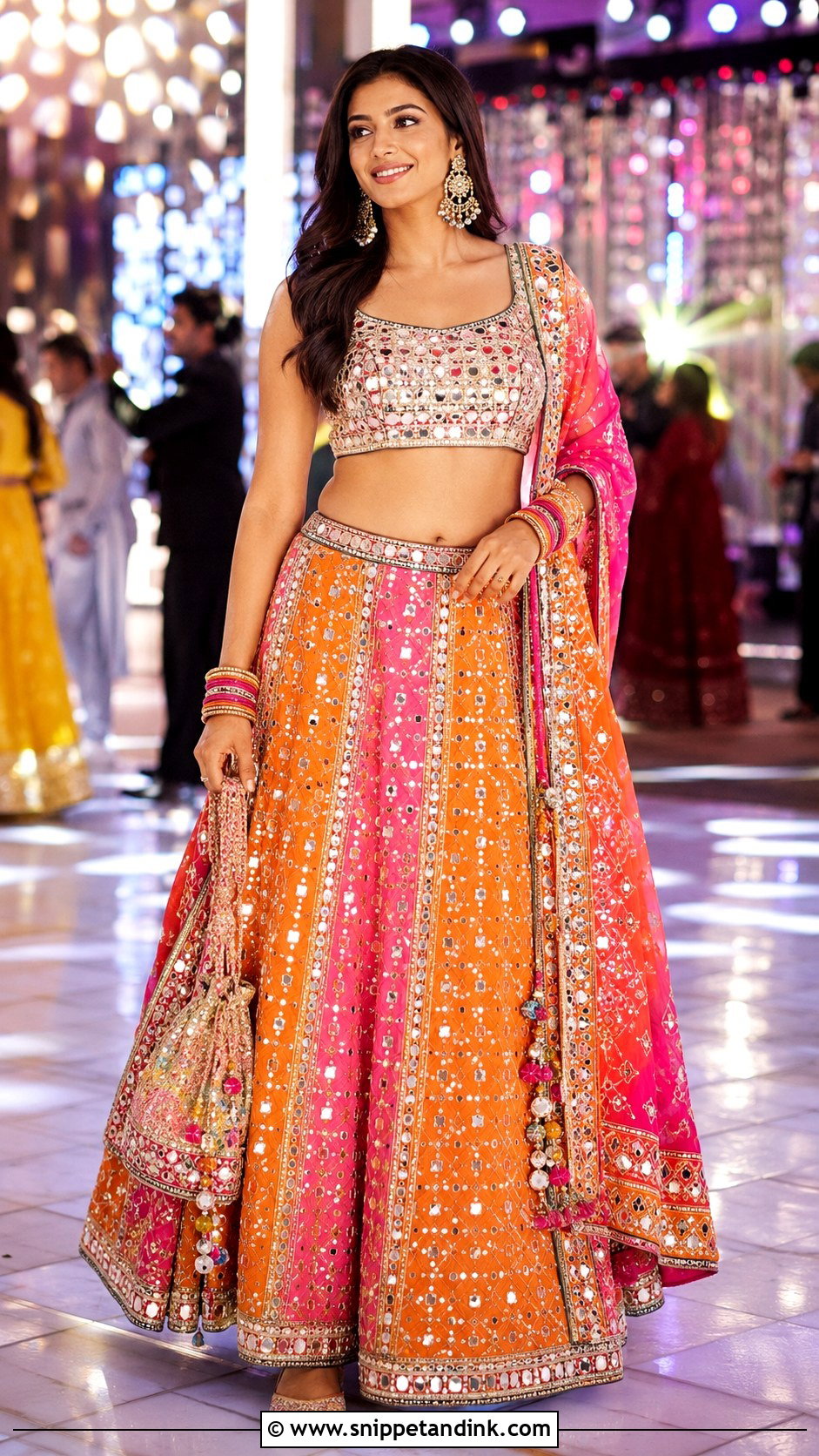
Sparkling mirror work is made for garba, mehndi and sangeet nights, because it catches every light in the room. I look for a skirt with mirrors placed in bands or motifs rather than packed across every panel, which keeps the weight down and the movement free. Turquoise, hot pink, sunshine yellow and green suit the mood. Accessories should be quieter than the outfit: medium hoops or chandbalis, bangles, cushioned juttis. Pin the dupatta at one shoulder so your hands are free for the dandiya sticks.



15. Palazzo Pants And Long Kurta Outfit
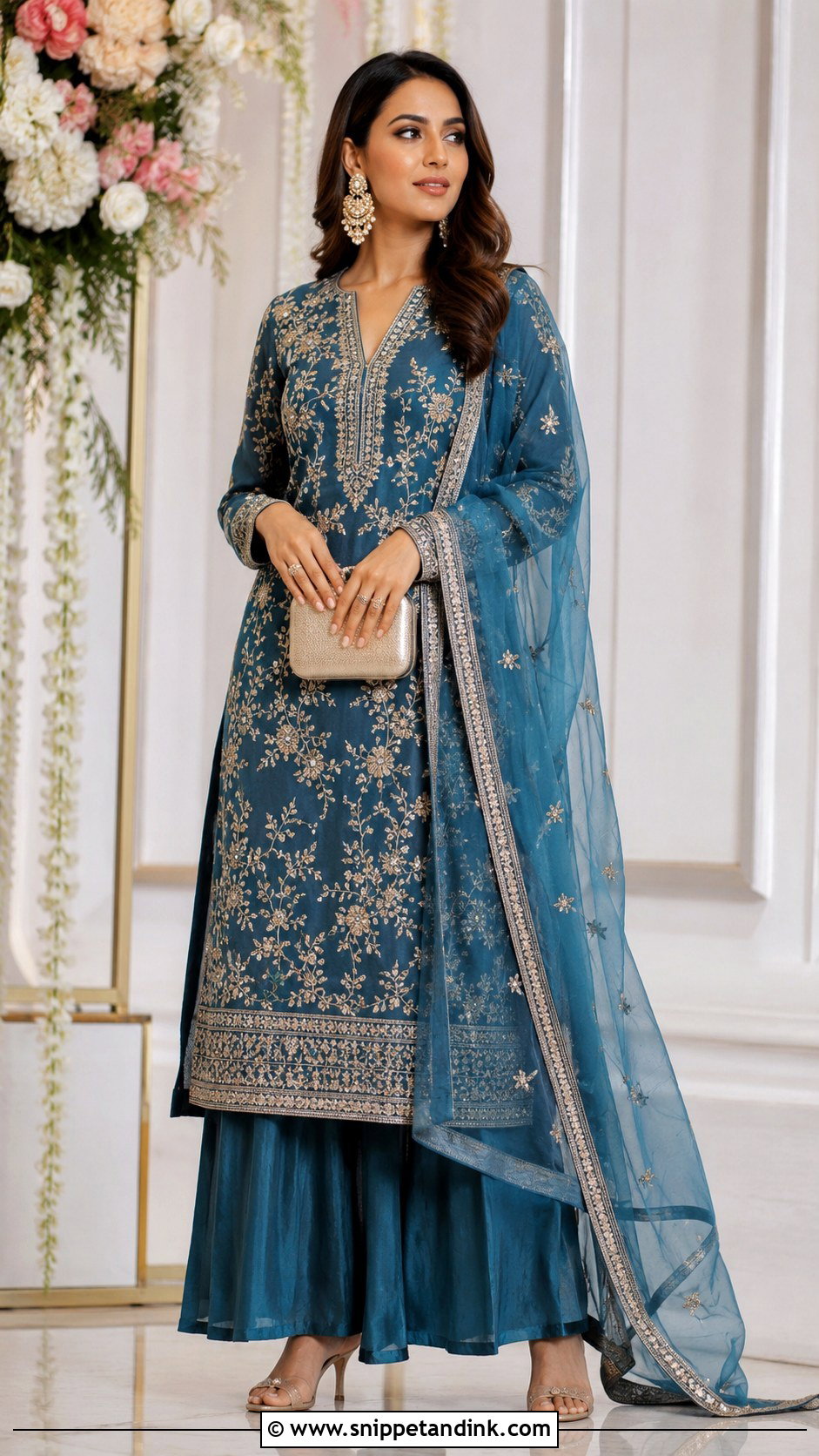
A long kurta with flowing palazzo pants gives full coverage and still moves well. A straight or gently flared kurta with side slits shows the pants as you walk. Silk, crepe, georgette and brocade all read as formal enough. I balance detail on one piece only: an embroidered kurta over plain pants, or brocade palazzos under a simple top. Wear a sheer dupatta for the ceremony and take it off for dinner. It is the outfit I most often suggest to mothers, aunts and anyone going from a morning puja straight to an evening function.
16. Ruffle Saree Wedding Outfit
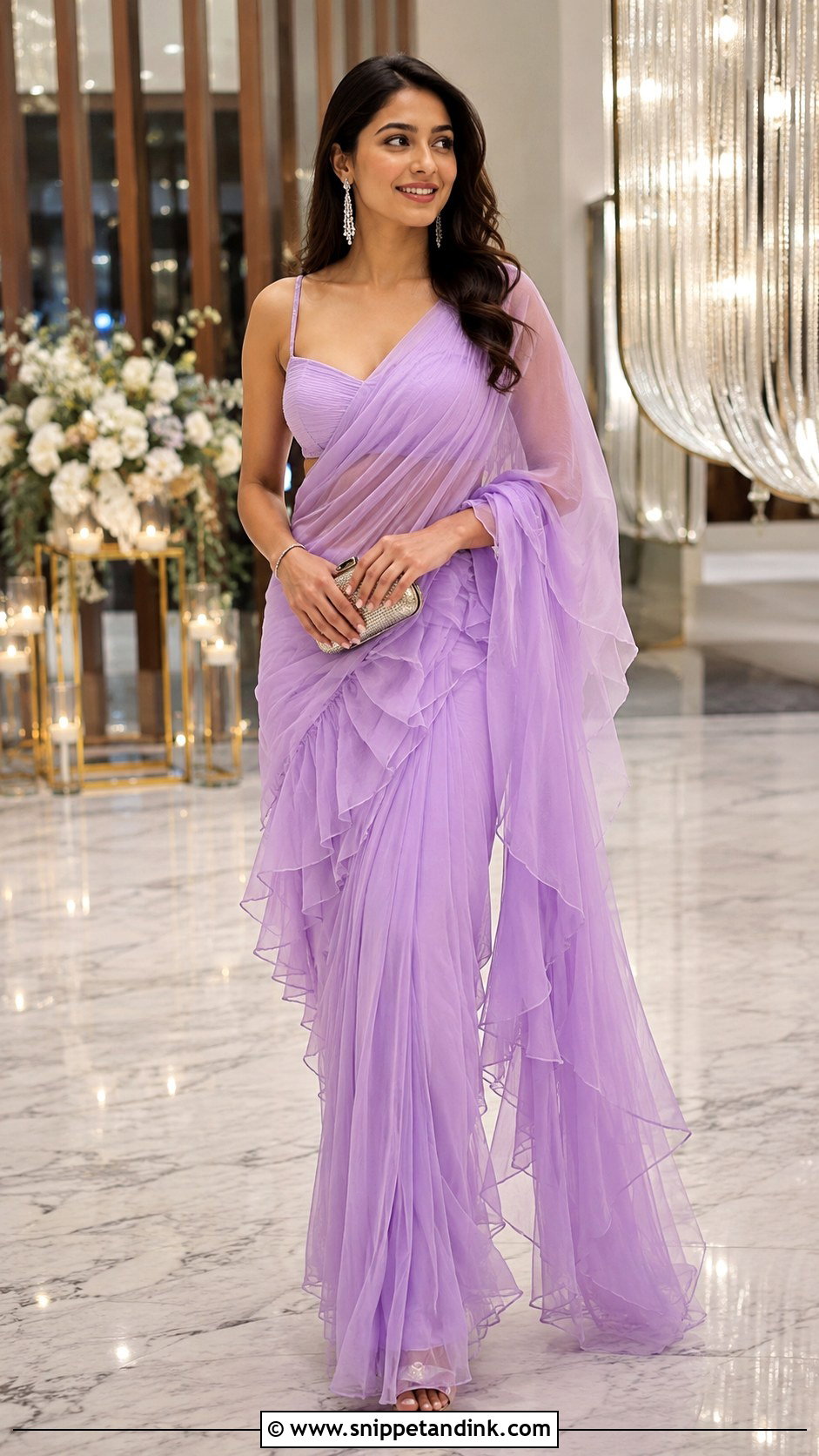
Ruffles only behave in a light fabric. Georgette or chiffon lets the layered edge fall softly; in a stiffer silk the ruffle stands away from the body and adds bulk exactly where you don’t want it. Keep the blouse fitted and plain, one-shoulder, sleeveless or a gentle sweetheart, and choose a solid colour such as lavender, coral or midnight blue rather than a busy print. Long earrings and a light necklace, or none. A high ponytail keeps hair off the ruffled pallu. I’d save this for a reception or sangeet rather than the main ceremony.
17. Asymmetrical Kurta And Pants Outfit
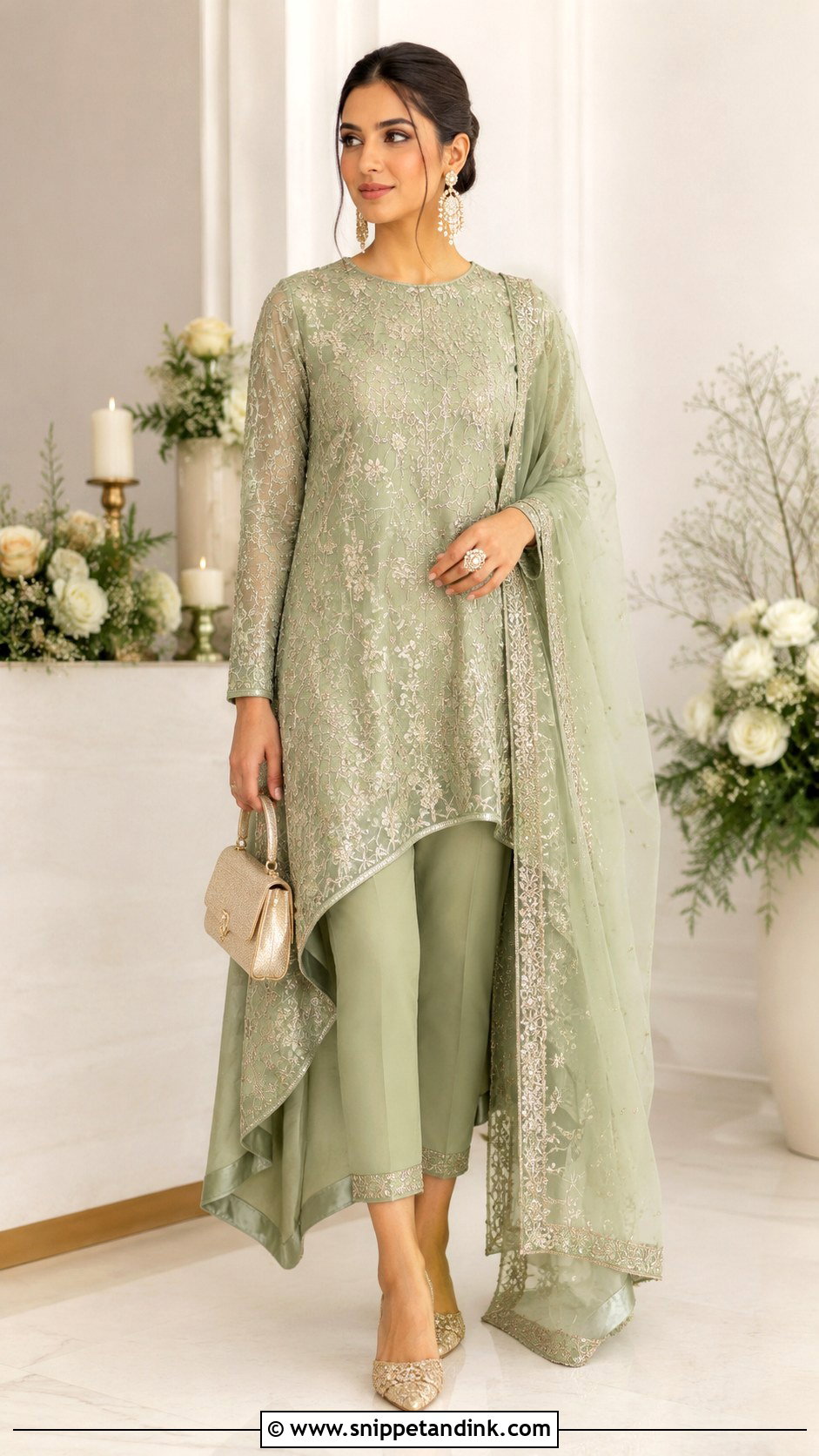
A diagonal hem, a draped side panel or a high-low cut makes a kurta feel current without any extra embroidery. Pair the asymmetric kurta with slim cigarette pants so the angle is clear. Sage, dusty blue, wine or ivory with metallic work at the neckline is enough detail for a wedding. Skip the dupatta unless the kurta is plain. Sculptural earrings, pointed mules and a small top-handle bag suit it. It’s my suggestion for a welcome dinner or a daytime event where a full lehenga would feel like too much.
18. Chikankari Lehenga Wedding Outfit
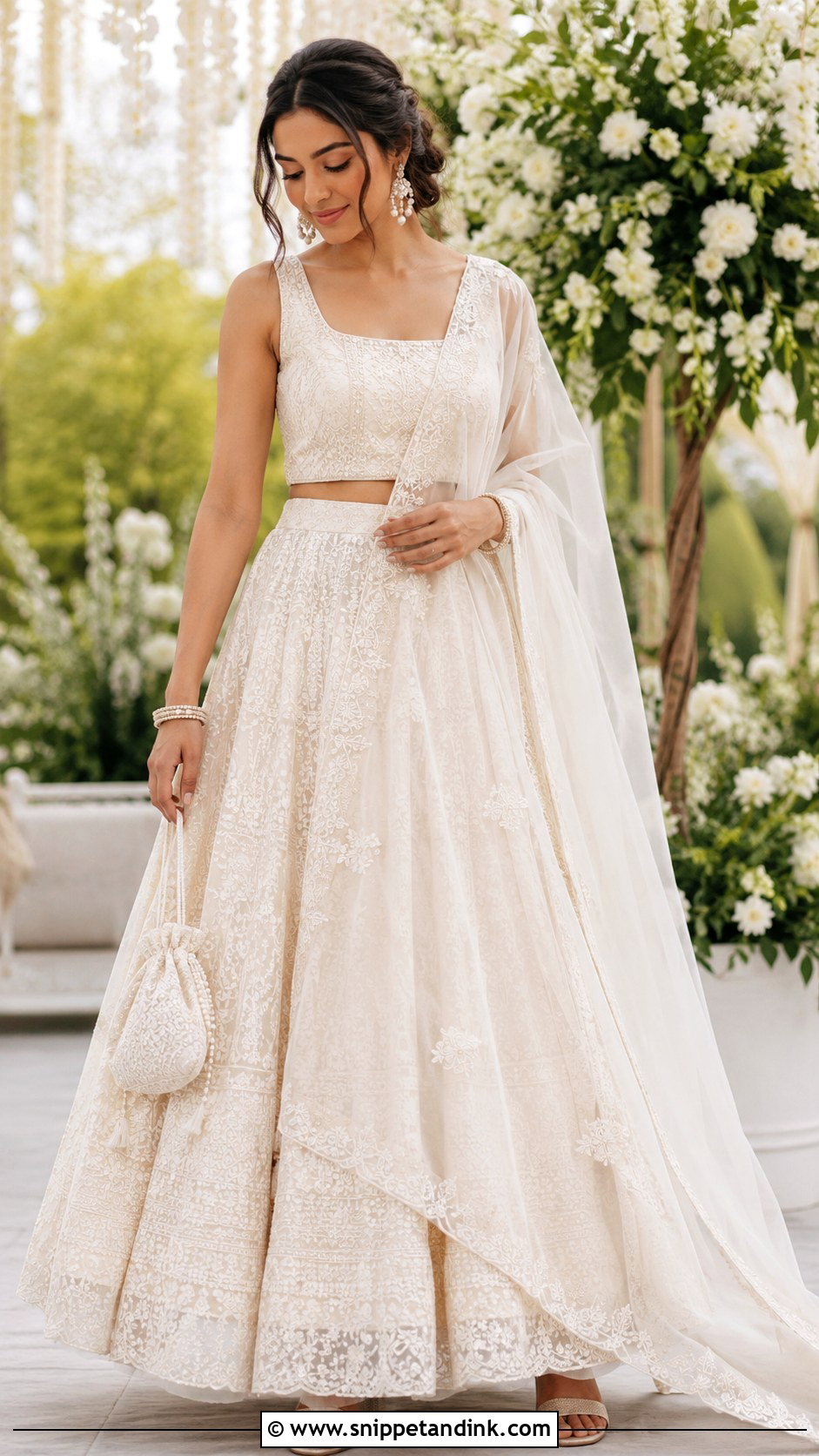
Delicate chikankari embroidery is hand-done white or tonal threadwork, traditionally on fine cotton or georgette, and it gives texture with almost no weight. That makes a chikankari lehenga ideal for a hot daytime function. Ivory, pale yellow, blush, mint or powder blue all suit it. A square neckline, fitted sleeves or a touch of pearl work on the blouse modernises it. Brides can add heavier jewellery; guests should keep it to pearls. Hand-wash or dry-clean only, because the threads can pucker after a hot machine wash.
19. Saree Gown Wedding Outfit
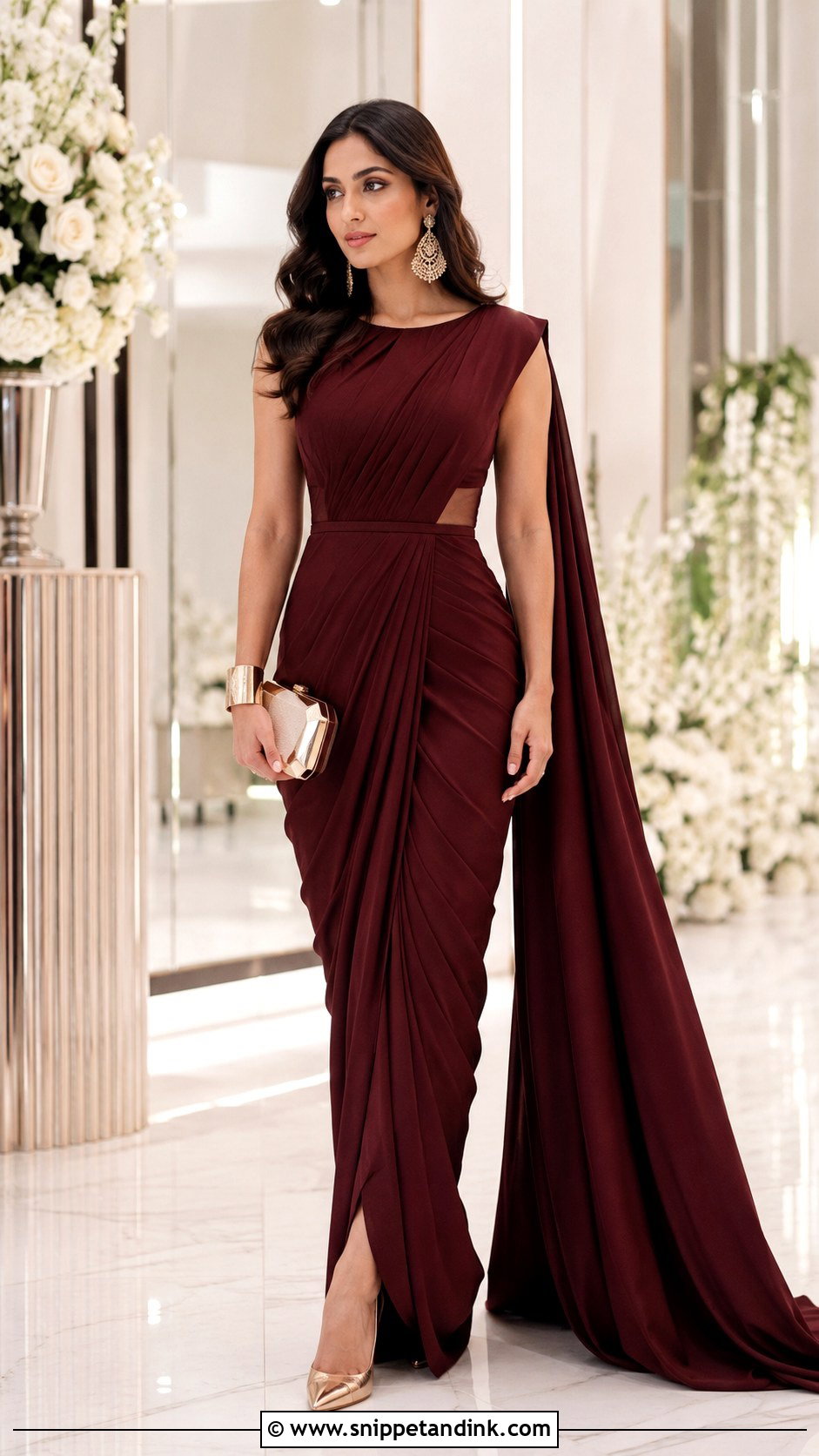
A saree gown has the pallu sewn on, so you get the saree line with the fit of an evening dress and none of the pleating. Look for a clearly defined waist, an ankle or floor-length skirt and a pallu that falls naturally from the shoulder. Satin and crepe look sleek; georgette moves more softly. Navy, wine, bronze or emerald suit formal evenings. Don’t layer extras over it, since the built-in drape is the point. This is the one I pack for destination weddings, because it travels well and you can dress in ten minutes in a hotel room.



20. Minimal Monochrome Lehenga Outfit
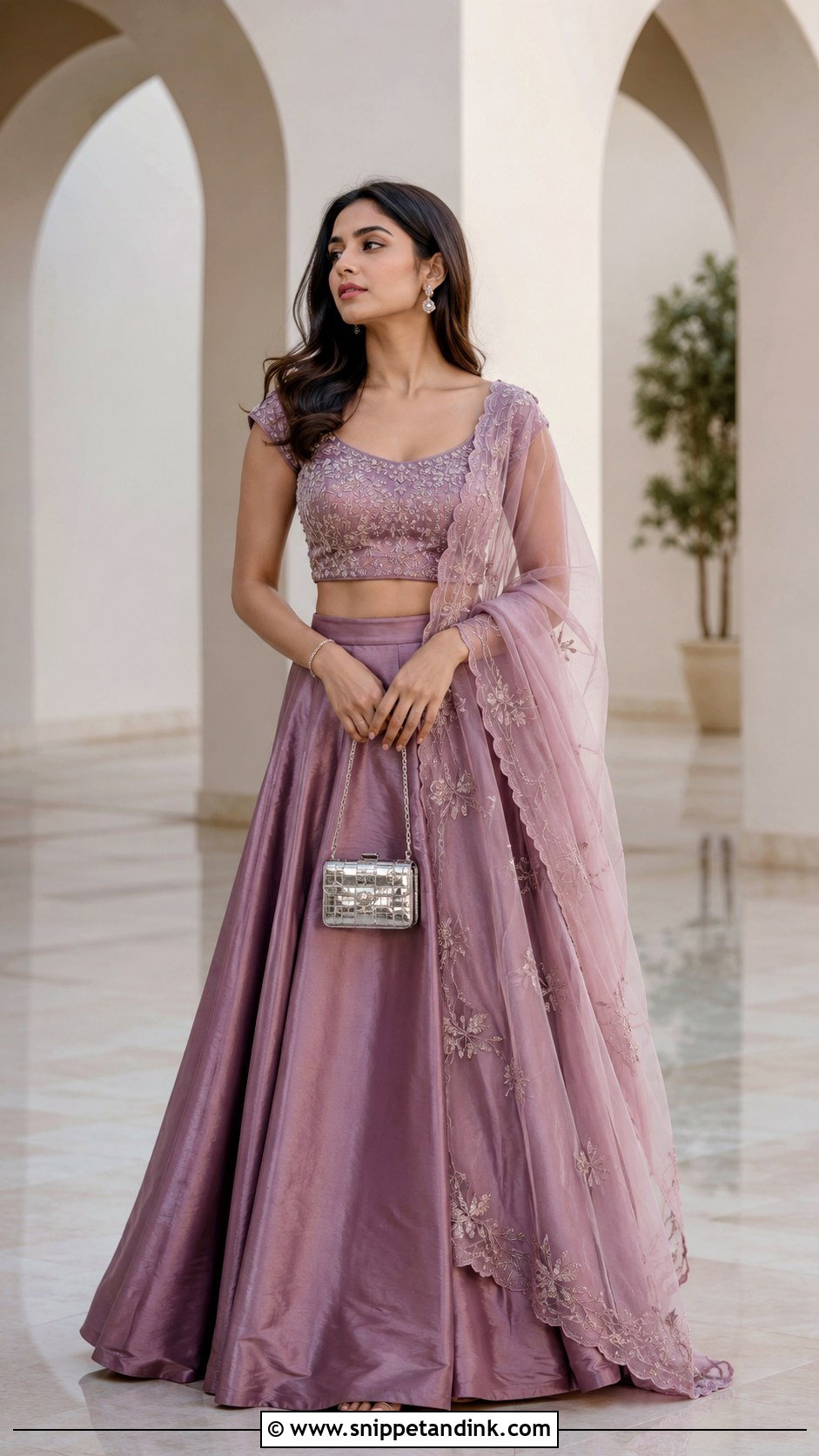
Monochrome works when the textures change. Use one shade, sage, mauve, plum or rust, across the skirt, blouse and dupatta, then vary the surface: a silk skirt, an embroidered blouse, a sheer organza dupatta. Without that contrast it looks flat in photos. Keep the skirt’s volume controlled and the blouse smooth at the waist. Tonal earrings, a small metallic bag and understated juttis are enough. A bride wearing this can bring in contrast through jewellery; a guest usually needs only earrings.
Colours Guests Usually Leave to the Bride
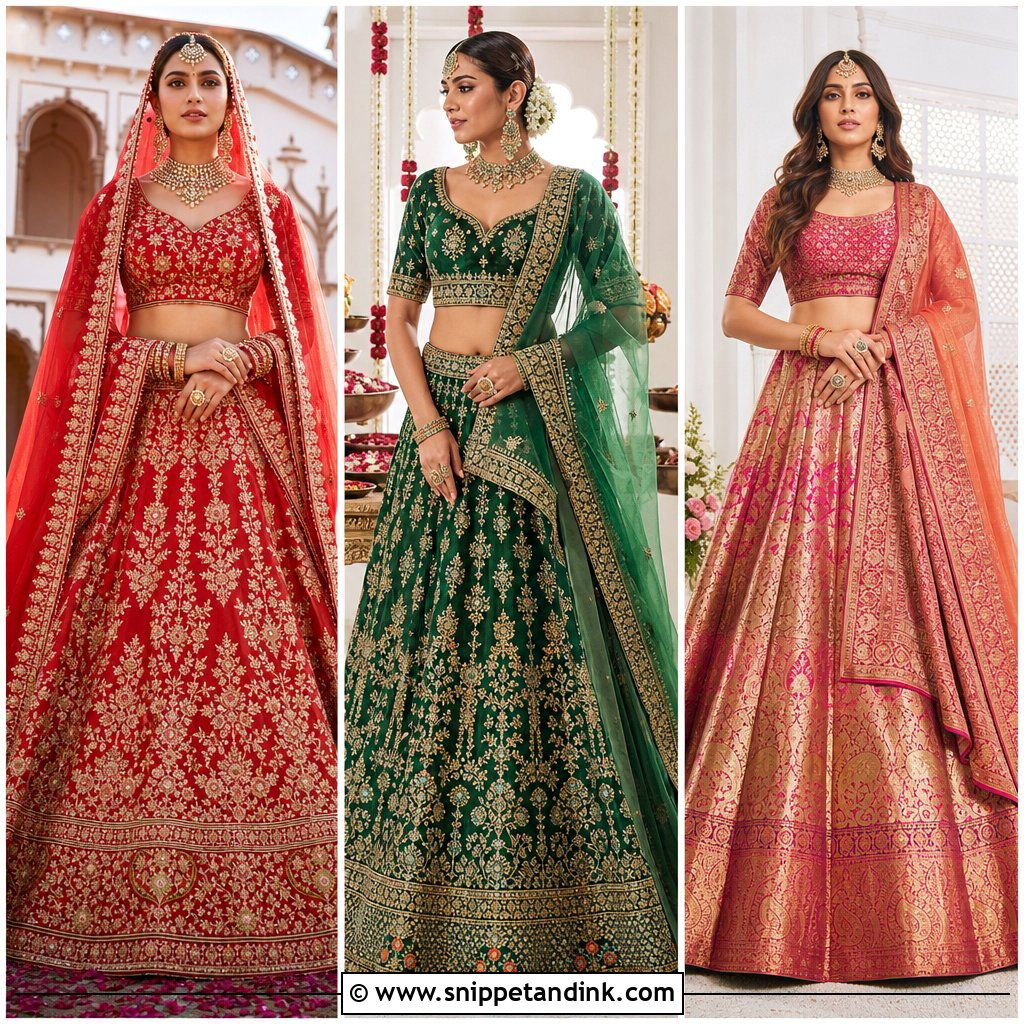
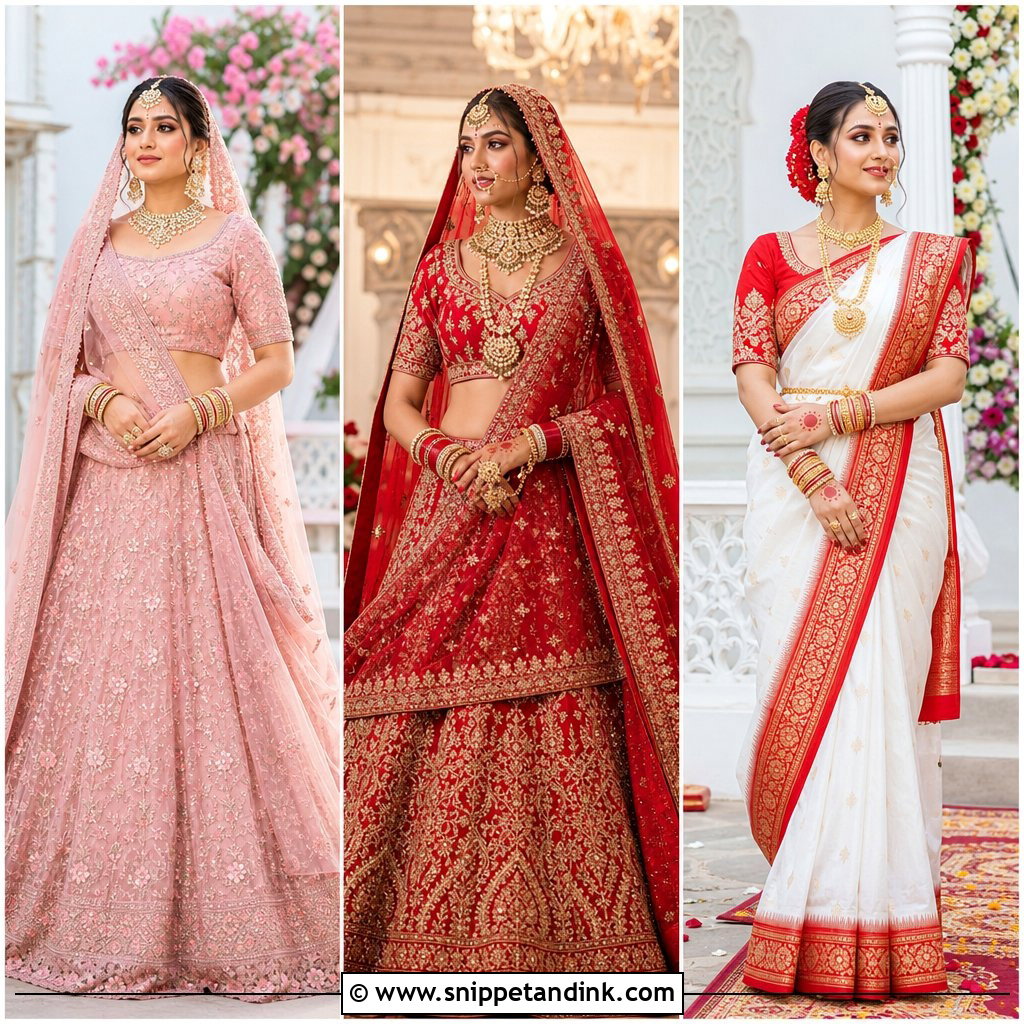
Customs differ between regions and families, so treat these as defaults and ask the couple if you’re unsure. Red, and in some communities deep maroon, is traditionally the bride’s colour, and guests generally stay away from a full red lehenga. In many Hindu families white and very pale ivory are linked with mourning, and solid black can be frowned on at the main ceremony, though both are more relaxed at a cocktail party or reception. Brides from Christian or Bengali families may have their own colour customs too. When in doubt, a bright jewel tone or a pastel is always safe.
How Heavy Is Too Heavy for a Lehenga?
A heavily worked bridal lehenga can be genuinely tiring to wear, and the weight sits on your waist all evening. Before you commit, ask the boutique to let you wear the full outfit, dupatta included, for twenty minutes in the store, and do three things:
- Sit on a low stool and stand up again without help.
- Walk up a few stairs holding the skirt in one hand.
- Turn quickly. A can-can layer that is too stiff swings late and knocks into furniture.
If the waistband digs in, ask for a wider, padded band or broader hooks before the final fitting. Most good tailors can also put the heaviest embroidery on the dupatta, which you can take off, rather than the skirt you can’t.
Dress for the Function First and the Trend Second
Start with the event and the weather, then choose the silhouette. Light sarees, shararas and pastel lehengas suit daytime; velvet, heavy silk, metallic drapes and deeper colours belong to the evening. Tailoring decides how comfortable you’ll be far more than the fabric does, so sit, walk and dance in every fitting. Keep the accessories balanced: good shoes, one focal piece of jewellery and a bag small enough to hold. Lean traditional or go fully fusion, and any of these ideas can be shaped into an outfit you’ll still want to wear at the next family wedding.
You'll Like These Ideas:





Leave a Reply