
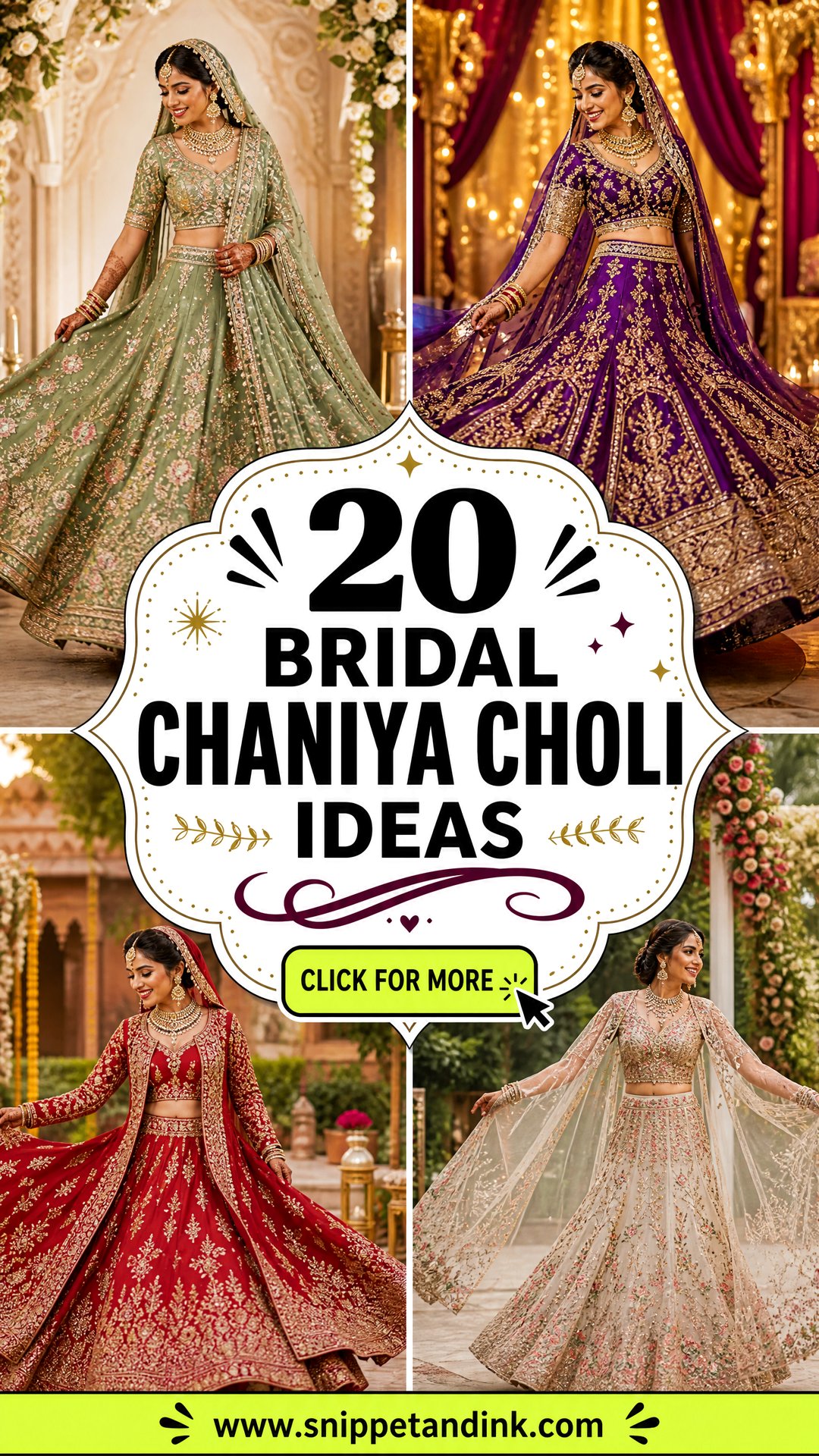
A bridal chaniya choli has to do three jobs at once: carry the family’s traditions, flatter the bride, and stay wearable through hours of rituals, photographs and, often, garba. Below are twenty outfits I’d build for different brides, from classic red zardozi and Gujarati Panetar and Gharchola looks to pastels, deep jewel tones and a few modern cuts. For each I’ve thought through the skirt, choli, dupatta, jewelry and footwear together, because a heavy skirt with the wrong blouse or a slipping dupatta ruins the whole picture. Full flares, mirror work, hand threadwork and less expected colors give you more room than ever to make it personal. I’ll also point out where an idea suits a ceremony and where it belongs at a sangeet or reception.
Kalis, Can-Can and the Weight You Carry All Day
Before color or embroidery, I ask a bride how long she will be in the outfit and what she’ll be doing in it. A bridal chaniya with dense zardozi can easily weigh several kilograms, and almost all of that hangs from your waist. The pictures never show that part.
What controls the flare
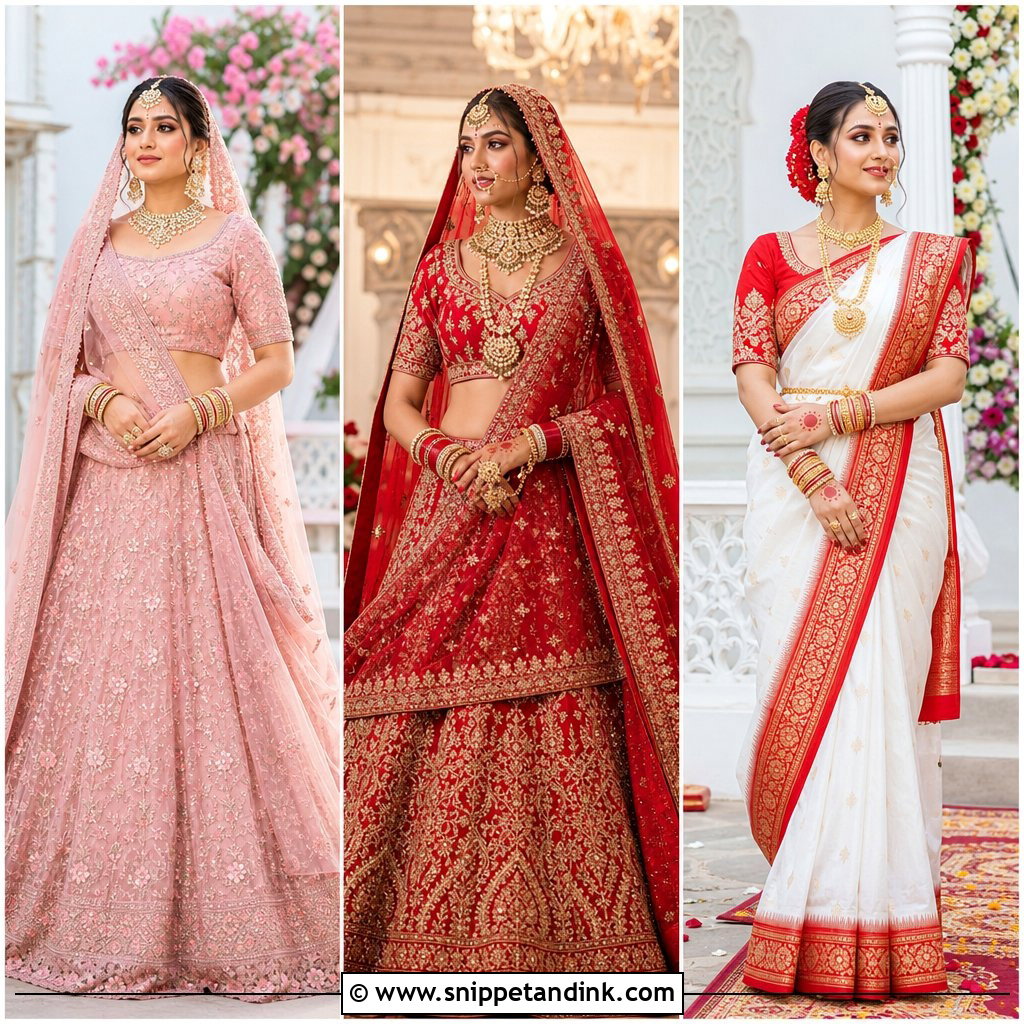
The fullness comes from the number of kalis, the triangular panels the skirt is cut from, and from the can-can or layered lining underneath. More kalis give a wider, swirlier hem without adding much weight. A stiff attached can-can holds the shape but makes sitting on the floor for the rituals awkward. If your ceremony involves long periods seated, ask for a softer net lining or a detachable can-can.
Three fitting checks I never skip
- The waist: a broad waistband with a side zip and hooks spreads the weight better than a single drawstring, which digs in by evening.
- The choli: built-in cups and a back with hooks or a firm dori, fitted with the jewelry on, since heavy necklaces drag a loose neckline forward.
- The hem: set to the height of the juttis or heels you’ll actually wear, so you don’t step on the front during the pheras.
Hand embroidery takes time, and custom pieces commonly need several months plus alterations. Ask your designer for their real timeline at the first meeting and plan the final fitting a few weeks before the wedding, not the week of it.
1. Red Zardozi Bridal Chaniya Choli
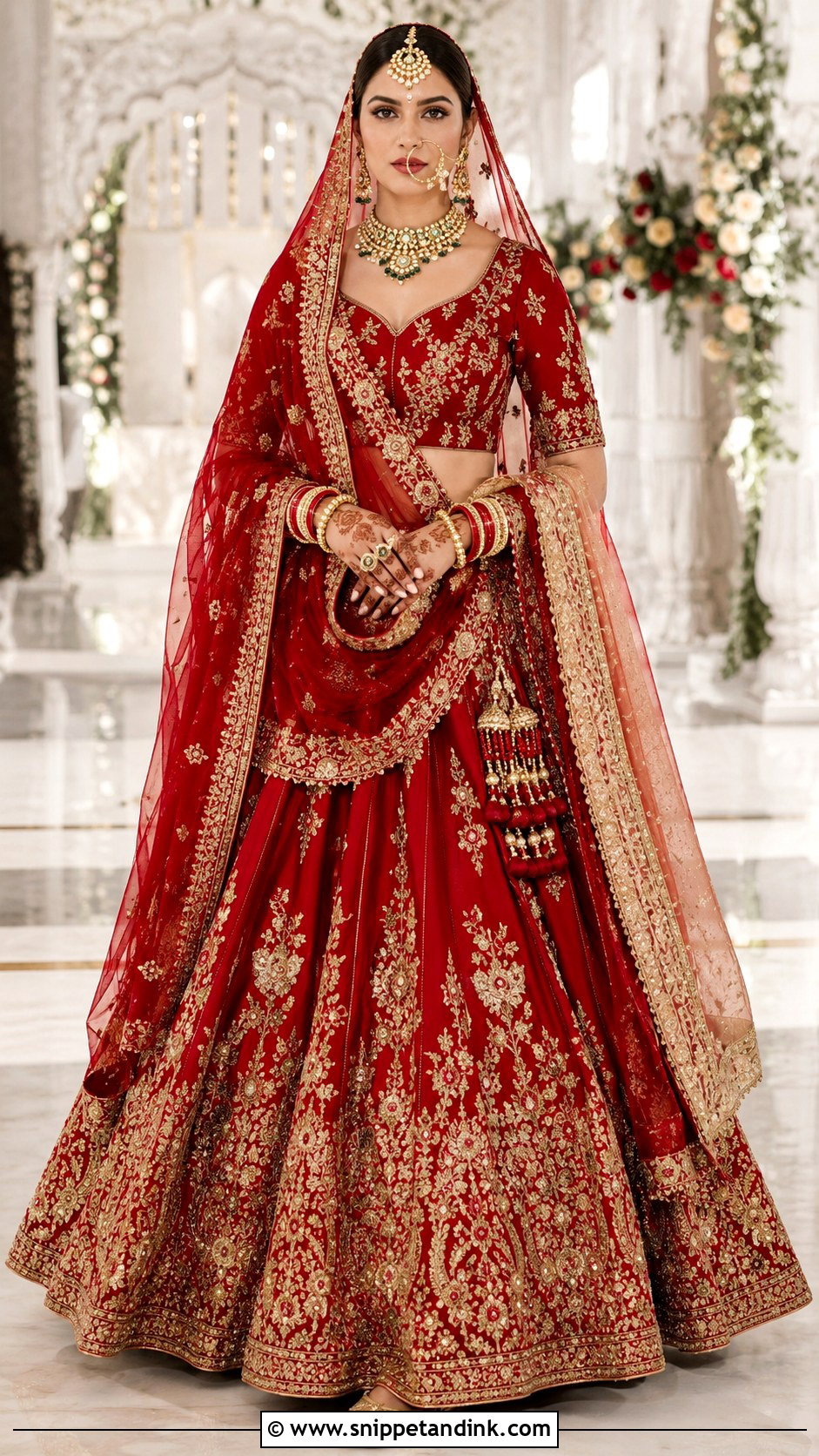
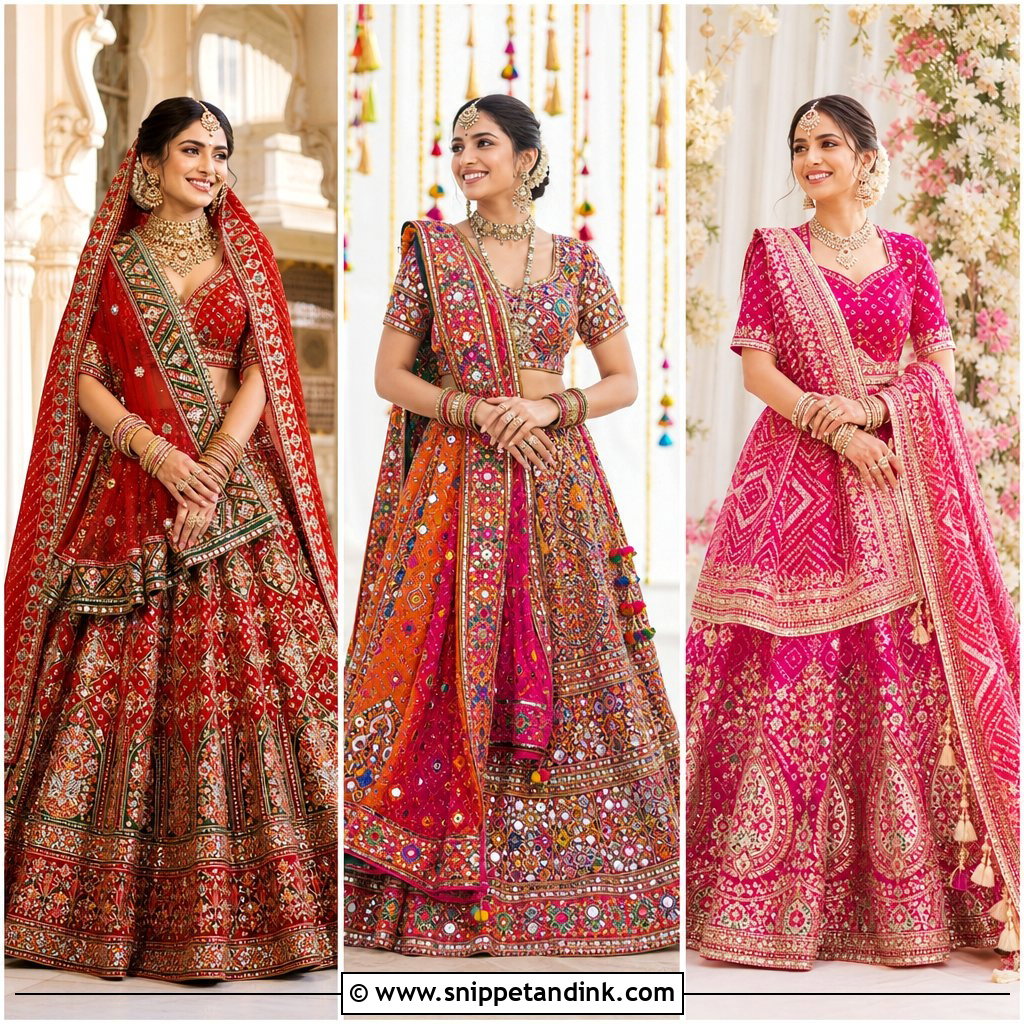
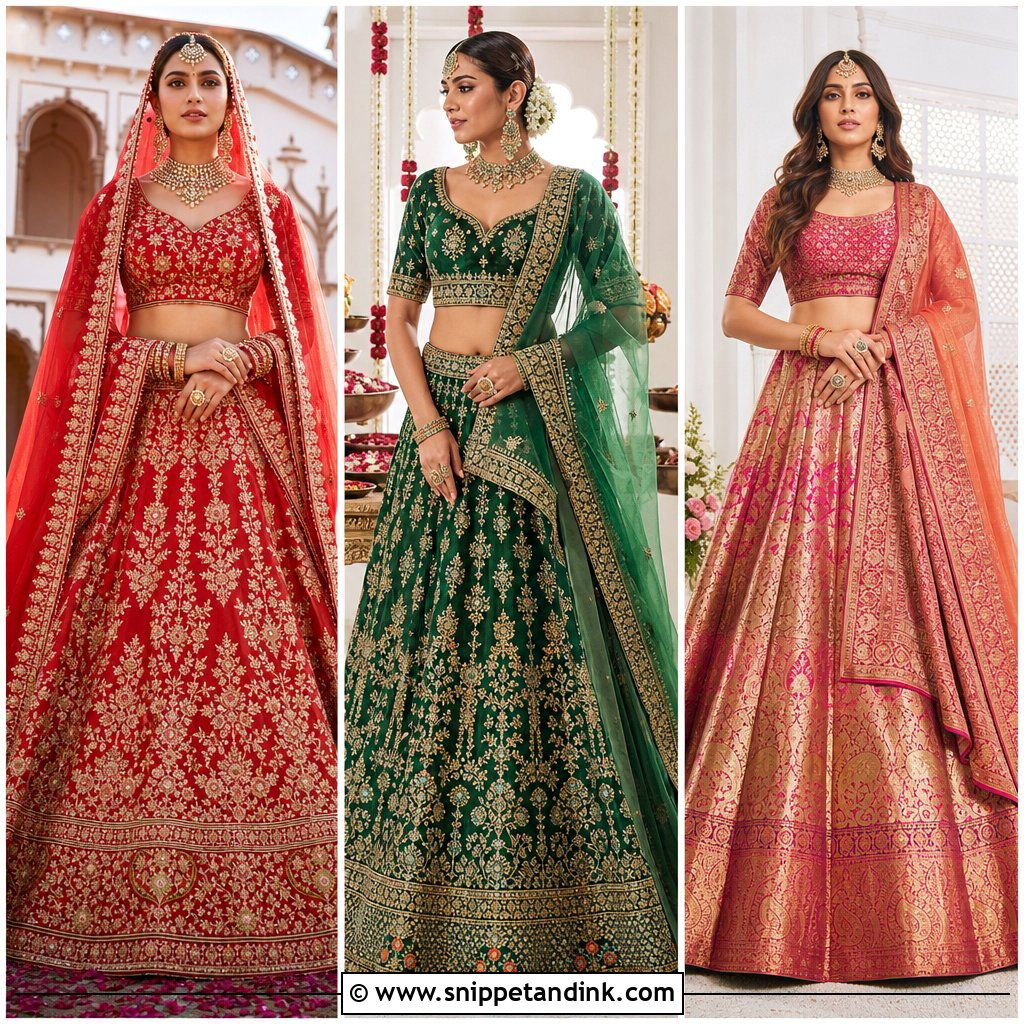
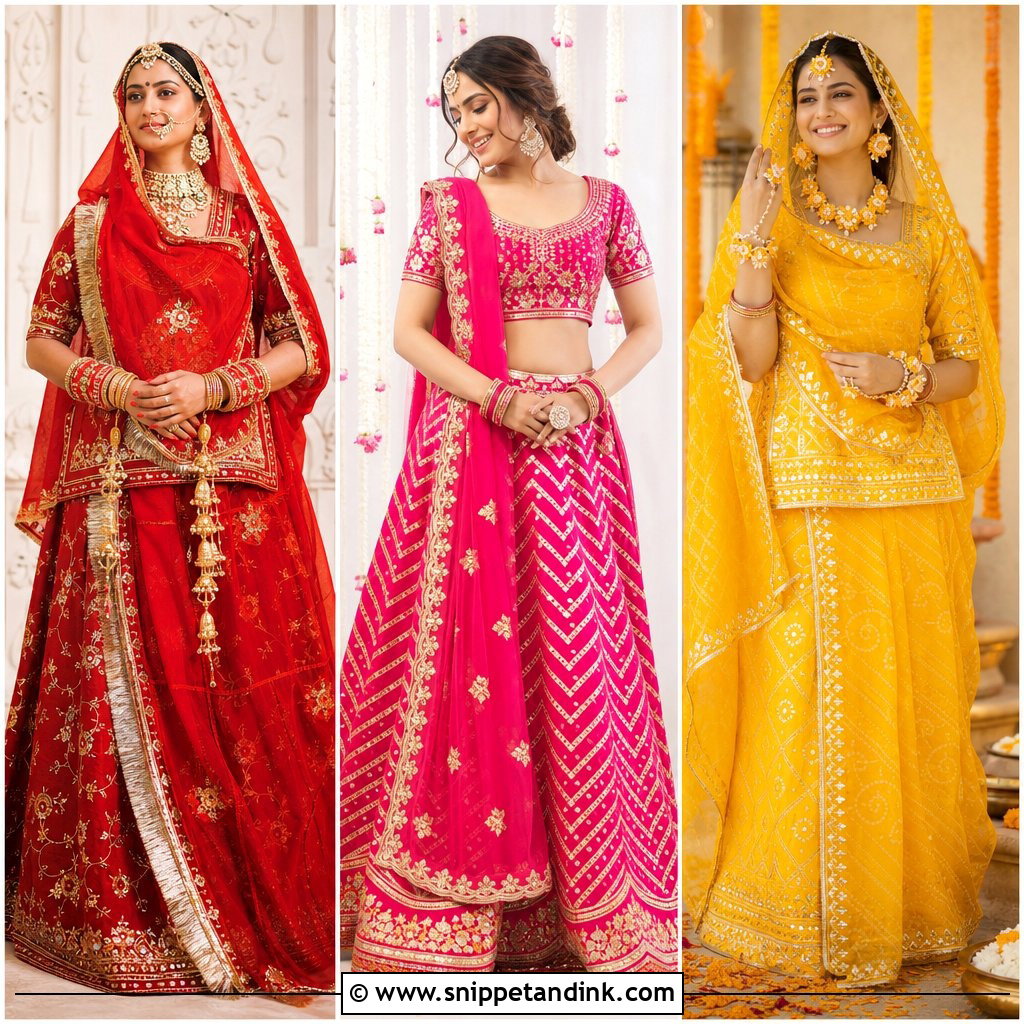
Deep red with zardozi is still the look most families picture, and it earns that place. I’d build it on a full-flare silk or raw silk chaniya with antique-gold zardozi, dabka and a few sequins rather than a skirt covered in them, because metal work is heavy and you’ll be wearing it through the pheras. An elbow-length structured choli gives support and leaves the neck clear for layered necklaces. Use a light red net dupatta on the head and a second, embroidered one across the shoulder. Kundan, red and ivory bangles, a nath and gold juttis finish it. With everything in one red, the handwork is what people notice.
2. Maroon Velvet Bridal Chaniya Choli
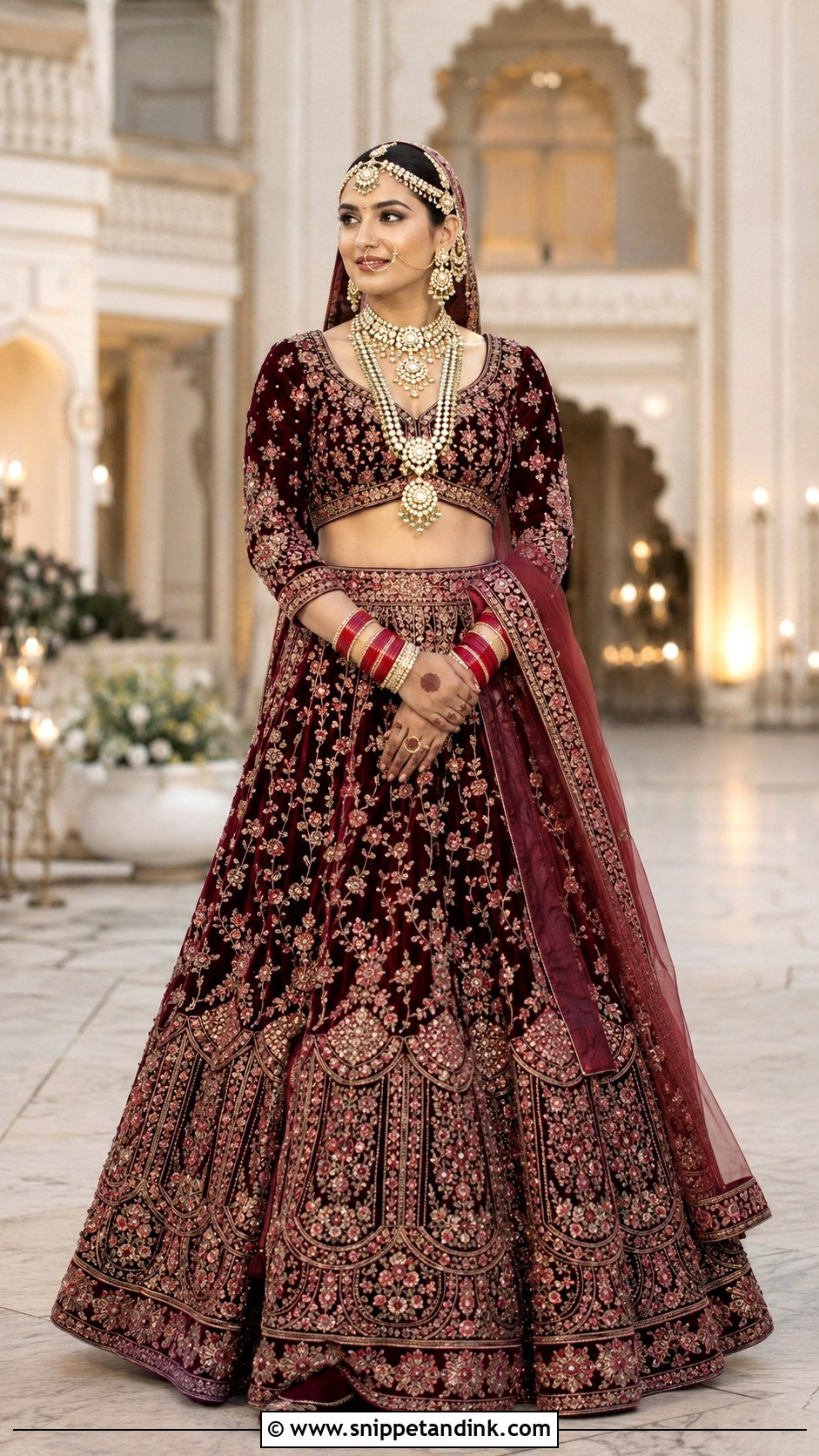
Velvet suits an evening ceremony or a winter wedding, and it’s warm, which matters if the mandap is outdoors in December. The embroidery is best kept to the hem, the waist and scattered motifs; velvet already has depth, and heavy sequins on it start to look costume. A fitted velvet choli with a modest neckline and three-quarter sleeves balances the skirt. Pick an organza or net dupatta, never a velvet one, or the top half becomes airless and heavy. An antique-gold border ties it to the embroidery. Polki, a matha patti and a sleek bun with fresh flowers keep it regal without crowding the neckline.
3. Ivory Gold Bridal Chaniya Choli
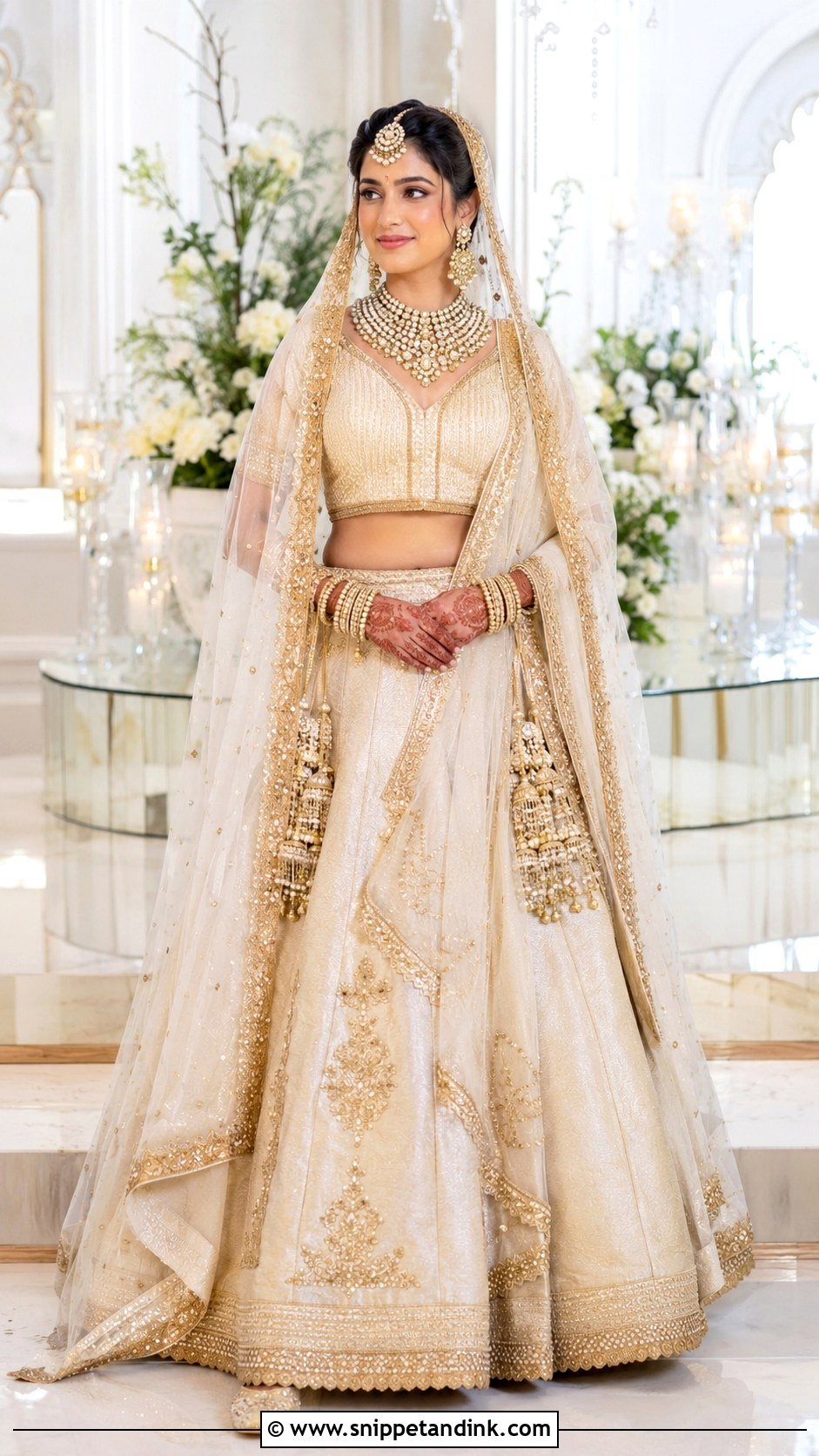
Ivory and gold reads grand without color, but only if the metallic work is the same tone everywhere. I look closely at the zari on the skirt, the choli, both dupattas and the jewelry together under daylight, because yellow gold next to antique gold on ivory shows immediately. Pearl embroidery and placed sequins on an ivory silk chaniya, a structured gold choli, and an ivory organza dupatta with a wide border over the head make the base. Uncut diamonds or kundan with pearl drops suit it. A small red bindi and soft rose makeup give the face the warmth the palette lacks.
4. Blush Pink Floral Bridal Chaniya Choli
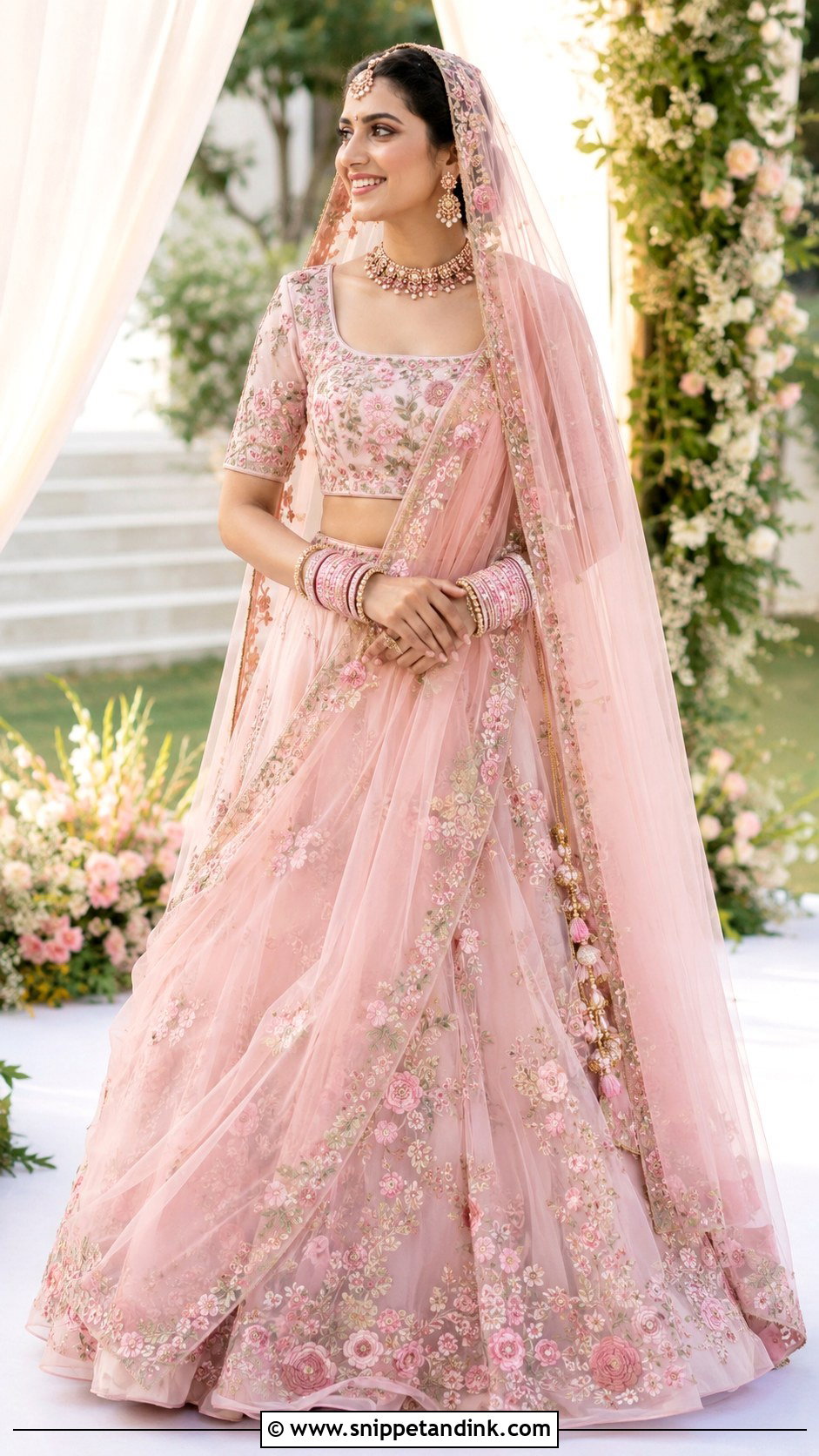
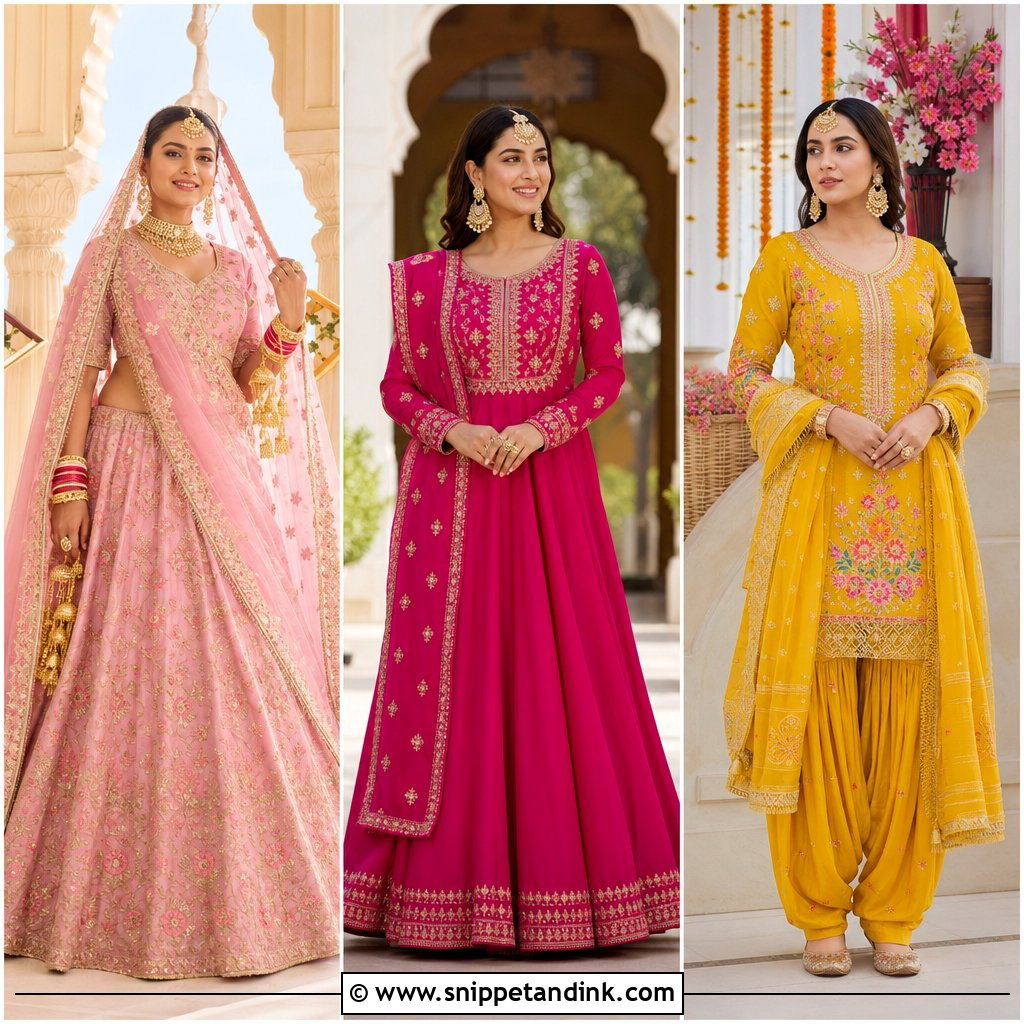
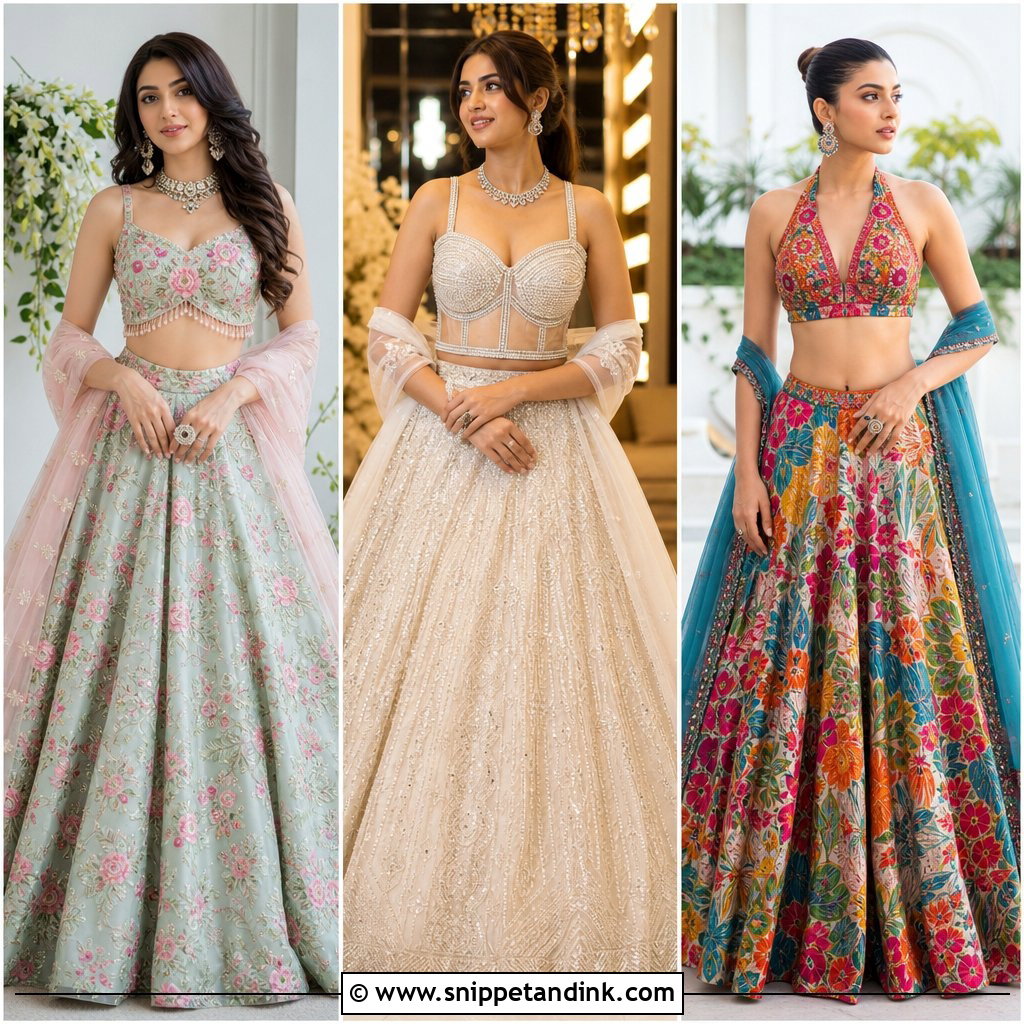
Blush pink comes alive in daylight. Layered organza or silk with dimensional flowers and fine threadwork looks fresh for a morning ceremony, and the risk is the opposite of red: it can look too quiet for a bride. My fix is embroidery that gets denser toward the hem and around the choli neckline, so the outfit has weight where the eye lands. A square-neck choli and a sheer blush dupatta worn lightly over the head keep the hairstyle visible. Rose-gold jewelry, pearl accents and fresh roses in a textured braid or bun keep everything in one color family.
5. Emerald Green Bridal Chaniya Choli
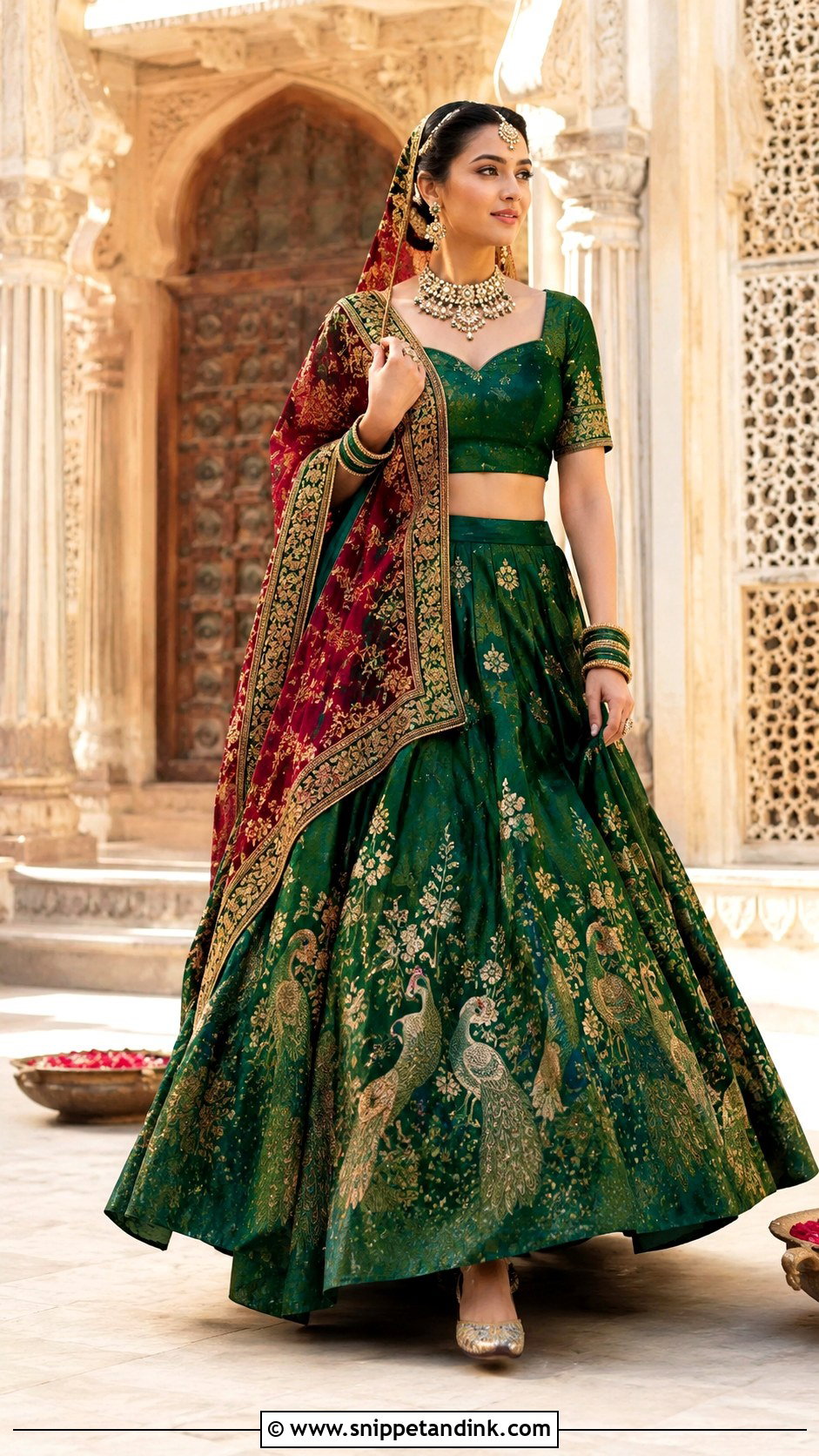
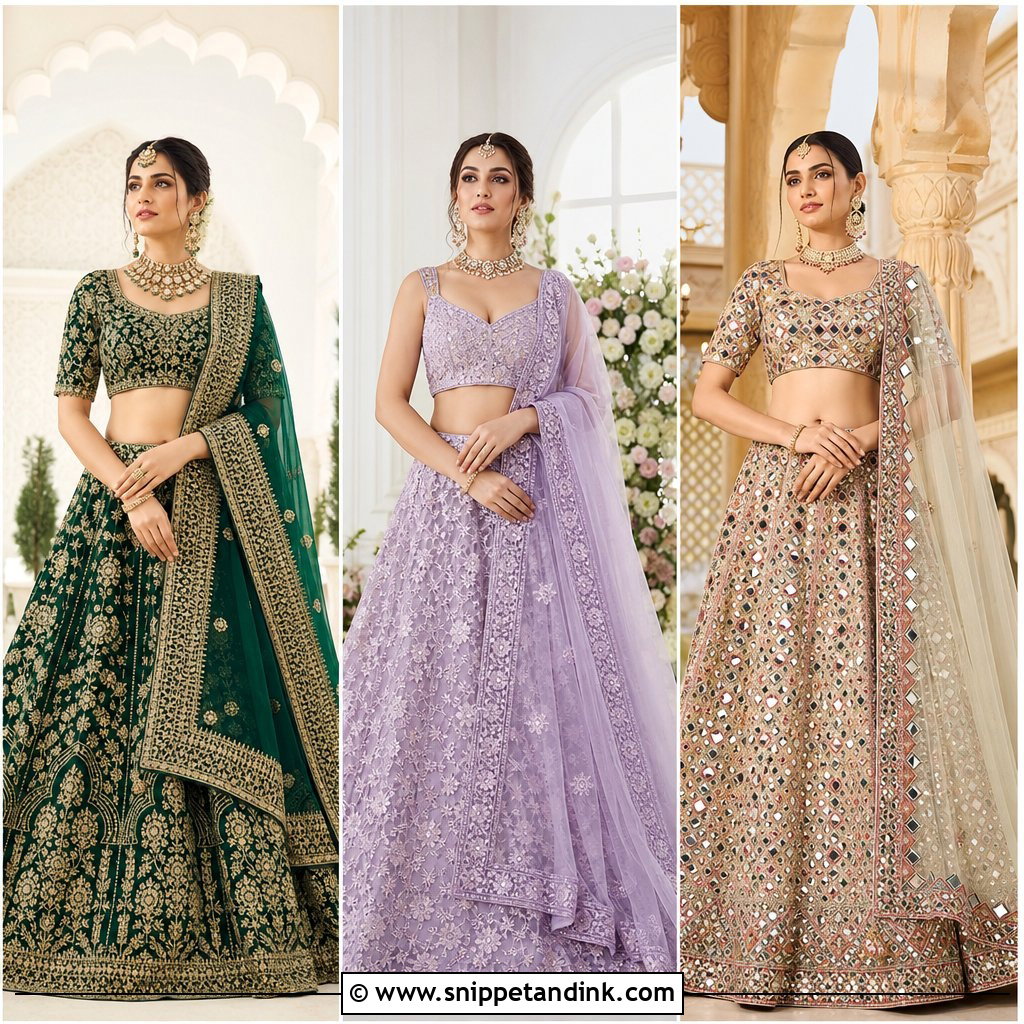
Emerald is the color I suggest to brides who want something other than red but still want it to feel ceremonial. Gold zari vines, peacock motifs or symmetrical floral panels on silk show off the flare. A sweetheart or round-neck green choli makes a smooth base for layered gold. Introduce contrast through the dupatta: a muted red, rust or antique gold over the head. Stick to one gold tone across the temple or kundan jewelry, because mixed golds dull the green. If you don’t want a huge skirt, a paneled A-line chaniya gives the same color with much less volume.
6. Royal Blue Bridal Chaniya Choli
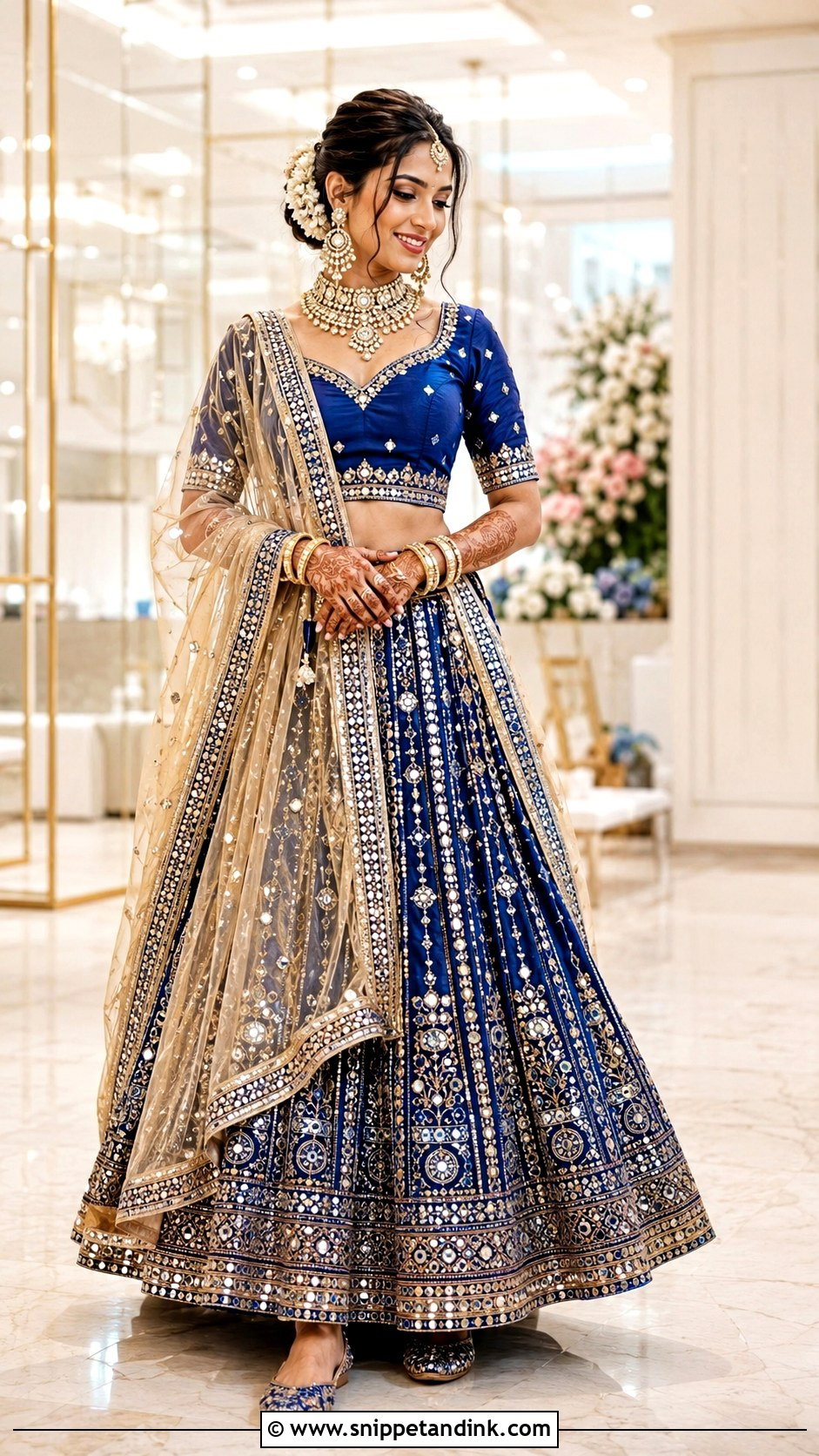
Royal blue is a bold pick for a reception, a sangeet or a ceremony where the family is open to breaking from red. A raw silk or georgette chaniya with antique-gold embroidery, mirror accents and a wide hem pairs well with a fitted blue choli. An ivory or pale-gold dupatta lifts the top half, which can otherwise look dark in indoor photos. A high neck pairs with statement earrings; a deeper one leaves space for a kundan layer. I’d steer you away from blue eyeshadow; a soft metallic eye and a rose lip let the outfit carry the color.
7. Mustard Bandhani Bridal Chaniya Choli
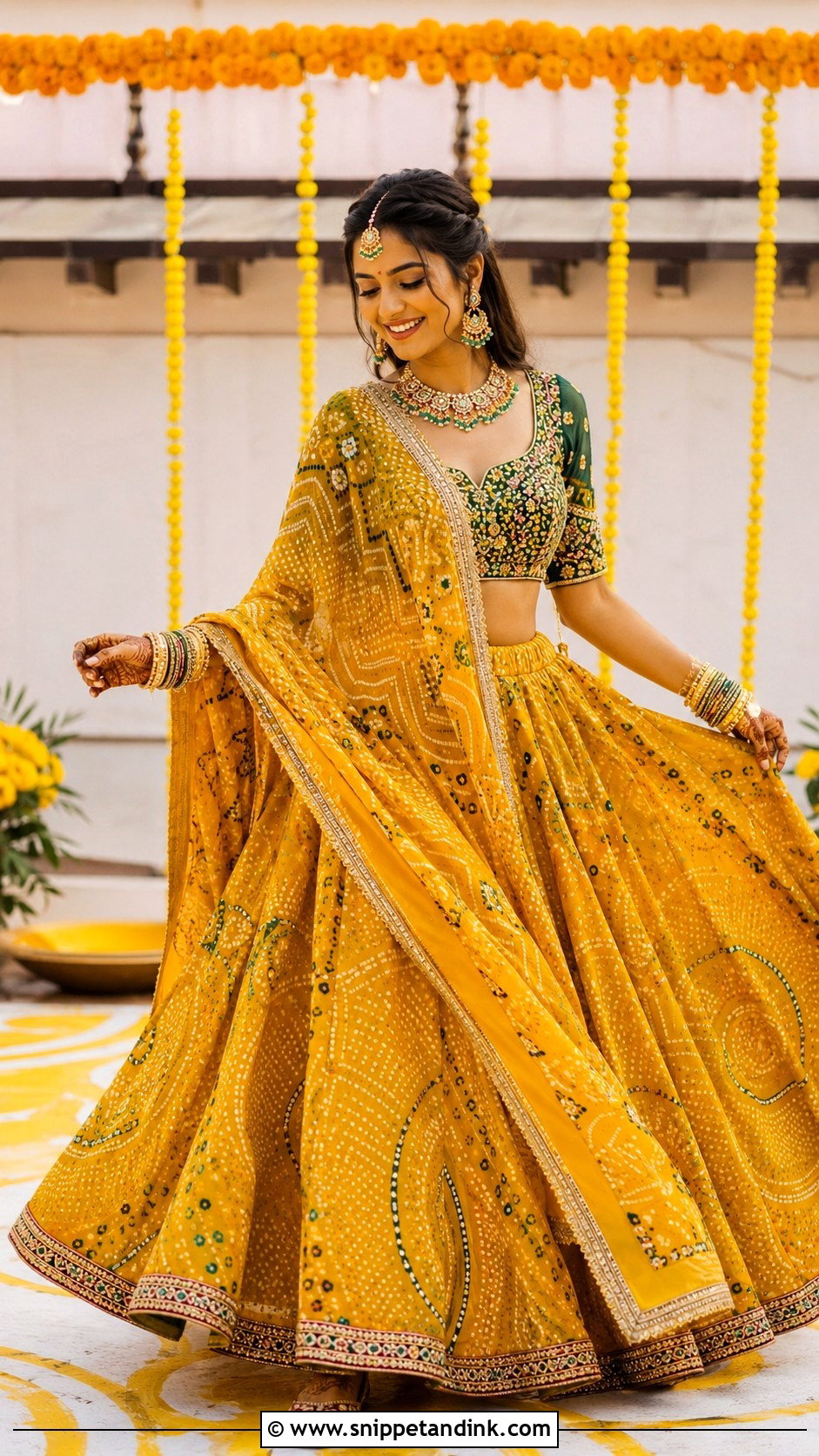
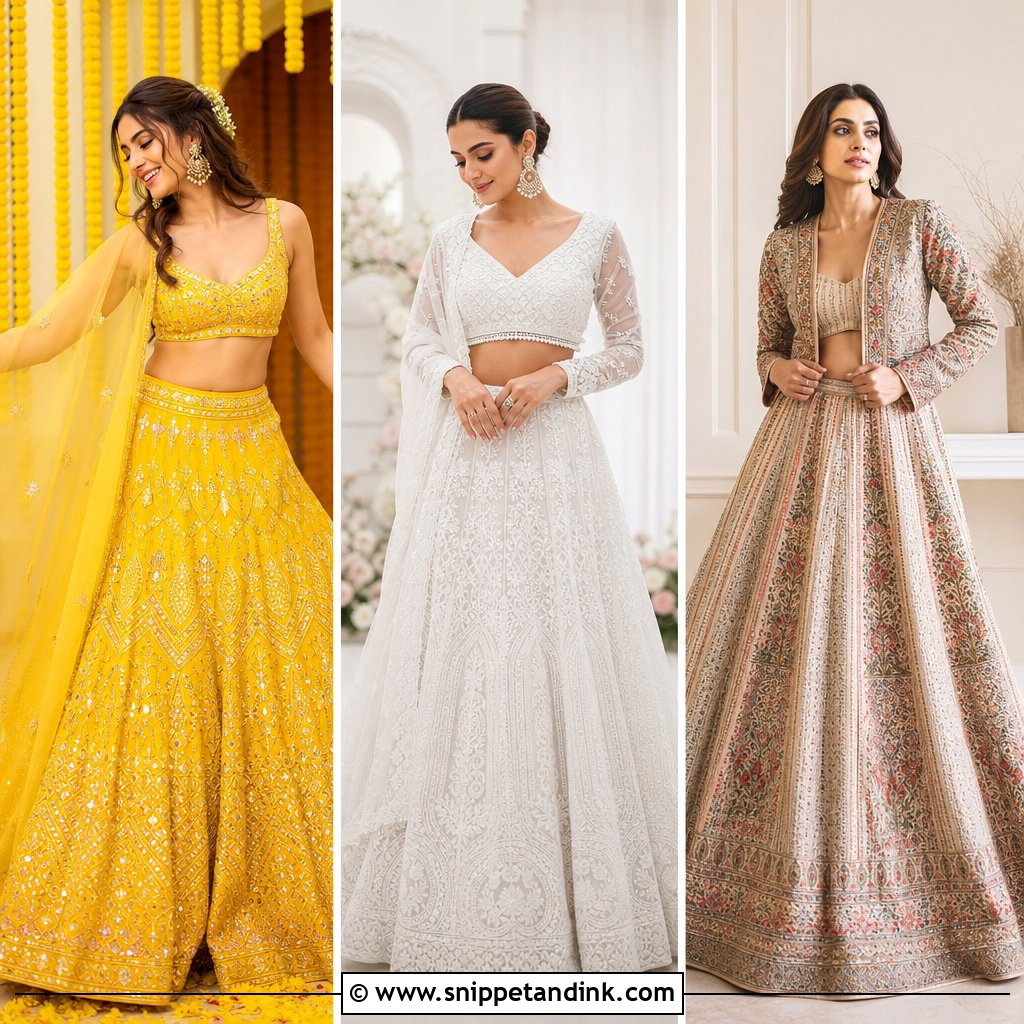
Bandhani in mustard or golden yellow is made for the daytime pre-wedding functions, when the colors are brightest and nobody wants to sit in heavy zardozi. Gota borders and light mirror accents keep the skirt manageable. A contrasting green, maroon or rani pink choli defines the waist, and the blouse embroidery should stay modest since the tie-dye dots already create movement. Wear the dupatta over both shoulders, then over the head for the rituals. Meenakari jewelry, a maang tikka and a flower-woven braid suit the handmade look. It’s the outfit I’d pick for haldi, pithi, or daytime celebrations, where you need to move and may get turmeric on you, so choose a piece you won’t mind staining.
8. White Red Panetar Bridal Chaniya Choli
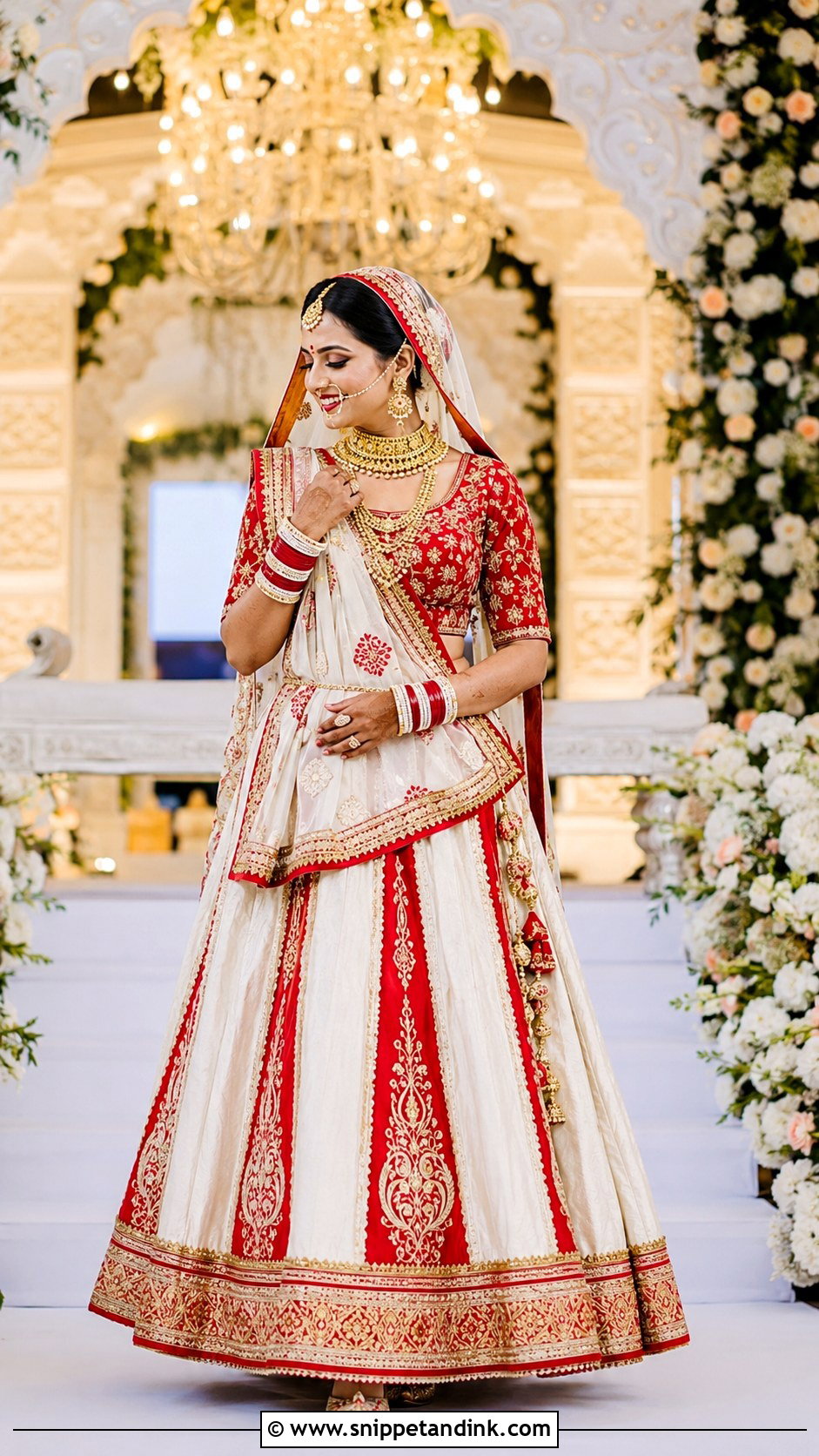
The Panetar is traditionally a gift from the bride’s maternal uncle, and building a chaniya choli around it keeps that meaning while giving you a skirt-and-blouse shape. An ivory silk chaniya with red panels and gold zari borders, a red choli with gold work, and a white-and-red dupatta over the head with its border framing the forehead hold the classic palette. Don’t add a fourth color; the white, red and gold is the whole point. Gold jewelry, a nath and red-and-white bangles finish it. Ask your tailor for a little ease at the choli armhole, since you’ll be raising your arms during the rituals.
9. Red Bandhani Ghar Chola Chaniya Choli
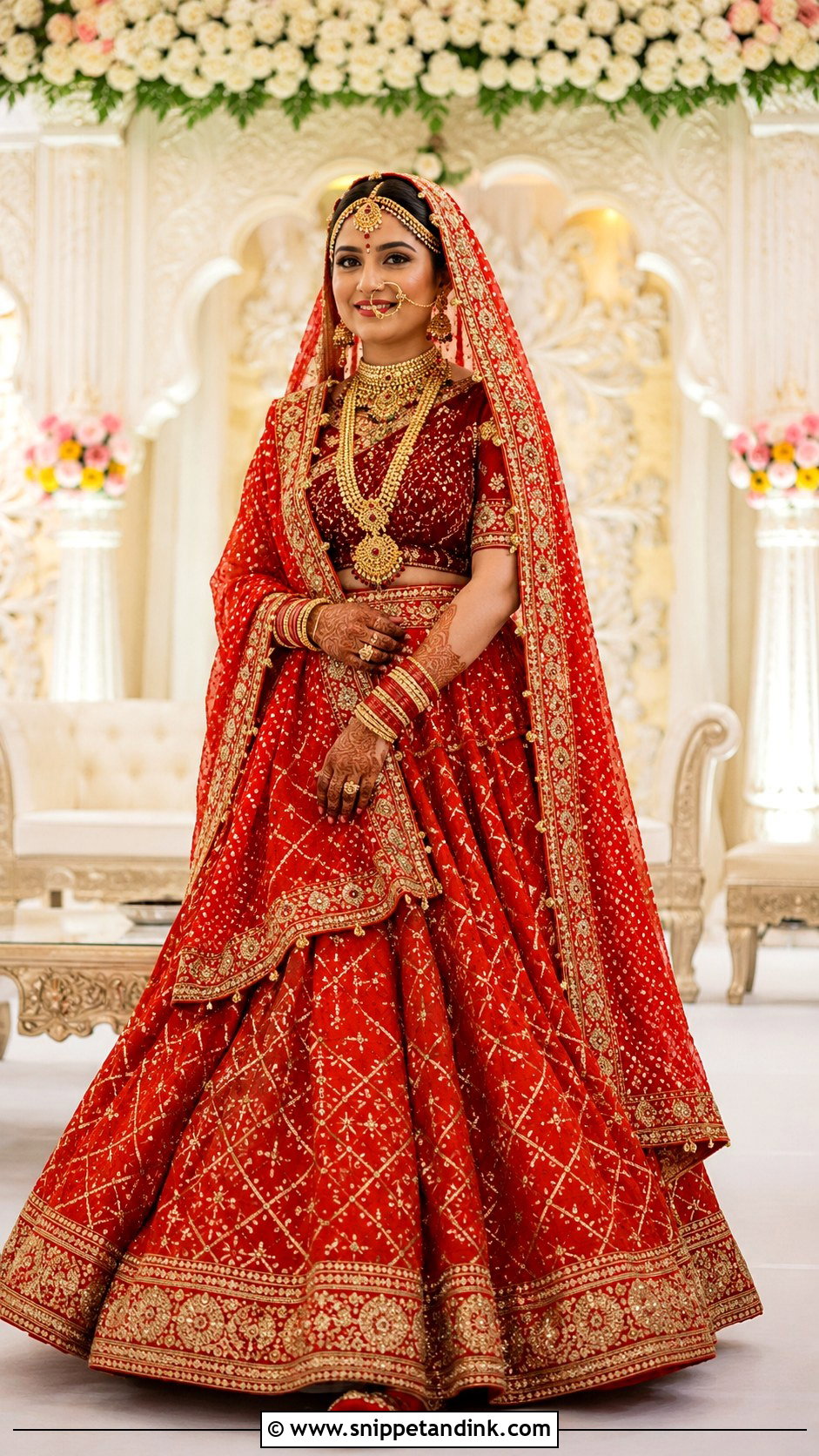
A Ghar Chola-inspired chaniya choli outfit builds on the gold-grid bandhani that the groom’s family traditionally gives the bride. The dupatta is the star here, so I drape it over the head and pin it out across one shoulder so the grid is visible rather than bunched. Underneath, a red chaniya with matching grid and auspicious motifs and a red or deep maroon choli with zari at the neck and sleeves. Keep the choli neckline simple, because the dupatta and layered necklaces will fight anything elaborate. A matha patti, bridal bangles and a smooth bun complete it.
10. Mirror Work Bridal Chaniya Choli
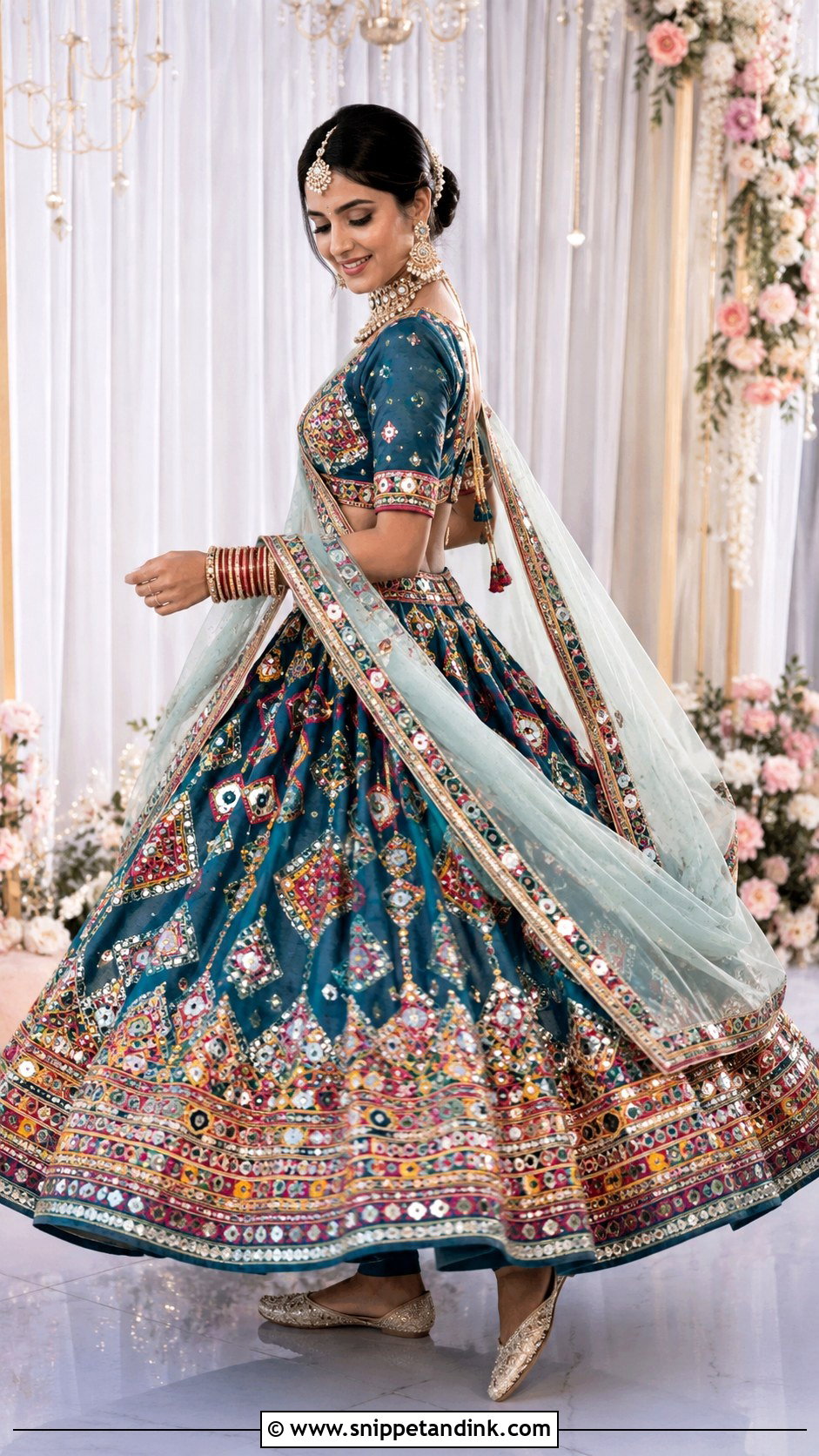
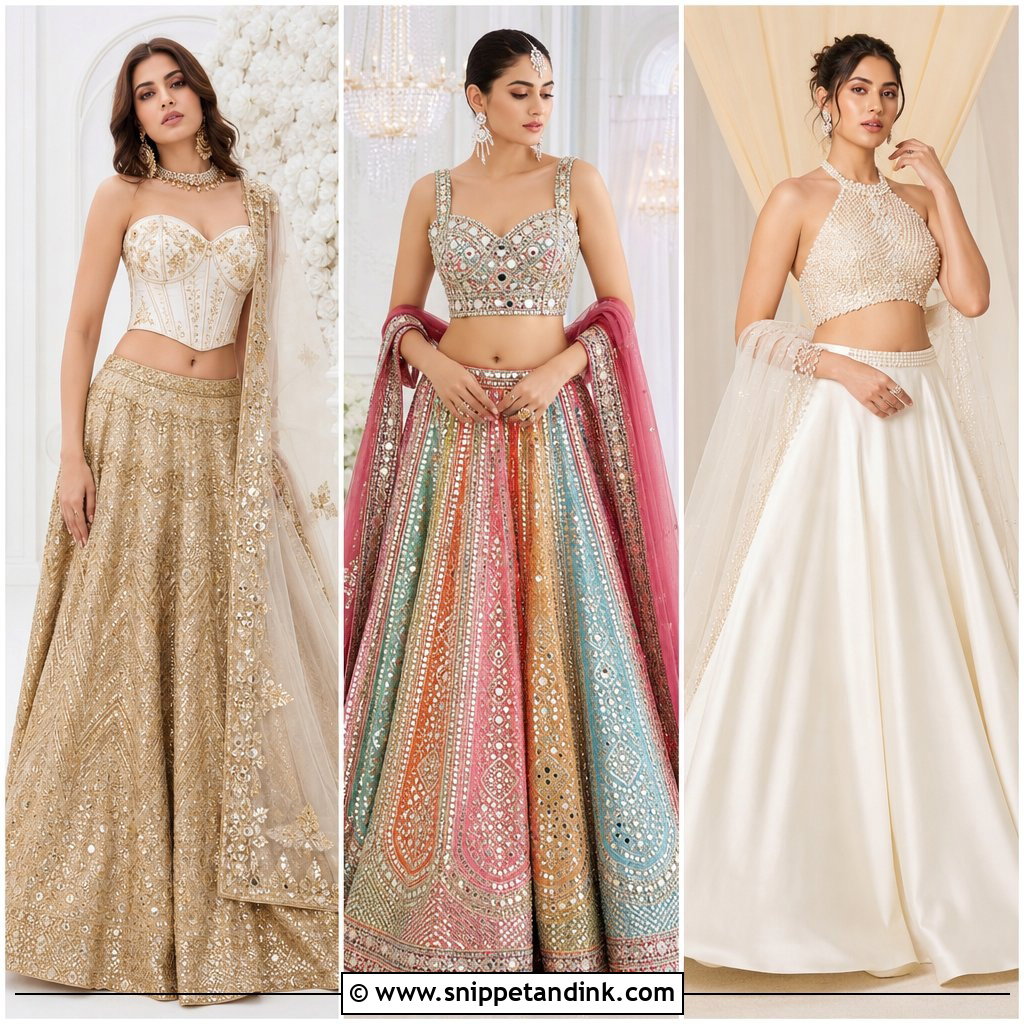
Mirror work catches light every time the skirt moves, which is why it’s a garba favorite. Quality is easy to judge if you know where to look. Turn the skirt inside out: well-made shisha is held by dense thread embroidery around each mirror, and the back is neat. Loose glued mirrors fall off mid-dance, and rough backs scratch the legs. Put the heavier work on the choli neckline and keep the sleeves lighter, with a plain organza dupatta with a mirror border to give the eye a rest. Skip glitter makeup, since the dress is already reflecting light. Check the waist closure and the skirt’s weight before you buy.
11. Multicolor Kutchi Bridal Chaniya Choli
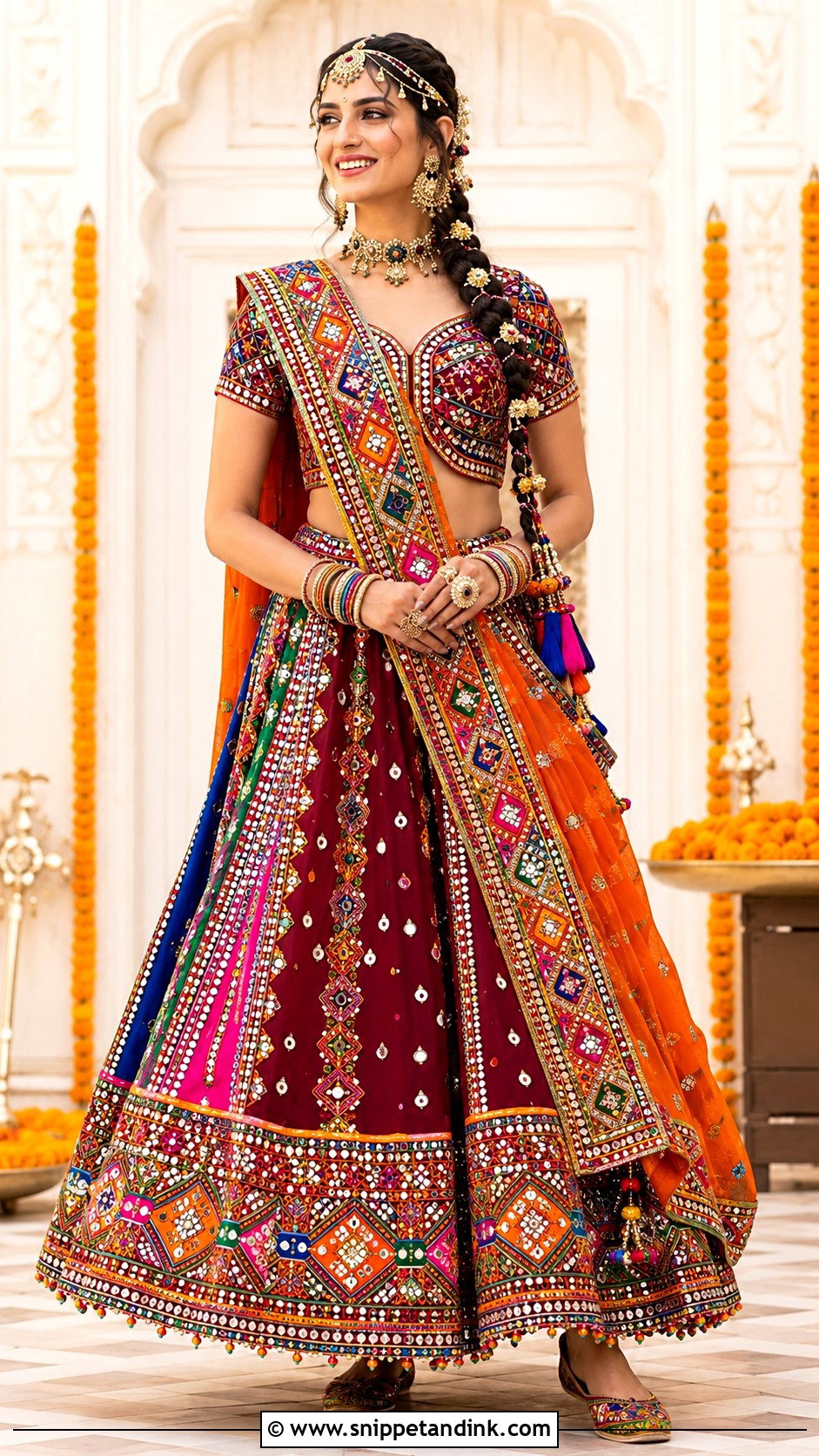
A multicolor Kutchi chaniya choli is all about handwork: geometric embroidery, mirror work and patterned panels on a deep red, black, navy or maroon base. The trap is matching every color. I pick two or three dominant shades from the skirt for the choli and let the dupatta stay simple, a red, orange or green with an embroidered border. Silver or antique-gold jewelry suits the folk character better than polished kundan. A long braid with decorative accessories swings well during garba. Save it for the mehndi or garba night rather than the pheras, unless your family’s tradition calls for it.
12. Lavender Bridal Chaniya Choli
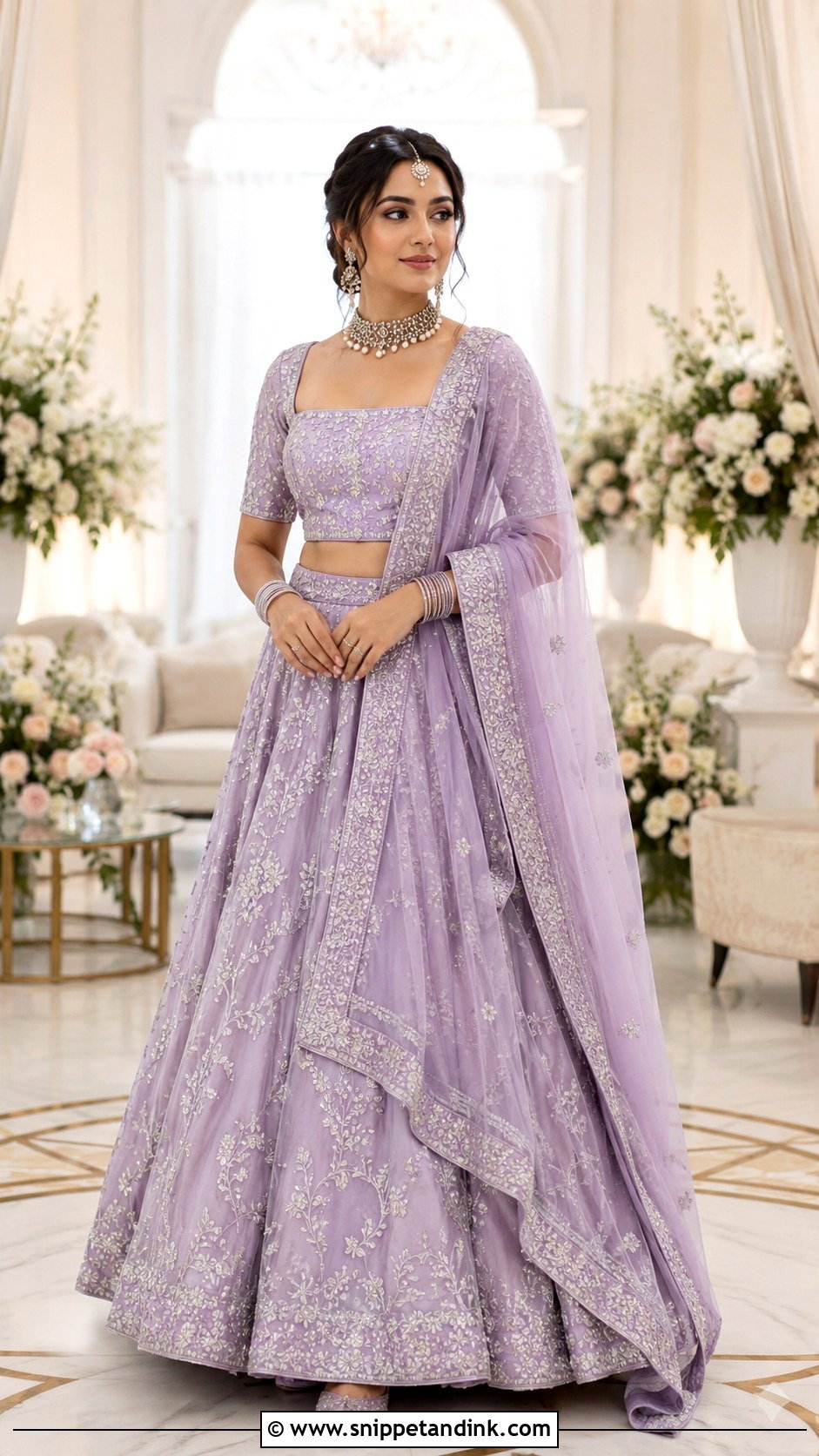
Lavender looks modern and cool, but it washes out on some warm skin tones, so I hold the fabric up to a bride’s face in daylight before going further. Silver threadwork, crystal accents and tonal purple florals on silk, net or organza suit it far better than gold. A square-neck choli with fitted elbow sleeves frames the face. A sheer lavender dupatta with a narrow silver border can go over the head or across the body. Diamond-style jewelry and silver bangles keep the palette cool; a touch of plum in the embroidery or lip stops it looking flat.
13. Champagne Sequin Bridal Chaniya Choli
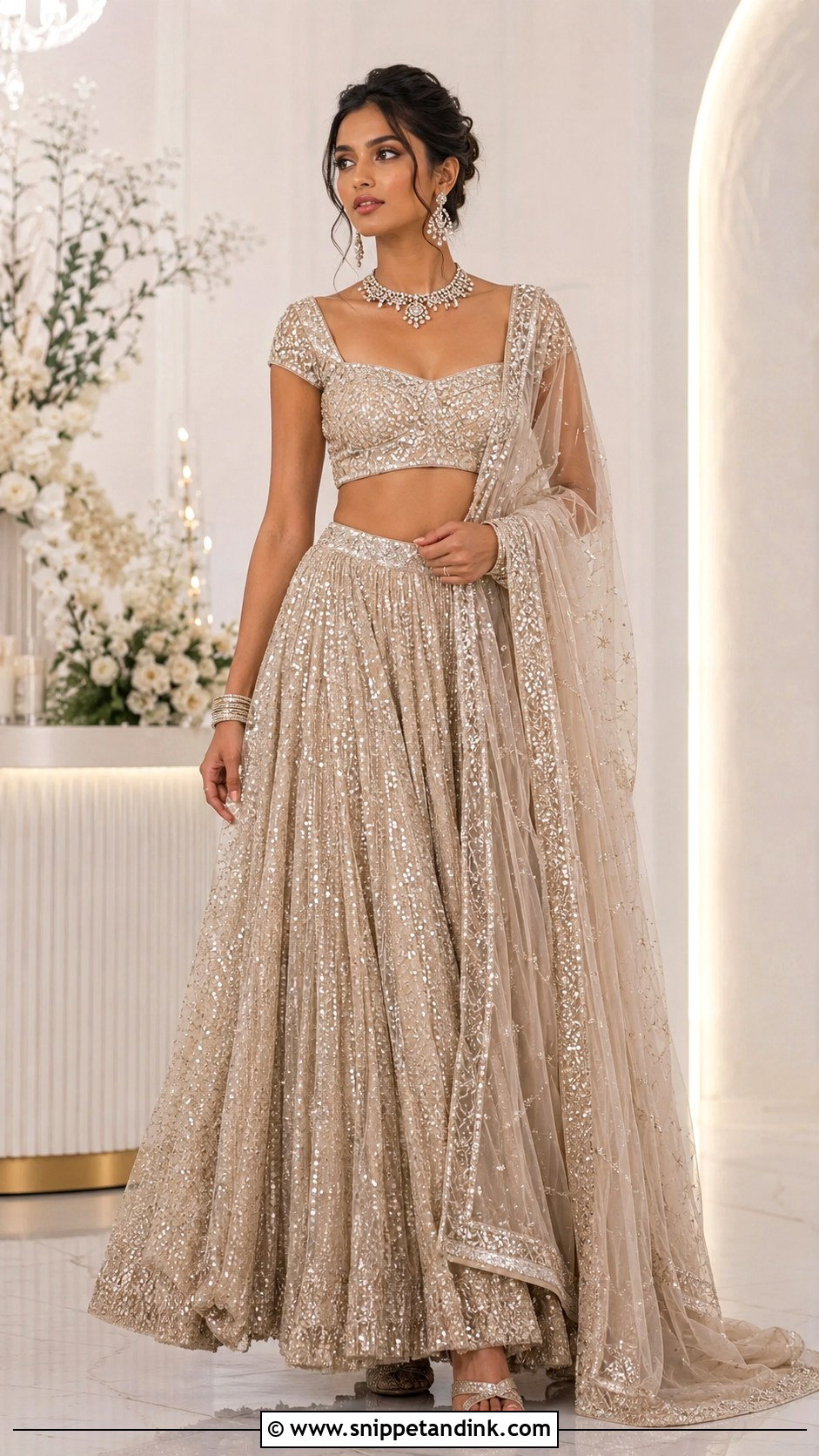
Champagne sequins belong to the reception or an evening function, under lights that make them glow. Georgette or net carries tonal sequins and metallic thread without much weight, and vertical patterns lengthen the figure. A structured choli with secure straps or sleeves matters more with sequins, because a heavy sequinned skirt pulls down at the waist and you want the top firmly in place. Keep the dupatta light with a narrow beaded edge. Sequins photograph very differently under flash and warm bulbs, so check the outfit in both before choosing your jewelry.
14. Ombre Pink Peach Bridal Chaniya Choli
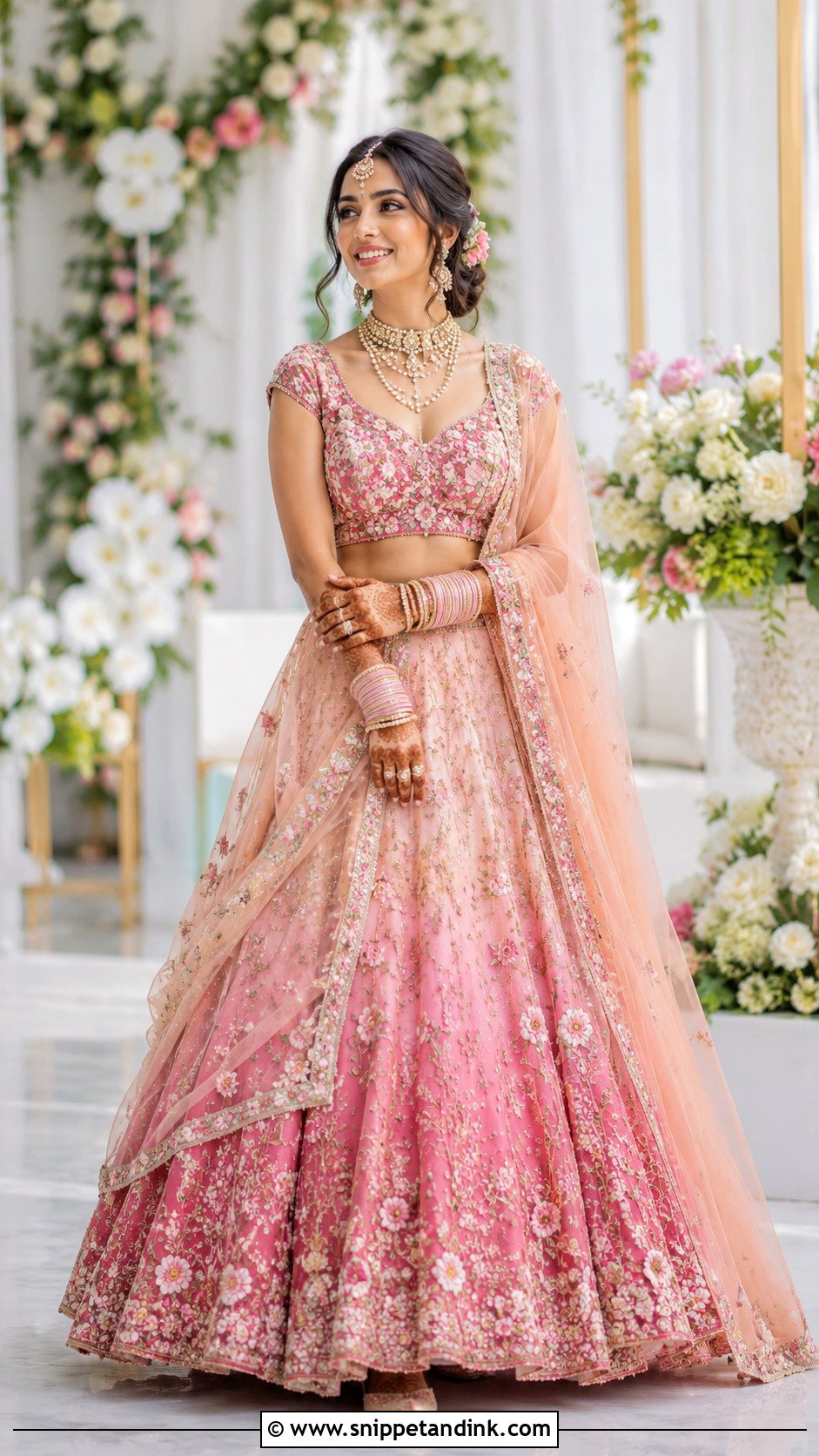
An ombre from peach to pink gives depth without two contrasting garments. The order matters: pale at the waist, strongest at the hem. That grounds the skirt and keeps the brighter color away from your face, so your makeup and jewelry stay readable. Floral threadwork and scattered sequins across the color change hide the transition line. Pair it with a fitted peach or rose choli that repeats the embroidery and a sheer dupatta in the palest shade. Rose-gold jewelry and fresh peach and pink flowers in a low bun stay in the same family.
15. Peacock Teal Bridal Chaniya Choli
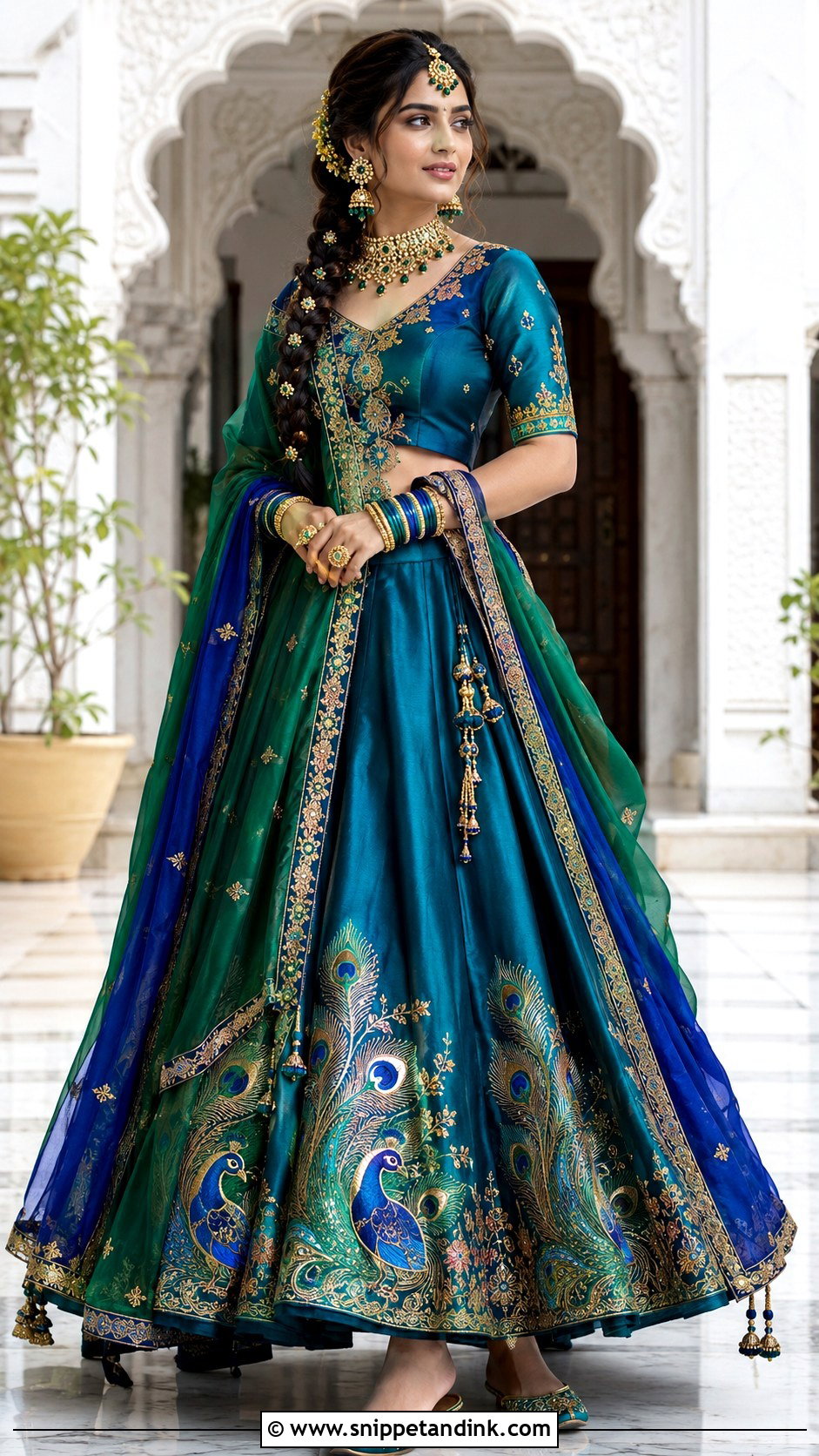
Peacock teal works with green, blue and antique gold, and it’s easy to overdo. A teal silk chaniya with peacock feathers, vines or geometric panels at the hem already holds several jewel tones. My rule is to repeat only one accent in the dupatta, emerald or royal blue or a muted purple, not all three. Antique gold with green stones suits the color better than bright yellow gold. A braided bun or long braid with small gold accents, bronze eyes and a soft berry lip finish it.
16. Rani Pink Bridal Chaniya Choli
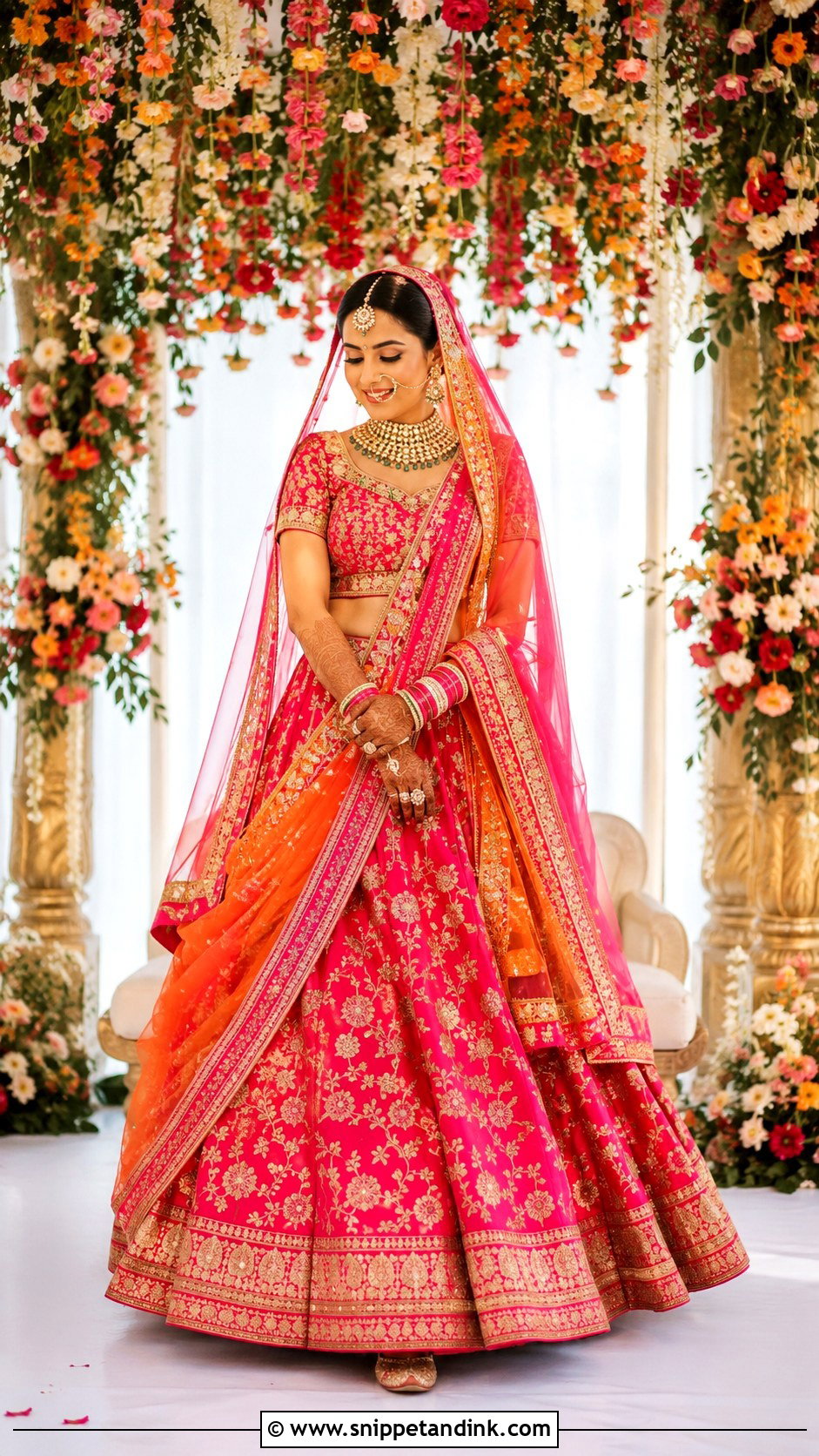
Rani pink is the most joyful alternative to red, and it’s a traditional color in its own right. A silk chaniya with gold zardozi or meenakari-style threadwork with green and orange accents sets it up. A matching pink choli with an orange, red or emerald dupatta adds contrast, and I’d repeat that contrast color somewhere small in the embroidery so it looks planned. If you want a second veil for the ceremony, keep it a light pink net so the shoulders don’t get crowded. Kundan, meenakari bangles, a nath and white flowers in a center-parted bun balance the brightness.
17. Sage Green Bridal Chaniya Choli
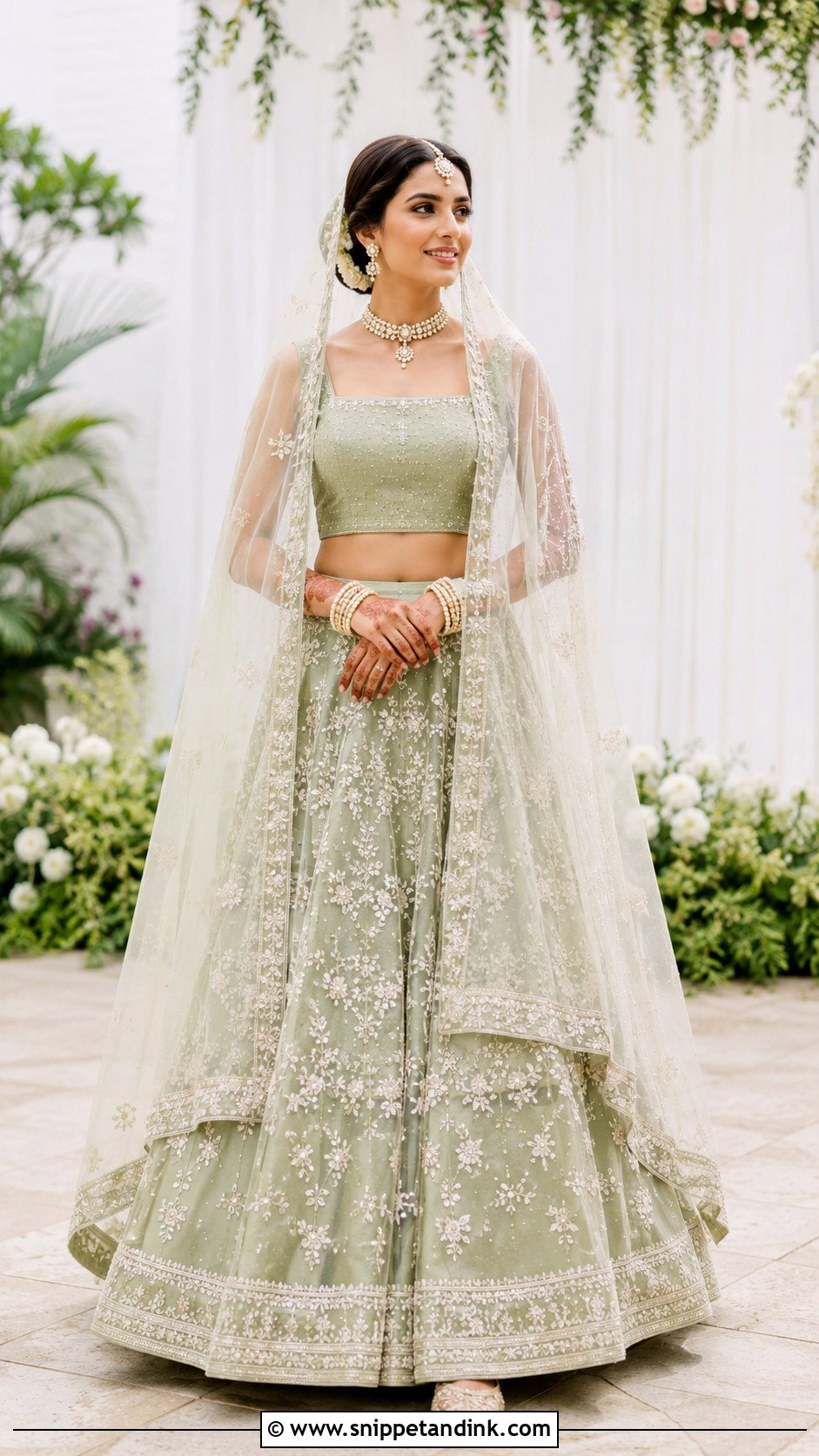
Sage green suits a garden or daytime ceremony, and it’s the outfit most likely to be mistaken for a guest’s if the embroidery is too sparse. Ivory threadwork, pearls and pale-gold work on silk or organza, concentrated near the hem and the choli, keep it bridal. A structured waistband defines the shape under such a light color. An ivory dupatta with a sage border goes over the head, with an optional sheer second dupatta across the shoulder. Pearl jewelry and soft peach makeup warm the green.
18. Purple Gold Bridal Chaniya Choli
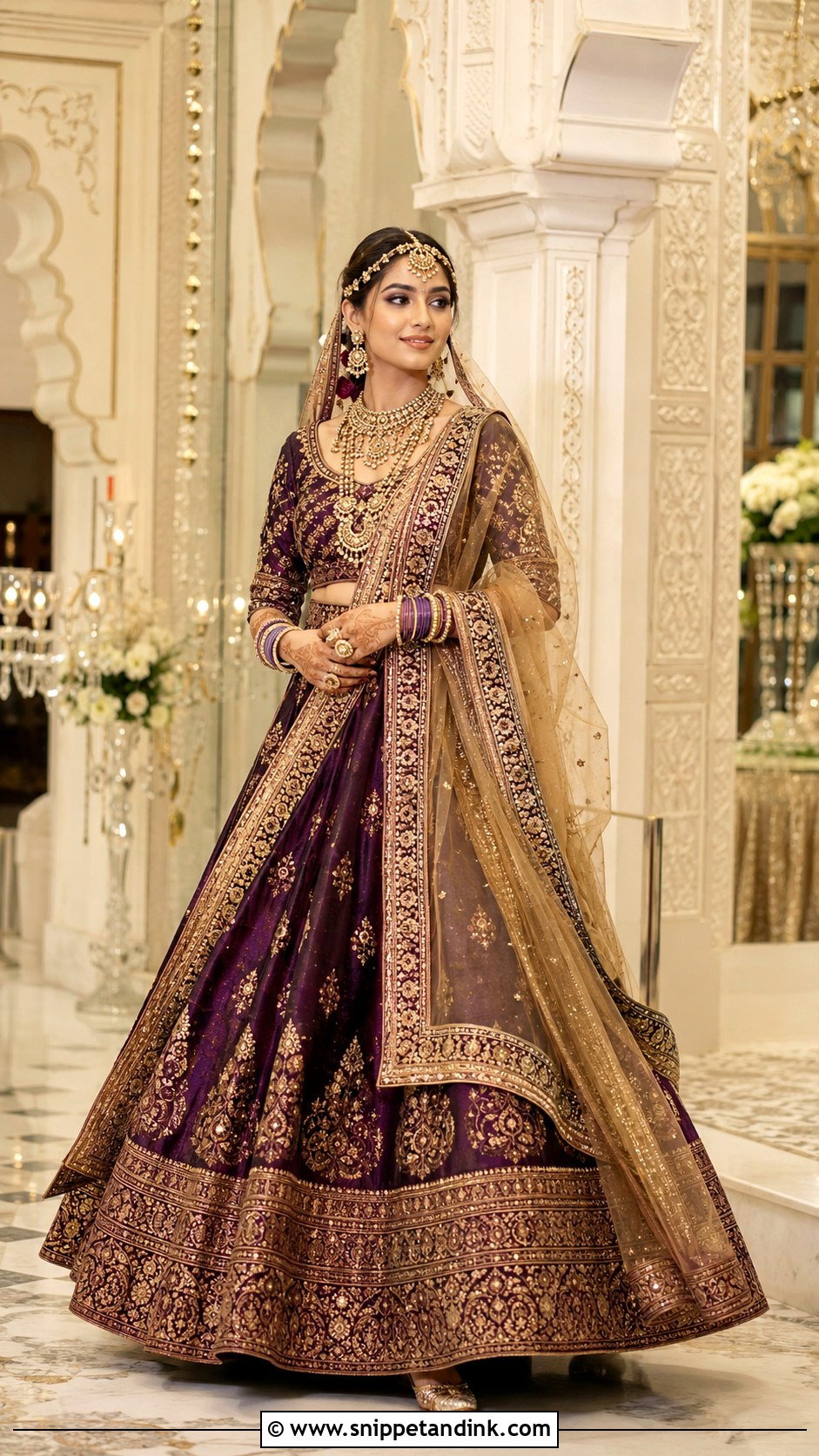
Deep purple and gold carry an evening wedding or reception. A plum or royal-purple silk chaniya with antique-gold zari and zardozi borders, and a choli with three-quarter sleeves shaped for layered necklaces, form the base. Very dark fabric swallows embroidery under indoor lighting, so I put the brightest gold near the face, on the choli neckline and dupatta border, where the camera needs it. A muted gold or magenta dupatta adds depth. A low bun and berry tones in the makeup keep it together.
19. Red Gold Jacket Bridal Chaniya Choli
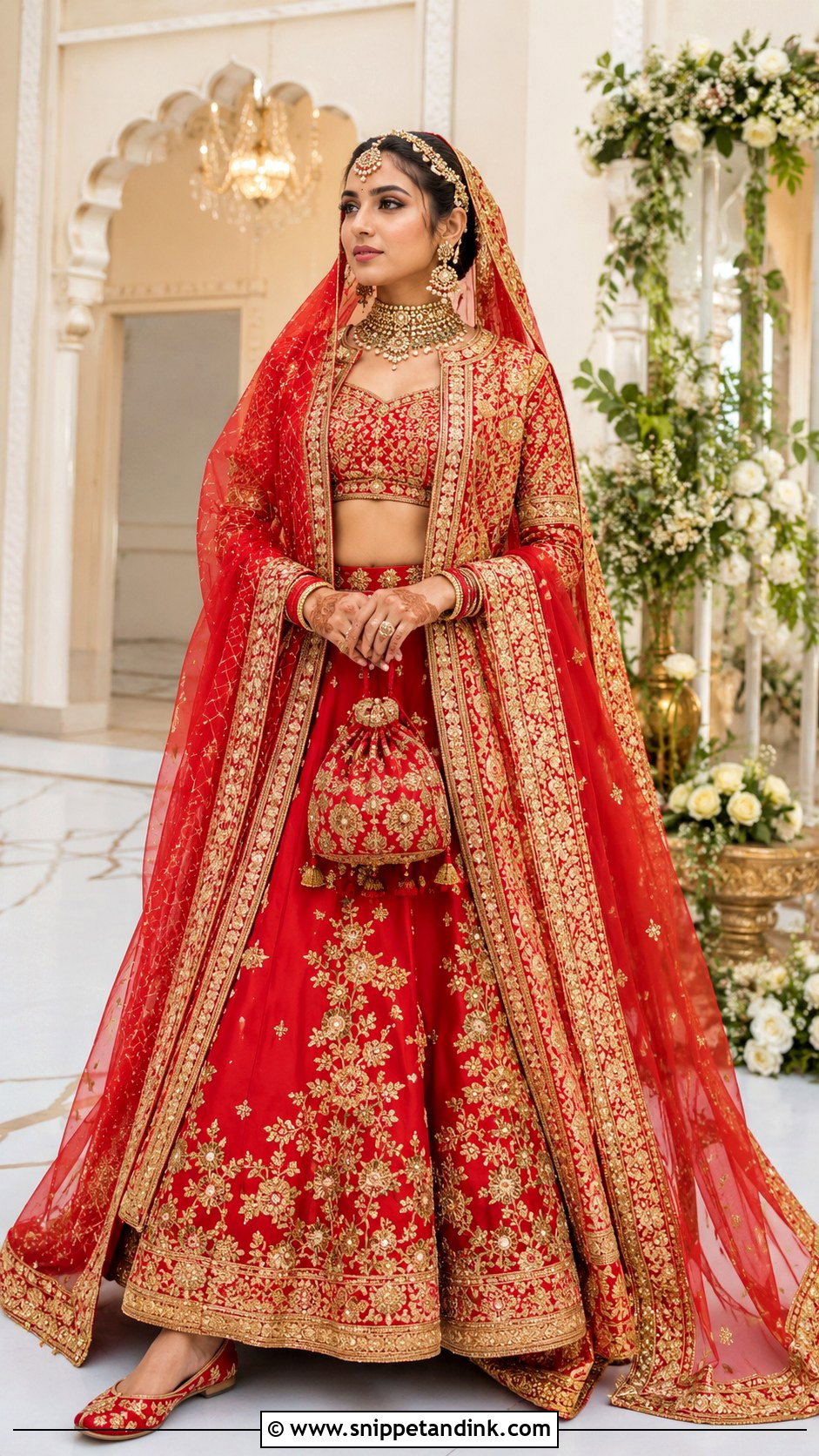
A long open-front jacket over the choli gives a bridal chaniya a modern, layered outline. The jacket can reach the knee or ankle, but it must be light: heavily embroidered jacket panels hang stiffly and stop the skirt from flaring when you turn. Under it, a fitted red choli that doesn’t bunch at the shoulders. Put the sheer red dupatta over the head only, so the jacket’s work stays on show. Keep the choli neckline plain, since the jacket, dupatta and jewelry already layer around the upper body. Kundan, bridal bangles and a small potli finish it.



20. Cape Sleeve Bridal Chaniya Choli
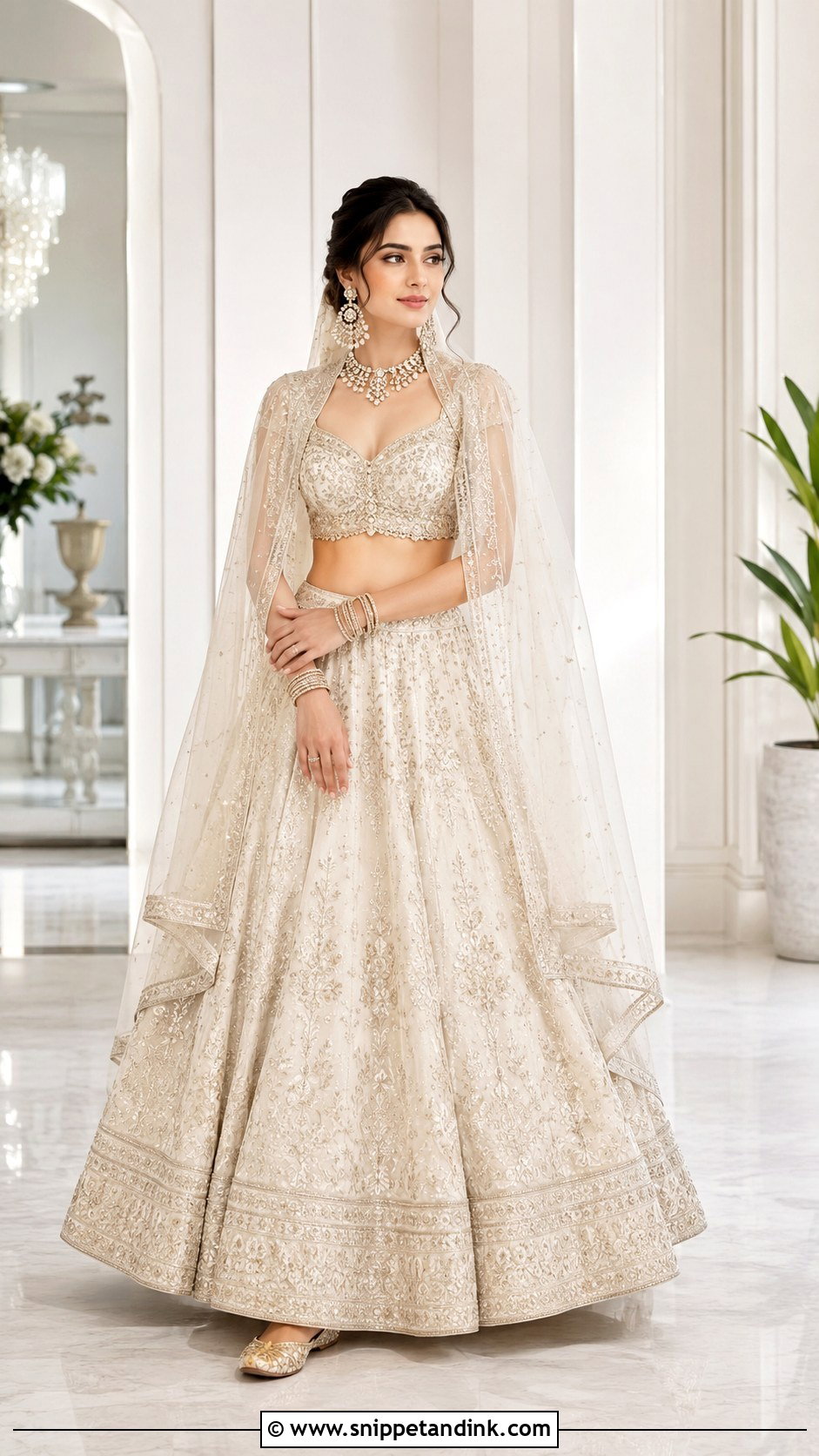
Cape sleeves attached to the choli give a reception look a contemporary shape over a traditionally full skirt. The cape needs to be sheer net or organza so the blouse construction still shows, with edge embroidery that repeats a motif from the skirt. Because the cape covers the shoulders, I usually drop the second dupatta; one light piece over the head for the ceremony is enough, and none for the reception. One necklace and statement earrings, a polished ponytail or low bun to keep the cape visible, and juttis or embellished heels. Keep the skirt full; a slim skirt with a cape tips toward evening gown.
Securing a Double Dupatta Through the Pheras and Garba
Most of the bridal looks above use two dupattas, one over the head and one across the body. They look regal in photos and slip constantly in real life unless they’re anchored properly. This is how I set them.
- Head dupatta: anchor it to the bun with U-pins through the fabric and a small comb hidden at the back, then pin the sides near the ears so it can’t slide back when you bow your head.
- Shoulder dupatta: pin it to the choli at the shoulder seam from underneath, plus once at the waistband so it doesn’t fly out when you turn.
- Use safety pins rather than decorative brooches for the load-bearing points, and test them on the inside of the fabric so they don’t snag the net.
- For garba, take the shoulder dupatta off entirely or tuck it into the waistband. Spinning with it loose is how dupattas get stepped on and torn.
After the wedding
Zari and zardozi tarnish if they are stored damp or in plastic. Wrap the chaniya in soft muslin, keep it in a dry cupboard, and refold it along different lines every few months so the metal threads don’t crack at the creases. Never spray perfume directly onto the embroidery, and send it to a cleaner who handles bridal handwork rather than a standard dry cleaner.
Can You Sit Cross-Legged and Spin in It?
The outfit that works is the one that respects what your family values, holds together as a single look, and lets you get through the day without constant adjusting. Settle the color and silhouette first, then the embroidery, choli neckline, dupatta drape, jewelry and footwear as one decision. Before you sign off, think about skirt weight, blouse support, smooth linings and where each dupatta will be pinned. Book fittings early and wear the full outfit to walk, sit cross-legged and climb a step. If it passes that, it will pass the wedding.
You'll Like These Ideas:






Leave a Reply