
Flowers are the decoration I’m asked for most, and the one that needs the most planning. A cake covered in blooms only looks right when the frosting, tier shape, colour and flavour were designed around them; flowers added as an afterthought tend to look stuck on. Current wedding cake trends favour sugar flowers, textured buttercream, pressed edible petals, fresh flower meadows, off-centre arrangements and hand-painted florals. Below are twenty designs, each with notes on how it’s built, what it costs you in time or practicality, and when I’d suggest something else.
Real Blooms Touching Buttercream Need a Barrier
Many popular wedding flowers are not safe to eat, and some are toxic. Lily of the valley, hydrangea, calla lily, sweet pea, foxglove and oleander should never touch cake. Baby’s breath can irritate, so I avoid it as well. Even safe flowers from a florist are usually treated with pesticides and preservatives, because they were grown to look good, not to be eaten.
So fresh flowers on a cake are decoration that sits on top, never in. I wrap each stem in floral tape and then plastic, or slide it into a food-safe flower pick, before it goes anywhere near the frosting. A small disc of parchment under a cluster keeps pollen and sap off the surface. The florist cuts and conditions the flowers; I place them on the day.
Flowers you can actually eat
If you want petals that guests can eat, look at organically grown violas, pansies, roses, calendula, cornflowers, borage and chamomile from an edible flower supplier. They’re delicate and short-lived, so they go on last.
1. Fresh Flower Wedding Cake
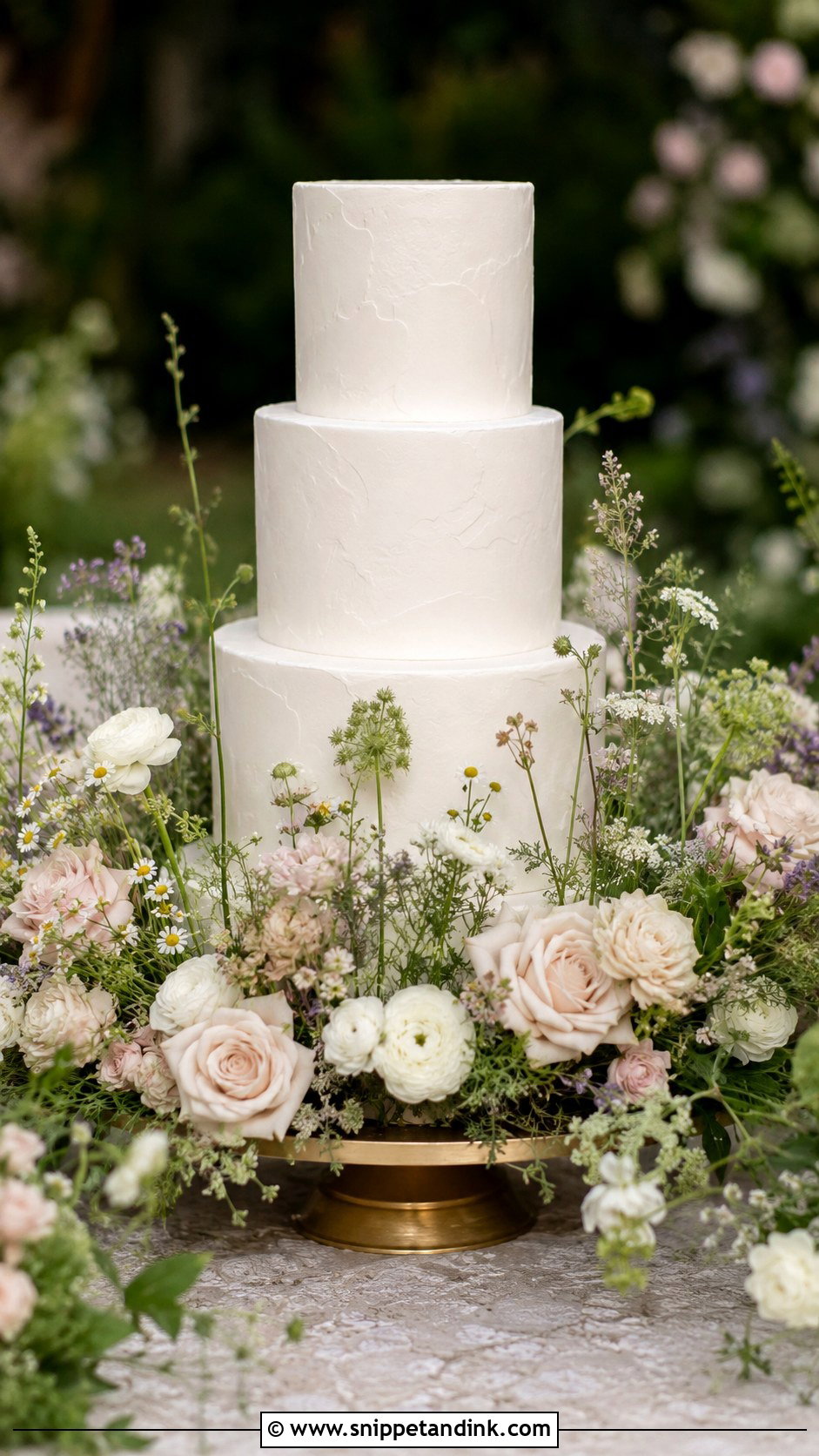
Using the same flowers as the bouquet and centrepieces is the easiest way to tie the cake into the room. I start with smooth white or ivory buttercream and the florist and I agree on placement: soft clusters, a side cascade or a crown on the top tier. Roses, ranunculus, orchids, peonies and small greenery are good choices, but only when the stems are sealed and never pushed straight into the sponge. Keep the frosting plain so the blooms carry the design.
2. Pressed Flower Wedding Cake
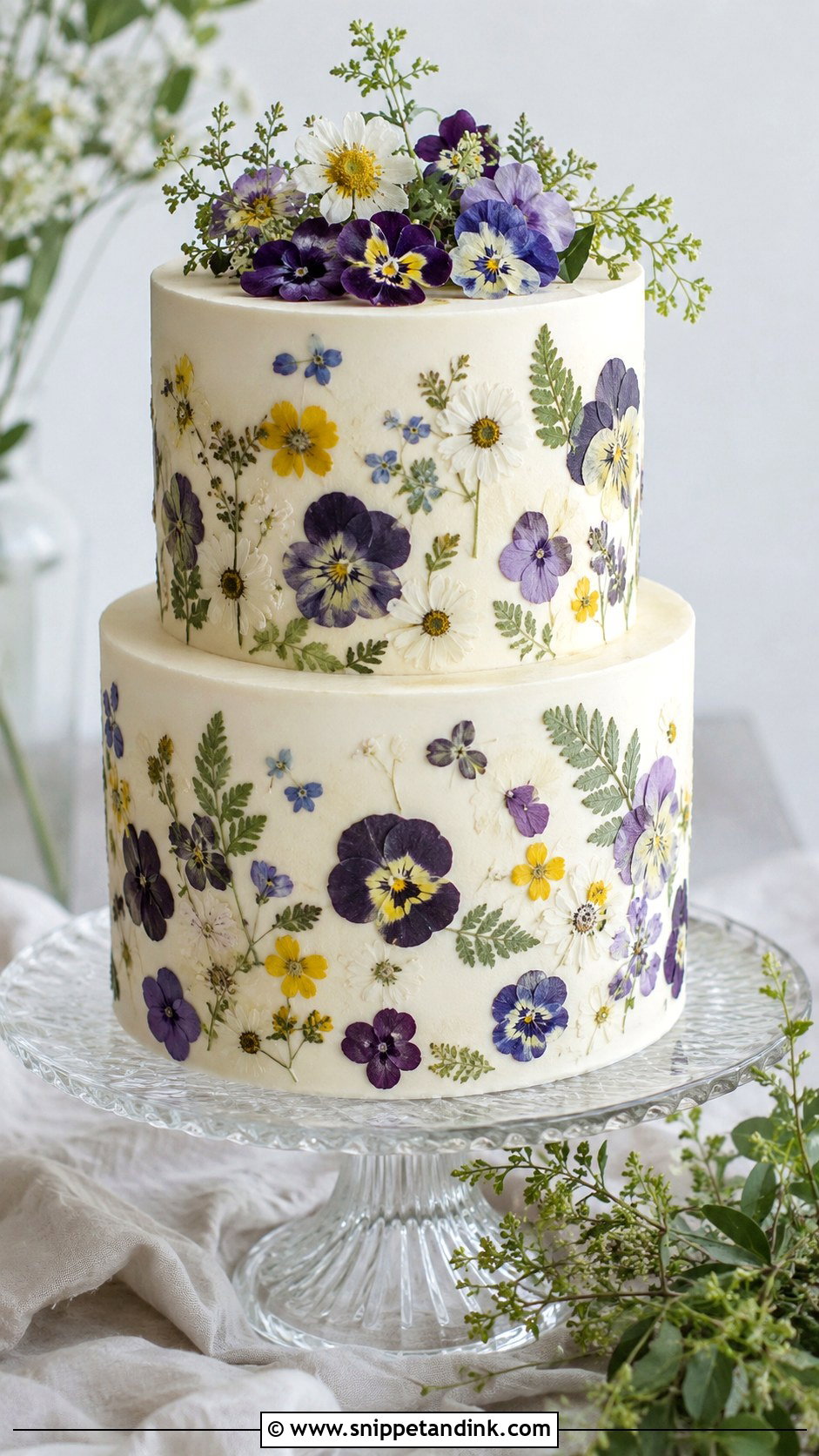
Pressed edible flowers lie flat against smooth buttercream or fondant, so each tier looks wrapped in a botanical print. Tiny pansies, violas, chamomile, lavender and soft herbs make a meadow effect. They have to be grown for eating, without pesticide, so I buy from edible flower growers rather than a florist. Pressed petals fade in strong light and can wilt against damp buttercream, so I apply them the morning of delivery. A pale vanilla or lemon sponge suits the light look.
3. Sugar Flower Wedding Cake
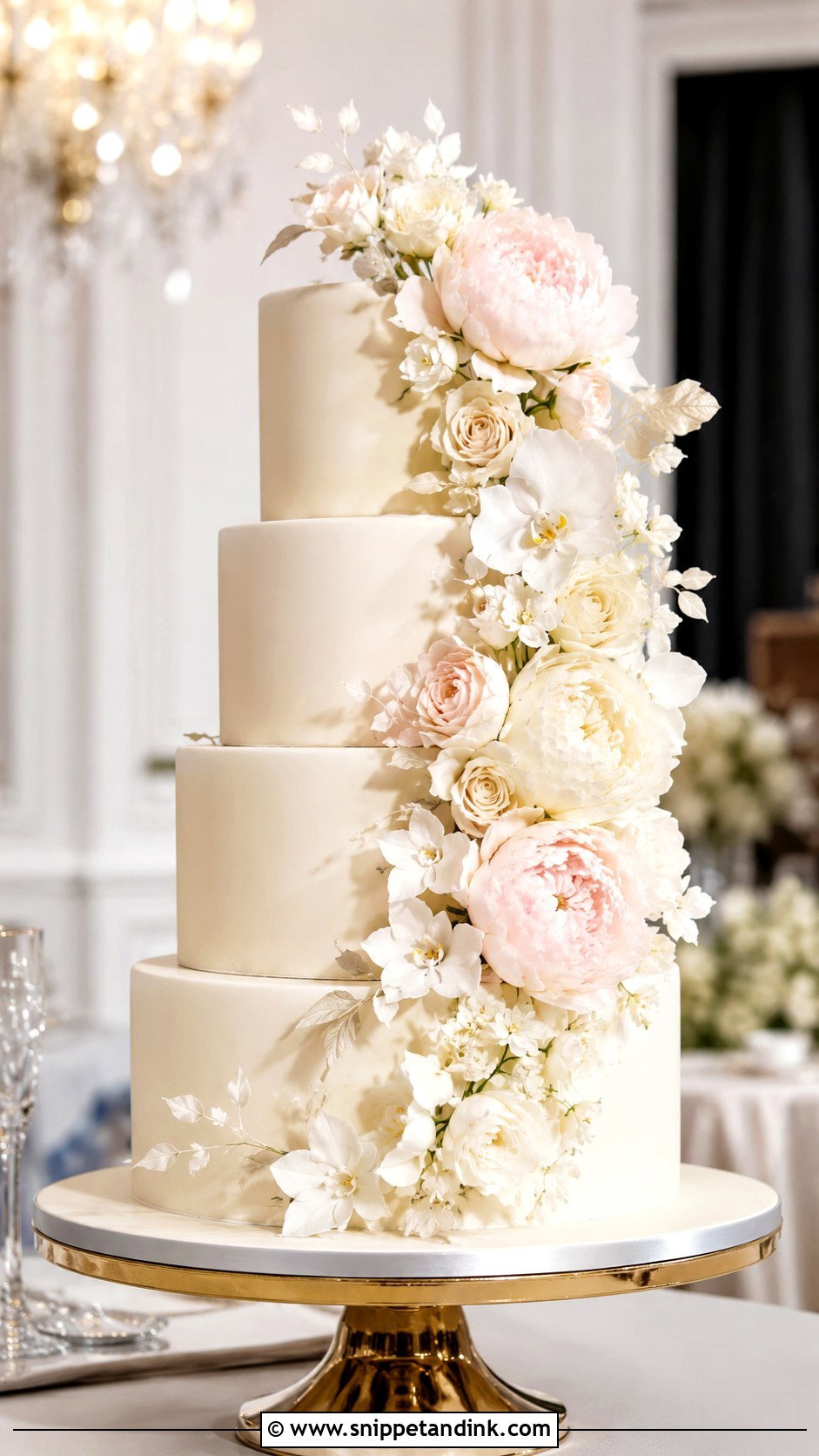
Sugar flowers are shaped petal by petal from gum paste, wired, dried and dusted with colour, which is how a sugar peony can look nearly real from a metre away. They don’t wilt, they’re never out of season, and you can keep them afterward in a box away from damp. The trade-off is time and cost; a large spray takes many hours of work. I pair them with smooth fondant, pearl details or soft buttercream. Remind guests they aren’t for eating, since the wires stay inside.
4. Buttercream Flower Wedding Cake
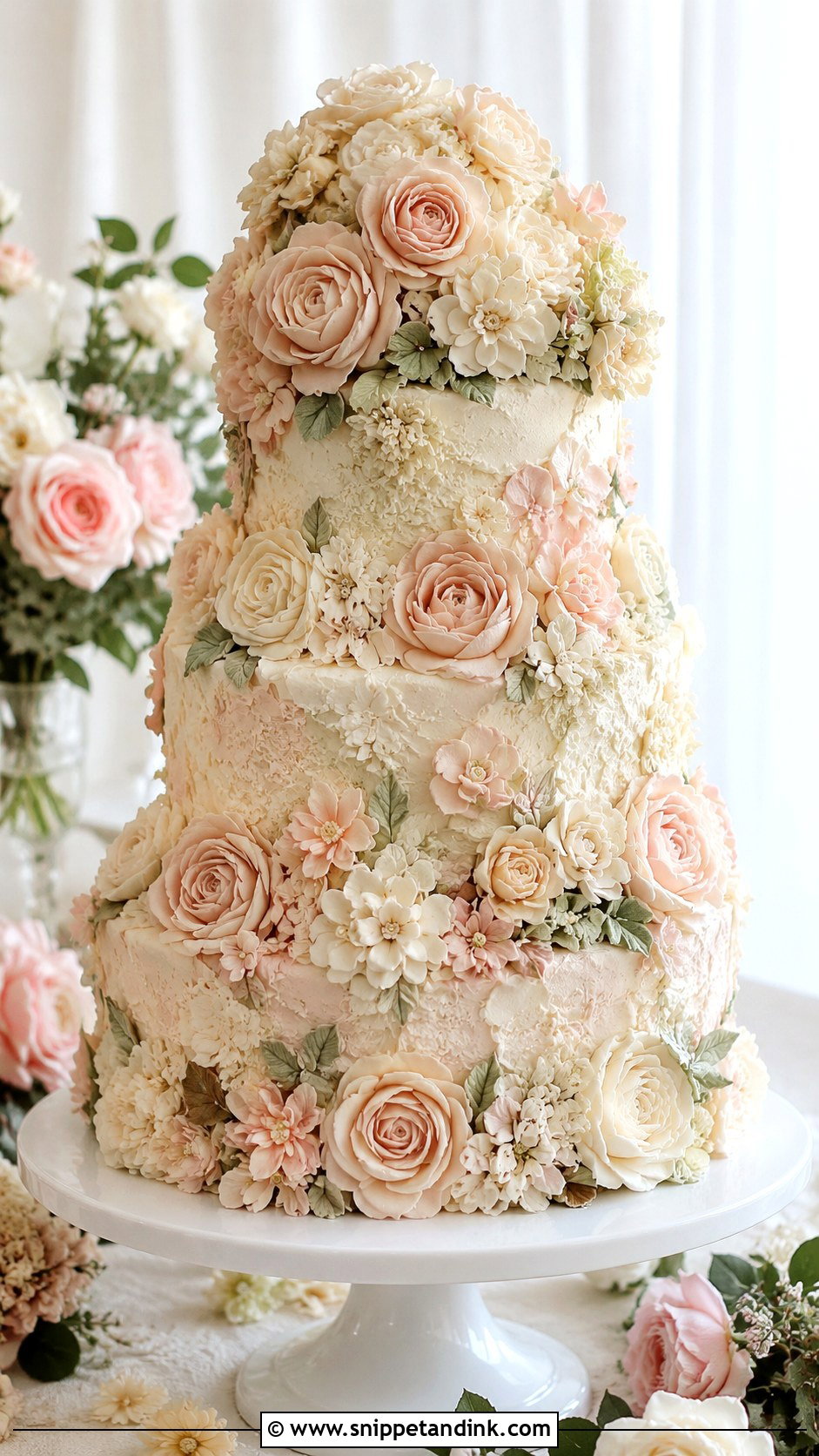
Piped buttercream flowers are cake all the way through, which guests love and caterers appreciate because there’s nothing to remove before cutting. I pipe roses, hydrangea clusters, small blossoms and leaves straight onto white, blush, sage or pastel tiers, neat and classic or loose and gardeny. The weak spot is heat. A buttercream bloom starts to soften and slump in a warm room, so I’d hesitate with this design for an outdoor summer reception unless the cake stays inside until it’s cut.
5. Cascading Flower Wedding Cake
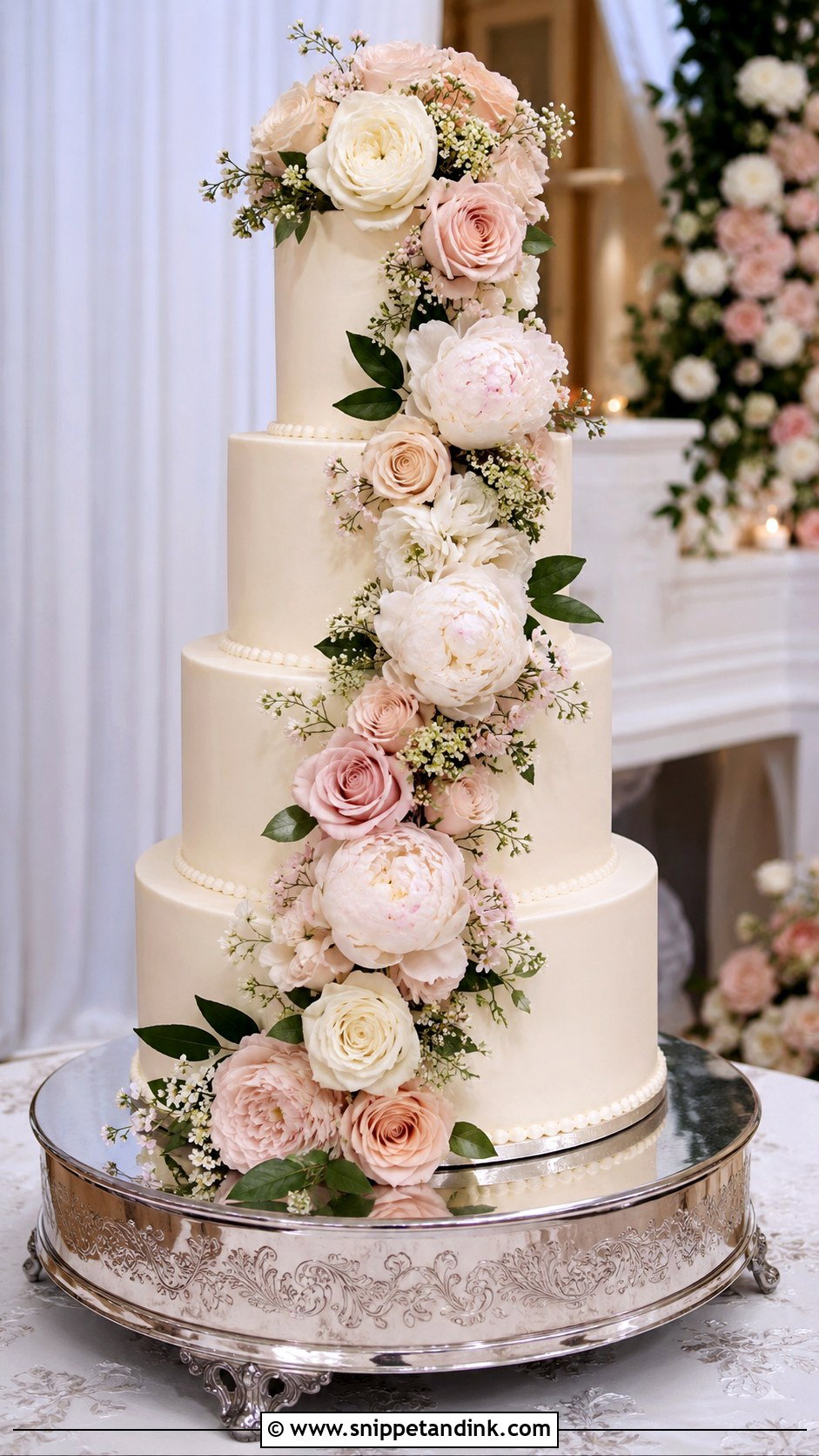
A cascading flower wedding cake starts at the top tier and flows down one side. Fresh, sugar or piped flowers can all form it, or a mix. Three and four tiers give the cascade enough drop to read as movement; on two tiers it often looks like a clump. Ivory roses, blush peonies and light greenery keep it soft, and coral or purple pushes it bolder. Weight matters with fresh cascades, so the cake needs proper dowels and a central support.
6. Wildflower Wedding Cake
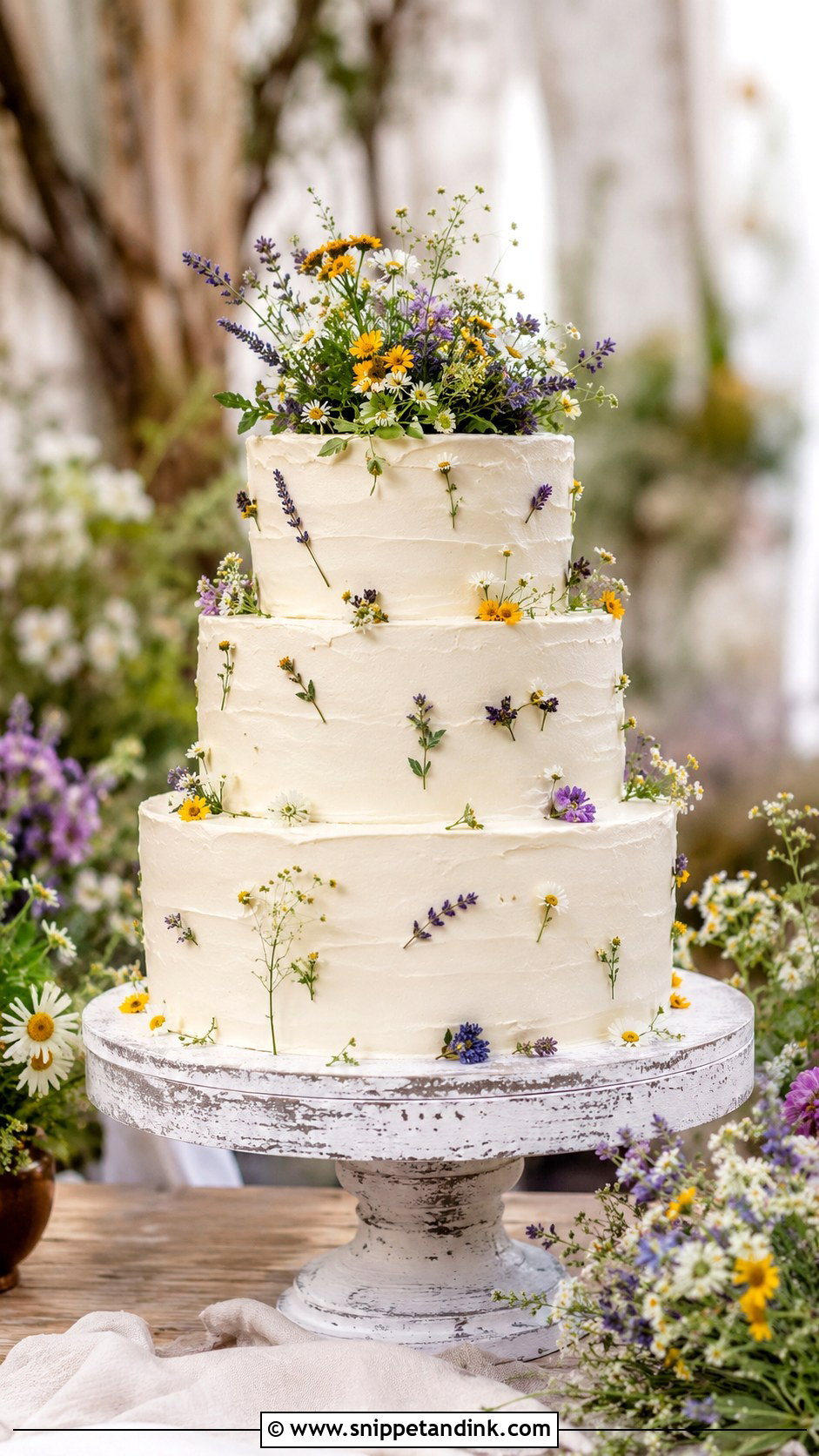
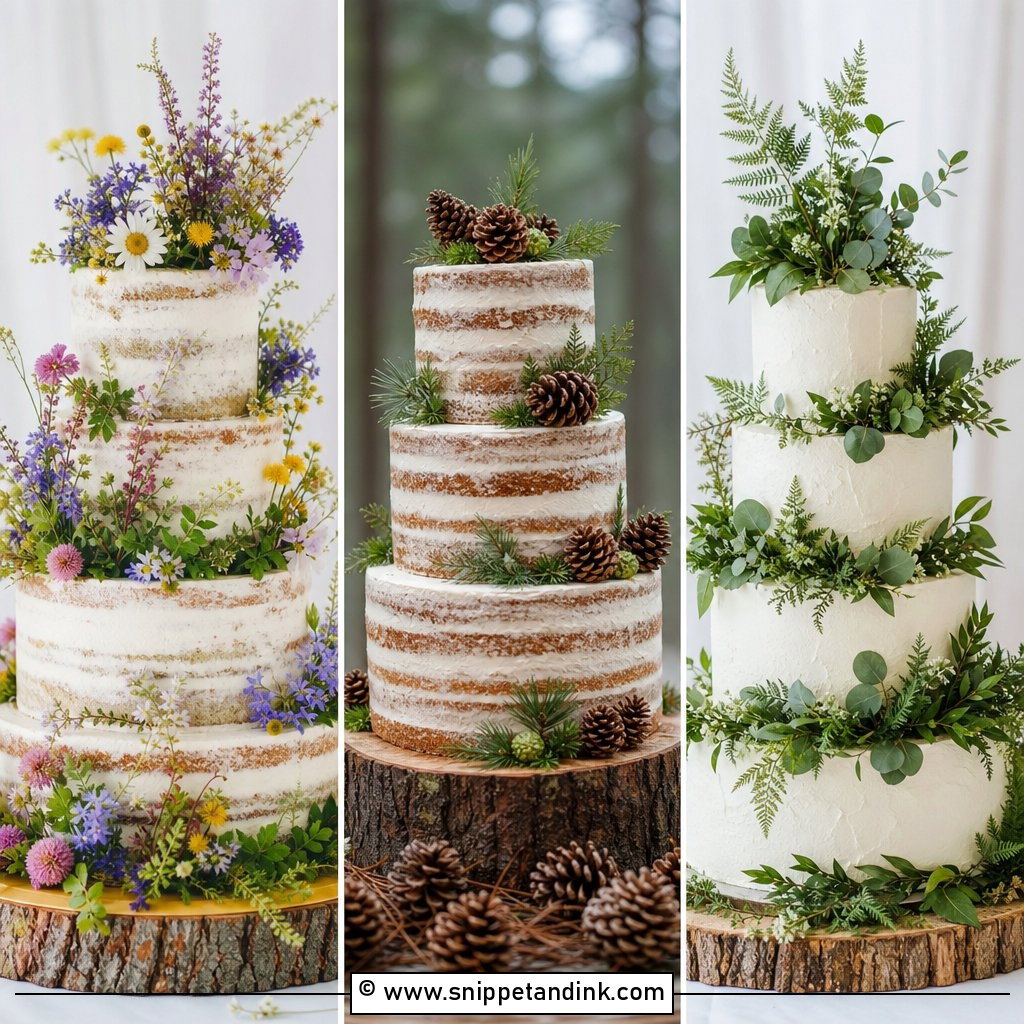
A wildflower wedding cake looks picked rather than arranged, with small edible blossoms, herbs and soft greenery scattered round the tiers. The frosting can be smooth, lightly textured or semi-naked. Yellow, lavender, soft blue, blush and green suit barns and spring gardens. Loose doesn’t mean random, though. I group the flowers in odd numbers and leave clean frosting between clusters so the cake still has a clear outline in photos.
7. Minimalist Floral Wedding Cake
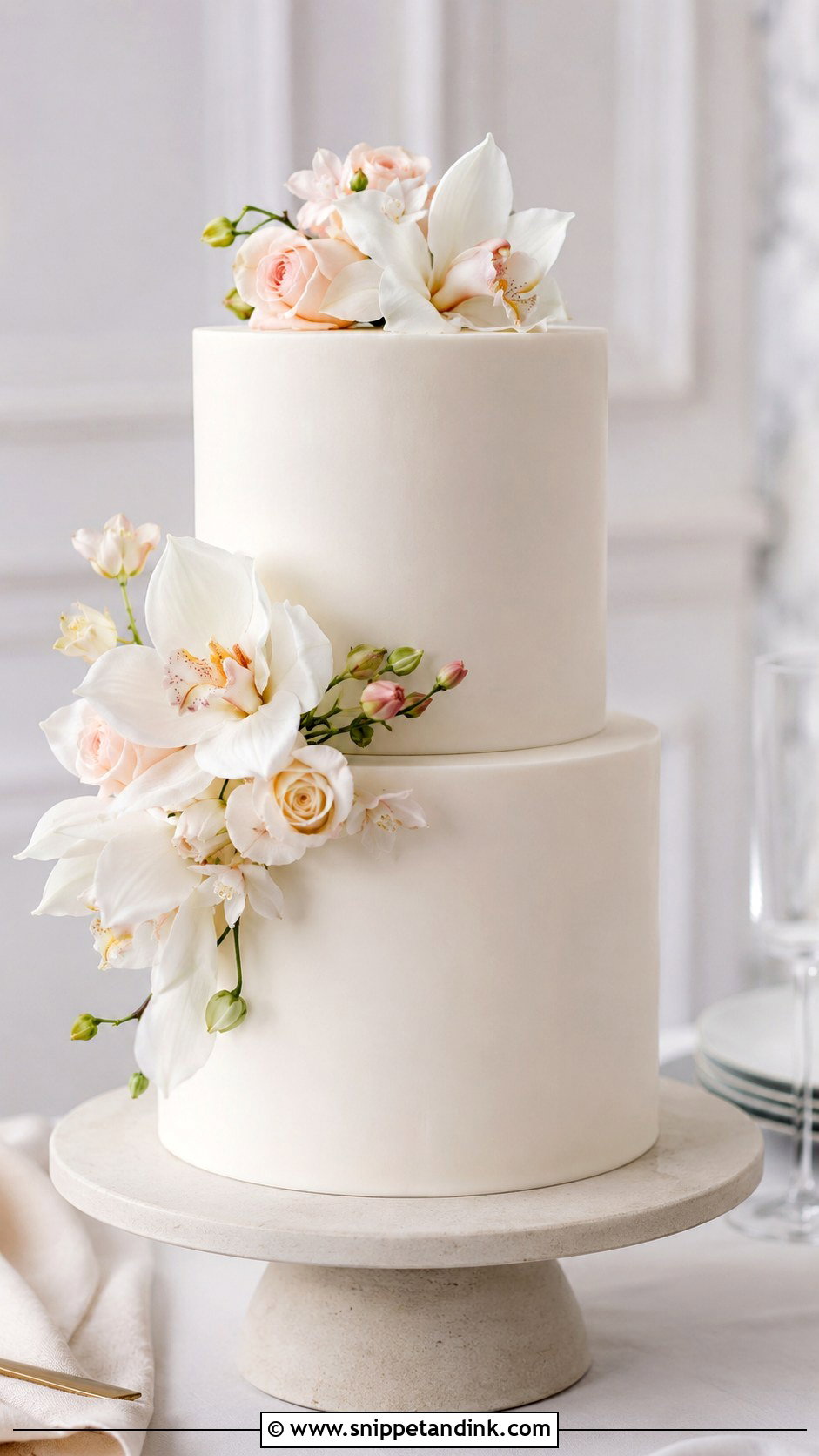
A single focal point on a white or ivory cake can hit harder than a full cascade: one cluster, one large sugar bloom, or a few stems on one side. Orchids, anemones and roses suit it. Calla lilies are often requested here; fresh ones aren’t food-safe, so I make them in sugar instead. This design hides nothing, so it needs razor-sharp edges and flawless frosting. Expect the finish work to take as long as a busier cake.
8. Vintage Floral Wedding Cake
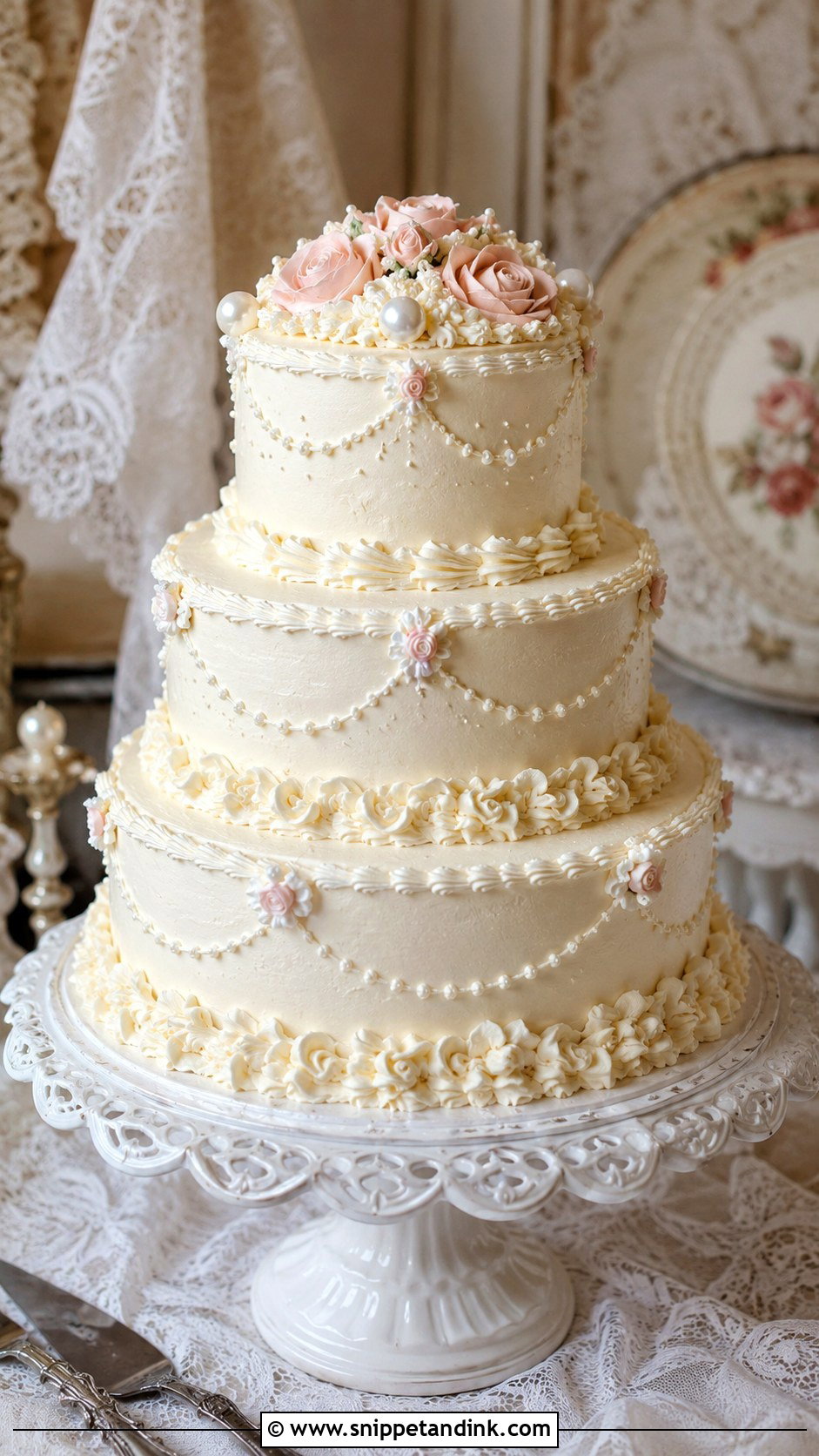
Vintage cakes revive the piped borders, ruffles, buttercream roses and pearl dots of heirloom designs, usually in ivory, blush, cream, dusty pink or soft blue. They sit well with lace gowns and antique décor. I choose two or three vintage details and repeat them on every tier; using every technique at once makes it look crowded. Vanilla almond or a champagne-flavoured sponge pairs naturally with this style.
9. Floral Watercolor Wedding Cake
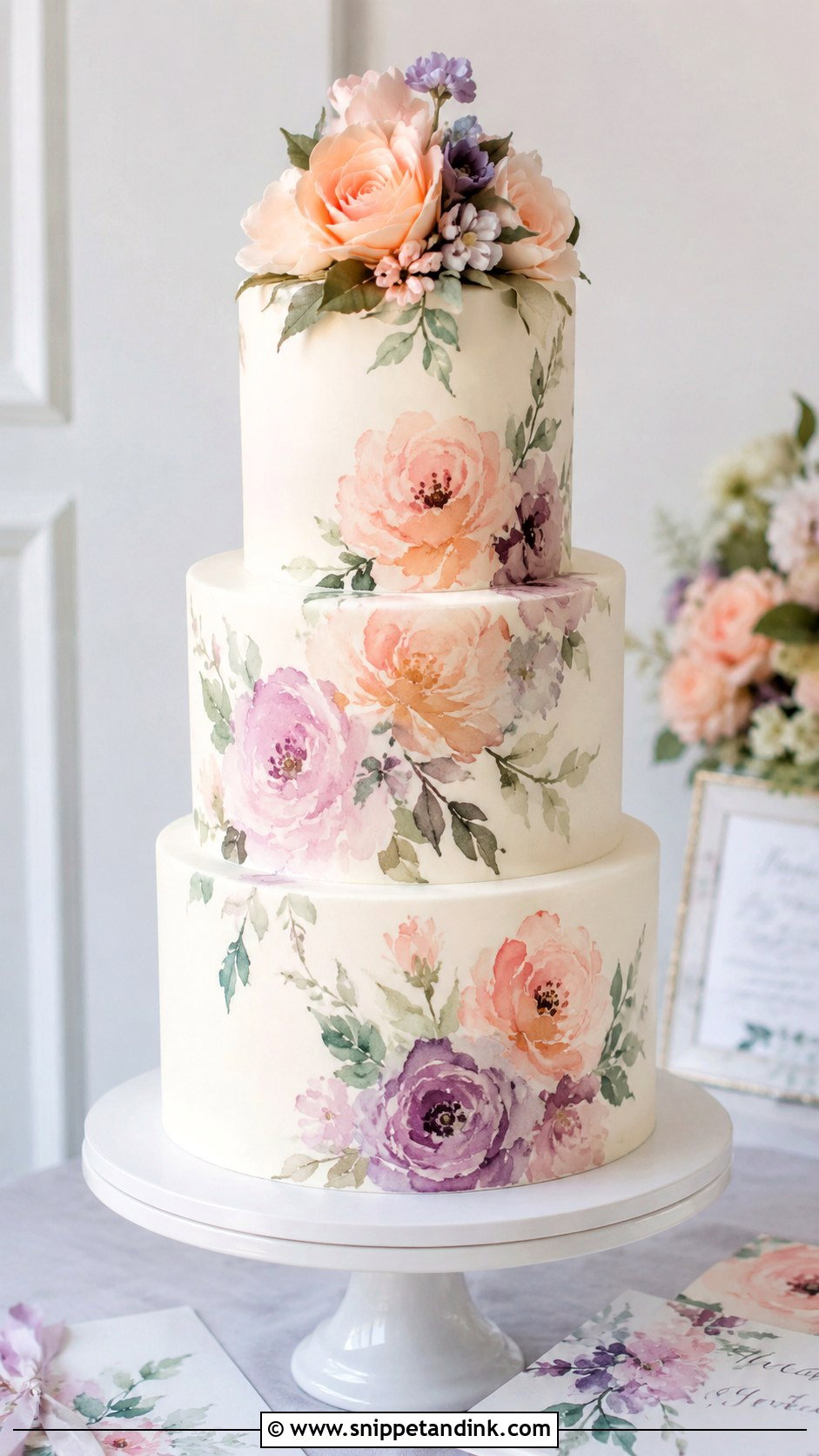
Watercolour florals are painted with edible colour thinned with alcohol, which evaporates and leaves soft pigment behind. Fondant takes the paint best; on buttercream it needs a crusting recipe and a gentler hand. Flowers can be loose and abstract or recognisably roses and peonies, in blush, peach, lilac, sage or pale blue. Add a few sugar flowers or touches of gold leaf for dimension. Painted cakes travel better than heavily decorated ones, since nothing can fall off.
10. Floral Sheet Wedding Cake
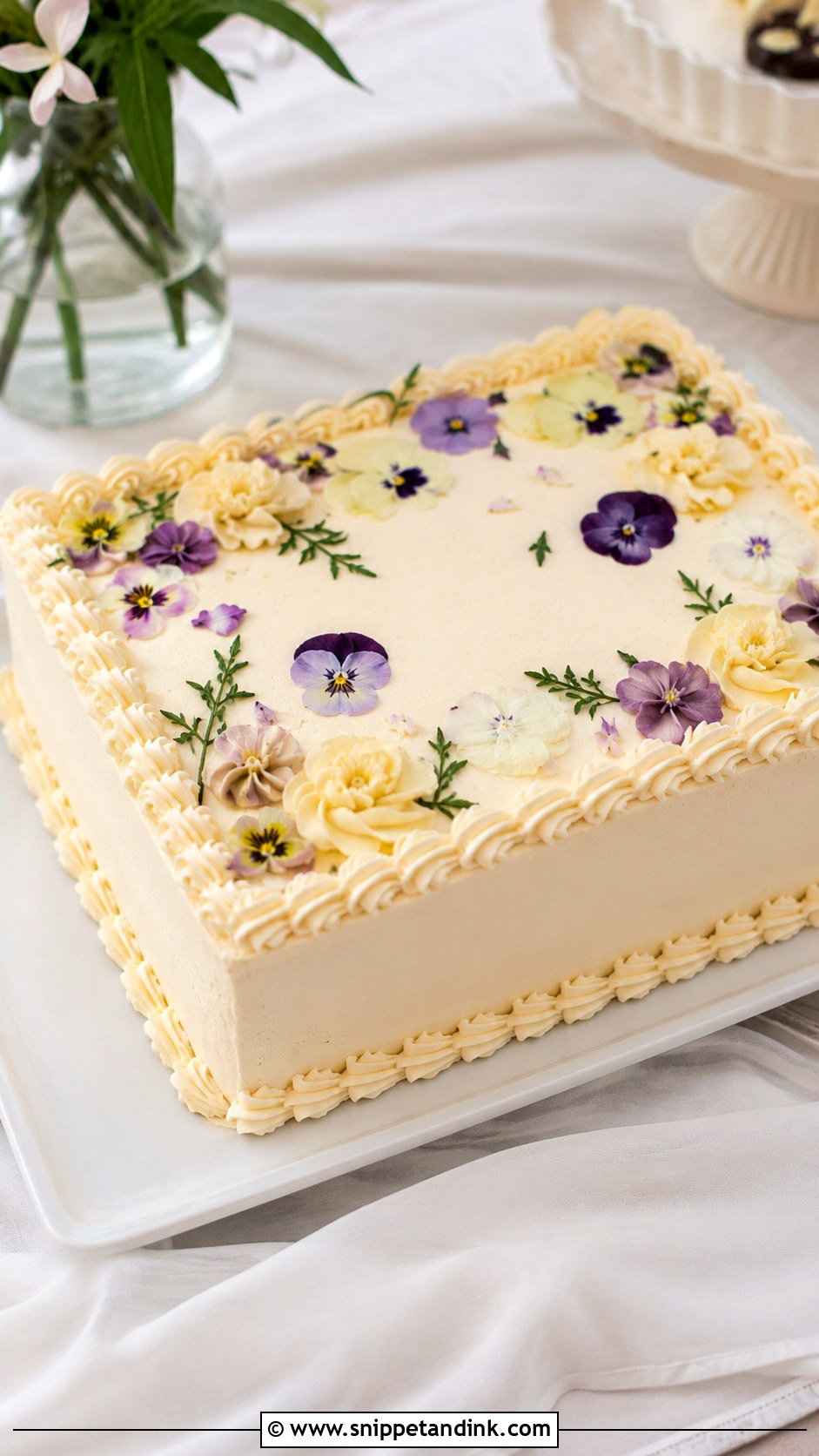
A sheet cake serves a large guest list efficiently, slices fast and travels flat. Buttercream flowers, pressed petals, piped vines or a few fresh clusters make the top look wedding-worthy. Many couples pair one with a small tiered cutting cake for photos and serve the sheet from the kitchen. Keep borders clean and spread the flowers so the surface looks full but not crowded. It’s a sensible way to cut cost without guests noticing.
11. Floral Cupcake Wedding Cake
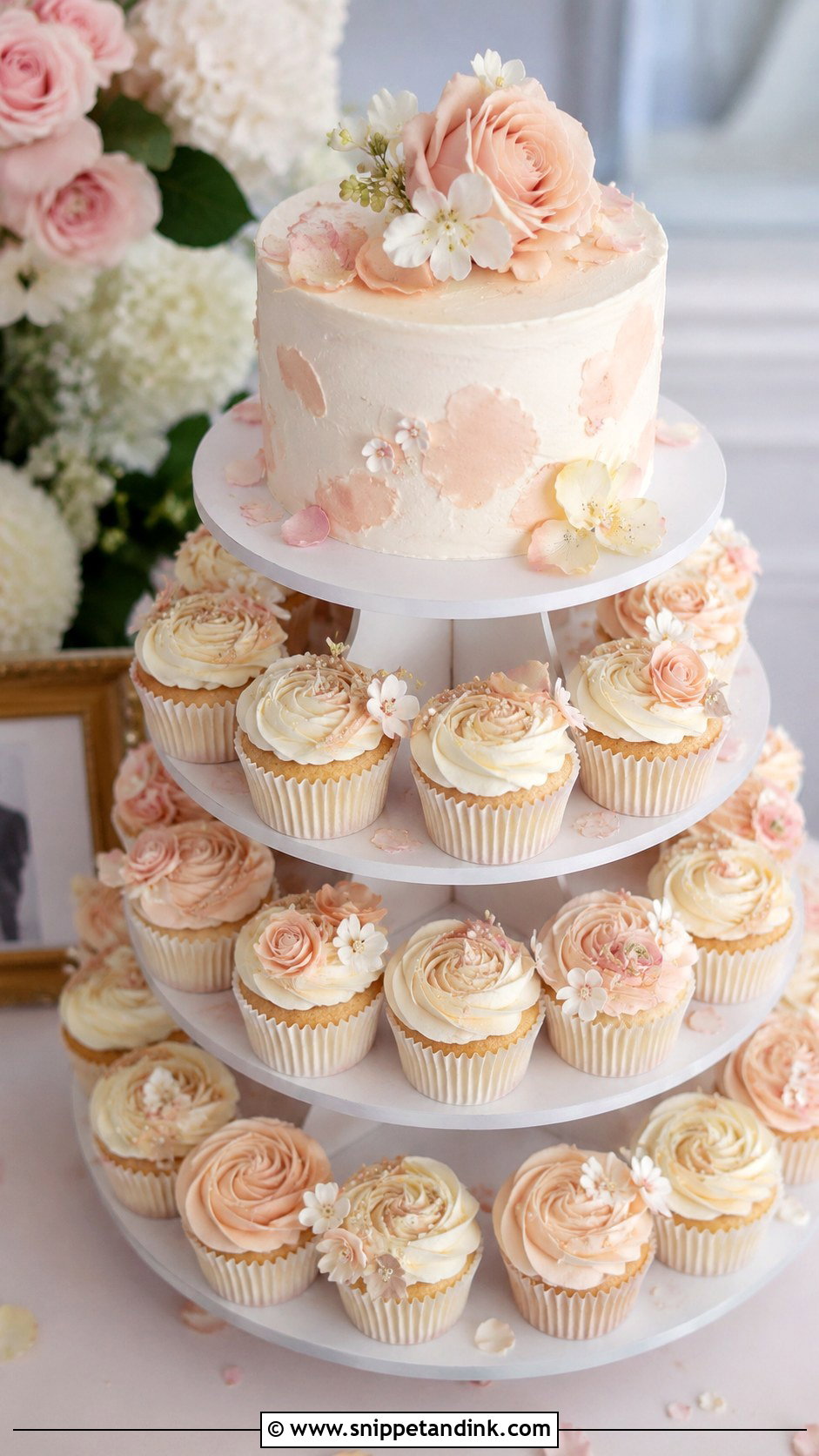
A floral cupcake wedding cake sets individual servings on a tiered stand around a small cutting cake. Each cupcake gets a piped buttercream rose, a small sugar flower, edible petals or a tiny bloom. Guests help themselves, and there’s no cutting fee. Keep the colours tied to your palette and the cutting cake decorated to match, otherwise the display looks like two separate desserts. In heat, piped cupcake tops soften faster than a chilled tiered cake.
12. Floral Drip Wedding Cake
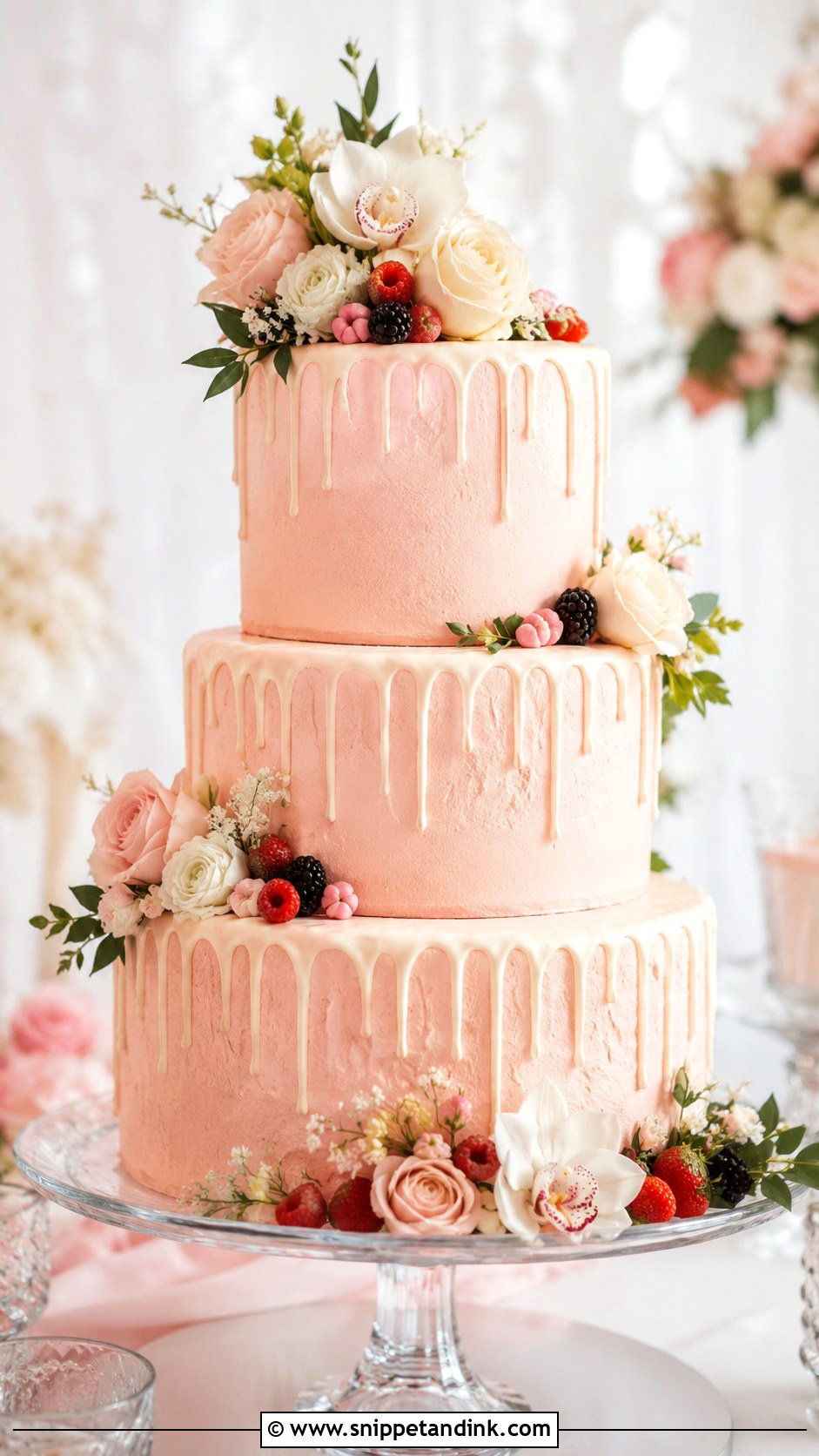
The drip is ganache, white chocolate, coloured candy melts or caramel, poured over a chilled cake so it sets mid-run. I test the temperature on the side of a cold glass first; too warm and it runs to the board, too cool and it sits in stubby blobs. Flowers then soften it at the top, base or side: fresh roses, sugar orchids, berries and greenery. Keep the drip light on tall cakes. Blush or ivory frosting behind it keeps the flowers the focus.
13. Floral Semi Naked Wedding Cake
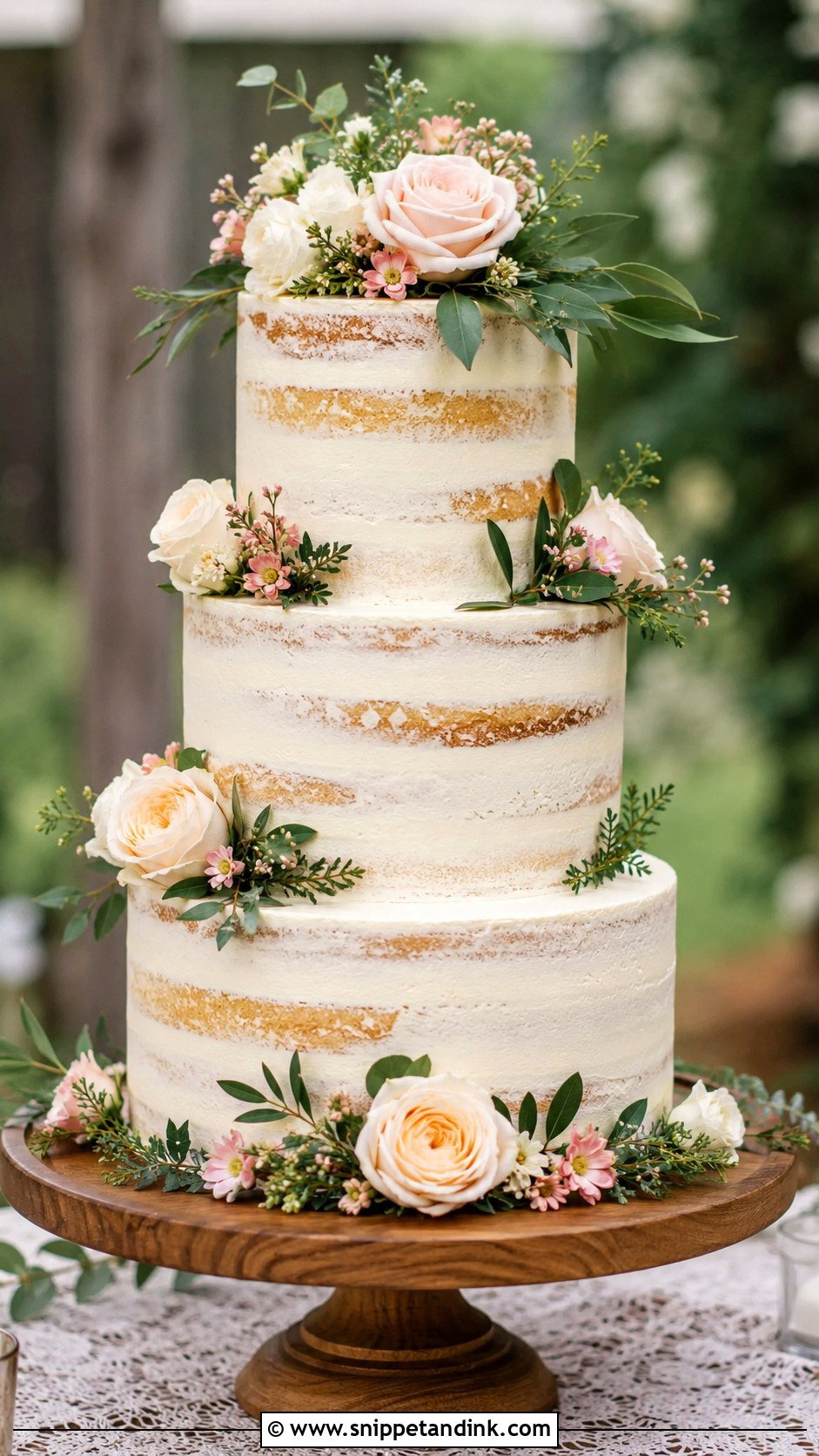
Semi-naked cakes have a thin scraped coat of buttercream so the layers show through. They feel warm and relaxed for outdoor, barn and garden receptions, and fresh flowers and greenery look natural against the exposed sponge. Vanilla, lemon, almond or berry-filled layers are popular. The catch is that thin frosting means the sponge dries faster, so these should be assembled close to the day. Every layer also has to be level and evenly filled, because there’s nothing hiding the structure.
14. Floral Fondant Wedding Cake
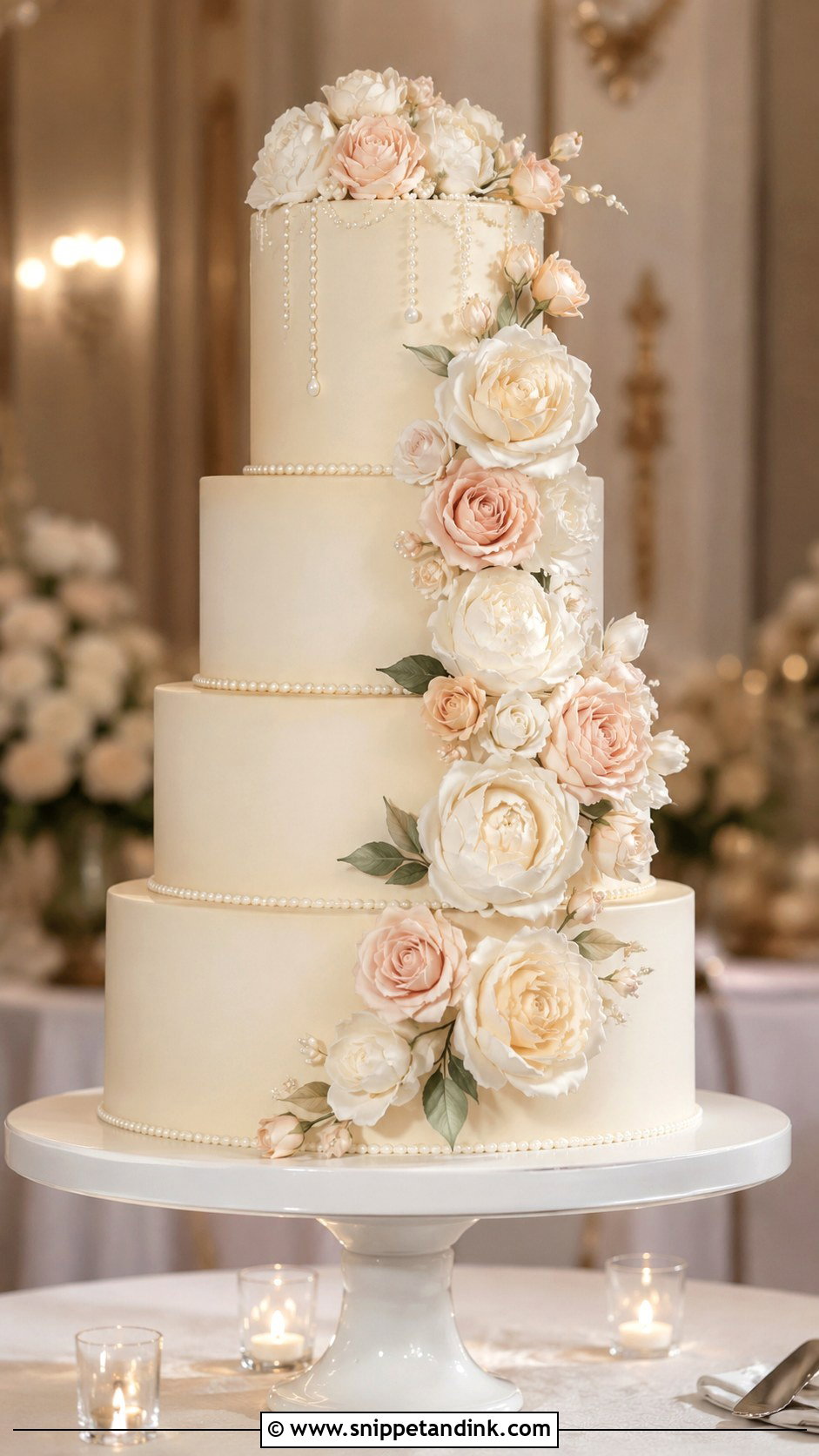
A floral fondant wedding cake gives sharp edges and a smooth surface for sugar flowers, painted florals, pressed details or appliqués. It holds intricate work well, which is why formal weddings lean toward it. Ivory is classic; blush, sage, pale blue or soft taupe make it more personal. One thing to know: fondant hates humidity and fridges, where it can sweat and go tacky, so I keep fondant cakes cool and dry rather than refrigerated.


15. Floral Lace Wedding Cake
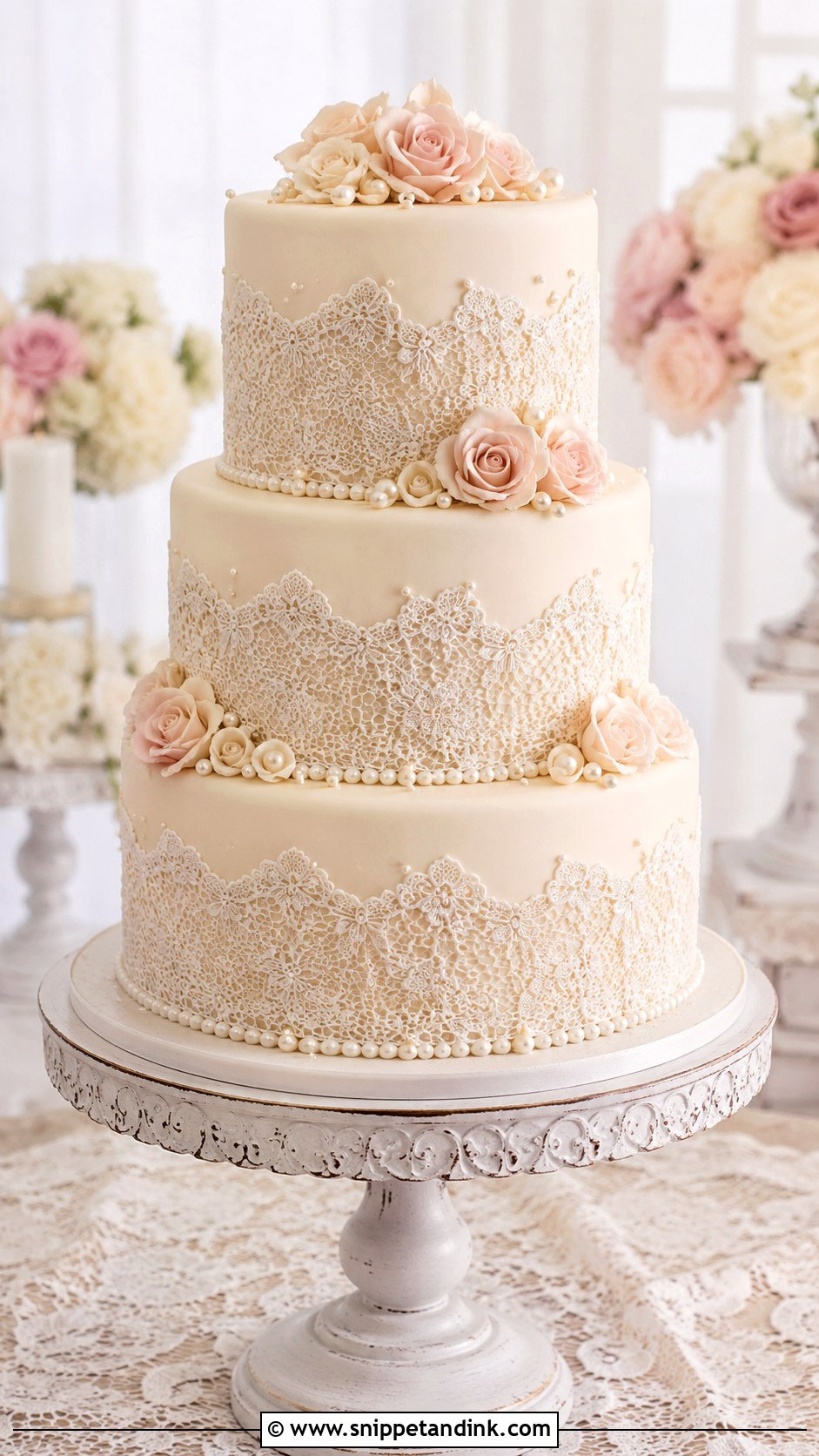
Lace on a cake can be edible panels made in a silicone mat, piped lace, or cut fondant pieces layered with soft flowers. When a couple wants it to echo the gown, I ask for a close photo of the actual lace and copy one motif. Ivory frosting, pearl accents and blush sugar roses support it. The flowers should frame the lace, not cover it. A smooth fondant or buttercream base gives the texture room to read.
16. Floral Garden Wedding Cake
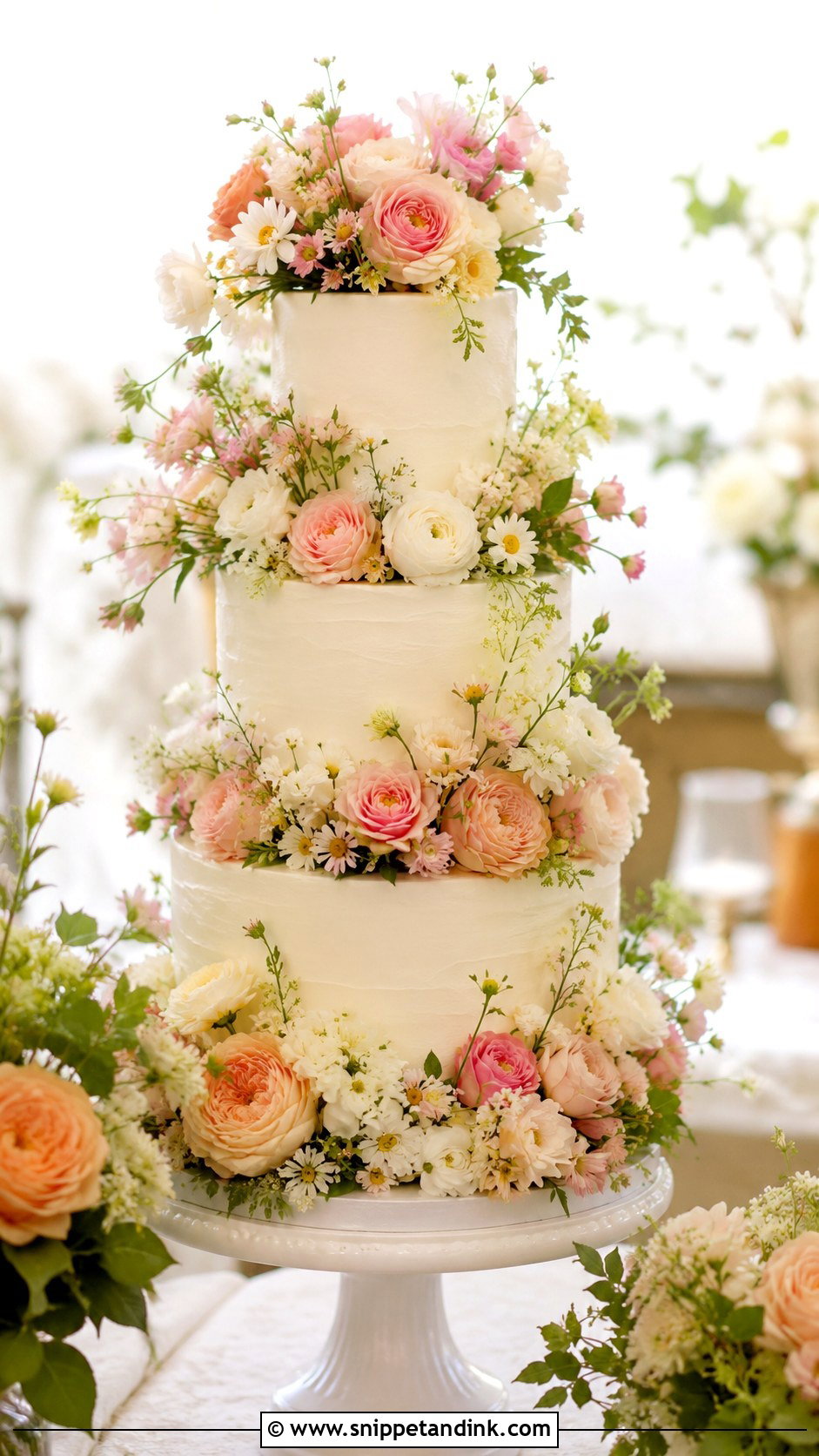
A garden cake uses a fuller mix (roses, ranunculus, greenery and small fillers) arranged around the tiers so it looks like a corner of a garden. Sweet peas are popular in these designs, but they’re toxic, so they belong on a cake only as sugar flowers. Spring and summer palettes are the obvious fit, though warmer autumn colours work too. Keep the layout balanced so the top doesn’t look heavier than the base, and use soft ivory buttercream behind bright flowers.
17. Floral Orchid Wedding Cake
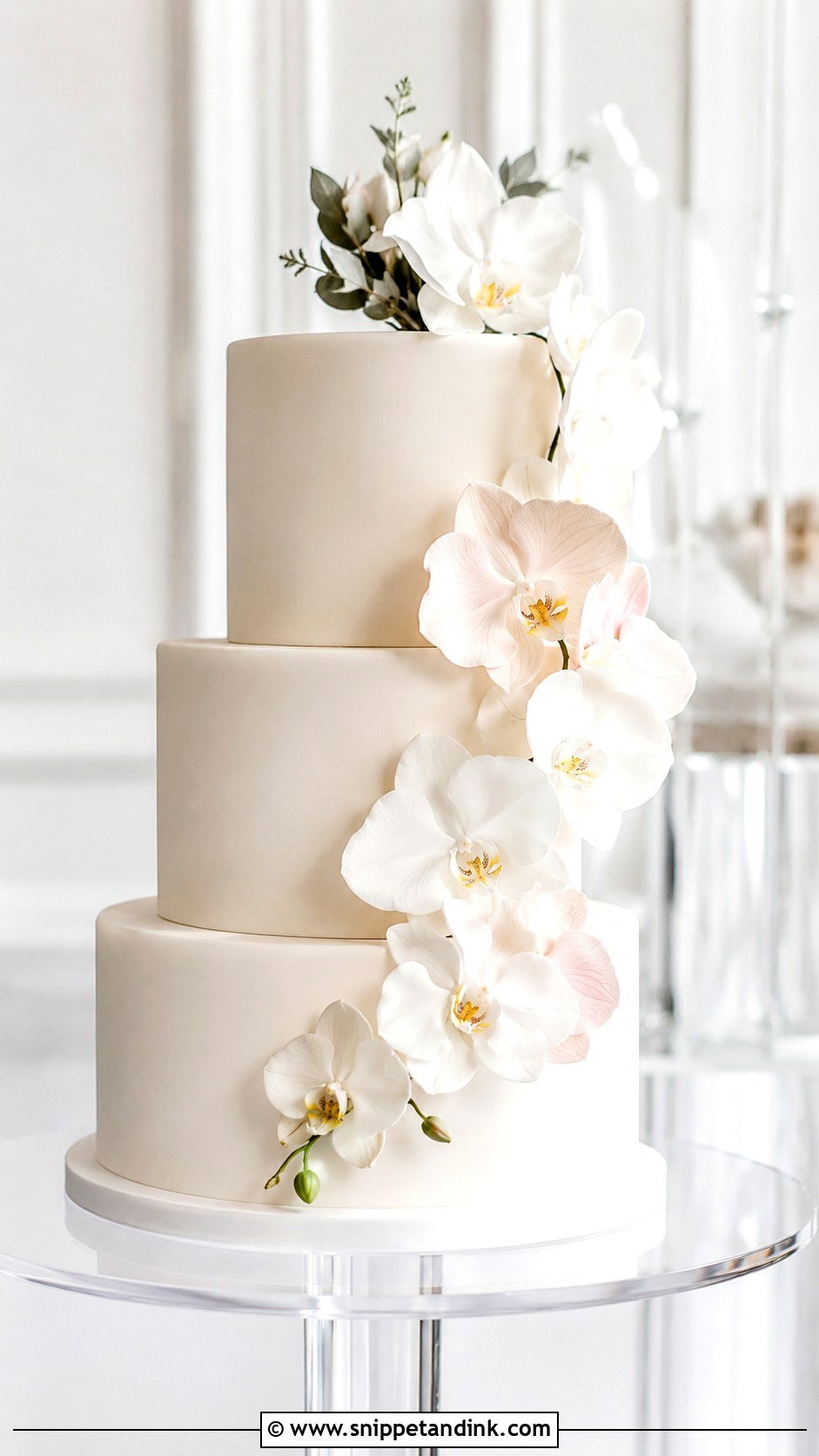
Orchids are sculptural, so a few blooms make a strong impression. White reads clean; blush, purple or pale yellow orchids add personality. They sit best on smooth fondant or buttercream with sharp edges and simple tier shapes, and a single side trail looks dramatic on its own. Fresh orchids are fairly hardy out of water, which makes them one of the better fresh options for cakes. Minimal greenery, pearl details or a satin ribbon finish the table.
18. Floral Rose Wedding Cake
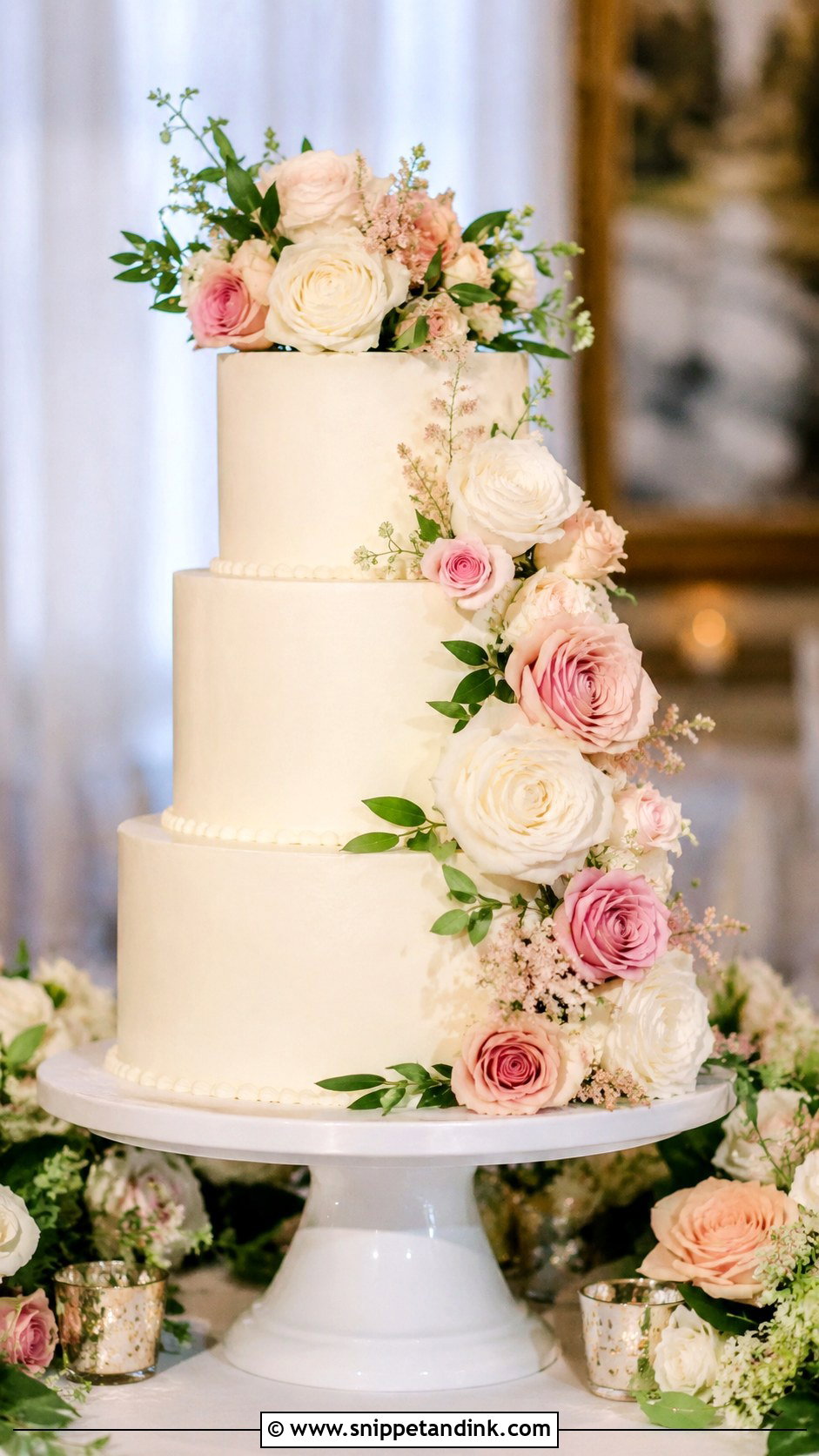
Roses suit almost every style because they come in so many forms: fresh, piped in buttercream or sculpted from sugar. White feels classic, blush soft and deeper pinks add contrast. Place them as a cascade, a top cluster or small blooms between tiers. The way to stop a rose cake looking predictable is to vary the size; buds, half-open and full roses together, plus a few leaves or fillers, give it natural movement.
19. Floral Peony Wedding Cake
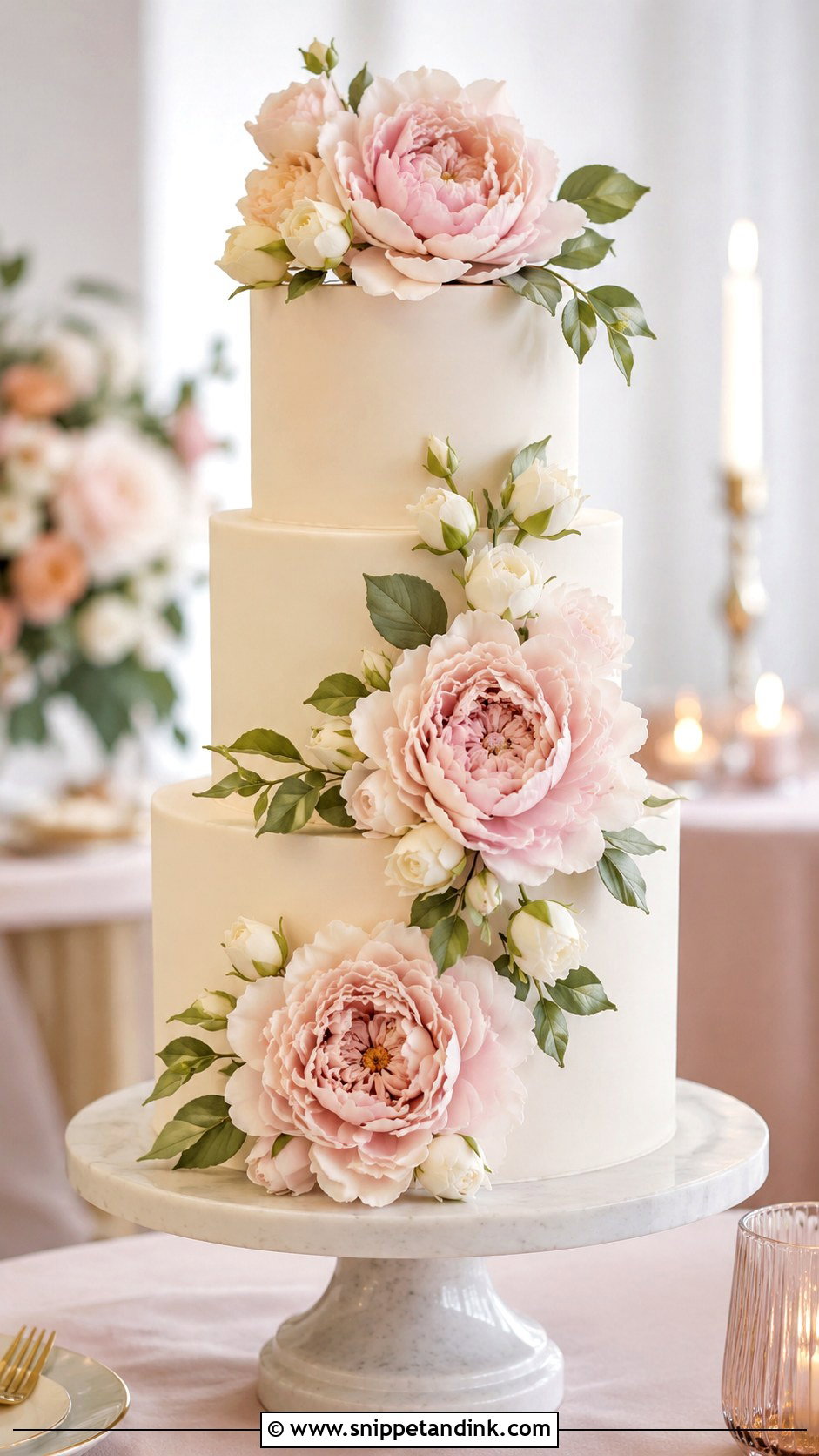
Peonies make a big statement even used sparingly, thanks to all those layered petals. Fresh peonies have a short season, usually late spring into early summer, so for most dates I make them in sugar, in ivory, blush, coral, pale pink or berry tones. A sugar peony is one of the most time-consuming flowers I make, which is reflected in the price. One large peony as a focal point, or a gentle cluster with smaller blossoms, works on smooth buttercream, fondant or a light texture.

20. Floral Meadow Wedding Cake
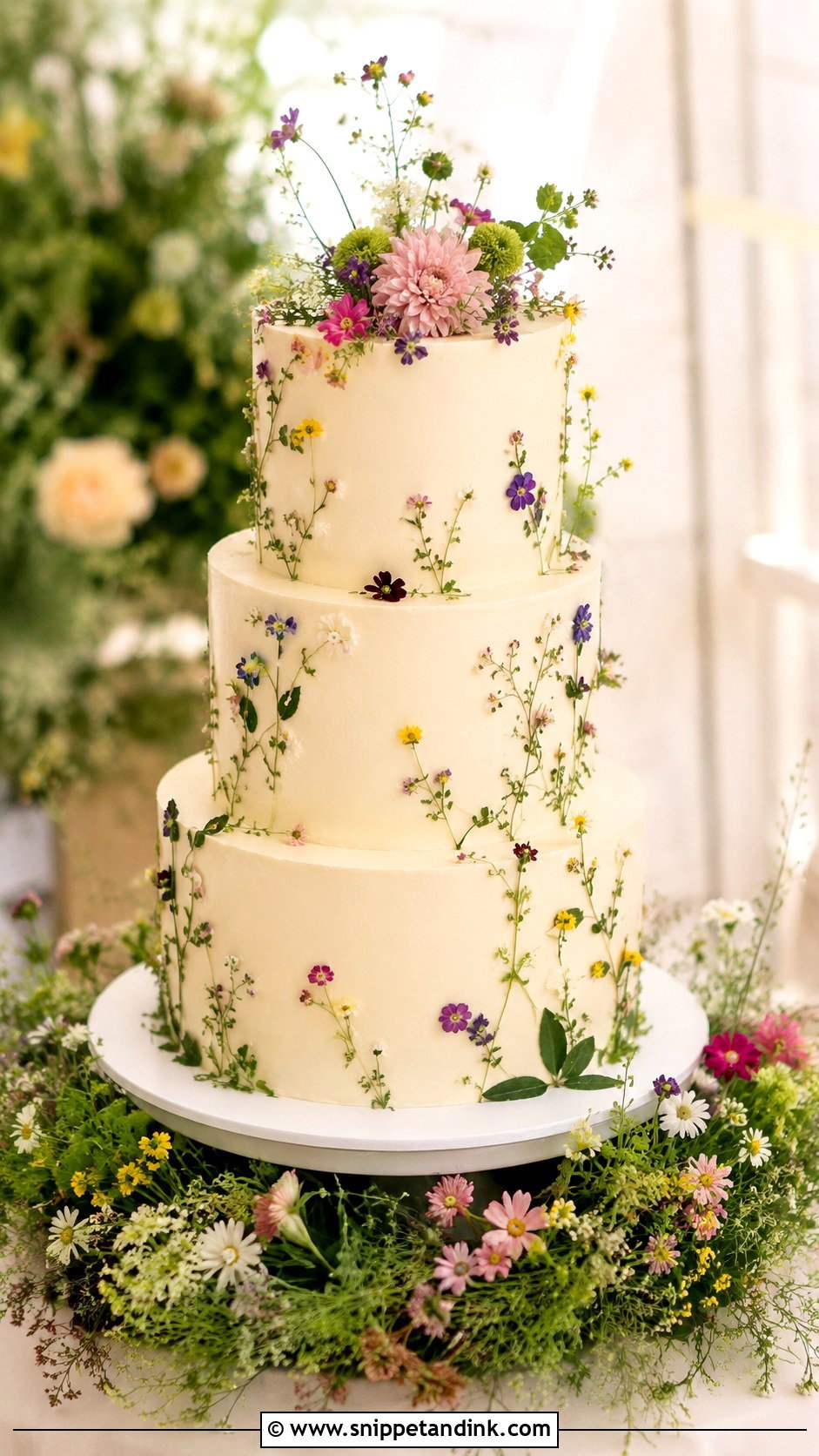
The meadow cake looks as if it’s growing out of a bed of flowers, with blooms massed round the base and smaller details climbing the tiers. It folds the cake into the reception florals, so the florist and I plan it together; the base flowers usually belong to the florist, while anything touching cake is mine. Simple frosting and soft tier shapes work best. Use edible flowers, sugar blooms or safe fresh ones sealed away from the cake.
Sugar Peonies Take Weeks, So Order Earlier Than You Think
Couples often book the cake last, after the venue and the dress. For a floral design that can be a problem. Sugar flowers have to be shaped, dried and coloured over days or weeks, and good designers fill their calendars well ahead, particularly in peak summer months. Many couples book their cake designer six months to a year out; ask your designer what she needs.
- Order fresh-flower cakes after the florist is booked, so both of us work from the same flower list.
- Confirm whether the cake table is indoors, in shade and away from windows. Direct sun softens buttercream and makes fondant sweat.
- Ask who delivers and sets up. Tiered cakes travel best chilled, stacked on site, with flowers placed last.
- Check whether the venue charges a fee to cut and serve an outside cake.
If your favourite flower blooms at the wrong time of year for your wedding, sugar is the answer, not imported stems. It’ll look the same in photos, it won’t wilt during speeches, and you can keep the top-tier flowers as a keepsake.
Questions Your Baker Will Ask About the Flowers
Some couples want one sugar bloom on a clean white cake; others want a full garden, a cascade or pressed petals over every tier. Your venue, season, palette and budget narrow it quickly. Come to the tasting knowing roughly how many guests you’re serving, whether the reception is indoors, and who’s supplying the flowers. With those answers, your baker can tell you which floral details can be edible, which must be sugar, and how the frosting will hold.
You'll Like These Ideas:










Leave a Reply