
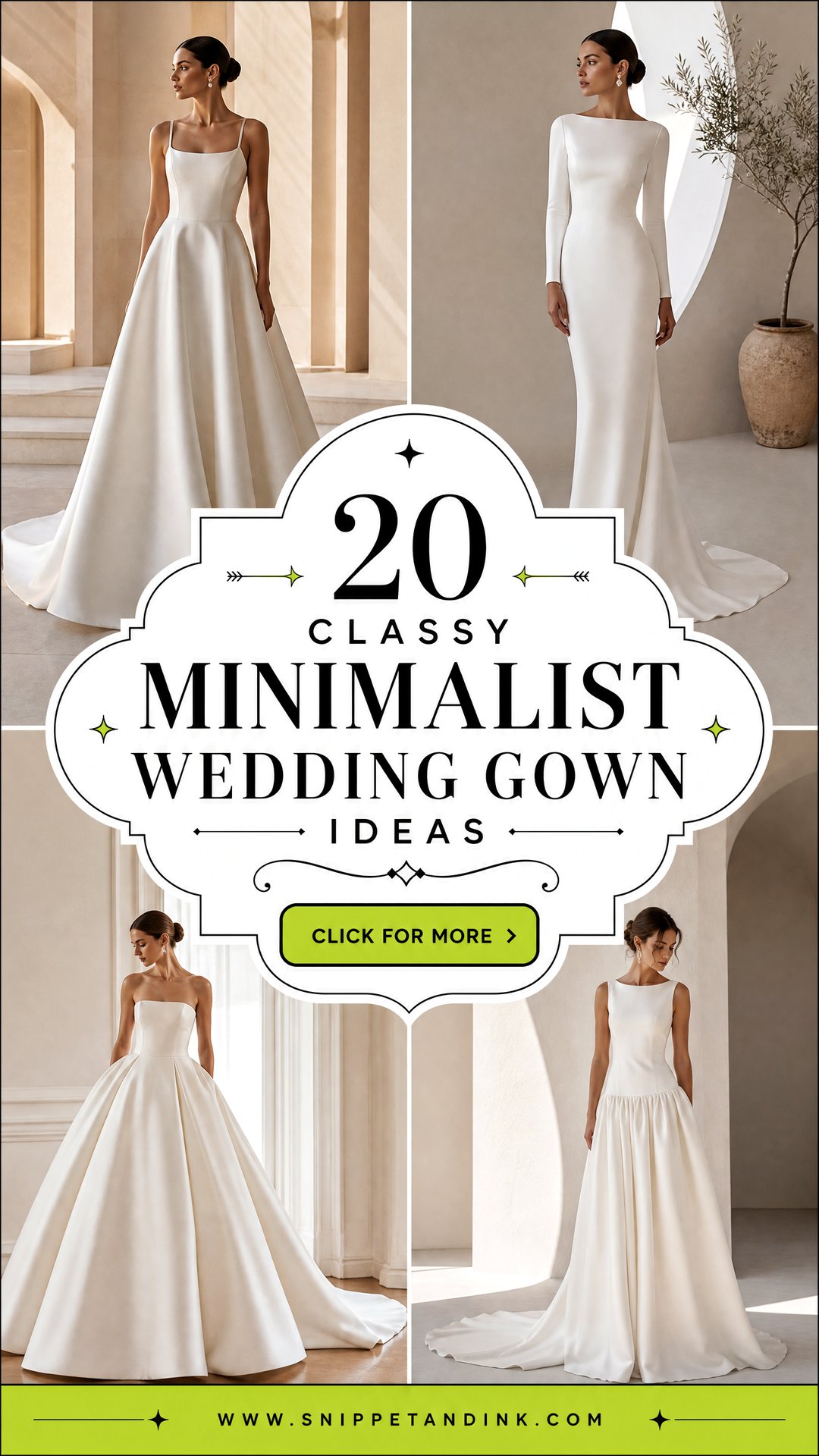
A plain gown is harder to get right than a beaded one. Without lace or crystals to pull the eye, all that’s left is fabric, cut and fit, and every one of them is on show. The classy minimalist wedding gown ideas I like best depend on a good satin, silk, crepe or mikado and a silhouette that sits naturally on the body. Neckline, sleeve, waist placement and train length then do the work decoration would normally do. Below are twenty of them, from fitted columns to structured ball gowns, each with the shoes, jewelry and veil I’d put with it.
Plan the Underwear Before the First Fitting
With a minimalist gown, what you wear underneath is part of the dress. Smooth crepe and silk show a bra band, a strap edge or the line of a seam across the hip in a way lace never would. I ask brides to sort their foundation pieces before the first alteration appointment, because a seamstress fits the gown to whatever is under it that day.
- Match your skin tone, not the dress. White underwear shows through ivory and silk far more than a nude shade close to your own skin.
- For backless, halter and low-back gowns, ask the salon about sewing cups into the lining. It’s a common alteration and often more secure than adhesive bras for a full day.
- Bring the shoes too. Heel height changes hem length and posture, and a plain hem that’s half an inch off is obvious.
- Try one sitting test in the full set. Shapewear that’s fine standing can roll at the waist when you sit, and the ridge shows through a bias cut.
If you change underwear after the final fitting, tell the seamstress and try the gown on again. It sounds fussy, but on a dress this plain it’s the most common reason a perfect fit stops looking perfect on the day.
1. Satin A-Line Wedding Gown
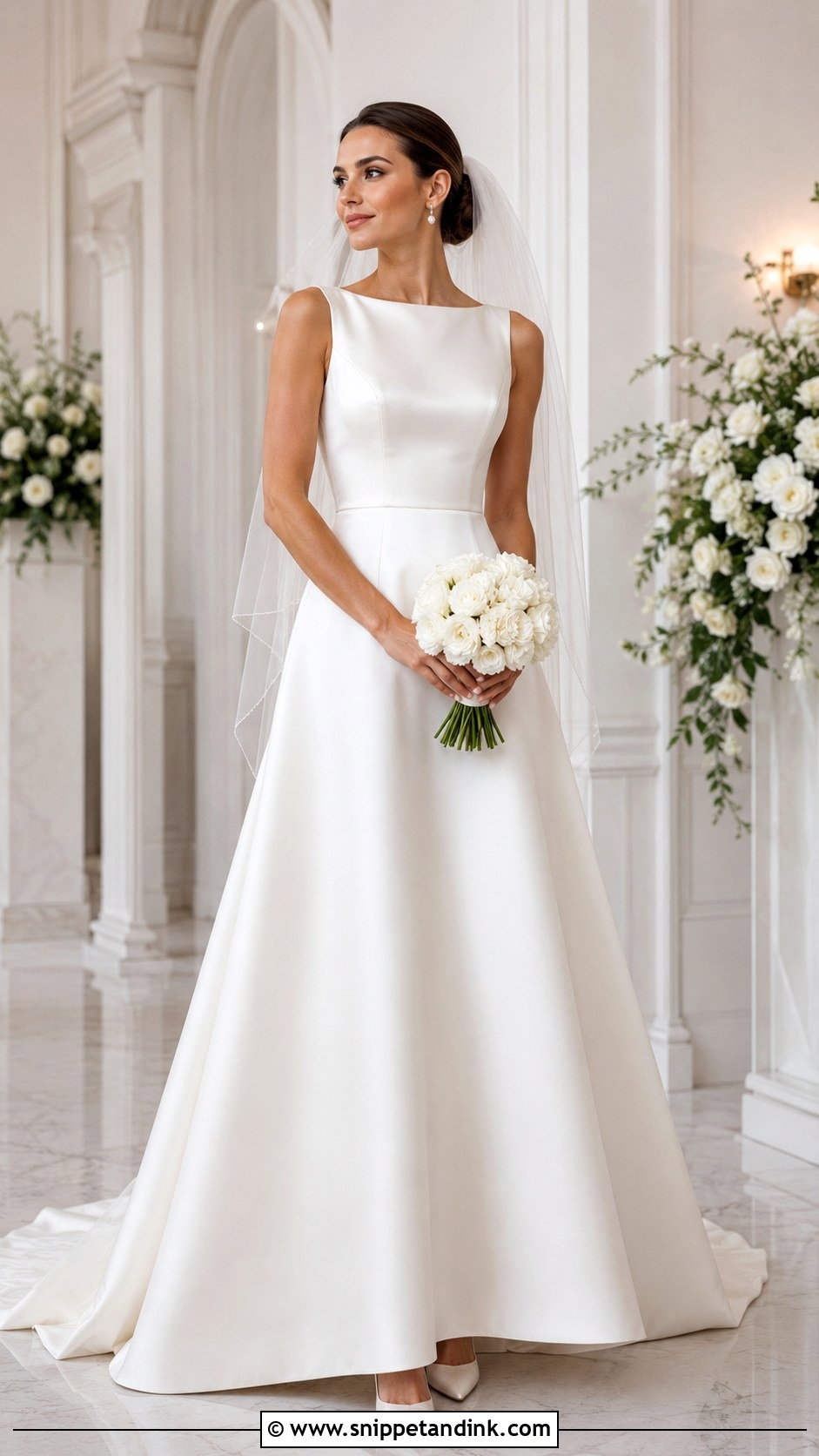
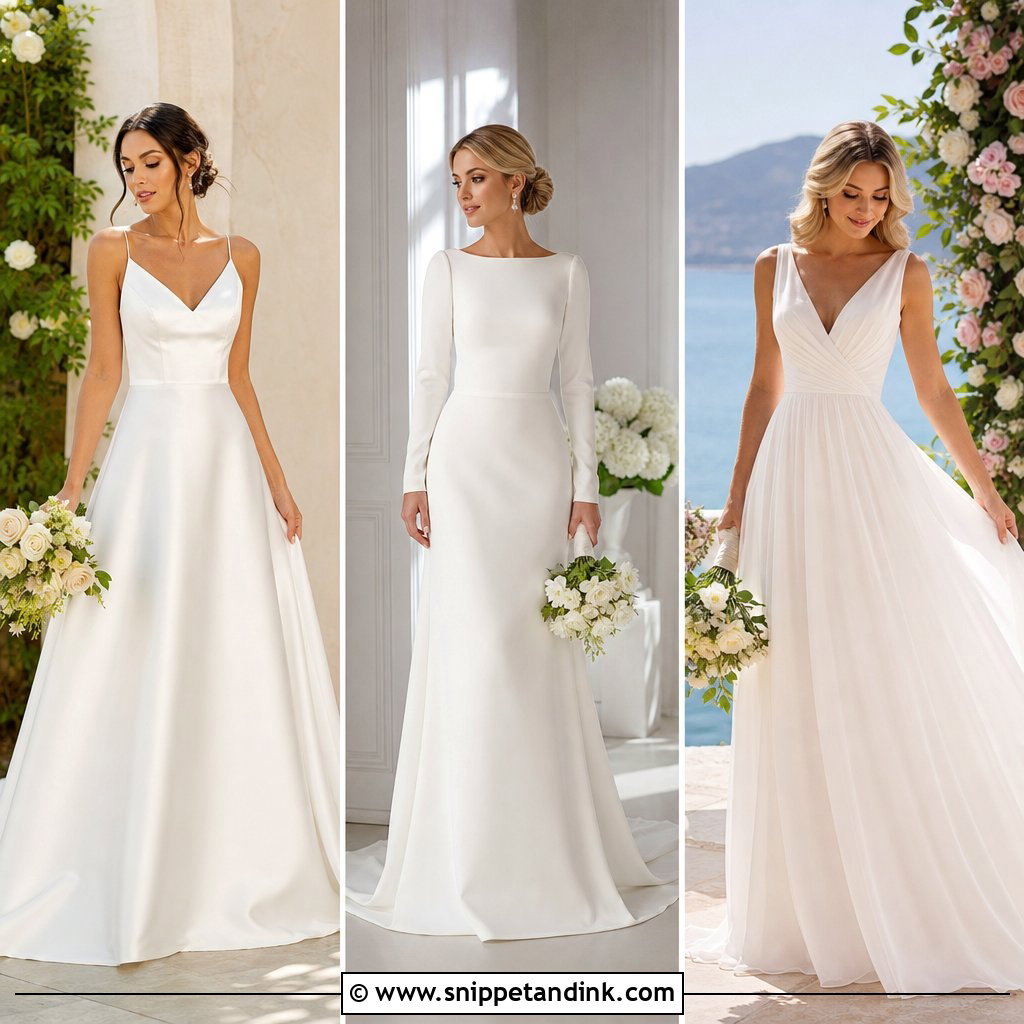
An A-line is the dress I put on a bride who doesn’t know where to start, because it works in nearly any room and on nearly any figure. The skirt should widen gently from a defined natural waist, without petticoat volume. Smooth satin gives it polish, and a line of covered buttons down the back is all the detail it needs. Pointed ivory pumps, small pearl earrings, a fingertip veil and a bouquet of white flowers with fresh greenery complete it. If she wants more waist definition, I’d add a thin satin band rather than a belt with a buckle.
2. Square Neck Crepe Wedding Gown
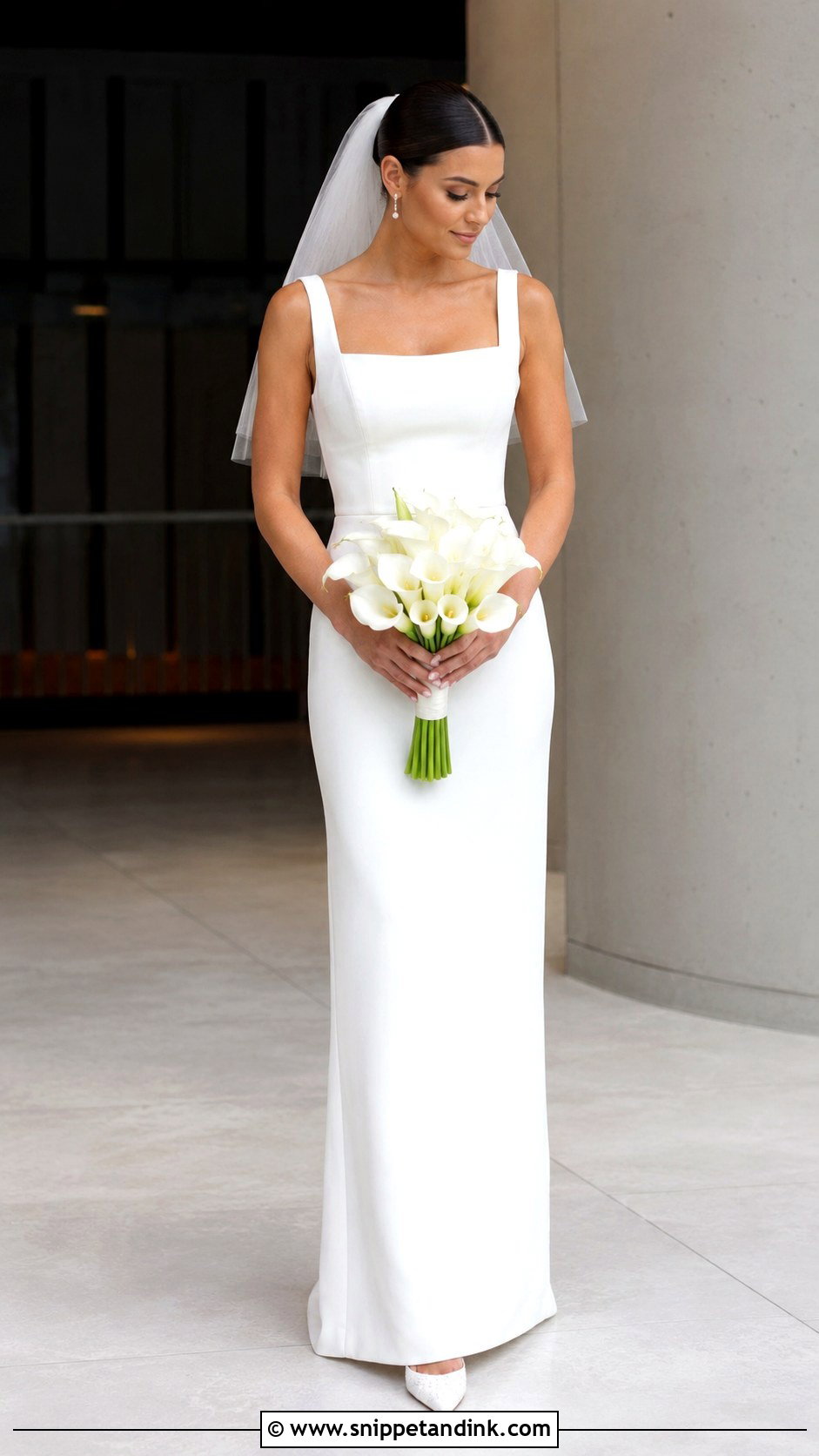
Crepe is honest fabric. It has almost no sheen, so a square neckline cut in it looks sharp and architectural, and any wobble in the line is just as visible. Wide straps, a close bodice and a straight or softly flared skirt in medium-weight crepe give movement without clinging. Low pointed heels, delicate drops and a neat bun or sleek ponytail suit it; a short tulle veil softens the corners. I’d skip the necklace and carry white calla lilies. The neckline is what everyone sees first, so that’s where I spend fitting time: the top edge should run dead straight from strap to strap.
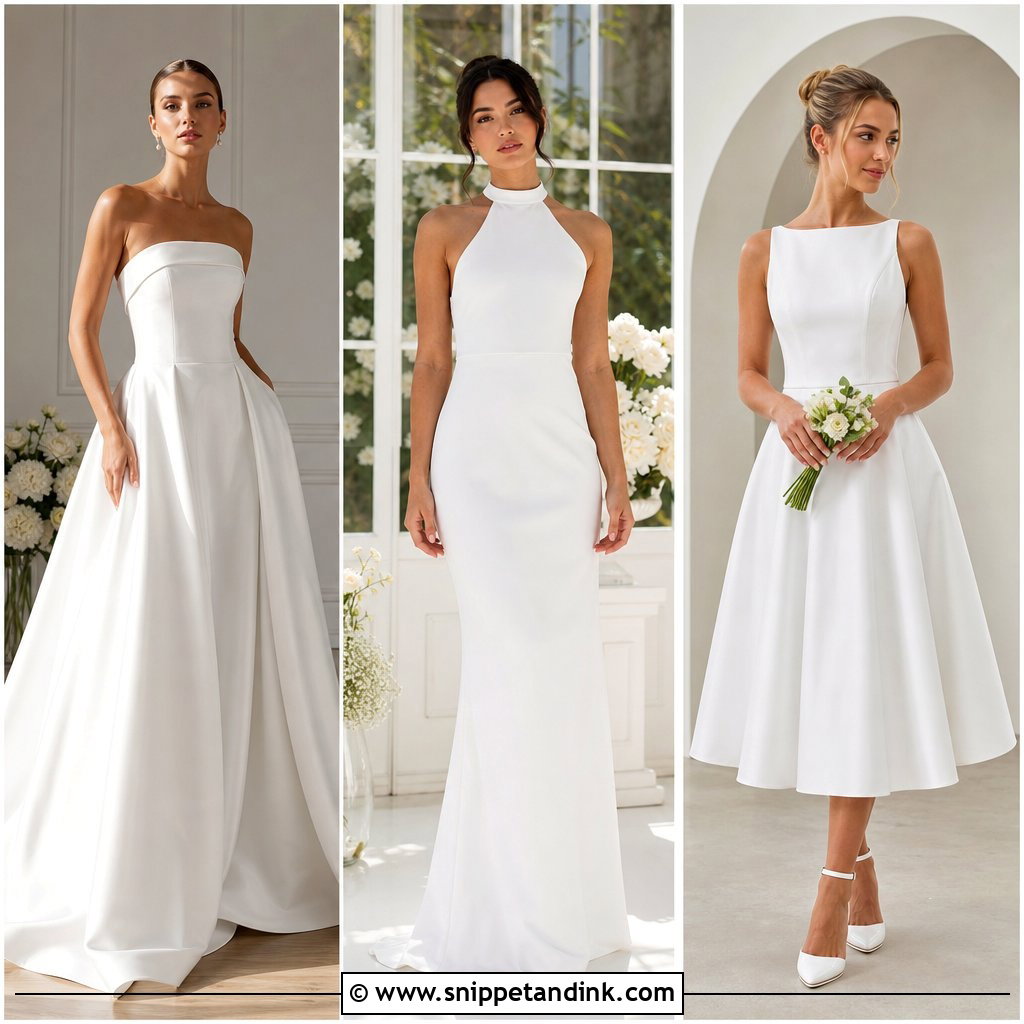
3. Strapless Column Wedding Gown
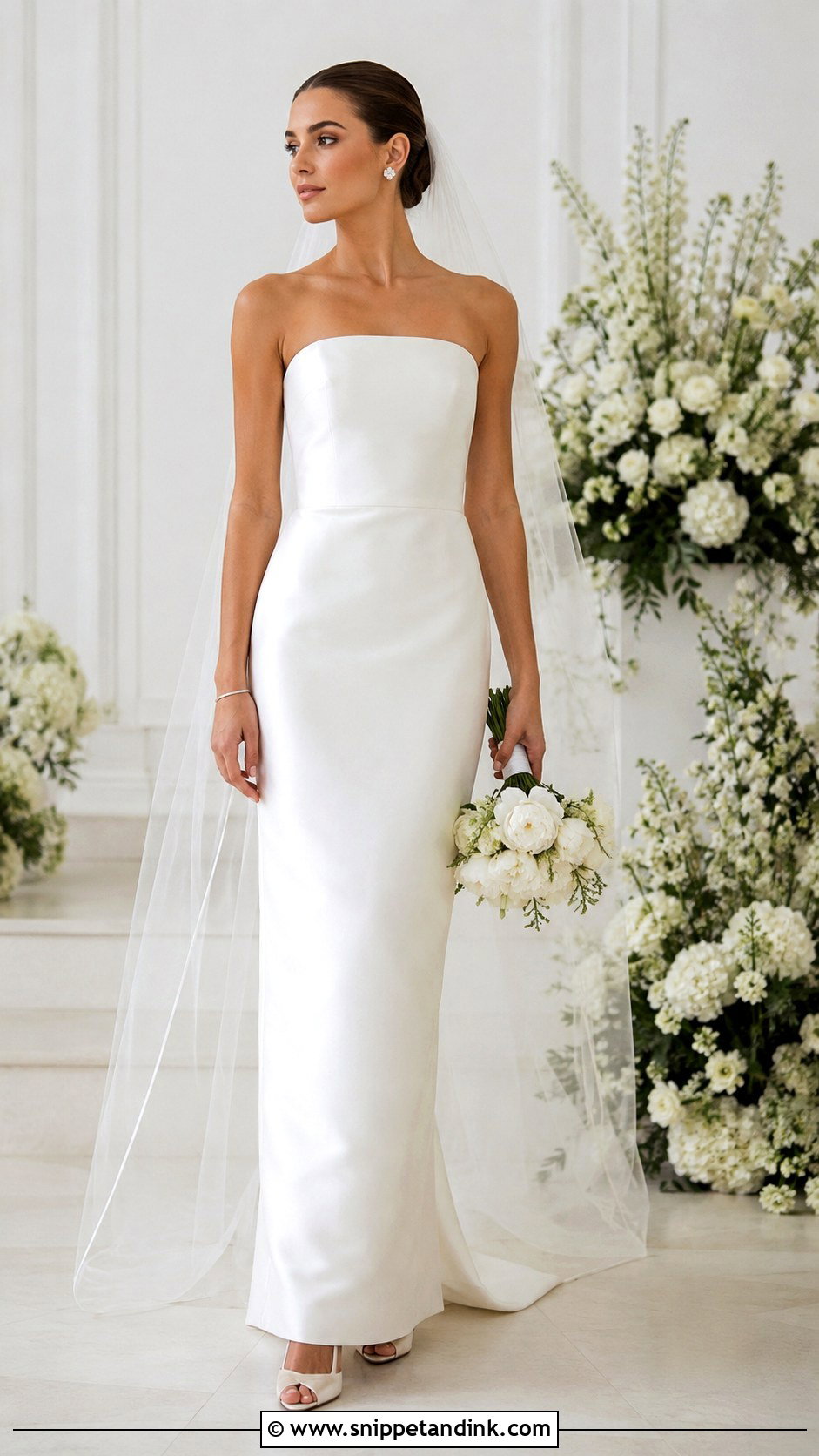
Strapless columns depend on what you can’t see. An internal corset holds the bodice up so the outside can stay completely smooth, and structured satin, crepe or mikado keeps the shape from collapsing at the waist. Slingback heels, a slim bracelet and sculptural studs are enough. For the ceremony, a long sheer veil adds drama without decoration; if she’d rather skip a veil, a sleek bridal scarf or a simple hair bow works. The trap with a column is the hem: it needs a small walking slit or a little extra width at the ankle, or every step turns into a shuffle.
4. Silk Slip Wedding Gown
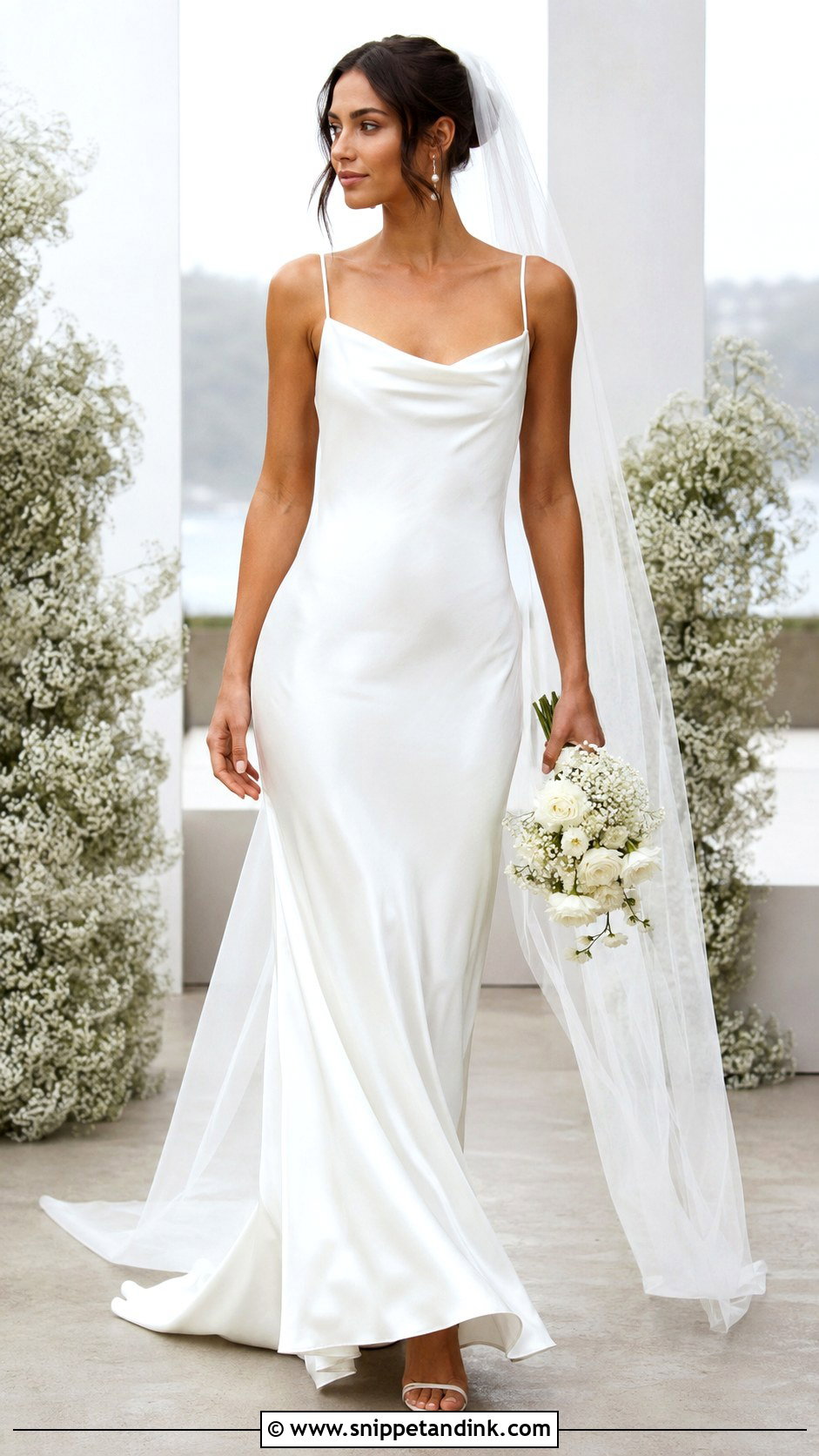
The silk slip goes back to 1990s bridal minimalism, and it’s still the hardest dress on this list to fit. A bias-cut skirt, narrow straps and enough structure through the bust keep it from looking like nightwear. Heavier silk drapes better and hides more. Strappy sandals, fine earrings and softly gathered hair; a floor-length veil makes it ceremonial, while a short blusher keeps it fresh. Silk shows everything underneath, so I won’t fit one until the bride brings the exact underwear she’ll wear. The finished dress should skim, never cling.
5. Boat Neck Wedding Gown
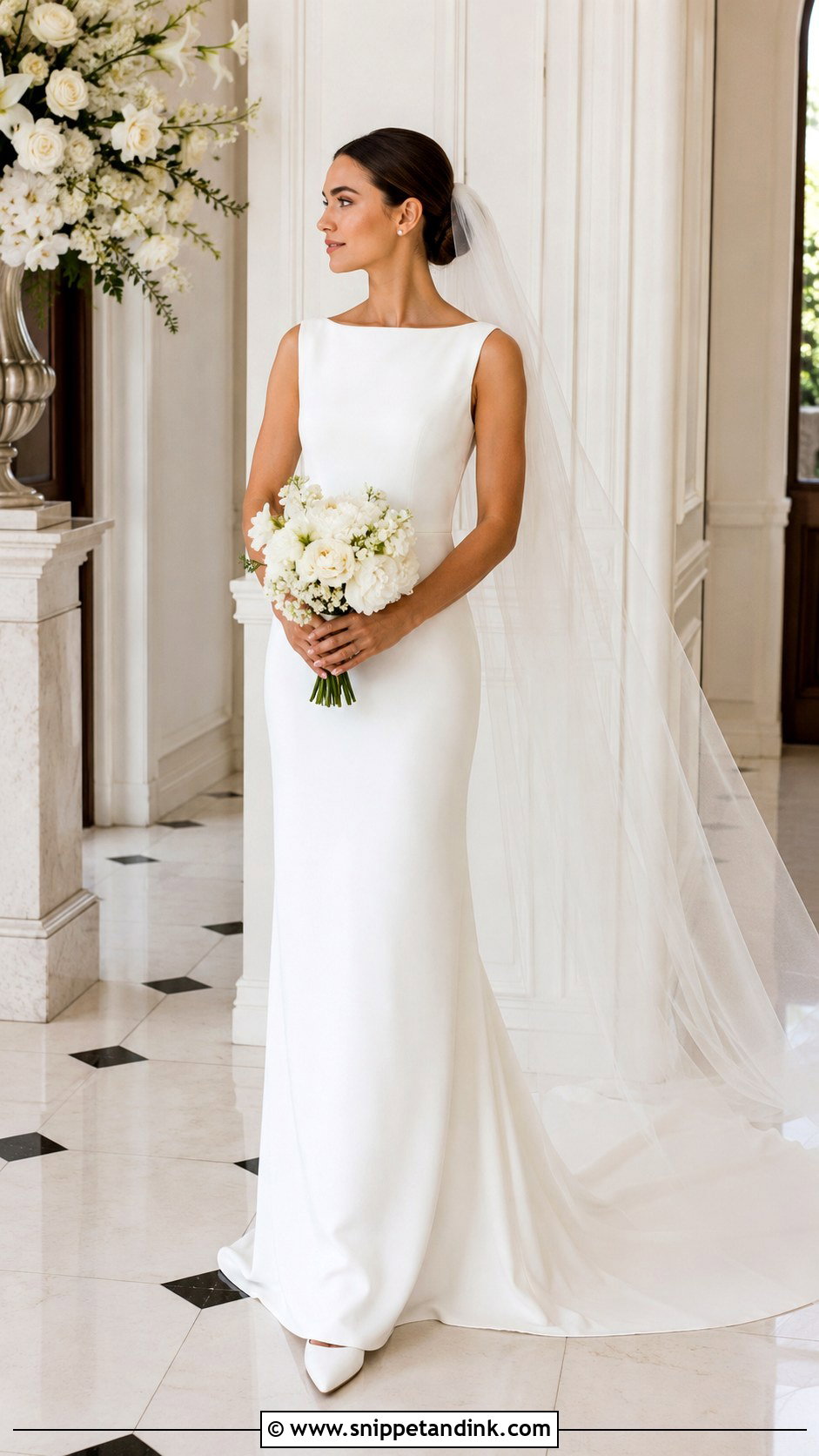
A boat neck runs almost straight from shoulder to shoulder, which widens the upper body slightly. On narrow shoulders that’s flattering; on very broad ones I’d usually suggest a scoop instead. It pairs well with a fitted bodice and a narrow A-line or column skirt in smooth crepe or matte satin, and a low back gives the restrained front a counterpoint. Pearl studs, closed-toe pumps and a low chignon, with no necklace competing with that horizontal line. Attach a chapel veil beneath the hair so the neckline stays clear. It’s a good answer for a bride who wants coverage without anything fussy.
6. Long Sleeve Crepe Wedding Gown
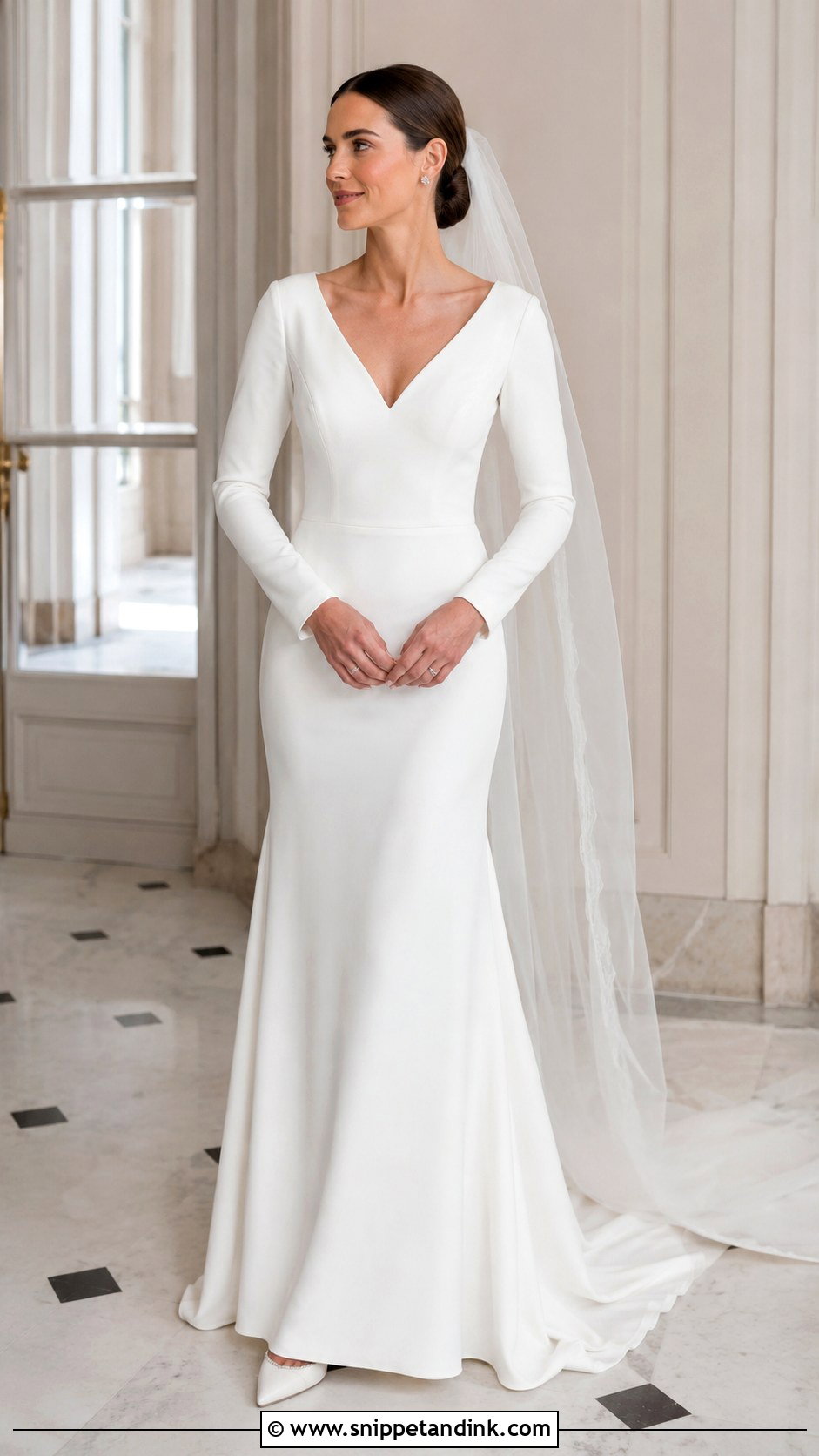
Long crepe sleeves belong to cool weather and formal indoor ceremonies. Keep them slim and plain, with clean shoulder seams and a gently fitted bodice; a bateau, scoop, or modest V-neckline stops the coverage feeling heavy. The skirt can drop straight or open into a slight fit-and-flare. Pointed ivory heels, small crystal studs, a smooth low bun and a raw-edge veil keep it simple, and a tailored white coat handles outdoor photos in the cold. Sleeve length is the alteration I watch hardest: the cuff should hit the wrist bone with arms relaxed, because crepe sleeves ride up when you raise your hands and a too-short sleeve looks borrowed.
7. Off Shoulder Wedding Gown
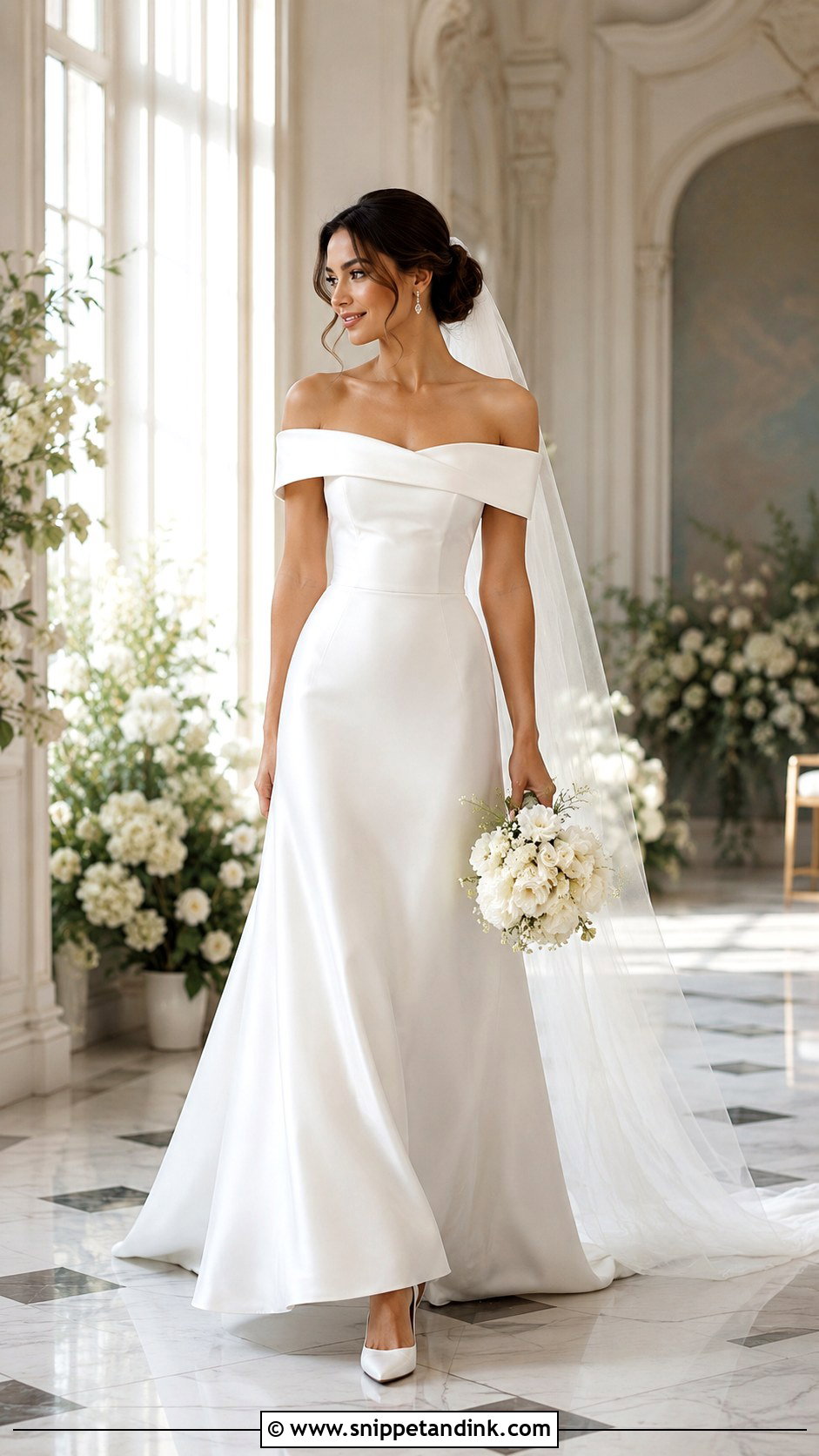
Off-the-shoulder necklines stay minimal when the band is a straight fold or a gentle drape, not ruffles. That band should sit securely across the upper arms, but it shouldn’t be what holds the dress up; a structured bodice does that job. Slim A-line for classic, column for modern. Simple drops, pointed pumps and a polished updo, with a light veil worn at the back of the head. Bare shoulders don’t need a necklace. Sit down and raise your arms at every fitting, and if the band creeps down, the fix is inside the bodice.
8. High Neck Wedding Gown
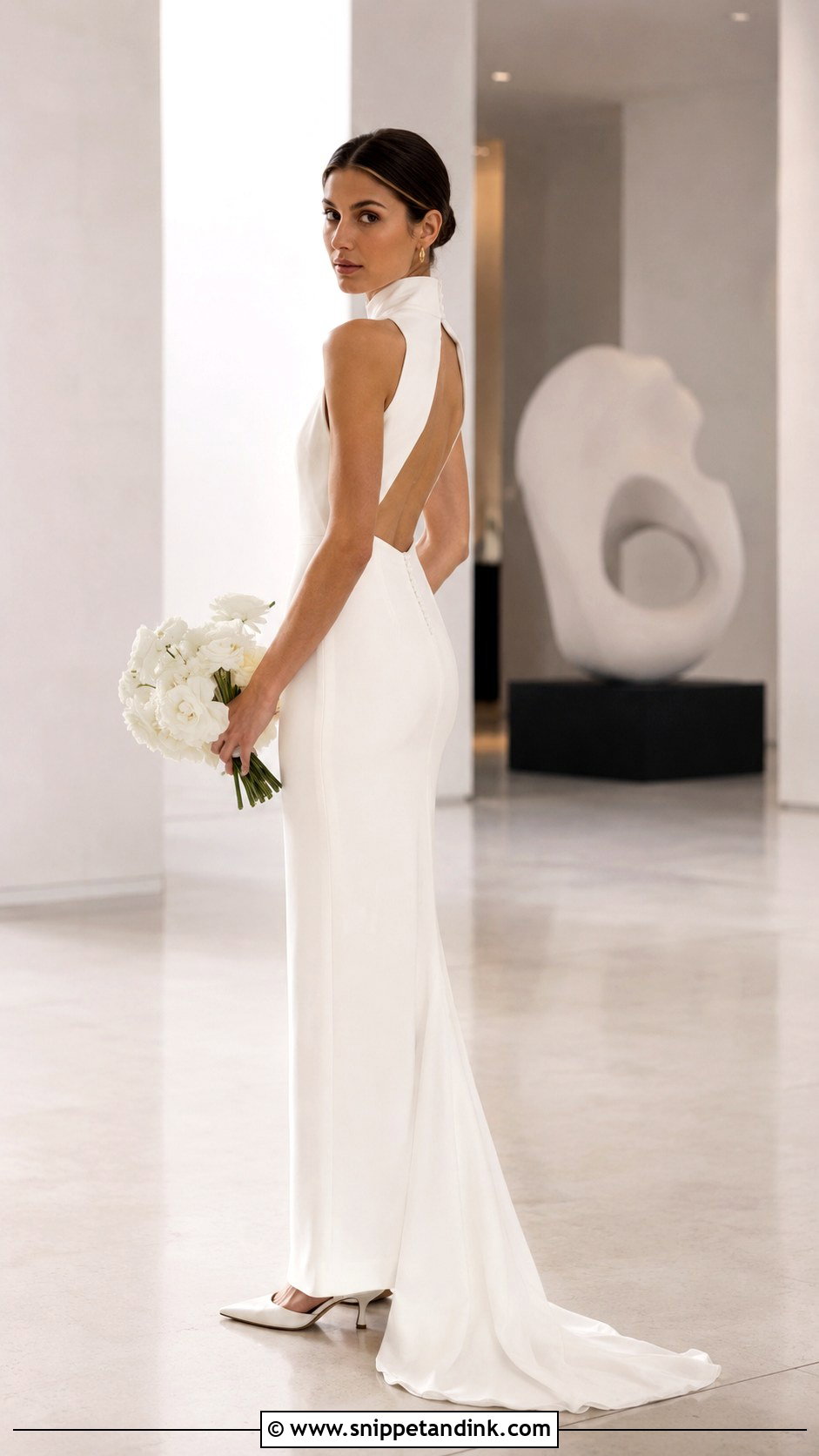
High necks read most modern in plain fabric. Silk crepe, satin or a smooth stretch jersey keeps it clean, and going sleeveless balances the coverage and gives a long vertical line. A column skirt with an open back adds interest without breaking the theme. Small hoops, sleek hair and pointed kitten heels; a veil is optional, and if you wear one, keep it floor length and unembroidered. Comfort is the honest drawback. A high neckline sits against the throat all day, so I have brides look down at their bouquet and turn their heads during fittings, and if the collar digs, we lower it a fraction.
9. Cowl Neck Wedding Gown
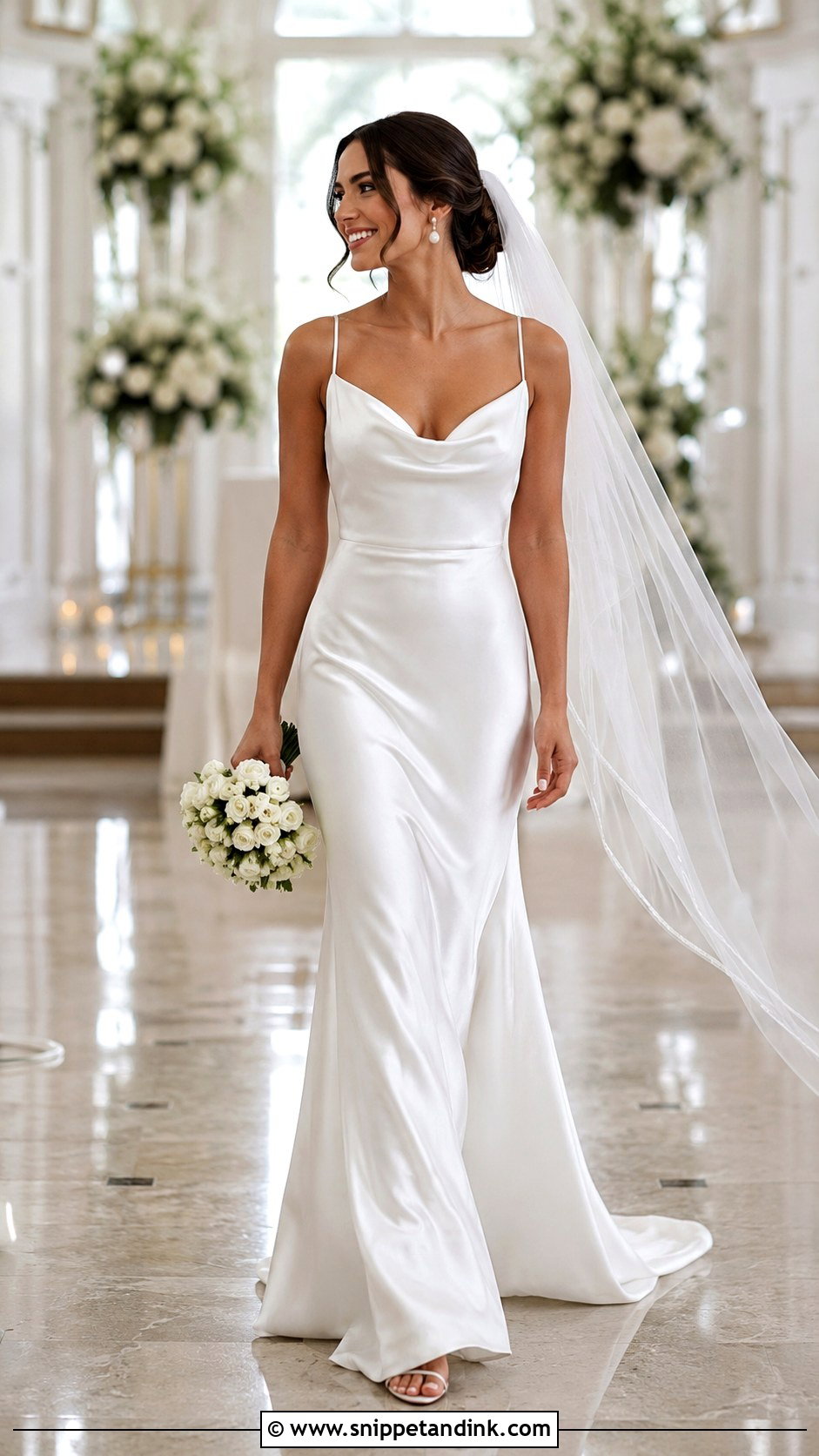
A cowl gives movement without a single bead, as long as the drape is controlled. Too deep and it gapes every time she leans forward to sign or hug, which is the problem I see most with this neckline. Fluid silk or satin, slender straps and a bias-cut skirt suit it. Minimal heeled sandals, pearl drops and a compact clutch, with a relaxed low bun echoing the softness. A sheer cathedral veil contrasts with the sleek fabric and comes off for the reception. Proper bust support, often a hidden bra built into the lining, is what keeps the folds sitting where they should.
10. One Shoulder Wedding Gown
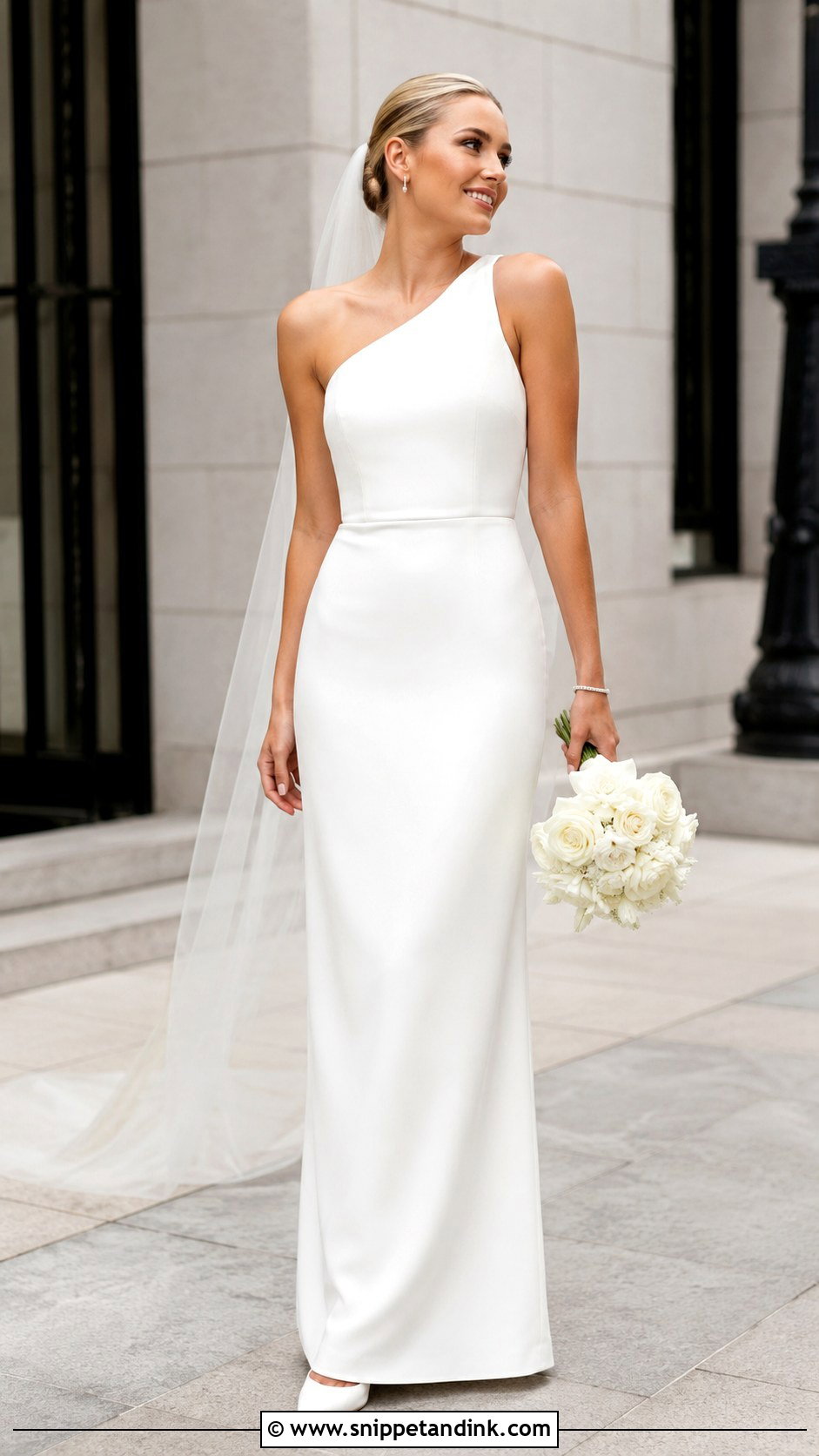
A one shoulder wedding gown gets its interest from asymmetry, so everything else stays even and quiet. A single wide strap, a fitted bodice and a skirt with as few seams as possible. Stretch crepe gives a softer fit; mikado holds a sculpted line. I put a bracelet on the bare-arm side and small earrings, never a necklace. Pointed pumps or barely-there sandals, a tidy bun, and either a detachable train or a veil fixed low under the hair for movement behind. The wide strap is doing all the lifting, so check it doesn’t slip outward when she dances.
11. Minimalist Ball Gown Wedding Gown
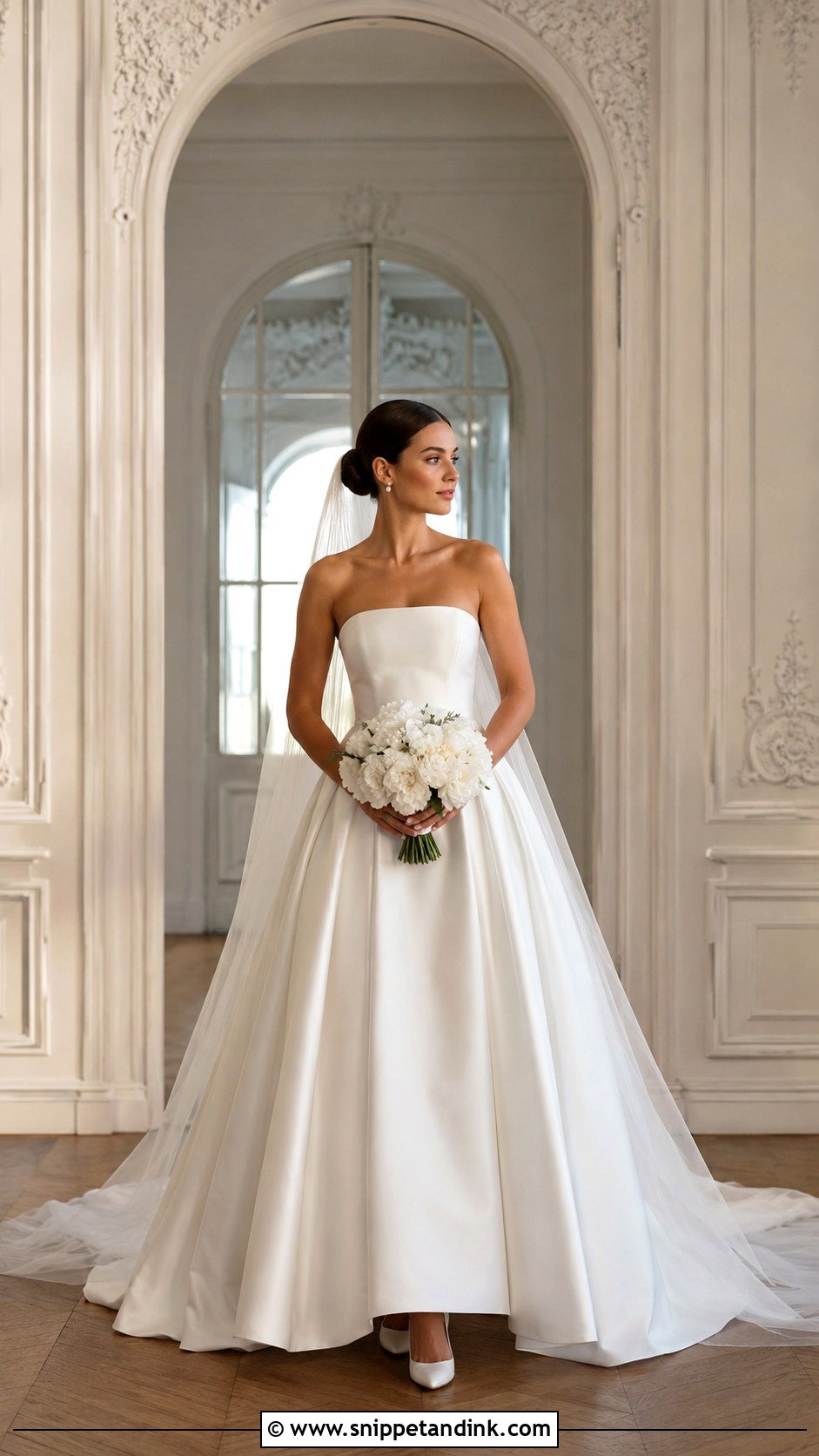
Volume and minimalism aren’t opposites. A ball gown in plain mikado or structured satin, with a clean strapless or scoop-neck bodice, gets its drama from shape alone. Box pleats at the waist give controlled fullness that looks architectural rather than frothy. Closed-toe heels, pearl studs, a sleek bun and a long untrimmed veil scaled to the skirt. I always ask for hidden pockets in a skirt this size; they cost little to add in alterations and brides use them all night. Keep the bouquet moderate, since the skirt has already made the impact.
12. Halter Neck Wedding Gown
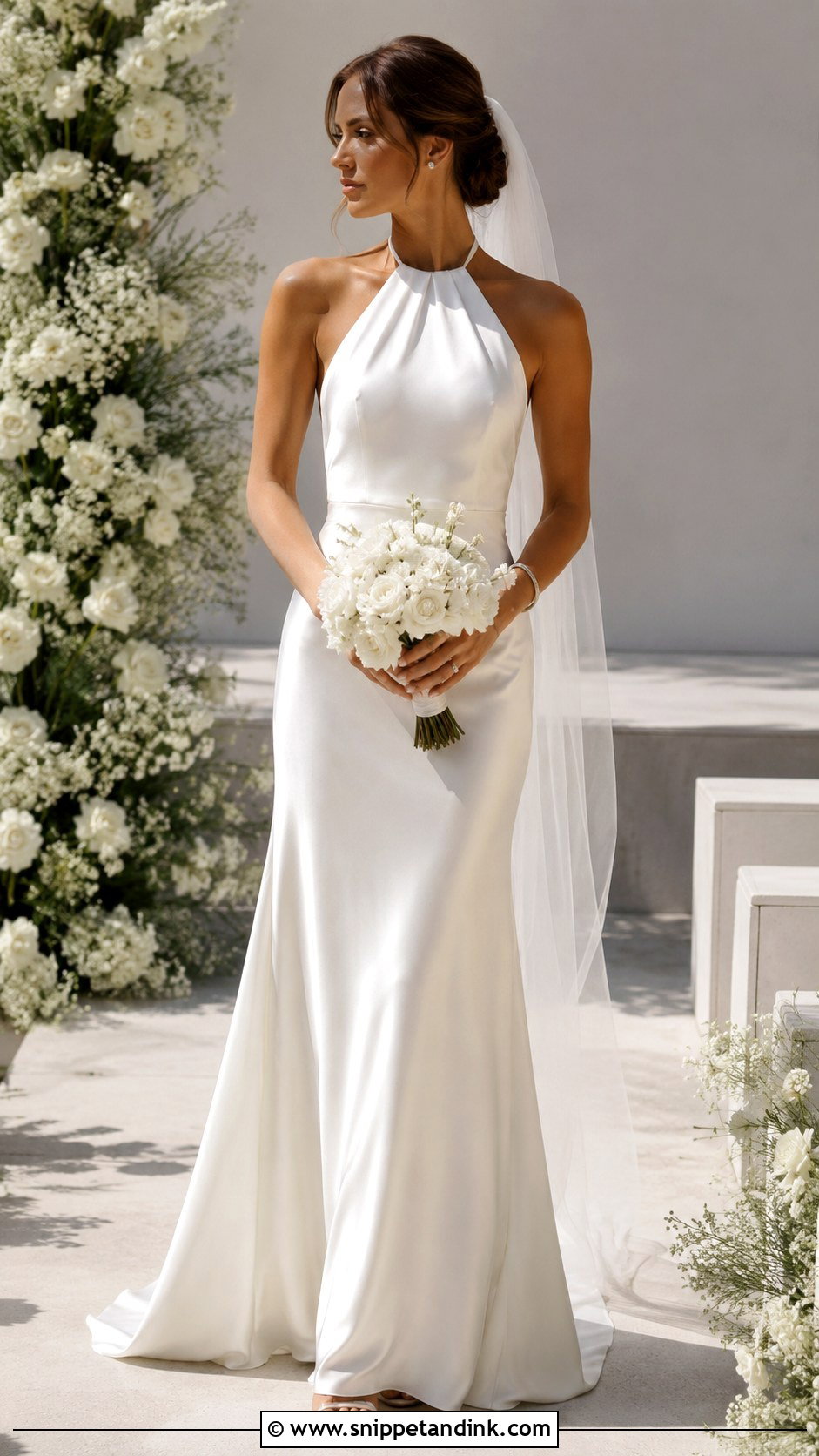
The halter band wraps the neck and lifts the line of the shoulders, with a fitted bodice and an open or partly open back. A fluid column keeps it streamlined; a slightly flared hem makes walking easier. Studs, a slim cuff and an updo that shows the neckline, no necklace, minimal sandals and a plain tulle veil fixed beneath the hair. Here’s what I check in alterations: the bust should be supported by the bodice and side seams, not by the neck strap. If the strap is carrying weight, she’ll have a sore neck before dinner.
13. Drop Waist Wedding Gown
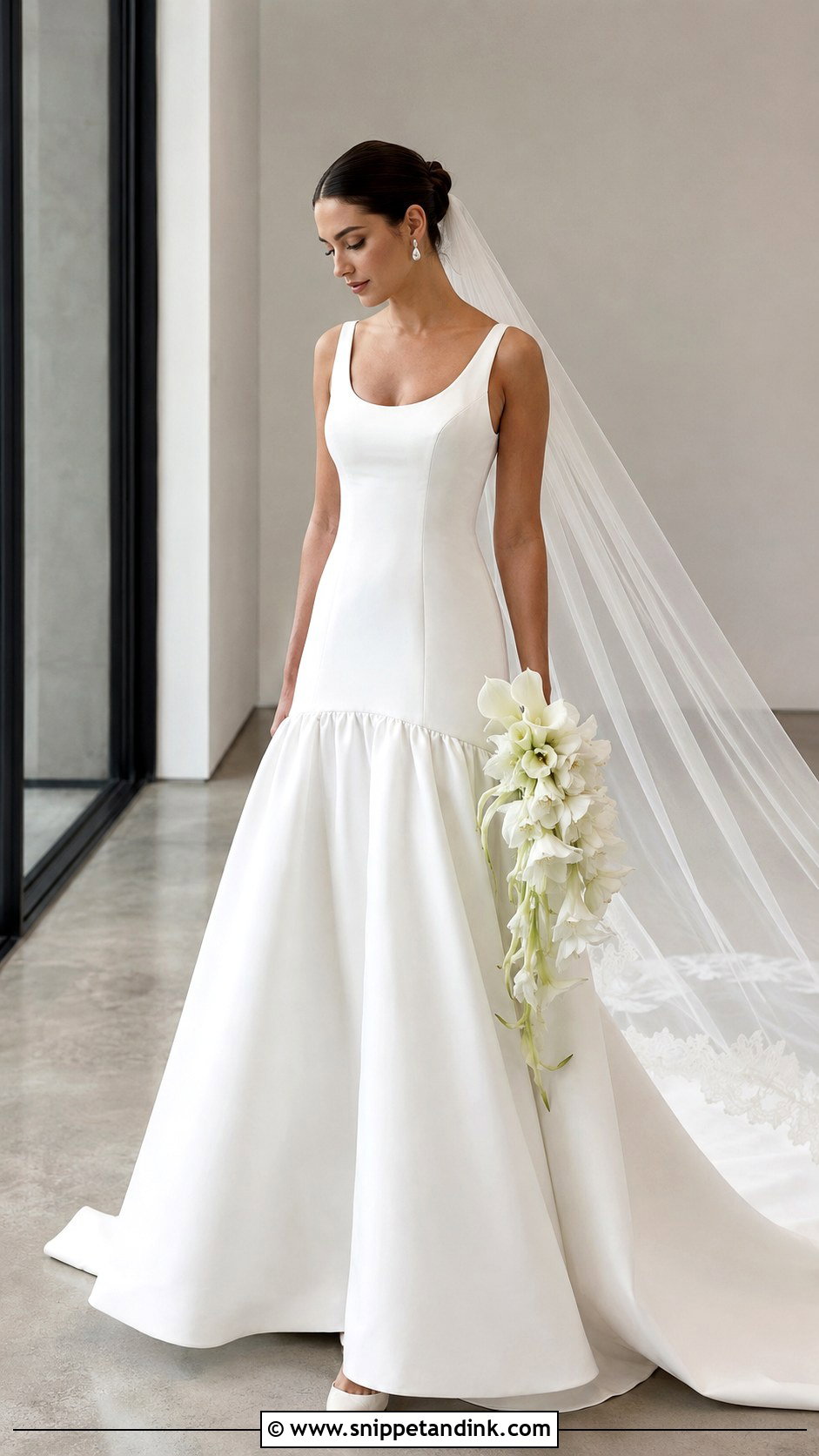
Running the bodice past the natural waist before the skirt releases looks structured and current with no decoration at all. Plain satin or mikado lets the curved seams become the design. A scoop, strapless or square neckline suits the lower waist. Pointed heels, small metallic earrings, a neat updo, and a long narrow bouquet to stretch the vertical. Choose a plain chapel veil that falls cleanly over the skirt. Drop waists don’t suit every torso; on a short-waisted bride the seam can land on the hip bone and widen her, so I pin the seam height at the first fitting before anything is cut.
14. Backless Satin Wedding Gown
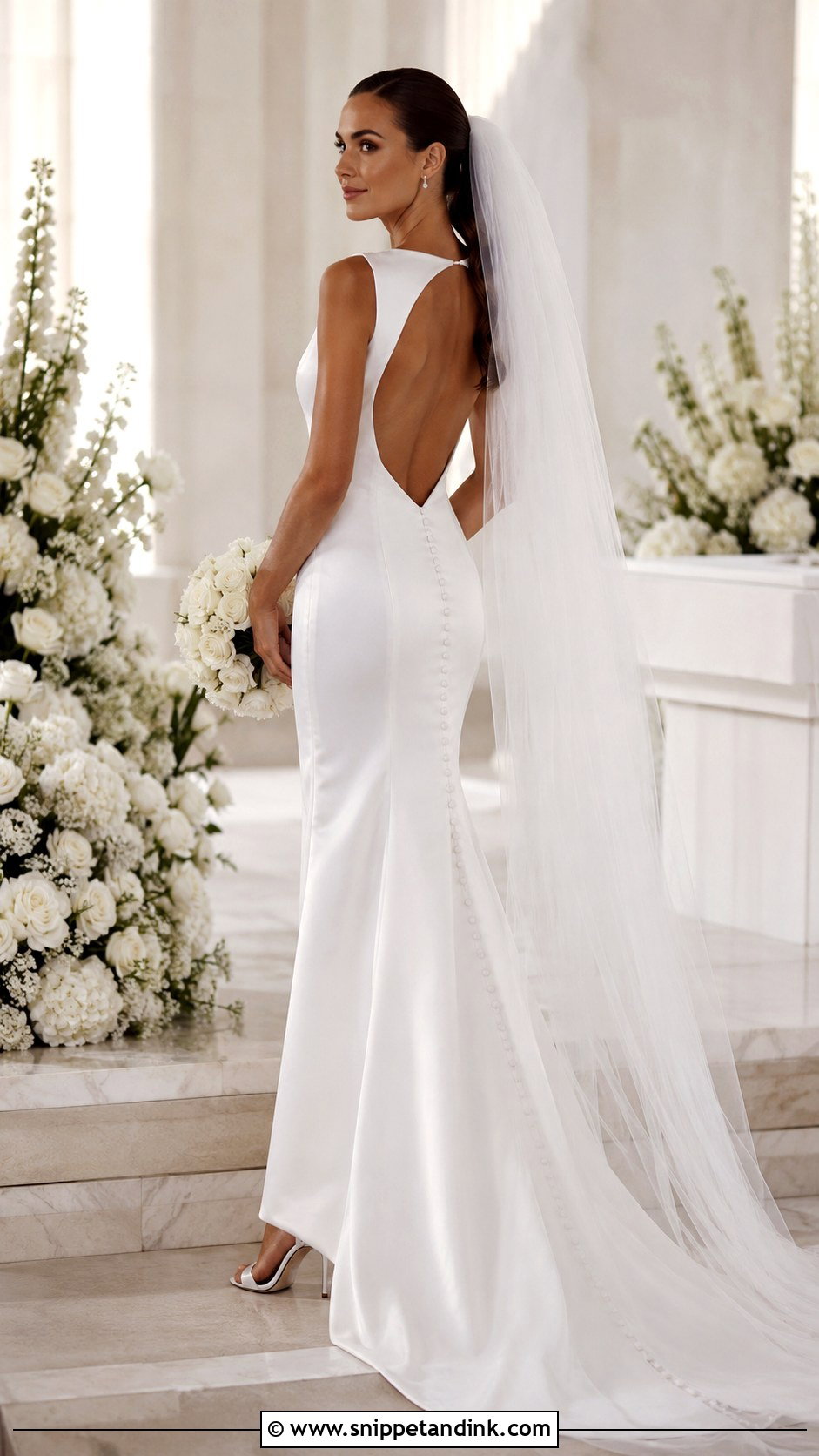
From the front, restraint. Then she walks down the aisle and the open back does all the talking. A high bateau or simple sleeveless bodice balances the low back, with a softly fitted skirt and a small train. Wear a bun or polished ponytail so the back shows, subtle earrings, slingback heels and a veil secured beneath the hair. Sort the underwear question before buying: a standard bra won’t work, so look for built-in cups, hidden support or careful boning. Covered buttons below the opening are an optional traditional touch.



15. Cape Sleeve Wedding Gown
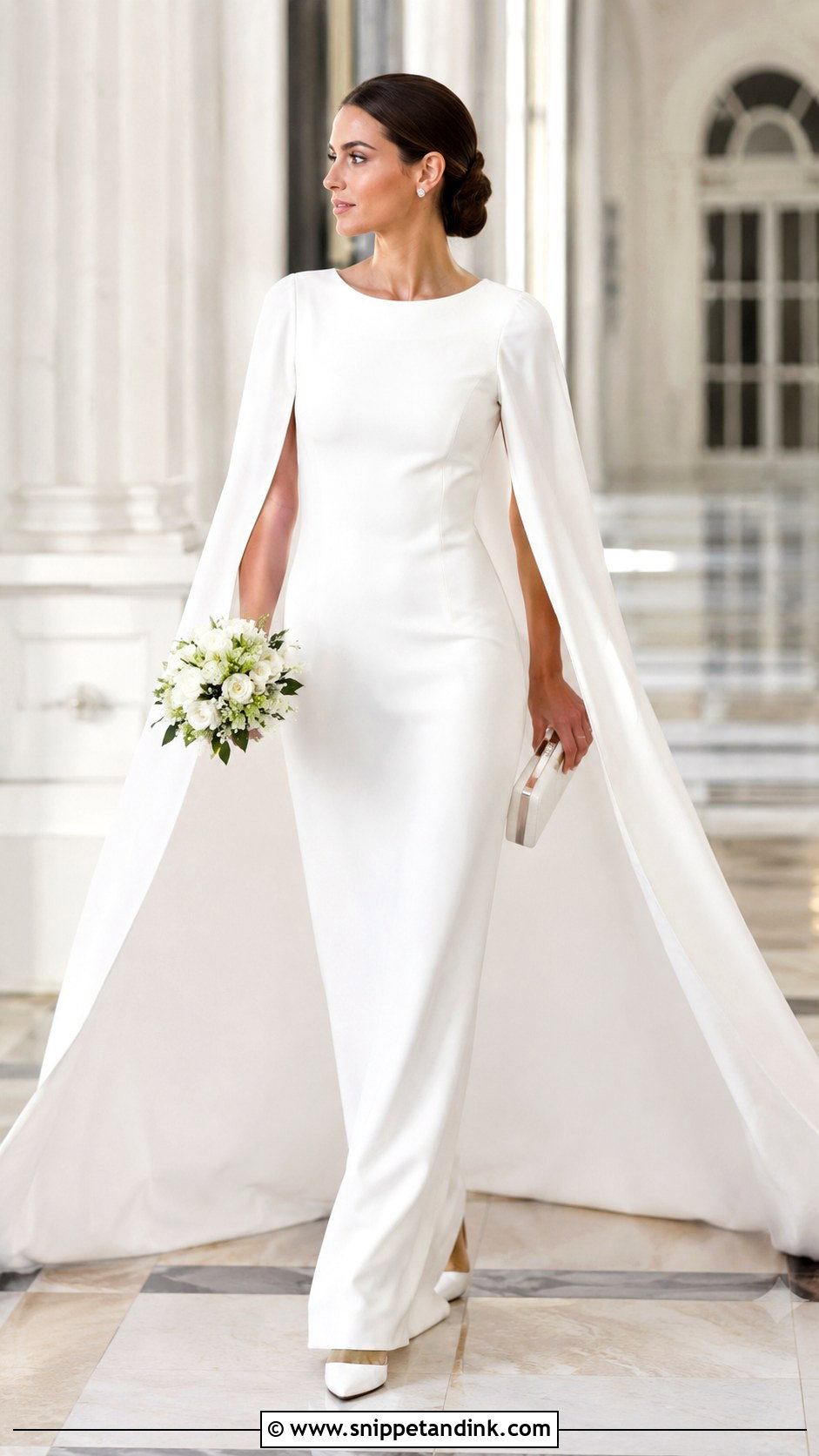
A cape sleeve gives coverage and movement while the gown underneath stays fitted and bare of decoration. It may be stitched at the shoulders or made as a removable layer behind the arms. A straight crepe column with a modest neckline is the most balanced base. Pointed pumps, simple studs and a structured clutch for the reception, with a low bun so hair doesn’t tangle in the cape. Usually no veil, though a short sheer one works if the cape detaches. Practise walking in both layers, especially down stairs, because a long cape can catch under a heel.
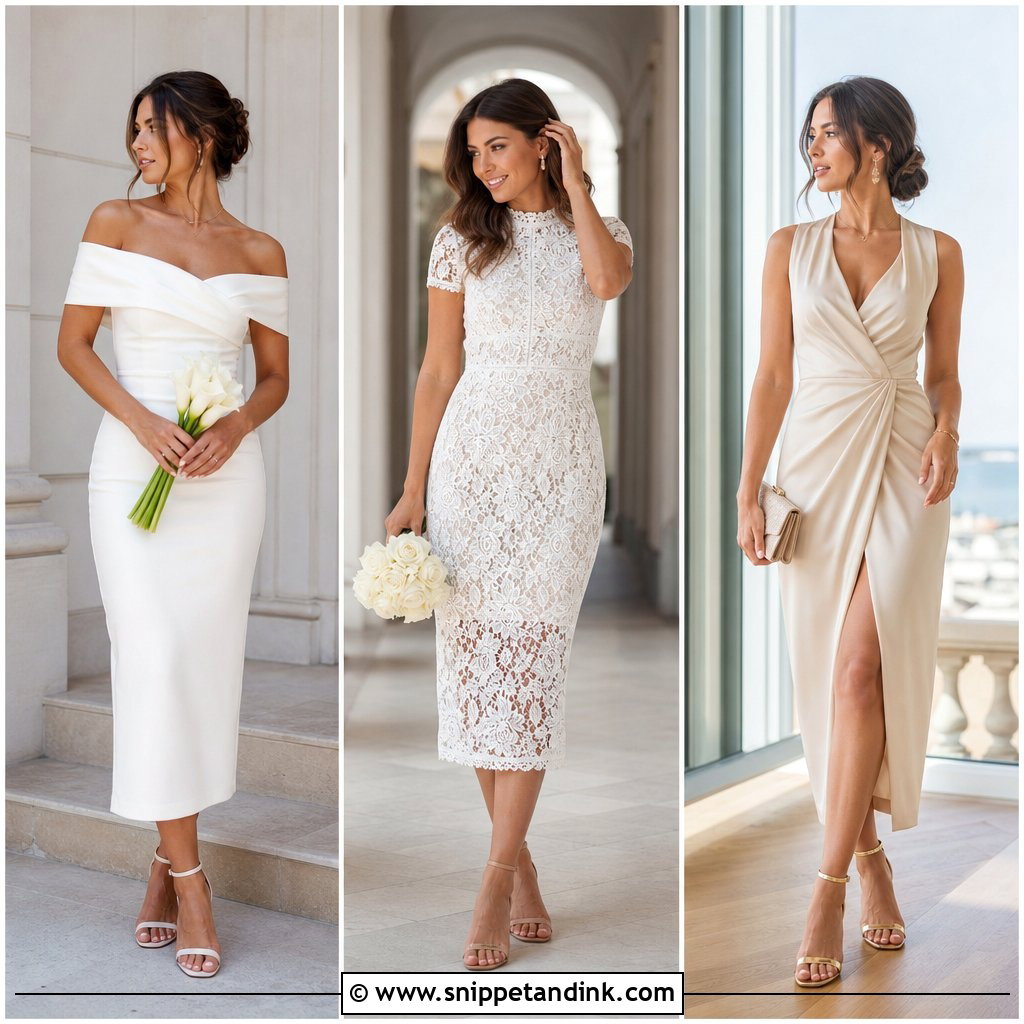
16. Tea Length Minimalist Wedding Gown
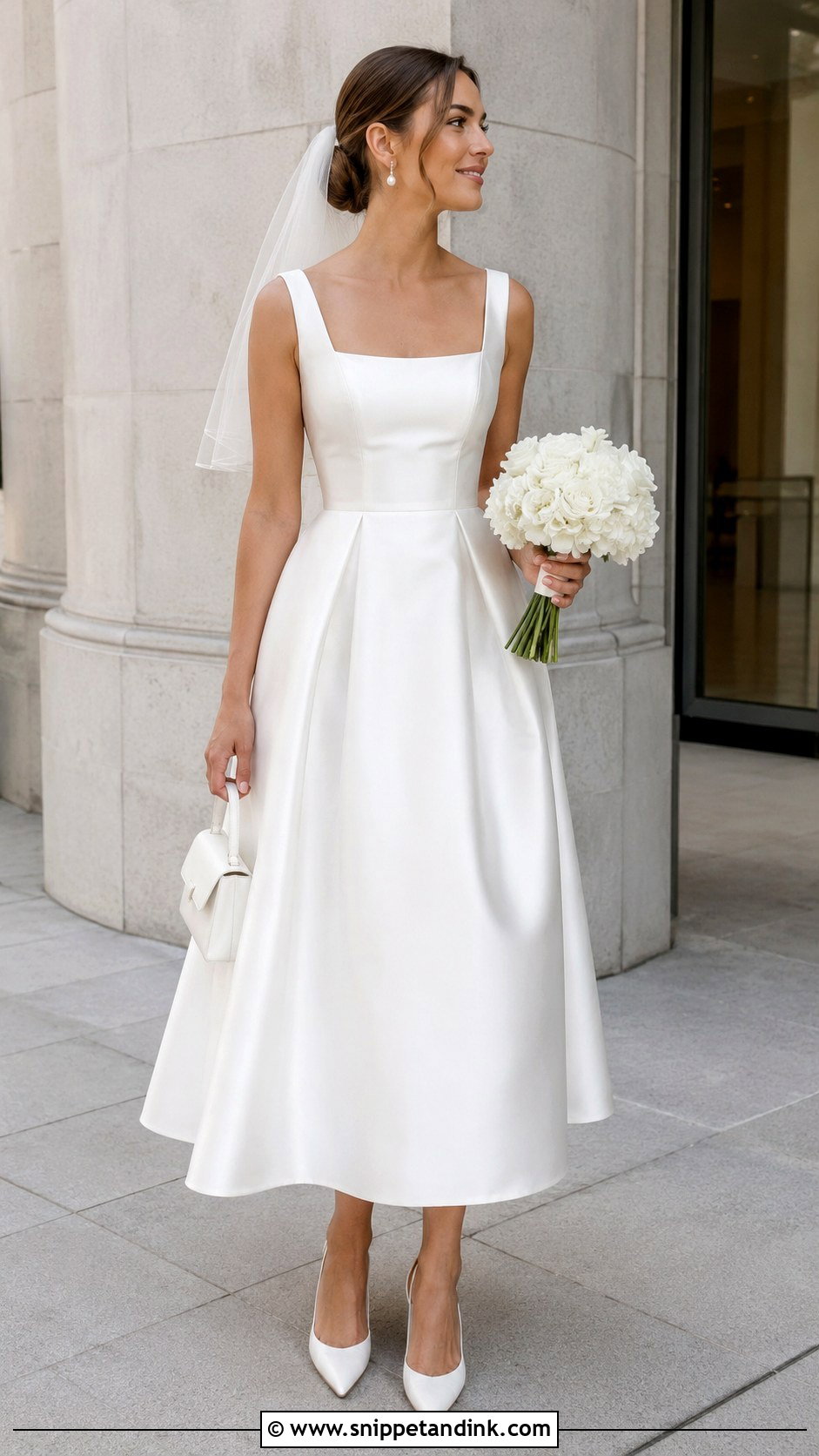
Tea length is what I suggest for a courthouse ceremony or a relaxed daytime wedding. The hem falls between knee and ankle and puts the shoes in plain view. Structured satin or mikado, a fitted bodice and a gently flared skirt hold the shape. Pointed slingbacks, pearl earrings and a small top-handle bag; a short veil or a simple hair bow adds the bridal note. A square, scoop or strapless neckline depends on how much coverage she wants. Since the shoes are on display all day, choose a pair you can stand in for photos and walk in between venues, and scuff the soles first so they grip.
17. Asymmetrical Neck Wedding Gown
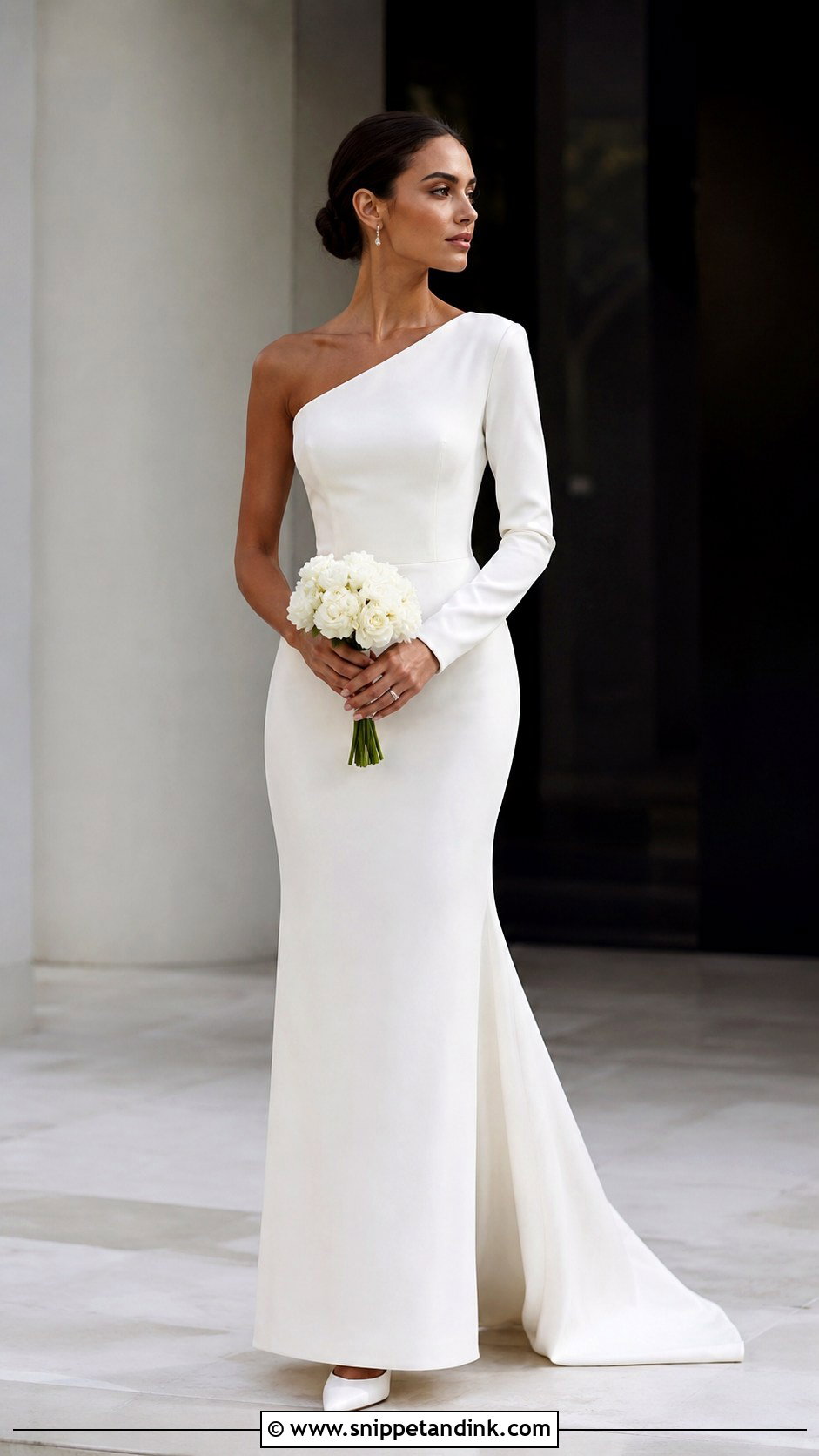
An asymmetrical neckline gets its interest from cut and proportion, not sparkle. It might sweep diagonally across the collarbone, rise over one shoulder, or pair a single sleeve with a fitted bodice. A straight or softly flared skirt keeps it from tipping into drama. Crepe is more forgiving; structured satin gives a crisper edge. Simple pumps, a compact bouquet and earrings that stop above the jaw; hair pulled back. A detachable overskirt can add ceremony volume, but it must match the gown exactly. The diagonal edge is unforgiving in alterations, because any ripple along it reads as a mistake rather than a design.
18. Fit And Flare Crepe Wedding Gown
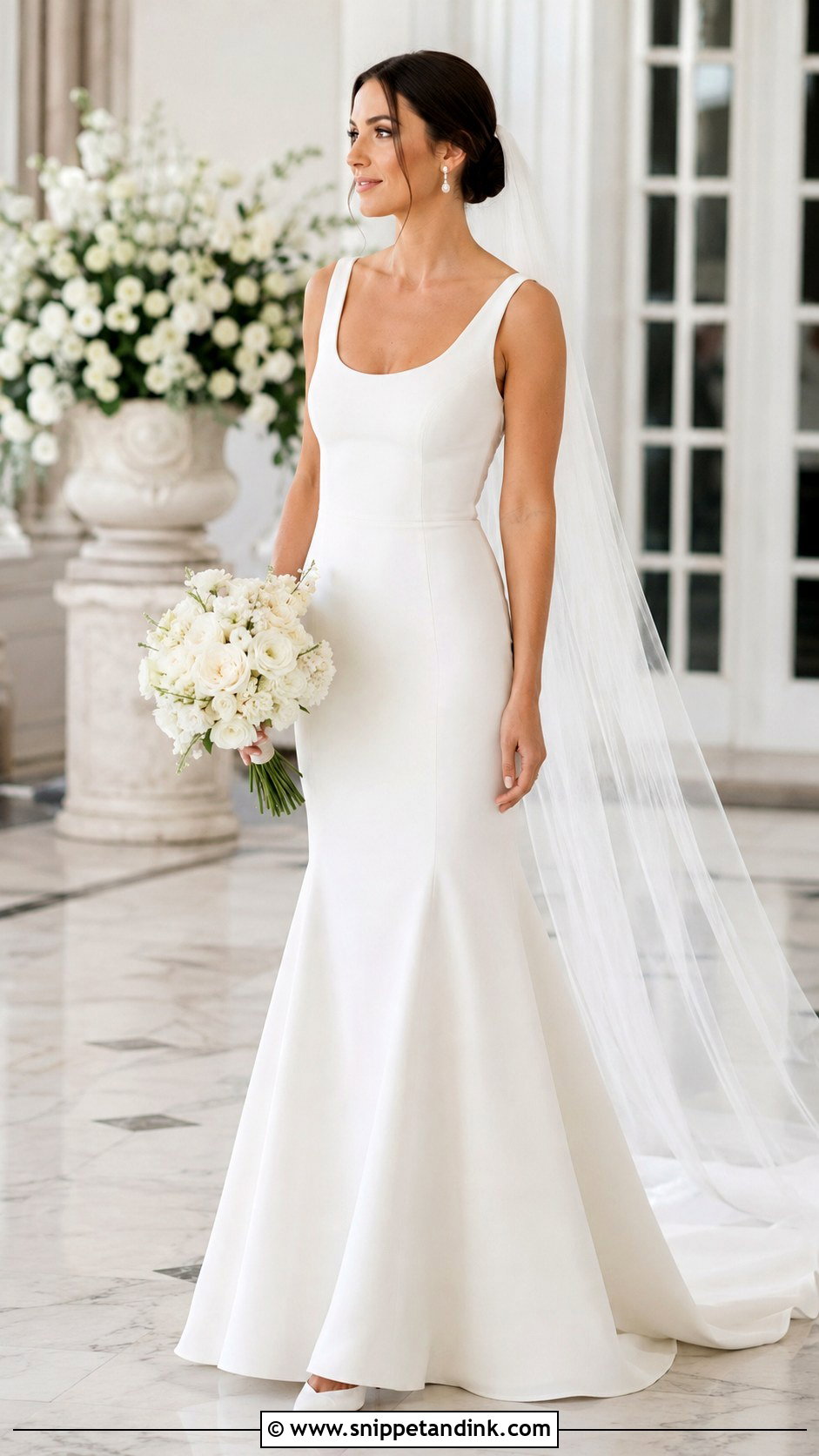
Fit and flare follows the body through the hips and widens near the knee, with less extreme volume than a mermaid. Crepe suits it because it shapes over the hips without the shine that magnifies every pull. Clean princess seams, a supportive neckline and a modest train; pointed pumps, small drops, a low chignon and a narrow cathedral veil that shows the silhouette through it. Long fitted sleeves or a removable crepe topper add coverage. Climb a few steps at your fitting. If you have to lift the skirt to manage them, the flare sits too low.
19. V Neck Satin Wedding Gown
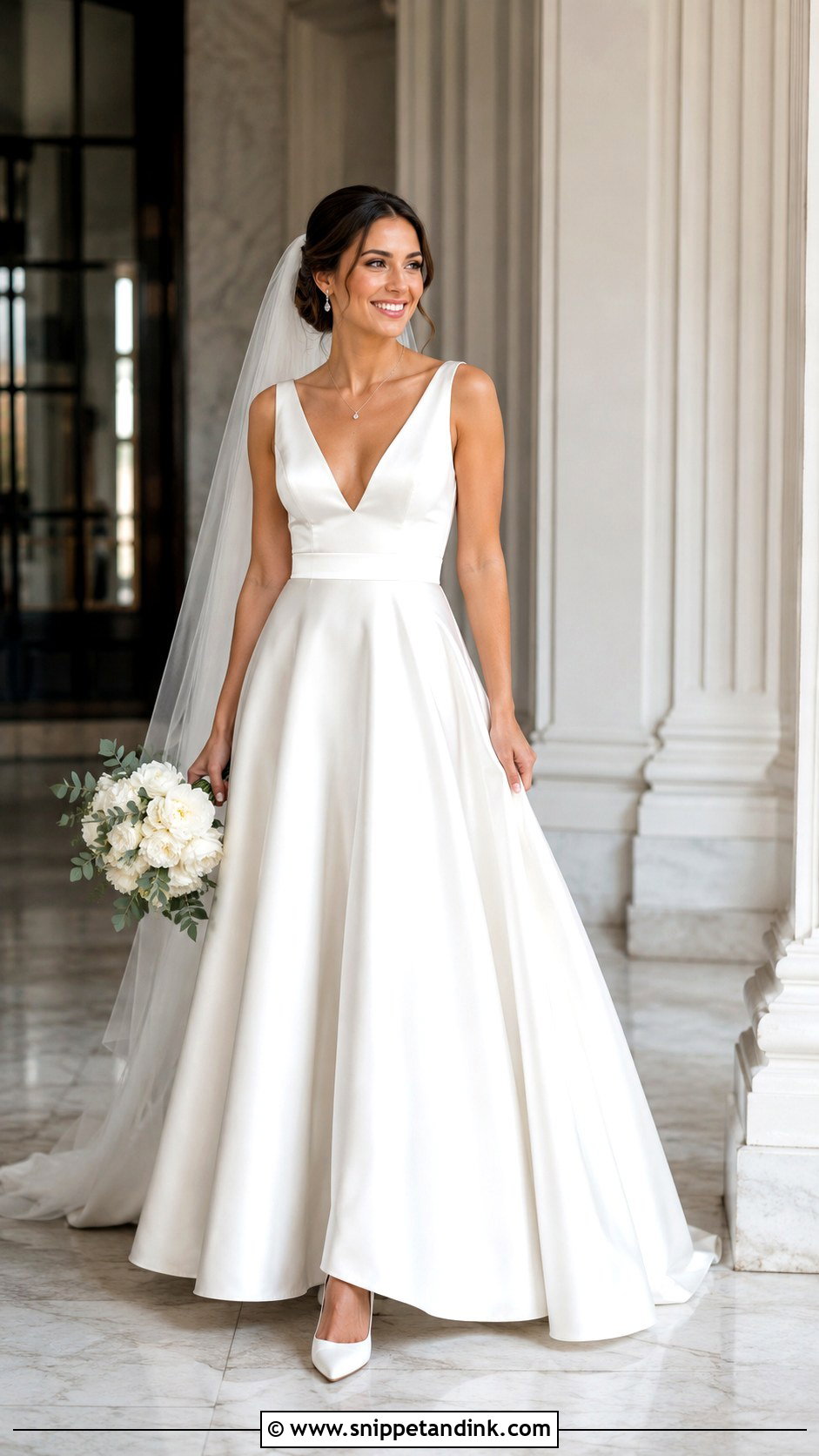
A V-neck lightens a heavy satin by opening up the chest and drawing the eye down in a long line. Keep the depth moderate, with wide straps or short sleeves for support, a defined waist and a softly flowing A-line skirt. A delicate pendant suits a shallower V; for a deeper one, skip the necklace. Understated earrings, ivory pumps and a fingertip or chapel veil with a narrow raw edge. Satin changes with the light, so look at the gown by a window and under indoor bulbs before deciding. Have it steamed and transported in a full-length bag so it arrives crisp.


20. Basque Waist Minimalist Wedding Gown
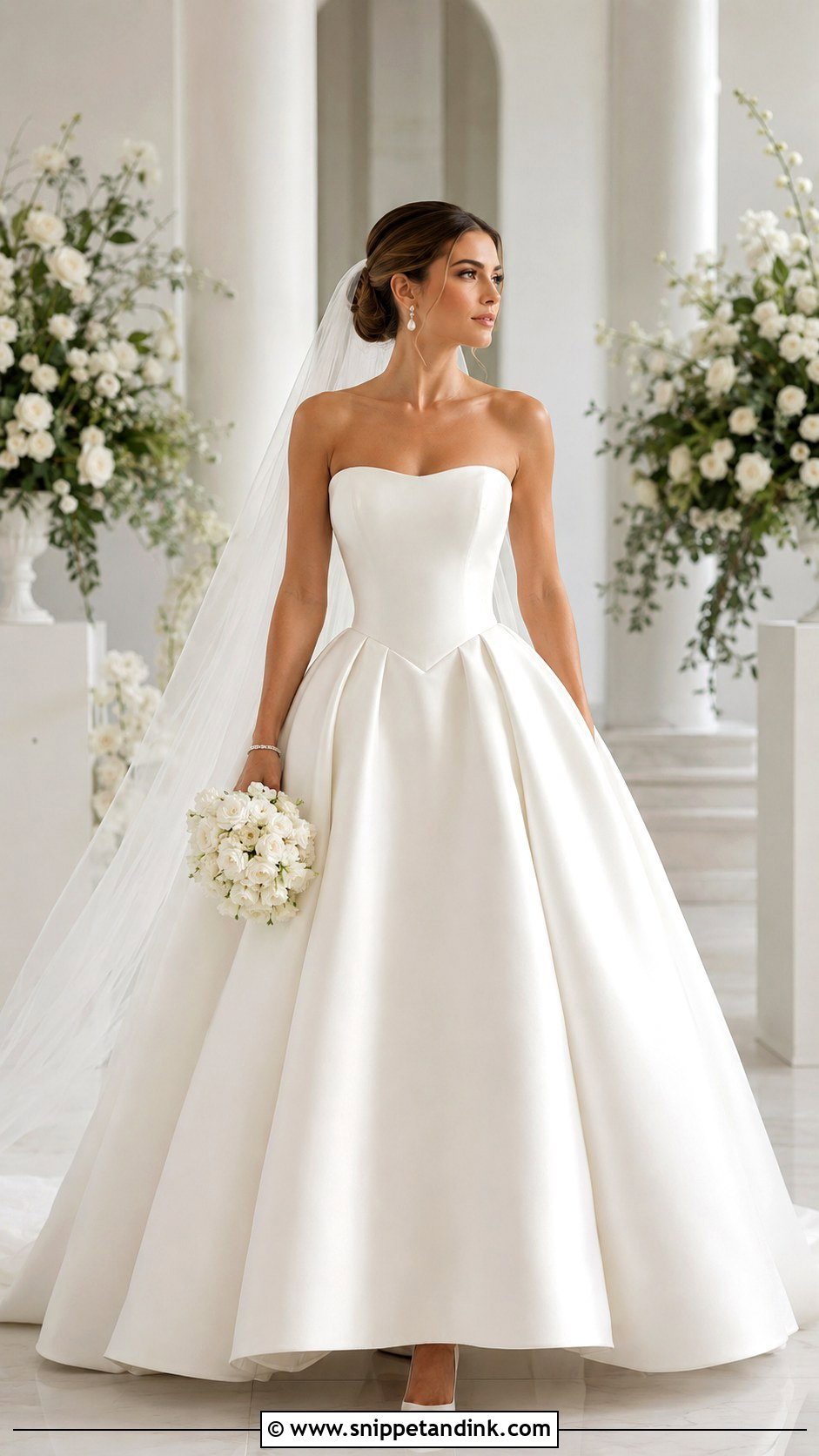
A basque waist wedding gown uses a shallow V at the waist to lengthen the torso and give a plain dress structure. A smooth scoop or strapless bodice and a full satin or mikado skirt keep it romantic but minimal. Pointed heels, a slim bracelet, small pearl earrings, a polished updo and a long unembellished veil. Avoid a contrasting belt, which cuts straight through the point. At fittings, check the point lies flat and dead centre when you sit. If it shifts to one side, the bodice needs adjusting, and that’s the difference between tailored and costume.
How I Inspect a Plain Gown at the Salon
Decoration hides construction. Take it away and you can judge the quality of a dress in a couple of minutes, which is worth doing before you fall for the shape. These are the things I look at, mostly with the dress on the hanger and the lights up.
- The zip. It should be invisible from the outside and lie flat with no wave along its length. A rippled zip on a sample rarely improves.
- The seams. Turn the bodice inside out if the salon allows it. Seam allowances should be pressed open or neatly finished, and the outside stitch lines shouldn’t pucker.
- The lining. It should be cut slightly shorter than the shell so it never peeks below the hem, and it shouldn’t pull the outer fabric when you move.
- The fabric weight. Hold a fold up to the light. Thin satin or crepe shows the lining seams through it and creases faster.
- The hem. A good plain hem has some weight or a horsehair braid so it falls cleanly instead of flipping when you turn.
Adding one detail without losing the line
If a plain gown starts to feel too plain, I’d add exactly one thing and put it somewhere you’ll see it moving: covered buttons down the back, a bow at the waist, pockets, or a long veil. Pick the detail before alterations start so the seamstress can place it properly, and leave everything else alone.
A Plain Gown Is Mostly a Fitting Schedule
Start with how each neckline, waist, sleeve and skirt shape feels on you, then think about fabric: satin for polish, crepe for a matte modern finish, silk for fluid movement. Once the gown is chosen, pick shoes and jewelry that support it rather than compete. Keep the veil simple, the hair neat and the bouquet sized to the dress. Book alterations early and test the dress walking and sitting. With nothing decorative to hide behind, precision is the whole effect, and that comes from a seamstress and a few patient fittings more than from the label.
You'll Like These Ideas:








Leave a Reply