
Simple doesn’t mean plain, and it definitely doesn’t mean easy. A clean wedding dress has no lace to hide a loose seam, so the fabric, the cut and the fit carry everything. Satin, crepe, silk, chiffon and structured mikado can each make a memorable dress with no beading at all, as long as the neckline, waist placement and skirt shape suit the person wearing it. I’ve put the shoes, jewelry, veil and flowers with each one, chosen to support the line rather than fight it. The twenty below run from sleek slips to structured ball gowns, across seasons, venues and body shapes.
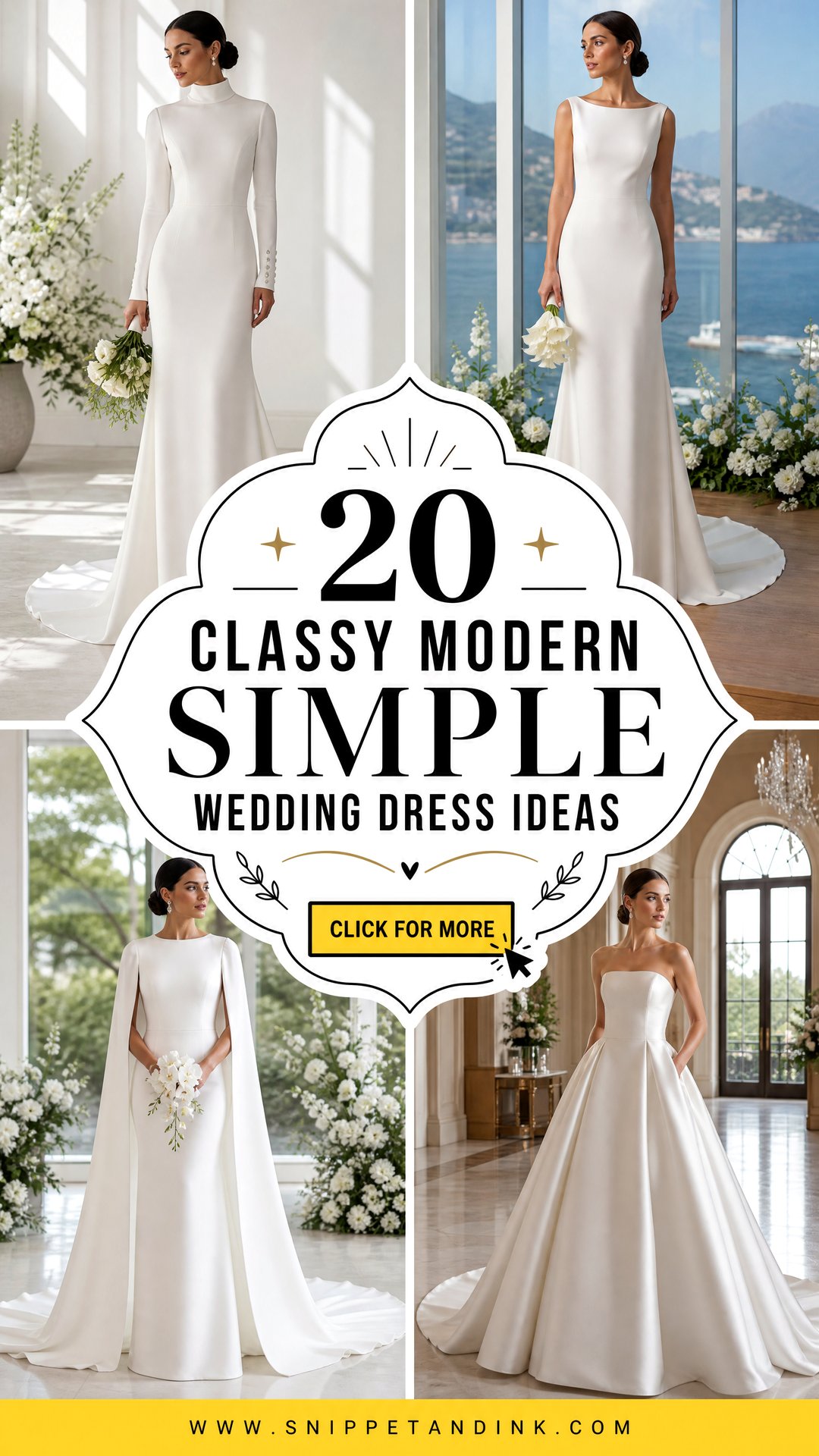
Ivory, Soft White or Optic White on a Dress With Nothing on It
On a beaded gown, the exact white barely registers. On a plain one, it’s most of what people see. Bridal fabrics usually come in a few families: optic or bright white, a softer natural white, ivory, and warmer shades like champagne or blush underneath. I hold swatches against a bride’s bare face in daylight before we narrow anything down, because the wrong white can make skin look grey or flushed.
- Bright white looks crisp on deeper and cool-toned skin, but in strong sun it can flatten in photos and lose the seam detail that a simple dress relies on.
- Ivory suits most complexions and holds texture well in both daylight and warm indoor lighting.
- Silk and polyester in the same named shade often look different, so compare the actual fabric, not the color name on the order form.
- Get a swatch of the final gown before buying the veil and shoes. A veil a shade whiter than the dress makes the dress look dingy.
If a dress you love only comes in a white that doesn’t suit you, ask whether the maker can produce it in another shade. Many can, though it may add time to the order.
1. Strapless Satin A-Line Wedding Dress
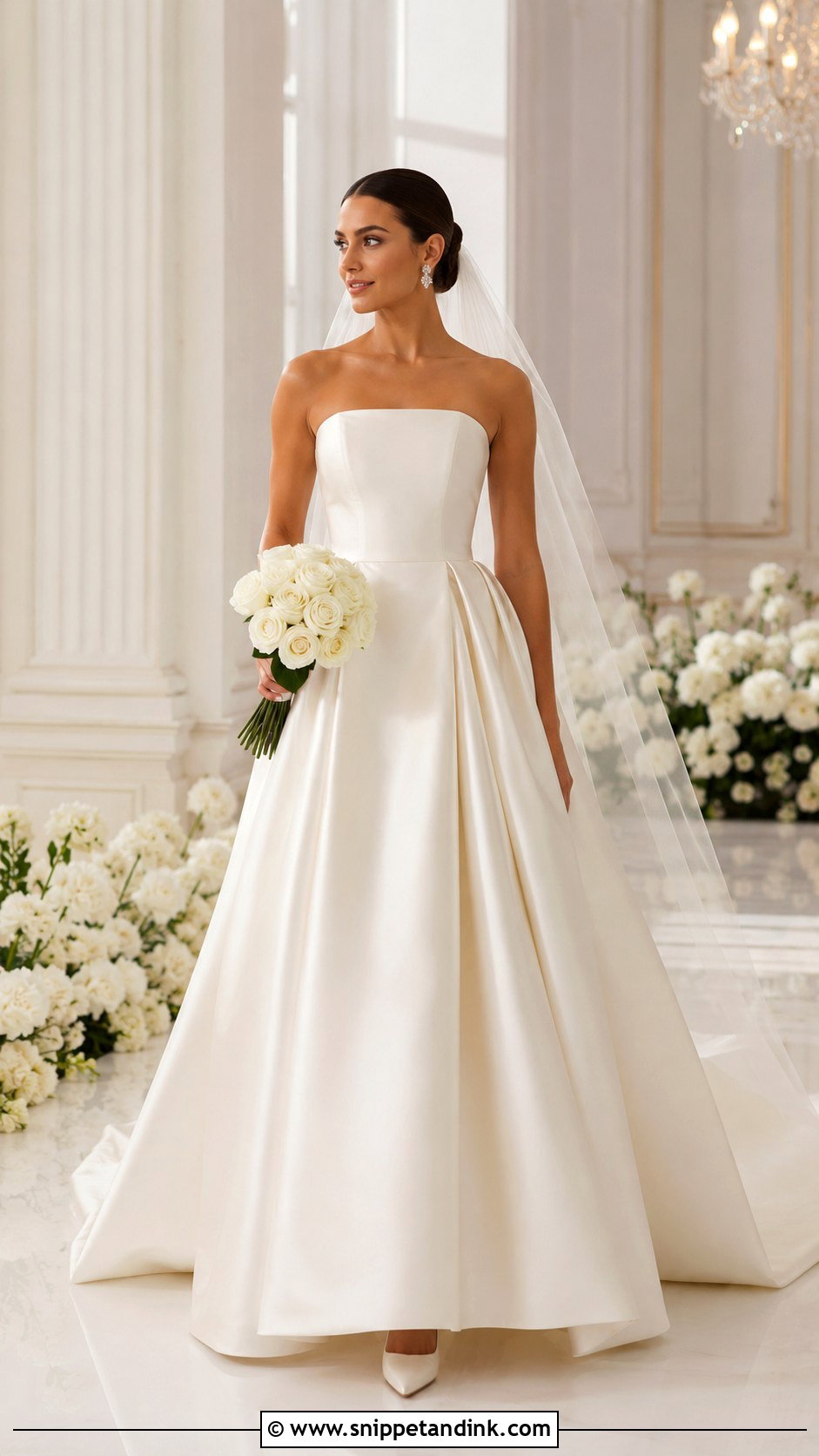
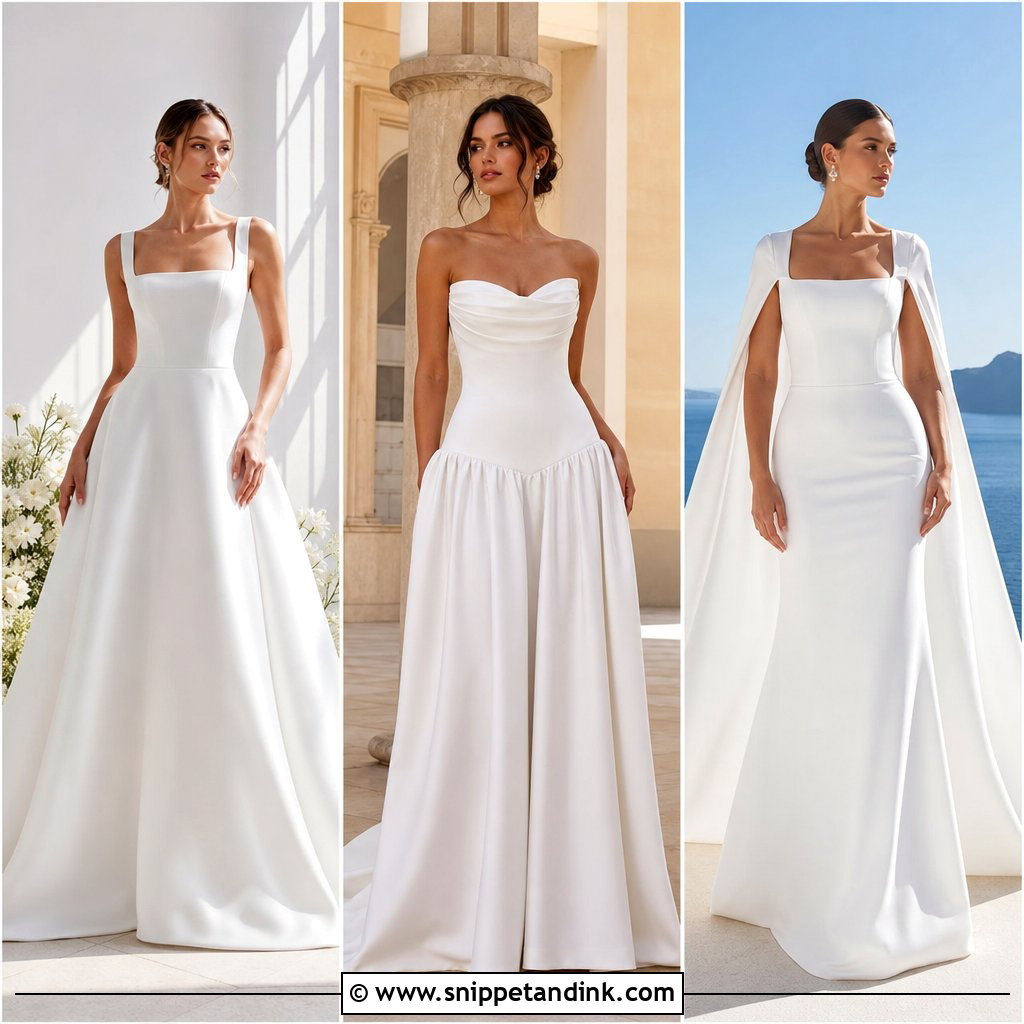
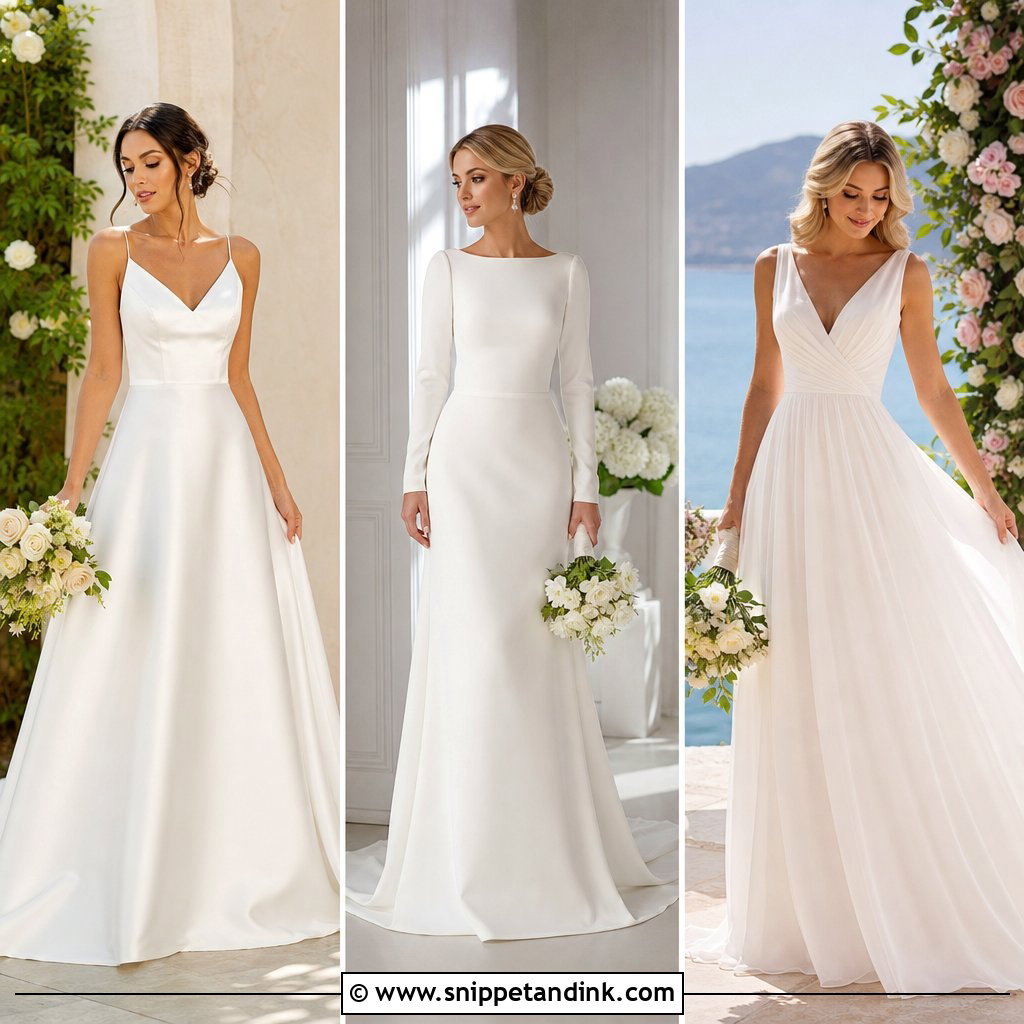
Strapless satin A-lines are where a lot of my brides land, and the deciding factor is always the inside of the bodice. Secure internal support keeps the top edge smooth all day; without it you’ll see her hitching it up in the processional photos. A softly pleated skirt adds movement without detail. I usually steer toward ivory rather than bright white, since it reads warmer on most skin indoors and out. Pointed pumps, small diamond or crystal earrings, a plain-edged fingertip veil and a compact bouquet of white roses or calla lilies. A cropped satin jacket or detachable wrap covers the shoulders later in the evening.
2. Square Neck Crepe Column Wedding Dress
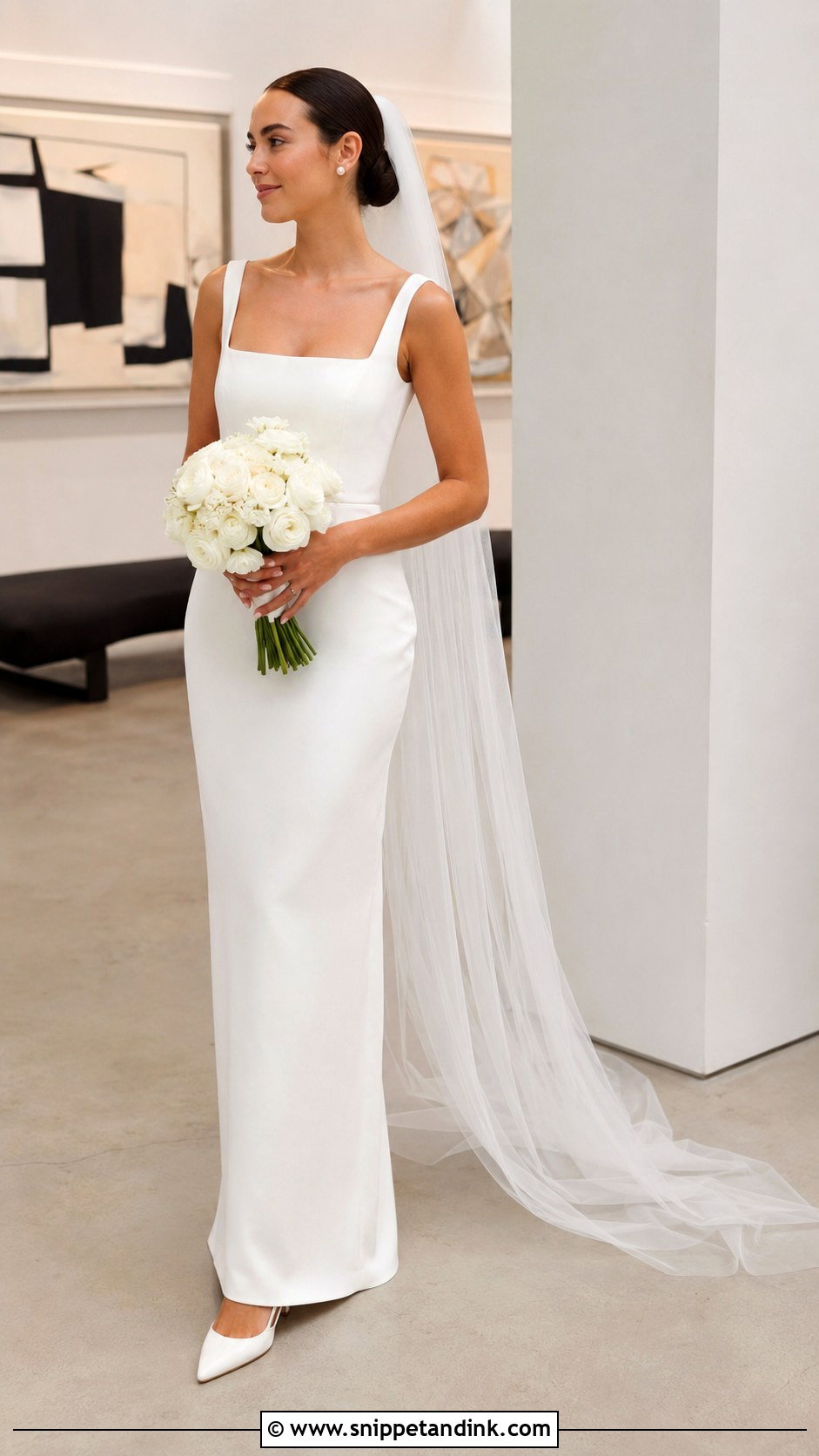
A square neck crepe column looks sharp because nothing interrupts it, which is also why it’s unforgiving. Choose substantial lined crepe that skims rather than clings, with wide straps to balance the straight shape. Pearl studs, a sleek low bun and a long single-layer veil; white leather slingbacks add a current note. A small bouquet with structured greenery suits a city venue, hotel or gallery. Spend your alteration time on the waist and back seams. In matte crepe, a seam that wanders even slightly is the first thing the eye finds.
3. Silk Cowl Neck Slip Wedding Dress
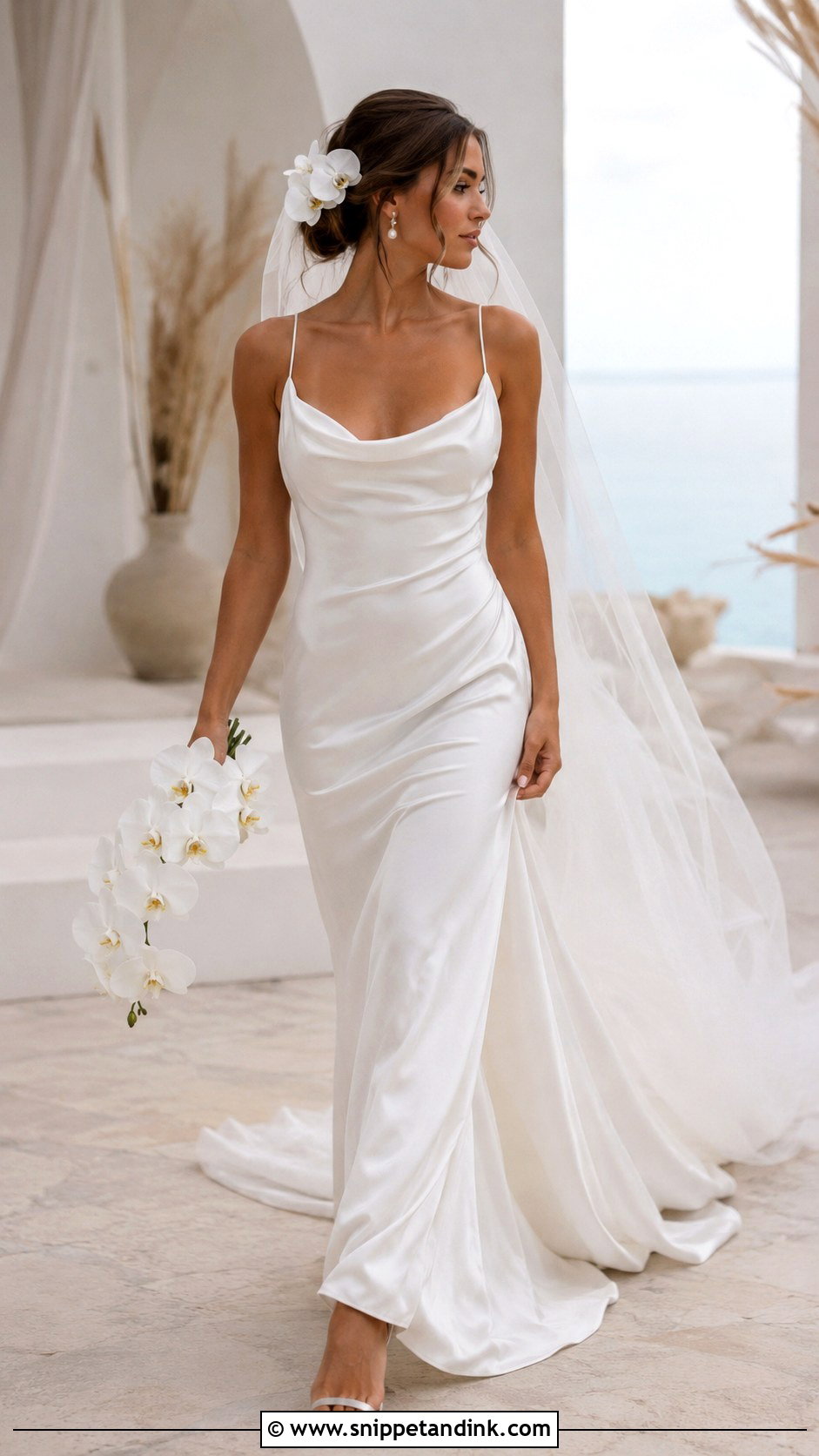
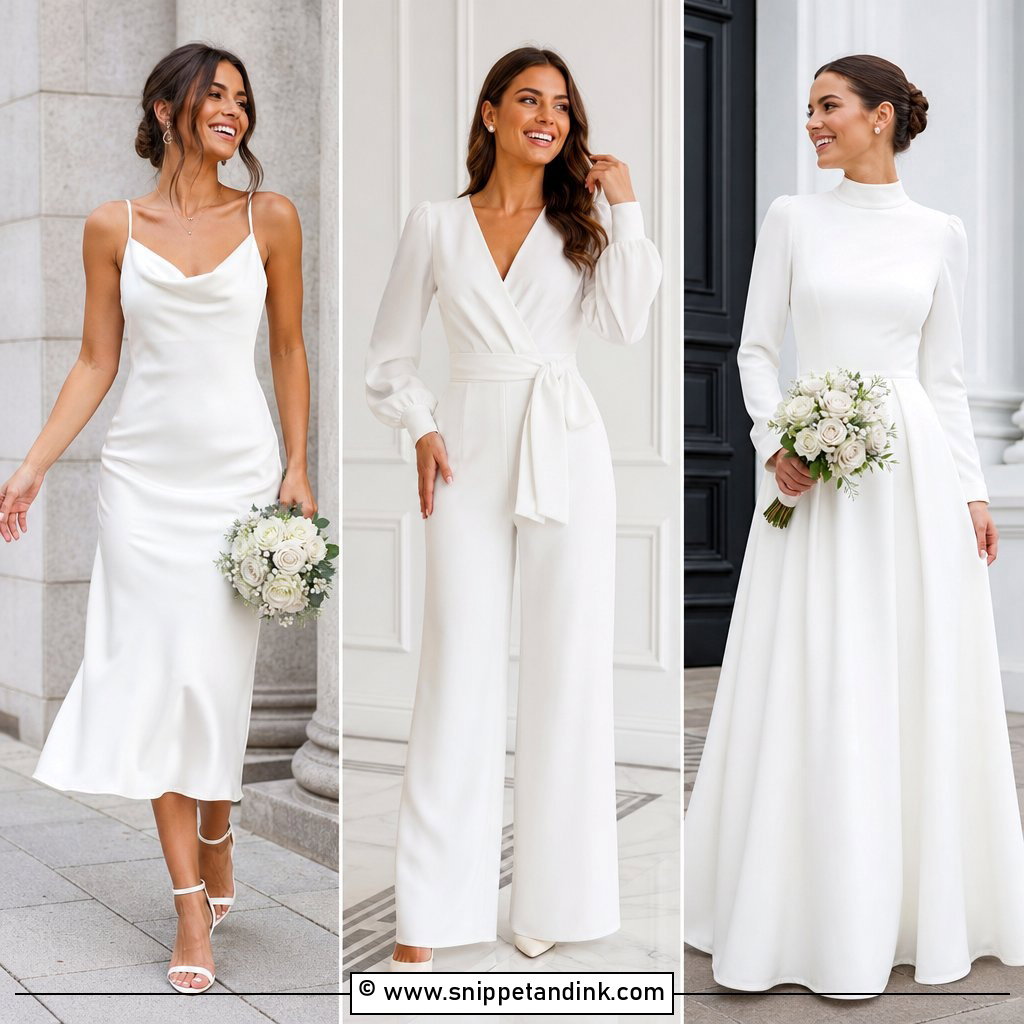
A cowl neck slip dress in silk is the most relaxed dress here and suits an intimate ceremony, a destination wedding or a garden. Cut on the bias, it follows the body without boning. Thin silk looks like a nightdress, so look for a weight that falls heavily from the straps. A low back adds drama quietly. Barely-there ivory sandals, drop earrings, a sheer chapel veil and a loose chignon or soft waves suit the line. Silk shows everything underneath, so I’d plan smooth, edge-free or professionally fitted support before the first fitting. A few orchids or white tulips finish this ’90s-leaning look.
4. Off Shoulder Mikado Ball Gown Wedding Dress
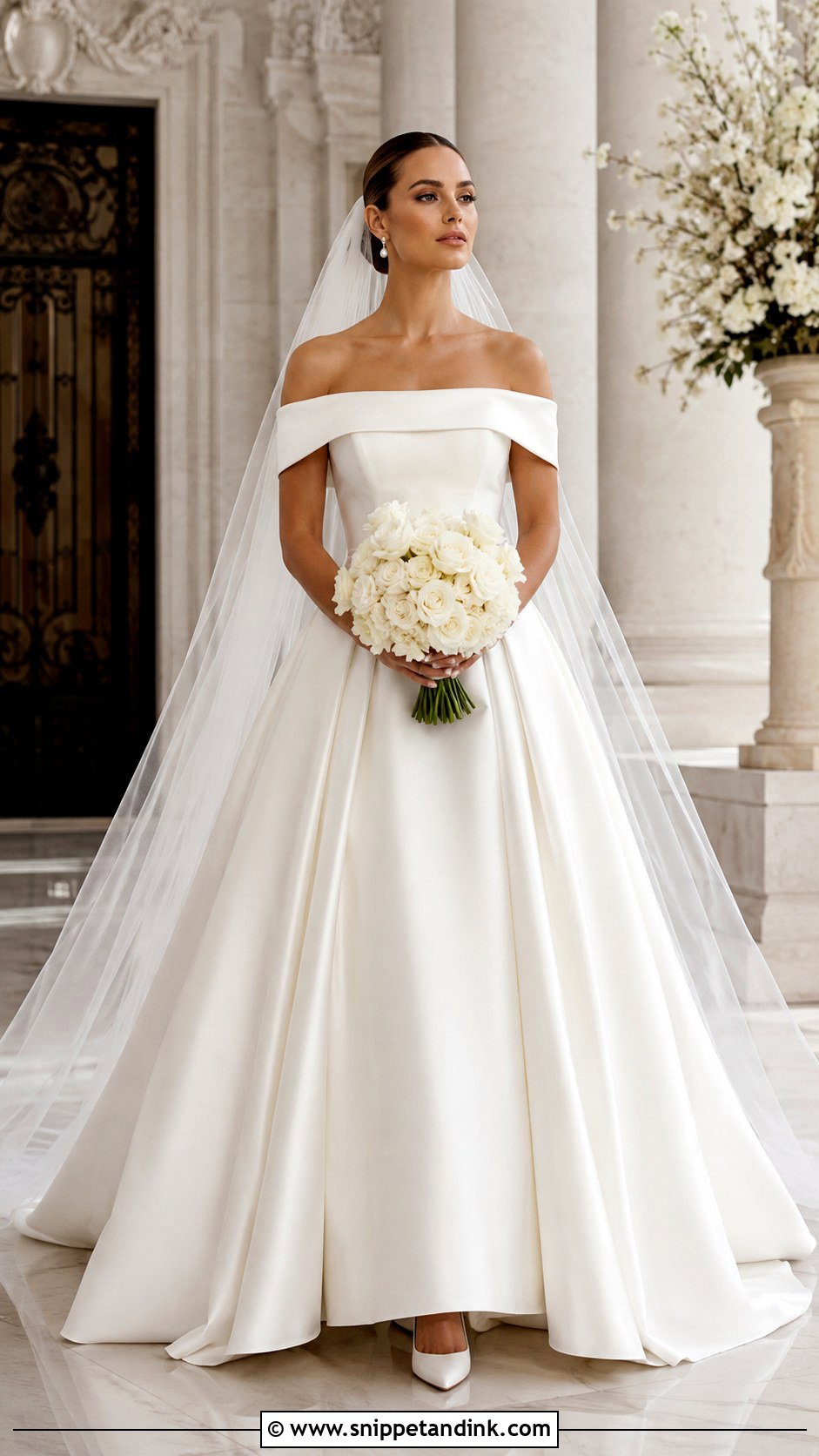
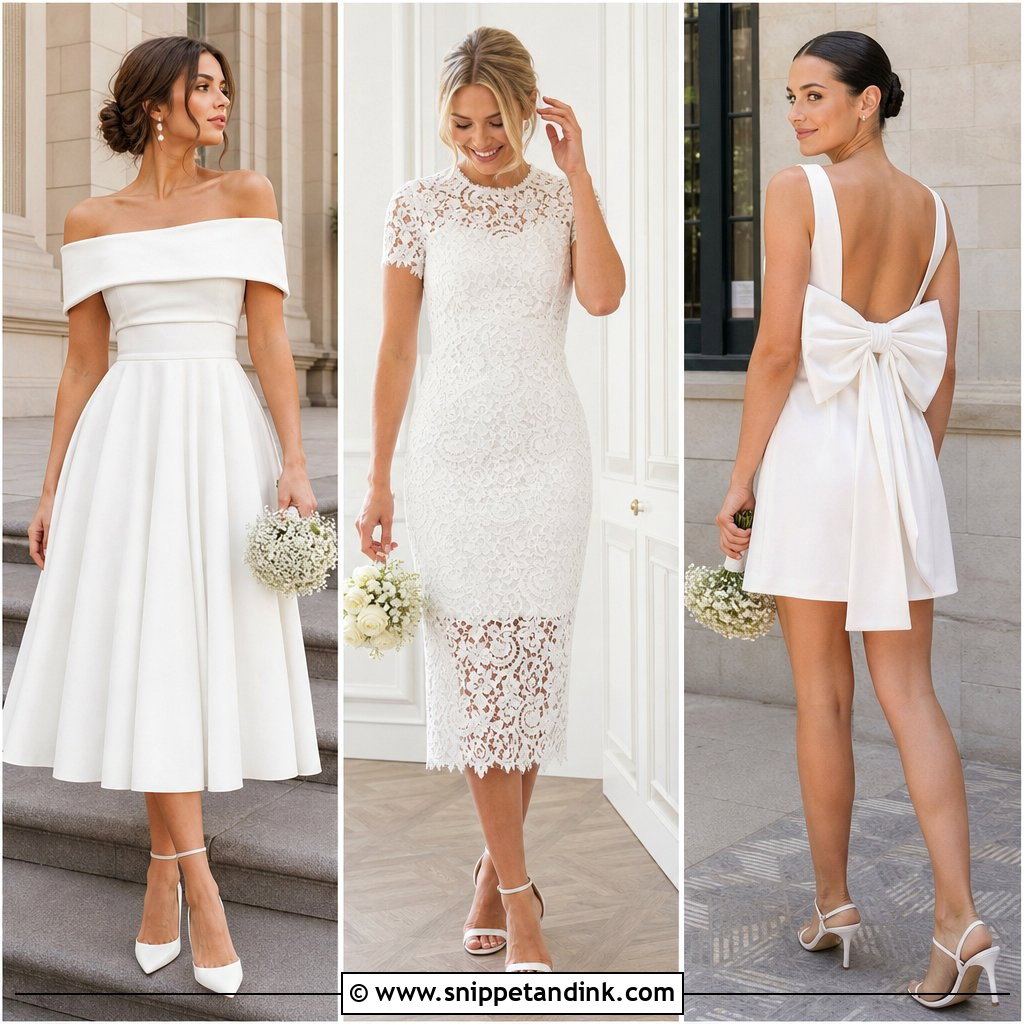
Do you want drama with no decoration at all? An off shoulder mikado ball gown gets its presence entirely from shape. Mikado is crisp and heavy enough to hold a sculpted skirt by itself, with a folded neckline framing the shoulders and face and a fitted waist underneath. A neat bun, pearl drops, ivory pumps under the hem and a plain cathedral veil keep it modern. Carry a rounded bouquet in one color. Two requests I always make for this gown: discreet pockets, and a bustle designed so the skirt keeps its shape when lifted, because a poorly placed bustle on mikado leaves a crumpled pile at the back.
5. High Neck Long Sleeve Crepe Wedding Dress
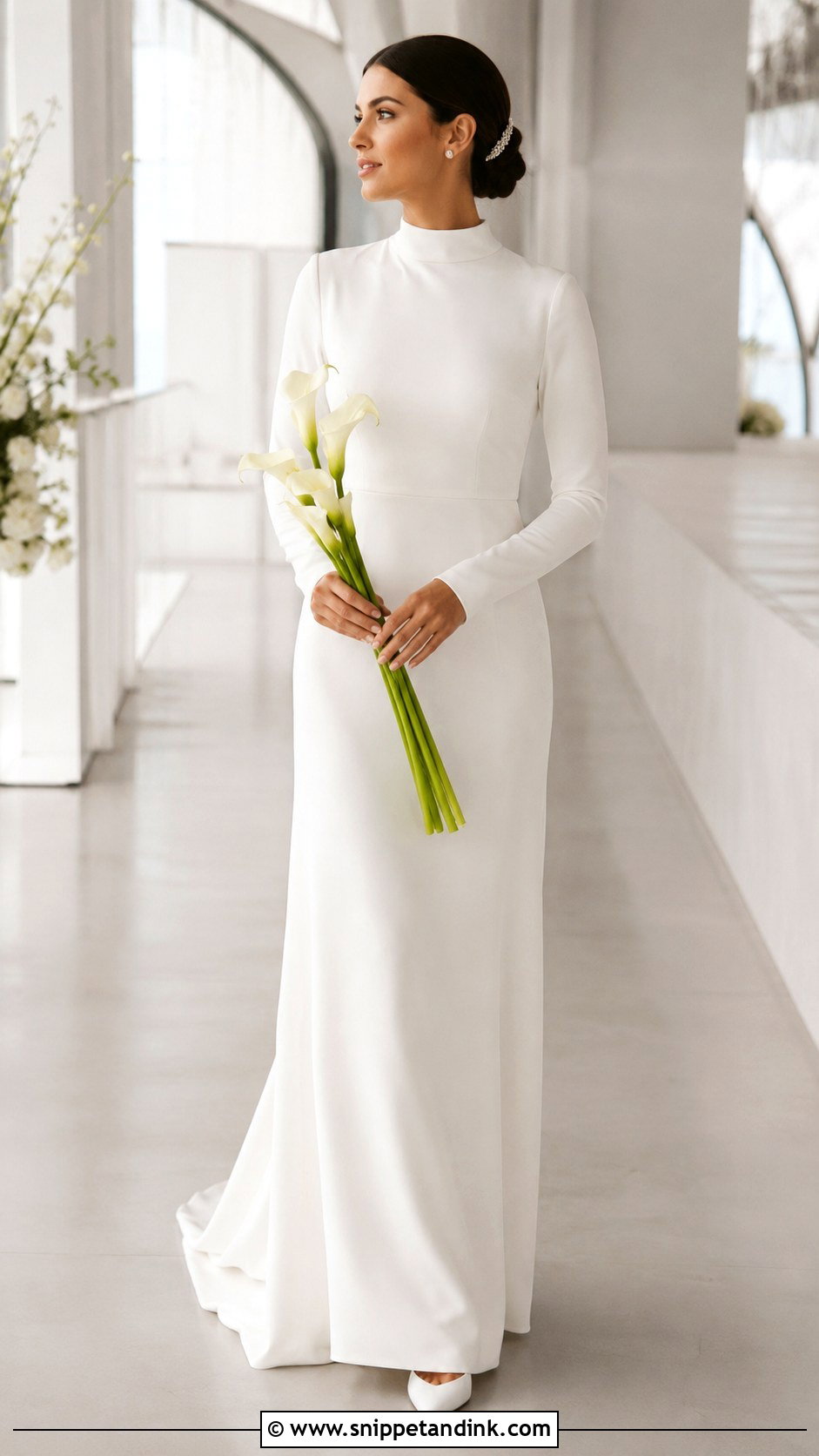
High neck, long sleeves, crepe: covered, modern and a natural fit for cooler months and formal venues. A lightly shaped waist and a straight or gently flared skirt stop it looking severe. Detail comes quietly, from a low back, covered buttons or narrow cuffs. Simple studs, pointed pumps and a sleek updo that shows the neckline; a veil is optional, and a polished bun with a minimal comb reads just as bridal. A narrow bunch of calla lilies suits it. The sleeves are where I’d be fussy. Properly lined crepe and correctly set sleeve heads let her raise her arms without the whole bodice lifting.
6. One Shoulder Draped Wedding Dress
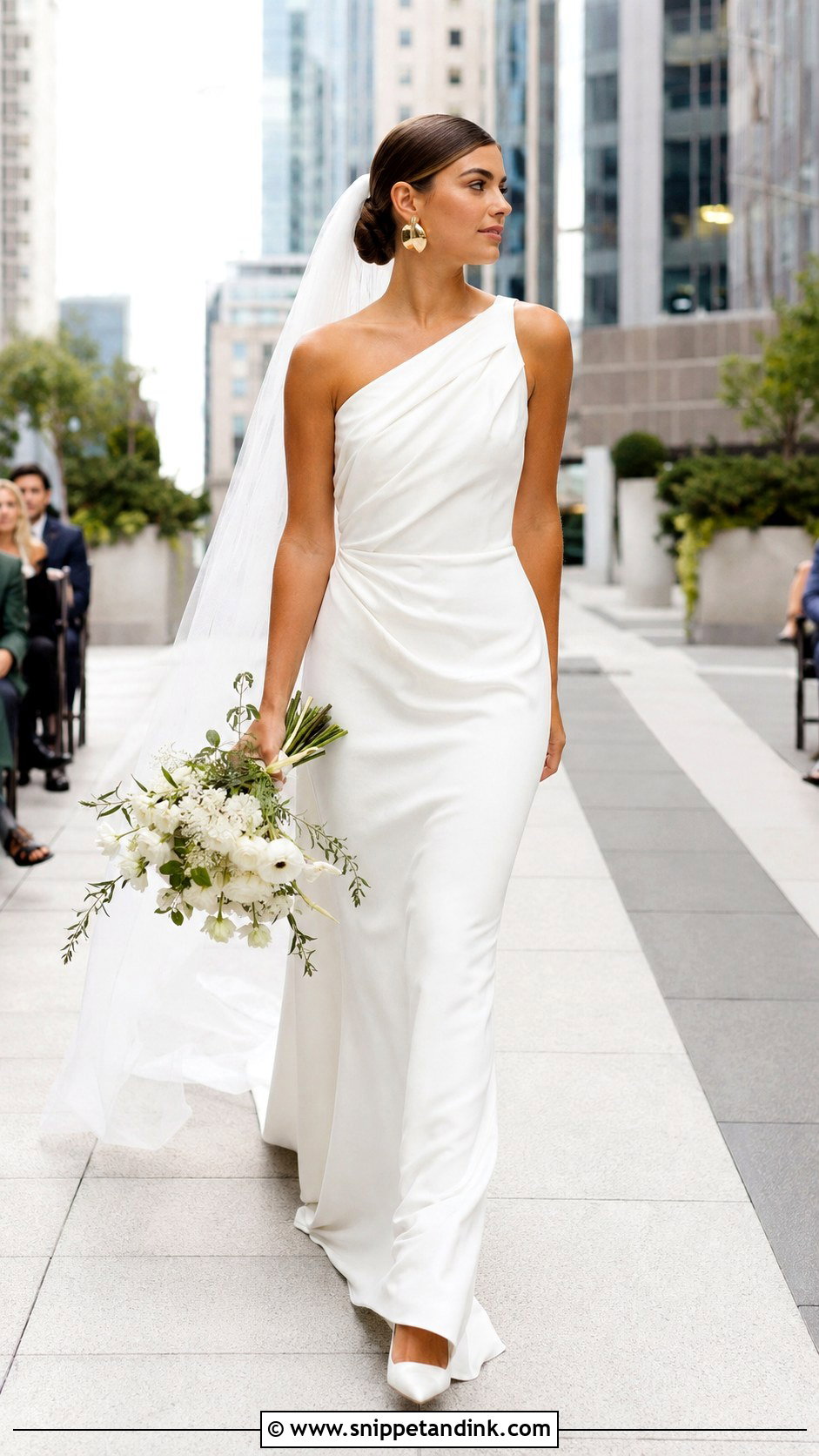
One shoulder, softly draped, gives a simple dress an instant fashion edge. Matte crepe or fluid satin both work, gathered gently across the bodice, over a column or soft A-line that keeps the attention up top. With that strong diagonal already there, skip the necklace and wear small sculptural earrings. Hair in a low side-parted bun or smooth ponytail shows the shoulder. Pointed ivory heels and a compact clutch, plus a plain veil below the hair if she wants one. I’d carry a loose, slightly asymmetric bouquet that echoes the drape, and check the strap stays put through a full arm swing.
7. Bateau Neck Sheath Wedding Dress
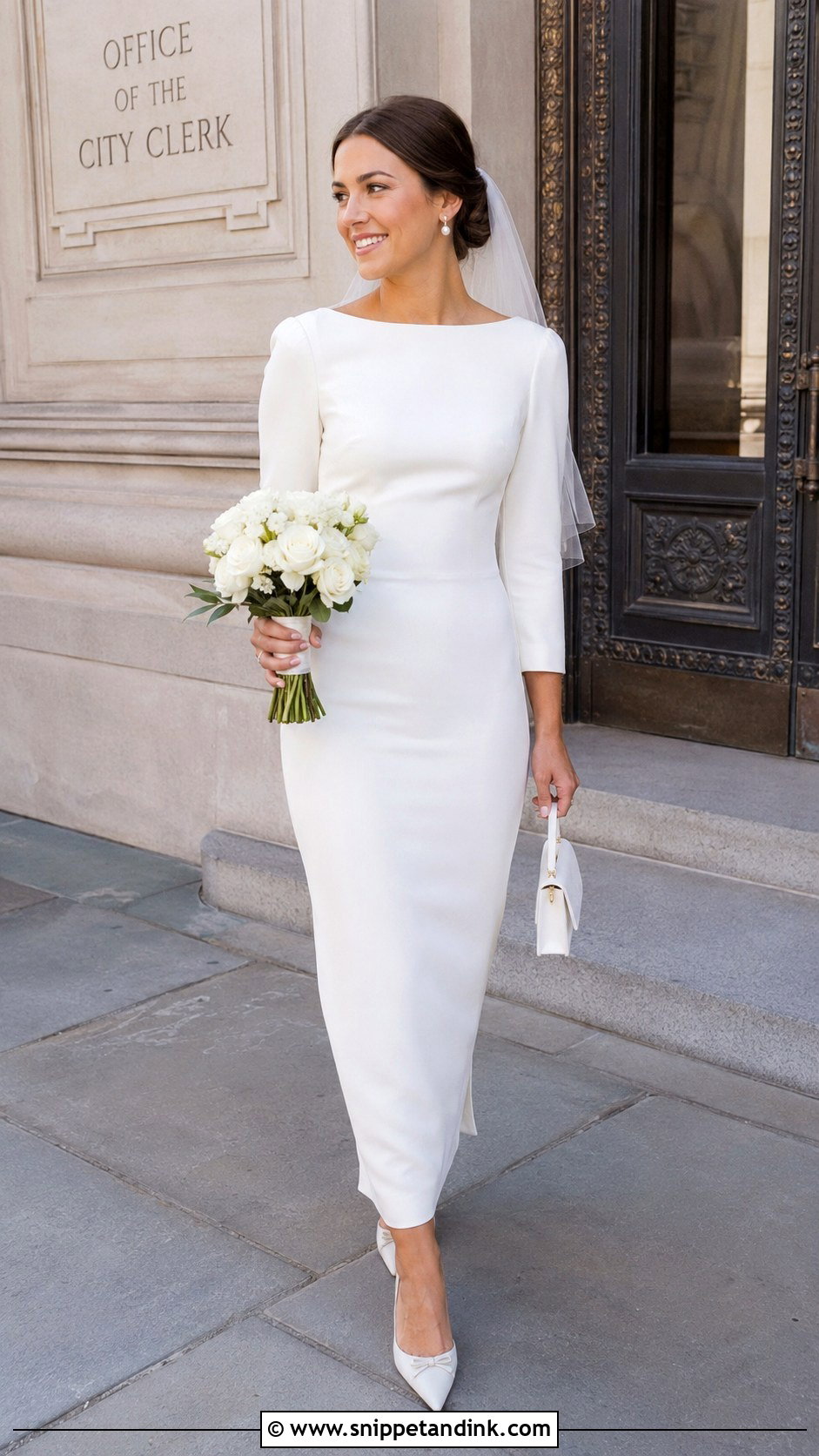
A bateau neck sheath dress moves easily between a courthouse, a restaurant, a garden and a formal ceremony. The neckline follows the collarbone and covers the shoulders evenly. Smooth crepe, silk faille or matte satin with gentle waist shaping works, and the small back slit is not optional; a sheath without one is impossible to walk in. A bracelet-length sleeve feels vintage, sleeveless sharper. Pearl button earrings, a structured mini bag and pointed kitten heels, with a short veil or a pillbox-style headpiece. Keep the flowers small and tailored, white with little greenery.
8. Scoop Neck Satin Wedding Dress
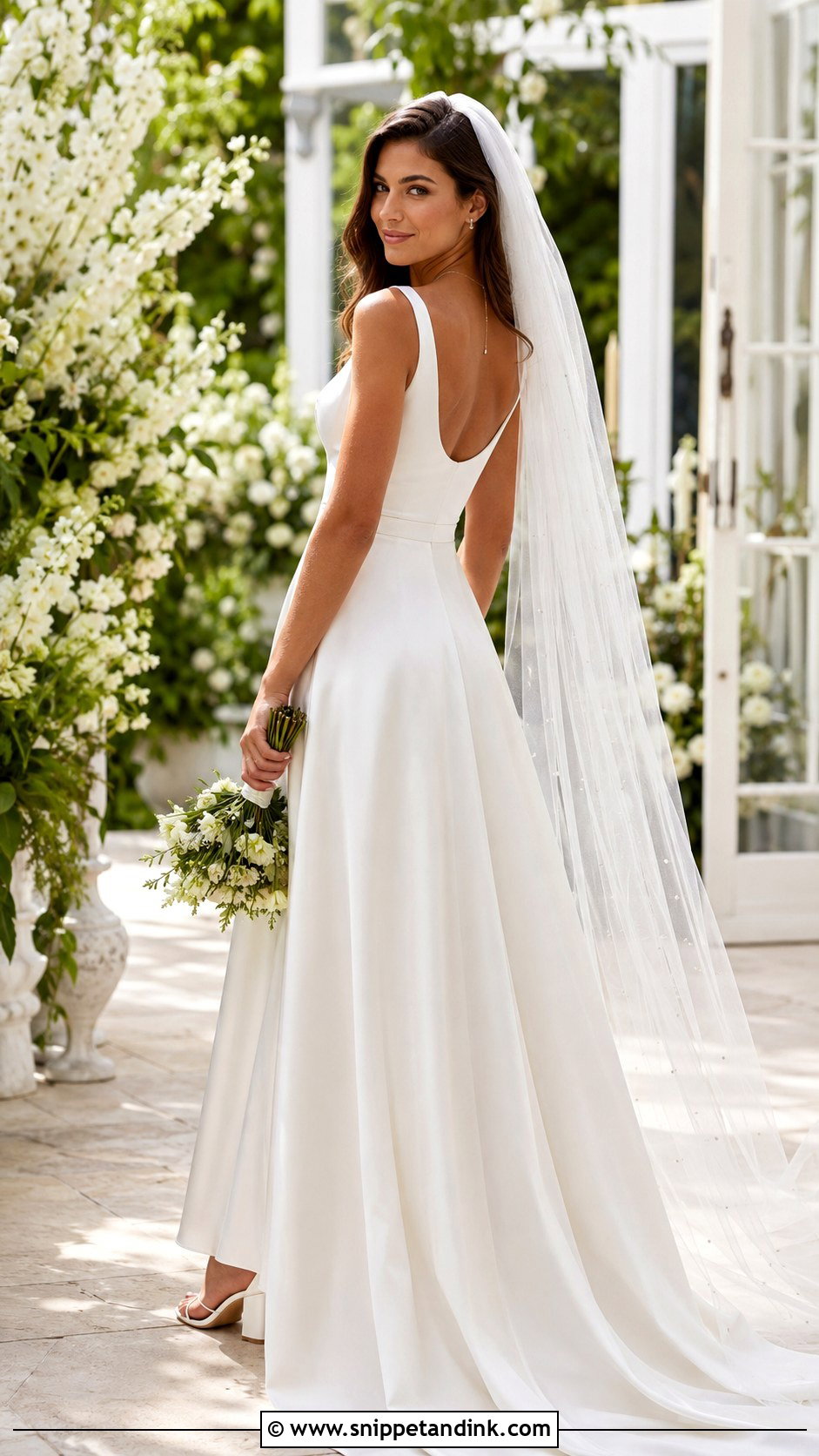
If a square neck feels too severe and a plunge too much, a scoop neck satin gown sits comfortably between them. A fitted bodice with wide straps and a softly flowing skirt keep the balance, and a low scoop back with covered buttons adds interest behind. A fine pendant, small earrings and block-heel sandals; a waist-length or fingertip veil for a relaxed ceremony. Smooth waves or a low twist and a bouquet of seasonal white blooms finish it. The satin’s sheen is the richness here, so I’d hold back on everything else and make sure it’s steamed properly on the morning.
9. V-Neck A-Line Wedding Dress
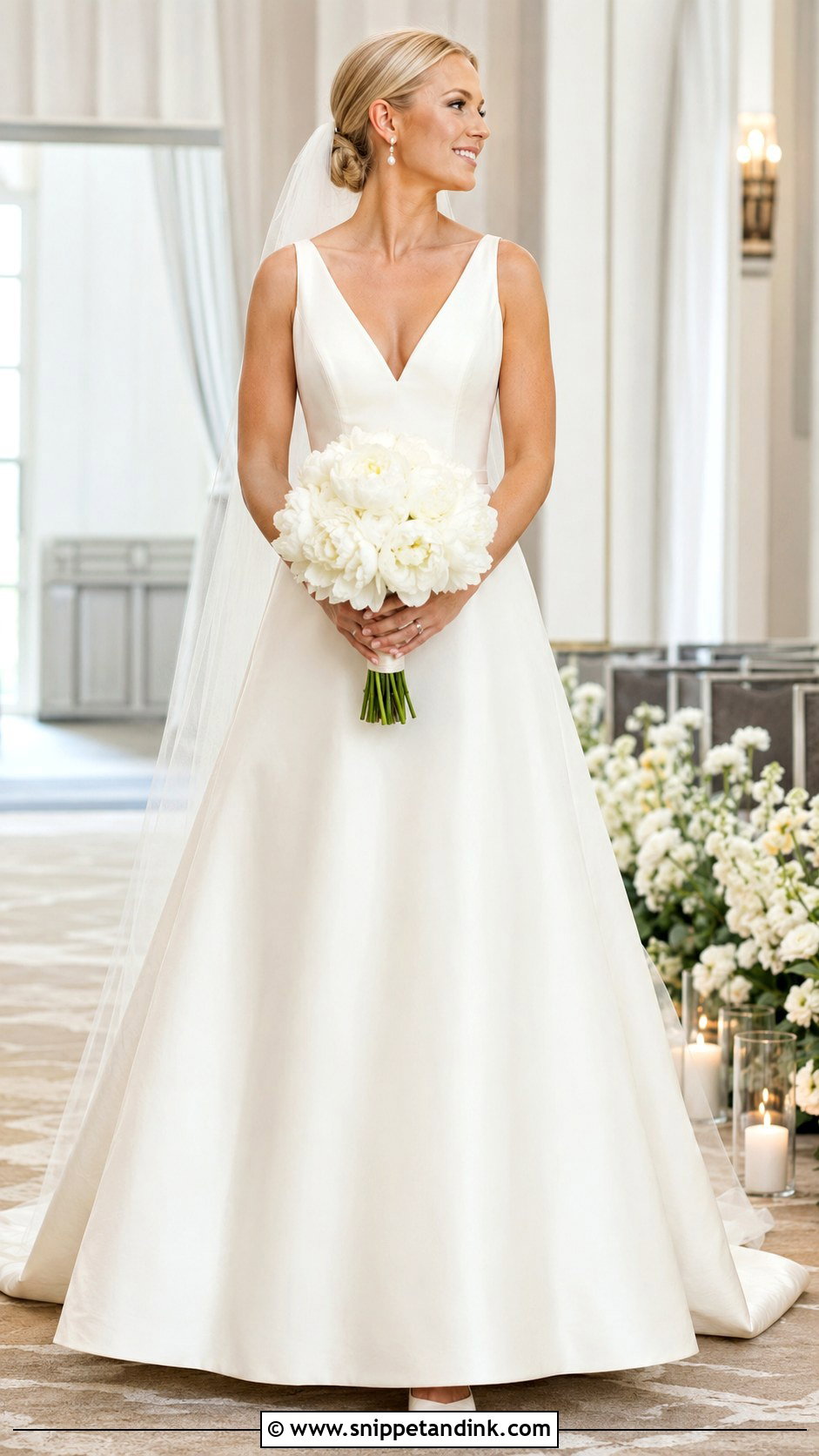
The V-neck A-line is the most adjustable shape on this list. The V can sit modest or deep, and the skirt moves freely, so it suits a lot of figures. Wider straps, a structured lining and a clear natural waist keep it secure. Matte crepe looks current; satin looks more formal. Simple drops, closed-toe heels and a long veil under a low bun; no necklace with a deep V. White peonies, roses or seasonal greenery soften it. A V needs testing in motion. I have brides sit, bend and hug at the fitting, because a V that’s flat standing can open out when you lean forward.
10. Halter Neck Column Wedding Dress
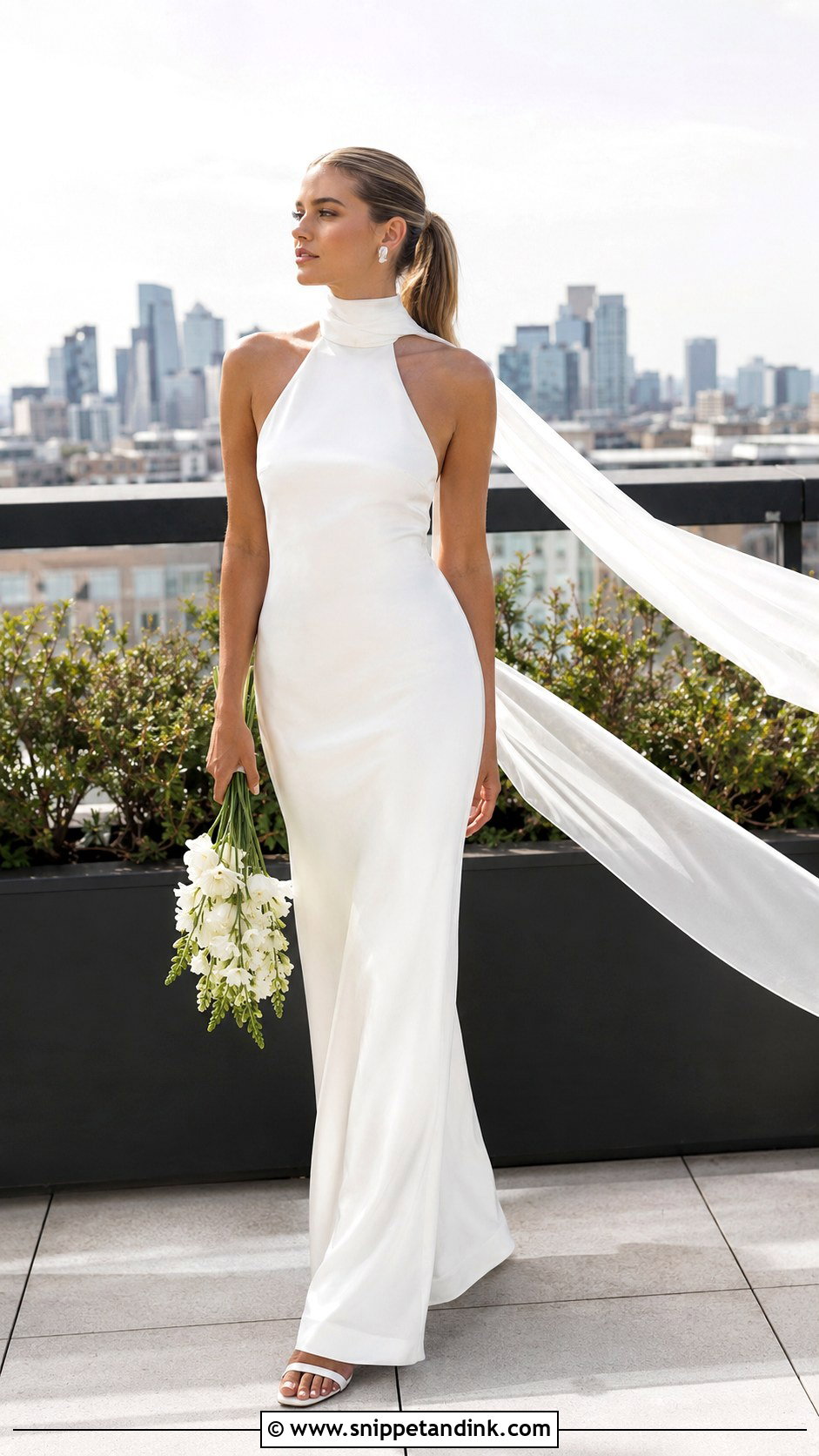
Halter columns read confident and fresh. The high halter shows the shoulders, the fitted skirt keeps one long line, and an open back adds drama without trim. Substantial satin, crepe or silk with careful lining holds the shape. Wear hair up or in a polished ponytail. Sculptural studs, a slim bracelet and minimal white sandals are all it needs; instead of a veil, try a long chiffon neck scarf or a veil fixed below the bun. A narrow, long-stemmed bouquet matches the column. One warning from fittings: if the halter strap is bearing the bust, the bride feels it in her neck within hours.
11. Corset Bodice Satin Wedding Dress
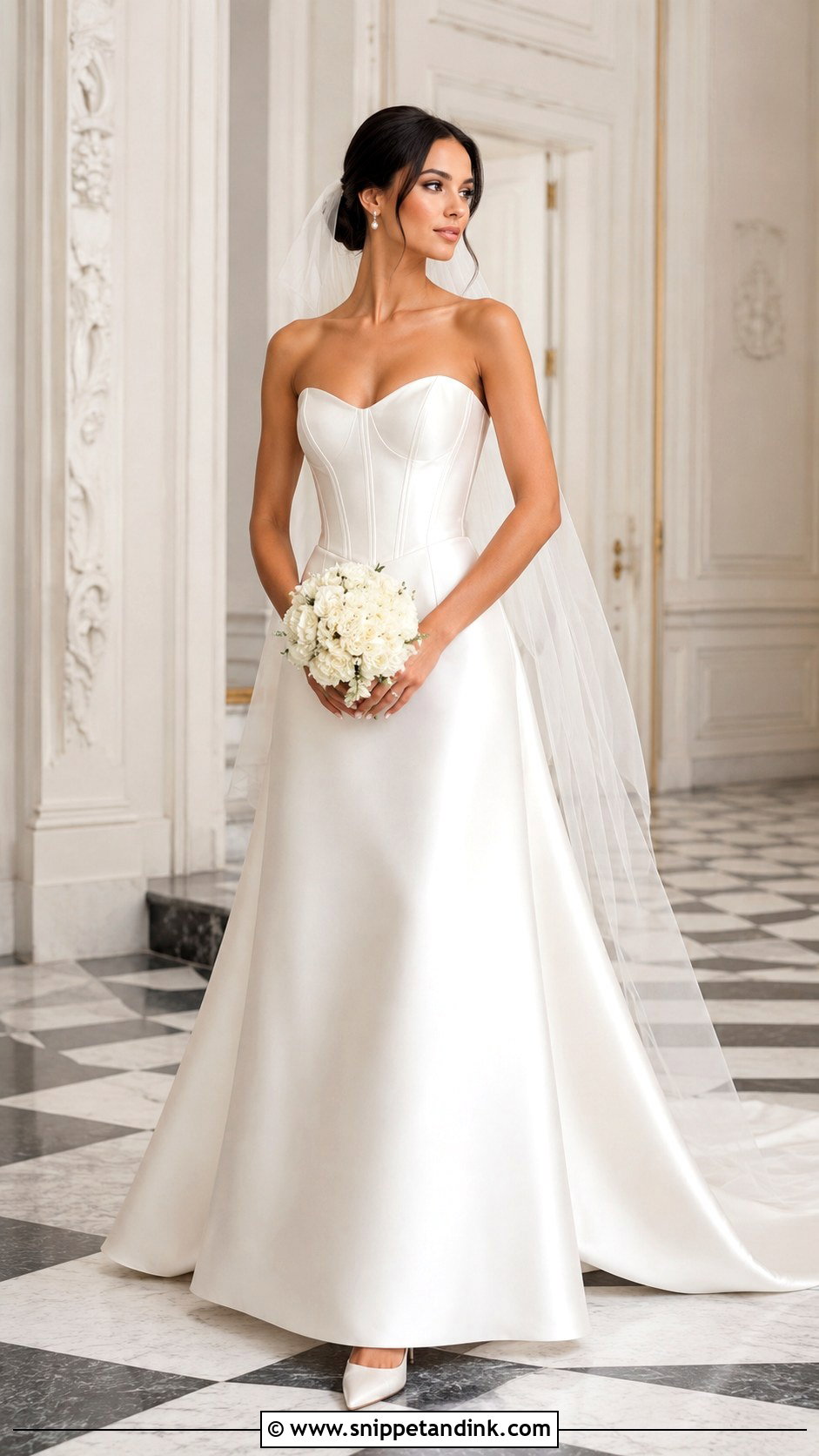
A corset bodice stays simple when the structure is hidden. Clean paneling on the outside, boning inside, no lace overlay or crystal. A straight, softly curved or gentle sweetheart neckline shapes the top while the internal structure supports it, and an A-line skirt falls smoothly from the waist. A plain chapel veil, pearl earrings, pointed satin pumps and a neat bun keep attention on the tailoring. White and cream flowers. At alterations, the corset should feel secure but never stop a full breath, and it should let you sit through a long dinner without pressing into your ribs.
12. Cape Sleeve Column Wedding Dress
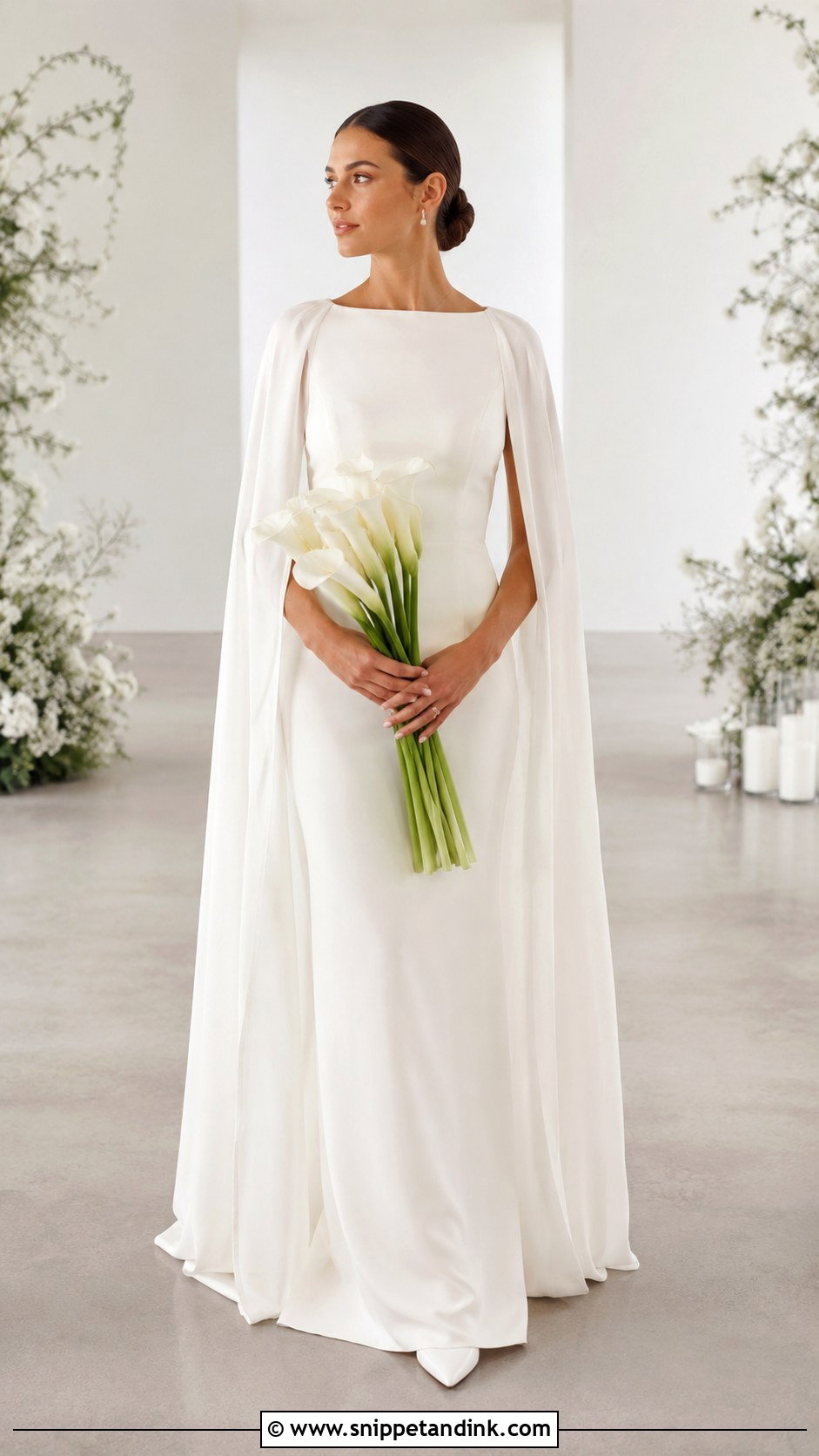
Cape sleeves give movement while the column underneath stays smooth. The cape may fall from the shoulders, extend from the back neckline or replace a veil altogether. Lightweight chiffon floats; matching crepe looks more structured. A high, bateau or modest V-neckline sits under it best. With the cape doing the talking, jewelry stays to small earrings and perhaps a thin bracelet, plus pointed heels and a sleek clutch. A low bun keeps hair from tangling with the fabric, and calla lilies suit the line. Try the cape outdoors before the day. Chiffon catches every gust, and you’ll want to know how it bustles or pins back.
13. Simple Crepe Mermaid Wedding Dress
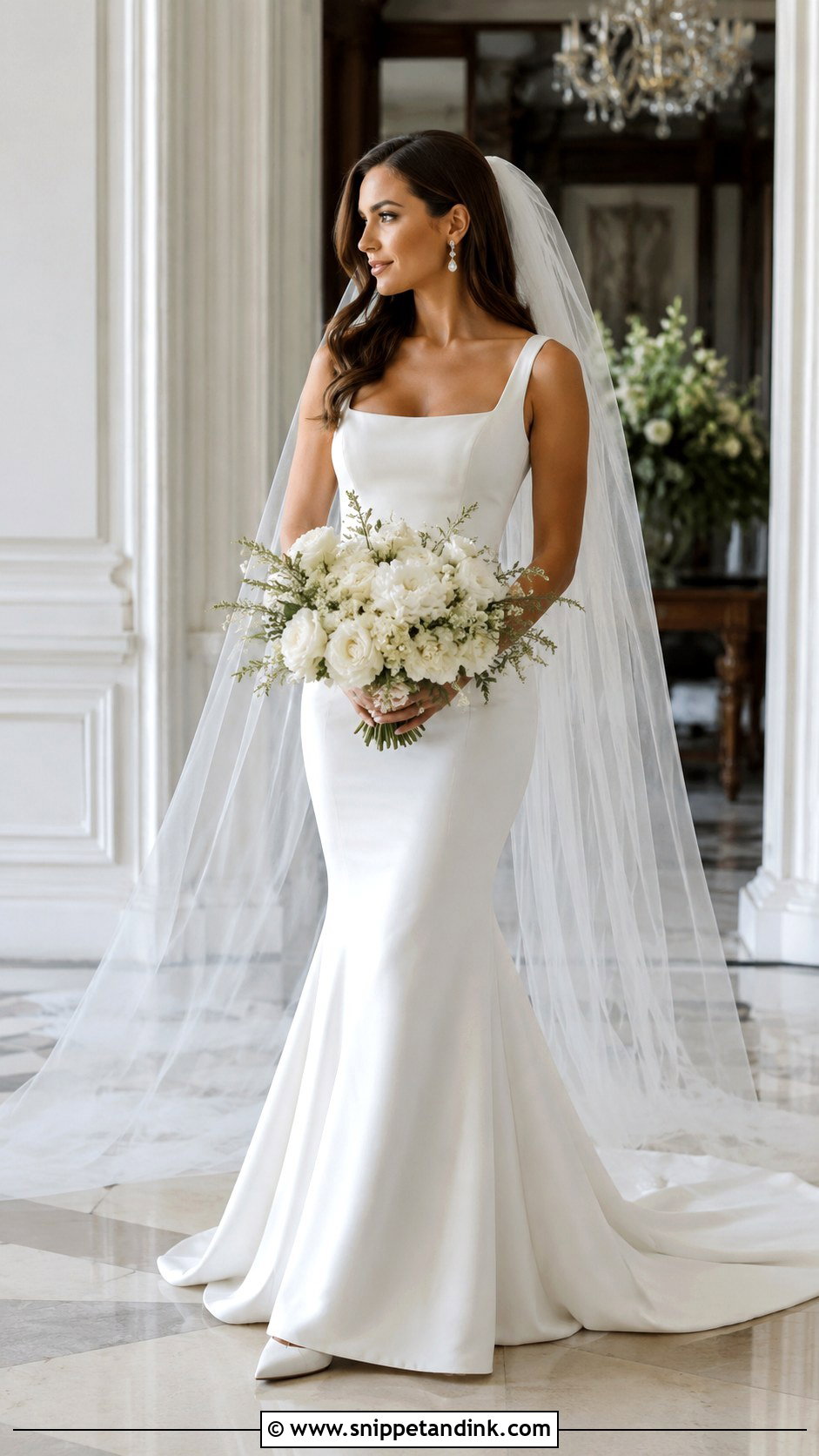
A crepe mermaid is a sculpted shape in a plain fabric, and the flare point decides whether it works. Around the knee or lower thigh is my preference; it’s easier to walk in and looks less dated than an extreme flare. Strapless, square and off-shoulder necklines all suit it. A plain cathedral veil, delicate earrings, pointed pumps and a low bun or polished waves. A loosely structured white bouquet softens the fitted lines. At fittings, walk, sit and climb a couple of steps. The lining and seam placement should move with you, not drag the skirt upward.
14. Tea Length Mikado Wedding Dress
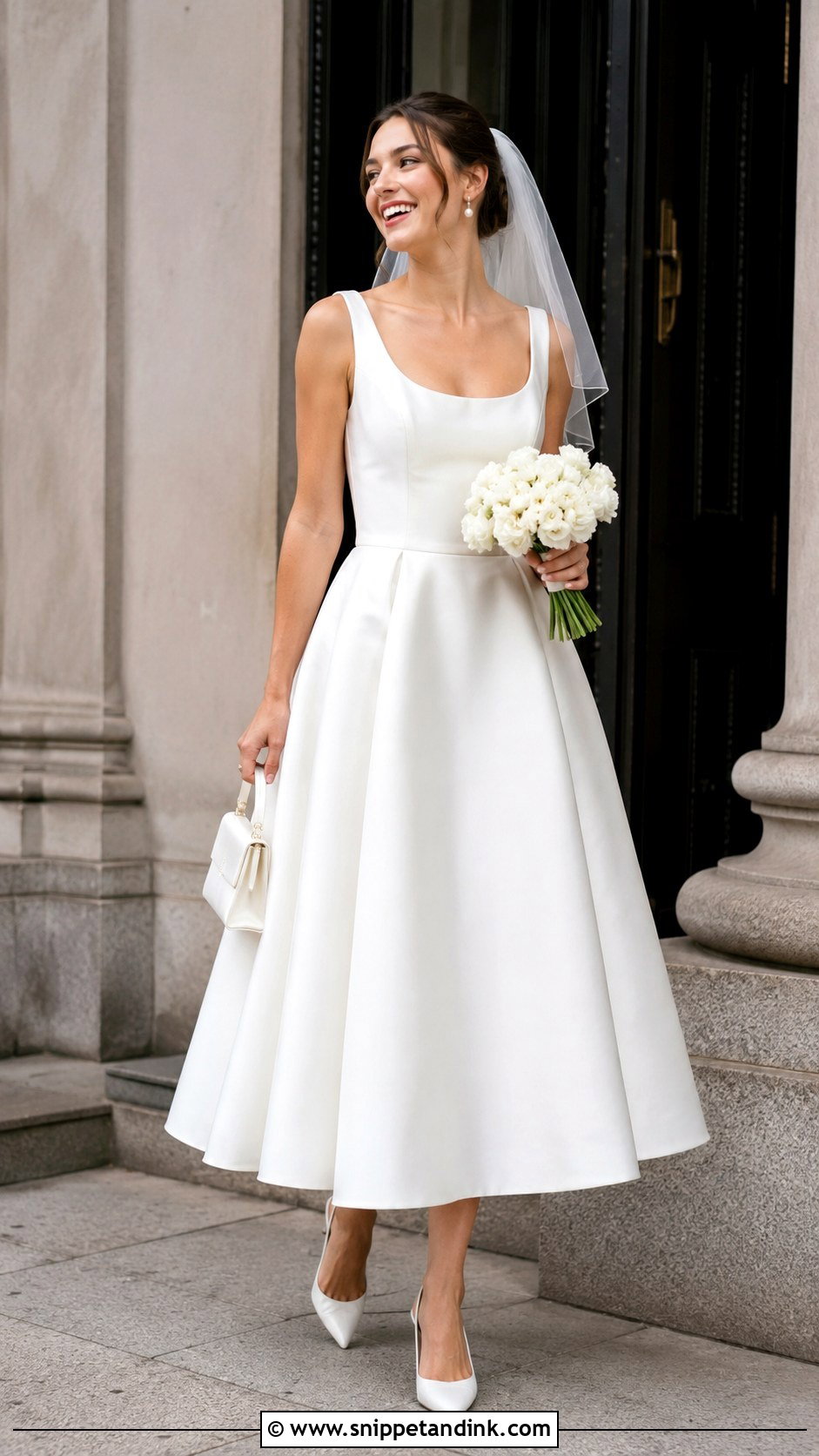
A tea length mikado dress is playful enough for a small party and polished enough for a formal ceremony. The stiff fabric gives a smooth bodice and a full skirt ending between knee and ankle. A scoop, square or boat neckline balances the shorter hem. Shoes are on full view, so they’re a real design decision: pointed slingbacks, satin pumps or low embellished heels. Pearl earrings, a short veil and a small top-handle bag, with a tidy bun or shoulder-length waves. A compact bouquet keeps the waist visible. It’s my first suggestion for a courthouse wedding followed by a restaurant dinner and a lot of dancing.


15. Long Sleeve Square Neck Wedding Dress
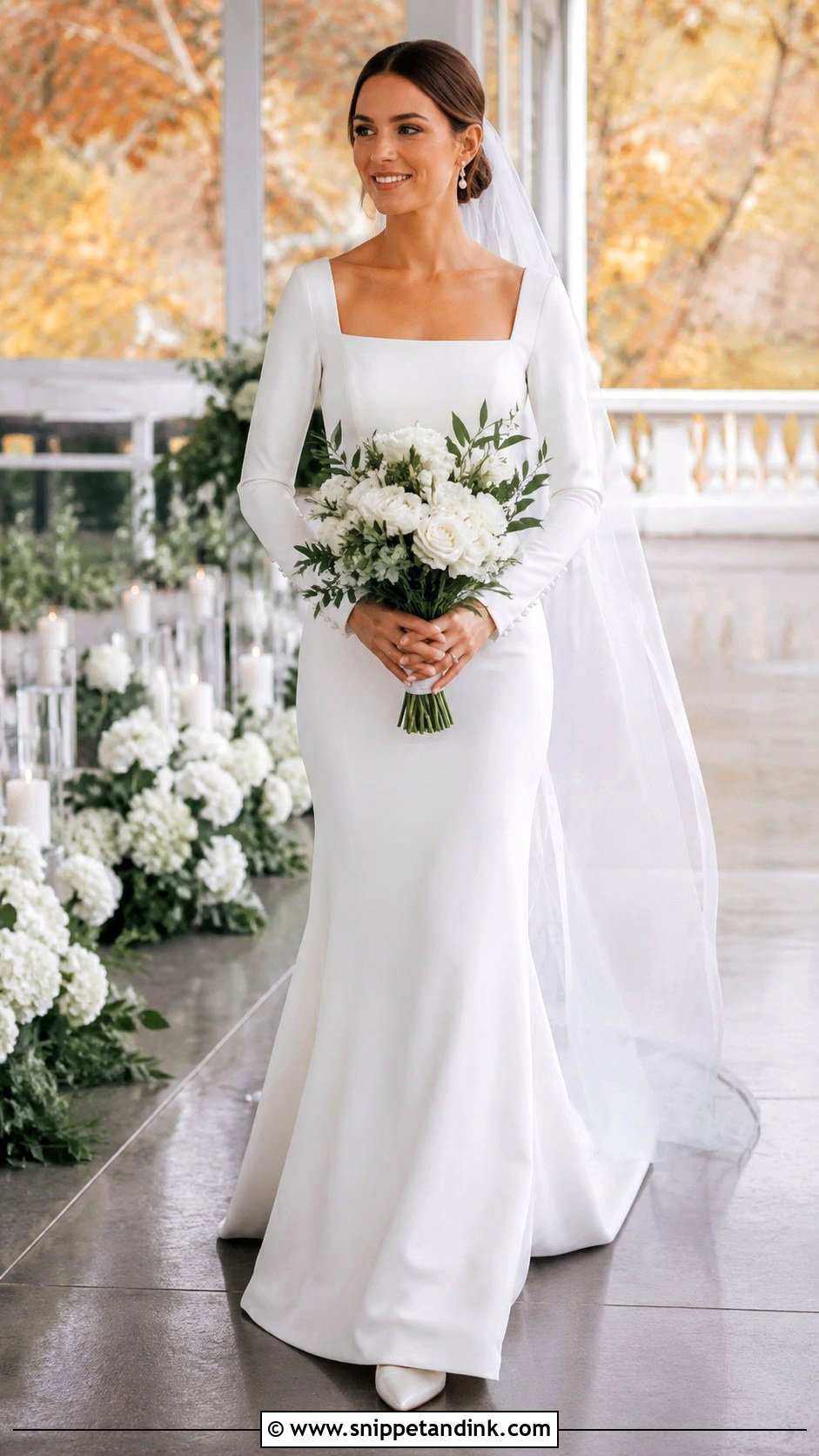
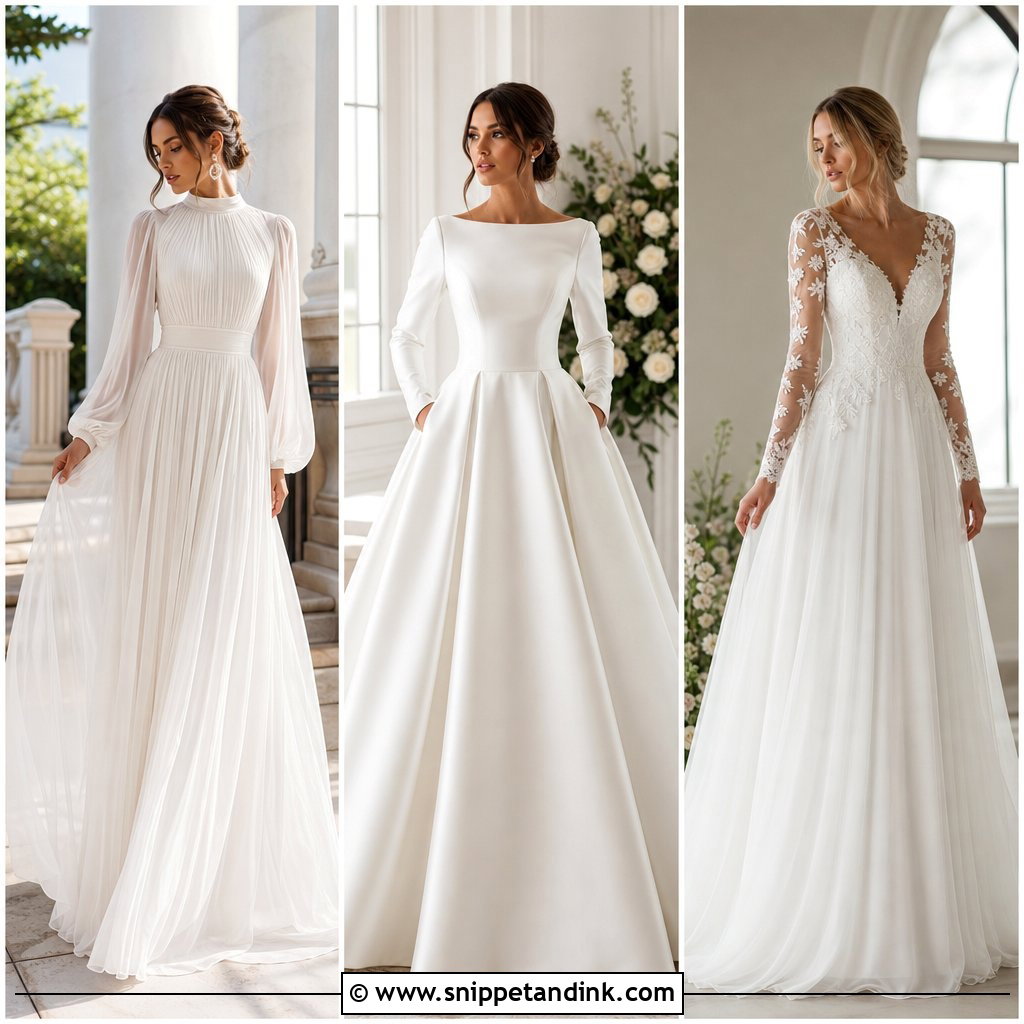
A square neckline with long crepe sleeves is classic and current at once. A fitted bodice over a straight, A-line or lightly flared skirt; covered buttons at the cuffs or back add discreet detail. Pearl drops, a low chignon, pointed ivory heels and a long single-layer veil. Flowers can be a loose white and pale green bunch with a plain ribbon wrap. Fall and winter suit it, though a breathable lining stretches it into spring. The neckline should sit flat across the chest without gaping, and the shoulder seams should stay smooth when you lift your arms. If either fails, the sleeves are usually set too tight.
16. Empire Waist Chiffon Wedding Dress
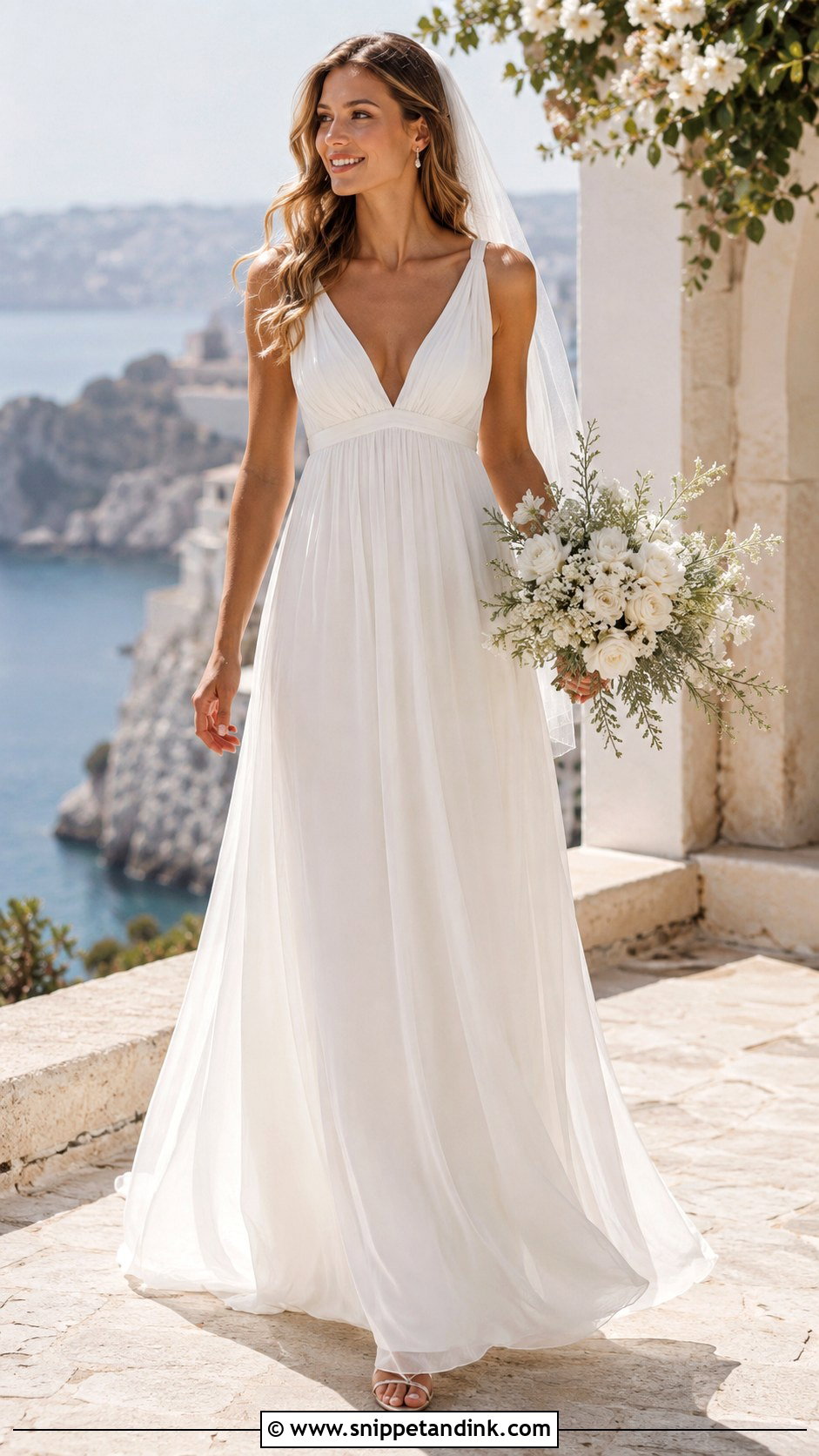
Chiffon on an empire waist floats. The waist sits just under the bust and the skirt falls loose, which is why I suggest it to brides who hate anything tight at the natural waist and to anyone marrying somewhere hot. A clean V or gathered scoop with supportive straps; keep the chiffon layers few so it doesn’t drift into costume. Slim metallic sandals, delicate earrings, a fingertip veil, loose waves or a textured low bun, and an airy white bouquet. Chiffon is often slightly sheer. Stand by a window at the fitting and check the lining gives full, smooth coverage in daylight.
17. Drop Waist Satin Wedding Dress
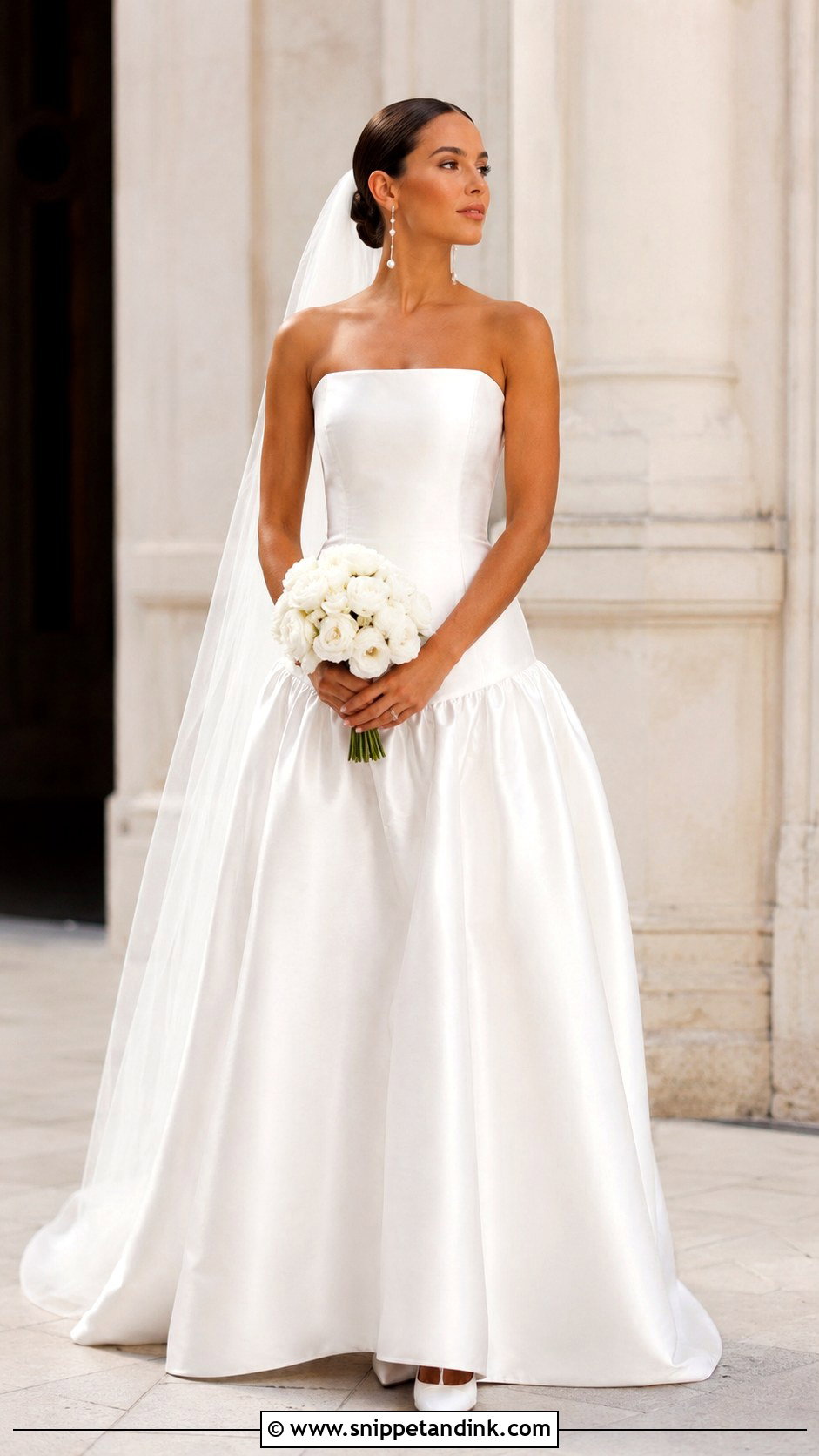
The drop waist runs the fitted bodice below the natural waist before releasing the skirt, which gives a sculptural, slightly vintage line. Smooth seams and a softly curved waistline do the work, not corsetry or trim. A strapless or straight neckline up top, a full skirt below. Long earrings, satin pumps, a plain veil under a sleek bun and a bouquet of a single flower variety. I’m honest with brides about this one: where the waist lands is personal. If it sits on the widest part of the hip, it adds width, so the seam height should be pinned on you before the dress is altered.
18. Asymmetrical Midi Wedding Dress
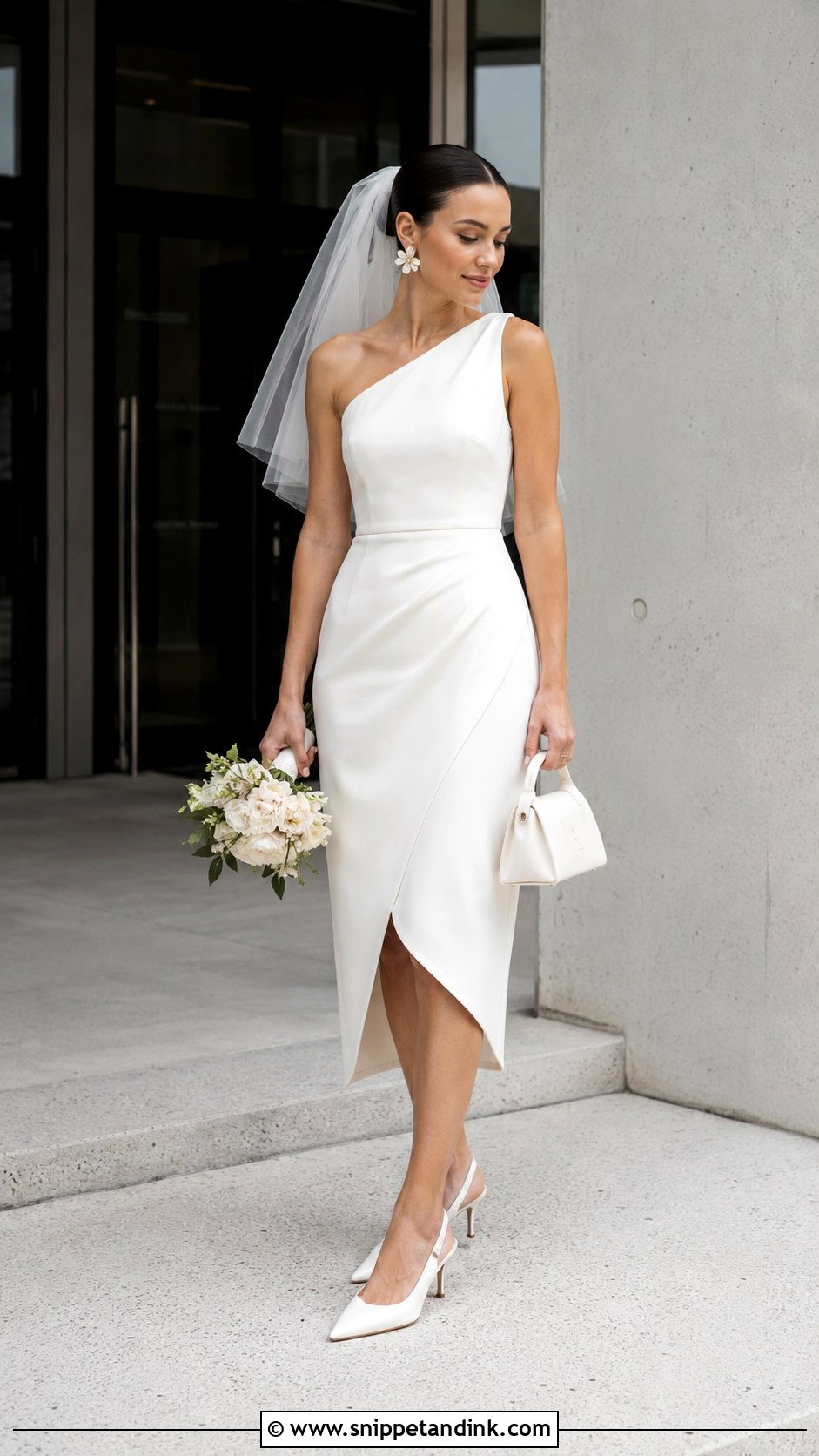
For a civil ceremony or an intimate dinner, an asymmetrical midi wedding dress is a clean step away from full length. Pick one asymmetric element, a diagonal neckline, a draped waist or an angled hem, and never all three; one reads intentional, three read confused. Ivory crepe or satin with enough body to hold the angle. Pointed slingbacks, sculptural earrings and a compact top-handle bag, with a birdcage or short plain veil. A polished bun or smooth bob, a petite bouquet, and comfortable shoes, since everyone will see them.
19. Minimalist Satin Ball Gown Wedding Dress
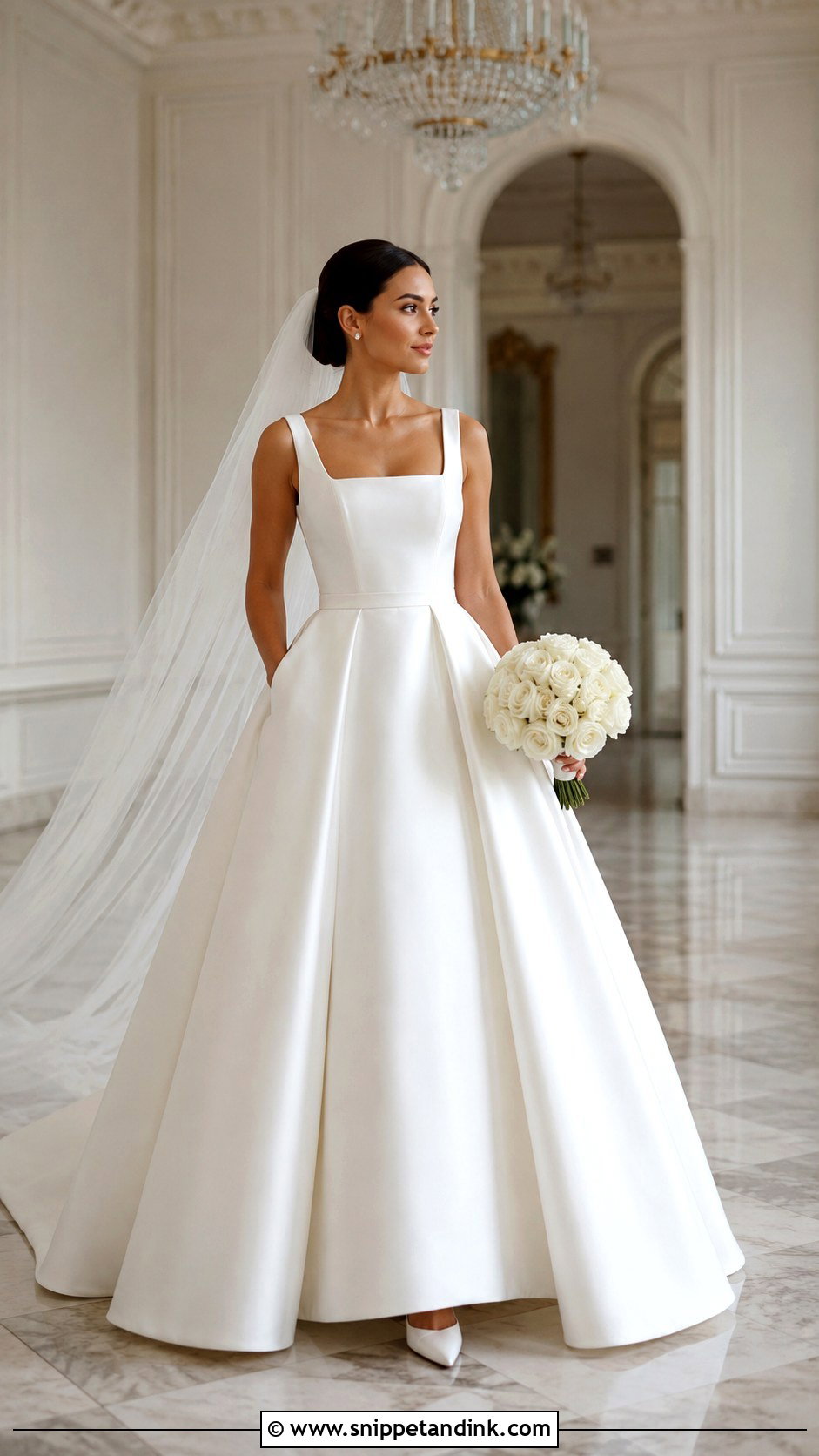
A satin ball gown with no lace or beading at all makes a strong case for restraint. It needs a precisely fitted bodice, a defined waist and a full skirt whose volume is controlled rather than frothy. Square, straight or softly curved necklines all work, depending on support and coverage. Hidden pockets add practicality without touching the outside. Small diamond earrings, classic pumps and a long plain veil; a smooth bun keeps it formal, soft waves relax it. White roses with neatly wrapped stems. Ask the seamstress to design the bustle with you, because a heavy satin train lifted badly leaves bulky folds at the back.



20. Wedding Dress With Detachable Overskirt
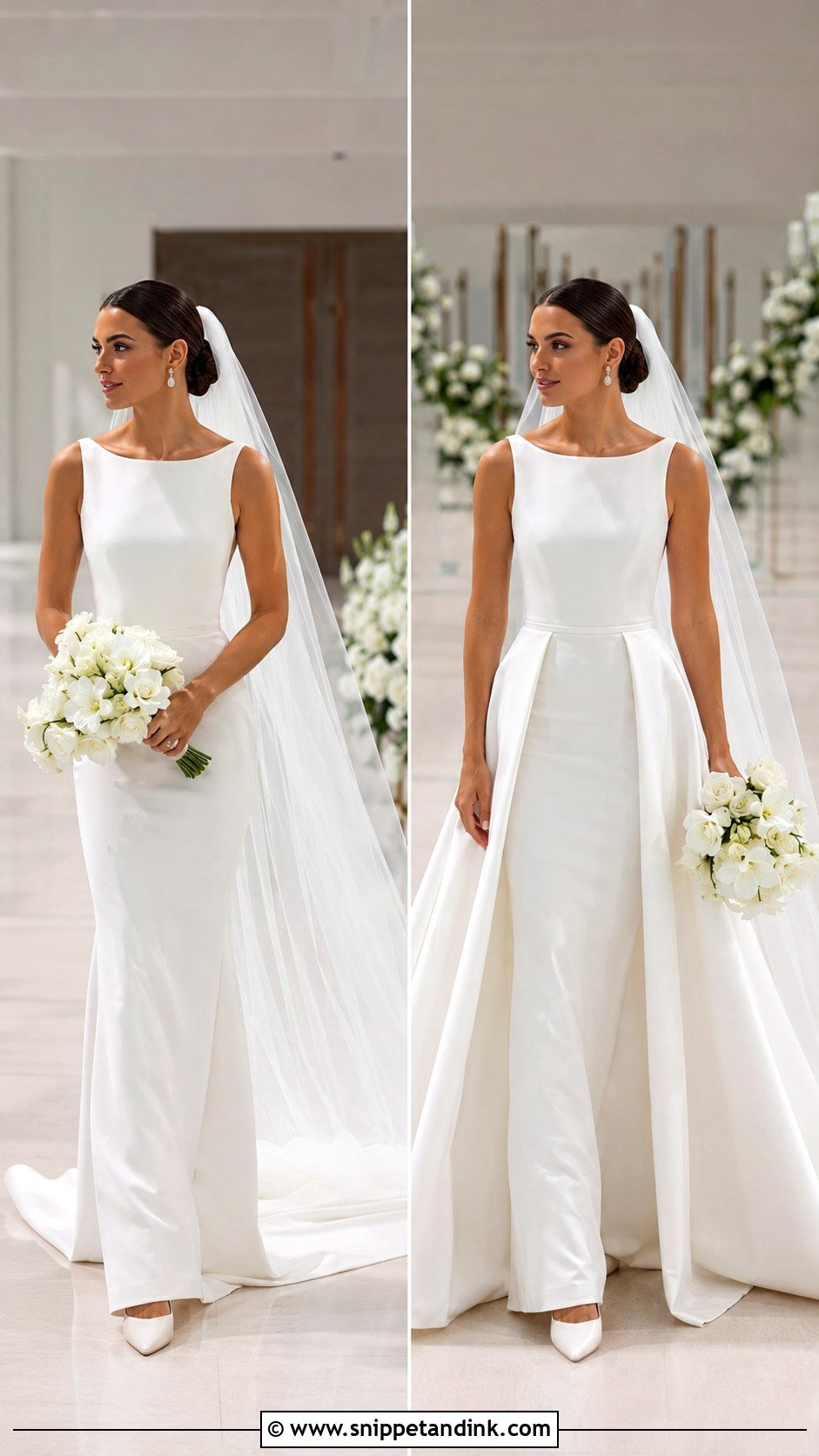
A fitted crepe or satin column with a smooth A-line overskirt gives you two dresses’ worth of looks. The overskirt adds volume and a longer train for the ceremony, then comes off after the photos for an easy reception silhouette. Hide the attachment beneath a narrow waistband or a subtle fabric belt. A plain cathedral veil, understated earrings, pointed heels, a sleek low bun and a structured white bouquet suit both versions. Practise attaching and removing the layer at your fittings with whoever will help you on the day. It should close securely, lie flat at the waist and leave no marks on the dress underneath.
Where the Money Goes on a Simple Dress
Brides are sometimes surprised that an unembellished dress isn’t always cheaper. Beading is labour, but so is fitting a perfect bodice in a fabric that shows every mistake. In a simple gown, the cost sits in three places, and I’d plan the budget around them.
- Fabric. A heavier satin, crepe or silk is the difference between a dress that hangs and one that clings. It’s worth paying for over any added detail.
- Alterations. Plain gowns usually need more precise fitting, and alteration prices vary widely by region and by how much work the dress needs, so ask for an estimate when you buy, not after.
- Foundations. Built-in cups, a waist stay or a bustle are small additions that change how the dress behaves all day.
Timing the order
Made-to-order bridal gowns commonly take several months to arrive, and fittings tend to start around two to three months before the wedding. If you’re shopping late, look at sample sales, ready-to-wear bridal and the white pieces in eveningwear collections; a plain dress is the easiest kind to find off the rack and have altered.
What Makes a Bare Gown Look Expensive
A simple gown makes its impression through fabric, proportion, support and alterations, not ornament. Think about how the neckline, waist, skirt and train will behave in your venue across a long day of standing, sitting and dancing. Then add a few coordinated accessories rather than detail everywhere. A fluid silk slip, a tailored crepe column, a structured satin A-line and a minimalist ball gown can all be right; the one to pick is the one you forget you’re wearing by the second hour. An excellent fit does more for a plain dress than anything you could add to it.
You'll Like These Ideas:









Leave a Reply