
A classy gown rarely gets its luxury from decoration. In a fitting room, what makes a dress look expensive is how the fabric falls, how closely the bodice follows you and how few things fight for attention. Designers are mixing classic ball gowns and lace with clean draping, Basque waists, pearls and sculptural details, so there’s plenty of room to look polished and still recognisably yourself. Below are twenty shapes with complete styling, for a ballroom, a garden or a city registry, plus what I’d check before you commit to each one.
An Appointment Plan for Your First Salon Visit
Scrolling through twenty silhouettes is useful. Trying on five in a fitting room is what actually narrows the choice, and a little planning makes that first appointment far more productive.
- Bring two or three people whose taste you trust. A big group means a dozen opinions and very little room to hear your own reaction.
- Wear smooth, skin-toned underwear and bring a strapless bra if you own one, so straps and colours don’t distract from the gown.
- Bring shoes close to the heel height you plan to wear, because hem length and proportion change with even a small difference.
- Try at least one shape you expect to dislike. Brides surprise themselves this way all the time.
- Ask for photos from the back and side. Guests see you from behind and at an angle for much of the day, and a mirror only shows the front.
Questions worth asking before you leave
Ask what the sample is made of, whether it can be ordered in a different fabric or weight, how long production usually takes, and what alterations cost at that shop. Alteration prices vary widely between salons and dressmakers, so get an estimate in writing if you can.
1. Satin A-Line Wedding Dress
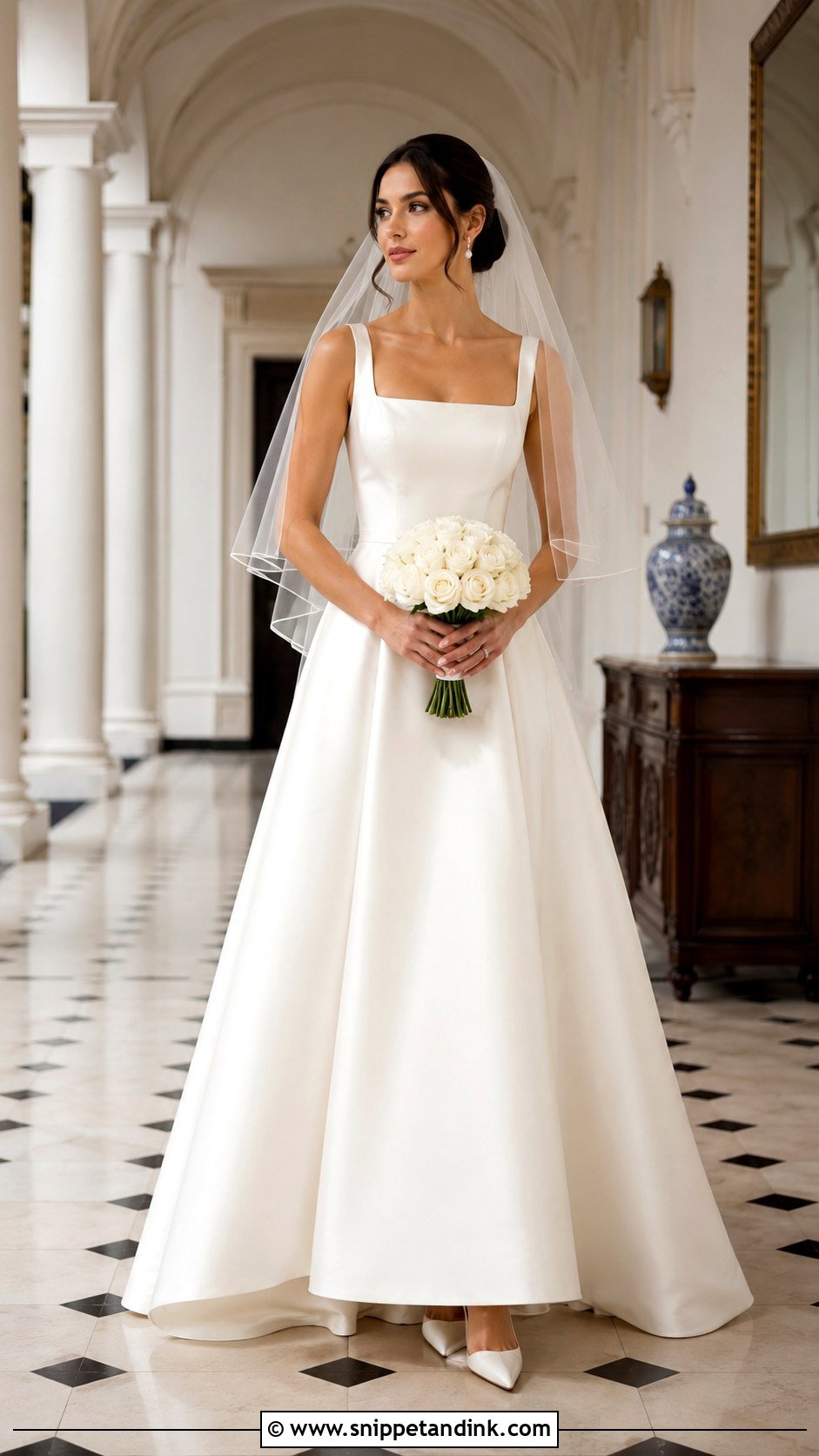
If you have no idea where to start, I’d put you in this one first. A fitted bodice and a skirt that widens gently from the waist give shape without the weight of a ball gown, and it makes a useful baseline to compare every other silhouette against. Ivory satin with a square or softly curved neckline keeps it clean. Satin has its own sheen, so jewelry should stay small; pearl drops and pointed-toe pumps are plenty. A fingertip veil is easy to manage all day, and a low chignon with a compact bouquet of white roses or calla lilies finishes it. Ballroom, estate, hotel or formal garden, it adapts.
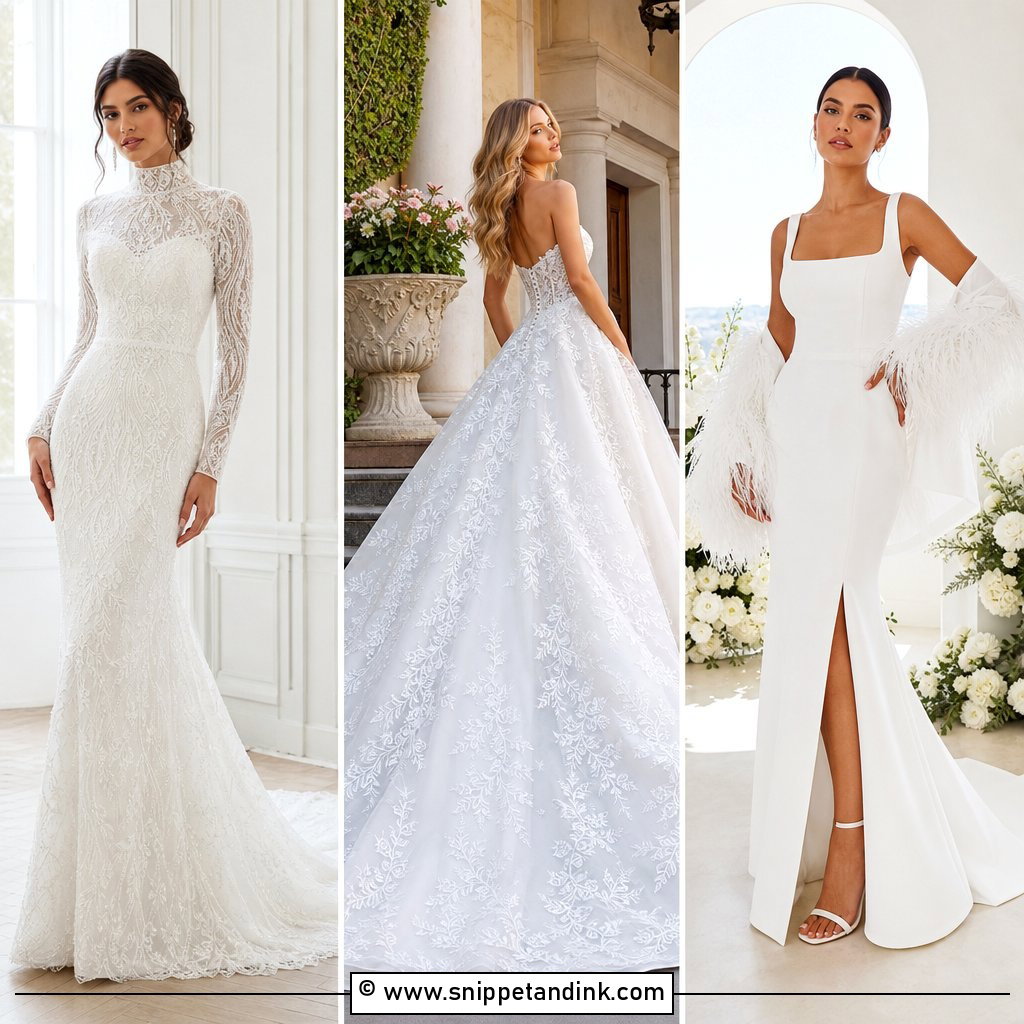
2. Strapless Ball Gown Wedding Dress
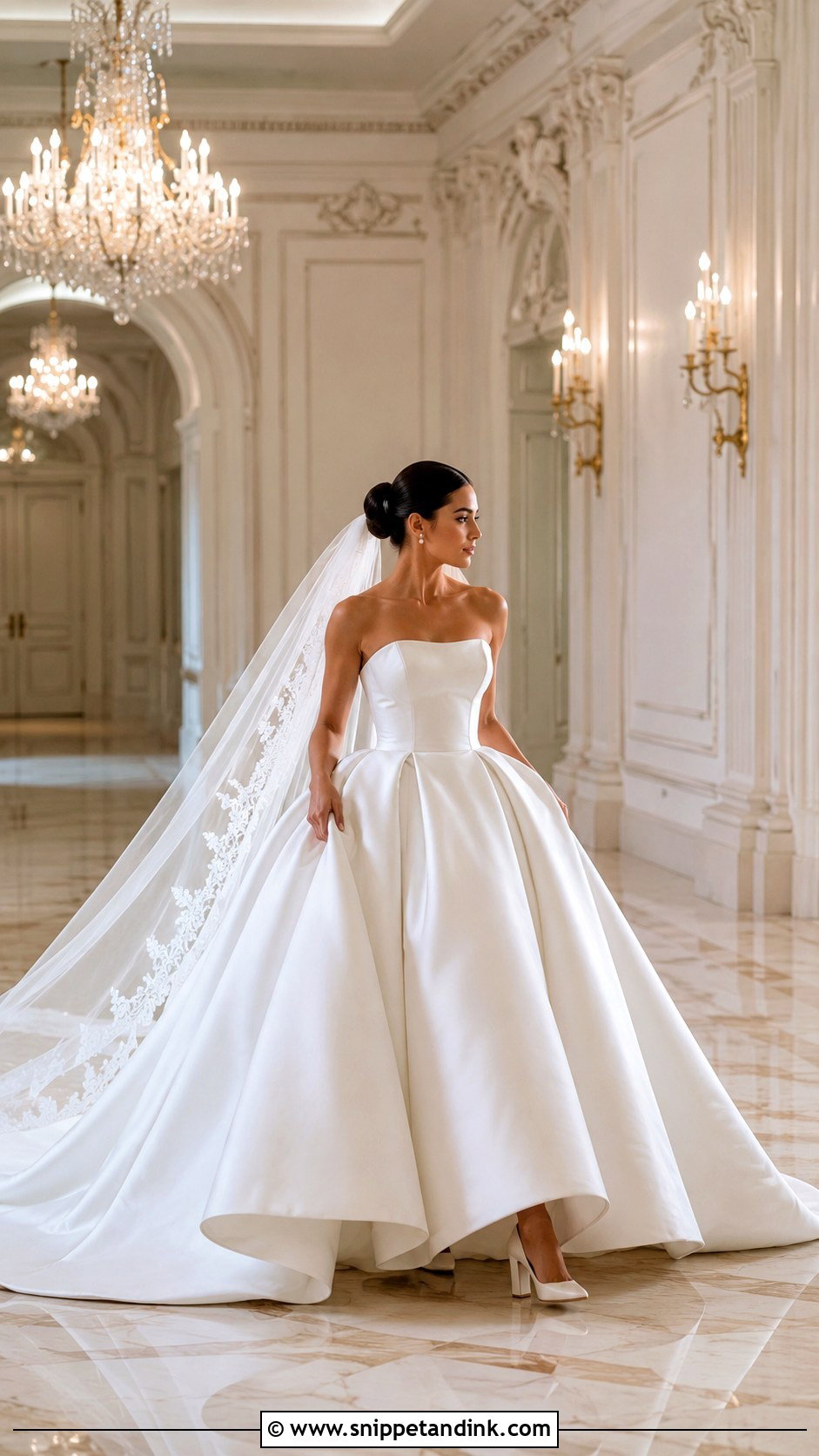
Few silhouettes feel as formal as a strapless ball gown wedding dress, and few are as heavy. A full skirt and its underlayers pull down on a strapless bodice, so the bodice has to grip at the waist rather than the bust. At the fitting, I’ll have you lift your arms and bend forward to see whether anything slides. Matte satin, mikado or duchess satin keeps the shape crisp. Pair it with a simple cathedral veil, pearl studs or a delicate necklace, and block-heel pumps for stability under all that fabric. A sleek bun leaves the shoulders clear. Let the skirt make the impression; big accessories only compete with it.
3. Long Sleeve Lace Wedding Dress
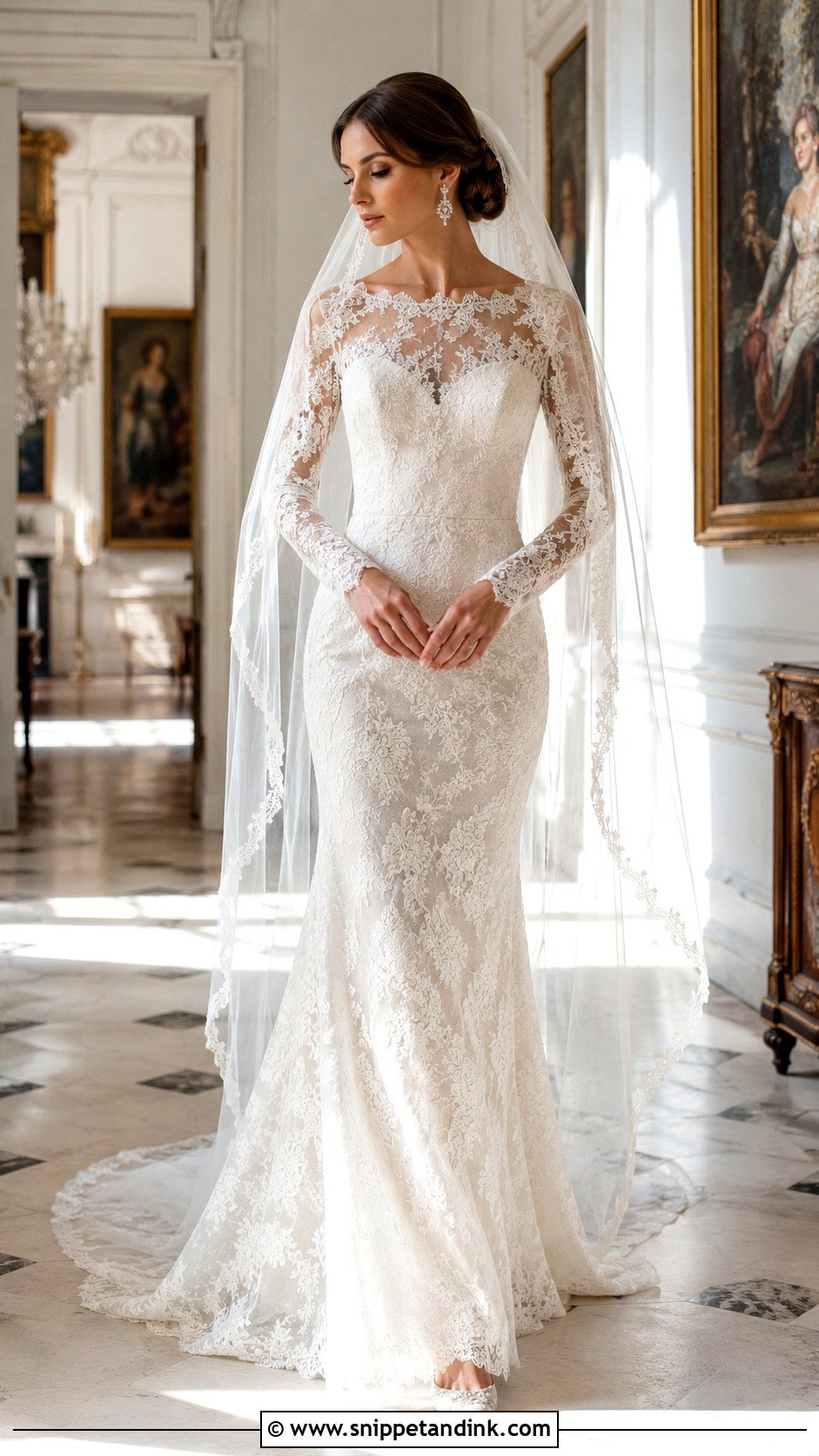
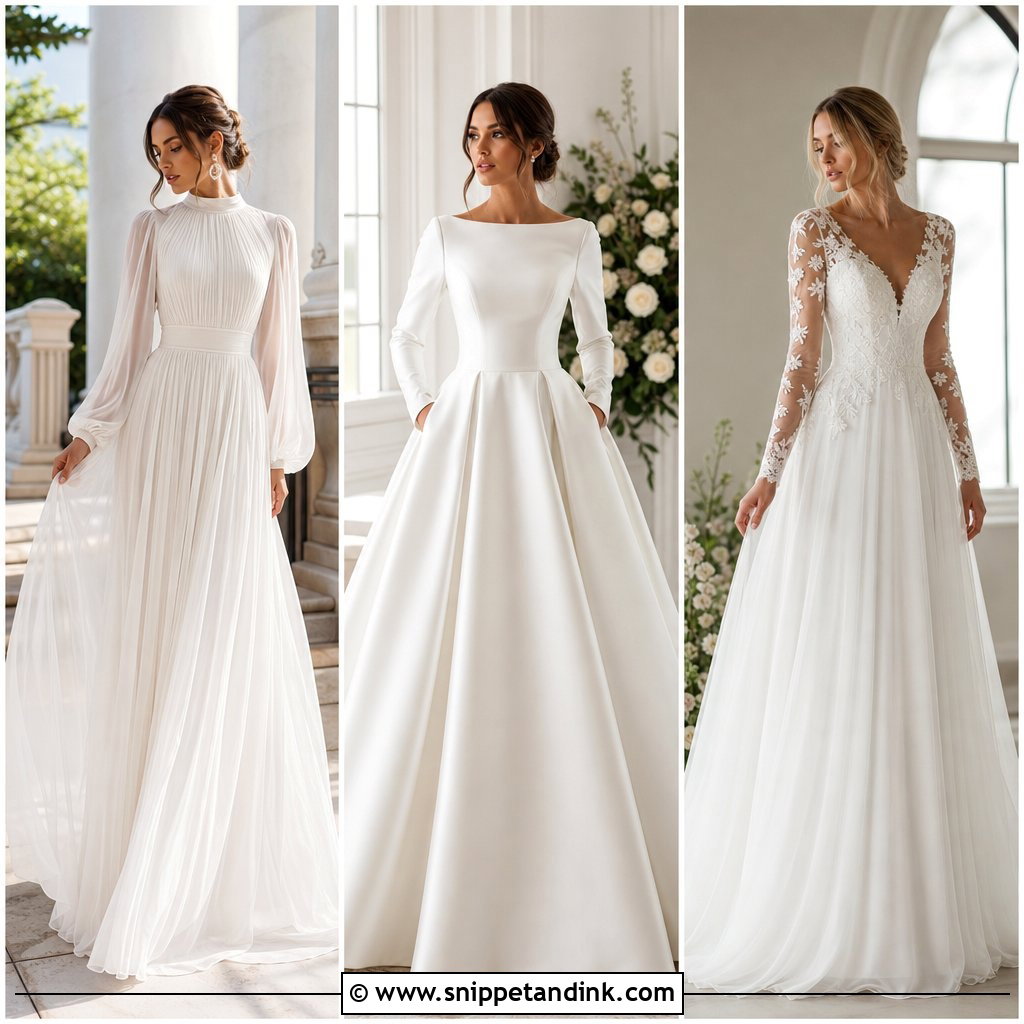
My favourite detail on a lace sleeve is the cuff: when the sleeve ends in the lace’s own scalloped edge at the wrist, it looks made for you rather than cut down. Choose a gown with a fitted lining, carefully placed motifs and a gently flared skirt so the lace doesn’t crowd the whole outline, and consider an illusion neckline for coverage that still feels light. Closed-toe ivory heels, small diamond or crystal earrings and a veil with a fine plain edge, since lace trim would clash with the gown’s own pattern. A loose low bun shows off sleeves and neckline. For a cold-weather wedding, a plain ivory wrap you can drop indoors is enough. Historic venues and country estates in autumn or winter suit it.
4. Square Neck Wedding Dress
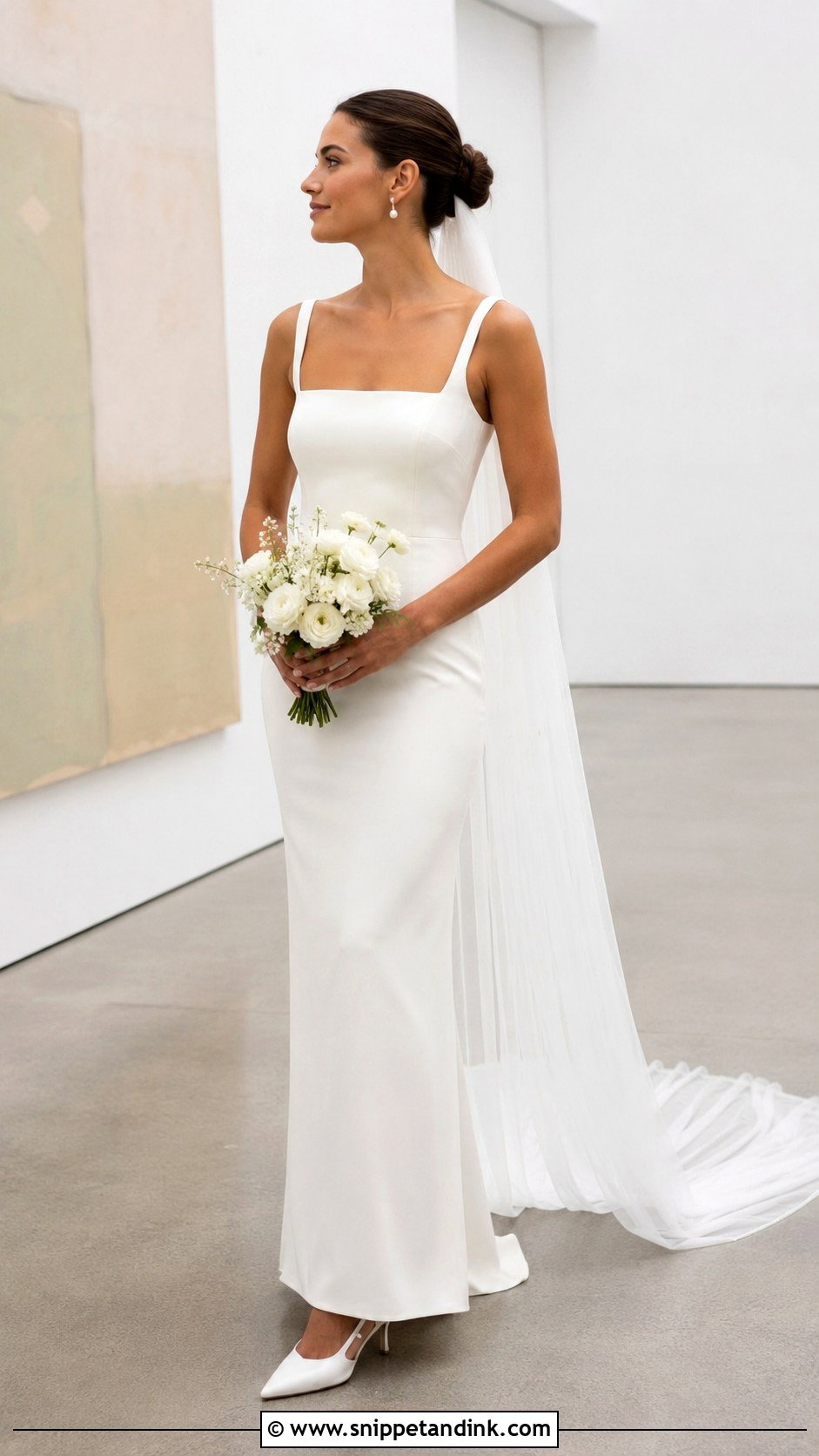
Strap width changes this neckline more than people expect. Slim straps look modern but leave the bodice doing all the support work; wider straps carry some of the load and suit a fuller bust. A fitted A-line or column in crepe or satin shows the neckline’s clean geometry best. I keep jewelry off the neck, use pearl studs, and set a chapel veil under a smooth ballet bun. Pointed slingbacks carry the sharp lines down to the feet, while white tulips with a little greenery soften things. Galleries, restaurants and minimalist ceremony spaces let the tailoring stand out.
5. Basque Waist Wedding Dress
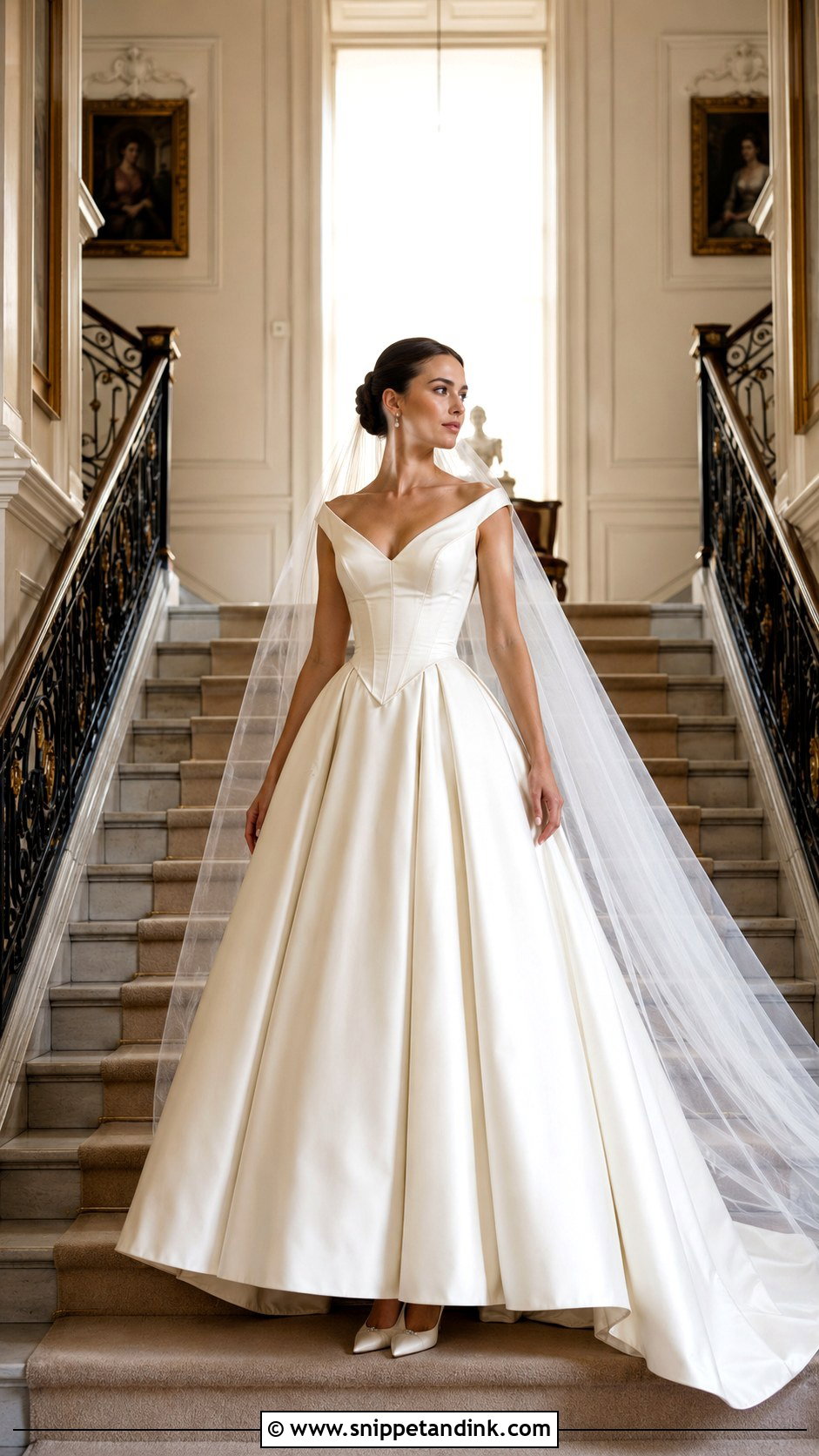
The bodice on this style drops below your natural waist into a shallow V, which lengthens the torso and gives a full skirt a corseted, old-world shape. It flatters a short waist especially; on a very long torso, I’d raise the point slightly so the body doesn’t look stretched. Plain satin looks regal, and a subtle floral jacquard adds texture. Since the bodice carries the interest, keep everything else plain: a sheer cathedral veil, pearl earrings, simple ivory pumps and a polished updo. If you want somewhere for a lipstick, a skirt with hidden pockets sits naturally in the gathers below that point. Grand hotels, museums and black-tie evenings suit it.
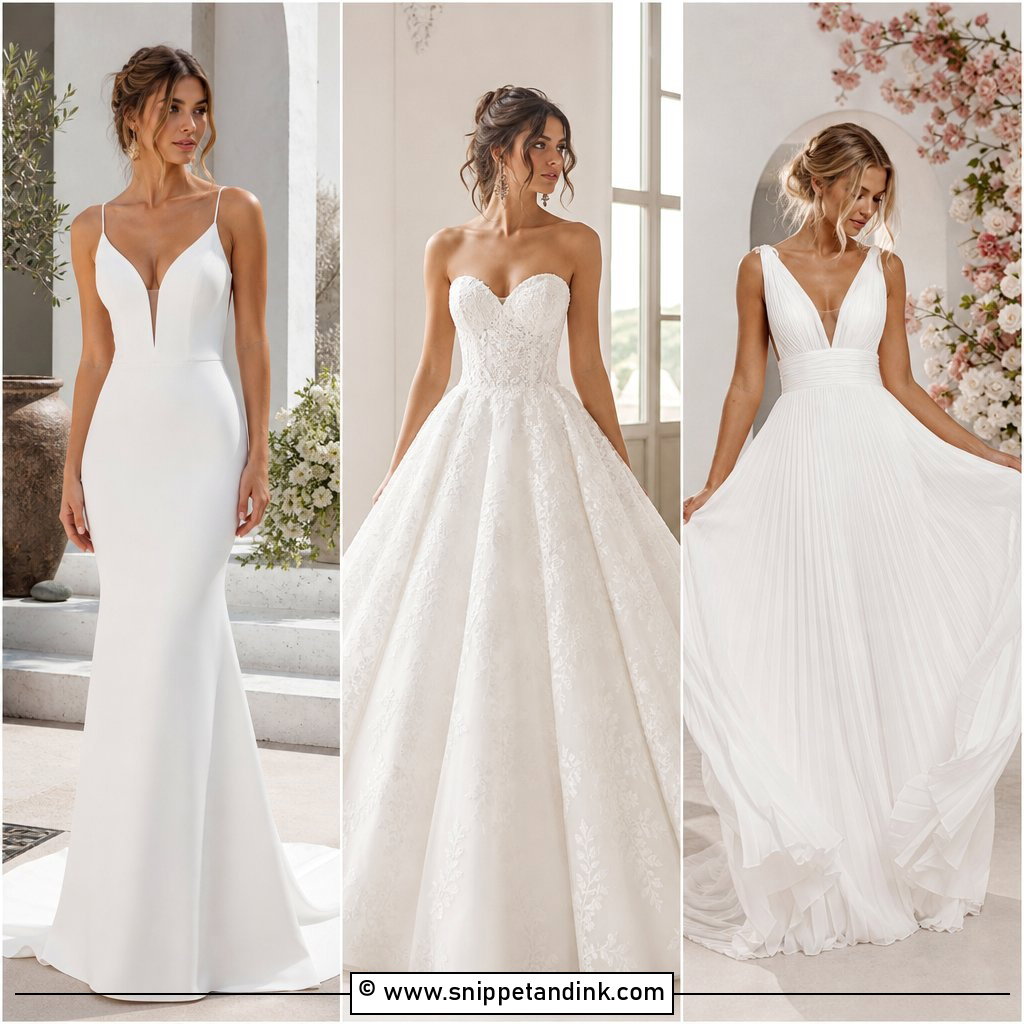
6. Minimalist Crepe Wedding Dress
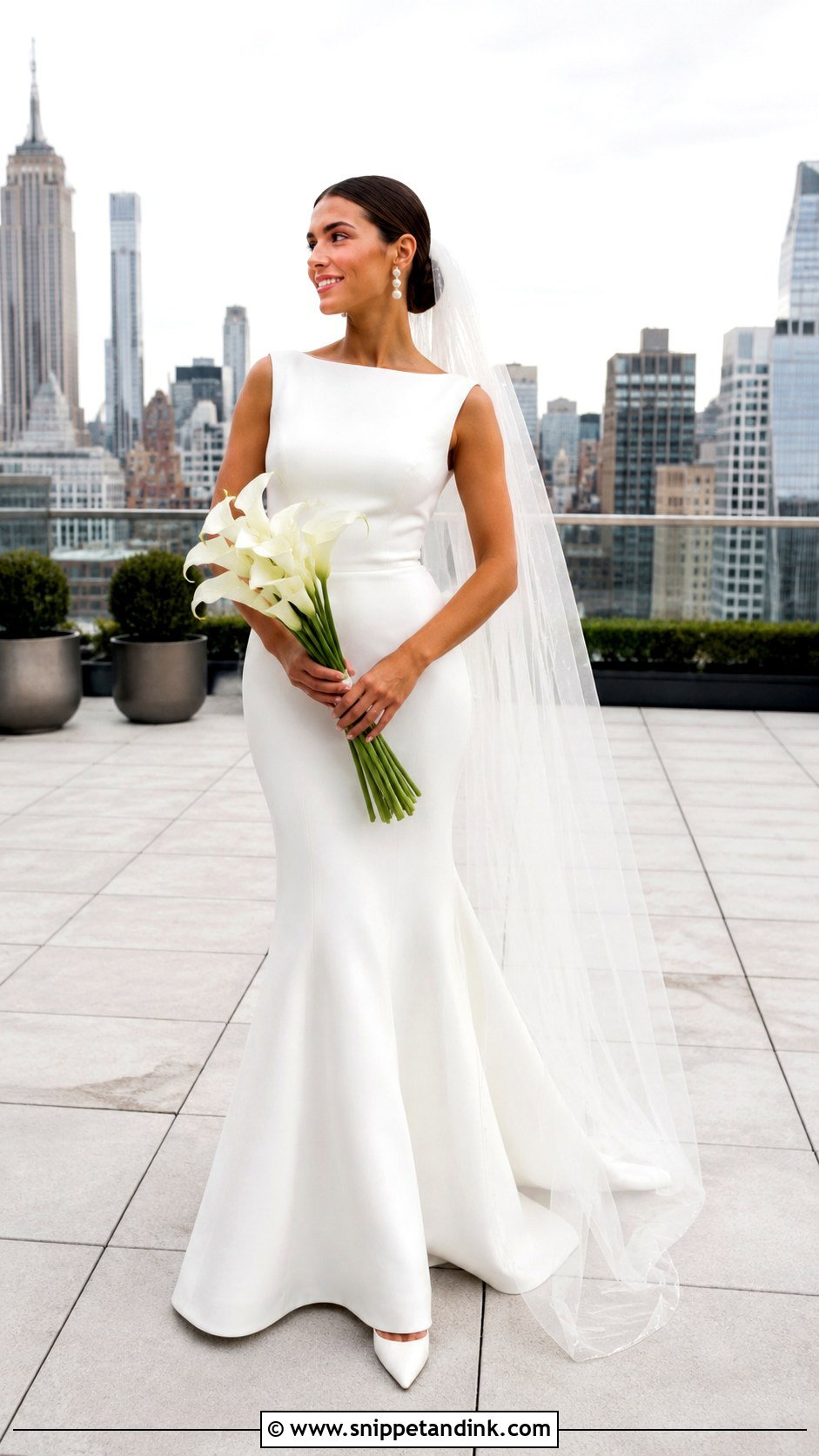
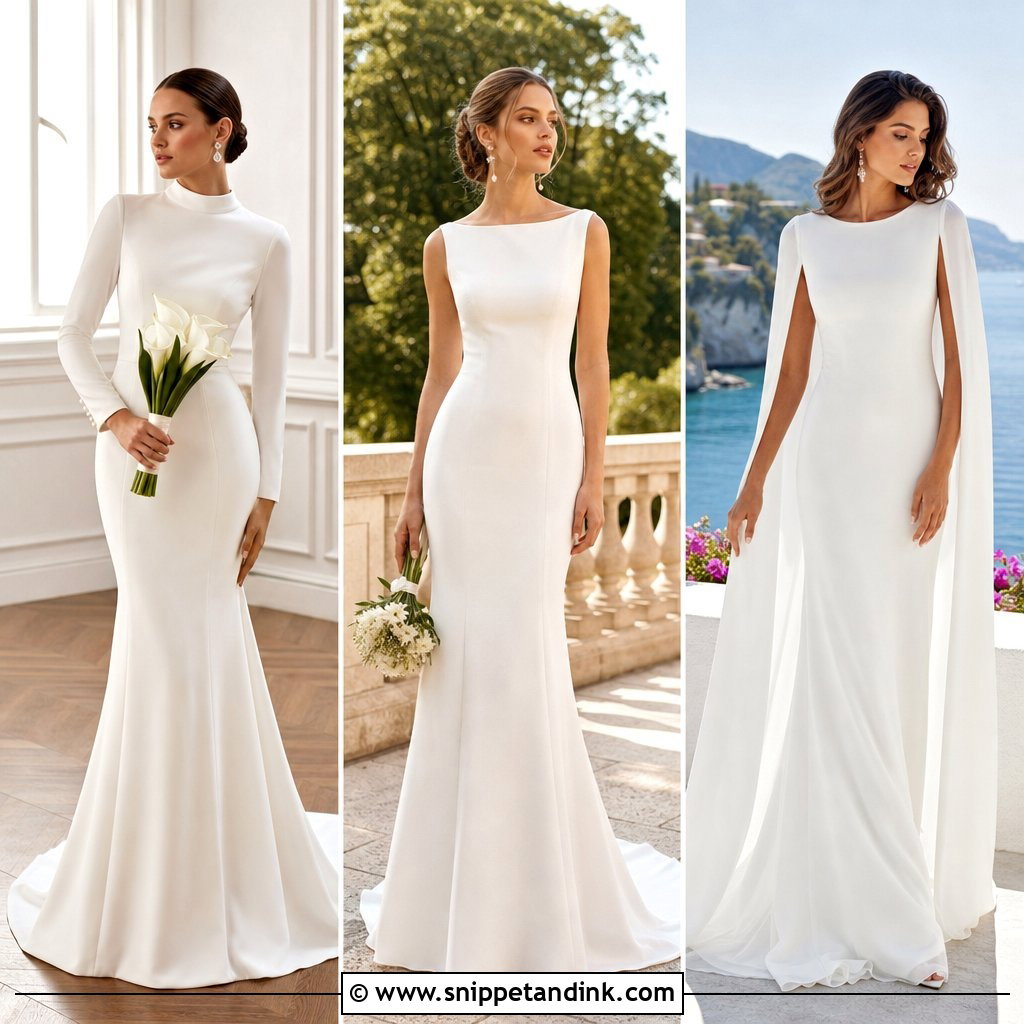
There is nowhere to hide on a plain crepe dress. Every seam, dart and zip shows, so I judge a minimalist gown by its tailoring before anything else, and a slightly wavy zip is the first giveaway of a rushed make. Go column or fit-and-flare, with a bateau, square or modest V neck. Pointed ivory heels, sculptural pearl earrings and a narrow veil with no lace edge keep it modern, along with a low ponytail or neat chignon and a few calla lilies. Crepe moves well and doesn’t crush much, which makes it comfortable for rooftops, city hotels and long receptions.
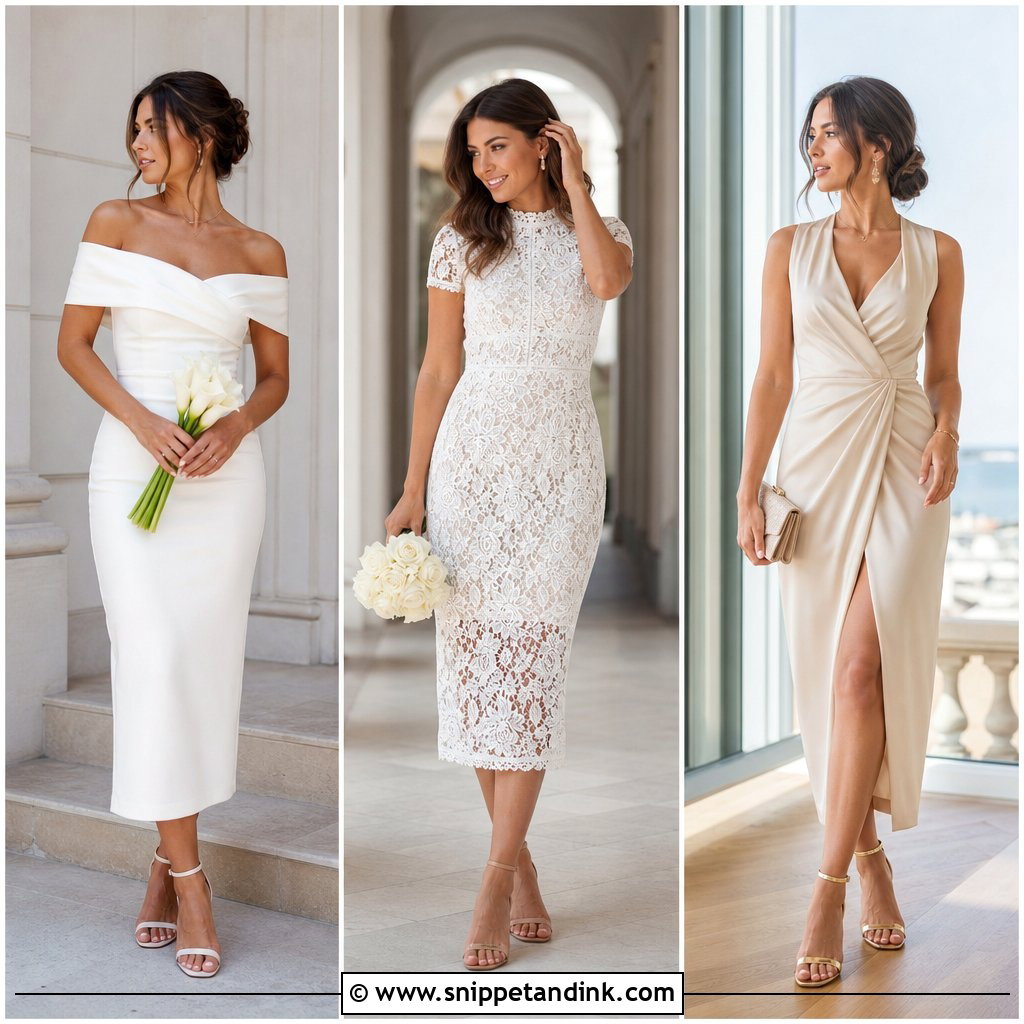
7. Off-Shoulder Wedding Dress
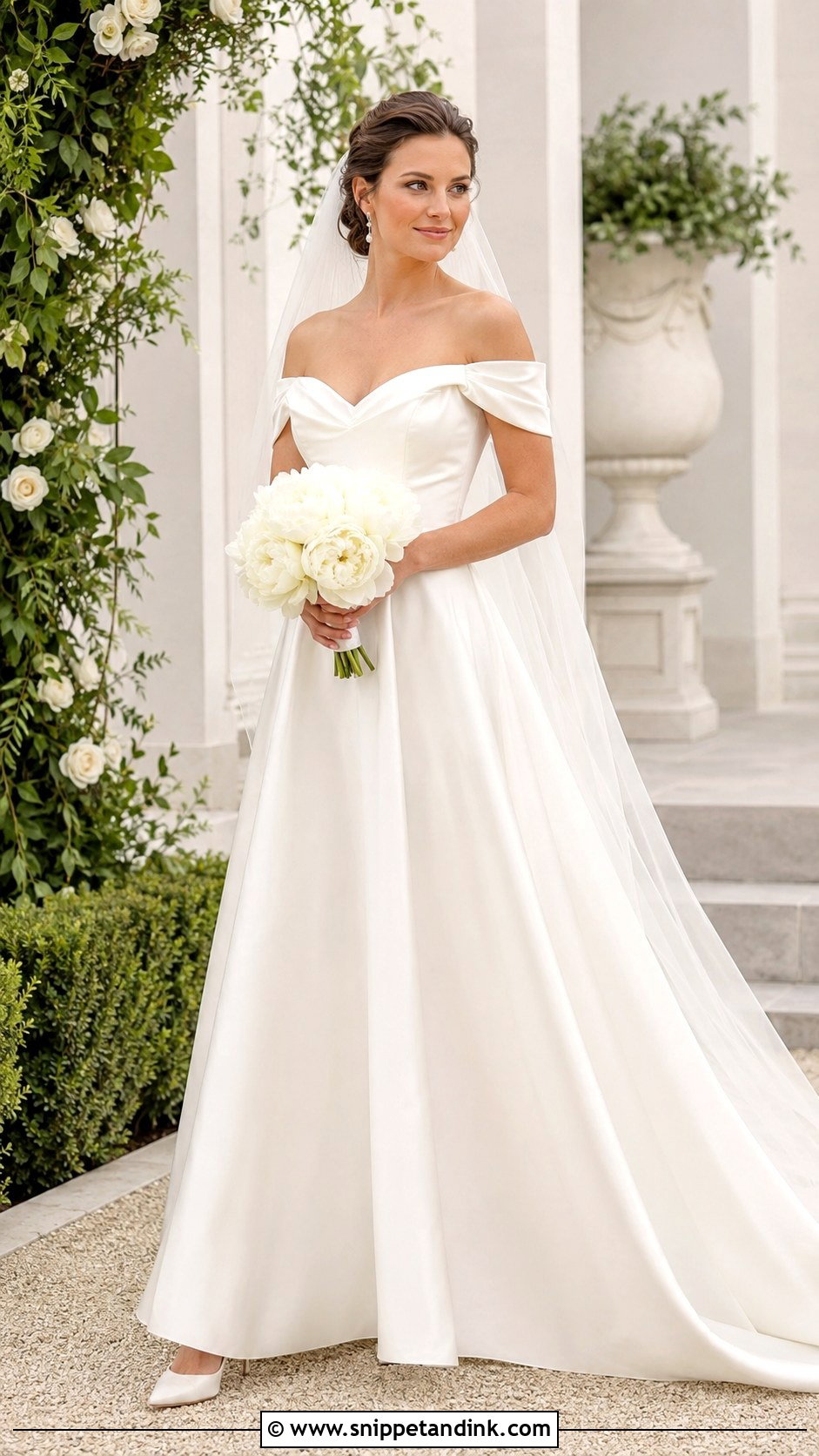
With the shoulders bare, the neck becomes the frame for your face, so a delicate pendant works here where it wouldn’t on a high neck. The sleeves need internal support, usually a boned bodice with a band anchoring each sleeve, so they rest on your upper arm without strapping it down. A-line and ball gown skirts both balance the open neckline. Pearl drops, a simple veil under a smooth updo, closed-toe satin pumps and white peonies keep it classic. At fittings, I have brides practise a slow-dance hold. Arms wrapped around a partner’s neck is the movement most likely to pull off-shoulder sleeves out of place.
8. High Neck Wedding Dress
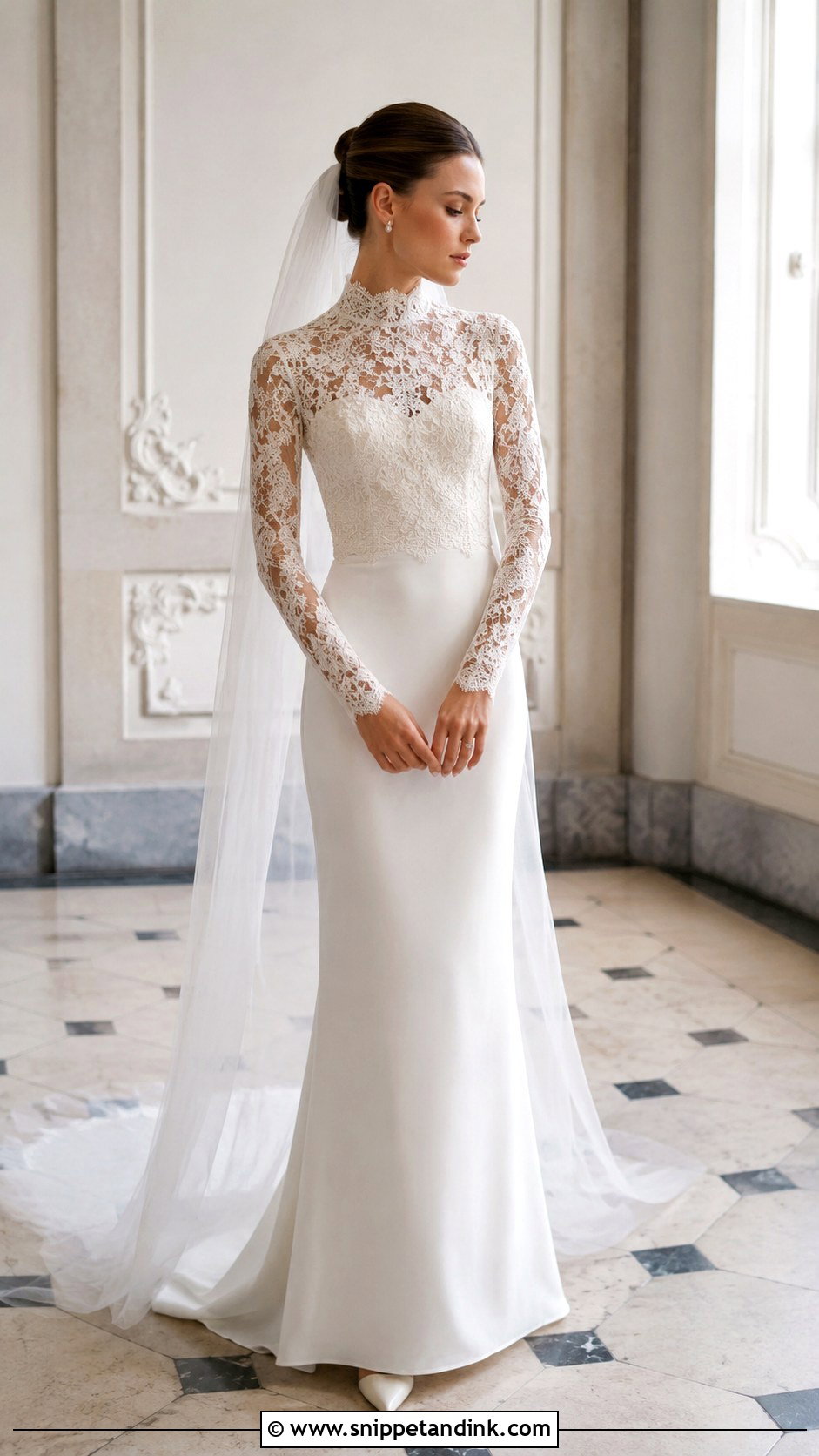
A high neck pulls the eye up toward your face, which is useful if you’d rather the bust wasn’t the focus, and it means earrings and hair do most of the accessorising. Sheer lace over a structured lining, smooth crepe with a stand collar, or embroidery carried across the shoulders are the main versions. A column skirt looks streamlined; an A-line feels more traditional. Skip the necklace, wear small earrings and put your hair up in a bun or twisted updo so the collar and back show. Pointed pumps and a plain chapel veil complete it. For a summer date, I’d lean toward lace, which breathes far better than a closed crepe collar. Formal daytime ceremonies and historic venues suit it.
9. Pearl Wedding Dress
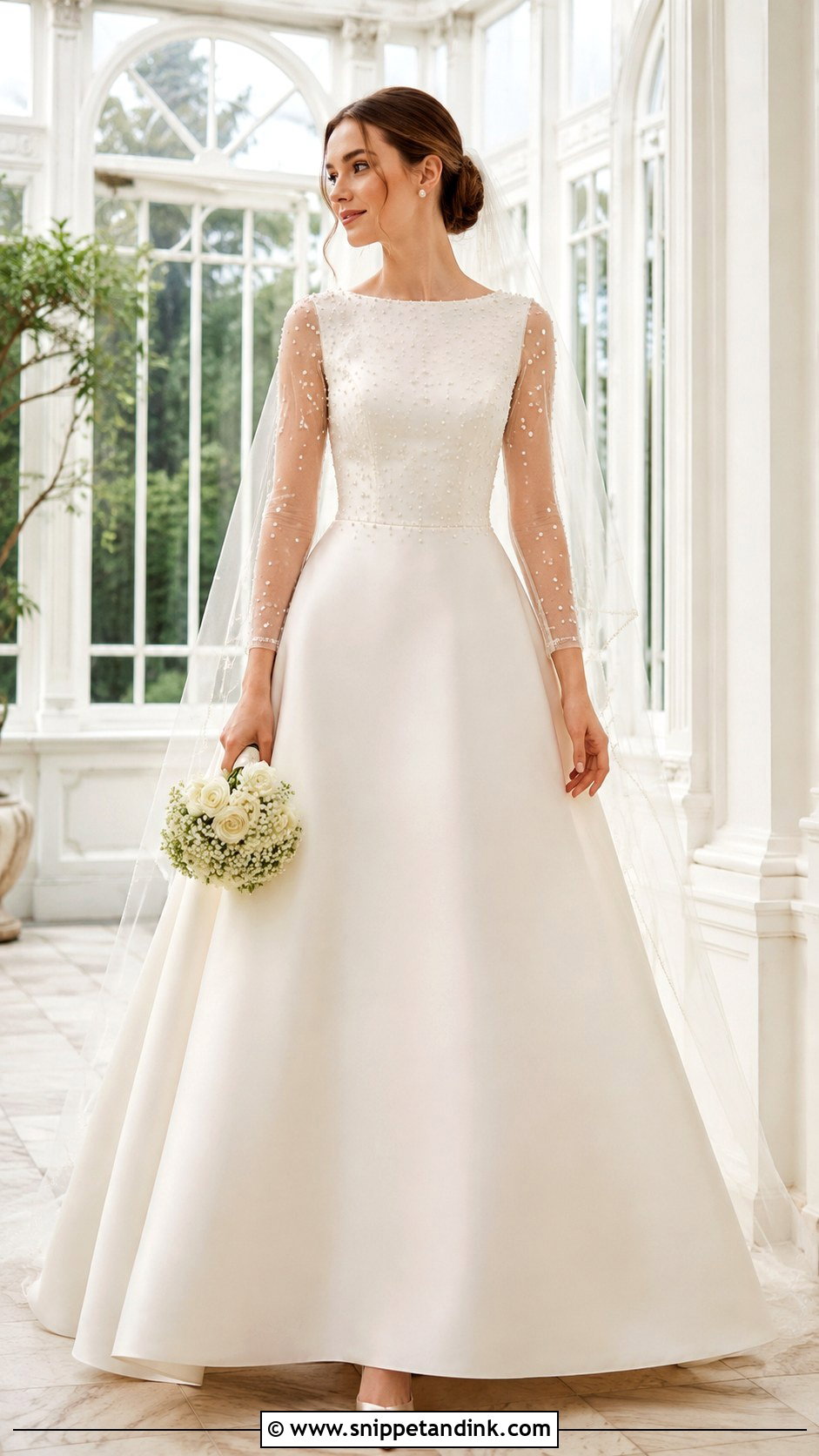
Under a camera flash, dense pearl work can read almost like glitter, which is why I steer brides toward pearls scattered along the bodice, neckline or sleeves instead of covering the gown top to hem. A simple A-line, column or fitted silhouette gives that texture a clean background. Plain satin heels and small pearl studs are all the jewelry it needs. A soft tulle veil with a light pearl border can echo the dress, but check that the pearl tones match; ivory and bright white pearls side by side look mismatched up close. Wear polished waves or a low bun depending on the neckline. Bright ballrooms and conservatories with neutral surroundings show it best.
10. One-Shoulder Wedding Dress
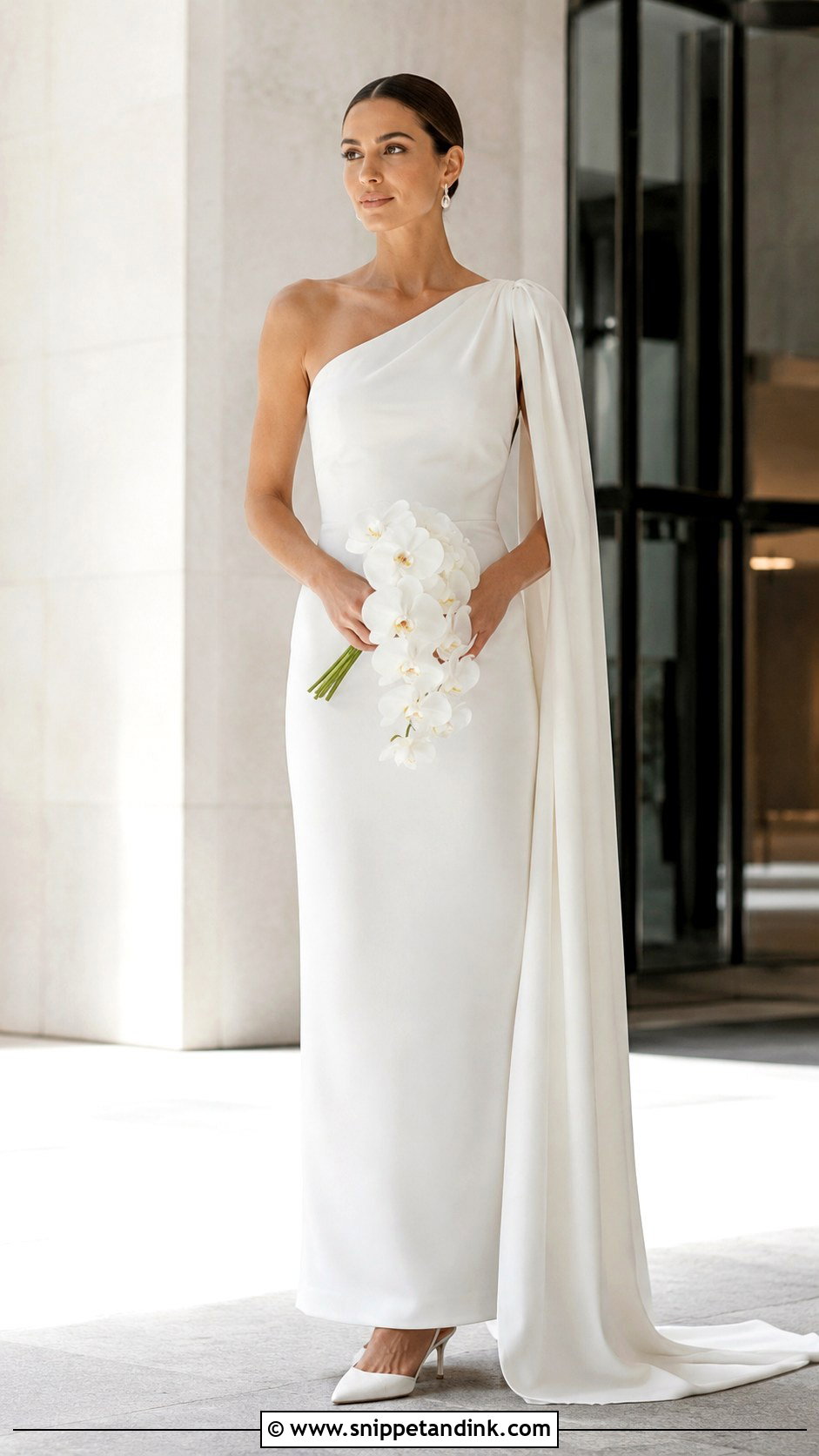
With one shoulder covered and the other bare, the whole outfit leans to one side, and I balance it with the hair: a low bun set toward the opposite shoulder. Smooth crepe, satin or mikado keeps the neckline the focus. A column reads sleek and urban, while a structured A-line gives more ceremony presence. Leave off the necklace, which would cut across the diagonal, and wear understated earrings, pointed slingbacks, a slim bracelet and white orchids. Rather than a standard veil, a detachable shoulder drape or plain tulle worn at the back of the head keeps the asymmetric line clear.
11. Lace A-Line Wedding Dress
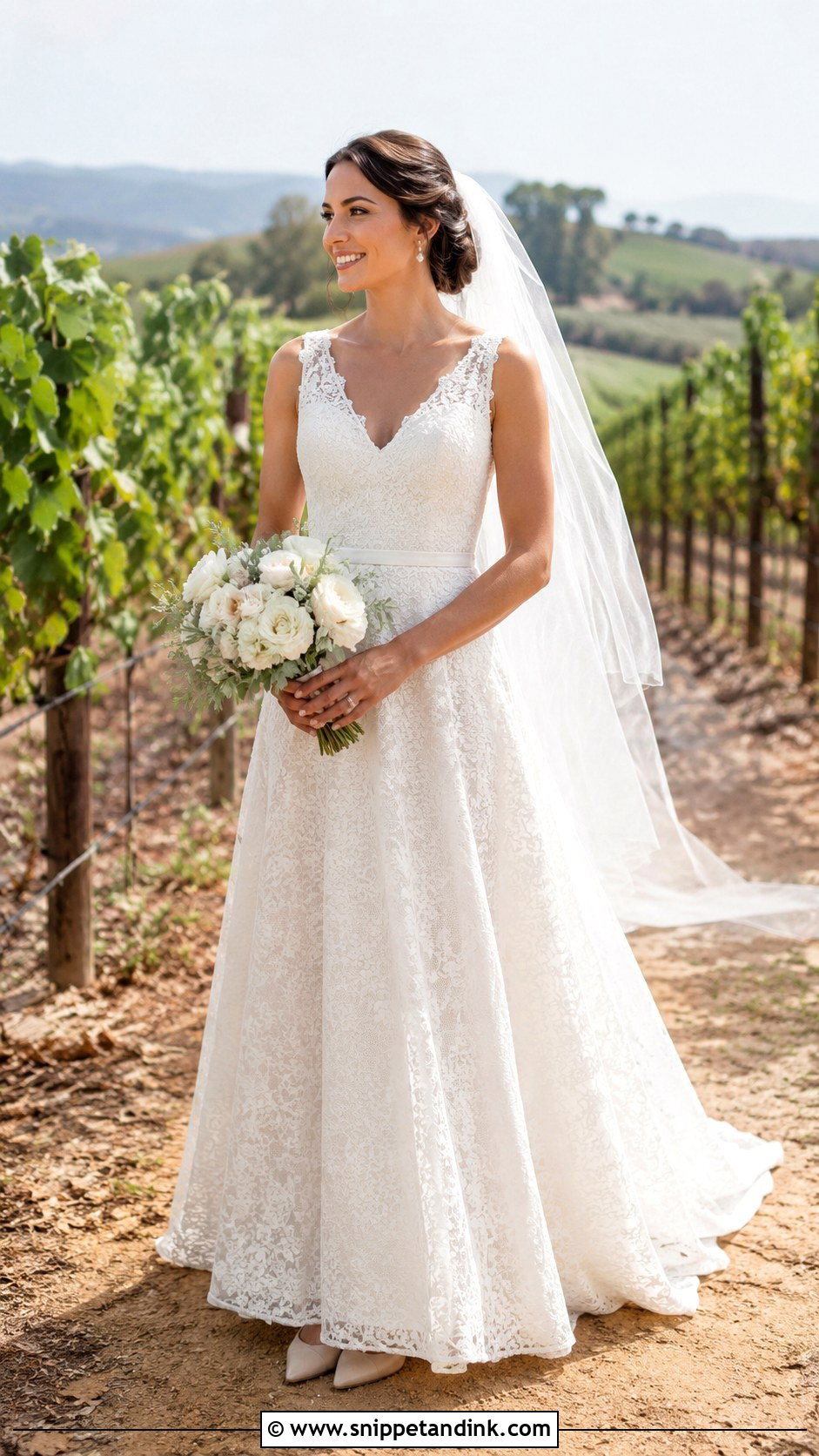
Lace varies more than most brides realise. An even, consistent pattern looks refined, while a crowded mix of motifs can look cheap even at a high price. I hold the lace up to daylight to see how the lining reads through it, and I prefer a lining close to the gown’s ivory or your skin tone. A V-neck or sweetheart bodice opens the upper body, and proper straps make several hours of wear much easier. Neutral ivory pumps, pearl earrings and a plain tulle veil, so lace isn’t fighting lace. Add a softly gathered bun and white garden roses. It moves happily between a garden ceremony, a vineyard and an indoor reception.
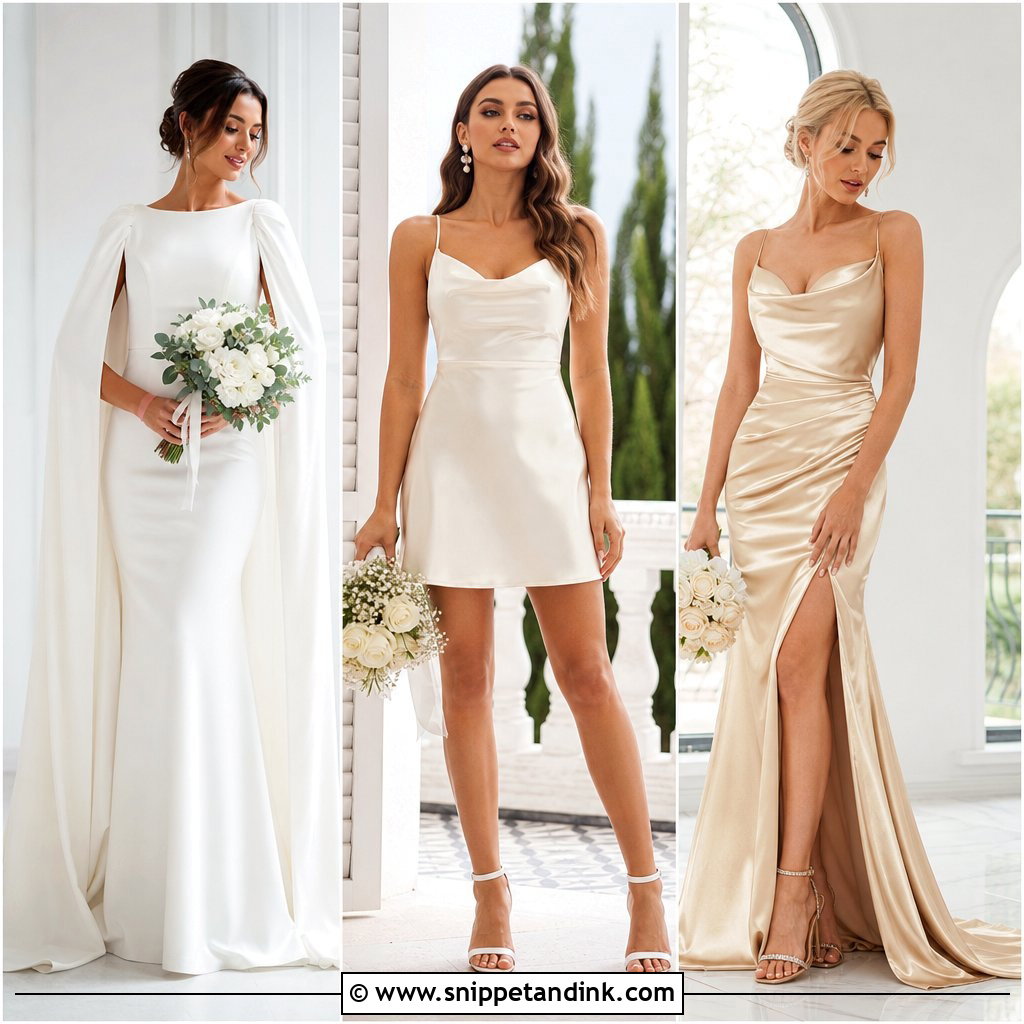
12. Silk Slip Wedding Dress
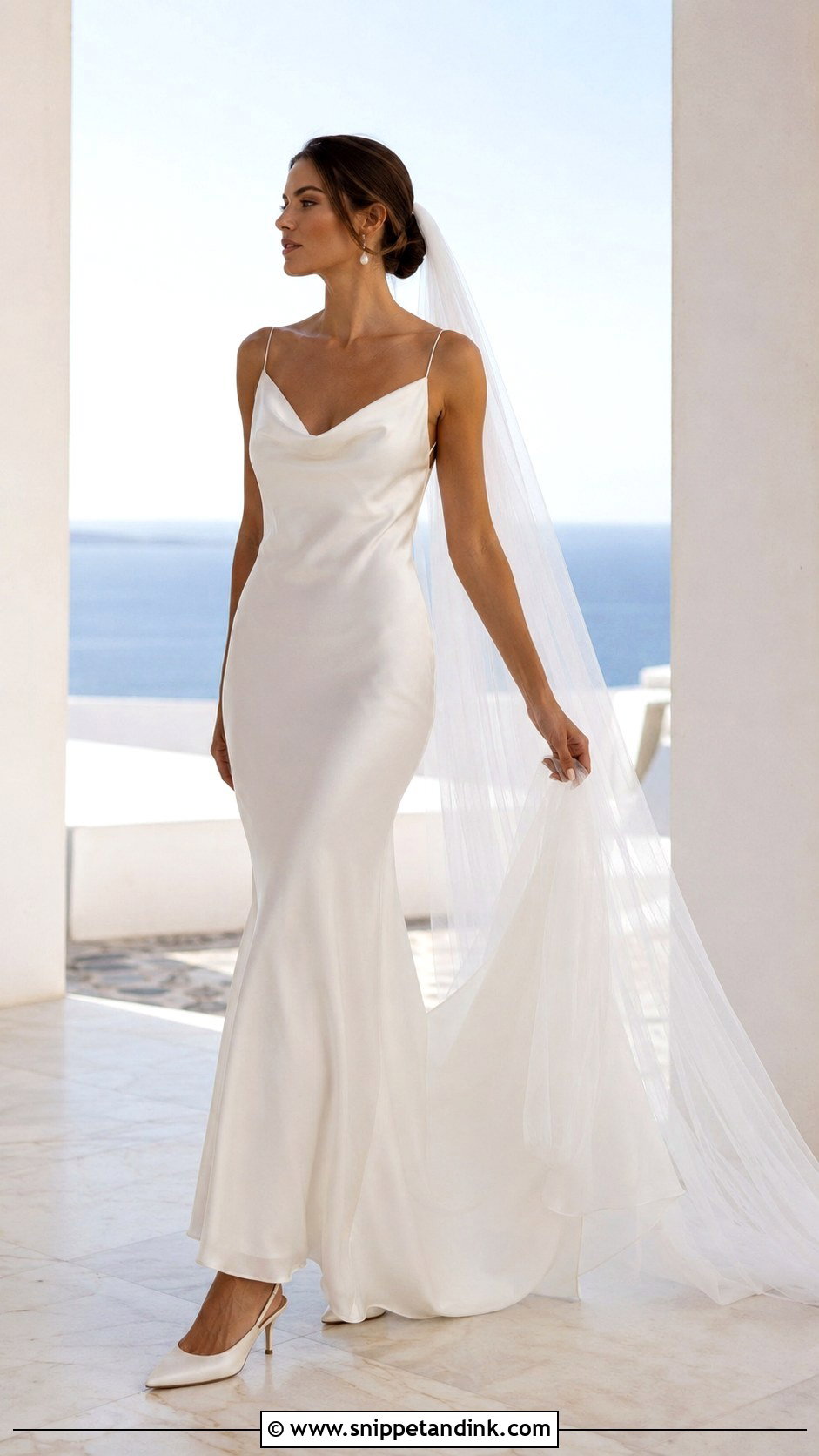
Slip dresses look simple and are among the hardest gowns to fit. A bias-cut slip should skim; if it pulls across the hips or waist, the fabric twists and diagonal drag lines appear. I usually size for the hips and take in everywhere else. A draped cowl adds movement, while a straight neckline feels more contemporary. Slim slingbacks, pearl drops and a long sheer veil give it ceremony length, with a neat bun or brushed waves. Thin silk offers no warmth at all, so for autumn or an evening by the sea, plan a tailored ivory coat or detachable cape. Intimate hotels, coastal ceremonies and destination weddings suit it.
13. Tea Length Wedding Dress
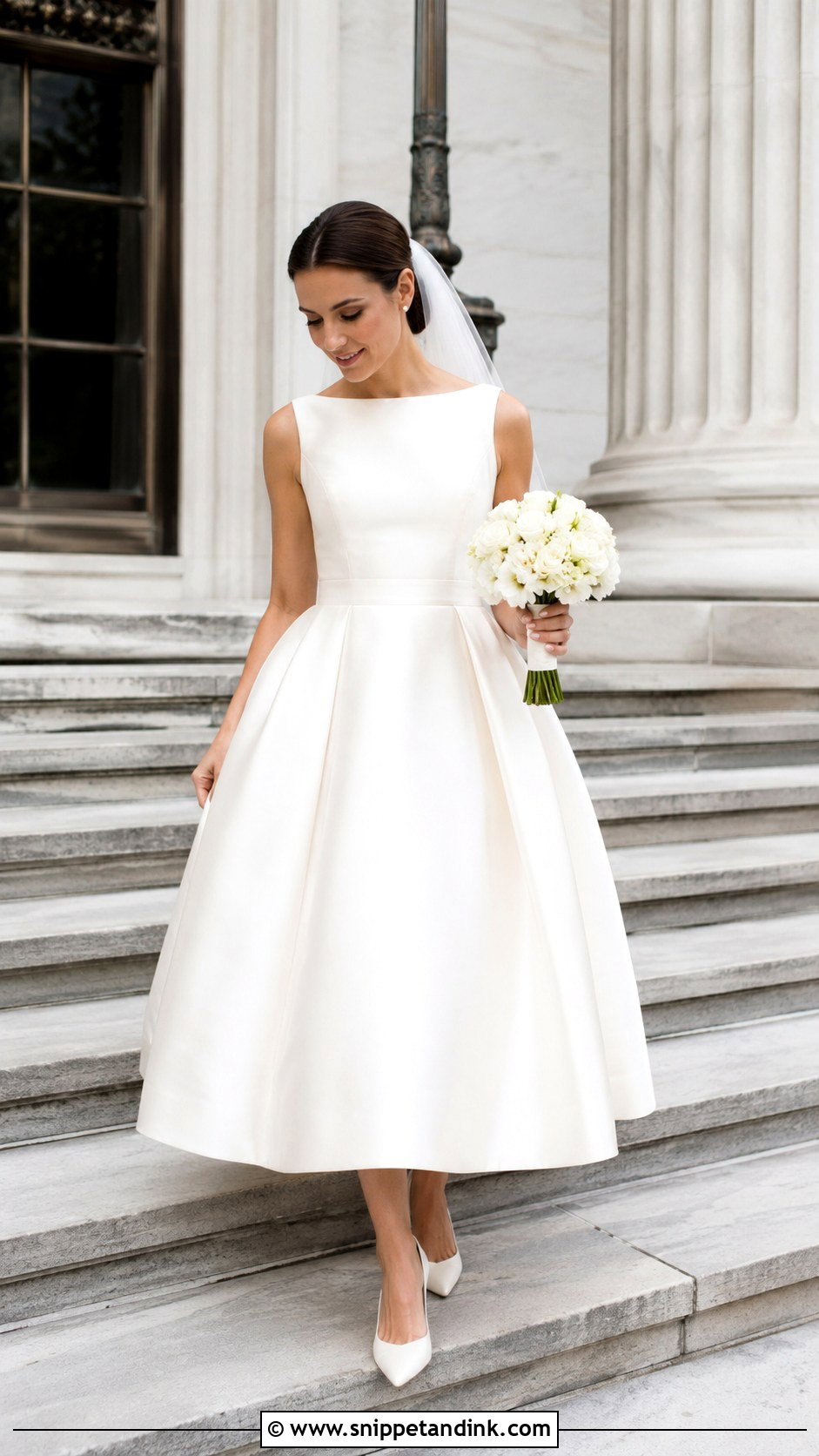
Tea length frees you from a train altogether. No bustle, no stepping on the hem, nobody carrying anything behind you. The skirt lands between knee and ankle, which puts your shoes on display. A structured satin dress with a fitted waist and gently full skirt is the classic version; if you want more swing, ask about a light petticoat, though too much net turns it costume-like fast. Pointed pumps, slingbacks or low ivory block heels, a short veil, pearl studs and a compact bouquet. Hair in a smooth bun or soft shoulder-length waves. Courthouse weddings, daytime receptions and restaurant parties suit it.
14. Cape Sleeve Wedding Dress
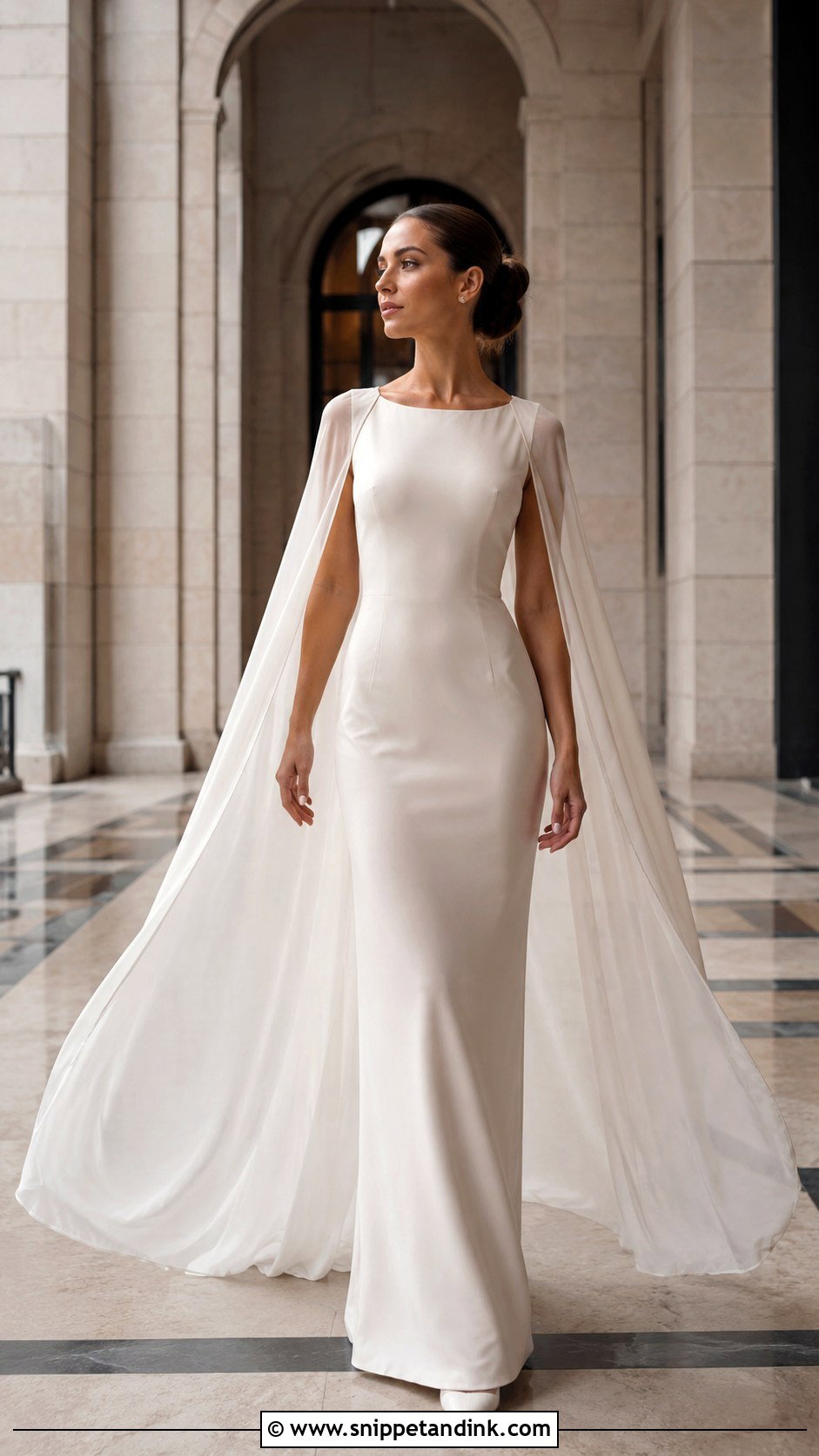
Layering is where cape looks get heavy, so I keep the gown underneath very plain: a clean column or A-line, then a sheer chiffon cape, a lace capelet or a floor-length detachable overlay. Check how it attaches. Clear snaps or thread loops at the shoulder seam stay invisible, while bulky hooks show through sheer fabric. Pointed ivory heels, small studs and a low bun let the cape fall smoothly over the shoulders. If the cape already trails into a train, you can skip the veil; a short blusher adds a traditional moment without a second long layer. Grand staircases and cool-weather ceremonies make the most of it.

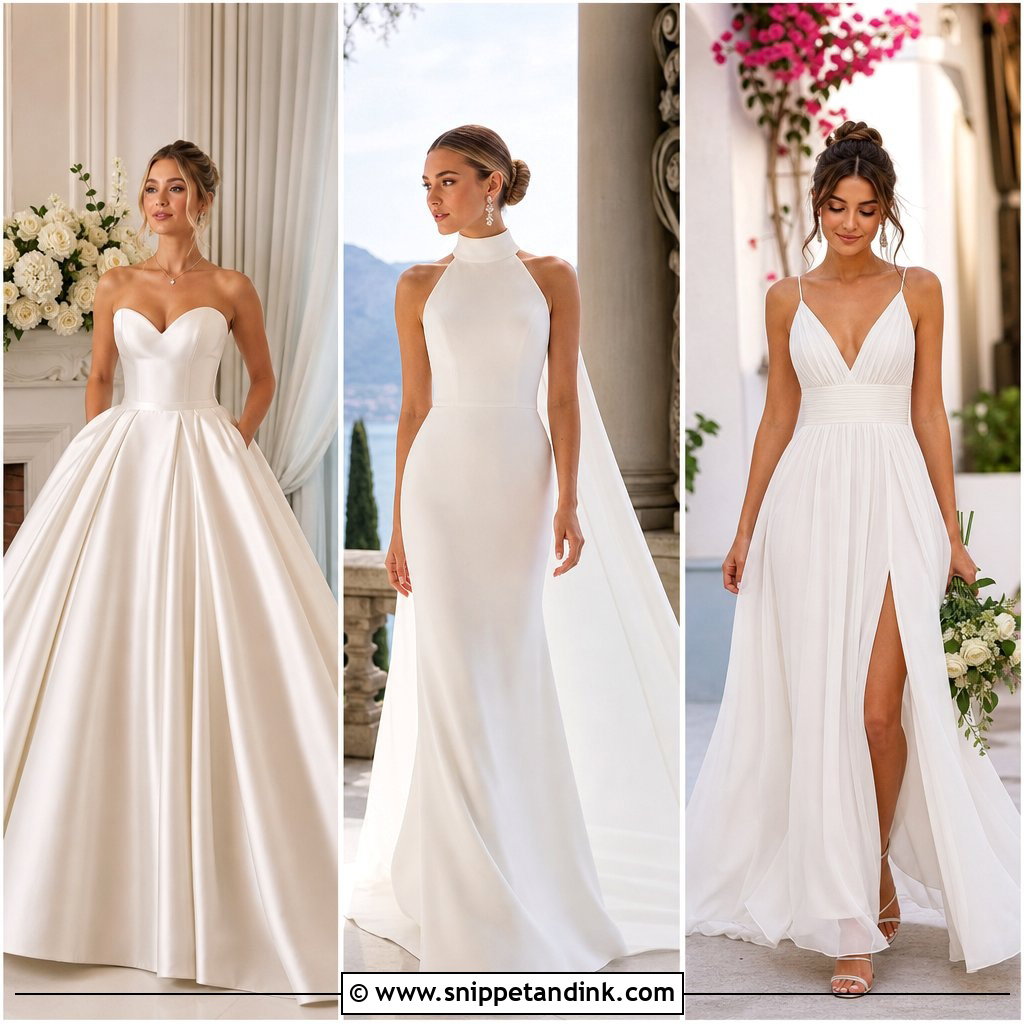
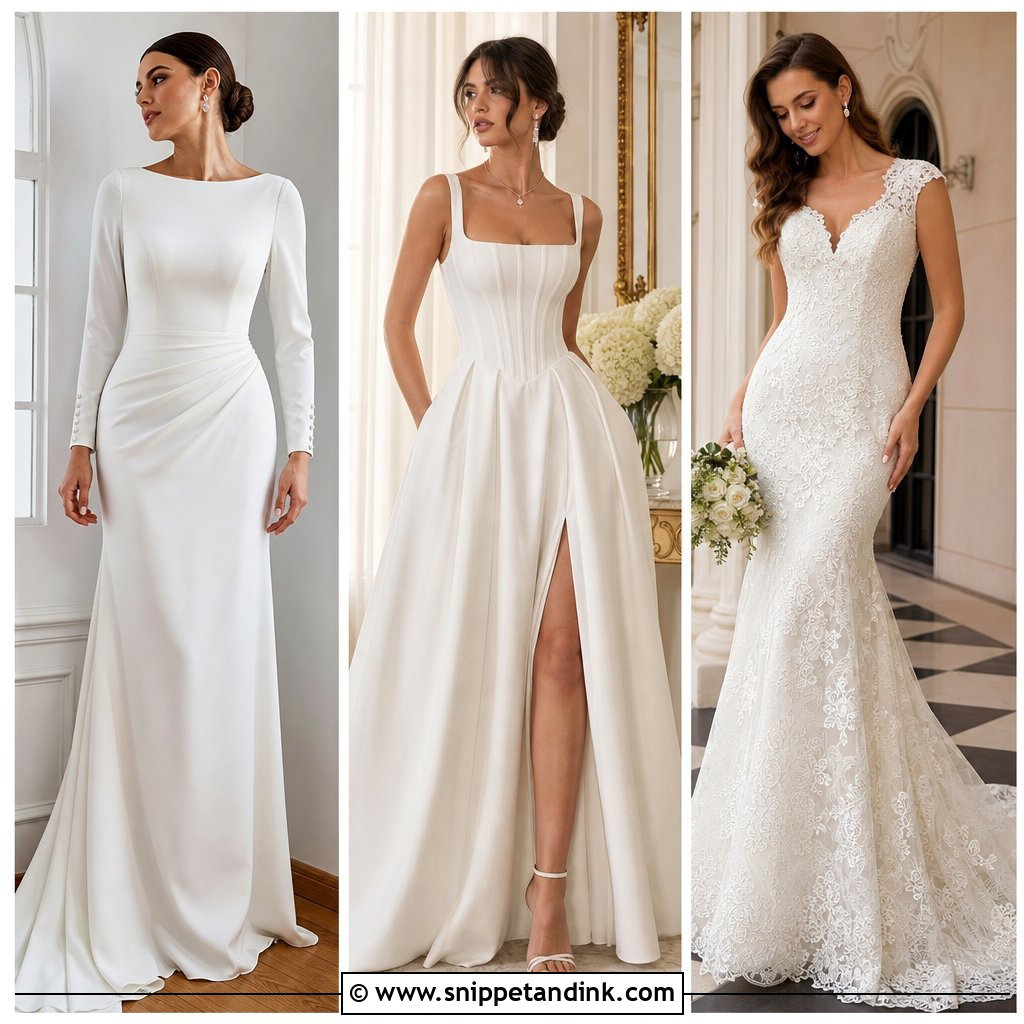
15. Sweetheart Neck Wedding Dress
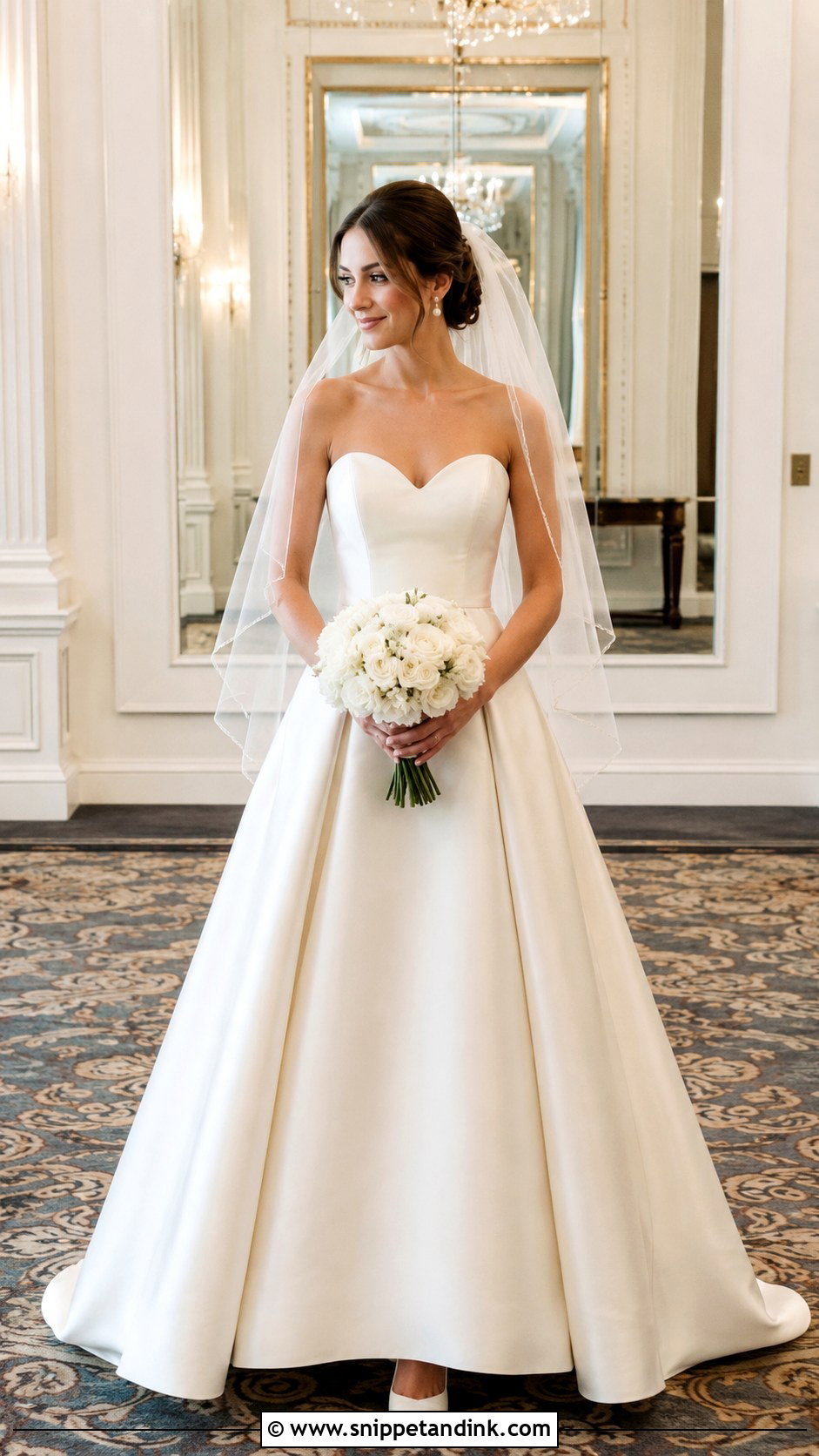
The curve of a sweetheart neck wedding dress softens a fitted bodice, and because it pairs with a structured A-line, ball gown or fit-and-flare skirt, the skirt decides how dramatic you go. The fitting point I care about is the center dip. It should sit flat against the breastbone; if it lifts away when you breathe in, the bodice needs taking in at the side seams. Smooth satin or restrained lace keeps it classy. A fine necklace that follows the curve works, though pearl or crystal earrings may be enough. Fingertip veil, closed-toe heels, a softly structured bouquet and a low updo finish it, and you shouldn’t be hitching it up all evening.
16. Boat Neck Wedding Dress
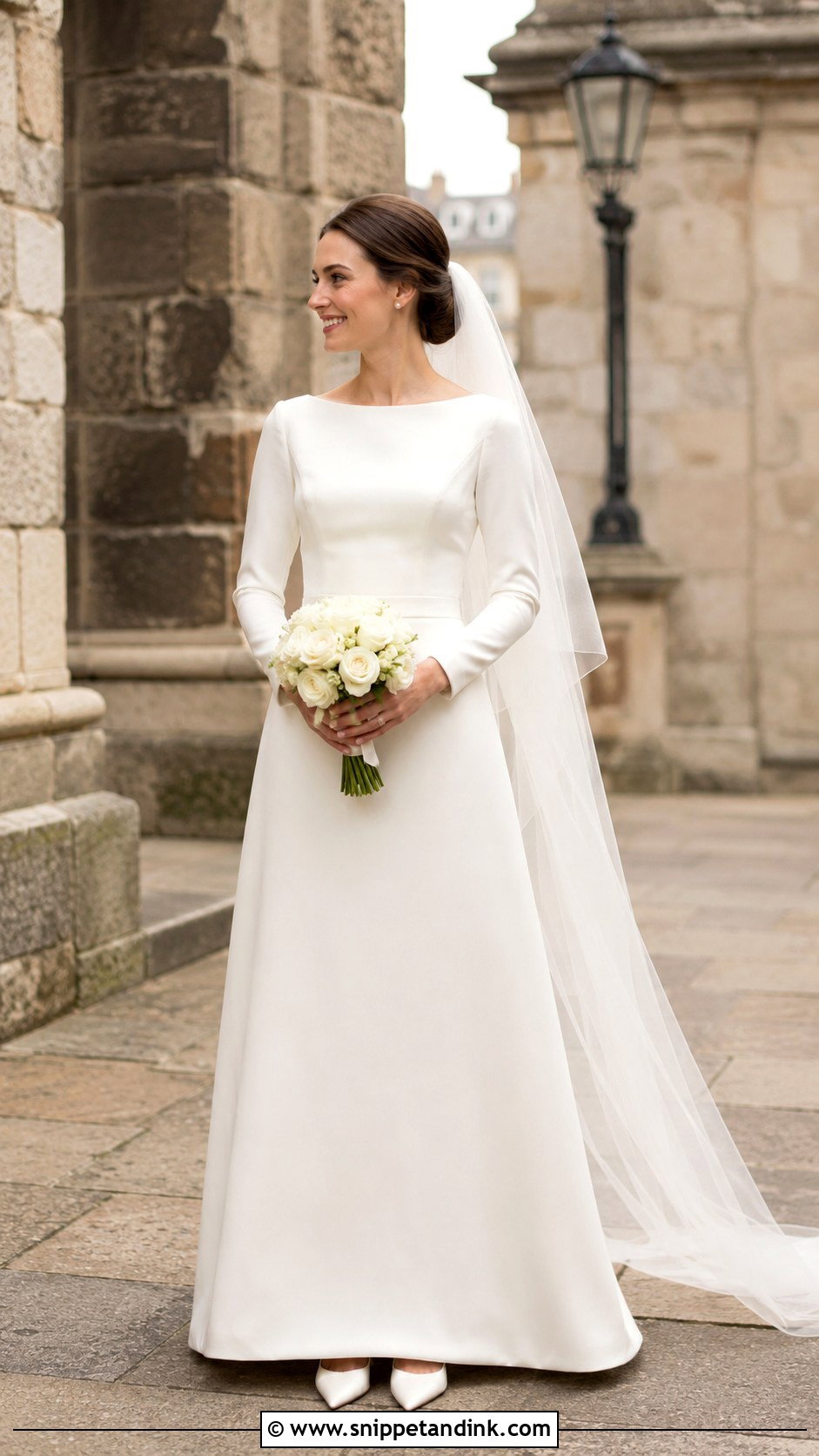
A boat neck wedding dress runs across the collarbone and sits fairly high, which makes it one of the easiest necklines for a ceremony that asks for modest coverage, particularly with long or cap sleeves. Crepe, satin or mikado keep that horizontal line crisp. With so little skin showing at the neck, I move the jewelry to ears and wrists: pearl studs and a fine bracelet. A classic chignon with the veil below it, pointed pumps or low kitten heels and a small bouquet of white roses complete it. Civil ceremonies, traditional hotels and historic properties suit its quiet formality.
17. Fit-And-Flare Wedding Dress
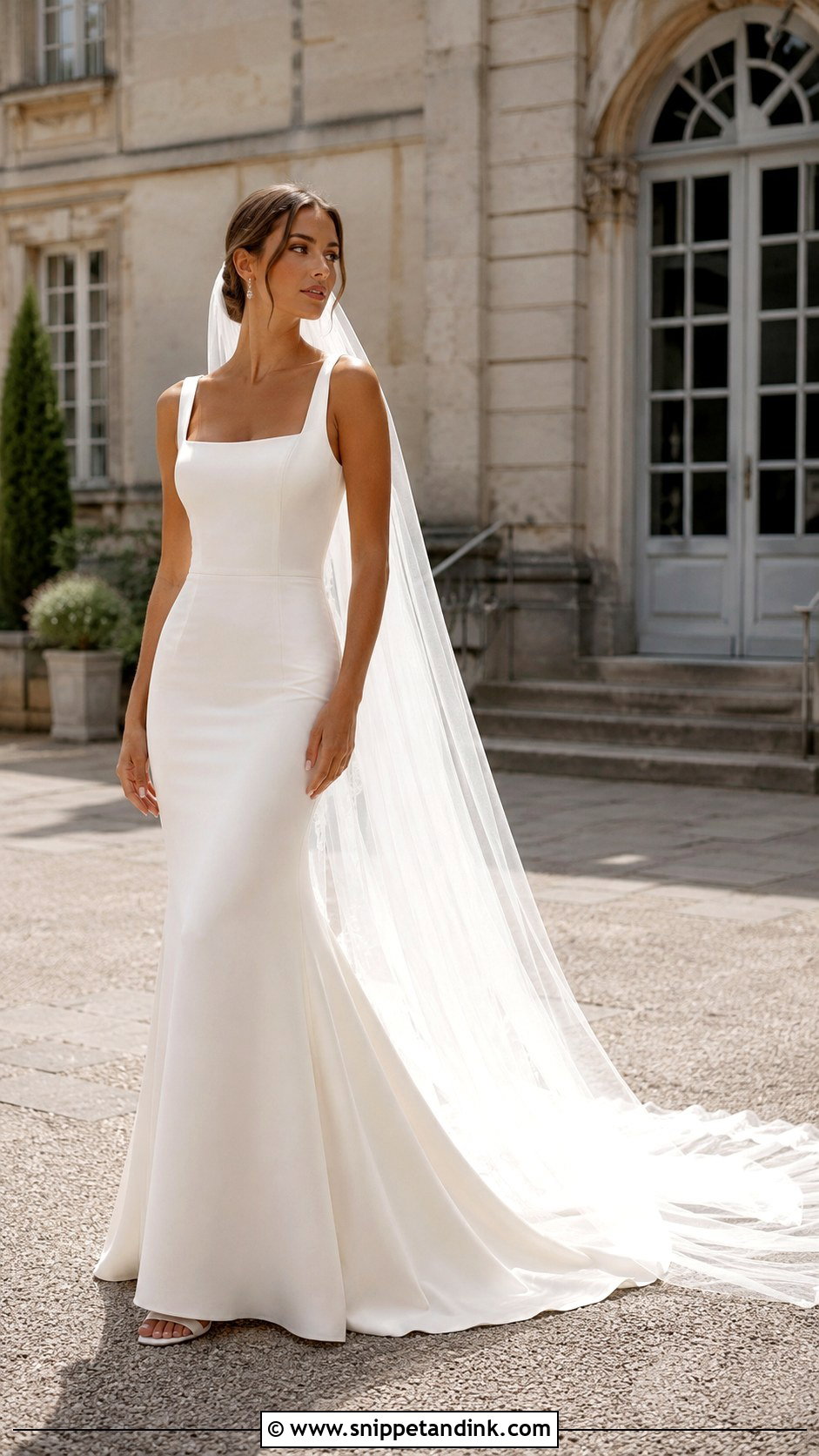
Think of fit-and-flare as the gentler cousin of the mermaid. It follows the bodice and hips, then widens gradually from around mid-thigh, so you get shape without the hobble. Crepe looks modern; lace feels romantic. What I measure is stride. Walk briskly across the fitting room, and if your knees hit the skirt, the flare needs to start higher. Slim block heels, a chapel veil, delicate earrings and a structured bouquet, with a low ponytail or bun to keep it polished. Have a bustle added during alterations so the train is off the floor for the reception. Ballrooms, estates and outdoor weddings on firm ground all suit it.
18. Floral Jacquard Wedding Dress
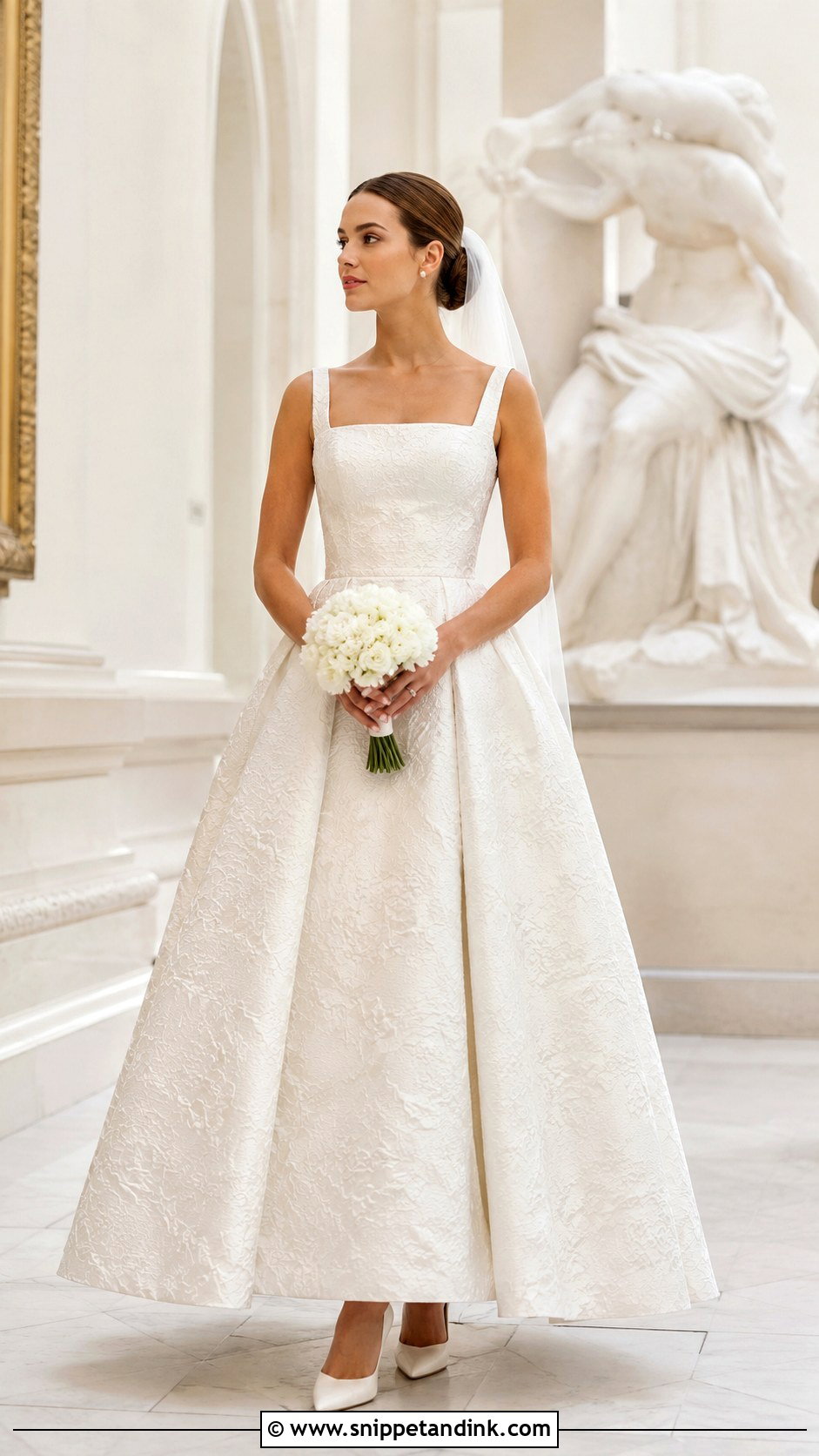
Jacquard is woven, not printed, so the flowers appear as raised texture in the same ivory and catch the light differently as you move. The motif needs space to read, which is why it looks strongest on a structured A-line or ball gown skirt. The weave is dense and fairly warm, too. I’d think twice about jacquard for a July garden wedding and happily recommend it for a winter estate. Keep the rest plain: pearl studs, ivory pumps, a plain tulle veil and a neat updo, so your hair doesn’t compete with the pattern. Simple white flowers with little greenery suit it. Museums and grand formal rooms are its natural setting.
19. Detachable Overskirt Wedding Dress
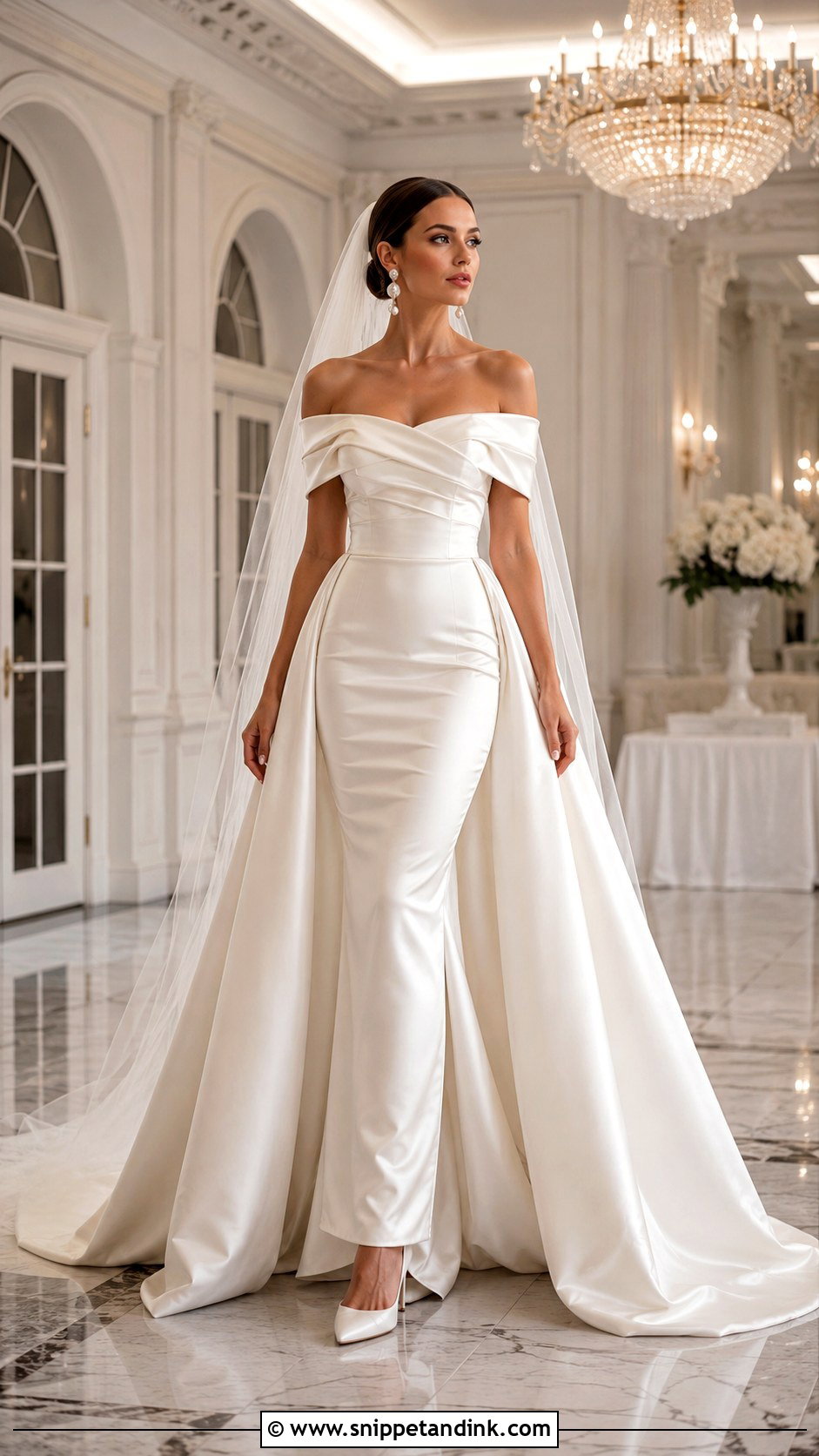
Here’s the appeal: two looks with no outfit change. A fitted crepe or satin gown sits underneath, and a full overskirt adds volume and a sweeping train for the ceremony. Remove the outer layer for the reception and you’re in a sleek dress that’s easy to dance in. Waist bulk is the thing I check. The overskirt’s band should lie flat over the gown without a ridge, and it should come off in a minute or two with hooks or a hidden zip, not a long row of buttons. Pointed pumps, statement earrings and a long plain veil for the ceremony; afterwards, swap the veil for a pearl comb or a structured bow. It makes most sense when ceremony and reception feel very different.
20. Bow Back Wedding Dress
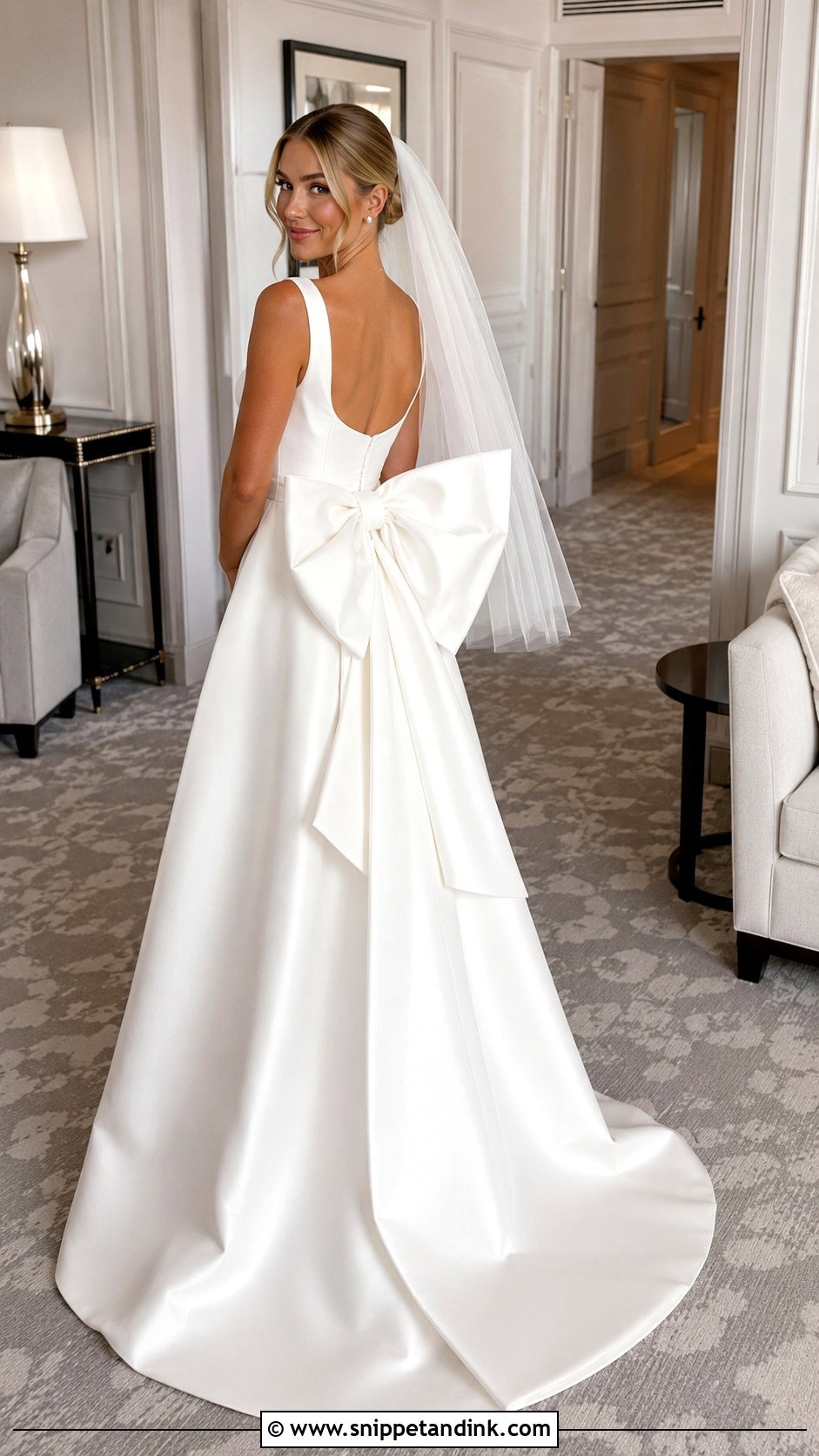
A bow gives guests something to look at during a long ceremony, while the front stays clean. Look for a structured satin A-line, column or ball gown with a detachable or well-proportioned bow at the waist or upper back. Satin bows lose their shape when crushed, so I ask the seamstress to add light interfacing inside the loops; otherwise they flatten after an hour in a chair. With a big bow, keep the veil plain and the jewelry minimal: pearl studs, pointed ivory heels and a smooth chignon. Ask your tailor to plan the bustle around the bow so lifting the train doesn’t bury it. Formal hotels and classic ballrooms suit it.
Where the Money Shows in a Luxe Look
Brides often assume a luxurious look needs the most expensive dress. What reads as expensive in person and in photos is mostly care and finishing, and plenty of it costs little.
Spend here
- Alterations. A mid-priced gown fitted precisely looks richer than a designer gown that pulls at the seams.
- Foundation garments. The right bra and smooth shapewear change how every fabric on this list falls.
- Steaming on the morning. Travel creases are the quickest way to make satin look cheap.
Save here
- Jewelry. Pearl studs or simple drops suit almost every gown above.
- The veil. Plain cut-edge tulle usually costs less than lace-trimmed and often looks more modern.
- Shoes under a floor-length skirt. Nobody sees the label, but you’ll feel every hour of a bad fit.
One detail people miss is matching the ivories. A bright white veil beside an ivory gown makes the dress look yellow, and an ivory veil beside a white gown looks dingy. Ask the salon for a fabric swatch and carry it when you shop for the veil, shoes and gloves.
Confident in It, Not Costumed by It
A luxe bridal look depends less on price than on support, ease of movement and a few personal details. The gowns above take in romantic lace, minimalist crepe, structured satin, asymmetric necklines and detachable pieces. Use your venue, season and formality to cut the list down, then look at how neckline, waist, skirt, shoes, veil, jewelry and hair work as one outfit. Bring the right underwear and shoes of the same heel height to every fitting, and practise sitting and walking before the final alterations. The right gown is the one you stop adjusting in the mirror, and you’ll notice that moment when it comes.
You'll Like These Ideas:









Leave a Reply