
Classy elegant wedding dresses rarely rely on decoration. What makes a gown look expensive in a bridal salon mirror, and still look right in photos twenty years later, is mostly three things: the fabric, how well it’s fitted through the waist and shoulders, and restraint in everything you add to it. Satin, crepe, lace, mikado, chiffon and organza each behave differently on the body, and much of my job in a fitting room is explaining those differences before a bride falls for a picture. The twenty five dresses below run from a plain crepe sheath to a full mikado ball gown, and for each one I’ve noted what I’d check, who it suits and where it tends to go wrong.
Fabric Decides More Than the Silhouette Does
Brides tend to shop by shape, A-line or mermaid, but in my experience the fabric is what decides whether a dress looks elegant by the end of the night. The same A-line reads completely differently in satin than in chiffon. Here’s how the fabrics in this list actually behave once you’re wearing them:
- Satin has a sheen that catches light and shows creases, especially across the lap after sitting. Heavier duchess satin creases less than thin polyester satin.
- Crepe is matte and drapes close to the body. It hides almost nothing underneath, so fit it with your real shapewear.
- Mikado is stiff and holds a sculpted shape on its own. It suits structured gowns but adds weight.
- Chiffon is light and moves in a breeze. It snags easily and is hard to repair.
- Organza is crisp and sheer, giving volume without weight, but it crushes in cars.
- Lace varies hugely in quality. Look at the lining and the edge finish, not just the pattern.
When a bride is torn between two dresses, I ask her to scrunch a corner of each fabric in her fist for a few seconds and let go. How it looks then is roughly how it’ll look after the ceremony and dinner.
1. Satin A-Line Wedding Dress
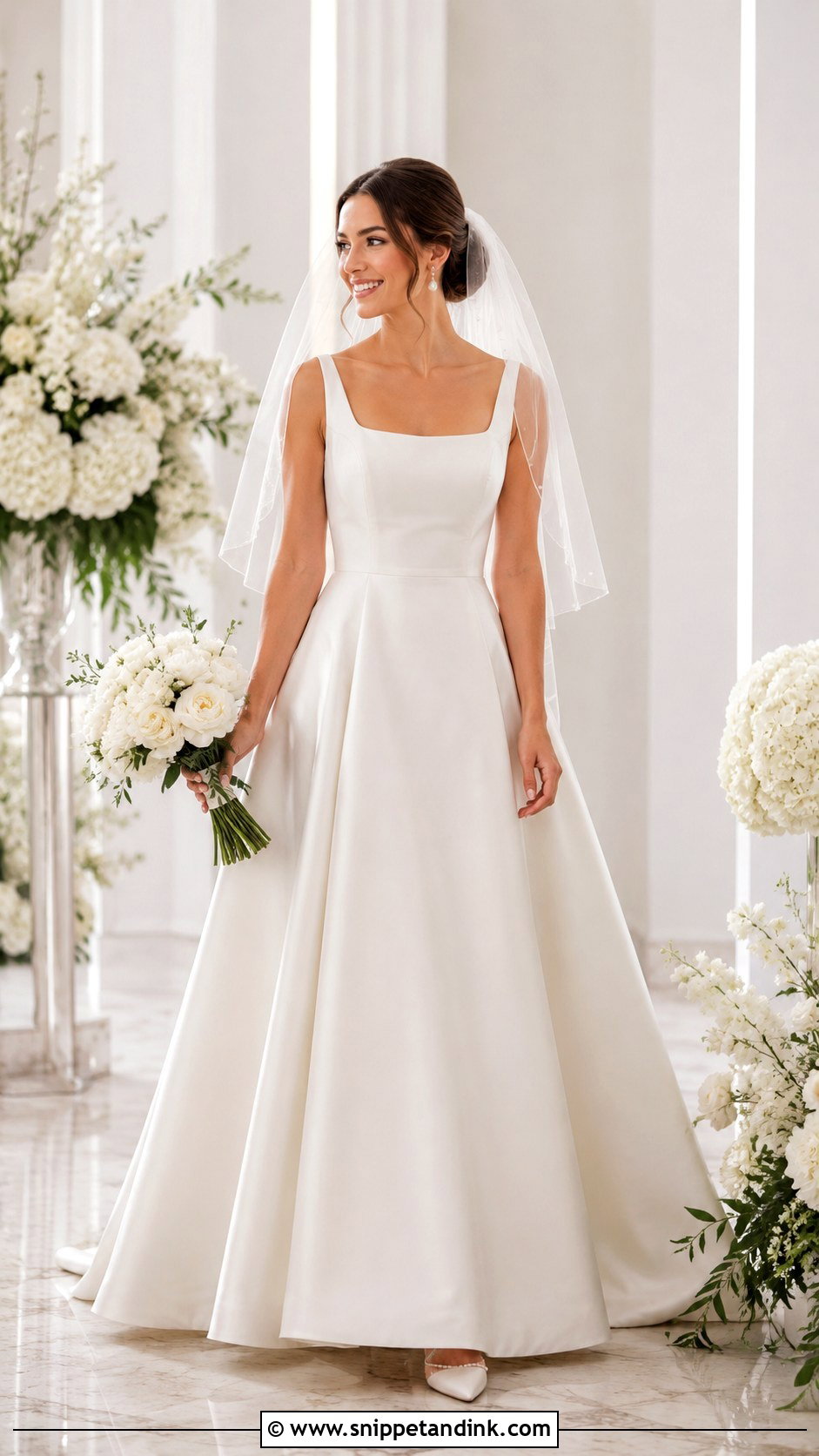
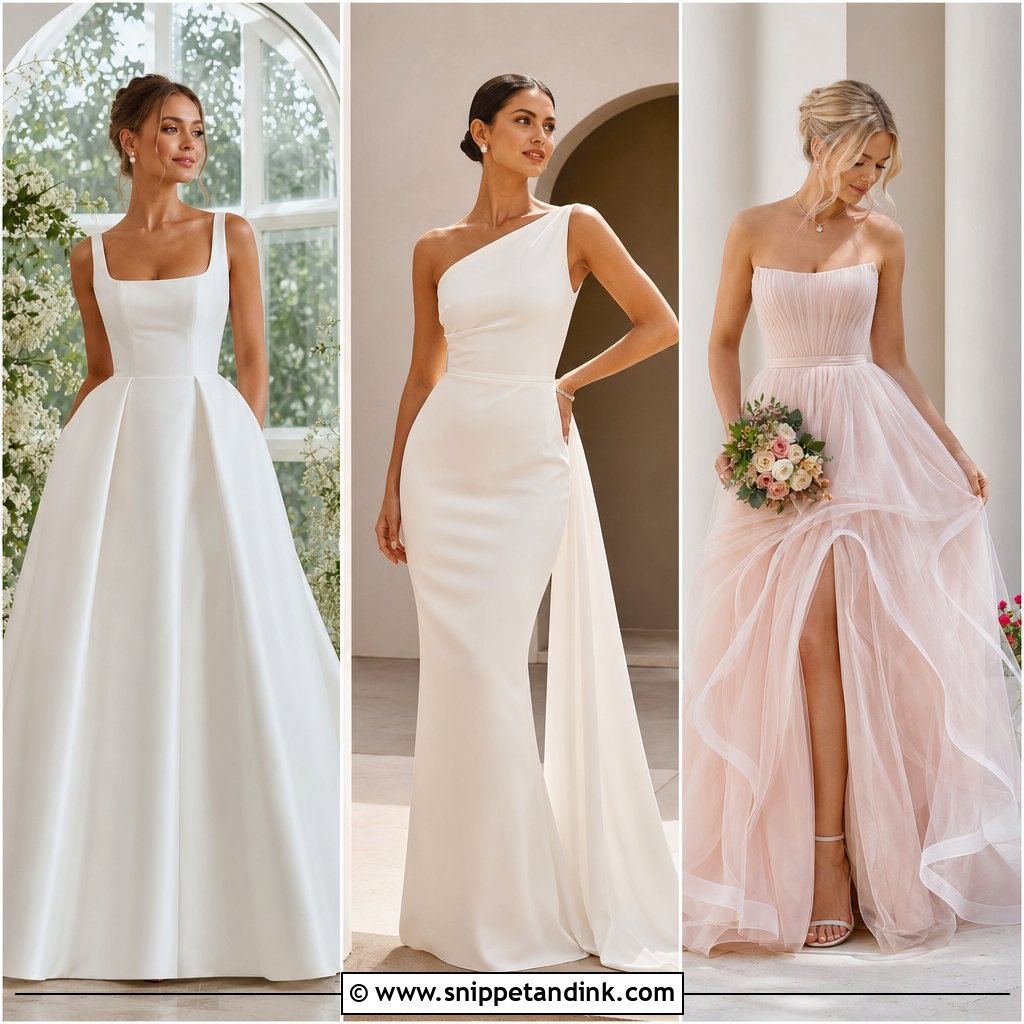
If a bride walks in unsure what she wants, a satin A-line is usually the first dress I pull. It flatters most figures because the skirt skims the hips rather than clinging to them. Ivory or soft white satin with a square, scoop or sweetheart neckline keeps it classic. What I watch for is the seam where bodice meets skirt: on a cheaper satin it puckers slightly, and satin’s shine picks up every ripple. Pointed satin pumps, pearl drops and a low bun suit it. A fingertip veil keeps the mood gentle, a cathedral veil makes it formal. Keep the bouquet to white roses, ranunculus or orchids so the sheen of the fabric stays the main event.
2. Long Sleeve Lace Wedding Dress
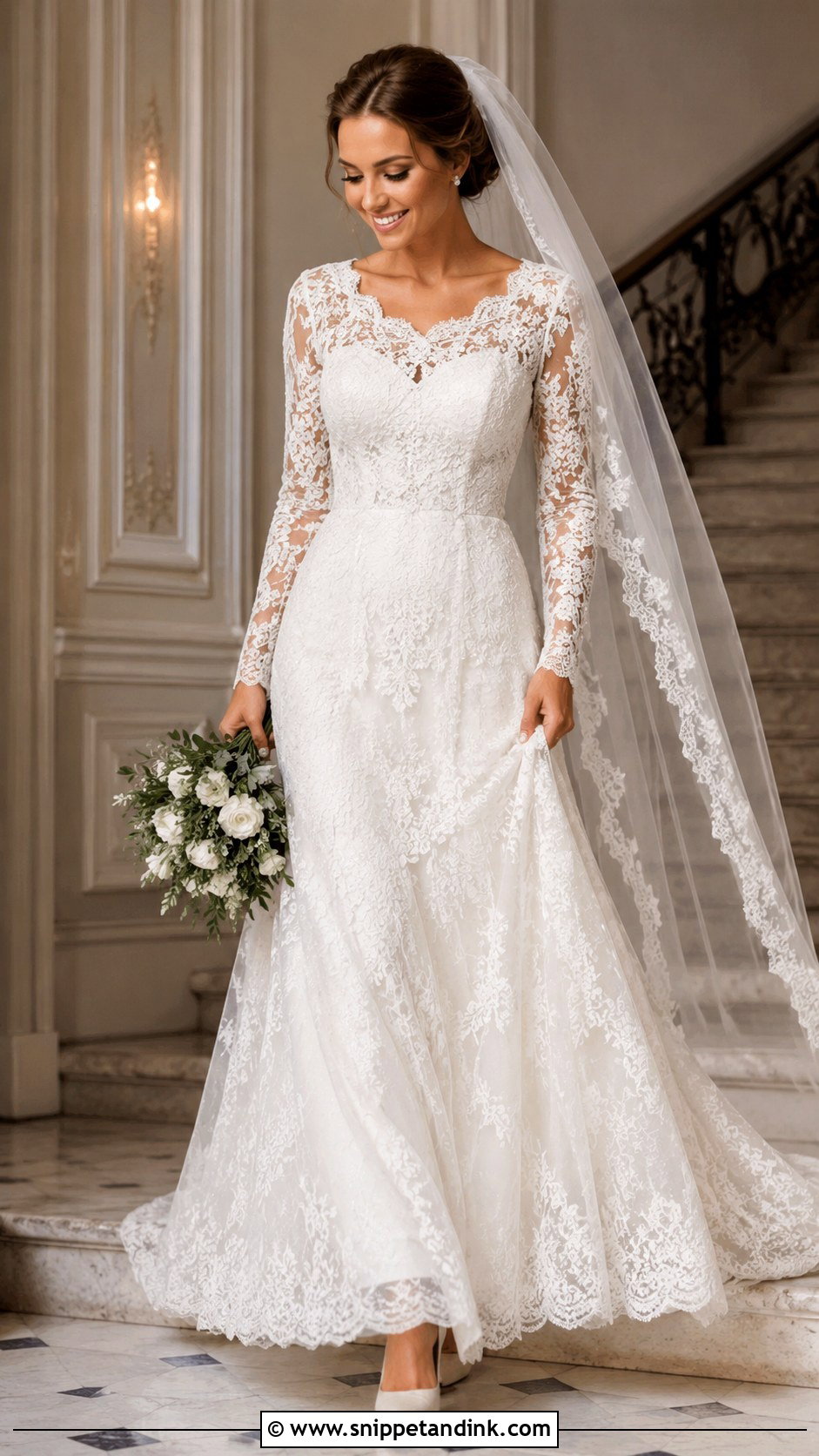
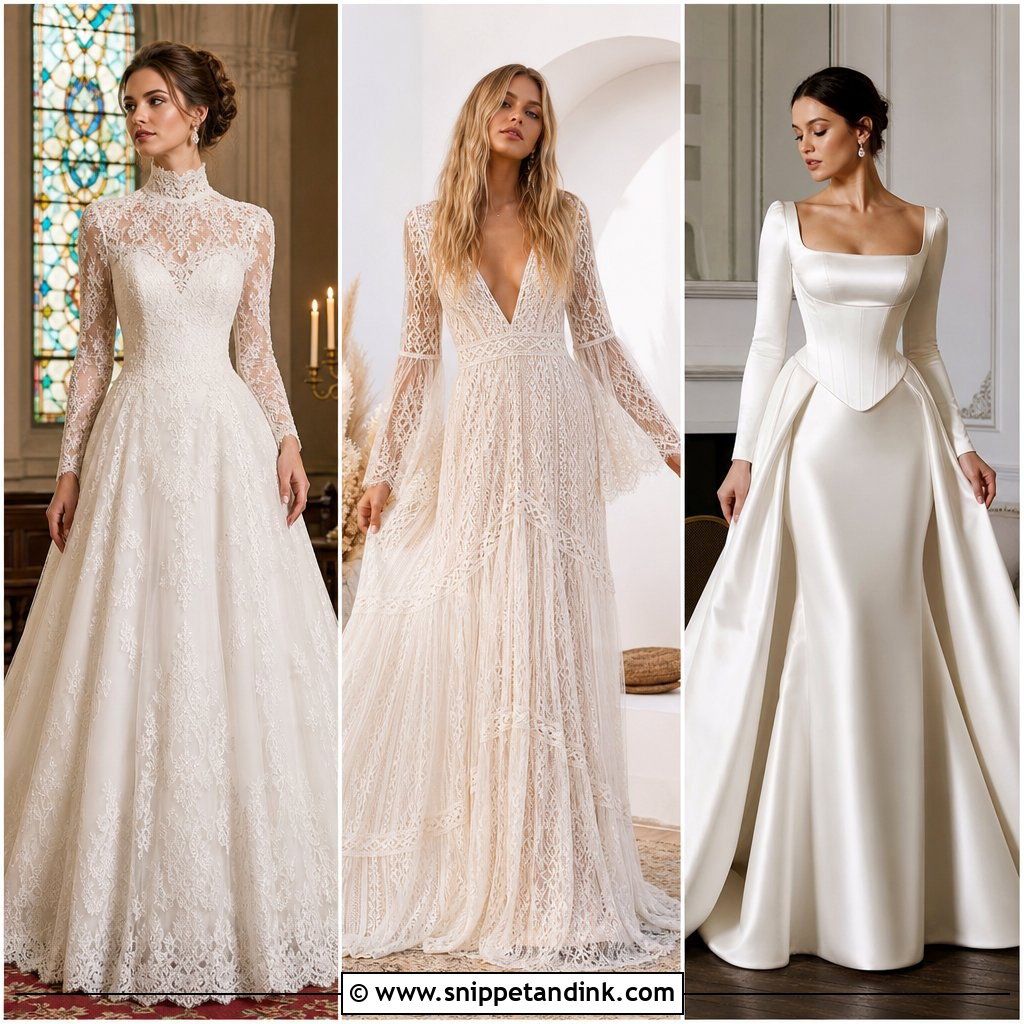
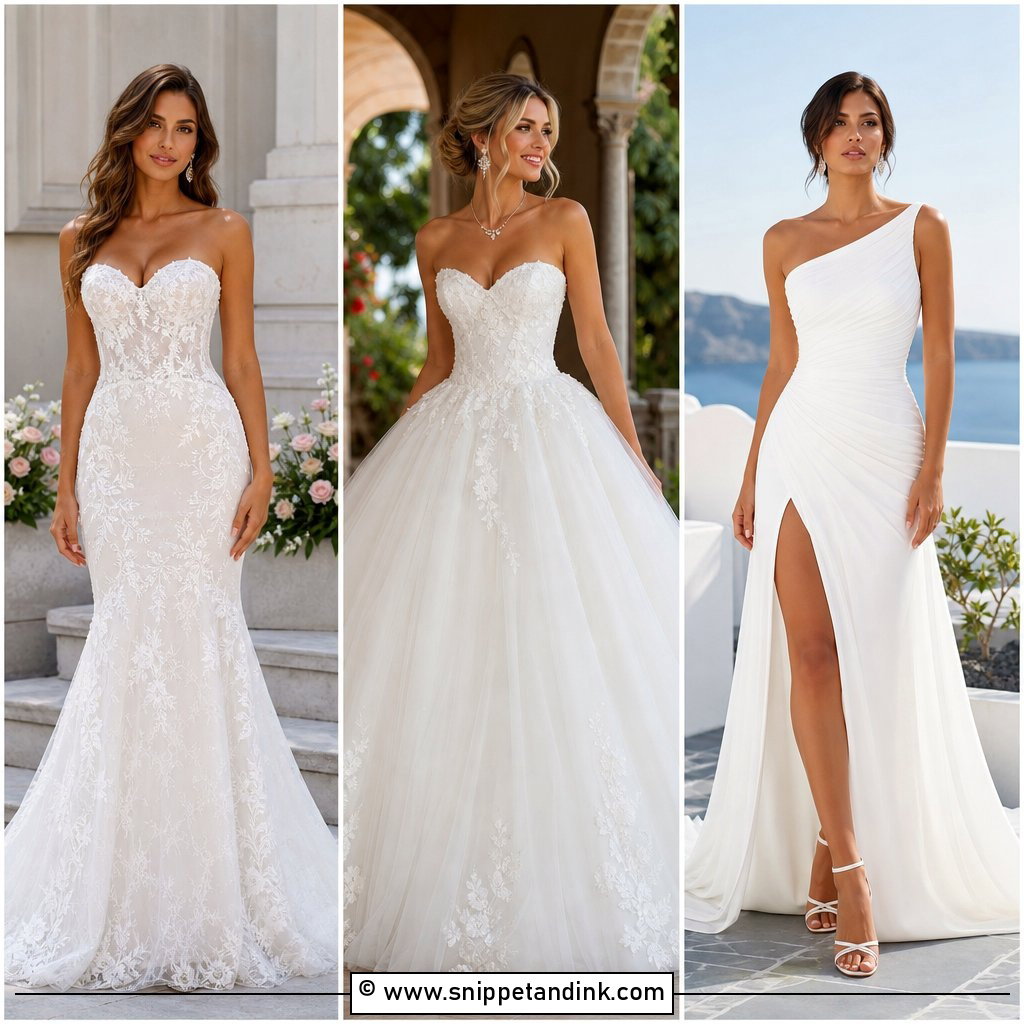
Lace sleeves give coverage without weight, but the fit of the sleeve itself is where I spend the most time. Sheer lace sleeves need a little ease at the elbow or they’ll pull when you lift a glass or hug someone, and they’re tricky to alter once the lace motifs are cut. A fitted bodice and a skirt with some movement balance the covered arms. Fine floral lace and covered buttons down the back keep it refined. Pearl studs, a delicate bracelet and ivory heels are enough jewelry. Wear the hair in a soft updo or half-up so the neckline isn’t hidden. Heavier lace suits autumn and winter, lighter lace spring.
3. Crepe Sheath Wedding Dress
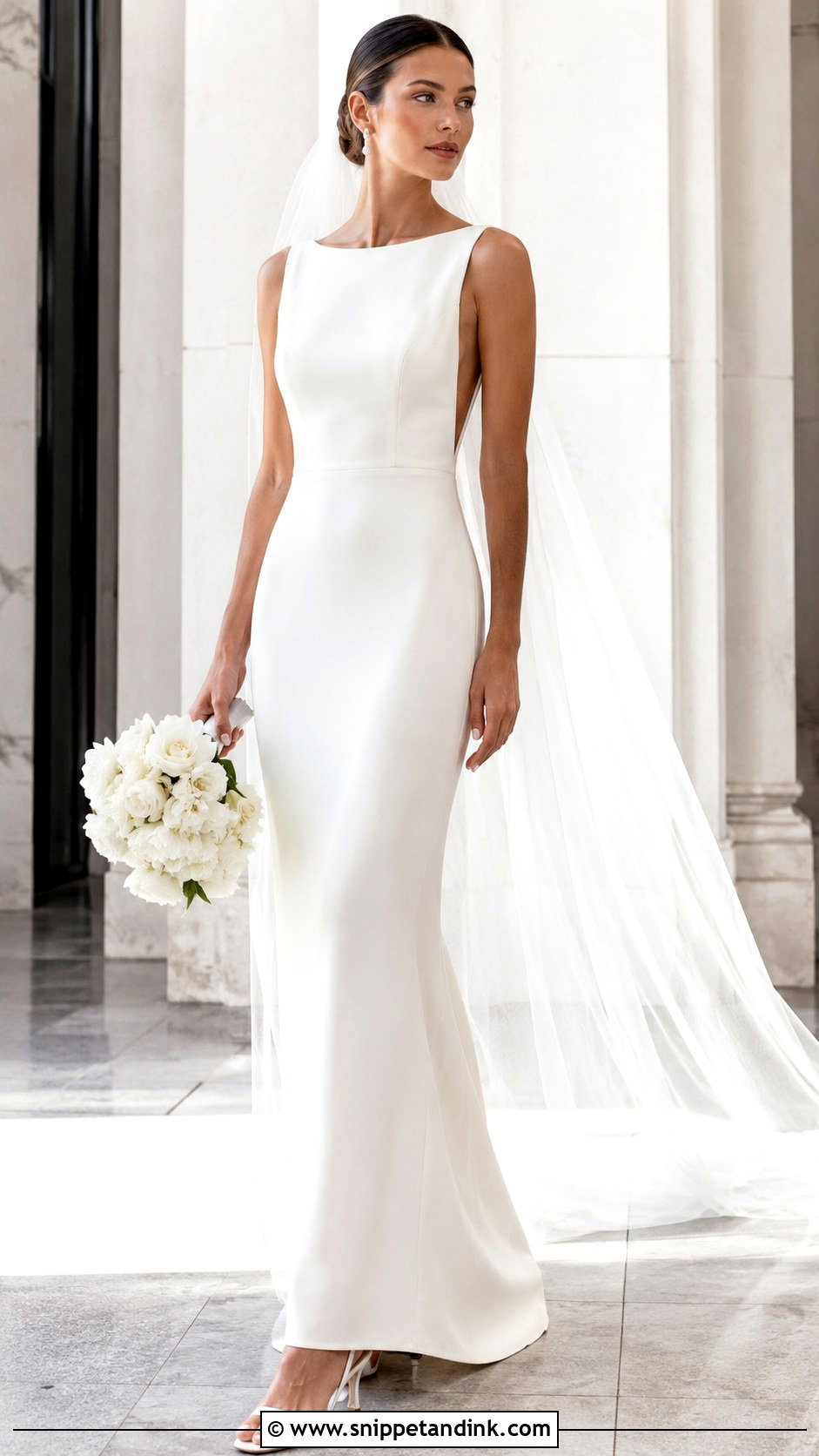
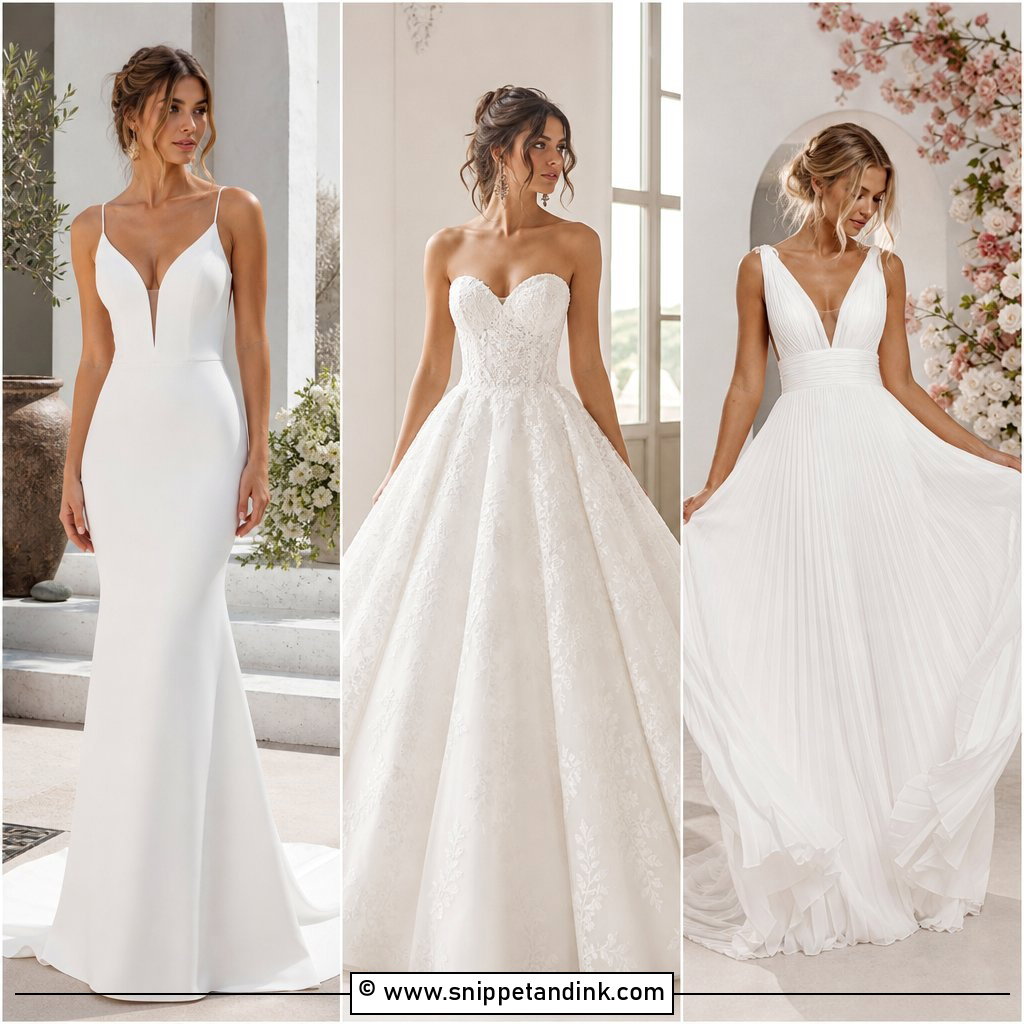
Crepe is the most honest fabric in bridal: it hides nothing, so a crepe sheath wedding dress shows the shape of whatever you wear underneath. I always fit one with the exact shapewear or smooth no-line underwear the bride plans to wear, never a fitting-room sample. The payoff is a long, clean line that suits modern venues and minimal styling. Bateau, V and square necklines all work. Slingbacks, a sleek veil and small diamond or pearl earrings keep it pared back, and a structured bouquet of calla lilies or tulips matches the dress’s architecture. City weddings, rooftops and modern receptions are its natural setting.
4. Off The Shoulder Wedding Dress
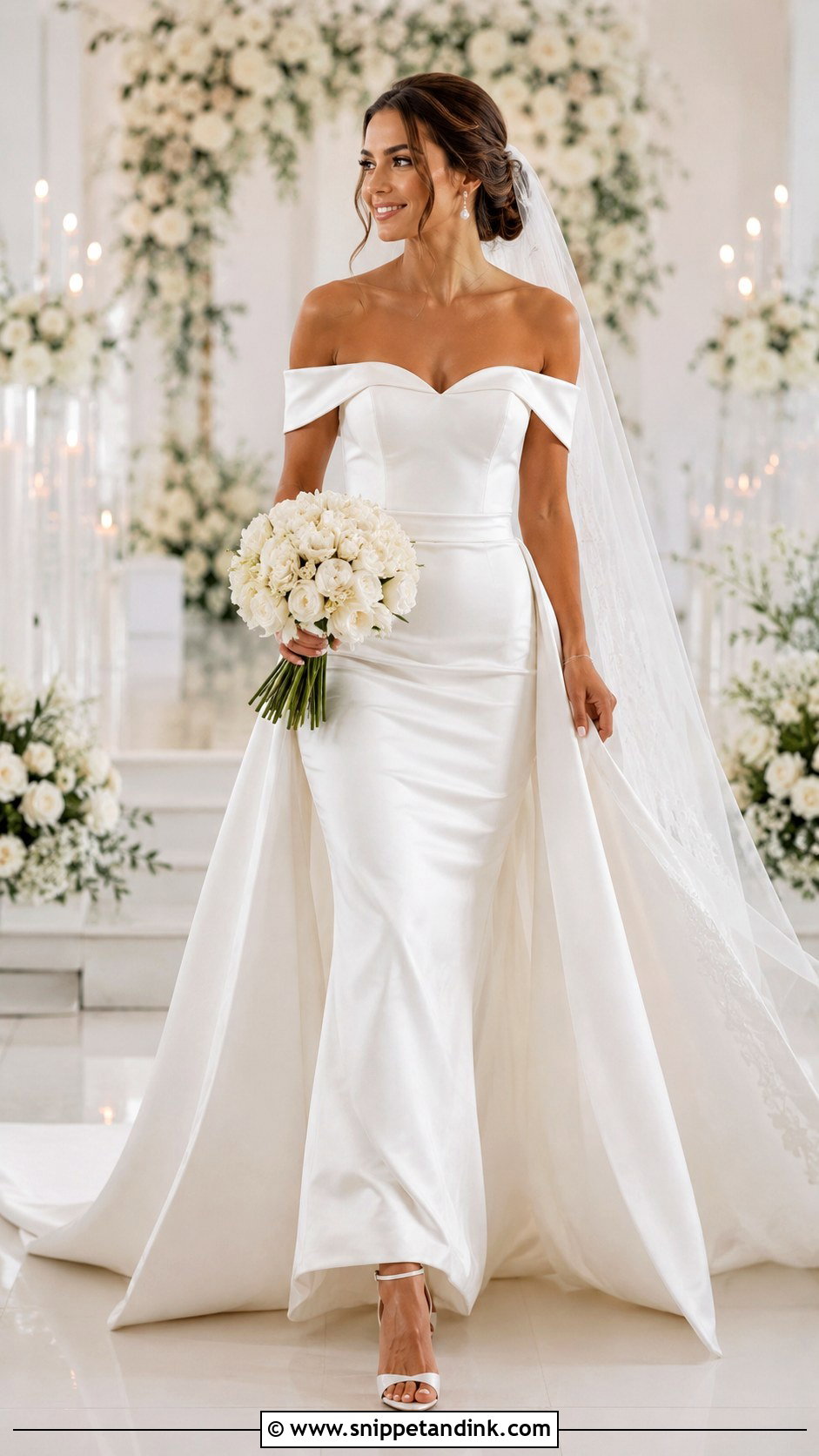
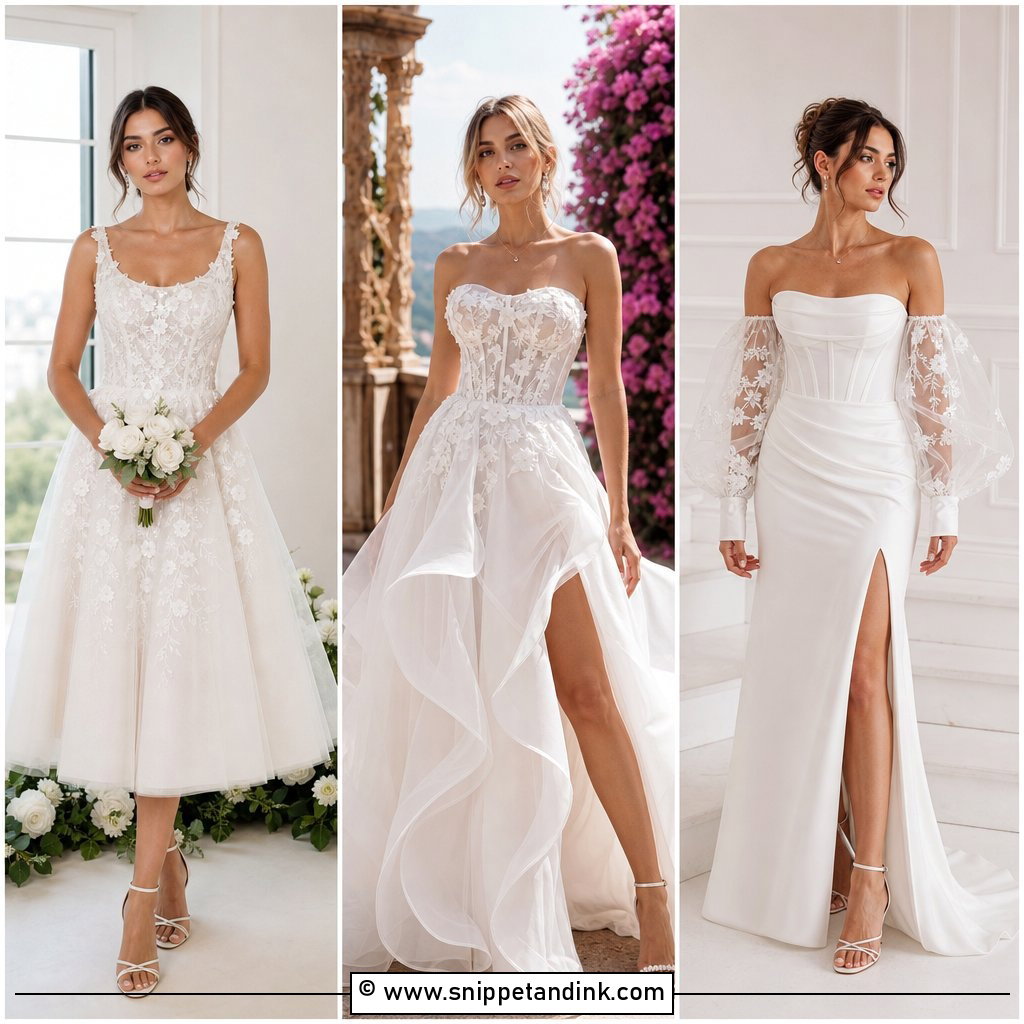
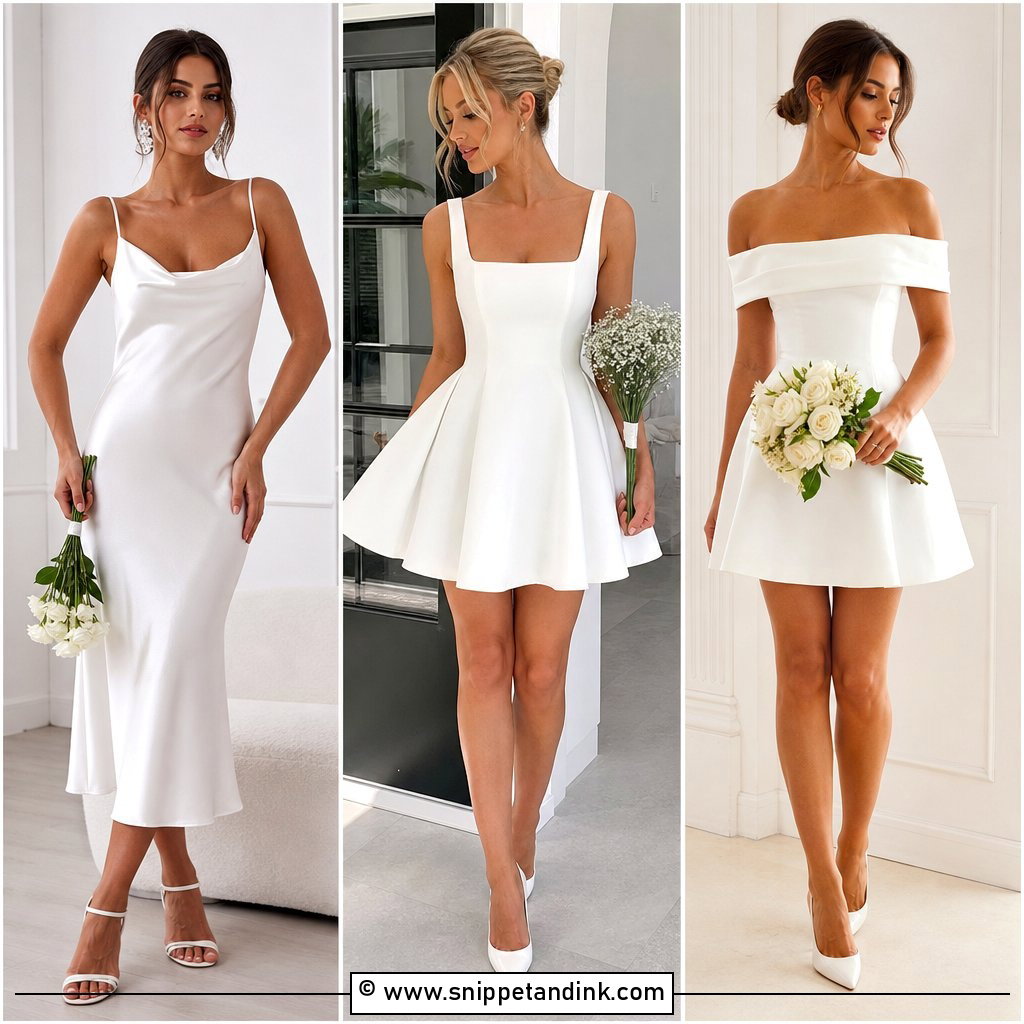
The first thing I ask about an off-the-shoulder gown is how it’s held up. A boned bodice with an internal elastic or silicone grip band will stay in place through the hugging and dancing; one without will creep toward your neck or slip down by evening. The neckline itself frames the collarbone in satin, lace, crepe or mikado, and a structured bodice with a smooth skirt or soft fit-and-flare is the most refined pairing. A low chignon and pearl earrings are usually enough; add a fine necklace only if the neckline feels bare. A long veil makes it formal, a shorter one keeps it sweet.
5. Mikado Ball Gown Wedding Dress
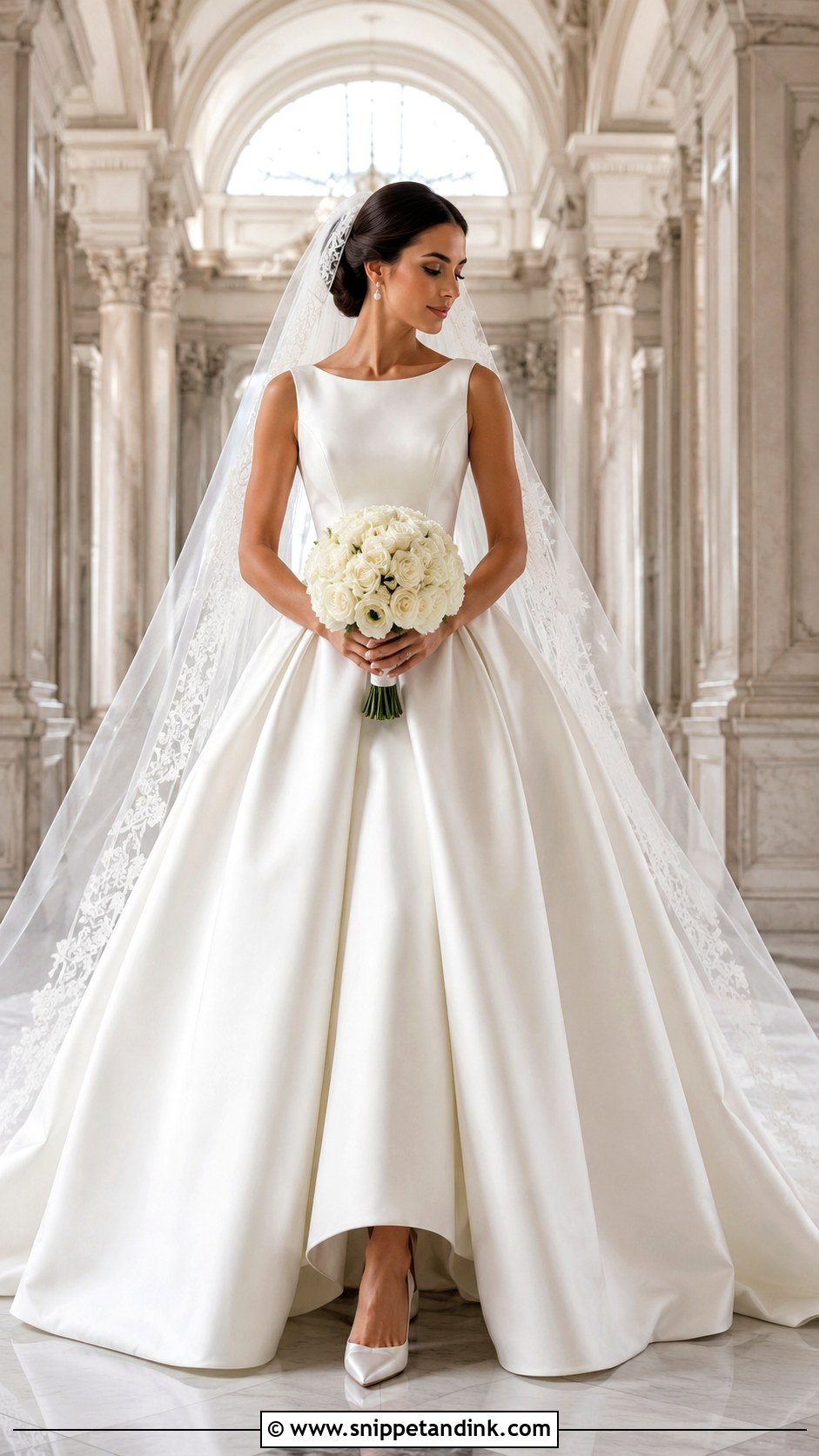
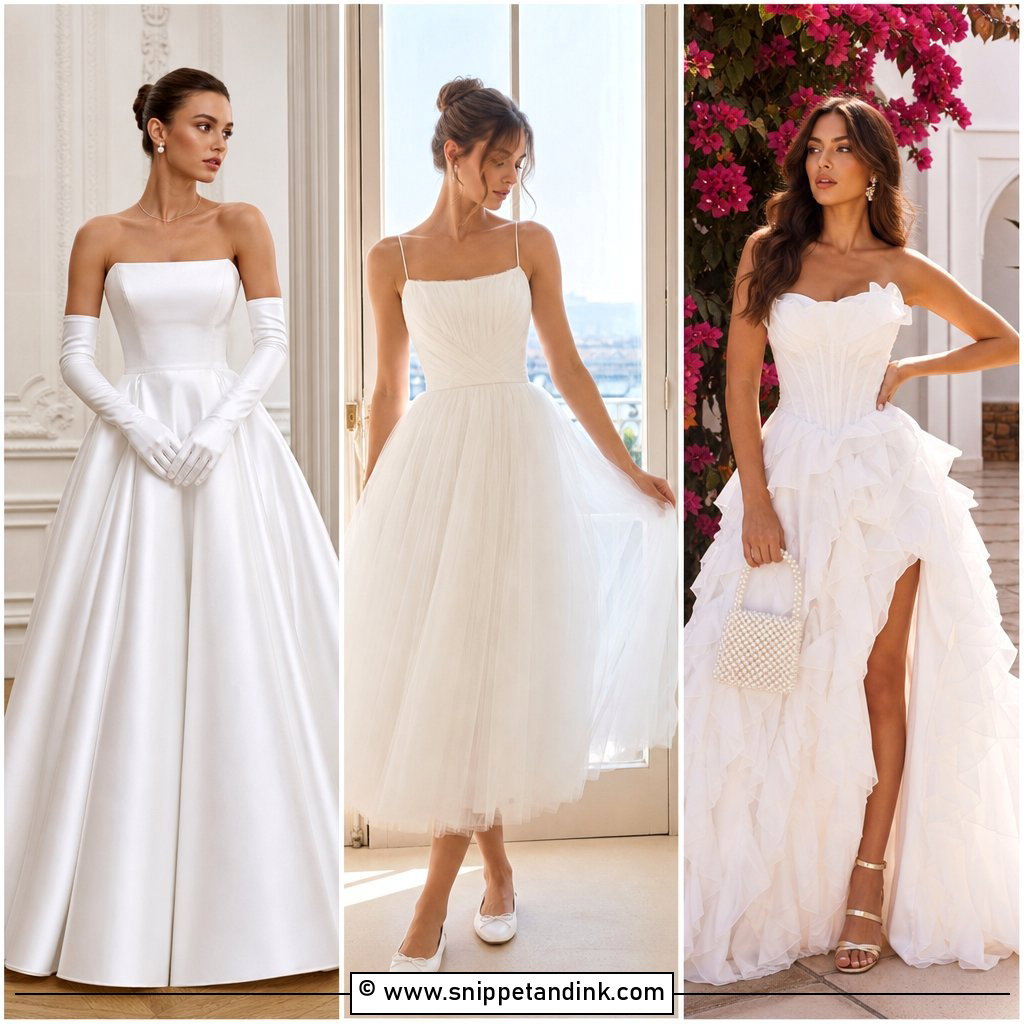
Mikado is a heavy, crisp silk or silk-blend with a slight sheen, and it holds a sculpted shape on its own. That’s why a mikado ball gown wedding dress looks regal without any sparkle. It also means weight: a full mikado skirt can be heavy by evening, so I ask brides to walk and sit in the sample for a good ten minutes. A clean strapless, square or bateau neckline keeps it classic. Pair it with a cathedral veil, pearl earrings and satin pumps, and keep accessories in proportion. Grand ballrooms and black-tie receptions are where it belongs; in a small barn it can swamp the room.
6. Strapless Sweetheart Wedding Dress
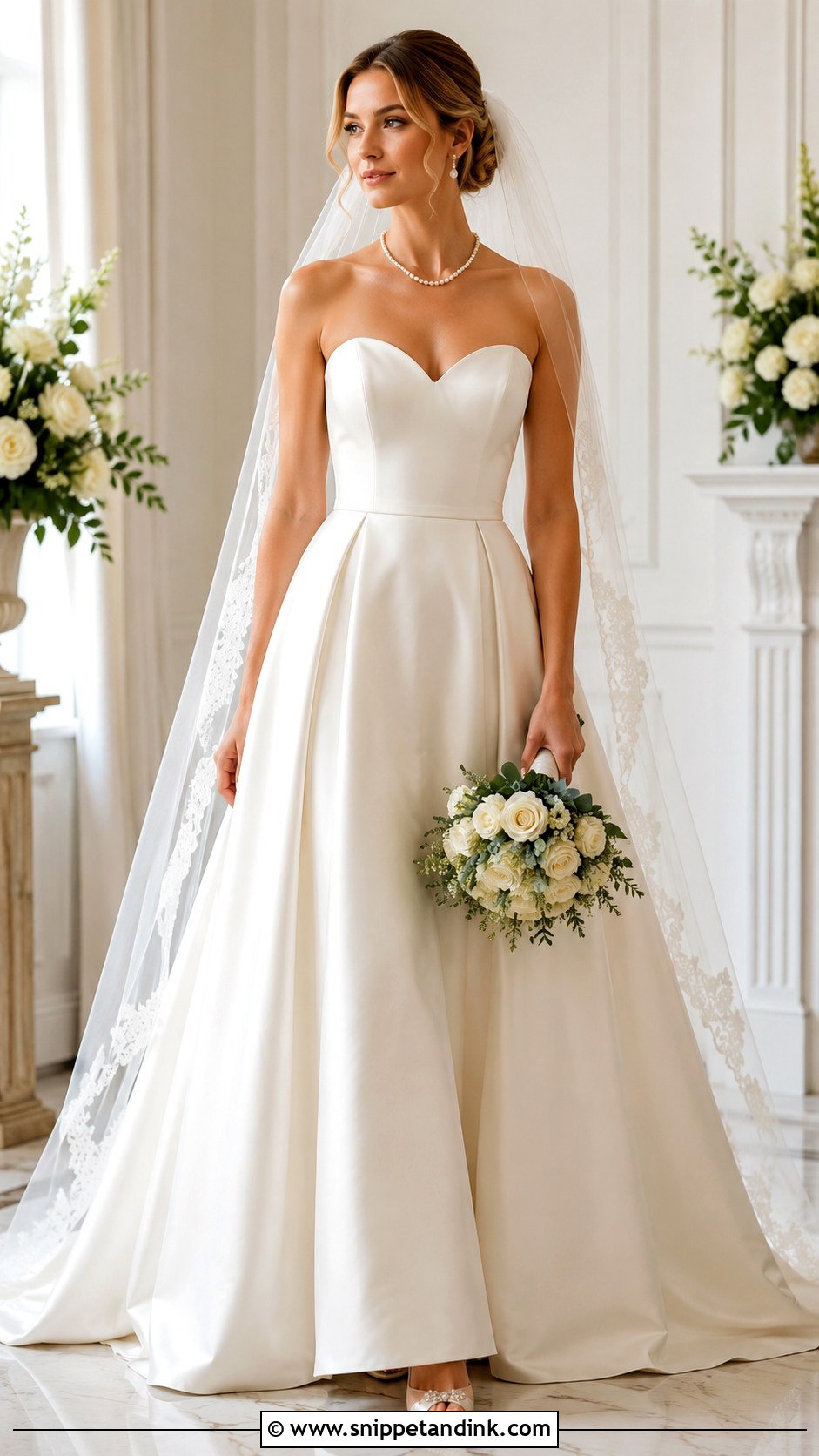
Sweetheart necklines are popular because the curve softens the bust line, and they pair with almost any skirt shape. The honest catch with a strapless sweetheart wedding dress is support: the bodice has to be fitted snugly enough that you never reach up to hitch it, which means at least two fittings. Satin, lace or smooth crepe keep it refined. A thin pearl necklace, drop earrings and a long veil balance the bare shoulders. For a church that expects coverage, a removable lace bolero or sheer wrap solves it neatly. Ivory heels and a white and blush bouquet complete the look.
7. High Neck Wedding Dress
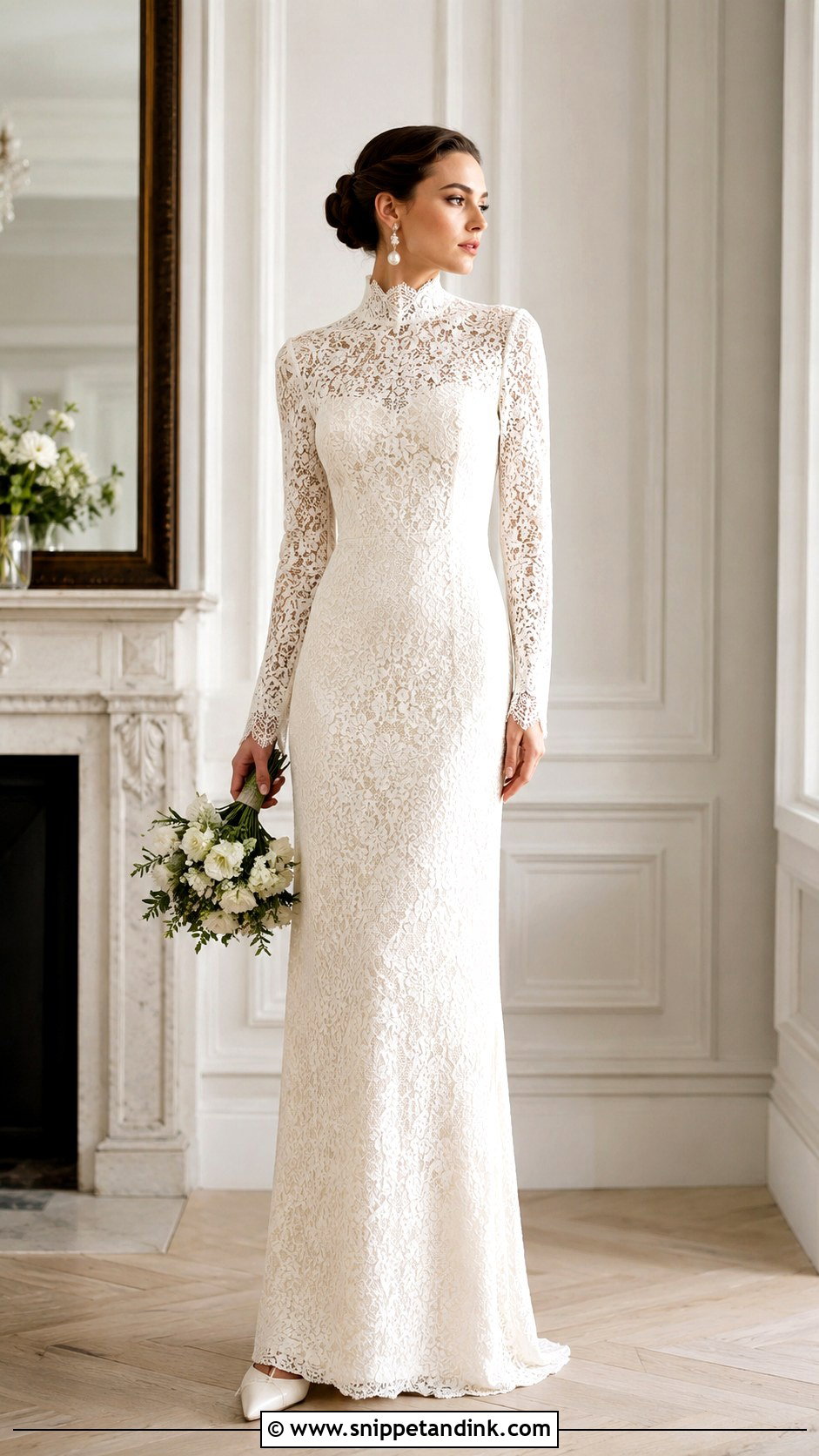
High necks read polished and slightly regal, and they’re a good answer if you need coverage without sleeves. Lace, crepe or satin with either a flowing A-line or a sleek sheath gives the best balance. Skip the necklace entirely. Earrings, a bracelet and a hair detail do the work. I’d advise against a high neck if you run warm or are marrying in midsummer heat, because a closed collar traps heat and can feel tight after a few hours. A clean bun or tucked waves keeps the neckline visible. Closed-toe heels and a long veil finish it.
8. Square Neck Wedding Dress
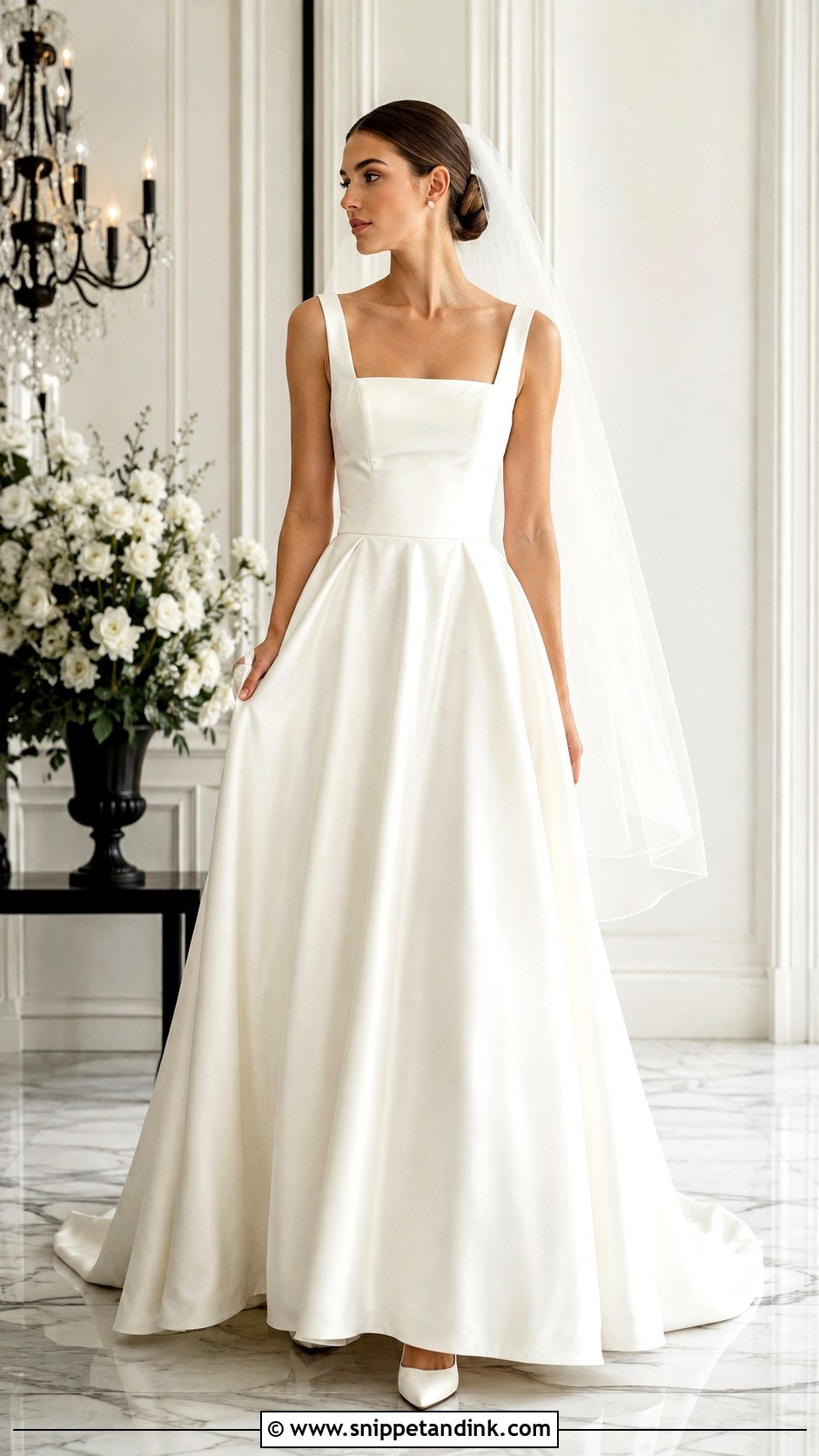
A square neck frames the face and collarbone with a straight line, which looks crisp in satin, mikado, crepe or lace. Wide straps and a fitted waist suit it best. It’s one of the most forgiving necklines I fit: the straight edge adds width at the shoulder, so it balances wider hips, and it gives a fuller bust a secure, structured frame. The detail I check is that the corners lie flat when you breathe in. Pearl studs, a simple veil and block heels or pointed pumps finish it, and a low bun or soft waves keeps the mood relaxed.
9. V Neck Wedding Dress
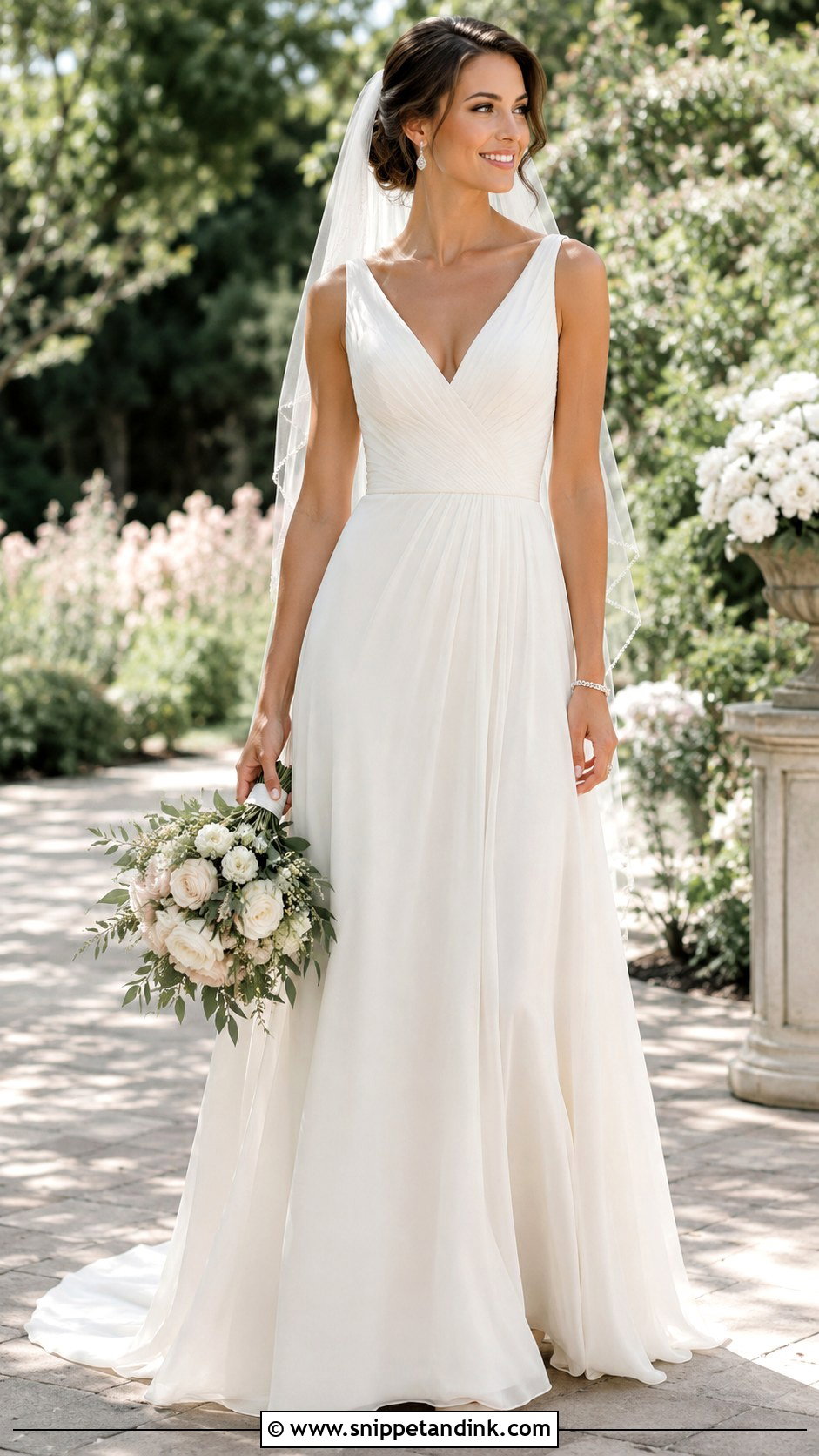
A V neck lengthens the upper body, and the depth is the decision. A moderate V reads elegant; a deep plunge needs fashion tape and a bride who is comfortable adjusting it all night. Soft A-line skirts, flowing chiffon or clean crepe all suit it. If the dress has lace or beading near the neckline, keep jewelry minimal. Delicate drop earrings and nude or ivory heels are enough. A narrow tulle veil adds movement without covering the V. Shorter brides in particular get a lot from this neckline, since the line it draws carries the eye up.
10. Bateau Neck Wedding Dress
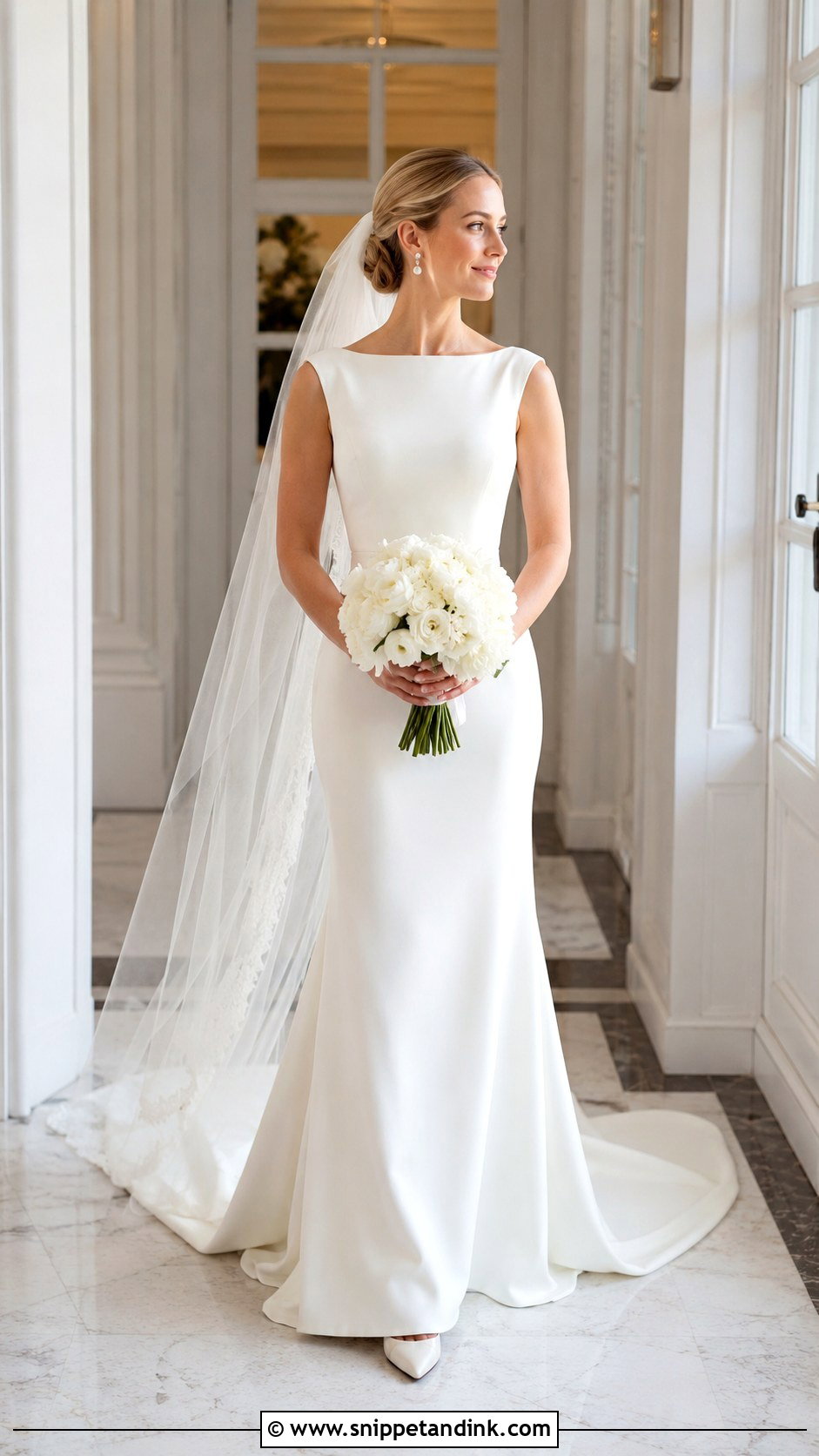
Bateau necklines run in a gentle, shallow curve from shoulder to shoulder, almost along the collarbone. They suit brides with narrow or sloping shoulders, because the horizontal line widens the frame slightly; on very broad shoulders I’d usually pick a V instead. Crepe, satin and mikado show the clean cut best, with a sheath, A-line or soft ball gown skirt. Pearl earrings, a smooth updo and simple ivory pumps keep it understated. Leave the necklace off; the neckline is the jewelry. A long veil makes it formal, a short one keeps it delicate.
11. Cap Sleeve Wedding Dress
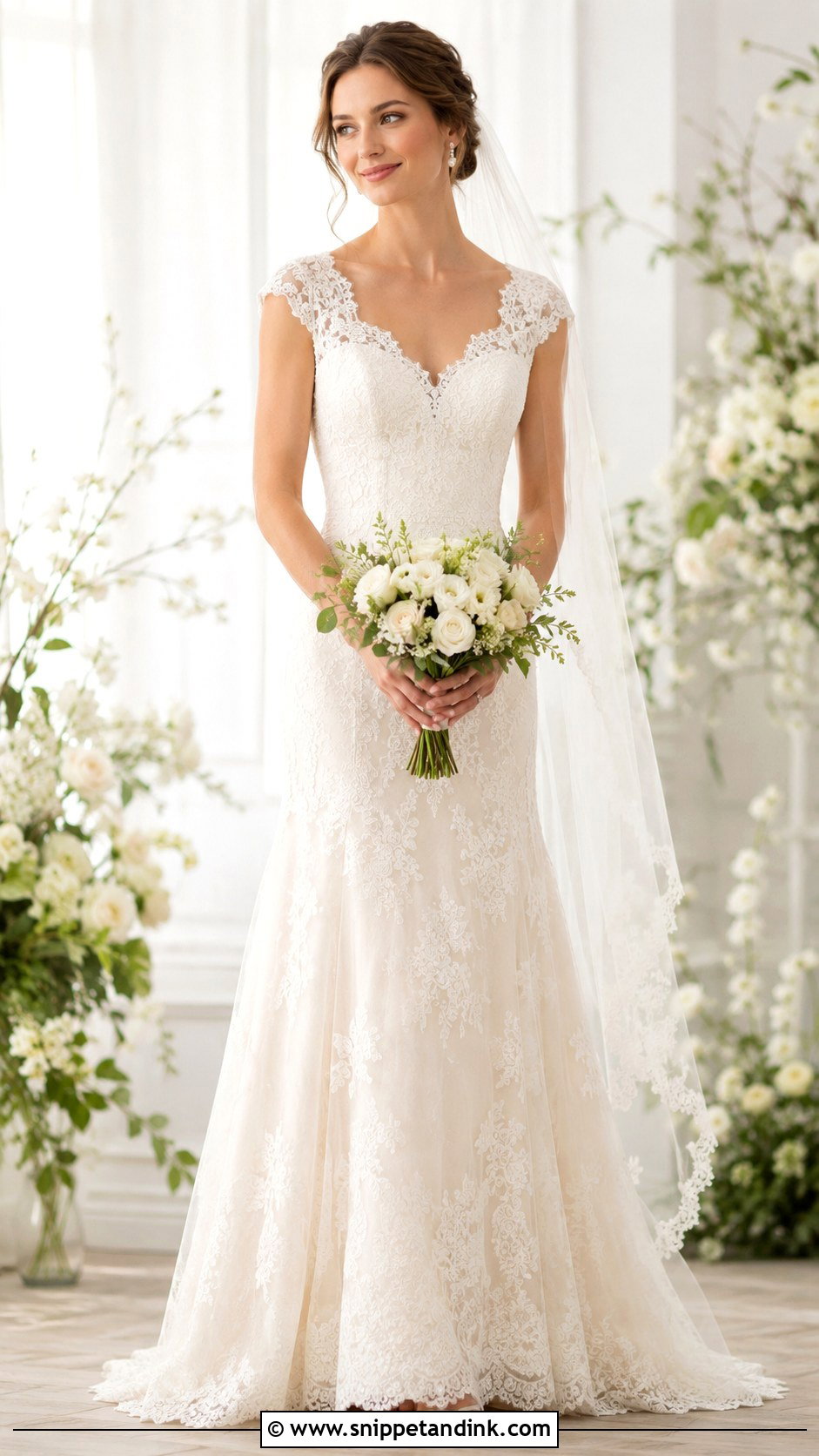
Cap sleeves sit just over the top of the shoulder, which gives a little coverage while leaving the arms free. They’re cooler than long sleeves and kinder than strapless if you don’t want to think about your bodice all day. In lace, satin or crepe, with a fitted bodice and an A-line or sheath skirt, the shape stays light. Keep the veil soft enough that it doesn’t bunch over the sleeves. One fitting note: a cap sleeve that sits too far out on the shoulder makes arms look wider in photos, so ask for the seam to be moved in if needed. Pearl earrings, low heels and a side-parted bun suit it.
12. Fit And Flare Wedding Dress
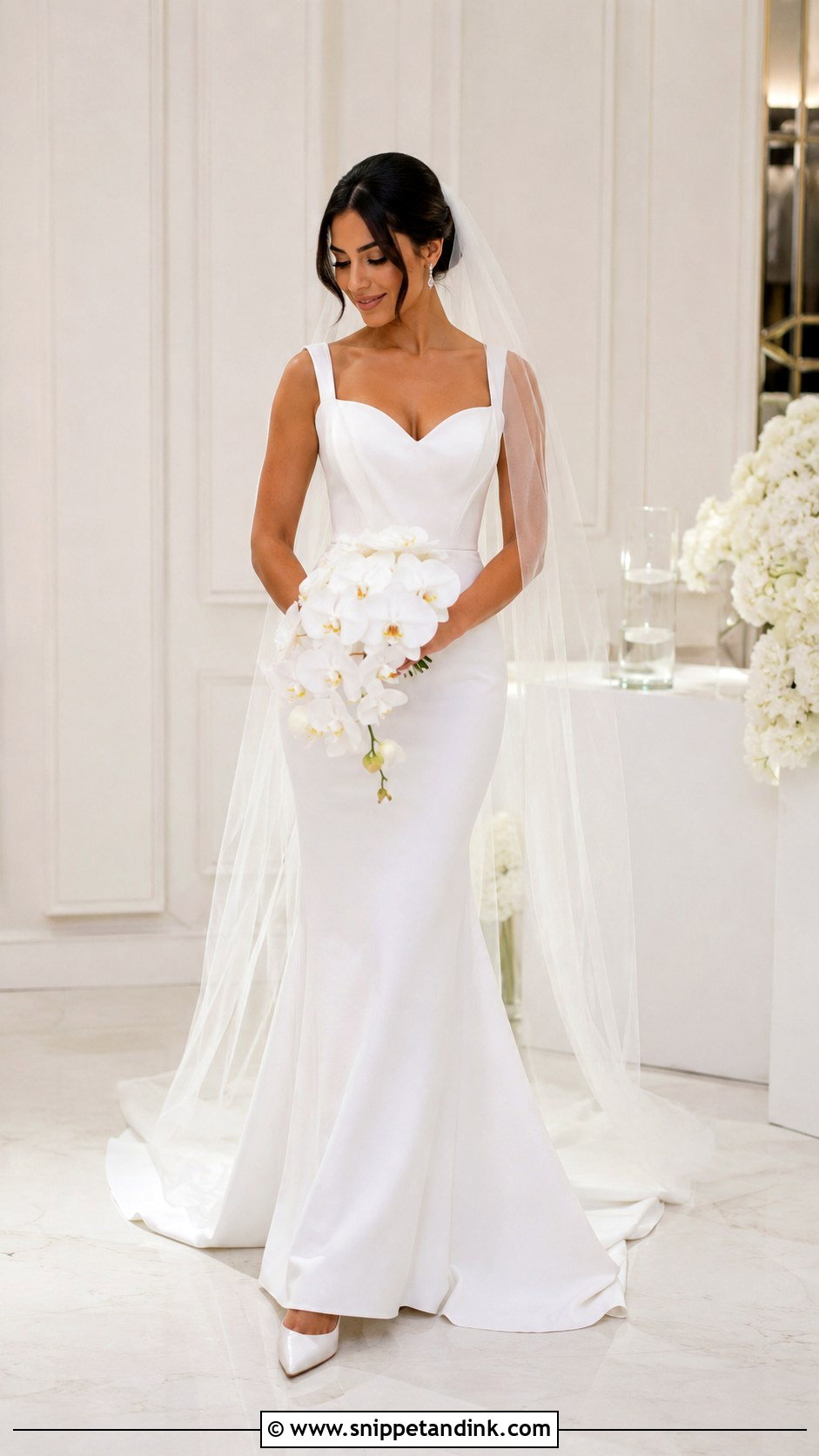
Fit and flare is the halfway house between A-line and mermaid. It hugs through bodice and hips and then opens around the lower thigh or knee, which means you can still walk and sit fairly normally. Where the flare starts is the thing I adjust most: higher is easier to move in, lower is more dramatic. Clean crepe, lace or satin with minimal embellishment keeps it classy. Pointed heels, a fitted veil and delicate earrings suit it, and an orchid or rose bouquet adds polish. It shows curves without restricting you, and suits formal and evening weddings.
13. Mermaid Wedding Dress
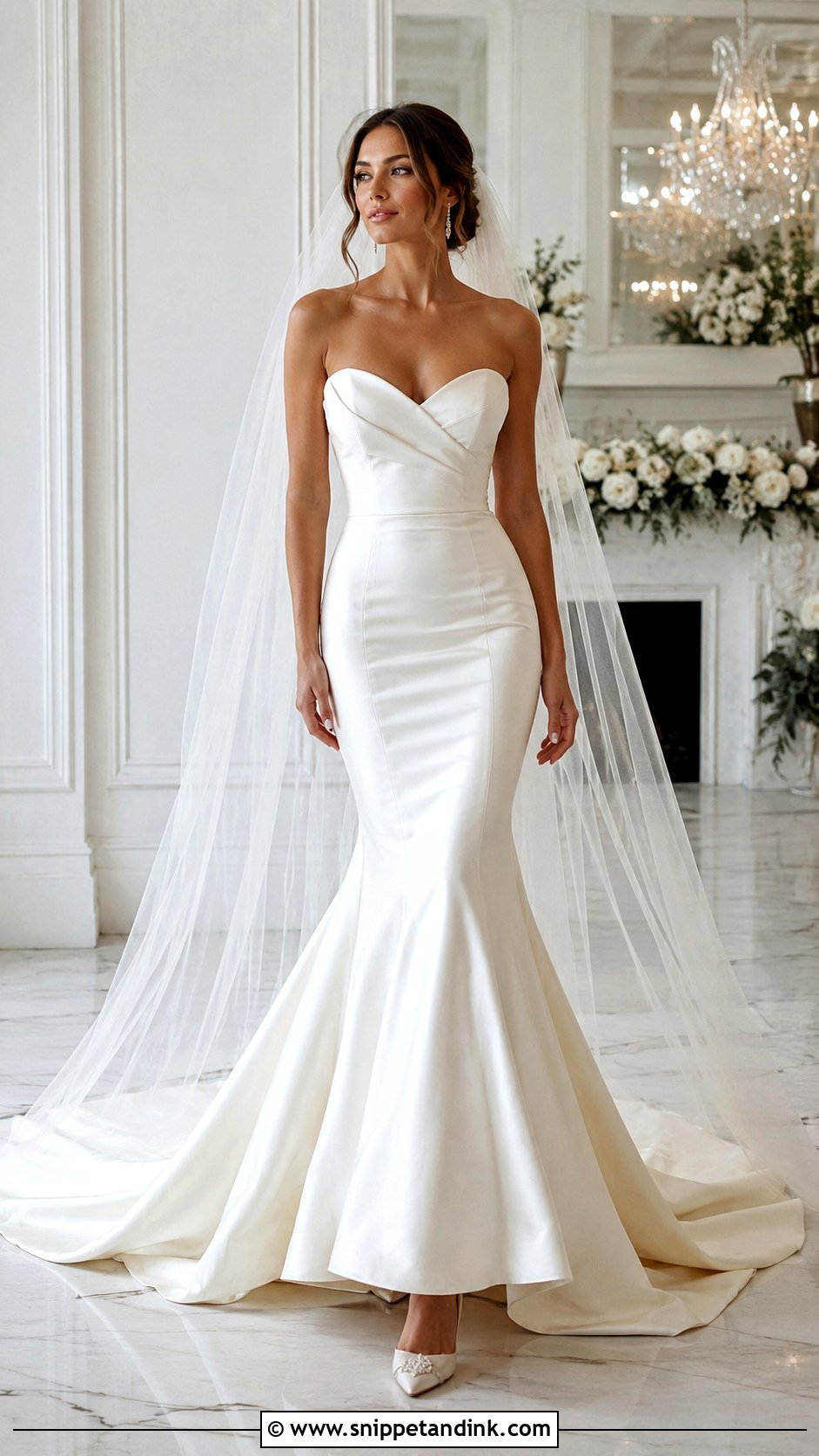
Mermaid gowns are the most fitting-dependent dresses I work with. They’re fitted all the way to the knee before the flare, so a small change in weight or the wrong shapewear shows immediately, and you’ll need to plan for three fittings rather than two. Done well, in smooth crepe, satin or a refined lace, the shape is glamorous and formal without needing sparkle. A sleek updo, long veil and simple drop earrings keep the attention on the line. Practise sitting and climbing stairs in it before the day; you’ll walk with smaller steps, and a bustle is essential for dancing.
14. Simple Slip Wedding Dress
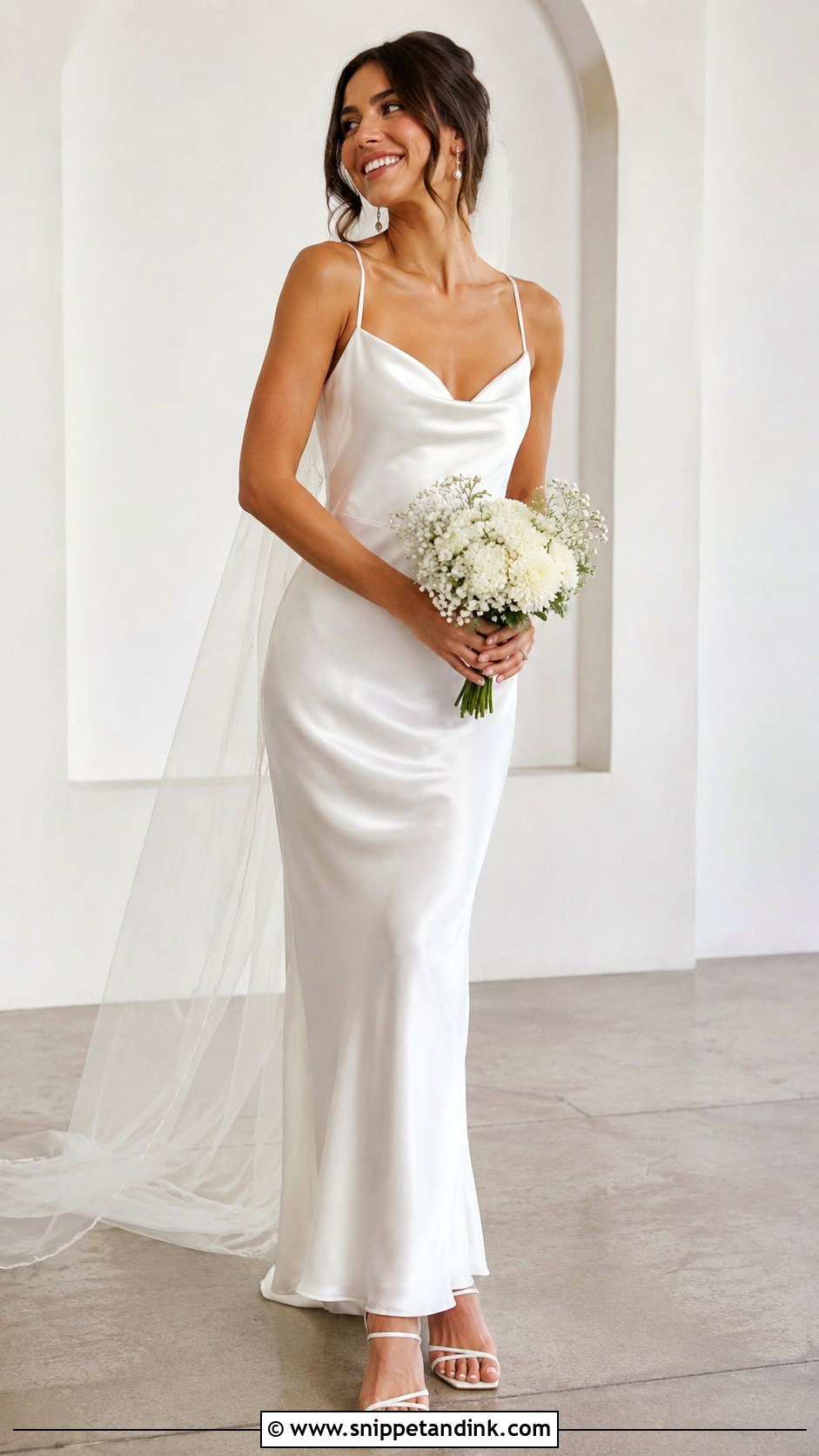
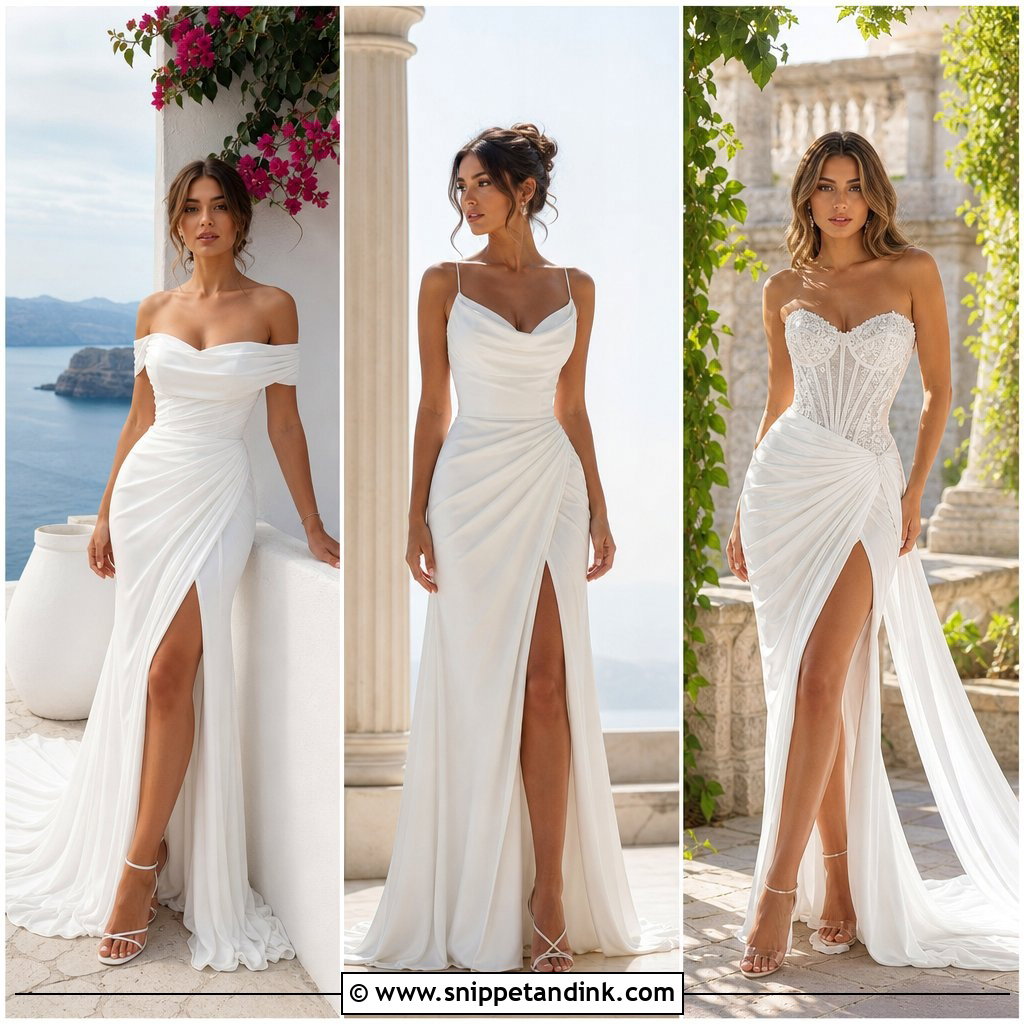
A bias-cut slip is the dress I’d most want a bride to try on before ordering. Cut on the diagonal grain, silk or satin drapes and stretches slightly, which looks fluid in motion but clings to anything underneath and creases when you sit. Delicate straps with a soft cowl or straight neckline keep it minimal. Strappy heels, pearl earrings and a sheer veil finish it, and a smooth blowout, soft waves or low bun all suit. A small bouquet of white flowers stops the look feeling too undone. It’s my favourite for destination weddings, since it packs small and steams out quickly.


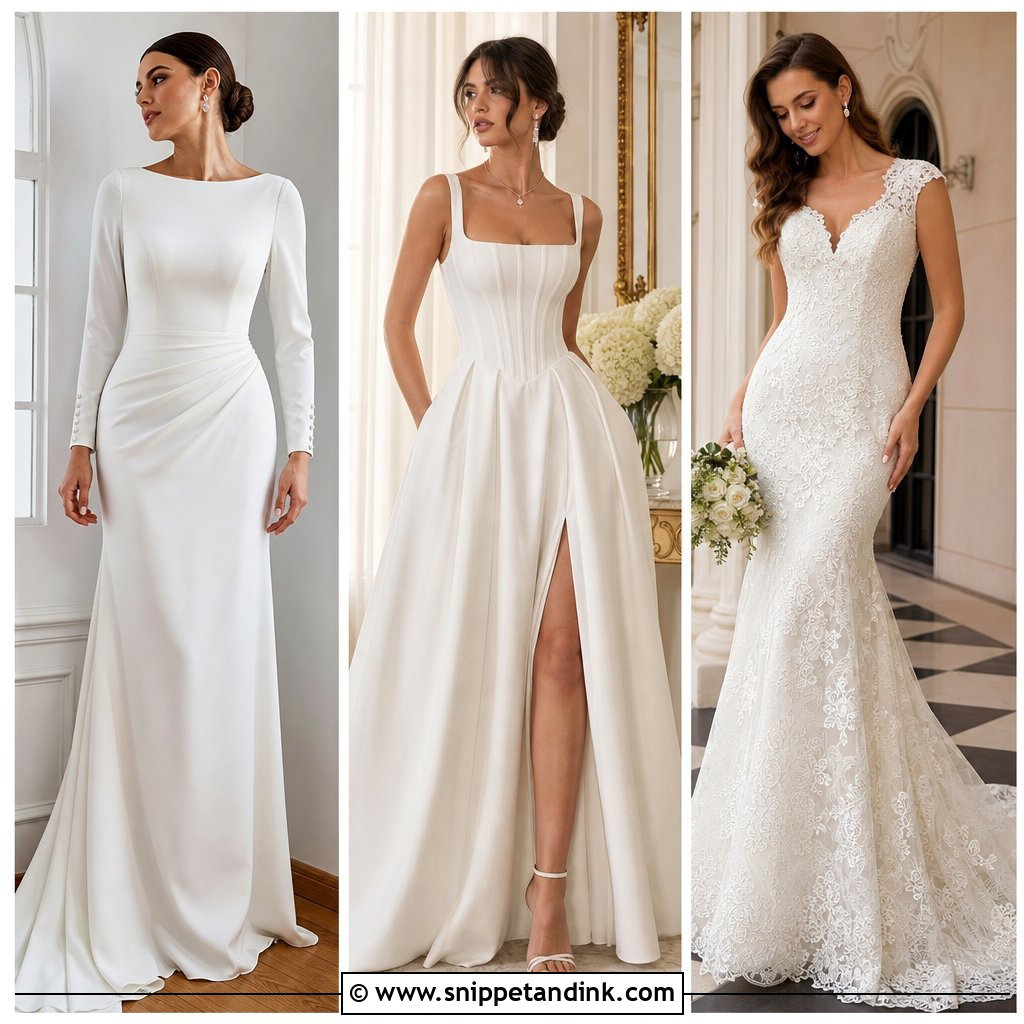
15. Tea Length Wedding Dress
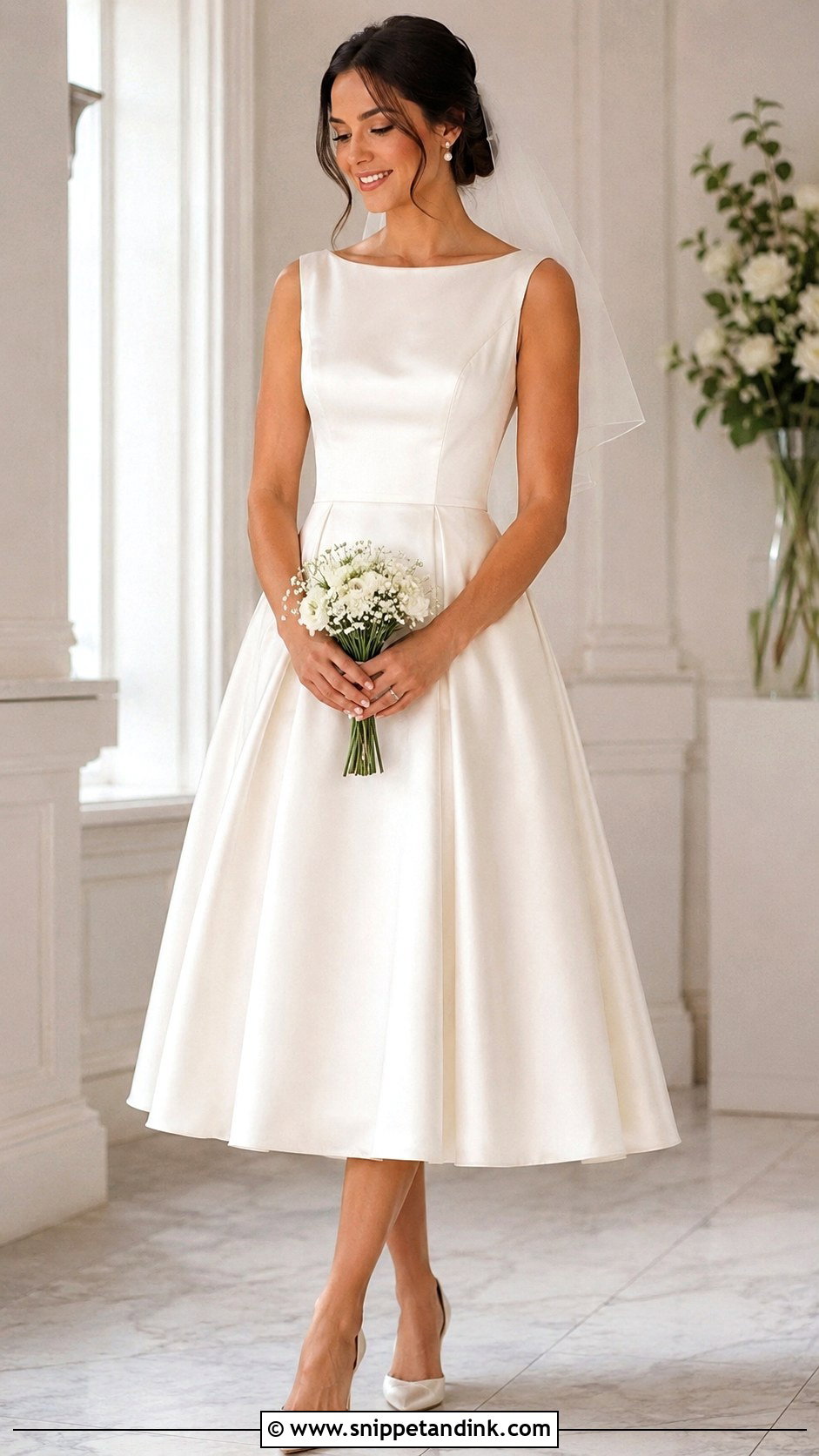
With a hem landing between knee and ankle, a tea length dress makes your shoes part of the outfit, so choose them before your final fitting. Satin, lace or tulle with a fitted waist and softly flared skirt gives the 1950s silhouette people picture. Pointed pumps, pearl earrings and a short veil or bridal headband suit it. It’s relaxed enough for courthouses and garden ceremonies but still clearly bridal. The risk is that it tips into costume if every accessory is vintage too; I’d keep one retro note and let the rest stay modern.
16. Chiffon A-Line Wedding Dress
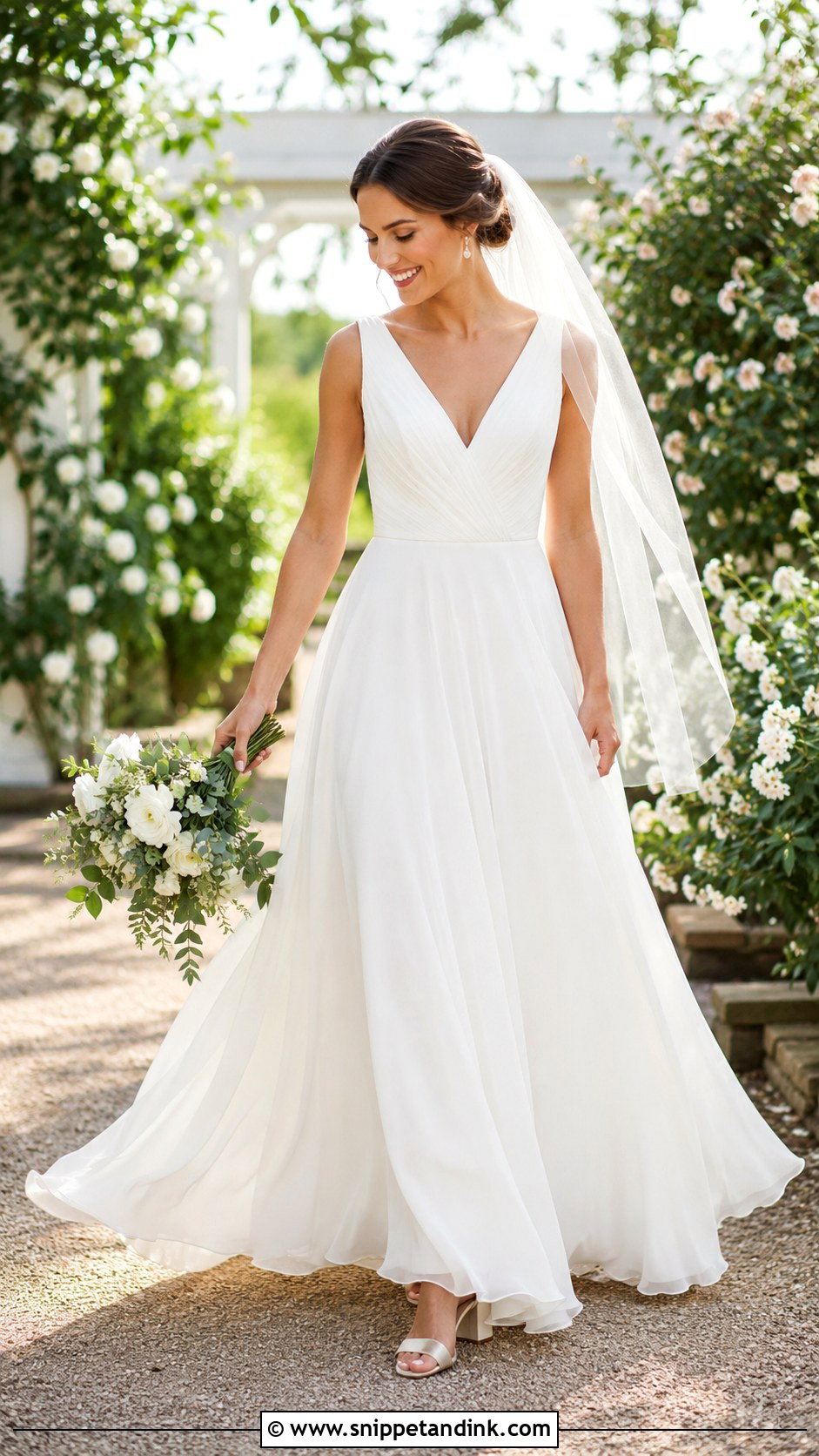
Chiffon moves with the slightest breeze, which is why it suits outdoor and warm-weather weddings so well. A fitted bodice with a flowing skirt and delicate straps, flutter sleeves or a soft V neckline is the classic shape. The thing to know is that chiffon snags easily on rough stone, brick and lace-up shoes, and it’s hard to repair, so I suggest a lining of slightly sturdier fabric under the skirt. Low block heels sink less into lawns. Dainty earrings, a lightweight veil and a loose updo keep it soft. Roses, lisianthus and greenery suit the airy feel.
17. Organza Wedding Dress
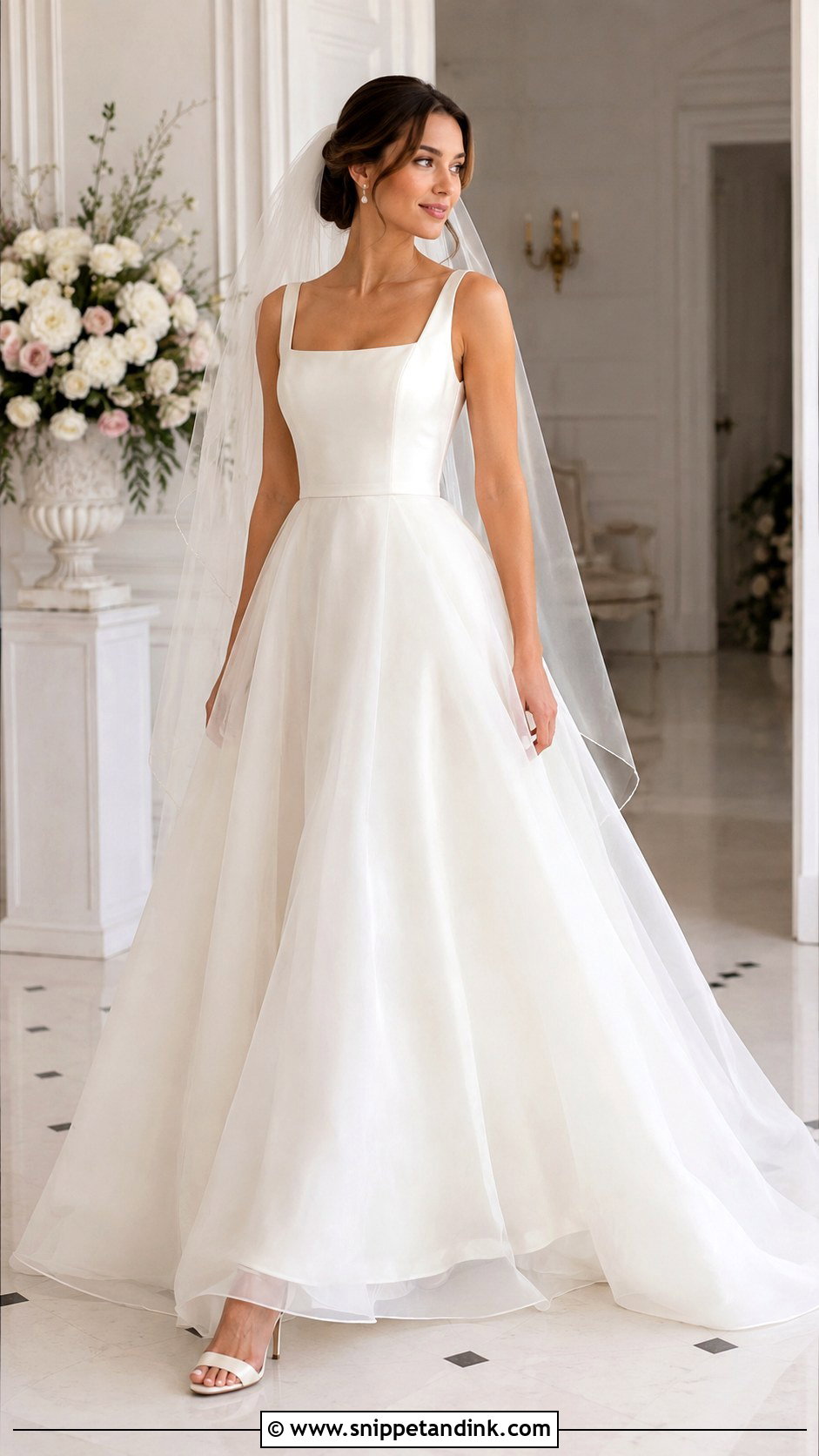
Organza is crisp and sheer, so it gives volume without weight, which makes it a good alternative to mikado for a summer ball gown. A structured bodice with an A-line or full skirt looks most refined. It does crush, though, especially in a car, so I always suggest the bride sits on the back of the skirt with the volume lifted, rather than on top of it. Satin heels, pearl earrings and a veil as light as the fabric suit it. Heavy jewelry fights the texture. A soft bouquet of white and pale blush flowers completes it.
18. Minimalist Wedding Dress
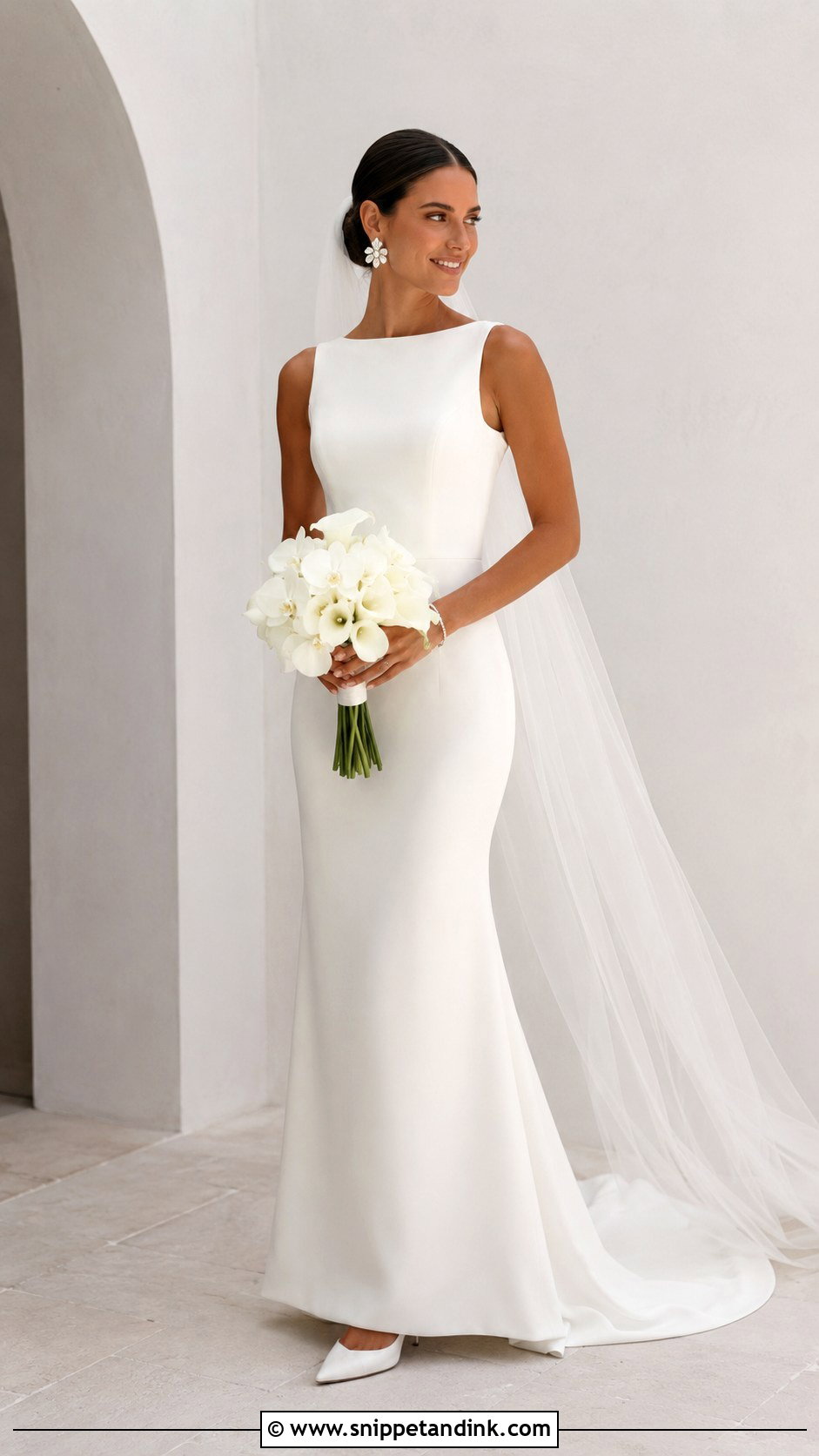
A minimalist dress is the hardest kind to buy off the rack, because with nothing to distract the eye, every inch of fit and every seam is visible. Clean crepe, satin or mikado with a strong neckline and smooth seams is the formula. I look closely at the zip: an exposed or slightly wavy zip is the first thing you notice on a plain back. Sculptural earrings, sleek heels and a long plain veil complete it. Hair can go polished bun or soft waves, depending on how sharp you want the overall look. A single-colour bouquet keeps the restraint consistent from top to hem.
19. Pearl Detail Wedding Dress
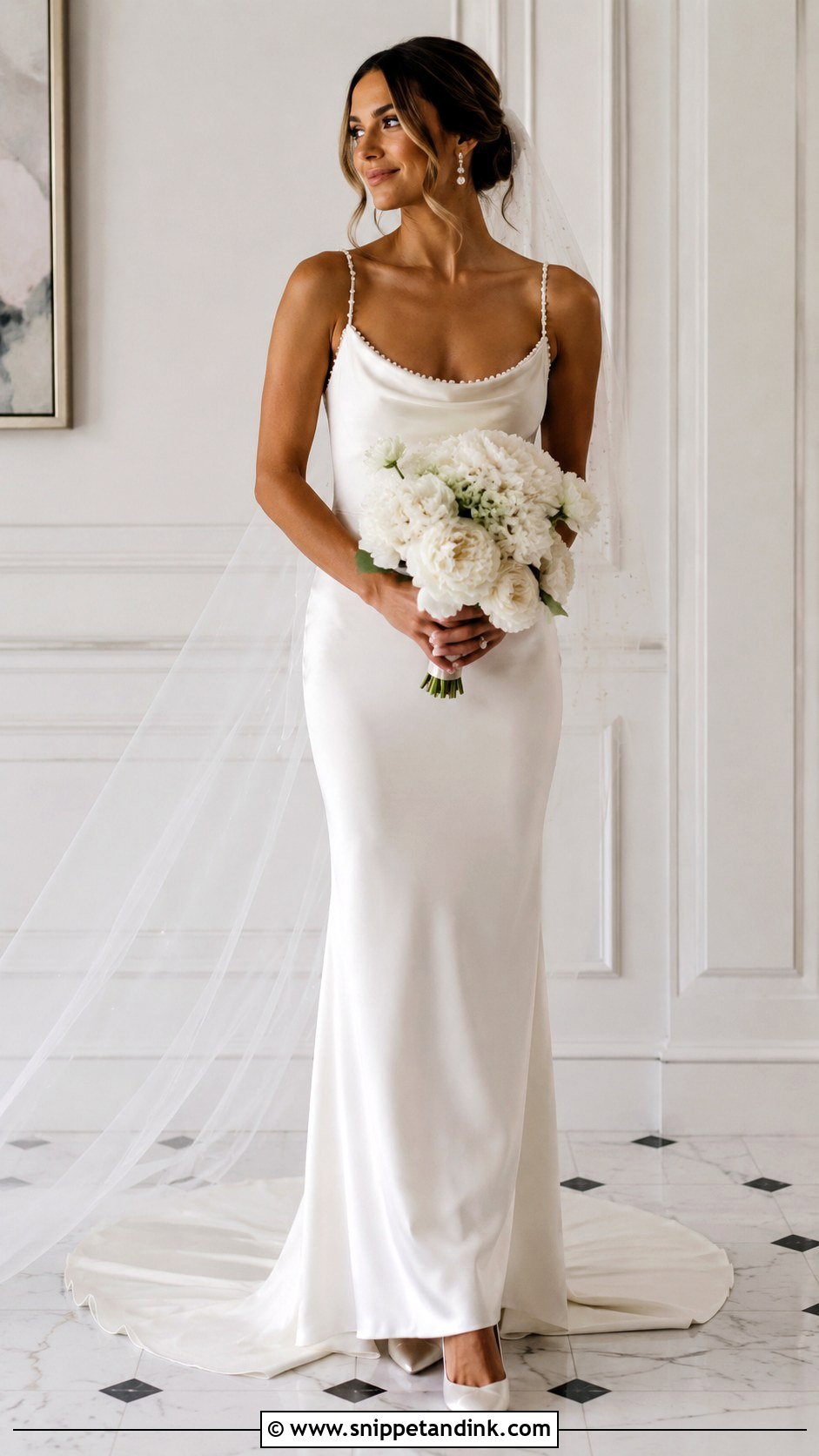
Pearls are a detail that needs a light hand. Tiny pearls on the straps, neckline, sleeves or veil on a smooth satin, crepe or tulle base look refined; pearls on all of those at once start to look themed. I check how they’re attached, since glued pearls fall off at the first brush against a jacket sleeve, while hand-sewn ones last. Pearl earrings, satin heels and a simple updo suit the dress. Skip a pearl necklace if the neckline already has them. A clean bouquet of white flowers balances the texture.

20. Floral Lace Wedding Dress
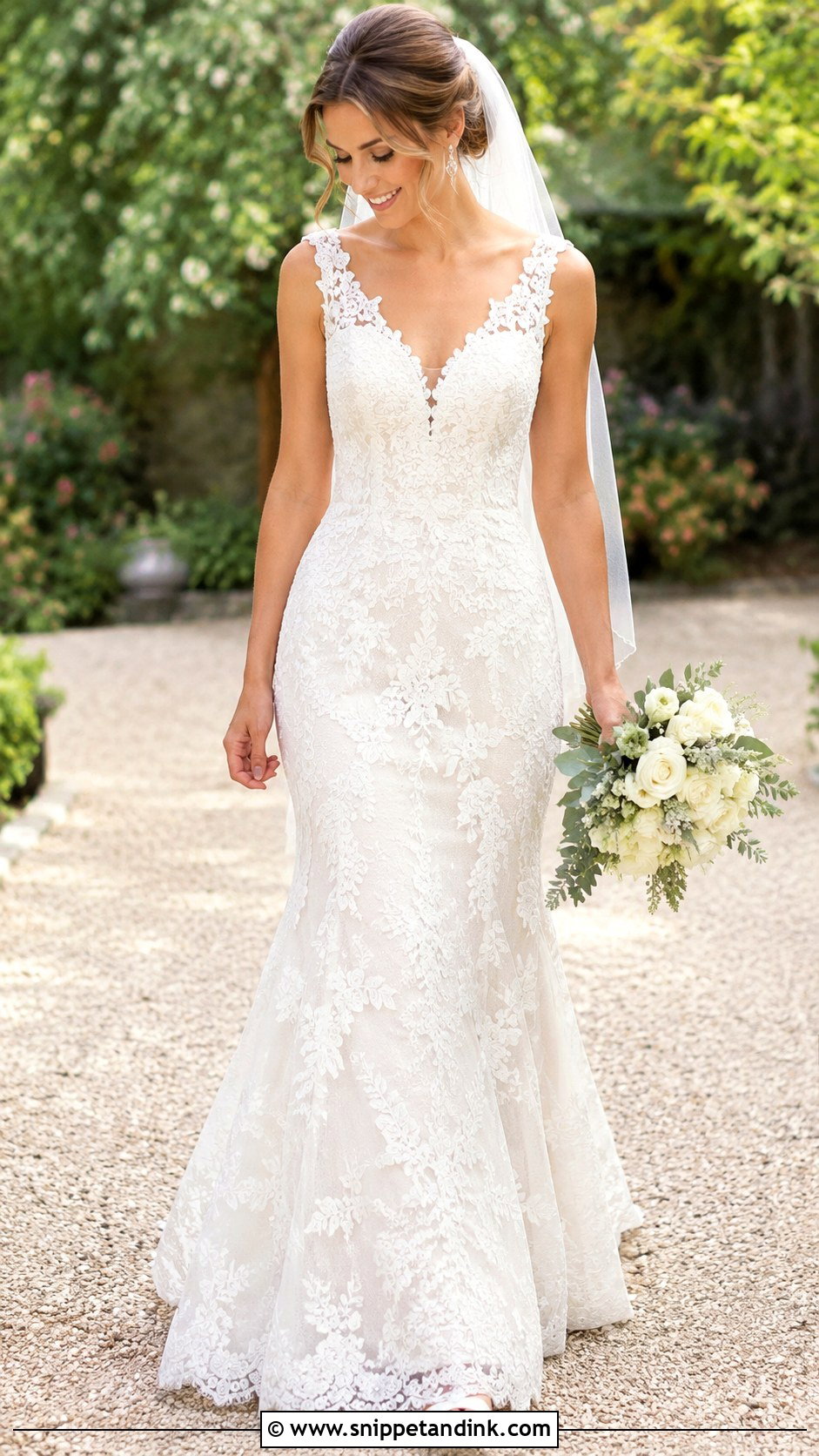
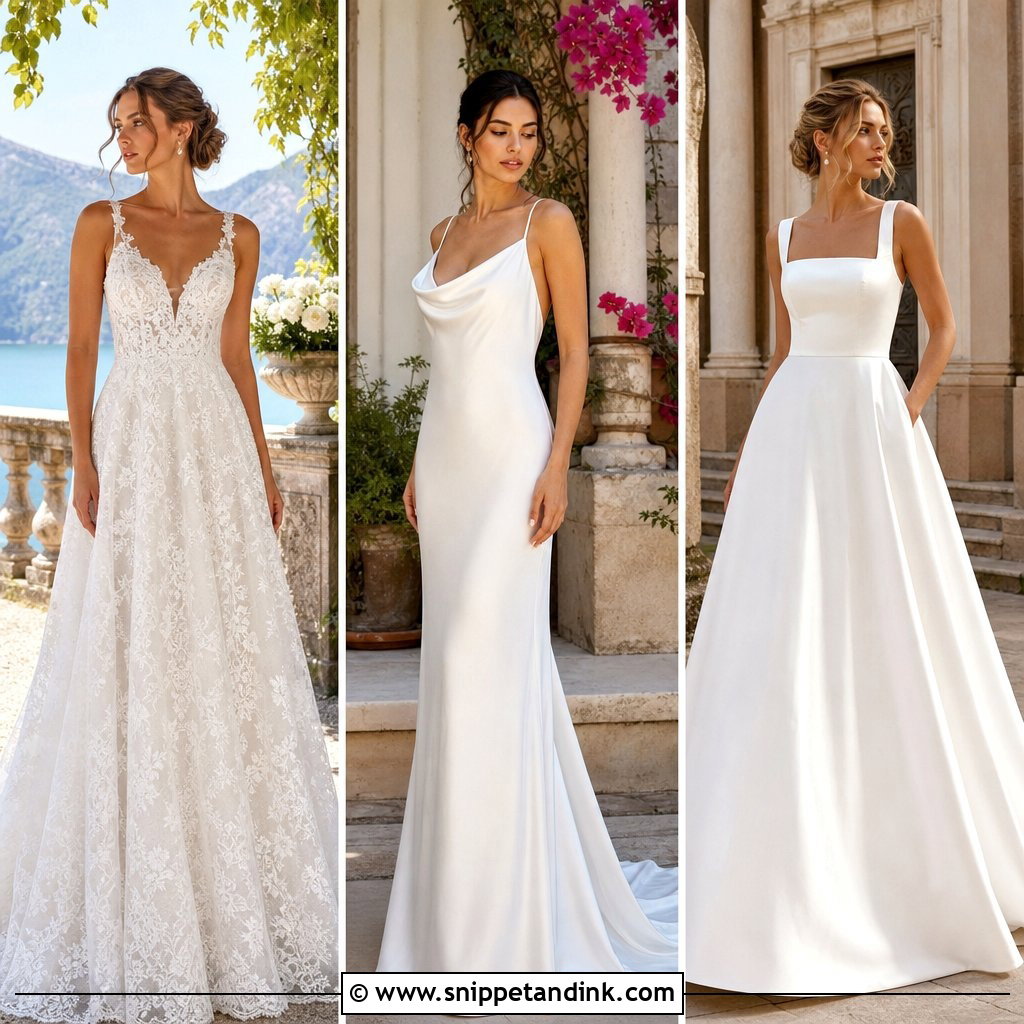
Floral lace is where quality shows most, and the pattern scale matters as much as the lace itself. Large motifs suit taller brides and full skirts; small, fine motifs suit petite frames and sheath dresses. A-line, sheath and fit-and-flare shapes all work. I’d match the veil to the lace edge or keep it completely plain, never a different lace, since two patterns side by side look mismatched in close-ups. With detailed lace, keep the bouquet simple and skip heavy accessories. A low bun or loose waves suits it, and it sits well in gardens, estates and classic indoor ceremonies.
21. Tulle Skirt Wedding Dress
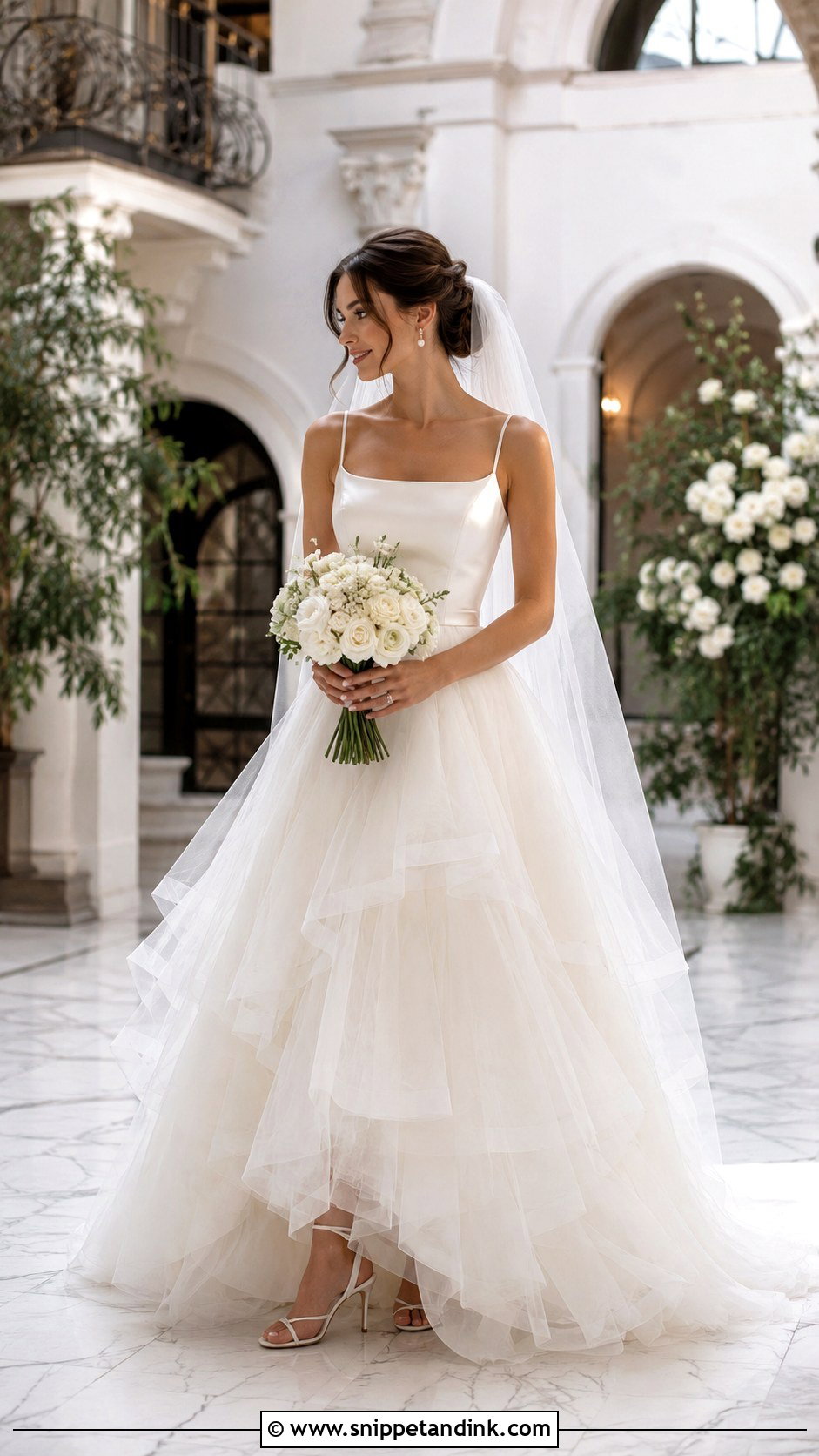
Tulle gives you softness and volume at a fraction of the weight of satin, which makes a fitted bodice over a layered tulle skirt the princess shape for brides who actually want to dance. A satin, lace or crepe bodice keeps it grounded. Tulle does catch on things: bracelets, cufflinks, the groom’s watch. Delicate heels, pearl or crystal earrings and a sheer veil suit it, and a light bouquet of white flowers keeps everything airy. Skip extra sparkle; let the layers of tulle do the work. Ask for a horsehair or crinoline layer if you want the skirt to hold its shape all evening.
22. Corset Bodice Wedding Dress
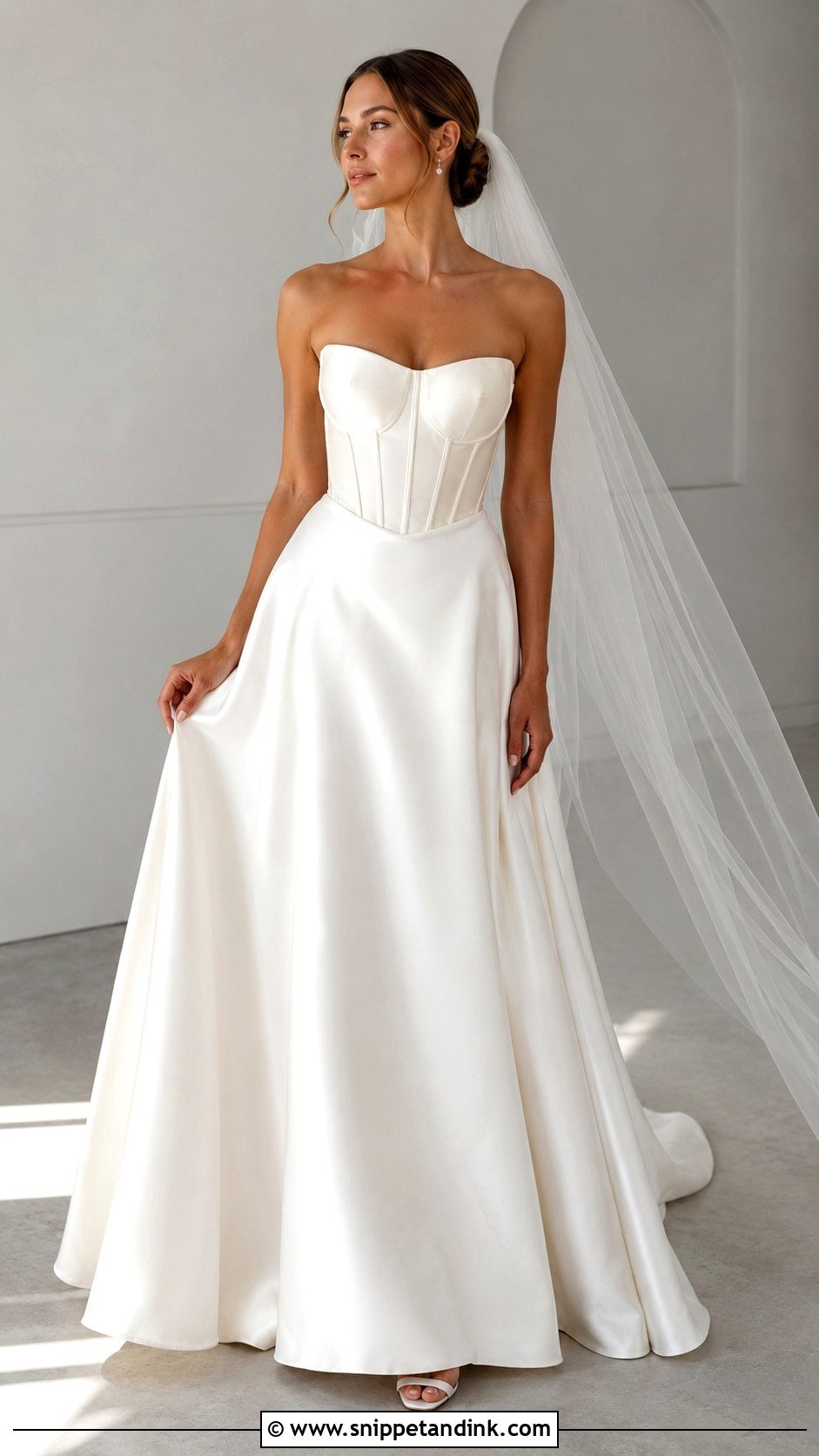
A good corset bodice should feel supportive, not tight. When I fit one, I check that the boning lies flat against the ribs and doesn’t dig in when the bride sits. Smooth boning, quality fabric and a skirt that balances the structured top are what make it read classy rather than costume. Satin, mikado, lace and organza all suit the shape. Simple heels, small earrings and a veil that softens the structure complete it, and a clean updo shows off the waist. It defines the waist and supports the bust, so many brides can go without a separate bra.
23. Halter Neck Wedding Dress
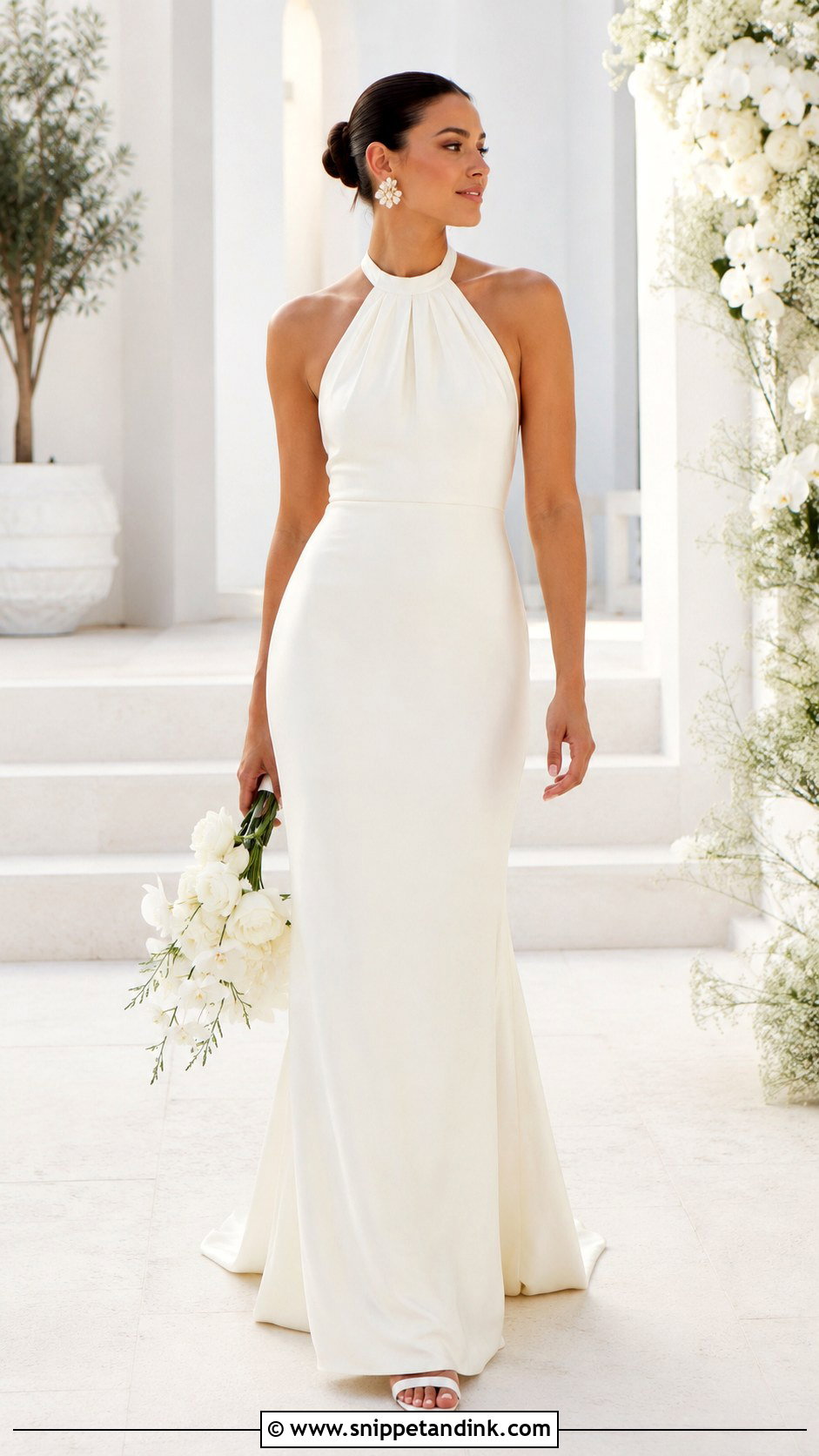
A halter neck wedding dress sends attention straight to the shoulders and works with a fitted sheath, A-line or soft satin gown. Keep fabric clean and avoid heavy embellishment at the neck, which pulls on the halter strap. Weight is my main check: a halter carries the dress from the back of your neck, so a heavily beaded skirt can make it ache by evening. Statement earrings replace a necklace, and a smooth bun keeps the line clear. A long veil adds drama for the ceremony; going veil-free feels modern. It’s especially comfortable in warm weather and modern venues.
24. Pleated Wedding Dress
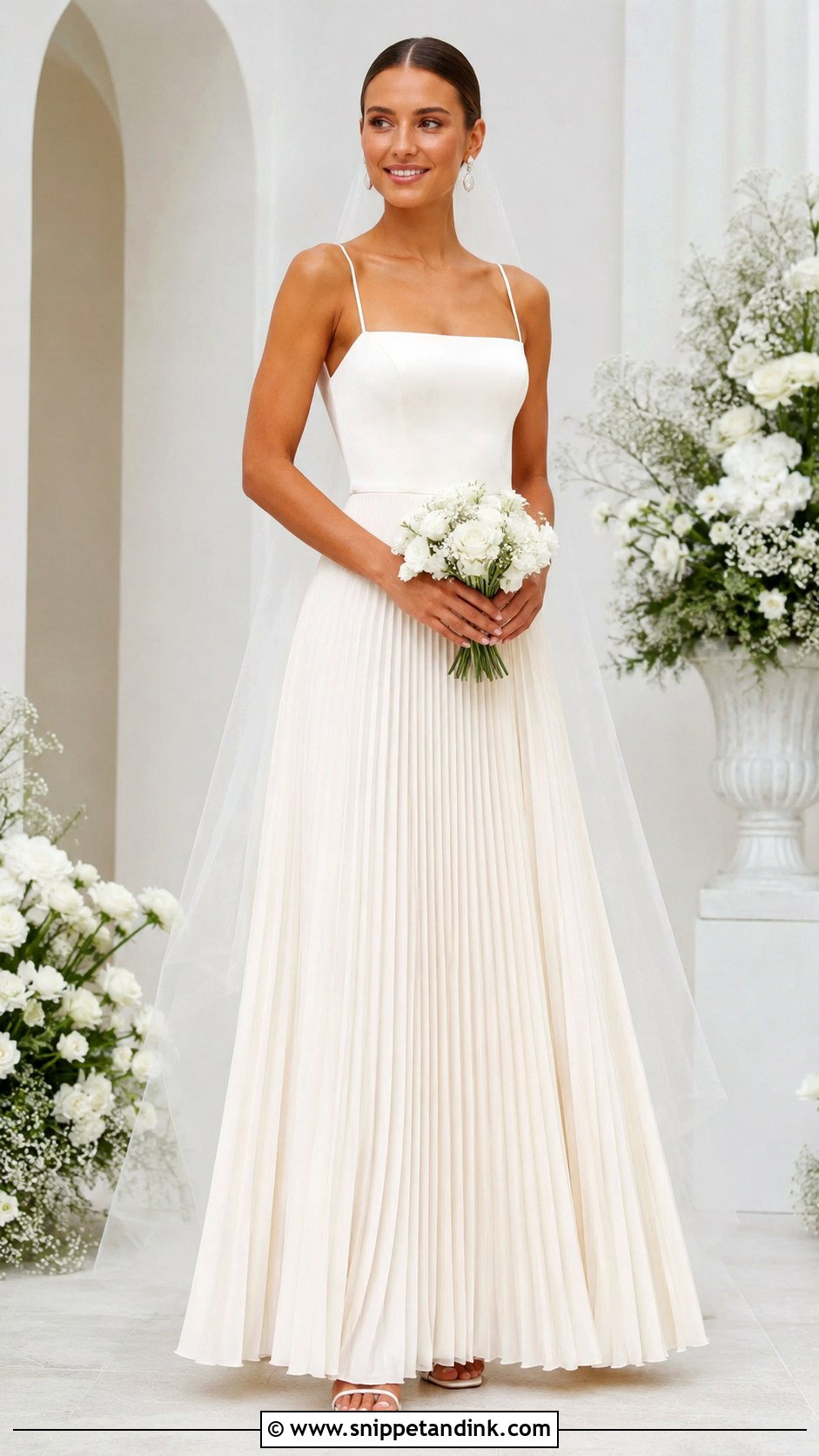
Pleats add texture without adding embellishment. Soft pleats in chiffon create movement through the skirt; sharp pleats in satin or crepe look more modern and architectural. I’d ask how the pleats are set, because sharp pleats can lose their edge after a day of sitting unless they’re stitched down at the waist. A fitted bodice with a pleated A-line skirt is the easiest version to wear. Simple heels, delicate earrings and a smooth veil keep things minimal, and the bouquet should stay small since the dress already has visual detail.


25. Embroidered Wedding Dress
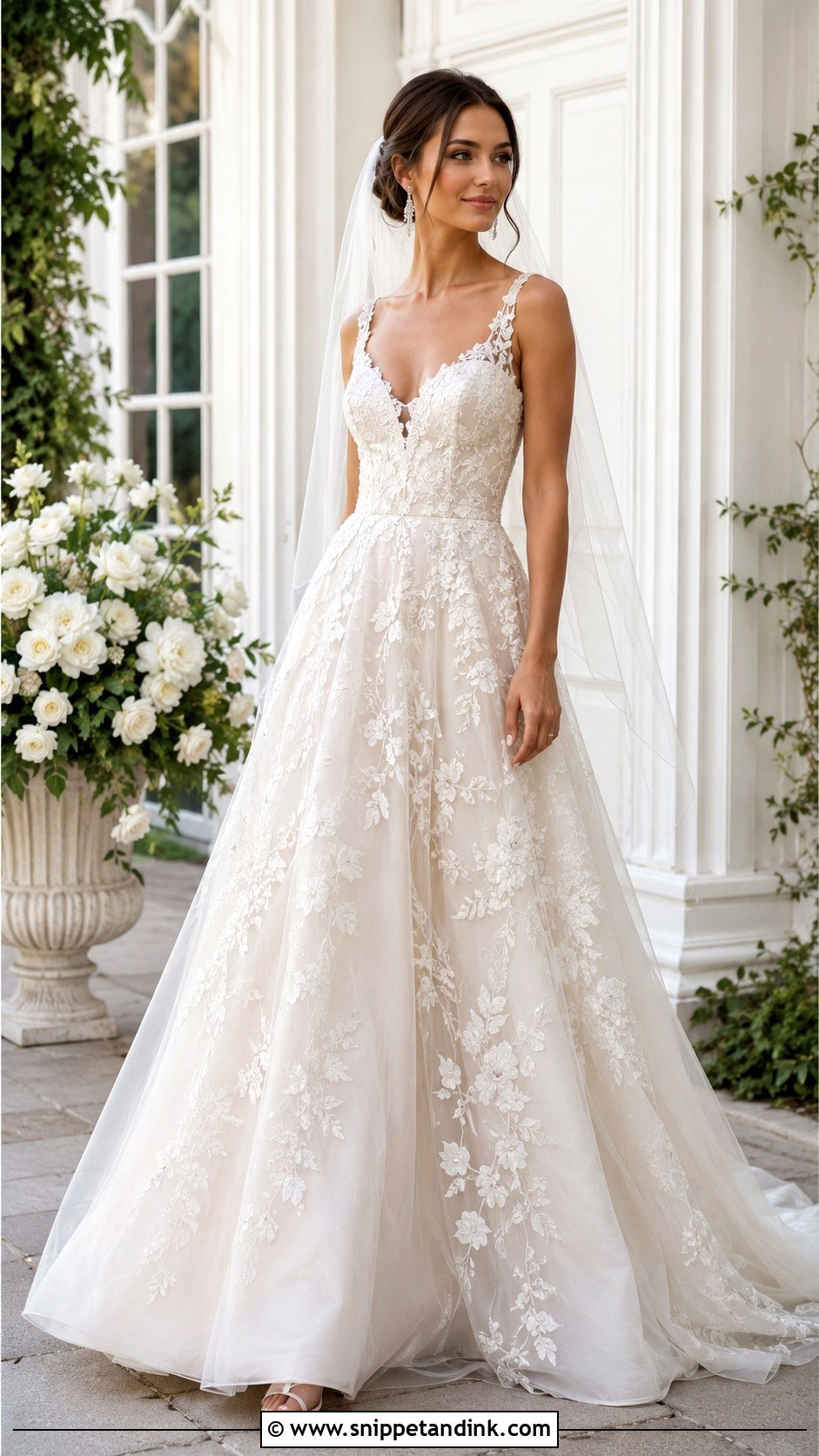
Embroidery gives you detail that reads refined rather than flashy: fine floral threadwork, tonal stitching in ivory on ivory, or subtle beading on tulle, lace or organza. A fitted bodice with a flowing skirt keeps it balanced. Look at the reverse side of the embroidery at your appointment; neat backing and secure thread ends mean it won’t snag on the lining or pull on the day. A plain veil, delicate earrings and soft heels let the work stand out. A loose updo or polished waves suits it, with a bouquet of white or soft pastel flowers. Garden weddings and estate venues show it at its best.
From Order Form to Final Fitting
Most gowns in bridal salons are made to order rather than taken off the rack, and production commonly takes four to eight months depending on the designer, with rush fees for anything faster. Then alterations need their own window. I generally tell brides to order around nine to twelve months out, so nothing is squeezed.
How the fittings usually go
- First fitting, about eight to ten weeks before: the seamstress pins the main adjustments, usually side seams, straps and hem.
- Second fitting, three to four weeks out: check the changes, set the bustle and confirm the hem with your actual shoes and underwear.
- Final fitting, one to two weeks out: try on with everything, practise the bustle with whoever will do it on the day, and take the dress home.
Mermaid, corset and heavily beaded dresses often need an extra appointment. Alteration costs vary a lot by region and by how complex the work is; lace and beading are labour-intensive because motifs have to be removed and sewn back by hand.
If Something Goes Wrong With the Dress on the Day
Small things happen. A bustle loop snaps during dancing, a hook pops, a drop of red wine lands on the skirt. I put together a little kit for every bride and hand it to a bridesmaid: a needle pre-threaded with ivory thread, safety pins in two sizes, fashion tape, a white chalk stick for covering light marks on ivory, and a clean white cloth. For a wine spill, blot, don’t rub, and don’t add water to silk, which can leave a ring. Most marks are best left for a specialist cleaner after the wedding, and nobody notices them in photos once you’re moving.
Sit, Walk and Hug in It Before You Say Yes
None of these dresses depends on complicated styling. A graceful gown starts with a silhouette that suits your frame, a fabric you understand, and accessories that support it rather than compete. Satin, crepe, lace, chiffon, mikado, tulle and organza each create a different mood, and each can look classic when it’s fitted properly. Whatever you lean toward, whether a sleek sheath, lace sleeves, a structured ball gown or a slip, sit down in it, lift your arms in it and walk in your actual shoes before you say yes. The dress should feel as good during the last dance as it did in the mirror.
You'll Like These Ideas:









Leave a Reply