
More couples now ask me for one cake rather than a stack, and I understand why. A single layer puts the effort into shape, texture and flavor instead of internal dowels and height. A round cake reads classic, a long sheet becomes a centerpiece on the table, a heart leans vintage and an oval looks modern. It travels better too, since there’s no tier to slide in a hot van. These designs suit intimate weddings, dessert tables, backyard receptions and anyone who wants a beautiful cutting cake without a tower. Here are twenty I’d make, with the practical notes I’d give at a consultation.
Feeding Every Guest From a Single Layer
The first question I ask about a non tiered cake is how many people it has to feed. A single round can look generous on the table and still run out halfway through the room. Wedding slices are narrower than party slices, usually about an inch wide and two inches deep, which helps, but one layer still only goes so far.
As a rough guide using wedding-sized slices, a 6-inch round feeds around a dozen, an 8-inch around two dozen and a 10-inch somewhere near forty. Exact numbers vary with height and how carefully it’s cut. A half sheet feeds far more than any round, and a full sheet can serve well over a hundred.
When the guest list outgrows the cake
- Keep a decorated cake for display and cutting, and serve guests from plain sheet cakes in the same flavor kept in the kitchen.
- Add cupcakes or mini cakes around the main cake on the dessert table.
- Pick a rectangle or sheet shape instead of a round; it serves more per square inch and cuts without waste.
- Tell the caterer how you want it cut. A venue that cuts party-sized slices can halve the number of servings.
1. Single Tier Wedding Cake
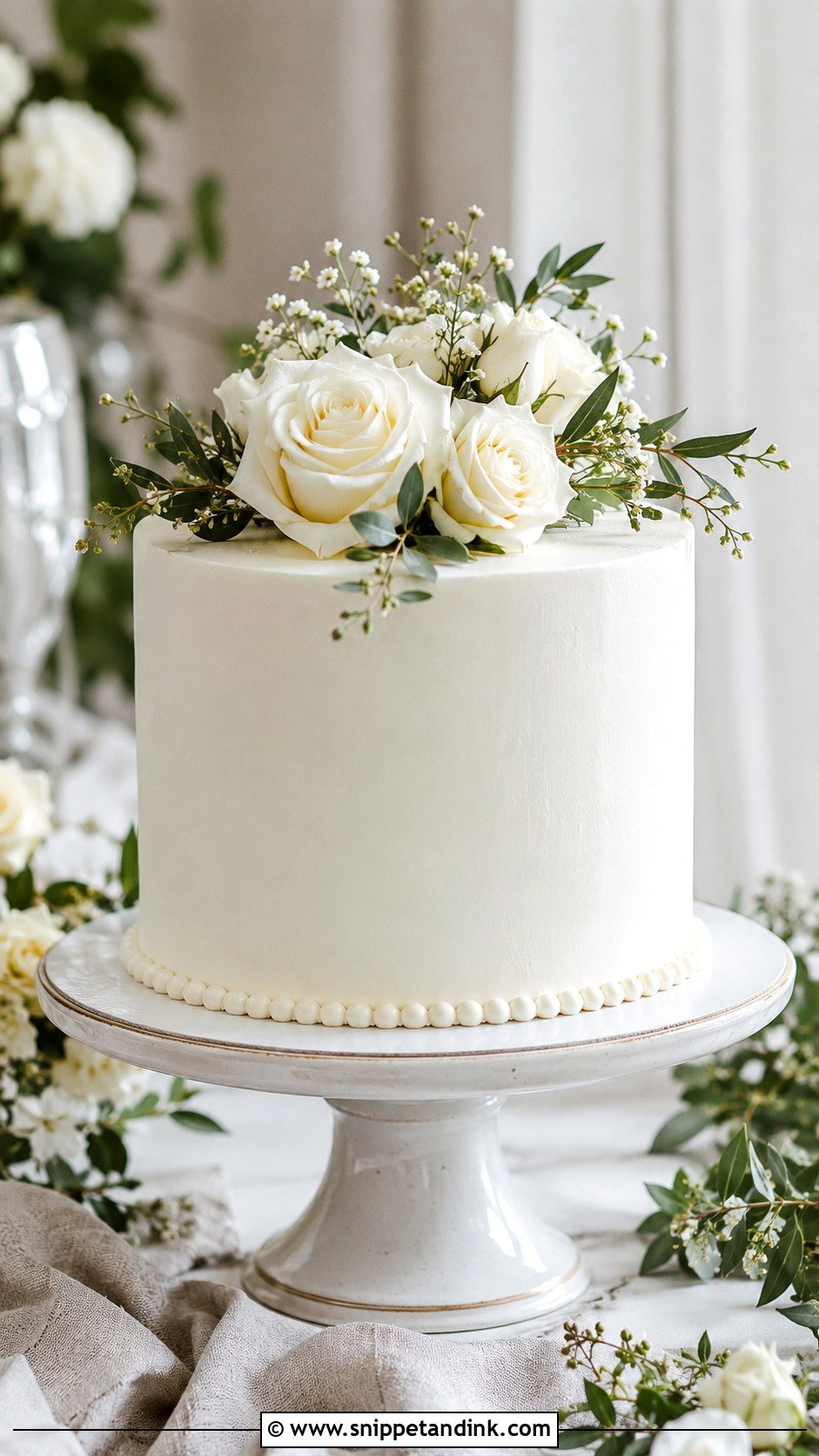
One tier only looks like a wedding cake if it’s taller than a birthday cake. I bake single wedding tiers at around five or six inches high instead of the usual four, with an extra layer of sponge and filling, so the cut slice shows clean stripes. Smooth buttercream, crisp edges and one focal point: flowers, pearl piping or a ribbon at the base. It suits courthouse weddings, garden receptions and small dinners. Vanilla almond, lemon elderflower or chocolate raspberry all slice neatly. A pedestal stand adds the height that the cake itself doesn’t have.
2. Heart Wedding Cake
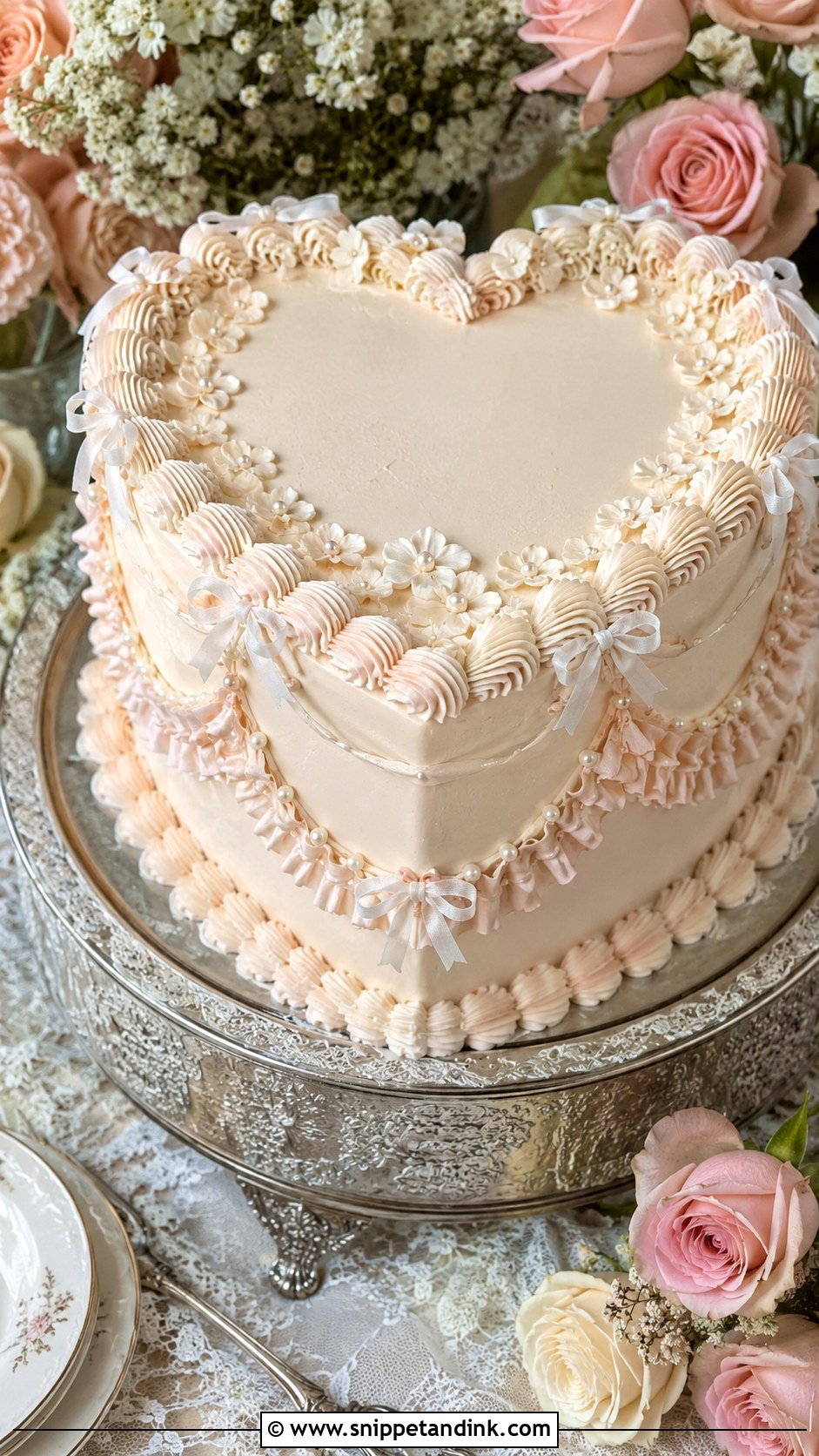
Hearts are trickier to frost than they look. The point at the bottom and the dip at the top are where buttercream goes thin or bulges, so I chill the cake between coats and finish those two areas by hand. A heart wedding cake takes Lambeth piping, soft ruffles, pearl borders and tiny piped bows well. Ivory, blush, butter yellow and pale blue keep it from looking like a Valentine’s cake. Photograph it from above, where the shape reads best, and keep any message short; two initials look better than a sentence.
3. Oval Wedding Cake
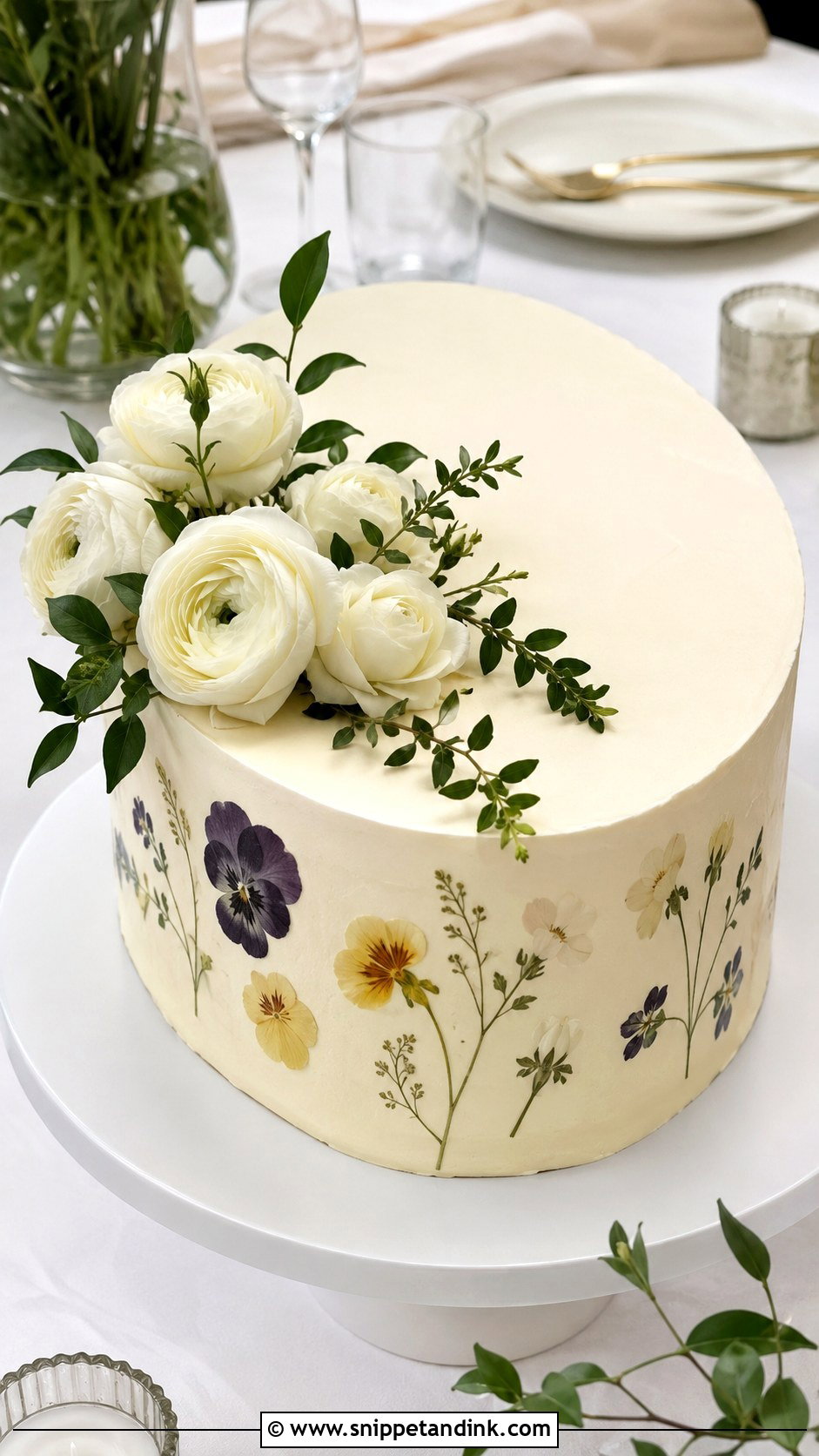
An oval feels like a round cake that’s been given a little more room. The longer top is useful: it fits a line of pressed flowers along one side, a cluster of fruit or a short scripted message without crowding. Smooth buttercream with fine piping at the edge suits it, and so does a deeper finish than you’d give a round cake, because a shallow oval looks like a platter of dessert. Oval pans are less common, so check your baker has one. Vanilla bean with raspberry or lemon curd suits the shape.
4. Square Wedding Cake
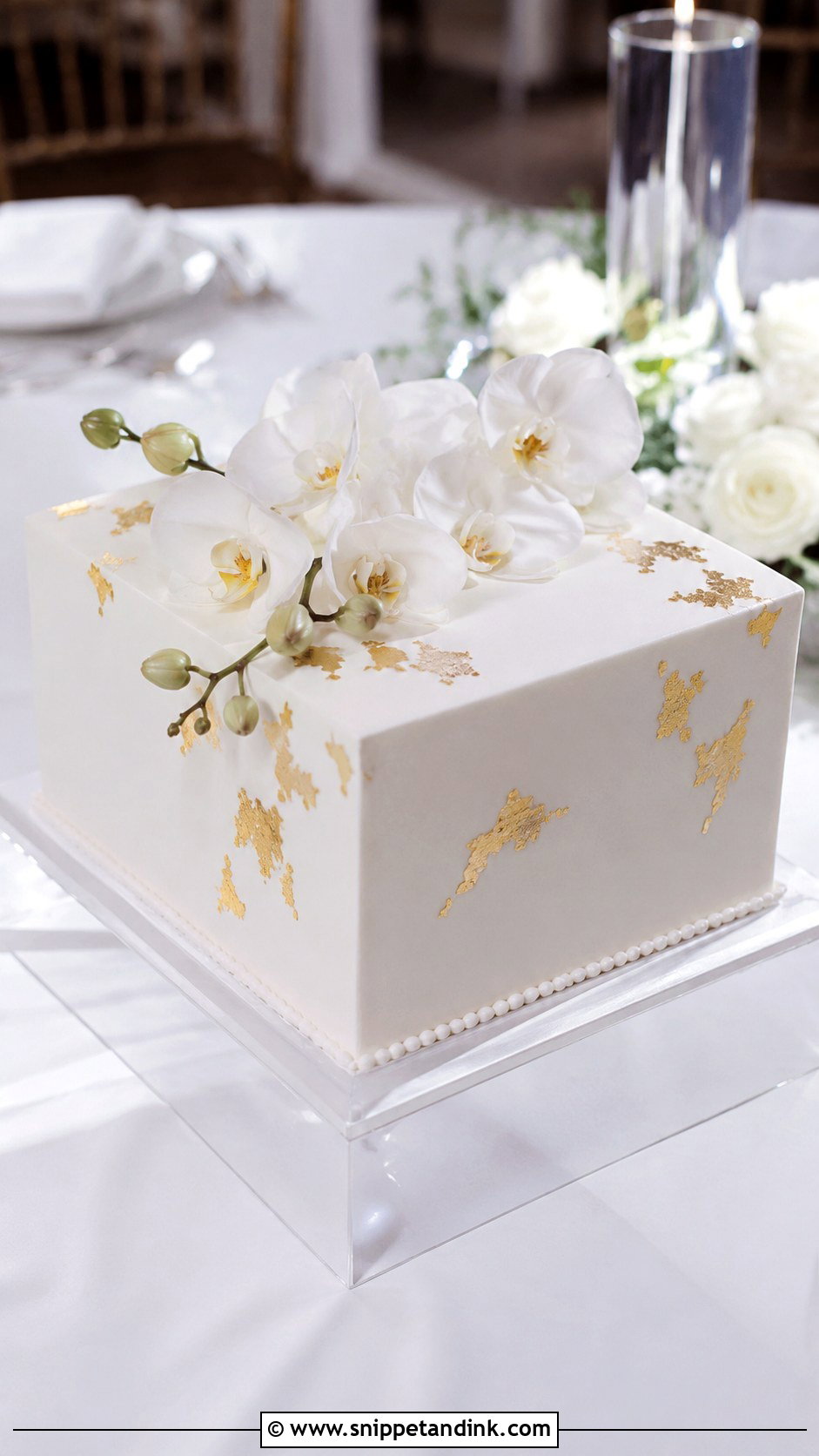
Square cakes are the hardest shape to finish well, because every flaw collects at the four corners. In buttercream I chill the cake hard and scrape each side separately to keep the corners sharp; with smooth fondant it’s easier to get that crisp edge. All white looks like a gallery piece; thin piping, pressed flowers, gold leaf or a silk ribbon soften it. Squares cut into neat, even portions with no wasted curved edges. Garden roses or sugar petals on top balance the hard lines.
5. Rectangle Wedding Cake
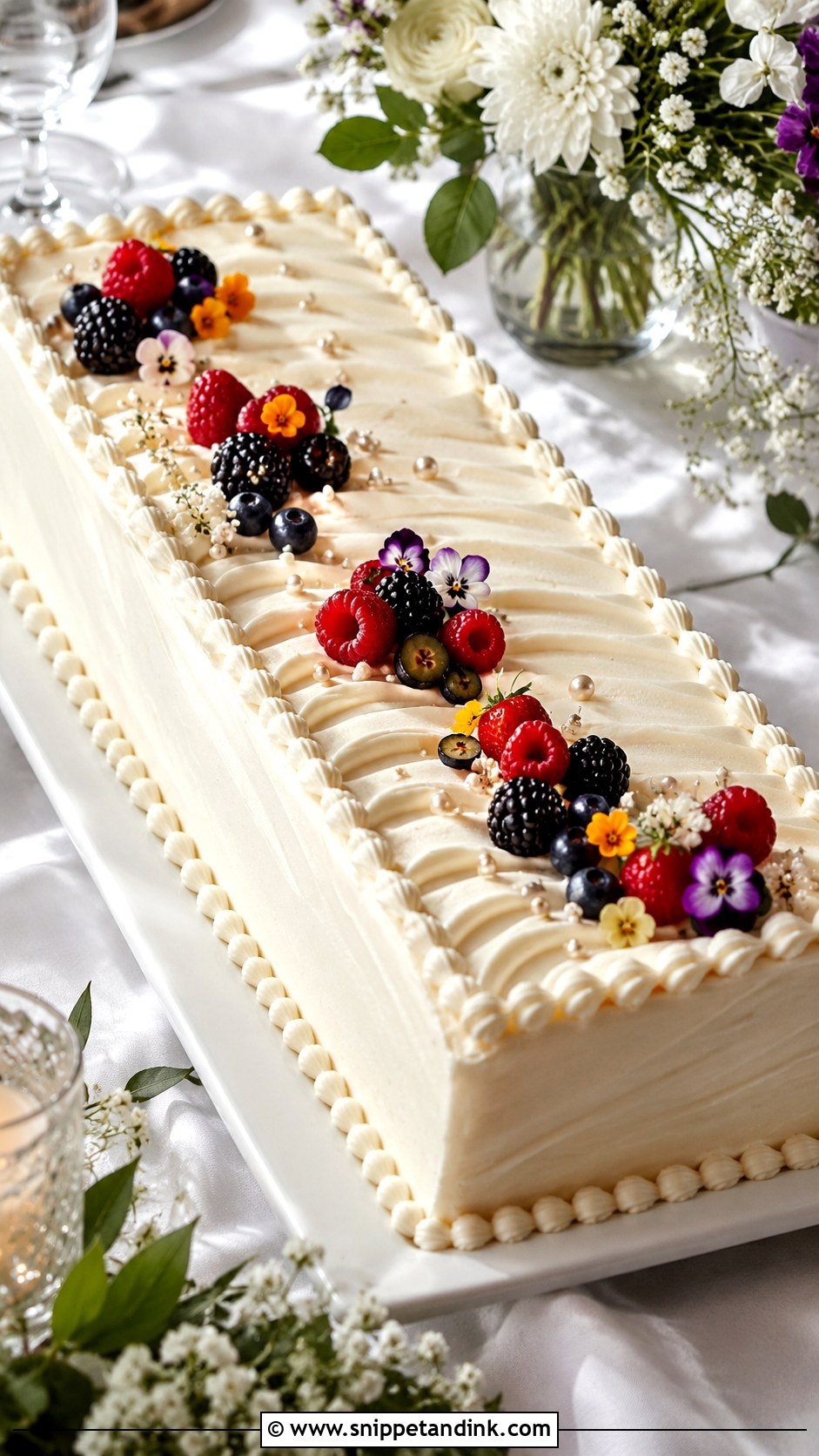
If I had to pick the most practical shape on this list, it’s the rectangle. It serves easily in neat rows, gives a long flat top to decorate and sits well on a narrow dessert table. It can go lengthwise on a long board or directly on the table if the surface is level. Buttercream waves, piped borders, berries and pearls all suit it. For a modern look I keep the sides plain and run the decoration diagonally across the top. A heavily floral top reads romantic. Brunch weddings, garden parties and relaxed receptions are where I’d suggest it.
6. Wedding Sheet Cake
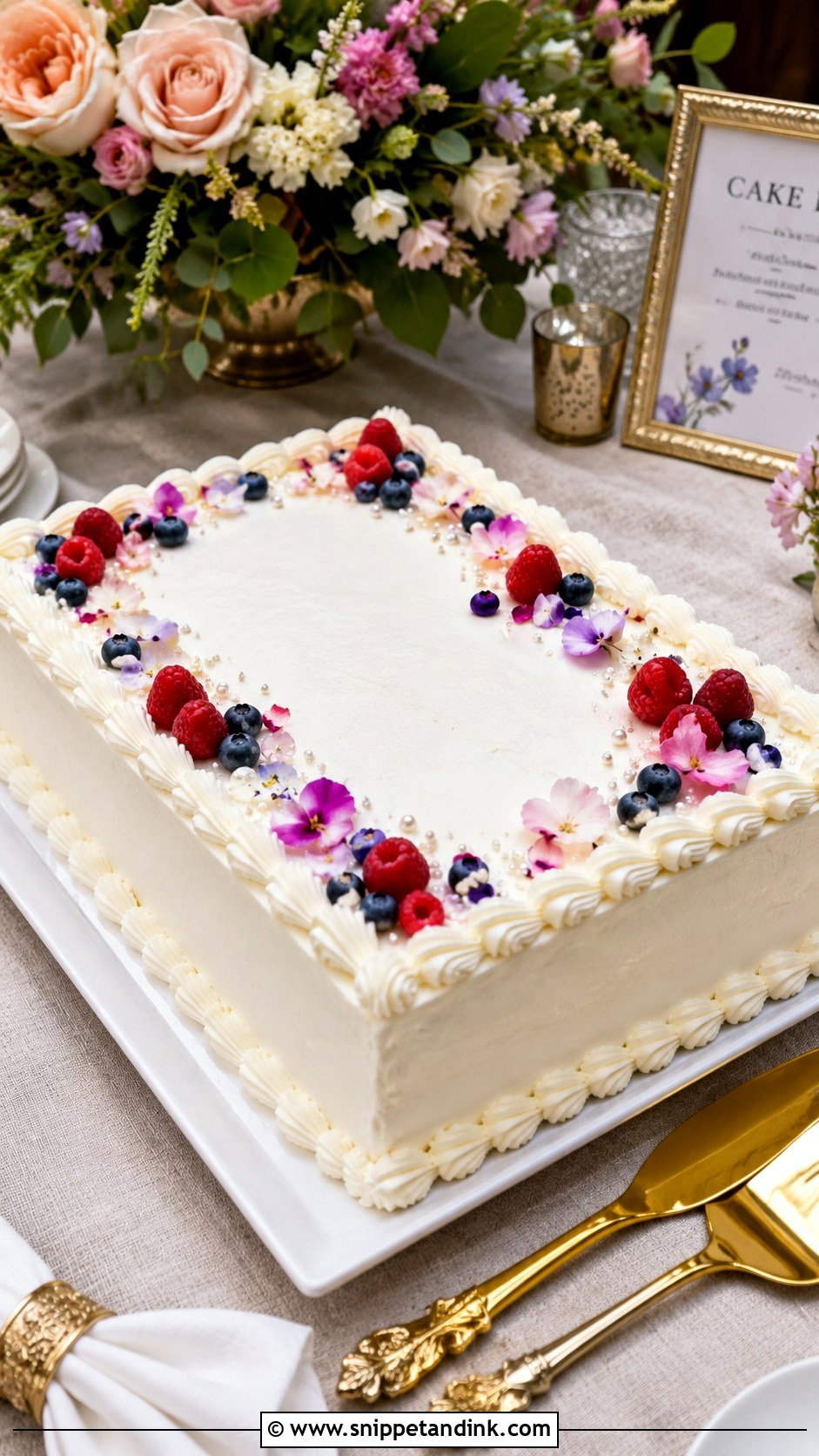
Couples are often embarrassed to ask for a sheet cake, and they shouldn’t be. Styled properly, a sheet cake can be the main dessert on display. A full or half sheet with textured buttercream, piped borders and berries, edible petals, sugar pearls or citrus slices looks festive. It’s also the cheapest way per slice to feed a big guest list, because there’s no structural work. Ask for one color and a neat border; uneven borders are what make sheet cakes look like supermarket cakes. A linen-covered table and some flowers nearby do the rest.
7. Lambeth Wedding Cake
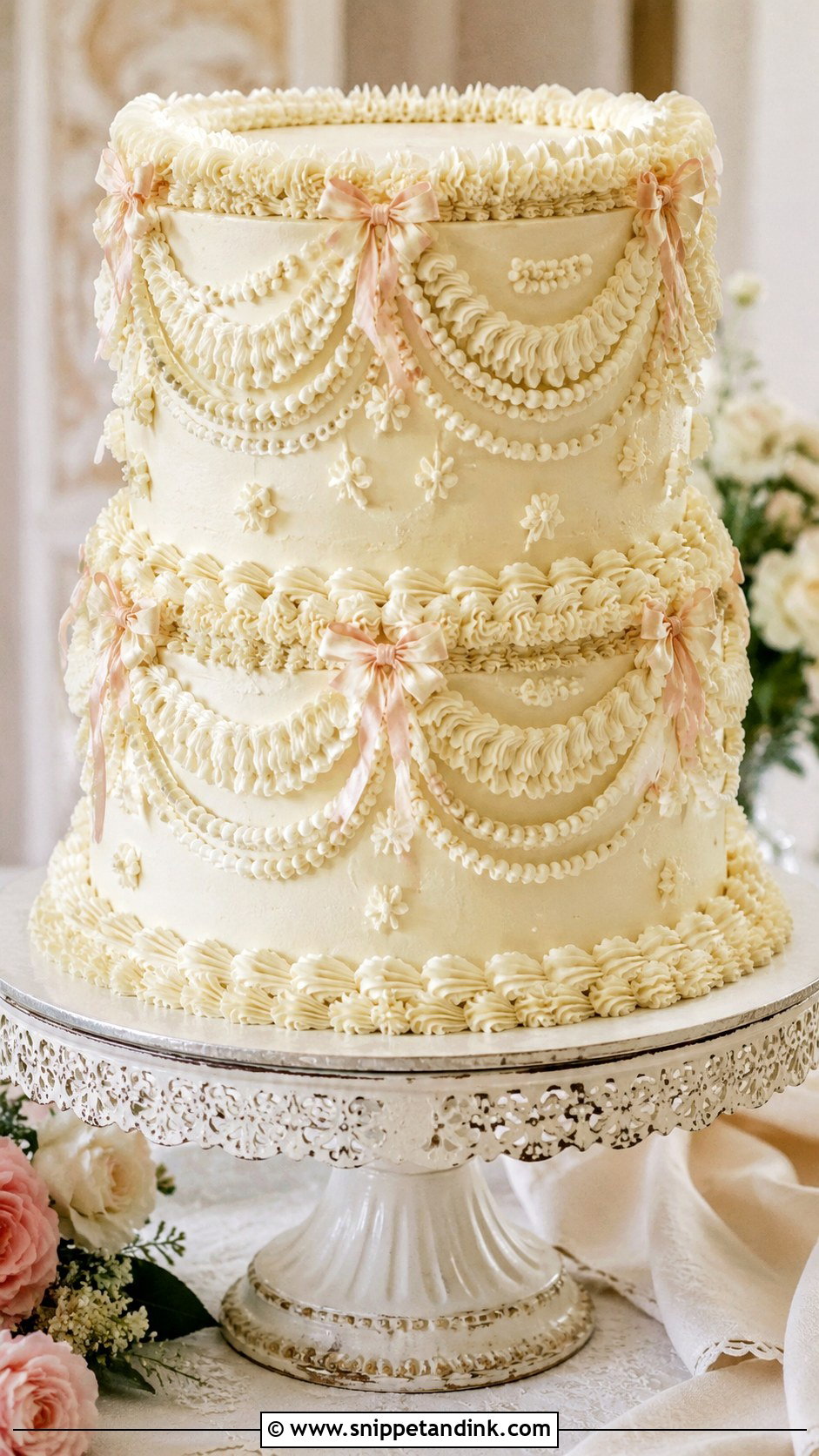
Lambeth piping builds outward in layers of borders, shells, swags and ruffles, so even a single cake looks full. It’s slow work that takes a firm buttercream and a steady hand, and the piping needs height to show, so I’d only do it on a round or heart cake at least five inches tall. Ivory, blush, pale blue and butter yellow are the classic palette. Cherries add a retro touch; sugar pearls or small bows look more bridal. Ask to see photos of your baker’s own Lambeth work before booking.
8. Vintage Wedding Cake
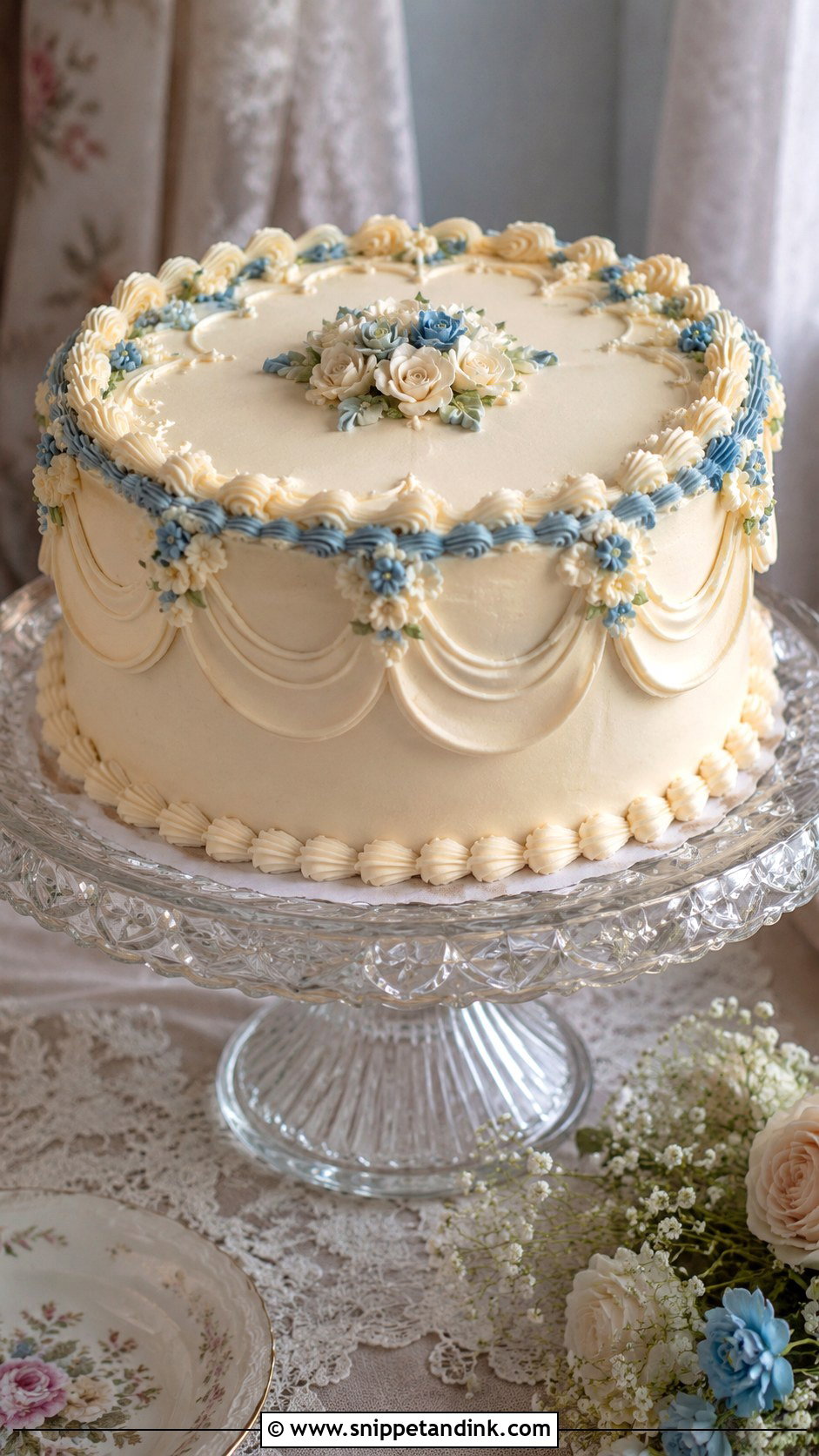
Vintage cakes come down to a handful of piped details: scalloped edges, borders, small rosettes and a short message across the top. For a single-layer version I start with a tall round or a heart. Color decides the mood more than piping does. Ivory with blush accents, white with baby blue or cream with soft green all look right; strong, saturated colors push it toward a party cake. Antique stands, lace linens and petite arrangements suit the style. It’s the most sentimental cake on this list.
9. Floral Wedding Cake
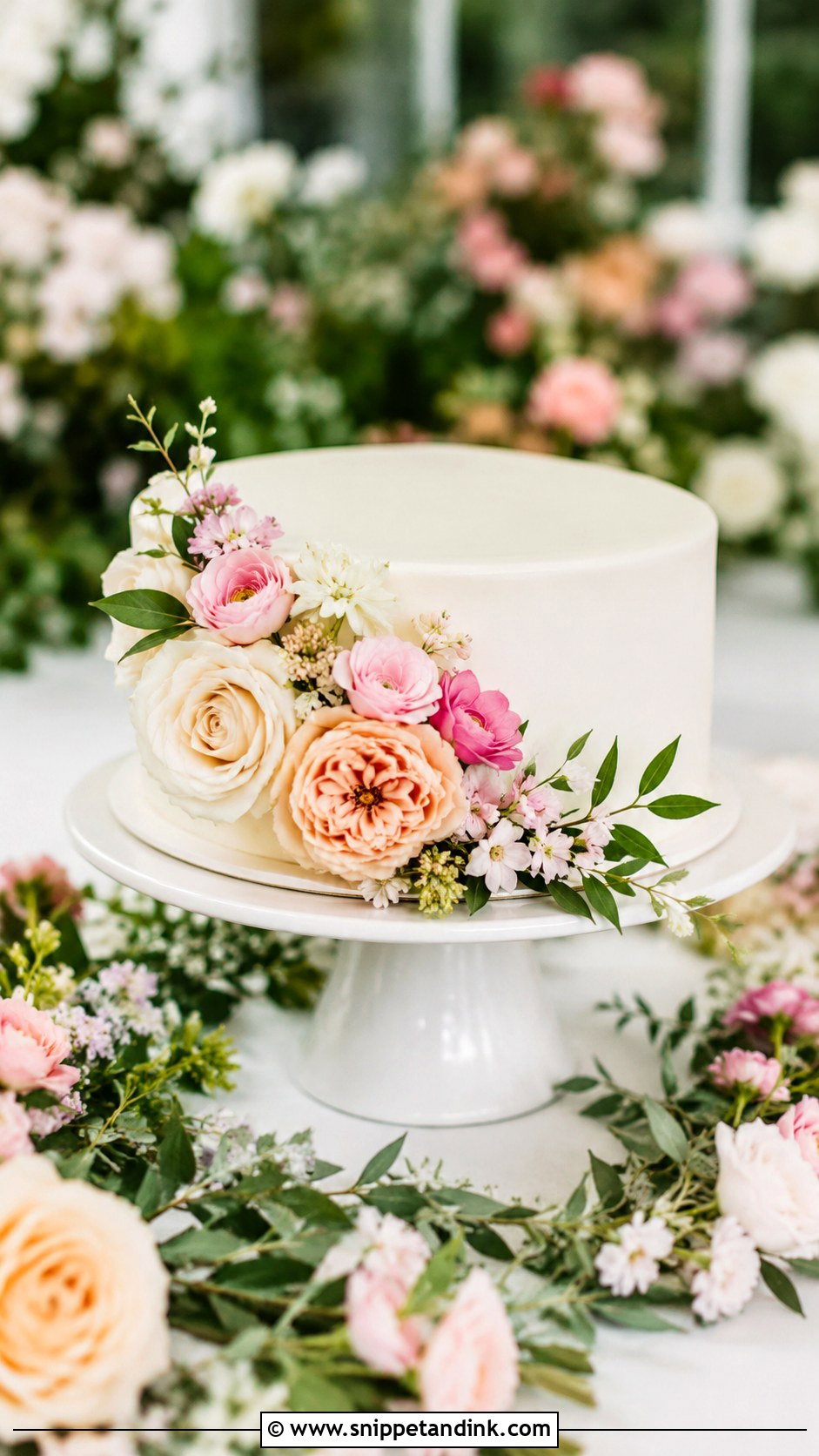
With a single layer, flower placement matters even more, because there’s no tier to spread blooms across. A few large heads look composed; lots of small ones scattered read as a garden. Buttercream sits more naturally beside petals than fondant does. Florist flowers aren’t grown to be food-safe, so ask the florist and baker to coordinate and make sure stems never touch the cake directly. Roses, ranunculus, orchids and genuinely edible blossoms are popular. Light flavors such as vanilla, lemon, almond or coconut suit the fresh look.
10. Pressed Flower Wedding Cake
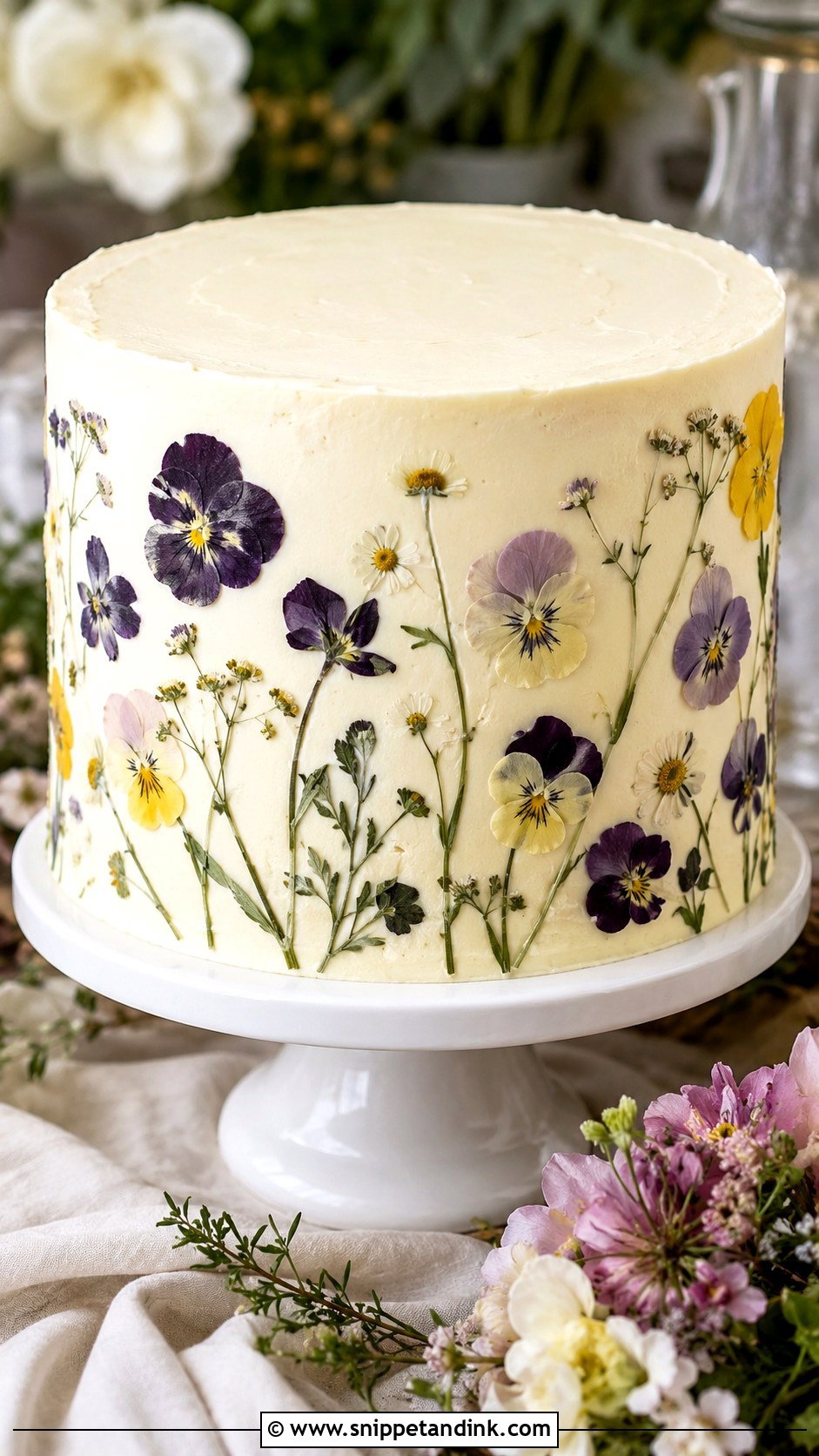
Pressed flowers lie flat, so they need a perfectly smooth white or ivory buttercream to sit against, and they’re pressed on while the frosting is still slightly tacky. Any bumps or air bubbles show around the petals. Use edible pressed flowers, or food-safe flowers prepared by someone who knows which varieties are safe. The design can be symmetrical or scattered. A single tier gives the flowers room. It’s best for spring weddings and botanical themes, paired with lemon, vanilla bean, lavender or honey.
11. Buttercream Wedding Cake
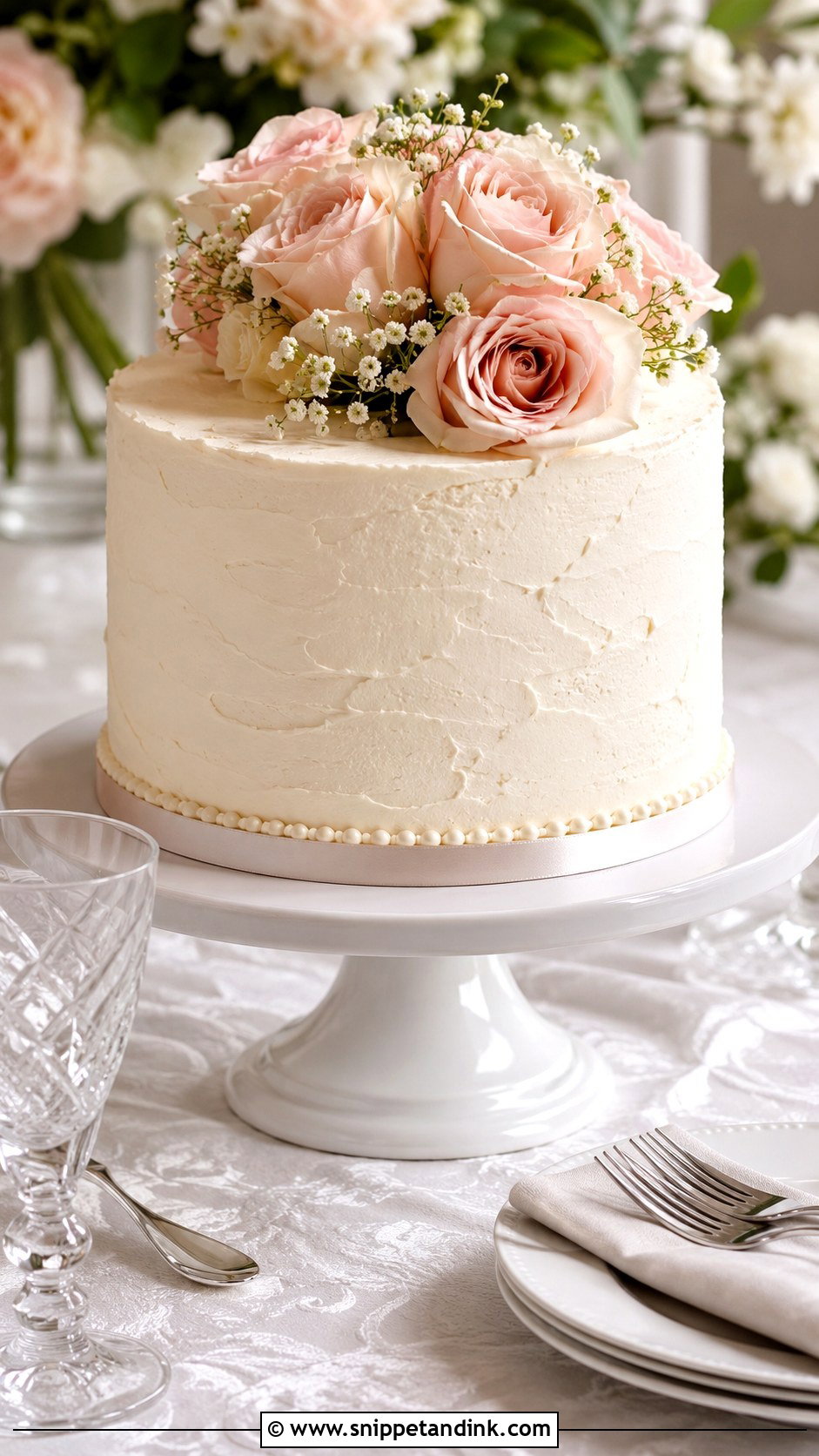
On a single layer, buttercream’s finish is the design, so decide smooth or textured first. Smooth looks modern and clean; textured looks relaxed and forgives transport bumps. A thin border, flowers, fruit or a small topper is plenty. Buttercream also pairs with nearly every flavor, unlike fondant, which suits firmer cakes. Vanilla, chocolate, lemon, strawberry and almond all work. It’s the safe choice when you don’t want the cake to be the talking point of the day.
12. Minimalist Wedding Cake
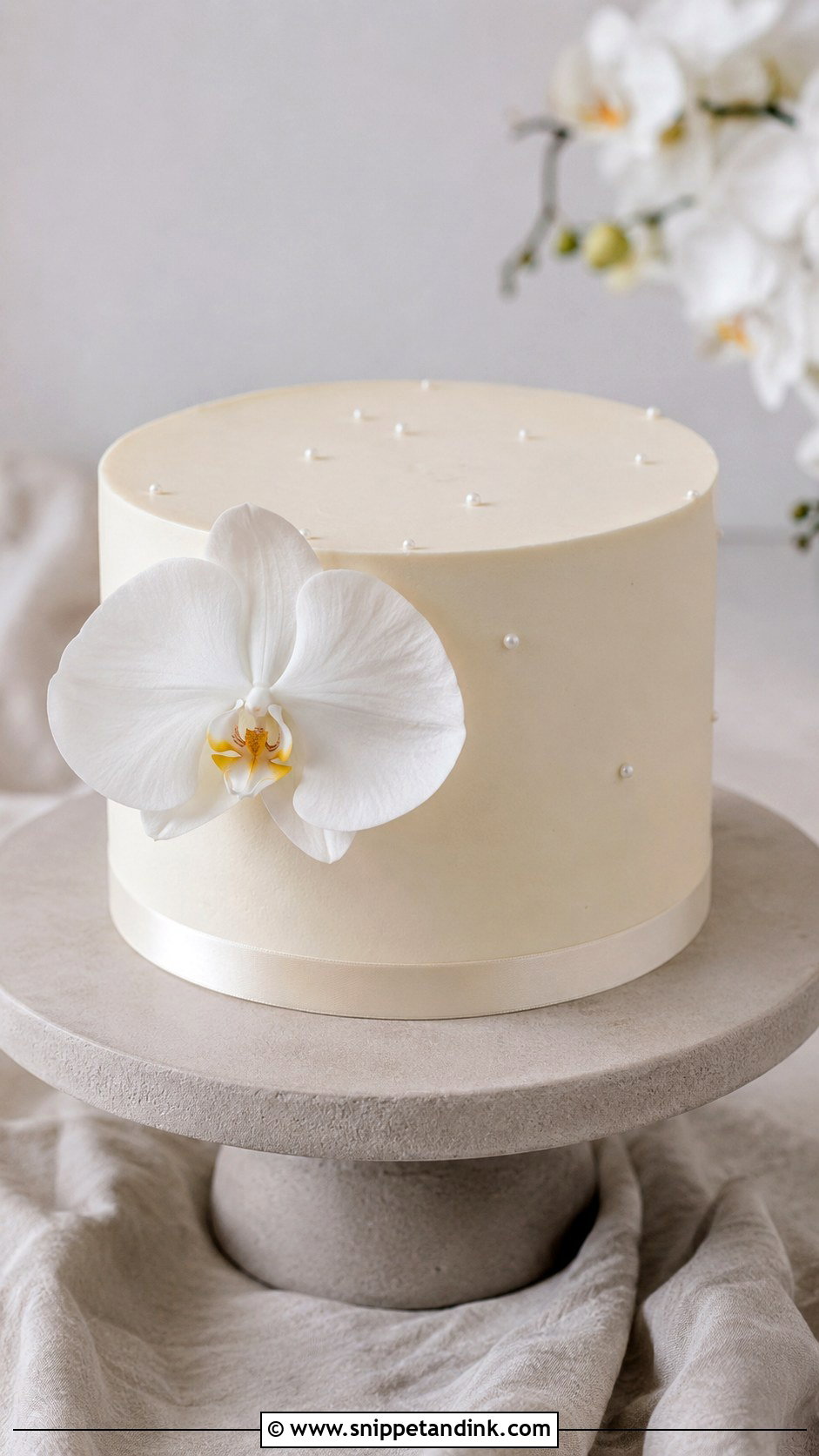
Minimalist cakes look simple and are anything but. Without decoration to hide behind, every lean, dent and uneven edge is visible. I chill the cake between each scrape and check it from eye level before it leaves the kitchen. A smooth round, square or oval in white, ivory or warm cream, then one detail: a single flower, a thin ribbon, a small pearl border or a soft texture band. Keep the background clean too. Vanilla bean, almond, lemon or dark chocolate gives it a refined taste to match.
13. Rustic Wedding Cake
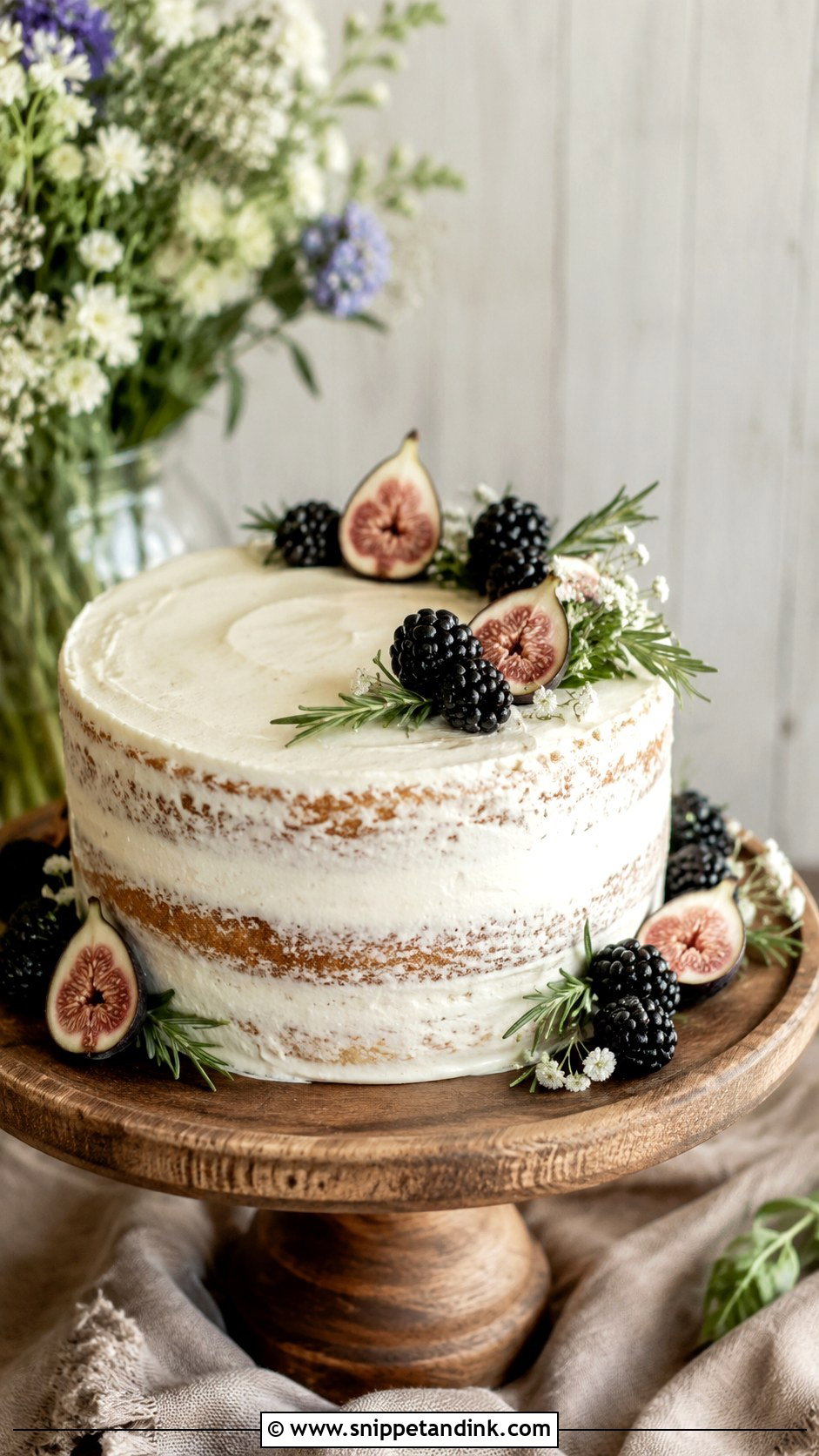
Rustic is the most forgiving style here and the easiest to transport. A single round with semi-naked buttercream and soft edges hides small imperfections, and berries, figs, herbs or small flowers look natural rather than messy if you keep them seasonal. Brush the exposed sponge with syrup, because it dries out faster than a fully frosted cake. Wood stands and linen runners suit it. Carrot, spice, vanilla berry or almond cake works well, especially at barns, gardens and backyard weddings.
14. Boho Wedding Cake
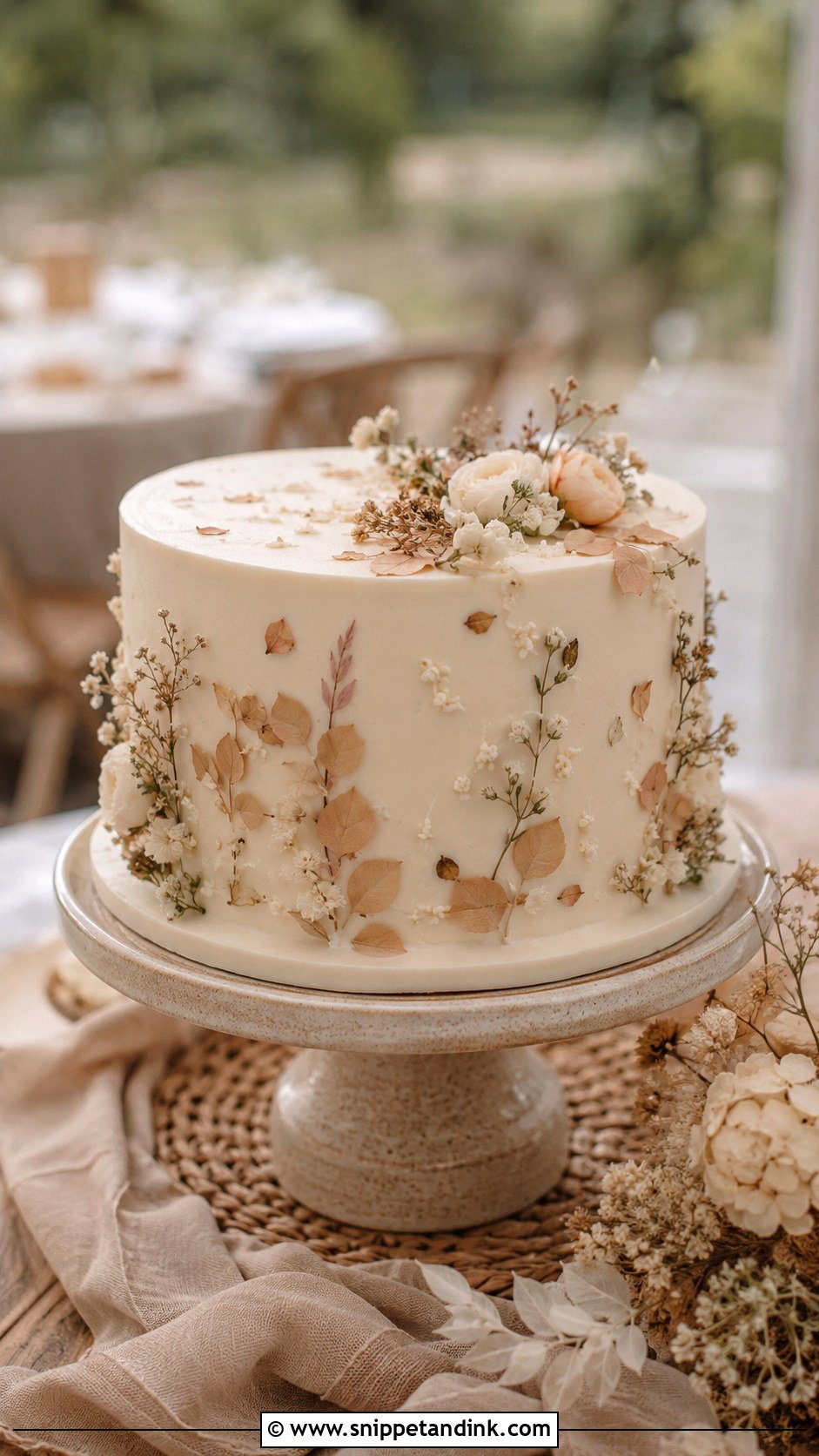
Boho cakes need restraint. The temptation is to pile on dried flowers and grasses until the top is hidden, and that’s when it starts looking cluttered. I’d use an ivory, beige or warm white buttercream, then a few dried flowers, small fresh blooms or muted petals, leaving space between them. Pampas grass sheds, so it should only be used if it’s been sealed and kept clear of the frosting. Round, oval or a low rectangle all work. Honey vanilla, almond, coconut or lemon fit the earthy palette, with woven textures and neutral linens around it.



15. Beach Wedding Cake
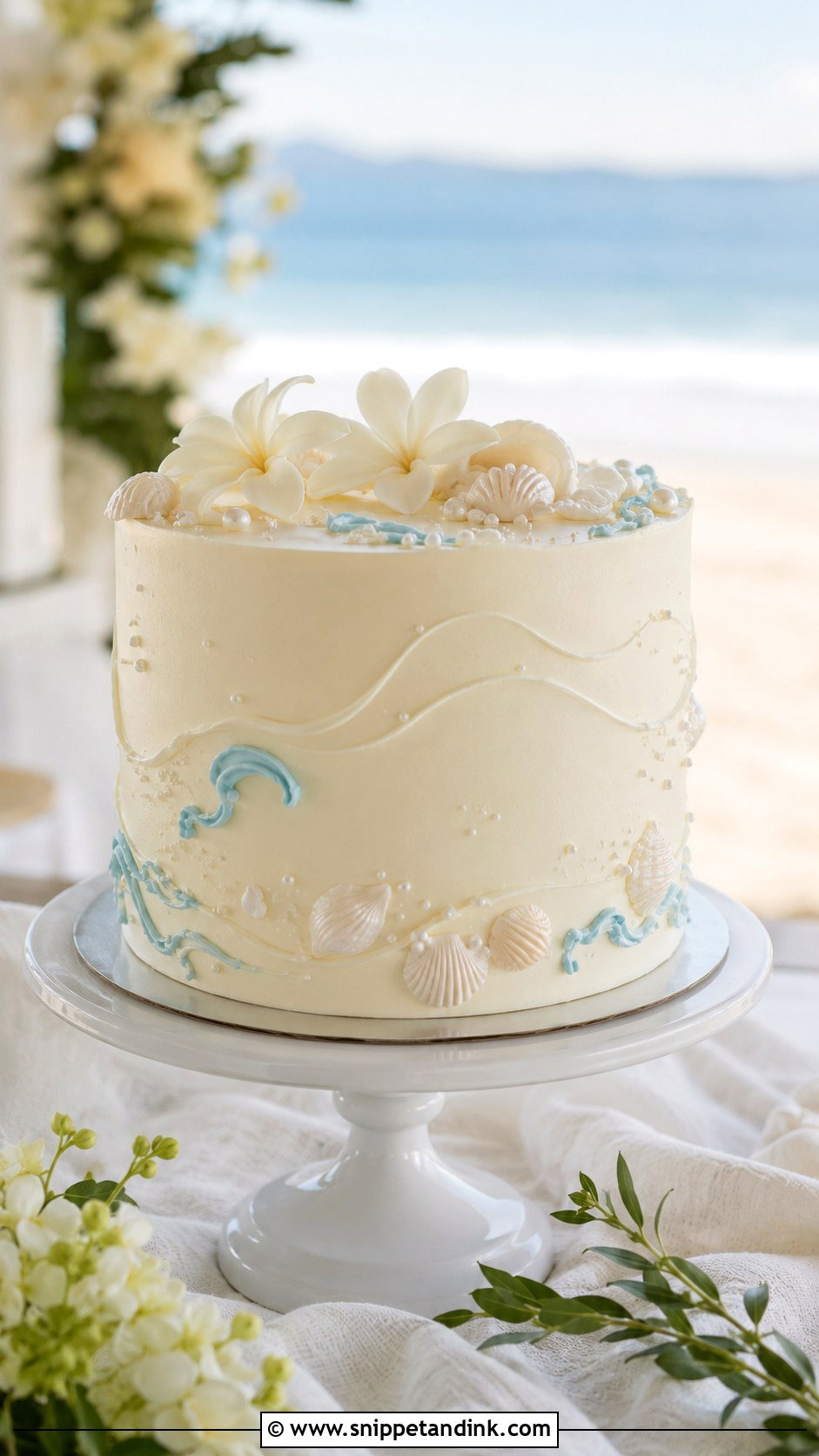
Sea air is warm and humid, and buttercream softens and sugar decorations go sticky near the water. That’s my main reason for keeping beach cakes small and single-layer. White or pale sand buttercream with a soft wave texture, pearl details or piped shell shapes looks right without becoming a theme cake. Edible pearls, white chocolate shells and soft blue accents decorate it; tropical flowers need to be food-safe. Coconut, lime, vanilla and passion fruit suit the setting. A white stand and coastal florals keep the display clean. Keep it in the shade until it’s cut.
16. Garden Wedding Cake
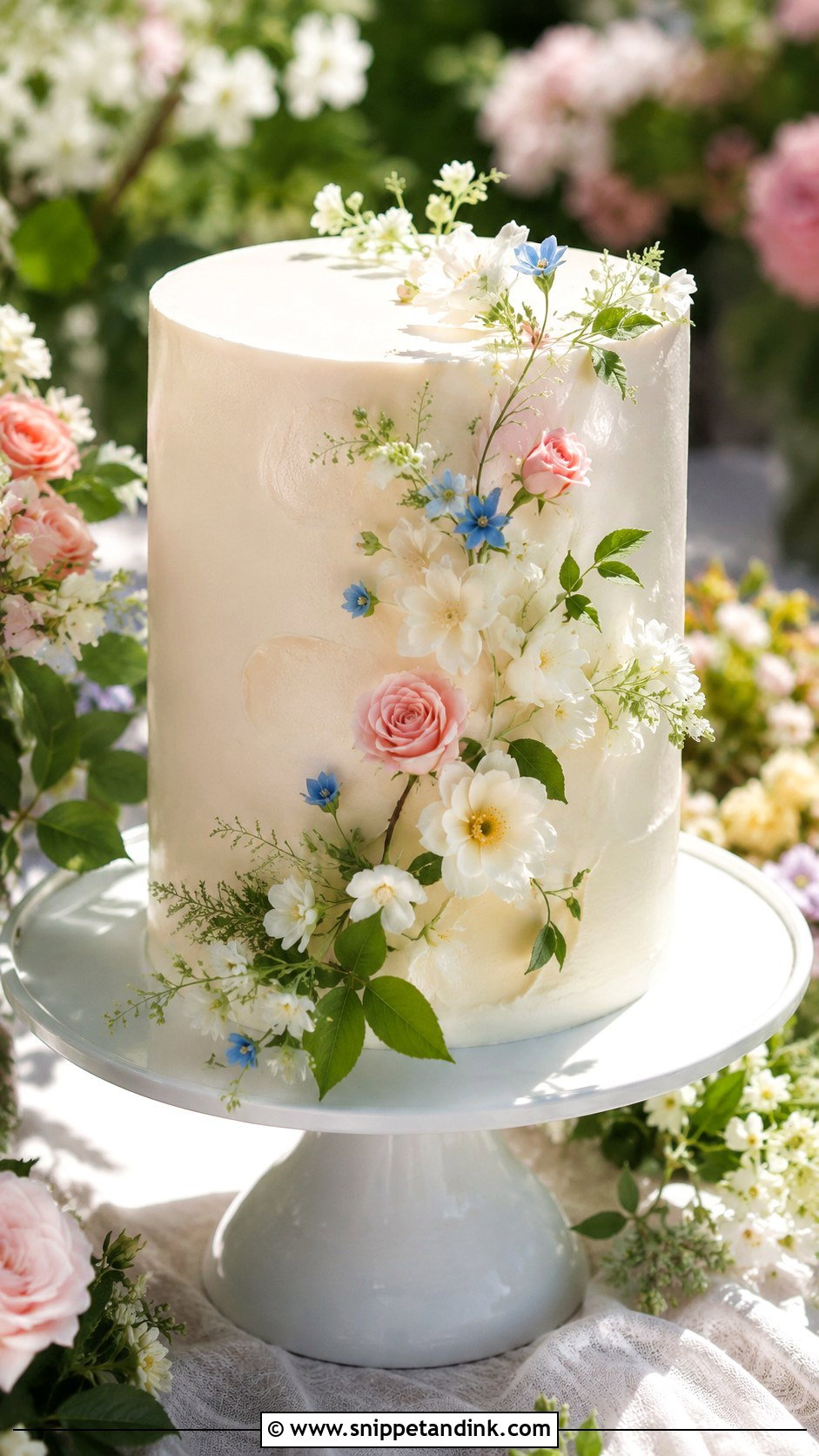
A garden cake should look like it grew there. I wrap the decoration around one side instead of covering the top evenly, so it feels organic, using edible flowers, small roses, herbs or trailing sugar leaves over ivory or pale green buttercream. A single round or oval gives enough surface for vines. Lemon, strawberry, elderflower, vanilla and almond taste like the setting. Display it near the real arrangements so the cake and the flowers relate to each other.
17. Gold Wedding Cake
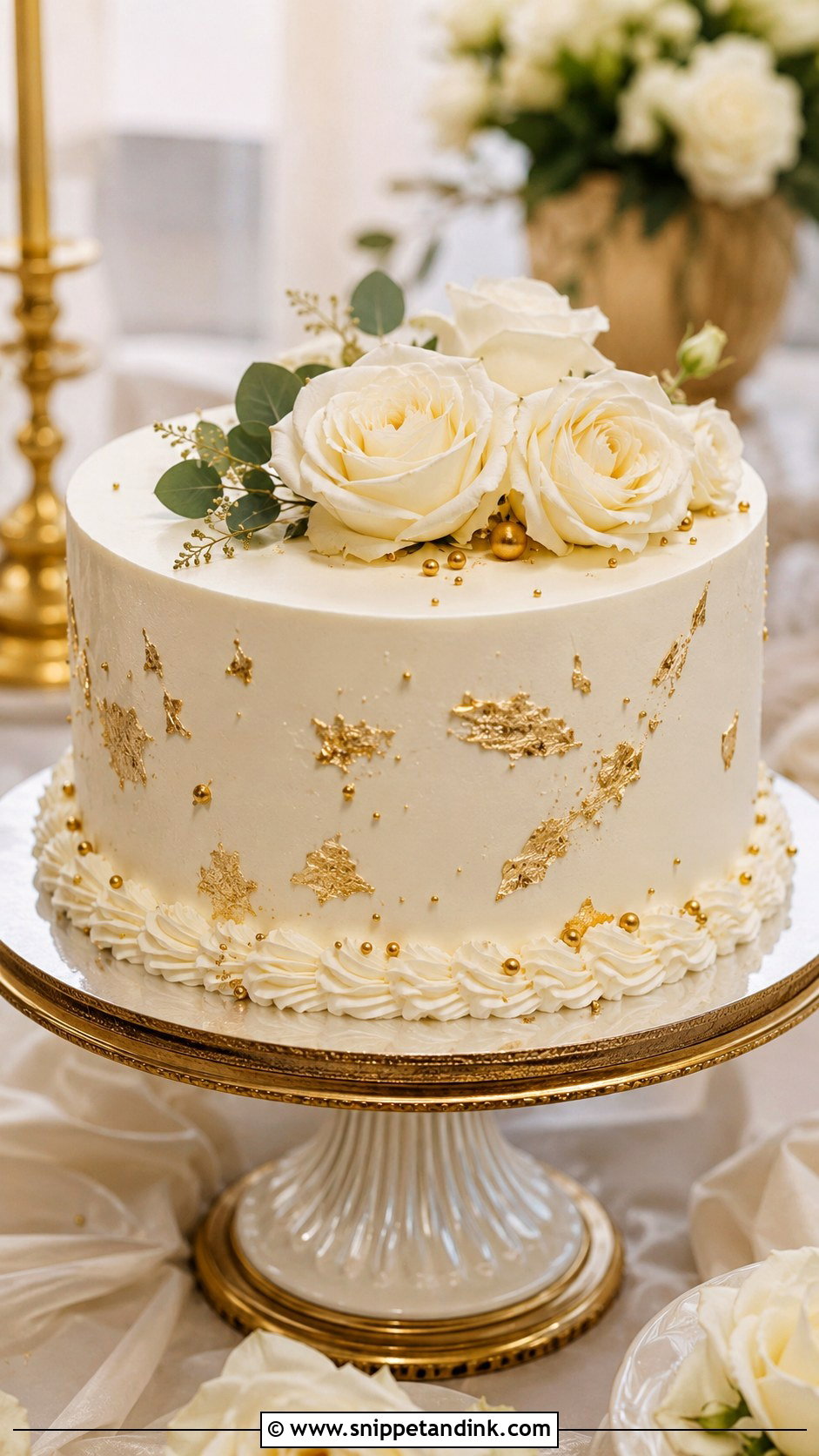
Gold works as an accent; covering a whole cake in it looks heavy. Gold leaf along one edge of a smooth ivory cake, a thin metallic line on a square or gold pearls with white flowers on a round all look elegant. One thing to check: some metallic dusts and paints are labeled for decoration only and aren’t meant to be eaten, so your baker should use products made for food. Vanilla, almond, chocolate, caramel and champagne-style flavors suit it without needing alcohol. It suits formal and evening receptions.
18. Black And White Wedding Cake
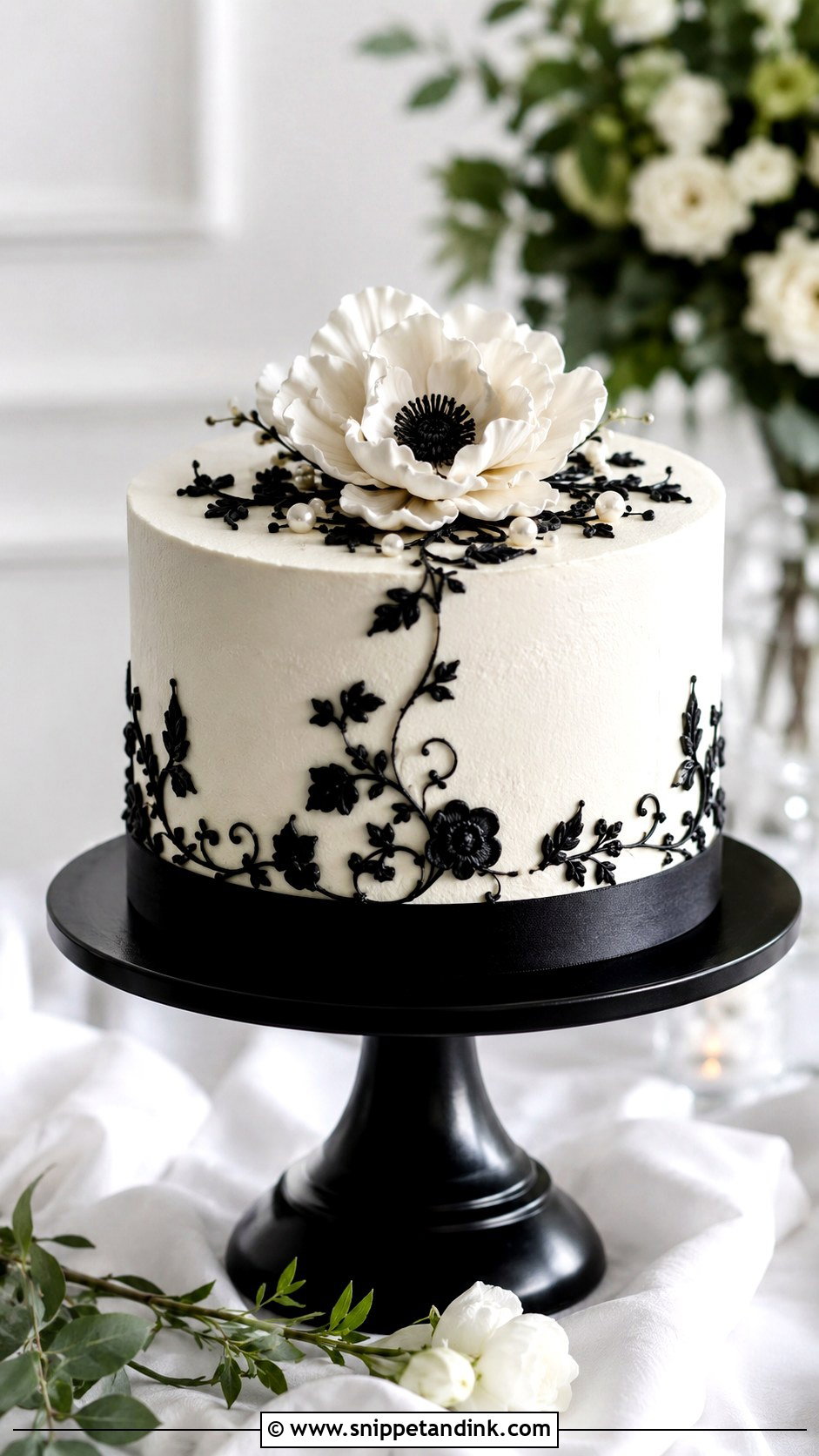
Black buttercream is harder than it looks. It takes a lot of coloring to get a true black, which can make the frosting taste bitter and stain teeth, so I start with a cocoa-based buttercream and use less dye. For a lighter touch, a smooth white cake with a black ribbon, black floral piping or a black bow gives the contrast without the staining. Round, square or heart shapes all work. Keep the decoration precise. Dark chocolate, vanilla bean, cookies and cream or black cocoa flavors fit the palette.
19. Mini Wedding Cake
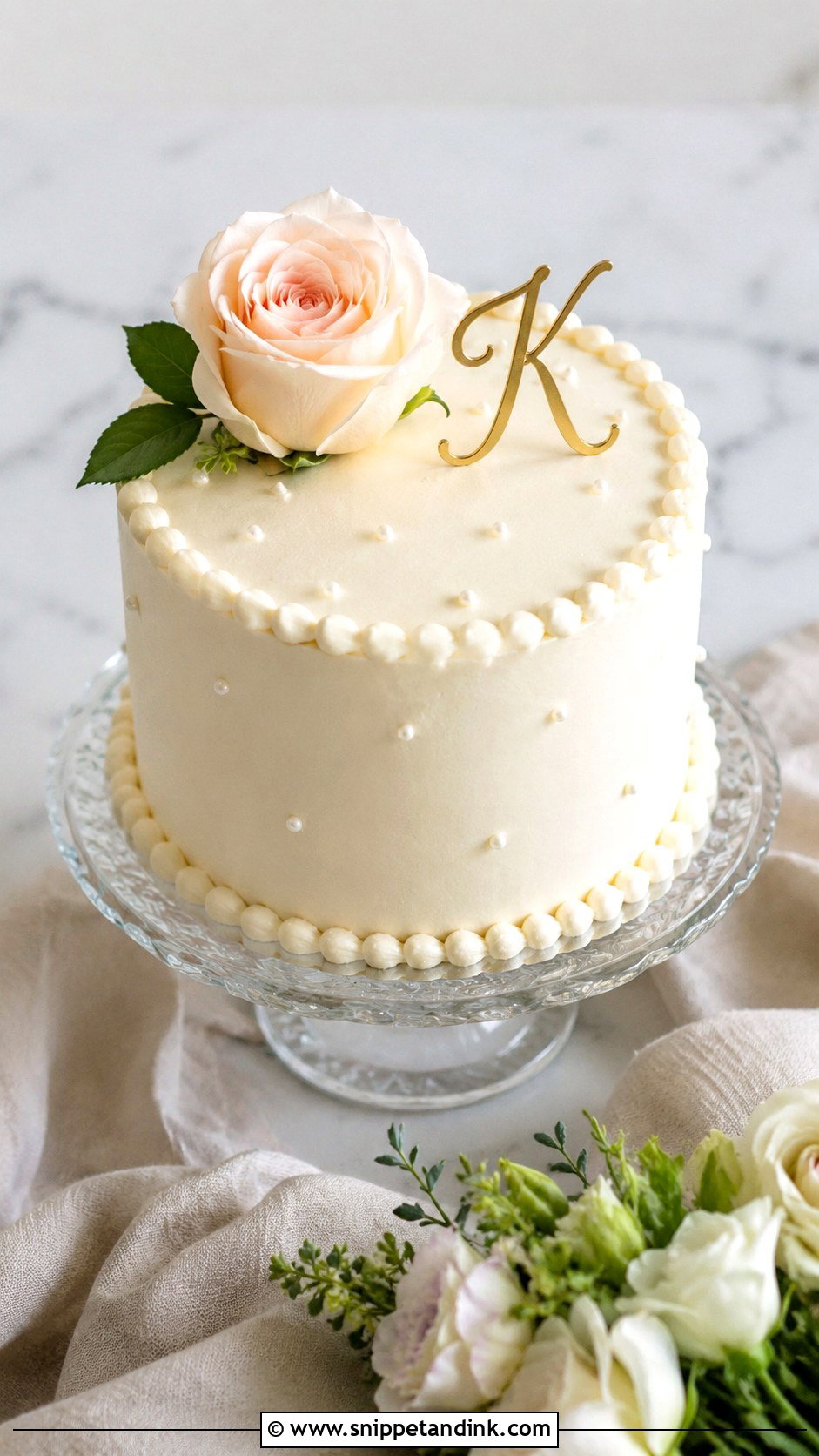
Mini cakes suit elopements, micro weddings and sweetheart tables. A 4-inch or 6-inch round cake with smooth buttercream, a piped border, a few flowers or a tiny topper looks finished. Scale is the thing to get right: large flowers or a standard topper swamp a small cake. A 4-inch serves the two of you and a few others; a 6-inch feeds roughly a dozen with narrow wedding slices. Small cakes are a good place for playful flavors like lemon raspberry, chocolate ganache, almond cream or strawberry vanilla.





20. Dessert Table Wedding Cake
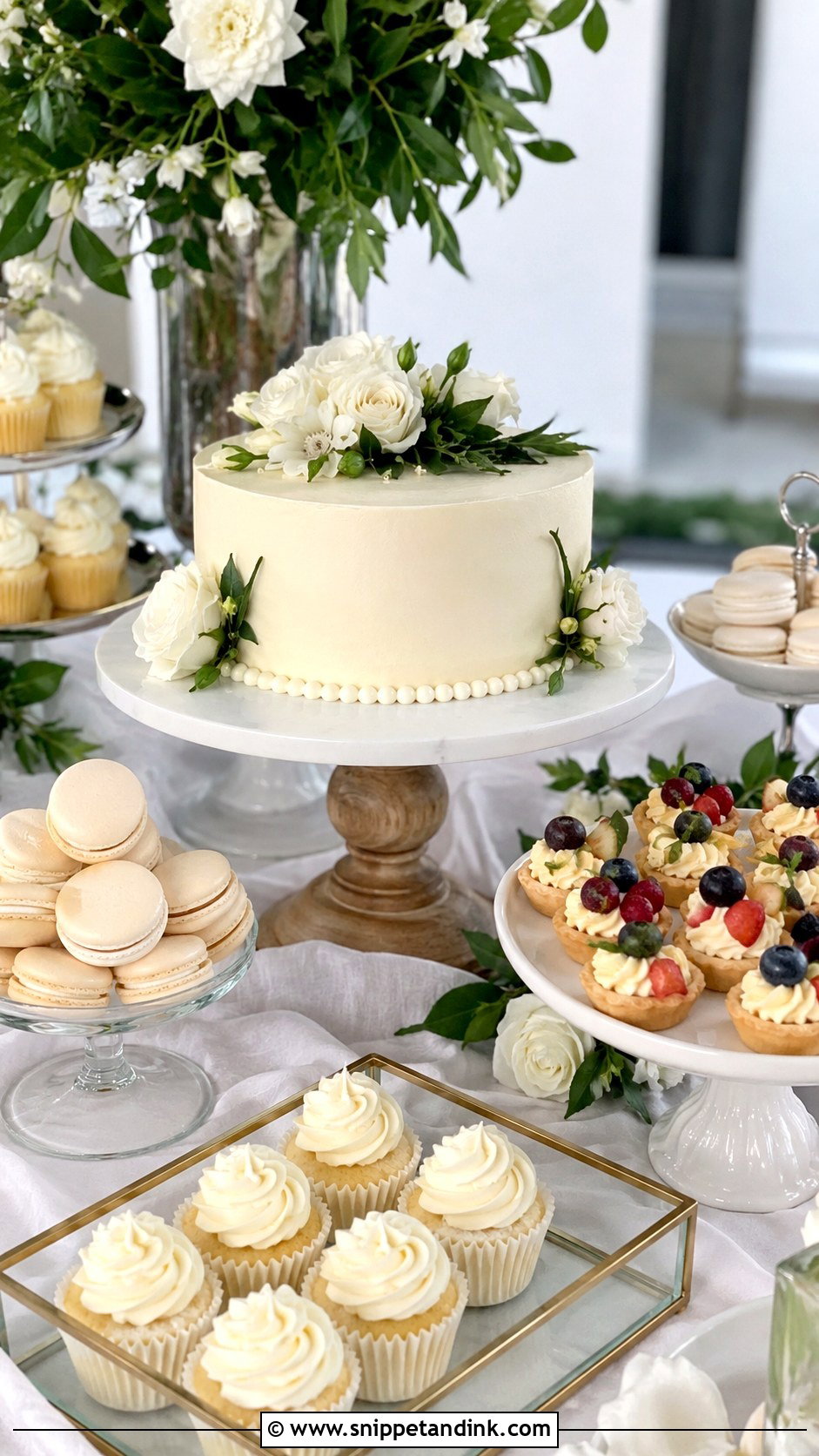
A dessert table lets one cake do the ceremony while other sweets do the feeding. The non tiered cake sits in the middle, surrounded by cupcakes, cookies, macarons, fruit tarts or mini cakes. I keep the main cake simple enough to anchor the table and special enough to be obviously the wedding cake. A round, heart, oval or rectangle all work. Repeat one or two colors across the table so it looks planned. For larger weddings it’s practical: guests choose what they like, and you still get a cake-cutting photo.
Giving a Low Cake Presence on the Table
The thing couples miss most when they drop tiers is height. A single cake on a long reception table can look small in photos, especially when guests crowd around for the cutting. You can get that height back without stacking anything.
- Use a tall pedestal stand. Raising a cake even a hand’s width makes a real difference in photos.
- Place it at the center of the table, with lower desserts or flowers on either side, so the eye goes to the cake first.
- Put taller flowers or candles behind it, never in front.
- Keep the cake table away from a busy wall or a window that will be bright behind it in photos.
Check the stand’s weight limit before you buy one. Single cakes are heavy for their size, and a thin glass or metal stand can tip or bow under a dense, tall round. I’d always test the cake on the stand at home before the day if you’re supplying your own.
A Wedding Cake Doesn’t Need Height to Hold the Room
A cake doesn’t need tiers to feel like a wedding cake. Shape, texture, color and flavor carry it. A single tier reads classic, a sheet cake generous, a heart vintage, and an oval or square modern. Work out the number of guests first, then the venue and budget, then the look. Bring two or three of these photos to your consultation and ask your baker how she’d adapt them to your numbers.
You'll Like These Ideas:







Leave a Reply