
Pansies are one of the few flowers I can put on a cake that already look as if they were drawn for it. The petals are flat, the faces are graphic, and the colour range runs from near white to almost black violet. They sit happily on buttercream or fondant, they press beautifully, and they read as garden rather than formal. The one rule I never bend is sourcing: food-safe edible pansies grown for eating, or sugar pansies made by hand. Below are twenty ways I’d use them, with notes on how each version behaves once the cake leaves my kitchen.
Where Edible Pansies Should Come From
Pansies are edible, but a pansy from a florist bucket or a garden-centre tray is not food. Ornamental plants are commonly treated with pesticides that aren’t approved for anything you eat. When I order fresh pansies for a cake, they come from a grower who raises them specifically as edible flowers, or from a garden where I know nothing has been sprayed.
Supply is seasonal. Pansies love cool weather, so spring and autumn give the best choice of colours, while high summer can be patchy. If you’re marrying in July and want a specific shade, sugar or piped flowers are the reliable option.
- Ask your baker whether the pansies are grown for eating, and by whom.
- If you’re growing your own, start them in pots with untreated compost and never spray them.
- Pressed flowers need a week or two of drying, so pressing has to start well before the wedding week.
- Sugar pansies take the longest to make; order them with the cake, not as an extra later.
1. Pressed Pansy Wedding Cake
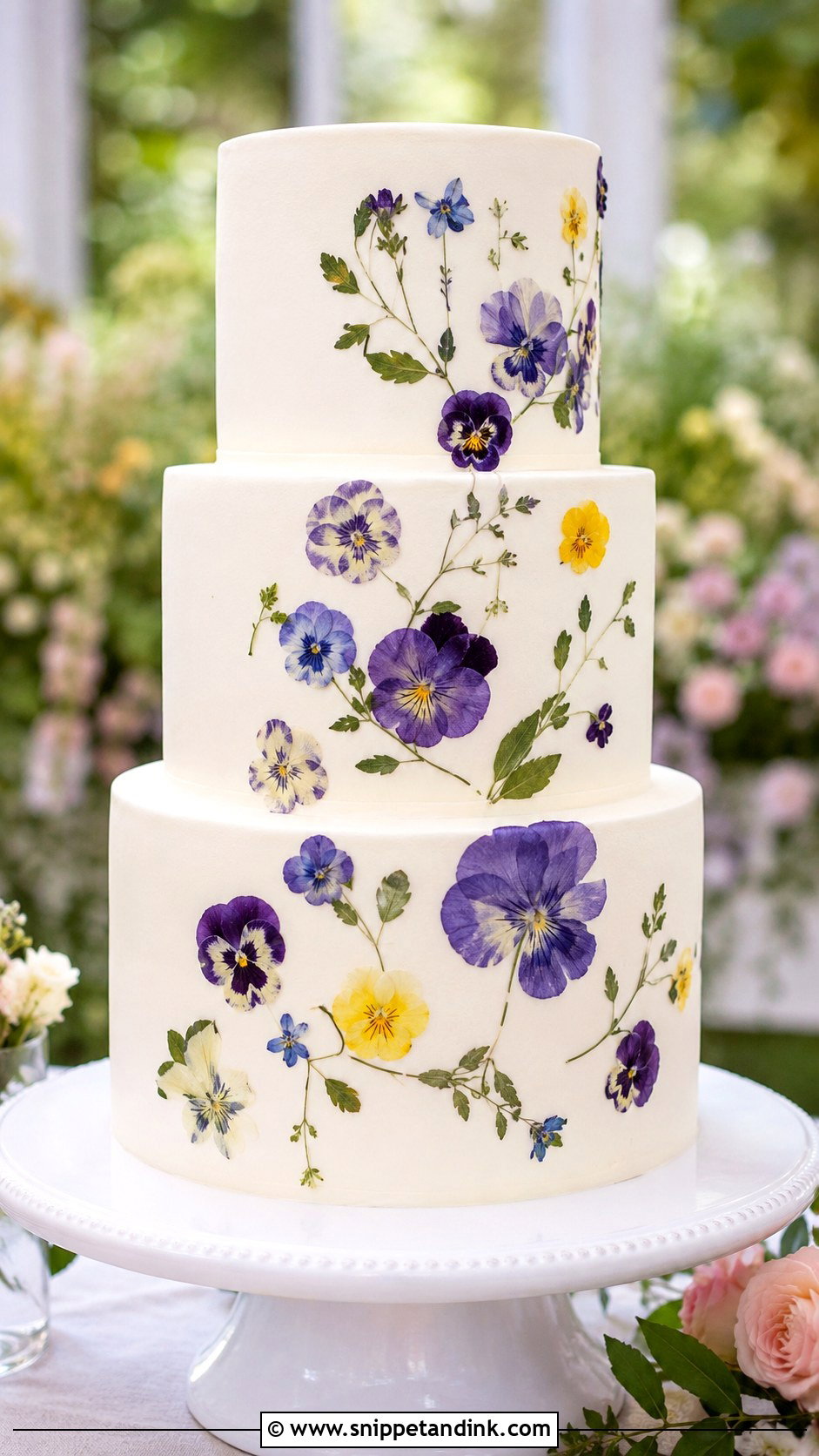
Pressing is the treatment pansies were made for, because the petals are already almost flat. I press them myself for one to two weeks between parchment, then lay them onto a crusted buttercream or a fondant surface with a light brush of water. On white, ivory or pale blush, the purple, yellow, blue, and lavender petals stay sharp and readable from across the room. I place them in a loose climbing drift rather than rows, which keeps it from looking like wallpaper. Pressed petals can darken slightly on a very moist icing, so I apply them close to delivery.
2. White Pansy Wedding Cake
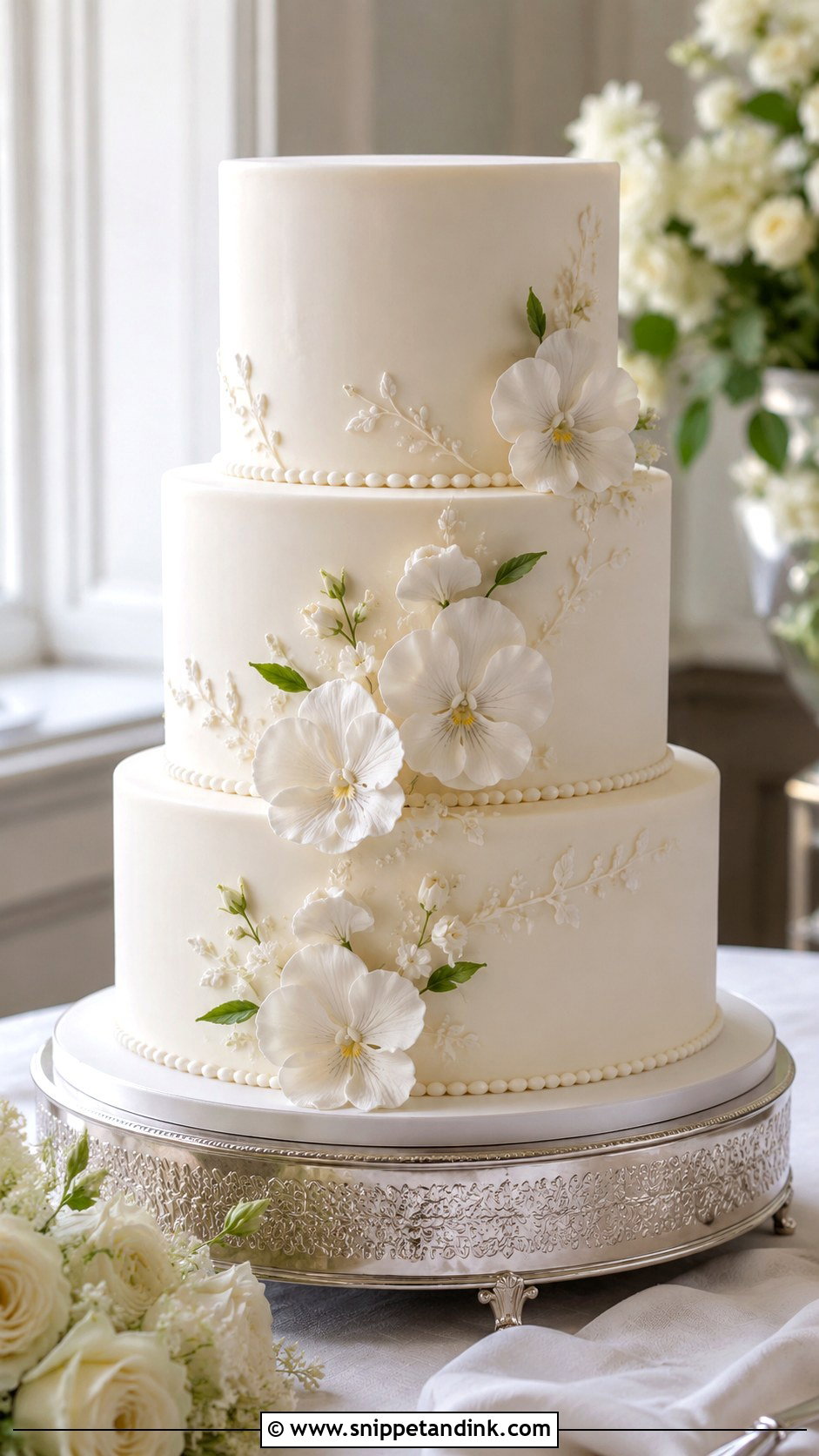
White pansies are less common in seed trays than purple or yellow, so if you want this one, tell your baker early. The cake uses white or cream faces with small green leaves for a tone-on-tone finish that suits chapels and pared-back receptions. Fondant gives the crisper result; white buttercream softens it. I’ll add a few pearl dots or tiny sugar buds, but no more. White petals bruise and brown at the edges faster than dark ones, which is one reason I often make this version in sugar.
3. Purple Pansy Wedding Cake
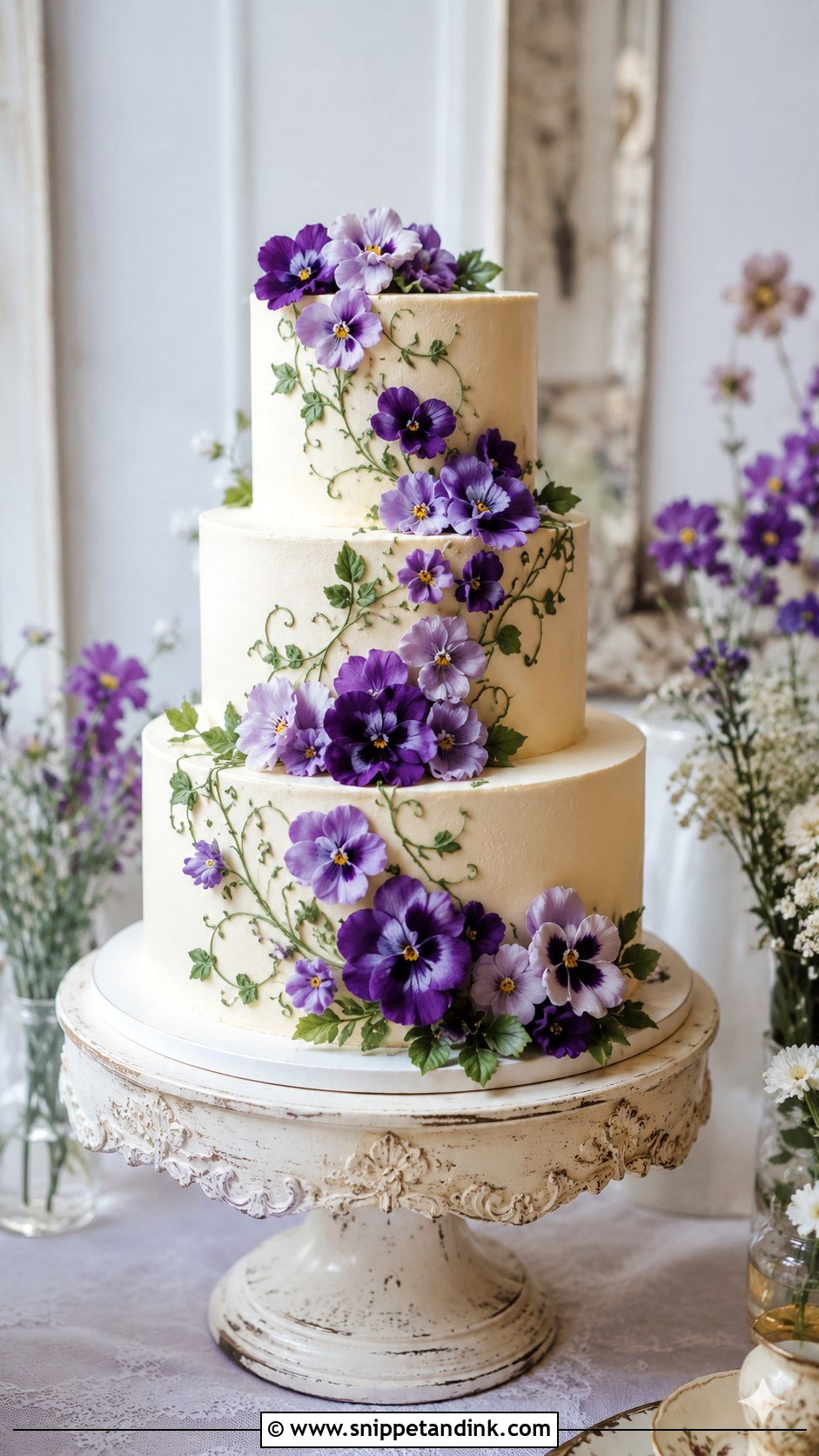
Purple is the pansy’s natural colour, and the range from lilac to deep violet gives me depth without needing any other flower. I like ivory, a lavender-tinted buttercream or a pale grey base. My usual layout puts the darkest faces on the bottom tier and lightens toward the top, which gives an ombre effect without tinting a single crumb. Piped leaves or thin sugar vines link the clusters. One honest note: deep purple petals can bleed a little colour onto damp white buttercream after several hours, so I keep them on a crusted surface.
4. Blue Pansy Wedding Cake
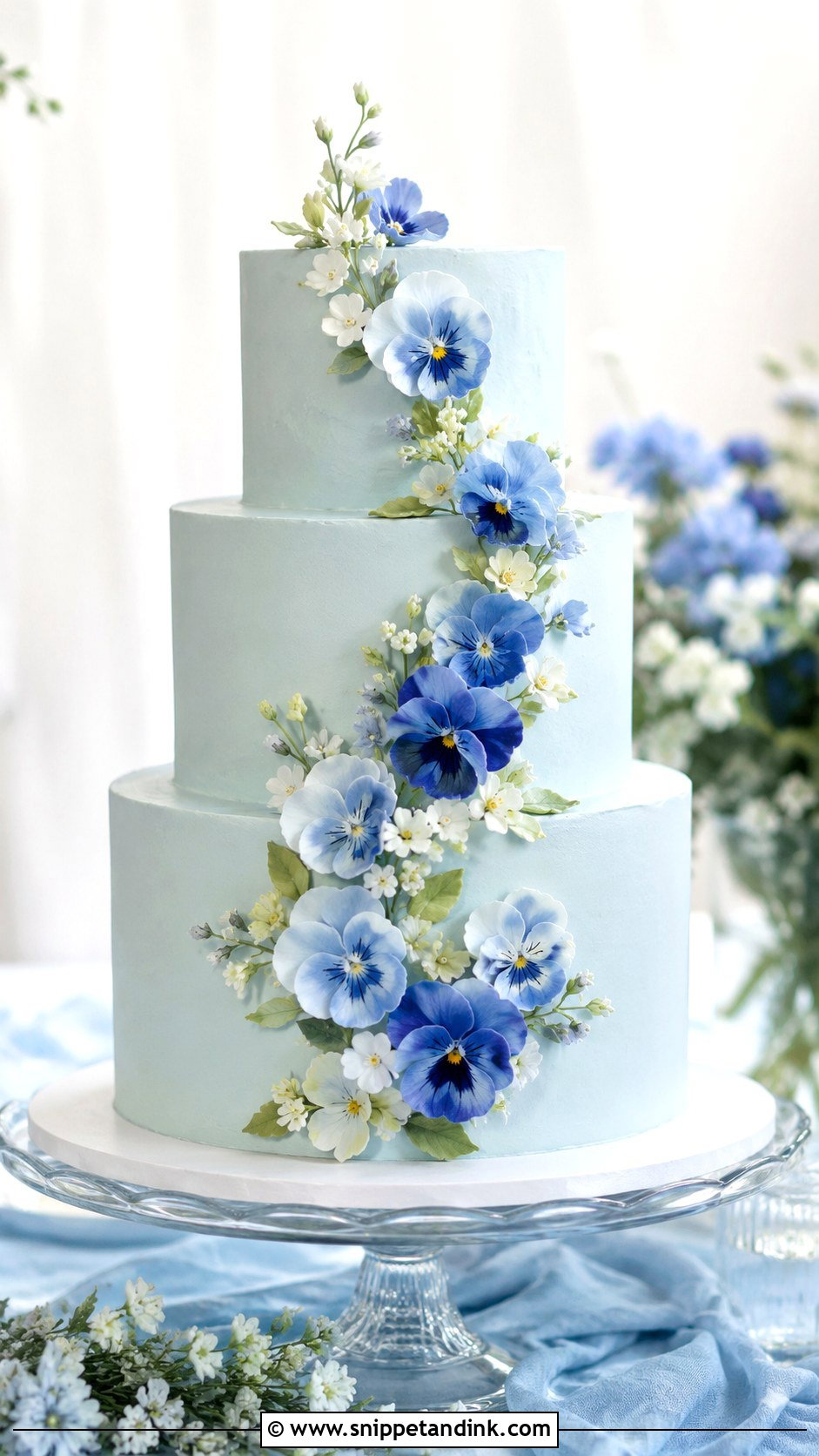
True blue is rare in cake flowers, which is exactly why blue pansies stop people. They pair with white buttercream, pale blue fondant or a soft watercolour wash for a cool palette that suits coastal venues and spring. Smooth icing keeps the petal colour crisp; heavy texture breaks it up. A few ivory roses or tiny white blossoms soften the arrangement. Be aware that many “blue” pansies photograph slightly violet under warm reception lighting, so I show couples the actual flowers before we commit.
5. Yellow Pansy Wedding Cake
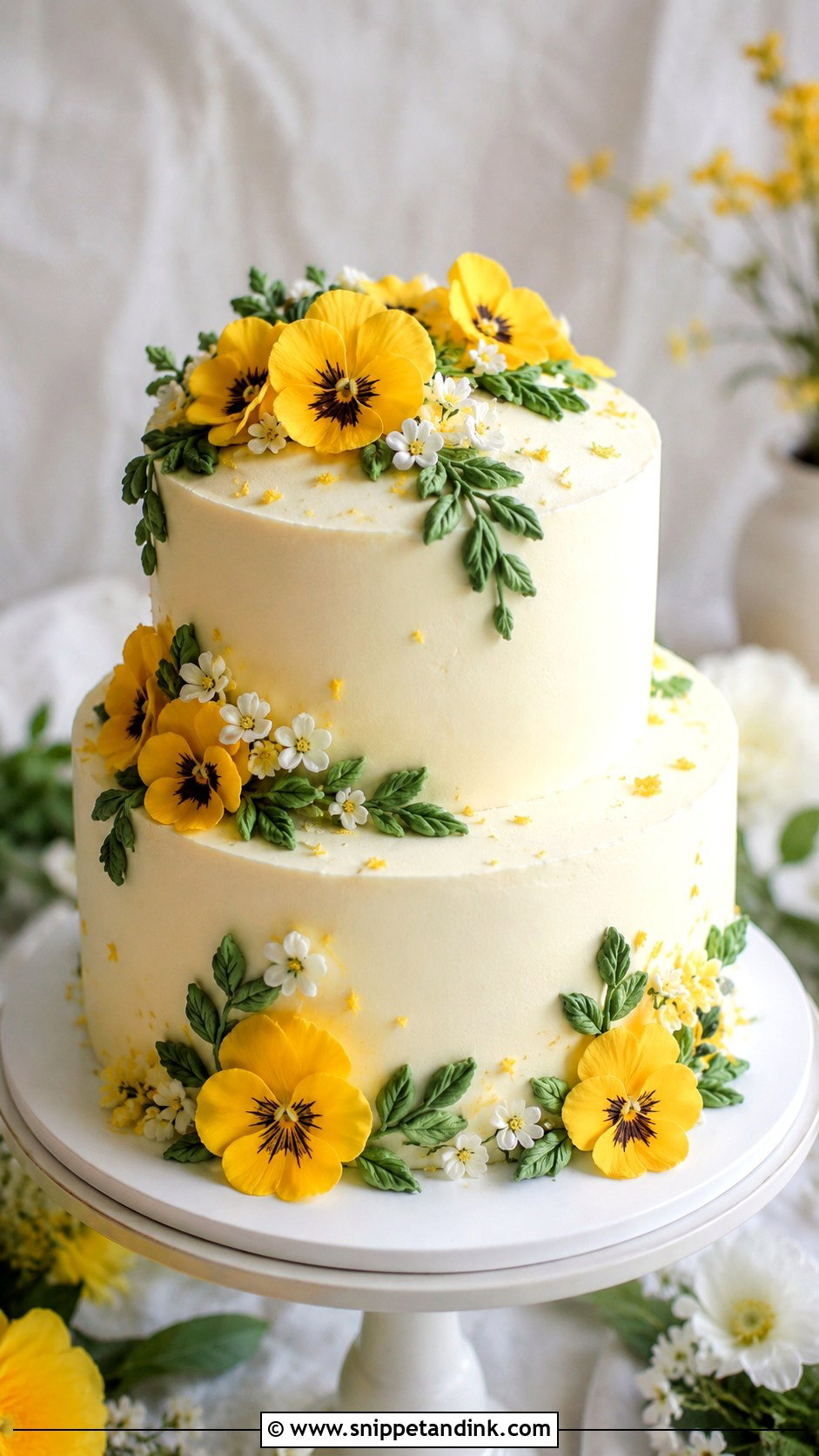
Yellow pansies are the cheeriest of the lot, and the risk is that the cake tips into a child’s party. I avoid that by using them in small clusters on ivory buttercream, pale lemon or plain white fondant, never covering every inch. A few white flowers and green leaves balance the brightness. Lemon, vanilla or honey sponge suits the look and the flavour. Brunch receptions and early summer gardens are where I see it most.
6. Buttercream Pansy Wedding Cake
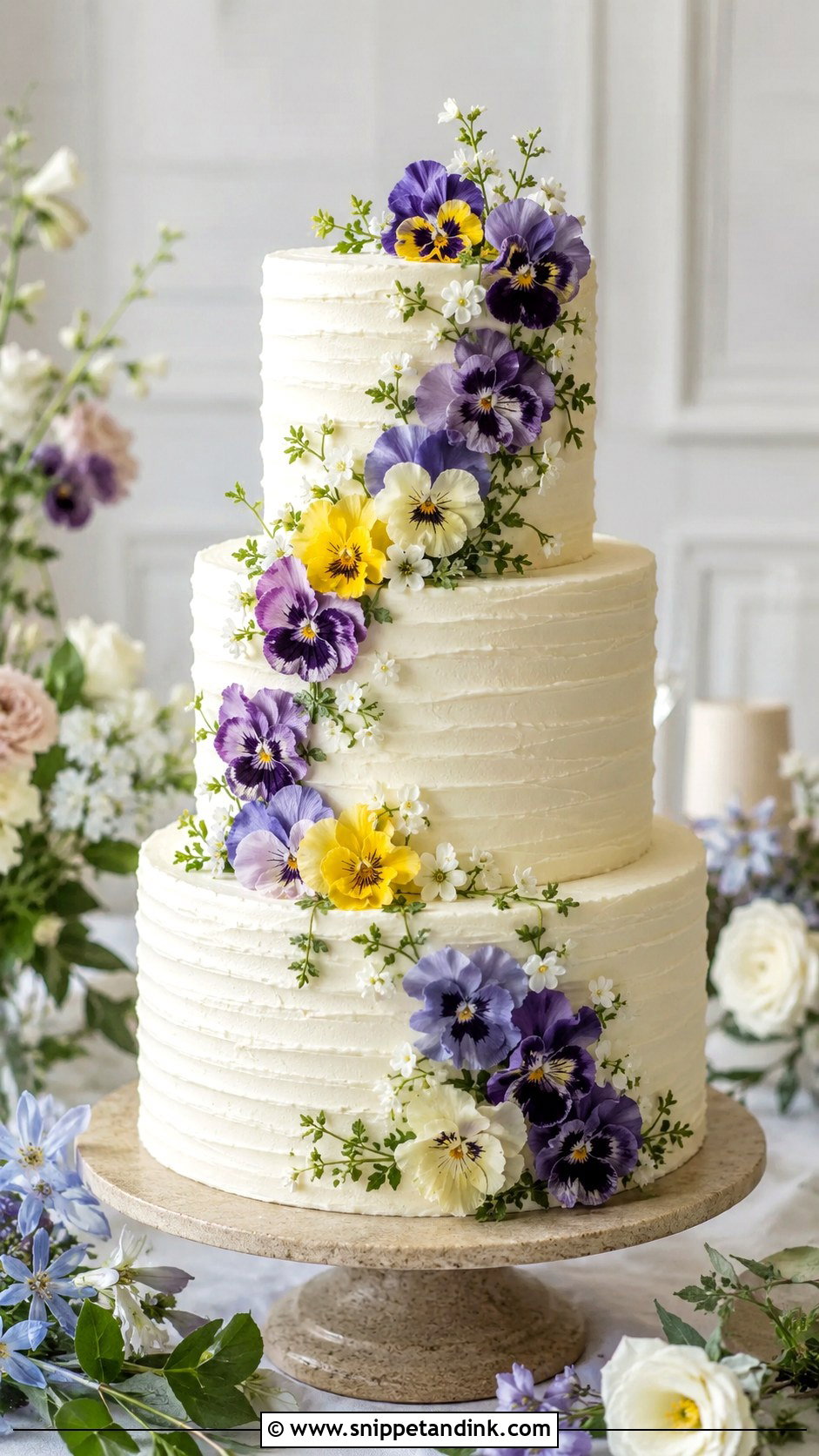
Buttercream gives pansies a soft surface to sit into, and that’s why fresh flowers look so natural on it. I finish the icing smooth, lightly ridged or with a palette-knife texture, then place pansies along the tier edges, around the base or in a diagonal trail. The practical issue is warmth. Real American-style buttercream softens quickly above room temperature, and a soft surface lets flowers slide. Swiss meringue holds shape a little better in a warm room. Vanilla bean, almond, lemon and chocolate all sit comfortably under this finish.
7. Fondant Pansy Wedding Cake
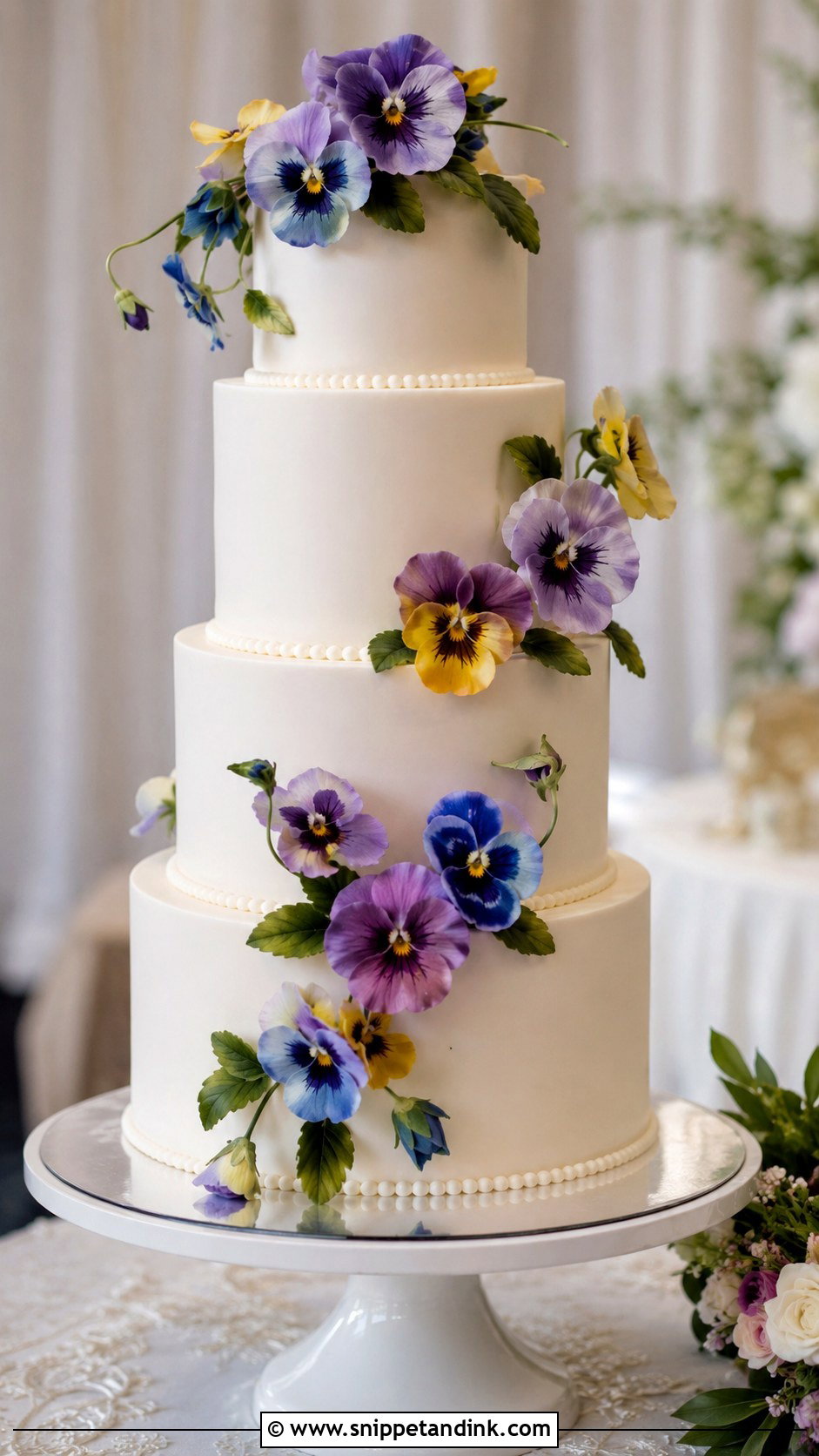
Fondant shows sugar flowers at their sharpest, because the surface has no texture to compete with petal detail. Sugar pansies can be shaded, veined and set at angles so each one looks like it’s turning toward the light. I use ivory, soft blush, pale lavender or light blue fondant, matched to the flowers. A few pansies per tier looks elegant; a full cascade is more dramatic and adds real hours to the order. Fondant also travels better than buttercream for formal hotel receptions, which is a quiet advantage.
8. Rustic Pansy Wedding Cake
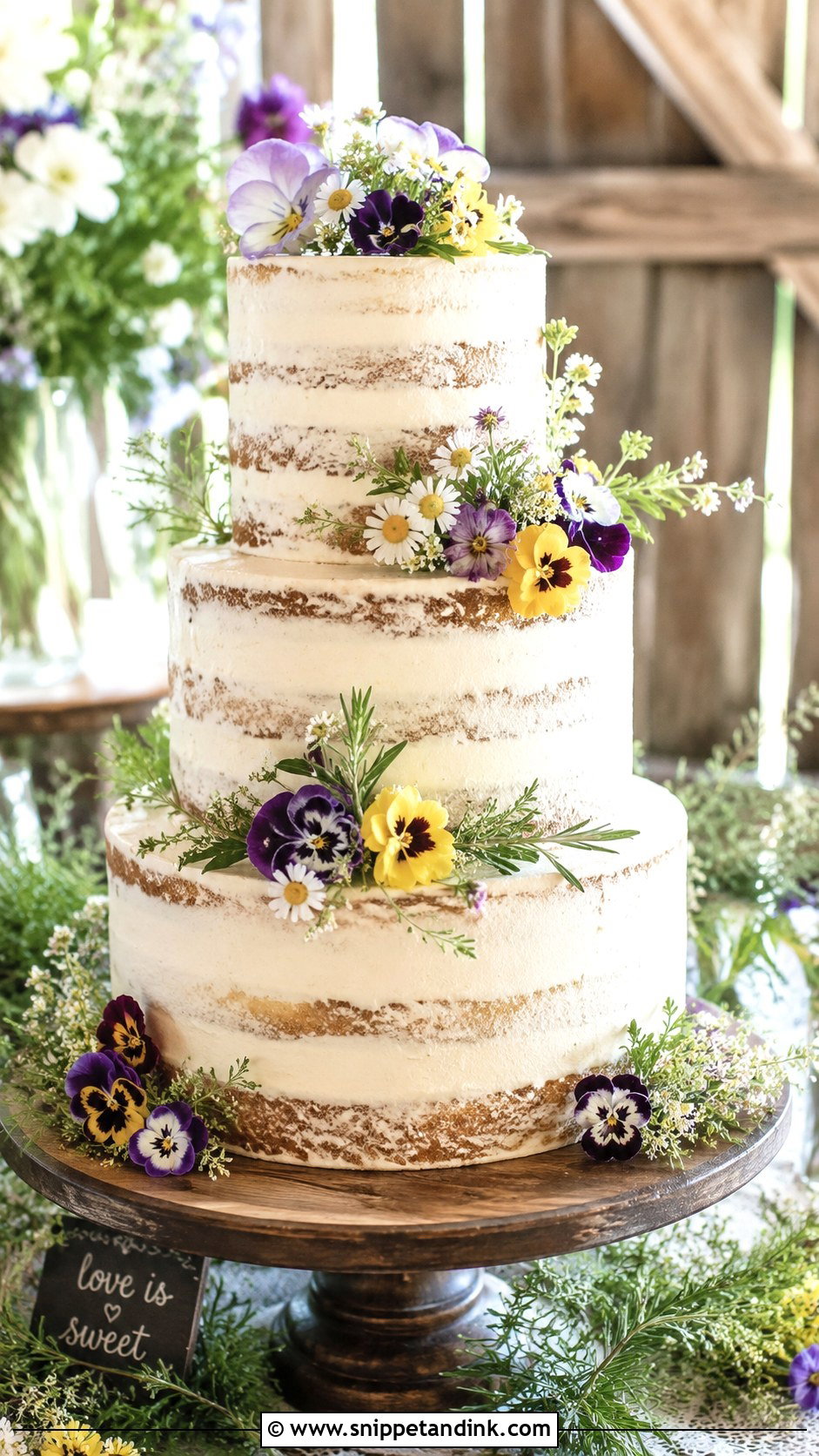
Rustic cakes work best with semi-naked or textured buttercream that shows a little movement. I combine pansies with small herbs, edible leaves, chamomile or tiny wildflowers so the top looks gathered rather than arranged. Cream, violet, yellow and green are the colours I stay within. Barn and backyard receptions suit it. Herbs like rosemary and thyme hold up for hours, unlike the pansies themselves, which is why I let the greenery carry the shape.
9. Vintage Pansy Wedding Cake
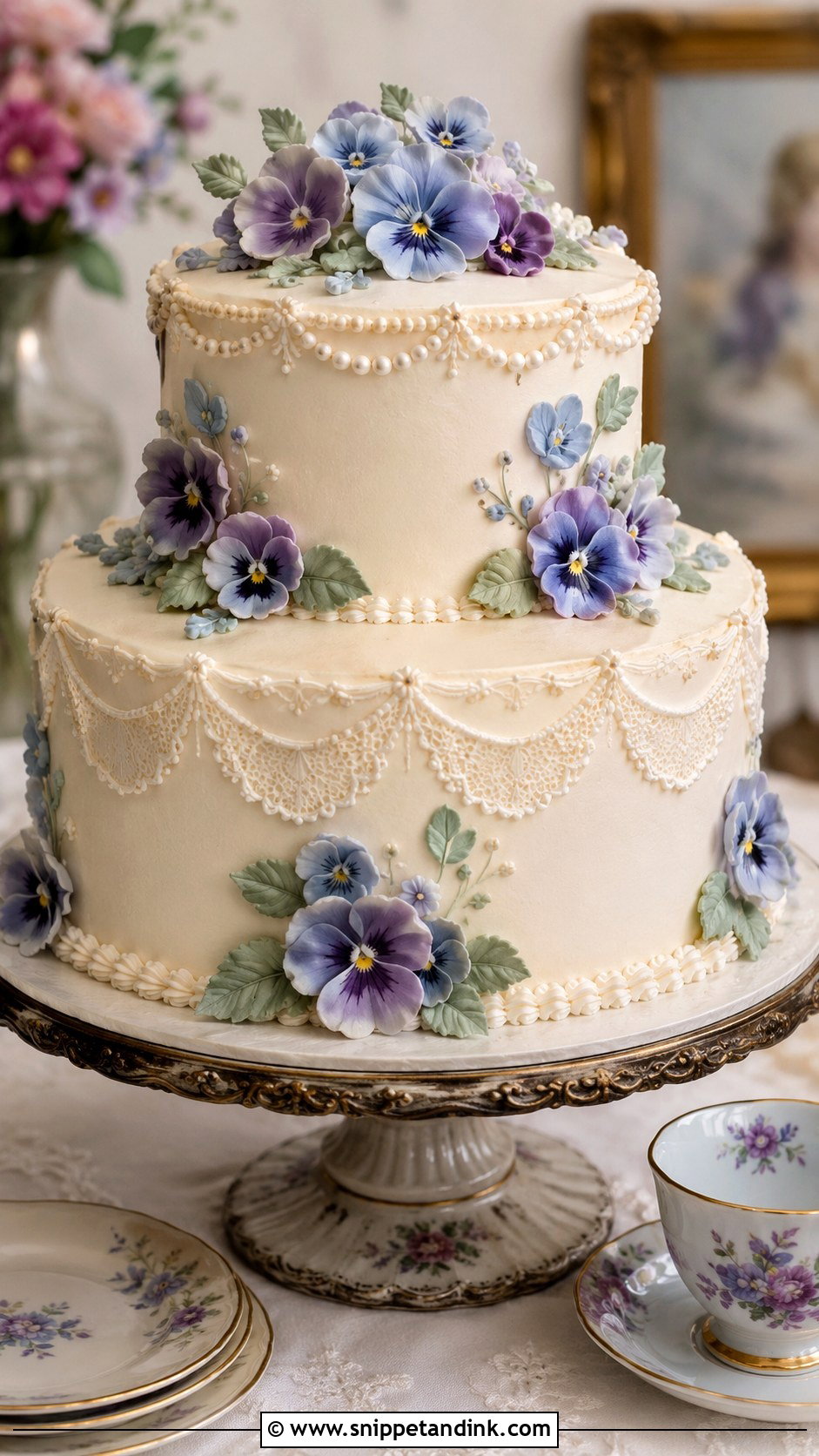
Pansies have been in cottage gardens for generations, so they read as heirloom without trying. I pair them with lace-style piping, pearl borders and scalloped tiers in muted pastels. Lavender, cream, dusty blue and pale yellow faces keep it soft. A small cluster per tier feels delicate; a full garland around the cake is grander. The piping is where vintage cakes become busy, so I keep it to one pattern repeated. Tea receptions and historic venues are its natural home.
10. Modern Pansy Wedding Cake
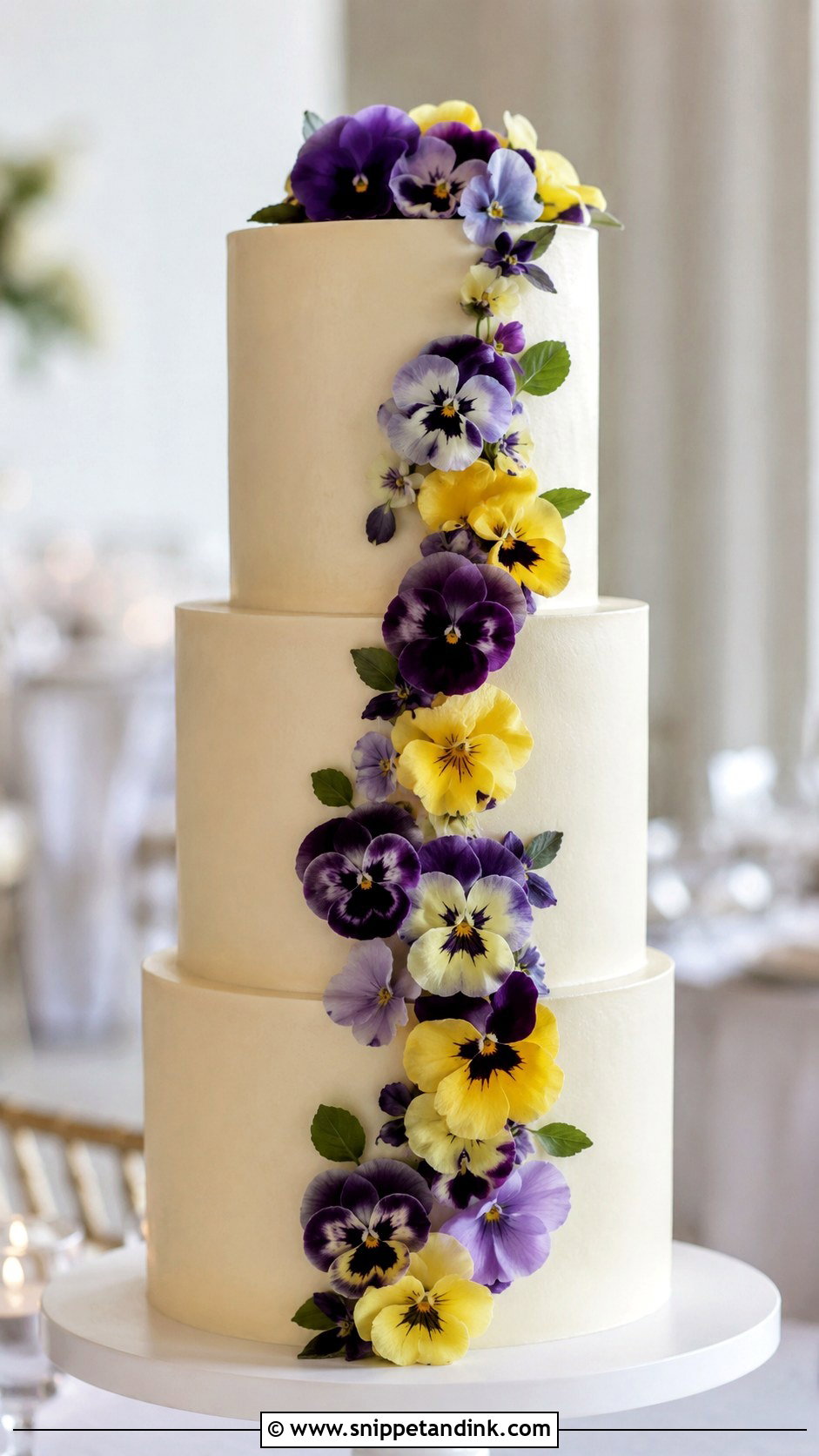
Modern pansy cakes let the shape lead. I use tall tiers, sharp edges and smooth icing in one colour, then put the pansies in a single deliberate placement: a vertical line, one corner cluster, or a neat ring on the top tier. Charcoal, pale lilac, soft beige or white all work as the base. The sharp edges need a firm ganache or a well-chilled buttercream underneath; you can’t get a crisp corner on a soft icing. City venues and galleries suit it.
11. Garden Pansy Wedding Cake
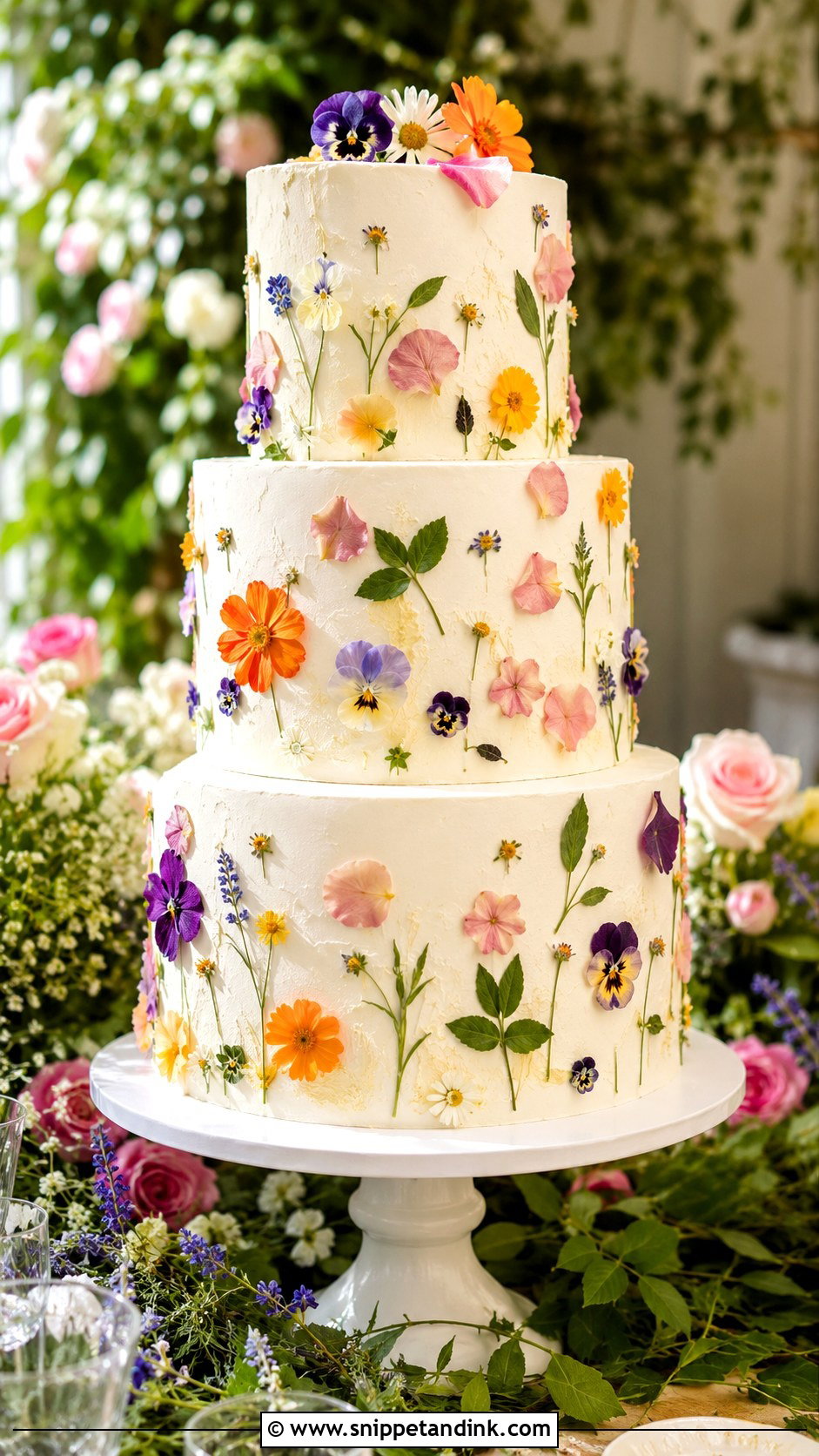
A garden cake should look as if things are growing across it, not placed on a grid. I mix pansies with other edible flowers like violas, rose petals, calendula and tiny daisies, and let them drift. Buttercream is the right base here because the flowers sink in slightly and look rooted. A mix of purple, yellow, blue and white pansies gives the liveliest result. It’s the design I’d suggest for greenhouse venues, and the one that most depends on decorating on site.
12. Two Tier Pansy Wedding Cake
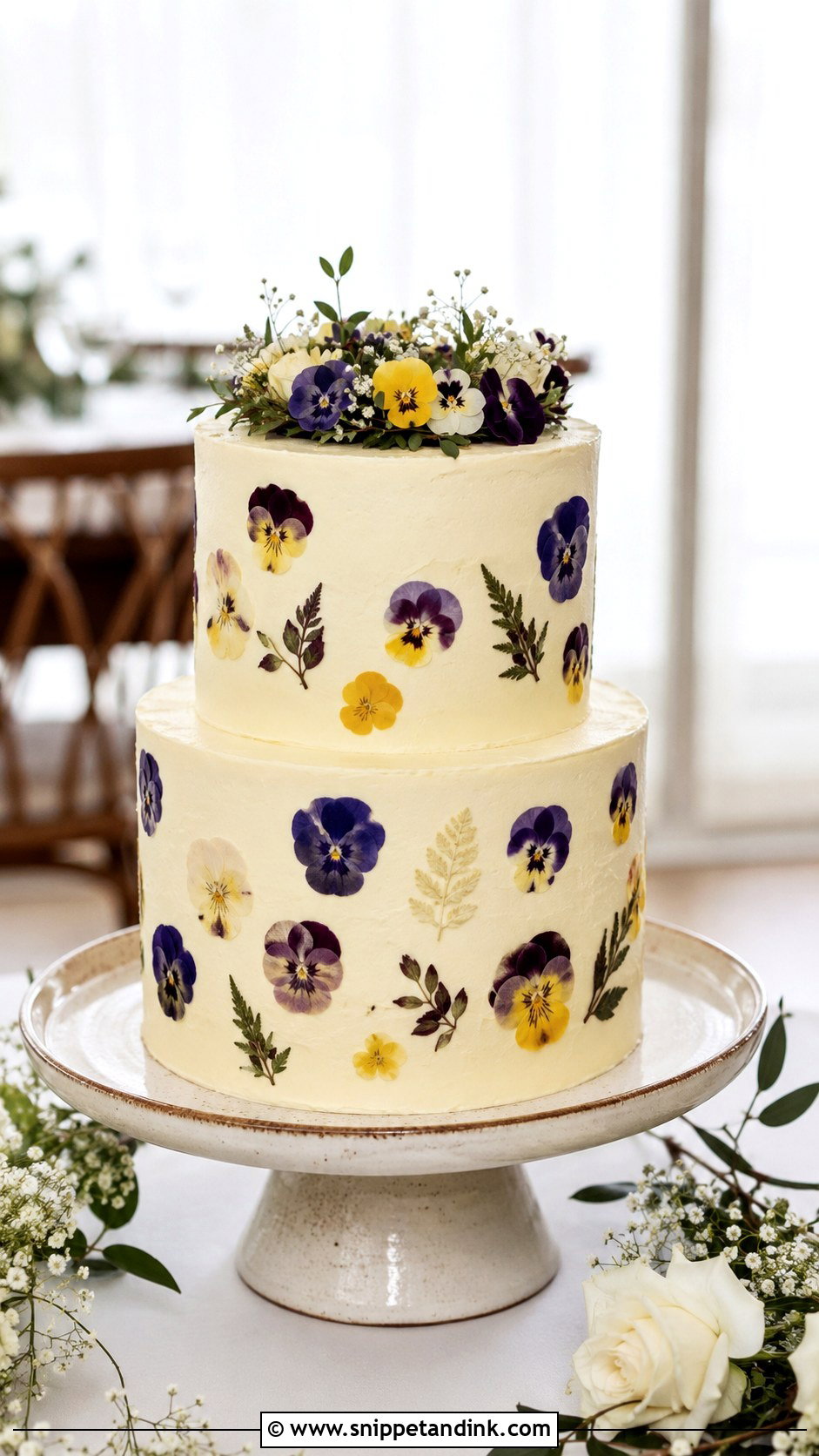
Two tiers suit elopements, bridal lunches and small receptions, and they still look like a wedding cake rather than a celebration cake. Pansies can be pressed onto both tiers, set as a floral cascade, or used as a border at the base and top. Smooth ivory buttercream keeps it classic. If the cake is small but the table is large, I’d make each tier taller rather than wider; extra height gives a two-tier cake real presence on the table.
13. Three Tier Pansy Wedding Cake
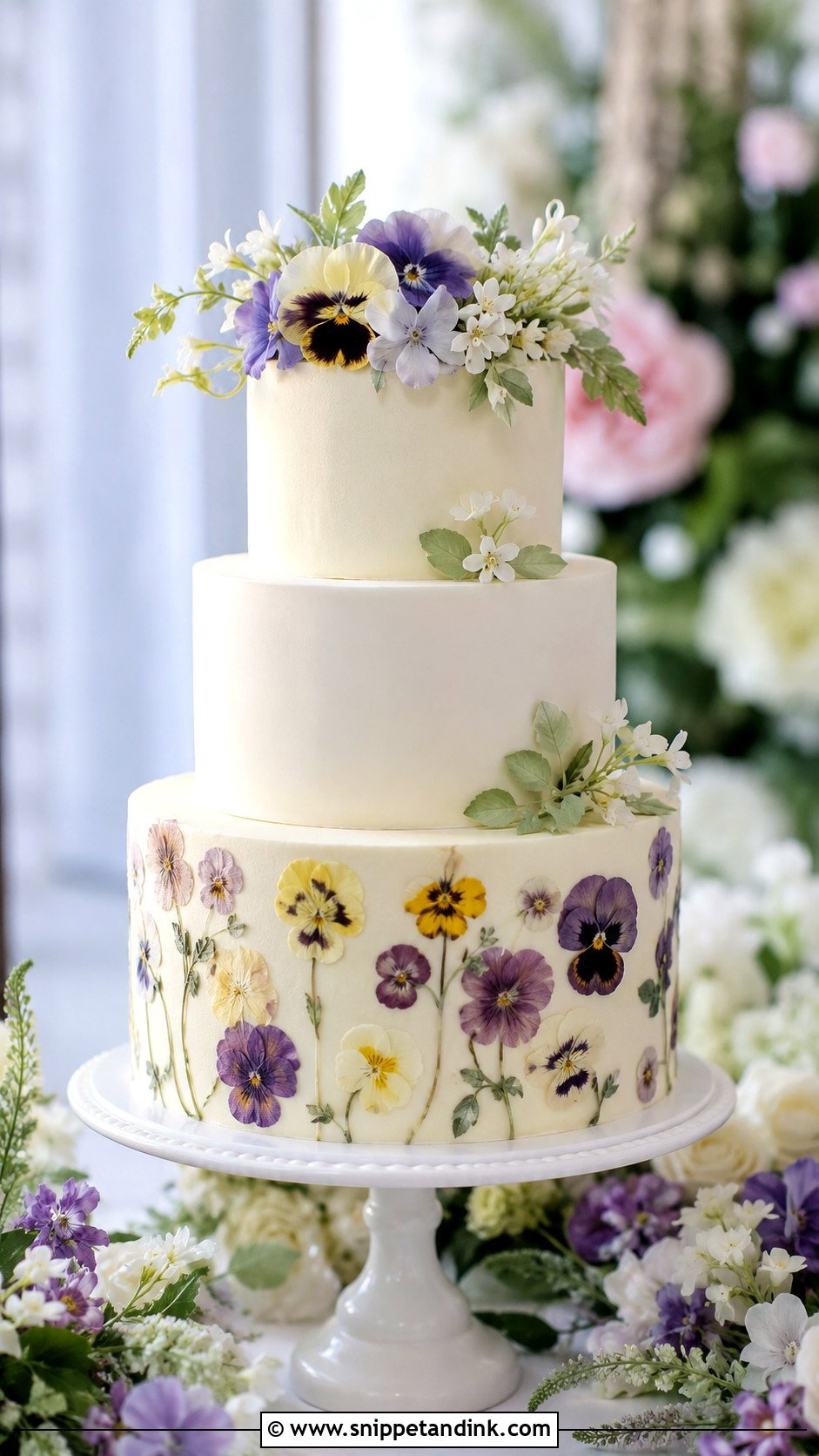
Three tiers give me room to vary the decoration, which stops a floral cake from looking crowded. I might press pansies onto the bottom tier, leave the middle smooth, and build a small flower crown on top. That bare middle tier is doing a lot of work. Match the pansy colours to the bouquet and centrepieces so the cake belongs to the room. A three-tier cake usually feeds a medium-sized wedding with a dessert plate, but serving counts depend on tier size and your caterer’s slice.
14. Naked Pansy Wedding Cake
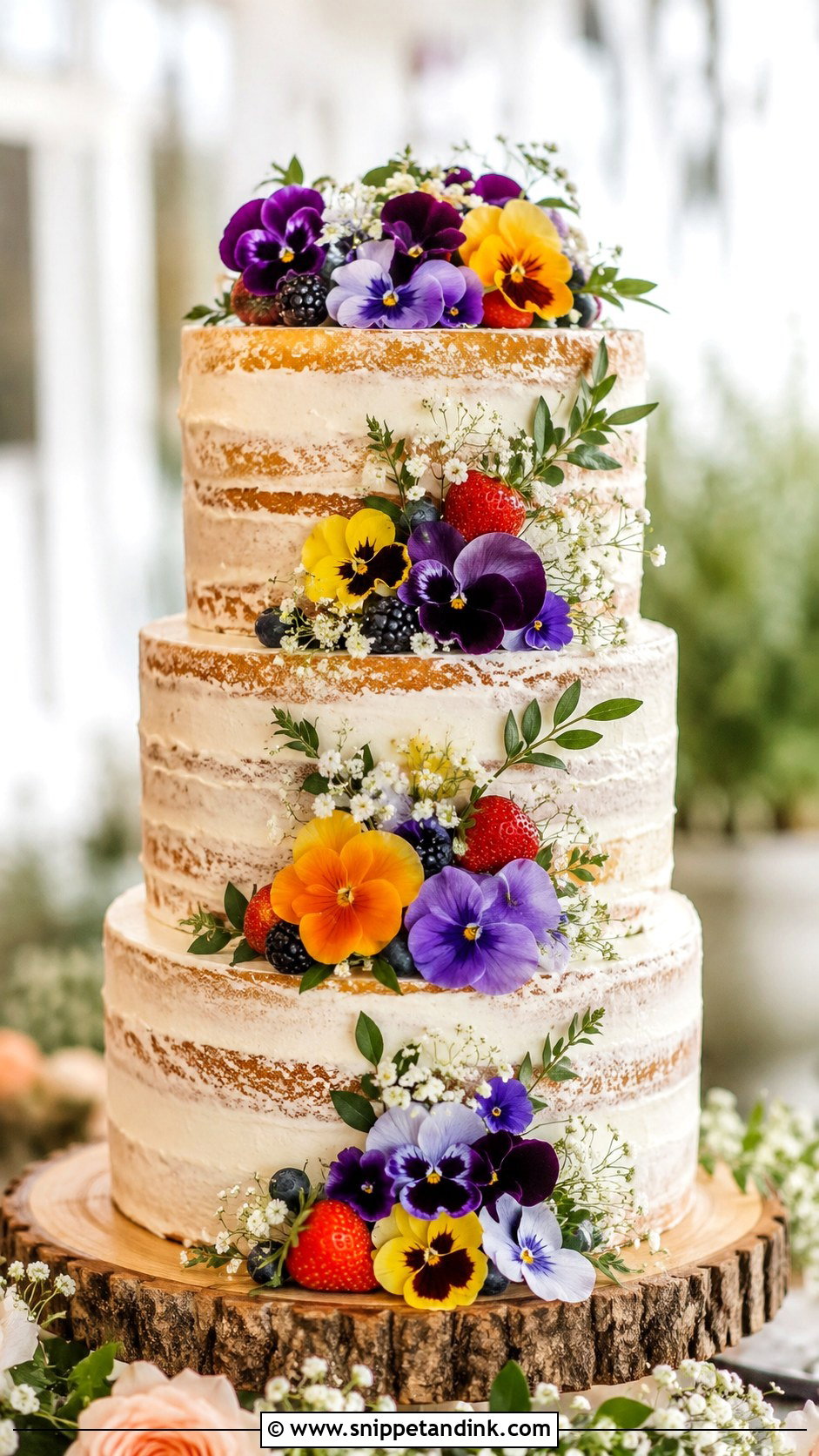
Naked cakes look relaxed, but they dry faster than any other finish because the sponge is exposed. I apply a thin scrape of buttercream and a syrup soak between layers, and I don’t stack and dress them until the day. Pale sponges like vanilla, lemon, almond and honey sit nicely beside purple and yellow pansies. Clusters at the edges or a small trail down one side are enough. Fresh berries in season can join them. Barn weddings and garden parties suit it, but keep it out of direct sun.


15. Pansy Wedding Cake With Sugar Flowers
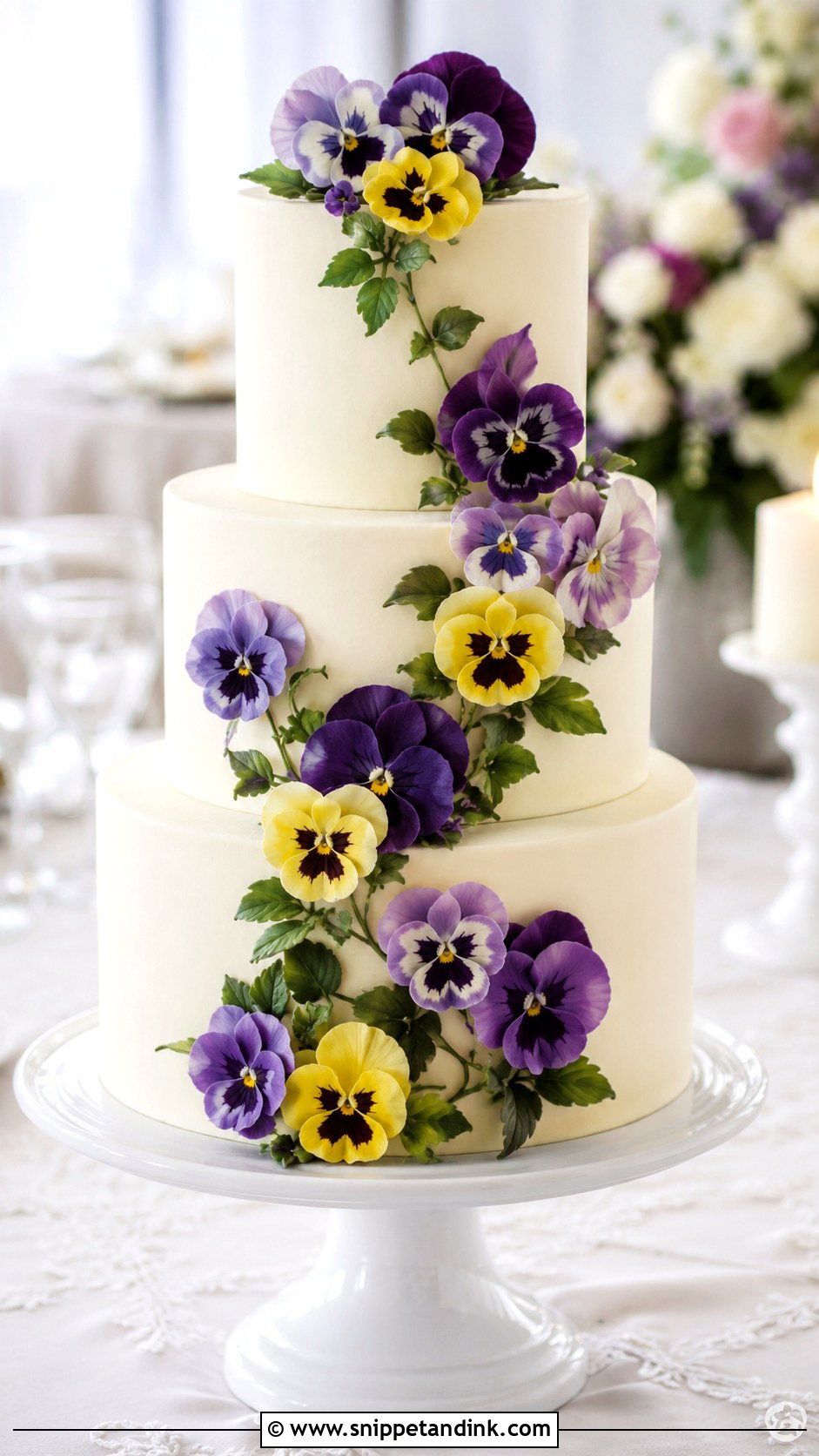
Sugar pansies never wilt, which is the whole argument for them in a warm venue or on a long day. I make them from gum paste, petal by petal, in any shade from soft lavender to deep purple, with dusted veining and shaded centres. They need several days to dry, so I’d want the order well ahead. A smooth fondant or buttercream base shows them off. Humidity is their weakness: gum paste softens in a damp room, so they go on near the end. Many couples keep the top flowers afterwards.
16. Pansy Wedding Cake With Fresh Flowers
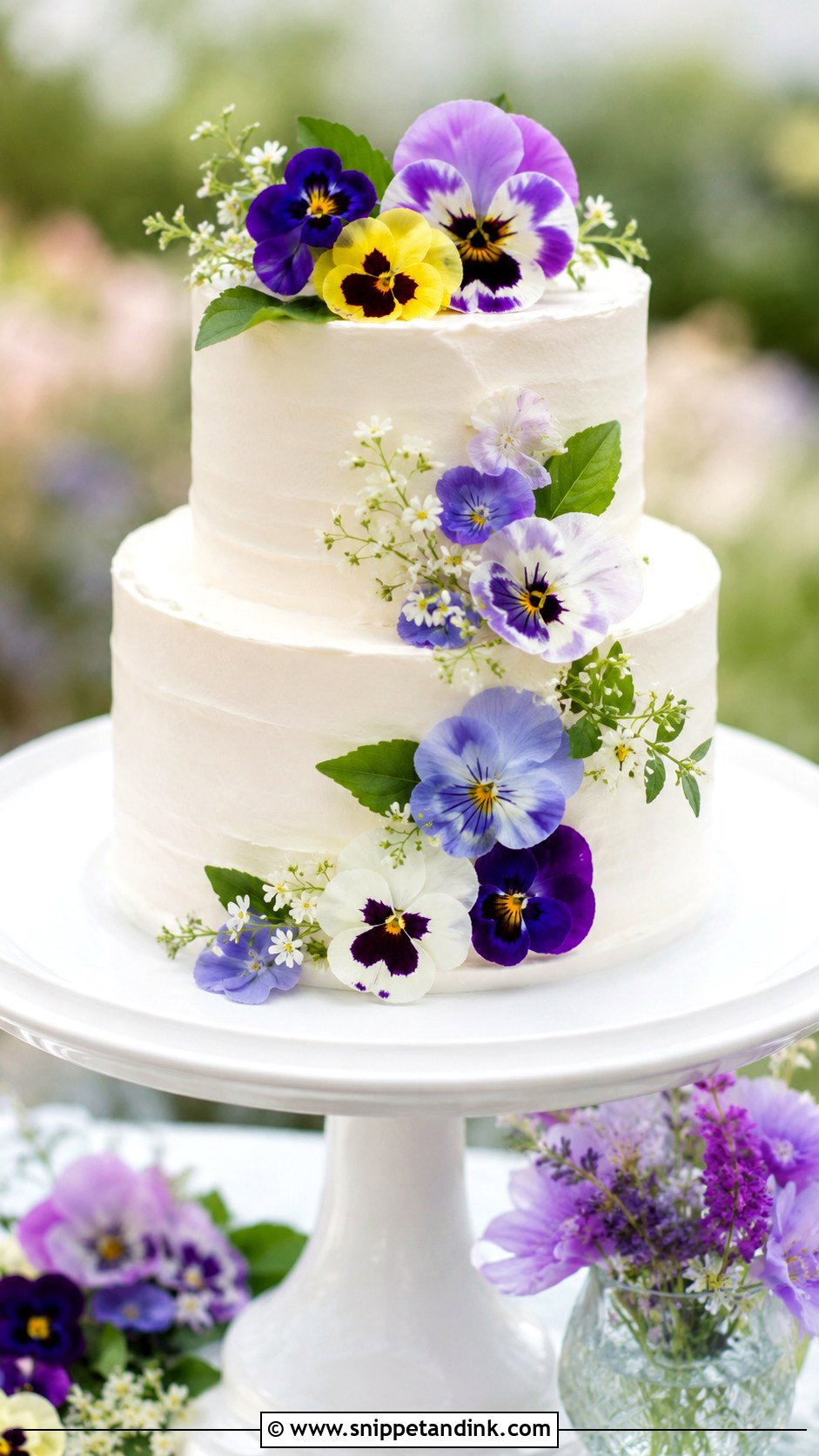
Fresh pansies on a cake are lovely and short-lived. Use only food-safe edible pansies grown without pesticides; florist and garden-centre plants are often sprayed and shouldn’t touch icing. They settle gently into buttercream and look alive, but they begin to wilt within a few hours out of water, faster under warm lights. I keep them chilled in a sealed box with damp paper and place them as late as possible, ideally on site. Handle them by the stem; the petals mark easily.
17. Pansy Wedding Cake With Greenery
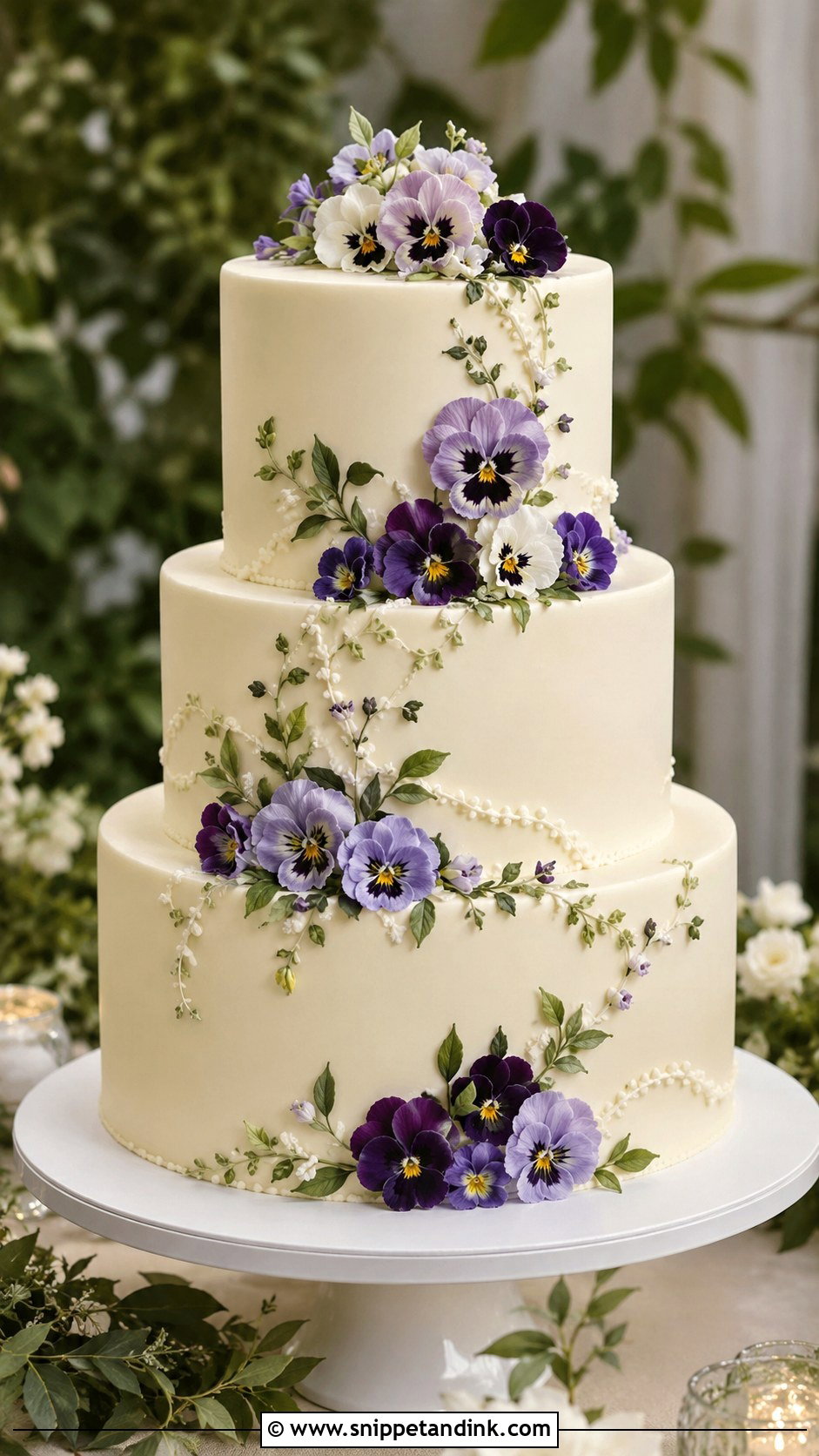
Greenery is what connects scattered pansies into a design. I use sugar leaves, edible leaves like mint or herbs, or food-safe foliage that I wrap or keep off the icing. A white or ivory base keeps everything bright, and green next to purple and yellow makes both colours look richer. A climbing vine pattern feels romantic; a simple ring per tier is more classic. Not every pretty leaf is safe near food, so ask your baker exactly what’s going on the cake and how it touches the icing.
18. Pansy Wedding Cake With Gold
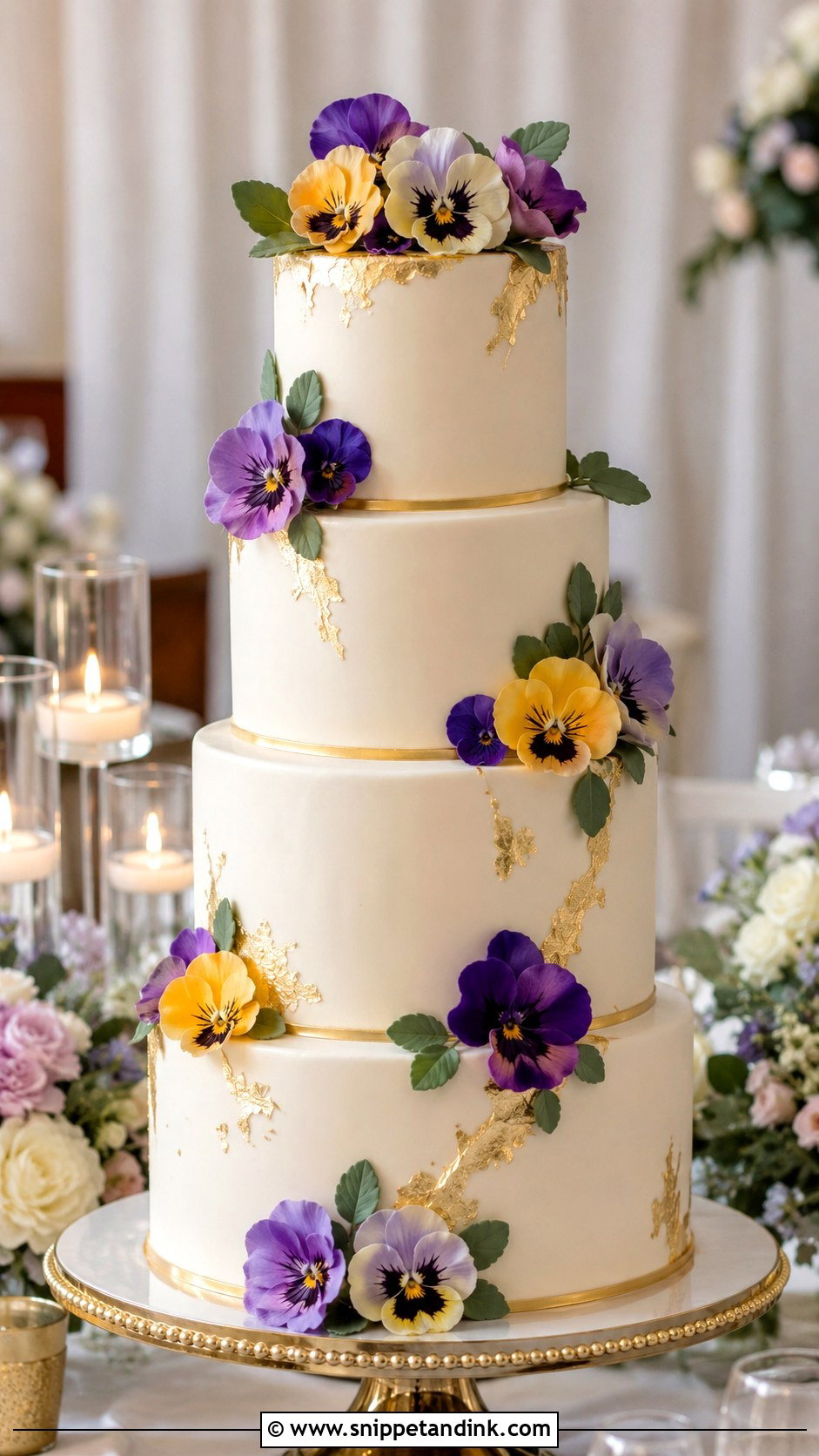
Gold works with pansies when it’s used like punctuation. A few touches of edible gold leaf, a thin gold edge on one tier or tiny metallic dots near the flowers make the cake feel formal without hiding them. I like ivory fondant or pale lavender as the base. Real edible gold leaf is fragile and tears if you breathe on it, so it goes on with a soft brush and stays well away from where the cake will be cut. Candlelit evening receptions suit it.
19. Pansy Wedding Cake With Watercolor
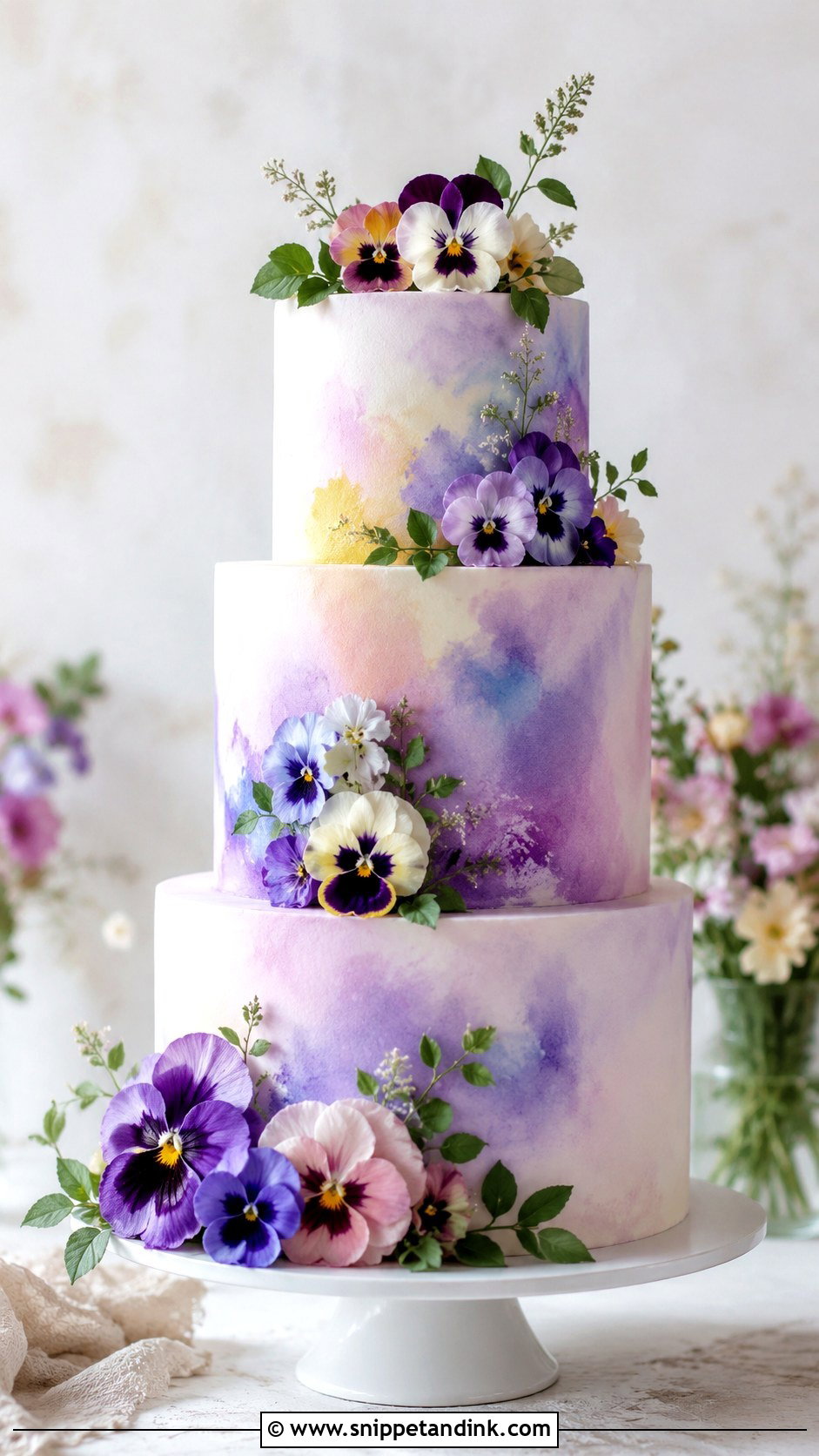
Watercolour cakes are painted with diluted food colouring over a crusted surface, and the trick is keeping the wash light. A watercolor effect that’s too dark or streaky looks muddy beside real petals. I paint in lavender, blue, blush or pale yellow, then arrange real or sugar pansies in matching tones. Fondant takes paint most cleanly; buttercream gives a softer, slightly blotted look. It suits art-loving couples and spring gardens.


20. Pansy Wedding Cake With Piped Flowers
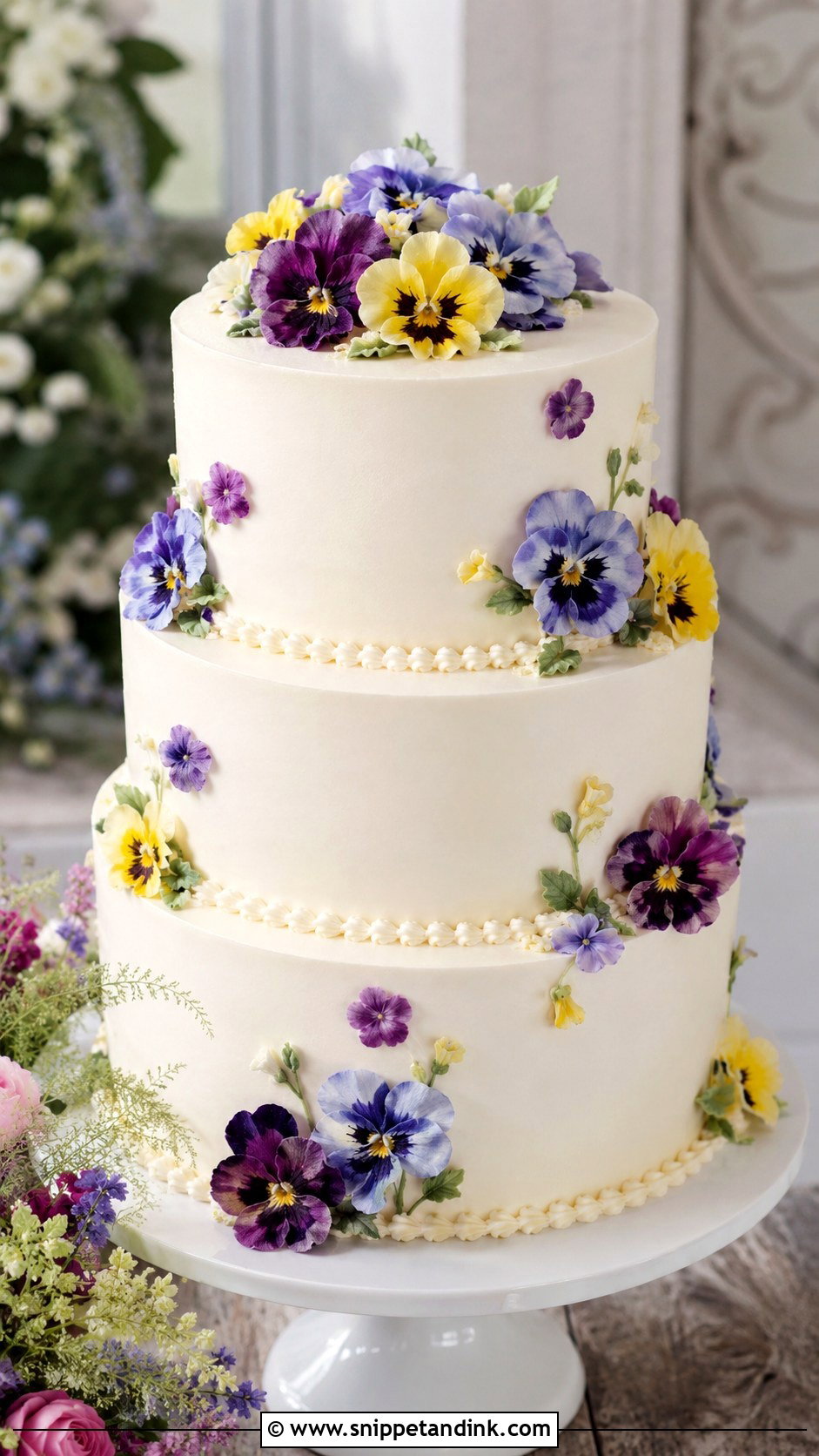
Piped pansies are my favourite answer for couples who want the look without real flowers. I pipe them in royal icing on parchment a few days ahead, let them dry hard, then place them; buttercream pansies can be piped directly onto the cake but stay soft. Piping lets me control every colour and the little dark “face” lines on each petal. They sit well on smooth white buttercream with tiny leaves and fine borders. Cottage garden and spring weddings are their natural fit.
How Long Each Kind of Pansy Lasts on the Table
Couples often fall for a photo of a fresh pansy cake taken minutes after it was decorated. A reception is a different test. Here’s how the versions in this post behave from delivery to cutting, roughly in order of staying power.
- Sugar and royal icing pansies: unchanged all day, unless the room is humid enough to soften them.
- Pressed pansies: hold their shape for the whole reception; they can darken slightly where they touch a damp icing.
- Crystallised pansies, brushed with egg white and sugar and dried: crisp for a day or more, a good middle ground.
- Fresh pansies: look perfect for a couple of hours, then the edges curl, especially near heat or sun.
Removing flowers before the knife goes in
Even edible flowers are usually lifted off before slicing, along with any wired sugar work or non-edible foliage. Tell whoever is cutting which elements are decoration only. If you want to keep a sugar pansy from the top tier, ask for a small box to take it home in; they last for years in a dry cupboard.
Let the Venue Decide Between Fresh and Sugar Pansies
Pansies change character with every finish: crisp on fondant, soft on buttercream, rustic on a naked cake, formal beside gold. Start with your venue and season, because those decide whether fresh flowers can survive the day or whether pressed, piped or sugar pansies are the safer route. Ask where any real flowers come from. If your baker can’t answer, go with sugar.
You'll Like These Ideas:









Leave a Reply