
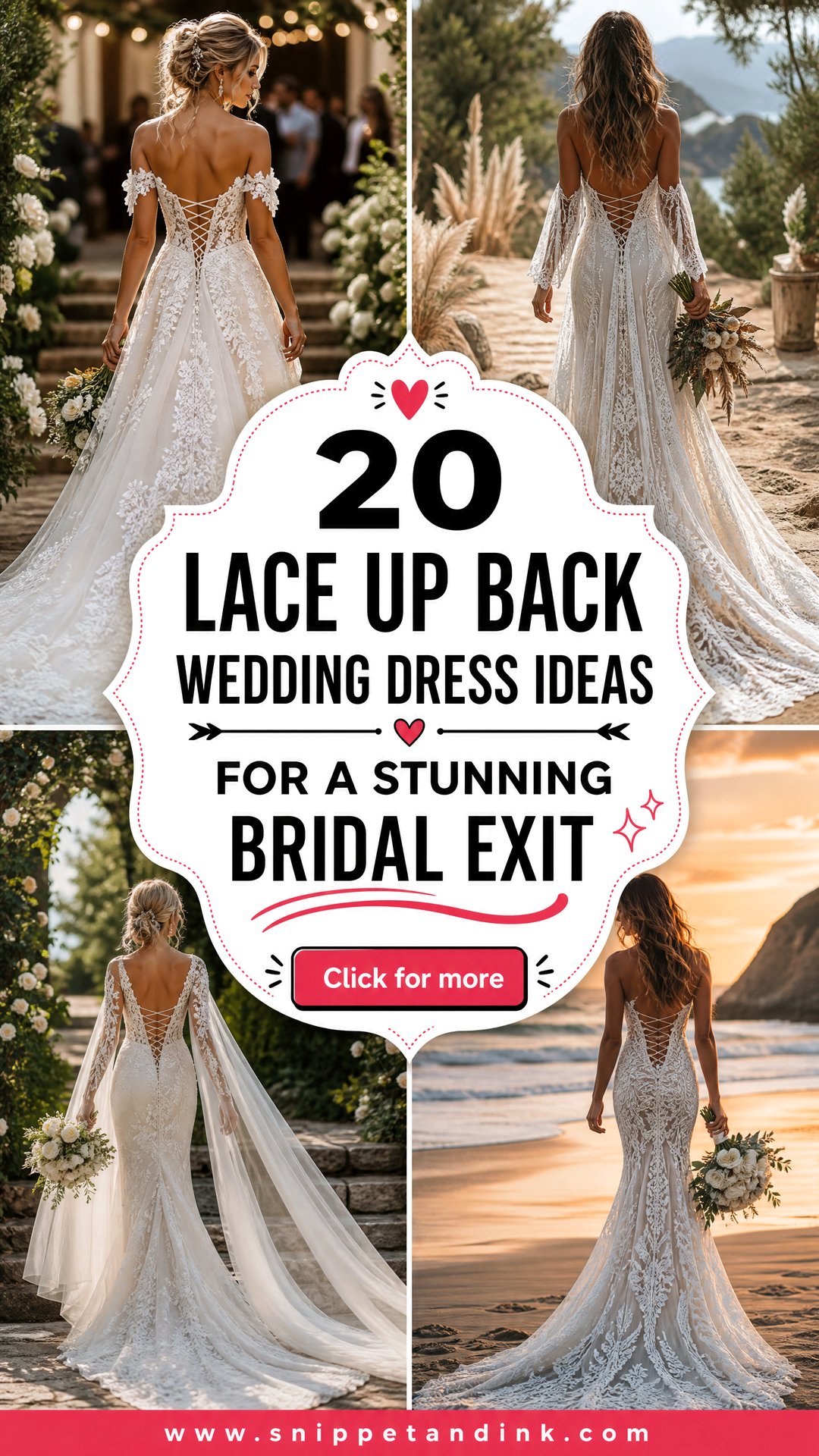
A corset back is the closure I suggest most often to brides whose measurements sit between sizes, or who expect their body to change slightly in the months before the wedding. Unlike a zip, it adjusts by an inch or two in either direction, and the crisscross ribbon gives the guests something to look at for the whole ceremony. It works on full princess skirts and on plain crepe, on boho lace and on vintage satin. What makes it look right is balance: the neckline and skirt have to hold their own against a strong back detail, and the veil and hair need to leave it on show. Below are twenty gowns built around a laced back, with how I’d style each one and what to test at the fittings.
Teach Two People to Lace You, Not One
A corset back is only as good as the person tying it on the morning. I always ask the bride to bring two helpers to the final fitting, so if one is running late or crying over their own makeup, the other can step in. Lacing a gown properly takes around ten to fifteen minutes the first time and gets quicker with practice.
- Get the gown on and tuck the modesty panel flat against the skin before any ribbon goes in. If the panel folds now, it will show all day.
- Thread from the top down, crossing the ribbon under each loop so it lies flat. A twisted ribbon looks messy and slips loose.
- Tighten in stages, working from the waist outward toward the top and bottom, pulling small amounts through each loop rather than yanking the ends.
- Ask the bride to breathe in, breathe out, sit and lift her arms. Adjust once more.
- Tie a secure bow or knot at the base and tuck the tails inside the skirt, or leave them hanging if the bow is part of the design.
Have your helpers photograph the finished lacing at the fitting. On the day, that picture is the reference, and it saves a lot of guesswork about how tight is tight enough.
1. Strapless Lace Up Back Ball Gown
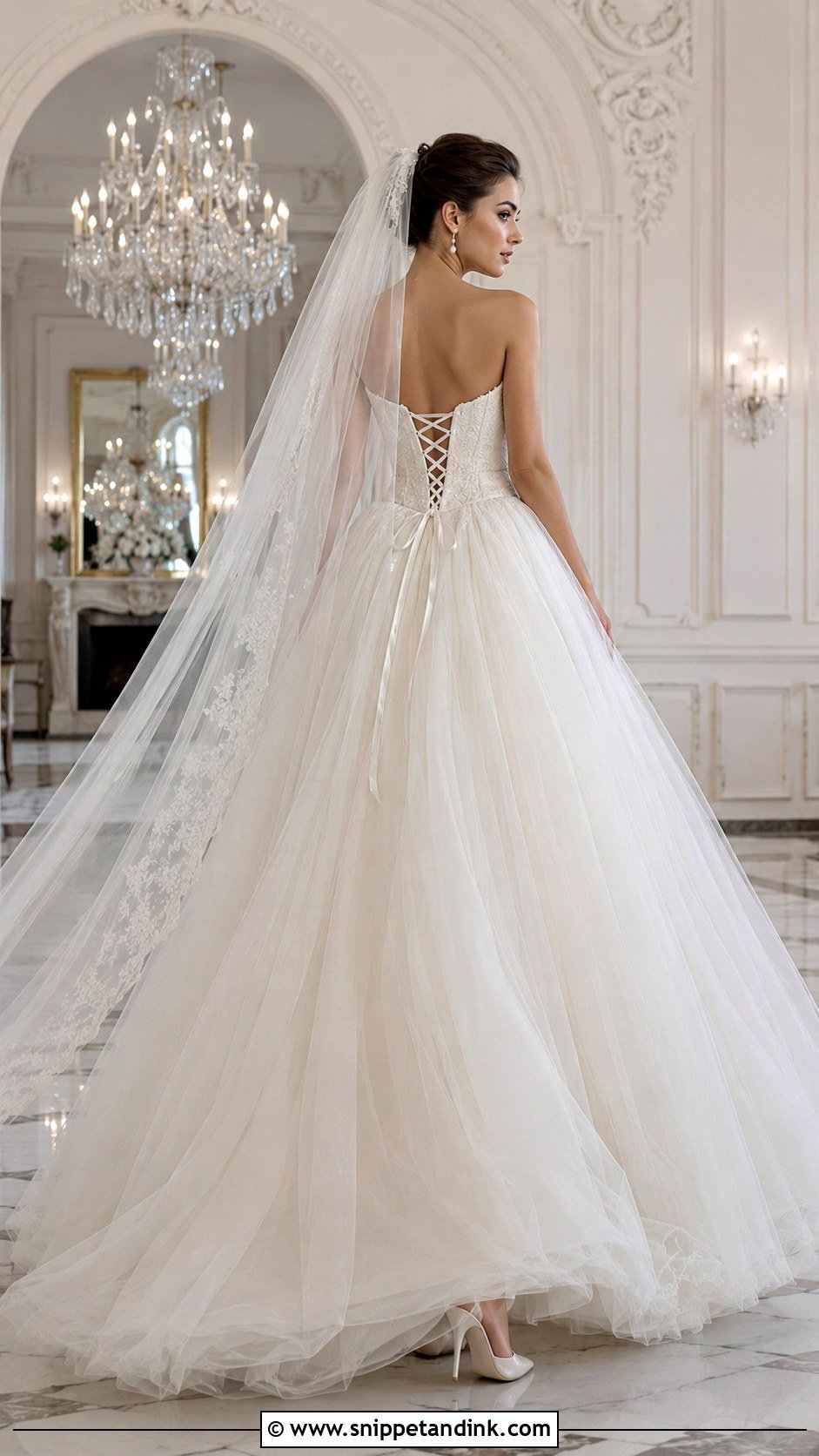
Strapless with a ball skirt is the classic shape for a laced back, and it holds up because the boning does the work, not the ribbon. Look for a sweetheart bodice with proper internal structure and satin ribbon running through covered loops. The skirt can be tulle, organza or mikado; mikado holds the dome best in a large room. Pearl drops, ivory pumps and a cathedral veil finish it, with hair in a low bun so the lacing stays visible. One honest warning: a skirt this wide needs a venue with space around the aisle, so measure before you fall in love.
2. Off Shoulder Lace Up Back A Line Wedding Dress
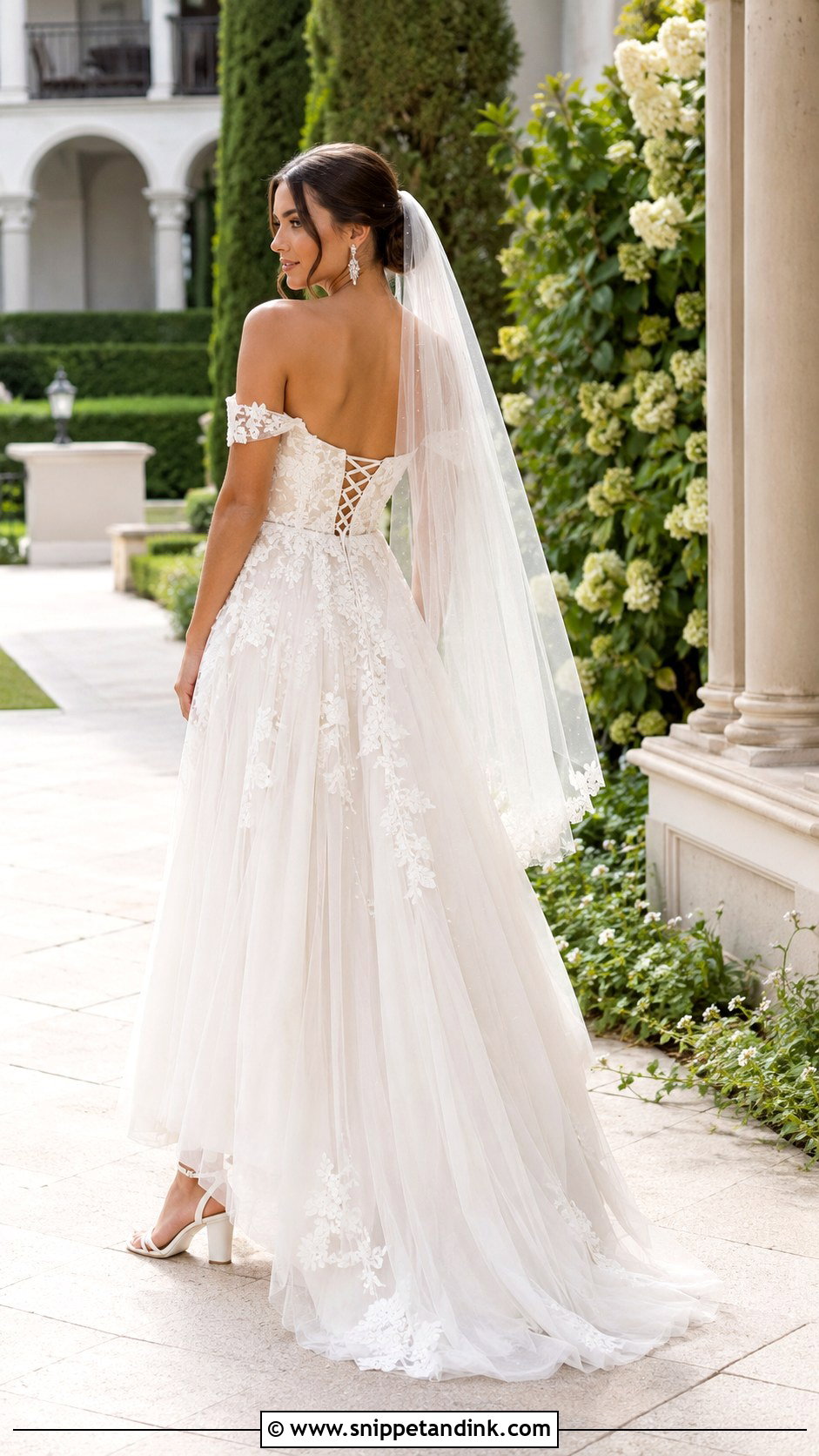
Off-the-shoulder straps soften an A-line without making it casual. A fitted appliqué bodice, a curved neckline and lacing that ends in a neat bow at the waist, over a tulle skirt you can actually move in. Fingertip veil, crystal earrings, block-heel sandals, and hair in a loose chignon or half-up. The strap placement is the thing I fuss over most. If the straps sit too low on the arm, you can’t lift your hands to hug anyone; ask your seamstress to set them so you can raise your arms to shoulder height without the bodice shifting.
3. Long Sleeve Lace Up Back Wedding Dress
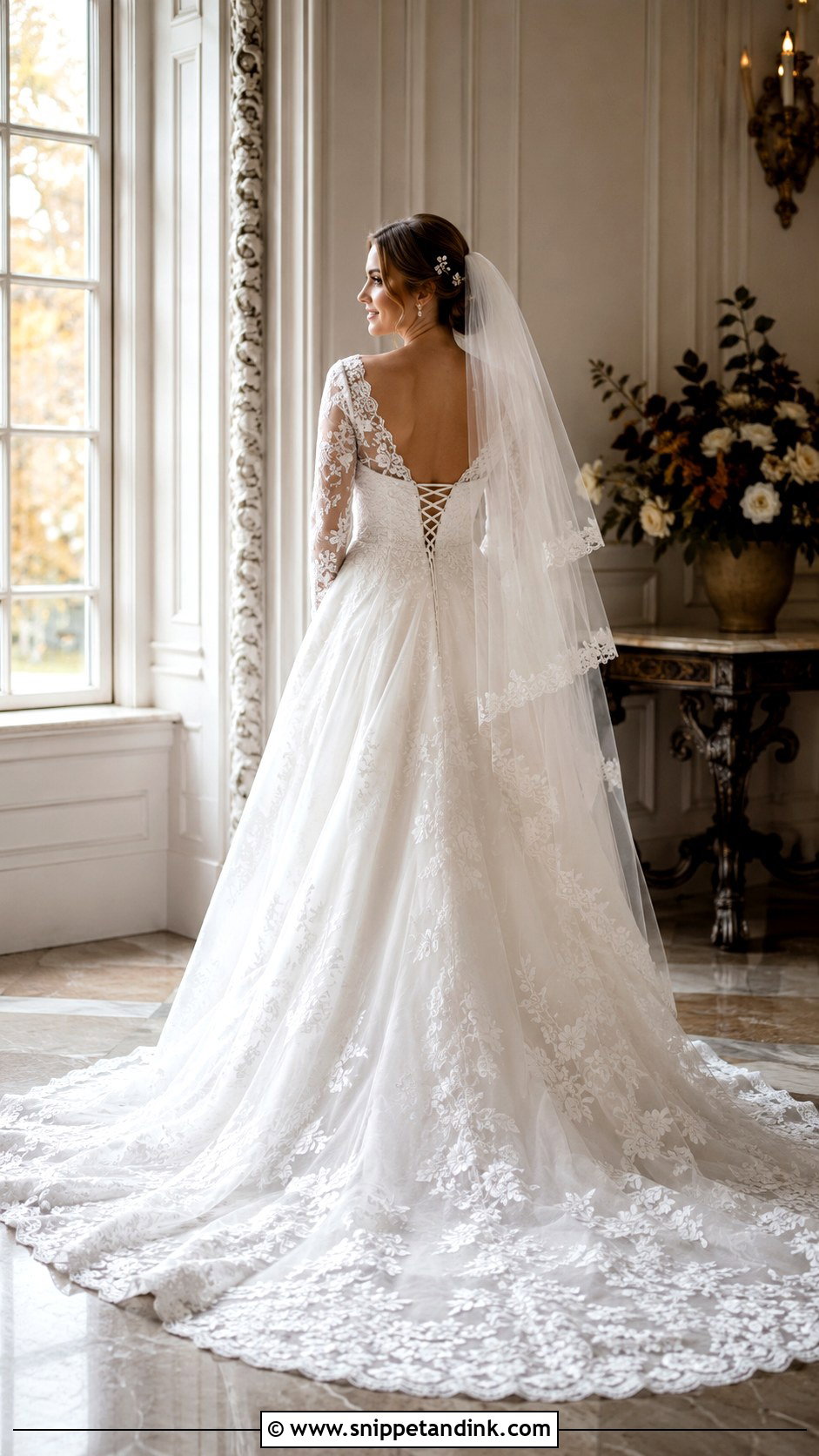
Long sleeves and a laced back suit a cool-weather wedding. I like sheer lace sleeves over a lined bodice, with an A-line or soft fit-and-flare skirt. The lacing can sit under an illusion panel or be framed by scalloped lace edges on either side. Pearl hairpins, small studs and closed satin heels keep the focus on the fabric. A chapel veil covers the back during the ceremony, and taking it off for the reception gives the lacing its moment. Keep in mind that long lace sleeves restrict reach more than you’d think; test them by pretending to cut a cake.
4. Sweetheart Lace Up Back Mermaid Wedding Dress
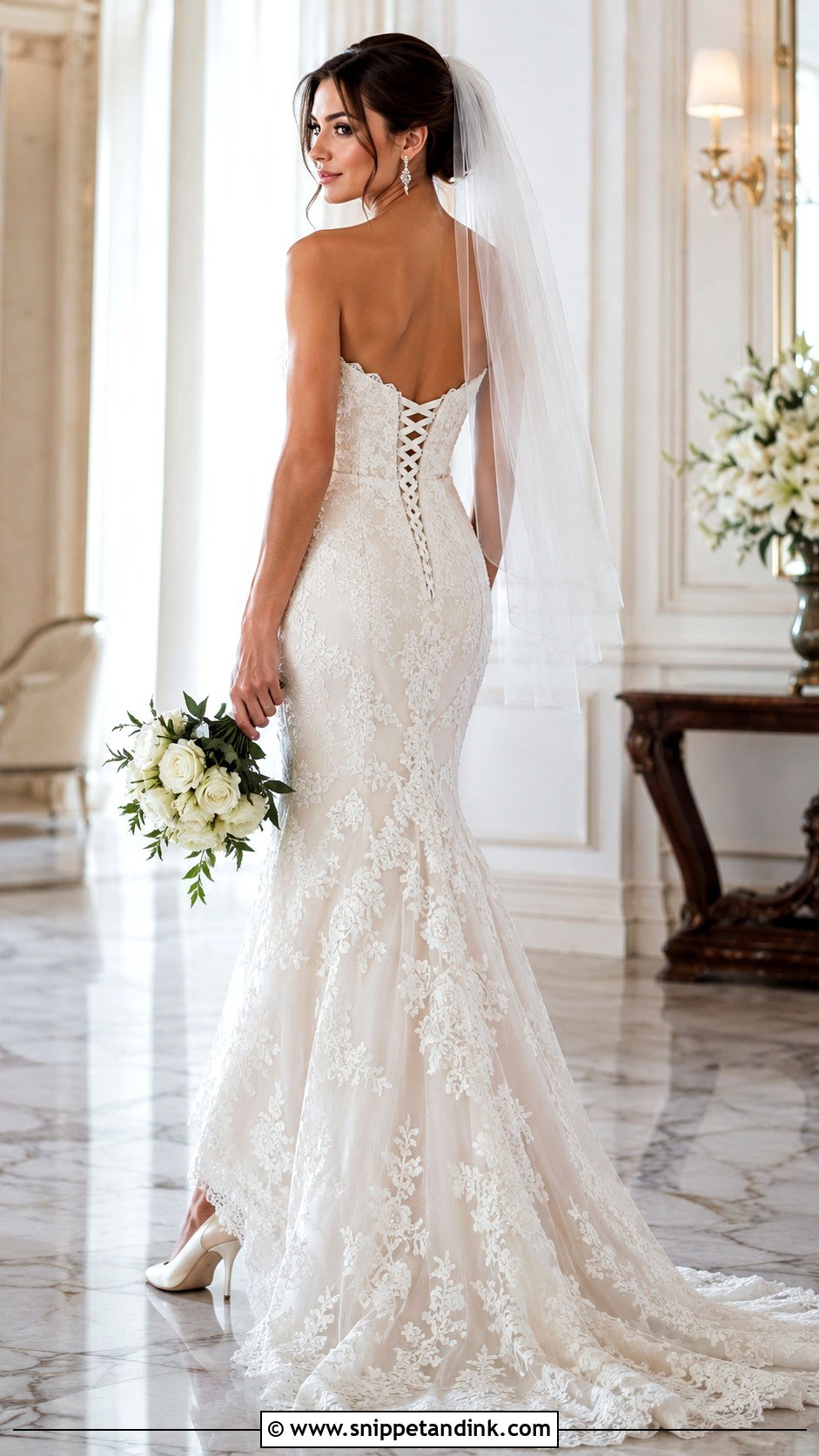
Mermaid gowns hug from bust to knee, and a laced back lets you fine-tune that hug on the day instead of guessing months ahead. A sweetheart bodice in floral lace, light sequins or beaded appliqué stays bridal as long as the sparkle doesn’t cover everything. Simple tulle veil, crystal drops, pointed pumps. Practise stairs at every fitting. Mermaid skirts differ enormously in how much stride they allow, and the flare point decides it: the lower the flare, the shorter your step.
5. Satin Lace Up Back Princess Wedding Dress
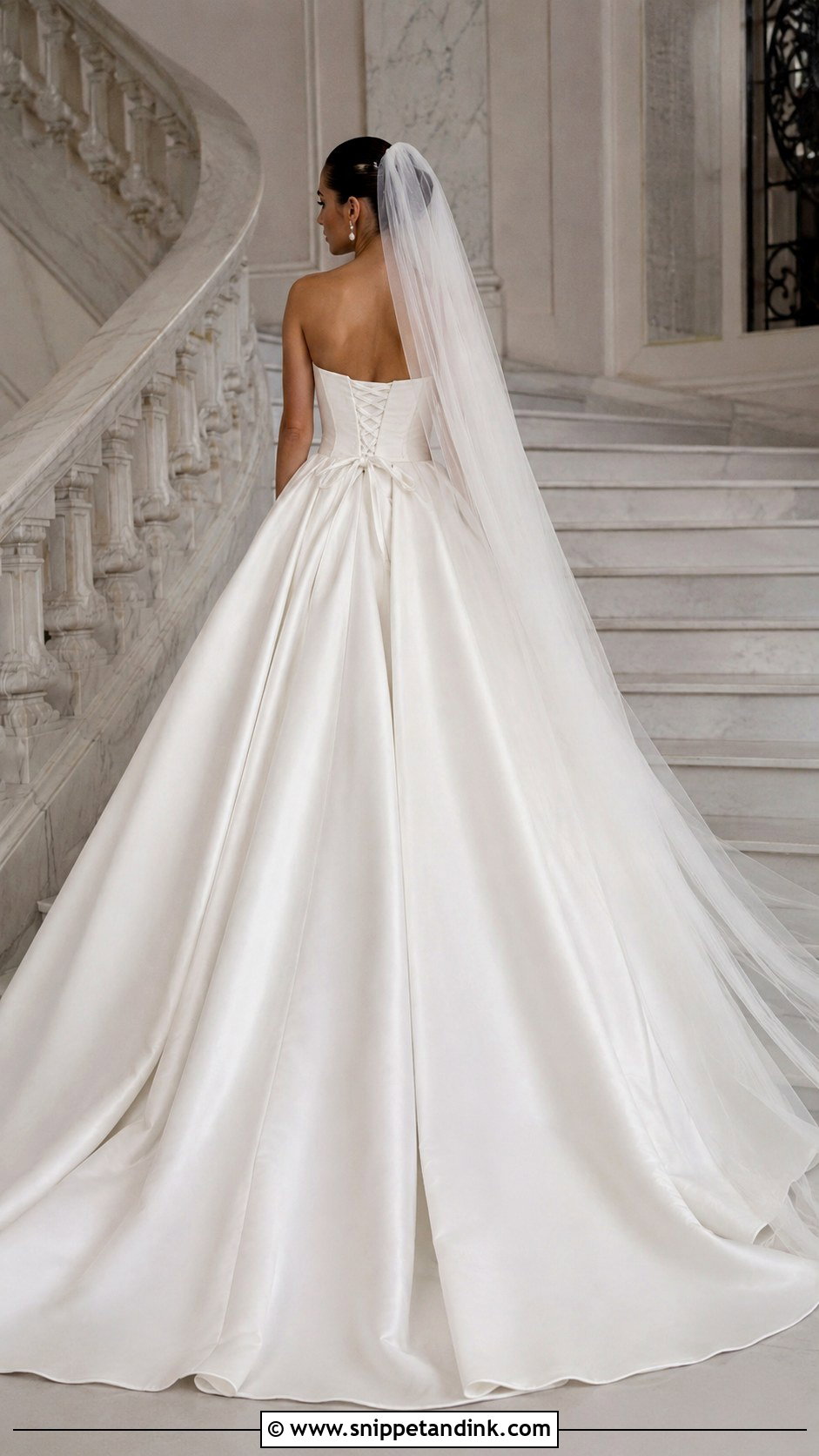
Plain satin is the fabric that shows a corset back off most clearly, because there’s nothing else competing with it. Let the sculpted bodice and full skirt carry the gown. Matching ribbon gives a smooth line down the back; a slightly contrasting ivory ribbon makes the lacing pattern easier to see in photographs. A classic updo, pearl earrings, a slim tennis bracelet and satin pumps are plenty, with a long plain veil. Hidden pockets are a worthwhile ask. Steam satin from the inside on the morning; it shows every crease, especially across the lap after a car journey.
6. Boho Lace Up Back Wedding Dress
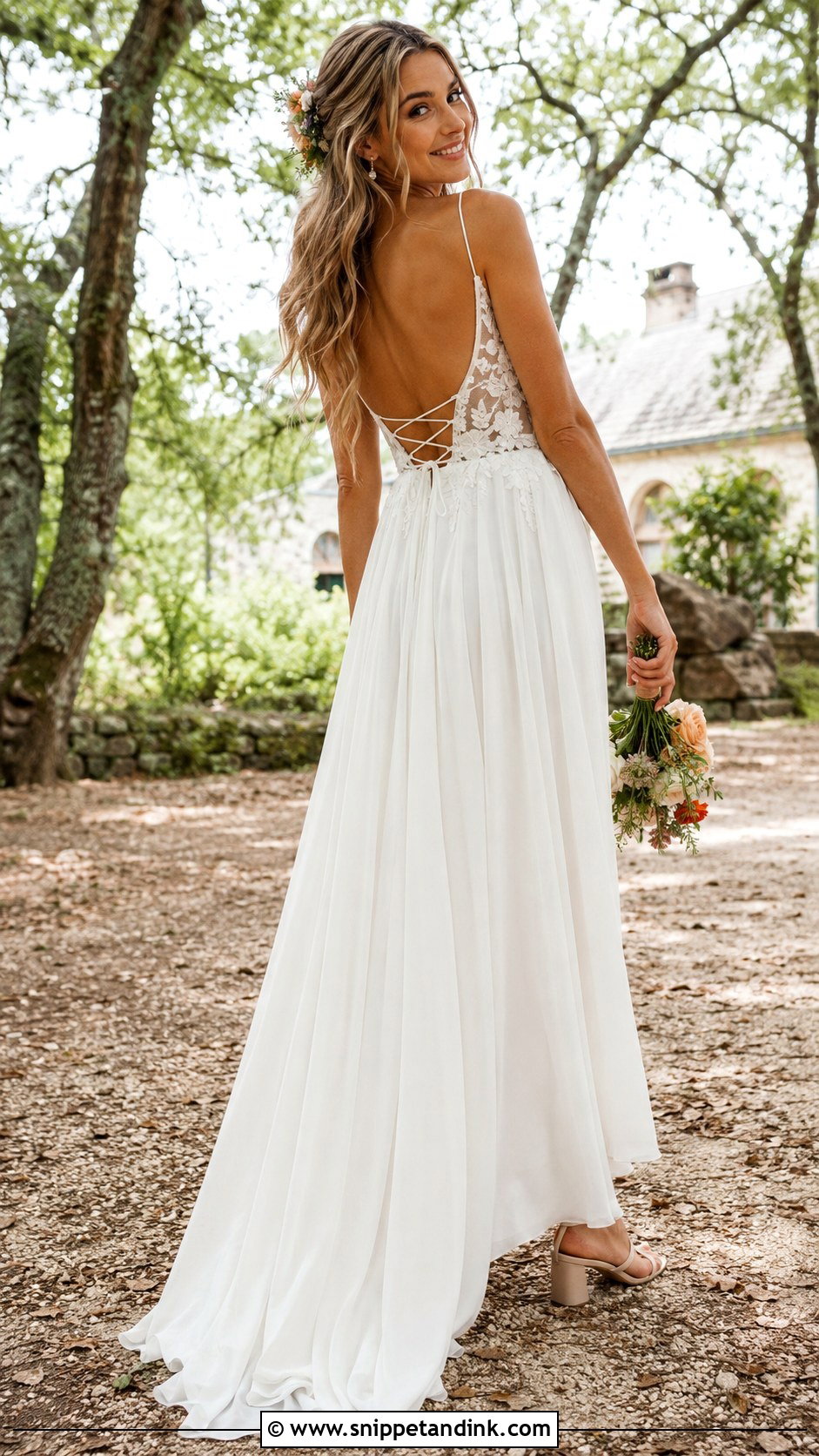
Boho and corset sound like opposites, but a lightly structured bodice under botanical lace works well. Keep it airy: a chiffon or tulle skirt, thin ribbon and a modest panel behind the lacing so the closure looks delicate rather than heavy. Loose waves, a few fresh flowers in the hair, small gold earrings and low block sandals. Choose a plain fingertip veil or an embroidered cape over anything heavily embellished. Hem the skirt to the exact sandals you’ll wear. On grass, an extra half inch of length collects dirt fast.
7. Tea Length Lace Up Back Wedding Dress
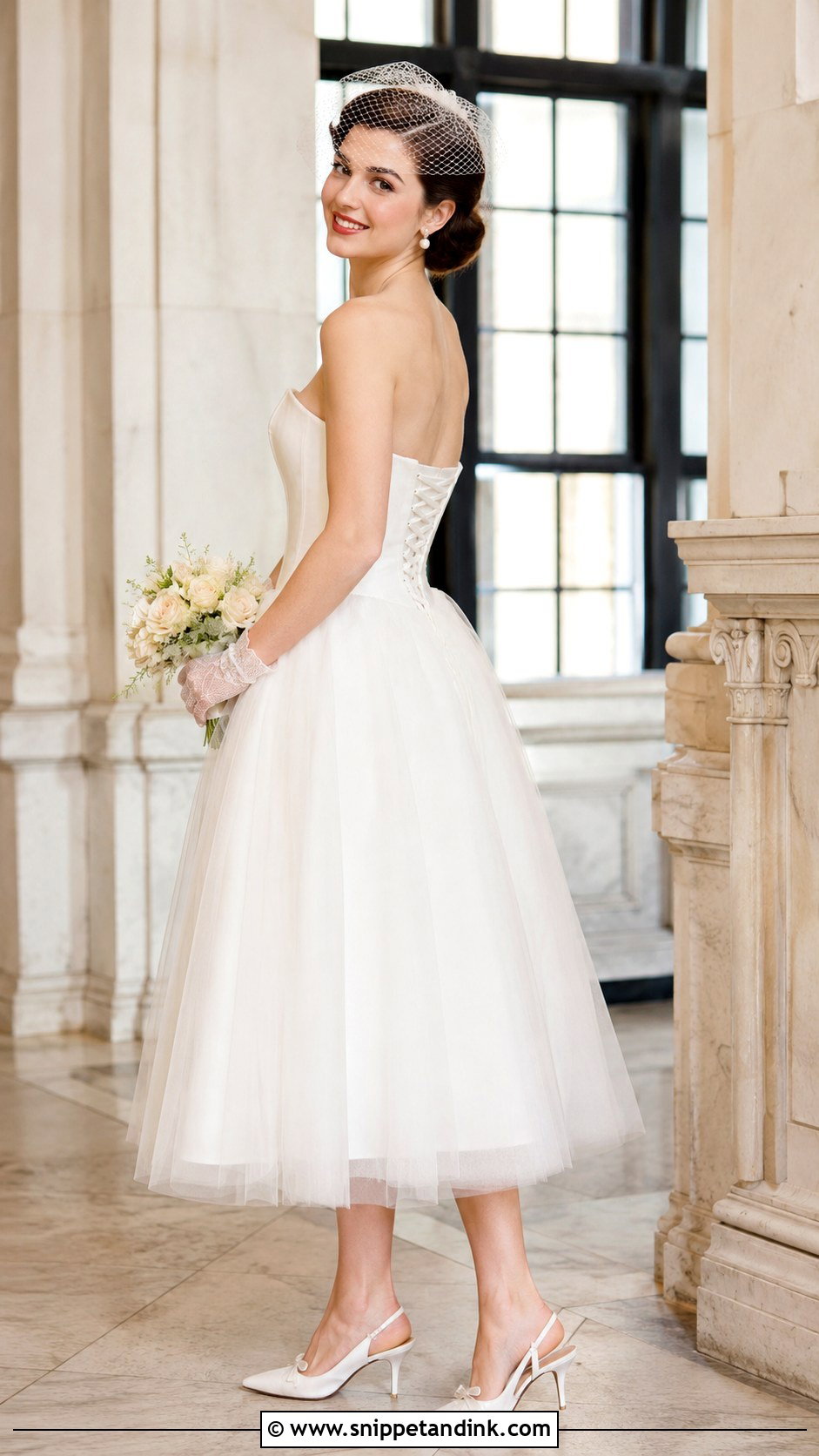
Tea length shows your shoes, so plan them as part of the dress: pointed slingbacks, embellished pumps or a polished block heel. Look for a fitted corset bodice, a natural waist and a skirt ending between knee and ankle in satin, lace or layered tulle. Pearl studs, short gloves and a birdcage veil give a retro finish if you choose one or two of them, not all three. A compact bouquet keeps proportions right on a shorter dress. It’s the shape I’d point you to for a courthouse or restaurant wedding where a train would get in the way. Knot and tuck the bow ends before the dancing starts.
8. Plus Size Lace Up Back A Line Wedding Dress
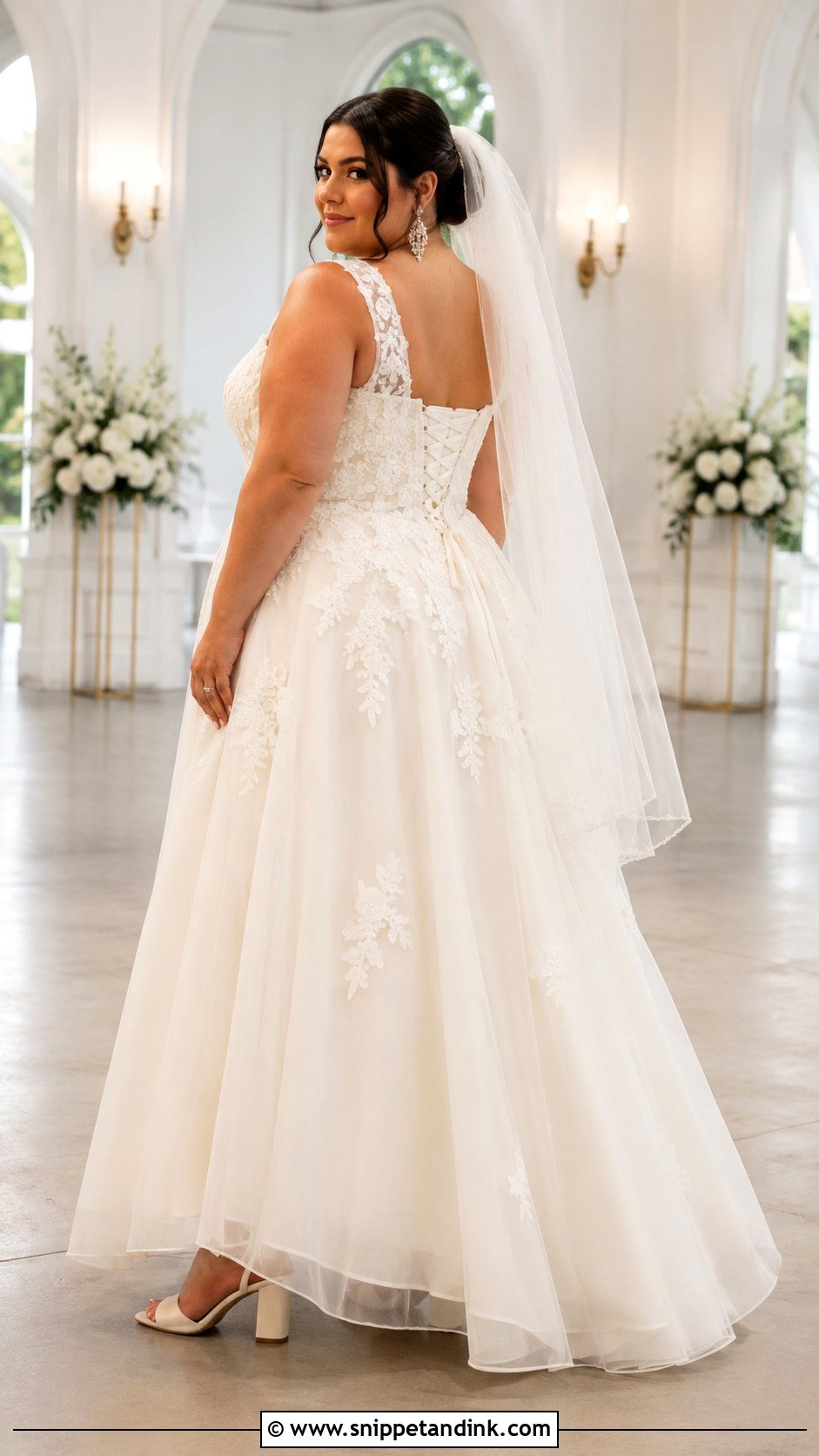
For a plus-size bride, a laced back is useful, but the support has to come from inside the bodice, not from the ribbon. I look for proper boning, wide straps and a structured bust before I look at anything else. An A-line skirt from the waist leaves room to walk and sit; lace appliqué tying bodice to hem keeps the look cohesive. Supportive block heels, statement earrings and a fingertip or chapel veil, with a soft updo. At fittings, try three or four tensions. Lacing pulled as tight as it goes usually creates ridges, whereas slightly looser often looks smoother and lets you breathe, eat and dance.
9. Minimalist Crepe Lace Up Back Wedding Dress
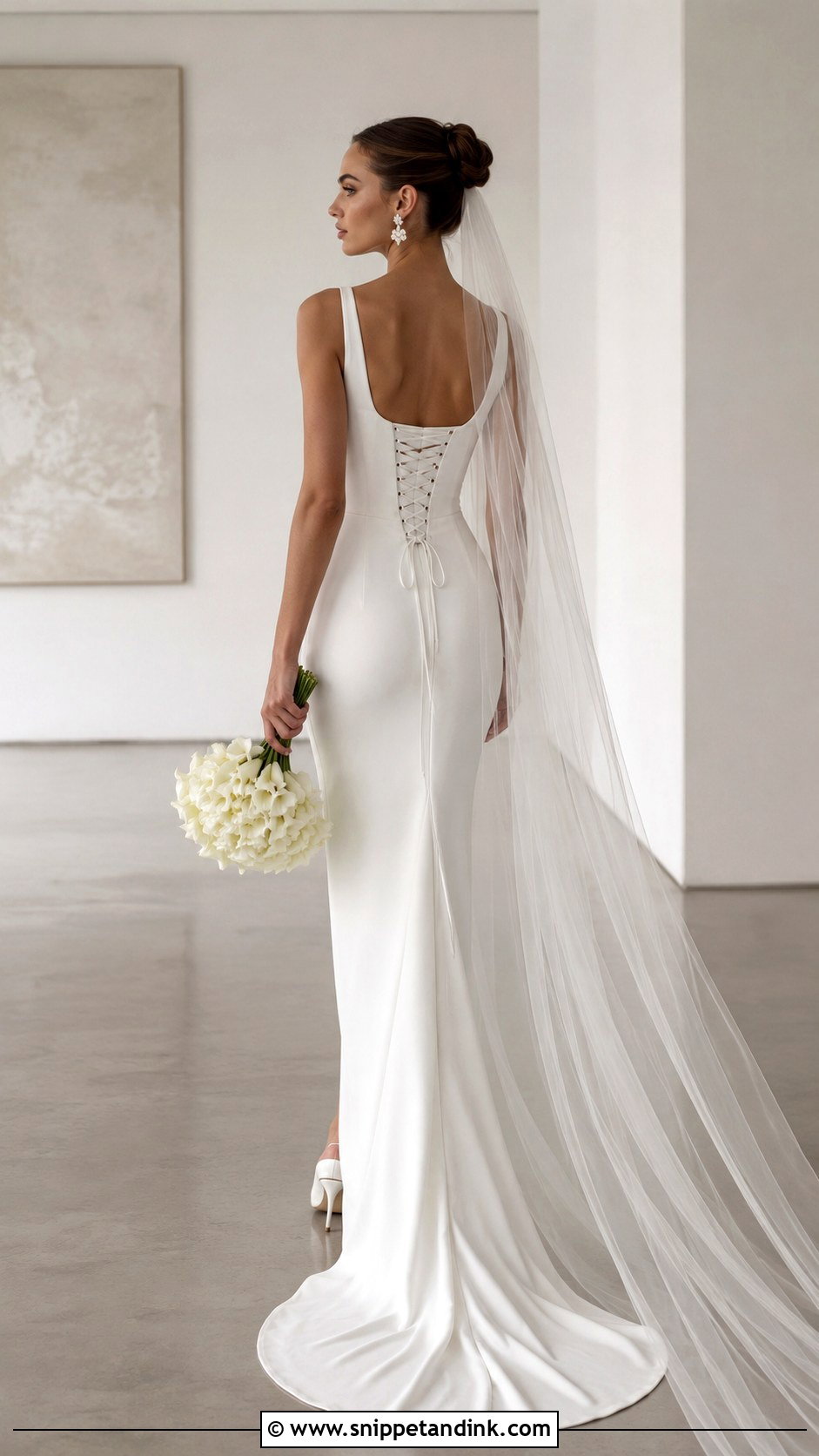
Crepe is honest fabric: it shows everything underneath, including a ribbon tied unevenly. That’s why I like it with a laced back, because it forces a neat job. Square, scoop or strapless neckline, precise seams, column or fit-and-flare skirt, and matching fabric loops with narrow lacing. Sculptural earrings, a sleek bun, pointed ivory heels and a structured white bouquet. A sheer cathedral veil gives ceremony drama, then comes off to show the back. Bring your final undergarments to the very first alteration appointment; crepe will reveal any line they leave.
10. Beaded Lace Up Back Trumpet Wedding Dress
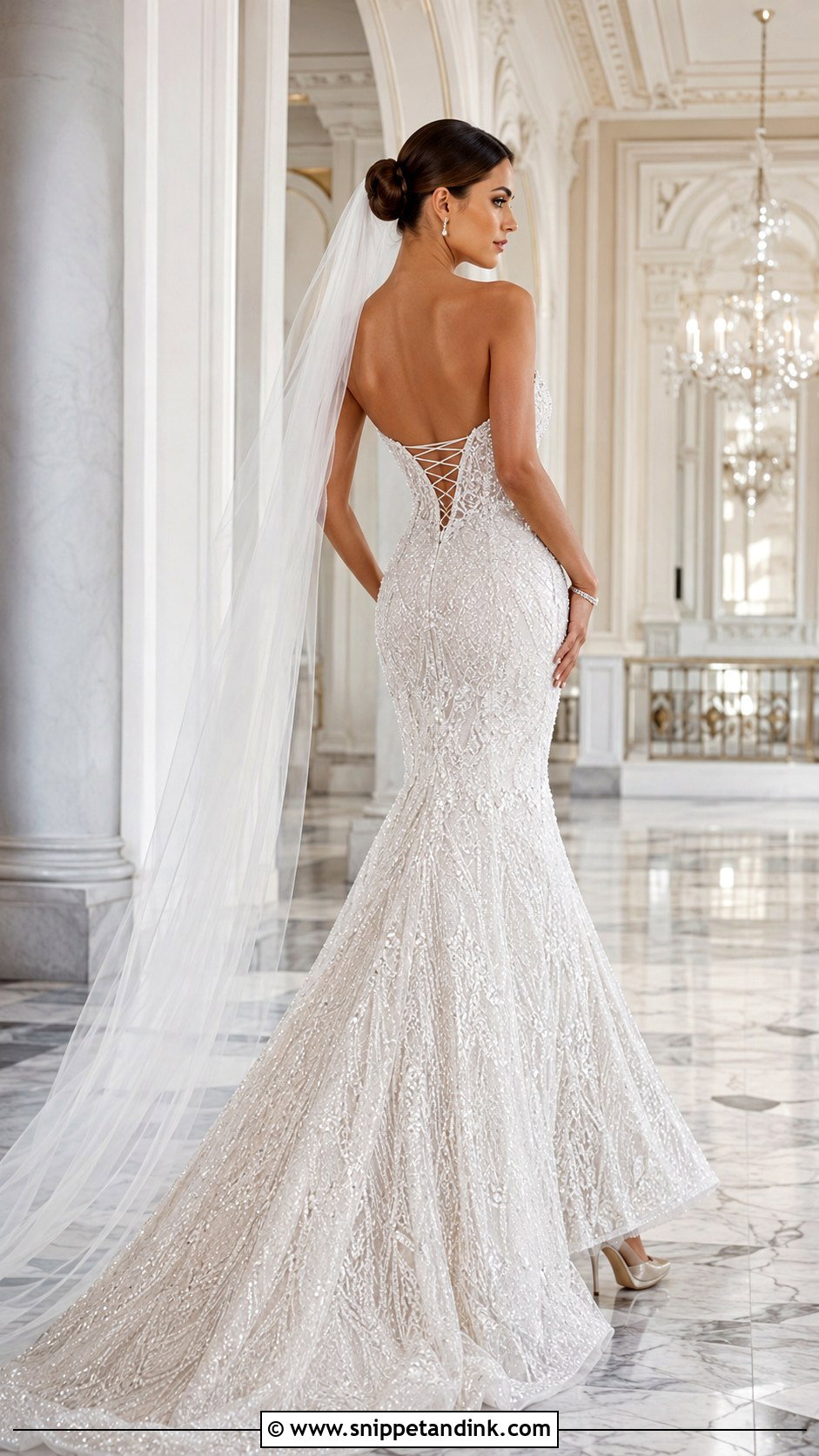
Heavy beading turns a fitted trumpet gown into an evening look. The best ones concentrate crystals or pearls on the bodice and scatter them down the skirt. Match the loops and ribbon to the beadwork colour so the back reads as one piece. Then keep everything else quiet: small earrings, a thin bracelet, metallic-neutral pumps, a plain veil. Long hair loose will catch on beading, so wear it up. Before buying, run your hand under the arm and along the lacing channel; rough beads scratch, and they can fray the ribbon every time it’s pulled through.
11. Floral Lace Up Back Wedding Dress
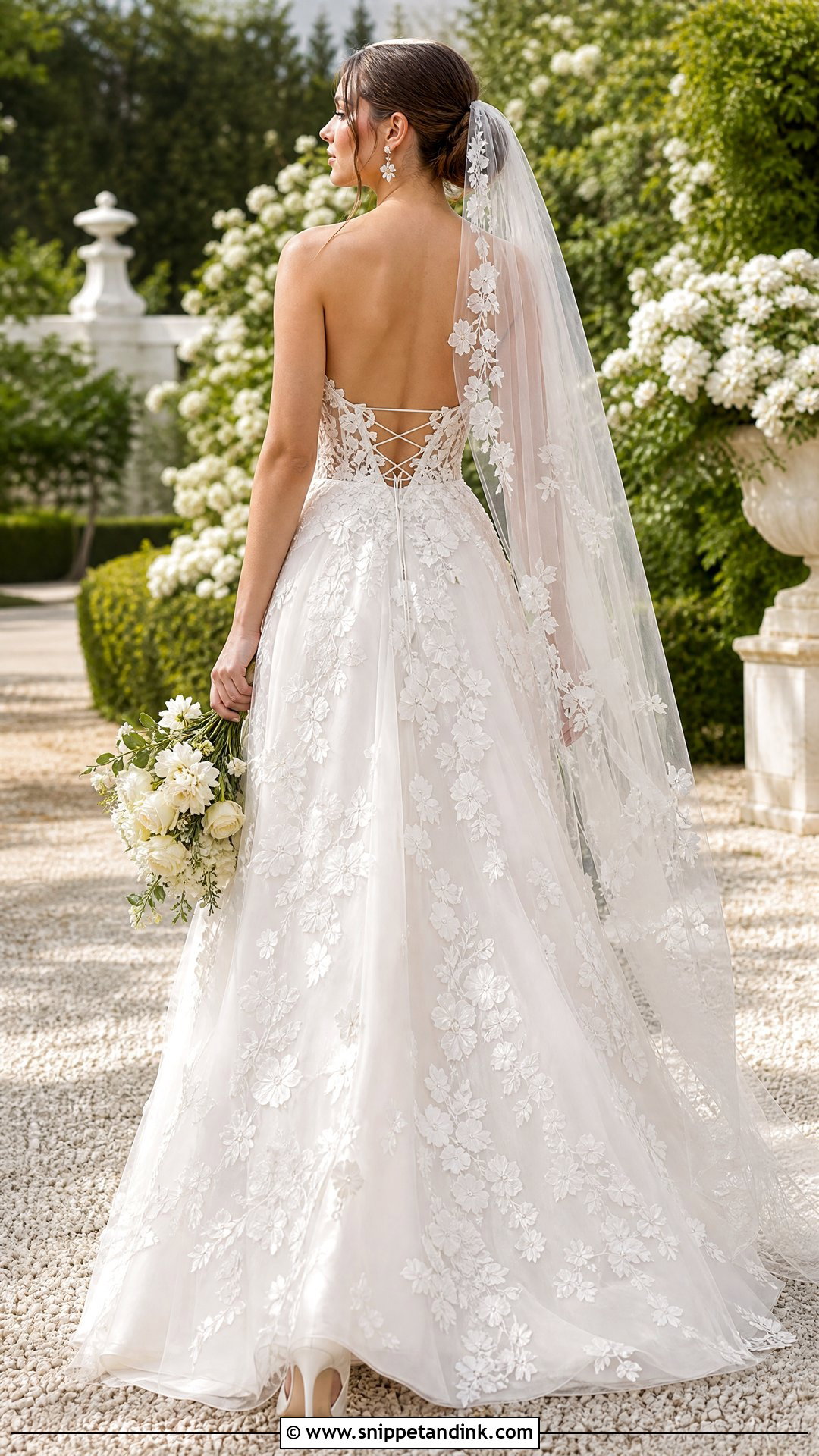
Three-dimensional flowers on a bodice look rich, but they need to stop short of the lacing. If an appliqué sits over the loops, the ribbon catches on it and the flower gets crushed each time you tighten. Choose a design with motifs trailing onto an A-line or ball skirt and clear space down the back. Floral earrings, a sheer veil with a few scattered appliqués, plain satin heels. A low bun or a waved low ponytail frames the back without hiding it. Repeat one or two of the gown’s flowers in the bouquet and leave other accessories out.
12. Square Neck Lace Up Back Wedding Dress
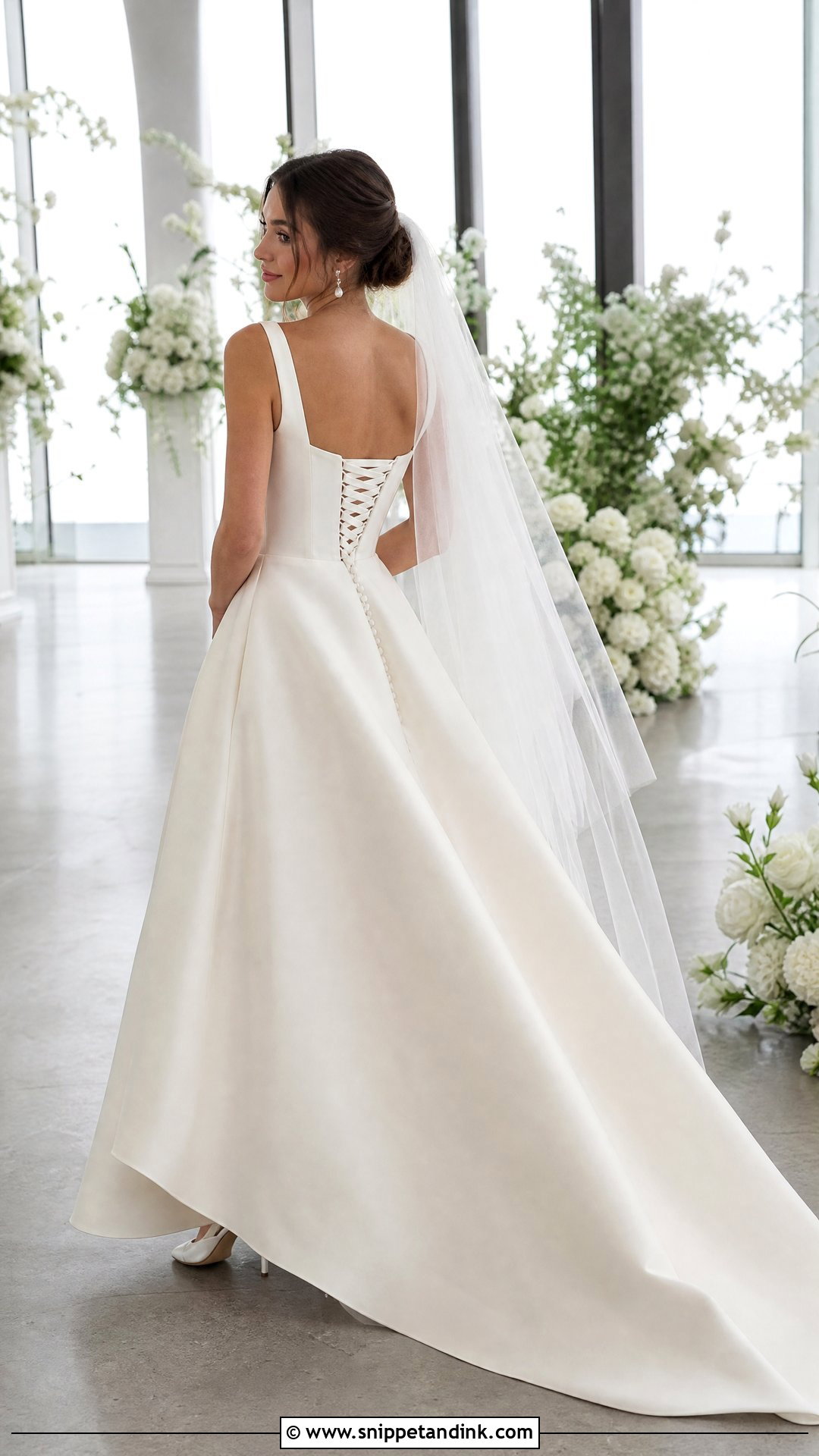
A square neck gives the front a crisp, architectural line so the back can be the romantic part. Wider straps, a fitted corset bodice and an A-line skirt in satin, mikado or matte crepe. Pearl drops, a smooth low chignon, pointed pumps and a sheer veil without a heavy border. A structured bouquet of white tulips or roses fits the shape. The detail I check is the front edge. Over-tightened lacing can make a square neckline gap when you lean forward, so tighten until it’s snug, then have the bride bend and sit before tying off.
13. Halter Lace Up Back Wedding Dress
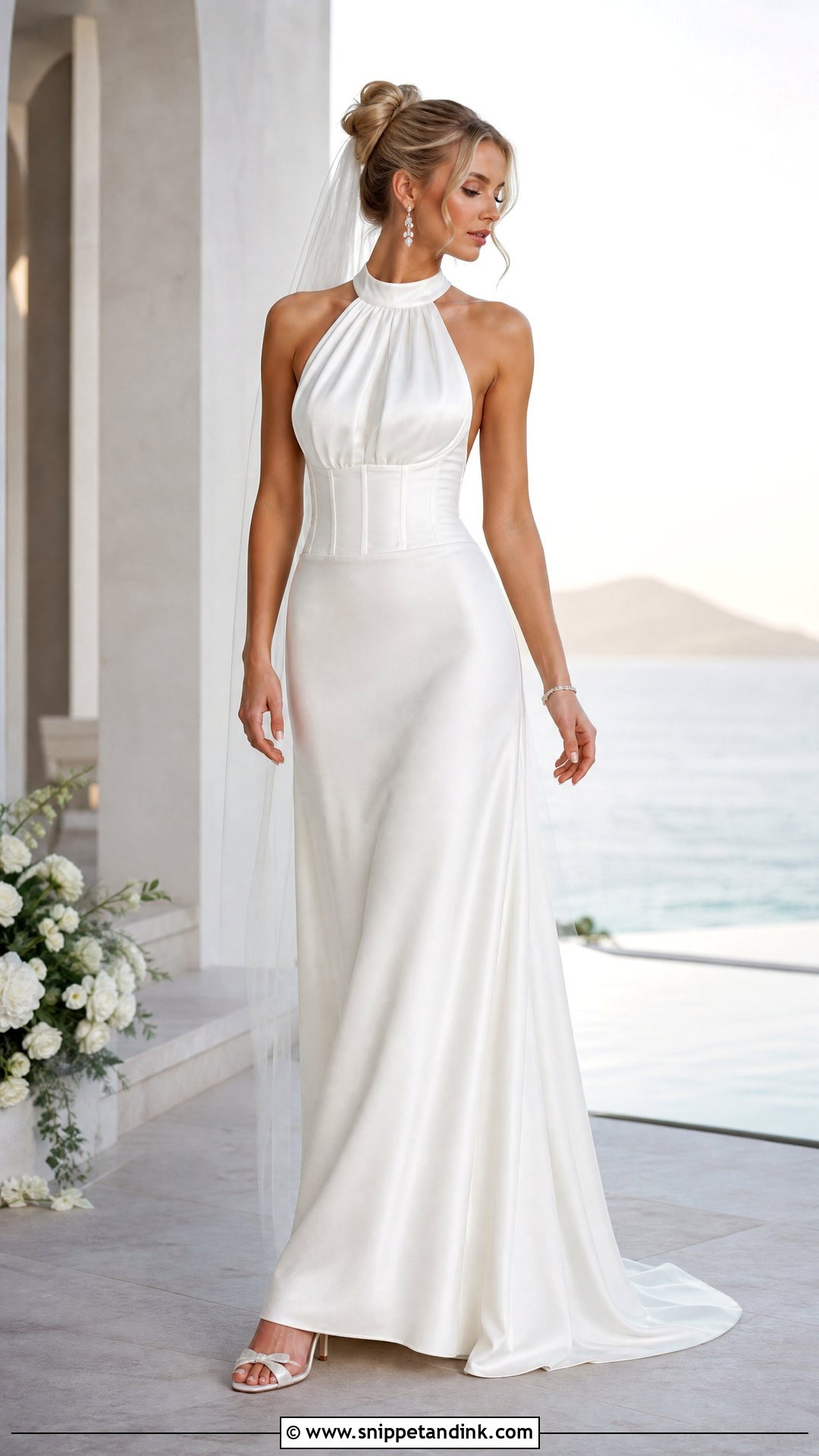
A halter neckline and a laced back frame the shoulders from both sides. Pick a high or plunging halter with real support, a defined waist and a fluid skirt, chiffon for movement or satin for polish. Updo, delicate drops, a slim bracelet and minimal heeled sandals, with no necklace. Pin a narrow veil below the bun so it hangs clear of the lacing as you walk. Halters can rub at the back of the neck by evening; ask your tailor to check the strap width and lining there before the final fitting.
14. Cape Sleeve Lace Up Back Wedding Dress
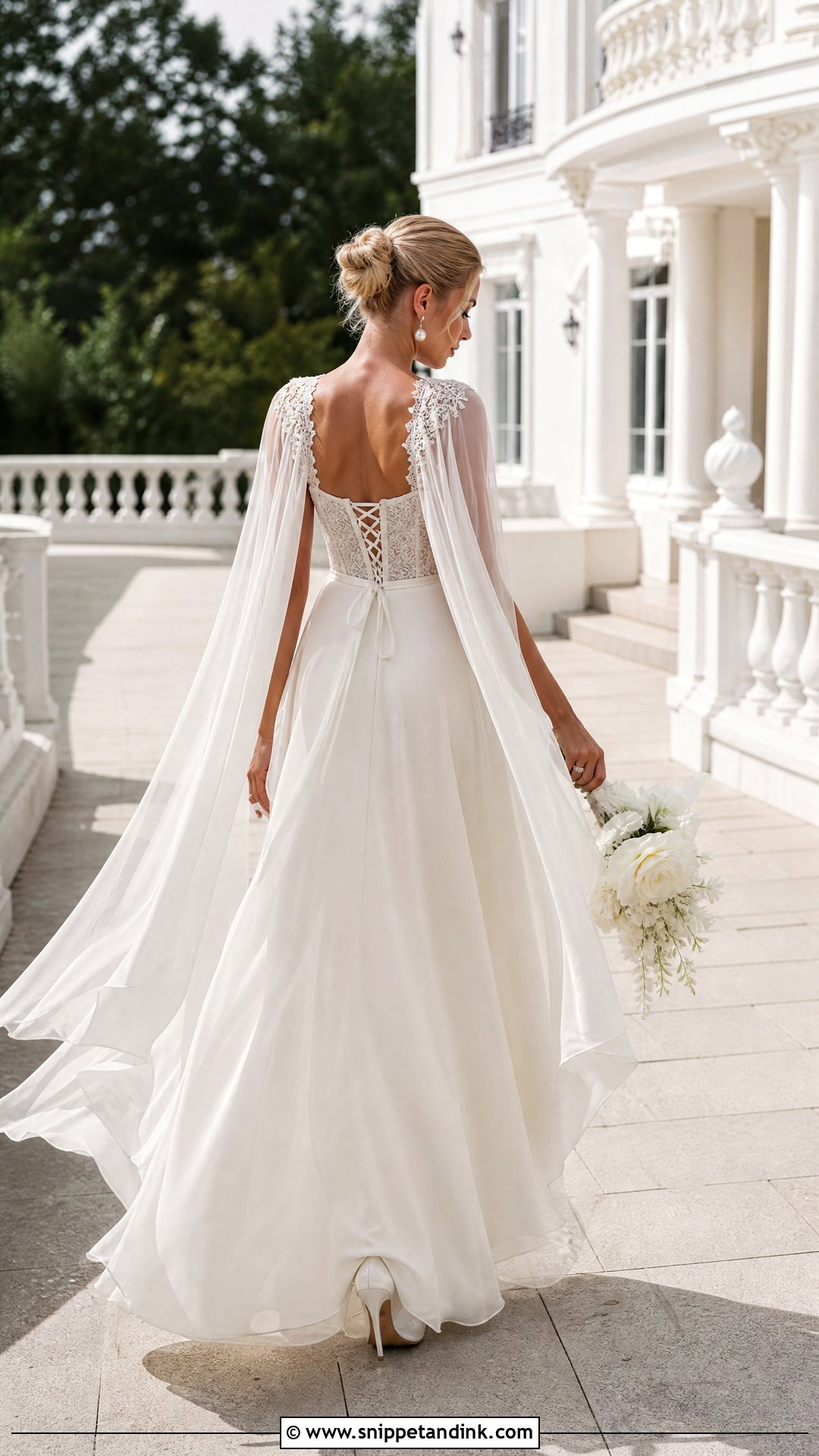
Cape sleeves give movement and coverage, but they must hang beside the lacing, not on top of it. Look for panels attached at the shoulder that fall either side of the back. Chiffon floats; lace looks more traditional. Pearl earrings, a sleek low bun, pointed shoes and a small structured bouquet. You probably won’t need a veil, as the cape already gives length. Walk outside in it before the day. Long cape panels catch the wind and get tangled under the train, and shortening them slightly is an easy fix.
15. Blush Lace Up Back Wedding Dress
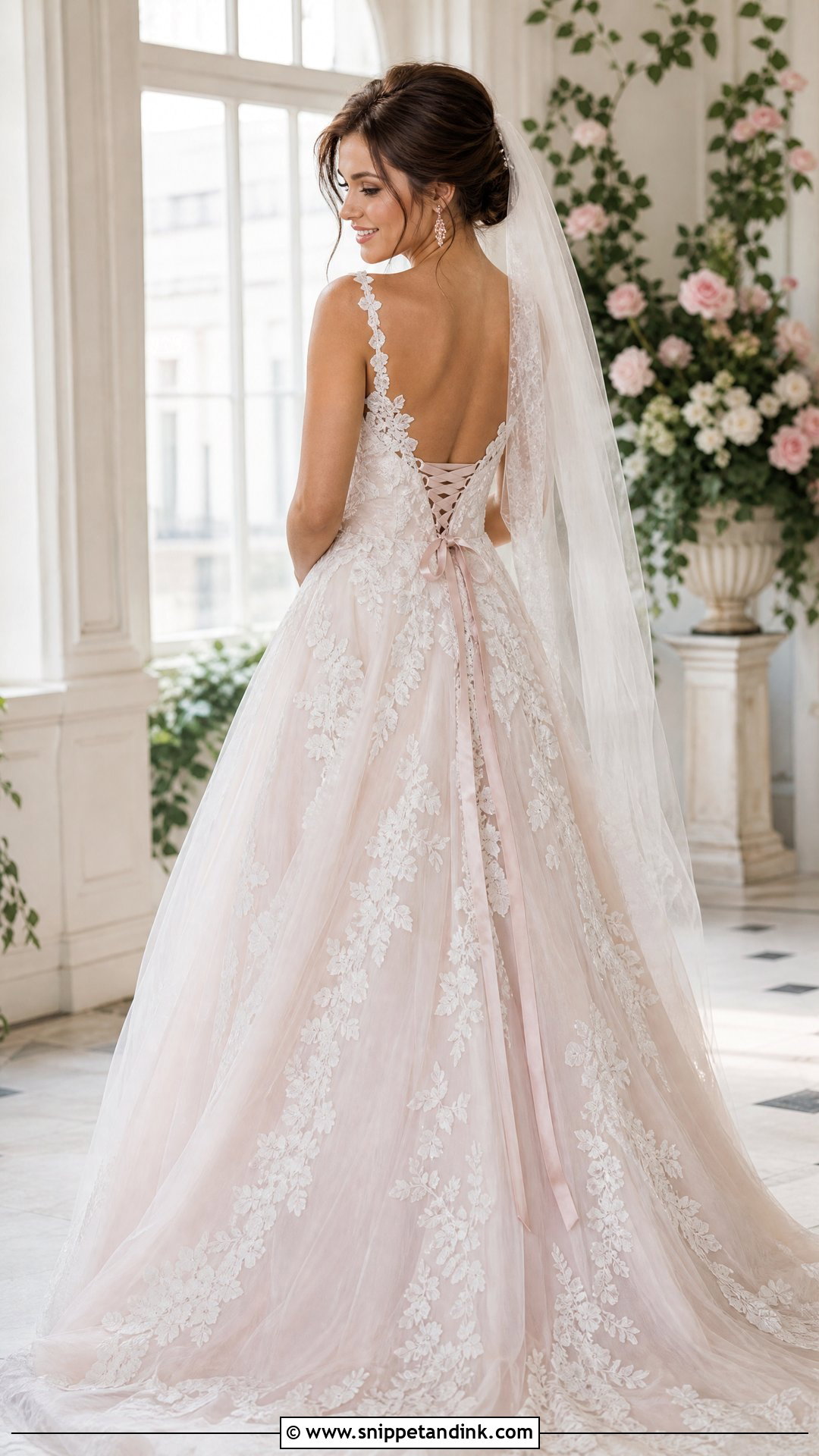
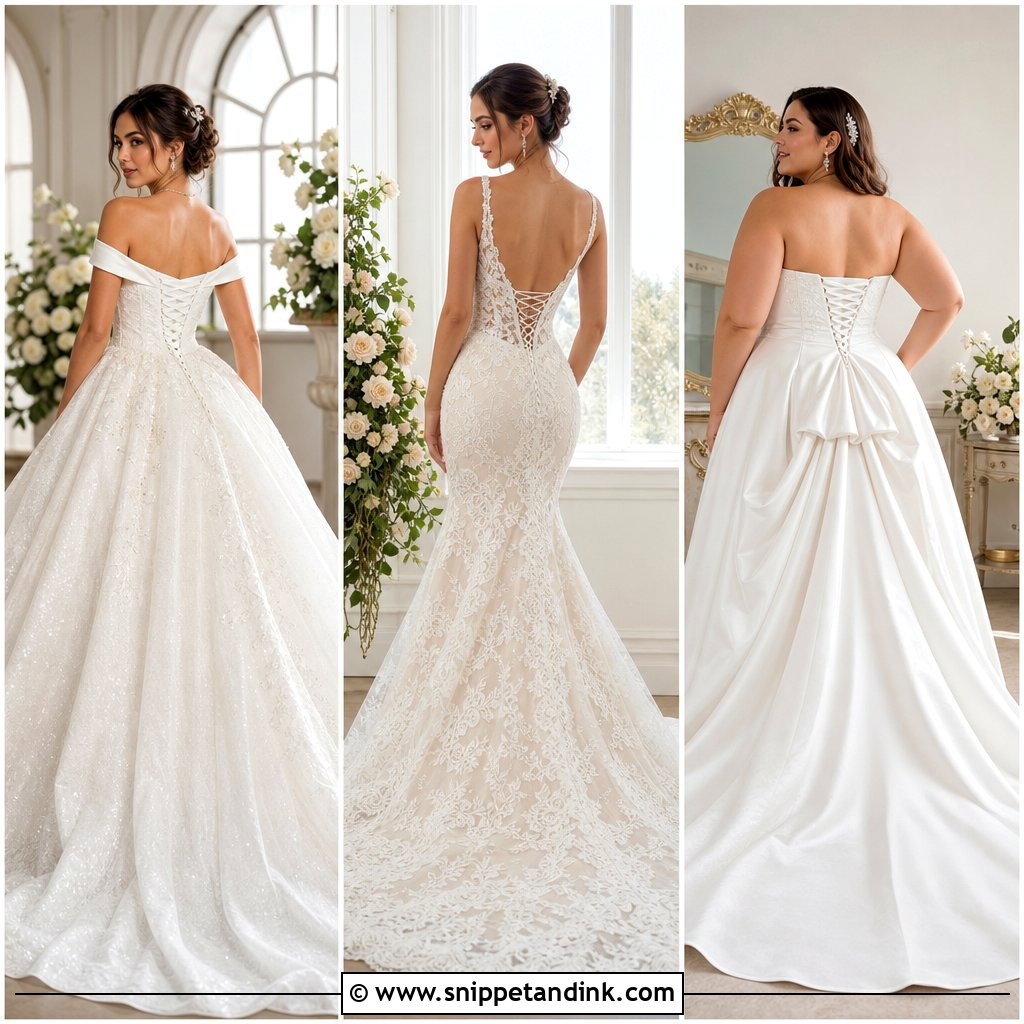
Blush layers under ivory lace give depth without abandoning a bridal mood. Matching blush ribbon softens the lacing, while ivory ribbon makes the crisscross stand out. Rose-gold earrings, neutral pumps, a sheer ivory veil and cream and pale pink flowers. Soft waves or a textured updo suit the colour. Always look at blush in daylight and under indoor lighting before deciding, because the same tulle can swing from pink to peach to almost beige depending on what’s around it.
16. Beach Lace Up Back Sheath Wedding Dress
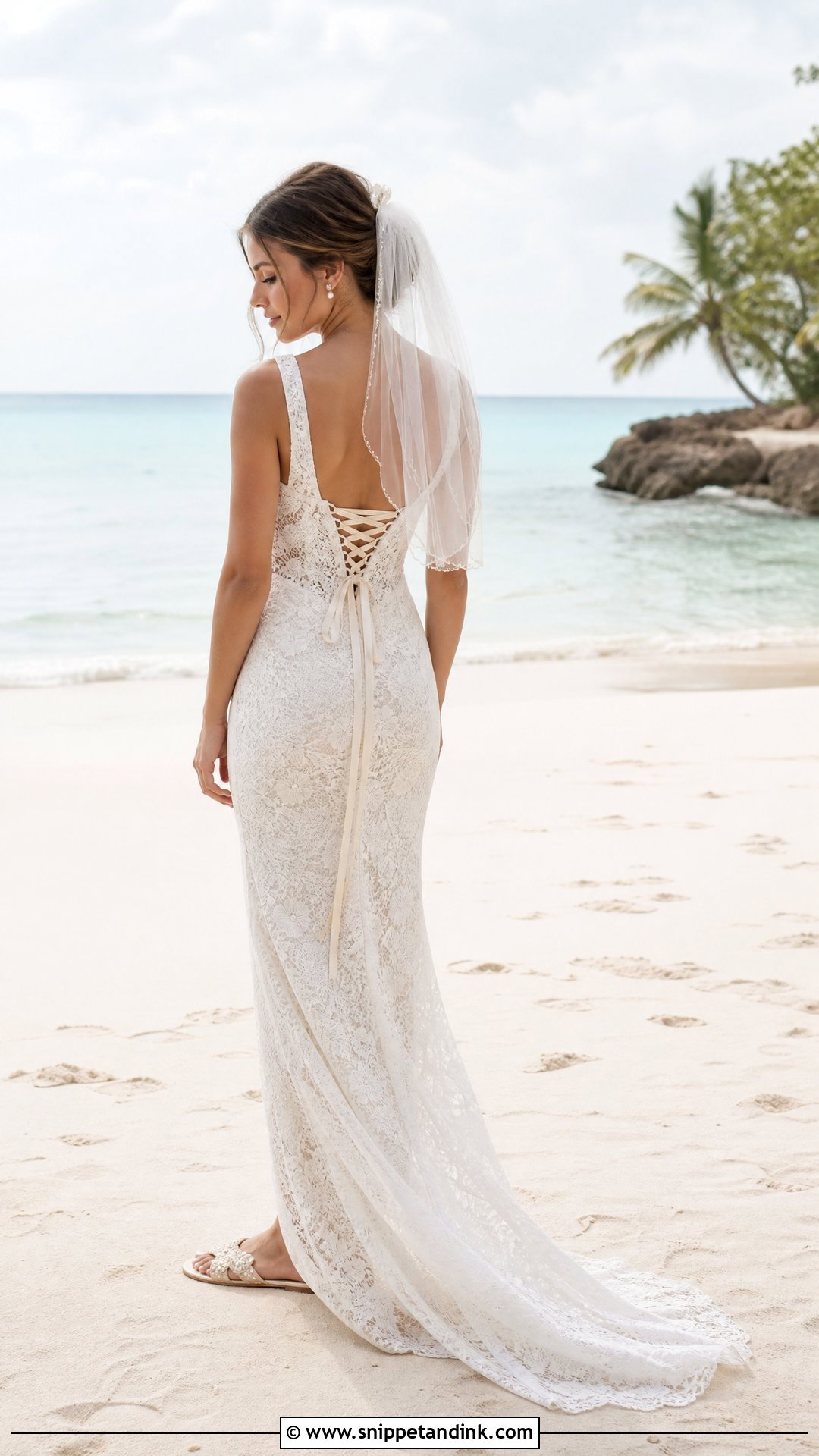
For a seaside ceremony, I’d keep the gown light: a soft lace or chiffon sheath with comfortable straps and minimal boning. Flat embellished sandals, pearl studs, and a loose updo that can cope with humidity. A short veil or sheer cape is far easier near wind than a cathedral length. Skip a long train and ask for a secure bustle. In heat, ribbon rubs; a modesty panel behind the lacing protects the skin and stops a sunburned stripe down your back.
17. High Neck Lace Up Back Wedding Dress
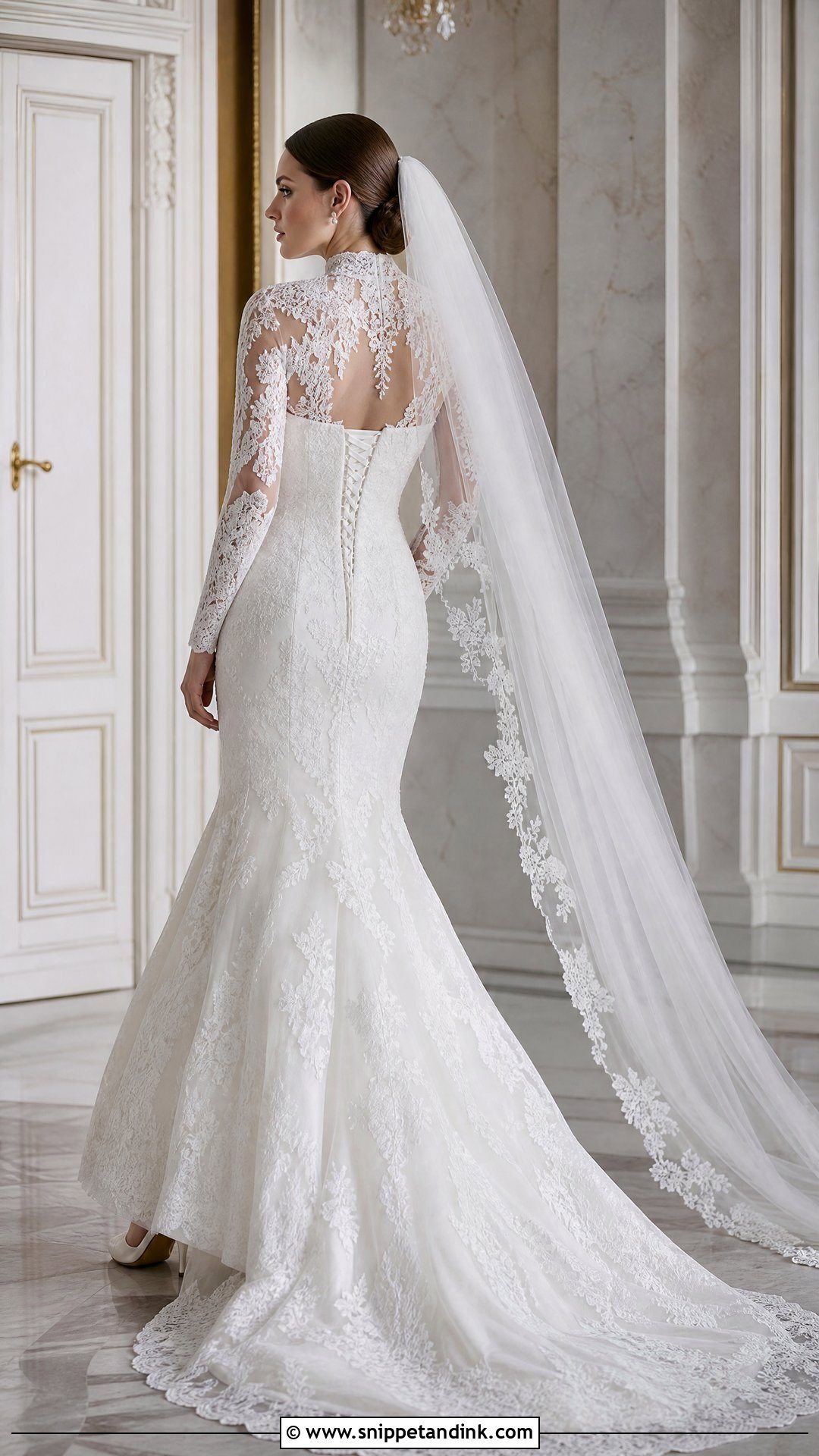
High necks keep the front covered so the laced back lands as a surprise when you turn. Illusion lace over the shoulders, a lined sweetheart base and a fitted waist into an A-line or trumpet skirt. I like the lacing to start below the shoulder blades, leaving room for lace motifs above. Pearl studs, a neat bun, closed heels and a plain chapel veil. Skip the necklace. Stiff lace around the neck and armholes is the usual complaint here; a tailor can soften the edges, and you should be able to turn your head without the collar pulling.
18. Basque Waist Lace Up Back Wedding Dress
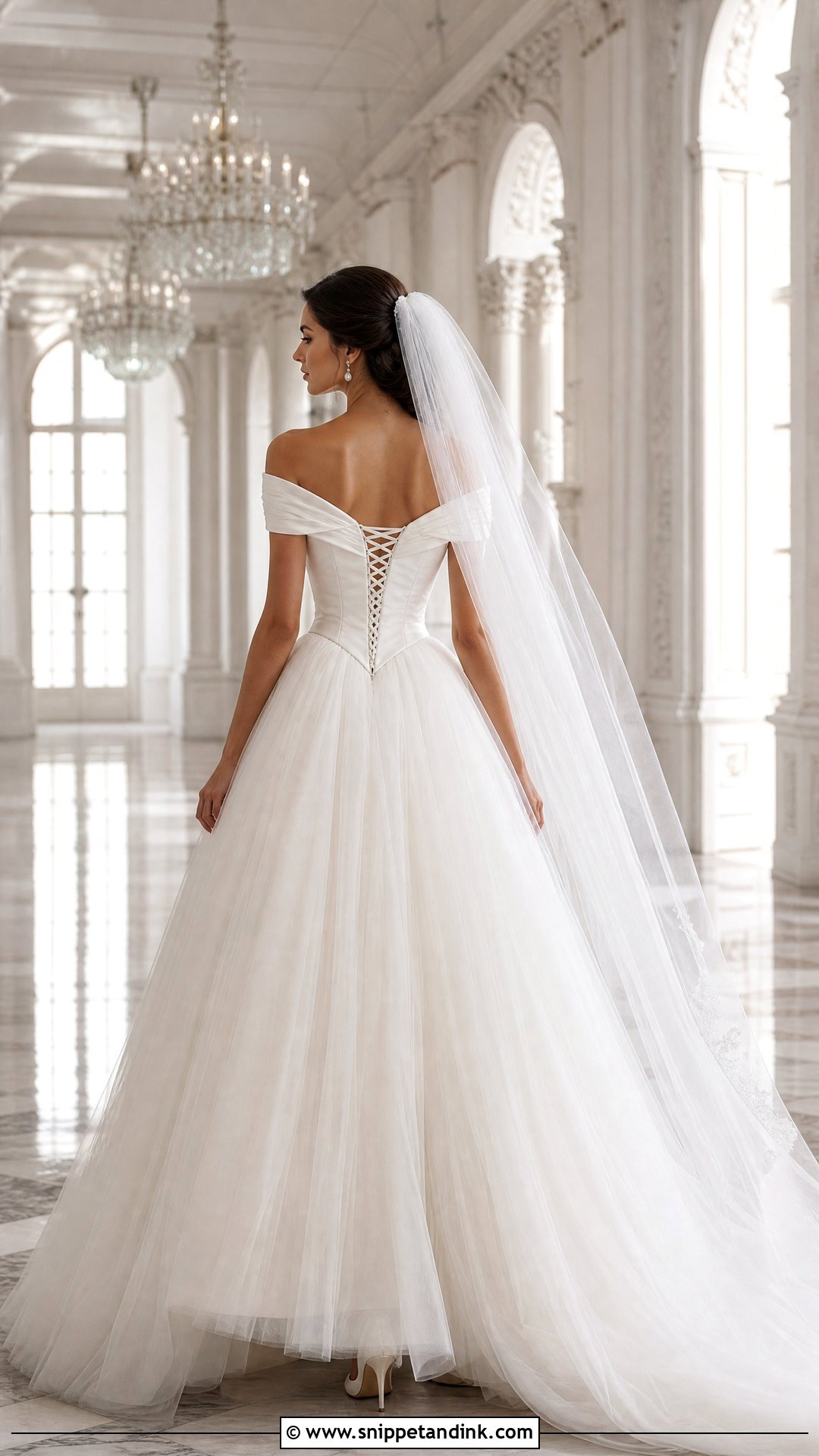
A basque waist dips into a gentle point below the natural waist, which lengthens the bodice and pairs naturally with a laced back and a full skirt. Strapless or off-the-shoulder keeps the top balanced. Cathedral veil, pearl earrings, pointed pumps, a rounded bouquet, and hair in a polished bun. The point is where problems show: if the lacing is uneven, the point twists to one side or digs in when you sit. Check it standing and seated at each fitting.
19. Lace Up Back Wedding Dress With Detachable Overskirt
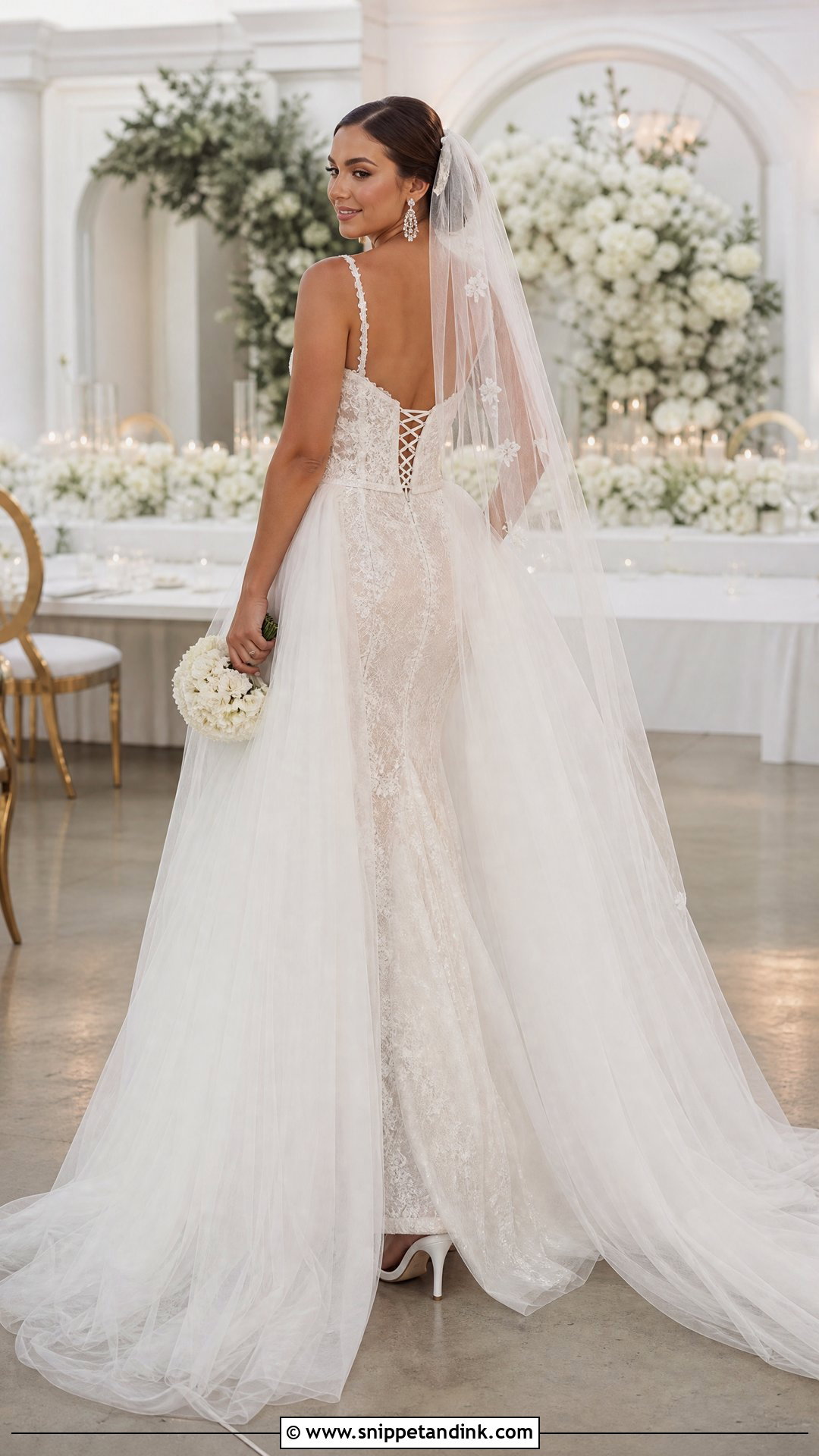
One dress, two silhouettes. Start with a fitted sheath, trumpet or mermaid with a supportive corset back, then add a full tulle or satin overskirt for the ceremony. Long veil, crystal earrings, pointed heels. At the reception, the overskirt and veil come off to reveal the slim gown and the lacing. The overskirt waistband has to sit beside or under the final bow, not on top of it, or it pushes the knot into your back. Practise the swap with whoever will do it; done well it takes a couple of minutes and doesn’t loosen the lacing.
20. Modest Lace Up Back Wedding Dress
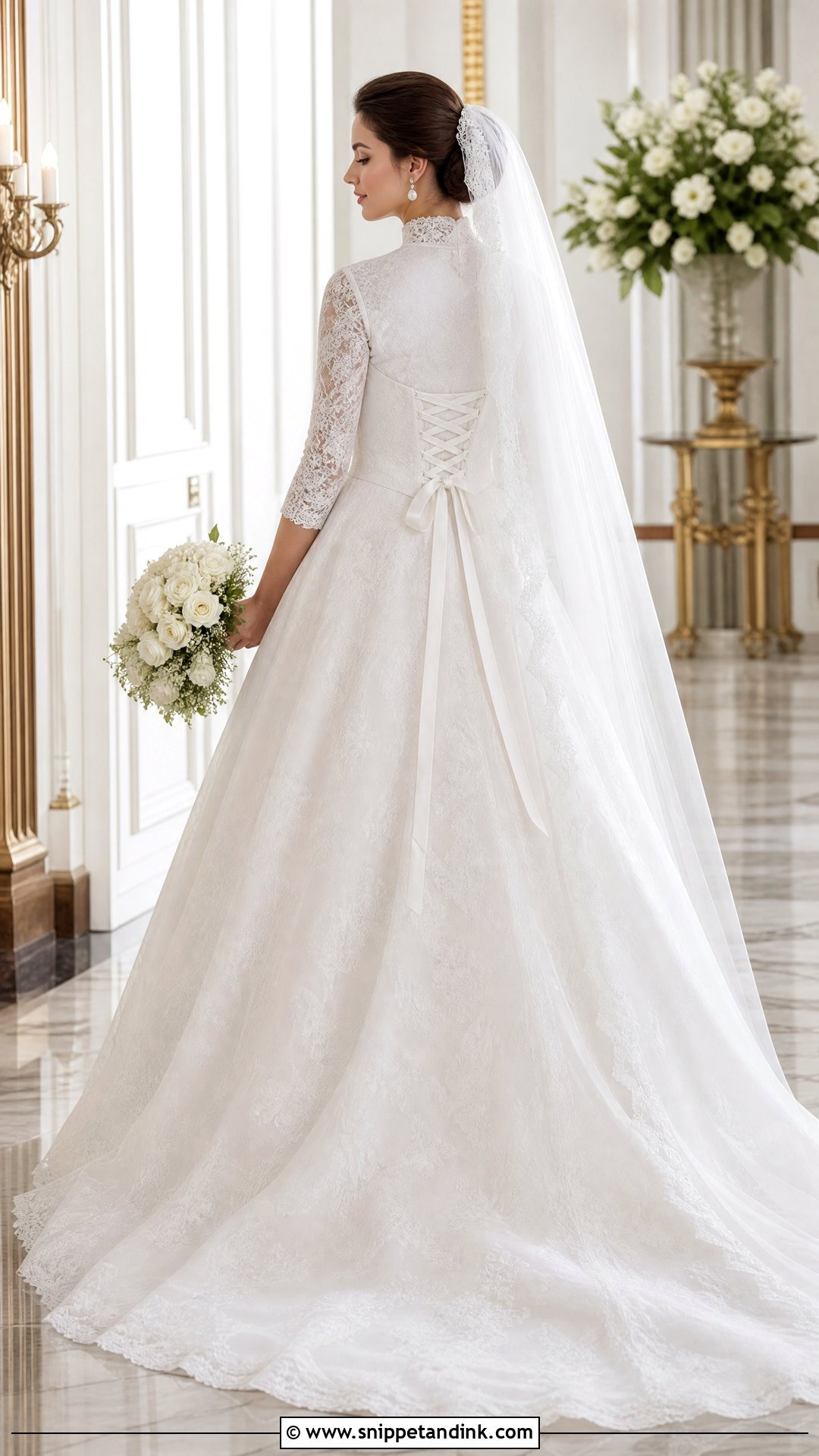
Coverage and a corset back work well together. A higher neckline, lined long or three-quarter sleeves, and an A-line or full skirt, with the lacing starting mid-back over an opaque modesty panel so skin stays covered. Floral lace, satin trim or light beading adds interest. Chapel veil, pearl earrings, closed-toe pumps, a gathered bouquet, and a low bun or curled updo. At the final fitting, check the modesty panel after full lacing; it can slide sideways and leave a gap that only shows from behind.
When the Ribbon Misbehaves Mid-Celebration
Most laced backs behave all day. When something does go wrong, it’s usually small and fixable in a few minutes if you’ve packed for it.
Loosening after the meal
Satin ribbon is slippery and can relax over a few hours, especially after you’ve been sitting. Grosgrain grips better if your gown allows it. A quick re-tighten in the bathroom before the first dance takes a minute; make sure your helper knows that’s part of the job.
A loop pulls loose or the ribbon frays
Fabric loops are hand-stitched and can give way under strain. If one goes, skip it and lace through the next one; nobody will notice from a distance. Keep a spare length of matching ribbon, a threaded needle and a few safety pins in the emergency kit. A frayed ribbon end can be trimmed at an angle and pushed through more easily.
After the wedding
Unlace the gown fully before it goes to the cleaner, and keep the ribbon with it in a labelled bag. Ribbon left threaded through loops while the gown is stored can leave marks on the fabric beneath it, particularly on satin.
A Back Worth Turning Around For
A laced back should look neat from across the room and feel secure up close. Start with the silhouette that fits your venue and how much you want to move, then let the neckline, fabric and sleeves balance the corset. Take your shoes and undergarments to every fitting, and make sure someone besides the seamstress has laced you at least once. Even ribbon, a flat panel and room to breathe are the signs it’s right. From minimal crepe to floral princess gowns, every dress here can be made your own with the right accessories and alterations.
You'll Like These Ideas:





Leave a Reply