
Navy and white is one of the most requested color pairings I make, and one of the most misunderstood. The contrast is what people love: deep blue gives the cake weight, and white keeps it bridal enough for a romantic reception. It suits ballrooms, coastal venues, gardens, city lofts and candlelit evening parties, and it’s easy to tie to flowers, linens, invitations and bridesmaid dresses. What couples don’t always expect is that deep blue behaves very differently from white in icing, in heat and in photographs. Below are twenty designs, from clean tiers to florals, lace, pearls, texture and hand-painting, with notes on how each one is actually made and what to ask your baker.
Why Deep Navy Icing Is Harder Than It Looks
White icing is the easy part. Getting a true navy means adding a lot of gel color, and that has consequences you should know before you fall for an all-blue cake.
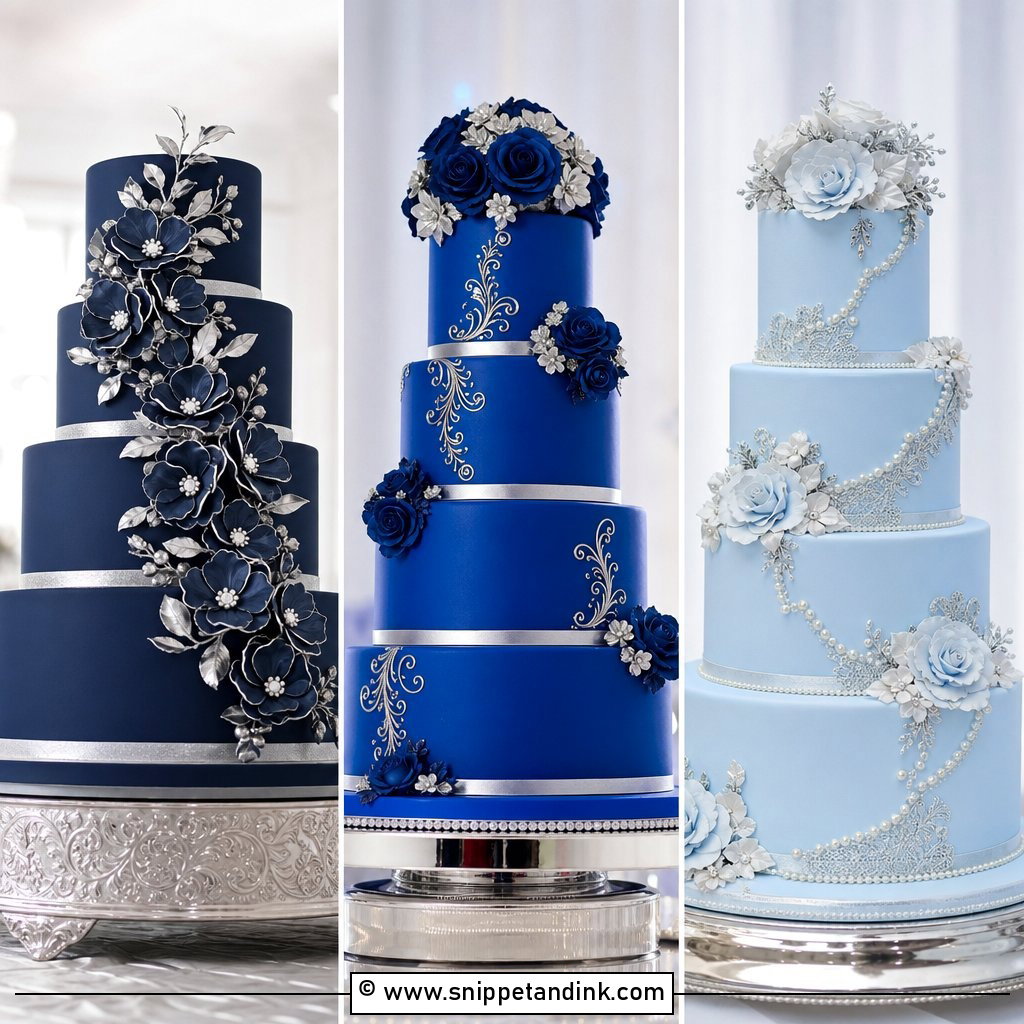
- Taste: heavily colored buttercream can turn bitter or slightly metallic. Starting from a darker base, such as chocolate buttercream, needs less color to reach navy.
- Time: dark colors deepen as they rest, so I mix navy the day before and judge it the next morning, not straight from the bowl.
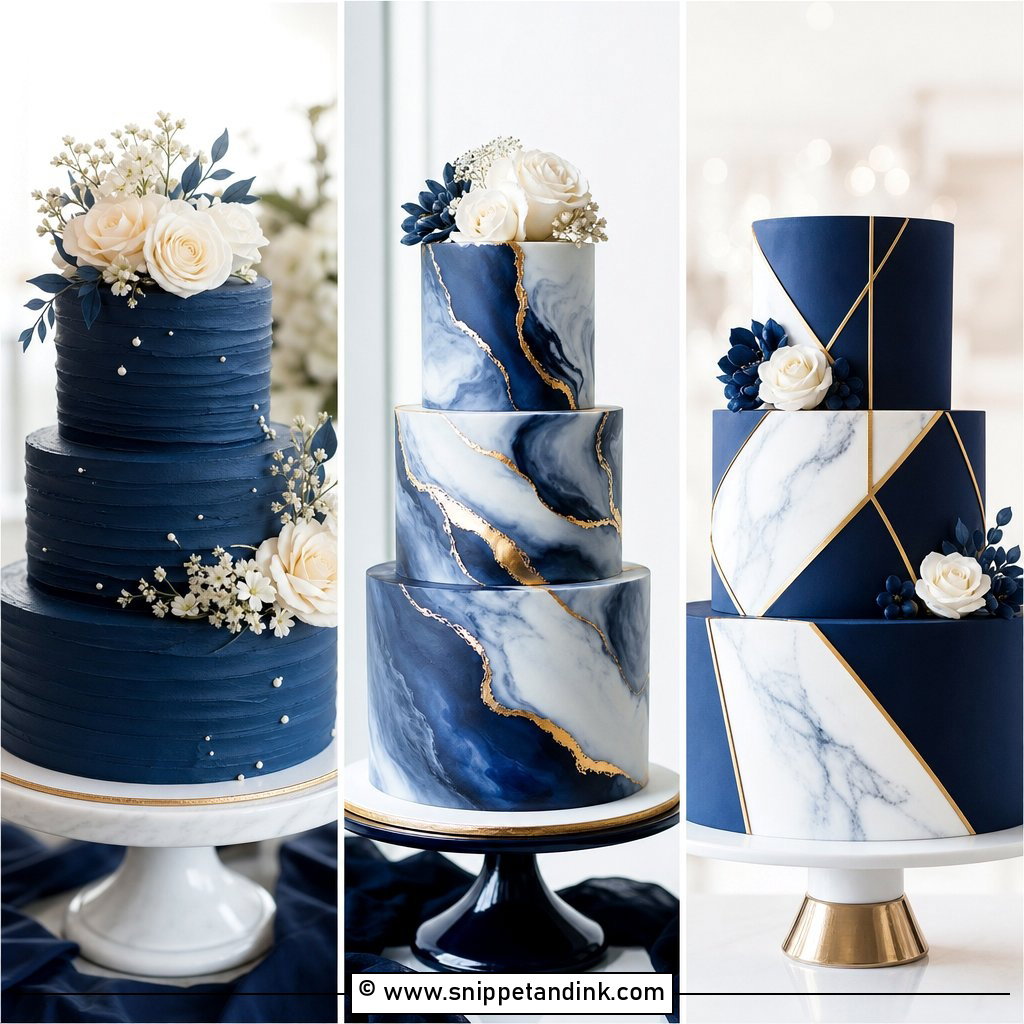
- Mouths: a fully navy buttercream cake can leave guests with blue lips and teeth in the dancing photos. A navy fondant layer over white buttercream avoids most of that, since many guests peel fondant off.
- Finish: dark fondant shows scuffs, dust and fingerprints that would vanish on white, so a navy tier takes more careful handling.
None of this rules navy out. It’s why many of the designs below use navy as one tier, a panel or a detail, rather than the whole surface. If you want a fully dark cake, ask to taste a sample of the colored icing at your tasting.
1. Navy Blue And White Wedding Cake
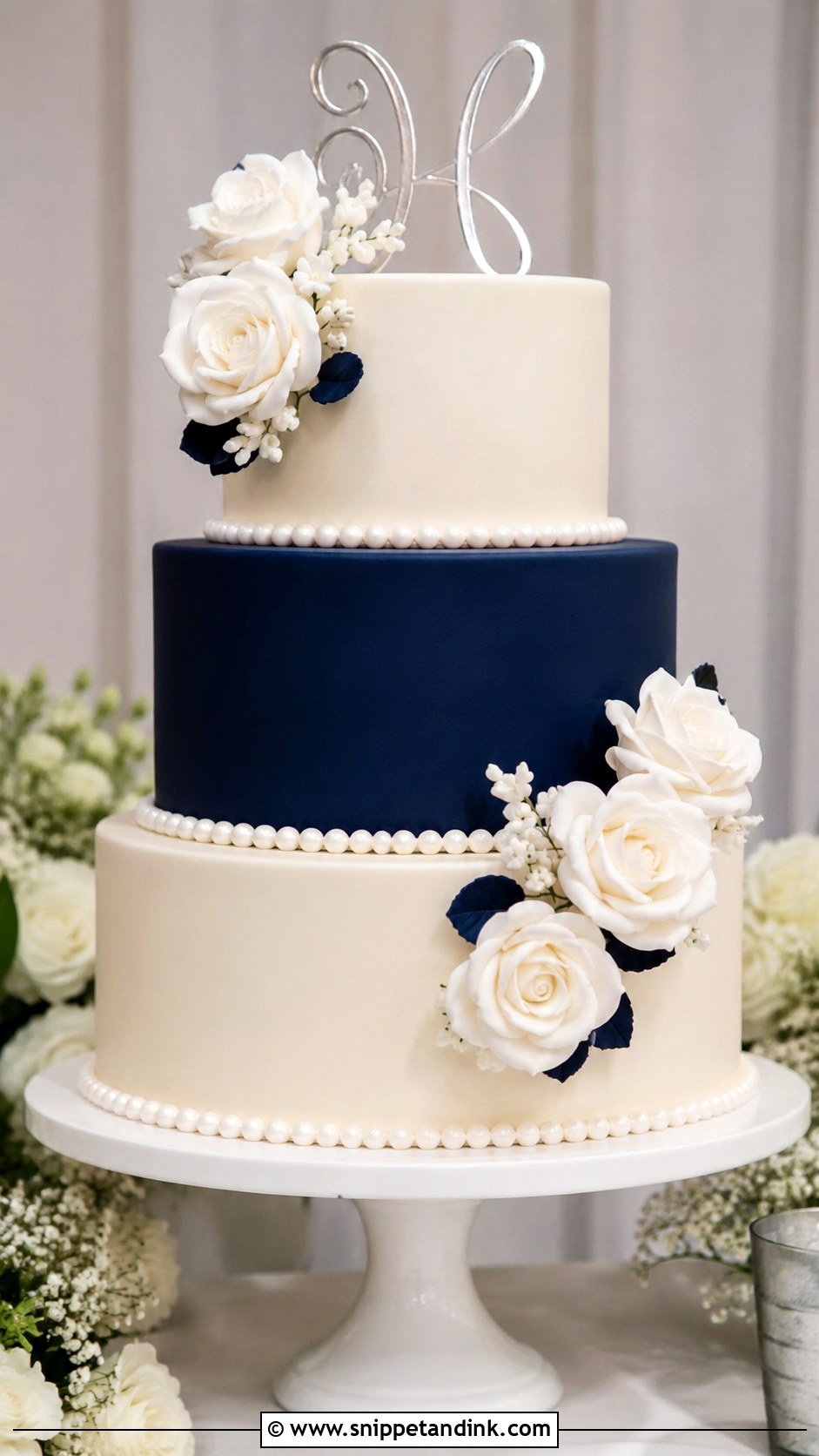
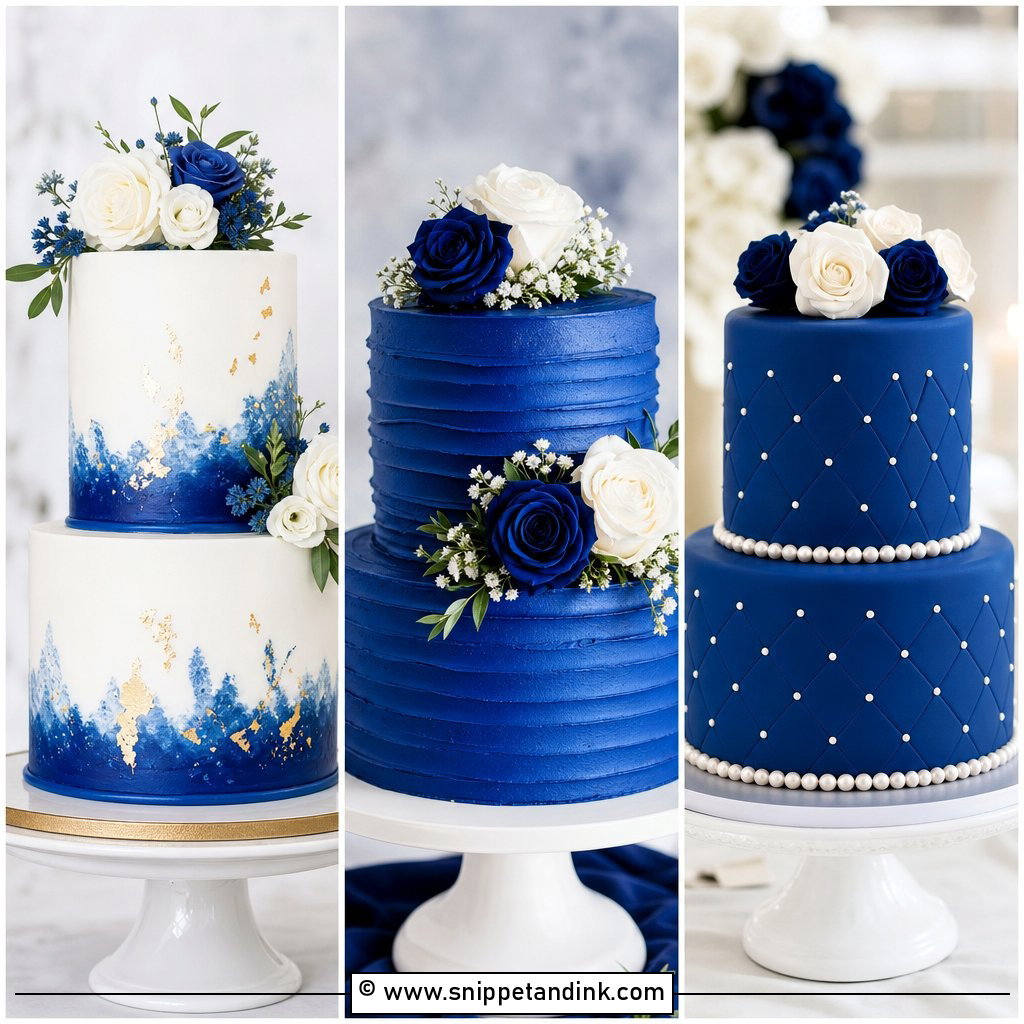
This is the version I’d point most couples to first. Balance is the whole design: one navy tier with two white tiers, or an all-white cake with navy bands where ribbon would sit. I usually make the navy in fondant or a thin fondant panel over white buttercream, because a fully navy buttercream needs so much color that it can taste bitter. White sugar flowers, pearls or soft piping make it formal without weighing it down. It sits easily beside navy suits, white bouquets and silver tableware.
2. Dark Blue Ombre Wedding Cake
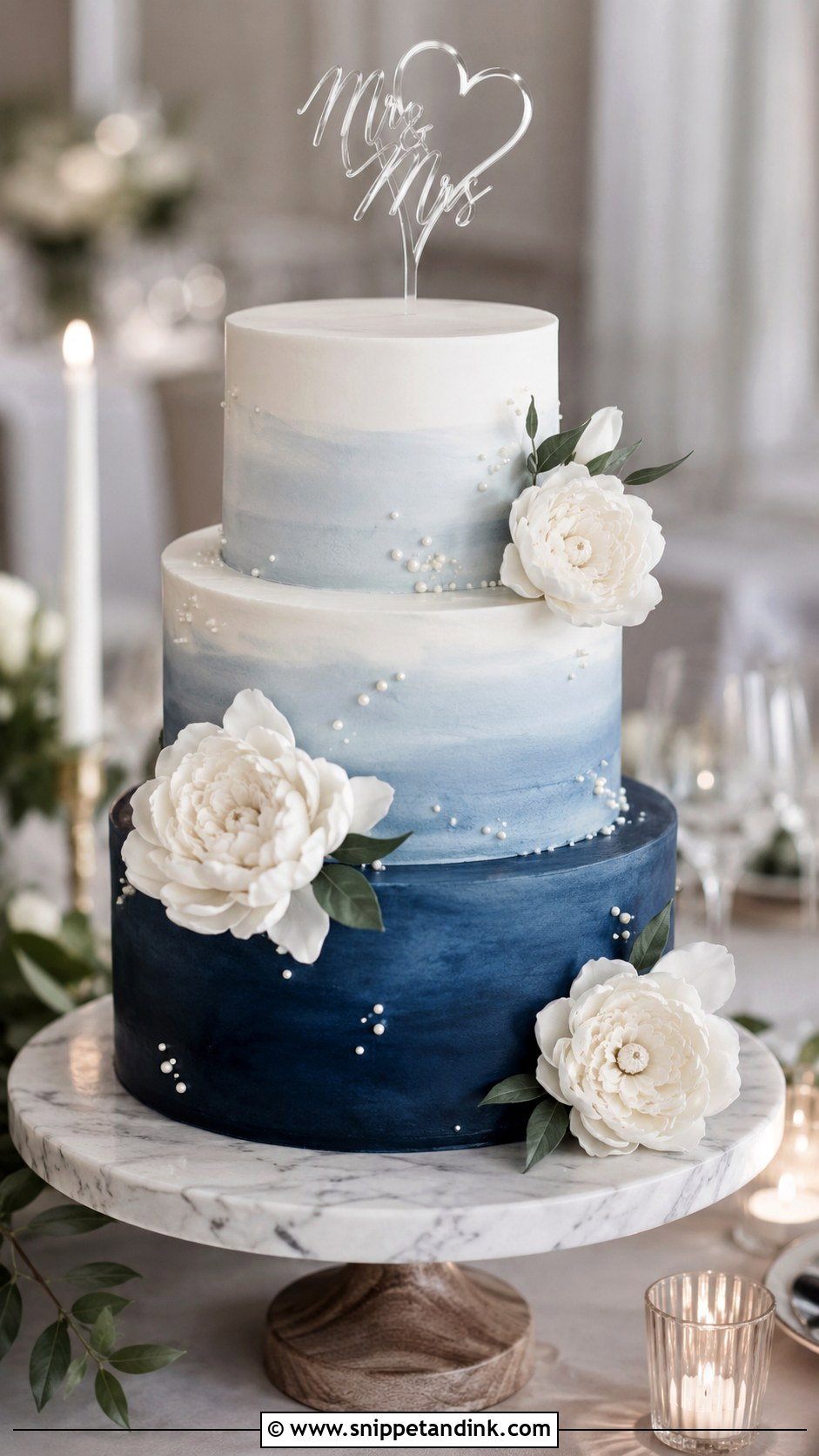
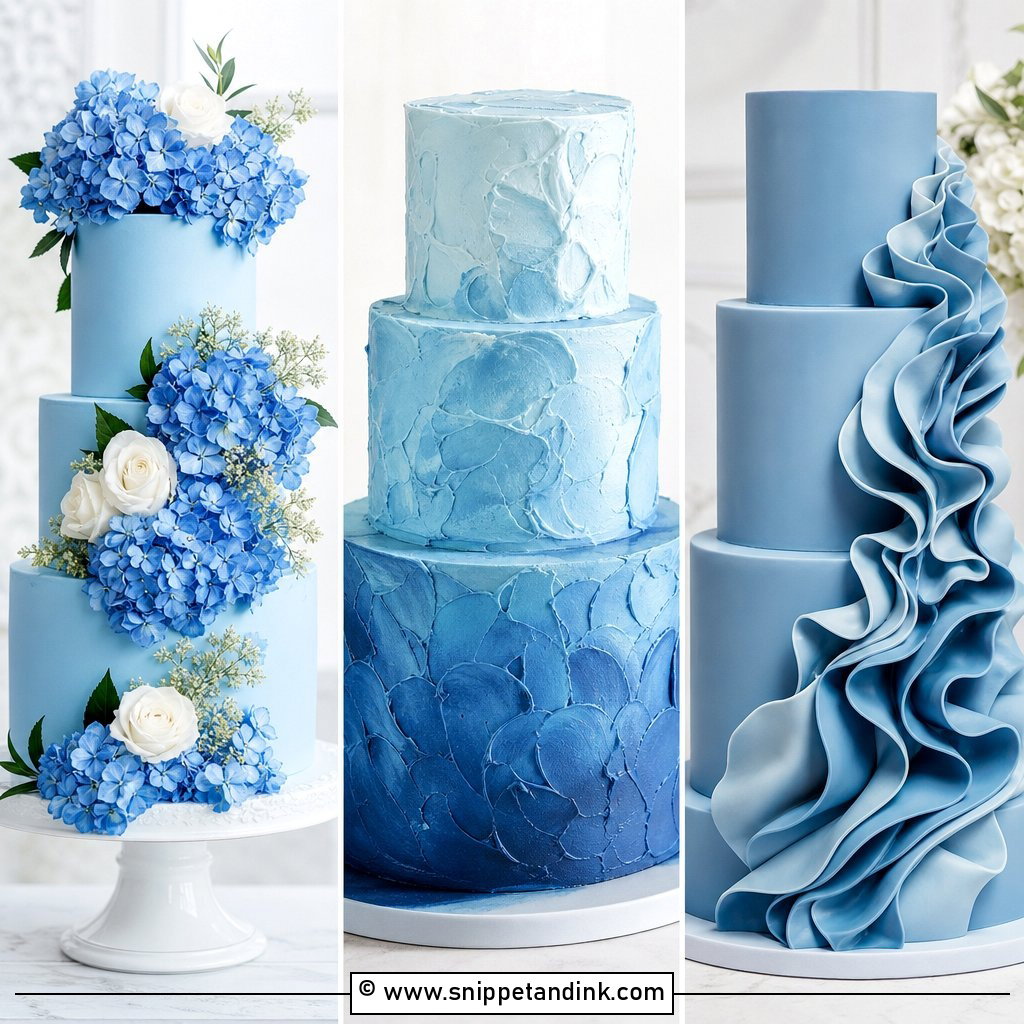
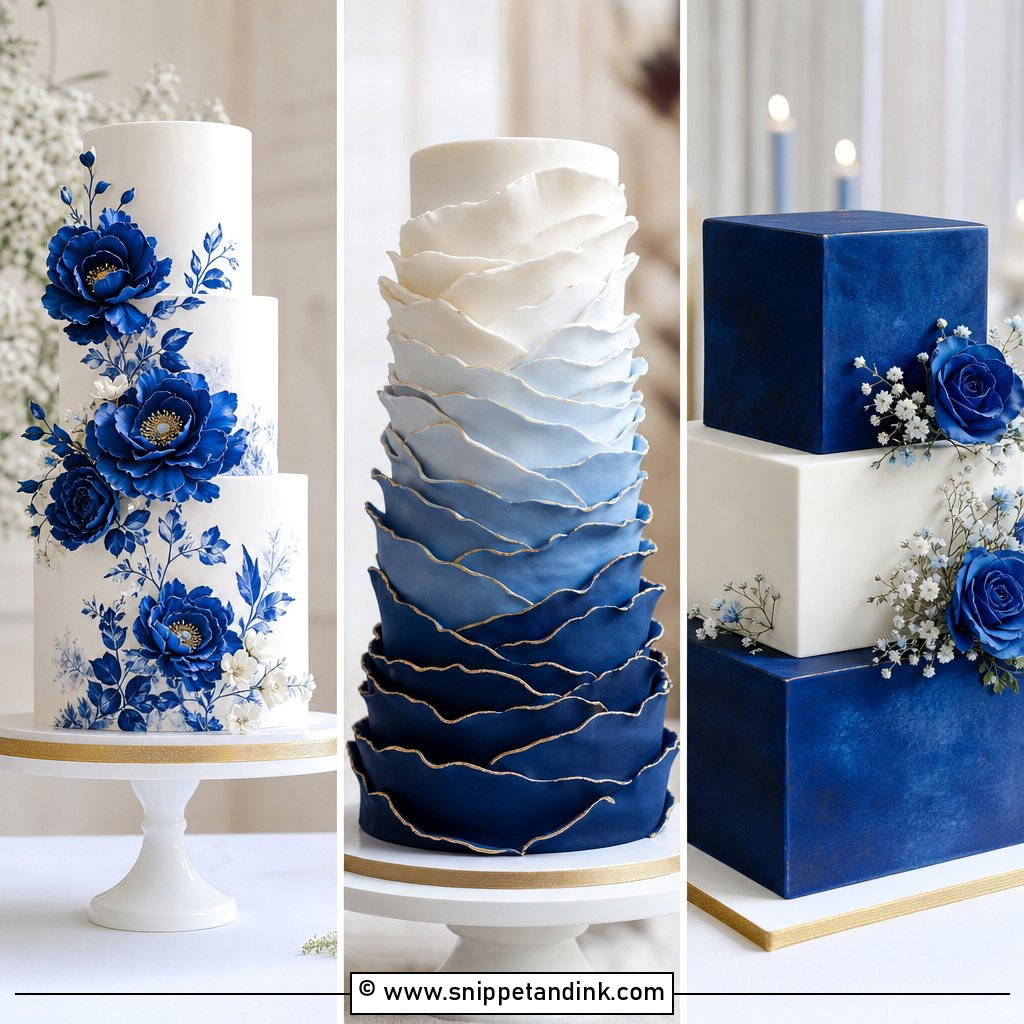
An ombre that runs from deep navy at the base to white at the top keeps the drama low on the cake, where it anchors the shape. I mix one batch of the darkest shade and lighten it step by step with white buttercream, rather than tinting each tier separately, so the tones relate to each other. The top tiers fade through pale blue to white. Buttercream suits this better than fondant because the blending looks soft and hand-finished. Keep the decoration to white flowers, edible pearls or a simple topper, or the fade gets lost.
3. White Wedding Cake With Navy Blue Flowers
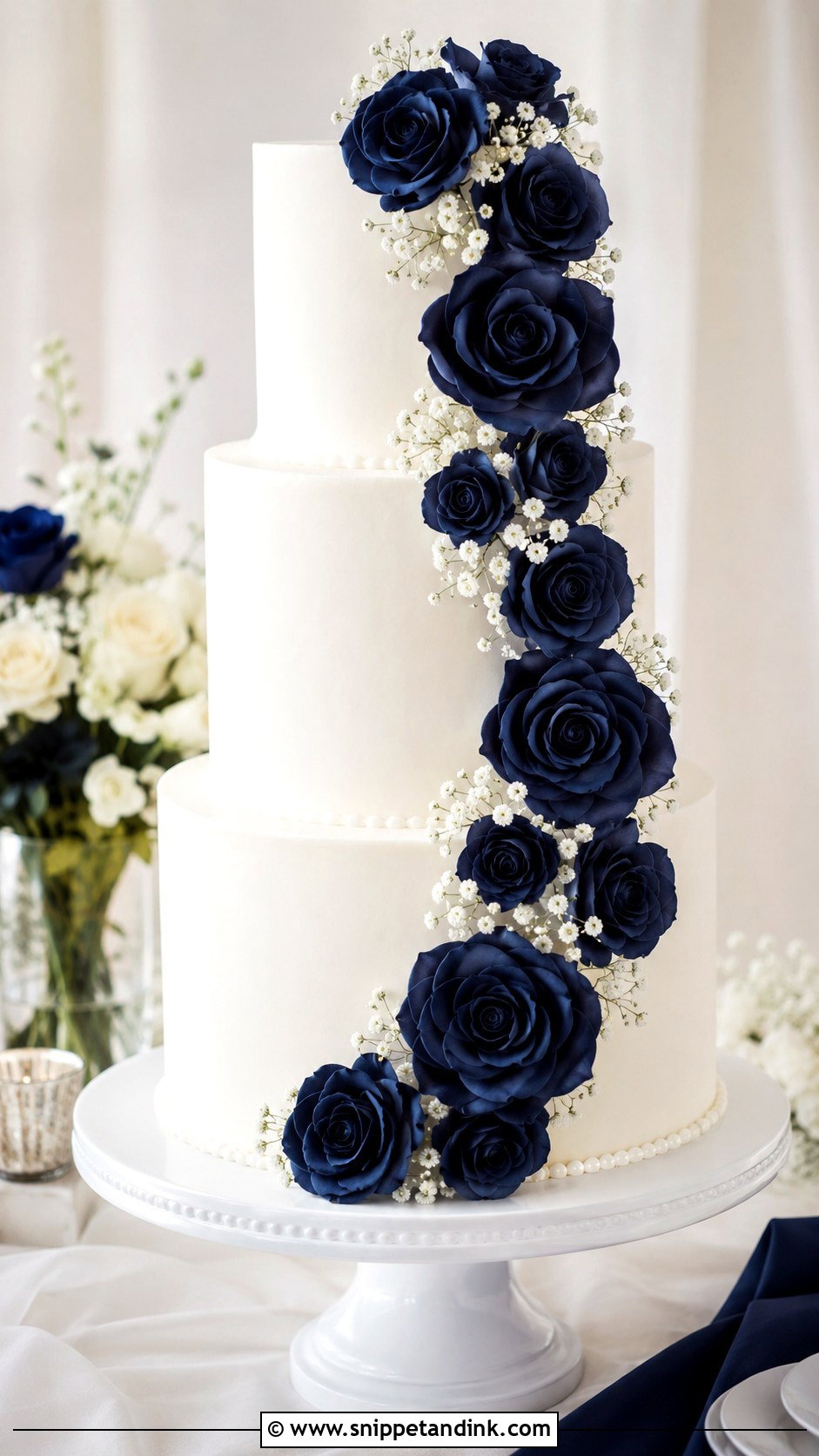
Here the cake stays bright and the flowers carry all the color. Sugar flowers are my preference for navy blooms, since very few fresh flowers come in a true deep blue and dyed stems can bleed onto icing. Roses, peonies, ranunculus and small fillers can all be made in sugar paste and dusted to a deep blue. If you’d rather have fresh flowers, your florist and baker need to agree on food-safe varieties and wrap or seal the stems before anything touches the cake. A cascade down one side gives the design movement.
4. Navy Blue Wedding Cake With White Roses
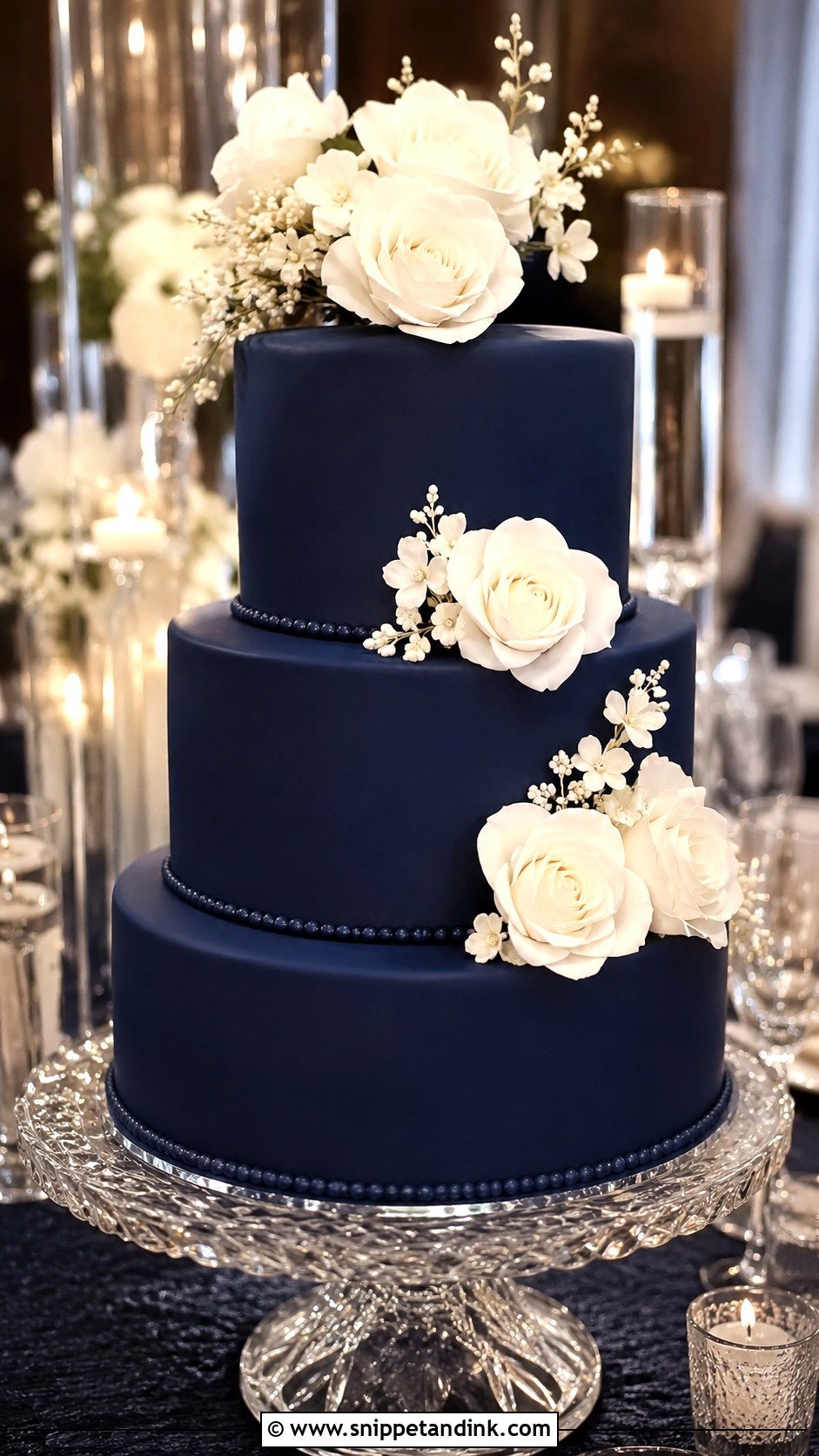
White roses on a navy cake look like a bouquet laid on velvet, which is why I’d save this one for an evening reception. Smooth navy fondant gives the cleanest background; navy buttercream looks softer but stains more readily where the roses touch it. The roses can sit on the top tier, between tiers or as a side cascade. Dark fondant shows every speck of cornstarch and every fingerprint, so this design takes careful handling during assembly. Keep everything else plain and let a few pearls or tiny white blossoms do the texture.
5. Navy Blue And White Marble Wedding Cake
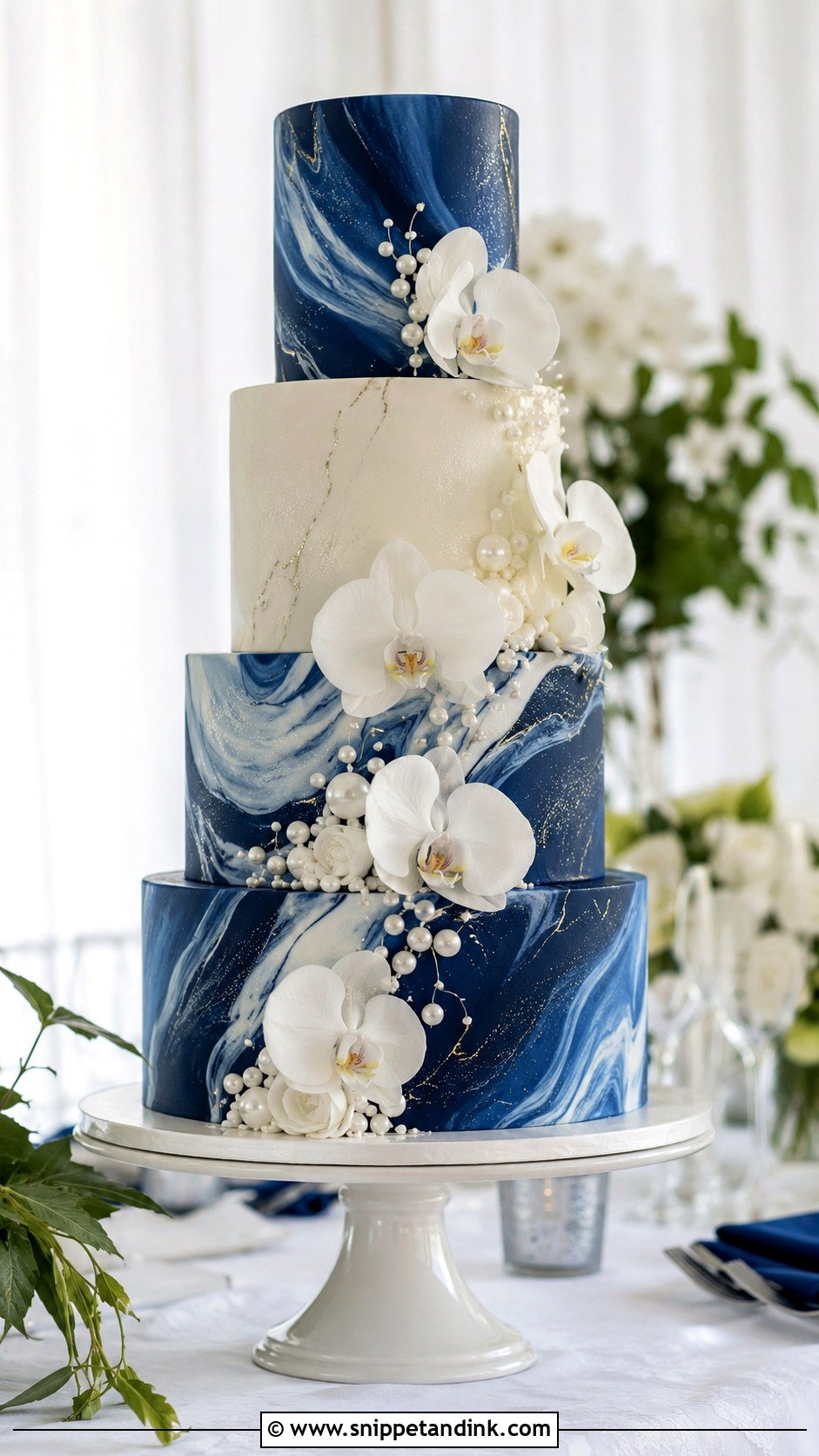
A navy blue and white marble wedding cake can look soft and cloudy or bold and stone-like, depending on how much navy goes into the white. In fondant, I twist colored and white paste together and roll it only a few times, because over-working turns the veins grey. In buttercream it reads more like a painted effect. Tall tiers give the veining room to flow. White orchids, small sugar flowers or a few pearls are plenty; a marble surface already carries a lot of pattern.
6. Dark Blue And White Floral Wedding Cake
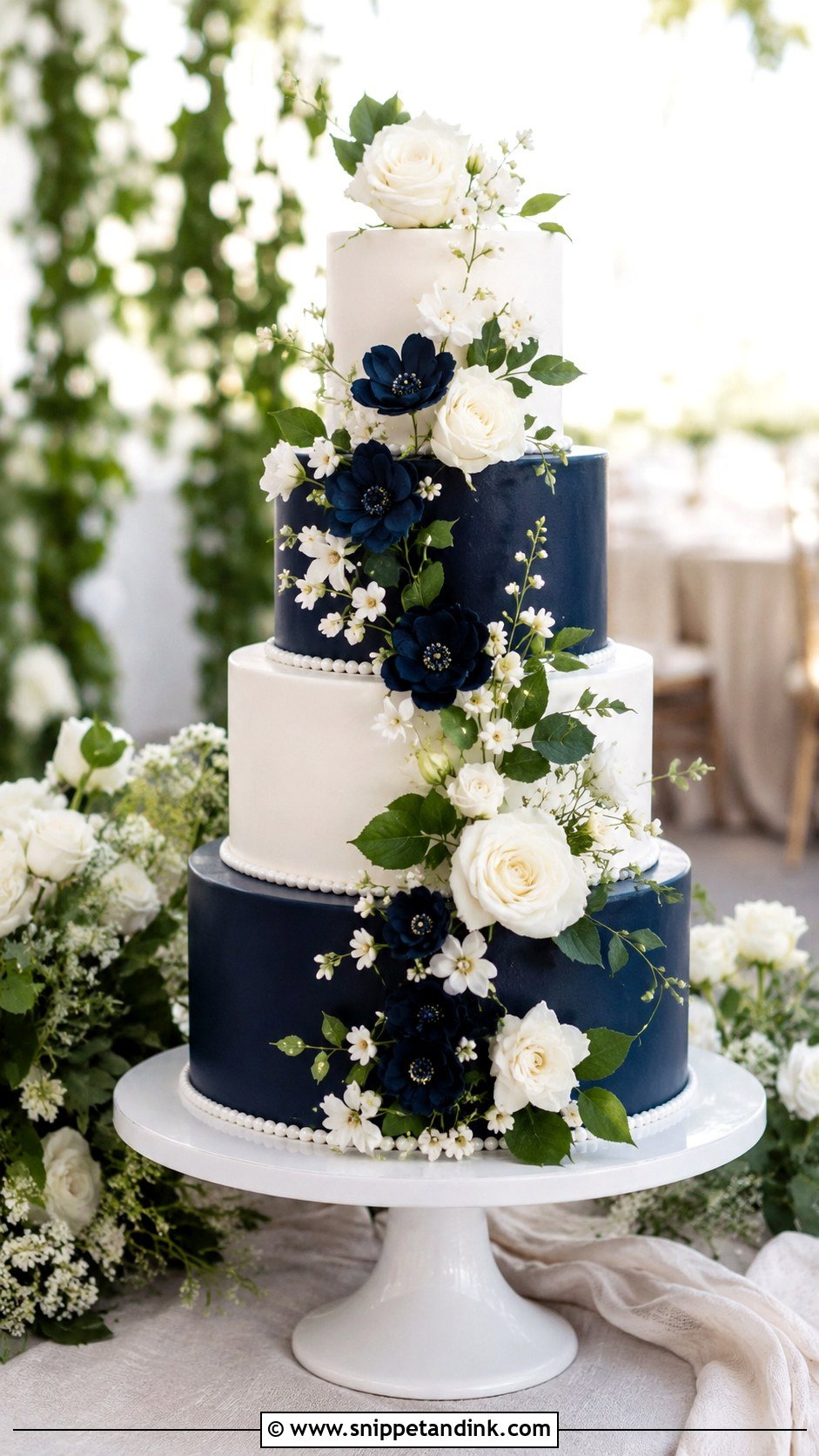
A floral navy and white cake can mix dark tiers, white tiers or both, with flowers flowing between them so they connect the colors. White roses, anemones, hydrangeas and small blue blossoms give a garden feel. For something more formal, I group sugar flowers into tight clusters rather than a loose cascade. White anemones with their dark centers are one of my favorite tricks here, because each flower already contains both colors. It looks right with white linens, navy bridesmaid dresses and candlelit tables.
7. Navy Blue And White Lace Wedding Cake
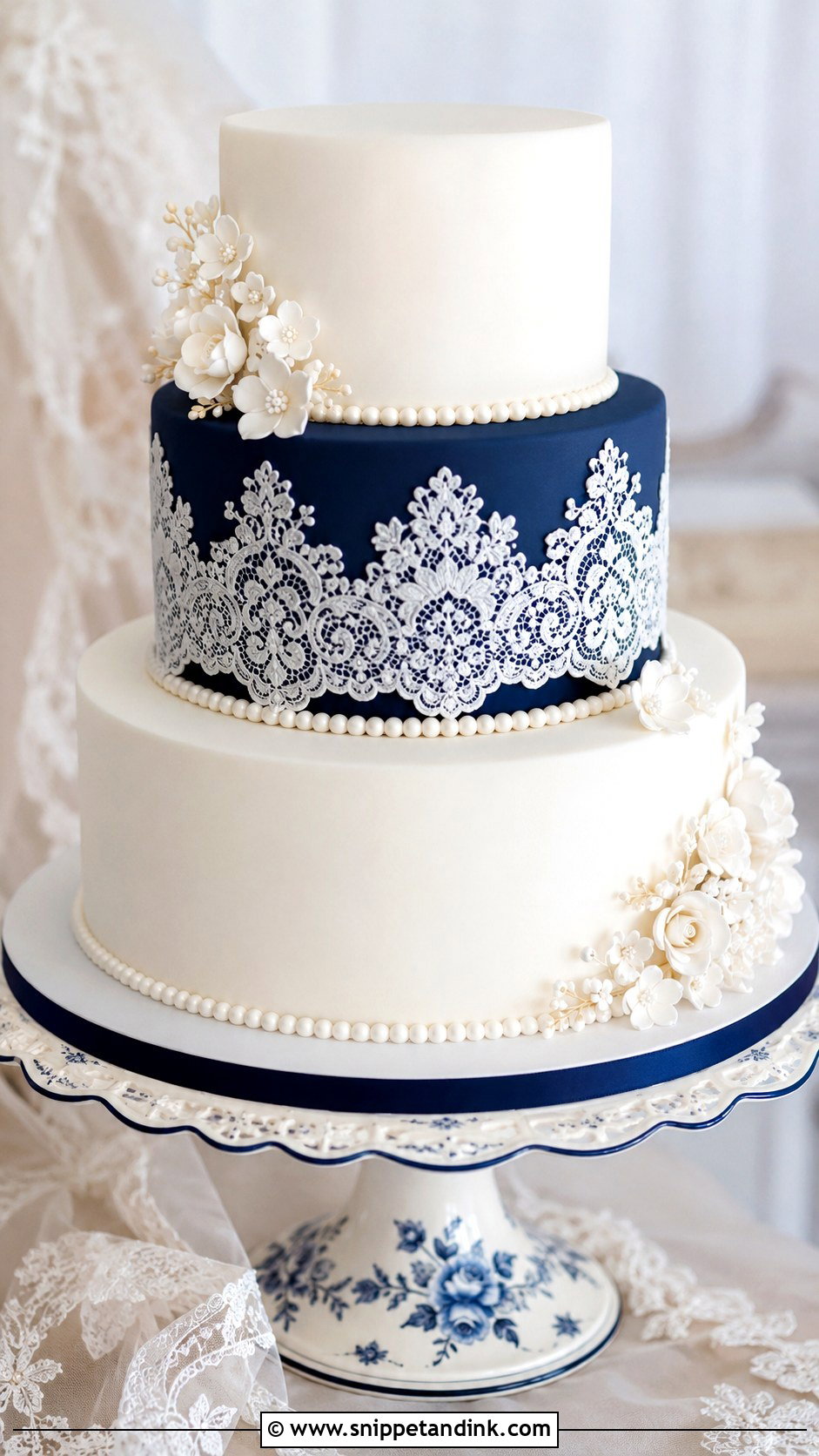
Lace on navy is easy to read, which is the appeal: white lace piping or a fondant appliqué shows every detail against the dark tier. Reverse it with navy lace on white for a softer result. I can match lace to your gown if you bring a photo or a fabric offcut, and the closer the reference, the better the copy. Silicone lace molds give a crisp pattern quickly, while hand-piped lace looks more organic but takes many hours. It suits traditional weddings, estate venues and formal indoor receptions, finished with small pearls or a monogram topper.
8. White Wedding Cake With Navy Blue Ribbon
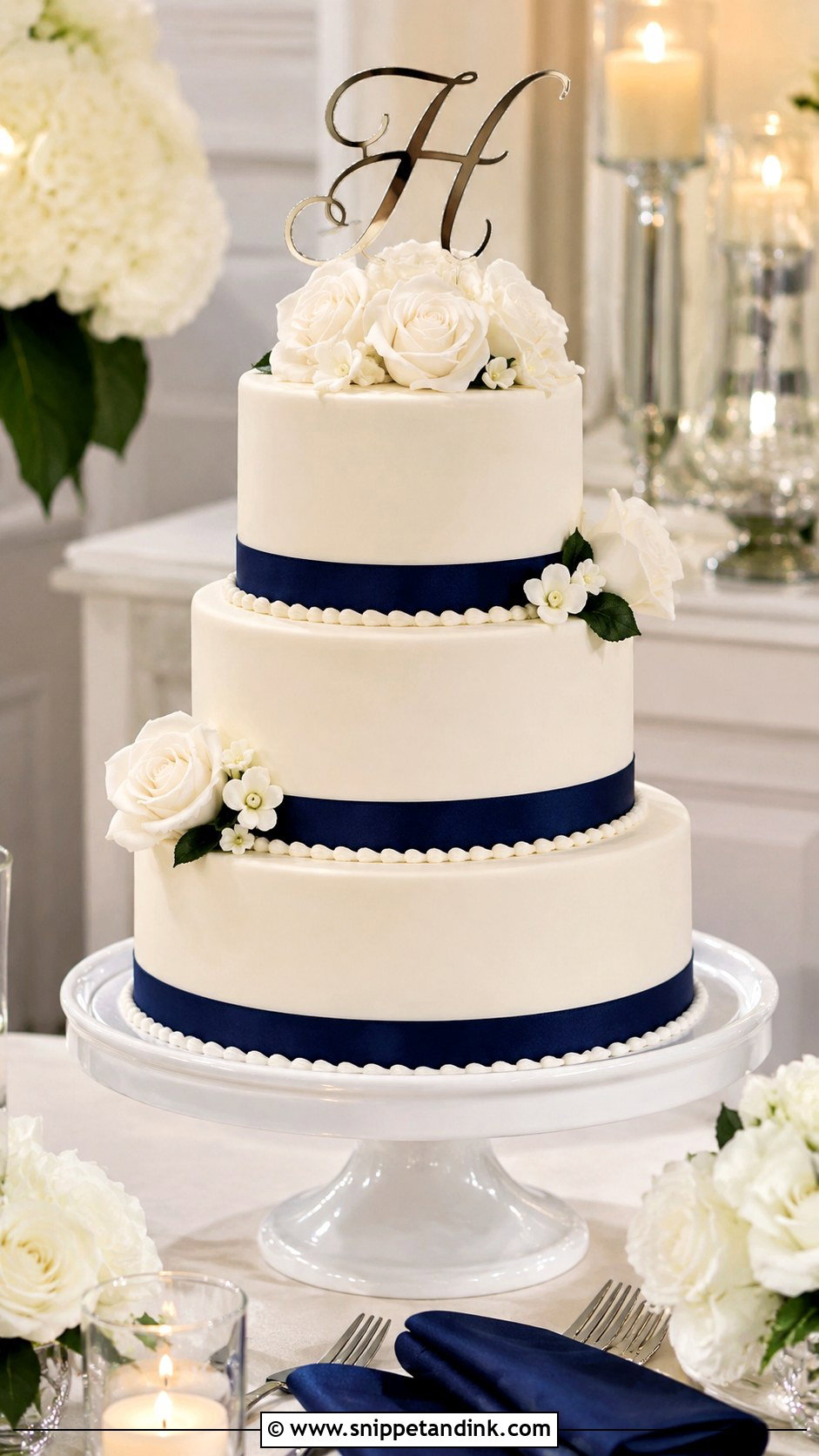
Ribbon is the simplest way to bring navy into a white cake. Real ribbon needs a strip of greaseproof backing or a food-safe barrier, or the butter in the icing soaks through and leaves dark patches on the fabric. Fondant ribbon avoids that and is fully edible. Plain bands work best when your reception already has navy in the linens, suits or stationery, so the cake doesn’t need to shout. Add white flowers, pearl piping or a small topper if it feels bare.
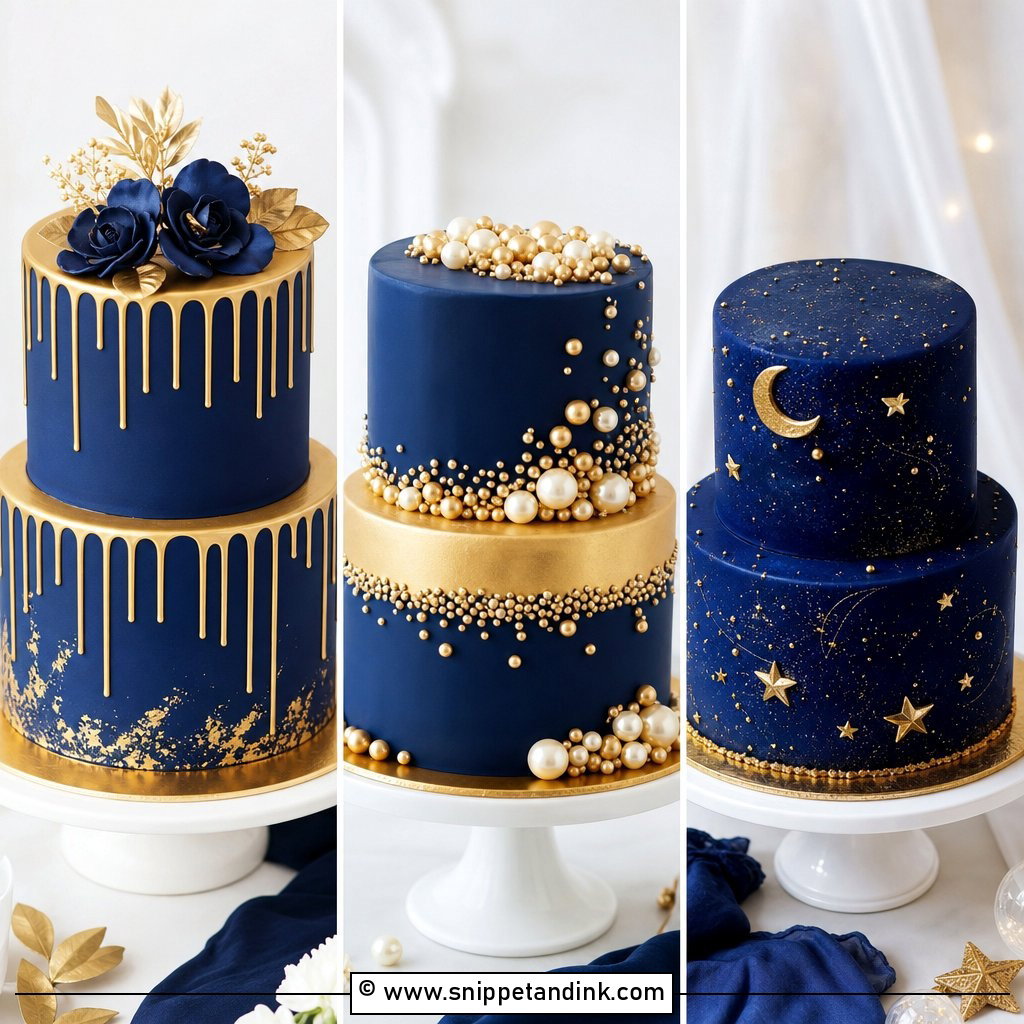
9. Navy Blue Drip Wedding Cake
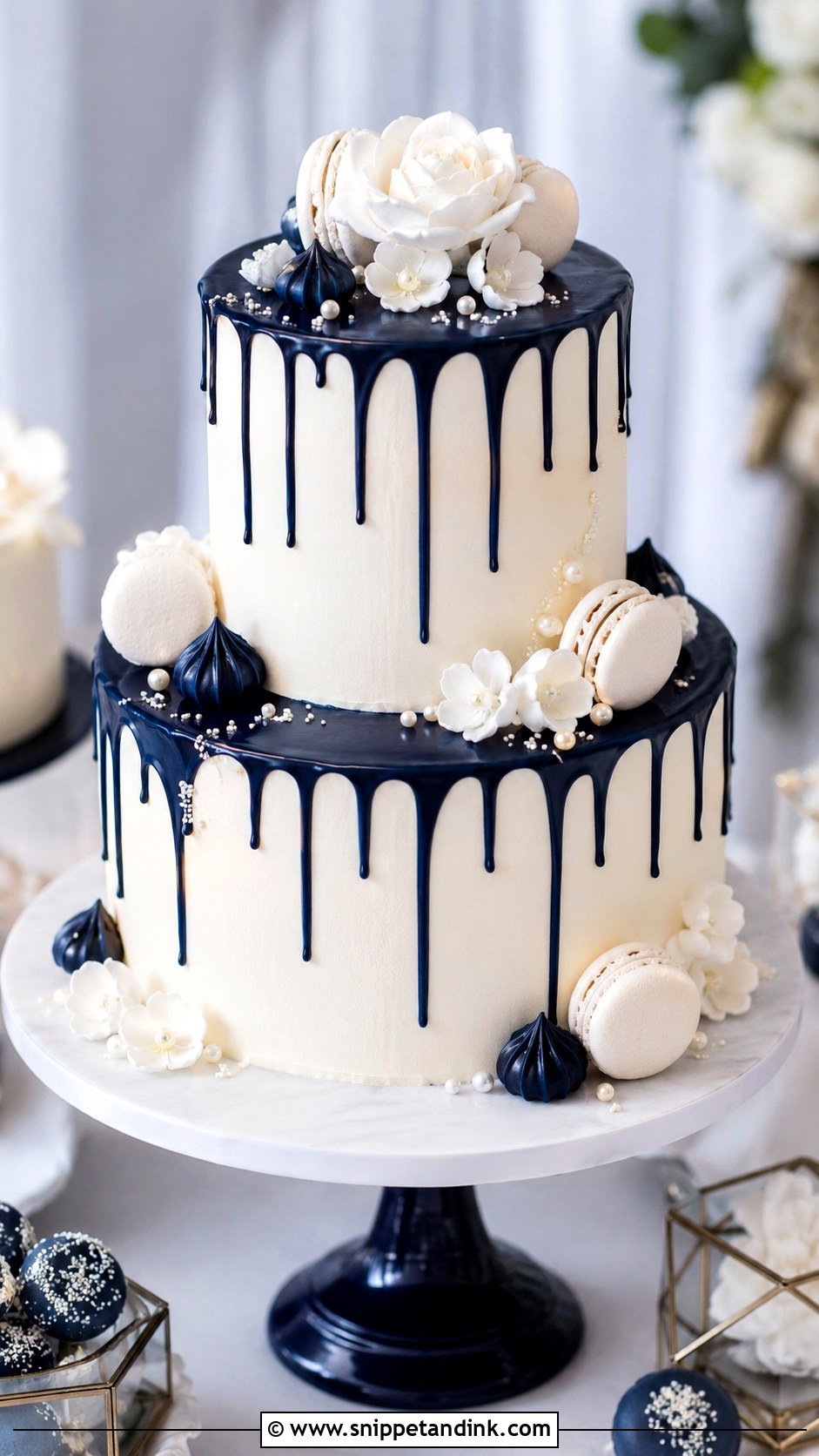
A navy blue drip wedding cake can be white buttercream with a glossy dark blue drip, or navy with a white chocolate drip for brighter contrast. Temperature controls the drip. Ganache that’s too warm runs all the way to the board; too cool and it stops in short, fat beads. I test a single drip on a chilled cake before going around the tier. White macarons, sugar flowers, pearls or meringue kisses give height on top. It suits modern weddings and smaller receptions, and a minimal topper keeps attention on the drip.
10. Navy Blue And White Pearl Wedding Cake
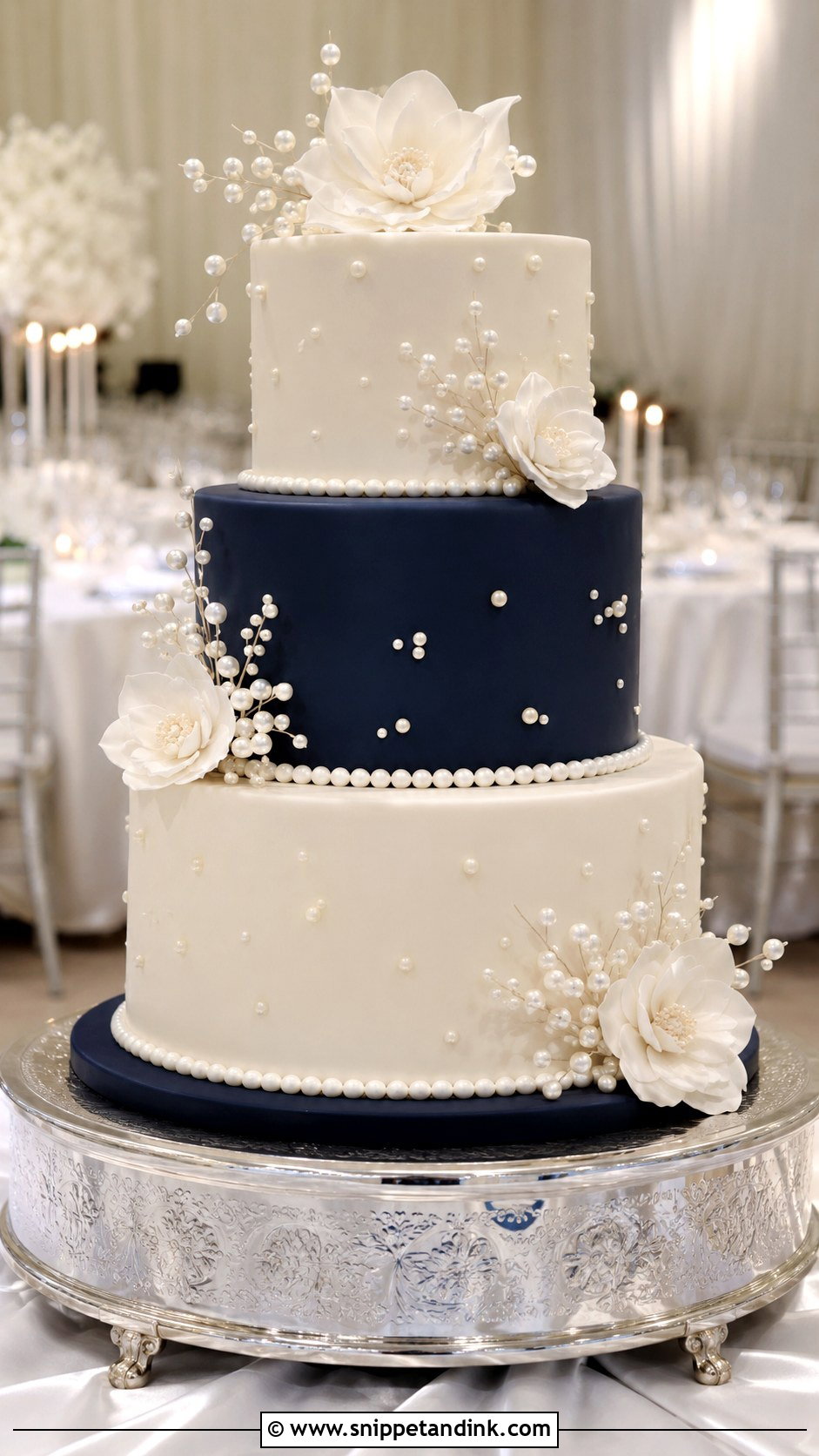
Pearls add shine to navy without making it loud. Edible pearl beads can run around the base of each tier, scatter over a navy tier, or form borders between blue and white sections. On fondant they sit neatly with a dab of edible glue; on buttercream I press them in while the crusting layer is still slightly soft so they don’t slide. A few white sugar flowers finish it. Ballroom weddings and formal receptions suit it most.
11. Dark Blue Wedding Cake With White Buttercream
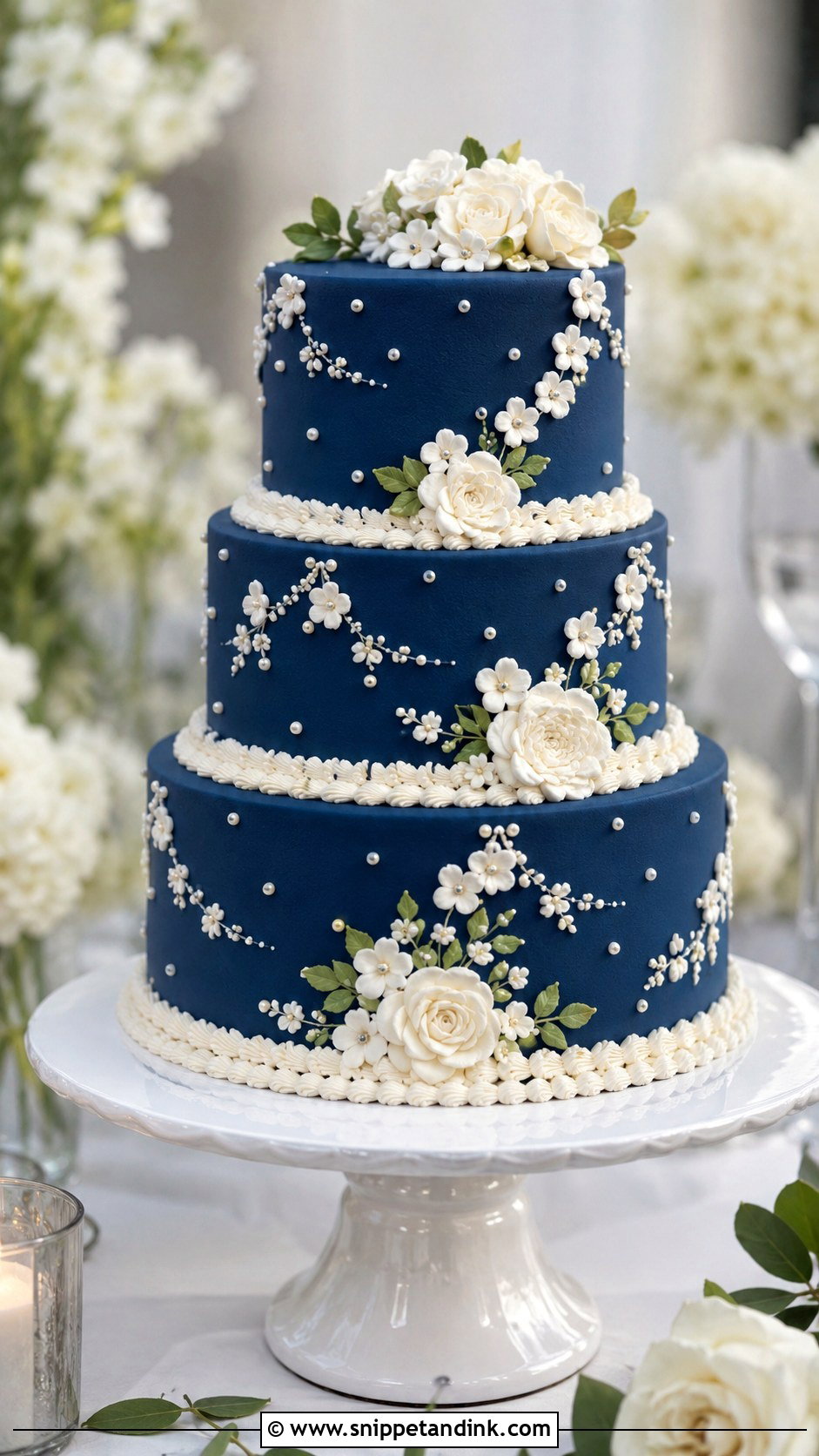
Navy with white buttercream piping gives rich color and soft texture together. The base is navy, with white borders, piped flowers or a textured white top tier. White piping on a dark base will pick up crumbs and specks of blue, so I pipe from a fresh bag and keep a clean spatula for every pass. Ask for a smooth finish if you want something modern, or palette-knife strokes if you prefer it softer. White flowers, pearl sprinkles and small edible leaves brighten the deep blue so the cake doesn’t read as dark.
12. White Wedding Cake With Navy Blue Piping
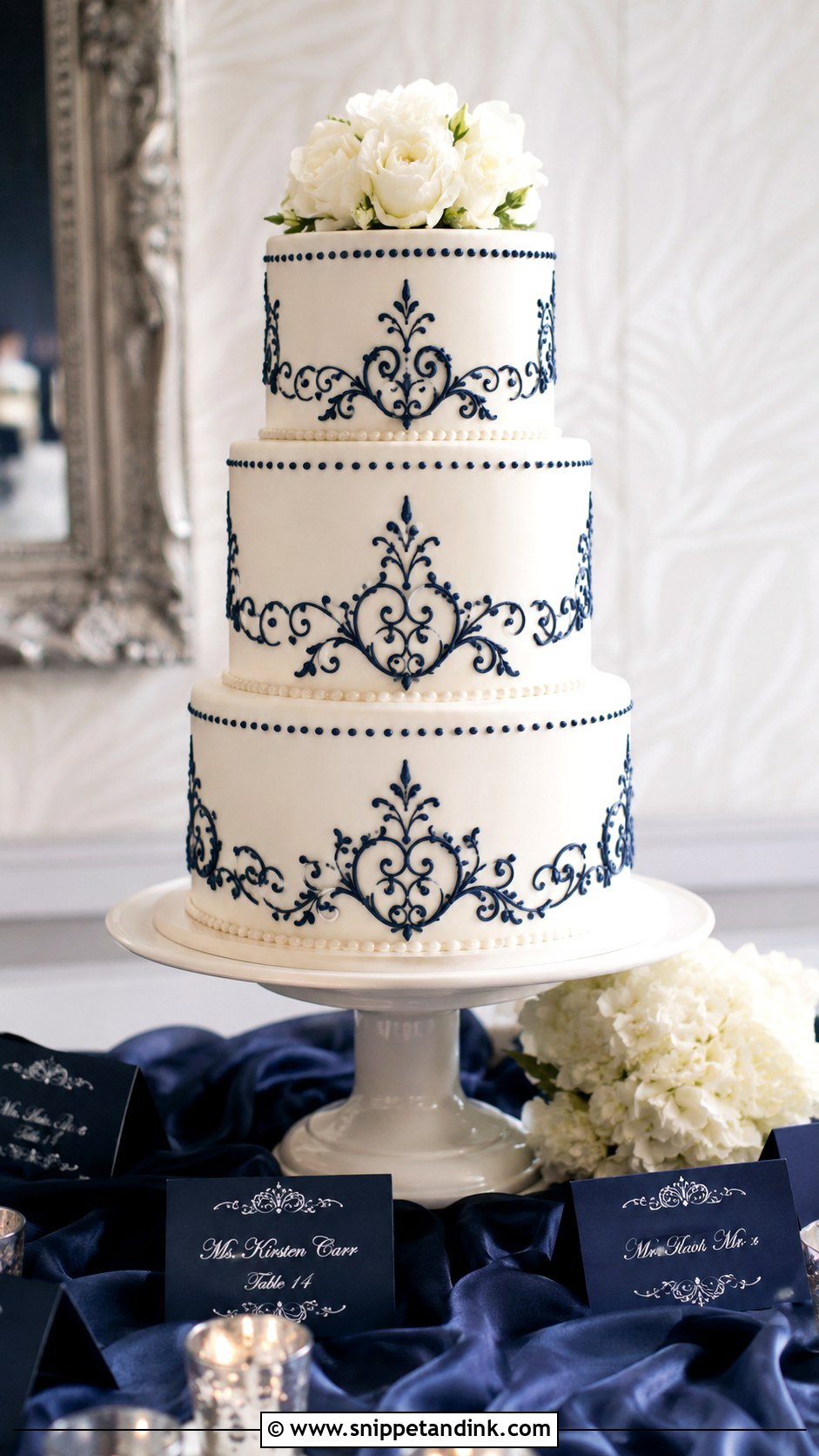
Navy piping on a white cake suits couples who love detailed decorating, and it’s the smartest way to use navy without coloring a whole tier. Borders, scrollwork, Swiss dots, floral patterns and vintage details all work on that clean canvas. Fine lines look delicate and formal; bolder piping feels graphic. Navy piping is unforgiving, though. A shaky line or a bead that’s too big shows immediately against white, so this is a design where you want to see real photos of your baker’s piping before booking.
13. Navy Blue And White Geometric Wedding Cake
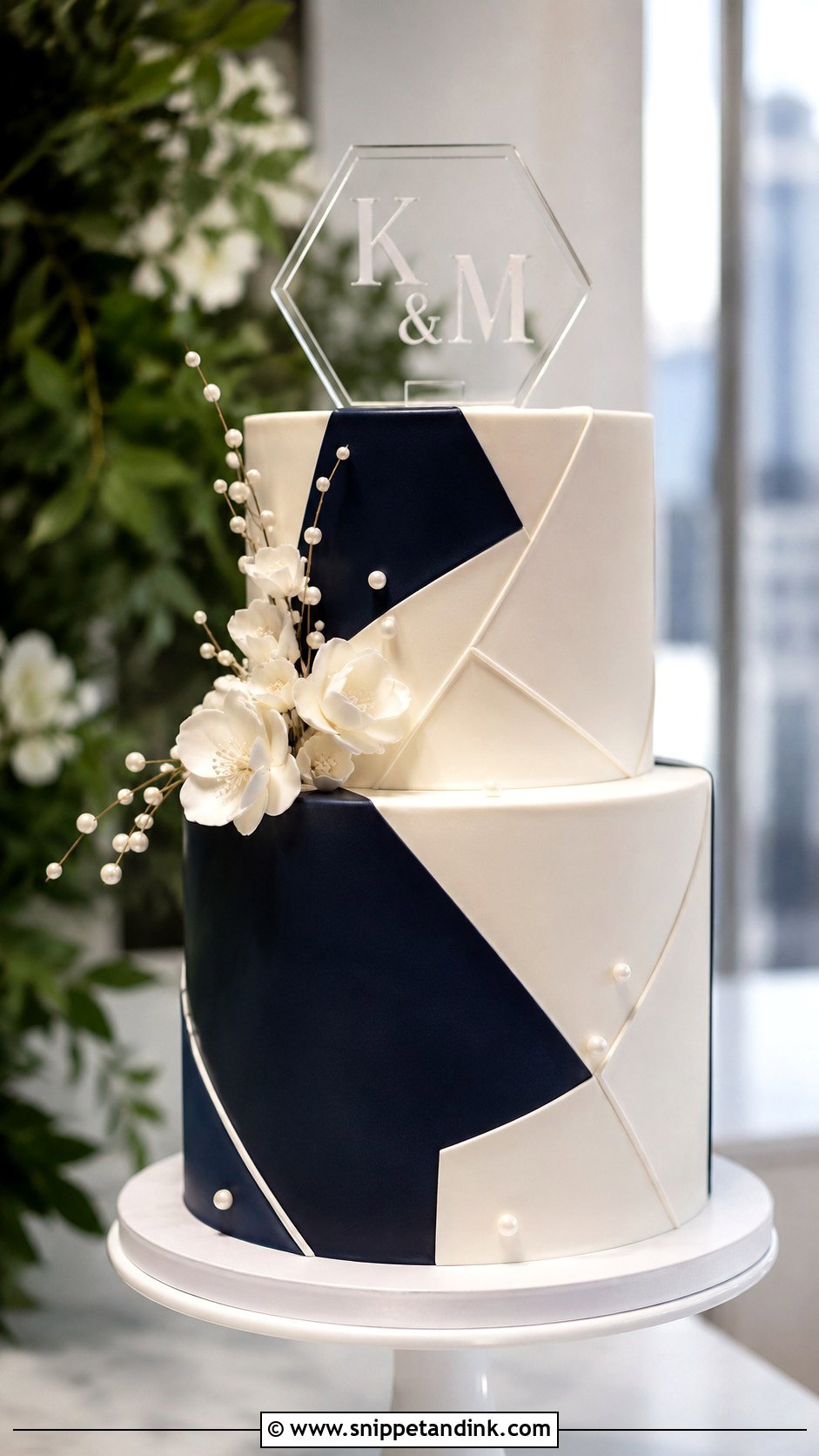
A navy blue and white geometric wedding cake can carry stripes, triangle panels, hexagons or angled color blocks. Dark against white makes every line count, so even a minimal design feels bold. Fondant is my choice here because it holds a sharp edge; I cut the shapes with a ruler and a fresh blade and apply them while the base is still slightly tacky. Small white flowers, pearls or a clear acrylic topper soften it. City venues, modern ballrooms and museum spaces suit it best.
14. Navy Blue And White Watercolor Wedding Cake
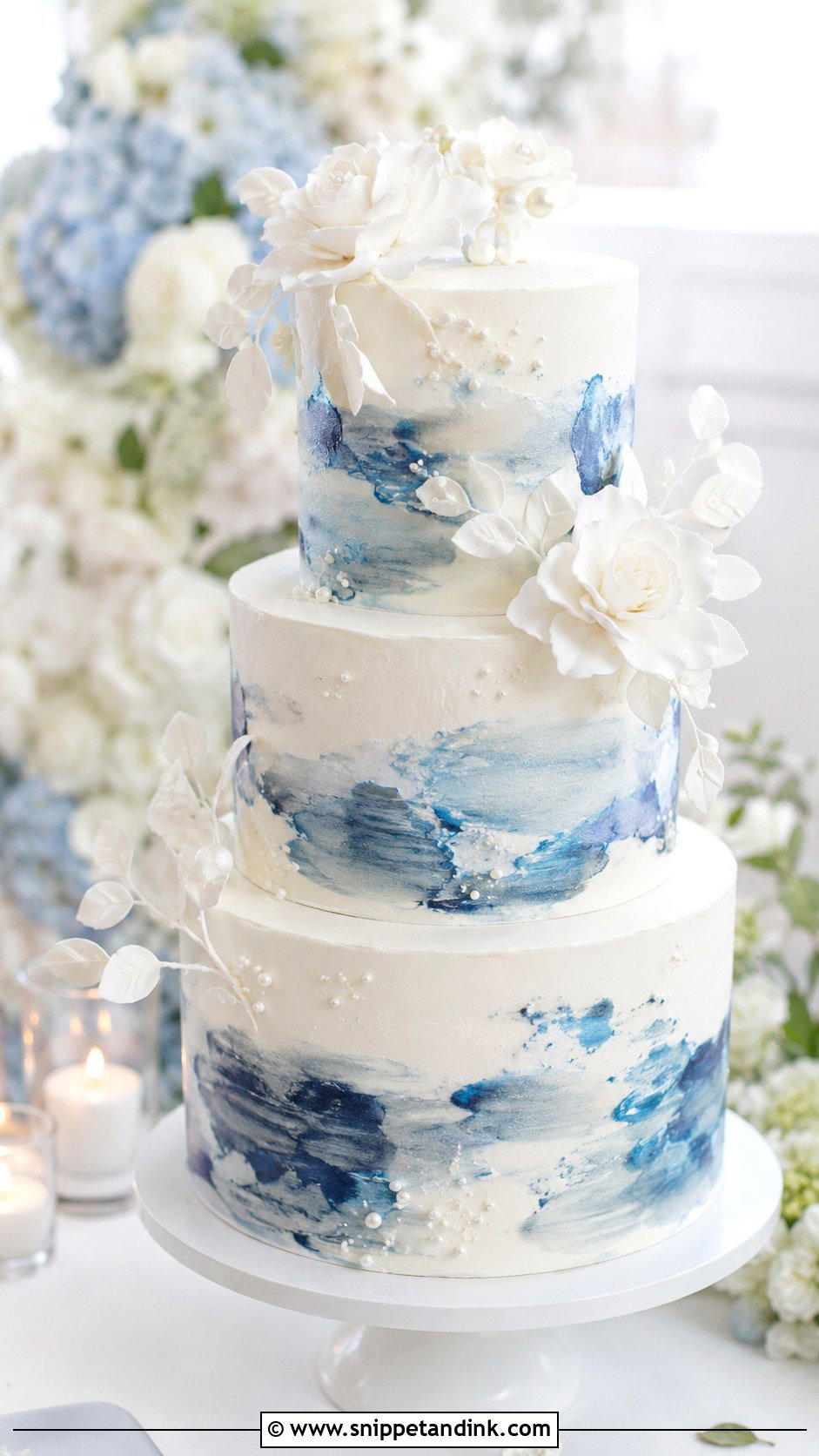
A navy blue and white watercolor wedding cake starts with a white base and loose strokes of navy, indigo and pale blue, concentrated near the bottom or spread lightly across each tier. On buttercream I blend the colors with a palette knife; on fondant they’re painted with gel color thinned in a little clear alcohol, which evaporates and leaves the pigment. Add white flowers, edible pearls or a few sugar leaves. It’s a gentler way to use dark blue, and garden and coastal weddings suit it.

15. Dark Blue And White Two Tier Wedding Cake
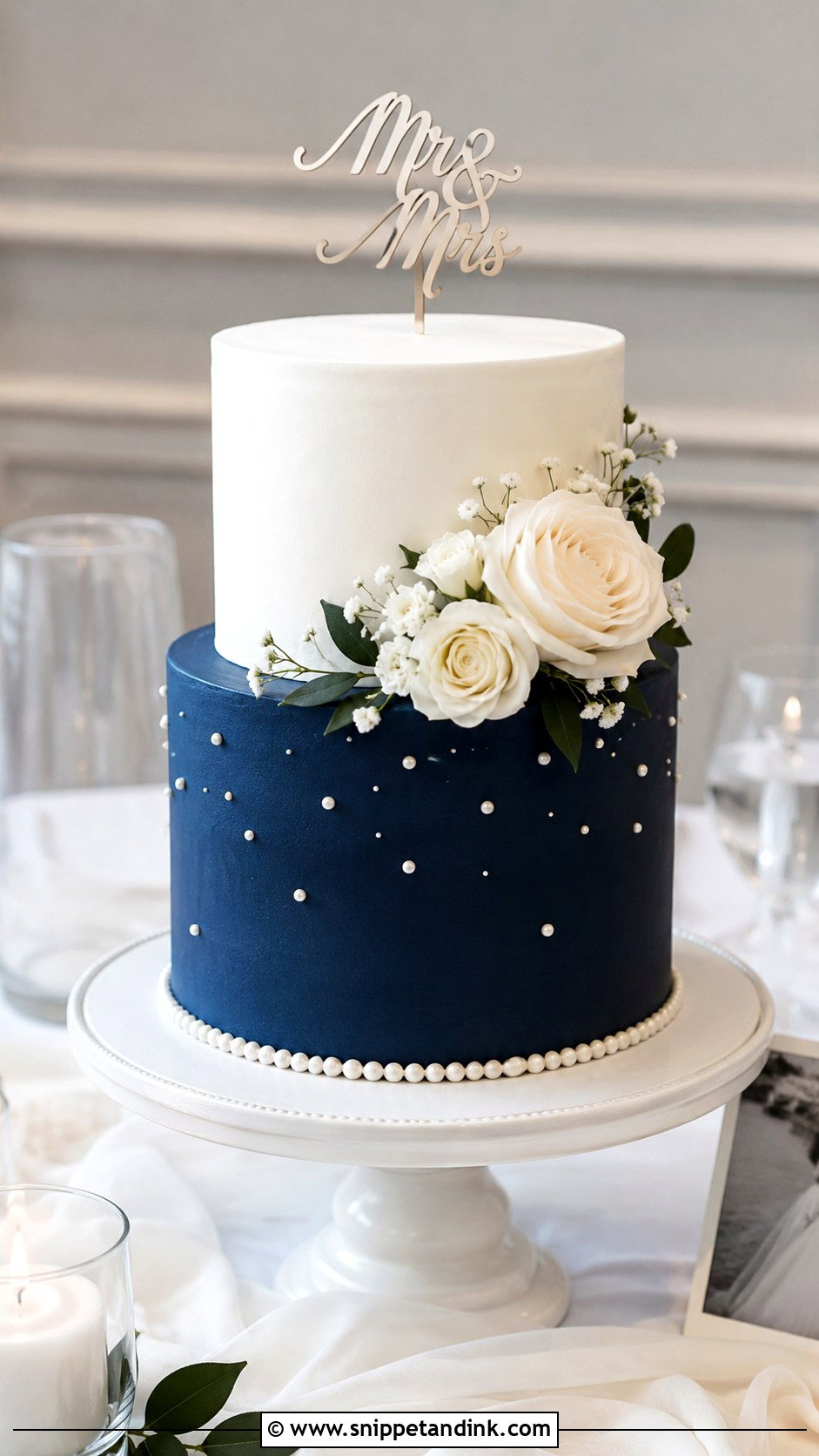
Two tiers suit intimate weddings, courthouse ceremonies, elopement dinners and smaller guest lists, and they are much easier to transport and display. A navy bottom tier under a white top tier gives the strongest contrast; a white cake with navy flowers looks lighter. Buttercream reads soft and romantic, fondant more formal. With only two tiers, proportion matters, so I often make the bottom tier taller than standard to give the cake presence. A cluster of white roses, a few pearls or a custom topper finishes it.
16. Navy Blue And White Three Tier Wedding Cake
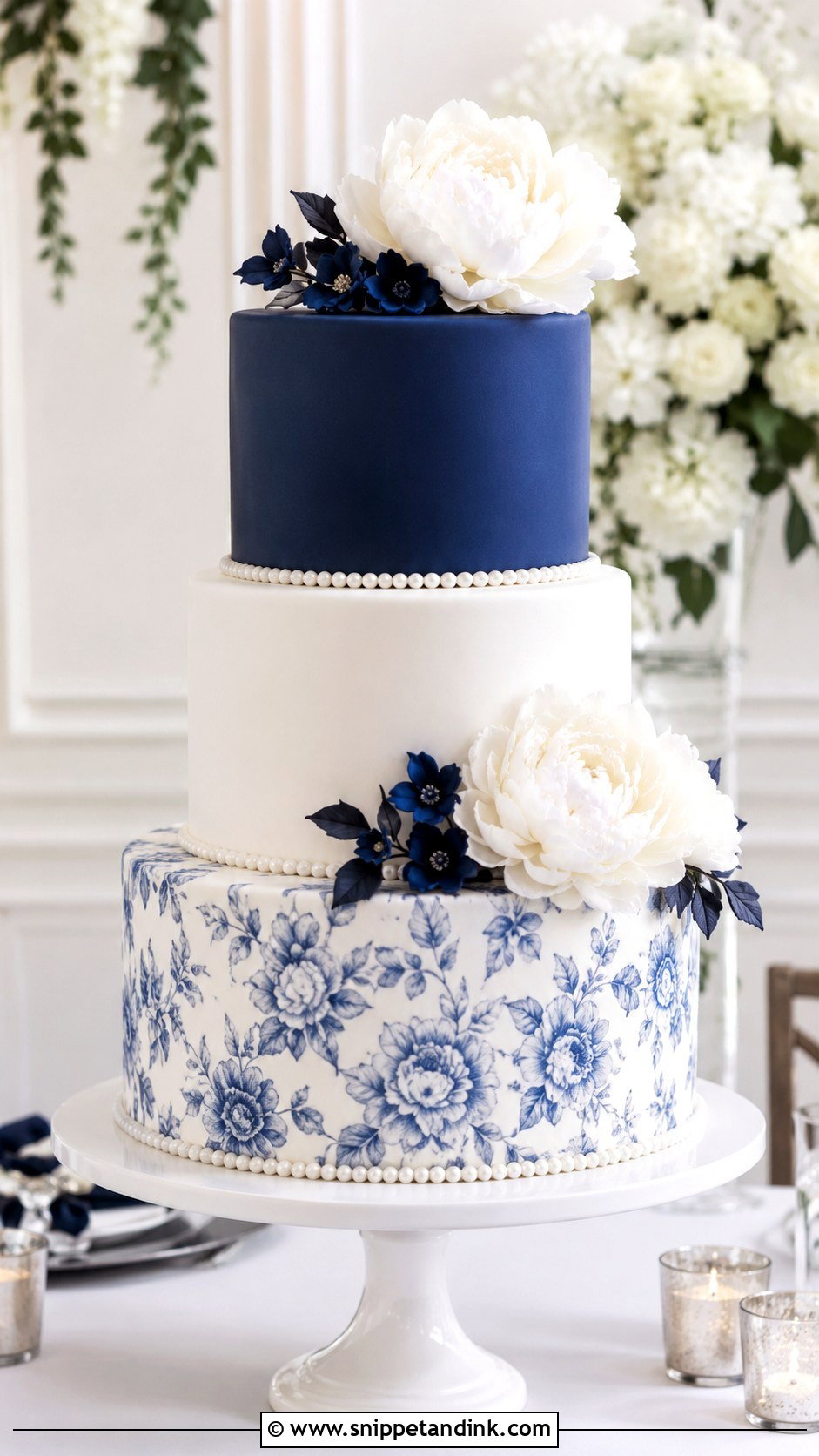
Three tiers give height for a centerpiece without overwhelming a dessert table, and they leave room for a different detail on each level. One tier navy, one white and one patterned works well, or all three white with dark blue accents. Flowers, lace, marble, ombre and pearls all suit the format. The rule I always follow is repeating one element, a pearl border or a flower variety, on every tier so the cake reads as one design instead of three cakes stacked together.
17. Navy Blue And White Cake With Fresh Flowers
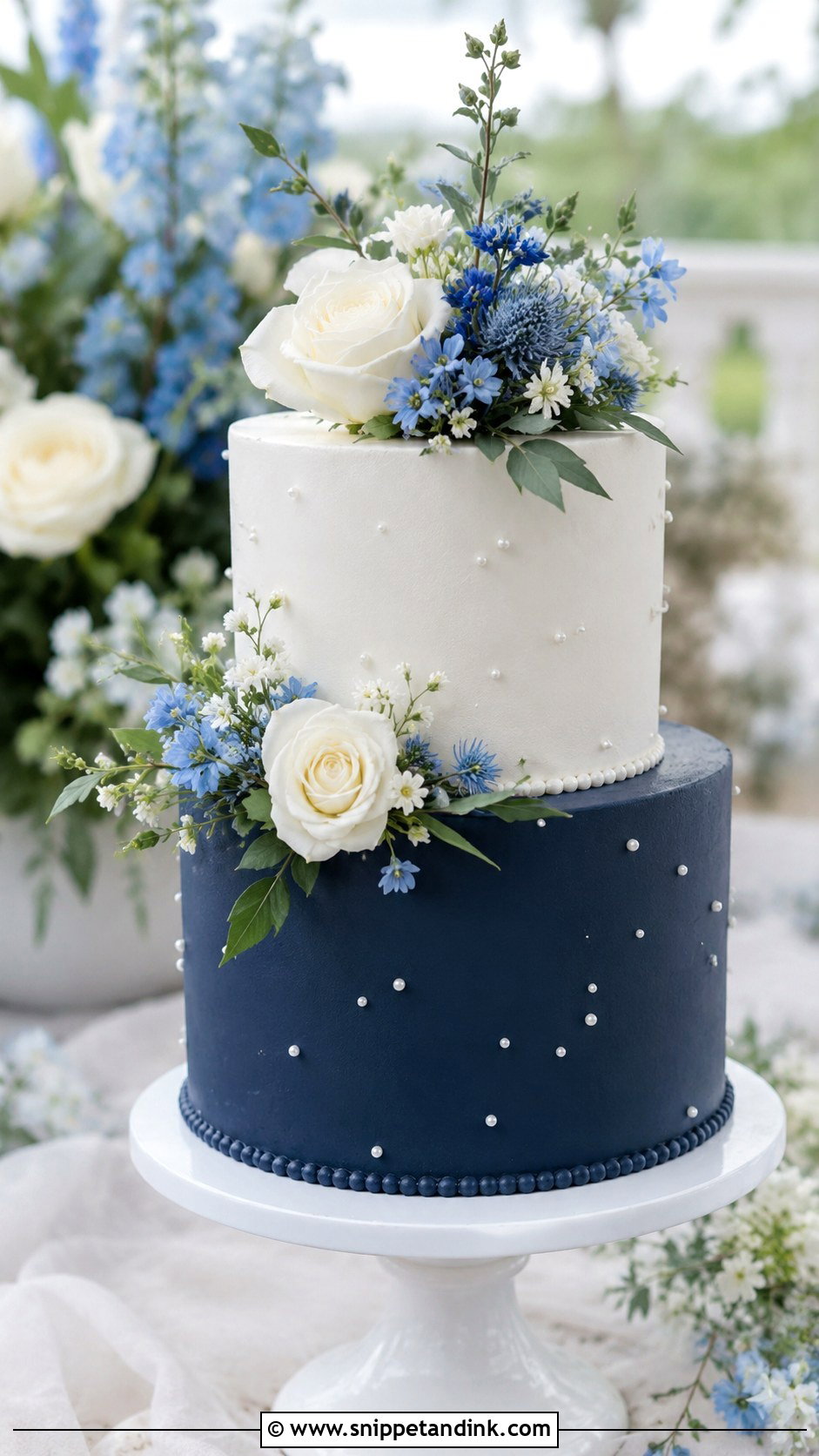
Fresh white blooms look especially bright against navy frosting, and a few small blue flowers can link them to the palette. Your florist and baker need to work together so every flower is safe for cake contact; stems are wrapped in floral tape or set in food-safe picks, and the florist places them on site, not the baker in transit. A crown on top, a side cascade or blooms tucked between tiers all work. Displayed on a white stand with greenery around the base, it fits garden, tented and outdoor weddings, as long as the table is out of direct sun.
18. Navy Blue And White Square Wedding Cake
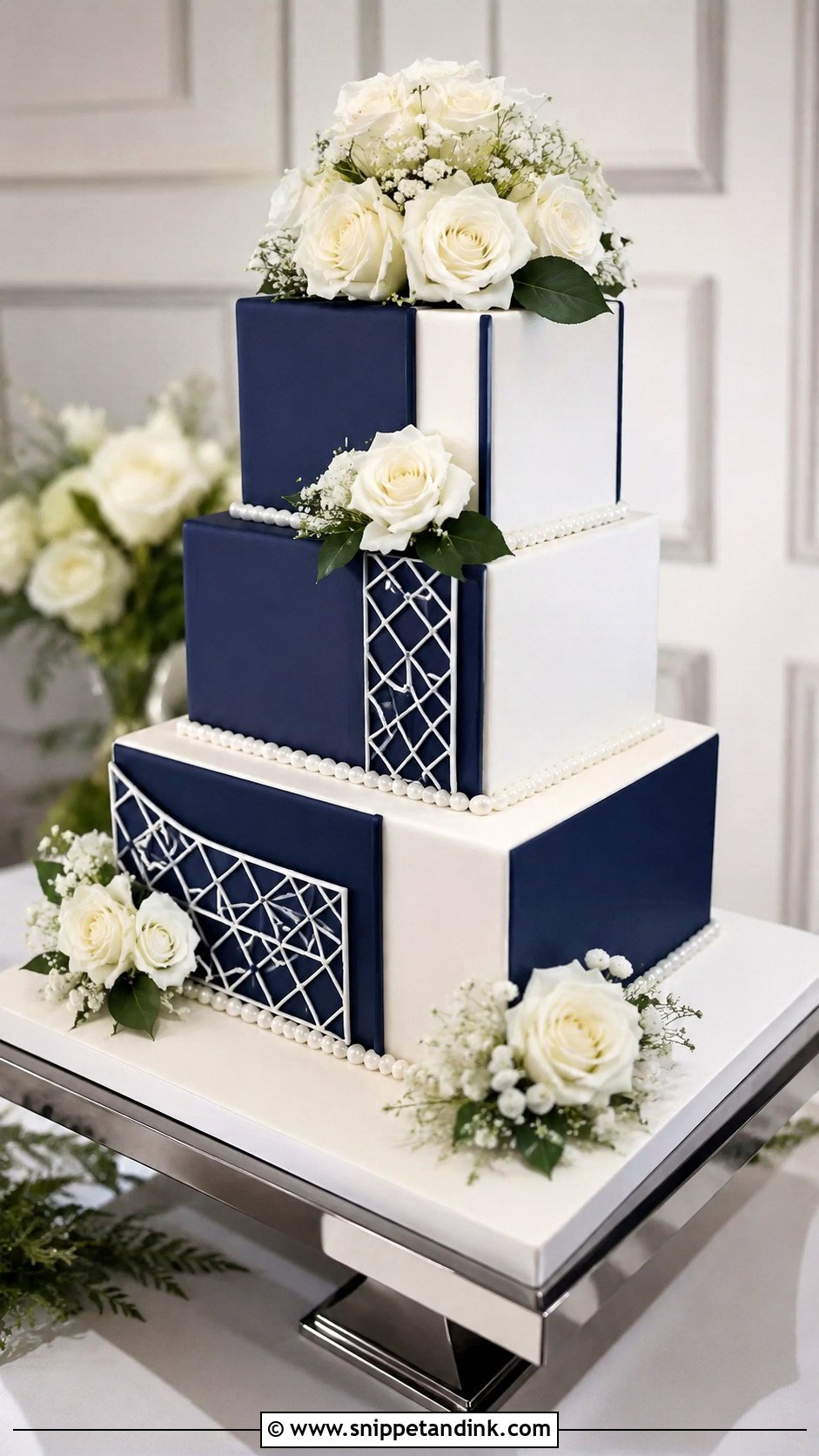
Square tiers give navy and white a structured, modern feel, partly because the shape stands apart from the usual round cake. Fondant is close to essential for crisp corners, whether you want navy panels, white tiers or geometric accents. White roses or pearl borders soften the lines. Square cakes are the hardest shape to finish cleanly, since every corner has to be sharp and every side flat, so check your baker has photographs of square work. Set on a simple pedestal, it photographs best from straight on.
19. Navy Blue And White Beach Wedding Cake
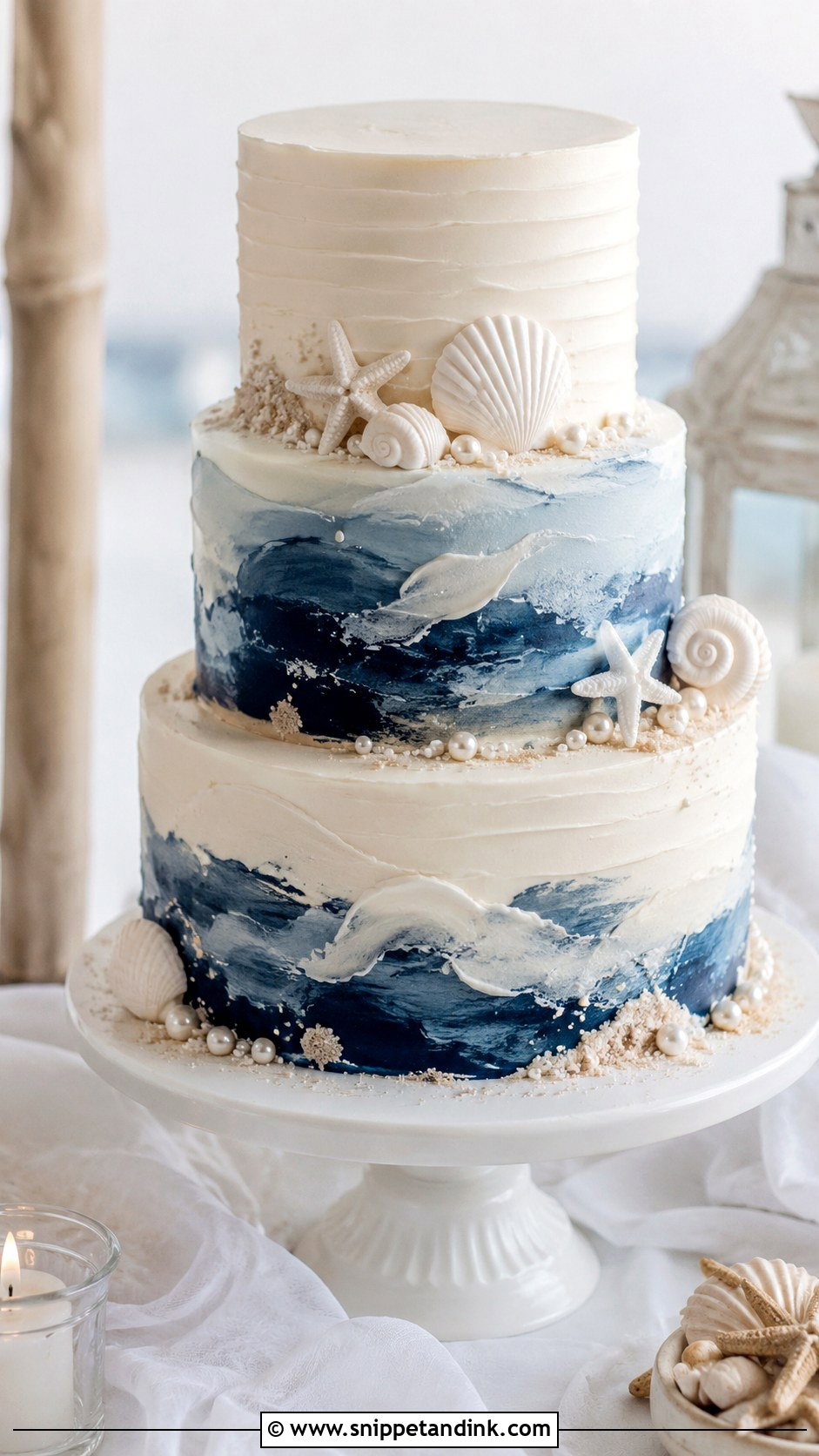
A navy and white beach cake can feel coastal without seashell overload. Deep blue suggests the ocean, and white keeps the design bridal. Watercolor waves, ombre tiers or textured buttercream that echoes sea movement all work. For a subtle beach detail, use white sugar shells, smooth pearl beads or pale sand-colored accents around the base. Beach receptions are hard on cakes, so I’d plan on buttercream made with a heat-stable recipe and a shaded table. Keep the theme restrained and pair it with white flowers and linen.

20. Navy Blue And White Vintage Wedding Cake
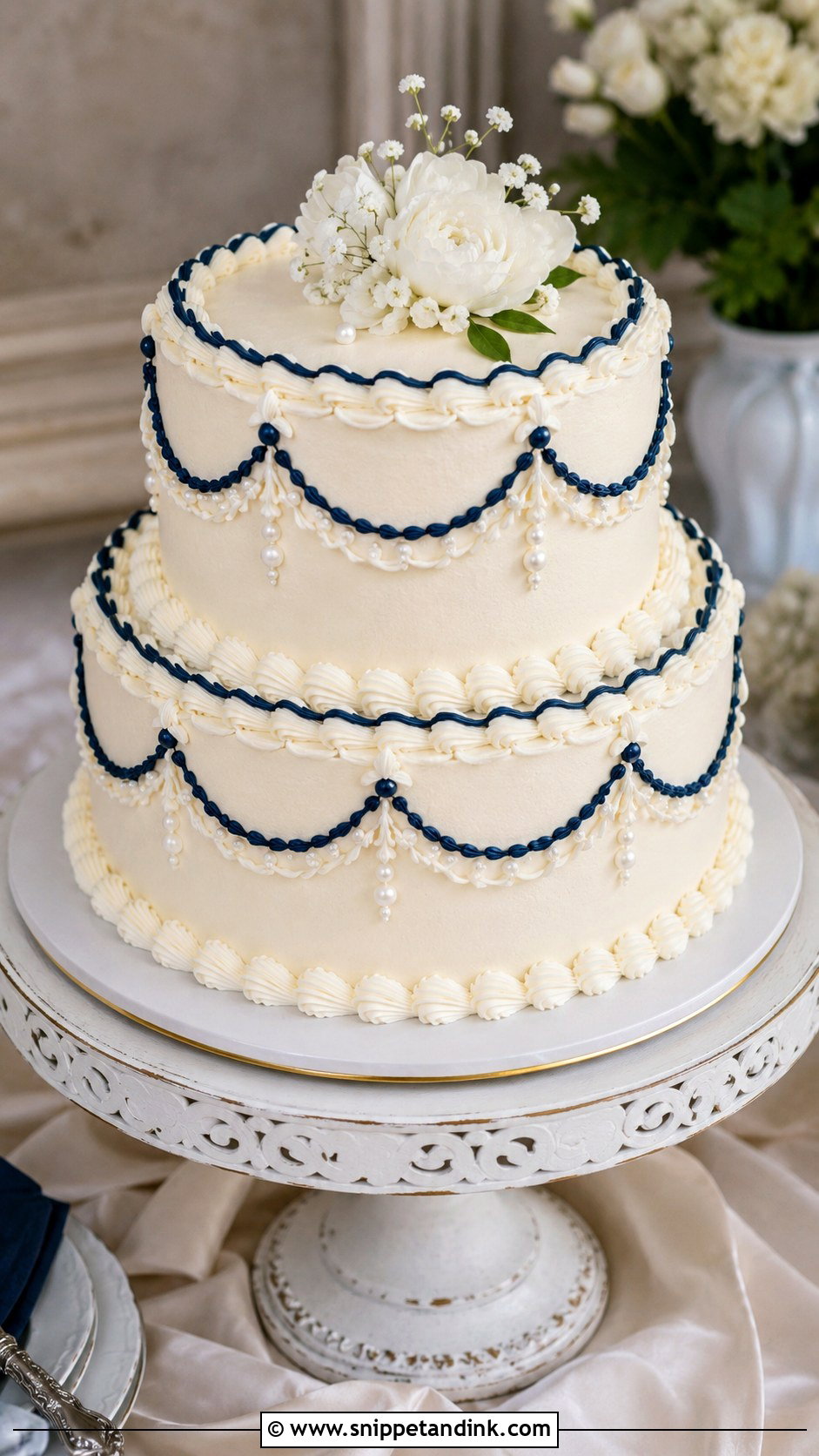
Vintage cakes are all about ornate piping: Lambeth-style overpiping, scalloped borders, shell details and small pearls. Use a white base with navy piping for a softer look, or a navy base with white piping for strong contrast. Overpiping builds layer upon layer of lines, and it takes days of work on a large cake, so it’s worth booking early. The design suits a two-tier cake or a three-tier centerpiece because the decoration needs room. A small floral topper or a classic monogram completes it.
What Heat, Candlelight and the Cake Knife Do to Blue
Bleeding where colors meet
A cake carried from a cold van into a warm room collects condensation on its surface. On a two-color cake, that moisture can pull navy pigment into the white beside it and leave streaks. I let tiers come up to temperature slowly in their boxes and set up away from windows and heaters. A table in full sun is the quickest way to ruin a dark cake.
Navy after dark
In candlelight and evening photographs, deep navy can read almost black. If the blue itself matters to you, choose a slightly brighter navy than you think you need, or make sure white details sit right against it so the color holds its own. Check the swatch under warm light, not just daylight.
Serving it
Navy icing stains knives, white plates and table linen. Ask your caterer to cut the cake in the kitchen if they can, and to wipe the knife between slices so the white sponge stays clean on the plate.
How Much Navy Should Your Cake Show?
Navy and white can look classic, modern, coastal, vintage or bold, and the deciding question is how much blue shows. A mostly white cake with navy accents reads soft and traditional; a navy cake with white flowers or piping reads dramatic. Think about your venue lighting, flowers, tables and what the wedding party is wearing before you settle on a design, and bring a swatch of your navy to the tasting. With the right balance, it can become one of the most photographed details of the day.
You'll Like These Ideas:





Leave a Reply