
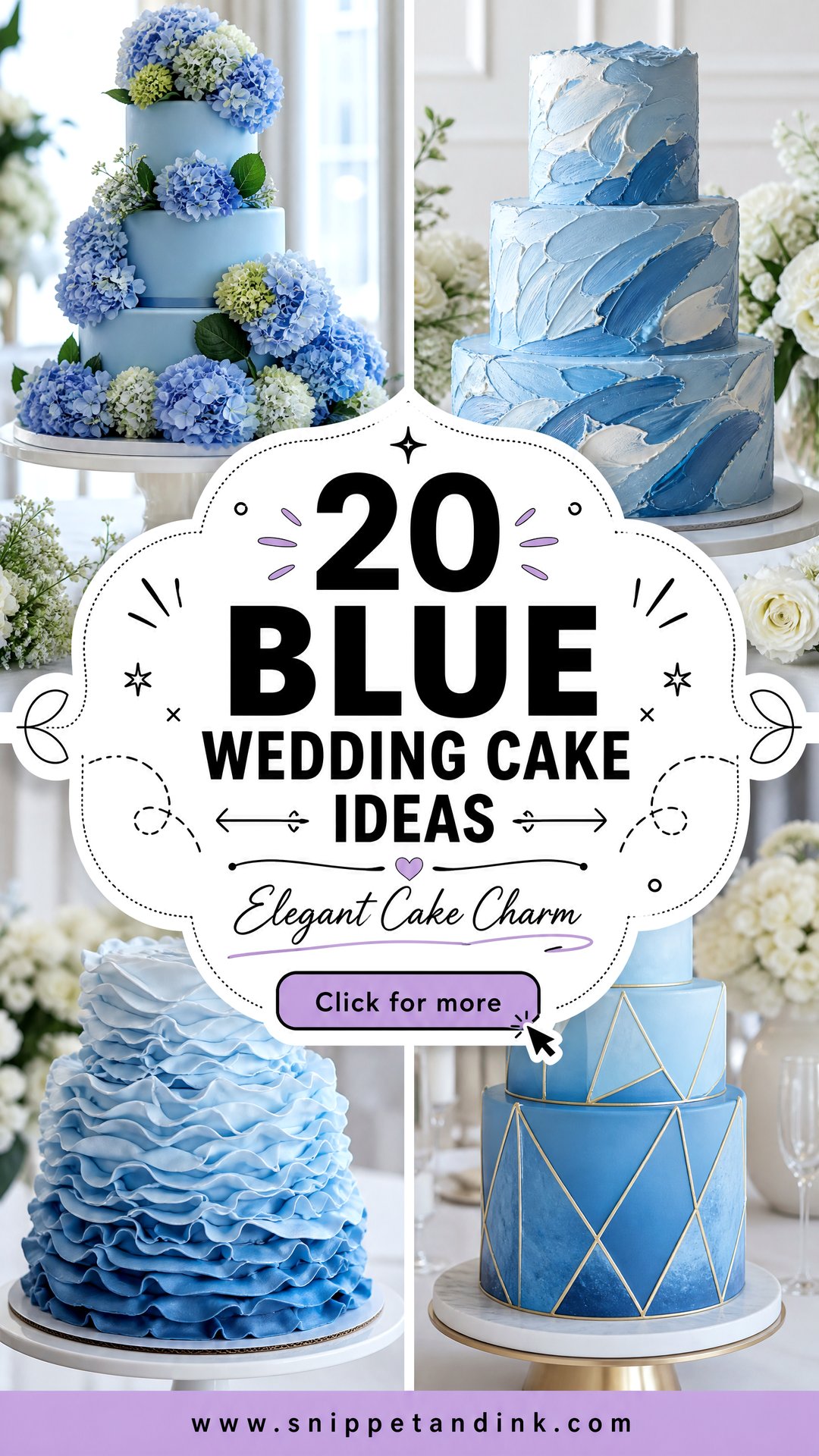
Couples who ask me for a blue cake usually arrive with one of two worries: that it will look childish, or that it will look like a birthday cake. Neither has to happen. Blue runs from soft dusty tiers to bold navy fondant, and it sits easily with white flowers, gold leaf, silver, pearls and greenery. The shade and the finish decide most of whether it reads romantic or formal. Below are twenty designs I’d make for a reception, with notes on how each one is built and who it suits.
A Brief Your Baker Can Actually Work From
The most useful thing you can bring to a cake consultation isn’t twenty screenshots. It’s three photos of cakes you love, one you dislike, and something physical in your blue: a ribbon, a bridesmaid dress swatch or a napkin. The photo you dislike tells me more than people expect, because it rules out whole directions at once.
Beyond that, these are the details I need before I can sketch anything useful:
- Your guest count, and whether the cake should feed everyone or be partly for display with a kitchen cake behind it.
- The room: indoors or out, daylight or evening, air conditioned or not. That decides between buttercream and fondant more often than taste does.
- A rough budget, said early. Sugar flowers, hand painting and extra-tall tiers are all labour, and knowing the limit lets me spend it where you’ll actually see it.
- Your flower plan, so the cake and the arrangements are designed together instead of competing on the day.
With that in hand, the tasting becomes a check of flavours and colour rather than a guessing game.
1. Dusty Blue Wedding Cake With Gold Leaf
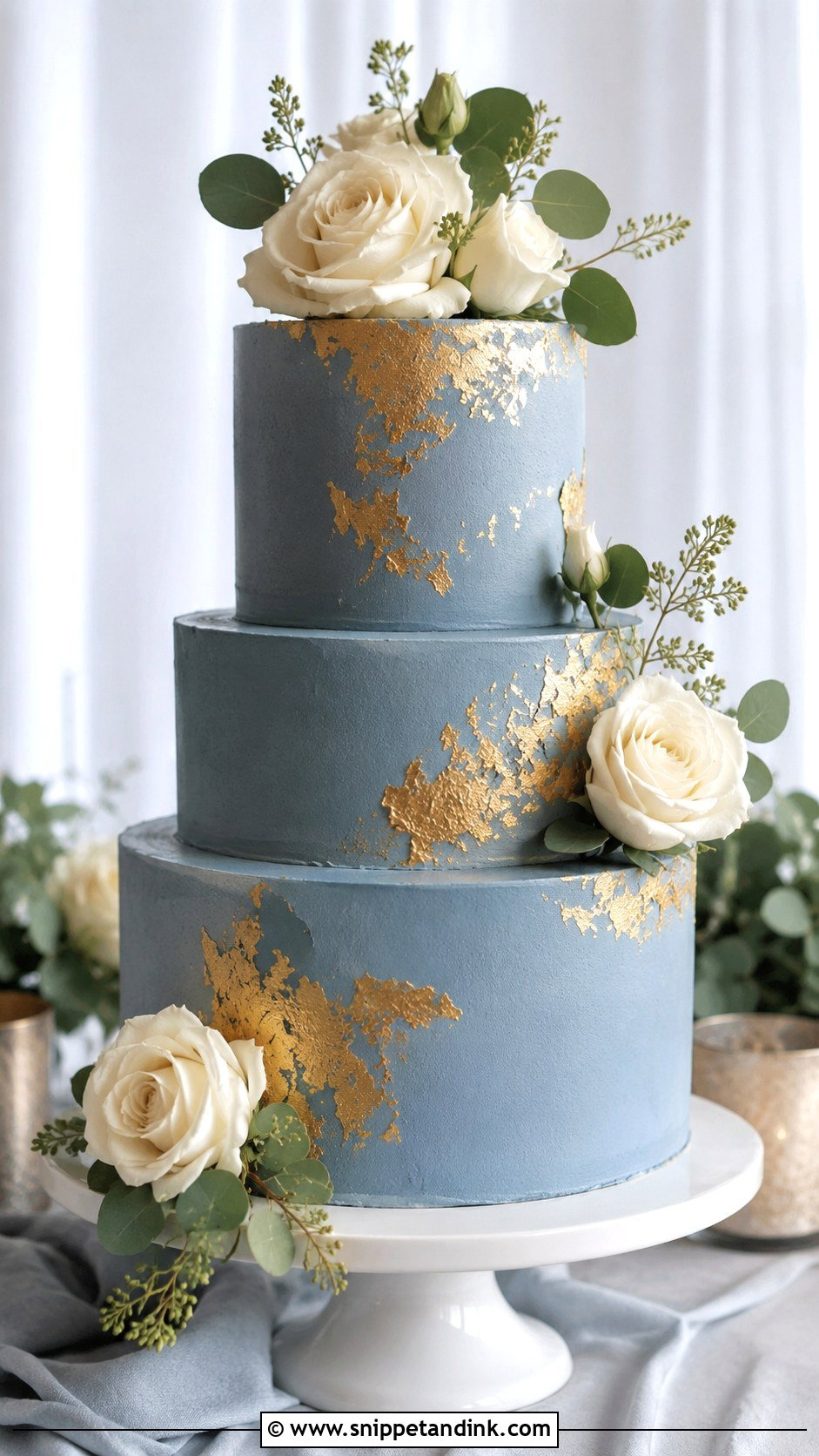
Gold leaf is the cheapest way I know to make a soft colour look expensive. On a dusty blue wedding cake, I tear the leaf and press it on in loose, uneven patches with a dry brush, because neat squares look stuck on. The muted base stays calm while the gold picks up candlelight. Two or three tiers in smooth buttercream or fondant suit it. Leaf is so thin that a draught can lift it, so it goes on at the very end, followed by white roses, ivory orchids or a few small sugar flowers.
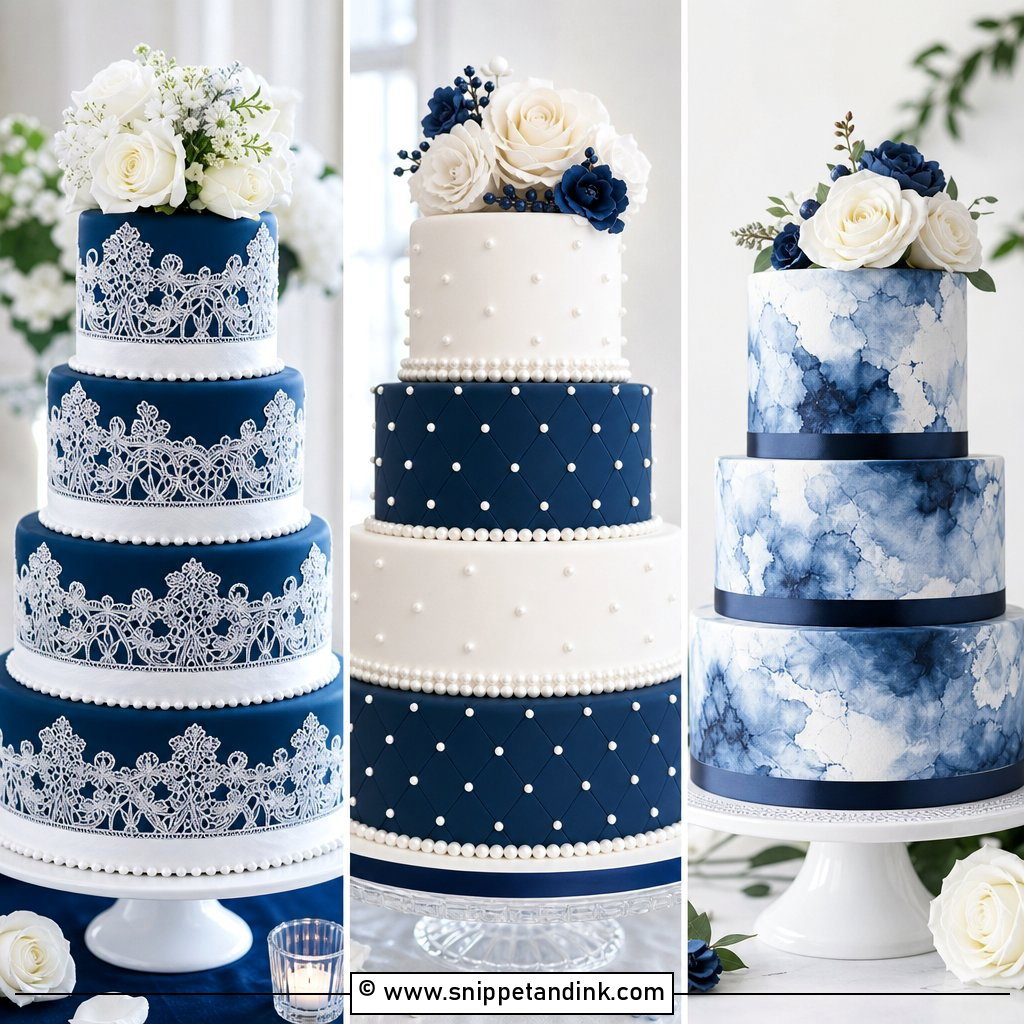
2. Navy Blue Wedding Cake With White Flowers
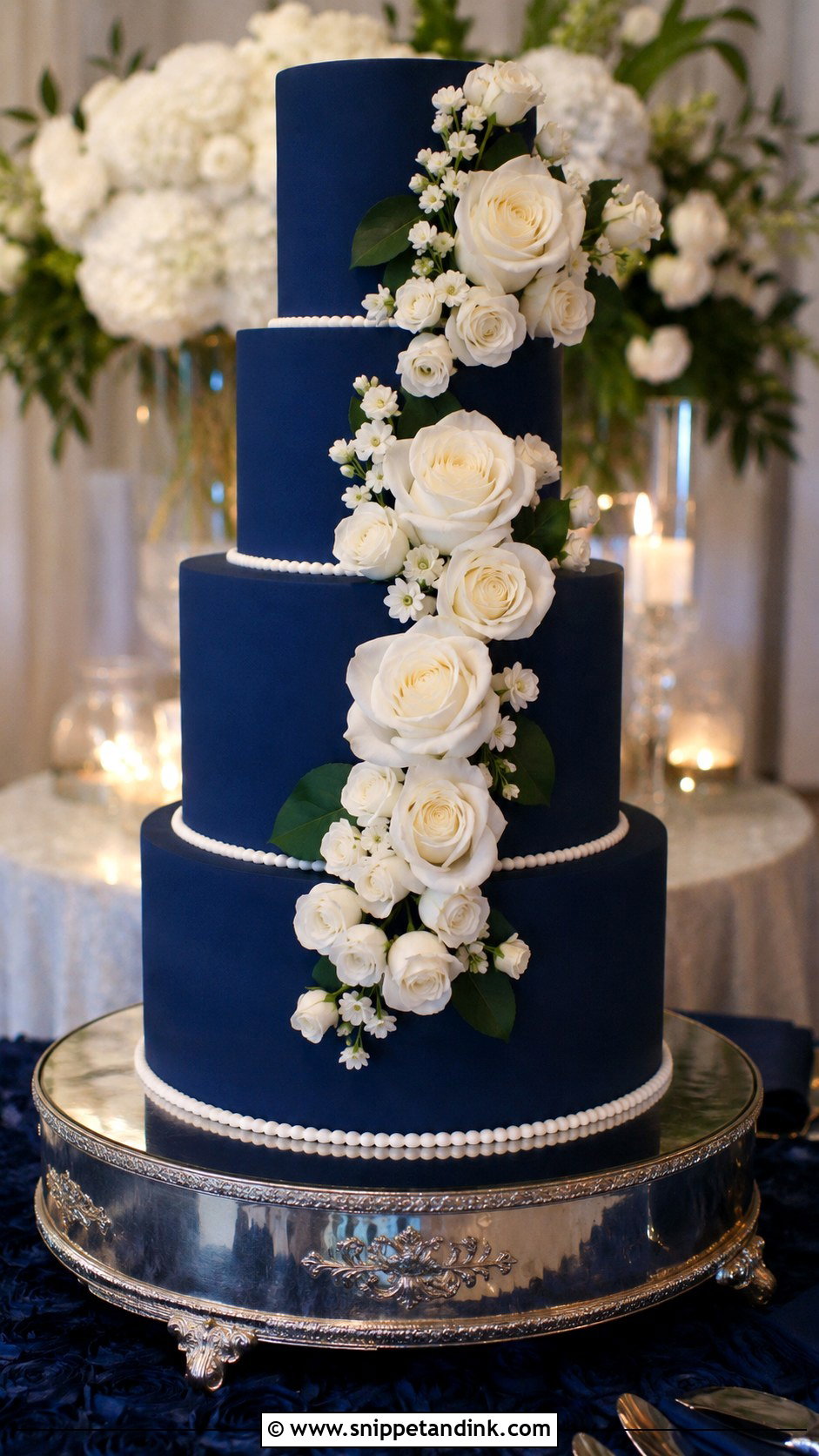
Contrast is the whole point here, and navy against white photographs crisply even in a dim room. Navy fondant gives a sleek, almost lacquered finish. Navy buttercream is softer, but it darkens as it sits, so I mix it a day ahead and judge the colour the next morning. Large white roses, ranunculus or sugar peonies run down the tiers in a cascade, and everything else stays plain. Evening and formal receptions are its natural setting.
3. Blue Ombre Wedding Cake
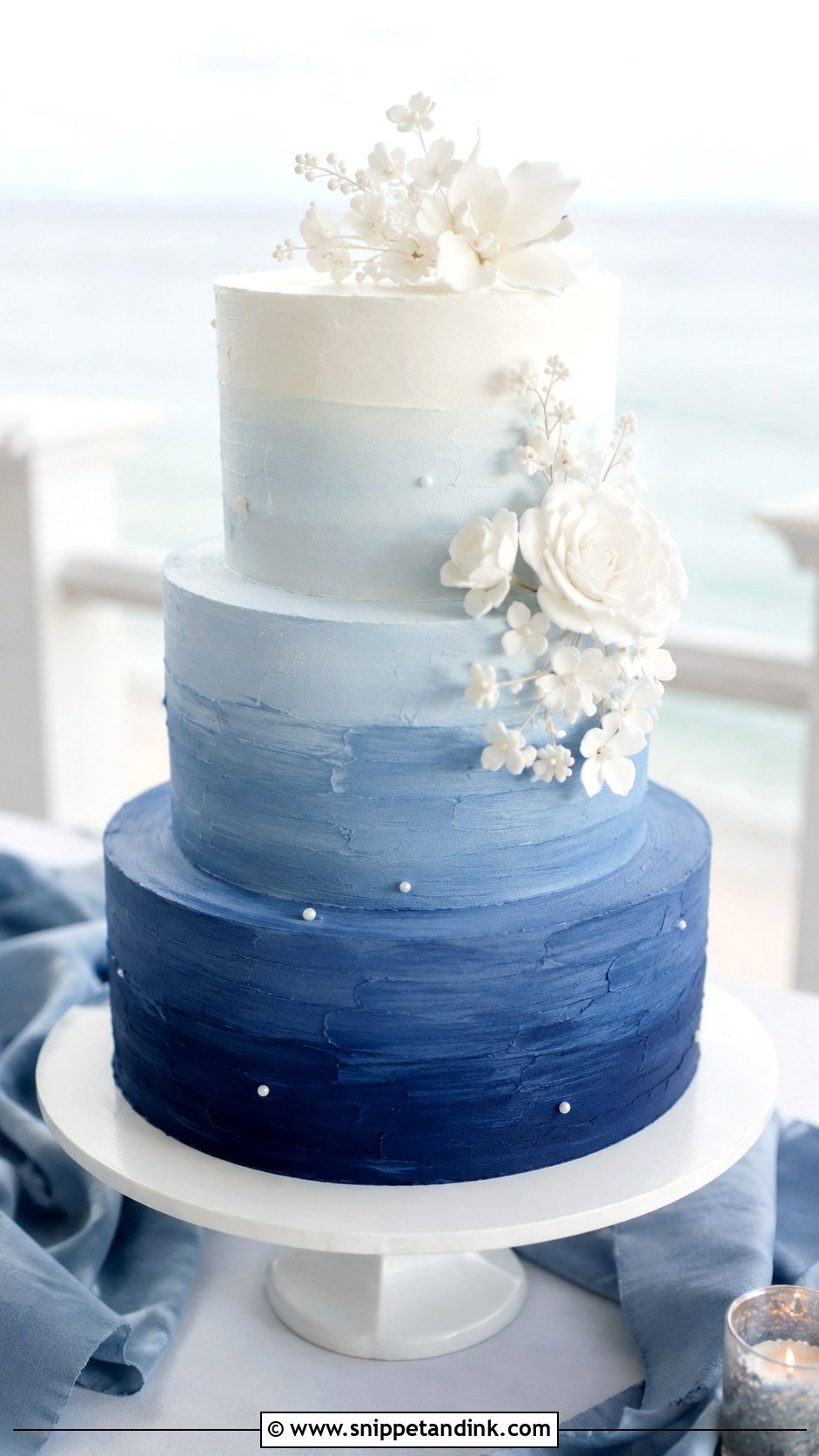
Ombre asks more of the baker than it looks. Each tier is a slightly different shade, and the steps between them have to be even or one tier reads as a mistake. On a tall cake I mix the whole run of colours at once and line up spoonfuls on white paper to check the progression before anything touches the sponge. The fade can drop from navy at the base to pale blue on top, or move from icy blue into powder. A few white blooms or a thin metallic edge is all it needs.
4. Light Blue Wedding Cake With Pearls
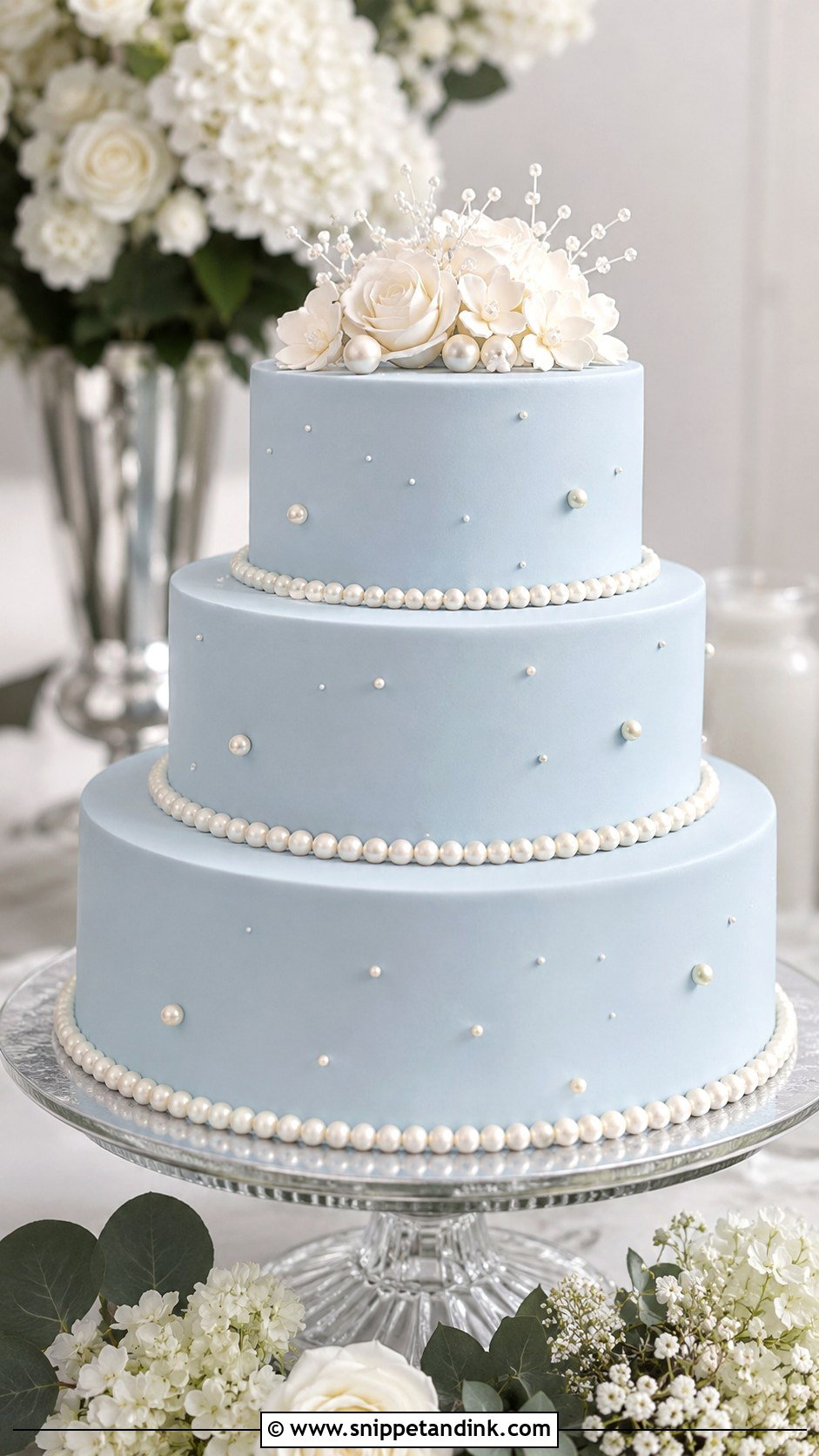
On a pale blue cake, pearls quietly echo a bride’s earrings or the beading on her gown. I set rows of sugar pearls along the base of each tier with a dot of royal icing, sizing them down as the tiers get smaller so the top doesn’t look crowded. A neat row reads traditional; a gentle scatter reads modern. White piping or a satin ribbon can join them. One practical note: some sugar pearls are hard enough to surprise a guest’s teeth, so I use the softer kind anywhere that gets cut and served.
5. Royal Blue Wedding Cake With Silver Details
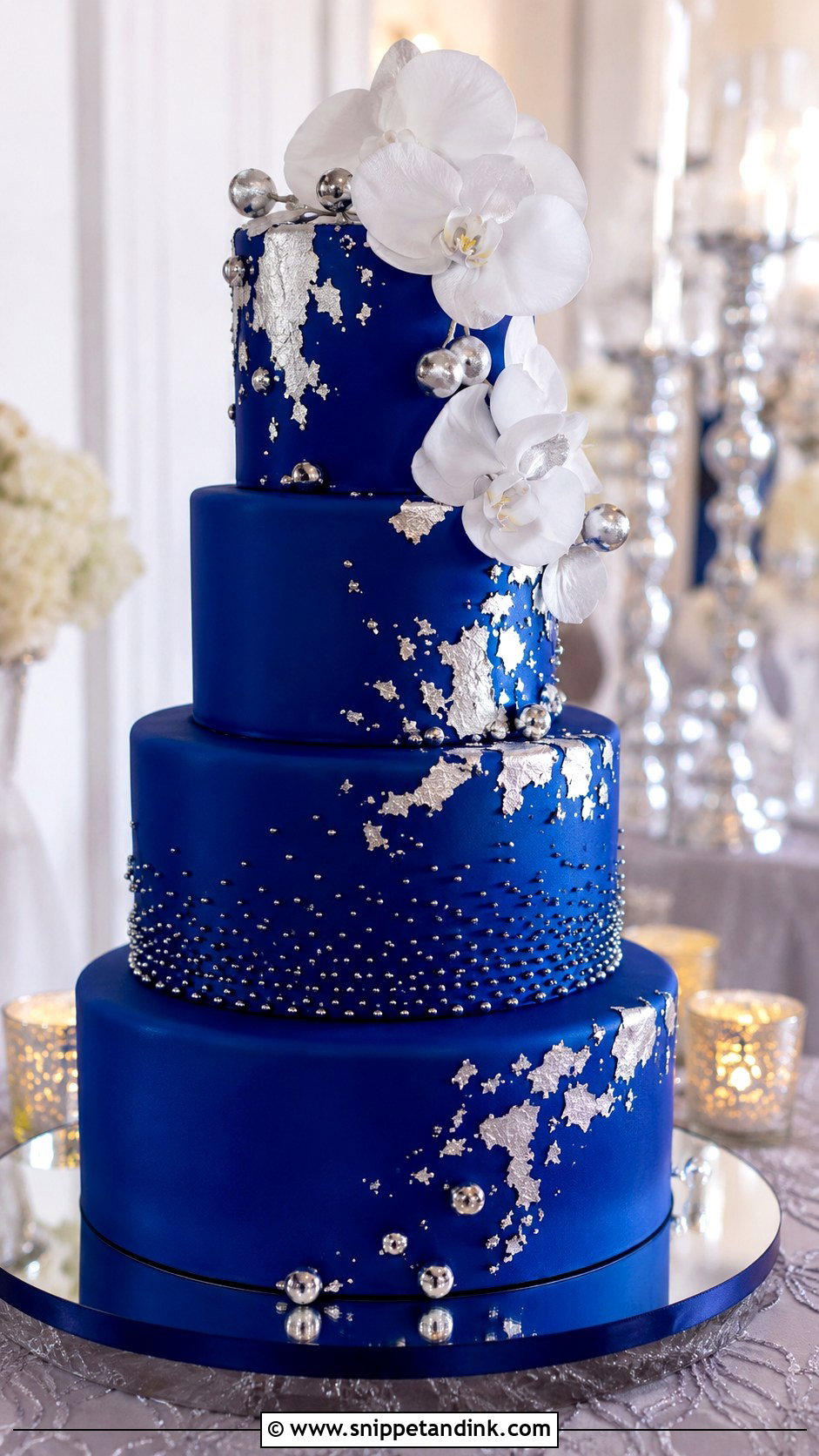
Royal blue is a jewel tone, and silver keeps it from feeling heavy. Silver leaf, fine metallic lines, silver sugar pearls or a simple topper all work, but I choose one rather than stacking them. Fondant gives the strong colour an even surface, which matters because royal blue buttercream shows every streak from the scraper. White flowers or pale blue petals soften it. I like it for formal winter weddings without holiday styling, and for rooms with crystal or mirrored decor.
6. Blue And White Marble Wedding Cake
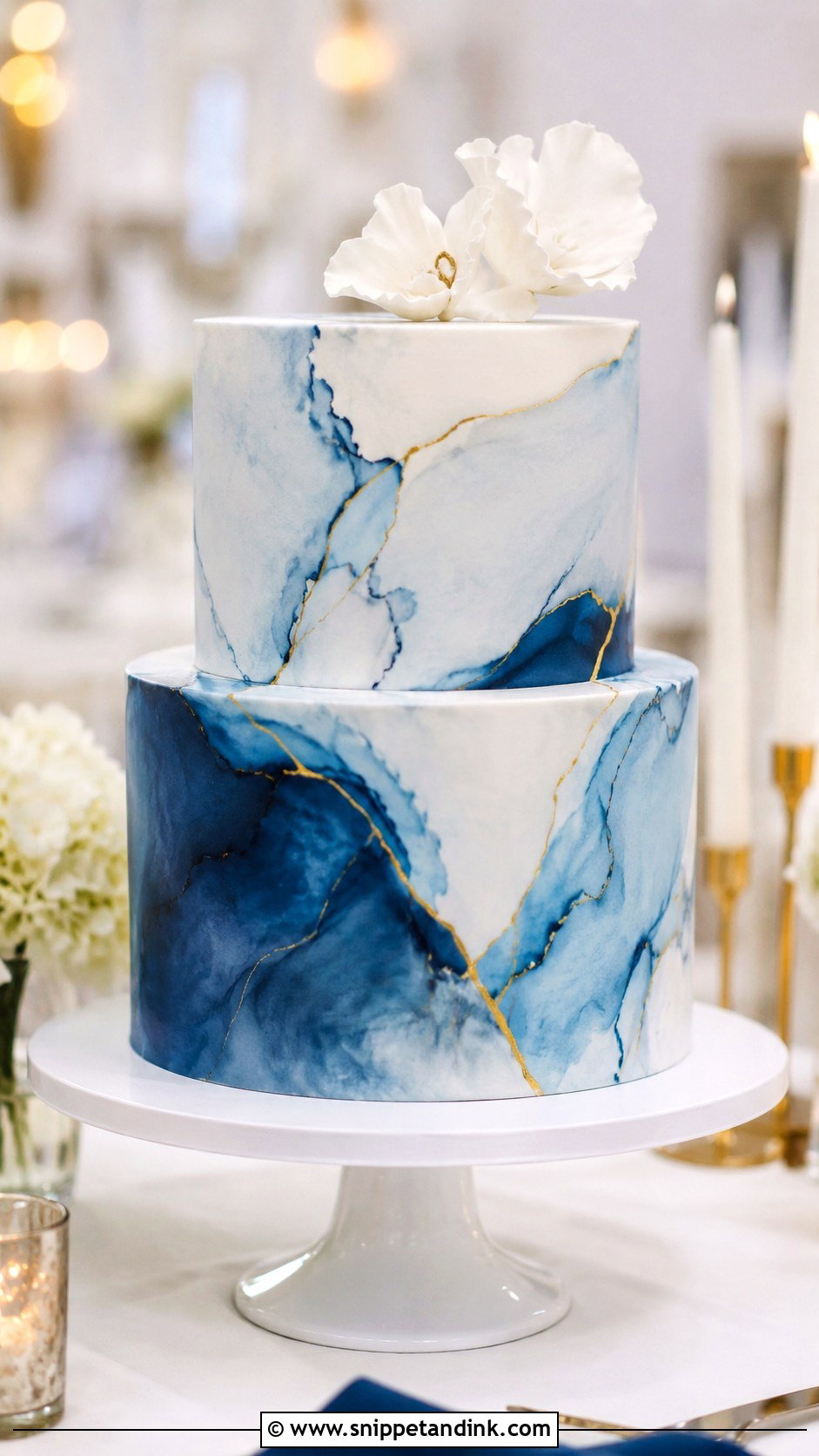
Real marble has a direction to its veins, and a convincing cake copies that. I roll the coloured fondant so the streaks run diagonally across each tier, then paint a few fine gold or silver veins with a liner brush. Pale blue swirls look soft and cloudy, while navy and royal blue through white look far more dramatic. Flowers stay minimal. Gallery-style decor and modern spaces suit it, along with couples who want blue to move across the cake rather than sit as one block of colour.
7. Blue Floral Wedding Cake
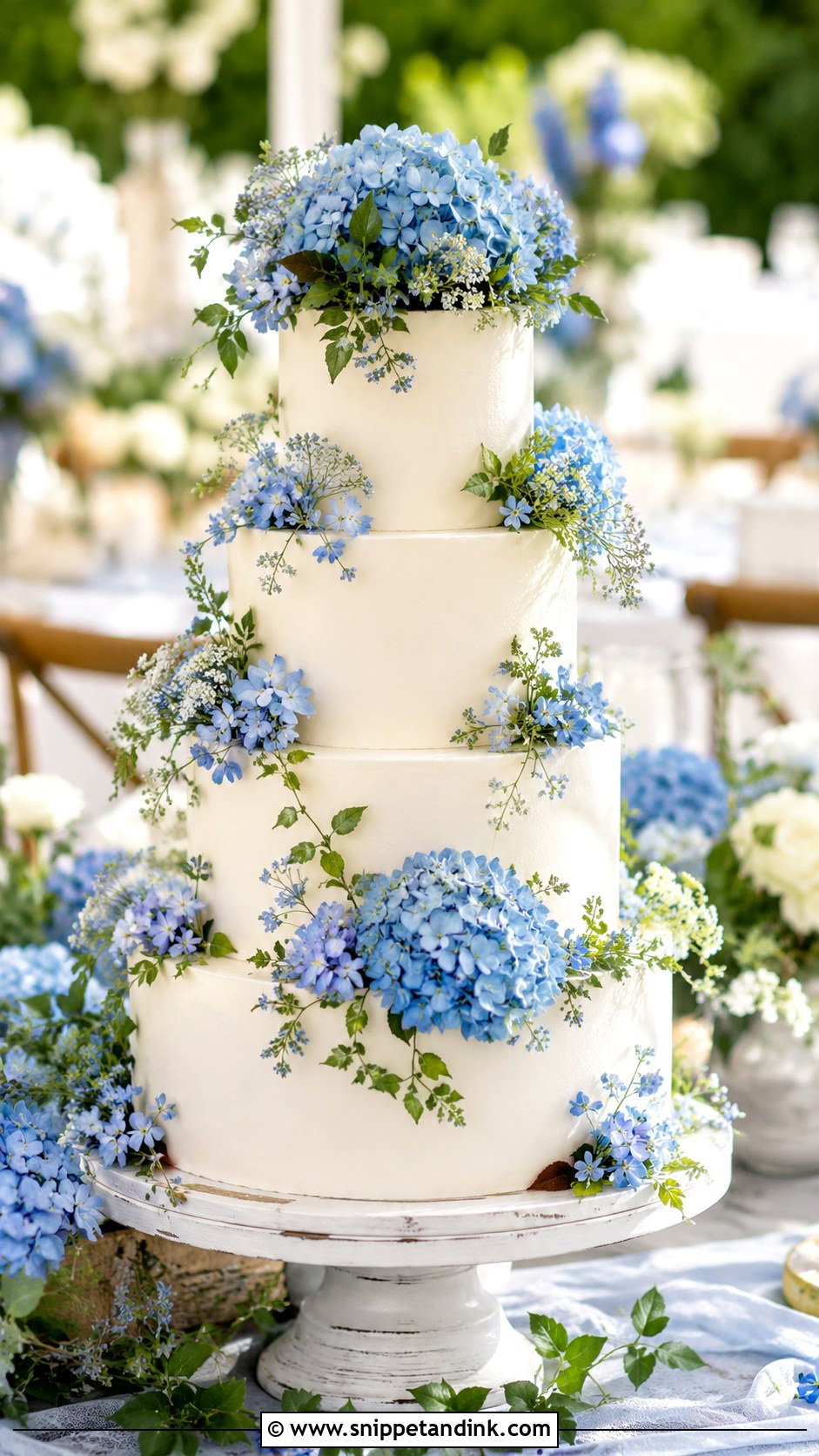
Leaving the cake white and letting flowers carry the blue is one of my favourite approaches, because it still reads bridal from across the room. Blue sugar flowers, pressed edible flowers or fresh blooms sit across white or ivory tiers. Cornflowers are edible and come in a true blue, which is rare. Delphinium is not edible, so I make it in sugar or keep it well away from the icing. Ask for blue, ivory and greenery in a balanced mix so the cake looks full without feeling crowded.
8. Blue Watercolor Wedding Cake
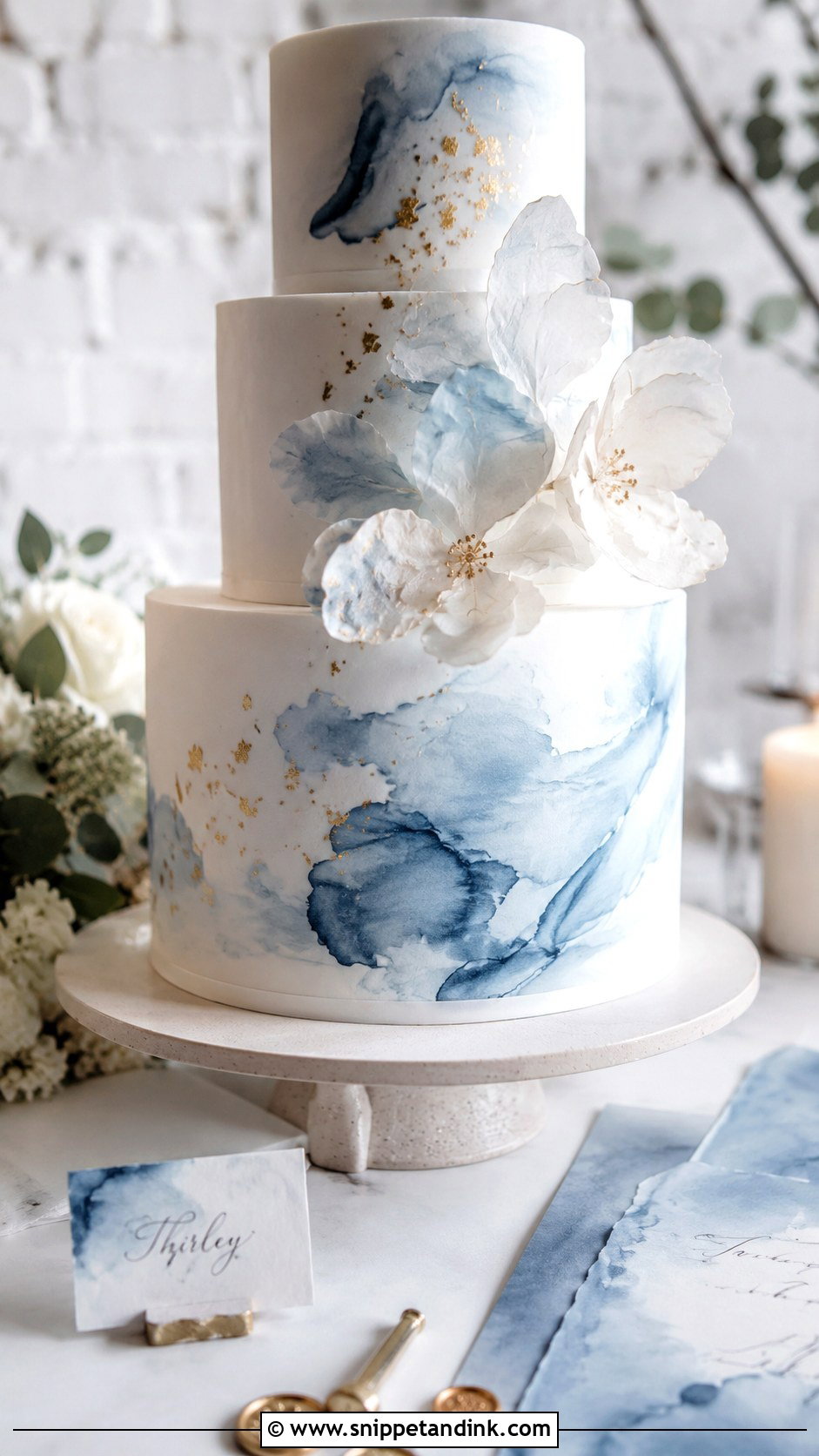
Watercolour is one of the gentlest ways to bring in blue, and it pairs naturally with soft blue stationery or linens. On a white or ivory base I build the washes in thin layers, letting each one dry before the next so the edges stay soft and the colour doesn’t pool at the bottom of the tier. Wafer paper flowers, a little gold leaf or delicate sugar petals finish it. Keep the tier edges sharp; a clean edge is what makes painted colour look intentional.
9. Blue Wedding Cake With Lace
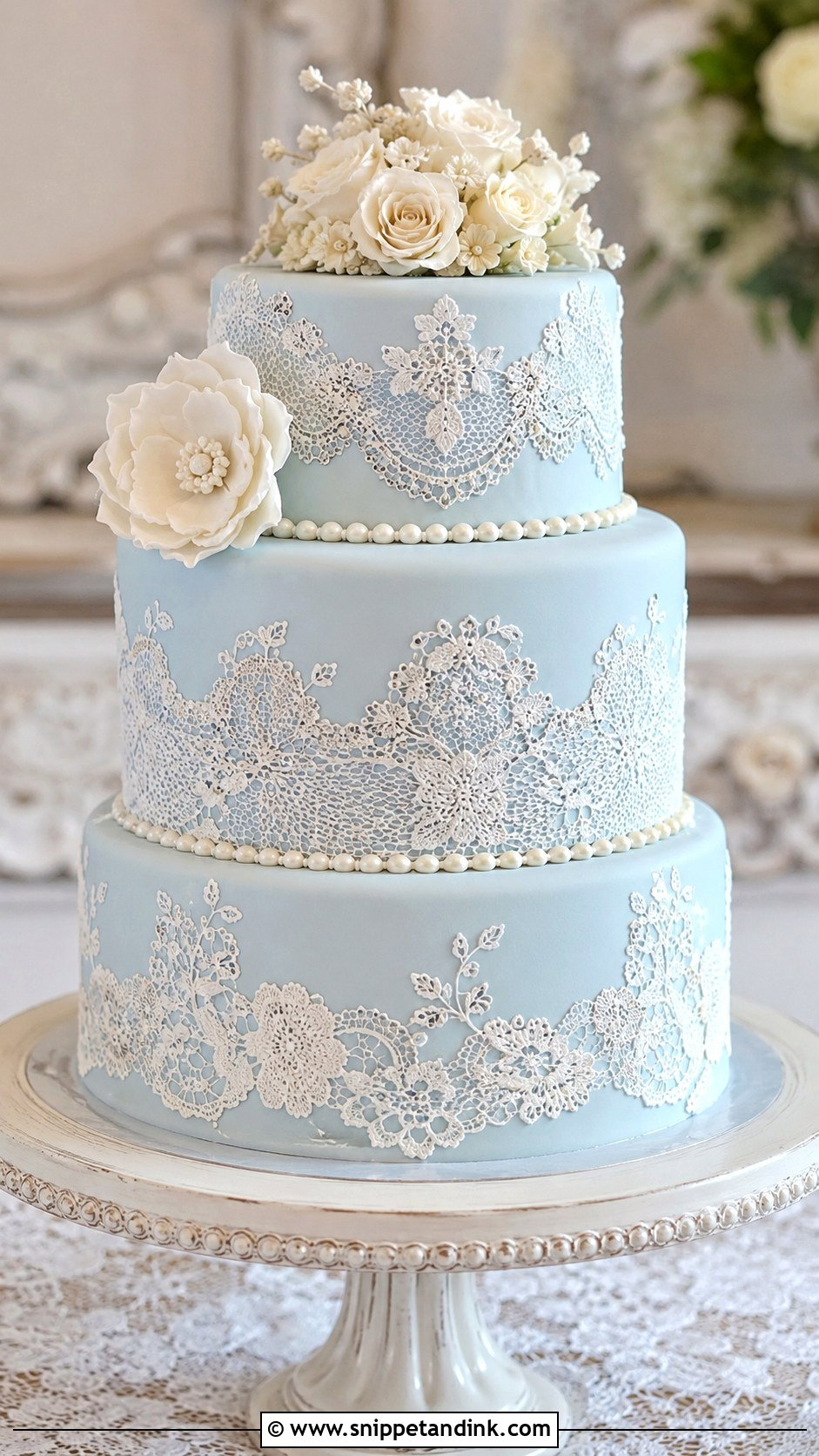
Lace on a cake can be made three ways, and each one looks different. Royal icing piped by hand is raised and slightly irregular, set sugar lace is flat and very fine, and an impression mat pressed into fondant leaves a subtle texture. Powder blue and dusty blue let white lace show clearly. Pearls, small bows or sugar flowers soften it. When the gown is lace, I ask for a close-up photo so the cake can borrow one motif from it, and the gentle blue keeps the whole thing from feeling old-fashioned.
10. Blue Wedding Cake With Fresh Hydrangeas
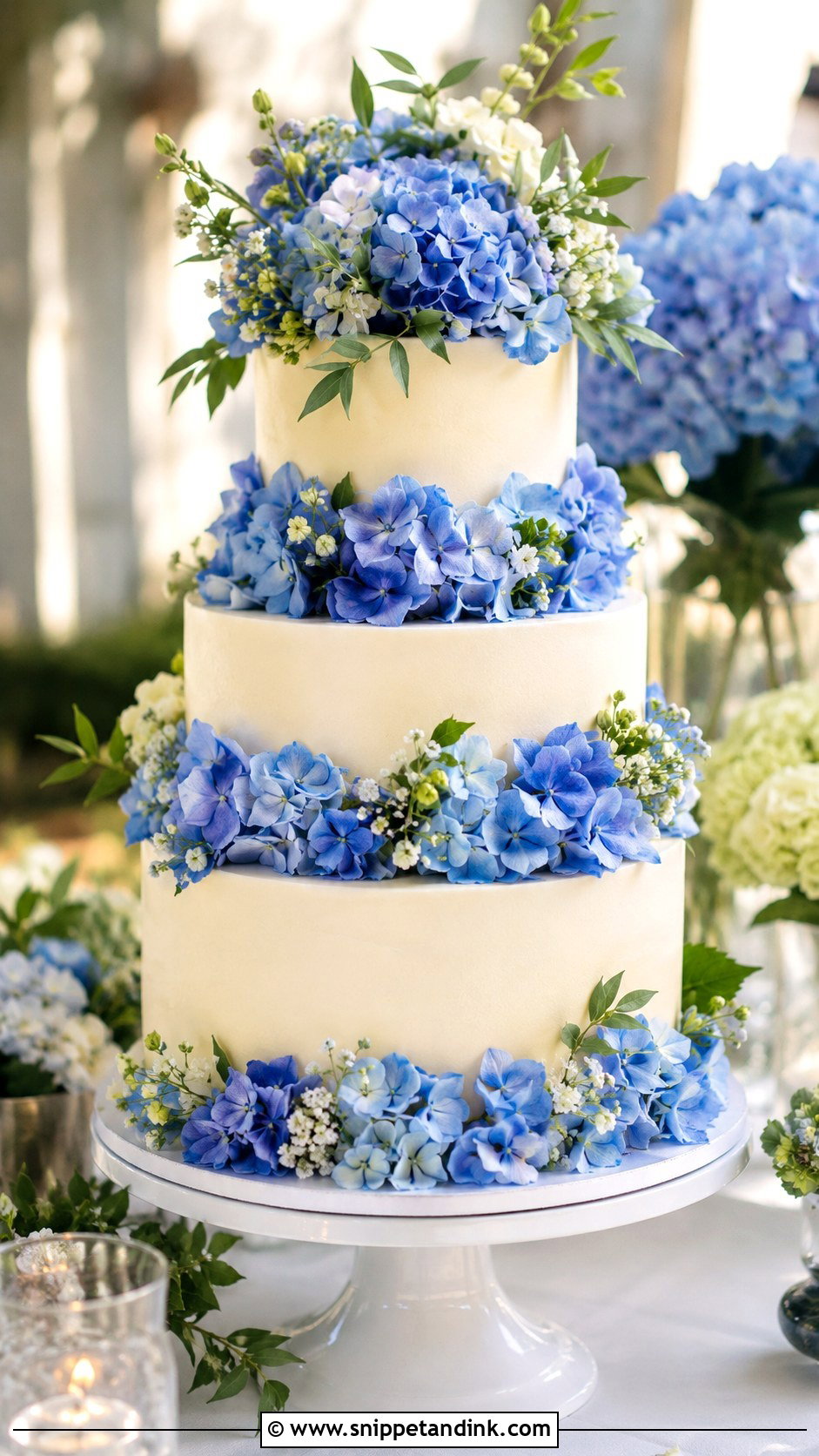
One hydrangea head covers more cake than five roses, so you need very few. A cluster between tiers or a short cascade down one side finishes a white, ivory or pale blue cake. They aren’t edible and they wilt quickly out of water, so I ask the florist to deliver well-conditioned heads, wrap the stems and set each bloom on a small disc of parchment so nothing touches the icing. They go on at the venue, as close to the reception as possible. Garden weddings with blue centrepieces suit them best.
11. Blue Wedding Cake With Buttercream Texture
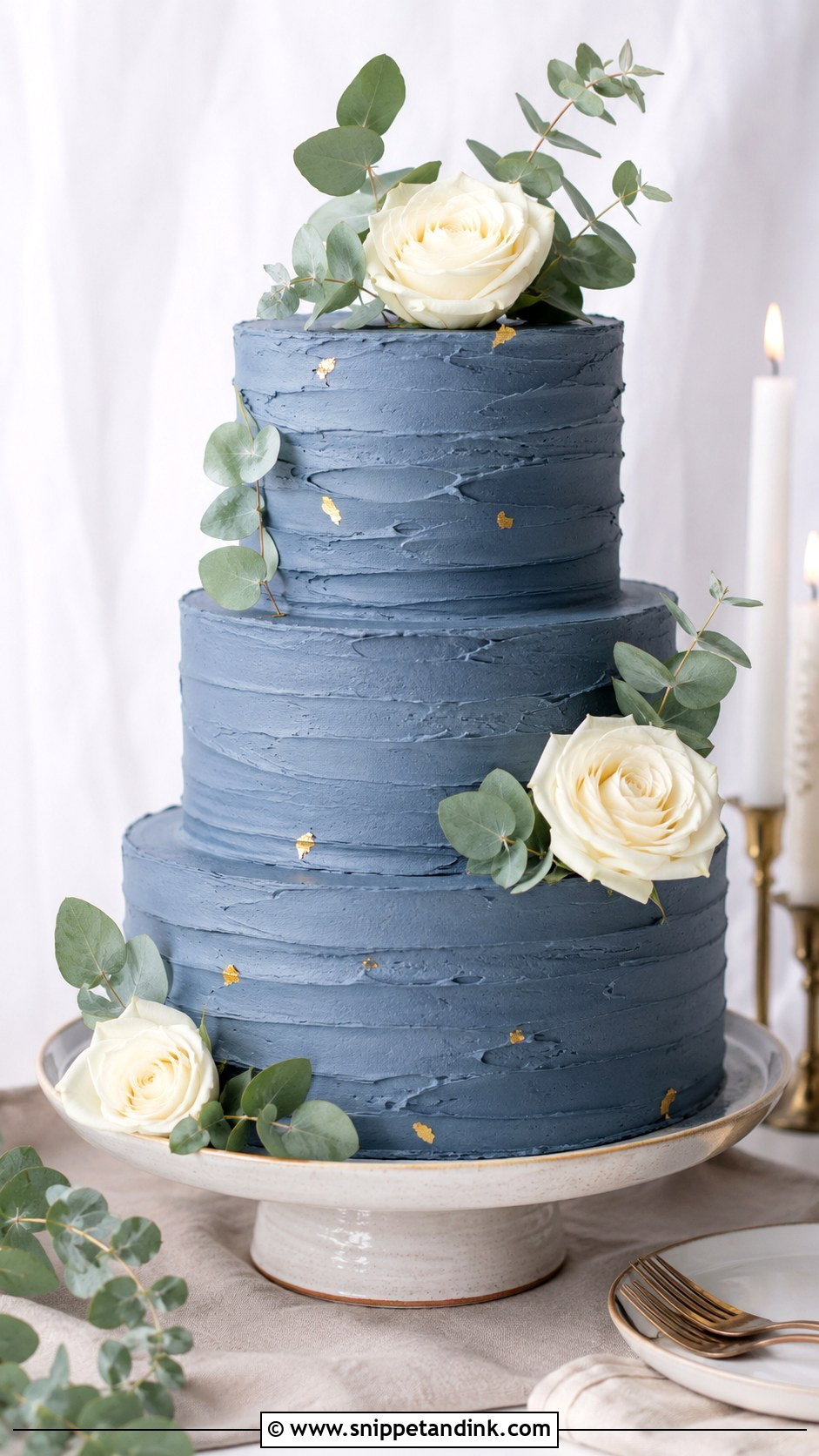
Texture hides the small dents a smooth finish shows, which is one reason I recommend it for outdoor receptions. Ridges from a comb scraper, palette knife strokes, brushed finishes or ruffles all work in dusty blue, slate or a soft ocean blue. A few fresh flowers, gold flecks or some greenery balance it. Couples who don’t want a flawless fondant surface tend to love it, and since most guests prefer buttercream to fondant, it tends to get eaten rather than peeled.
12. Blue Wedding Cake With Sugar Flowers
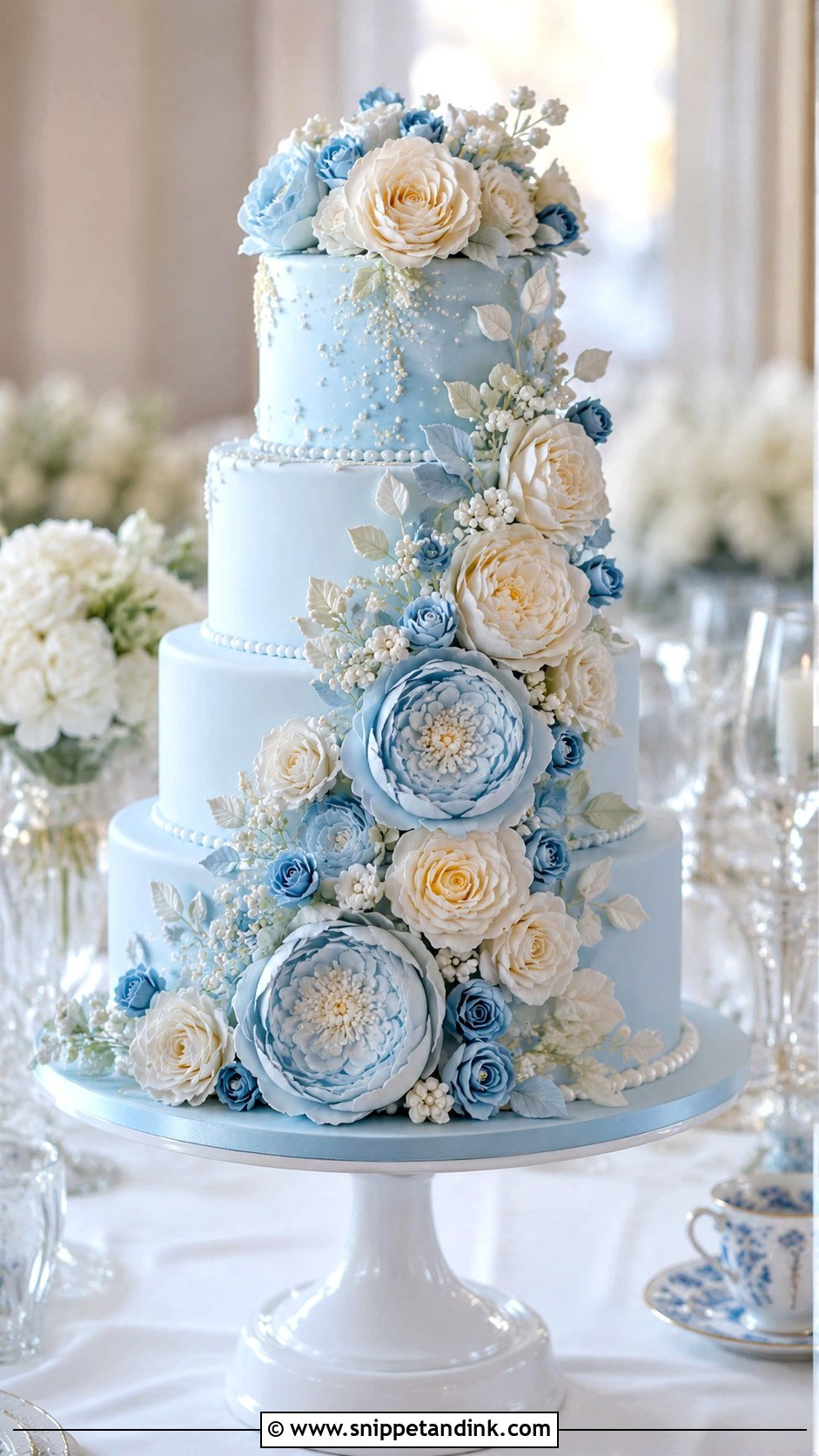
Sugar flowers are made petal by petal from gum paste, wired, dried and dusted with colour, so they take days of work and they’re the main reason a cake’s price climbs. What you get in return: I can tint them to your exact dusty blue or slate, and make blooms that are out of season. Roses, anemones, orchids and peonies all suit a white or pale blue cake. They also survive the reception, and many couples keep one in a box afterward. If you want a lot of them, book early.
13. Blue Wedding Cake With Gold Drip
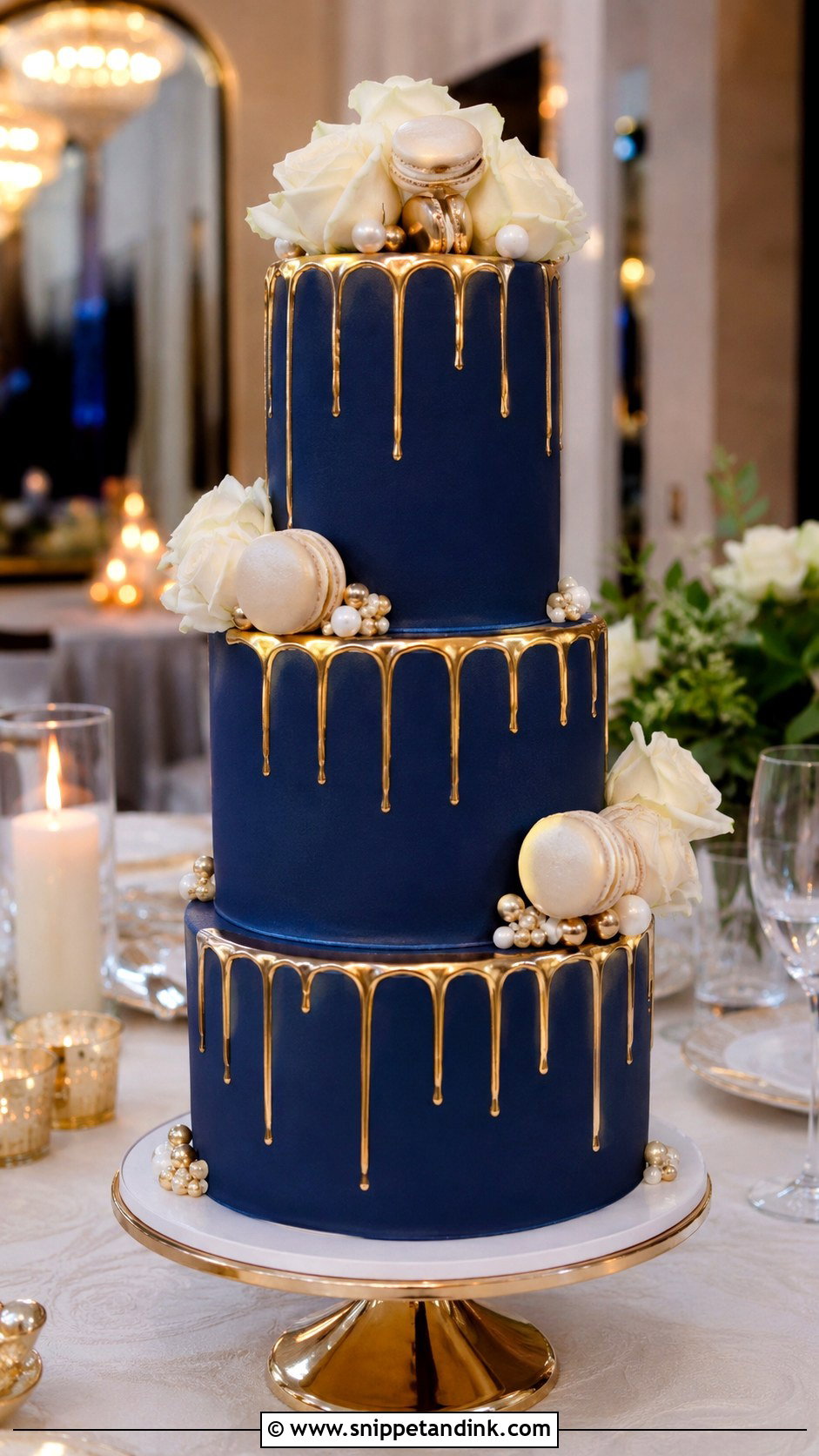
A metallic drip is really two jobs. First a white chocolate or ganache drip goes on and sets in the fridge, then I paint it with edible gold lustre. That’s how I make a blue wedding cake with gold drip look clean rather than messy. The base can be navy, dusty blue or royal blue. Flowers, macarons, pearls or sugar shards can decorate the top, but pick two at most. It makes most sense when gold already shows up in the tables, the invitations or the lighting.
14. Blue Wedding Cake With Silver Stars
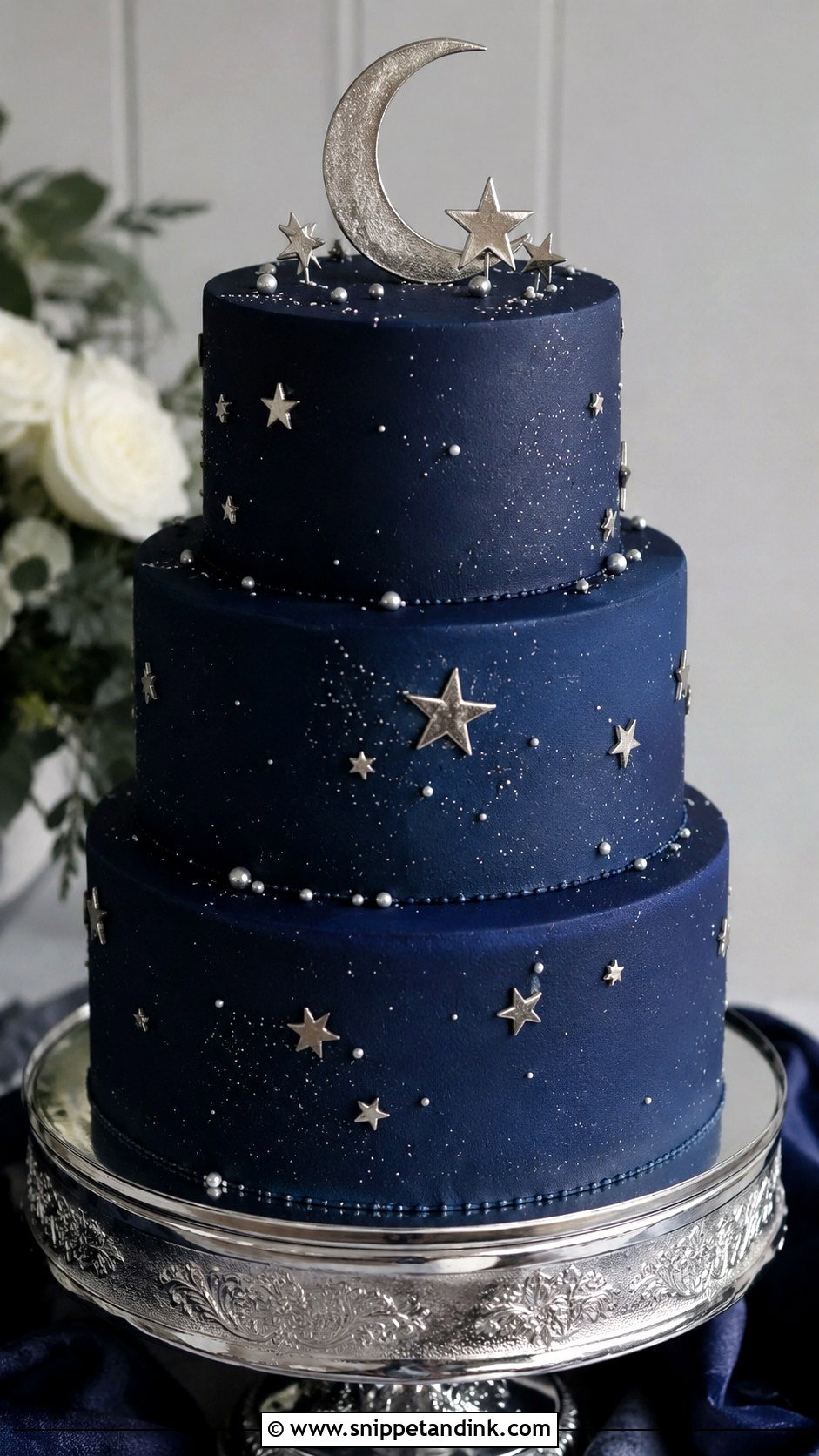
Celestial cakes tip into party territory quickly, so restraint matters. A blue wedding cake with silver stars works best in navy, midnight blue or deep sapphire, where the dark base reads as a night sky. I cut the stars small, vary their sizes and cluster them more densely on one side, the way a real sky looks, instead of spacing them evenly. A moon accent or faint shimmer can join in. Evening and rooftop receptions suit it, finished with white flowers or a plain silver topper.



15. Blue Wedding Cake With Ruffles
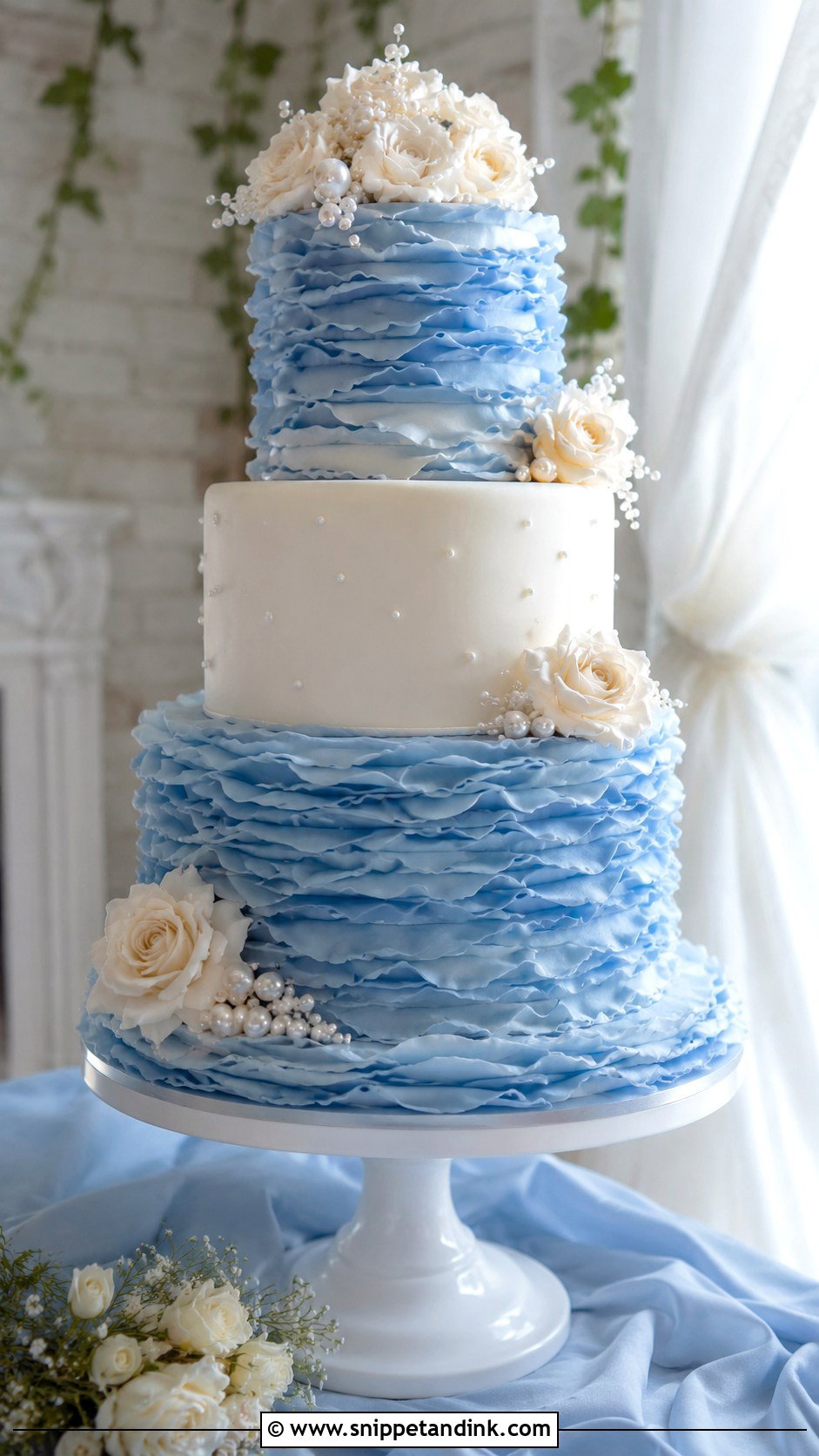
Ruffles are heavy for their size, which is why I usually confine them to one statement tier and keep the others smooth. Fondant ruffles hold their shape, wafer paper is lighter and more delicate but dislikes humidity, and buttercream ruffles are the softest to eat. Pale blue looks airy; a deeper blue looks dramatic. Small white flowers or pearls add bridal detail. Ballrooms and coastal receptions full of flowing fabric suit this one.
16. Blue Wedding Cake With White Fondant
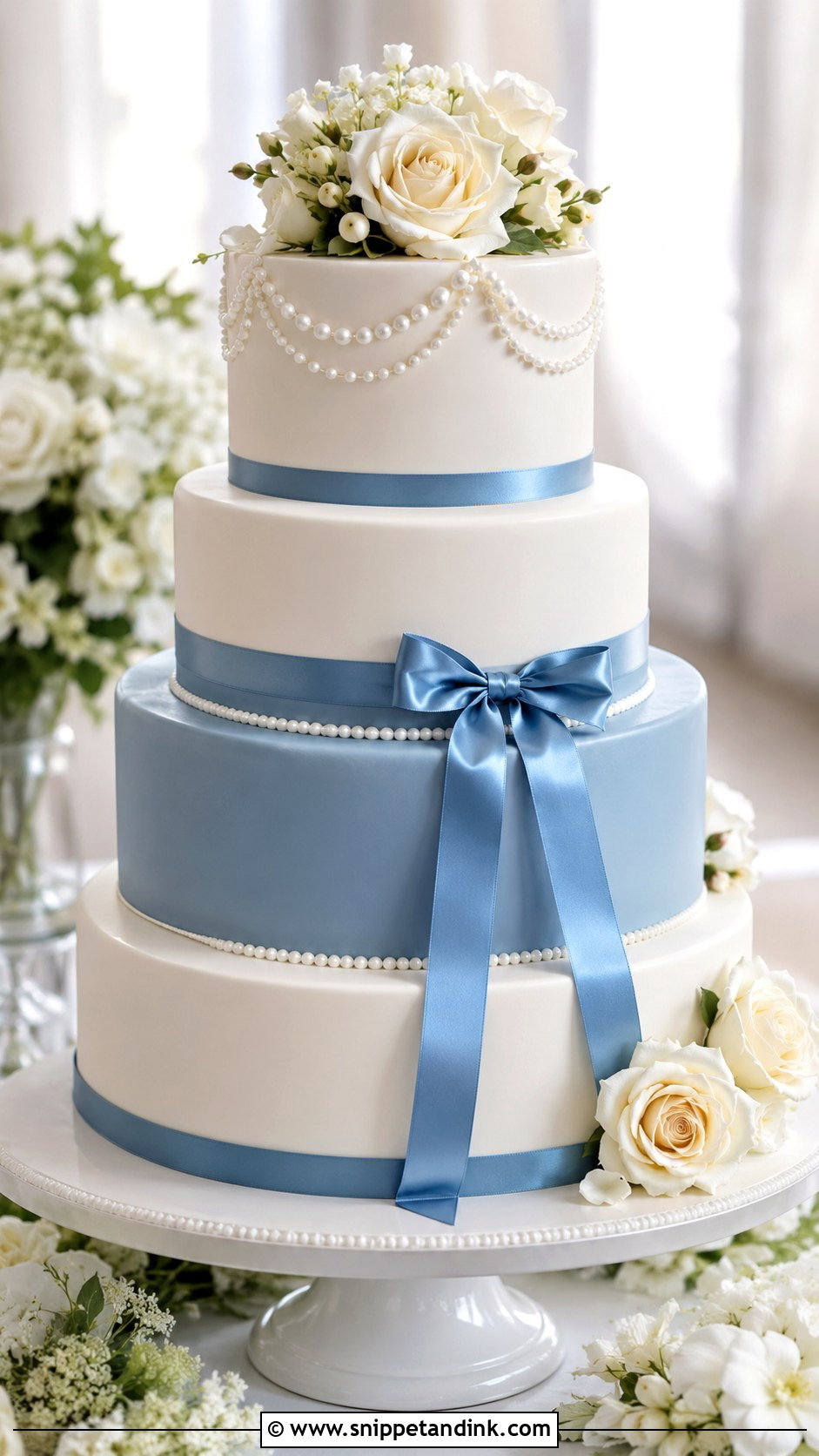
Sometimes the best blue cake is mostly white. White tiers carry the blue through a ribbon, painted detail, florals, panels or a single coloured tier, which is a smart route when the rest of your palette is already busy. Smooth fondant keeps the details sharp in photos. Navy reads formal, dusty blue soft and light blue delicate. From the work side, white fondant shows every fingerprint and speck of dust, so I handle it with smoothers and gloves and it’s always the last thing out of the box.
17. Blue Wedding Cake With Geometric Details
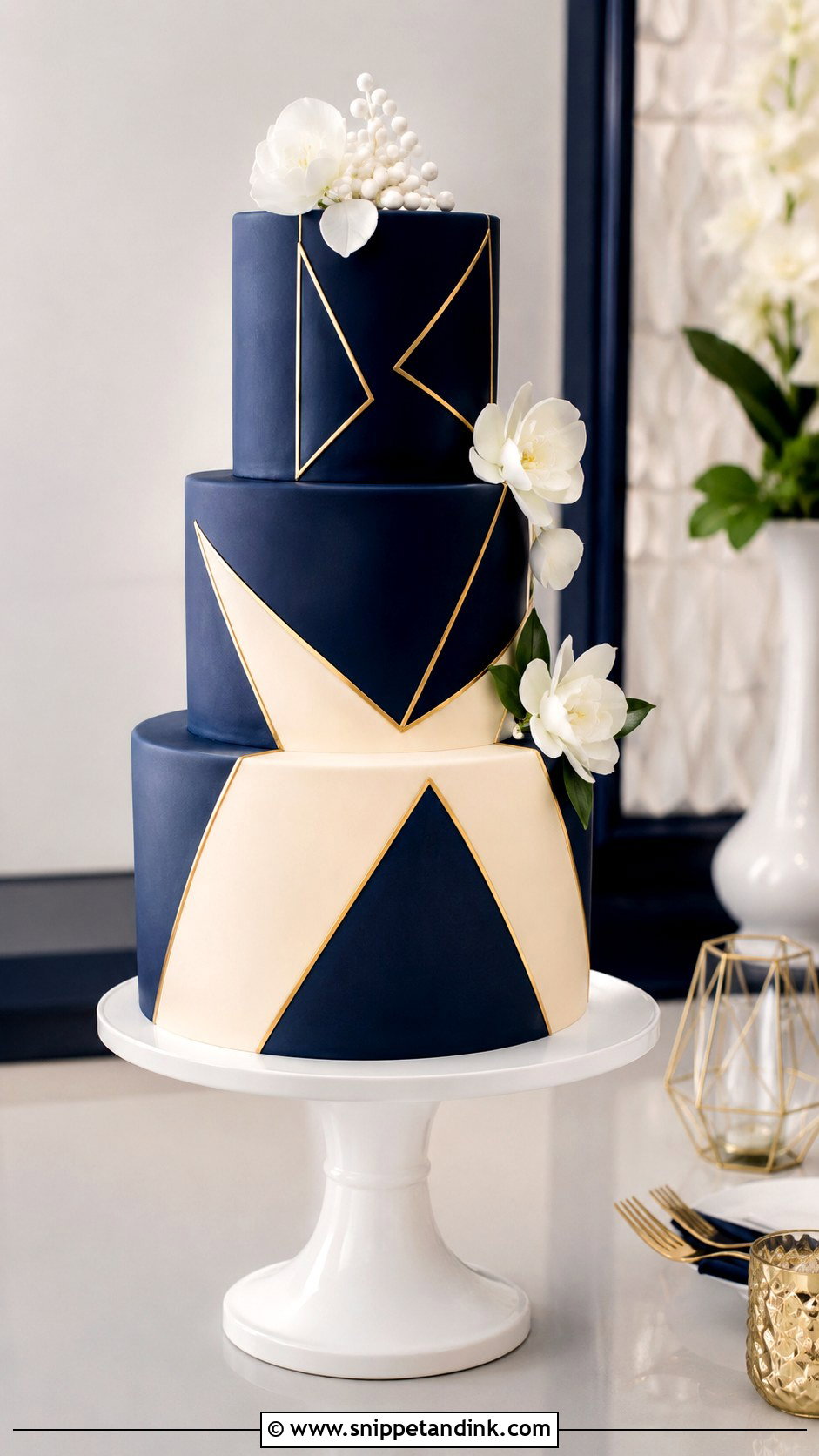
Geometric cakes depend on structure more than decoration. Hexagon tiers need precisely cut boards and crisp corners, and angled panels are cut from fondant against a template, so order this from someone whose portfolio already shows clean lines. Navy and royal blue look strong with gold or silver accents; dusty blue with white lines is the softer version. A few sugar flowers or a little greenery take the edge off. City and modern venues suit it best.
18. Blue Wedding Cake With Beach Theme
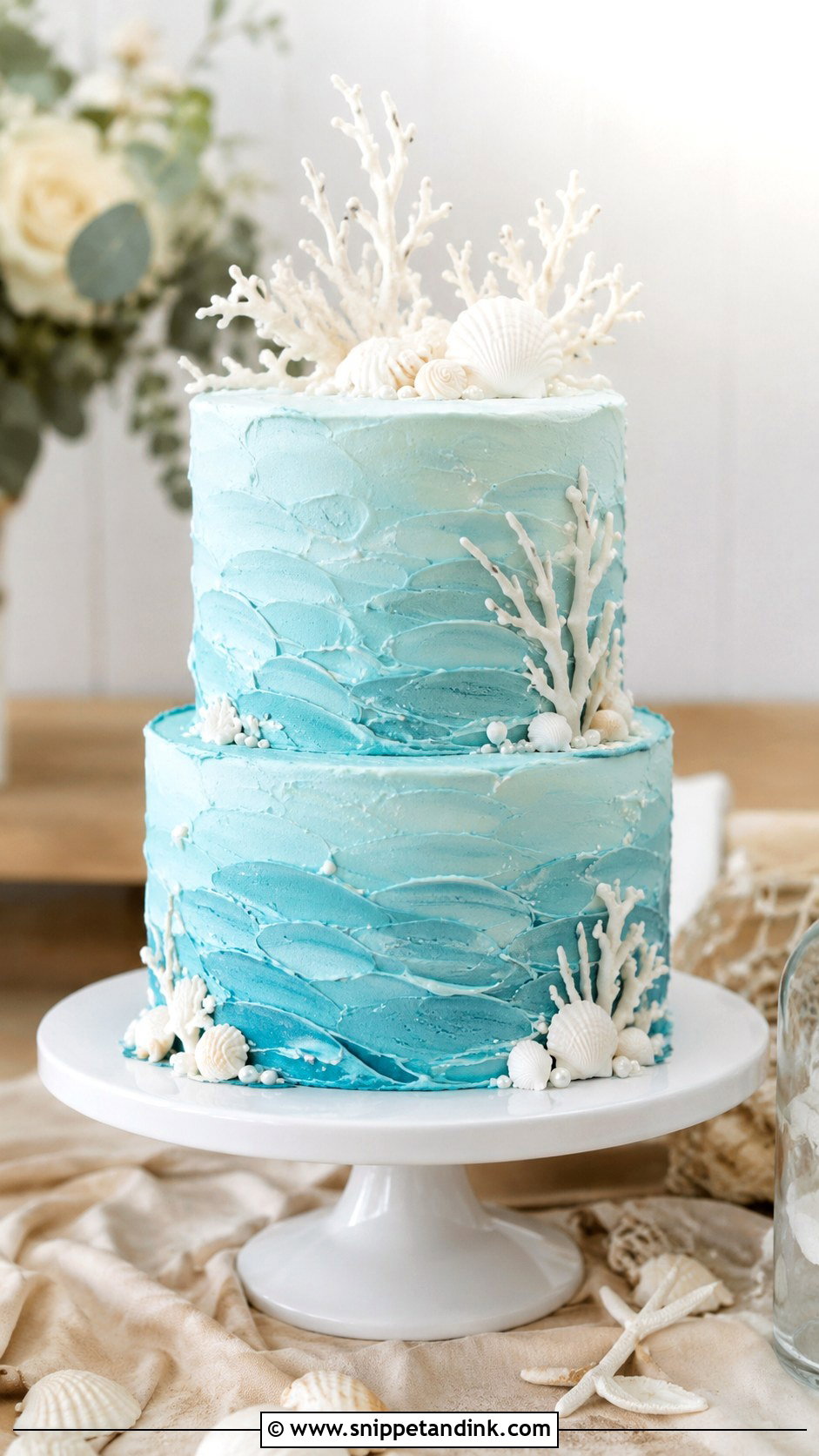
A beach cake looks elegant when it suggests the sea rather than illustrating it. Ocean blue buttercream, watercolour waves or tiers that fade like water into sky set the mood. Add white sugar shells, pearl details, coral-style piping or a sandy-toned base, and stop there. I leave out starfish and boats entirely. Calm colours keep it bridal for a coastal ceremony or a destination reception with light linens.
19. Blue Wedding Cake With Blush Flowers
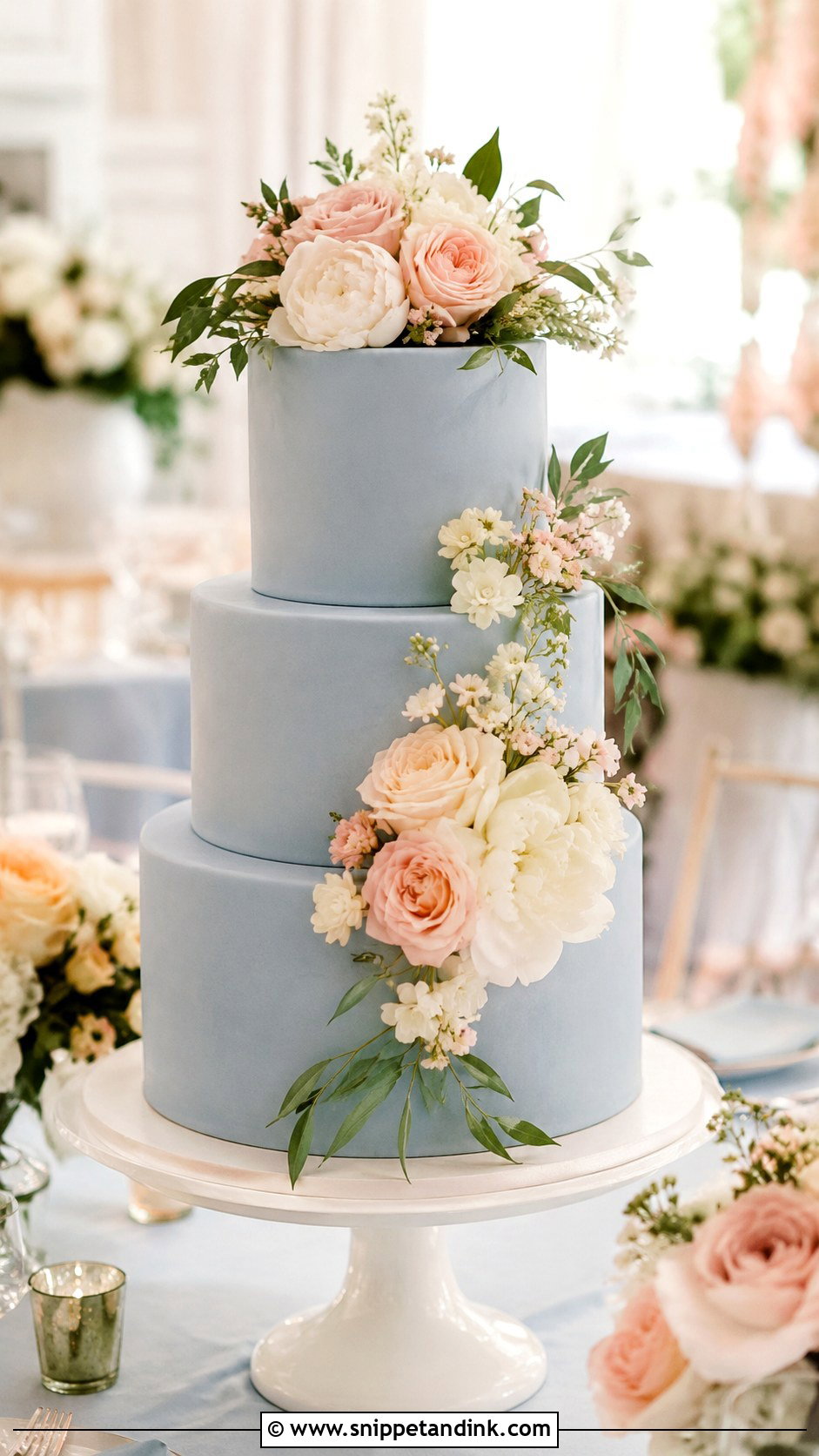
Blue and blush only works when one of them leads. I usually let the cake carry the blue in dusty, powder or slate and keep blush to the flowers, with ivory in between so the palette doesn’t turn into pastel soup. Roses, peonies, ranunculus and small filler blooms all suit it. Smooth icing looks refined; textured buttercream looks relaxed. Spring gardens and receptions with soft floral centrepieces are where it belongs.
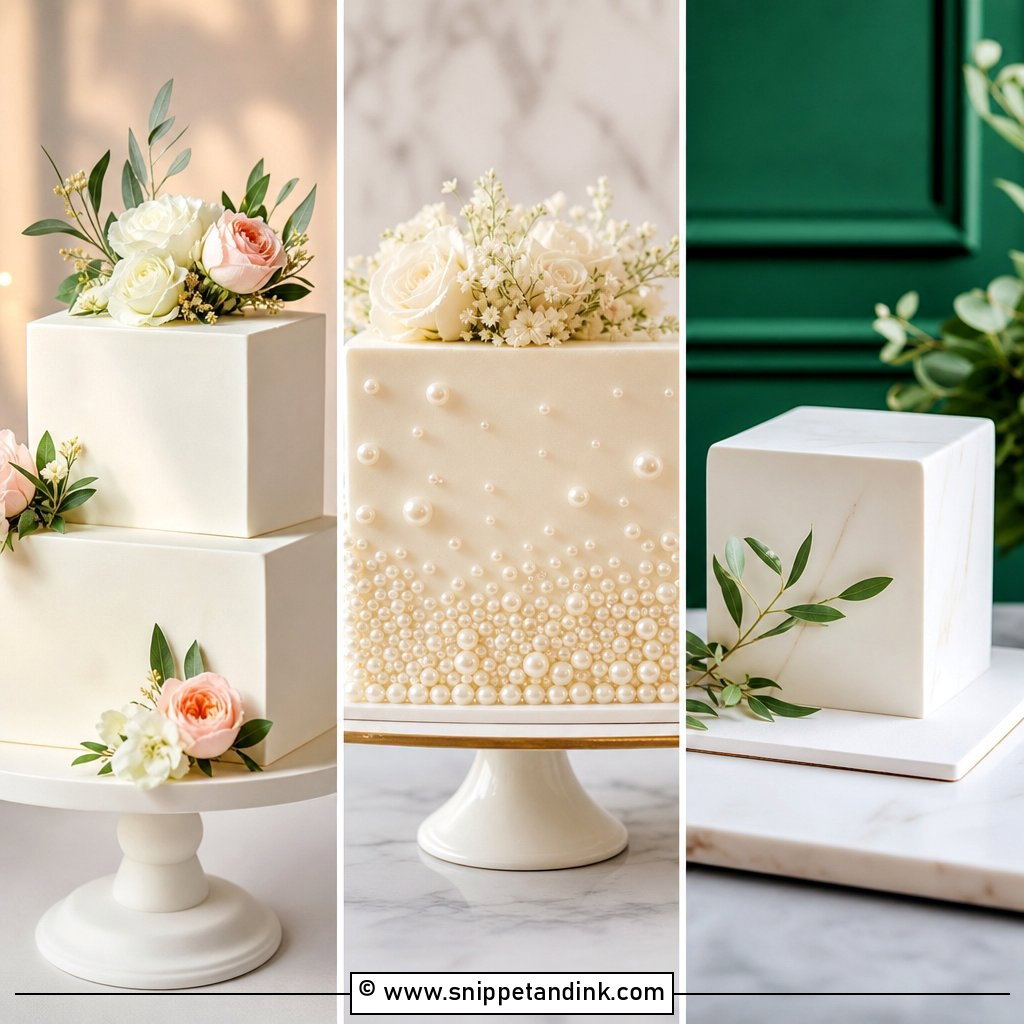


20. Blue Wedding Cake With Minimalist Style
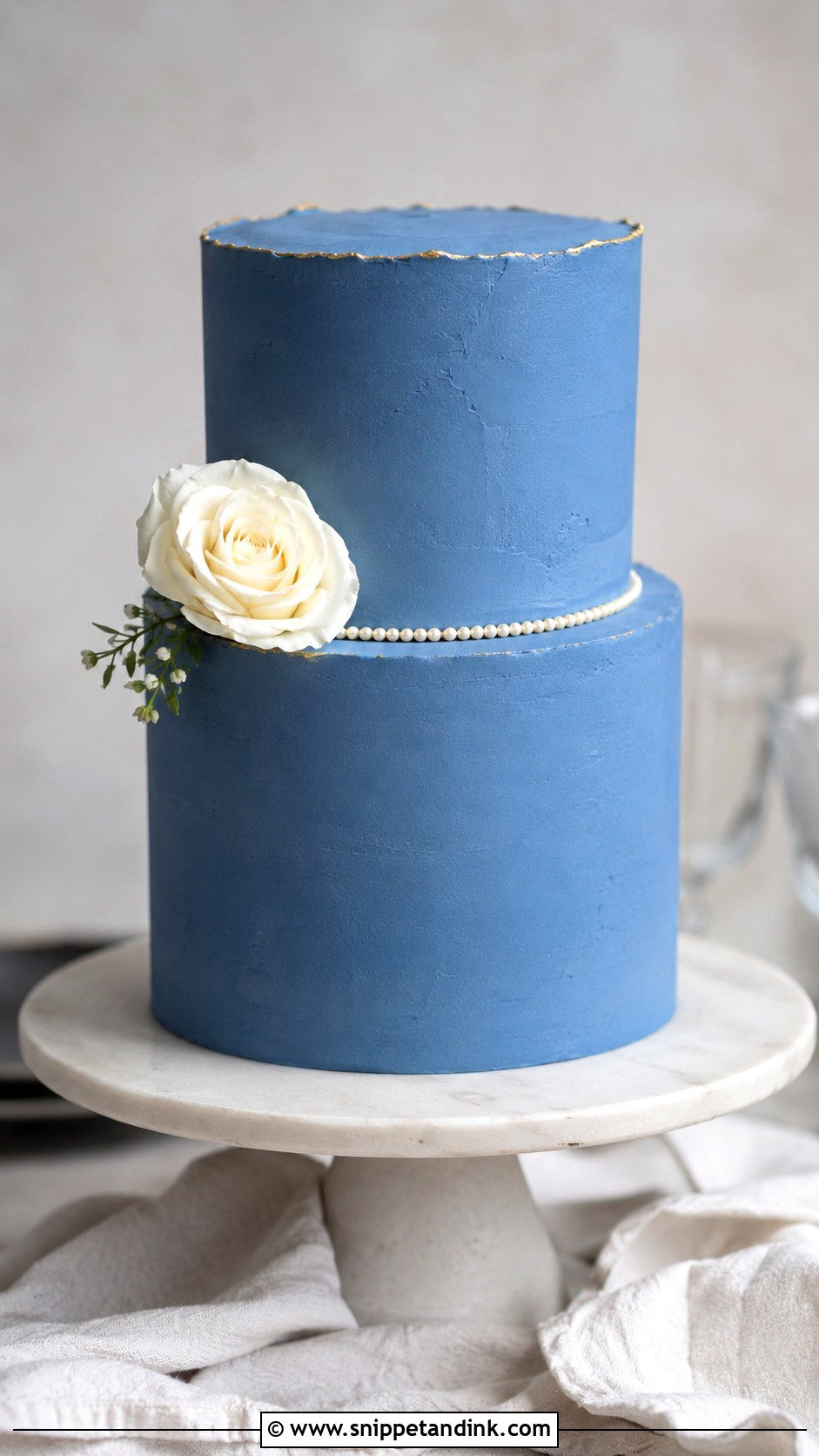
Minimal cakes are the hardest to hide anything on. With one shade and a clean shape, every bulge, air bubble and uneven edge shows, so I spend the longest on the crumb coat and the final scrape. Pick slate, dusty or pale blue and add a single detail: a small floral cluster, a thin ribbon, a line of pearls or a metallic edge. Proportion does the rest, especially tall tiers with a little air between them. Small weddings and modern receptions suit it, and in photos nothing competes with it.
Setting the Cake Where the Light Is Kind to Blue
Where the cake stands changes how its colour reads. A dark corner turns navy into black and dusty blue into grey, and coloured uplighting can wash it out entirely. I ask venues for a spot with steady, neutral light, a plain backdrop and room for the couple to stand on both sides when they cut. Keep it out of direct sun and away from heaters, and tell your photographer where it is so it gets photographed before guests crowd round.
Saving the Top Tier Without Freezer Taste
If you plan to keep the top tier for your first anniversary, mention it when you order, because some fillings freeze better than others. Fresh fruit and custard fillings suffer; buttercream and ganache cope well. Remove any flowers and wires, chill the tier until the icing is firm, then wrap it tightly in several layers of cling film and foil and seal it in an airtight box so it doesn’t absorb freezer smells.
Thaw it slowly in the fridge, still wrapped, so condensation forms on the wrapping instead of the icing. I’ll be honest, a year is a long time for sponge to sit frozen. Plenty of couples are happier eating it within a few months, or ordering a small fresh copy of the top tier for the anniversary itself.
One Shade, One Idea, Then Stop
Dusty blue feels soft, navy formal, light blue delicate and royal blue bold, and the decoration can steer any of them. White flowers and pearls keep a cake classic, marble or geometric work makes it modern, and hydrangeas and blush blooms give it a garden feel. Most cakes I see that look wrong have two good ideas fighting each other. Settle on one direction first, then add detail only while it still supports that idea.
You'll Like These Ideas:





Leave a Reply