
I dress a lot of cakes, and a black one changes how I think about every stem. Flowers that would melt into an ivory buttercream suddenly stand out like they’re lit from behind, and dark blooms that look rich in a bouquet can disappear entirely. Getting a dark cake to read as bridal comes down to contrast, a little texture and placement that looks decided rather than scattered. White roses on matte fondant, dark sugar flowers on velvety buttercream, gold leaf beside black blooms and pressed petals on clean tiers all work, for very different weddings. Here’s how I’d approach each one, from black-tie ballrooms to moody garden receptions.
Fresh Stems or Sugar Petals on a Dark Cake?
Every design below can be done with real flowers, sugar flowers or a mix, and the choice changes cost, timing and how the cake looks at the end of the night. This is how I explain the trade-off to couples.
Fresh Flowers
They look alive in a way nothing else does, and they’re usually the cheaper option if your florist is already at the venue. The downside is time. Most cut flowers start to soften within a few hours out of water, and in a warm reception room the outer petals of roses and peonies show it first. I place them as late as I can, ideally once the room is set and the cake is in position.
Sugar Flowers
They never wilt, they can be any color including black, and they can be made months ahead and kept afterward. They take a skilled maker many hours per bloom, so they cost more, and they’re fragile in transport. On a dark cake, sugar is often the better choice for pale flowers that bruise easily.
A Mix of Both
My favorite approach. Sugar for the focal blooms that need to look perfect for hours, fresh greenery and small fillers around them for life and movement. Your baker and florist will need to agree on who places what, and when.
1. Black Wedding Cake With White Flowers
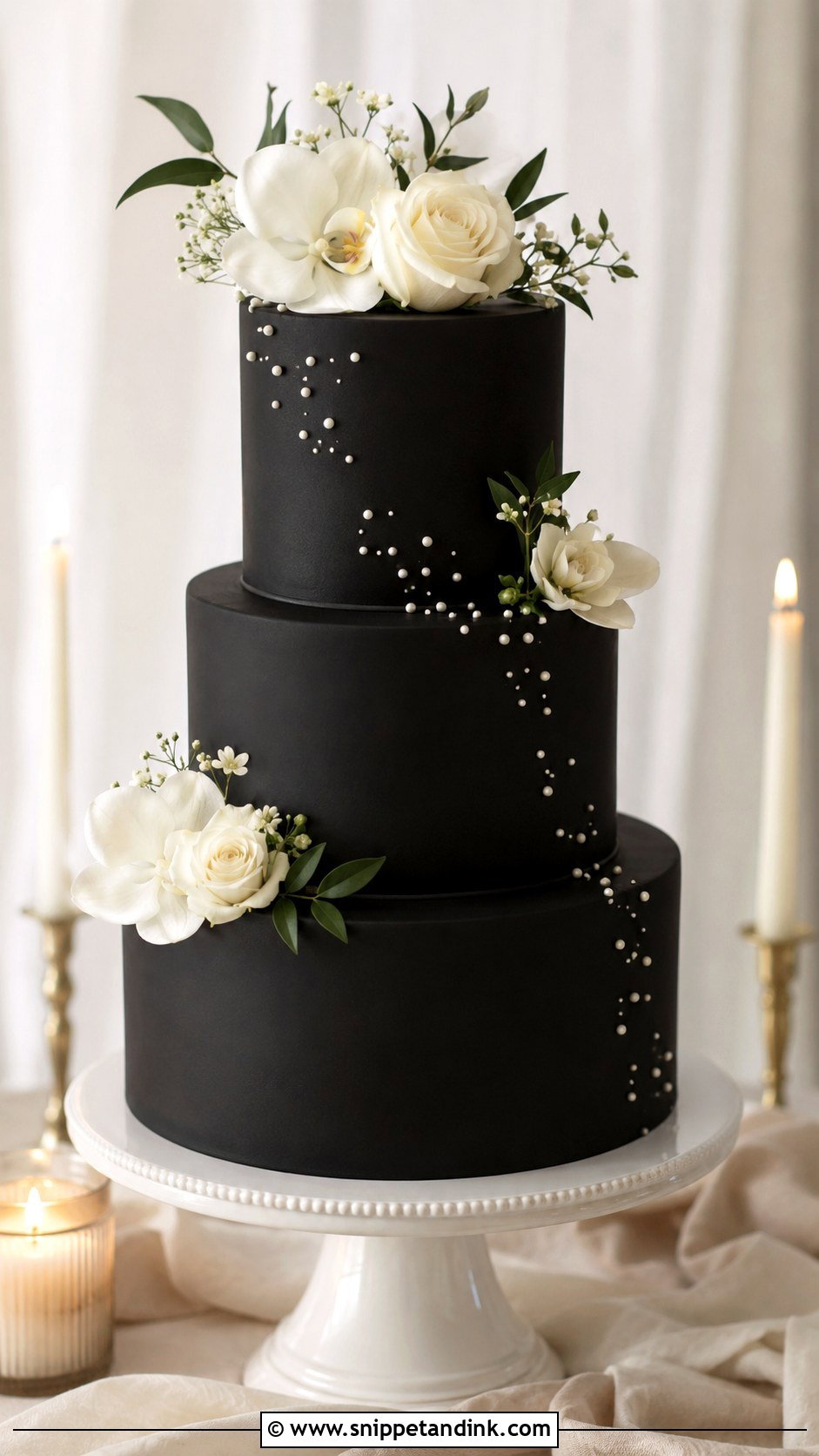
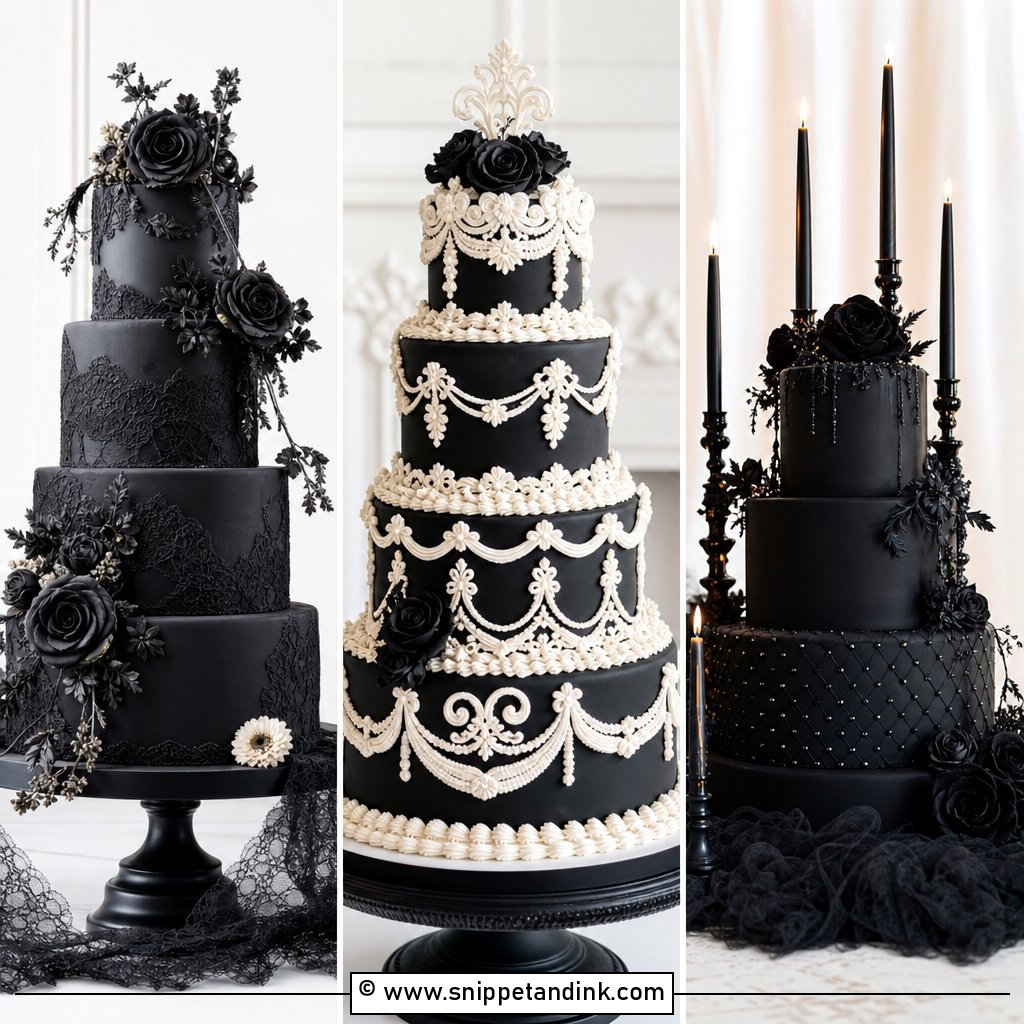
White on black is the safest contrast I know, and it photographs clearly in almost any light. A matte black fondant or smooth black buttercream base, then white roses, orchids, peonies or anemones in a soft cascade. I keep the flowers to one side so the black still has a clean field to show off. When I’m building a cascade like this, I start with the largest bloom about a third of the way down, then work smaller flowers up and down from it, which stops the arrangement looking like it slid off the top. Small pearls soften it further if you’d like.
2. Black Floral Wedding Cake With Gold Leaf
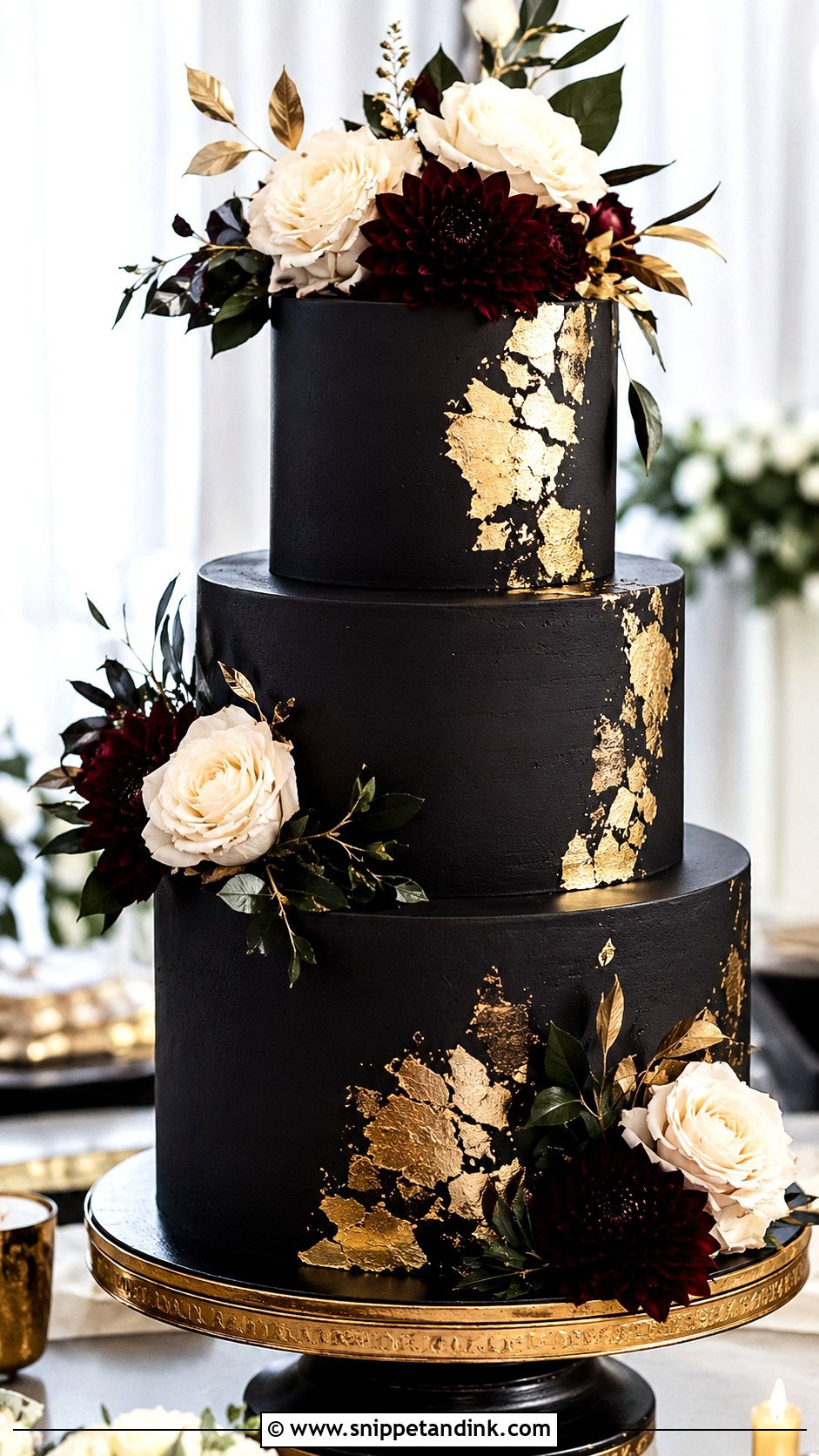
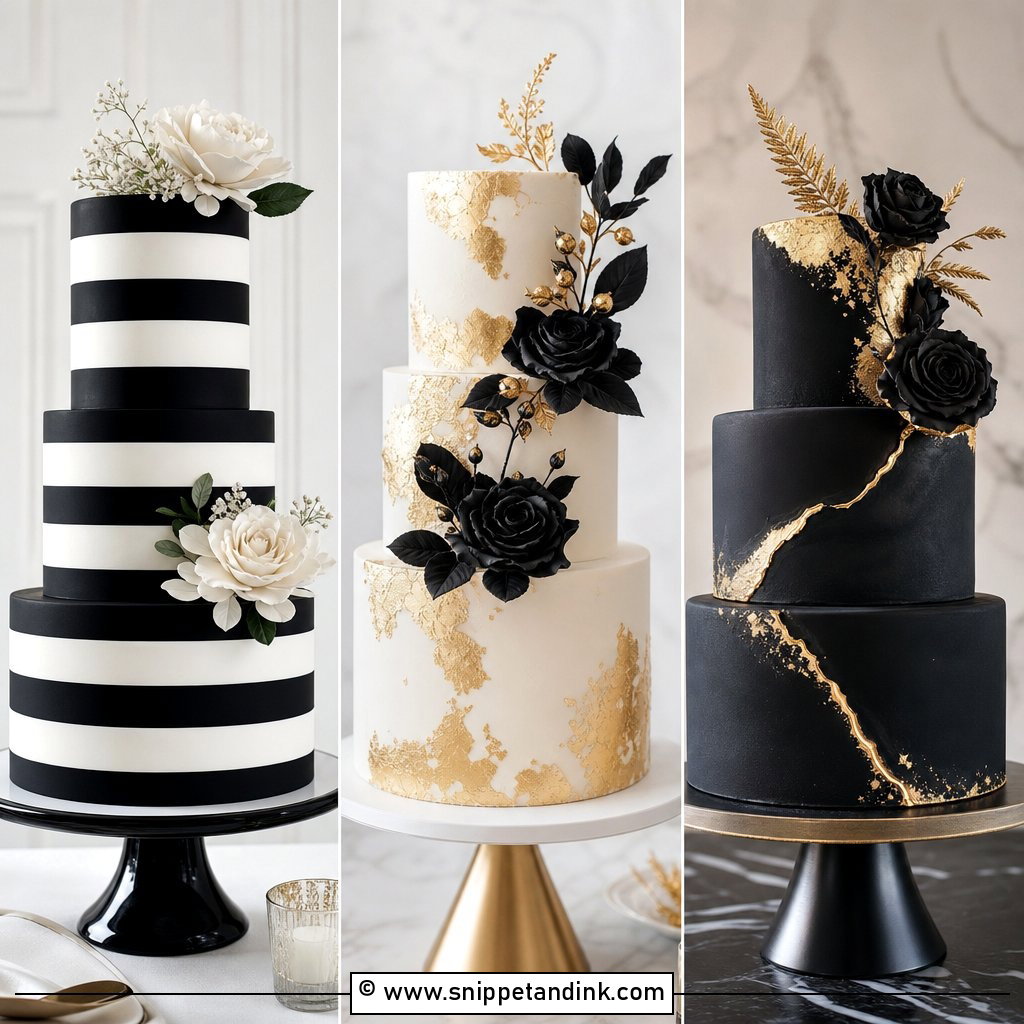
Black and gold look rich together, and flowers stop the pairing feeling stiff. The gold works best when it’s sparse. I’d ask your baker for thin patches of edible gold leaf around the tier edges, then keep my floral work in ivory, blush or burgundy so the metal doesn’t fight the petals. Three smooth black tiers give the gold enough room. Ballrooms and art deco themes suit it, and it’s a good way to get drama without bringing in a third or fourth color.
3. Black Buttercream Wedding Cake With Flowers
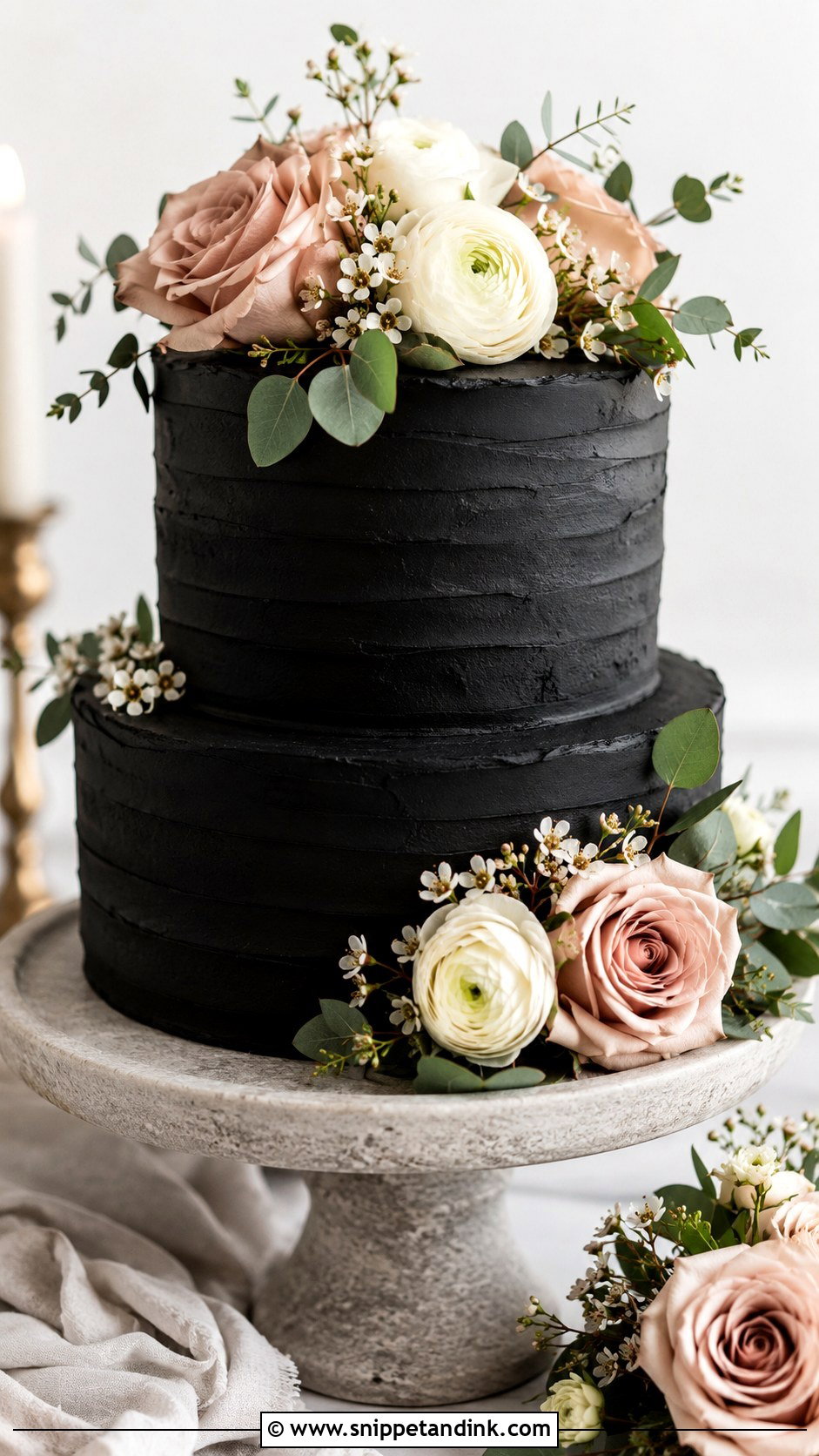
Black buttercream has a soft, slightly handmade surface that flowers settle into naturally. A smooth, lightly ridged or rustic finish all work. I add fresh or sugar blooms in white, cream, dusty rose, plum or deep red, often in loose clusters at the base or tucked between tiers where the buttercream hides the stem picks. One thing I watch: buttercream is soft, so heavy flower heads need support underneath or they slowly tilt forward through the evening. If dark icing worries you, ask your baker about a black outer coat with a lighter cake inside.
4. Black Fondant Wedding Cake With Sugar Flowers
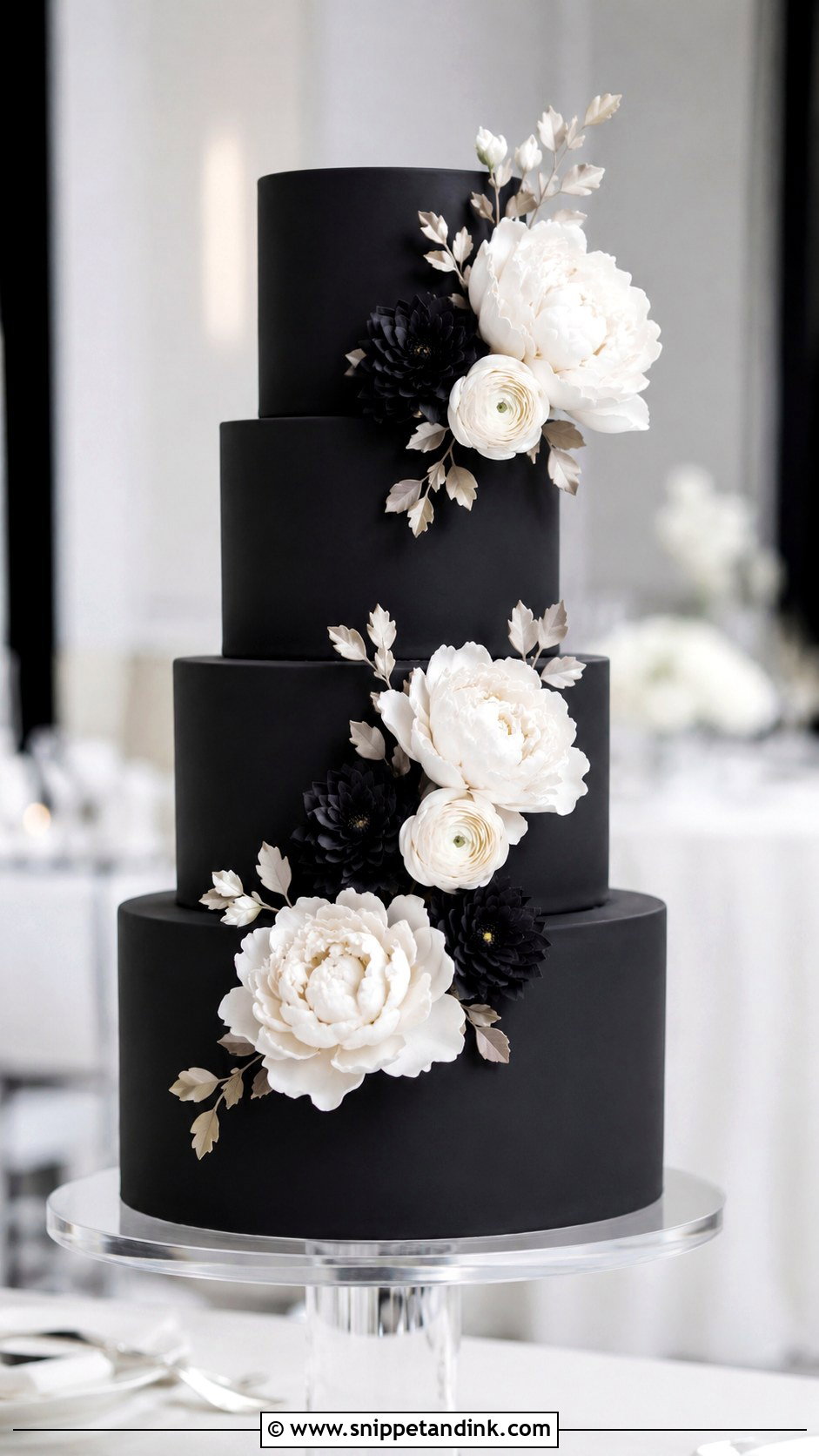
Sugar flowers on black fondant give the cleanest, most sculpted result, and they’re the version that looks flawless from every angle all night. Because they’re made by hand, they can match your bouquet exactly: white garden roses, black dahlias, pale ranunculus or ivory magnolias, whatever the season. I’m always happy to send a baker photos of my actual stems so the sugar work can mirror them. A tall tiered shape makes it feel grand. Keep everything else plain and let the flowers carry it; sugar work is slow, careful labor, and it deserves the space.
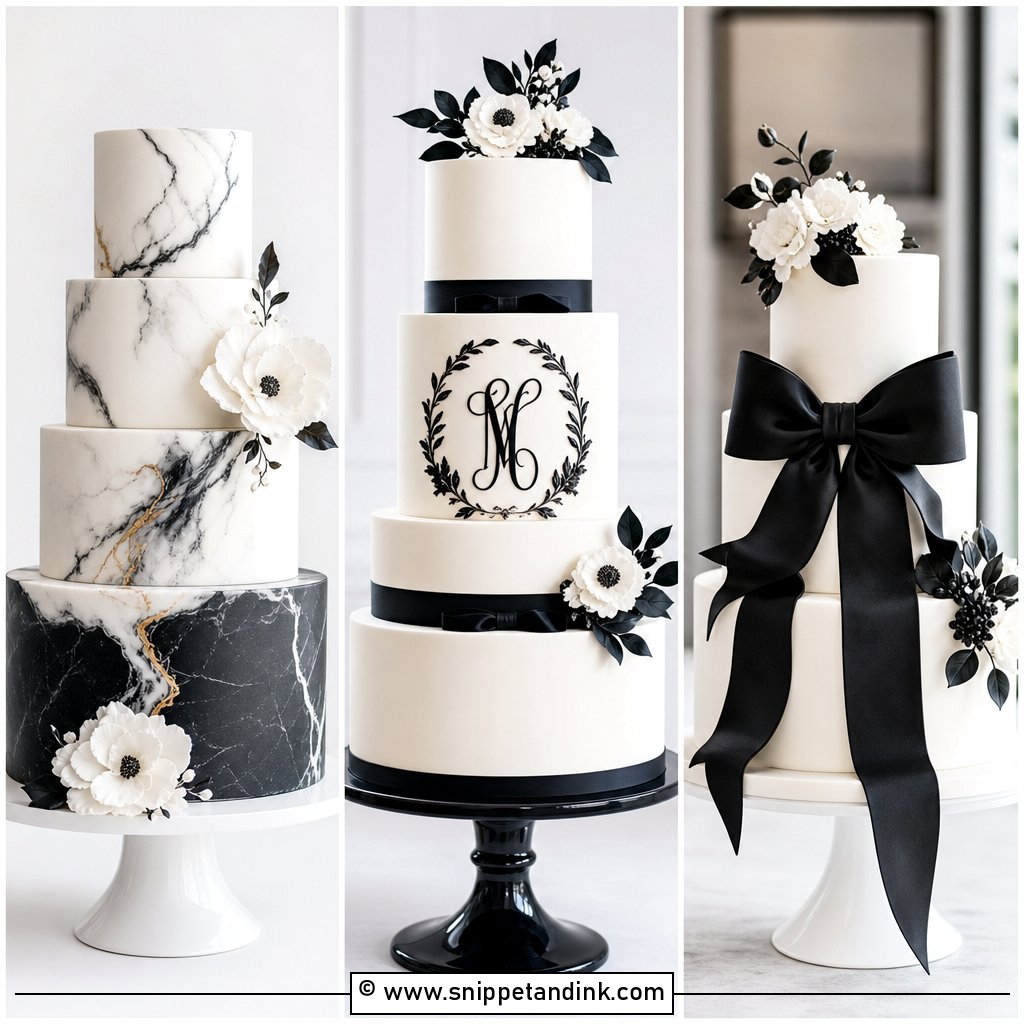
5. Black And White Floral Wedding Cake
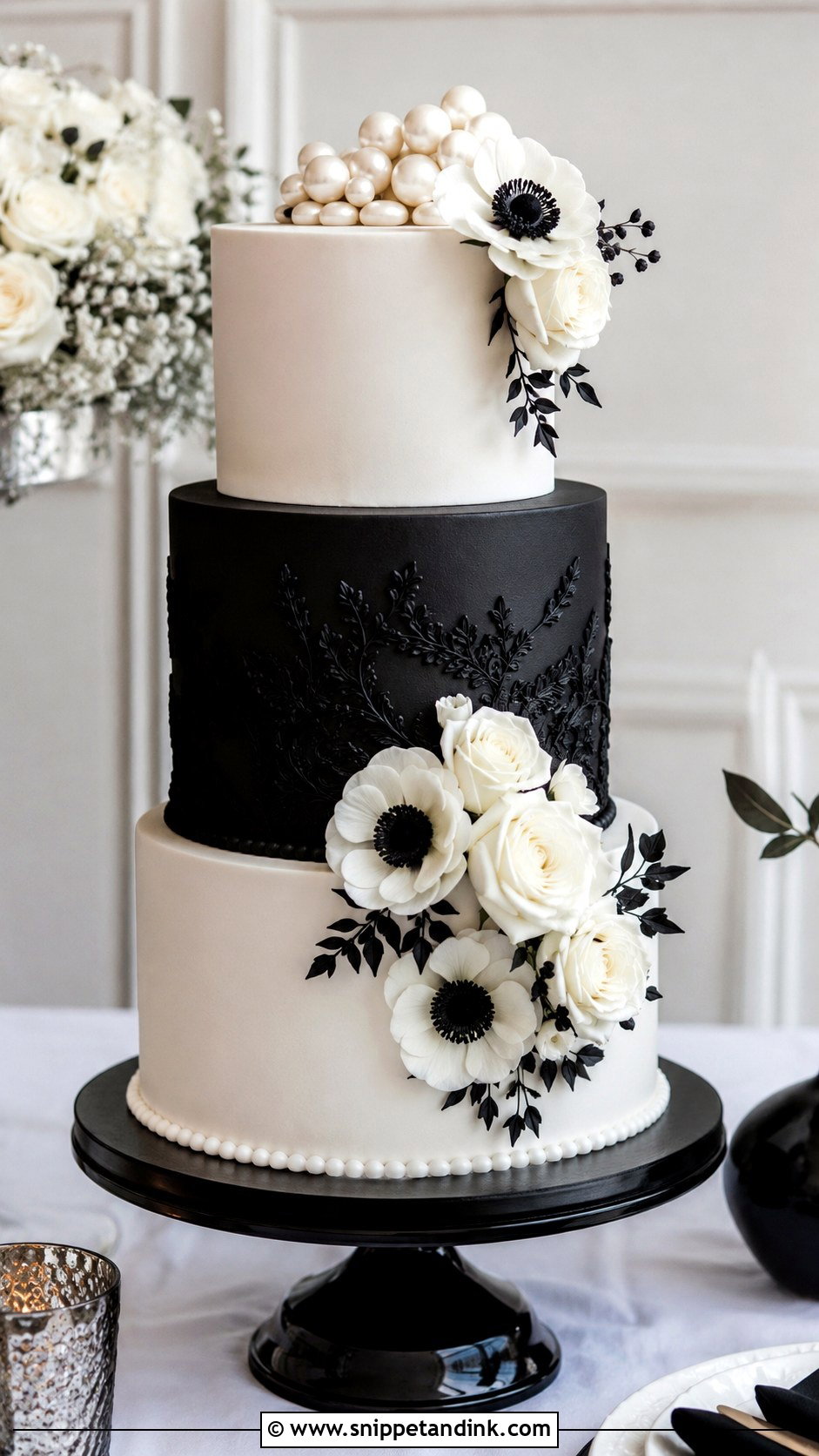
Black and white floral cakes give contrast without committing to a fully black cake. Alternate the tiers, pipe black florals onto white fondant or pipe white onto a black base. A white middle tier lightens the whole design while black top and bottom tiers keep it strong. My favorite flower here is the white anemone, because its dark center ties directly to the black tiers. White roses with dark foliage work too. It sits naturally beside monochrome décor and black bridesmaid dresses.
6. Matte Black Wedding Cake With Floral Cascade
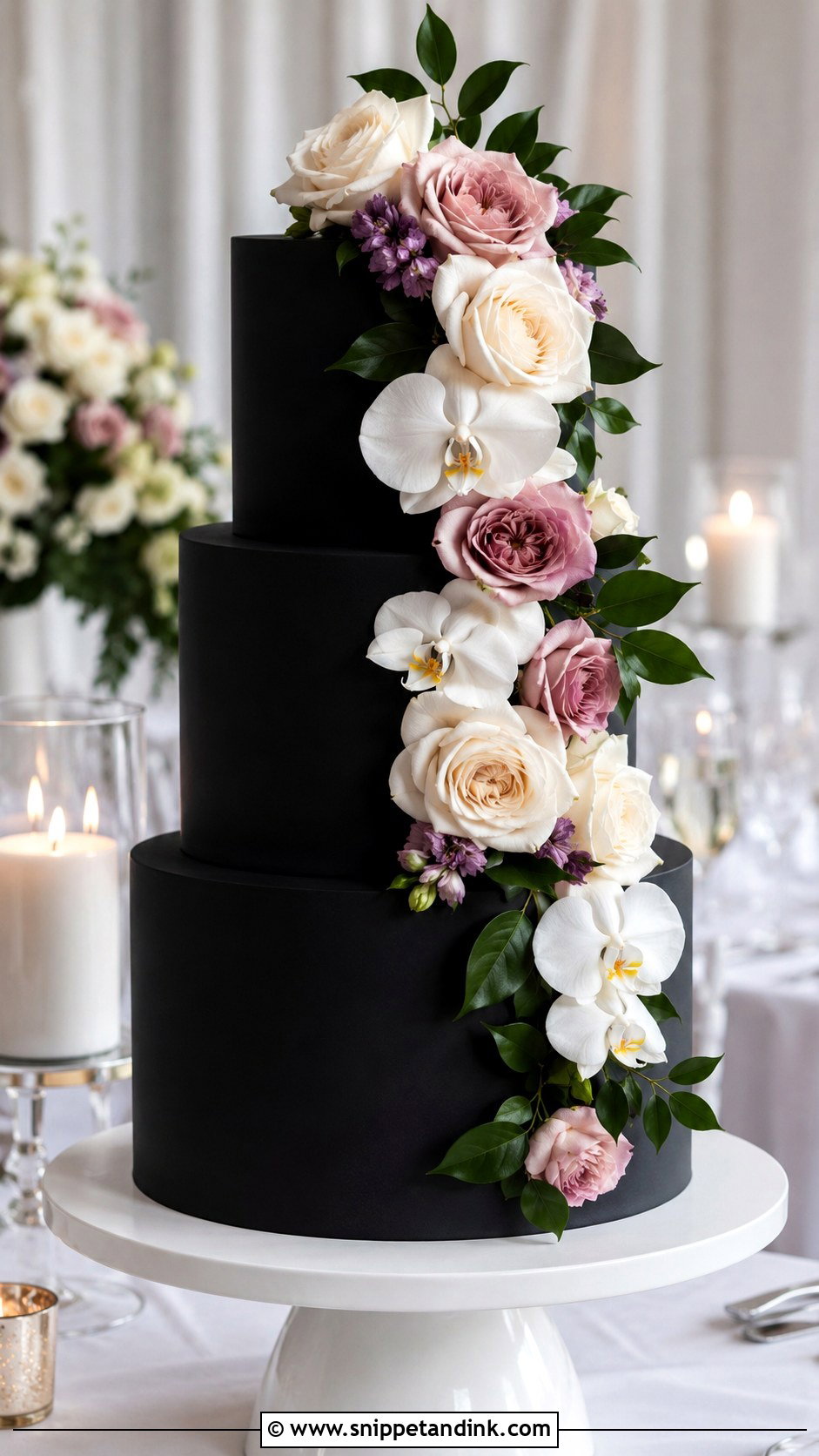
Matte black and a floral cascade is the combination I get asked to recreate most from photos. The flowers travel from the top tier down one side, adding movement and height. White orchids, cream roses, mauve blooms and dark greenery all read well against a flat black surface. Tall, simple tiers give the cascade room. In practice, I tape and wire most of the stems for a cascade before I arrive, then place it on the cake at the venue, so the cake is handled as little as possible. A plain white, black or gold stand finishes it.
7. Black Floral Wedding Cake With Red Roses
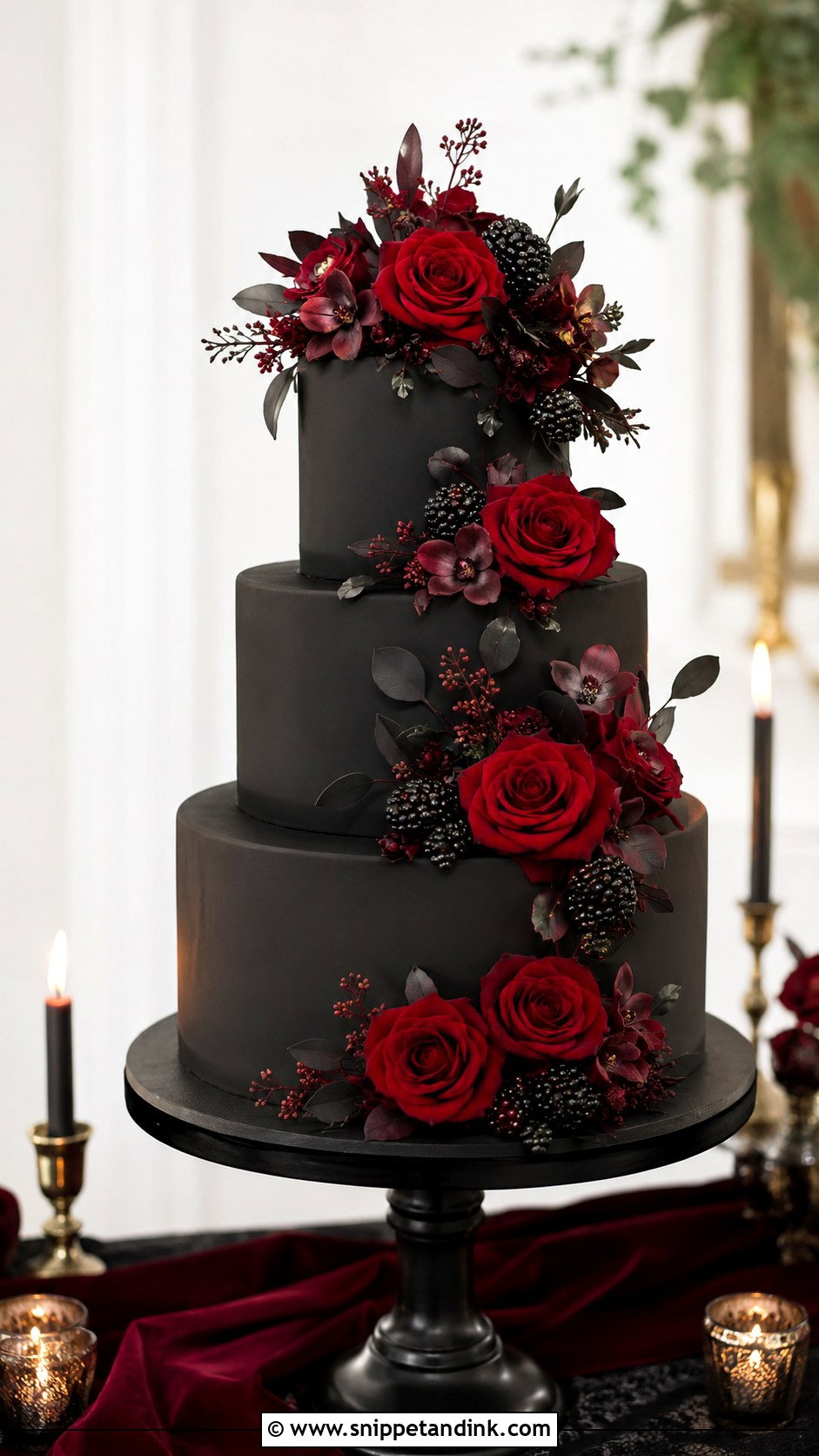
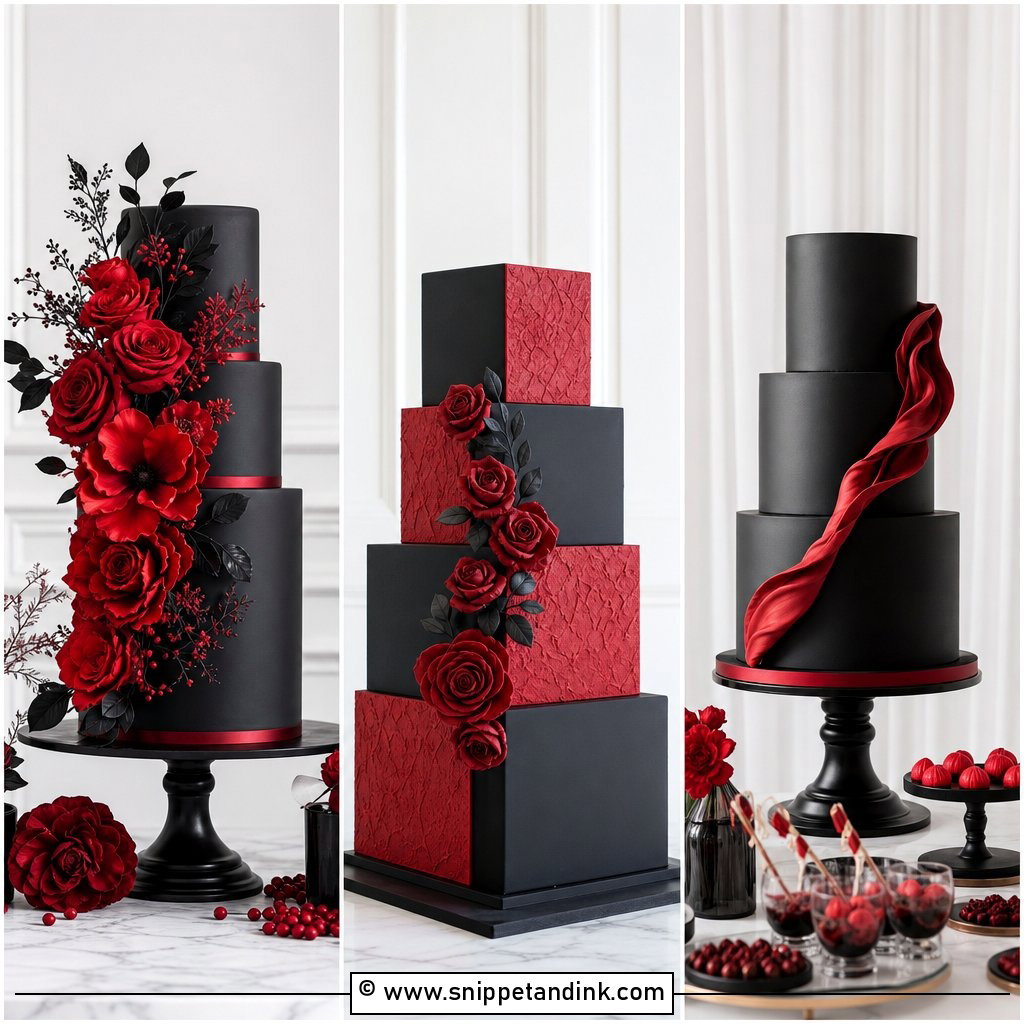
Red roses on black need the right red. Deep red, burgundy or velvet-toned roses look grown-up and luxurious; a bright candy red tends to look cheap against black. Place them in a corner cluster, a side cascade or a crown on the top tier. Fondant keeps it formal, buttercream softens it. Deep red petals bruise and darken quickly, so I keep those roses in water until the last moment and check every outer petal before placing it. Evening weddings, dim lighting, tall candles and rich fabrics suit it.
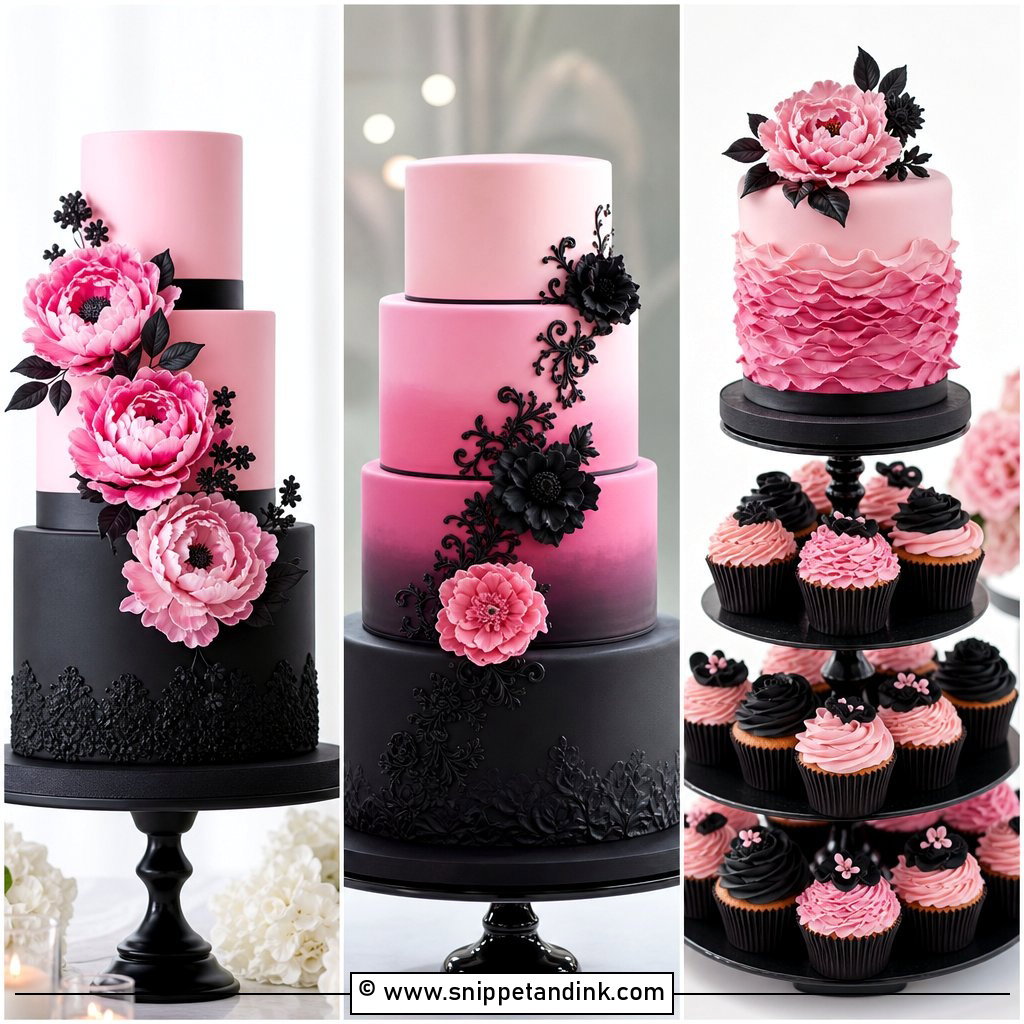
8. Black Floral Wedding Cake With Pink Flowers
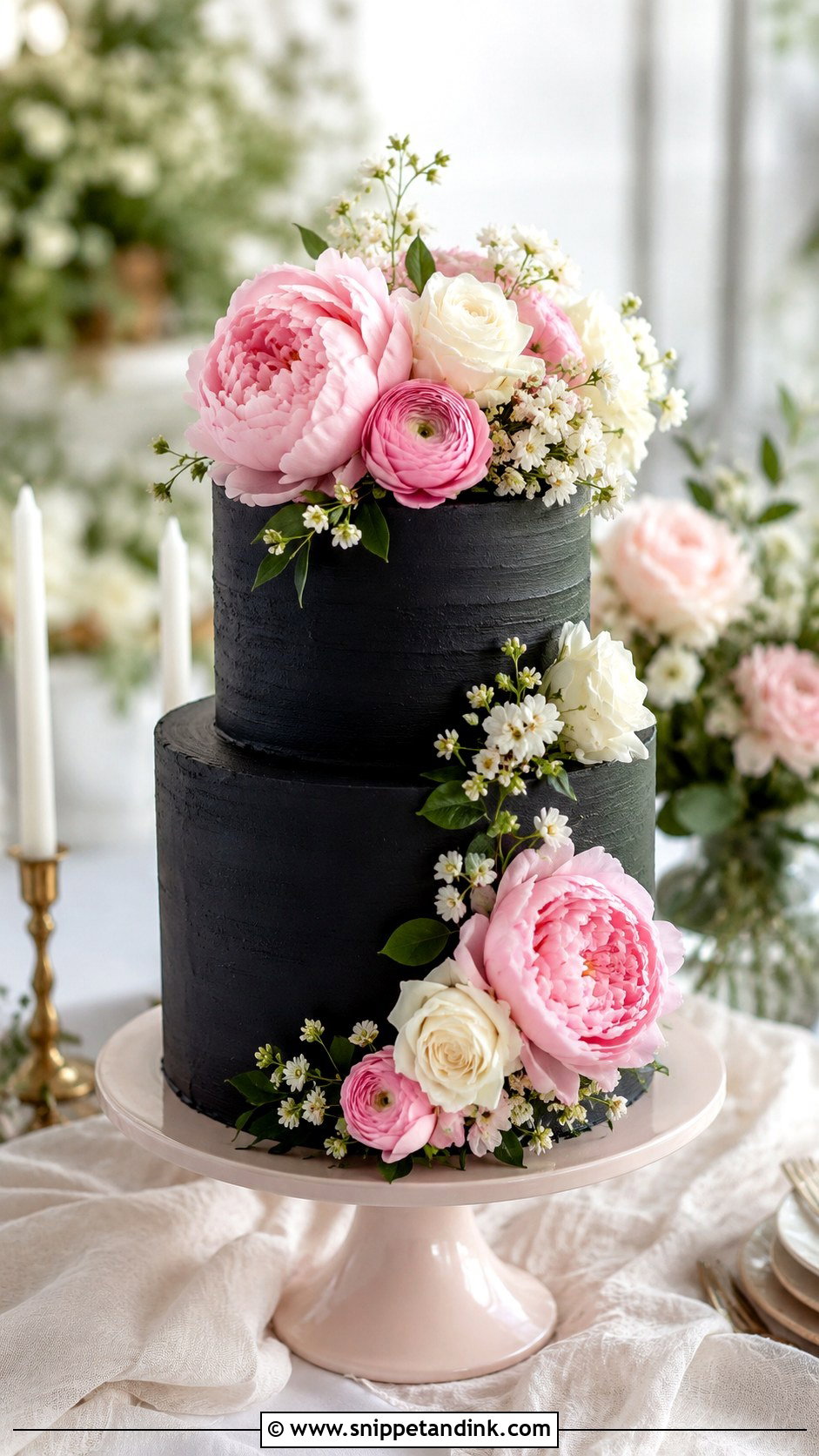
Pink softens black more than any other color on this list. Blush roses, pink peonies and ranunculus look lovely against black frosting, as long as the pinks are muted. Hot pink turns harsh next to black very fast. A black cake with blush flowers, ivory accents and soft greenery feels modern without being severe. Sweet peas appear in a lot of reference photos for this look, but I keep real sweet peas off the cake; they’re not considered food-safe, so I’d ask your baker for sugar ones instead. A few tiny white flowers link the pink to the rest of the bridal palette.
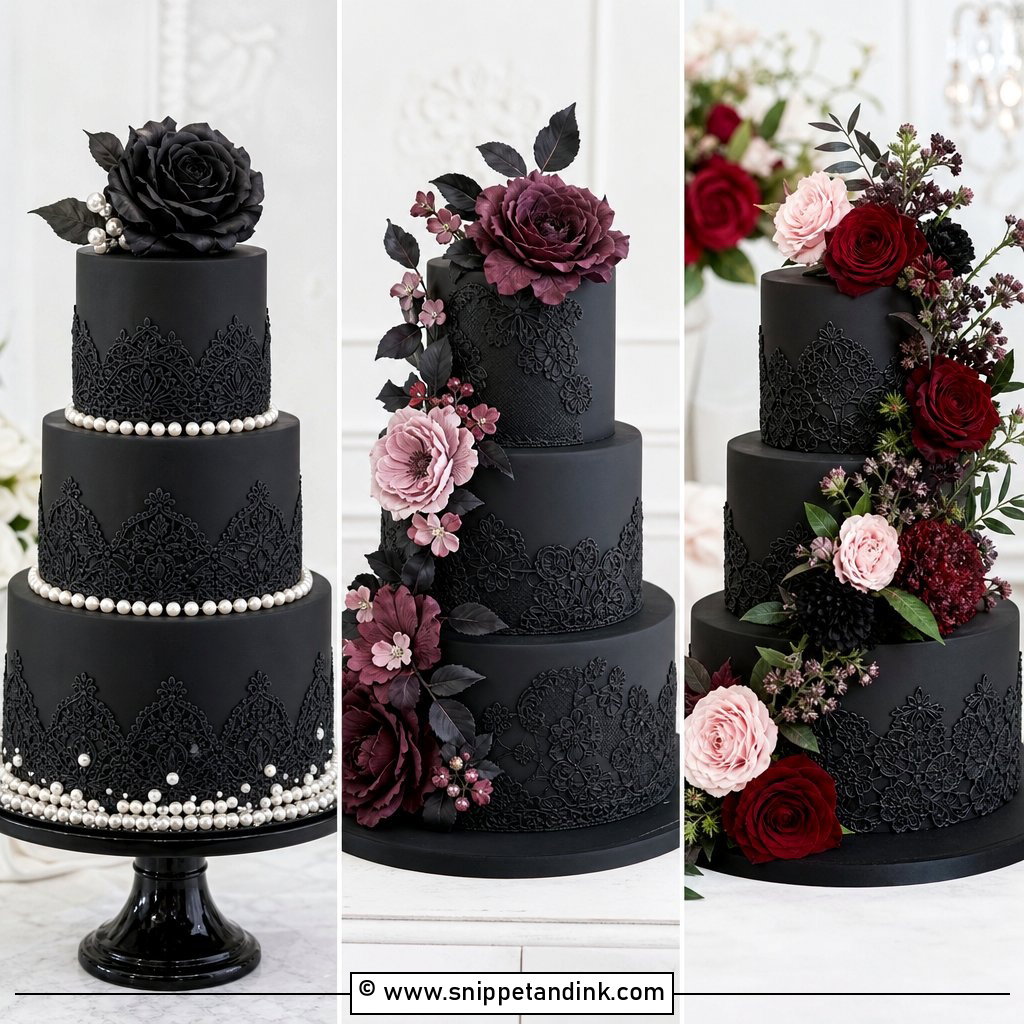
9. Black Floral Wedding Cake With Purple Flowers
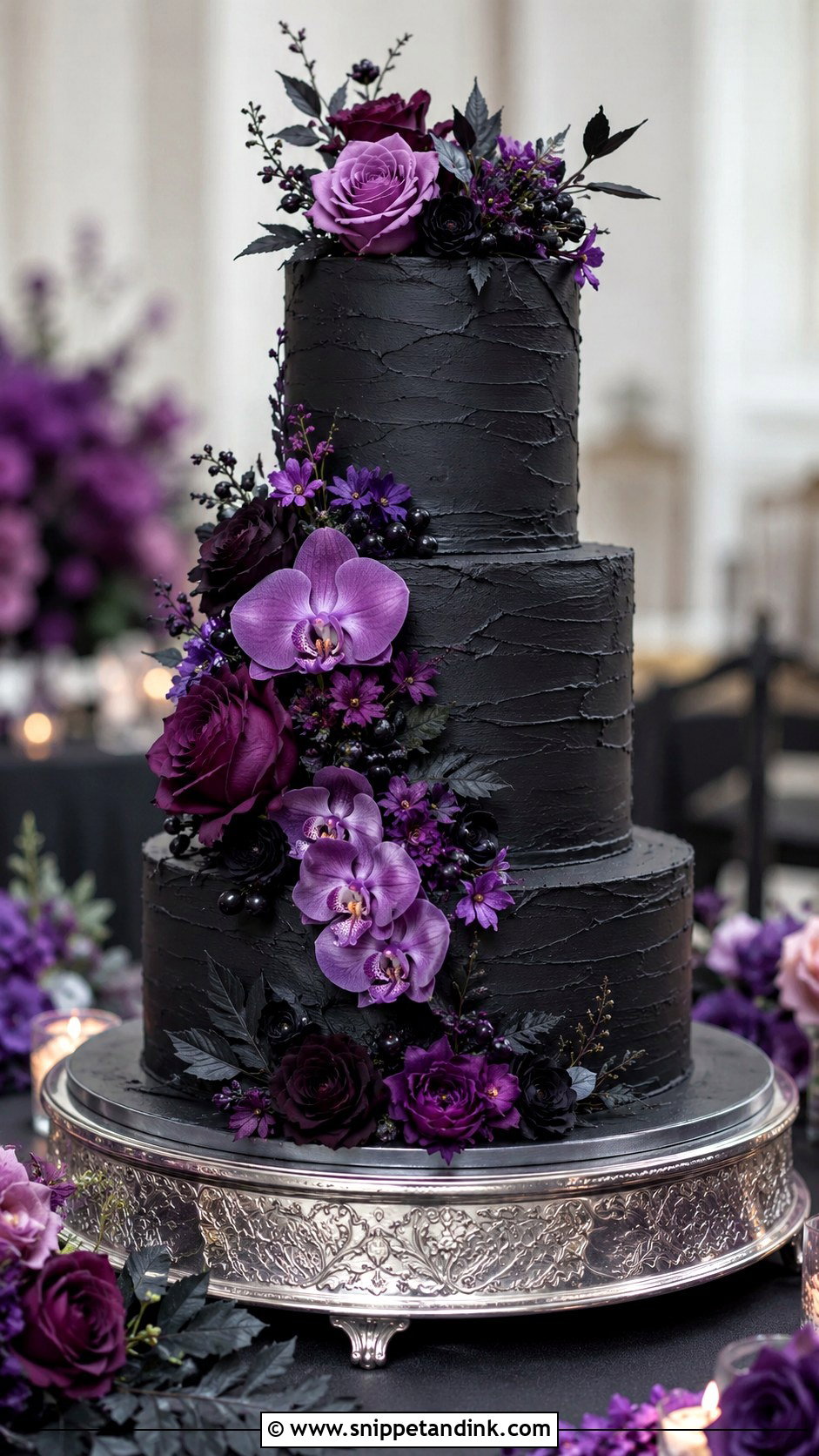
Purple brings mood to a black cake and suits gothic-leaning and romantic weddings alike. Plum roses, lavender orchids, violet pansies or dark purple sugar flowers all work. Mixing pale lavender with deep plum and ivory gives a softer effect. A lightly textured black buttercream feels less severe; smooth black fondant with neat clusters looks more formal. Silver accents, black berries or dark greenery complete it. Pale lavender blooms fade quickly in warm rooms, so for a long reception I’d rely on deeper purples or sugar.
10. Black Floral Wedding Cake With Burgundy Flowers
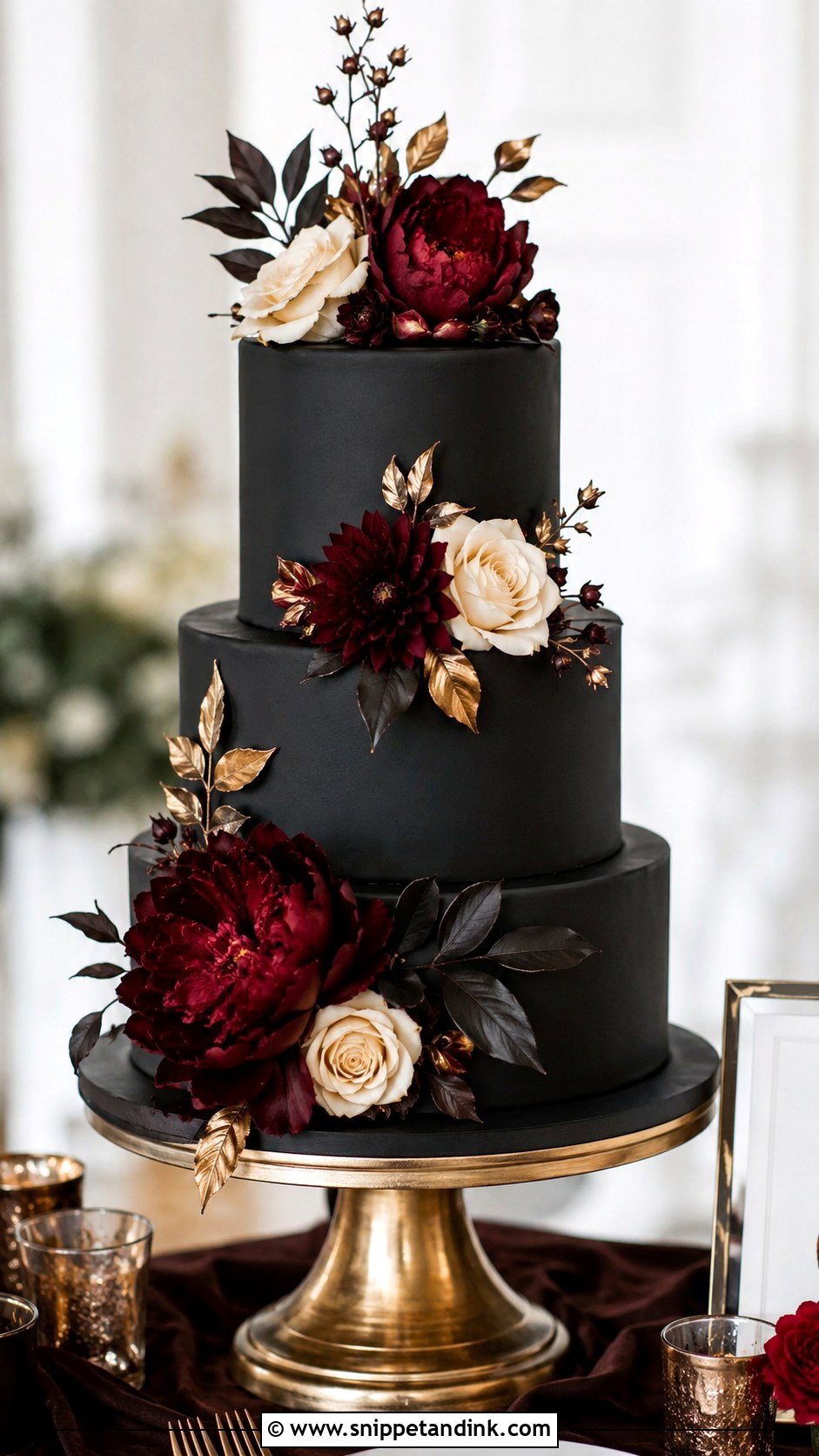
Burgundy and black are a natural match because both are warm, deep and dramatic. Fall weddings and formal receptions suit them most. Use burgundy roses, dahlias, peonies or sugar flowers with cream accents and deep green leaves, between tiers, down one side or around the base. Gold or bronze warms the palette. The thing I plan for with dark florals on a dark cake is light. Burgundy on black can merge into one shape in a dim room, so I always add a few cream blooms or pale leaves at the edges of the arrangement to outline it.
11. Black Floral Wedding Cake With Greenery
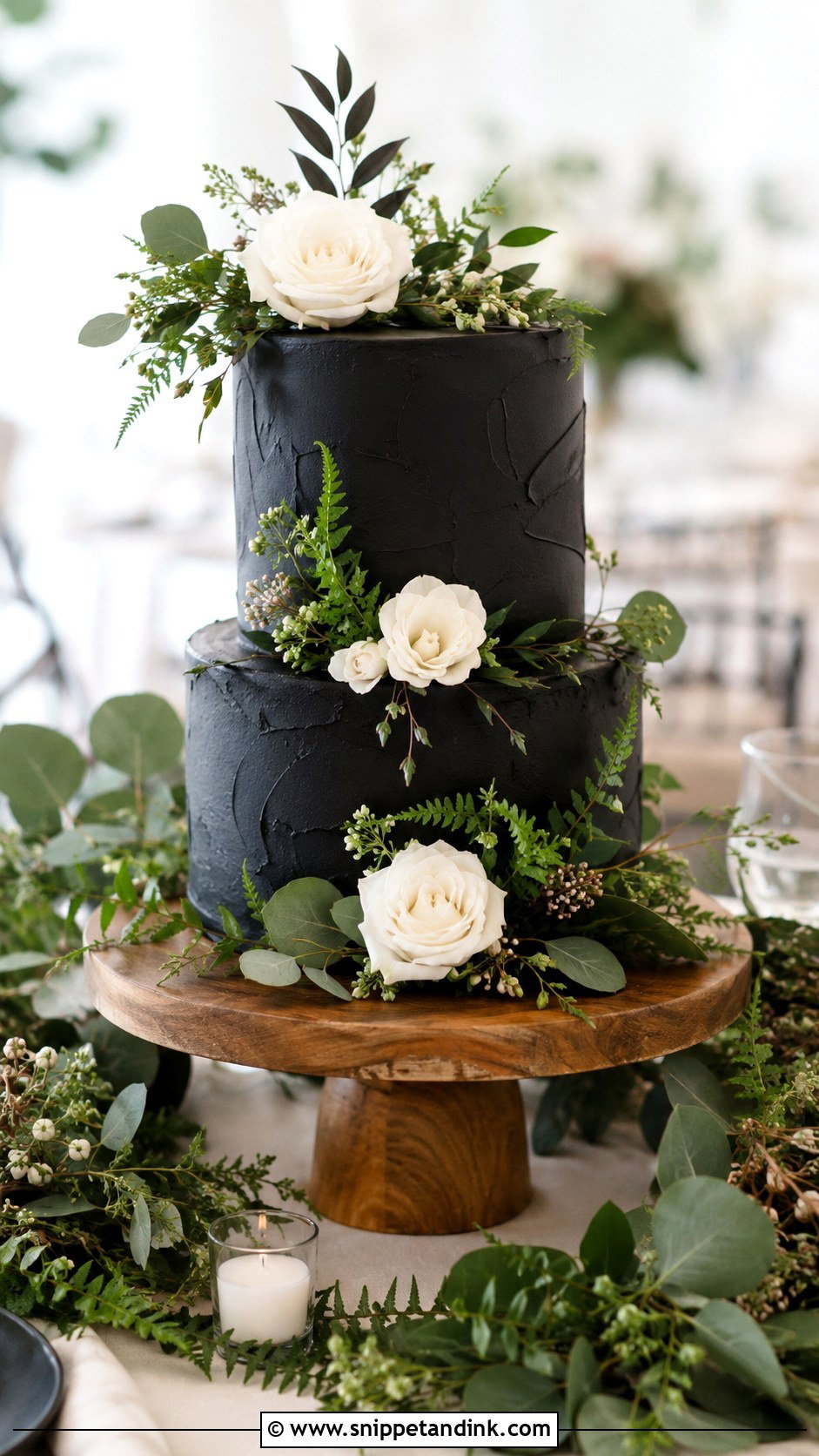
Greenery softens a black base without adding much color, and it’s my go-to for outdoor, industrial and modern garden weddings. Ruscus, olive leaves, fern and dark foliage can wrap the tiers or frame small floral clusters, with white, ivory or pale blush flowers for a bridal note. Eucalyptus appears in a lot of photos of this look, but it’s toxic if eaten, so if a couple wants it I wrap every stem and keep the leaves from resting on the frosting. A semi-smooth buttercream feels organic; fondant looks cleaner.
12. Black Floral Wedding Cake With Orchids
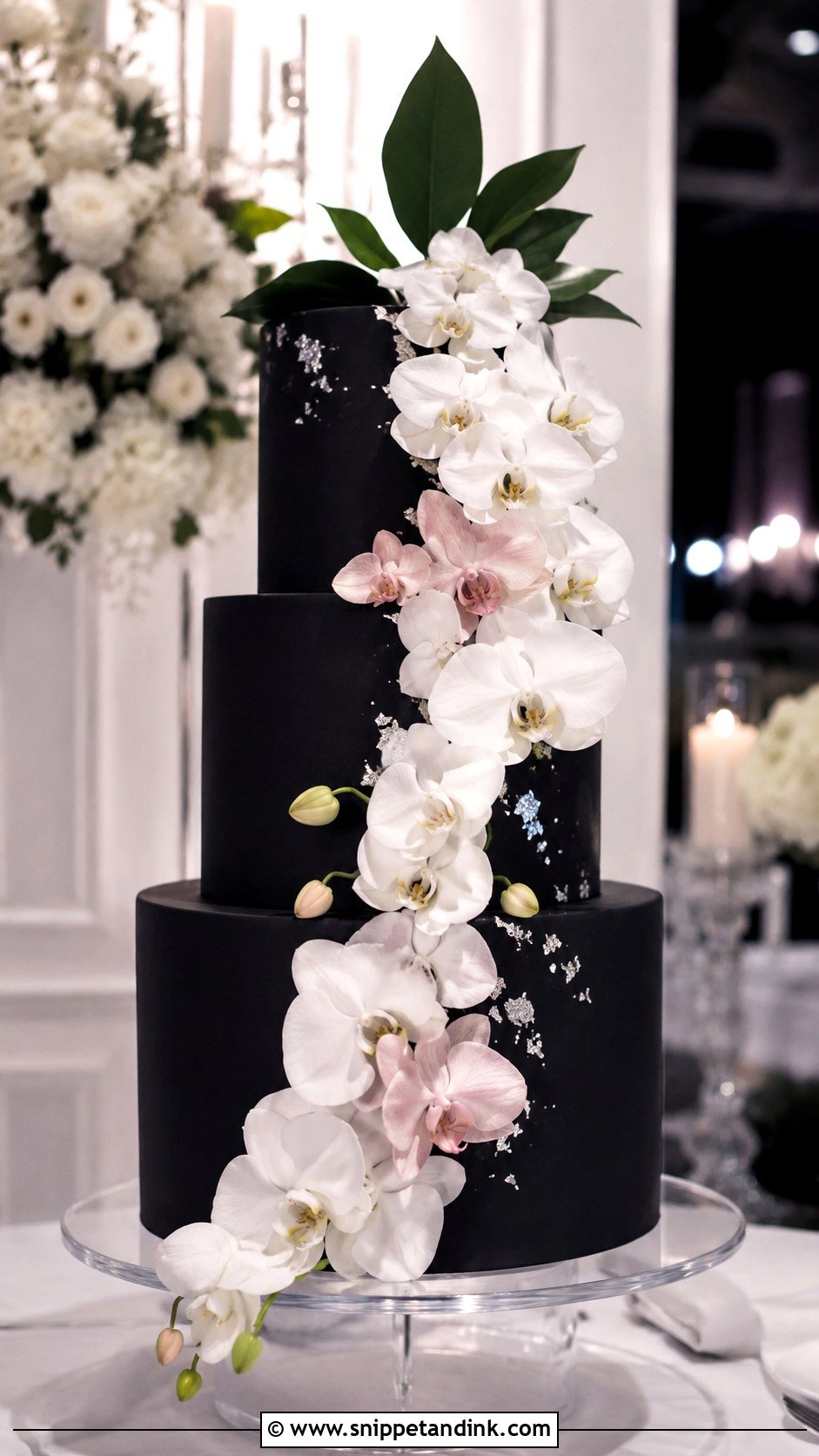
Orchids are sculptural, so they look sleek against black without needing anything else. White ones give strong contrast; blush, purple or deep burgundy orchids add mood. Clean tiers and minimal decoration work best. A tall three-tier black fondant cake with cascading orchids looks editorial, while black buttercream with orchids gathered at the top and base is softer. Phalaenopsis orchids are also one of the easiest flowers for me to place on a cake: they’re light, they last for hours without water, and they don’t drop petals. Modern hotels and tropical-inspired weddings suit them.
13. Black Floral Wedding Cake With Peonies
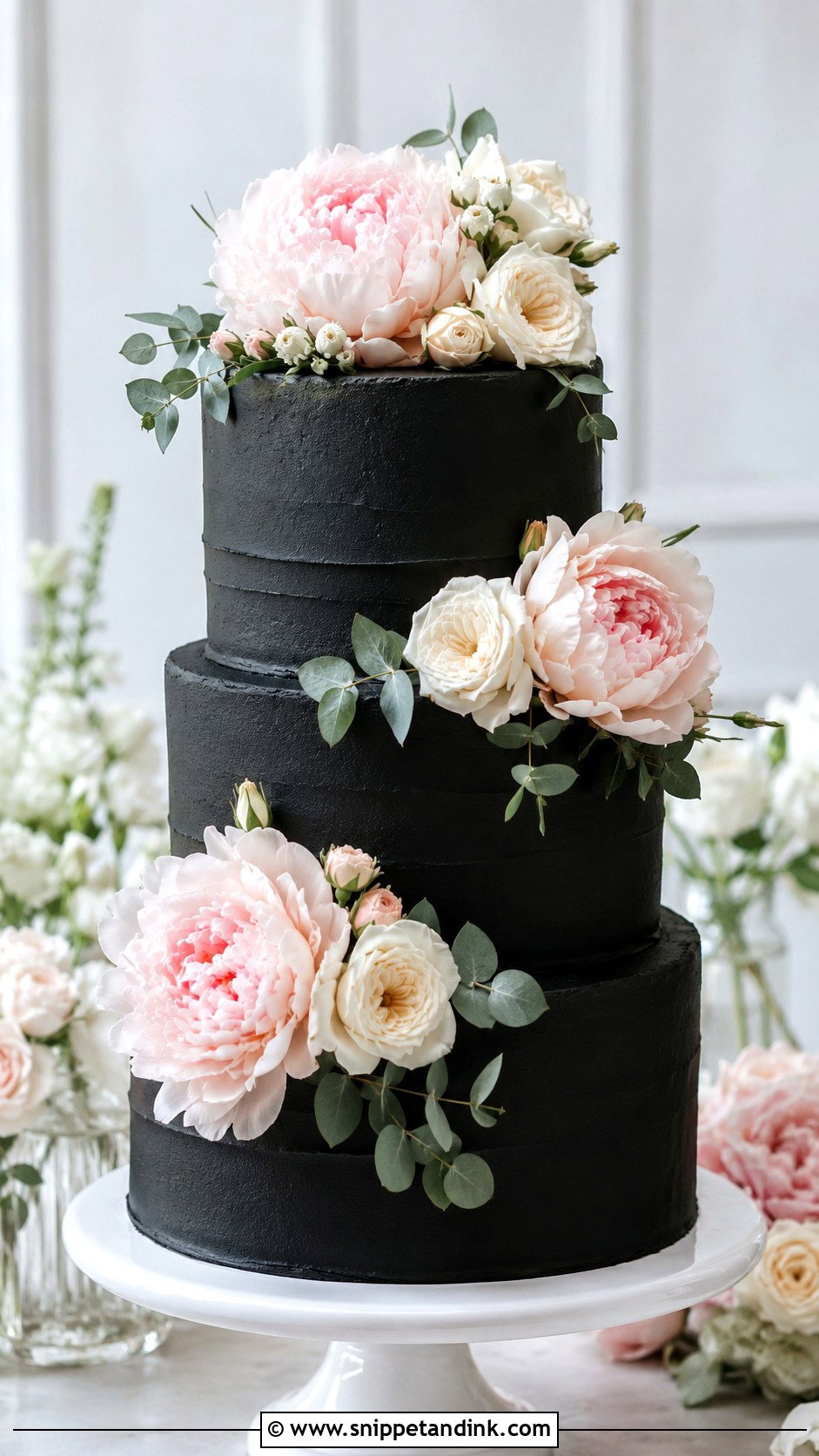
Peonies add volume and softness, and one oversized bloom on the top tier can carry a whole black cake. White, blush, coral or burgundy all work. I place the large bloom first, then add smaller flowers and greenery down one side. The honest catch is the season: fresh peonies are mostly a late-spring flower and get expensive or unavailable outside that window. Open peonies also keep opening in a warm room, so a bloom that’s perfect at four o’clock can be blown and dropping petals by ten. Sugar peonies solve both problems.
14. Black Floral Wedding Cake With Roses
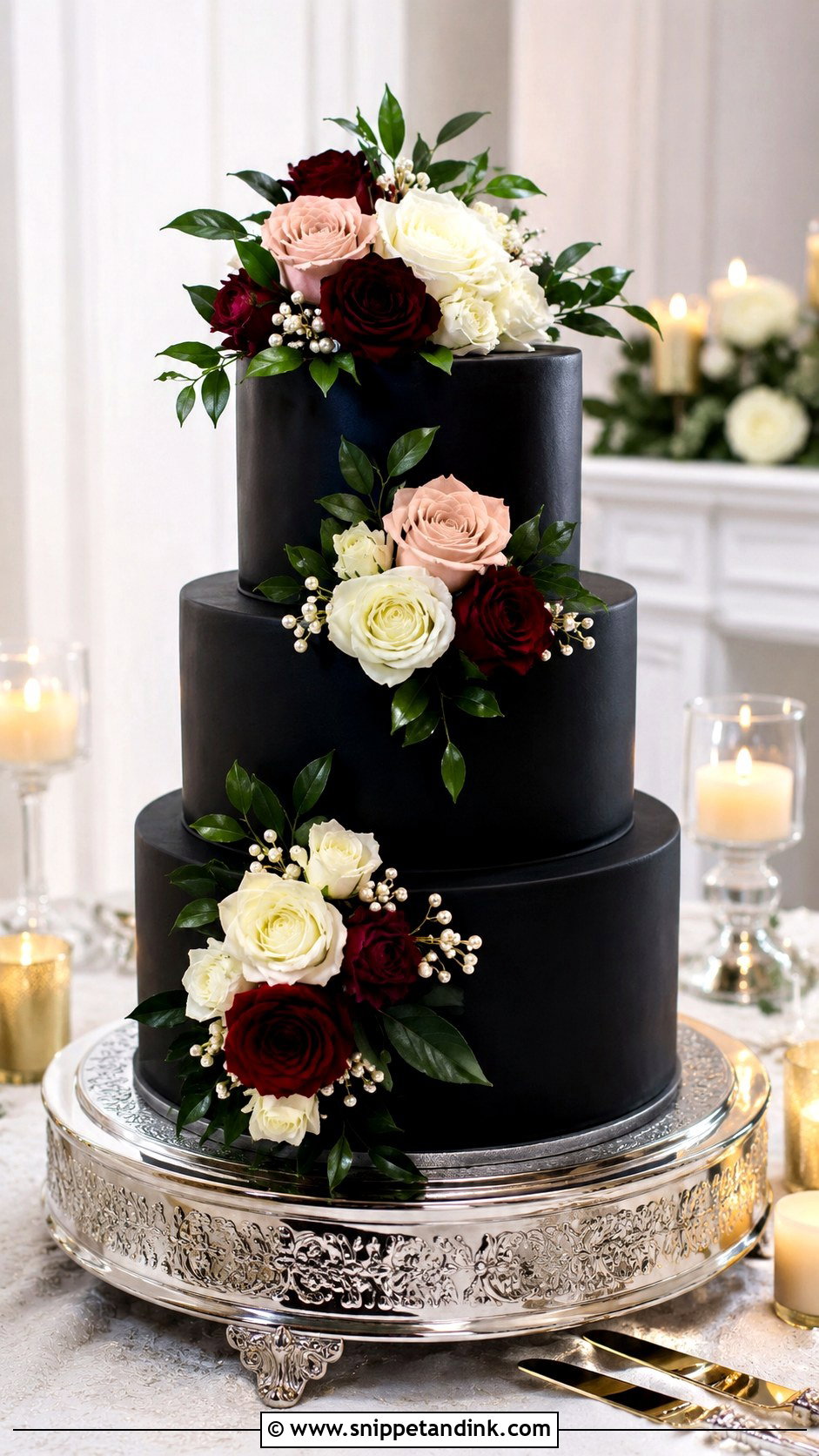
Roses fit almost any wedding, so they’re the most flexible flower for a black cake. White reads clean, red dramatic, blush romantic and burgundy rich. Choose a cascade, a top crown or small clusters between tiers. The finish shifts the mood: smooth fondant formal, textured buttercream relaxed. For a modern look I group the roses into one strong arrangement rather than dotting them around. I also prefer garden roses for cakes, because their open shape sits flatter against the tier. It works for ballrooms, gardens, vintage themes and moody evening receptions.
15. Black Floral Wedding Cake With Pressed Flowers
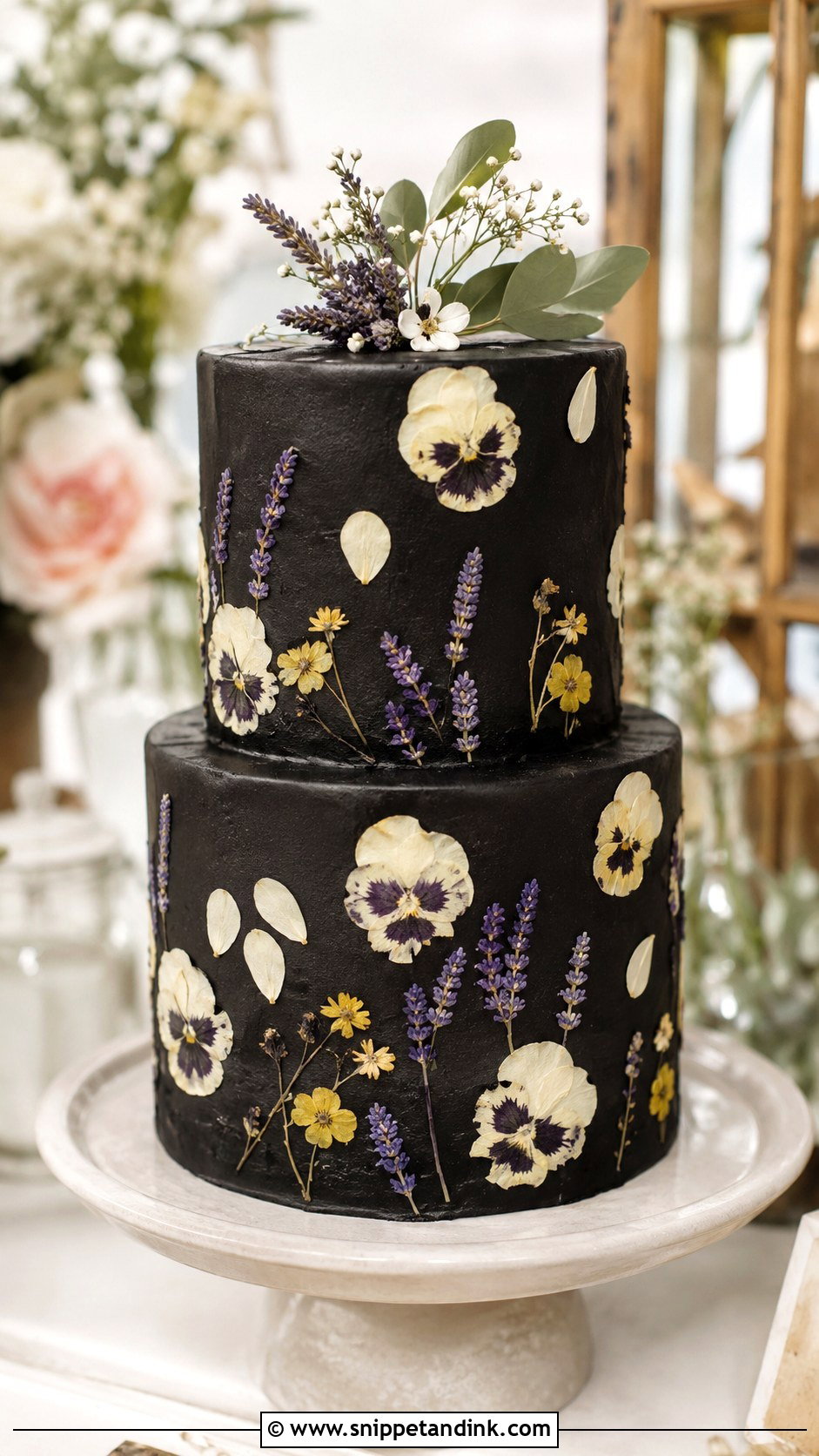
Pressed flowers give a black cake a painterly, artistic look. Instead of big blooms, flat edible petals are placed across the surface, and on black even pale ones look delicate and detailed. Small flowers work best: violas, pansies, cornflowers and small leaves in ivory, lavender, blush, yellow or soft blue. Make sure they’re grown and pressed specifically as edible flowers, not taken from a bouquet, since florist stems aren’t grown for eating. Keep the arrangement loose so it feels romantic rather than like wallpaper. It suits garden and intimate weddings.
16. Black Floral Wedding Cake With Hand Painted Flowers
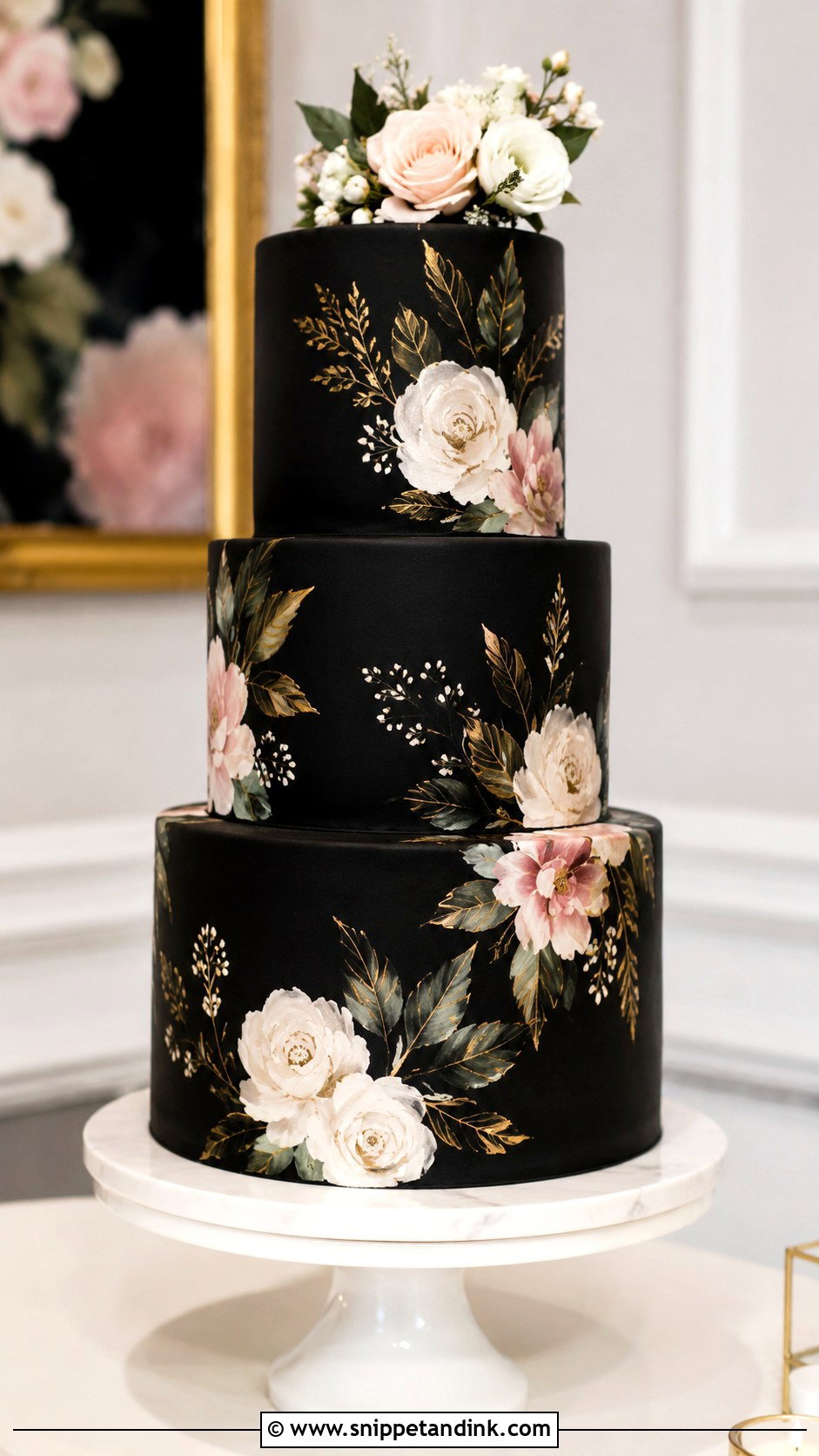
Painted flowers are the one design here that needs no florist at all, and it’s the version that turns a cake into a piece of art. Bakers paint white, blush, gold or colorful blooms directly onto fondant with edible colors, in a watercolor wash, fine line illustration or bold botanical style. Black makes every brushstroke visible, which is exactly why it rewards a skilled painter and exposes an unsteady one. A few small sugar flowers add dimension; keep them minimal. Creative couples and gallery-style venues suit it.
17. Black Floral Wedding Cake With Lace
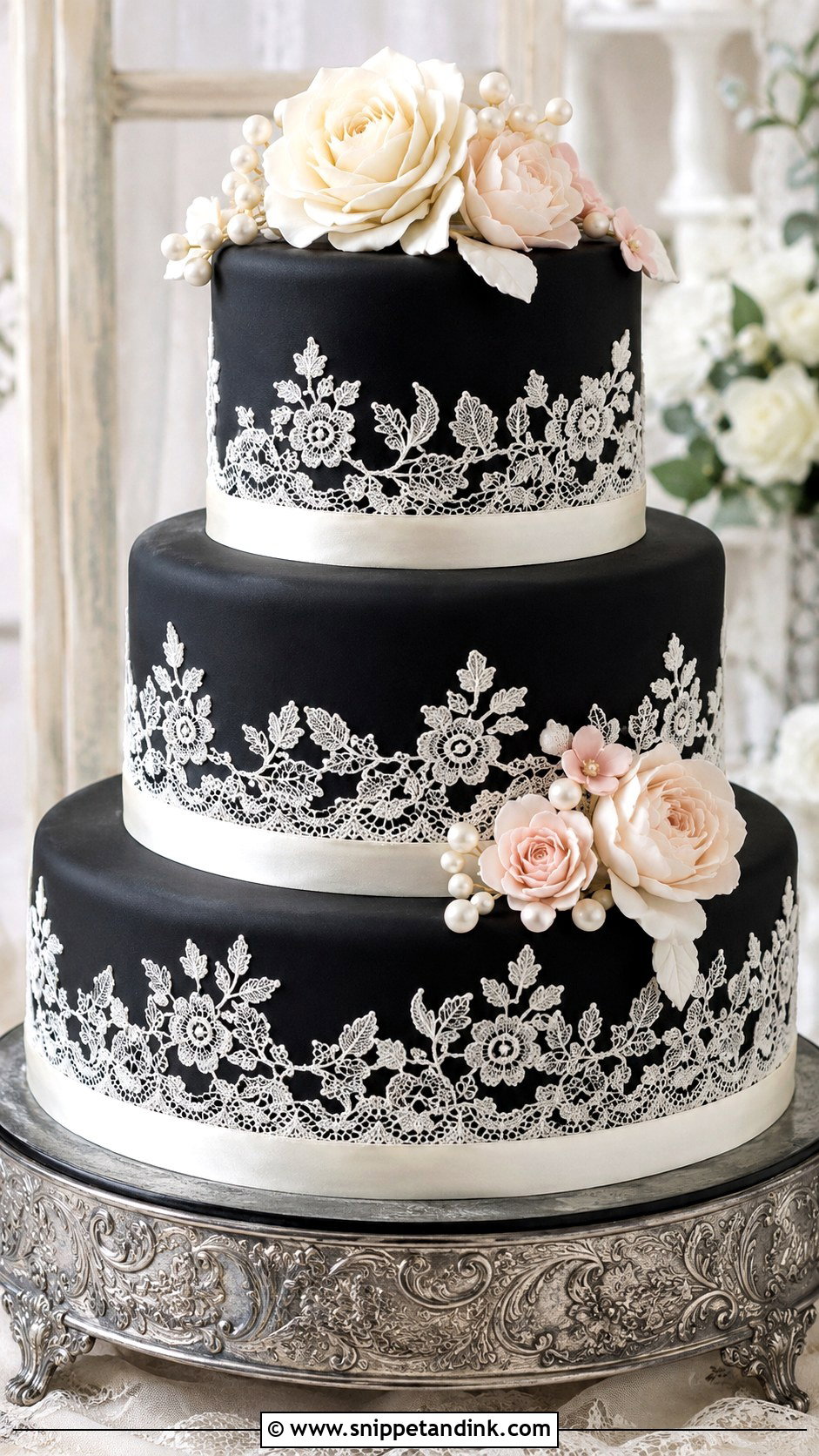
Floral lace gives a black cake a vintage feel. It can be piped black-on-black for a subtle texture or in white for strong contrast. Sugar flowers in ivory, blush or burgundy stop it feeling too dark. It suits tall tiered cakes because the lace pattern has room to show. If you’re adding fresh flowers beside lace, keep them to one cluster; a busy arrangement hides the piping that took hours. A satin ribbon at each tier base finishes it. Delicate lace reads more bridal than heavy patterns.
18. Black Floral Wedding Cake With Pearl Details
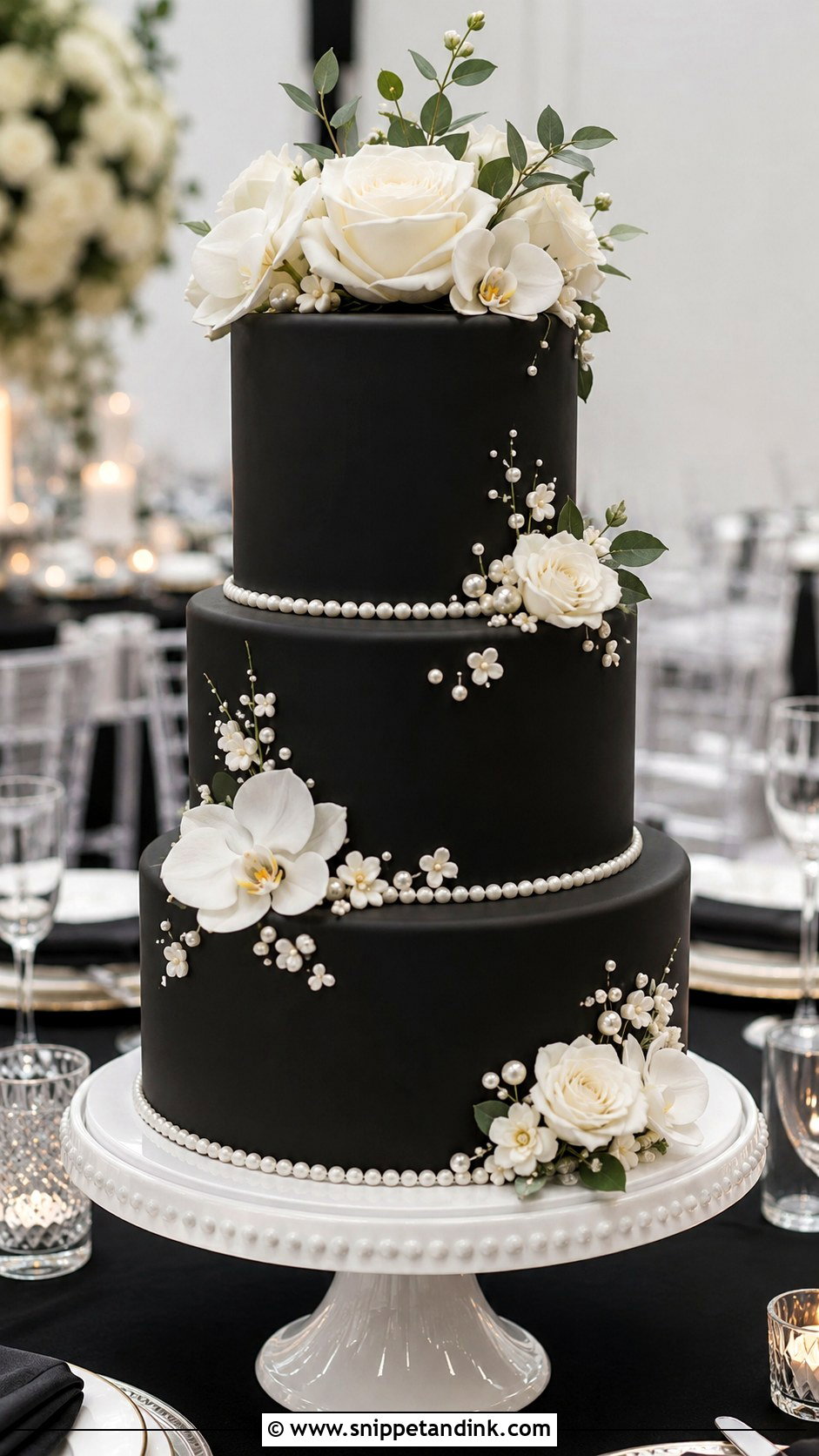
Pearls soften black and add a classic bridal note. Small pearls can line tier borders, be scattered lightly or sit among floral clusters. White roses, orchids and peonies pair well with them because they keep the palette clean. Black fondant gives the most polished result; buttercream is more relaxed. Too many pearls crowd the cake fast, so I’d keep them to one tier or one band. Black-tie and hotel receptions suit it.
19. Black Floral Wedding Cake With Marble Tiers
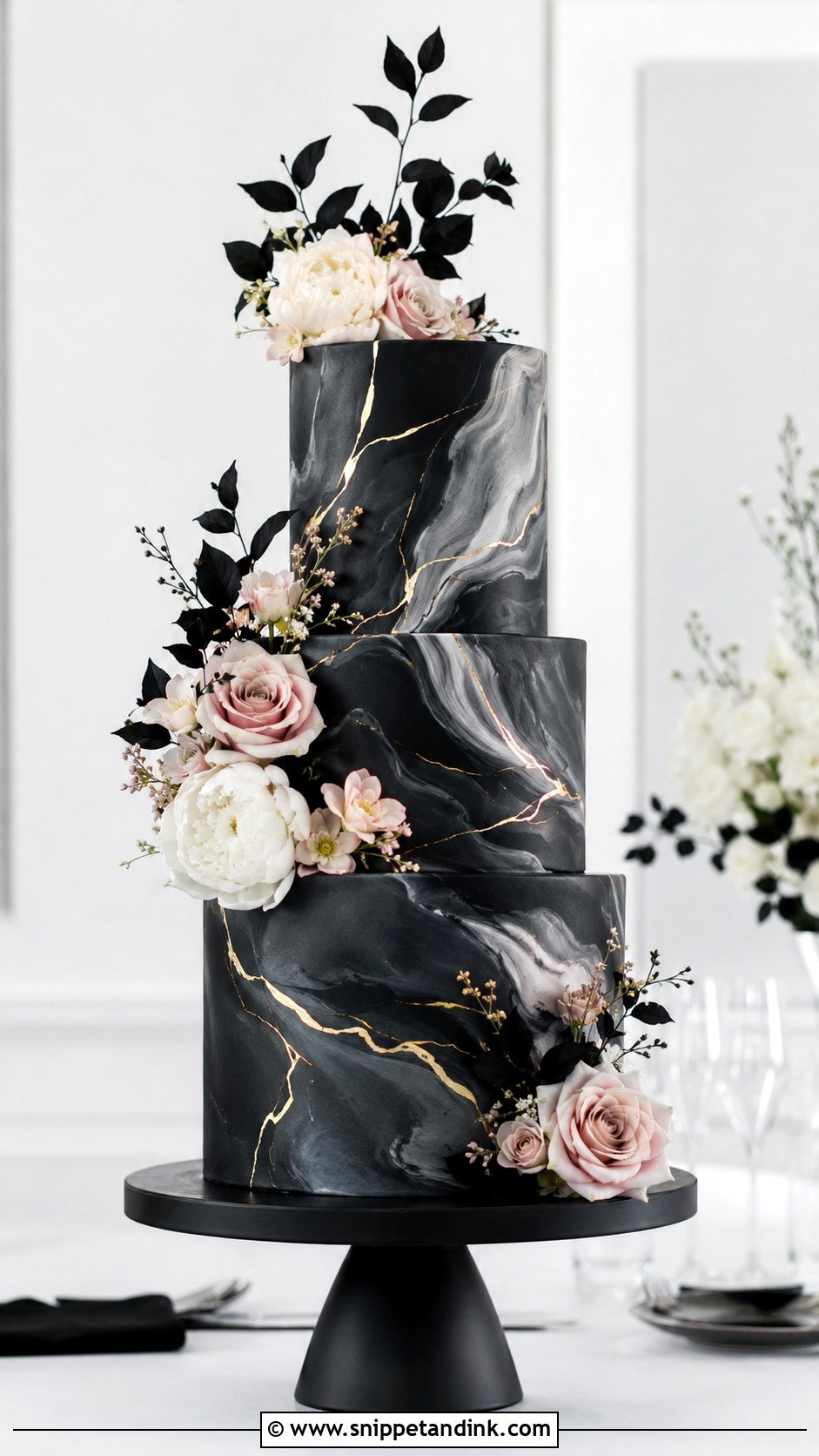
Marble tiers add movement, blending black, charcoal, grey and white into a stone-like finish. Flowers in white, blush or burgundy make it romantic, and a little gold or silver can trace the veins. Mixing solid black tiers with marble ones gives balance. When I dress a marble cake, I look at the veining first and place flowers where the pattern is calmest, so the two don’t compete. One or two clusters is enough. It suits modern weddings and industrial venues.

20. Black Floral Wedding Cake With Black Flowers
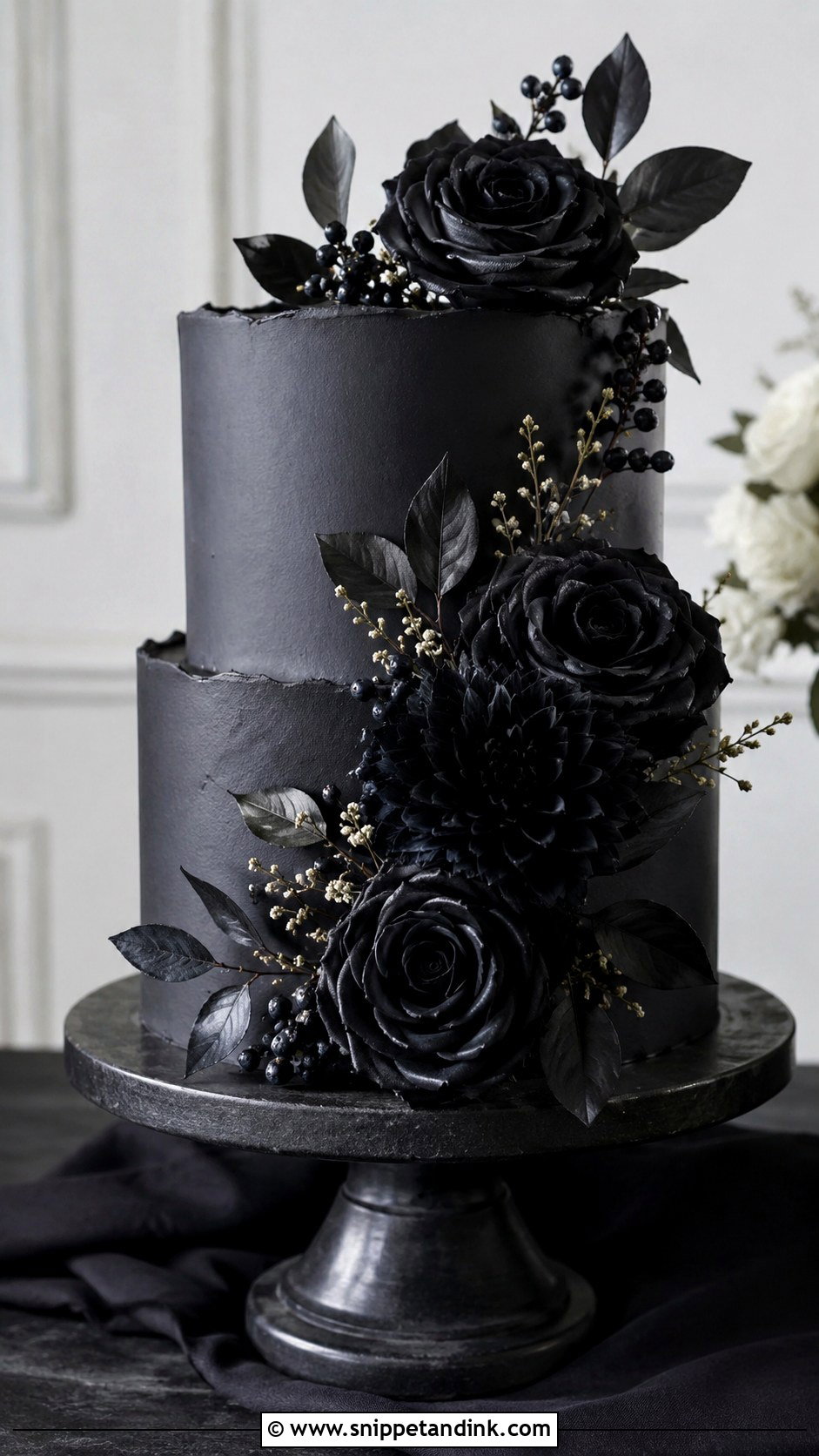
All-black flowers on a black cake can look flat unless the textures change. Matte frosting with glossy sugar flowers, dark berries, velvet ribbon or charcoal leaves gives it depth. Tiny ivory flowers or silver accents add contrast. Black roses, dahlias, anemones and fantasy sugar blooms work. Truly black fresh flowers are rare; most “black” dahlias, roses and callas are actually very deep burgundy or purple, and they look that way in flash photos. I’d show a couple real stems under a phone flash before committing. Keep the cake shape clean and structured so the palette feels deliberate.
Flowers I Keep Off a Cake, and How the Rest Go On
Commercially grown cut flowers are treated as decoration, not food, so they’re often sprayed and none of them should sit directly on frosting. Some popular wedding flowers are also toxic. I keep these off the cake surface entirely, or ask for sugar versions:
- Lily of the valley, foxglove, oleander and delphinium
- Hydrangea, daffodils and other narcissus
- Sweet peas
- Eucalyptus leaves resting on the frosting
- Ranunculus and anemones without a barrier, since their sap can irritate
For everything that does go on, I wrap each stem in floral tape, push it into a food-safe flower pick rather than straight into the sponge, and rest larger heads on a small disc of parchment or acetate. I never use floral foam on a cake. Ask your baker whether they’re happy for the florist to dress the cake, or would rather do it themselves; some bakers insist on placing anything that touches their work, and it’s better to know before the morning of the wedding.
Let the Bouquet Set the Cake Flowers
The best black floral cakes come from balance. Blush peonies make a dark base soft, white orchids make it formal, red roses make it dramatic, and pressed flowers or marble keep it modern. Start from your bouquet and your venue lighting, then decide whether the flowers on the cake should be fresh, sugar, pressed or painted. Get your florist and baker talking to each other early about flower safety, placement and who does what on the day. That one conversation decides how the cake looks when the doors open.
You'll Like These Ideas:





Leave a Reply