
Eight flat sides change a cake more than you’d think. Light falls differently on each panel, the corners catch shadow, and a plain ivory finish suddenly has edges to look at. That’s the appeal of an octagon: it reads modern on a reception table while still taking all the romantic finishes couples love, and it sits comfortably alongside current wedding cake trends like textured buttercream, fresh fruit, sugar flowers, floating tiers and vintage piping. It is also harder to make than a round cake, and I’ll be honest about where that shows. Below are twenty octagon designs I’d happily make, with notes on finish, structure and the venues they suit.
What an Eight-Sided Tier Asks of Your Baker
Not every baker makes octagons regularly, and the shape exposes technique. Round tiers hide small inconsistencies; an octagon shows every uneven panel and soft corner. When couples bring me an octagon design, these are the things I talk through first.
- Finish: sharp corners usually mean ganache panelling under fondant. Buttercream gives softer corners and is more sensitive to heat.
- Sizing: octagon tins are measured either across the flat sides or across the points. Ask which, so your servings are calculated correctly.
- Lead time: book the baker months ahead, and allow extra if you want sugar flowers or Lambeth piping.
- Portfolio: ask to see a finished octagon they’ve made, not only round cakes.
An octagon of the same width gives a little more cake than a round tier, since the corners add area. It’s not a big difference, but on a three-tier cake it can save adding an extra kitchen cake.
1. White Octagon Wedding Cake
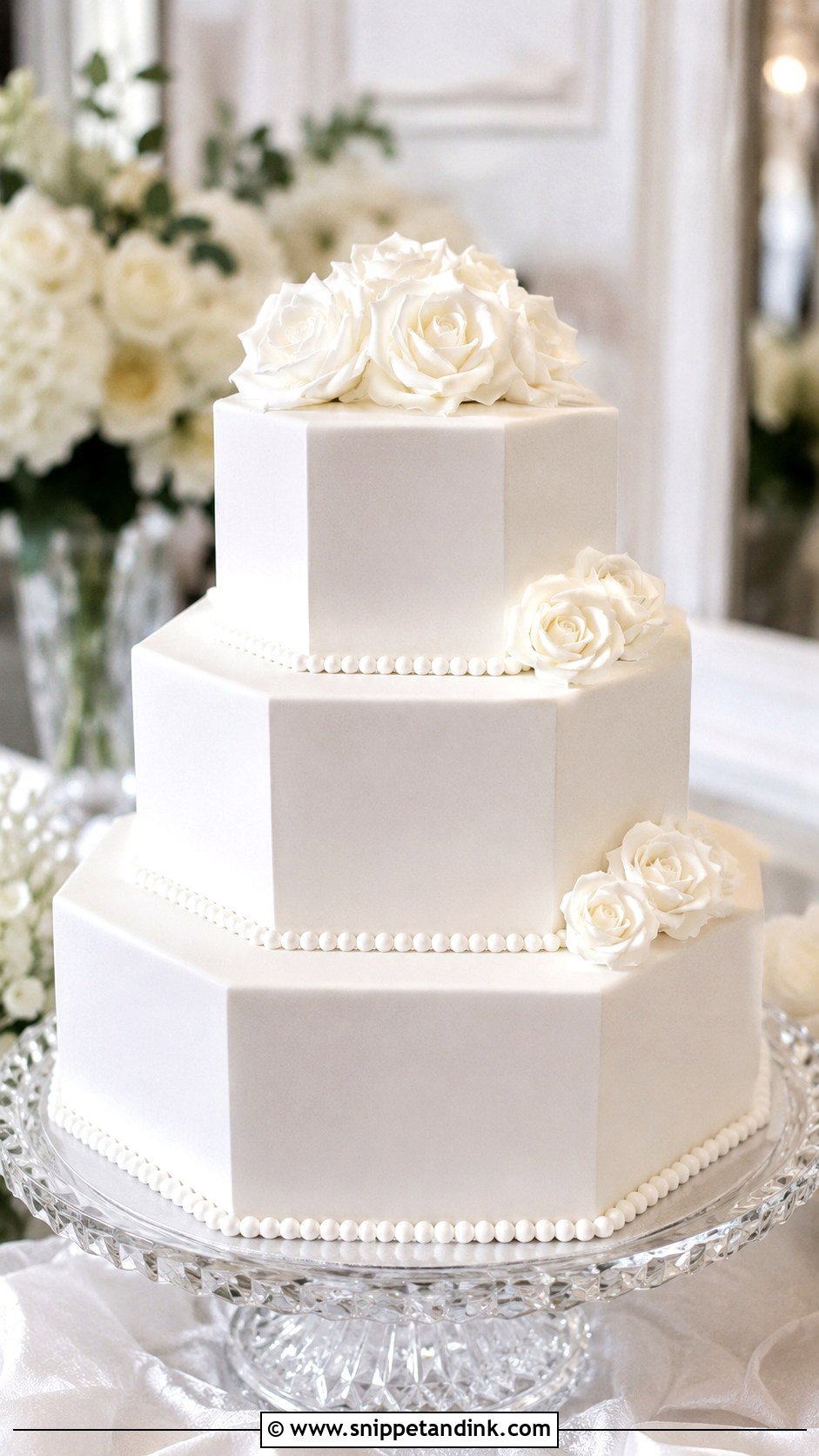
All-white is where the shape is most obvious, because there’s no colour to distract from the corners. For crisp edges I panel the tiers in ganache and cover them in fondant; that gives the sharpest line and holds in a warm room. Smooth buttercream gives a softer, slightly rounded corner, which suits a relaxed wedding better anyway. One tall tier, two stacked or three for a ballroom all work. Finish with white roses, small pearl piping or a satin ribbon at the base of each tier, and it’ll sit with any colour palette in the room.
2. Two Tier Octagon Wedding Cake
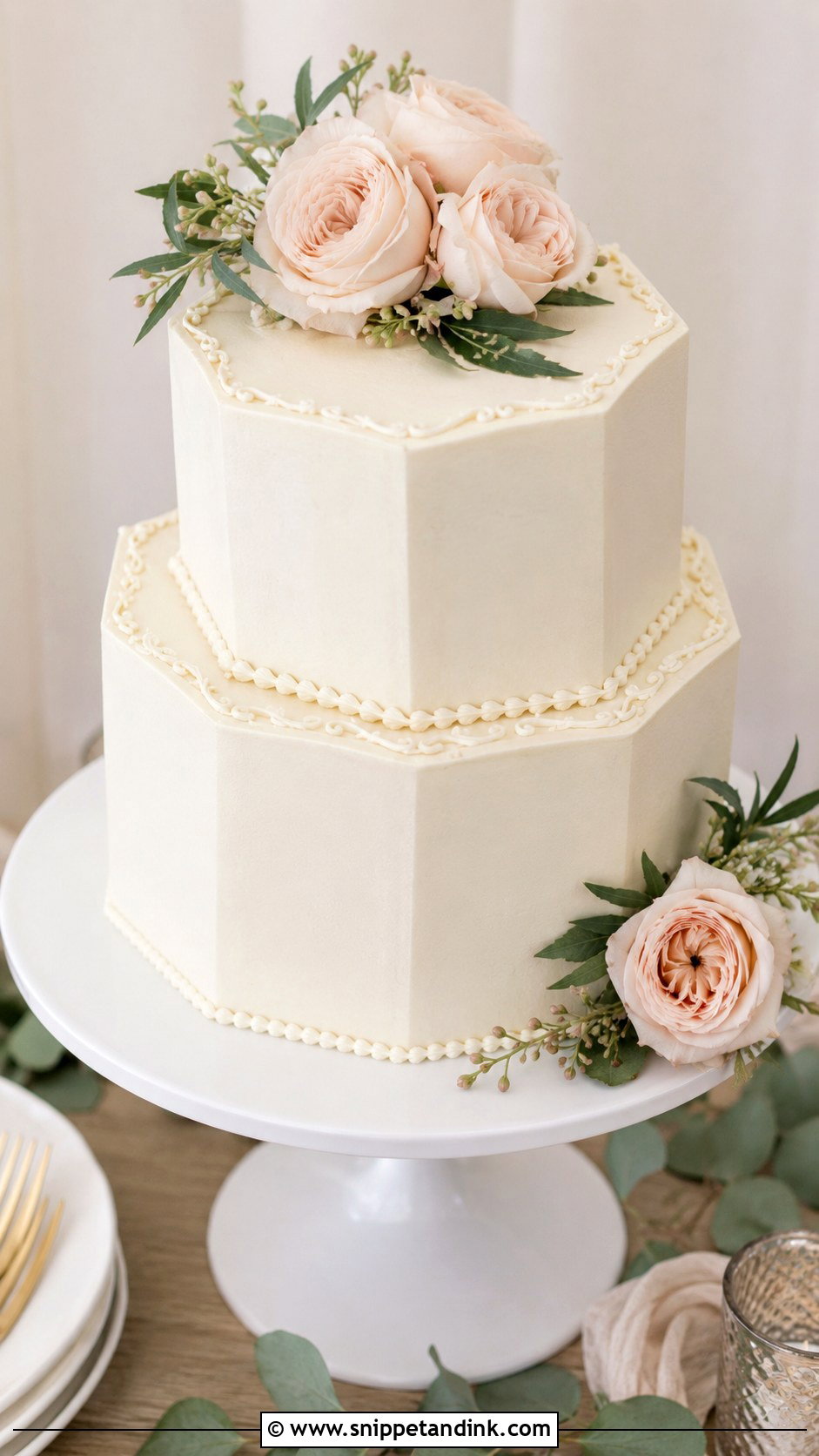
Two tiers give a solid centrepiece without needing a tall table or a high ceiling to look right. The octagon carries the visual interest, so I keep the decoration light. I usually align both tiers so the flat sides stack directly over each other, which makes the geometry obvious from the front. Rotating the top tier by a half-turn of one panel shows off more corners, though it can look slightly off in straight-on photos. Ivory buttercream, fine piping and a few fresh flowers suit it. It’s a practical size for micro weddings or receptions with a separate dessert table.
3. Three Tier Octagon Wedding Cake
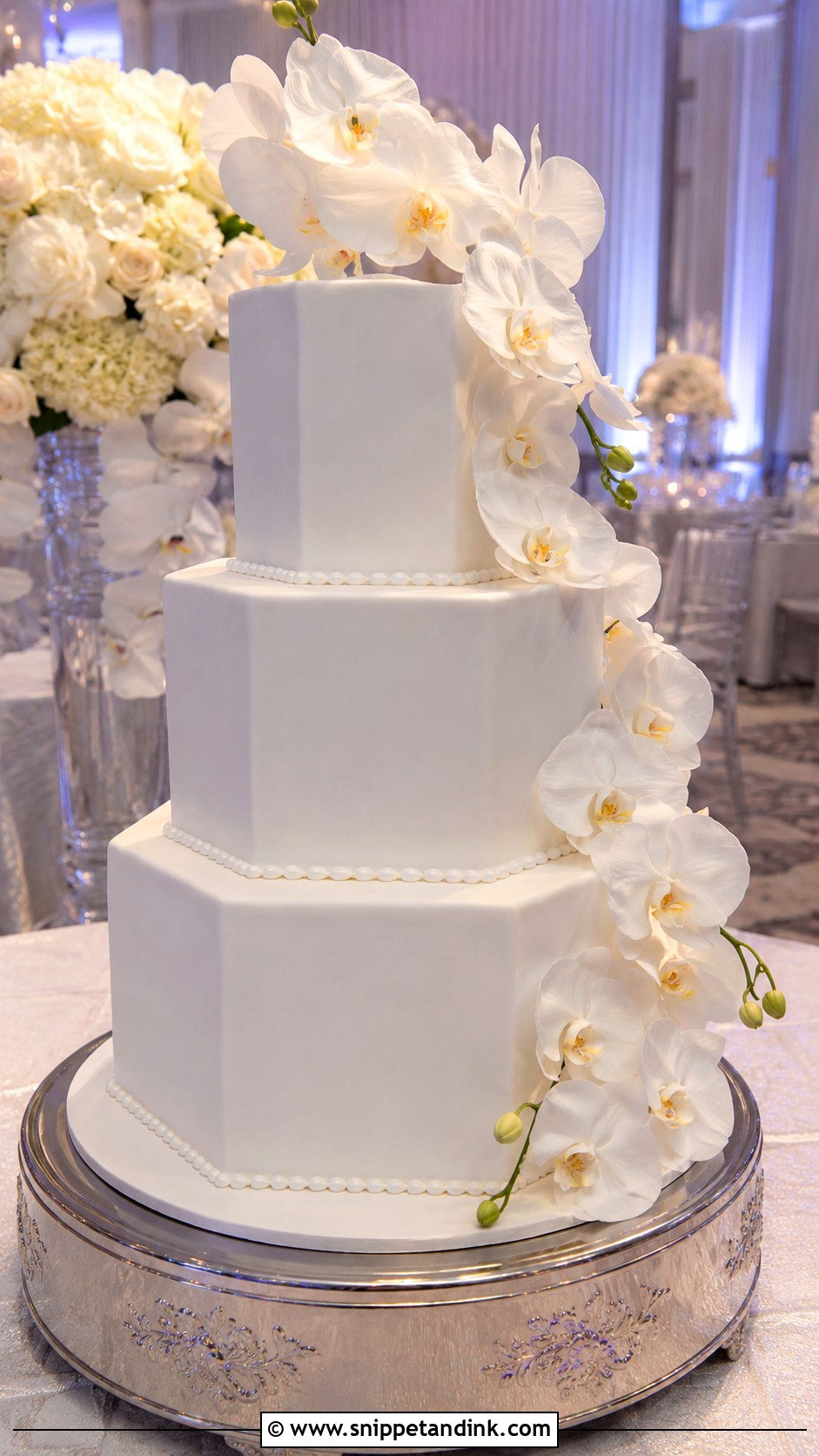
A three tier octagon wedding cake gives the dessert table real height, and the angular silhouette reads clearly even from the back of a large room. Structure matters more here: each tier sits on its own board with dowels underneath, and for anything travelling stacked I run a central dowel through all three. You can keep all tiers in one finish for a sleek look or mix fondant, piped lace and buttercream ridges. Flowers trailing down one side soften the edges. It’s the octagon I’d show a baker if you want a classic tiered cake with a twist.
4. Octagon Wedding Cake With Fresh Flowers
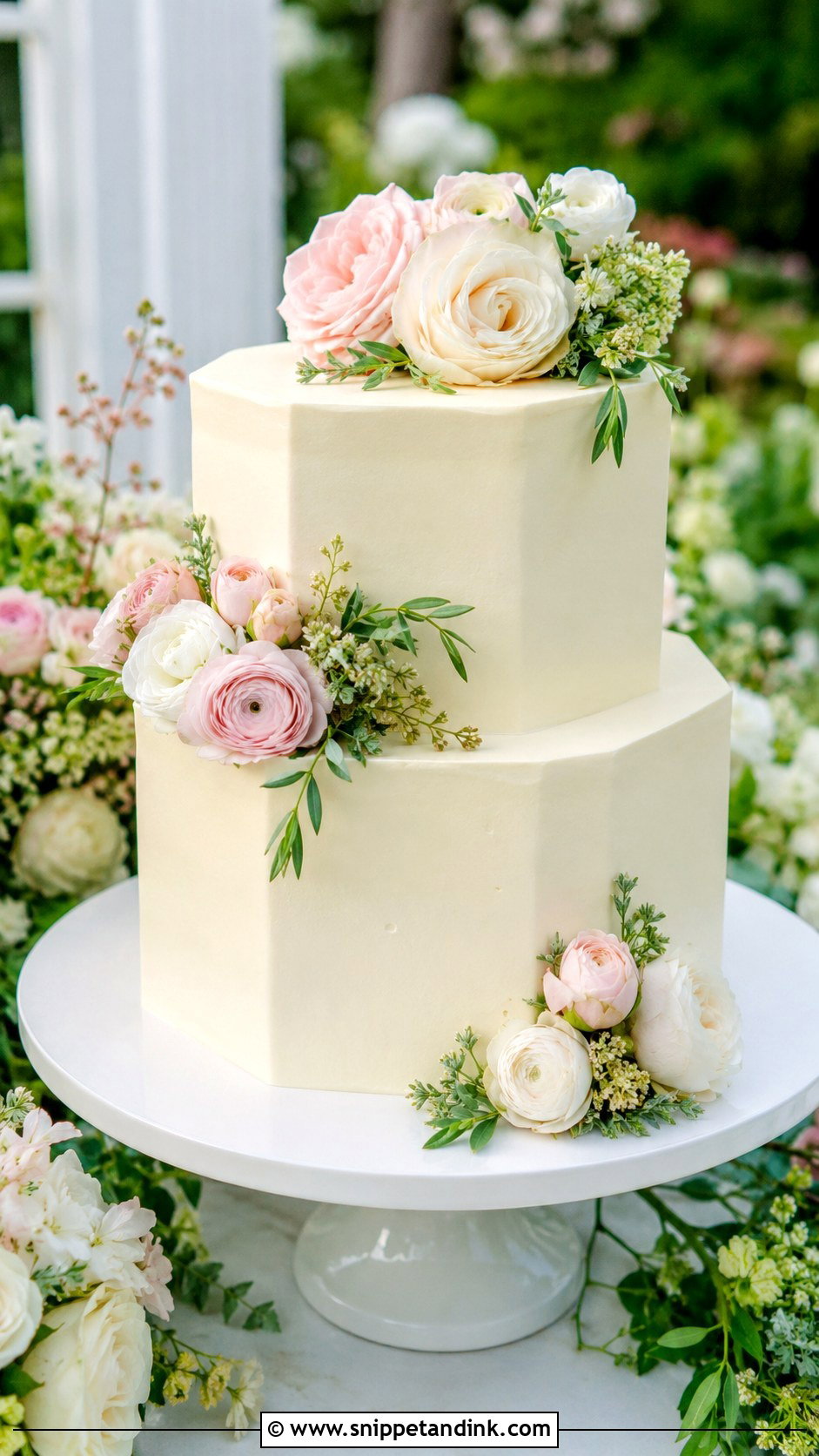
Fresh flowers soften the hard angles, and the contrast is what makes this pairing work. Garden roses, ranunculus and orchids sit well on the corners, around the base or down one side. Keep the frosting plain so the shape and blooms both read. The part couples often don’t expect: not every flower is safe near food, and stems should never go straight into the cake. I wrap stems in floral tape and use food-safe picks, and I check with the florist that the blooms are grown without pesticides. Ask your baker and florist to agree who’s handling this before the week of the wedding.
5. Octagon Wedding Cake With Sugar Flowers
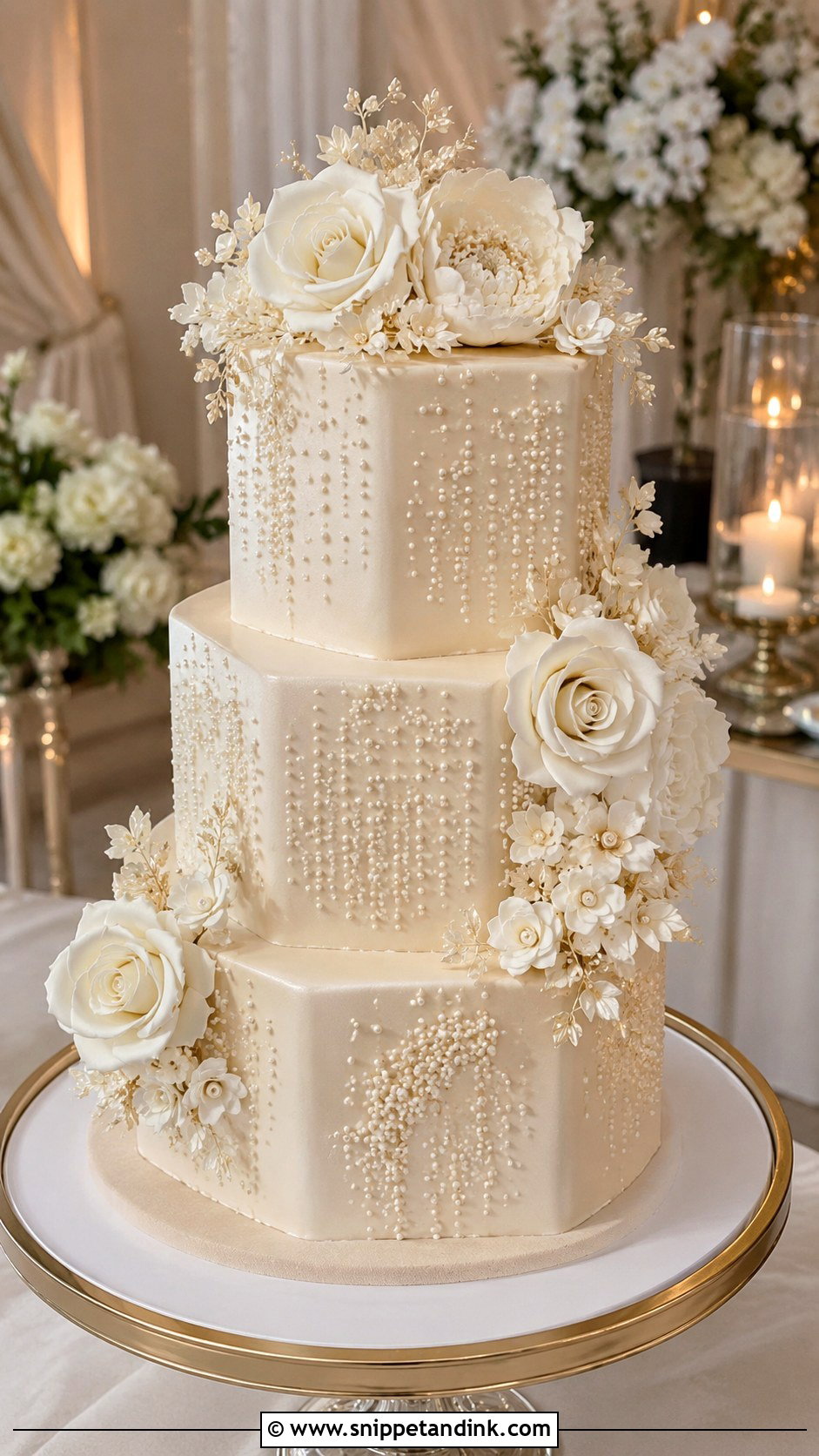
Sugar flowers are made to order, so they can match your bouquet or stationery in exact colour and size, and they won’t wilt in a hot room. They do take time; a cake with many hand-made sugar blooms needs to be booked well ahead because each petal is shaped and dried. Large sugar roses on the front corners look dramatic, while scattered small blossoms feel lighter. The flat panels give delicate flowers a clean frame. Pair them with smooth fondant and a plain stand. One thing to know: sugar flowers aren’t really for eating, so they’re lifted off before cutting and can be kept as a keepsake.
6. Octagon Wedding Cake With Gold Trim
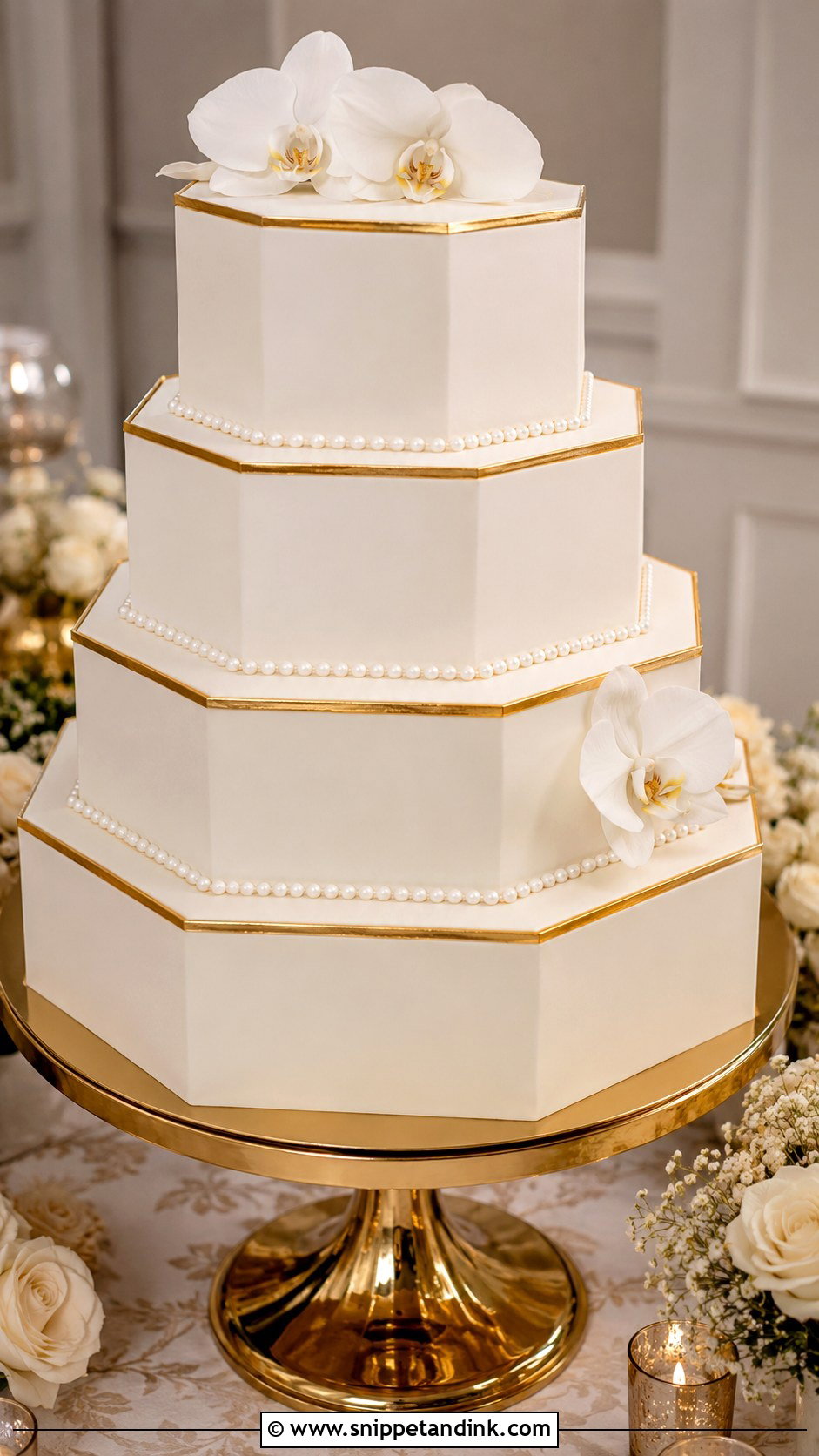
Gold works especially well on an octagon because it can trace the eight edges and make the architecture obvious. I hand-paint edible gold lustre mixed with a little alcohol, or apply gold leaf to corners with a soft brush. Thin lines around each tier or brushed corners are enough. Ivory frosting keeps it classic; white fondant looks sharper. Hotel ballrooms and formal evening receptions suit it. Keep the flowers minimal, maybe a few white orchids, so the gold doesn’t have to compete.
7. Black And White Octagon Wedding Cake
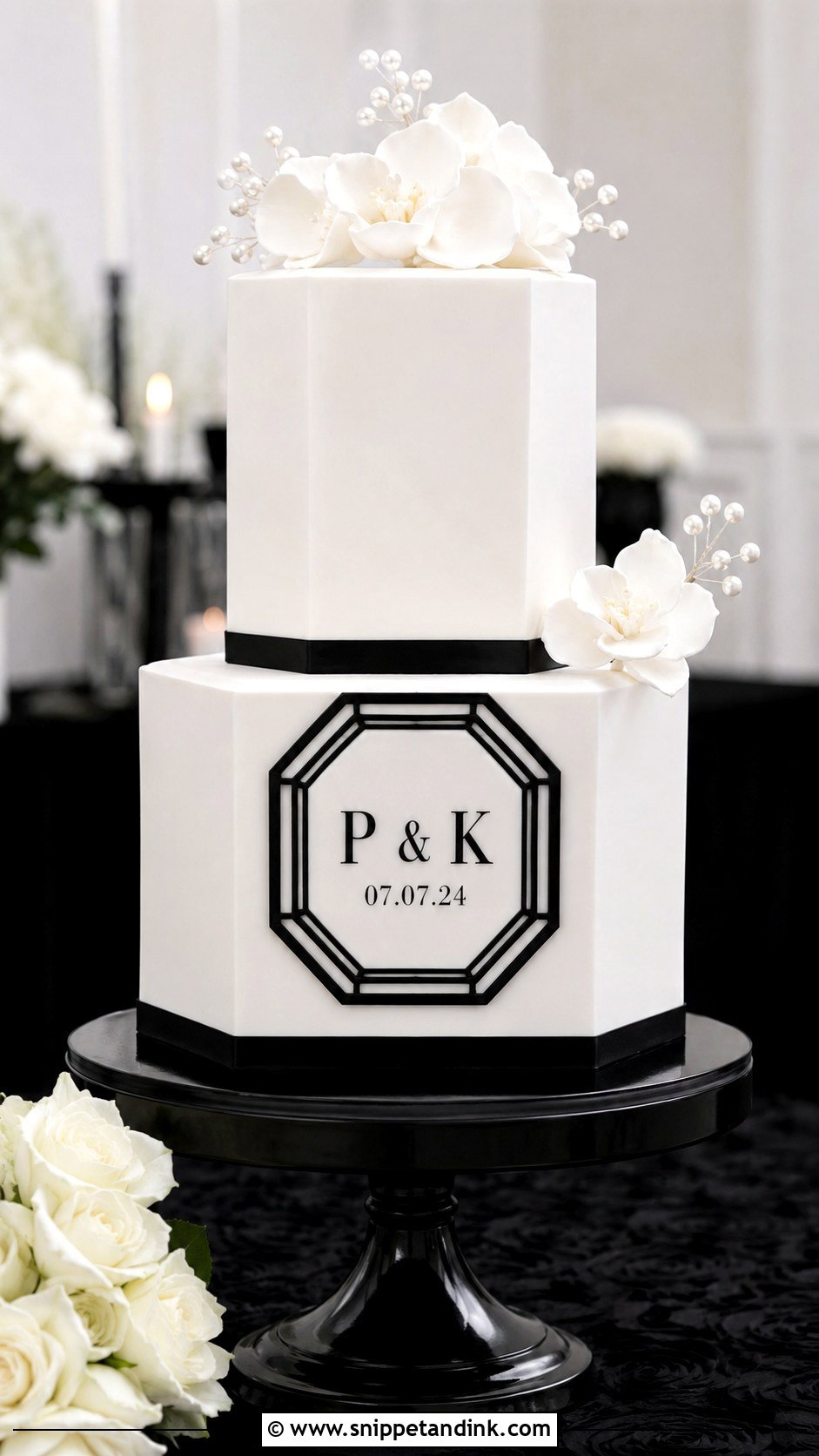
Black and white makes the angles graphic. White frosting as the base, then black ribbon borders, fine black piping or one black tier. I’d be careful with all-black fondant or icing: getting a true black takes a lot of colouring, which can stain teeth and taste slightly bitter, so I use black as an accent rather than a full tier where I can. White sugar flowers, small pearls or a soft floral cluster keep it bridal. Gallery venues and city receptions are its natural home.
8. Marble Octagon Wedding Cake
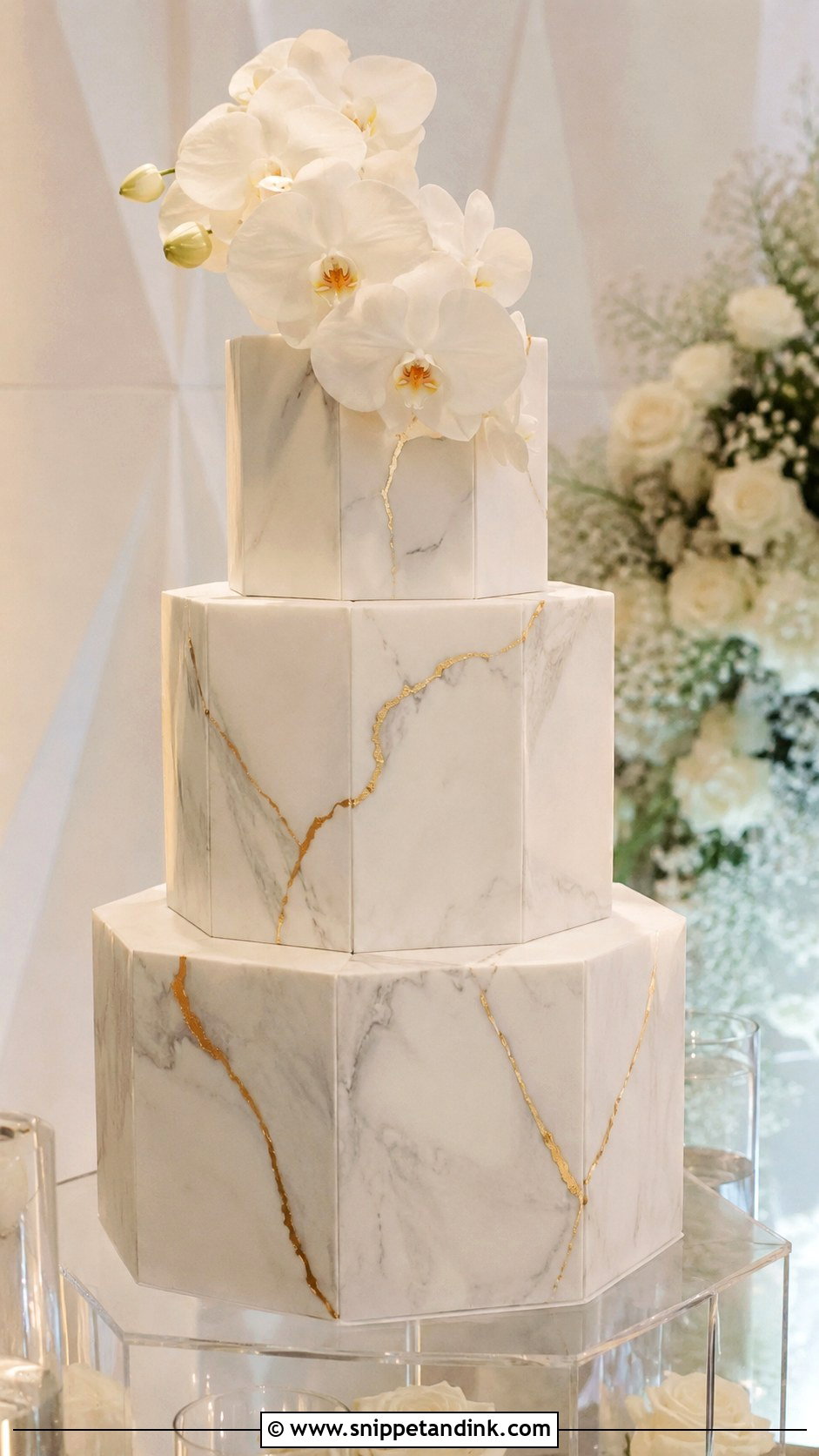
Marble is striking on an octagon because the veining wraps around each flat panel like real stone. Soft grey, ivory and white give a cool look; gold veining warms it. Fondant gives the cleanest result since the colours are worked into the paste before it’s rolled. Buttercream marble is possible but softer and harder to control, so ask to see examples of your baker’s work. White flowers, a clear acrylic stand or simple greenery finish it. Venues with stone, glass or concrete in the decor suit it best.
9. Minimalist Octagon Wedding Cake
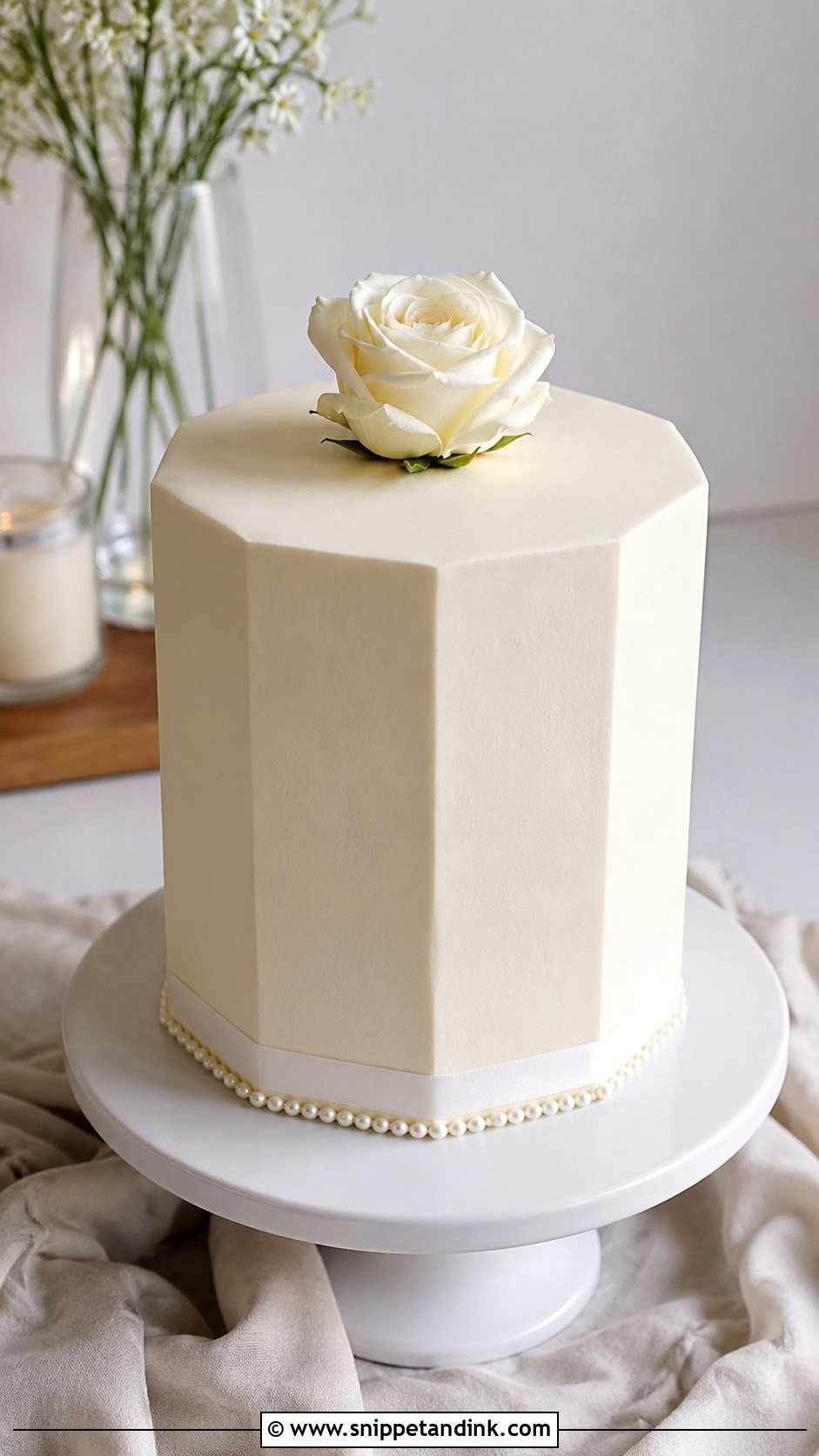
Minimalism leaves nowhere to hide, which is why I only recommend it from a baker you trust with sharp edges. The shape becomes the decoration: clean ivory or white, crisp corners and one accent, such as a single flower, a fine ribbon or a small monogram. Any dent or bulge in a panel shows immediately. It works well for smaller weddings because it looks deliberate rather than plain. A simple pedestal stand, soft linens and a few candles nearby are all it needs.
10. Vintage Octagon Wedding Cake
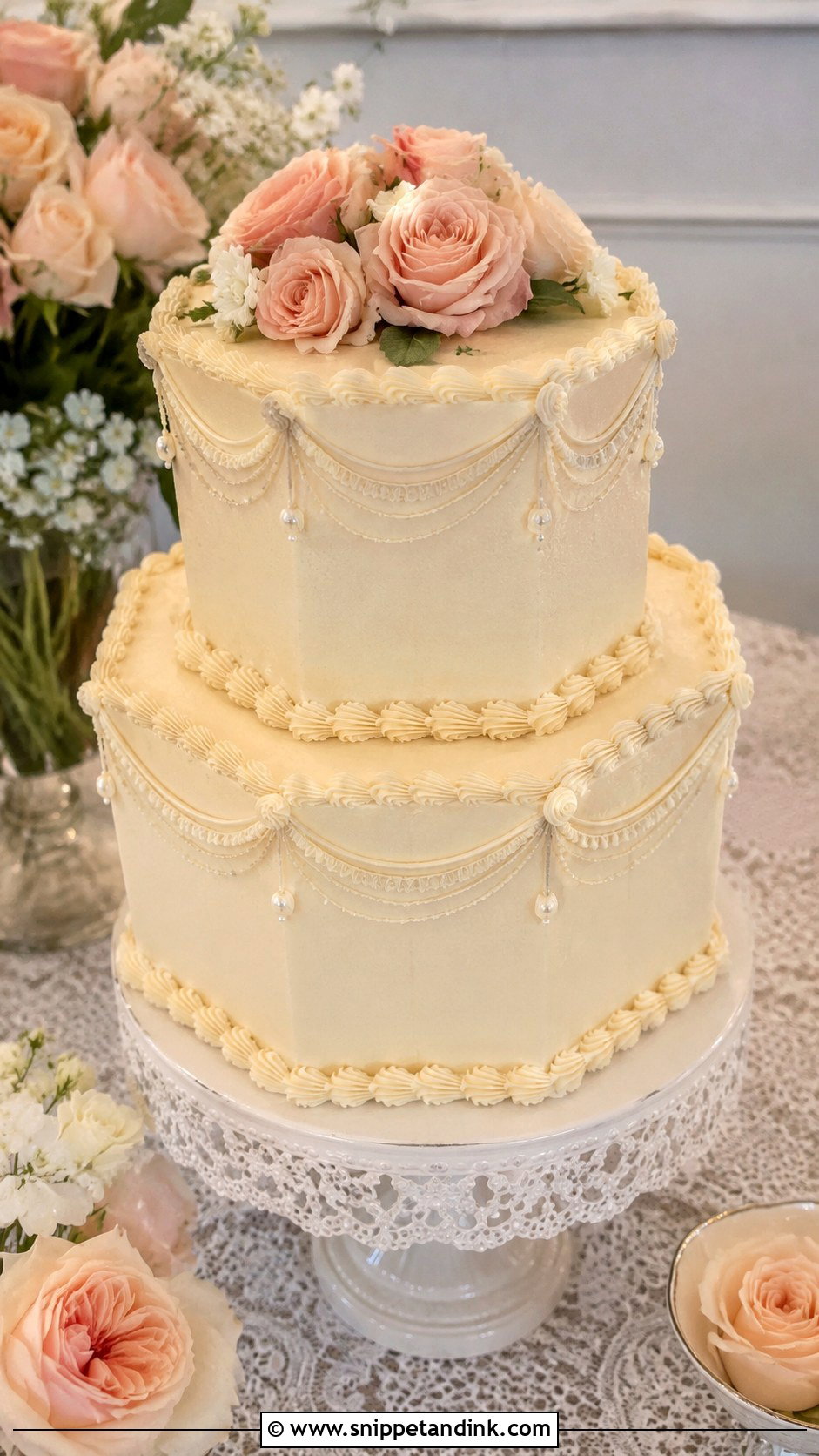
Vintage piping on an octagon is one of my favourite contrasts: old-fashioned shell borders, pearl drops, lace lines and swags on a crisp geometric shape. White or ivory buttercream is the classic base, though pale pink or champagne makes it feel more nostalgic. I pipe in a stiffer buttercream than I’d use for covering, so the detail holds its shape. Piped buttercream does soften in a hot room, so keep the cake out of direct sun. A vintage stand, pressed flowers or a small floral topper complete it.
11. Lambeth Octagon Wedding Cake
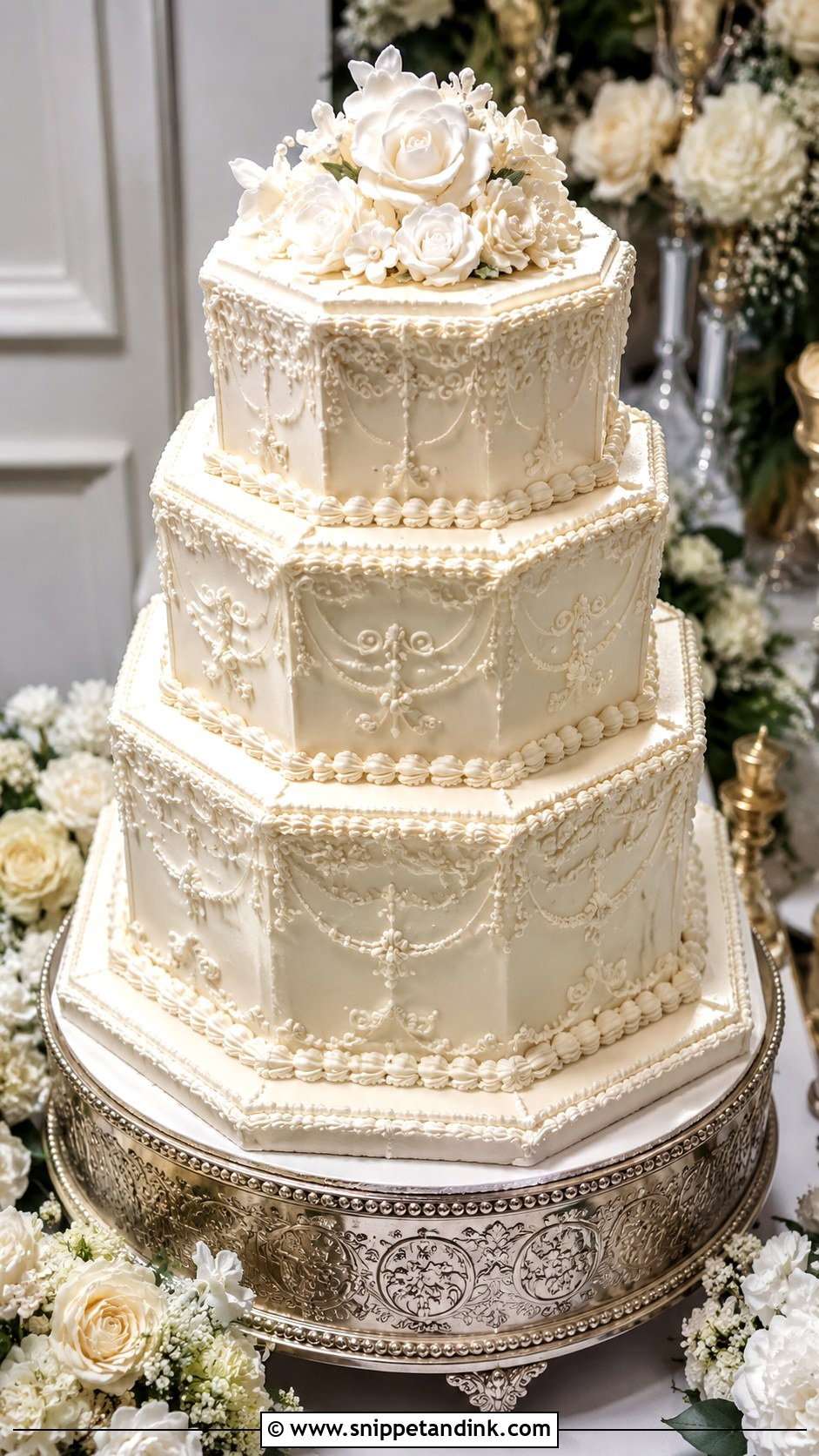
Lambeth piping is layered: overpiped borders, scrolls, swags and pearl-like dots built up in tiers of detail. The octagon actually helps, since each flat side gives a clear panel to design. It can be grand in all white, playful in pastels or formal with small gold touches. This is slow work, so expect it to be one of the more time-intensive designs. Keep large flowers to the top tier at most, because the piping is the feature. Manor houses, ballrooms and garden estates suit it.
12. Textured Buttercream Octagon Wedding Cake
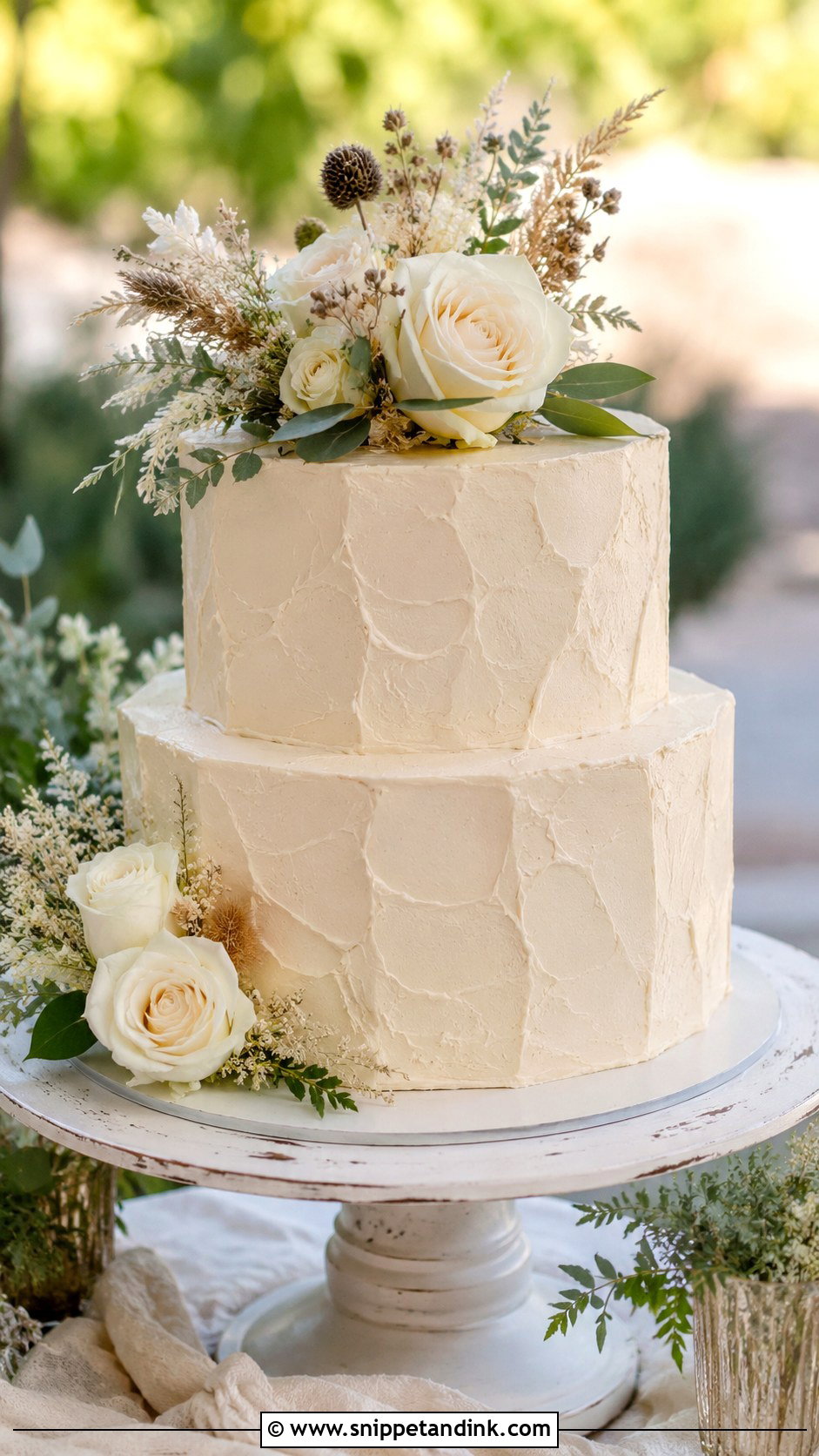
Textured buttercream makes the octagon feel handmade. Palette knife strokes, stucco texture, soft ridges or vertical lines soften the sharp shape without hiding it. Buttercream also tends to feel warmer and more inviting than fondant to guests. I’d keep it in ivory, cream or soft beige and add dried or fresh flowers for movement. The trade-off is heat: American buttercream is more stable than meringue-based styles in summer, but any buttercream will start to slump if it’s left in sun at an outdoor venue. Barns, gardens and relaxed receptions are where this shines.
13. Octagon Wedding Cake With Pearl Details
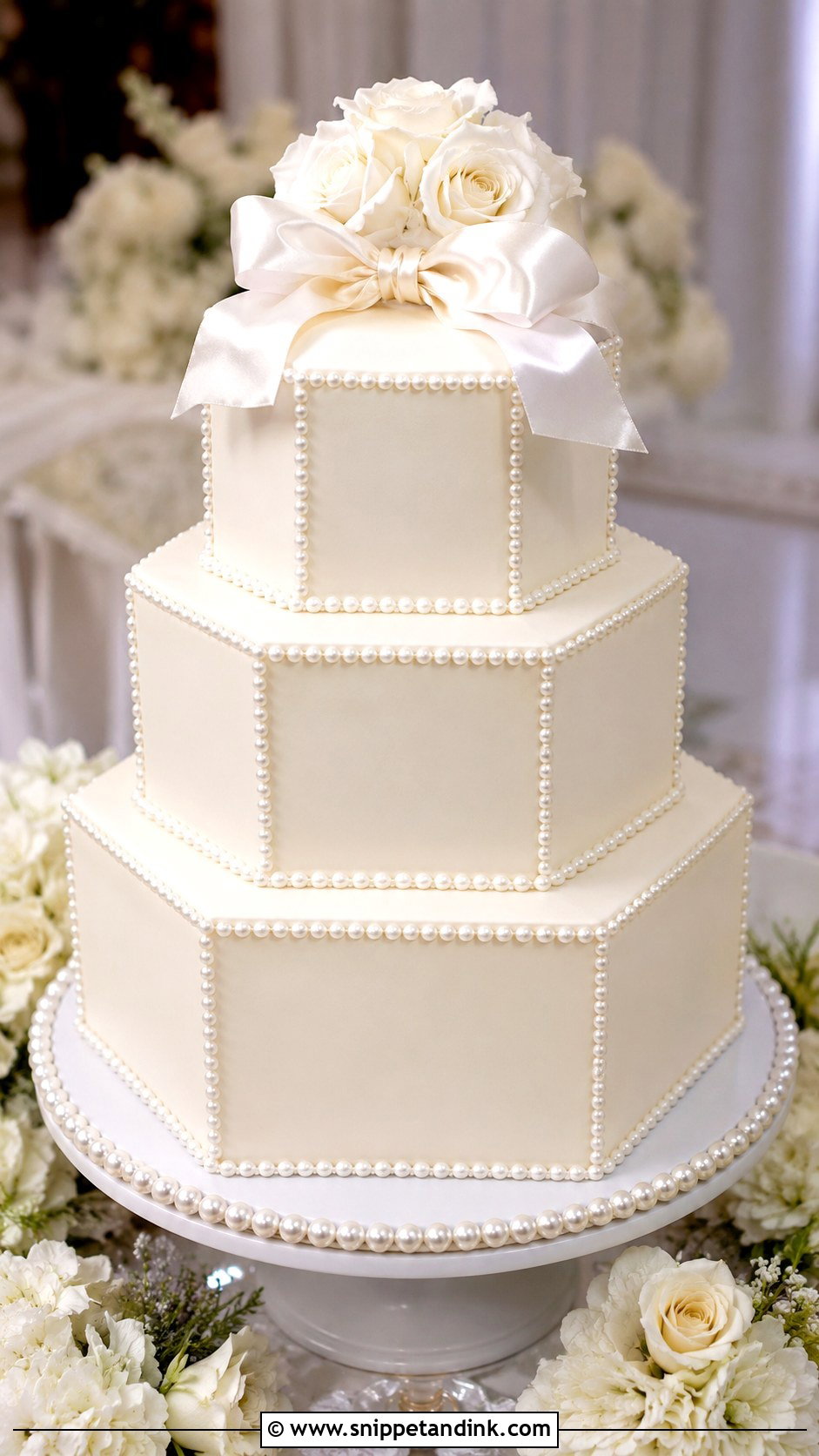
Pearls follow every edge and corner of an octagon neatly. Tiny sugar pearls along the base of each tier, larger ones in a border, or scattered across smooth frosting. They look bridal without any colour. Ivory fondant or buttercream keeps it soft. Add white flowers, a pearl topper or a satin bow if you want more. Lustred sugar pearls catch the light in photos, but I place them carefully so they don’t drop off when the cake is moved. Traditional weddings and hotel receptions suit it well.
14. Octagon Wedding Cake With Cascading Flowers
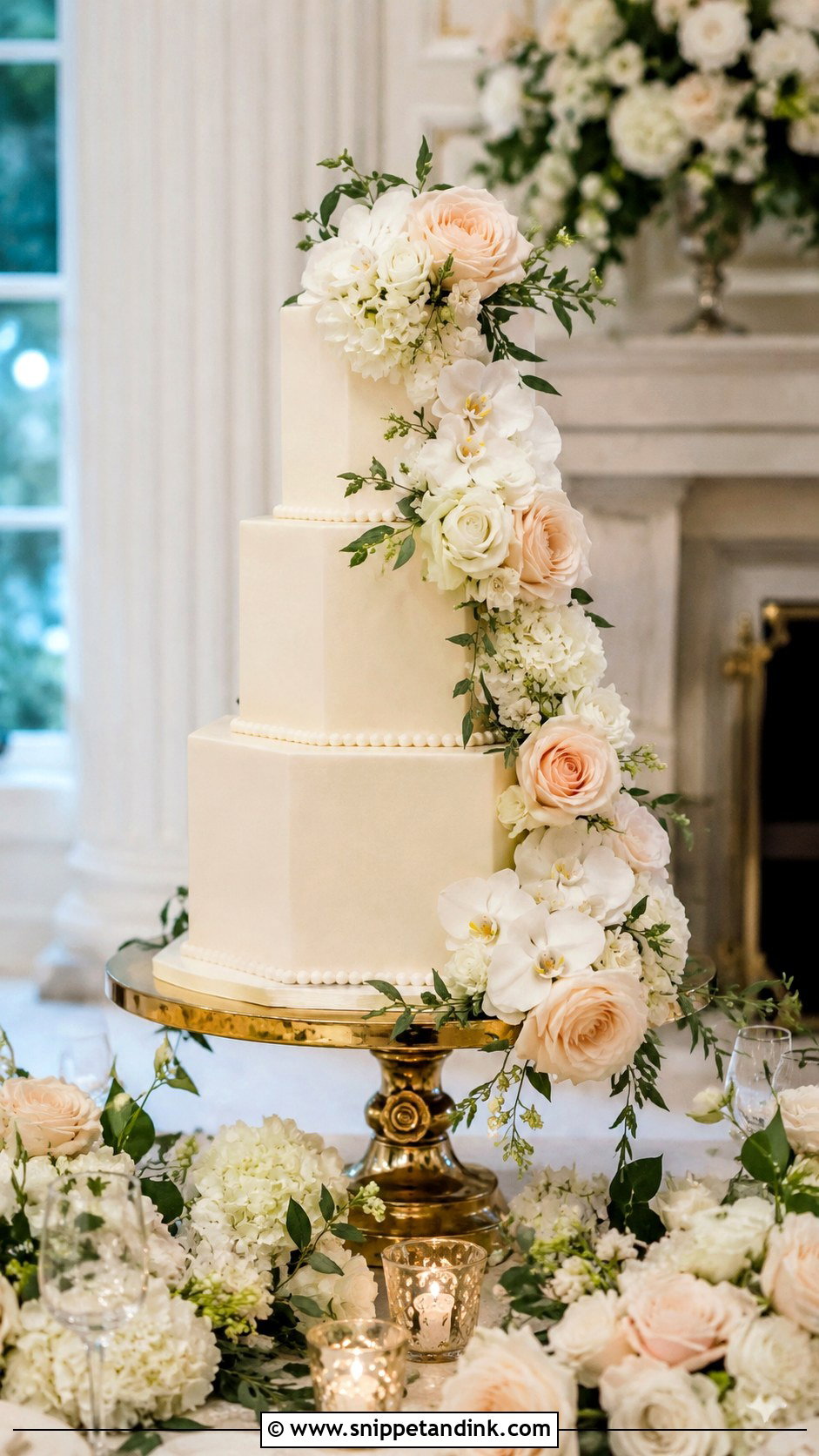
A cascading flower arrangement makes an octagon look taller and turns it into a centrepiece. I start the cascade at the top tier and let it run down the corners, since the angles give the flowers a natural path. Roses, orchids or sugar flowers in your palette work well; some popular blooms, hydrangea among them, aren’t food-safe, so I keep those to sugar versions or make sure they sit on a barrier. Smooth ivory buttercream or fondant keeps the movement clear. Larger weddings and estate venues give it room.
15. Octagon Wedding Cake With Floating Tiers
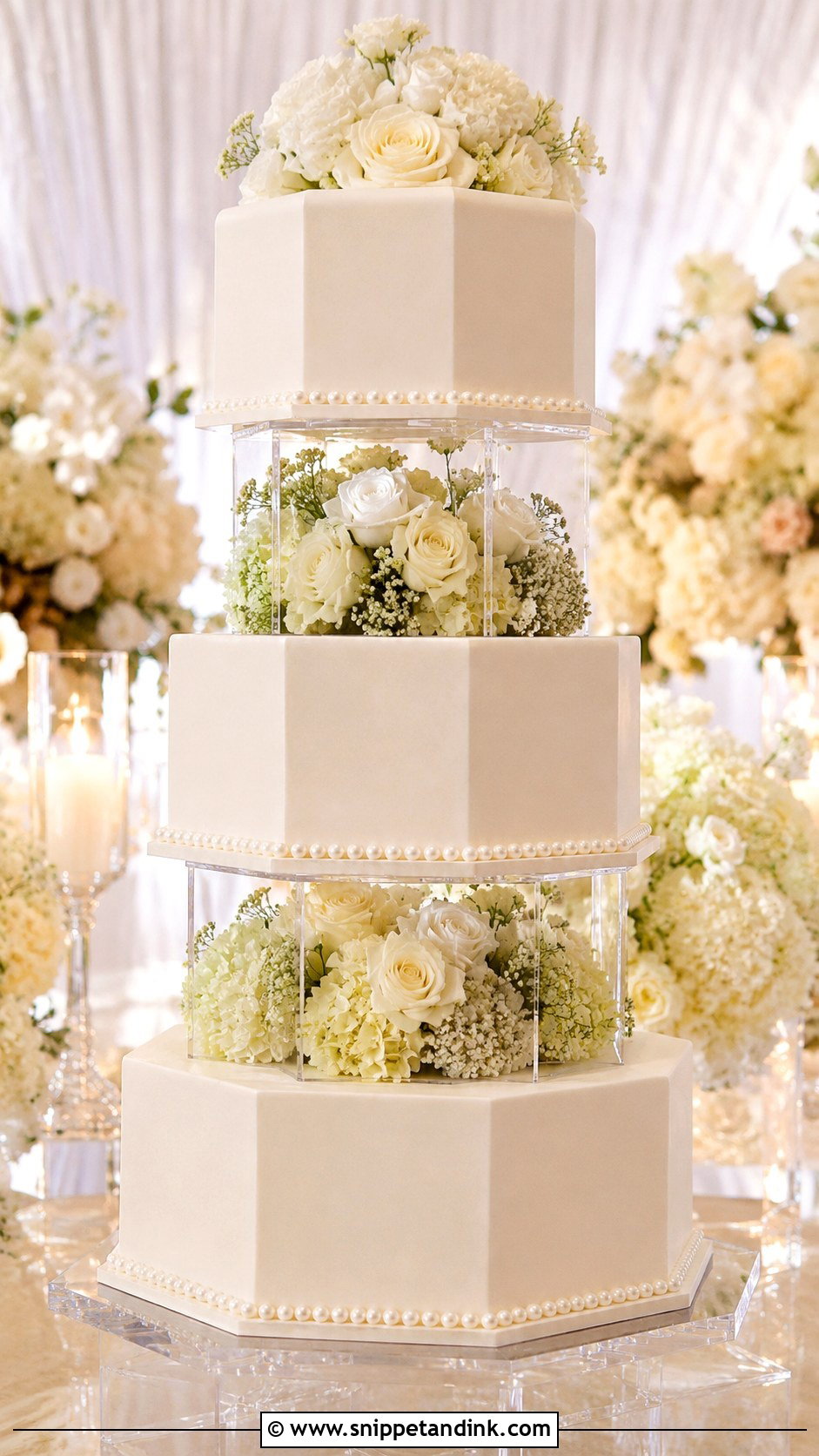
Clear acrylic separators, slim columns or flower-filled gaps are what put the air between floating tiers. The octagon keeps it grounded while the gaps make it feel airy. The gaps can hold flowers, greenery, pearls or small lights. Structure is the whole job here: the separators must sit on dowels set into the tier below, and these cakes are usually assembled at the venue, not transported stacked. Choose a baker who has built them before. Done well, it suits a grand cake table or a large reception entrance.
16. Octagon Wedding Cake With Fruit
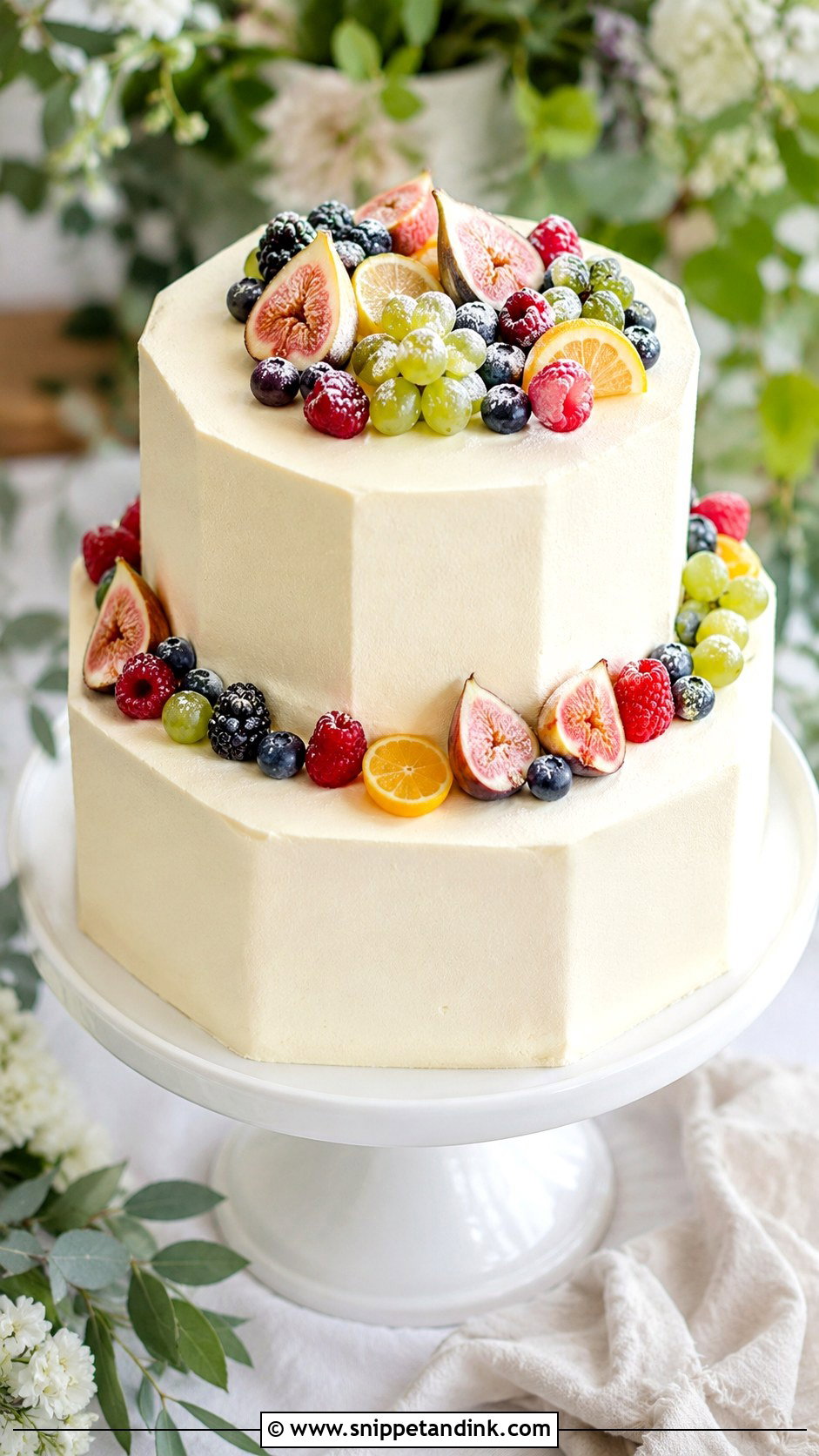
Fruit brings colour and a seasonal feel, and the flat sides make neat clusters easy to place. Figs, berries, grapes, citrus slices and pears all work. Berries and lemon suit summer; figs, pears and deep grapes suit autumn. Cut fruit weeps juice into frosting within hours, so I add it as late as possible, often on site, and glaze it lightly. A dusting of icing sugar on berries looks pretty but dissolves in humid air. Garden receptions and brunch weddings suit it.
17. Octagon Wedding Cake With Pressed Flowers
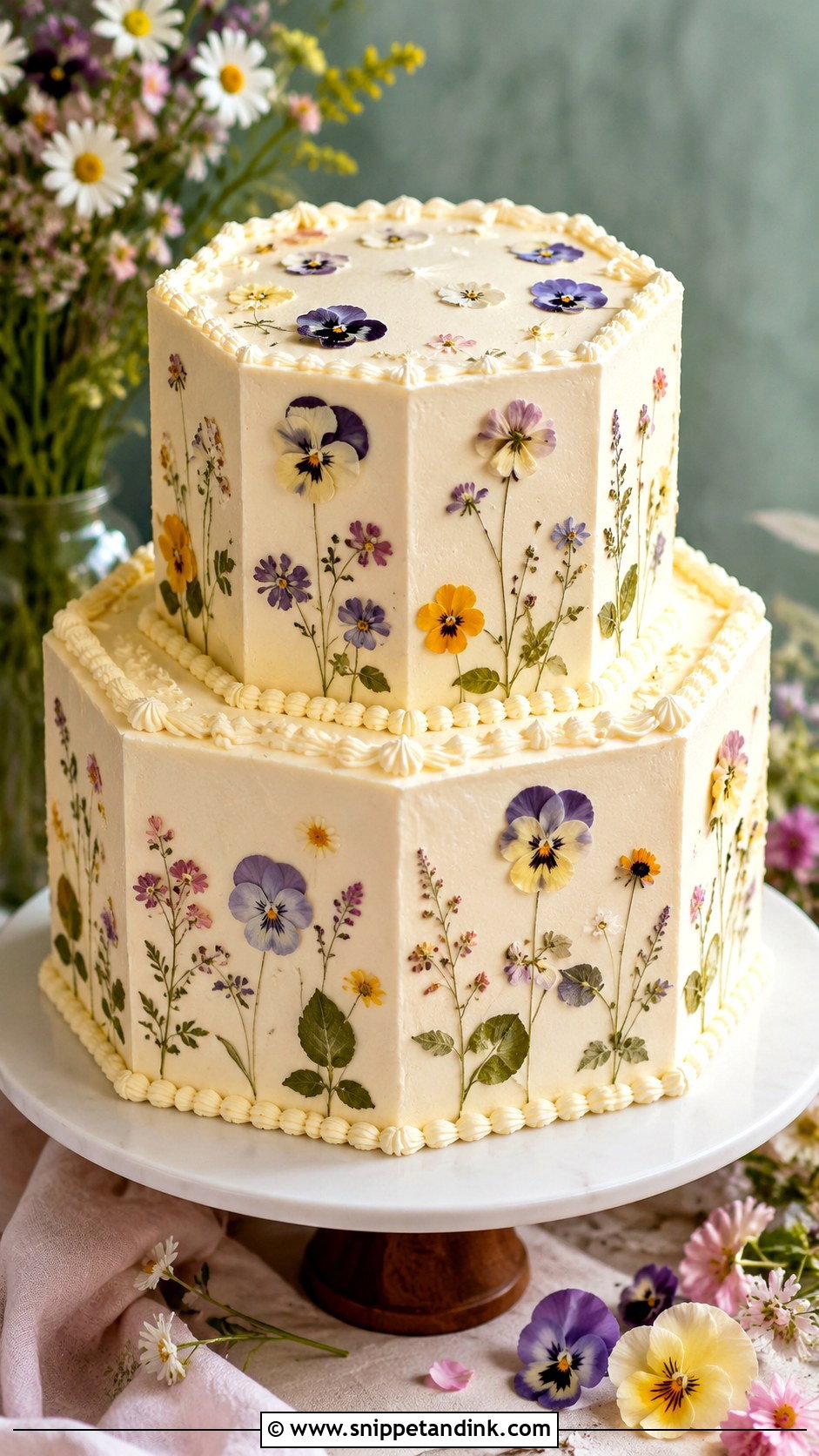
Pressed flowers on the flat panels look almost like botanical artwork. Edible petals can be scattered like a meadow, placed as a border on each tier or set in a dense panel on the front. They need a smooth surface, so this works best on fondant or well-chilled smooth buttercream. I press only edible flowers grown for culinary use, and they fade over time once dried, so they’re applied close to the date. Soft colours look romantic; brighter blooms suit a garden party.
18. Octagon Wedding Cake With Monogram
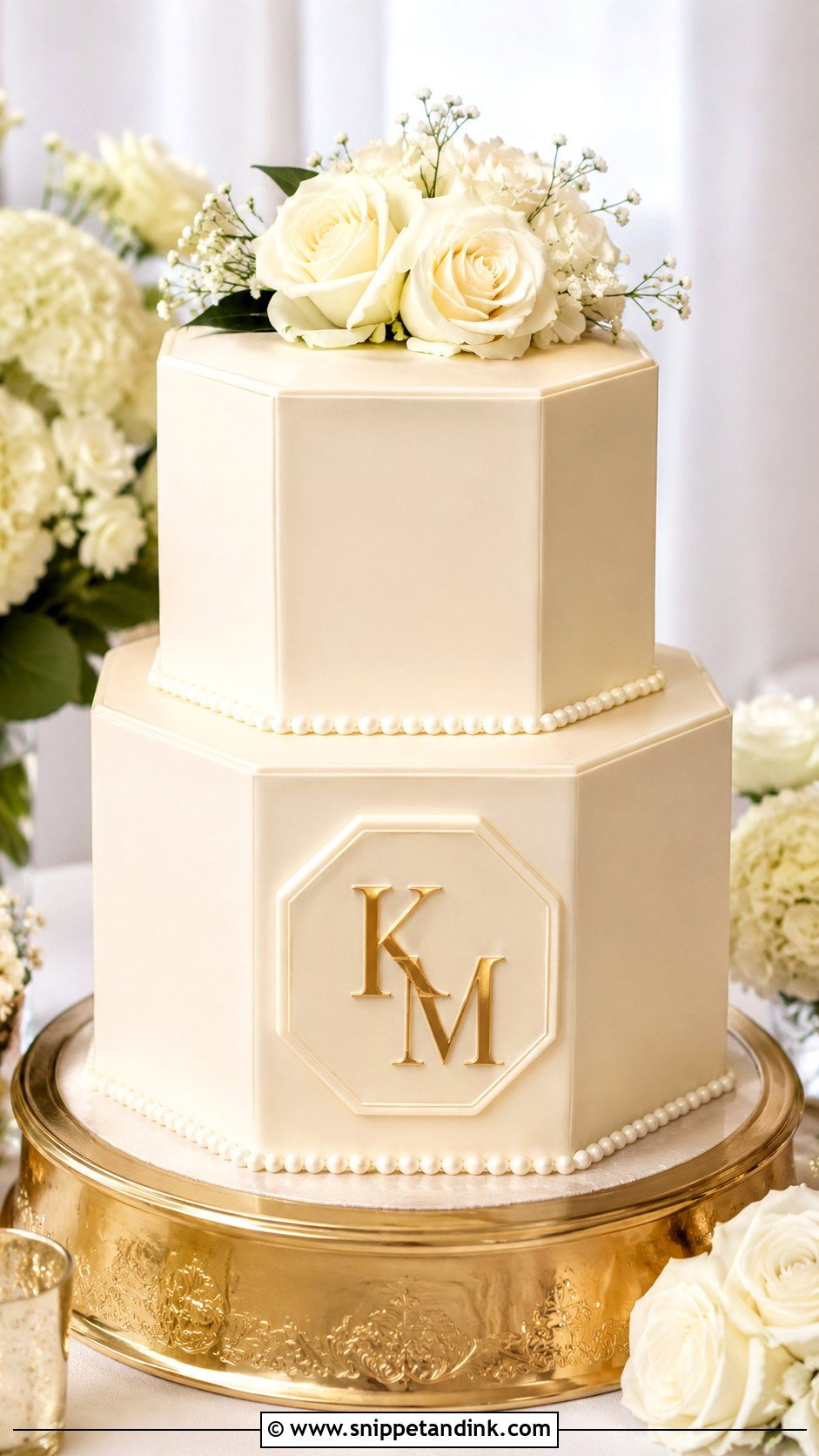
A monogram sits naturally on the front panel of the top or middle tier, where the octagon creates a ready-made frame. I can pipe it, paint it, stamp it in gold or make it as a topper. Keep the rest simple, with smooth ivory frosting, fine borders and a few flowers at the base. If you send your baker the monogram file from your stationery designer, it can match the invitations exactly. Classic and formal receptions suit it.
19. Octagon Wedding Cake With Square Tiers
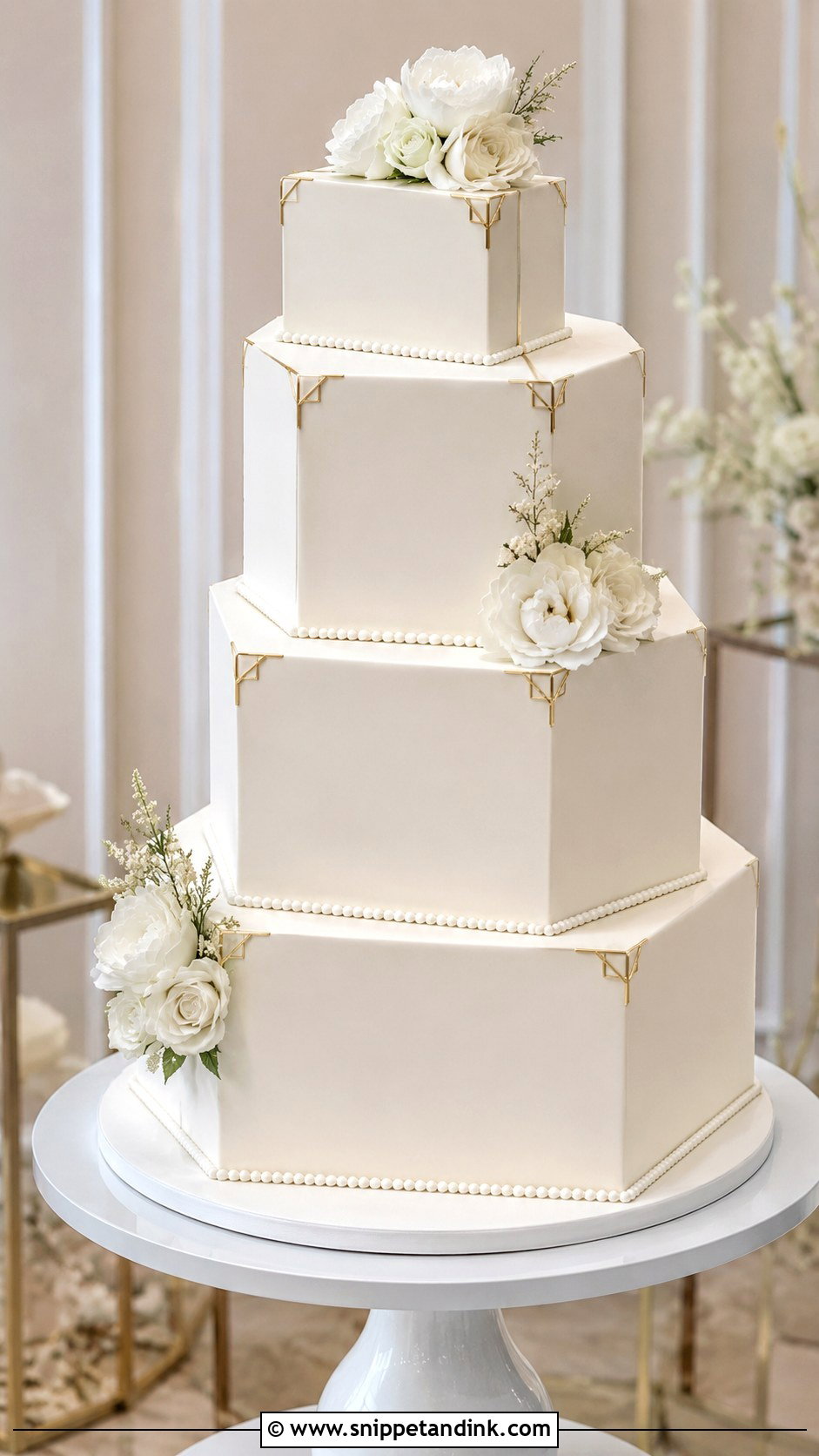
Mixing octagon and square tiers gives even more geometry. You can stack an octagon over a square, alternate the shapes, or use a square base under octagon tiers. Keeping one frosting colour throughout stops it looking chaotic. Getting the proportions right matters: an octagon above a square needs to be measured so the top tier’s corners don’t overhang the square’s flat sides. Smooth white fondant, fine piping and a few flowers keep it clean. Contemporary venues, museums and rooftops suit it.
20. Small Octagon Wedding Cake
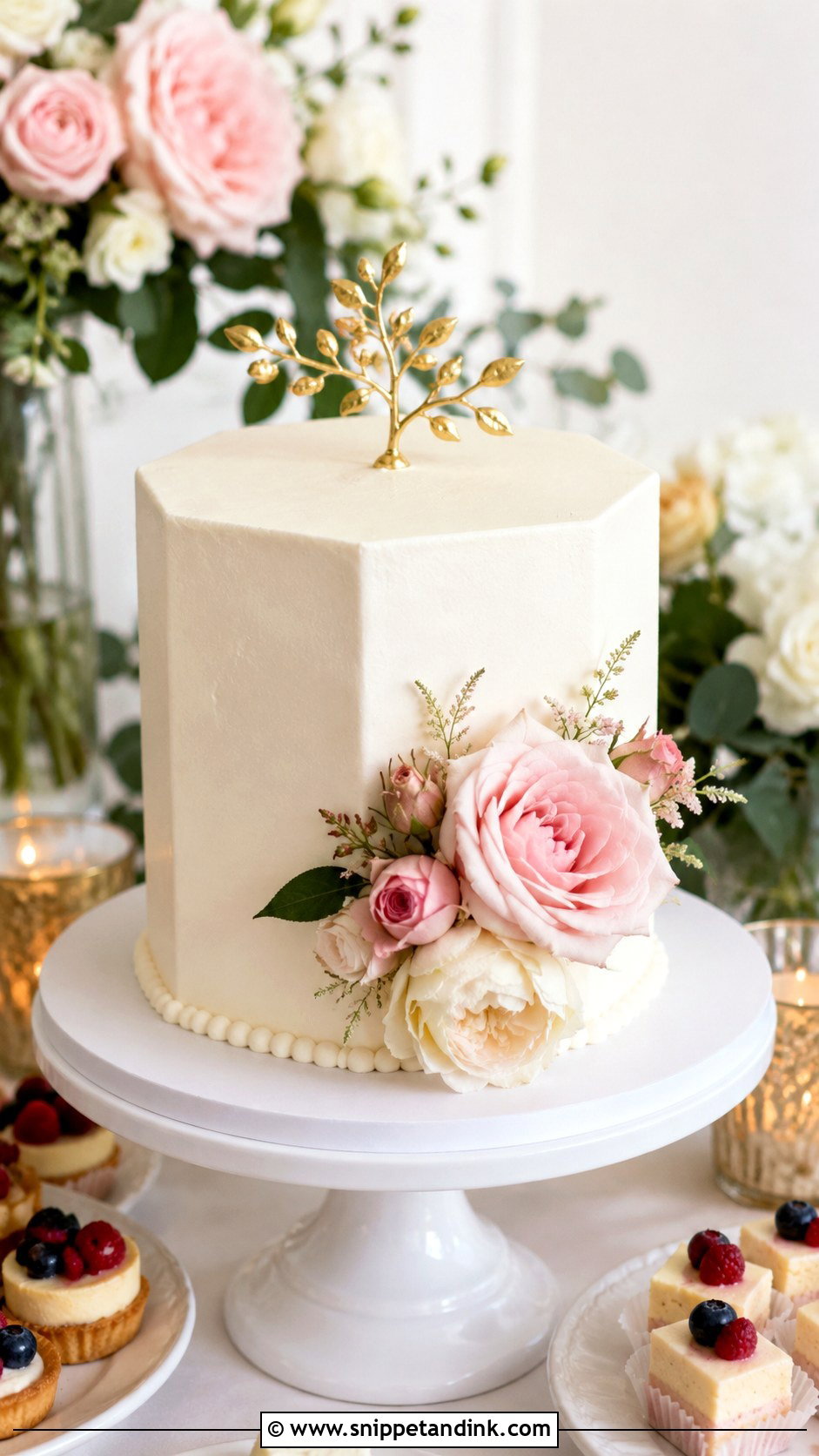
One octagon tier still feels special because the shape is unusual. That makes it a good cutting cake for elopements and micro weddings, or for couples serving a bigger dessert table. A tall single tier looks modern; a petite two-tier adds height. Smooth buttercream, soft flowers, pearl borders or a simple topper make it wedding-ready. It’s easy to style with cupcakes, cookies, or mini desserts around it. A small cake also travels far more safely, which helps if your venue is a drive from the bakery.
Sharp Edges in a Warm Marquee
Crisp octagon corners are the first thing to suffer in heat. Buttercream softens and the edges round off; fondant can sweat when a chilled cake meets warm, humid air, leaving a sticky, shiny surface for a while.
I deliver octagons in a cool vehicle, tiers boxed separately where possible, and stack them at the venue. Ask your venue for a table away from windows, heaters and the dance floor lighting. For summer marquees, I’d lean to ganache and fondant over buttercream, and keep the cake inside until shortly before it’s needed.
Cutting a Cake That Has Corners
Caterers who are used to rounds sometimes struggle with octagons, so it’s worth giving them a plan. Remove each tier from the stack and take out the dowels before cutting.
- Cut straight lines parallel to two opposite flat sides, about two to three centimetres apart, to make long strips.
- Cut each strip across into finger portions.
- Use the small triangular pieces from the corners for children or as extras, rather than trying to make them full slices.
A long, thin knife dipped in hot water and wiped between cuts keeps the edges clean, especially on fondant.
Is Eight Sides Right for Your Reception?
An octagon sits between classic and modern. It has the structure of a geometric cake, but it softens easily with flowers, pearls, fruit or buttercream texture. It suits a single cutting tier as well as a tall display, a formal ballroom as well as a garden. It also gives your baker panels and edges to work with, which photograph well. Think about your venue, guest count, season and palette first. Then bring your favourite design from this list to a tasting, and ask to see an octagon your baker has already made.
You'll Like These Ideas:





Leave a Reply