
A deep pink cake is one of the boldest choices a couple can make, and in my kitchen it is also one of the most technical. The range is wide: raspberry, fuchsia, magenta, berry and a pink that edges towards burgundy. Some of those suit a garden in June, others look right only by candlelight. Strong pink sits well next to an ivory gown, gold cutlery and dark suits, which is part of why it keeps coming up at consultations. The designs below cover vintage piping, ombré tiers, sculpted buttercream, fruit and edible flowers, with my notes on how each one is made and where it can go wrong.
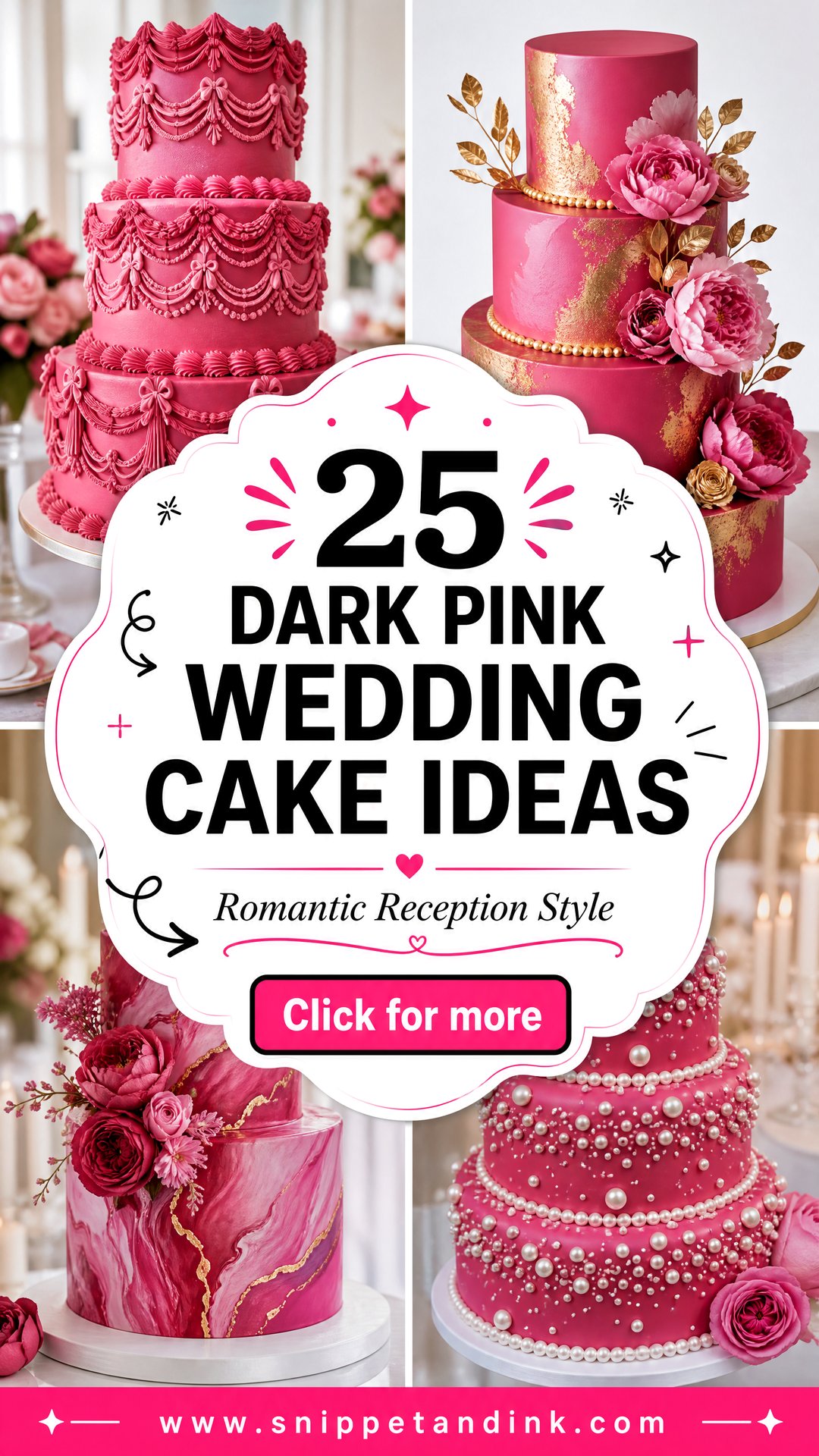
How Deep Pink Buttercream Gets Made (and Why It Can Taste Bitter)
Pale pink takes a drop of colour. Raspberry or magenta takes a lot, and that changes the frosting. Heavily coloured buttercream can pick up a slightly bitter or chemical aftertaste, and it softens a little as more gel goes in. This is why I’m careful about which designs I suggest in very dark shades.
A few things I do to keep the colour strong and the taste clean:
- I mix the colour the day before. Pinks and reds deepen as they sit, so a shade that looks a little light at night is usually right by morning, and I need less gel to get there.
- I use freeze-dried raspberry or strawberry powder for the fruit flavours. It gives a natural dusty rose rather than magenta, so it suits mid-pinks better than the darkest shades.
- For the boldest colours I often colour fondant or chocolate rather than buttercream, then keep the buttercream inside pale and well flavoured.
- I tint a test swatch and look at it in daylight and under warm bulbs. A pink that reads as fuchsia in the kitchen can turn almost red under amber lighting.
If you can, taste a coloured sample at your tasting, not just the flavours. That’s the only way to know whether the shade you want and the taste you want can live on the same cake.
1. Dark Pink Wedding Cake With Roses
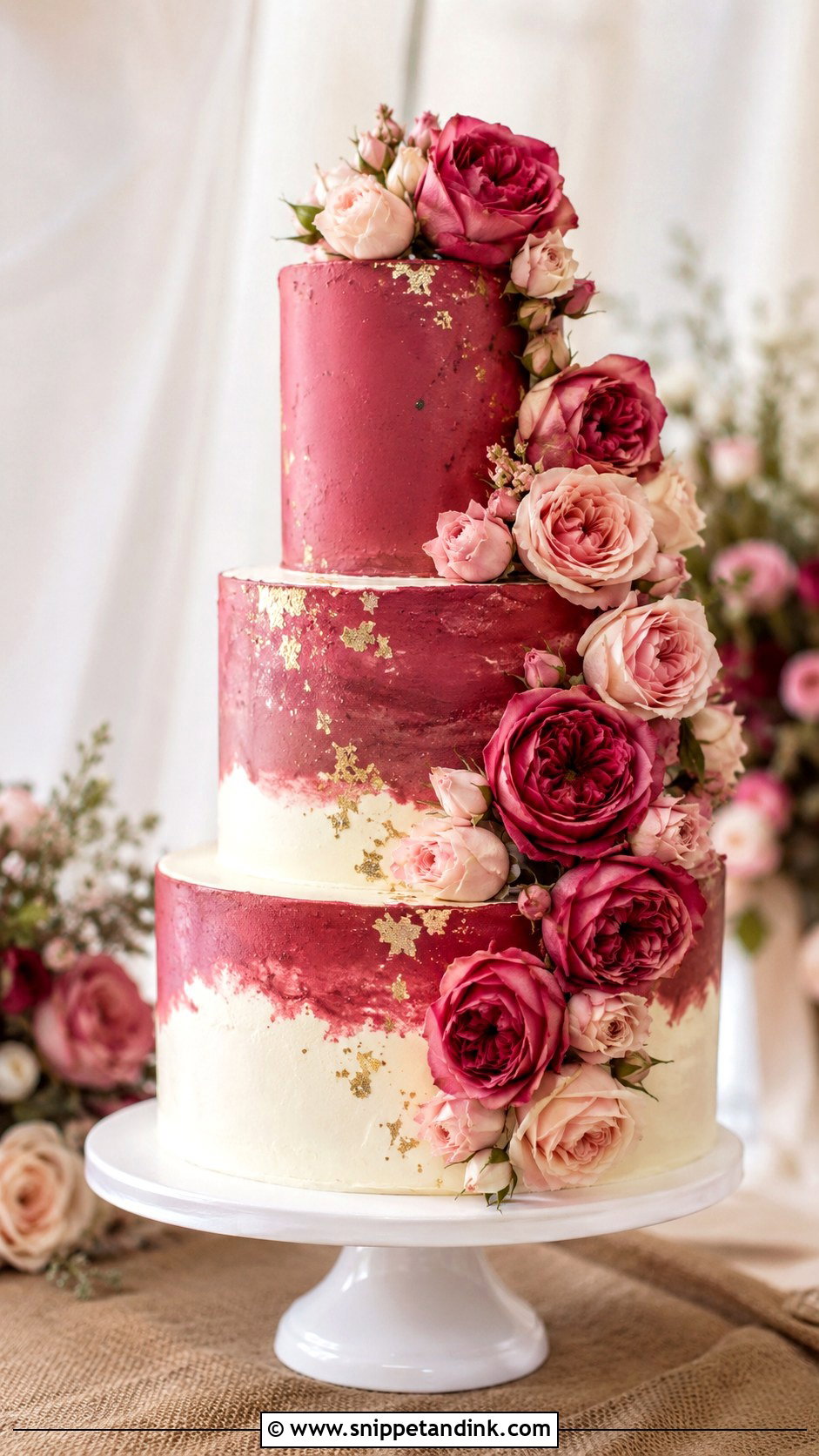
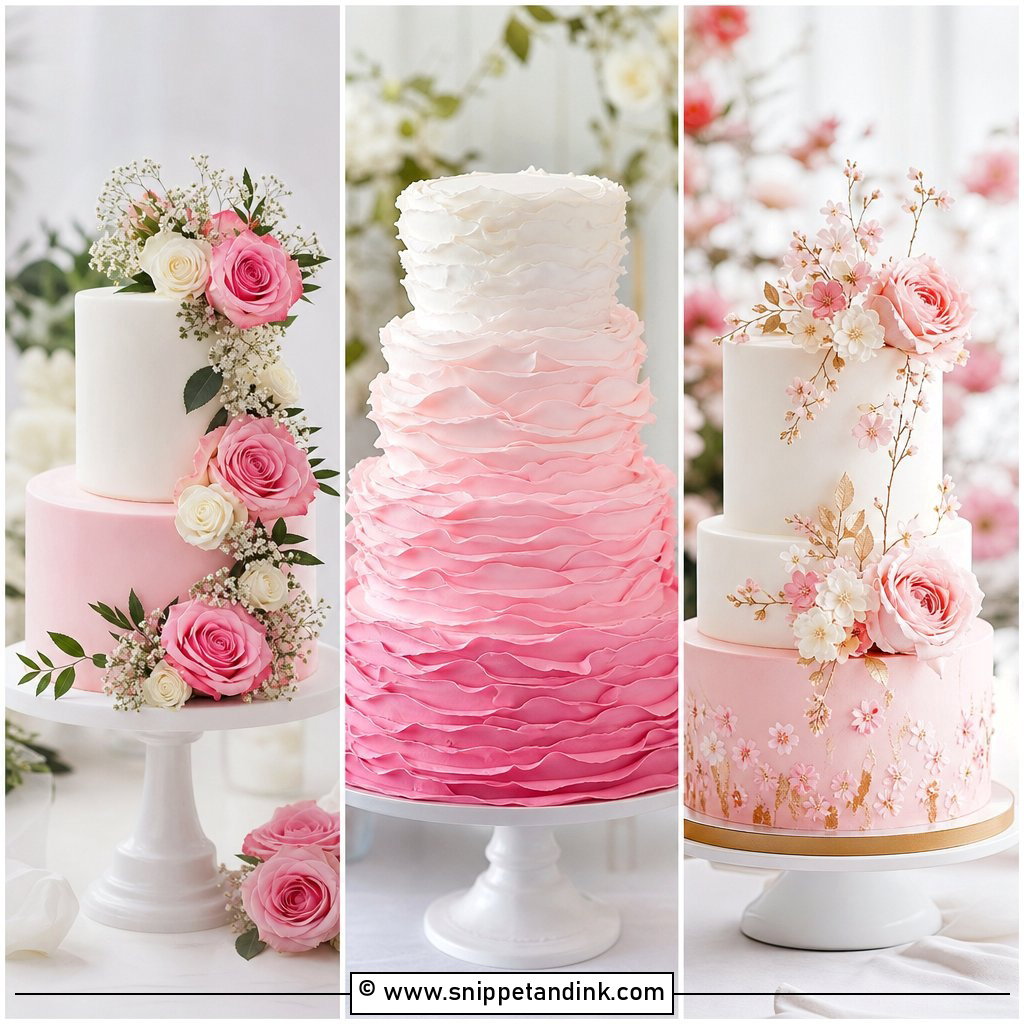
Roses on a deep pink tier are the safest way into this colour, because the flowers tell everyone it is a wedding cake before they notice the shade. The base can be smooth buttercream, satin fondant or a soft texture. I mix the roses across raspberry, blush, ivory and wine so the arrangement has depth; all-matching roses tend to vanish into the cake. Three tiers give room for a cascade from the top down one side. I go lightly with gold leaf or pearls, a few touches at most.
2. Dark Pink Ombré Wedding Cake
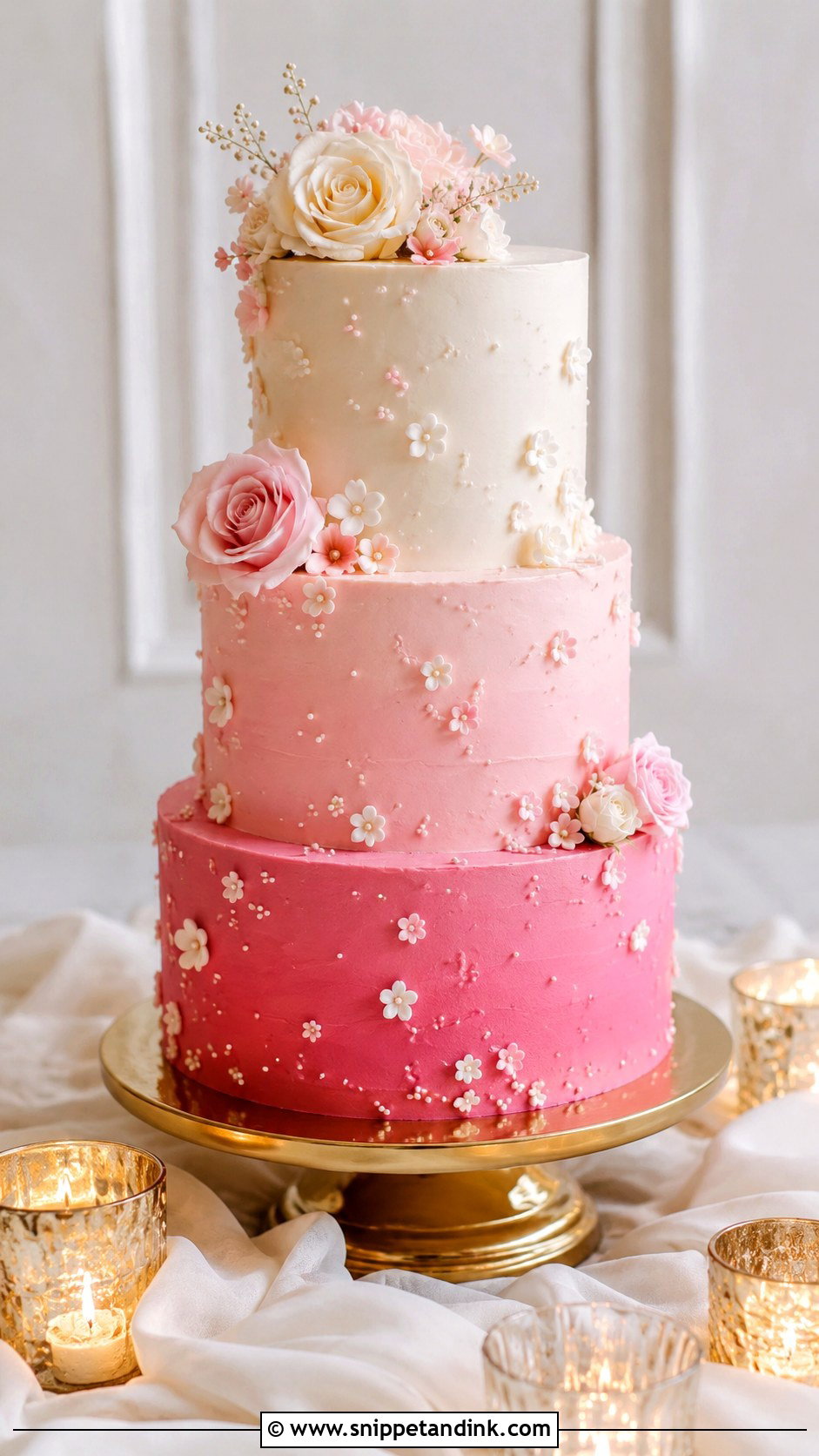
Ombré is how I’d introduce dark pink to a couple who is nervous about it. The bottom tier starts at raspberry or magenta and each tier above gets lighter, through dusty rose to blush or ivory. I make the darkest shade first and lighten it with white buttercream for each tier, which keeps all the pinks in the same family; mixing each tier from scratch never matches as well. Buttercream gives a softer blend, fondant a cleaner one. If your bridesmaids wear several pinks, this is the cake that pulls them together.
3. Dark Pink Vintage Wedding Cake
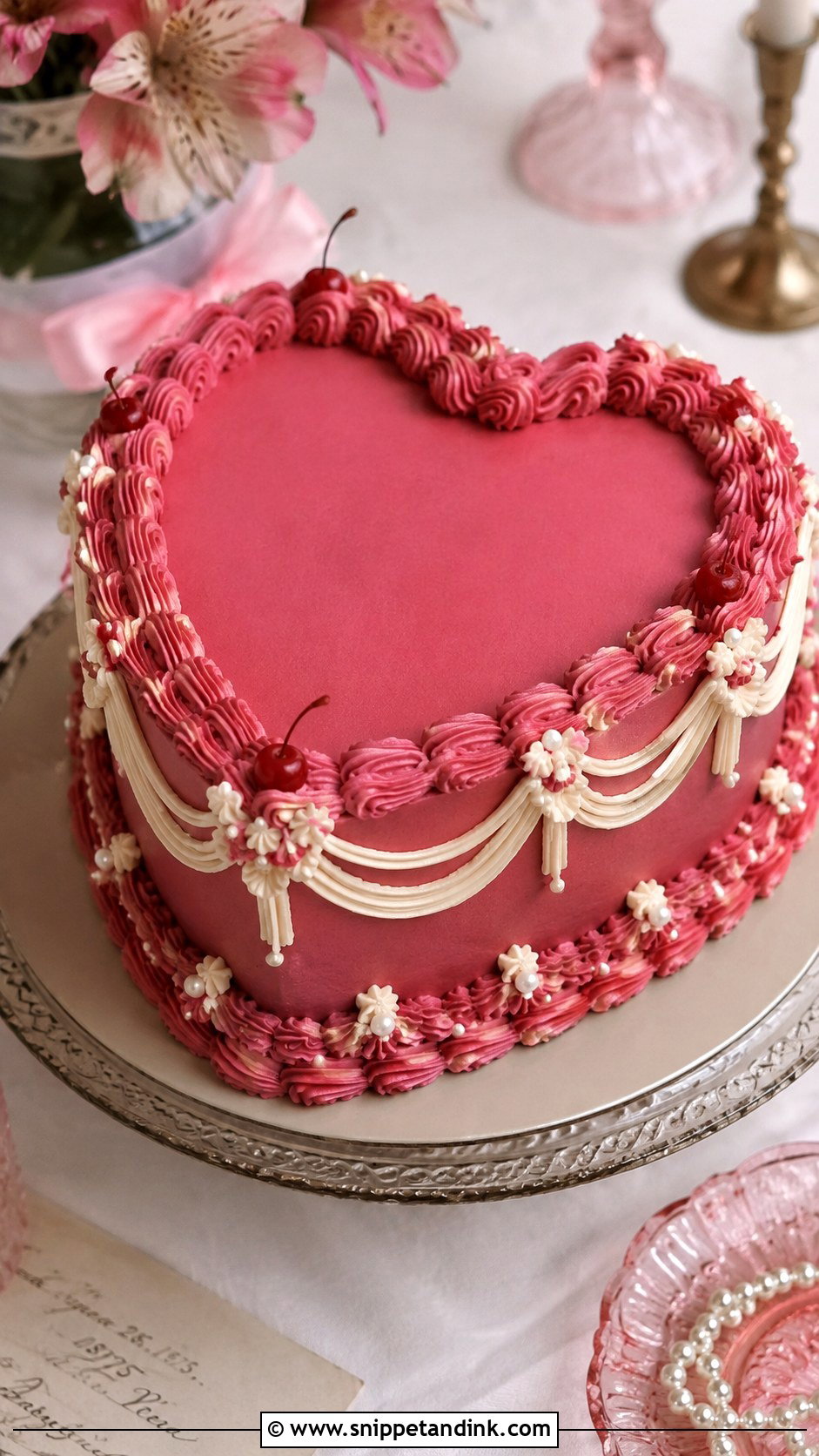
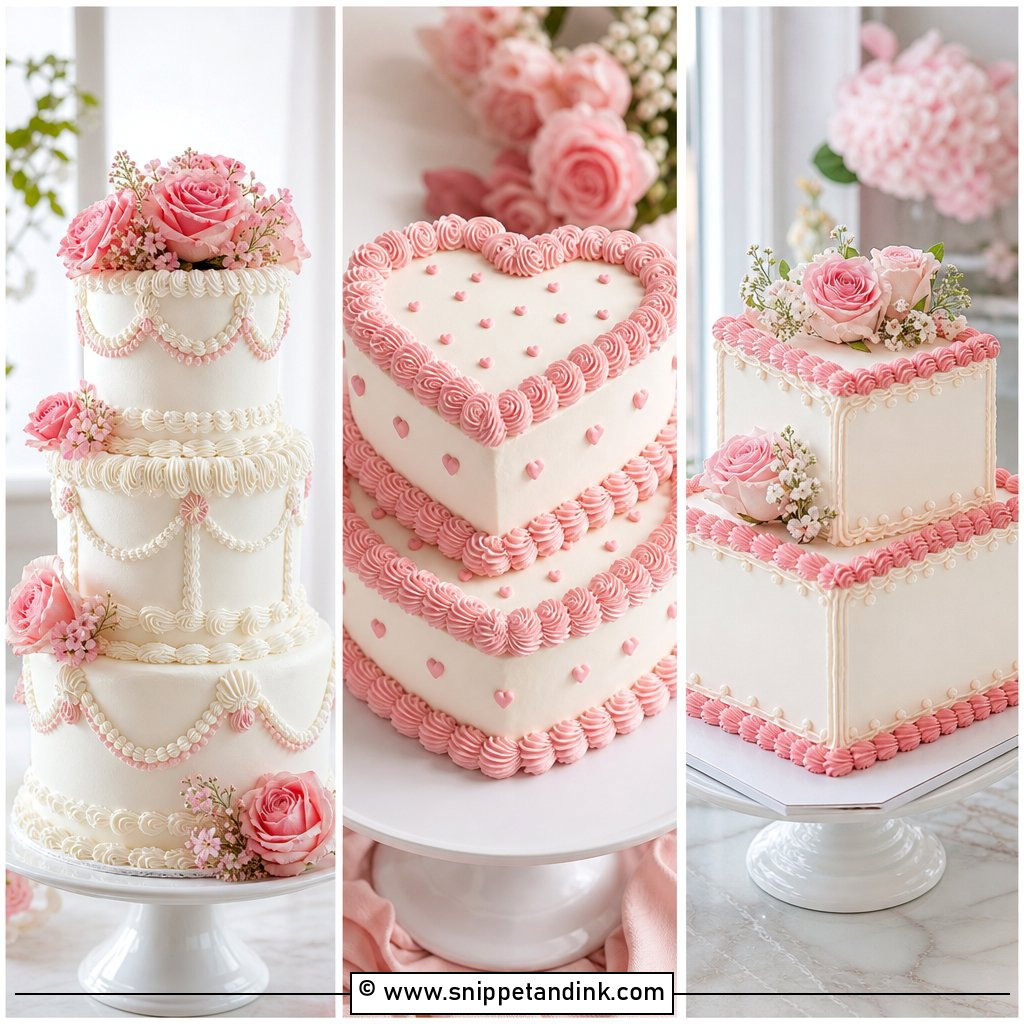
Old-fashioned piping in a modern colour is the whole idea: shell borders, ruffles and small swags on a saturated pink, so the cake feels retro without looking dated. A heart shape suits a small wedding, while two or three round tiers feel more formal. Cherries, pearls, small bows and ivory piping all fit. The buttercream needs to be stiff enough to hold a crisp line, and that matters more with deep colours, because the extra gel colouring softens the frosting slightly.
4. Dark Pink Lambeth Wedding Cake
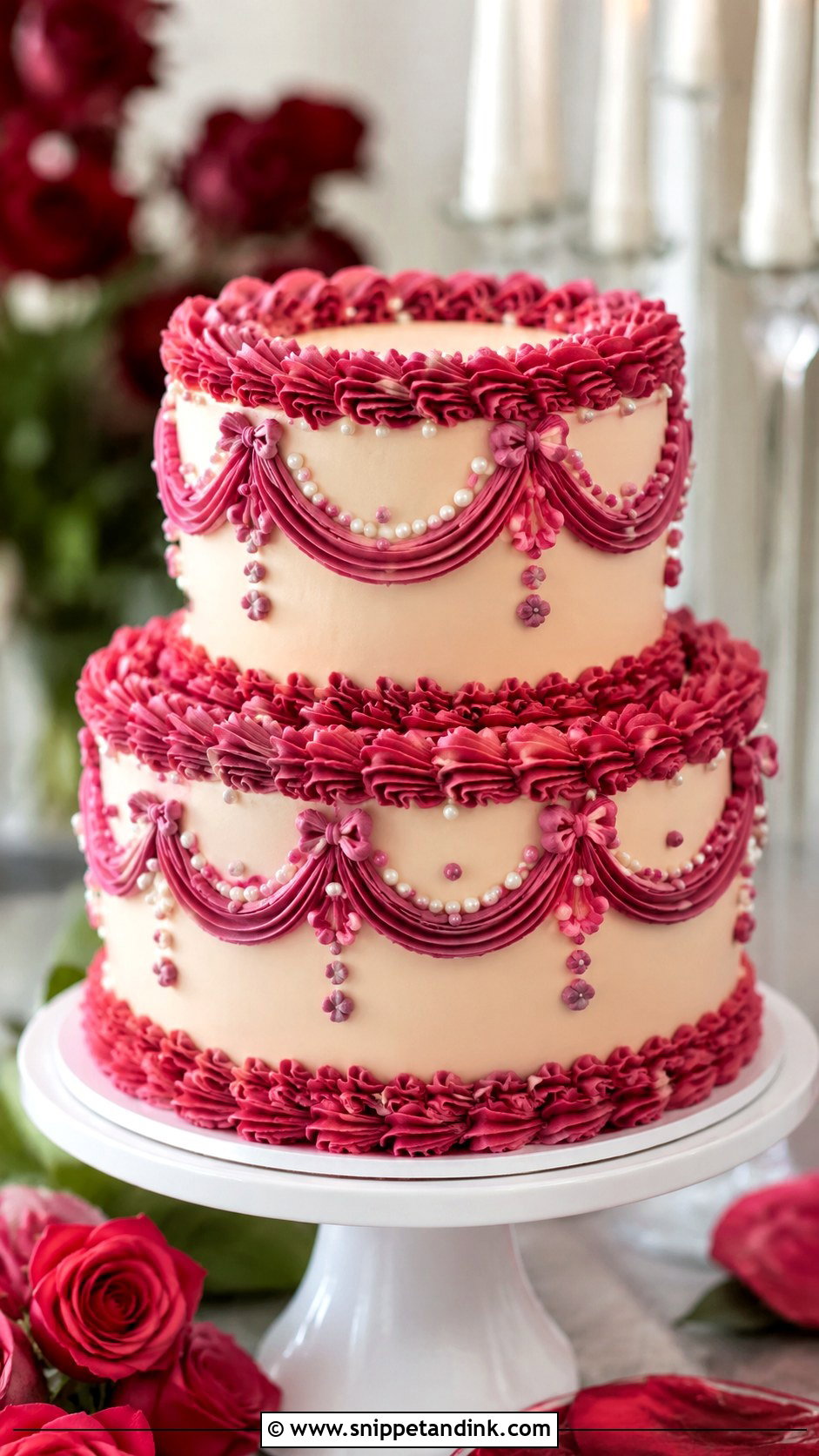
Lambeth piping is layered work: scrolls, overpiped borders and raised details built up in stages so the cake looks almost carved. In dark pink it reads as bold and slightly playful. I’d choose between a single-colour version, where the shadows in the piping do the work, and pink with ivory overpiping for contrast. Be aware that this style takes many hours of piping, so it is priced accordingly, and it does not enjoy heat. Set it on a plain stand with candles and a few roses; the cake already has plenty going on.
5. Dark Pink Floral Wedding Cake
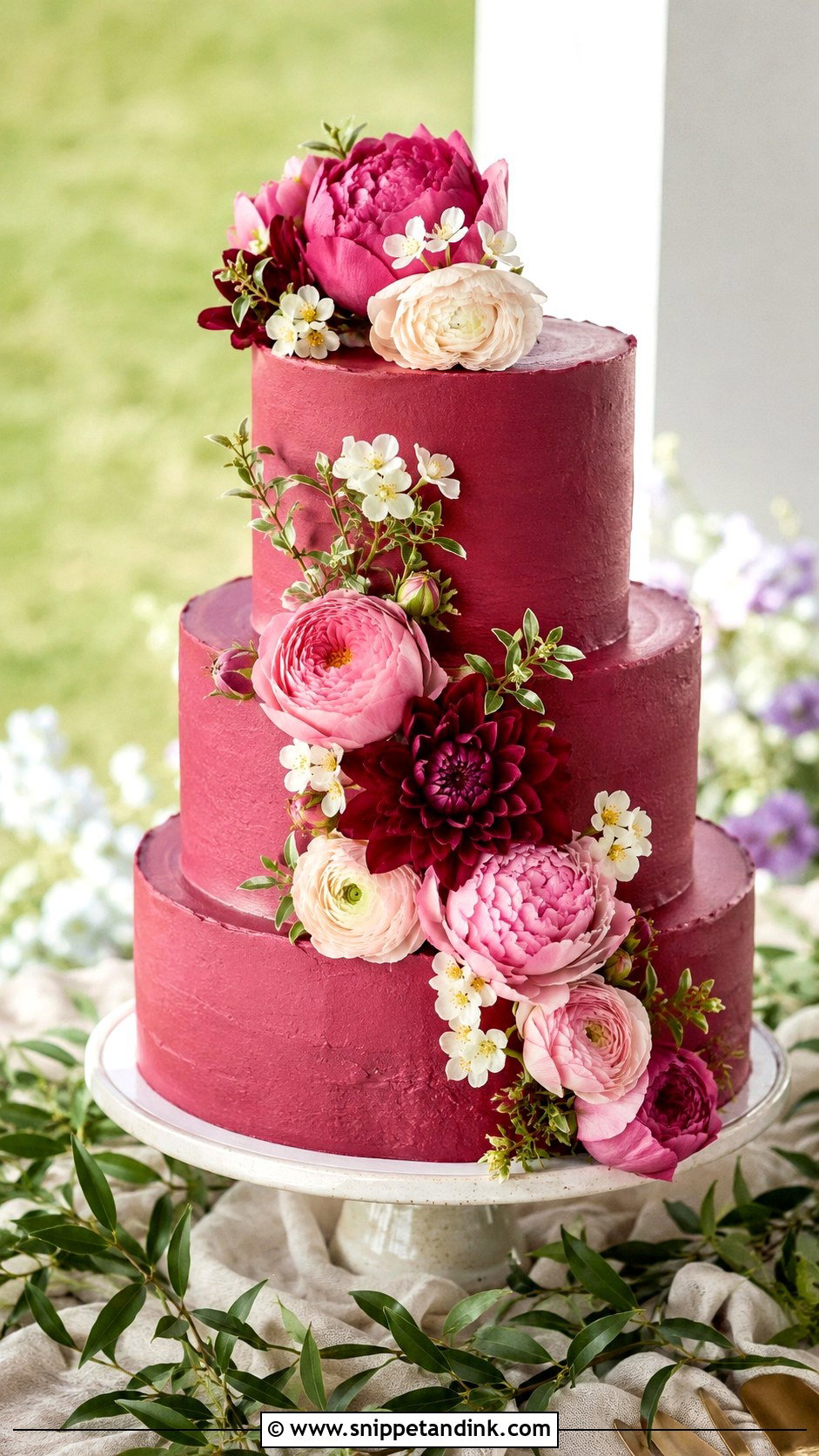
Mixing flowers beyond roses gives the cake a garden feel: peonies, ranunculus, dahlias, sweet peas and small fillers across several pinks. The tier itself can be dark rose, berry or soft magenta, depending on the palette. I’d go smooth buttercream if the flowers are full and busy, and textured if the arrangement is sparse. Fresh stems need to be pesticide-free and wrapped or set in picks before they touch the frosting, so the baker and florist should agree who handles them well before the day.
6. Dark Pink And Gold Wedding Cake
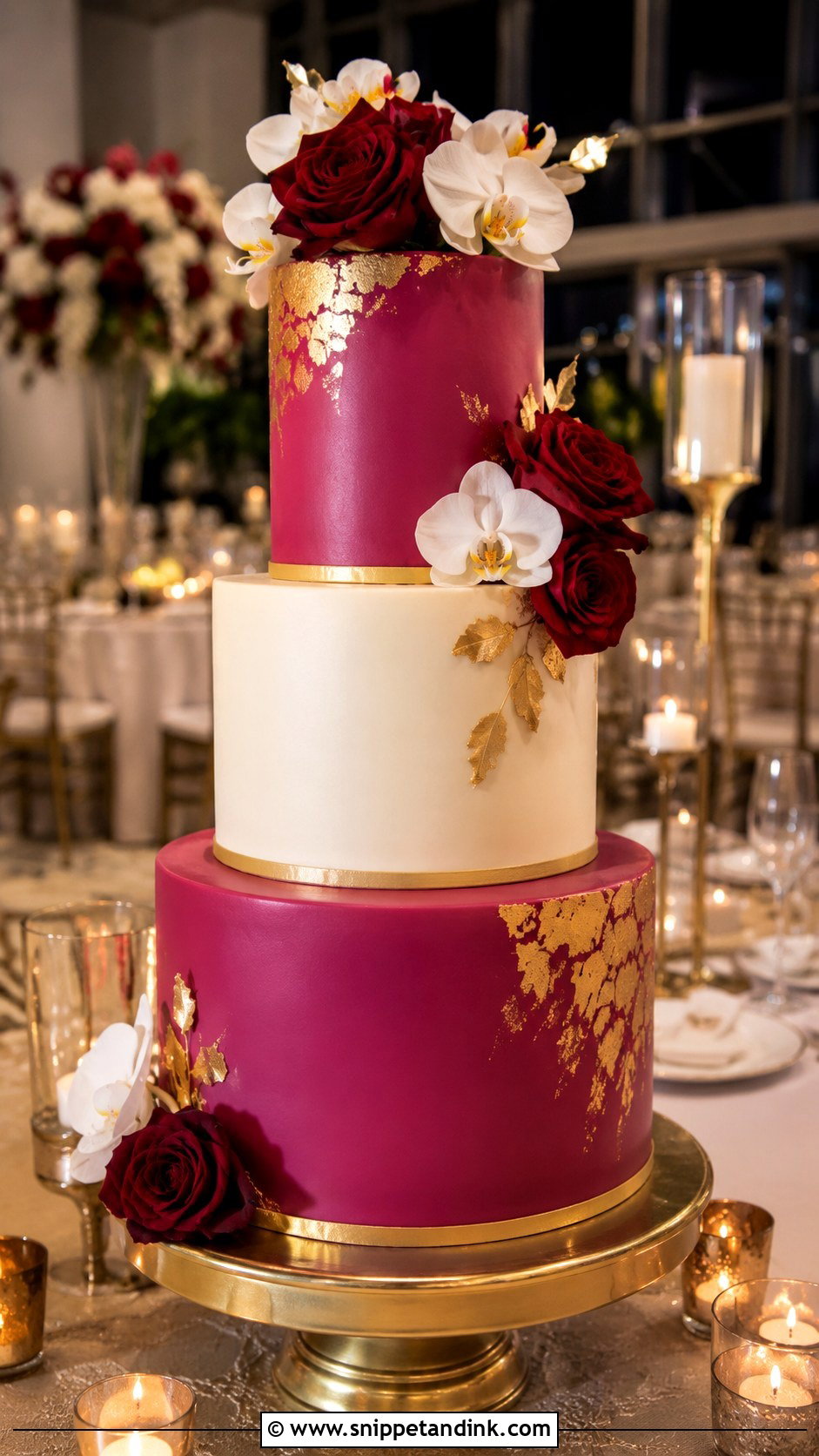
Gold brings light to a dark pink cake, which otherwise can look heavy under evening lighting. Gold leaf, brushed metallic strokes, thin fondant bands or simply a gold stand all work. I apply leaf in uneven patches rather than full coverage, because a fully gilded tier against strong pink starts to look like costume jewellery. It suits evening receptions and ballrooms. Burgundy roses or ivory orchids soften the shine. Edible gold leaf is safe to eat; many metallic dusts are labelled as decorative only, so ask which one your baker is using.
7. Dark Pink And White Wedding Cake
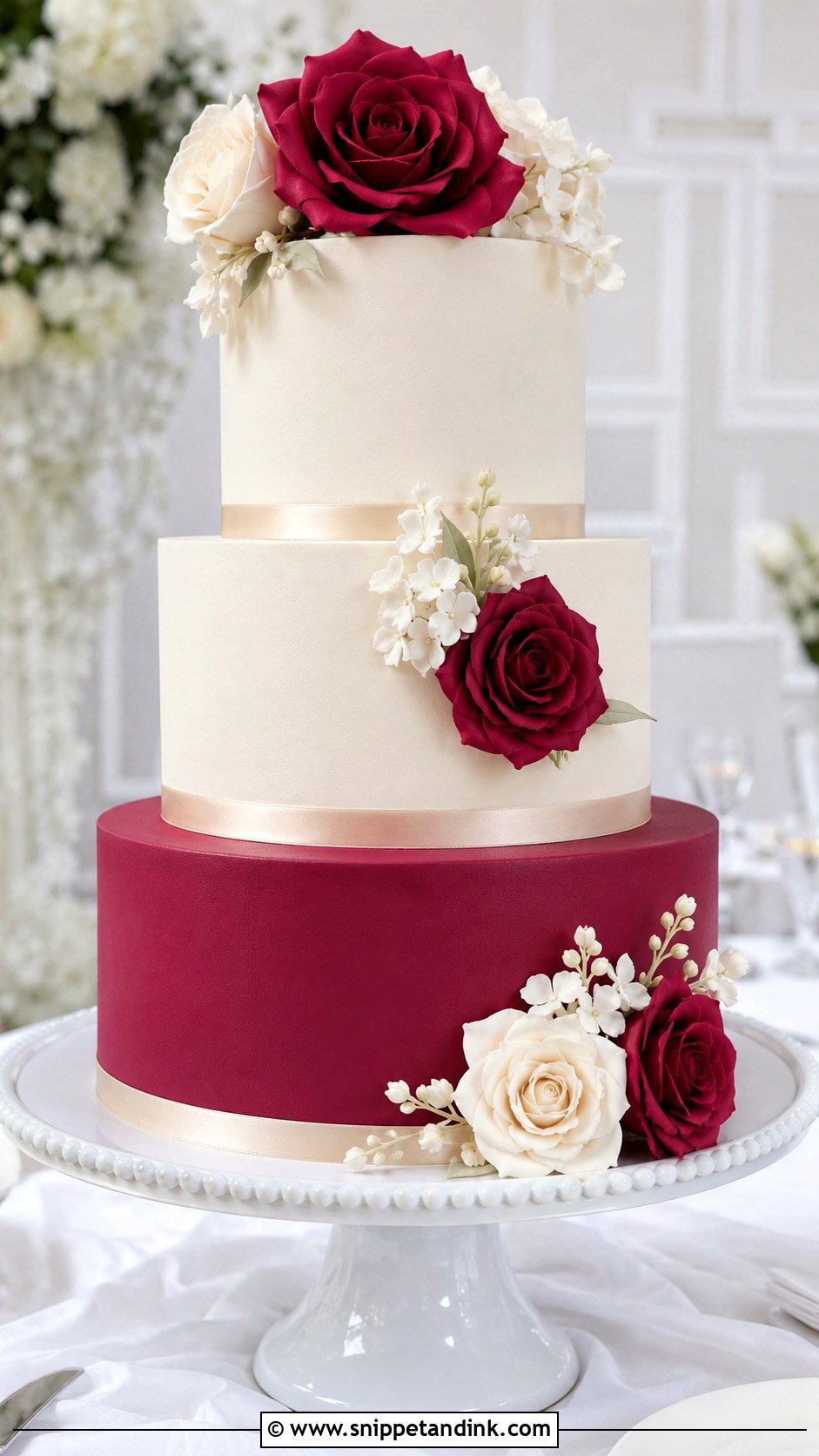
White tiers keep the cake bridal while the pink adds personality. My favourite version puts the dark pink on the bottom tier with white above it; another option is dark pink floral piping across an all-white cake. The detail I watch is where the two colours touch. Strongly coloured buttercream can bleed into white over a warm afternoon, so I chill the cake between steps and keep a thin barrier, often a ribbon or a piped border, at the join. It sits comfortably beside white linens, silver and glass candleholders.
8. Dark Pink And Black Wedding Cake
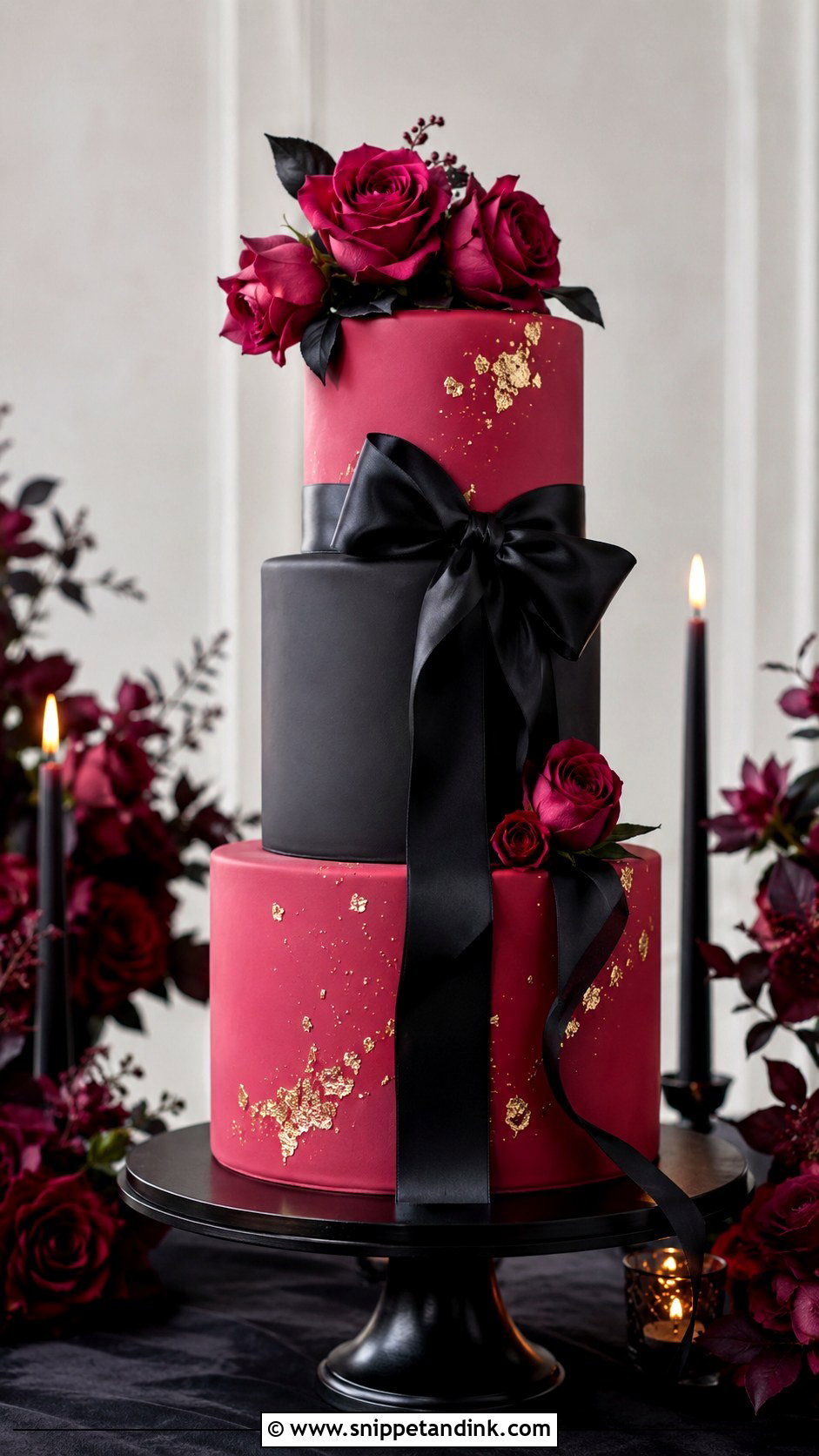
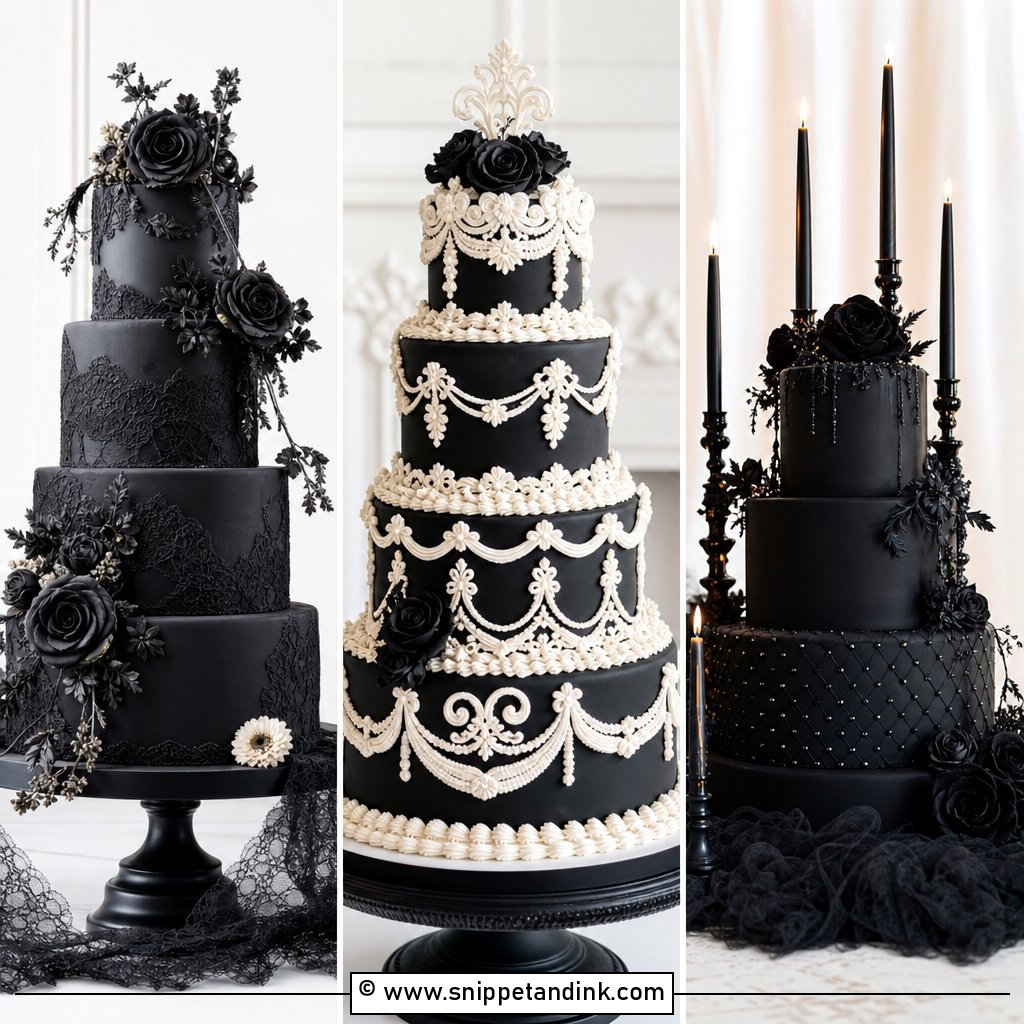
Black and pink can look editorial or it can look heavy; the difference is how much black you use. Thin black piping, black sugar bows or one black base tier is usually plenty. Black frosting needs a lot of colouring and can stain mouths, so I prefer black fondant on one tier with dark pink buttercream on the others. Deep red roses, pink orchids or a little gold bring it back towards a wedding. It suits evening receptions, gallery venues and black-tie dinners.
9. Dark Pink And Burgundy Wedding Cake
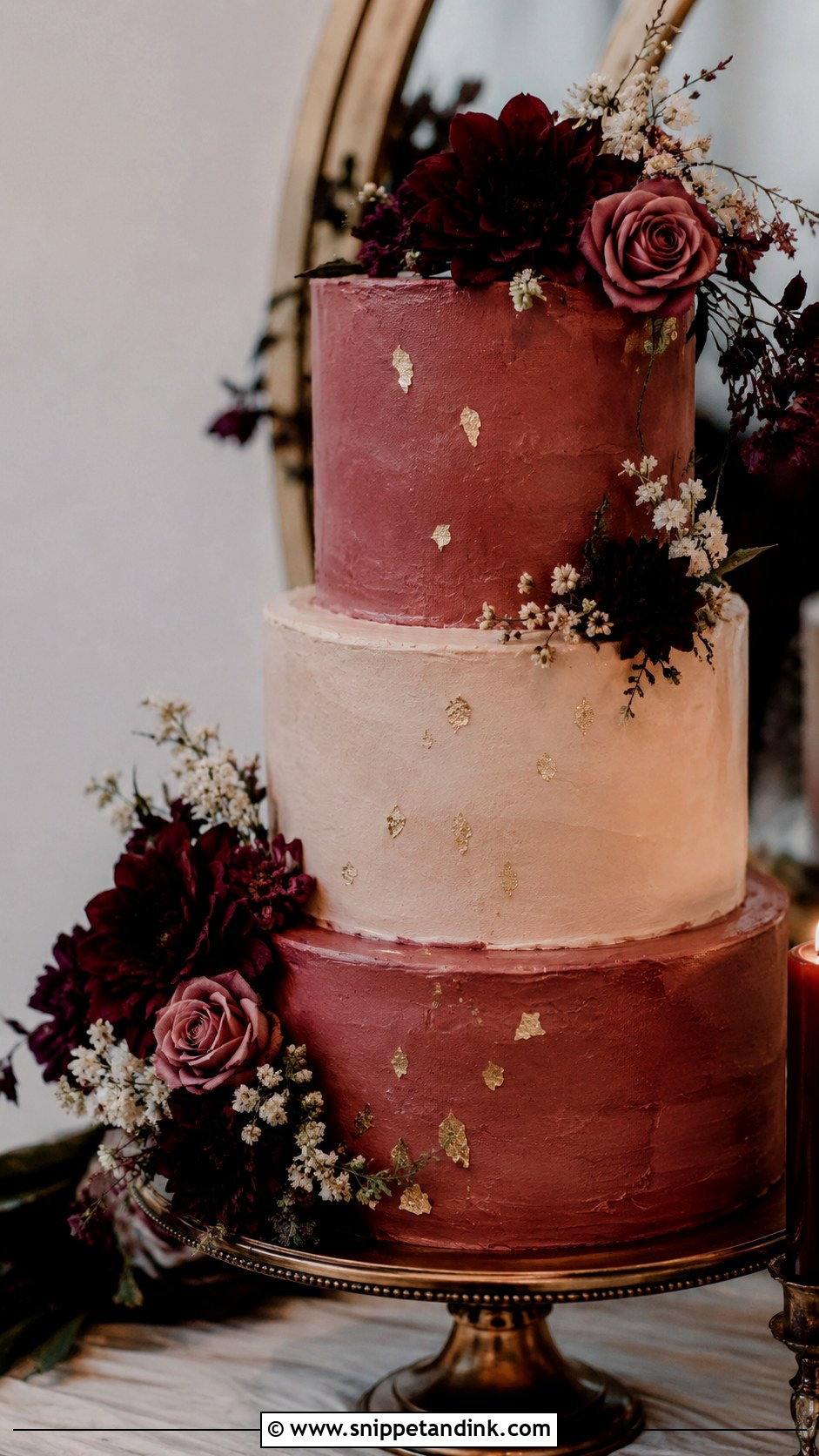
Pink and burgundy are close enough to blend and different enough to create depth, which makes this my go-to for autumn, winter and candlelit rooms. I start with a dark pink buttercream base and add burgundy roses, dahlias or sugar flowers. A burgundy velvet ribbon around each tier adds a soft texture. The risk is a cake that looks almost brown in dim light, so I always add a few small ivory flowers, a touch of gold leaf or pale pink highlights to lift it. Ivory, champagne, plum and forest green palettes all suit it.
10. Dark Pink Buttercream Wedding Cake
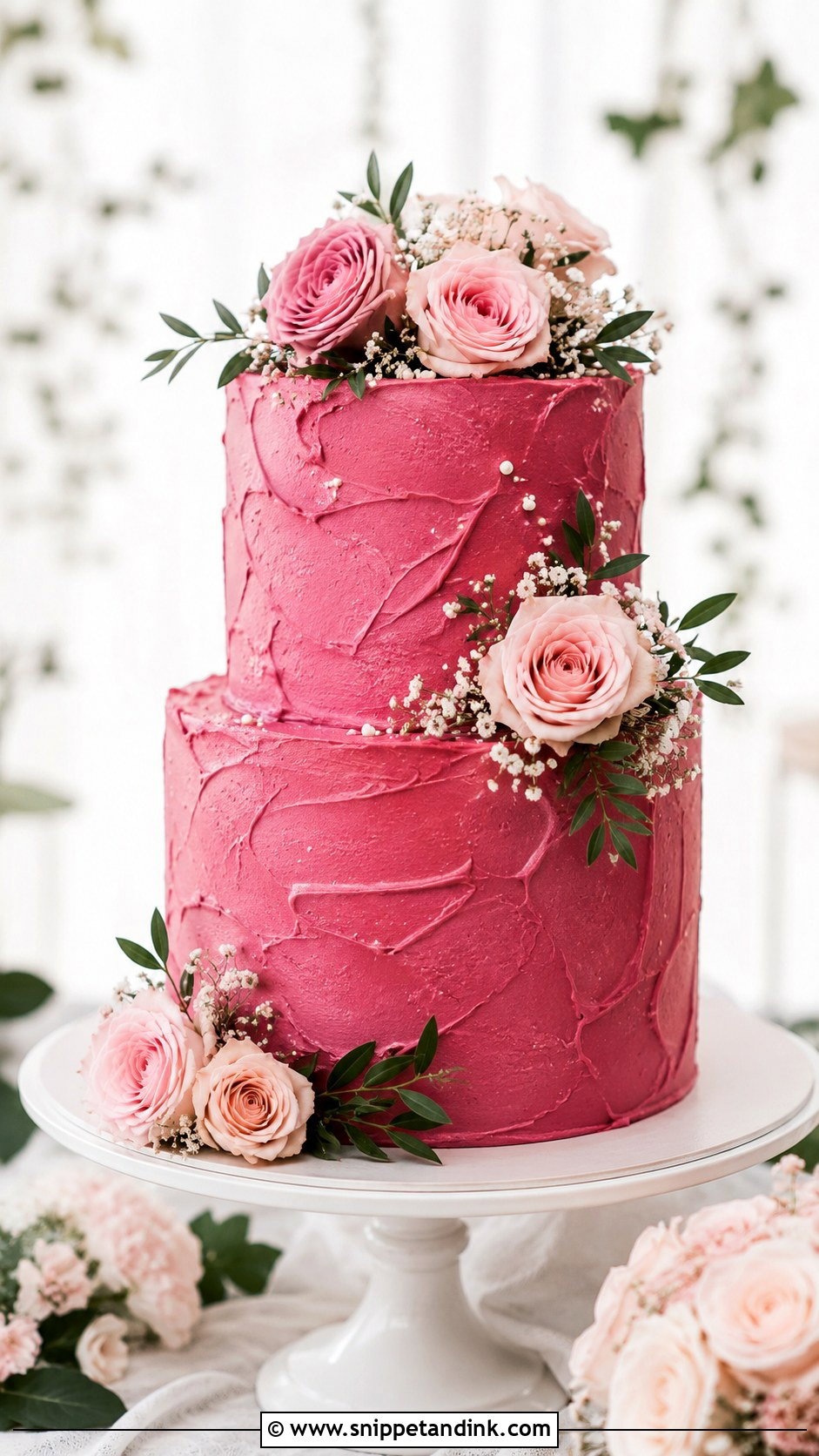
Buttercream gives a softer, more handmade finish than fondant, and in a deep pink every ridge, ruffle and palette-knife stroke catches the light. A smooth surface with a few flowers looks modern; heavy piping and layered borders look romantic. It also tastes better, which matters with flavours like vanilla bean, raspberry, almond, lemon or chocolate. Heat is the trade-off. For an outdoor summer wedding I’d use a buttercream with more structure, often over a ganache layer, and ask that the cake stay in the shade.
11. Dark Pink Fondant Wedding Cake
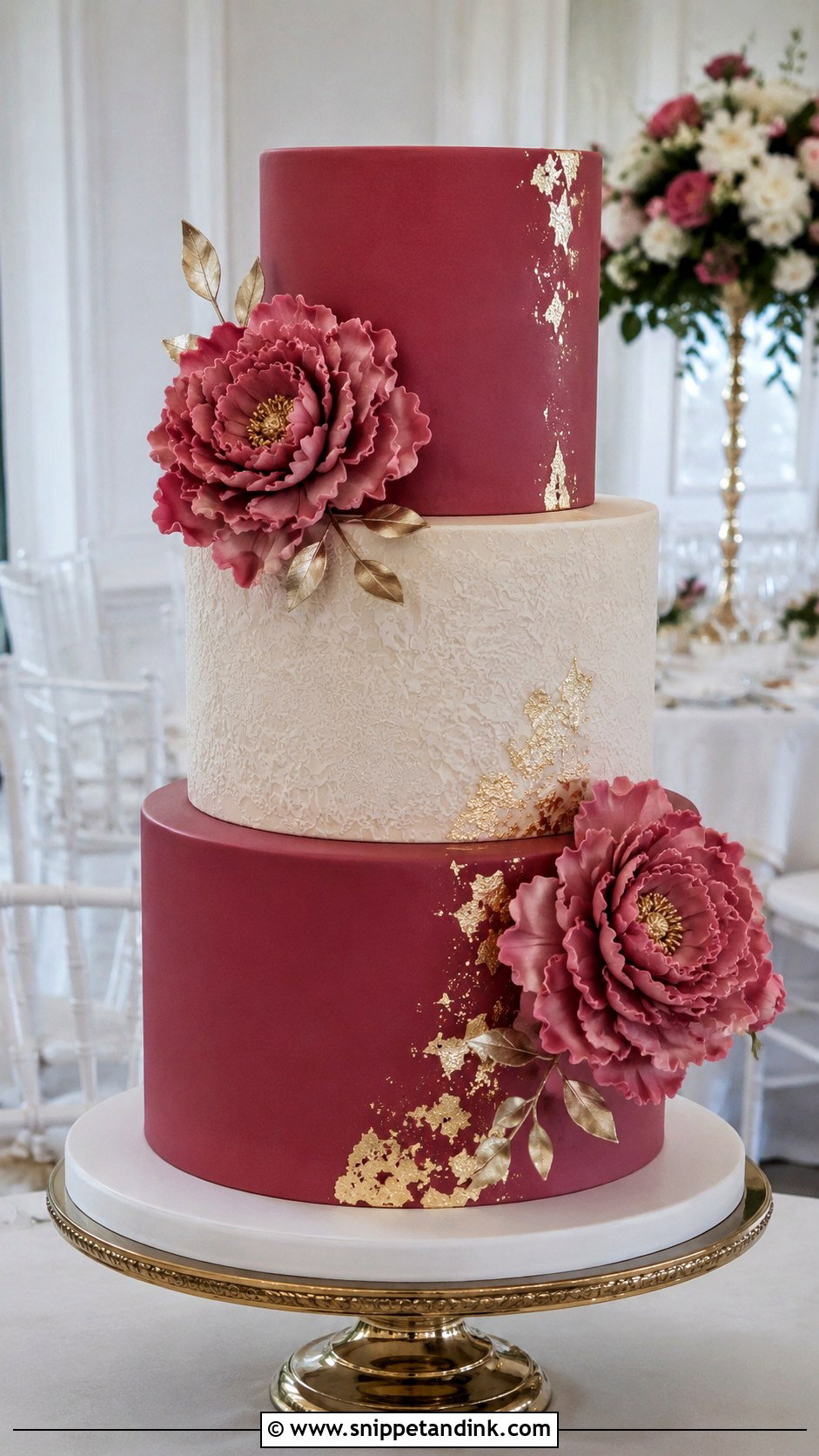
Fondant gives the sharpest edges and the most even colour, which is useful with a strong pink because buttercream can show tiny streaks. I can finish it matte for a modern look or brush it with a pearl lustre for a soft glow. Sugar flowers, embossing, pleats or a single bow all suit it, and tall tiers make the colour look sleek. For a luxury finish, I’d add ivory orchids, gold leaf or a fine lace texture. Ready-coloured deep pink fondant gives a more consistent shade than hand-kneading gel colour into white.
12. Dark Pink Drip Wedding Cake
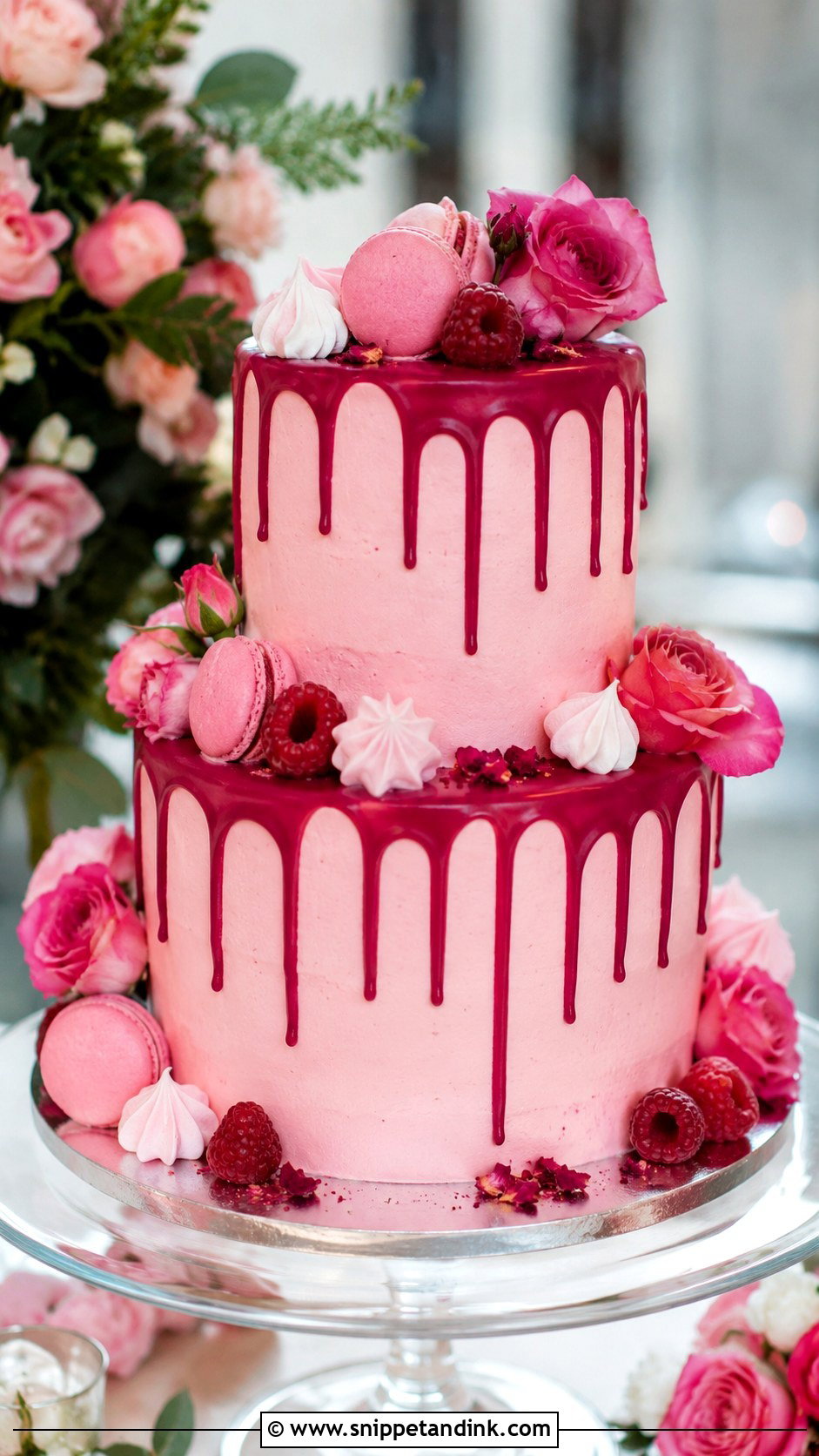
A drip cake is the most relaxed design here, and I’d only do it for a couple who wants that mood. The base can be pale pink, ivory or dark pink, with a glossy berry drip running down the sides. For a wedding, I keep the drips short and evenly spaced, since long uneven ones look more like a birthday cake. Macarons, roses, berries or meringues on top finish it. The drip has to be applied at the right temperature, too warm and it runs to the board, too cool and it sits in lumps, so this is a design I always finish in the kitchen.
13. Dark Pink Watercolor Wedding Cake
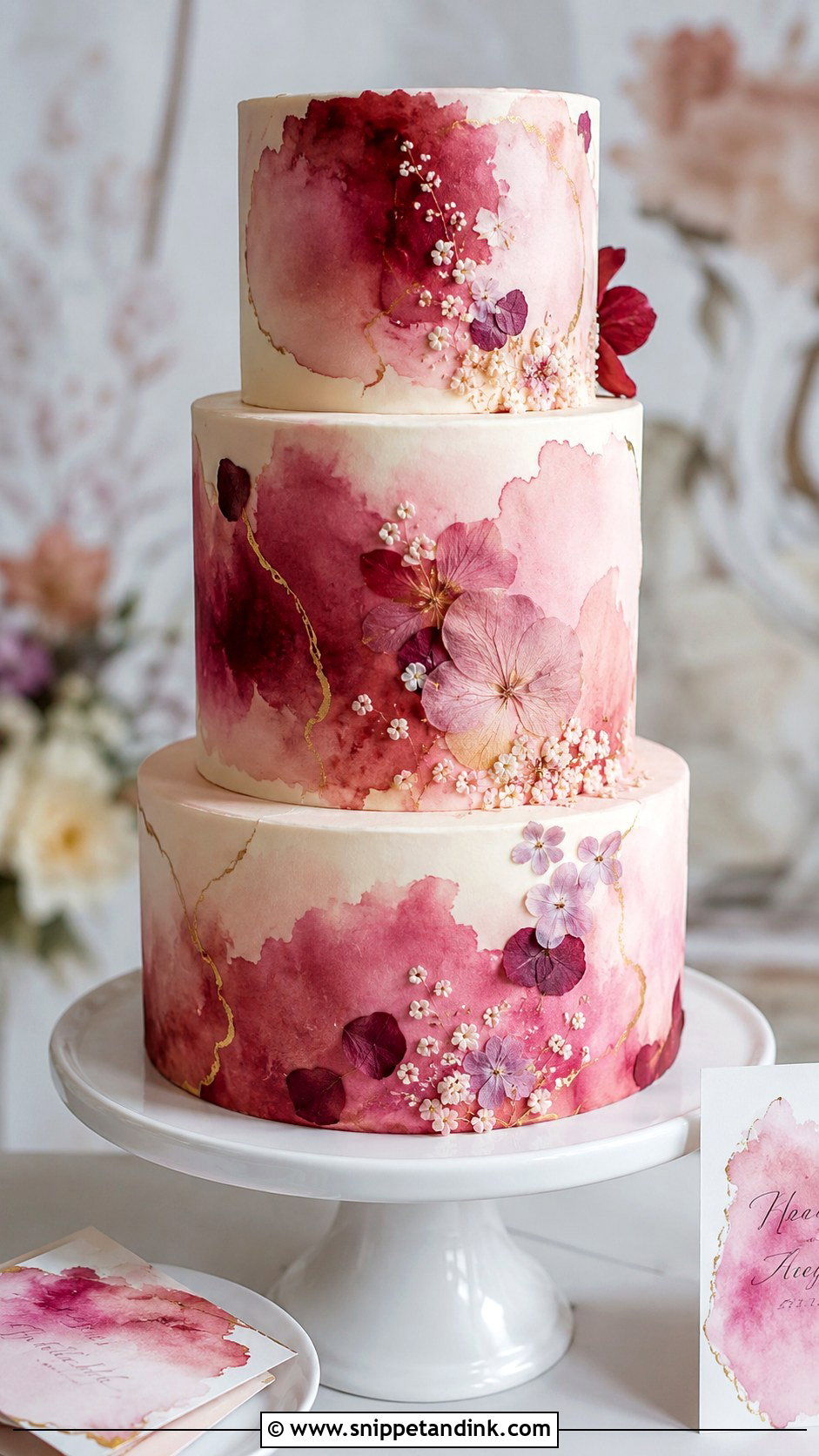
Watercolour cakes have movement without heavy decoration. I blend raspberry, rose, magenta, blush and ivory across smooth buttercream with a palette knife, or paint thinned colour onto fondant. Thin gold lines, small sugar flowers or pressed petals add detail. It pairs well with painted stationery and signs because the styles echo each other. The finish is never identical twice, which is part of the charm, but it means you should look at your baker’s past watercolour work before booking. Keep the shape simple.
14. Dark Pink Marble Wedding Cake
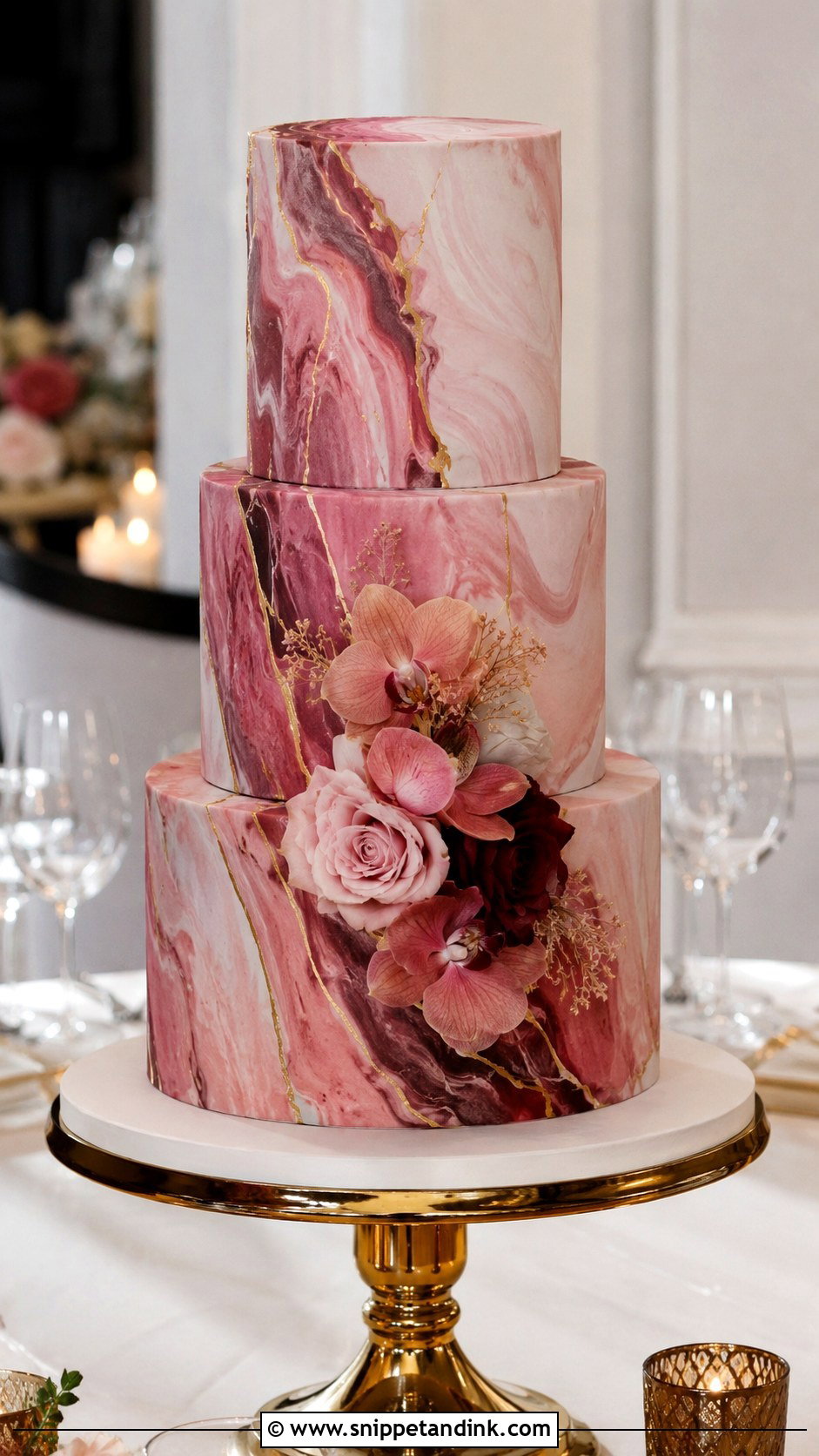
Marbling gives a stone-like finish and it is far easier to control on fondant than on buttercream, where veins can smear. I fold dark pink, blush, ivory and a little burgundy or grey through the paste and roll it just enough to create veins without muddying them. Gold leaf along a few lines adds polish. Flowers should stay minimal, perhaps one cluster of roses or orchids, so the pattern stays visible. Hotel weddings and modern lofts suit it best.


15. Dark Pink Ruffle Wedding Cake
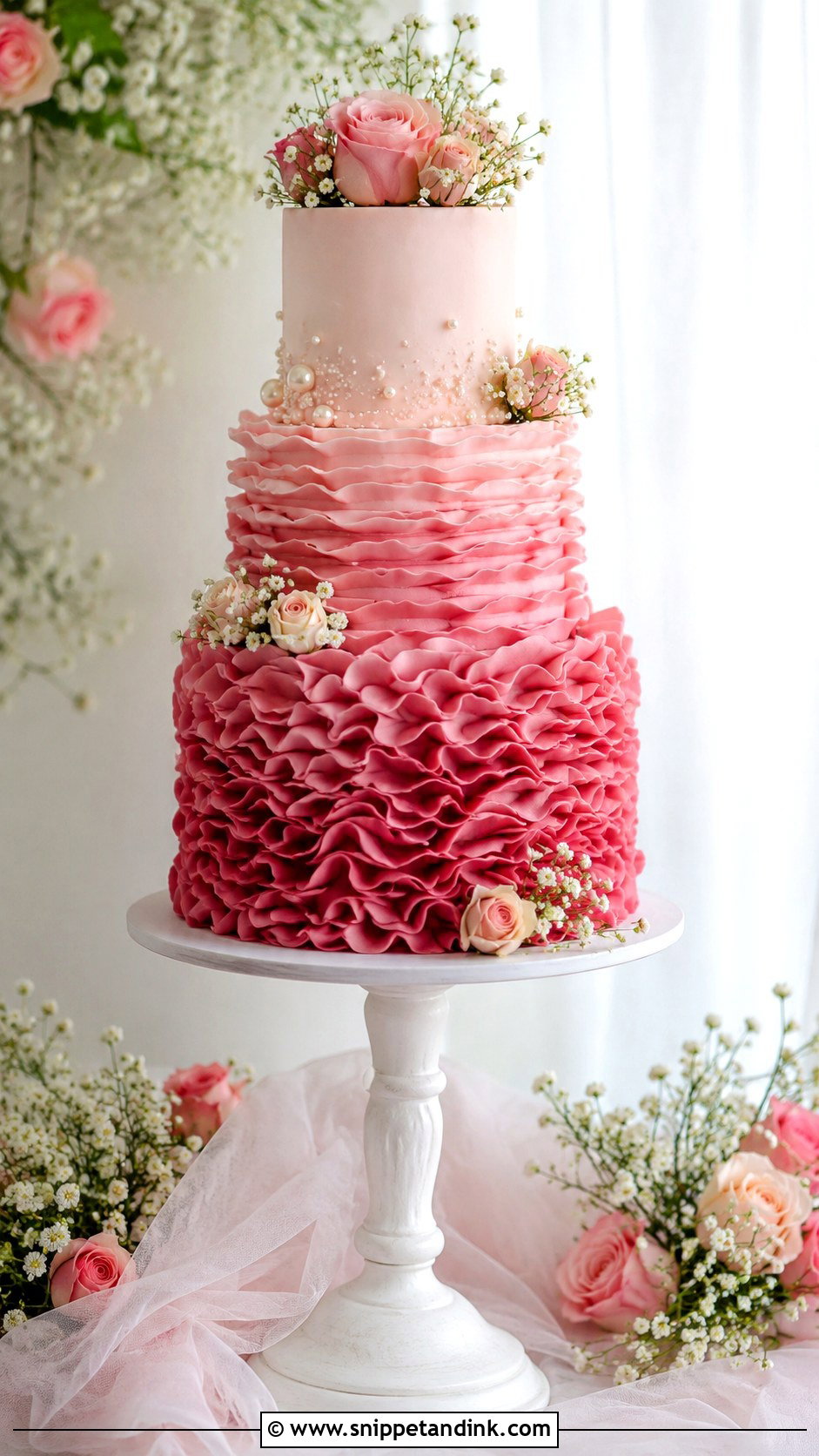
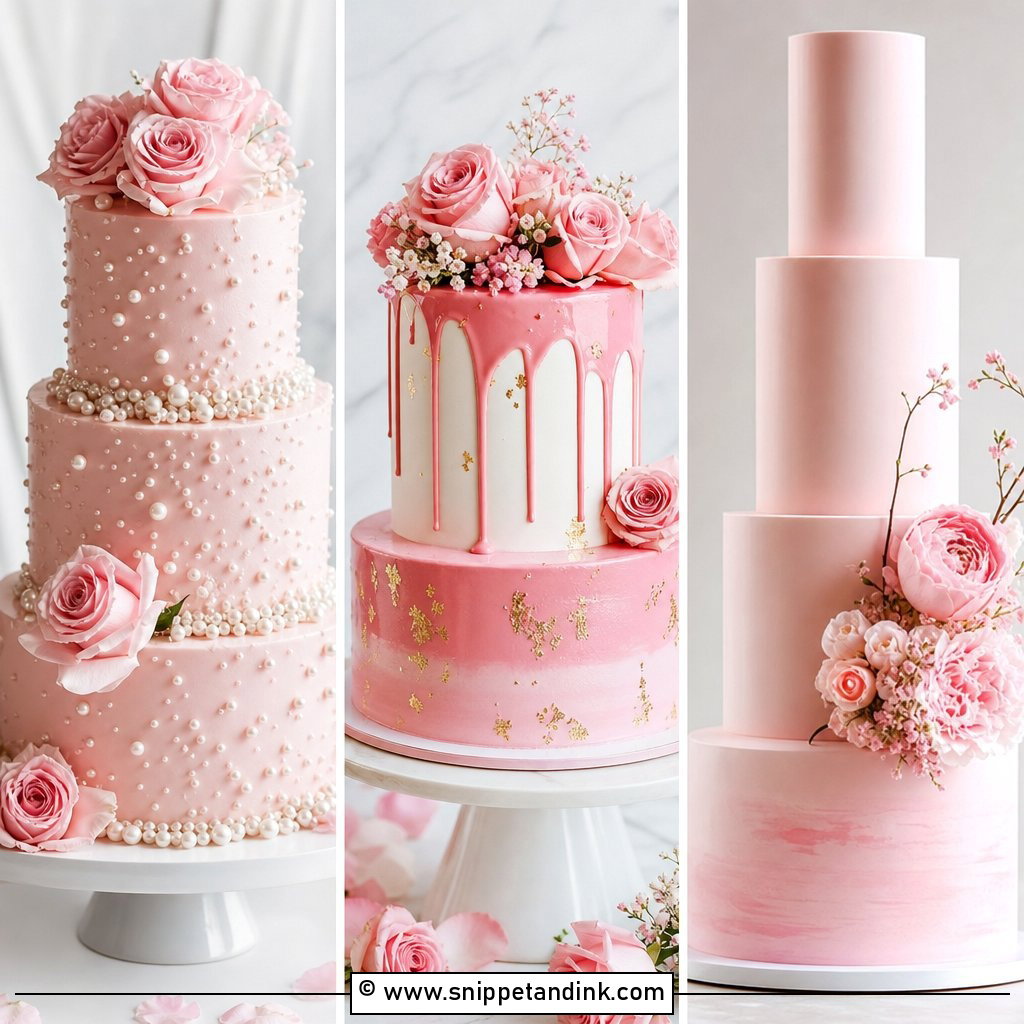
Ruffles look like fabric, which is why I suggest this one to brides wearing tulle, organza or layered skirts. They can be made from buttercream, wafer paper or fondant. Buttercream ruffles are softest but sag in heat; wafer paper is very light and holds its shape, though humidity can make it wilt; fondant ruffles are the sturdiest. I usually ruffle a single tier and keep the others smooth, which gives contrast and avoids a cake that looks like a pile of fabric. Add pearls or a few flowers only if they don’t crowd the folds.
16. Dark Pink Pearl Wedding Cake
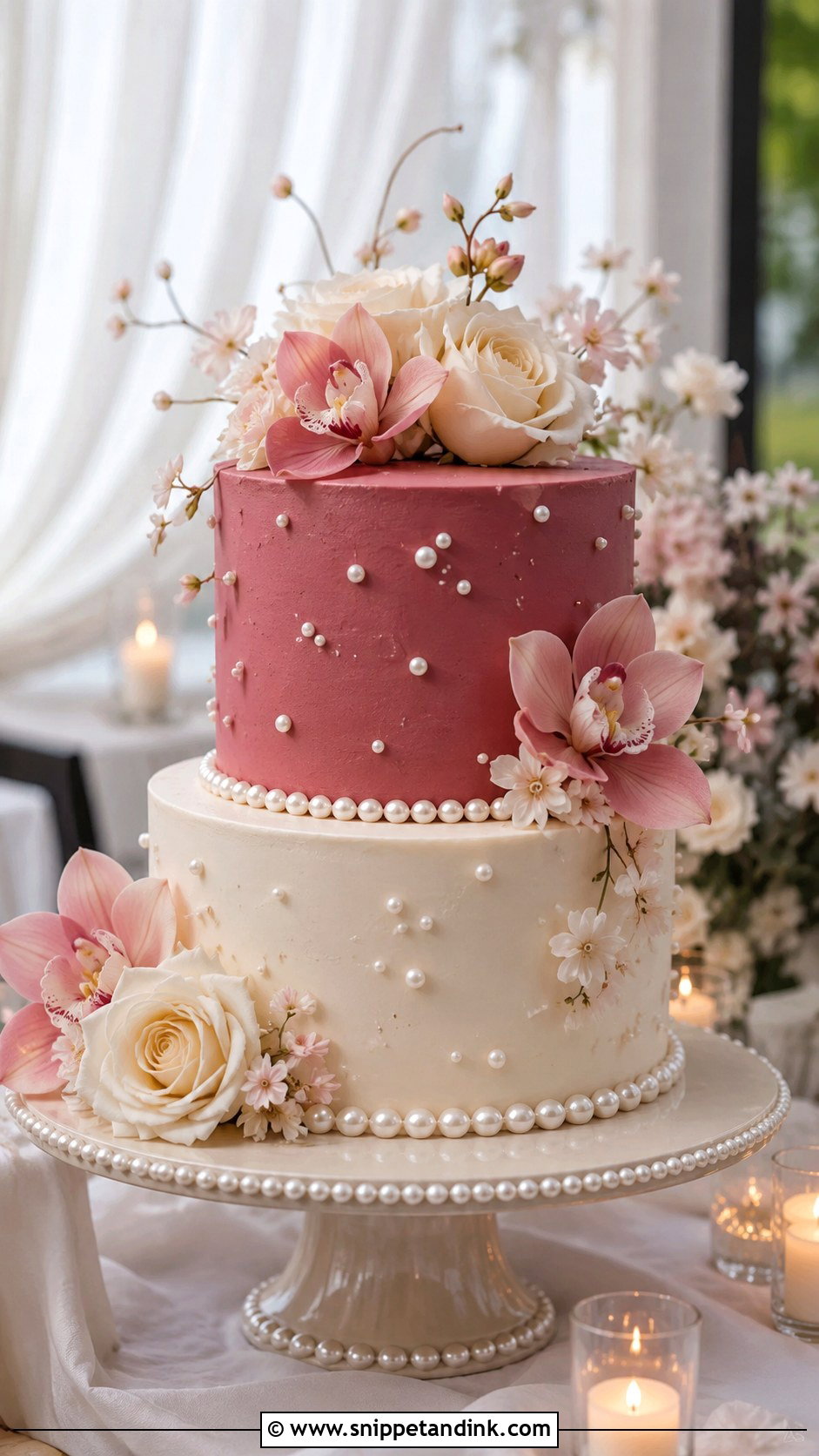
Pearls calm a strong pink. They add a little shine and a bridal note without competing with the colour. I scatter edible pearls across a tier, pipe pearl borders or cluster them around flowers. They need a smooth surface to show up, so fondant or very smooth buttercream works best. Hard sugar pearls can be tough on teeth, so on anything guests will eat I prefer softer piped pearls and keep the dragées for the top tier. Ivory roses or blush orchids suit this cake for hotel receptions and dinners.
17. Dark Pink Sugar Flower Wedding Cake
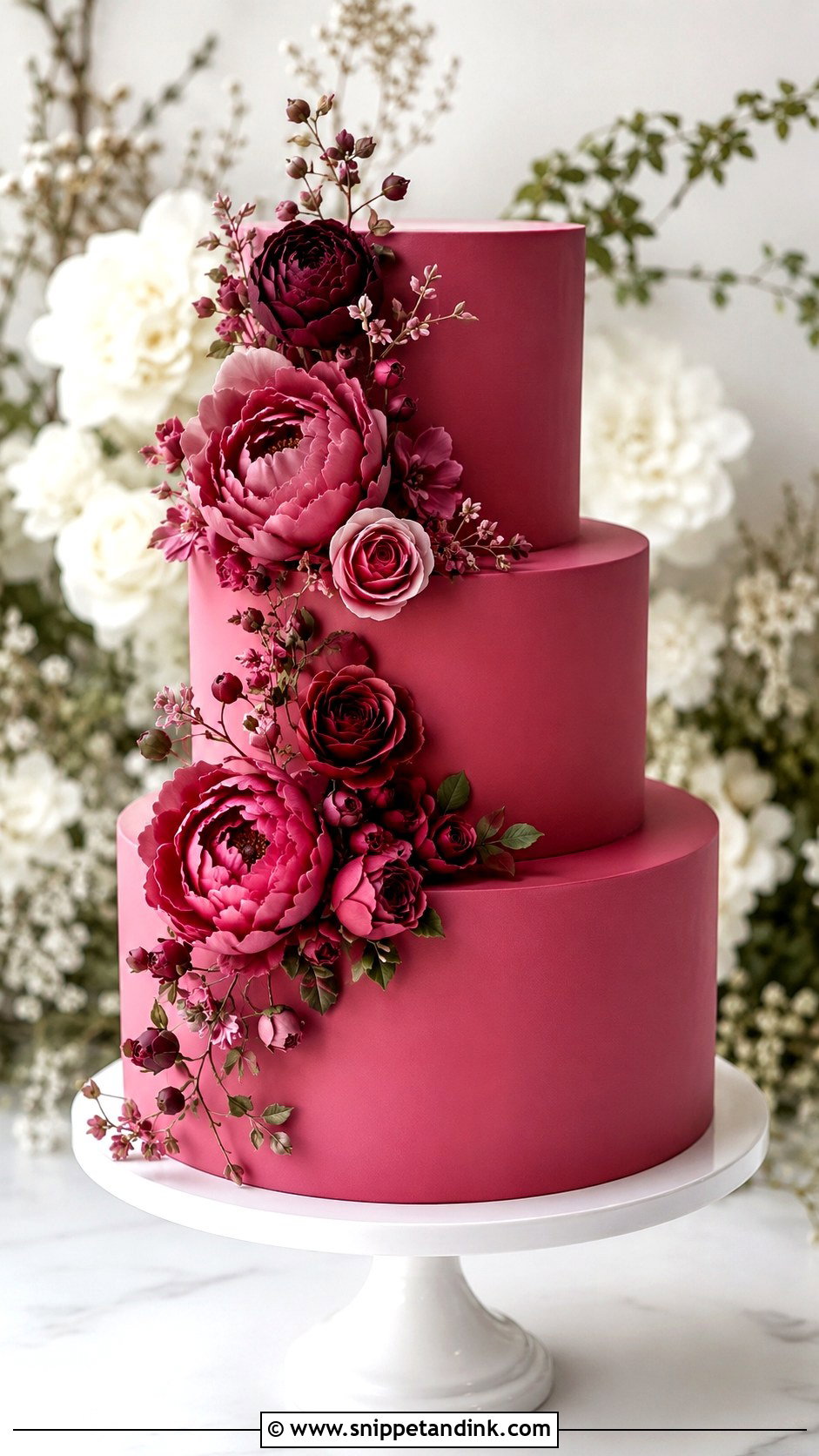
Sugar flowers are my preferred option when the colour has to be exact. I can tint peonies, roses and ranunculus to match a bridesmaid dress, from deep rose to raspberry, and they look the same at the end of the night as they did at the start. They also avoid any worry about pesticides on fresh stems. I make them in several sizes and add small leaves so the arrangement looks natural rather than flat. They take time to make and dry, so order early, and the topper can be kept afterwards.
18. Dark Pink Fresh Flower Wedding Cake
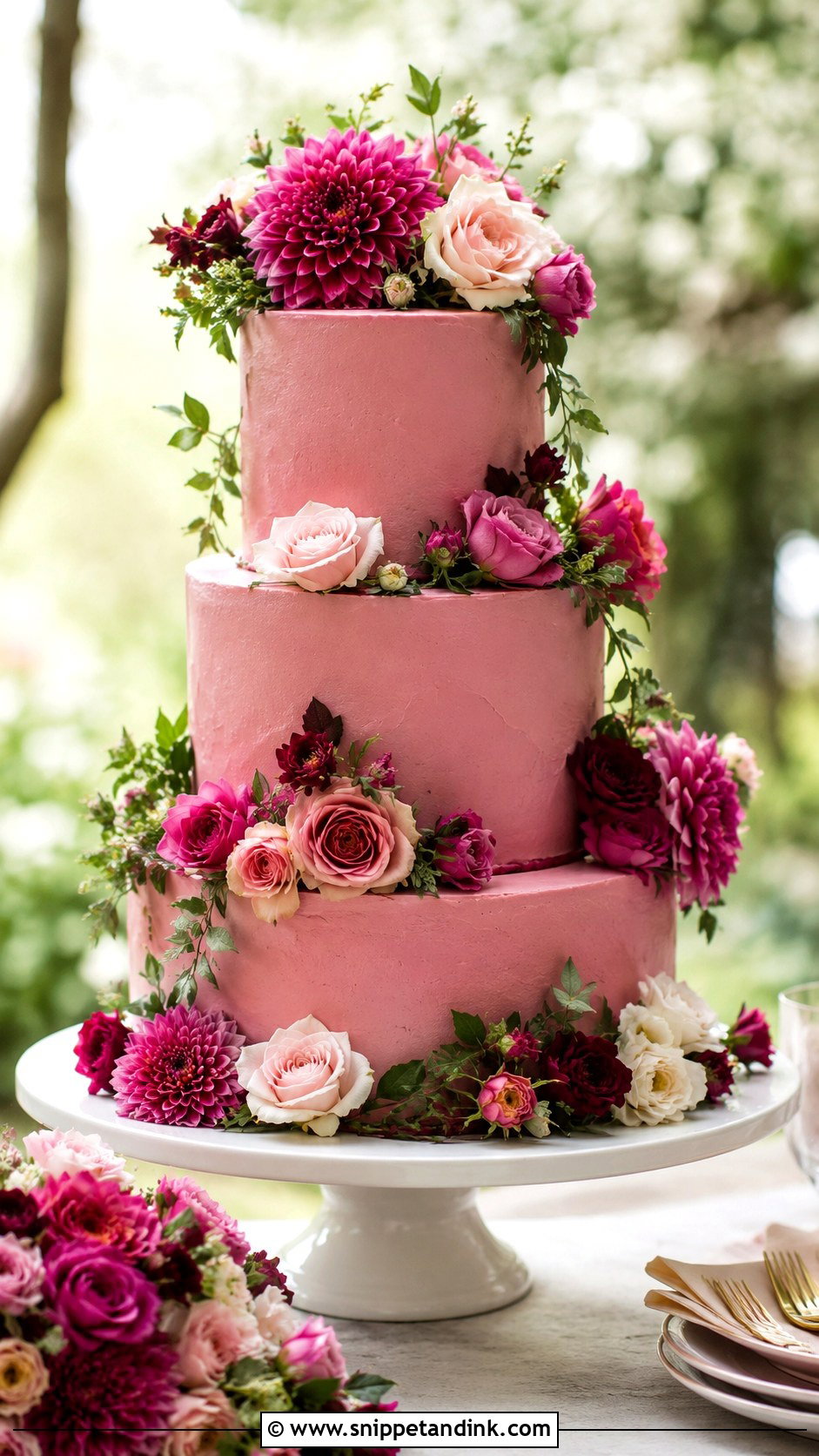
Fresh flowers tie the cake to the rest of the décor, especially when they match the bouquet and centrepieces. The cake can be dark pink buttercream, or ivory with dark pink floral accents. Roses, dahlias, ranunculus and lisianthus work in clusters, a side cascade or a ring around the base. I keep greenery sparse so the pink stays strong. The baker and florist should plan the placement together: blooms need to be clean, untreated and separated from the frosting by tape, wax or picks, and they go on at the venue.
19. Dark Pink Minimalist Wedding Cake
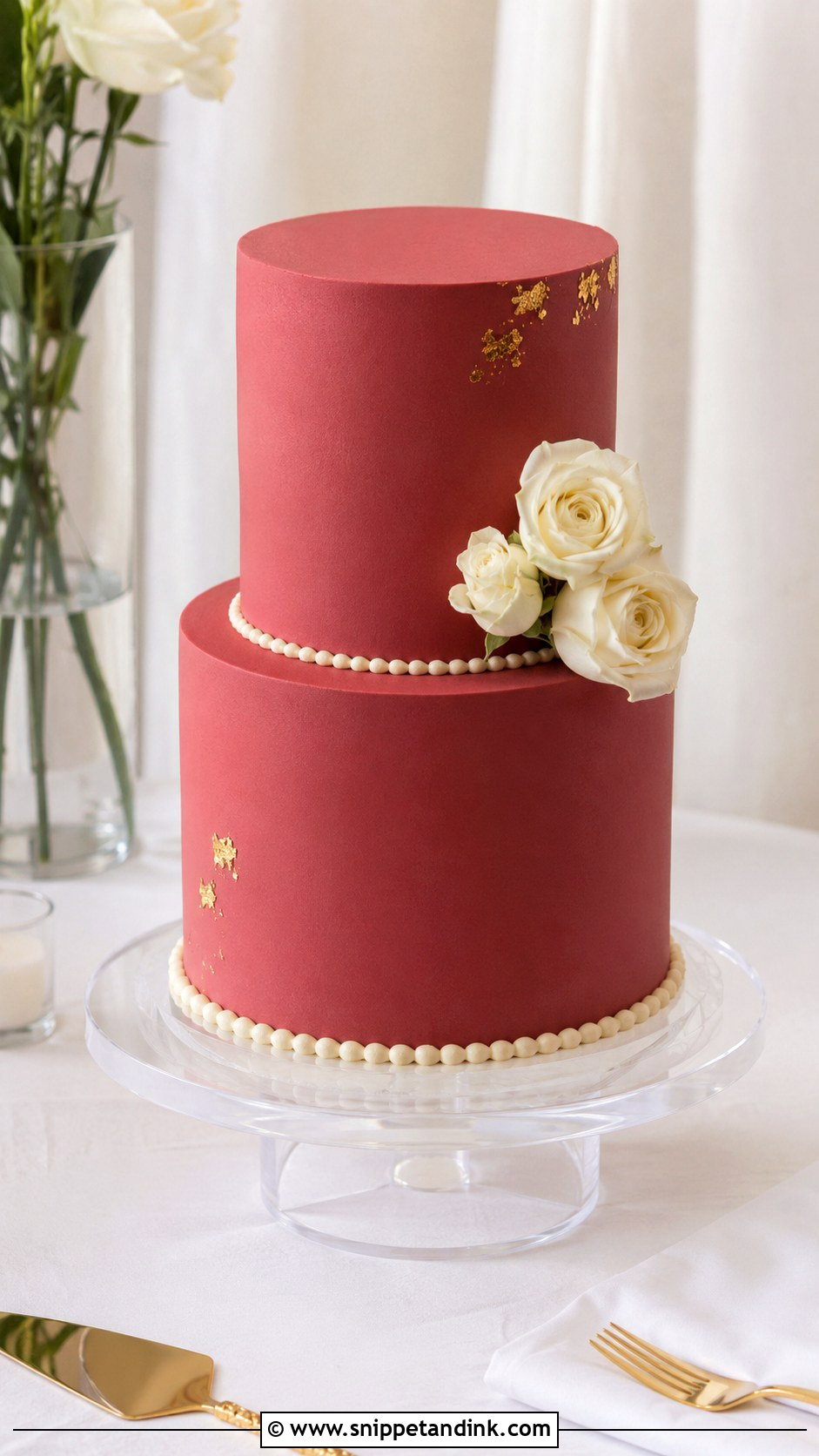
Strong colour does not need much decoration. A single smooth tier or a clean two-tier cake in deep rose or raspberry is striking on its own, with one detail such as a thin ribbon, a single flower cluster, a pearl border or a small gold accent. The challenge is that every flaw shows, so the finish has to be flawless and the colour even, which is why I often do minimal pink cakes in fondant. It suits city weddings and small receptions. A white, clear or gold stand keeps attention on the shade.
20. Dark Pink Garden Wedding Cake
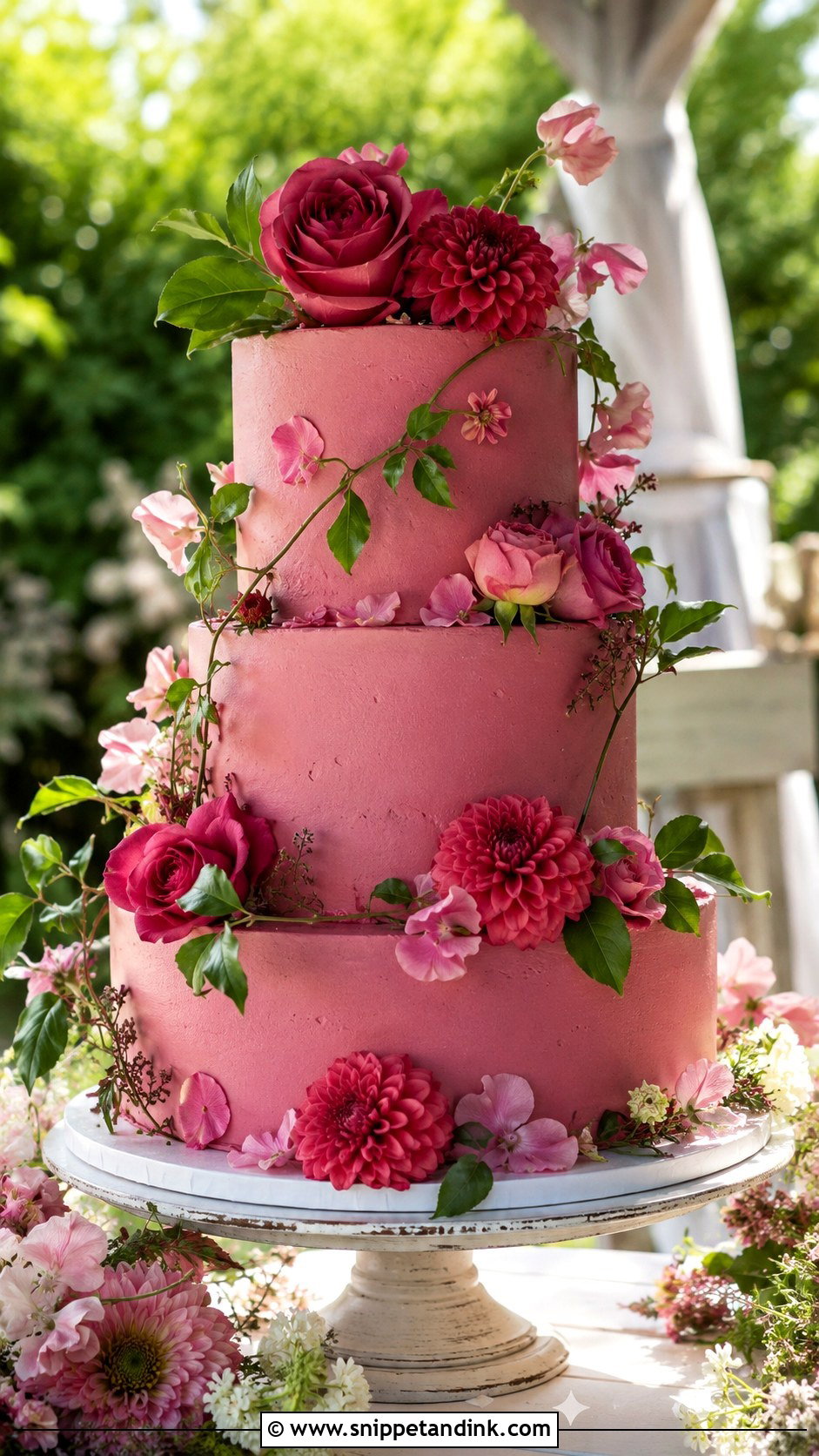
Garden styling suits outdoor ceremonies and tented receptions. I use textured buttercream and soft piping in dark pink, with blush, ivory, mauve and green around it, and finish with roses, dahlias, sweet peas and edible petals. Three tiers give the flowers space to climb naturally. A semi-smooth finish feels lighter than fondant. In a tent, though, a dark cake absorbs heat faster than a white one, so I’d keep it out of the sun and cut it early in the evening.
21. Dark Pink Boho Wedding Cake
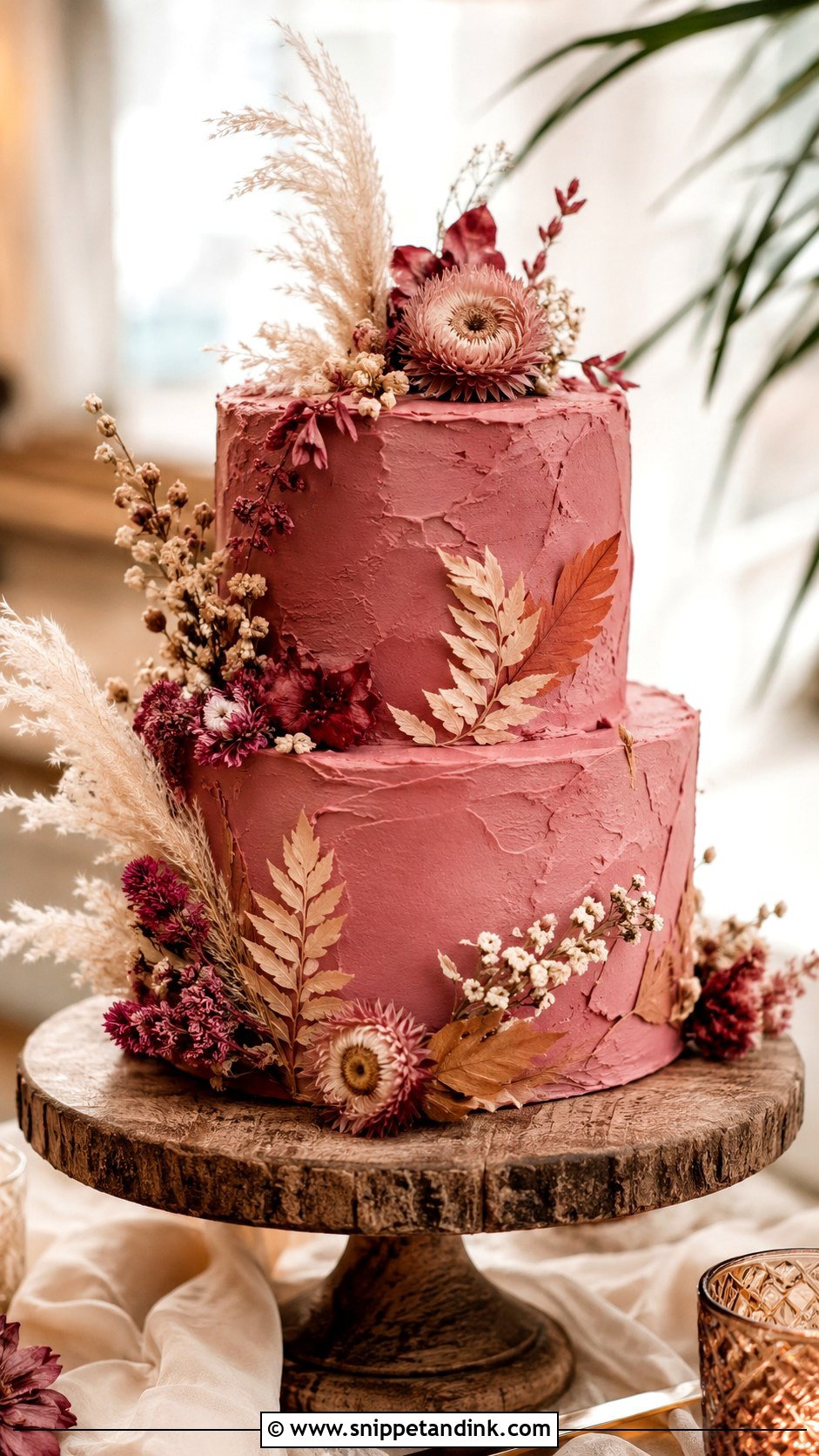
Boho styling grounds the pink with earthier tones. I pair deep pink buttercream with dried flowers, pressed petals, soft grass-like textures or muted terracotta, with ivory, beige, mauve and brown to balance it. A semi-naked finish can work, but with this colour a fully frosted tier usually reads better, because thin pink over brown sponge can look patchy. Dried flowers and grasses are decorative only and shed, so they need to sit on a barrier and come off before slicing. Keep the arrangement slightly asymmetrical.
22. Dark Pink Square Wedding Cake
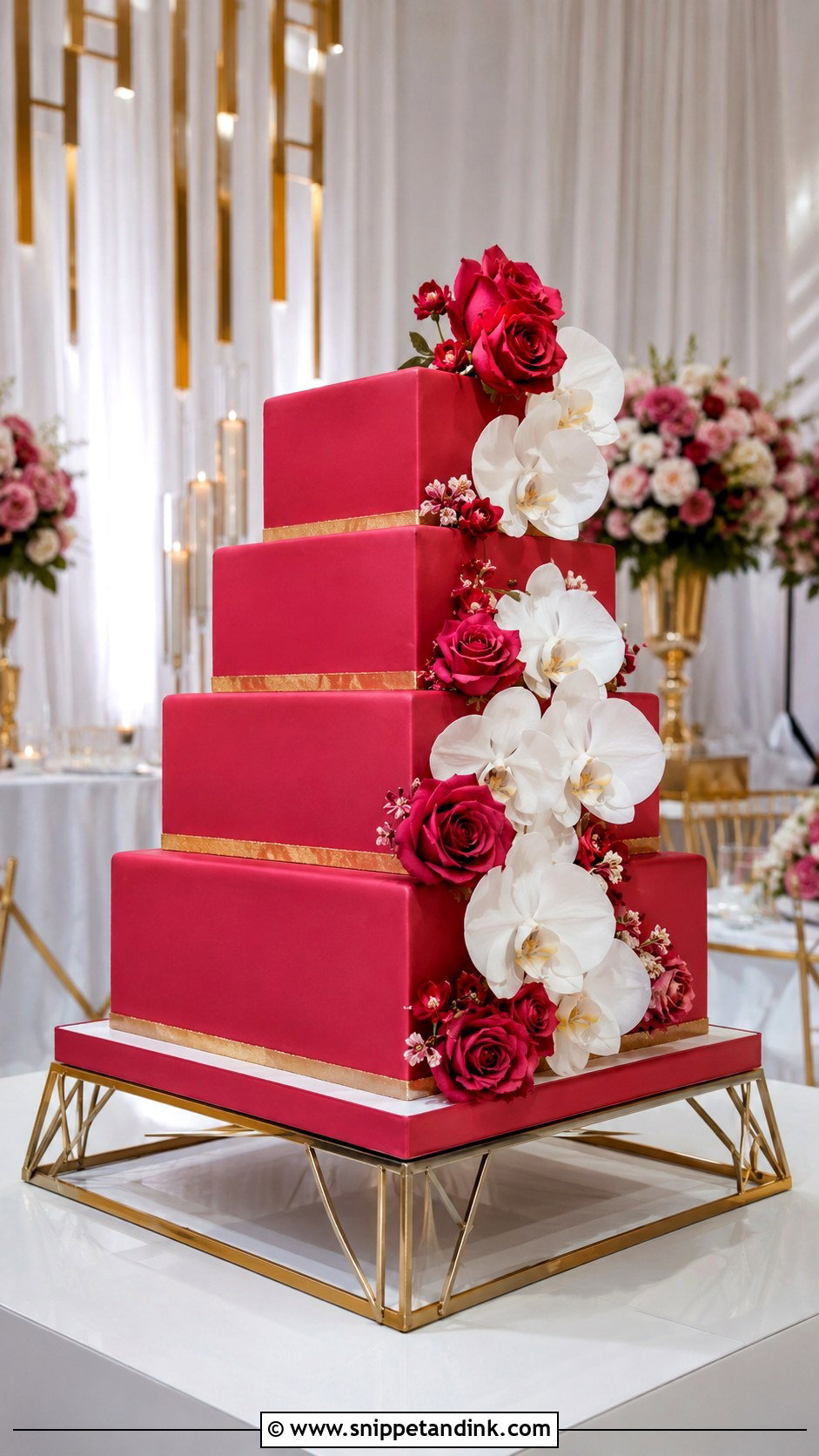
Square tiers feel modern and architectural, and a strong colour makes the shape look deliberate. Fondant gives the sharpest corners; buttercream square corners are achievable but take more time and soften faster in warm rooms. Thin gold lines, white floral accents or a small corner cascade of roses all suit it. Square cakes also give more servings per tier than round cakes of the same width. For a softer effect, ask for slightly rounded edges.
23. Dark Pink Heart Wedding Cake
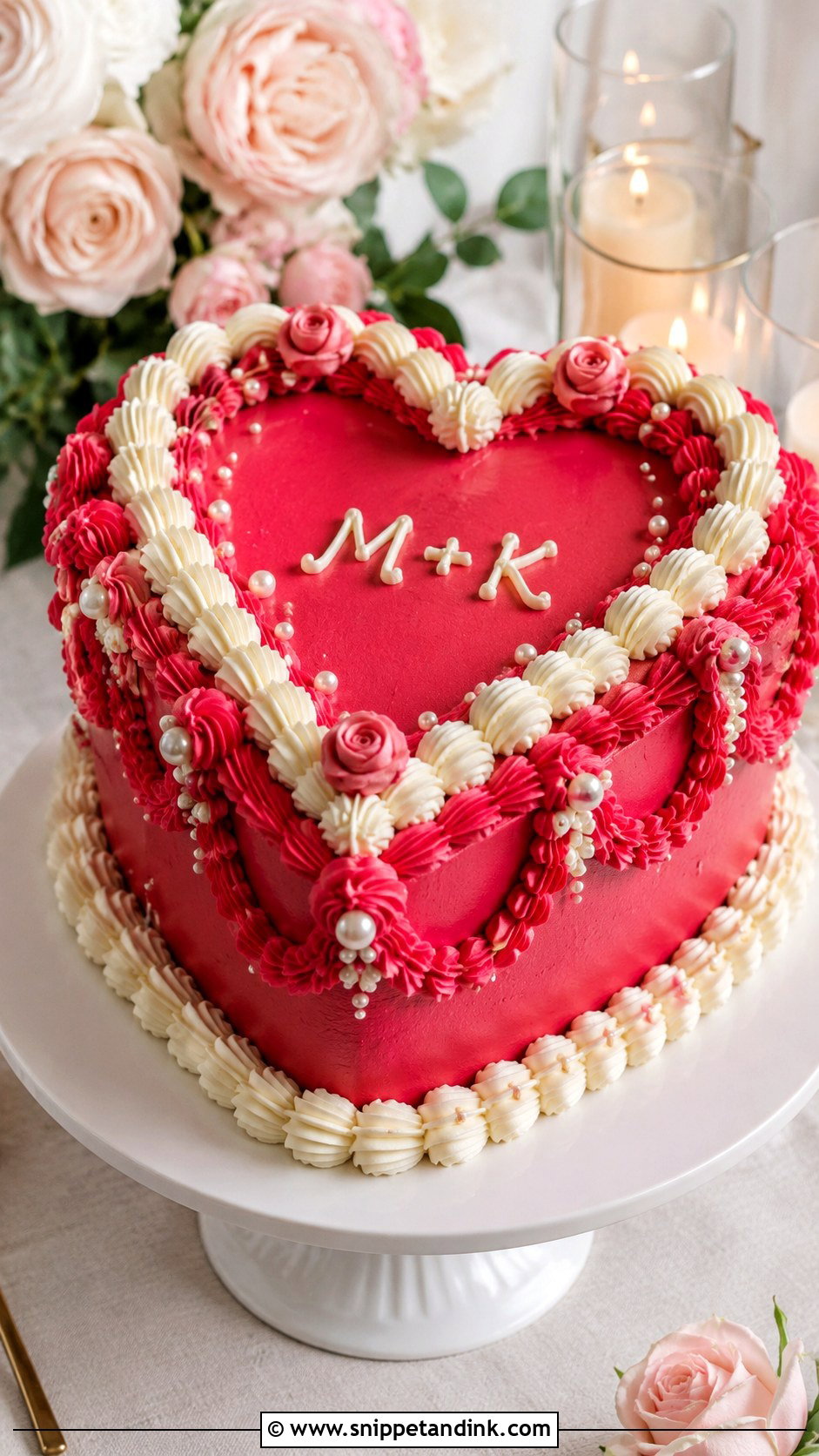
Heart cakes are sentimental before you add a single decoration, so the piping can stay simple or go fully vintage. I’d suggest deep pink buttercream with ivory piping, pearl borders and small roses, plus a short message or initials on top. On a pedestal with candles around it, it makes a sweet cutting cake for a small wedding. Heart cakes are hard to portion neatly, so if it is the only cake for a larger crowd, plan a kitchen cake for serving.
24. Dark Pink Sheet Wedding Cake
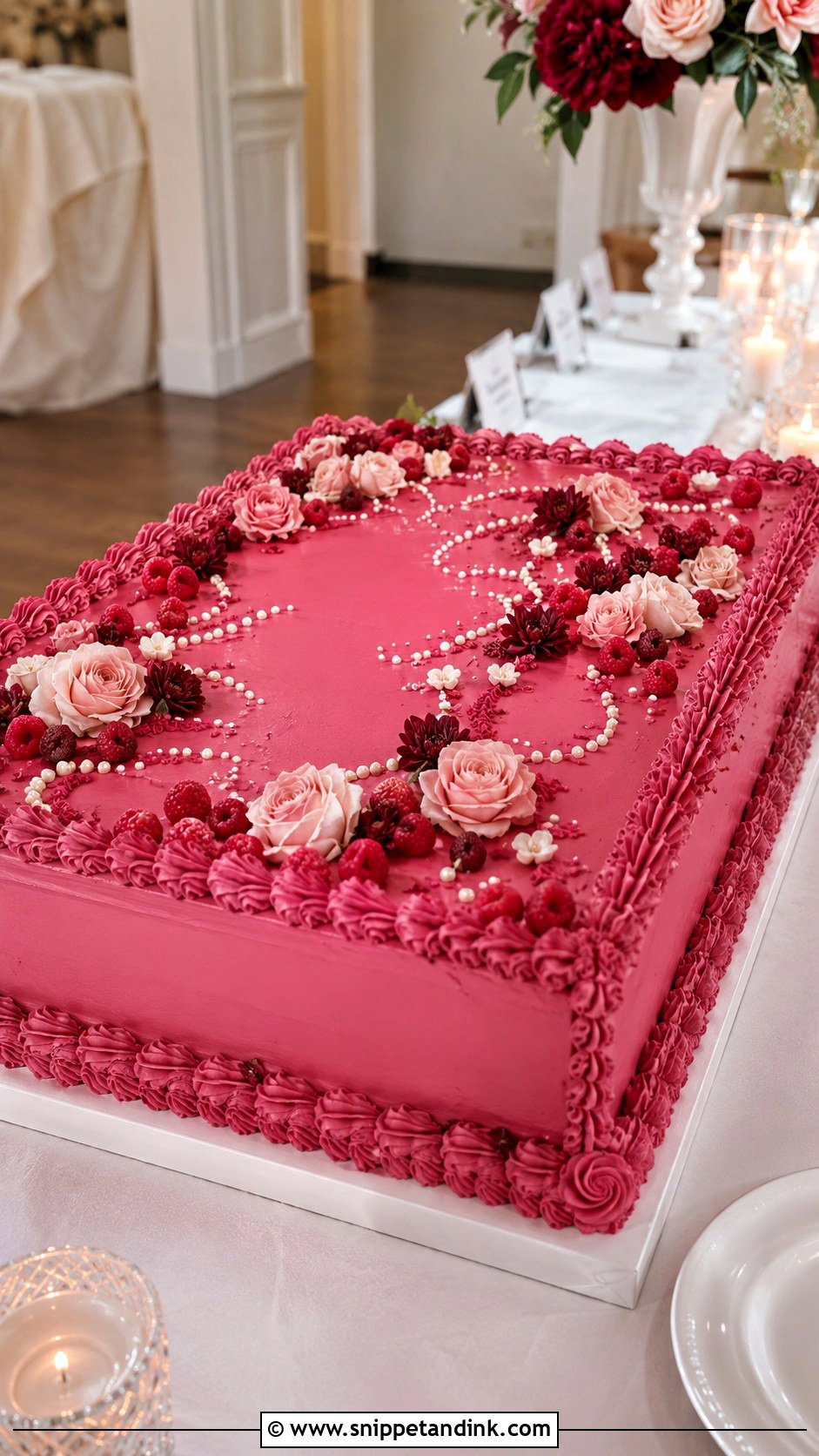
A large sheet cake is practical for a big guest list, and decorated well it does not look like an afterthought. I top it with piped borders, sugar flowers, berries, edible pearls or floral swags laid out in a clear pattern. It can sit on a long dessert table as part of the styling, or serve as the hidden kitchen cake behind a smaller display cake. The colour needs to match the display cake exactly if both are seen, so I mix one batch of buttercream for both.




25. Dark Pink Floral Cascade Wedding Cake
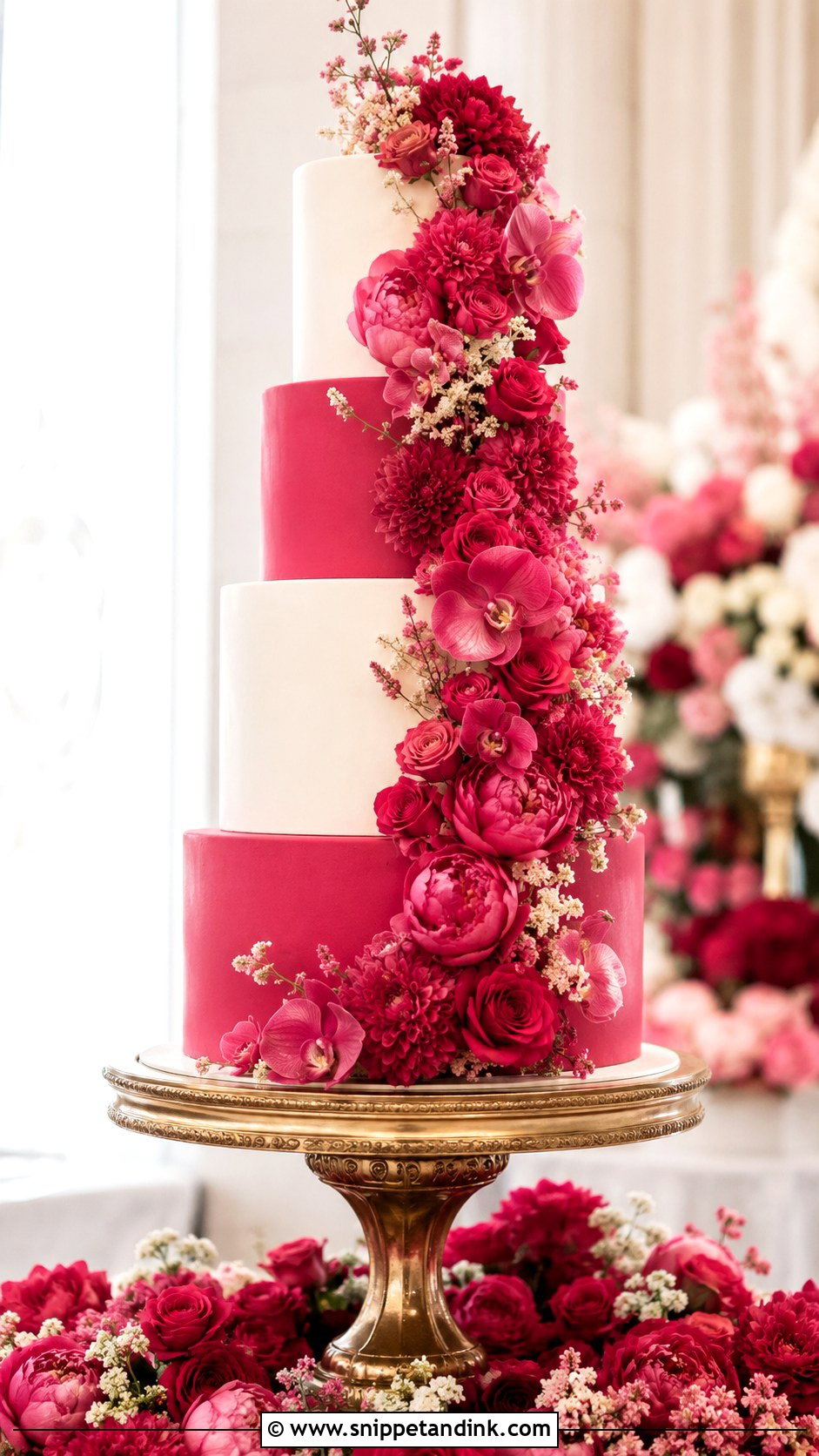
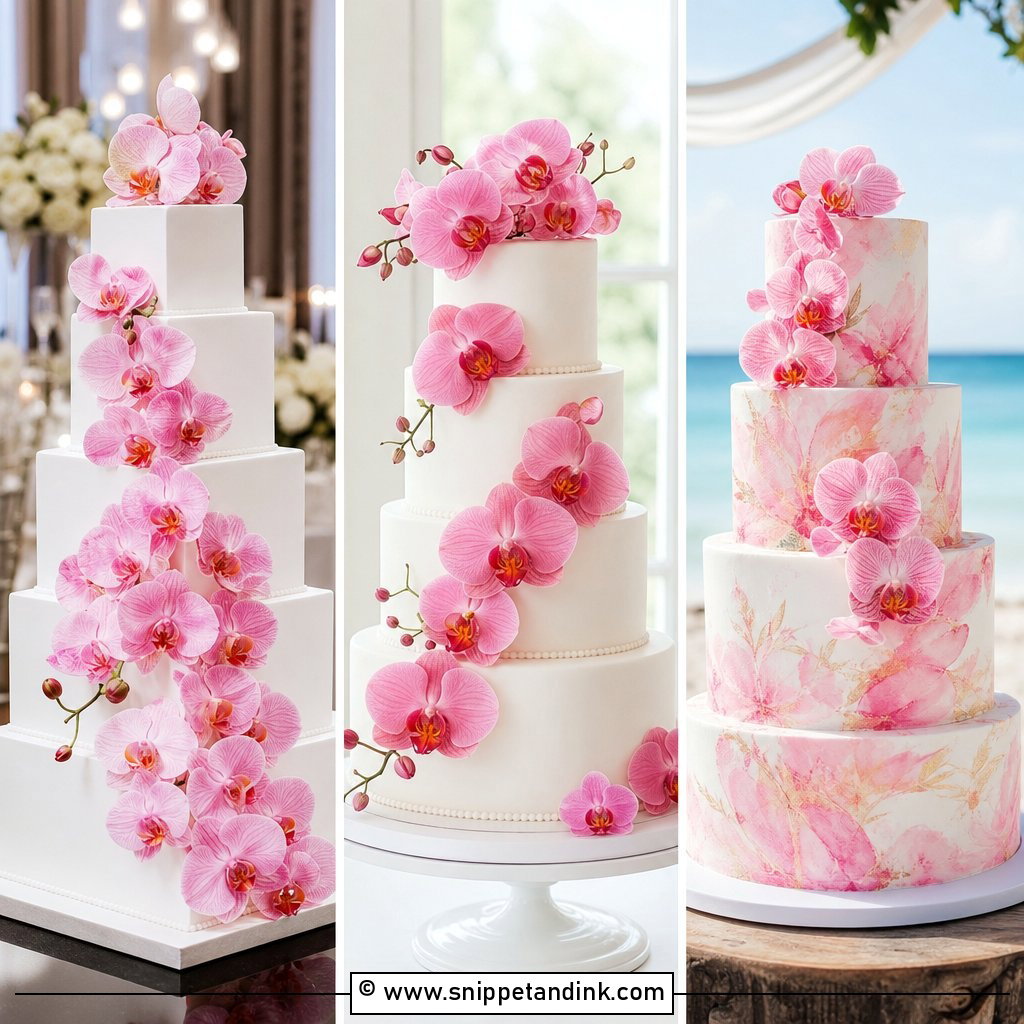
A cascade leads the eye from top to bottom, which is why it reads as the showpiece in a room. The cake can be ivory, blush or dark pink, but the cascade itself should carry the deep pink blooms. Roses, peonies, dahlias, orchids and small fillers all work. A tall three- or four-tier cake gives it space to fall gracefully; on short cakes, cascades look like a spill. Keep the frosting smooth so the flowers stay the main detail, and allow time at the venue, since a full cascade can take a while to place.
Fading, Bleeding and Pink Teeth: the Day-Of Problems Nobody Mentions
Strong pinks are less stable than pale ones, and most of the problems show up only at the venue. None of them are reasons to avoid the colour. They’re reasons to plan for it.
Light fades it
Pinks and purples made with food colouring fade in strong light. A cake left near a sunny window or under bright display lights for several hours can lose noticeable depth, sometimes unevenly, so the side facing the light turns paler. I ask for a cake table away from windows and keep the cake boxed until it is time to set it out.
Warm air makes it bleed
In a humid room, deep pink can creep into white piping or a white tier next to it. Chilling between layers, piping white details last and leaving a small ribbon or border at the join all help. Condensation is worse: a cold cake taken straight into a hot tent beads with moisture, and the colour runs with it. The cake should come up to room temperature in its box.
It shows on lips and gowns
Dark frosting can tint teeth and lips for a short while, and a smear on an ivory gown is hard to hide. If you plan to feed each other a bite at the cutting, I’d cut from a pale-filled tier or the inside of the cake, keep napkins close and have a white-frosting option for the first slice. A glass of water before photos helps with lips.
Bring a Fabric Swatch, Not a Screenshot
Dark pink can go romantic, modern, vintage or dramatic depending on the shade and the finish. It pairs with roses, pearls, gold leaf, fruit, sugar flowers and ruffles, and it adapts to the season, brighter in spring and moodier in autumn. When you meet your baker, bring a physical swatch of the bridesmaid fabric or a flower from your florist rather than a phone photo, because screens shift pink more than any other colour. Mention the venue lighting too. A cake planned around the real room and the real fabric will match on the day.
You'll Like These Ideas:




Leave a Reply