
Royal blue is one of the hardest colors I mix, and one of the most rewarding when it lands. It sits happily next to white, ivory, silver, gold, blush, black and fresh greenery, so it can move from a ballroom to a beach reception without feeling out of place. What makes it work is commitment: the blue should belong to the whole design, not be dabbed on as an afterthought. Below are twenty ways I’d use it, from smooth fondant and textured buttercream to watercolor washes, florals, metallics and graded tiers, with notes on how each one actually behaves once it leaves my kitchen.
Getting a True Royal Blue Instead of Teal or Navy
Most disappointing blue cakes aren’t badly decorated. The color simply drifted. Royal blue sits in a narrow band, and the base it’s mixed into pulls it one way or the other.
- Butter-based frosting is naturally yellow, and yellow plus blue makes green. I whiten the base first or use a recipe with less butter, otherwise royal blue turns teal.
- Dark gel color keeps developing for several hours after mixing. I mix the day before and judge it the next morning, because a shade that looks right fresh will often be navy by the time it sets.
- Fondant can be bought already colored, which gives a more even result than kneading in color at home, especially on large tiers.
- Bring a physical swatch, a ribbon or a bridesmaid fabric sample. Screens shift blue more than almost any other color, so a phone photo is a poor reference.
When you brief your baker, say how much of the cake should actually be blue. A full royal blue tier and a white cake with blue accents need different recipes, different timings and often a different budget.
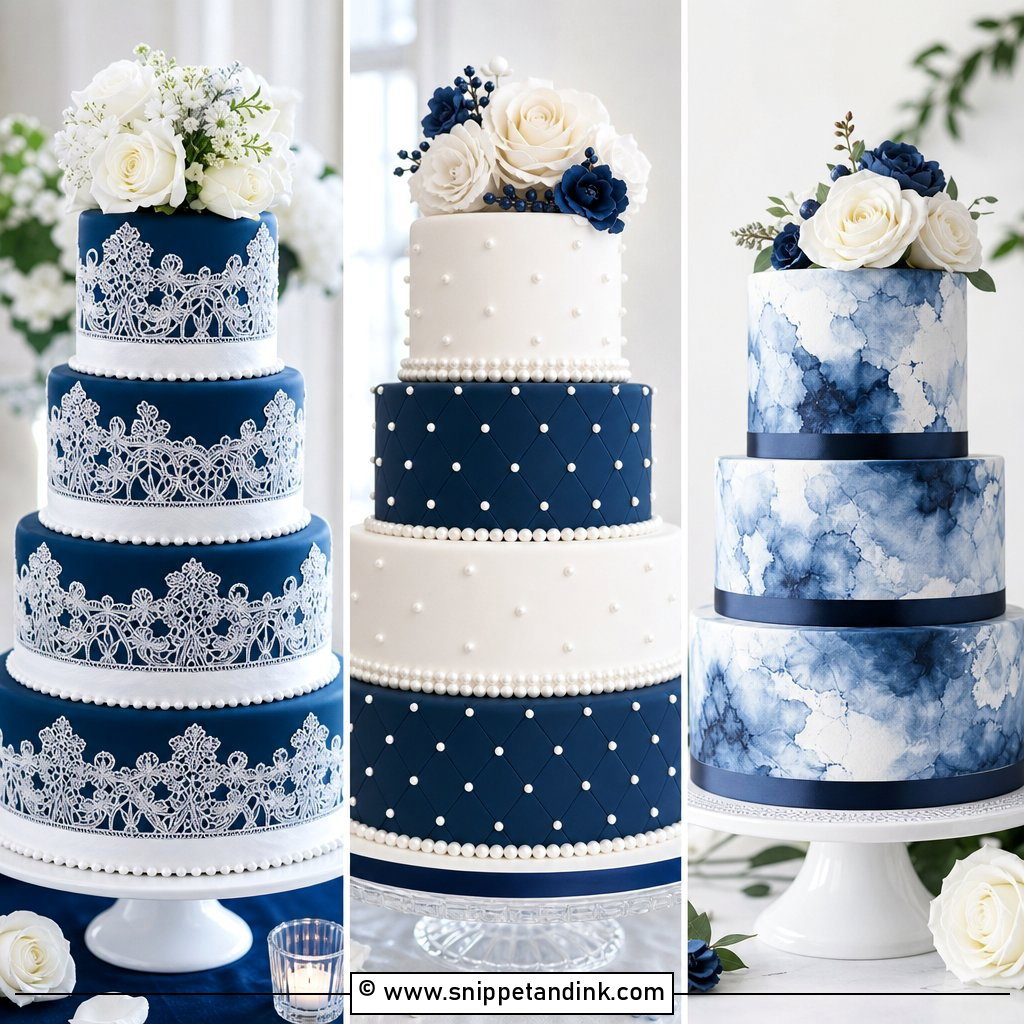
1. Royal Blue And White Wedding Cake
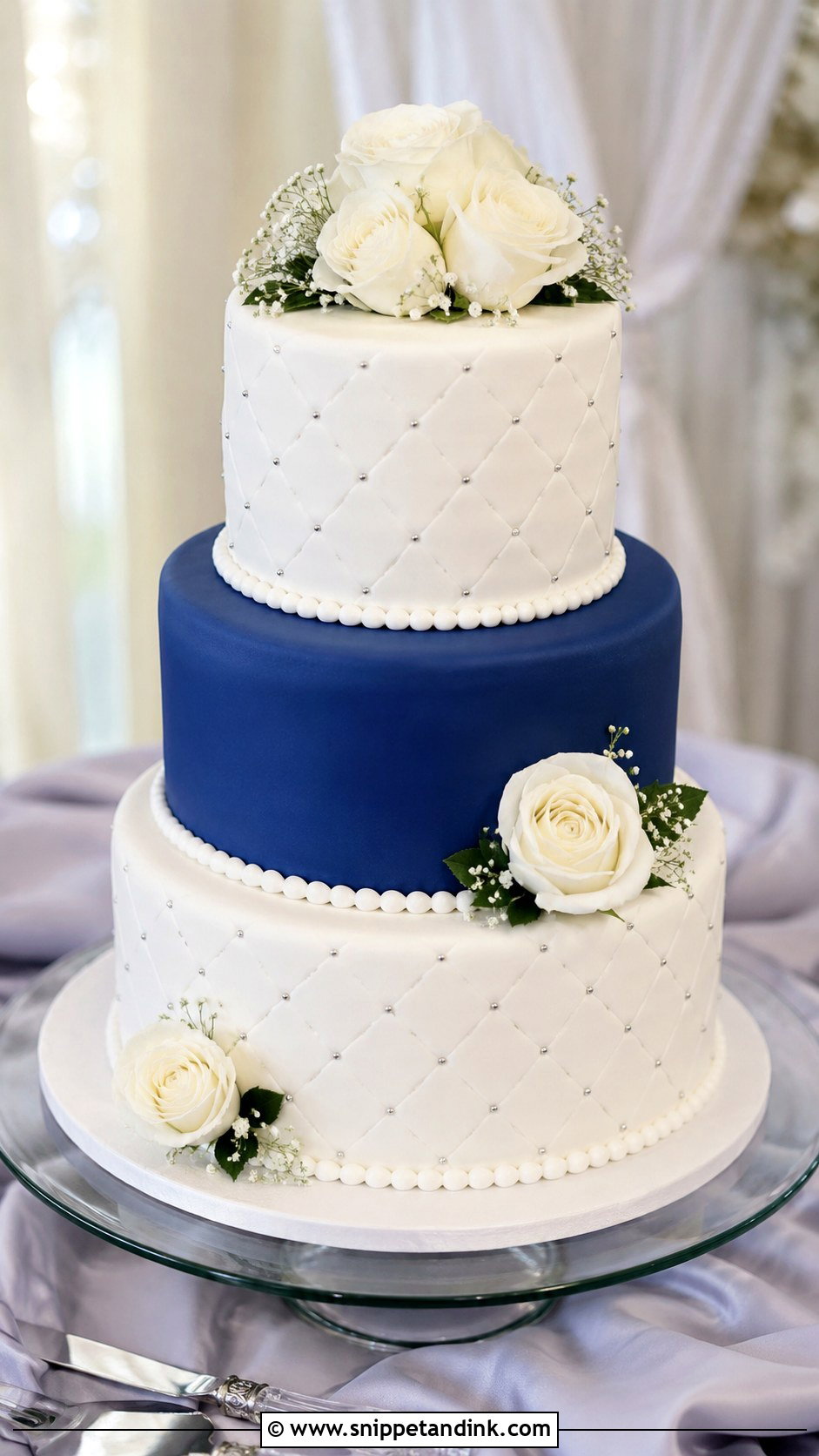
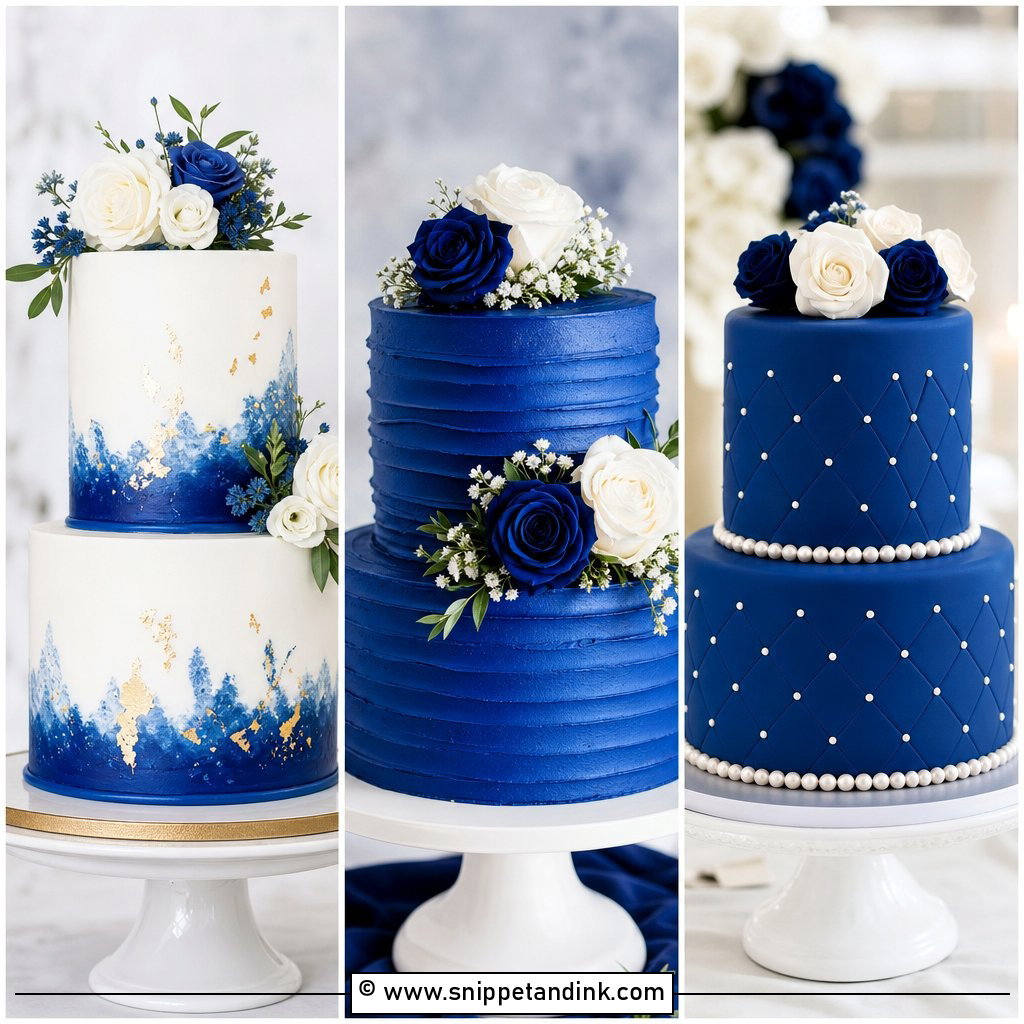
Blue and white is the version I suggest when a couple loves the color but worries it will shout. White carries the cake and the blue arrives in one place: a single statement tier, a ribbon band, piped borders or a few sugar flowers. The detail I watch most is the join between colors. Dark fondant sitting directly on white can bleed in a humid room, so I keep a thin white border or a ribbon between them, which also keeps the contrast crisp on camera. Pearls or small silver touches suit a formal room; skip them if the reception is relaxed.
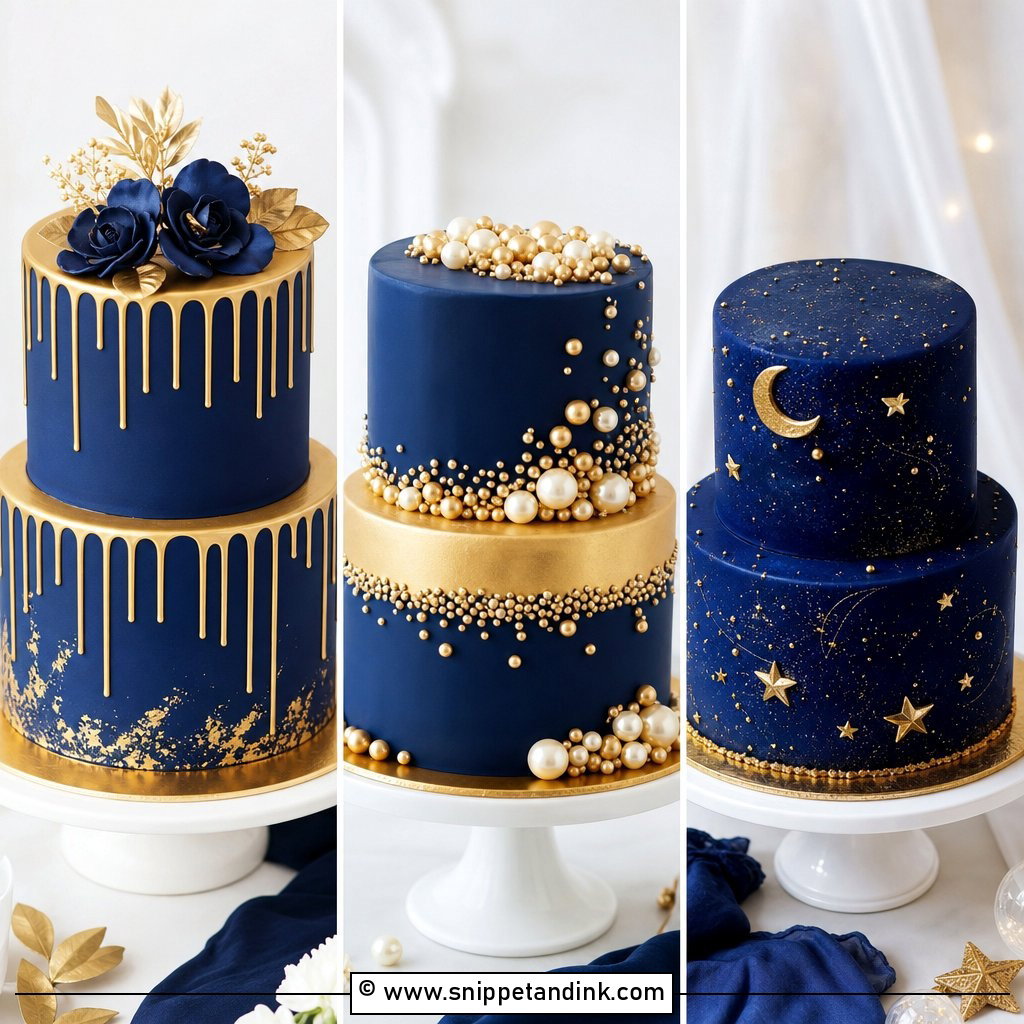
2. Royal Blue And Gold Wedding Cake
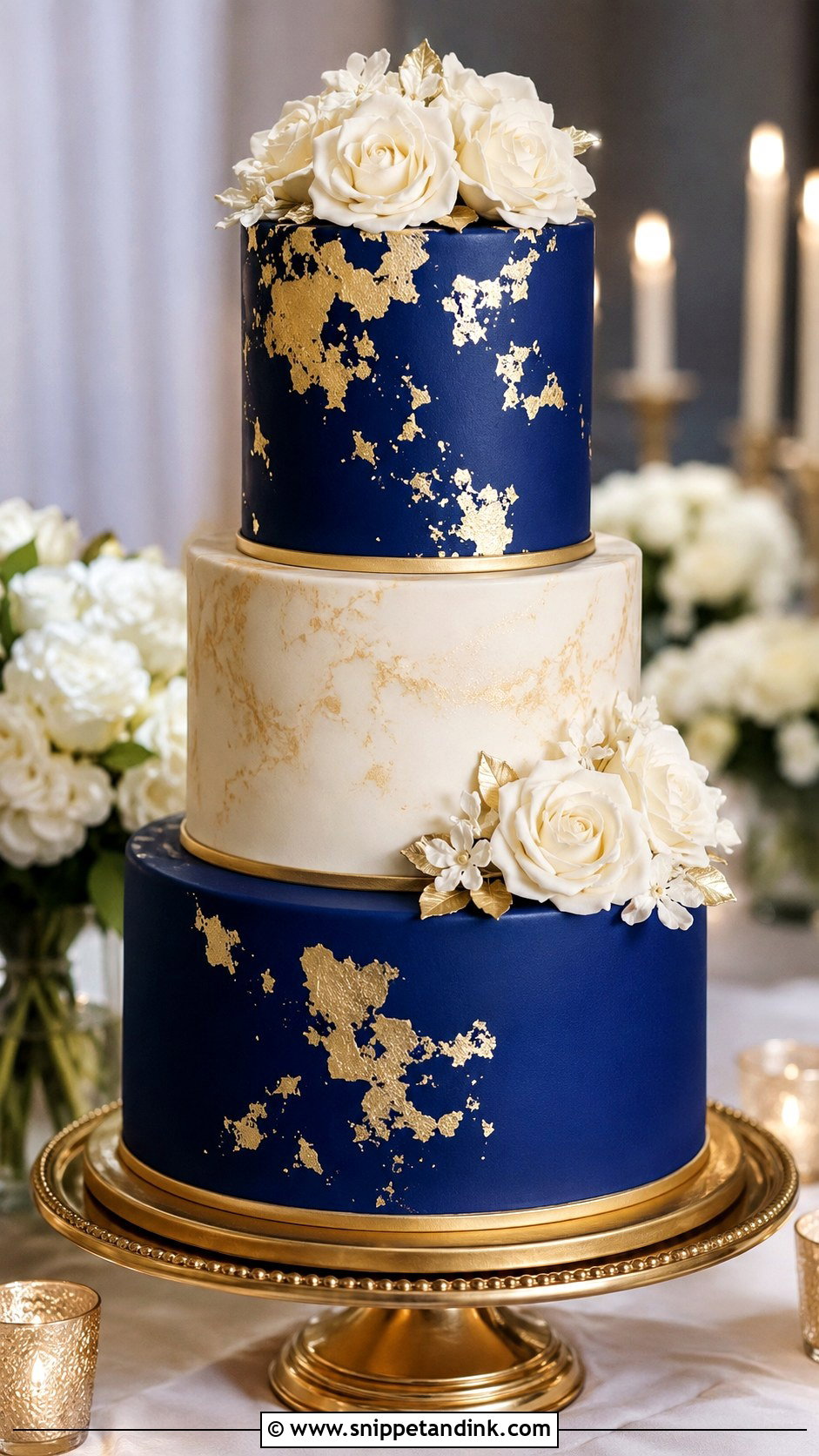
Gold gives blue warmth, which is why this pairing feels so rich under evening lighting. On a three-tier wedding cake I’ll often do one royal blue tier, one ivory and a hairline of gold at each edge. Gold leaf over deep blue fondant is the more dramatic route, and it sticks with nothing more than a whisper of water, so it’s applied last and handled as little as possible. Restraint matters here. Two gold details read expensive; six start to look like packaging.
3. Royal Blue Marble Wedding Cake
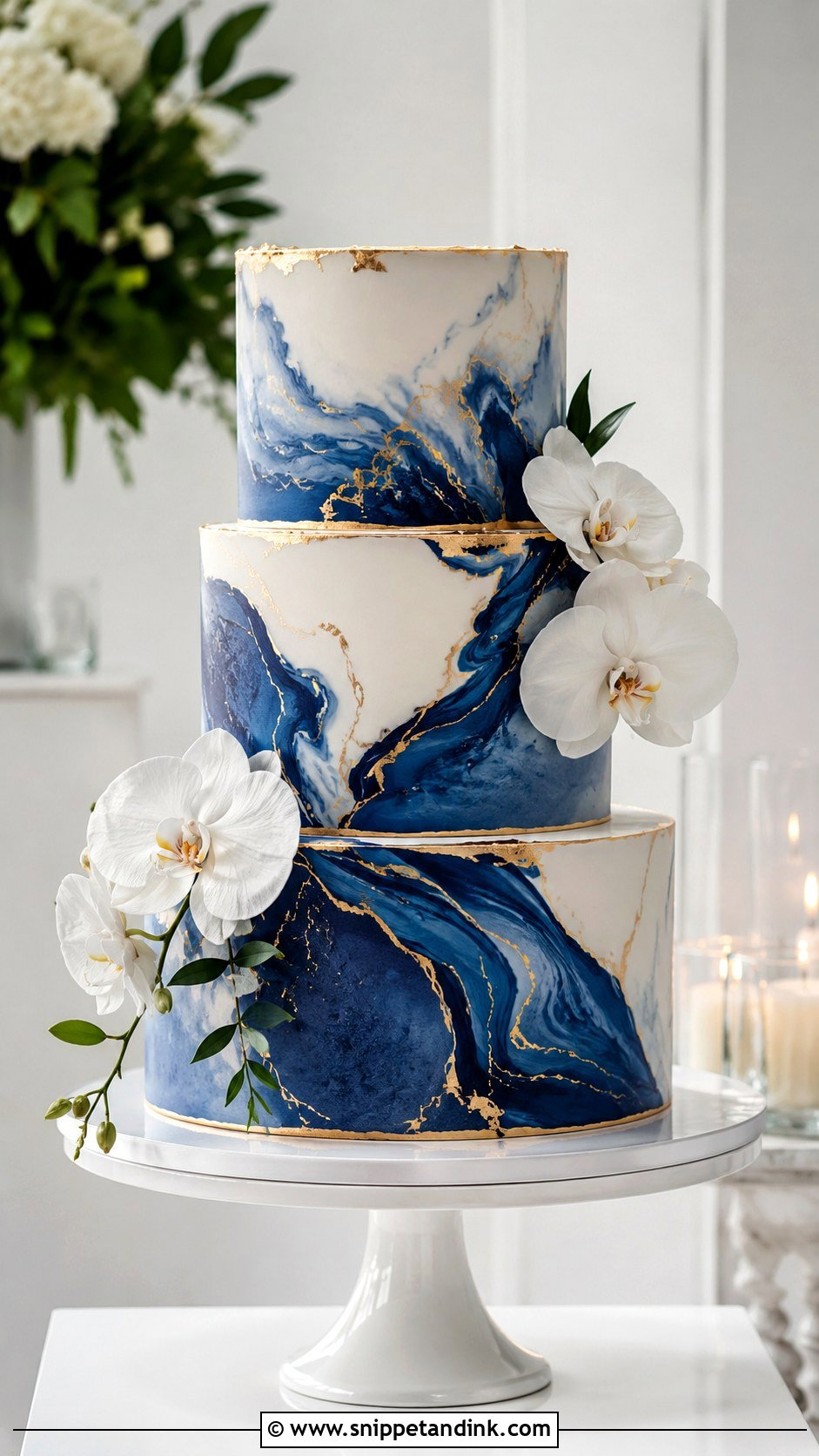
Marbled fondant is made by folding white and blue together and stopping early, before the streaks blur into a flat mid-blue. That means no two tiers ever match, and I tell couples to enjoy that rather than ask for symmetry. Gray or ivory in the mix softens the contrast, and thin gold or silver veining painted on afterward makes it read like stone. Fondant is the only medium I’d use for this; buttercream marbling looks muddy once it’s smoothed.
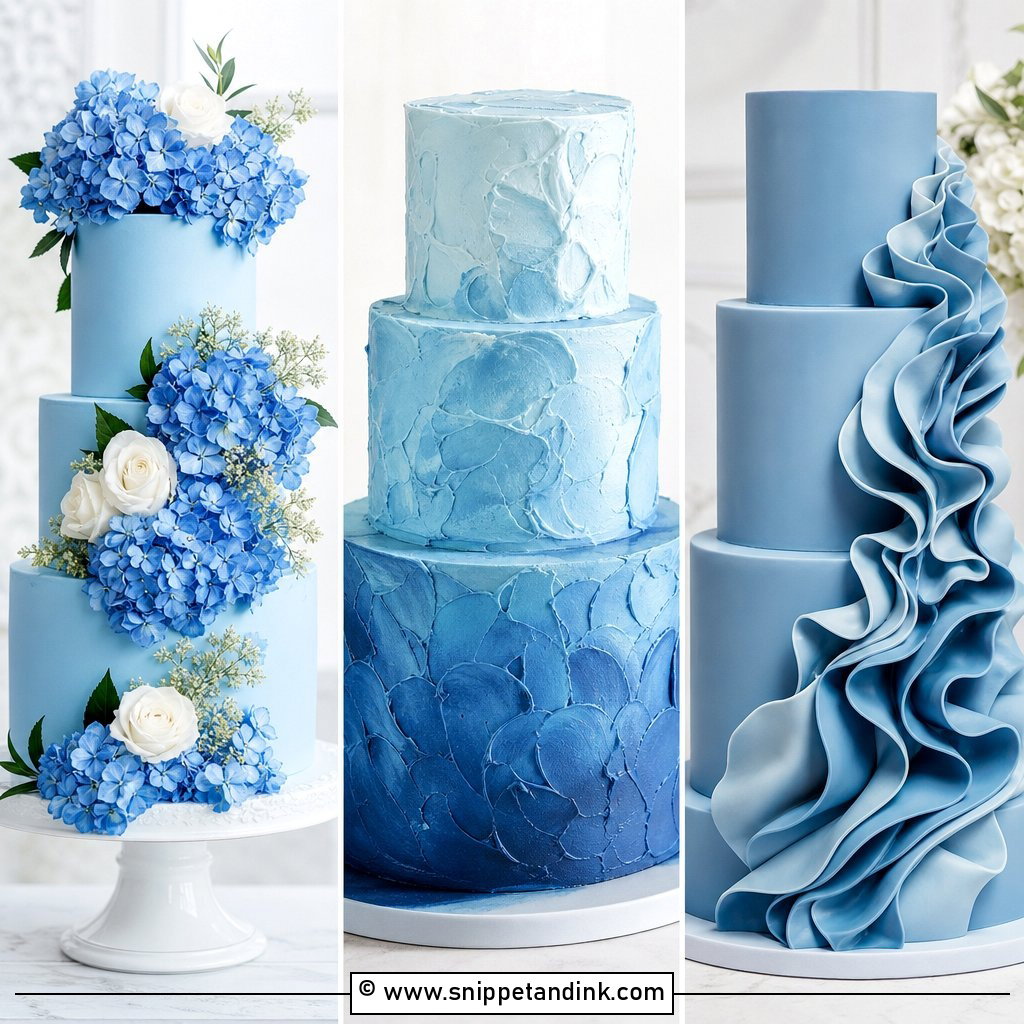
4. Royal Blue Ombre Wedding Cake
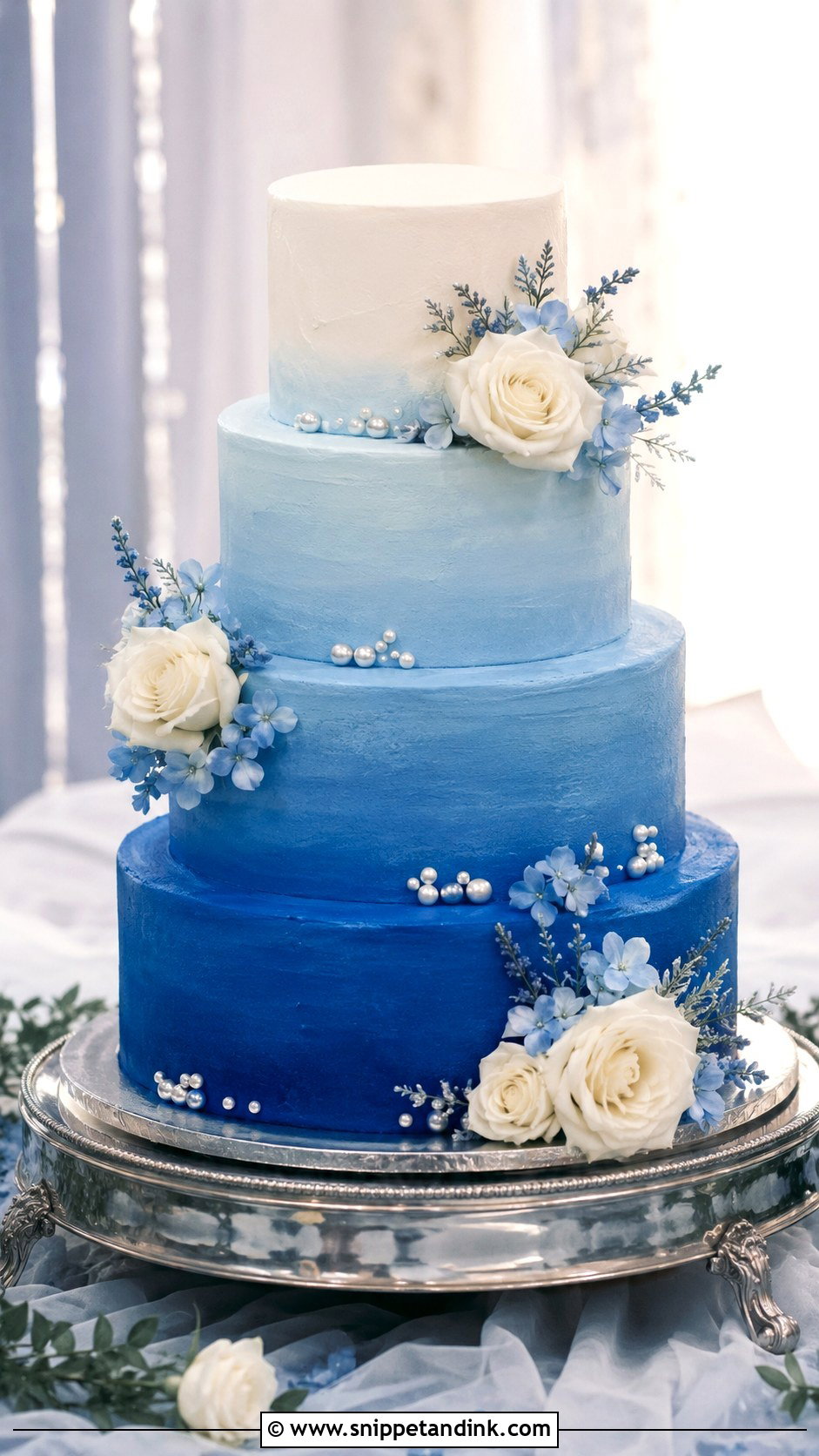
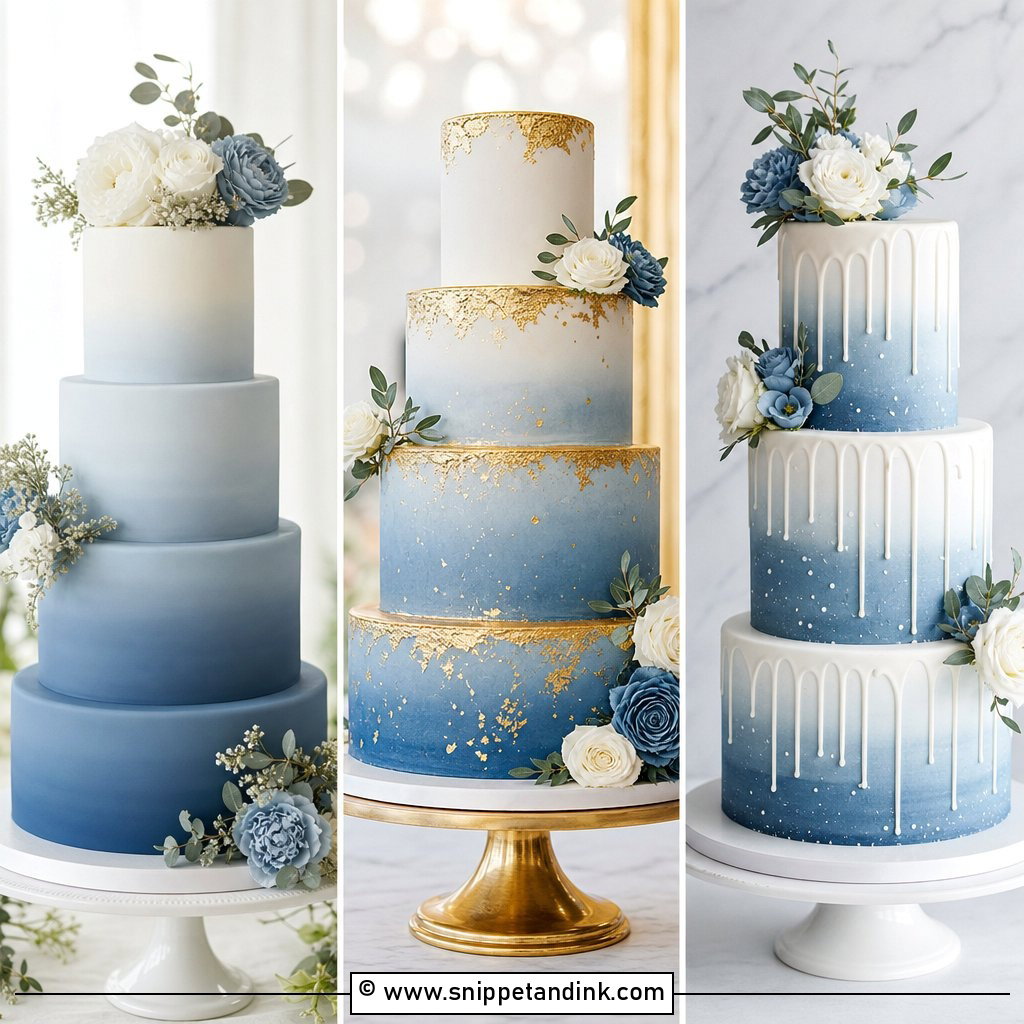
Graded tiers, darkest at the base and fading to pale blue or white at the top, make a cake look taller than it is. In fondant I mix a separate batch for each tier, which gives clean steps of color. Buttercream lets me blend within a tier for a softer gradient, but it shows any variation in the light. I keep decoration to a few white blooms or a line of silver pearls, because the color change is already the design. Blue bridesmaid dresses and coastal venues give it something to echo.
5. Royal Blue Buttercream Wedding Cake
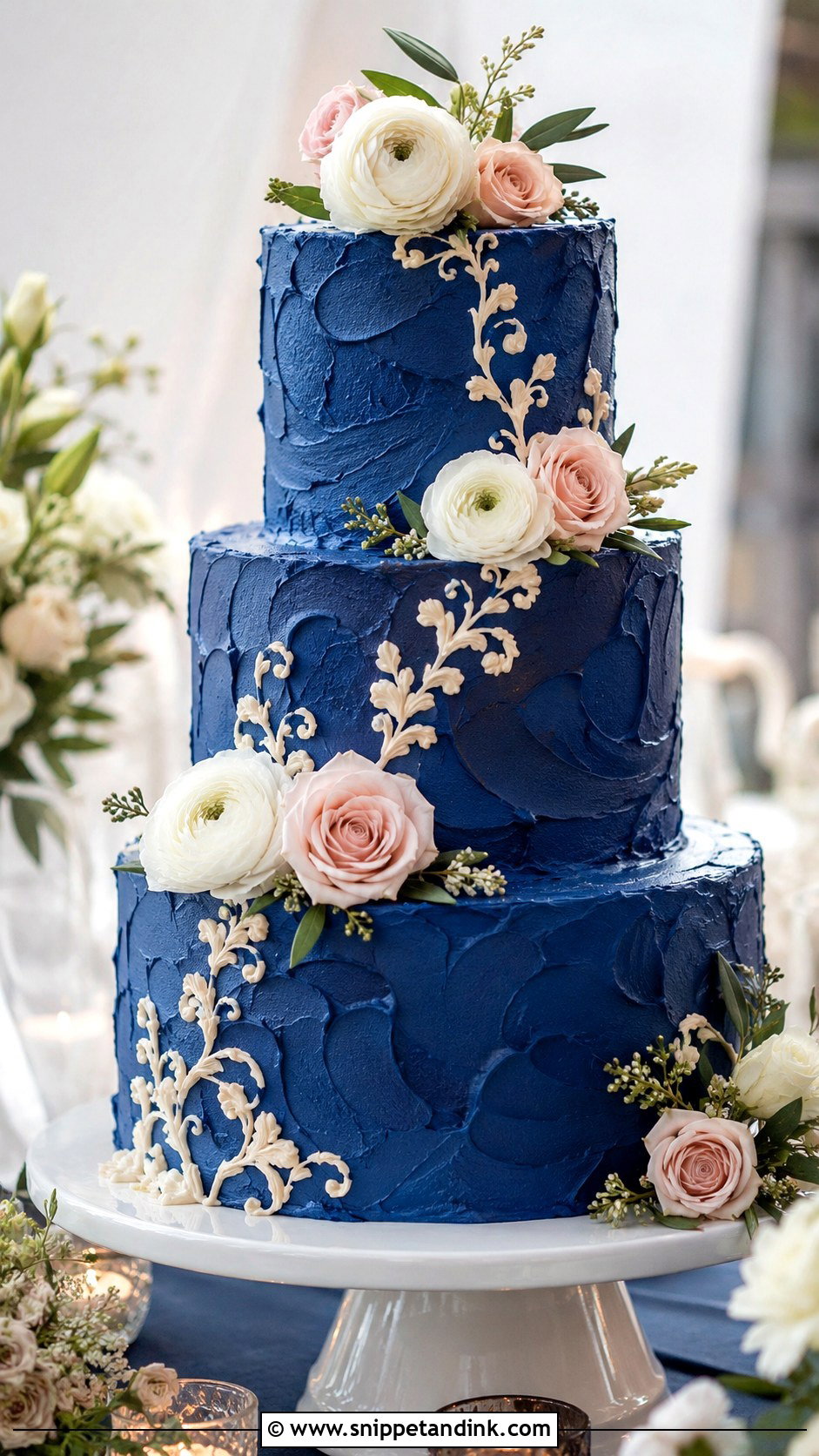
Deep blue buttercream takes a lot of gel color, and that is the honest trade-off: it can stain lips and teeth, and very saturated batches can pick up a slightly bitter edge. Because of that, I often build the dark tier from blue chocolate collar or fondant accents and keep the buttercream itself lighter. A white buttercream with royal blue brush strokes or one colored tier avoids the problem entirely. Ivory roses, ranunculus or a little greenery fill out the table.
6. Royal Blue Fondant Wedding Cake
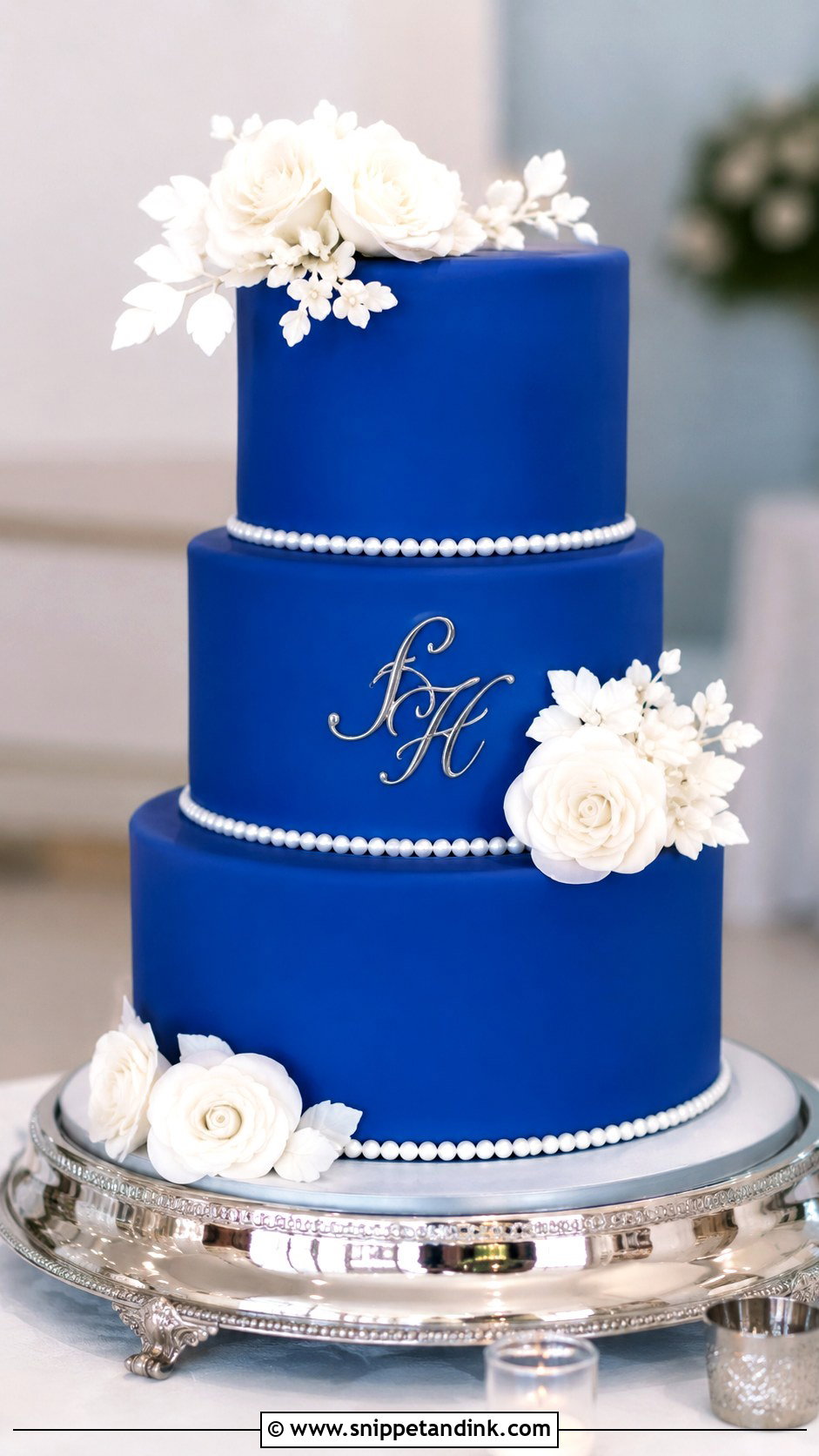
Fondant gives the sharpest edges and the most even color, which is why a royal blue fondant wedding cake suits a tailored, formal design. It is also unforgiving. Dark fondant shows every speck of cornstarch, every fingerprint and every small crack, so I dust with as little as possible and buff the surface before it sets. Sugar flowers, metallic lines and monograms all sit well on it. To lighten the weight of so much color, I alternate with an ivory tier and put the cake on a tall stand with simple light.
7. Royal Blue Floral Wedding Cake
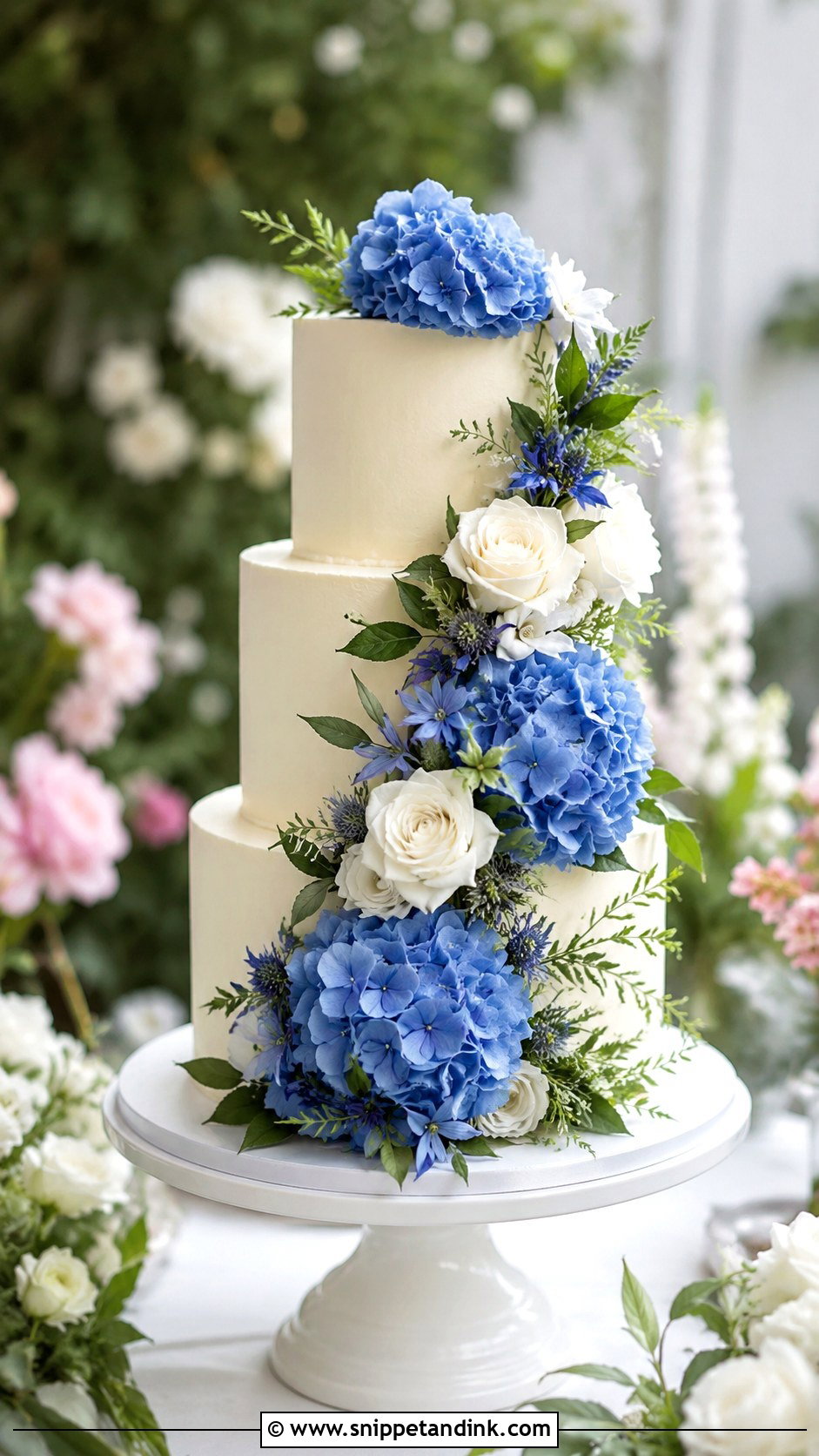
Truly blue flowers are rare, which is the first thing I explain when someone shows me a lush blue cascade. Hydrangea, delphinium and cornflower are the usual blues, and several popular ones, hydrangea and delphinium among them, are not food safe. I never push those stems into a cake; they sit on a small barrier or I copy them in sugar. A white cake with a diagonal sweep of blooms across one tier keeps the shape visible. If you want real flowers touching cake, ask your florist and baker to agree on a pesticide-free, food-safe list early.
8. Royal Blue Rose Wedding Cake
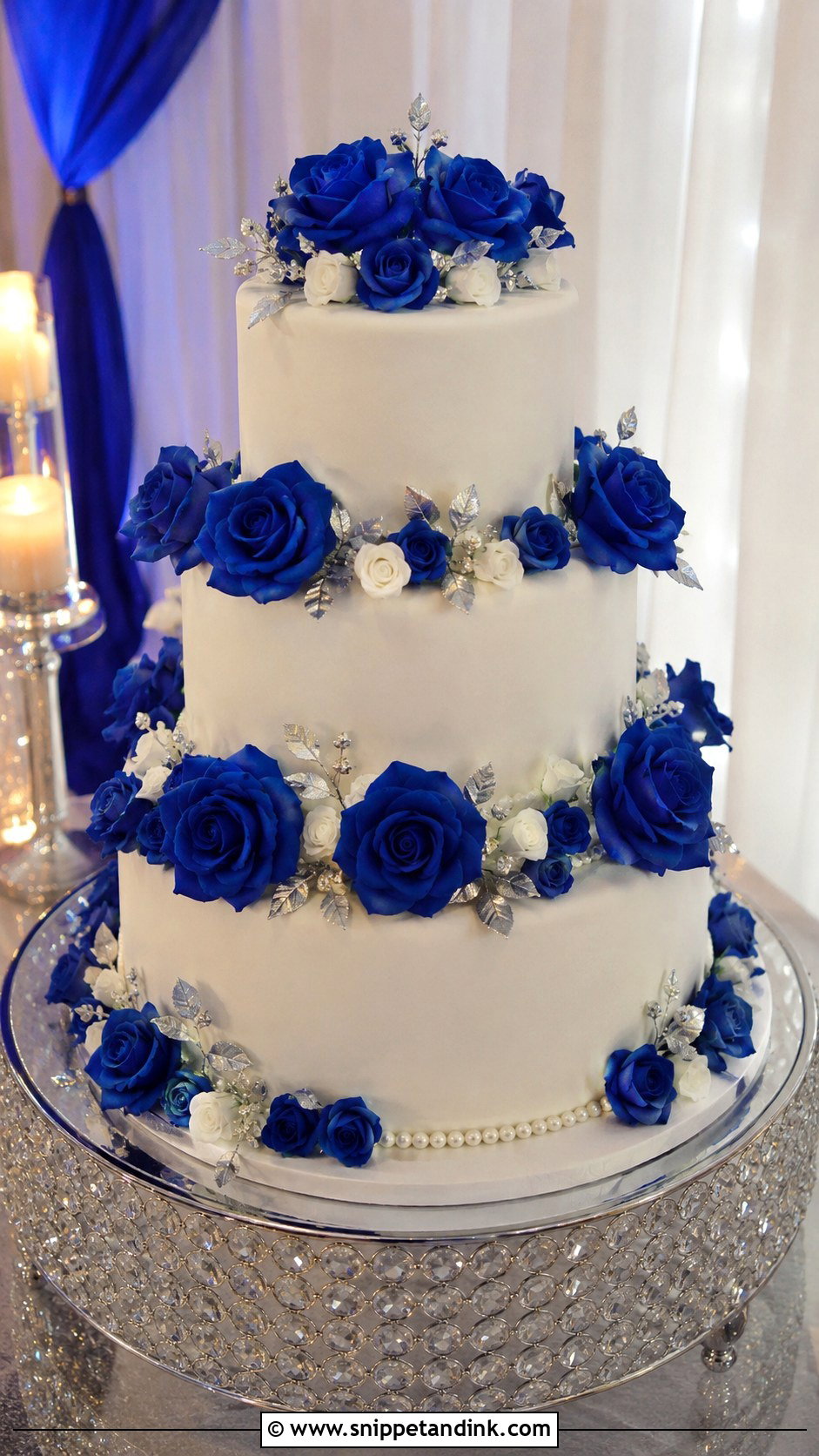
Roses are the easiest flower to tie back to the bouquet, and they can be sugar, piped buttercream or fresh. Sugar roses hold color and can be kept long after the wedding, though they take hours each and that shows in the quote. White roses on a blue cake look dramatic; blue roses on white look crisp. Since natural blue roses don’t exist, fresh ones are dyed, and dye can transfer to frosting, so I place them on wrapped picks. A loose ring at the base of each tier is softer than a full cascade.
9. Royal Blue Lace Wedding Cake
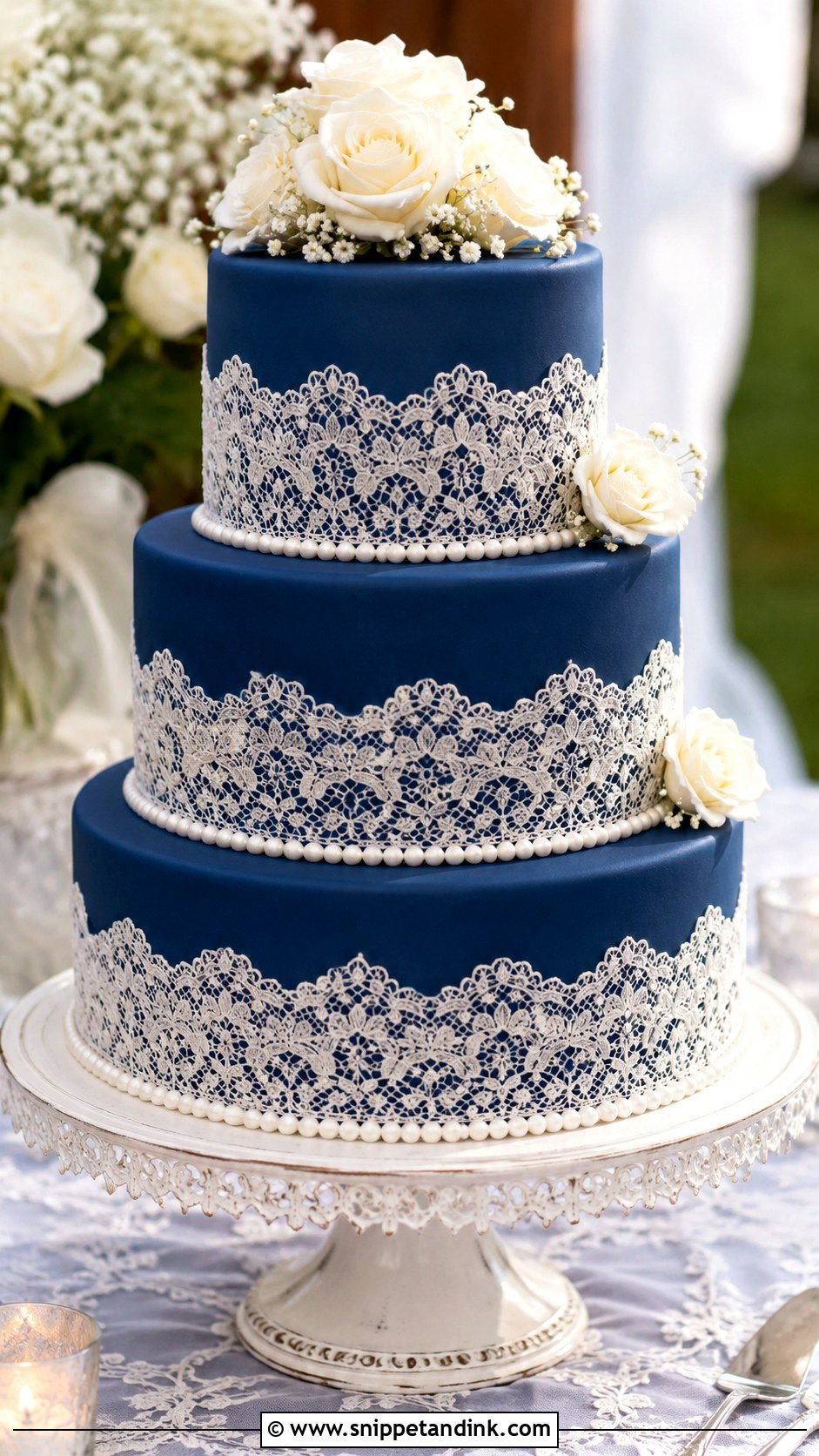
Edible lace is pressed in a silicone mat and dries flexible, which is how it wraps a tier without snapping. A royal blue lace wedding cake can be white lace over a blue base or blue piped lace on white fondant. If your dress has a distinctive lace motif, bring a close photo and I can echo it rather than invent one. The weakness is humidity: lace goes tacky in a damp marquee, so for outdoor summer receptions I’d choose piped detail instead. A few pearls or a small topper finish it without clutter.
10. Royal Blue Drip Wedding Cake
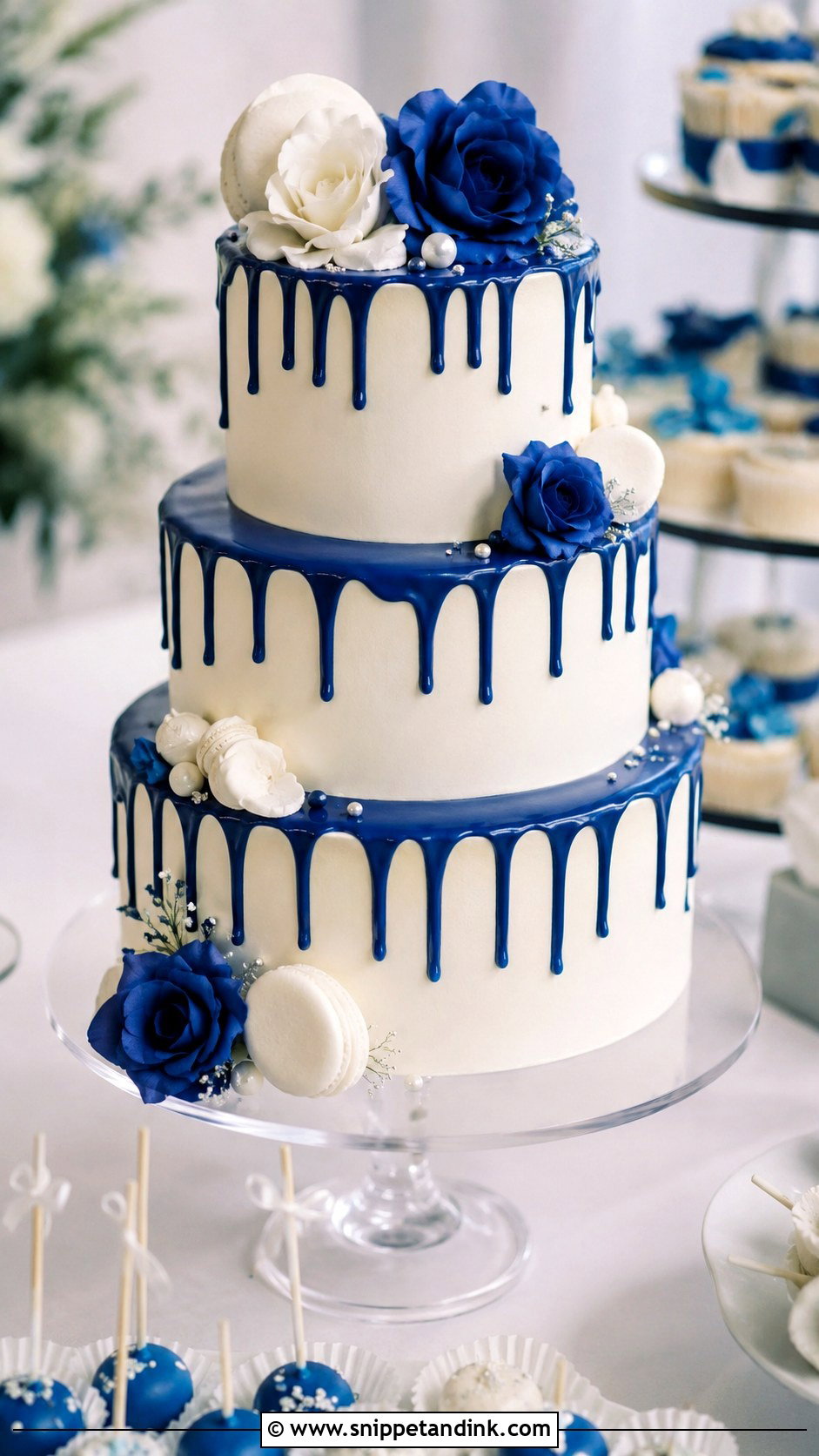
The drip is made from white chocolate ganache colored with an oil-based color, because water-based gel can make chocolate seize. I test the ganache temperature on a chilled tier first; too warm and it races to the board, too cool and it stops in stubby blobs. On top, choose one family of decoration, macarons or meringues or sugar flowers, rather than all three. A drip cake is relaxed by nature, and it sits happily beside matching cupcakes or mini cakes on a dessert table.
11. Royal Blue Geode Wedding Cake
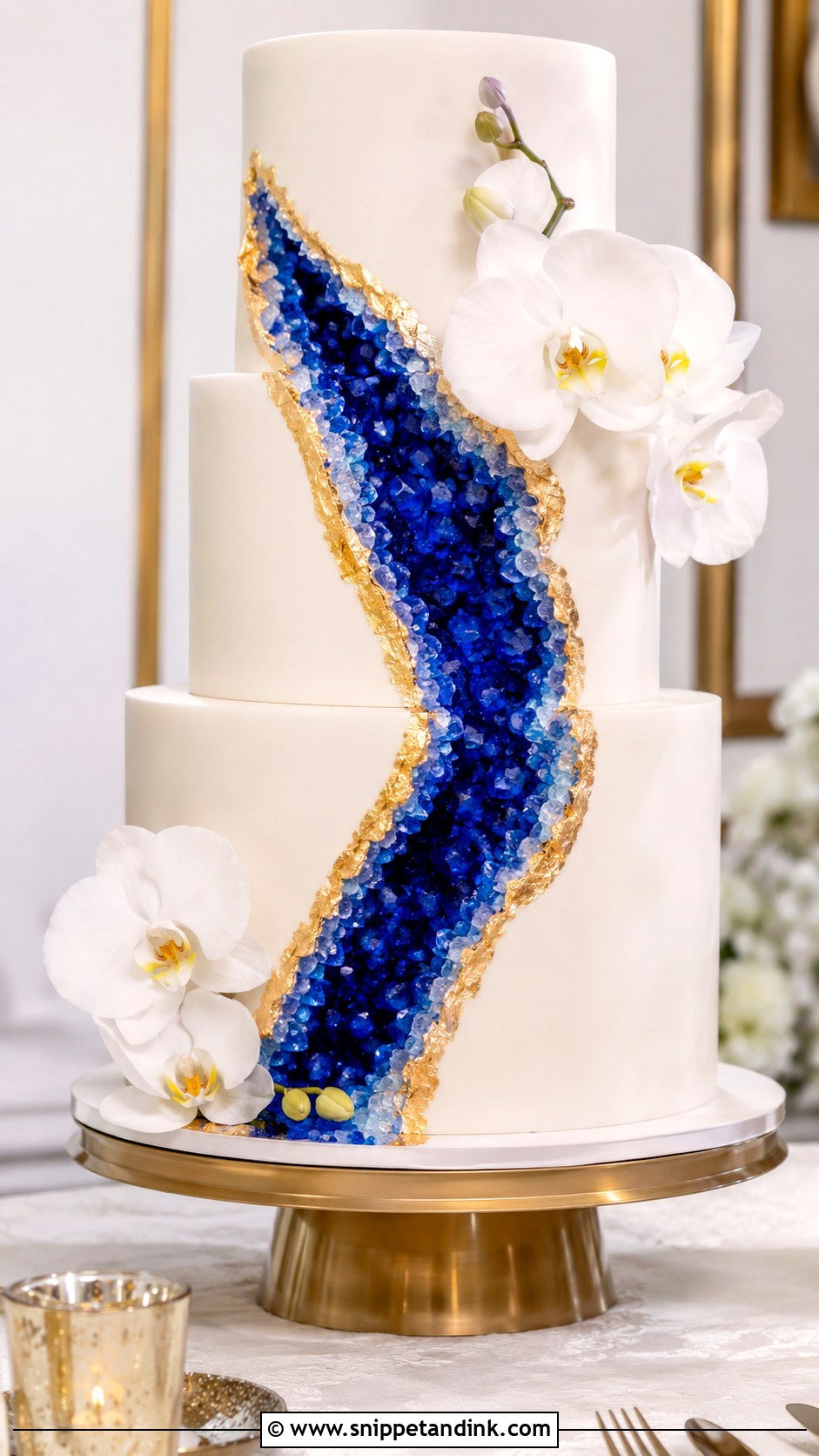
The geode is carved into the side of a tier and filled with rock candy, then edged in gold. Those crystals are heavy, so the tier needs proper internal support, and the design pushes the cake toward a formal, evening setting. Rock candy can also weep in humid air, which is why I add it as close to delivery as possible. Everything else stays plain: a smooth pale base, clean tiers and very few flowers.
12. Royal Blue Watercolor Wedding Cake
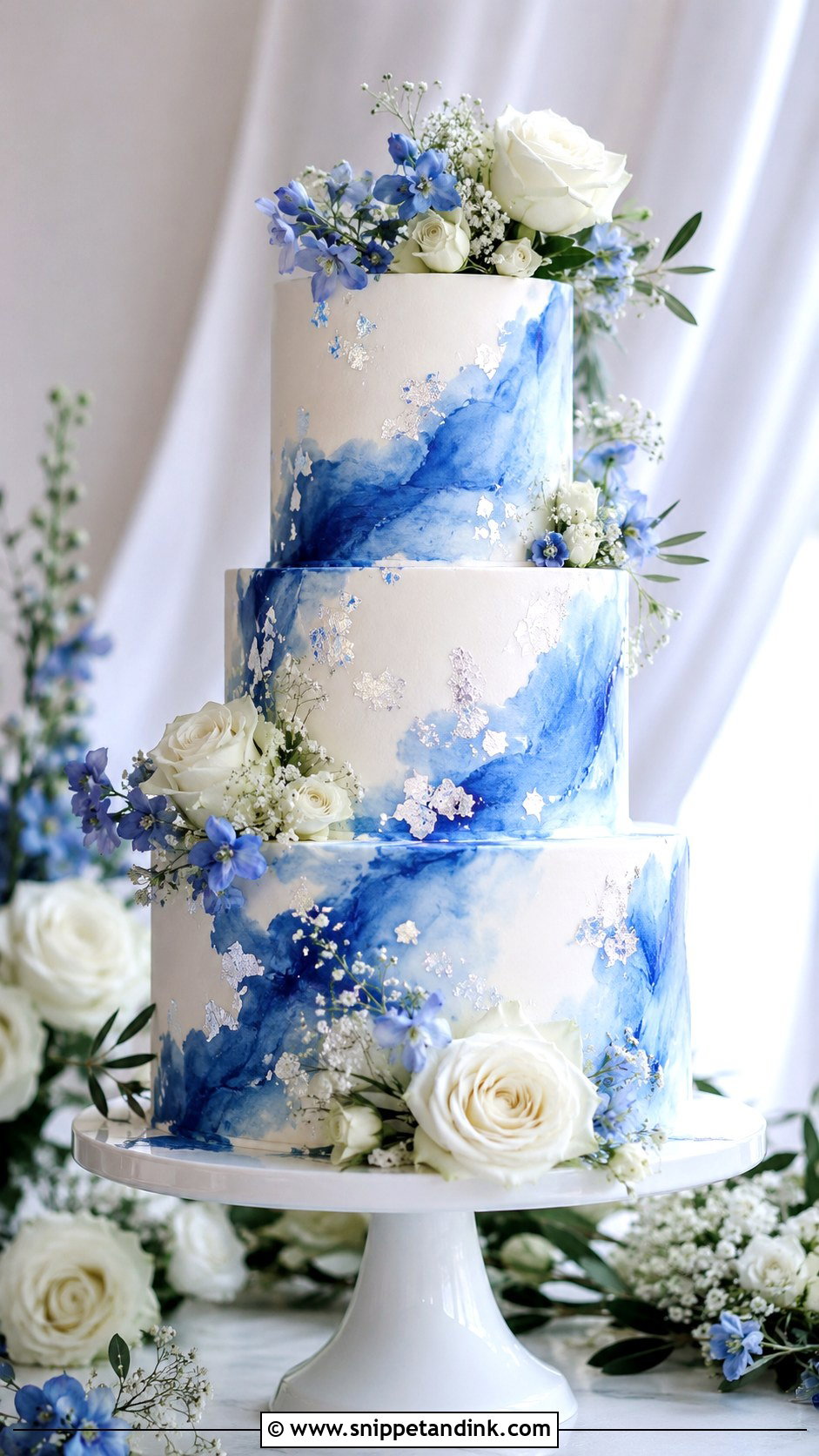
Watercolor is diluted gel color brushed over chilled buttercream or set fondant, layered in thin washes so the blue pools at the edges like paint on paper. It gives color without committing to a fully blue cake. The thing I guard against is streaking, which happens when the wash is too wet or the surface too warm, so ask your baker to show you a test panel. White roses, silver leaf, fine greenery or small pearls all sit comfortably on top, indoors or out.
13. Royal Blue Ruffle Wedding Cake
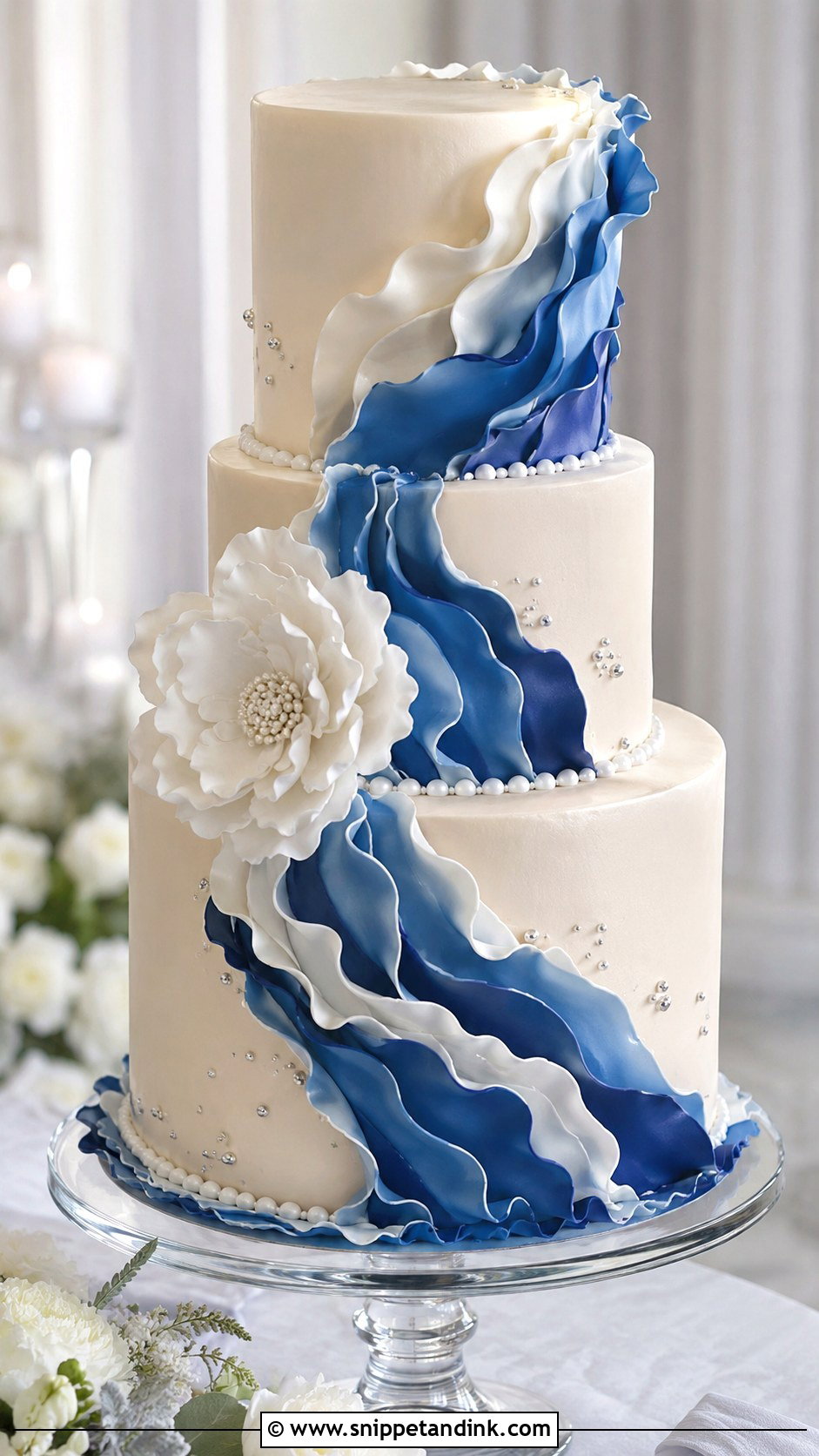
Ruffles look like the layers of a skirt, and each one is a thin strip of fondant or sugar paste frilled by hand. A full ruffled cake is slow work and noticeably heavier, so I often suggest one ruffled tier between smooth ones. White ruffles with blue edges are delicate; all-blue ruffles are bolder and show depth in the folds where shadows sit. Leave the top almost bare, one sugar flower is enough, because the texture already holds the eye.
14. Royal Blue Pearl Wedding Cake
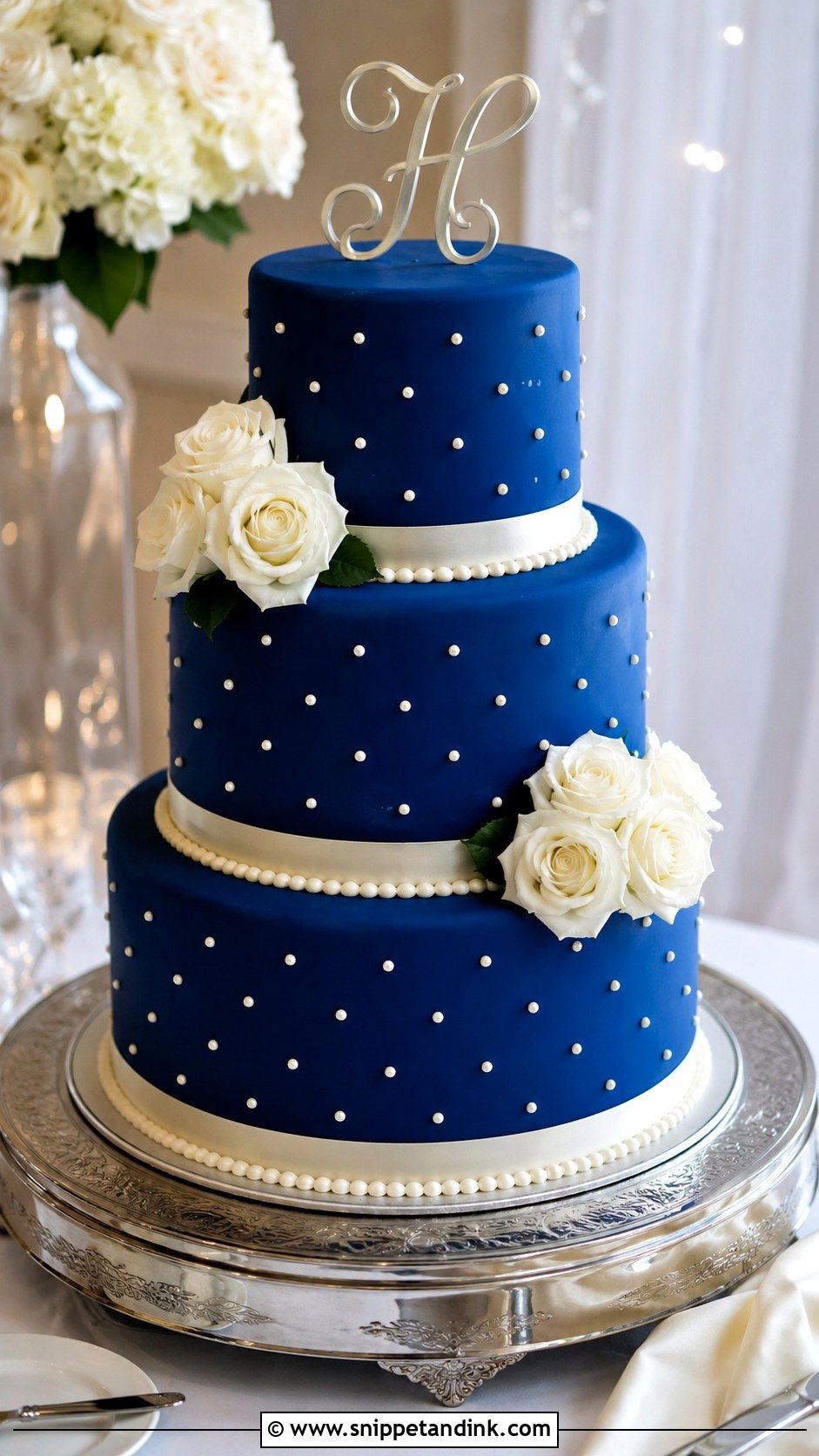
Pearls are sugar beads or piped dots, and spacing is everything. A border set by eye wanders, so I mark the tier before placing them. Ivory tiers with royal blue bands and pearl trim feel vintage; pearls scattered over blue fondant feel more black tie. Some metallic dragees are sold as decorative only, so ask whether yours are meant to be eaten or picked off. White roses, a satin ribbon or a monogram topper complete it.

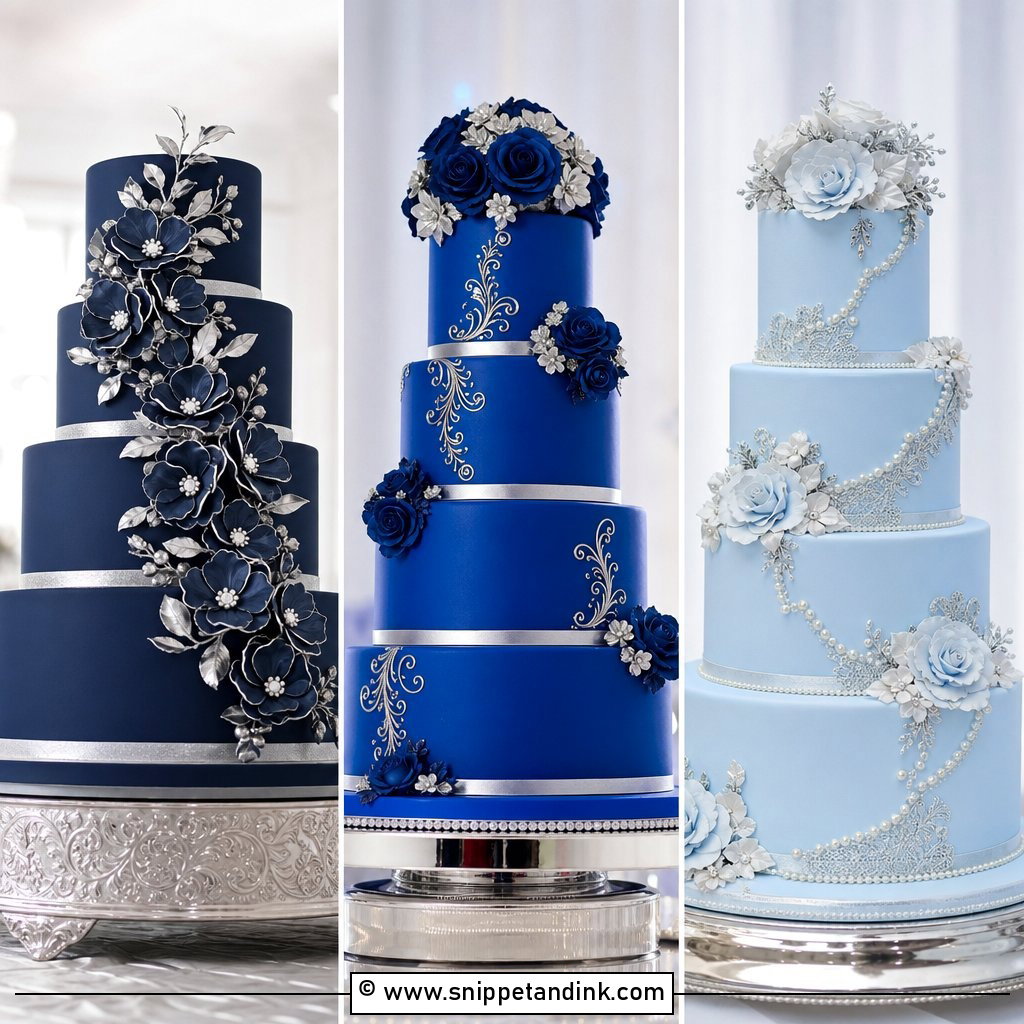
15. Royal Blue Silver Wedding Cake
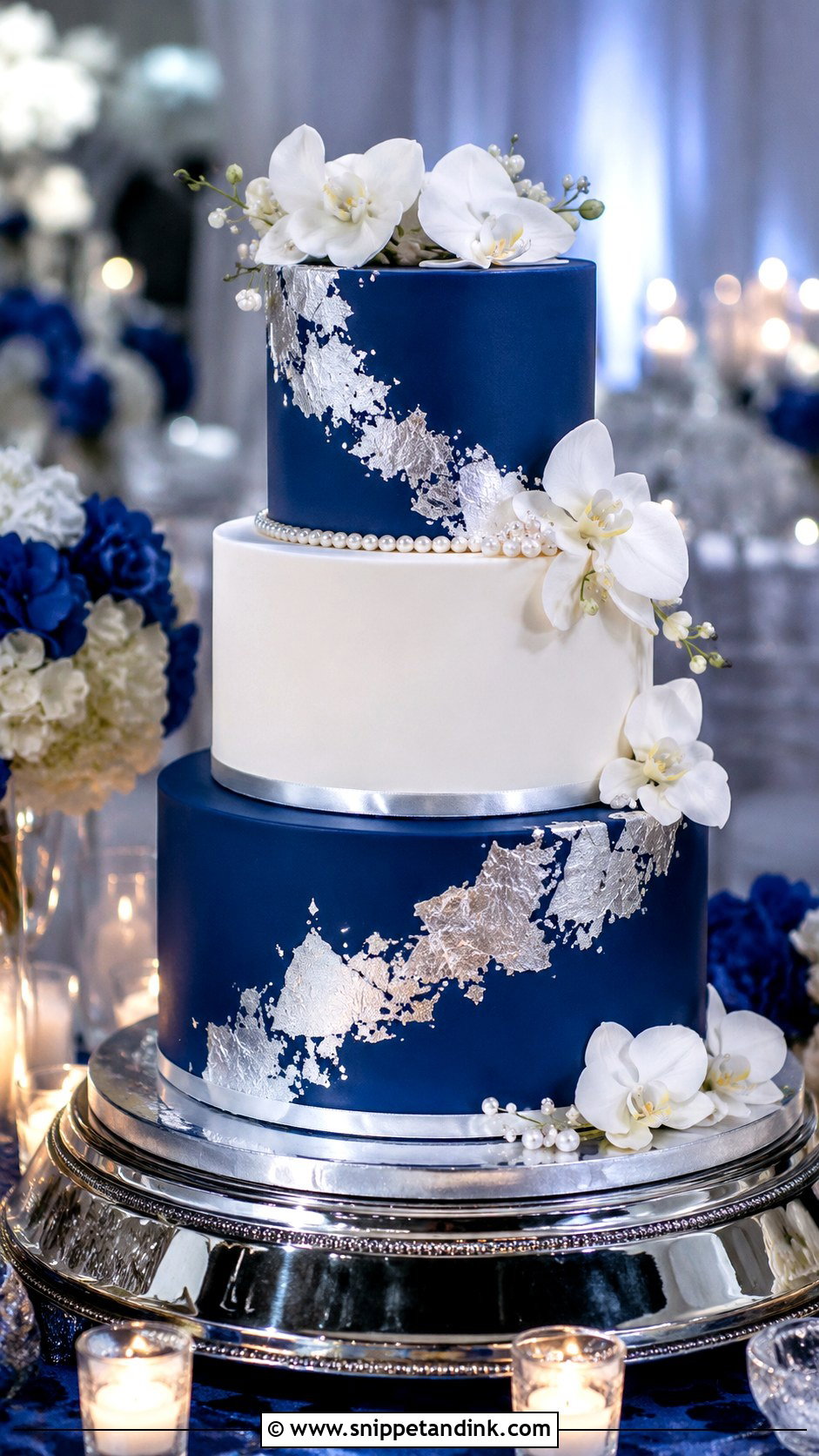
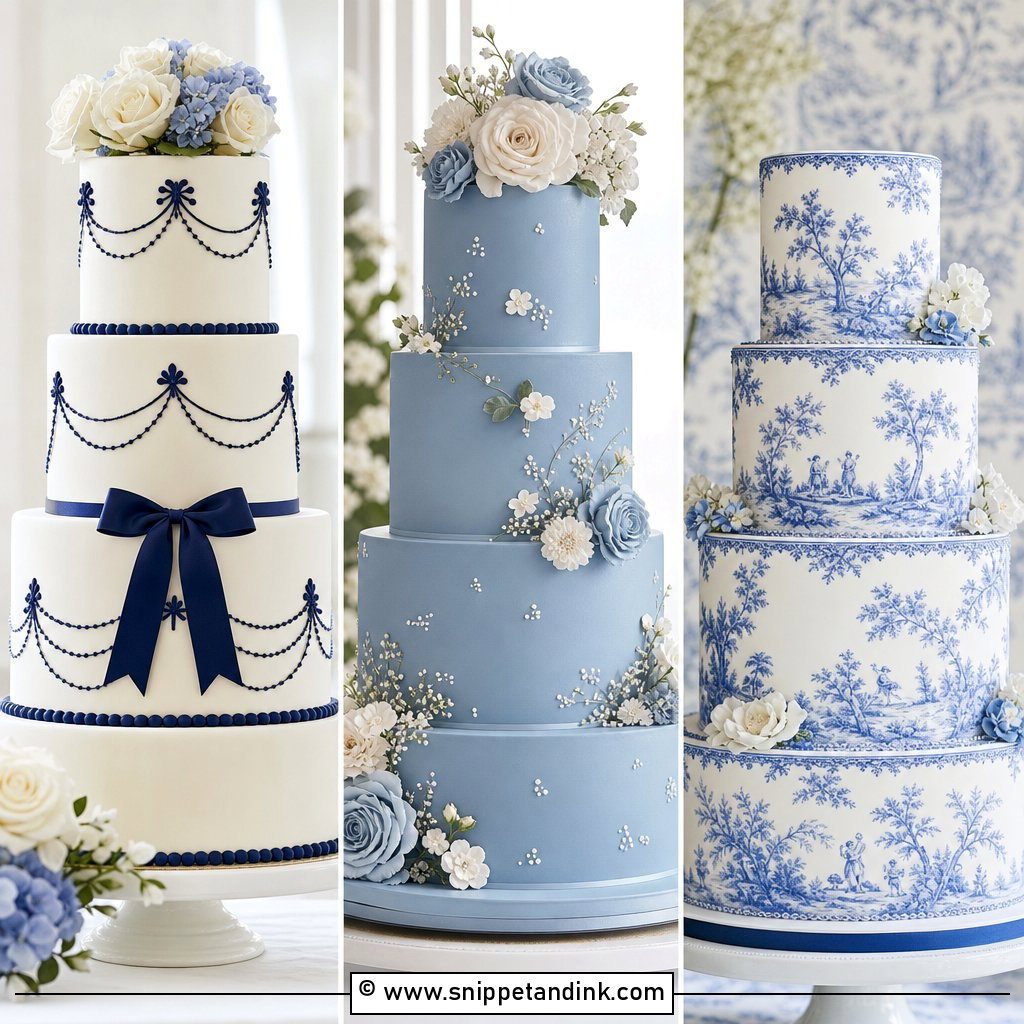
Silver keeps blue cool, so this pairing leans modern where gold leans warm. It can be leaf, thin painted bands, edible sequins or pearl borders on a blue tier set between white ones. Under candlelight silver picks up sparkle without adding yellow, which suits evening receptions. I limit it to two placements at most. Beyond that the cake starts reflecting so much light that the blue looks flat in photos. White flowers and an acrylic stand keep it contemporary.
16. Royal Blue Square Wedding Cake
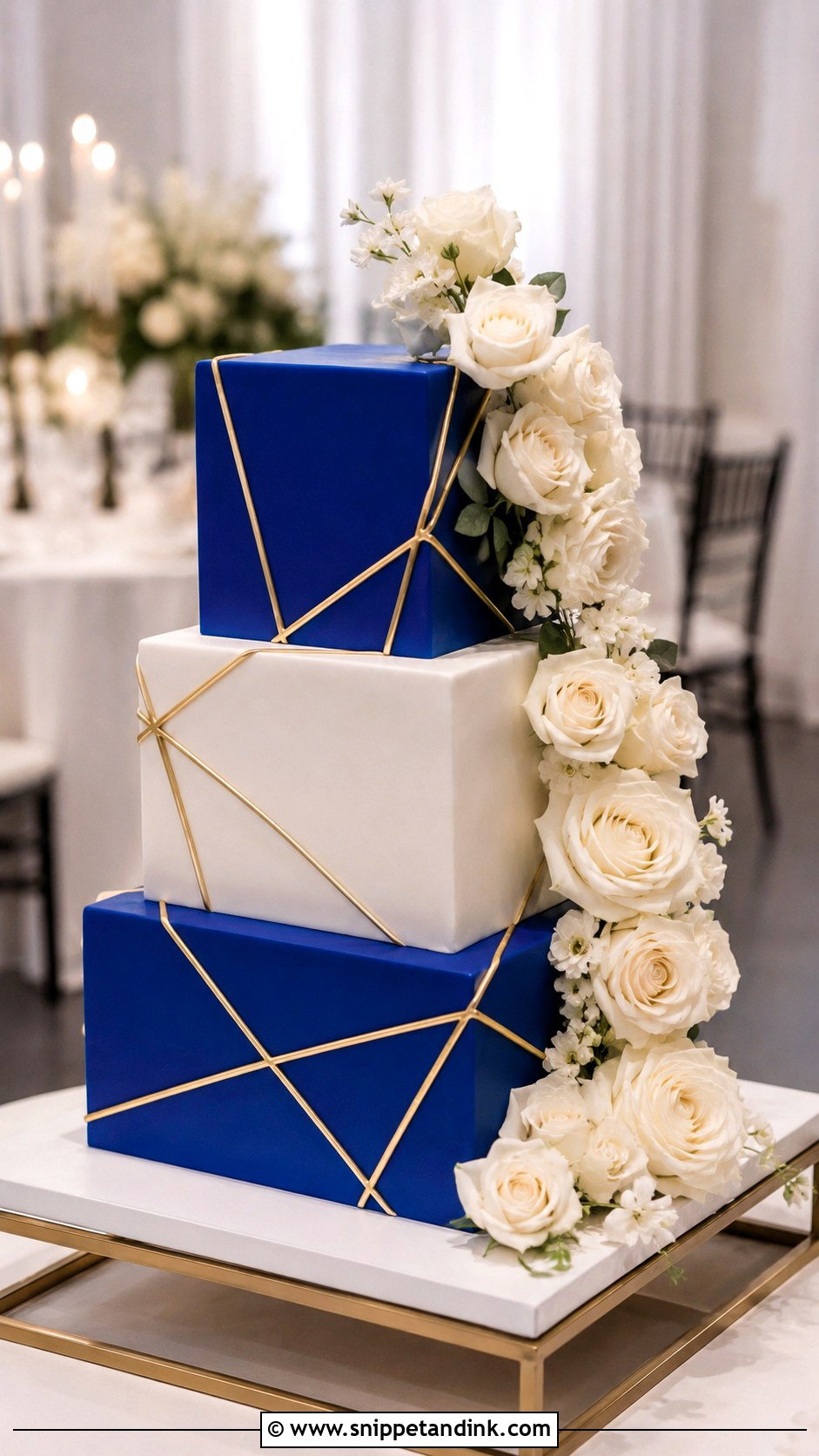
Square tiers change the whole silhouette and make the blue look sharper. They also serve more guests than round tiers of the same width, which helps with a tight budget. The catch is the corners: getting fondant to wrap a square edge without tearing or bunching takes skill, and every flaw shows. Alternating blue and white tiers, a gold trim or a floral cascade on one side all suit the shape, as do monograms and geometric borders in hotel ballrooms and minimalist spaces.
17. Royal Blue Naked Wedding Cake
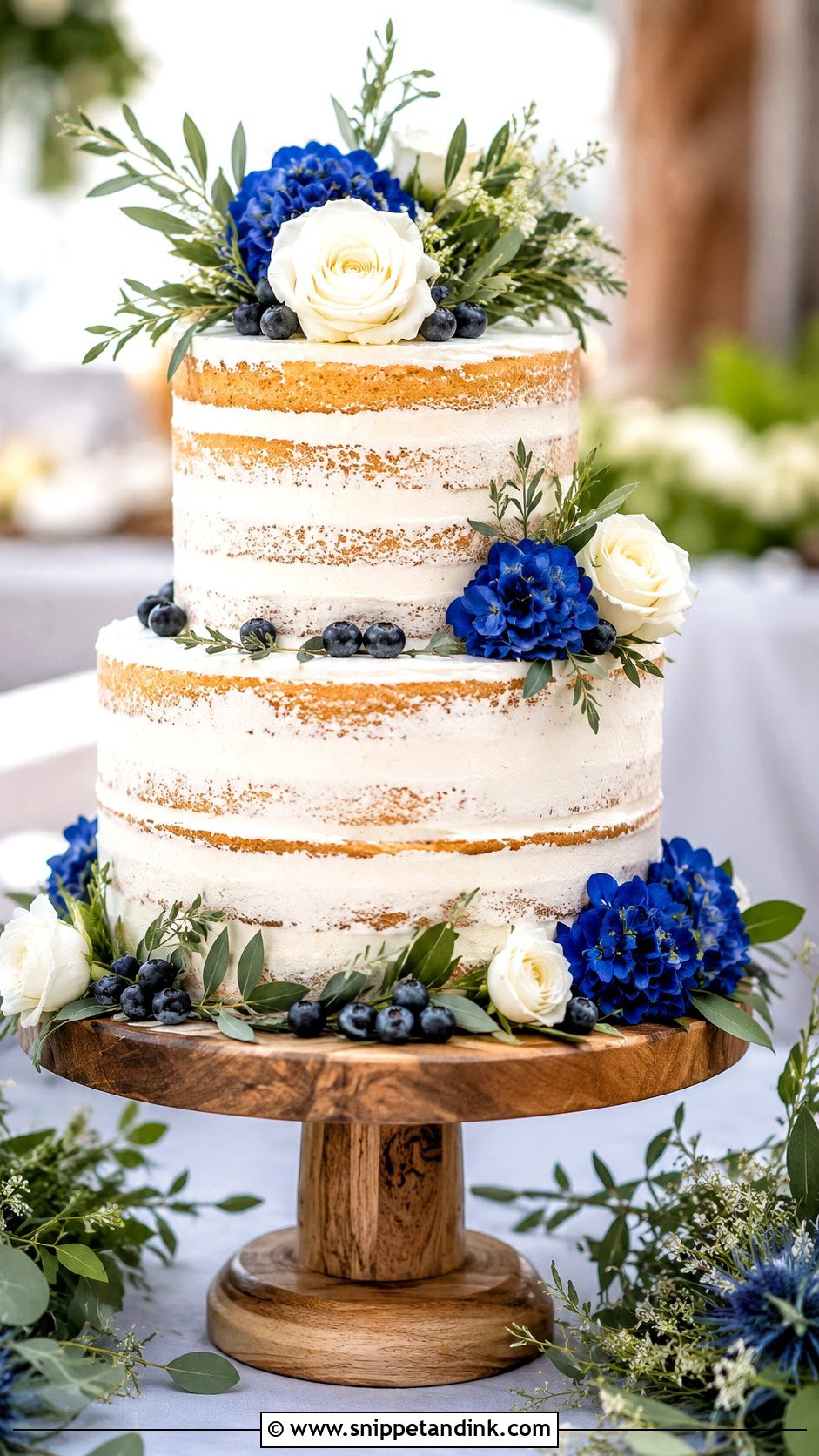
A naked cake can’t really be blue, so the color comes from what you add: berries, blue blooms, ribbon or painted accents on a scraped white finish. Vanilla or almond sponge shows nicely through the thin coating. The practical issue is drying. Exposed sponge goes stale faster than a fully coated cake, so I assemble as late as I can and keep it out of direct sun. Barns, gardens and outdoor receptions suit it, with greenery and small white flowers to keep it fresh.
18. Royal Blue Two Tier Wedding Cake
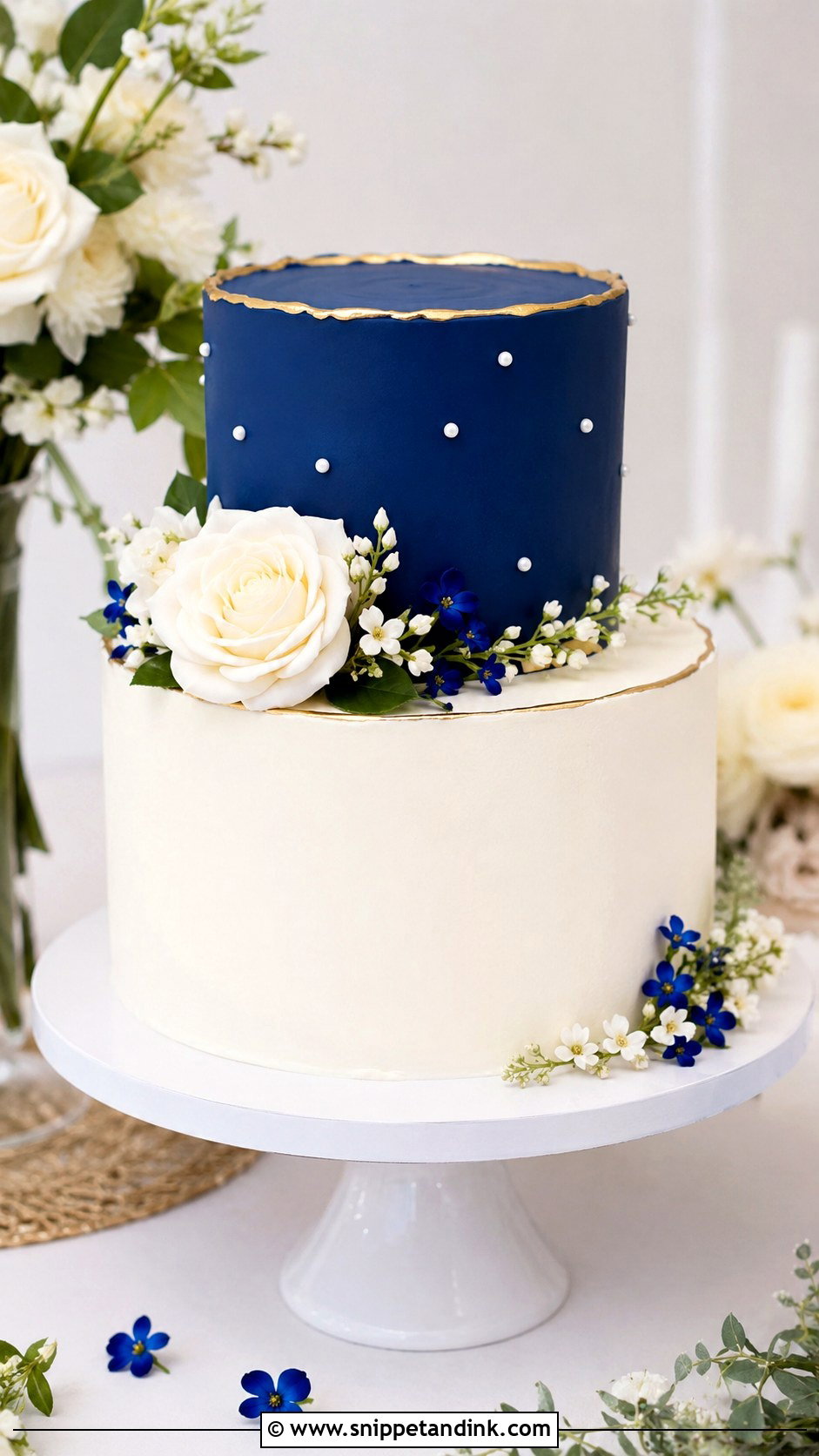
Two tiers suit smaller weddings, elopements, showers and receptions where a dessert table does most of the feeding. A white base with a blue top tier and gold edging is simple and clear. The mistake I see is tiers that are too close in size, which makes the cake look stunted, so I keep a generous step between them or add a taller top tier. It is easy to display on a pretty stand, and smooth blue buttercream with white piping gives a classic finish.
19. Royal Blue Three Tier Wedding Cake
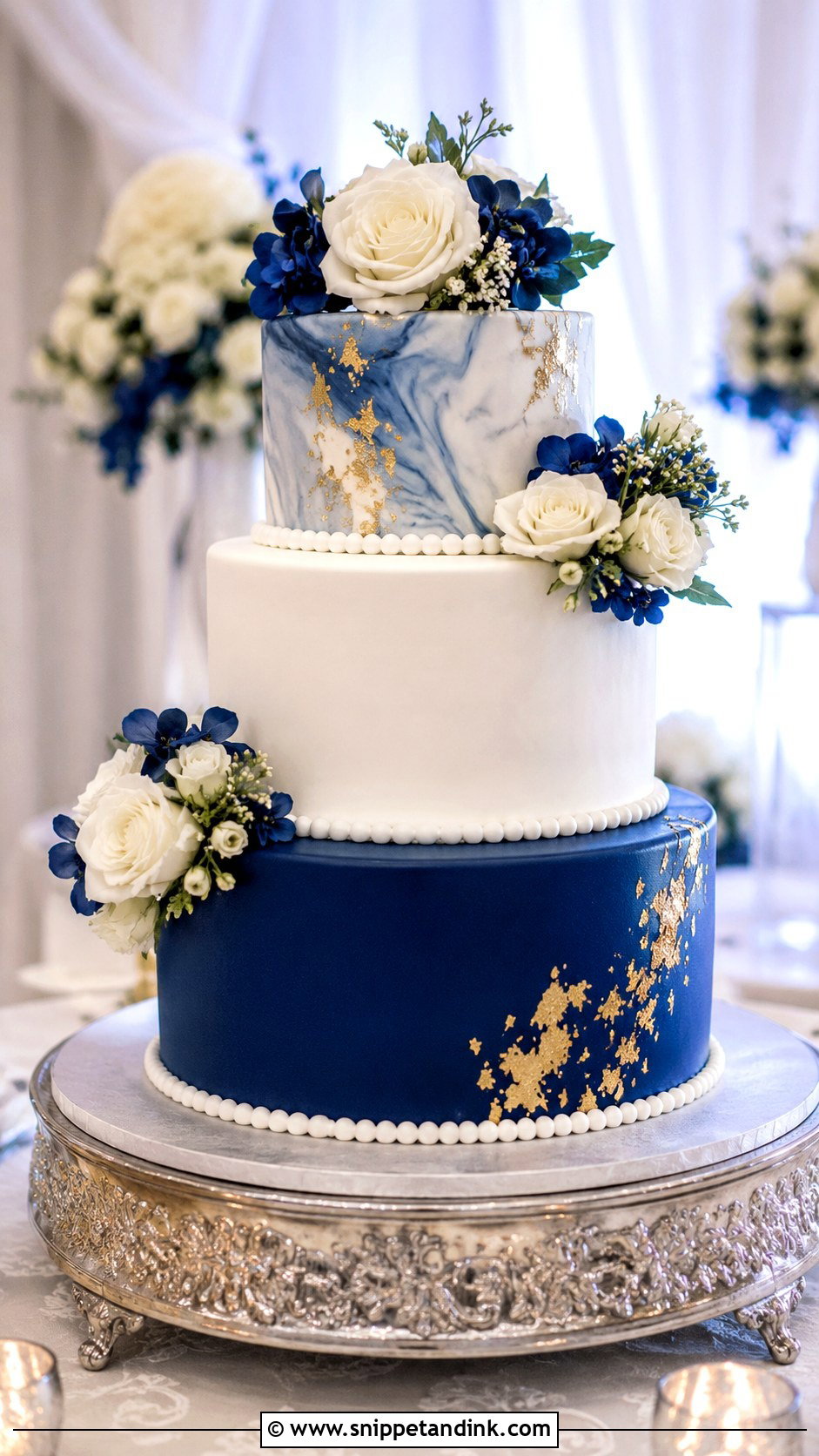
Three tiers give room to mix finishes: one royal blue, one white, one patterned with marble, lace or flowers. I work out which tier faces the room and design that side first, then make sure the back still looks finished, since guests walk around a cake. Flowers between tiers or one clean cascade both work. Ivory frosting with a single metallic accent stops the blue from overwhelming a mid-sized reception.

20. Royal Blue Crown Wedding Cake
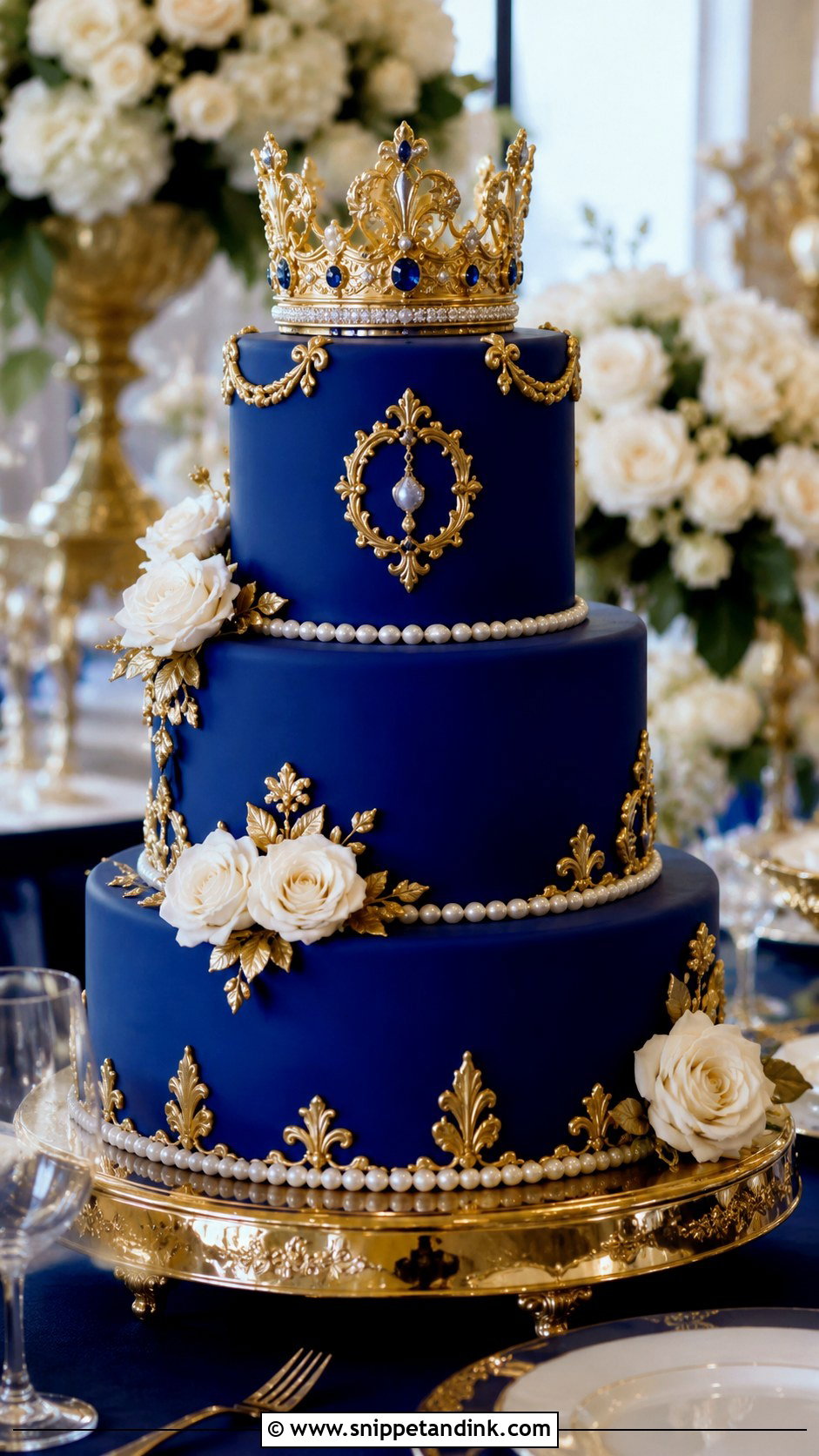
A crown topper is the obvious regal note, and it only works if it’s the only one. Royal blue fondant, gold trim and one crown give the theme; add fleur-de-lis, velvet and a scepter and it tips into costume. I’d ask how the topper is made before you buy it, because heavy metal or resin crowns need a support plate so they don’t sink into the top tier. Pearl borders, white flowers and soft lighting finish a formal room.
Sun, Fridges and Blue Teeth: How a Dark Cake Behaves on the Day
Deep blues fade in direct sunlight faster than most colors, sometimes visibly within an hour or two. If your cake table sits by a window or outdoors, I ask for a shaded spot and plan the setup close to the reveal.
Temperature is the other risk. A fondant cake carried from a cold van into a warm room collects condensation, and on dark fondant those beads can leave marks or let color run onto white tiers. I let the cake come up to room temperature boxed so it can adjust slowly, and I never refrigerate a blue fondant cake once it’s decorated if the venue is humid.
Serving it without blue smiles
Heavily colored frosting will tint mouths, which is fun at a casual party and less so before a final round of portraits. If that worries you, keep the strongest blue on the outside fondant and use white or pale filling inside, or ask the caterer to cut the dark tier from the back so guests get mostly sponge. Take your posed photos before the cake is cut.
Gold Warms It, Silver Cools It, White Keeps It Bridal
Royal blue can read classic, modern or glamorous, and it is the finish around it that decides which. My advice is to settle on one direction first and let everything else serve it. Gold makes the blue feel regal, silver makes it crisp, white makes it bridal and flowers soften the edges. If you love strong color, carry it across whole tiers. If you’d rather keep it quiet, start with ivory and let the blue arrive in details, and bring your strongest color reference to the tasting so we can match it in the medium you choose.
You'll Like These Ideas:




Leave a Reply