
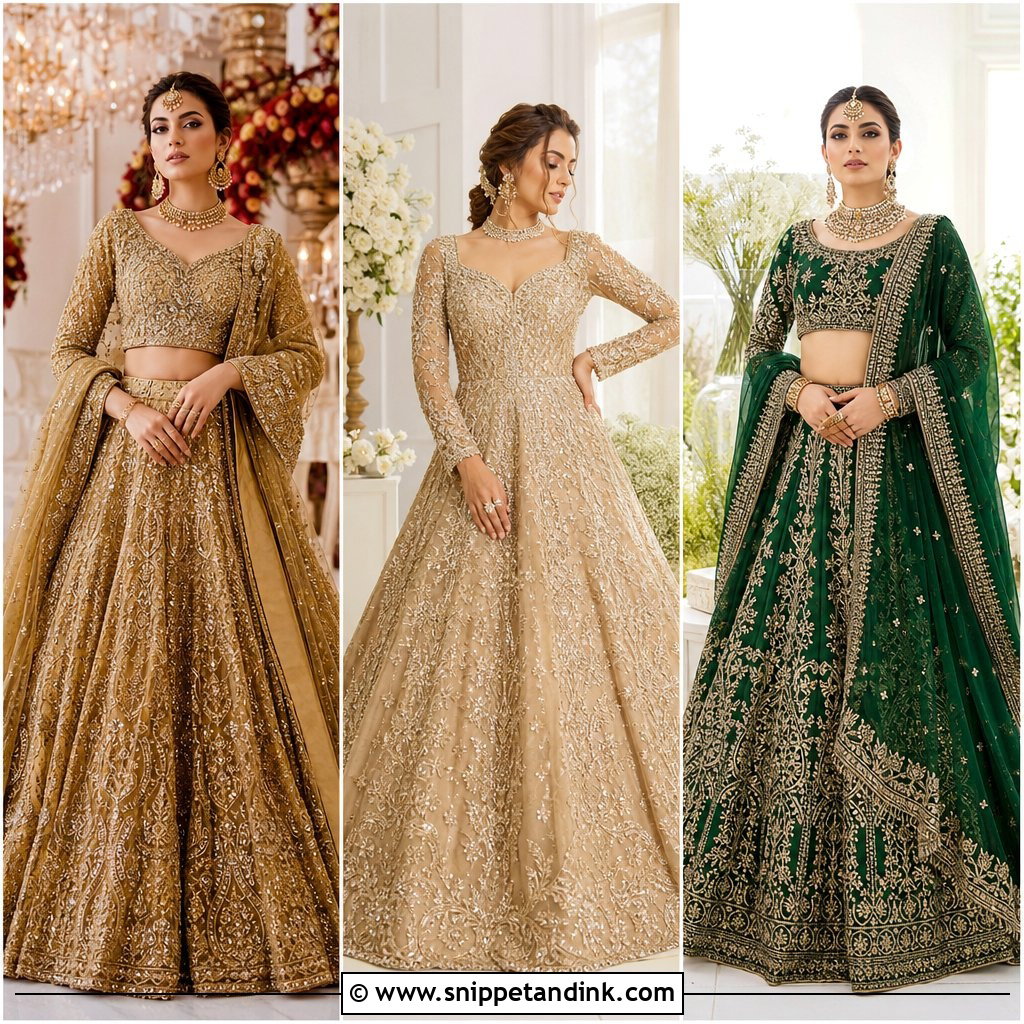
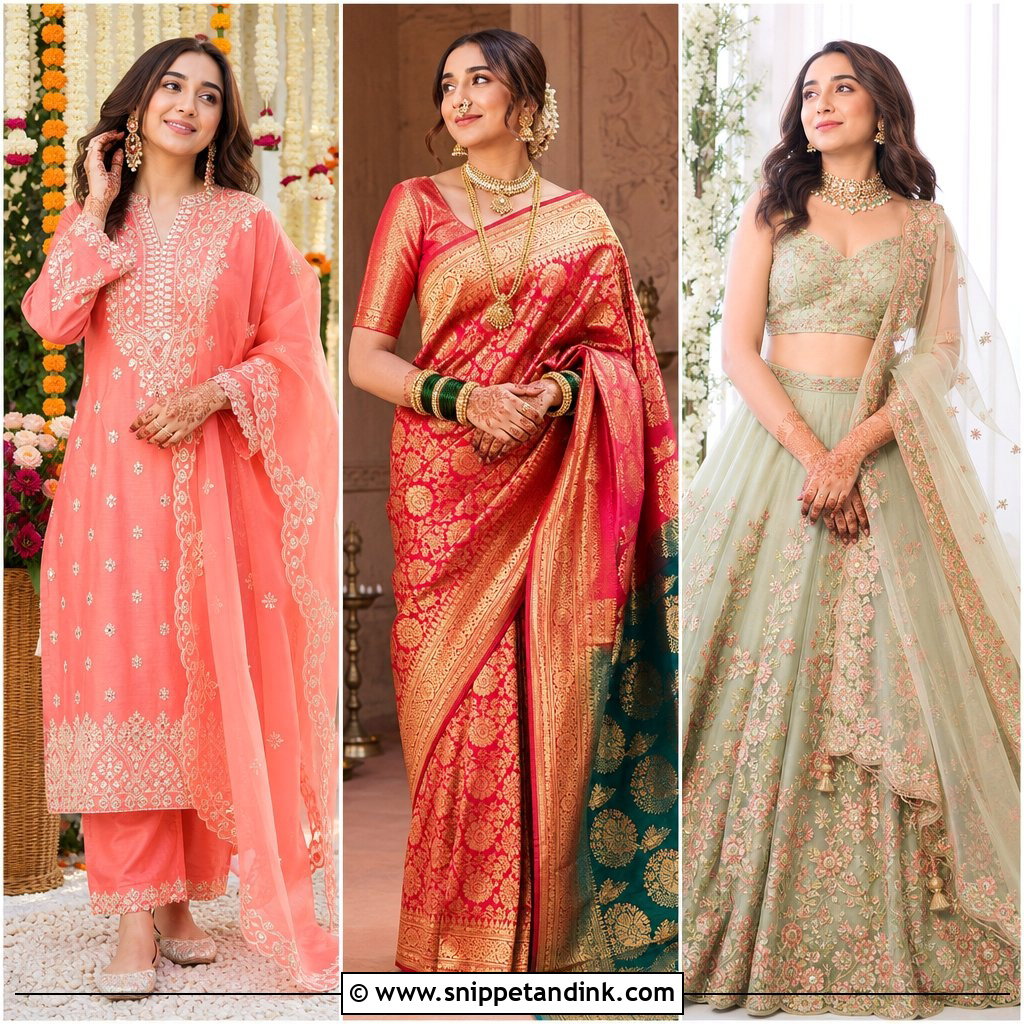
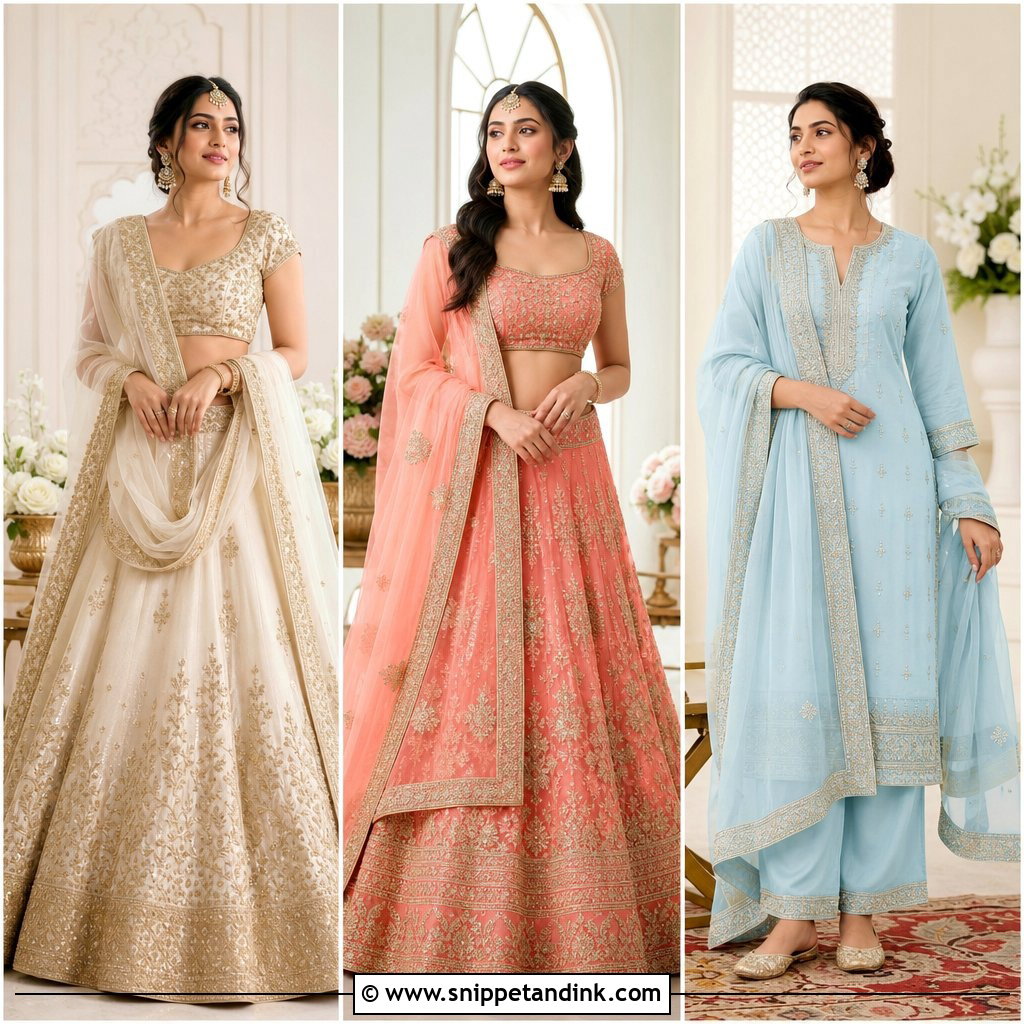
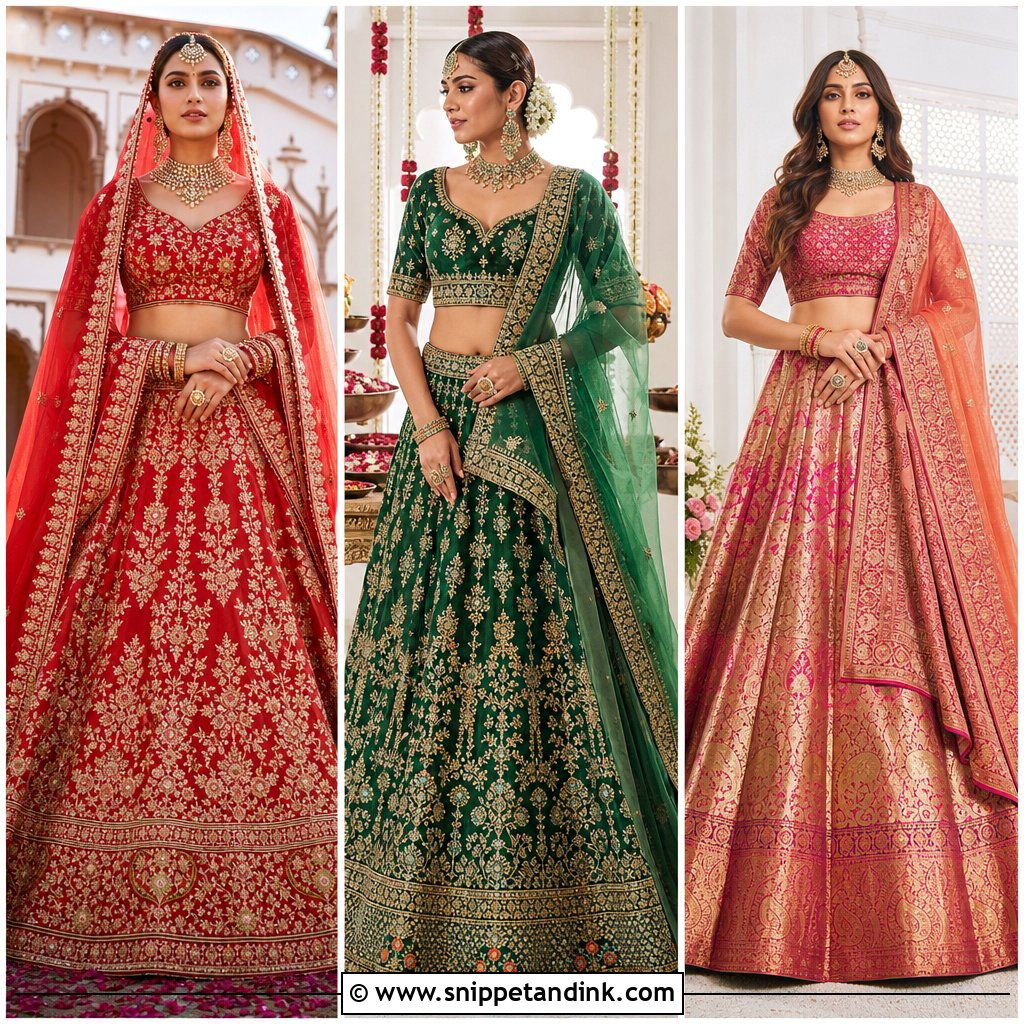
A bridal chaniya choli comes together when the skirt, choli, dupatta, jewelry, shoes and makeup all point the same way. Here are twenty outfits I’d show a bride planning an Indian wedding, from traditional reds and Banarasi weaves to pastels, jewel tones and a couple of modern cuts. Every one can be adjusted for your venue, the season, your community’s customs and how much coverage you want. When you compare them, look past the color. Fabric weight, where the embroidery sits, how the blouse supports you, how the skirt moves and how the dupatta drapes change the way an outfit feels to wear far more than its shade does.
Testing a Color Against Your Face Before You Fall for It
Brides usually choose a color from a photo of someone else. I’d rather choose it from your own face. The skirt matters less than you think; it’s the choli and the head dupatta that sit next to your skin in every close-up.
- Stand by a window in daylight with no makeup or very little, and hold the fabric under your chin, not at arm’s length.
- Watch your skin, not the fabric. A good color makes the face look clearer; a poor one brings out shadows under the eyes or a grey cast.
- Compare a gold zari border with a silver one against your face. Most people look visibly better in one metal than the other, and that settles your jewelry too.
- Then check the same fabric under warm indoor bulbs, since most receptions are lit that way.
Deep reds, maroons and rani pink suit a wide range of skin tones, which is part of why they’ve lasted. Pastels such as mint, powder blue and lavender are the ones that can wash out warmer or deeper skin, and those are the colors where a stronger border or contrast dupatta near the face makes the most difference. Bring someone honest to the store with you.
1. Red Zardozi Bridal Chaniya Choli
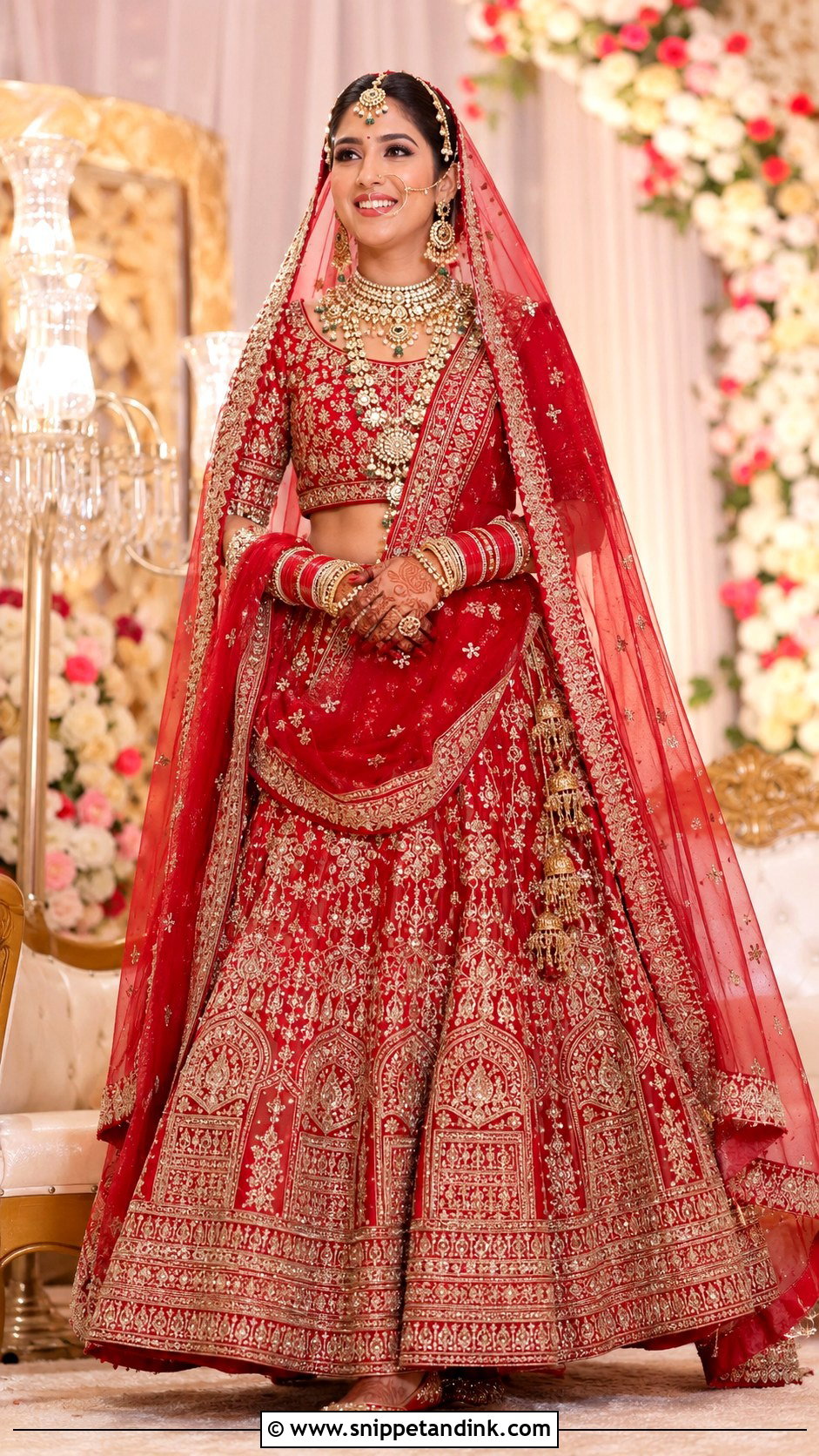
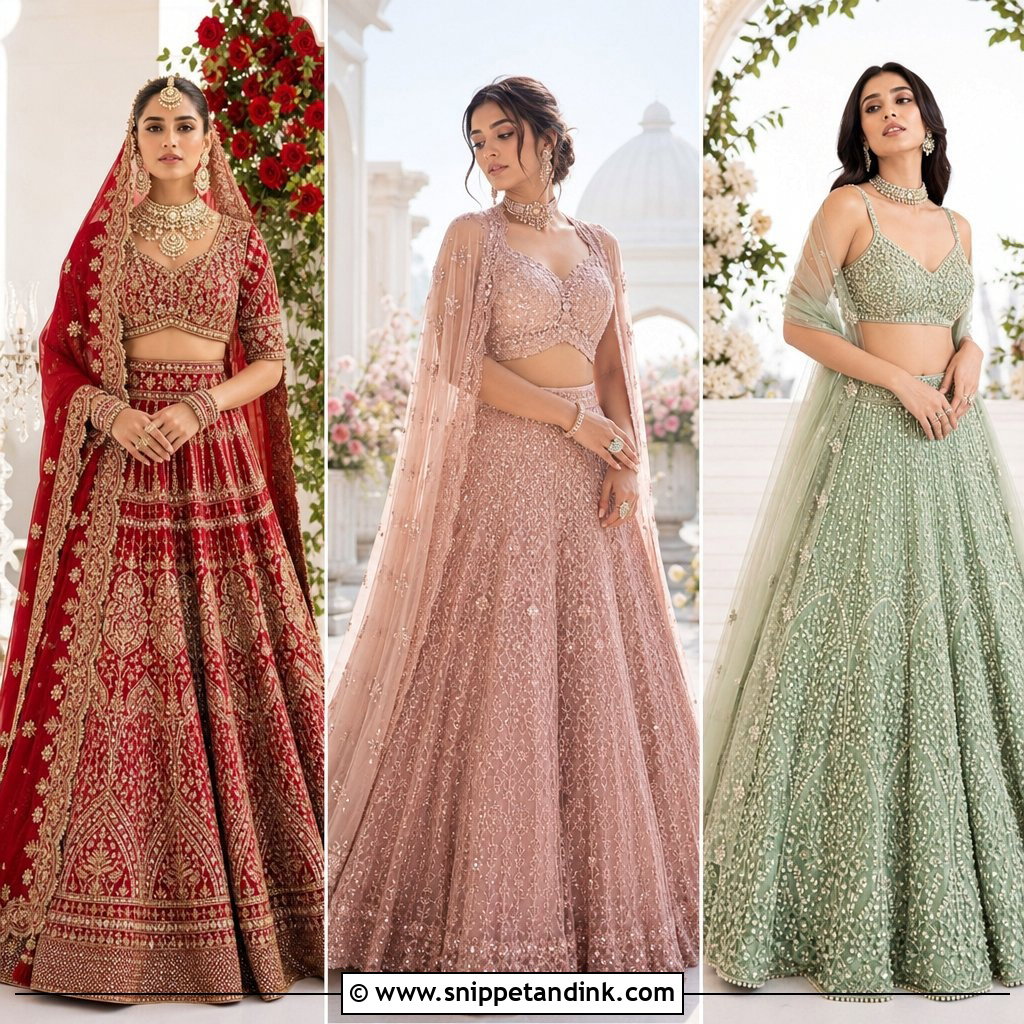
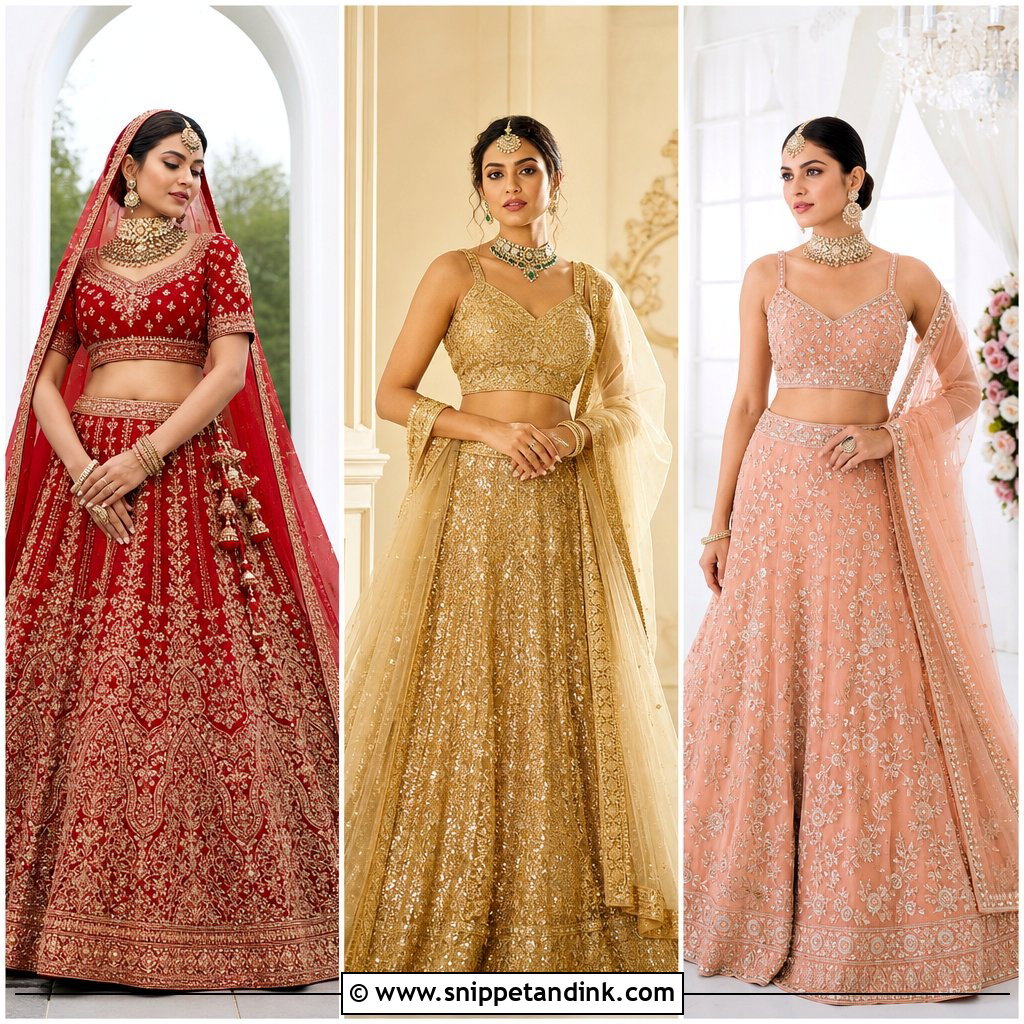
Red is still the color many families expect for the pheras, and a deep red chaniya choli in silk or raw silk carries zardozi, dabka and sequins without looking overdone if the work is balanced across the skirt. An elbow-length structured choli supports you and gives necklaces a clean edge to sit on. Use a matching red dupatta over the head and a lighter embroidered one across the shoulder. Gold jhumkas, a layered choker and juttis finish it. My one caution is the head dupatta: if it’s heavily worked too, the weight pulls on your hairstyle within an hour.
2. Maroon Velvet Bridal Chaniya Choli
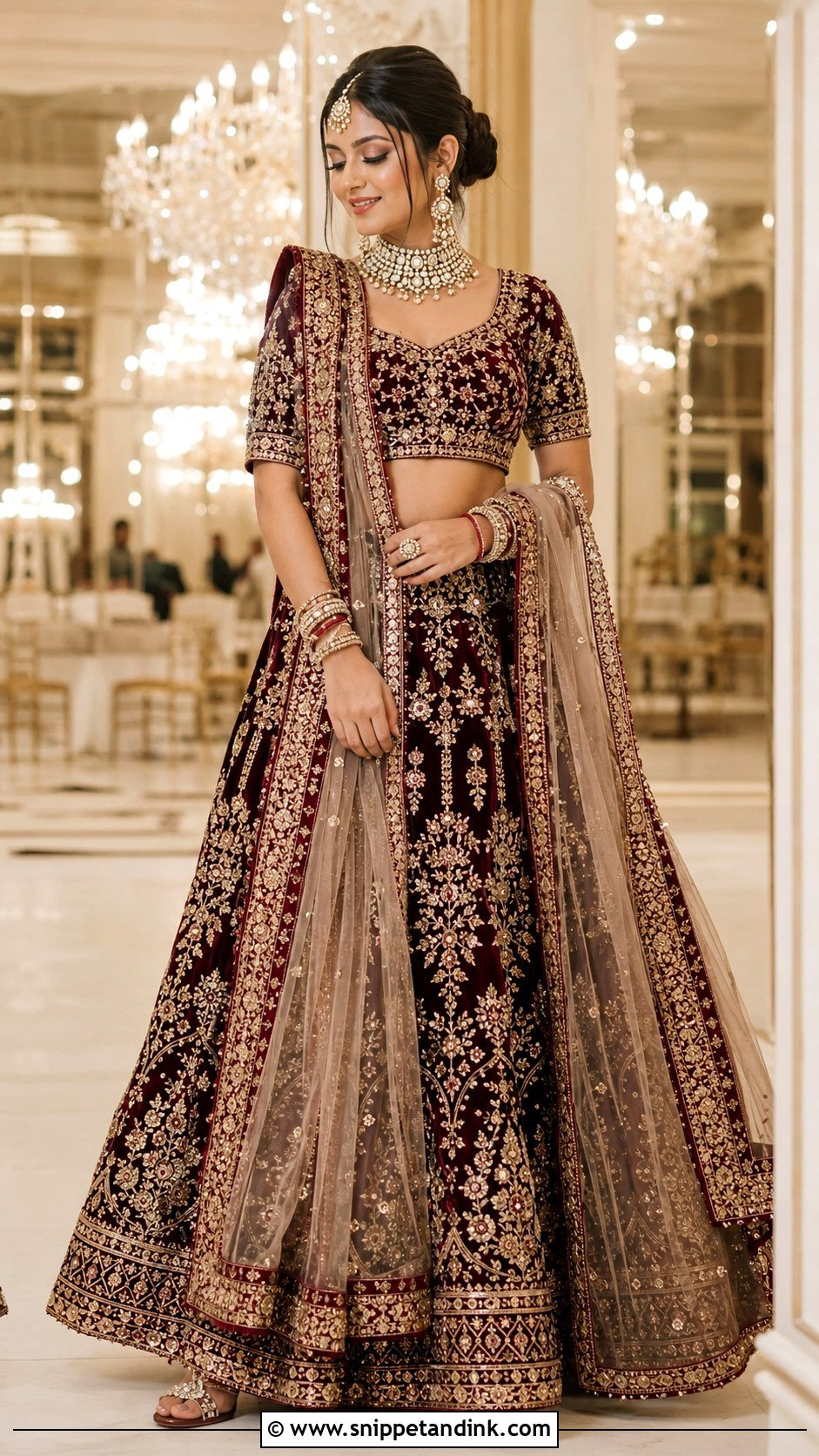
Maroon velvet glows under warm evening lighting in a way silk doesn’t. The detail that makes this version work is vertical embroidery on the skirt, which lengthens the body; horizontal bands of heavy work on velvet do the opposite. A fitted velvet choli with a modest neckline and a sheer maroon or beige dupatta keep the top half lighter. Velvet is warm and heavy, so ask for a lightweight underskirt and save this one for a cool evening or an air-conditioned hall. Antique gold, kundan earrings and a maang tikka suit its depth.
3. Blush Pink Floral Bridal Chaniya Choli
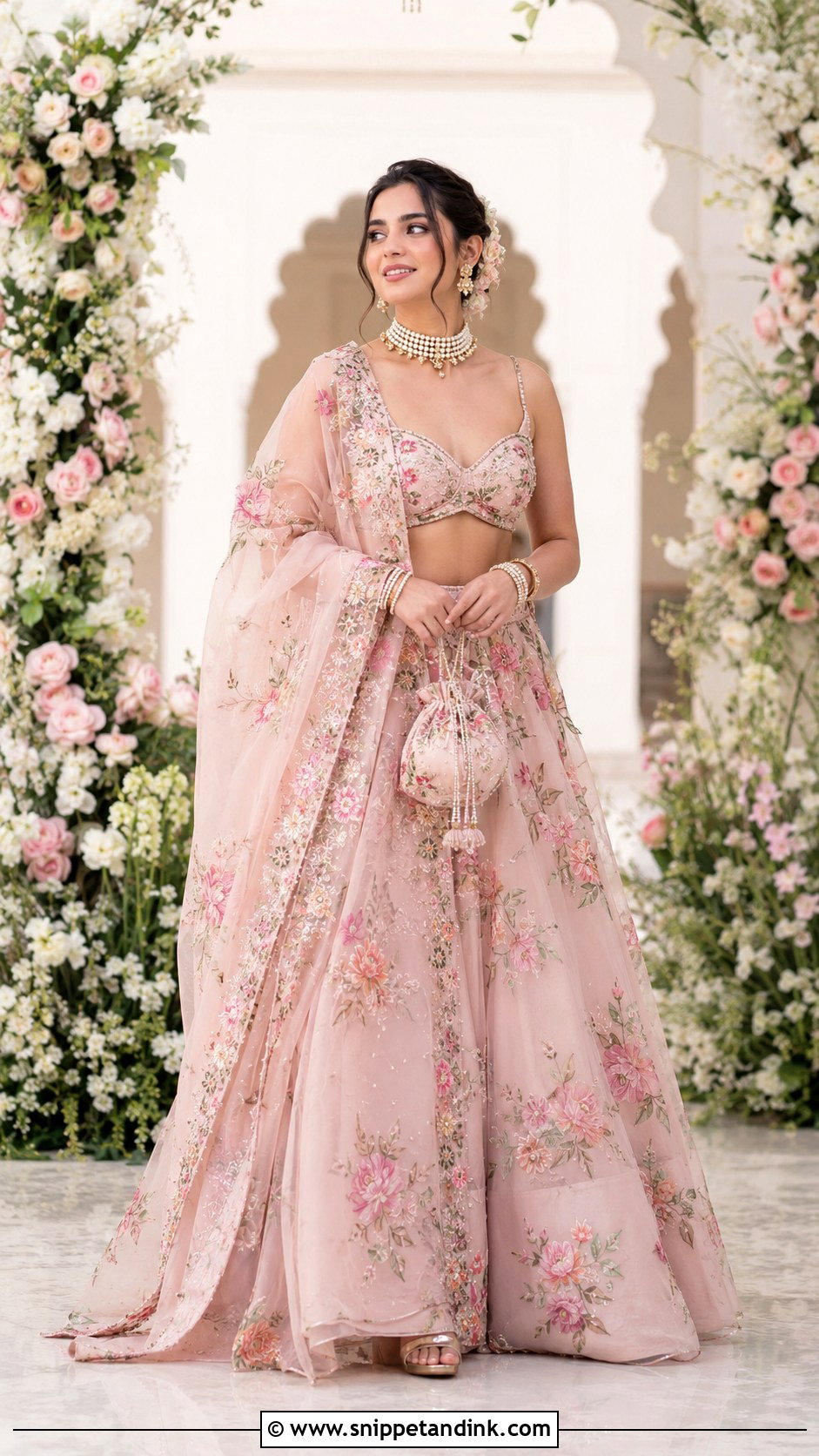
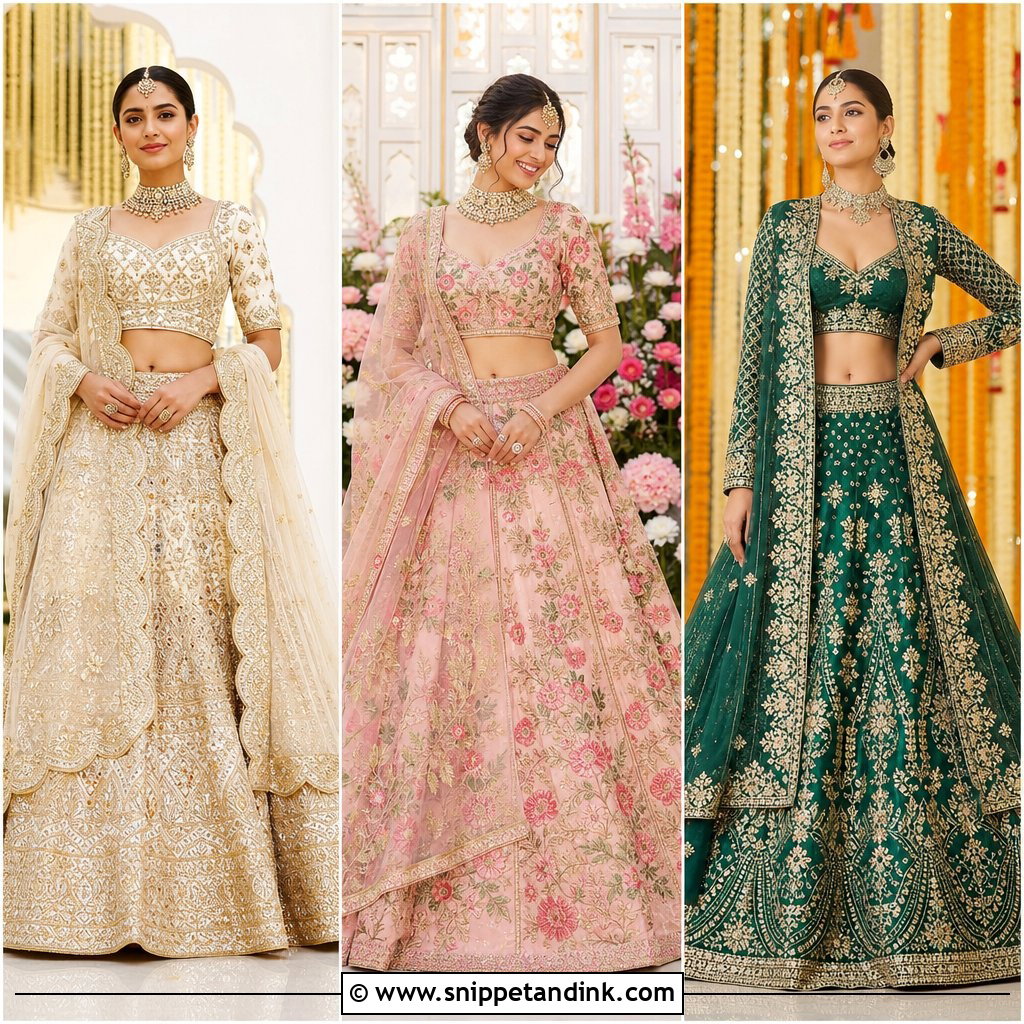
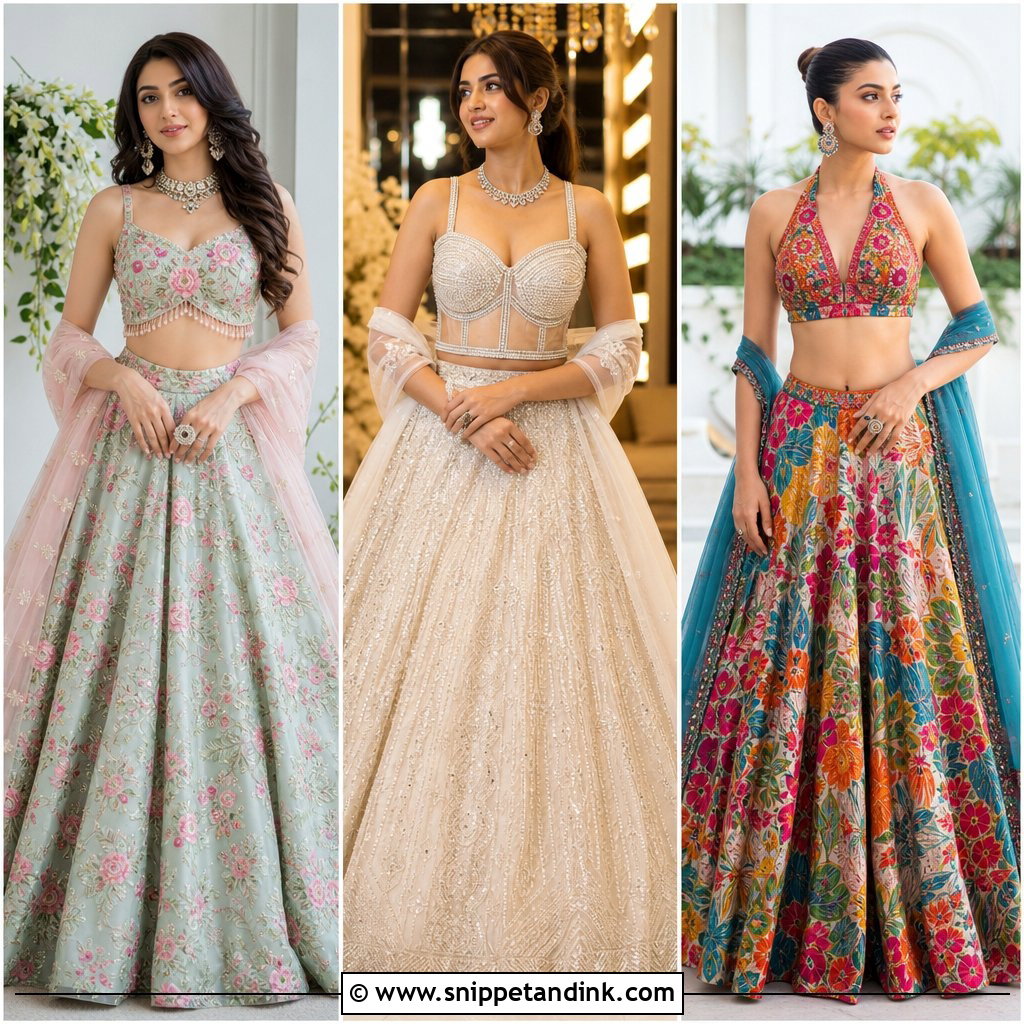
Blush pink is soft without being plain, provided the embroidery has some substance: flowers in thread, fine sequins and a little metallic thread on organza or silk. I usually put the floral dupatta across the body and keep the head veil plain with just a border, because two patterned dupattas in pale pink blur into one pink cloud in photographs. A square or sweetheart choli with comfortable straps works well here. Pearl jewelry or pale kundan, metallic sandals and a low floral bun suit a spring garden or daytime ceremony.
4. Ivory Gold Bridal Chaniya Choli
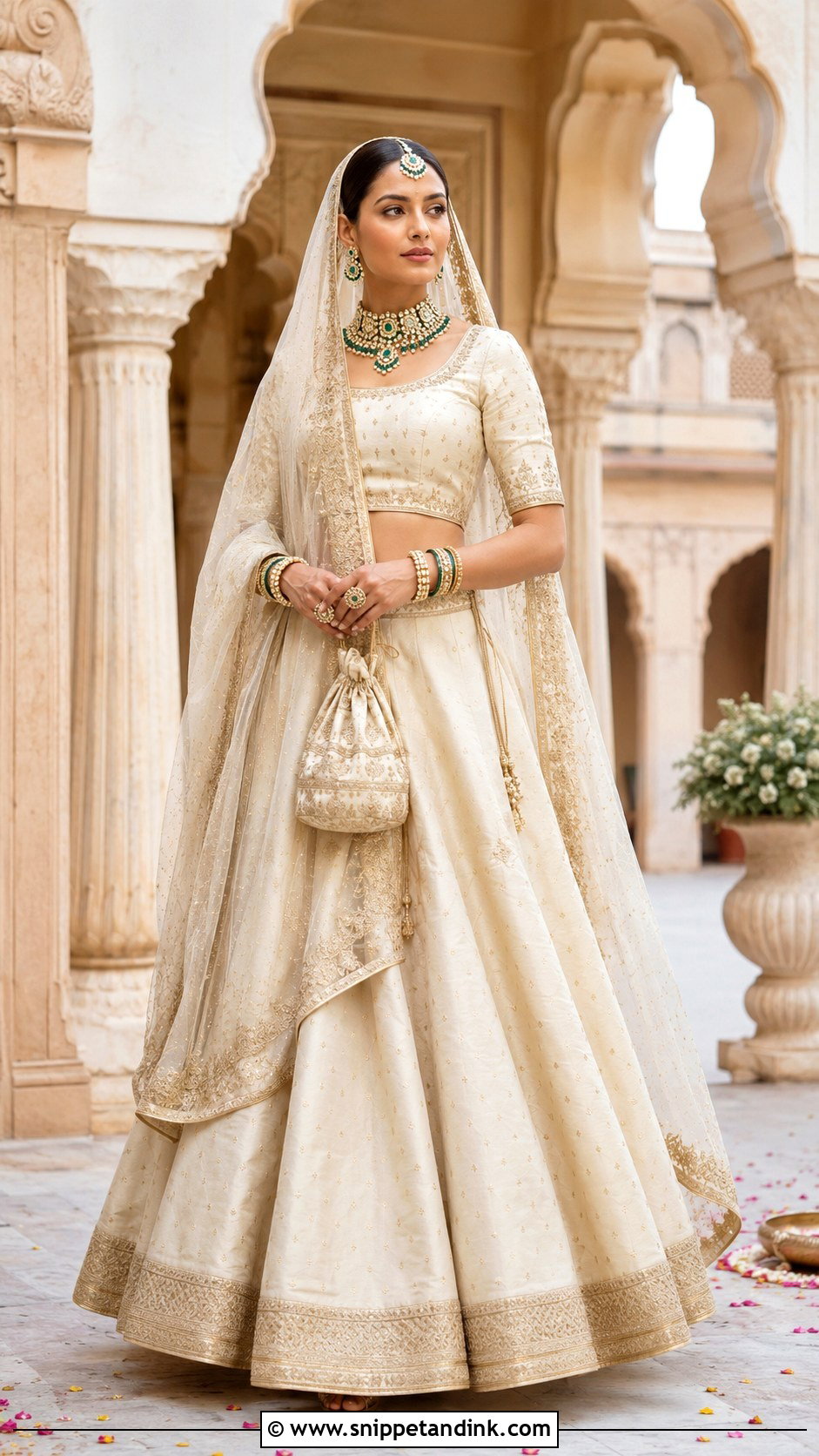
Do you prefer quiet over saturated? Ivory with gold zari borders, small motifs and a wide decorative hem can look every bit as ceremonial as red. A choli with secure shaping and enough coverage matters, since pale fabrics show any gap. One ivory dupatta with a gold border is enough, and a sequinned second veil is optional. Emerald or ruby jewelry brings in color without breaking the calm. Here’s the conversation I always have first, though: ivory and white carry different meanings across families and communities, so check with your elders before choosing it for the main ceremony.
5. Emerald Green Bridal Chaniya Choli
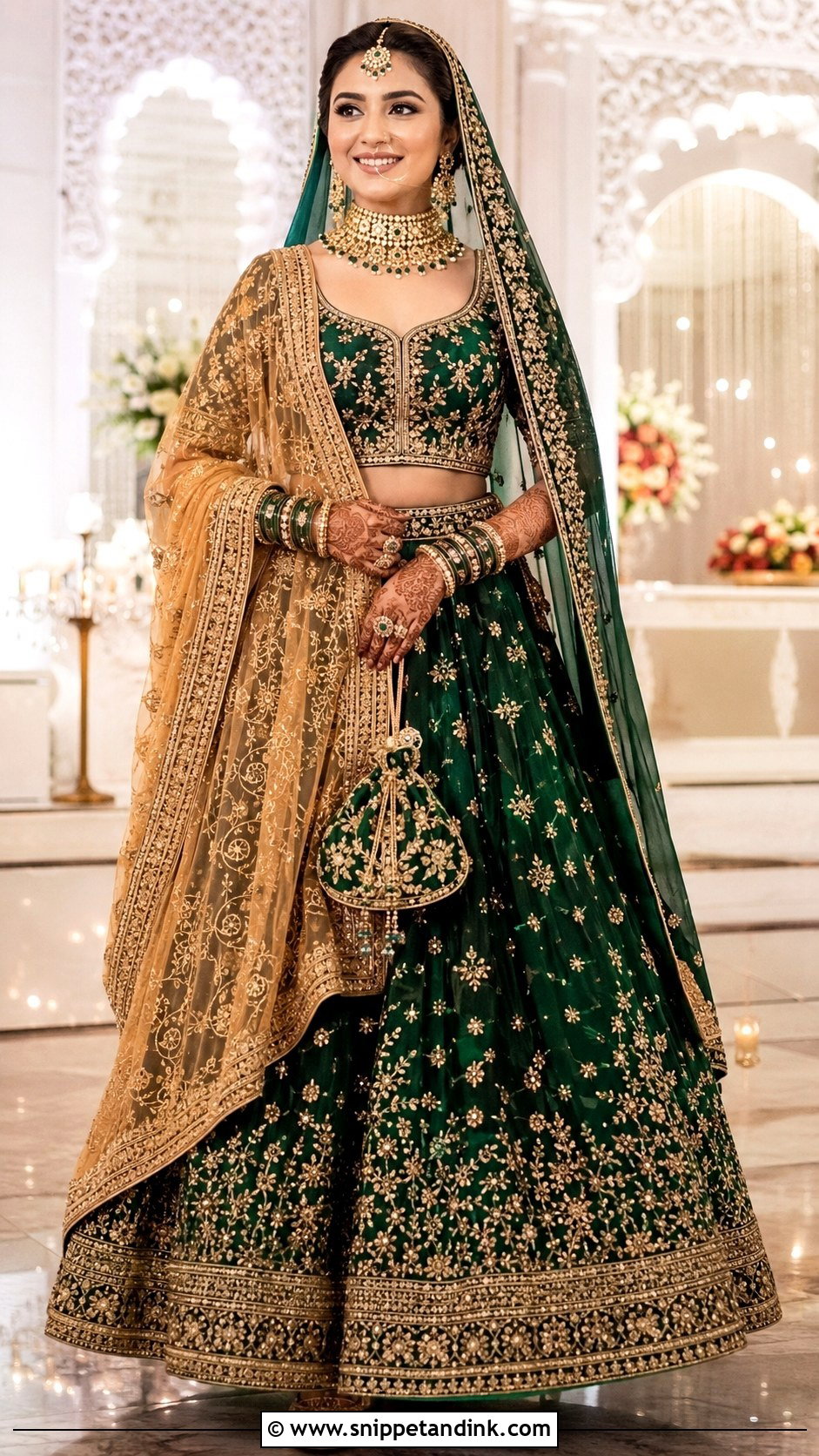
Emerald is dramatic in the evening, especially in silk or velvet with antique gold embroidery. A wide neckline on the green choli makes room for a polki necklace or layered kundan. Keep the head dupatta a sheer green so it stays light, and put the contrast, rust, maroon or muted gold, on the shoulder dupatta where it adds warmth near the face. With such a strong color, I keep the makeup in check: defined eyes, warm blush and a muted rose lip rather than a bold one that competes.
6. Pastel Blue Bridal Chaniya Choli
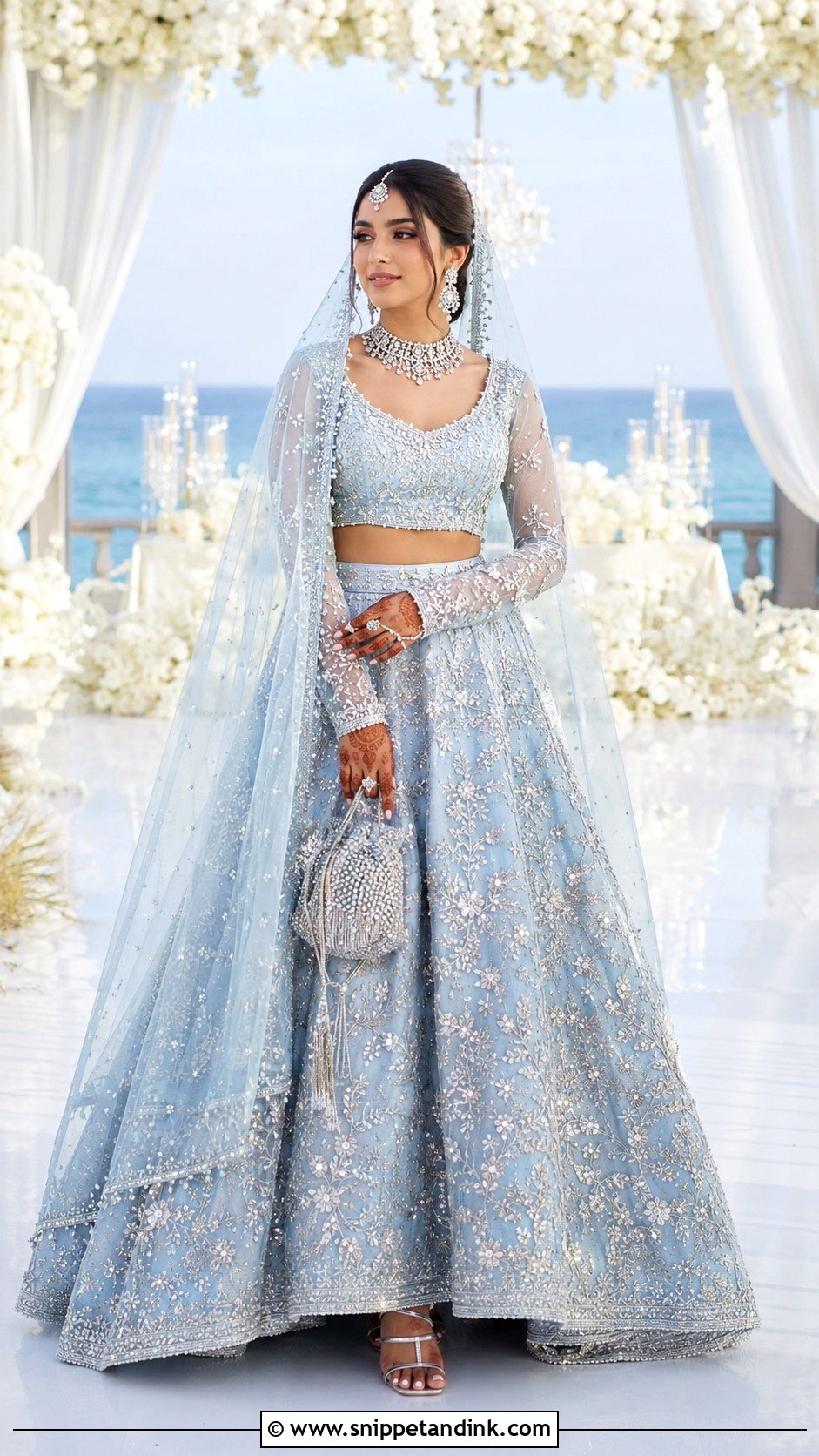
Pastel blue suits a daytime, seaside or summer wedding, and it’s the one color here I’d only buy after seeing it in sunlight. Pale blue tissue or organza can turn slightly grey in shade and nearly white in bright sun. Silver embroidery, pearl accents and spaced florals hold up better than gold on this color. A supportive blue choli with sheer sleeves gives coverage without weight. Diamond-style jewelry or white kundan keeps it cool, with silver sandals and white flowers in the bun. Check the lining in daylight, as thin pale fabric can show what’s underneath.
7. Rani Pink Bridal Chaniya Choli
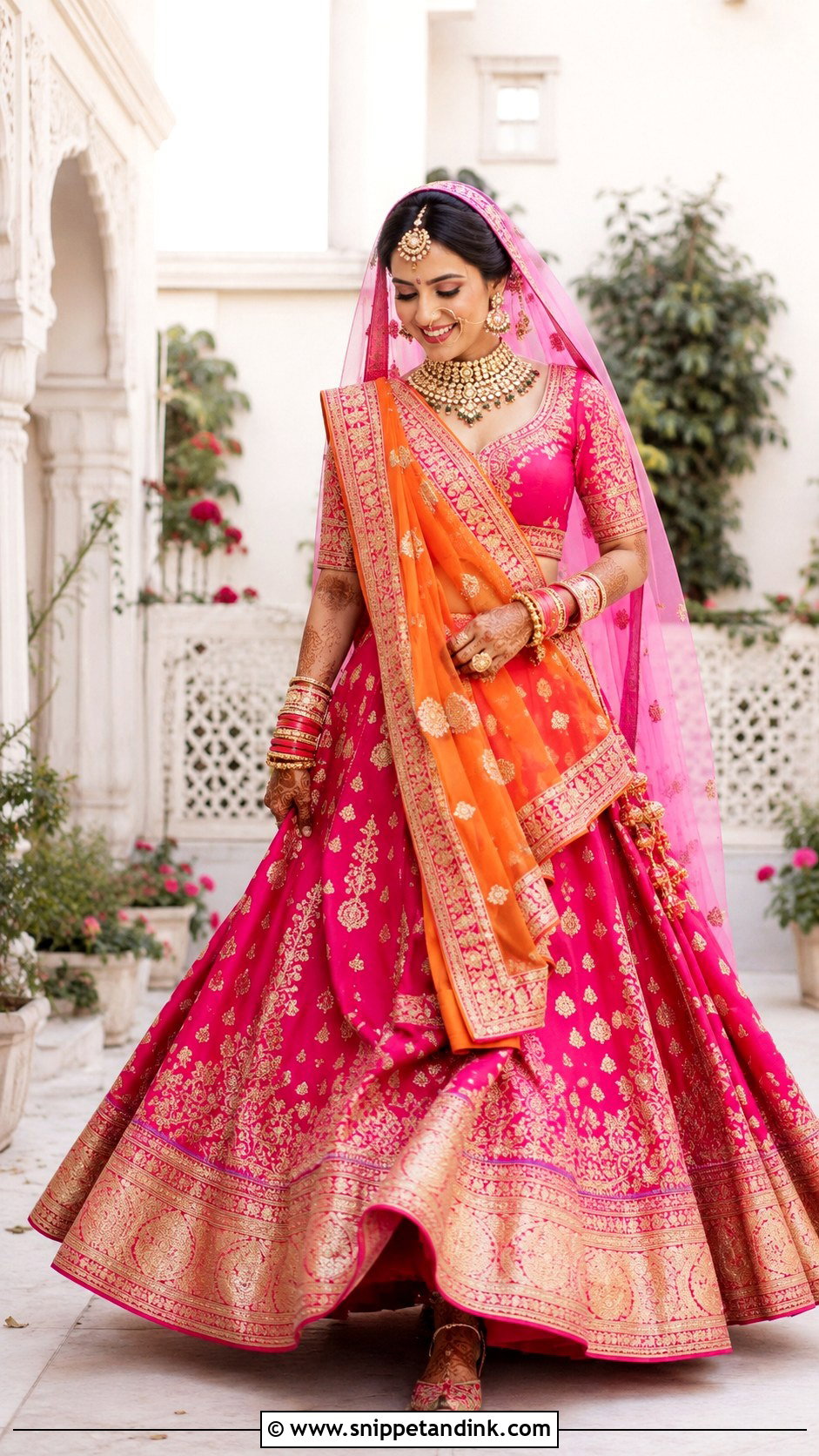
Rani pink is joyful from across a room. Full silk with gold zari, mirror accents or multicolor florals concentrated at the hem keeps the movement low and the face clear. An elbow-sleeved rani choli gives support through long ceremonies. A pink head dupatta with an orange or red one across the torso layers the color. I match the footwear to the embroidery rather than the pink, since an exact pink match is nearly impossible and a near miss looks worse than gold. Kundan, colorful bangles and a nath complete it, with a berry-pink lip.
8. Orange Bandhani Bridal Chaniya Choli
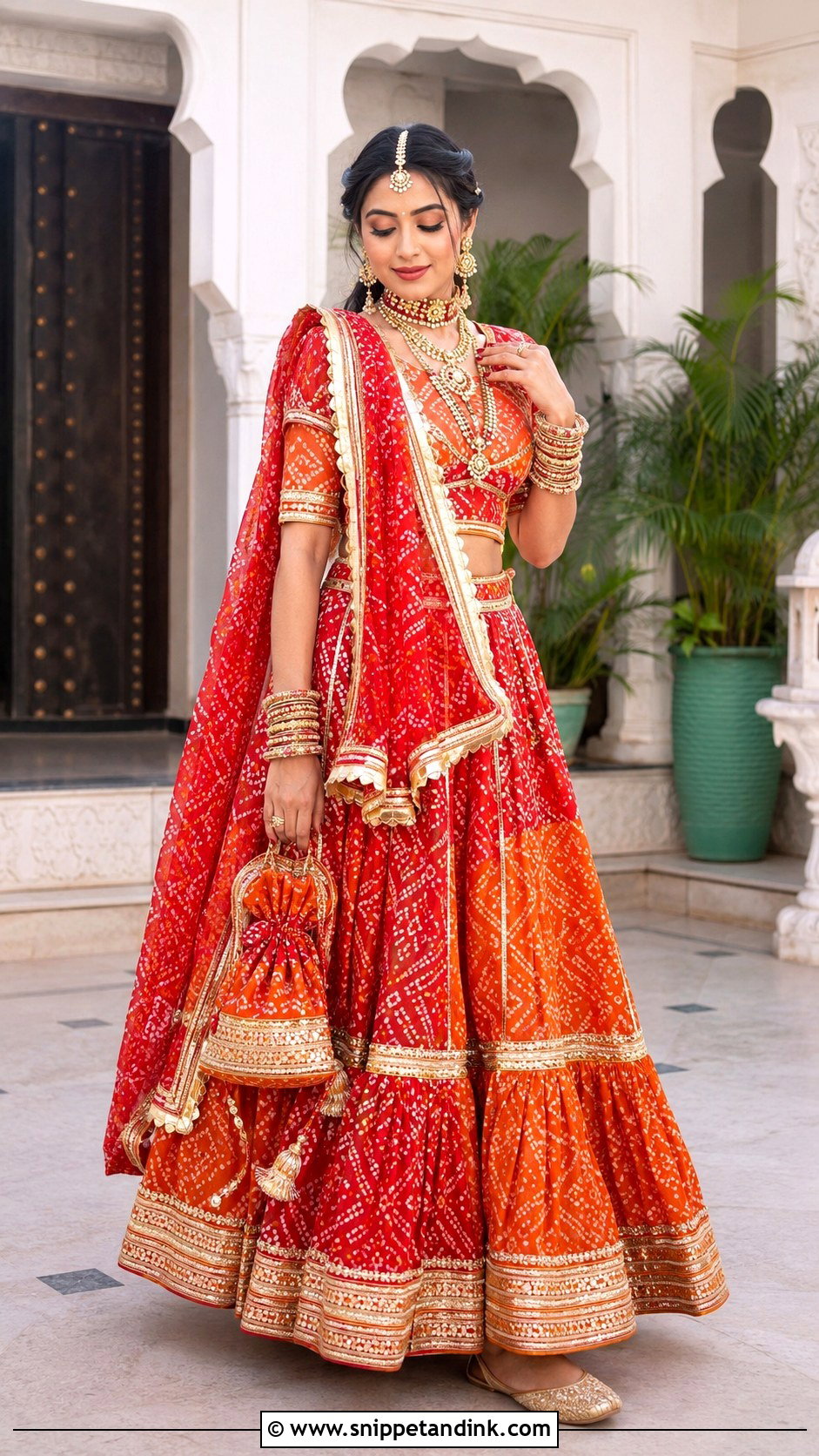
Bandhani’s tiny tied dots give an orange chaniya choli its regional character and a texture that reads well in outdoor photos without much embellishment. A flared silk chaniya mixing orange, vermilion and red with gota patti or zari borders, a red or orange choli, and a bandhani dupatta make a unified outfit. Because the print is busy, keep the potli plain. A braided or low bun sits more securely under a head covering than an open style. The drape and the jewelry should follow your family’s customs, so ask before you decide how to wear the dupatta.
9. Burgundy Bridal Chaniya Choli With Cape Dupatta
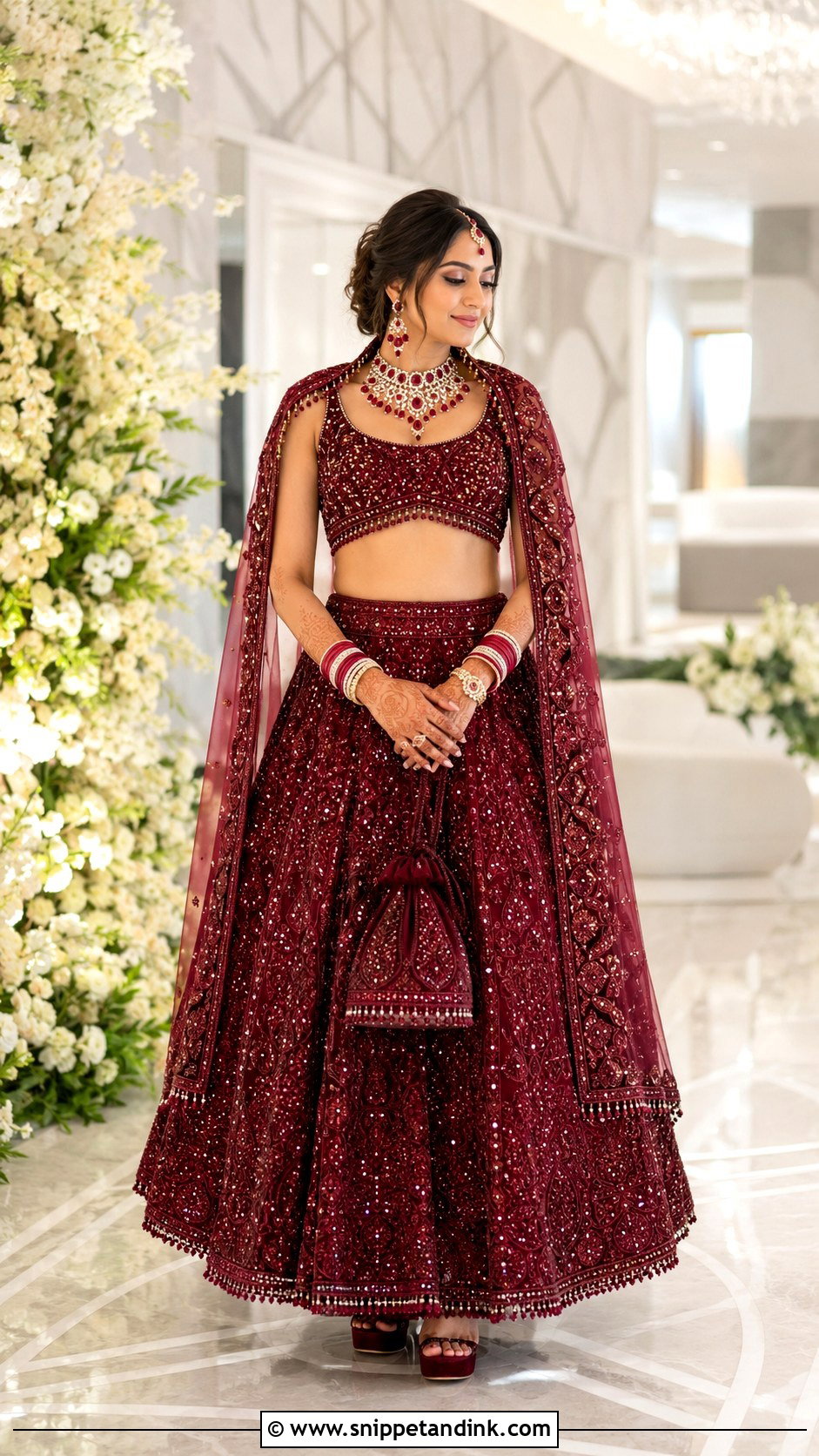
A cape-style dupatta over a burgundy chaniya choli gives you a modern entrance, and it needs a quieter skirt: controlled flare and tonal beadwork so the cape leads. A sleeveless or short-sleeved choli sits smoothly under it. Pick a cape with open sides or a front fastening, because a closed cape stops you raising your arms to greet people. Ruby-toned jewelry, a slim maang tikka and burgundy platforms keep it monochrome. If your ceremony requires a head covering, keep a separate light veil ready; the cape won’t do that job.
10. Peach Mirror Work Bridal Chaniya Choli
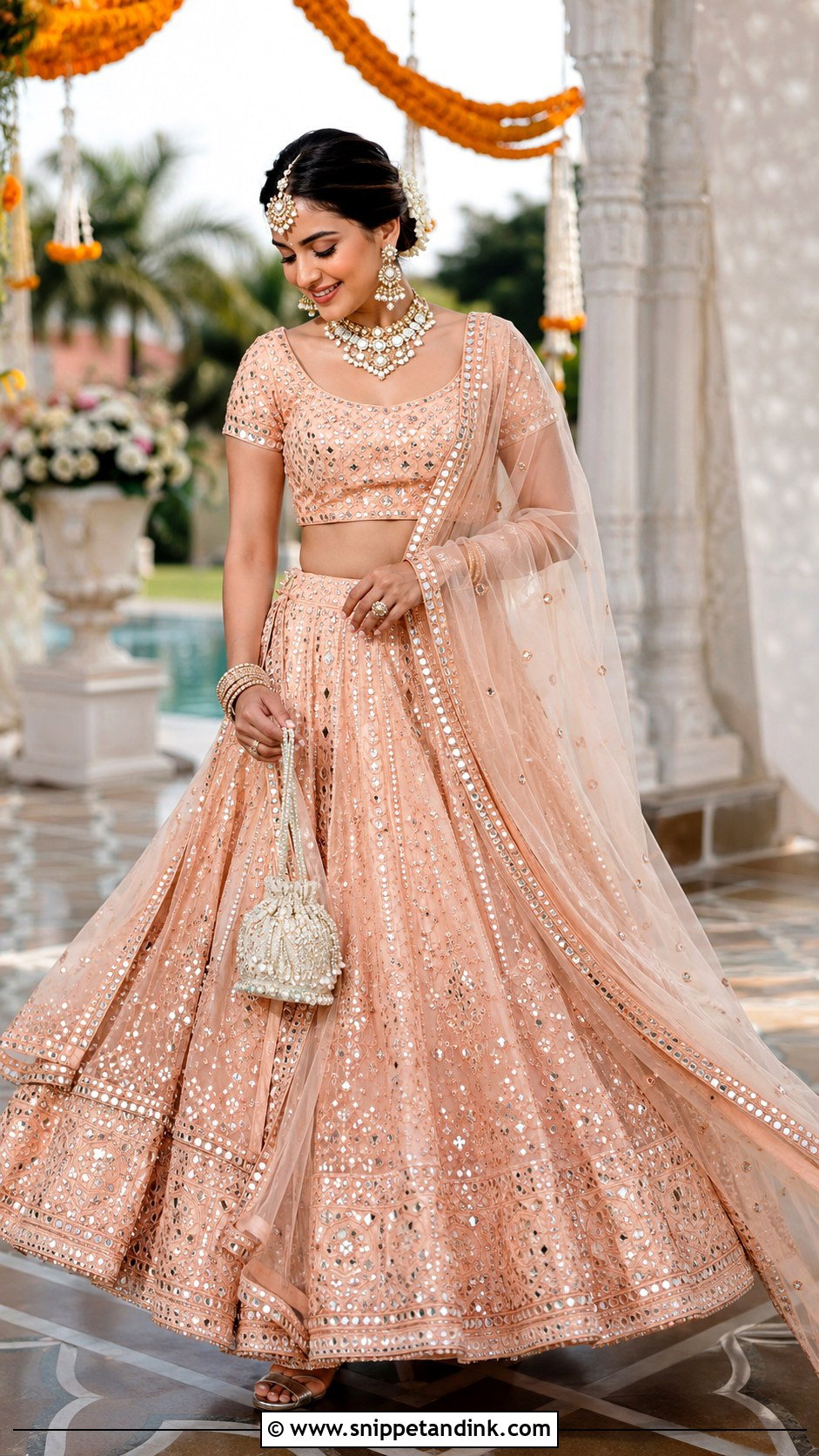
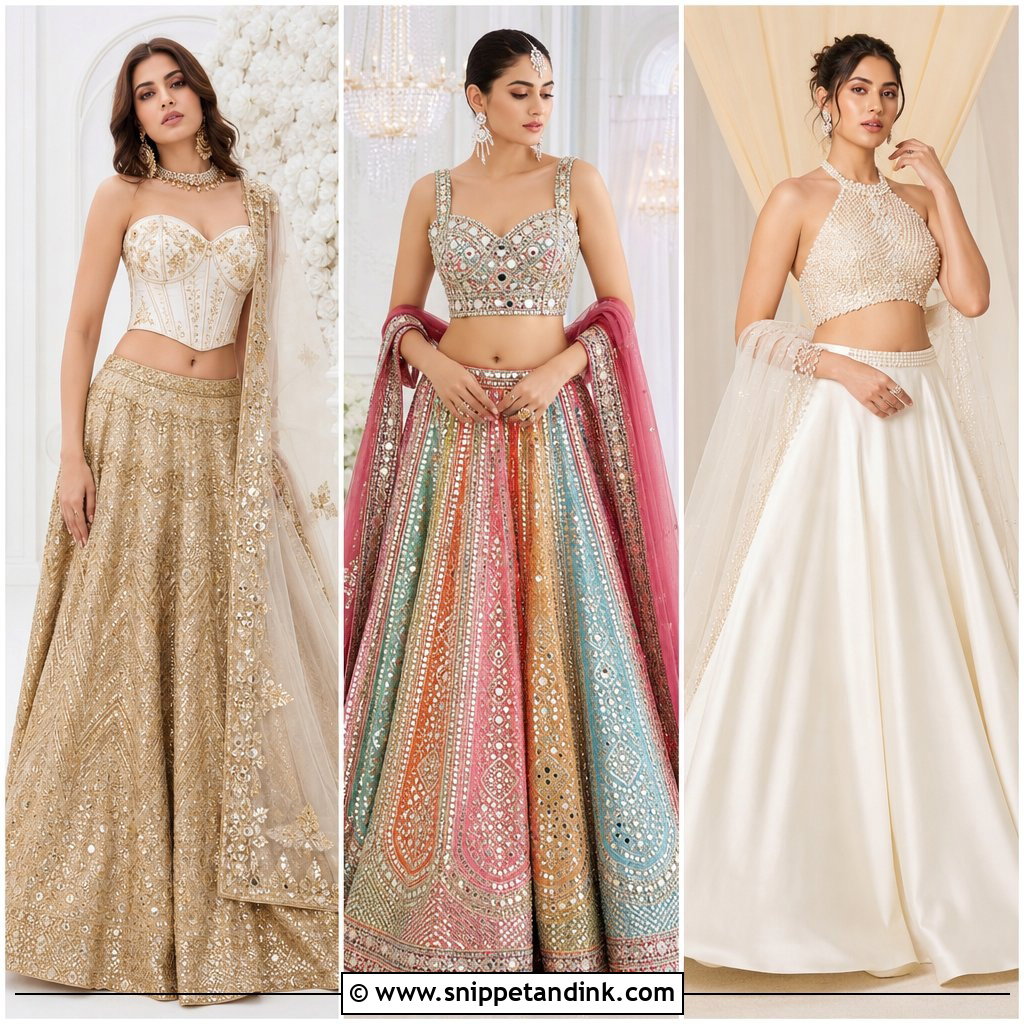
Small mirrors on peach catch daylight and look fresh rather than flashy. I’d choose small, securely stitched mirrors over large ones, which add weight and snag on the dupatta. Peach georgette or light silk moves easily, and a fitted embroidered choli gives the top a firm shape. Drape the sheer peach dupatta diagonally so the blouse and waist embroidery show. Pearl and kundan jewelry and a low bun with pale flowers suit it. Keep eye shimmer subtle, since mirrors plus glitter look busy in professional photos.
11. Purple Banarasi Bridal Chaniya Choli
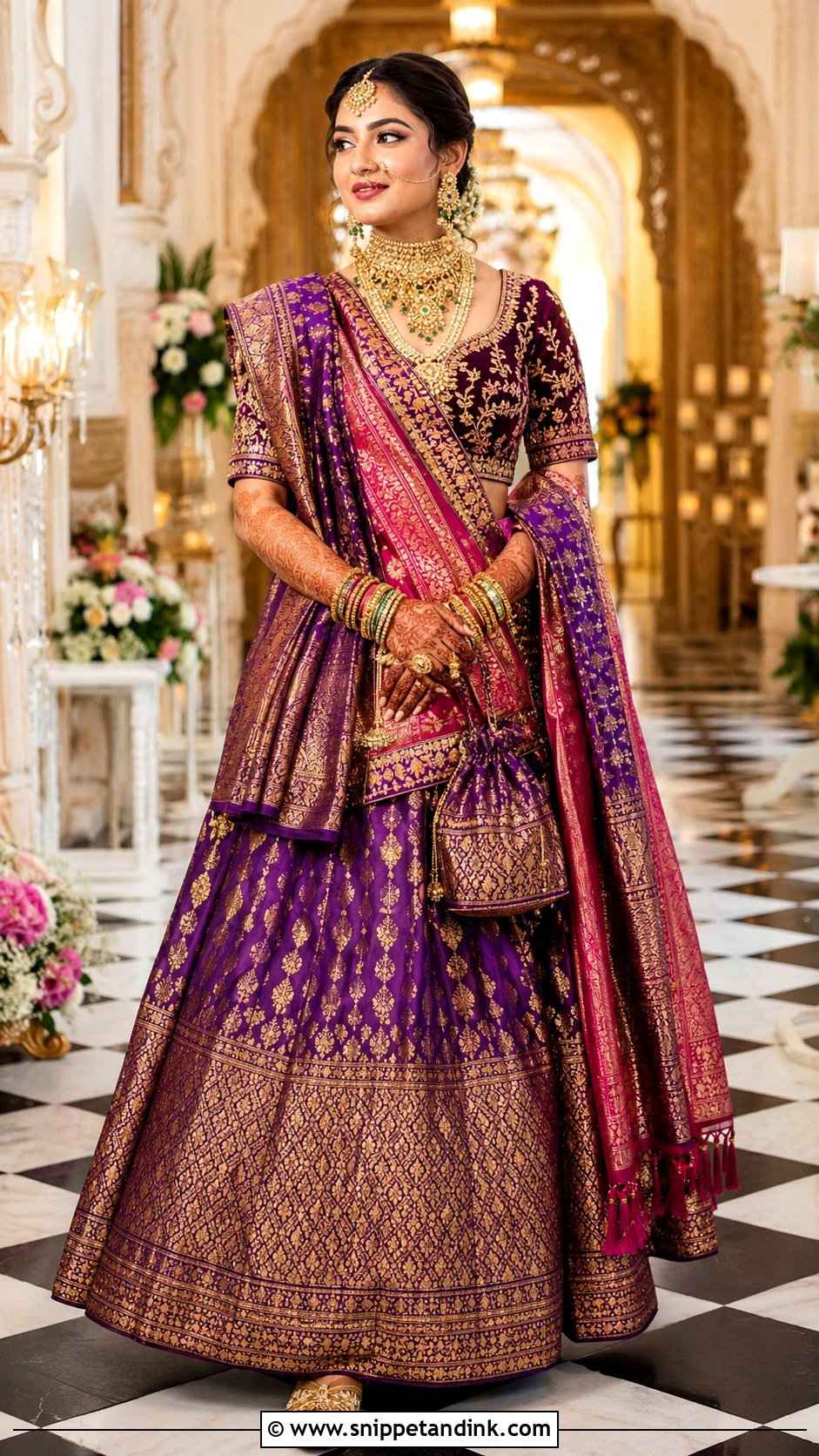
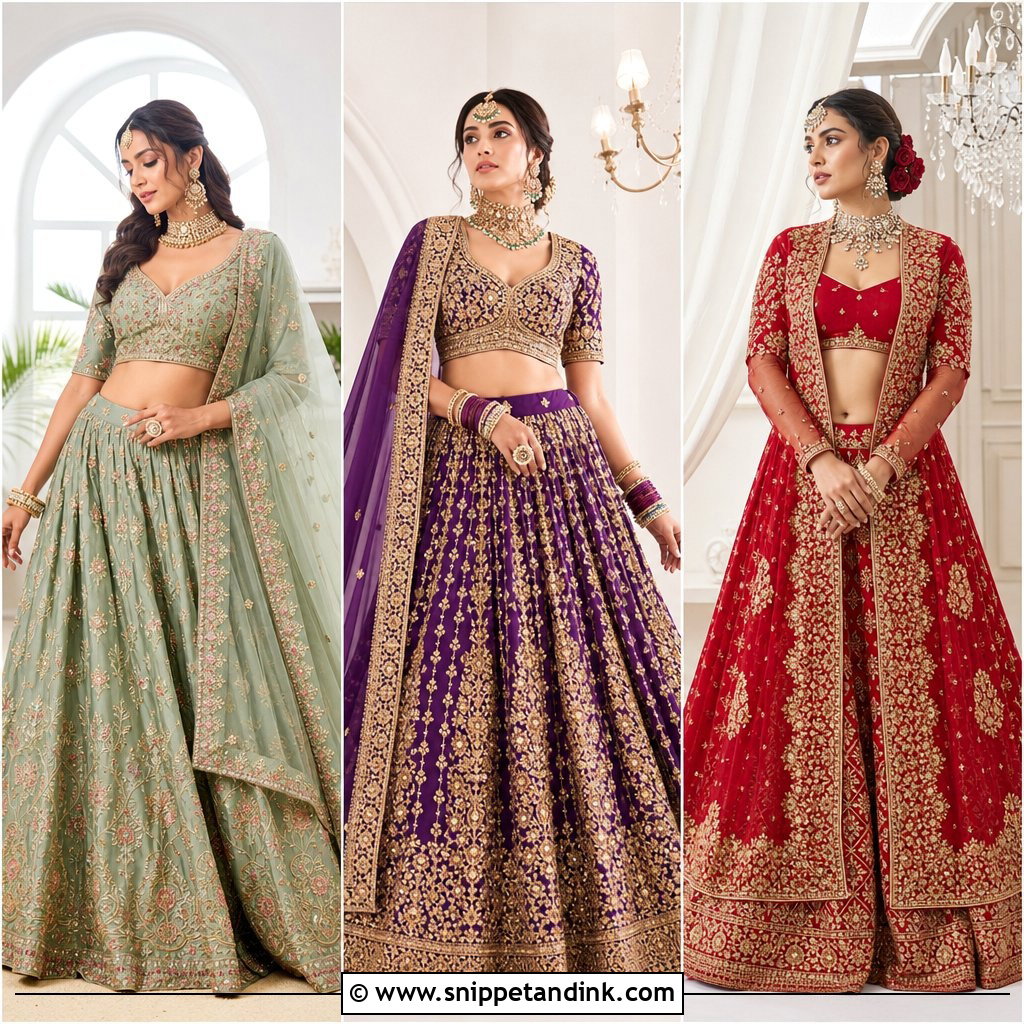
Banarasi is woven, not embroidered, so the gold motifs are part of the fabric itself, which makes a purple bridal outfit rich without being heavy with handwork. A plum or royal purple brocade chaniya with a broad border pairs best with a plainer velvet or silk choli worked only at the neckline and sleeves; two brocades together fight. A magenta, red or antique gold dupatta adds depth. Traditional gold jewelry and padded juttis suit it. Indoor lighting picks up metallic weaves well, which is why I like it for a formal hall.
12. Mint Green Bridal Chaniya Choli
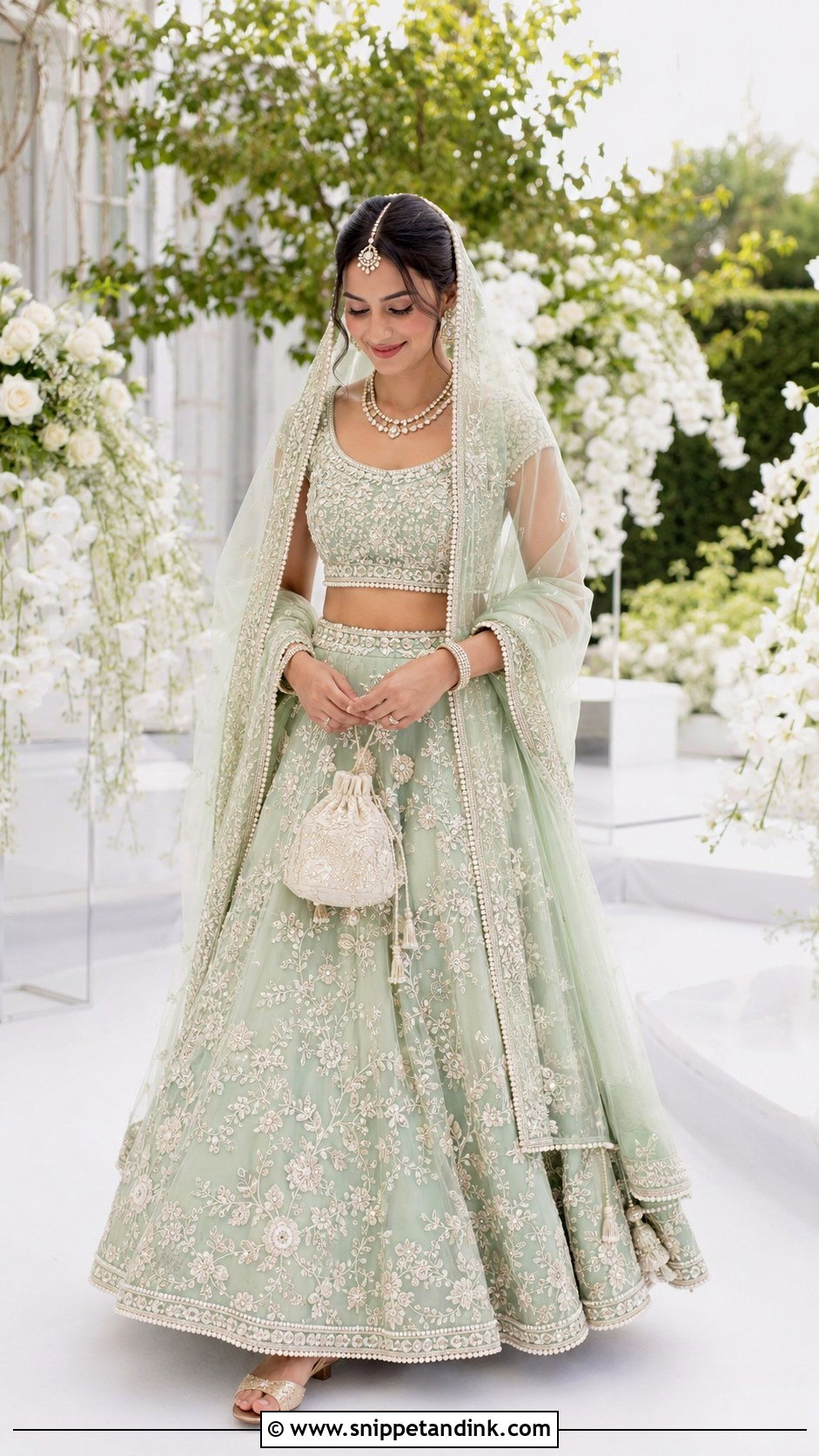
Mint is calm and fresh for a morning or warm-weather ceremony. Ivory florals, pearls and touches of pale gold suit it better than heavy metal work. A scoop-neck choli with supportive sleeves takes layered pearls or white kundan. I put the sheer mint dupatta across the front and an ivory-bordered veil over the head, so a little contrast sits near the face. Insist on a fully lined skirt, because pastel net goes translucent under bright light. Soft coral makeup warms the cool green.
13. Red And Green Bridal Chaniya Choli
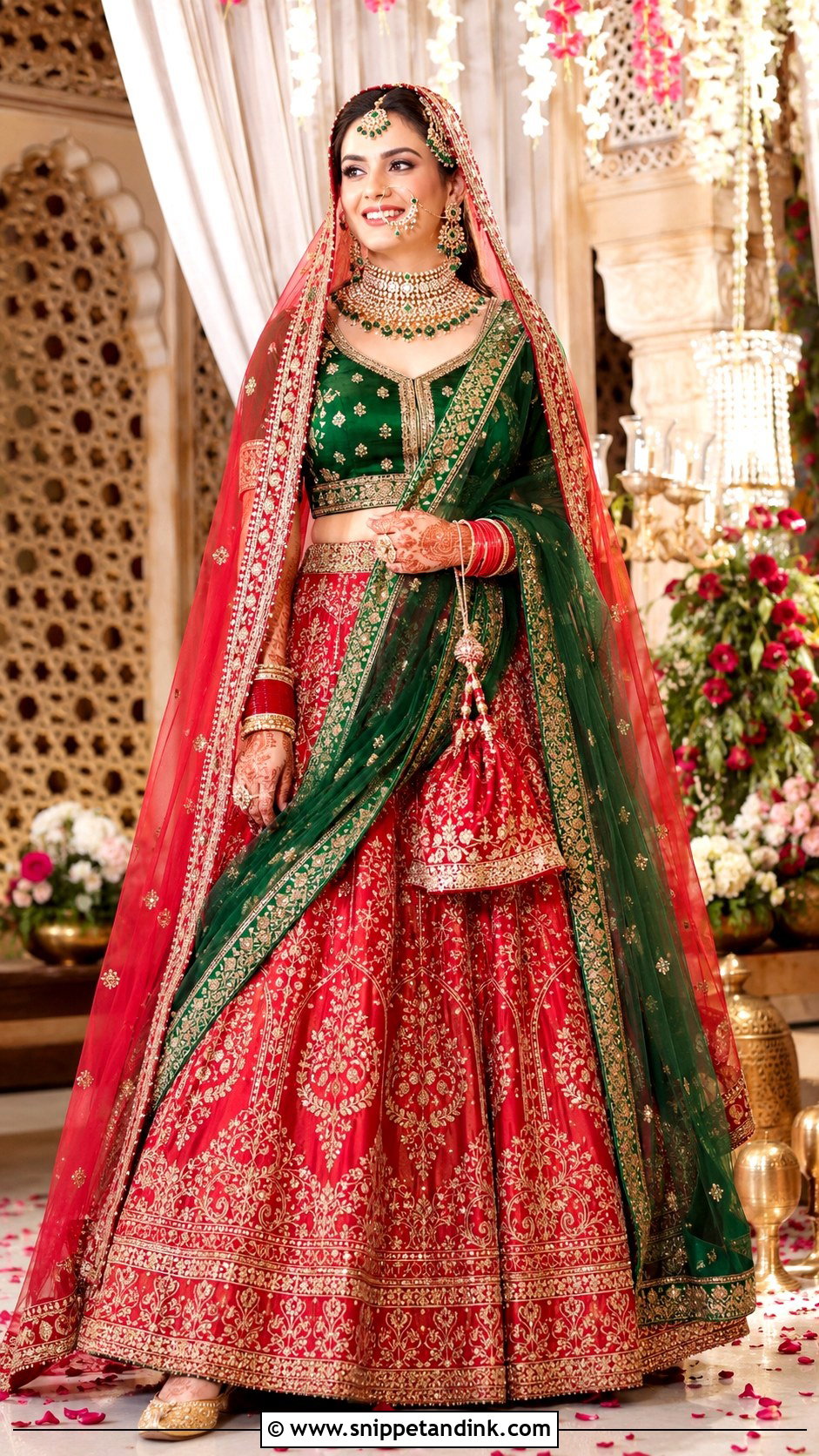
Red with green is a classic combination with strong contrast. A red silk chaniya with green florals and antique gold embroidery, and a deep green choli to break up the red, draw the eye to the neckline. The risk is in the undertones. A blue-toned red and a yellow-toned green make each other look dull, so I always lay the two fabrics side by side in daylight before cutting. Gold with emerald accents links both colors. A red head veil and a lighter green shoulder dupatta complete the layering.
14. Champagne Sequin Bridal Chaniya Choli
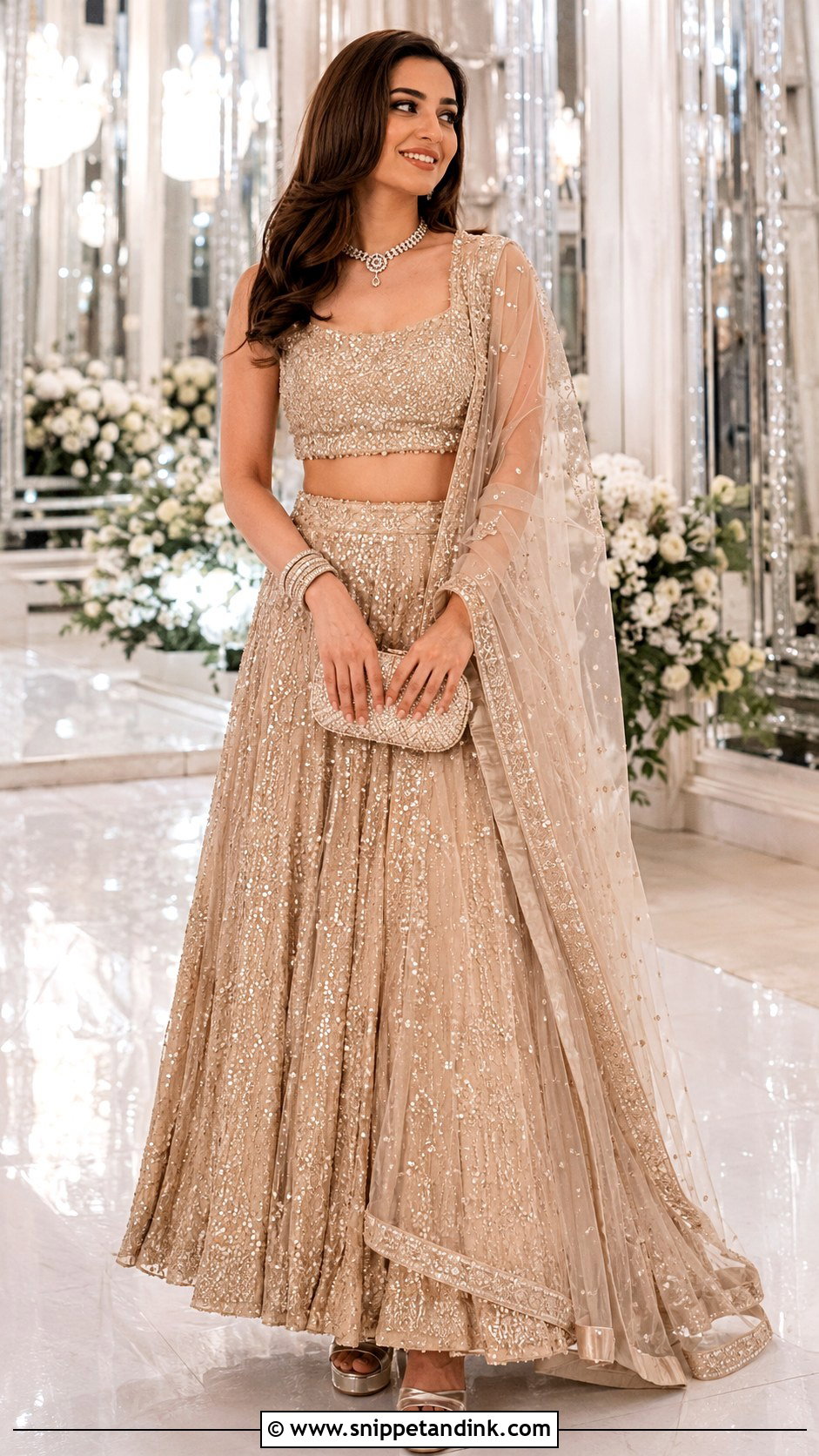
Champagne sequins suit a reception or evening ceremony. A softly flared skirt with fine tonal sequins is more comfortable than a stiff, heavily sequinned one, which scratches the arms every time they swing. A square-neck structured choli frames a diamond-style necklace. Add a sheer embellished dupatta or a light veil with a narrow crystal border. Test it under flash before deciding on jewelry, because tightly packed sequins look far brighter on camera than in the room, and too much sparkle on top of that washes out the face.
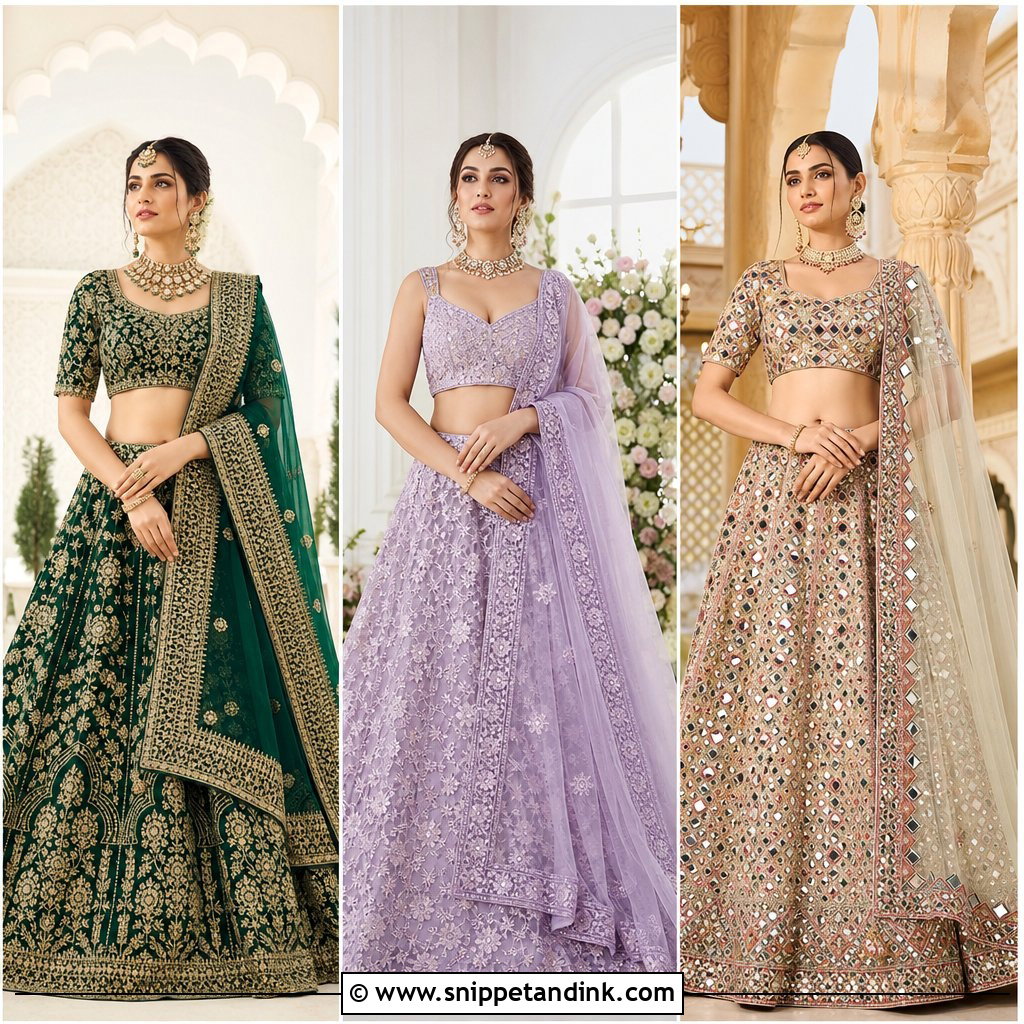
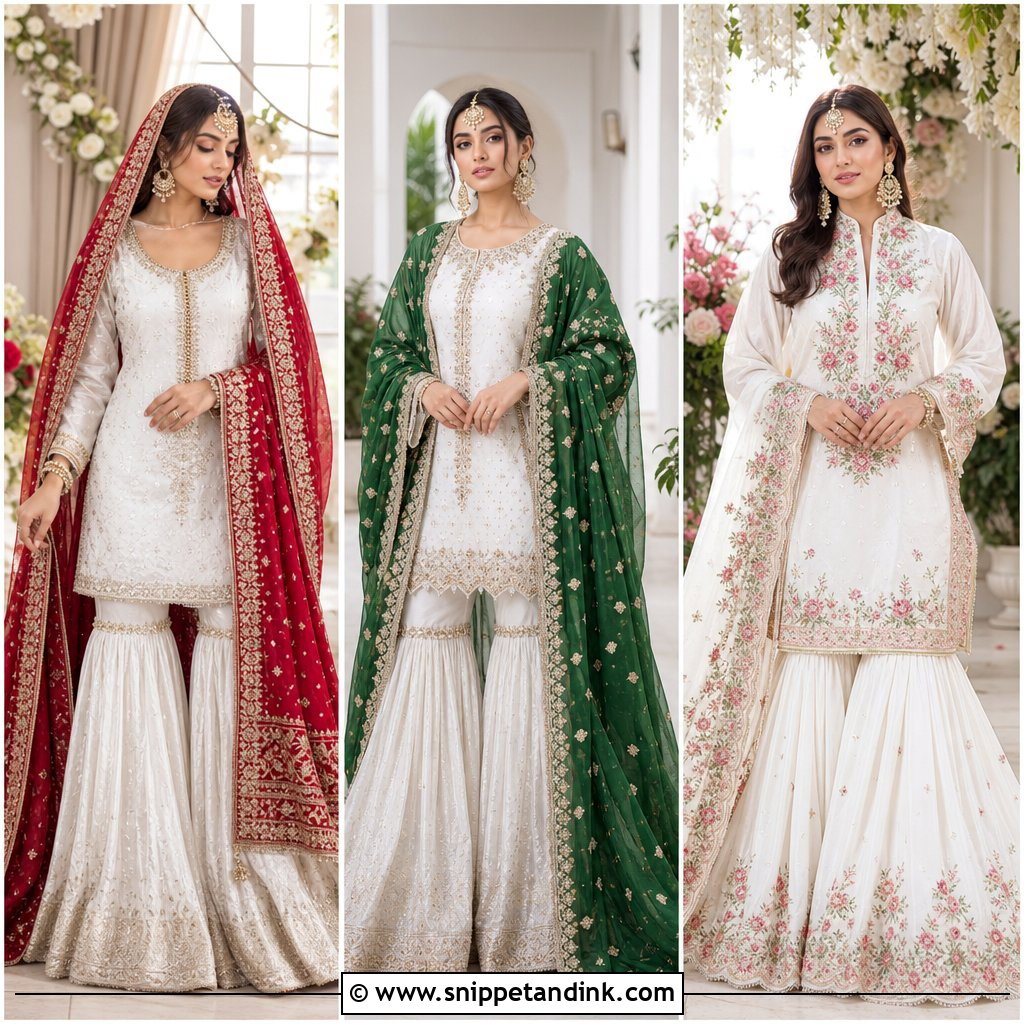
15. Multicolor Embroidered Bridal Chaniya Choli
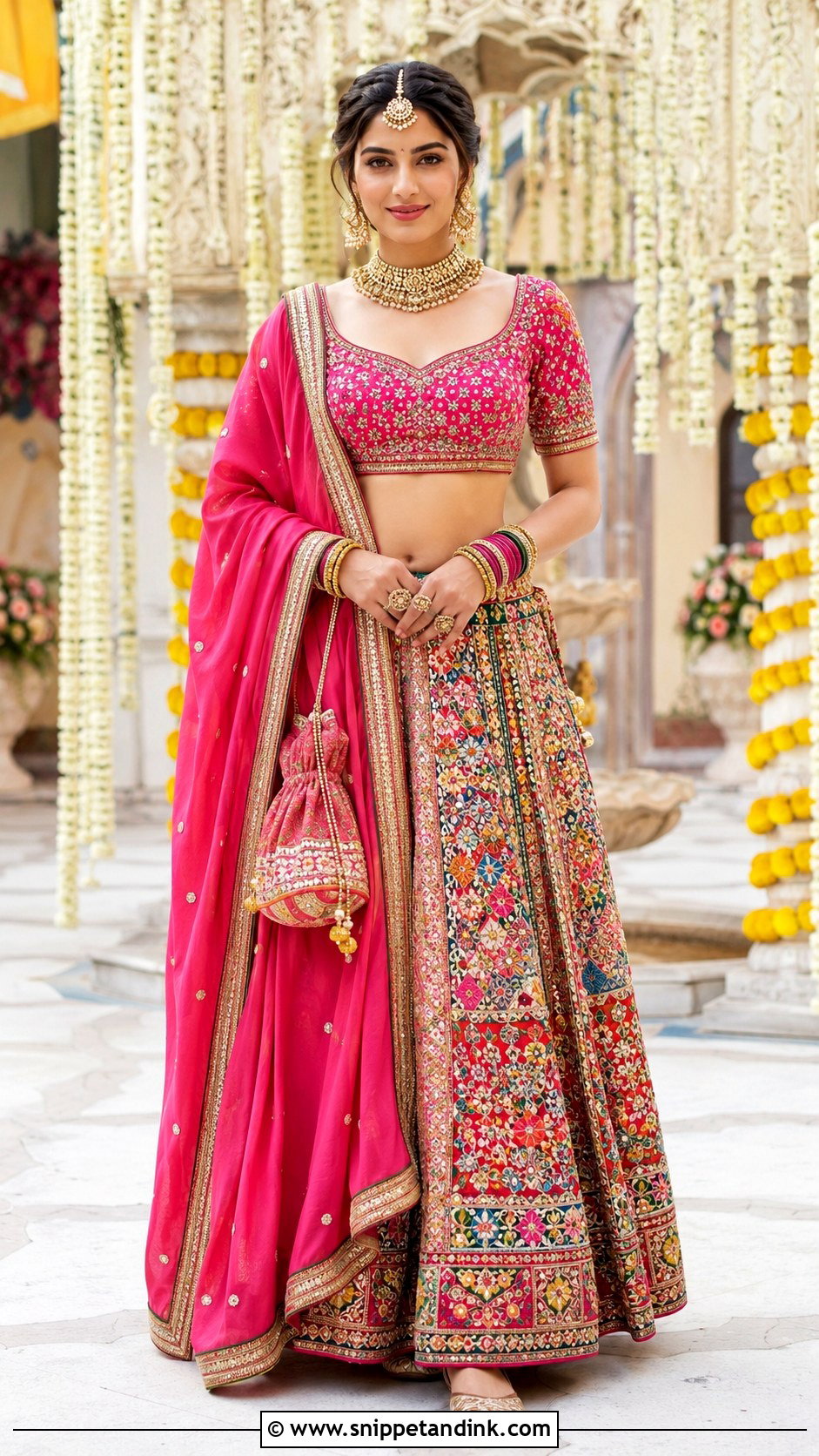
A multicolor chaniya celebrates several shades in one outfit, but it only works if one color leads. I take a single dominant shade from the skirt for the choli and give the dupatta a solid body with a multicolor border, so the eye has somewhere to rest. Classic gold jewelry and neutral juttis stop the palette from growing further. Look at how the embroidery is distributed. Bold motifs bunched around the waist make it look thicker; motifs spread evenly toward the hem keep the shape clean.
16. Dusty Rose Bridal Chaniya Choli
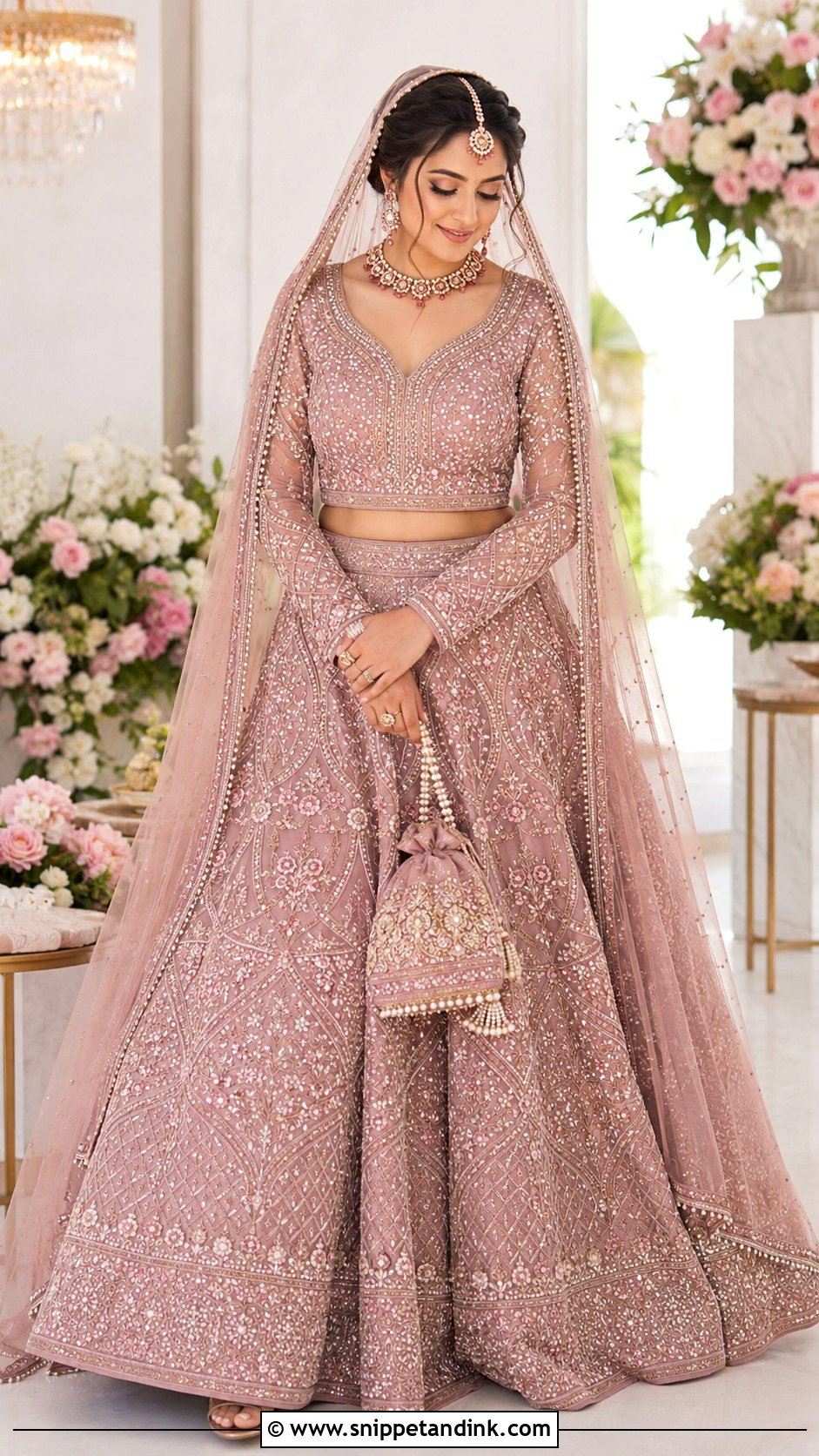
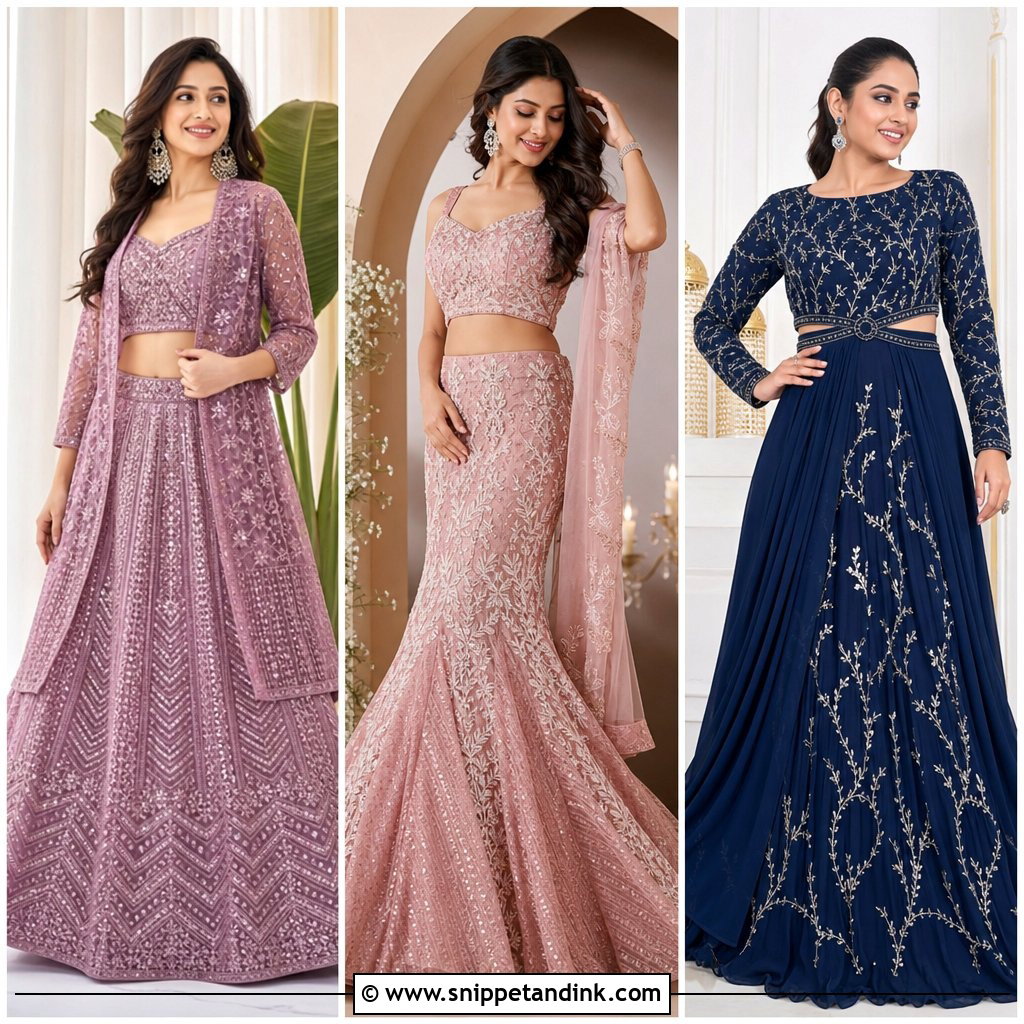
Dusty rose has enough color to read bridal and less shout than bright pink. Tonal threadwork, pearl beading and antique silver or pale gold suit it. A long-line choli gives more coverage and a smooth line, which brides who prefer less skin often find comfortable. The danger with muted pinks is that they can blend into light skin, so I add a defined border, deeper rose accents or contrasting jewelry to separate fabric from face. Pearl jewelry, rose-toned kundan and mauve makeup keep the palette consistent.
17. Navy Blue Bridal Chaniya Choli
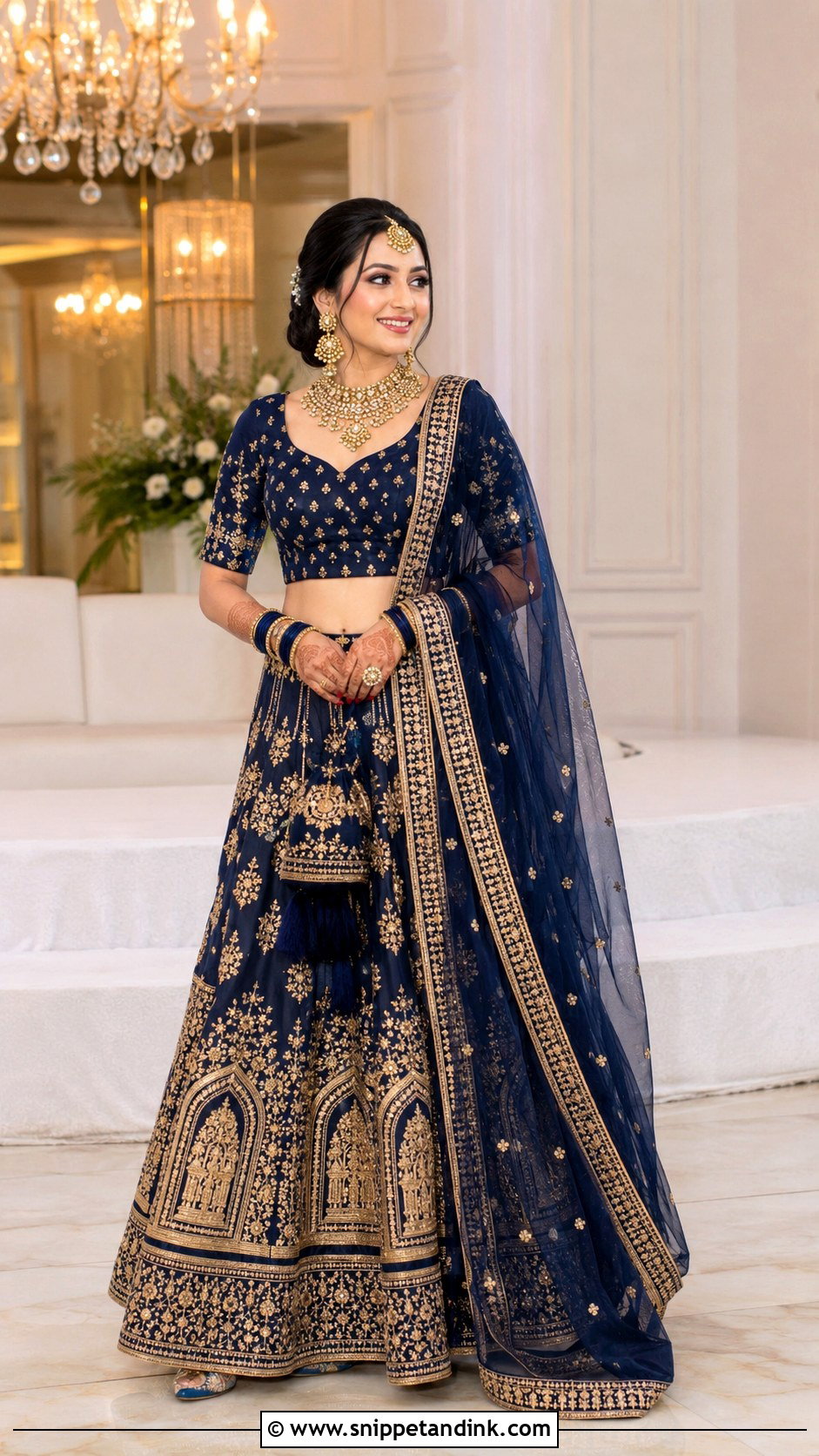
Navy reads sophisticated under evening light, especially in velvet or raw silk with gold celestial motifs or florals. A fitted navy choli lets statement jewelry take the neckline. Put the gold-bordered navy dupatta across one shoulder and keep the head veil a lighter net. Very dark blue can photograph almost black in dim halls, so I ask brides to photograph a fabric sample at the venue, with flash and without, before approving the color. Gold eye makeup and a berry lip suit it.
18. Yellow Gota Patti Bridal Chaniya Choli
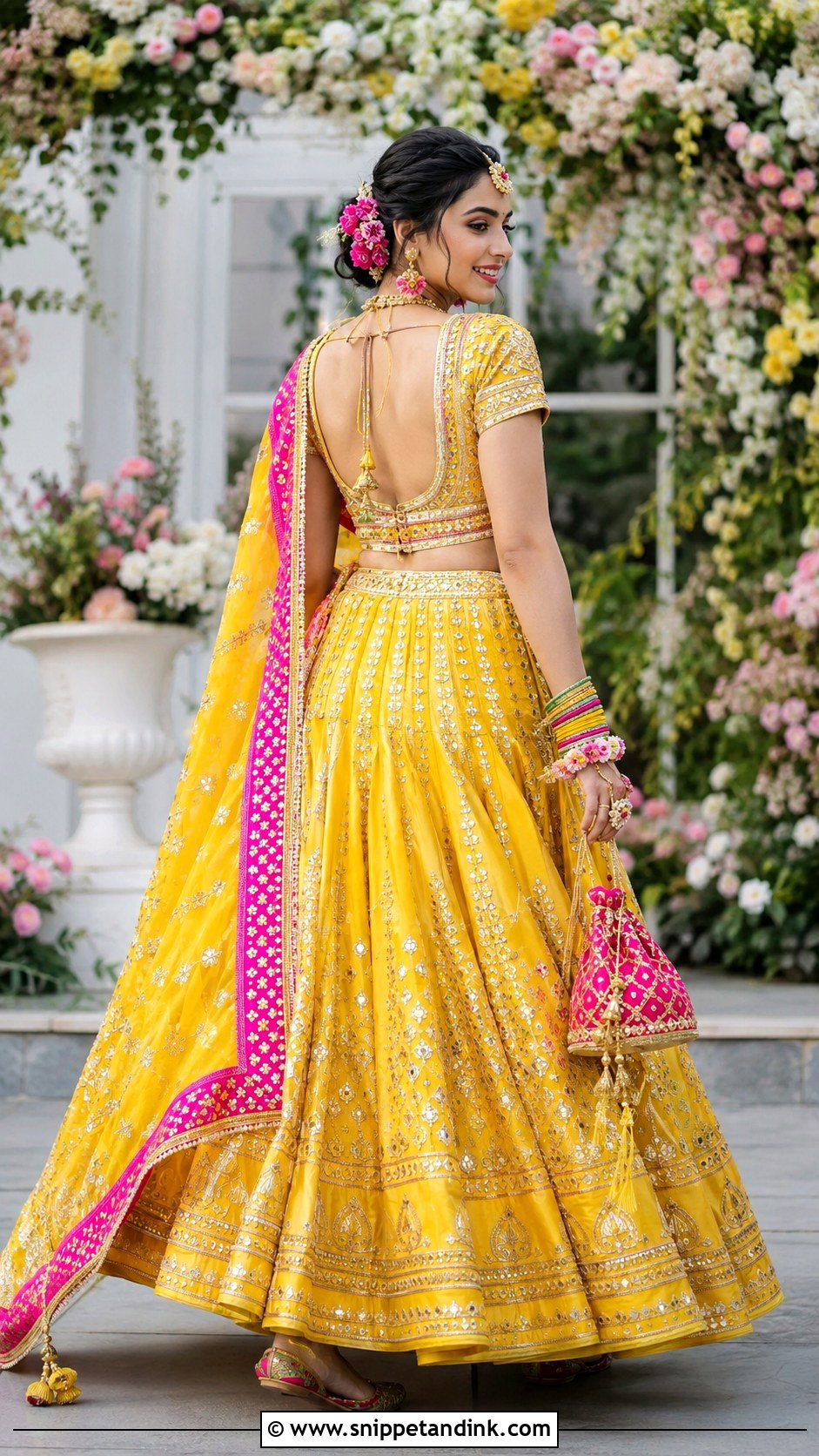
Yellow belongs to the daytime, whether that’s the ceremony itself or a pre-wedding celebration. Flowing silk or georgette with gota patti borders is light enough to dance in. A choli with a secure back design stays put through dancing and rituals. A pink-bordered drape adds contrast. Flat embroidered juttis and a braid or floral bun are practical in the heat, with waterproof eye products. If you’re wearing yellow for the main ceremony rather than a pre-wedding event, give it a fuller skirt, richer jewelry and a detailed second dupatta so it reads as the bridal outfit.
19. Ombre Bridal Chaniya Choli
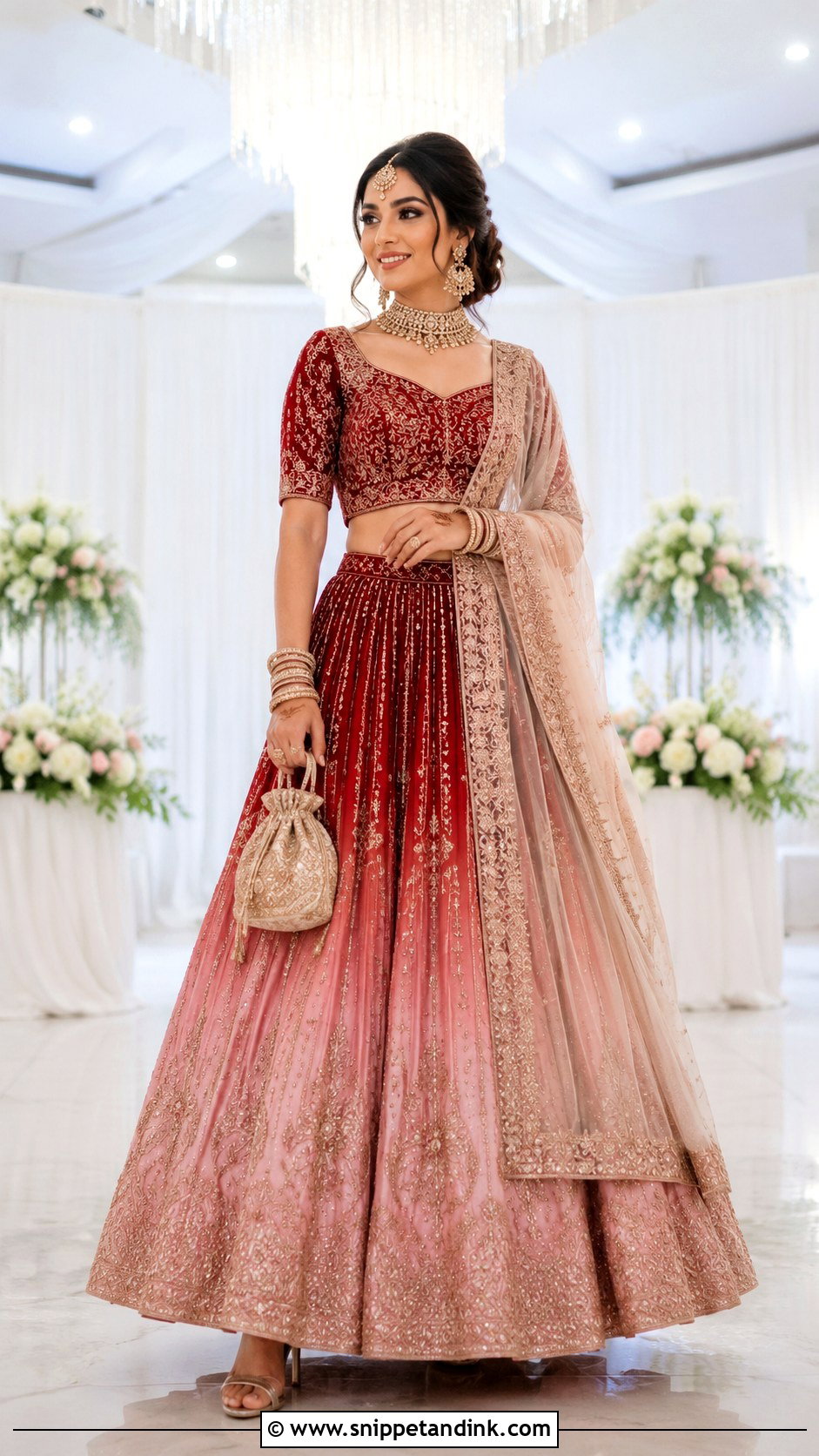
An ombre skirt moves through related shades: deep red to pink, plum to lavender, burnt orange to champagne. Put the darkest shade at the hem to ground it and keep the waist clean. A solid embroidered choli taken from one color in the gradient and a neutral or lightly shaded dupatta stop it getting complicated. Before buying, open the skirt out fully and inspect every panel. Dyeing is done by hand, and uneven panels break the gradient once the skirt is flared.
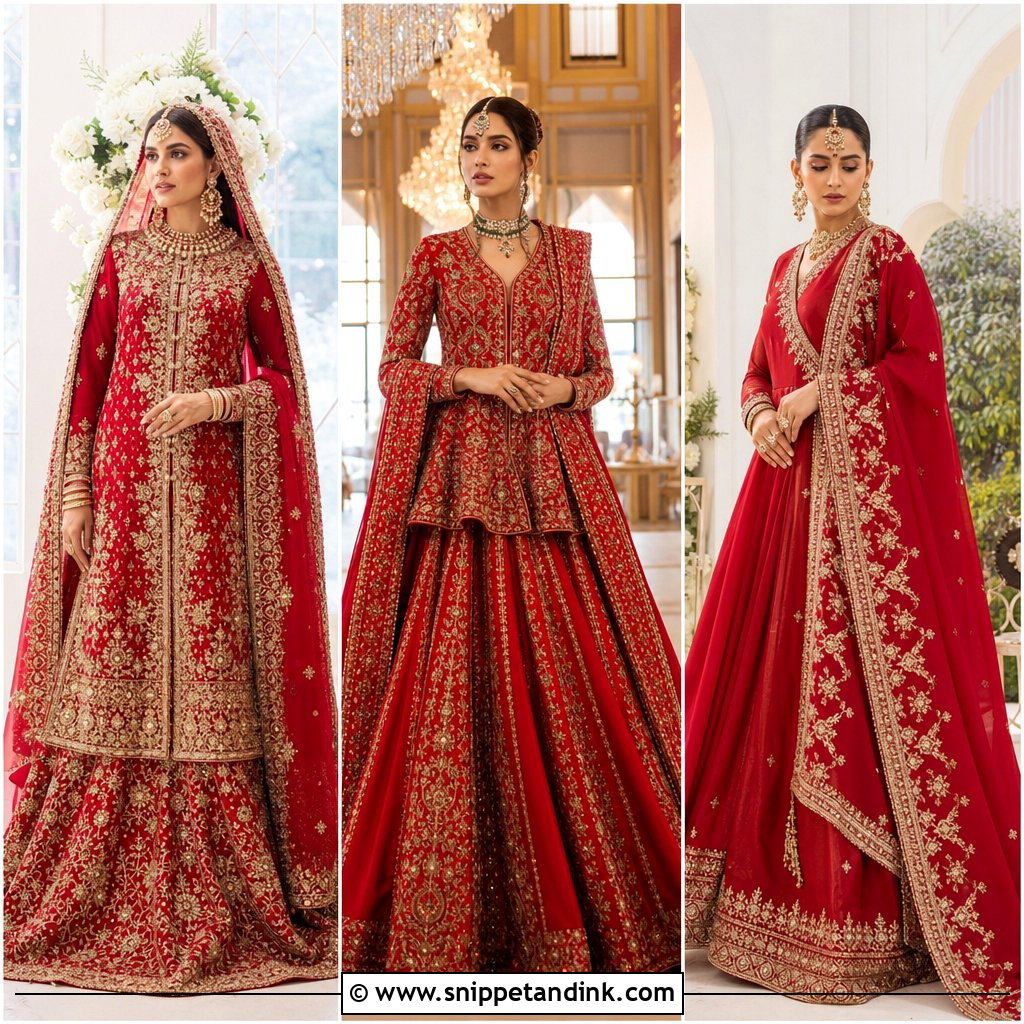
20. Red Bridal Chaniya Choli With Double Dupatta
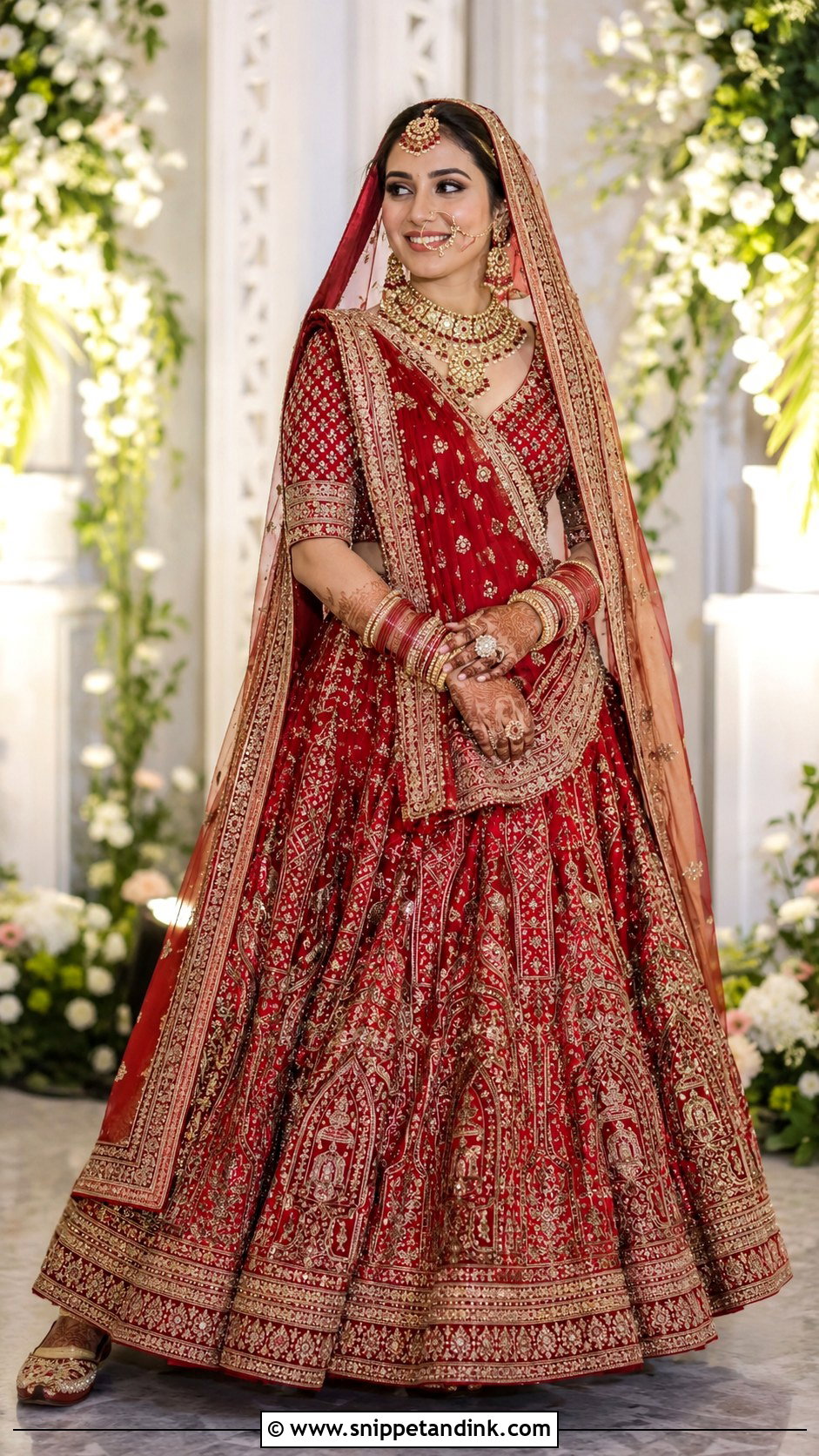
A double-dupatta outfit gives a traditional entrance real presence. Over a red silk chaniya and a well-fitted choli, the first dupatta goes diagonally across the torso, pinned at the shoulder and waist. The second, lighter one goes over the head and frames the face without dragging on the hair. They can match, or one can pick up pink, orange or antique gold. Have your stylist secure each layer with hidden pins, then sit, stand, walk and bow your head a few times before the ceremony to see what shifts.
Real Zari, Blended Silk and Other Things a Price Tag Won’t Say
Two chaniyas that look identical in a showroom can be made very differently, and the difference shows up in weight, comfort and how they age. These are the questions I’d want answered before paying.
Is the zari real, tested or metallic?
Traditional zari is fine silver wire coated in gold. Tested zari uses a copper core with a metal coating, and metallic or imitation zari is plastic-based. Tested and metallic zari are lighter and much cheaper, and there’s nothing wrong with them for a sangeet outfit. They do tarnish or dull sooner, so know which one you’re buying.
Is it pure silk or a blend?
Pure silk drapes and breathes better; blends hold color well and cost less. Ask whether the piece carries a silk certification label. For Banarasi, ask whether it was woven by hand or on a power loom, since it affects both price and the feel of the motifs.
What’s included, and how much can be altered?
- Whether the choli is stitched or comes as unstitched fabric, and if a lining and can-can are part of the price.
- How much seam allowance has been left in the choli, in case your measurements change before the wedding.
- The confirmed delivery date and the number of fittings included.
- Whether you can try it on with your own jewelry at the final fitting.
Red or Rose, It Should Look Like You
The outfit you choose should feel right to your family, look balanced, and stay comfortable for every hour you wear it. Think about the venue, season, ceremony requirements, photography and how long you’ll be dressed before you settle on a color. Ask for real blouse support, a breathable lining, embellishments that are sewn rather than glued, and a hem tested with your wedding shoes. Try everything together, jewelry and both dupattas included, before alterations are finalized. Then go with the one that looks like you, not the one that follows the most trends.
You'll Like These Ideas:







Leave a Reply