
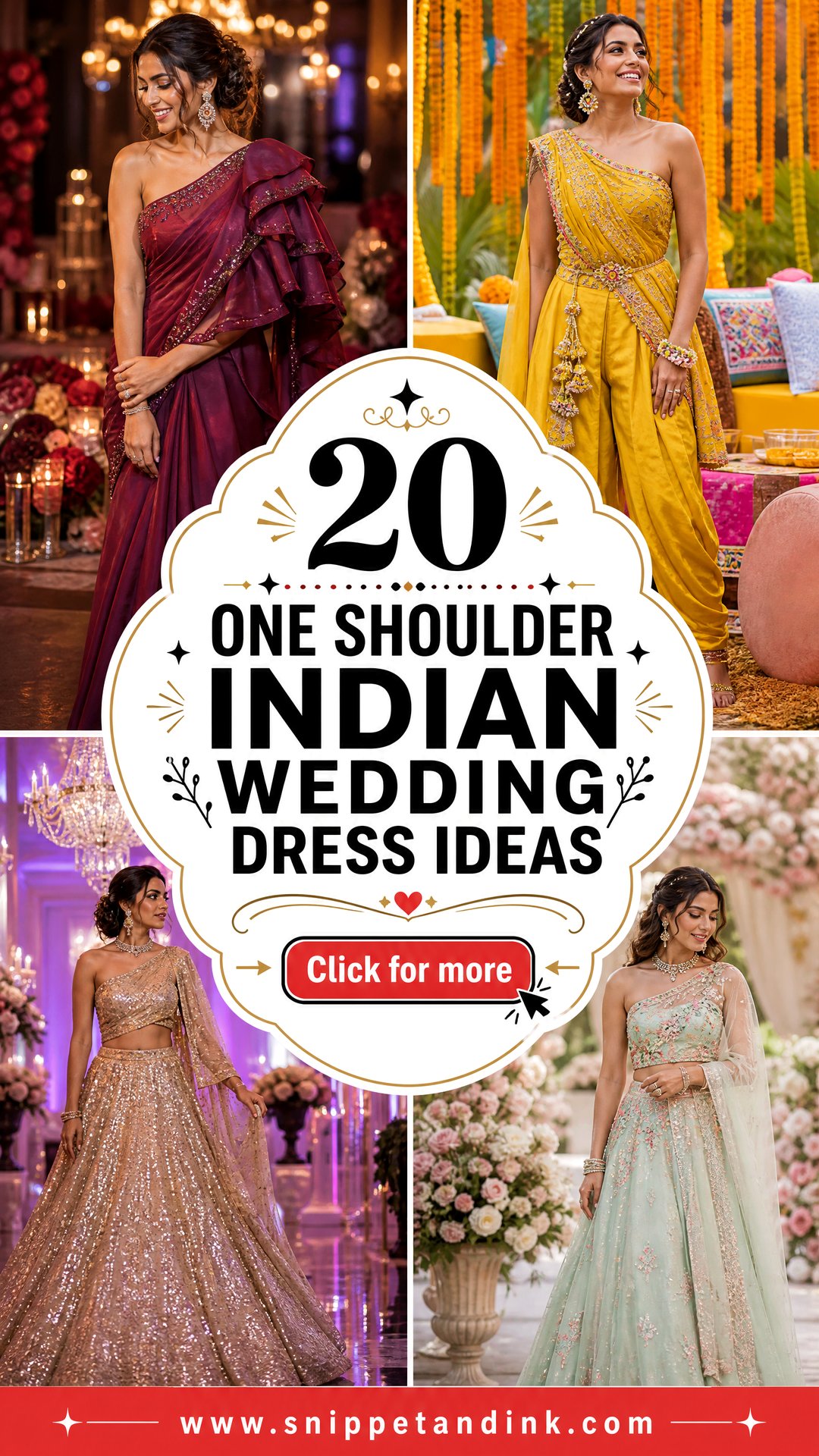
A one-shoulder neckline is one of the easiest ways I know to make Indian occasion wear feel new without throwing out tradition. The diagonal line works on lehengas, shararas, pre-draped sarees and floor-length gowns, and it changes how jewelry and the dupatta behave. Below are complete outfits for a sangeet, mehendi, haldi, engagement, reception and the wedding itself, each with shoes, bag, hair and dupatta placement planned. My rule across all of them is balance: let the bare shoulder show, keep jewelry deliberate and make sure you can move. A detachable cape or dupatta covers you whenever the moment calls for more coverage.
What Actually Holds a One-Shoulder Blouse Up
On a regular choli, two shoulders and a back closure share the work. On a one-shoulder blouse, one strap and the side seams do everything, so I brief the tailor on structure before we talk about embroidery.
- Built-in cups or padding, so you’re not relying on a strapless bra that slides.
- Light boning or a firm inner band along the bare side, which stops the top edge from folding over.
- A side zip or hooks on the covered side, since a back opening weakens an asymmetric cut.
- Silicone grip tape inside the top edge, a small detail that makes a big difference by the end of the evening.
- A wider shoulder panel if the blouse carries heavy zari or mirror work.
Embroidered blouses usually take several weeks to make, and the first trial is rarely the last. Allow at least two fittings, and wear your real jewelry and dupatta at the second one, because their weight changes how the shoulder sits.
1. One Shoulder Lehenga For Sangeet
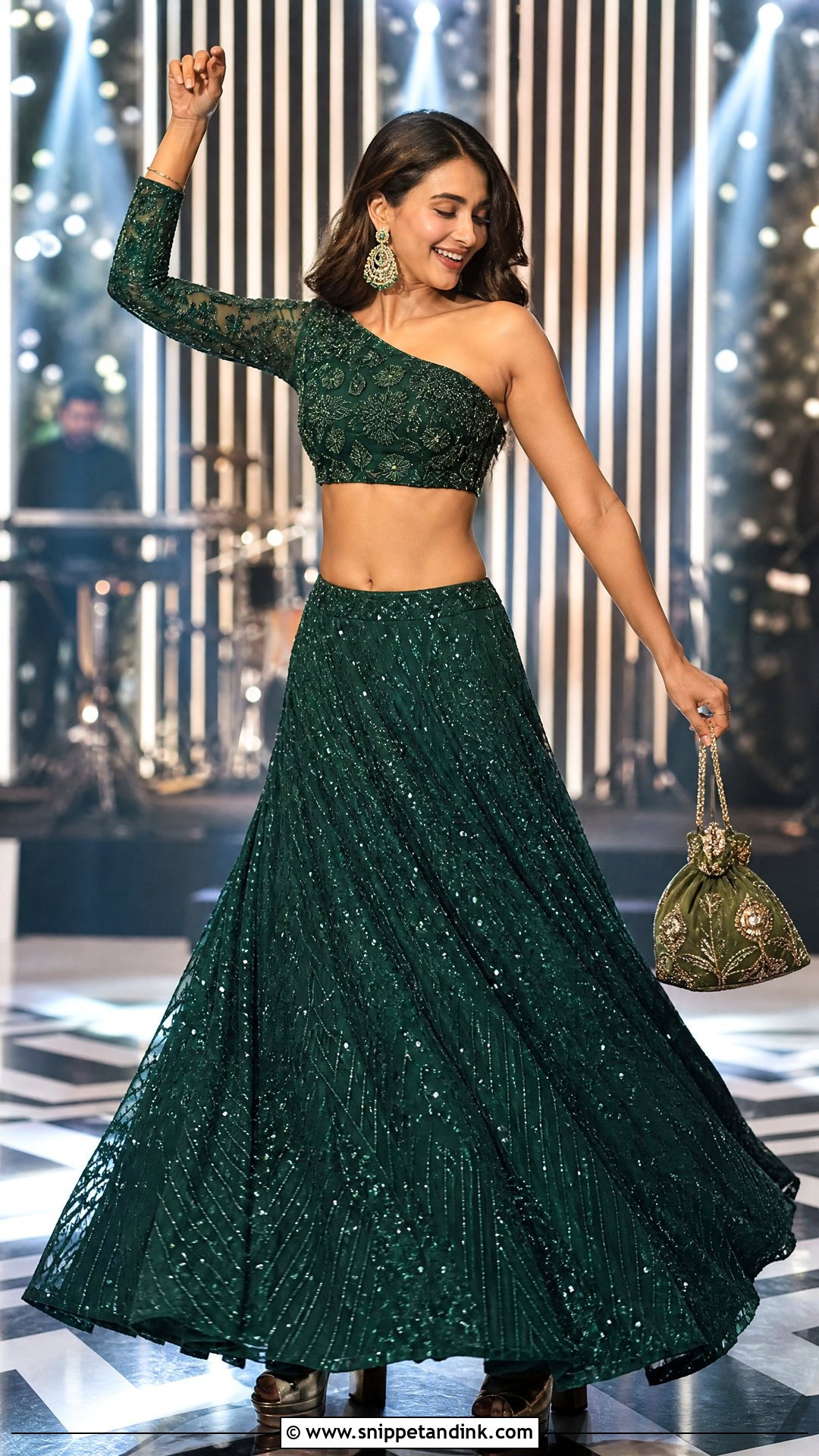
Sangeet outfits get danced in, hard, so the blouse construction matters more than the embroidery. For a jewel-toned one-shoulder lehenga in emerald, magenta or royal blue, I want a blouse with real support built in and a fitted waist, paired with a flared skirt in sequins, threadwork or metallic embroidery. A soft draped panel stitched at the shoulder can stand in for a dupatta and won’t fall off mid-song. Metallic block heels, a small potli and statement earrings, but no necklace. Swept-back waves or a high ponytail show the line. Do a full dance rehearsal in it at home before the night.
2. One Shoulder Saree Gown For Reception
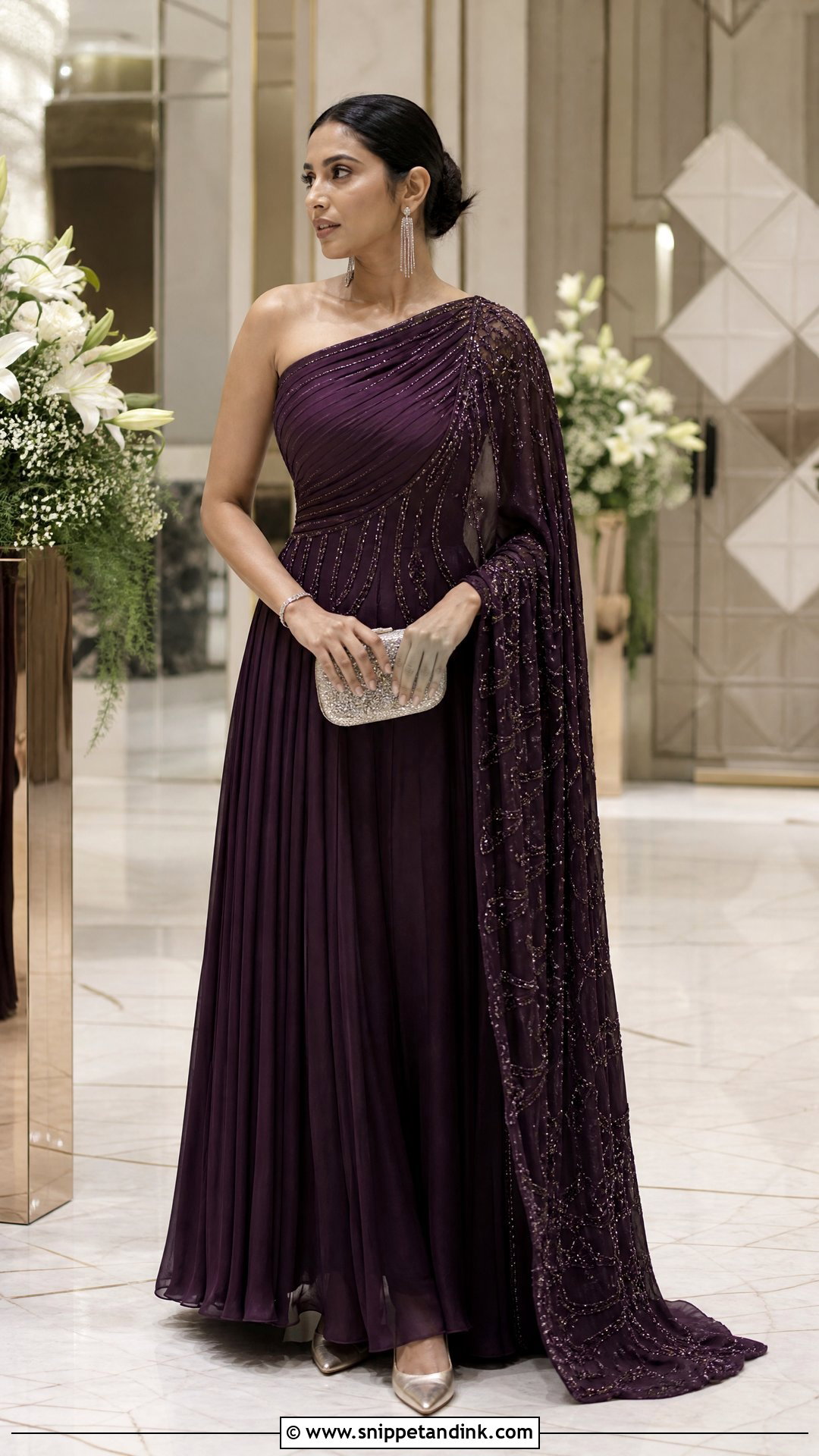
Plenty of brides love the saree but dread an evening of re-tucking pleats. A one-shoulder saree gown solves that: a fitted bodice, a defined waist and stitched pleats give the draped effect without pins. Plum, midnight blue or antique gold suit an evening reception. Look for beadwork or embroidery on the shoulder panel that flows into the pallu. Pointed metallic heels, a crystal clutch and long drops, with a sleek low bun to show the back. One thing I check carefully is the pallu’s weight; if it’s heavier than the shoulder fabric, it slowly drags the whole gown sideways over the night.
3. One Shoulder Sharara Set For Mehendi
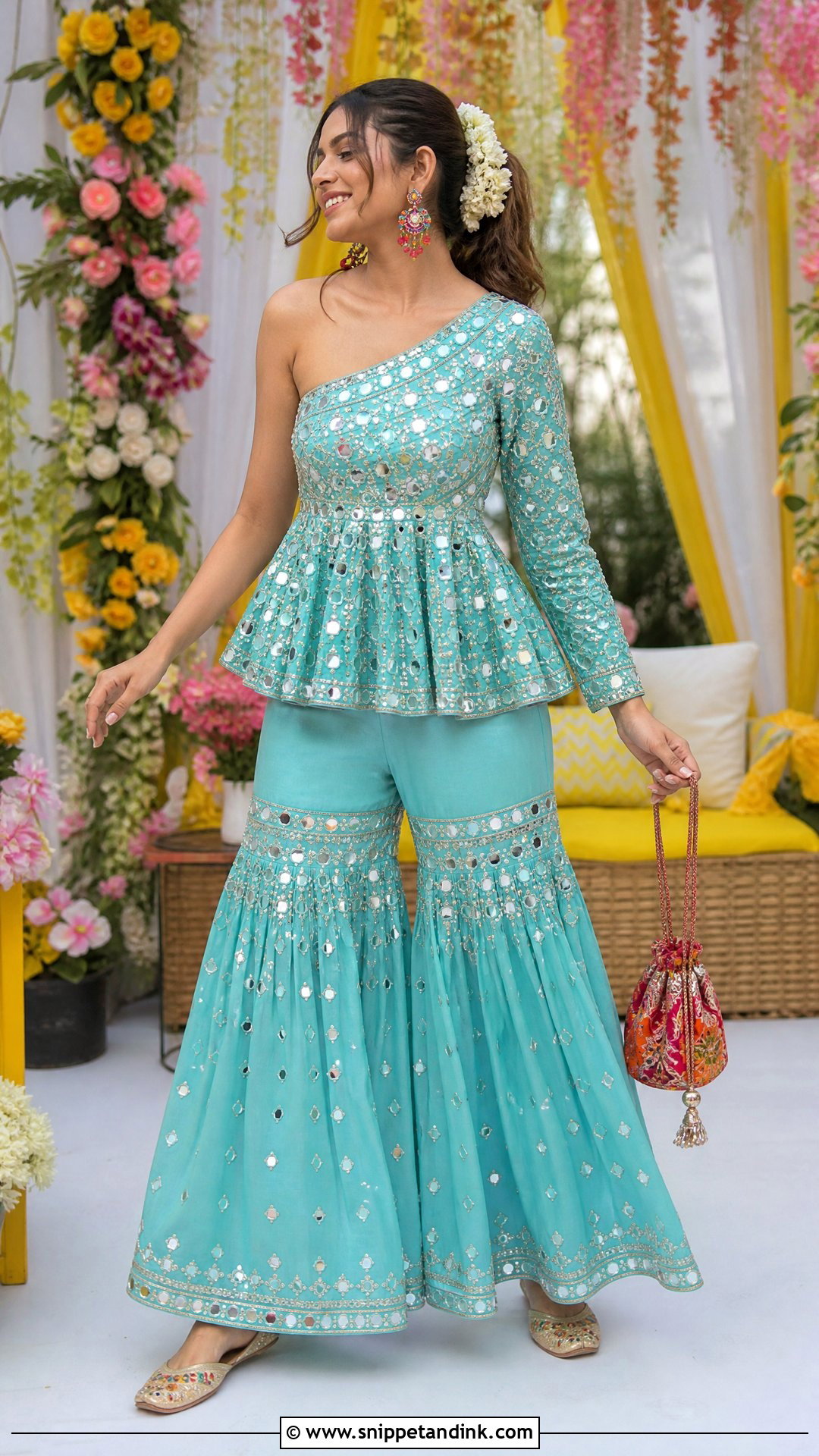
Mehendi is the one function where a bare arm is genuinely practical, because your artist needs room to work. A one-shoulder sharara set in lime, turquoise, marigold or coral, with a short peplum top and comfortable lining, leaves the arm free. Wide sharara pants give you room to sit cross-legged for an hour or more. Go for floral threadwork, small mirrors or tassels rather than heavy embellishment. Embroidered juttis, bright earrings and a wrist-strap potli, with fresh flowers in a braid. If the top has a drape, tack it down so it can’t brush wet paste.
4. One Shoulder Anarkali For Engagement
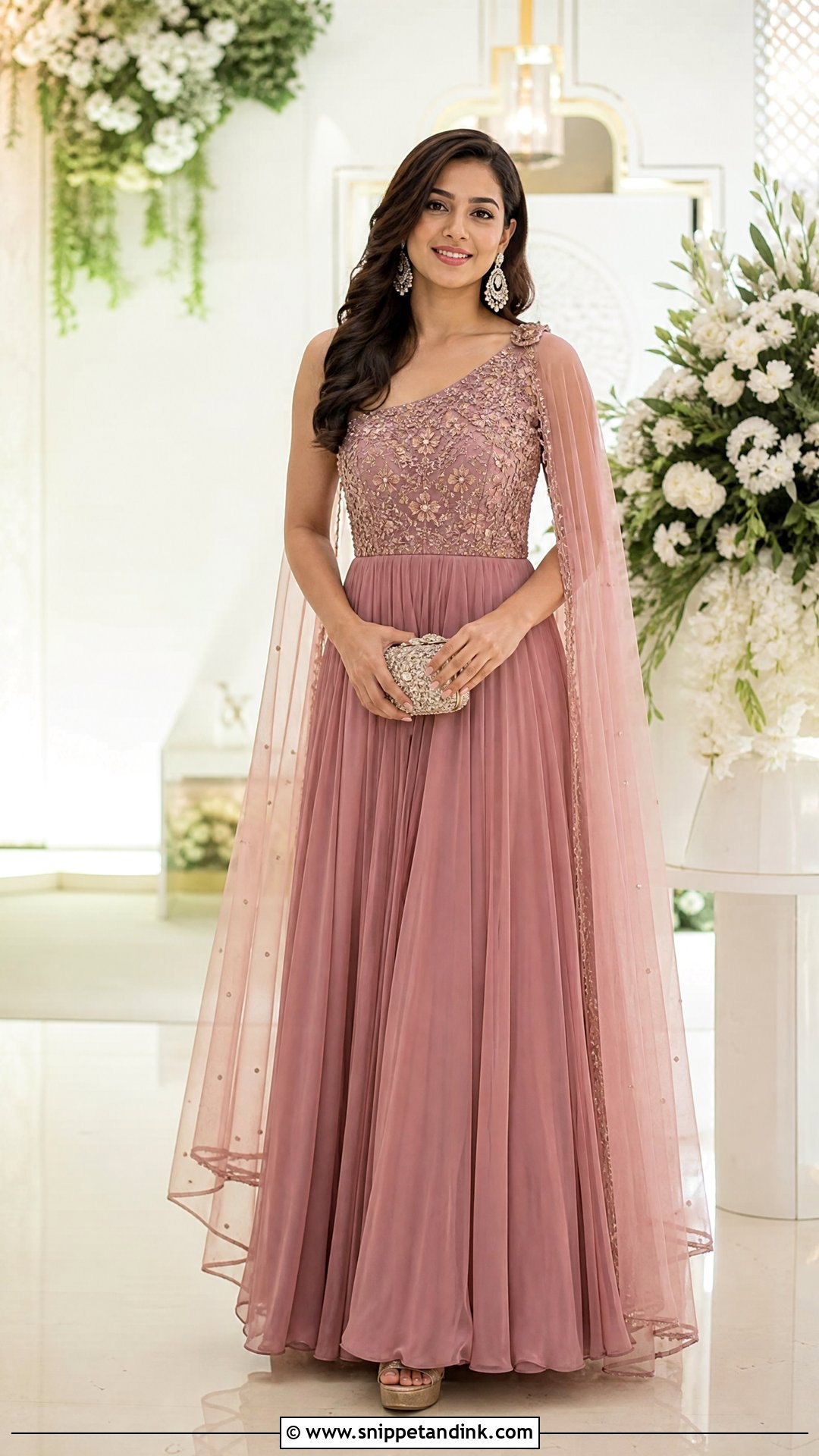
An engagement is often the first big family event, and a floor-length one-shoulder anarkali handles that mix of formal and modern well. A structured bodice flowing into a gently flared skirt gives length without bulk. Dusty rose, mauve, teal and champagne are my usual suggestions. Embroidery concentrated at the shoulder and waist defines the shape while the skirt stays fluid. Platform heels, a beaded clutch, medium chandelier earrings and a side-parted low bun. Bring a sheer detachable cape for elders’ blessings if you want more coverage. I hem anarkalis a touch above the floor so you can bend for greetings without stepping on the edge.
5. One Shoulder Ruffle Saree For Cocktail
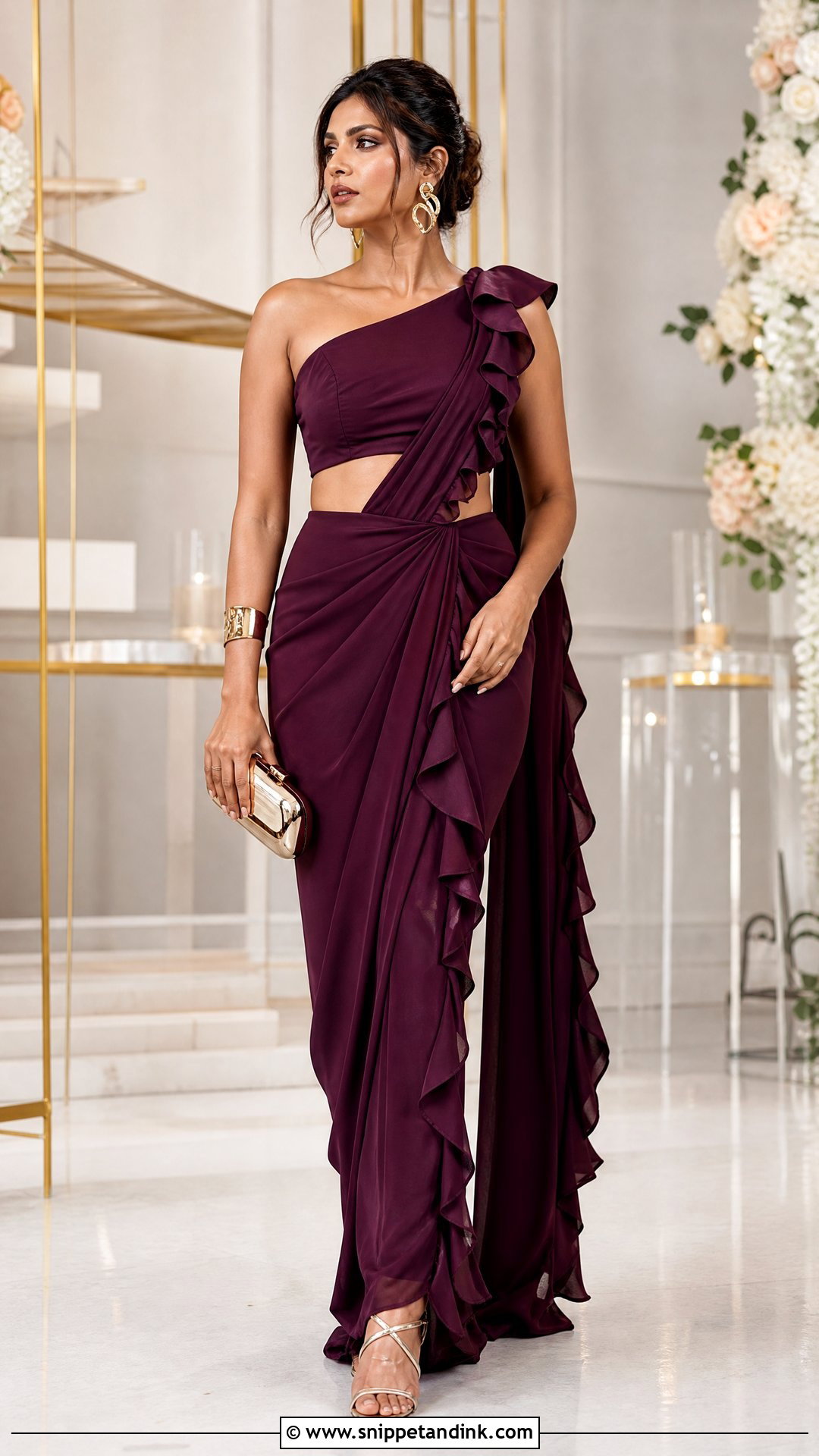
Ruffles on a saree read cocktail rather than ceremony, which is exactly the point. Start with a one-shoulder blouse in crepe, satin or georgette and a pre-draped saree with controlled ruffles along the pallu and hem. Wine, black, deep green or metallic grey all work in the evening. The fabric already moves, so jewelry stays focused: sculptural earrings, one cuff, a small metallic minaudière and strappy heels. Wear a clean ponytail or side-swept waves. Watch the ruffle volume near the shoulder; too much there swallows the neckline and makes the saree heavier to manage than it needs to be.
6. One Shoulder Draped Gown For Reception
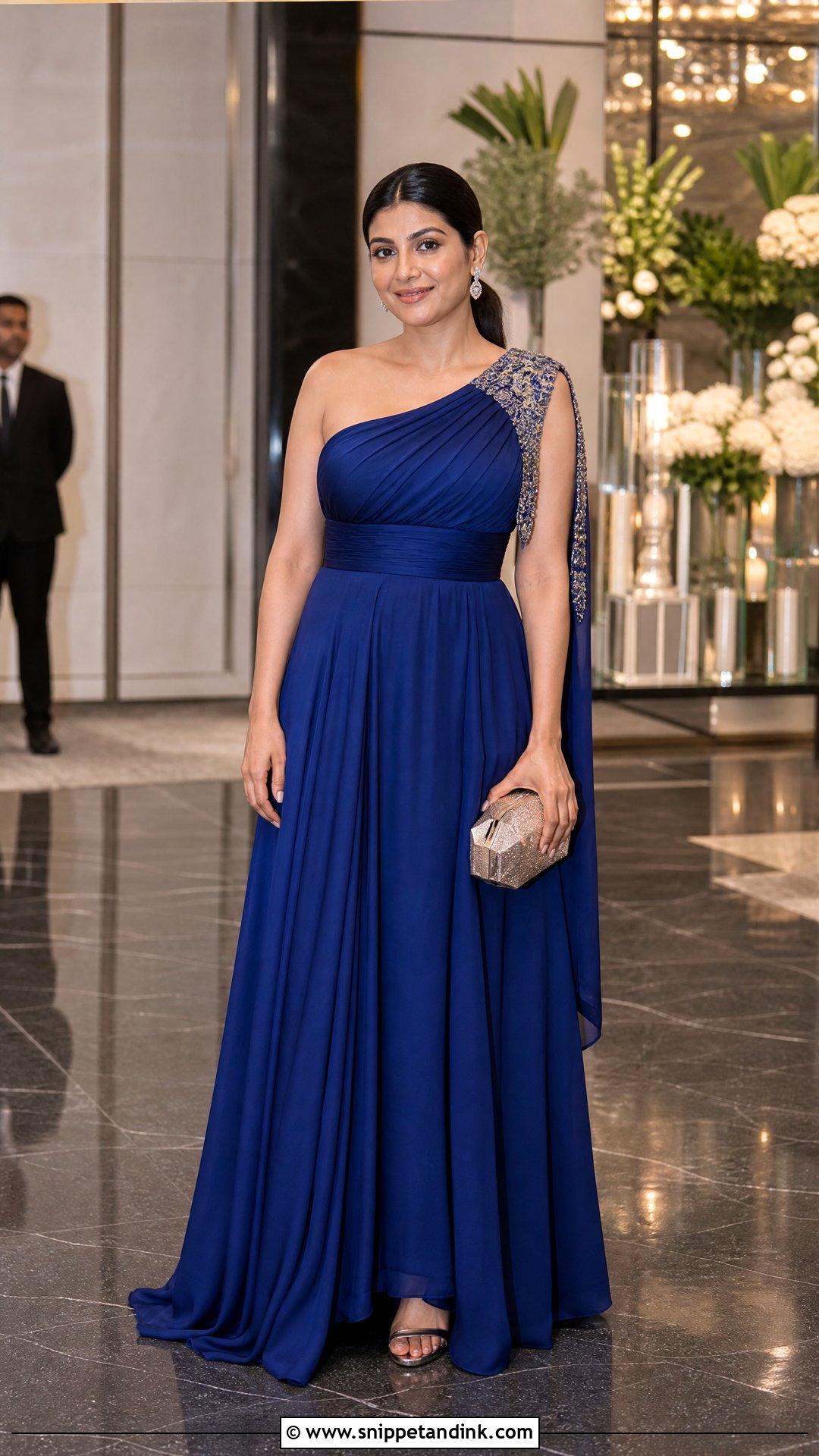
A softly draped one-shoulder gown gives the reception a contemporary feel with a subtle Indian touch. I’d choose floor length, gathered fabric across the bodice and a natural waist, in satin, crepe or a light silk blend. Cobalt, ruby, copper and smoky lavender all hold up in evening light. An embellished belt or embroidered shoulder panel adds the festive note. Metallic stilettos, a structured clutch and crystal drops. Sweep your hair to the other side, away from the decorated shoulder. Ask for built-in cups and an internal support band. The skirt should skim, not cling, so sitting and dancing stay easy.
7. One Shoulder Palazzo Set For Haldi
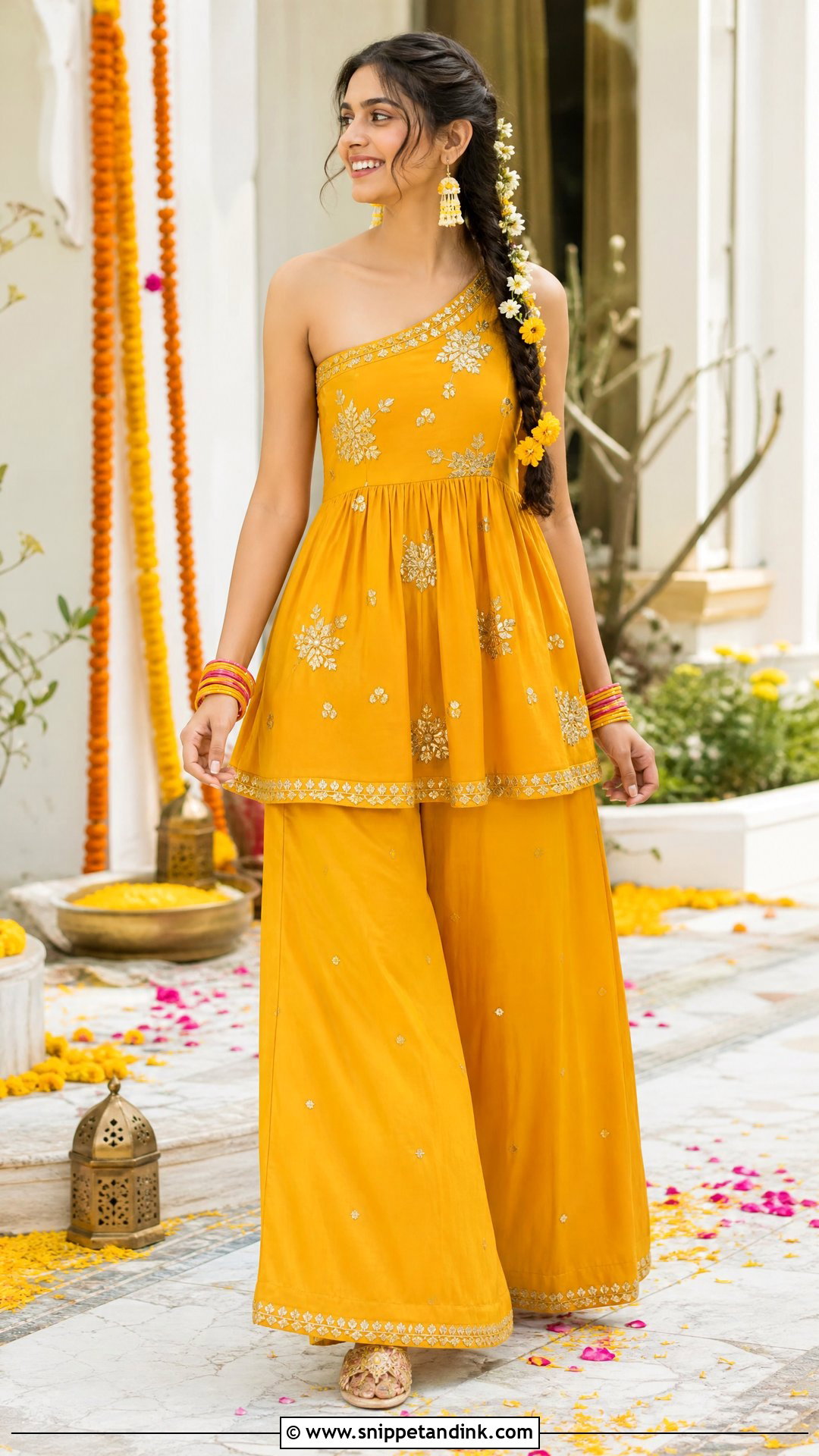
Haldi is messy by design, so I dress brides for it in things that can be stained. A cheerful one-shoulder palazzo set in yellow, mango or marigold, with a fitted upper section and a slight flare, keeps you covered when you sit on a low stool. Small florals, gota trim or a few mirrors are enough. Flat embroidered sandals, light earrings and bangles on one wrist only. A braided ponytail with a few flowers keeps hair out of the paste. Turmeric stains don’t wash out of silk easily, so choose a cotton blend or a print you won’t mind marking, and keep any shoulder drape short.
8. One Shoulder Dhoti Set For Mehendi
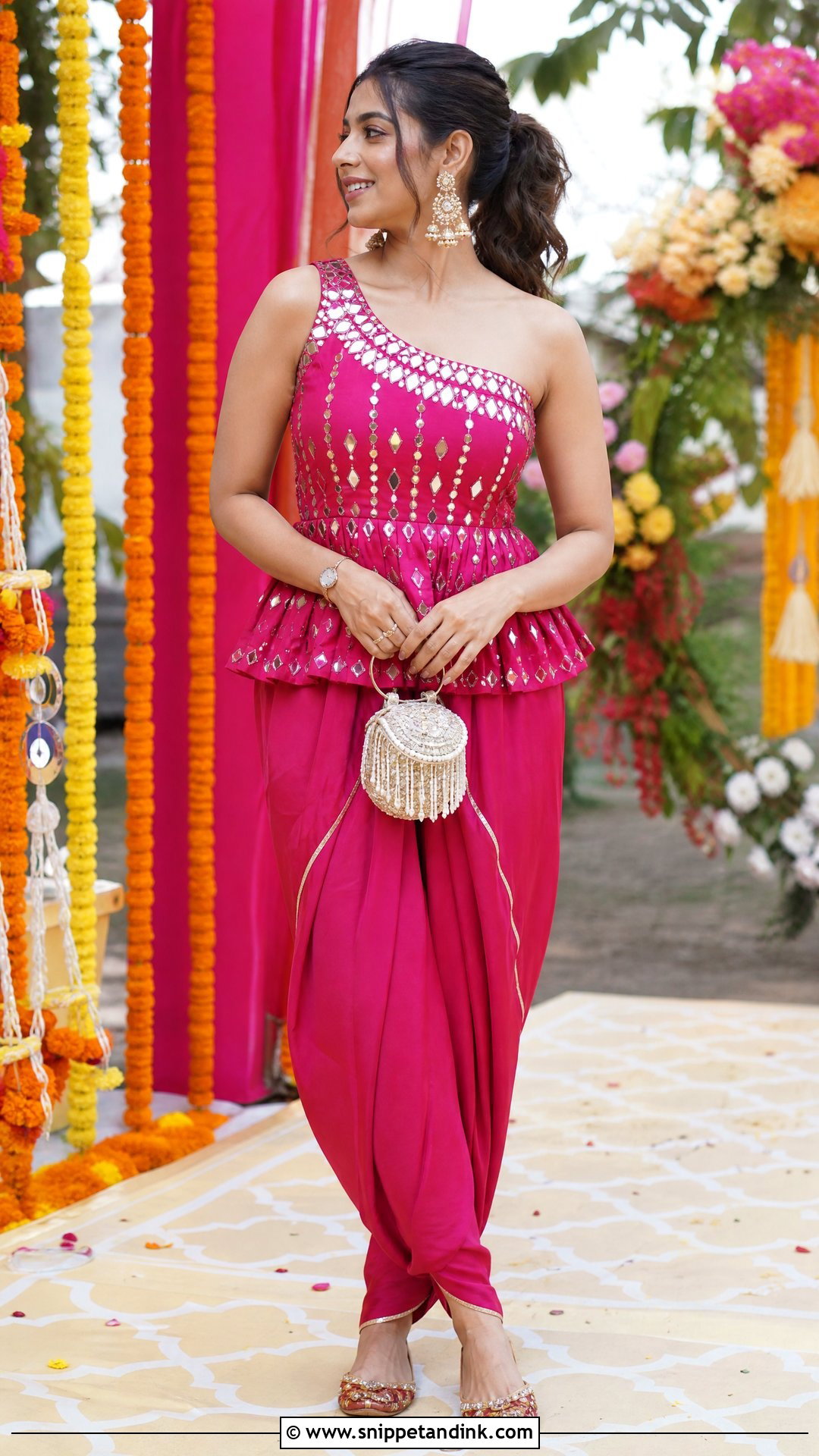
Pairing a one-shoulder peplum top with tailored dhoti pants gives the mehendi a youthful, fashion-forward feel. I’d choose breathable fabric in fuchsia, aqua, orange or leafy green with restrained mirror work at the shoulder and waist. The dhoti should be roomy through the hips and neatly tapered at the ankle. Embellished juttis or low block sandals, shoulder-grazing earrings and a small wristlet. A textured ponytail or loose braid suits it. Sit down in the fitting room and check the pleats; badly set dhoti pleats twist sideways the moment you sit.
9. One Shoulder Cape Lehenga For Sangeet
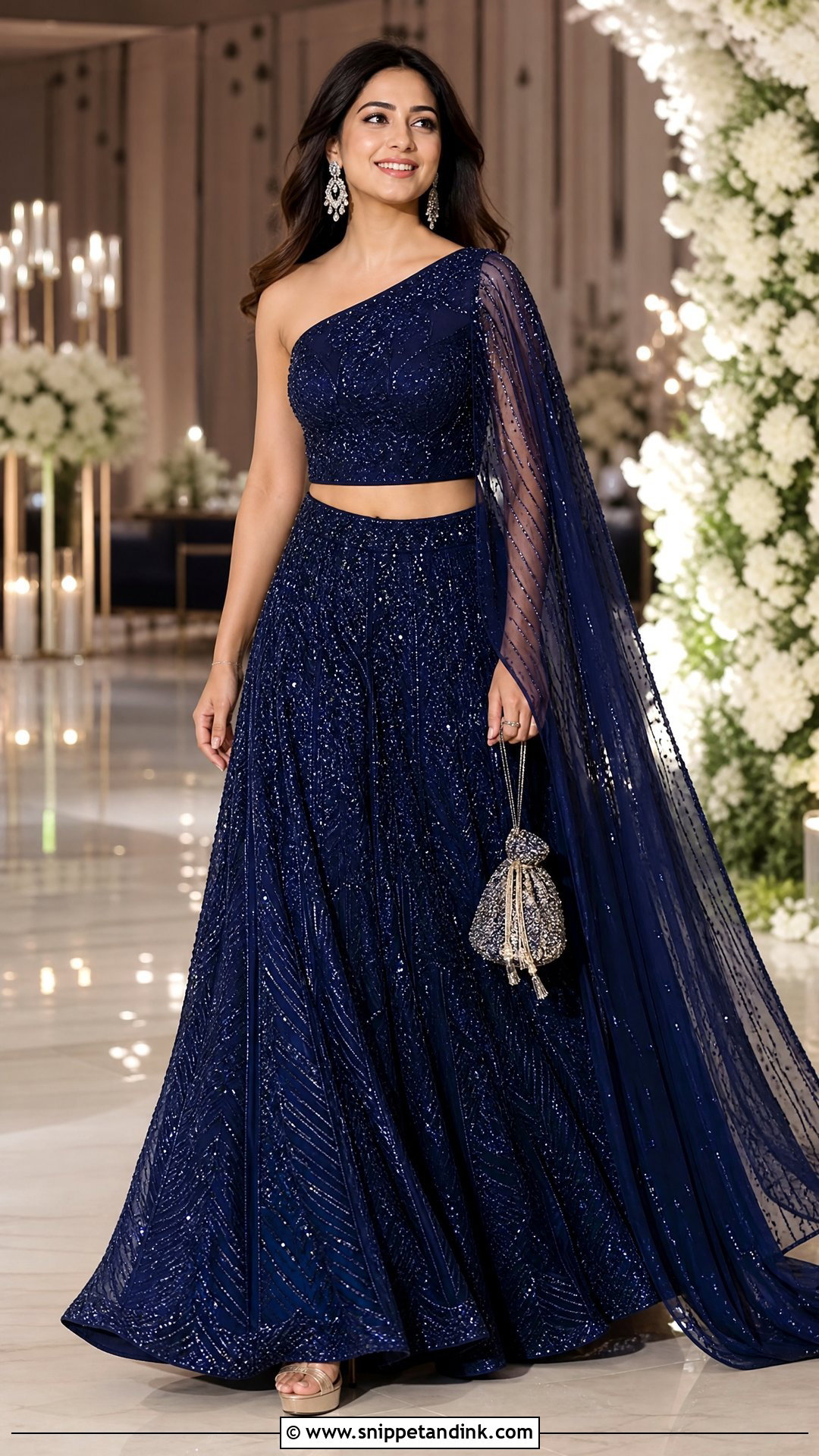
A detachable cape replaces the dupatta and gives a lehenga movement you can control. Pair a fitted blouse and flowing skirt in one color family with a sheer cape covered in sequins, crystals or fine embroidery, falling to the hip or all the way down the back. Sapphire, plum, rose gold and deep teal suit a sangeet. Platform sandals, a jeweled potli and statement earrings, but very few bracelets, since they catch in sheer fabric. A sleek bun or high ponytail shows the shoulder construction. Spin and raise your arms at the fitting; the attachment point should not shift.
10. One Shoulder Mirror Work Lehenga
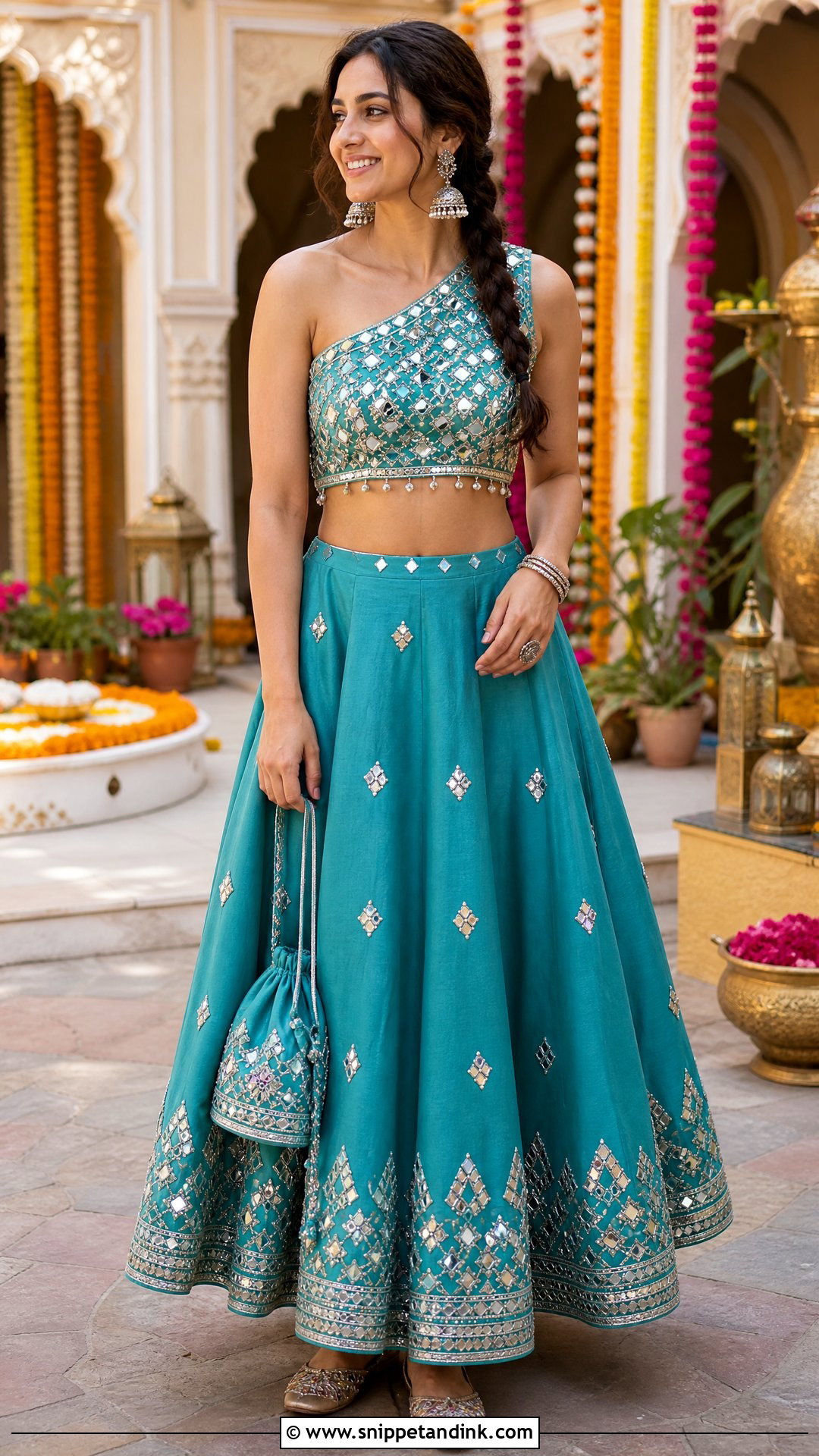
Mirror work makes a one-shoulder lehenga sparkle in daylight and candlelight alike. I prefer mirrors placed around the neckline, strap and waist rather than all over, with a skirt of spaced motifs and a clean border. Pink, turquoise, violet and lime feel joyful; navy is the formal alternative. Silver-toned jhumkas, embroidered juttis and a simple potli. Skip the heavy necklace, which competes with the reflective neckline. Turn the blouse inside out before you buy. The backs of mirror work can be rough, and on a bare shoulder that rubs raw over a long evening unless it’s properly lined.
11. One Shoulder Sequin Lehenga For Reception
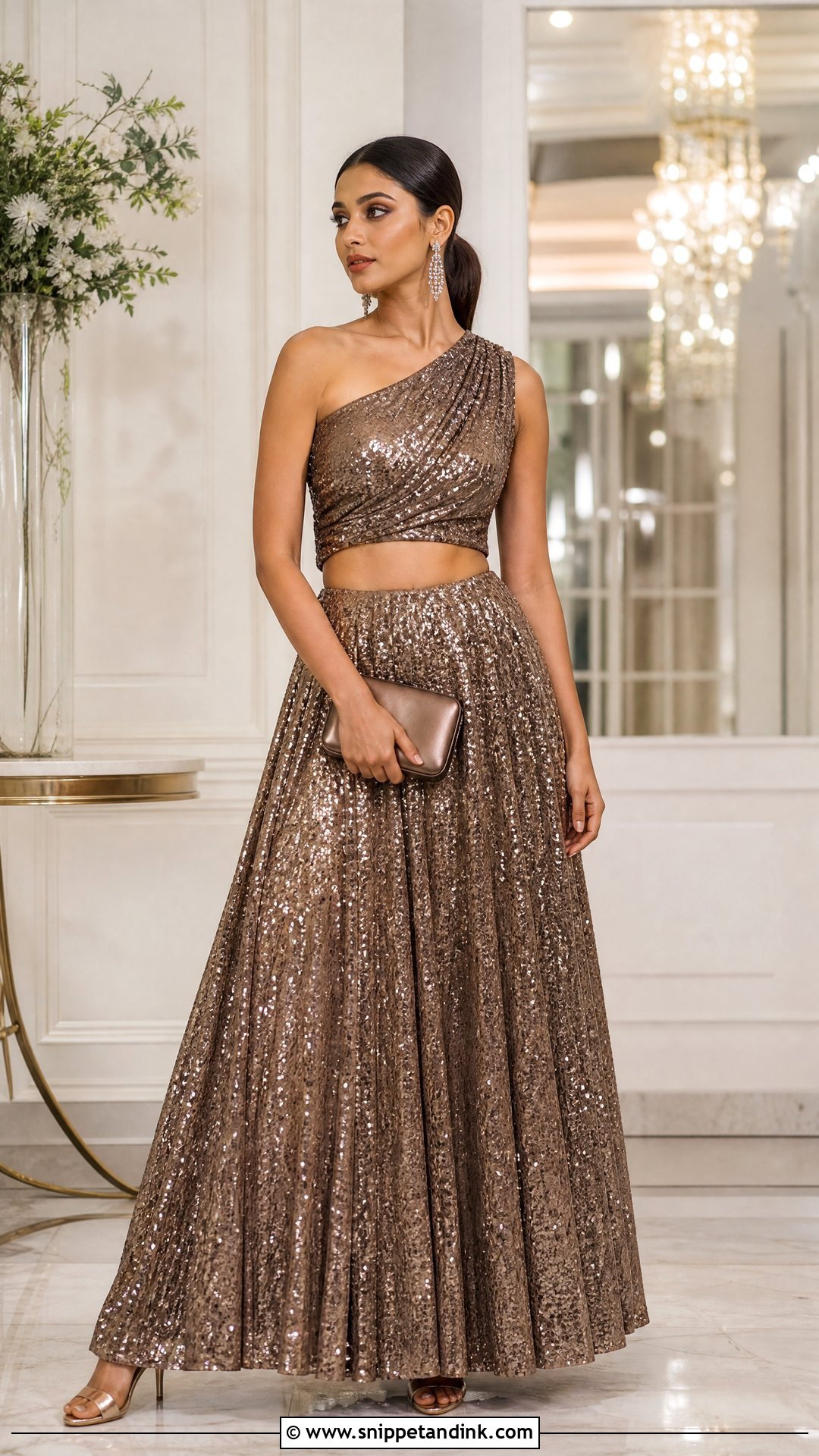
Sequins carry a reception on their own. In a monochrome one-shoulder lehenga, bronze, pewter, navy, burgundy or emerald, the shine looks expensive rather than busy. A fitted asymmetric blouse with a softly flared skirt catches light as you move. Make sure the sequins are sewn on lightweight net or georgette, because a stiff heavy base gets uncomfortable fast. Slim metallic heels, a satin clutch and crystal earrings, with a smooth low ponytail. No stacked bangles or big necklaces. Sequins snag on rough bag clasps and claw-set rings, so carry a smooth bag.
12. One Shoulder Floral Lehenga For Day Wedding
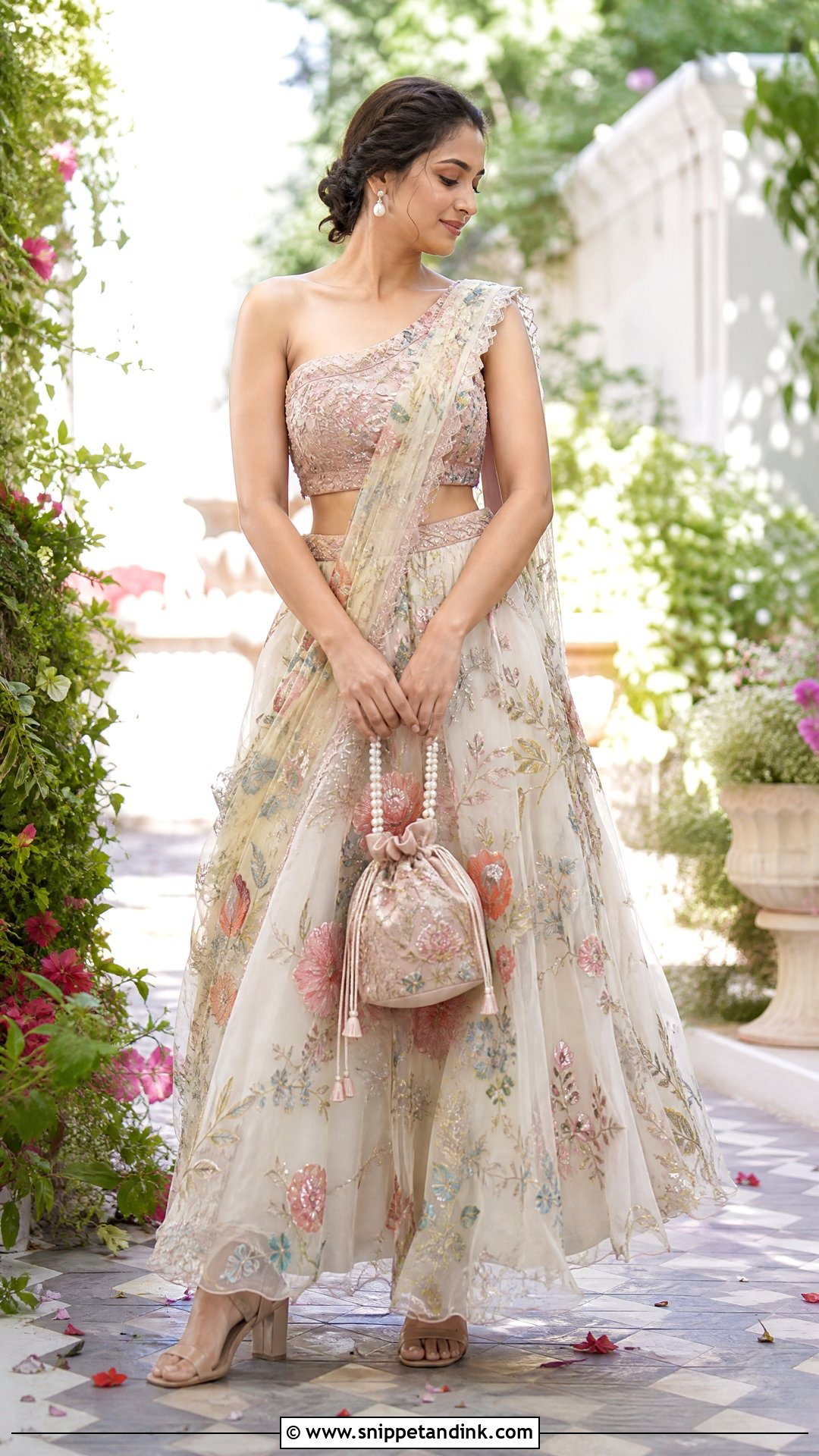
Floral embroidery suits a one-shoulder lehenga for a garden or daytime wedding. Start with blush, mint, powder blue or peach and colorful threadwork, then pair a fitted asymmetric blouse with an airy organza or georgette skirt. A narrow attached drape can fall over the shoulder and down the back without covering the flowers. Nude block heels, pearl or meenakari earrings and a pastel potli. Loose waves or a braided bun, with fresh makeup. Scale matters: very large motifs can overwhelm a petite frame, while tiny ones disappear on a tall bride.
13. One Shoulder Velvet Lehenga For Winter Wedding
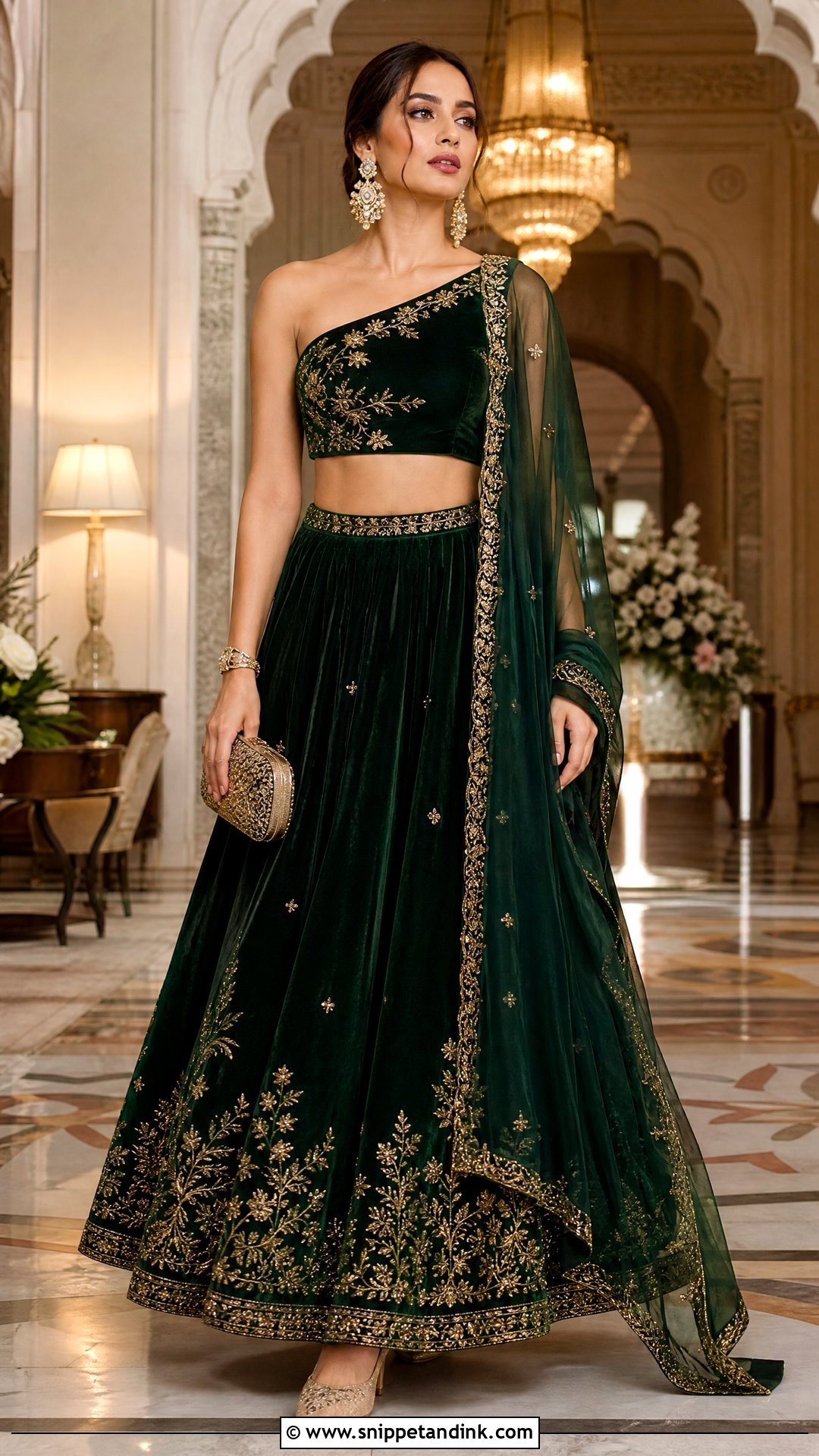
Velvet is my go-to for a winter wedding, though it behaves differently from any other fabric here. It adds visual volume and holds heat. A fitted one-shoulder blouse in maroon, forest green, navy or aubergine with a matching or complementary skirt, embroidered at the neckline, waist and hem, keeps it defined. A sheer attached drape gives movement and optional coverage. Closed-toe block heels, antique-finish earrings and a structured clutch. A neat low bun keeps hair off textured embroidery. Choose a controlled flare rather than a huge skirt, and insist on proper lining so the velvet sits smoothly all evening.
14. One Shoulder Silk Saree Gown
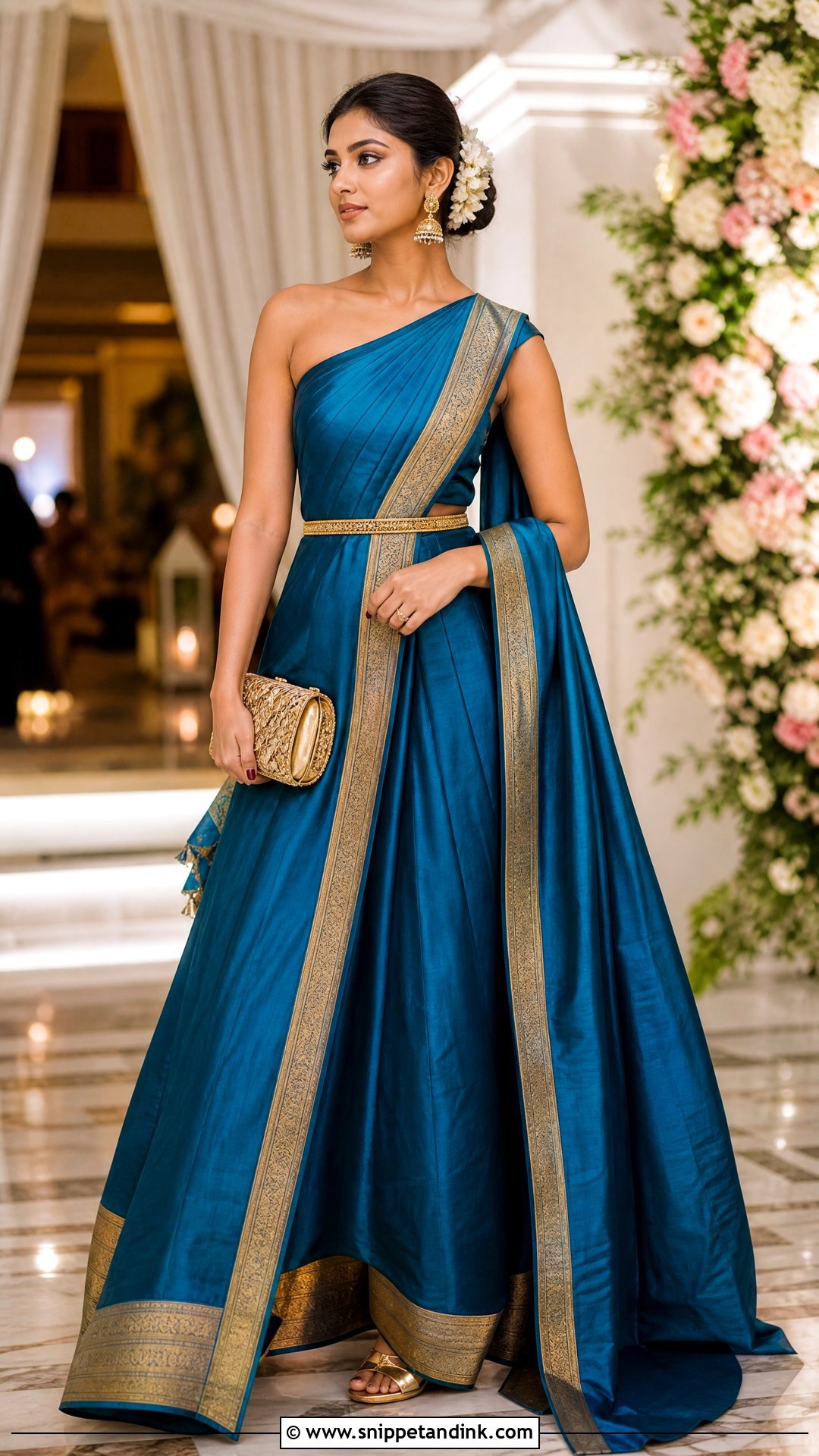
Silk saree gowns look the most traditional of the gown options. I look for diagonal pleating on the bodice and a skirt cut to resemble saree folds, in ruby, peacock blue, purple or emerald with woven gold borders. Gold heels, a brocade clutch and traditional jhumkas. A slim belt holds the drape and defines the waist. Wear a bun with small flowers or side-swept waves. Silk slides, so ask how the shoulder is anchored; internal hooks and a grip band are what keep a silk one-shoulder from creeping. A lightweight pallu stays put without pulling the neckline.
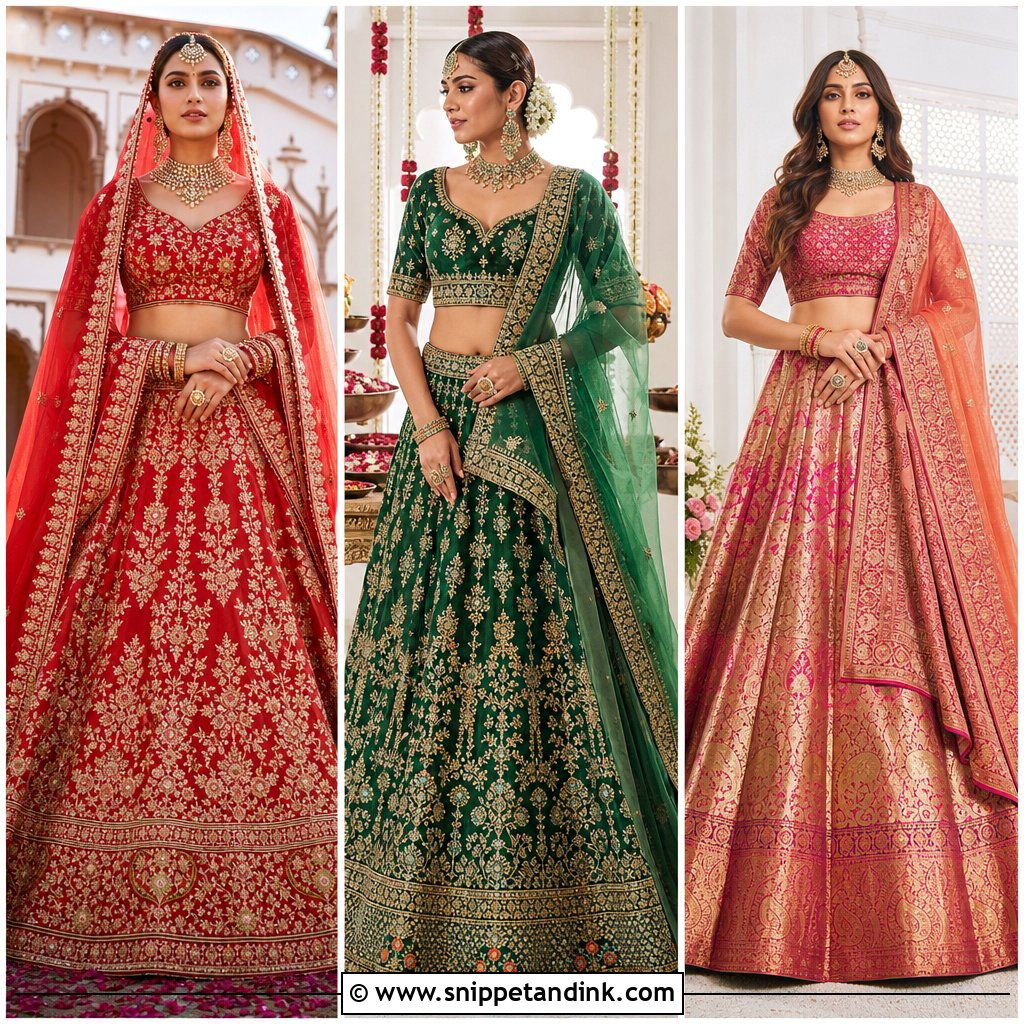


15. One Shoulder Red Bridal Lehenga
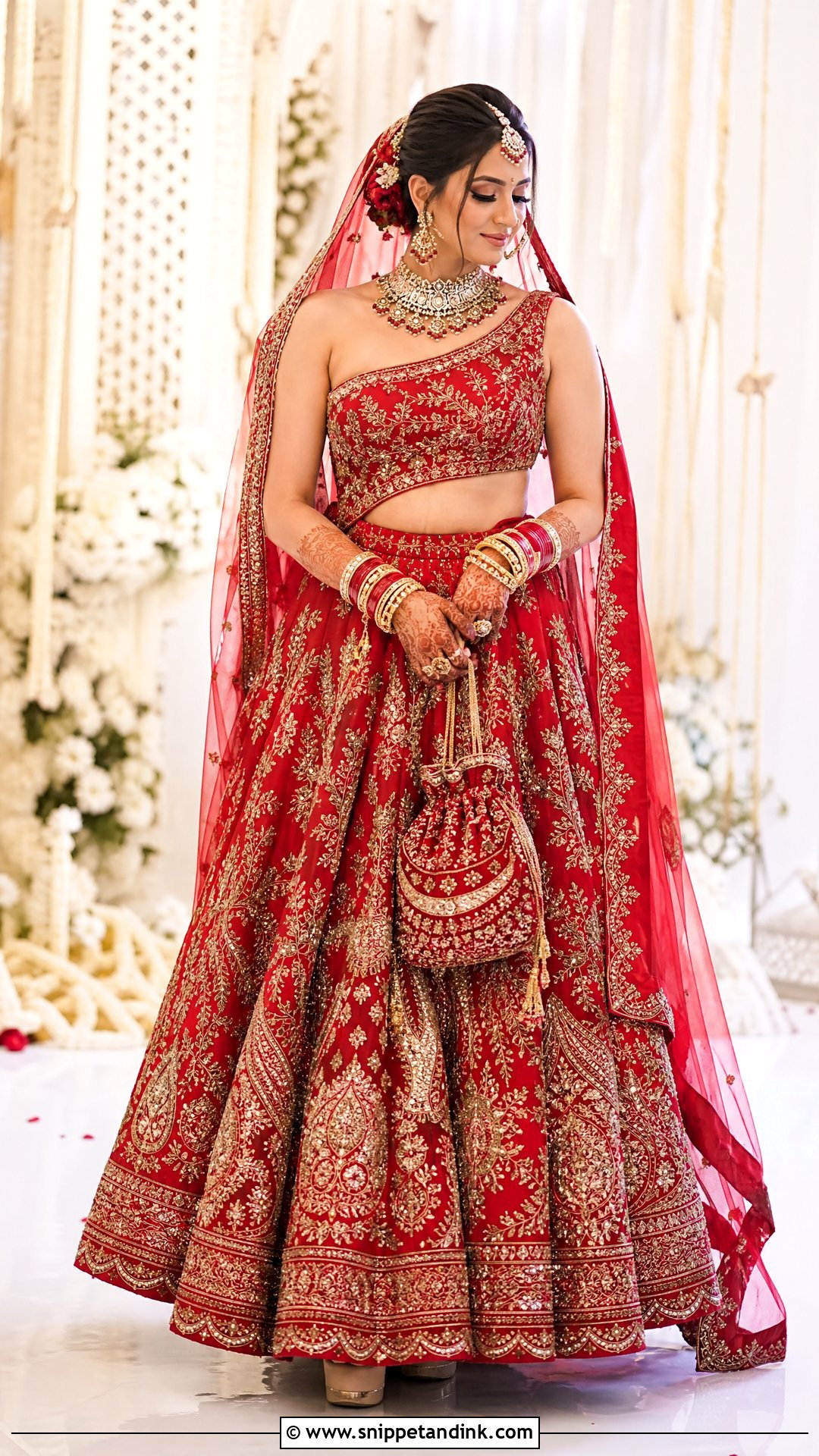
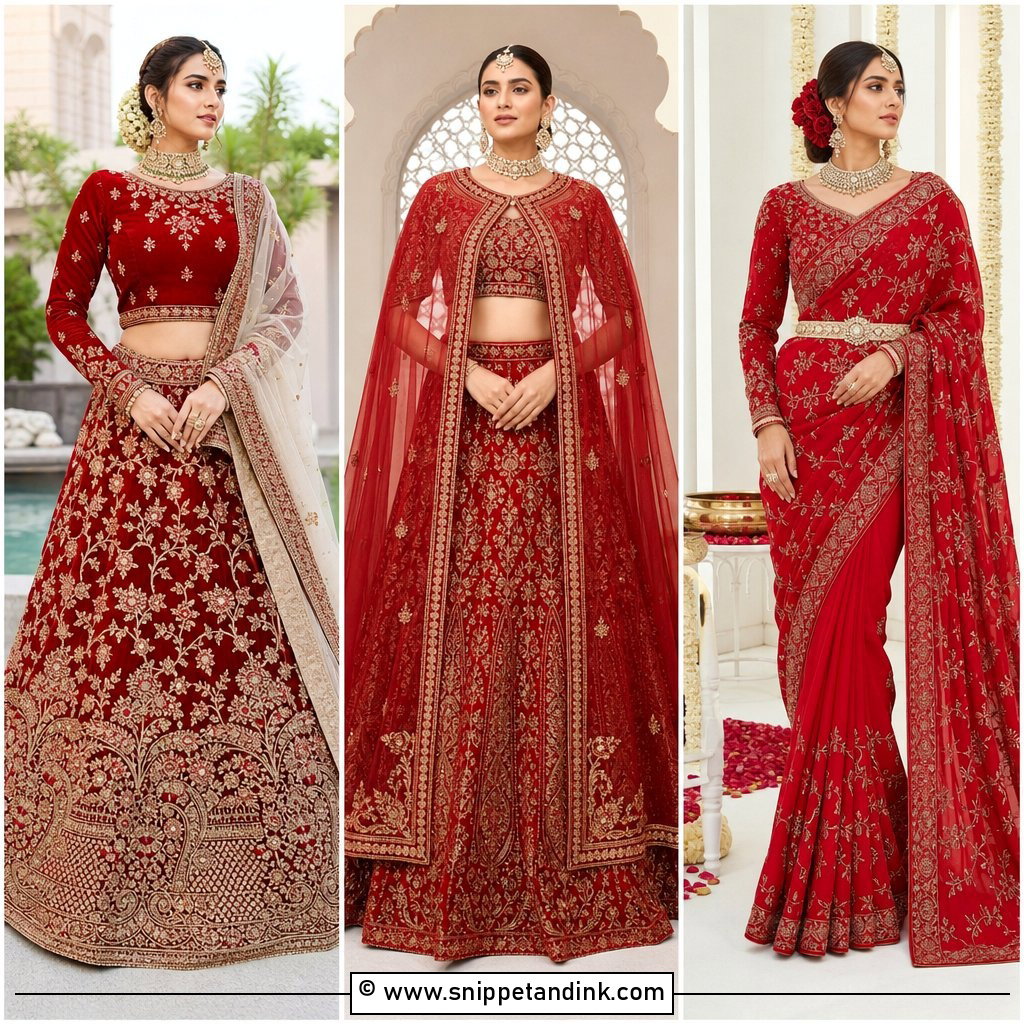
Red one-shoulder bridal lehengas are still rare, and it’s the modern touch on the most traditional color. A supportive blouse with embroidery following the diagonal neckline balances a full skirt of zari, beadwork or thread motifs. The dupatta can go over the head for the ceremony and around the arms later, without hiding the line. Platform heels, a structured potli and layered jewelry. If you wear a necklace, choose one that sits close and stops before the diagonal edge. A sleek bun anchors hair accessories and the veil. Do one complete fitting with the jewelry and dupatta on together, since the combined weight shifts everything.
16. One Shoulder Ivory Bridal Gown
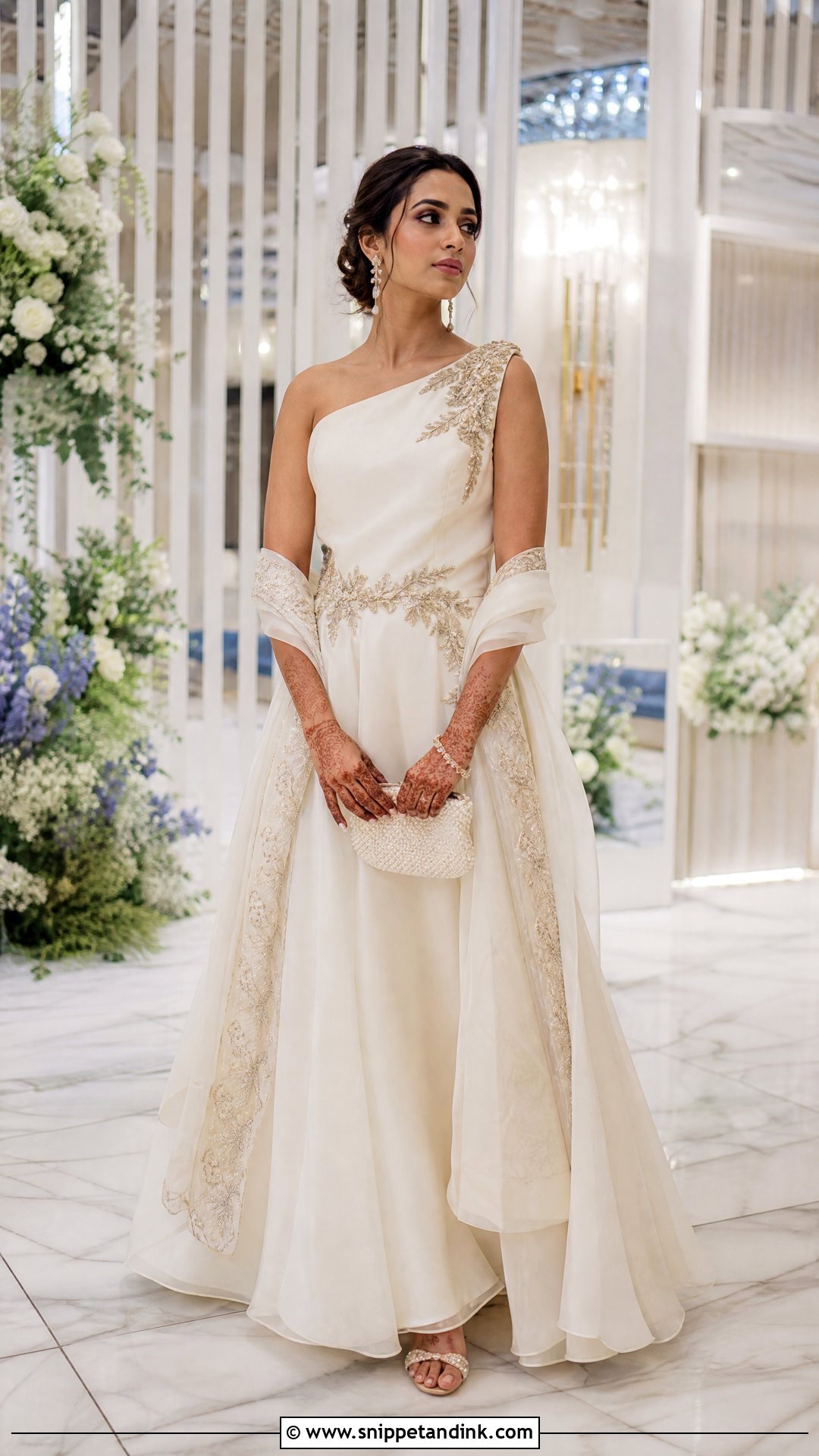
Ivory works for a fusion reception or a multicultural wedding where one outfit has to feel familiar to both families. Choose an A-line or fit-and-flare one-shoulder gown with Indian embroidery at the shoulder, bodice and waist in pearls, crystals, silver thread or pale gold. Embellished ivory heels, a pearl clutch and refined drops. A detachable embroidered dupatta brings traditional character to photos and comes off for dancing. Hair can go in a low textured bun or smooth waves behind the bare shoulder. Ivory has many undertones, so check yours against your skin in daylight and indoor light before choosing makeup.
17. One Shoulder Pastel Lehenga
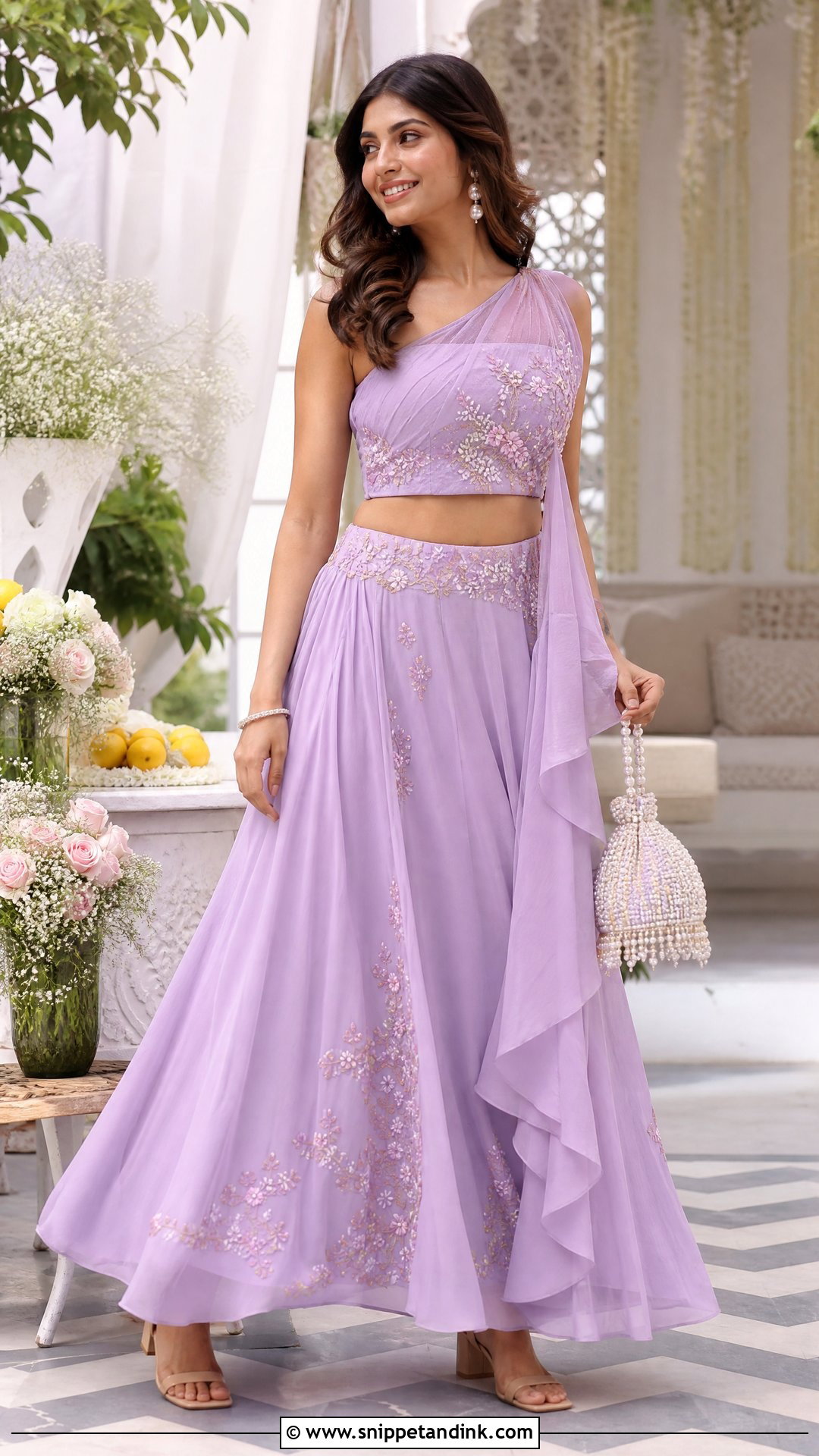
Pastels soften the bold diagonal line. Lavender, pistachio, powder blue and rose suit an engagement, a daytime reception or family functions. A fitted blouse with a flowing skirt in delicate sequins, florals or pearls, plus a sheer shoulder panel instead of a heavy dupatta. Nude block heels, a beaded potli and pearl or pale stone earrings, with loose curls or a soft braided bun. The risk with pastels is looking washed out in photos, especially under warm tent lighting. I fix that with one stronger element: a deeper lip, contrasting earrings or a metallic waist border.
18. One Shoulder Emerald Green Gown
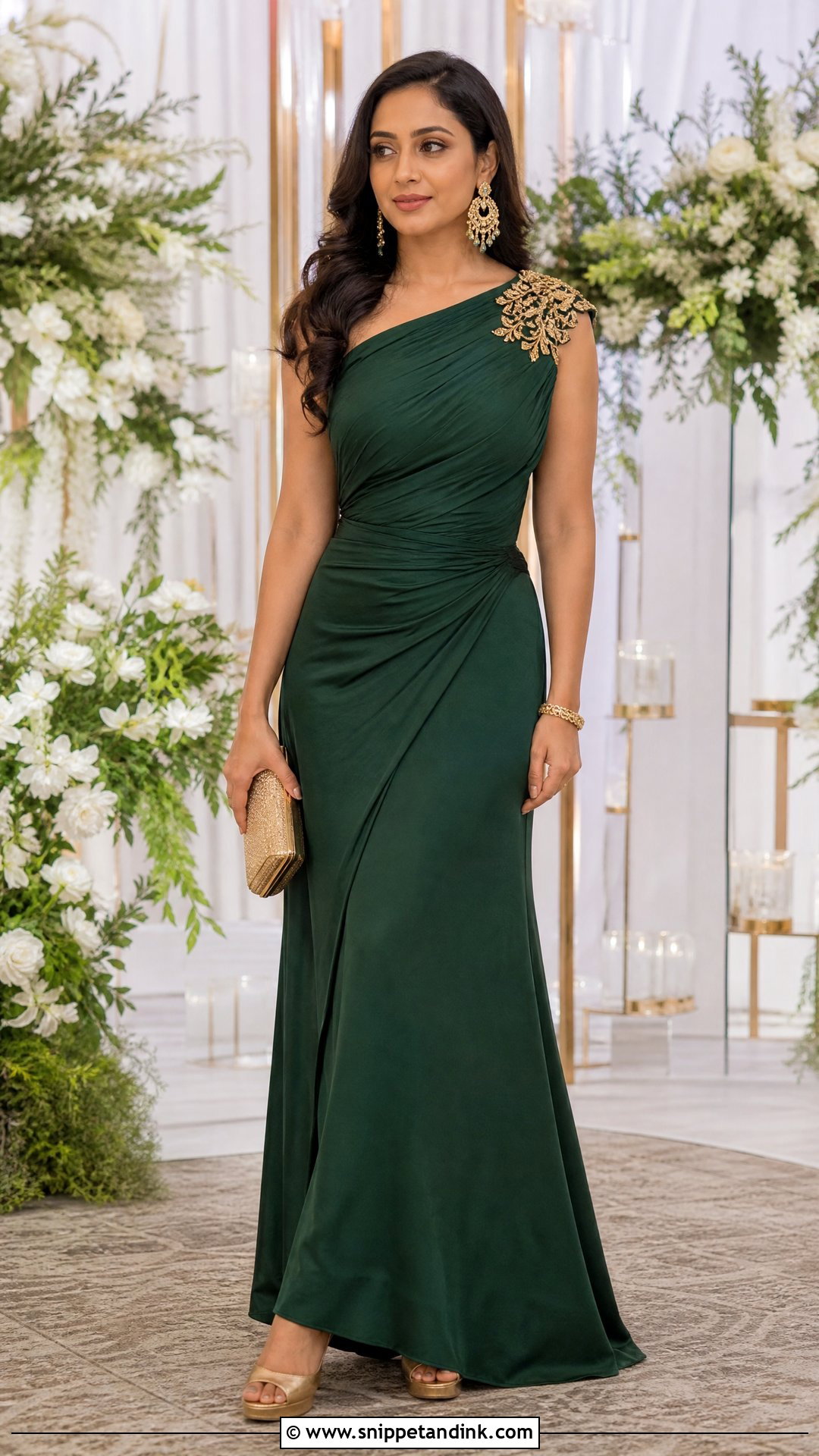
Emerald does the work on its own. A draped one-shoulder bodice with an embroidered shoulder and a long skirt falling from the waist, enriched with gold zari, antique beadwork or tonal sequins, needs little help. Gold block heels, a matching minaudière and chandelier earrings. A bracelet on the bare arm spreads the interest across the outfit; skip the large necklace if the shoulder is busy. A center-parted low bun or glossy side waves. A fabric with a little stretch makes a long evening far more comfortable, and leave enough skirt room to walk.
19. One Shoulder Navy Blue Sharara
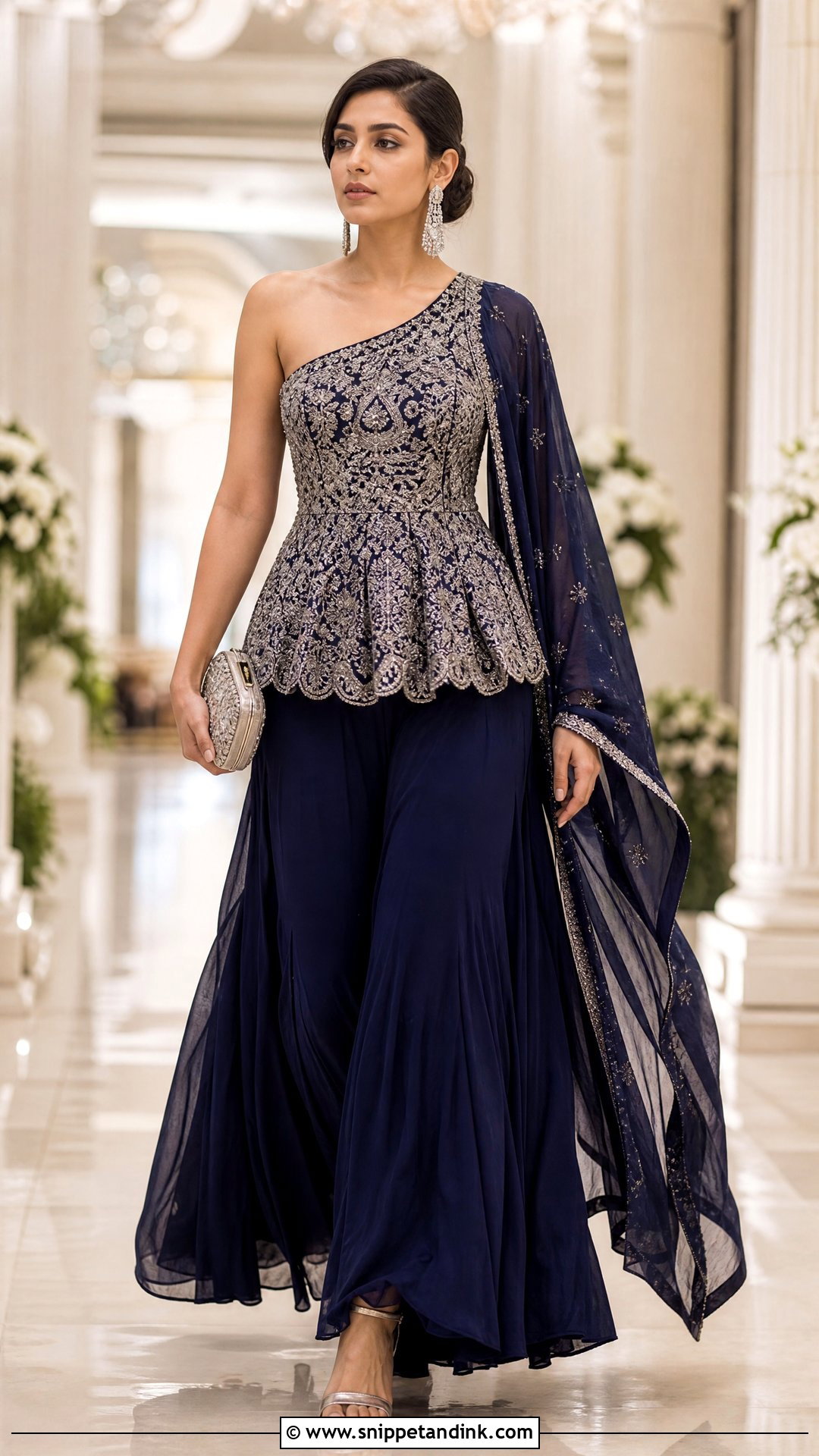
Navy is the color I suggest to a bride or guest who finds bright Indian palettes too much. A fitted one-shoulder peplum with flowing sharara pants in georgette, crepe or light silk shows off silver embroidery, crystals or tonal beading clearly. An attached drape from the shoulder adds movement. Silver heels, a compact embellished clutch and long earrings, with a sleek ponytail or side-parted bun. Add soft pink or icy blue through the bag or stones for contrast. Have the sharara hemmed in the shoes you’ll wear, because wide legs that are even slightly long catch under a heel.

20. One Shoulder Plus Size Lehenga
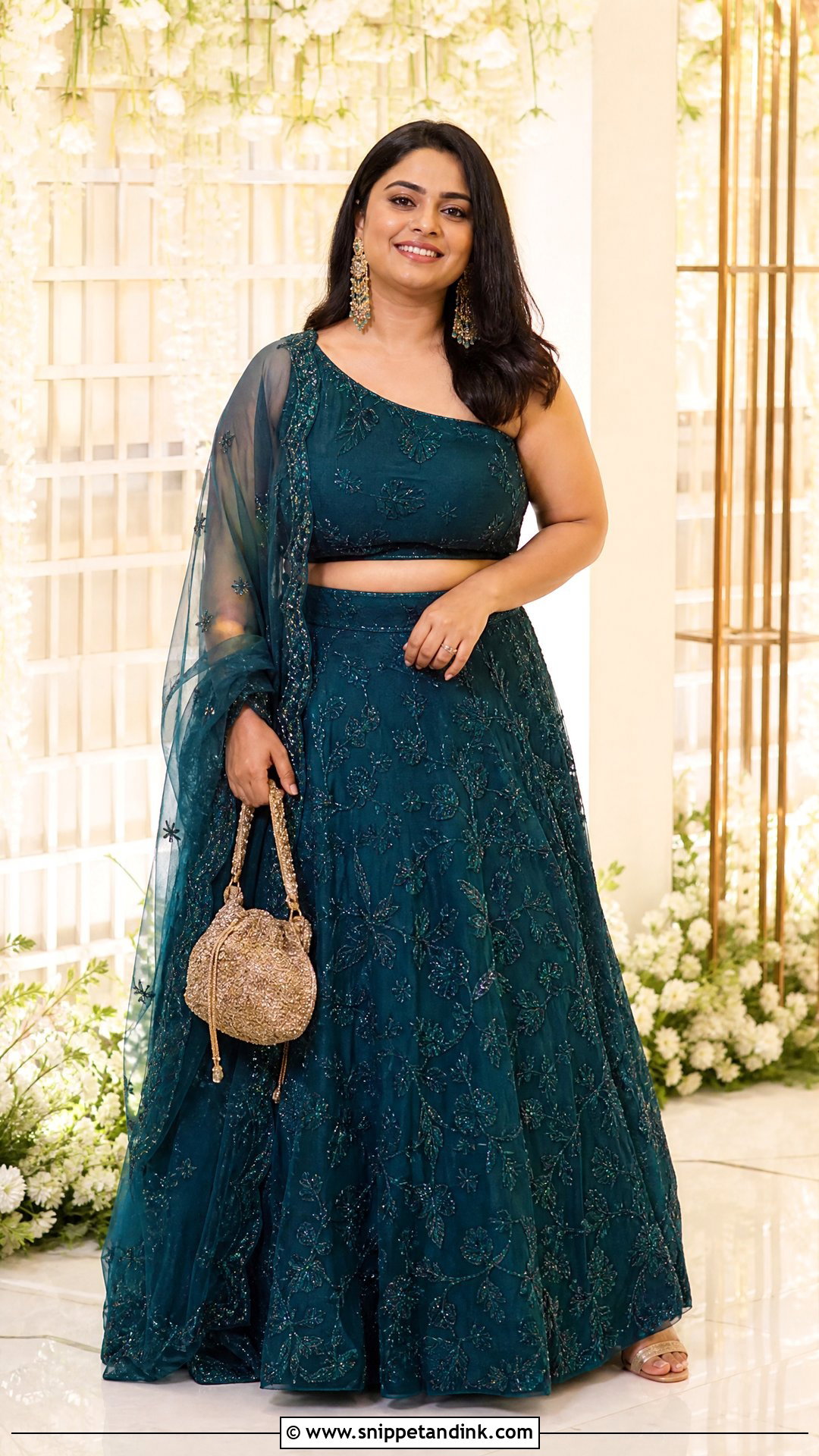
A one-shoulder lehenga can suit a plus-size figure very well when the support is right. I start there: comfortable lining, secure structure and a blouse length that meets the skirt where you want it. A diagonal neckline with a wide shoulder panel feels much more stable than a thin strap. Pair it with a high-waisted A-line skirt that skims the hips. Deep teal, berry, cobalt and warm metallics are strong choices. Block heels, statement earrings and a structured potli. Keep any shoulder drape light, without extra fabric at the bust, and tailor everything in the exact undergarments and shoes you’ll wear.
Which Functions Suit a Bare Shoulder, and Which Need a Plan B
In many families, a one-shoulder outfit is welcome at the sangeet, cocktail and reception but feels too bare for the pheras, nikah or anand karaj, or for a temple or gurdwara. Talk it through with the people whose opinion you care about before ordering, not at the final fitting.
If you love the cut but expect a more conservative ceremony, plan coverage into the outfit rather than adding it at the last minute. A dupatta pinned across the bare shoulder, a matching sheer cape or a detachable sleeve on the open side can all be designed with the blouse so they look intentional.
Hair and jewelry on the bare side
With one shoulder exposed, I usually sweep hair toward the covered side and put the strongest earring on the bare side, so the eye travels across. Heavy maang tikka and passa sets still work, but long rani haar necklaces fight the diagonal; a short choker or no necklace at all reads cleaner. For the mehendi, remember that the bare arm will show your henna in every photo, so ask your artist whether to carry the design higher up the arm.
One Bare Shoulder, Every Function Covered
A good one-shoulder outfit is equal parts drama and engineering. Lehenga, sharara, saree gown or bridal ensemble, the construction underneath decides whether you enjoy the night or spend it adjusting. Secure the shoulder, tailor the hem and test every outfit sitting, walking and dancing. When the neckline is heavily worked, skip the necklace and let earrings or a bracelet carry the balance. Keep a detachable cape or dupatta for the moments when you want coverage. Planned that way, the asymmetric line fits every ceremony, season and size without losing the richness of Indian occasion wear.
You'll Like These Ideas:









Leave a Reply