
In a bridal lehenga, the choli is the piece that does the hardest work. It holds up a heavy dupatta, sits under layered jewelry, and has to let you raise your arms for every ritual without riding up. When I plan a bride’s outfit, I settle the choli first and let the skirt, drape and accessories follow from it. Below are twenty directions, from classic red zardozi and maroon velvet to pastels, regional textiles, corset shapes and a personalized back panel. Statement sleeves, bold necklines and contrast colors are all popular right now, but every idea here can be adjusted for your season, your family’s customs and how much coverage you want.
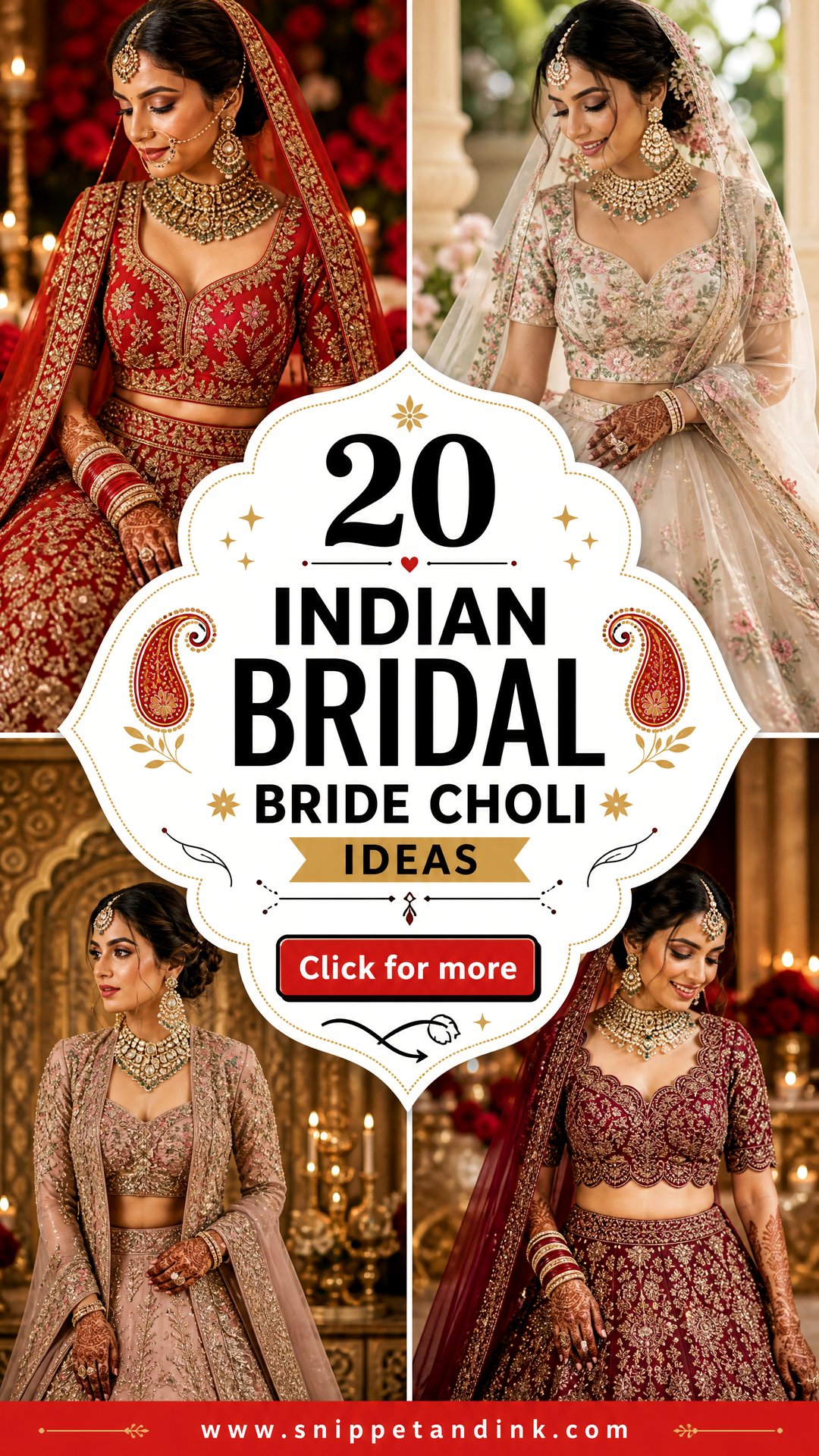
Briefing Your Tailor on the Parts of a Choli Nobody Sees
The embroidery gets all the attention at the boutique, but whether a bridal choli feels secure for ten hours comes down to construction hidden inside it. These are the points I go through with the tailor before any cutting begins.
- Support: decide between sewn-in cups, light padding or a fully structured, boned bodice. Heavy necklaces and a pinned dupatta pull on the front all day, so the heavier the outfit, the more structure you need.
- Lining: ask for a soft cotton or cotton-silk lining against the skin. Embroidery backing is rough, and synthetic linings get clammy under lights.
- Closure: back hooks give the closest fit, a side or back zip is quicker to get into, and dori ties add adjustability if your weight may change before the wedding.
- Margins: request generous seam allowance inside the side seams so the blouse can be let out or taken in after the final fitting.
- Length: the blouse hem should meet the lehenga waist where you want it to, with the skirt on, so you don’t discover a gap only when you sit.
Bring the actual lehenga and, if possible, the main necklace to the first fitting. A neckline that looks right on its own can sit too high or too low once the jewelry is on.
1. Red Zardozi Bridal Choli With Lehenga
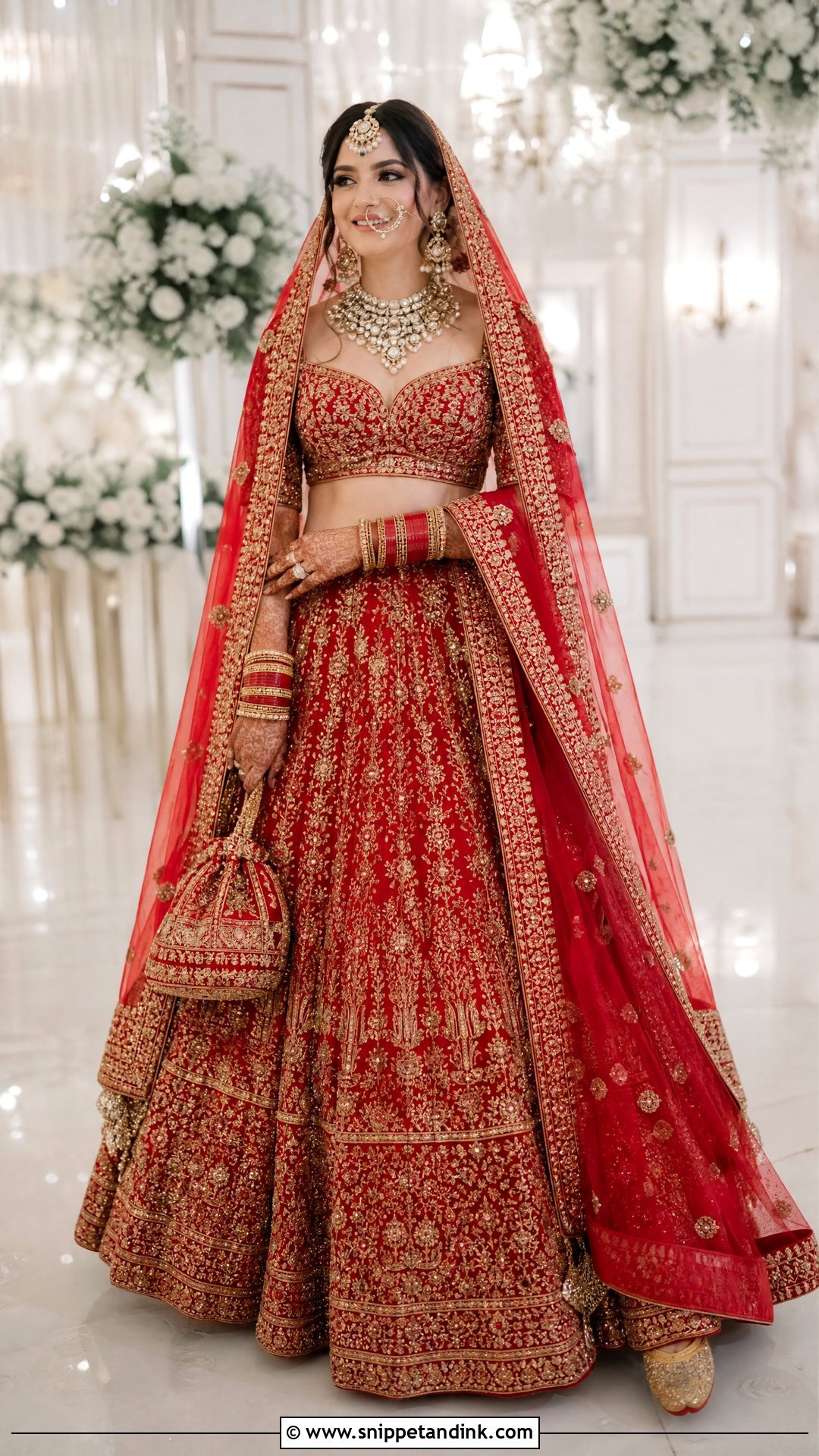
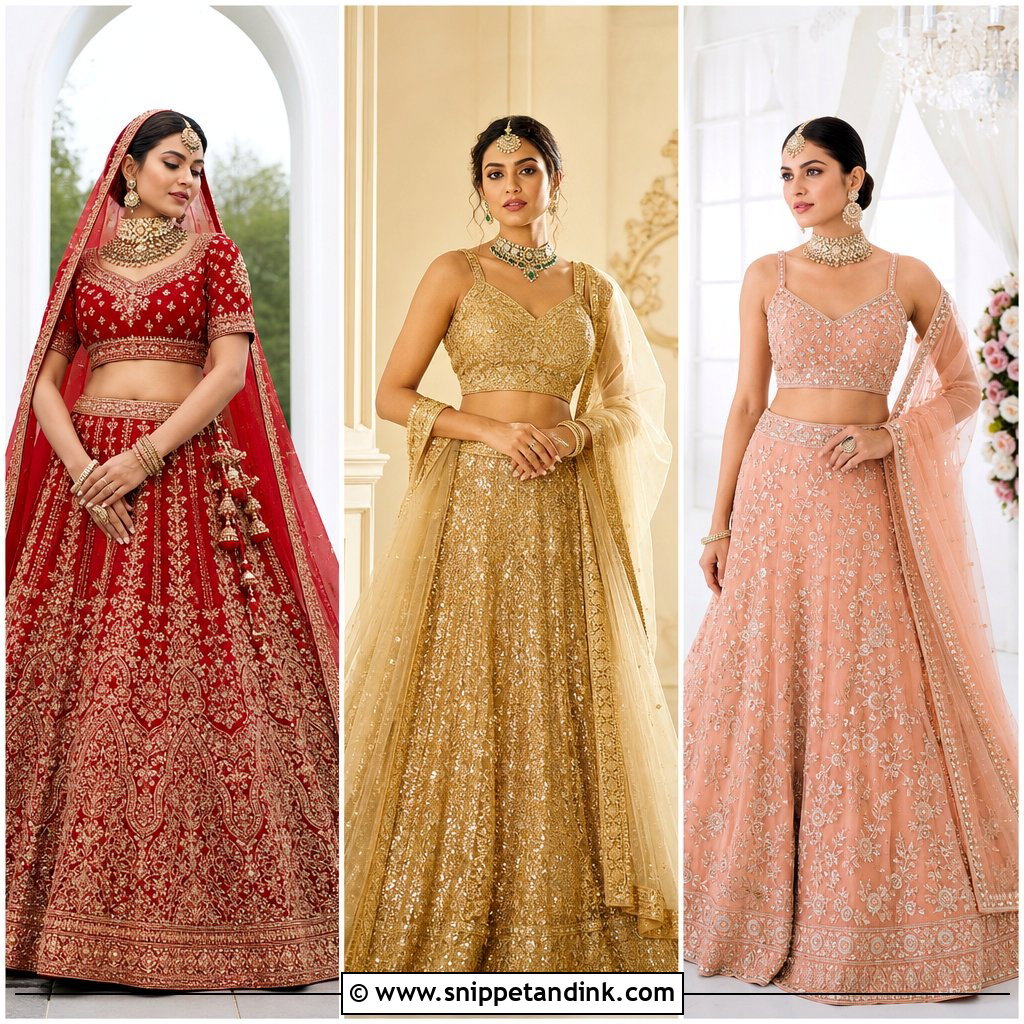
A red zardozi choli with a matching lehenga is the look most families picture, and the way to keep it from feeling heavy is restraint in the blouse. Antique gold zardozi, dabka and beadwork give depth without a wall of sequins. A sweetheart or gently curved neckline frames a kundan choker well. Carry one or two motifs from the blouse into the lehenga border so the pieces read as a pair. For the classic double drape, a sheer red dupatta goes over the head and a lighter one across a shoulder. Gold juttis, a structured potli, stacked bangles and a center-parted bun finish it. Want more coverage? Elbow sleeves keep the same ceremonial feel.
2. Maroon Velvet Bridal Choli With Full Sleeves
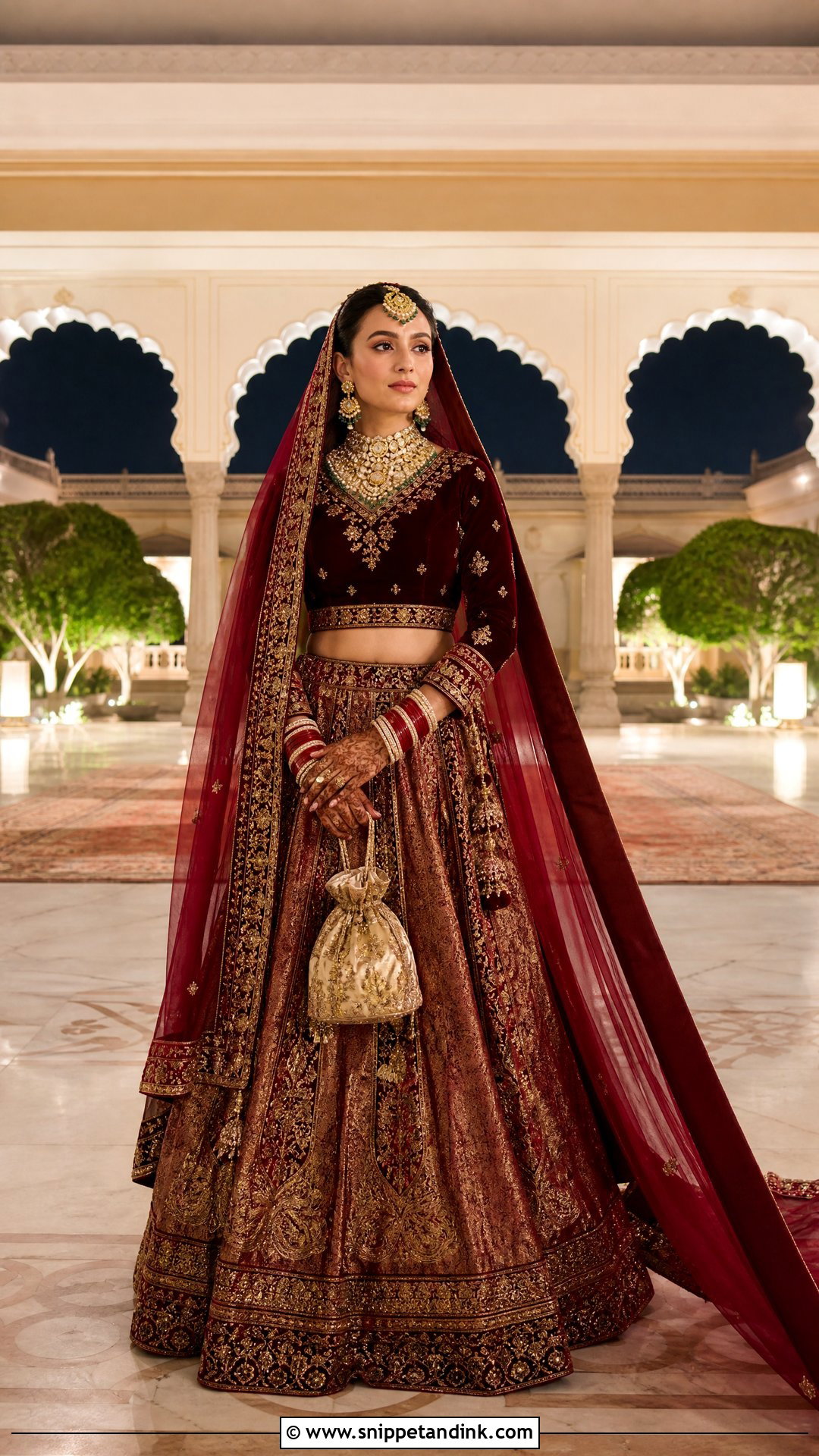
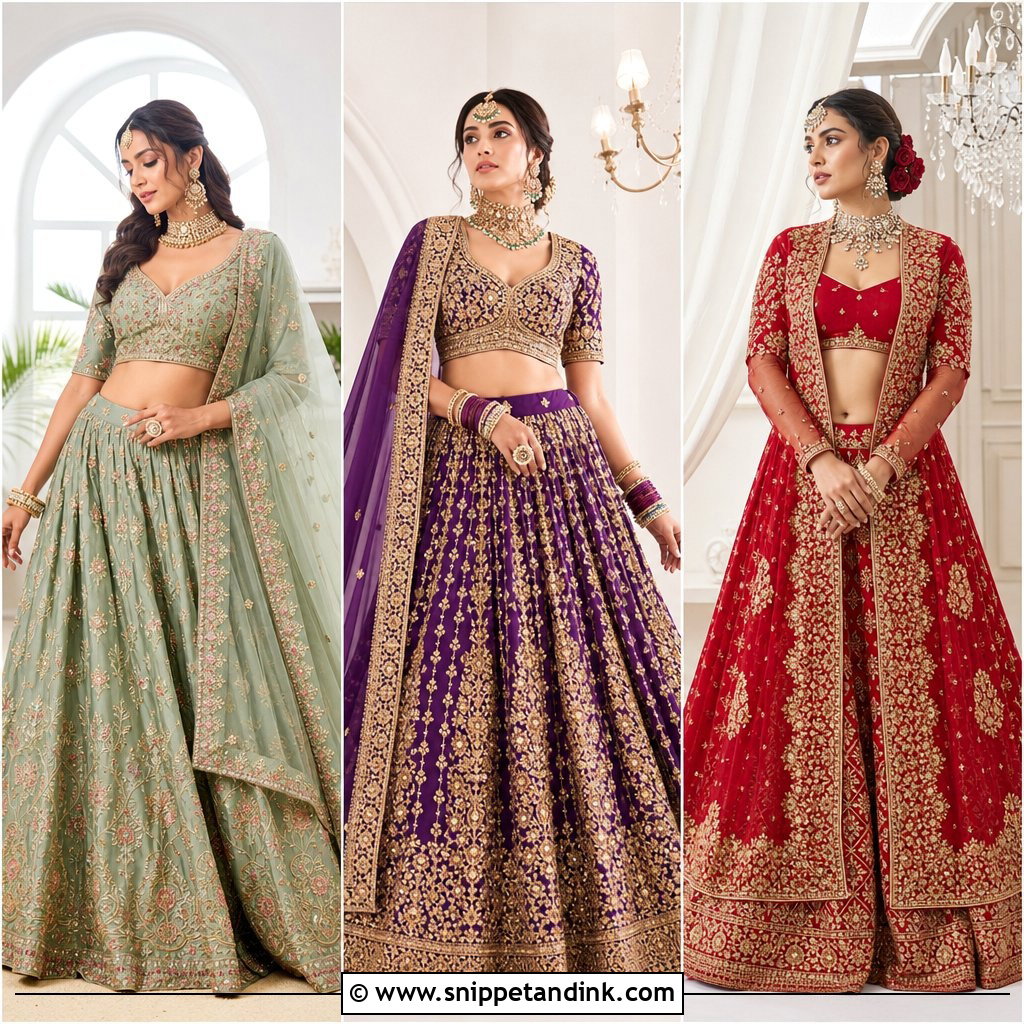
Velvet is a fabric I only recommend for evening or cool-season weddings. Under a summer sun it traps heat, and a full-sleeve velvet choli becomes hard to bear by the pheras. In the right weather, though, maroon velvet gives gold embroidery a smooth, deep background. Pair it with velvet or raw silk and keep the skirt’s motifs spaced rather than solid from waist to hem, which makes the whole outfit easier to carry. A wide scoop neckline leaves room for layered polki, and a fitted waist keeps shape under the heavier cloth. Choose a sheer maroon dupatta with a narrow border, then add velvet juttis, a gold potli, a low bun and deep red bangles.
3. Ivory Corset Bridal Choli With Gold Lehenga
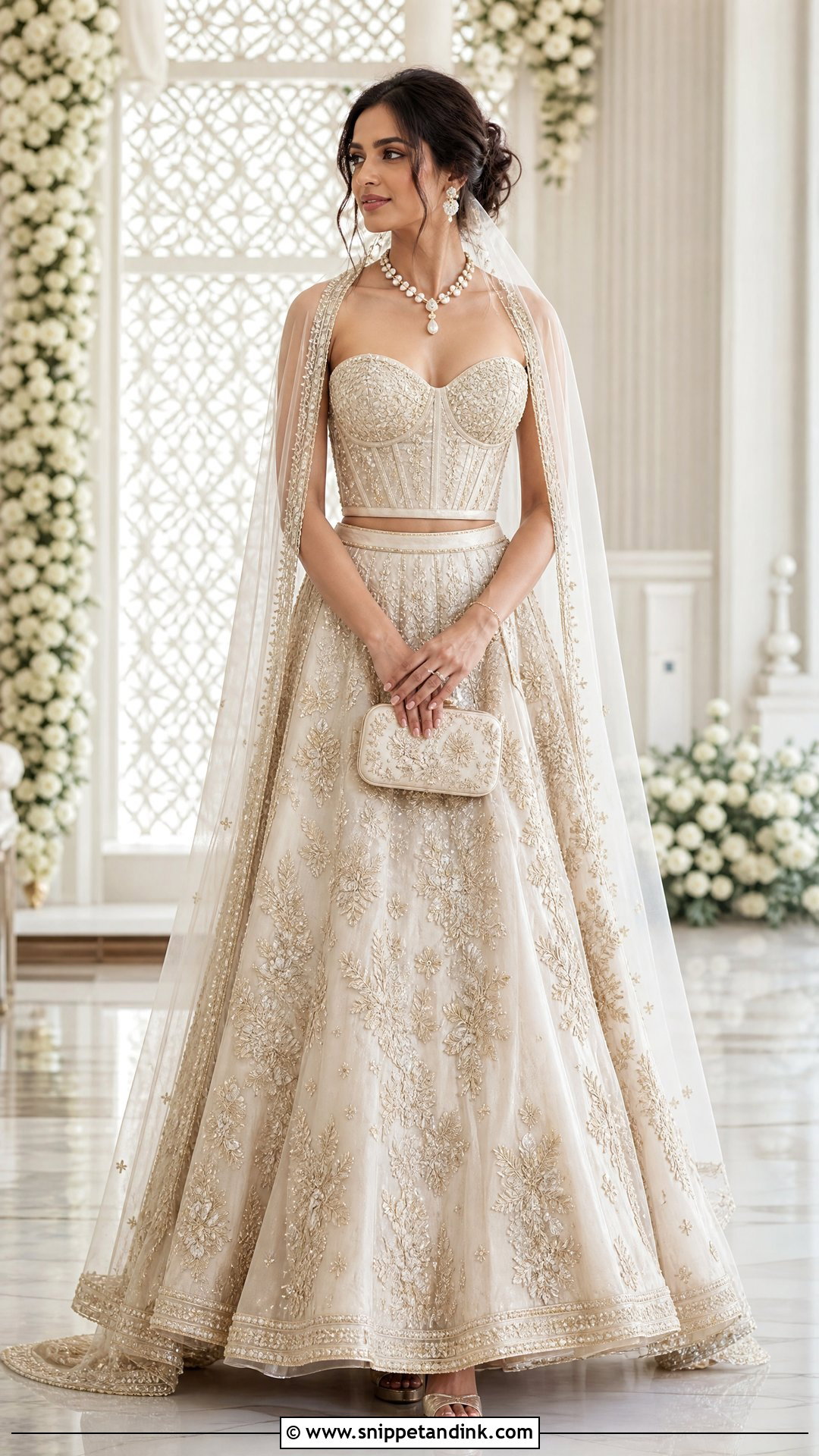
A corset choli needs real boning to look like one. Without it, the seams wrinkle the moment you sit. In ivory over a softly flared gold lehenga, it’s one of the lighter modern options, and a modest curved neckline keeps it bridal. I’d use tonal beadwork, pearls or fine metallic thread rather than high-contrast work, so the structured lines stay visible. Drape an ivory organza dupatta over one shoulder with a second veil resting lightly on the head. Pearl drops, an uncut diamond necklace, metallic block heels and an ivory clutch complete it, with a sleek bun or soft waves. Indoor ceremonies and destination weddings suit it best.
4. Blush Pink Off-Shoulder Bridal Choli
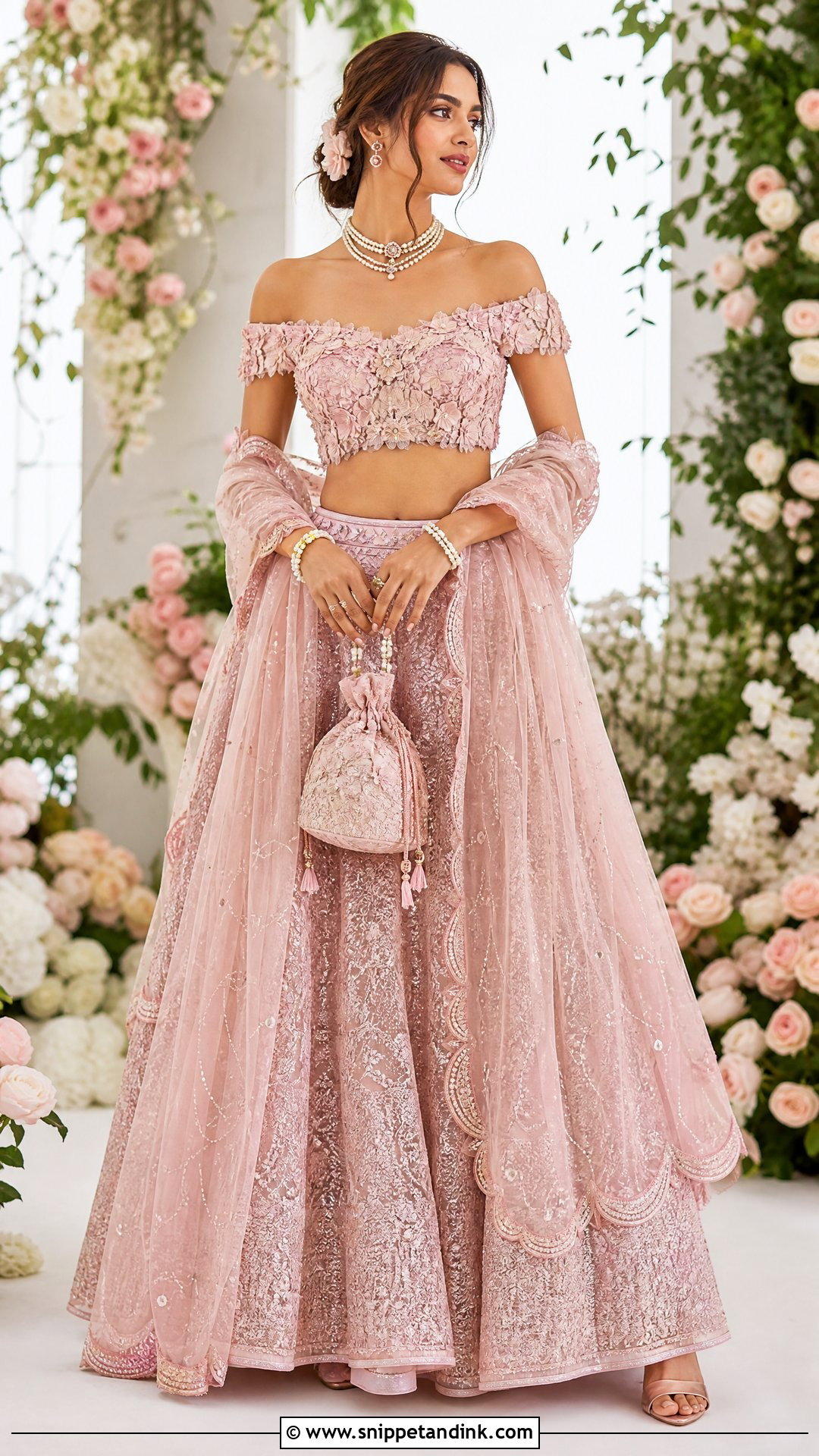
Off-shoulder cholis worry me more than any other cut, because the band on the upper arm limits how high you can lift your arms during rituals. Built-in support at the bust and a band with a gripper or elastic make the difference. In blush pink with delicate floral embroidery at the neckline, and a matching lehenga worked with tonal thread and pearls, it reads soft but still grand. A sheer dupatta wrapped around the arms shows the blouse, while a separate veil covers the head for the ceremony. Rose-gold heels, a blush potli, pearl jewelry and a fine maang tikka are enough. Do the arm test before final alterations: reach up, hug, and sit to eat.
5. Emerald Green Bridal Choli With Red Lehenga
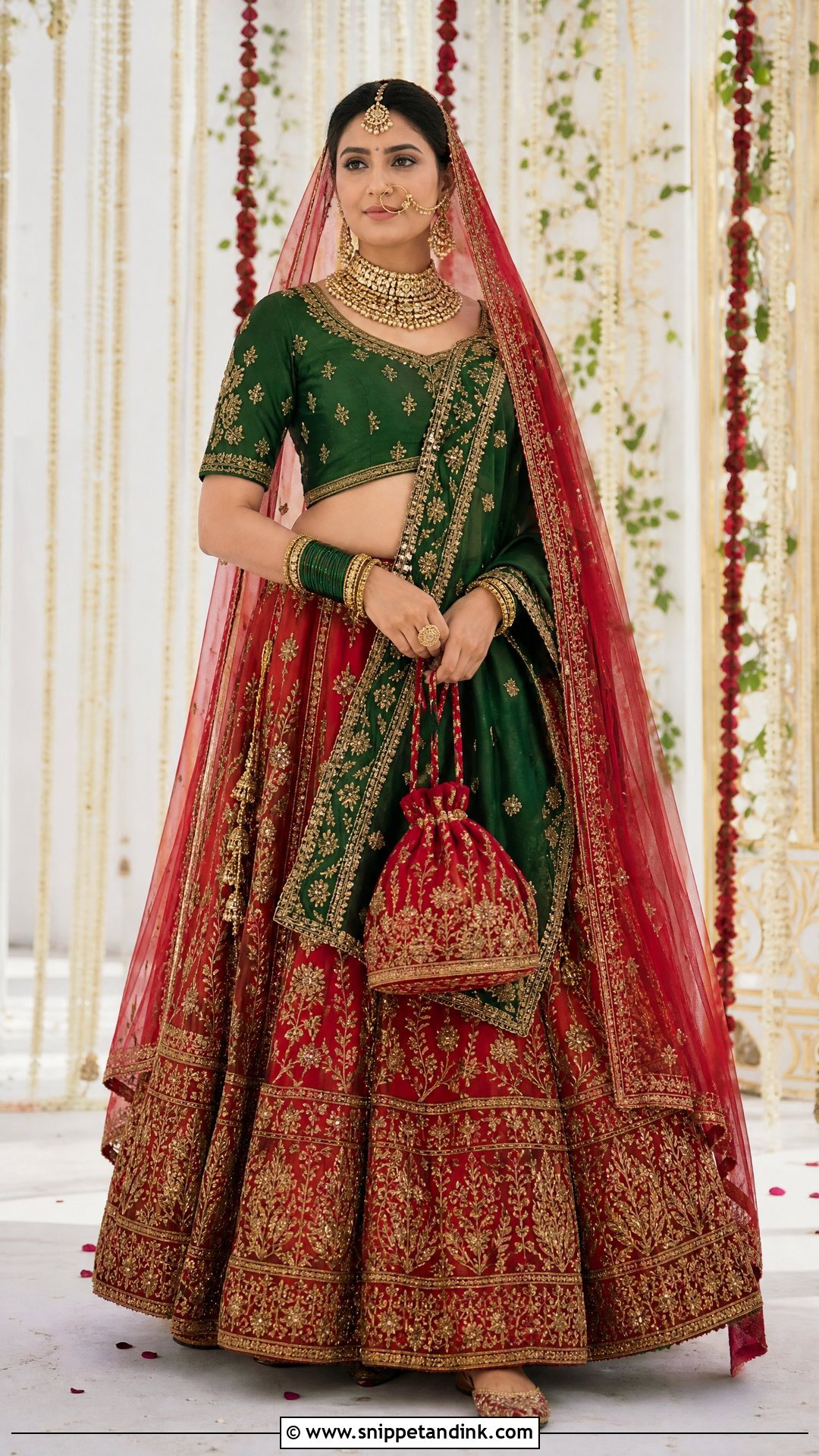
Emerald against red is a contrast I love, as long as the two colors share some motifs. Make the choli in raw silk or velvet and repeat small red and gold motifs at its neckline and sleeves, then let green embroidery appear near the hem of a mostly crimson skirt. A red dupatta goes over the head and a sheer green one diagonally across the torso, which shows off the contrast without covering the blouse. Antique gold jewelry, green glass bangles, embroidered juttis and a red potli complete it. With a broad choker, keep the neckline moderately open so the necklace isn’t crushed against the fabric.
6. Royal Blue High-Neck Bridal Choli
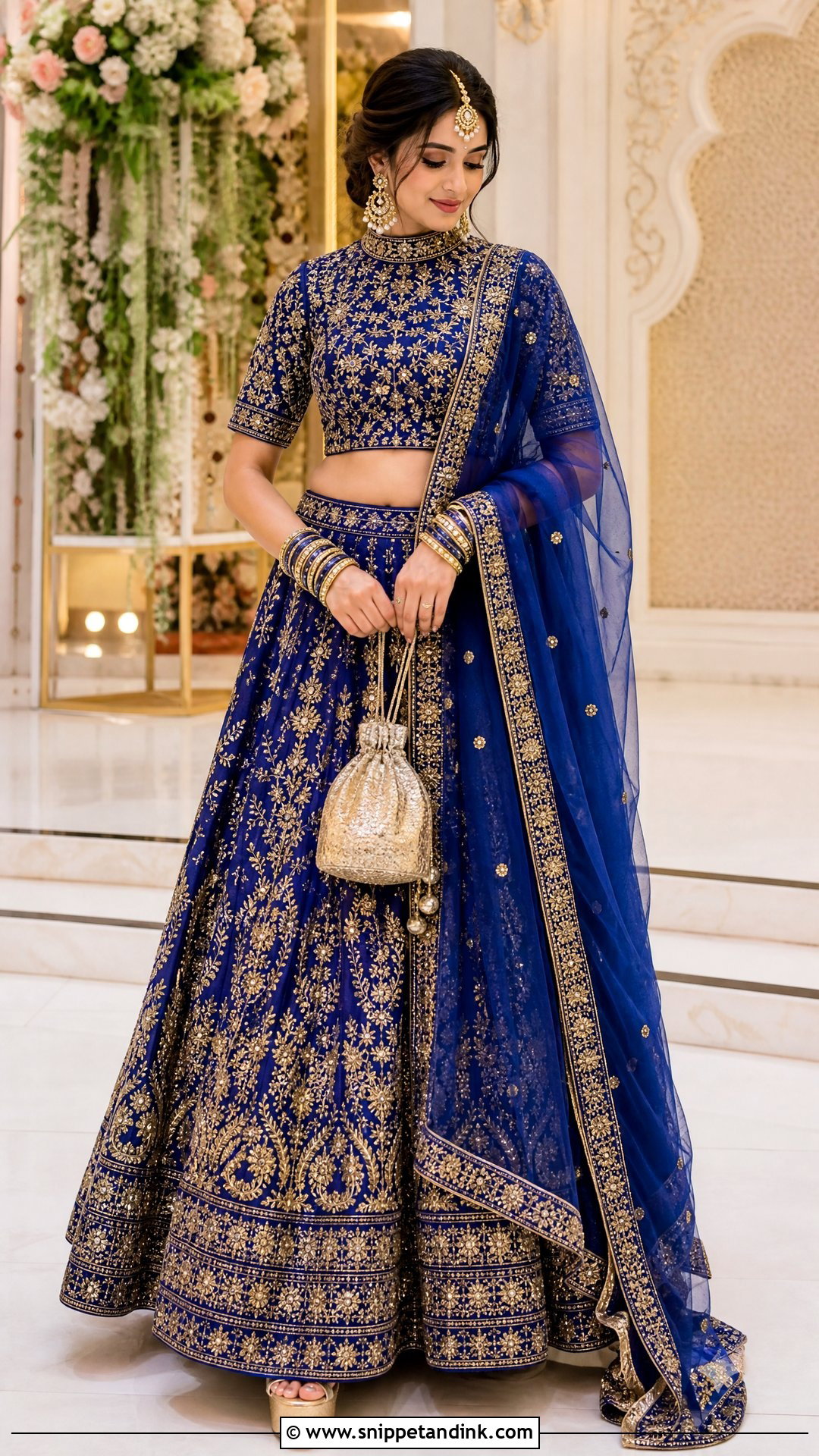
With a high neck, the necklace question answers itself: leave it off. A royal blue choli with gold threadwork, crystal accents or architectural motifs already frames the face, so chandelier earrings, a maang tikka and stacked bangles carry the jewelry instead. Pair it with a blue lehenga that’s heavier at the hem and lighter near the waist, which balances full-length photos. Drape a sheer blue dupatta from one shoulder, leaving the front embroidery clear. Gold platform heels, a compact potli and a smooth bun finish it. Check the collar height at a fitting with the earrings on. If it’s too tall, they will knock against it every time you turn.
7. Orange Mirror Work Bridal Choli
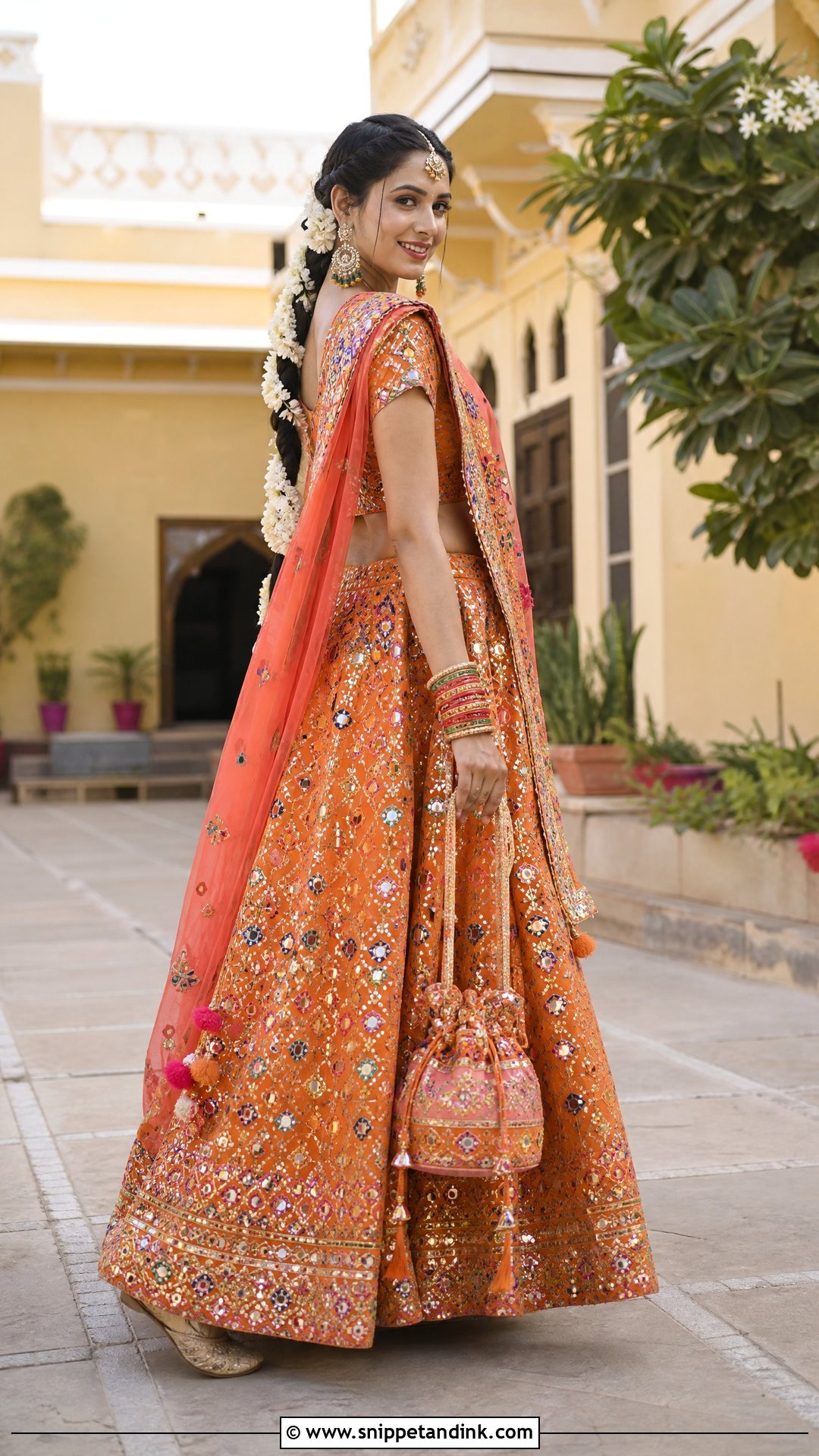
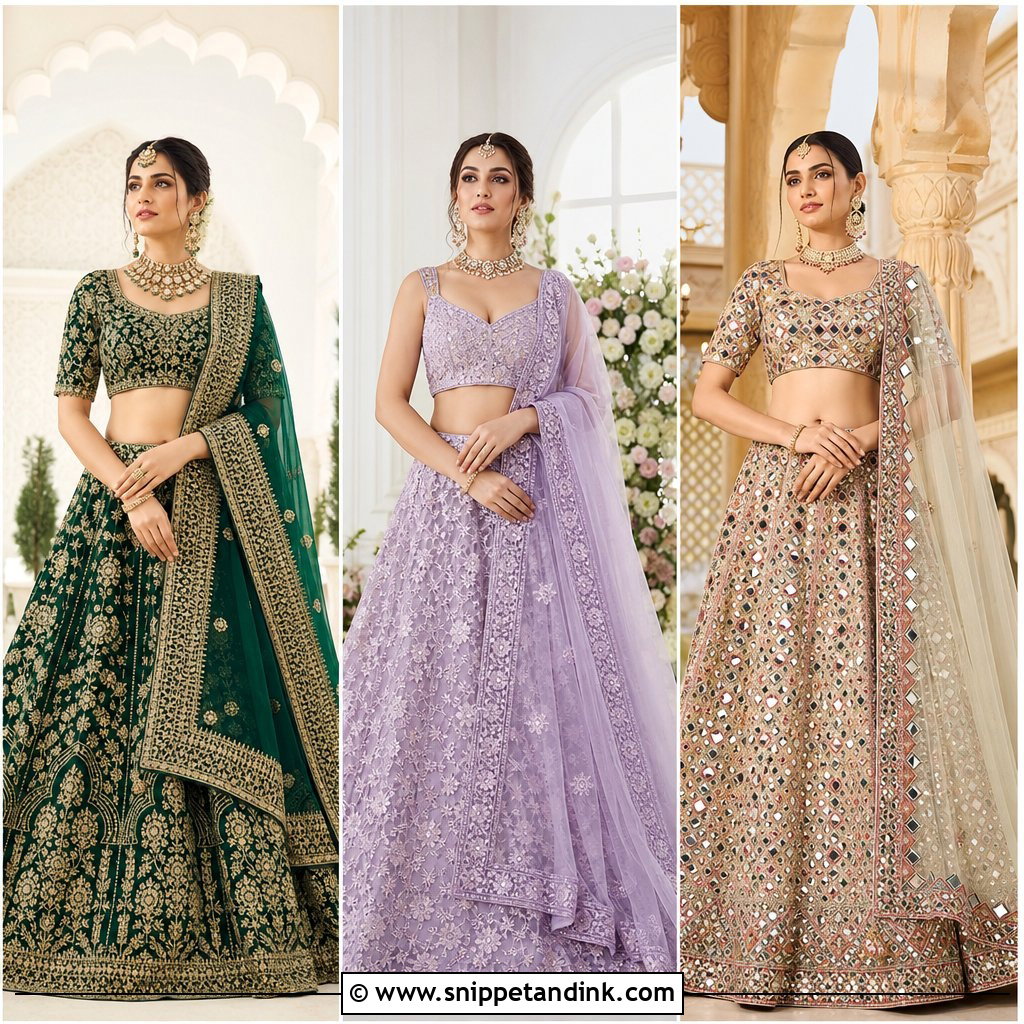
Vibrant orange mirror work is a daytime outfit, because those mirrors are made to catch sunlight. My first check is the stitching around every mirror; loose edges snag dupattas and scratch the inner arm. Choose a fitted choli lined in cotton-silk or raw silk and a full orange lehenga with matching mirror borders and colored thread. A lightweight pink, coral or orange dupatta over one shoulder keeps the reflective work on show. Meenakari earrings, a matching maang tikka, embroidered juttis and a fabric potli suit it, with fresh flowers worked into a braid or bun.
8. Yellow Gota Patti Bridal Choli With Lehenga
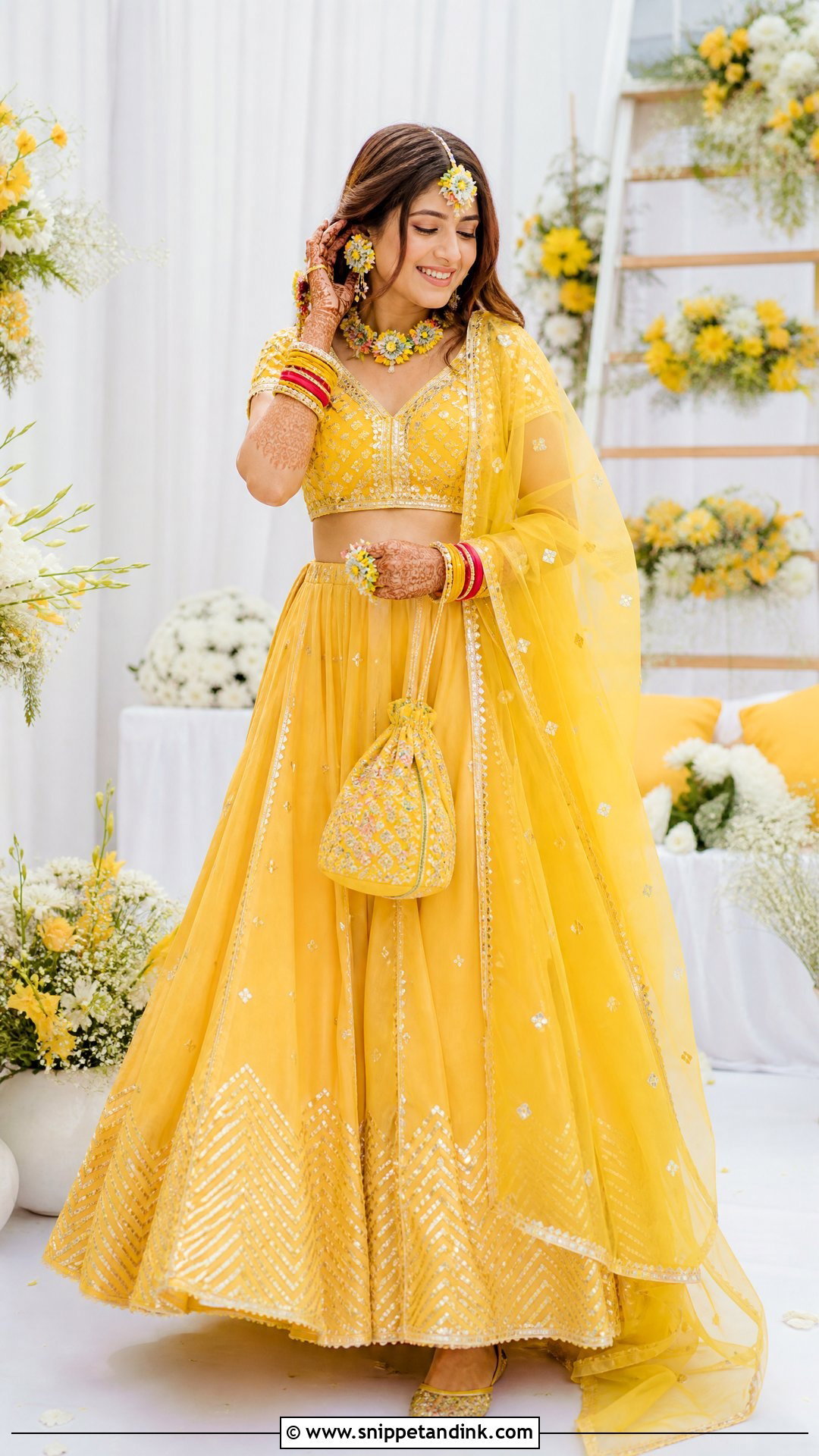
Gota patti is light, which is exactly why I suggest it for haldi or a daytime function in heat. A short-sleeve yellow choli with gota and fine threadwork sits well with a flowing yellow lehenga of moderate volume, so you can walk, sit and join the rituals easily. An organza dupatta with a narrow gold border, draped loosely over a shoulder, keeps it airy. Floral jewelry, gold juttis, colorful bangles and a small potli finish the outfit, with a braid or low ponytail. Be realistic about haldi itself: turmeric marks silk permanently, so wear removable flower jewelry and pick a fabric you won’t mourn.
9. Pastel Floral Bridal Choli With Organza Lehenga
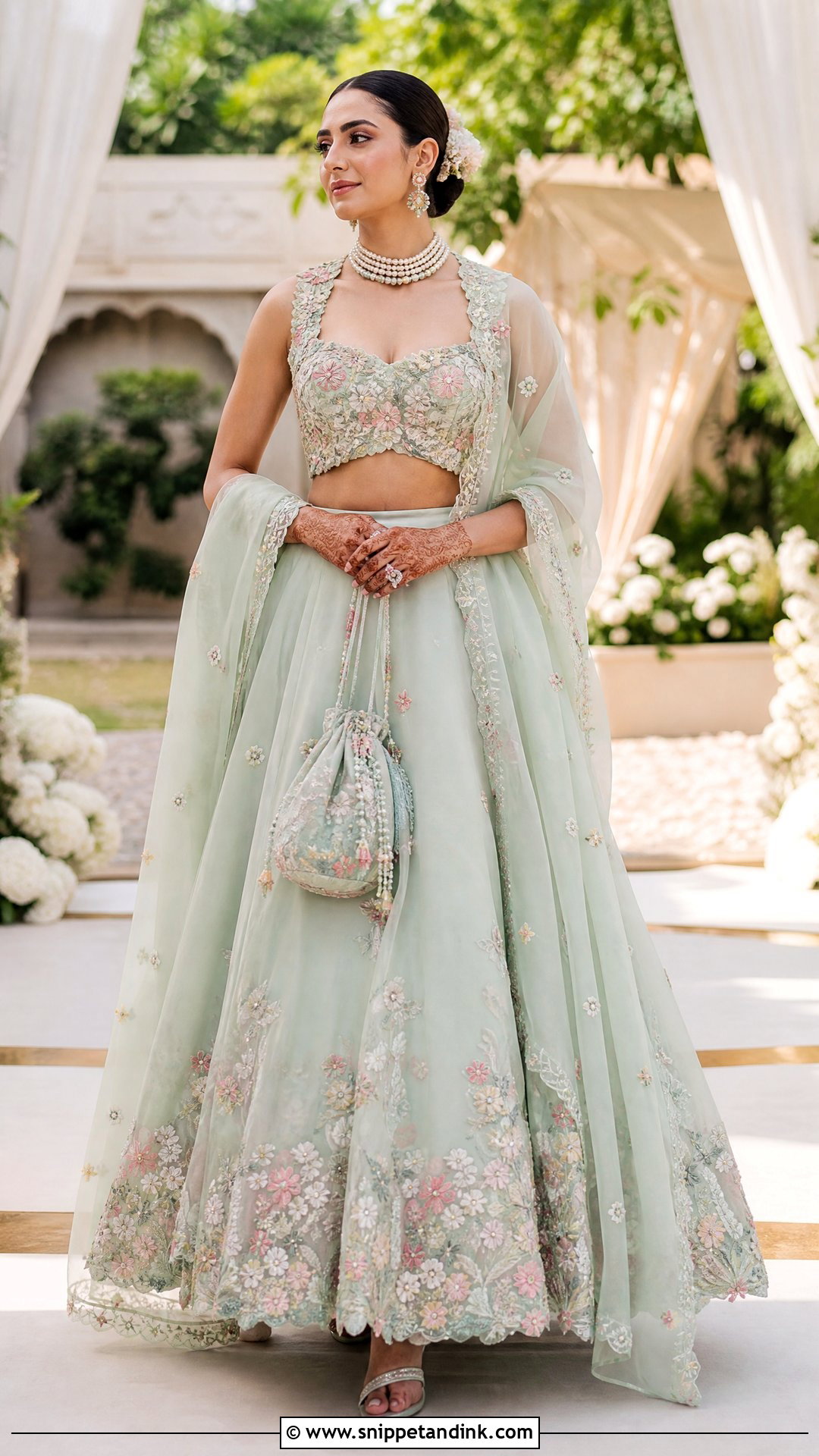
Pastels go muddy if you mix too many of them. I pick one dominant shade, pale mint, lavender, peach or powder blue, and use the others only as small accents. A choli with dimensional flowers and scattered beads pairs with an organza lehenga repeating the same motifs at a lighter weight. Pin a lightly embroidered dupatta at one shoulder and let it fall behind. Pearl jewelry, crystal sandals and a pastel potli keep the mood delicate, with soft waves, a low bun or a flower-trimmed braid. It shines in outdoor ceremonies and bright daylight, but pale organza shows every grass stain, so keep the hem lifted on lawns.
10. Champagne Sequin Bridal Choli With Lehenga
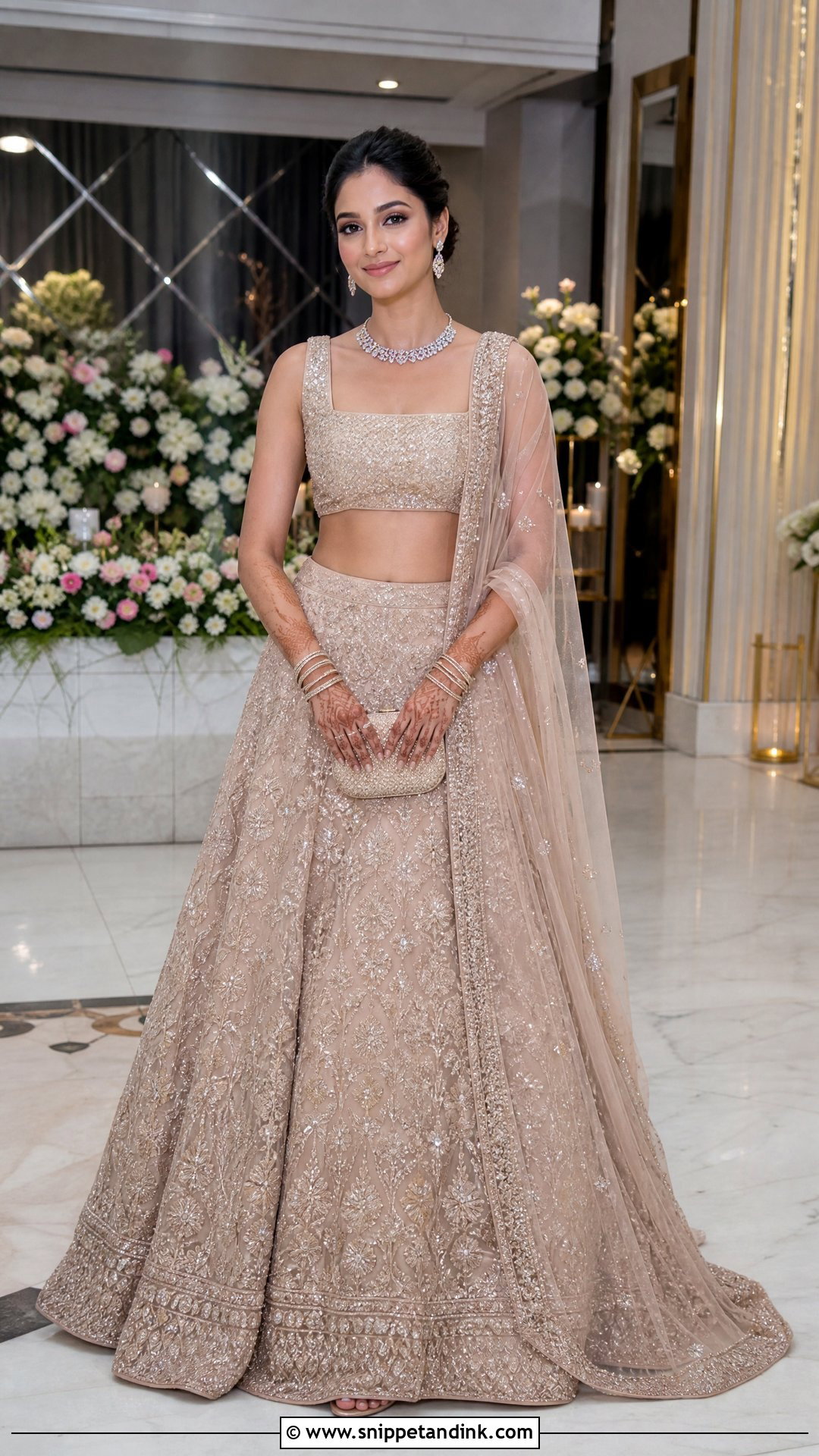
Champagne sequins sparkle without the hard glare of silver or bright gold. Look for evenly placed sequins, supportive straps and a clean square or scoop neck, and pair it with a lehenga that mixes sequins with tonal thread so the surface doesn’t look flat. A sheer champagne dupatta with a slim crystal border adds polish without hiding the shine. Neutral metallic heels, a beaded clutch, diamond-look jewelry and nude-toned bangles suit it, with a low bun or side-parted waves. The practical risk is snagging. Sequins grab delicate fabric, so drape the dupatta against the choli at a fitting and have any rough work at the armholes backed with soft fabric.
11. Banarasi Brocade Bridal Choli With Silk Lehenga
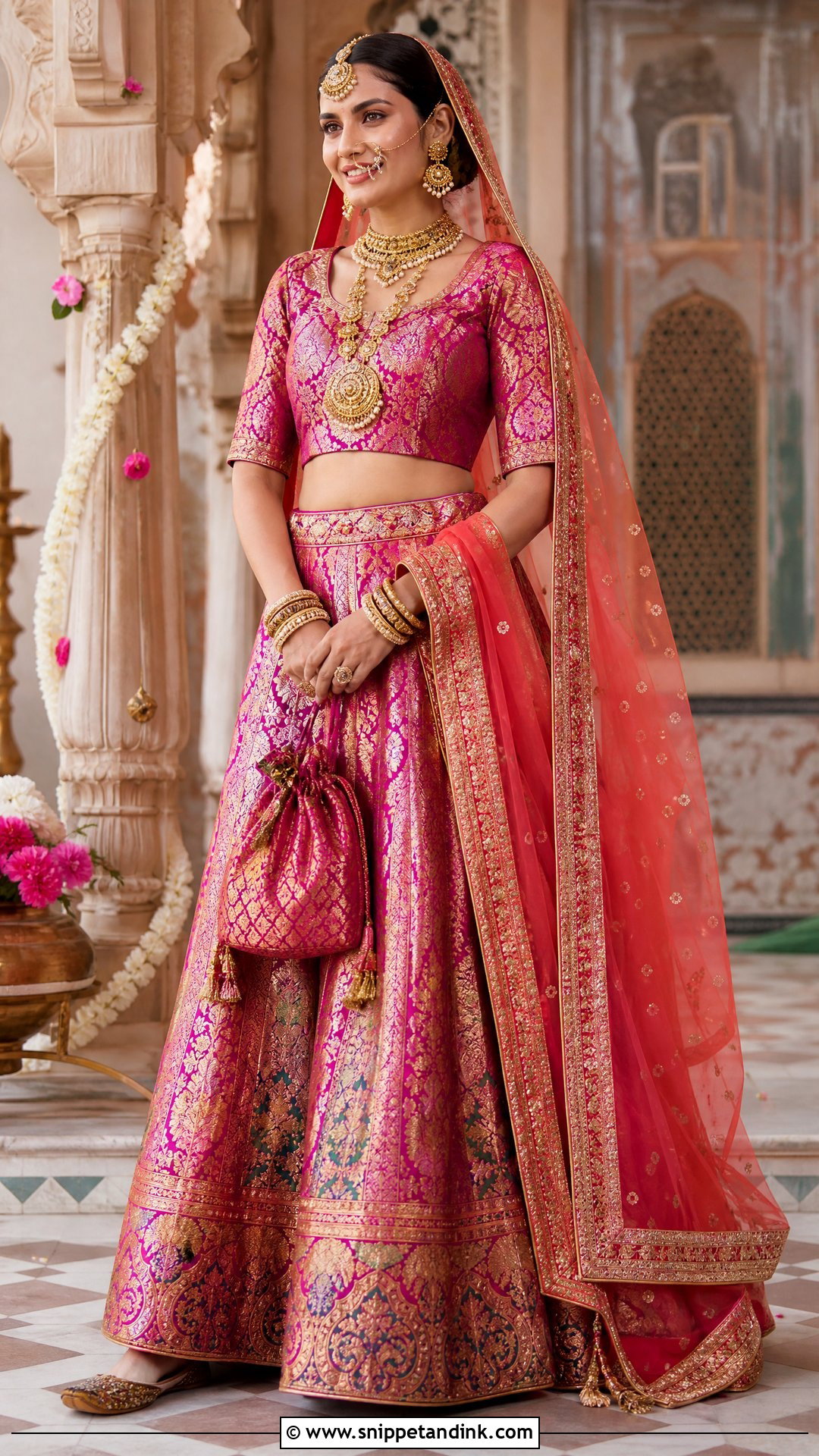
The glow of Banarasi brocade comes from the weave itself, so the textile does the decorating. Choose a jewel-toned brocade choli in red, magenta, green or deep purple with a coordinated silk lehenga, and let a broad woven border define the skirt. Keep the blouse shape plain, with elbow sleeves and a rounded neckline that show the pattern. A contrasting silk or organza dupatta, traditional gold jewelry, embroidered juttis, a brocade potli and a flower-decorated center-parted bun complete it. Brocade frays readily at cut edges, so ask your tailor to finish seams well and to line up the motifs where pieces meet. A broken pattern at the shoulder seam is the giveaway of rushed tailoring.
12. Peplum Bridal Choli With Flared Lehenga
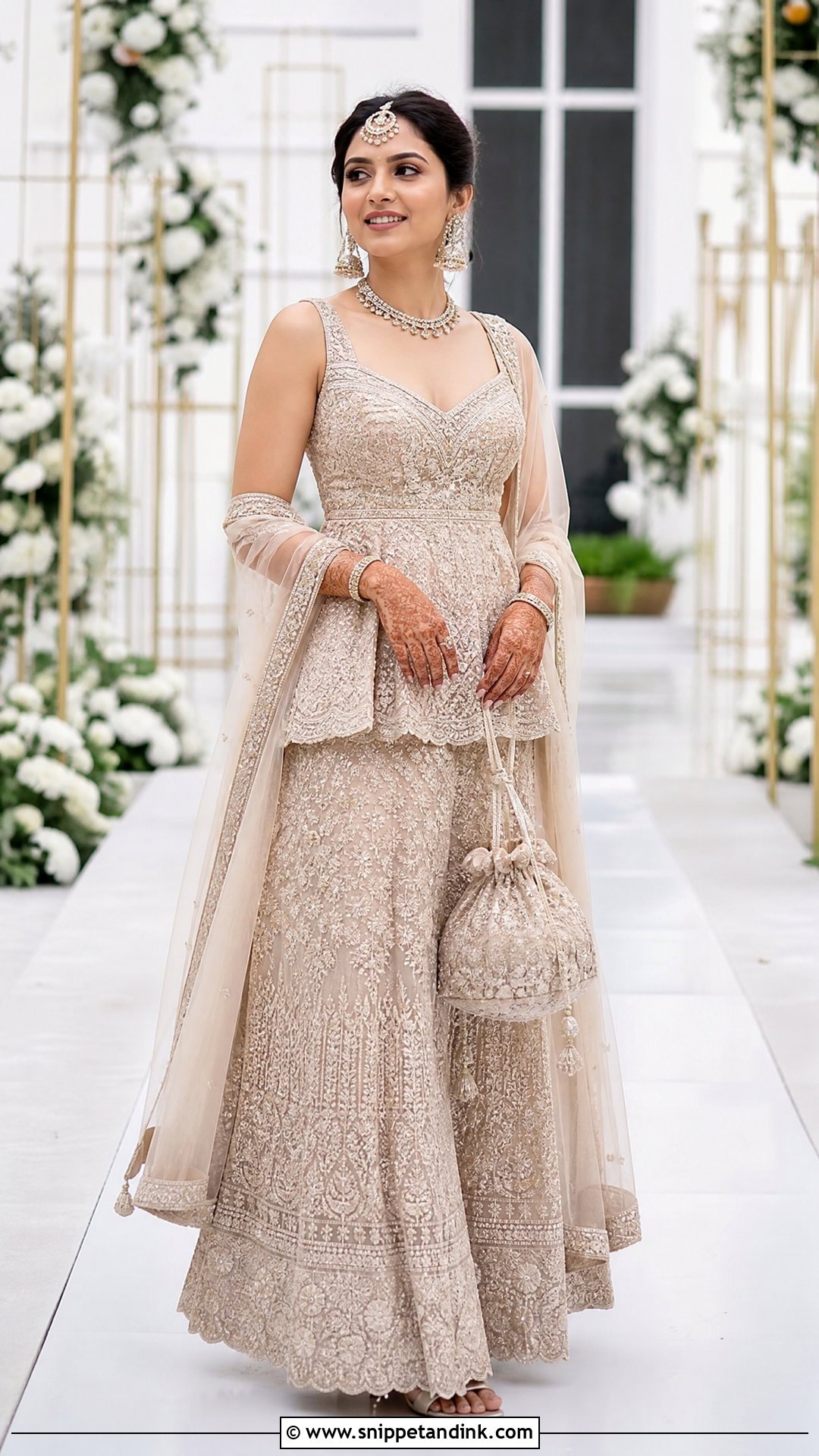
A peplum works when it stops at the right point on your body, not at a fixed length. A short, gently flared peplum over a fitted bodice adds structure and covers the waist comfortably; a long one swallows a petite bride. Pair it with a streamlined lehenga so the layered shapes don’t add bulk. Keep embroidery at the neckline, waist and peplum edge, with related motifs at the skirt border. A light dupatta from one shoulder leaves the blouse shape intact. A medium-length necklace, statement earrings, block heels and a structured potli finish it. At the fitting, look at the side view in a mirror before you approve the length.
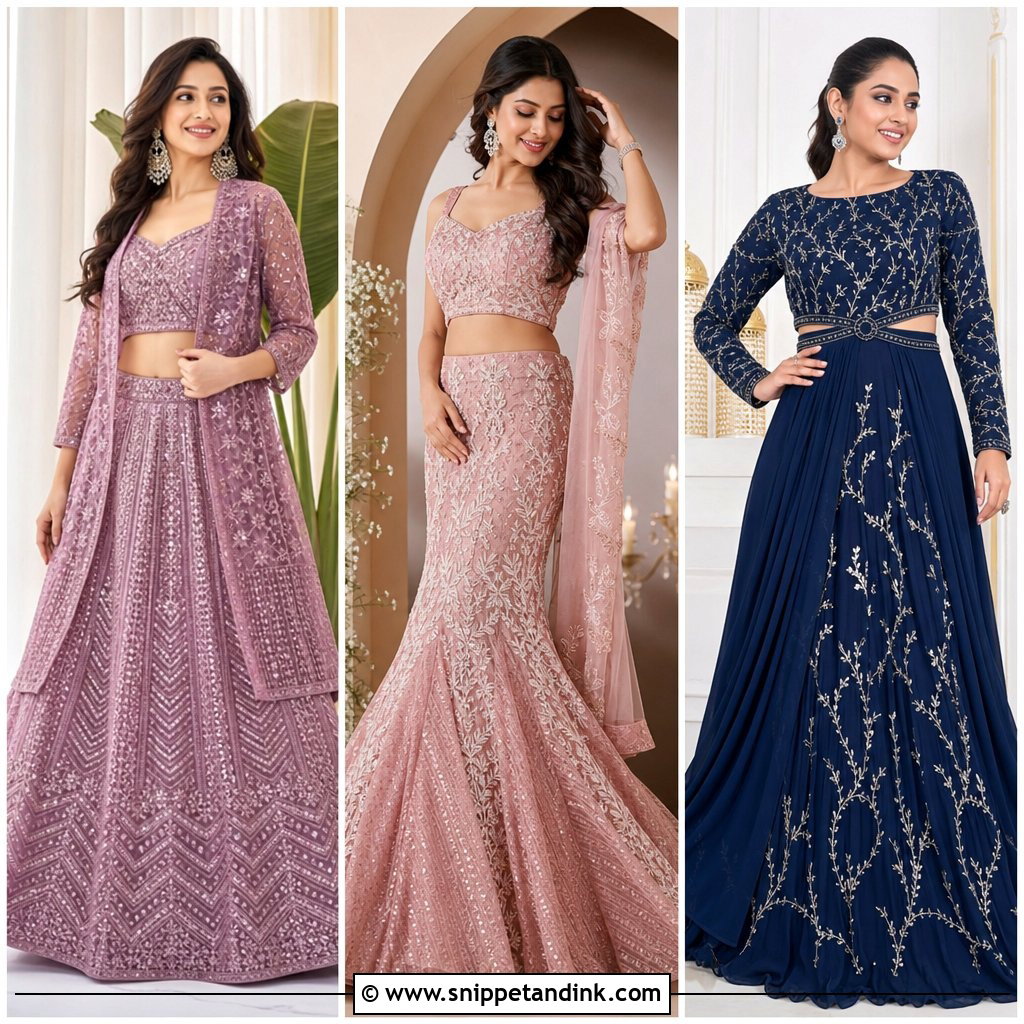
13. Jacket Bridal Choli With Matching Lehenga
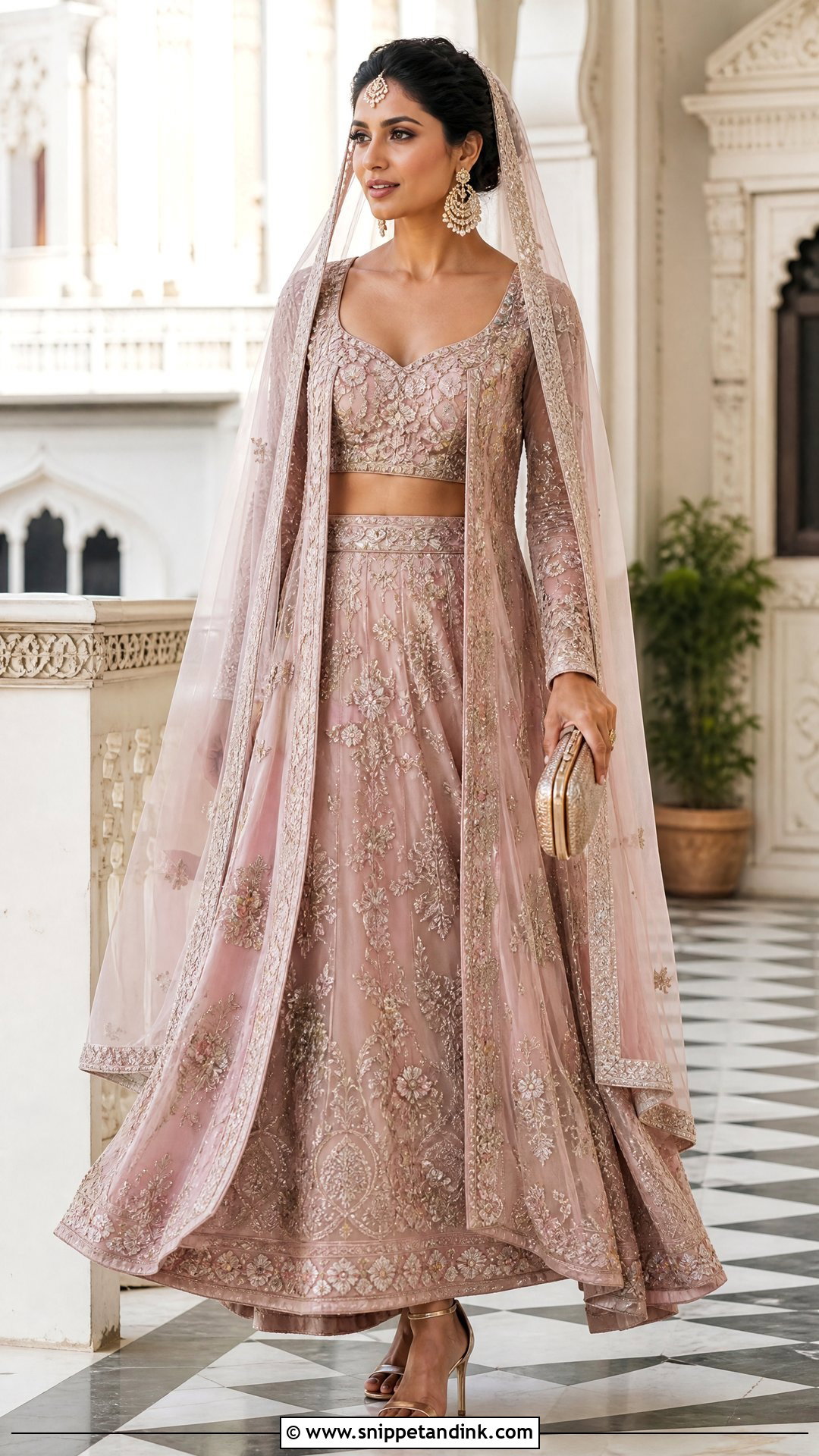
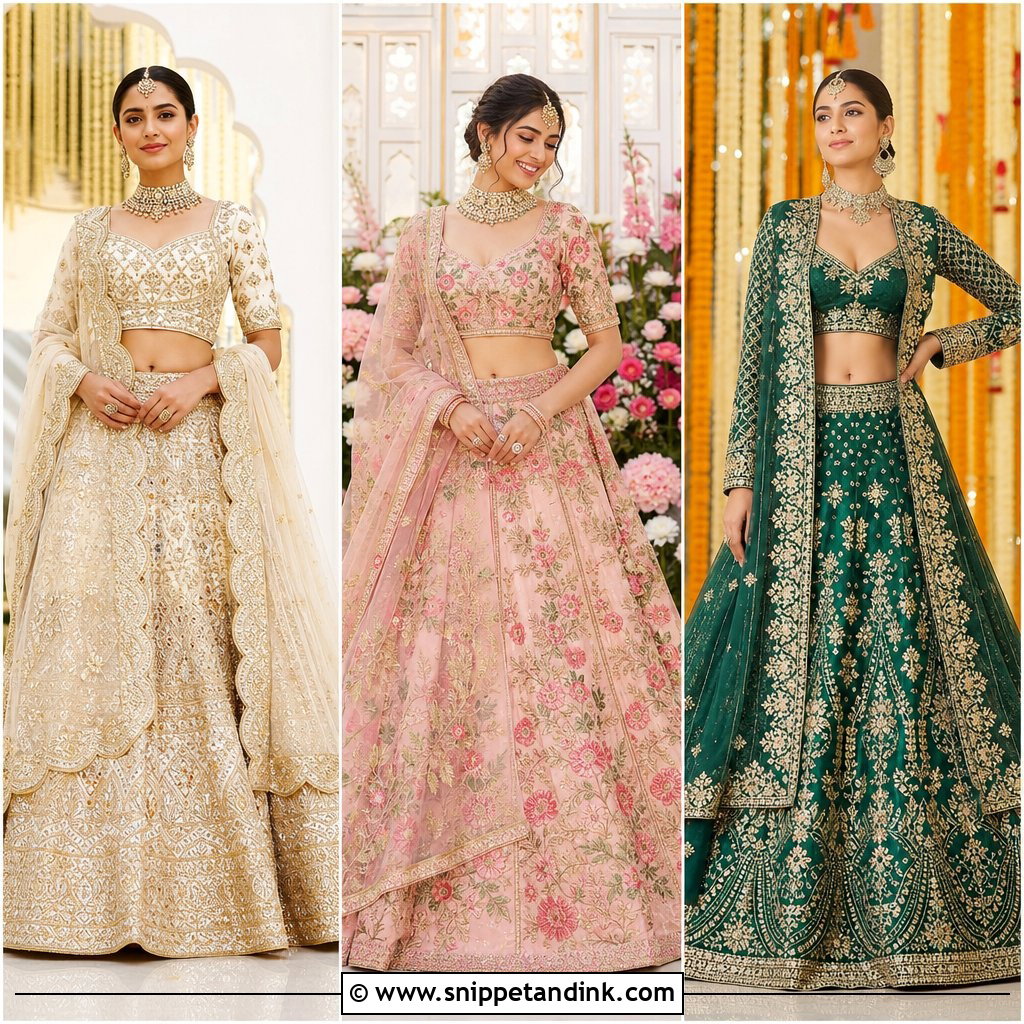
A jacket choli frees you from pinning a heavy dupatta across the body, which many brides find a relief. Start with a fitted inner blouse and matching lehenga, then layer a sheer embroidered jacket ending at the waist, knee or ankle. Keep the inner choli simple so the jacket leads. An open front frames your jewelry and lets the waistband show. A lightweight veil, statement earrings, comfortable heels and a clutch complete it. Full sleeves mean fewer bangles, or the wrists get crowded. Walk and sit in it at a fitting, because jacket hems tend to catch on raised lehenga embroidery.
14. Cape Sleeve Bridal Choli With Embroidered Lehenga
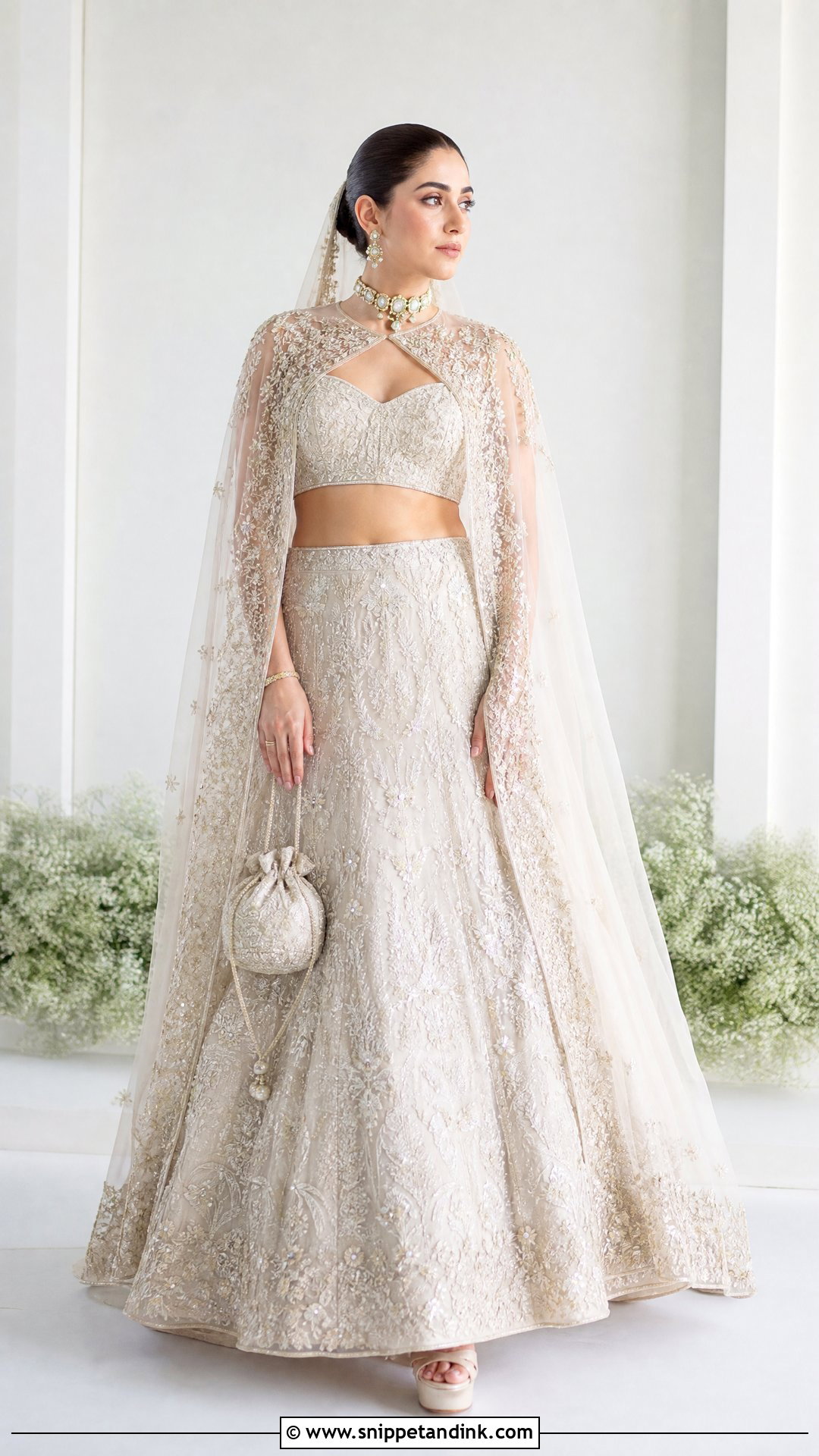
Cape sleeves give movement without a shoulder dupatta to manage. The cape panels should be stitched neatly into the shoulder seam and be in the same color family as an embroidered lehenga, so they look built in rather than added. I keep the decoration at the cape’s edges; heavy work across the whole panel drags the shoulders down. A separate veil can still go over the head for the ceremony. Drop earrings, a delicate choker, platform heels and a compact potli are enough, and skip bracelets that catch the sheer fabric. In photos, let the cape fall naturally at your sides for a long, clean line.



15. Long-Sleeve Bridal Choli With Double Dupatta
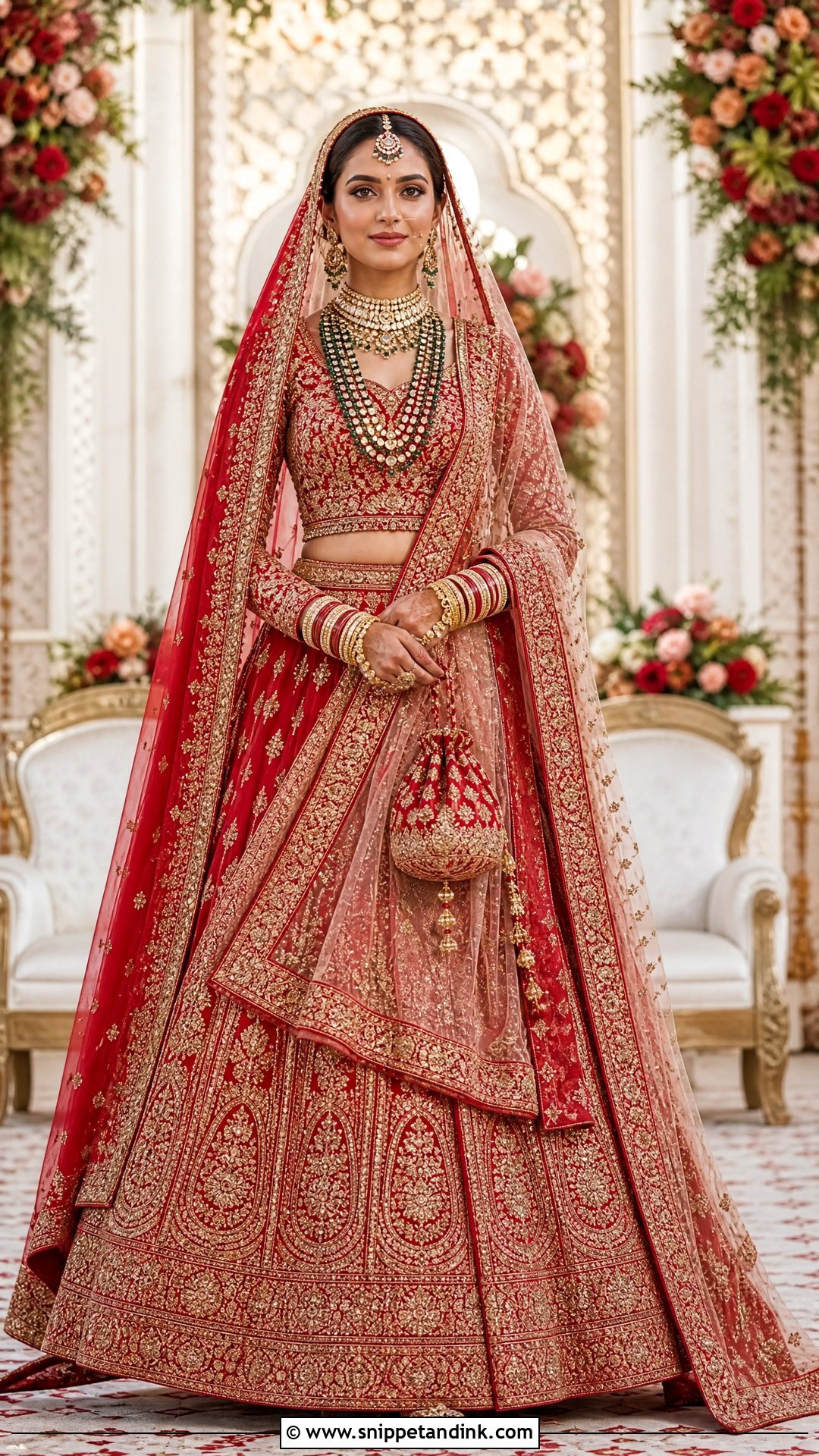
Long sleeves bring coverage and drama, and they’ve become a strong statement option on lehenga cholis. The fitting detail that matters most is the wrist: embroidery should lighten toward the cuff so your bangles sit comfortably, and a fitted sleeve needs a small zip or hook opening so your hand passes through without straining the seam. Pair the choli with a matching lehenga and two dupattas, the lighter as a head veil and the second pleated neatly over one shoulder so the front design stays visible. A choker with a longer necklace, bridal bangles, embroidered juttis, a beaded potli and a sleek bun finish it. Check the elbow bend for eating and greeting.
16. Square-Neck Bridal Choli With Minimal Lehenga
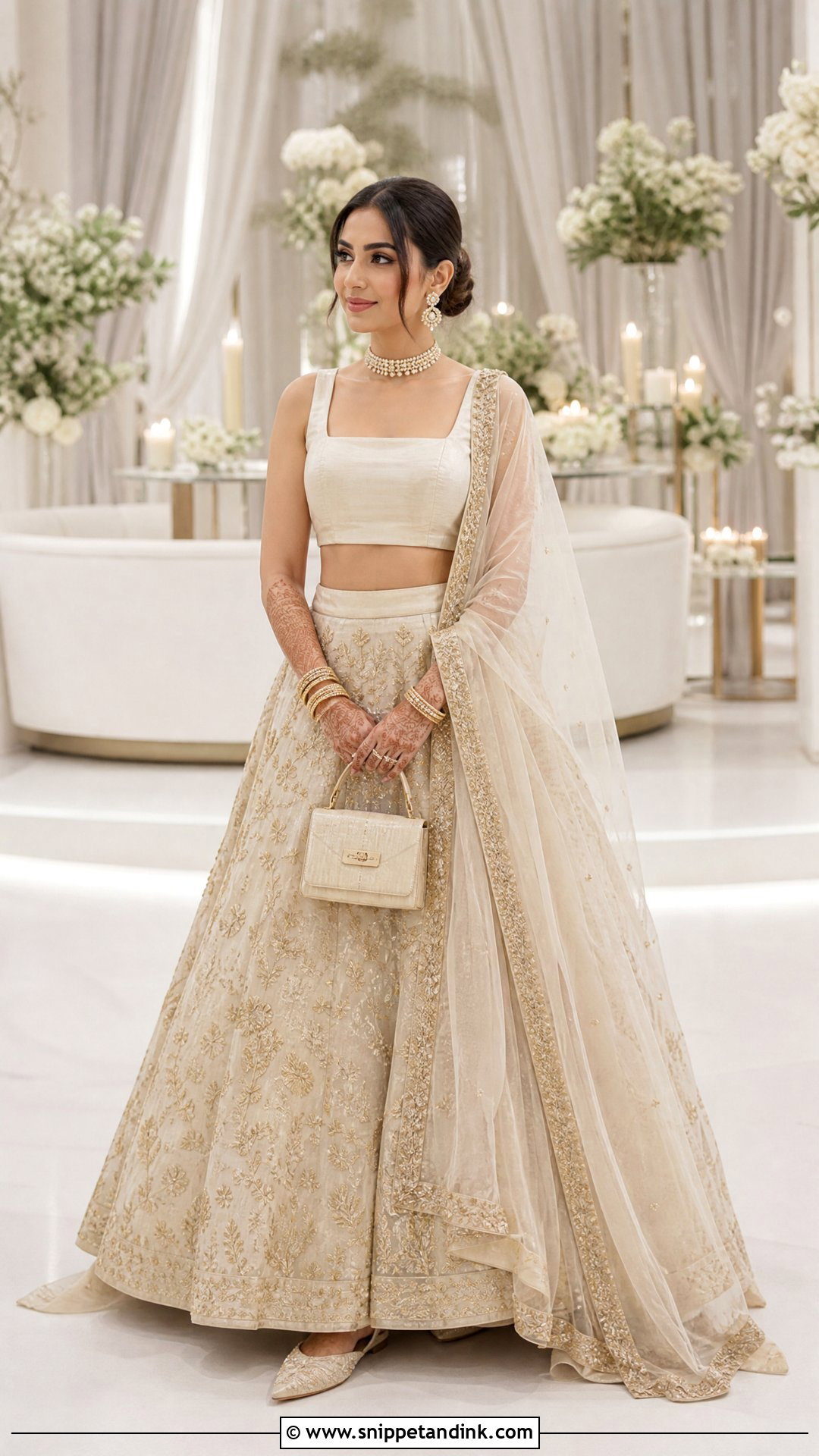
A square neck in raw silk is proof that a bridal choli doesn’t need dense work. It frames the face and collarbone crisply, and a moderately flared lehenga with spaced embroidery and a clean border keeps the line light. Here the tailoring has nowhere to hide, so the neckline corners must lie flat. A sheer dupatta with fine edging, a single choker, matching earrings, slim bangles, pointed juttis and a structured bag are enough. Stay tonal: ivory with gold, dusty rose with silver, or sage with champagne. A smooth bun or soft waves suit the uncluttered shape, especially for brides who would rather spend on fabric than on embellishment.
17. V-Neck Bridal Choli With Double Dupatta
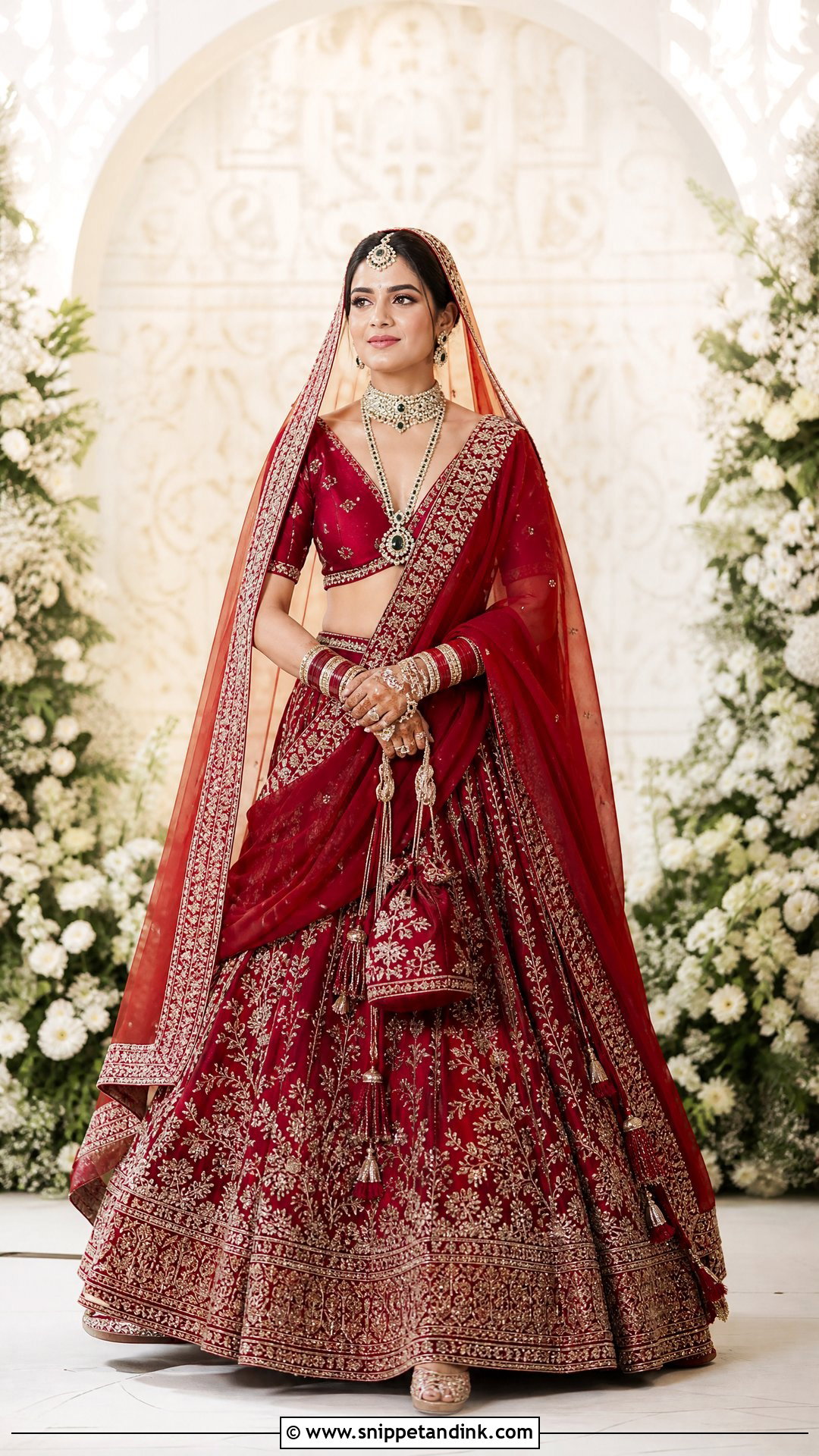
A V-neck lengthens the upper body and gives layered jewelry room to sit. Pick a depth you feel secure in; a discreet mesh insert at the base of the V lets you go a little lower without worrying about it shifting. Pair it with a full lehenga whose embroidery thickens toward the hem. Use one dupatta as a structured shoulder drape and the other as a soft veil, both placed so the V stays visible. A short choker, a longer necklace, a maang tikka, bridal bangles and embroidered heels make a full ceremonial finish. Keep the blouse and skirt in one main color and bring contrast through a dupatta or the stones. Precise fitting at the shoulders and bust stops gaping.
18. Scalloped Bridal Choli With Matching Lehenga
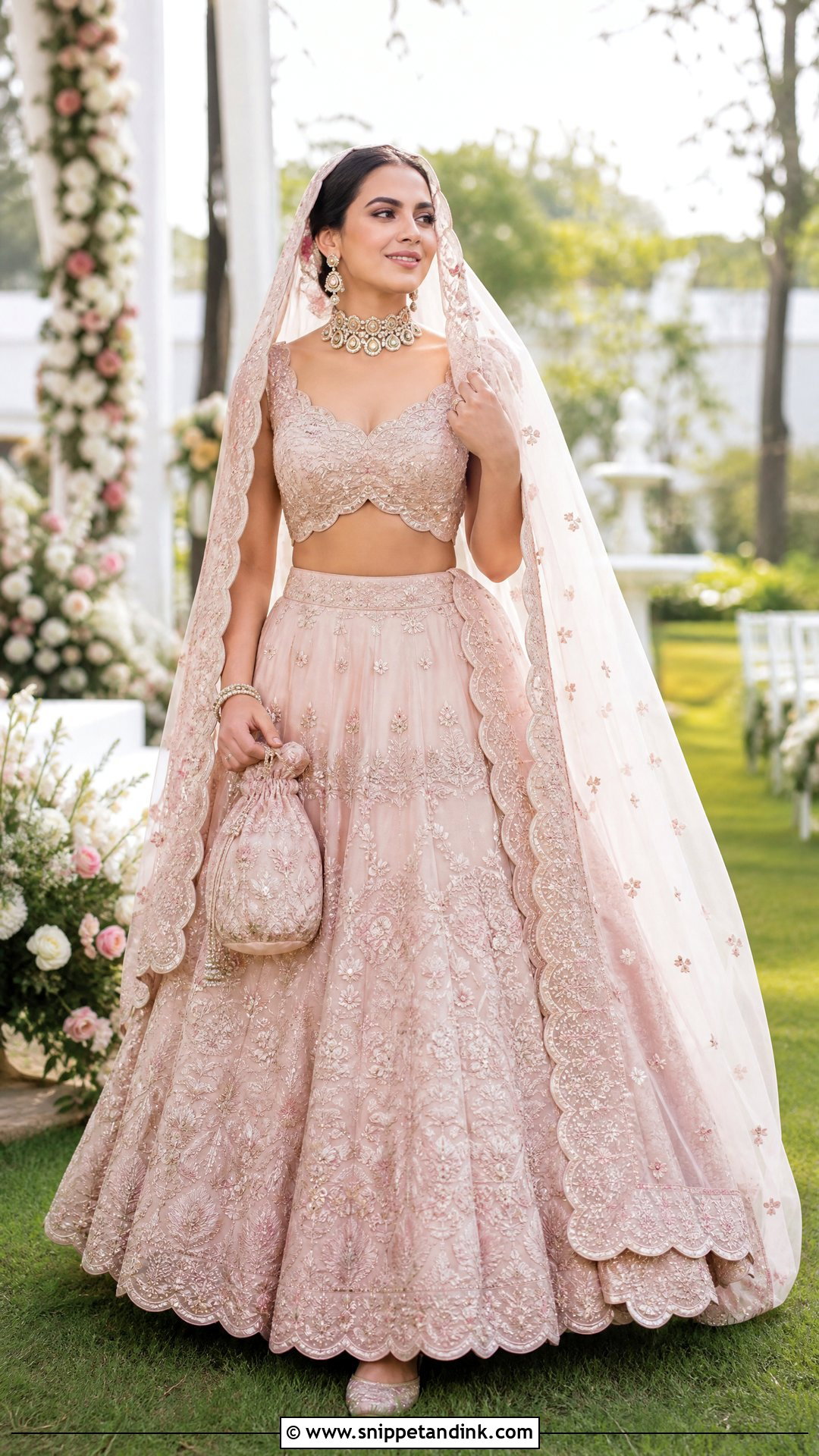
Scallops are an edge finish, and their charm depends on the tailor. Each curve needs a firm facing or piping, or it flips and curls after an hour of wear. Use the scalloped edge at a round neckline, sleeves and blouse hem, and echo it on the lehenga border and dupatta. A matching red, pink, ivory or pastel palette keeps it refined. Drape a sheer dupatta over one shoulder with a lighter veil for the head. A rounded choker, pearl or polki earrings, embroidered juttis and a scallop-edged potli finish it. Don’t add other competing borders; the curved trim should stay readable, especially in close-up photos.
19. Personalized Bridal Choli With Embroidered Details
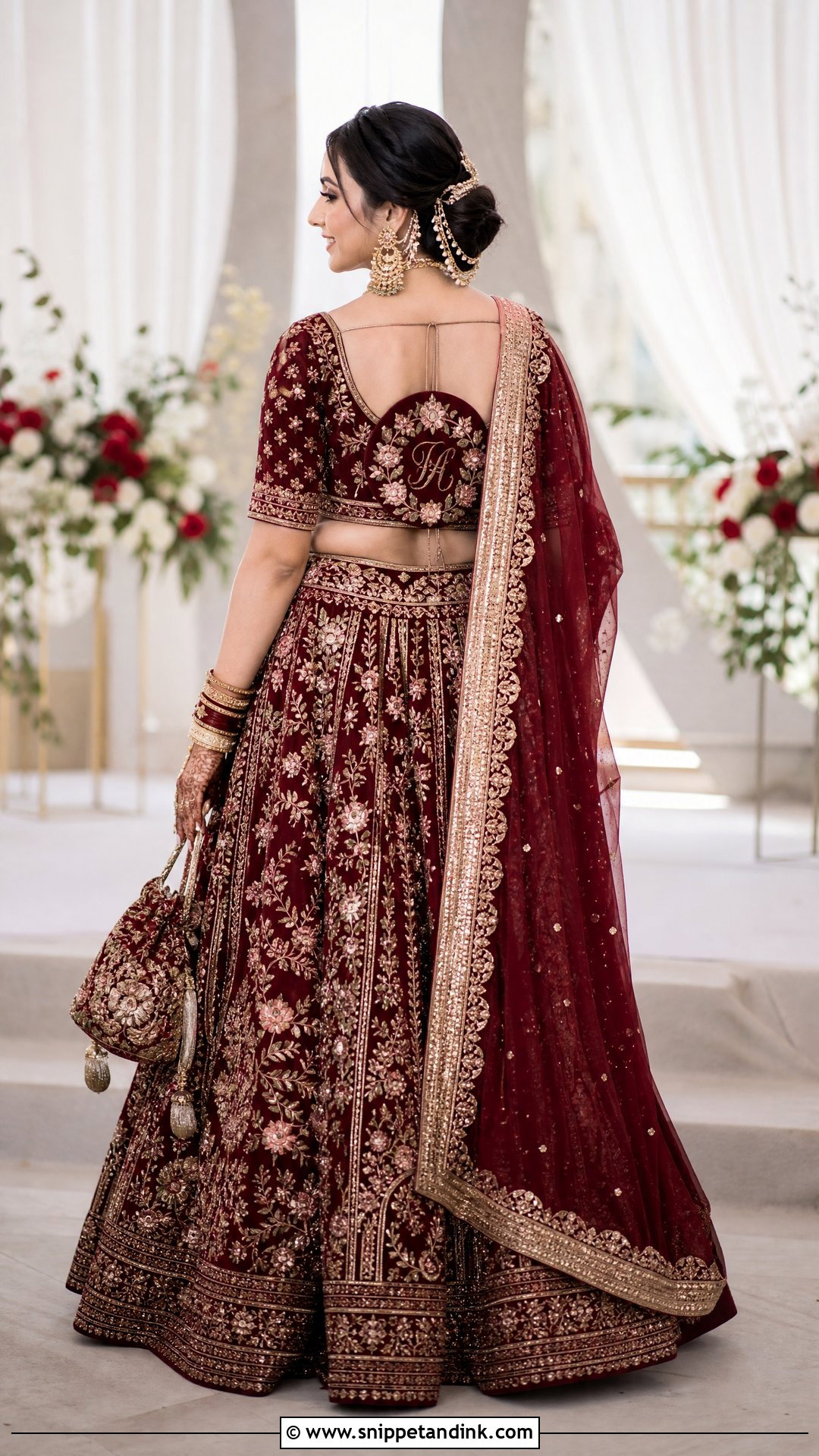
A personalized choli becomes a keepsake, and the back is usually the best place for it. Initials, a wedding date, symbolic flowers, regional motifs or a small illustration worked on the back or sleeves stay personal without making the front feel like a costume. A deep red, maroon, ivory or blush base gives fine embroidery enough contrast. Pair it with a border-matched dupatta, comfortable juttis, heirloom jewelry and a matching potli, and wear your hair so part of the back panel shows. Ask to see the artwork printed at full size before stitching starts. Tiny lettering that looks crisp on a screen often blurs once it’s embroidered.

20. Multicolor Bridal Choli With Regional Embroidery
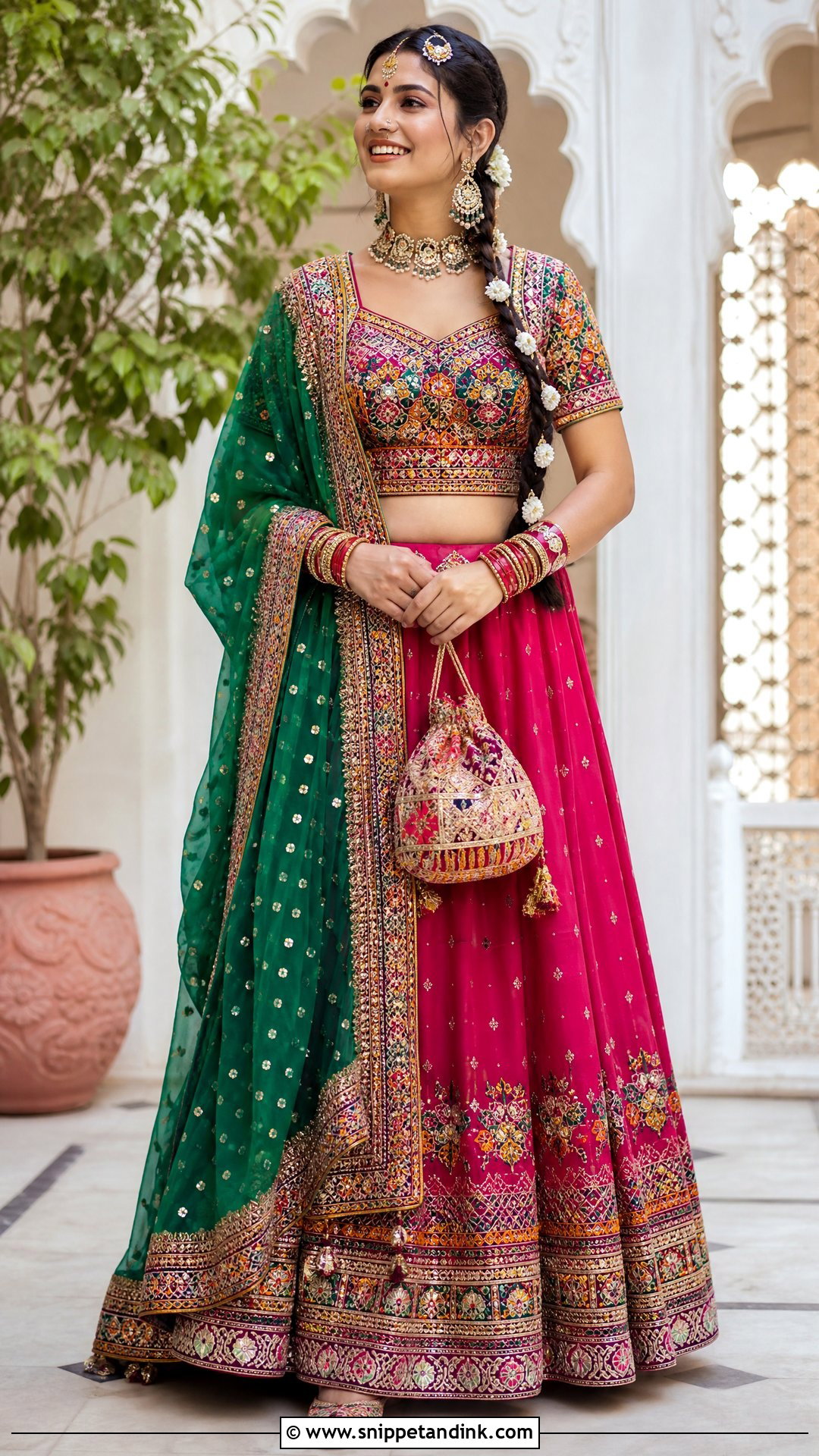
A multicolor choli drawn from one regional embroidery tradition can carry real heritage, but mixing several traditions on one blouse usually just looks busy. Choose a single influence and use its colors and motifs across the blouse, lehenga border and dupatta, with open areas in the skirt so the choli has space. A solid base of red, ivory, green or deep pink stops the palette from tipping into chaos. Regional jewelry, coordinated bangles, handcrafted juttis and a textile potli suit it, with a braid or bun dressed according to family custom. If you can, work with artisans who practice the craft and ask what the key motifs mean before placing them.
The Order I Dress a Bride In on the Wedding Day
Dressing in the wrong sequence is how embroidery gets pulled, makeup gets smudged and a fitted sleeve gets stretched over bangles. This is the order I follow, adjusted for each family’s rituals.
- Hair and makeup first, with a front-opening top on, so nothing goes over a finished face.
- Lehenga skirt next, tied at the exact height it was hemmed for, with any can-can or petticoat beneath.
- Choli on, fastened from the back by someone else, then the tucked hem checked against the skirt waist.
- Sleeves closed at the wrist before bangles and chooda go on, never after.
- Necklaces and earrings, then the shoulder dupatta pinned to the choli’s inner strap or lining, not through the embroidery.
- Head dupatta last, pinned into the hair with U-pins along the parting so its weight sits on the hair, not the forehead.
Have the person dressing you practice the dupatta pinning at the final fitting. A heavy dupatta pinned only at one point slides off the shoulder within the hour; three or four small pins spread along the shoulder seam hold it in place through the pheras and still come out cleanly at the end of the night.
Your Choli Carries the Whole Bridal Look
A bridal choli has to suit your taste and survive a long, physical day. Think through the venue, the weather, the fabric weight, the neckline, how your sleeves move and where the dupatta will sit before you approve the final design. Book fittings early and try the whole outfit at least once with the jewelry, shoes and undergarments you’ll actually wear. Traditional red zardozi, jewel-toned velvet, Banarasi brocade, a modern corset or regional embroidery can all work. Adjust the colors, craft and coverage until the outfit feels like yours and honors the traditions that matter to your family.
You'll Like These Ideas:






Leave a Reply