
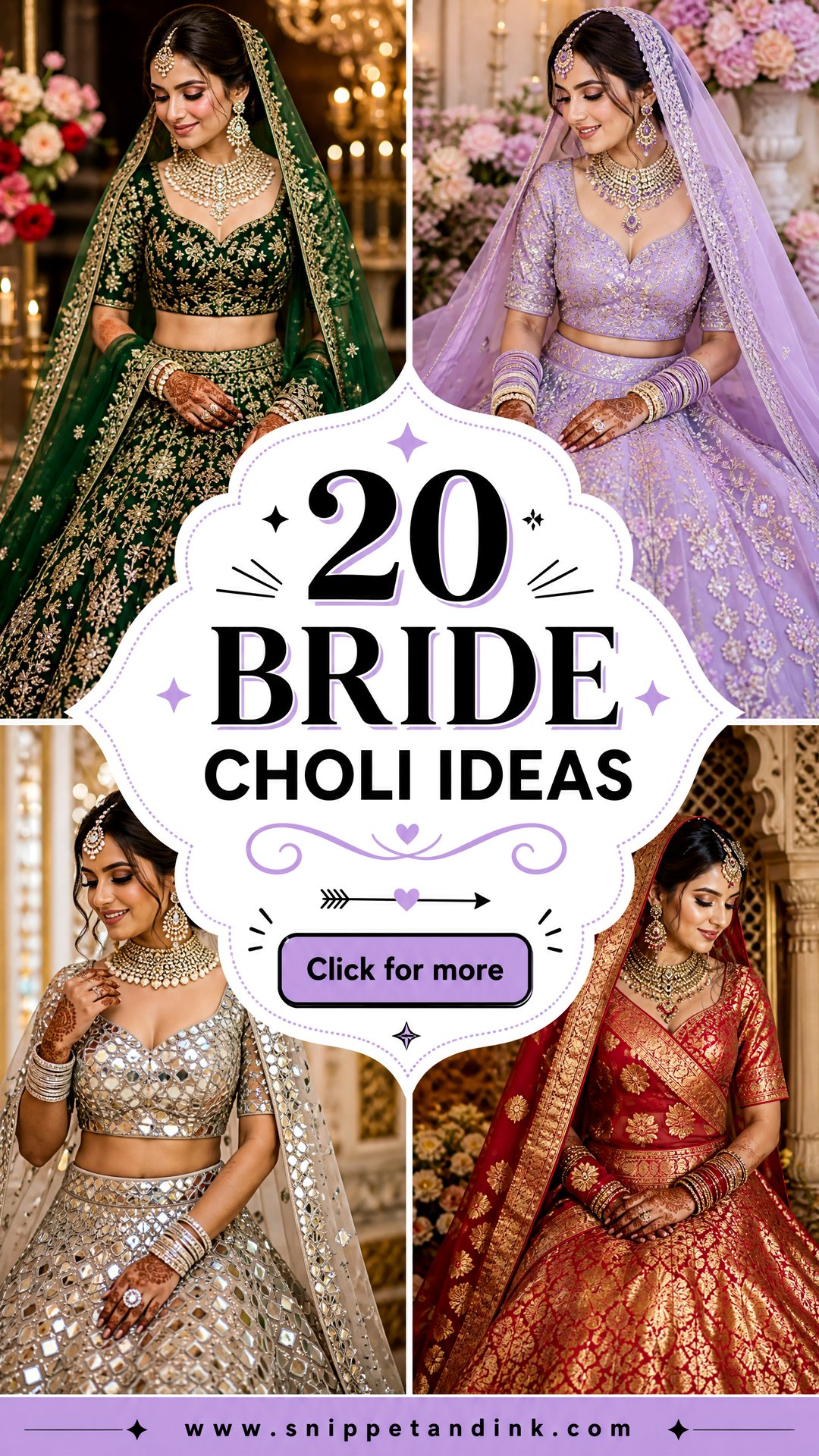
Where the Weight of a Bridal Lehenga Really Sits
Every bridal choli I fit starts with the same question: how heavy is the skirt, and what is holding it up? A worked bridal lehenga can be surprisingly heavy, and nearly all of that weight hangs from the waistband. The choli doesn’t carry it, but it decides how comfortable the bride feels for the rest of the day.
The choli fitting
A bridal blouse should be fitted in the bra you’ll wear on the day, or with built-in cups if you’d rather go without. I check three things: the side seams sit straight under the arms, the back closure lies flat without gaping between hooks, and the hem stays down when the arms are raised. Blouses with heavy zardozi or stonework need a firm cotton or canvas interlining, otherwise the fabric sags between the embroidery.
The skirt and its cancan
Ask the tailor for a wide waistband, ideally with a drawstring and a hook, so the weight spreads across the hips instead of cutting in at one line. Cancan should match the fabric. Organza and georgette need some help to flare; Banarasi, Kanjivaram and velvet mostly don’t. Too much underskirt makes a heavy lehenga even heavier and turns sitting cross-legged at the mandap into a struggle.
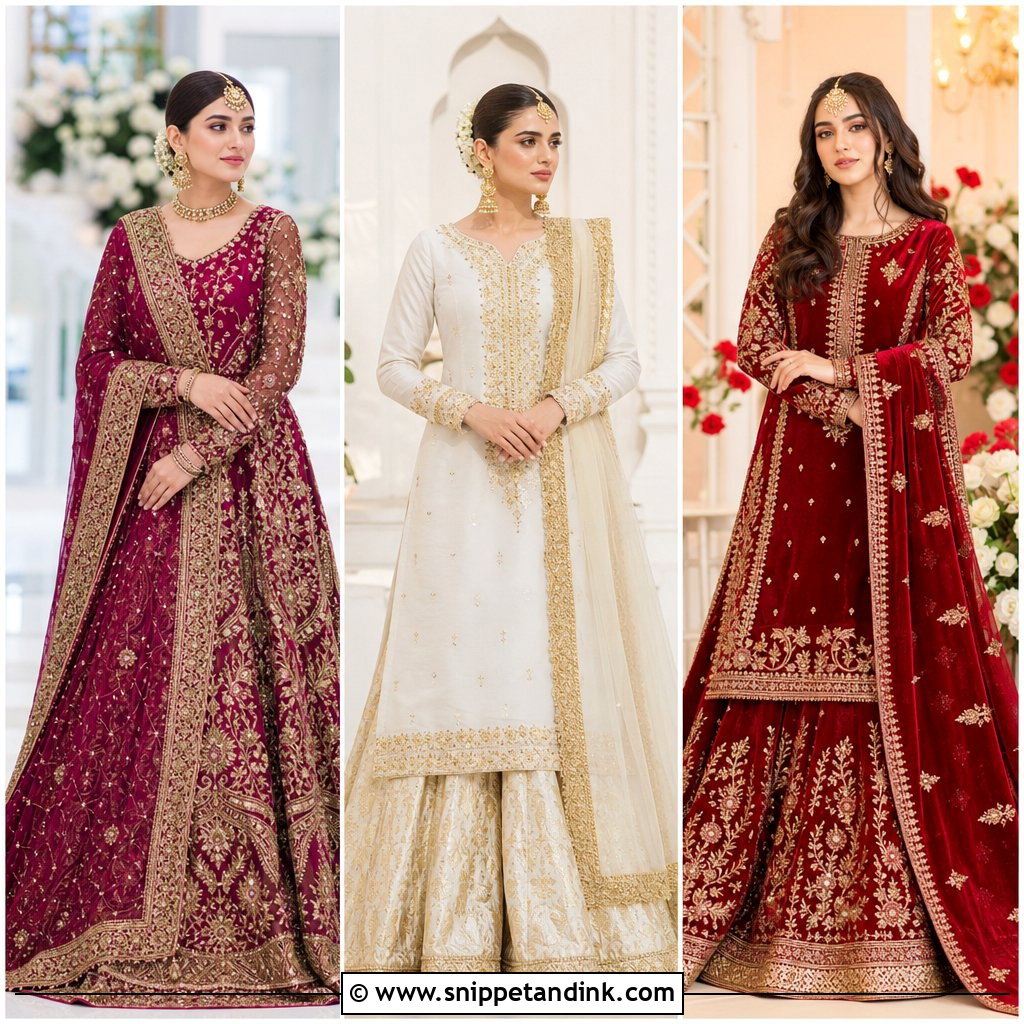
1. Red Bridal Lehenga Choli
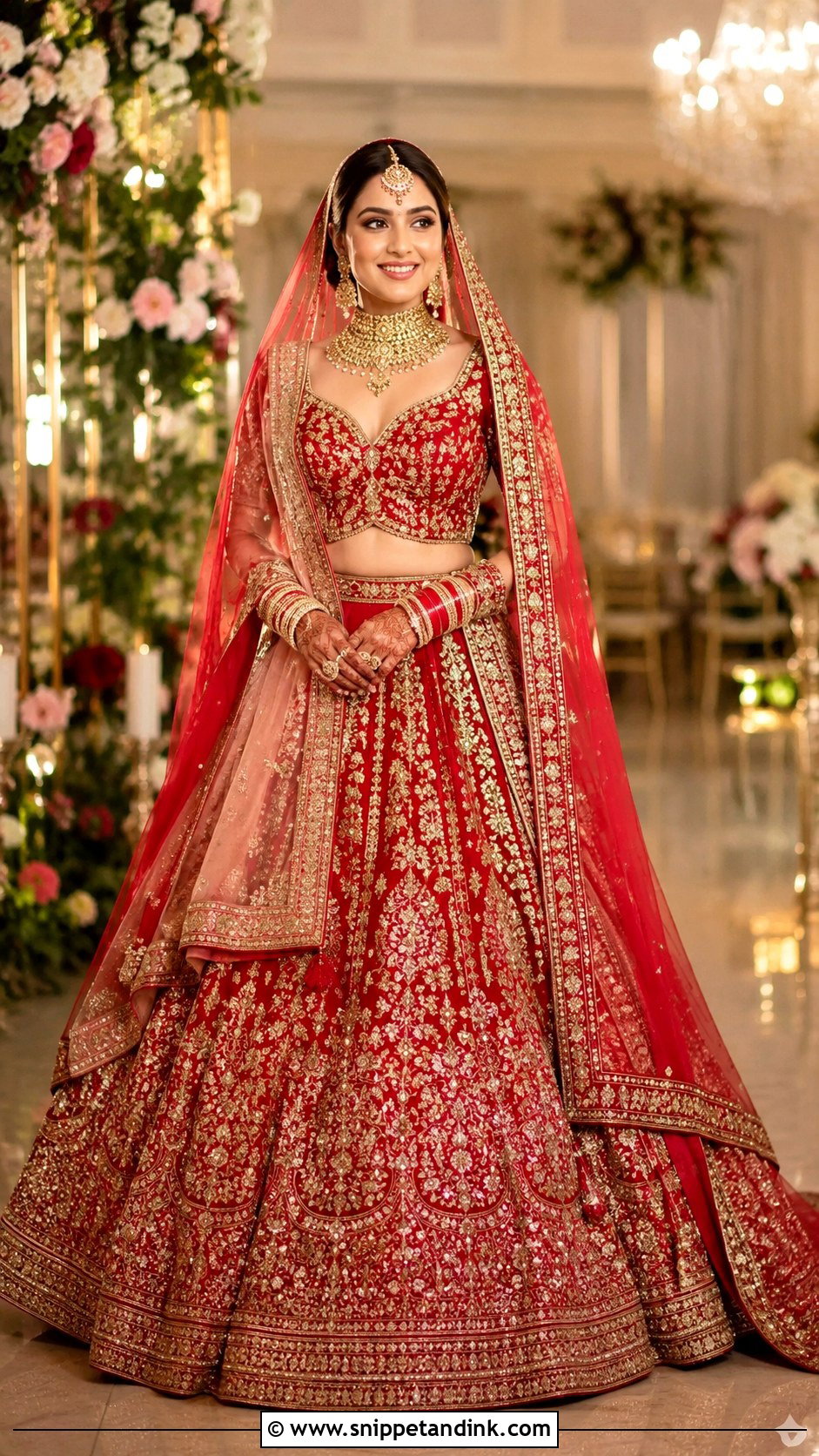
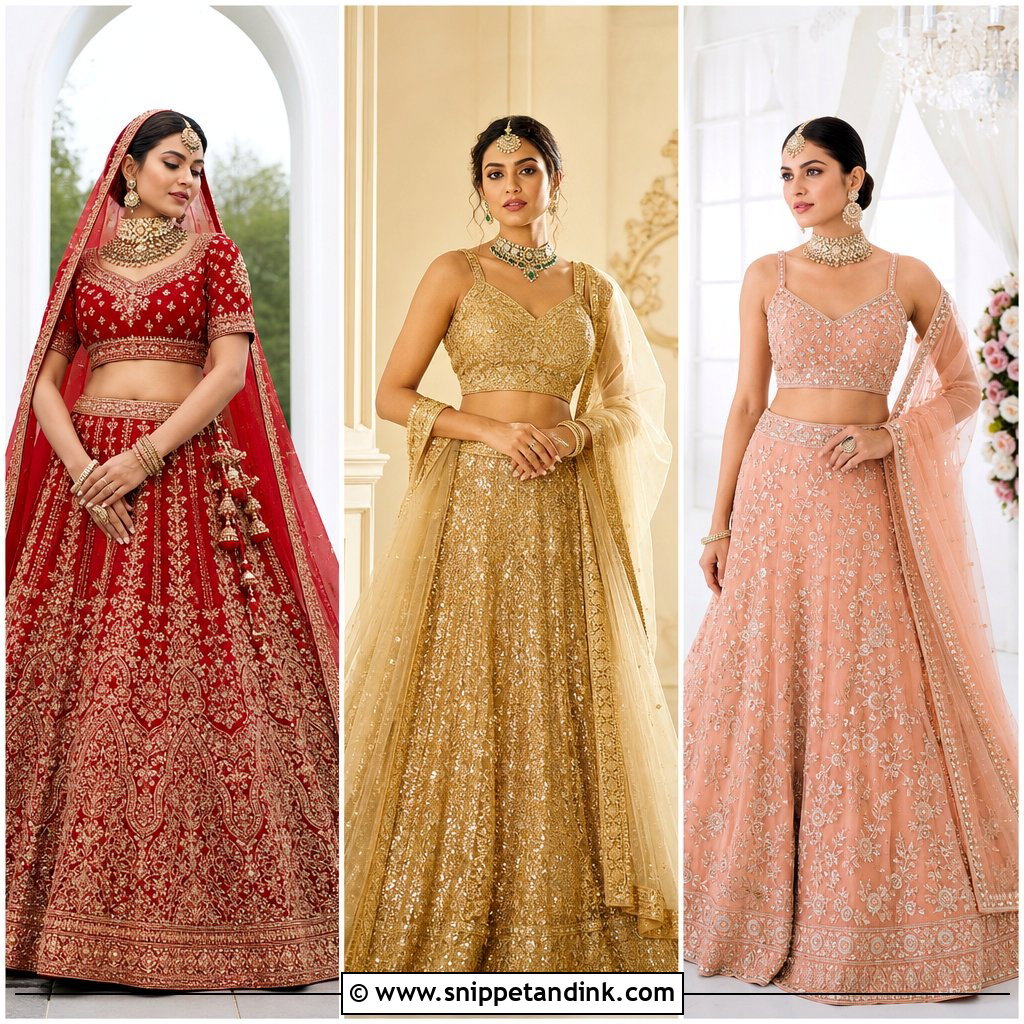
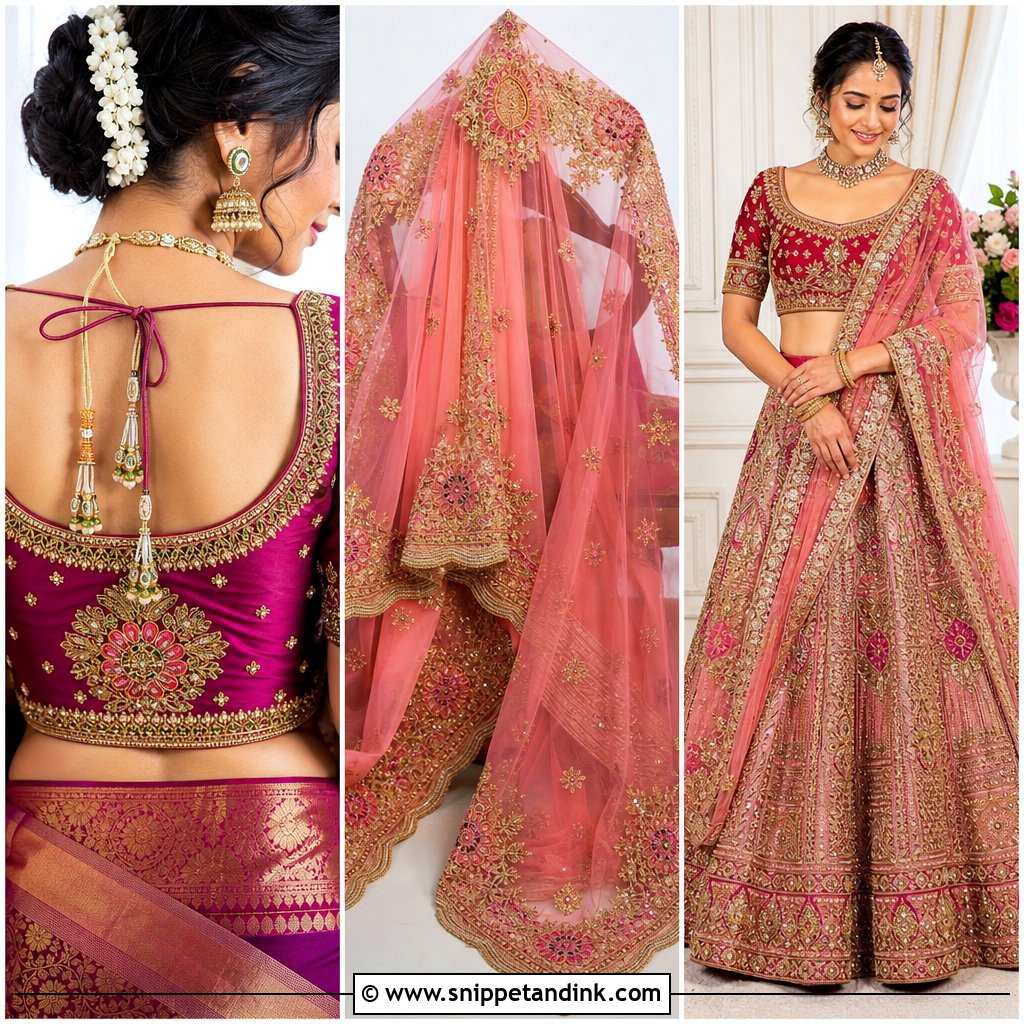
Red is still the color most brides come to me asking for, and it earns its place at a traditional ceremony. Look for a rich silk or raw silk skirt worked in gold zardozi, dabka or thread embroidery, with a fitted sweetheart-neck choli that gives shape without turning modern. Two dupattas are common here: a heavier red one over the head and a lighter embroidered one across a shoulder. Gold jhumkas, a layered necklace, bangles and a maang tikka finish it, with cushioned embroidered juttis for the hours of ritual. A smooth low bun with fresh flowers keeps the neckline clear. The detail I check on every red lehenga is how the embroidery is spread; when it’s piled at the hem, the skirt swings like a pendulum and drags when you sit.
2. Maroon Velvet Bridal Lehenga Choli
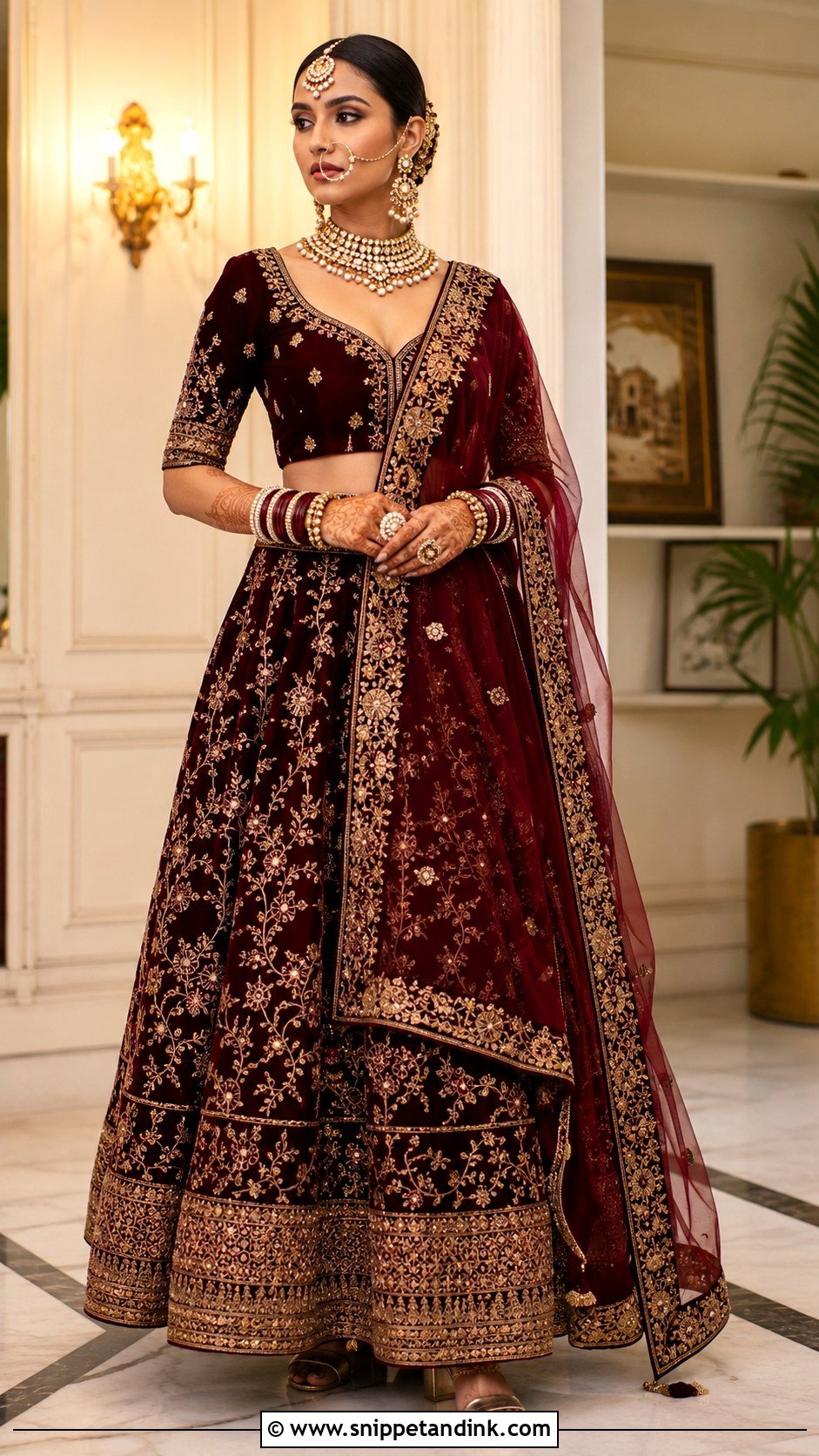
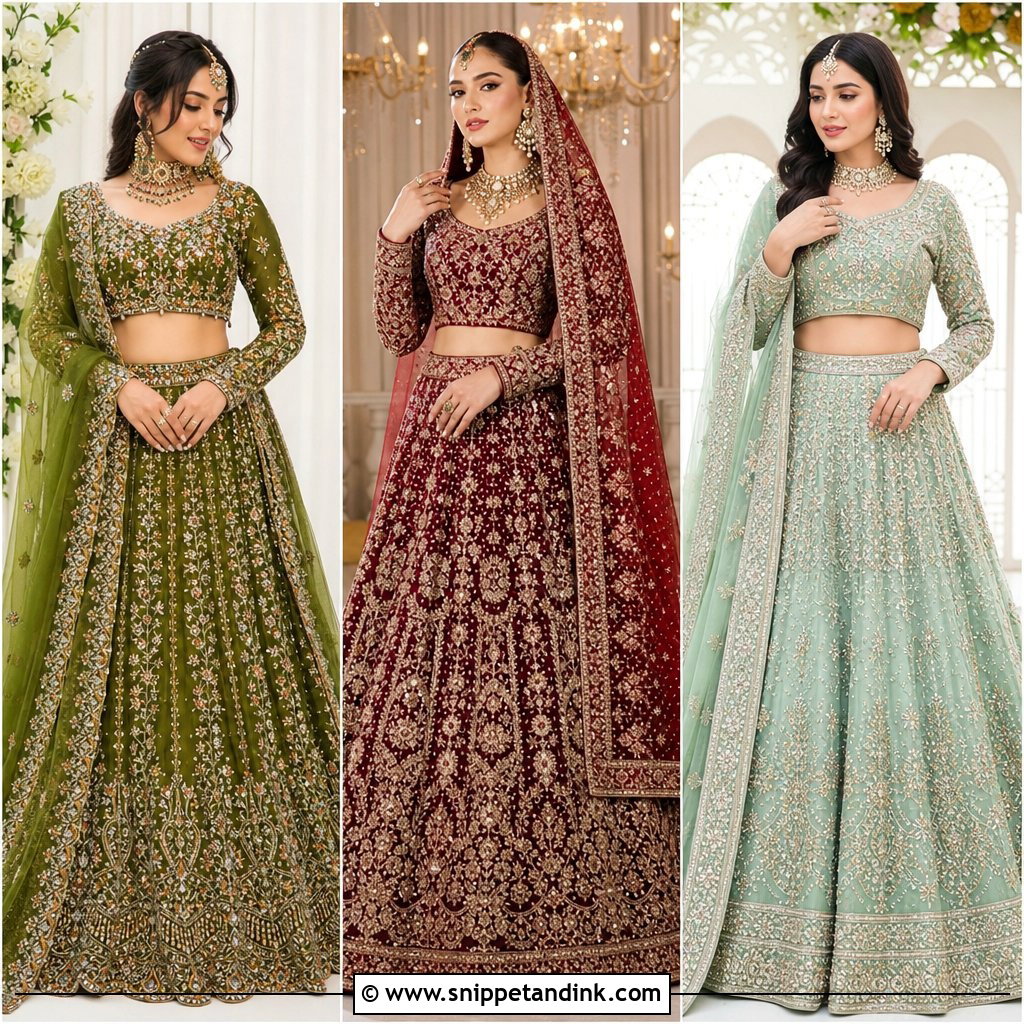
Velvet is the fabric I suggest for an indoor evening wedding in the cooler months, and maroon is where it looks richest. A paneled velvet lehenga with antique gold work kept to the hem is plenty, since velvet is already heavy before a single stitch of embroidery goes on. Pair it with a structured maroon choli with three-quarter sleeves and a soft curved neckline, and a sheer net dupatta with a velvet border to lift the weight. Antique gold, a traditional nath, stacked bangles and block-heel sandals suit it. Ask for a cotton lining in the choli and a reinforced waistband on the skirt. Velvet has a pile, too, so every panel must be cut in the same direction or the color looks patchy in photos.
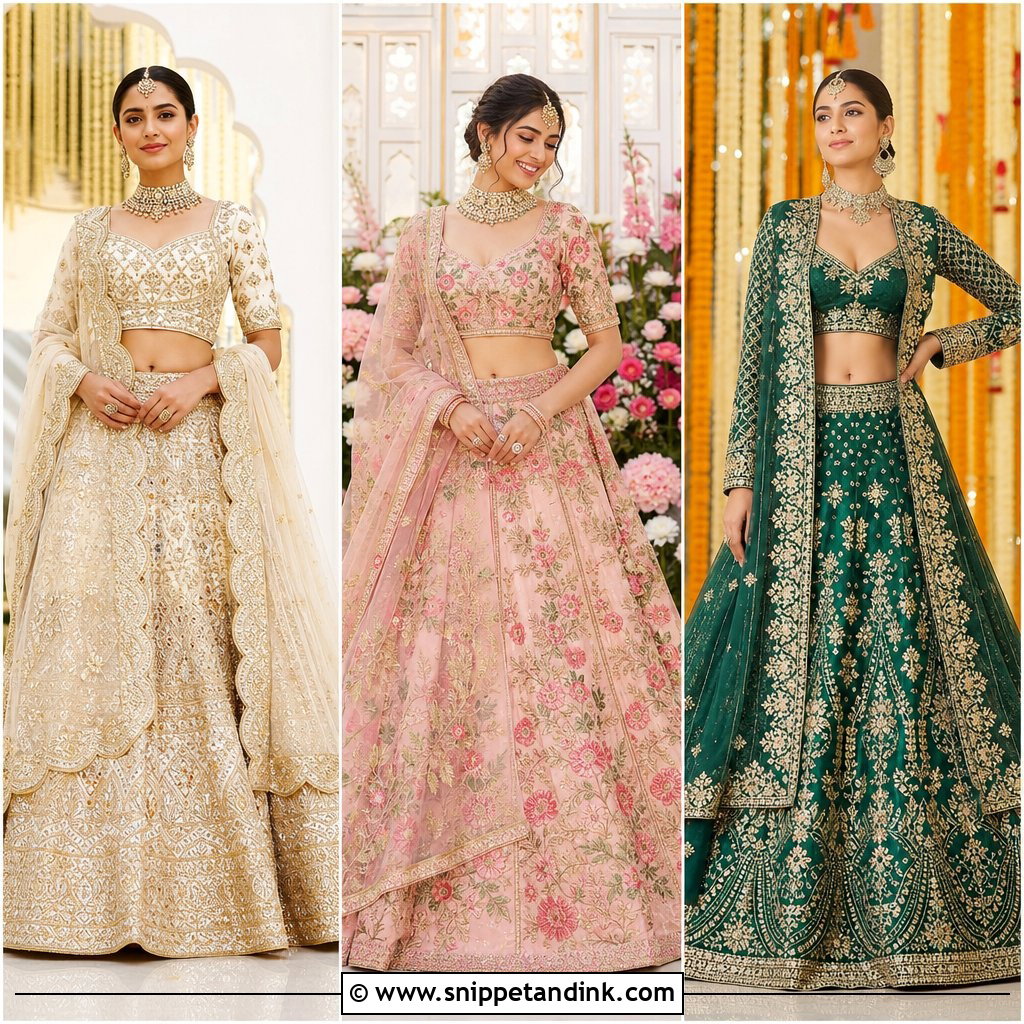
3. Pastel Pink Floral Bridal Lehenga Choli
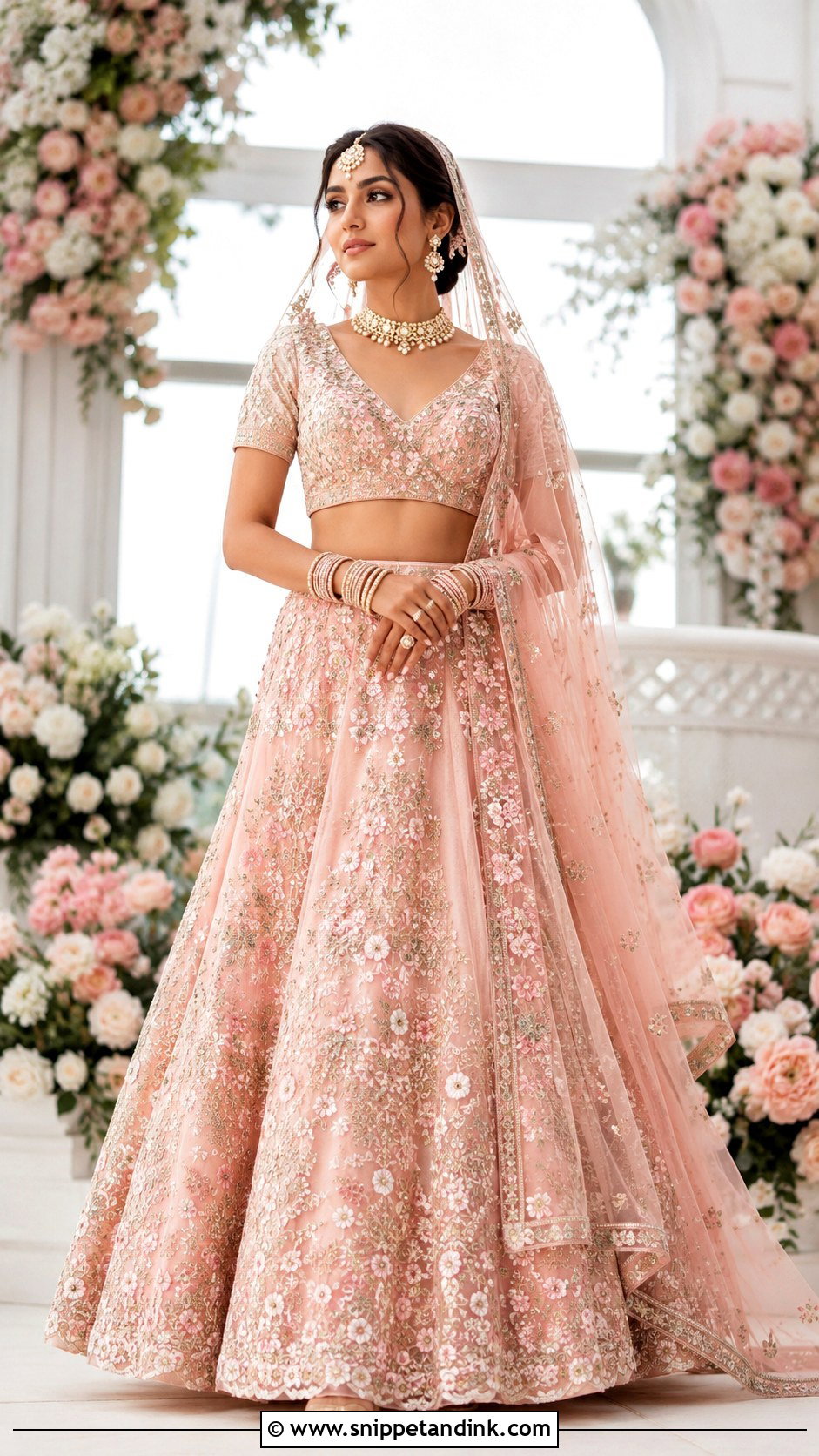
Pink in daylight is softer and more forgiving than red, but pale pinks wash out on camera. Blush, rose or dusty pink with floral threadwork, sequins and small pearls works best when something deeper sits near the face: a darker border, a stronger lipstick or a few bangles. A matching short-sleeve choli should have proper structure under the embroidery, and a sheer dupatta laid lightly over the head keeps it ceremonial without hiding the blouse. Pearl and kundan jewelry and rose-gold sandals tie the palette together. Wear soft waves or a low floral bun, depending on how humid the venue is.
4. Ivory And Gold Bridal Lehenga Choli
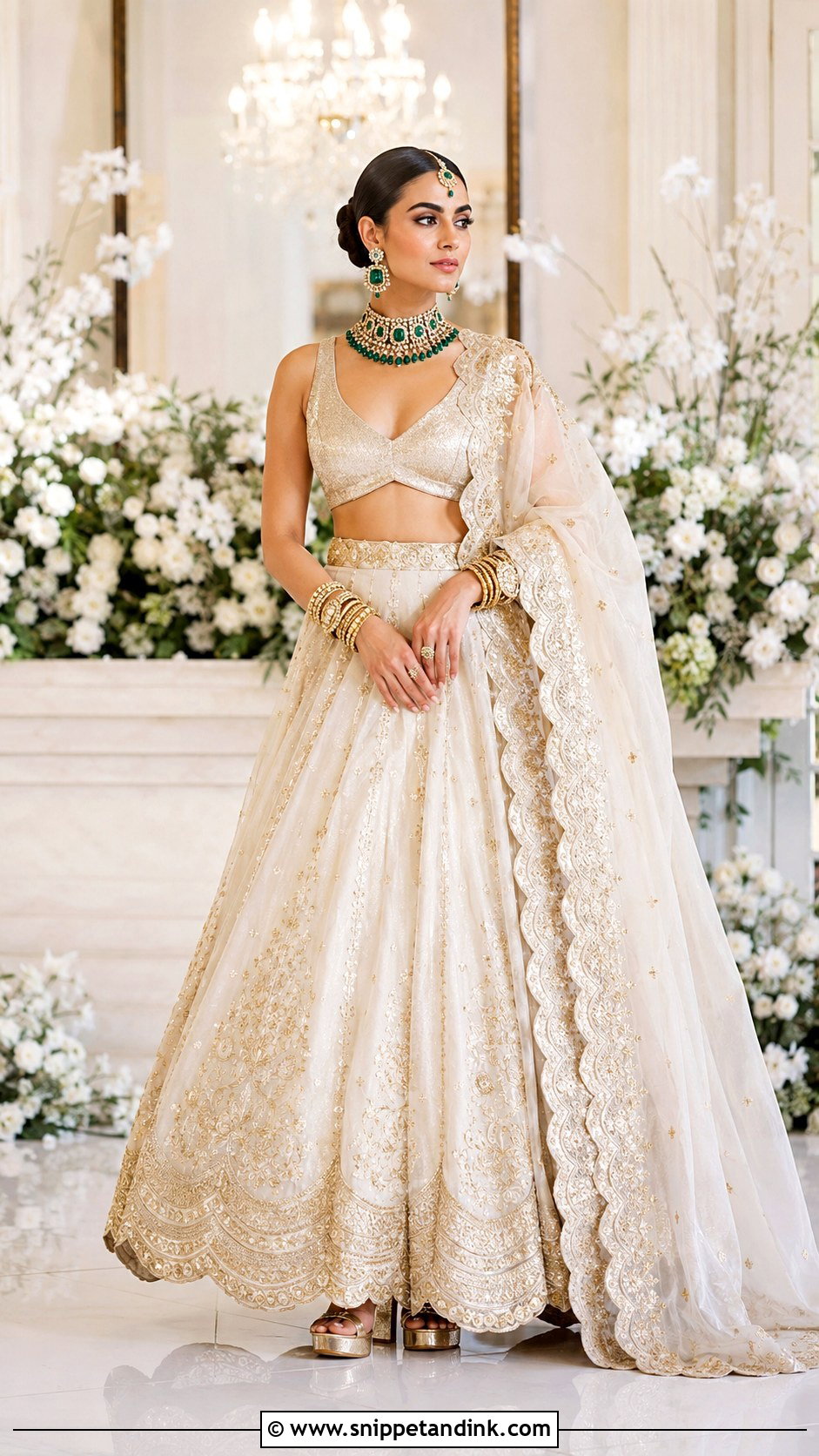
Ivory is the color I test hardest before a bride commits. An ivory lehenga in silk, tissue or organza with gold zari and a defined border can look cream, beige, gray or yellow depending on the light, so I take every swatch outside and photograph it next to her skin. A fitted gold choli connects with the zari and gives contrast. The ivory dupatta, with a narrow scalloped edge, can go over the head or diagonally across the torso. Emerald, ruby or uncut diamond jewelry brings in a single note of color. Gold platform sandals add height while staying stable under the full skirt, and a sleek bun with a small bindi keeps the rest clean.
5. Emerald Green Bridal Lehenga Choli
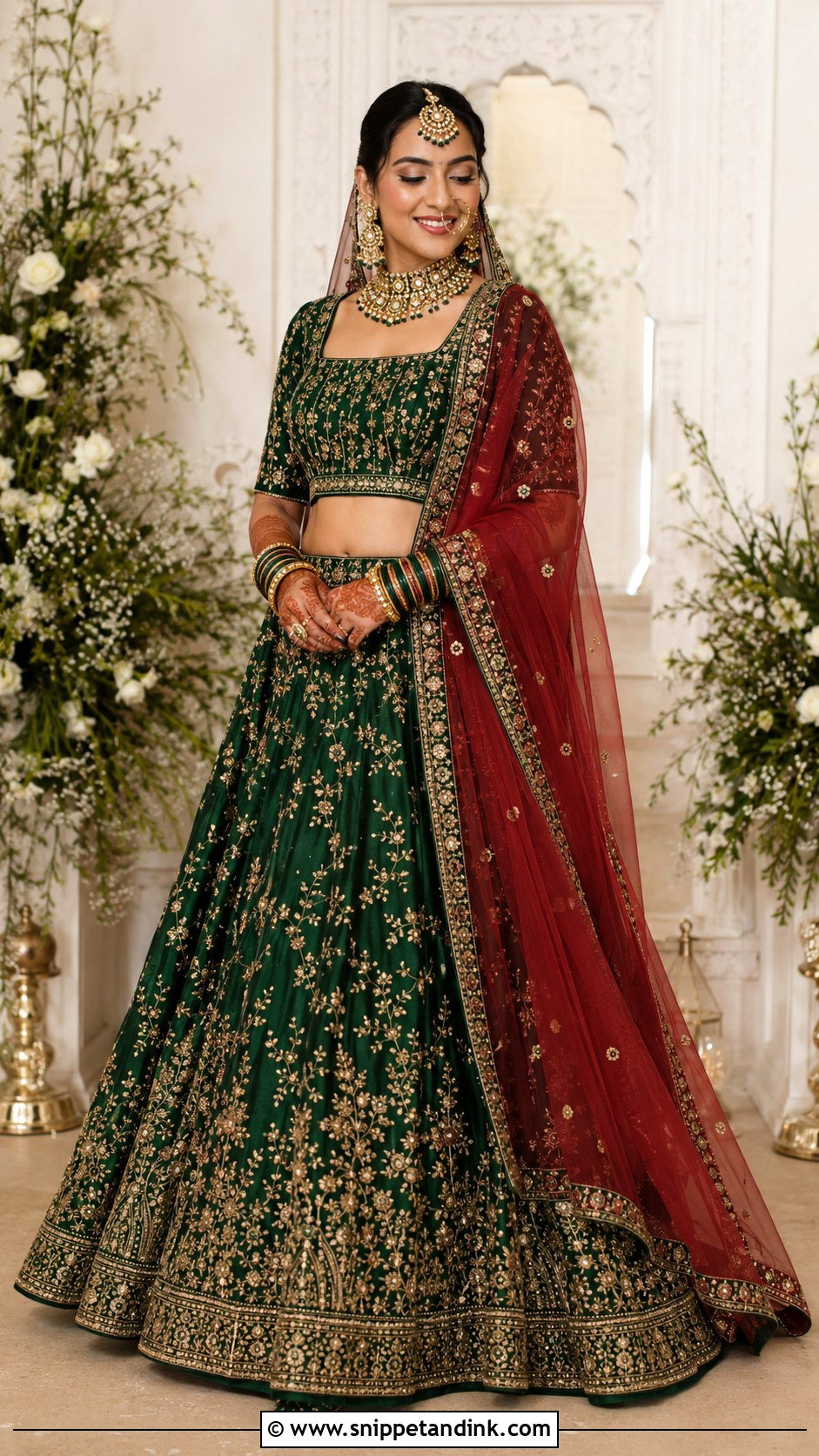
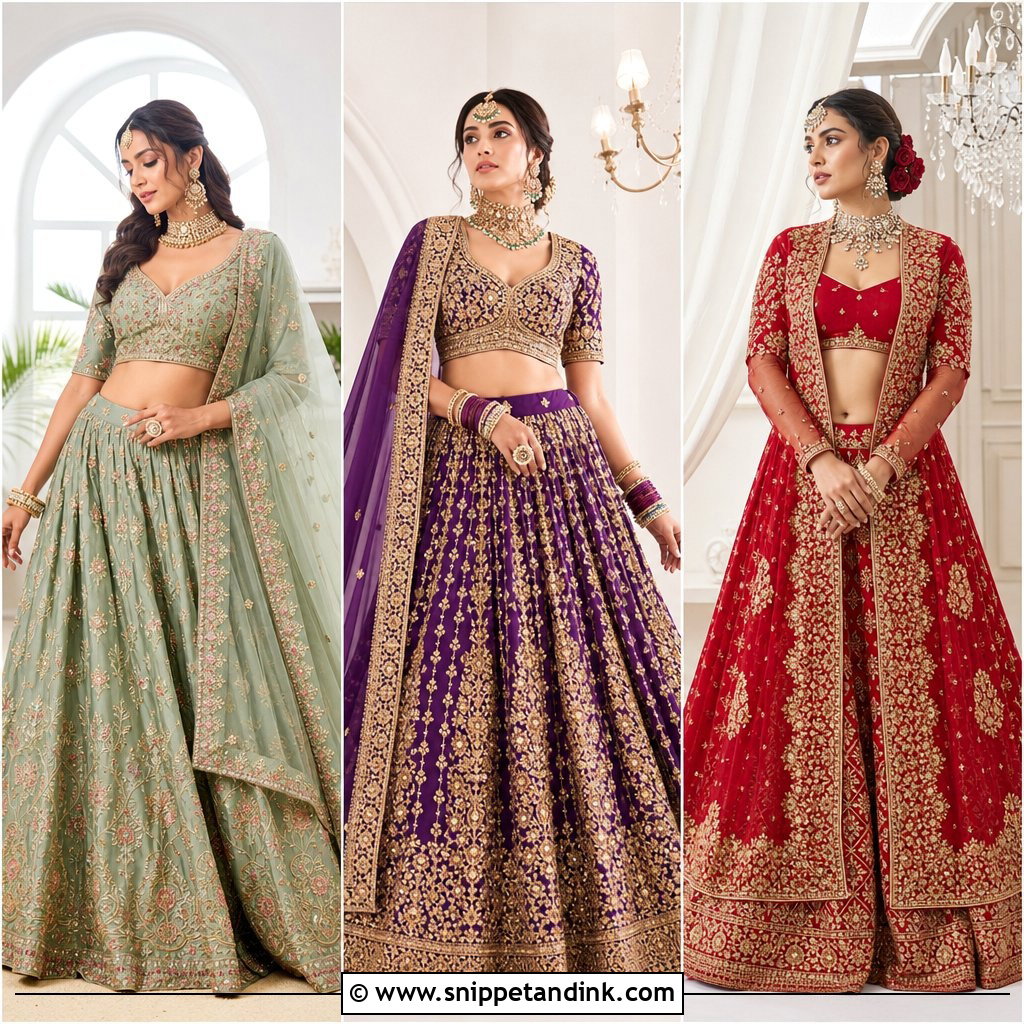
Emerald gives a ceremony the depth of red with a different mood. A silk or velvet lehenga with antique gold motifs, architectural borders or vine embroidery, and a fitted emerald choli with a square neck and elbow sleeves. The dupatta is where I’d bring warmth back in, in rust, red or muted gold, which also makes it read as bridal rather than festive. Polki, gold bangles, a maang tikka and embroidered green juttis complete it, with a braided or center-parted low bun. When the skirt is heavily worked, I simplify the choli so the eye has somewhere to rest.
6. Royal Blue Bridal Lehenga Choli
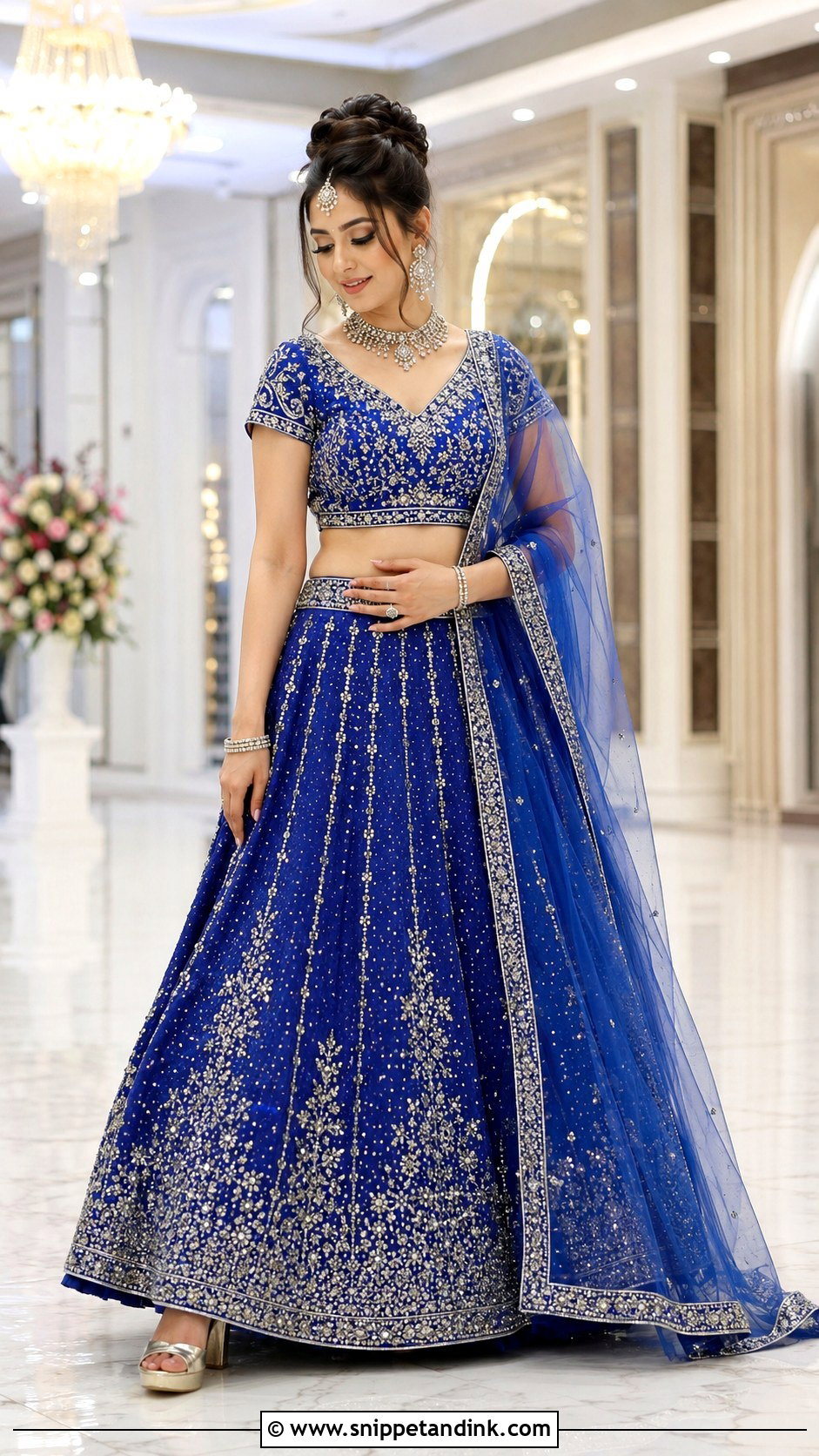
Royal blue belongs to the evening reception, where silver threadwork, crystals or tonal sequins catch stage lights. Choose a flowing skirt and a structured blue choli with a V-neck and wide straps; those wider straps carry a heavy blouse far better than spaghetti straps, which dig in by midnight. A sheer blue dupatta with a silver border over one shoulder keeps the line modern. Diamond-style jewelry, a slim waist belt, silver bangles and metallic block heels, with a high bun or polished ponytail. Royal blue fights with other bright colors, so I keep accents to silver, clear stones and a touch of sapphire.
7. Lavender Bridal Lehenga Choli
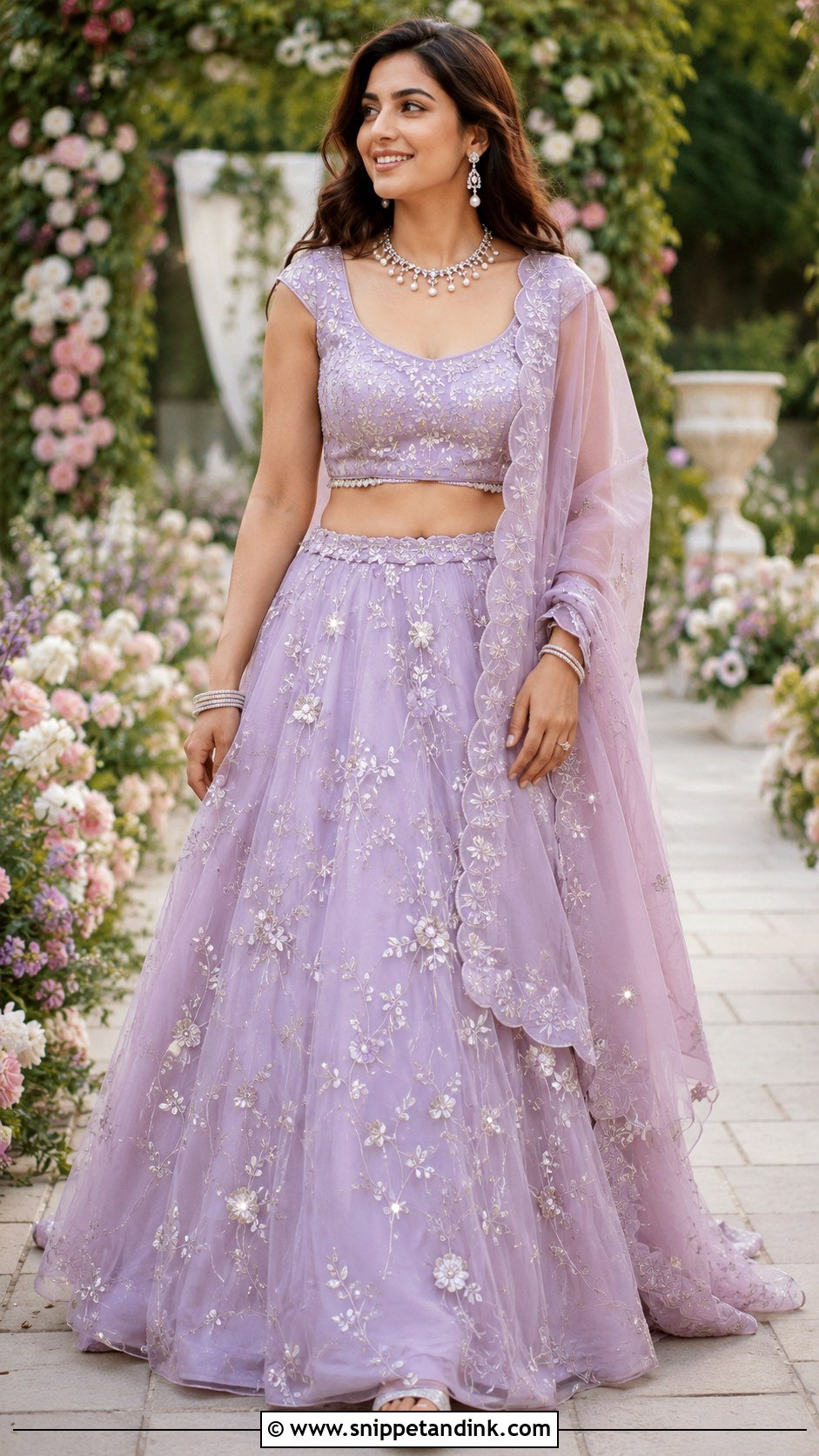
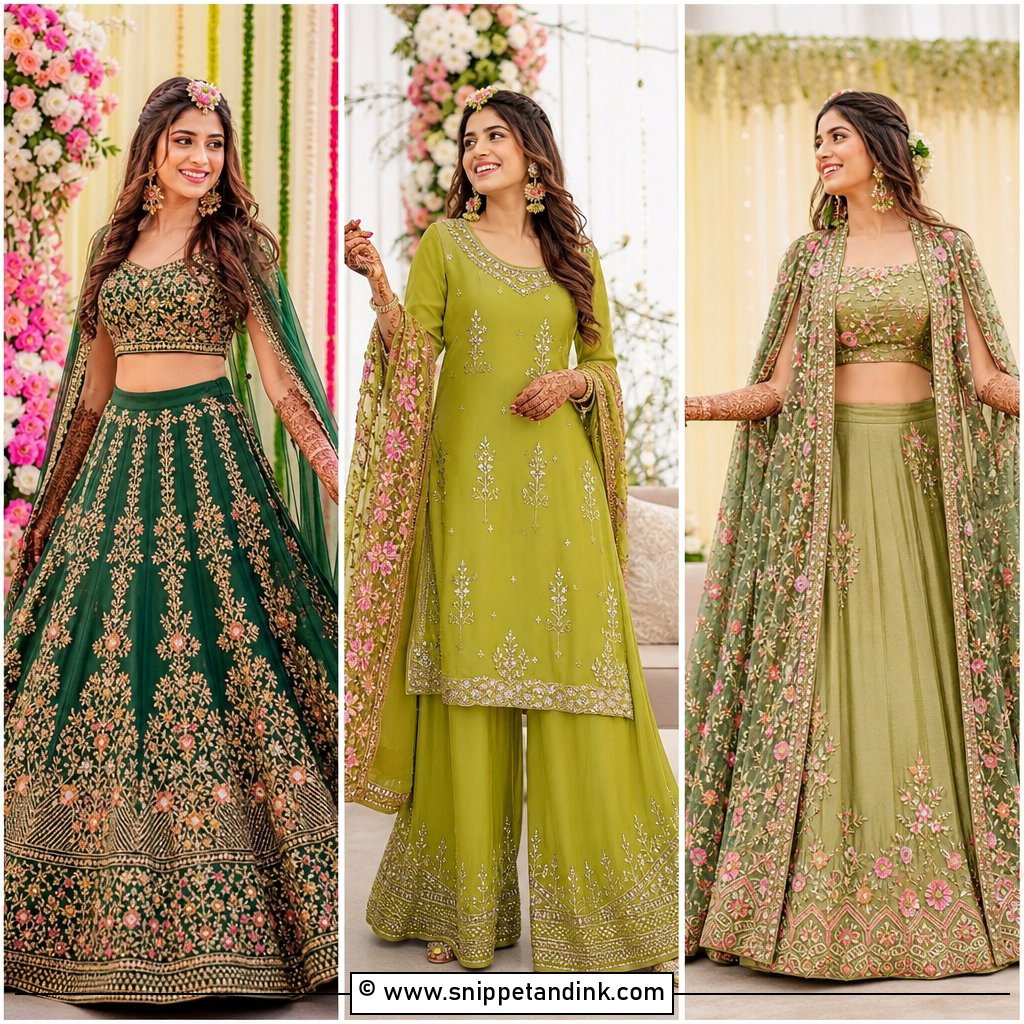
Lavender is a daylight color, at its best in a garden. Organza or georgette, embellished with silver vines, tiny crystals and dimensional floral appliques, keeps it light enough for heat. Pair it with a matching choli with a modest scoop neckline and short embroidered sleeves, plus a soft lavender dupatta with a narrow scalloped edge that leaves the blouse visible. Pearl drops, a fine choker, silver bangles and pale metallic sandals. A slightly deeper lavender border on the skirt stops the color from fading in photos. I ask for a smooth lining and only a light cancan, because 3D appliques already add volume and a stiff underskirt on top of them makes sitting awkward.
8. Peach Bridal Lehenga Choli
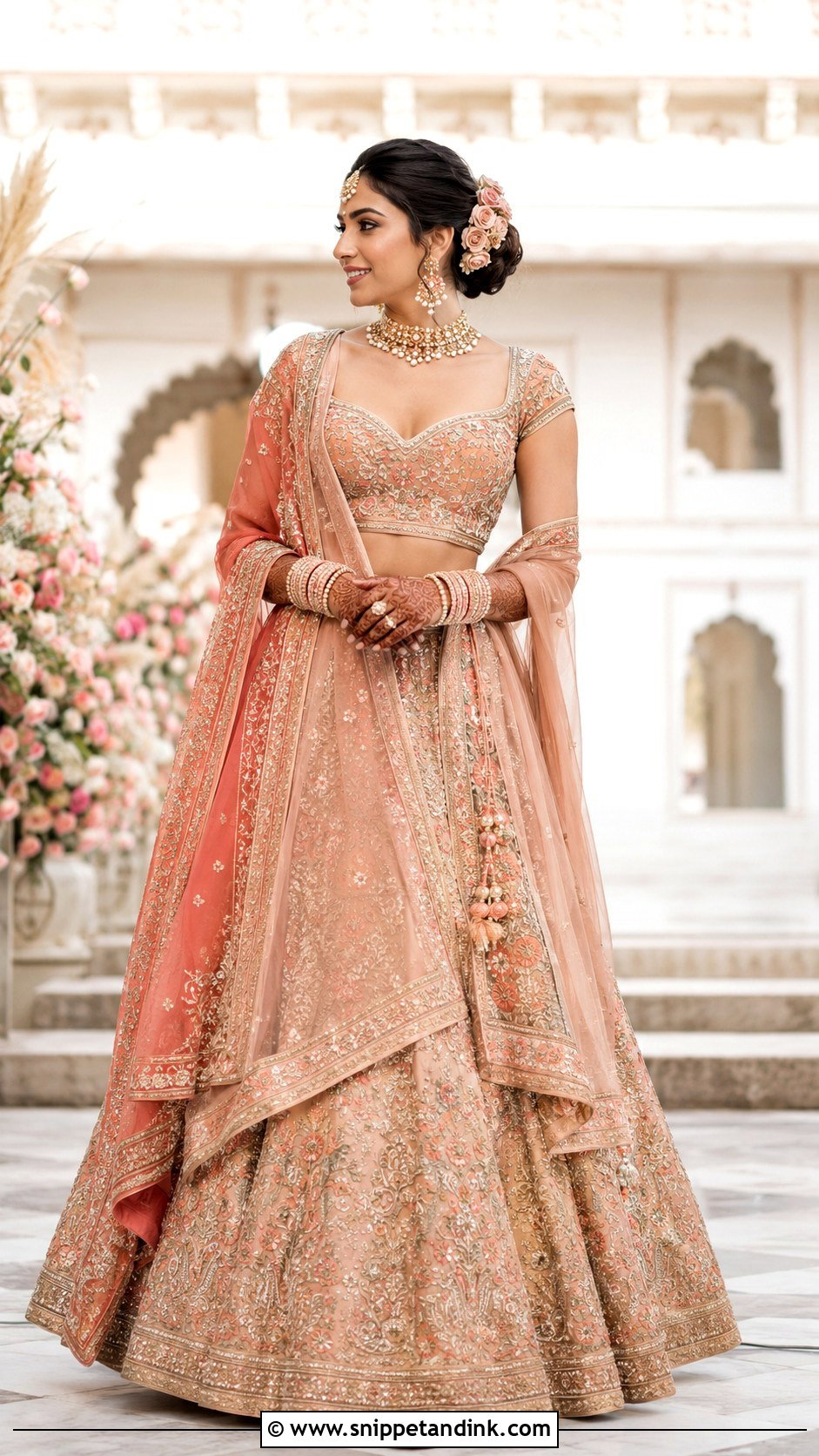
Peach runs from pale apricot to deep coral, and the right one depends entirely on the bride’s undertone. I drape two or three shades against her face in daylight before anything is ordered. Once chosen, rose-gold embroidery, tonal beads and scattered florals suit the skirt, with a fitted choli, a curved neckline and lightly worked sleeves. Layering a sheer peach dupatta with a muted coral one adds depth around the face. Rose-gold jewelry with pearl accents, stacked bangles and neutral juttis keep the palette soft, and a low bun with peach and cream flowers finishes it.
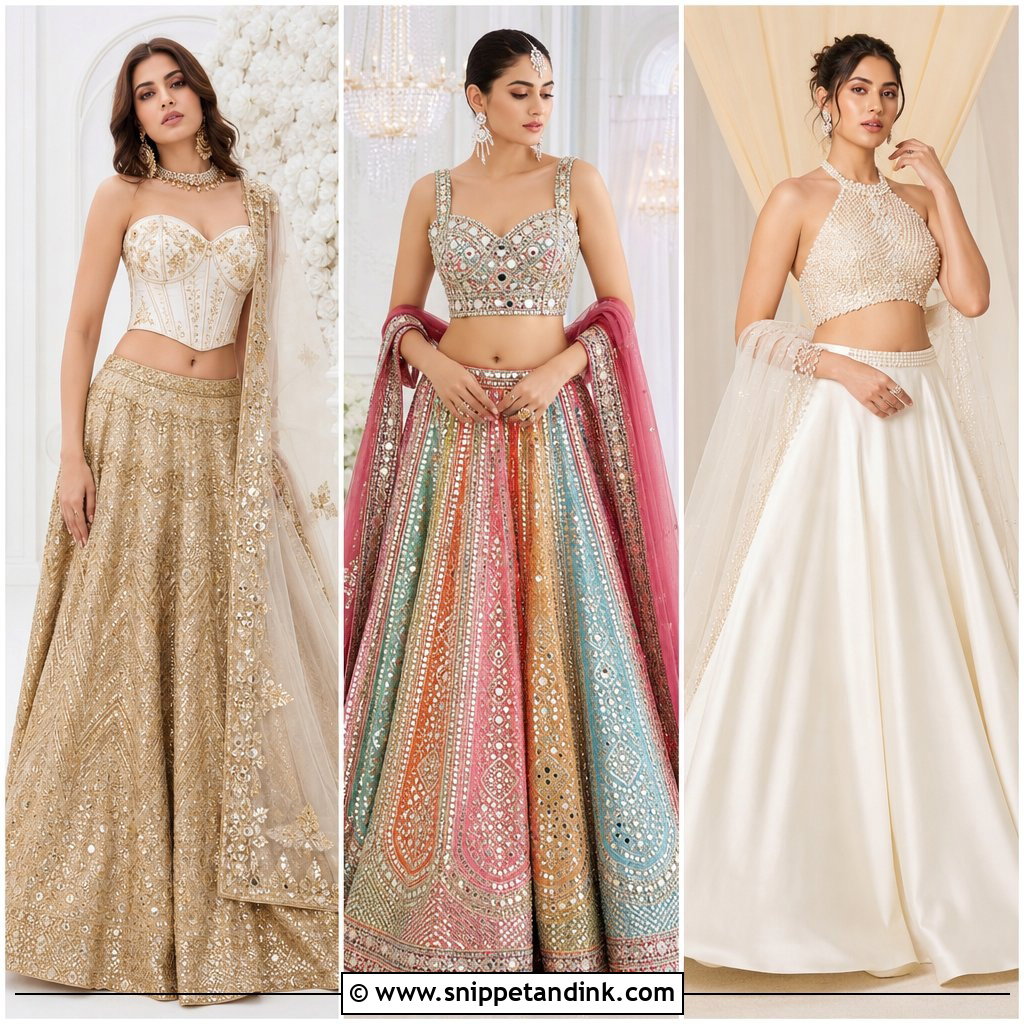
9. Mirror Work Bridal Lehenga Choli
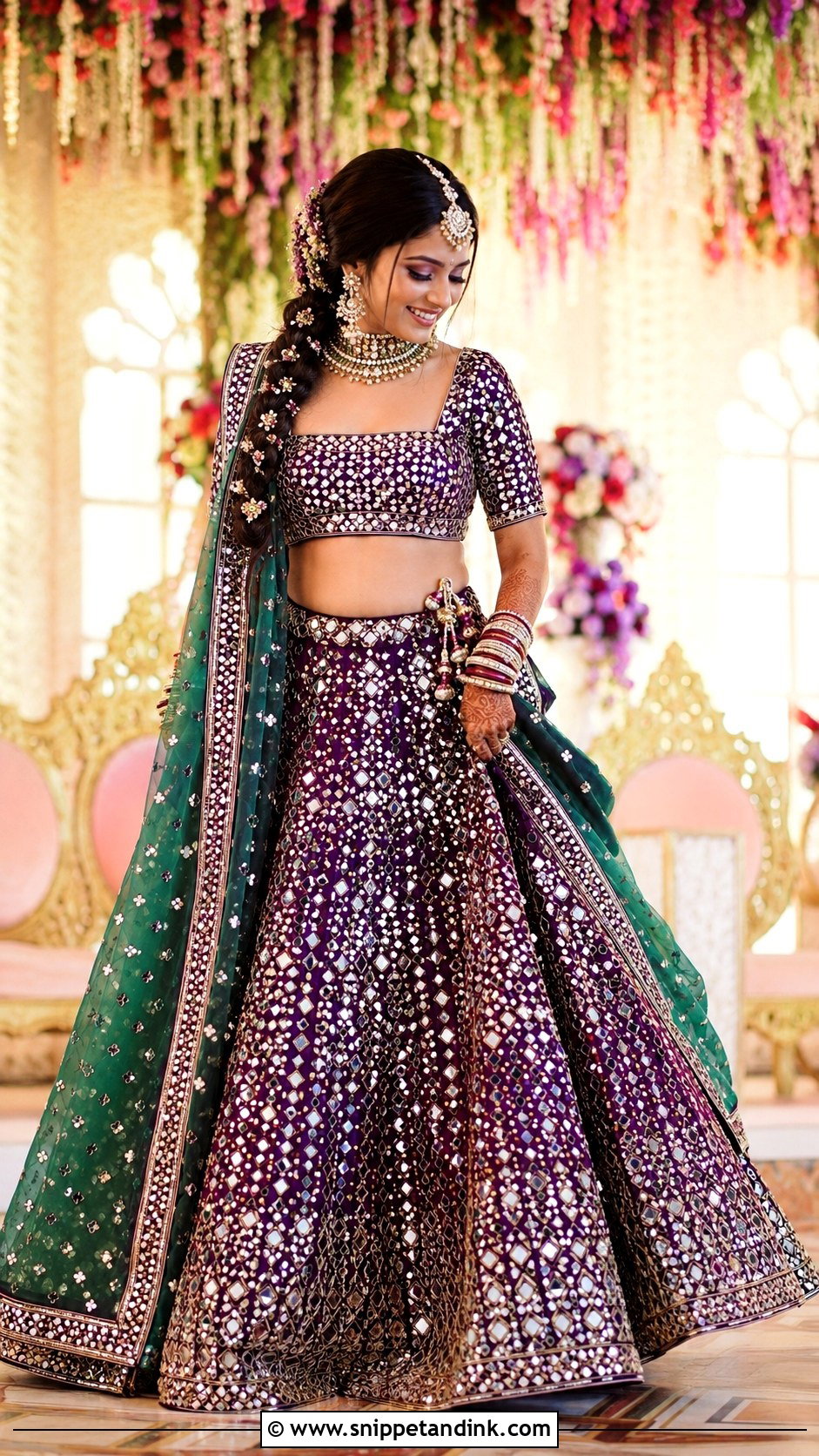
Mirror work moves and catches light with every step, which is the reason to wear it. Choose a lehenga featuring small, securely stitched mirrors in geometric or floral patterns, with a matching square-neck choli and elbow sleeves. Keep the net dupatta to a mirror border only; a fully mirrored dupatta is heavy and scratchy against bare arms. Oxidized silver, kundan or antique gold can all work, depending on the base color, with juttis, stacked bangles and a sleek decorated braid. Before the wedding, I run a finger over every mirror edge, because a lifted one snags the dupatta and pulls threads out of the skirt beside it.
10. Banarasi Silk Bridal Lehenga Choli
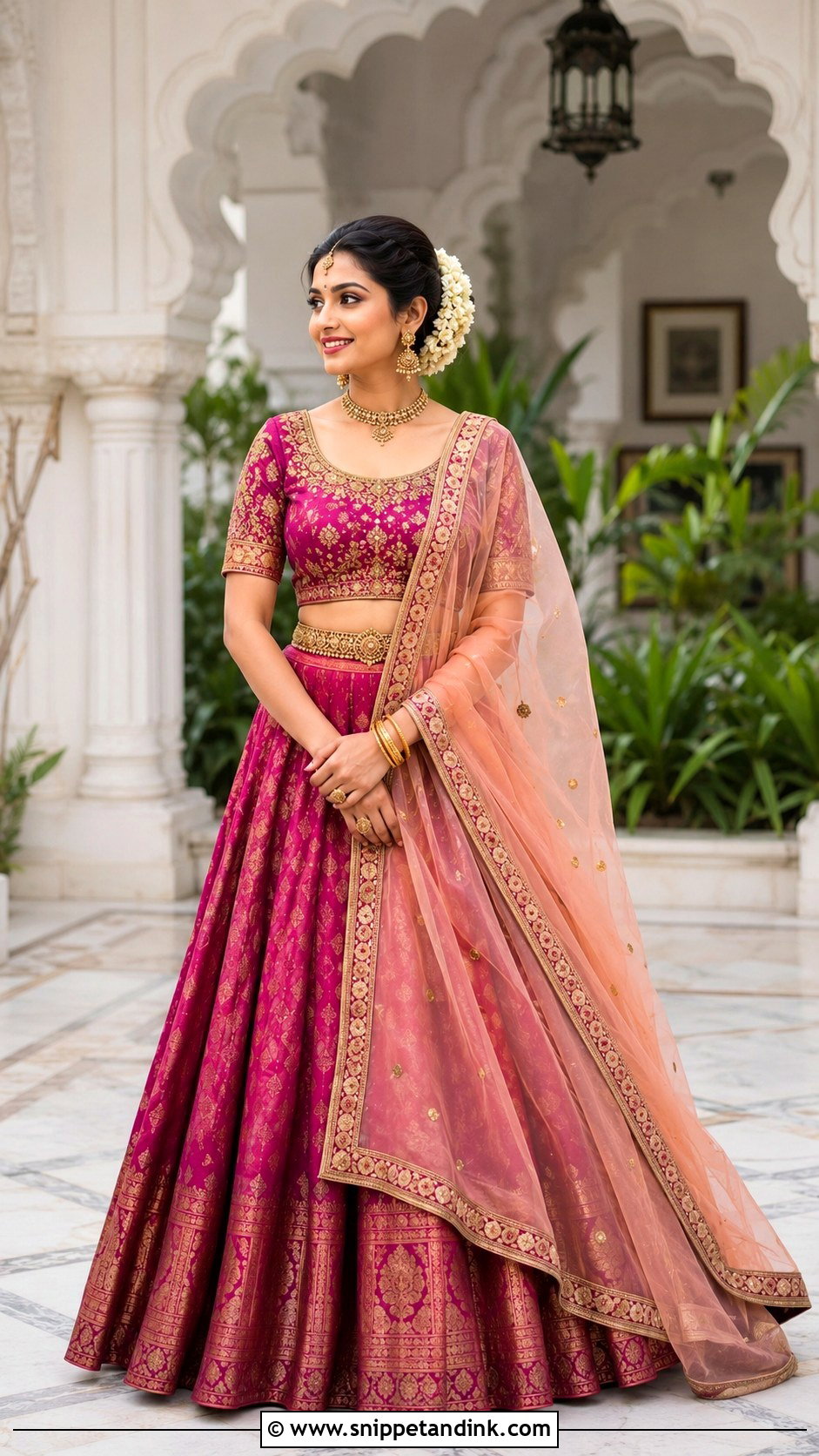
Banarasi silk is woven, not embroidered, so the pattern is part of the fabric and it holds its own shape. That’s why I keep cancan to a minimum underneath: the silk doesn’t need it, and too much makes the skirt look stiff. Red, magenta, green or deep purple with gold motifs and a broad woven border, paired with a plain or lightly worked silk choli. An organza dupatta with zari edging softens all that brocade. Temple jewelry or antique gold, a waist belt, bangles and brocade juttis complete it, with a center-parted bun and jasmine. Choose a soft cotton lining to cut friction through long hours of sitting.
11. Kanjivaram Silk Bridal Lehenga Choli
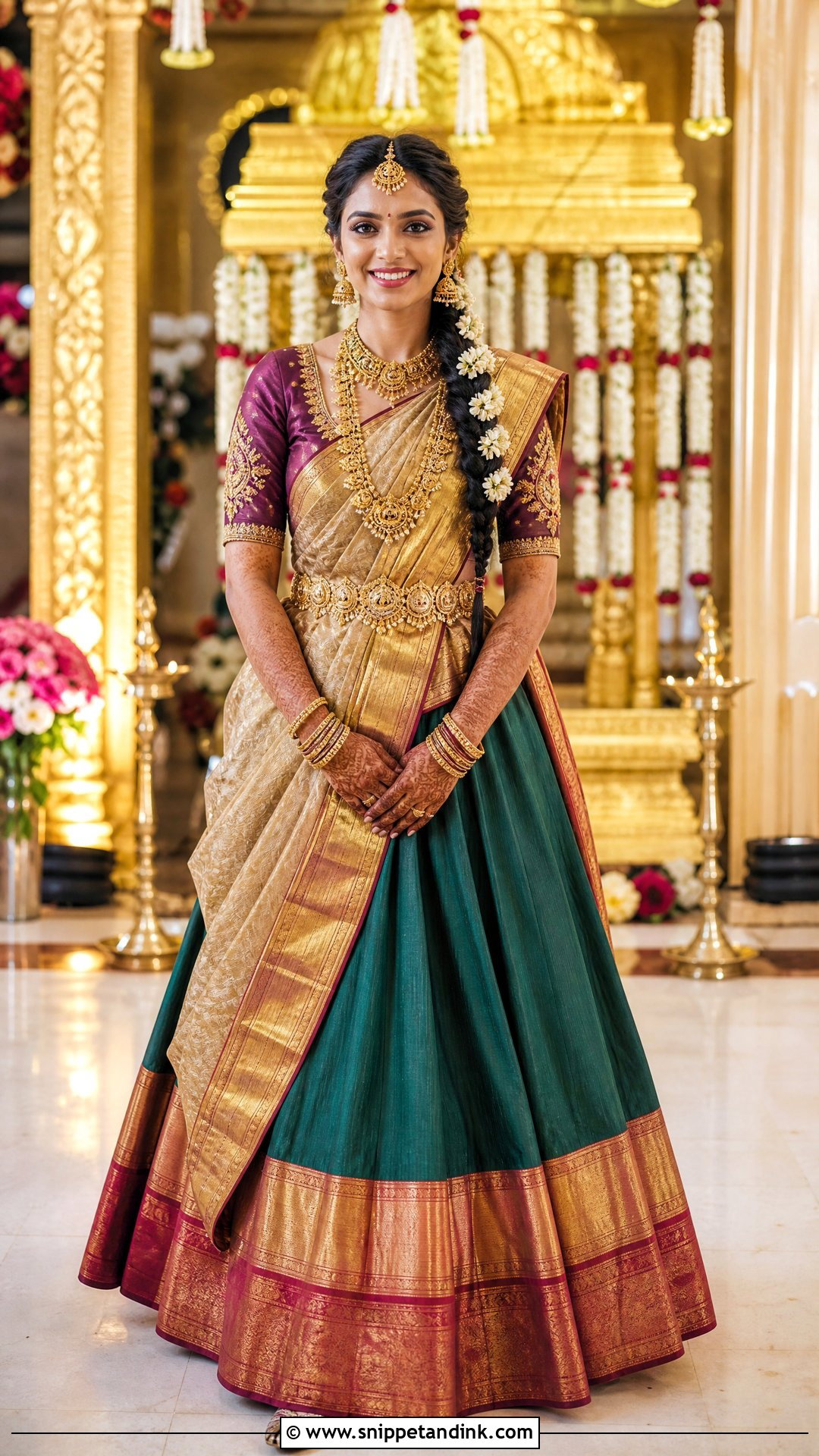
Rich silk and bold woven borders give a Kanjivaram bridal lehenga choli its ceremonial presence. A jewel-toned skirt in red, orange, green or purple with contrasting zari panels, and a fitted silk choli cut from the border color, gives a two-tone effect. The dupatta, in matching silk or lighter tissue, is pleated over one shoulder and pinned. Temple jewelry, traditional bangles, a waist belt and gold juttis, with a long braid in flowers or a structured low bun. Kanjivaram is a dense, heavy silk, so tailoring at the waist and bust matters more than added volume. I’d skip the cancan almost entirely.
12. Multicolor Bridal Lehenga Choli
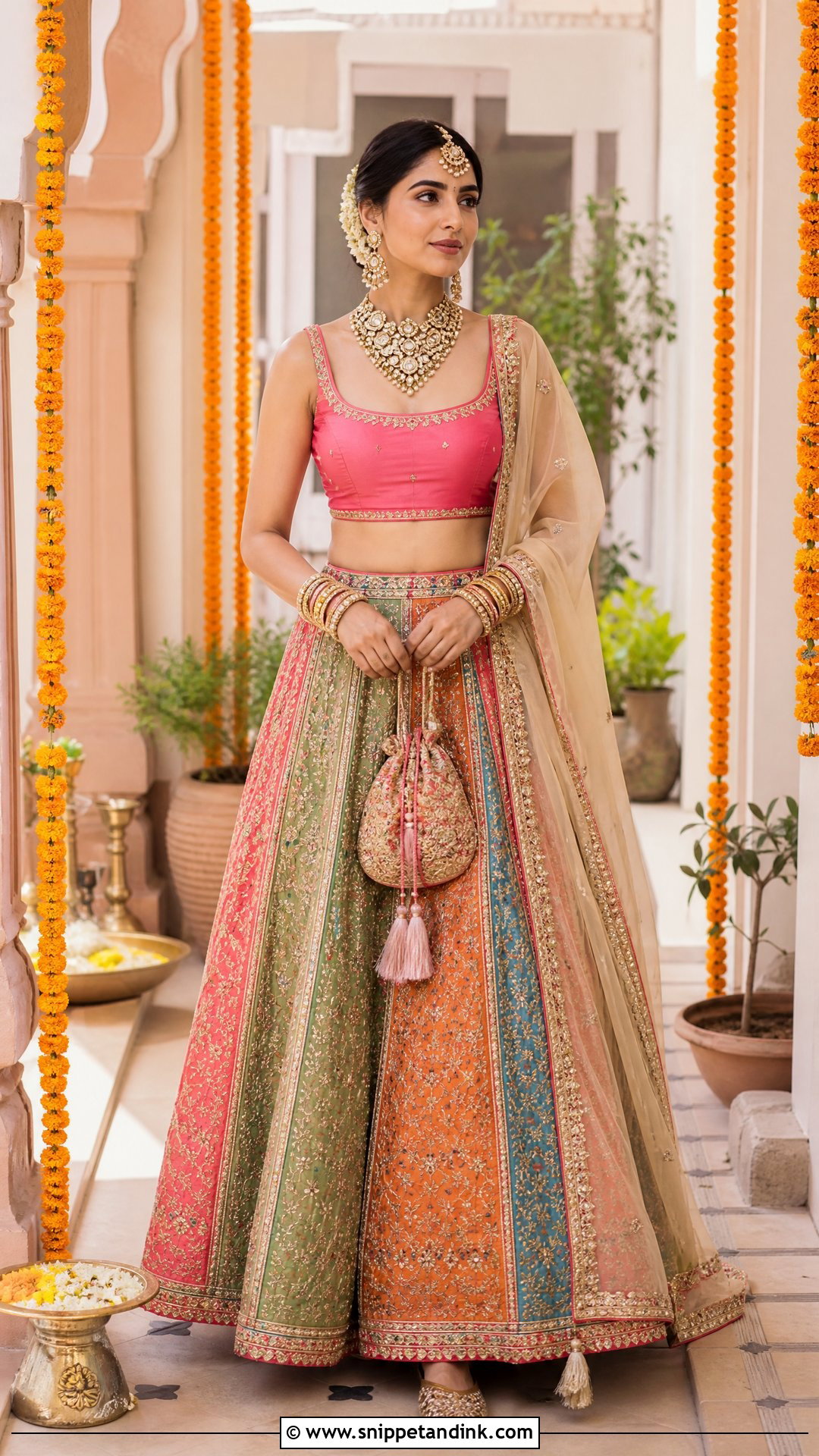
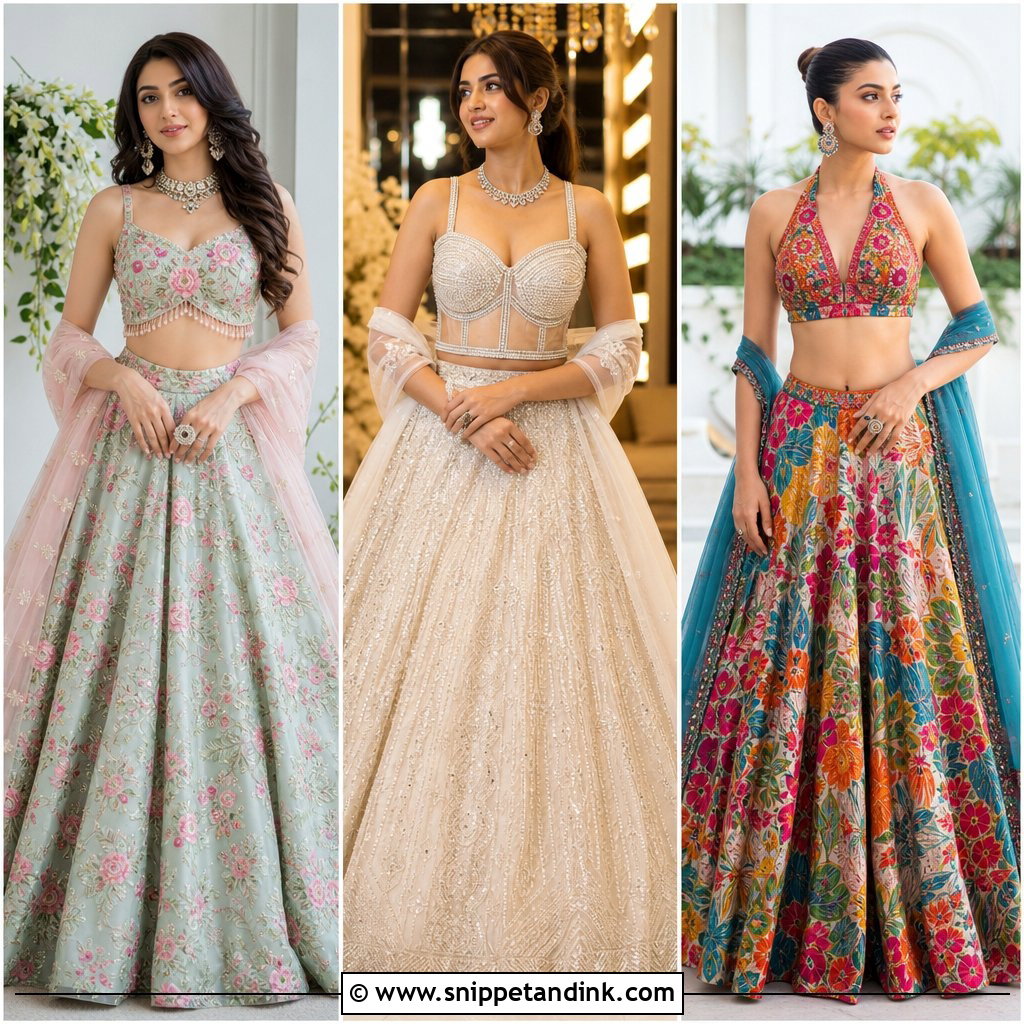
Several colors in one outfit need a plan. A multicolor bridal lehenga choli works when the paneled skirt, in coral, pink, orange, green and blue, sits against a solid choli in its dominant shade. A gold or soft pink dupatta pulls it together. Kundan, mixed bangles, metallic juttis and a small embroidered potli, with a braid or a smooth bun. My rule with this one: repeat two or three shades from the skirt in your accessories, and add no new colors.
13. Corset Bridal Lehenga Choli
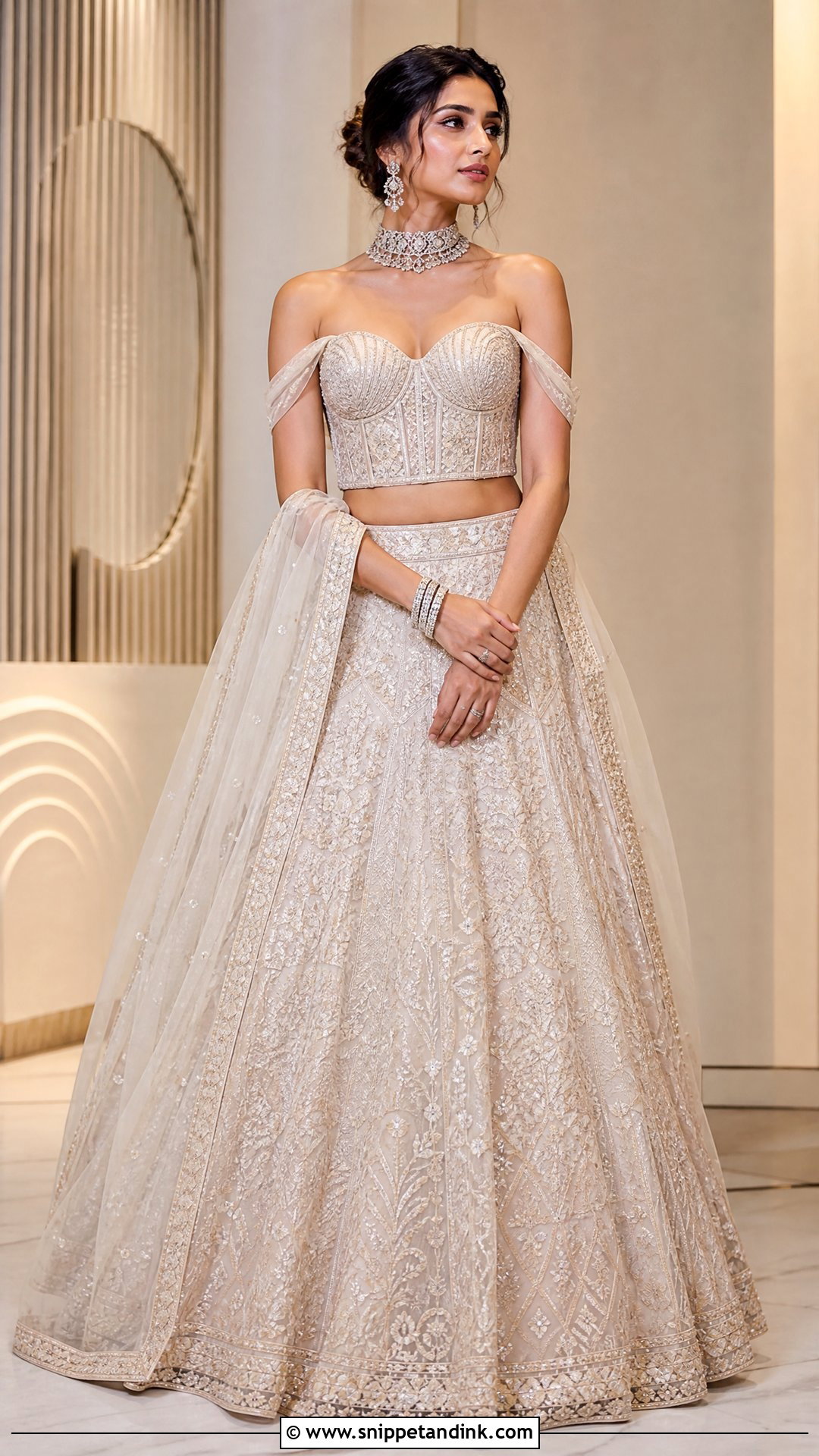
A corset choli is the most structured option here, and it has to be fitted with the actual undergarments you’ll wear on the day, at every fitting. Boning, wide straps and a secure back closure give support; embroidery that carries on into the skirt keeps it from looking like two separate garments. Pair it with a high-waisted flared lehenga and a sheer dupatta from one shoulder or behind the arms. A statement choker, drop earrings, a bracelet stack and platforms under the hem. Sit, breathe deeply and lift your arms in it. If you can’t eat a small meal comfortably, it’s too tight for a wedding day.
14. Long Sleeve Bridal Lehenga Choli
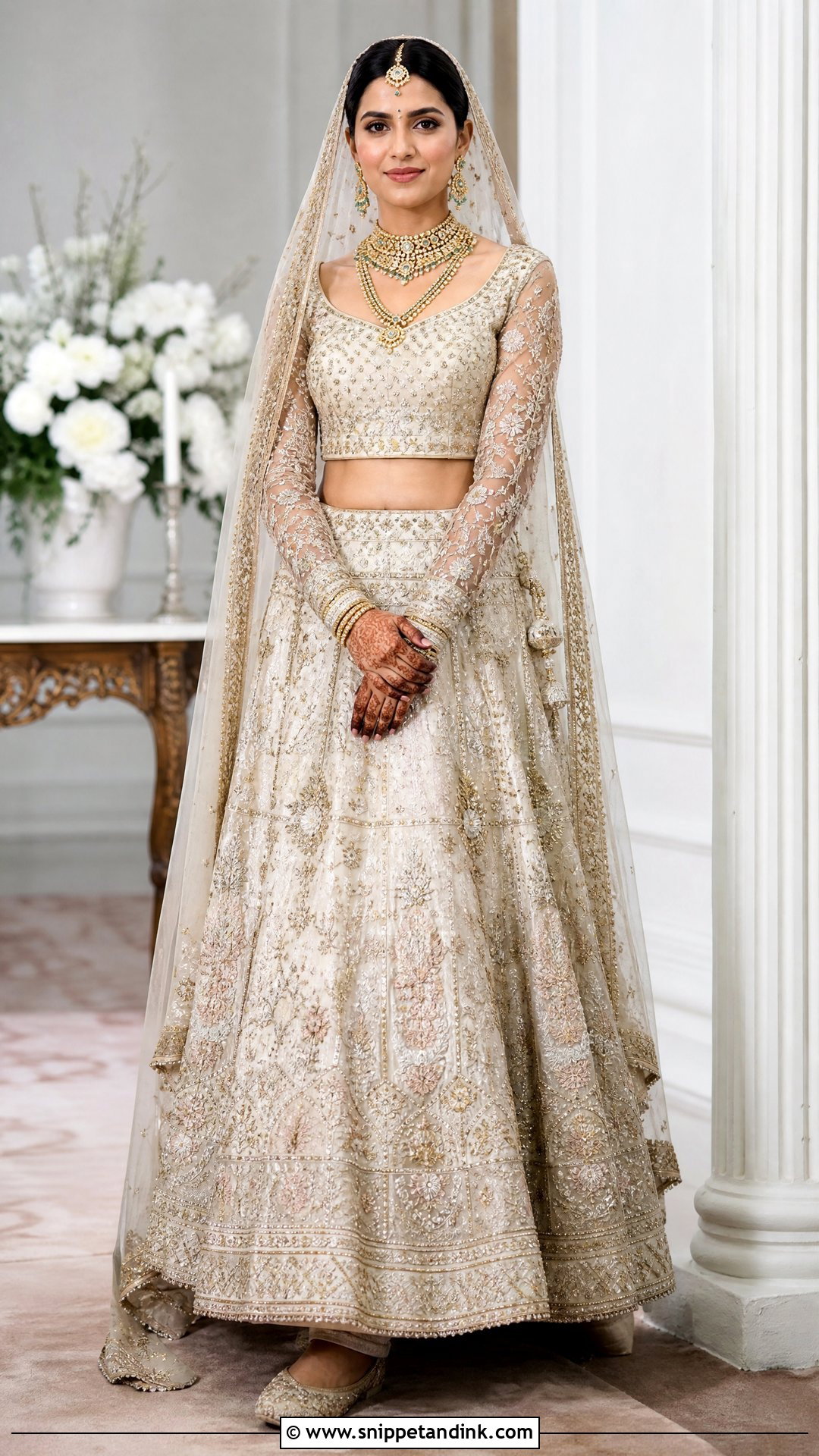
Long sleeves suit a cooler celebration and give coverage without heaviness, as long as they’re sheer. A fitted choli with embroidered net sleeves, a defined neckline and a lined bodice, with a full skirt repeating the same motifs at hem and waist. Keep the dupatta light, over the head or one shoulder, so at least one sleeve stays visible. A layered necklace, statement earrings, bangles and closed embroidered juttis, with a low bun. Ask for a little stretch at the elbow and underarm; fitted sleeves can make raising your arms for jaimala difficult. If the sleeves are heavily worked, I calm down the neckline.
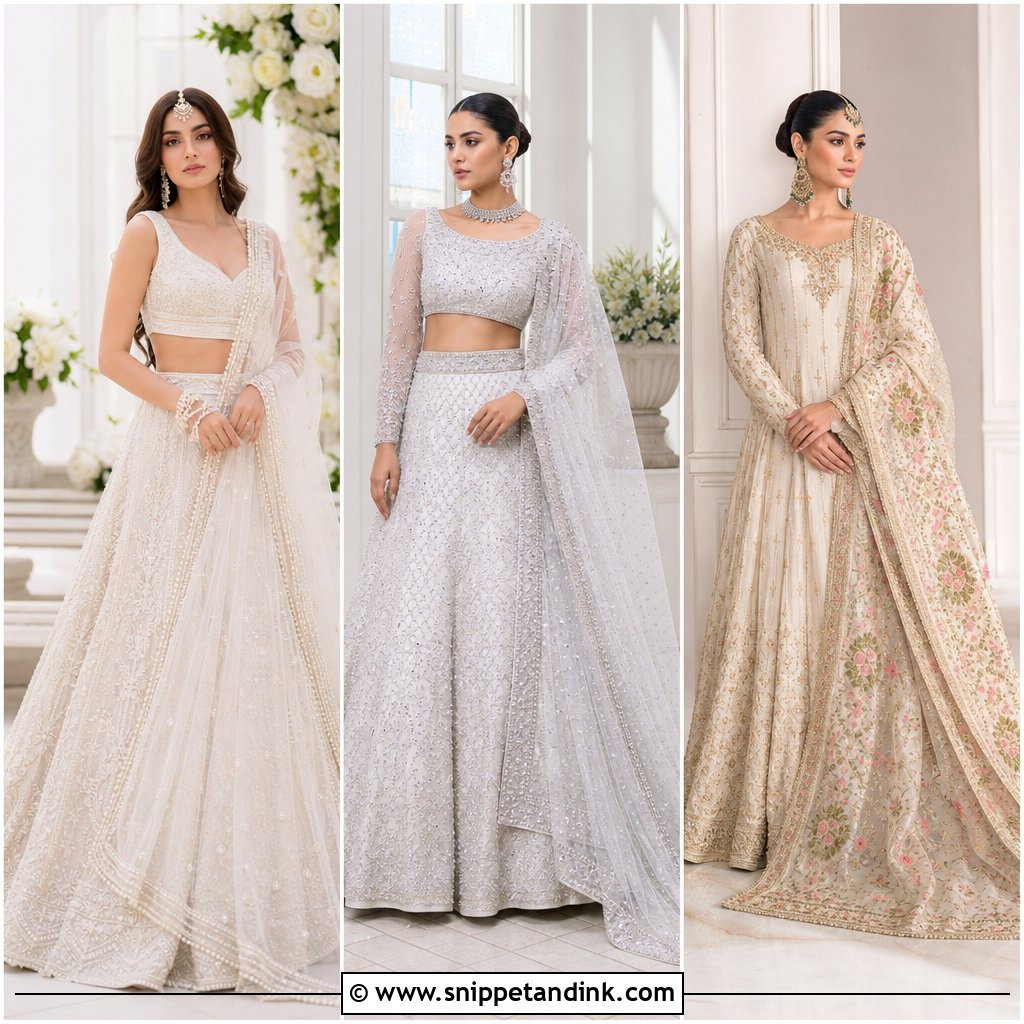
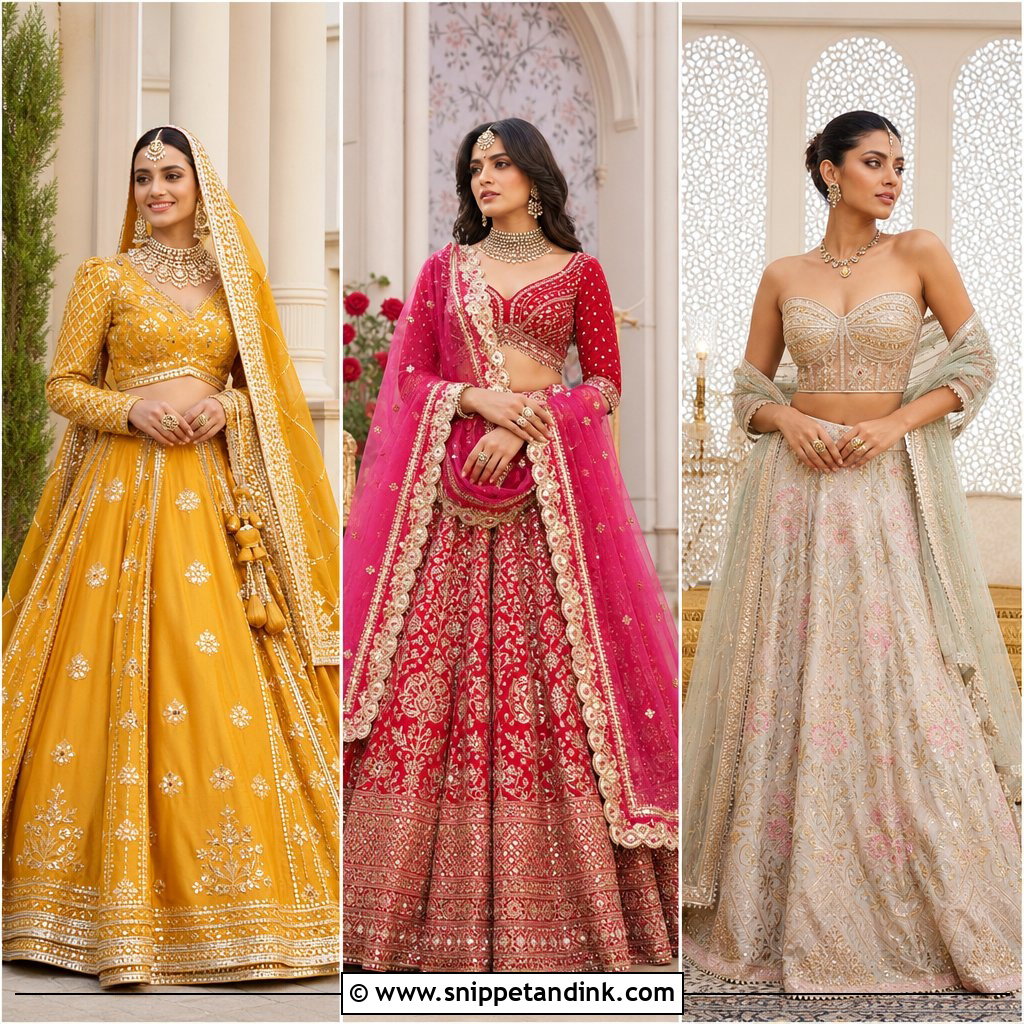
15. Peplum Bridal Lehenga Choli
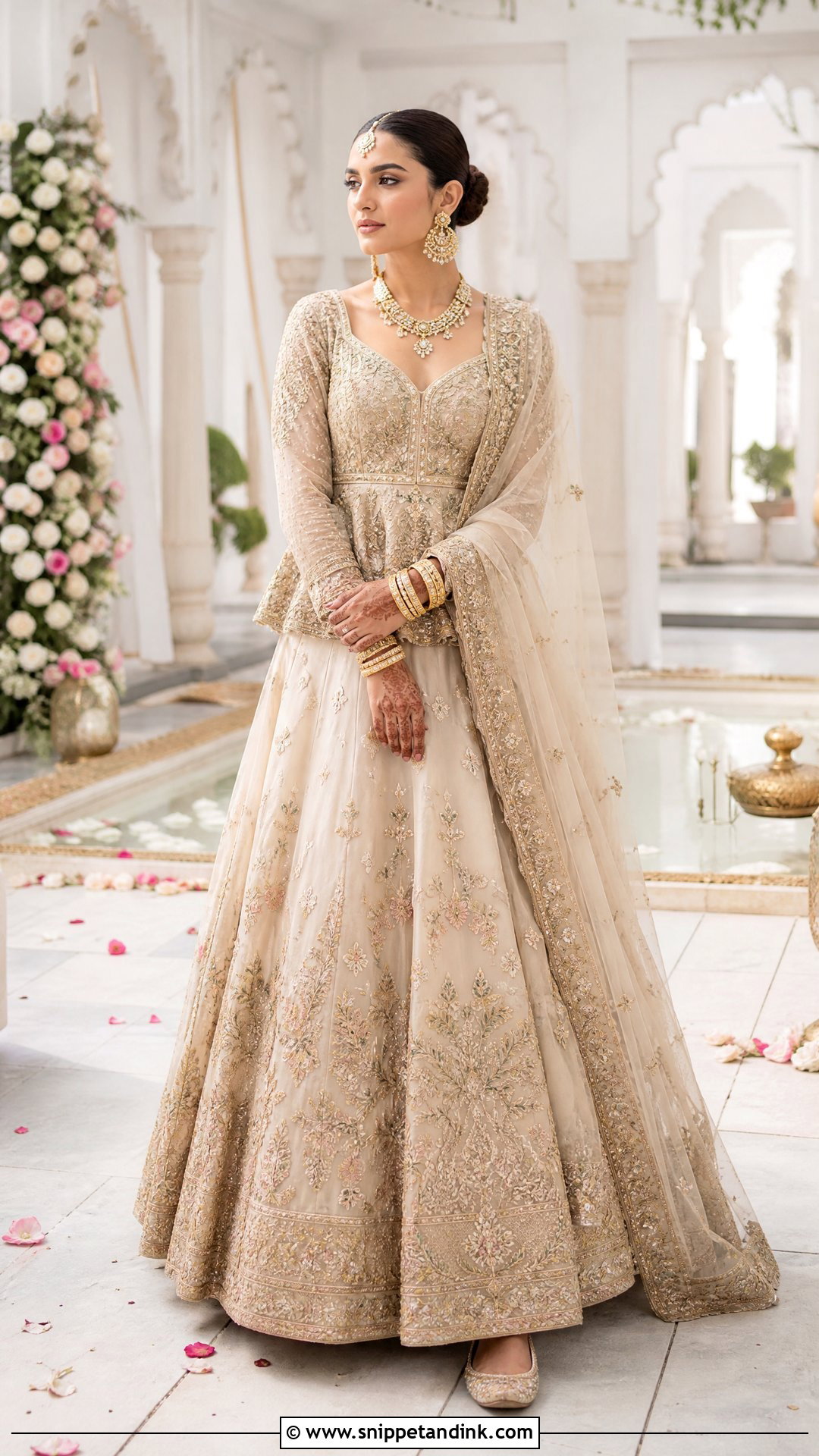
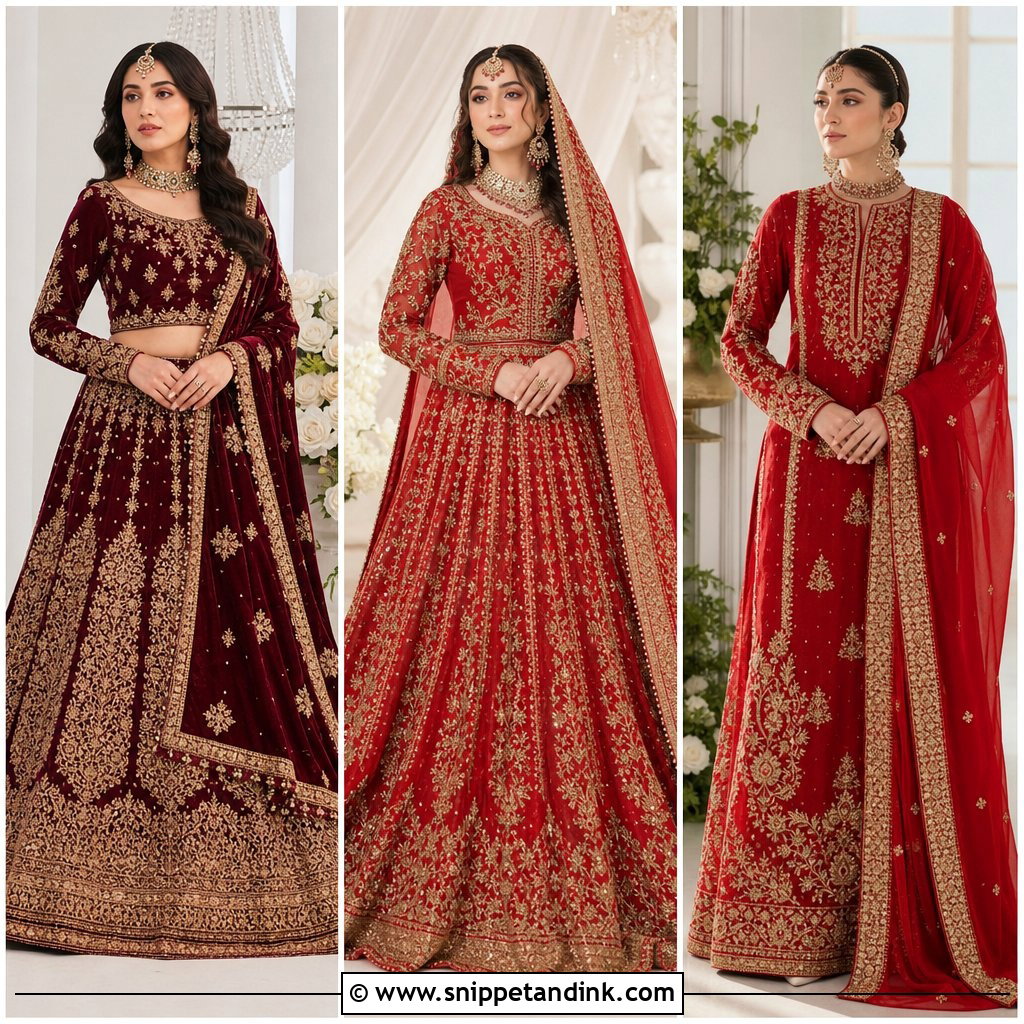
A peplum choli adds coverage at the middle and defines the waist at the same time. The flare should start at the natural waist and end above the fullest part of the skirt. Pair it with a clean A-line lehenga, not a heavily gathered one, or the volume stacks up under the peplum. A light dupatta pinned over one shoulder keeps the proportions balanced. Medium-length necklaces, chandbalis, bangles and juttis suit it, with a side-parted bun or soft half-up hair. Place embroidery along the neckline, waist and peplum edge to draw the eye down. At fittings, sit in it: a peplum that’s too long bunches over the waistband.
16. Cape Bridal Lehenga Choli
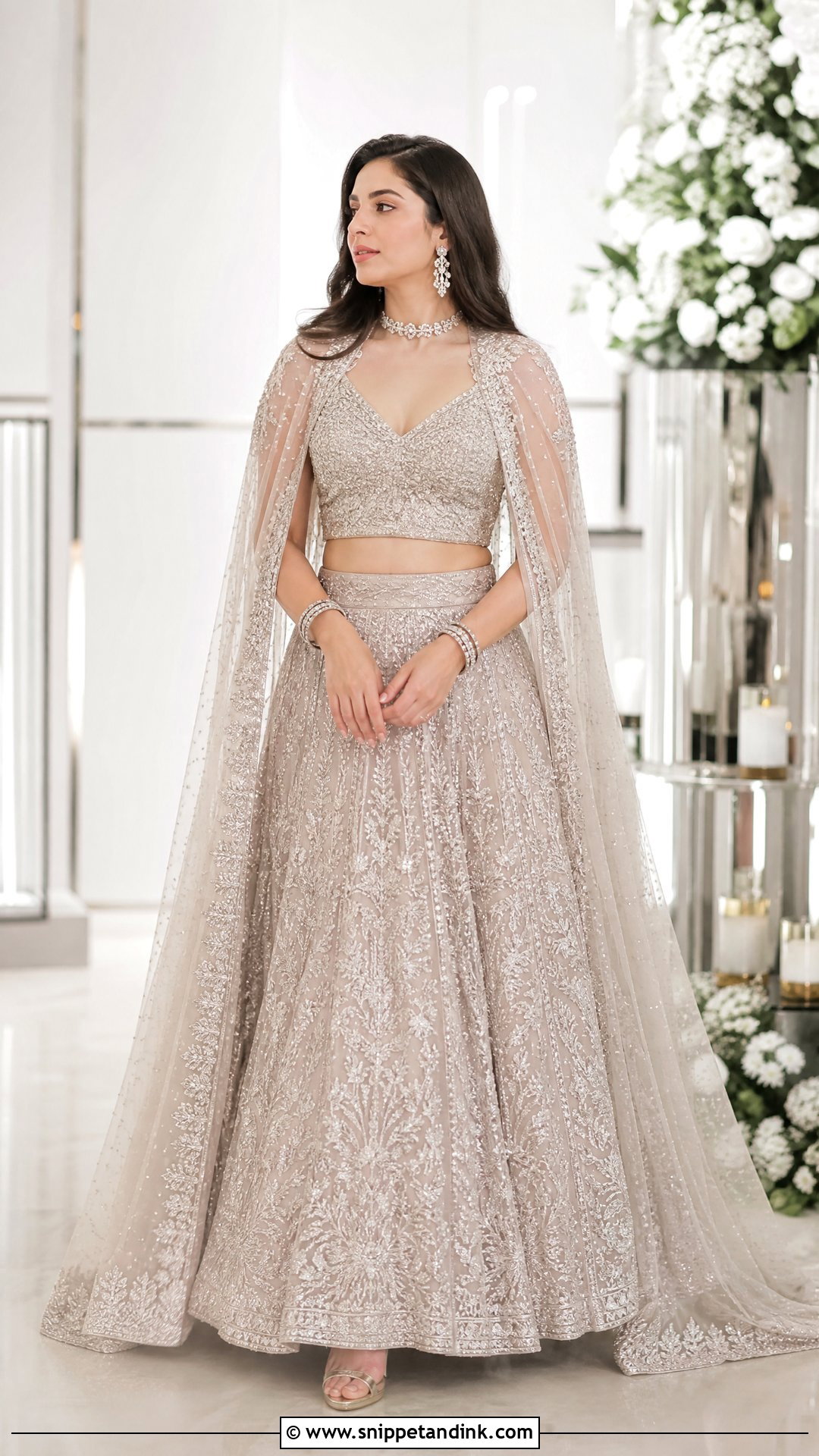
A cape replaces the dupatta entirely, which suits a bride who hates managing layers. Start with a fitted sleeveless or short-sleeve choli and a coordinated flared lehenga, then add a sheer embroidered cape to the waist, the knee or the floor. Insist on proper arm openings. Without them, the cape lifts with every greeting and hug. Statement earrings, a slim choker, bangles and comfortable metallic heels finish it, with a ponytail or sleek bun that doesn’t fight the shoulders. Add a separate light veil if you still want a head covering, and keep skirt embellishment restrained so the cape stays the focus.
17. Off Shoulder Bridal Lehenga Choli
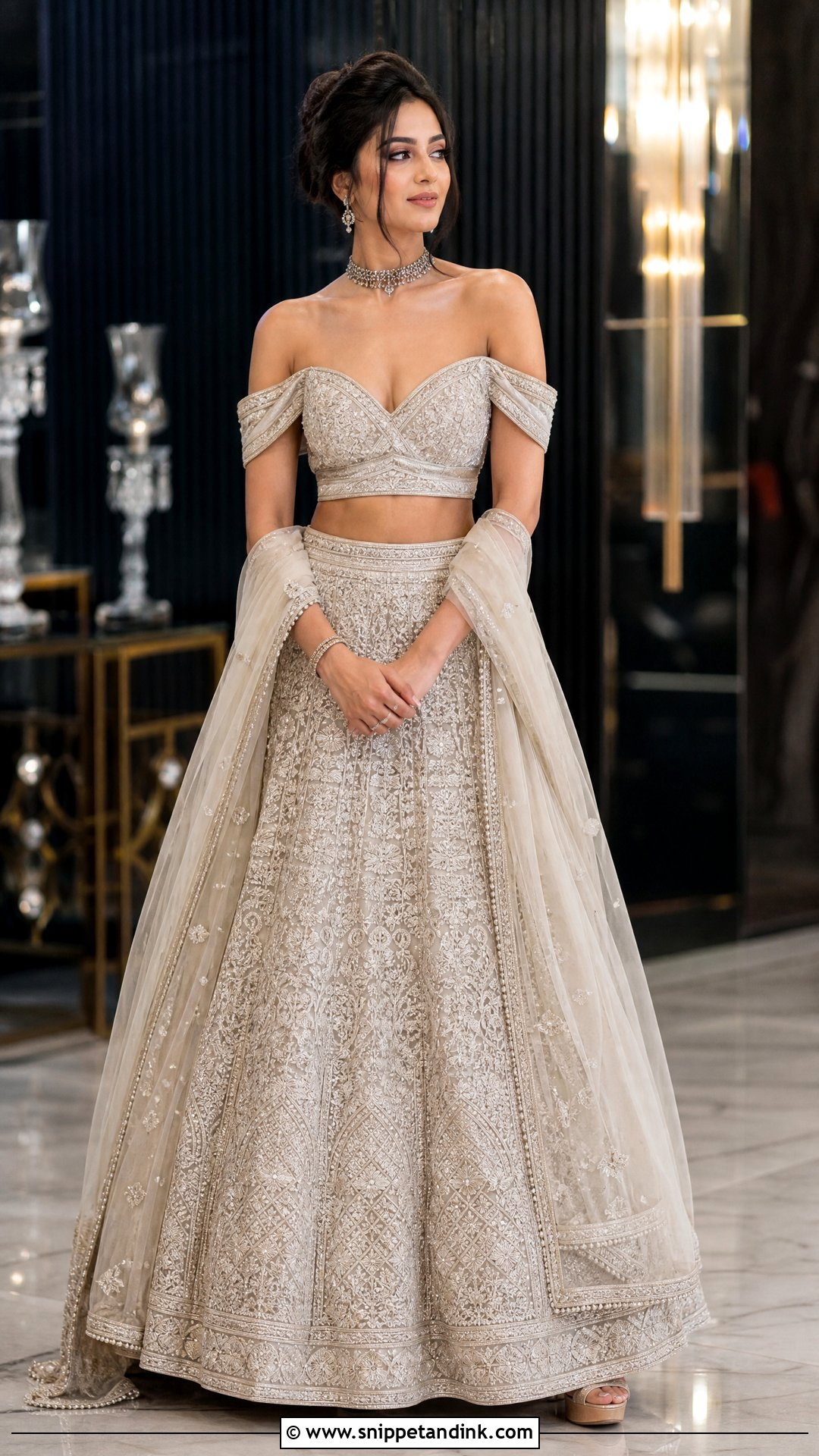
Off-shoulder works at a reception, and only if the blouse is built for it. I look for internal support, secure elastic or silicone grip, and a neckline that stays put when the bride raises both arms. Pair it with a high-waisted lehenga whose embroidery echoes the choli border, and drape the dupatta low across the elbows or attach it behind the shoulders. A close-fitting choker, drop earrings, a delicate bracelet and platforms suit it, with soft waves swept to one side. Skip any heavy necklace that rests on the blouse edge, as it drags the neckline down. Dance in it at the final fitting.
18. Jacket Bridal Lehenga Choli
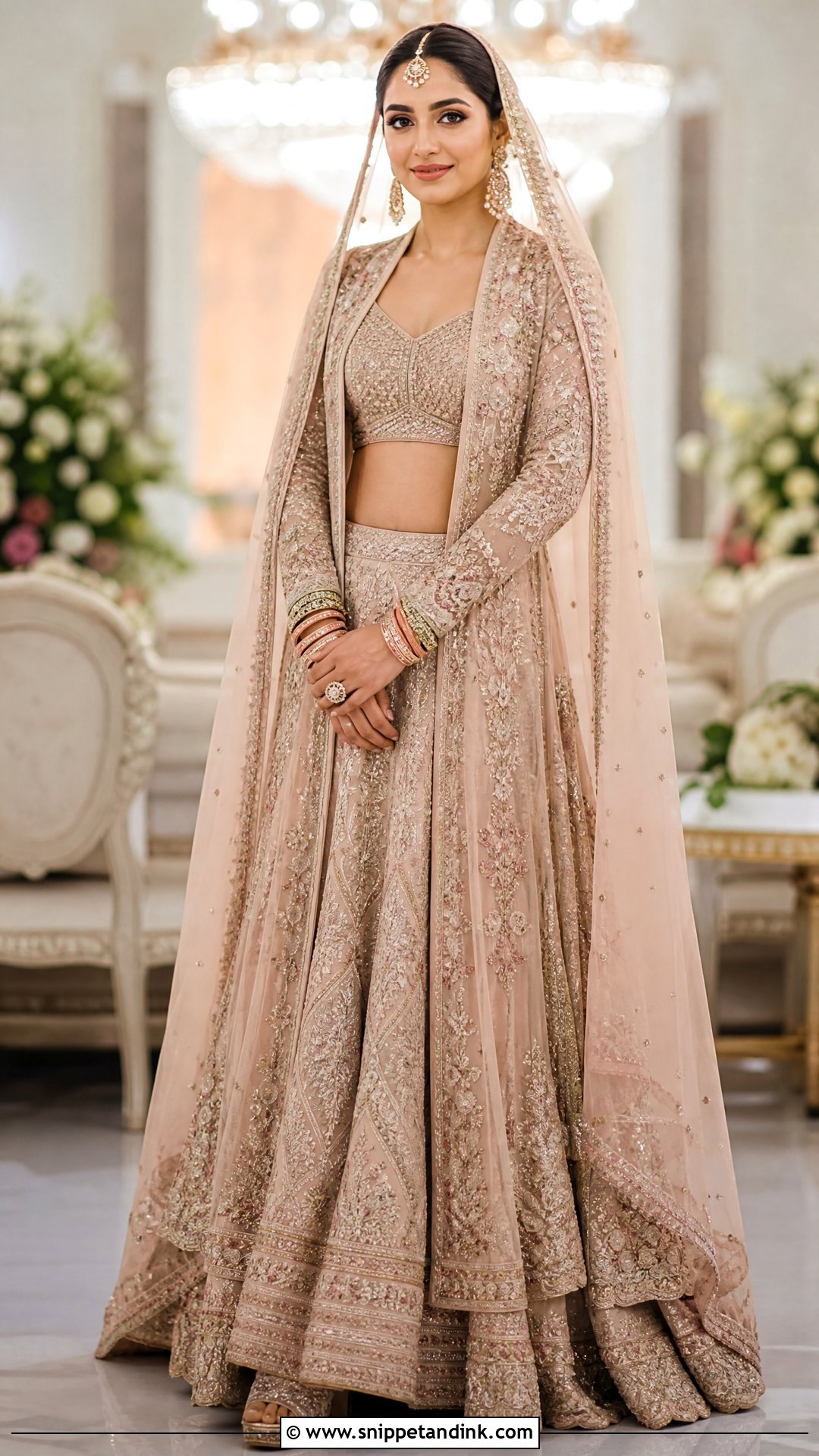
A jacket adds a layer instead of a dupatta. Keep the choli and flared skirt in one base color, then add a long embroidered jacket that opens at the front to show the waist. Sheer jackets look softer; silk or velvet ones feel formal and hold their shape. Skip the shoulder dupatta, or wear only a very light head veil, because three overlapping layers turn into a bundle in photos. Long earrings, a statement ring, stacked bangles and embroidered block heels, with a sleek bun to show the collar. Check the jacket hem falls level over the skirt; uneven fronts are the usual fault, and they catch your feet on stairs.
19. Ombre Bridal Lehenga Choli
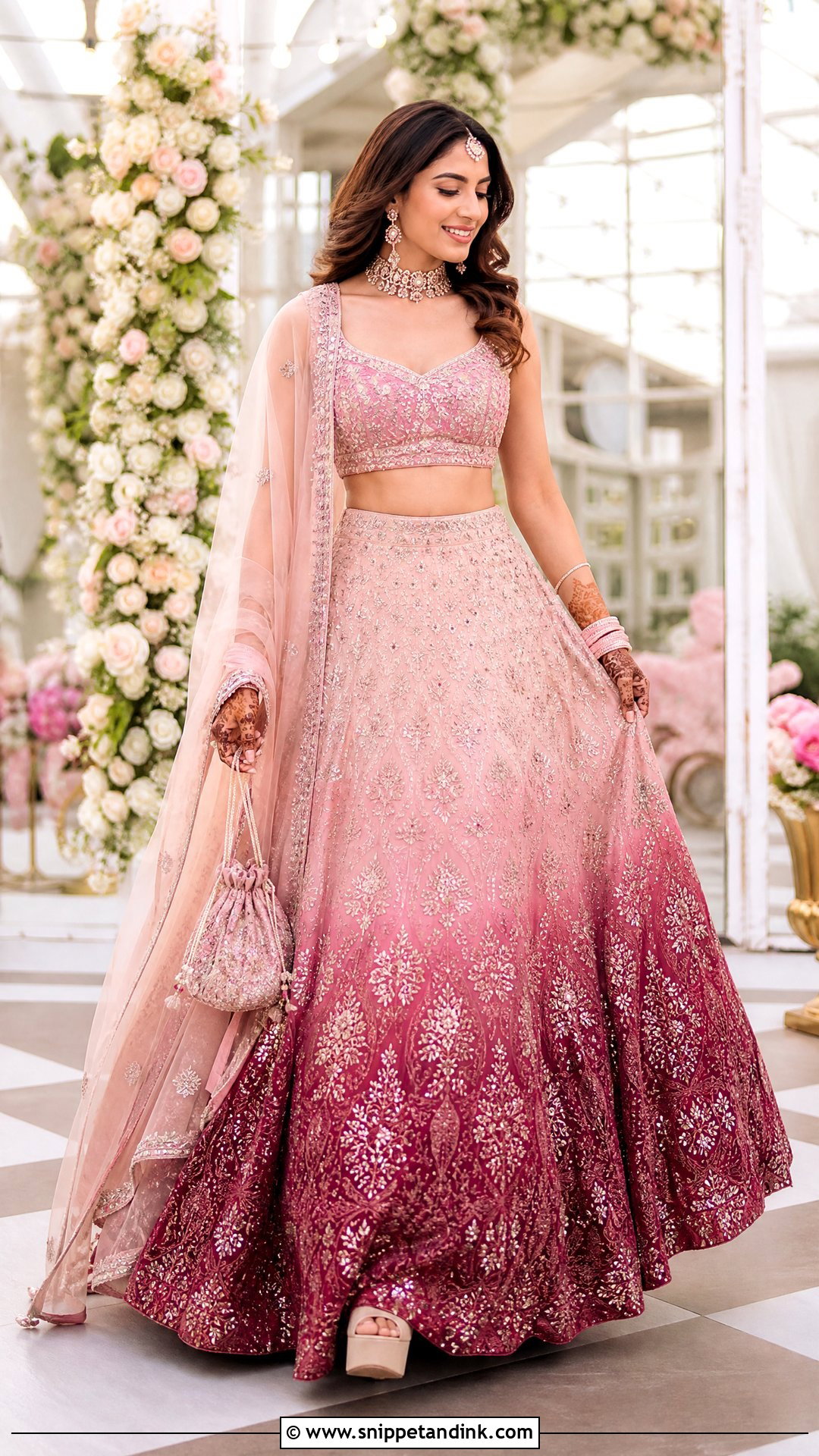
An ombre skirt brings in several tones without looking busy. The shade should move from light at the waist to deep at the hem: pink to berry, peach to coral, ivory to gold, or lavender to plum. A choli in the darkest or middle tone gives definition, and a sheer dupatta in the lightest keeps the upper half bright. Tonal gemstones, metallic bangles, a small potli and neutral platforms, with a textured bun or loose waves. Dyeing a gradient evenly is hard, so I always ask for a photo of the actual dyed fabric before stitching, not just a sample.

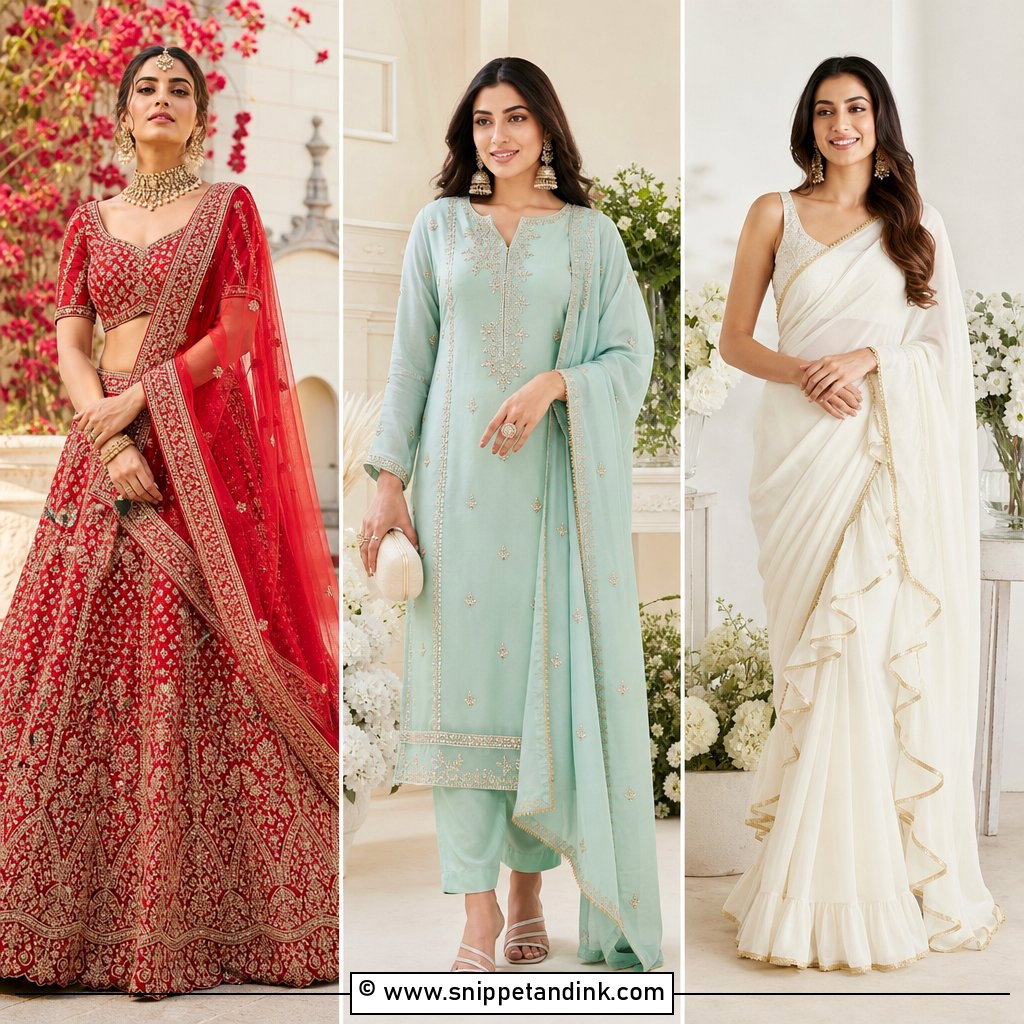


20. Heirloom Bridal Lehenga Choli
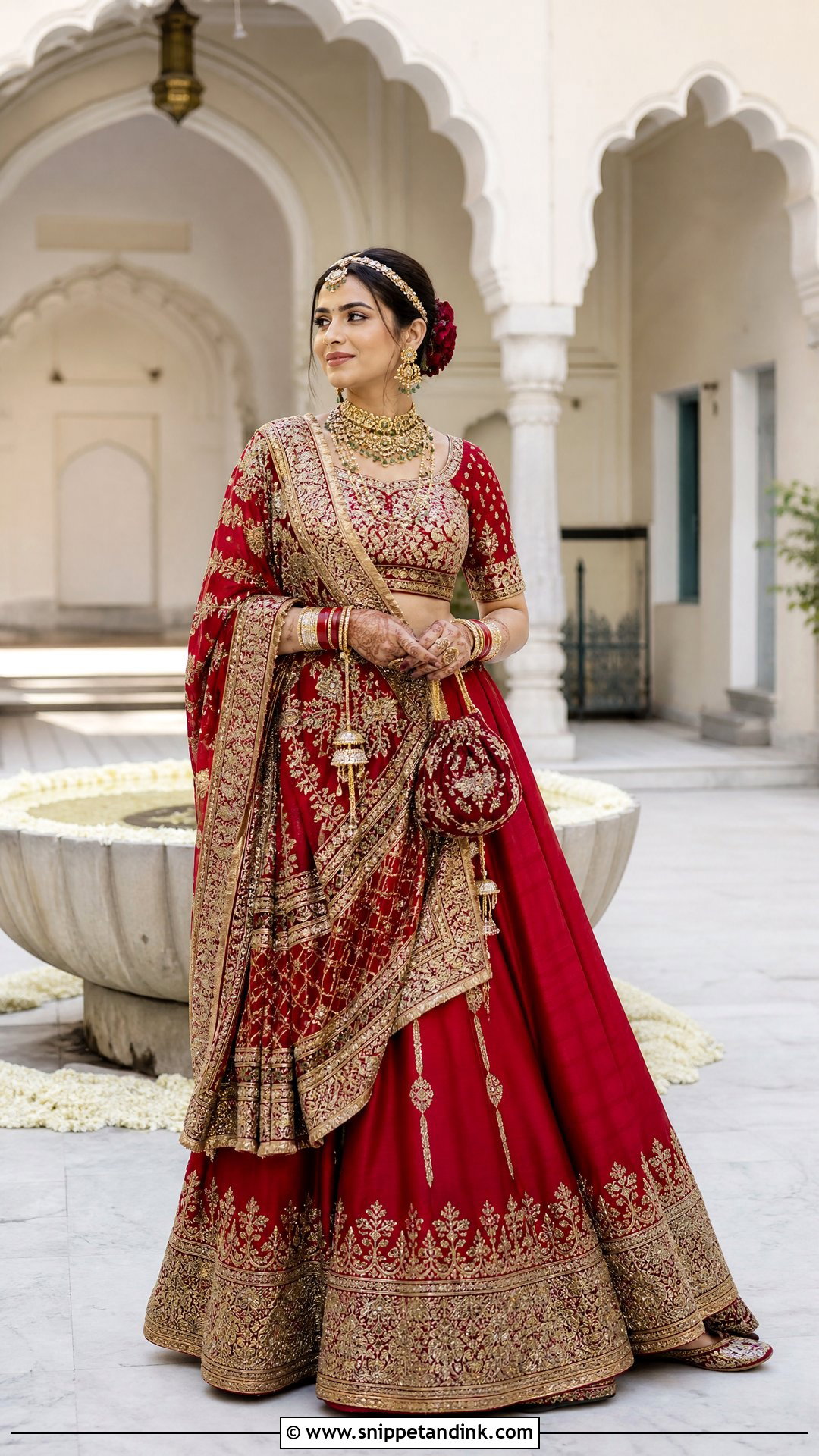
Family textile in a new bridal outfit is the most personal choice on this list. Start with a restored vintage dupatta, a sari border or an embroidered piece, and build the skirt and choli around its colors. A skilled tailor can stitch old borders onto a new silk lehenga or turn an inherited sari into choli panels. Keep the rest simple so the heirloom stays visible, with family jewelry, coordinated bangles, juttis and a classic potli. Have old fabric inspected before anyone cuts it. Fragile silk often needs a fine backing, and it should sit away from waistbands and closures, where the strain is highest.
From Fabric Swatch to Final Fitting, Month by Month
Hand embroidery is slow work, and bridal workshops are busiest in peak wedding season. Timelines vary a great deal between designers, so treat this as the shape of the process, not a promise.
- Six months or more out: settle the color and fabric, and see real swatches in daylight.
- Four to five months out: place the order and give measurements; the embroidery starts.
- Six to eight weeks out: first fitting of the stitched choli and skirt.
- Three to four weeks out: second fitting with the dupatta, jewelry and shoes, and the dupatta pinning planned.
- One week out: collect it, try it on at home, and hang it somewhere dark and dry.
Storing an Embroidered Lehenga So the Zari Doesn’t Tarnish
Once the wedding is over, get it dry-cleaned by someone who handles bridal wear, then store it properly. Wrap the skirt, choli and dupatta separately in soft muslin or an old cotton sari, with the embroidery folded inward. Plastic covers trap moisture, which tarnishes metallic thread and can mark the silk. A heavy skirt shouldn’t hang for months, as the waistband stretches under the weight, so lay it flat in a box.
Every few months, take it out, air it in the shade and refold it along different lines. Permanent creases eventually crack silk and break the threads of zari, and that’s much harder to repair than it is to prevent.
Which Choli Will Carry You From Pheras to Reception?
Start from the ceremony, the venue, the season and how much weight you’re willing to wear for hours, and the right choli usually narrows itself down. Traditional red, heritage silks, pastels, jewel tones, corsets and capes can all look bridal; what makes them work is how skirt, choli, dupatta, jewelry, shoes and hair fit together as one outfit. Leave enough time for fittings, and test everything walking, sitting and raising your arms. Good tailoring does more than extra embroidery ever will. Wear the one that feels like you, and that you can still move in at the end of the night.
You'll Like These Ideas:






Leave a Reply