
An Arab bridal wardrobe is rarely one dress. Most of the brides I dress are planning a henna night, a katb kitab, a zaffa entrance and a long reception, and each of those asks something different of the fabric, the sleeves and the weight on your shoulders. Below are thirty complete looks, from embroidered kaftans and takchitas to pearl ball gowns and plain satin columns, with the shoes, veils and jewelry I’d put with each. Read them with your own week in mind: which moment needs presence, and which one needs you to sit, eat and hug two hundred relatives.
Splitting One Wedding Week Across Several Dresses
Before we look at a single gown, I ask a bride to write down every event and what she will physically do at each one. The henna is seated, close to people, with wet paste on your hands. The katb kitab is short and near elders. The zaffa is a walk with music behind you. The reception can run five or six hours. Those four moments rarely suit the same dress.
A pattern that works for many families:
- Henna: color and embroidery, sleeves that clear the wrist, nothing that must stay pristine.
- Katb kitab: the softest, lightest look, easy to sit and sign in.
- Zaffa and ceremony: the statement gown, train or cape included.
- Reception: either the same gown with the train bustled or the cape removed, or a lighter second dress.
On timing, an embellished or custom gown usually needs ordering six to nine months out, and hand embroidery can take longer, so check with your maker rather than assuming. Plan two or three fittings, with the last one about two weeks before the wedding, and bring the exact shoes and hijab to every one of them. A hem set in flats will be wrong in heels.
1. White Arab Wedding Dress With Long Sleeves
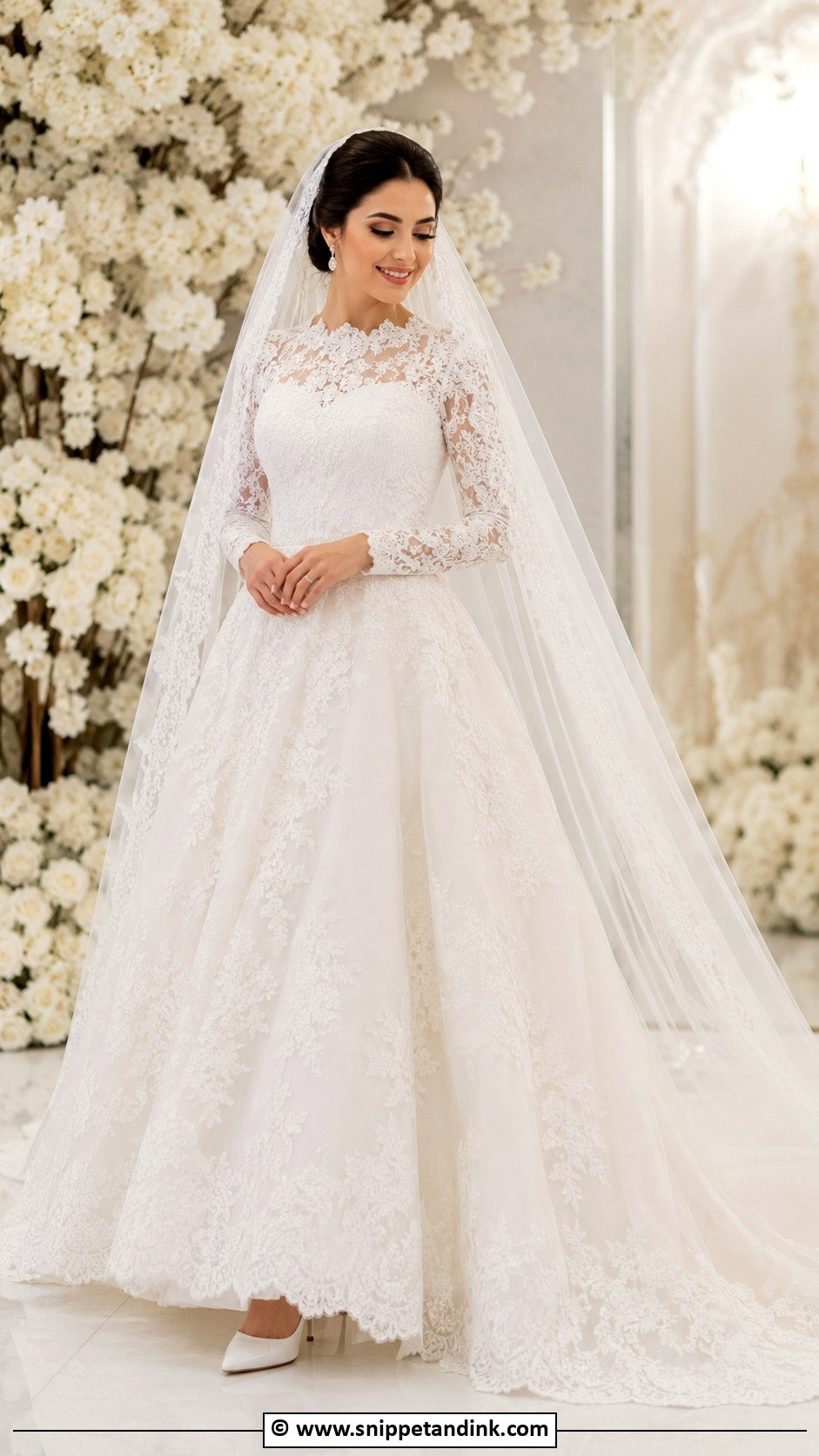
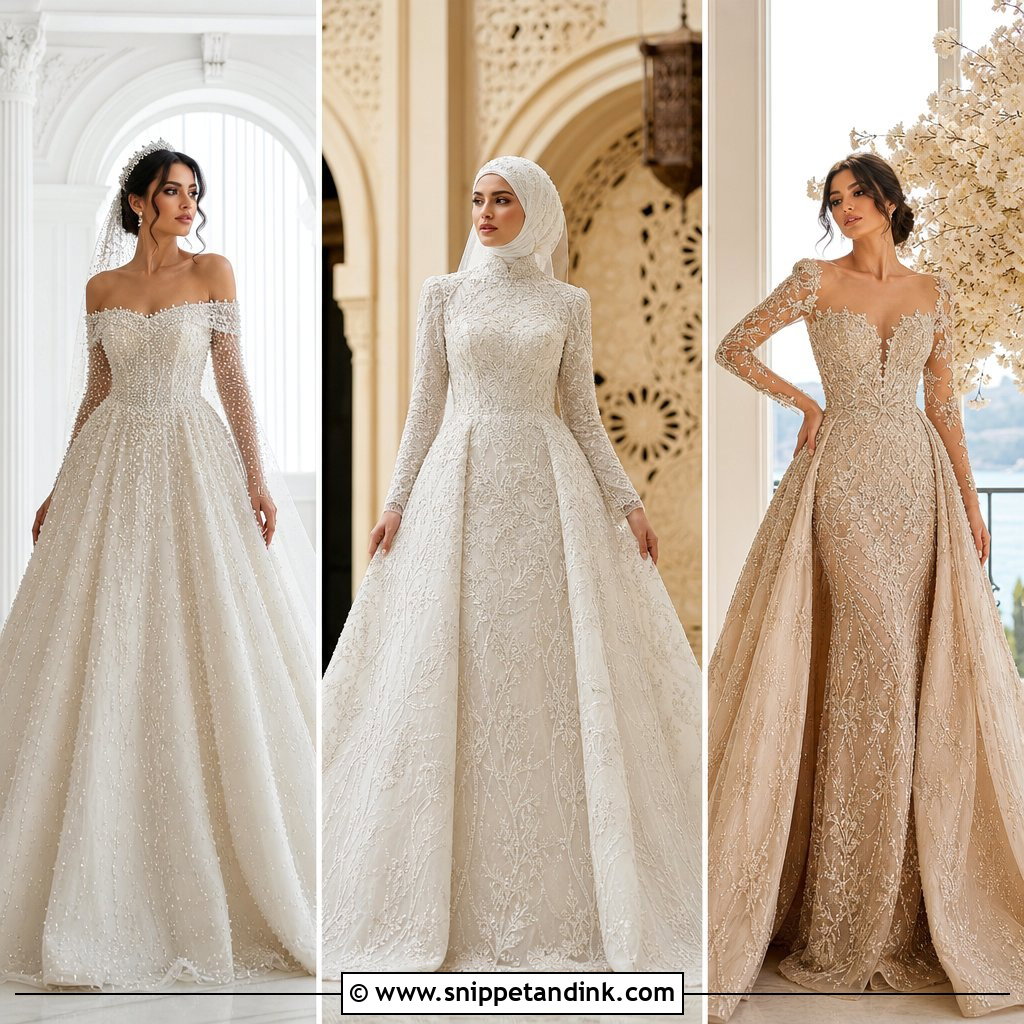
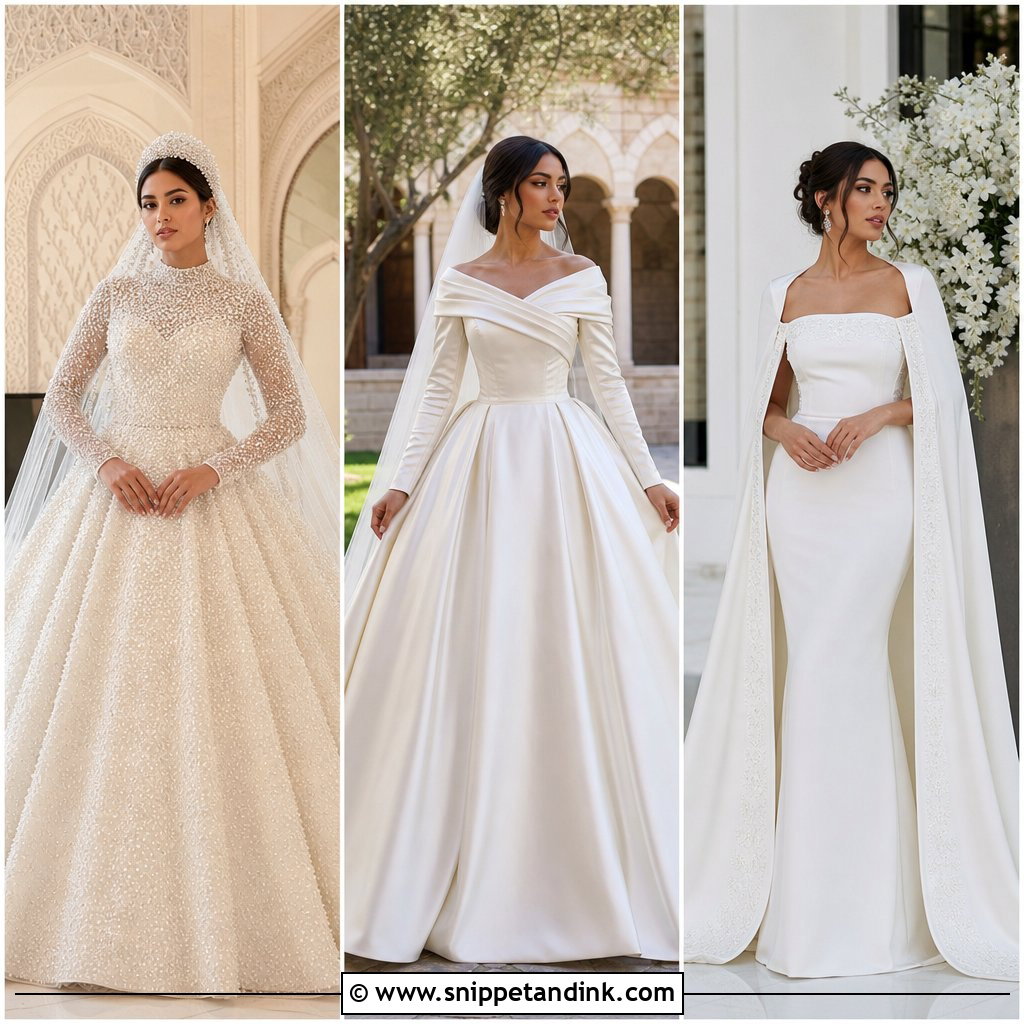
Long lace sleeves on a white gown are the look most families picture first, and they earn that place. I fit the sleeve before anything else here, because lace that is snug when your arms hang straight will pull at the seam the moment you lift them to hug someone. A fitted bodice, an A-line skirt and beading kept to the neckline and cuffs gives the eye two places to rest. Add a cathedral veil, pearl earrings and a small crystal tiara, then pointed satin heels that disappear under the hem. Ask for lace with a slight shimmer or raised floral texture; flat lace on flat satin can read plain under ballroom lights.
2. Arab Bridal Kaftan Dress
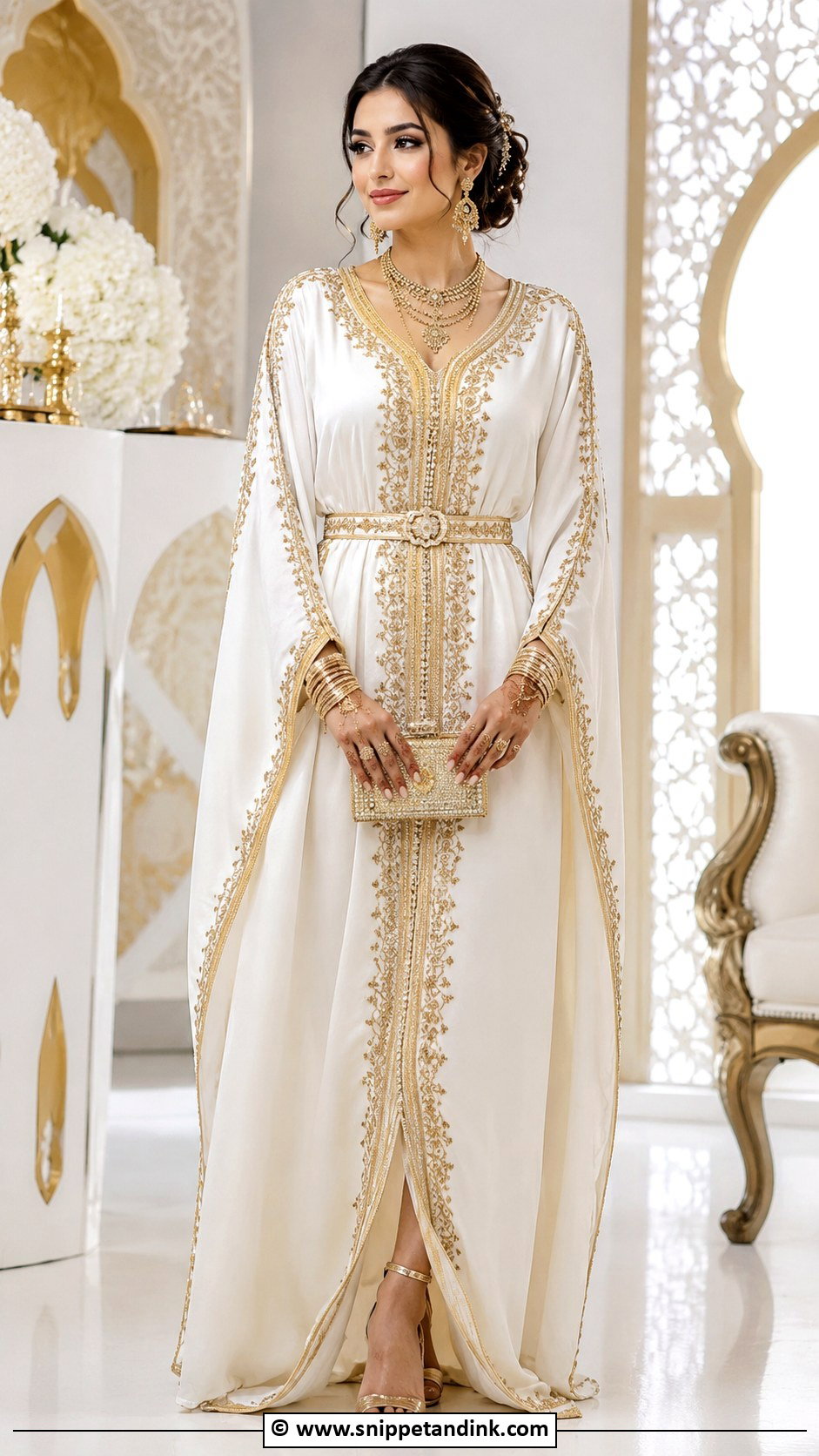
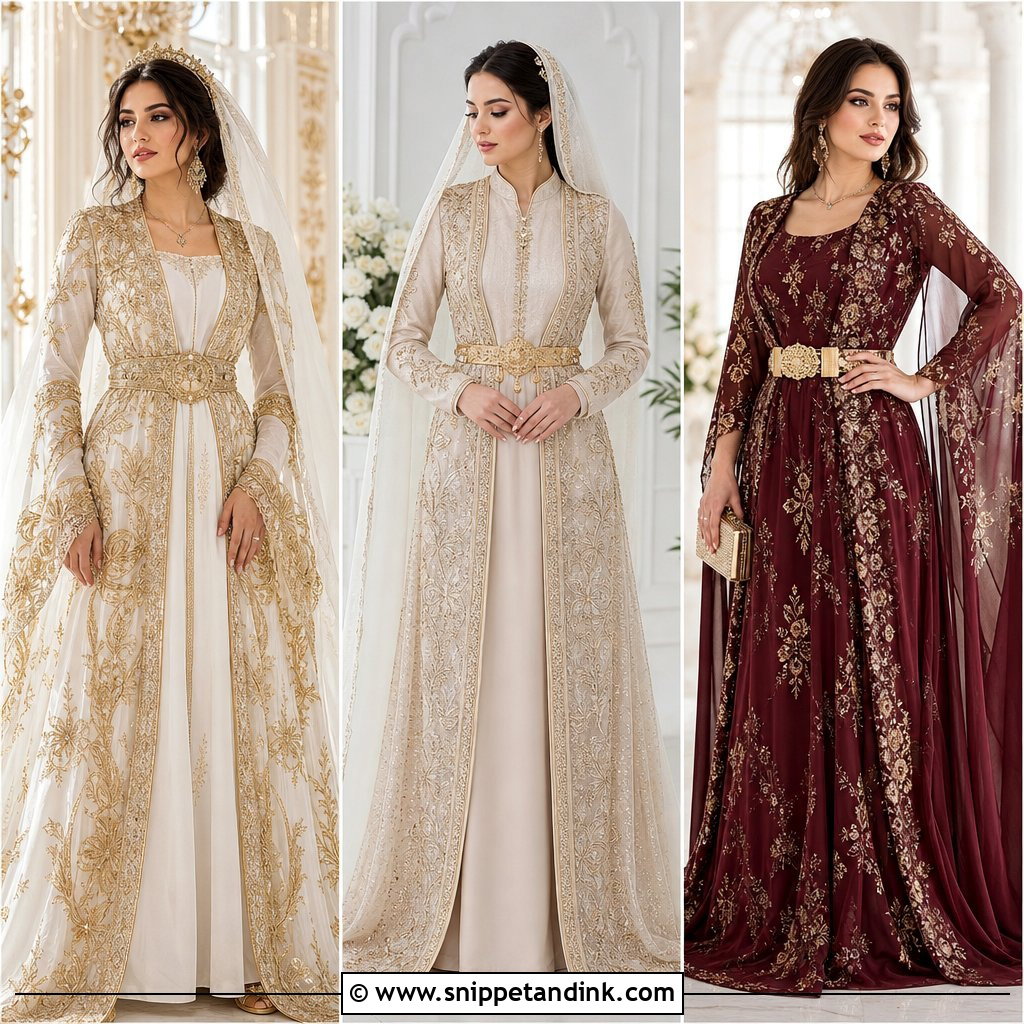
A kaftan is the most forgiving piece in this list, which is exactly why I suggest it for henna night. Ivory or champagne with gold embroidery, structured shoulders and a floor-length line gives you presence without a corset. Because the cut is loose, the embroidery does the shaping, so check that the heaviest work sits at the chest and hem rather than the middle. Metallic heels, a jeweled clutch and layered gold that echoes the thread color finish it. Either a soft bridal hijab or a sleek low bun suits the neckline.
3. Moroccan Arab Wedding Dress
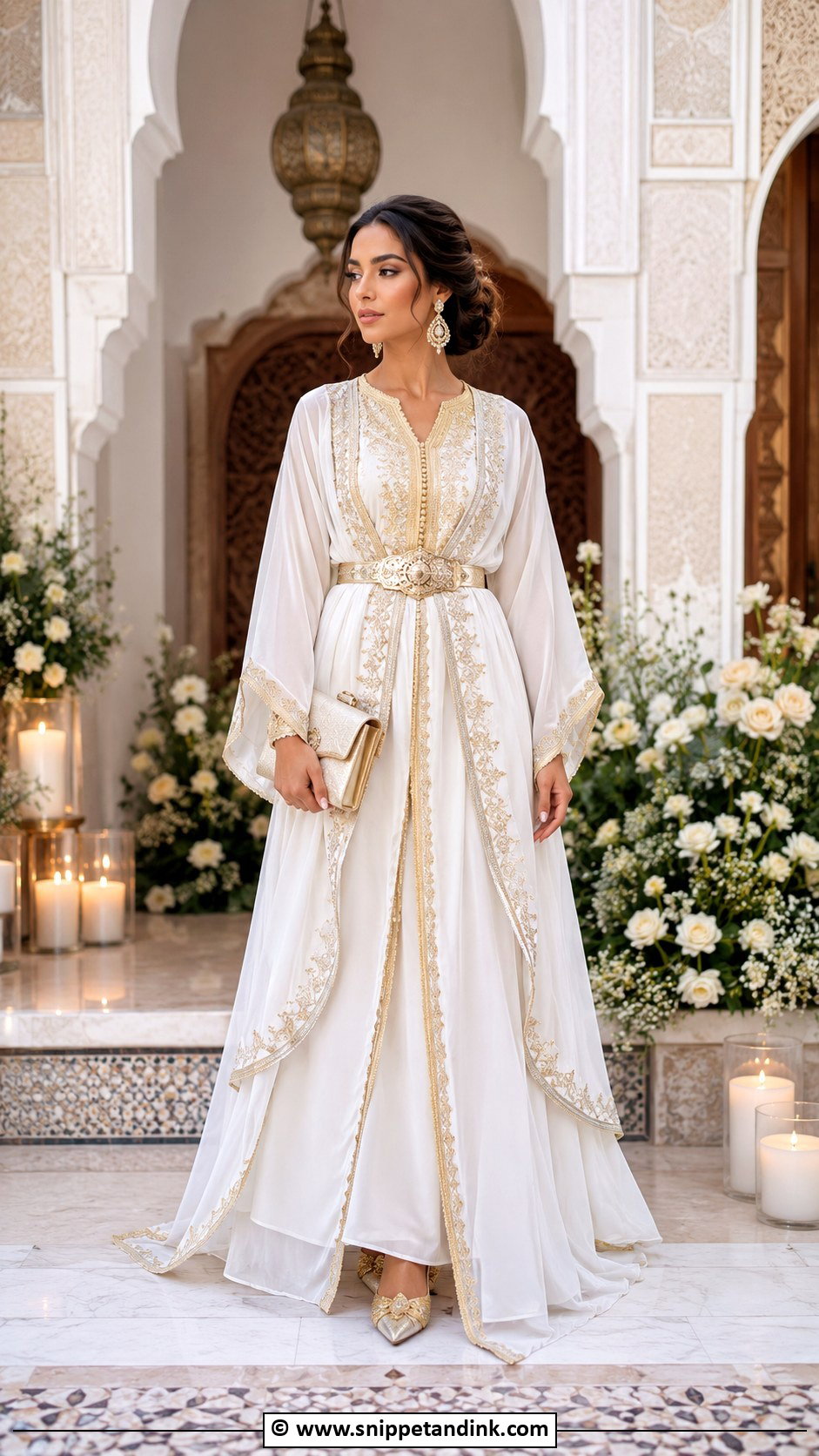
The takchita is two garments, an under-dress and a sheer or brocade outer robe, held together at the waist by a belt. That belt is the piece I spend the most time on at fittings: too high and the robe bunches over the stomach when you sit, too low and the waist disappears. White or a jewel tone with gold sfifa trim along the front opening and embroidered sleeves gives the classic head-to-toe line. Pointed gold heels, chandelier earrings and a structured clutch are enough. A layered takchita with an ornate front panel suits the henna entrance or a traditional segment of the night, when you want to be seen from across the room.
4. Emirati Arab Wedding Dress
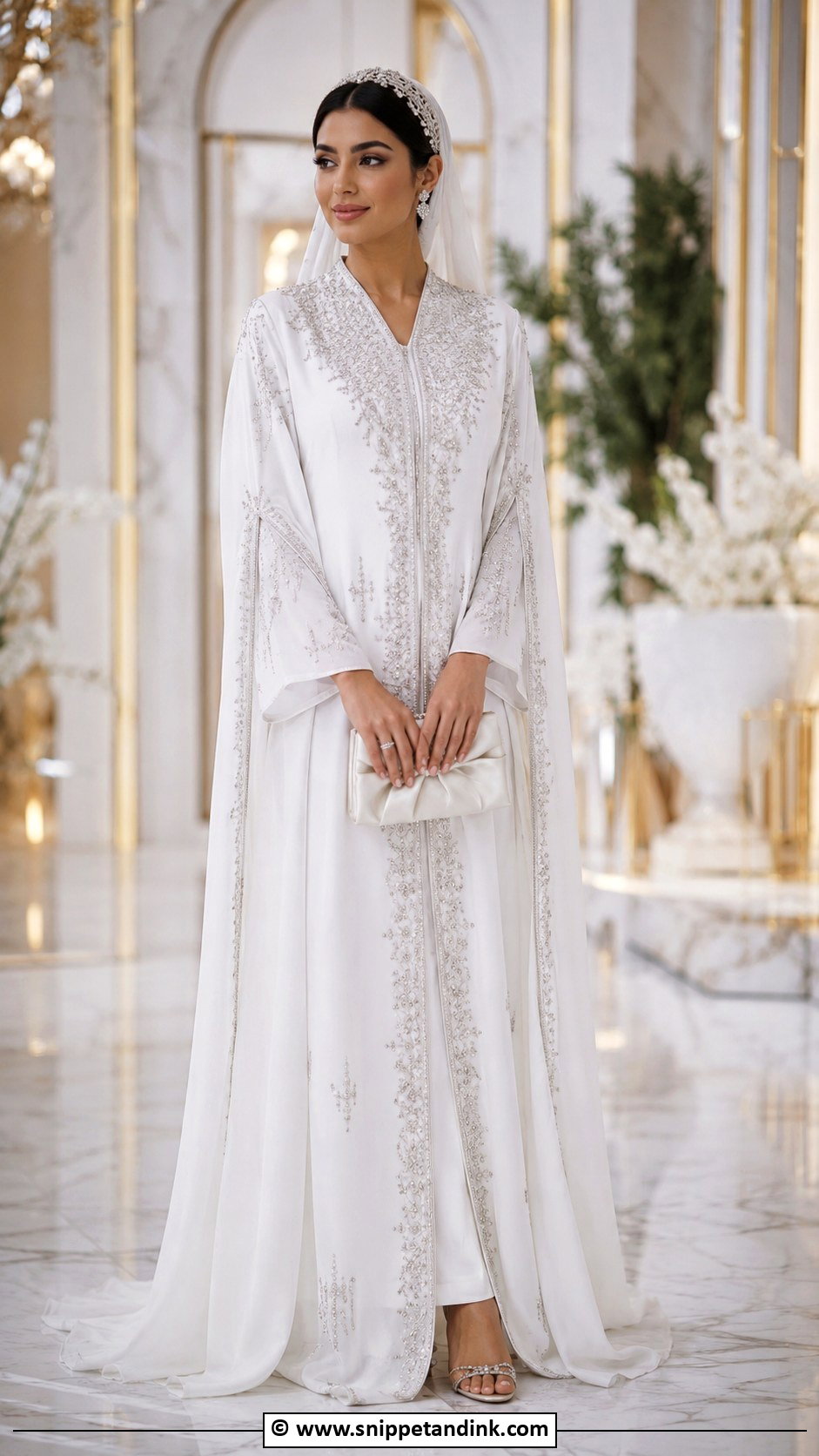
Emirati bridal dressing leans on flow rather than structure: a white or soft gold thobe-style gown, wide sleeves, crystal work and a floor-length cut. The wide sleeve is the detail to test, because it swings when you greet guests and can catch on table settings and chair backs. Lightweight silk, chiffon or crepe keeps the movement soft, and it lets the beadwork catch the light without dragging the fabric down. Pair it with embellished heels, a delicate headpiece and a satin clutch in the same tone. It suits a long evening of greetings and photographs better than almost anything stiff.
5. Lebanese Arab Wedding Dress
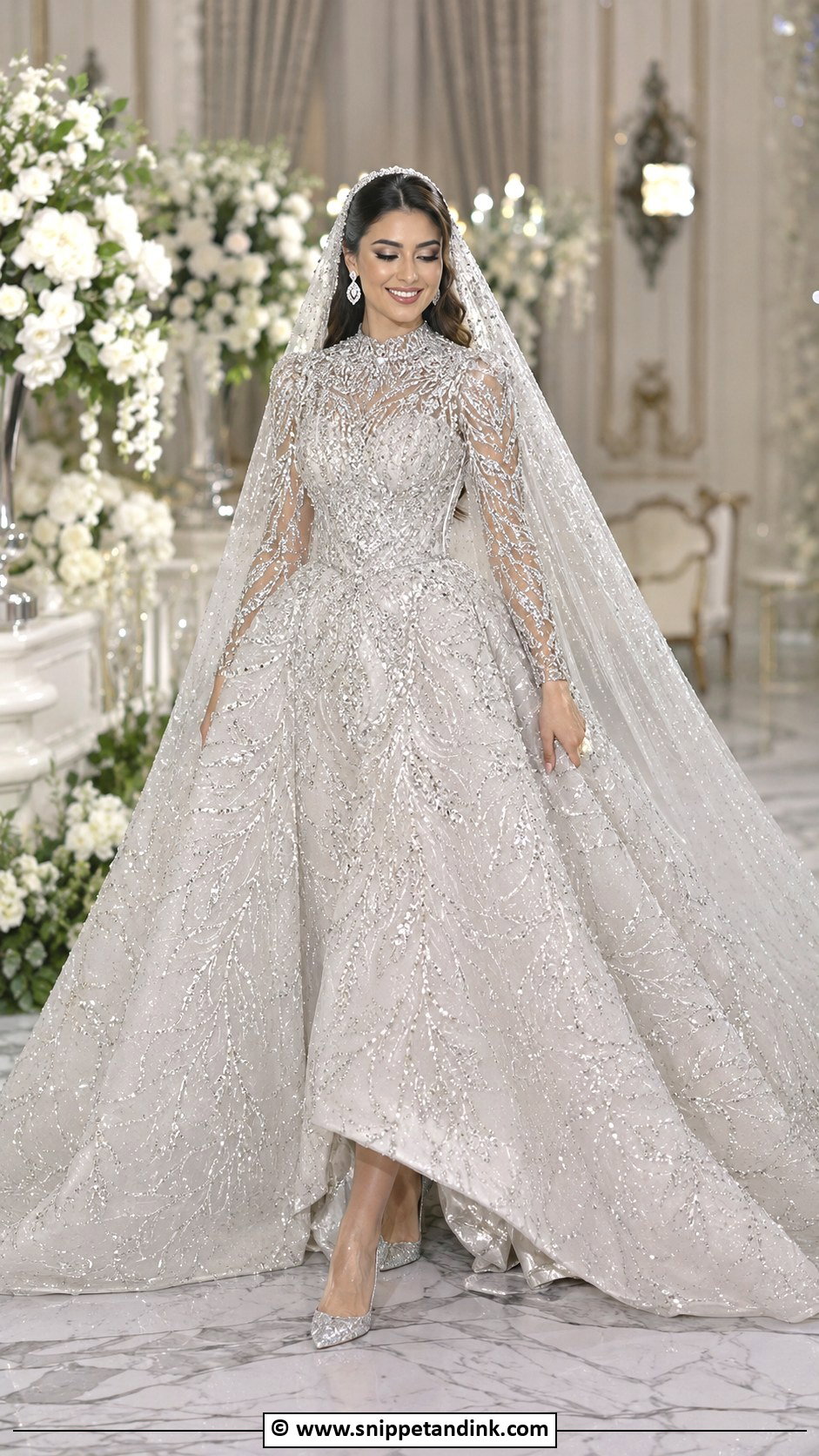
A Lebanese Arab wedding dress is built for drama: a fitted bodice, long sleeves, a full skirt and crystal embroidery that throws light in every direction. A high or illusion neckline keeps it modest while the defined waist gives the structure. My one warning is weight. Dense crystal work on a full skirt can be heavy by the third hour, so I always have the bride walk the length of the fitting room twice before we commit. Silver heels, a sparkling veil and diamond or crystal earrings suit a ballroom or grand hotel. Keep the bouquet to white roses or orchids so the gown stays the focus.
6. Palestinian Tatreez Wedding Dress
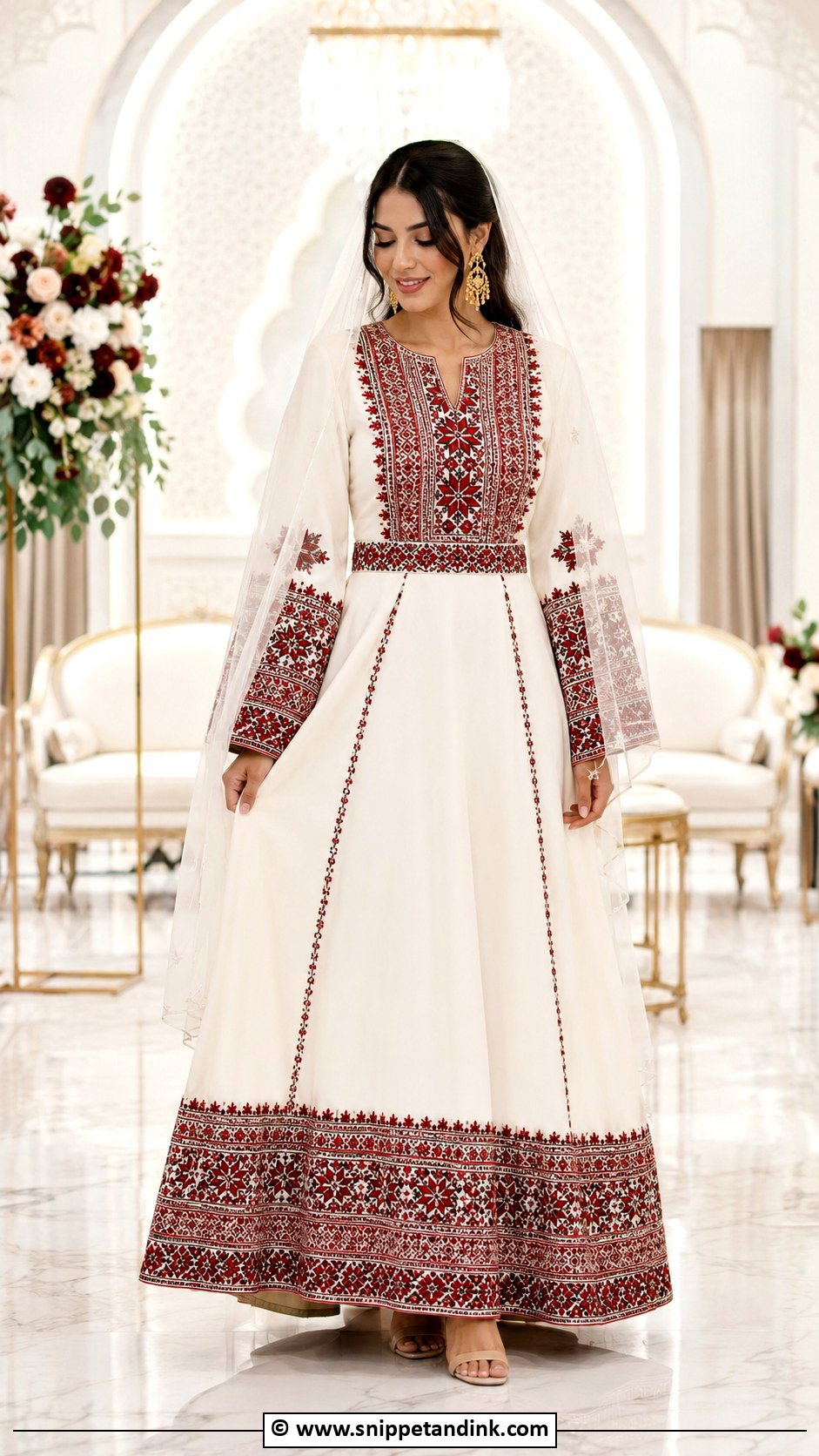
A Palestinian tatreez dress carries the embroidery traditions of particular towns and families, so I always ask whose stitches these are before we start styling. On a bridal gown the cross-stitch usually sits on the chest panel, sleeves and hem in red, black or several colors over white or ivory. A soft A-line lets that panel lie flat; anything fitted at the bust distorts the pattern. Choose a veil that falls behind the shoulders so it does not hide the chest work, then keep to simple heels and gold earrings. It also makes a meaningful katb kitab dress or second look after the main gown.
7. Saudi Arab Wedding Dress
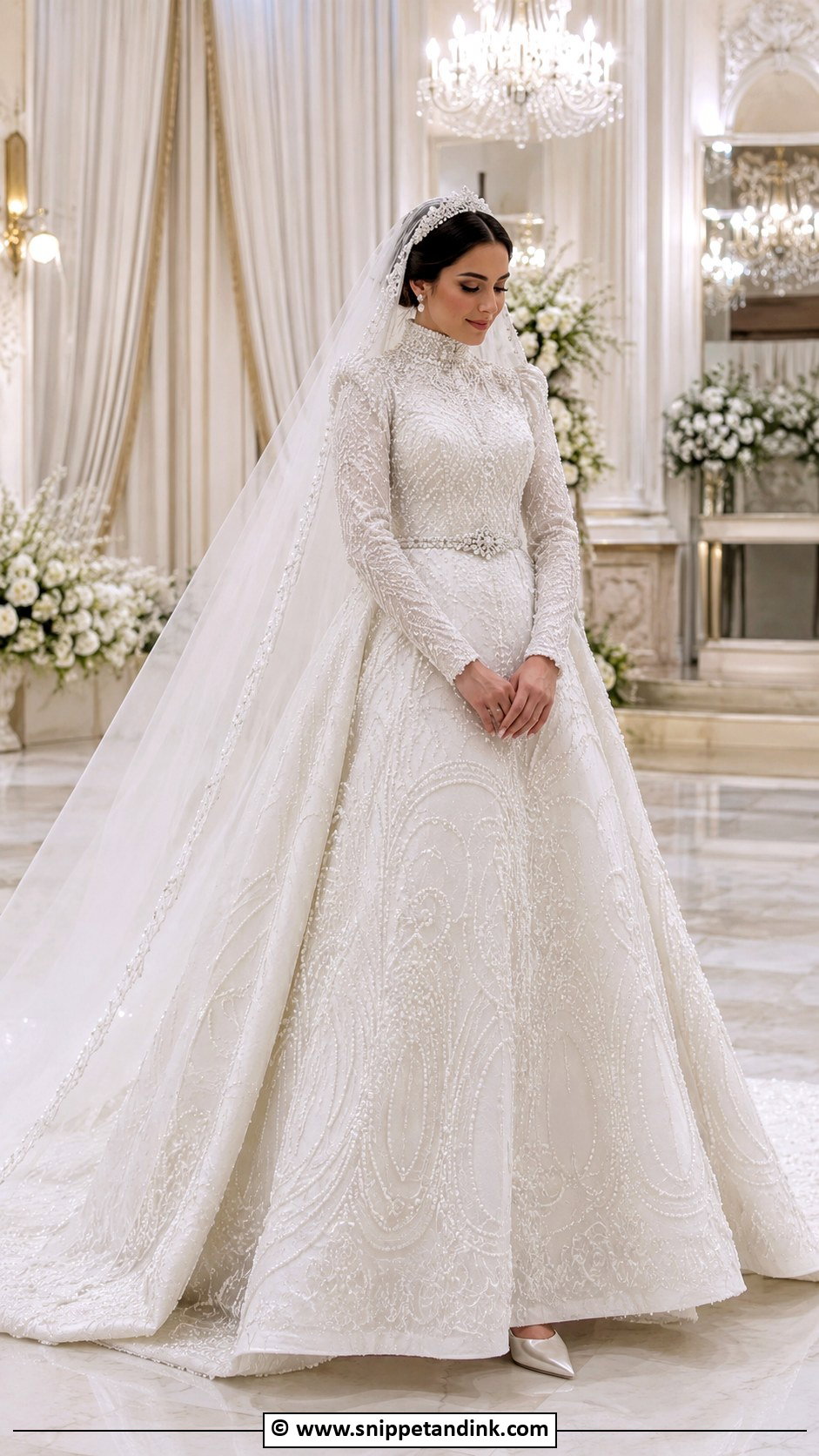
With a Saudi bridal gown, fabric quality shows more than embellishment. A long-sleeve dress with a high neckline, pearl embroidery and a sweeping train looks expensive when the satin or crepe underneath has real body. Thin fabric under heavy pearls puckers, and that pucker is what reads cheap in close-up photos. Add a jeweled belt, satin pumps and a long veil. If your family prefers a traditional layer, a cape overlay or an embellished abaya-style outer piece does that without changing the gown beneath. Keep the silhouette smooth so the detail has room.
8. Arab Wedding Dress With Hijab
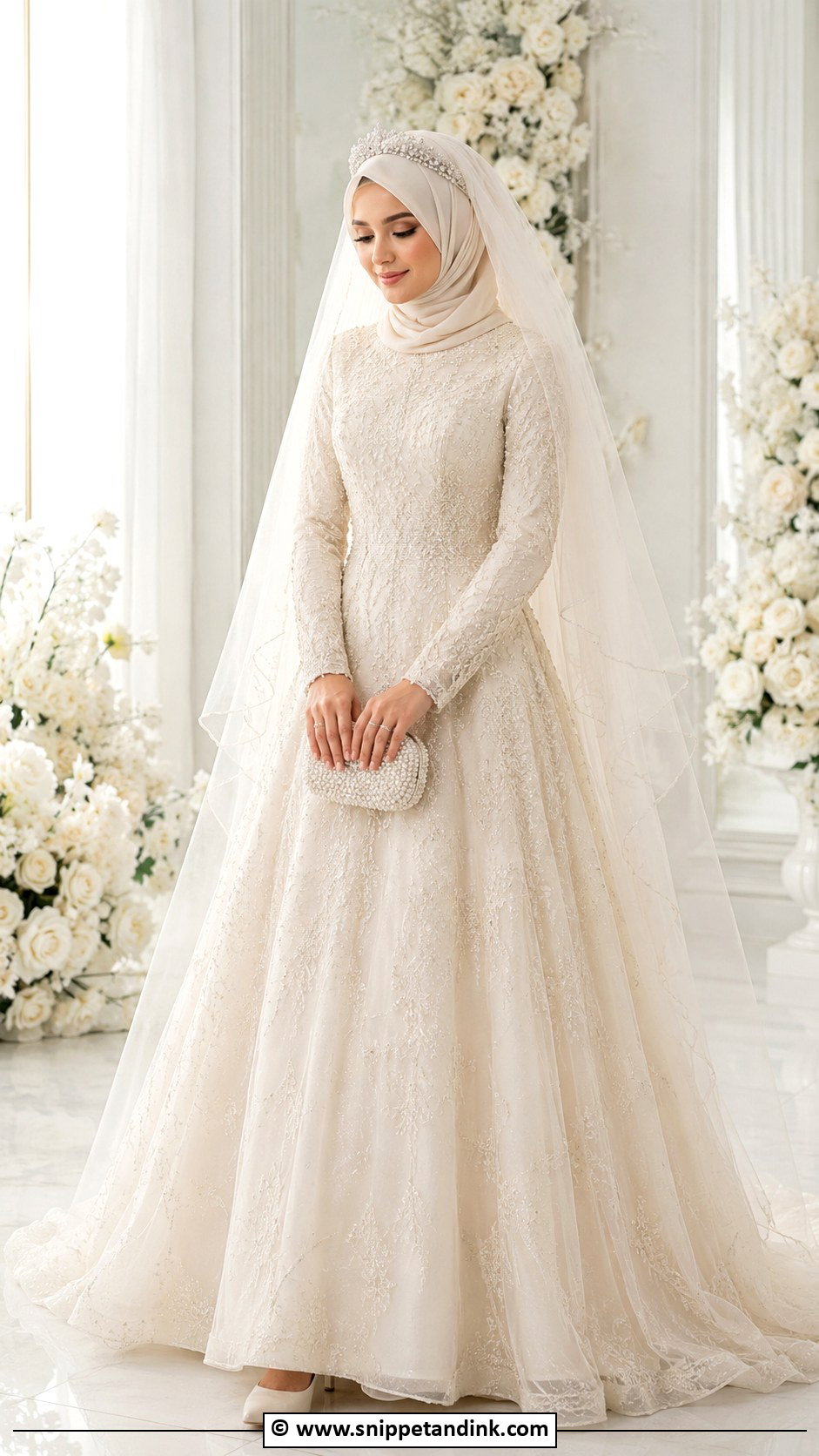
Dressing a bride in hijab is about making the gown and the head covering one continuous line. I start with a modest gown, long sleeves and a high neck, then pick the matching silk or chiffon hijab against the actual dress fabric in daylight, because ivory chiffon and ivory satin rarely match under the same light. Wrap it cleanly around the face, then add a crystal headband, pearl pins or a light veil over the top. Pins with flat backs are kinder to lace than straight dressmaker pins, which snag. Closed-toe heels and a small embellished clutch complete it.
9. Arab Wedding Dress With Cape
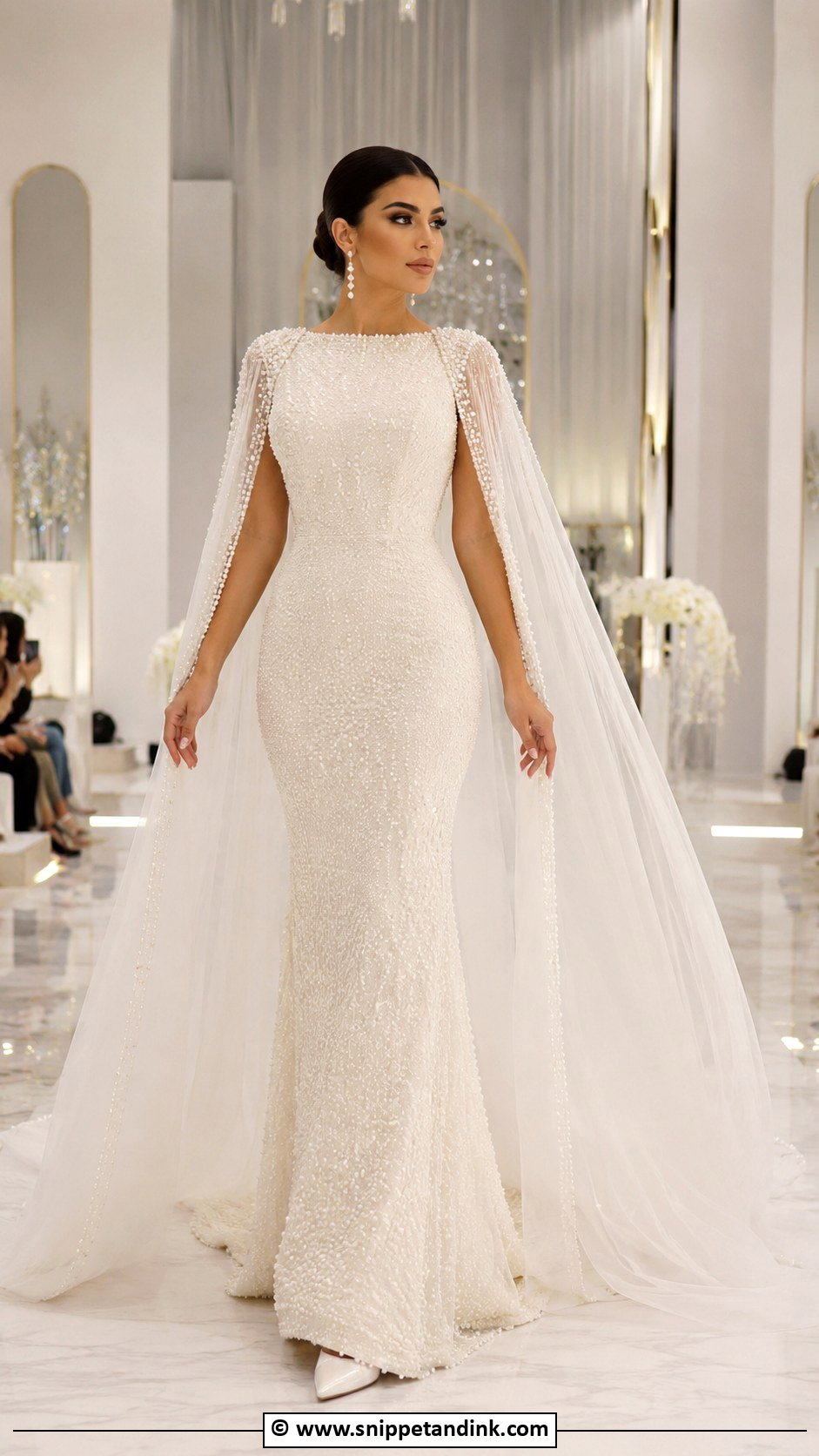
An Arab wedding dress with a cape gives you an entrance without carrying a ball gown all night. A fitted column or A-line gown with a detachable cape in pearl-edged tulle or lace appliqué moves as you walk, which is why it suits the zaffa so well. I always check how the cape attaches. Hidden hooks at the shoulder seam hold better than snaps, which can pop when you raise your arms during the dancing. Add sleek heels, drop earrings and a smooth updo or covered bridal hijab, and take the cape off later for the dance floor.
10. Arab Ball Gown Wedding Dress
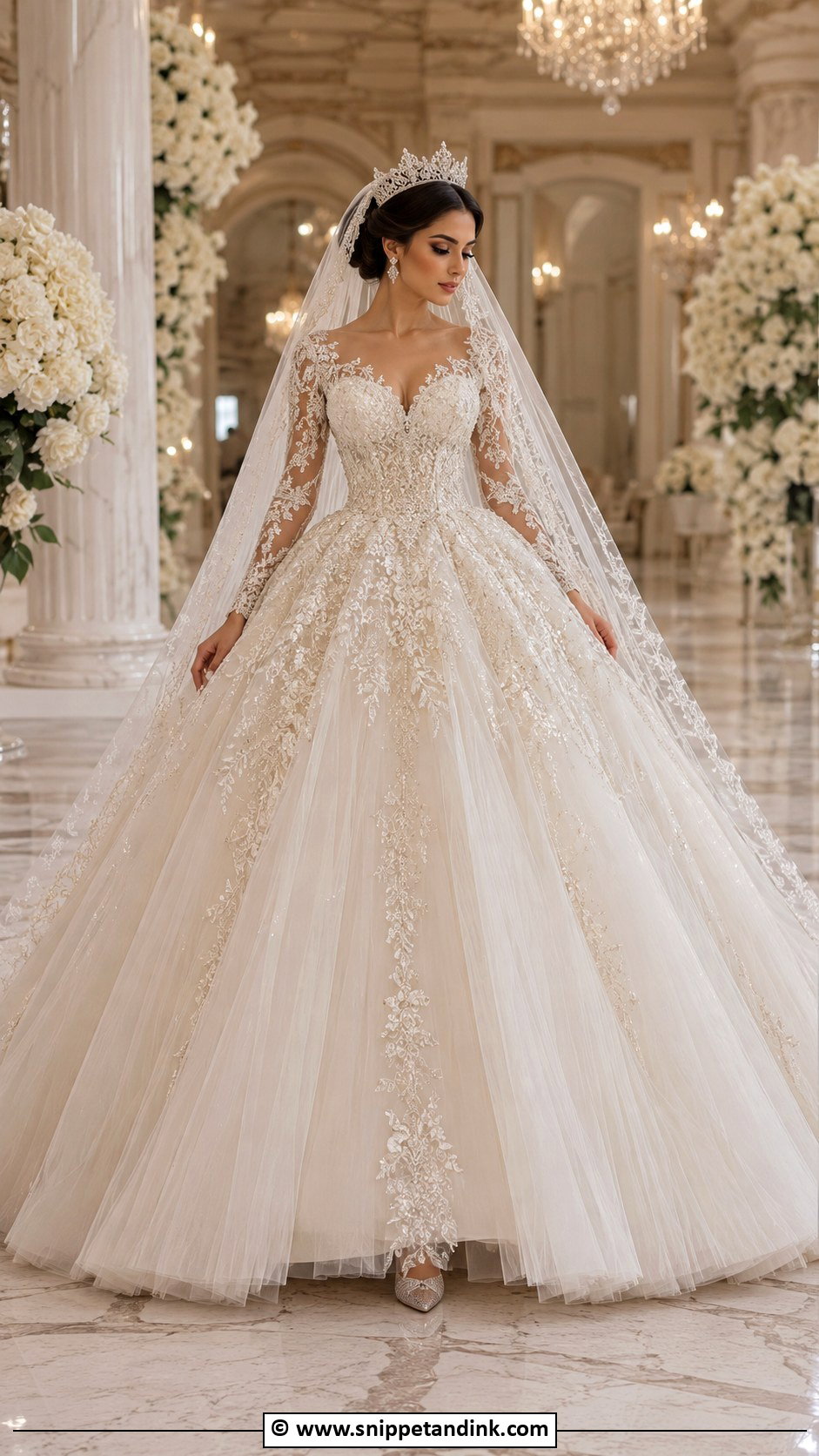
This is the royal option: a full tulle, satin or organza skirt, a structured bodice and long sleeves, with crystal, lace or pearls across the top. A ball gown needs a waist that is properly built inside, with boning and a waist stay, otherwise the skirt drags the bodice down over a long night. Cathedral veil, sparkling heels and a tiara complete it. Because the skirt already brings the volume, I keep jewelry to one statement piece. It belongs in a large venue; in a small hall it swallows the room and the bride.
11. Arab Mermaid Wedding Dress
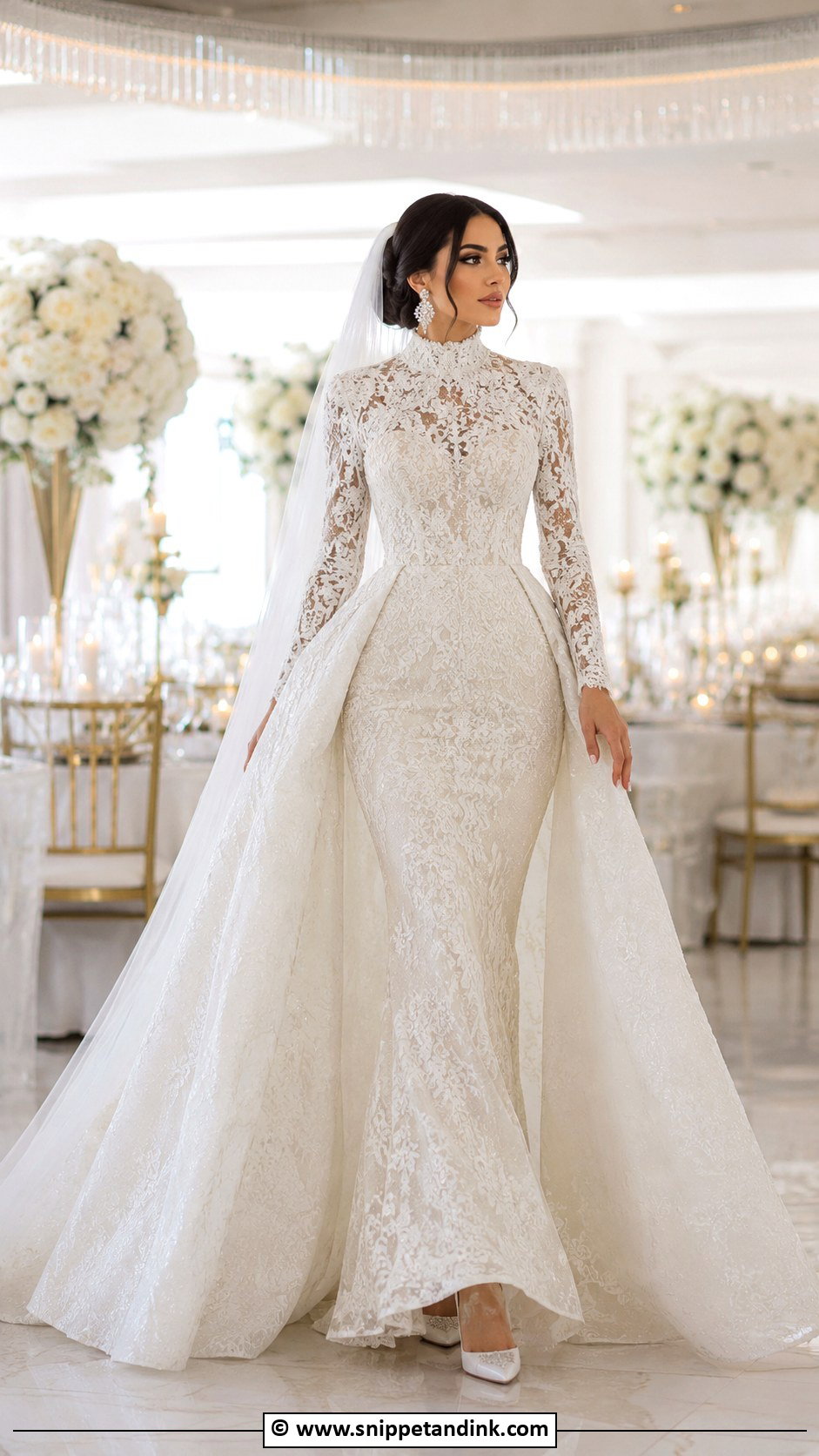
Mermaid shapes are where modesty and drama meet in Arab bridal fashion. Look for a long-sleeve mermaid gown with a higher neckline and lace overlay, and a flare that begins below the hips rather than at the knee. That placement matters: a knee-level flare looks dramatic standing still but limits your stride on stairs and during the zaffa. Structured crepe, satin or embroidered lace holds the sculpted line. A detachable overskirt adds ceremony volume, and pointed heels, a sleek veil and statement earrings finish it. Sit in it at the fitting before you say yes.
12. Arab A Line Wedding Dress
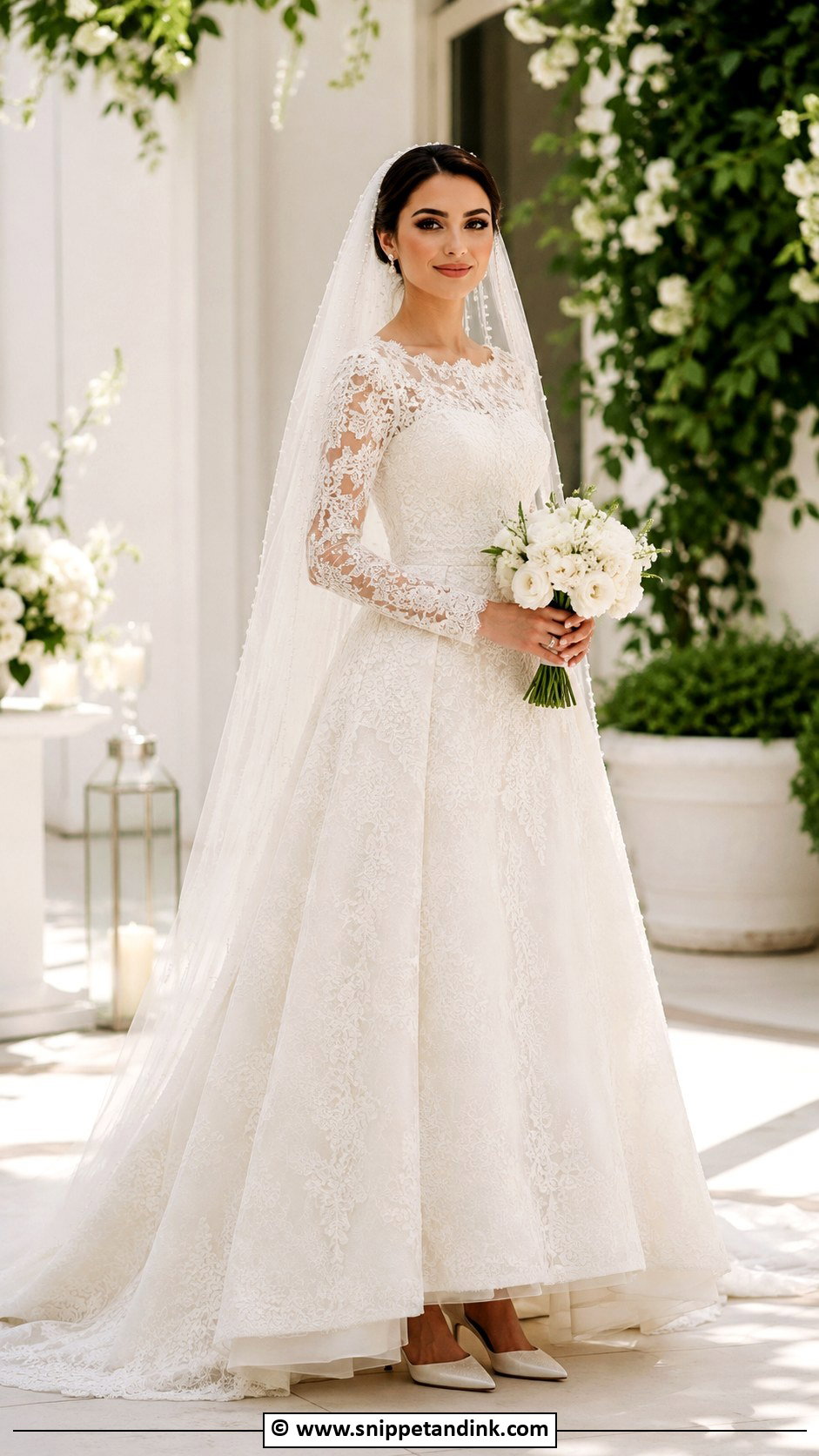
The A-line is the shape I recommend most often when a bride is unsure, because a fitted top and a gently flared skirt suits most bodies and most venues. Long sleeves, lace panels and a soft train keep it modest. Add a pearl veil, satin heels and a small bouquet. It moves between an indoor hall and a garden without looking out of place. Silver embroidery on ivory keeps it quietly rich, while gold detailing or a jeweled belt pulls it toward tradition. The train is the one part to measure against your venue floor; short is easier on grass.
13. Arab Princess Wedding Dress
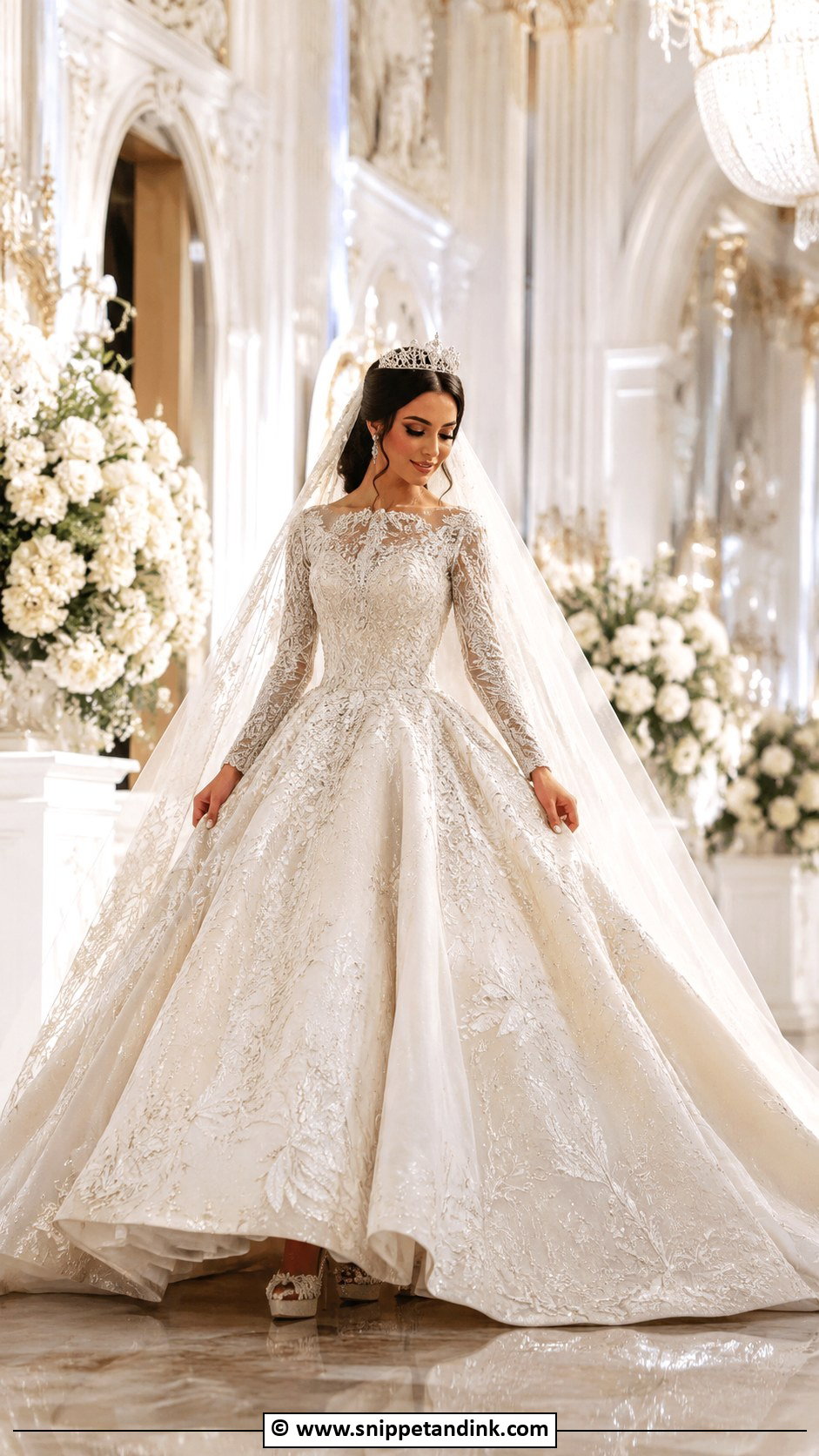
A princess gown is full volume, a fitted bodice, long sleeves and embroidery across the chest, waist and train, finished with a tiara and cathedral veil. The trap is mixing every embellishment at once. I ask the bride to pick one direction, pearls or crystals or lace, and let the others stay minor. Soft ivory is often kinder than bright white here, since bright white bounces flash and can make skin look grey in ballroom photographs. Glittering heels complete it. Save this one for a dramatic entrance and formal portraits.
14. Arab Satin Wedding Dress
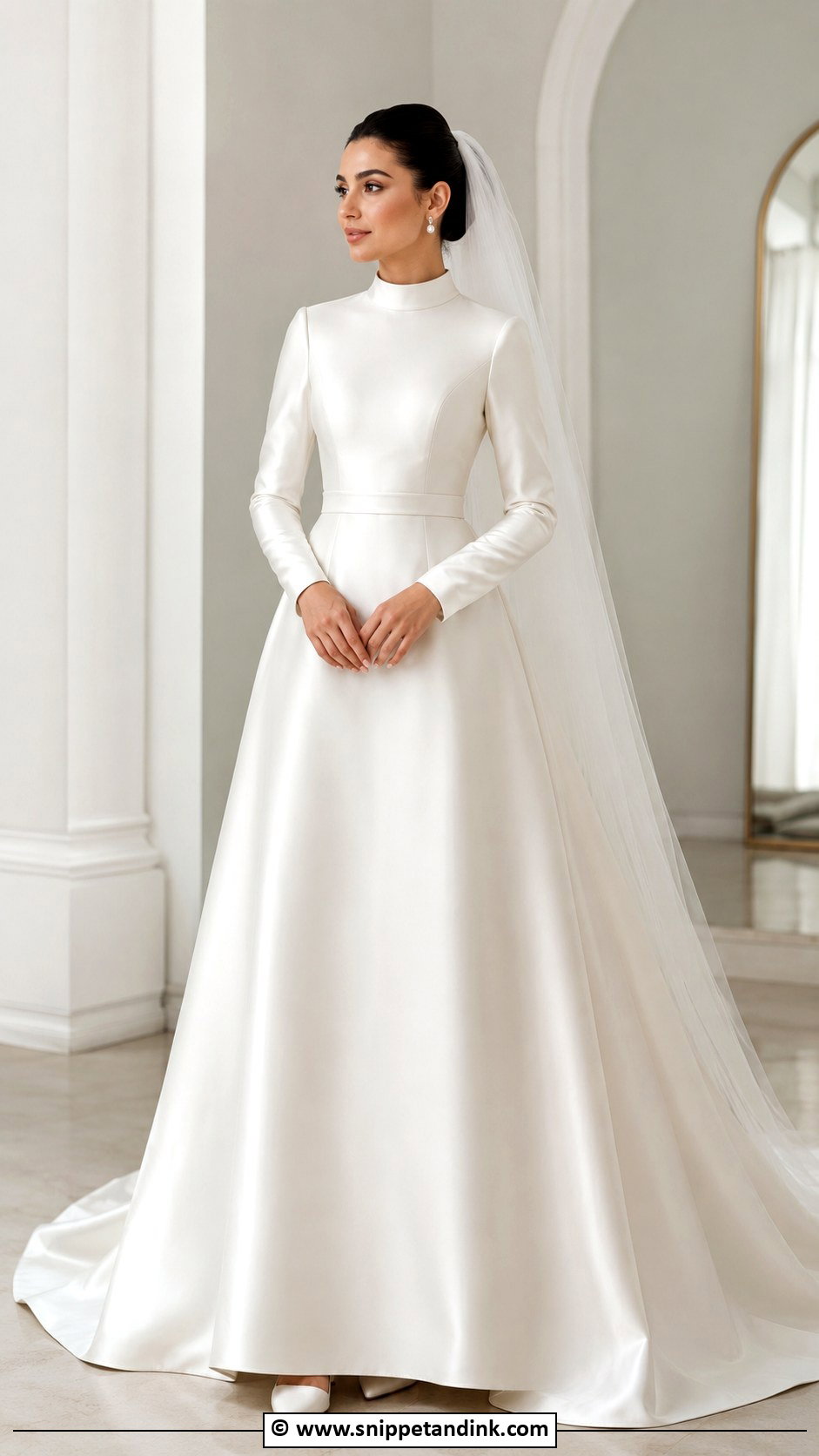
Satin does a lot of the work on its own, so the shape can stay simple: long sleeves, a high neck, a fitted waist and a flowing skirt. What brides do not expect is how satin creases. After an hour of sitting there will be lines across the lap, so I steam the gown on the morning and suggest a heavier satin, which relaxes back faster than a thin one. Pearl earrings, a sleek veil and satin pumps keep it clean, with a structured white bouquet. It works with a hijab or uncovered hair equally well.

15. Arab Lace Wedding Dress
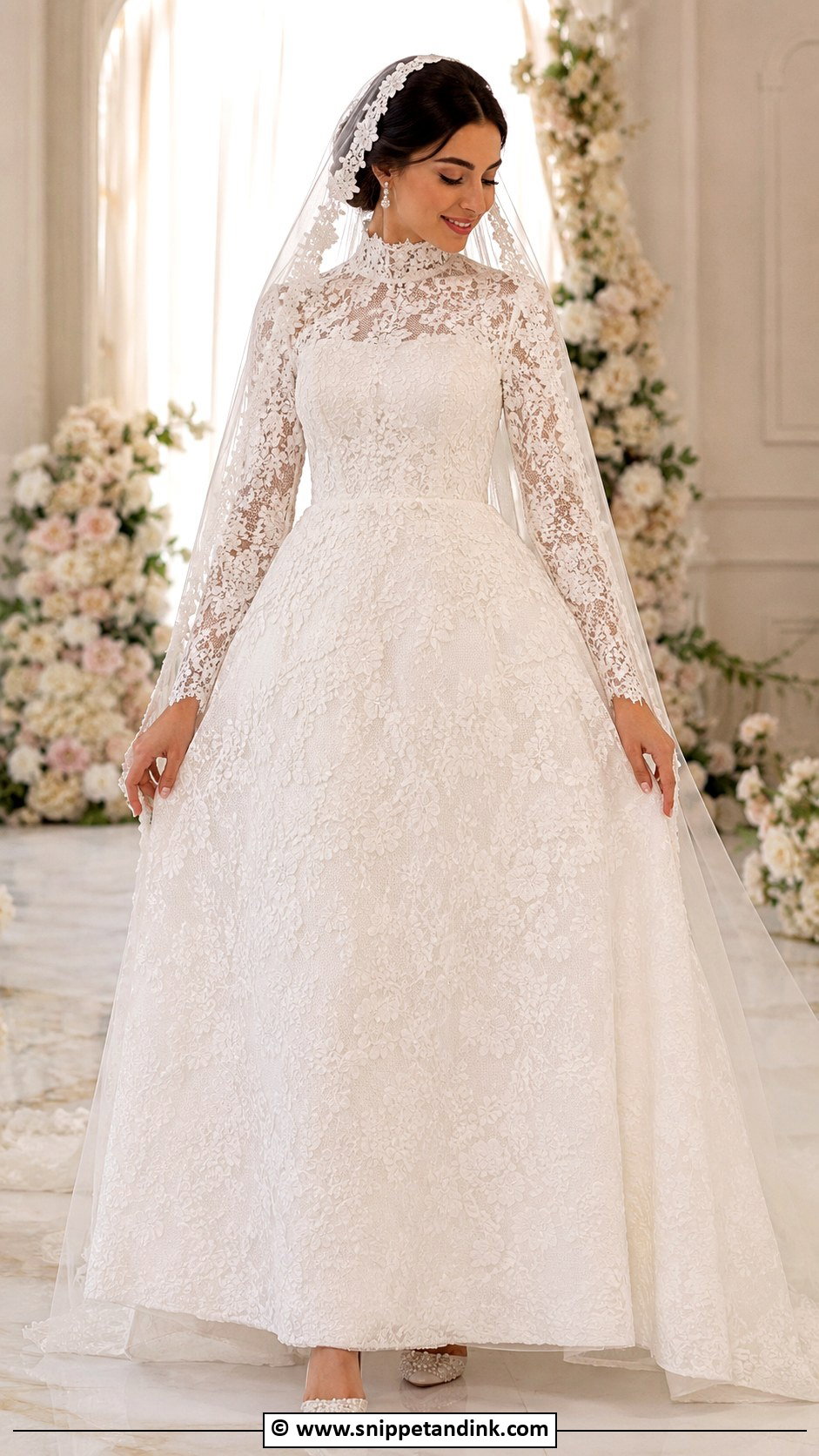
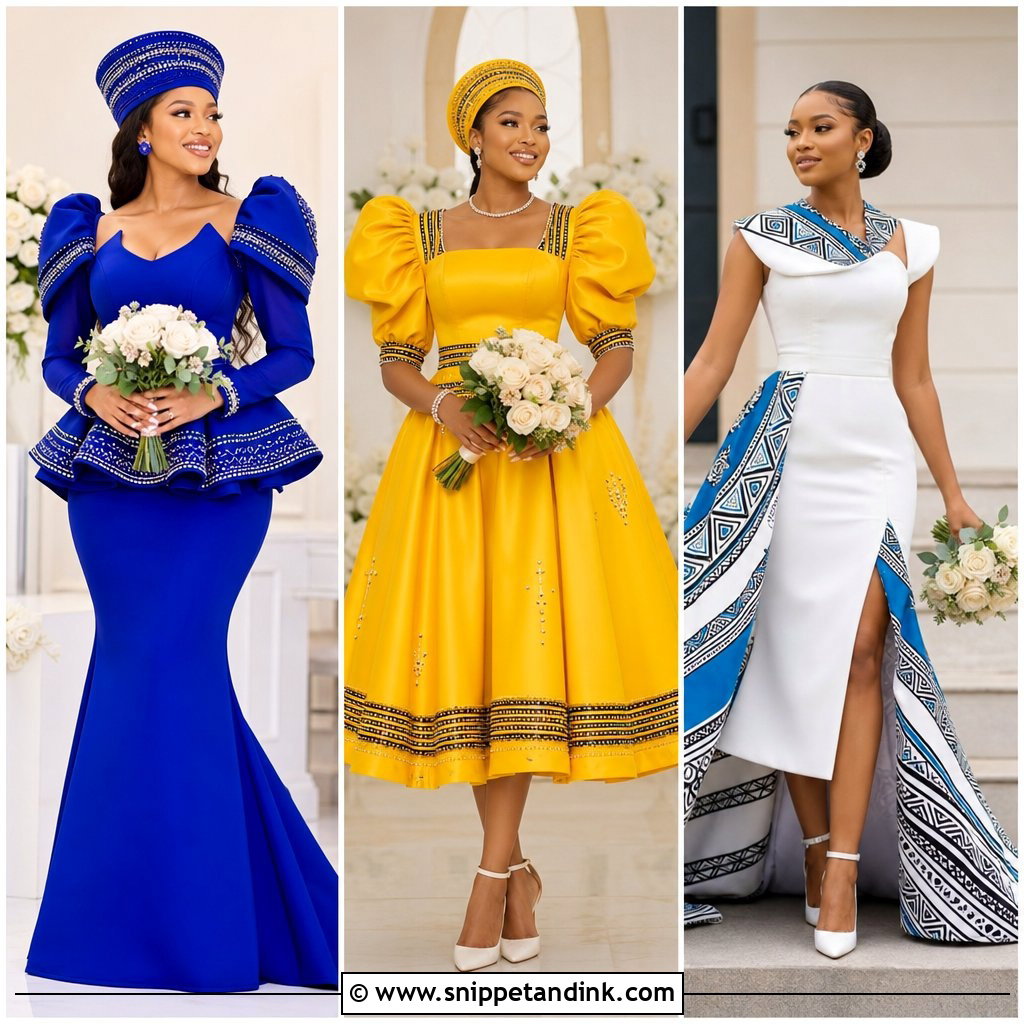
Lace adapts easily to modest dressing because you can line it fully without losing the pattern. Floral lace over an opaque lining, long sleeves and an A-line or fit-and-flare skirt is the base. I check the lining color against your skin in daylight: a nude lining that is a shade off shows as a patchy line at the wrist and neck. A high or illusion neckline adds coverage. Pearl heels, a lace-trimmed veil and simple earrings complete it. For a more Arab bridal finish, ask for beadwork worked into the lace at the cuffs, waist and train.
16. Arab Beaded Wedding Dress
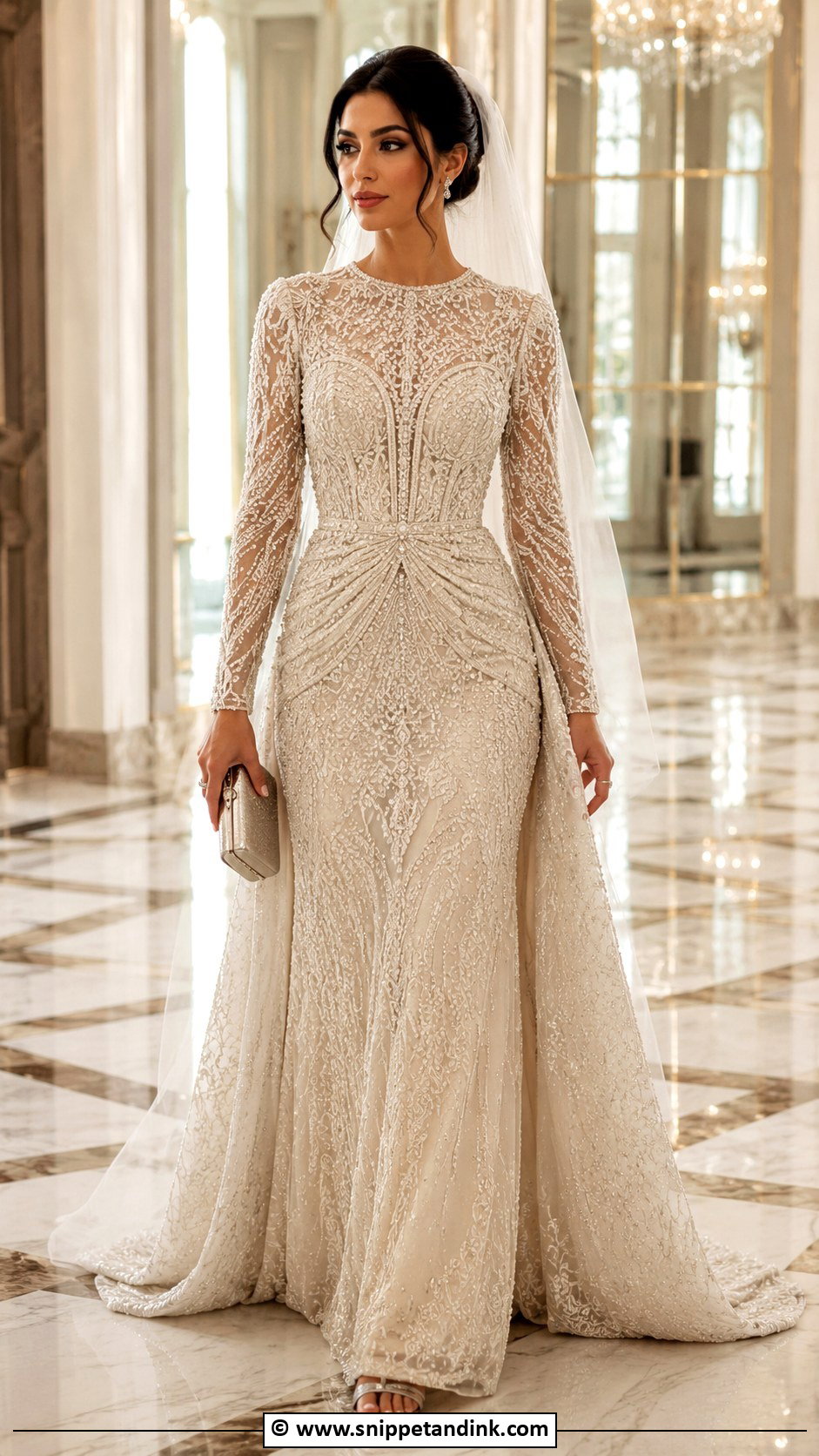
Hand beading comes alive at night, under chandeliers and moving light. Choose beaded sleeves, a fitted bodice and a flowing skirt; silver, pearl and clear crystal are the classics, while gold beading warms the whole look and ties it to cultural jewelry. Beadwork adds real weight, and most of it hangs from the shoulders, so I make sure the straps and shoulder seams are reinforced. Metallic heels, a sleek clutch, soft glam makeup and a plain veil are all it needs. Wear it for an hour at home before the day.
17. Arab Pearl Wedding Dress
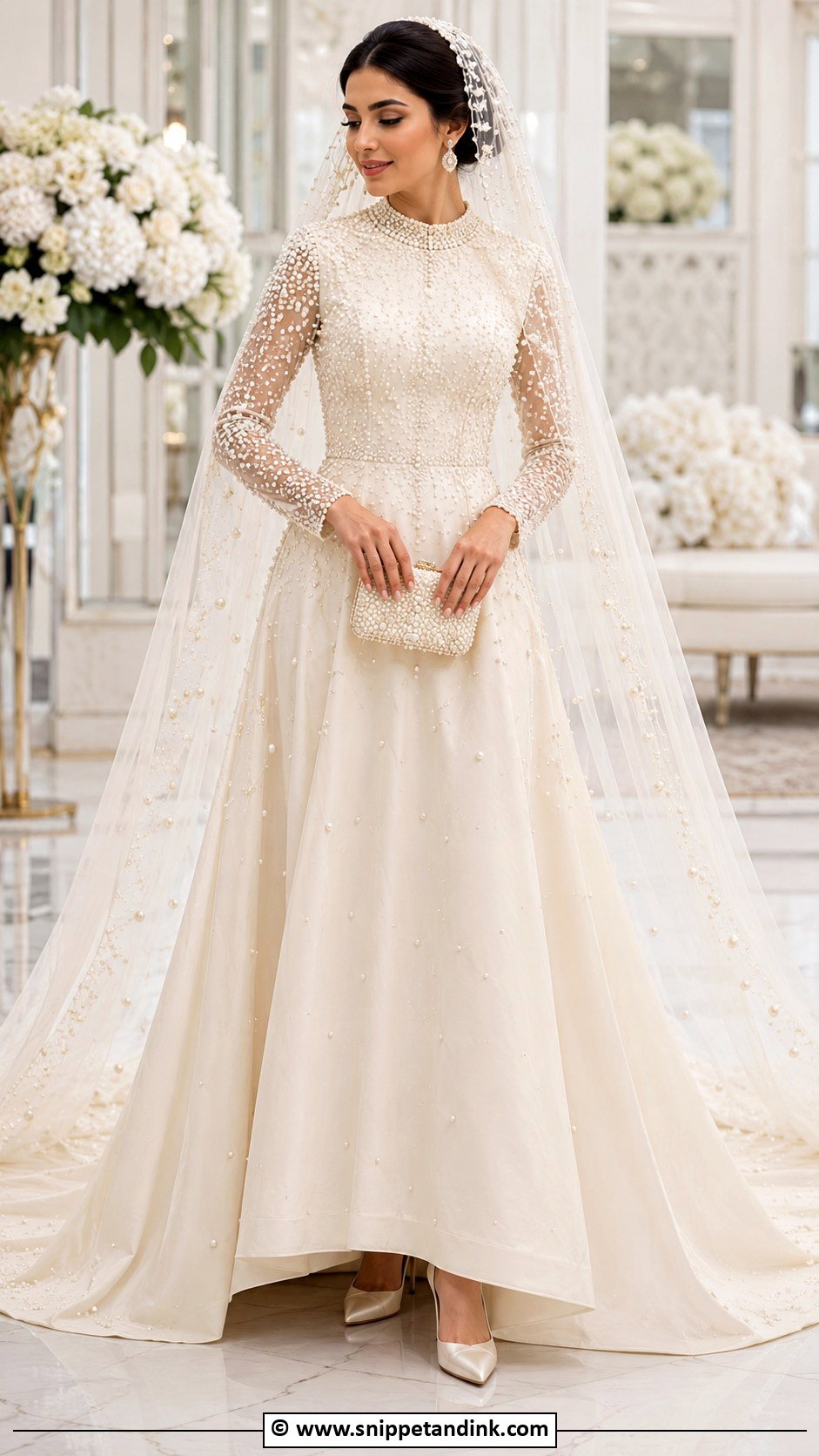
Pearls give detail without the glare of crystals. A white or ivory gown with pearls on the sleeves, bodice or neckline, and an A-line or column shape, reads refined up close. Pearl drop earrings, satin heels and a small pearl clutch tie it together. Pearls also bridge the dress and a hijab neatly: a pearl headband or pearl-tipped pins repeat the motif at the face. I match pearl tones carefully, because cream pearls beside bright white ones make both look wrong. Keep makeup soft and luminous.
18. Arab Gold Wedding Dress
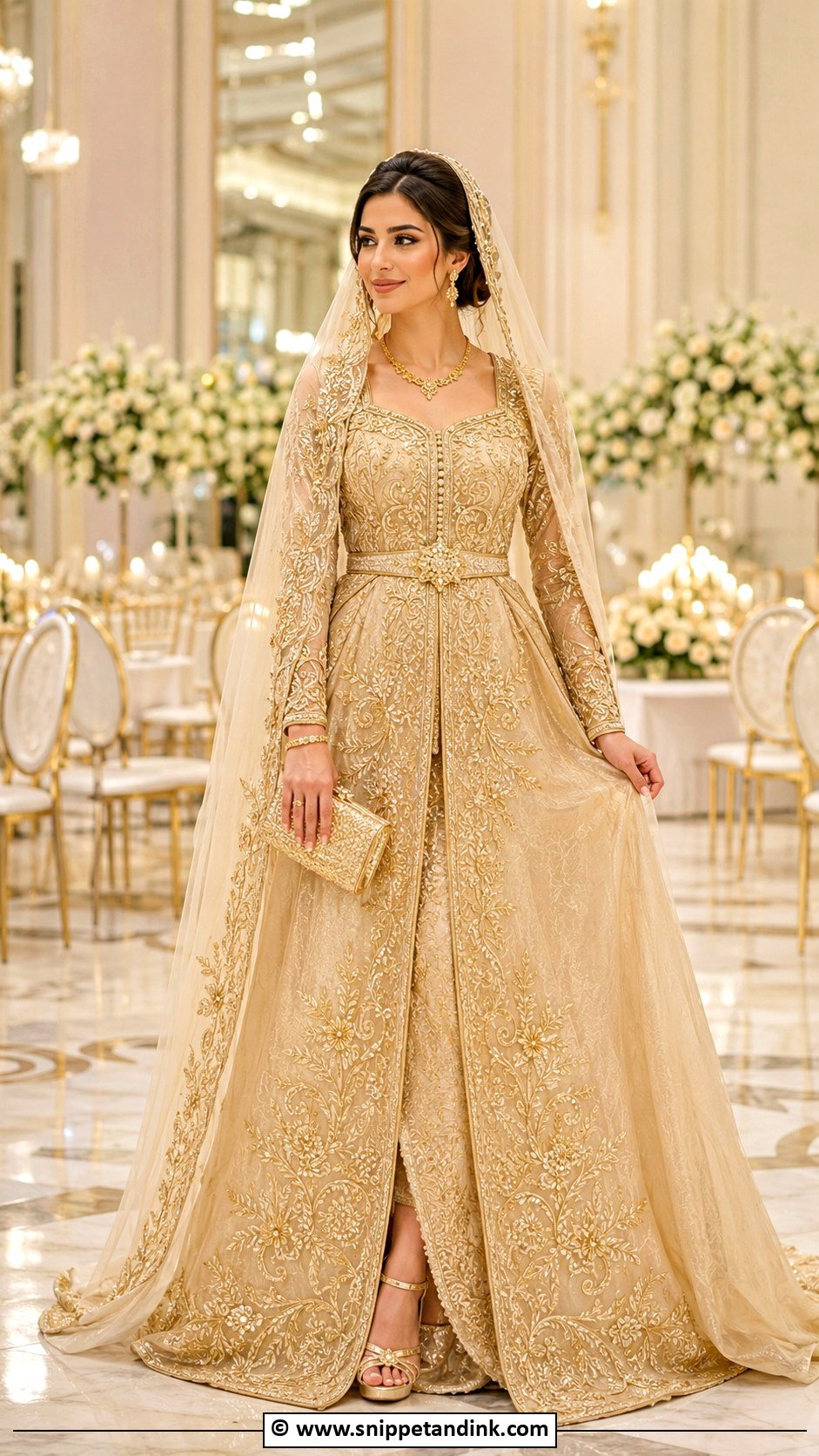
Gold is my usual answer when a bride wants warmth and does not want white for every event. Champagne, ivory or pale gold with metallic embroidery, long sleeves and a flowing skirt suits henna night, a reception entrance or the main ceremony. Soft gold reads bridal; deep metallic gold can look like a guest dress under warm lighting, which is the distinction I watch closest. Gold heels, a matching clutch and warm-toned jewelry follow naturally, and a cream veil with gold edging pulls the whole outfit together.
19. Arab Red Wedding Dress
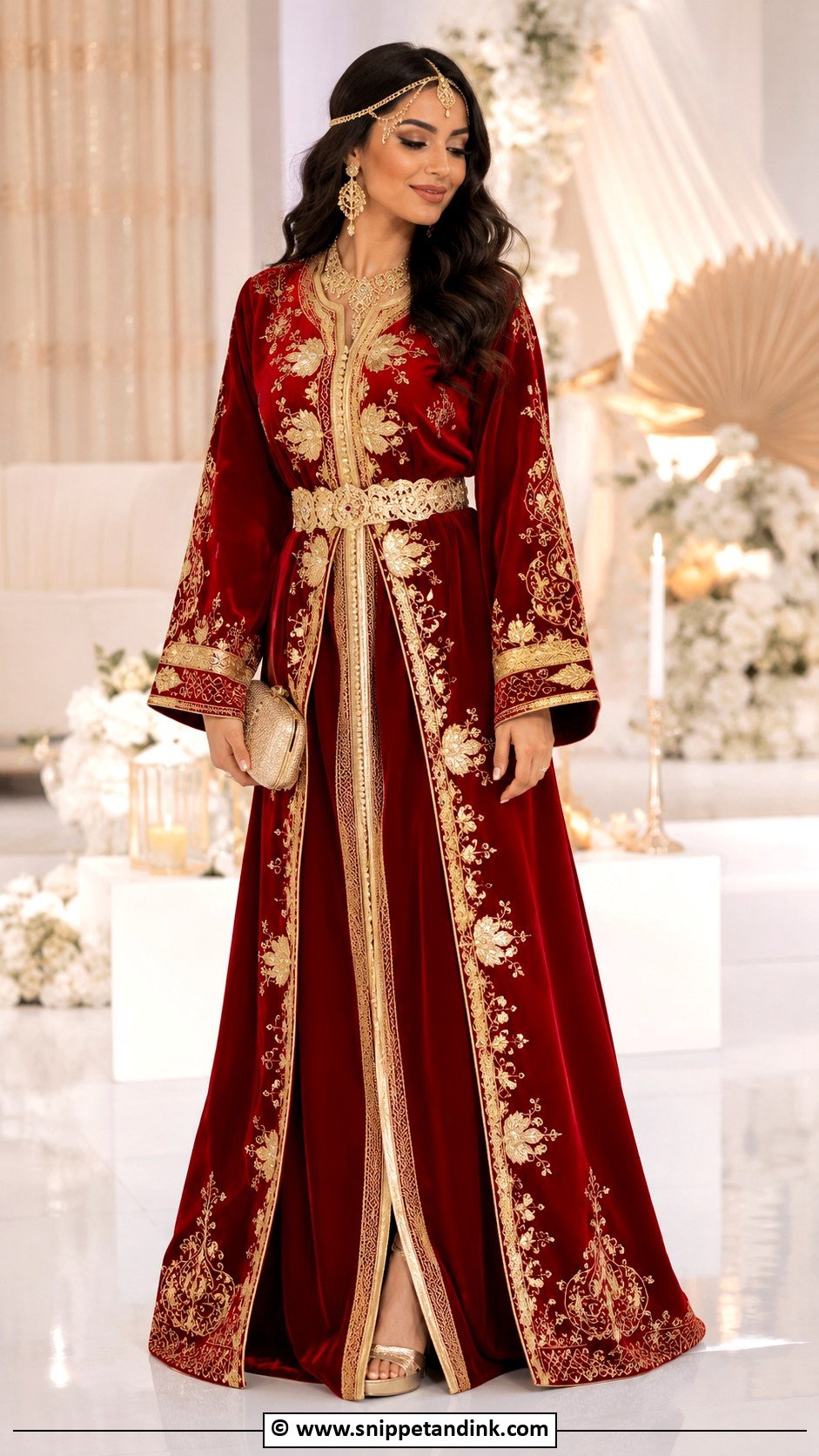
Red belongs to henna night in many families, and it carries joy rather than formality. A deep red kaftan, takchita or embroidered gown with gold trim and a waist belt is the classic. Velvet and brocade hold red richly; thin satin in bright red can look shiny and flat in photos. If true red feels loud, ruby or burgundy is softer against most skin tones. Gold heels, a matching clutch and traditional jewelry complete it. Keep makeup to defined eyes and a soft lip so the dress leads.

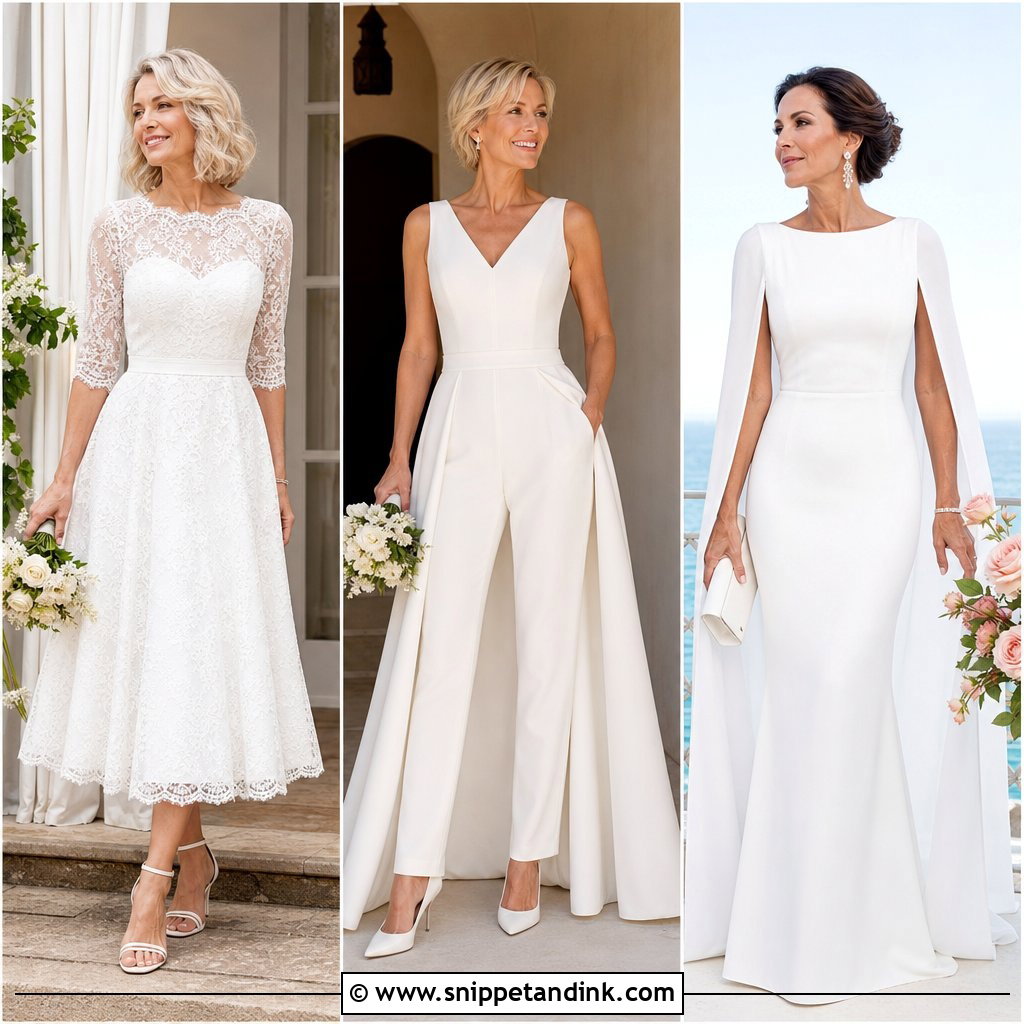
20. Arab Green Wedding Dress
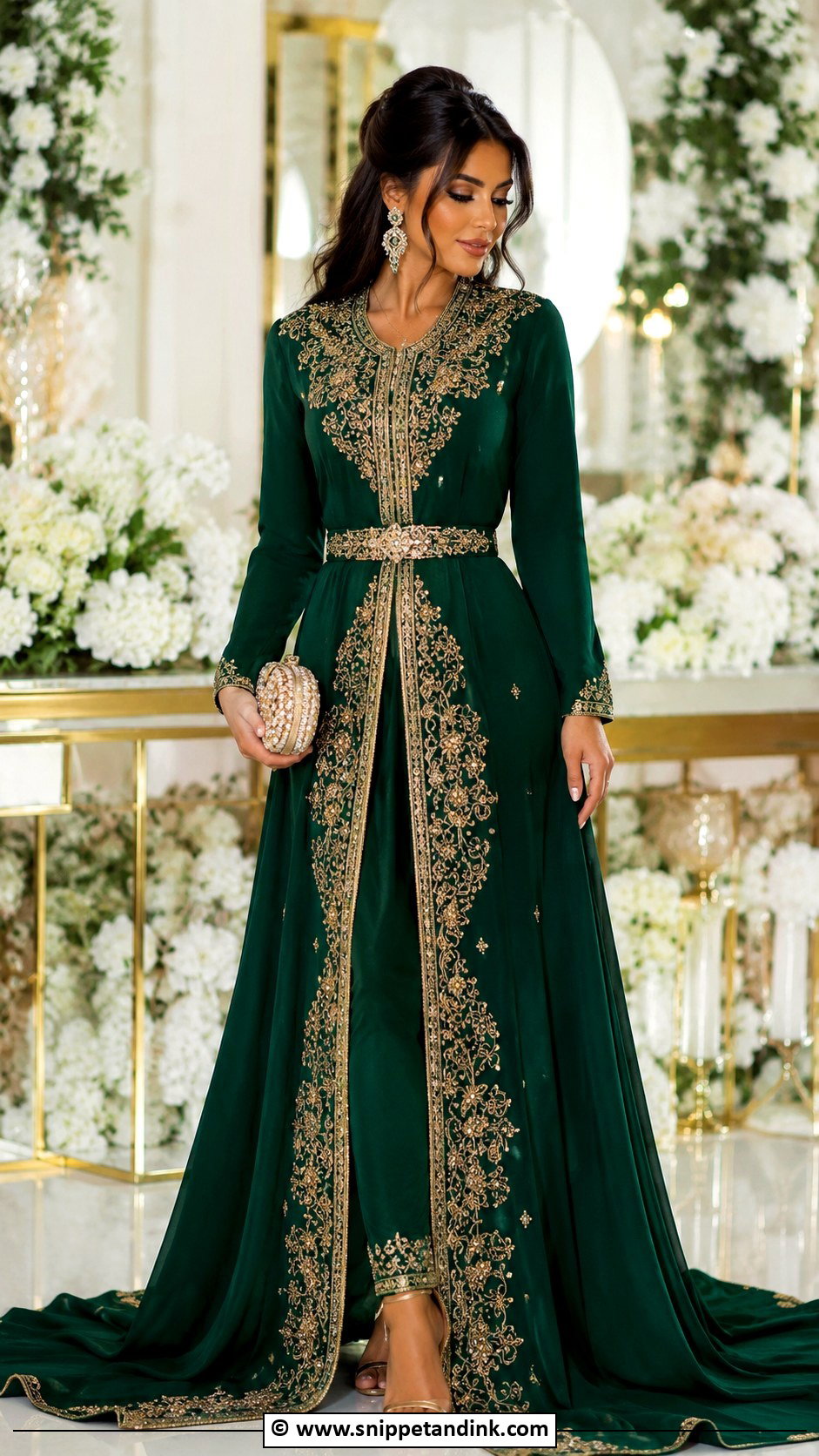
Green is having a moment in bridal wear, and it has deep roots in henna celebrations. Emerald with gold embroidery, long sleeves and a floor-length cut is the formal version; sage with pearl details is the soft one. Emerald needs good light. In a dim hall it can drop toward black in photographs, so I suggest it for evening events with strong overhead lighting or daytime venues. Gold heels, a jeweled clutch and statement earrings suit the emerald. It is a strong second bridal look against white florals and gold décor.
21. Arab Black Wedding Dress
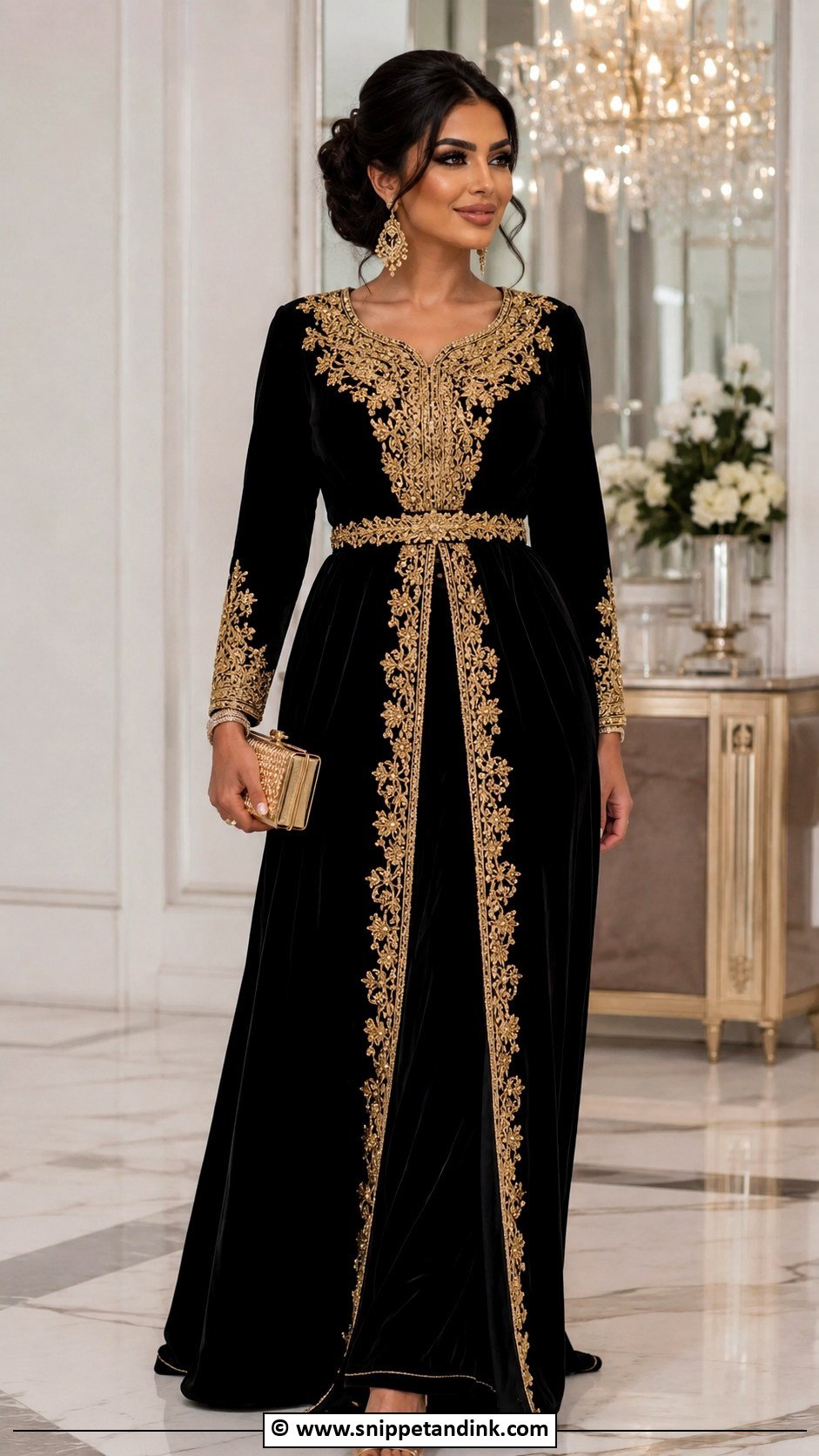
Black belongs to henna night or a reception rather than the traditional white ceremony, and in velvet or satin with gold embroidery it looks deliberate rather than casual. Texture is what makes it wedding-ready: flat black jersey reads like eveningwear, while velvet with raised gold work reads ceremonial. Add gold heels, a structured clutch and ornate earrings. Black with ivory embroidery or a sheer embellished overlay is softer. I would check with family first, since some households have strong feelings about black at a wedding.
22. Arab Henna Night Dress
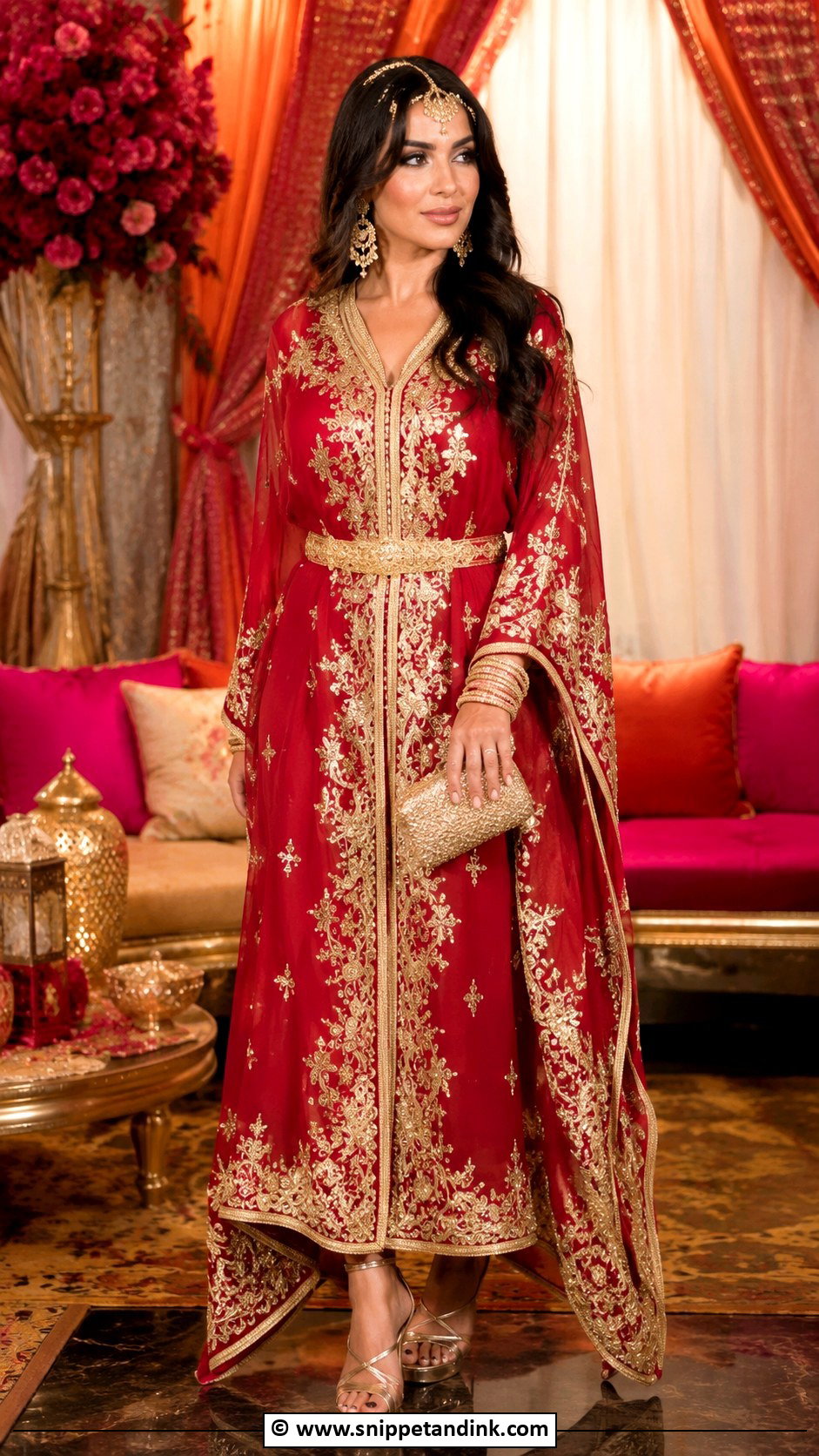
Henna night is about the hands, so the sleeves matter more than the skirt. A red, green or gold embroidered kaftan, metallic heels, bangles, statement earrings and a small clutch is the base. I choose sleeves that end at or just above the wrist bone, or open bell sleeves, so the paste and later the stain are framed rather than smudged. Wet henna and silk do not mix, so keep long trailing sleeves out of the way while the paste sets. A decorative headpiece or embroidered veil adds tradition, and the outfit should stand apart from the main gown.
23. Arab Zaffa Wedding Dress
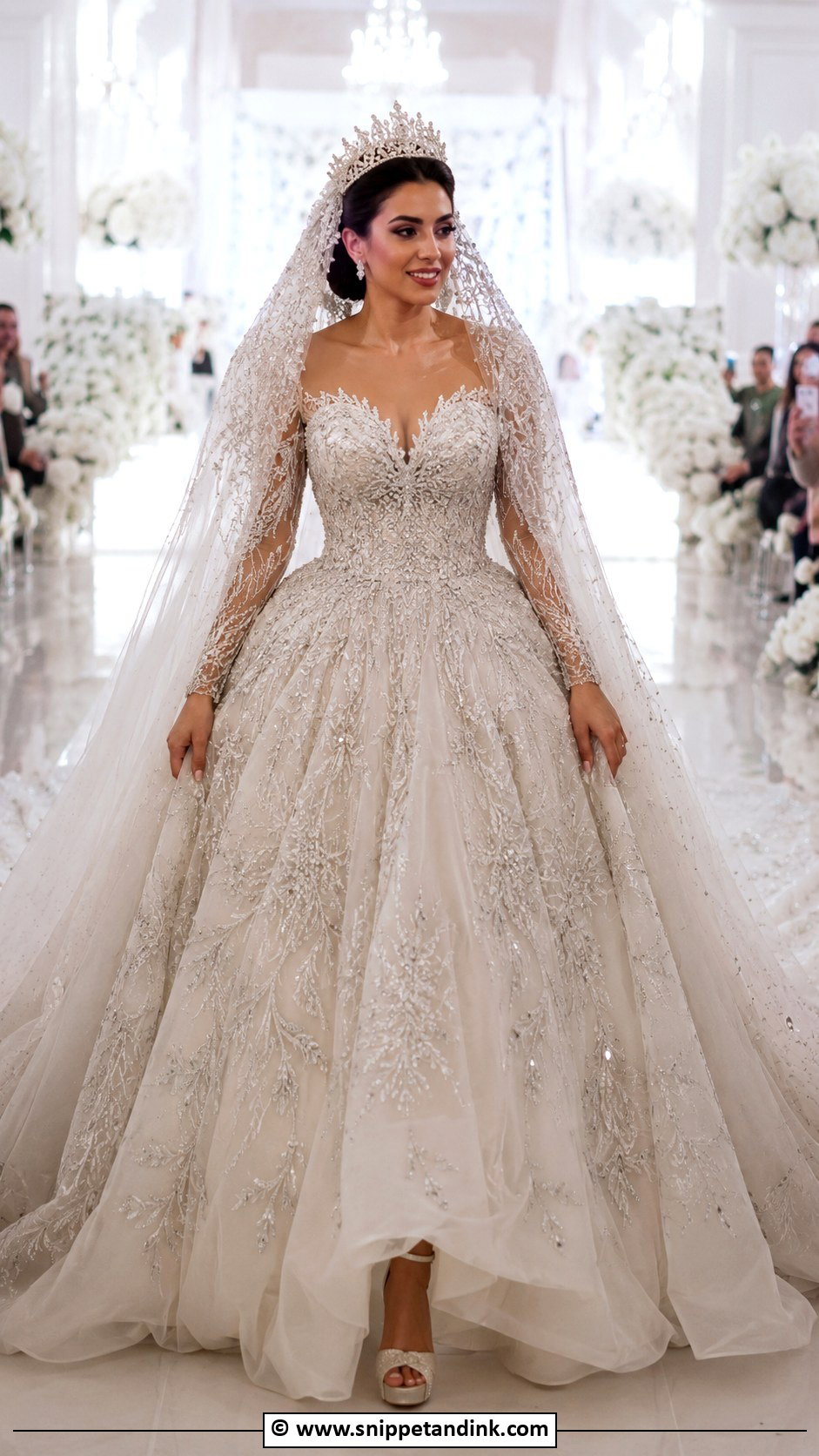
The zaffa is a walk-in with drums, dancing and family on every side, so the dress has to look right from the back and sides as much as the front. A ball gown, cape dress or embroidered gown with a long train works, in satin, tulle or beaded lace that catches light. Add a cathedral veil, sparkling heels and a tiara or jeweled headpiece. I always rehearse the walk with the train: someone should know how to lift it on stairs. A detachable train or cape gives you the entrance and an easier reception.
24. Arab Katb Kitab Dress
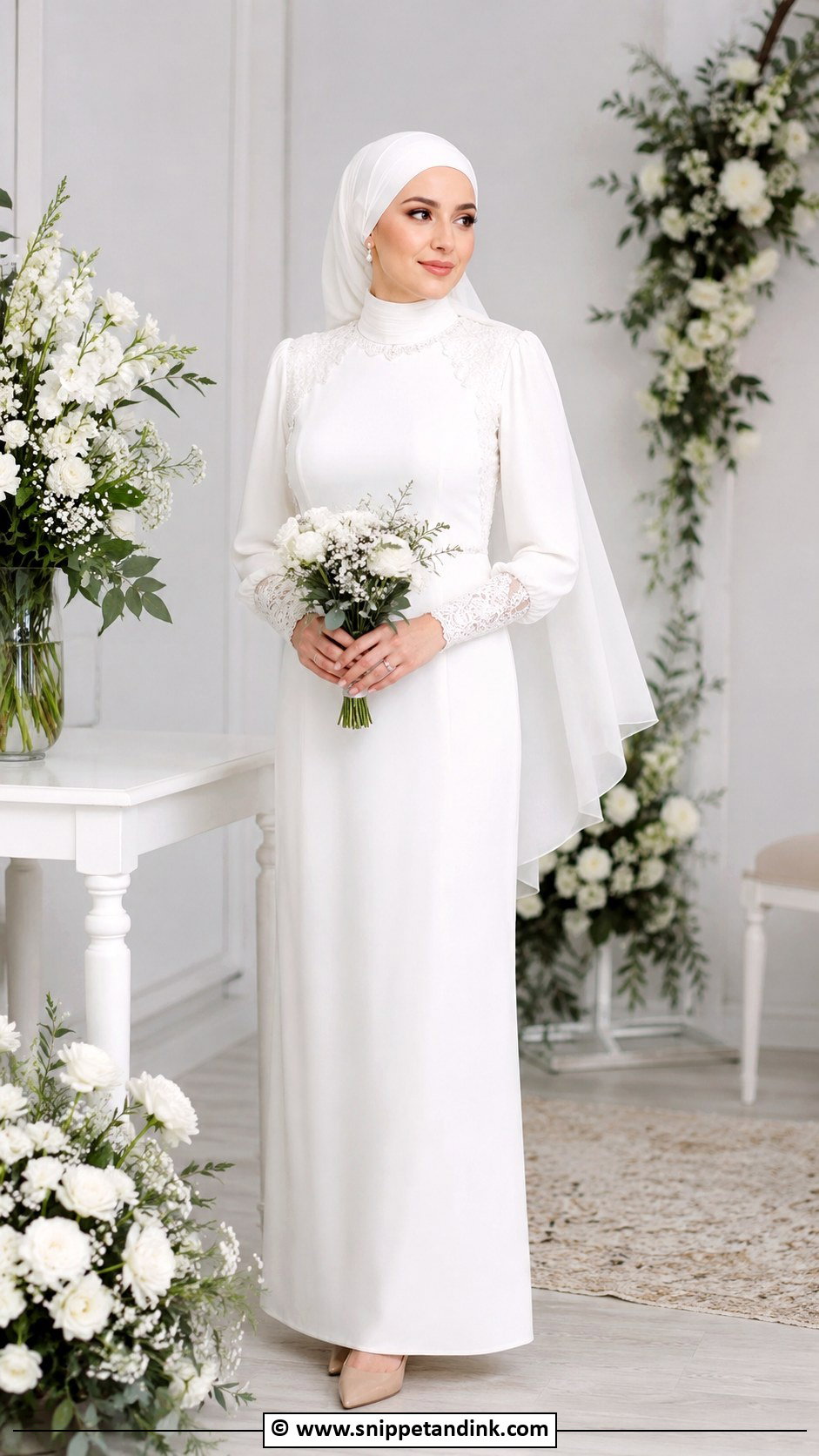
The katb kitab is usually smaller and quieter, so the dress can be softer than the main gown. A white midi or floor-length dress with long sleeves, lace accents and a clean silhouette fits it well. You will be signing, sitting with family and greeting elders at close range, so I favor crepe, chiffon or satin that does not crush, and sleeves that let you write comfortably. Nude or white heels, pearl earrings and a small bouquet or clutch are enough. Blush, ivory or soft champagne are good options if white feels too bridal for this moment. A matching chiffon hijab with delicate pins suits it.



25. Arab Engagement Wedding Dress
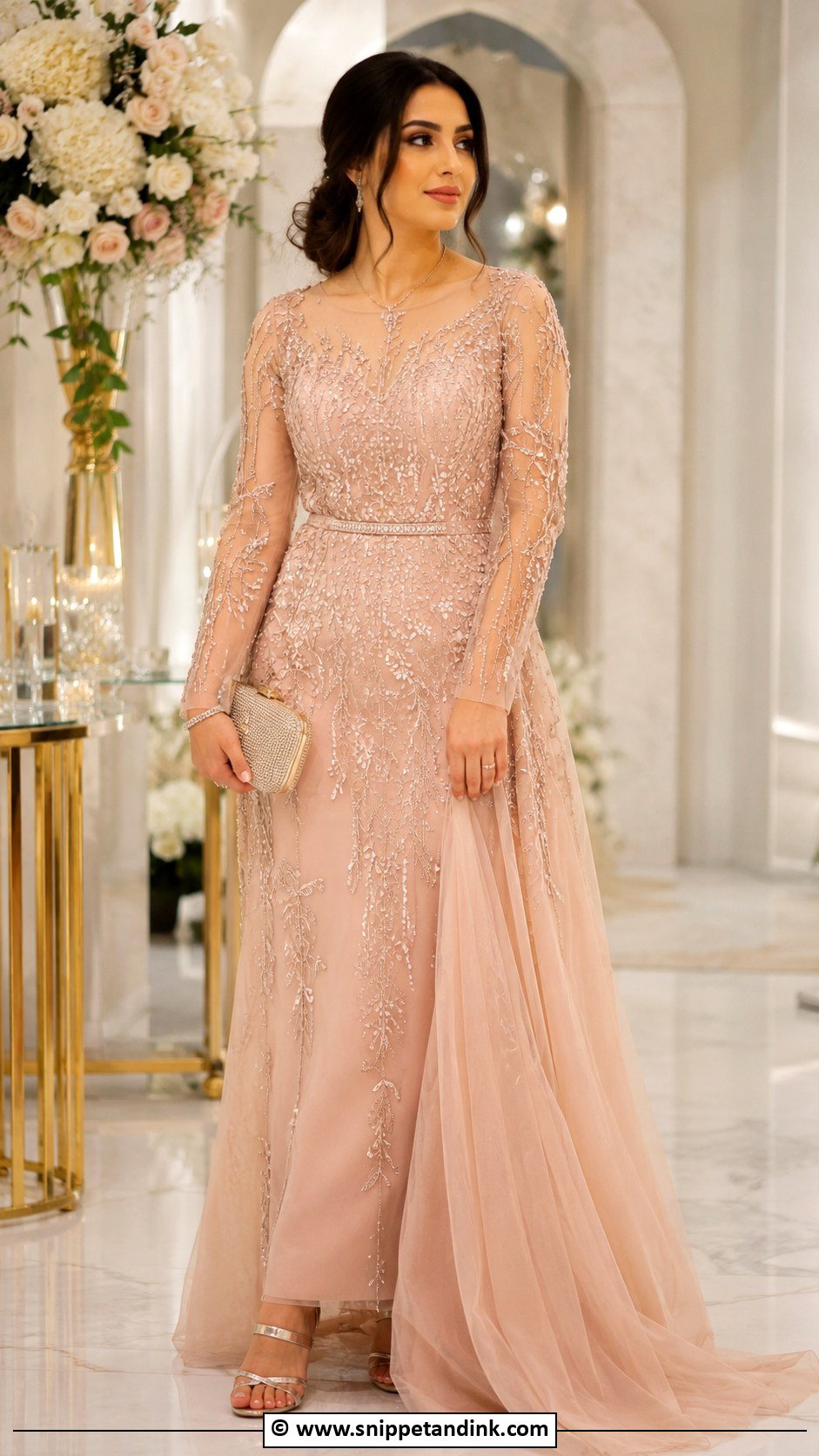
An engagement gown can be lighter in tone and mood. Blush, champagne, silver and soft blue all suit it, in a long-sleeve embellished dress with a fitted waist and flowing skirt. Pair it with metallic heels, a sparkly clutch and jewelry that picks up the dress detailing. For a big event, add a cape or overskirt; for a smaller gathering, keep the silhouette clean and let the color carry it. I’d avoid committing to a heavy gown here, since you’ll likely be on your feet greeting guests the whole evening.
26. Arab Reception Wedding Dress
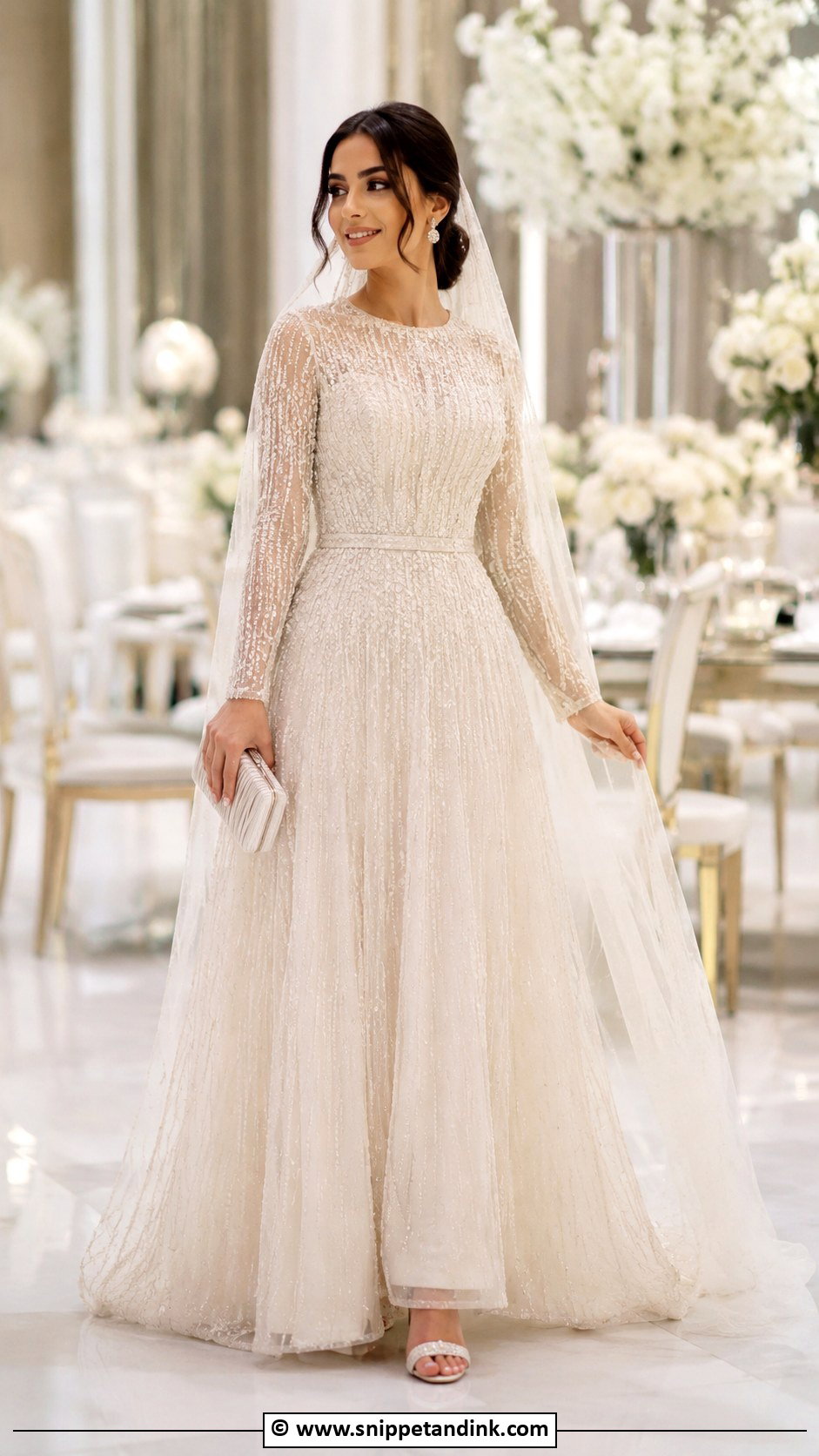
By the reception you have usually been dressed for hours, so the second gown should be lighter. An A-line, sleek satin dress or beaded column after a heavier ceremony look is a relief. Long sleeves or a matching bolero keep coverage. I swap the cathedral veil for something shorter here, and comfortable heels matter more than anywhere else. Skip a very tight skirt or heavy train if you plan to dance. It should still read bridal, just easier to live in.
27. Arab Wedding Dress With Overskirt
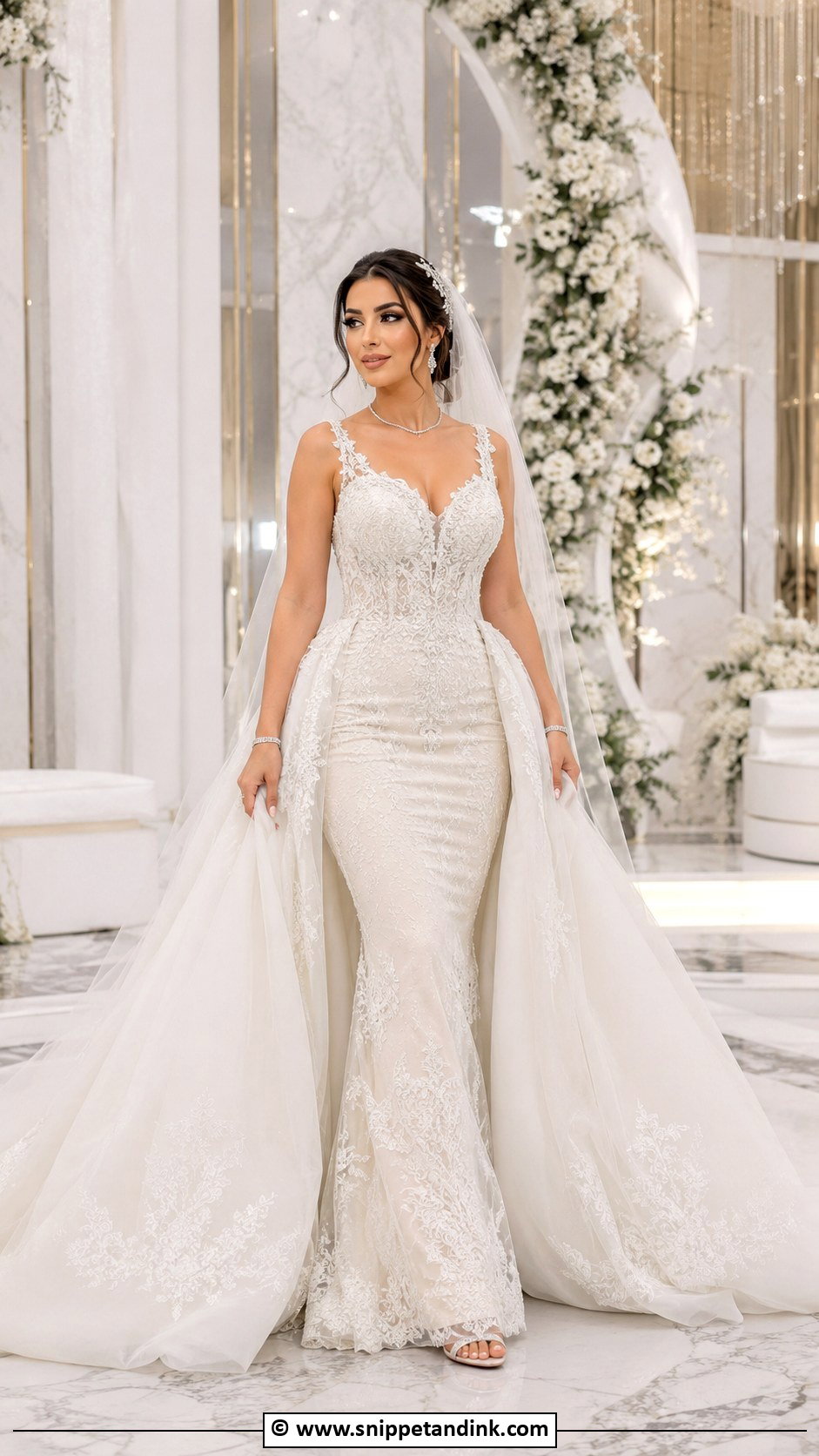
An overskirt gives you two dresses on one fitting schedule. Start with a fitted column or mermaid gown, then add a removable satin, tulle or organza overskirt with lace or crystal detail for the ceremony or zaffa. Heels, a long veil and elegant jewelry complete the full look. The thing I test is the closure: an overskirt that fastens with a hidden hook and a few snaps comes off in a minute, while one sewn on with buttons needs a helper and five minutes in a side room. Remove it later for a sleeker reception.
28. Arab Wedding Dress With Detachable Sleeves
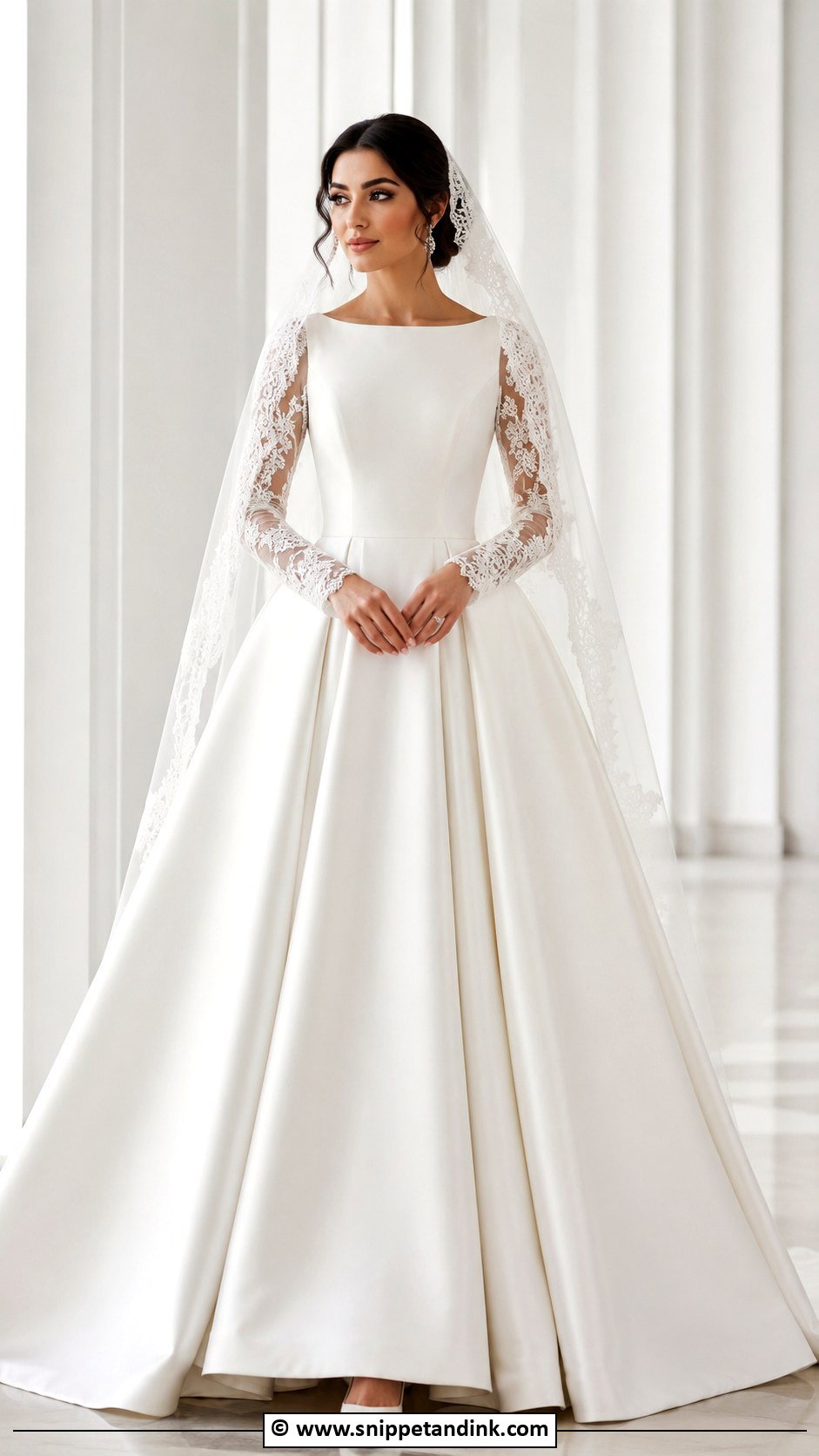
Detachable sleeves solve a real problem: coverage for the ceremony and elders, more freedom later. Long lace, satin or tulle sleeves come off for a lighter reception if that suits your family. A structured bodice, full skirt and matching veil keep it cohesive, with simple heels and earrings. Ask how the sleeves attach. Elastic loops under the arm move and gape in photos, while sleeves that button or hook into a reinforced armhole stay put and look like part of the gown.
29. Arab Wedding Dress With Train
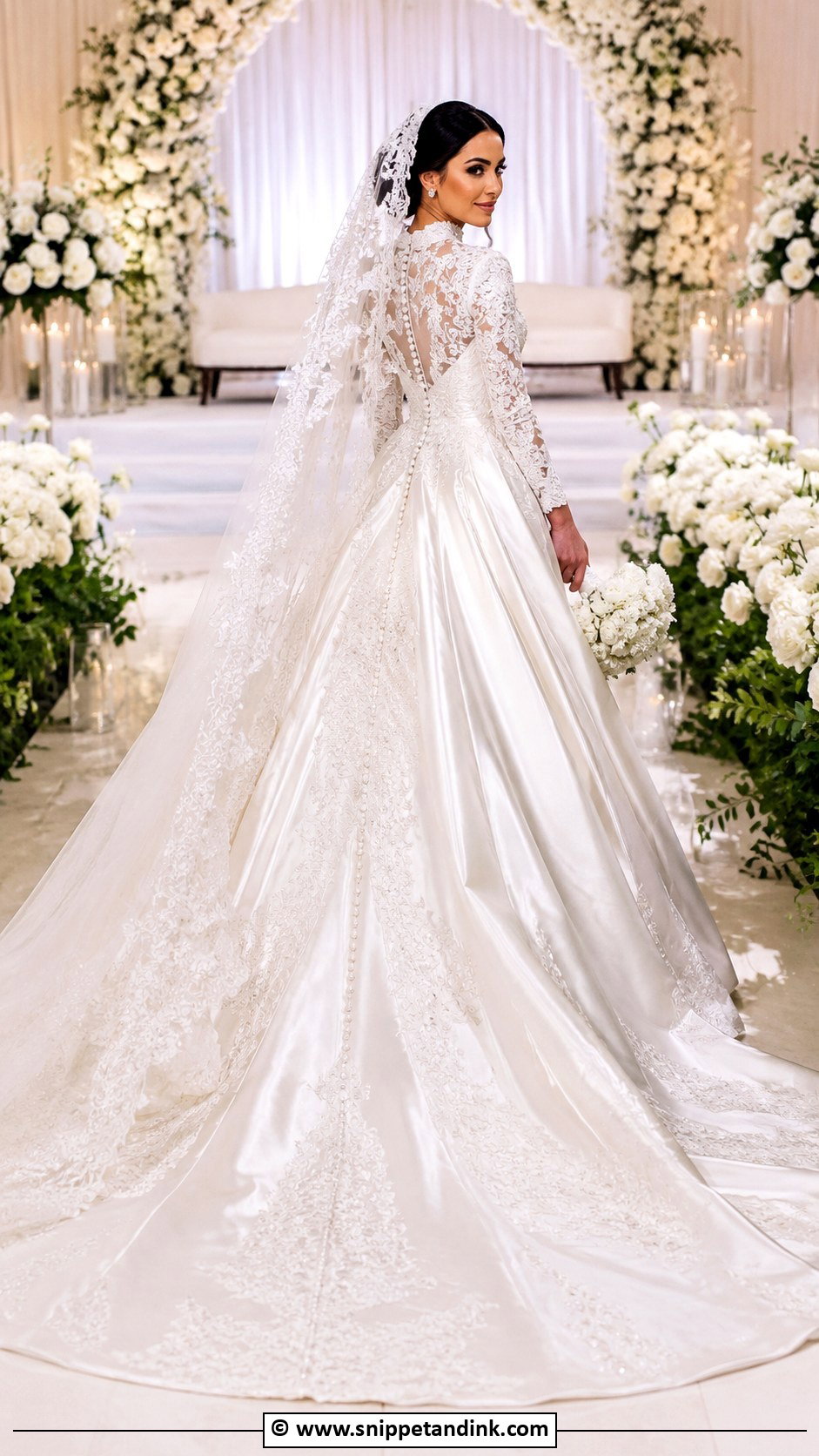
An Arab wedding dress with a train is made for entrances and portraits. Chapel length suits most halls; cathedral needs a long aisle or a grand staircase to look intentional. Lace, satin and beaded tulle all hold a train well. Pair it with a long veil, elegant heels and jewelry that does not compete with the back. Since guests watch you walk away as much as toward them, buttons, embroidery or lace along the back are worth the cost. Ask your seamstress for a bustle so the train can be lifted after the ceremony.
30. Simple Arab Wedding Dress
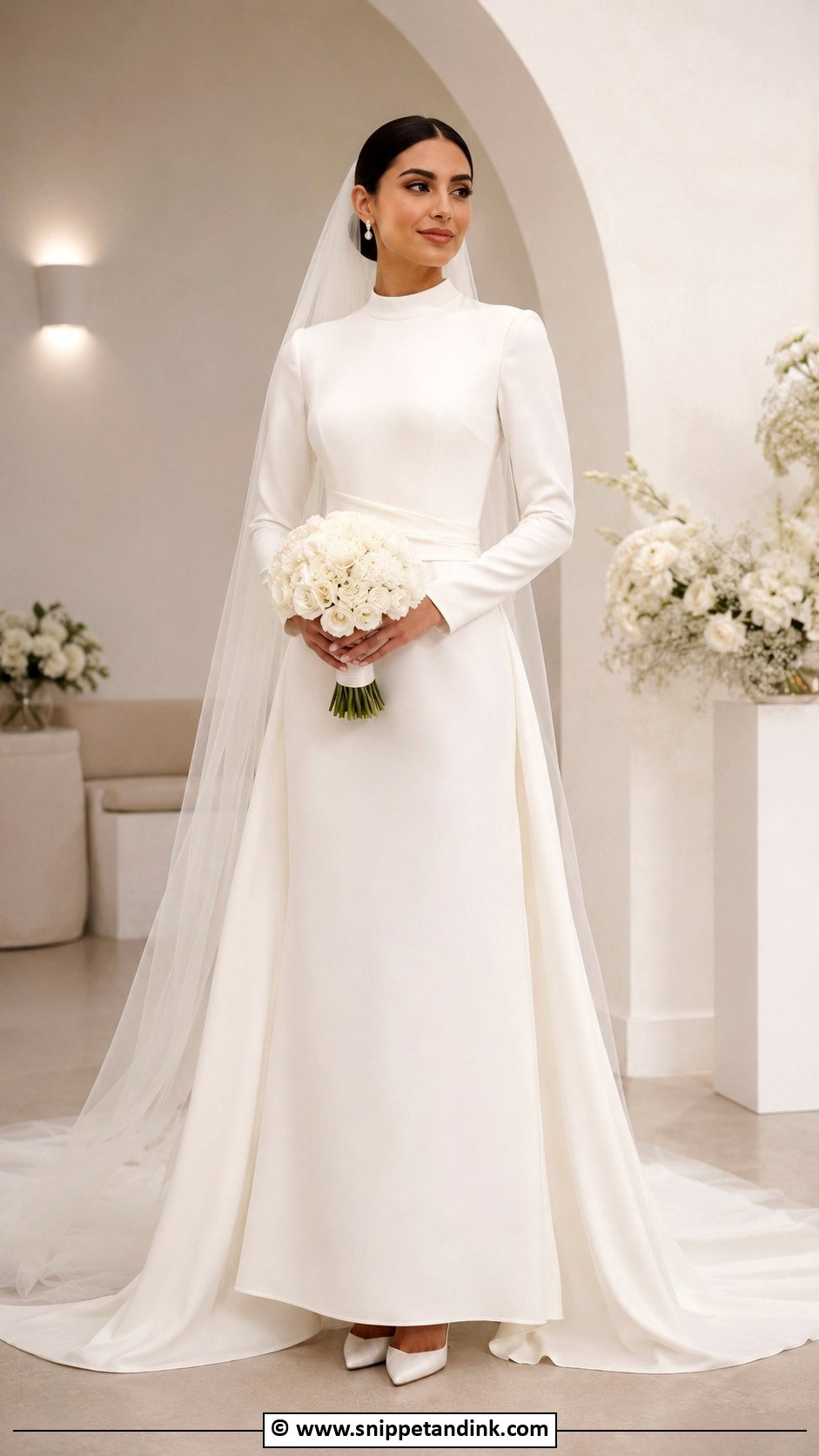
Simplicity puts every detail under scrutiny, which is why I only recommend it with excellent fabric and tailoring. A satin, crepe or mikado gown with long sleeves, a high neckline and a soft A-line or column shape relies entirely on fit. Mikado holds its shape best of the three and will not cling. Pearl earrings, a sleek veil and classic pumps complete it. It suits katb kitab, intimate weddings and modern hotels. If you miss a little detail, add a thin jeweled belt, lace cuffs or a veil with pearl edging.
Wearing a Heavy Gown Through Five Hours of Greetings
The fitting room shows how a dress looks. It does not show how it feels at eleven at night. At the final fitting I ask brides to do four things: sit for ten minutes, raise both arms as if hugging someone taller, walk up and down a few stairs, and turn quickly as if someone called their name. If the bodice digs, the sleeve seam pulls or the train catches, it gets fixed then.
Heavily beaded gowns can weigh several kilograms, and nearly all of that hangs from the shoulders. Ask for wide internal straps or a built-in corset so the weight sits on your waist. In a warm venue, a fully lined satin gown with long sleeves gets hot quickly, so plan a few minutes somewhere cool between the entrance and the dinner.
After the Last Guest Leaves: Caring for Embroidered Gowns
Have the dress cleaned within a few weeks, even if it looks spotless. Sugar from drinks and sweets dries clear, then yellows over time, and it is the stain I see most on gowns that were packed away untouched. Tell the cleaner about any metallic thread, since some solvents dull gold work.
Never store a beaded gown on a hanger long term; the weight stretches the shoulders. Fold it with acid-free tissue between the layers, keep it in a breathable cotton bag rather than plastic, and store it somewhere dark and dry. Kaftans and takchitas with gold thread do best wrapped in tissue so the metallic work does not rub against itself.
Dressing for the Henna, the Zaffa and Everything Between
Whatever you choose should honor your style, your family’s traditions and how you want to feel walking in. Some brides find themselves in a royal ball gown; others in a kaftan, a tatreez dress or plain satin. Plan the week as a whole: which look carries the zaffa, which survives the henna, which lets you sit through the katb kitab. Sleeves, veils, embroidery and shoes change the mood more than people expect, so try them together at your fittings, not one by one.
You'll Like These Ideas:




Leave a Reply