
Flowers are often the first thing guests photograph on a cake, and the decoration that ties it to everything else: the bouquet, the ceremony arch, the centerpieces. Fresh blooms, sugar flowers, pressed petals and piped buttercream each get there differently. Current wedding cake trends lean toward natural texture, soft buttercream, meadow-style florals, edible petals and confident color. What I care about as the person building it is whether the cake looks finished from every side of the table, not just the front. The 25 floral cakes below range from a single tier to a cupcake tower, with the details I’d check on each.
How Many Tiers Your Guest Count Really Needs
The format matters before the flowers do. A cascade needs a tall cake; a cupcake tower can’t carry one. So the first thing I ask is how many guests will eat cake, not how many are invited, because some always skip it or leave early.
Wedding slices are cut smaller than party slices, usually about one inch wide and two inches deep. As a rough guide, though every baker’s chart differs:
- A 6-inch round tier gives about 12 wedding servings.
- An 8-inch round gives about 24.
- A 10-inch round gives about 38.
- A 12-inch round gives about 56.
So a 6, 8 and 10 inch stack feeds roughly seventy guests. If you have far more guests than your dream cake serves, I’d keep the display cake the size you love and add a plain kitchen sheet cake in the same flavor. Nobody can tell which slice came from where, and the flowers stay on the cake people see.
Size also limits the flowers. A cascade wants at least three tiers to travel down, oversized peonies or magnolias swamp a single 6-inch tier, and on cupcakes I switch to tiny blossoms and petals. If you already have a favorite design from the list below, check that its format matches your numbers before you fall too far for it.
1. Fresh Flower Wedding Cake
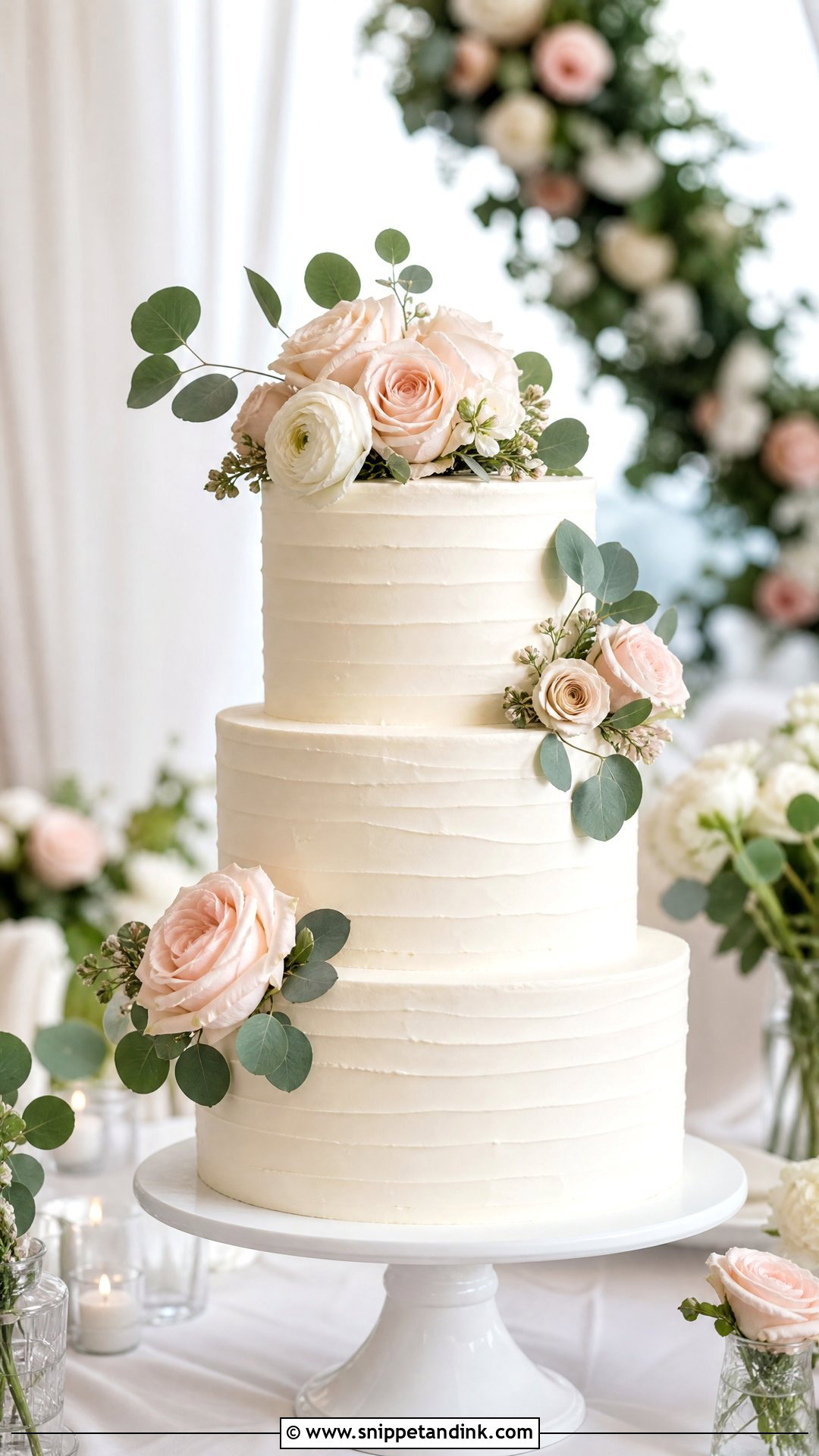
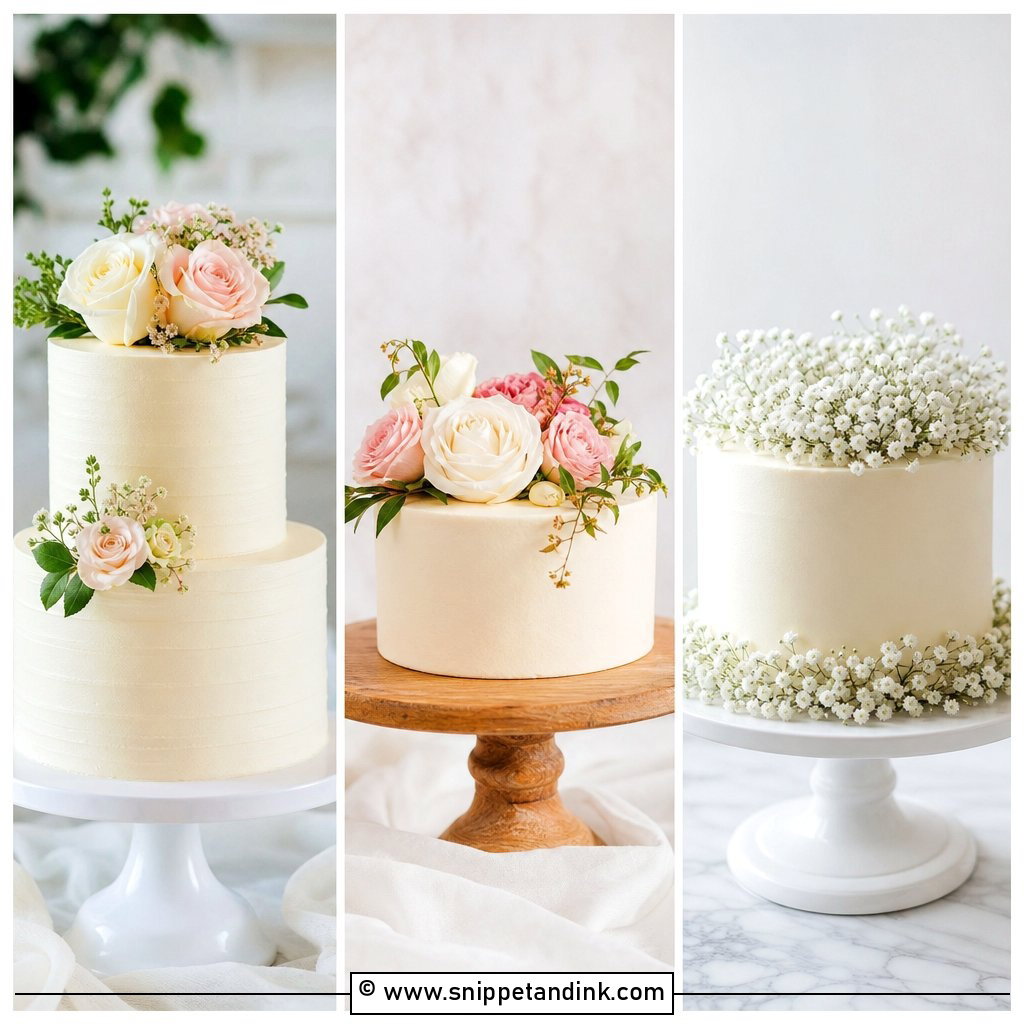
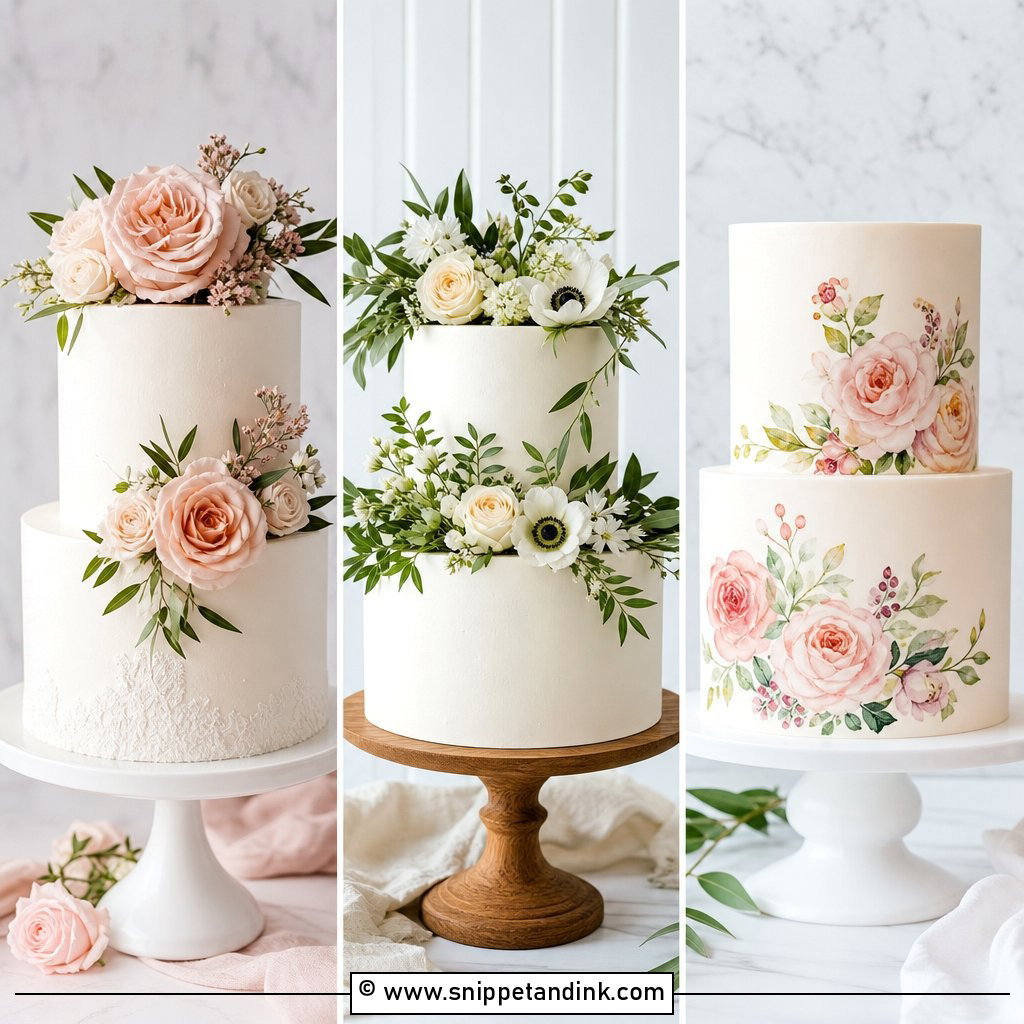
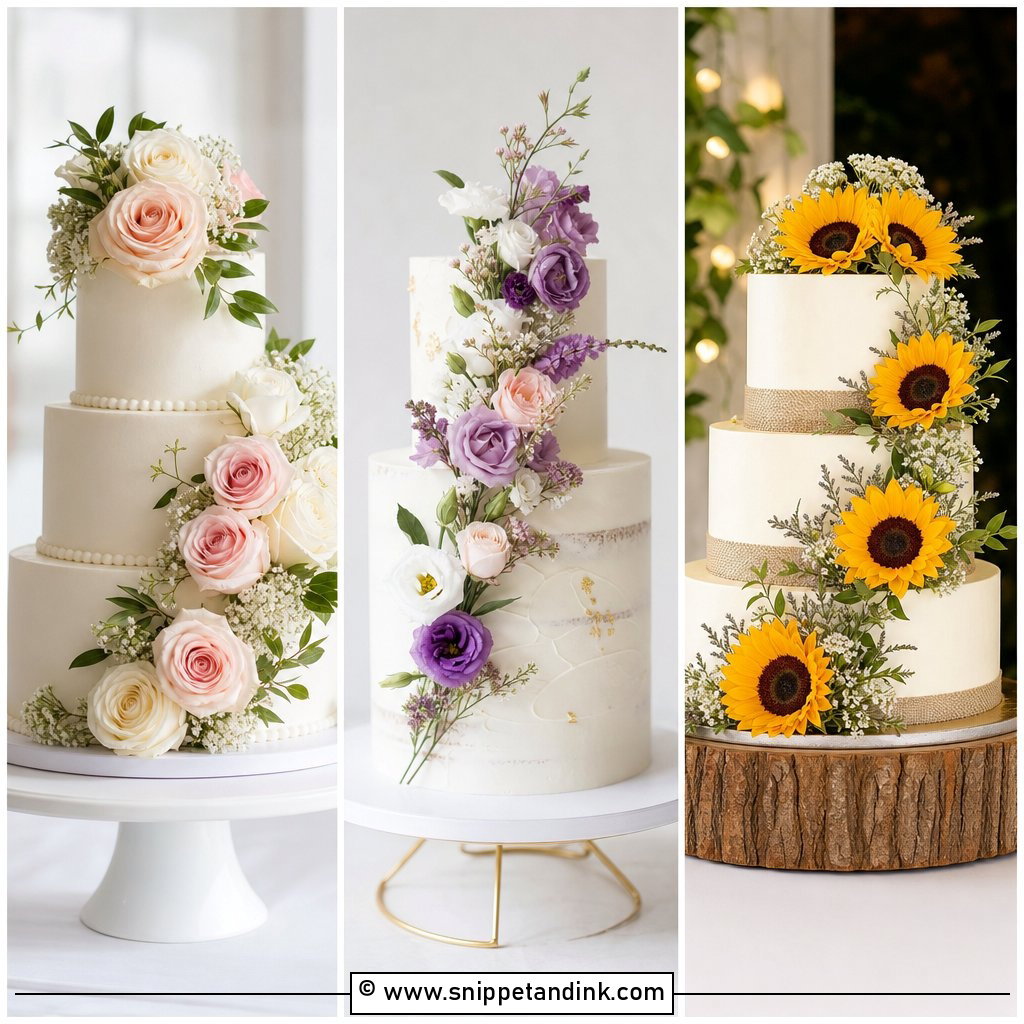
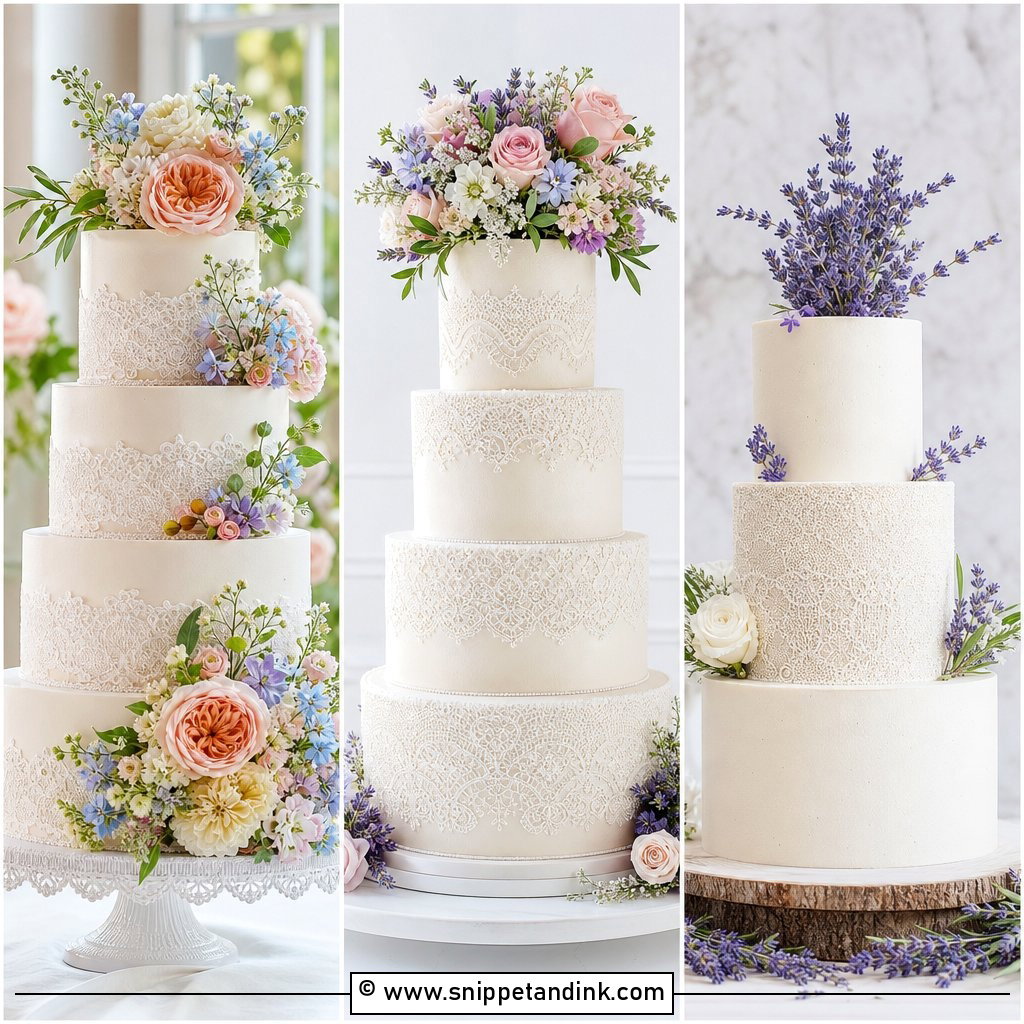
Fresh flowers on smooth white or ivory buttercream are the classic way to tie a cake to the bouquet. Roses, ranunculus, lisianthus and orchids with a little greenery give soft movement across the tiers. I keep it to two or three colors for a classic look, or let the blooms trail down one side for a garden feel. The part couples underestimate is logistics: the florist has to set stems aside for me, and I need to know which varieties are coming so anything unsafe can be swapped before the day.
2. Buttercream Flower Wedding Cake
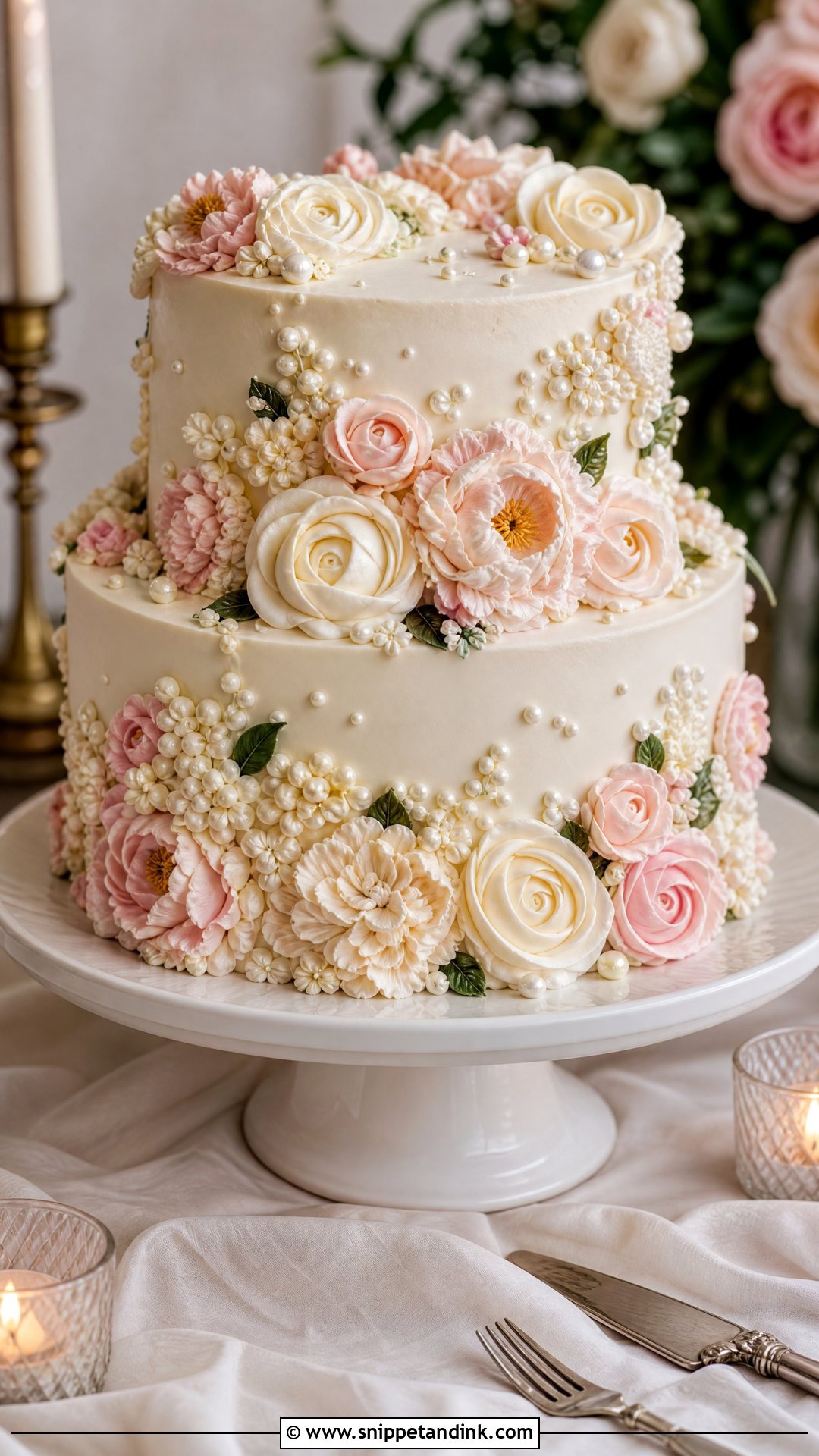
Soft buttercream flowers keep the whole cake edible and give it a handmade look. I pipe roses, peonies, daisies or tiny blossoms depending on the mood. Blush and cream on white is classic; pale yellow, lavender or peach feels like spring. Every piped petal has a ridge that catches light, so the texture reads well in photos. The trade-off is heat. Piped flowers soften before anything else, so this design is happiest in an air-conditioned room.
3. Pressed Flower Wedding Cake
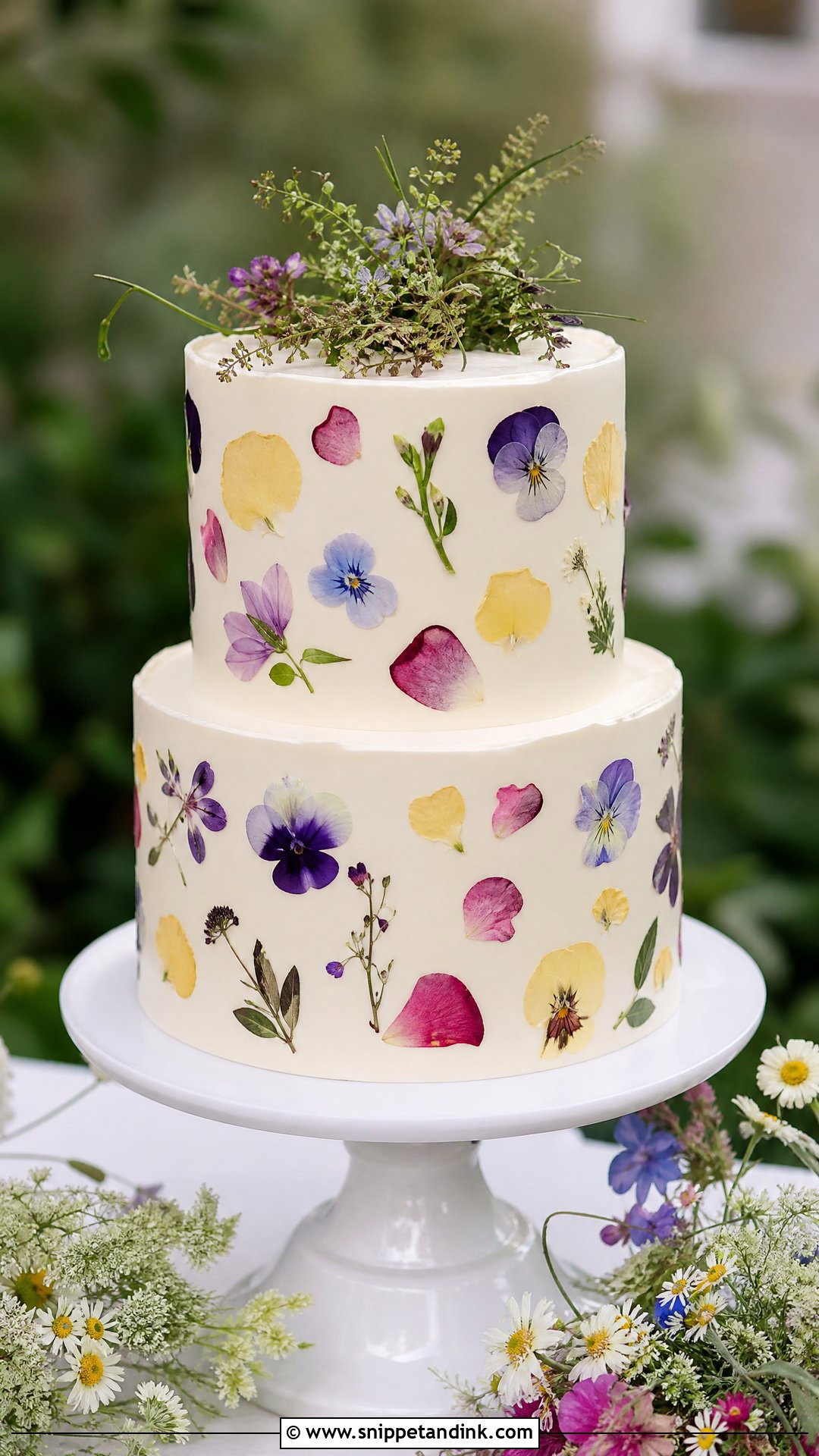
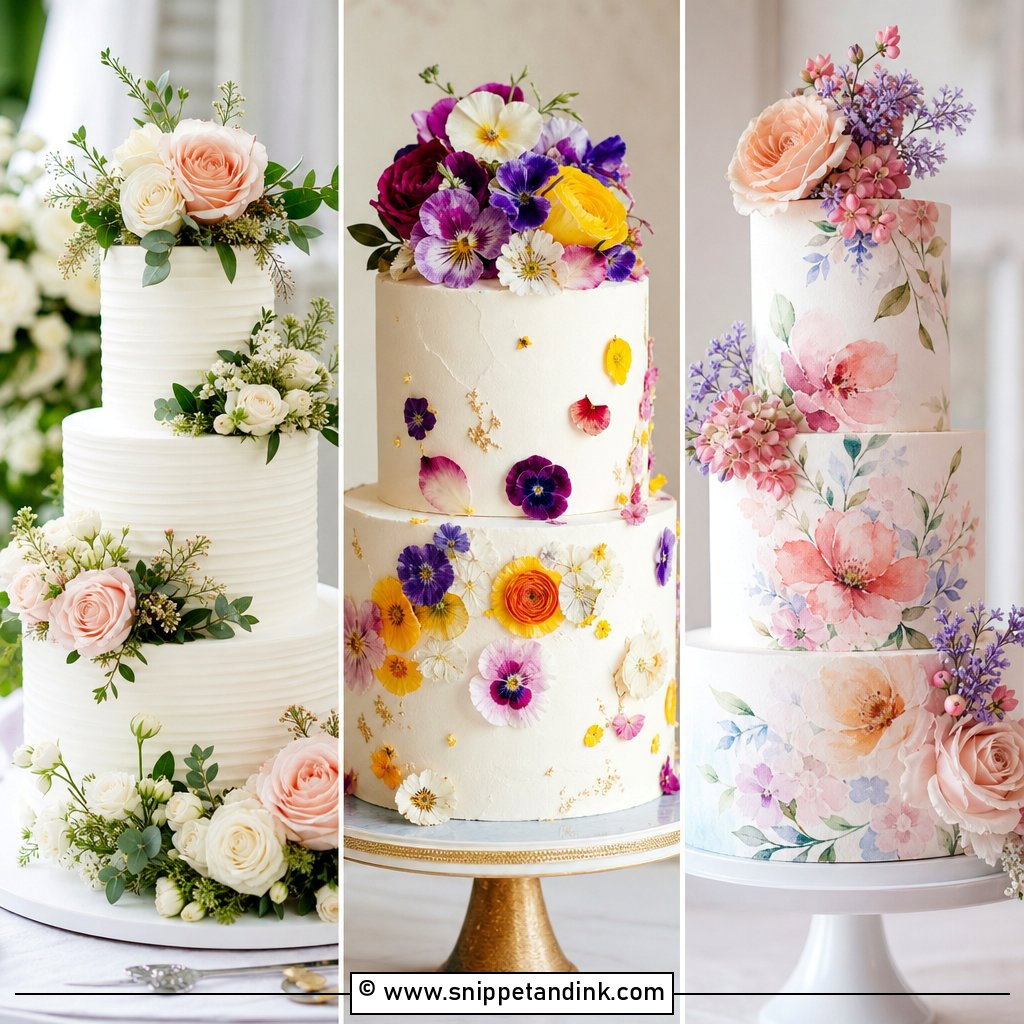
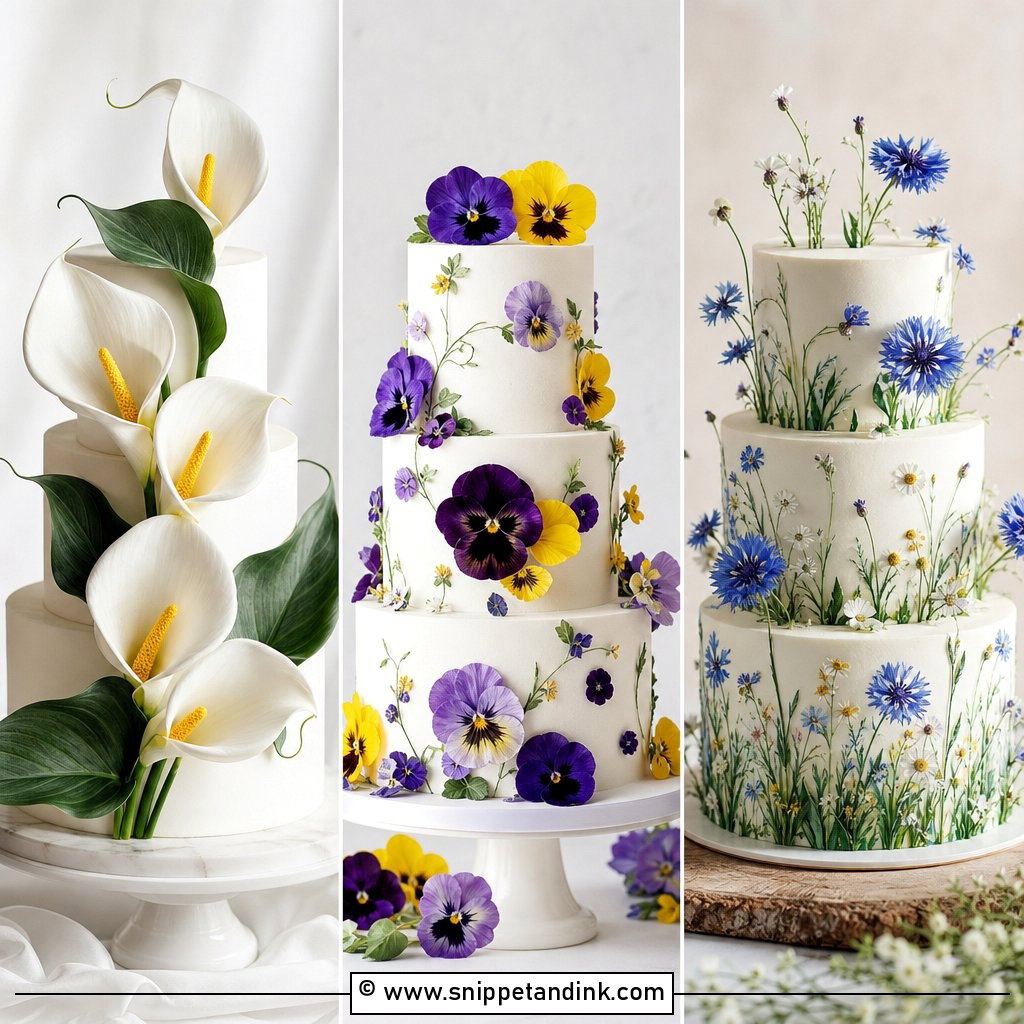
Pressed flowers lie flat against smooth buttercream or fondant and wrap the cake like a botanical print. Small pansies, violas, rose petals and herb leaves give a meadow effect. The base needs to be simple and pale, white, cream or a light pastel, so the petals stand out. I place them late, because pressed petals pick up moisture from buttercream and can start to darken within a day. Micro weddings and garden receptions suit this one most.
4. Cascading Flower Wedding Cake
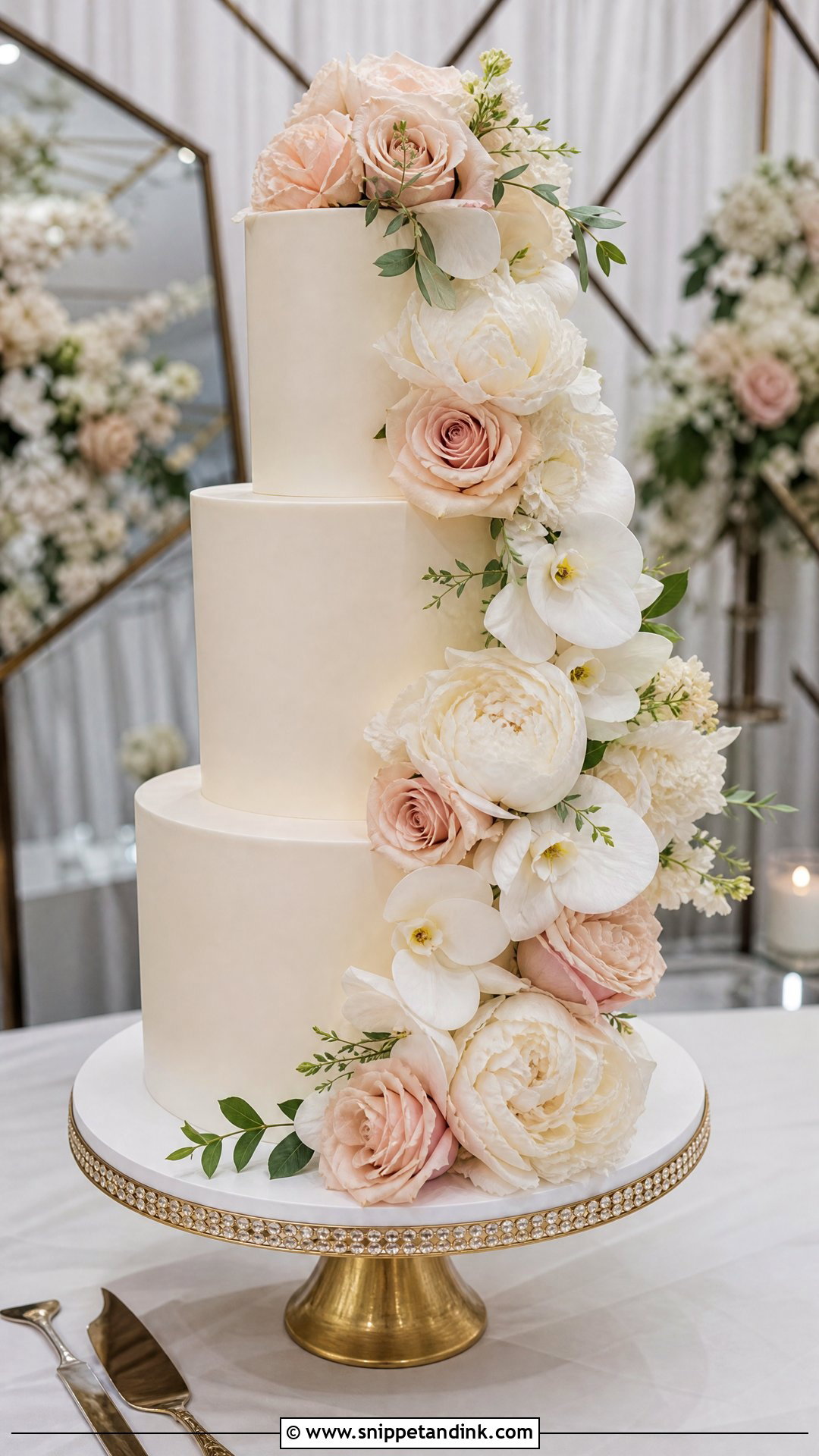
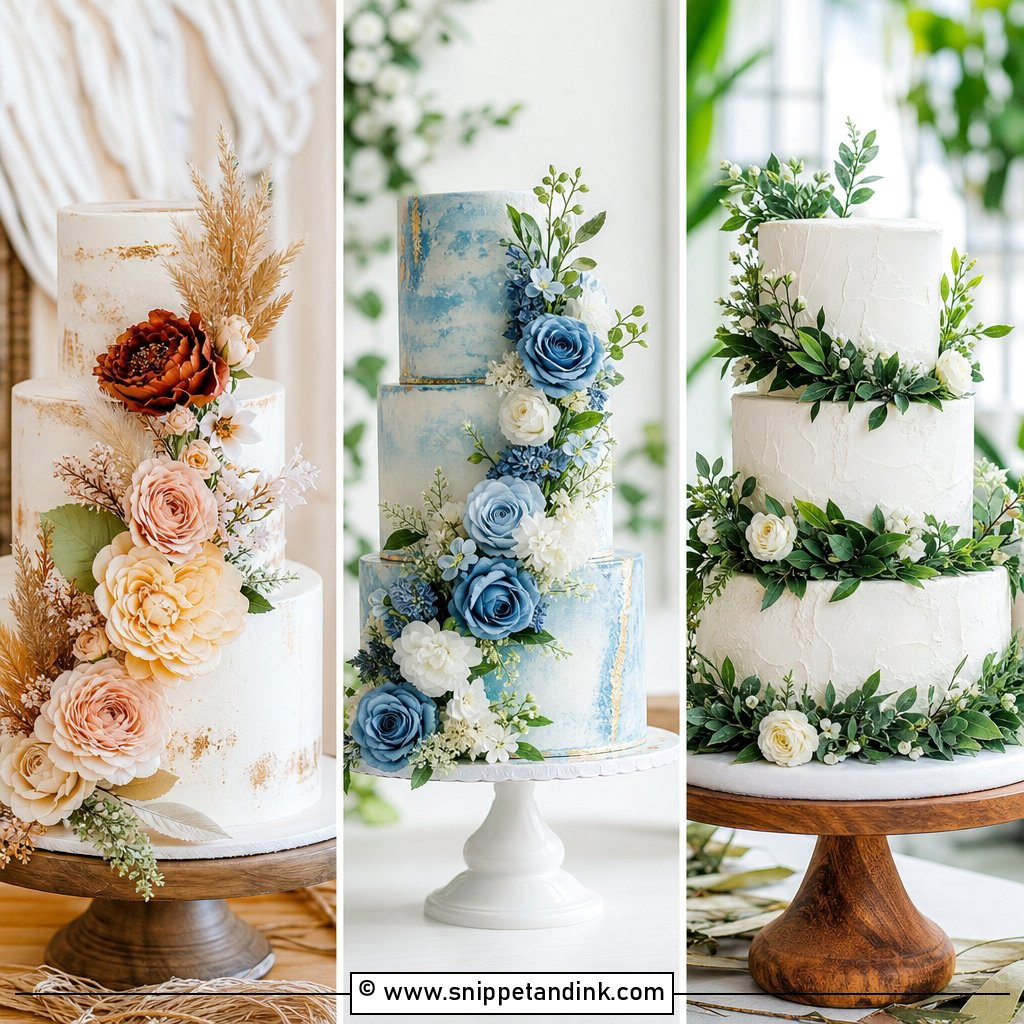
A cascade does a lot with a single gesture: flowers run from the top tier down one side and the rest of the cake stays plain. It needs height to work, so two tiers minimum, three or more ideally. Roses, orchids, peonies and greenery are the usual mix; white feels formal, blush romantic, bright colors joyful. Behind the scenes, a heavy fresh cascade is pinned into food-safe picks and held by the cake’s internal supports. I keep the frosting smooth or lightly textured so the cascade has nothing to compete with.
5. White Flower Wedding Cake
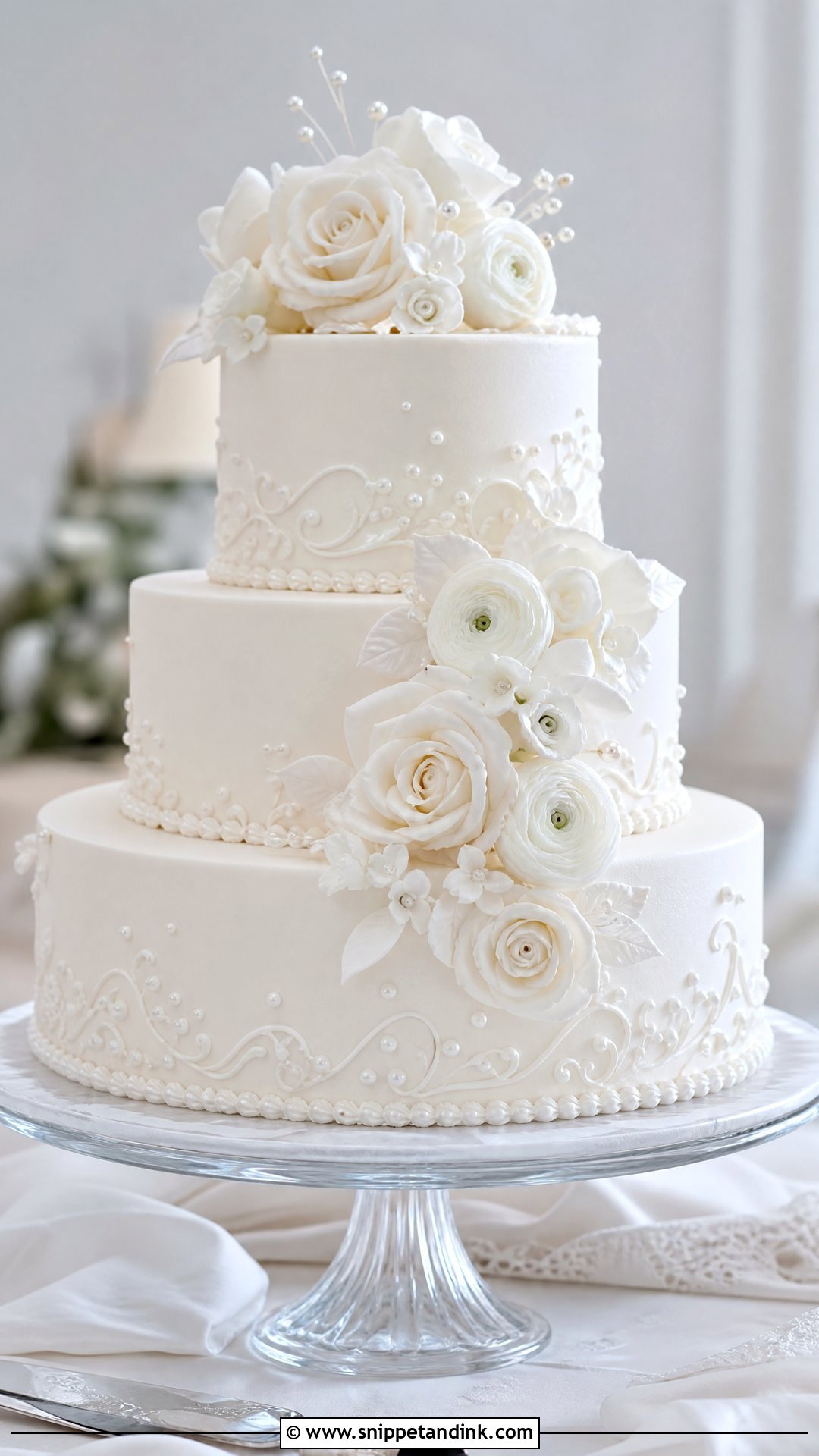
All-white flowers rely on texture instead of color. Ivory buttercream with white sugar roses, white orchids, white ranunculus or piped blossoms looks calm and formal. The risk is flatness; one size of white flower on white icing can look like a smudge from a distance. I mix large and small blooms and different petal shapes, and add a few pearls or fine piping for depth. Ballrooms, chapels and minimalist weddings suit it.
6. Blush Flower Wedding Cake
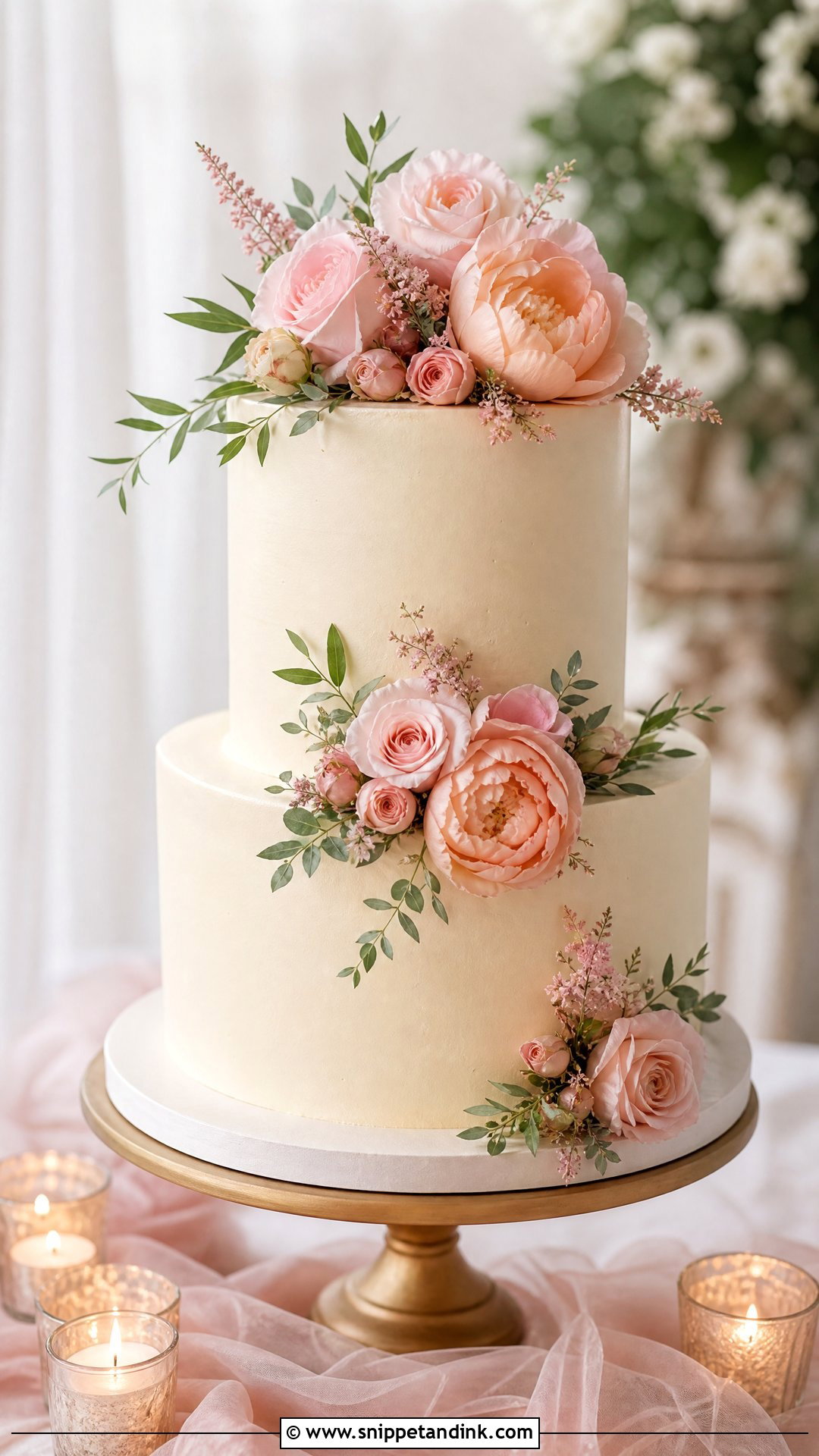
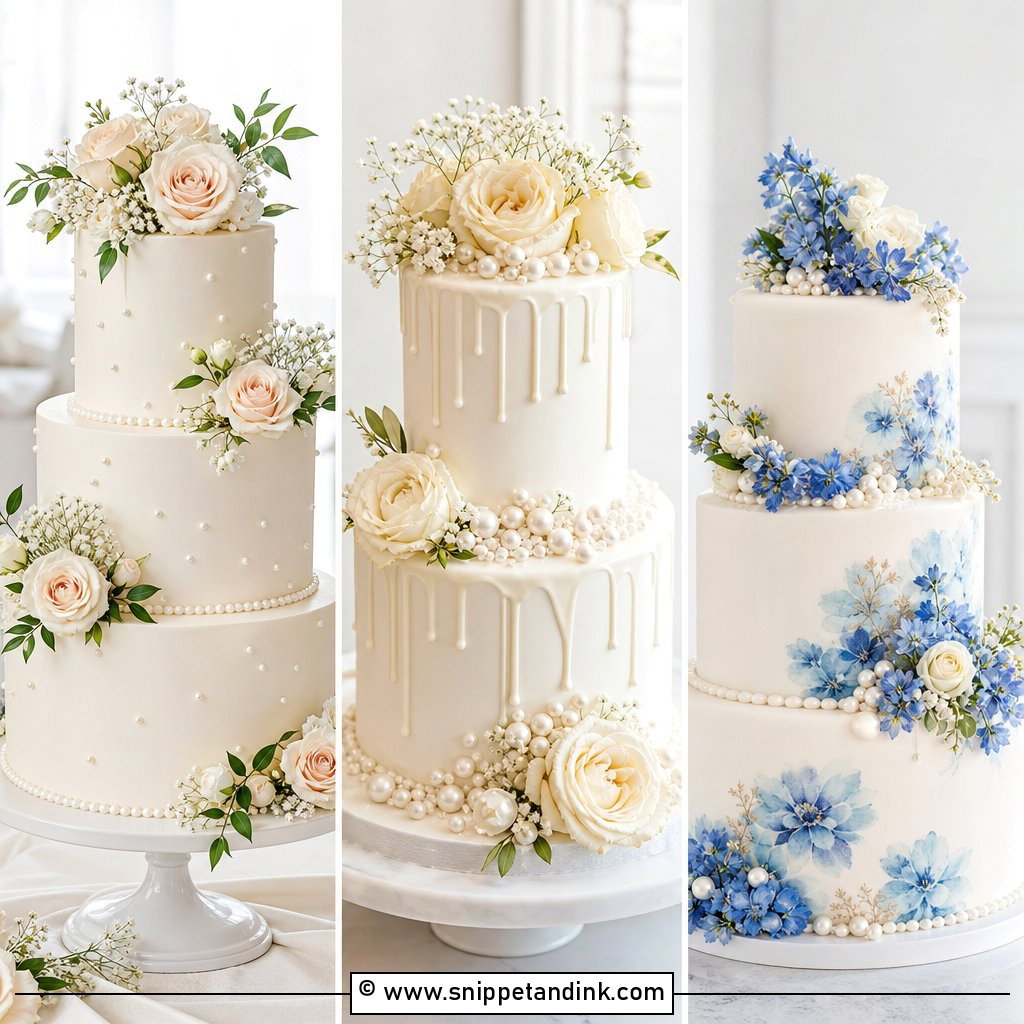
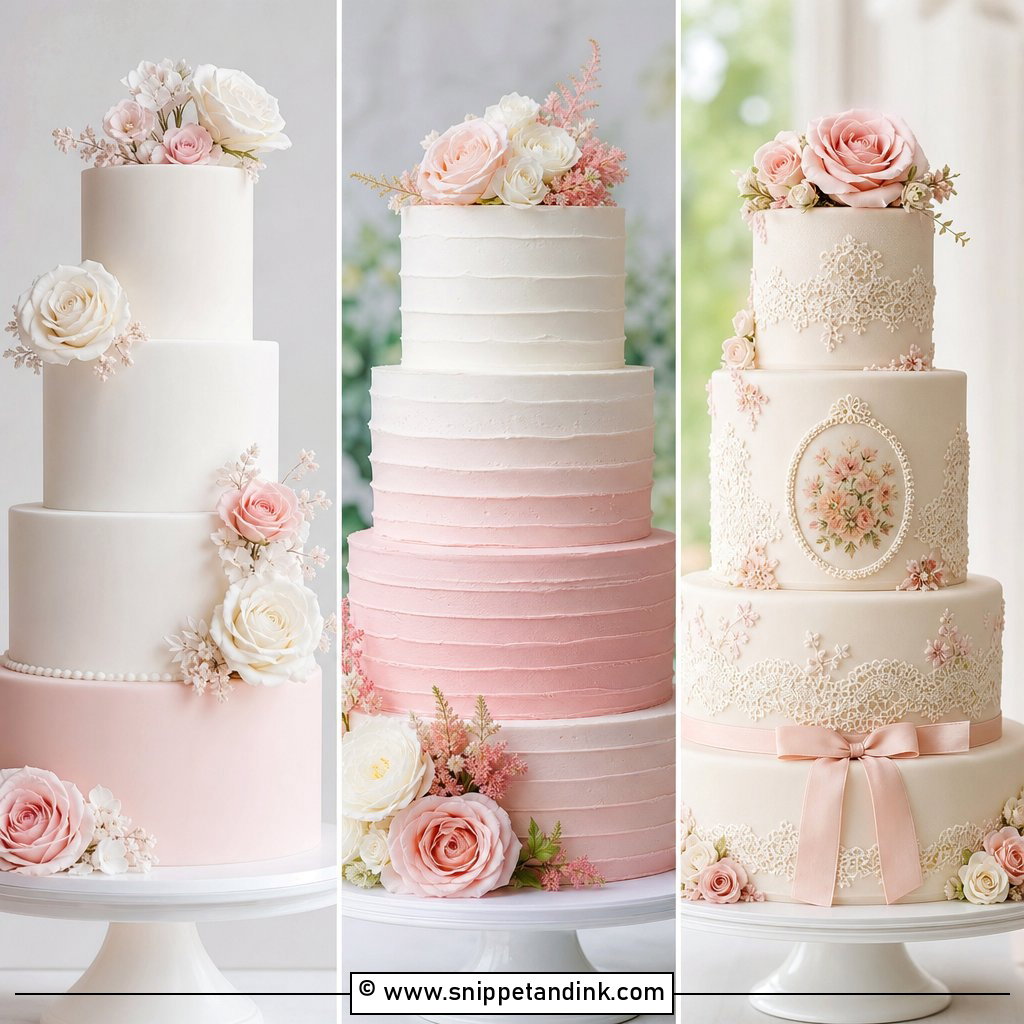
Blush is the shade I’m asked for most, and it suits ivory frosting with soft pink roses, peonies or buttercream blossoms. Sweet peas are a classic blush flower, but they’re toxic, so mine are always sugar. Gold accents, champagne linens and candlelight bring blush to life. If you want more depth, I blend in cream, mauve, peach or dusty rose. Clean clusters look modern; loose greenery and small filler blooms look like a garden.
7. Wildflower Wedding Cake
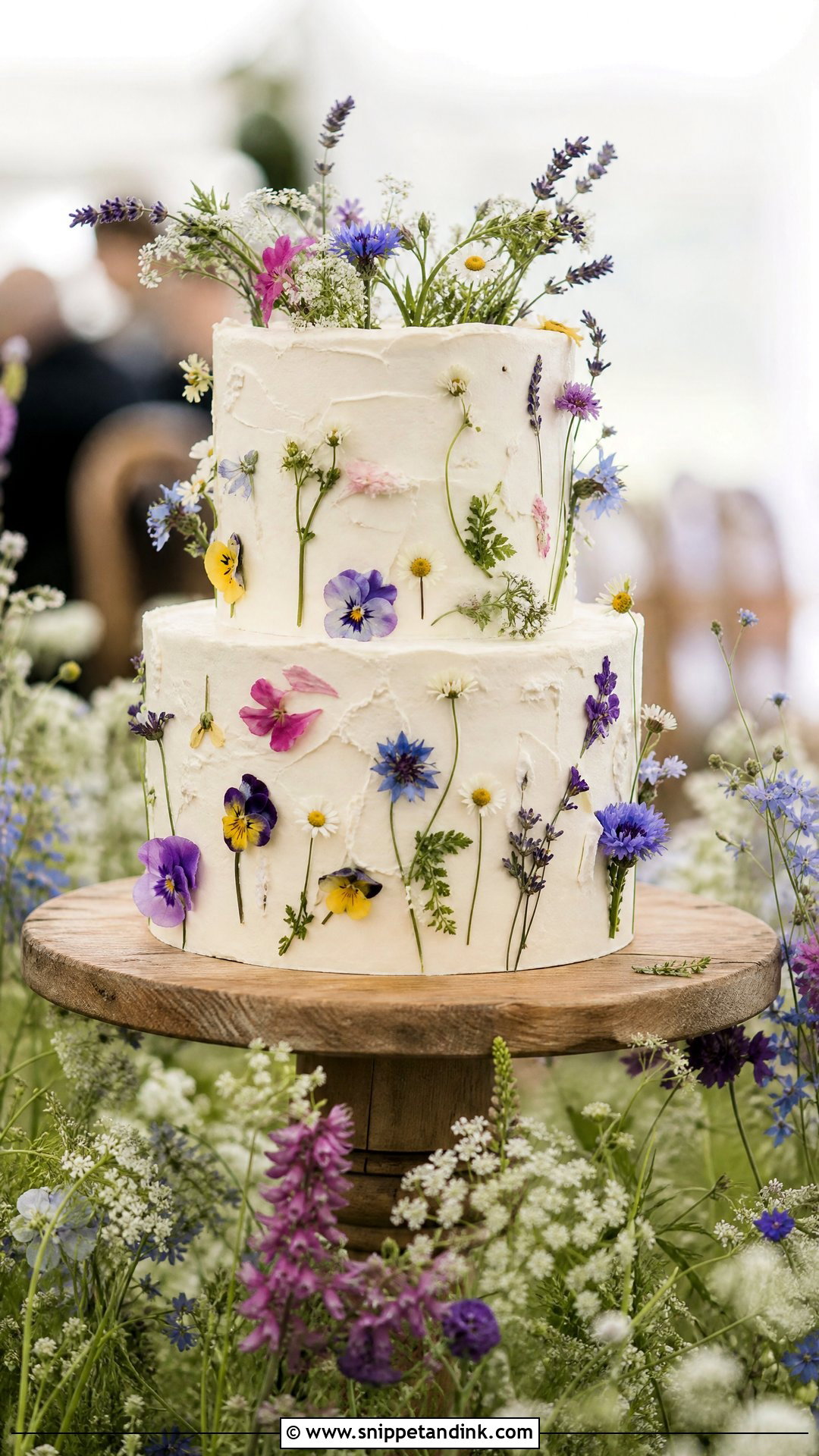
Wildflower cakes should look gathered, yet every bloom is placed on purpose. Tiny daisies, edible violas, cornflowers, lavender sprigs and soft greenery in mixed colors and heights. A smooth buttercream base keeps it tidy; a lightly textured one makes it more rustic. On a wooden cake stand at a barn or backyard wedding, it looks right at home. I keep the flower sizes small so the arrangement doesn’t swamp the tiers.
8. Rose Wedding Cake
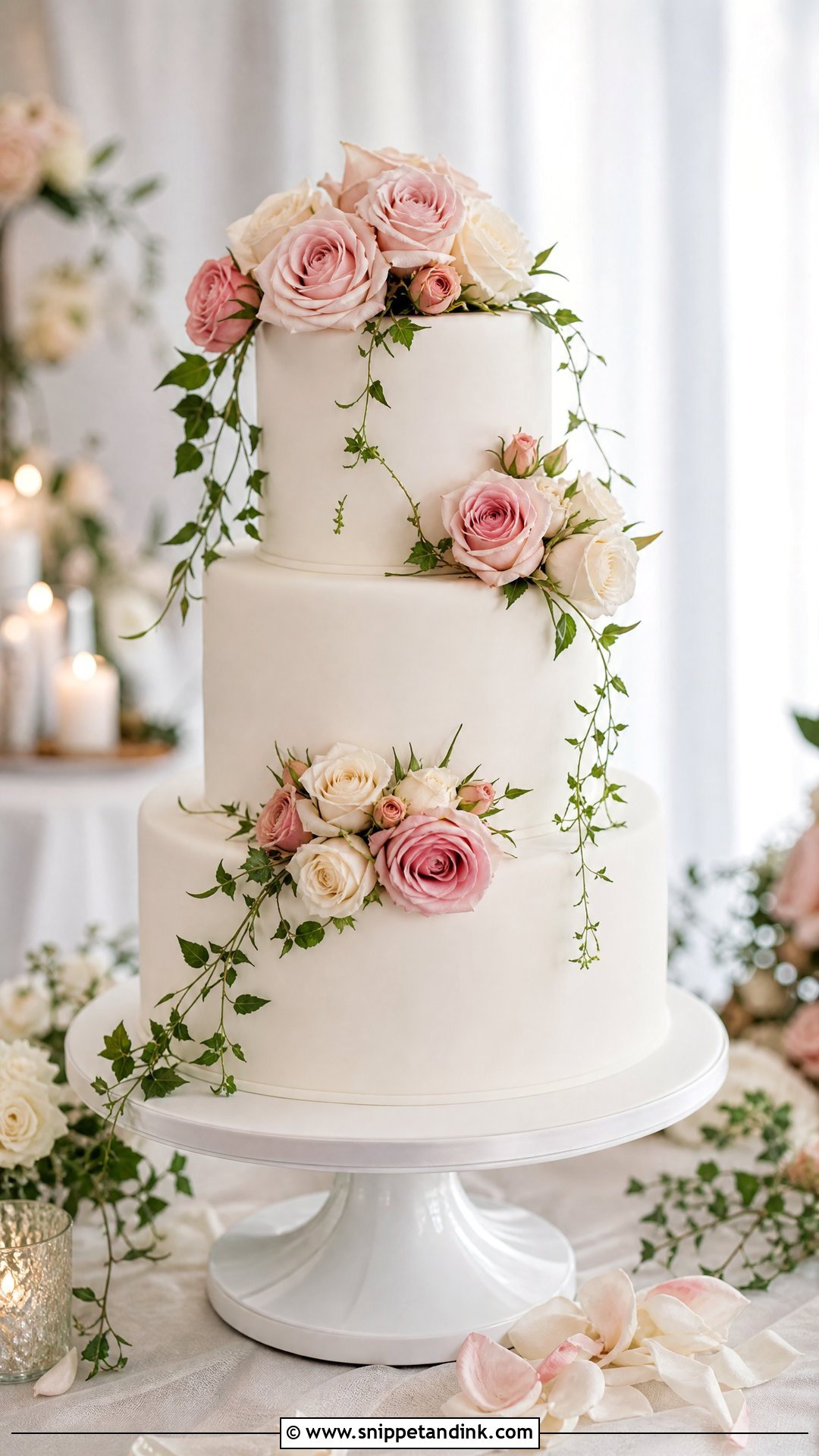
Roses suit almost every color and every finish: smooth fondant, textured buttercream, vintage piping, tall tiers. For a refined cake I use a few large roses with clean spacing. For a garden feel I mix them with smaller flowers and trailing greenery. Sugar roses give perfect, unbruised petals; fresh roses feel lush, but they should be grown without pesticides if they touch the icing. Formal or simple, a rose cake rarely looks out of place.
9. Peony Wedding Cake
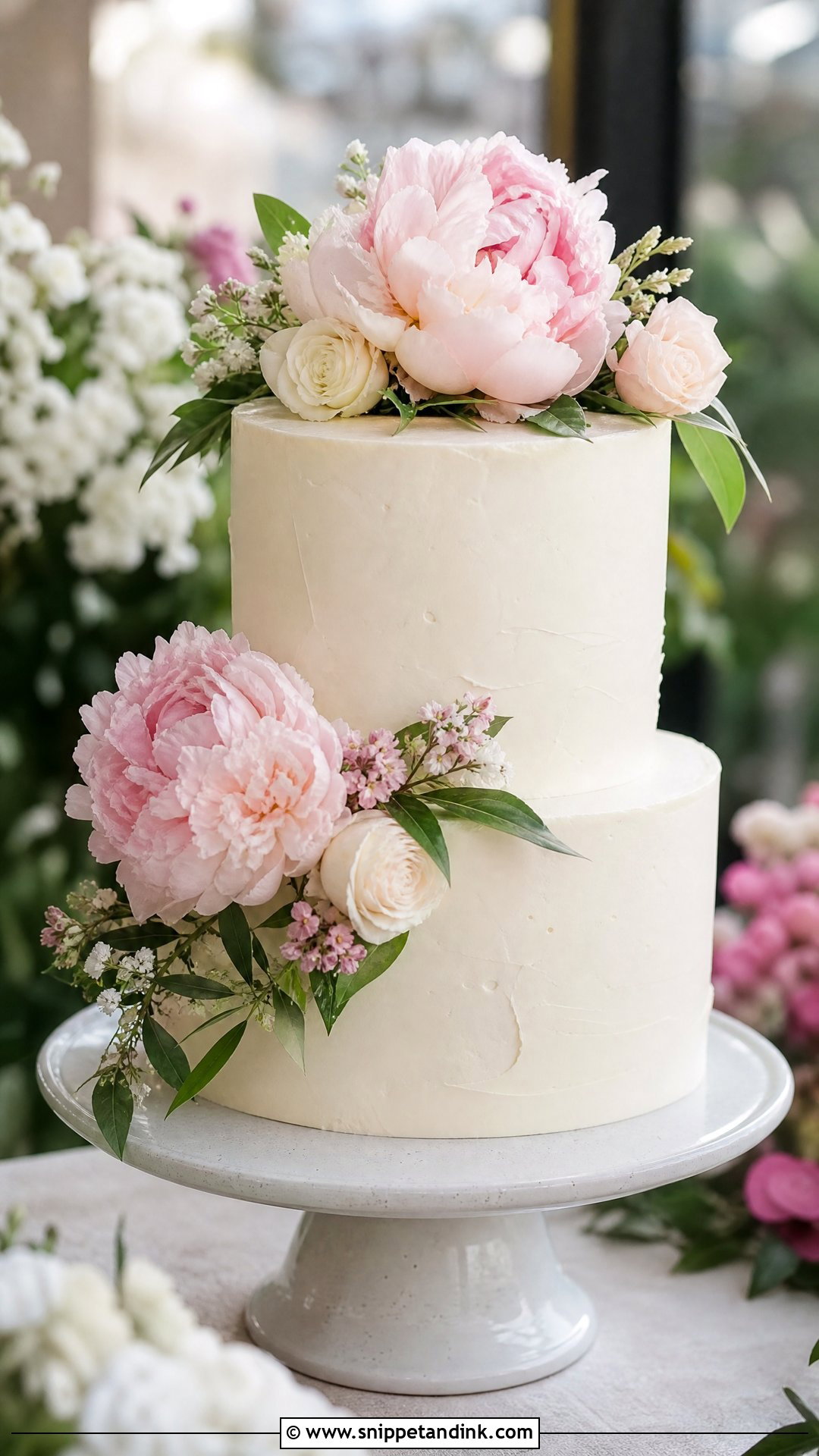
Peonies are big enough that three or four make a cake look luxurious. They’re in season roughly from late spring to early summer; the rest of the year, sugar peonies are the way to get them. White or ivory with blush peonies is the classic pairing, with buds, greenery or small filler flowers around them for depth. Fresh peonies open quickly in a warm room, so I place them as late as I can. Keep everything else simple, smooth buttercream or a few pearls.
10. Orchid Wedding Cake
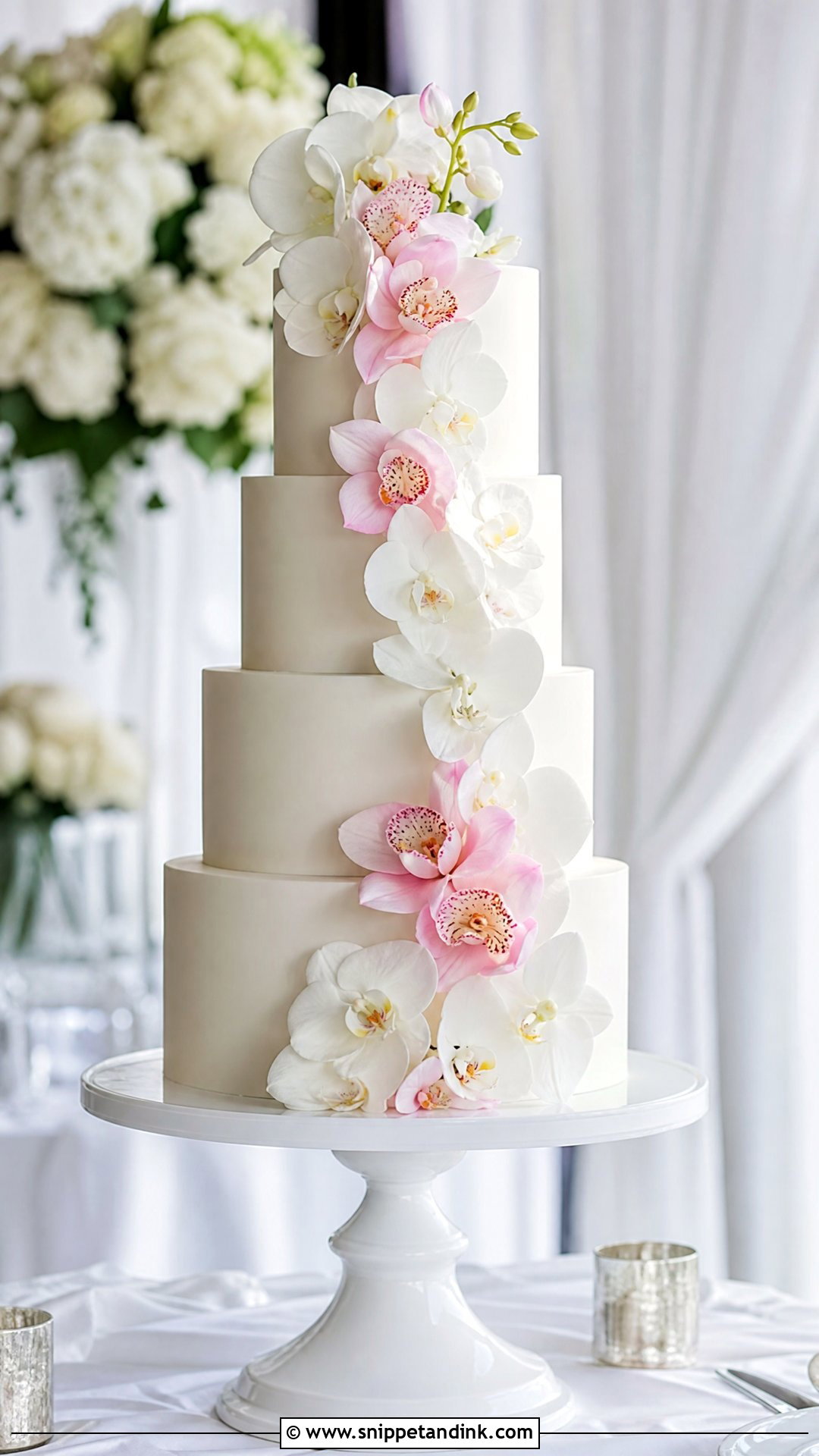
Orchids have a shape that does the design work for you, cascading down a tall cake or sitting in clean clusters on each tier. White looks polished; pink, purple or peach adds color without clutter. Smooth fondant, sharp edges and minimal decor suit them. Fresh orchids or sugar orchids both work, depending on the season and the food-safety plan. Give each bloom space; crowding them is the most common mistake I see.
11. Garden Flower Wedding Cake
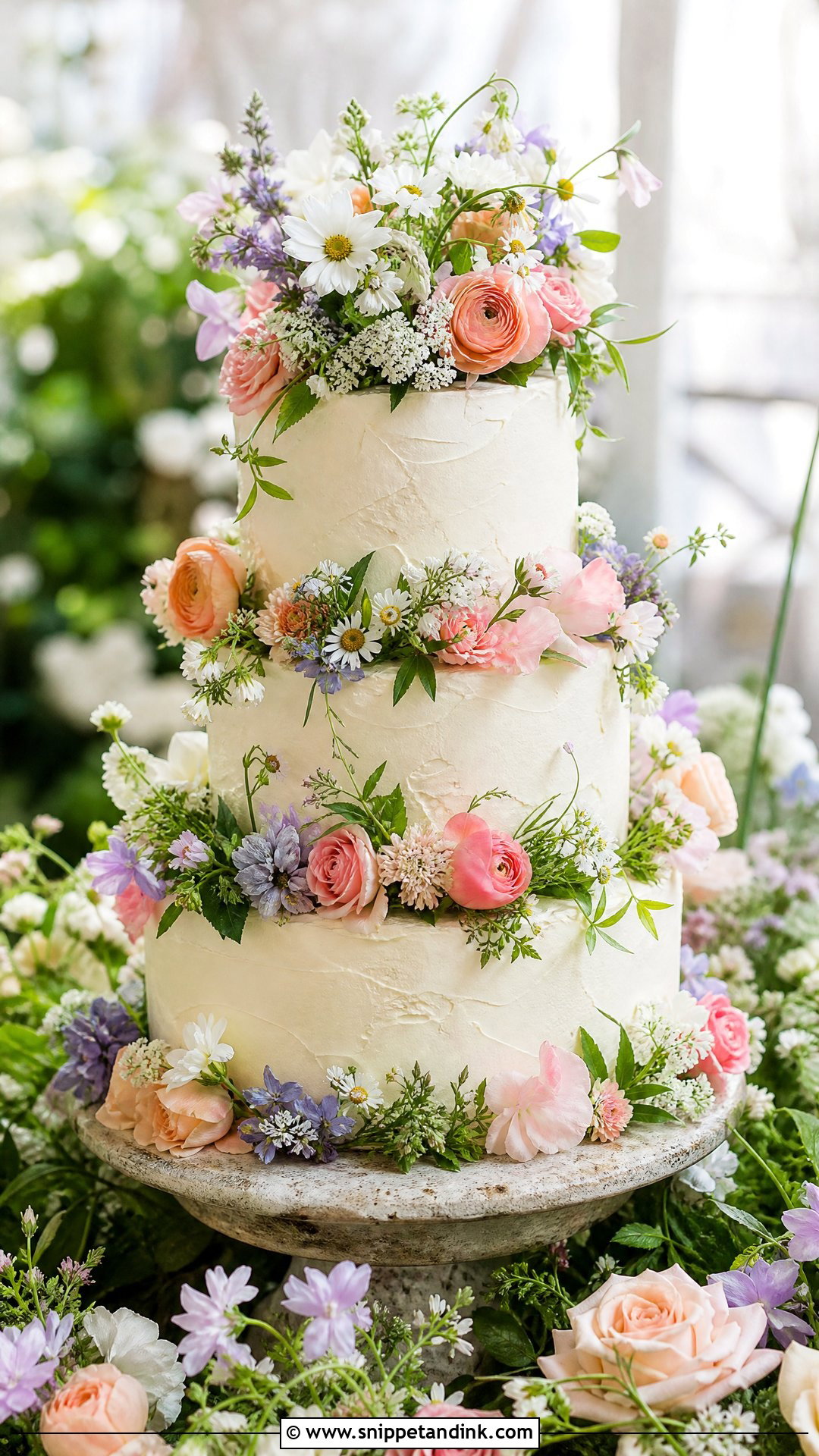
A garden cake combines several flowers, roses, ranunculus, sweet peas, small daisies and greenery, in clusters around soft buttercream tiers. It should look abundant but still balanced, so I plan where the larger blooms sit first and fill around them. Ranunculus and sweet peas are both toxic, so those are sugar on my cakes. Pastel reads romantic; brighter colors read playful. For a greenhouse or summer wedding, a matching ring of flowers around the stand completes it.
12. Sugar Flower Wedding Cake
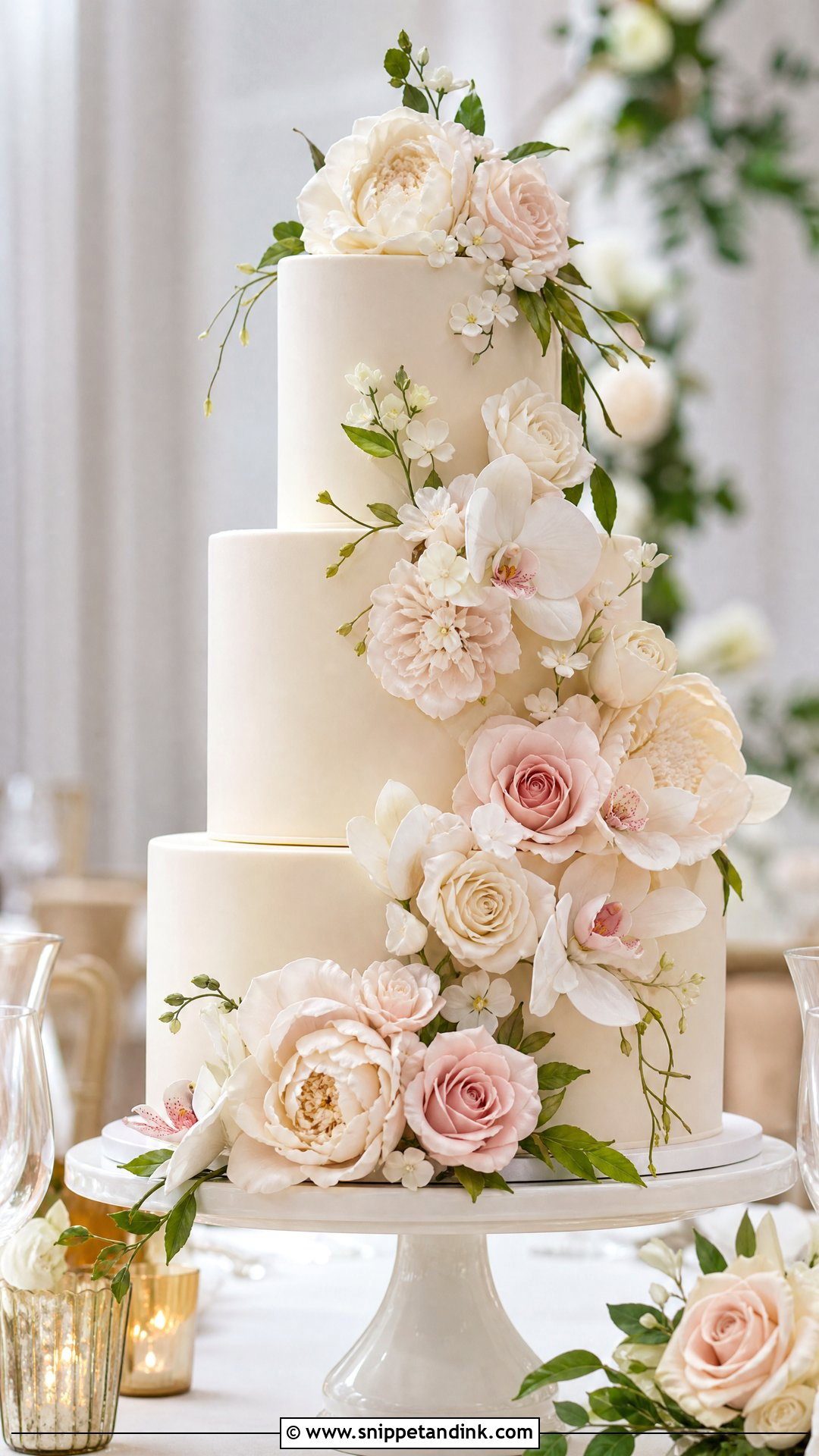
Sugar flowers are made from gum paste, shaped petal by petal and wired together, so they can be roses, orchids, peonies, lilies or tiny blossoms in any shade. They stay perfect for hours, and they’re the answer when a flower is out of season or not safe on food. I can match a sugar flower to a bridesmaid dress swatch exactly. One statement bloom or a full spray, they take time to make, so order them well ahead.
13. Dried Flower Wedding Cake
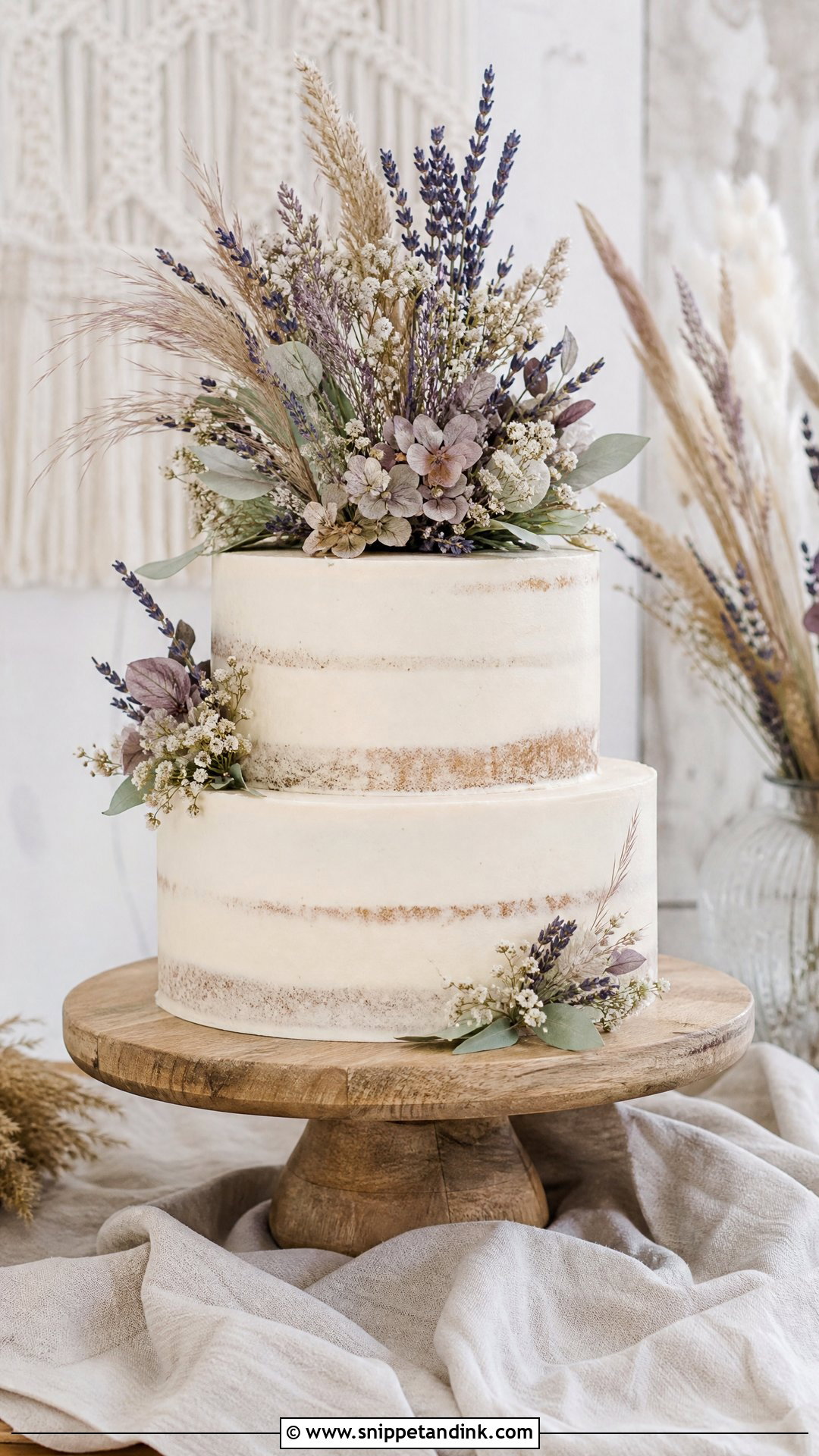
Dried flowers bring muted color and airy texture to a modern rustic cake. Preserved baby’s breath, dried lavender, small grasses and pale petals in beige, cream, dusty pink and sage feel calm. They’re also fragile and usually not food-safe, as many are dyed or chemically preserved, so I set them on a small barrier or keep them on top as a crown rather than pressing them into icing. Smooth buttercream, semi-naked frosting or a neutral fondant works underneath.
14. Edible Flower Wedding Cake
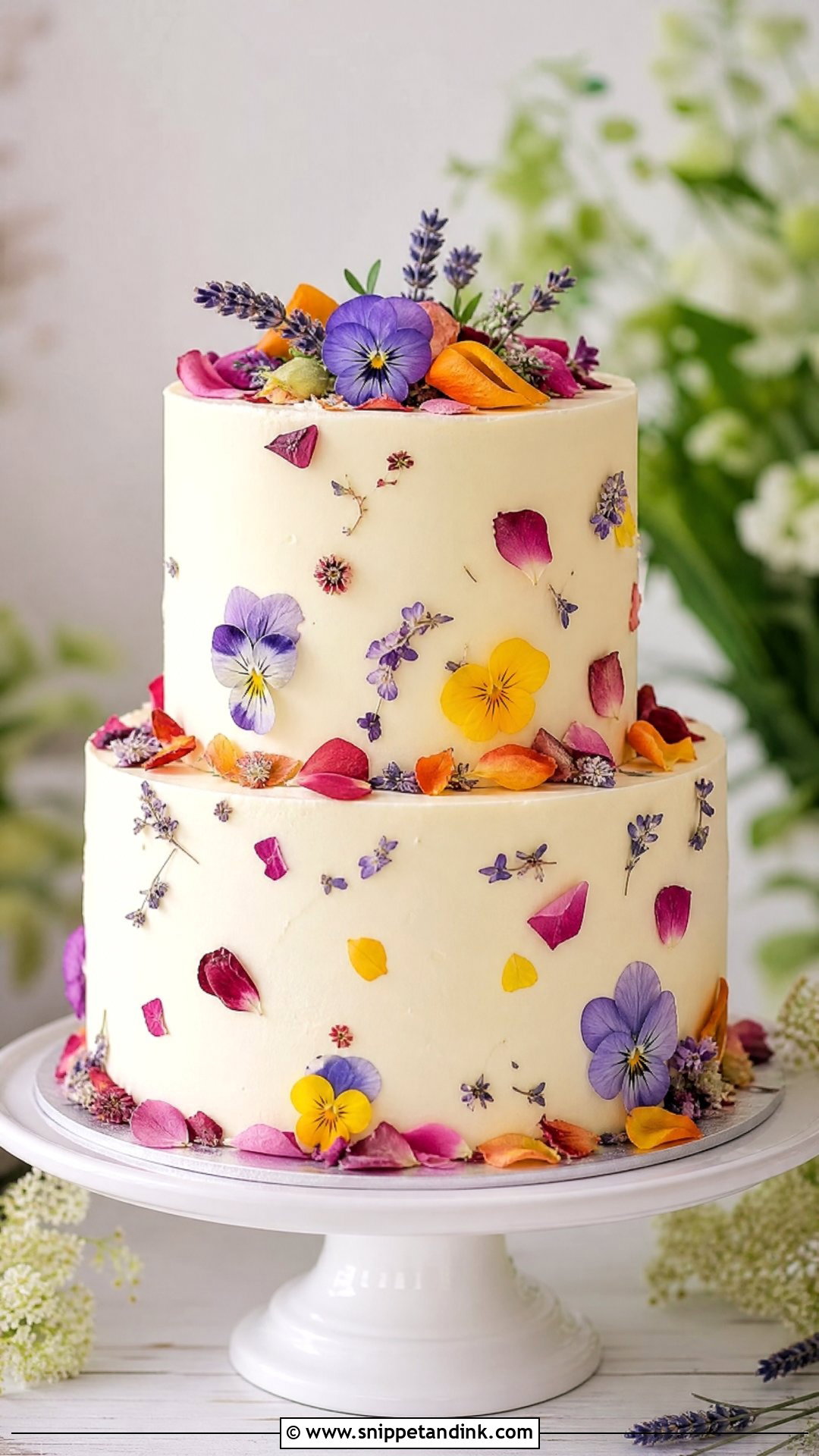
Every flower on an edible flower cake is chosen to be eaten, which is the point. Pansies, violas, calendula, rose petals and lavender can be fresh, pressed or candied, scattered over the tiers or set around the base in a soft crown. They need to come from a grower who sells them for food, not a florist bucket. A simple vanilla, lemon or almond sponge lets the flowers lead. It suits spring and summer weddings.
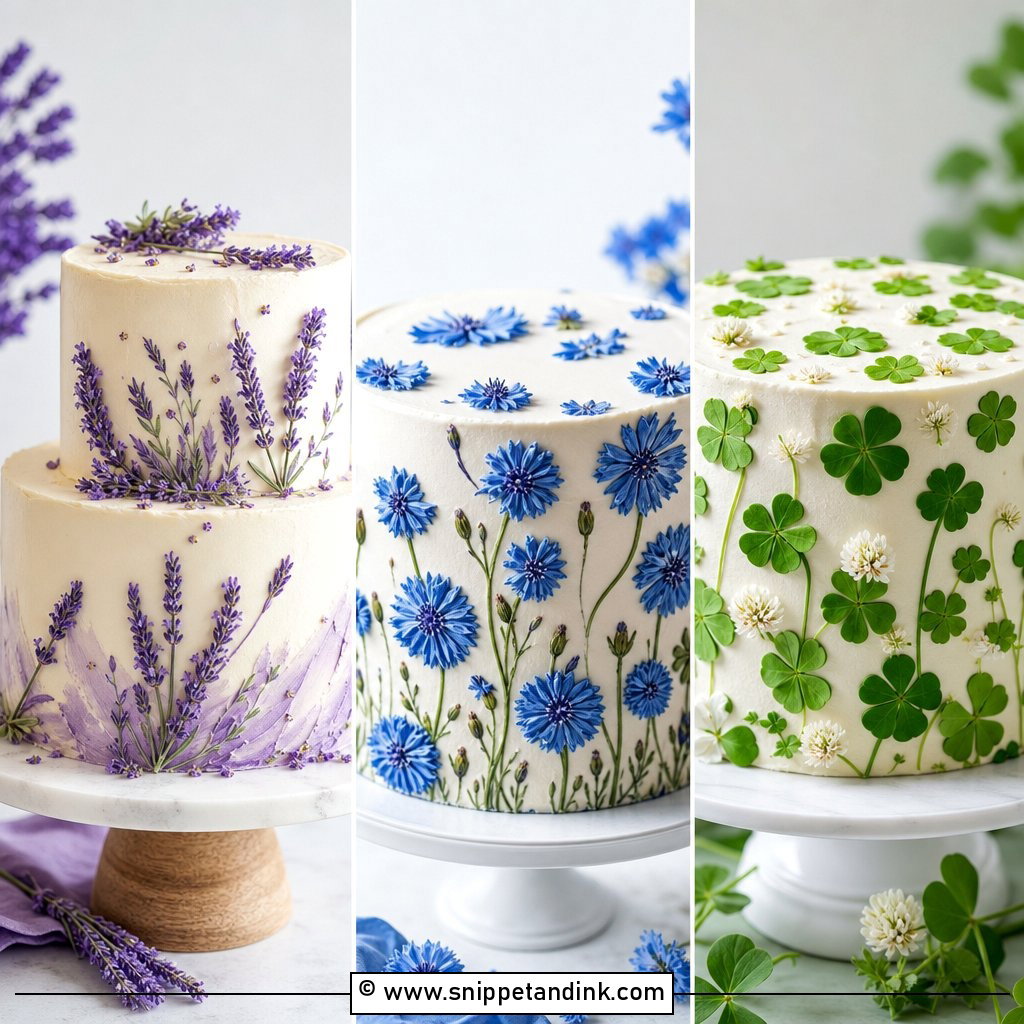
15. Floral Drip Wedding Cake
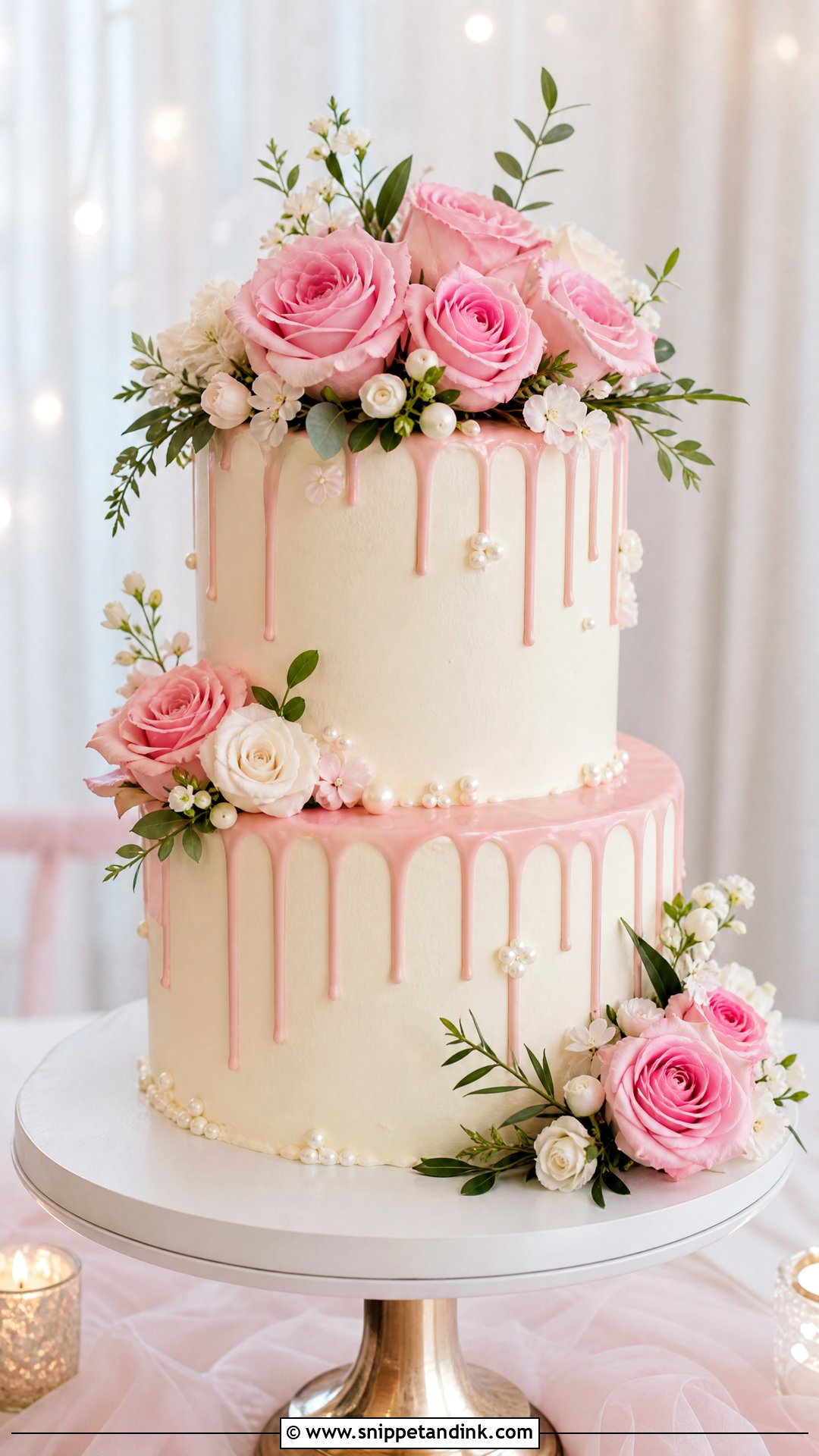
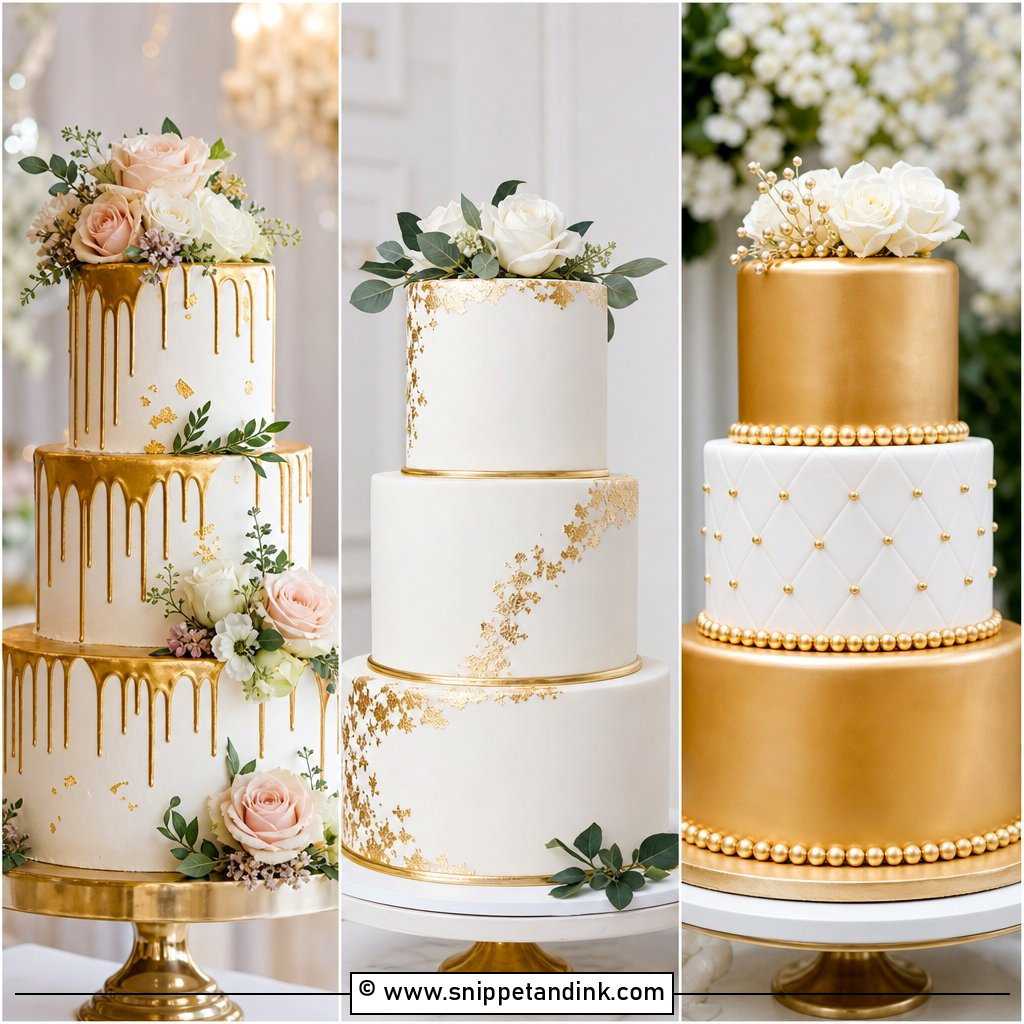
A drip finish with flowers sits between modern and bridal. White chocolate, pale pink, gold-toned or caramel ganache runs down the sides; flowers on top, along one side or around the base soften it. I pour the drip over a well-chilled cake so the drips stop where I want them. Pour onto a warm cake and they run to the board. Fresh, sugar or buttercream flowers all suit, depending on the venue and season.
16. Floral Semi Naked Wedding Cake
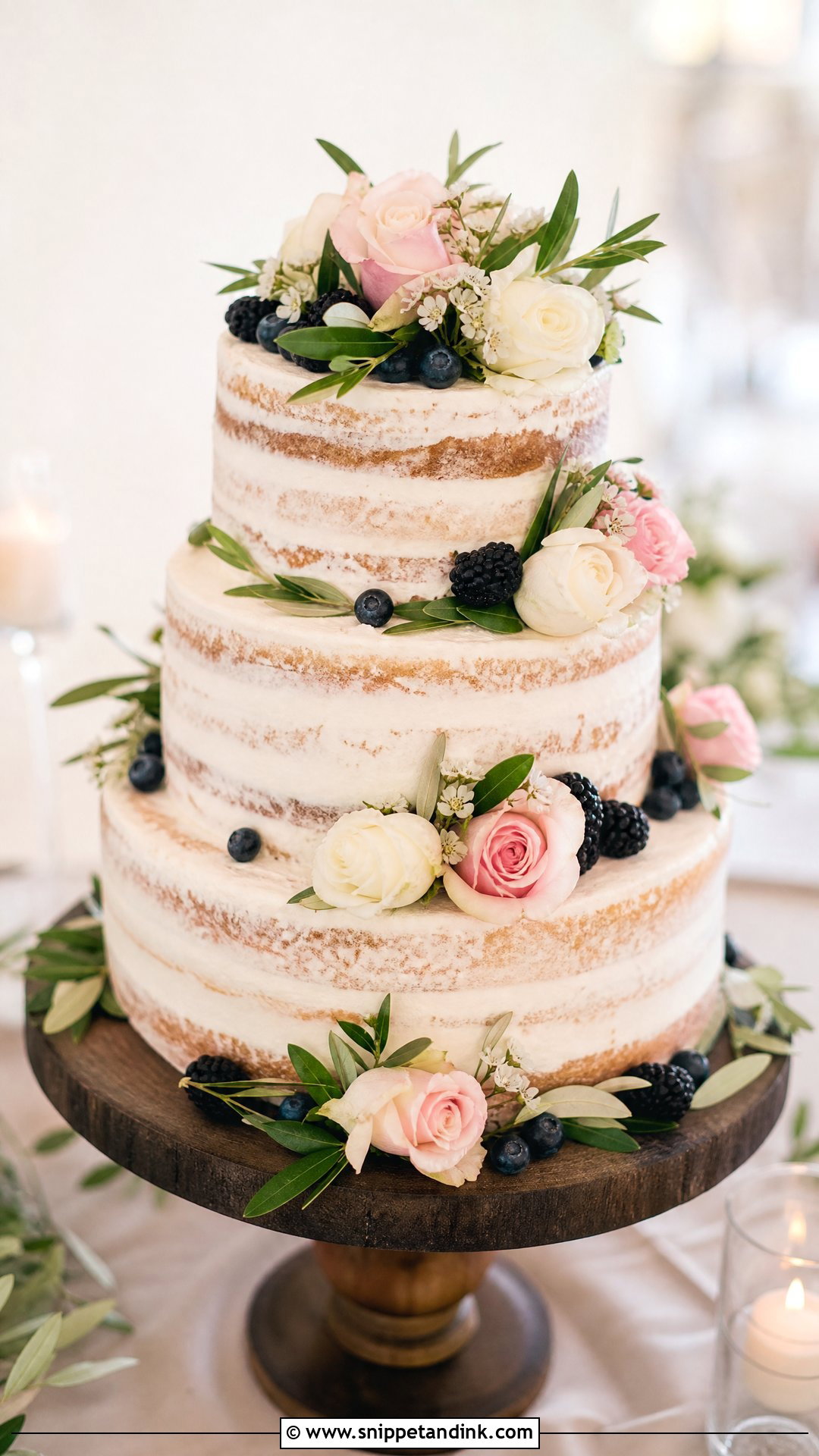
Thin layers of buttercream let the sponge show through on a semi-naked cake, which gives it a warm, homemade feel. Vanilla, almond, lemon or spice sponges look good through the icing. Small flower clusters, berries, greenery or tiny edible flowers keep the texture visible. One practical point: exposed sponge dries faster, so I keep these cakes wrapped and chilled until the last moment. Barns, gardens and small outdoor celebrations suit it.
17. Floral Fondant Wedding Cake
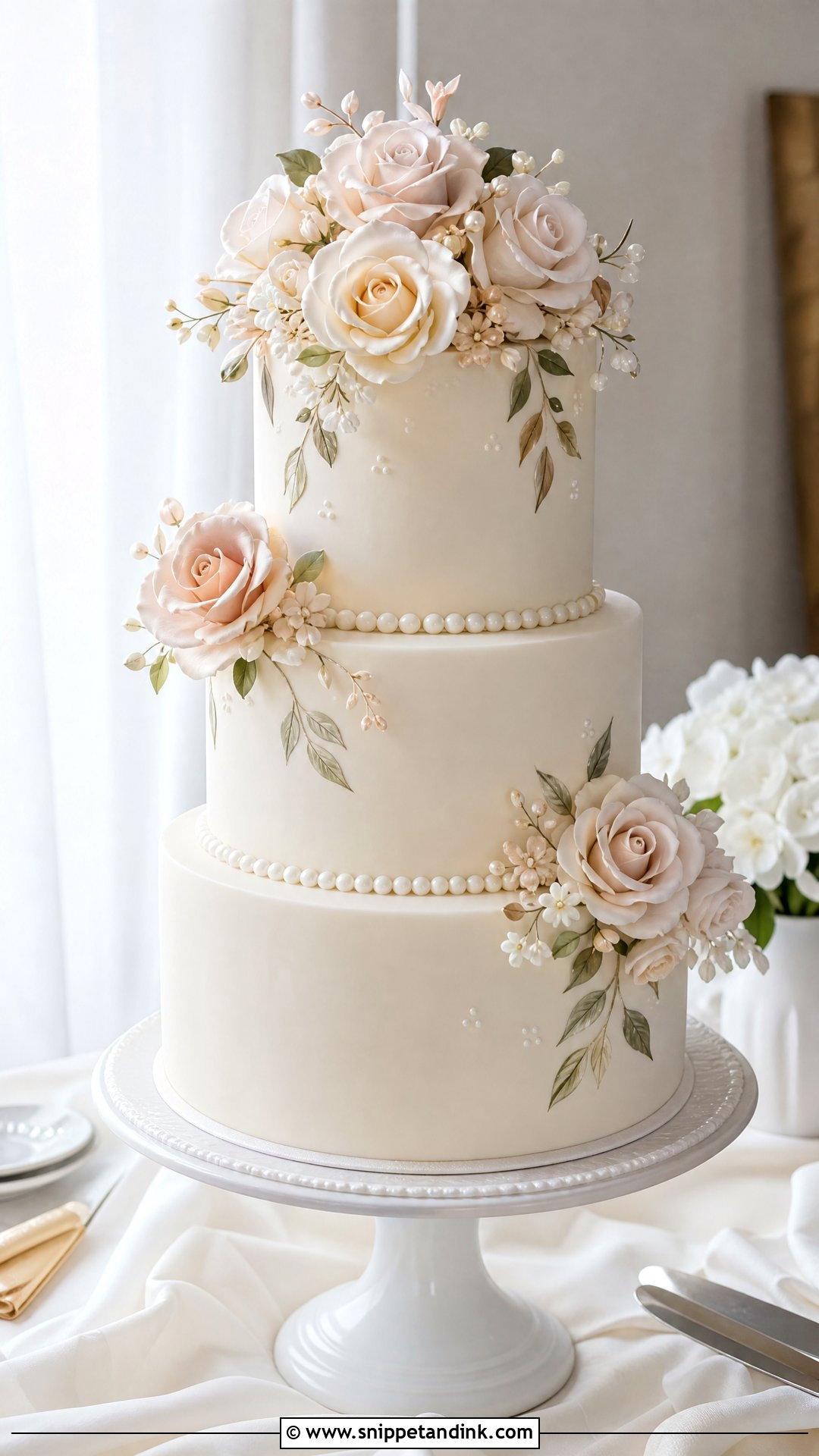
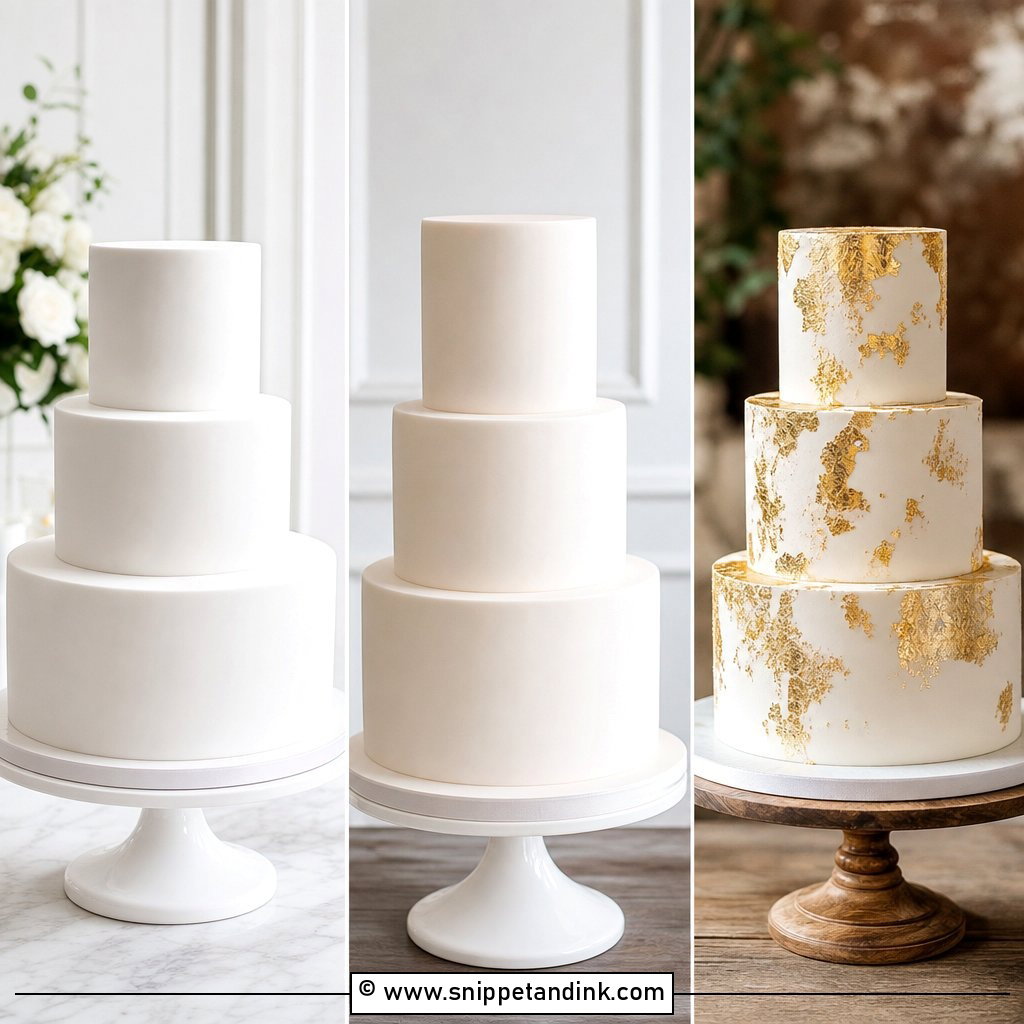
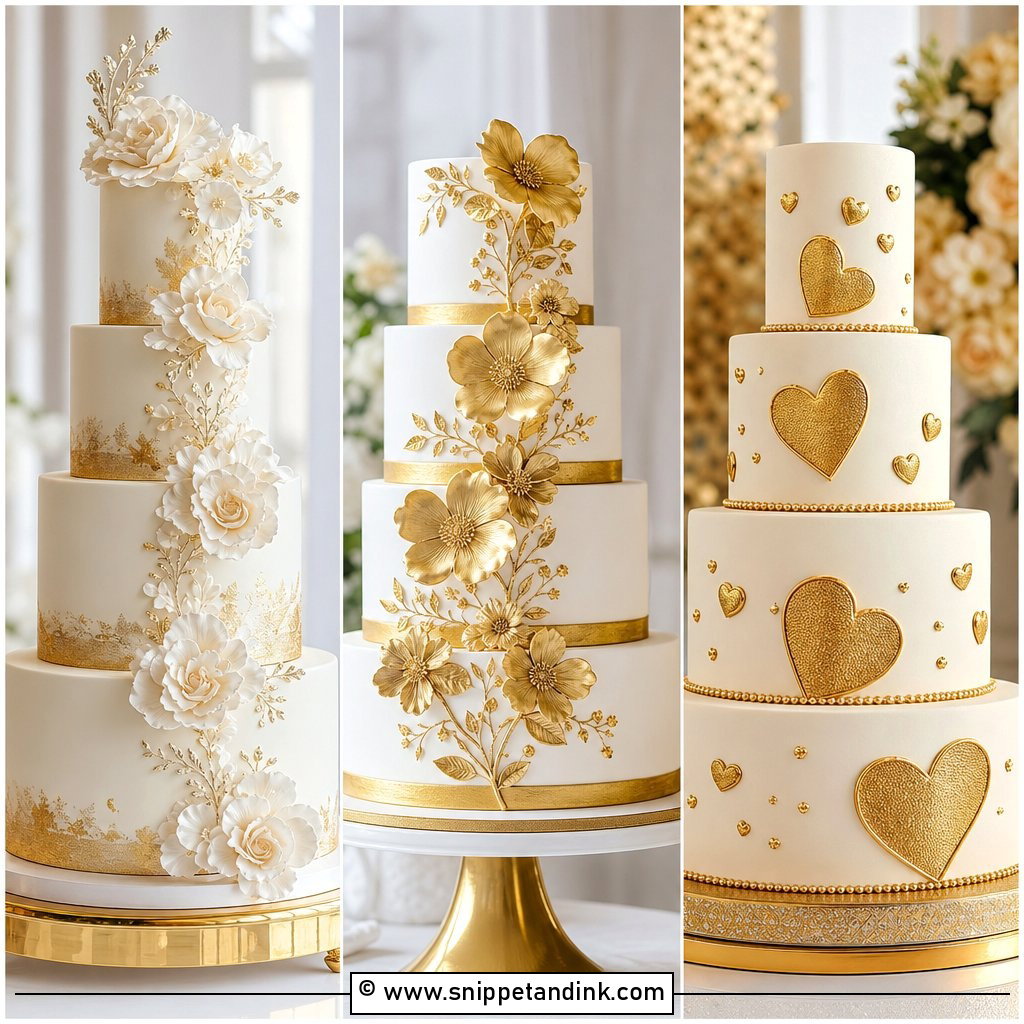
Fondant gives the smoothest base for detailed florals: clean edges, tall tiers, sculpted sugar flowers, hand-painting and embossing. White fondant with sugar flowers is formal; pastel fondant with painted blooms is artistic. It holds its shape well in a warm room, which makes it a sensible choice for larger weddings with long displays. I place flowers with intention, leaving clean space, so the cake doesn’t look crowded.
18. Floral Watercolor Wedding Cake
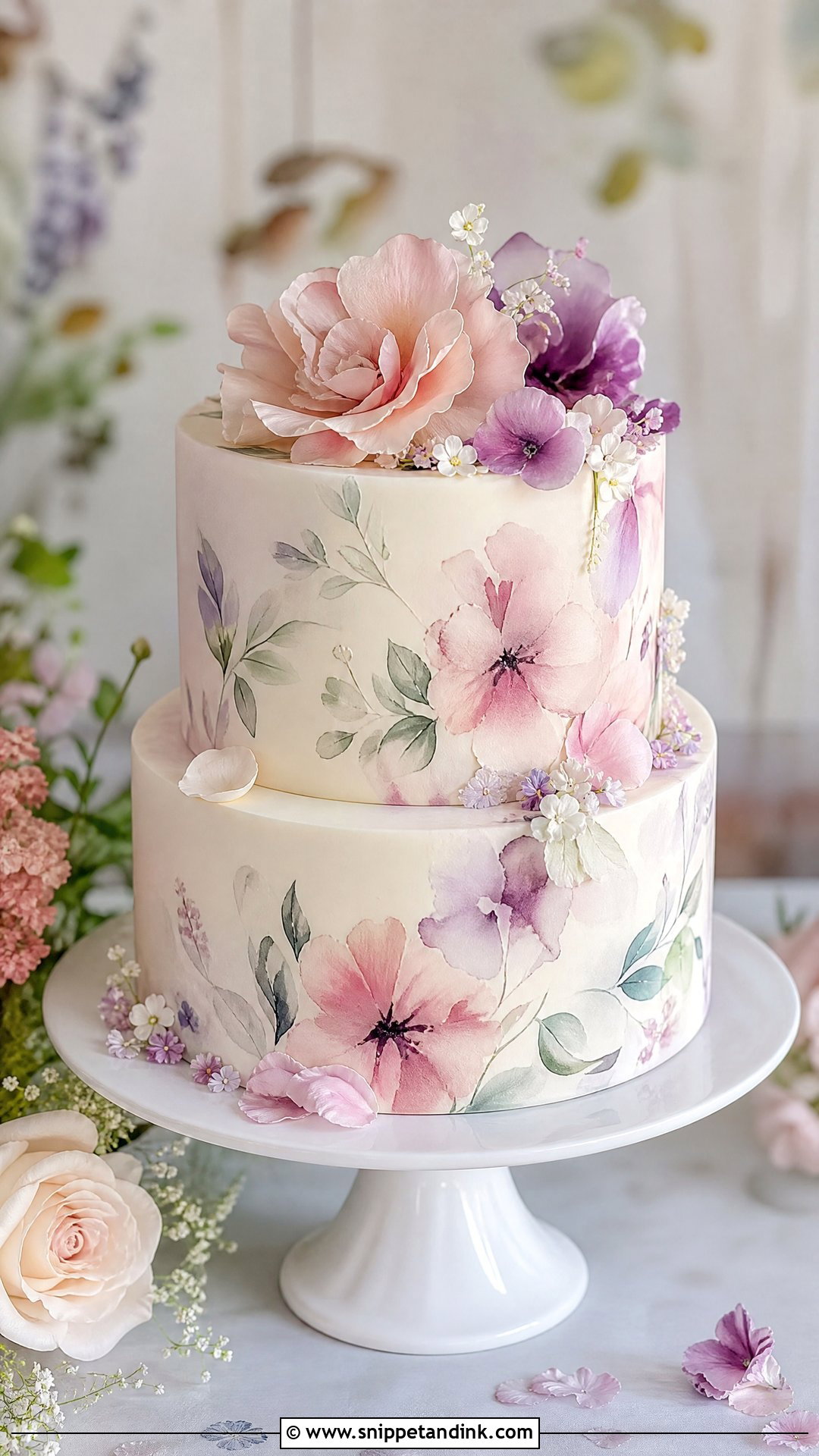
Watercolor cakes are brushed with thinned color on fondant or very cold, smooth buttercream. Flowers can be painted, piped or added as sugar blooms in matching shades. Blush, lavender, peach, blue and green blend well. The surface needs to be firm or the brush drags. A simple cake shape lets the painting stand out, and a few raised petals give it texture.
19. Floral Monogram Wedding Cake
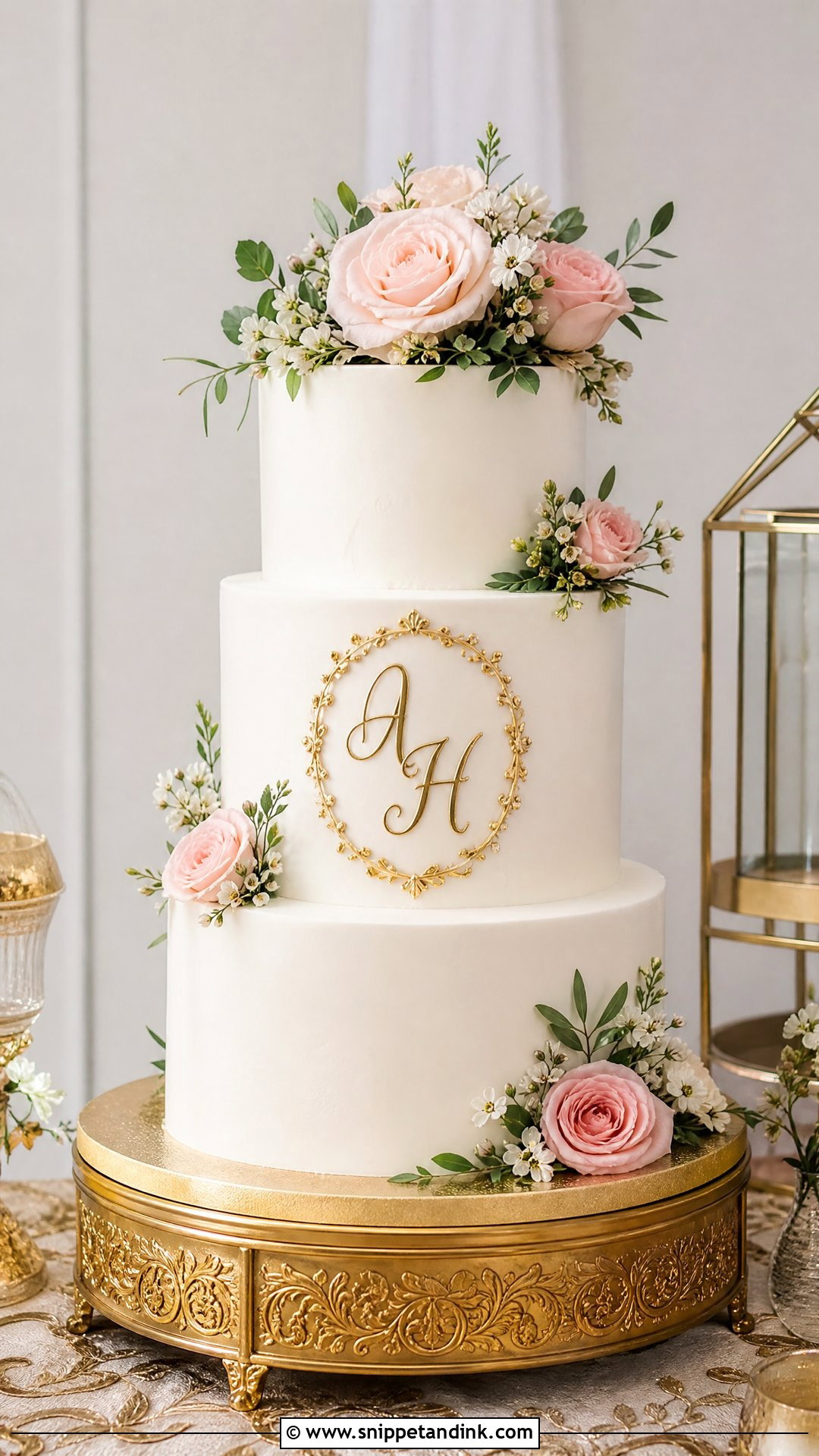
A monogram cake puts your initials on the front tier, framed by small flowers, greenery or fine piping. The background has to be clean, so smooth buttercream or fondant suits it best. I make the letters in edible gold paint, sugar or piping, or use a simple topper. Flowers that match the bouquet tie it together; white and blush are classic, stronger colors make the initials stand out. Agree which side is the front before delivery, since that’s where the monogram goes.
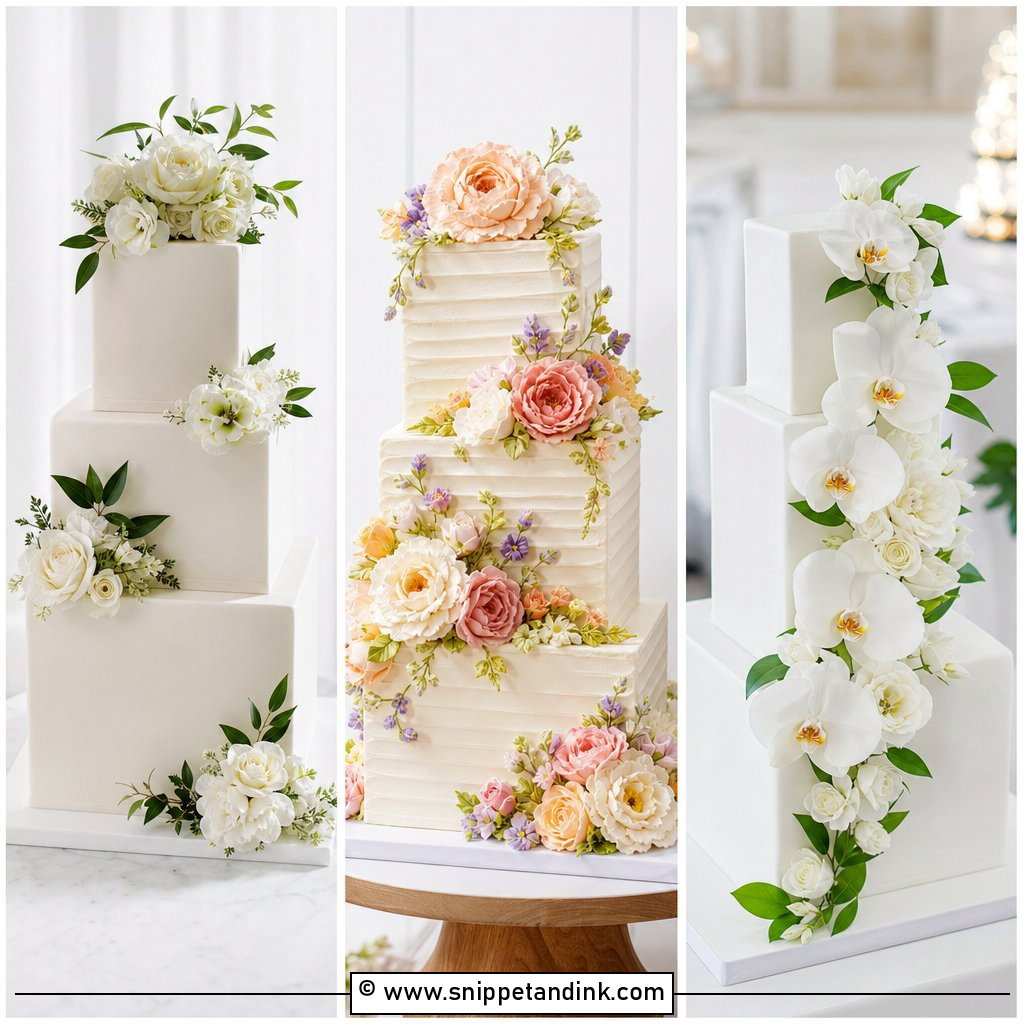

20. Floral Vintage Wedding Cake
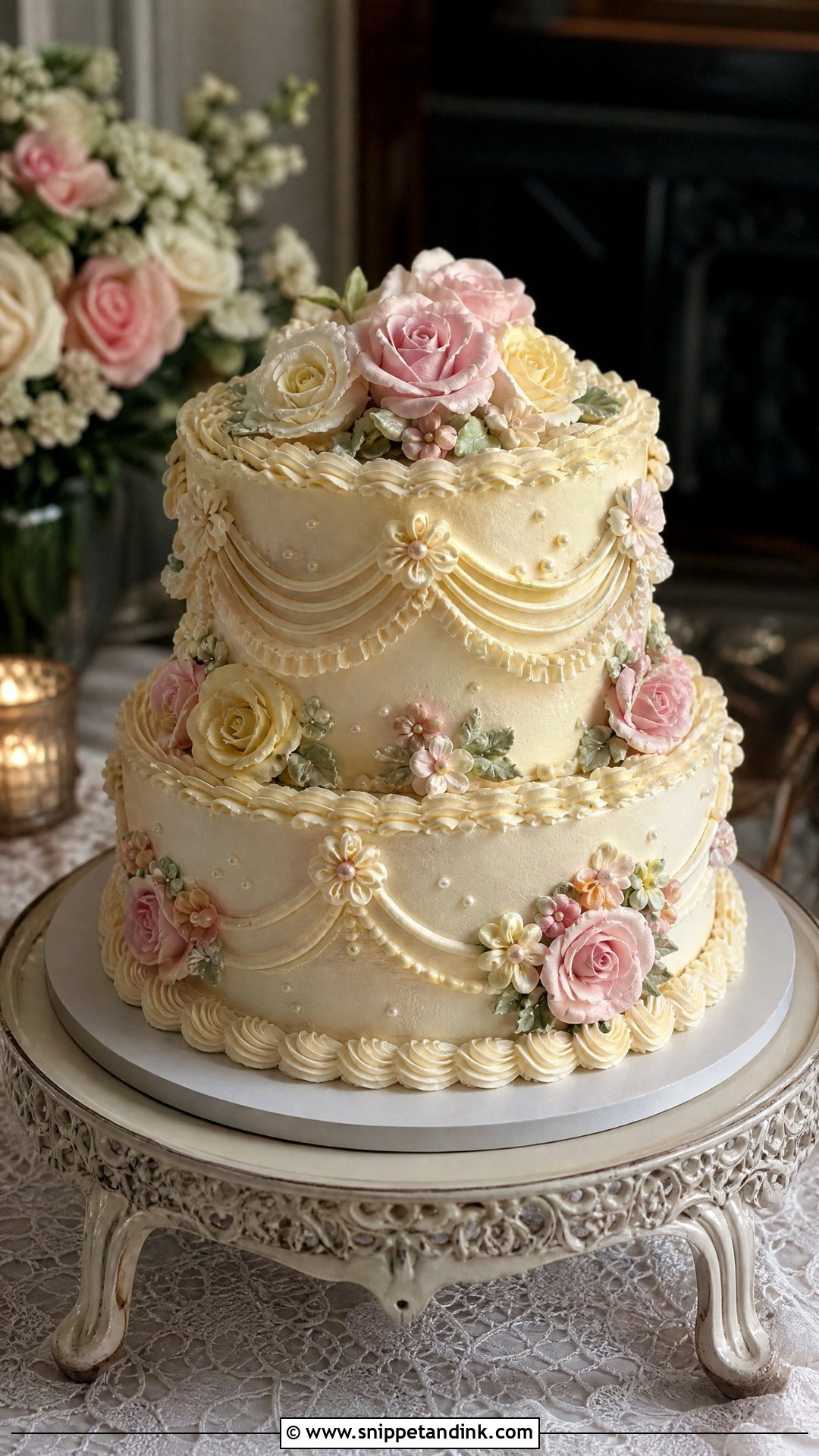
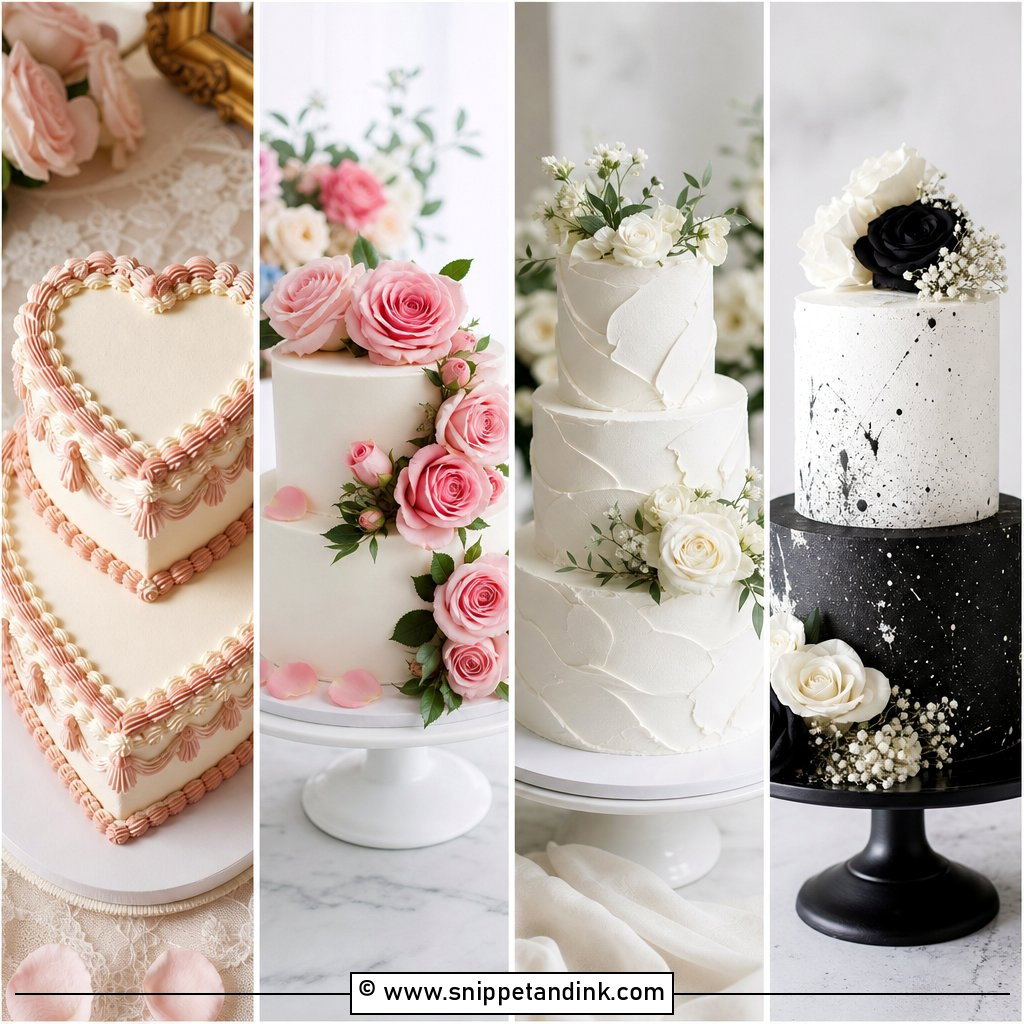
Vintage floral cakes revive soft piping, ruffles and shell borders. I use buttercream because it holds the old-fashioned texture well, adding piped roses, small blossoms, pearls or a floral topper. Ivory, blush, pale blue and butter yellow work best. One tier suits a small wedding; stacked tall it’s dramatic. Pick two or three techniques and repeat them, or it gets busy.
21. Floral Pearl Wedding Cake
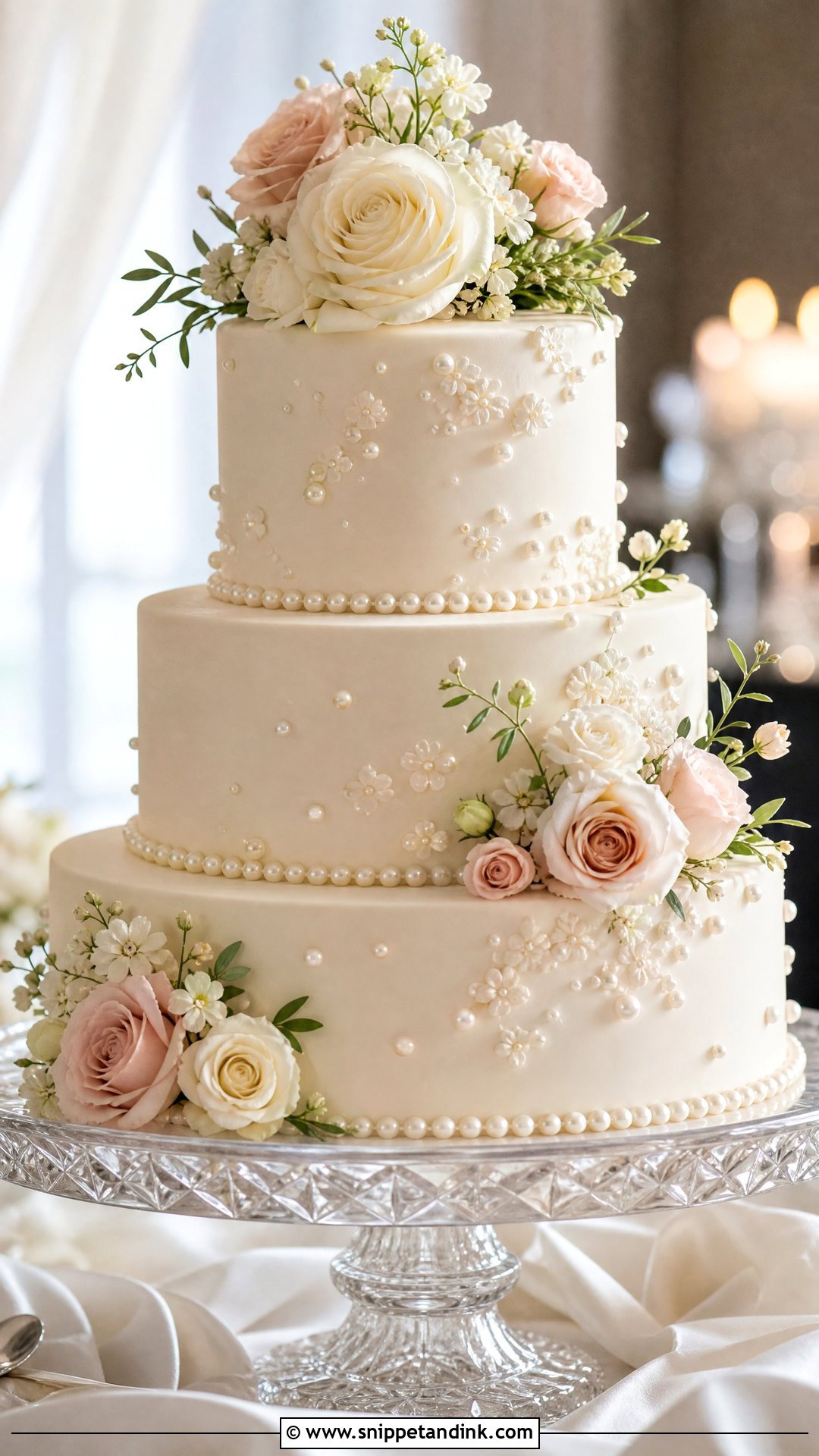
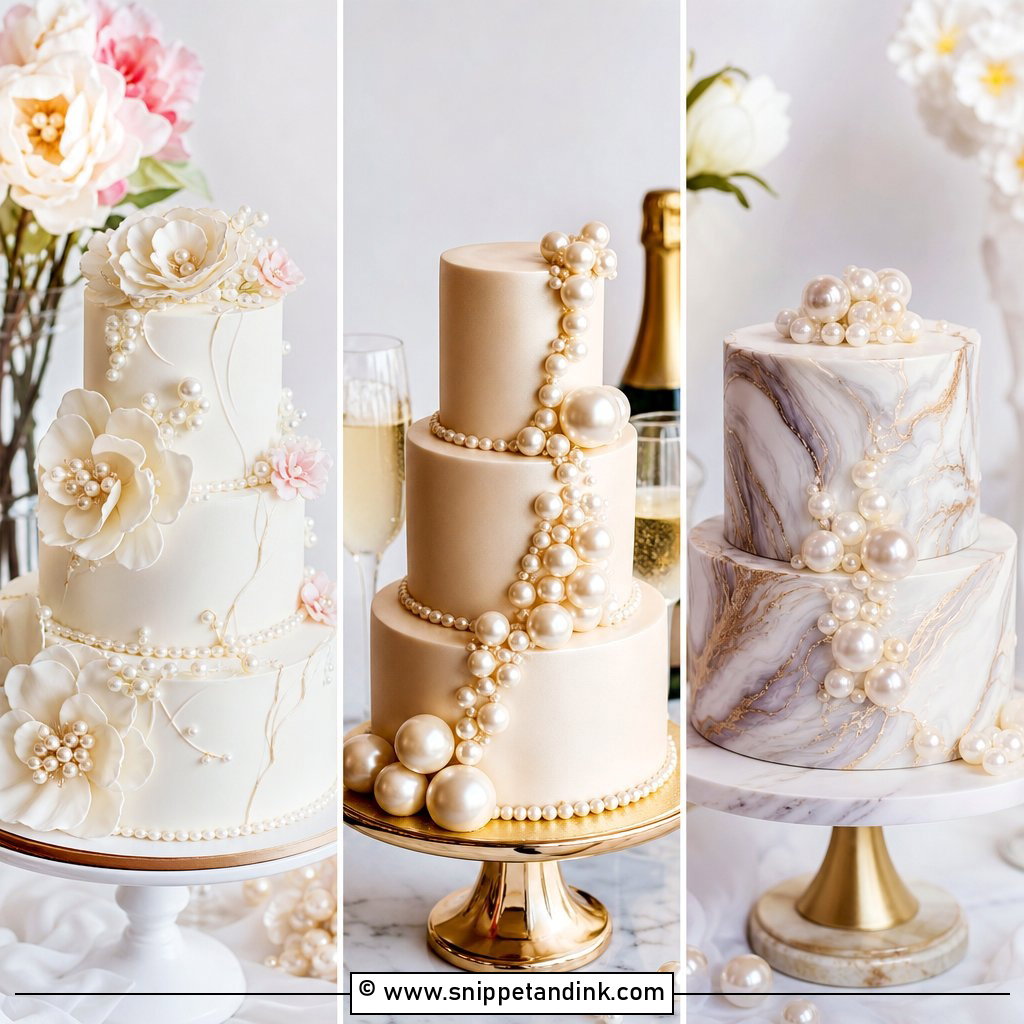
Pearls and flowers together look bridal. On smooth white buttercream or fondant, I set pearls along the tier edges, scatter them lightly or arrange them in patterns, then soften them with sugar flowers, fresh roses or tiny piped blossoms. Sugar pearls are hard, so I keep them small enough that biting one is no shock. Ivory, blush, champagne and soft green suit classic and ballroom weddings, and the pearls catch candlelight nicely.
22. Floral Sheet Wedding Cake
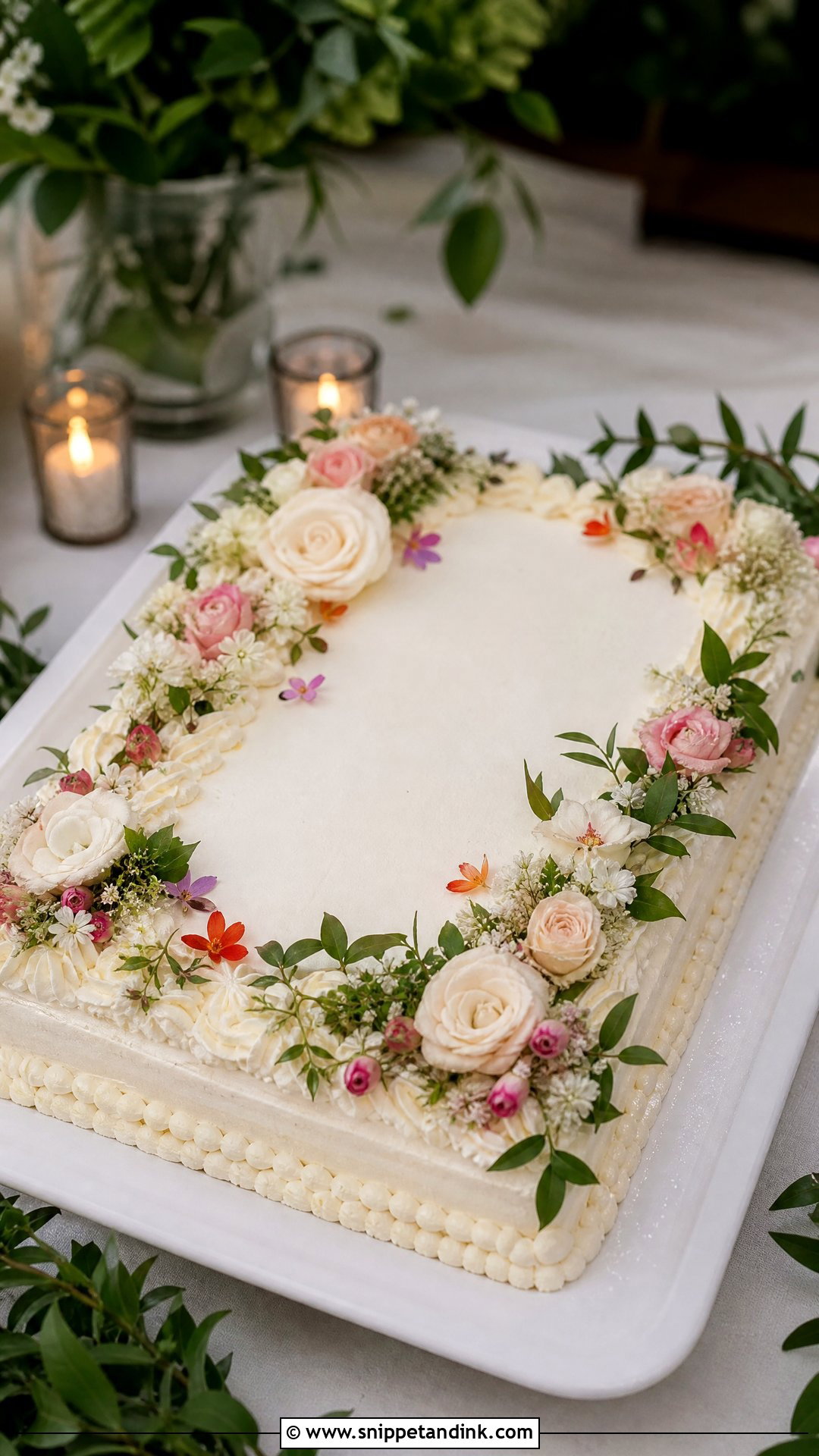
A floral sheet wedding cake is the most practical way to feed a crowd. It suits casual weddings and backyard receptions, or sits in the kitchen behind a small display cake. Piped buttercream flowers, edible petals, fresh clusters or a botanical border all work on top. White frosting with flowers in the corners looks clean; a garden-style frame around the edge looks fuller. It cuts into neat squares quickly, which caterers appreciate.
23. Small Floral Wedding Cake
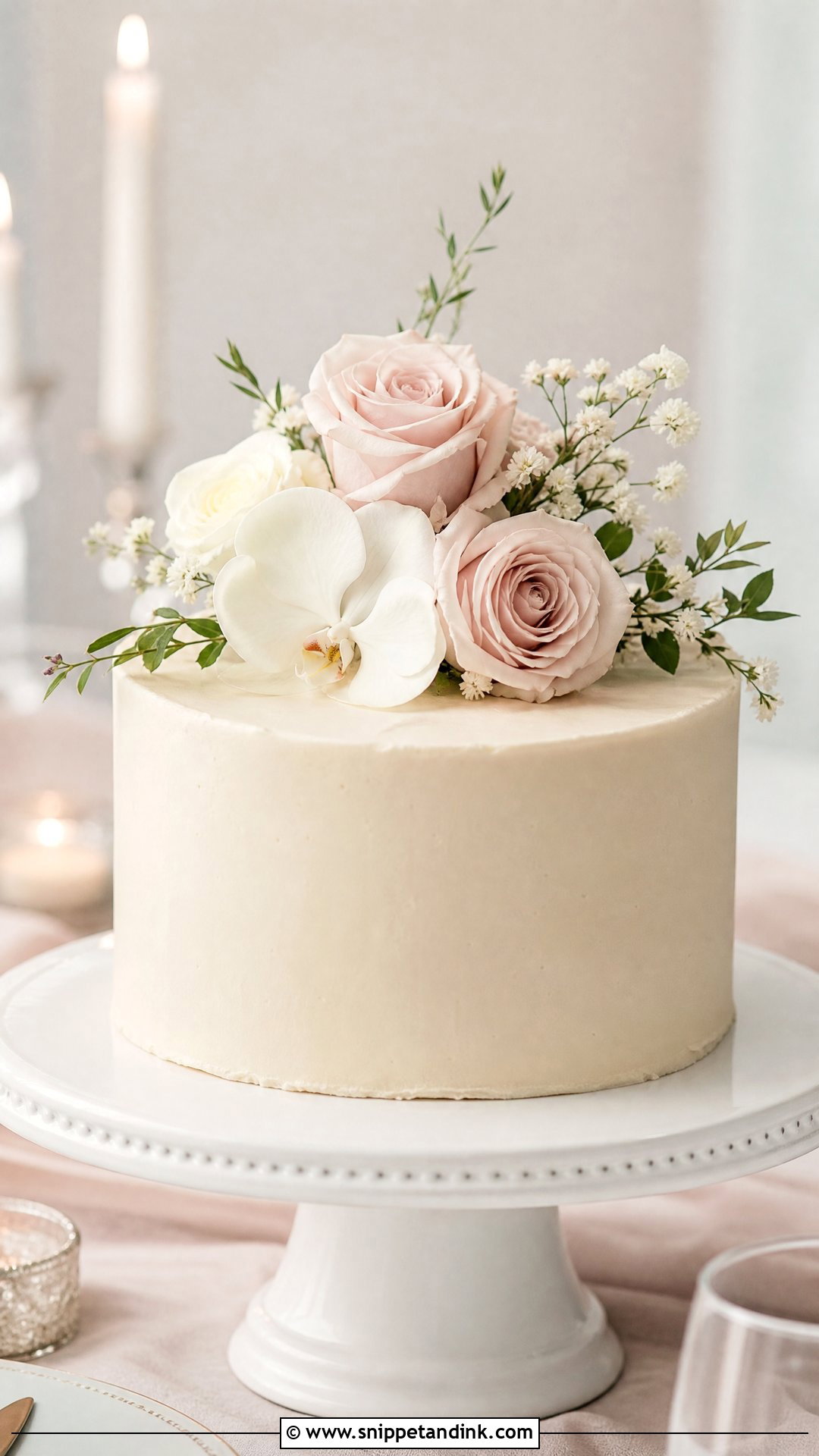
Small cakes still need a focal point. On one or two tiers, a single cluster of roses, orchids or sugar flowers does it; pressed edible flowers add detail without height. I always suggest a cake stand that lifts a small cake so it has presence on the table. Smooth buttercream, soft piping or a semi-naked finish all suit. Elopements and micro weddings are where this shines, and you still get the cake-cutting moment.
24. Tall Floral Wedding Cake
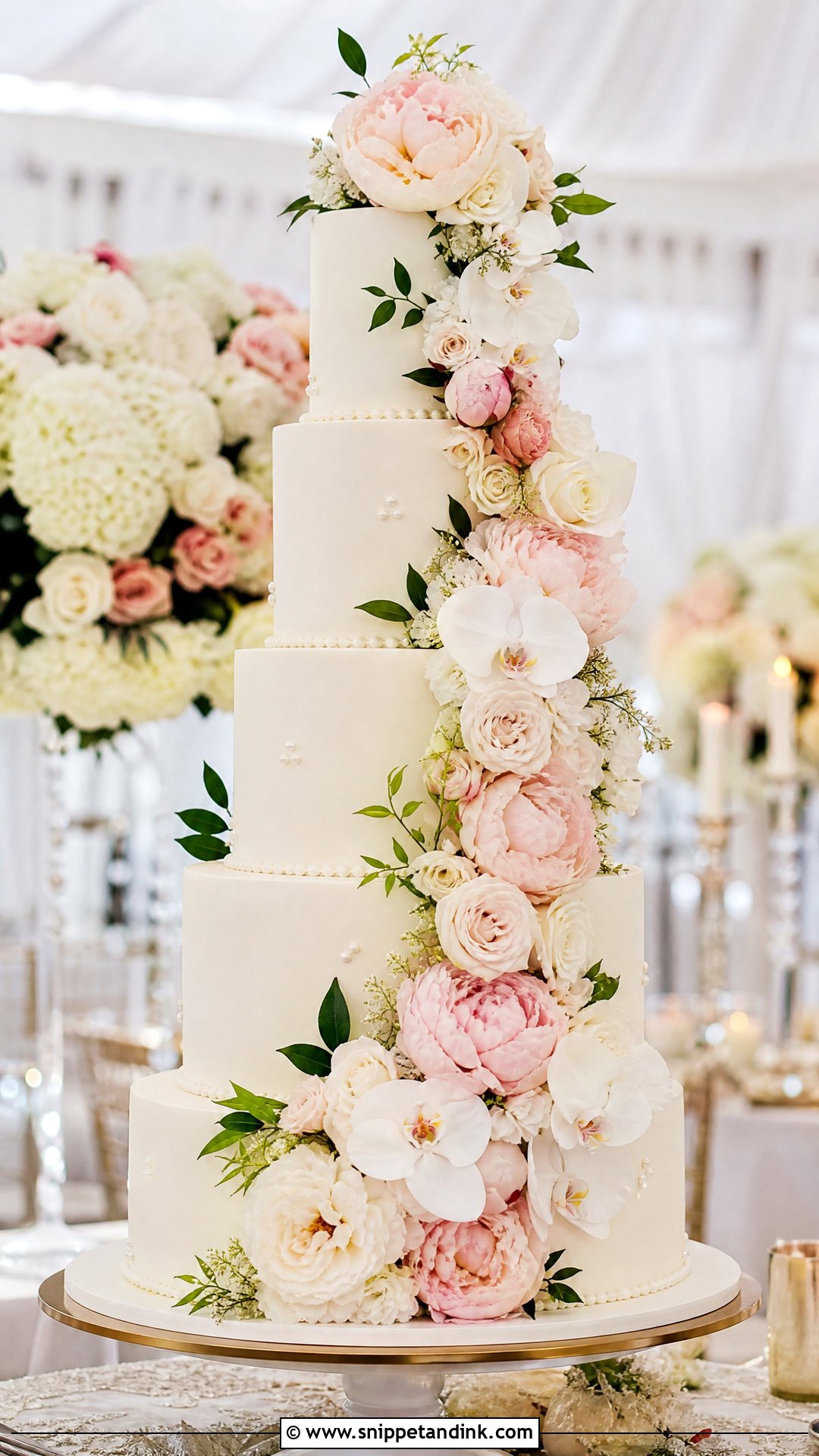
Tall cakes give flowers room to climb, cascade and wrap. They suit larger weddings and rooms with high ceilings. Structurally, each tier sits on its own board with dowels underneath, and the tallest cakes may also have a central rod; you won’t see it, but it’s what keeps the stack straight. I plan the flowers in sections rather than covering every inch. White tiers with soft clusters look formal; colorful blooms look joyful.
25. Floral Cupcake Wedding Cake
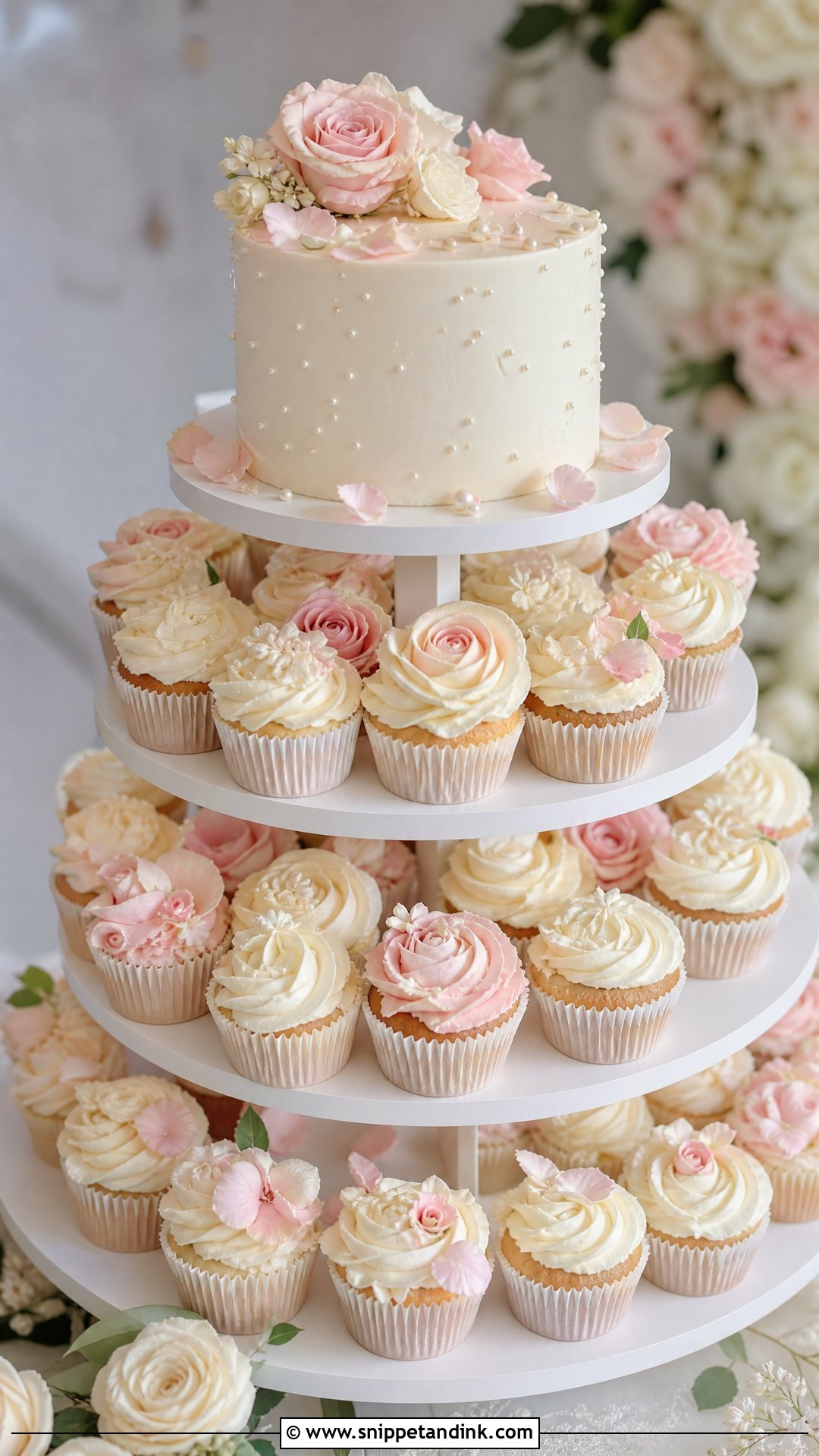
A floral cupcake wedding cake is a tiered stand of cupcakes topped with piped flowers, edible petals or tiny sugar blossoms, often with a small cutting cake on top for photos. Guests love choosing their own, and you can offer several flavors. I keep the color palette consistent across every cupcake so the display reads as one cake. It suits garden weddings and casual receptions, and it needs no slicing at all.
What Happens to the Top Tier After the Party
Many couples still want to save the top tier for their first anniversary. If you do, tell your baker in advance so that tier is boxed separately and not sliced.
- Remove every flower, wire, pick and topper first.
- Chill the tier uncovered in the fridge for an hour so the icing firms and won’t stick to the wrap.
- Wrap it in several layers of plastic wrap, then foil, and seal it in an airtight box.
- Freeze it, and thaw it slowly in the fridge, still wrapped, the day before you eat it.
Buttercream and dense sponges freeze better than delicate fillings like fresh fruit or whipped cream. And an honest note: a year in the freezer rarely tastes like the wedding day. Some couples now order a small fresh replica from their baker for the anniversary instead, and keep a single sugar flower from the cake as the souvenir.
Start With Servings, Then Add the Flowers
Flowers change the whole feeling of a cake, whether they’re fresh, sugar, pressed, piped or edible. The right choice depends on your venue, season, budget, sponge flavor and the mood you want in photos. A white floral cake looks classic; wildflowers, watercolor and drip finishes feel more modern. Plan placement with your baker and florist so the cake is safe and stable, and it will look right from every side of the table.
You'll Like These Ideas:







Leave a Reply