
A whimsical cake should feel joyful and a little unexpected: garden-inspired, colorful, vintage and frilly, or playful with bows, pearls, cherries, painted flowers and sculpted details. The hard part, from my side of the bench, is keeping it wedding-worthy. Whimsy without structure looks messy, and too many ideas on one cake start to look like a themed birthday. The designs that work have balanced color, clean tiers, well-finished frosting and one clear focal point. Below are twenty I’d happily make for a garden wedding, with notes on how each one is built, how it handles an outdoor reception, and what I’d ask you before we start.
Outdoor Heat, Buttercream and a Cake Table in the Garden
Garden weddings are lovely for guests and hard on cakes. Before we pick a design, I want to know if the cake will sit outdoors, in a tent or indoors, and what time of day it will be served.
Meringue-based buttercreams taste silky but start to soften in warm air, and a softening tier can bulge or slide. Crusting buttercream holds up better, and a layer of firm ganache under fondant is the most stable option for a hot day. Fresh cream fillings and whipped cream frostings are a risk in summer, so I usually suggest saving them for indoor receptions.
- Keep the cake table out of direct sun, even for an hour.
- Ask your planner to set the cake out as close to the cutting as possible.
- Avoid placing it near heaters, lights or a dance floor that warms up.
- Plan for a shaded or tented spot if your reception is in midsummer.
1. Whimsical Floral Wedding Cake
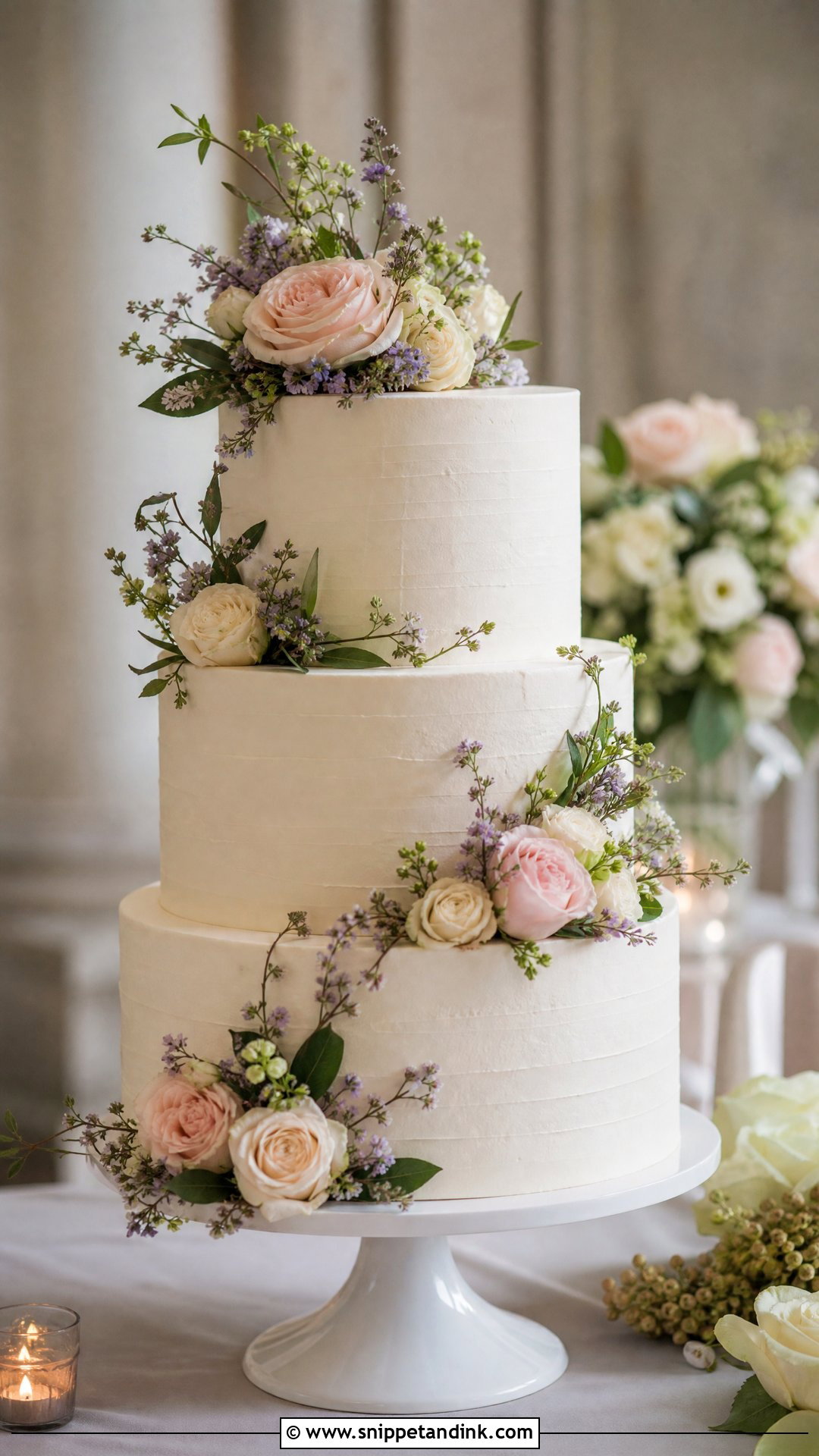
Flowers that climb, trail or wrap around the tiers feel far livelier than one stiff cluster on top. I map the flower path on a sketch first, usually a loose diagonal, so the eye travels down the cake rather than stopping at the top tier. Soft buttercream or smooth fondant gives a clean base. You can use fresh blooms, sugar flowers, pressed petals or a mix. Tie the palette to your bouquet. Sugar flowers cost more and take longer to make, but they won’t wilt in a warm garden, which fresh ones sometimes do.
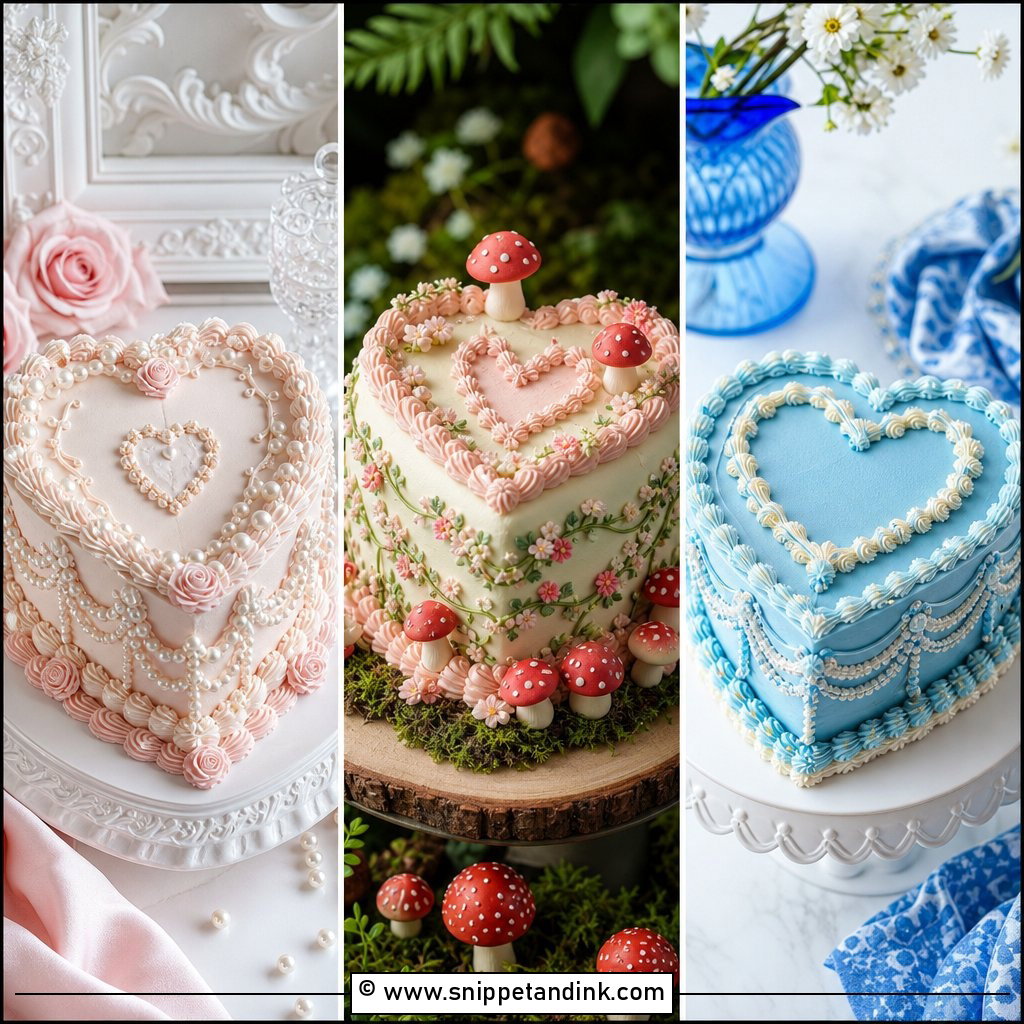
2. Pastel Vintage Wedding Cake
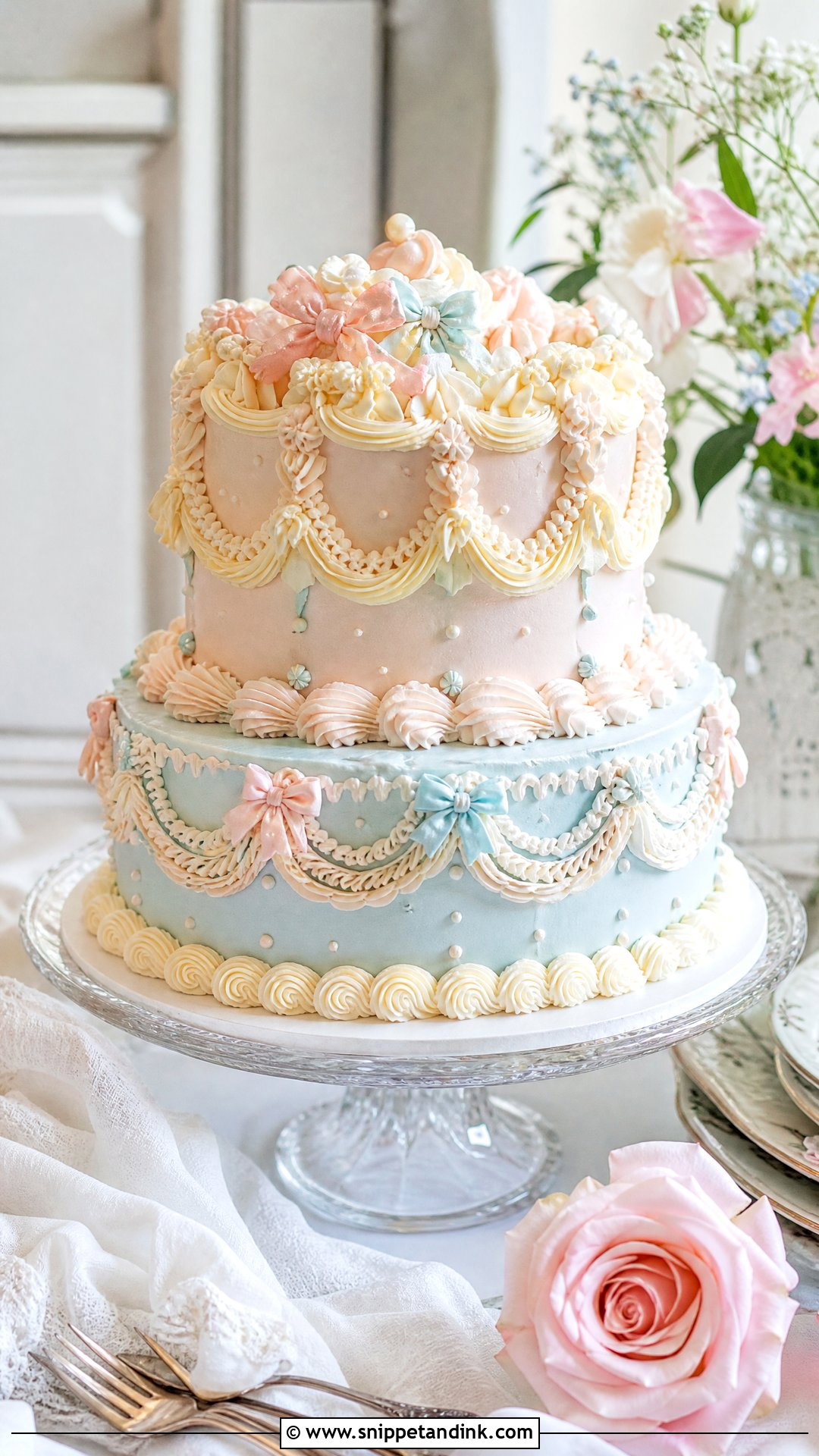
Think old-fashioned bakery cake: buttercream swags, shell borders, tiny rosettes and delicate piping in pale pink, blue, lavender, mint or butter yellow. Two or three pastels look sweet; five look busy. The piping is what makes this style, and it takes a stiffer buttercream than a smooth finish does, so it holds its ridges. A heart-shaped tier, small bows or piped pearls make it more playful. It looks most at home on a vintage cake stand with soft linens around it.
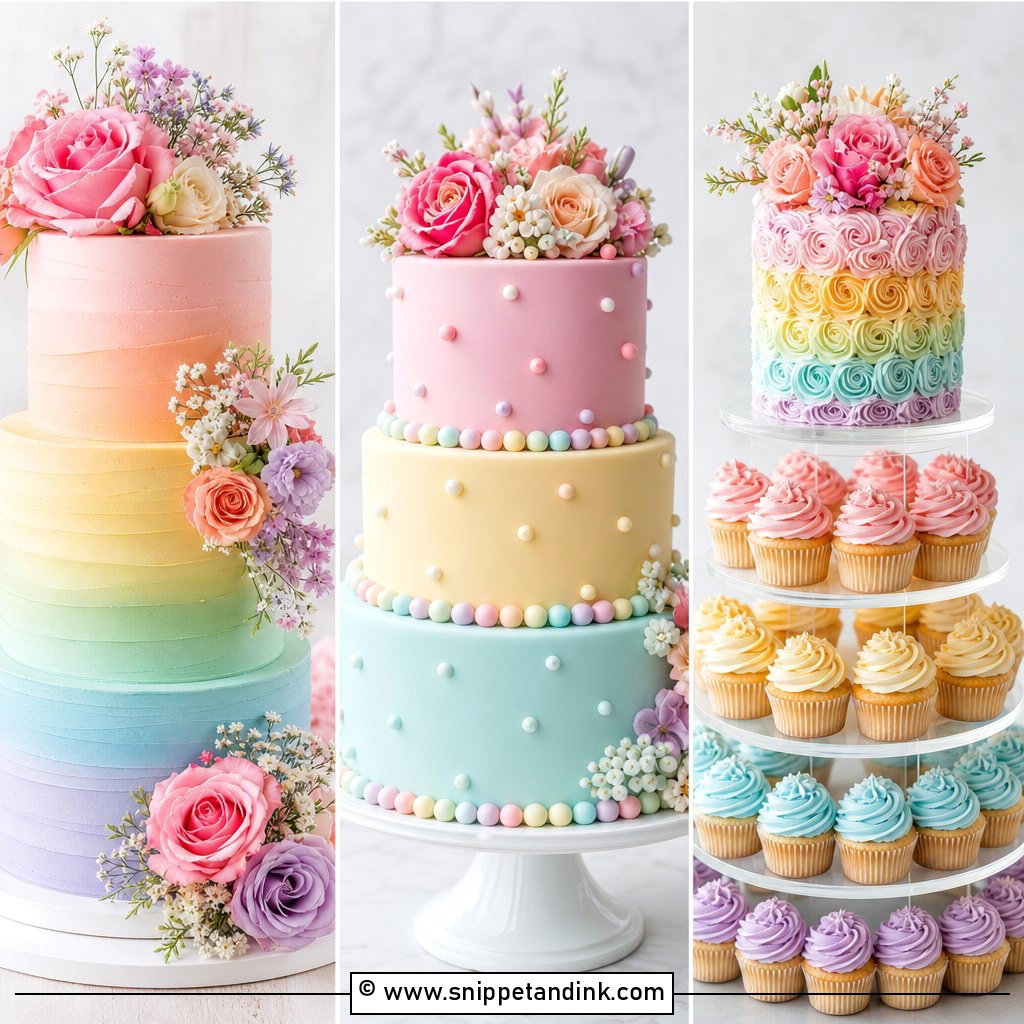
3. Colorful Buttercream Wedding Cake
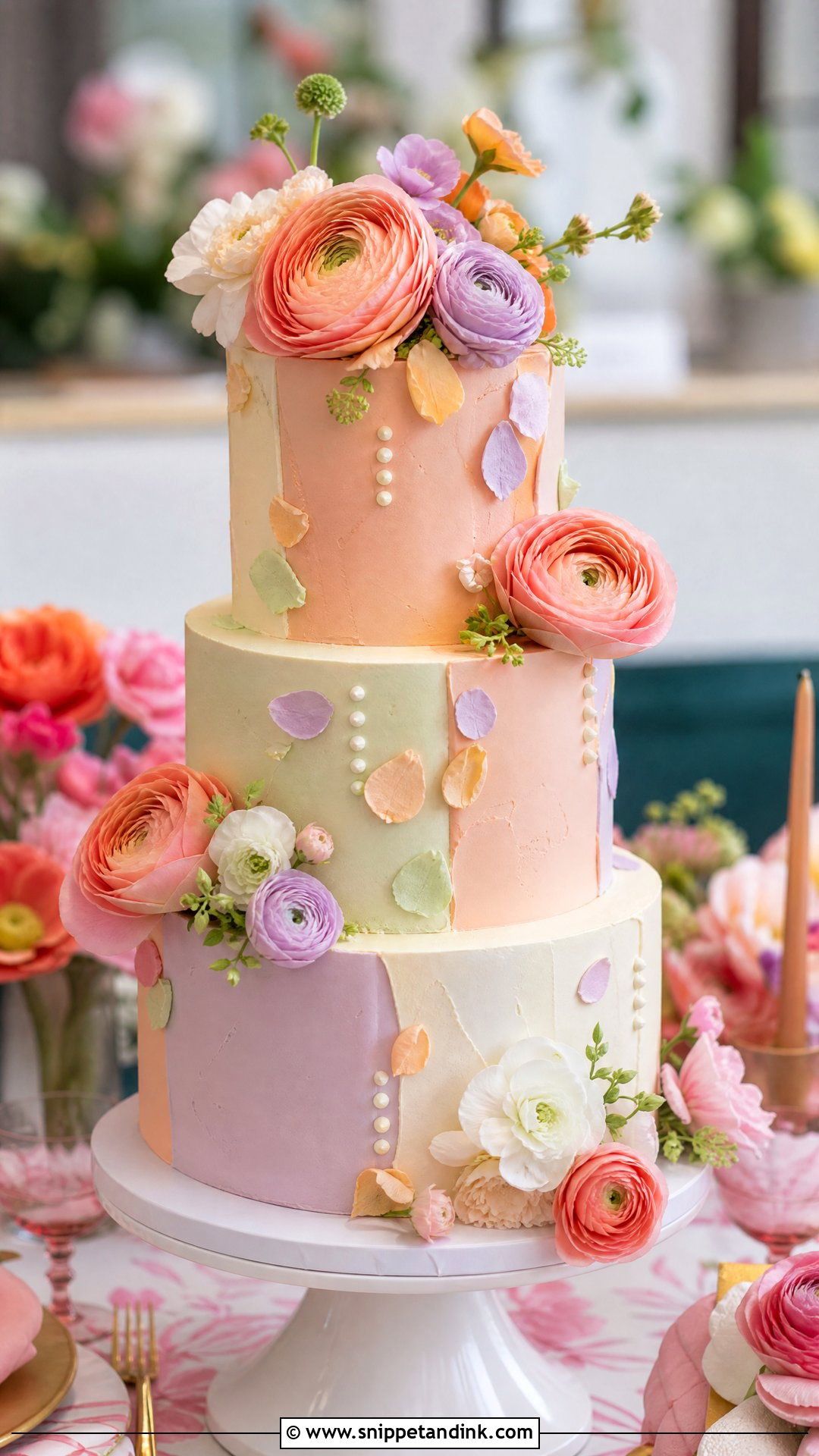
Color is the whole point of this one. Painterly frosting, soft color blocking or hand-smoothed buttercream in shades from your palette can look cheerful without feeling childish: coral, lilac, peach, sky blue, soft green. I mix every shade from one base batch so the colors sit together, and I tint gradually, because buttercream colors deepen as they sit for a few hours. Classic round tiers keep the shape calm while the color carries the personality. Strong reds and deep blues need a lot of coloring, which can taste bitter, so I steer couples toward softer tones.
4. Bow Wedding Cake
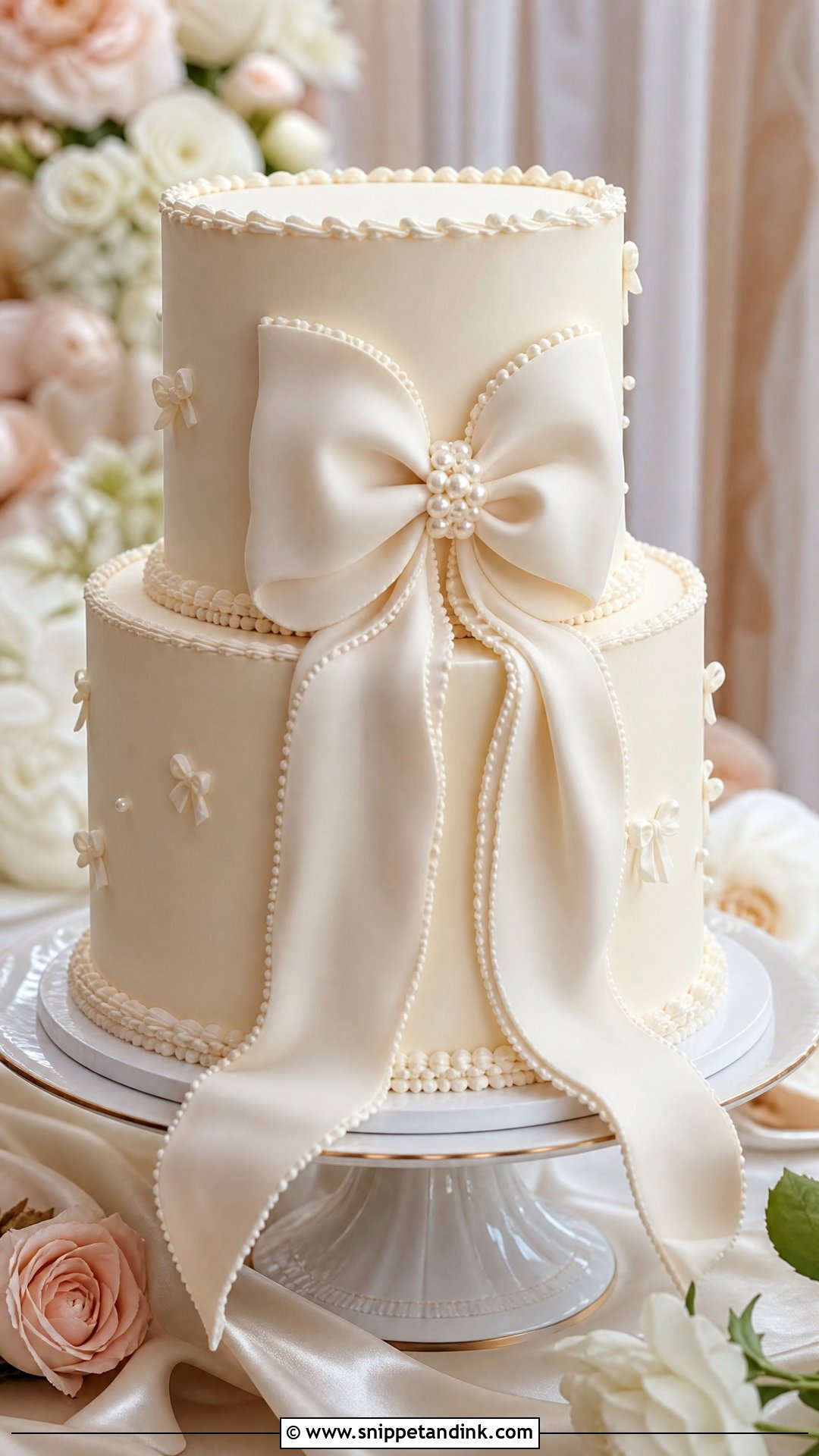
A single bow can carry a whole cake. It might be fondant, gum paste, sugar ribbon or real fabric, though fabric must sit on a barrier and never touch the cake directly. Oversized bows, tiny scattered bows or one dramatic bow falling from the top tier all work. Gum paste bows are made days ahead so they dry hard enough to hold their loops; a soft fondant bow will sag in humid air. Ivory frosting keeps it bridal, while blush, blue or pale yellow bows add a playful twist. It’s an easy echo if bows appear on your dress or invitations.
5. Pearl Wedding Cake
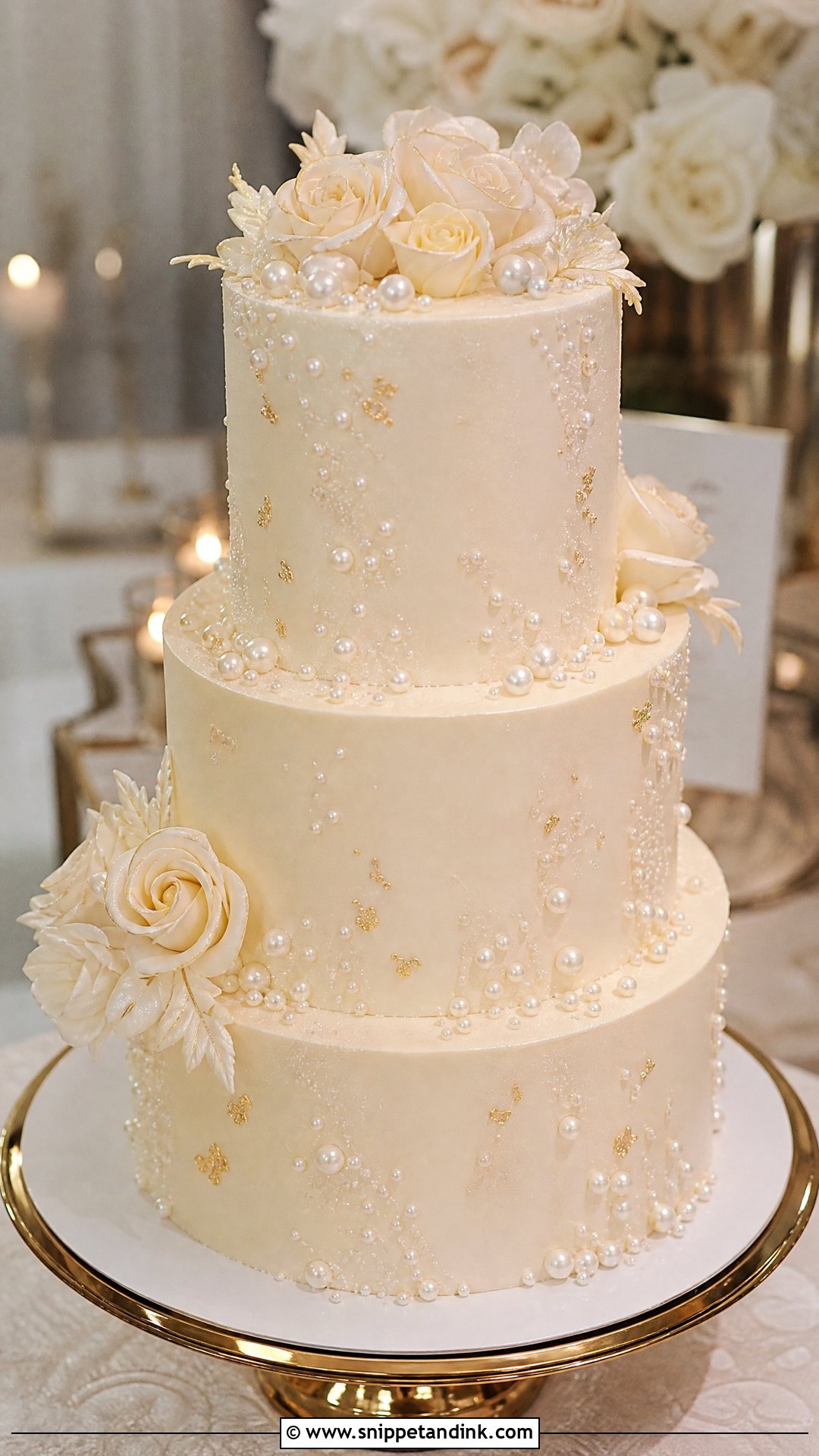
Edible pearls give soft shine and texture. A cake can be fully covered for drama or lightly dotted along borders, swags and floral clusters. Ivory buttercream, champagne fondant and pale blush tones keep them elegant. I mix sizes and set them in curved lines that follow the shape of the cake, attaching each one with a dab of royal icing or piping gel. Hard sugar pearls look best but are hard to bite, so I keep them to borders and away from large slices. It suits lace gowns, pearl veils and candlelit dessert tables.
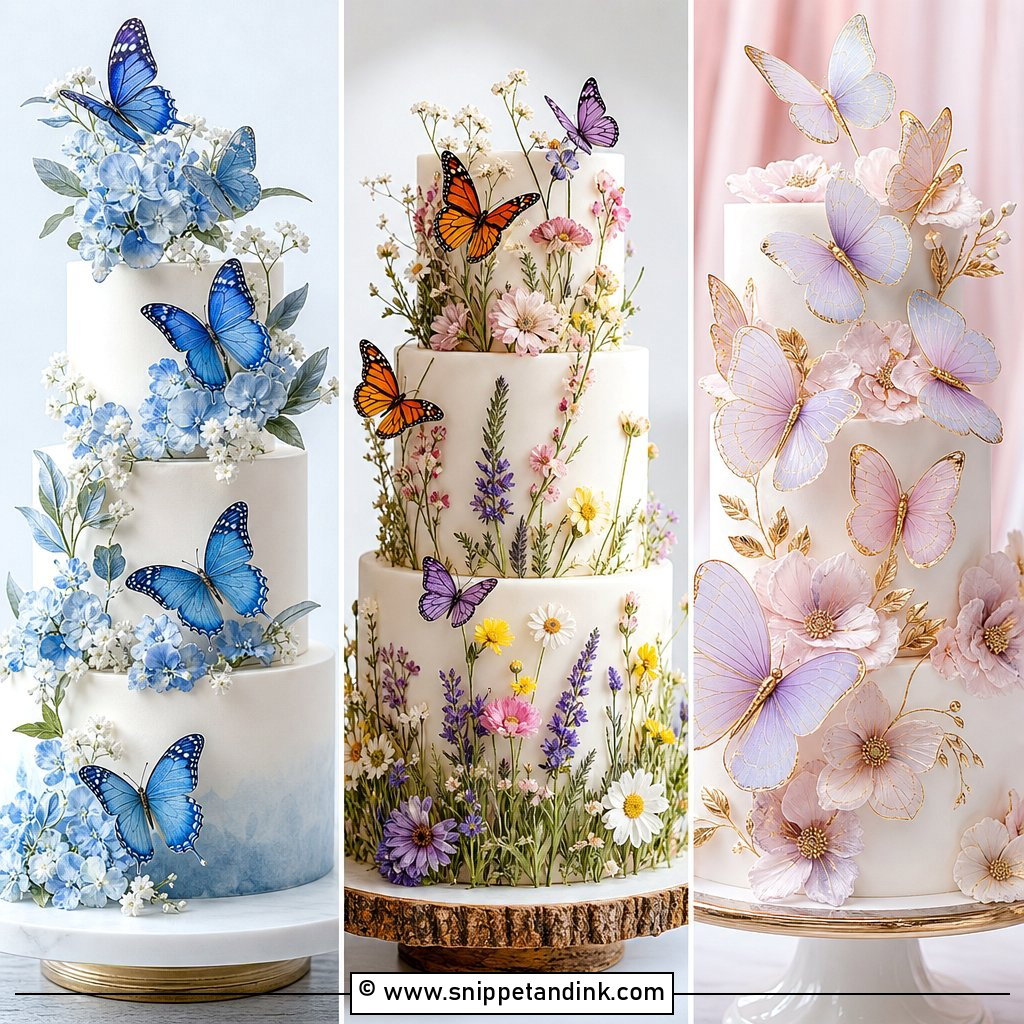
6. Garden Wedding Cake
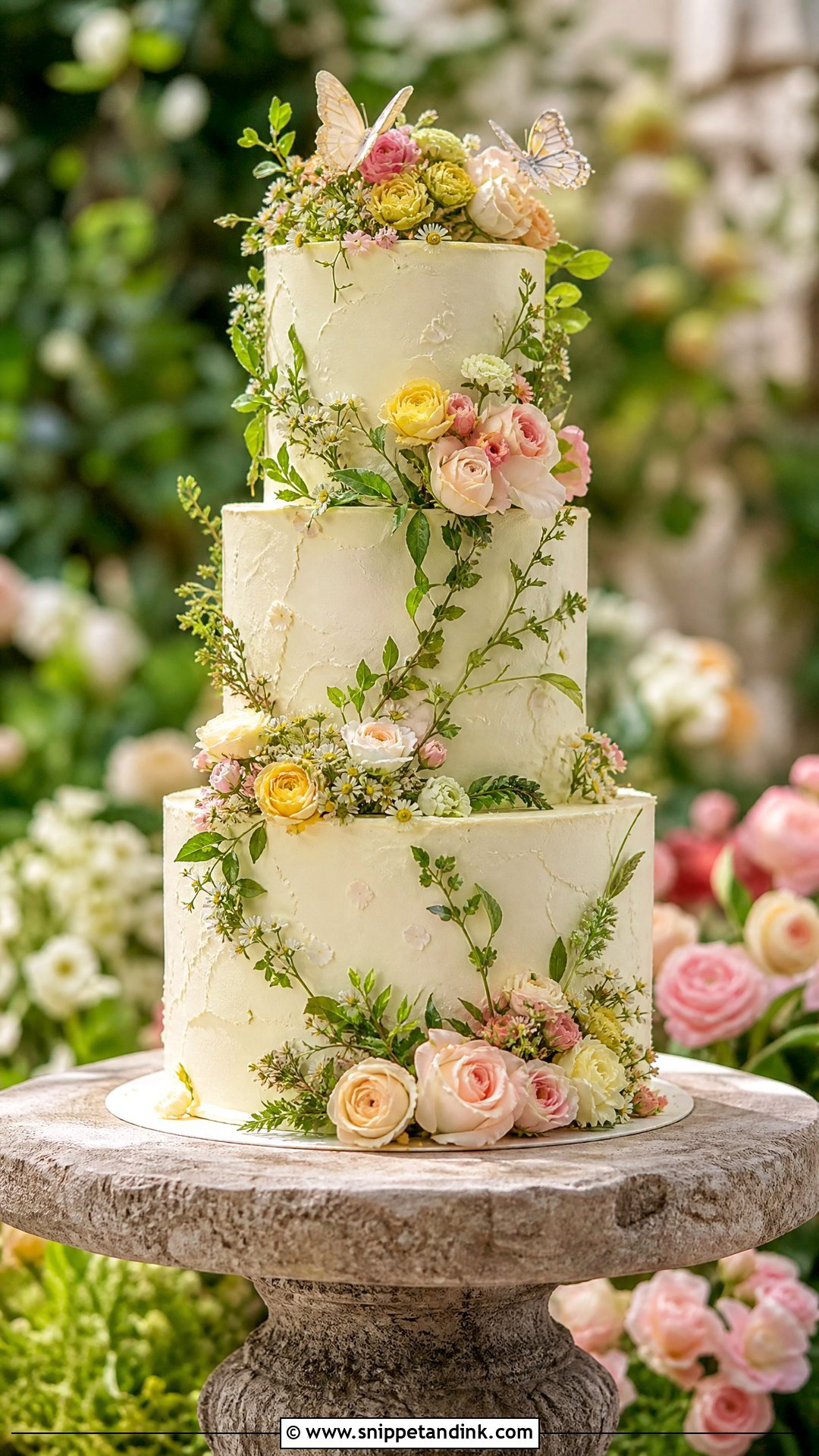
A garden cake should look as if it belongs in the middle of a blooming reception. Instead of perfect symmetry, the flowers feel freshly gathered: small blossoms, trailing vines, herbs and edible petals around each tier. The flavor inside should match the light look. I’d suggest vanilla, lemon, almond or lavender. Herbs like rosemary and thyme hold up far better out of water than soft petals, so they’re my backbone for outdoor tables. Sugar butterflies, small berries or hand-painted leaves finish it.
7. Painted Flower Wedding Cake
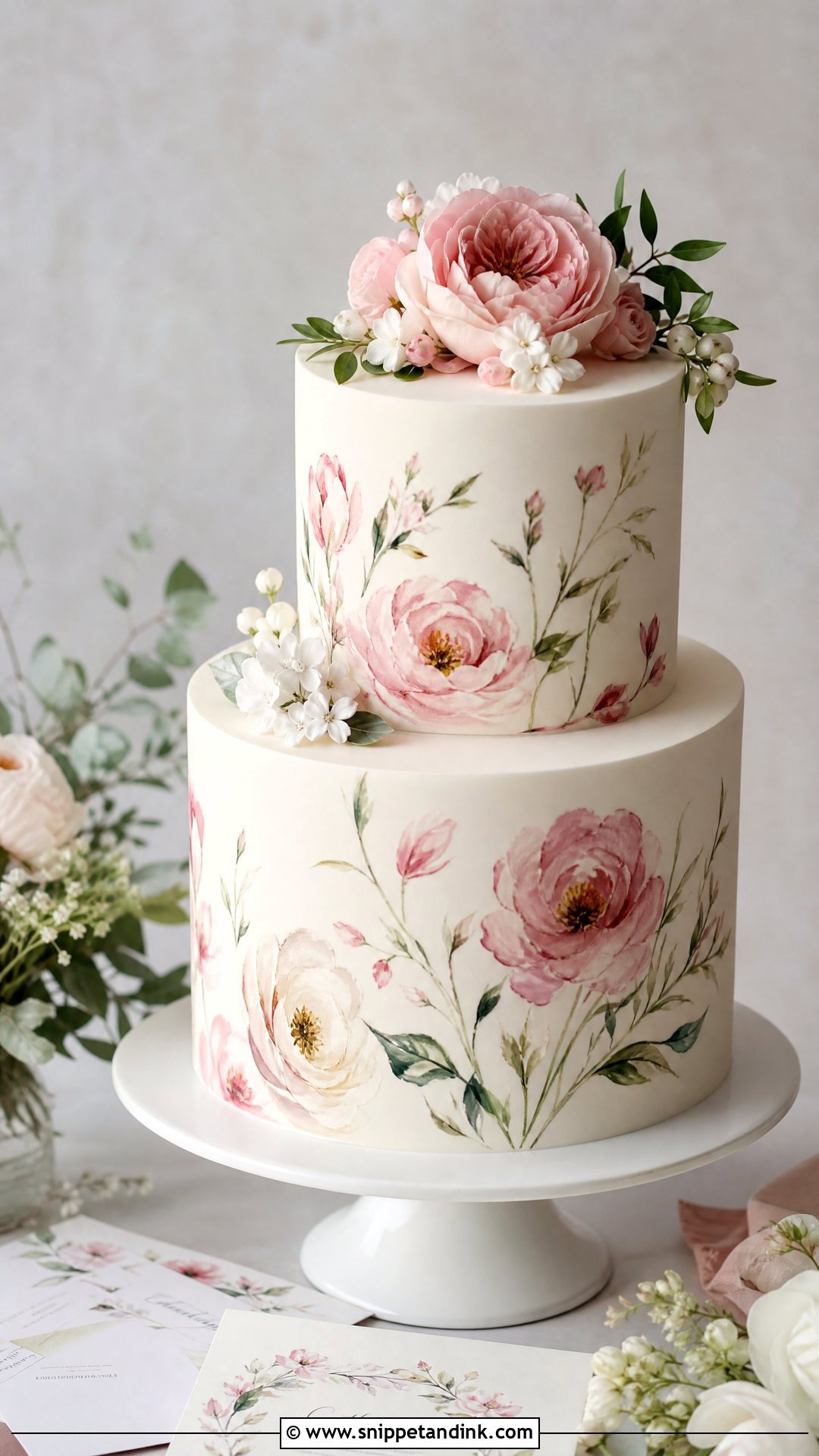
Painting directly onto a cake turns it into edible artwork: soft watercolor blooms, bold folk florals, tiny botanical sketches or vintage roses. Fondant gives the smoothest surface; chilled buttercream works too, but it needs to be firm or the brush drags. I paint with food coloring thinned in clear alcohol, which evaporates and leaves only color. Matching the flowers to your invitations or bouquet makes it personal. Keep tiers simple and real flowers minimal, so the brushwork stays the focus. Every stroke shows in close-up photos.
8. Lambeth Wedding Cake
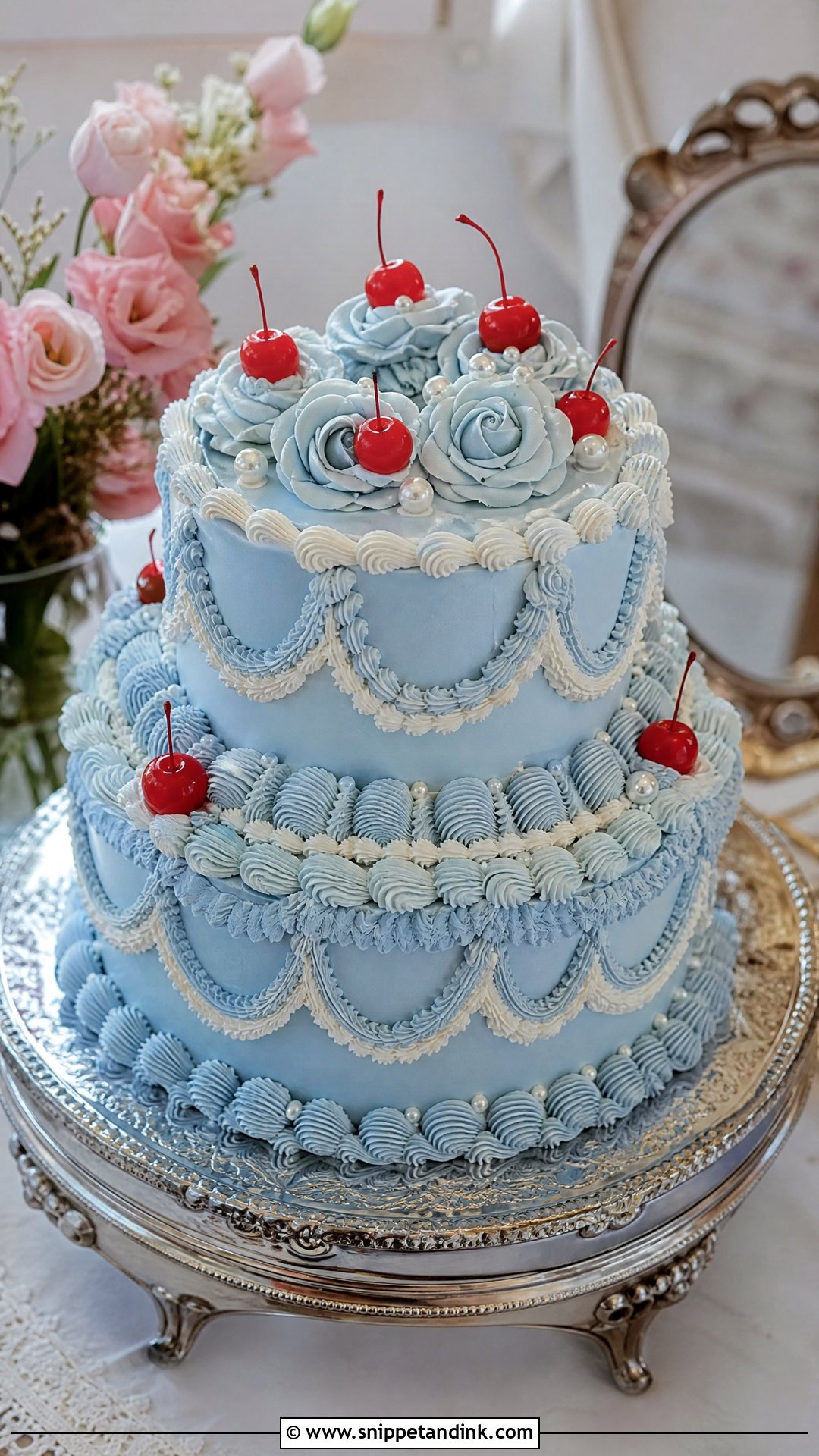
Lambeth piping is dramatic: stacked rows of shells, scrolls, dots, garlands and ruffles, layer upon layer. It feels celebratory from every angle, and a pastel or monochrome palette brings it up to date. Baby blue, blush, ivory and butter yellow are my favorites for weddings. This is one of the most time-consuming styles to pipe, since each border is built over the last, so it often costs more than its simple shape suggests. Cherries, pearls, bows or tiny piped flowers sweeten it further.
9. Heart Shaped Wedding Cake
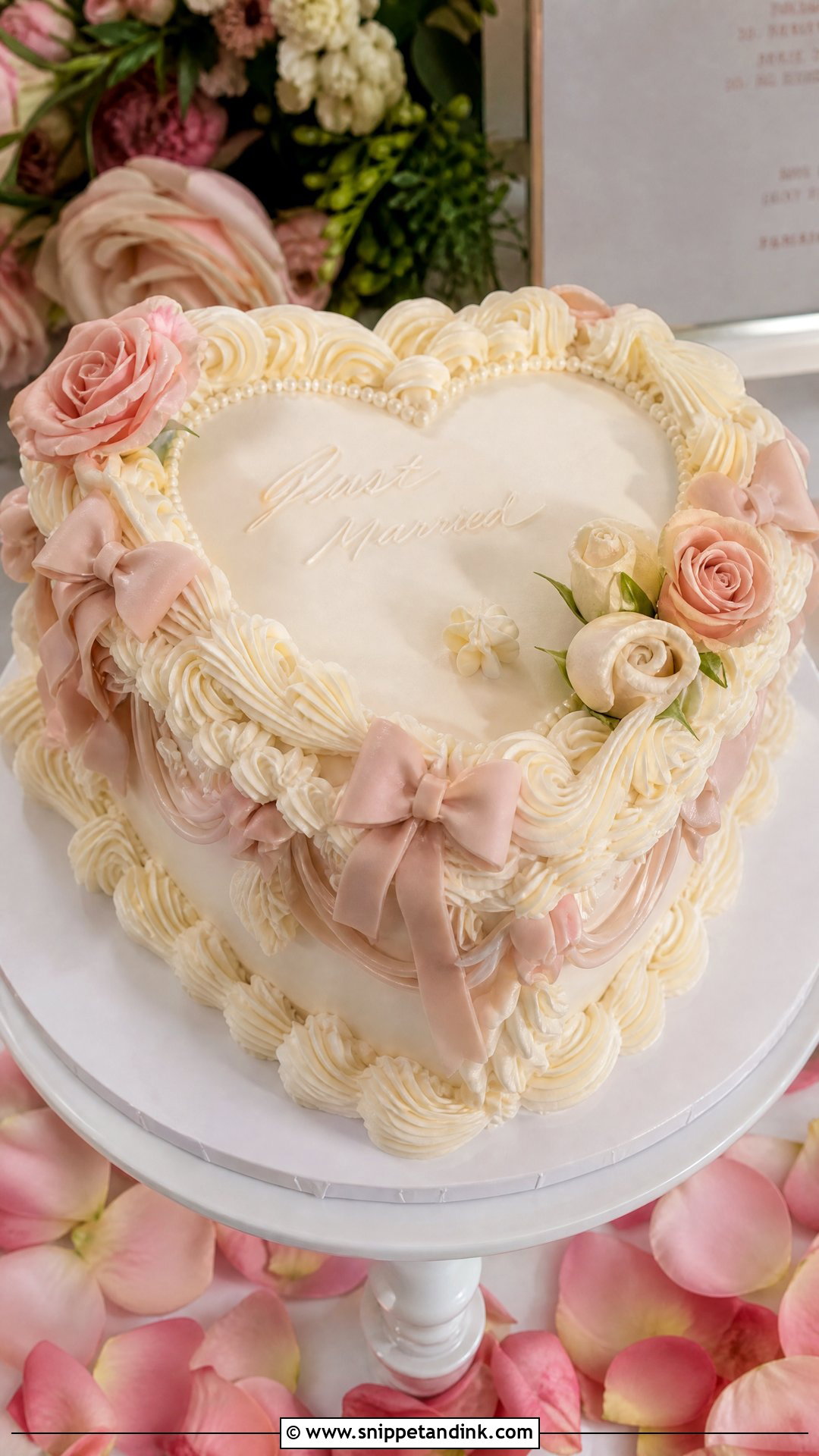
Heart shapes feel charming and instantly memorable. A heart works as a small cutting cake, a stacked two-tier or a full vintage centerpiece. Since the shape already does the talking, I keep the decoration soft: piped borders, tiny bows, pastel frosting, pearls or fresh flowers around the edge. Heart cakes are cut from a round or square and carved, so they yield fewer neat slices than a round of the same size. It suits intimate weddings especially. A pedestal stand with florals around the base completes it.
10. Cherry Wedding Cake
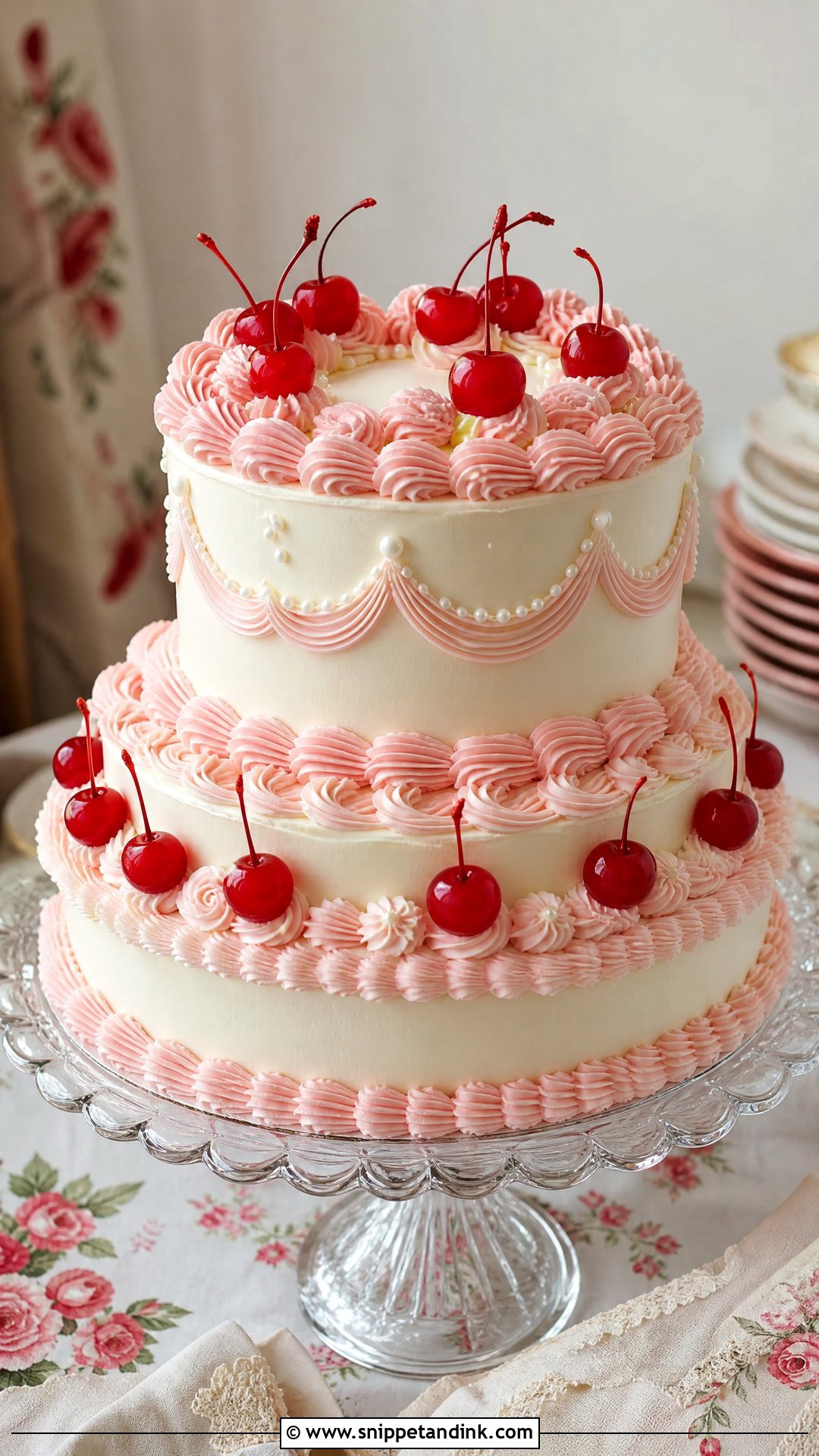
Retro diner charm is what a cherry wedding cake does best. The classic version uses vintage piping with glossy cherries tucked along the borders or set neatly on top. Ivory keeps it traditional; pastel pink, blue or yellow frosting makes it more whimsical. Real cherries weep juice onto buttercream after a few hours, so I dry them well and add them close to serving time, or use sugar or candied cherries for a long display. Vanilla, almond, chocolate, pistachio and cherry-vanilla flavors all pair well.
11. Butterfly Wedding Cake
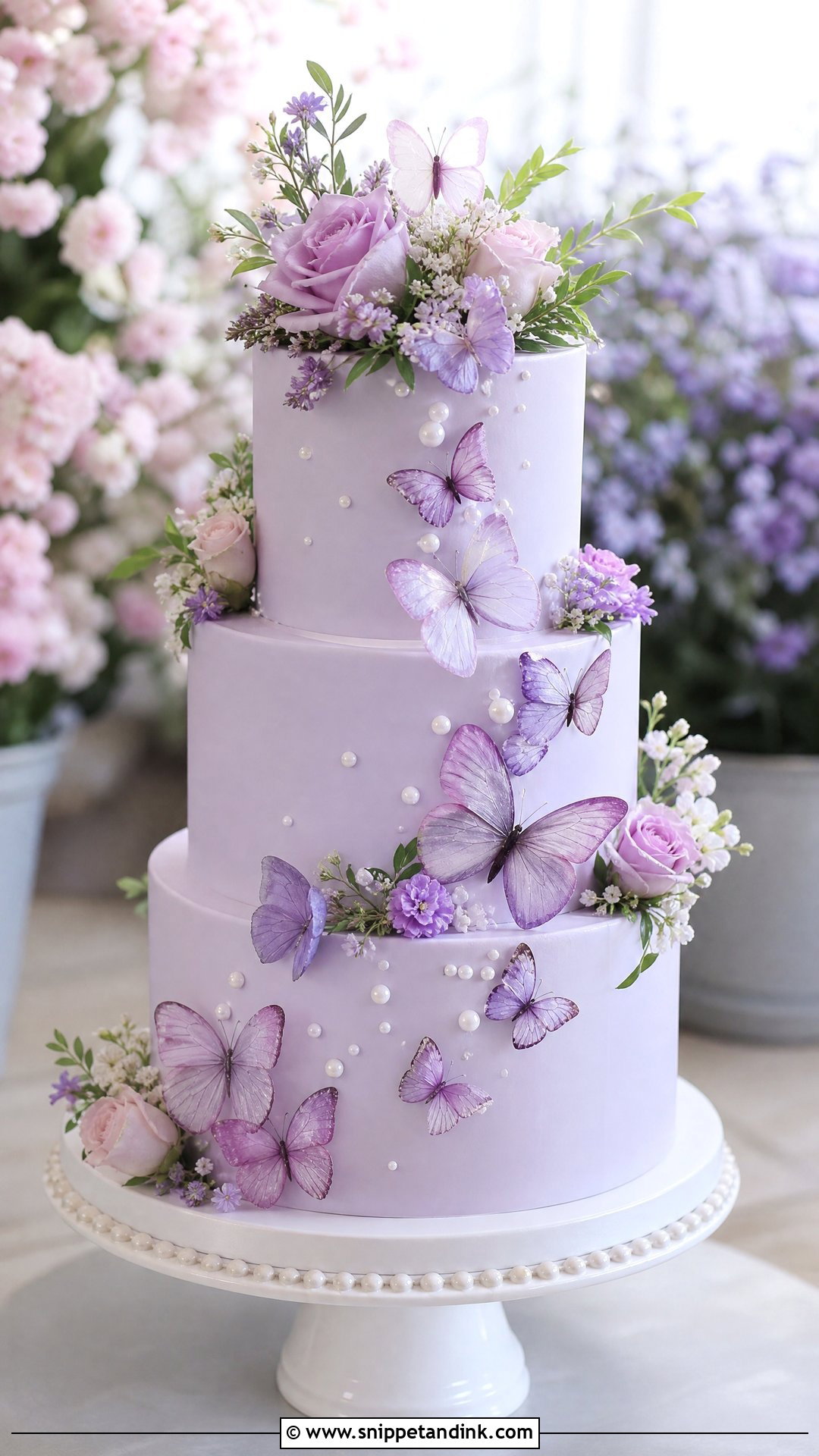
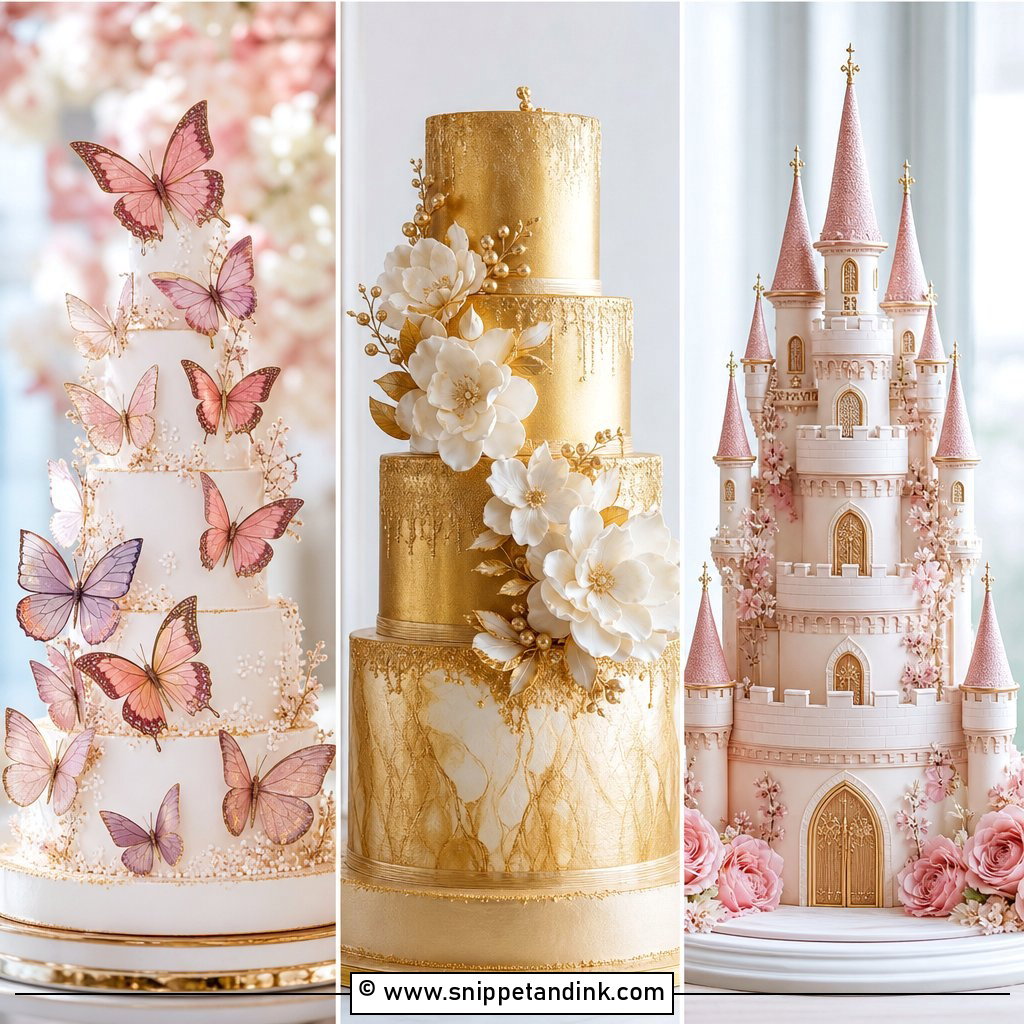
Few details feel lighter on a tiered cake than a cloud of butterflies. A butterfly wedding cake can use wafer paper, sugar, chocolate or edible prints, scattered up the tiers as if they’re taking off, or clustered near flowers. Wafer paper is my first choice for movement because it’s thin and light, but it curls and softens in humidity. For a humid garden, I’d switch to sugar or chocolate. Soft ivory, blush, lavender and pale blue keep it romantic. Smooth frosting lets the butterflies stand out.
12. Mushroom Wedding Cake
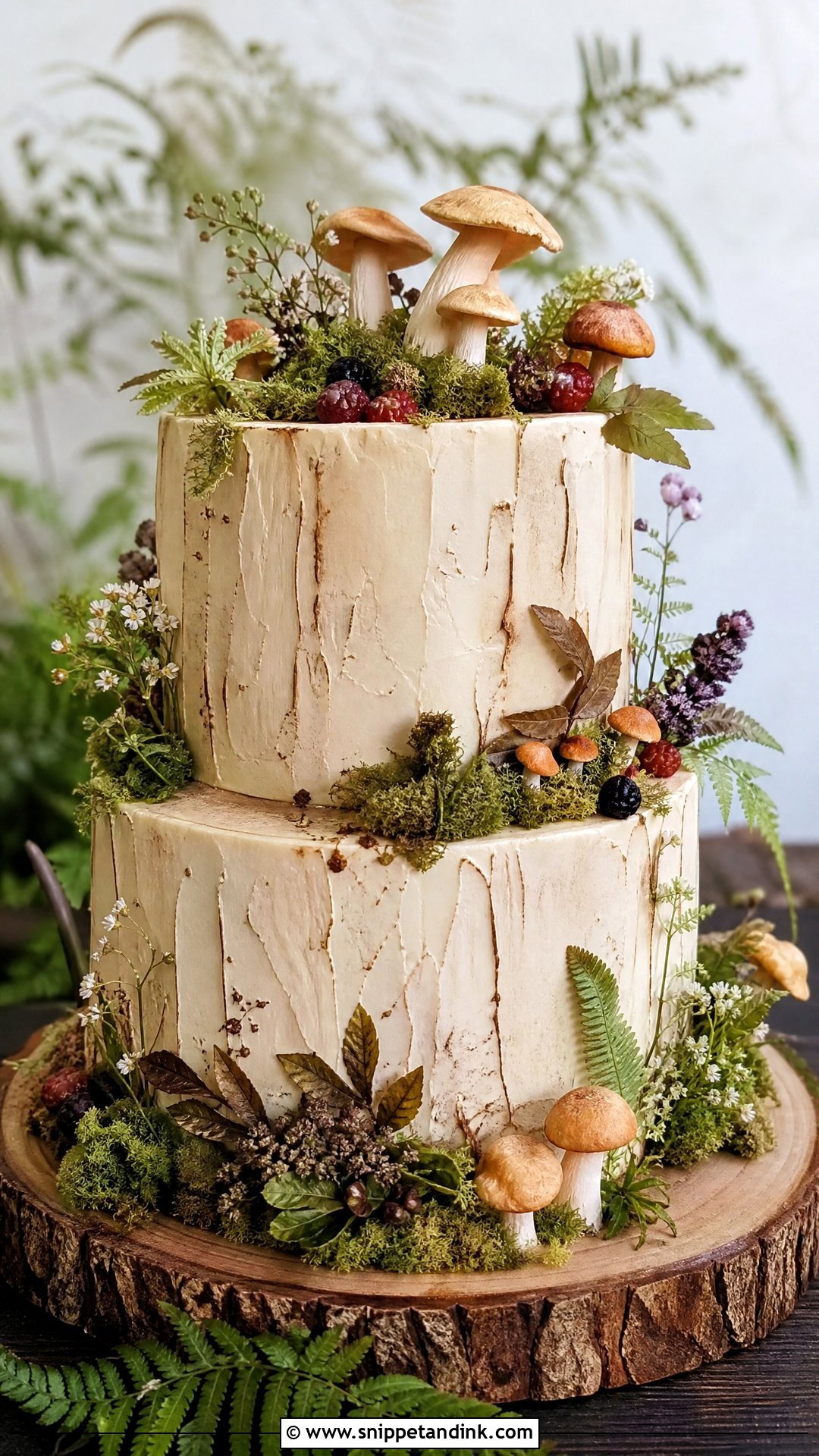
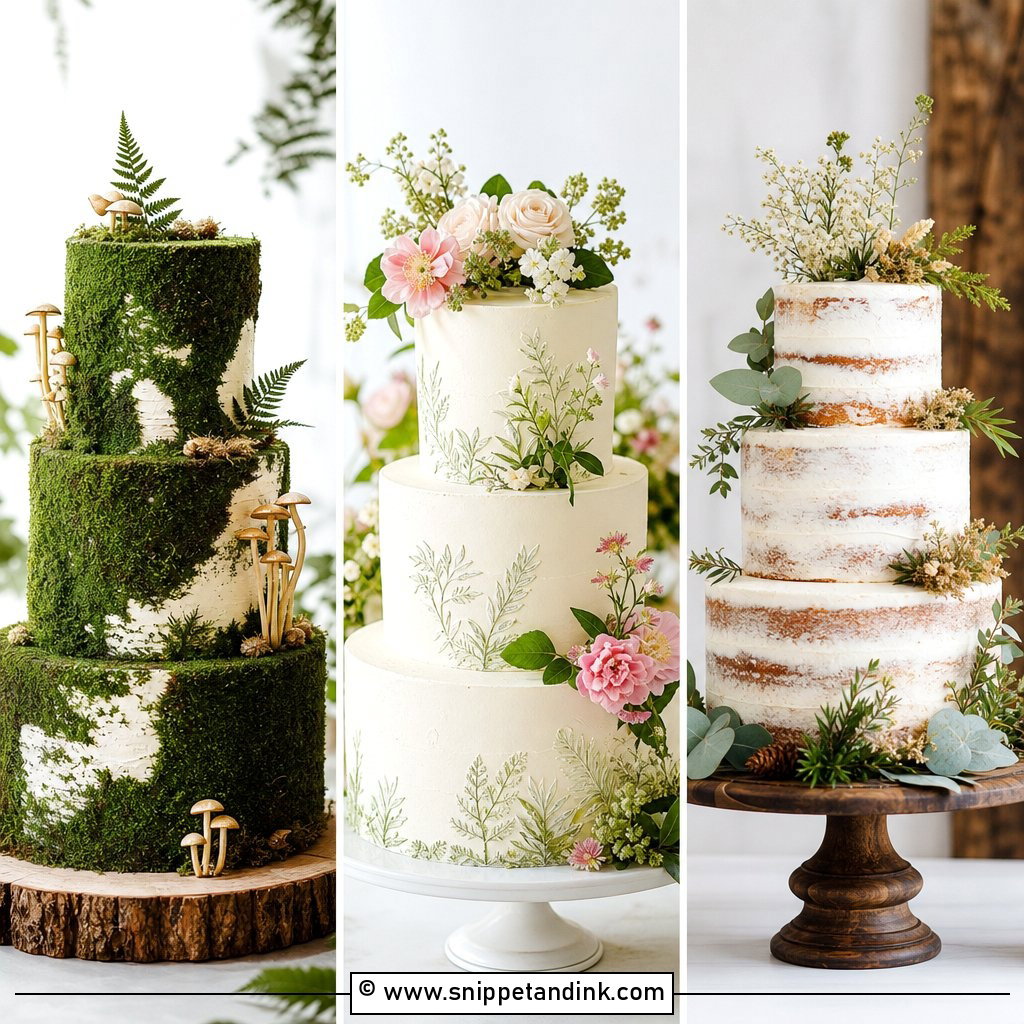
Woodland, fairy garden and storybook weddings are where a mushroom wedding cake shines. The challenge is keeping it charming instead of cartoonish. I use buttercream bark texture, mossy green accents, sugar mushrooms, tiny flowers and delicate leaves. A neutral ivory, caramel or sage palette stays elegant; red-capped mushrooms add a bolder fairytale note. Moss effects made from crumbs or piped grass look more natural than green fondant. Spice, carrot, brown butter, vanilla bean or chocolate flavors fit the earthy look.
13. Fairy Garden Wedding Cake
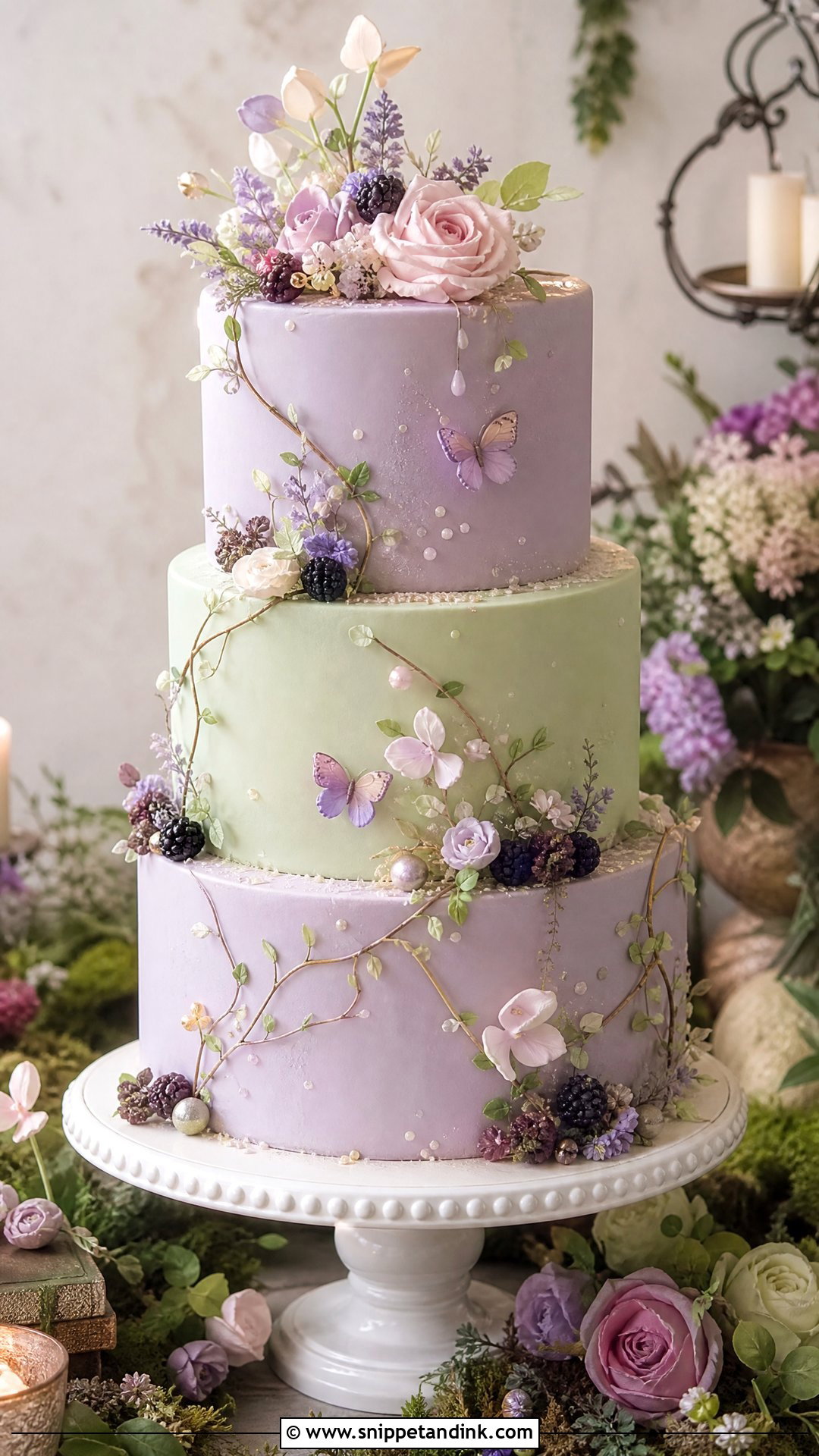
Flowers, vines, a little shimmer and soft color make a fairy garden cake feel magical while staying grown-up. Think delicate sugar blossoms, tiny leaves, pastel buttercream and gentle movement around the tiers. Round and classic works, but a slightly asymmetrical arrangement looks more natural. Lavender, pistachio, lemon and vanilla match the light mood. I’d skip oversized fantasy props; a few small butterflies, pearl drops or sugar berries are plenty. Use edible glitter only, not craft or ‘non-toxic’ decorative glitter, which isn’t meant to be eaten.
14. Pressed Flower Wedding Cake
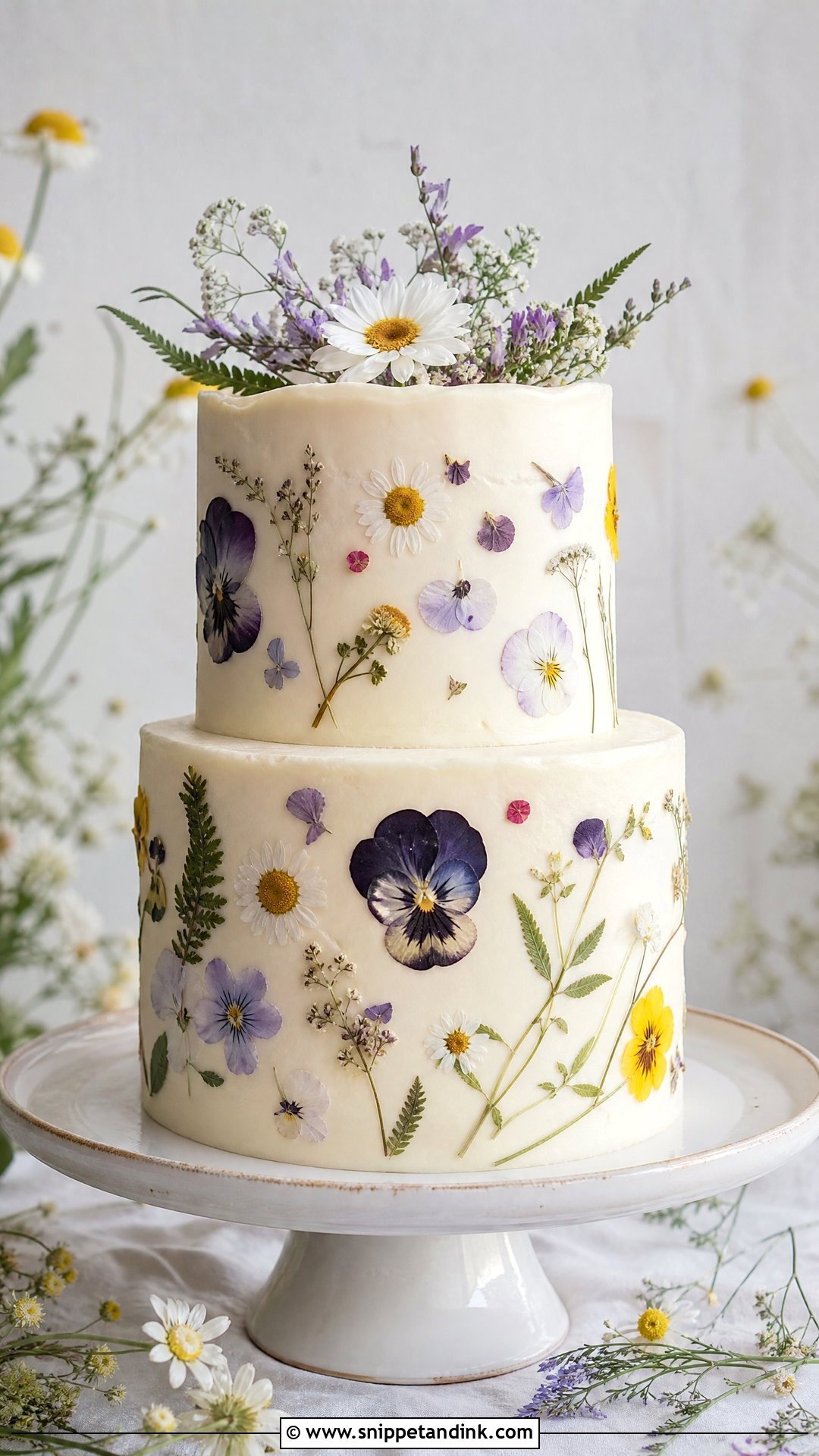
Pressed flowers sit flat against buttercream or fondant and look botanical and handmade. Clean white, ivory or pale pastel frosting lets them show. Bright petals give a colorful cake; neutral blooms feel quieter. Only food-safe edible flowers grown without pesticides belong on a cake, and I source them from growers who sell for culinary use rather than a florist’s cooler. Pressed petals are brittle, so I place them on a slightly tacky surface with a soft brush. It suits outdoor weddings, micro weddings and brunch receptions.


15. Ruffle Wedding Cake
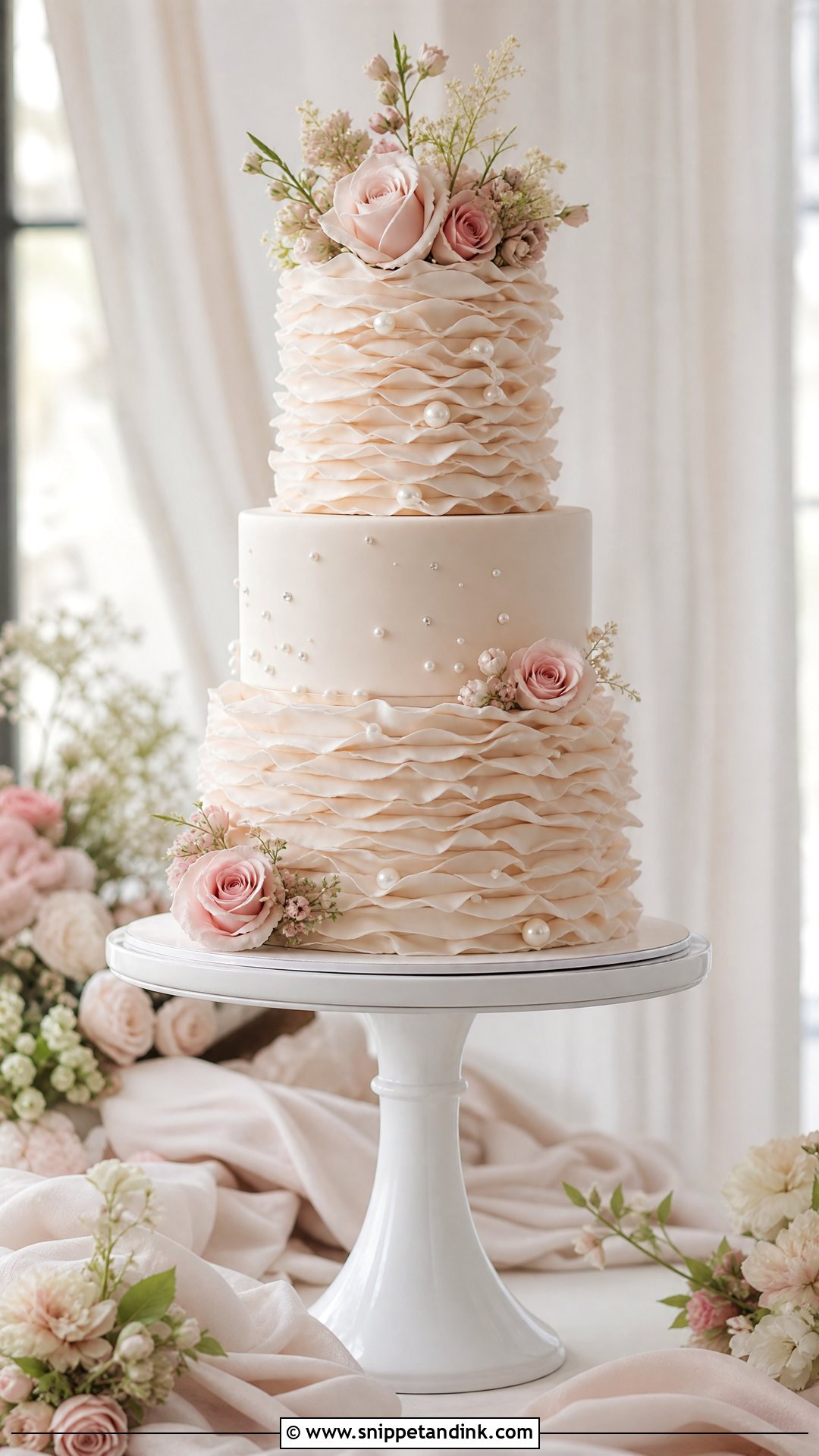
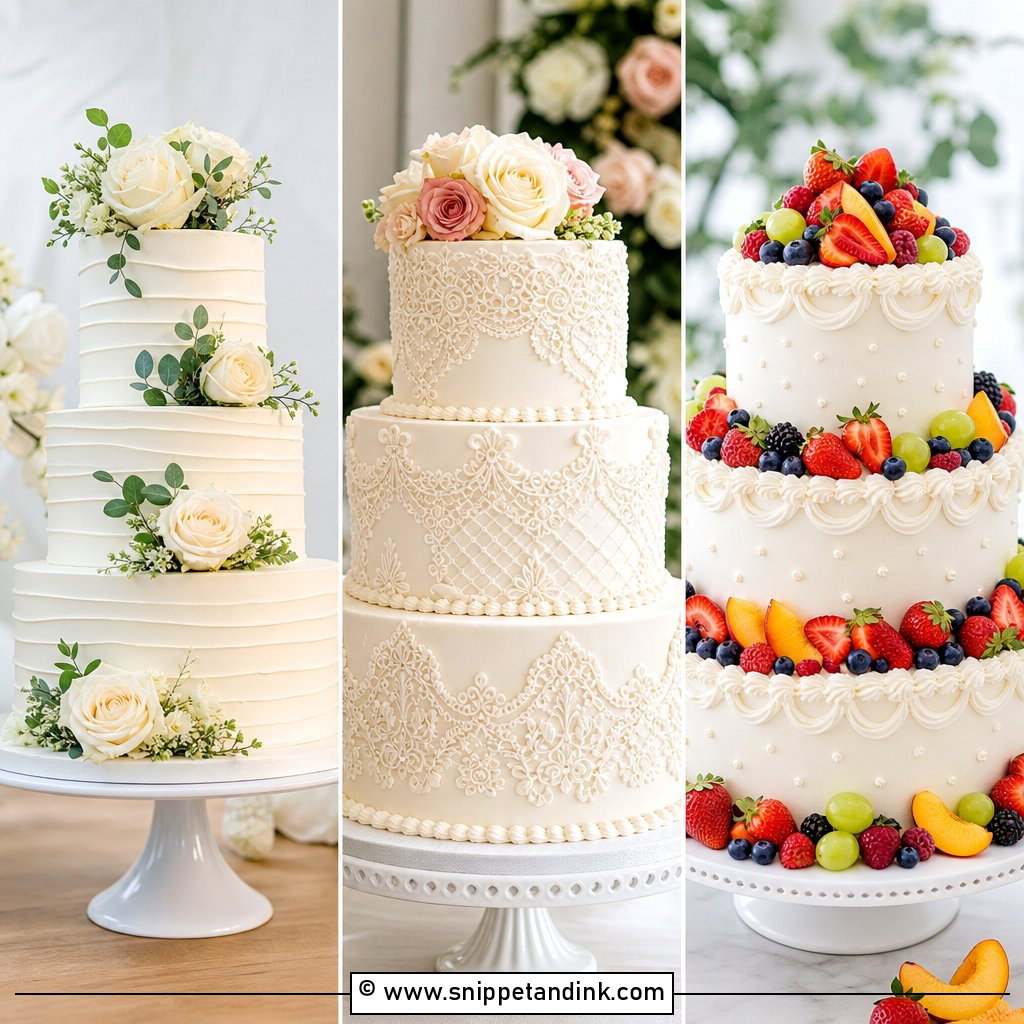
Ruffles add movement and softness. They can be buttercream, fondant, wafer paper or thin sugar sheets. For a whimsical look, I make them uneven and airy rather than stiff and regular. White and ivory are classic; pale pink, lavender, peach or blue feel more playful. Covering every tier in ruffles makes a dramatic cake, but one ruffled tier with smooth tiers around it often looks more refined. Buttercream ruffles soften in heat, so in a warm garden I’d use fondant or wafer paper instead.
16. Watercolor Wedding Cake
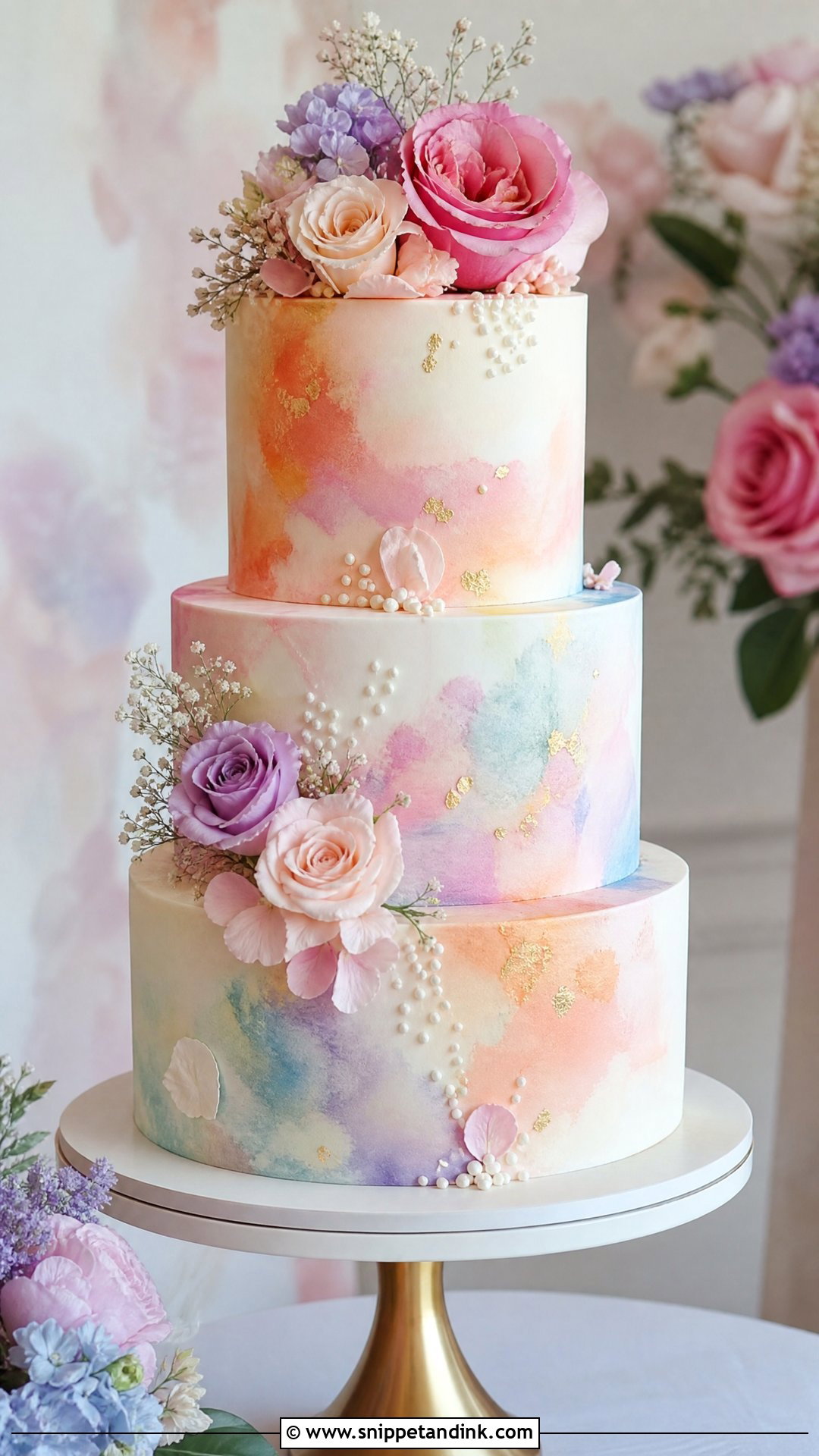
Watercolor frosting blends soft washes of pink, peach, lavender, blue and green, like a painted sky. It looks best when the colors fade gently into one another without hard lines. On buttercream, I spread small amounts of each shade and smooth them together with a scraper; on fondant, I paint the wash with thinned color. Fresh flowers, a few gold touches or tiny piped dots add detail. It’s a good route if you want color without committing to a bold solid frosting.
17. Whimsical Tiered Wedding Cake
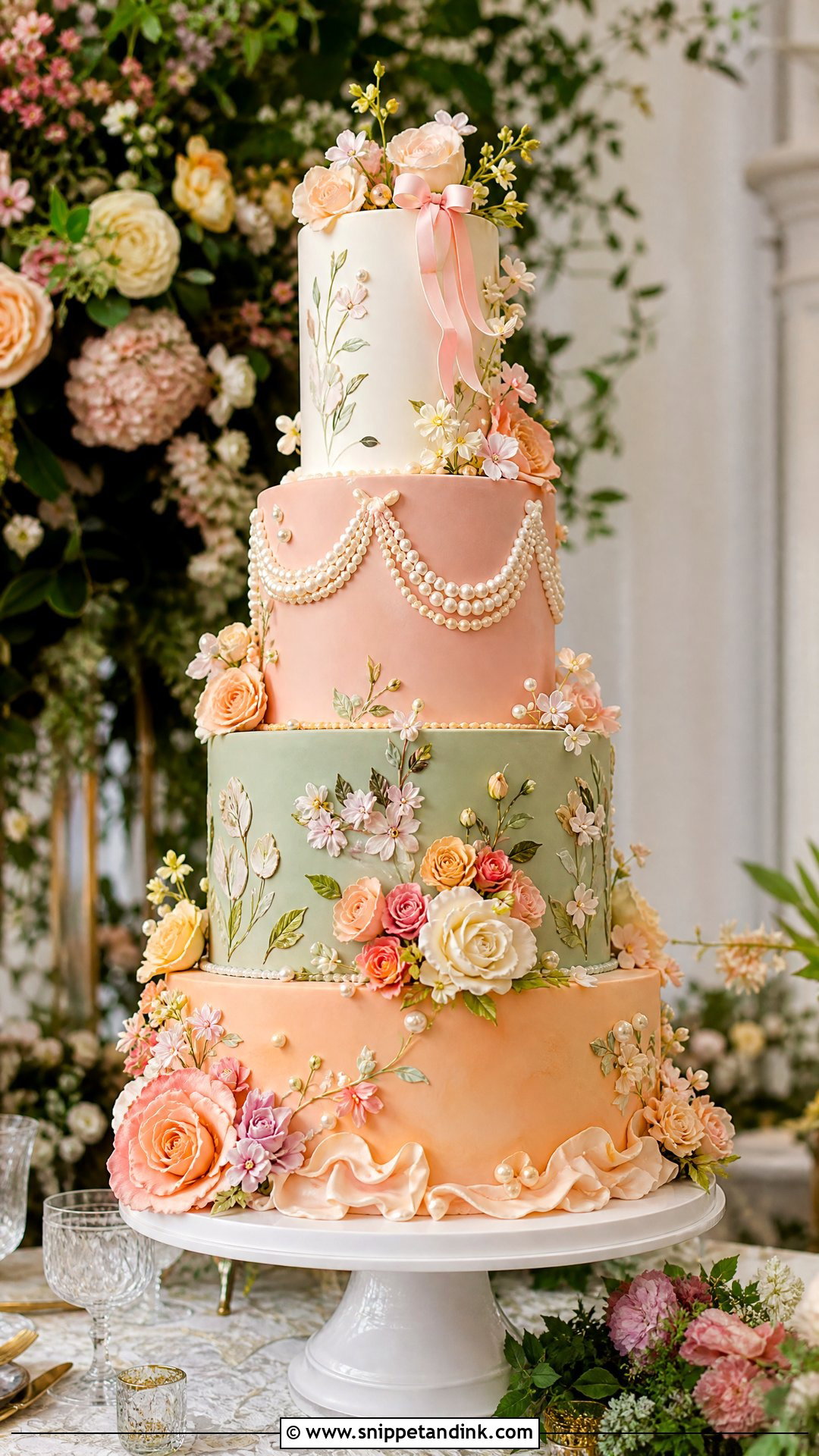
Classic tiers with playful details let you combine several ideas in one cake. Each tier can carry a different texture: smooth buttercream, ruffles, painted flowers, piped swags or pearls. The trick is a shared palette. Ivory, blush, peach and sage, for example, hold very different textures together. I always sketch the full cake before we commit, since four textures that look good separately can clash when stacked. Flowers climbing from one tier to the next tie it together, and it suits couples who love several trends and can’t choose one.
18. Mini Wedding Cake
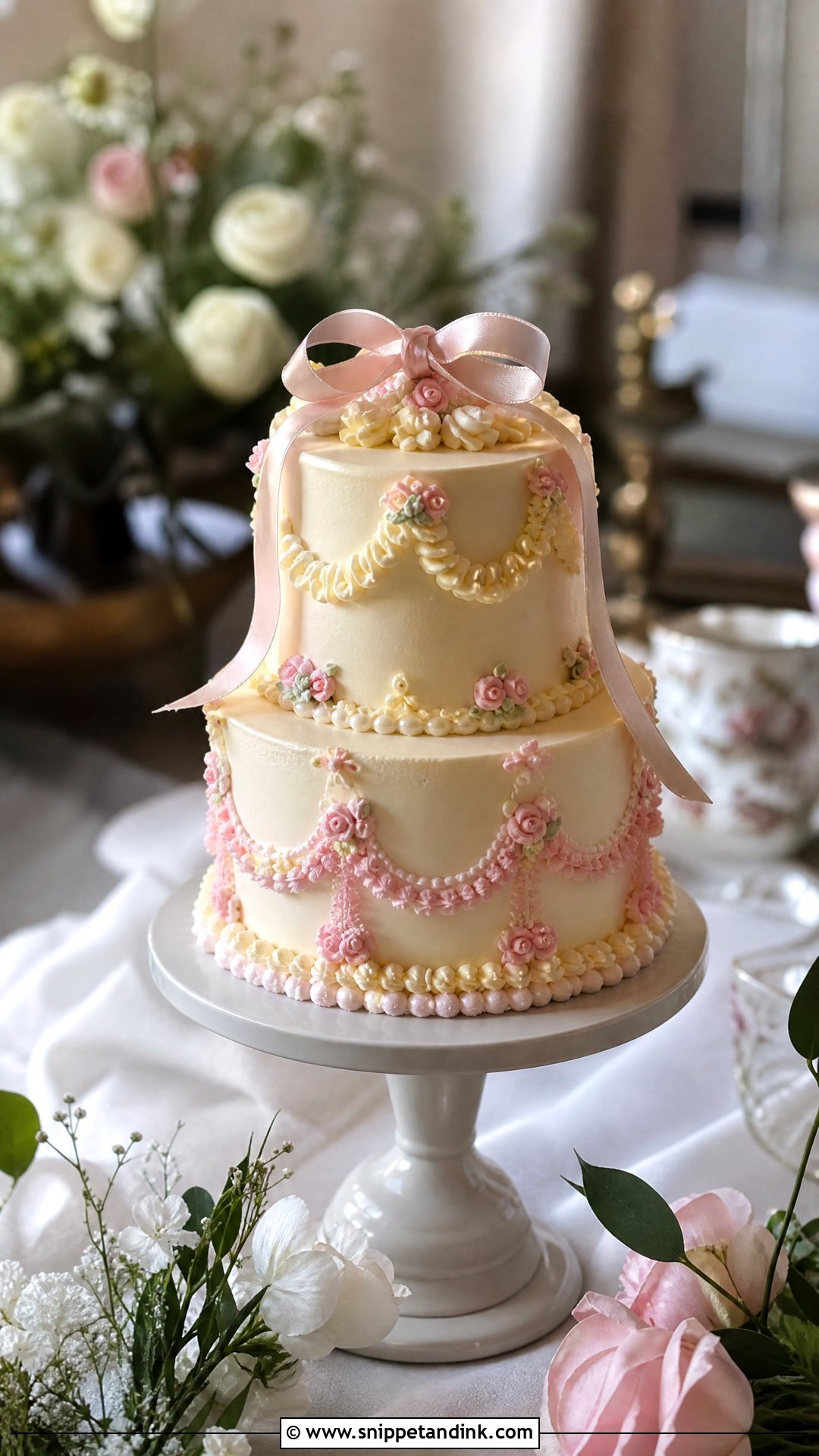
A small cake can carry big personality. Mini wedding cakes suit intimate weddings and elopements, and even one or two tiers can feel whimsical with vintage piping, pastel frosting, tiny sugar flowers, pearl borders or a little bow on top. A small cake also lets you try a more adventurous flavor, such as lavender honey, lemon raspberry, pistachio rose or almond cherry. Proportion matters more at this size. Decorations that look delicate on a five-tier cake can overwhelm a six-inch one, so I scale everything down. A pedestal with flowers and candles finishes the display.
19. Square Wedding Cake
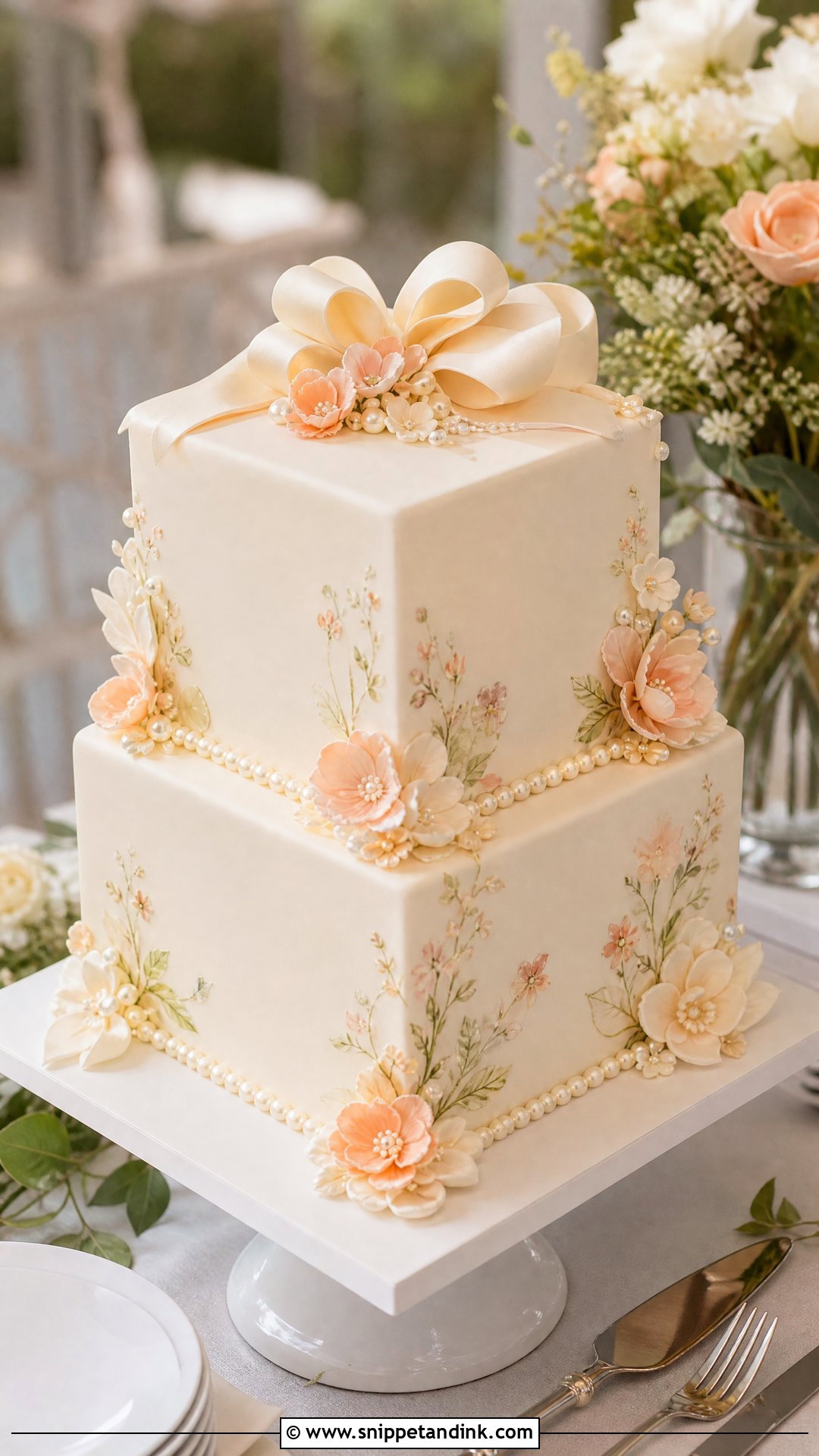
Square tiers look modern, yet they soften easily with flowers, color, piping or painted details. Try pastel panels, floral corners, pearl borders or sugar bows along the edges. Sharp corners are harder to achieve on a square cake than on a round, especially in buttercream, so I set the corners with a firm ganache layer under the frosting. Square cakes also give more servings per tier than rounds of the same width. It suits art gallery weddings, modern gardens and bold tablescapes.



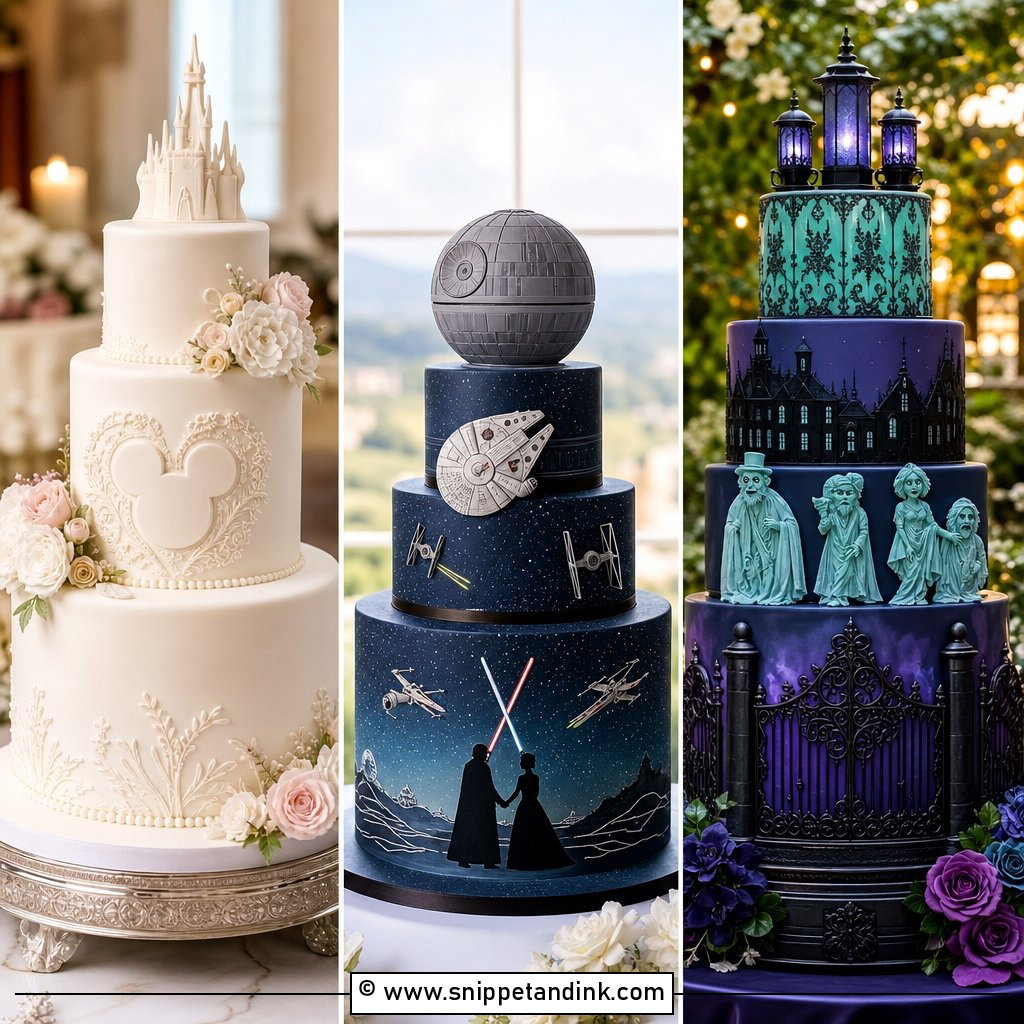
20. Castle Wedding Cake
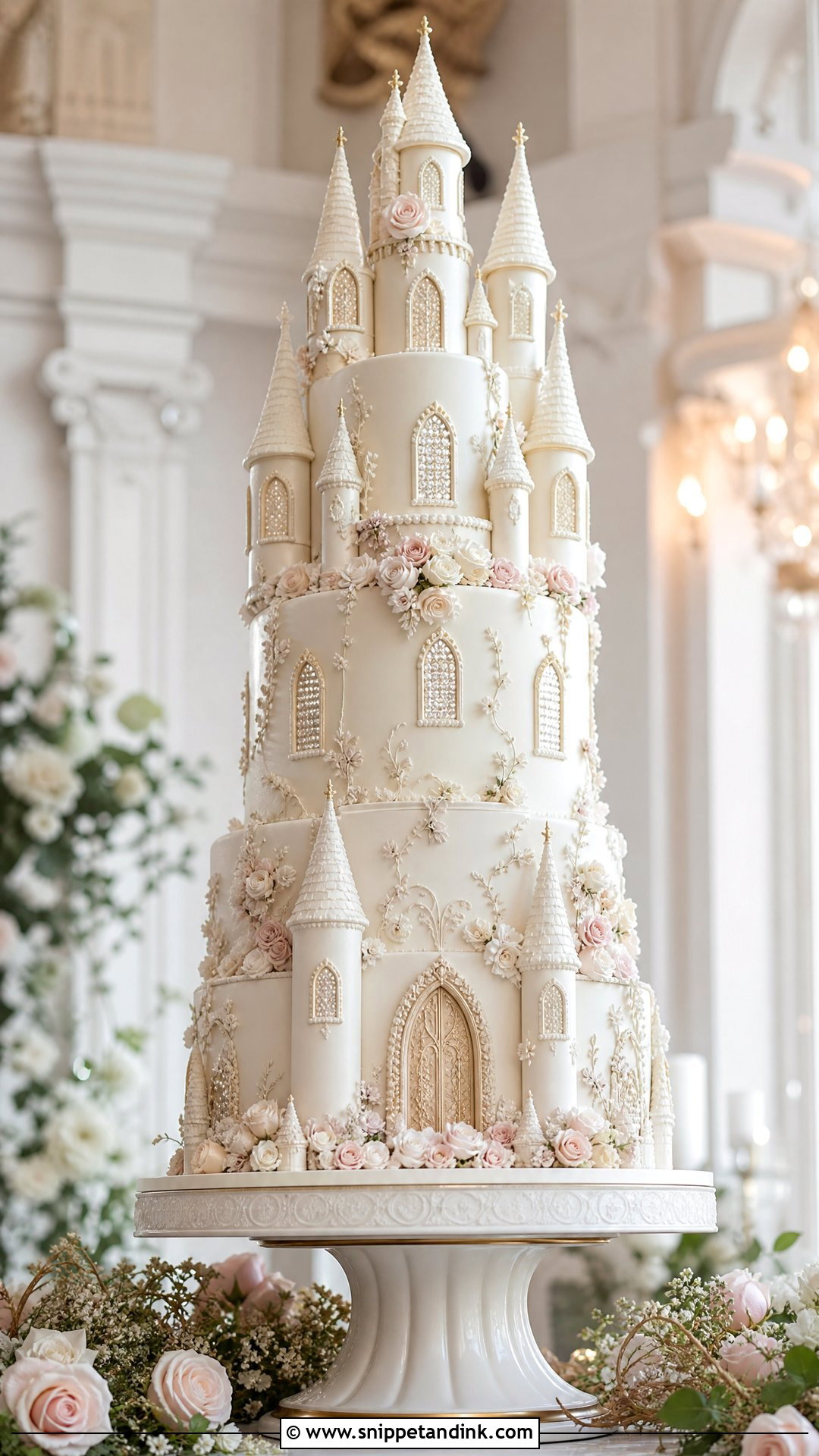
Fairytale weddings sometimes call for something grand, and a castle wedding cake is exactly that. The aim is soft castle details rather than a child’s birthday cake: tall tiers, delicate turrets, pearl windows, sugar flowers and pale ivory frosting, with soft blue, blush or champagne accents. Tall cakes need internal dowels and a central rod to stay stable, and turrets are often made separately and placed at the venue. It needs height and space around it on the table. It fits historic venues, ballrooms and garden estates.
Fresh Flowers on Frosting: What’s Safe and What Isn’t
Many whimsical cakes in this list use real blooms, and this is where I’m strictest. Not every flower is safe near food. Lily of the valley, foxglove, hydrangea, sweet pea and many lilies are toxic, and florist flowers are usually sprayed with pesticides.
- Ask for pesticide-free or organic flowers if they will touch the cake at all.
- I wrap every stem in floral tape and set it in a food-safe pick or straw, so no stem goes directly into the cake.
- Remove all flowers before slicing, and don’t serve the frosting they touched.
- Let your baker and florist talk directly about which varieties are coming.
If that sounds like a lot to manage, sugar flowers or edible blooms grown for food avoid most of the worry.
How Far Ahead a Hand-Detailed Cake Needs Ordering
Painted, piped and sugar-flower cakes take far longer than a plain buttercream tier. Sugar flowers are made by hand and need time to dry before they’re wired and placed, and Lambeth piping or hand painting can take a full day of work on its own. Most bakers want a tasting and a deposit months before the wedding, and detailed designs book up early in summer. Ask how many cakes your baker takes per weekend, whether delivery and setup are included, and if they’ll come back for any flowers or props you’re keeping. Lead times and prices vary a lot between bakers, so get those answers in writing.
A Cake That Belongs in Your Garden
What I love about whimsical cakes is that they show personality in a form you can eat. They can be colorful, vintage, floral, painted or a little magical, but the best ones still belong to the wedding around them. Bring your venue details, dress, flowers and color palette to your tasting. A simple cake turns whimsical with the right piping or flowers, while a bold one stays elegant with careful color and clean structure. Use these designs as a starting point, and let your baker help shape them into a cake that suits your garden and your day.
You'll Like These Ideas:





Leave a Reply