
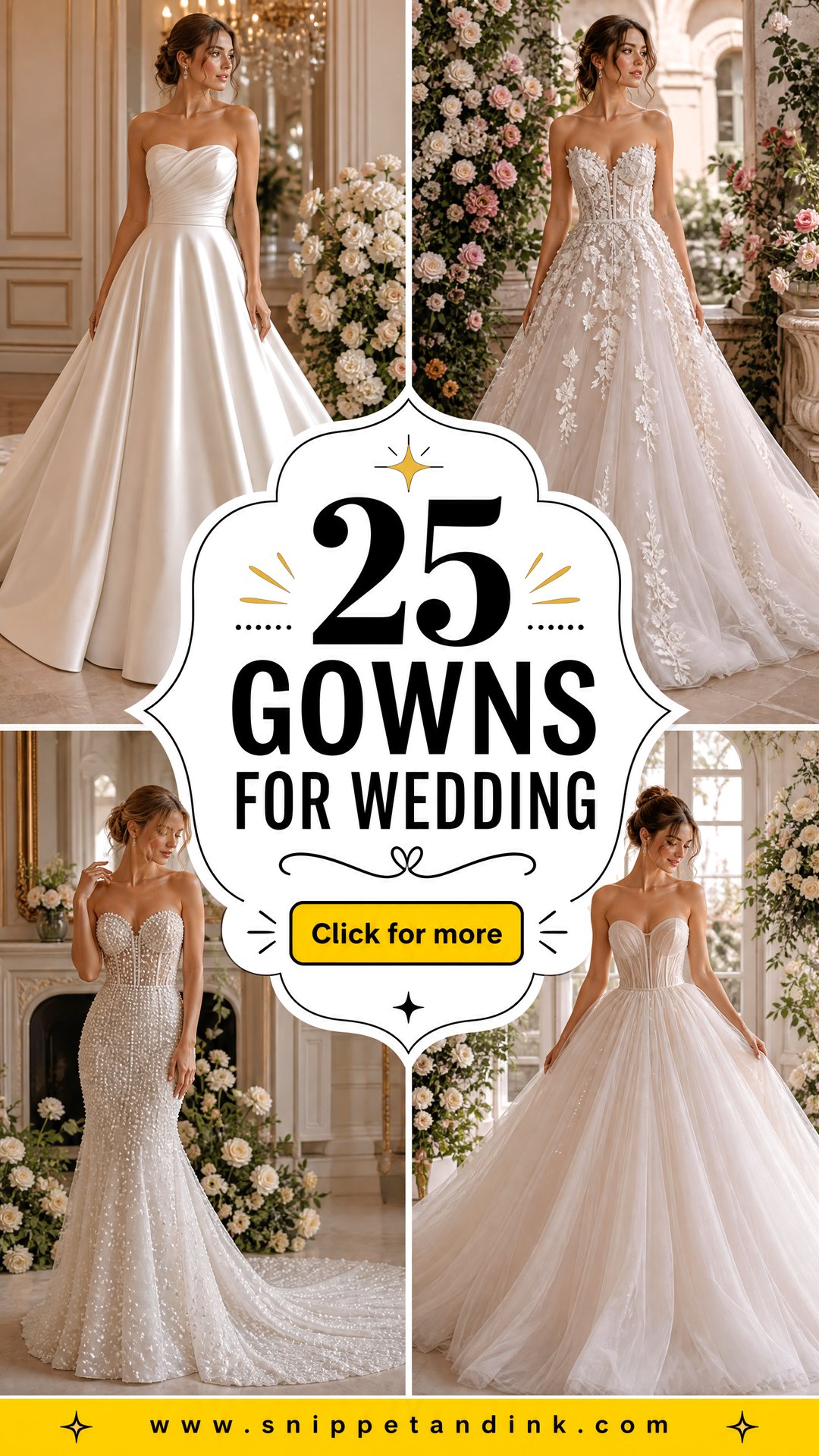
The gown sets the tone for everything else you wear, from the aisle to the last dance. The gowns for wedding moments today go well beyond one classic shape: clean satin, sculpted corsets, basque waists, floral appliqué, pearl details and detachable sleeves all sit comfortably alongside lace and tulle. In appointments, I steer brides away from the hanger and toward their day. Where is the venue, how long will you be standing, will you dance, and how warm will it be? Those answers narrow fabric, neckline, sleeves and train length quickly. Below are 25 gowns, with notes on how each one wears, not just how it looks.
A Realistic Ordering Timeline for a Made-to-Order Gown
Most bridal gowns are not taken off a rack. They’re made to order in your size after you choose one in a sample, and the production time is what catches brides out. Timelines vary by designer and season, but this is the sequence I plan around:
- Start shopping roughly nine to twelve months before the wedding. That leaves room if your first choice has a long wait.
- Order the gown about eight months out. Many designers quote several months for production, and shipping can add more.
- Book the first fitting for two to three months before the date, once the gown arrives.
- Plan a second fitting a few weeks later and a final one about two weeks before, with your shoes and underwear.
- Collect the gown in the last week, and have someone learn the bustle at that final appointment.
If the wedding is sooner, it’s still possible. Look for boutiques selling samples or ready-to-wear gowns, and ask about rush fees, which some designers offer at an extra cost. Simpler silhouettes like a crepe sheath or plain satin A-line are also quicker to alter than heavily beaded or lace gowns.
1. Satin Ball Gown For Wedding
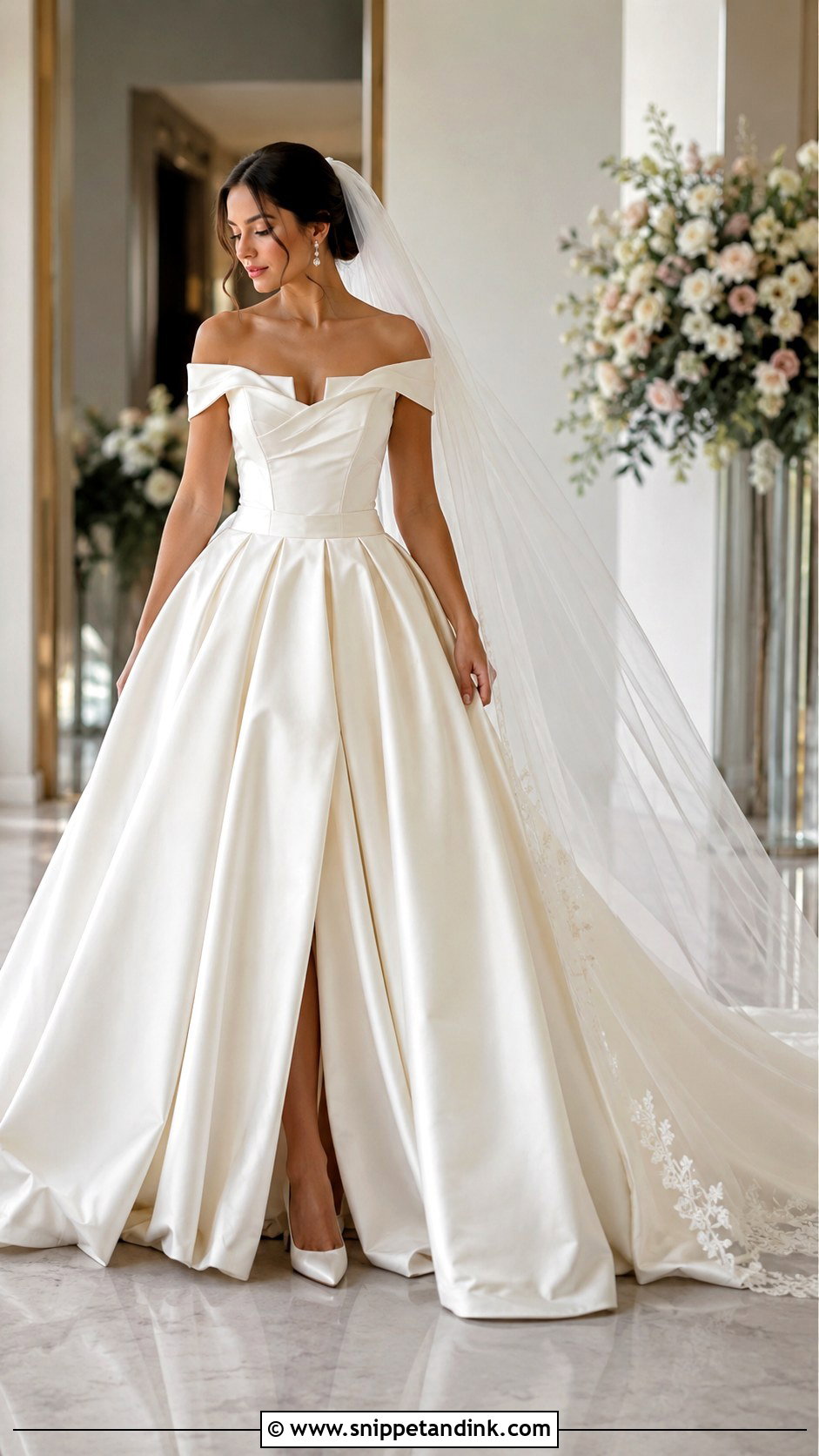
A satin ball gown is grand without any extra detail, because the fabric and the full skirt carry it. A structured bodice, a soft square neckline and a defined waist suit it best. Satin reflects light evenly, so the skirt looks rich in photos even in a dim hall. The honest downside is weight. A full satin skirt with a crinoline is heavy, and I always have brides walk the length of the boutique and sit down twice before deciding. Pointed satin heels, pearl drops and a cathedral veil give the classic finish, or keep it cleaner with a low bun and a small bouquet of white roses. Hotel ballrooms and formal indoor venues suit it.
2. Lace A Line Gown For Wedding
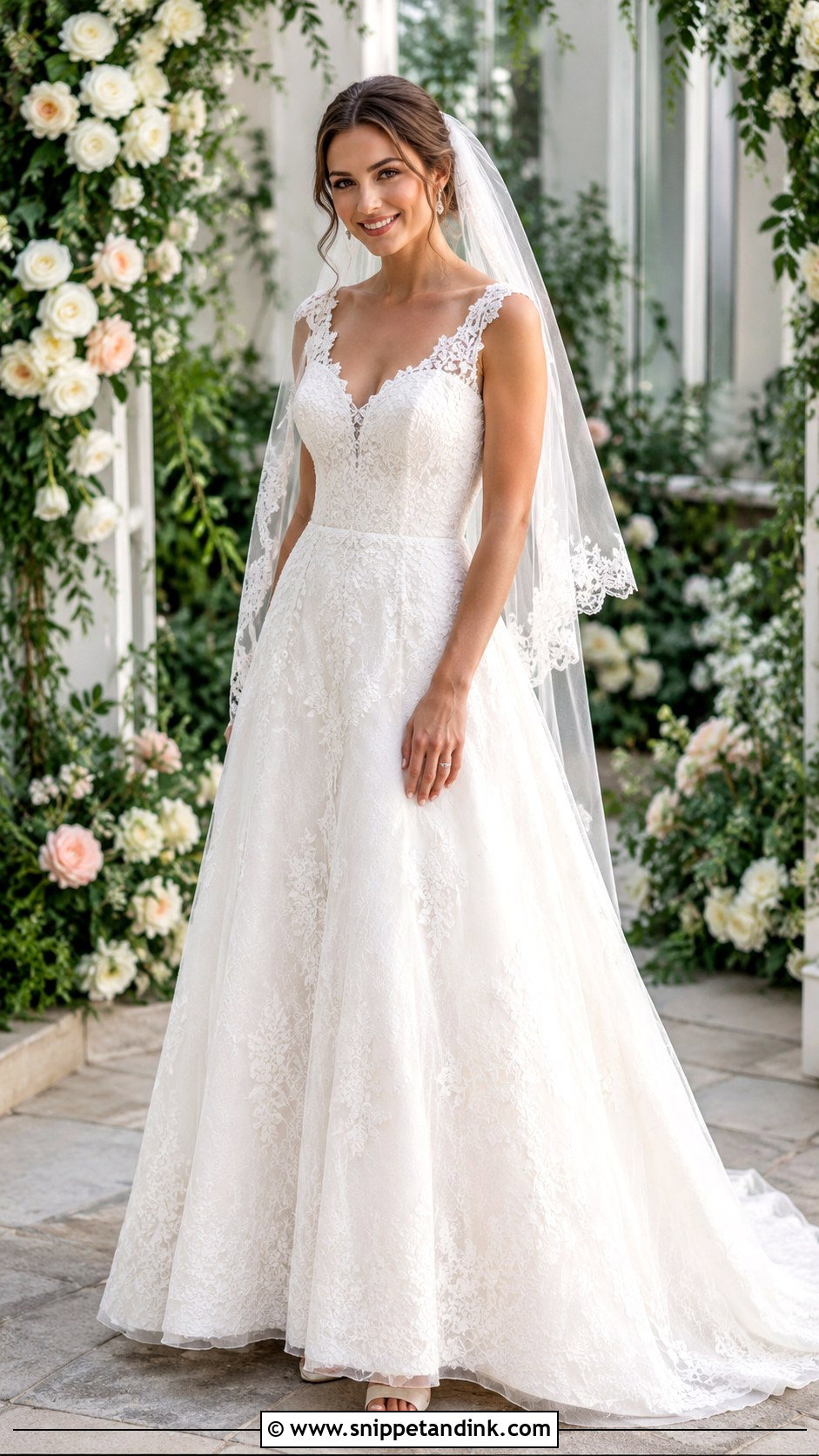
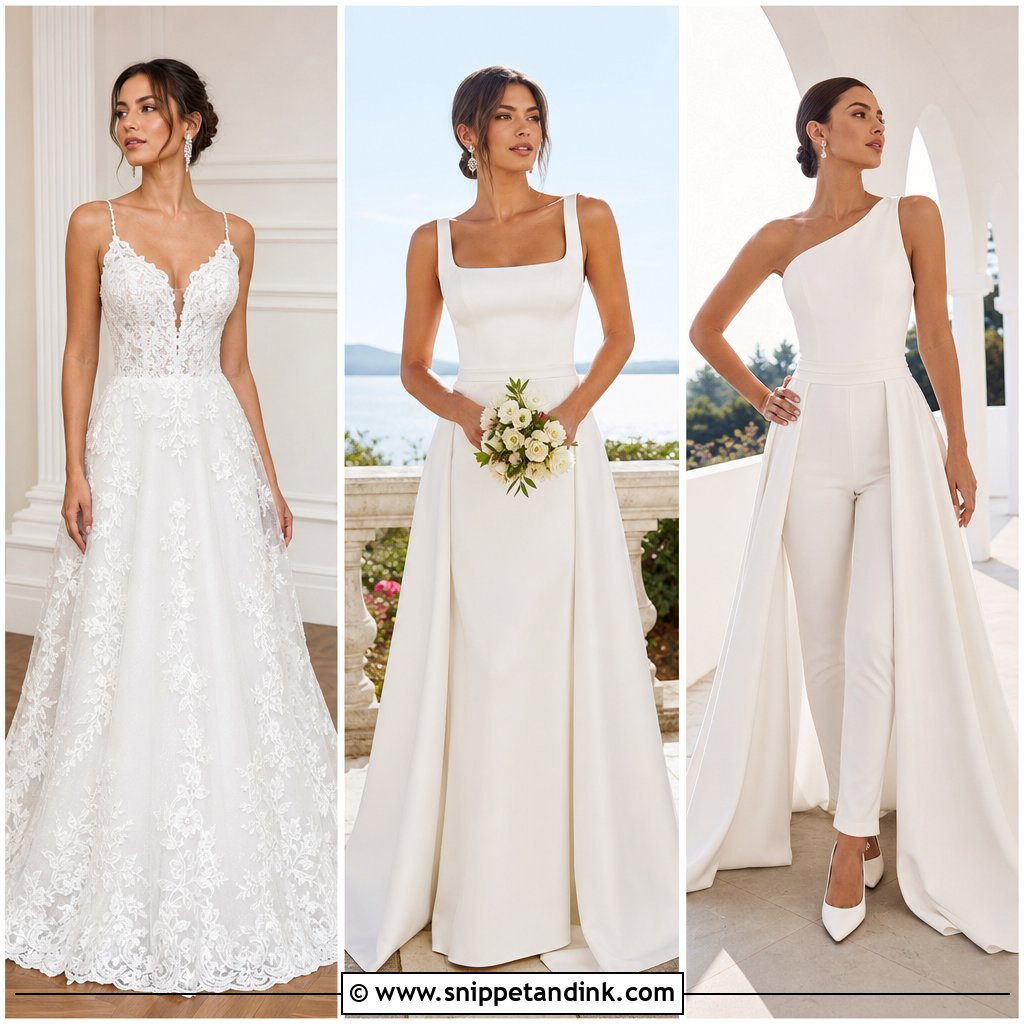
Lace A-line is the gown I suggest most often to brides who want something comfortable that still feels like a wedding dress. The fitted top gives structure and the skirt falls softly without weight, so walking, sitting and dancing are easy. Delicate floral lace reads romantic; bold geometric lace feels more fashion-led. Ask whether the lace is re-embroidered (corded) or flat, because corded lace has more depth in photos and holds up better to handling. Nude or ivory heels, a fingertip veil and small crystal earrings suit it, with half-up hair so the lace at the neckline stays visible. Garden and estate venues are its natural home.
3. Off Shoulder Gown For Wedding
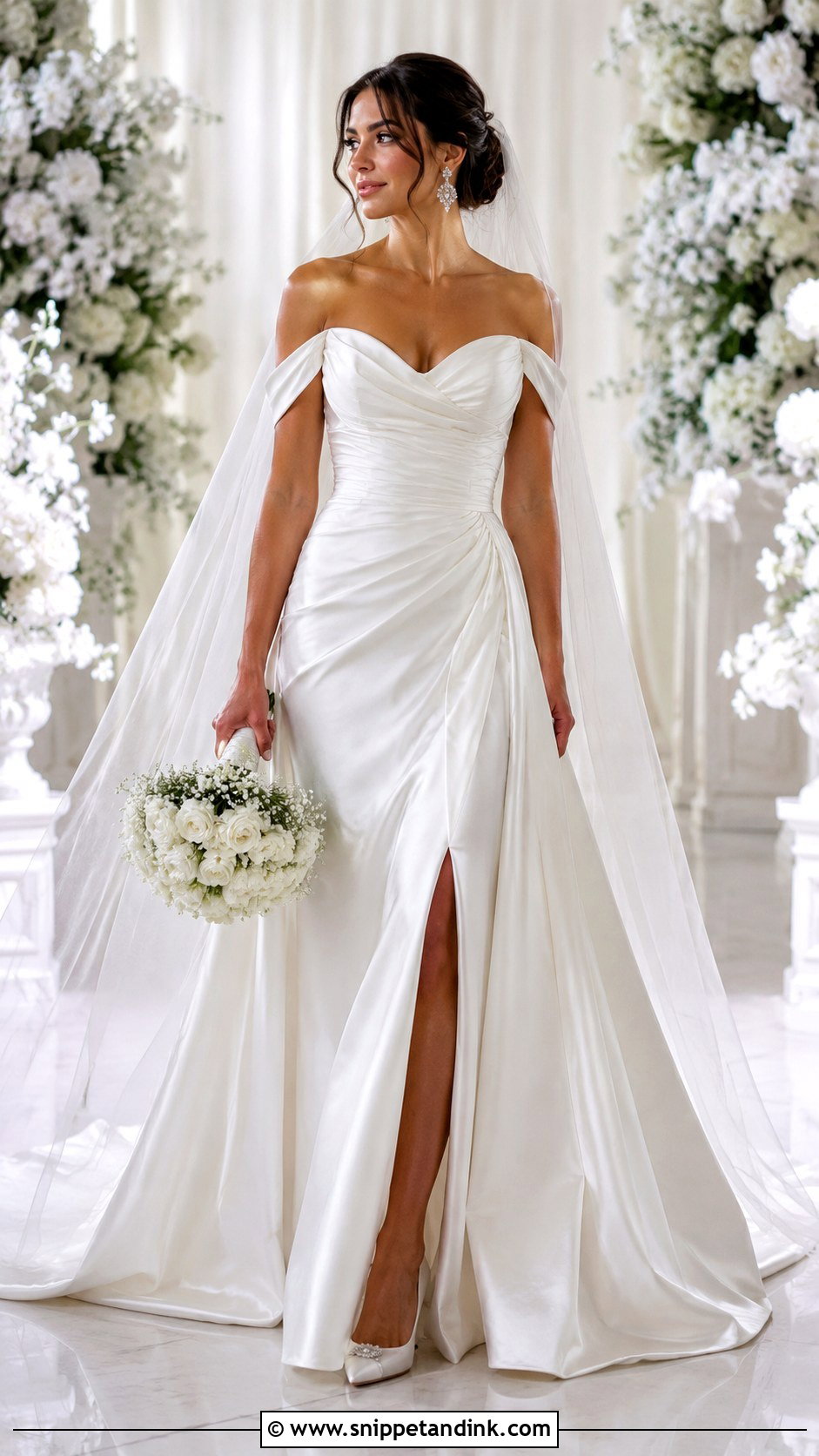
Off-shoulder necklines frame the collarbones and draw attention straight to the face. A fitted bodice with a flowing skirt keeps the balance, and the fabric shifts the mood: satin for formal, crepe for sleek, mikado for structured. Here’s what I test at every fitting. Raise both arms as if hugging someone. If the sleeves pull the bodice down, the gown needs a stronger inner corset or elastic gripper. Statement earrings usually work better than a necklace. Ivory heels, a neat updo and a sheer veil complete it for spring, summer and formal evening weddings.
4. Long Sleeve Gown For Wedding
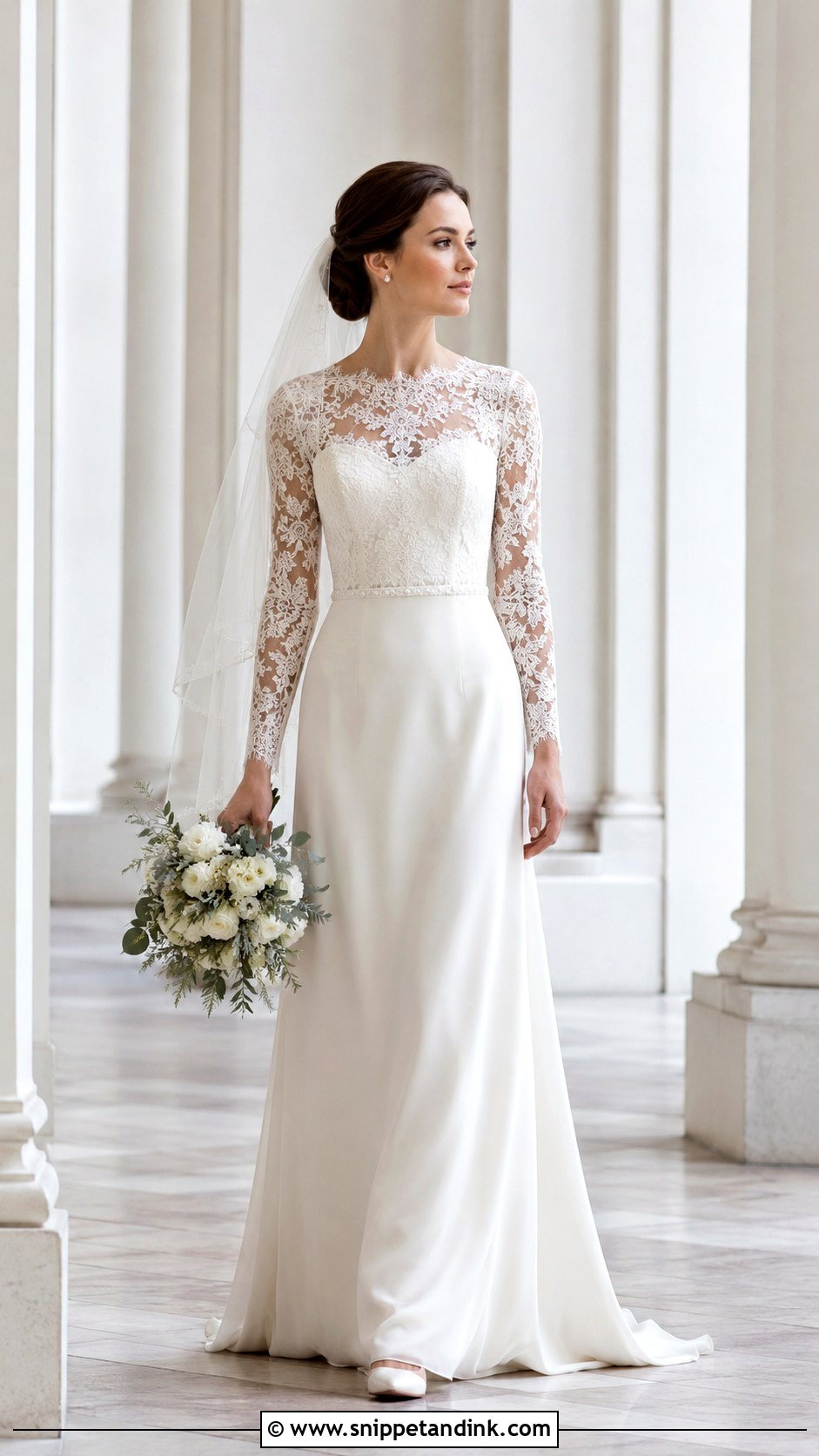
Long sleeves bring coverage and polish, and they’re the obvious choice for winter or a church with a dress code. Sheer lace sleeves are romantic, fitted crepe ones clean and modern. Movement is the issue. Unlined, non-stretch sleeves restrict your arms when you lift the bouquet or hug guests, so look for stretch lace, illusion mesh or a light lining. Pair with closed-toe heels, pearl studs and a simple veil that doesn’t hide the sleeve detail. A sleek bun or soft waves both work, depending on the neckline, and a tailored bodice gives clean lines in portraits.
5. Mermaid Gown For Wedding
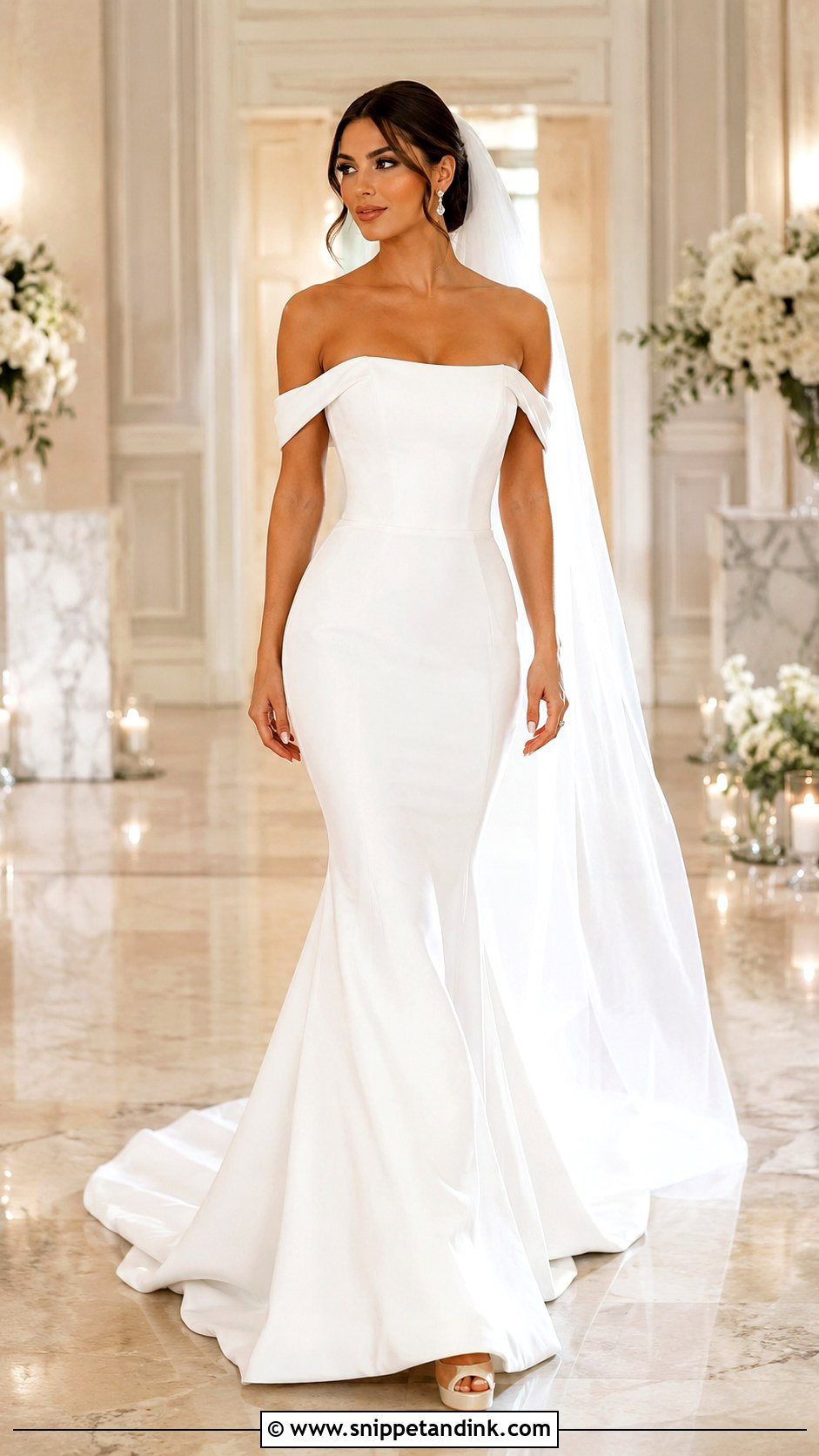
With a mermaid, the silhouette does the talking. It fits close through bodice, waist and hips, then flares at the knee or lower thigh. Stretch crepe looks smooth and modern, lace romantic, satin glamorous. The fit has to be precise: if the flare starts too high, you’ll waddle; too low and you lose the shape. Sit in it at the fitting and try a dance step. If you plan to wear it all night, ask your seamstress for a bustle that lifts the train cleanly. Drop earrings, a fitted veil and simple heels balance it for ballroom and evening ceremonies.
6. Strapless Gown For Wedding
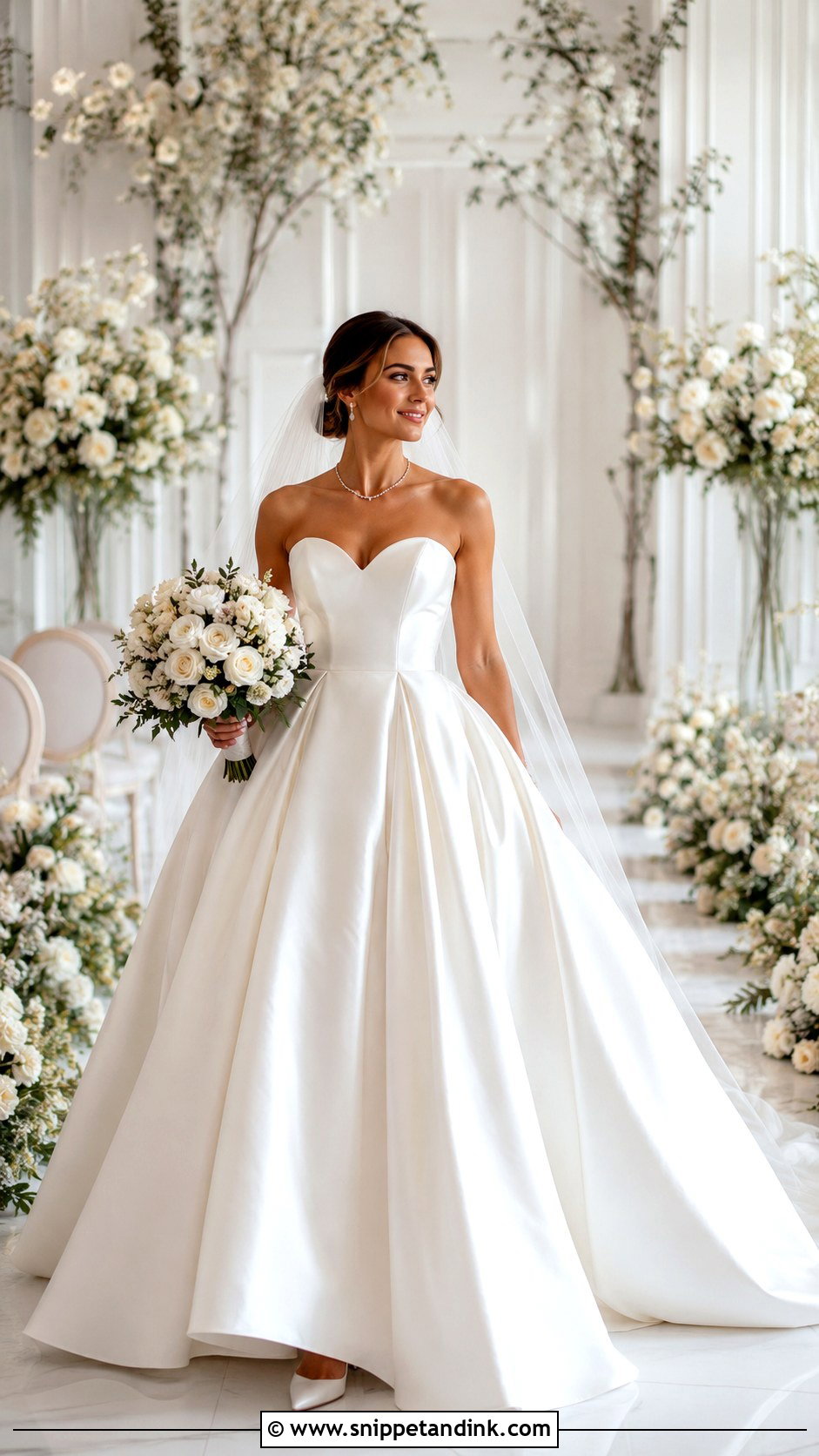
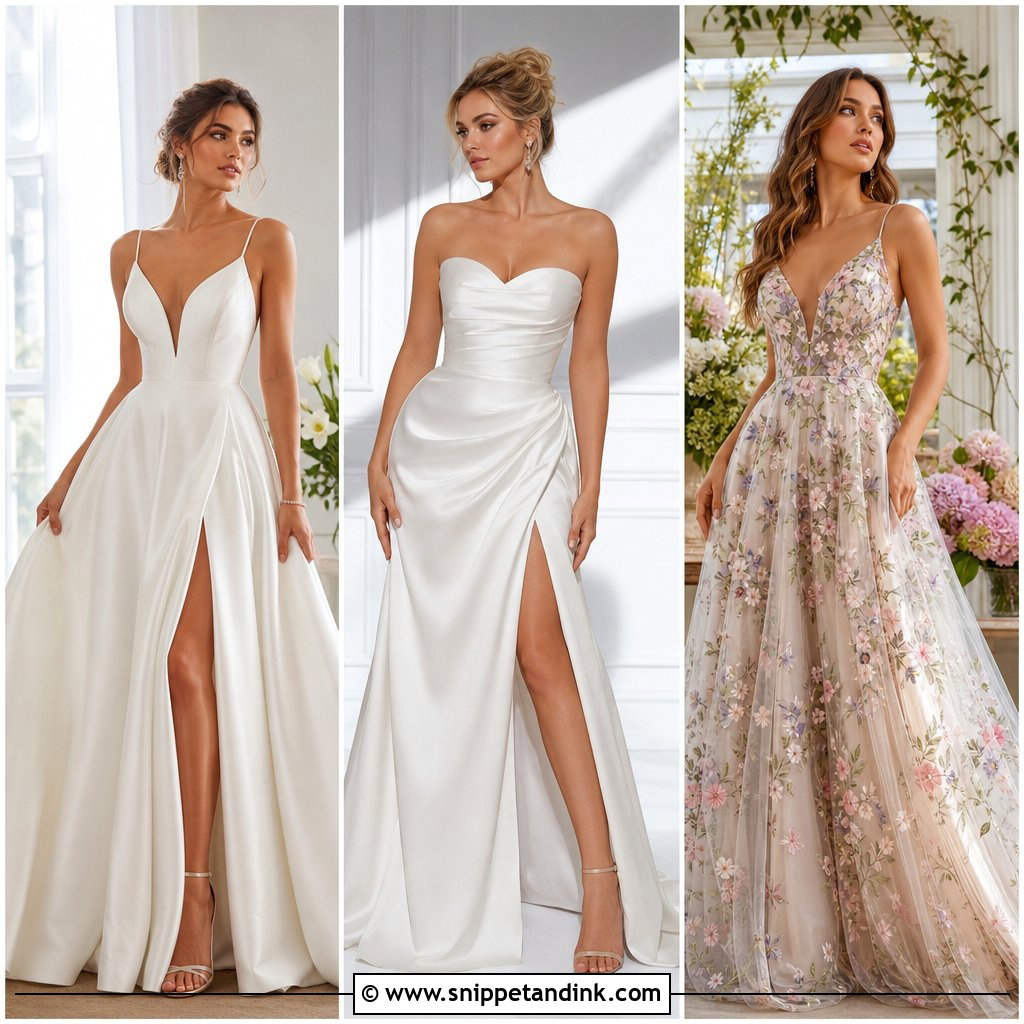
Strapless never really goes away because it’s clean and easy to personalize. Support is the whole question. A well-made strapless bodice has internal boning and a waist stay, a grosgrain band that anchors the dress to your waist so the bodice doesn’t slip when you move. A straight neckline is modern, a sweetheart neckline feels romantic, and a curved one sits between. With a plain bodice, a necklace adds interest; with beading or lace, earrings alone. A veil, pointed heels and a smooth clutch complete it, and the styling can shift it from ballroom to outdoor ceremony.
7. Square Neck Gown For Wedding
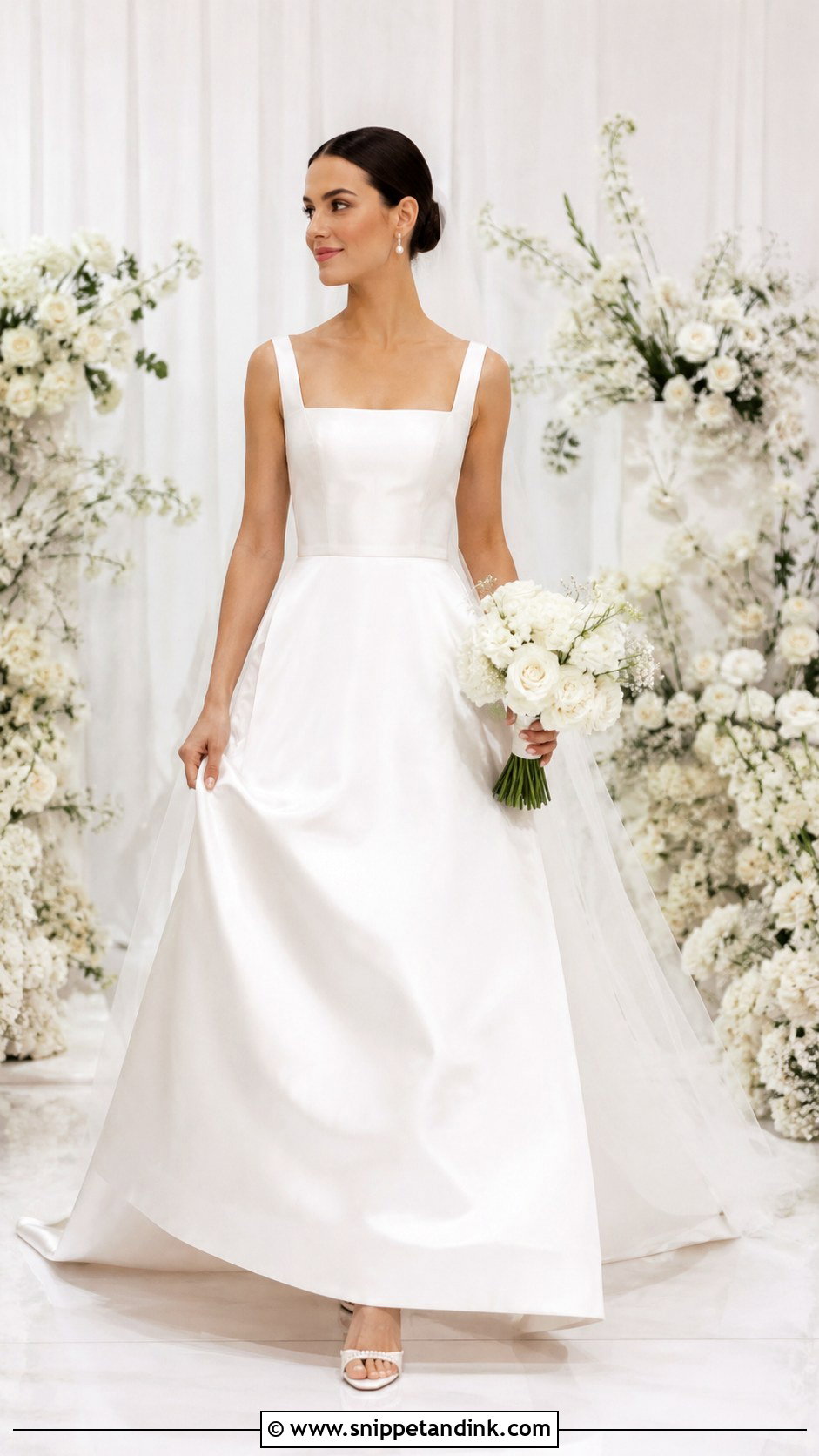
Square necks are simple and quietly flattering. The straight lines open up the neckline and give the bodice a tailored shape, and they show off jewelry and makeup clearly in close-up photos. Satin, crepe, organza and lace all suit it. One detail to check: square necklines gape if the bodice is even slightly loose at the top edge, especially when you lean forward, so I pin and test that area carefully. Pearl earrings, a low bun and delicate heels finish it, with a clean veil that keeps the front of the gown visible. It’s a good fit for a minimalist bride who still wants something special.
8. High Neck Gown For Wedding
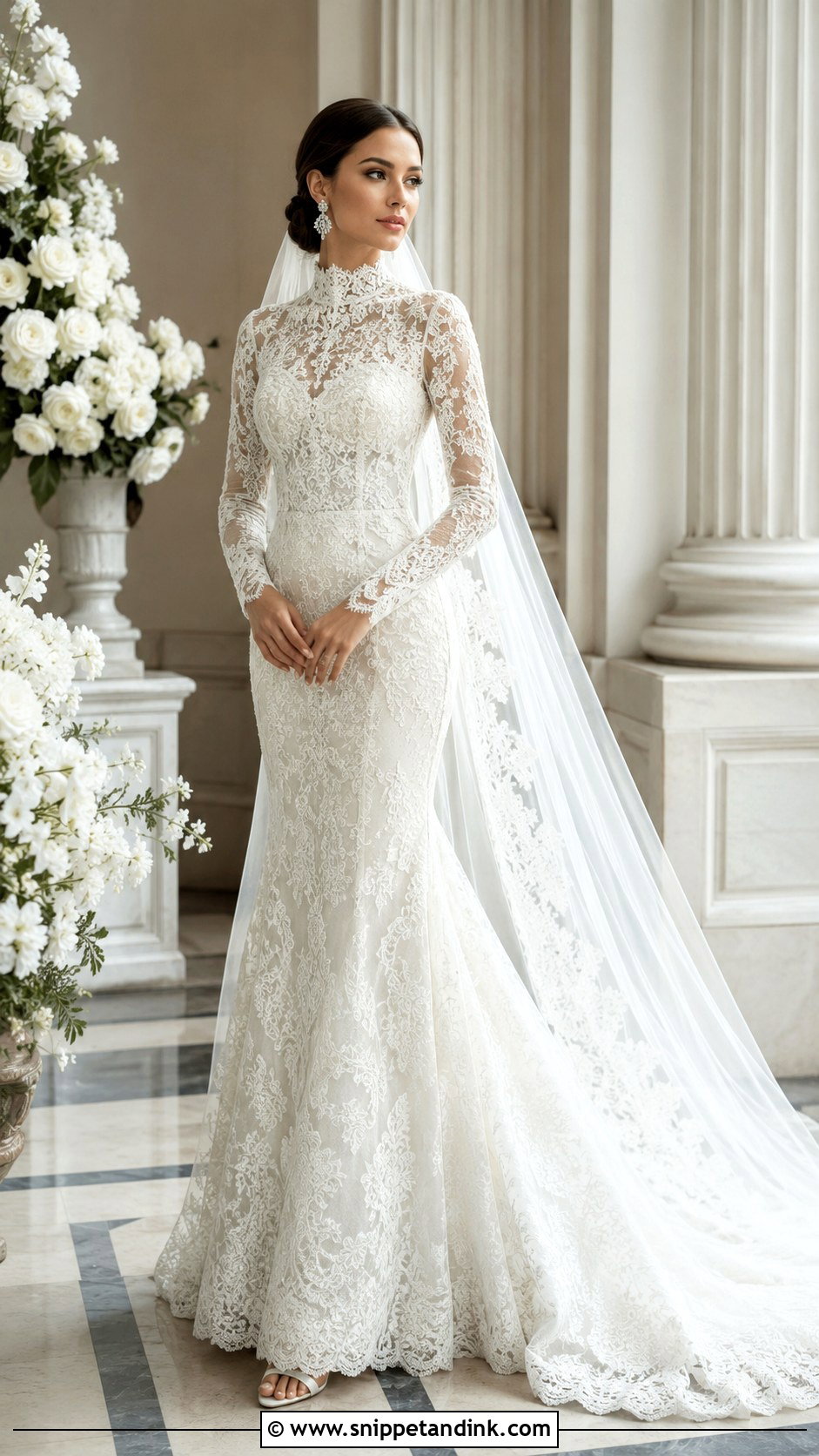
High necks are refined, and they can read vintage, modern or regal depending on the fabric. Lace feels romantic; satin or crepe feels sleek. With coverage at the throat, skip the necklace and wear statement earrings. Hair matters more here than with any other neckline, because a high collar plus loose hair hides the detail. A neat updo shows it off. For a lighter feel, choose illusion fabric or an open back. Simple heels and soft makeup keep it balanced for formal ceremonies and cooler seasons.
9. Basque Waist Gown For Wedding
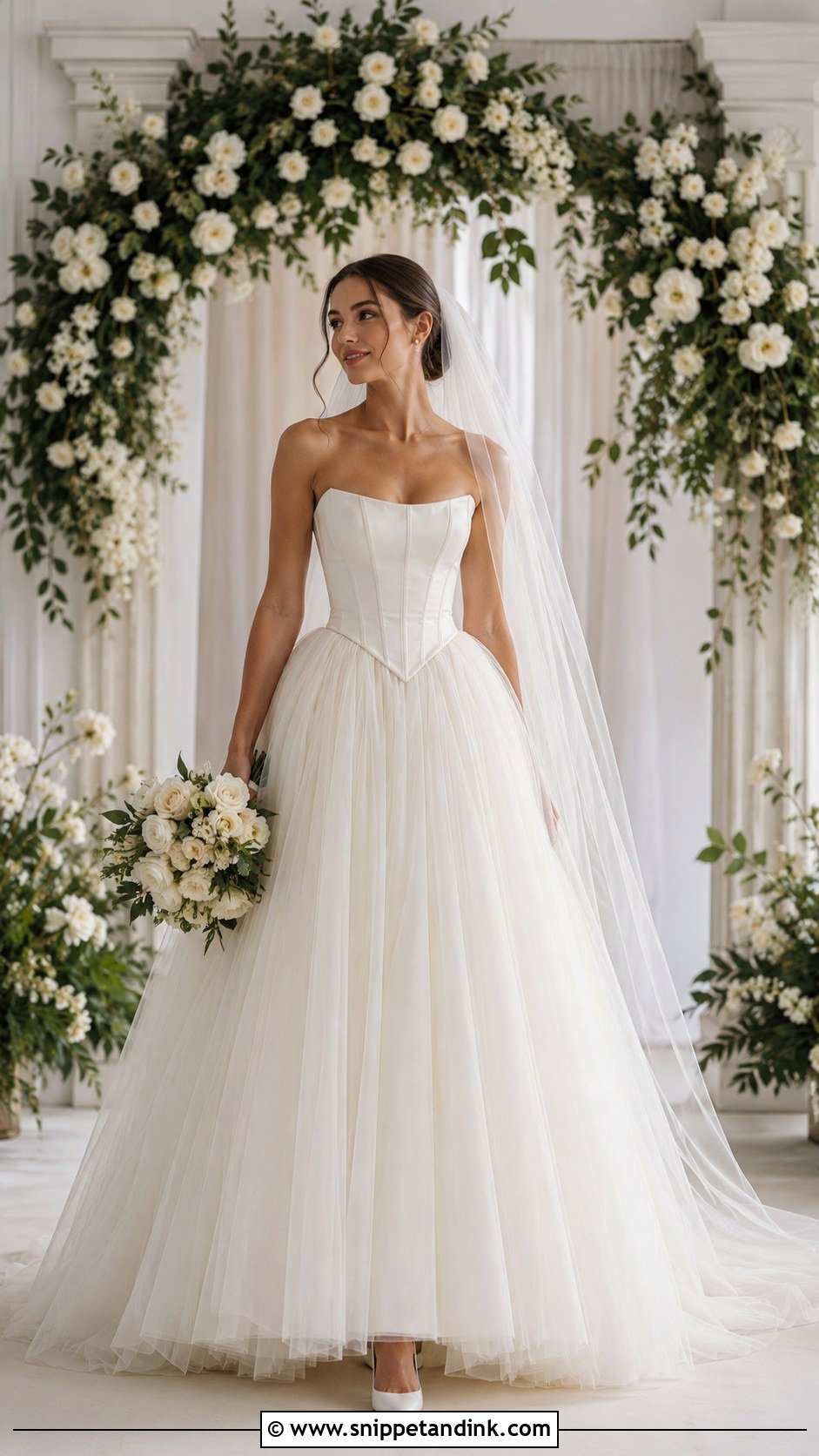
A basque waist gown has a waistline that dips into a point at the front, lengthening the torso and making the waist look smaller. It’s very current but still feels traditionally bridal, especially over a full tulle or satin skirt with a corset bodice. The point has to land precisely at your natural waist or slightly below, so this one needs careful tailoring and more than one fitting. Classic pumps, pearl earrings and a veil set low at the back of the head complete it. It’s a fairytale shape without being too sweet.
10. Drop Waist Gown For Wedding
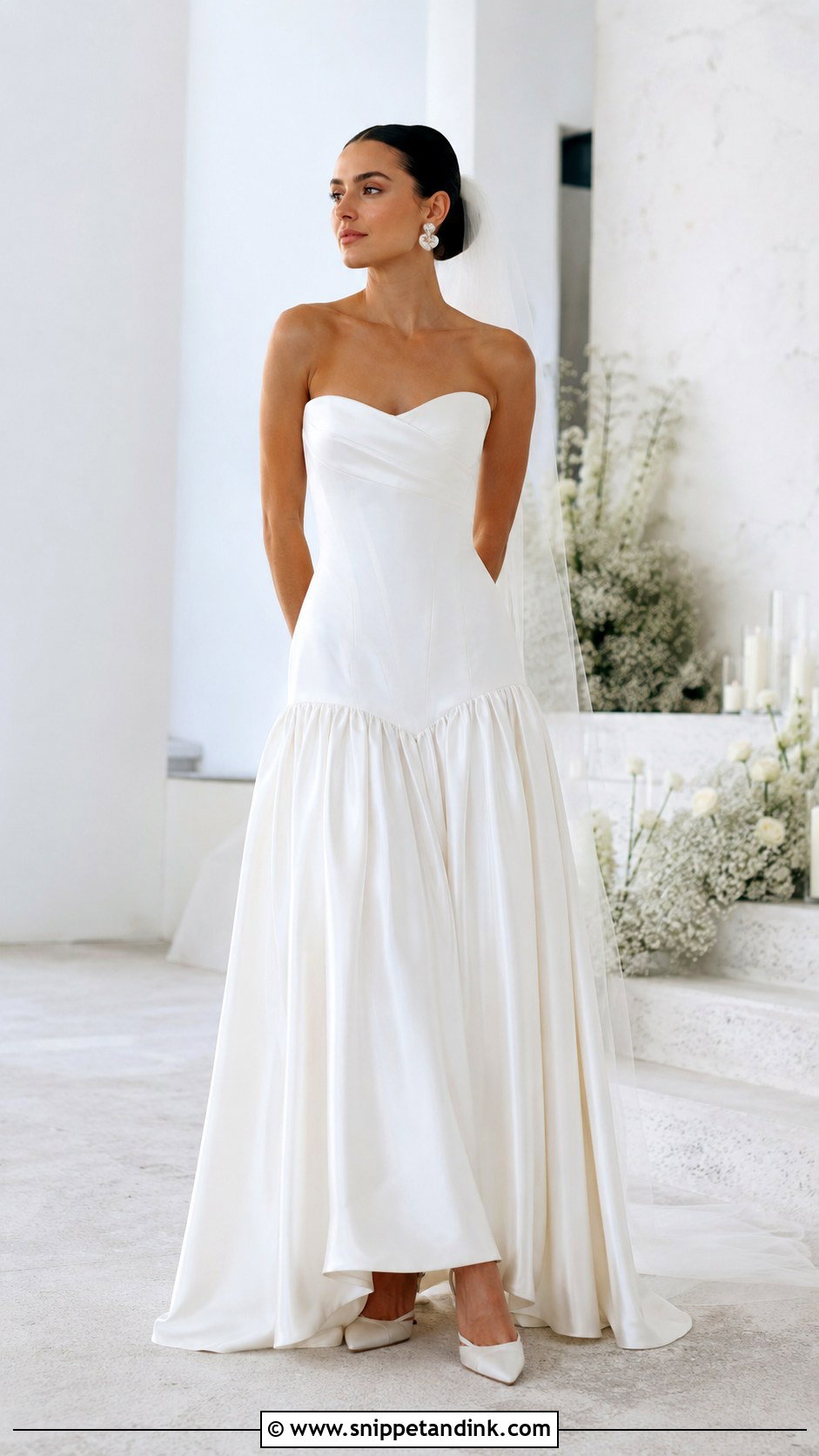
The drop waist sits low, near the upper hip, before the skirt flares. It lengthens the torso and looks fashion-forward in satin, taffeta or soft organza. It’s not for everyone, and I’ll say so: on a short torso, a dropped waist can cut the body in an unflattering place, so try it on before falling for it in pictures. When it works, it’s striking, especially from the side, where the skirt shape looks deliberate. Keep accessories simple: sleek heels, sculptural earrings, a clean veil.
11. Floral Applique Gown For Wedding
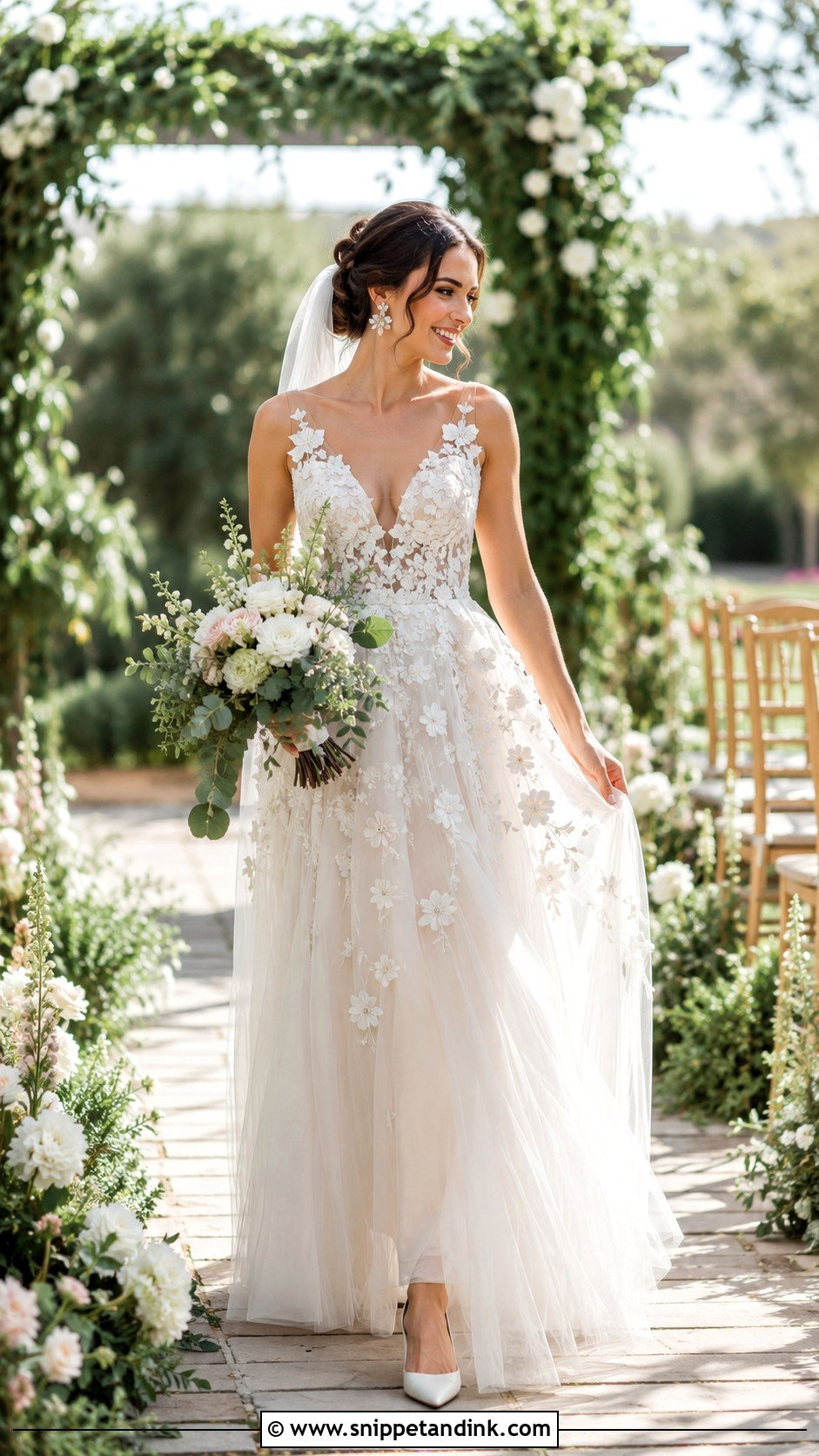
Floral appliqué adds texture and dimension, from scattered small blooms to bold 3D flowers. Tulle, organza, lace and sheer overlays carry it best. Keep the veil edge minimal so it doesn’t fight the appliqué, and choose floral-inspired earrings or simple studs. Appliqué flowers catch on things. Lace veils, bracelets and even a groom’s cufflinks can snag a 3D flower, so I tell brides to watch their hugs during the receiving line. A soft curled style or loose updo suits the mood for garden and spring celebrations; clean makeup keeps it modern.
12. Pearl Detail Gown For Wedding
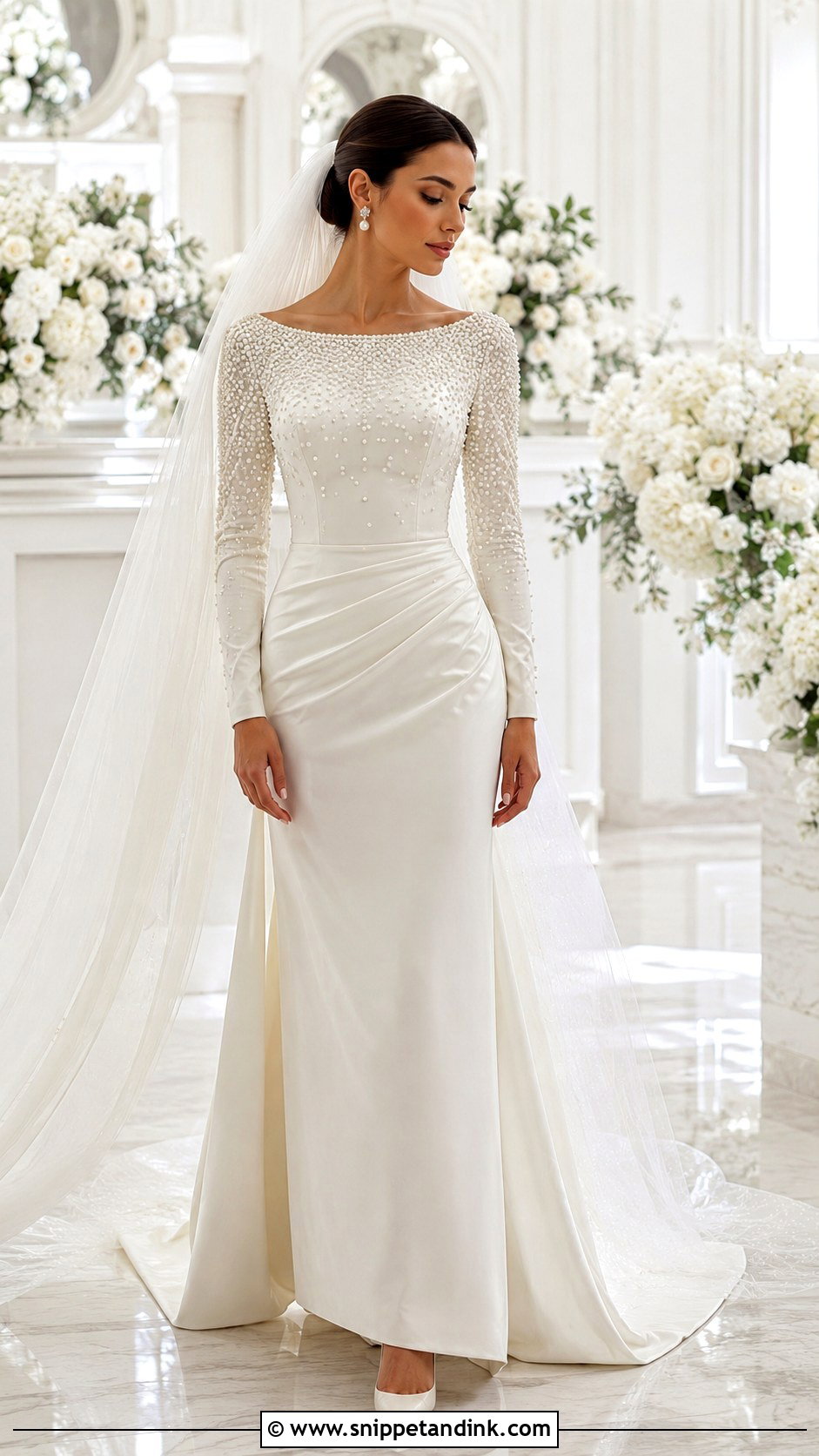
Pearls give shine without sparkle. Tiny pearls on the bodice, sleeves, neckline or train make a simple silhouette feel special, and they look softer under flash than crystals do. Satin, crepe, tulle and sheer fabrics all carry them well. With heavy pearl detail, keep jewelry minimal. Pearl earrings, ivory heels and a smooth veil coordinate easily. Check how the pearls are attached: hand-sewn pearls stay put, while glued ones can pop off when the fabric flexes. A low bun or polished waves let the neckline show.
13. Beaded Gown For Wedding
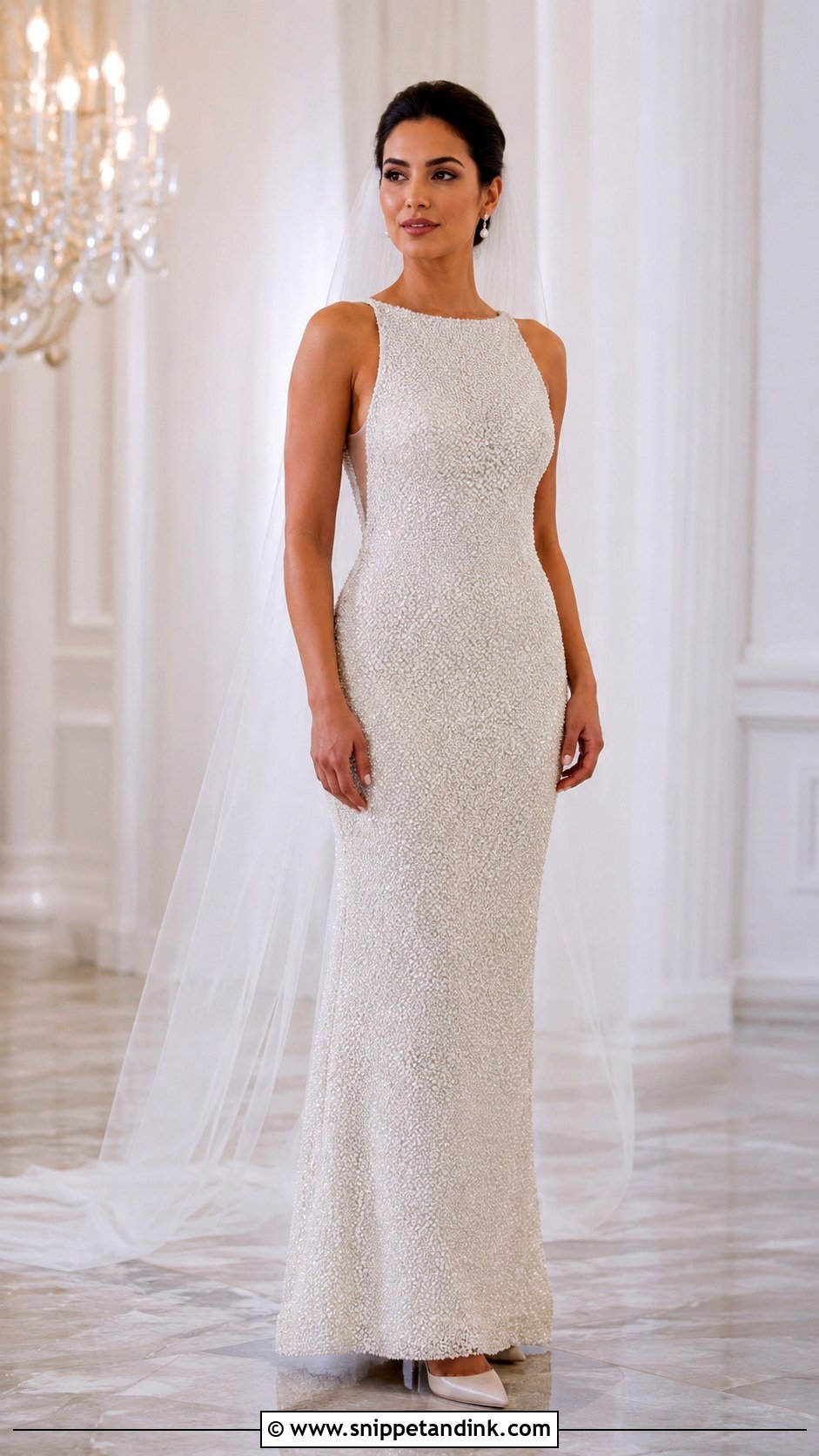
Beading suits evening ceremonies and glamorous venues where the dress needs to catch the light. Look for beading that follows the shape of the dress rather than covering everything. A fitted sheath, soft A-line or mermaid all work. Watch the weight. Heavily beaded gowns can weigh far more than you expect, which pulls on the shoulders over a long day and tires you out on the dance floor. Simple metallic or ivory heels, small earrings and a clean veil are enough. Pick a polished but uncomplicated hairstyle. The gown should shimmer as you move, not weigh you down.
14. Tulle Gown For Wedding
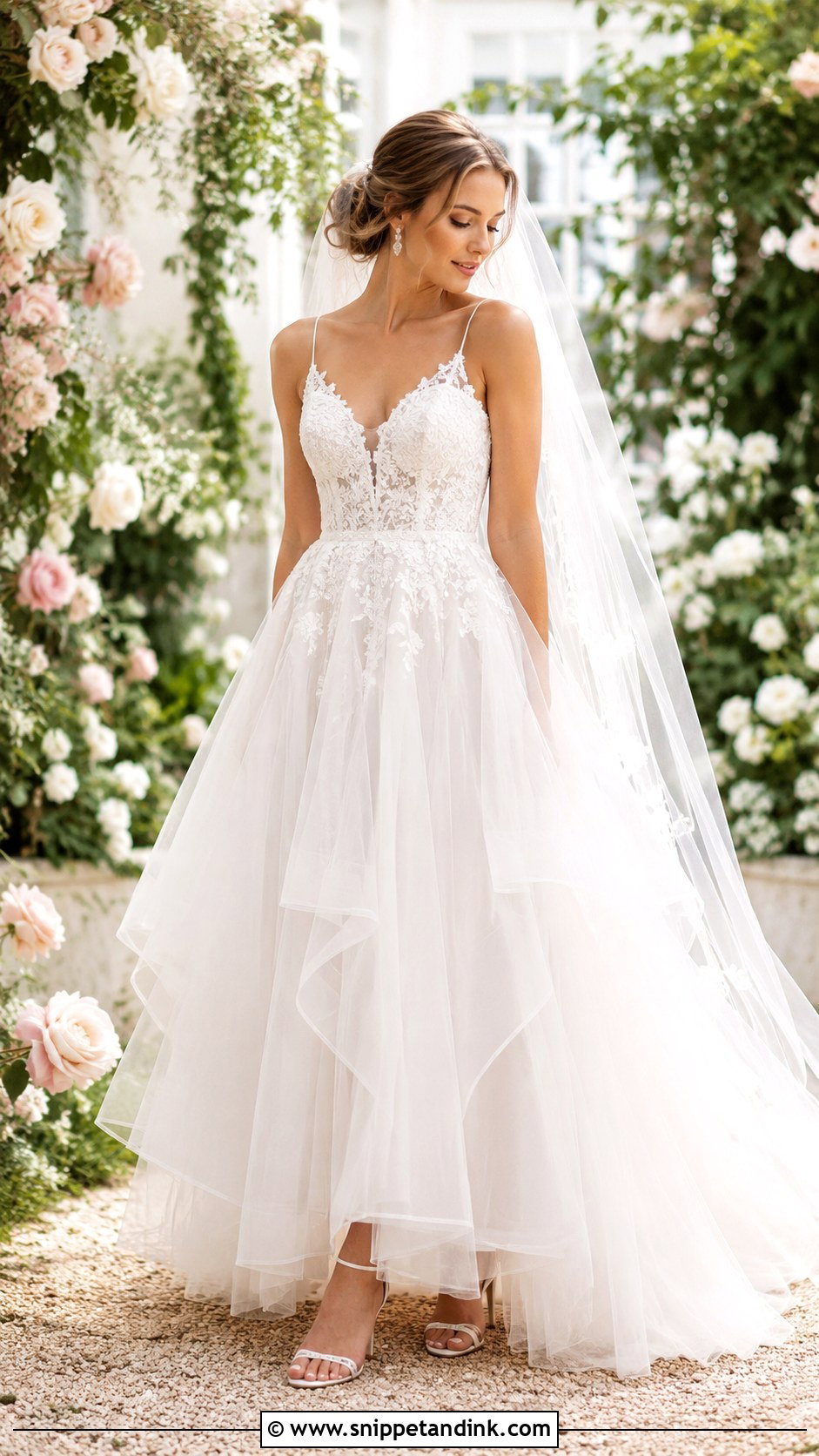
Tulle gives volume with almost no weight, which is why it’s the dream fabric for so many brides. It can be full and fairytale or layered more loosely. A fitted bodice balances a big skirt and keeps your waist visible. Delicate heels, a sheer veil and dainty earrings keep the whole thing airy. Tulle is fragile, though. It snags on rough venue floors, heel tips and bouquet wire, so I suggest a horsehair or satin hem band if the venue is outdoors. Garden weddings and romantic indoor spaces suit it, and clean tulle without much embellishment looks most modern.

15. Crepe Sheath Gown For Wedding
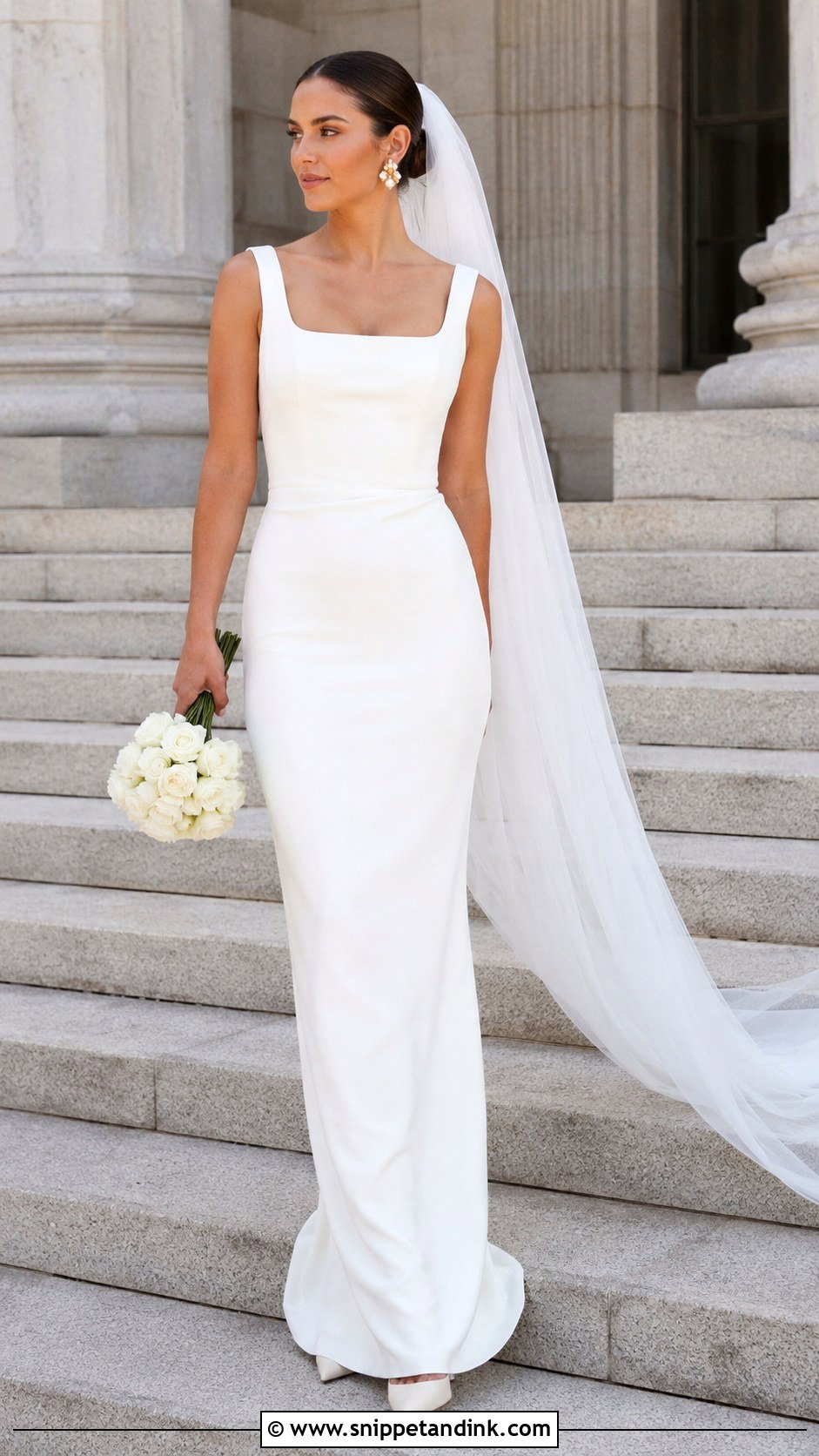
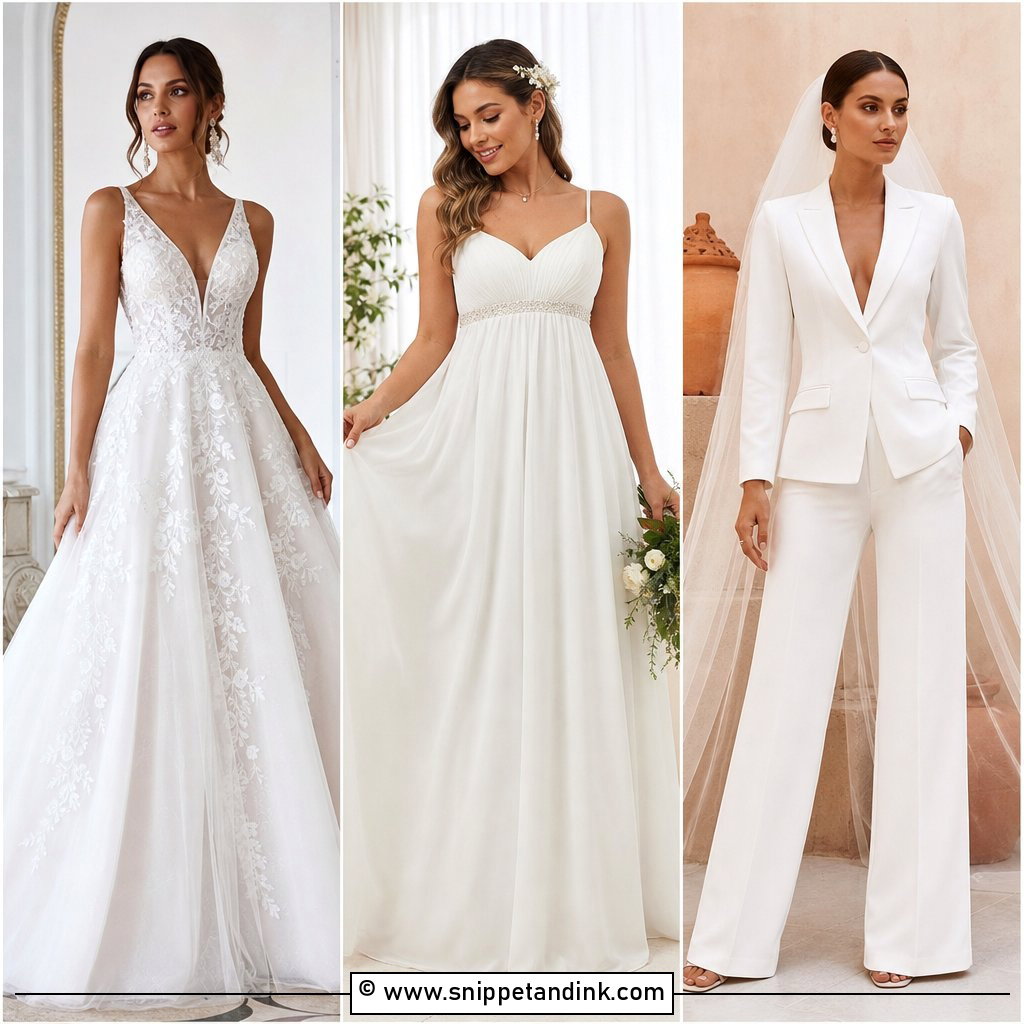
A crepe sheath gown is clean lines and nothing else, so it’s easy to wear and to style. Bateau, square or deep V necklines all work depending on comfort. Because there’s no volume to hide anything, the fit is everything. Crepe shows lumps from seams, underwear and loose threads, and a skilled seamstress matters more for this gown than for any ball gown. Pointed heels, sculptural earrings and a long veil make it bridal. Courthouse, rooftop and modern venues suit it.
16. Organza Gown For Wedding
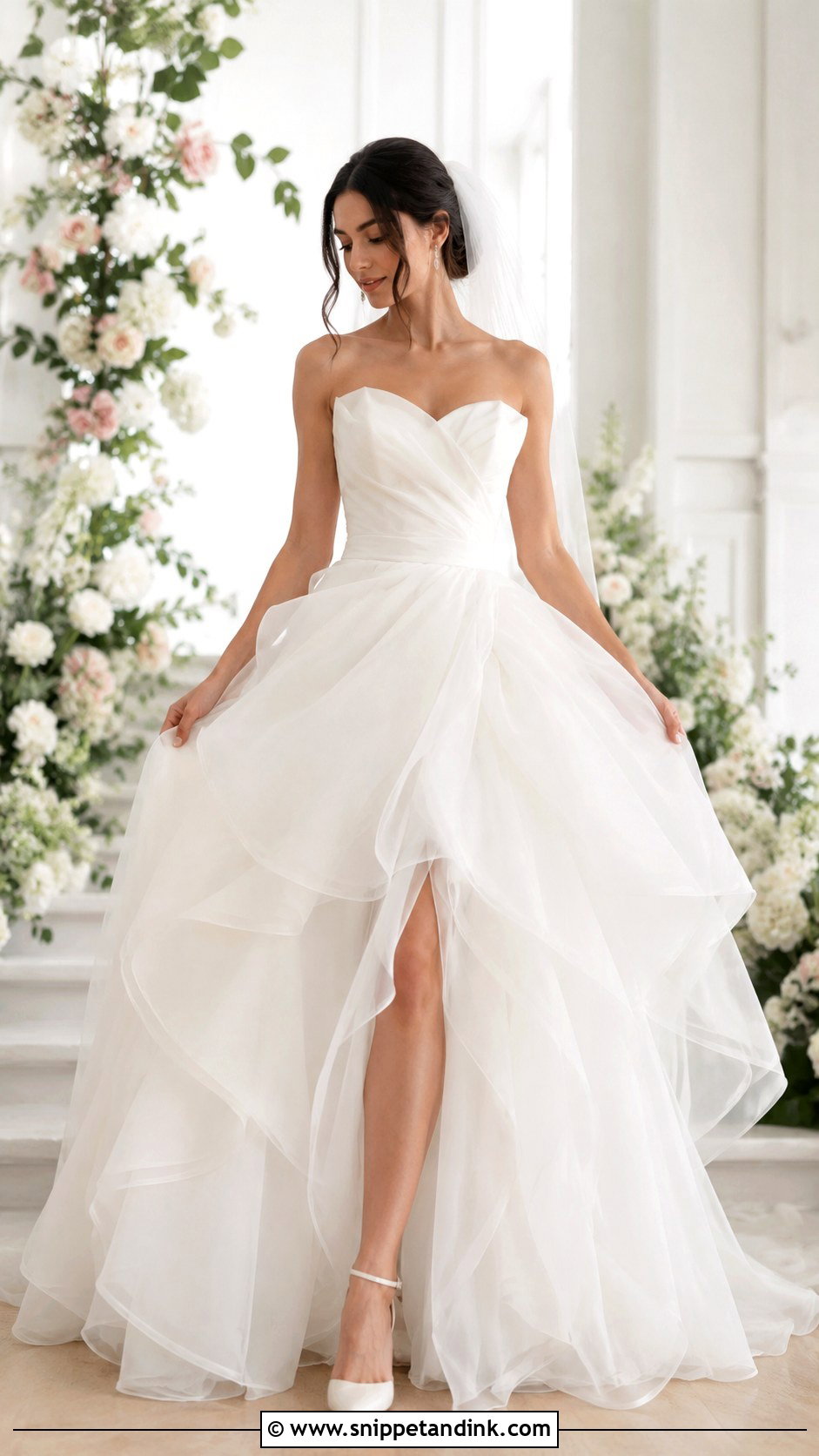
Organza is crisp and airy and holds its shape, which makes it ideal for layered skirts, puff sleeves and sculpted bodices. In natural light the layers move softly and catch the sun. It creases sharply, though, and the creases can be hard to remove, so I recommend steaming on the morning, not the night before, and keeping the gown hung with space around the skirt. Slim heels, delicate jewelry and a simple veil balance the texture. Spring and summer weddings suit it best, though it works indoors as well.
17. Mikado Gown For Wedding
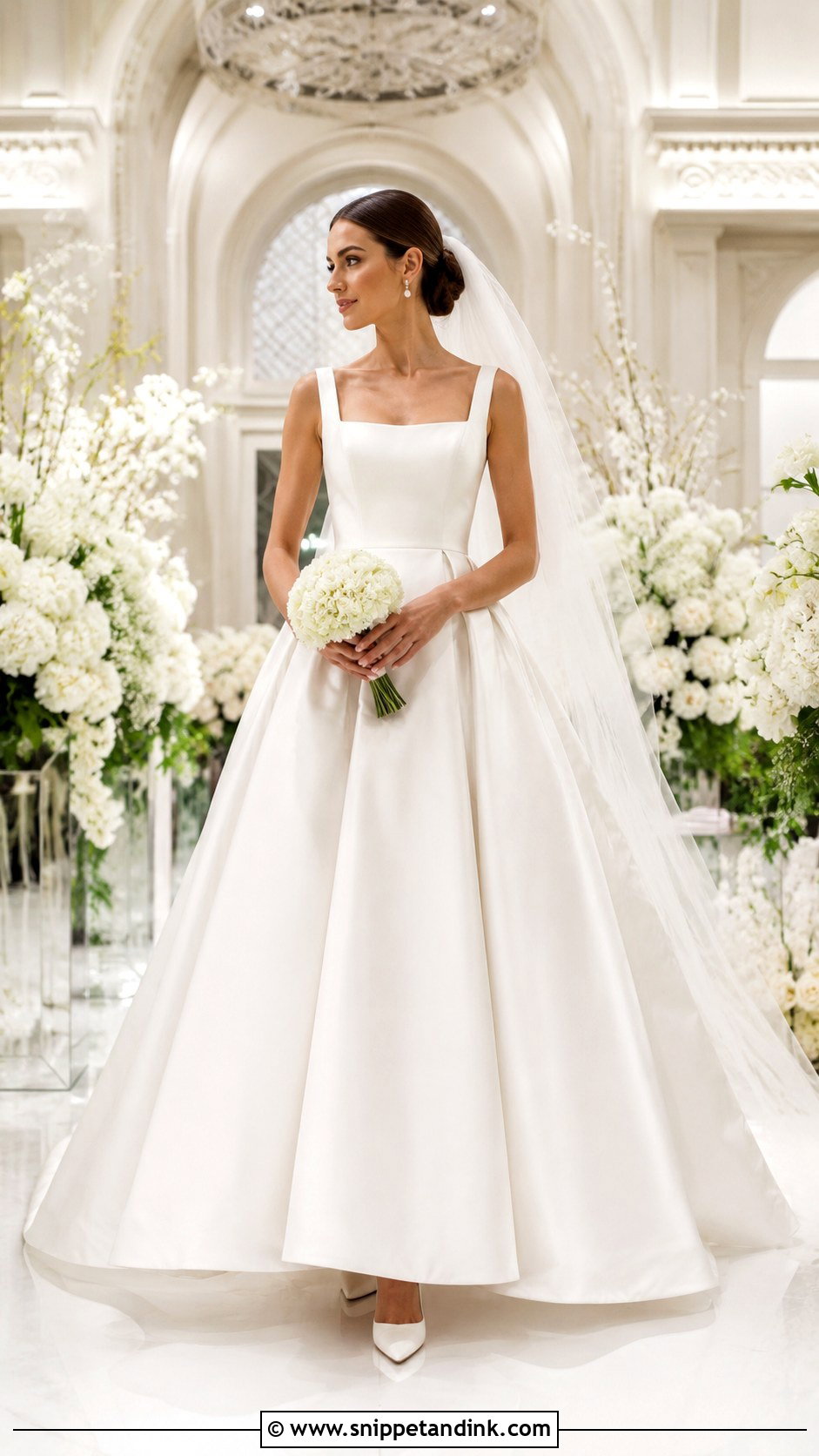
Mikado is a heavy, structured silk or silk blend with a smooth, slightly stiff hand, and it looks elegant and expensive without any embellishment. Because it holds a sculpted shape, it’s the fabric designers use for architectural ball gowns, clean A-lines and folded bodices. Fit is unforgiving: mikado doesn’t stretch or drape, so it shows a loose waist or tight hip immediately. Pumps, pearl or crystal earrings and a structured veil suit its clean lines. It belongs in grand halls and traditional venues, and it’s the right choice for a bride who loves simple gowns but still wants presence.
18. Corset Gown For Wedding
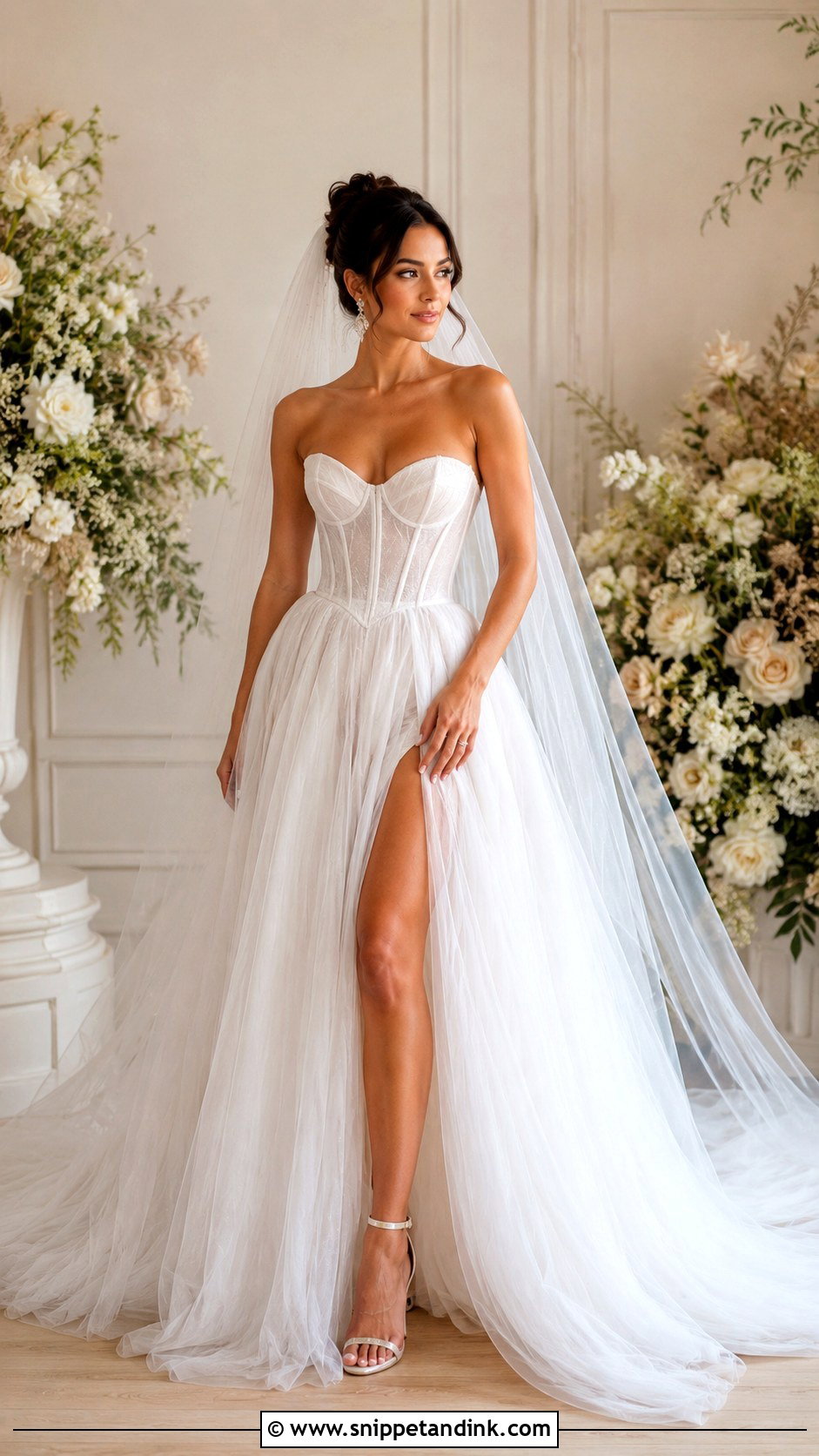
Corset bodices give structure and a defined waist, and they make a dress feel secure. Visible boning looks modern, while a hidden corset gives support under a softer surface. Satin, lace, tulle and organza skirts all pair with it. The fit test is simple: breathe deeply, sit down and reach for something on a table. If any of that hurts, the corset is too tight, and lacing or seams need adjusting. Delicate heels, drop earrings and a veil that doesn’t cover the bodice let the shape show.
19. One Shoulder Gown For Wedding
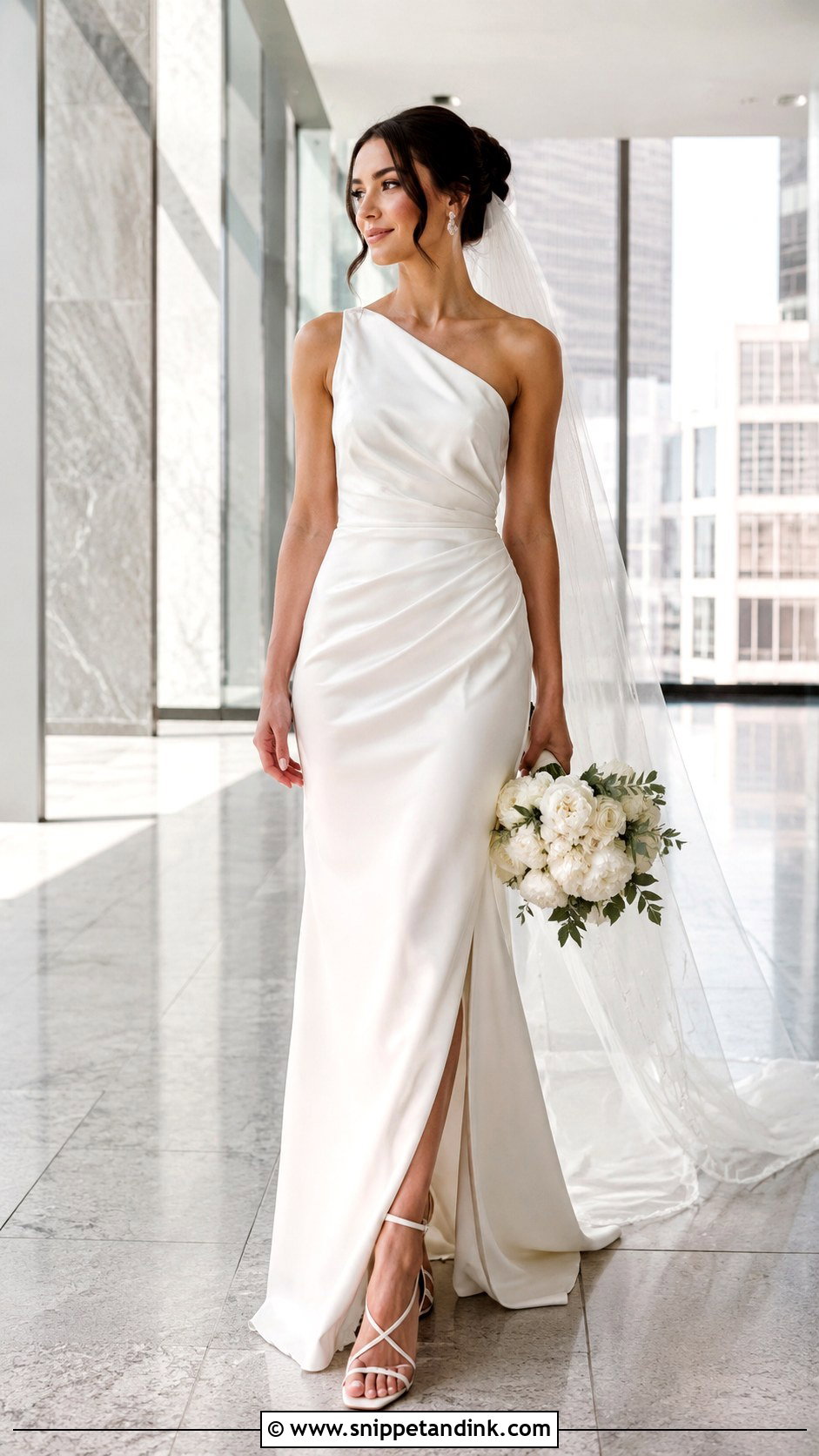
One shoulder is a clean, modern neckline that needs very little decoration. Satin, crepe and mikado suit it. The asymmetrical shape draws the eye on its own, so simple accessories work best: sleek earrings, strappy heels and a smooth veil placed behind the shoulder line rather than over it. Style hair away from the bare shoulder, with a clean bun or side-parted waves on the opposite side. It suits city weddings and brides who want something refined but not traditional.
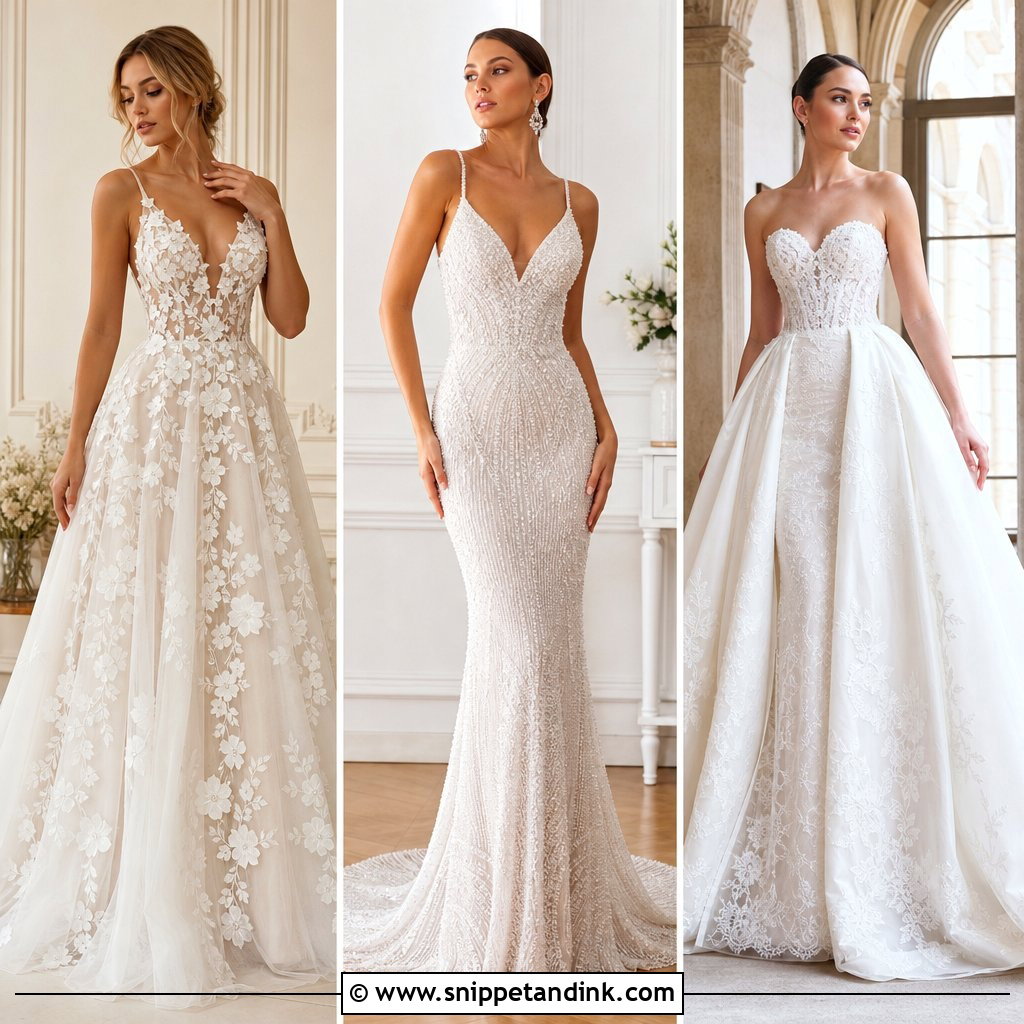

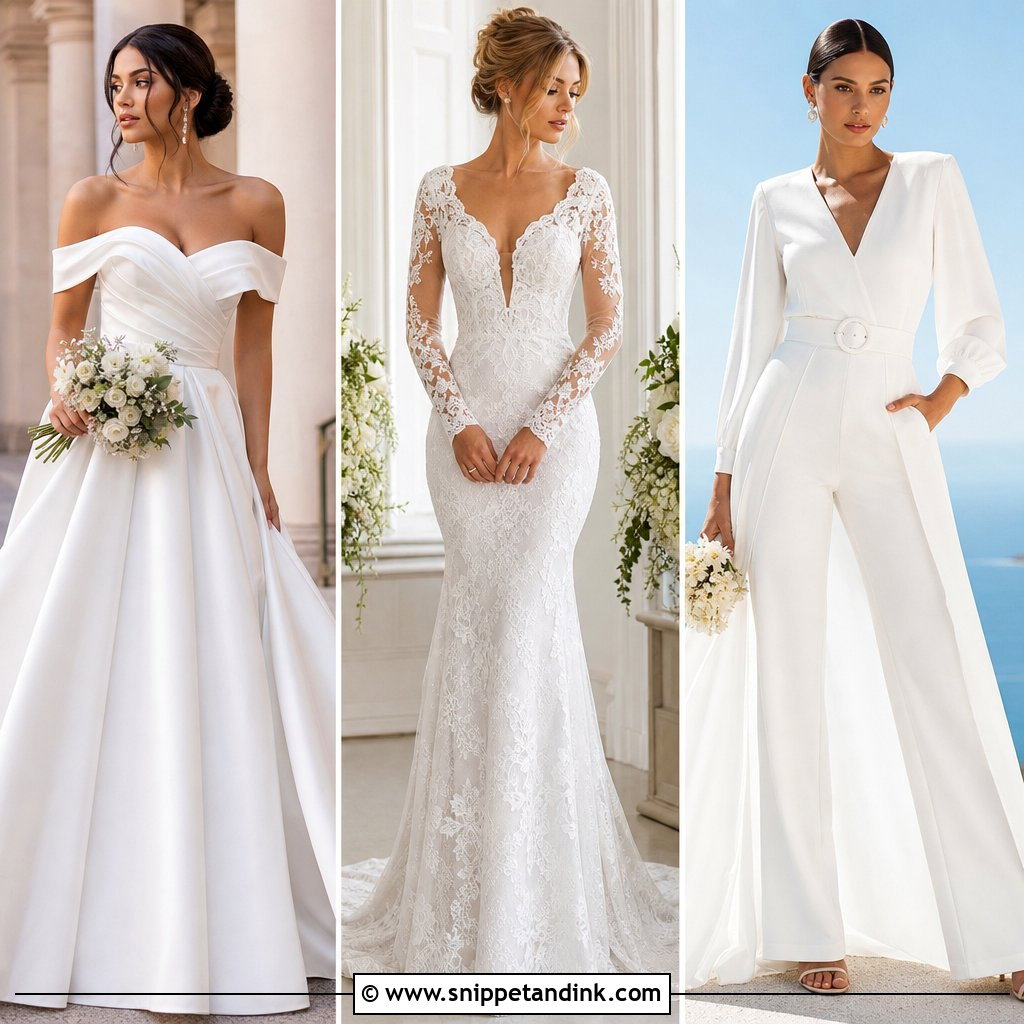
20. Cape Gown For Wedding
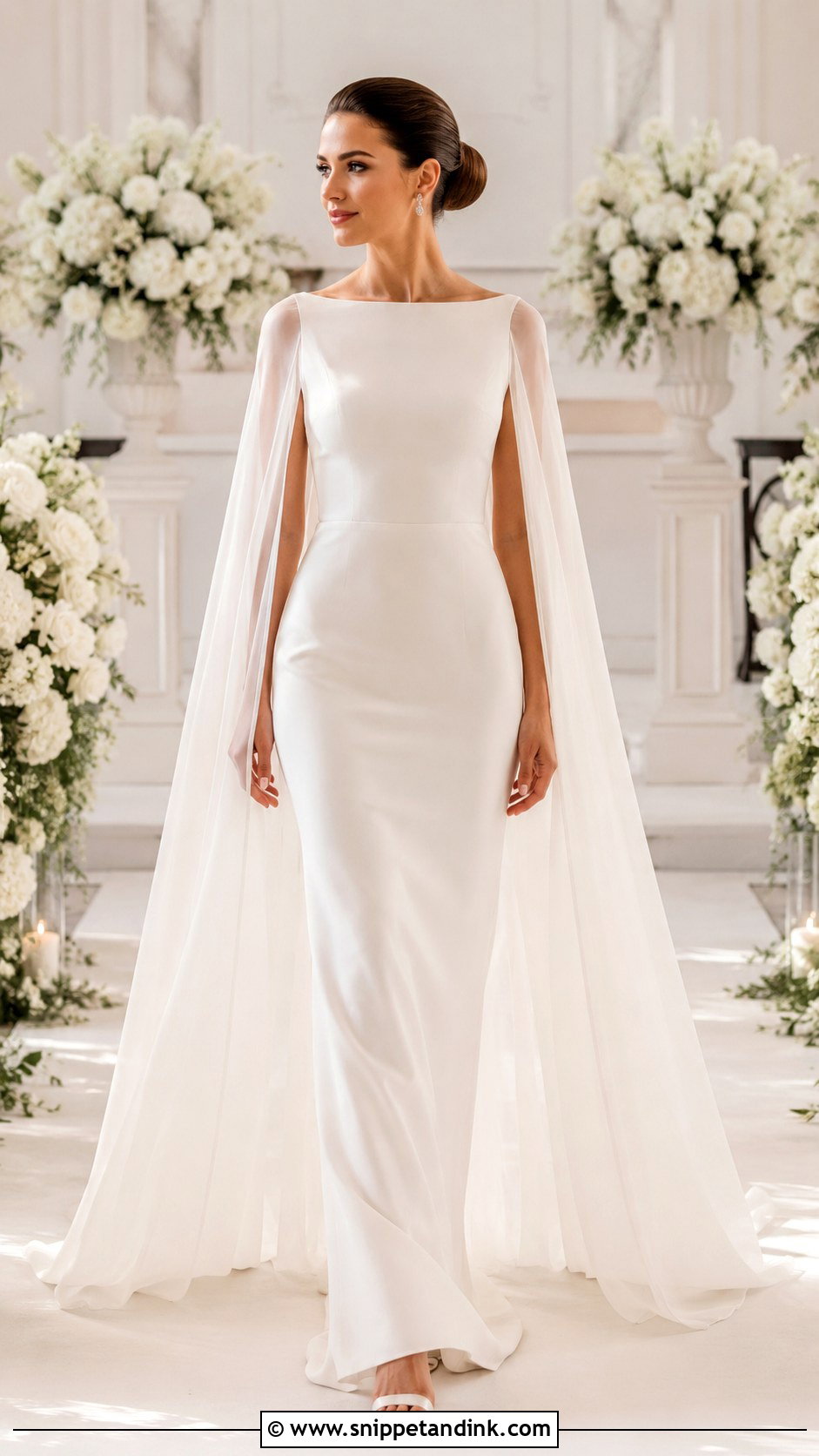
A cape gives drama without a long veil. It can be sheer, lace, satin or tulle, attached at the shoulders, neckline or back, and it creates movement as you walk down the aisle. Keep shoes, jewelry and hair simple so the cape stays the focus. Many capes are detachable, which gives you a dramatic ceremony look and an easier party look. The thing to test: wind. A long sheer cape outdoors behaves like a sail, so for a beach or clifftop ceremony I suggest a shorter or weighted cape.
21. Detachable Sleeve Gown For Wedding
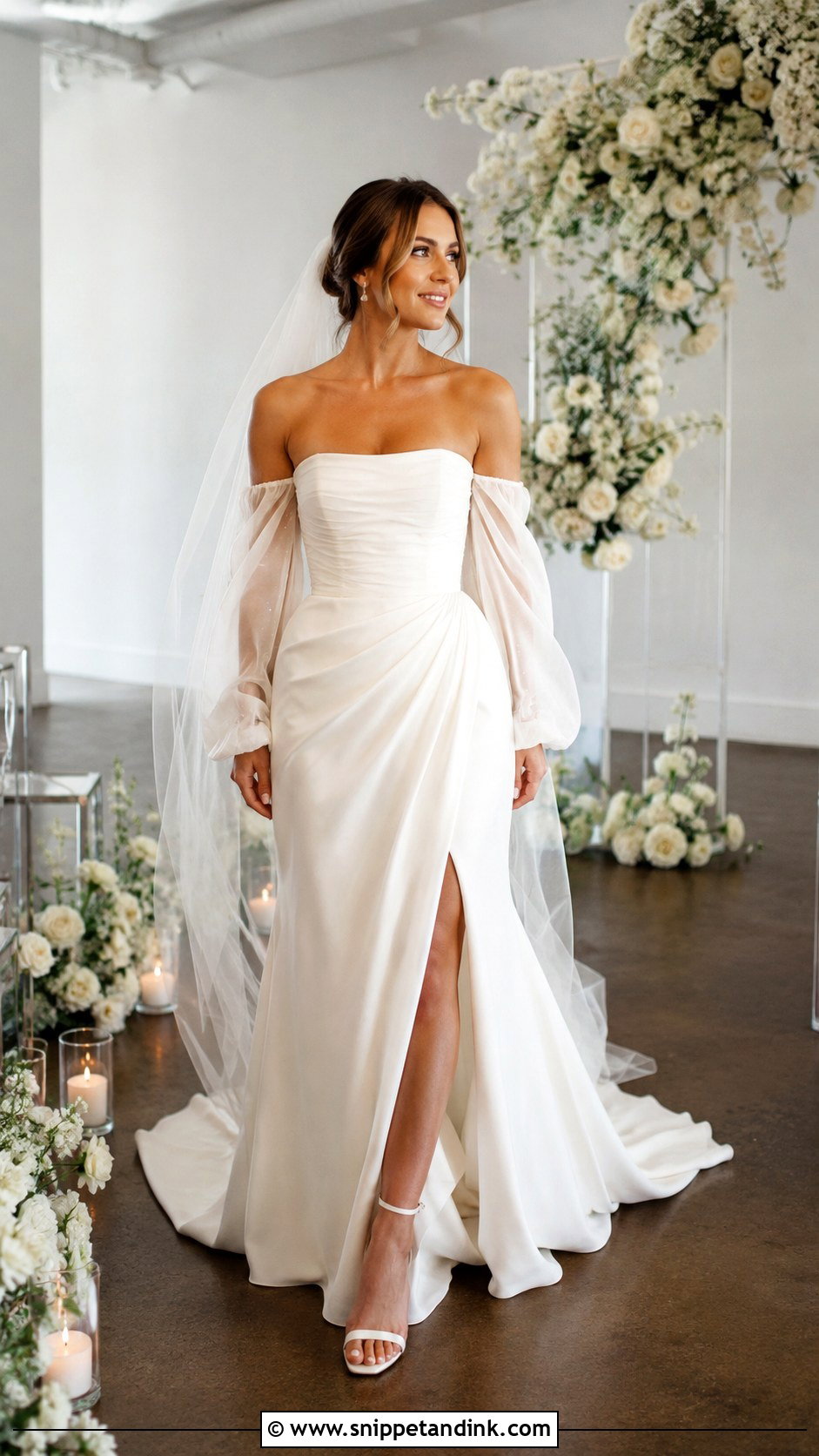
Detachable sleeves give you two looks in one gown, covered for the ceremony and freer for dancing. They can be puffed, fitted, sheer, lace or off-shoulder. The test is how they attach. Snaps and hidden hooks look intentional; visible ties or elastic look added on. Ask the seamstress to fit the sleeves and the gown together so the sleeve seam lines up with the bodice. Elegant heels, simple earrings and a veil that suits both versions finish it, and it saves you a full outfit change.
22. Short Reception Gown For Wedding
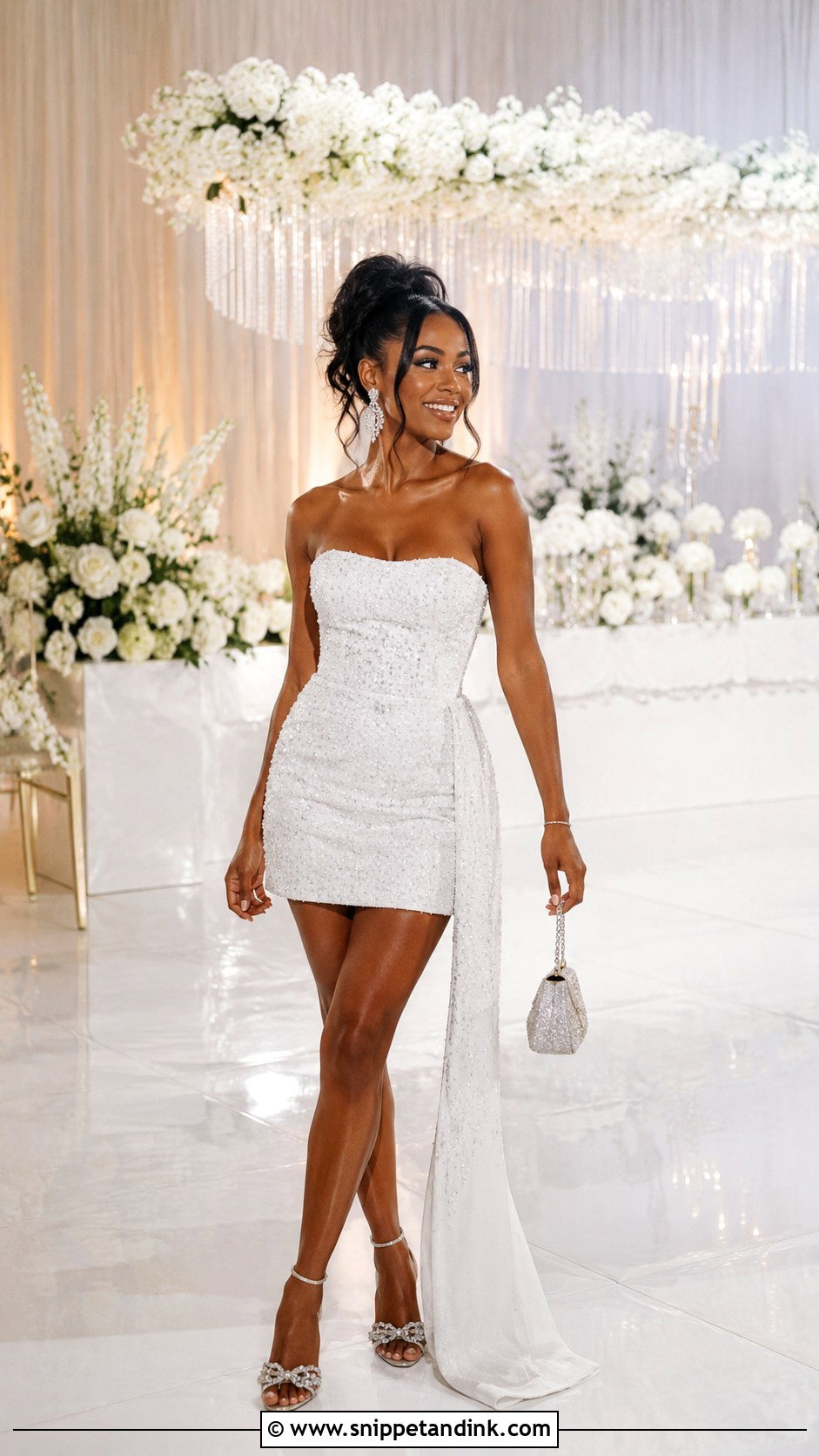
A short reception dress feels like a reward after hours in a long gown. Mini, knee or tea-length all work. Satin looks clean, feathers or appliqué add texture, beading adds sparkle. Keep color and fabric clearly bridal so it still reads as the bride’s outfit, and pair it with statement heels, earrings and a small bag. Plan the change. It takes longer than people expect to get out of a corset gown and back in for photos, so schedule it before the first dance, not after.
23. Tea Length Gown For Wedding
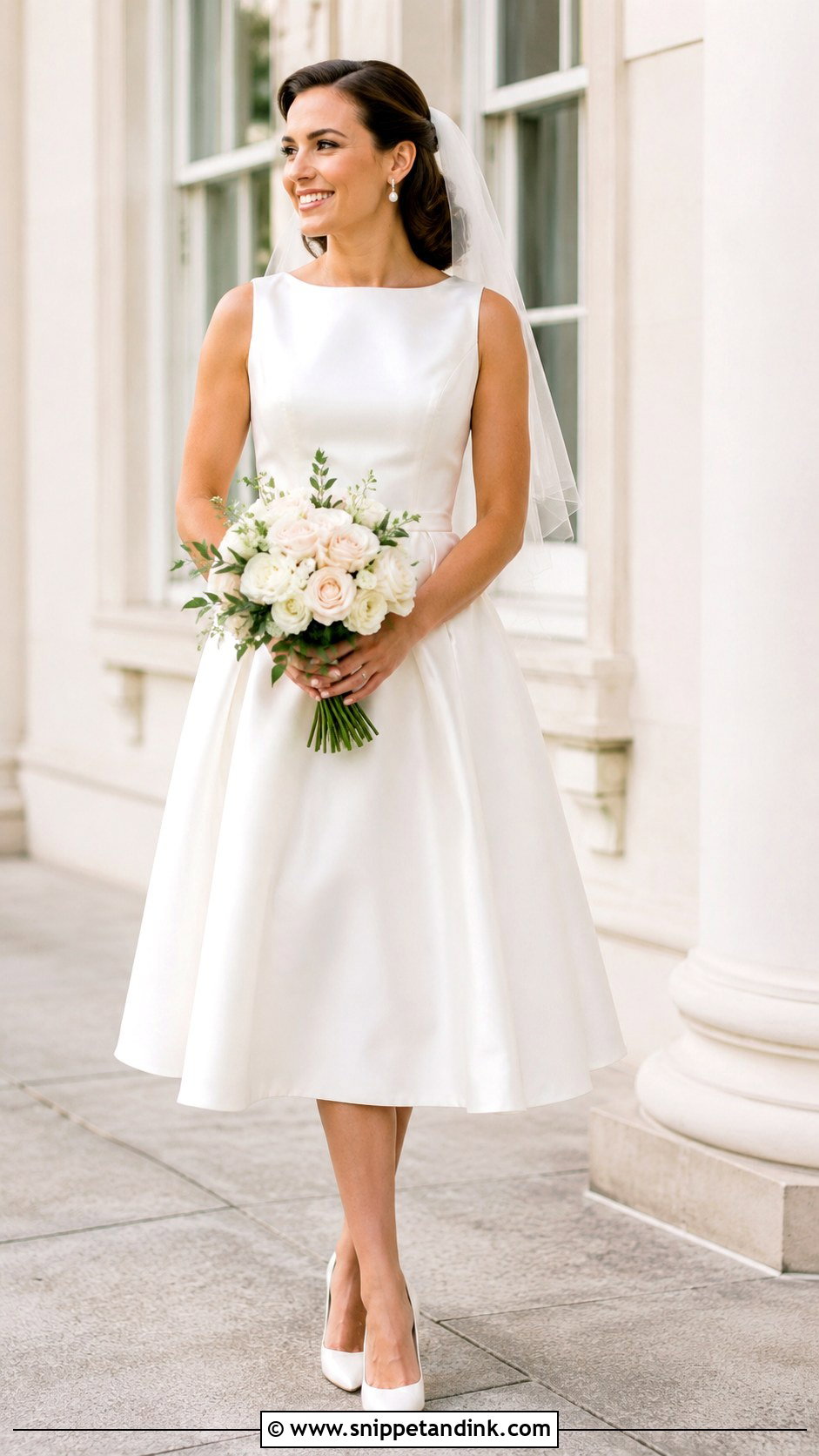
Tea length falls between knee and ankle and has a little vintage charm. It’s easier to walk in than a long gown and puts your shoes in view, so pointed pumps, slingbacks or ankle-strap heels become part of the look. Pearl earrings, a short veil and a soft bouquet complete it. Clean satin or crisp taffeta keeps it modern rather than retro. Courthouse ceremonies, garden weddings and smaller celebrations suit it, and it’s a practical choice for anyone who’ll be on uneven ground.
24. Blush Gown For Wedding
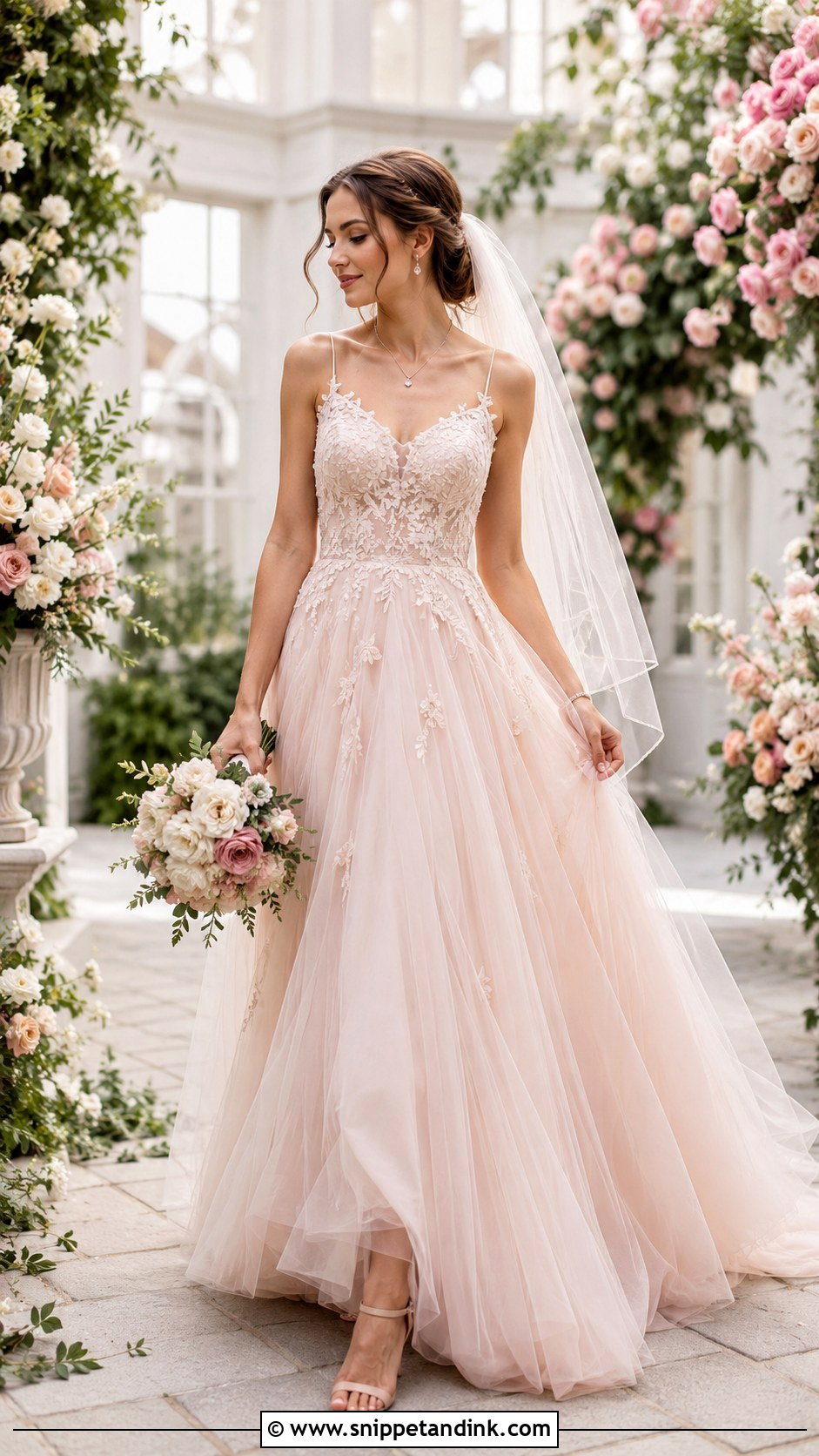
Blush is a soft alternative to ivory and white, and it suits tulle, lace, satin and organza. Pale blush is subtle; a deeper rosy tone adds warmth. Try it next to your skin in daylight before committing, because some blush shades wash out fair skin and others look grey in shade. Pair it with nude heels, rose gold jewelry and a veil in blush or soft ivory. Pink-toned makeup ties the outfit together. It works for spring weddings and garden venues, and it feels personal without being loud.




25. Minimalist Gown For Wedding
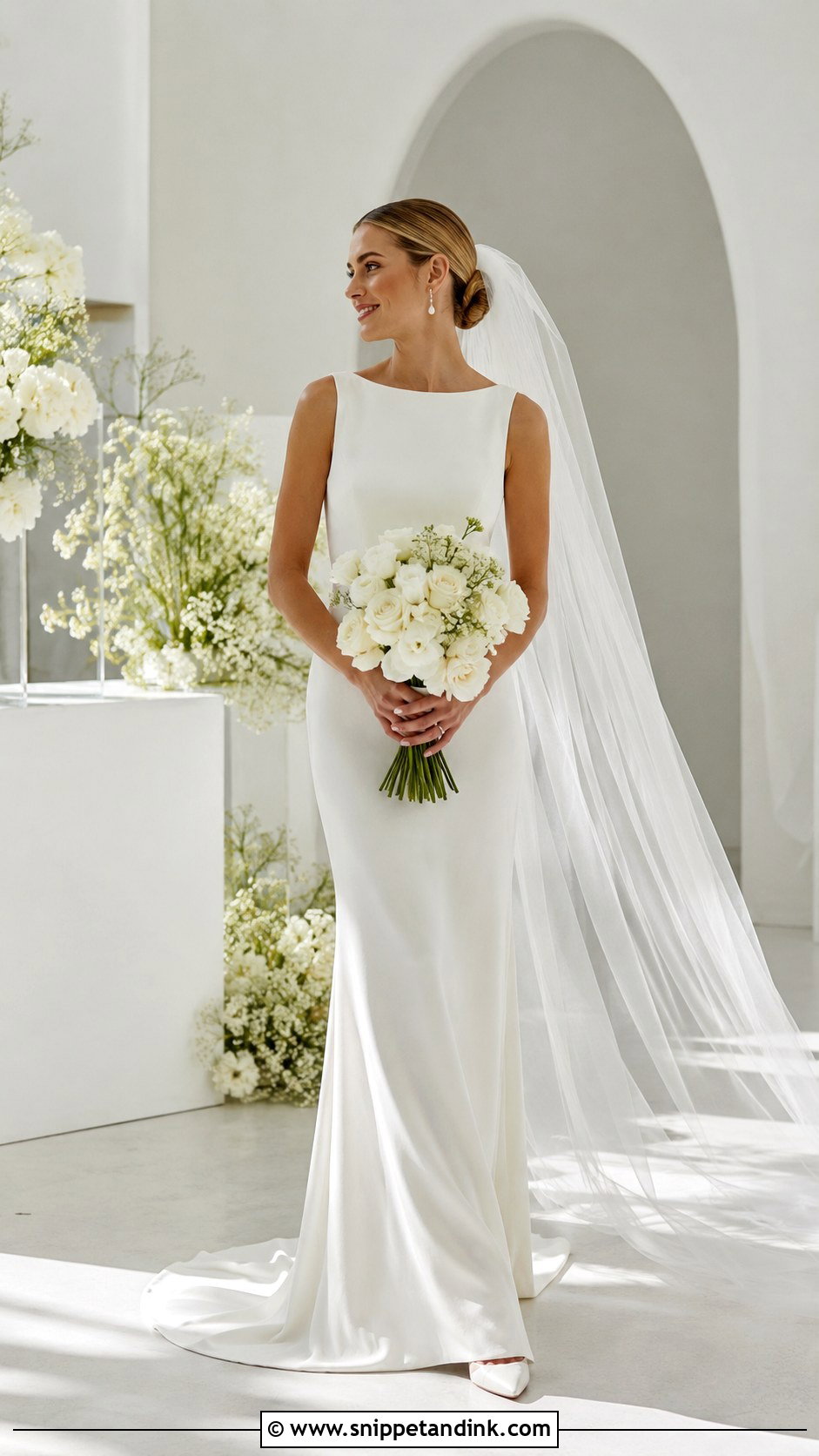
Minimalism puts all the weight on fabric and fit. Satin, crepe or mikado in a sheath, A-line, column or structured ball gown, cut precisely, needs nothing else. With fewer details, every choice shows, so I spend more fitting time on minimalist gowns than on embellished ones: hem length, the line of the neckline and how the waist sits when seated. Sleek heels, modern earrings and a long plain veil complete it, with a smooth bun and clean makeup. Small ceremonies and modern venues suit it well.
Bustles, Trains and Getting Ready to Dance
Any gown with a train needs a plan for after the ceremony, or you’ll spend the reception holding it. A bustle lifts the train off the floor using hooks, buttons or ribbon ties sewn in during alterations. The style depends on the fabric.
Over bustle
The train is hooked up onto the back of the skirt at one or several points. It suits satin, mikado and lace, and it shows off the fabric’s sheen.
Under or French bustle
The train is tucked underneath and tied with color-coded ribbons, creating soft folds. It suits tulle and organza, and it’s the most forgiving if the train is long.
Whichever style you choose, have your maid of honor or mother at the final fitting to learn it, and take a short phone video. Bustling with numbered ribbons takes a few minutes; trying to work it out in a dim corridor during the reception takes much longer. Mermaid and sheath gowns sometimes skip the bustle and use a wrist loop instead, which is quick but means one hand is always busy.
Your Venue Has a Say in the Gown Too
Think about the whole outfit rather than the dress alone. Your gown should suit the venue, the season, your comfort and your style. Satin ball gowns read classic, crepe sheaths modern, lace A-lines romantic, and a short reception dress is easy to dance in. Sleeves, neckline, waist shape, fabric, veil, shoes and jewelry all build the final look. Wear the gown in the shoes you’ll actually wear, at least once, and sit and dance a little. The one that still feels like you after that is the right one.
You'll Like These Ideas:









Leave a Reply