
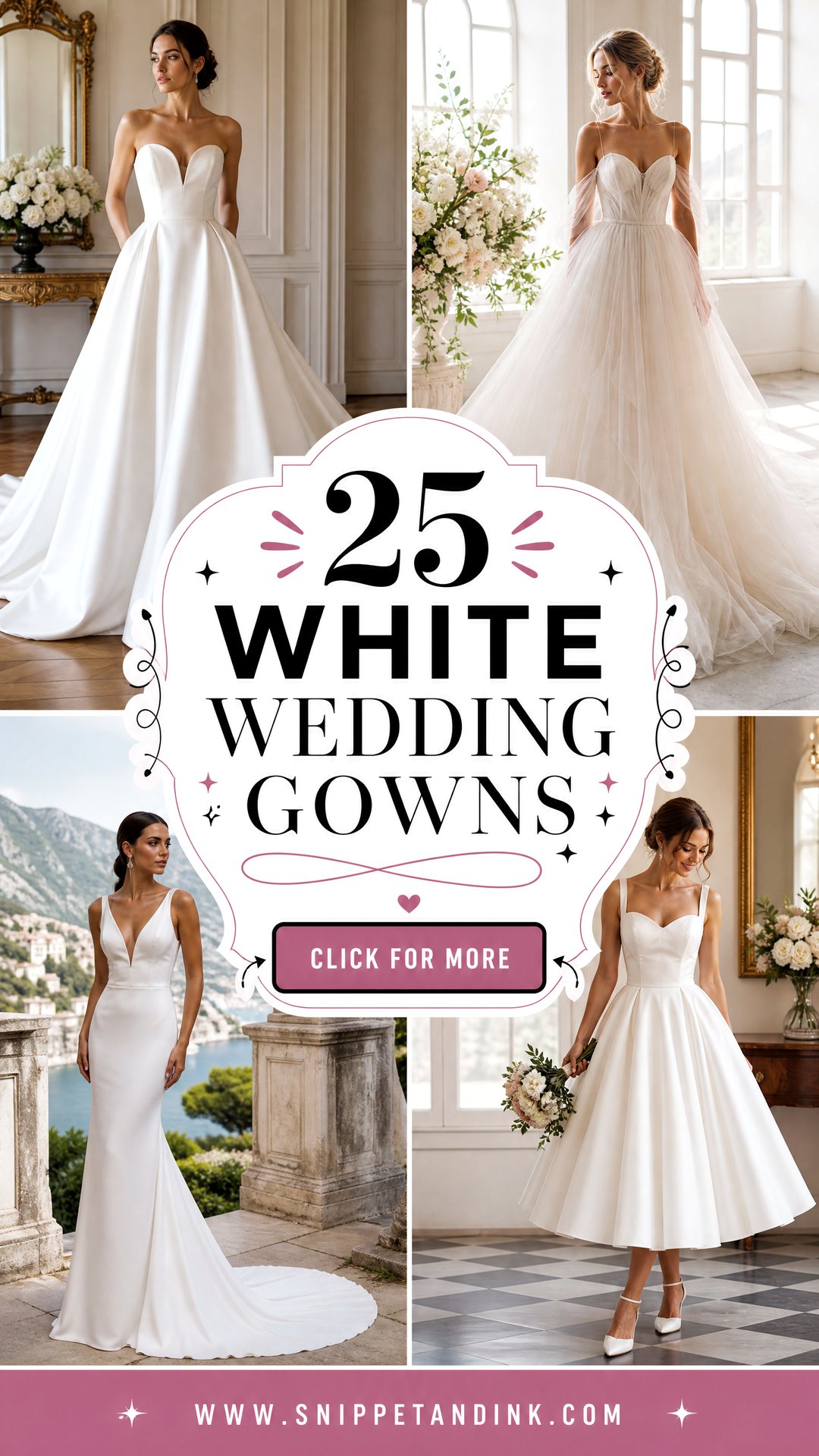
A white gown is the centre of the outfit, but in the fitting room I’m rarely only looking at the dress. I’m looking at the neckline against the face, how the fabric moves when you walk, what the shoes will do to the hem and whether the shape suits the room you’re marrying in. Brides are wearing everything right now, from lace sleeves and satin ball gowns to crepe columns, tea lengths and very spare minimalist cuts. Comfort, season and how long you’ll be in it matter as much as the photos. Here are twenty-five white gowns, each styled head to toe, with the fit notes I’d give you at the appointment.
Pack These for Your First Gown Appointment
A first appointment goes better when you bring a few practical things. Without them, every gown you try is a guess.
- Shoes at roughly the heel height you’ll wear on the day. The shop’s sample shoes rarely match, and length changes how every skirt looks.
- A smooth strapless bra or the undergarments you plan to wear, in your skin tone.
- A hair tie and pins, so you can see each neckline with your hair up as well as down.
- Two or three people whose opinion you actually want. A big group usually means a confused bride.
Remember that shop samples are usually one size and have been tried on many times. If a sample is clipped at the back, ask the consultant to show you how the finished gown will fit, and don’t judge the colour of a sample that’s been handled heavily.
1. White Lace Wedding Gown
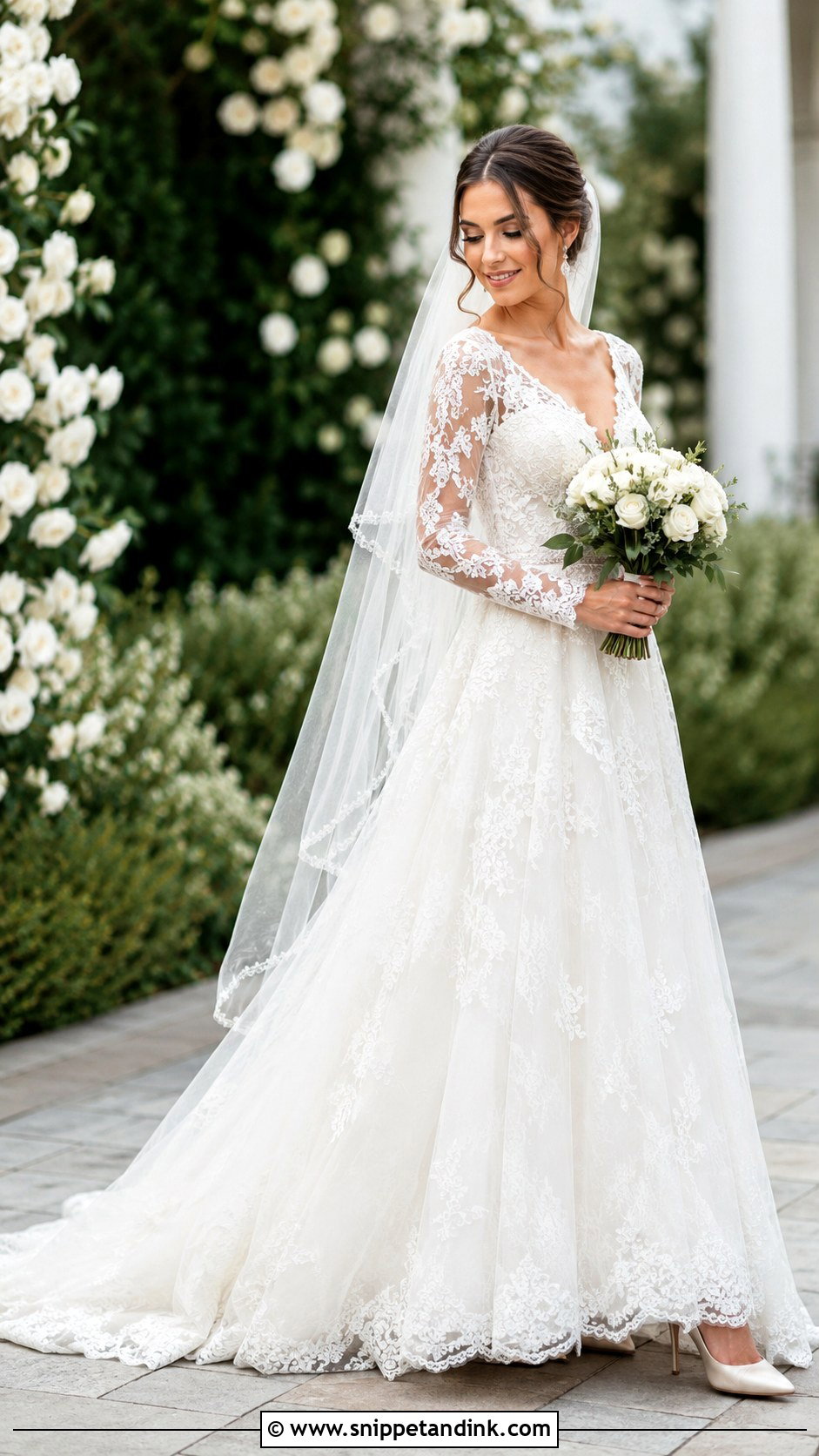
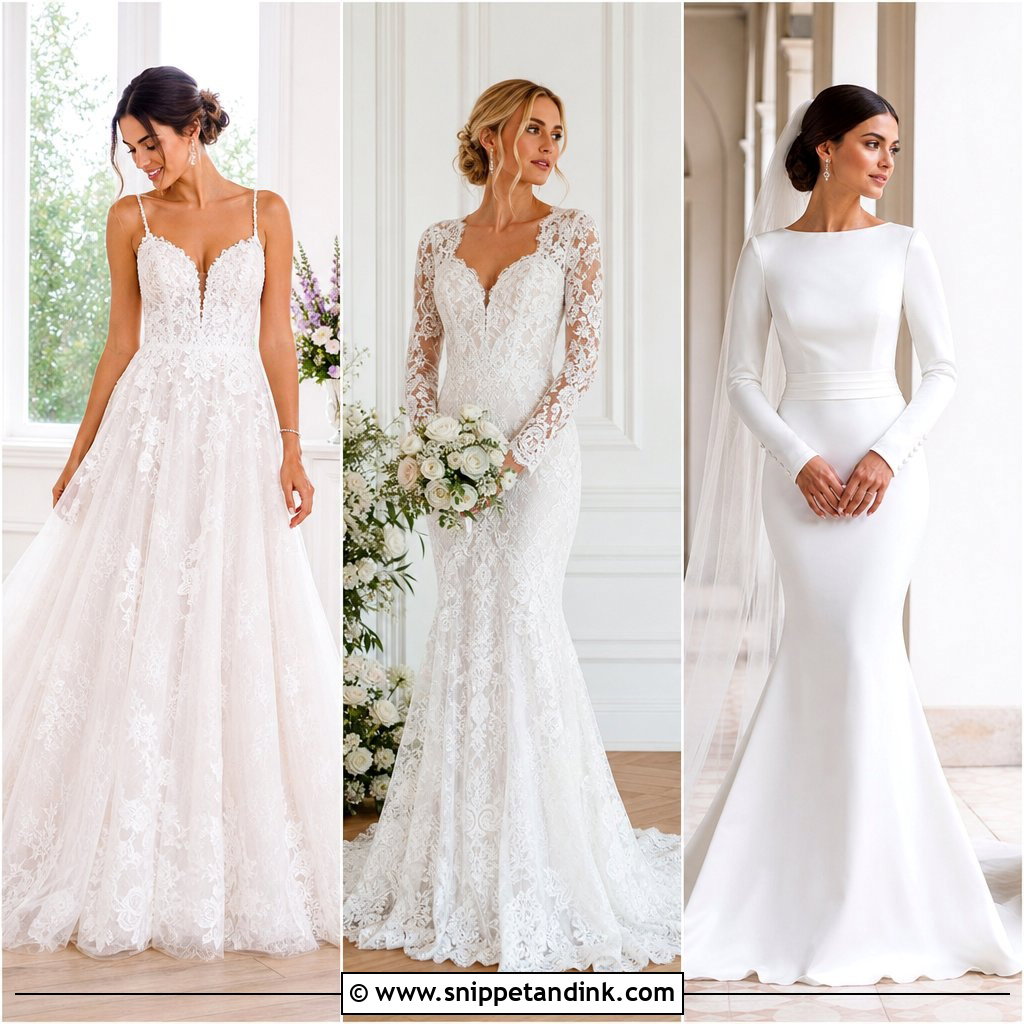
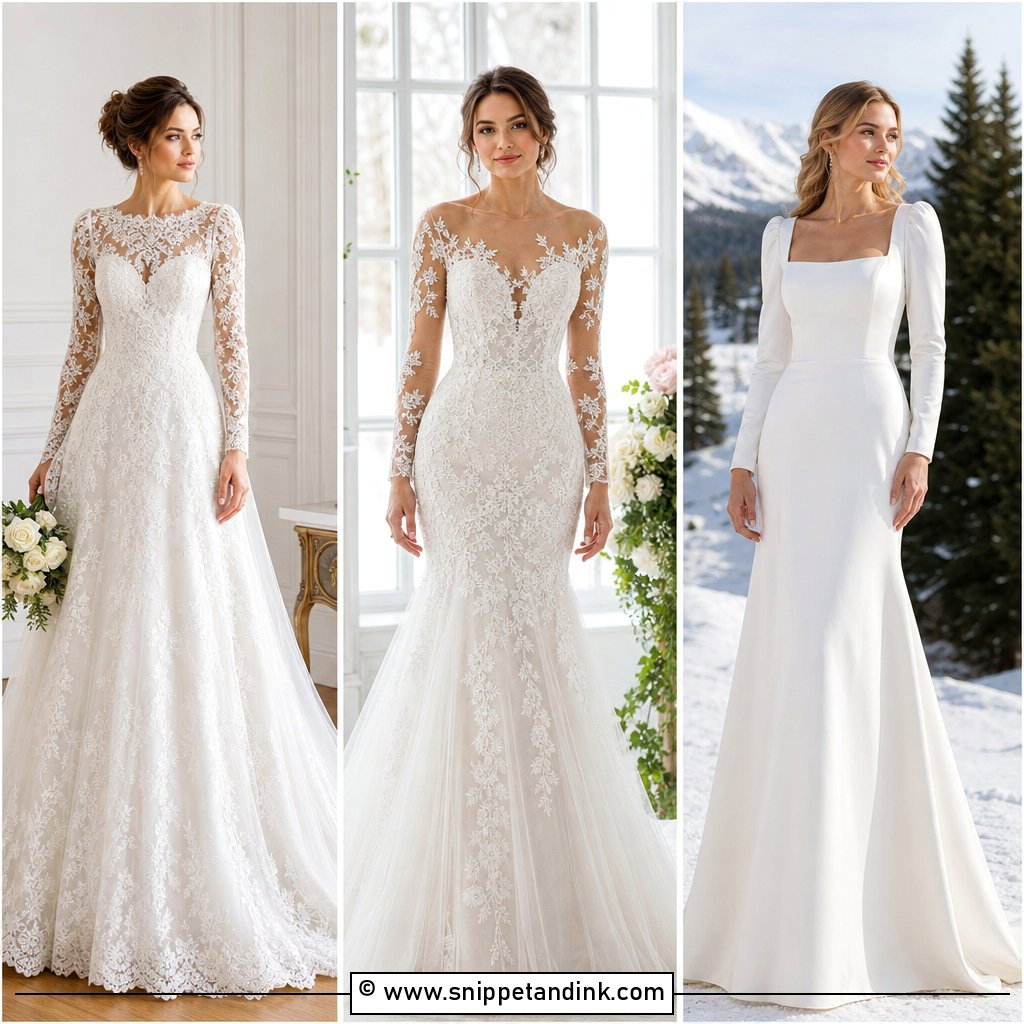
Lace gives a gown texture, and a fitted lace bodice over a soft A-line skirt is the shape most brides try first for a reason. The thing I look at is how the lace motifs meet at the seams: on a well-made gown they’re matched or appliquéd across the join, so you don’t see a cut line down the side. Long lace sleeves suit autumn and winter; sleeveless lace is cooler. Pearl drops, a sheer fingertip veil, ivory satin heels and white roses or ranunculus finish it, with glowing skin and a neutral lip.
2. White Satin Ball Gown
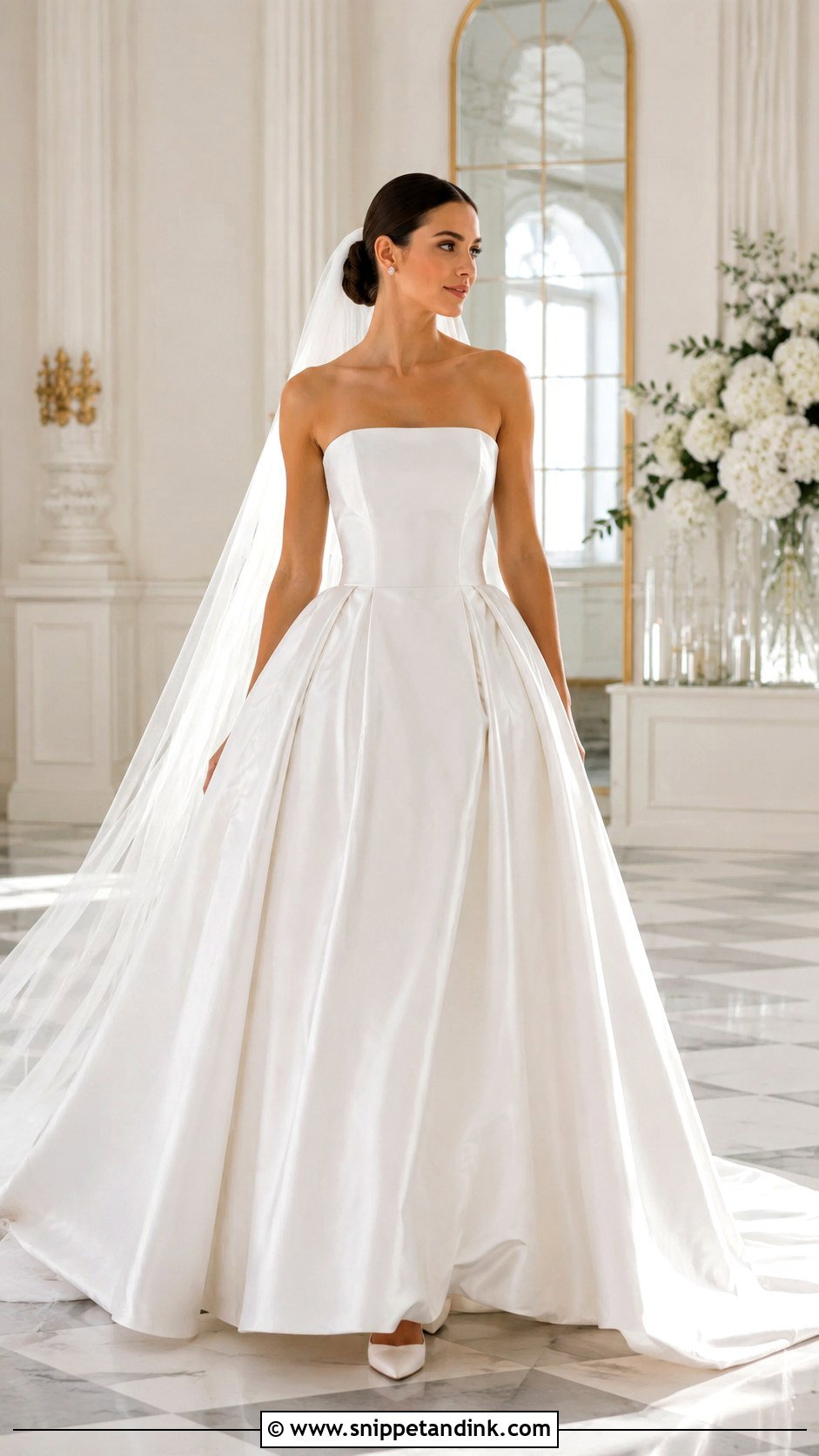
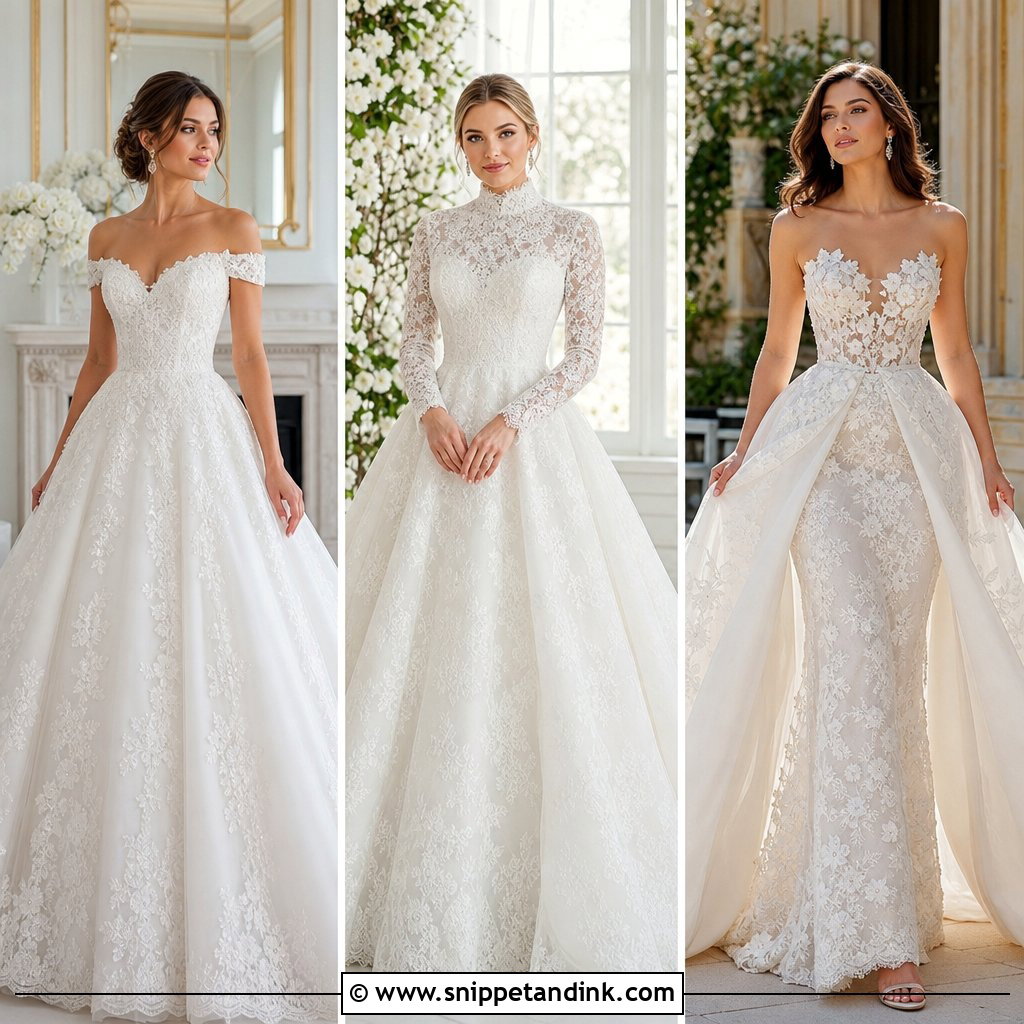
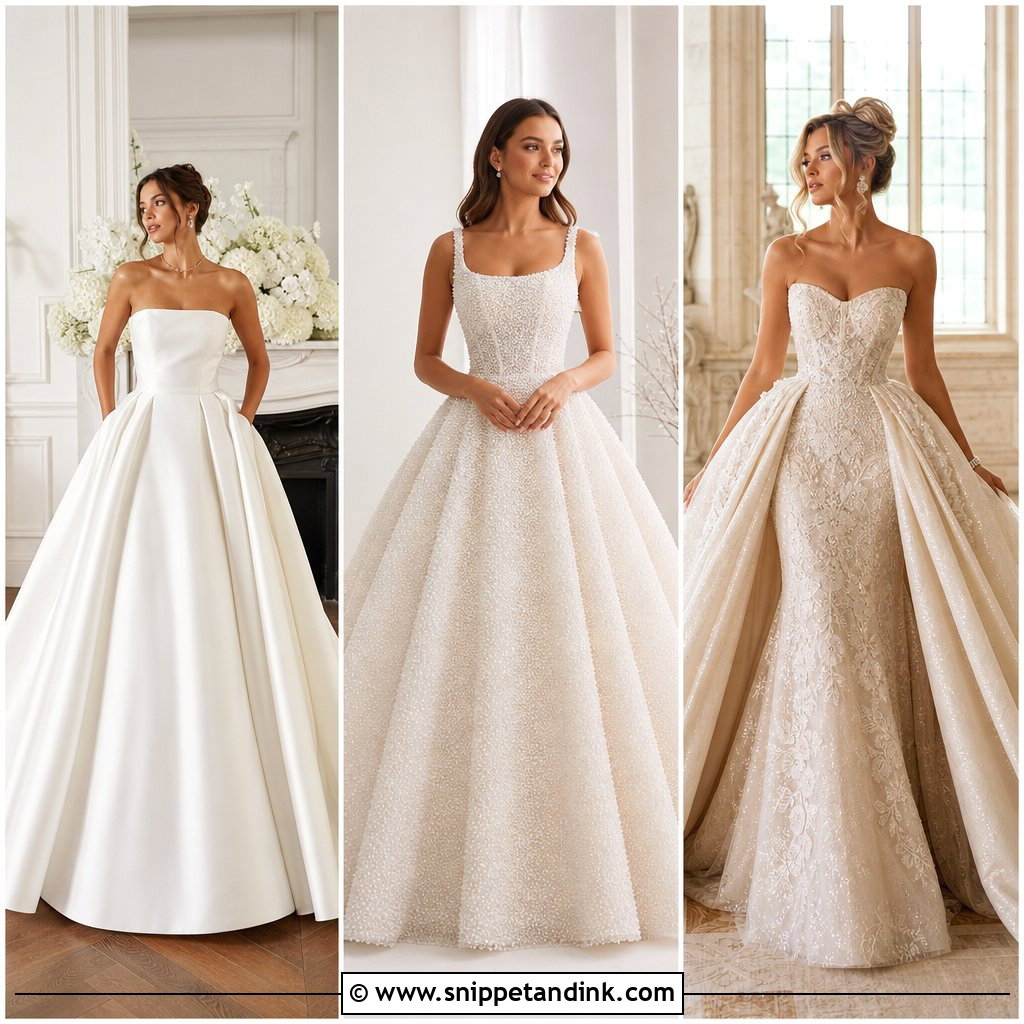
Satin ball gowns have weight, which is what gives them that clean, grand line, and also what makes them tiring by the evening. A strapless or off-shoulder neckline balances the skirt and shows the shoulders. The thing to sort early is the bustle: a full satin skirt with a train needs one, and you should see it done at a fitting before the day. Pair it with a cathedral veil, pointed white pumps, diamond or crystal studs and a sleek low bun, plus a structured bouquet of orchids or roses for black-tie ballrooms.
3. White Crepe Wedding Gown
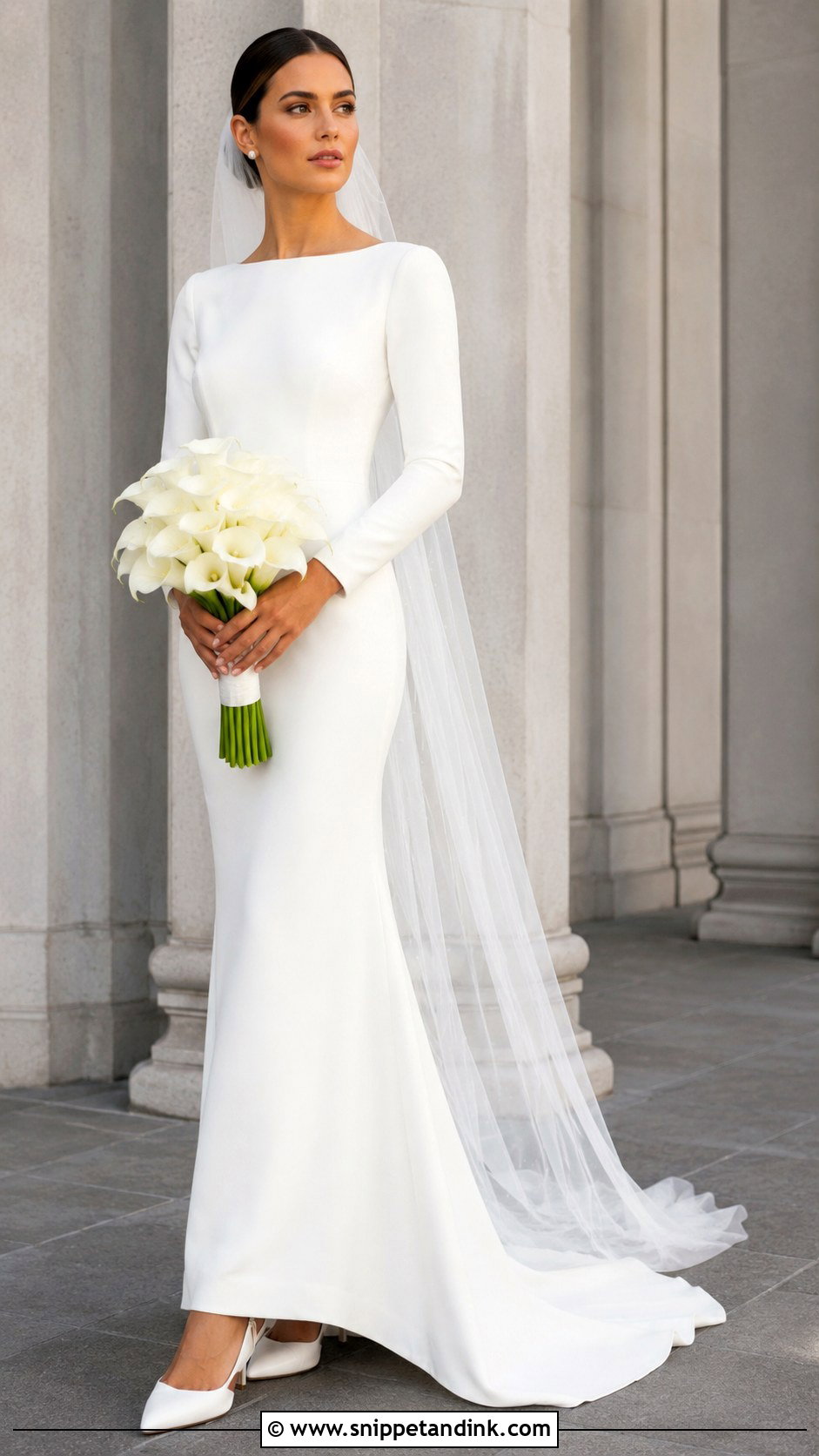
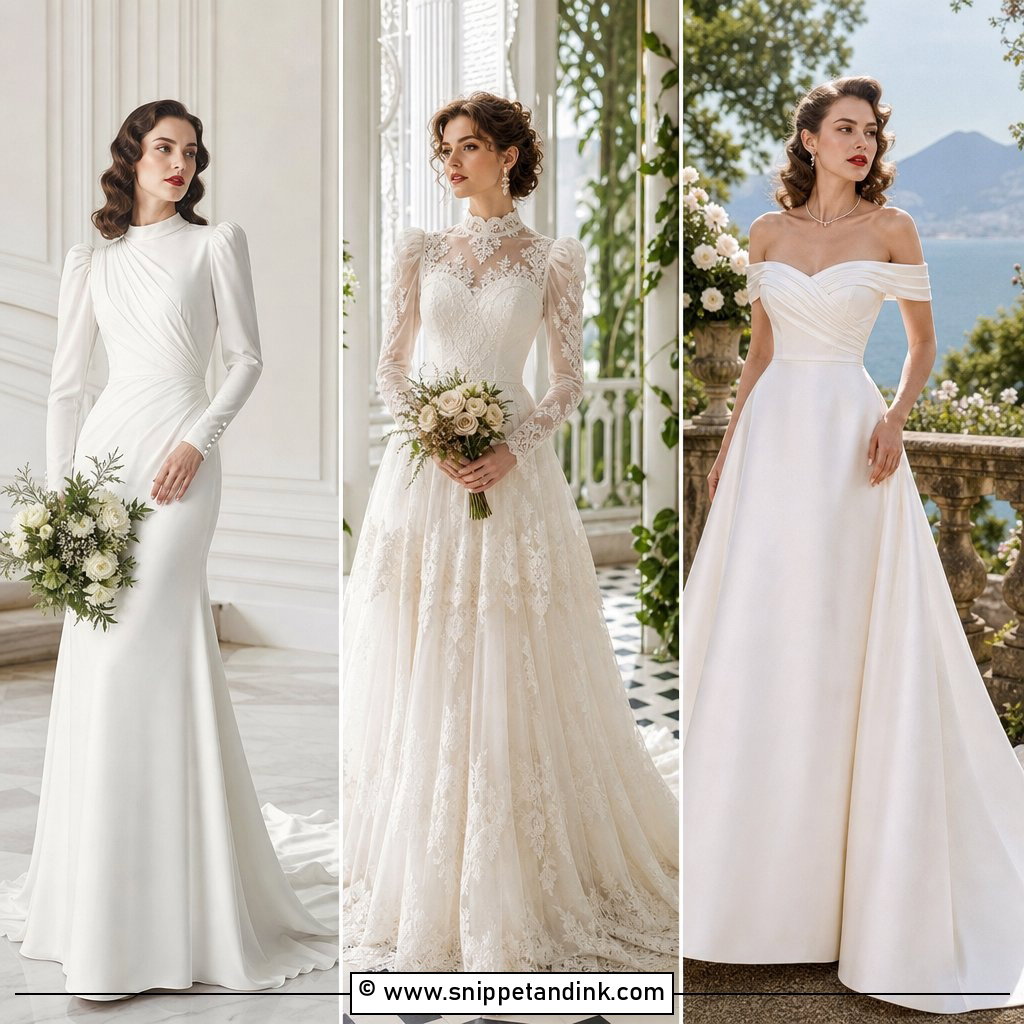
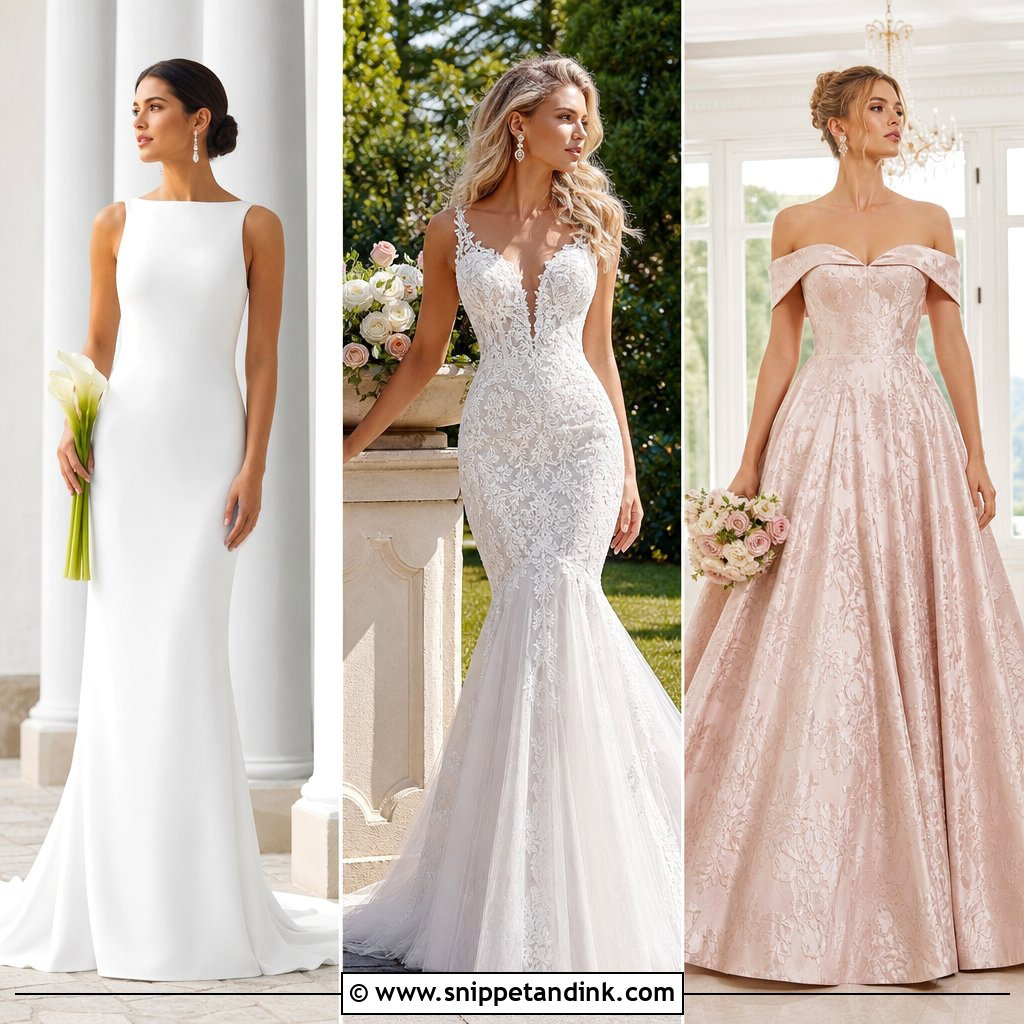
Crepe is matte and smooth, so it hides nothing and needs nothing. A long-sleeved crepe gown with a fitted waist and a gentle train looks right in a city venue. Because there’s no texture, the seams are on show; I check that the side seams run straight down and the hem sits level all the way round. A low chignon, pearl studs, white slingbacks and a narrow veil keep it clean, and a sculptural bouquet makes it editorial. Simple, but never plain, as long as the tailoring is right.
4. White A Line Wedding Gown
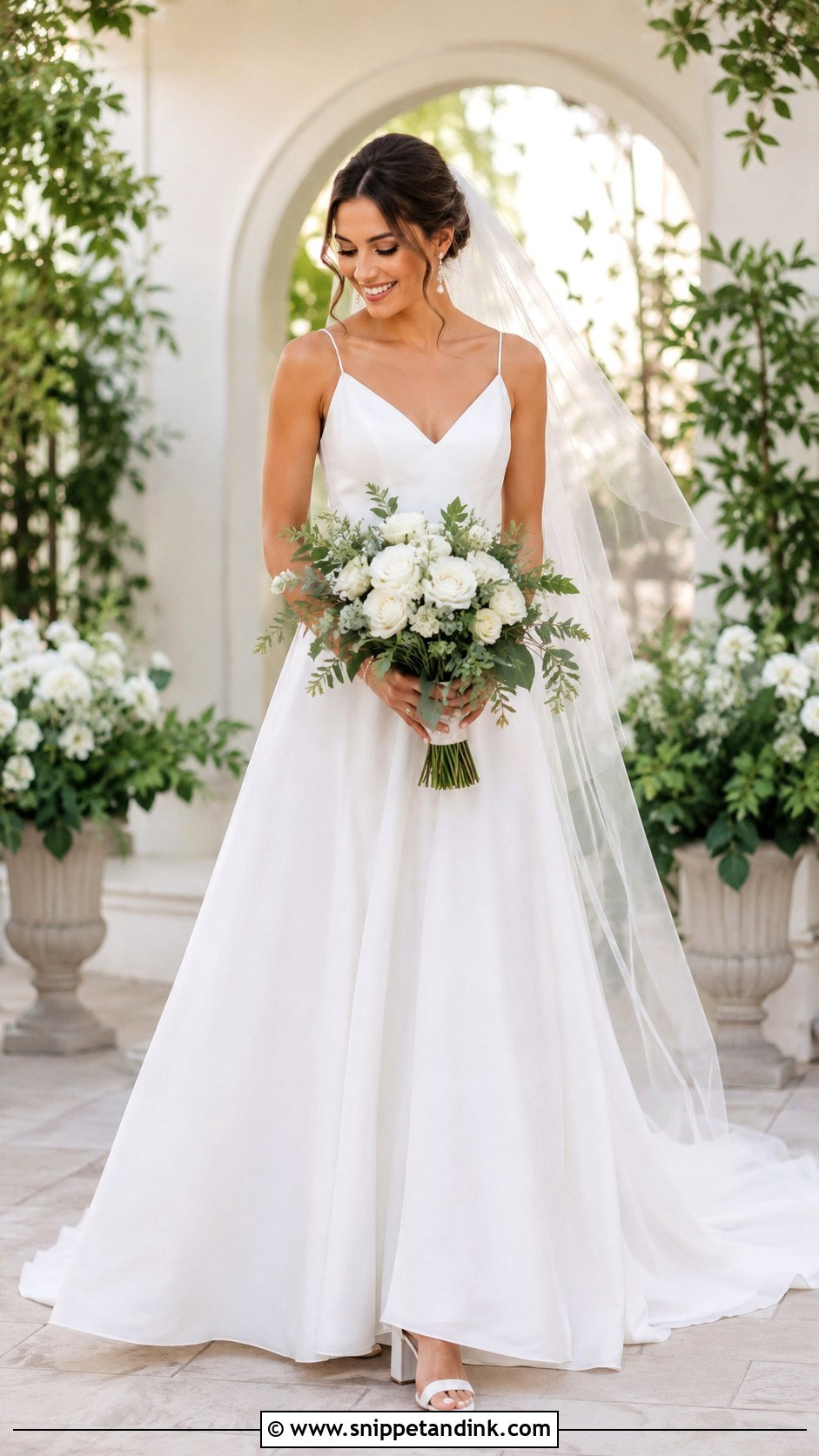
If I had to put every bride in one shape for a first try-on, it would be an A-line. It marks the waist, falls away from the hips and lets you walk, sit and dance without thinking. A fitted bodice with a tulle or organza skirt and a sweetheart or square neck is the classic version. One fit check matters more than any other: the waist seam should sit at your natural waist, not above or below, or the skirt looks borrowed. Delicate earrings, a chapel veil, white block heels and a bouquet with greenery suit almost any venue.
5. White Mermaid Wedding Gown
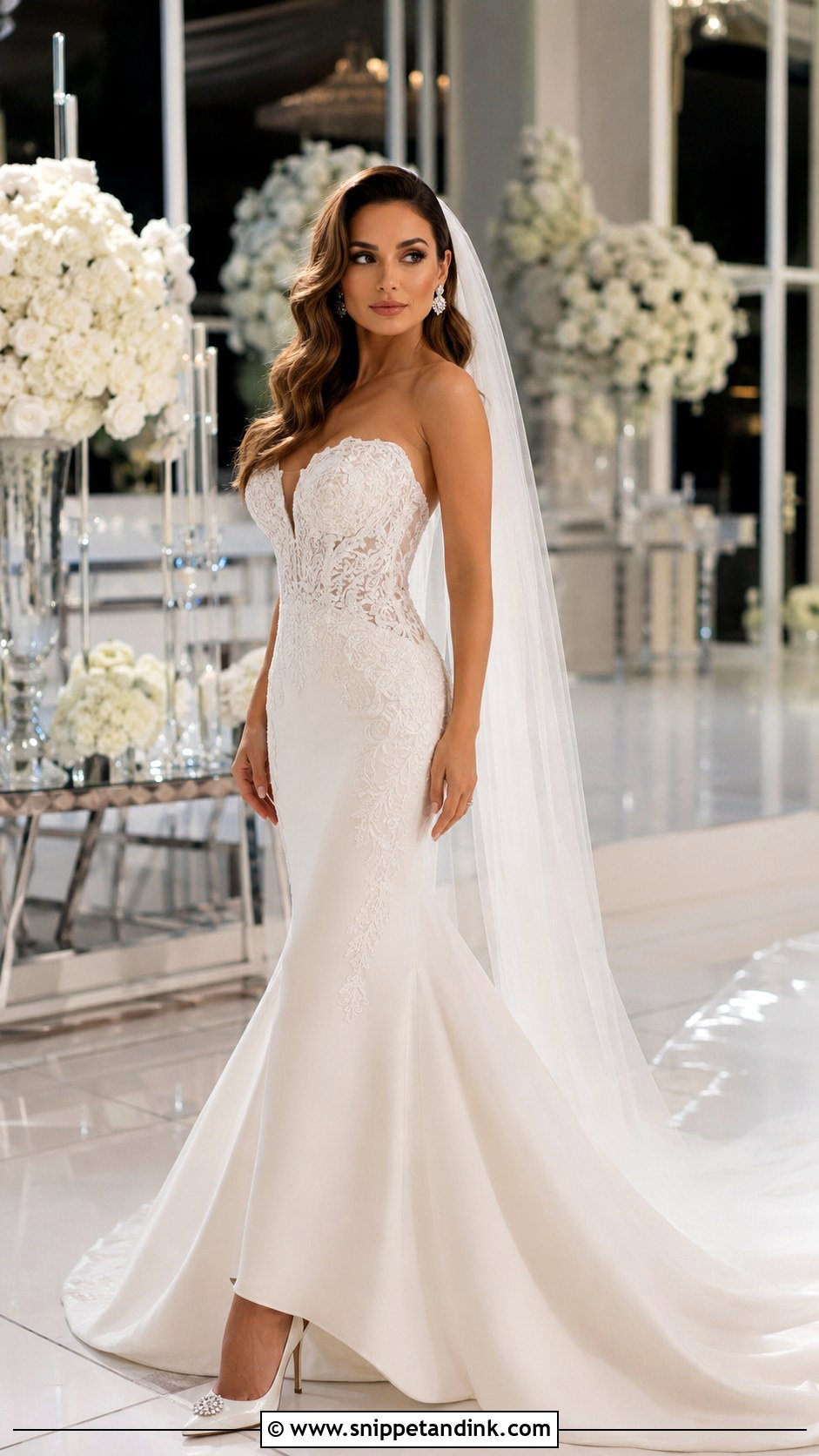
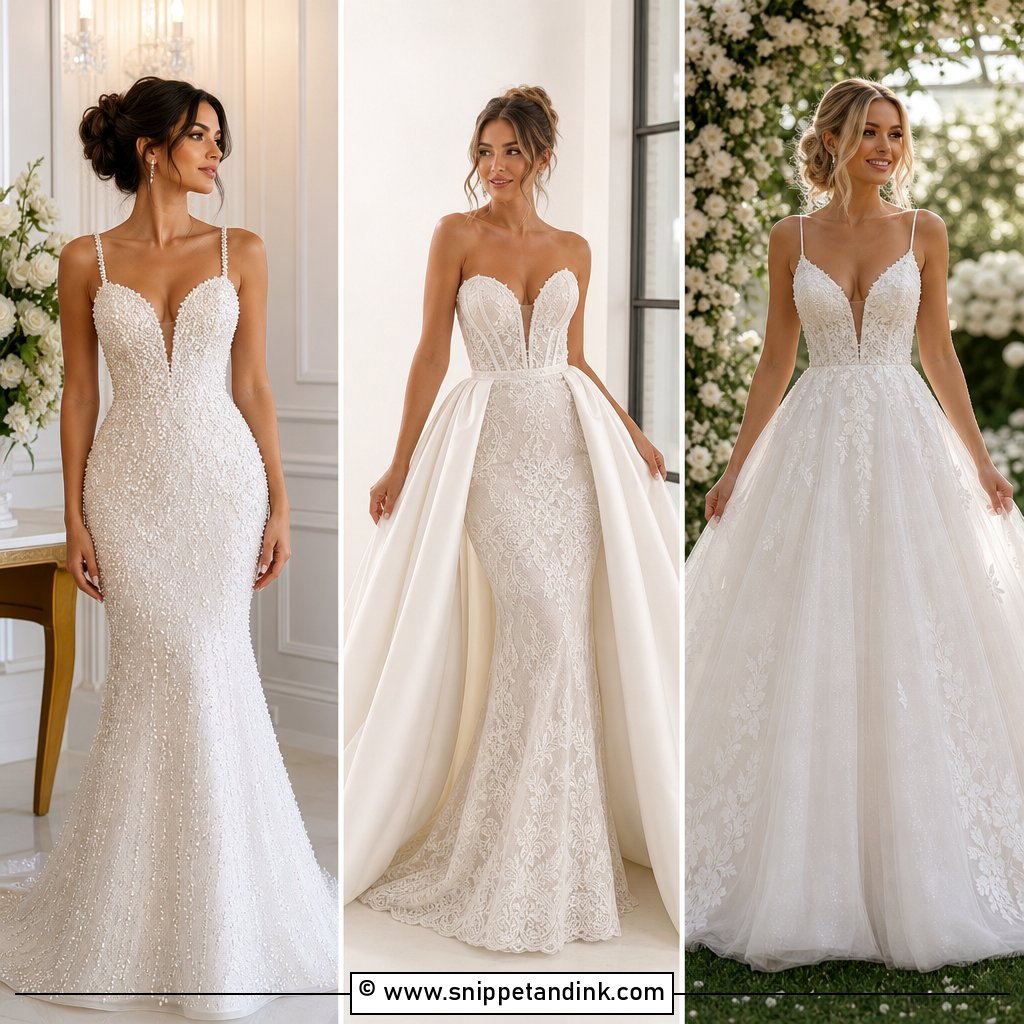
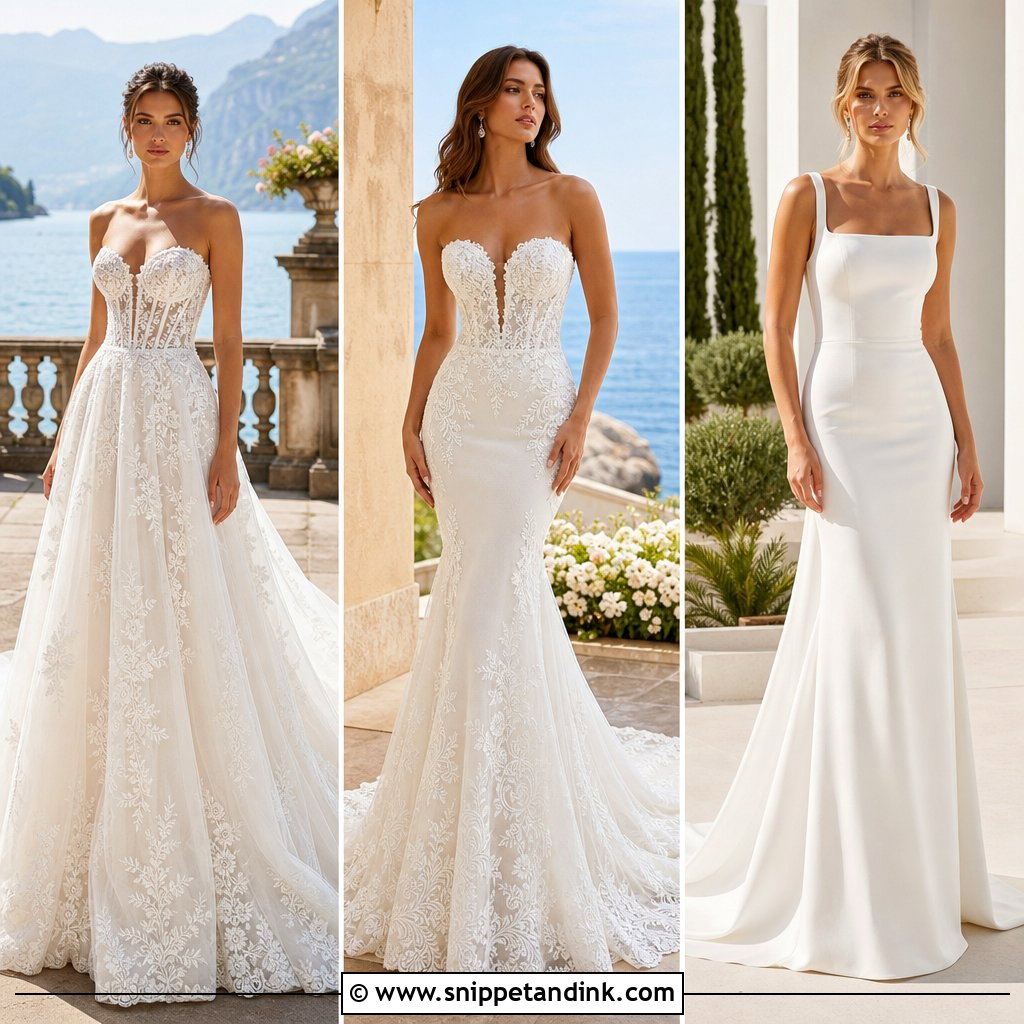
A mermaid gown hugs the bodice, waist and hips before it flares near the knee. Stretch crepe or satin gives comfort; lace appliqué makes it softer, and a plain fabric makes it sleeker. I always ask mermaid brides to sit and climb a step at the fitting, because if the flare starts too low, stairs become a problem. A long veil, crystal earrings, high heels and Hollywood waves suit it, with a narrow bouquet that doesn’t hide the shape. Evening receptions and formal indoor venues are its natural setting.
6. White Strapless Wedding Gown
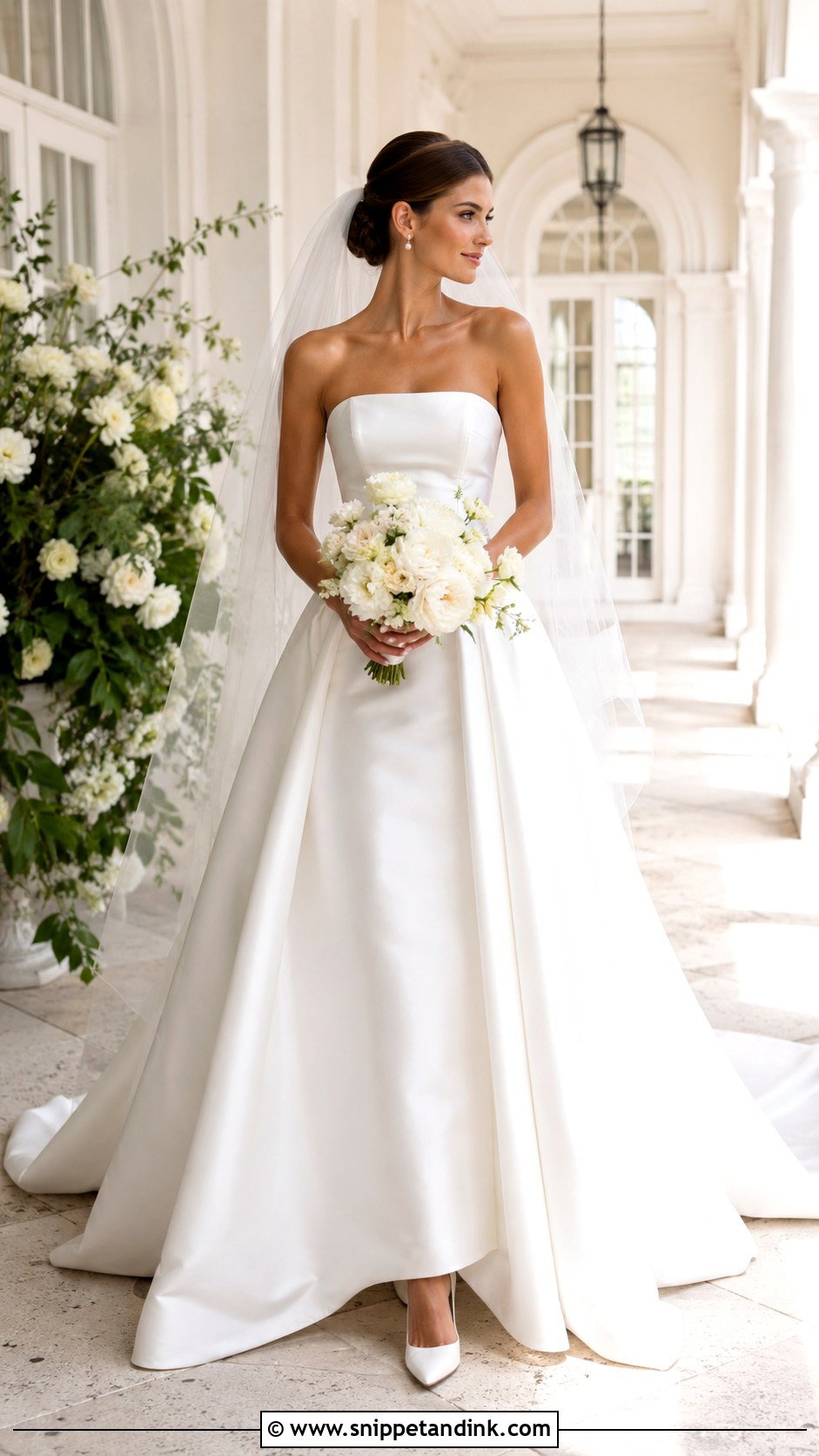
Strapless shows the collarbones and shoulders, so it takes either a simple necklace or statement earrings, not both. A strapless satin or mikado gown with a fitted bodice and full skirt is the clean version; lace or tulle softens it. Support is the whole question: the bodice should hold you without you hitching it up, so I ask brides to lean forward and raise their arms in the mirror. A sheer veil, white pumps, pearls and soft white flowers complete it.
7. White Off Shoulder Wedding Gown
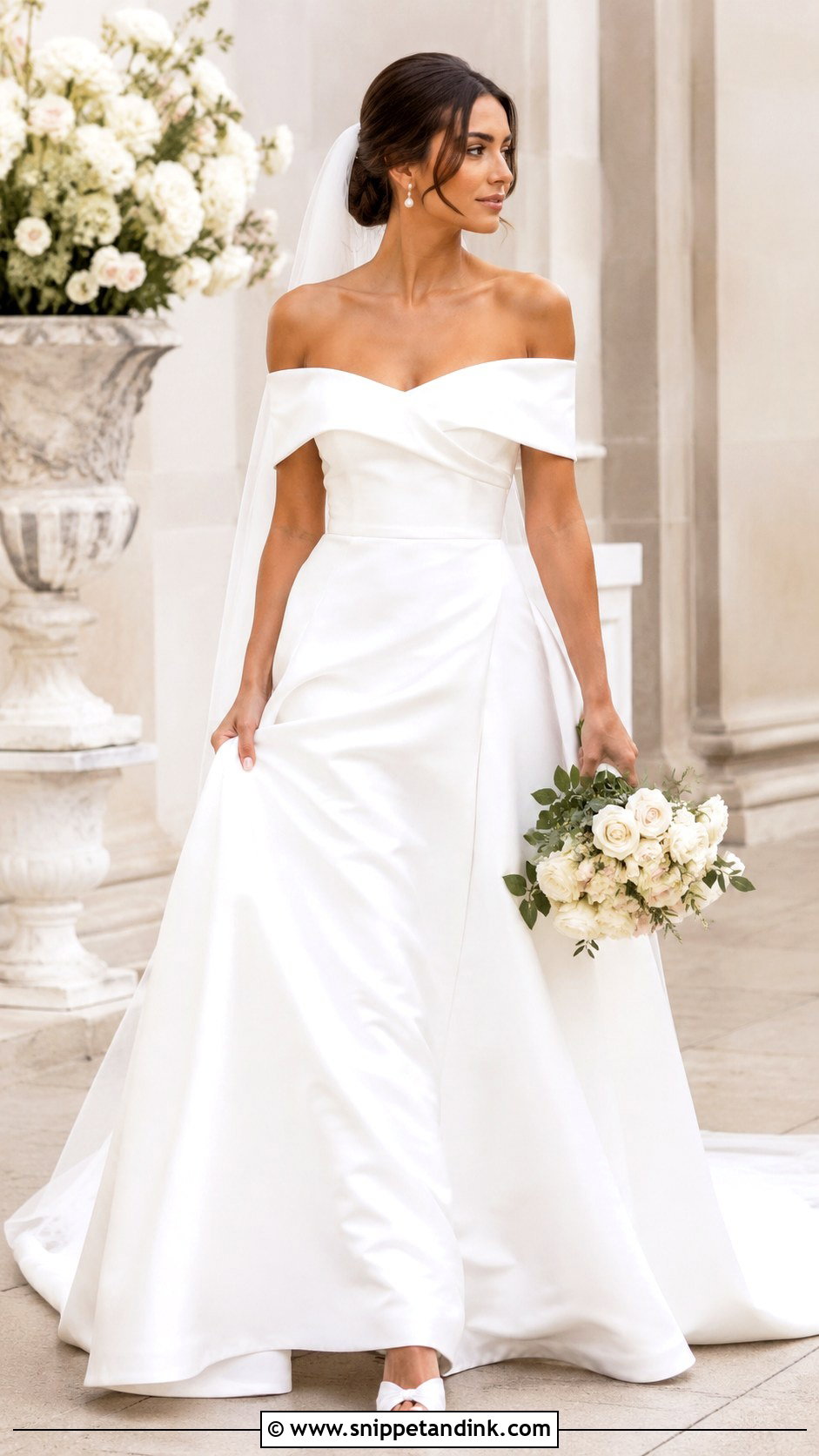
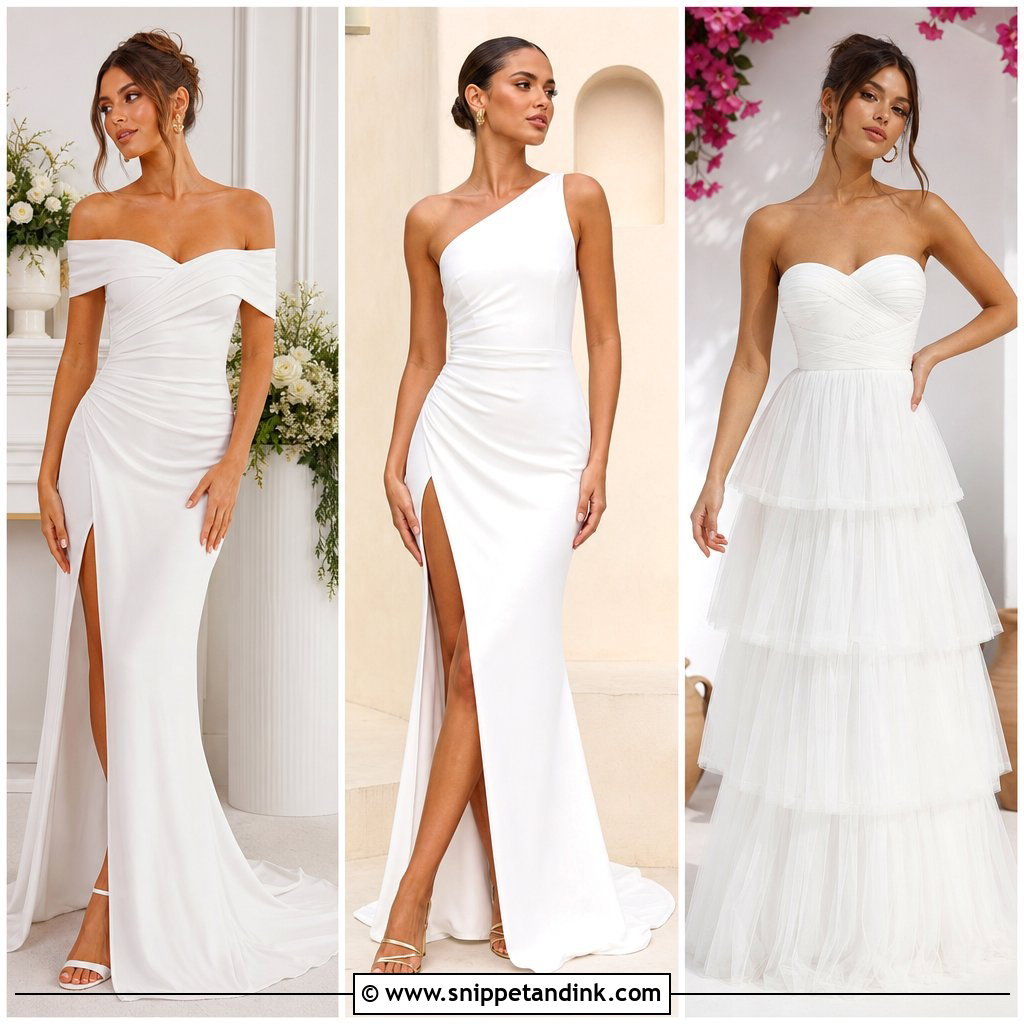
Off the shoulder is soft and still polished. A satin off-shoulder ball gown reads regal; a lace off-shoulder sheath is lighter and more relaxed. The band must grip without cutting in, which is why many have silicone grip tape inside. Wear a low bun with the veil set under it, so the tulle falls behind the shoulders, and pearl earrings with white heels. Skip the necklace or keep it tiny, and let the neckline do its job.
8. White Long Sleeve Wedding Gown
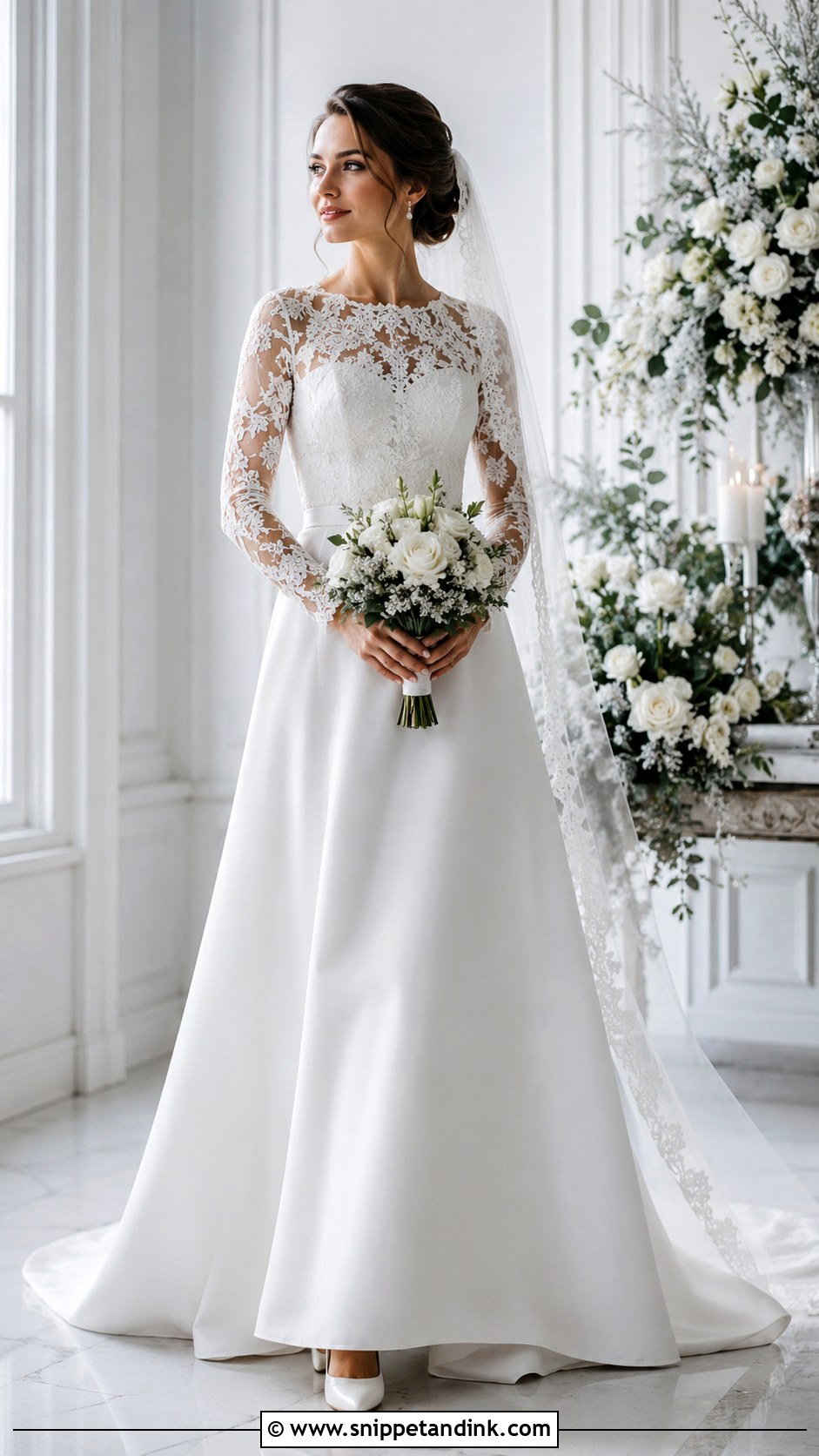
Sleeves change the gown more than people think. Lace reads romantic, sheer reads delicate, crepe reads modern. With a fitted bodice and an A-line or column skirt, the critical point is armhole height: if it’s cut low, the whole bodice lifts when you raise your arms. Ask to hug someone during the fitting and watch what happens at the waist. Pearl earrings, a clean veil, closed white heels and white blooms with greenery suit cooler months and formal venues, and the sleeves add detail from every angle.
9. White Square Neck Wedding Gown
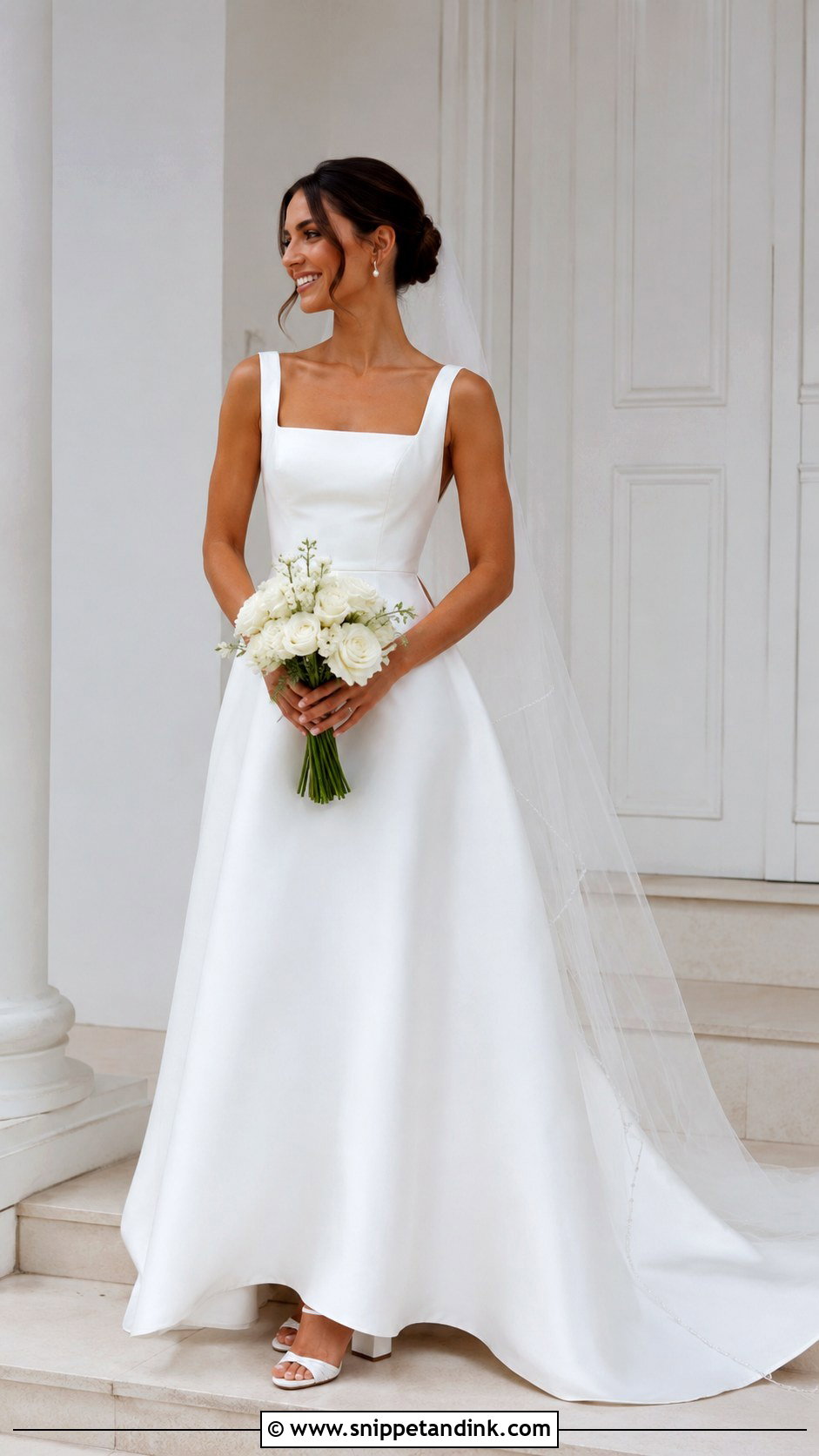
A square neck gives the bodice structure without going strapless, which is why brides who want support often end up there. It frames the face well, especially with a clean bun or waves tucked behind the ears. Satin A-line is the polished version; crepe is the minimal one. Watch the strap width: straps set too far apart slide off the shoulder during the day. Small pearl hoops, a simple veil, white block heels and a neat bouquet are all it needs.
10. White High Neck Wedding Gown
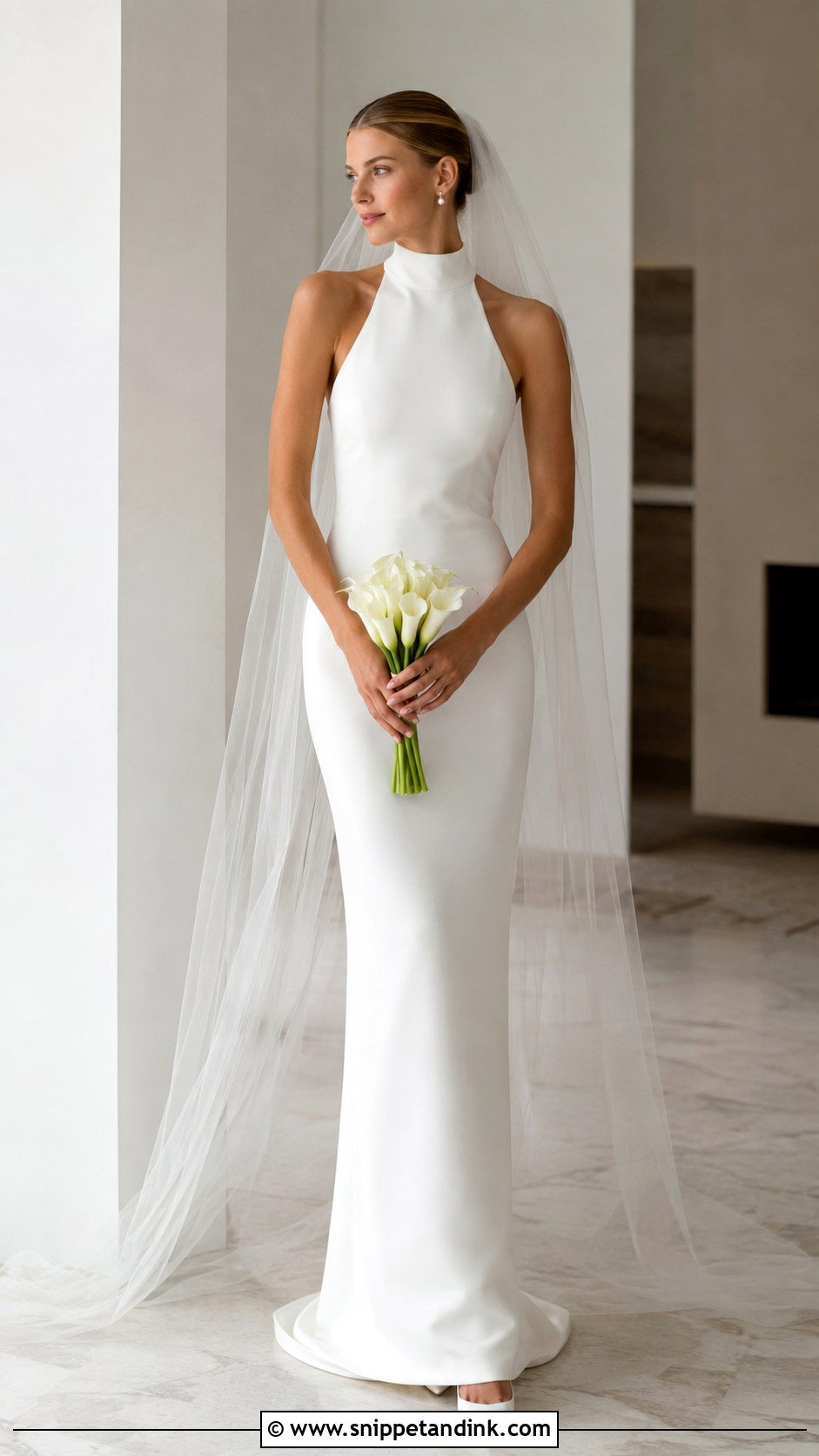
A high neck changes mood with the fabric. In lace it’s vintage; in crepe it’s architectural. Either way, it’s the one gown where I’d leave the necklace at home and let earrings carry the jewellery. The collar should clear your throat by a finger, or you’ll spend the day pulling at it. A sleek updo, white pointed heels and a long veil keep the line tall, with a narrow bouquet. It leaves room for the back of the dress or the train to be the surprise when you turn.
11. White V Neck Wedding Gown
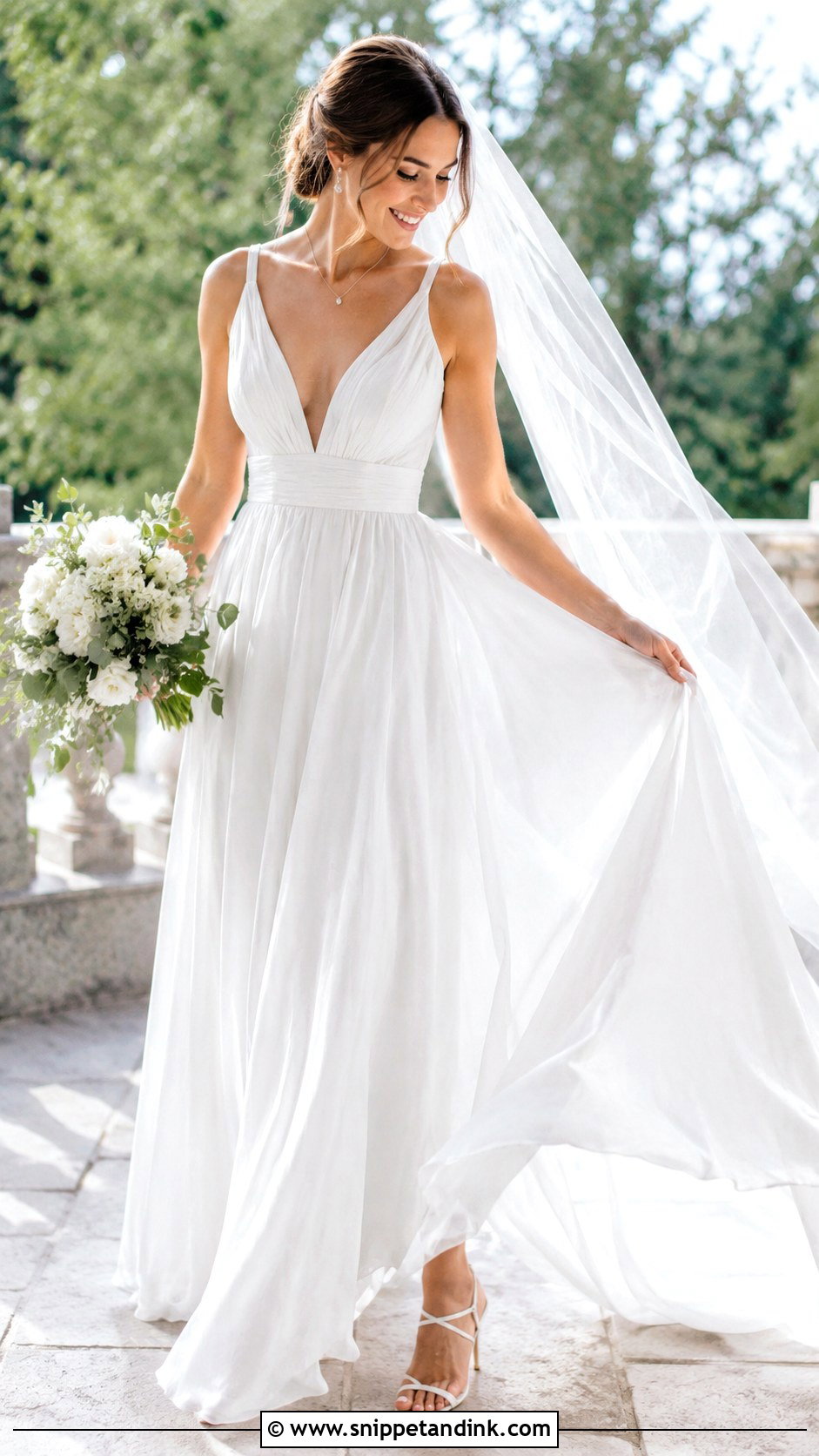
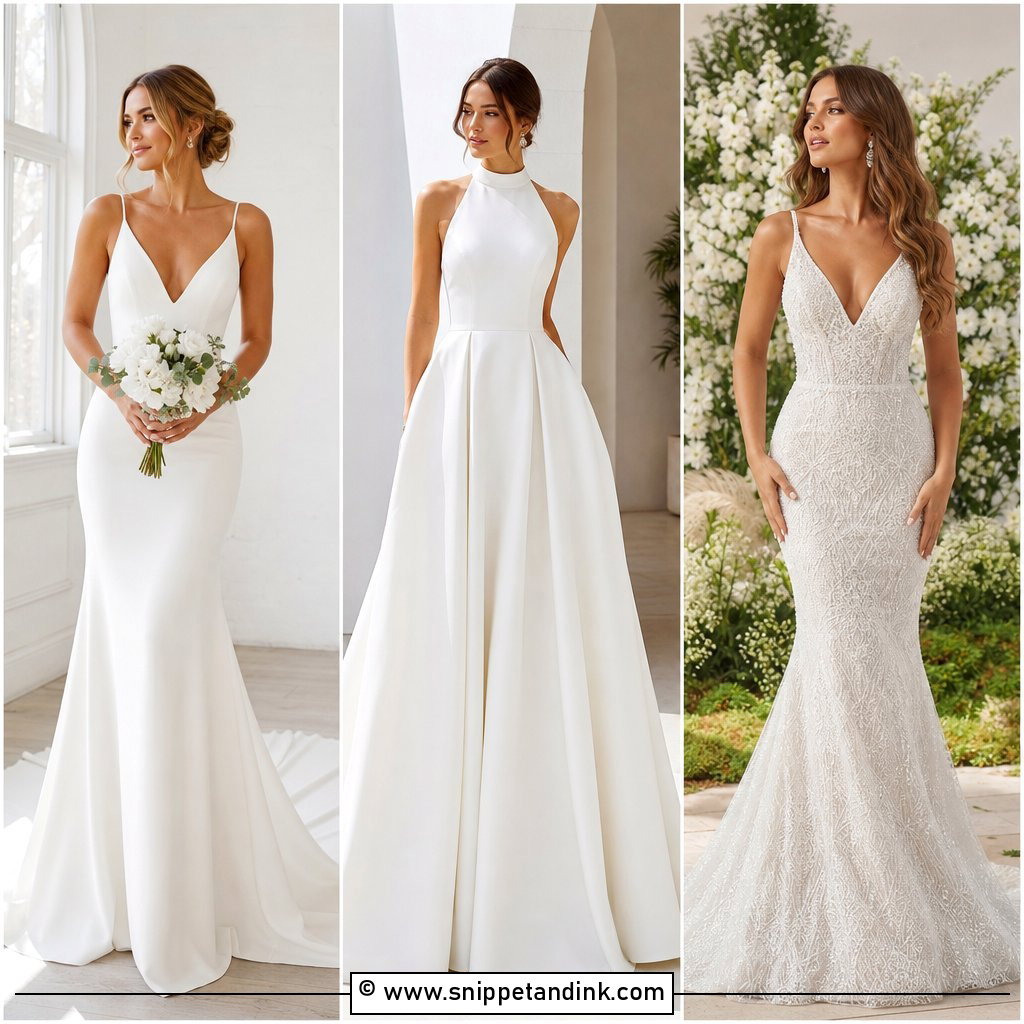
A V-neck lengthens the upper body, and how deep it goes changes everything. A soft V is easy for almost anyone; a deep V needs fashion tape or a mesh panel to stay put through hugs and dancing. Lace is romantic, satin classic, chiffon light enough for a destination wedding. If the V is deep, a fuller skirt or long sleeves balance it. A fine pendant, drop earrings, strappy heels and a flowing veil finish it for beaches, gardens or indoor venues.
12. White Tulle Wedding Gown
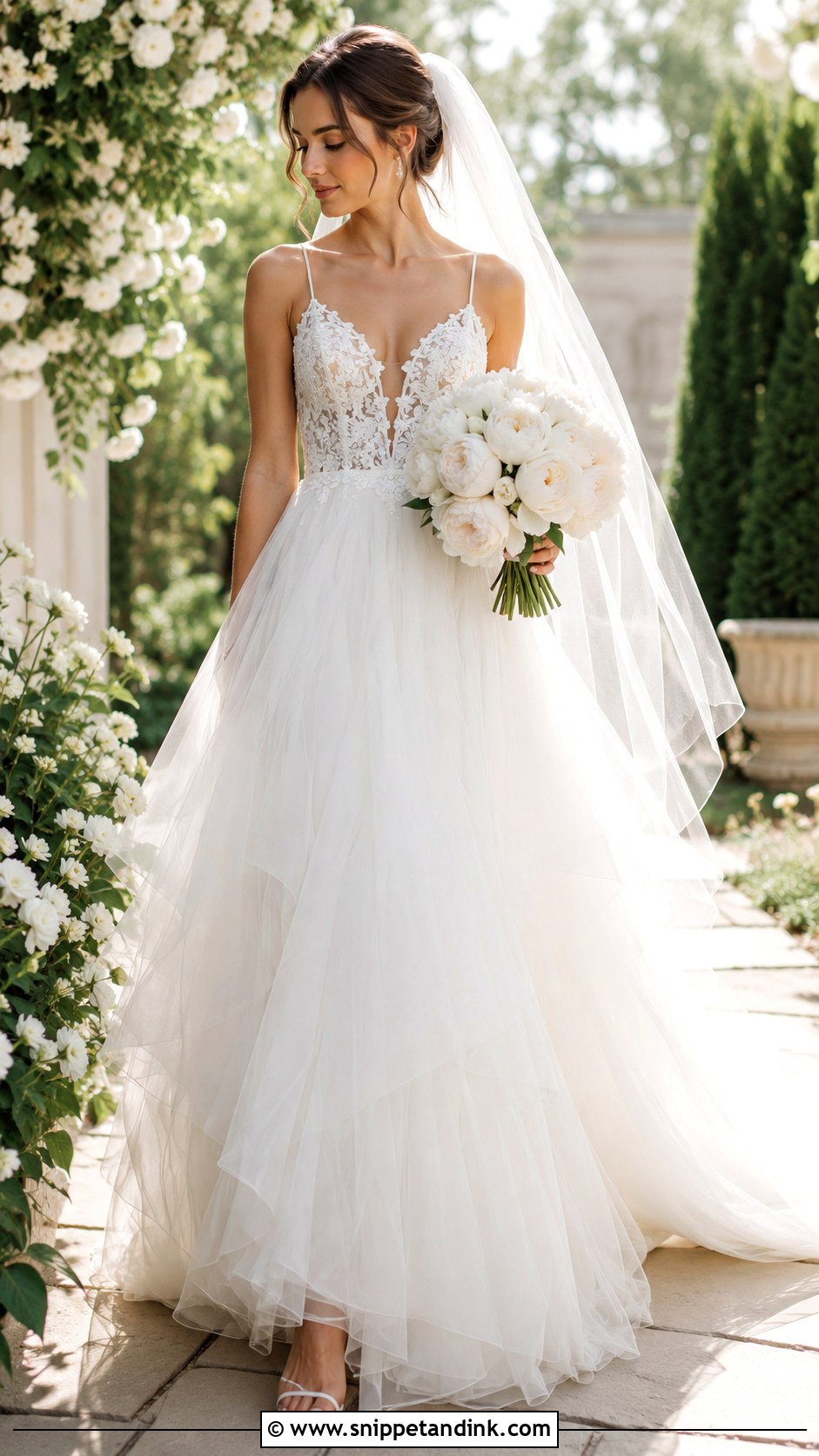
Tulle is all air and movement, so a tulle gown looks soft without any beading at all. A fitted bodice with a floaty skirt gives shape without weight. Small floral appliqués or a light shimmer add a little magic. The practical warning: tulle snags on rough surfaces, bracelets and even the edge of a cake table, so I’d keep jewellery small and smooth. Delicate heels, a sheer veil, dainty earrings and a loose updo with peonies or garden roses suit spring gardens.
13. White Organza Wedding Gown
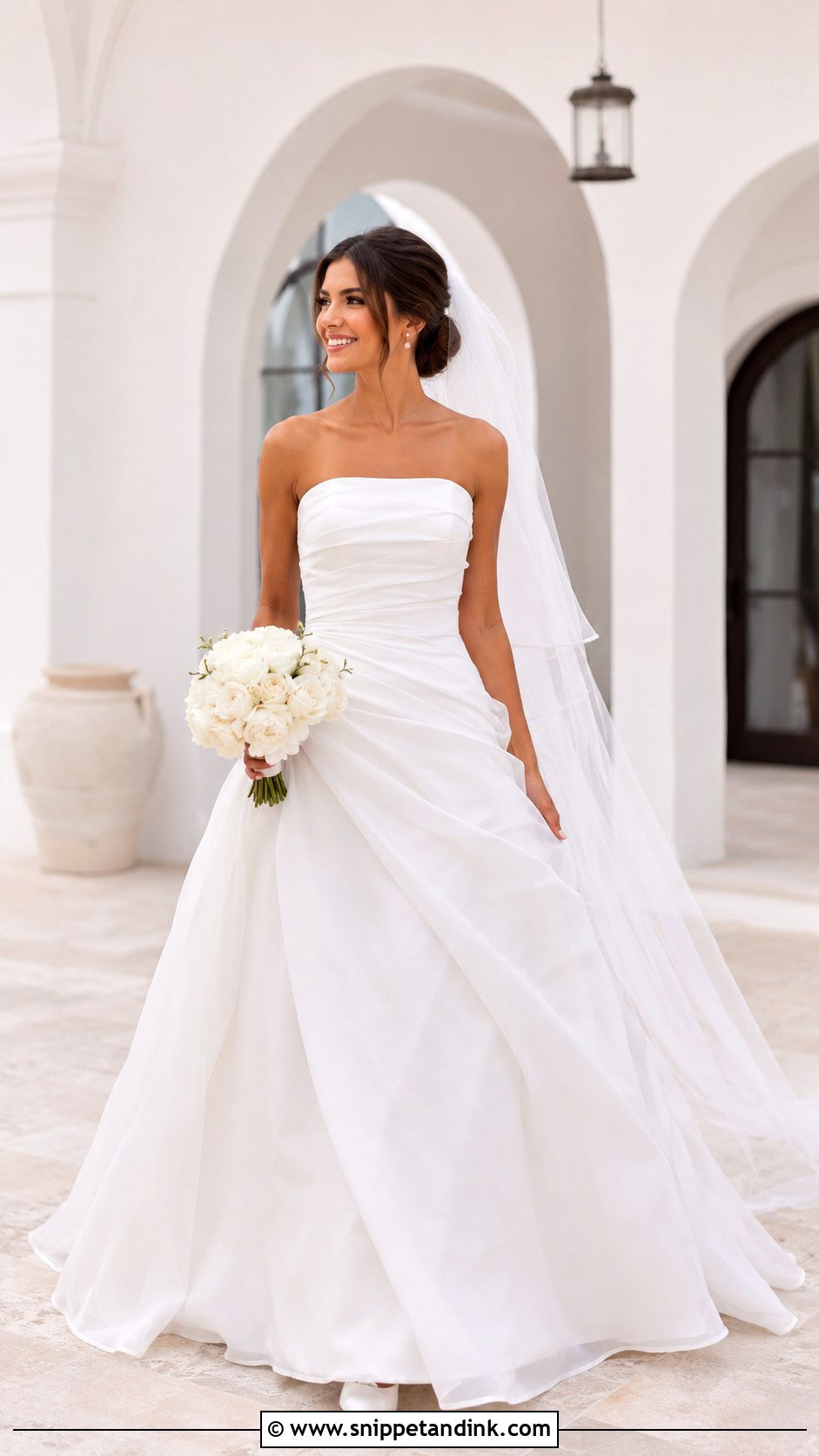
Organza has more body than tulle, so it holds volume while still looking light. A strapless organza A-line with a softly gathered skirt looks modern and graceful. It also creases sharply and shows every fold, so the gown should hang for a day before the wedding and be steamed at a distance. Pearl studs, white pumps, a clean veil and soft white flowers keep it fresh, and its slight sheen suits warm-weather weddings and bright ballrooms.
14. White Minimalist Wedding Gown
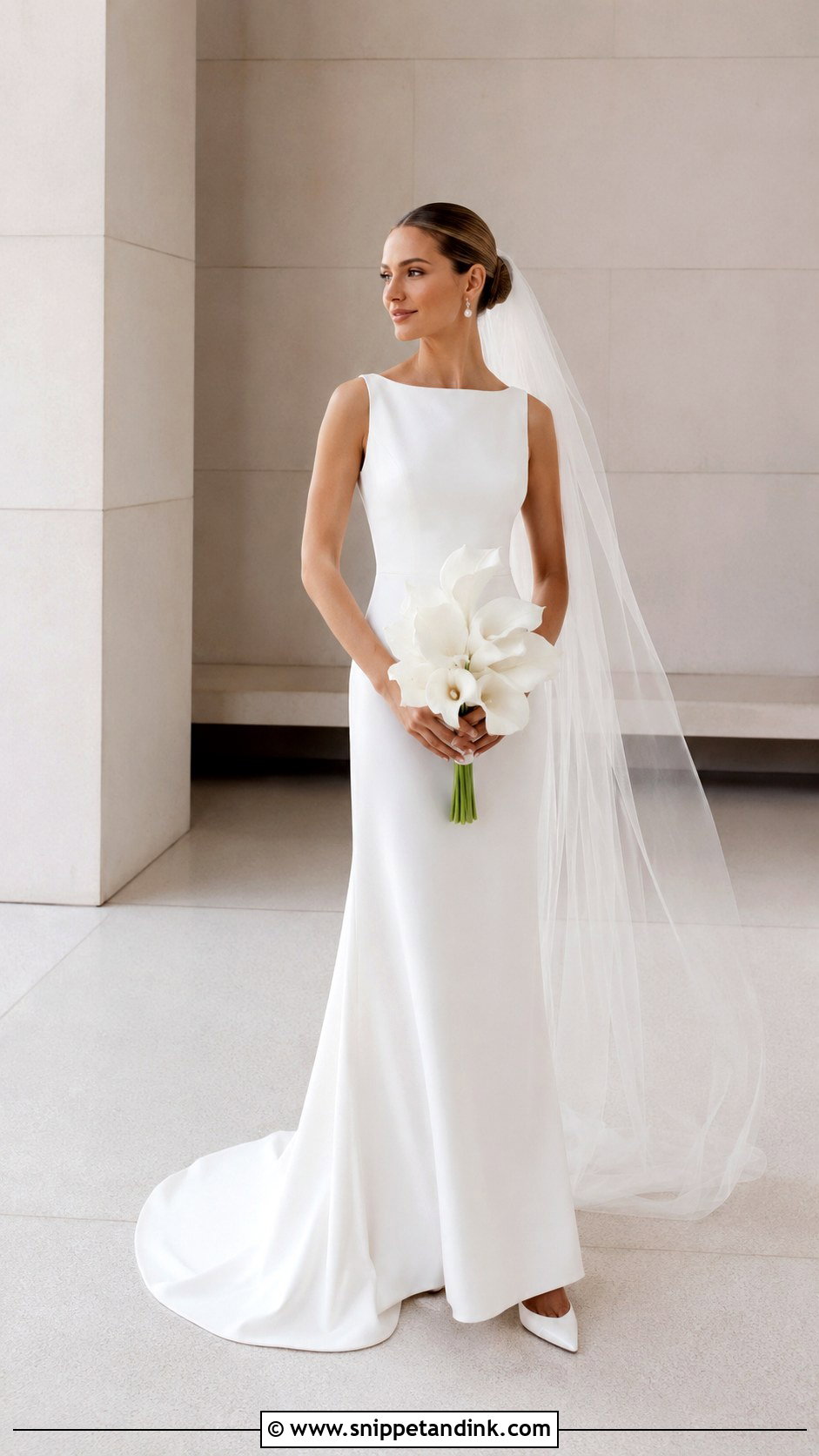
With a minimalist gown, the fit is the design. A crepe column, a satin slip or a structured A-line can look extraordinary, or ordinary, depending entirely on tailoring. I spend more fitting time on these than on lace gowns, because there’s nothing to distract from a hem that’s slightly uneven or a waist that’s a little loose. Pearl earrings, a sleek veil, white heels and a sculptural bouquet suit courthouses, rooftops and modern venues. Keep the hair polished, low bun or smooth waves.
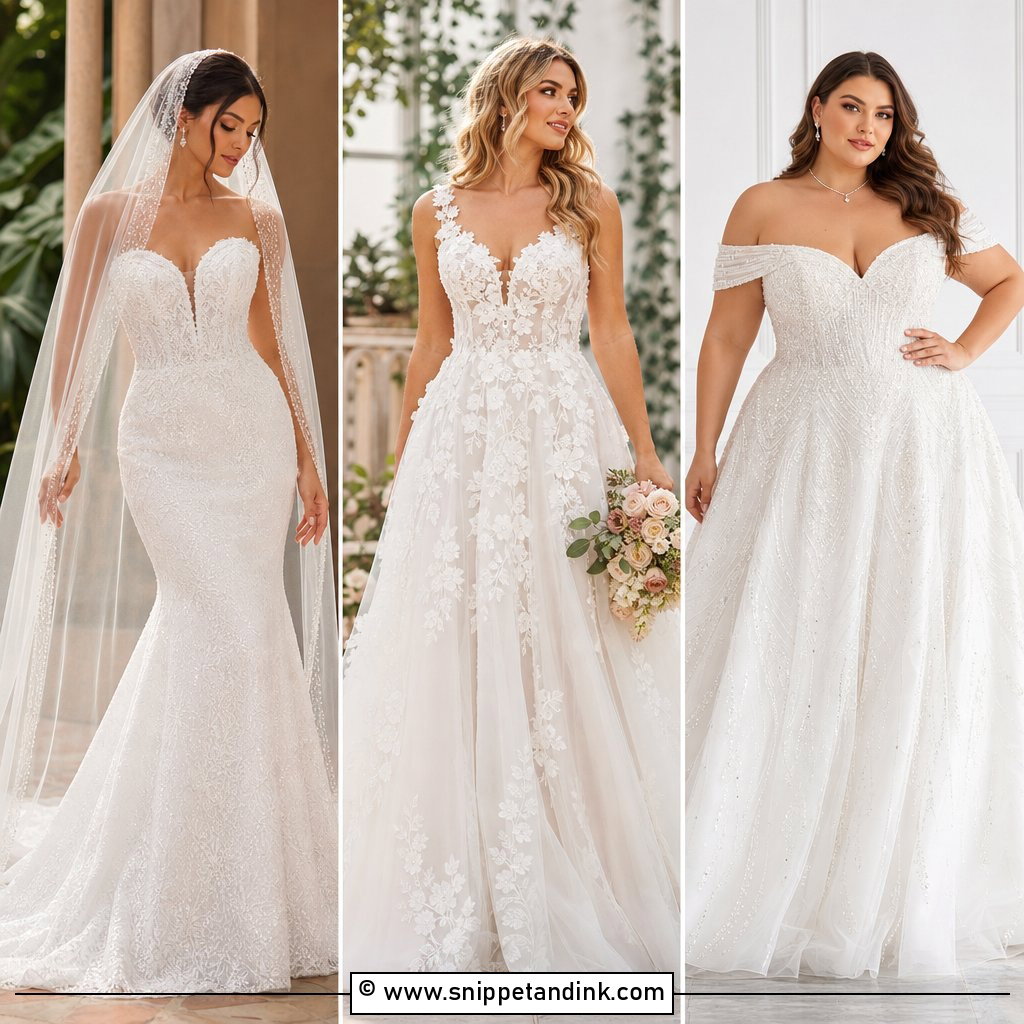


15. White Slip Wedding Gown
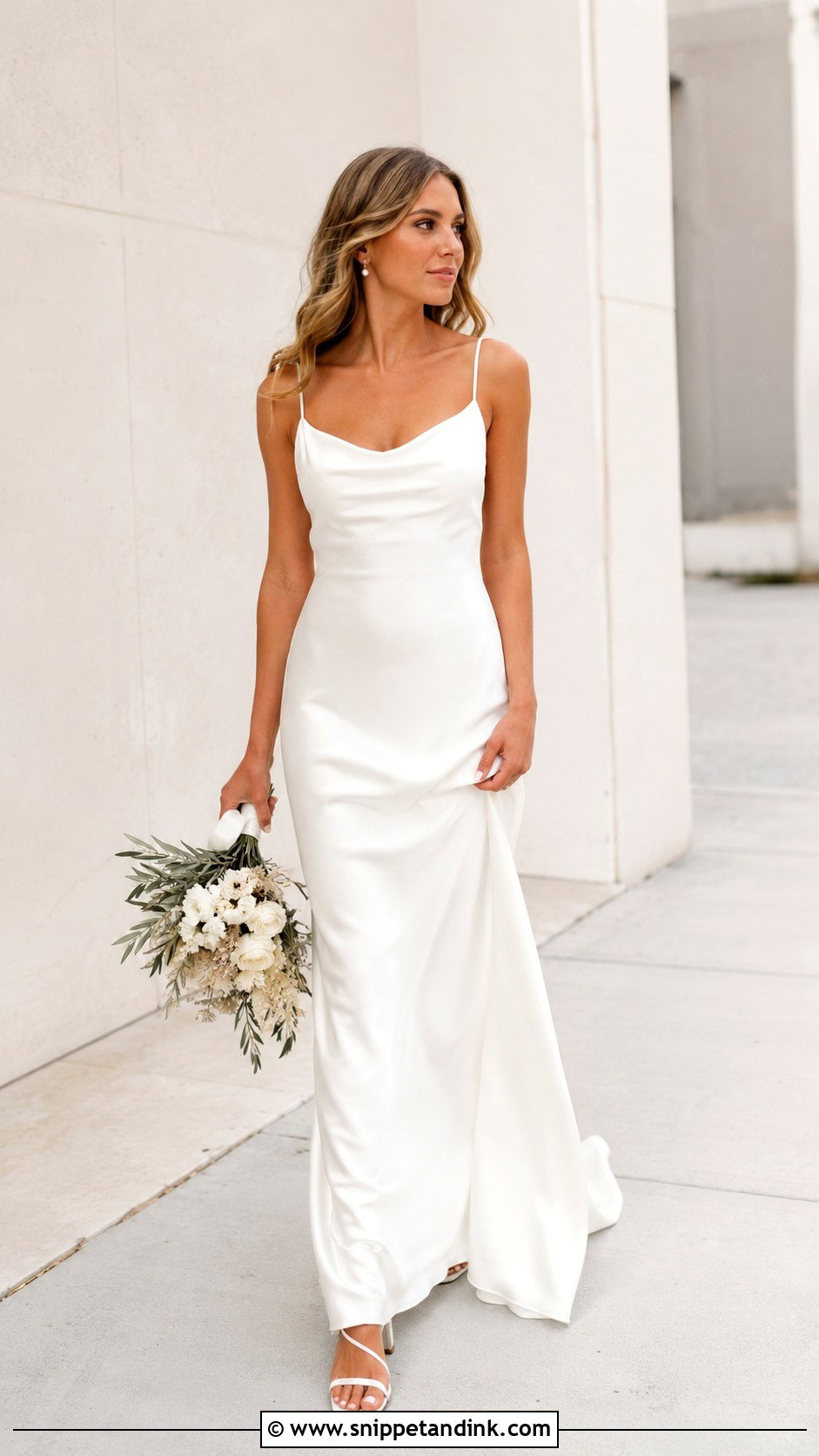
A slip gown is cut on the bias, so it skims and moves without a heavy skirt. Silk or satin give the drape; clean straps, a cowl neckline or a straight neckline set the mood. Because a slip shows everything under it, undergarments are part of the dress: smooth, seam-free and matched to your skin tone. Strappy white sandals, pearl earrings, a short veil or none and a relaxed bouquet suit beaches, elopements, city ceremonies and reception changes.
16. White Tea Length Wedding Gown
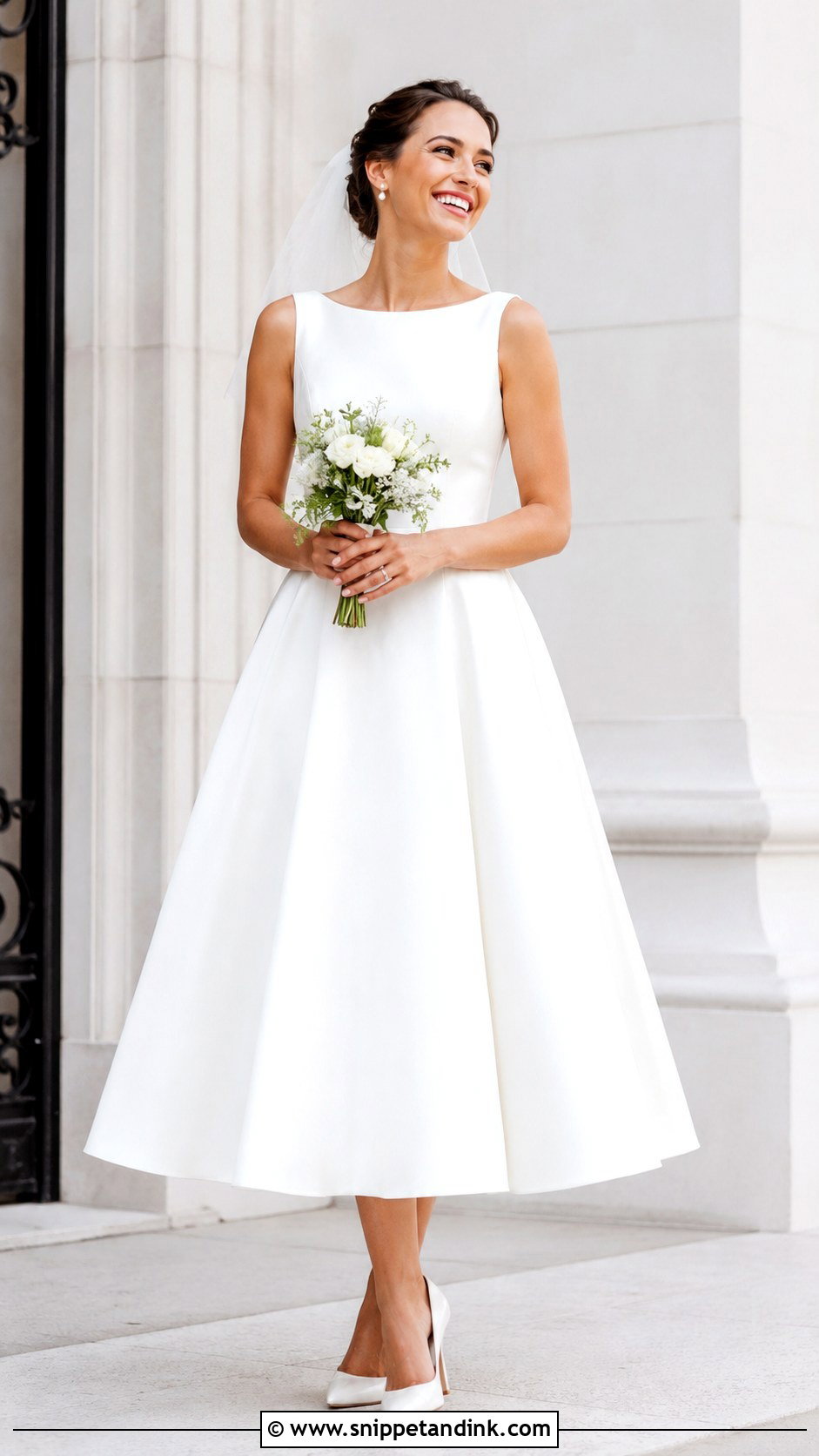
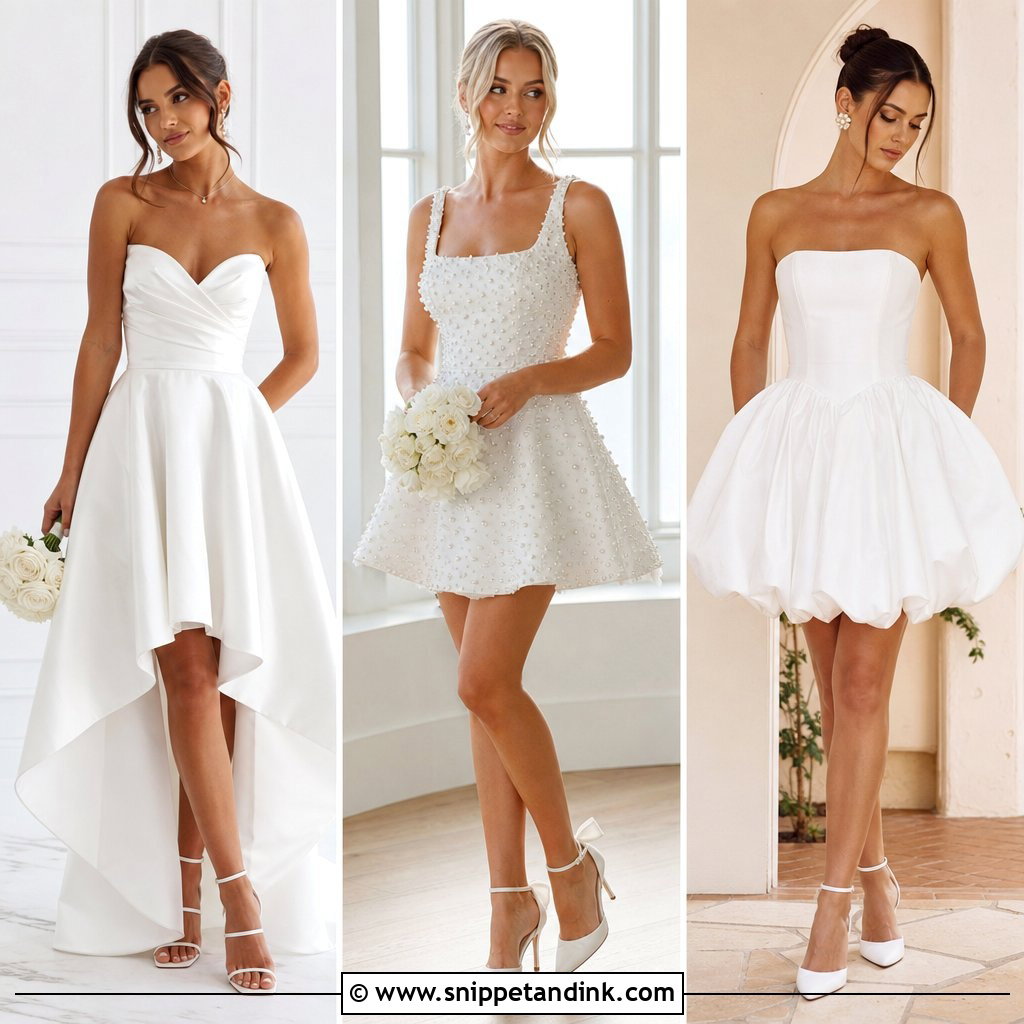
Tea length ends between knee and ankle, so the shoes are on show all day and it’s easy to walk and dance. A fitted bodice with a full skirt feels vintage; a plain satin tea length feels modern. Set the hem with the shoes you’ll actually wear, because a centimetre makes a real difference at this length. Pointed pumps, pearl earrings, a short veil and a small bouquet keep it light for courthouses, garden weddings and brunch receptions. No train to manage, and still clearly bridal.
17. White Floral Applique Wedding Gown
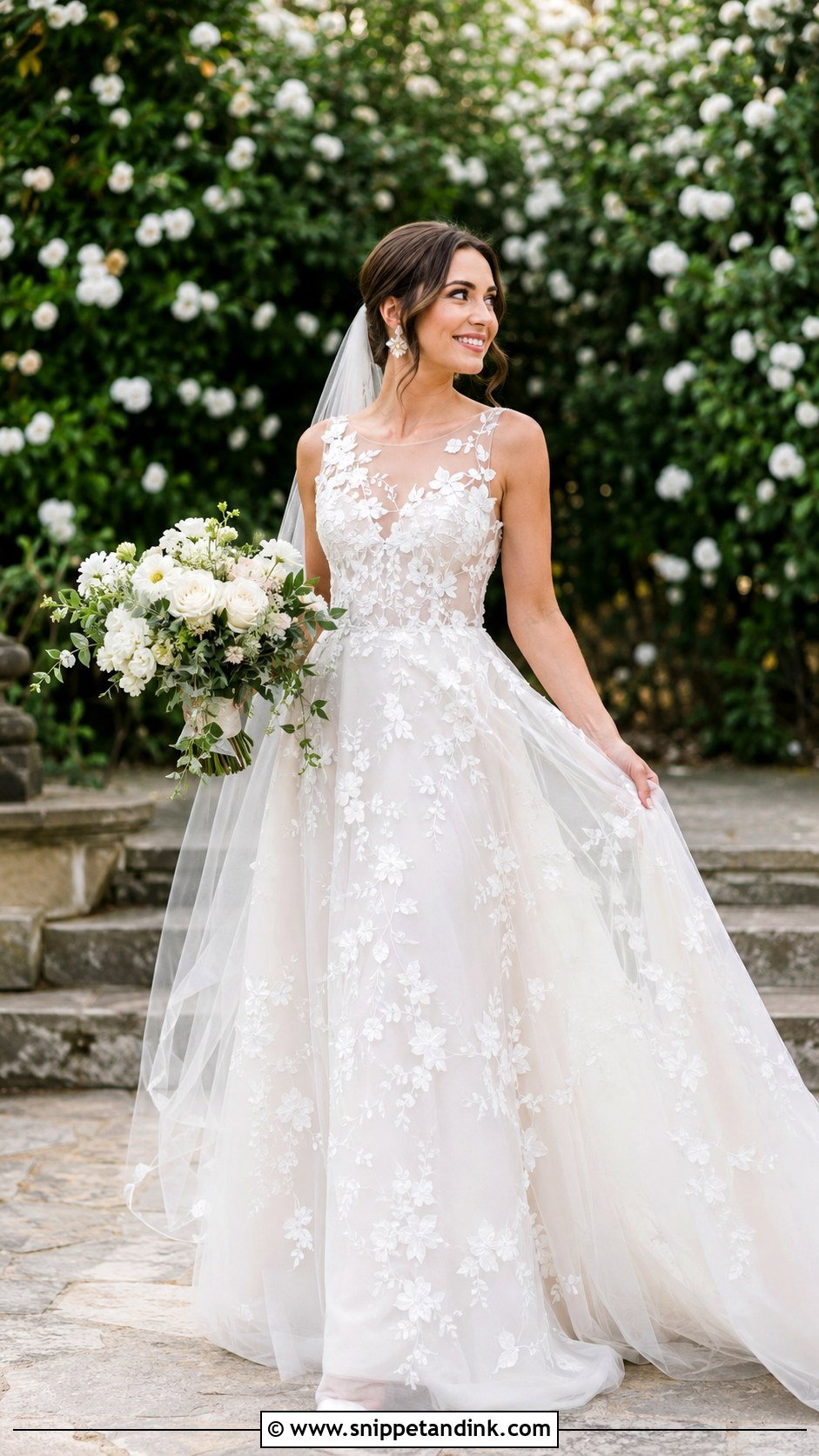
Appliqué adds dimension that flat lace can’t. On a white floral applique wedding gown, the flowers can sit across the bodice, scatter through the skirt or gather on the sleeves and train. Over a sheer overlay they look like they’re floating. Ask how the flowers are attached; hand-stitched pieces lie flat and can be moved during alterations, glued ones can’t. Soft curls, floral earrings, white heels and a veil that doesn’t compete suit spring and garden weddings.
18. White Beaded Wedding Gown
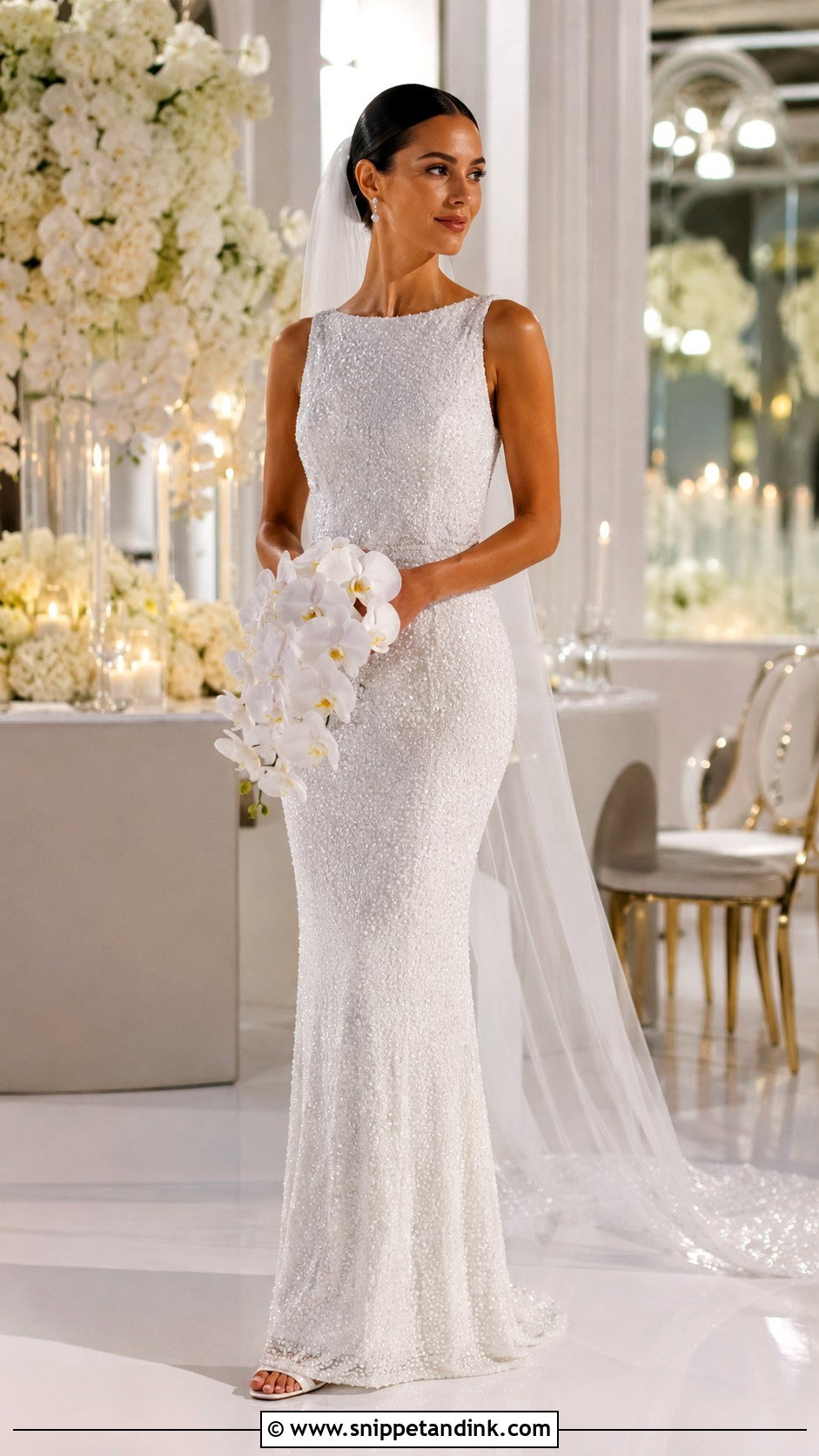
Beading catches light every time you move, which is why a beaded gown comes alive at an evening reception. A fitted beaded sheath reads glamorous; a beaded A-line softer. Beads add real weight, so I check the shoulders and straps at the fitting to make sure they’re not dragging down. Simple earrings, white heels and a plain veil let the gown lead, with white roses or orchids. Hotels and formal receptions suit it, and it needs very little else.
19. White Corset Wedding Gown
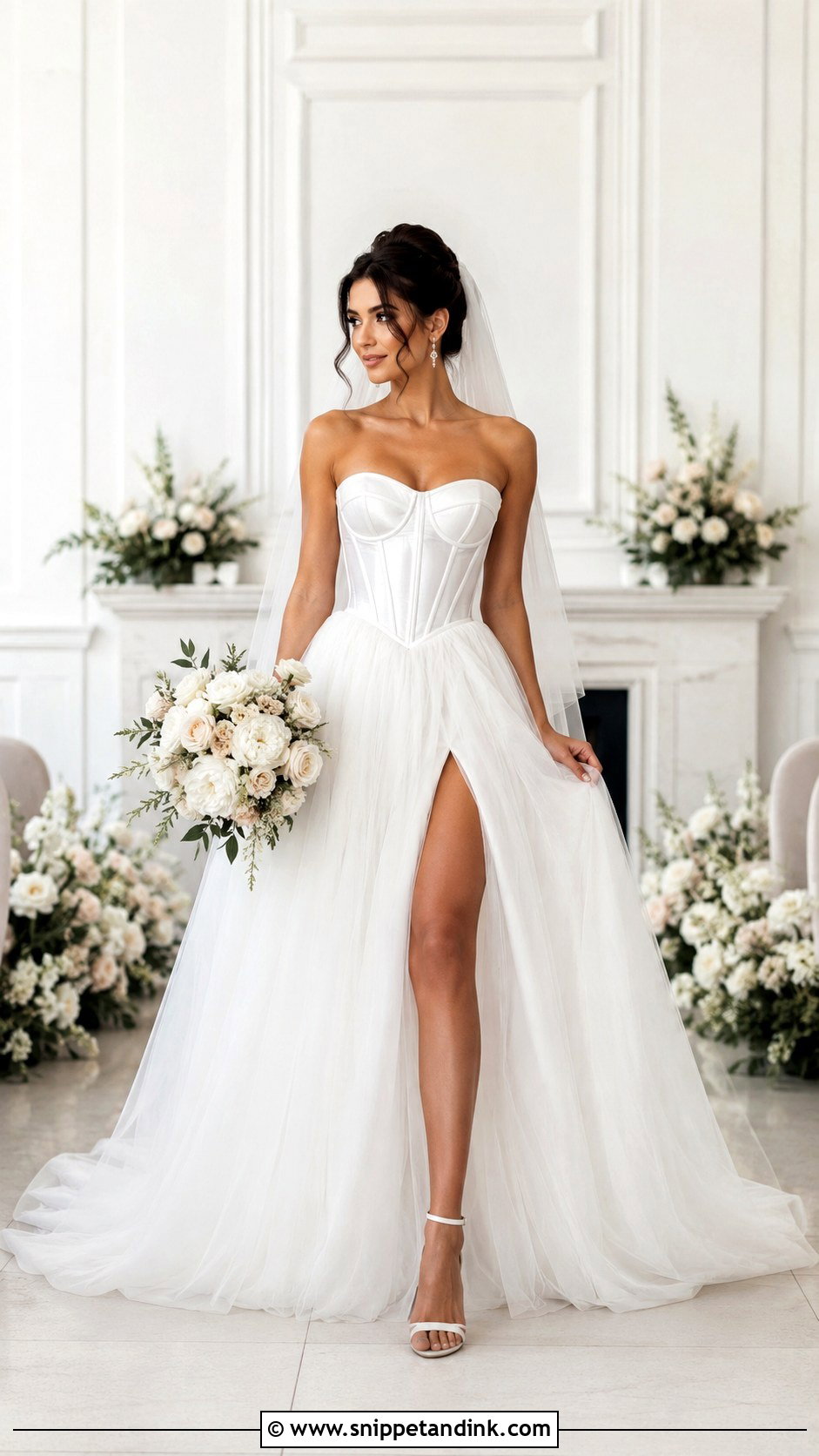
A corset bodice defines the waist and supports the bust, and the skirt can go full, fitted or flowing. Lace or tulle reads romantic; satin or mikado reads modern. The real test is sitting: a corset that’s comfortable standing can dig into the ribs at dinner, so sit for a full minute at every fitting. A simple veil, delicate earrings, white heels and a bouquet in the gown’s mood finish it. Visible boning and seams look best when everything else is quiet.


20. White Basque Waist Wedding Gown
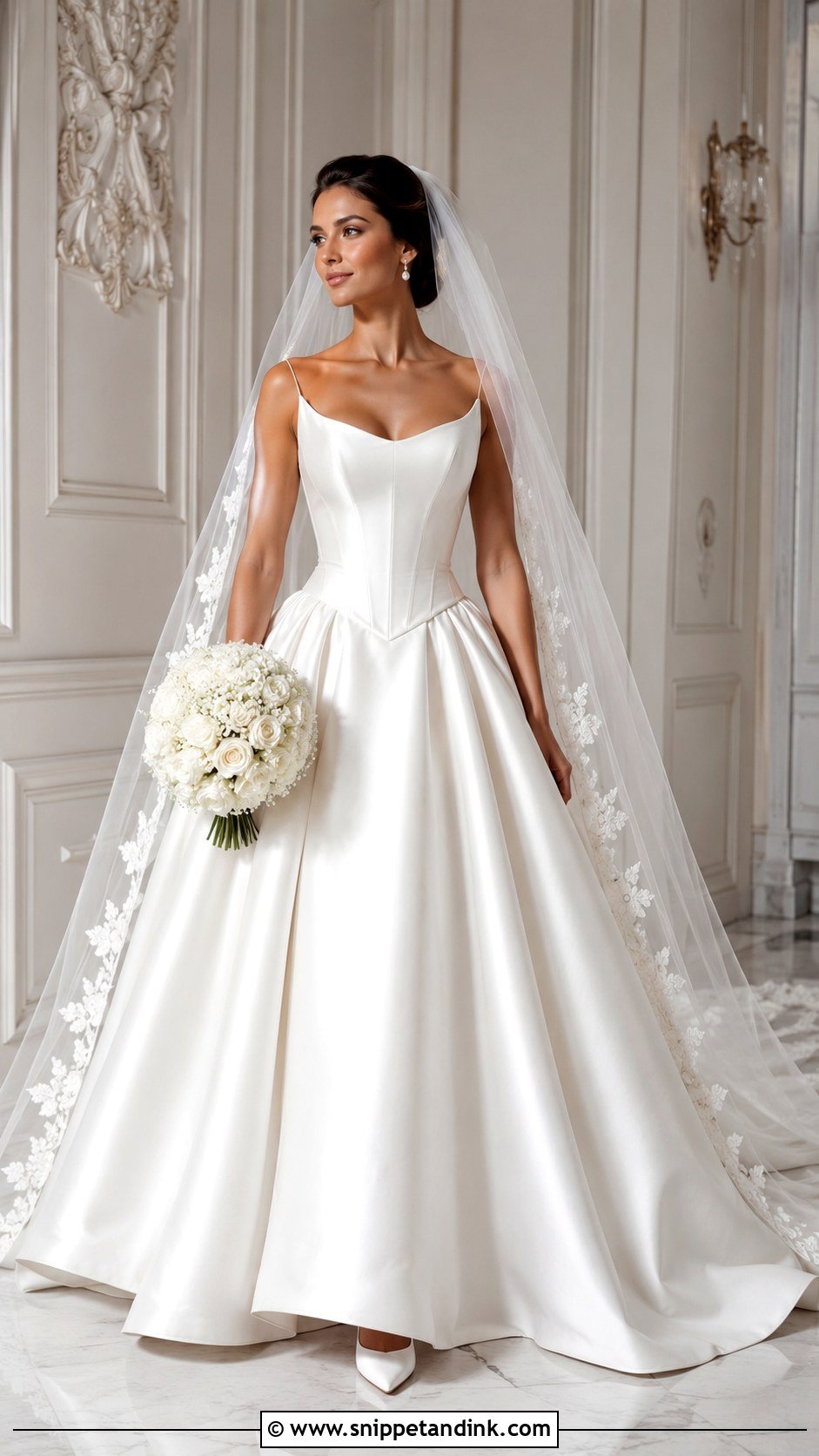
A basque waist dips below the natural waist into a point, which lengthens the torso and makes the skirt look even fuller. Satin, mikado or structured tulle give it the most drama. It flatters shorter waists especially; on a very long torso, I’d pin the point higher before committing. A cathedral veil, pearl earrings, white pumps and a round bouquet suit formal venues and traditional ceremonies, for anyone wanting a princess-inspired look with tailoring.
21. White Backless Wedding Gown
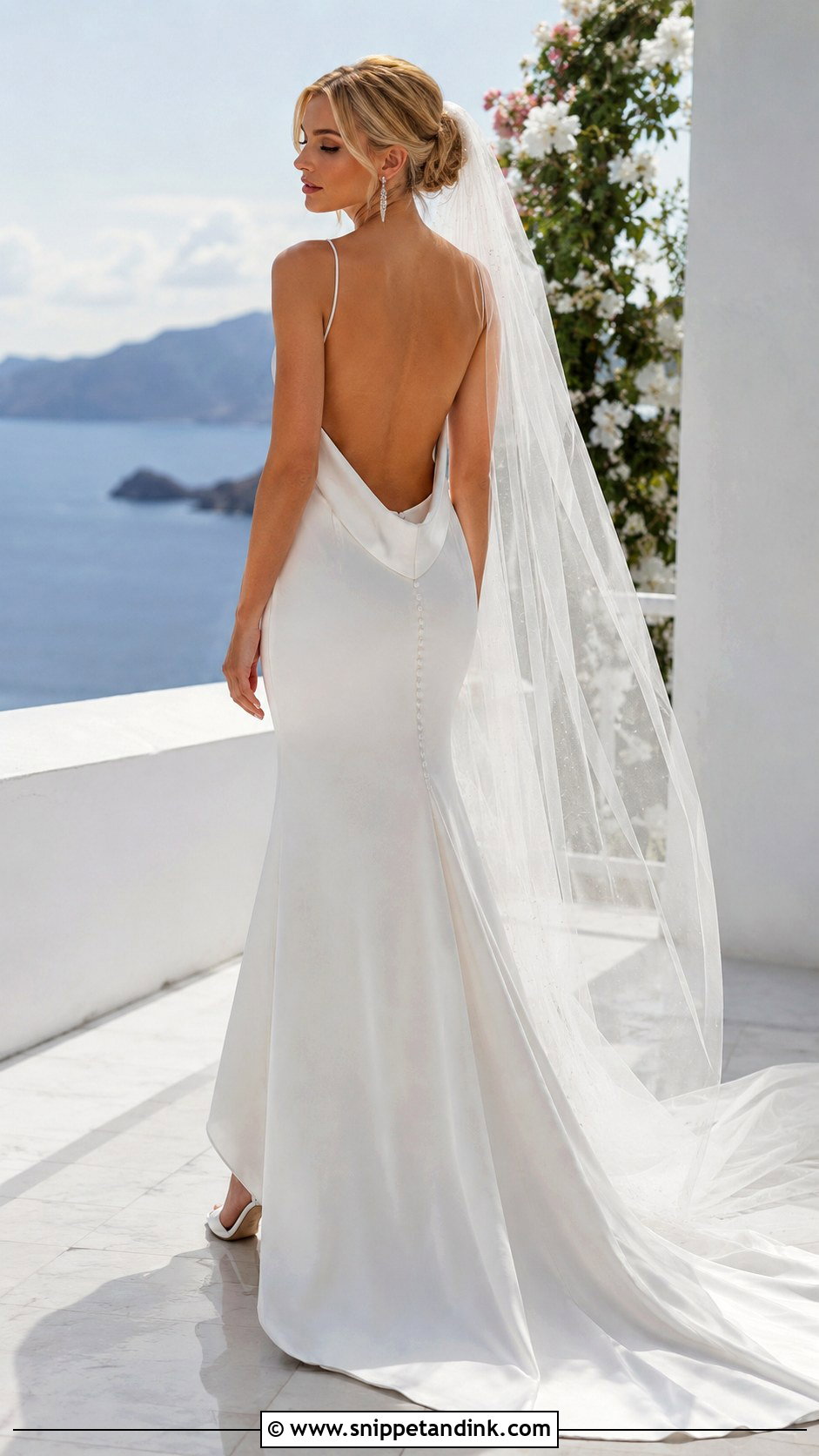
An open back keeps the front simple and puts the drama where guests see it during the ceremony. A satin slip with a low back is sleek; a lace backless gown is romantic. Support is the problem to solve first: built-in cups or a low-back bra fitted at the first alteration, not the week before. Wear the hair up or swept to one side, with drop earrings, white heels and a sheer veil you can take off for the reception.
22. White Cape Wedding Gown
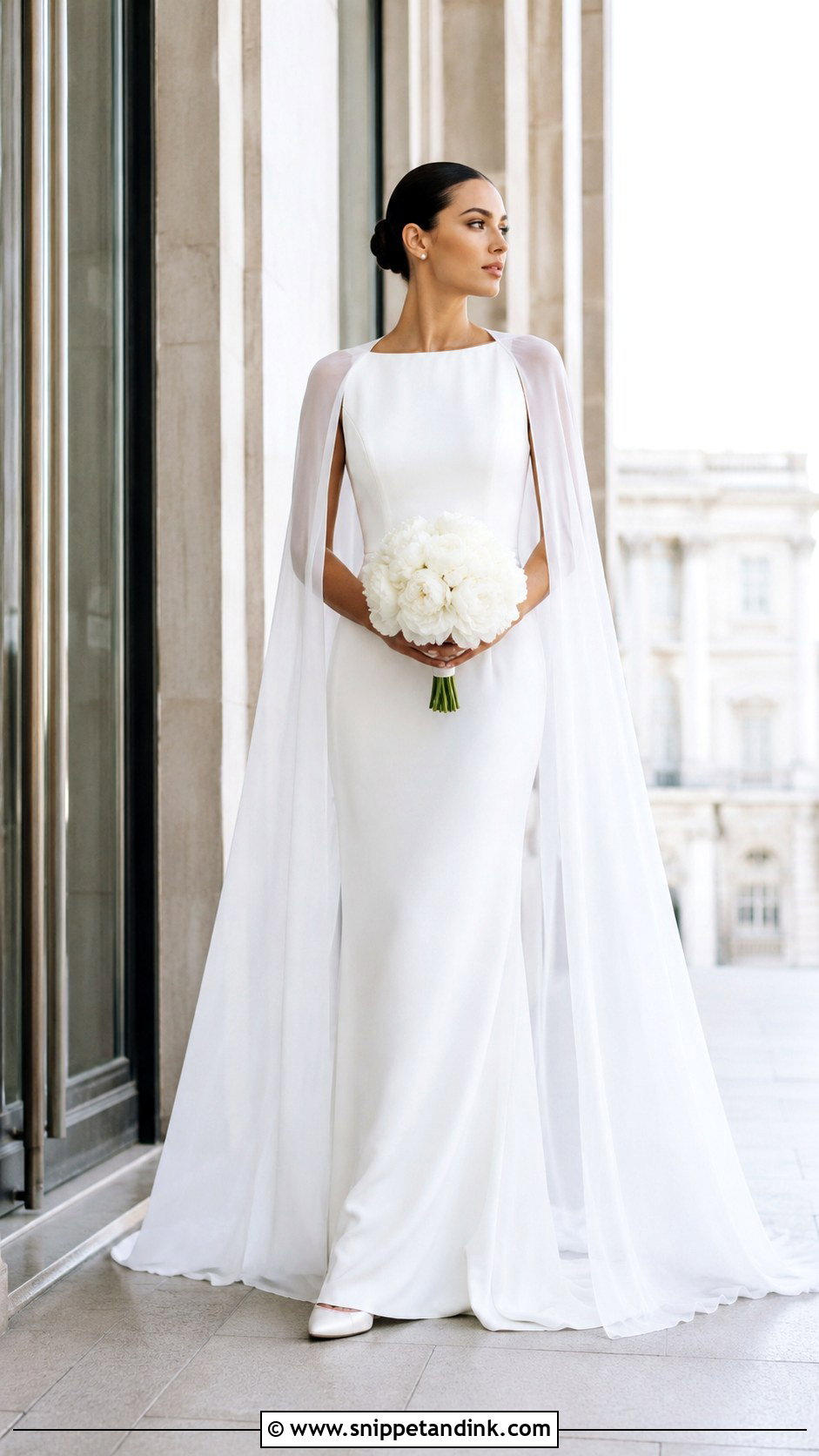
A cape can replace the veil entirely and gives you movement as you walk. It can be sheer, lace, tulle or satin, and a detachable one turns a simple crepe or satin gown into a ceremony look you can change at the reception. Check where it fastens: at the shoulders it sits better through a long ceremony than at the throat. Sleek hair, pearl studs, white heels and a clean bouquet, with minimal jewellery, let the cape lead. City weddings and formal venues suit it.
23. White Bow Wedding Gown
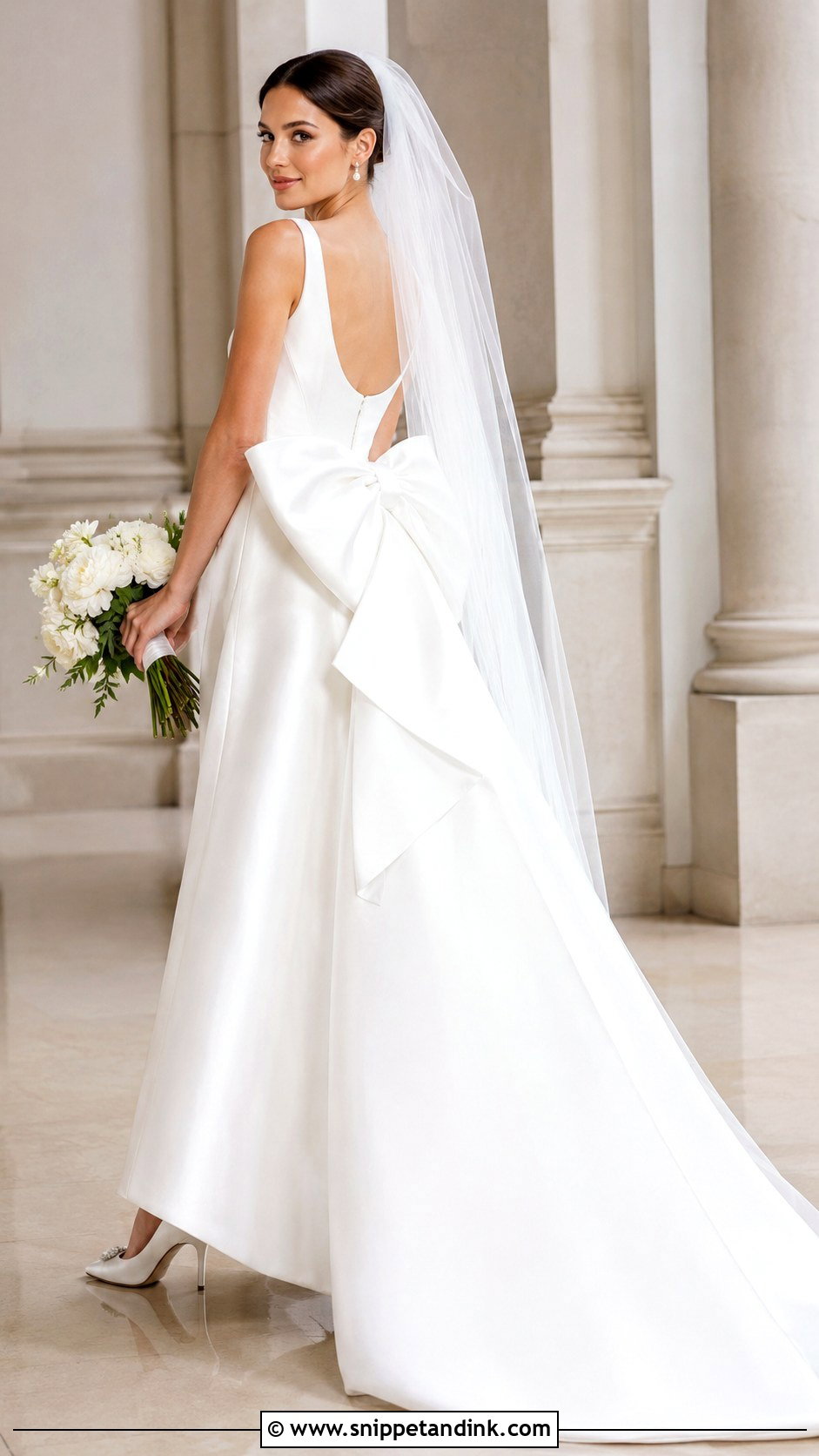
One bow goes a long way. On a structured satin gown it can sit at the back waist, on the shoulder, along the neckline or at the train. A back bow reads classic; a shoulder bow reads modern. Big satin bows need interfacing to keep their loops standing up through the day, so I’d ask how it’s built. Simple pearl earrings, white pumps, a clean veil and soft white flowers keep everything else understated, and the bow still looks grown-up.
24. White Plus Size Wedding Gown
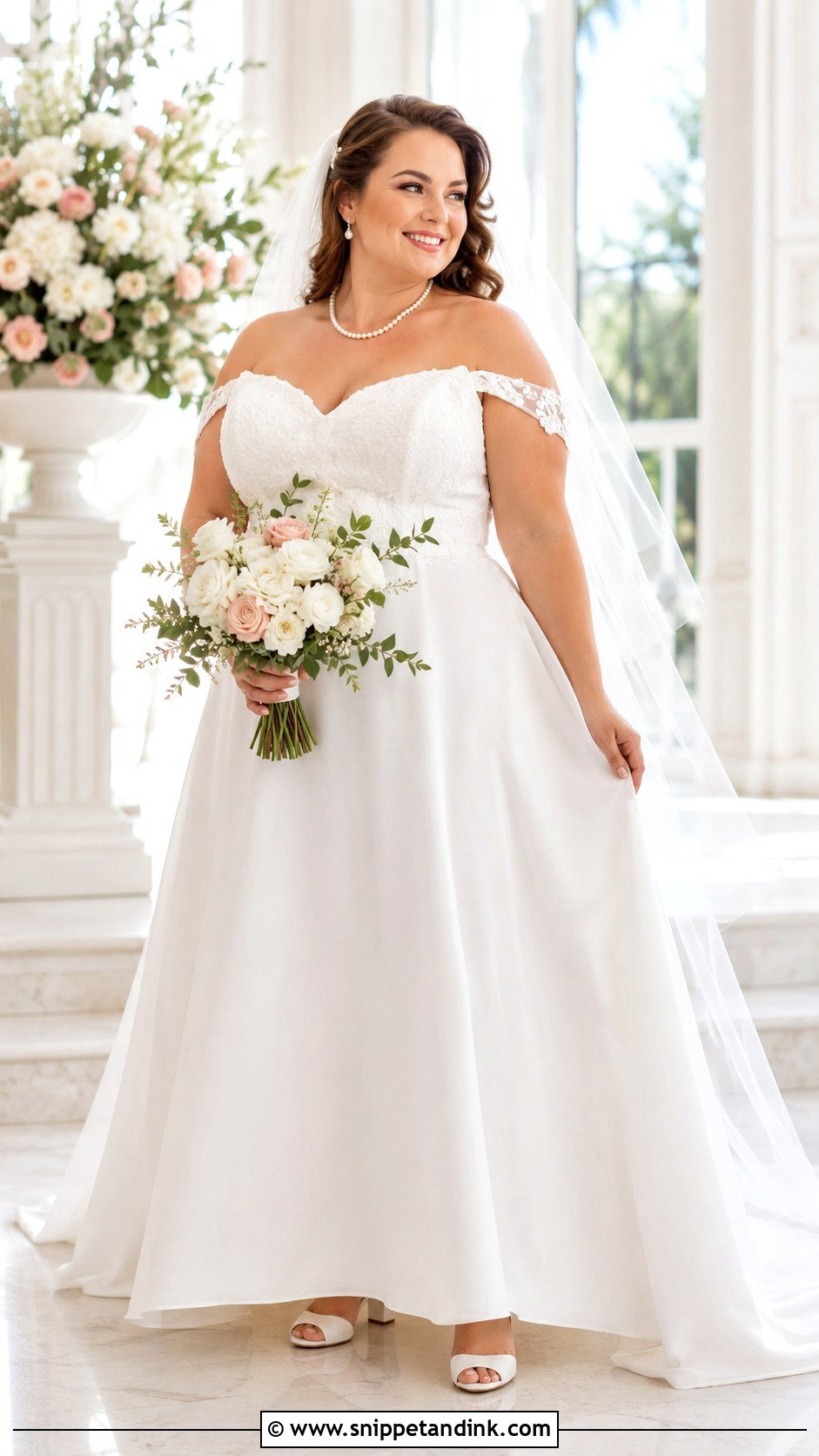
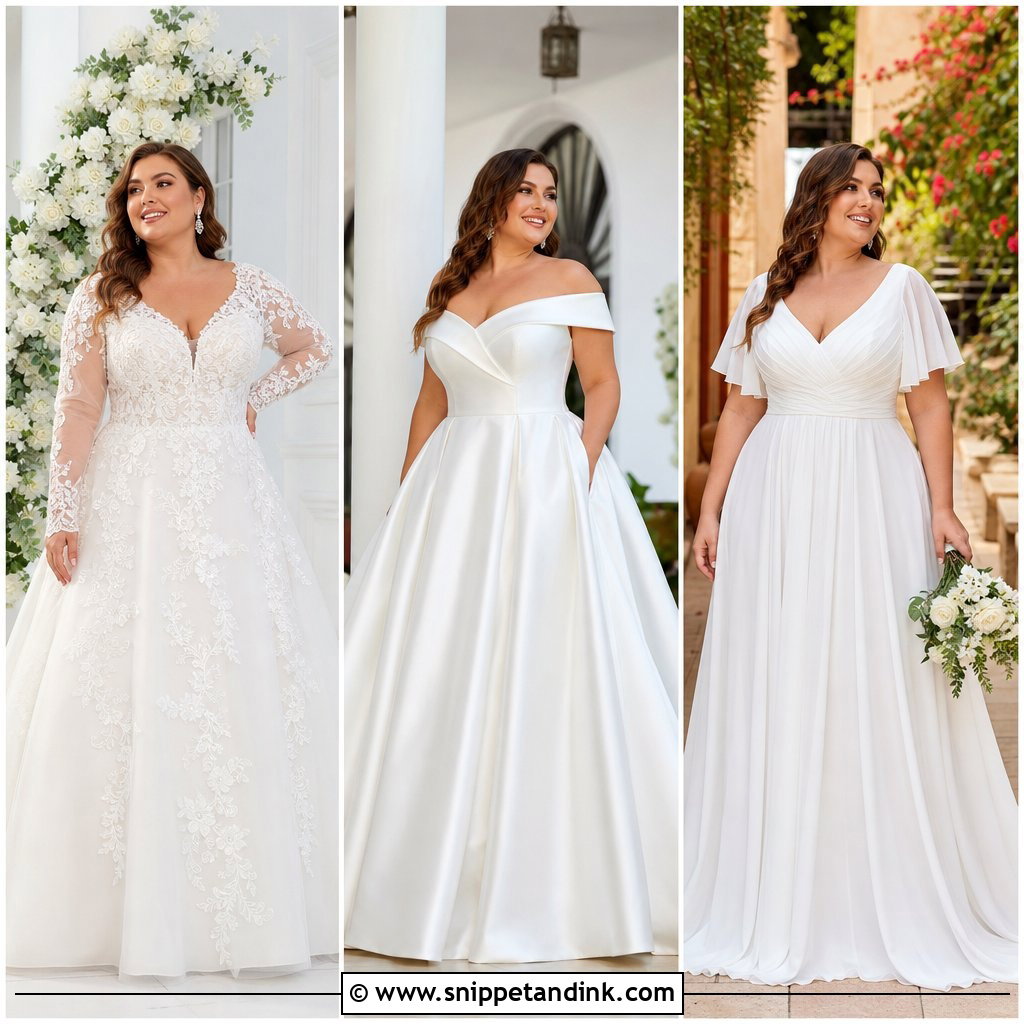
For a plus-size bride, construction comes before style. Look for a firm lining, a well-built bodice and a silhouette that makes you feel confident: A-line, ball gown, wrap bodice, corset or fitted crepe all work beautifully depending on what you love. Don’t shop to hide areas; shop to highlight the parts of you that you like most. Supportive undergarments should come to the first fitting, because they change the fit. Comfortable heels or embellished flats, a veil matched to the length and balanced jewellery finish it.


25. White Reception Wedding Gown
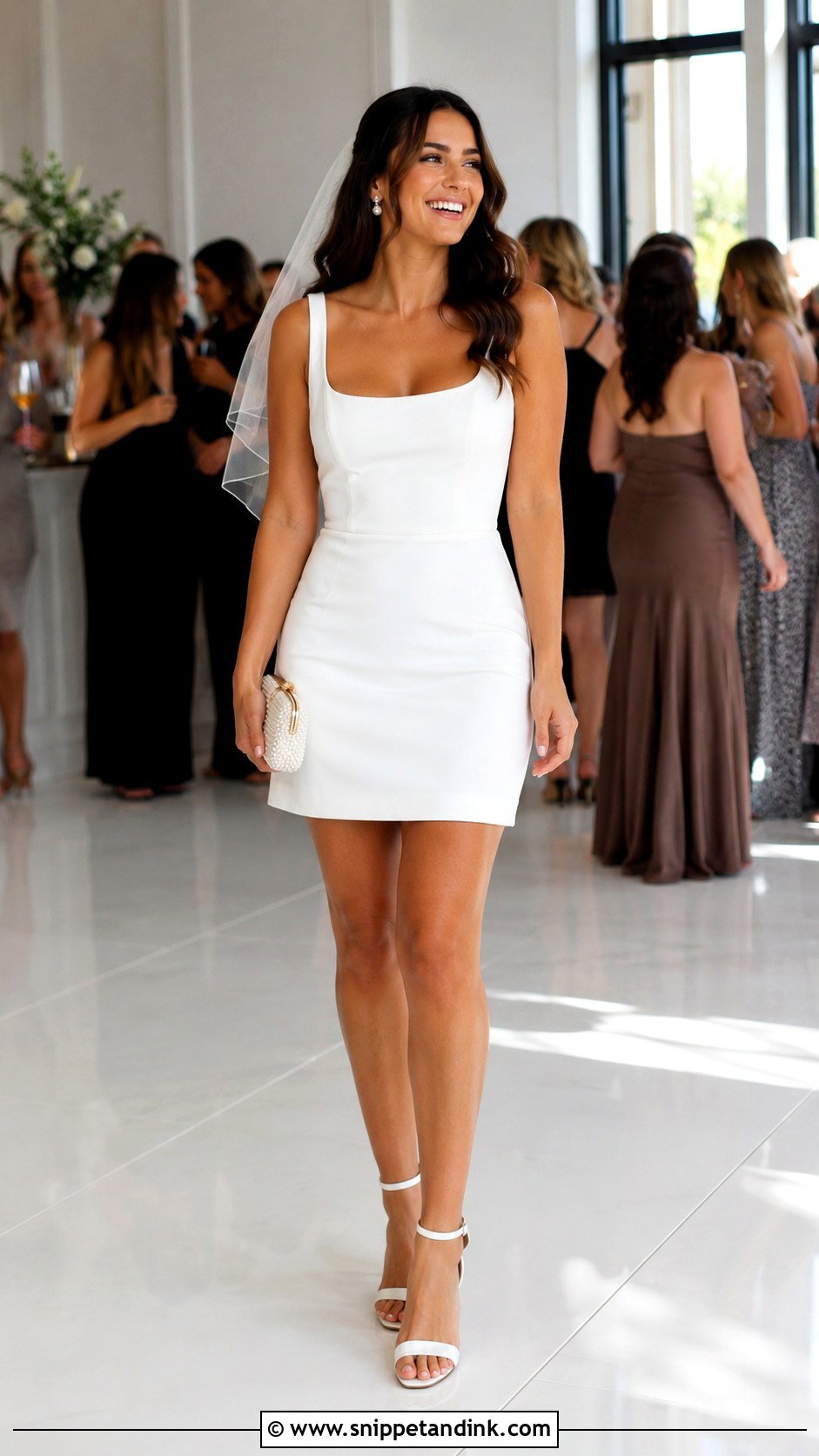
A reception gown is a second look built for dancing. A shorter dress, a slip, a tea length or a fitted column with less train all work. It can be lighter and more playful than the ceremony gown, but still clearly bridal. Plan the change itself: who helps you out of the first gown, where you’ll do it and how long it takes, because it’s often longer than brides expect. Comfortable heels, pearl earrings, a mini veil or bow and a small clutch finish it, with soft waves or a ponytail.
Ordering and Alterations Take Longer Than Most Brides Expect
Many bridal gowns are made to order after you choose them, and the wait varies by designer, often several months. Then alterations need their own time. A rough calendar I’d work back from:
- Order the gown about nine to twelve months before the wedding where you can. Rush options exist, but they cost more and limit choice.
- Book a seamstress once you’ve ordered, so you’re on their calendar for the busy season.
- First fitting around two to three months before the wedding, with your shoes and undergarments.
- A middle fitting for the hem, bustle and any adjustments.
- A final fitting one to two weeks before, then collect the gown and keep it hanging.
Budget for alterations from the start. Hemming a layered skirt, taking in a bodice or adding a bustle can add a real amount to the cost, and that amount varies widely between gowns.
What Goes Under the Gown
Undergarments change the fit, which is why I want them at the first fitting, not the last. Strapless and off-shoulder gowns usually need a longline strapless bra or built-in cups. Backless gowns need adhesive cups or a low-back bra. Slip and crepe dresses need seam-free underwear in your skin tone, because white shows through white. Shapewear is optional, but if you plan to wear it, wear it at every fitting.
The Dress You Can Still Dance In at Midnight
With twenty-five white gowns in front of you, it helps to stop looking only at the dress. Think about how it moves, how it fits your venue and how it will feel after eight hours. A satin ball gown brings classic drama; a crepe column feels modern and clean. Lace, tulle, organza, beading, bows, capes and appliqué each set a different mood. Use these as a starting point, then let the fittings shape every detail to you.
You'll Like These Ideas:






Leave a Reply