
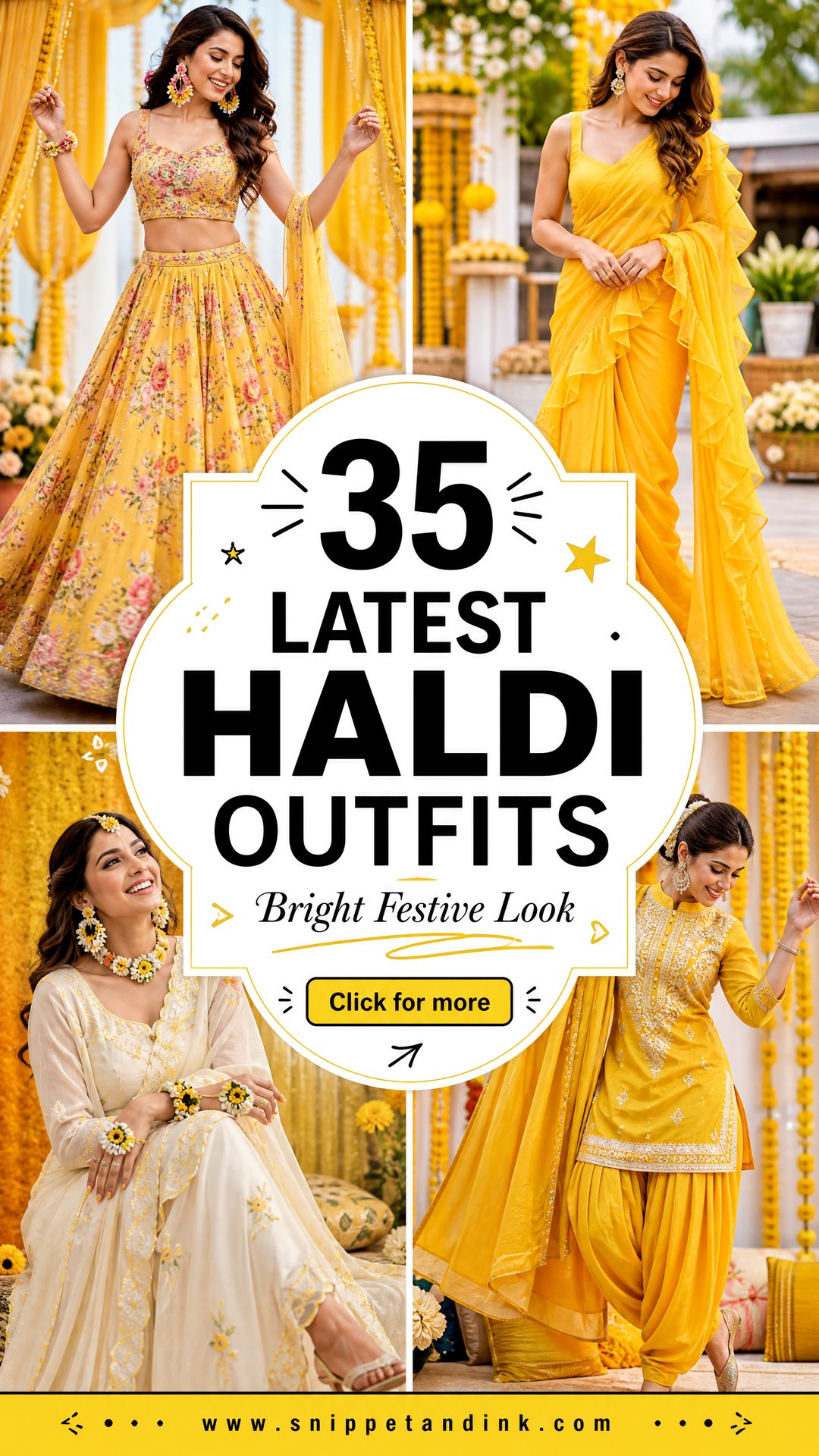
Haldi dressing has loosened up. Brides, bridesmaids, sisters and guests are moving past the single standard yellow lehenga toward lighter fabrics, playful cuts, fresh colors and flower jewelry, chosen for a ceremony that really does involve turmeric paste, floor seating, dancing and strong daylight. I dress people for this ritual with one question in mind: can you sit, move and get messy in it? Below are the Haldi outfits I’d reach for this season, from classic yellow sarees to white lehengas, shararas, kaftans, dhoti sets and Indo-western pieces, with notes on who each one suits.
Assume Your Outfit Will Meet the Turmeric
Haldi paste is turmeric mixed with things like gram flour, oil, rosewater or milk, and turmeric dyes natural fibers very readily. The closer you sit to the bride, the more your fabric matters, so before I suggest a silhouette I sort the fabric.
Safe to wear close to the paste
- Cotton, cotton silk, linen and mulmul: they wash at home, and leftover yellow usually fades after a few sunny days.
- Busy prints in any fabric: they still stain, but small marks vanish into the pattern.
Better kept a step back
- Pure silk, organza and silk chanderi: stains set quickly and usually need professional cleaning.
- Real zari, gota and antique embroidery: metal threads can discolor, and paste lodges in raised work.
- Pearls and kundan jewelry: pearls are porous and can yellow, so heirloom pieces should come off until the ritual is over.
If the bride wants a precious outfit in her photos, I suggest wearing it for portraits first and changing into a washable one before the ritual starts. A cheap cotton dupatta draped over the good blouse during the paste also saves a lot of heartache.
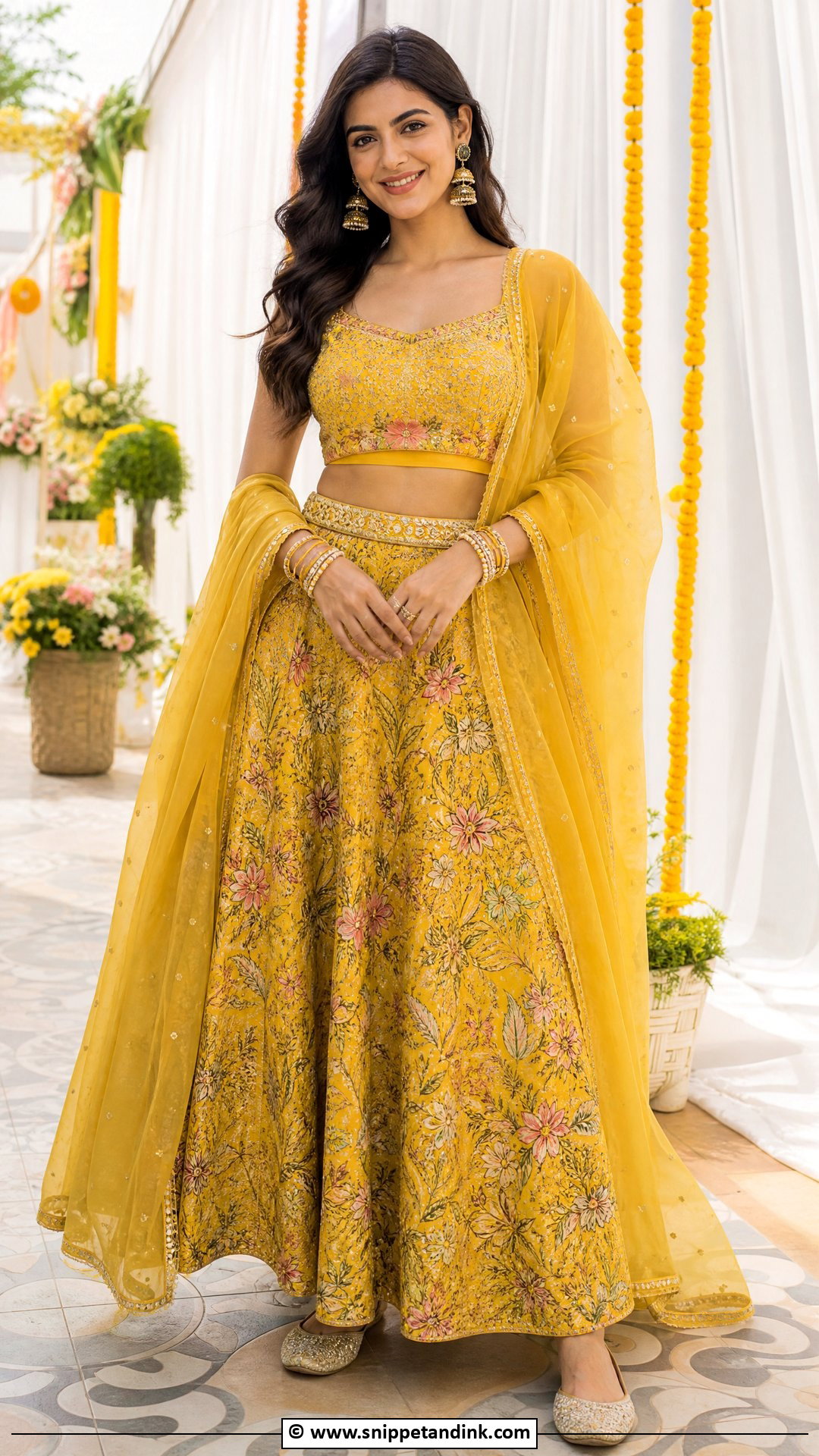
1. Yellow Haldi Lehenga For Bride
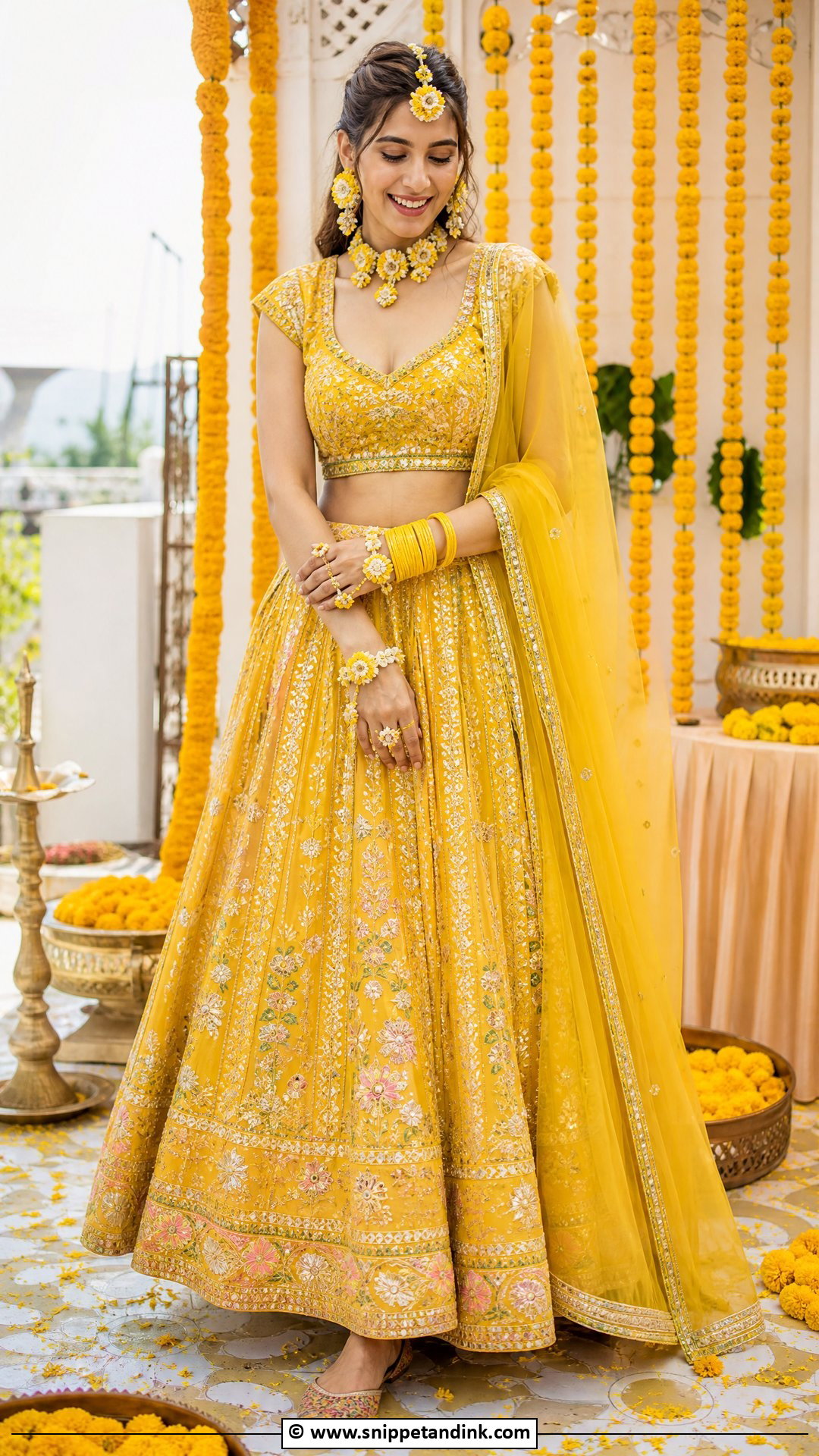
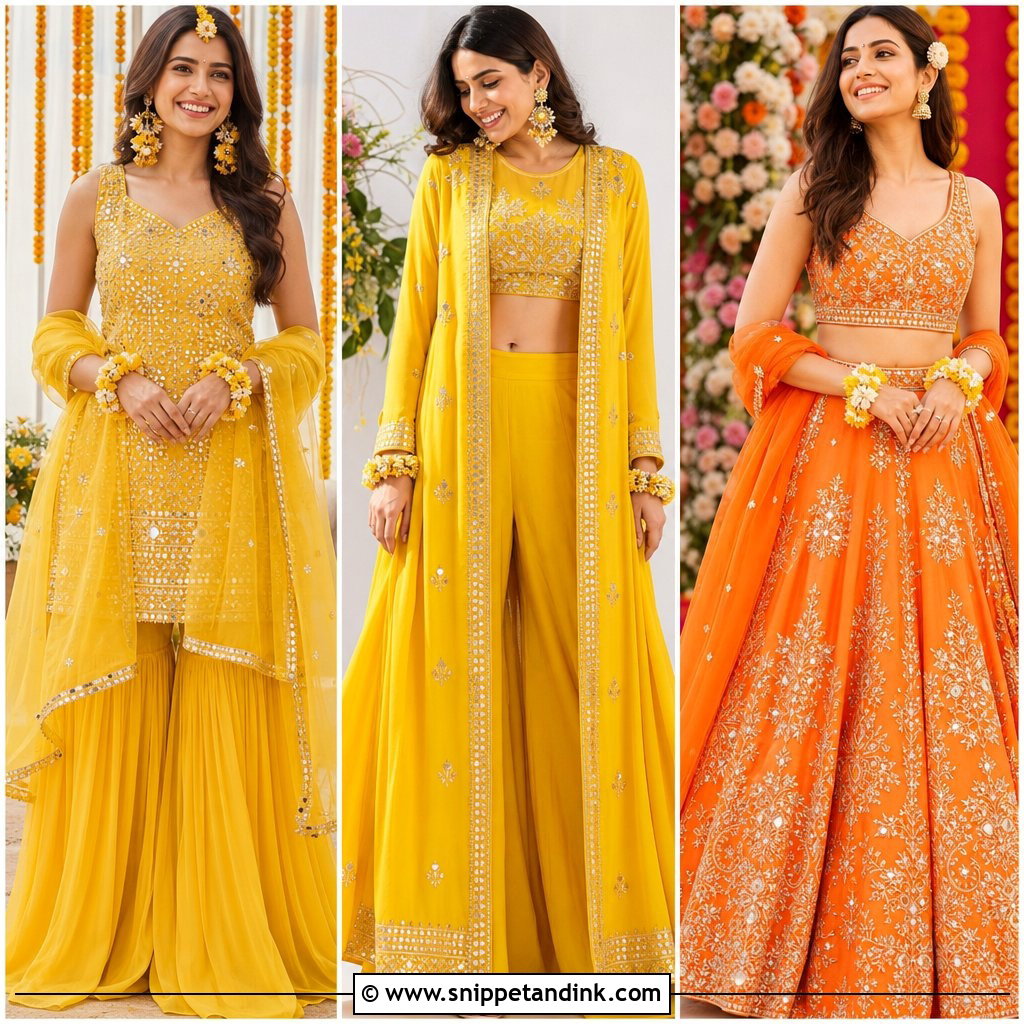
Yellow is still the bride’s default, and for good reason. It’s the color of the ritual itself, so stains blend in rather than ruin the outfit. I’d keep the lehenga light, in georgette, organza, cotton silk or chanderi, and ask for minimal can-can, because you’ll spend much of the ceremony seated on a low stool or the floor. A cropped blouse with mirror or thread work keeps it bright without bulk. Pin the dupatta firmly on one shoulder with two small safety pins; a loose drape slides straight into the turmeric bowl. Fresh floral jewelry, soft waves and juttis finish it.
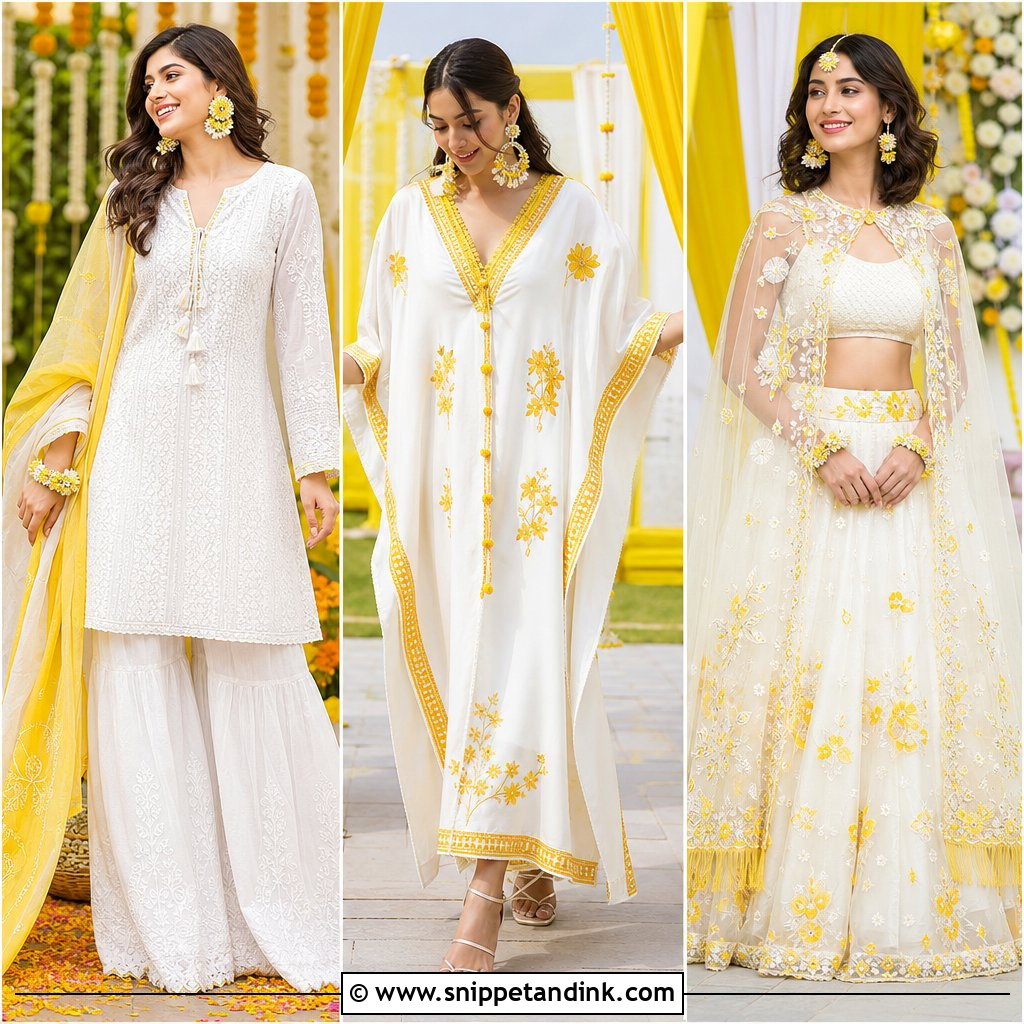
2. White Haldi Lehenga With Yellow Dupatta
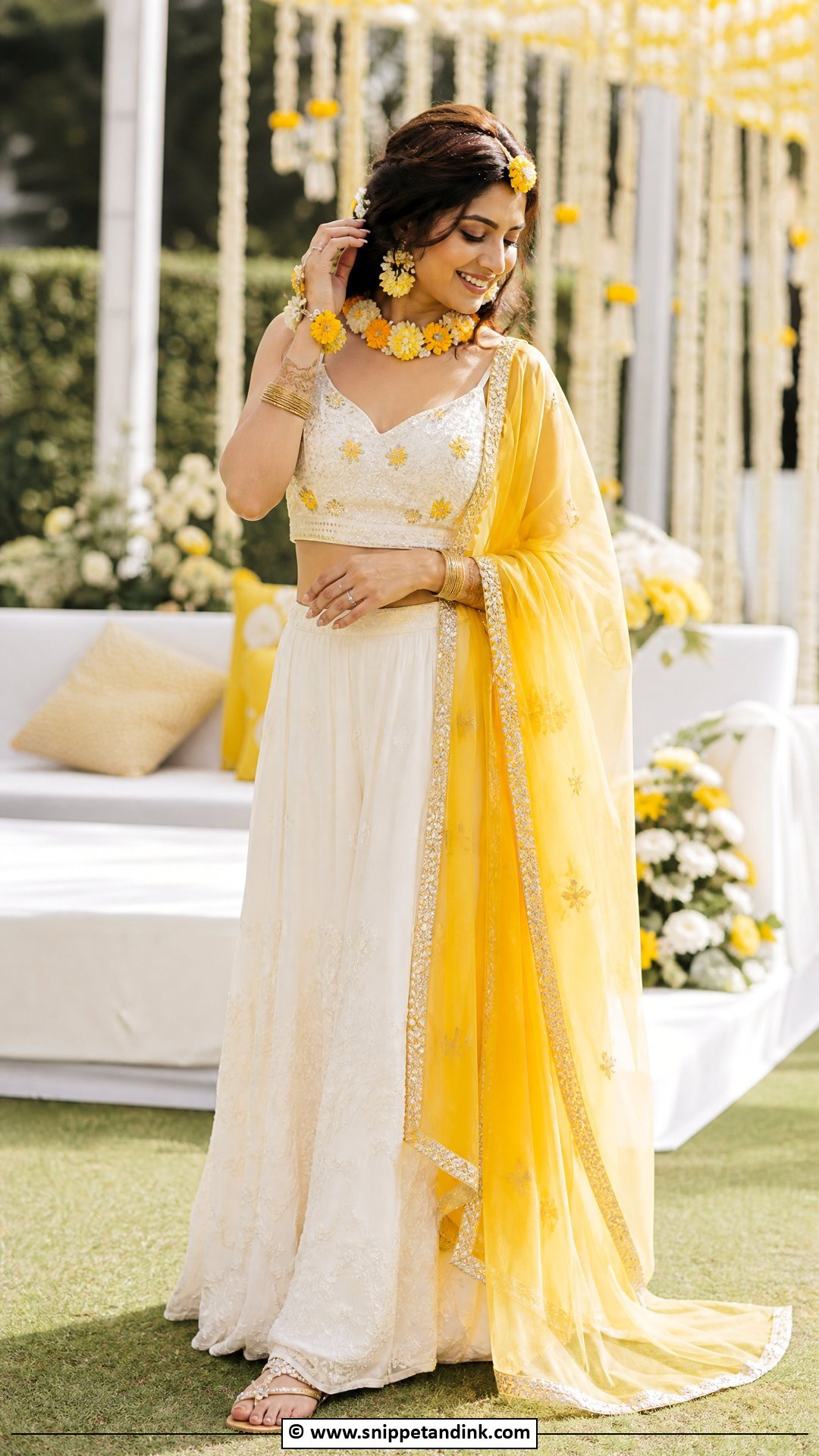
White is the bolder bridal choice here, precisely because turmeric shows on it. For many brides that’s the appeal: the yellow handprints become part of the photographs. Go in knowing the lehenga may not come fully clean, and pick tone-on-tone embroidery, gota trim or fine mirror work rather than anything you hope to re-wear pristine. The yellow dupatta ties it to the ceremony. A sleeveless or short-sleeve blouse, marigold jewelry, yellow bangles and flat sandals suit warm afternoons.
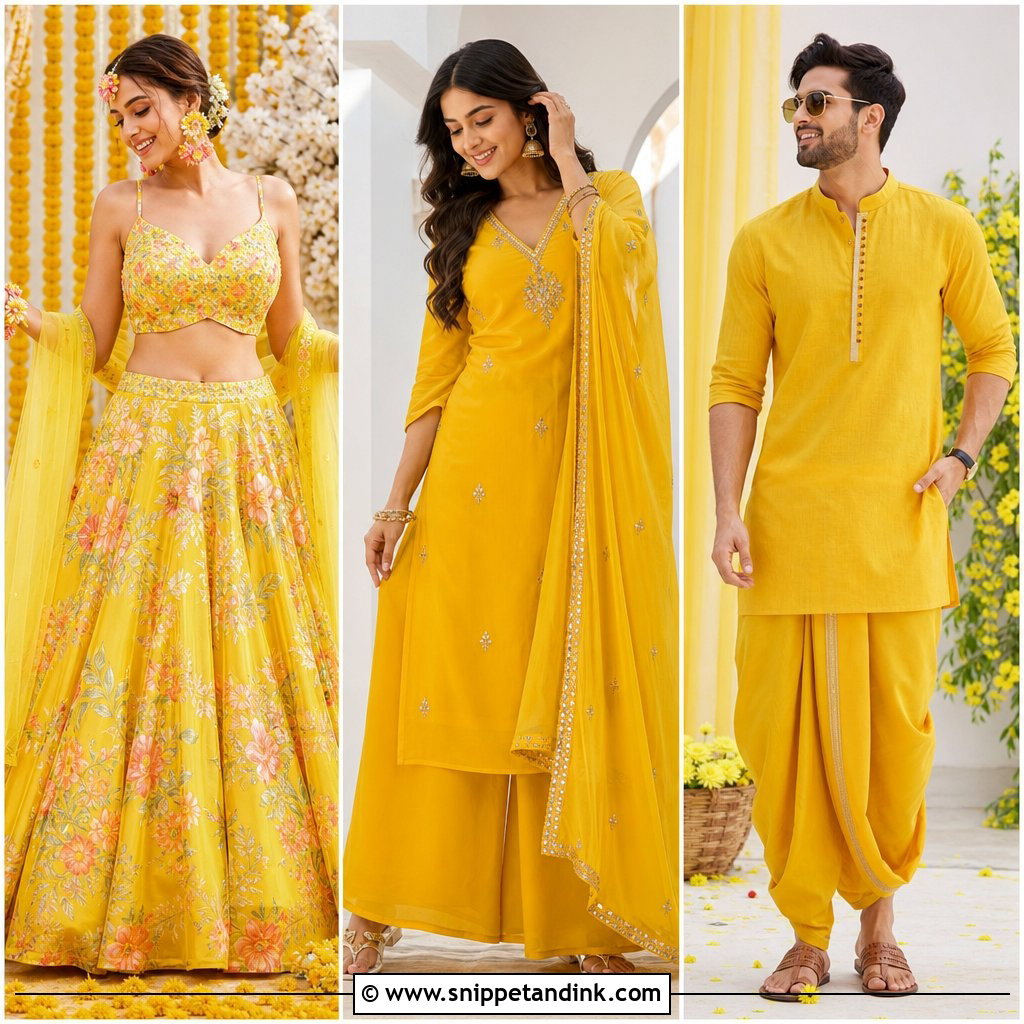
3. Floral Haldi Lehenga With Crop Top
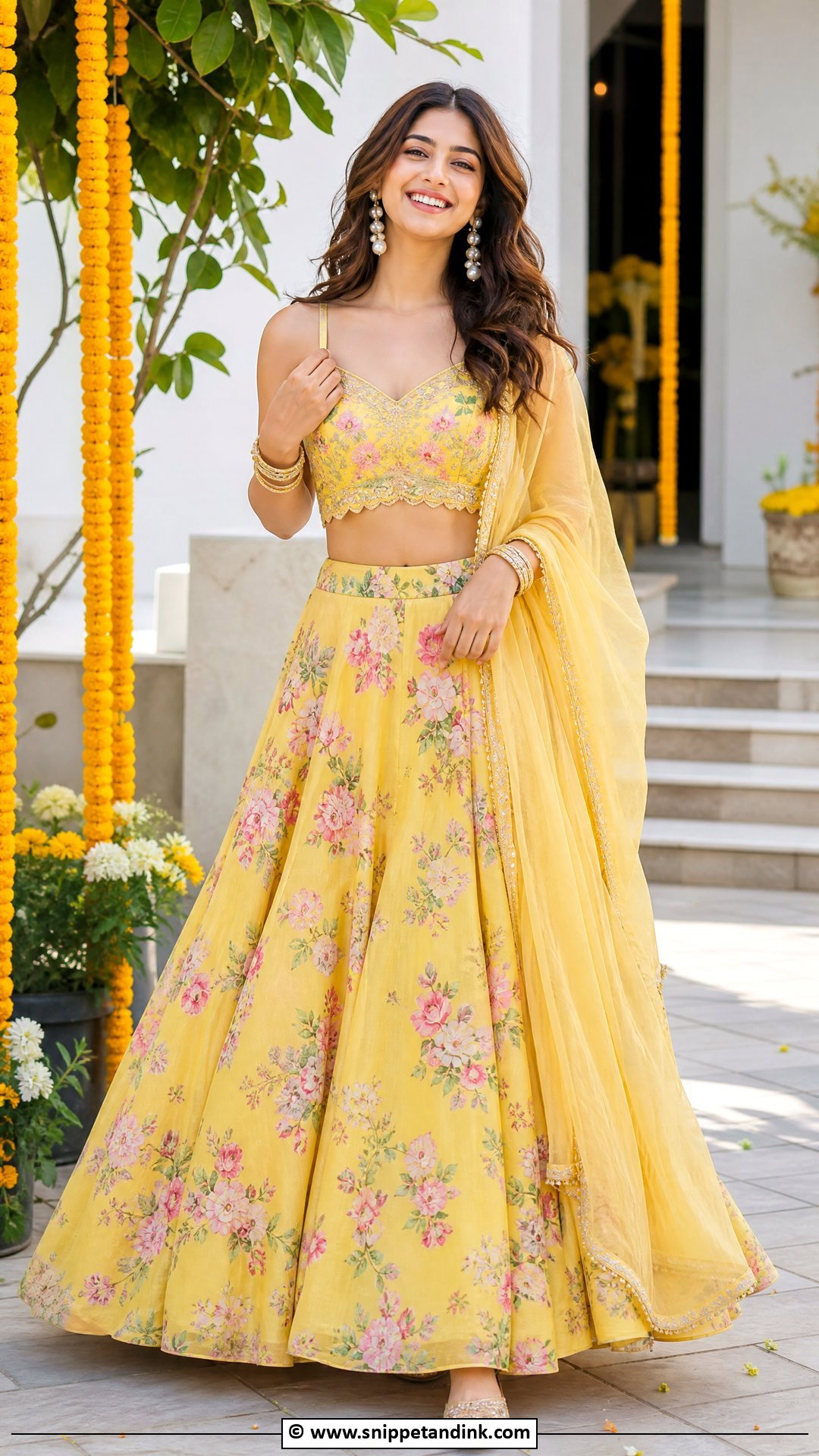
Printed florals on yellow, peach, lime or ivory forgive more than embroidery does, since a splash of paste disappears into a print. That makes this a smart pick for outdoor functions dressed in marigolds. A crop top blouse keeps it young and easy, and a breezy dupatta adds movement. Bridesmaids, sisters, or a bride who’d rather be comfortable than weighed down all wear it well. Pearl earrings, floral bracelets or small jhumkas are enough. On lawns and at resorts I’d choose wedges or embellished flats, because heels sink.
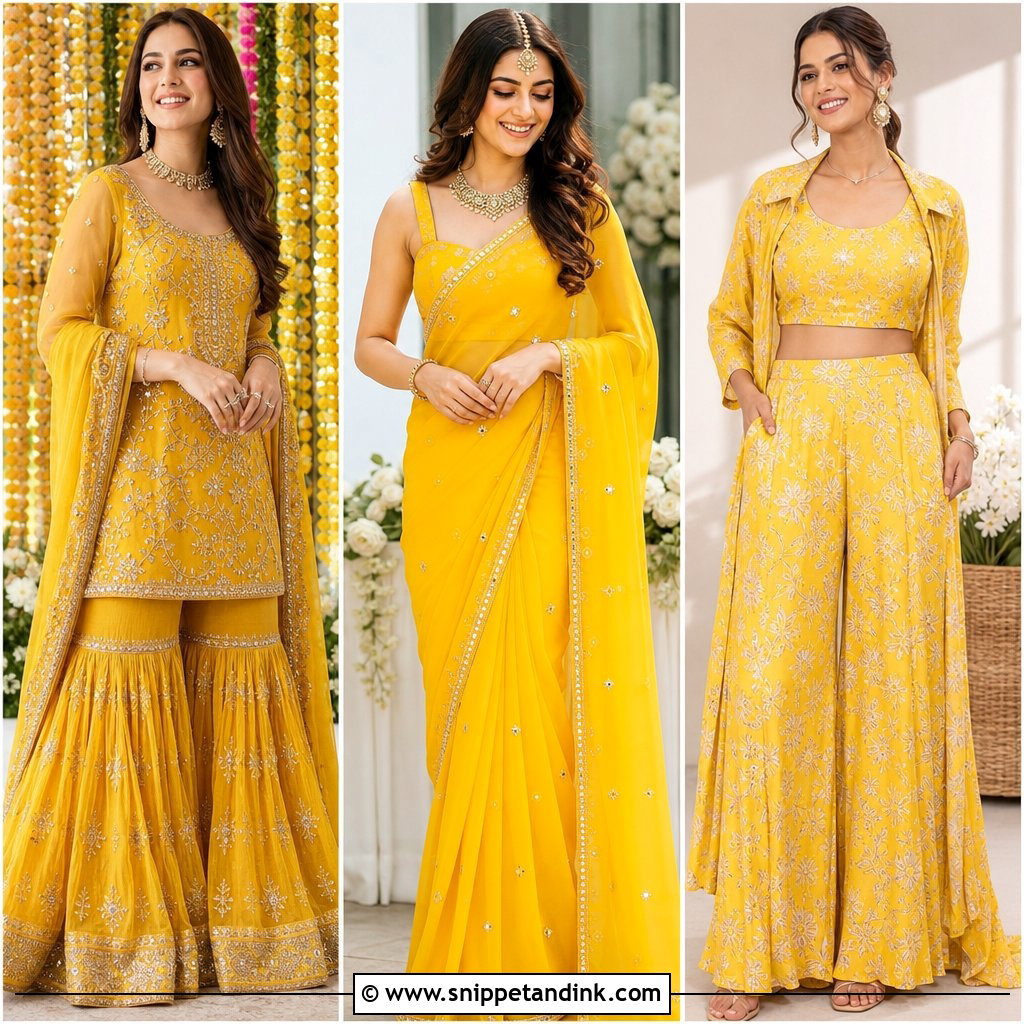
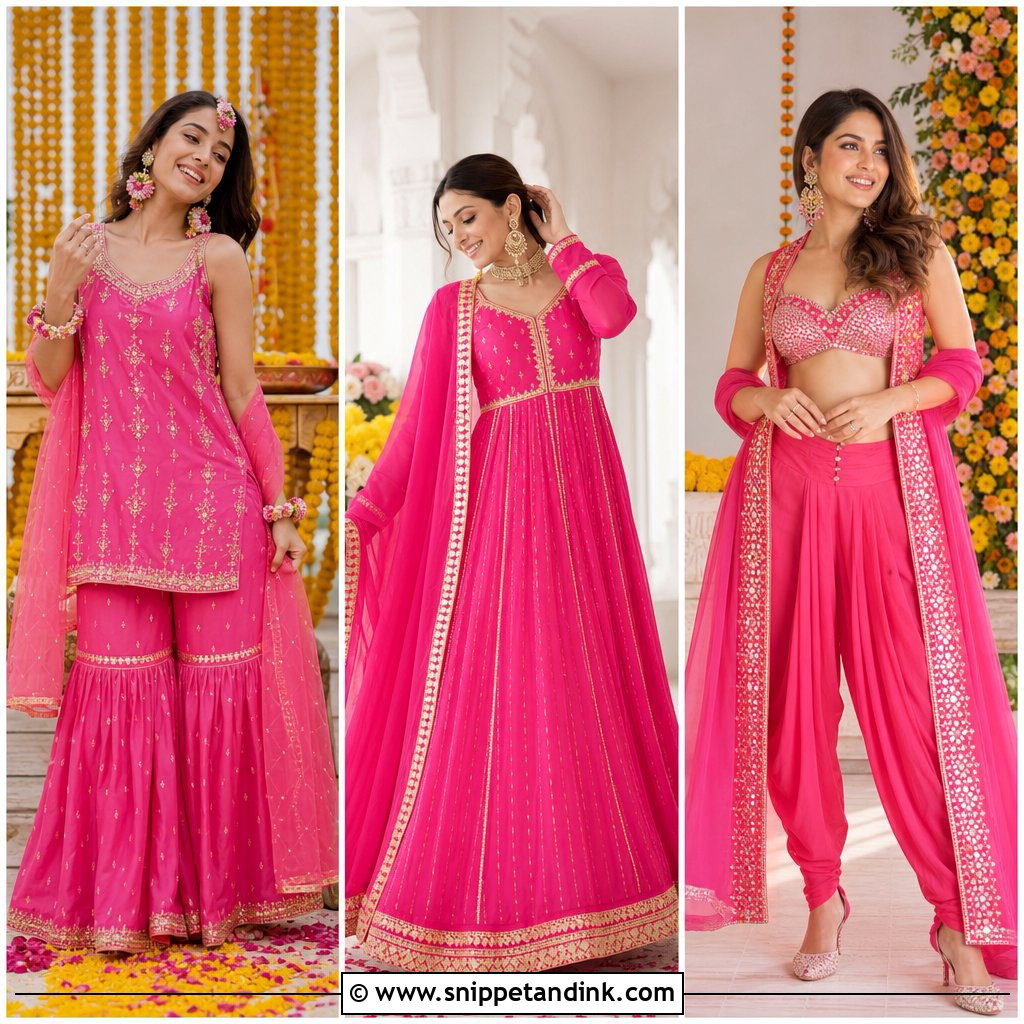
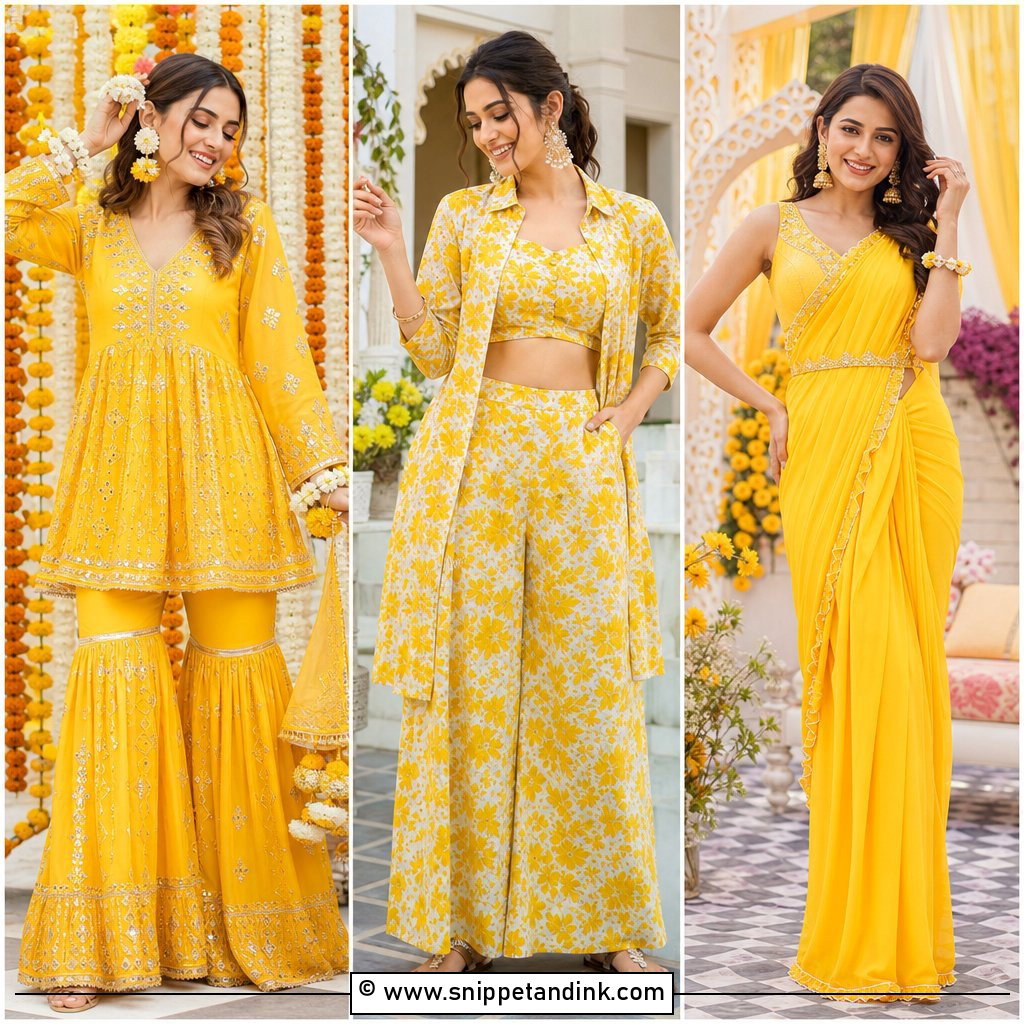
4. Yellow Sharara Set For Haldi
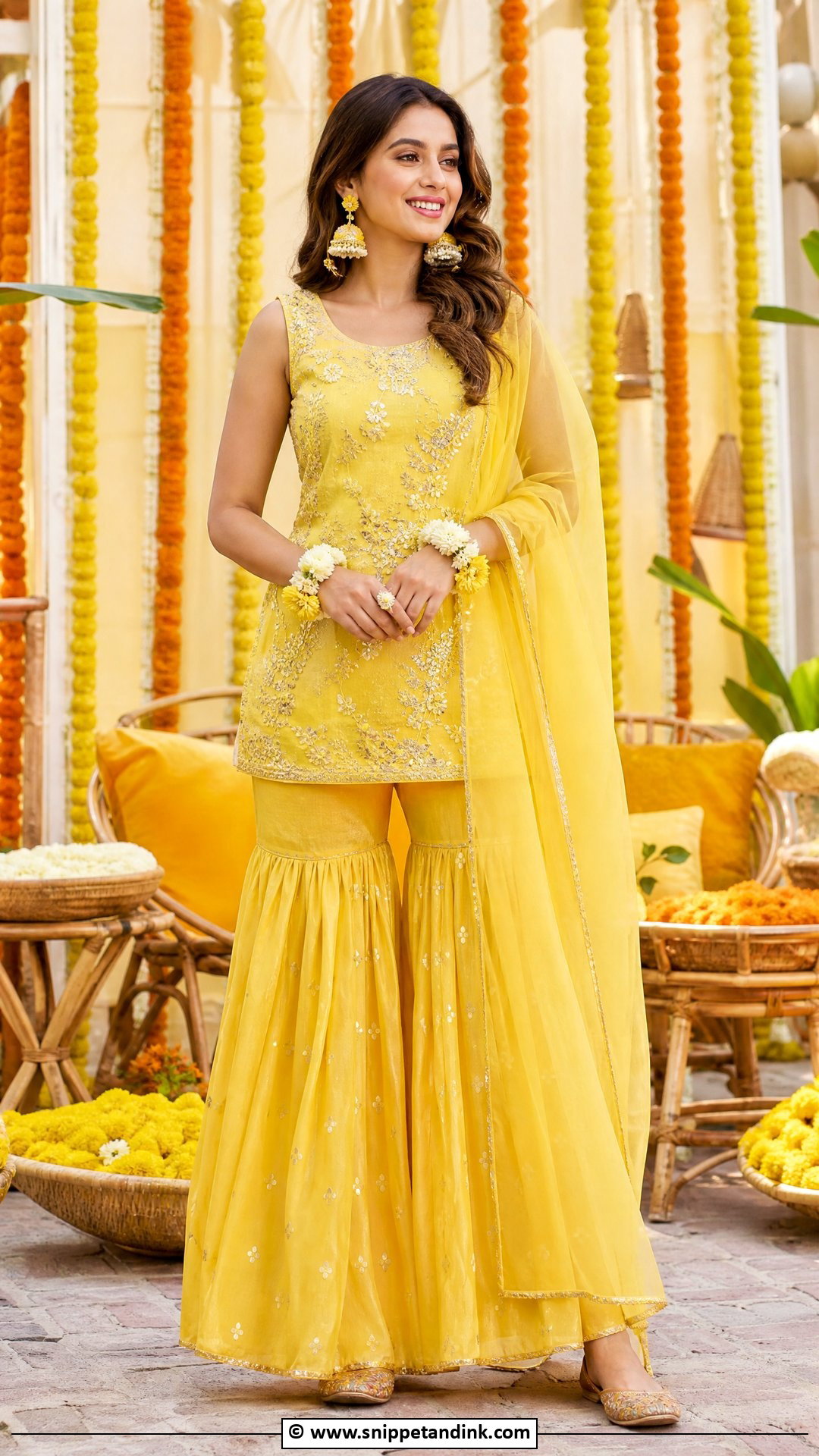
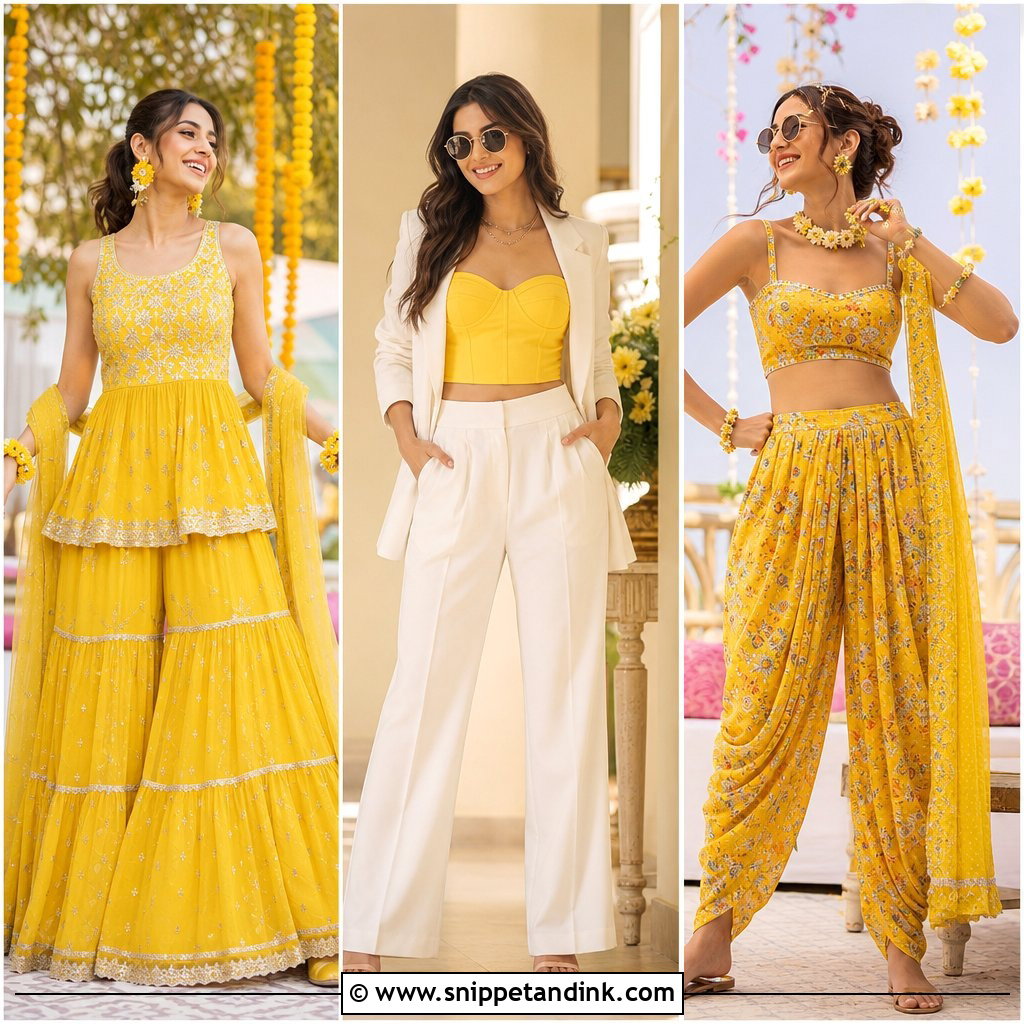
A yellow sharara set gives you the swing of a lehenga with far less to manage. The wide legs split at the knee, so sitting cross-legged on the floor is genuinely easy, which I can’t say for most skirts. Balance the volume with a short kurti, a strappy kurta or a peplum top. Cotton silk, georgette, crepe and muslin stay soft in daylight, and a printed or gota dupatta adds tradition. Chaandbalis, bangles and embroidered juttis complete it.
5. Printed Sharara Set For Haldi
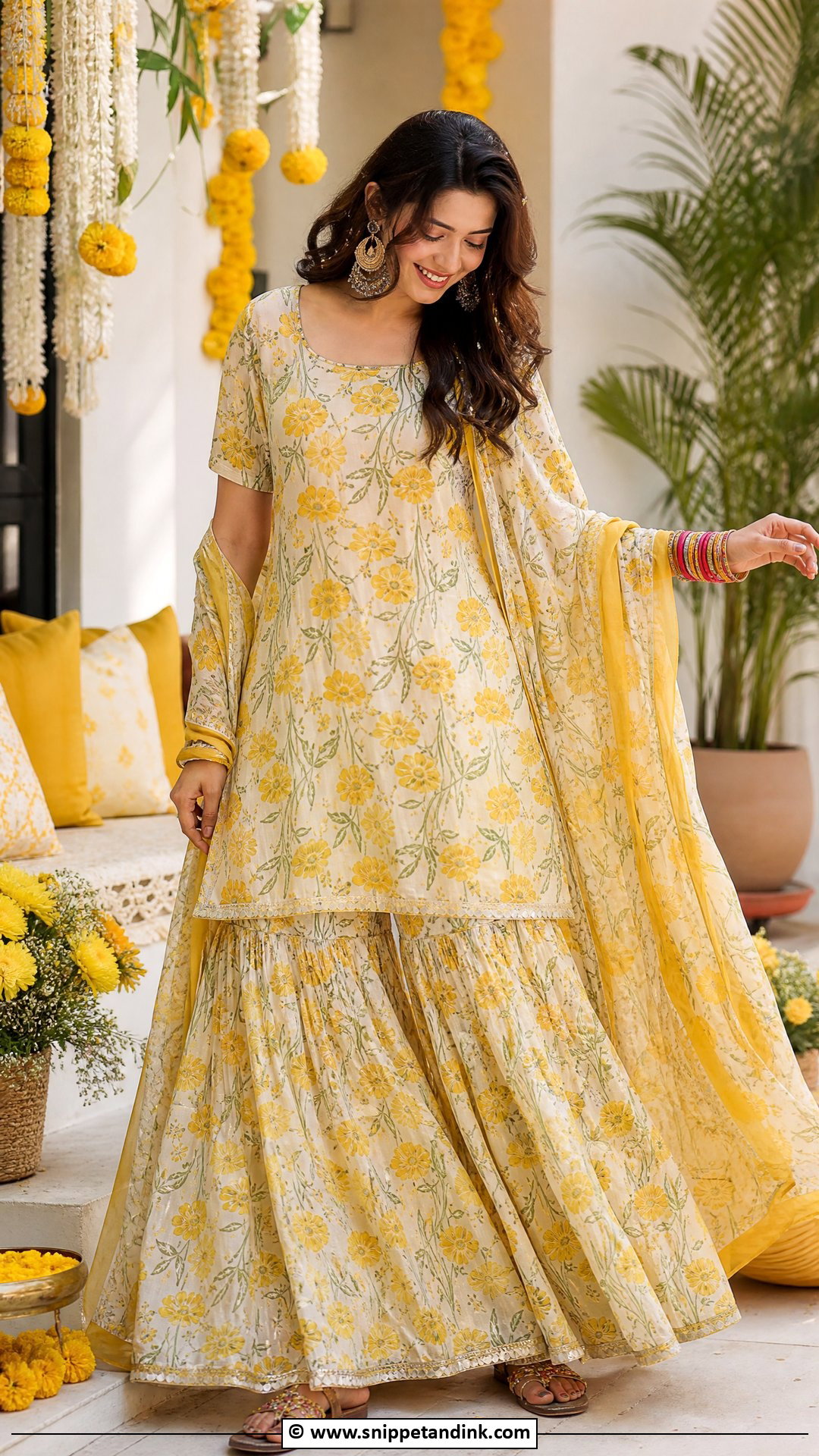
Printed sets are what I suggest to guests who want to look put together without spending bridal money. Block prints, florals, tropical motifs and abstracts in yellow, green, coral or ivory are light, washable and easy to wear again. A short kurti over flared sharara with a matching dupatta makes a coordinated set. Oxidized earrings, colorful bangles and flat sandals keep it relaxed, and cousins and bridesmaids look stylish in it without drifting into bridal territory.
6. Yellow Saree For Haldi Ceremony
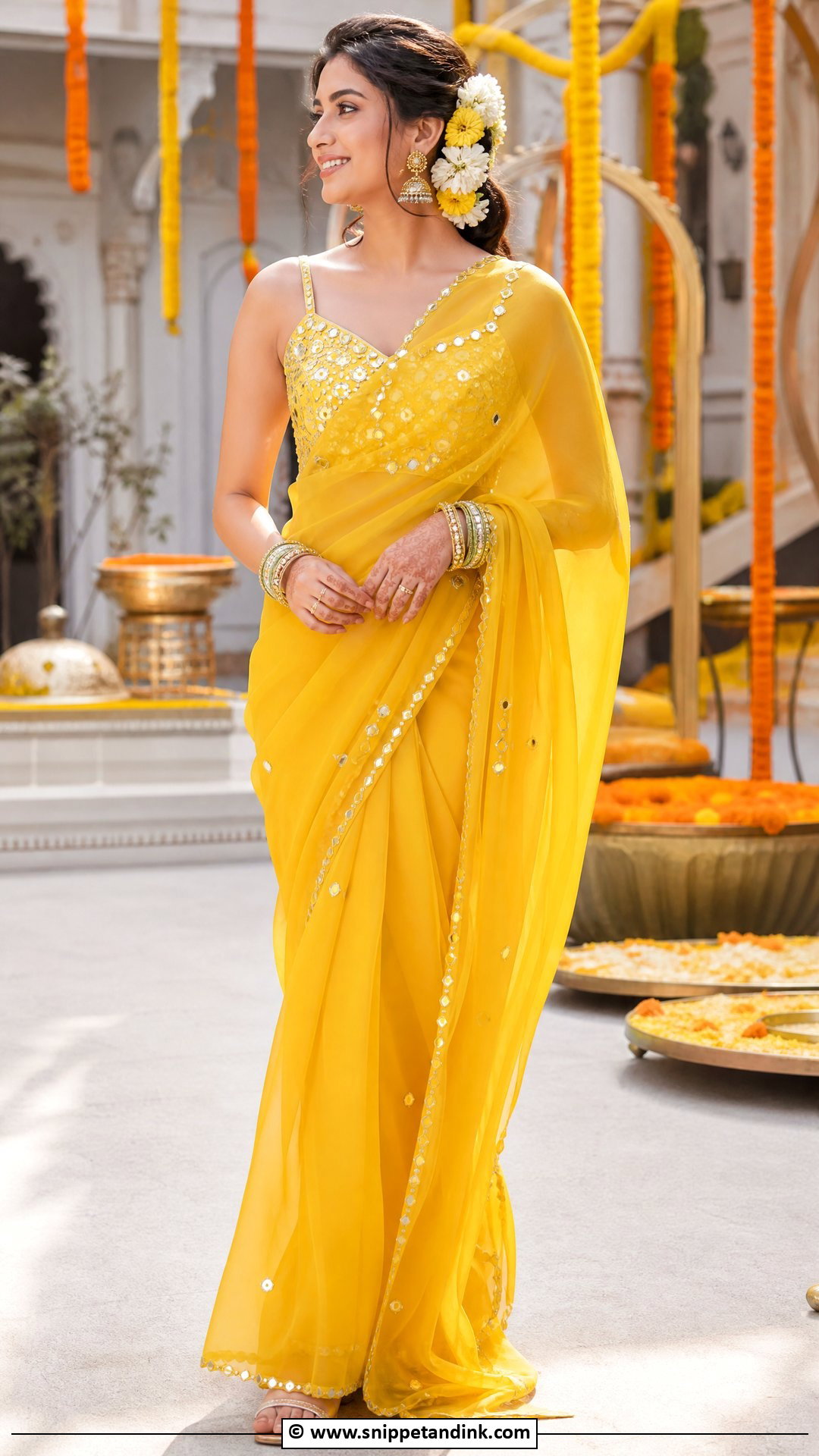
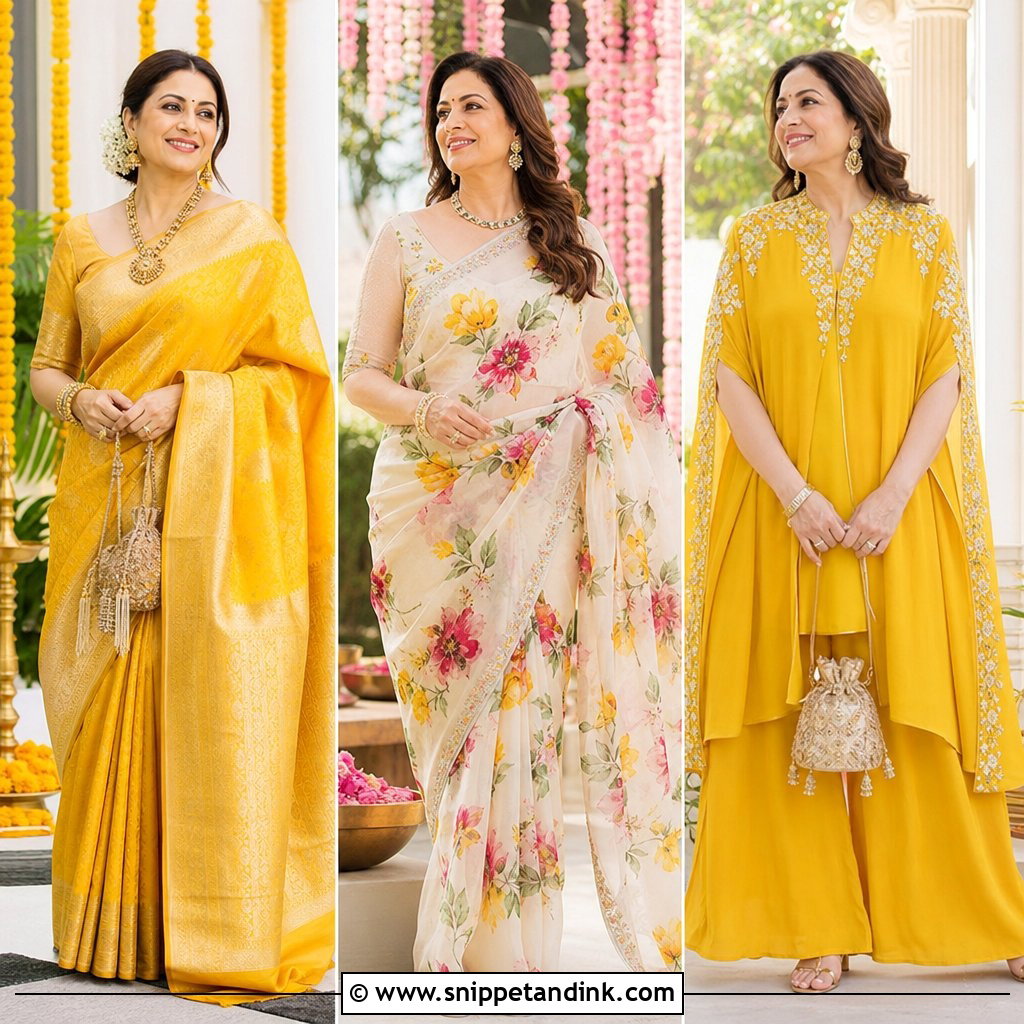
A saree is the classic route for anyone who wants tradition without a lehenga’s volume. For Haldi I’d pick chiffon, georgette, organza, linen or cotton silk; a heavy silk saree is both hot and expensive to stain. Puff sleeves, a back tie or mirror work on the blouse modernize it. Brides can add floral jewelry and a statement hair piece, while guests do well with jhumkas and bangles. Pin the pleats at the waist, since sitting down and standing up all afternoon gradually loosens them.
7. Organza Saree Haldi Outfit
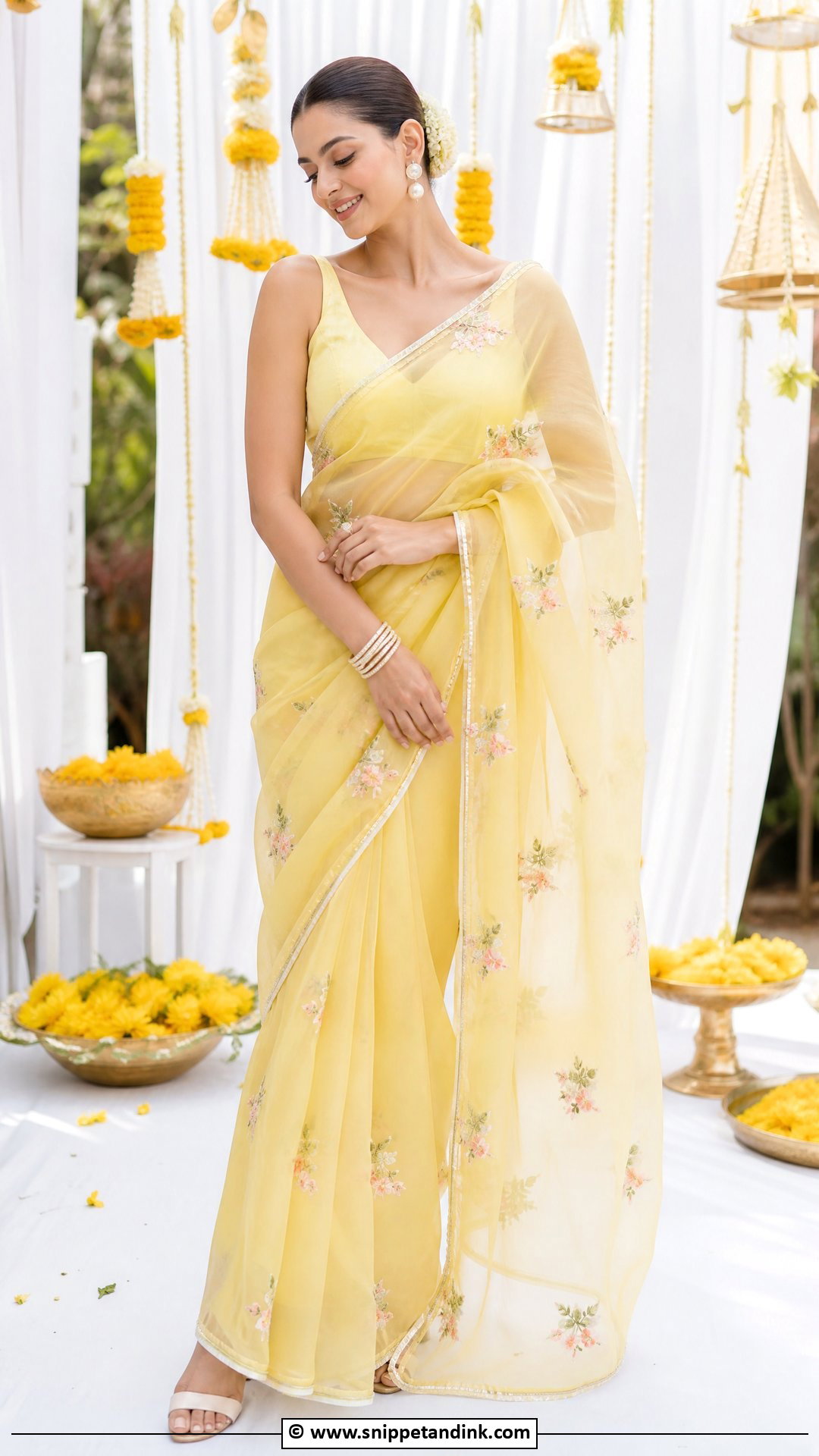
Organza has a crisp body, which gives the saree a neat, sculpted drape but also makes the pleats spring open if they aren’t pinned. I press and pin them before the bride even steps into it. Yellow organza with floral embroidery, scalloped edges or light gota suits brides and sisters, and guests can go pastel yellow, mint, peach or ivory with smaller details. A fitted blouse, pearl earrings, a sleek bun and minimal bangles keep it polished. Organza marks easily, so it’s better for whoever is sitting slightly back from the paste.
8. Ruffle Saree Haldi Outfit
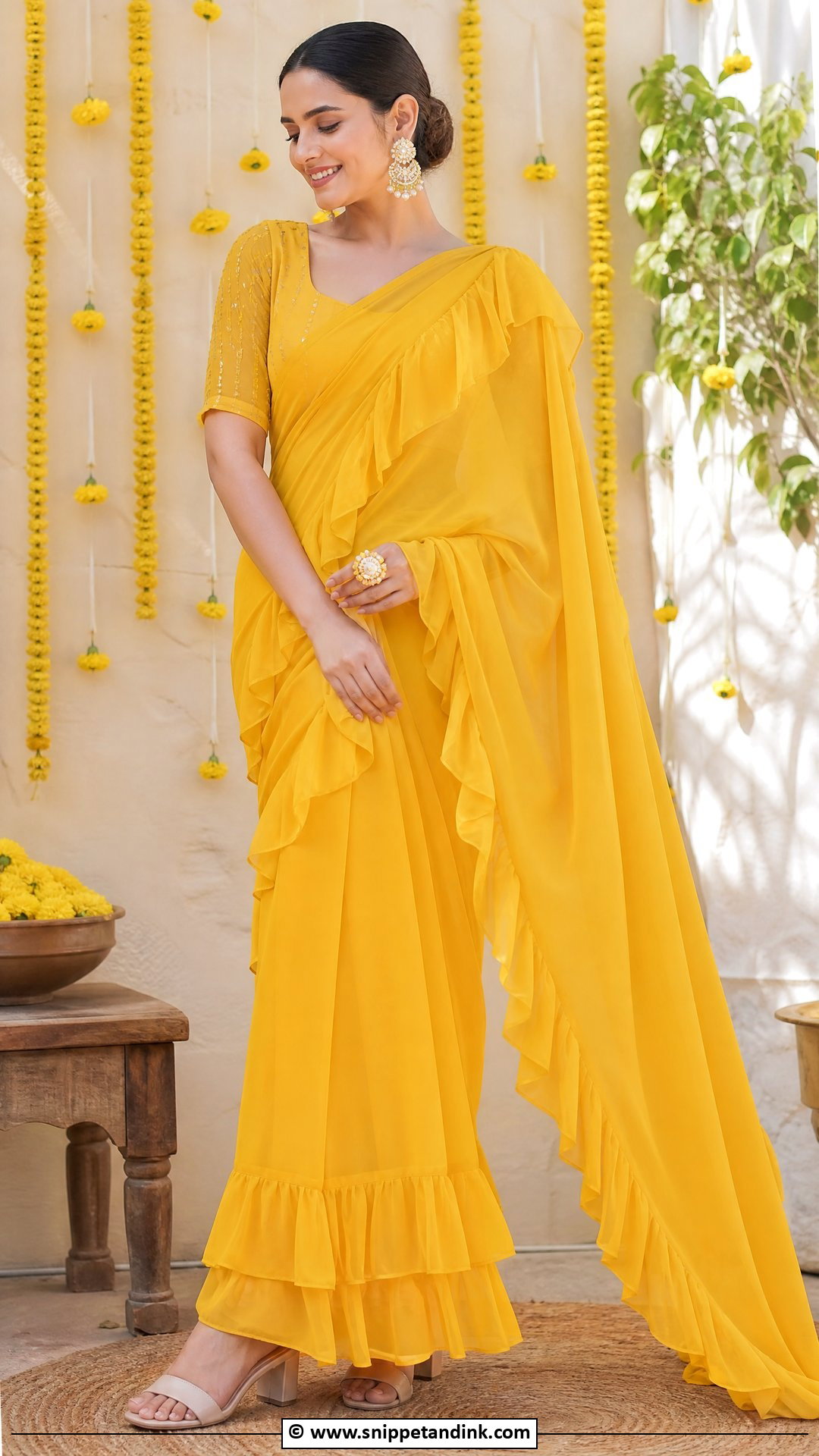
Ruffle sarees usually come pre-stitched or semi-stitched, which is why they’re so easy to wear: no pleating, and the ruffled border swings when you dance. Yellow, lime, mango, ivory or coral read the most festive. A sleeveless, corset or one-shoulder blouse makes it contemporary. Keep accessories clean because the ruffles already add volume, so statement earrings, floral rings and sleek hair are plenty. I’d skip it if you’ll be seated close to the paste, as layered ruffles hold turmeric in their folds.
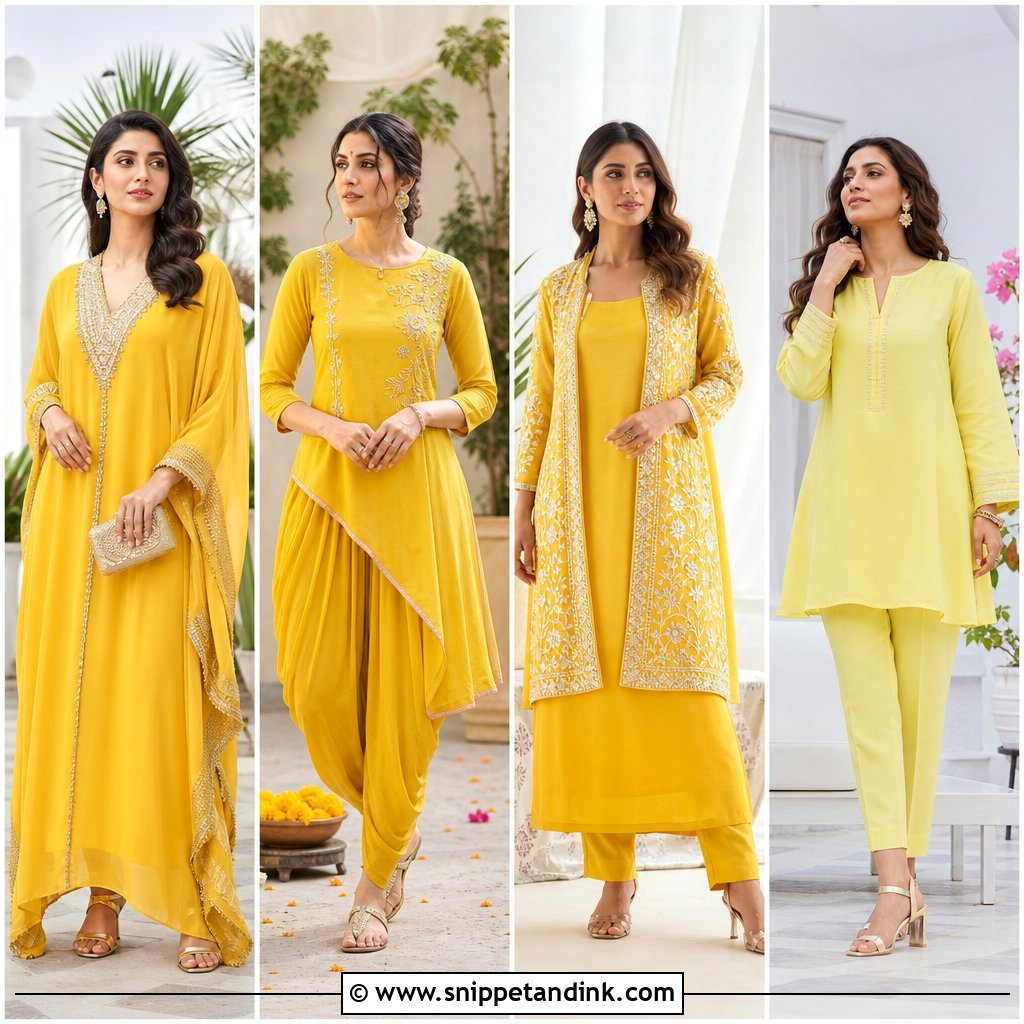
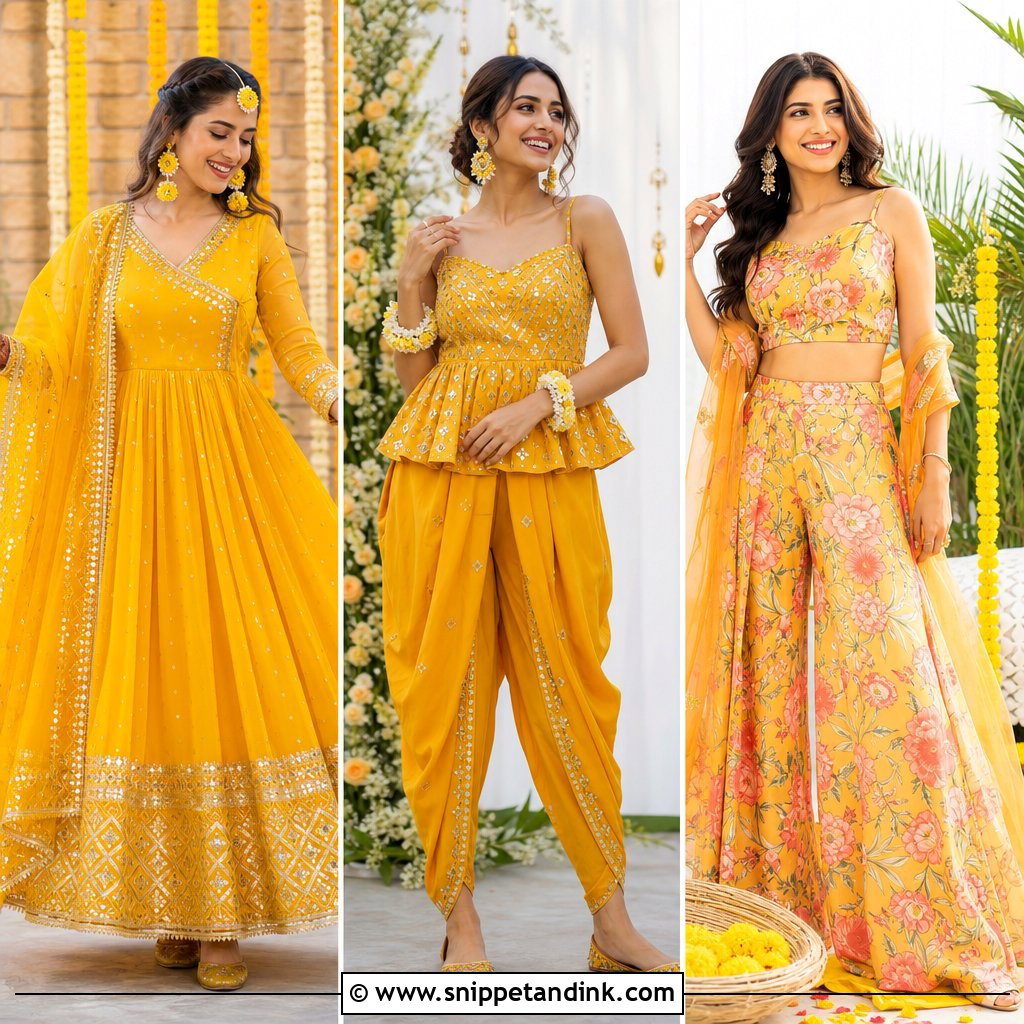
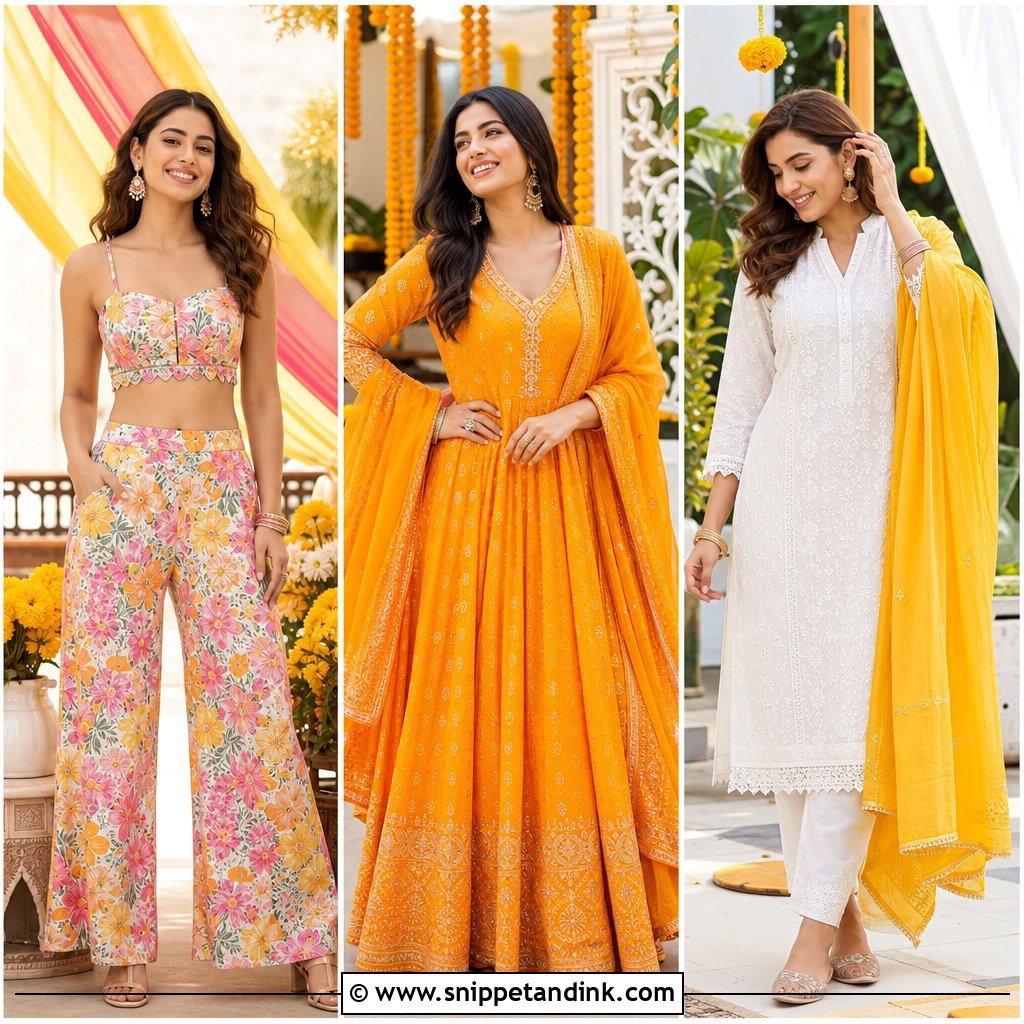
9. Yellow Anarkali Suit For Haldi
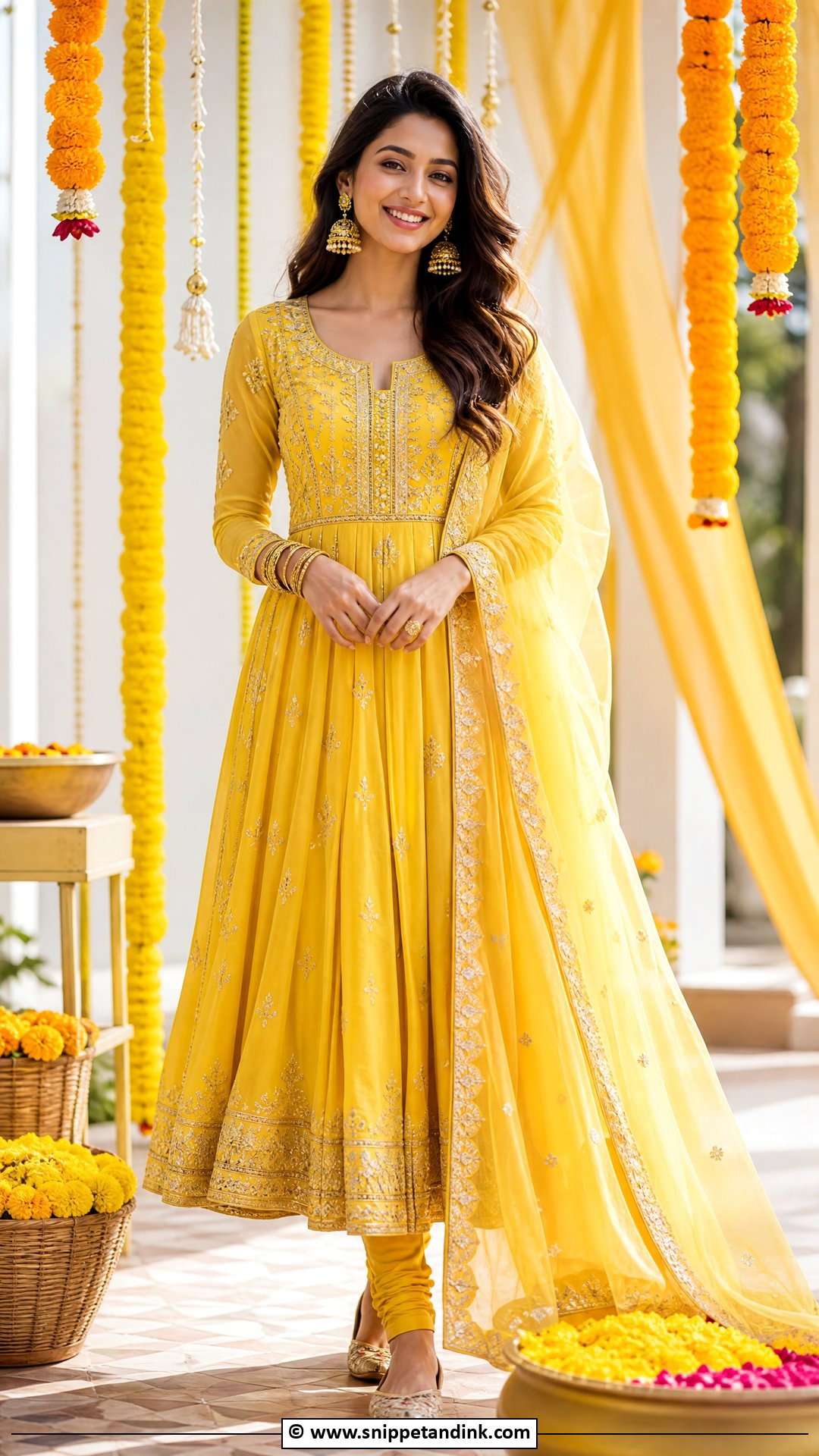
A yellow Anarkali suit flows from a fitted bodice into a full-length flare, so you get movement without a separate skirt. Cotton silk, georgette or chanderi with light embroidery, mirror or gota detail works for daytime. Chanderi is fairly sheer, so check the lining in sunlight before the day. Churidar or straight pants, a matching dupatta, jhumkas, bangles and embroidered flats complete it, and mothers, aunts and guests who want coverage tend to love it.
10. Short Kurti With Sharara For Haldi
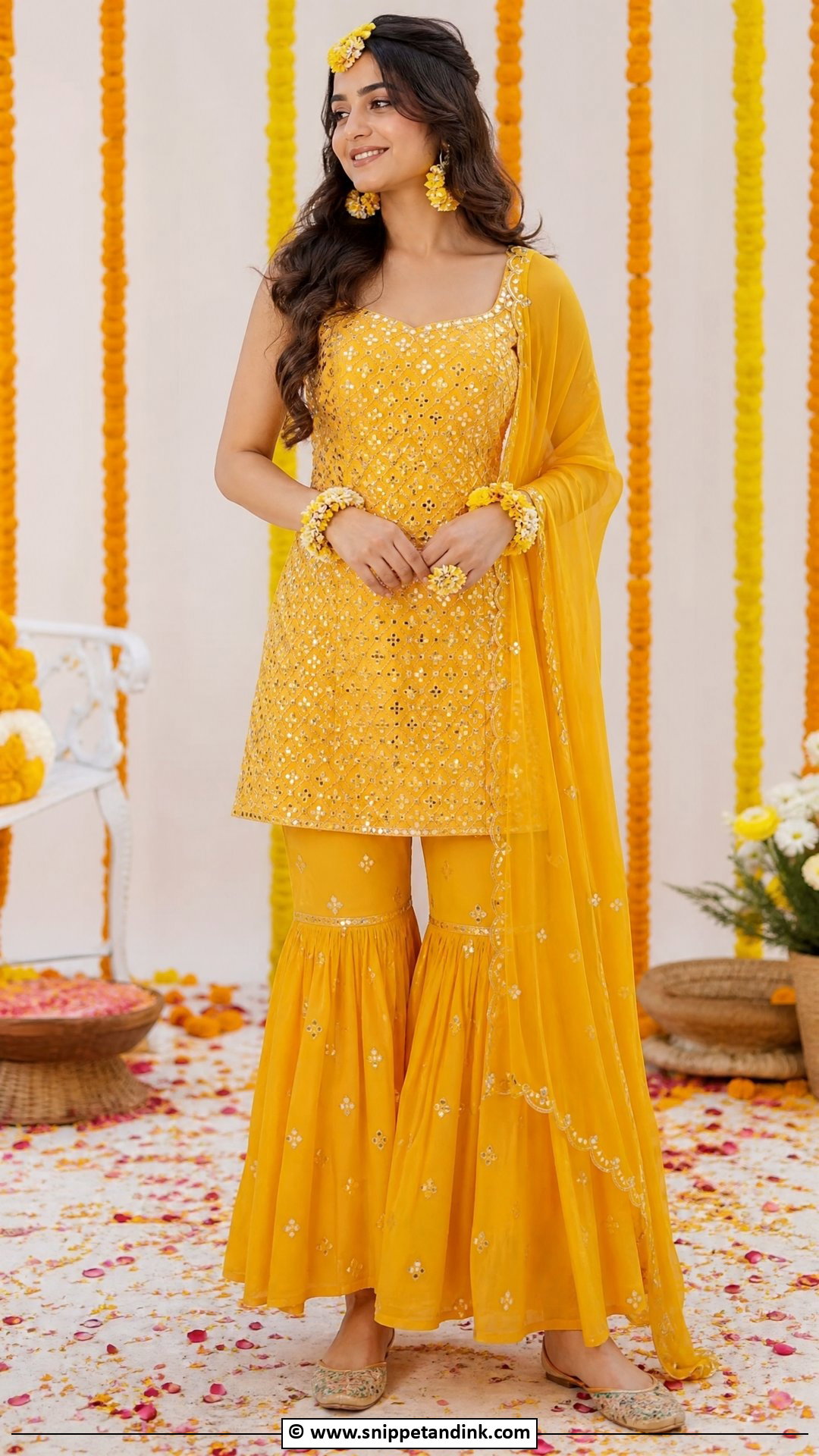
This pairing is my go-to for bridesmaids and cousins who’ll be fetching things, helping with the rituals and dancing. The short kurti balances the flared bottom, especially with mirror work, thread embroidery or a print. Yellow is classic, though lime, peach, ivory and orange work too. Pin a lightweight dupatta to one side so it stays out of the way. Juttis, flower jewelry and loose curls finish it.
11. Haldi Kurta Palazzo Set
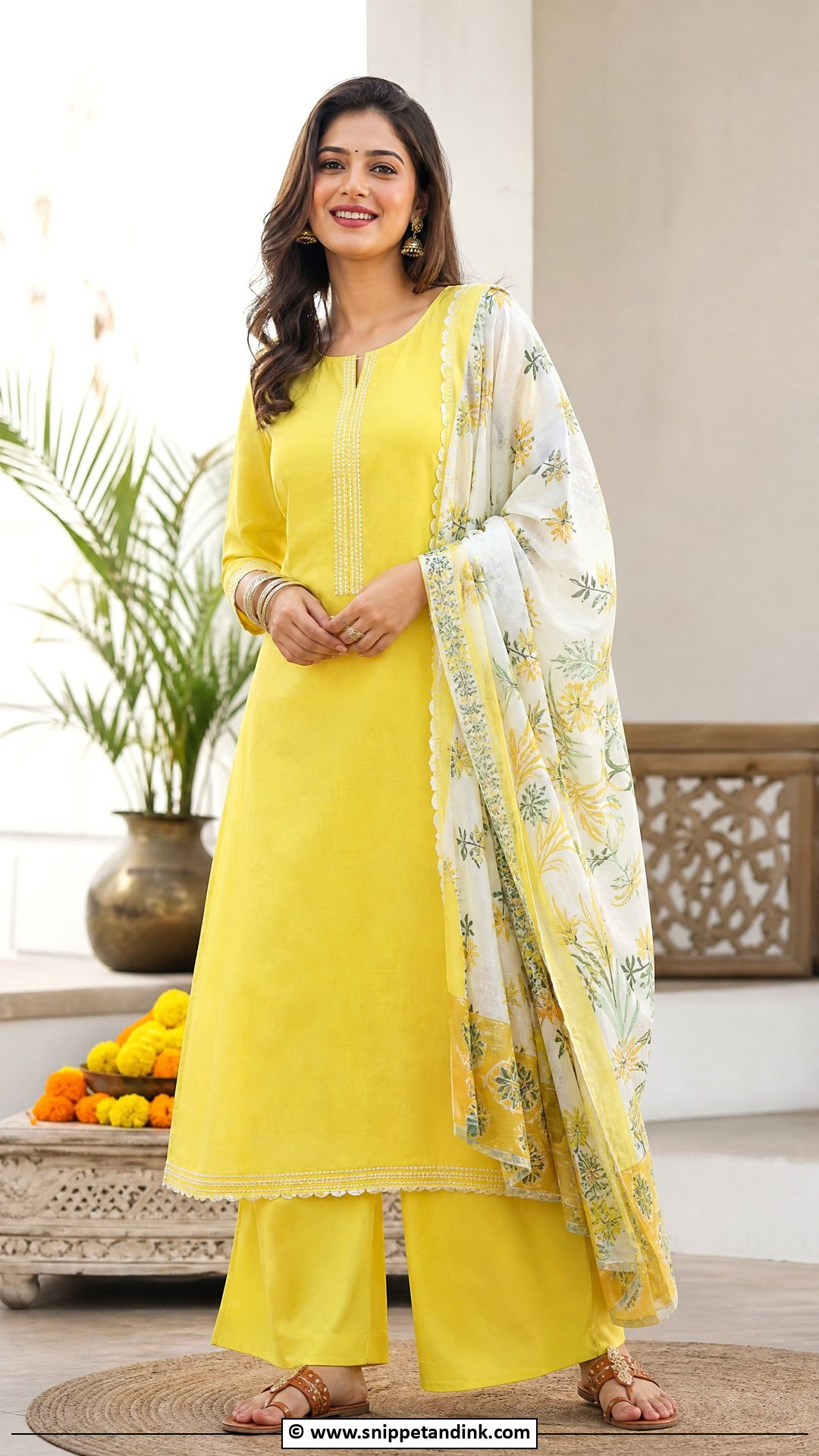
A straight or A-line kurta with wide palazzos is the safe, always-appropriate guest outfit. Yellow, mustard, lemon or soft orange in cotton, rayon, muslin or linen blends stays cool, and a printed dupatta or embroidered border lifts it. It’s also the piece you’ll actually wear again, so I’d spend a little more on fabric that washes well. Small jhumkas, stacked bangles and flat kolhapuris keep it neat.
12. Mustard Haldi Lehenga Set
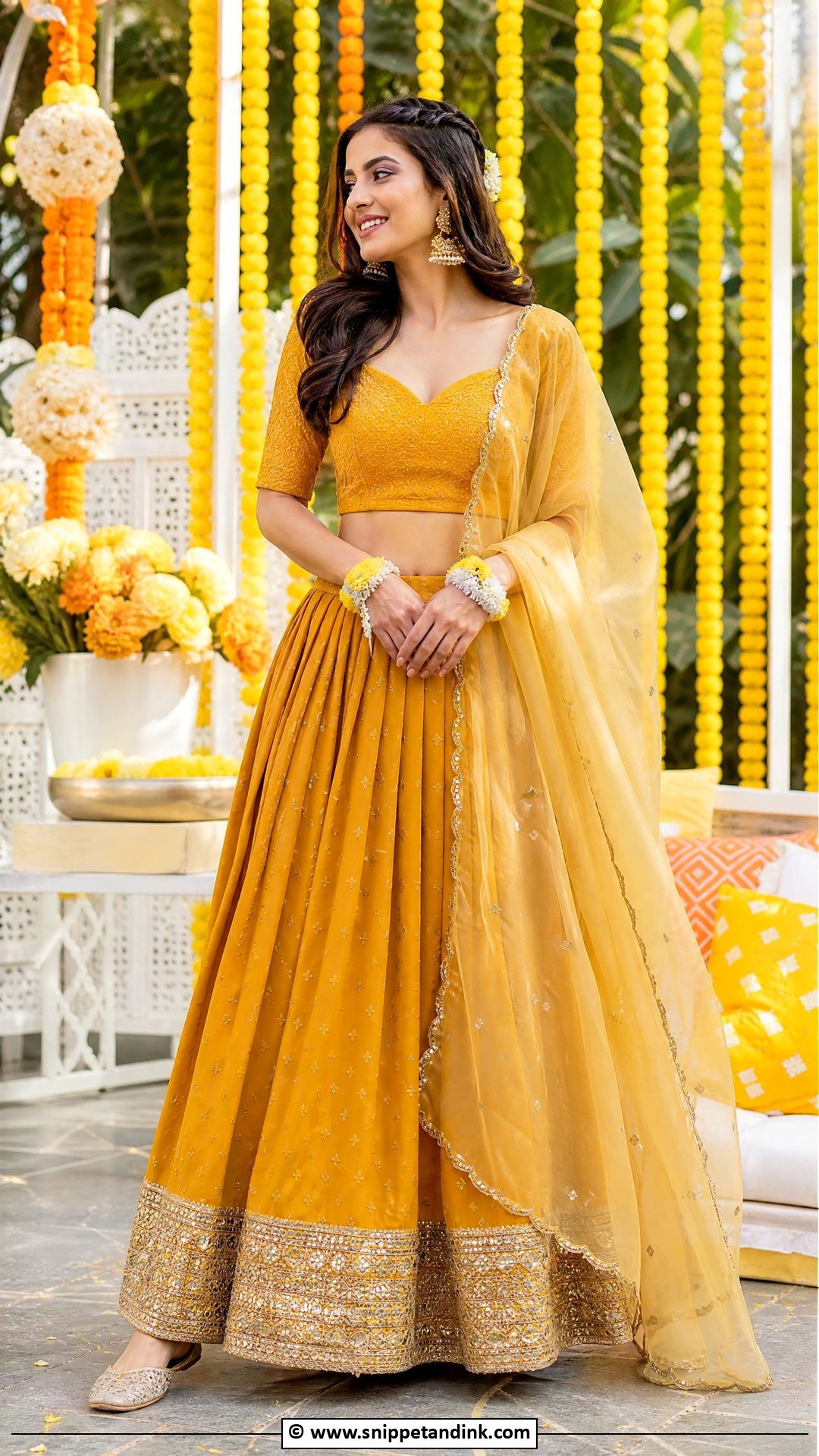
Mustard is the warmer, more grown-up cousin of bright yellow, and on many warm or olive complexions it flatters more. It pairs well with gold, ivory, orange, green and mirror work. Keep the skirt flowy, the blouse fitted and the dupatta light. Antique gold earrings, floral kaleeras and makeup with a warm blush suit it. Bridesmaids can wear simpler mustard lehengas with printed dupattas so the bride stays the most detailed person in the frame.
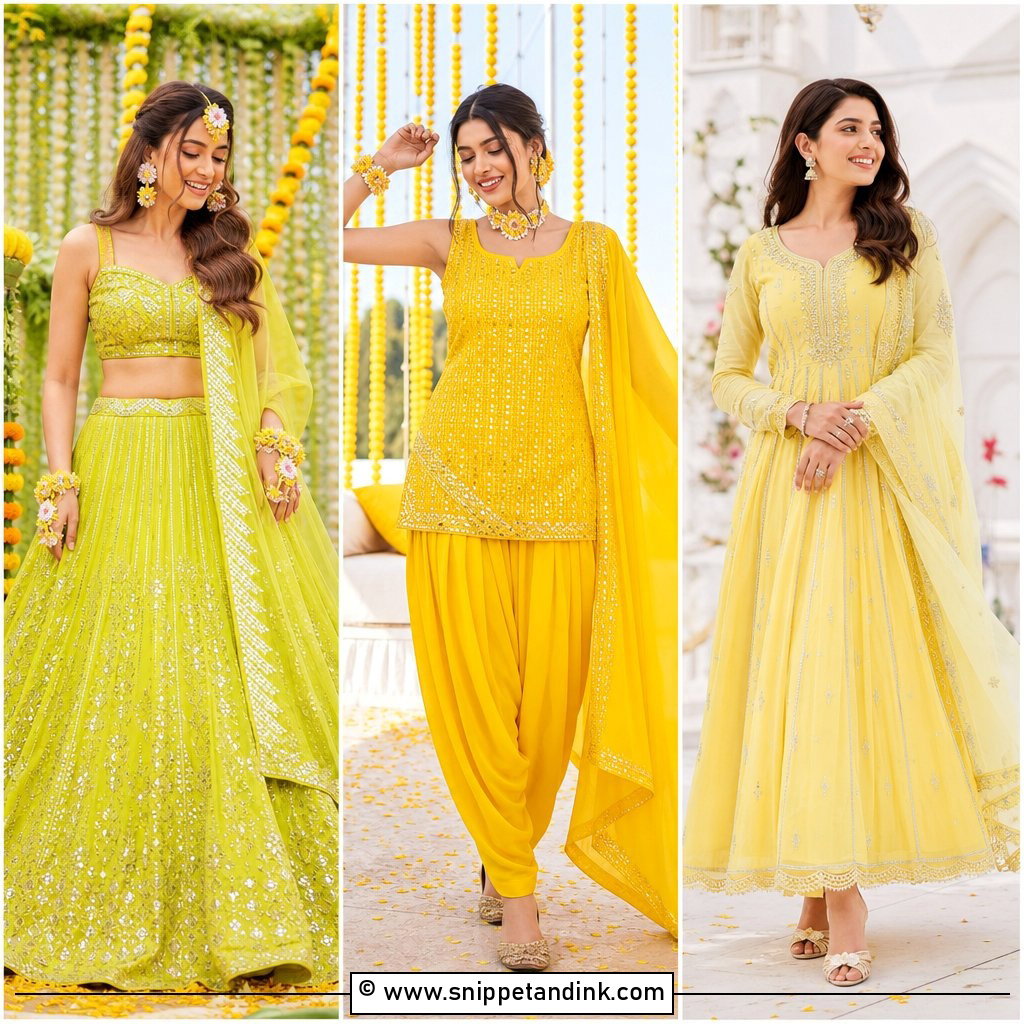
13. Lime Green Haldi Outfit
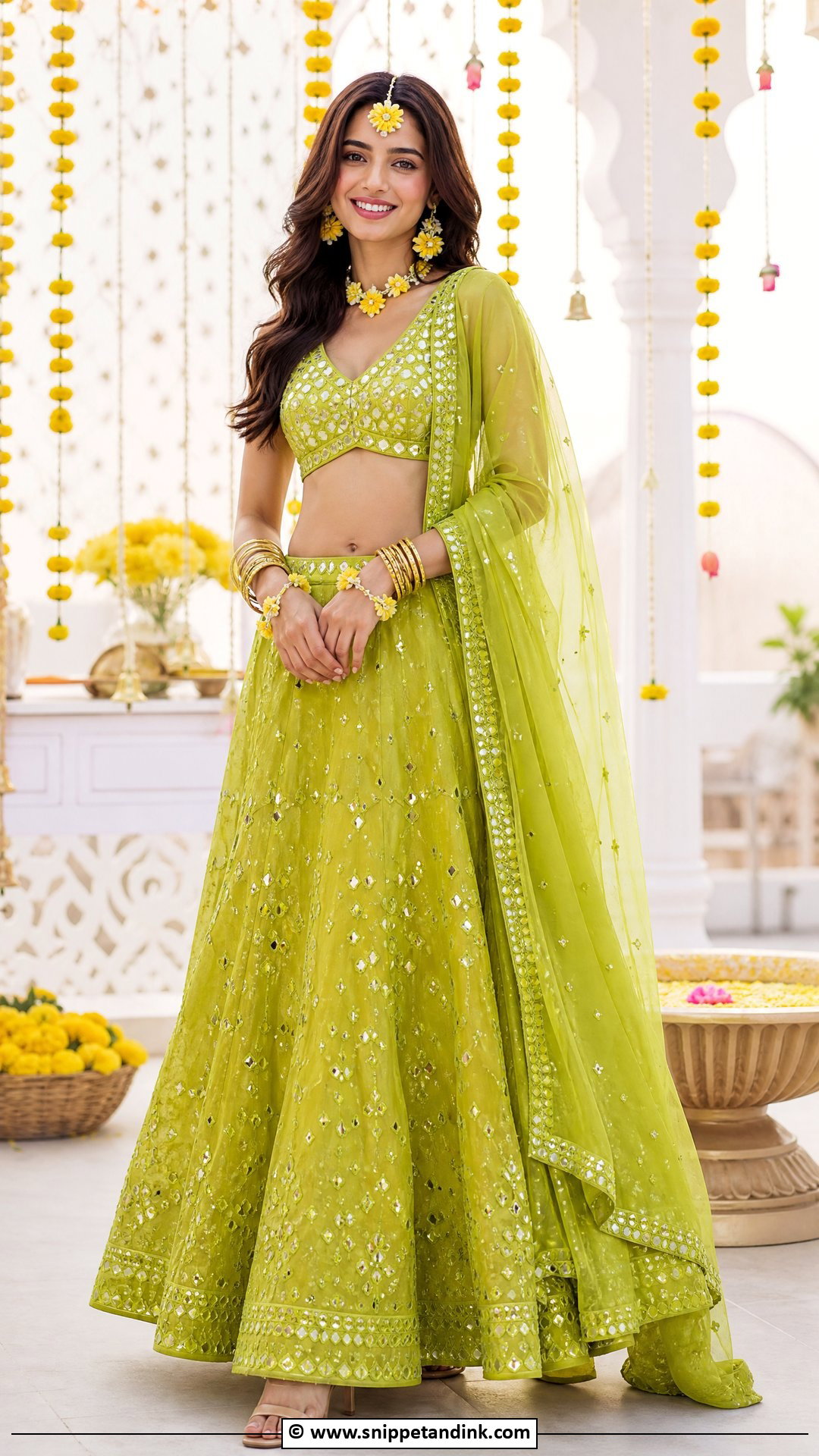
A lime green Haldi outfit gives the brightness Haldi calls for while stepping away from yellow. A lime lehenga, sharara or kurta with palazzos all work, tied back to the ceremony with yellow flowers, gold jewelry or mirror work. I like lime for bridesmaids because it stands out in group shots without competing with a bride in yellow. One caution: neon-leaning limes can throw a green cast onto the face in strong sun, so choose a softer shade. Glowy makeup and nude or gold footwear suit it.
14. Ivory Haldi Outfit With Floral Jewelry
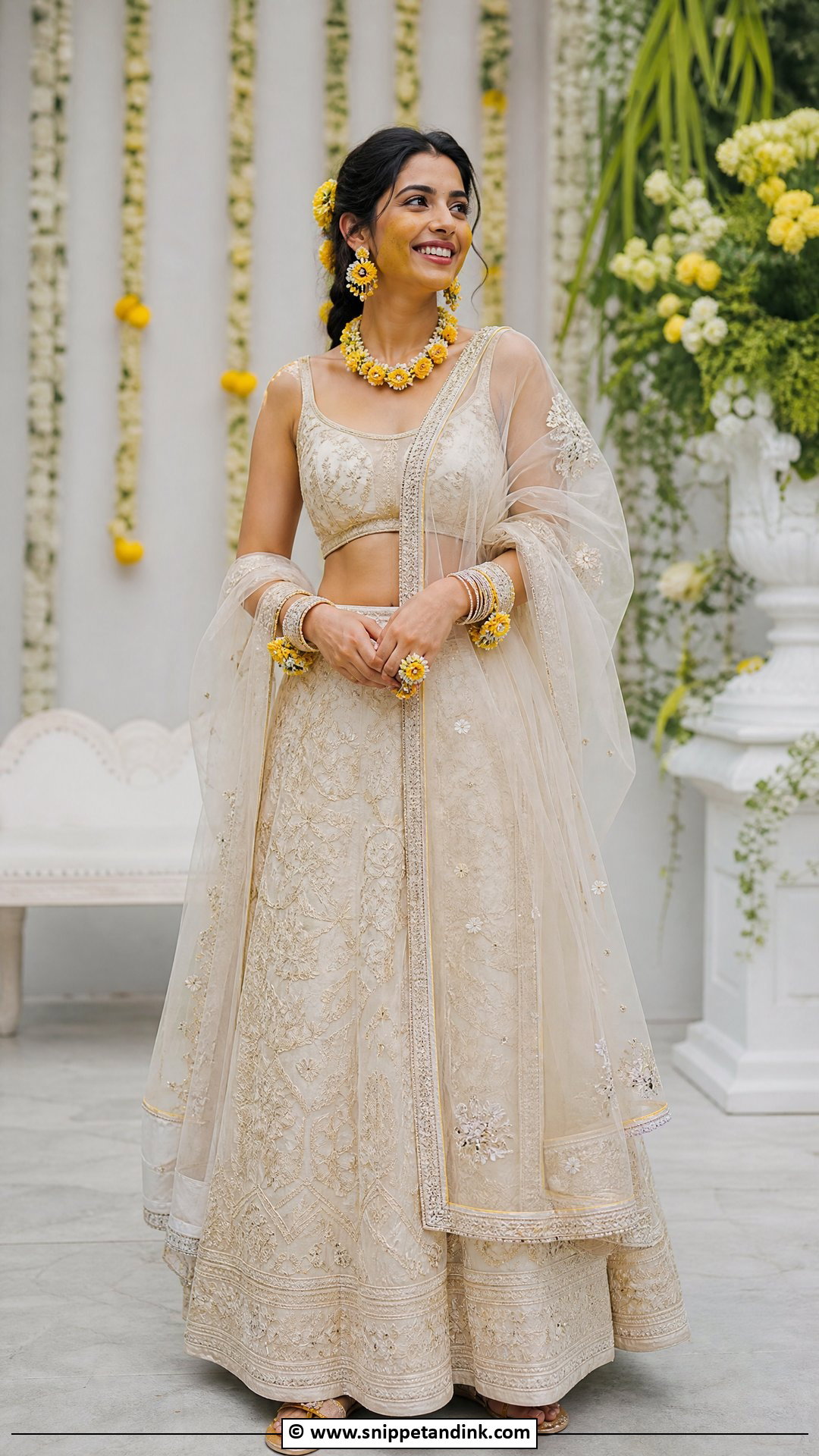
Ivory lets the flowers do the talking. Lehengas, sarees, shararas and Anarkalis in ivory, with light embroidery, pearl accents or minimal gota, set off yellow and orange blooms sharply. Fresh flower earrings, a maang tikka, bracelets and hair flowers make it ceremonial. One practical point: fresh flower jewelry wilts in heat, so I have it made the same morning and kept cool until the bride dresses. Intimate functions, beach settings and brides who prefer quiet color all suit it.

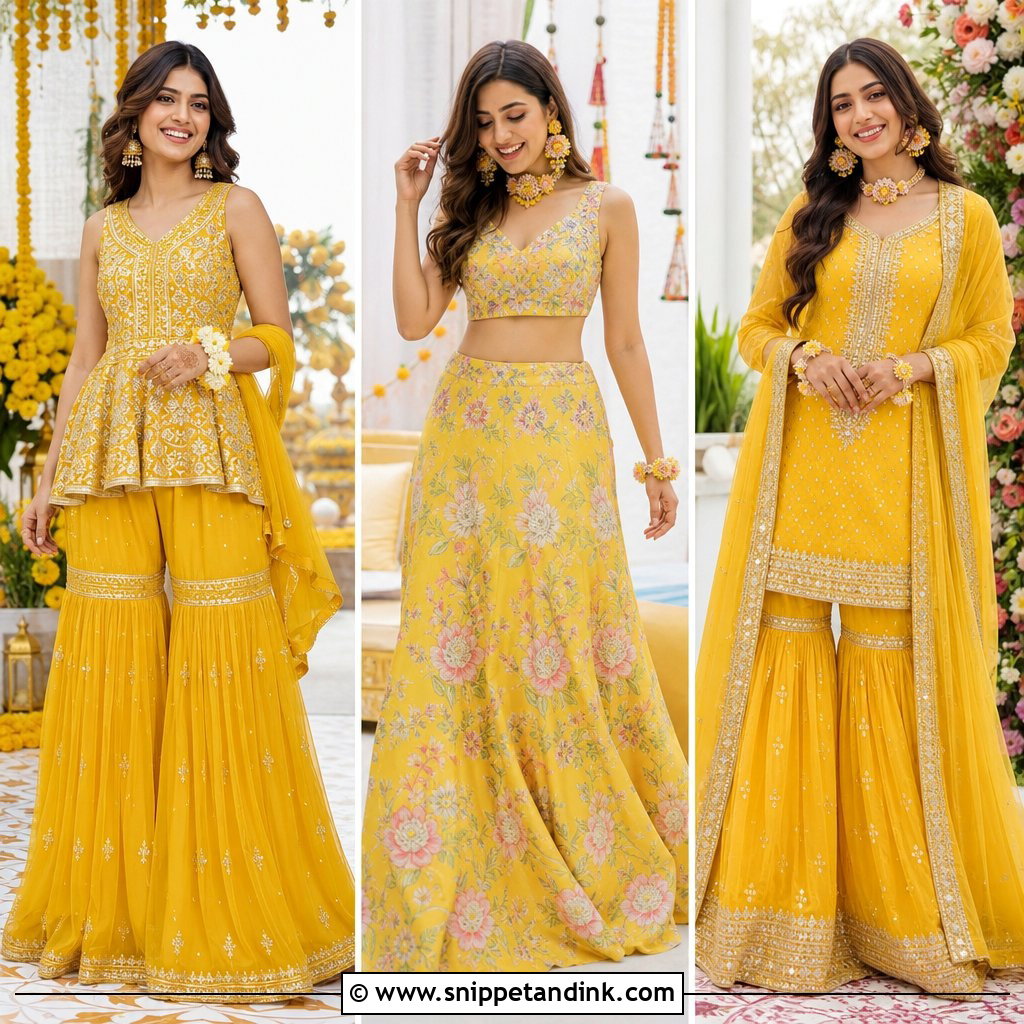

15. Orange Haldi Lehenga
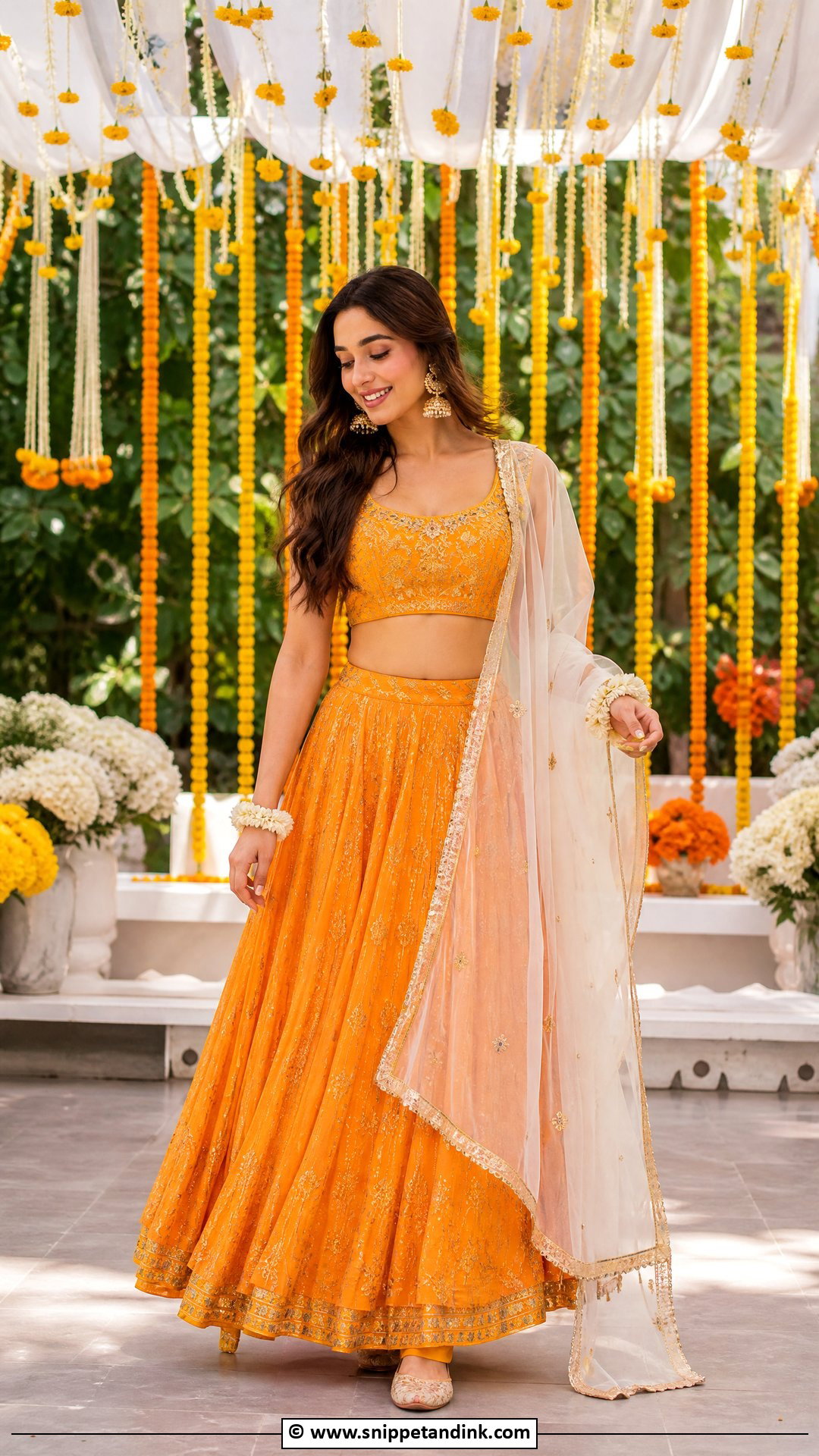
Orange is traditional without being the usual yellow, and the range is wide: marigold, tangerine, saffron, burnt orange. I hold shades up to the face in daylight, because burnt orange sits easily on warm undertones while a bright tangerine can overwhelm some complexions. A lightweight skirt with mirror or thread work suits daytime, and a yellow or ivory dupatta balances the warmth. Gold jhumkas, floral bangles and comfortable juttis complete it, with a statement floral necklace for the bride.
16. Peach Haldi Sharara Set
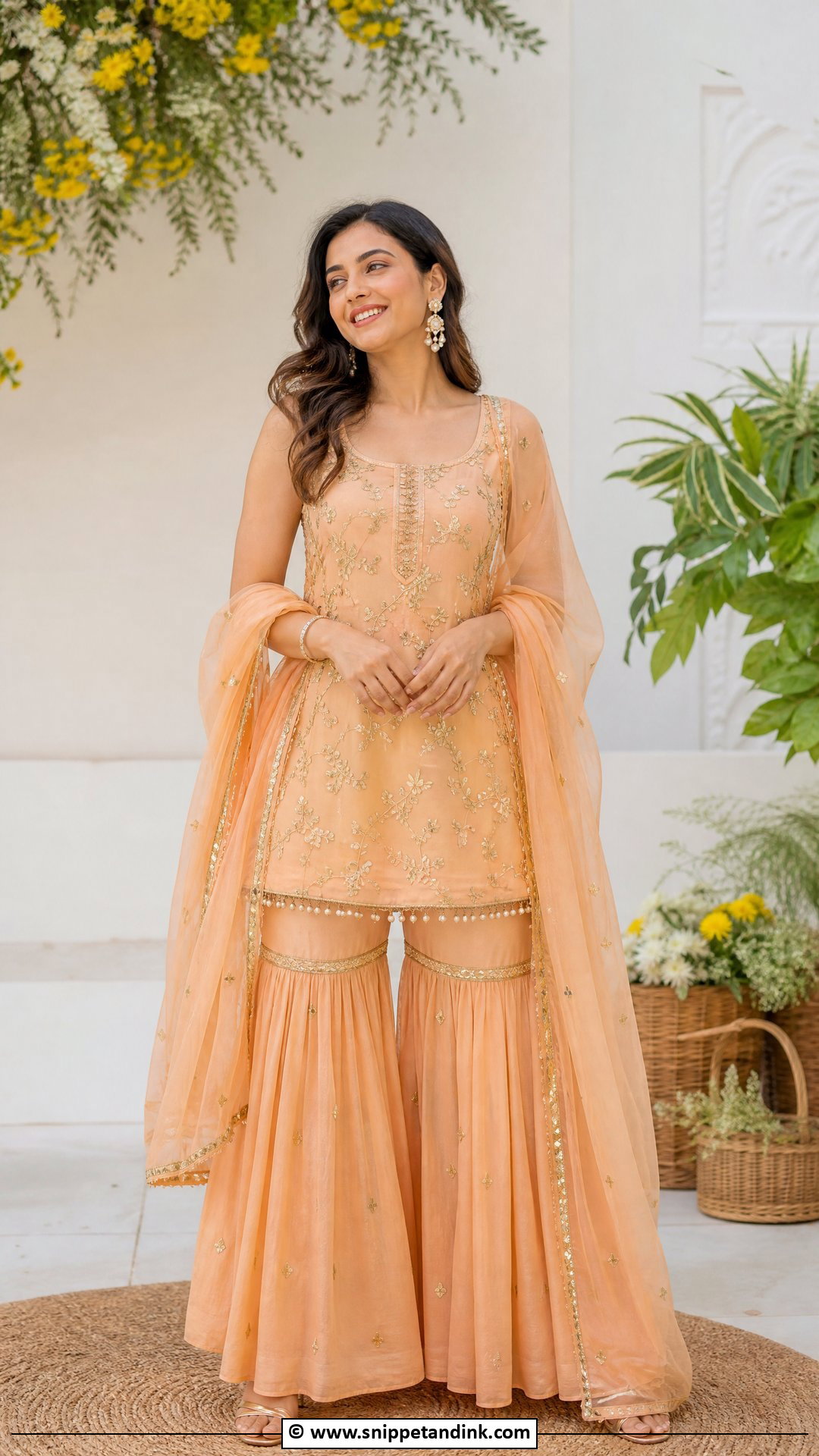
Peach is the lighter option for bridesmaids, sisters and guests who want color that still feels festive. A short kurti, flared sharara and an organza or chiffon dupatta keep it airy. Keep embroidery subtle with thread work, small mirrors or a few sequins. Yellow floral jewelry, pearl earrings and gold sandals connect it to the day. Peach shows turmeric quite clearly, so it suits guests better than the bride’s closest helpers.
17. Haldi Dhoti Set For Women
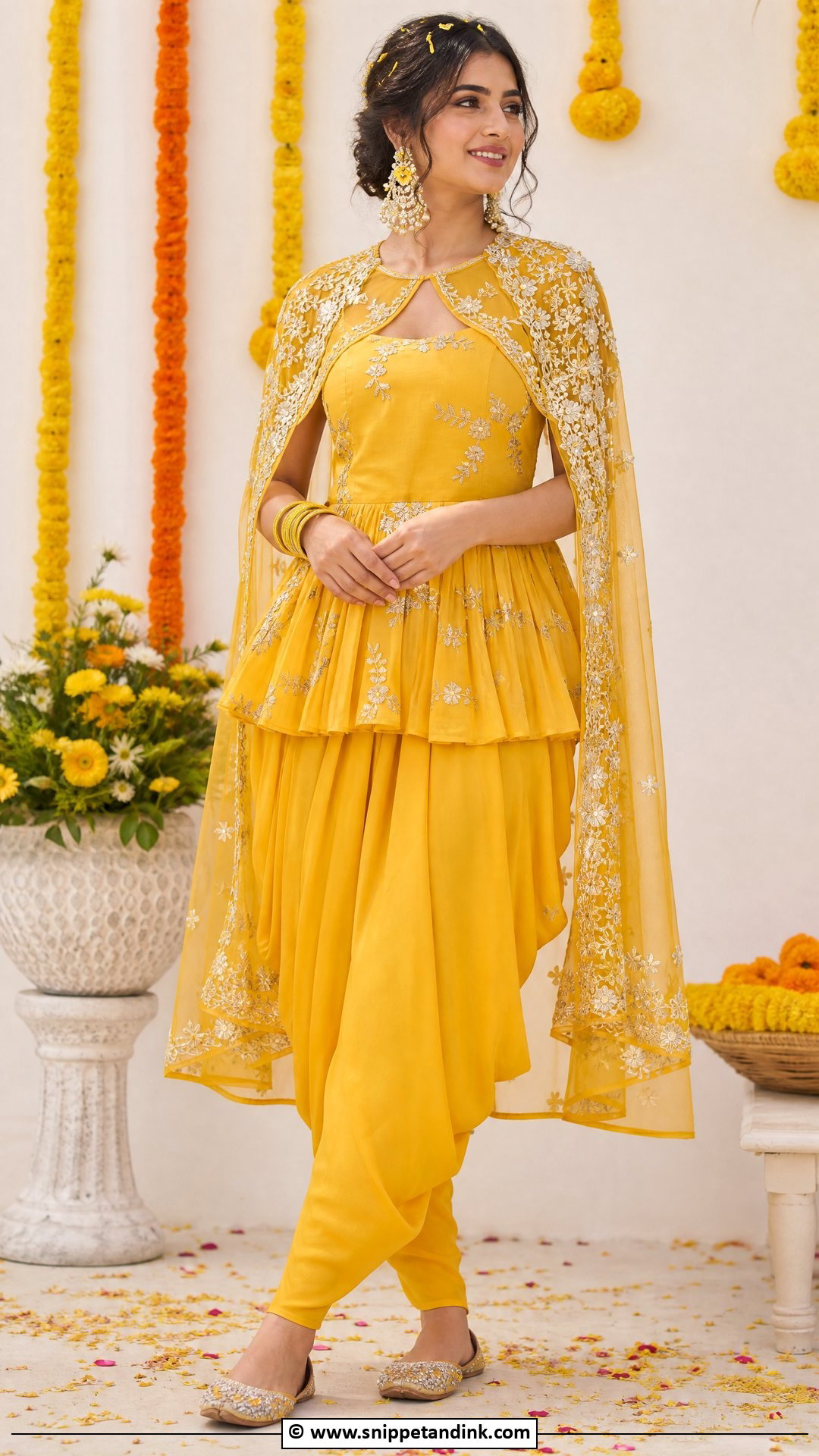
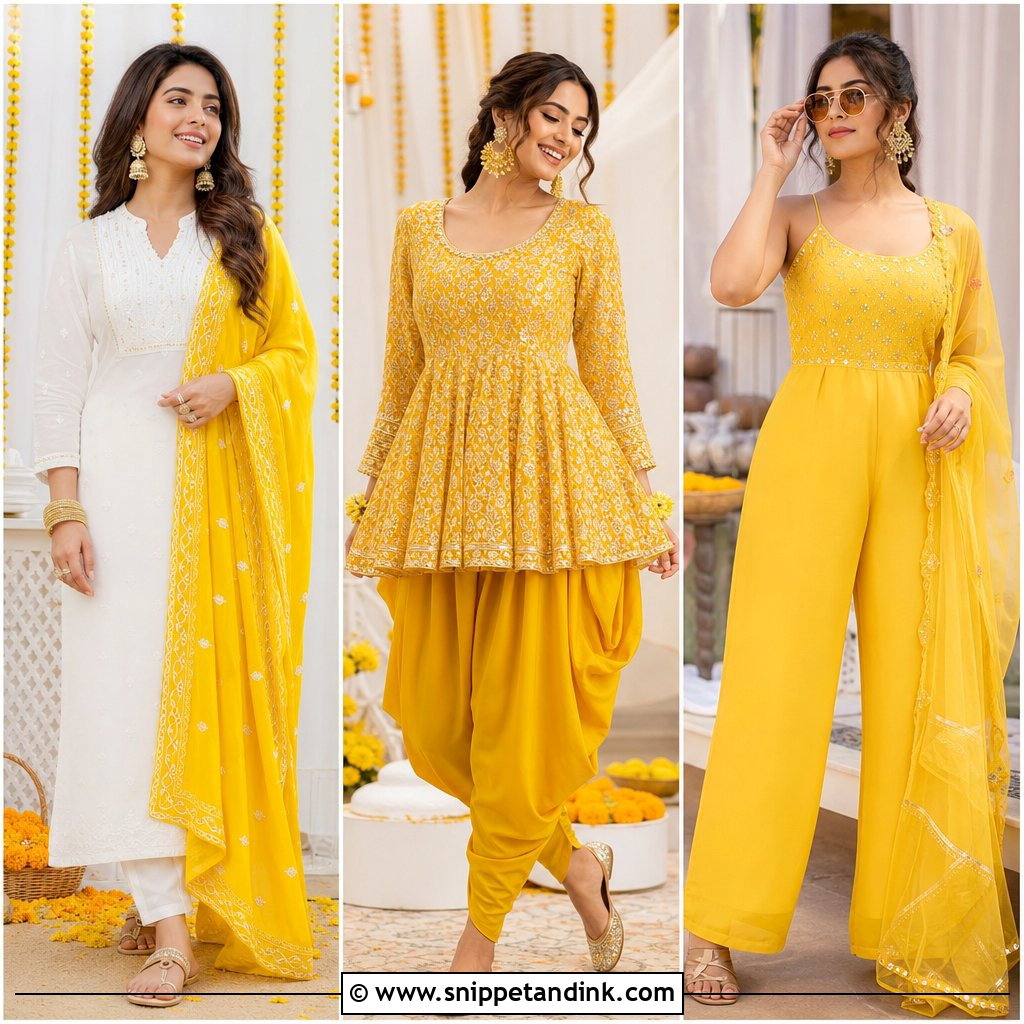
A Haldi dhoti set for women mixes a draped dhoti bottom with a kurta, crop top or cape, and it’s one of the most comfortable fusion looks to dance in. Yellow, ivory, lime and orange suit the ceremony, and a peplum top over dhoti pants defines the waist. Check the drape is stitched in place rather than tied, since a hand-tied dhoti loosens after an hour of movement. Statement earrings, bangles and embroidered flats finish it.
18. Haldi Cape Set Outfit
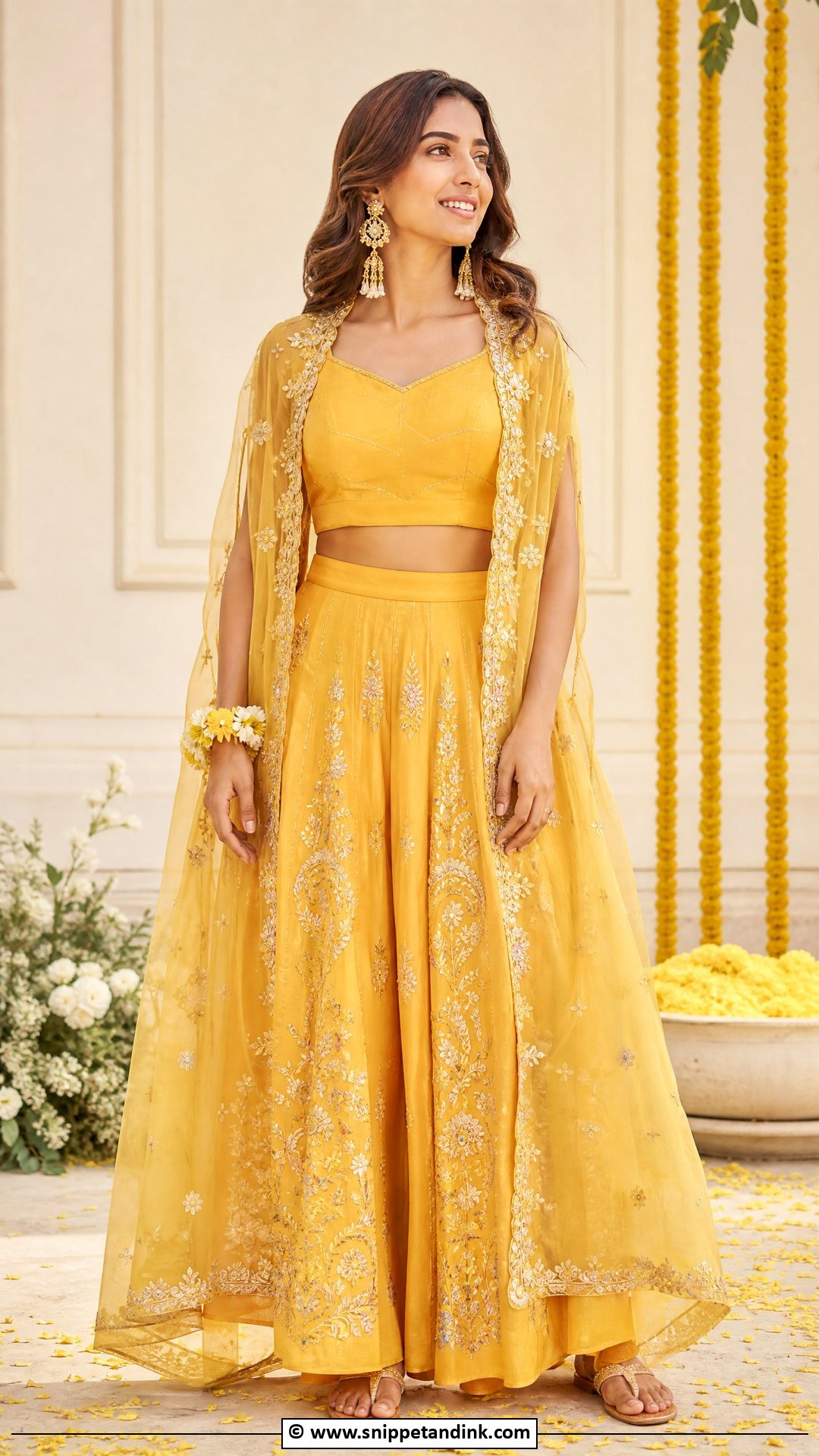
Cape sets swap the dupatta for a light cape over a crop top and skirt or pants, which means one less loose piece of fabric near the paste. Yellow or ivory with mirror work, tassels or floral embroidery suits daytime, and the cape moves well in candids. Keep jewelry to earrings and bracelets so the neckline stays clean. I’d also check the fastening: a single hook at one shoulder can drag the blouse sideways, while two hold steadier.
19. Haldi Co Ord Set
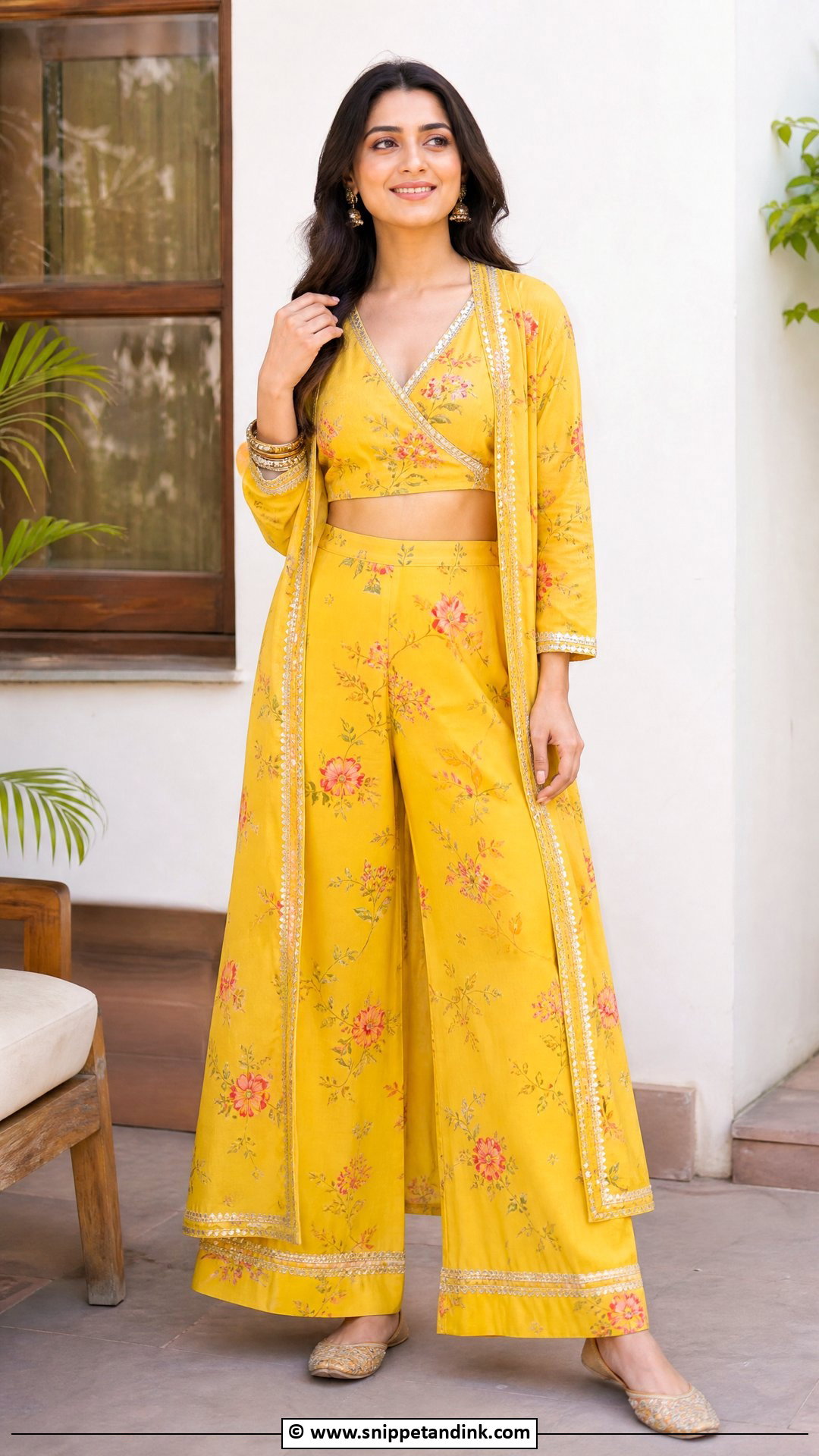
Co-ord sets look put together with almost no styling, and they’re lighter than lehengas or sarees. A yellow printed set with wide-leg pants, a cropped blouse and a long shrug suits relaxed functions, while mirror borders, gota trims or block prints push it more traditional. Juttis, small earrings and a few bangles are enough. For guests and cousins, it’s the comfort-first answer.
20. Haldi Kaftan With Pants
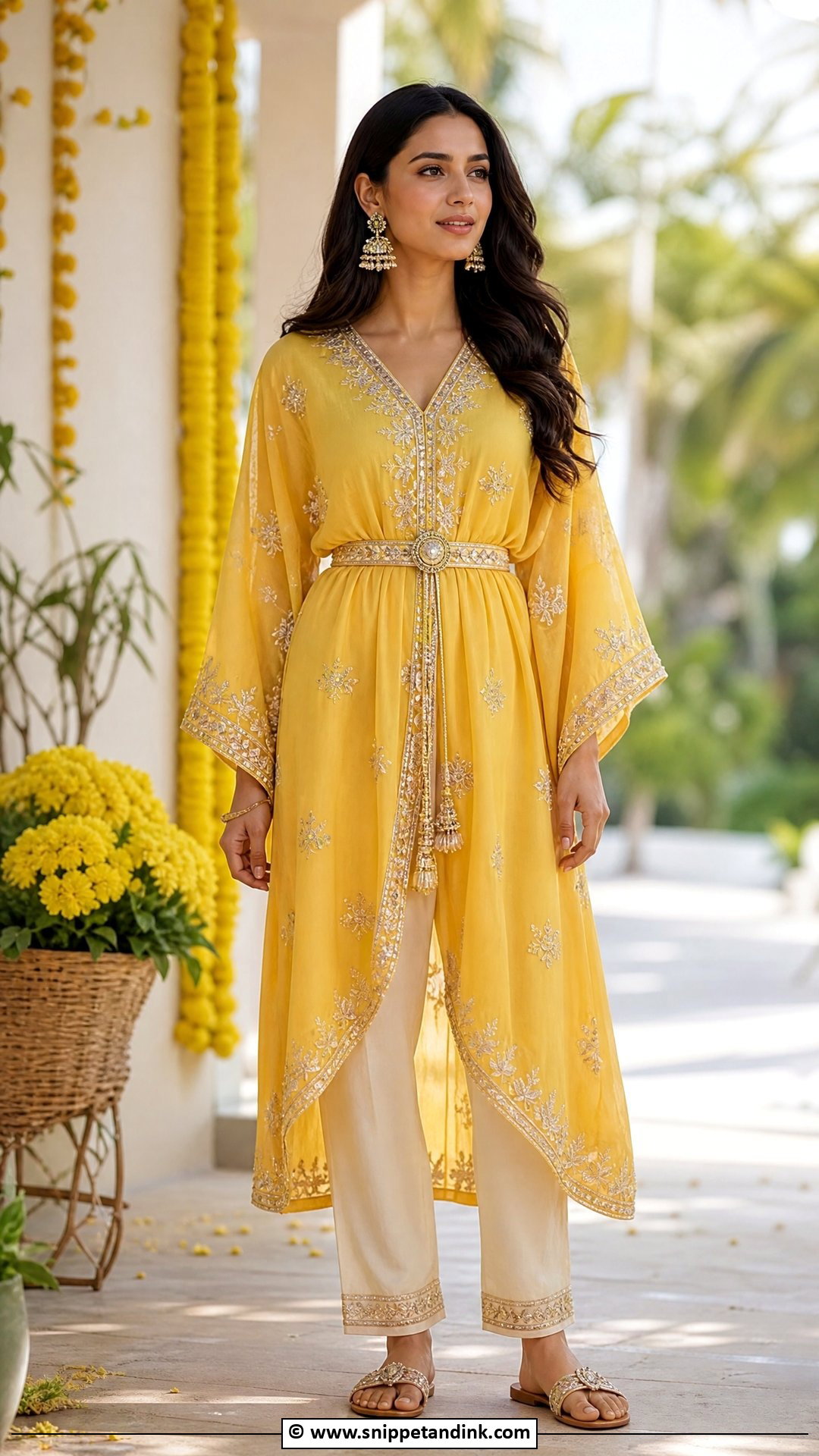
Kaftans are the coolest thing you can wear to an outdoor Haldi in real heat. They’re loose and airy, and they pack flat for destination weddings. Choose yellow, ivory, mint or peach over straight pants, palazzos or a soft Patiala-style bottom, with a belt if you want a waist. Wide kaftan sleeves dip into everything, though, so roll or tie them back before the paste comes out. Statement earrings, flat sandals and soft hair suit guests and mothers.
21. Haldi Patiala Suit
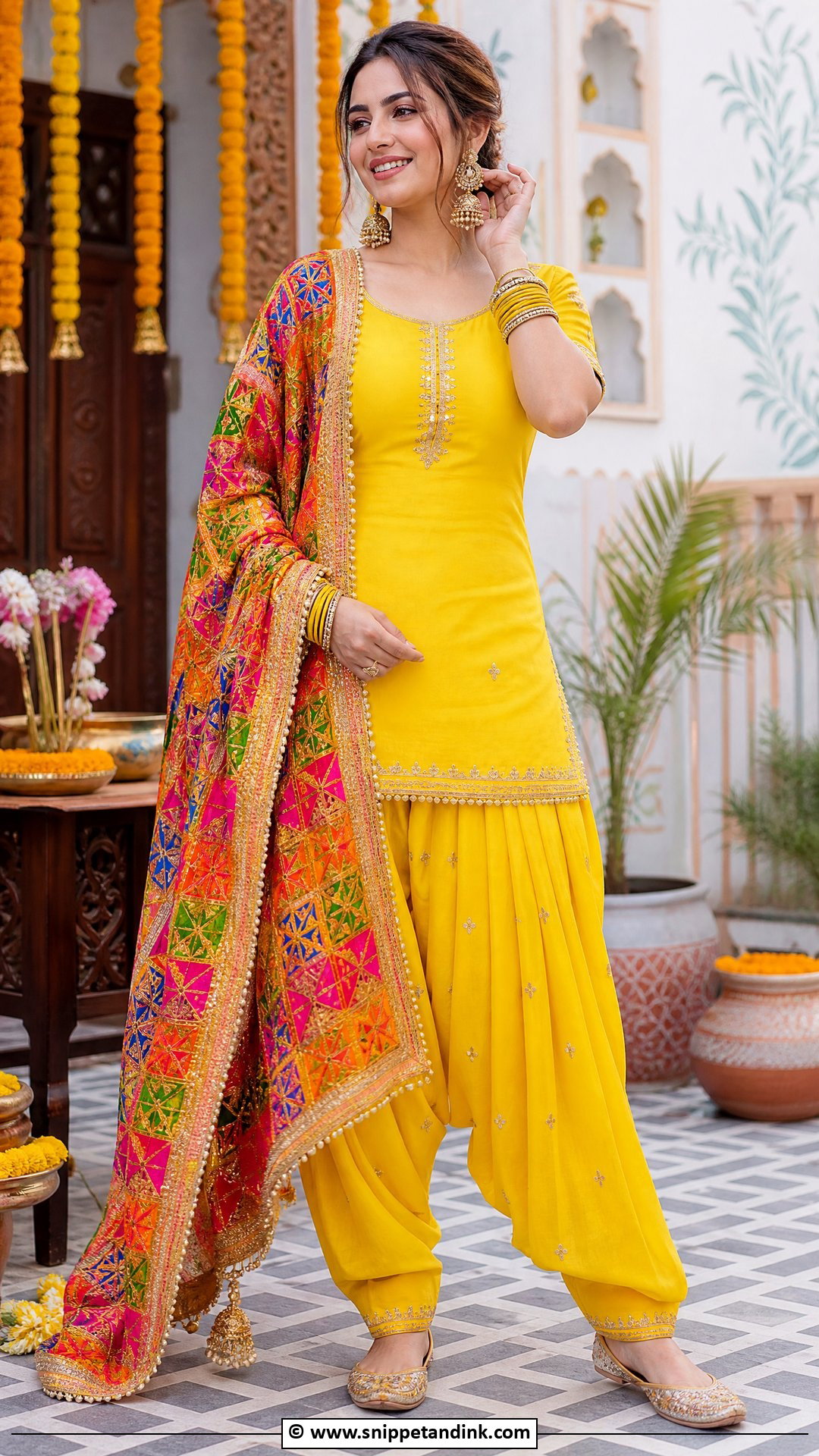
A Haldi Patiala suit brings a cheerful Punjabi feel: a short kurti, a heavily pleated salwar, and plenty of room to sit, dance and help with rituals. Bright yellow, mustard, orange or yellow-and-white all work. A phulkari dupatta adds color for daytime photos, but genuine hand-embroidered phulkari is precious, so I’d keep it well away from the paste. Juttis, parandi-style hair details and oxidized or gold-toned earrings complete it.
22. Haldi Gharara Set
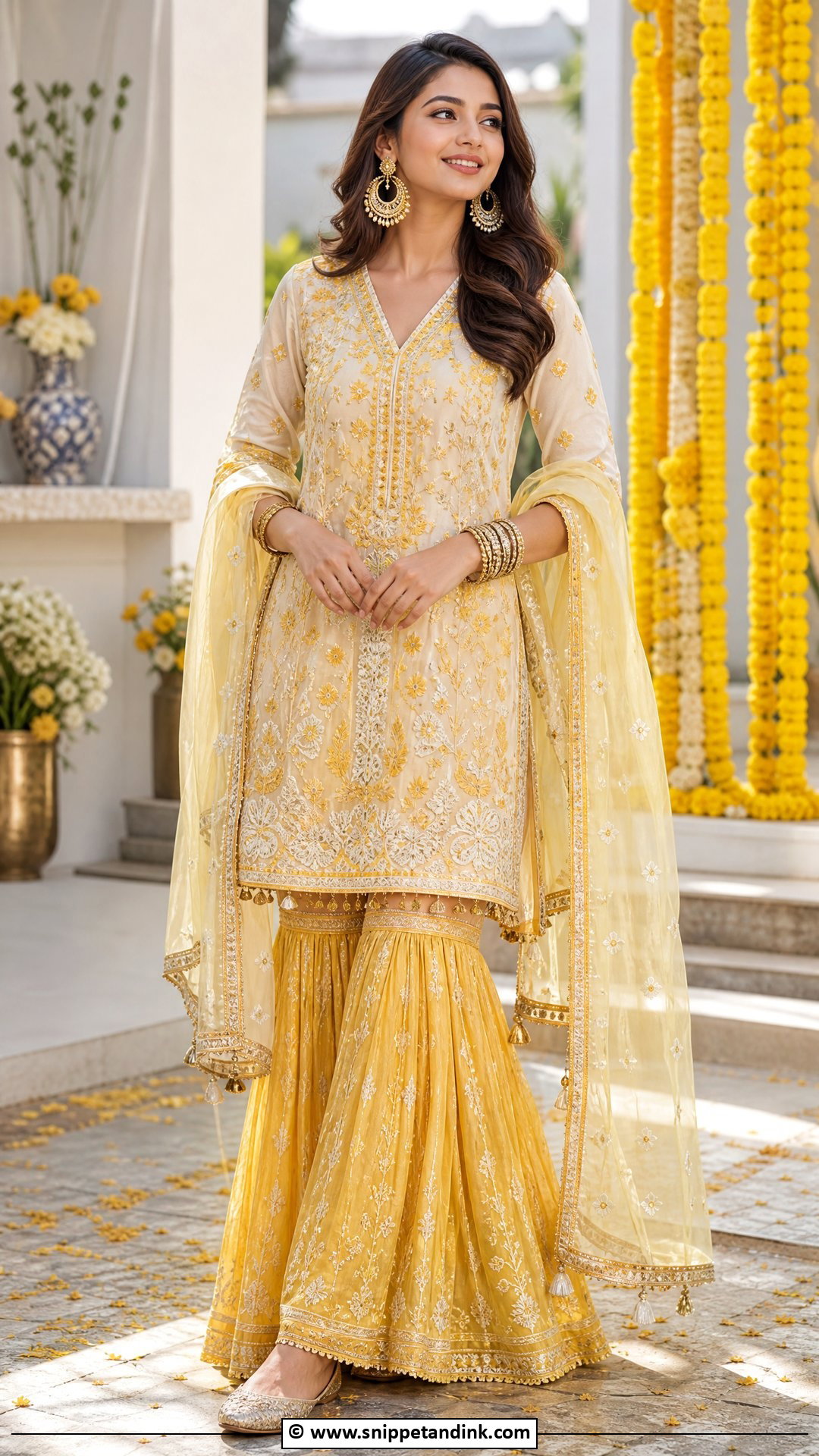
Gharara has a fitted upper leg and a dramatic flare below the knee, joined at a band that’s often trimmed. Yellow, ivory, peach or mint with gota patti, zari borders or delicate embroidery gives it old-world charm, softened by a sheer dupatta. It’s more formal than a palazzo set and easier than a heavy lehenga, which suits brides, sisters and close family. Real zari can tarnish when it meets turmeric and moisture, so if you’ll be in the thick of it, tested or faux zari is the safer pick. Chaandbalis, bangles and embellished flats finish it.
23. Haldi Saree Lehenga
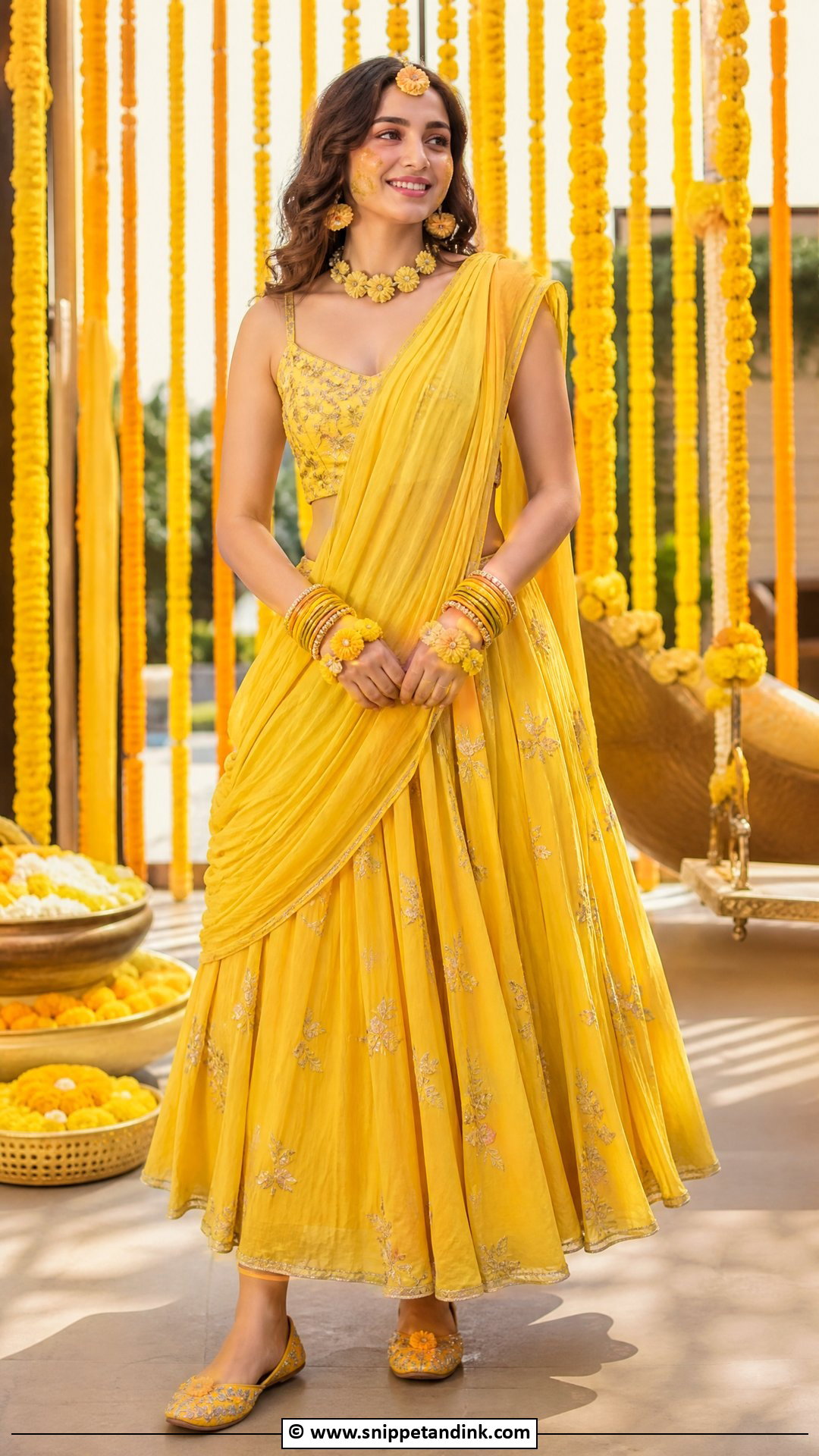
A saree lehenga is a skirt with an attached or pre-draped pallu, so you get the saree silhouette without managing pleats through a busy ceremony. Yellow, mustard, ivory or floral prints suit daytime. A fitted blouse, floral jewelry and low heels or juttis complete it; brides can go more embellished while guests choose lighter prints. Ask for the pallu to be secured at the shoulder with a hidden hook as well as a pin.
24. Haldi Skirt And Dupatta Set
Separates make dressing easy: a printed or embroidered skirt with a crop top, blouse or short kurti, finished with a soft dupatta. Yellow florals, ivory with yellow borders or orange prints all work, and the look stays festive without reading bridal. A waist belt adds shape. Jhumkas, bangles and comfortable flats keep it light. Because each piece stands alone, you’ll wear the skirt and blouse again in other pairings.
25. Haldi Palazzo Saree
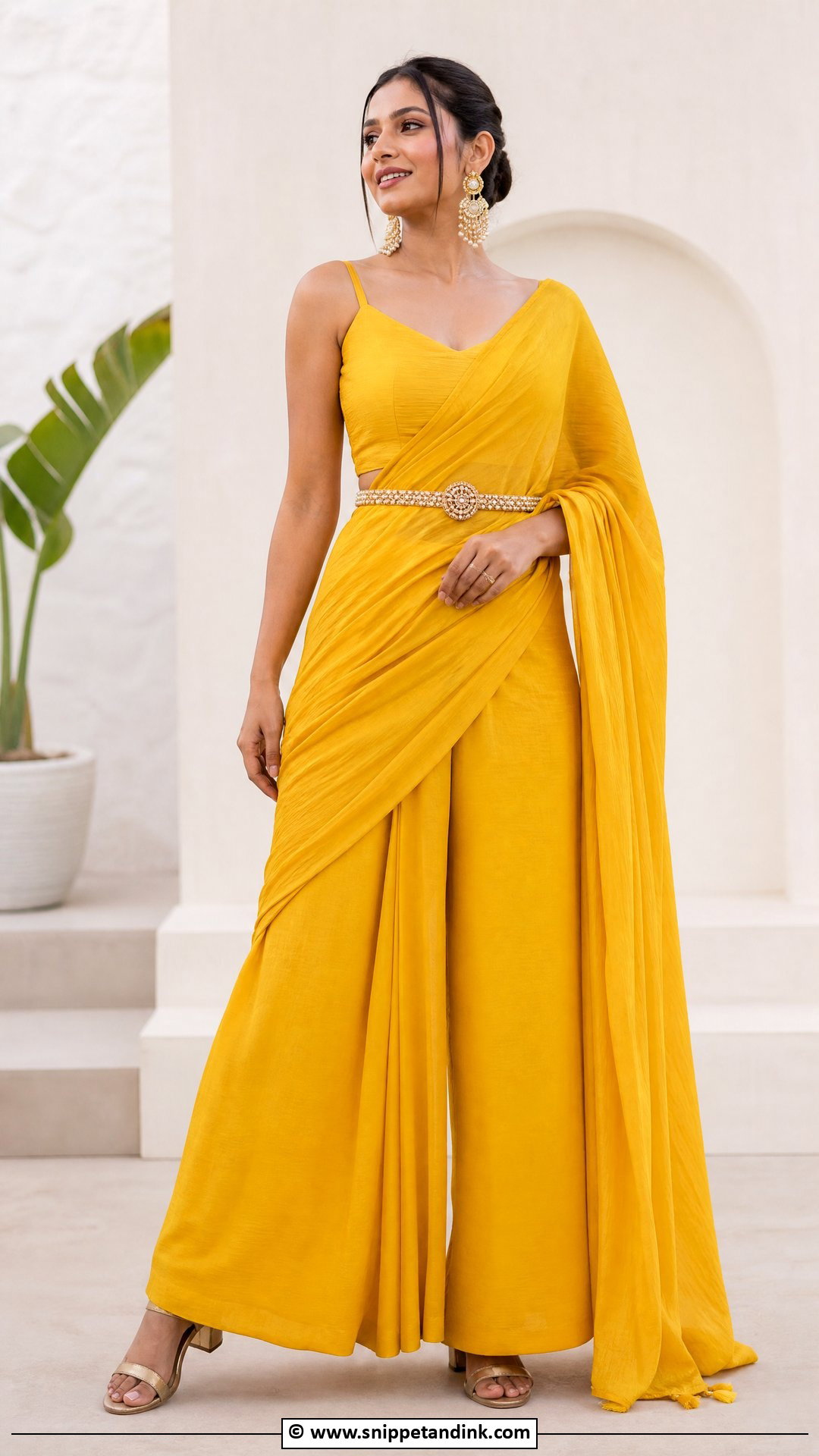
Draping a saree over palazzos instead of a petticoat lets you walk, climb steps and sit on the floor without tripping on pleats. Choose a lightweight yellow, ivory or peach saree with matching palazzos and a fitted blouse, and use a belt to hold the drape. Statement earrings, sleek hair and block heels finish it. I suggest it to sisters and bridesmaids who love a drape but expect to be on their feet.
26. Haldi Jumpsuit With Dupatta
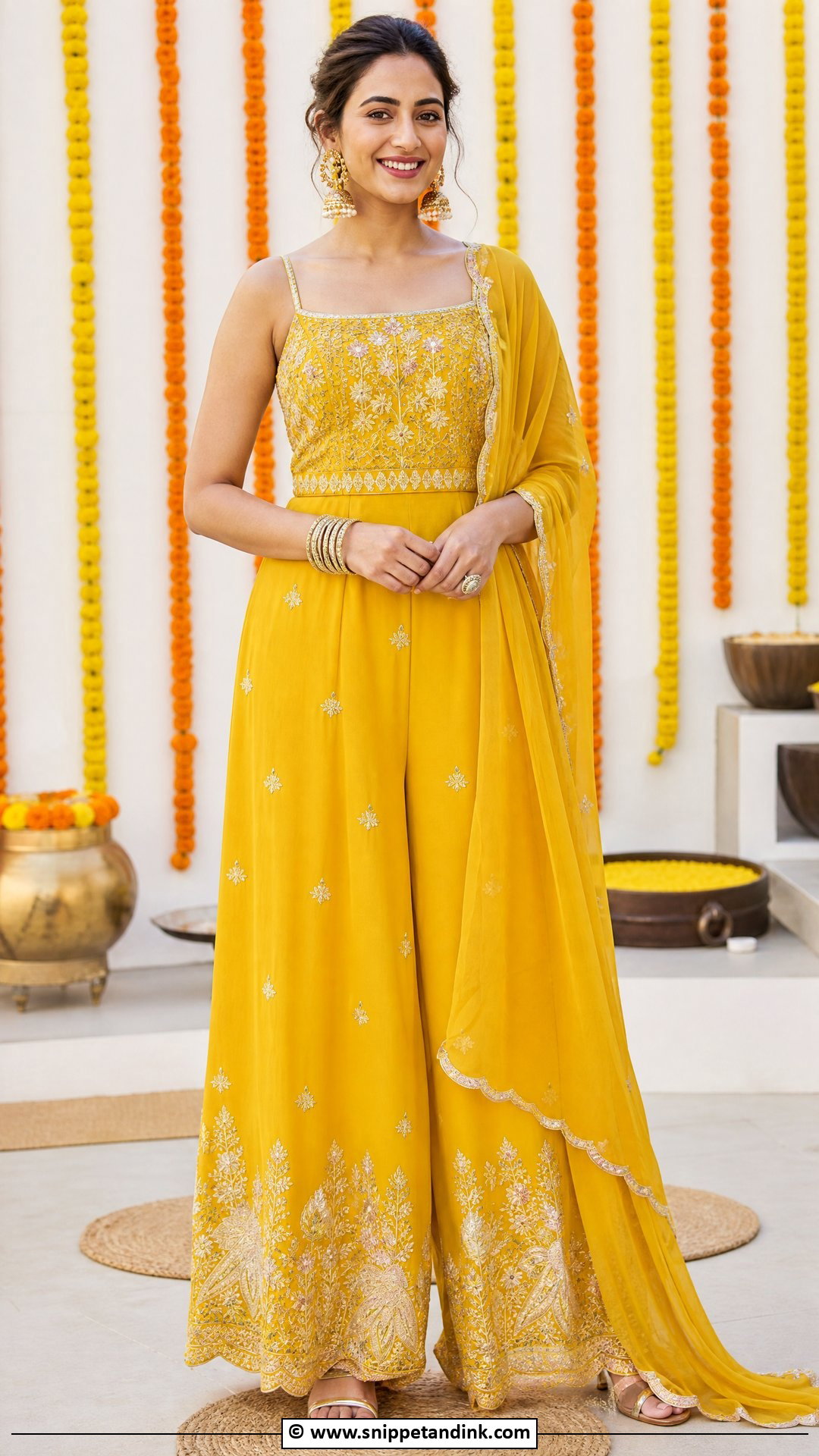
A wide-leg jumpsuit with a dupatta suits anyone who prefers Indo-western dressing, and the dupatta keeps it tied to the ceremony. Yellow, lime, ivory or orange with subtle embroidery, mirror straps or a belted waist works outdoors. Jhumkas, bangles and metallic sandals make it wedding-ready. Its one drawback is the bathroom: a jumpsuit with a back zip needs a helper every time, so I’d look for a side or front opening.
27. Haldi Jacket Lehenga
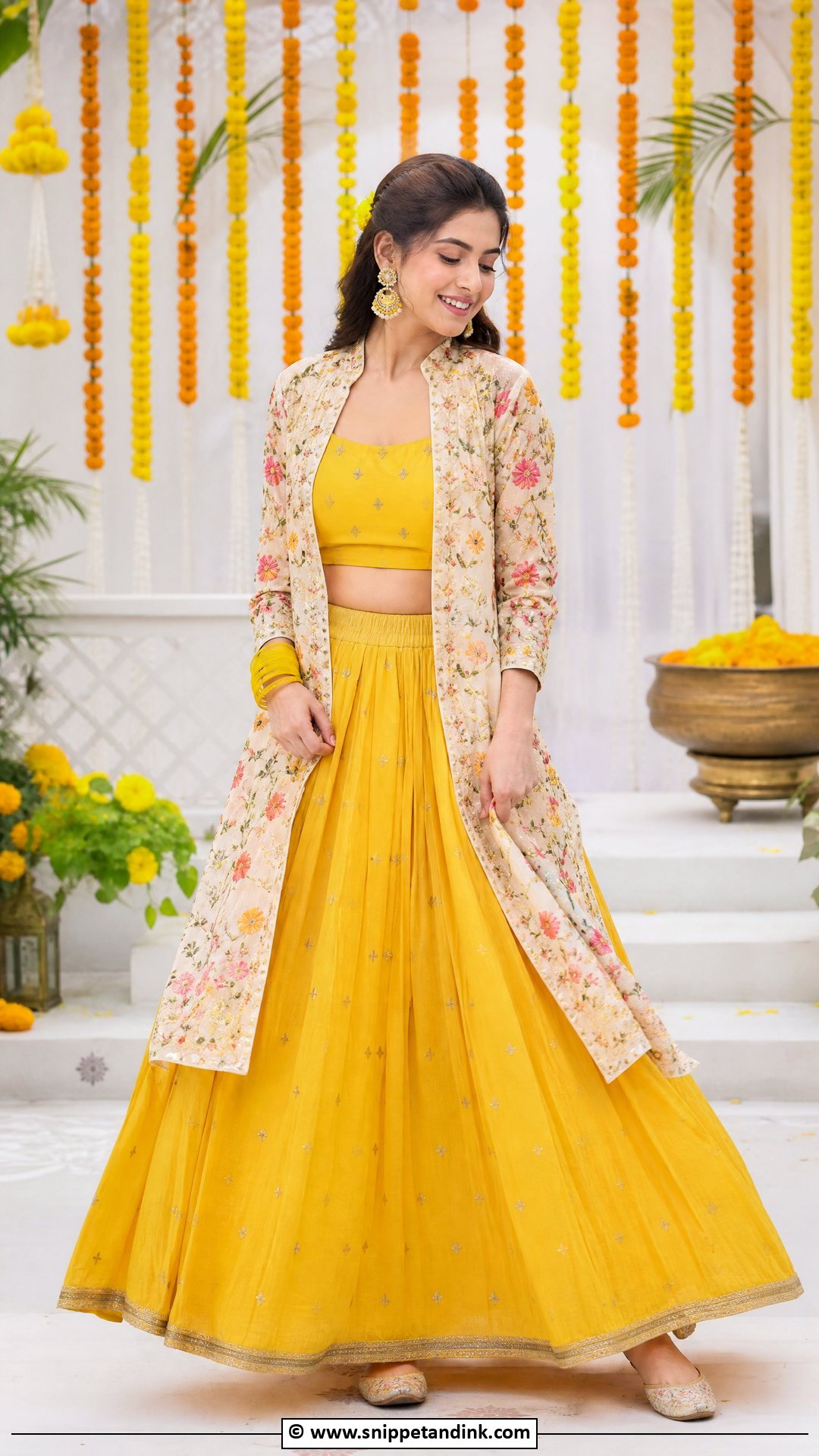
A jacket replaces the dupatta and keeps everything secure while you move around. Its cut sets the mood: an ivory floral jacket over yellow reads soft, mirror work reads festive, and short, long or sheer versions all exist. Keep jewelry minimal, since the jacket brings enough detail, and wear juttis or low heels. In heat I’d choose a sheer or cotton jacket; a lined brocade one gets warm fast at a daytime function.
28. Haldi Peplum Top With Sharara
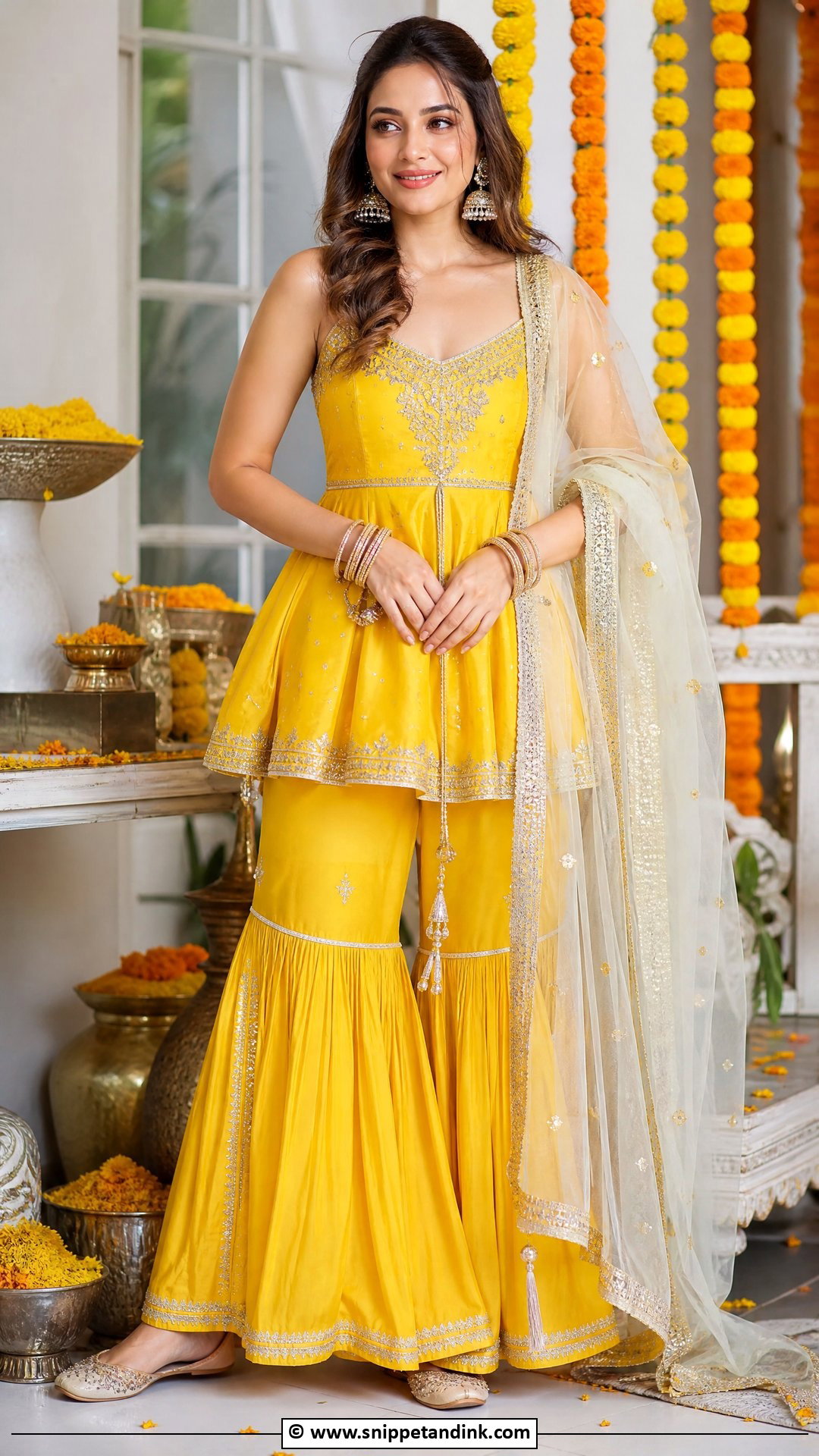
A peplum top defines the waist and flares over the hips, while the sharara adds movement below. Yellow, mustard or ivory with mirror work, floral embroidery or gota borders suits the ceremony. It gives structure without tightness, which is why so many different figures wear it well. Add a dupatta for tradition or leave it off for a cleaner line. Earrings, bangles and embellished flats finish it.
29. Haldi Chikankari Kurta Set
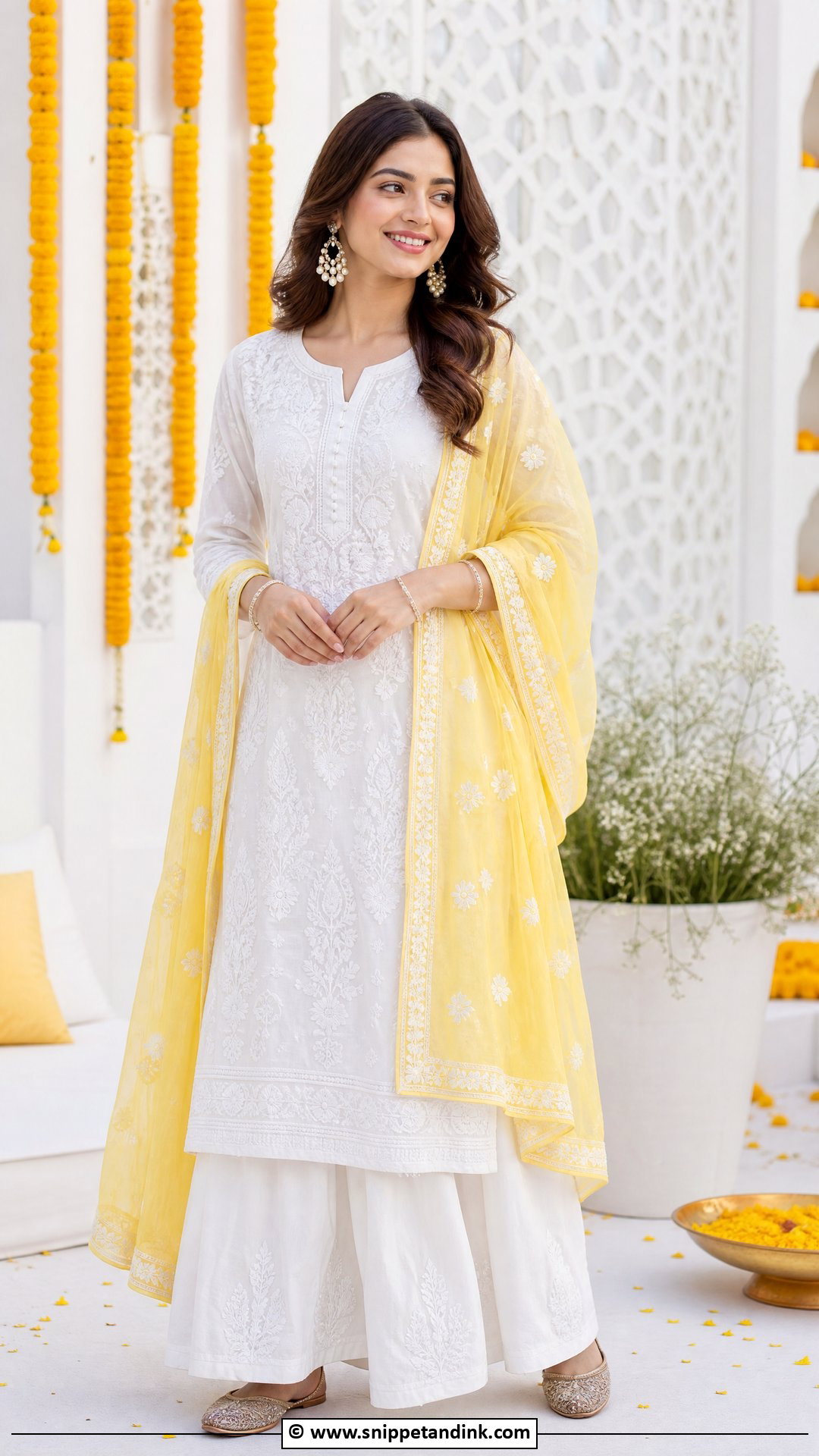
Chikankari is the hand embroidery associated with Lucknow, traditionally white thread on fine cotton or georgette, and it breathes better than almost anything else here. White or yellow chikankari suits Haldi because the detail is texture rather than shine. A straight or A-line kurta with palazzos, straight pants or a sharara works, and a yellow dupatta brightens a white set. Good news on stains: cotton chikankari washes well by hand. Pearl jewelry and juttis or kolhapuris keep it minimal.
30. Haldi Mirror Work Lehenga
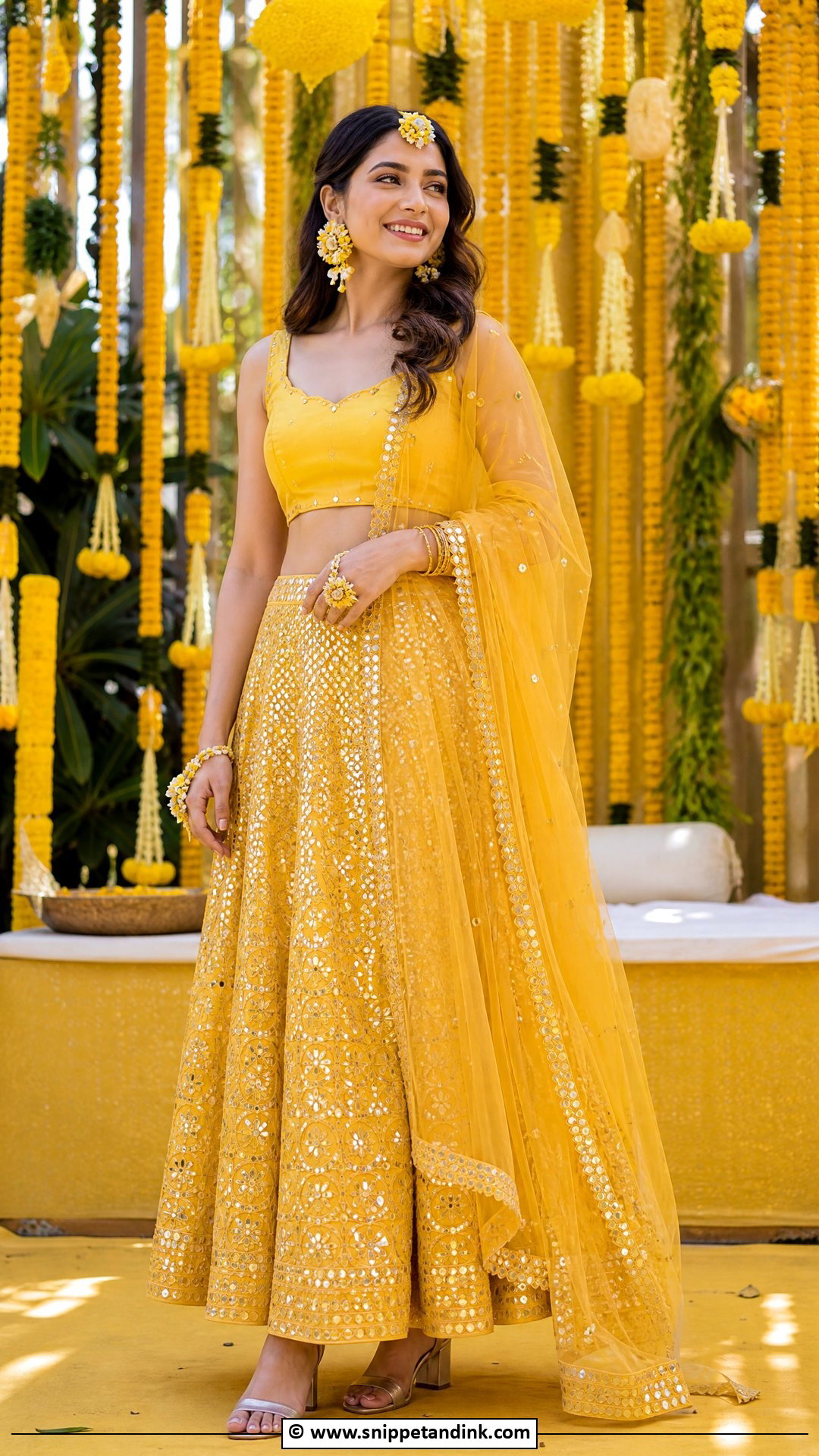
Mirror work sparkles in daylight without looking like evening wear, which makes it right for Haldi. I prefer small, scattered mirrors over heavy all-over work, partly for weight and partly because mirror edges catch on dupattas and snag hair. A yellow, orange or lime lehenga with a simple blouse and light dupatta balances the shine. Brides can add floral jewelry while guests stay with smaller earrings and bangles. Fresh makeup and light accessories keep it daytime.
31. Haldi Cotton Saree Outfit
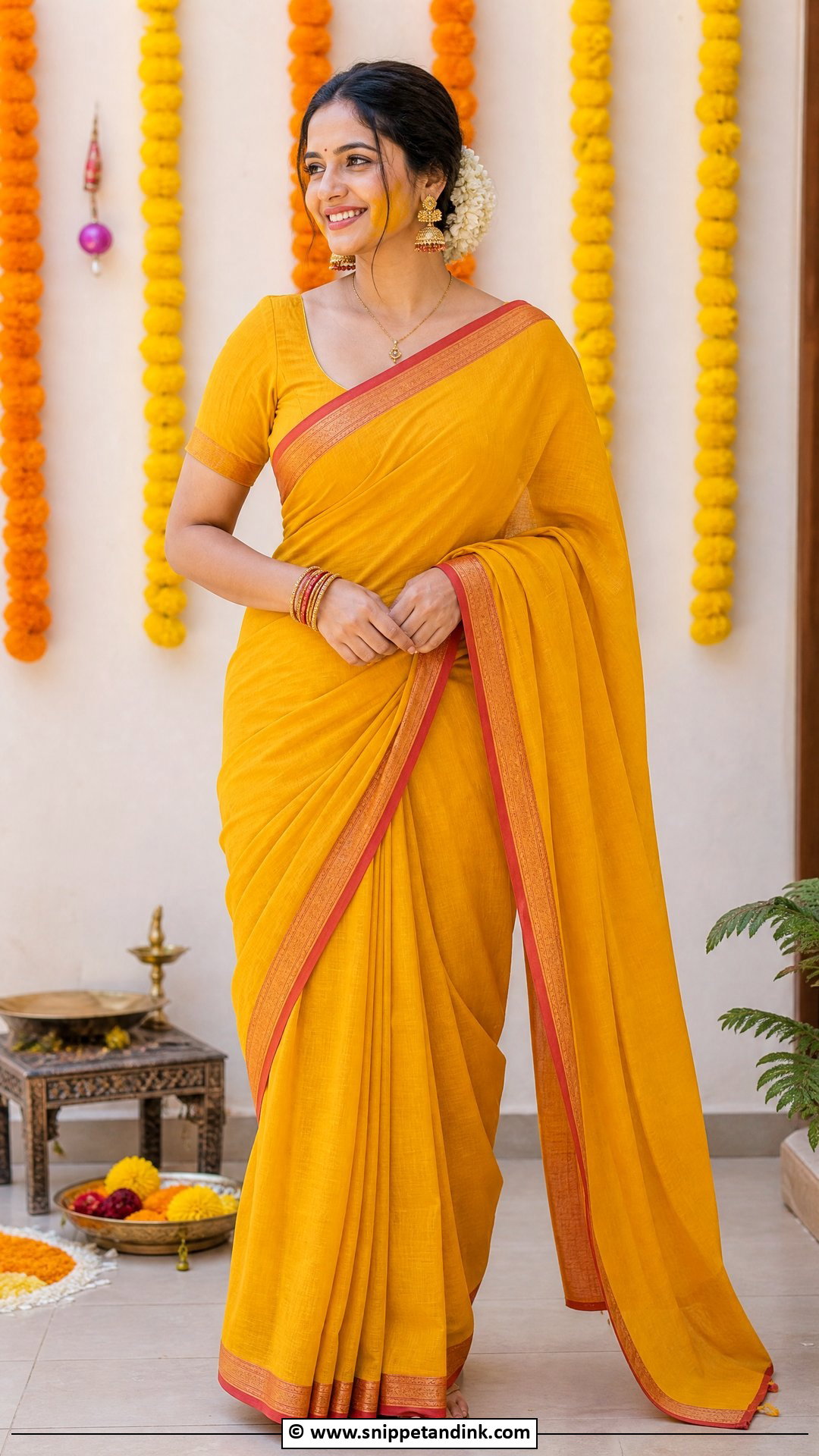
Cotton is the most forgiving fabric you can wear to Haldi: breathable, traditional and washable. A yellow cotton saree with a red, orange, green or gold border looks classic at home ceremonies and in hot weather, with fresh flowers in the hair, gold-toned earrings and a fitted blouse. Have the saree lightly starched before draping, since soft cotton loses its pleats quickly. Brides can add floral bangles and a maang tikka, and flat sandals or juttis suit everyone.
32. Haldi Pastel Lehenga
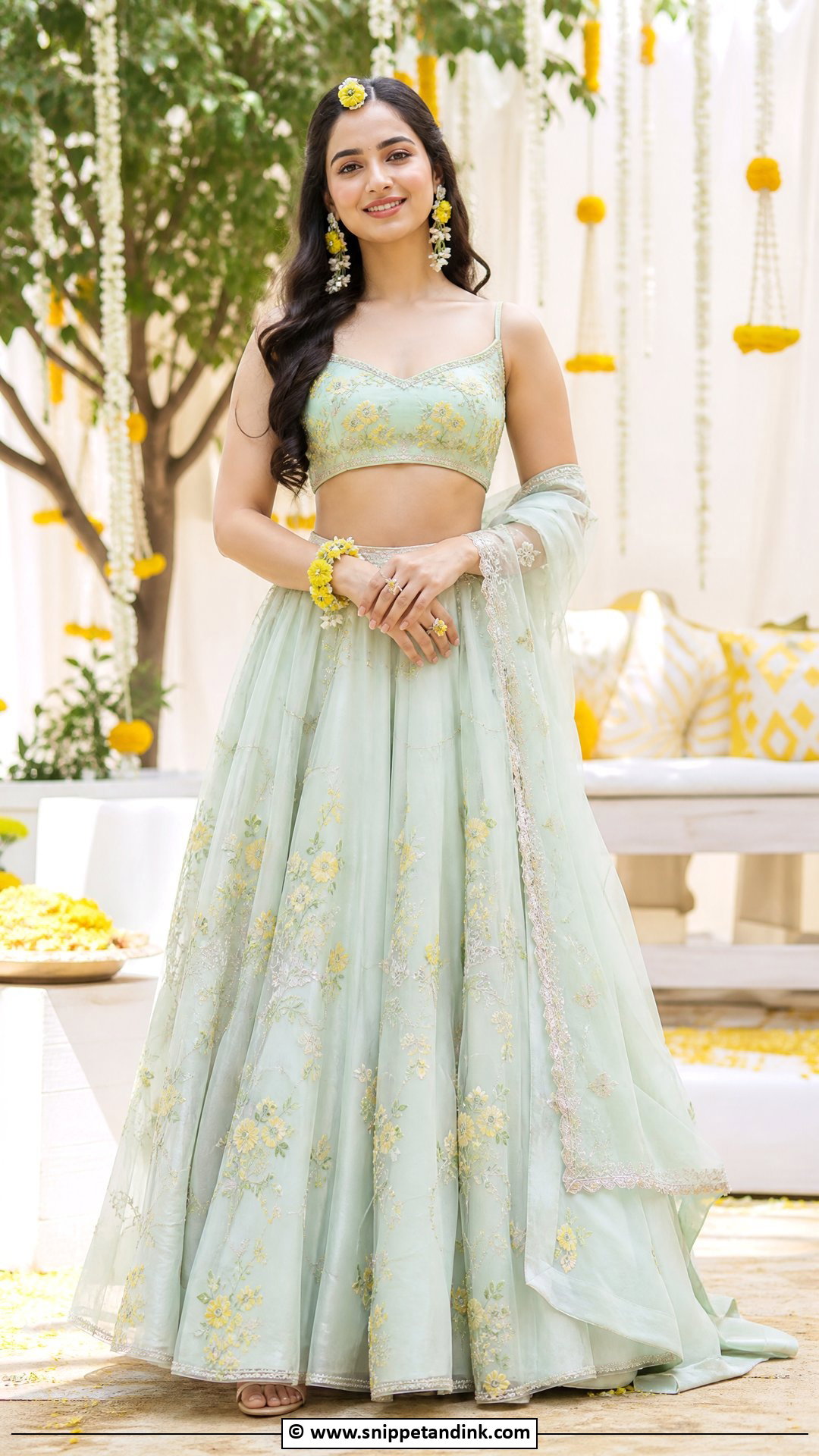
Pastels trade punch for softness: pale yellow, mint, peach, powder blue and blush all look fresh in daylight. Tie the look to Haldi with yellow floral jewelry, marigold accessories or a bright dupatta, and keep the detailing to light embroidery, printed florals or subtle mirror work. Pastels show turmeric more than any other shade, so they work best at garden, poolside and destination ceremonies where you can stand a step back. Dewy makeup and relaxed hair suit them.
33. Haldi Boho Lehenga
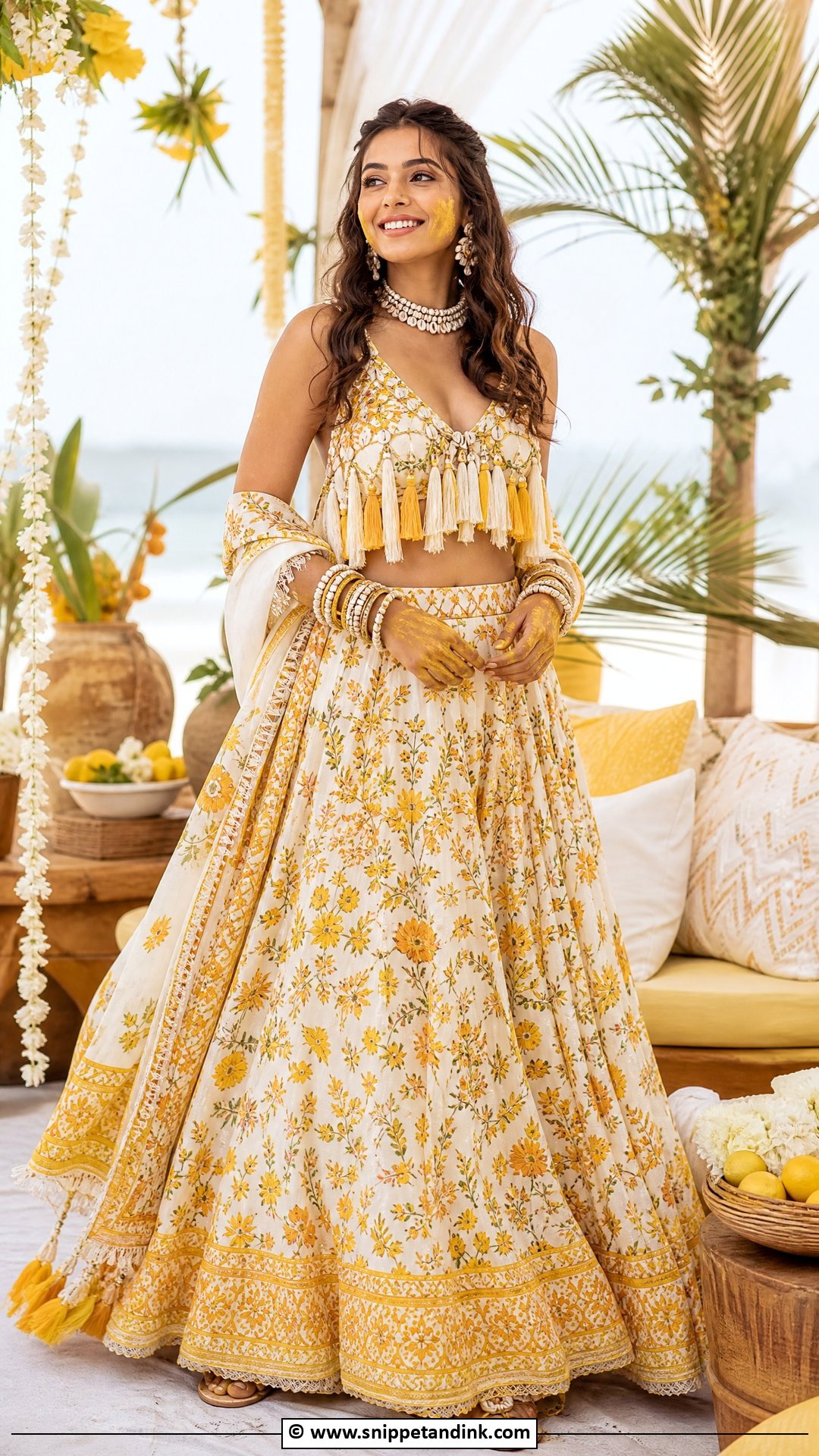
Boho lehengas belong at resort and beach Haldis where movement matters more than formality. Lightweight skirts, printed blouses, shell details, tassels, mirror work or thread embroidery in yellow, ivory, peach or lime set the mood. Floral jewelry, beachy waves, stacked bangles and flats or sandals complete it, with a small potli for essentials. On sand, I’d take the hem up an inch so it doesn’t drag and collect grit.
34. Haldi Bridesmaid Matching Outfits
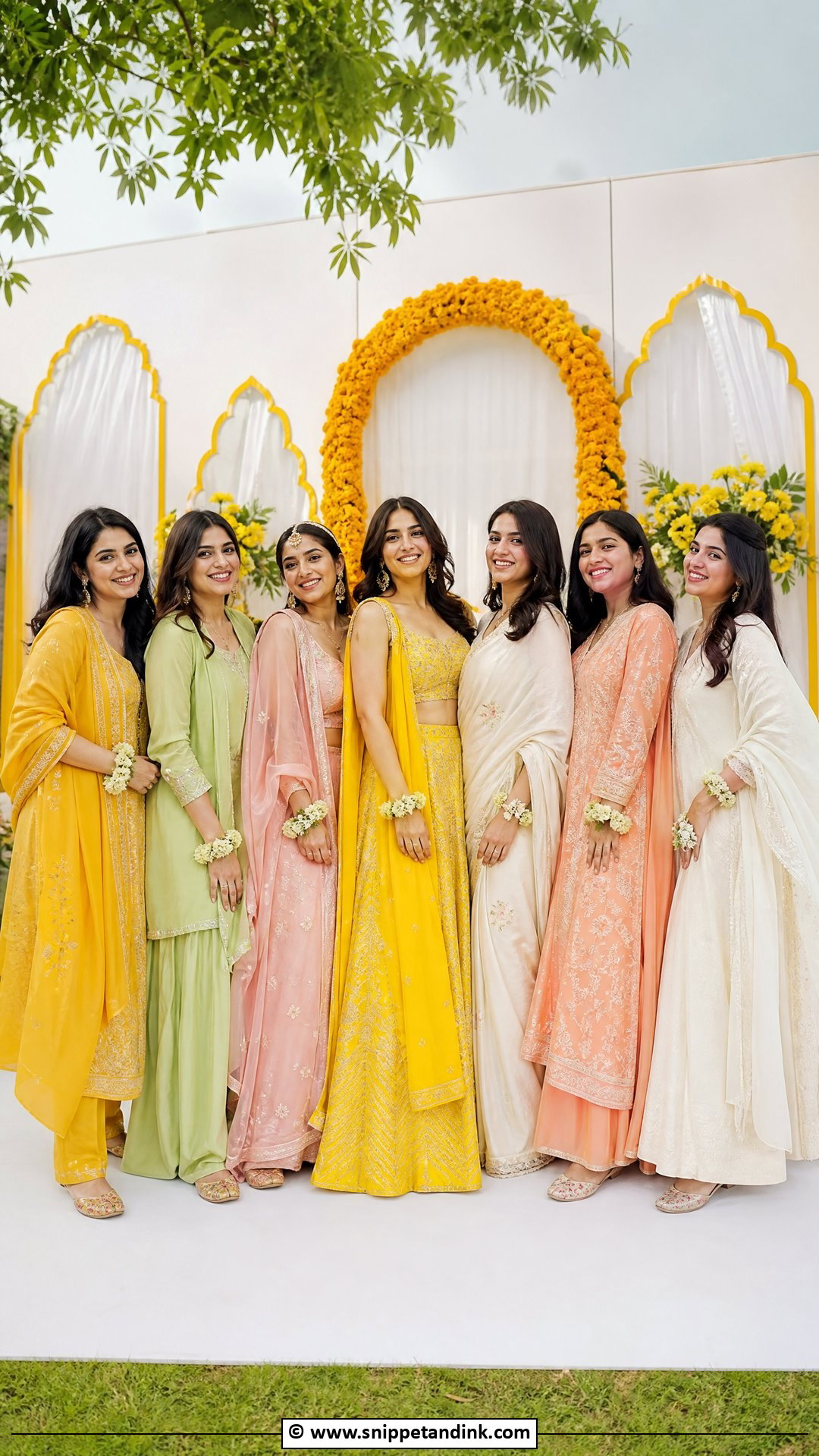
Group outfits look best coordinated, not identical. Keep everyone in yellow but let each choose her silhouette, from sarees to shararas, lehengas and kurta sets, or give the group a shared palette of yellow, lime, peach and ivory. That way each bridesmaid wears what suits her body. Matching floral bracelets, juttis or dupattas tie the group together. I always keep the bride’s outfit a notch more detailed so the eye finds her first in every group shot.
35. Haldi Guest Outfit
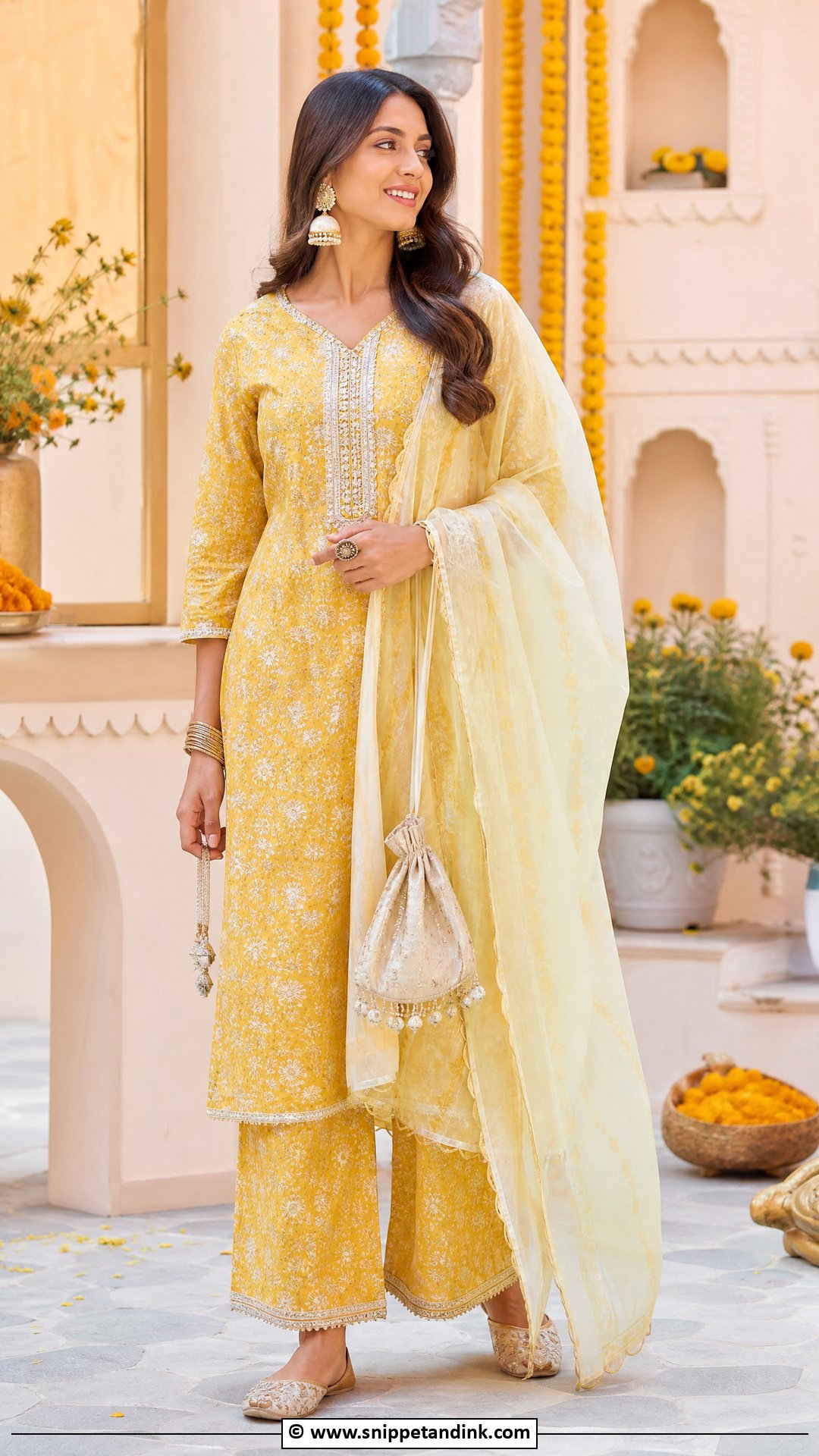
As a guest, aim for festive and comfortable without looking bridal. A yellow kurta set, printed sharara, floral saree, pastel lehenga or light co-ord all work. Skip heavy embroidery at a casual daytime function, and wear shoes you can stand in for hours. If the invitation names a color, follow it; otherwise yellow is welcome but not required. At many family Haldis guests get a smear of turmeric too, so leave the silk at home. Simple jewelry, a small bag and fresh makeup finish it.
Turmeric Comes Out of Cotton Far More Easily Than Silk
The first hour after the ceremony decides most of it. Turmeric is easiest to lift before it dries, so I give every bride a plan for the outfits before the music starts.
- Scrape off loose paste with a blunt knife or an old card; rubbing pushes it deeper into the weave.
- Rinse from the back of the fabric under cold water. Hot water helps the yellow set.
- Work a little liquid dish soap into the mark to cut the oil in the paste, then rinse again.
- Dry washable pieces in direct sunlight. Turmeric fades in sun, and a faint yellow shadow often disappears within a day or two.
- Take silk, zari and heavily embroidered pieces to a dry cleaner within a few days, and tell them it’s turmeric mixed with oil.
Keep chlorine bleach away from silk and anything colored, and never iron a stained piece, because heat locks the yellow in for good. Fresh floral jewelry, sadly, won’t make it to the next day. The blooms bruise and wilt by evening, so I treat them as part of the moment and make sure they’re photographed in the morning while they’re still crisp.
Dress for the Floor, the Sun and the Paste
Yellow will always be the classic, but Haldi dressing now welcomes white, ivory, lime, peach, orange, pastels, prints and easy fusion shapes. Whatever you pick, test it against three things: can you sit on the floor in it, will it survive turmeric, and does it suit your role in the ceremony? Lightweight fabric, flowers you don’t mind losing, flat shoes and a dupatta that’s pinned rather than draped make more difference to how your day feels than the silhouette itself.
You'll Like These Ideas:






Leave a Reply