
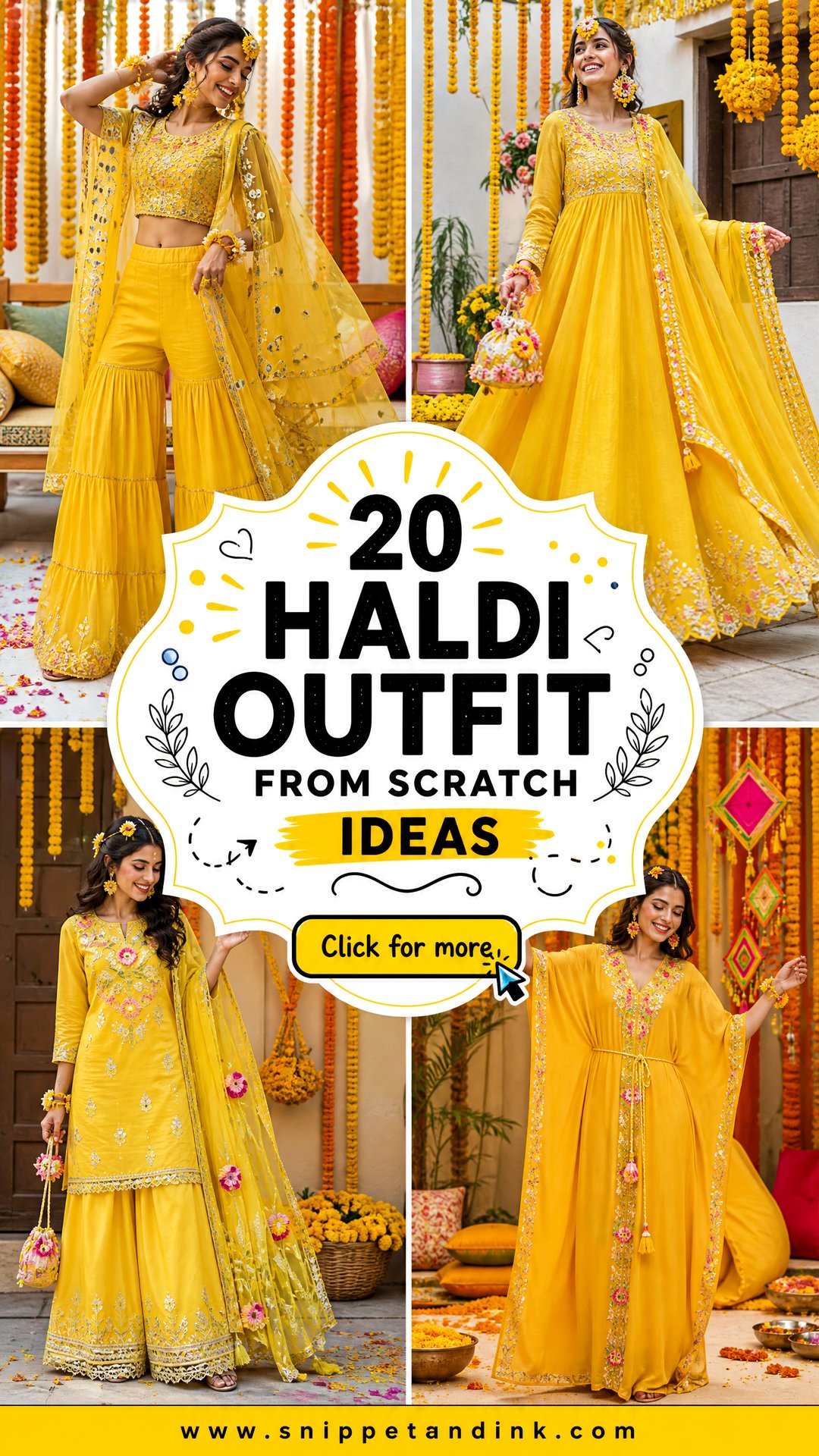
Having a haldi outfit made from fabric up means you decide the things a shop never asks about: how wide the skirt is when you sit cross-legged, whether the sleeves can be pushed up, whether the trim survives a wash. The twenty ideas below cover traditional shapes, fusion separates and pieces you can wear again, all planned around a ceremony where you’ll be dancing and covered in turmeric. My starting rules are simple. Pick a fabric that breathes, skip anything you’d cry over if it stained, and cut for sitting on the floor. Small additions like detachable sleeves, a pinned dupatta and washable trim make a homemade outfit work much harder than a bought one.
Sew It Yourself or Hand It to a Tailor?
Making a haldi outfit from scratch doesn’t mean sewing every seam yourself. Most of the DIY brides I work with split the job: they design the outfit, buy the fabric and do the easy pieces, then give the fitted parts to a tailor.
Good projects for a home sewer
- A kaftan, palazzo pants or a simple circle skirt, which are mostly straight seams with an elastic or drawstring waist.
- Edging a dupatta with gota ribbon, tassels or a contrast border.
- Hair ties, a potli bag and floral wrist pieces from leftover fabric.
Leave these to a tailor
- Any fitted blouse, choli or peplum top, since darts and armholes need fitting on your body.
- Pre-stitched saree pleats and a lehenga waistband with a side zip.
- Jumpsuits and churidars, where a small error in length pulls every time you sit.
Give yourself time for a fitting and a correction before the event, and avoid starting in the last fortnight. Wedding season fills tailors’ calendars quickly, so book early.
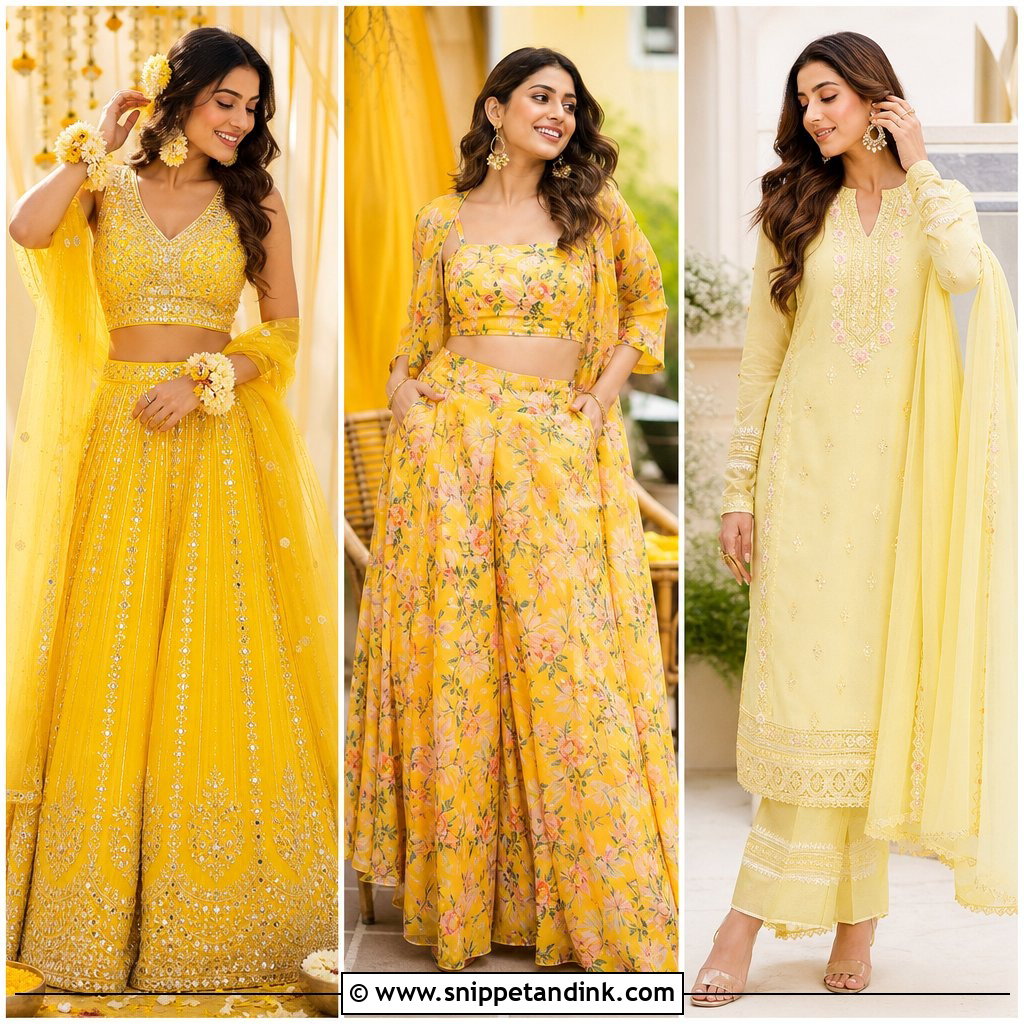
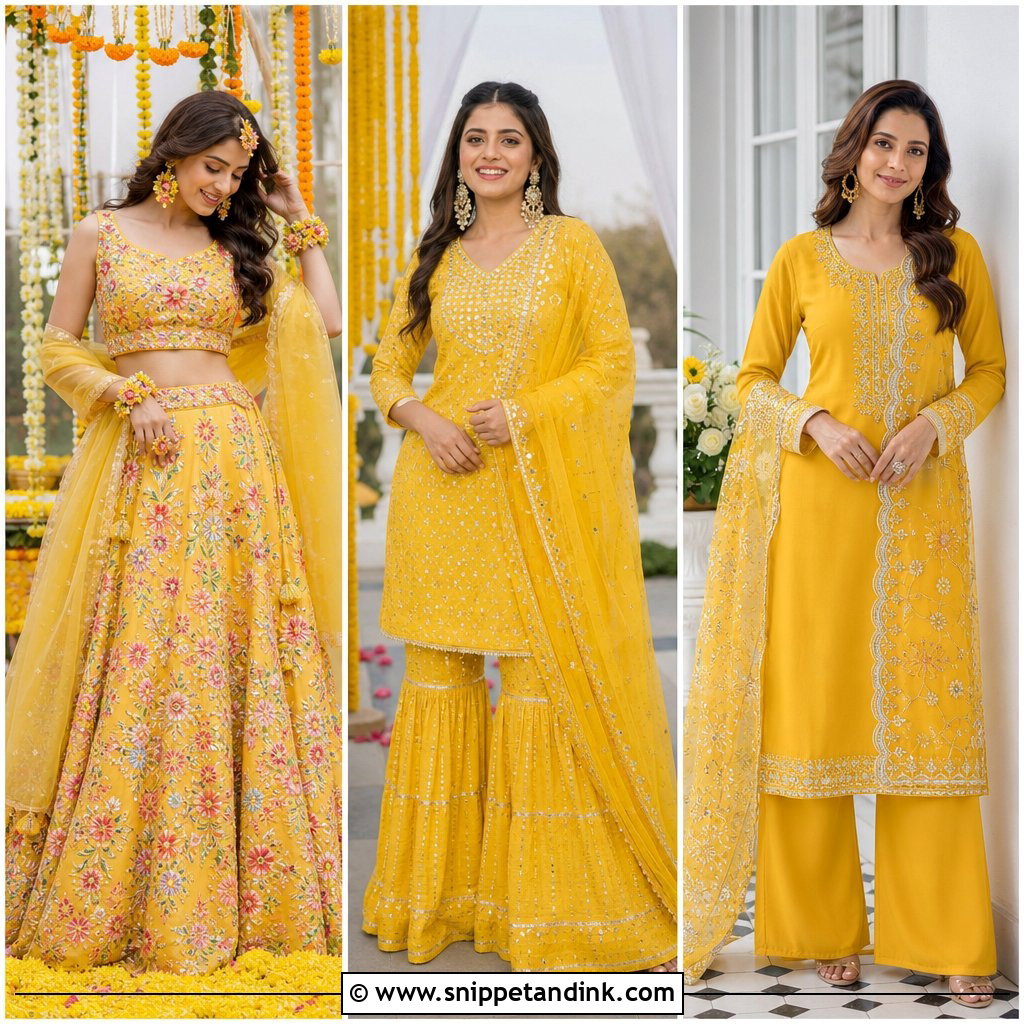
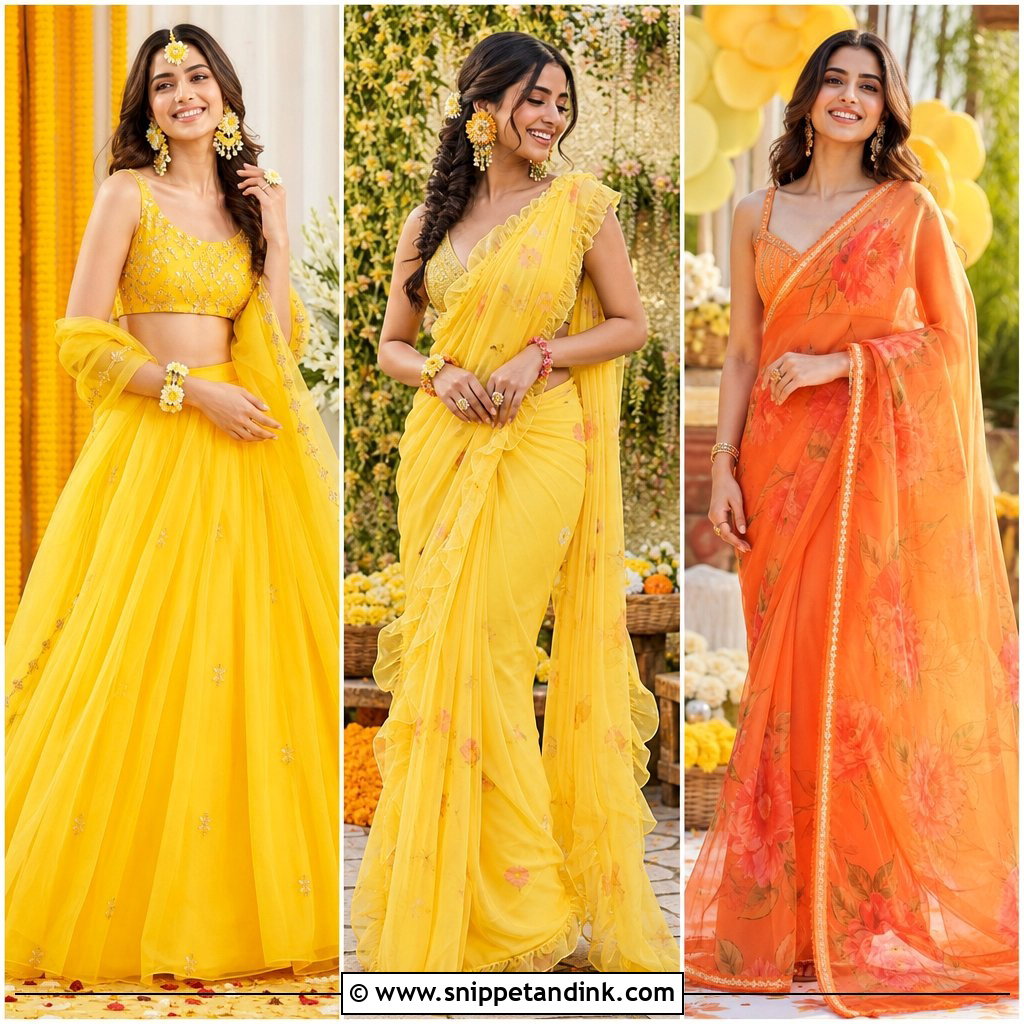
1. Yellow Cotton Lehenga Haldi Outfit
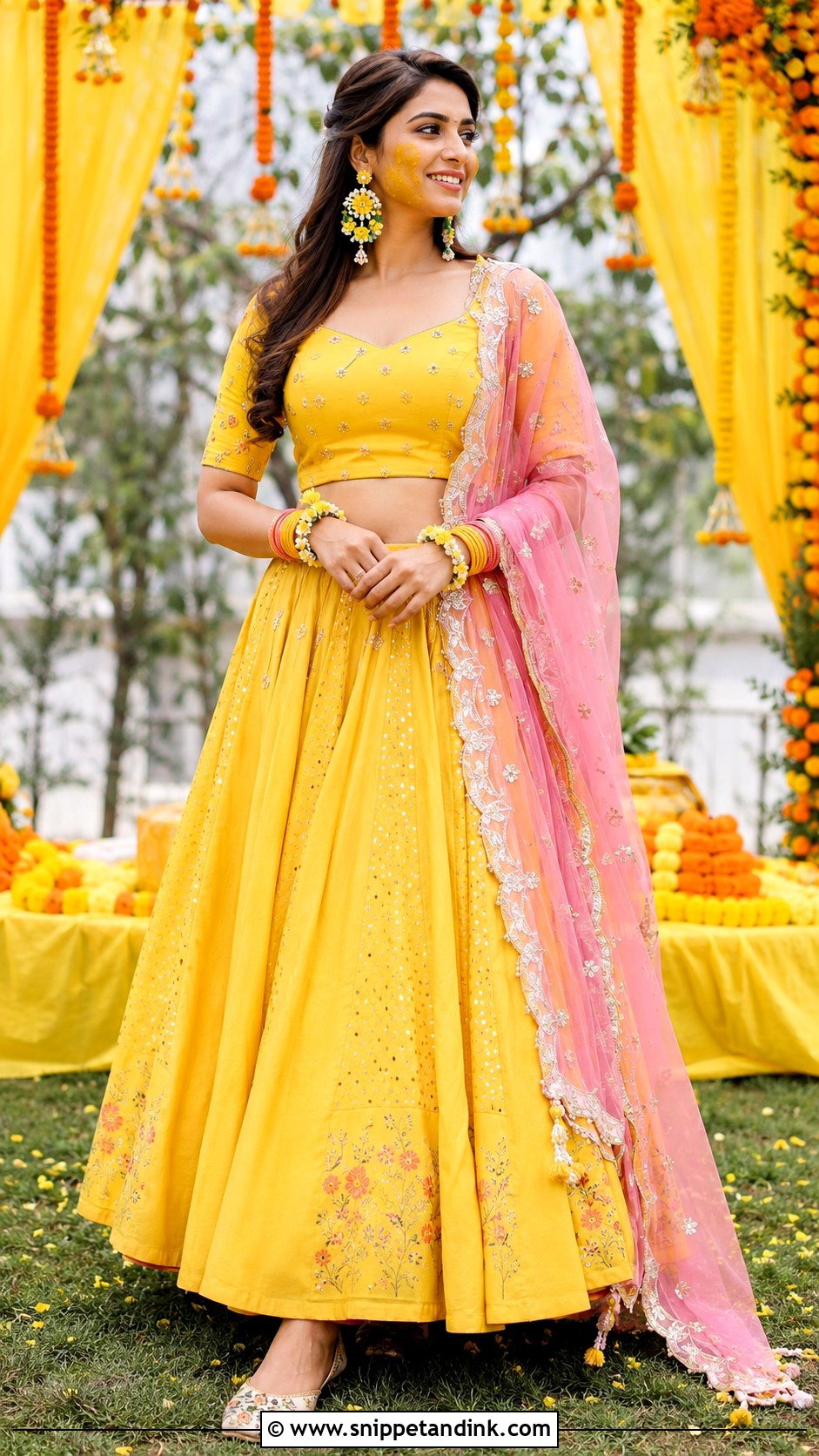
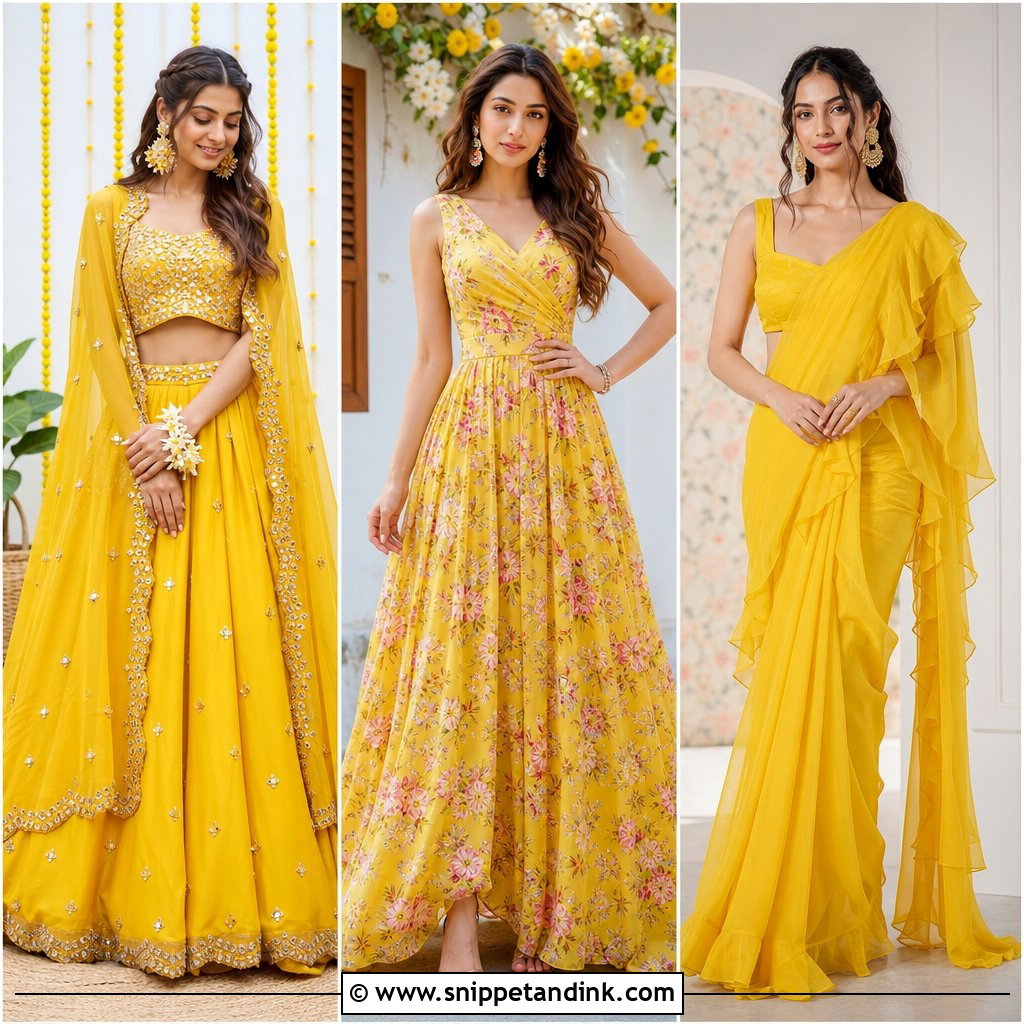
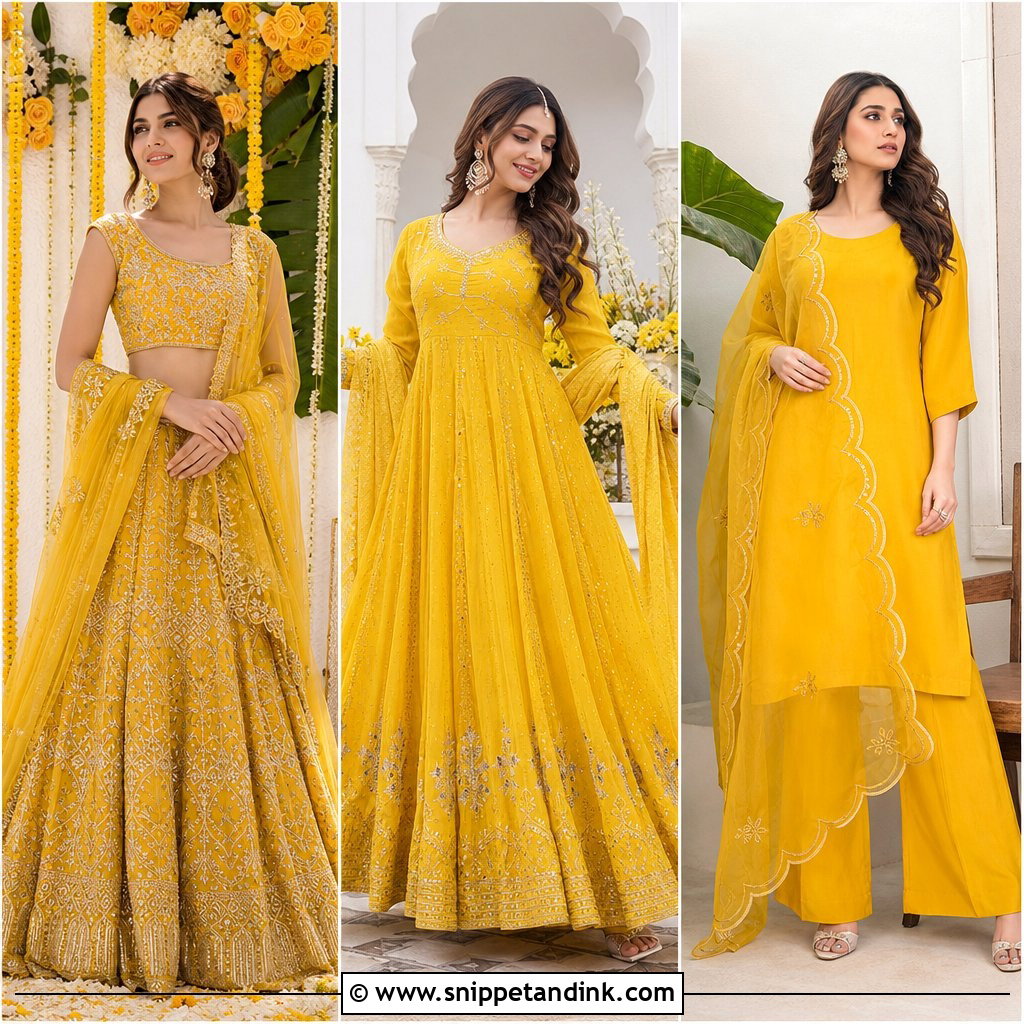
Cotton is the honest choice for a first custom outfit: it’s cheap enough to risk, easy to sew and it takes a wash. Ask the tailor for extra skirt panels instead of cancan, which gives you swing without the scratch. A cropped blouse with elbow sleeves leaves your arms free for the paste. Keep the decoration to a narrow gota border; dense embroidery gets heavy and slow to dry once it’s soaked. A pink printed dupatta pinned across one shoulder, floral earrings, flat juttis and a low braided bun finish it. Pre-wash the cotton before it’s cut, because it can shrink.
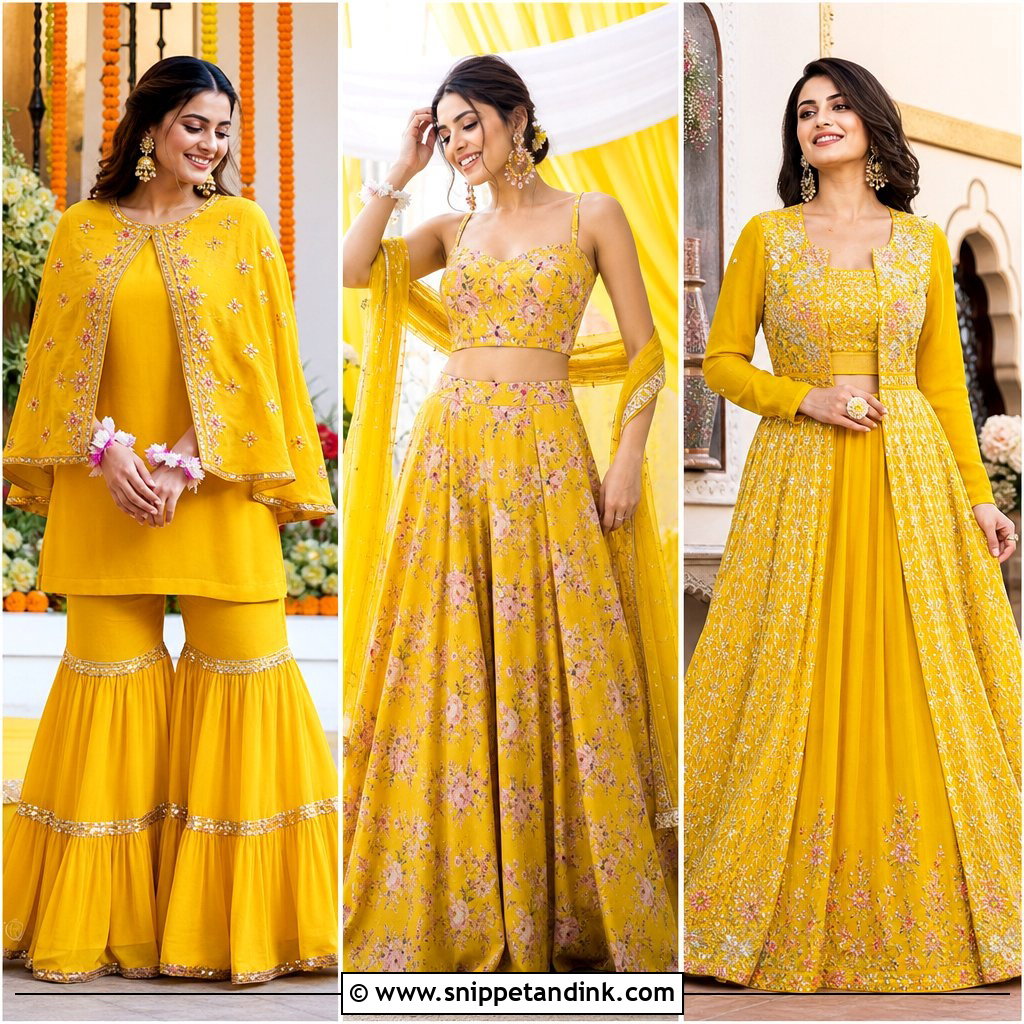
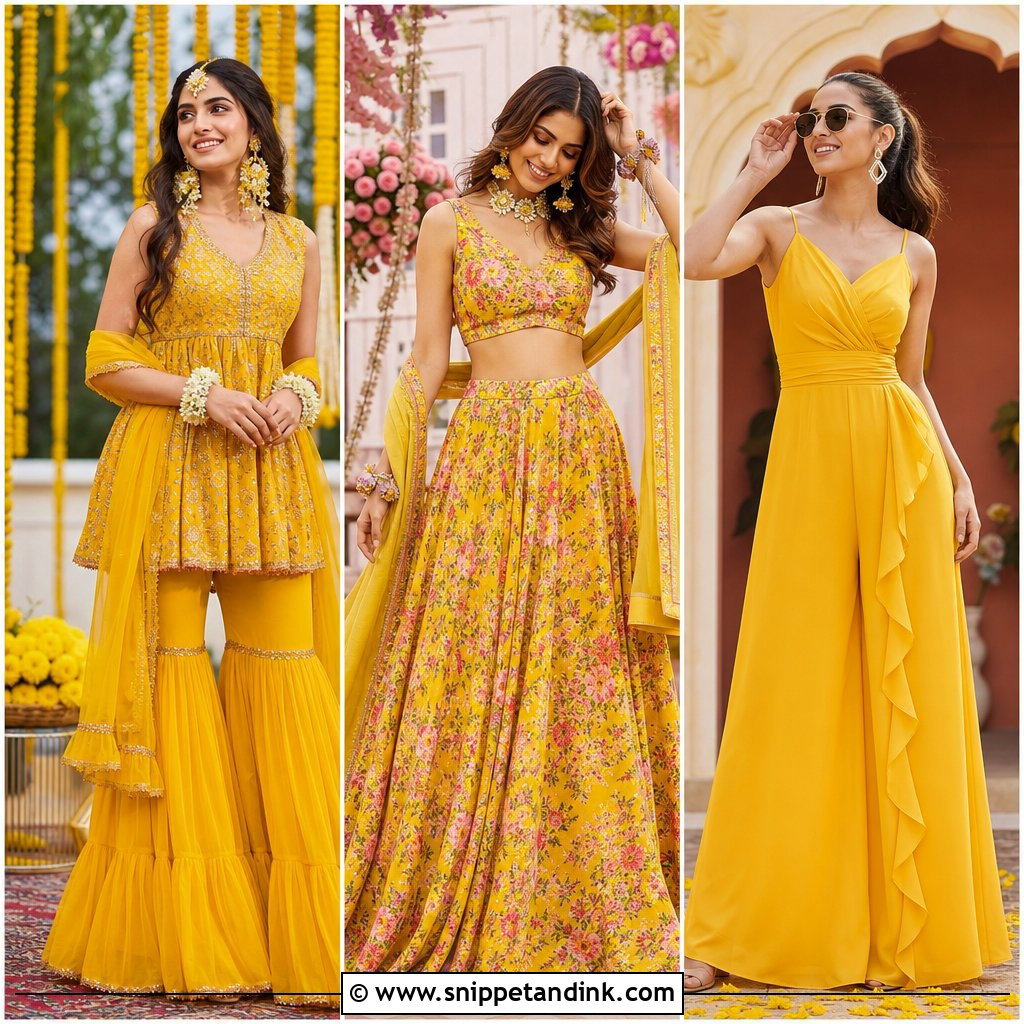
2. Floral Organza Lehenga Haldi Outfit
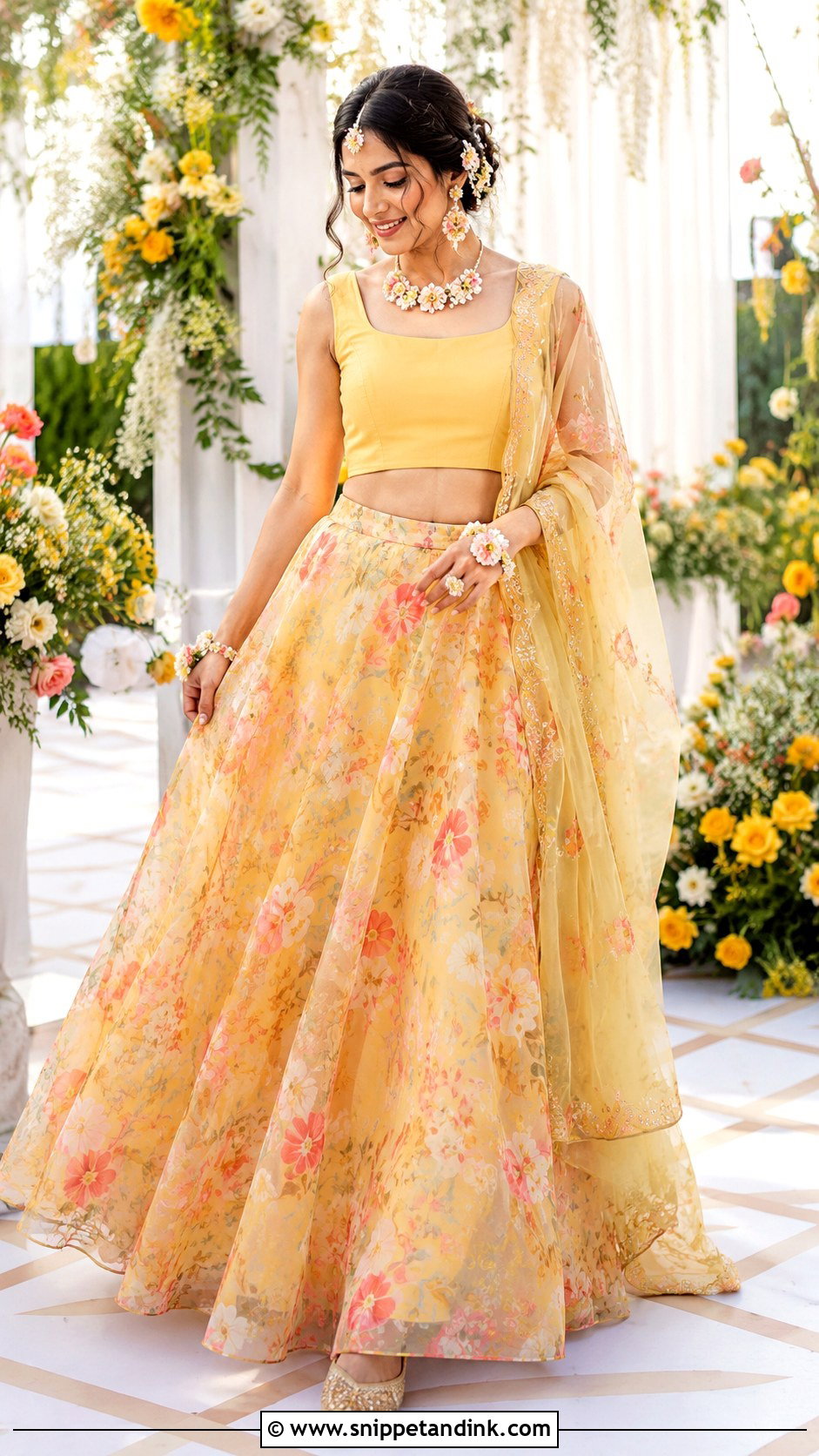
A busy print is your friend at a haldi, because a smear of turmeric disappears into yellow, pink and orange flowers. Organza holds that print crisply and looks light in daylight, but it scratches on its own, so line the skirt in soft cotton and keep the volume modest. A plain cotton-silk blouse with a square neck and supportive straps calms the print. Swap a heavy dupatta for a sheer organza one with a thin scalloped edge. Floral bangles, pearl earrings and embroidered flats are enough, with a flower-dotted bun or braid to finish. It stays airy for an outdoor ceremony.
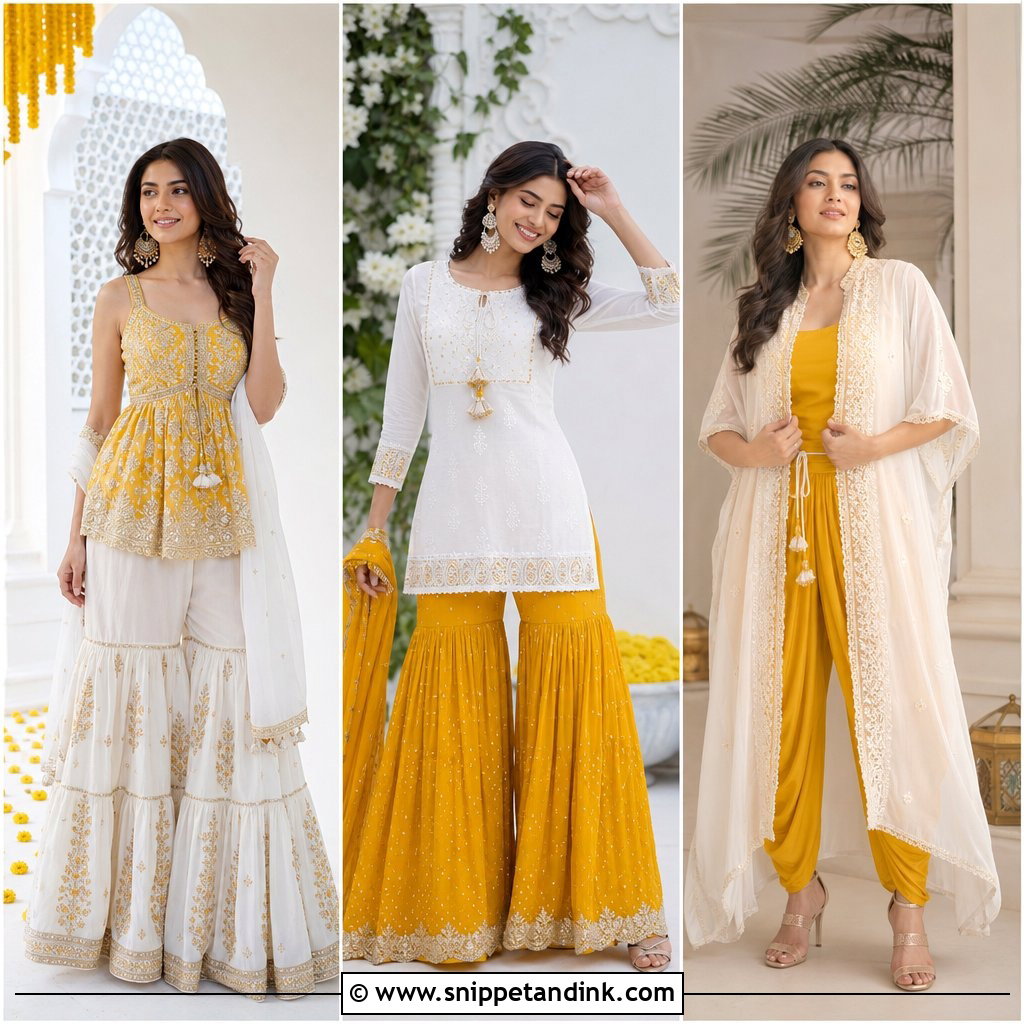
3. Yellow Sharara Haldi Outfit
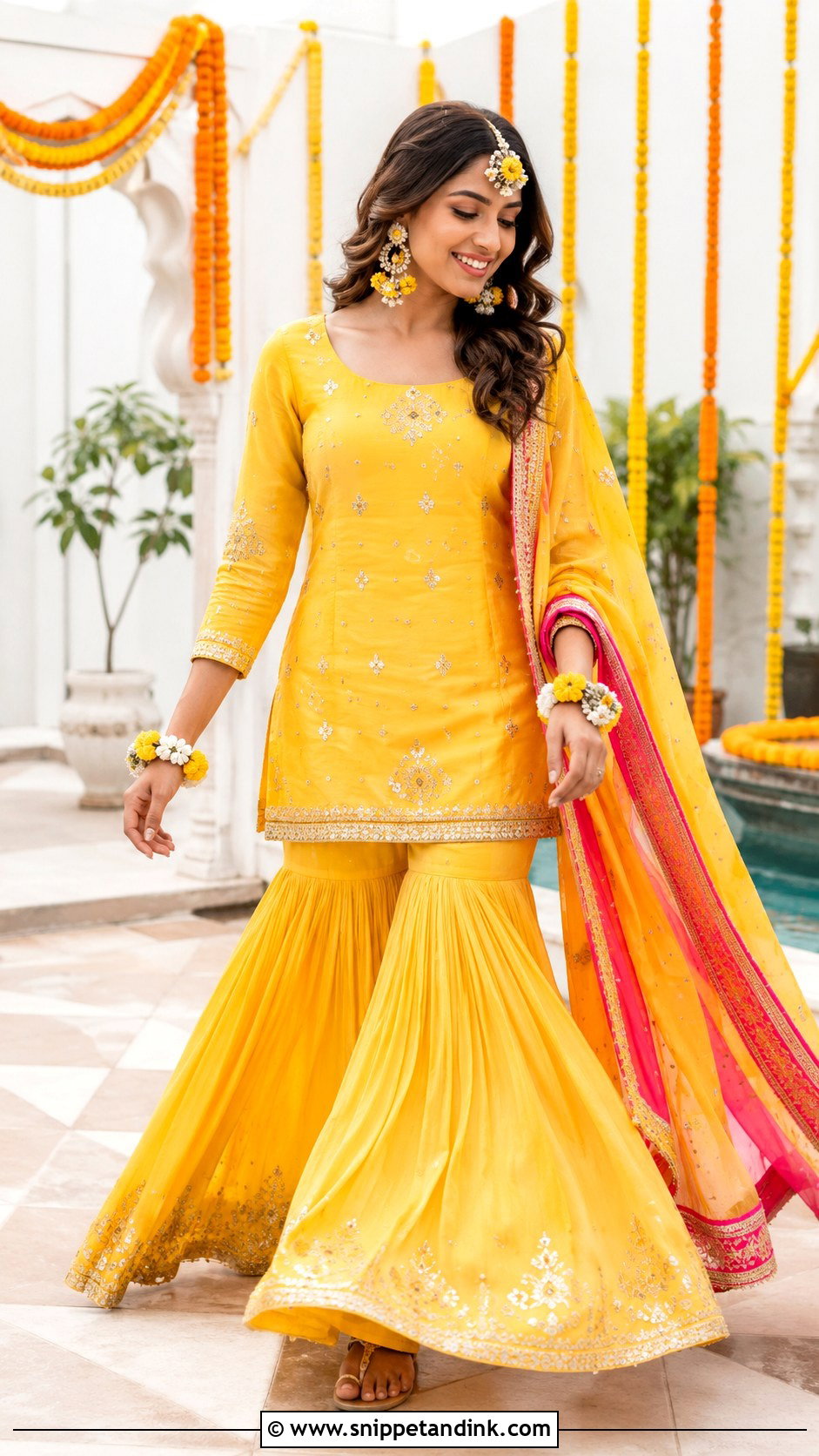
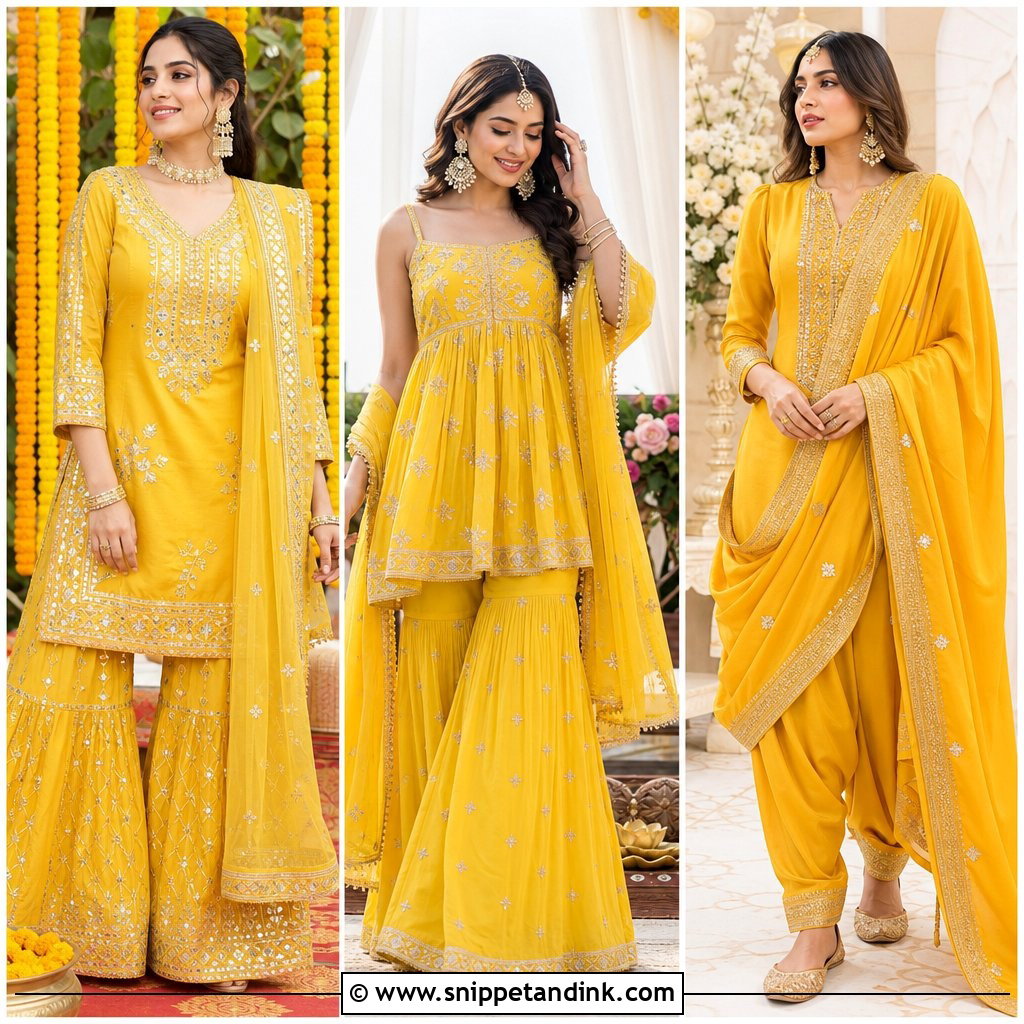
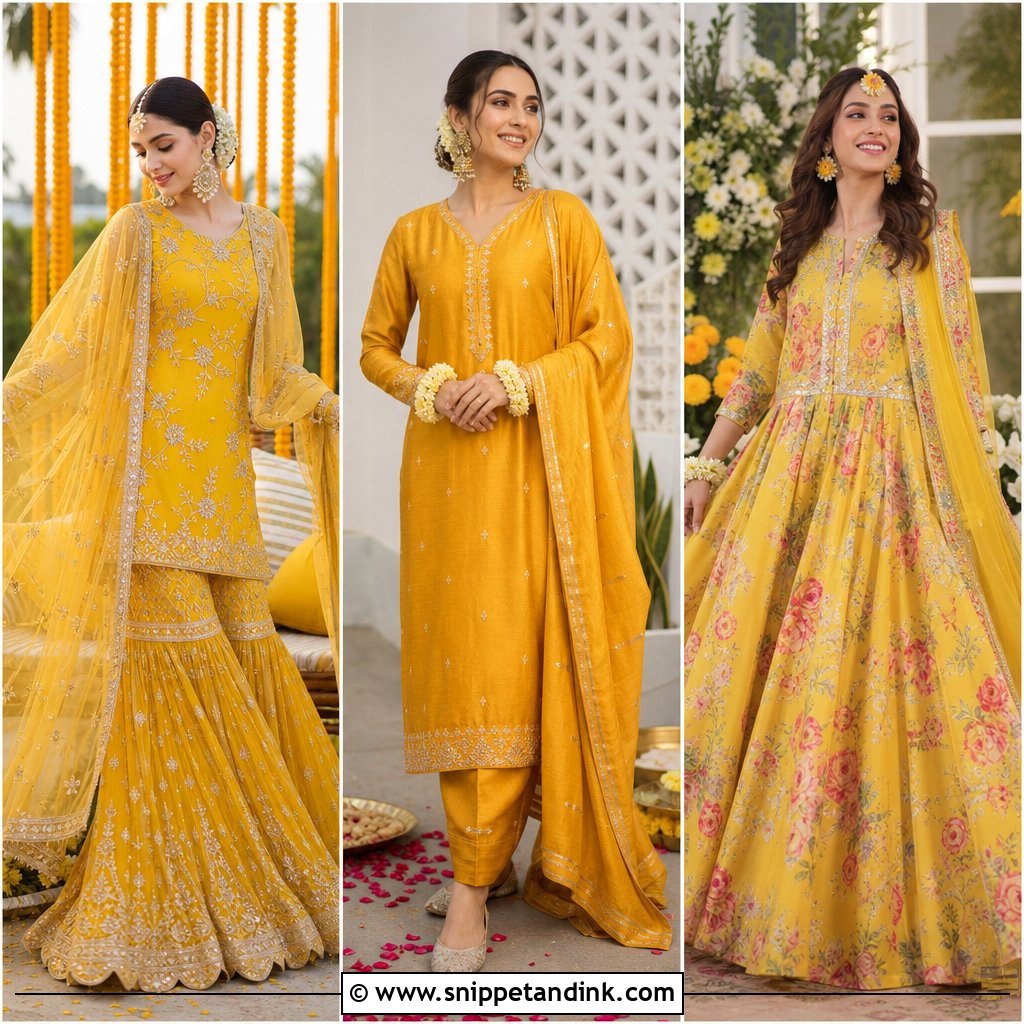
The fit at the thigh decides whether a sharara looks smart or sloppy. It should sit smoothly to just above the knee and only then open into wide panels. Line a cotton-silk or light georgette kurta with soft cotton, and ask for a side zip in a slightly fitted bodice so the top stays put while you dance. Add a pink, orange or green border for contrast rather than all-over embellishment. Drape a light dupatta around your arms or fix it to one shoulder. Floral jewelry, flat sandals and a centre-parted low bun complete it.
4. Mustard Gharara Haldi Outfit
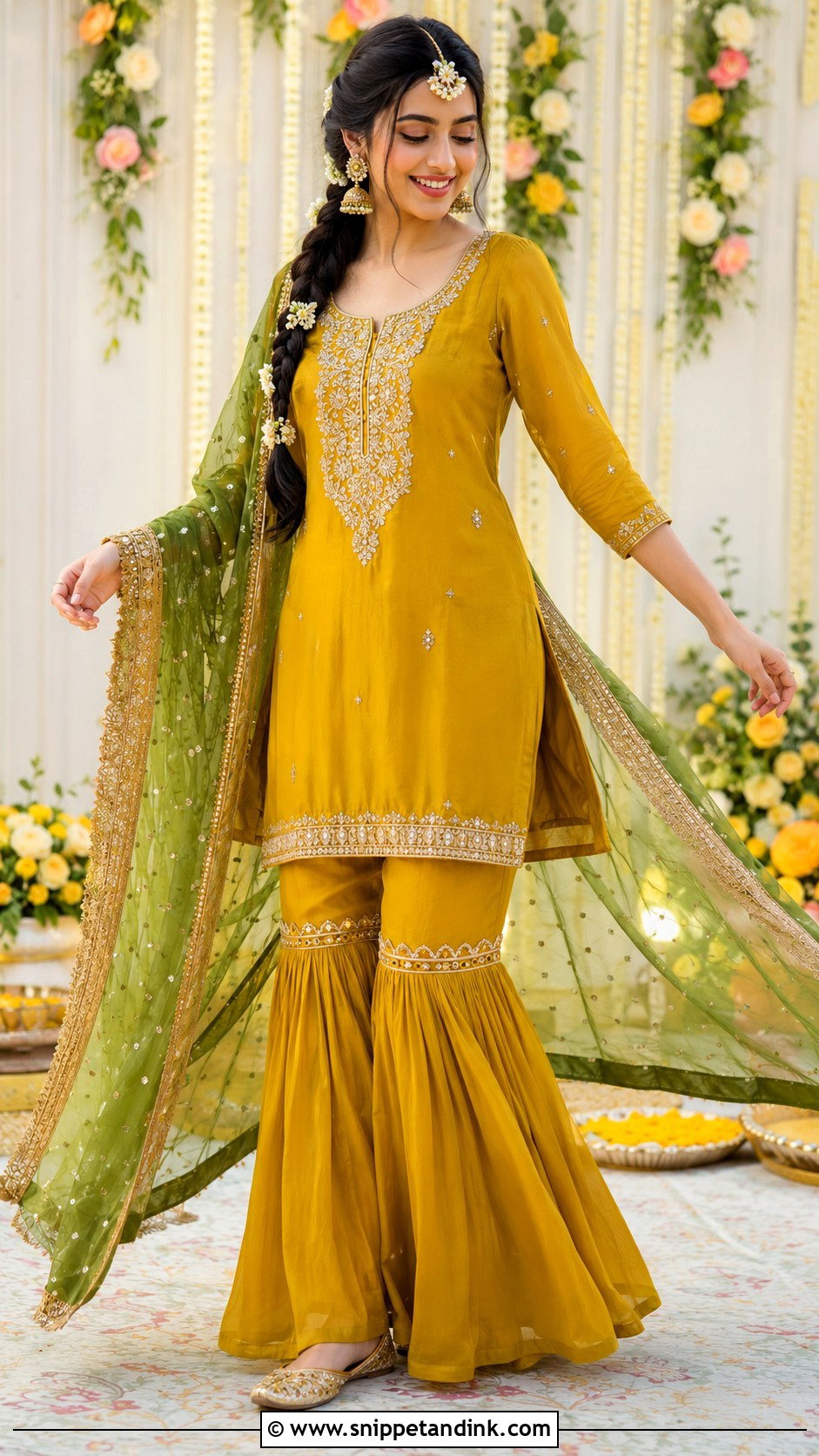
Mustard hides stains better than lemon yellow, and it stands out against marigold decor instead of blending in. Cut a knee-length kurta with a round neck, side slits and sleeves loose enough to push above the elbow. The gharara needs defined knee bands with fabric gathered beneath, so measure your knee height carefully, since the band must hit just at the joint for comfortable sitting. Thin gold trim at the neck, cuffs and seams highlights the shape and still washes. A green or rust dupatta adds contrast, and jhumkas, a small tikka, juttis and a braid finish it.
5. Yellow Anarkali Haldi Outfit
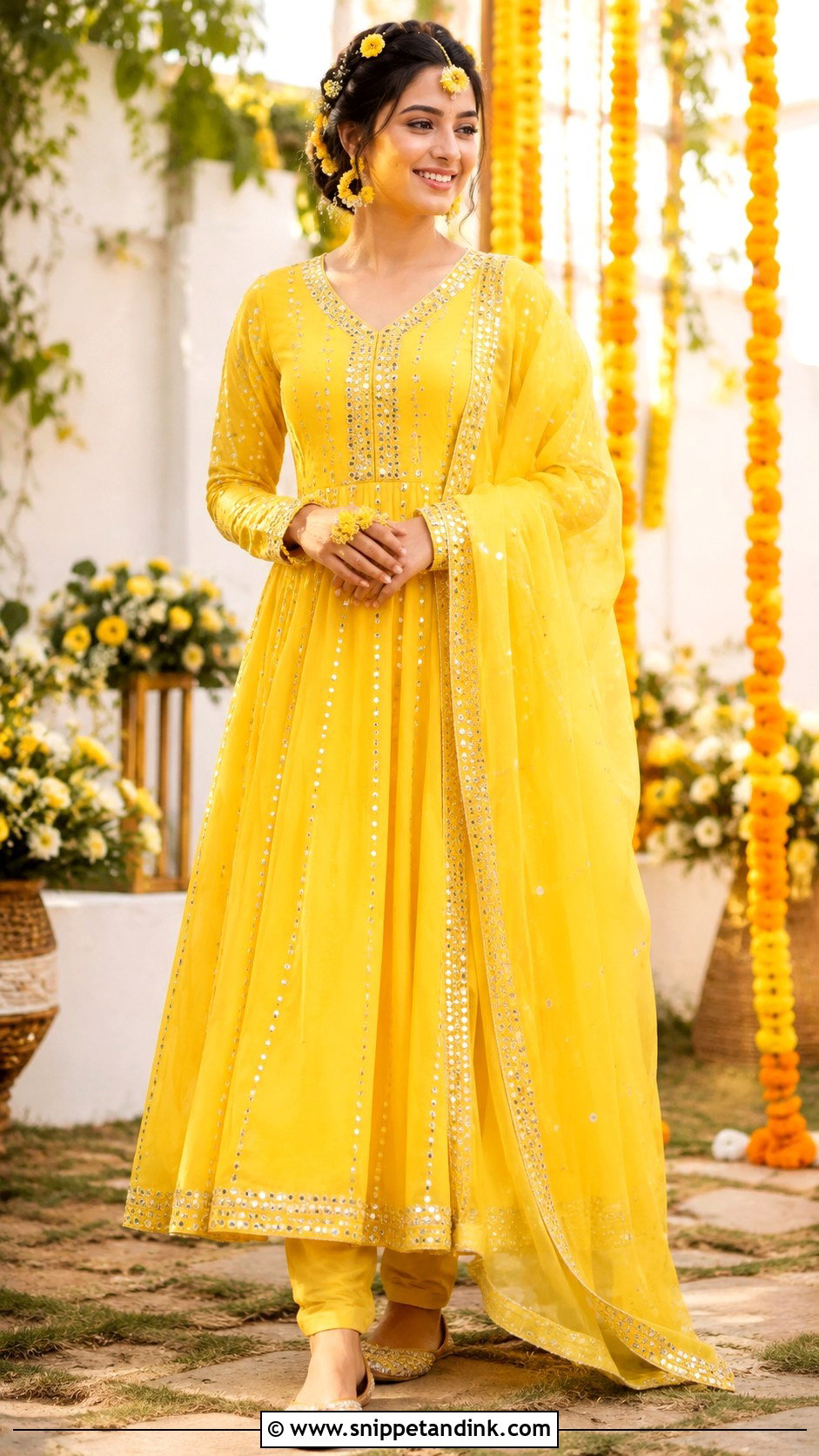
An Anarkali swings beautifully, and the number of panels is what controls that swing. More panels give a fuller flare; fewer keep it close and easier to sit in. Use washable cotton, mulmul or soft georgette, and finish the hem above the ankle so it misses the water and paste on the floor. Fitted churidars or narrow trousers sit underneath. A scoop neck, elbow sleeves and a tie-back give a bit of bridal charm. Keep handwork light, with small mirrors or gota lines on the bodice. Pin the dupatta so you can take it off fast once the ceremony gets messy.
6. Yellow Kurta And Palazzo Haldi Outfit
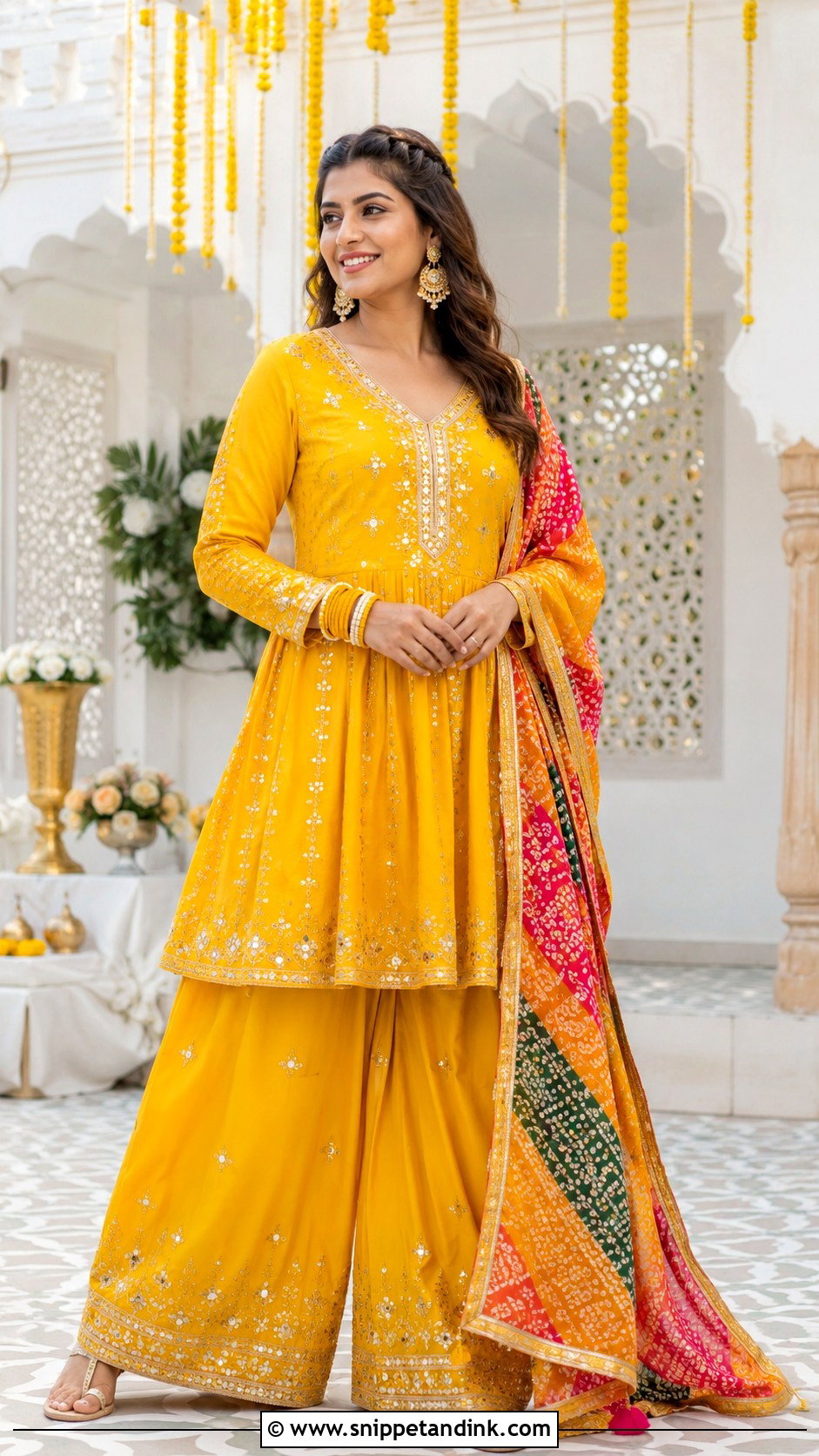
A yellow kurta and palazzo set is the easiest outfit on this list to make well, and the one you’re most likely to wear again. A straight or slightly flared knee-length kurta in cotton, a linen blend or cotton-silk breathes in daytime heat. The palazzo needs a firm waistband and a length that covers the ankle without touching the floor; hem it while wearing your actual shoes. Floral threadwork at the neck or a printed hem border adds personality. A bandhani dupatta, small chandbalis, stacked bangles and flat sandals complete the look.
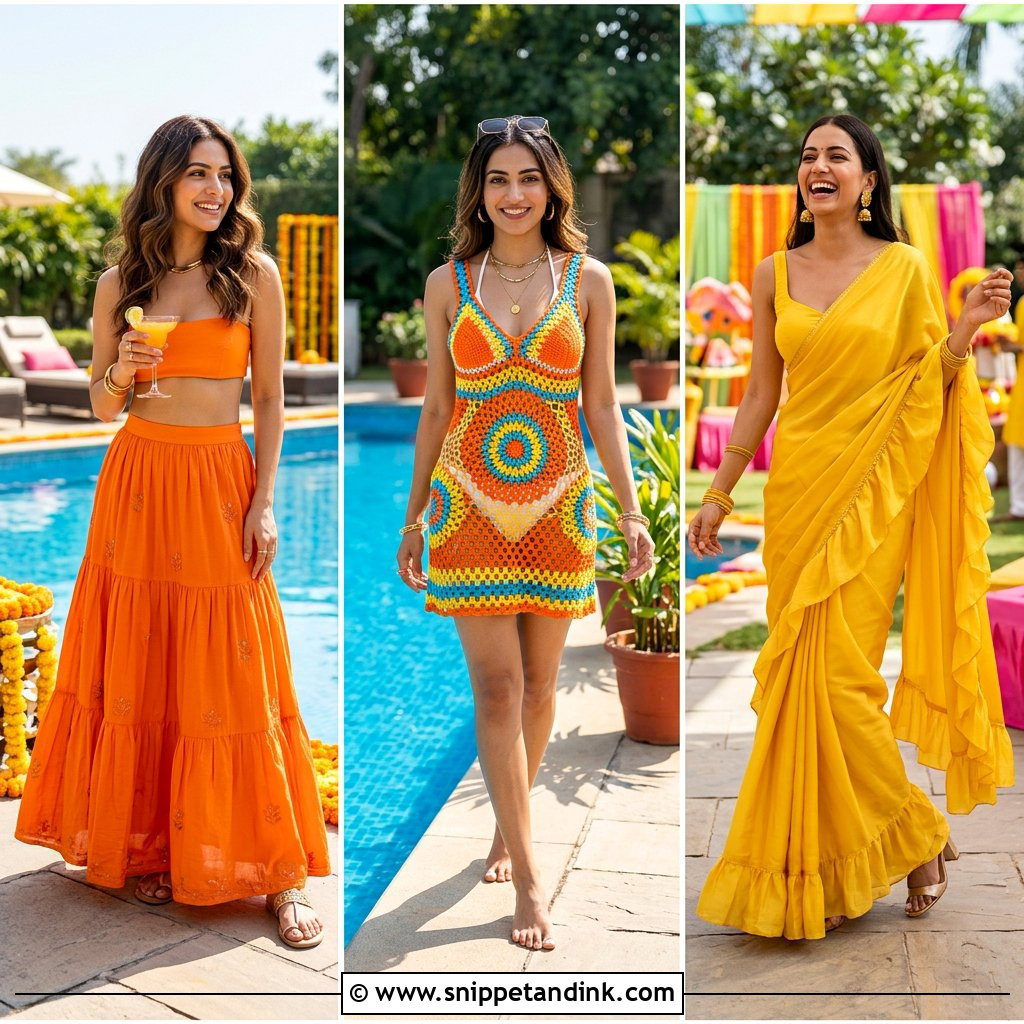
7. Yellow Dhoti Pants Haldi Outfit
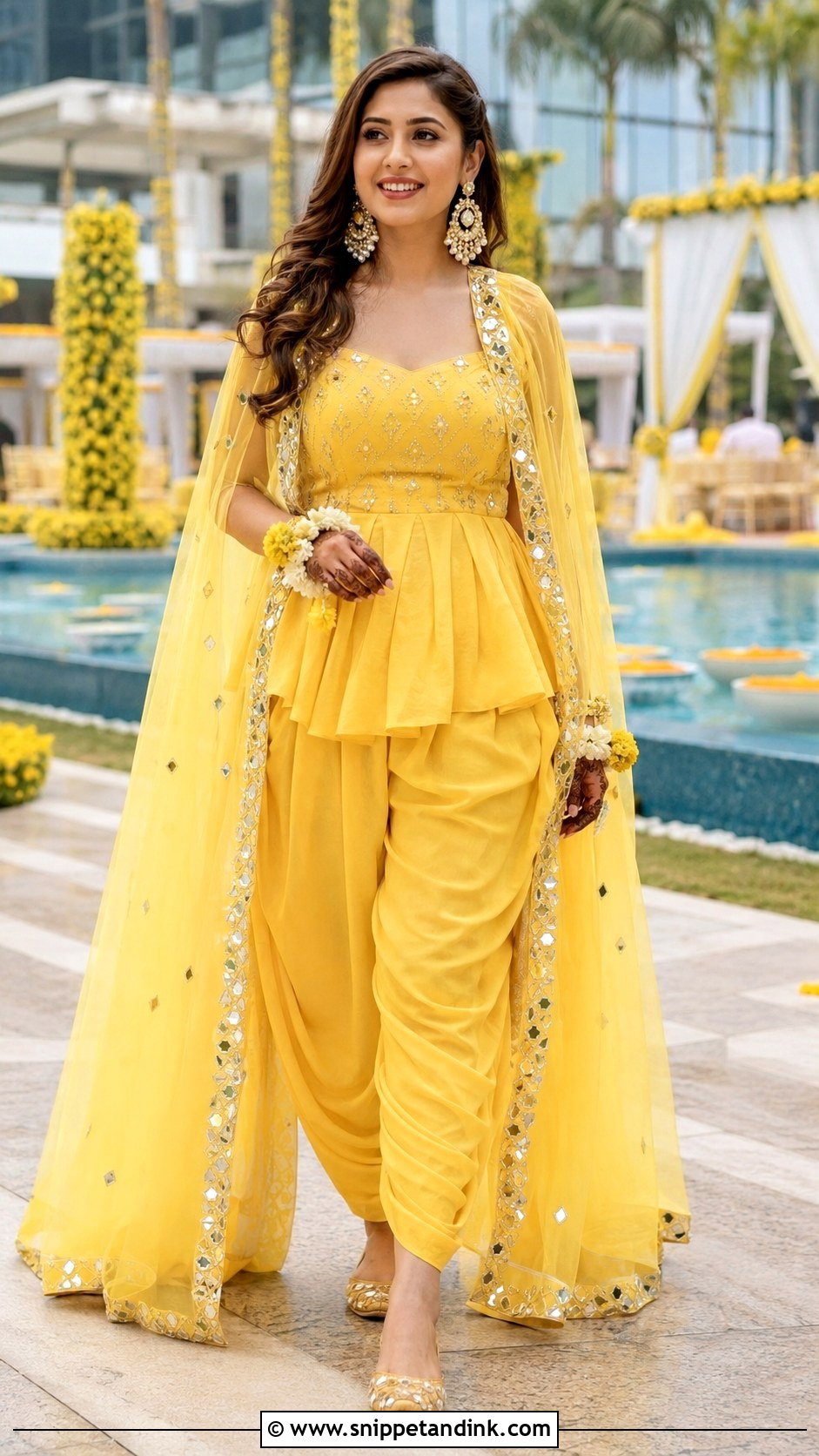
Dhoti pants depend on fabric weight. Soft crepe, rayon or cotton-silk drops into clean folds, while anything stiff puffs out at the hips. Pair them with a fitted sleeveless kurti, a peplum blouse or a crop top with a side zip. A sheer cape instead of a dupatta keeps your arms free and still gives movement. Thin mirror trim or bright piping on the edges is enough decoration. Statement earrings, floral wrist pieces and flat embellished sandals finish it, with a high ponytail or braided bun keeping hair clear. A poolside ceremony is where this makes the most sense.
8. Yellow Saree Haldi Outfit
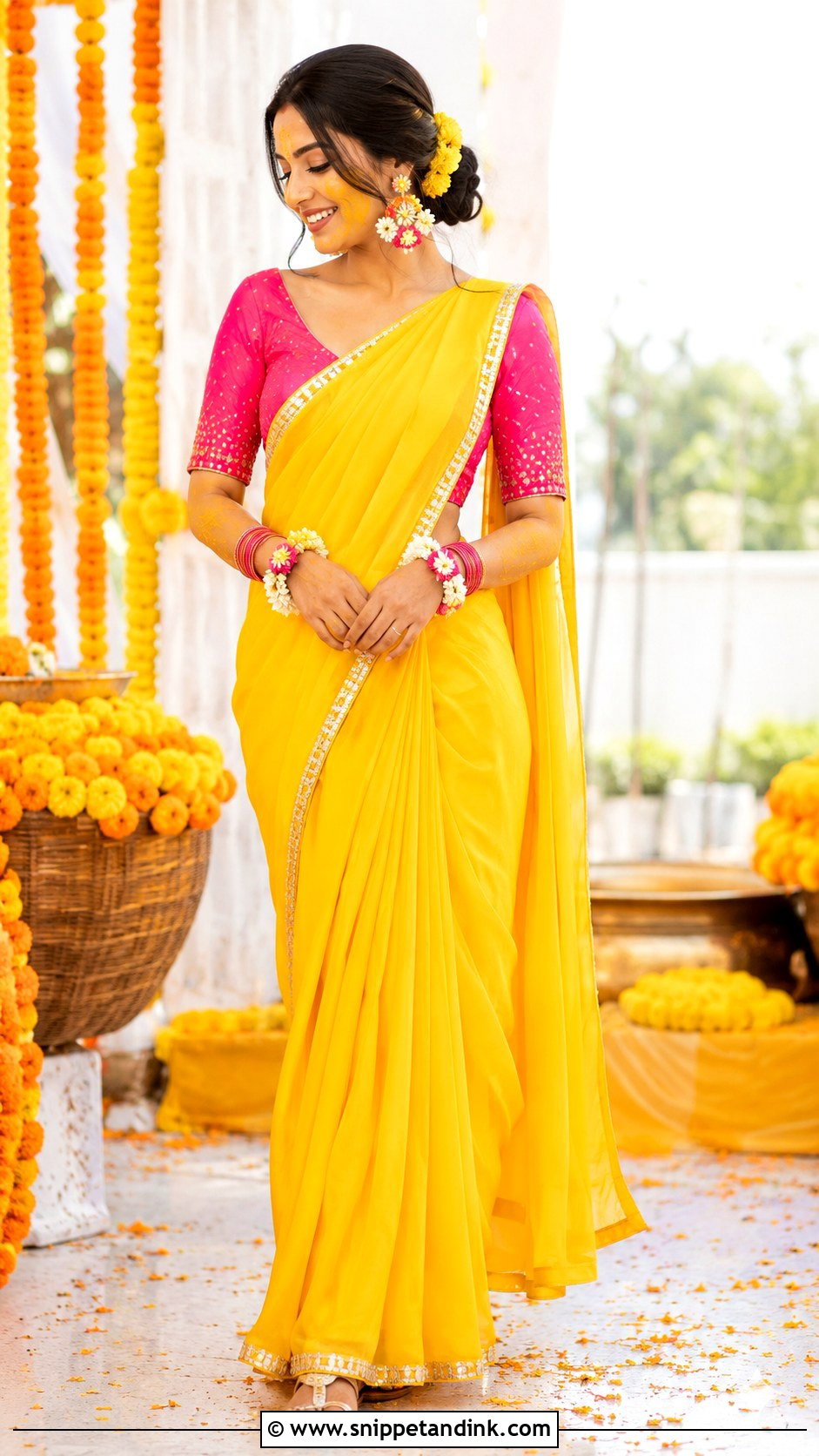
Making a saree from scratch usually means buying plain fabric by length and adding the border yourself, which gives you full control of colour. Cotton, chiffon or light georgette all pleat easily. Stitch on a gota ribbon border or a contrasting fabric band. A pink, green or orange blouse gives a strong colour break against the yellow, and elbow sleeves suit the ceremony. A stitched petticoat holds the drape when you dance. Floral earrings, glass bangles and a flower-decorated low bun complete it. Pin the pallu well so it doesn’t trail into the paste bowl.
9. Pre-Draped Saree Haldi Outfit
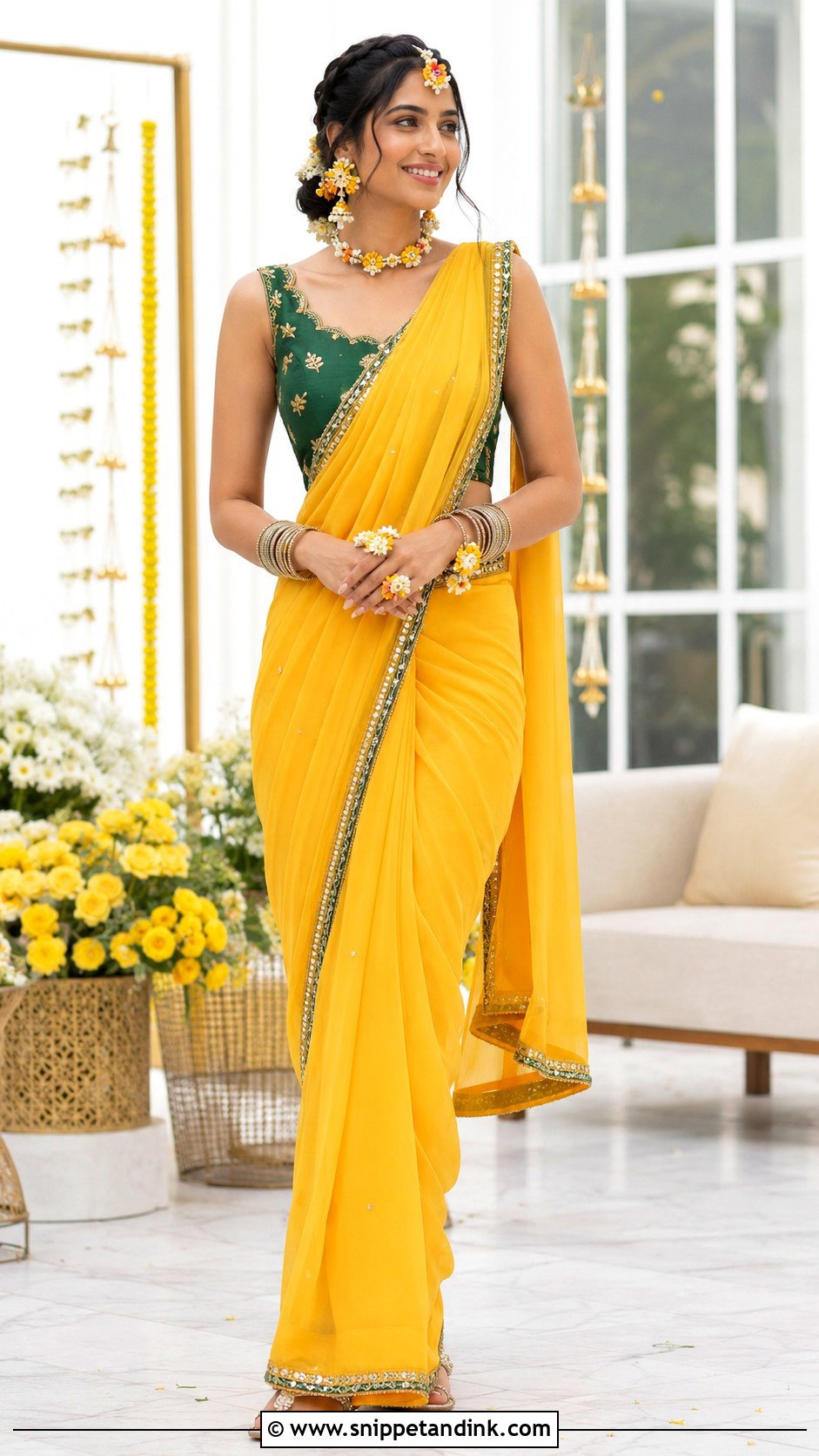
Pre-draping is a project I’d hand to a tailor even if you sew the rest yourself, because the pleat depth has to be set on your body. Light georgette or crepe gathers softly. The pleated section is stitched onto an adjustable waistband, leaving only the pallu to arrange on the day. Pair it with a structured square-neck blouse with short sleeves, and add removable floral straps or tassels if you like. A border in the blouse colour ties the two together. Pearl-floral earrings, slim bangles, metallic flats and a secure braid finish the look.
10. Yellow Peplum Skirt Haldi Outfit
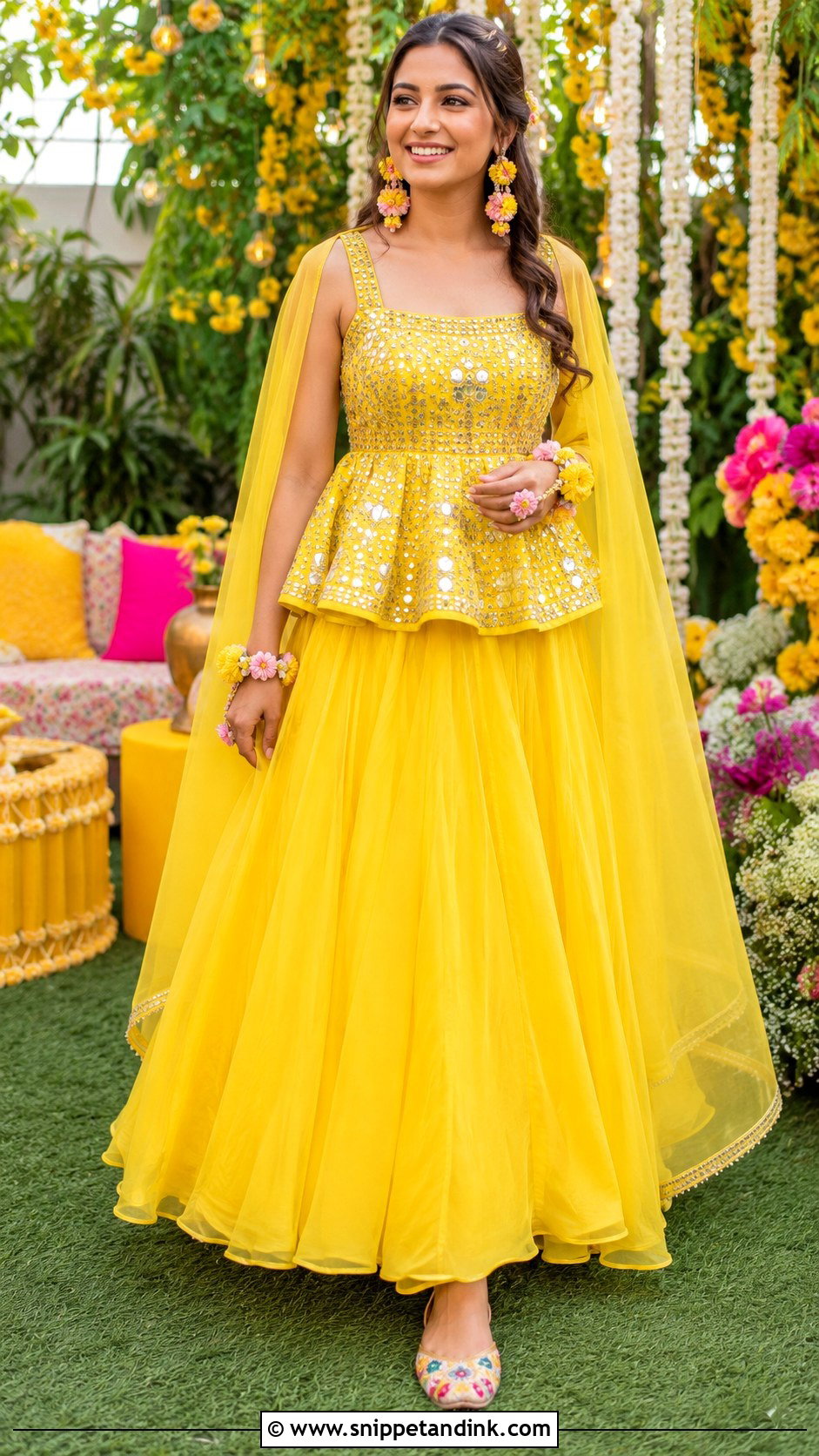
Raw silk itches against bare skin, so a peplum top in raw silk or cotton-silk must be fully lined. End the peplum at the upper hip; any lower and it bunches when you sit. A square, V or soft curved neckline all suit it. A circle skirt gives swing with no netting at all, and it’s one of the simplest skirts to cut at home. Repeat small mirror details on the peplum and the skirt border. Pin a soft organza dupatta behind the shoulders like a cape. This shape defines the waist on most body types.
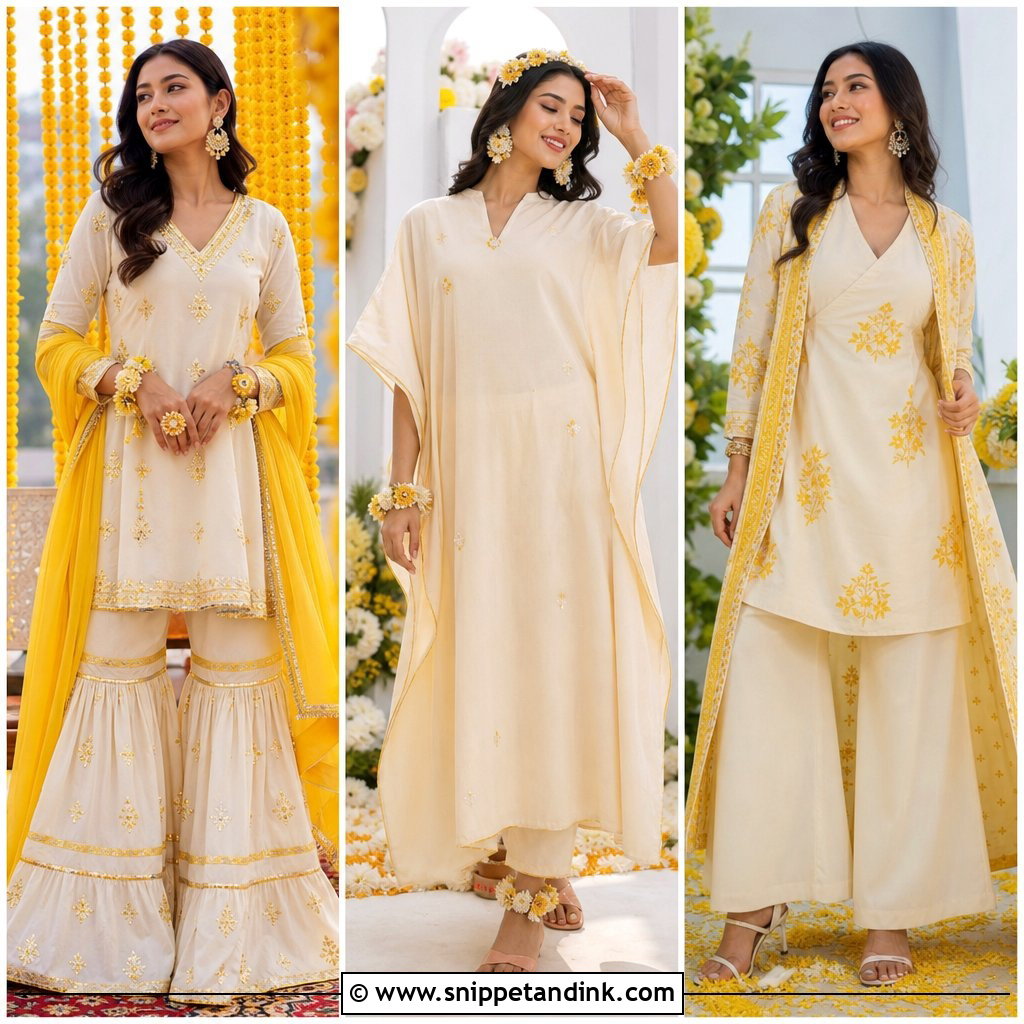
11. White And Yellow Haldi Outfit
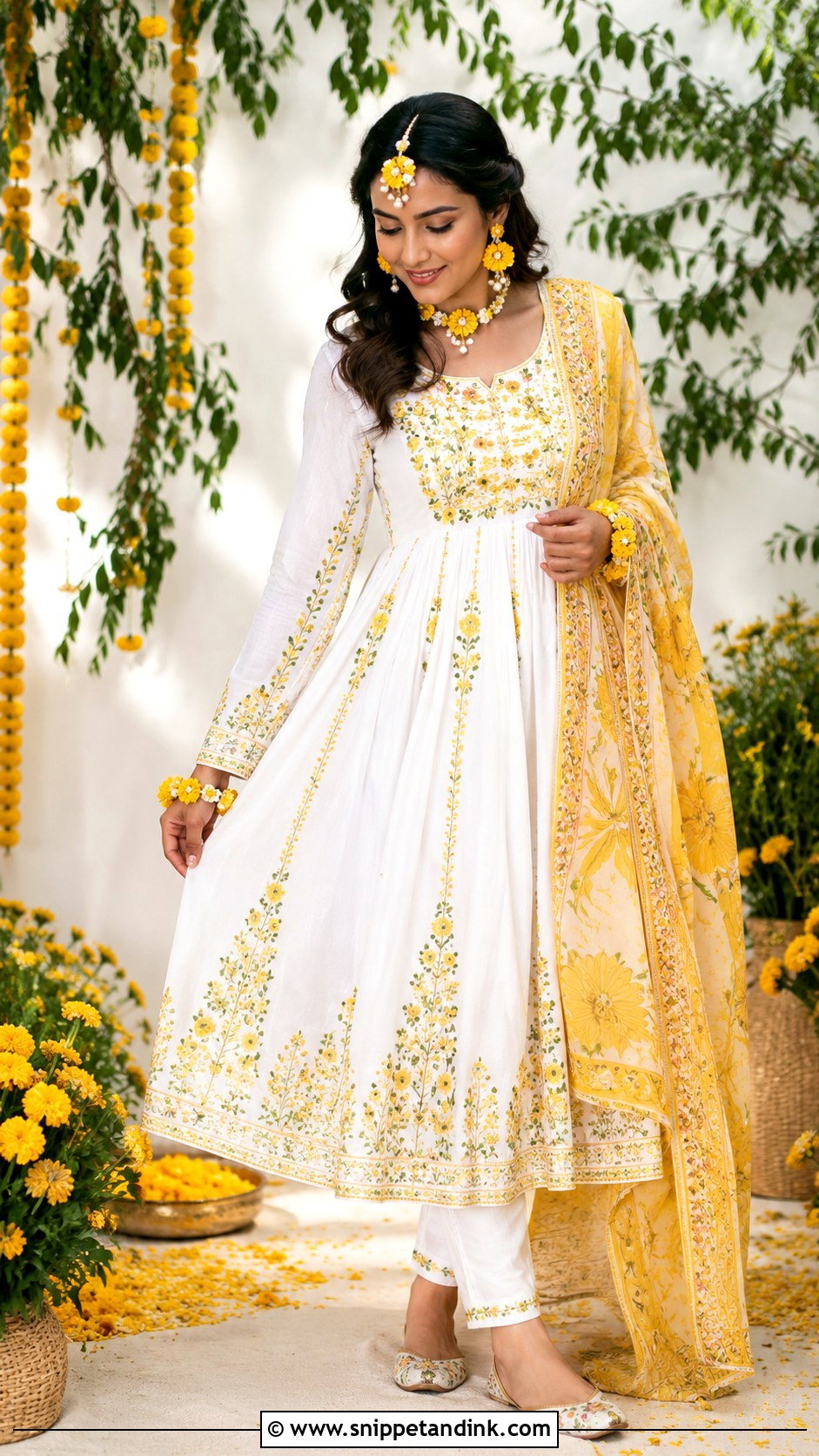
White with yellow is lovely against bright decor, but plan for it to stain. I only suggest it if you’re happy to sacrifice the white or you’re repurposing an older white kurta, lehenga or Anarkali. Bring in yellow with a printed dupatta, floral embroidery, piping or tassels. A clever compromise is a white cropped blouse with a yellow skirt, since the lower half catches most of the splashes. Keep the embellishment simple. Yellow floral jewelry, pearl accents, neutral juttis and a bun ringed with small white flowers complete it.
12. Pink And Yellow Haldi Outfit
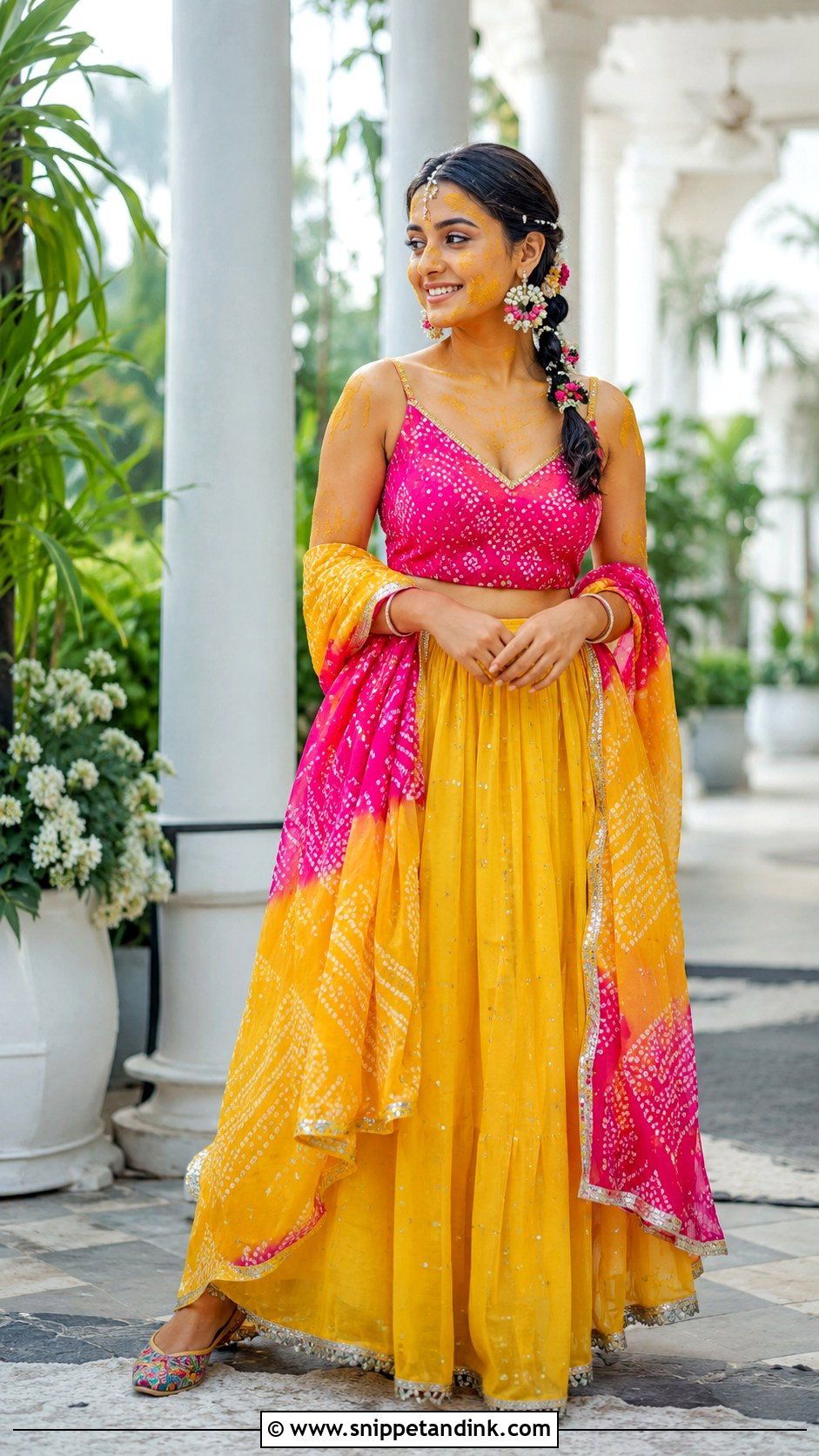
Pink and yellow is a pairing that works at any intensity, so start by deciding how bright you want it. Hot pink with sunshine yellow is loud and joyful; blush with butter yellow is softer and suits fairer skin that bright pink can overpower. A paneled yellow skirt or sharara with a fitted pink blouse, sleeves easy to roll up, is the base. Tie the colours together with piping, floral embroidery or a two-tone bandhani dupatta. Juttis in one of the two colours, floral earrings and a small tikka are enough. Gardens and white backdrops make it pop.
13. Orange Haldi Lehenga Outfit
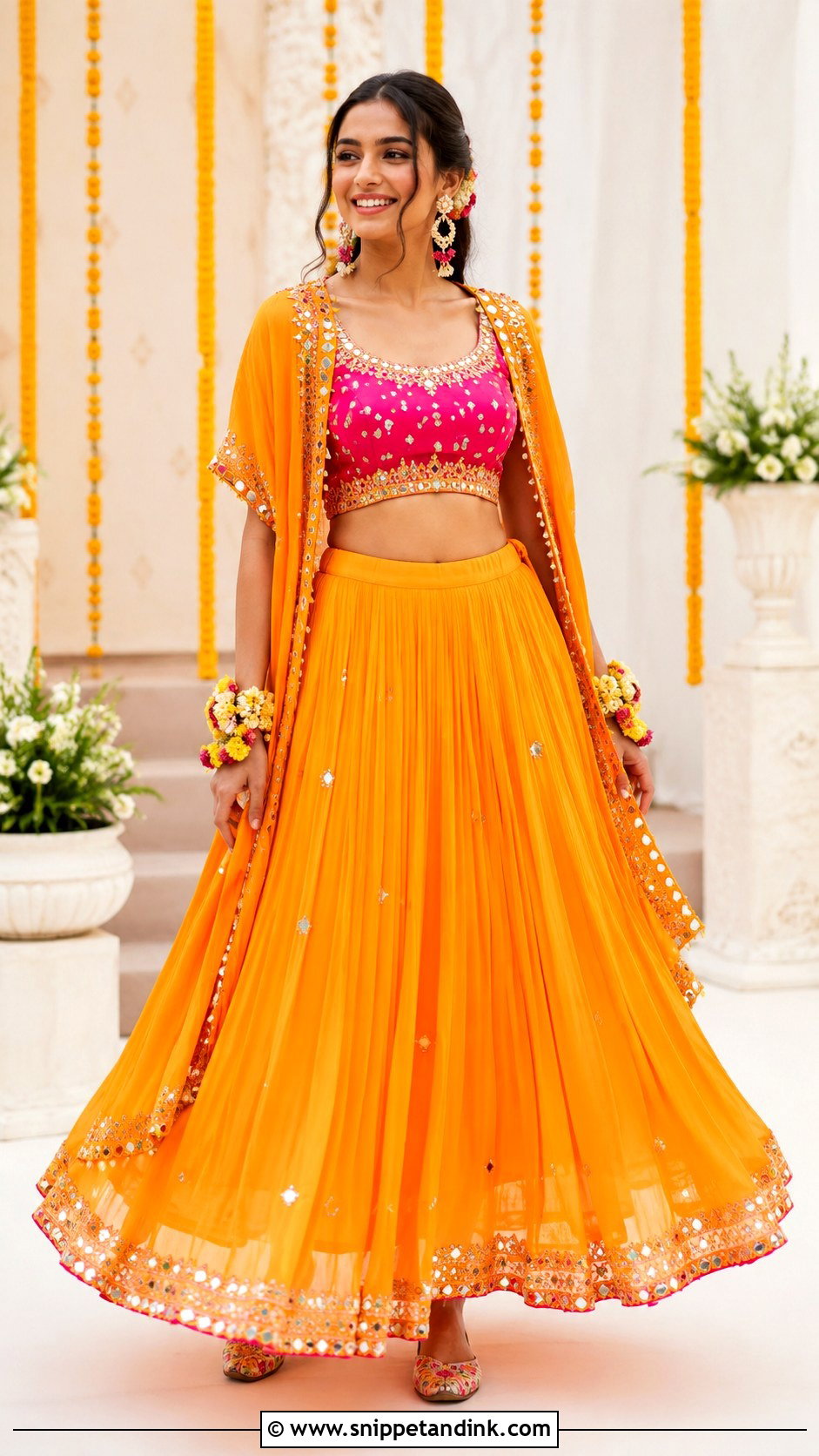
Yellow isn’t required, and orange solves a real problem: guests often wear yellow too, and the bride can vanish into the crowd in photos. A marigold or bright orange lehenga keeps the warmth while marking you out. Cotton-silk, georgette or printed chanderi gives soft movement. Match the blouse or add fuchsia, lime or ivory. Gold piping and scattered mirrors enhance the fabric. A short dupatta pinned at the shoulder is far easier than a long drape. Orange also forgives turmeric, which makes it a good pick for a hands-on family.
14. Green Floral Haldi Outfit
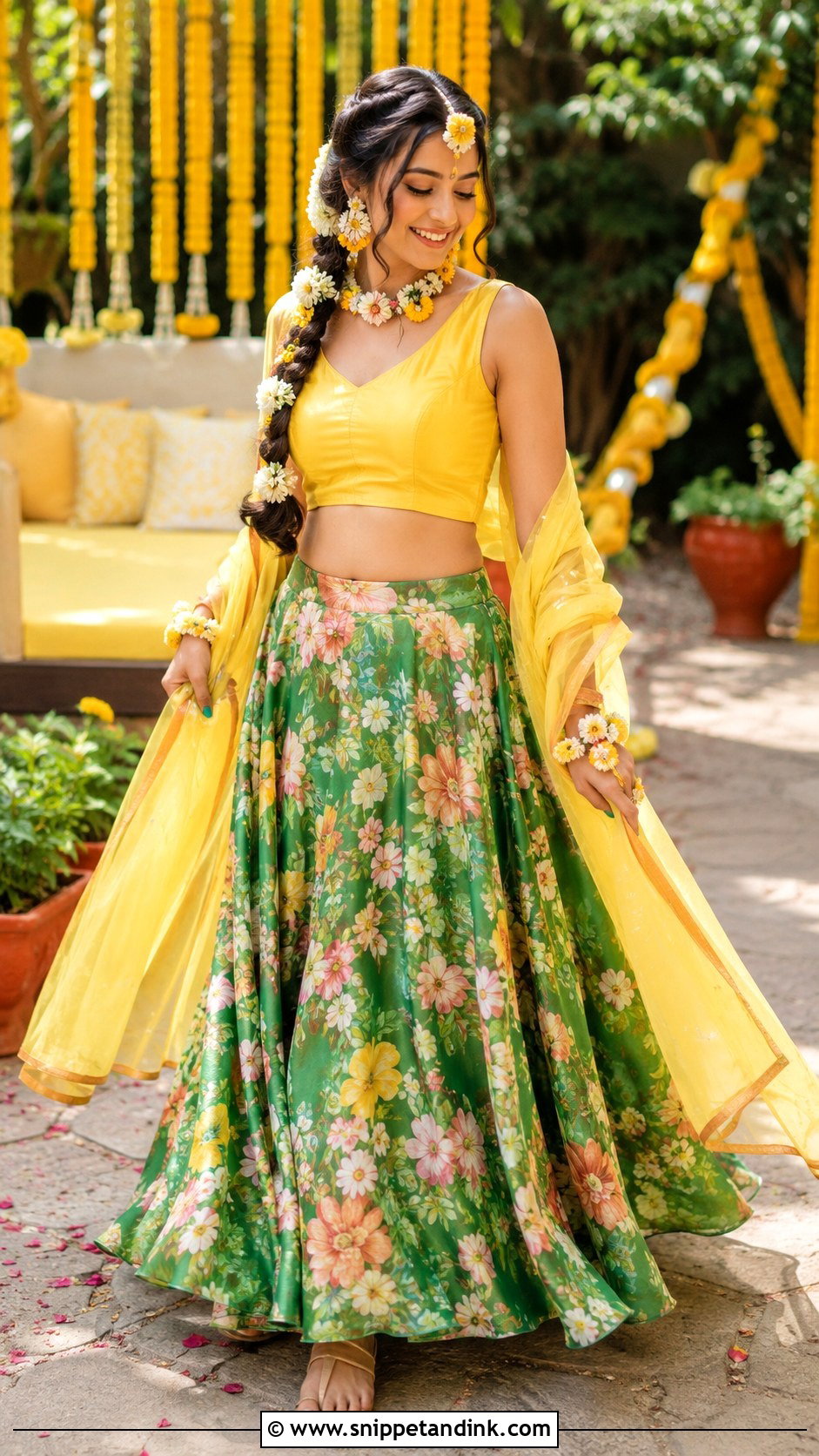
Green is the colour I suggest when the whole venue is yellow and orange, because it stands apart without fighting the theme. A printed lehenga, gharara, or kurta set in cotton or georgette with small multicoloured flowers looks fresh. A plain yellow blouse or dupatta links it back to the ceremony. Keep the cut simple. An elastic-backed waistband is very comfortable for long sitting, and roomy sleeves make the paste easier to apply. Yellow floral jewelry, neutral flats and a loose braid with tiny blossoms finish it.
15. Pastel Haldi Lehenga Outfit
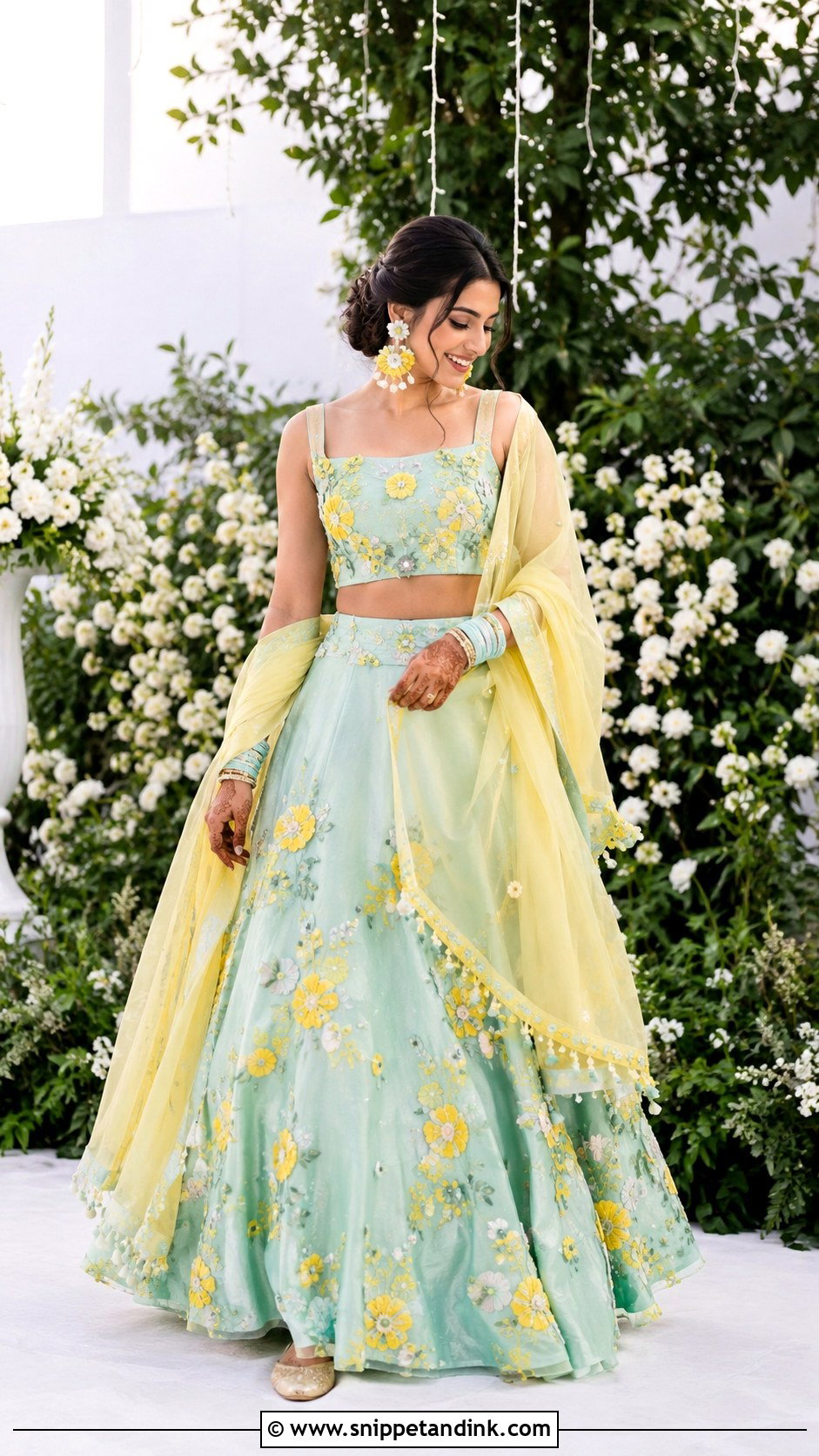
Pastels show turmeric more than any other colour, so I suggest them only for a calm, intimate haldi. Mint, peach, lilac or powder blue with yellow brought in through appliqué, piping or a dupatta looks gentle. Organza over a cotton lining, printed georgette or a cotton blend drapes well. A square-neck blouse with elbow sleeves keeps it refined. Skip beadwork, which snags and turns uncomfortable once you’re sitting in paste. Delicate floral earrings, pastel bangles and a low textured bun finish it. White flowers and greenery suit pastel better than an all-yellow backdrop.
16. Bandhani Haldi Outfit
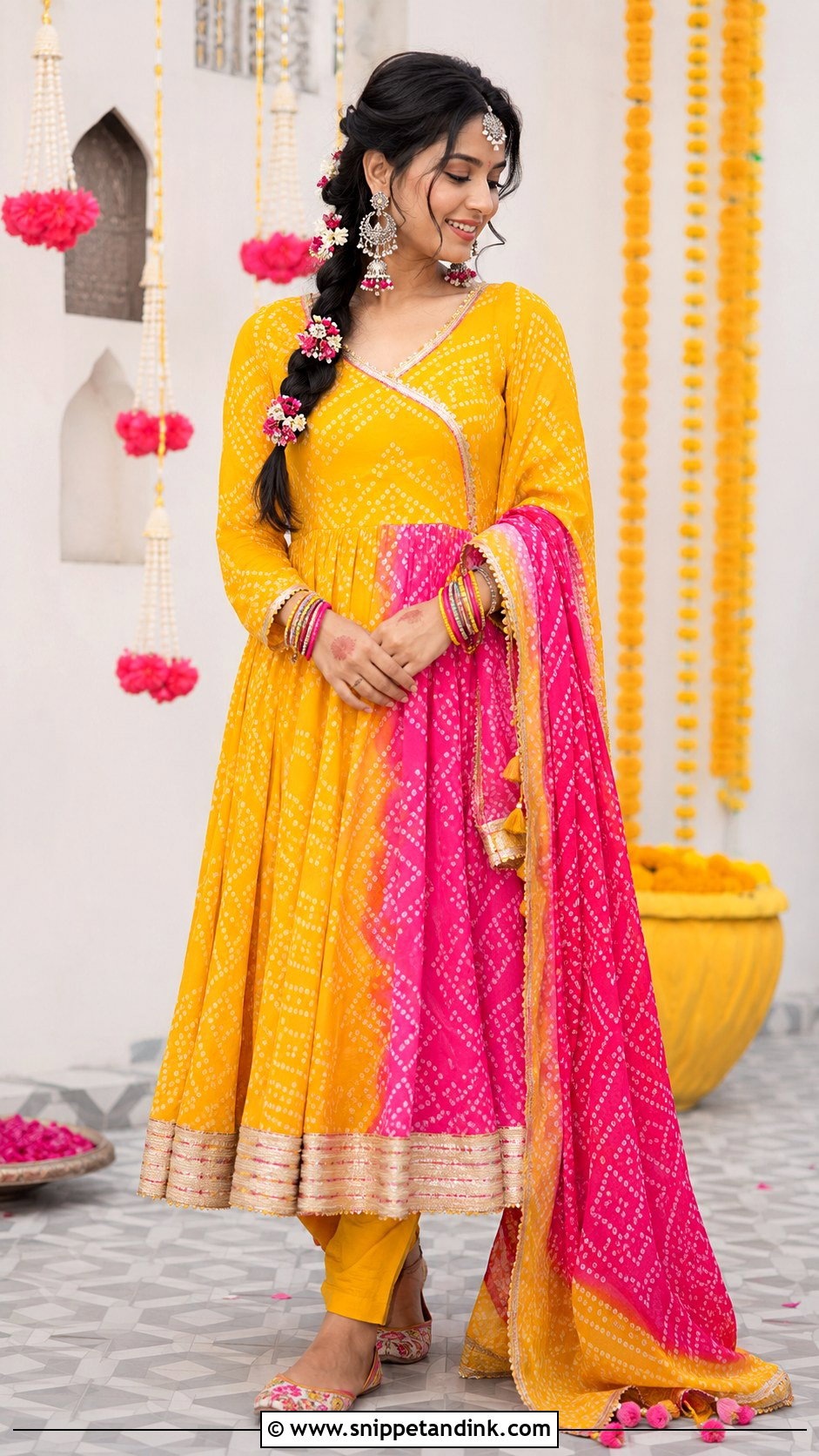
Bandhani fabric is a smart buy for a homemade outfit, because the busy pattern disguises uneven seams and light stains. Turn yellow, orange, pink or green bandhani into a kurta with sharara, a paneled lehenga or a simple Anarkali. Balance the pattern with a plain blouse or lower half. Narrow gota at the neck and hem defines the shape. Rinse new bandhani alone in cold water first, because hand-dyed fabric can bleed. A bandhani dupatta can also refresh a plain outfit you already own, which saves on tailoring.
17. Phulkari Haldi Outfit
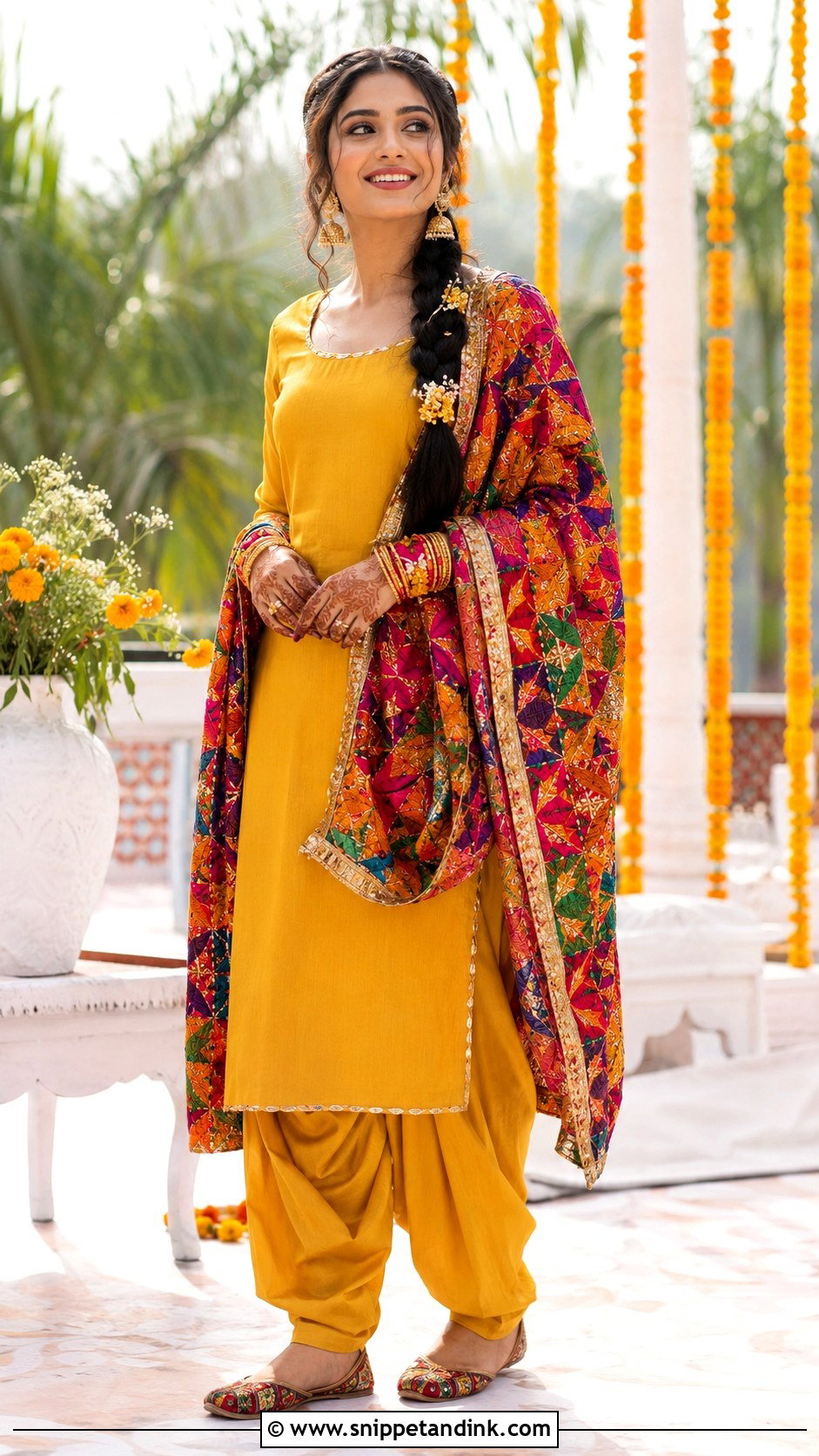
A real phulkari dupatta is dense hand embroidery in silk floss, so it is heavy and it isn’t something you want soaked in turmeric. Wear it for portraits, then take it off before the paste comes out. Because it carries so much colour, the suit underneath should be plain: a mustard or lemon kurta with salwar, with bright piping at the neck and cuffs to pick up the vibrant phulkari dupatta. Pin it high on one shoulder. Traditional juttis, jhumkas, glass bangles and a braid finish it. You get a meaningful handmade piece that lasts for years.
18. Yellow Kaftan Haldi Outfit
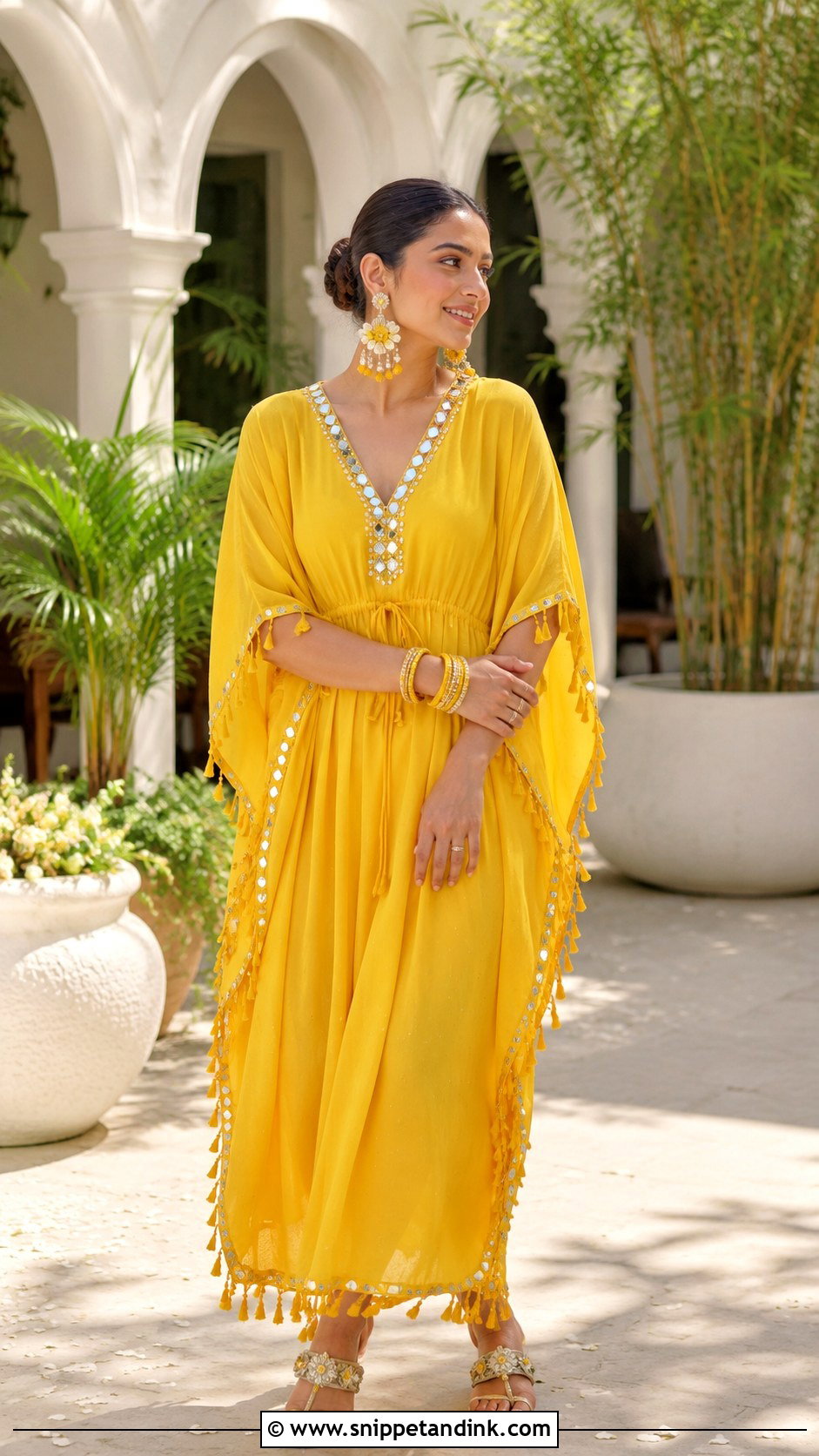
A kaftan is the easiest outfit here for a beginner to sew, since it’s mostly straight seams. Soft cotton, crepe or georgette in yellow, mustard, orange or a floral print all work. Shape it with an inner drawstring or a gathered waist seam rather than a stiff belt. Finish the hem at the ankle and keep the sleeves wide but short enough to stay out of the paste bowl. A thin mirror-work neckline or tasseled ties add festivity. Flat sandals, big floral earrings and a sleek bun finish it, and it flatters a wide range of sizes.
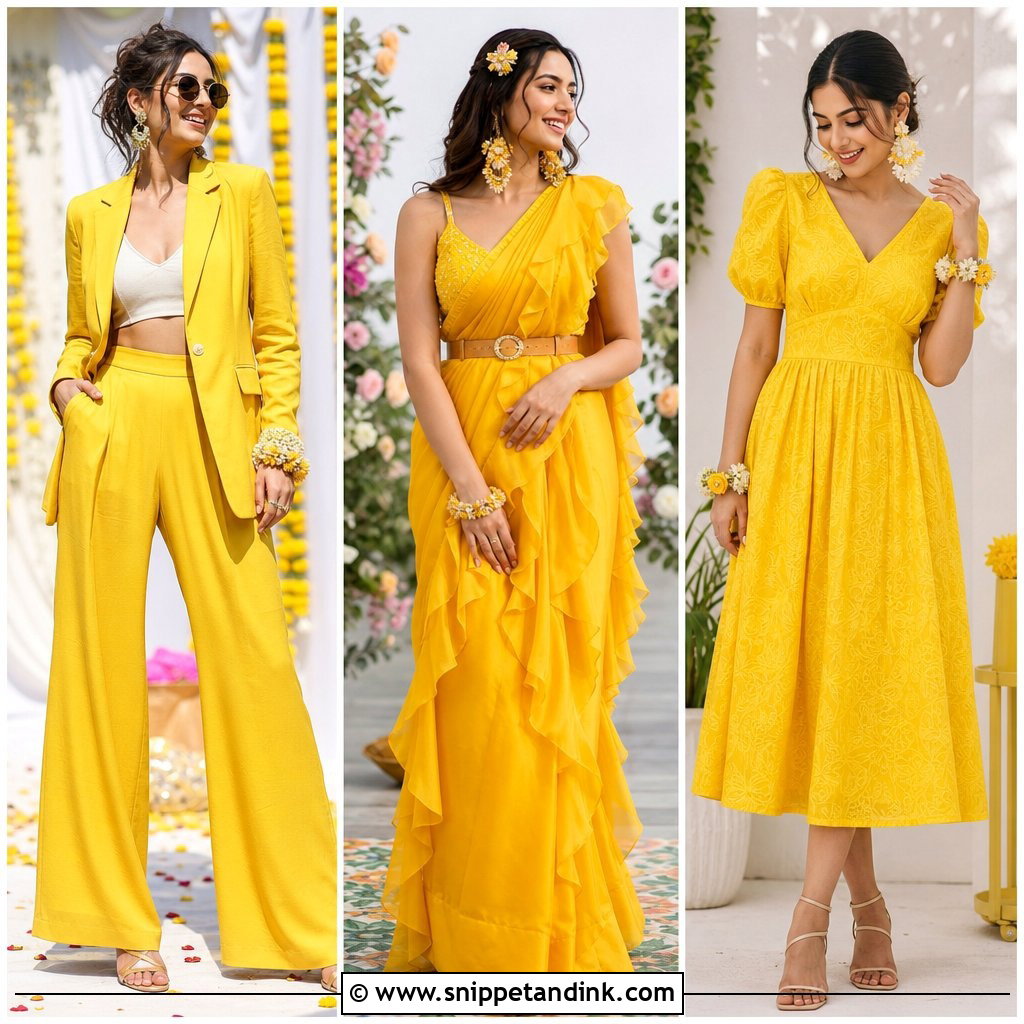
19. Yellow Jumpsuit Haldi Outfit
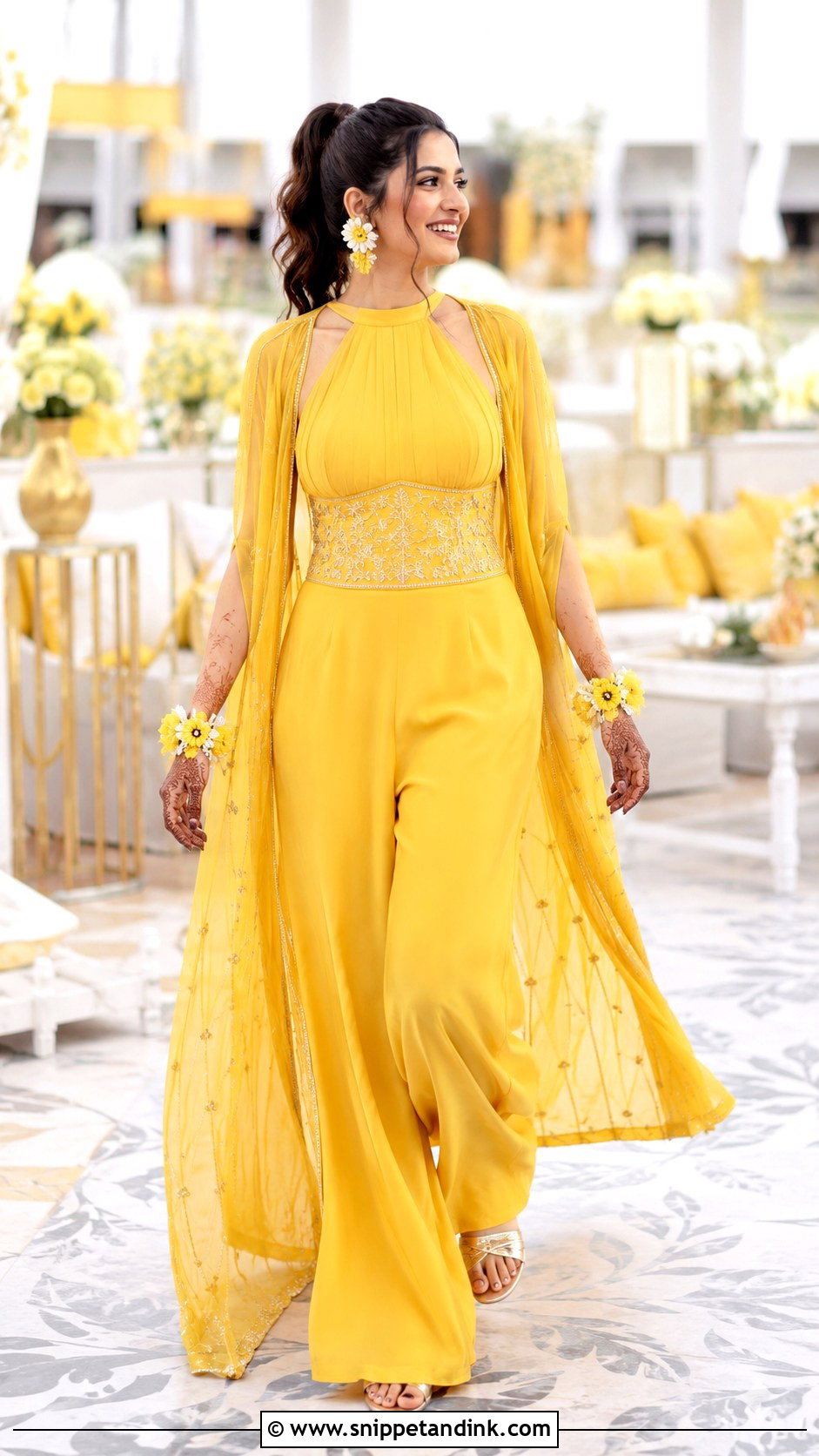
Jumpsuits are less forgiving to make than they look, because the crotch depth and torso length both have to be right or it pulls when you sit. Have it fitted by a tailor. Wide legs, a fitted waist and a concealed zip make dressing straightforward. Cotton-silk, crepe or light georgette flows without looking casual. Short sleeves or adjustable straps set the coverage. A detachable organza cape or an embroidered waist panel makes it bridal. Keep the hem above the floor, and add statement earrings, floral wrist jewelry and a high ponytail.
20. Upcycled Saree Haldi Outfit
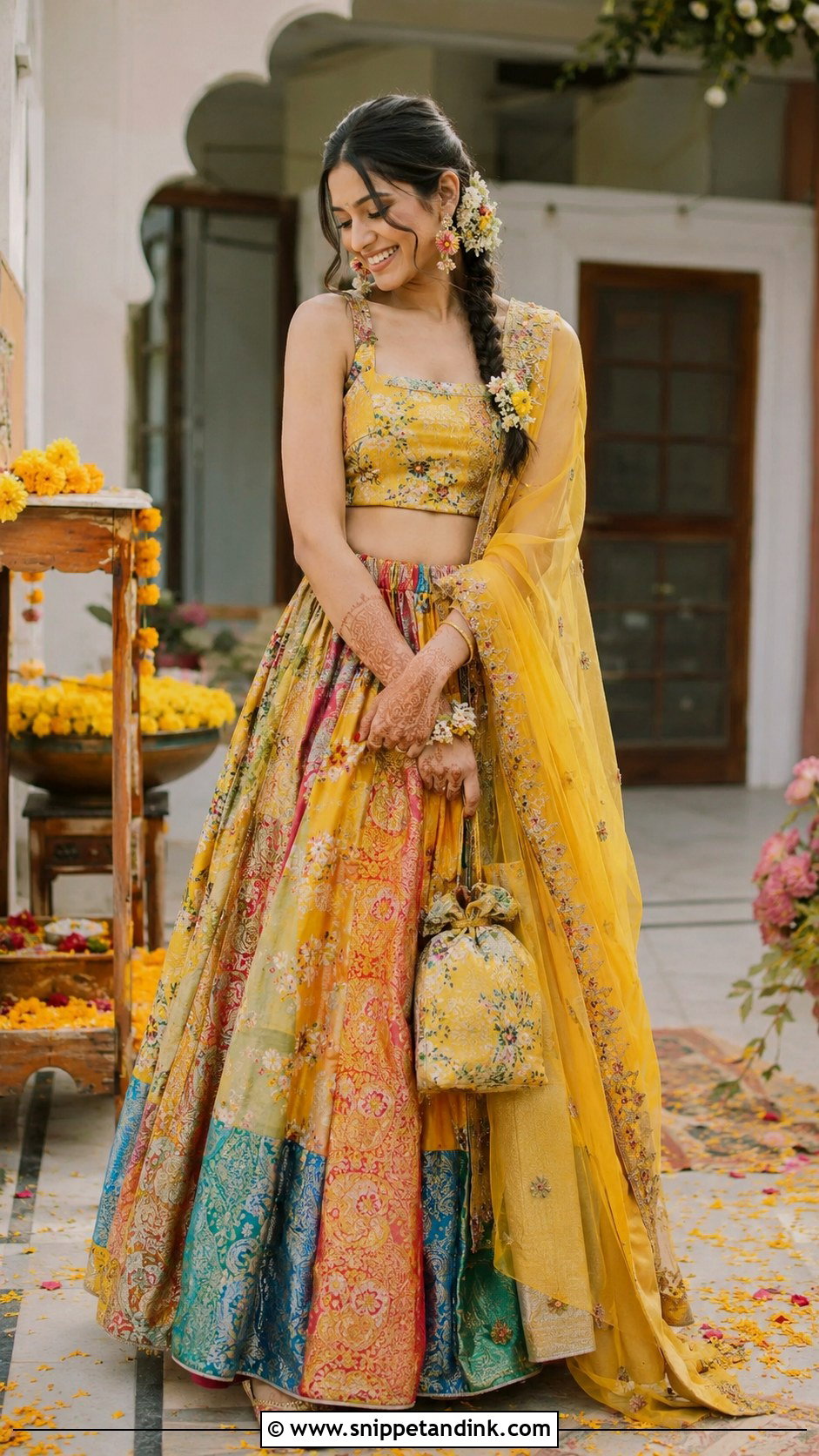
Cutting up an old saree is the most personal outfit on this list. Six yards goes further than you’d think, enough for a paneled lehenga, a short kurta with sharara pants, or a skirt and blouse set. Plan the layout so the original border runs along the hem, sleeves or neckline. If it falls short, combine it with plain cotton-silk in yellow, orange, pink or green. Leftovers make tassels, a potli or hair ties. I’d only cut a saree the family is happy to see transformed; an irreplaceable heirloom is better worn in its original form.
Three Tests to Run on Fabric Before It Gets Cut
Store-bought haldi clothes have usually been washed or finished already. Fabric off a bolt hasn’t, and a few quick checks at home will save the outfit.
- Wash a small offcut. Cotton and some cotton blends shrink in the first wash, so measure a square before and after. If it shrinks, pre-wash the full length before the tailor cuts it.
- Rub a damp white cloth on the fabric. Hand-dyed bandhani, block prints and bright cottons can release dye, and you’d rather learn that now than when turmeric water hits your skirt.
- Sit on the fabric for a few minutes. Organza and stiff silks crease sharply and some prints rub off with friction. Ten minutes on a sofa shows you how it will look after an hour of rituals.
Ask the tailor for the exact length of fabric needed for each piece before you shop, and buy a little extra. Spare fabric lets you replace a panel if the haldi gets out of hand, and it gives you material for matching accessories later.
Cut It for the Floor Cushion, Then Make It Yours
A good homemade haldi outfit is joyful colour built around a messy, practical ceremony. Lehengas, sarees, shararas, suits, kaftans and fusion separates can all be made for comfort and personality. Before you buy fabric, think about the weather, the venue, the decor and how much turmeric your family will use. Choose breathable cloth, secure fastenings, sensible hems and light decoration. Detachable pieces and separates give you more wear afterwards. Above all, make something you can sit and dance in without tugging at it all morning.
You'll Like These Ideas:


Leave a Reply