
When I plan a Pithi outfit with a bride, the first question isn’t colour. It’s how much paste the family usually uses, because that decides almost everything else. Turmeric, flowers, dancing and long stretches sitting on the floor are all part of the morning, so the clothes have to survive being smeared, hugged and knelt in. Yellow is still the classic, but ivory, orange, pink, green, florals, mirror work, Bandhani, shararas, sarees and fusion sets are all in play now. What they share, when they work, is light fabric, embroidery that won’t scratch or trap paste, and a dupatta that stays where you pin it. Below are 25 outfits for the ceremony, with notes on how each one handles the ritual itself.

What Turmeric Paste Does to Different Fabrics
Pithi paste is usually turmeric mixed with gram flour and something wet, often milk, rosewater or a little oil. The oil is what makes it stubborn. It carries the colour deep into fibres, especially natural ones, and it can leave a ring even after the yellow fades.
- Cotton and linen take stains readily but also wash most easily, so they’re the safest bet if you want to wear the outfit again.
- Silk and chanderi mark quickly and shouldn’t be scrubbed. Plan on dry cleaning, and accept that some yellow may stay.
- Georgette, chiffon and other synthetics resist paste slightly better because the fibres absorb less, though oil still clings.
- Velvet, raw silk and heavy brocade are the worst choices. Paste sits in the pile and texture and is very hard to remove.
I always ask the family how the ritual usually goes in their house. A few dabs on the cheeks and arms is very different from a full bucket and a water fight, and the outfit should match what’s actually going to happen.
1. Yellow Pithi Lehenga For Bride
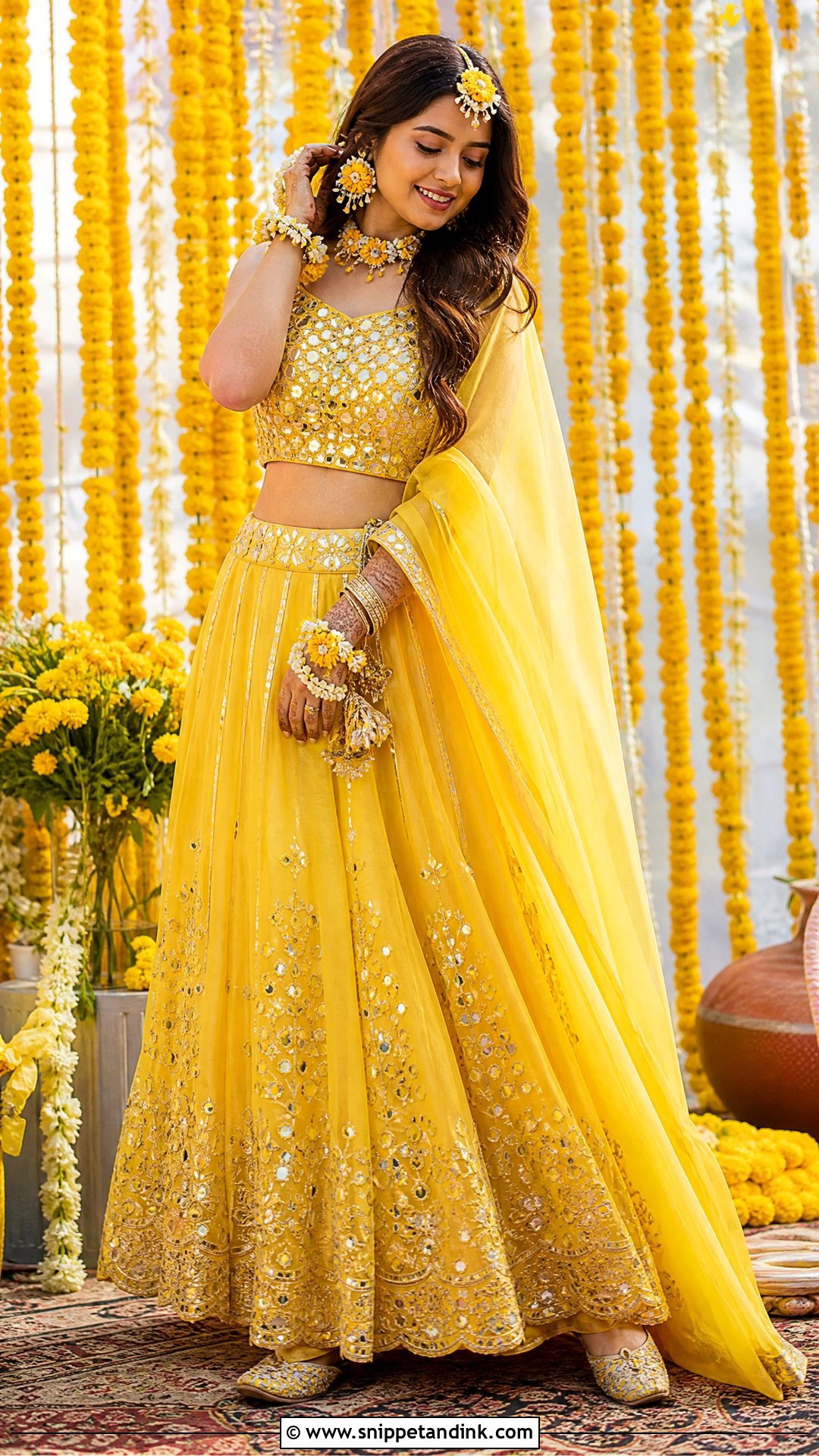
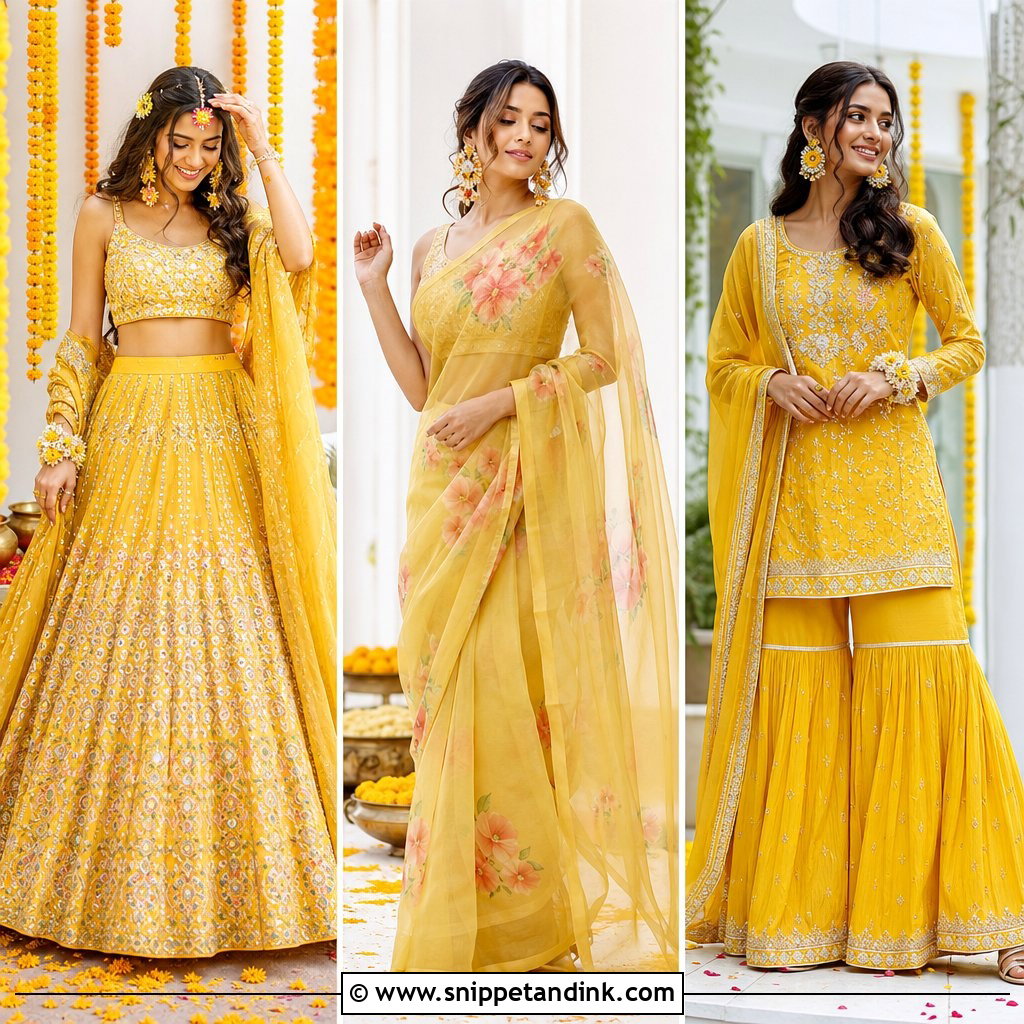
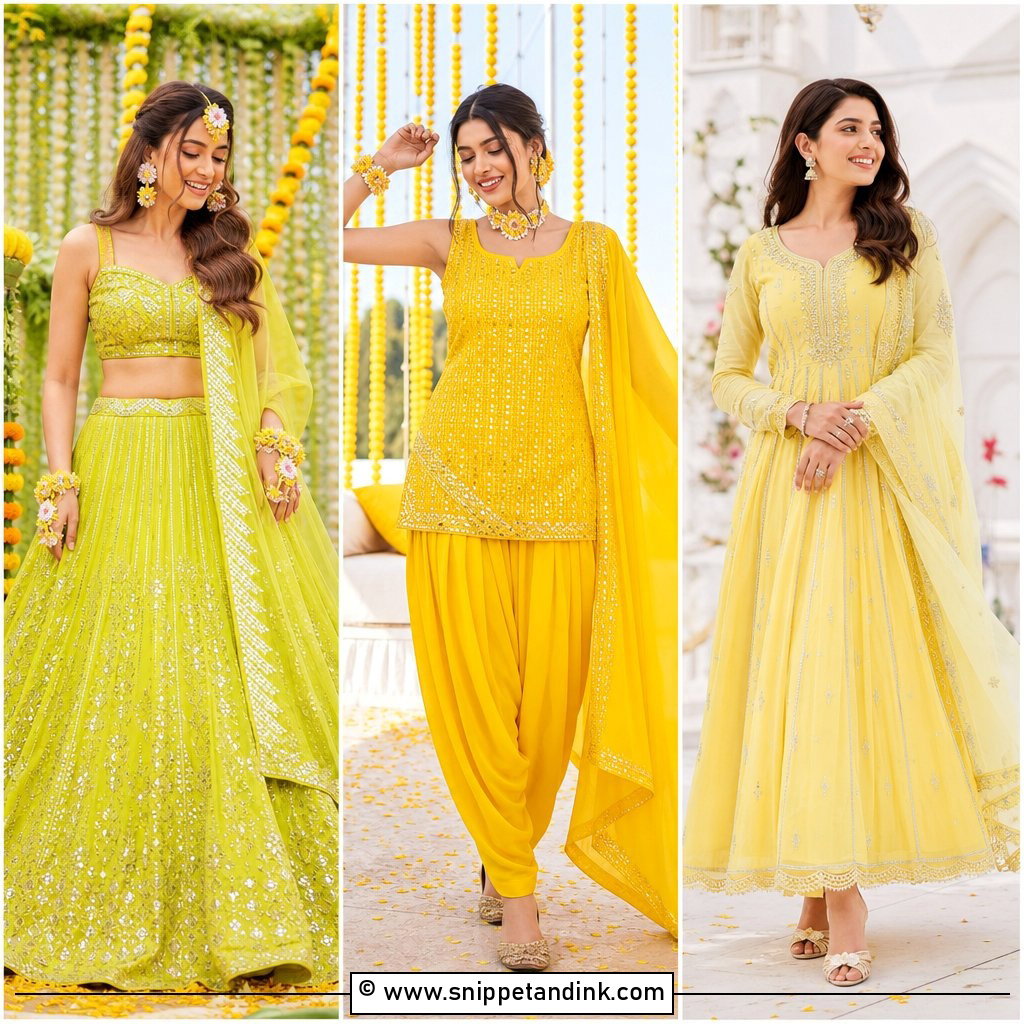
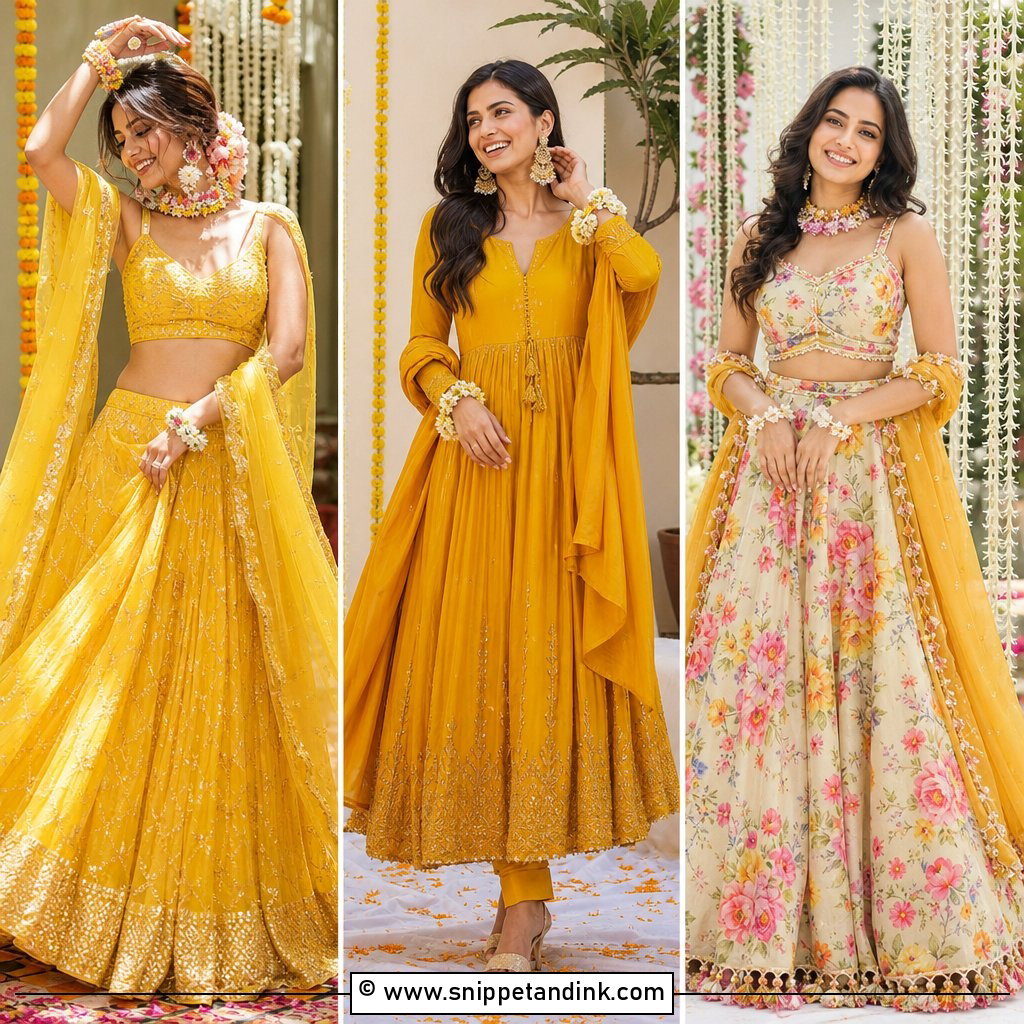
Yellow is the classic for a reason: when paste lands on it, it disappears into the colour instead of leaving blotches. I’d go for georgette, cotton silk, organza or chanderi, which feel festive but don’t trap heat when you’re sitting on a low chowki for an hour. Keep the blouse work to gota patti, small mirrors or thread embroidery; heavy zardozi holds paste in its grooves. Pin the dupatta at the shoulder and the waist so relatives can reach your arms without pulling it off. Floral jewellery, soft curls, dewy makeup and comfortable juttis finish it, and daytime outdoor ceremonies with marigold decor show it at its brightest.
2. Ivory Pithi Lehenga For Bride
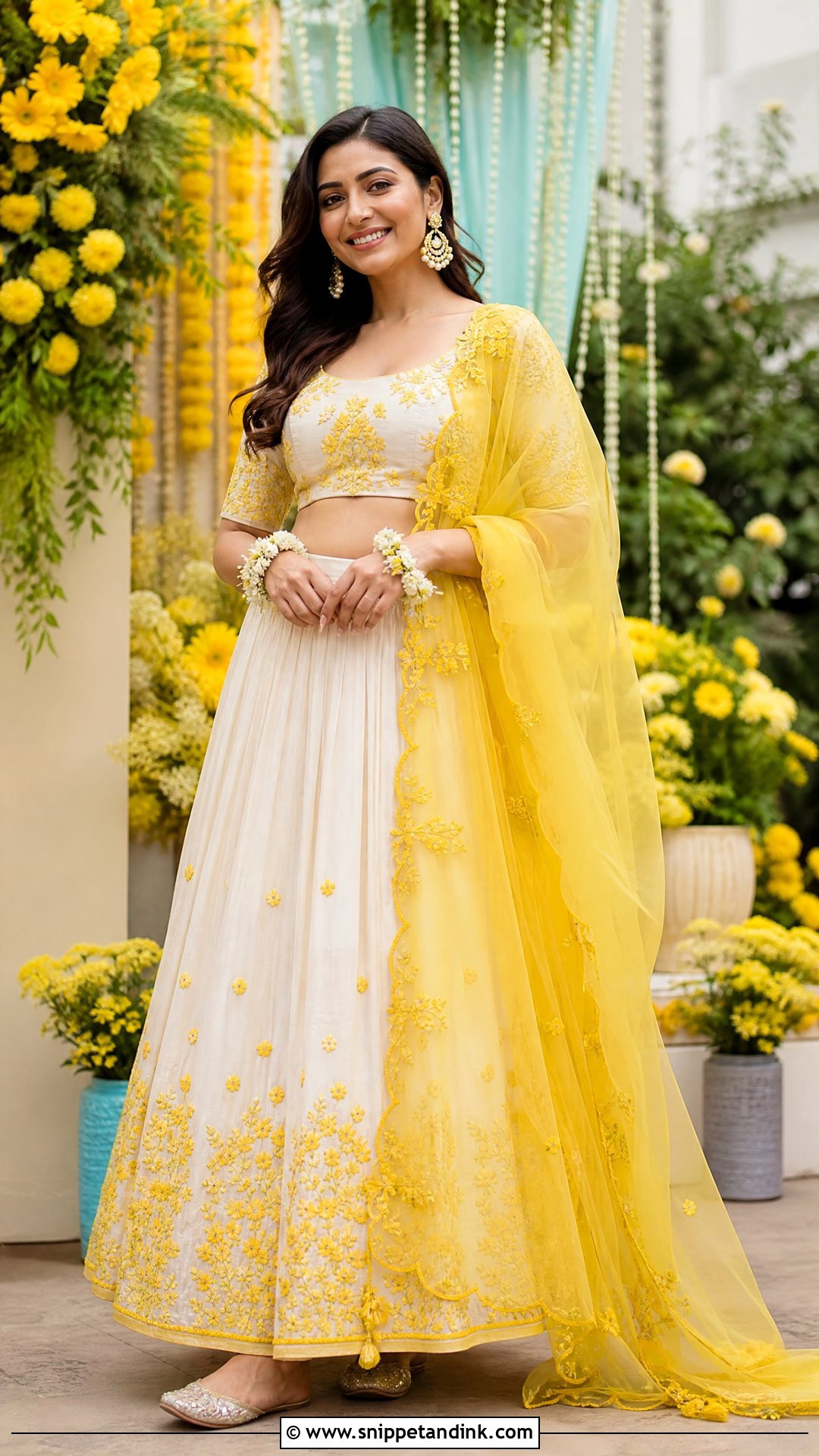
Ivory gives you contrast, and that contrast is both its charm and its risk. The turmeric shows vividly against it in photos, which is lovely for the candids, but those marks are the hardest to lift afterwards. I only recommend it if you’re happy for the outfit to be a one-time piece or to keep the stains as a memory. An ivory skirt with yellow thread work or a subtle gold border, a matching blouse and a yellow dupatta keep it tied to the ritual. Pearl earrings, floral bangles or a fresh flower maang tikka, plus nude sandals or embellished flats, keep it light.
3. Bandhani Pithi Saree For Bride
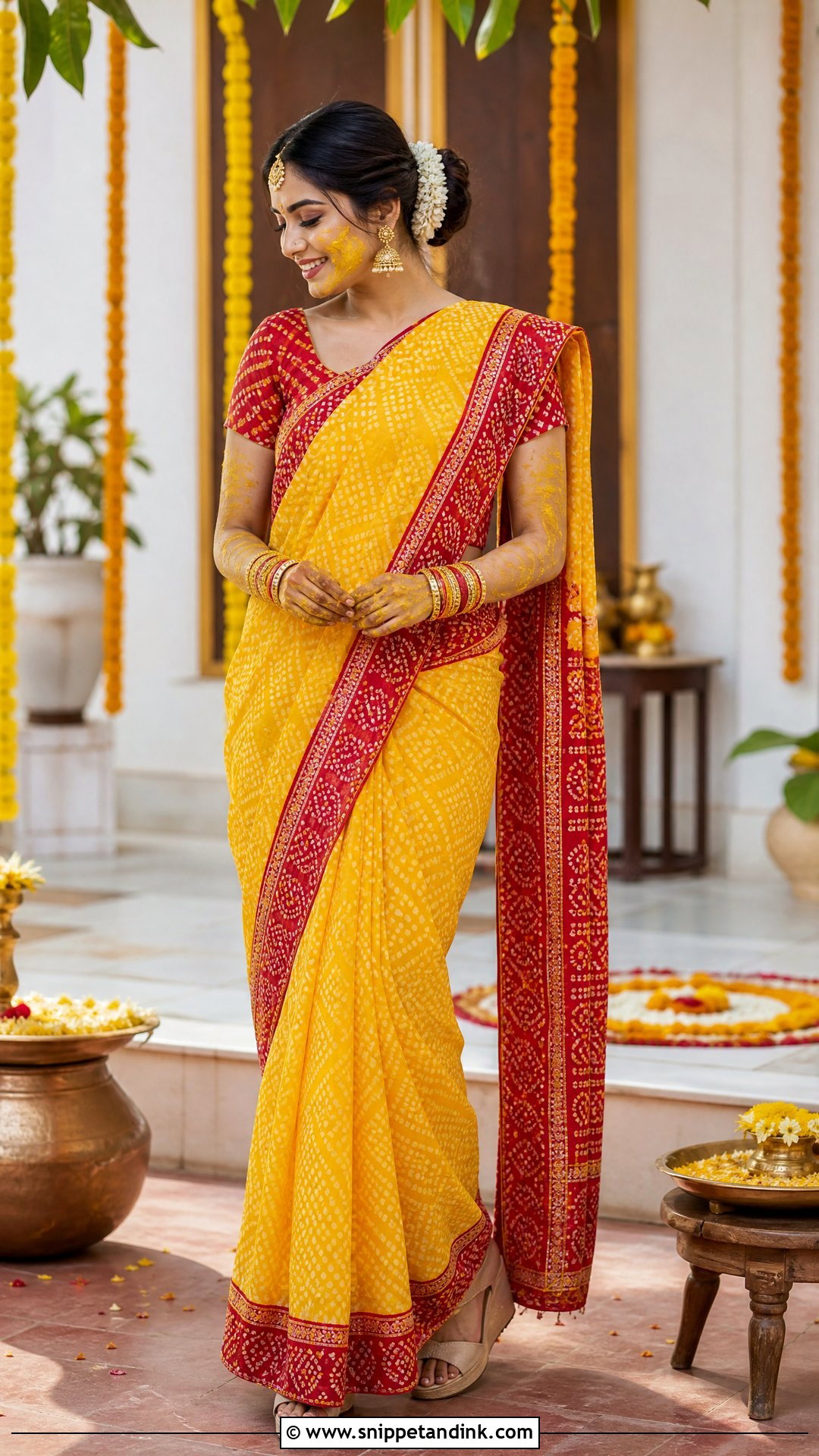
Bandhani carries Gujarati roots, so for a lot of families it feels right in a way a boutique lehenga doesn’t. Yellow, orange, red and pink tie-dye all read festive. I’d choose georgette, chiffon or cotton silk, which drape easily and let you sit cross-legged. One thing to know: Bandhani is often hand-dyed, and darker dyes can bleed when wet paste sits on them, so test a hidden corner with a damp cloth before the day. A contrast blouse in red, rani pink or green adds a bridal note, and a seedha pallu drape gives the traditional Gujarati look. Gold jhumkas, bangles, a flower-trimmed low bun and flat shoes complete it.
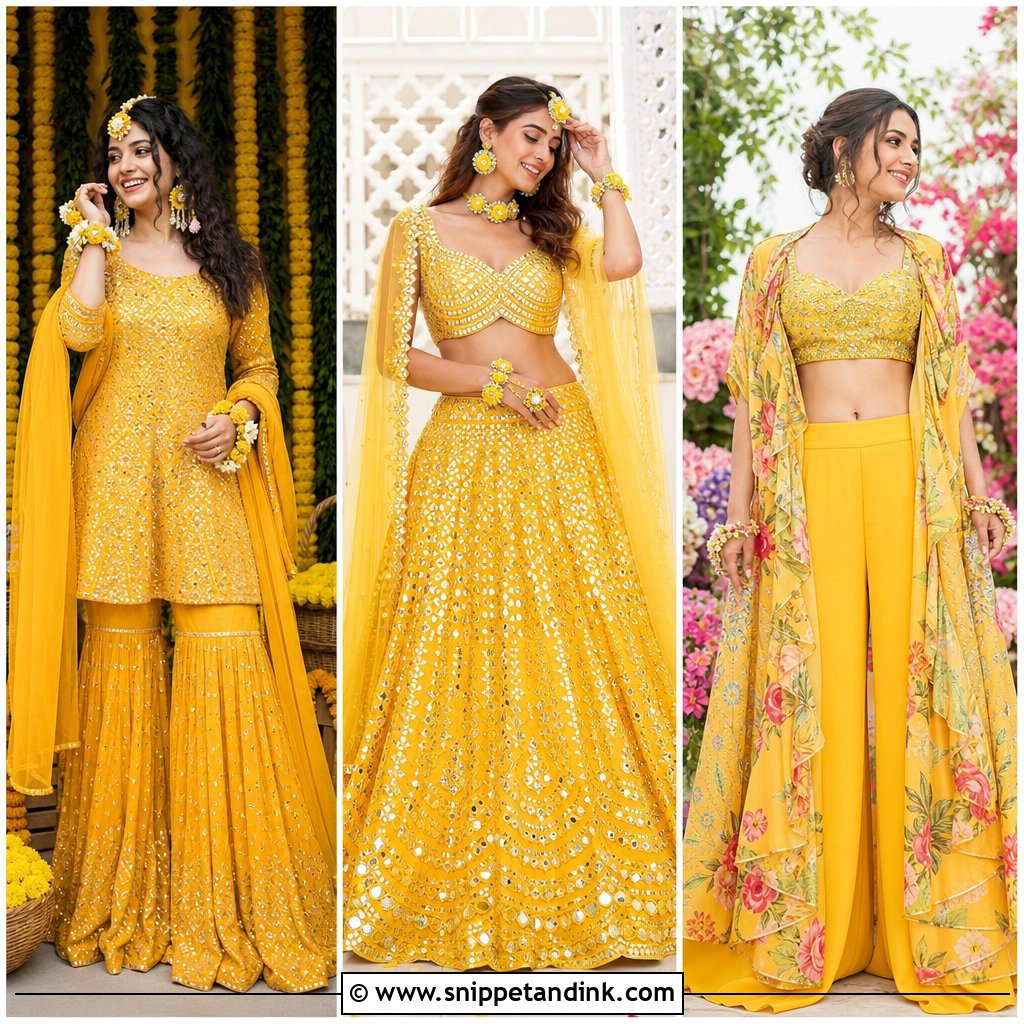
4. Yellow Sharara Pithi Outfit For Bride
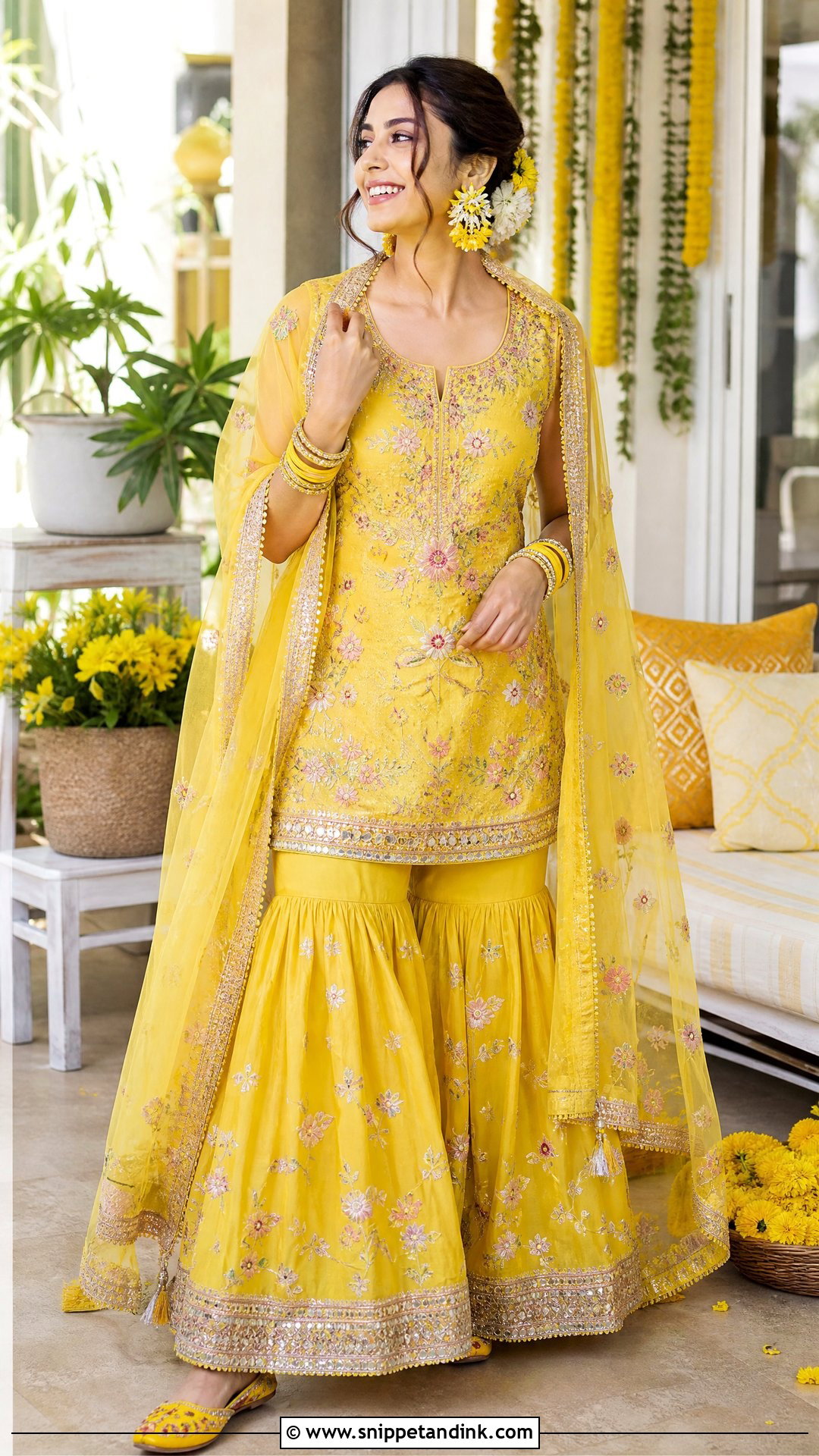
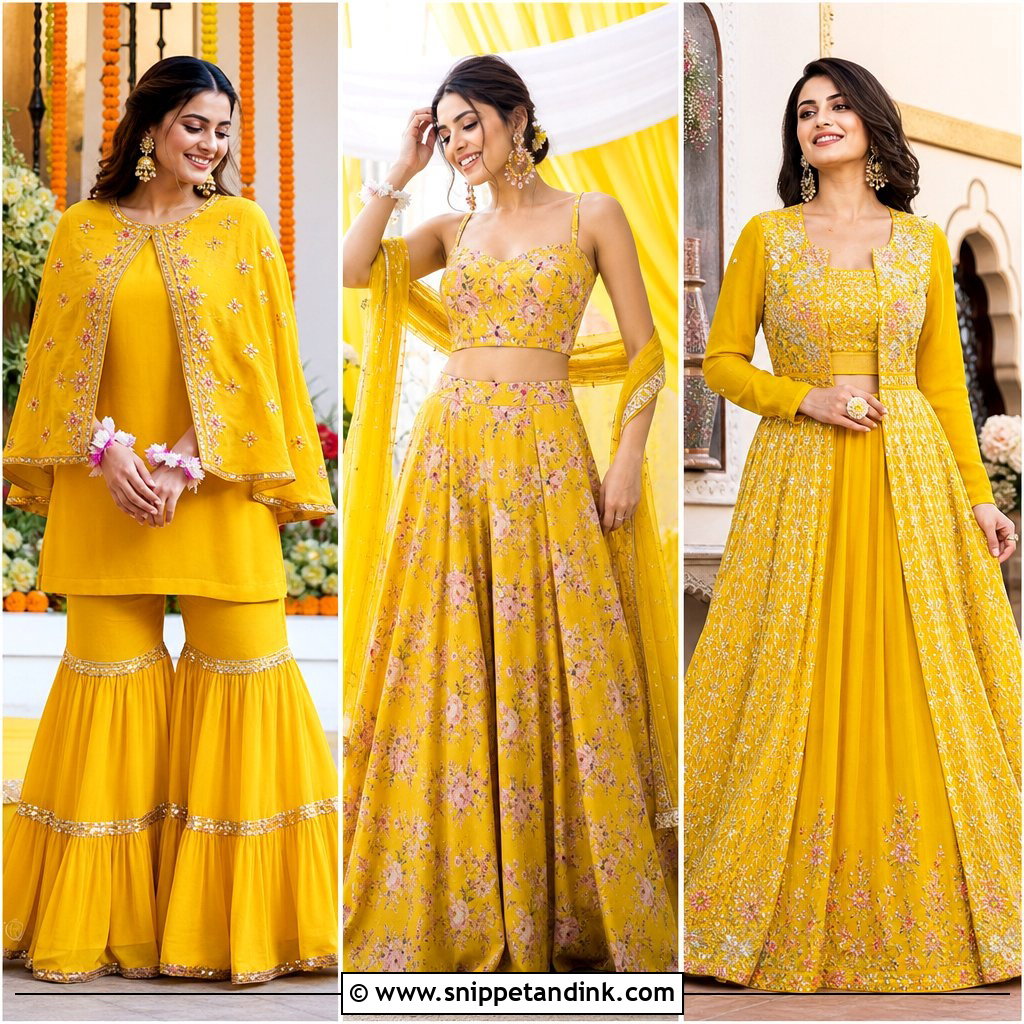
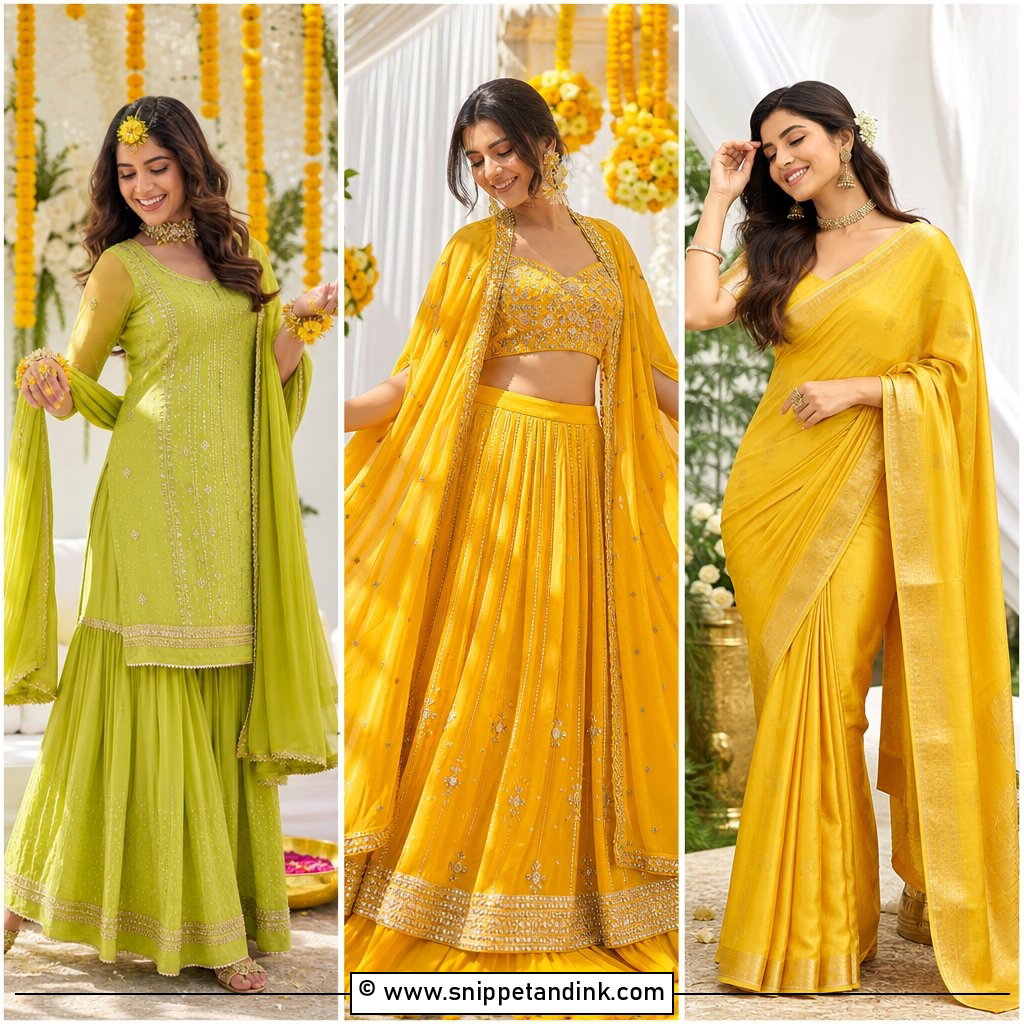
Shararas solve the biggest Pithi problem, which is sitting. The flared pants let you fold your legs, get up quickly to dance and move around without a heavy skirt pooling on the floor in paste. A short kurti with mirror work, gota or light embroidery keeps it bridal, and a sheer dupatta in yellow, peach or ivory softens it. Check the waistband: shararas sit at the waist, and a drawstring is far more forgiving than a zip if you’ll be eating and dancing all morning. Floral earrings, stacked bangles and embroidered juttis finish it. Home ceremonies and garden functions suit it.
5. Yellow Gharara Pithi Outfit For Bride
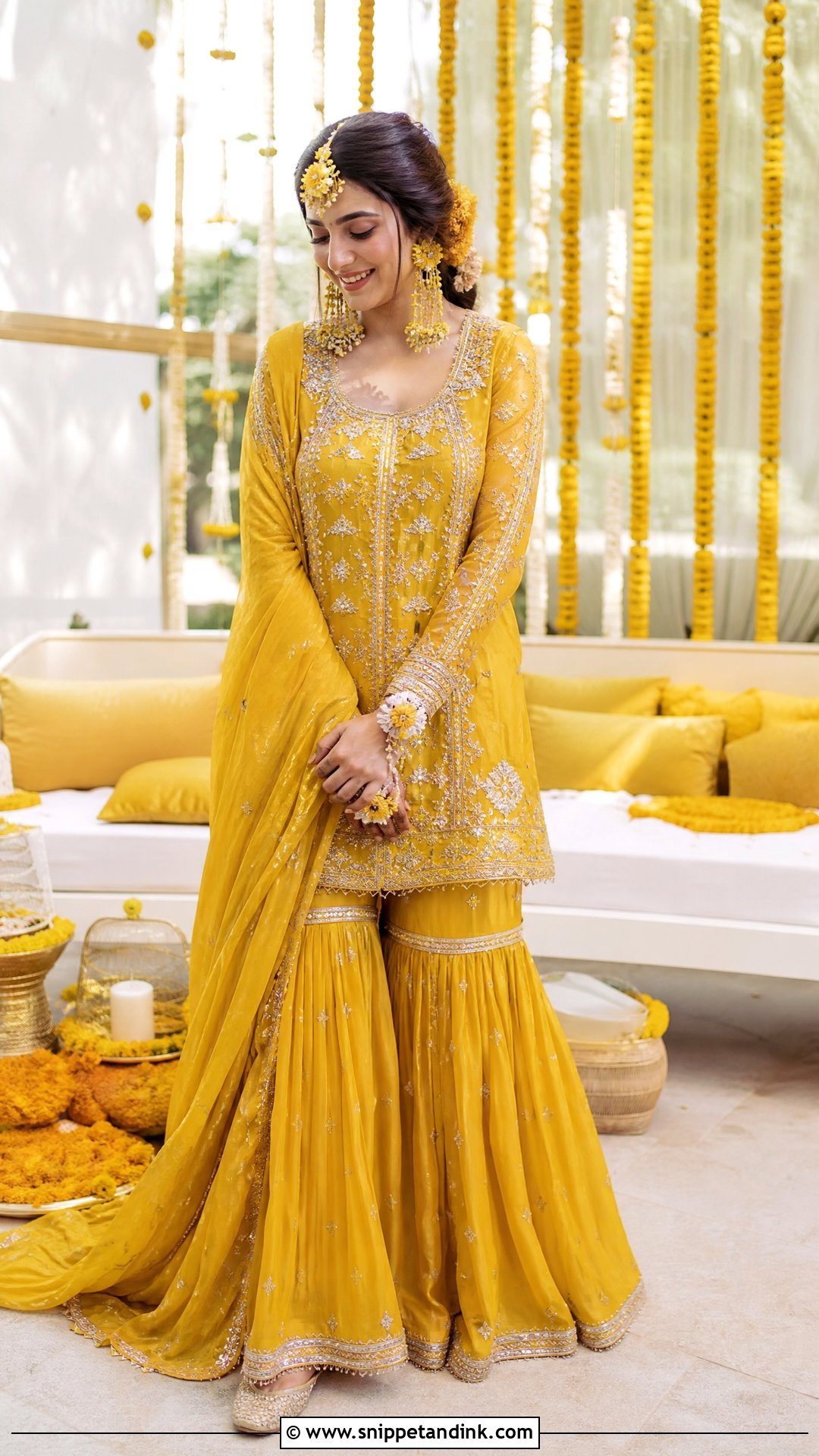
A yellow gharara outfit looks more formal than a sharara because of the gathered knee and flared hem, and it photographs with real presence. That knee seam is the thing to fit carefully, since it sits where you bend; too tight and you can’t sit cross-legged comfortably. Pair a kurti with zari, mirror work or fine sequins with a soft dupatta that frames the face. Passa-style earrings, floral haath phool, a soft braid and embellished flats complete it. Mustard, lemon or marigold all glow in bright daylight among flowers.
6. Floral Print Pithi Lehenga For Bride
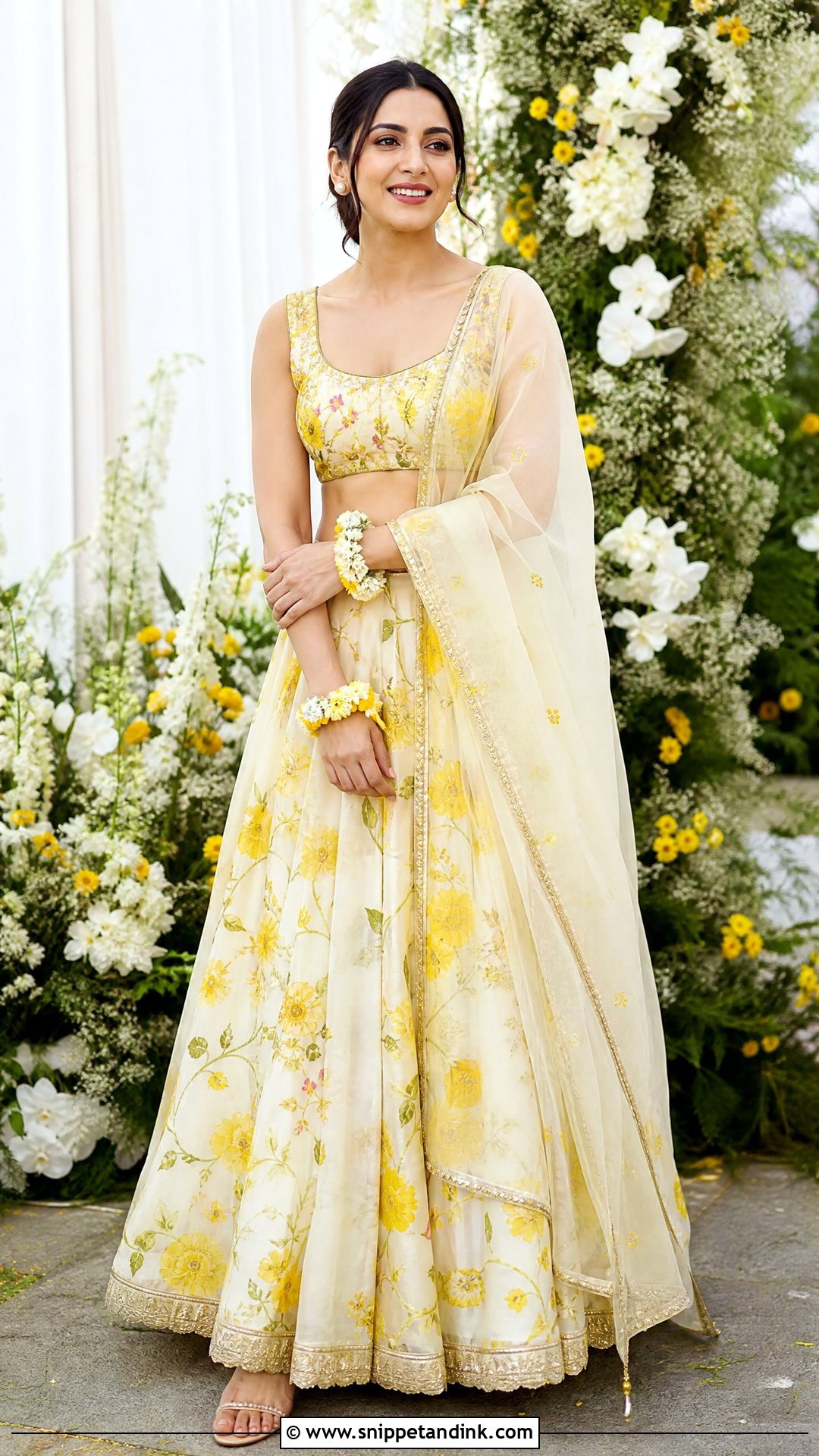
Prints do a job embroidery can’t: they hide paste marks almost completely. A floral lehenga in yellow, ivory, peach or pink motifs with a matching or contrast blouse looks soft and modern, and either a printed or plain organza dupatta keeps it from looking busy. Fresh floral jewellery, pearl studs, bangles and simple sandals are all it needs. I’d keep the print medium-scale. Very small prints turn to texture from a distance, and very large ones can overwhelm a petite bride. Outdoor setups, poolside venues and garden backdrops suit it.
7. Yellow Kurta Set Pithi Outfit For Bride
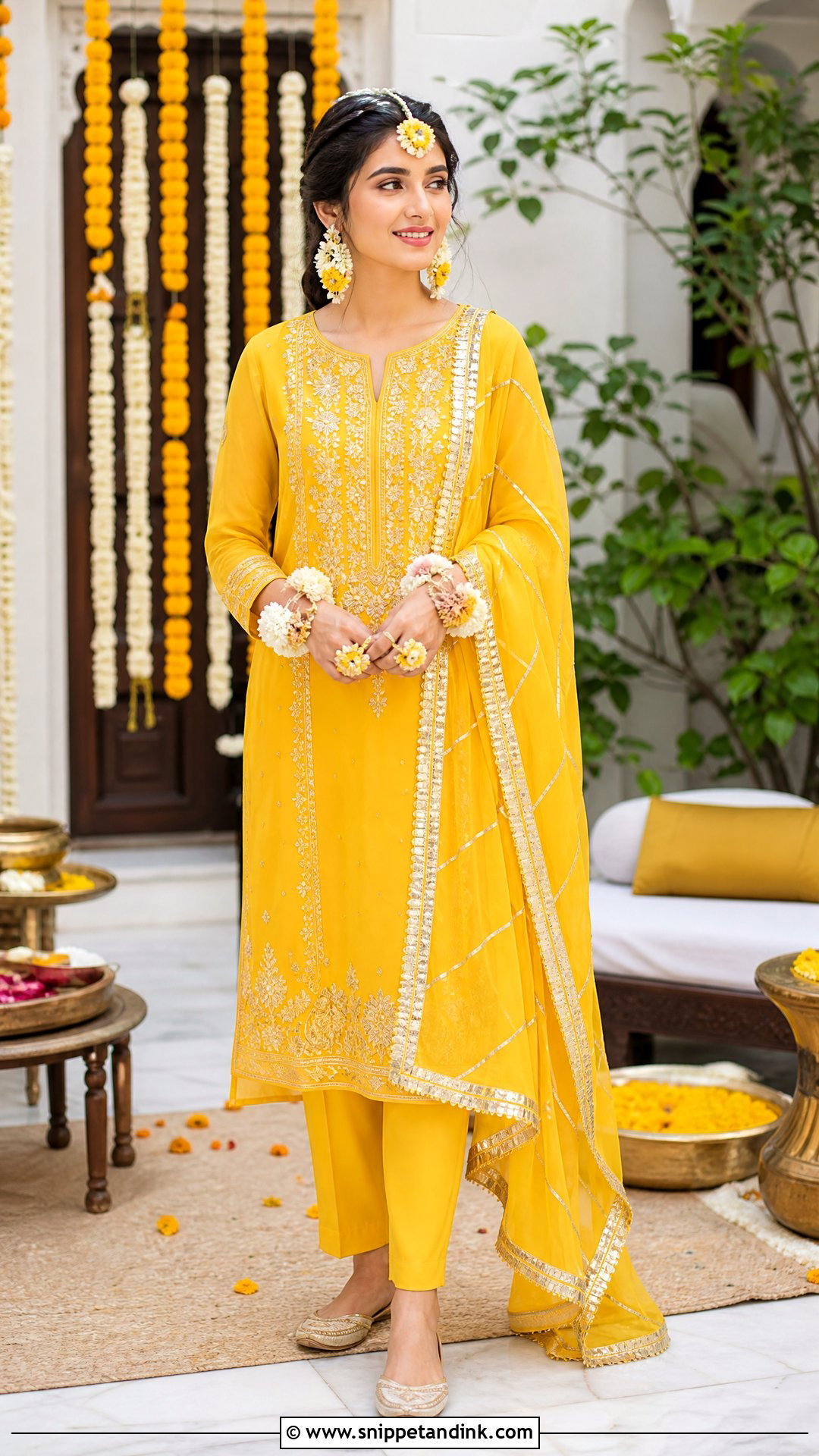
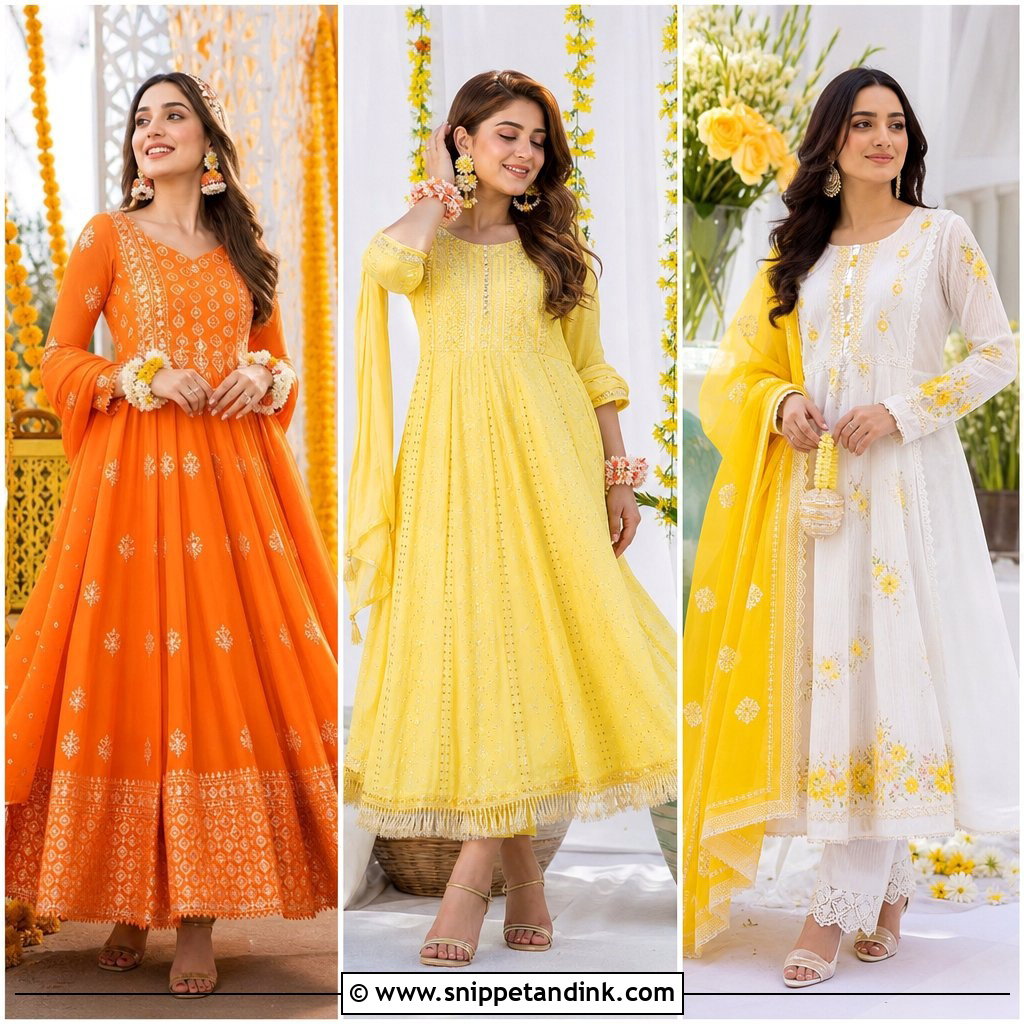
If your family’s tradition is generous with the paste, a kurta set is the outfit I’d hand you. A straight or A-line kurta with light embroidery, slim pants, palazzos or churidar, and a dupatta with a gota border that makes it read bridal. It’s the easiest to wash and the most likely to be worn again for festivals. Fresh flower jewellery, minimal makeup, a sleek braid and juttis complete it. Intimate home ceremonies suit its quiet style.
8. White Kurta With Yellow Dupatta Pithi Outfit For Bride
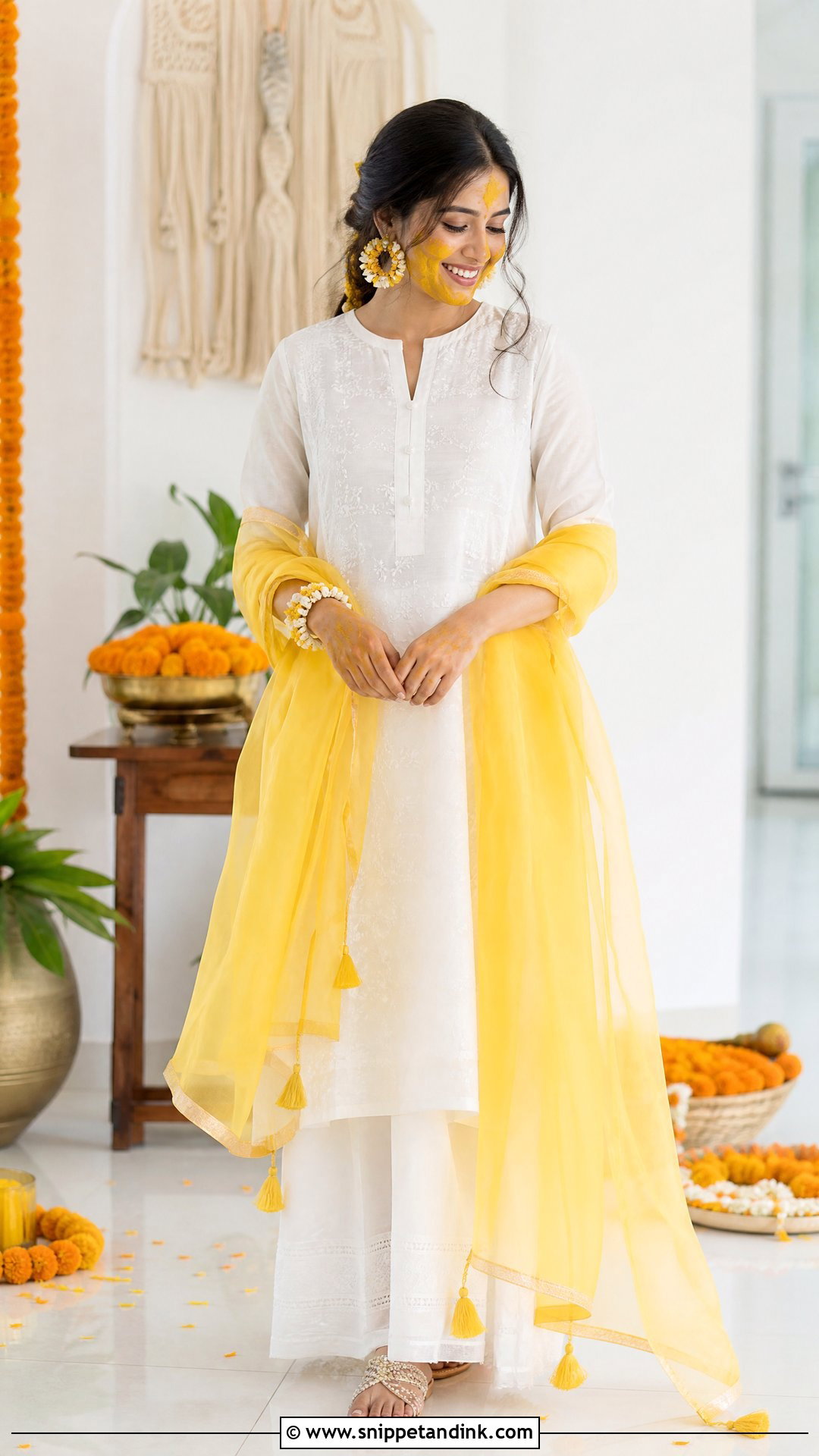
A white kurta with a yellow dupatta is simple and meaningful: the white base shows the haldi, the dupatta ties it to the ritual. Cotton, mulmul, chanderi and linen breathe, which matters when you’re sitting in the sun. Mulmul goes see-through when wet, so wear a slip or a cotton camisole underneath. White pants or palazzos and a light dupatta with tassels, gota edging or small mirrors complete it, with yellow floral earrings, bangles and open-toe flats. It’s easy to look after and still looks like an occasion in photos.
9. Orange Pithi Lehenga For Bride
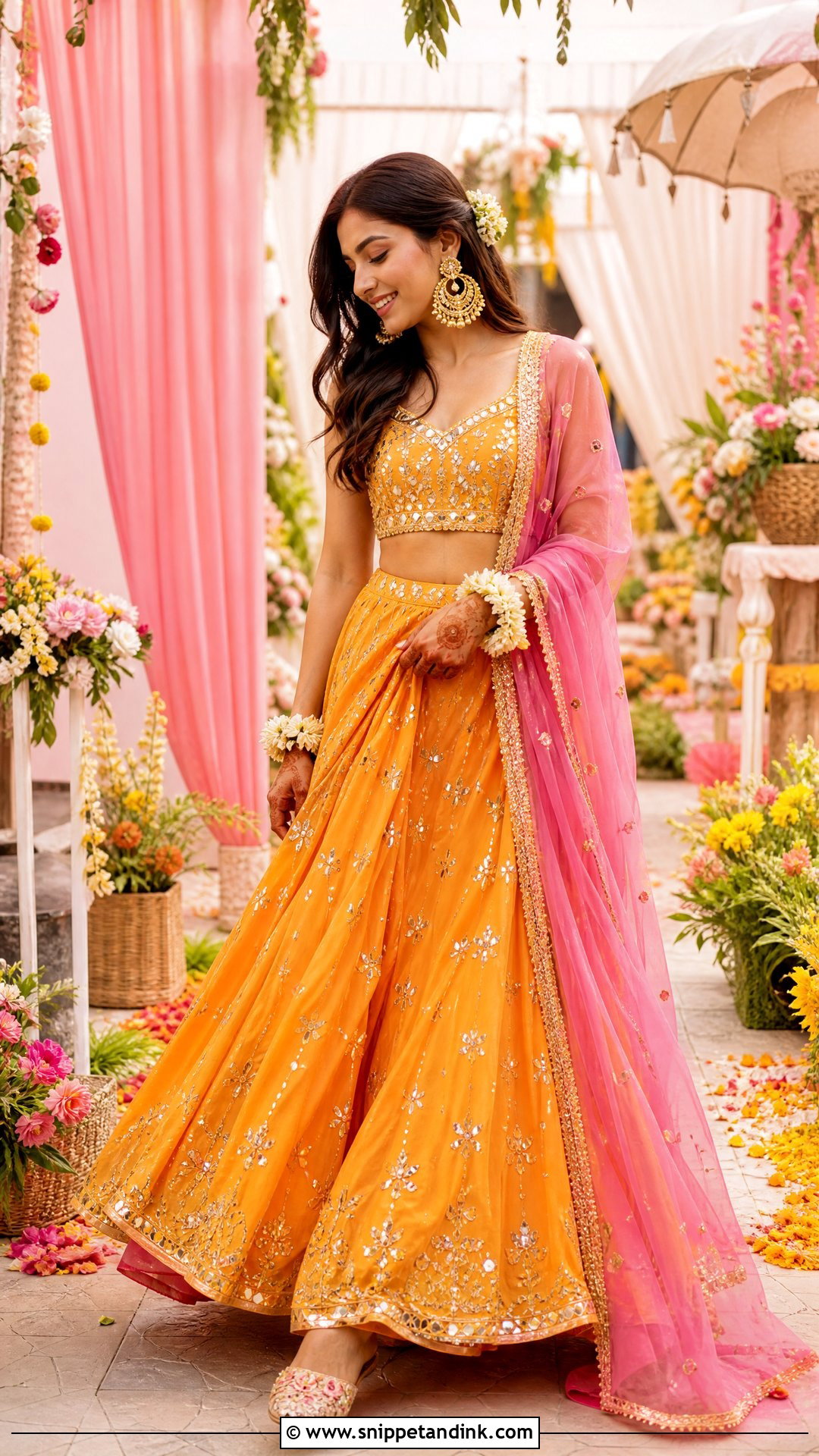
Orange is my suggestion for brides whose guests have all been asked to wear yellow. Marigold orange, mango, tangerine and saffron stand out against a sea of yellow while still feeling warm and auspicious. A light skirt with mirror work or thread embroidery, a matching blouse or a contrast pink dupatta, and it sits right at home with marigolds and brass. Gold earrings, flower bangles, soft waves and embroidered flats finish it. Deep saffron can pull warm skin slightly sallow, so try the shade near your face before choosing.
10. Pink And Yellow Pithi Outfit For Bride
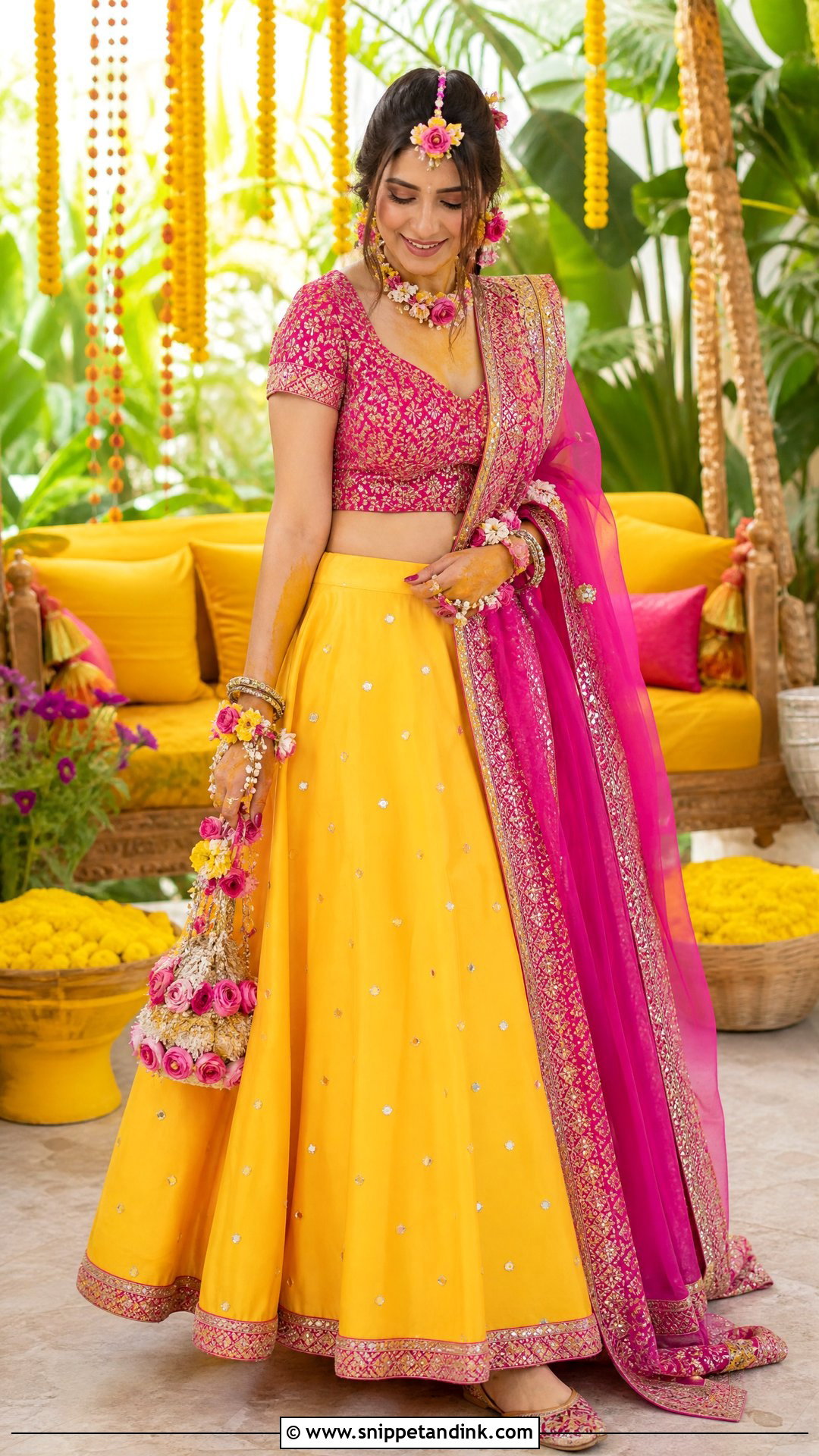
Pink and yellow is a cheerful pairing, and the balance between the two decides how it reads. Mostly yellow with a rani pink dupatta stays traditional; a pink blouse with a yellow skirt feels younger; a printed set blends both. Keep the embroidery light, with gota patti, mirror borders or small florals. I’d keep the pink in the dupatta or blouse rather than the skirt, because the skirt takes the most paste and pink shows turmeric as an orange smear. Pink floral jewellery, gold bangles and juttis finish it.
11. Yellow Saree Pithi Outfit For Bride
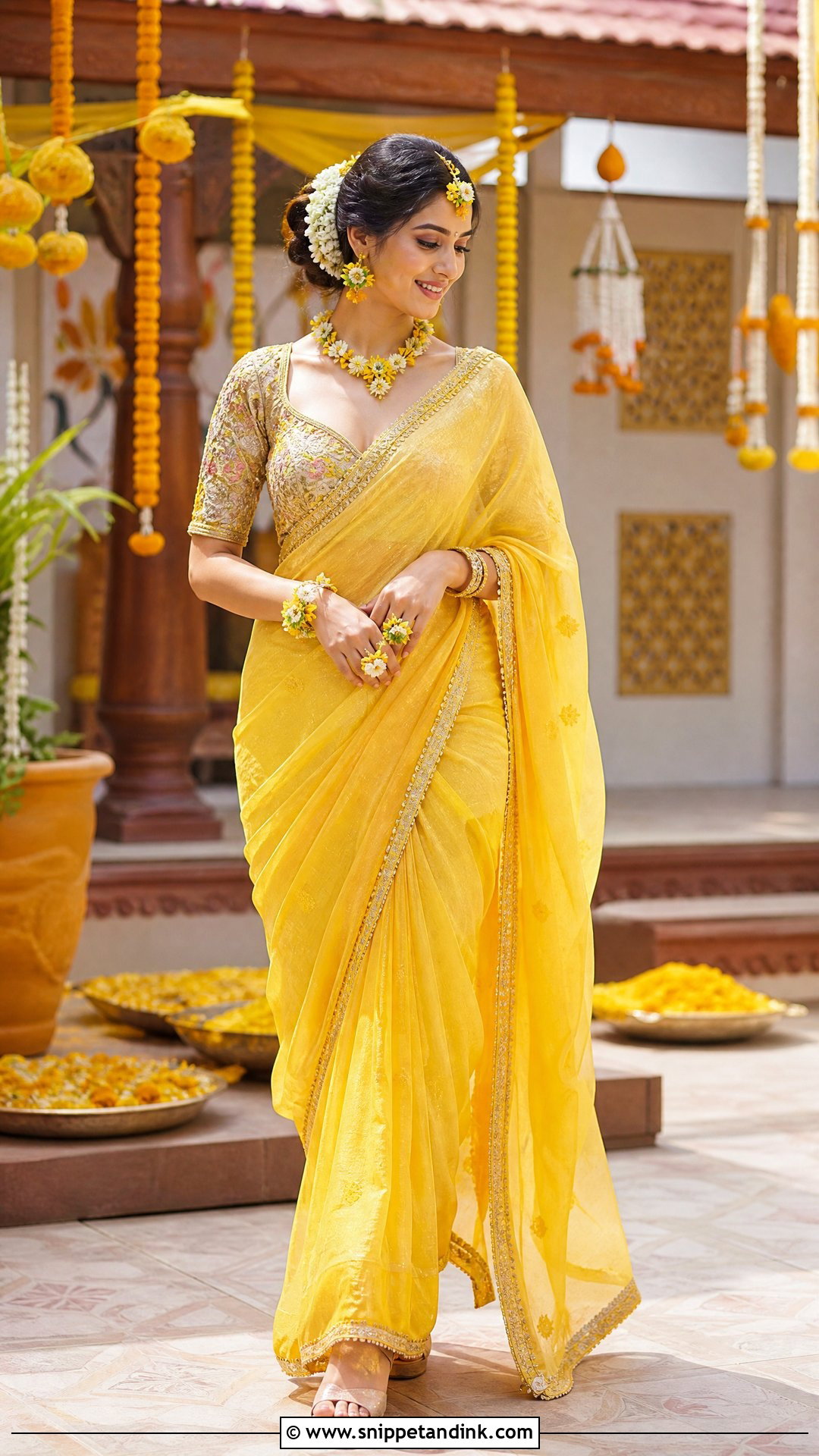
A yellow saree is graceful and personal, but it needs pinning if you’ll be sitting on the floor and getting up repeatedly. I set the pleats with two or three safety pins inside the waistband and pin the pallu at the shoulder so it can’t slide into the paste bowl. Lightweight silk, georgette, organza or chiffon drapes comfortably. A sleeveless, short-sleeve or embroidered blouse changes the mood; add a gota border, floral jewellery and a flower-decorated bun for a bridal finish. Wedges hold the drape without sinking into lawns. Home and outdoor settings both suit it.
12. Organza Pithi Saree For Bride
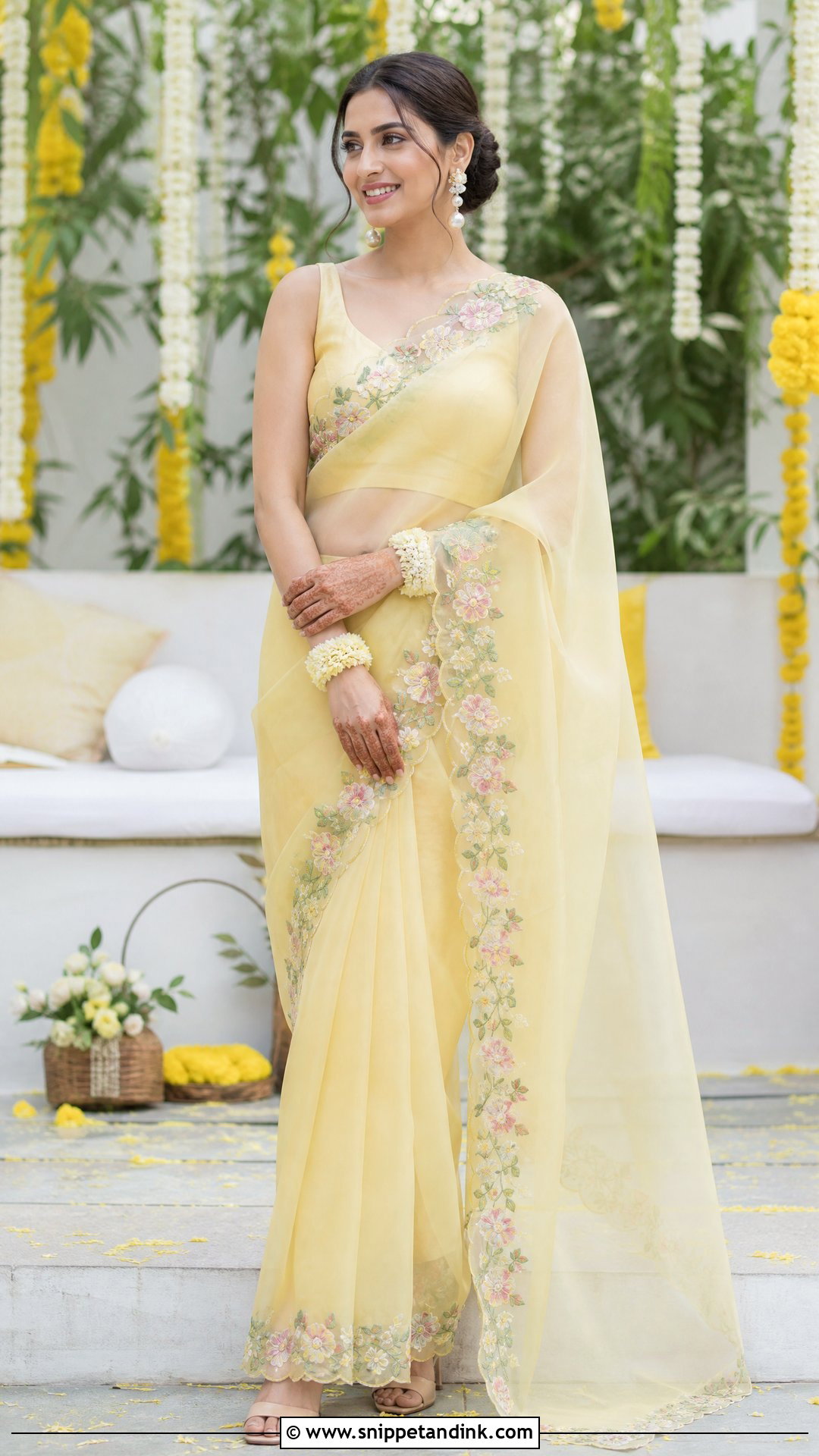
Organza has natural volume, which gives a saree a soft, airy shape without weight. Yellow, ivory, peach and pastel orange all suit daytime rituals, with floral embroidery, scalloped edges or a subtle gota border for a bridal feel. Organza is crisp, though, and it creases sharply where you sit, so I’d take the formal portraits before the paste comes out and accept the creases afterwards. A fitted, comfortable blouse balances the volume. Pearl earrings, floral bangles, soft makeup and a neat bun or half-up style complete it.
13. Mirror Work Pithi Lehenga For Bride
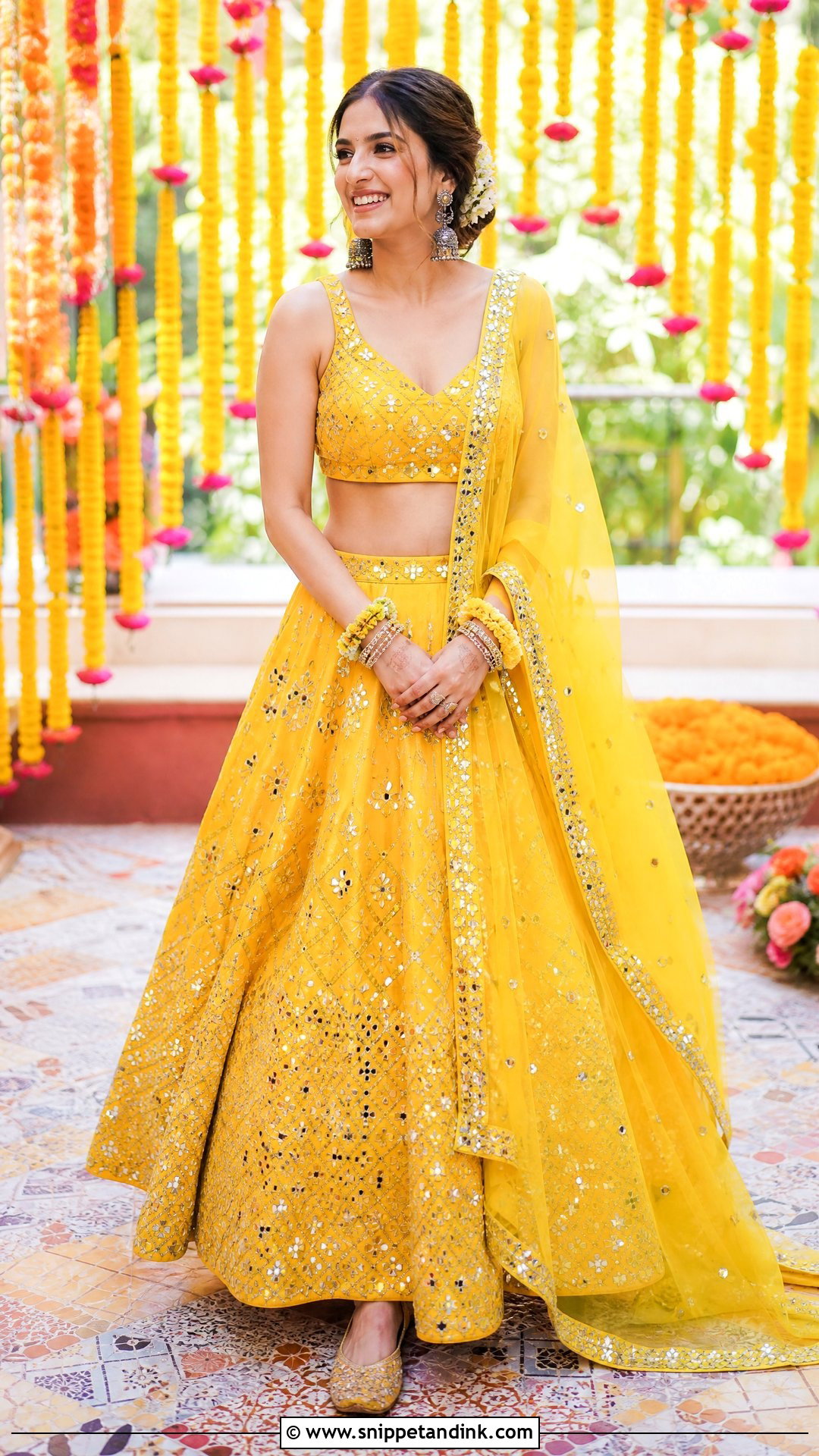
Scattered mirror work sparkles in daylight without the weight of dense embroidery. Yellow, mustard, ivory or orange lehengas with small mirrors spaced out stay comfortable; dense mirror panels are heavy and the edges can scratch your arms when you dance. Paste also catches around each mirror’s thread rim, so a quick wipe with a damp cloth straight after the ritual saves hours of cleaning later. A simple blouse and light dupatta balance the shine. Oxidised jewellery, floral accents or gold bangles, and juttis, finish it.
14. Gota Patti Pithi Outfit For Bride
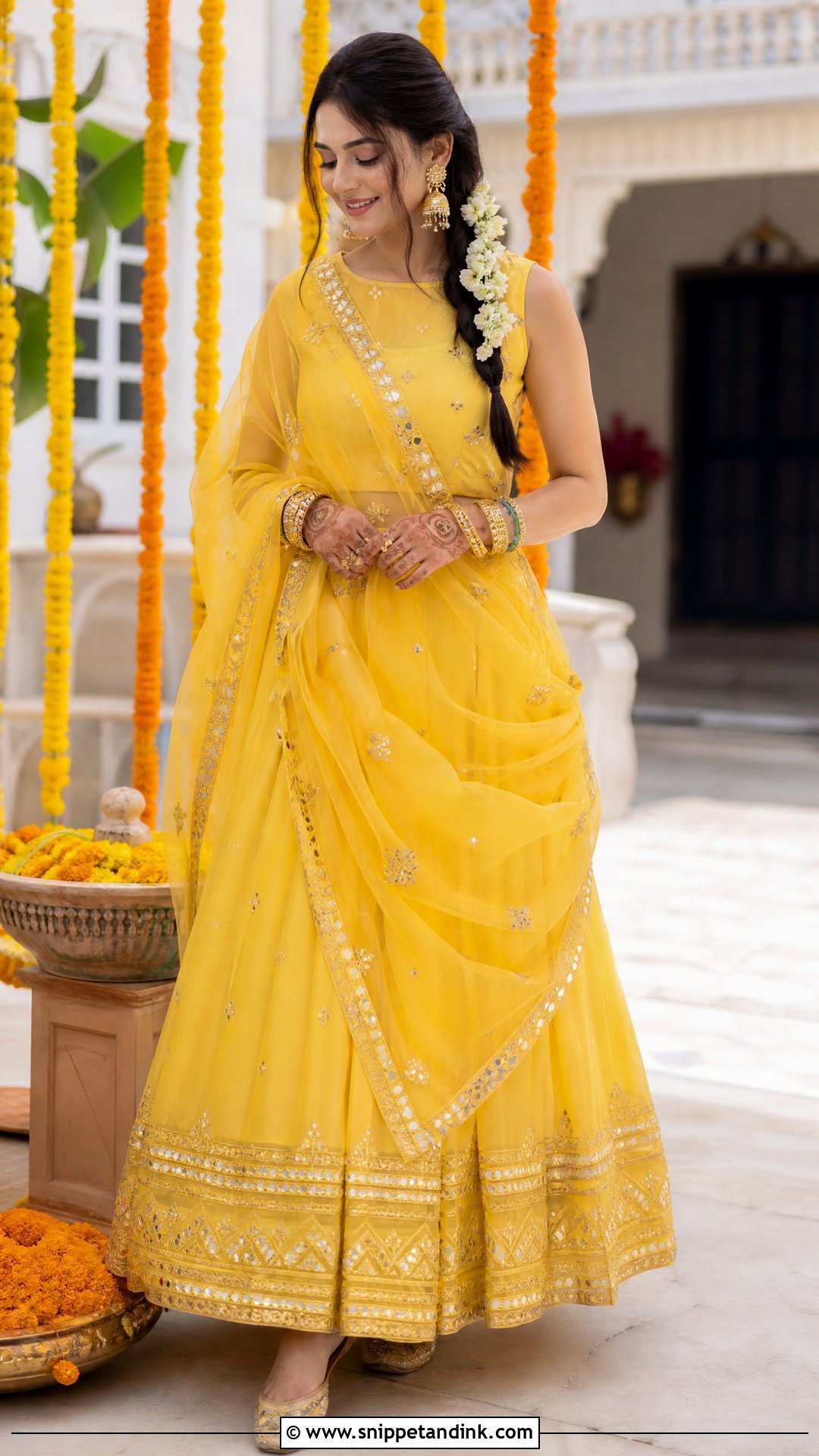
A gota patti Pithi outfit has that traditional shine without the weight of heavier embroidery. You can put light gota work on a lehenga, sharara, kurta set or saree, around the border, neckline, sleeves and dupatta. Yellow and orange are classic, and ivory with gold gota is softer. Older-style gota used real metal and tarnished; most today is a metallic polyester ribbon, which handles washing far better, so ask which one you’re buying. Gold jhumkas, a flower-trimmed braid, bangles and embellished flats finish it.

15. Pastel Pithi Lehenga For Bride
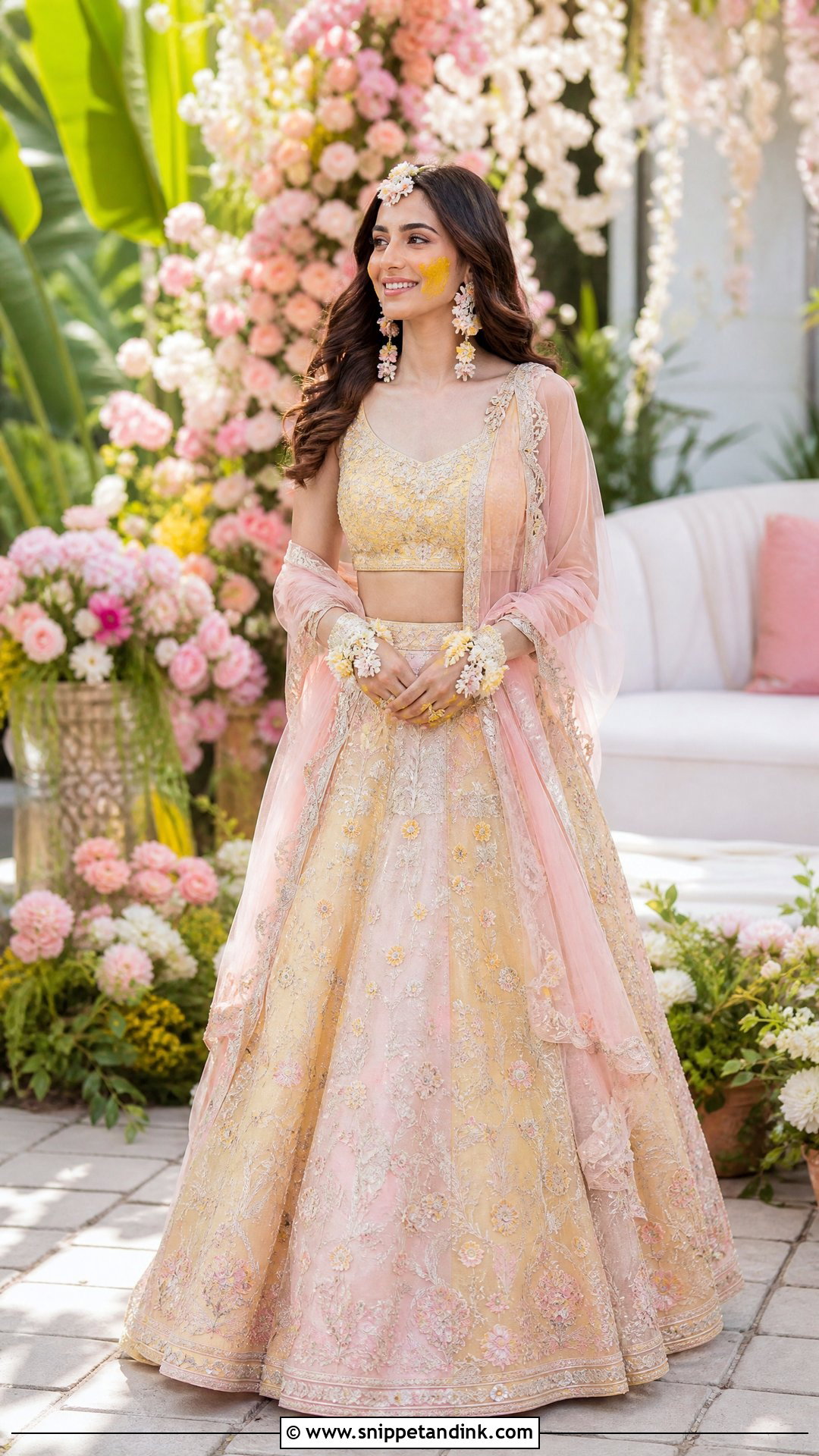
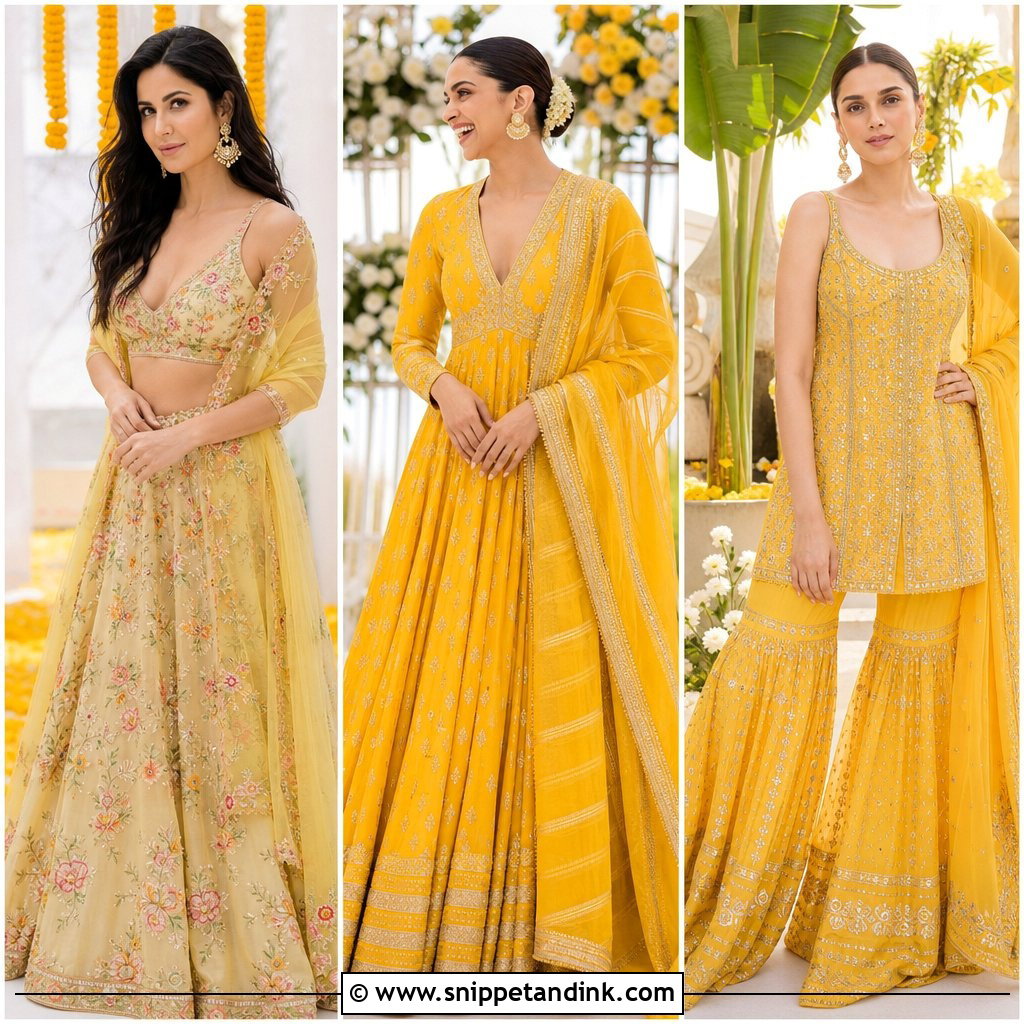
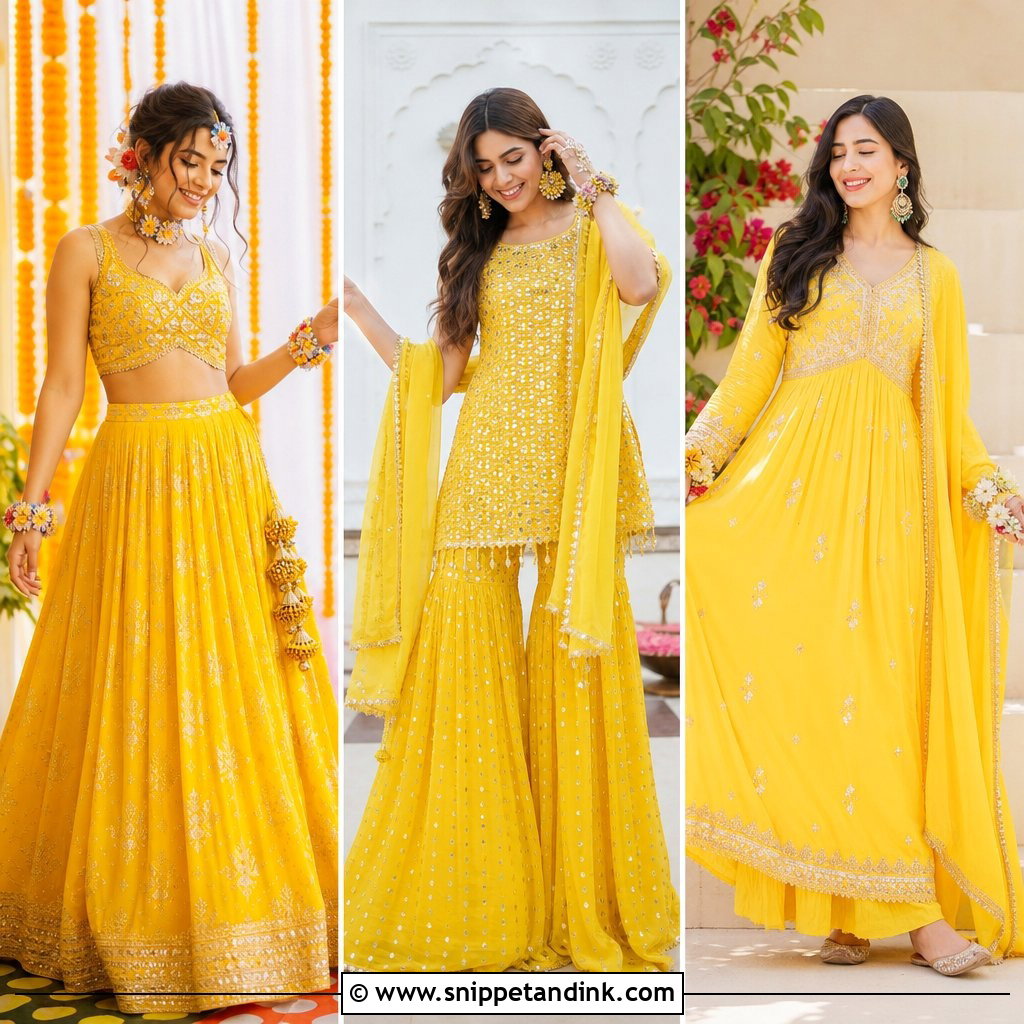
Pastels can feel festive if the yellow comes in through the styling. Butter yellow, blush, mint, peach and powder blue all work with yellow flowers and gold details. Choose light embroidery, a floral print or subtle mirror work, and let a yellow dupatta or floral jewellery link it to the ritual. Pale pastels show turmeric clearly, much like ivory does, so plan on stains or choose butter yellow, which hides them best. Pearl earrings, soft waves and neutral sandals complete it, and it fits airy garden ceremonies and contemporary decor.
16. Green Pithi Outfit For Bride
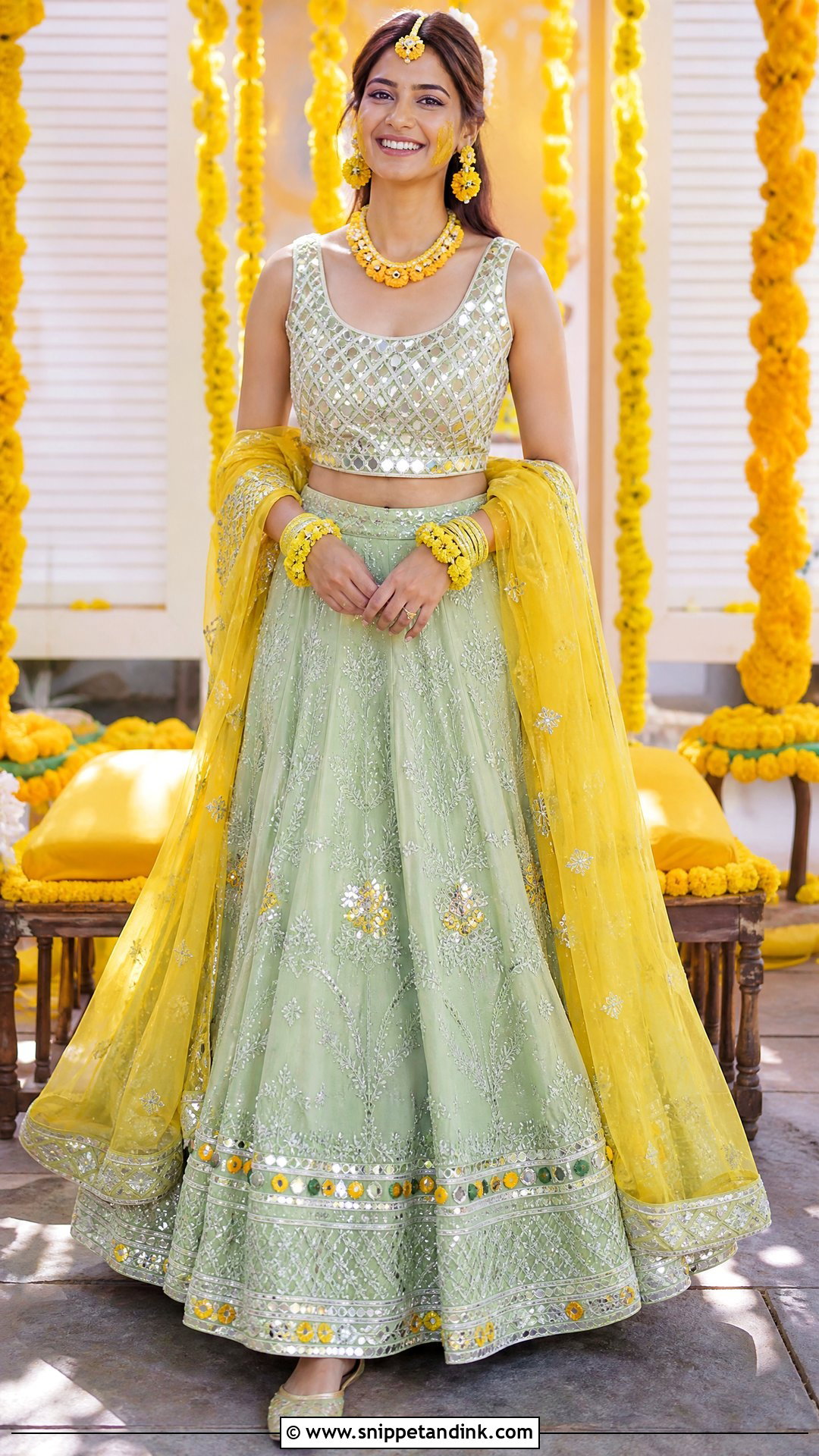
Green is the most refreshing departure from yellow, and lime, pista, parrot and mehendi green all hold up in daylight. Choose a lehenga, sharara or kurta set with yellow accents, mirror work or floral embroidery so it still feels like a Pithi outfit. A yellow dupatta or marigold jewellery pulls the colour story together. Turmeric on green leaves a brownish mark, so prints or embroidery near the hem help disguise it. Glowing skin, soft lips and defined eyes, plus juttis or block heels, complete it. Against yellow decor it makes the bride easy to spot.
17. Red And Yellow Pithi Saree For Bride
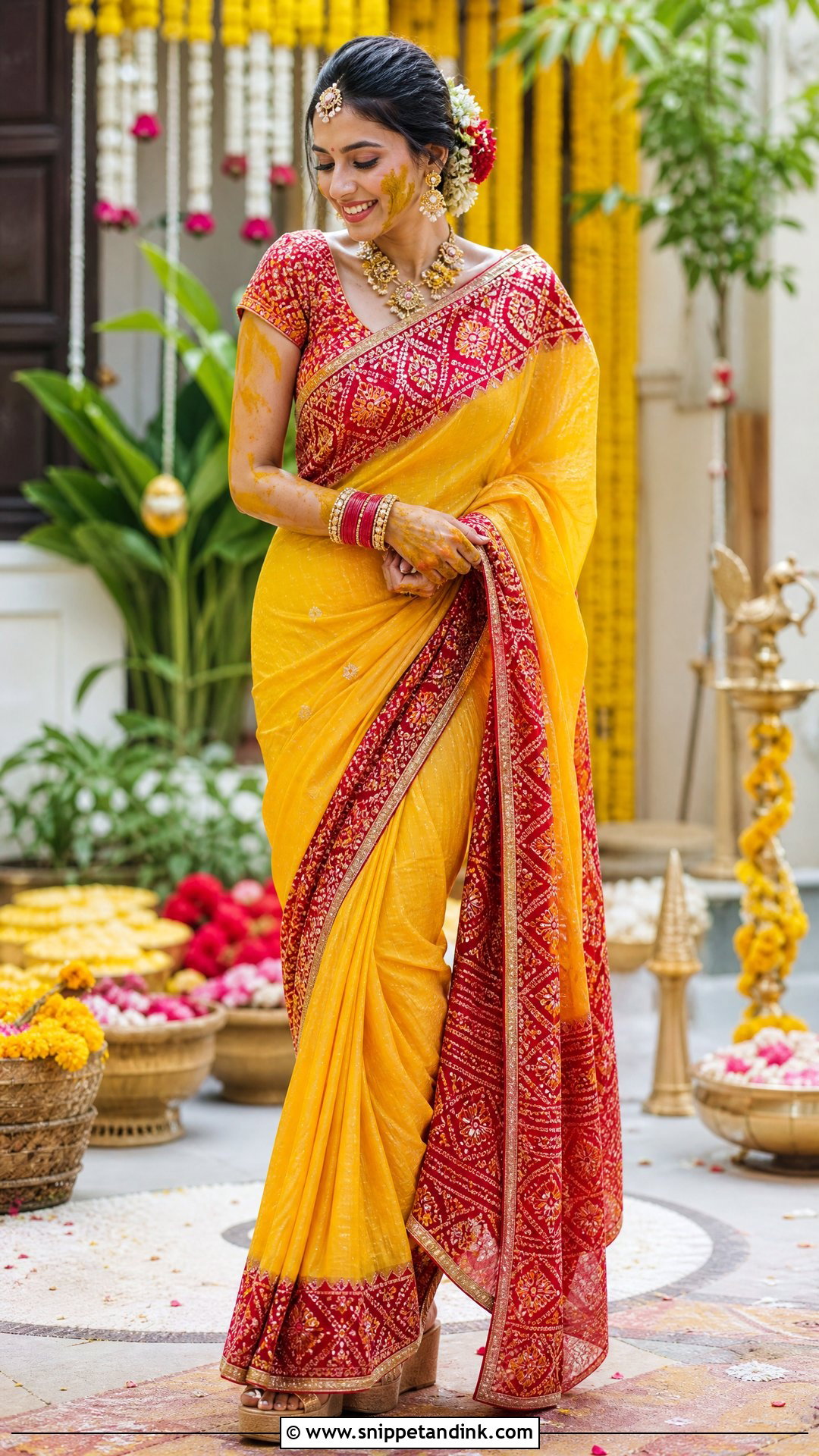
A red and yellow Pithi saree echoes the colours many Gujarati and North Indian brides wear at the wedding itself, which is part of its appeal. Choose a yellow saree with a red border, a Bandhani print or a light silk with contrast edging, and a red blouse for a stronger bridal note. Red dyes on cheaper silks can run if paste and water soak the border, so ask about colourfastness before you buy. Gold jewellery, red bangles, a flower bun and comfortable wedges complete it, and it connects neatly to the rest of the bridal wardrobe.
18. Yellow Anarkali Pithi Outfit For Bride
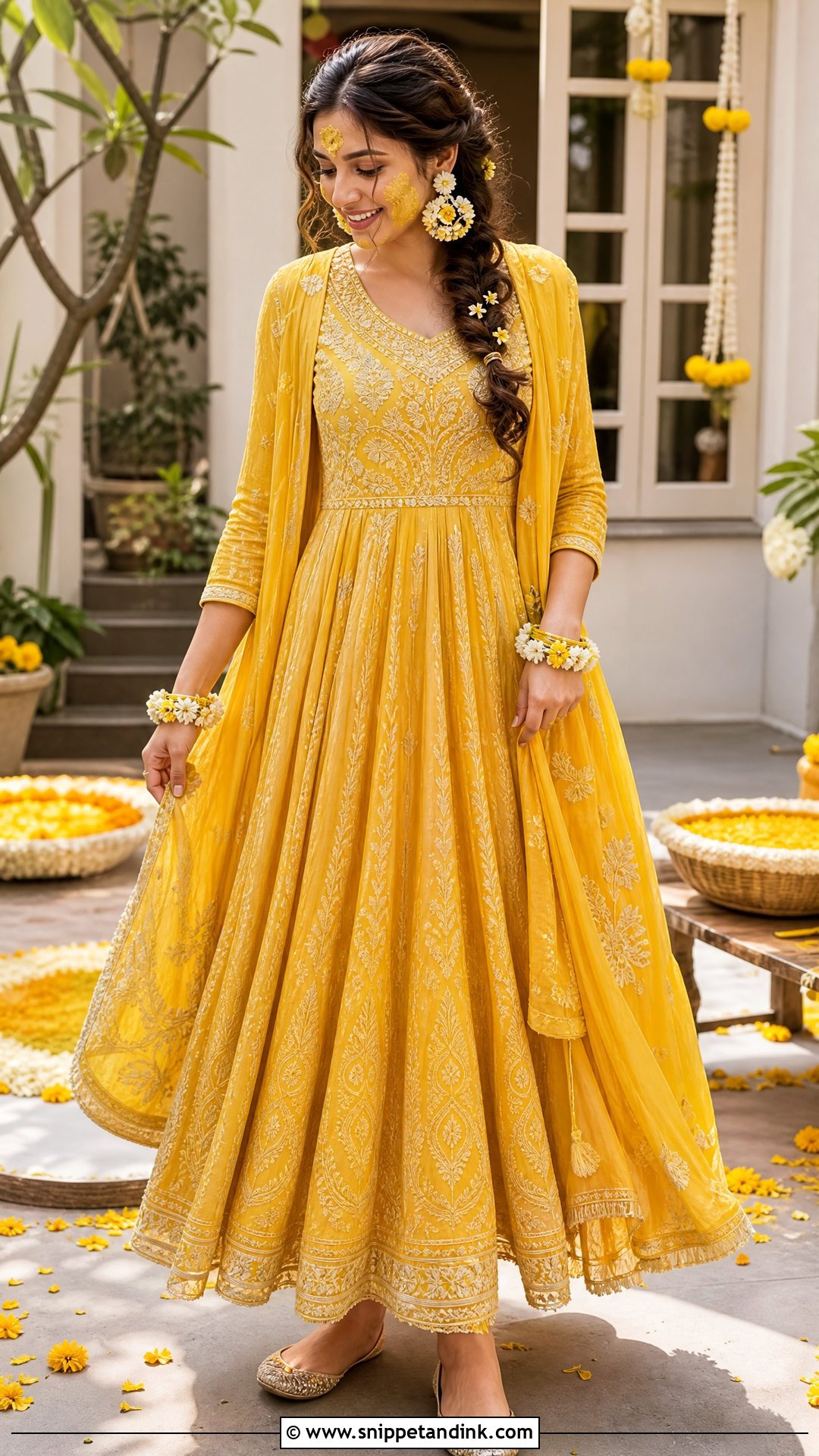
An Anarkali gives you the swing of a lehenga in one piece, which means nothing to keep tucked in during the ritual. Lightweight cotton silk, georgette or chanderi with simple embroidery at the neckline and hem keeps it comfortable. Watch the length: a floor-length Anarkali catches under your knees when you sit cross-legged, so I usually suggest ankle length. A matching dupatta adds movement. Floral earrings, bangles, a soft braid and embellished flats finish it, and the coverage suits brides who prefer modest dressing.
19. Yellow Co Ord Pithi Outfit For Bride
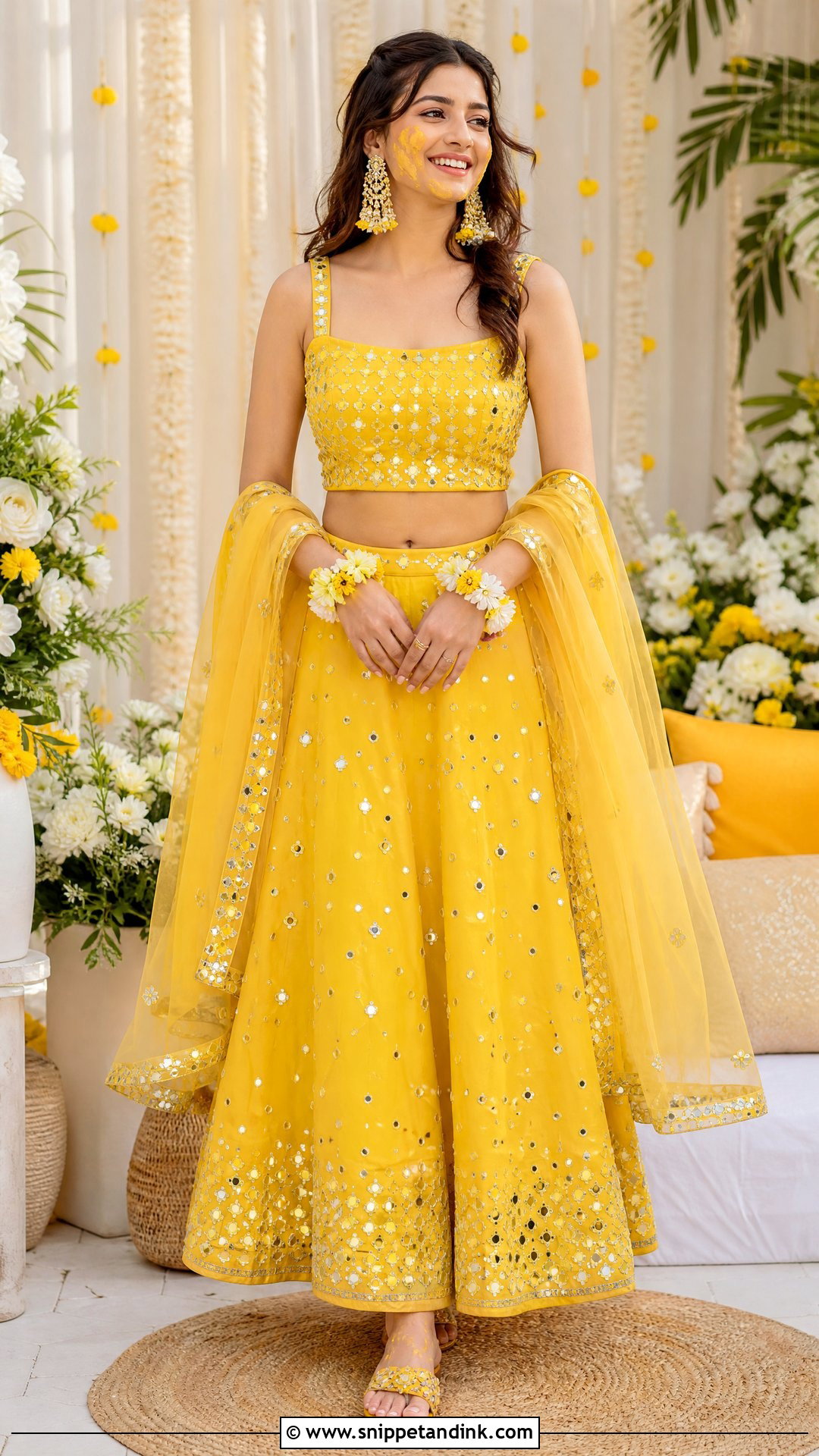
A yellow co ord Pithi outfit is the most fuss-free option here. A crop top and skirt, kurta and palazzo, or blouse and wide-leg pants with a cape or dupatta. Light embroidery, mirror accents or floral prints make it feel bridal. A crop top does leave the midriff open to paste, which some families apply generously, so think about how comfortable you are with that. Statement earrings, fresh flower bracelets and flat sandals or juttis complete it, and it’s easy to restyle for later events.
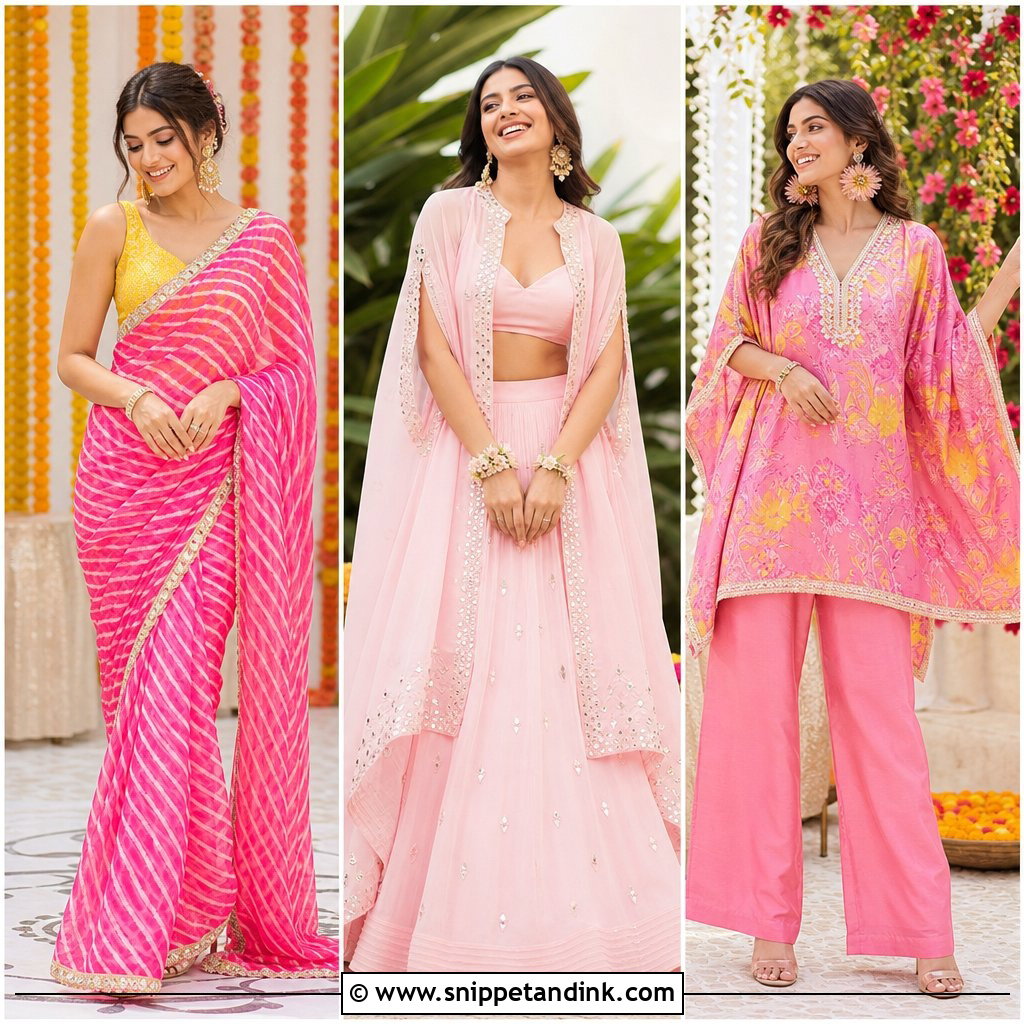


20. Cape Pithi Outfit For Bride
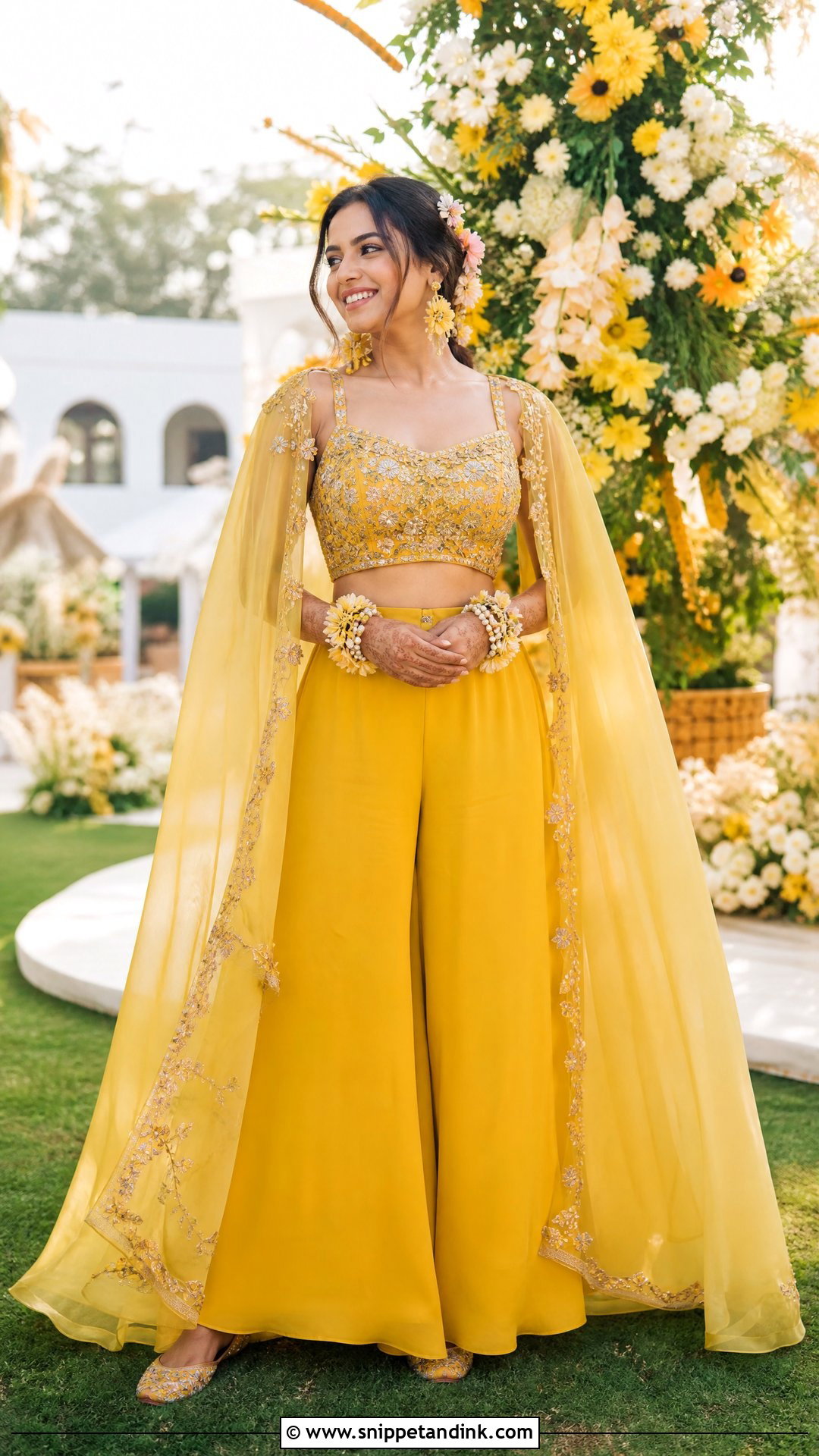
A cape replaces the dupatta, and that alone makes the ceremony easier. Nothing to pin, nothing slipping into the paste. Wear it over a yellow lehenga, a crop top with palazzos or an embroidered skirt. Organza, net and georgette move well and catch the light in photos. Net capes snag on bangles and rings, though, so if you’re wearing chunky jewellery, organza is the safer pick. Minimal earrings, bangles and floral hair accessories keep the look airy and practical for a daytime Pithi.
21. Jacket Pithi Outfit For Bride
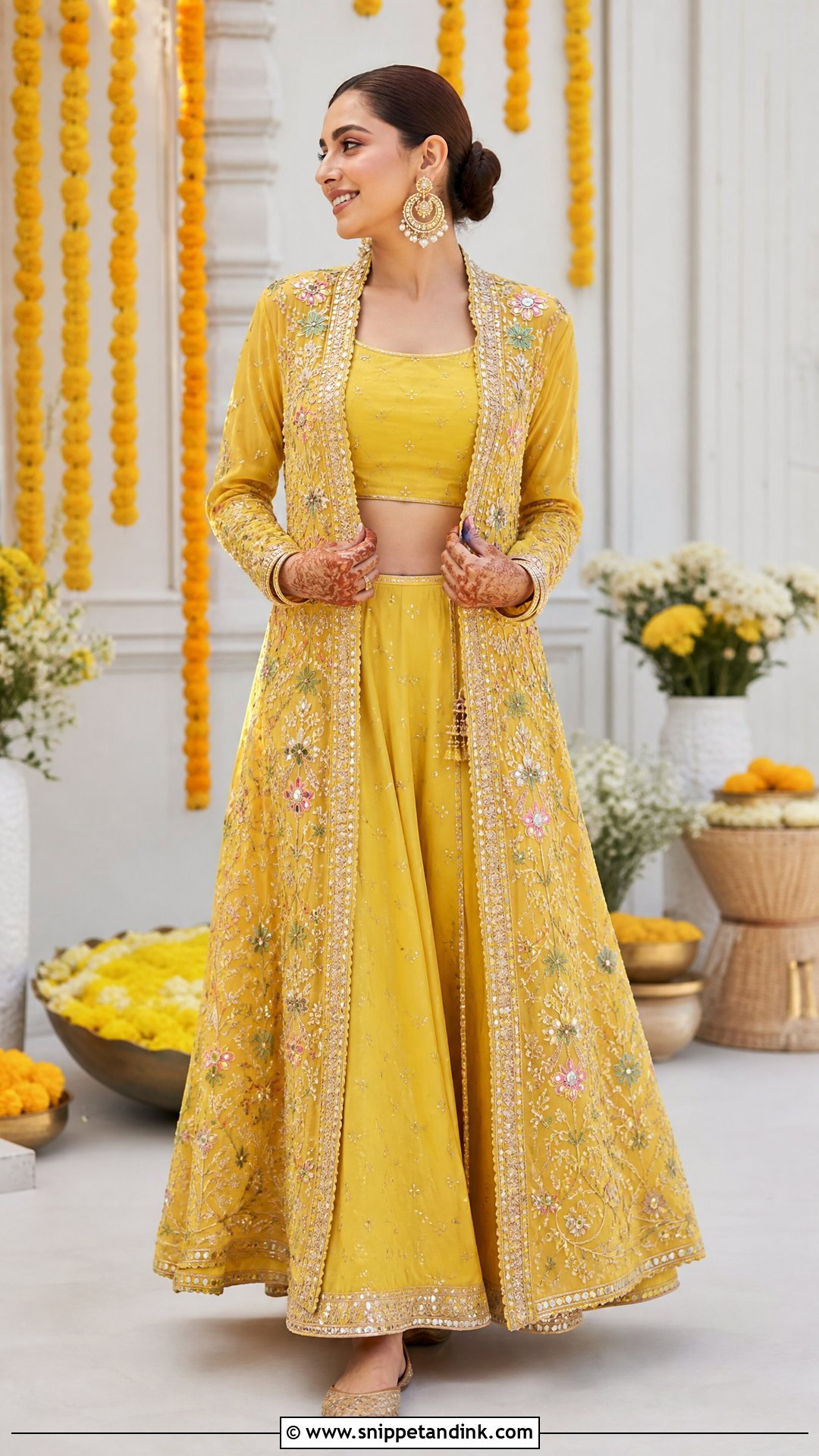
A jacket gives structure and coverage, and like a cape, it frees you from managing a dupatta. A yellow crop top with a skirt and long embroidered jacket, or a kurta set with a light open jacket, both work. Mirror work, thread embroidery or gota borders make it festive. My one caution: a jacket in warm weather is hot, and you’ll be sitting still while people apply cool paste and then the sun dries it. Choose a sleeveless or short-sleeve jacket for summer. Statement earrings, a sleek ponytail or bun, bangles and juttis finish it.
22. Simple Cotton Pithi Outfit For Bride
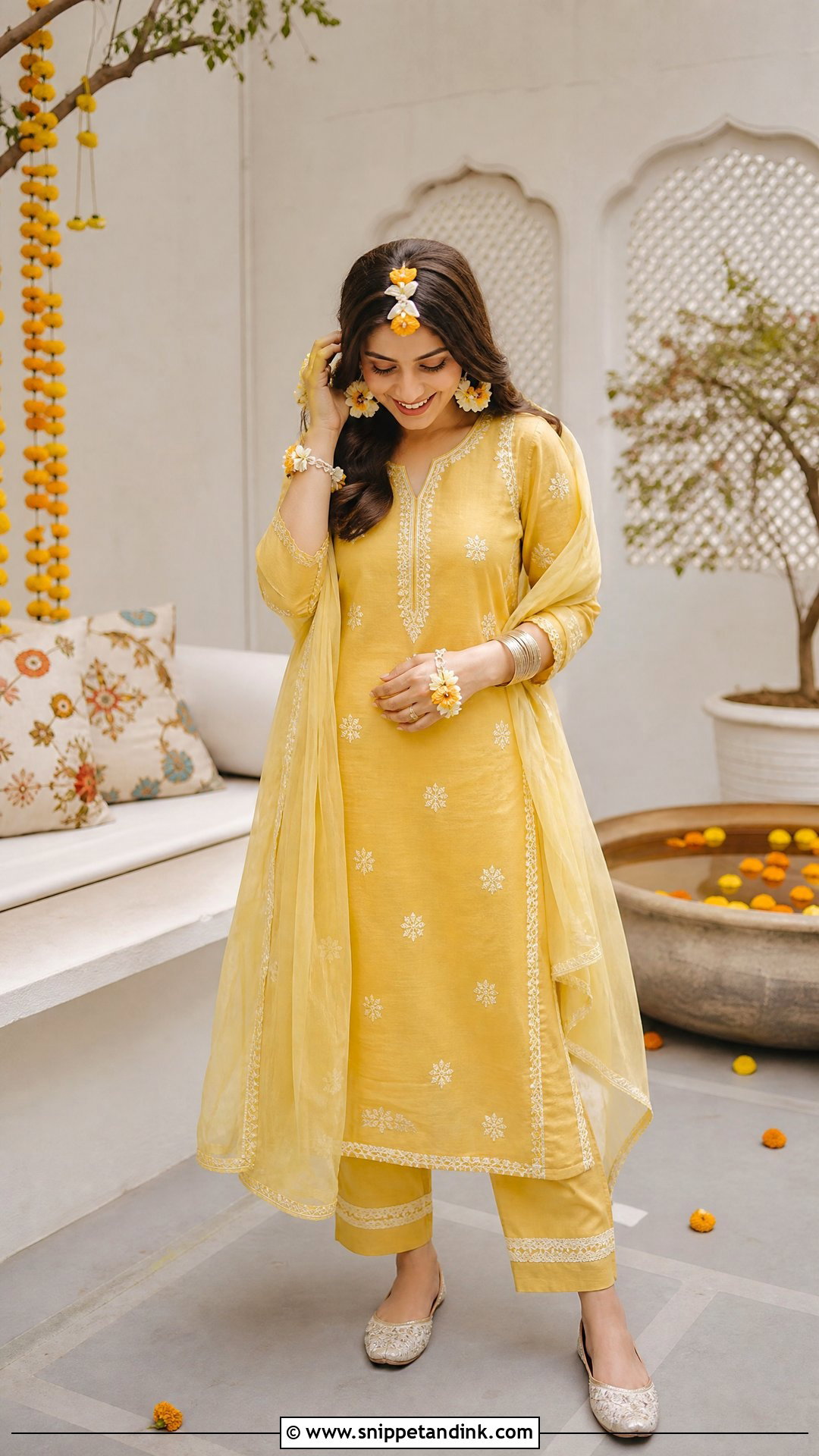
Cotton is the honest choice for a Pithi: it breathes, it washes, and it doesn’t matter if it’s ruined. A yellow cotton kurta set, a printed cotton lehenga or a cotton sharara with minimal detailing all work. The bridal feeling comes from styling: floral jewellery, a bright dupatta, pretty juttis and natural makeup. Many families also keep the Pithi outfit modest in cost by custom, and cotton respects that. The simplicity lets the ritual take centre stage.
23. Marigold Pithi Outfit For Bride
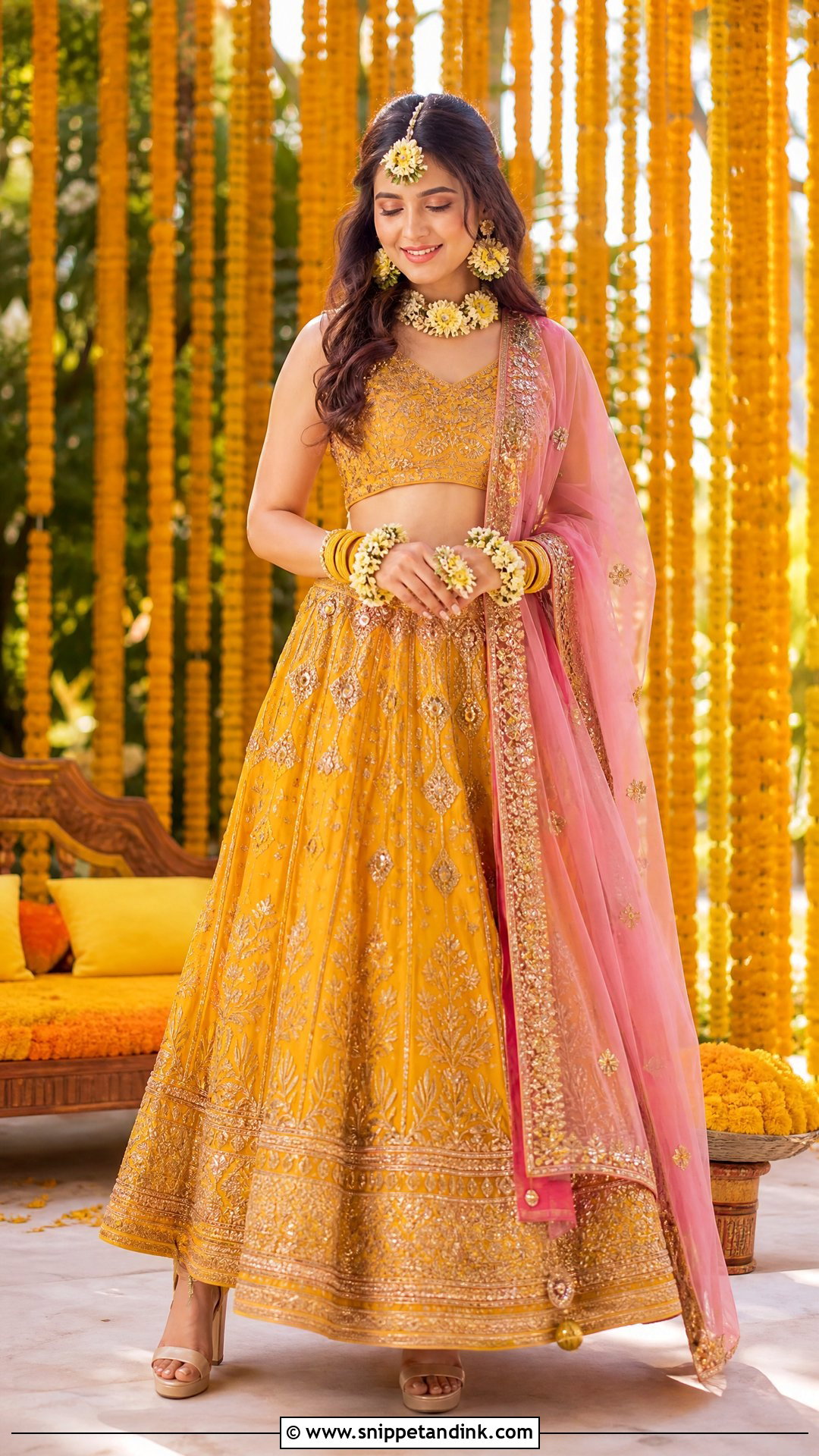
Marigold sits between yellow and orange, and it’s the shade that makes skin look warmest in morning light. It works in lehengas, sarees, shararas and kurta sets, with gold embroidery, mirror work or a rani pink dupatta for extra brightness. Because the colour is already strong, keep the silhouette simple and the styling balanced. Yellow and white flower jewellery looks fresh against it. Gold bangles, soft makeup and juttis or block heels finish it, ideally with marigold decor and outdoor seating.
24. Printed Cotton Lehenga Pithi Outfit For Bride
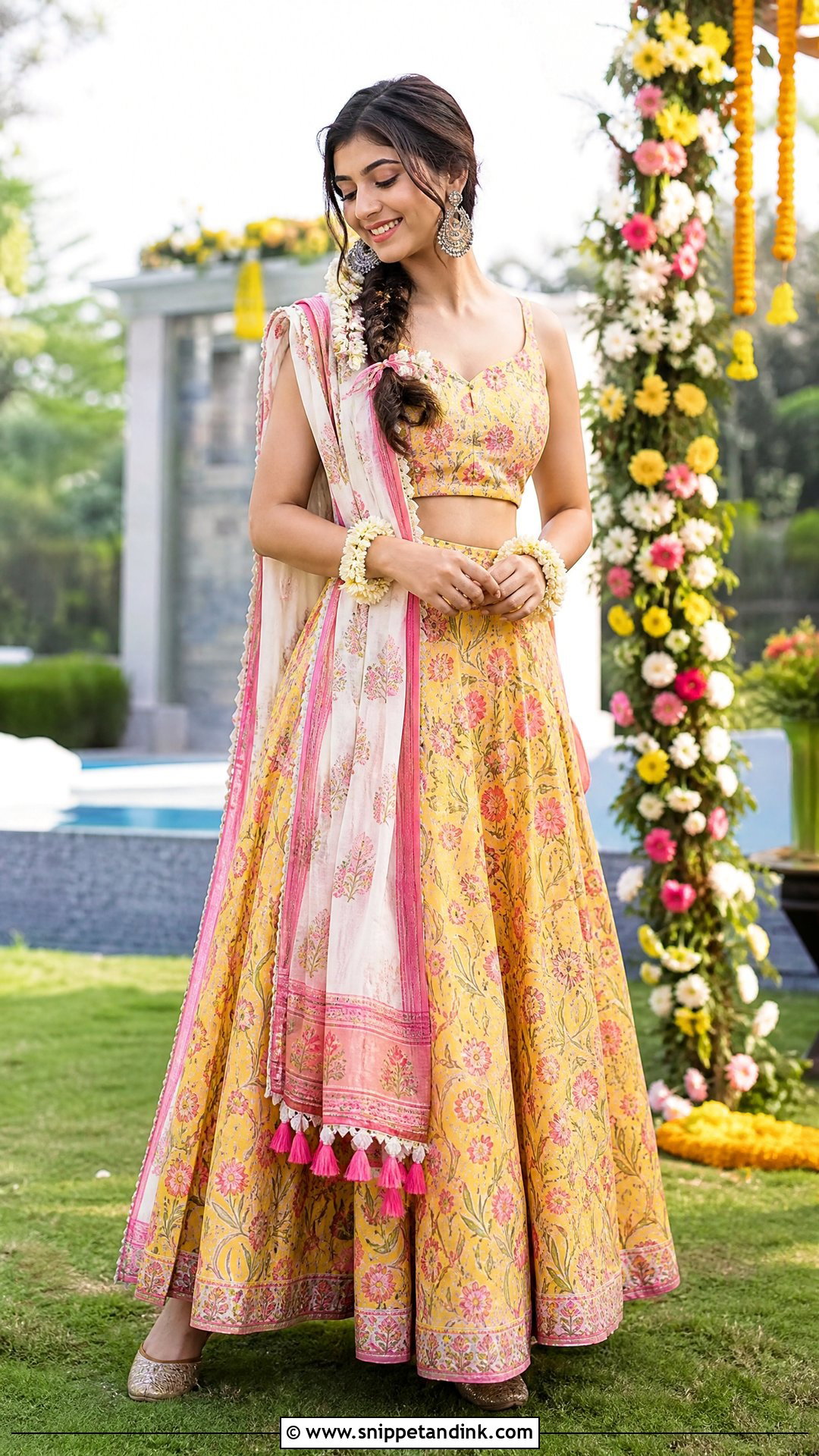
A printed cotton lehenga is comfortable and forgiving. Floral, block print, leheriya or Bandhani-style prints in yellow, orange, pink or ivory hide paste and let you sit and move freely. Hand block prints on cotton are often dyed with less colourfast pigments, so wash it once before the day, on its own, to see whether it bleeds. Pair the skirt with a simple blouse and a soft dupatta with tassels or gota edging. Oxidised earrings, floral bangles, a braid and flats keep it relaxed for home or outdoor ceremonies.
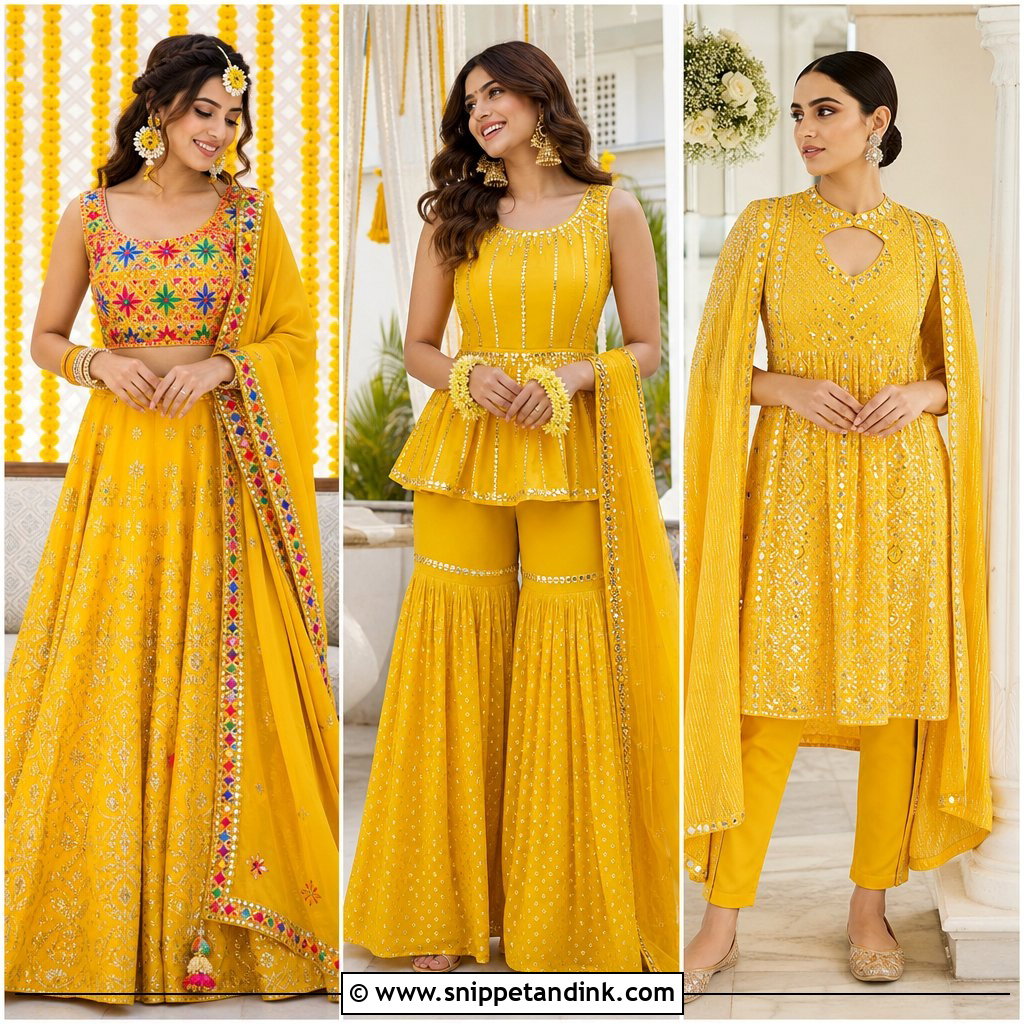
25. Yellow Palazzo Pithi Outfit For Bride
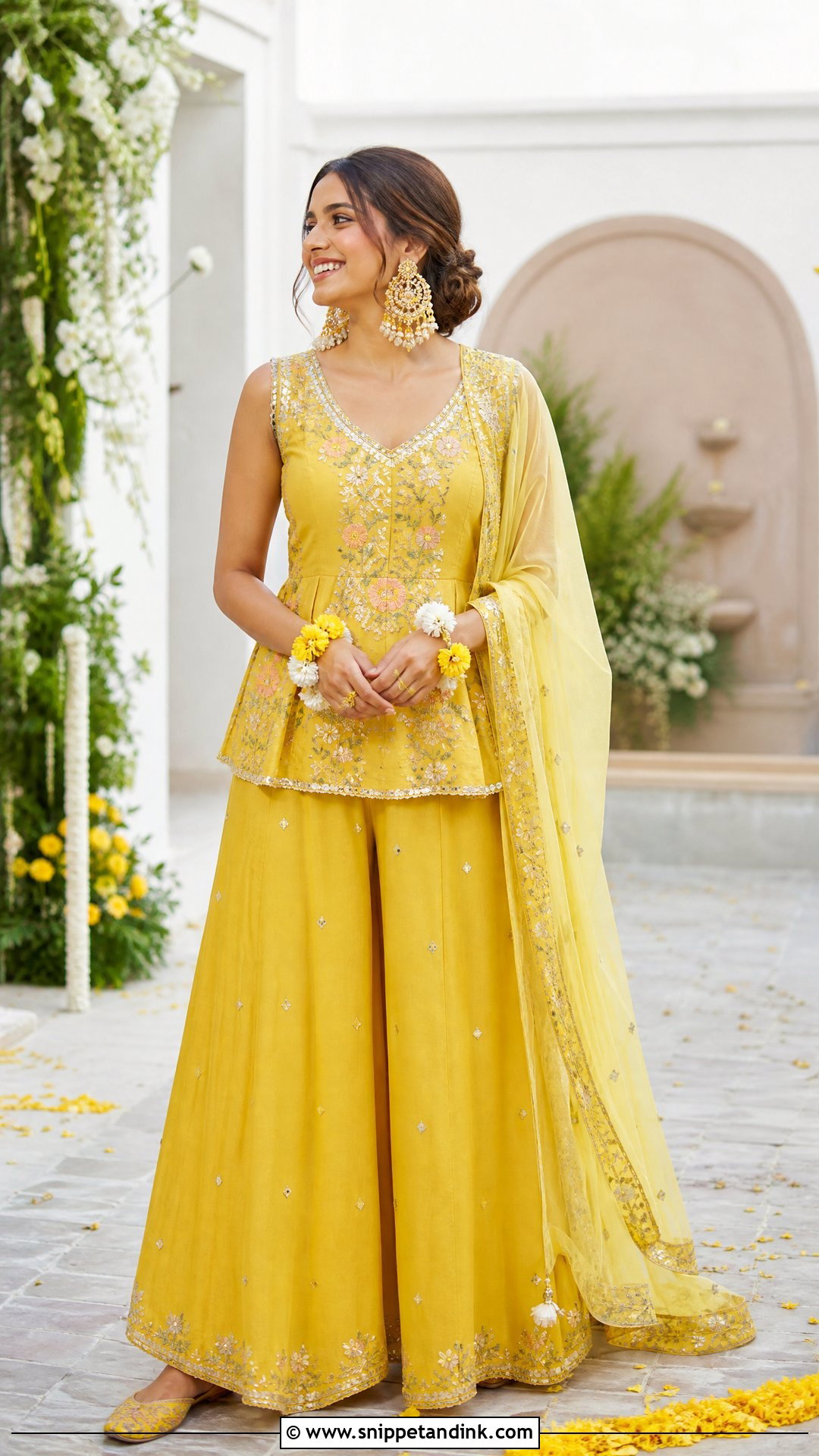
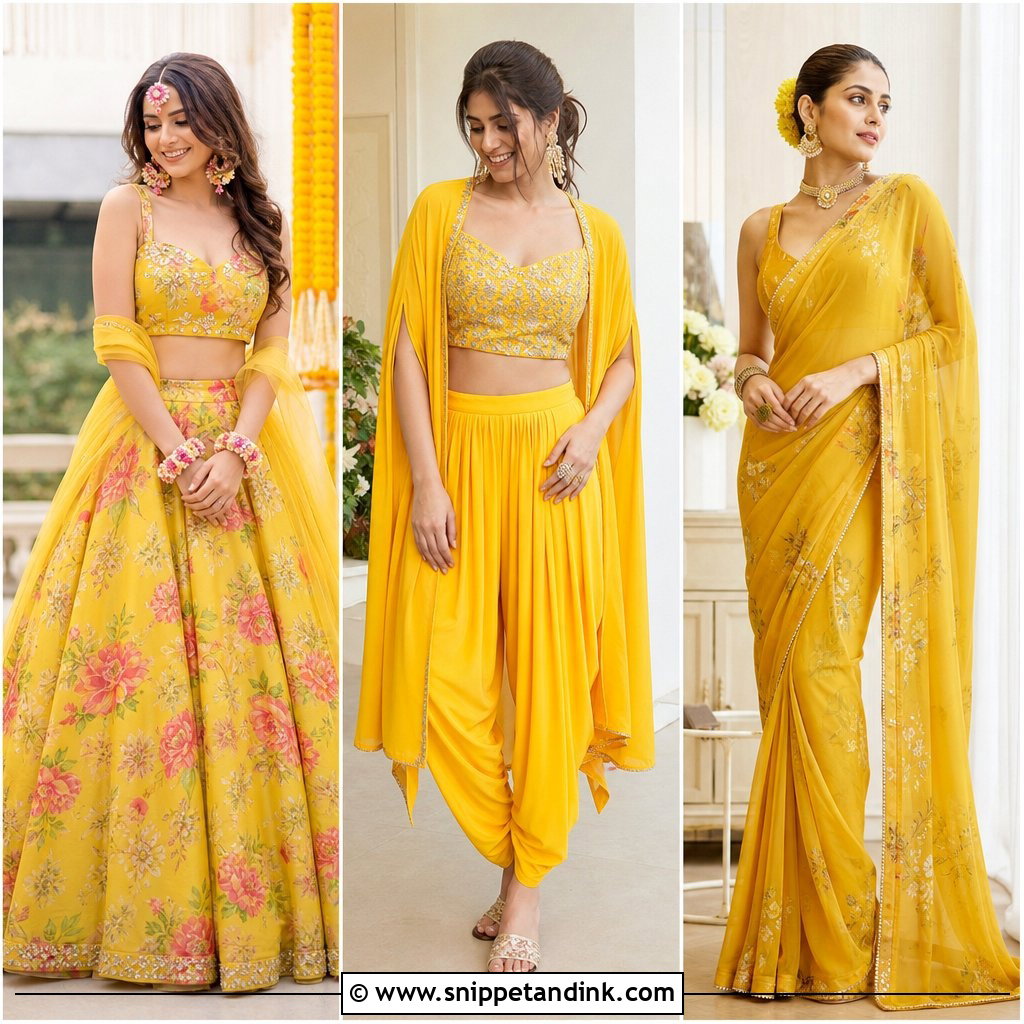
Palazzos are the answer for brides who’d rather wear trousers but still want a traditional silhouette. Wide-leg palazzos with a short kurti, peplum top or embroidered blouse, plus a light dupatta or cape, give a festive shape that’s easy to sit in. Mirror work, gota lace or floral thread embroidery bring the bridal note. Very wide palazzos can trail into paste when you stand, so I’d hem them just above the ankle bone. Statement earrings, flower bracelets and embellished flats finish it.
Lifting Haldi Stains Once the Ceremony Is Over
Speed matters more than products. The sooner the outfit comes off and gets attention, the better your chances. Scrape off dried paste gently with a blunt knife or spoon before any water touches it, so you aren’t spreading the colour.
- Rinse from the back of the fabric with cold water. Hot water sets turmeric.
- On washable cotton, work a little plain dish soap into the mark to cut the oil, then rinse again.
- Dry it in direct sunlight. Turmeric’s colour breaks down in sun, and a pale mark often fades over a day or two outside.
- Send silk, embroidered or zari pieces straight to a dry cleaner and point out every stain. Don’t try home remedies on them.
Avoid strong alkaline soaps or baking soda on the stain. They can turn turmeric reddish-brown, which is harder to remove than the original yellow.
Jewellery, Hair and Skin: Protecting What Isn’t Washable
Real gold, kundan and polki pieces are the things I’d keep out of the paste entirely. Turmeric creeps into the settings behind stones and dulls them, and pearls are porous enough to discolour. Floral jewellery exists partly for this reason: it’s festive, it smells wonderful, and it goes in the bin afterwards.
Rub a light layer of coconut or almond oil along your hairline, ears and nails before the ritual so the colour doesn’t settle there, and keep the hair in a braid or bun that sits away from your neck. If you have a second event the same evening, leave at least a couple of hours between them to shower, wash your hair and let any yellow on your skin settle before makeup.
Comfort Over Couture on the Morning of Your Pithi
The right Pithi outfit lets you stop thinking about clothes once the paste starts. Yellow lehengas, Bandhani sarees, shararas, ghararas, cotton kurta sets, ivory pieces and modern co ords can all work with the right jewellery, footwear and dupatta. Light fabrics, secure pinning and a silhouette you can sit in matter more than embroidery. Decide early whether this outfit is a keepsake or something you’re happy to stain, and choose the fabric and colour around that answer. Then let the morning be messy.
You'll Like These Ideas:







Leave a Reply