
Brides with strong shoulders and narrower hips often tell me dress shopping feels like everything was cut for someone else. The fix is usually simple: define the waist and add shape, movement or volume below it. A-line skirts, ball gowns, pleats, layered tulle and flared hems all balance a broader upper body, and V, sweetheart, scoop and asymmetric necklines break up the shoulder line. Treat these as starting points rather than rules. The gown that fits properly and lets you move freely will always win. Here are twenty styles I’d pull for an inverted triangle frame, with what I’d check on each.
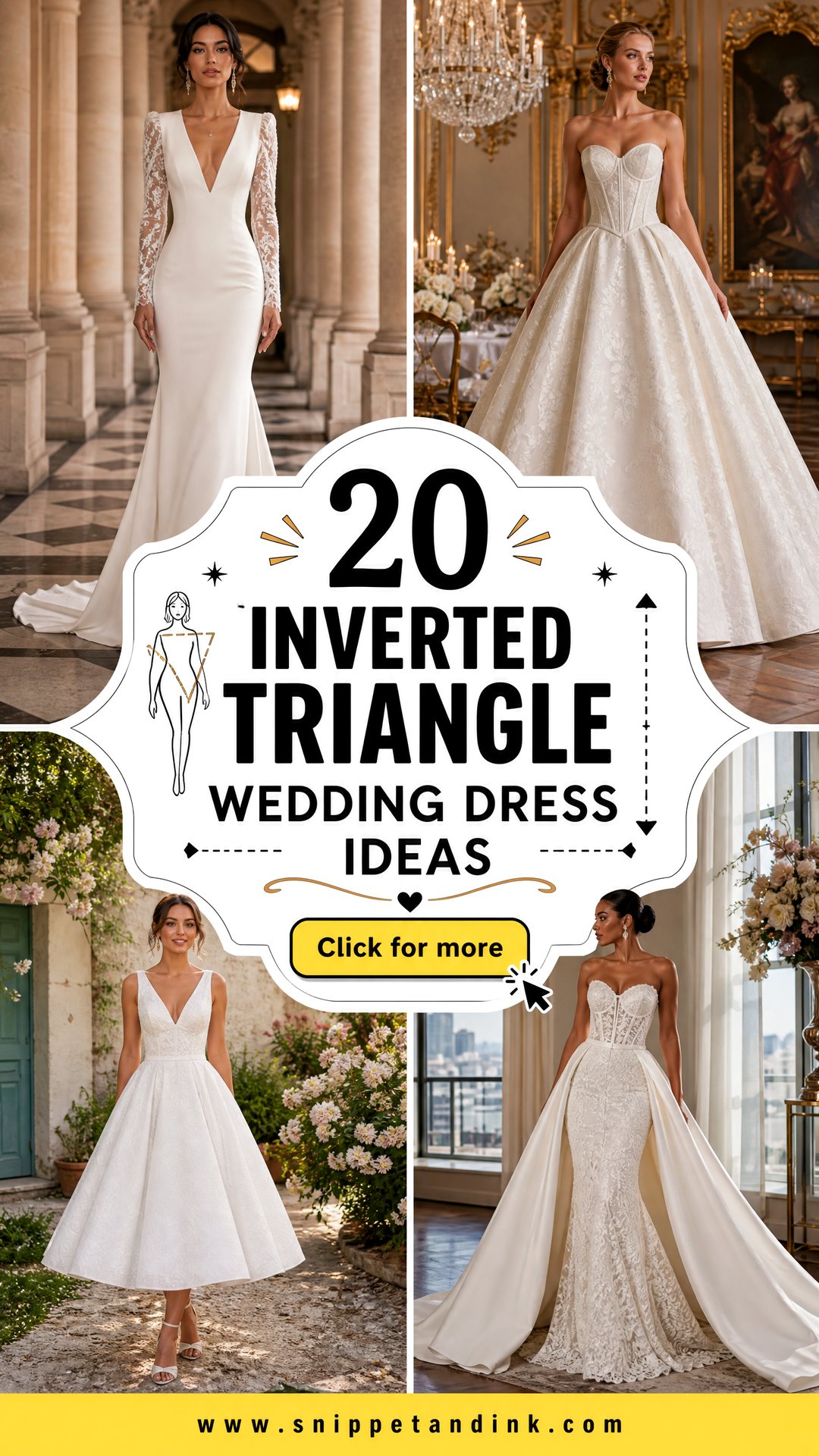
Is Your Frame Really an Inverted Triangle?
Plenty of brides who think they have broad shoulders actually have a straight or hourglass frame with good posture, and the advice differs. A quick check with a soft tape measure helps.
- Measure around the widest part of your shoulders, then around the widest part of your hips.
- If the shoulder measurement is clearly larger than the hip measurement, and your waist isn’t much narrower than your hips, you’re likely in this category.
- Swimmers, rowers and women who lift often fit here even with a slim build, because the width is in the back muscles rather than the bust.
The shape matters for fitting too. A broad back usually needs a larger band than your bust size suggests, so sample gowns often feel tight across the back while fitting perfectly at the front. Tell your consultant about it early. Many bridal gowns can be let out at the back seams, or a corset back can be added, which gives far more room to adjust than a zipper.
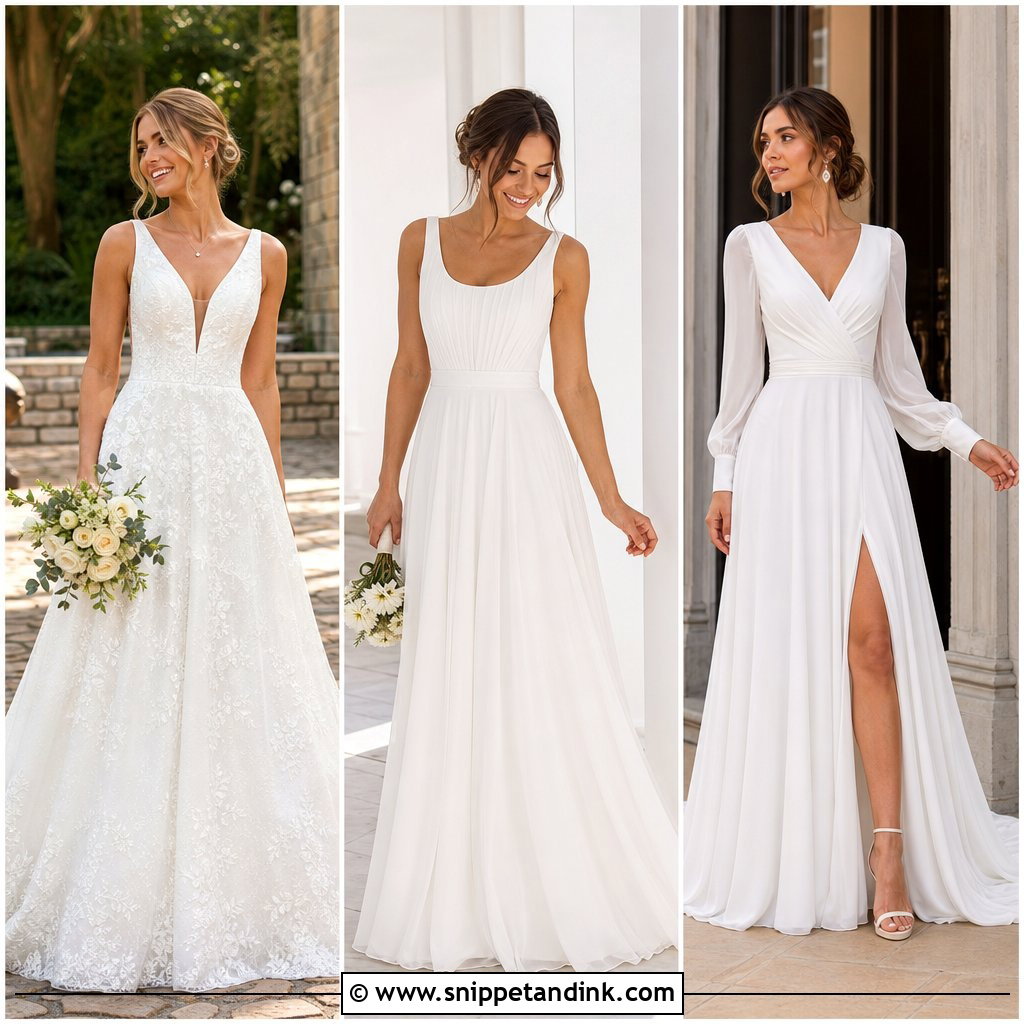
1. V-Neck A-Line Wedding Dress
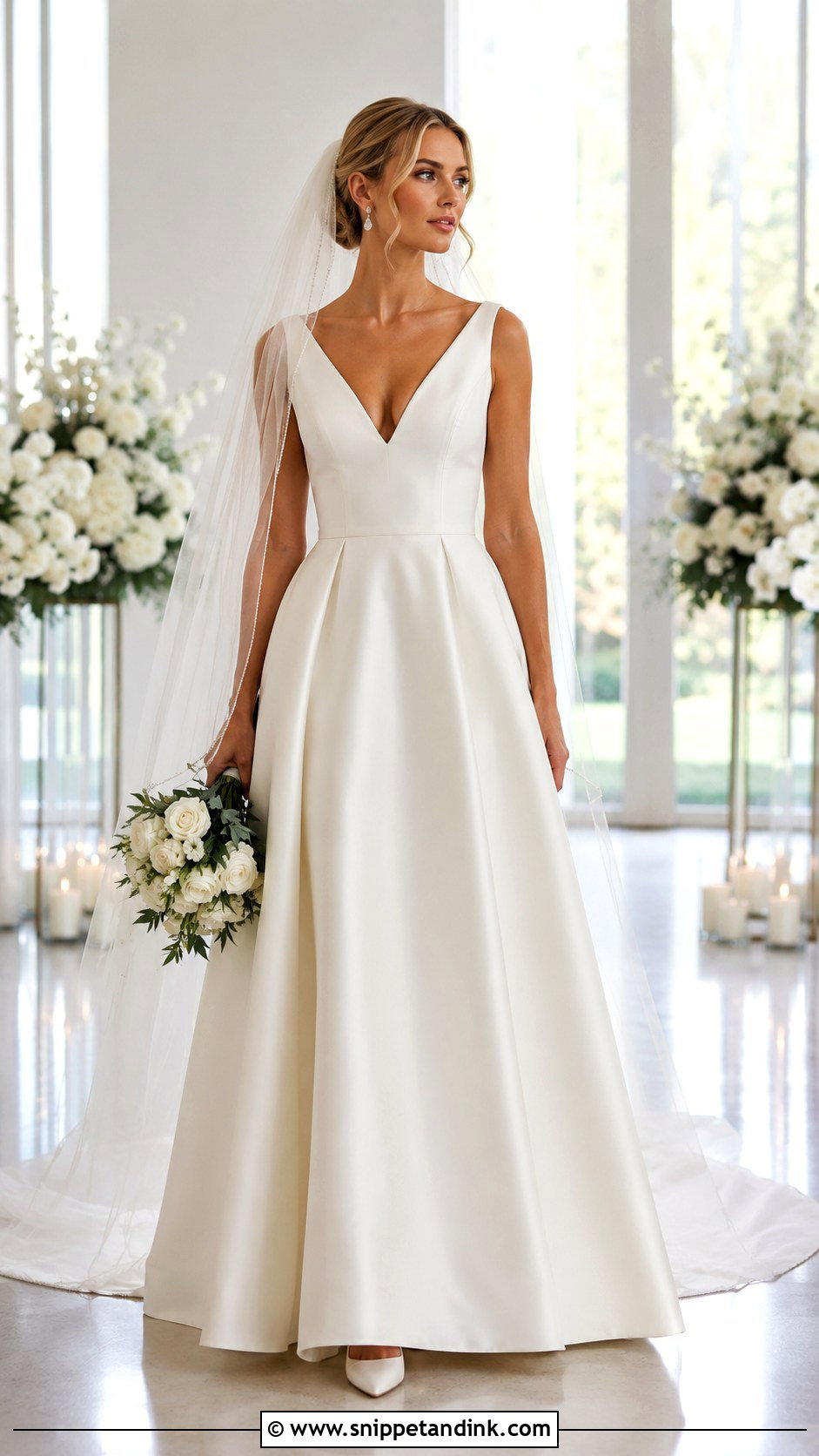
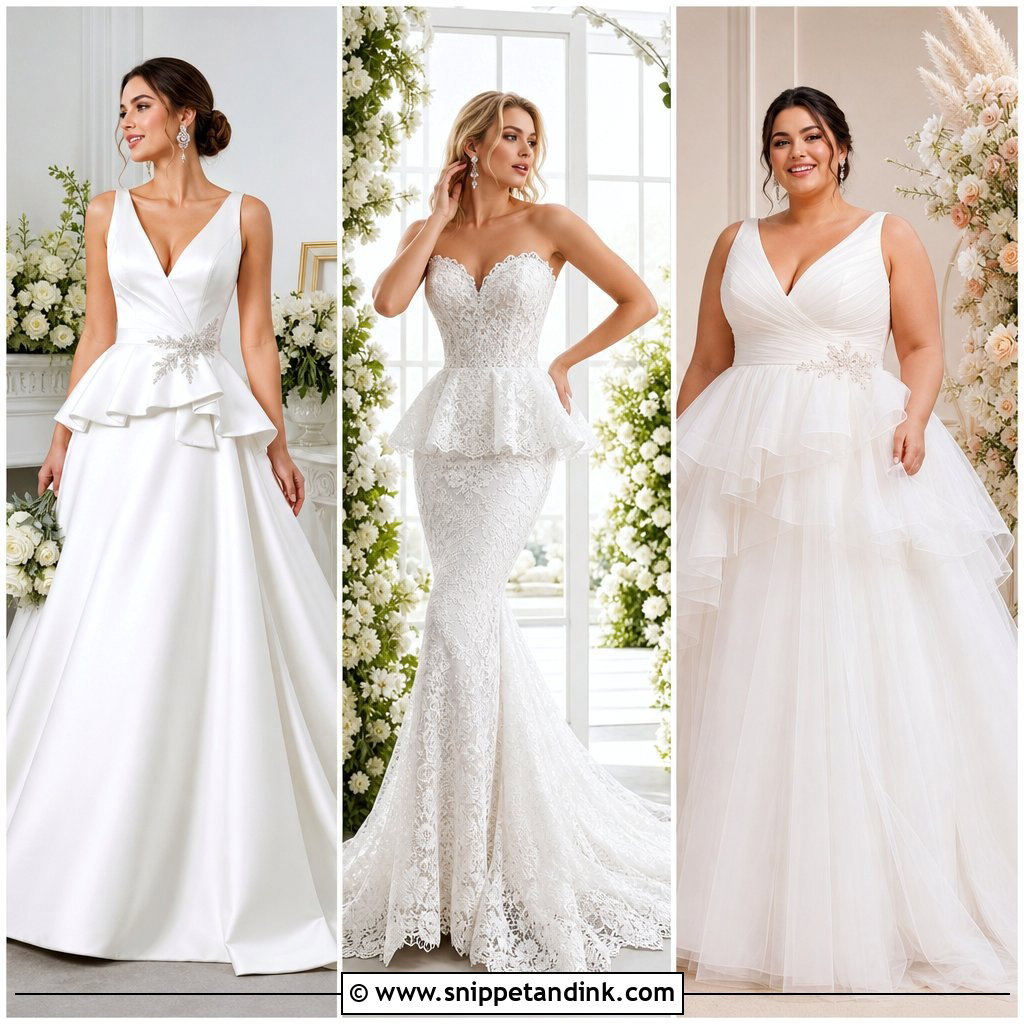
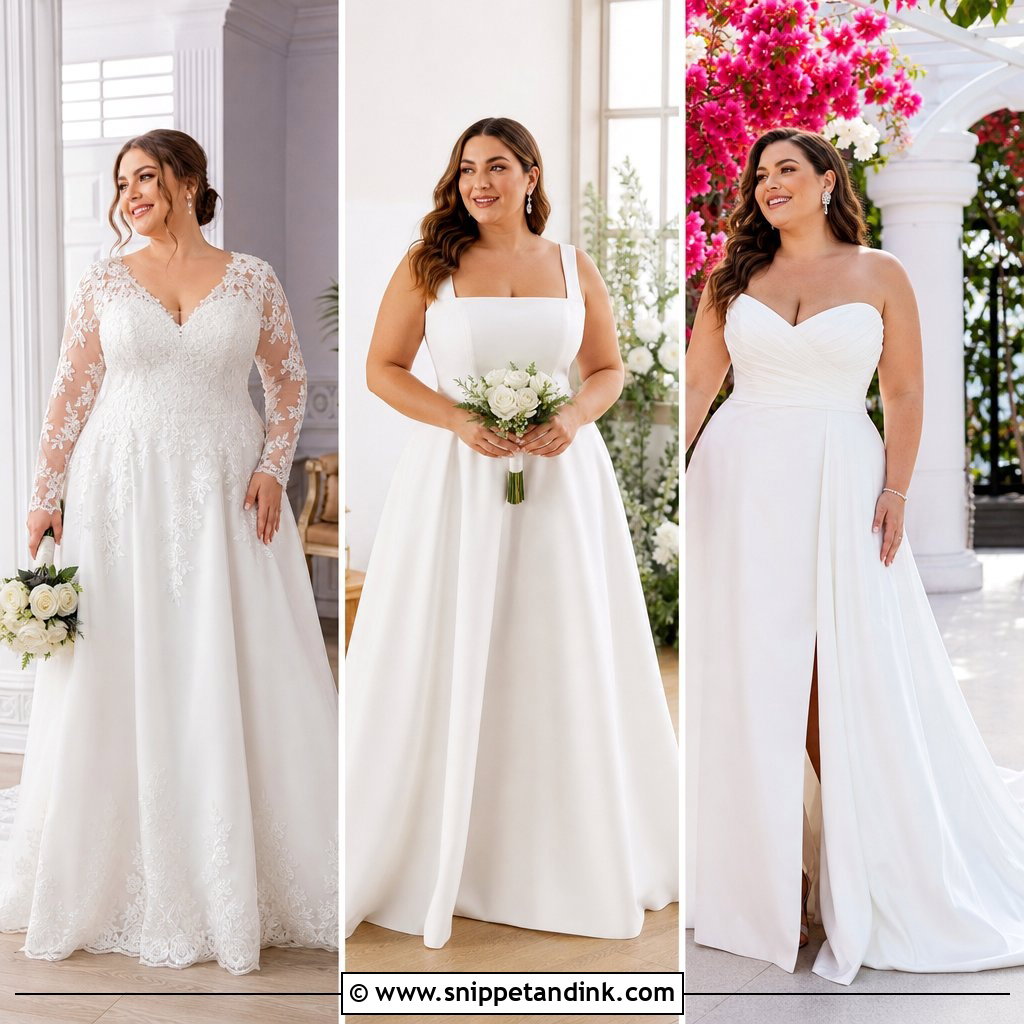
If I could only pull one dress for an inverted triangle bride, it would be this. The V draws the eye down the center, and the skirt widens steadily from the waist, so the hem ends up balancing the shoulders. A medium-depth V is easier to support than a plunge. Satin or mikado holds the A-line shape; layered chiffon gives a softer one. Put the embellishment at the waist or on the skirt, never on the shoulders. Pointed heels and a fingertip veil keep it classic.
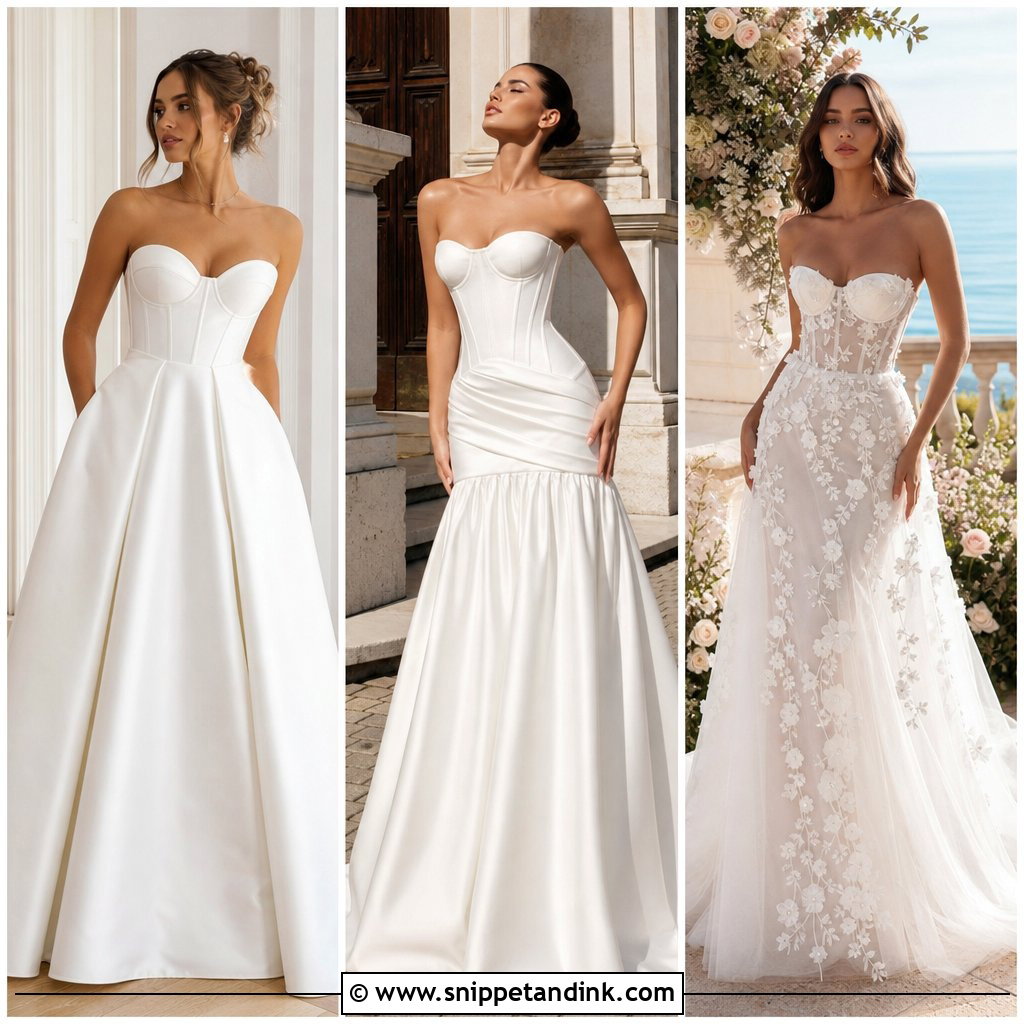
2. Sweetheart Ball Gown Wedding Dress
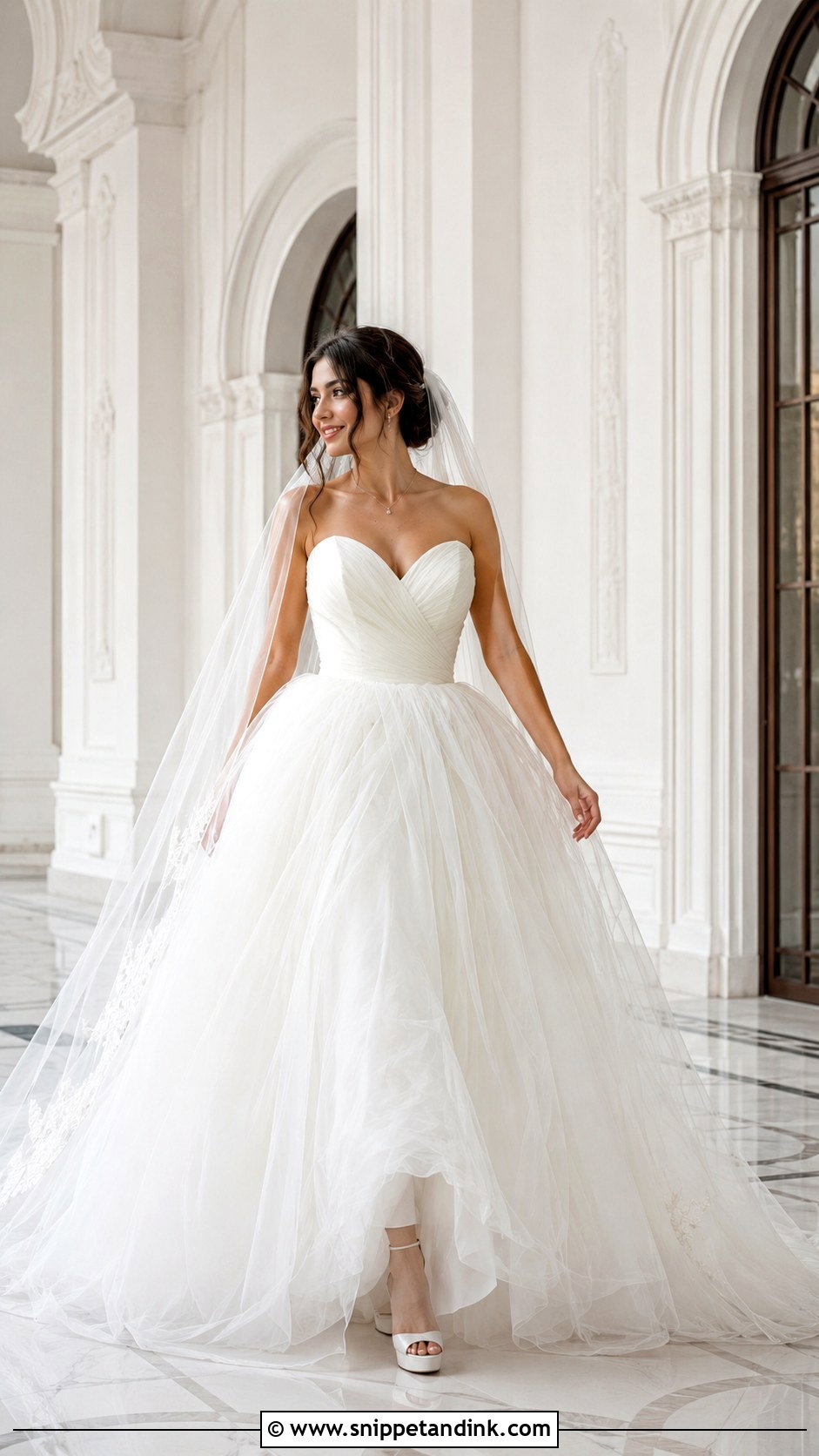
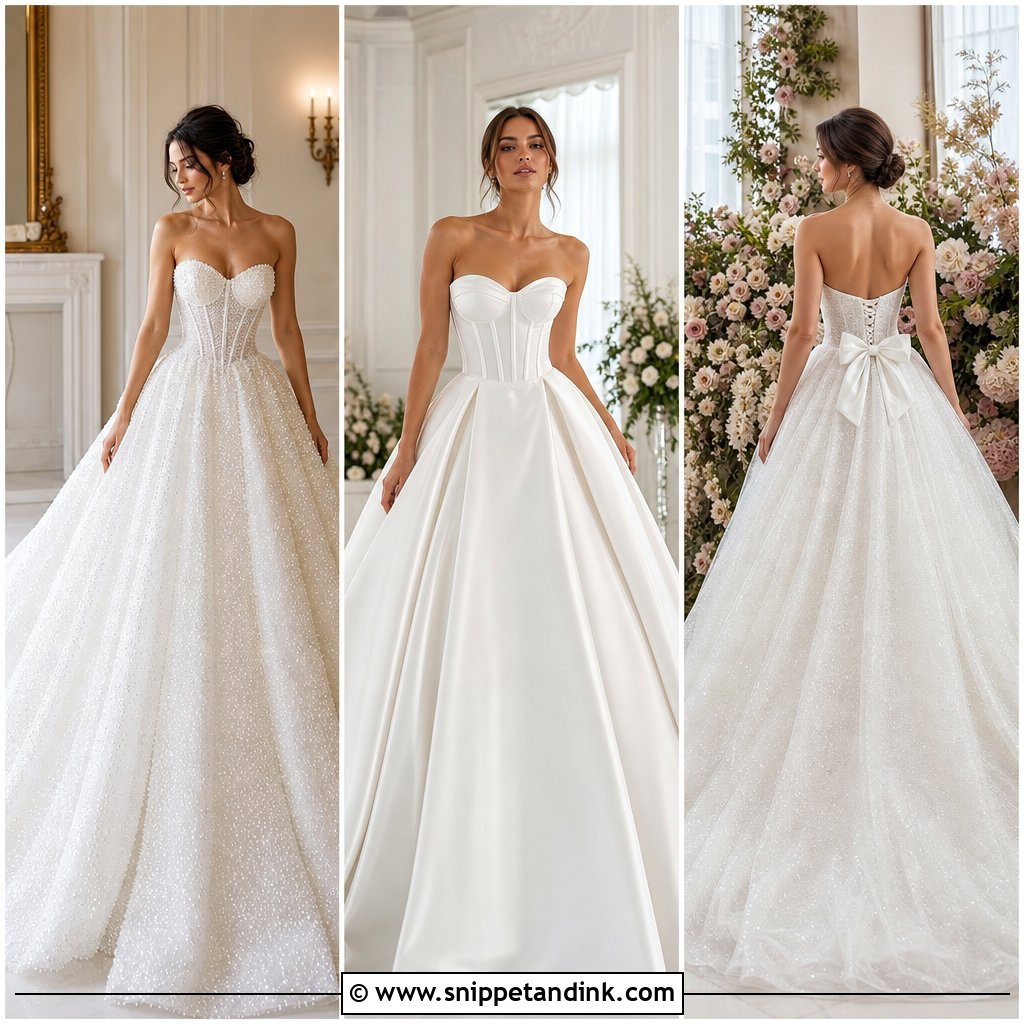
A ball gown is the most direct way to balance shoulders, since the skirt simply out-measures them. The sweetheart neckline shapes the bust with a curve rather than a horizontal line across the chest. Keep the bodice plain and push lace appliqués or sparkle down onto the skirt. Ball gown bodices take a lot of strain from that heavy skirt, so I always have brides sit, walk and lift their arms in the final fitting; if the bodice shifts at all, it needs more boning or a waist stay.
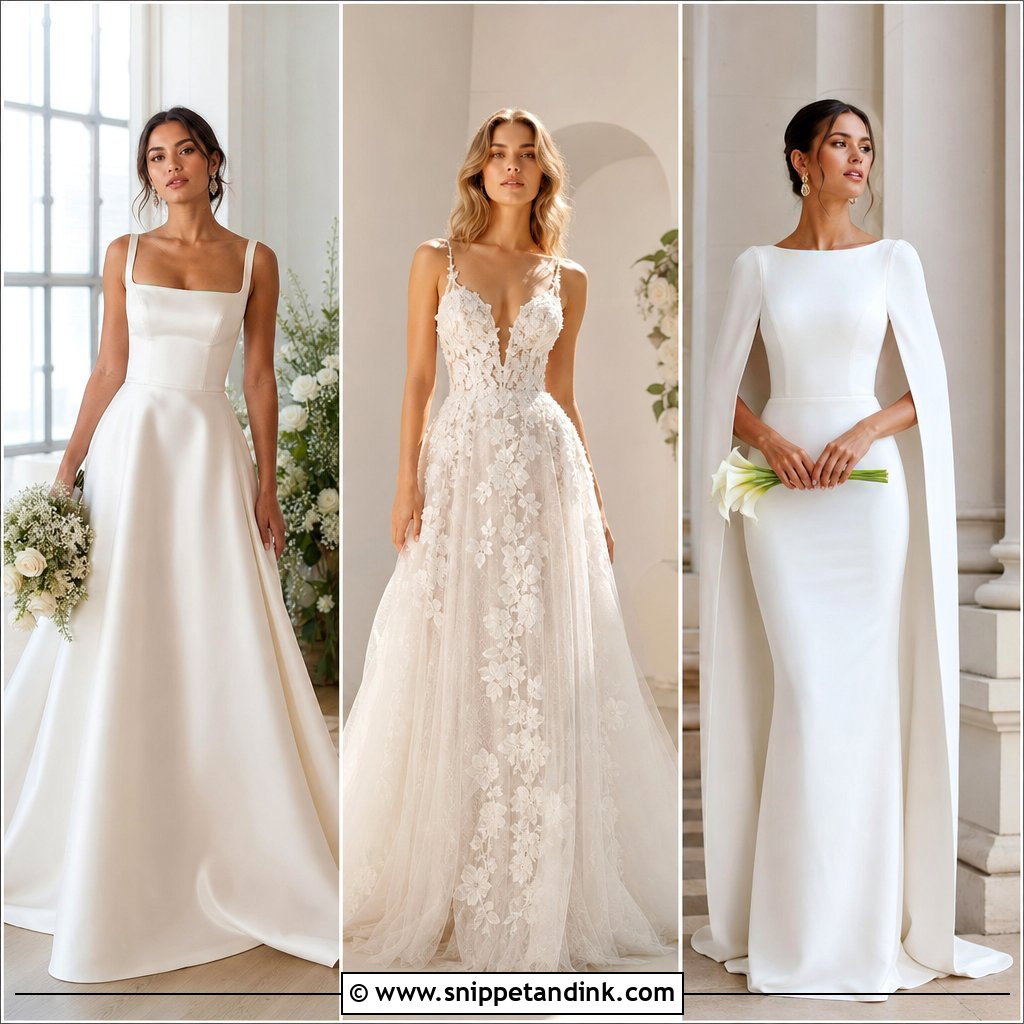
3. Scoop Neck Satin A-Line Wedding Dress
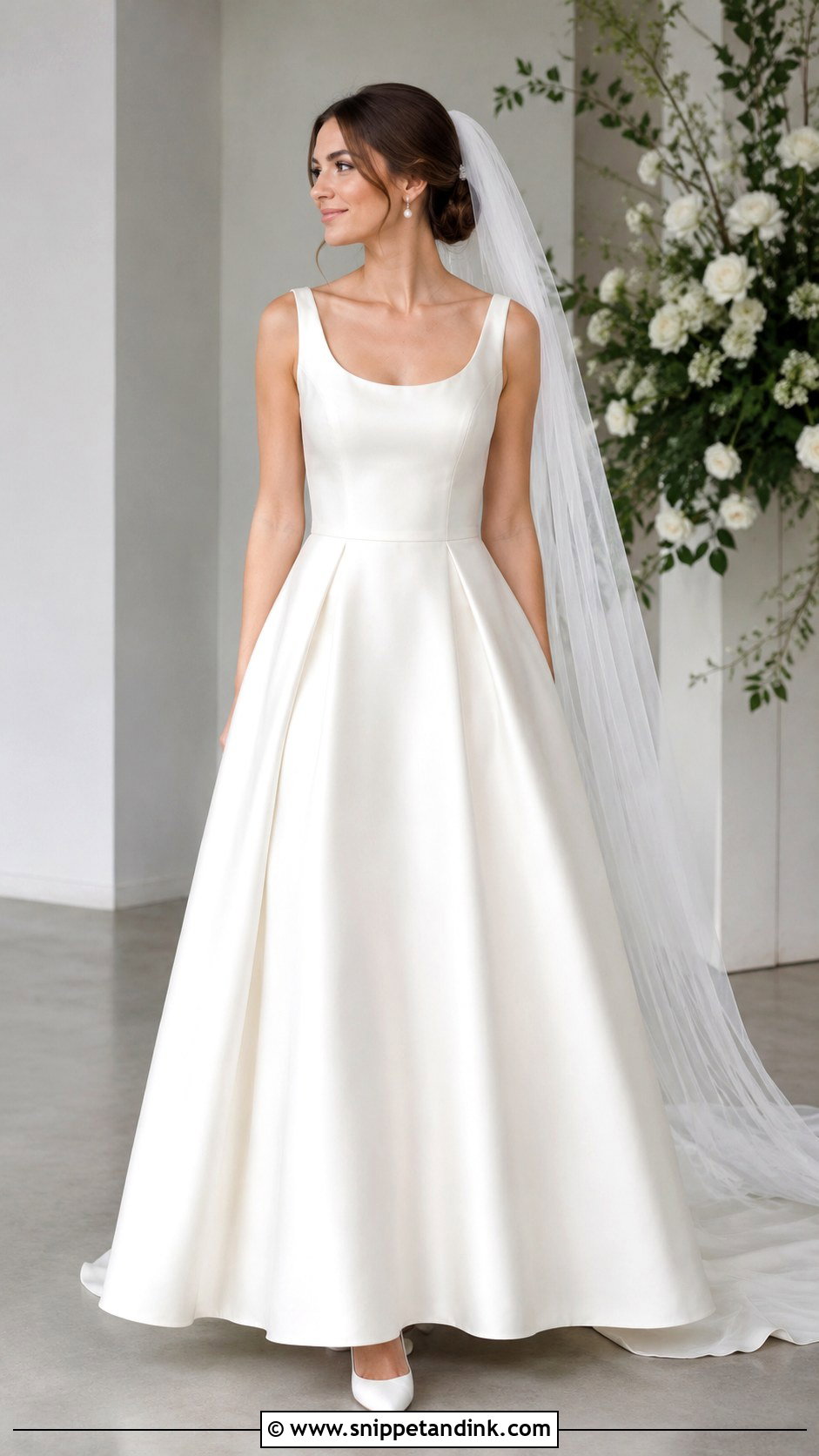
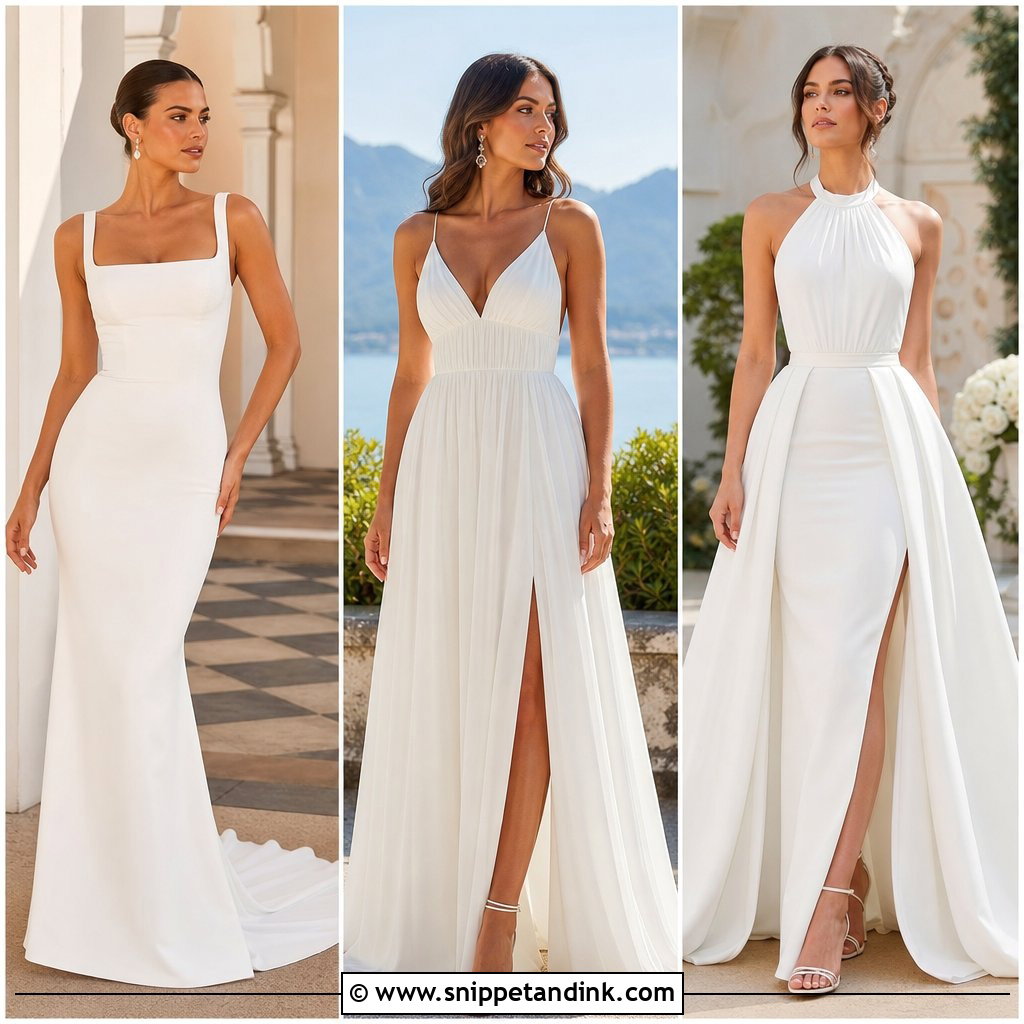
Scoop necks soften an athletic upper body without any decoration. The detail that matters most is where the straps sit. On broad shoulders I want the strap edge set slightly in from the shoulder point; straps sitting right at the edge make the shoulders look wider. Medium-width straps give good support. Satin with box pleats at the waist adds hip fullness and holds its shape. A low bun and a smooth chapel veil suit the minimal tailoring.
4. Plunging V-Neck Tulle Wedding Dress
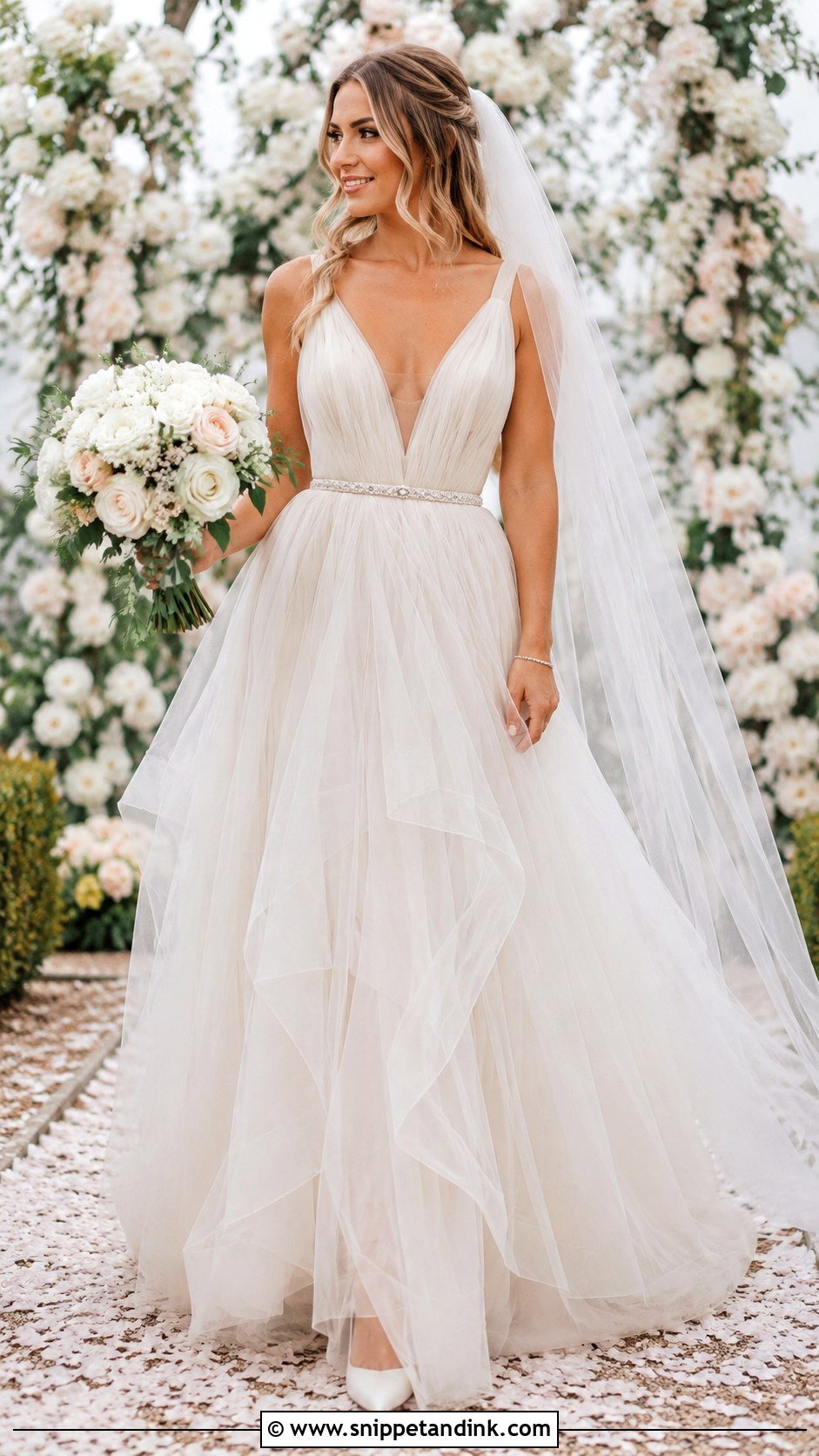
A plunging V with a tulle skirt is lighter than a ball gown and very romantic. The deep neckline can make the torso appear longer and pulls the eye to the waist. Skin-toned illusion mesh inside the V adds security; match it to your skin in daylight, as the wrong tone looks like a bandage in photos. Soft tulle layers add hip volume without weight. A fine crystal belt defines the waist. Keep embroidery away from the outer shoulders.
5. Wide Strap Princess Wedding Dress
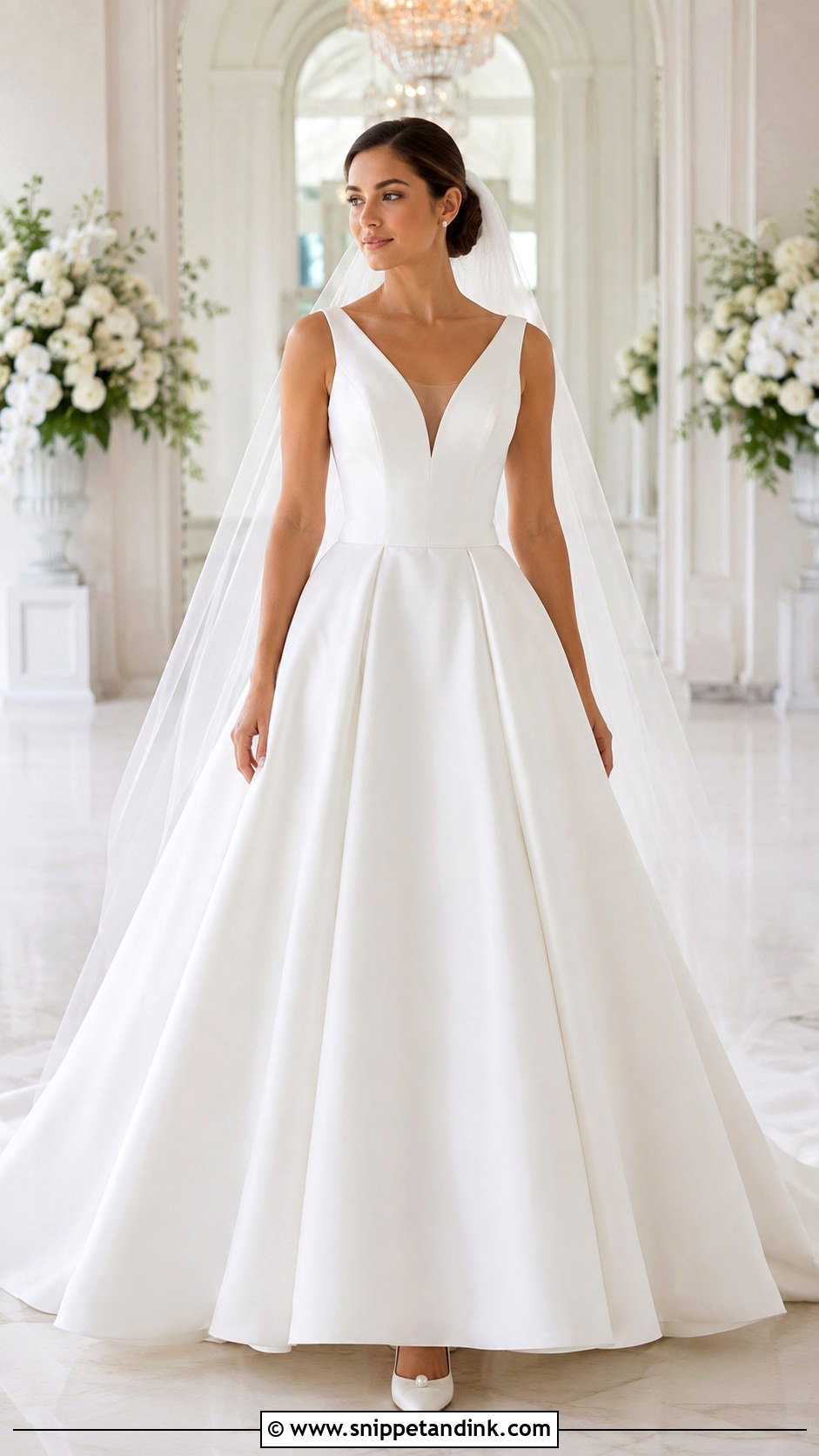
Thin spaghetti straps can feel insecure on a bride with a strong back, and they make the shoulders look broader by contrast. Wider straps set closer to the neck do the opposite: they guide the eye inward and give real support. Pair them with a V or curved neckline, a defined waist and a full skirt in tulle for softness or mikado for structure. Skip beaded straps. A long veil anchored under a sleek updo finishes the look.
6. Halter A-Line Wedding Dress
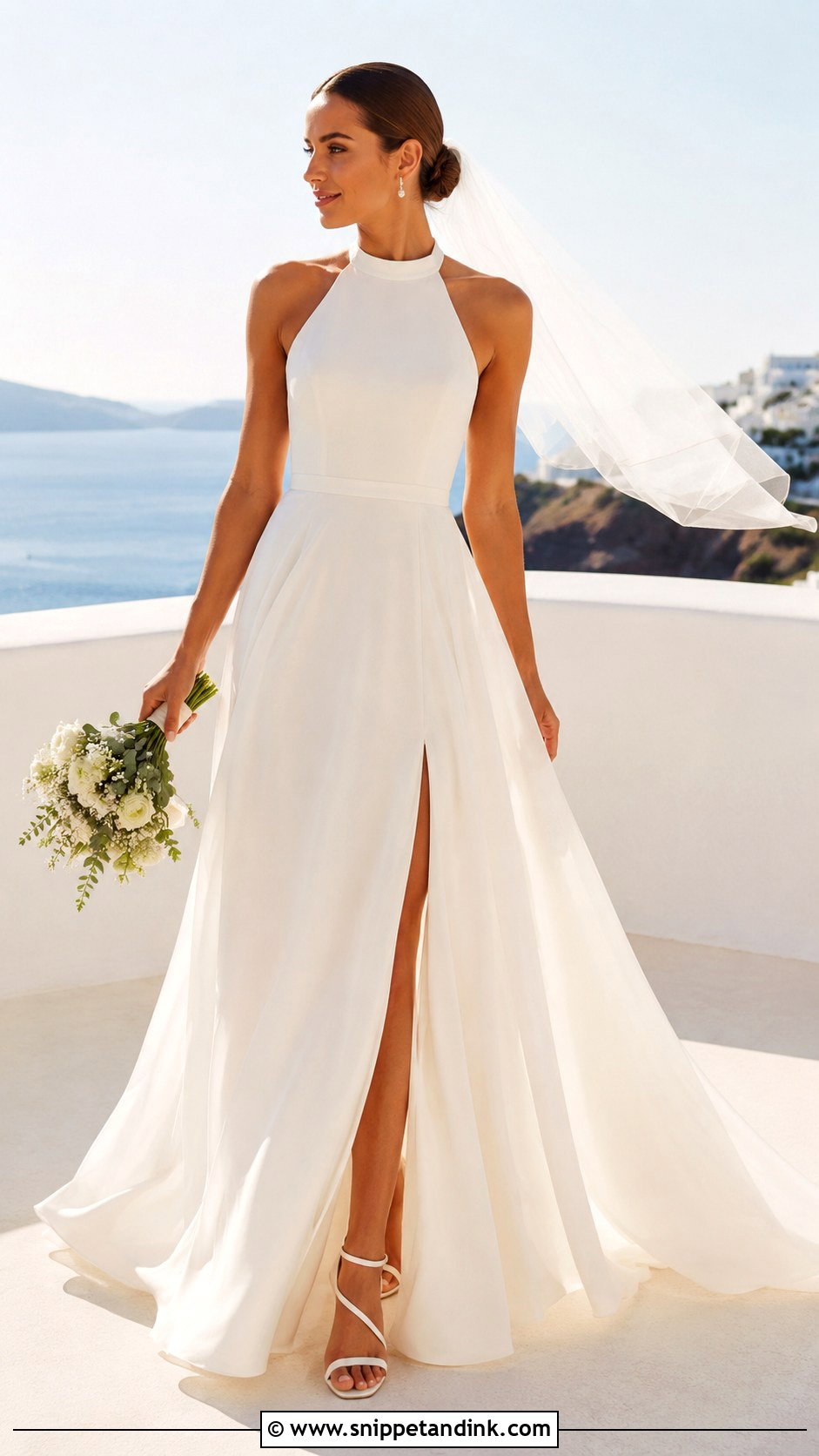
Halters can be fantastic on an inverted triangle frame or quite unflattering, and the difference is the angle of the straps. Straps that angle in toward the neck narrow the shoulders visually; a wide halter cut straight across makes them look broader. Crepe on top with chiffon below keeps it modern. Check the armholes carefully, since halters often gape at the side when the bust is fuller. A neat bun keeps the neck and shoulders clear.
7. Asymmetric Neckline A-Line Wedding Dress
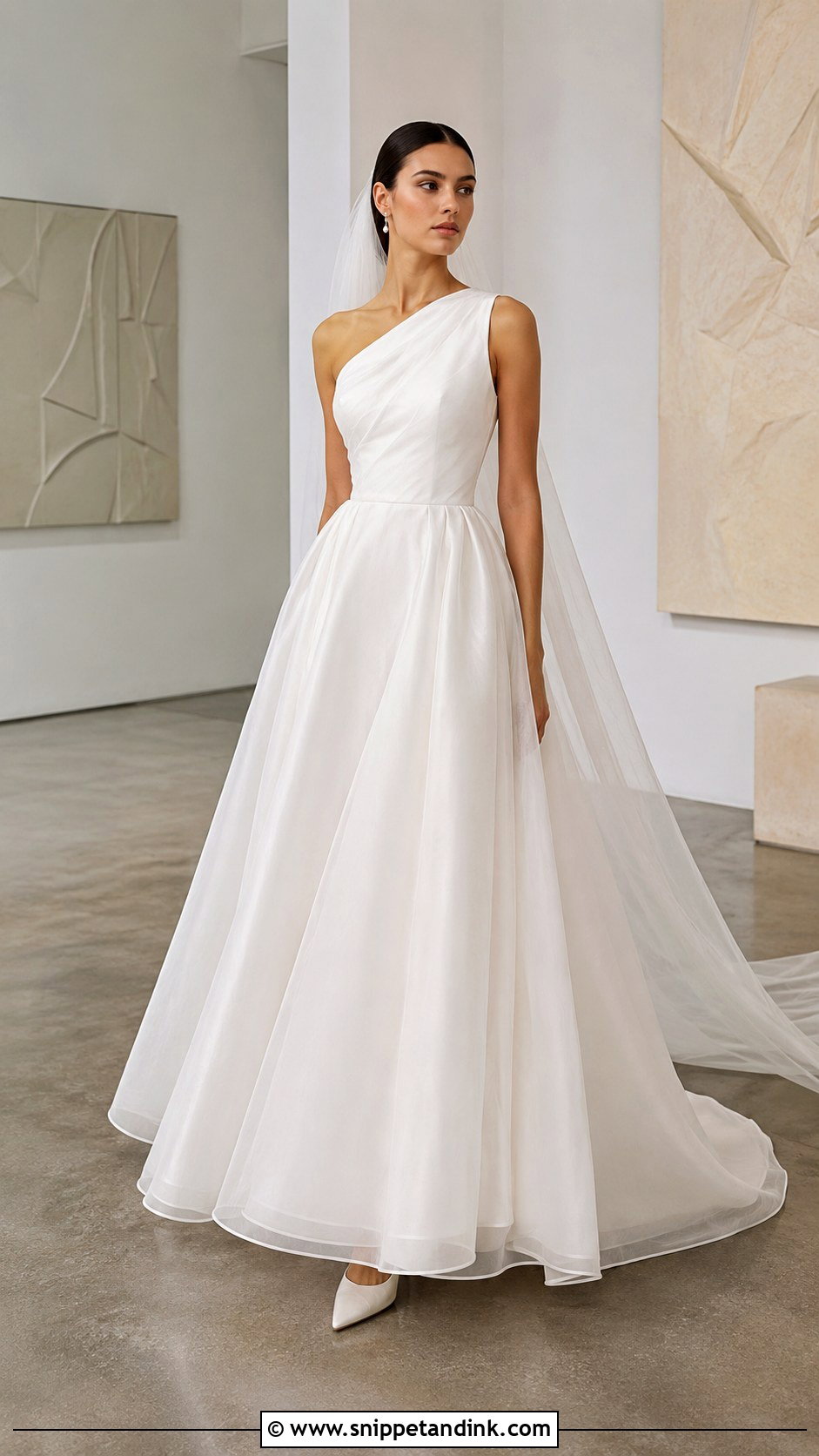
A diagonal neckline breaks up the width of the shoulders instead of underlining it. A clean one-shoulder bodice in silk or crepe feels modern, and a pleated organza A-line skirt adds hip dimension. The one place to be careful is the shoulder itself: a big bow, ruffle or flower on the covered shoulder adds exactly the width you’re trying to balance. Keep it narrow and plain. A low chignon and simple earrings let the diagonal line do its job.
8. Three-Quarter Sleeve Ball Gown Wedding Dress
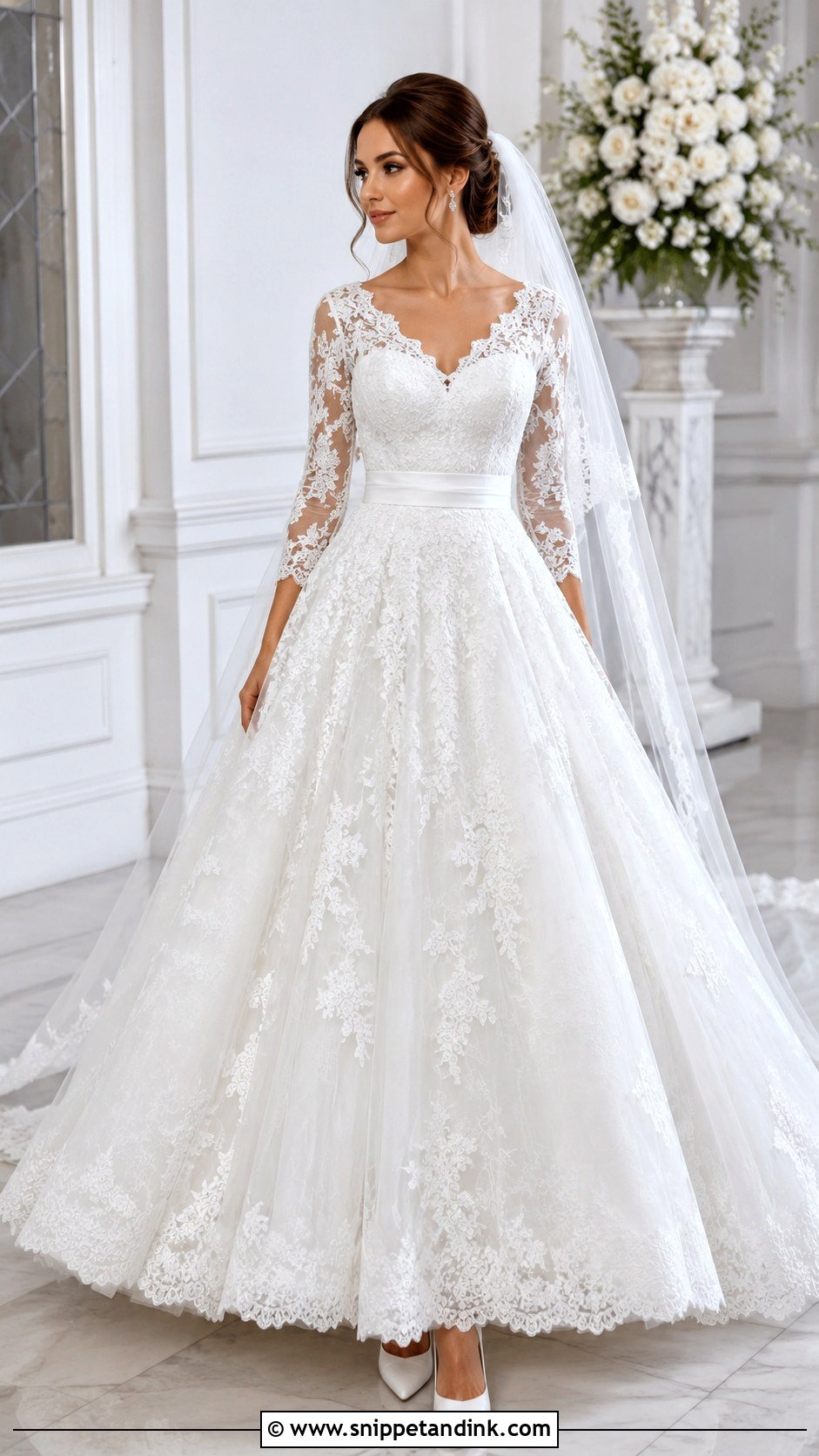
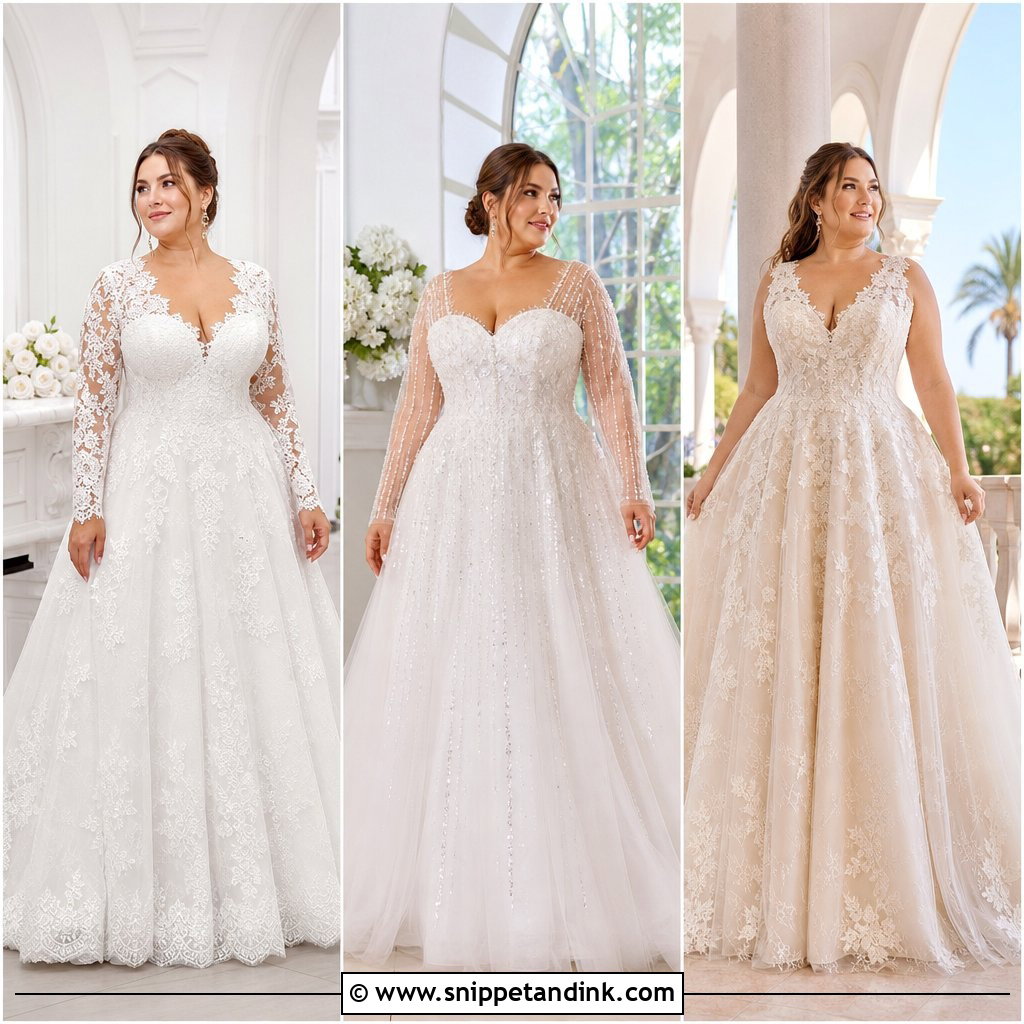
Sleeves on broad shoulders need to be close-fitting, with no puff or gathered cap. Soft lace or illusion three-quarter sleeves follow the arm and give coverage without bulk. A modest V-neck keeps the bodice open, and a full skirt balances the upper body. A structured waistband or corset seam sharpens the waist. Keep the lace small-scale on top and let the bigger motifs appear lower down. I reach for it most in cool weather and at churches or other traditional venues.
9. Long Sleeve V-Neck Wedding Dress
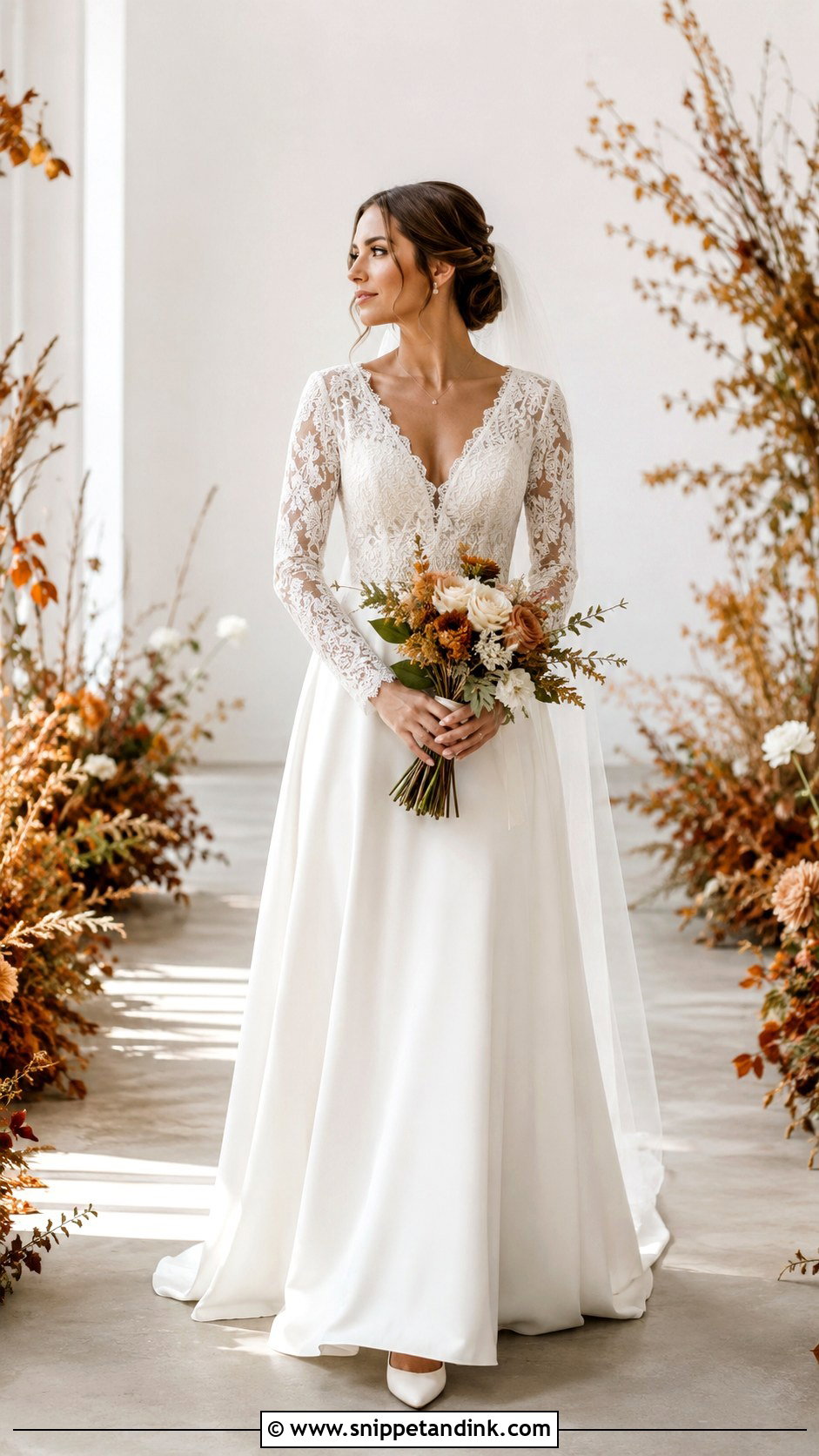
Long sleeves can make strong shoulders look heavier if they’re cut with a raised shoulder cap, so look for smooth set-in sleeves that fit close to the arm. The V-neck provides a vertical focus, and an A-line skirt in chiffon, lace or light satin adds lower-body movement. If you need real bust support under long sleeves, ask whether the bodice has built-in cups, reinforced mesh and boning; many sleeved gowns rely on mesh alone. A low textured bun suits fall and winter ceremonies.
10. Illusion Sleeve A-Line Wedding Dress
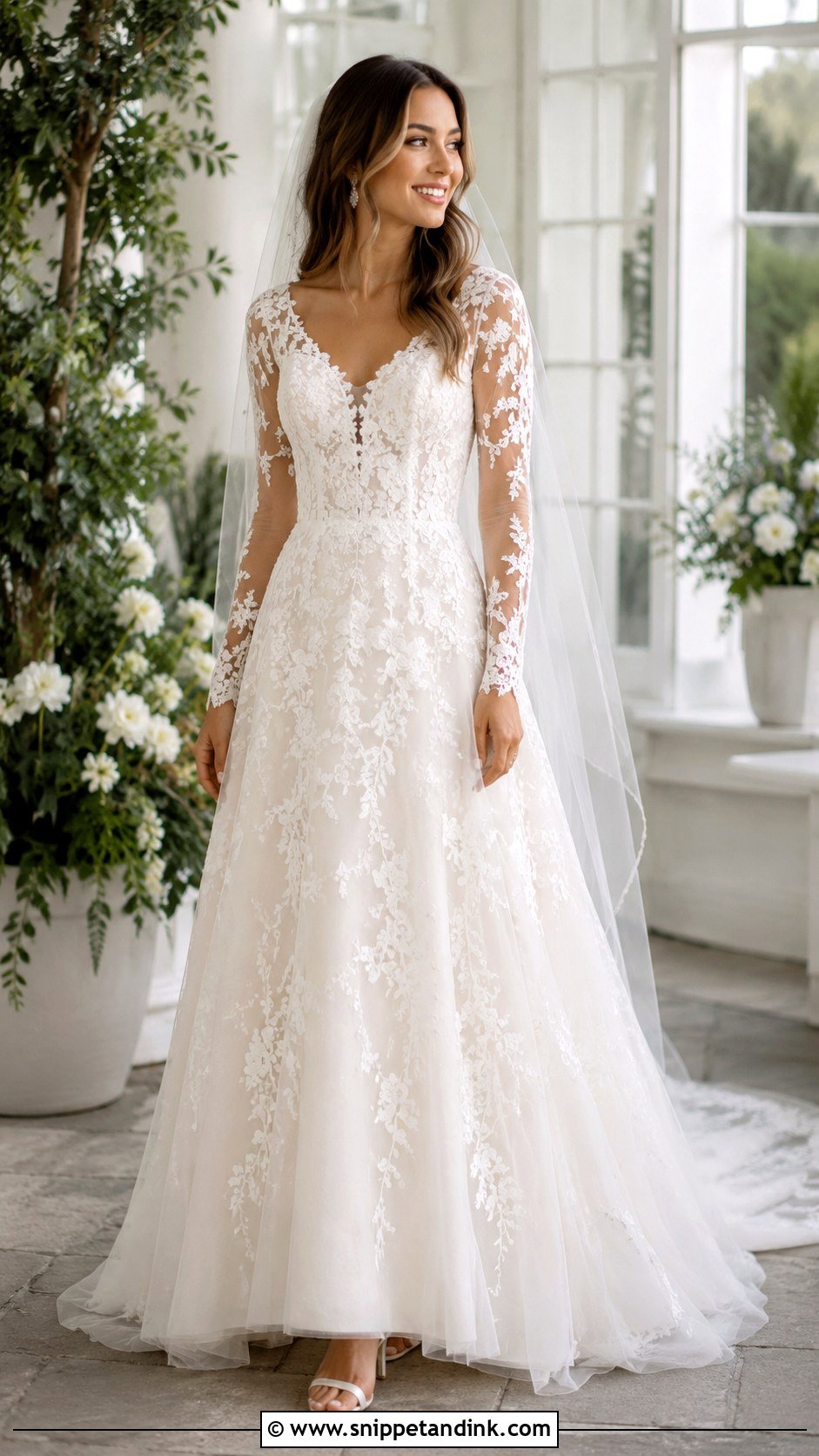
Illusion sleeves give light coverage without visually adding weight. The best versions for this body shape have fitted mesh sleeves, a narrow V-neck and embellishment that gets richer toward the waist and skirt. Dense lace across the shoulders works against you, so look for appliqués that are sparse at the top and fuller below. Match the mesh to your skin tone and move your arms in it; poorly cut illusion sleeves tug at the neckline. Delicate earrings that echo the lace finish it.
11. Basque Waist Ball Gown Wedding Dress
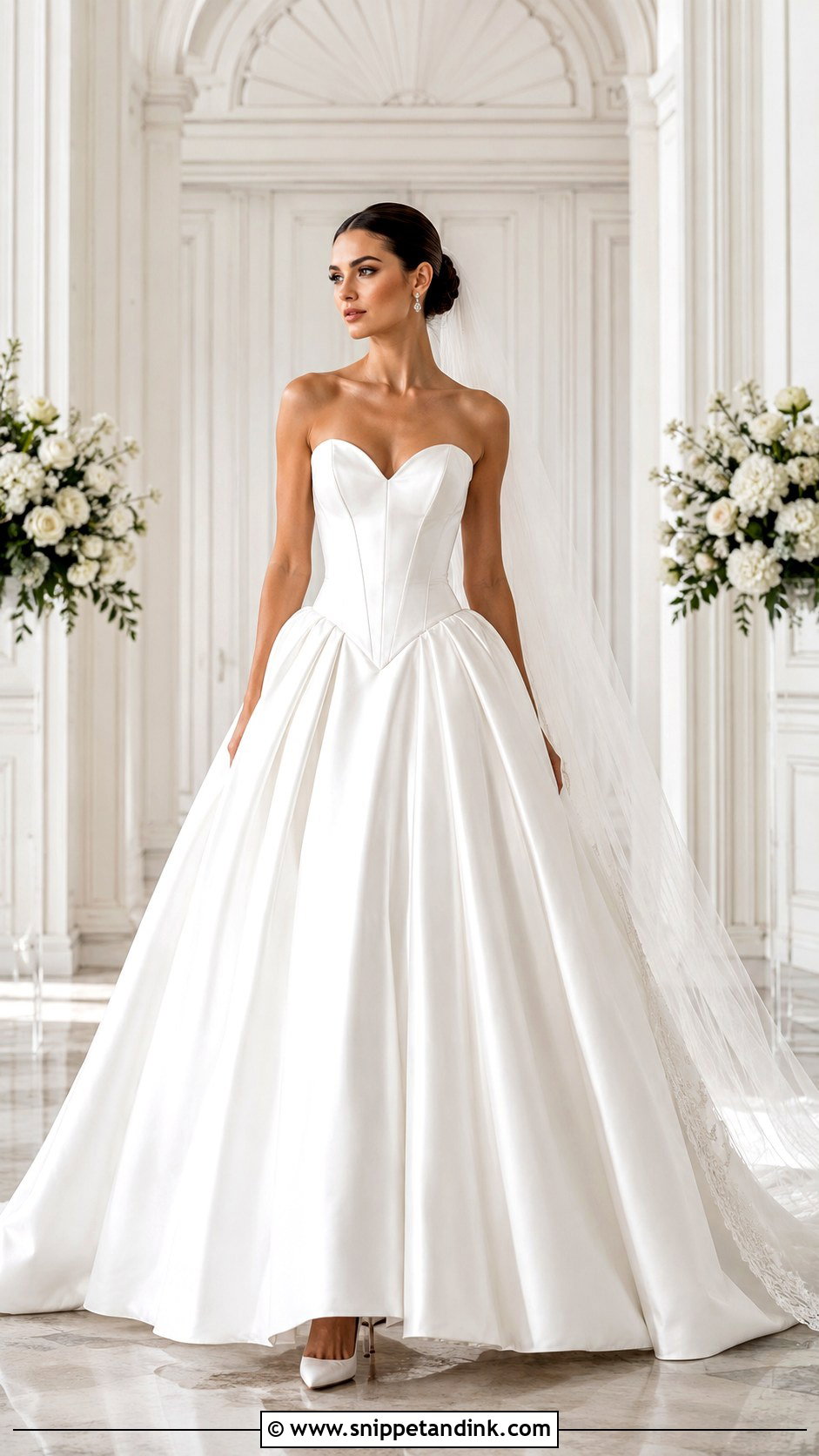
The basque waist dips into a V below the natural waist, which lengthens the torso and draws attention to the skirt. It gives stronger waist definition and makes narrow hips look fuller. A smooth corset bodice with a sweetheart or modest V-neck pairs well with a voluminous satin or tulle skirt; pleats starting at the hip add more balance. The point of the basque has to sit exactly at your center, and on a short torso it can dig in when you sit, so it’s a silhouette that really needs professional fitting. When it’s right, it creates an elegant hourglass-inspired bridal silhouette.
12. Pleated Mikado Ball Gown Wedding Dress
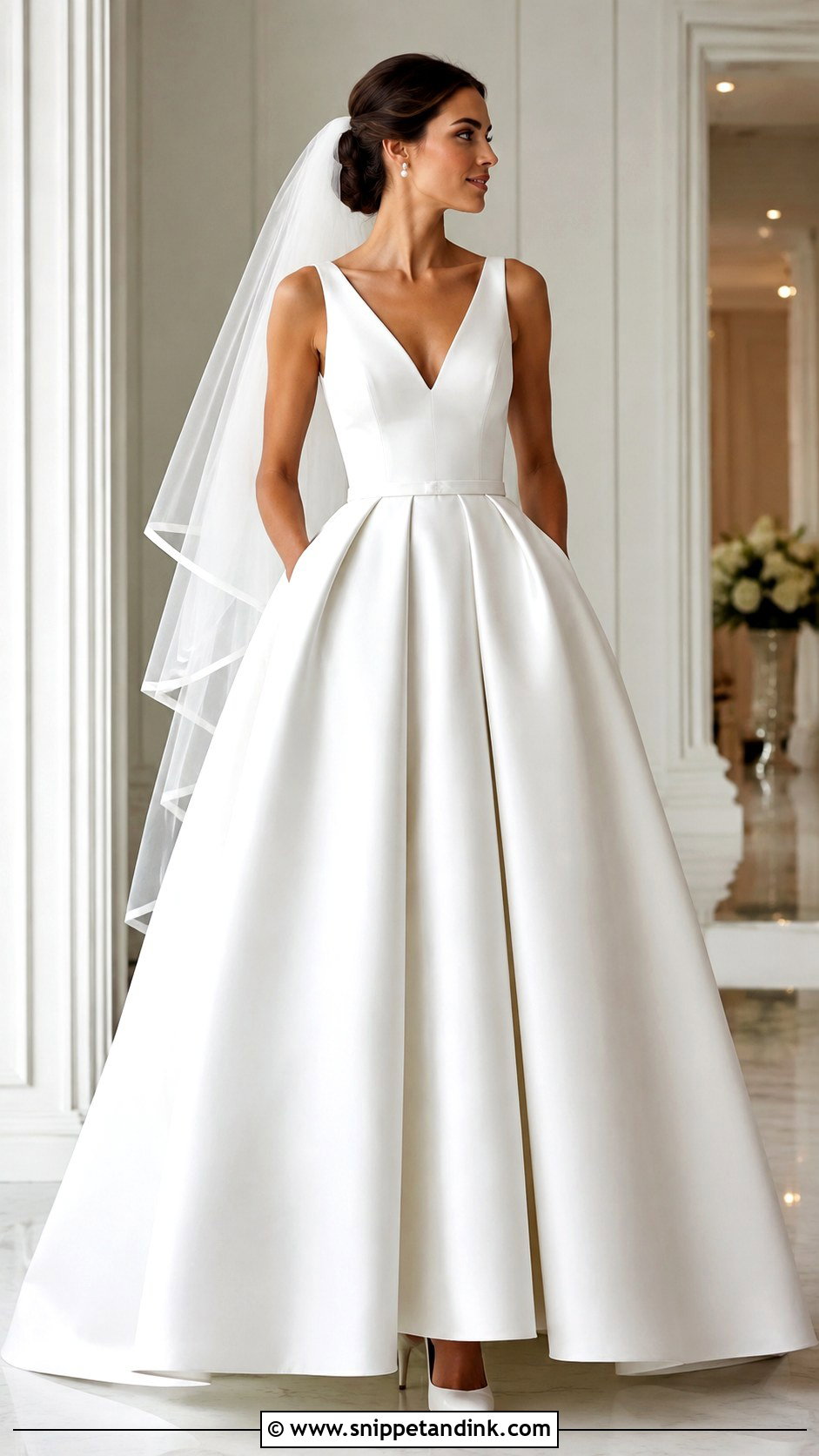
Crisp mikado fabric holds deep pleats and a full skirt shape without layers of petticoat, which makes it one of my favorite fabrics for balancing shoulders. Keep the bodice minimal with a V or soft sweetheart, and let the box pleats, pockets and train carry the drama. A narrow belt can emphasize the waist, but choose one that blends with the fabric; a contrasting belt cuts the torso in half. Mikado creases sharply when packed, so plan for a professional press before the day.
13. Corset A-Line Wedding Dress
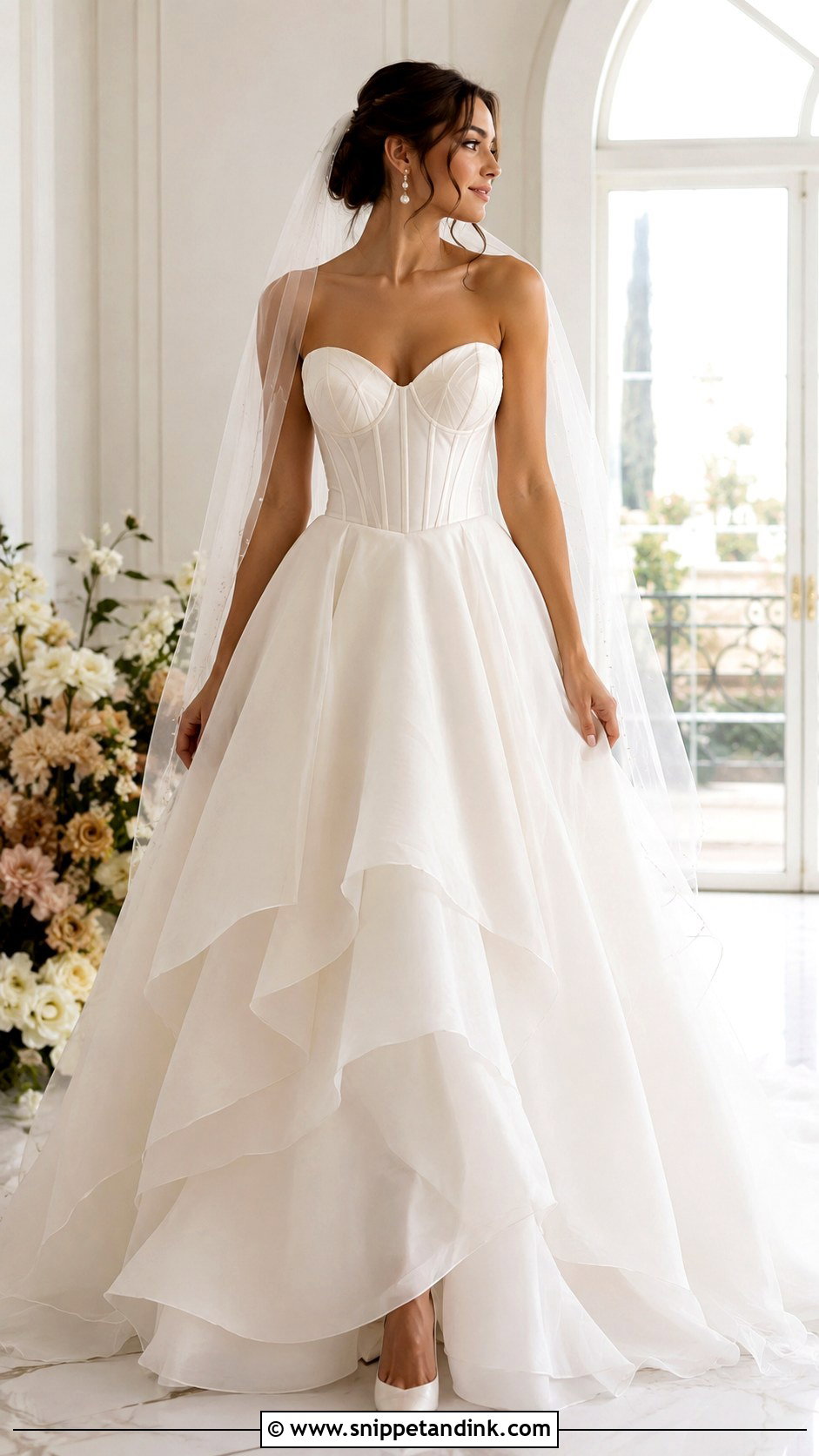
Vertical boning, a V-shaped front or a curved sweetheart edge all guide the eye downward to the waist. That’s the job of a corset bodice for this figure. A lace-up back allows small fit adjustments on the day, which is useful if your weight shifts during the final weeks. A lined corset gives more coverage than a sheer one. Pair it with a layered organza or tulle skirt. Avoid a heavily decorated top edge on the corset, since that draws a horizontal line right across the chest.
14. Empire Waist Chiffon Wedding Dress
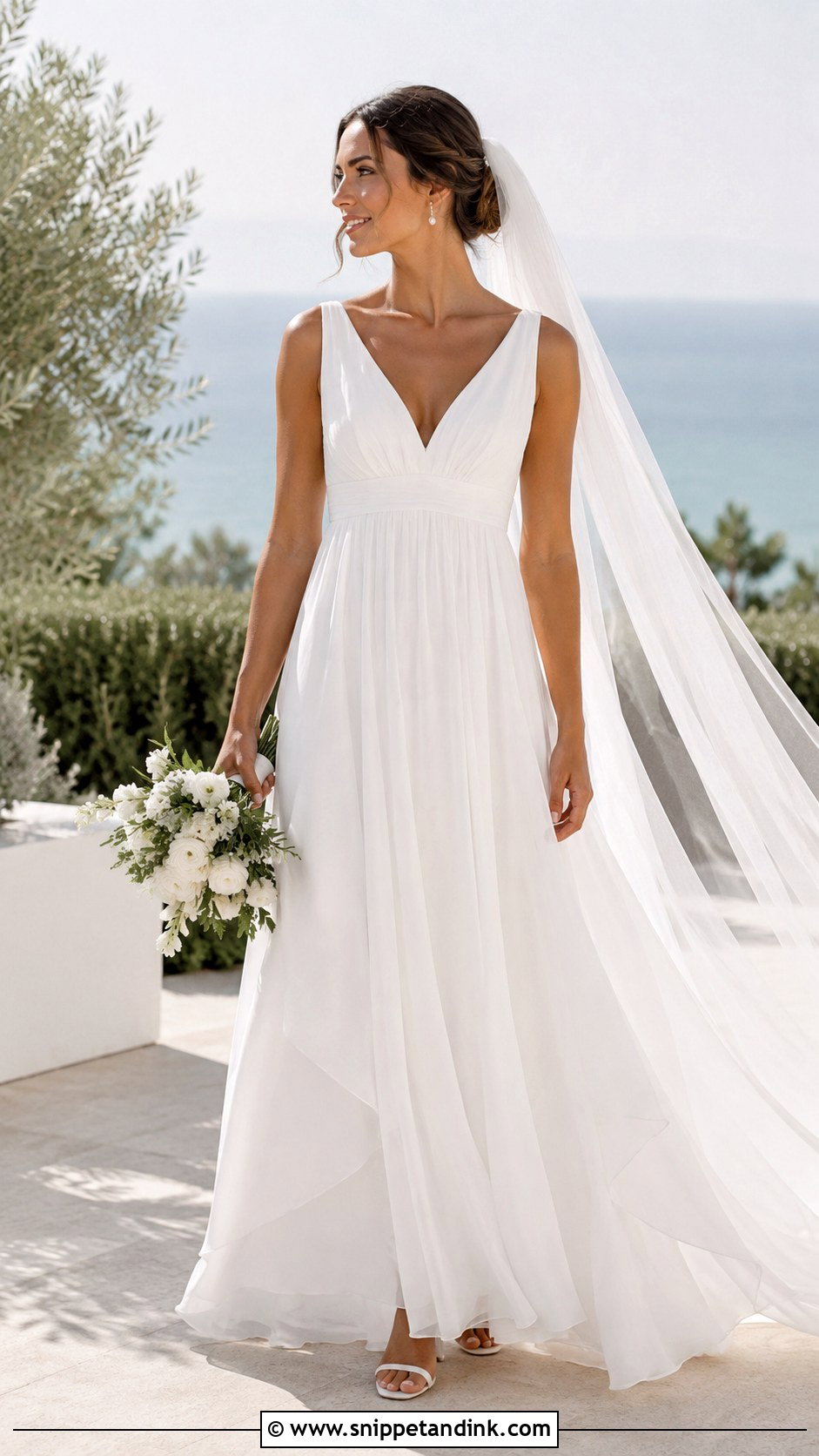
An empire waist is a soft, unstructured choice: the seam sits just under the bust and the chiffon falls in long, fluid lines. Gathers should sit at the center of the bodice, not across the shoulders. Several chiffon layers add gentle volume without overwhelming a petite frame. Because the empire seam does all the structural work, it has to be tailored precisely under the bust; if it sits too low, the bodice droops. Low block heels and a light veil suit outdoor and destination ceremonies.
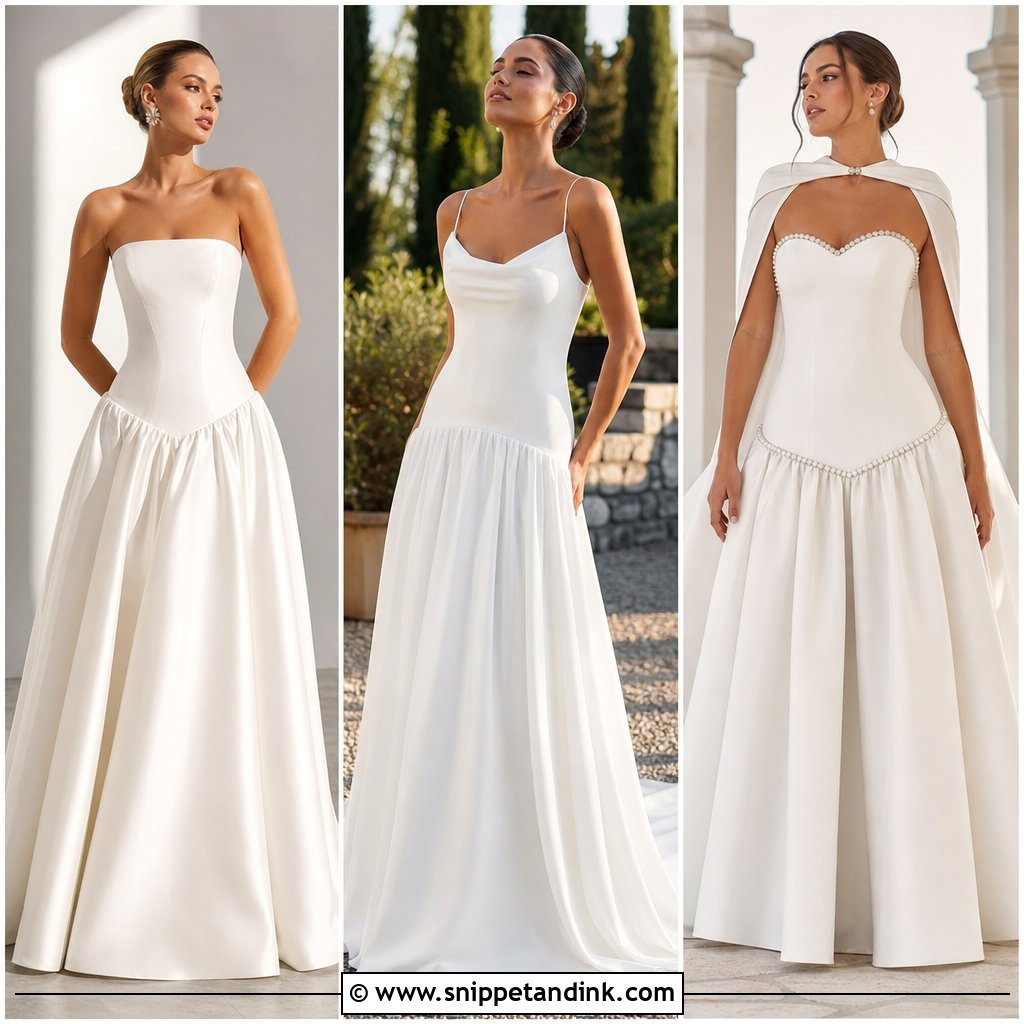

15. Tea-Length V-Neck Wedding Dress
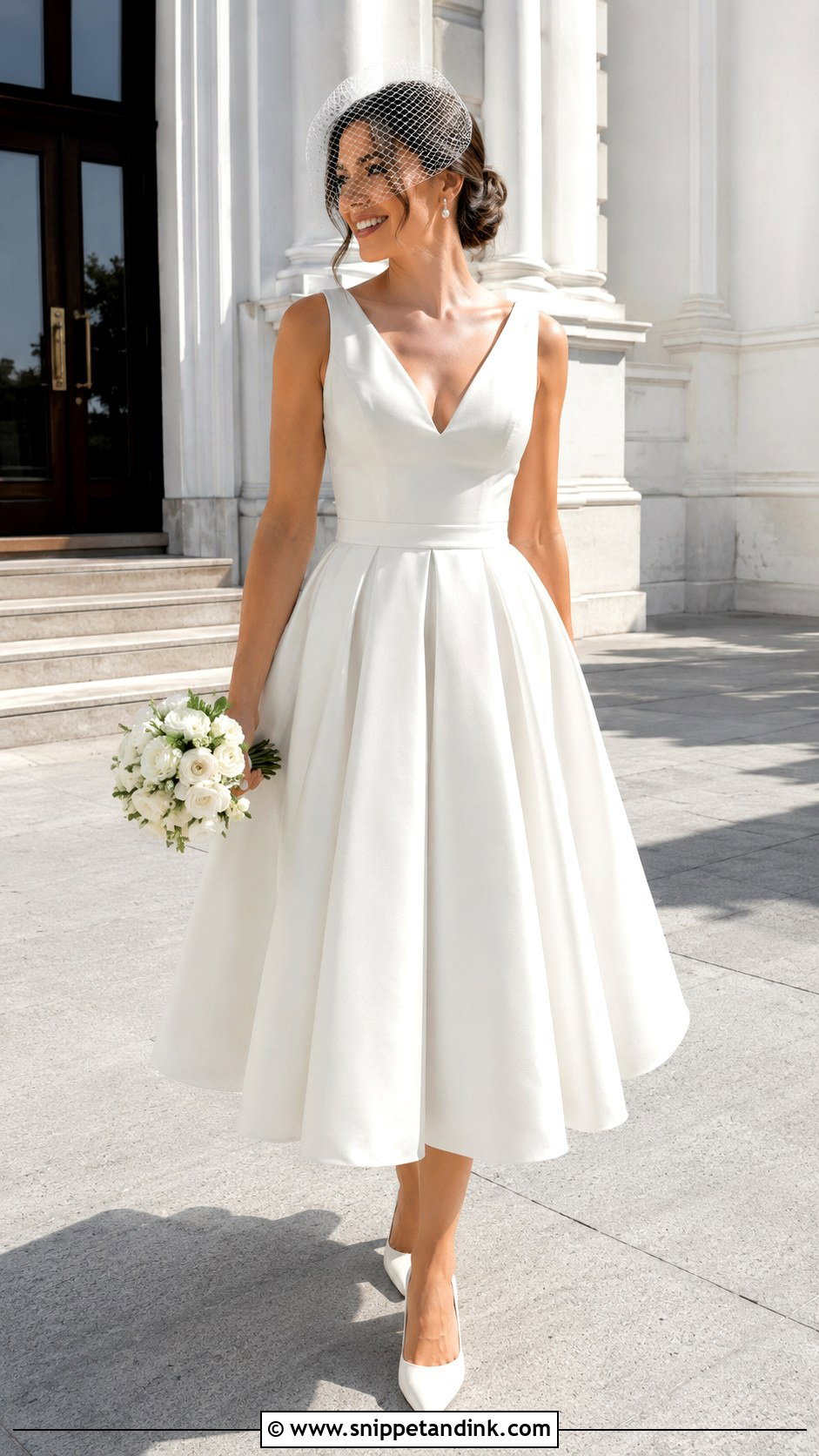
Tea length moves the eye down to the legs, which is exactly where an inverted triangle frame benefits from attention. A fitted bodice, defined waist and full circle or pleated skirt ending between knee and ankle adds hip width. The V-neck keeps the top open. Shoes will be seen, so choose pumps, slingbacks or refined flats you’re happy to show off. A birdcage veil and compact bouquet match the shorter proportion. Test the hem with your chosen shoes during fittings, since an inch makes a big difference at this length.
16. Fit-And-Flare Wedding Dress With Tulle Overskirt
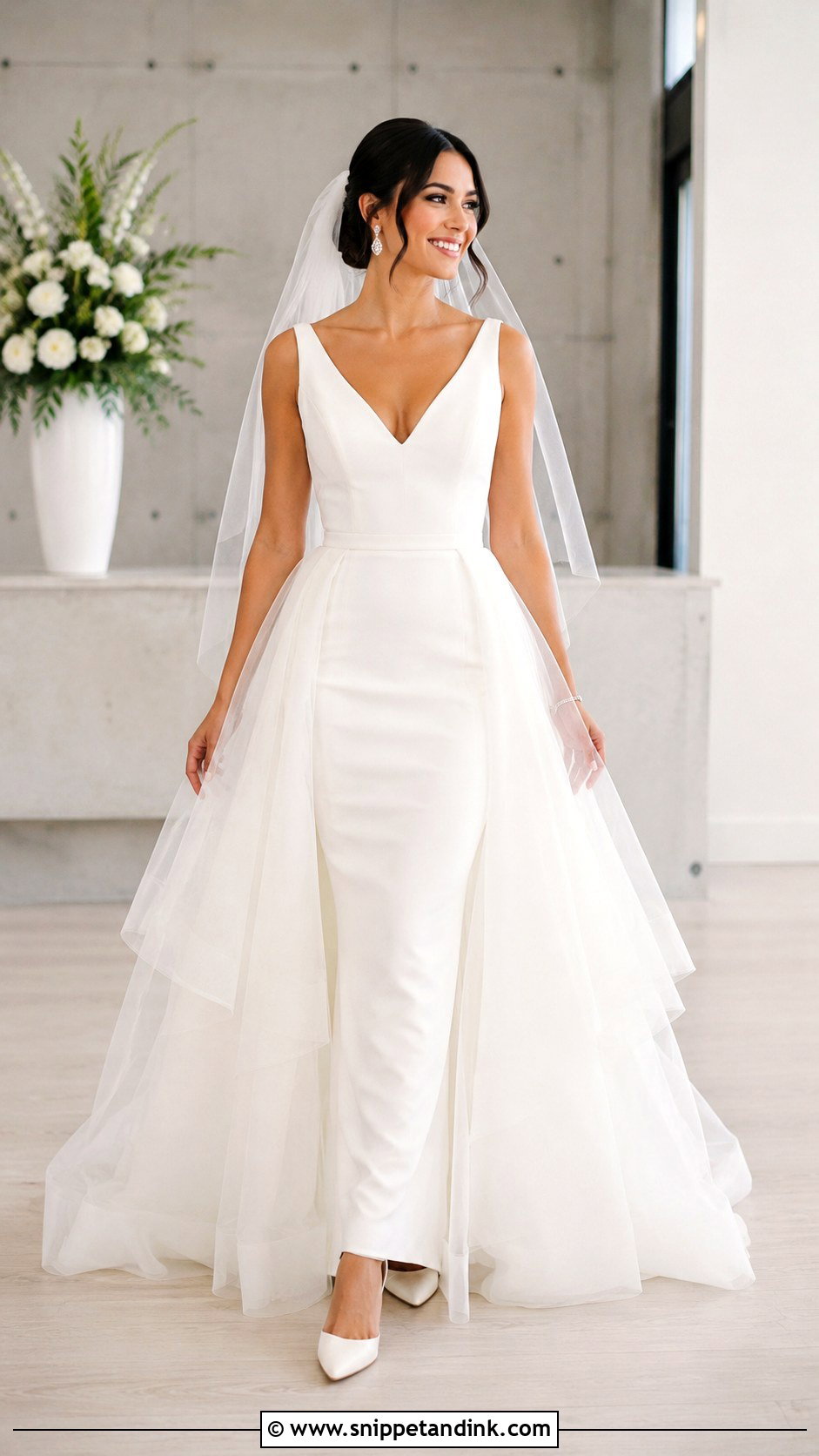
A fit-and-flare wedding dress with a detachable tulle overskirt gives you two silhouettes: the overskirt adds volume for the ceremony, and the fitted base shows your figure at the reception. A V-neck with wide straps keeps the top secure. A plain crepe underdress contrasts nicely with soft tulle. The overskirt waistband is where these go wrong, since a thick band adds bulk at the exact spot you want defined, so ask your seamstress to fit it flat and close.
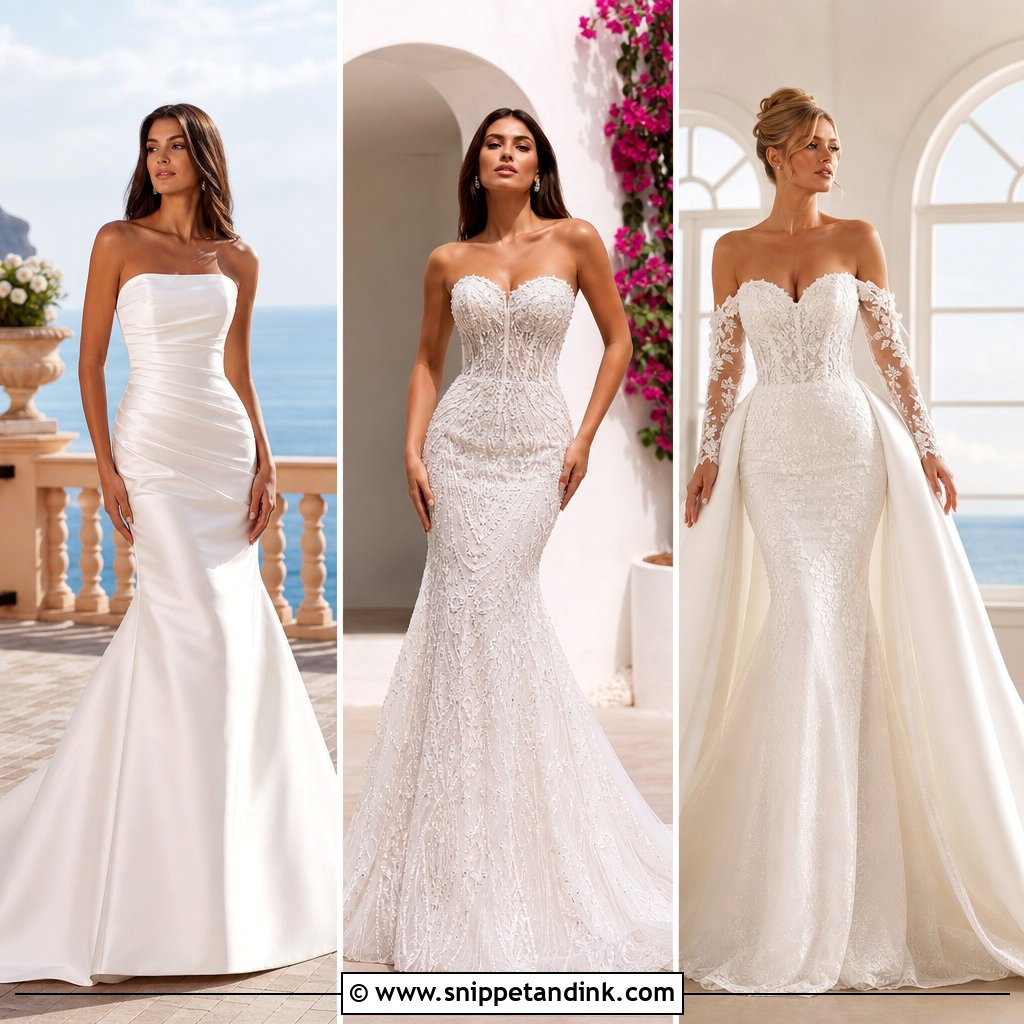
17. Trumpet Wedding Dress With Ruffled Hem
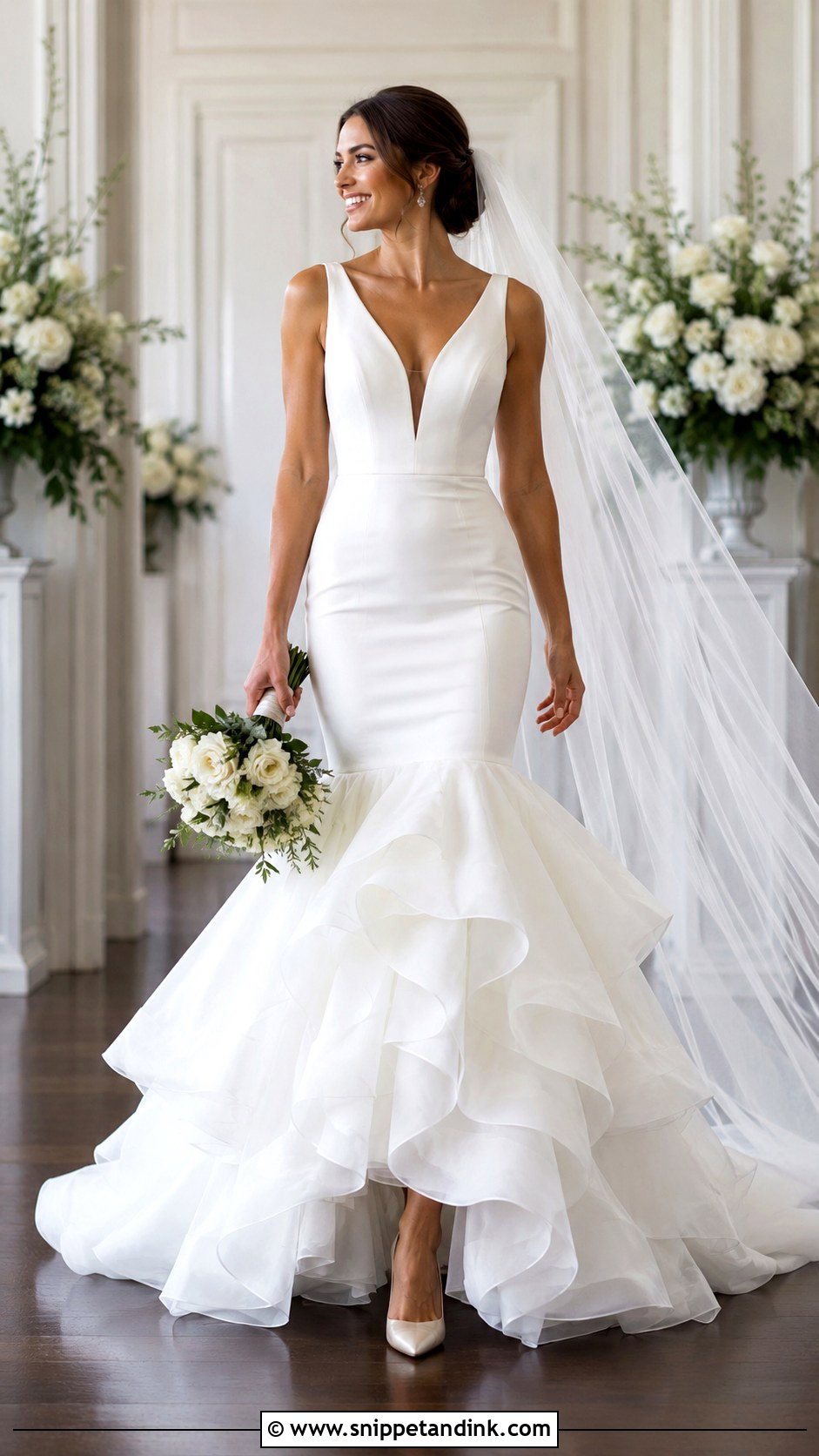
Trumpet dresses only balance broad shoulders when the flare starts high, around mid-thigh. A trumpet that stays narrow down to the knee makes the shoulders look even wider by comparison. Look for a gown that follows the torso and upper hip, then opens into a ruffled, layered or pleated hem. A clean V, simple straps and a defined waist seam complete it. Walk, sit and dance in it at the fitting, because a high flare can still feel restrictive at the knee.
18. Mermaid Wedding Dress With Detachable Skirt
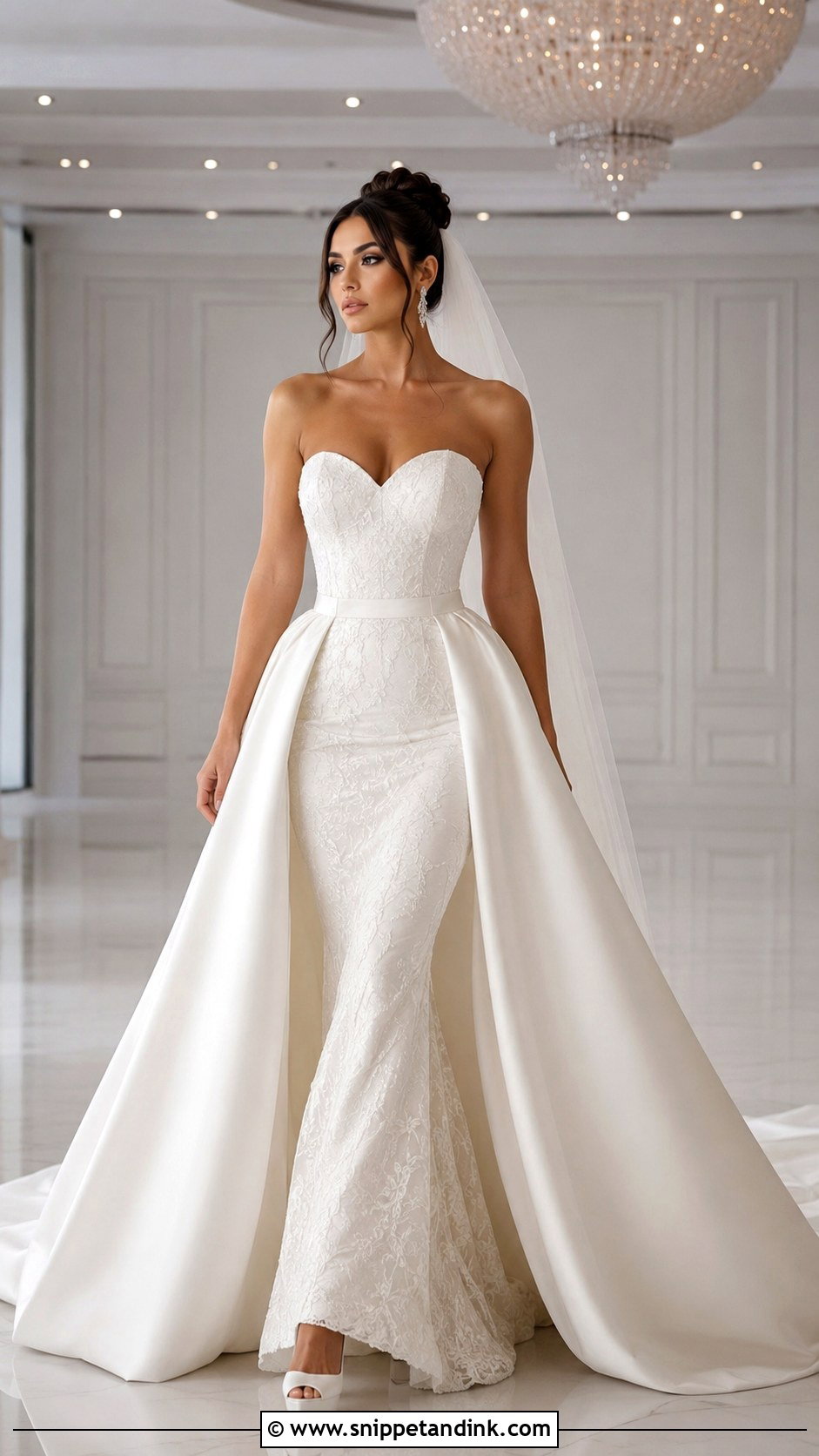
Mermaid gowns aren’t automatically off the table. A close mermaid base with a detachable overskirt gives fuller ceremony volume, then you remove the overskirt for a sleeker reception look. Choose a deep V or clean sweetheart bodice and skip shoulder embellishment. The overskirt should attach at the natural waist and open at the front to show the fitted dress. Honestly, if the mermaid base alone is your favorite, try it with a long cathedral veil, which adds width at the hem and helps the balance too.
19. Draped Cowl Neck A-Line Wedding Dress
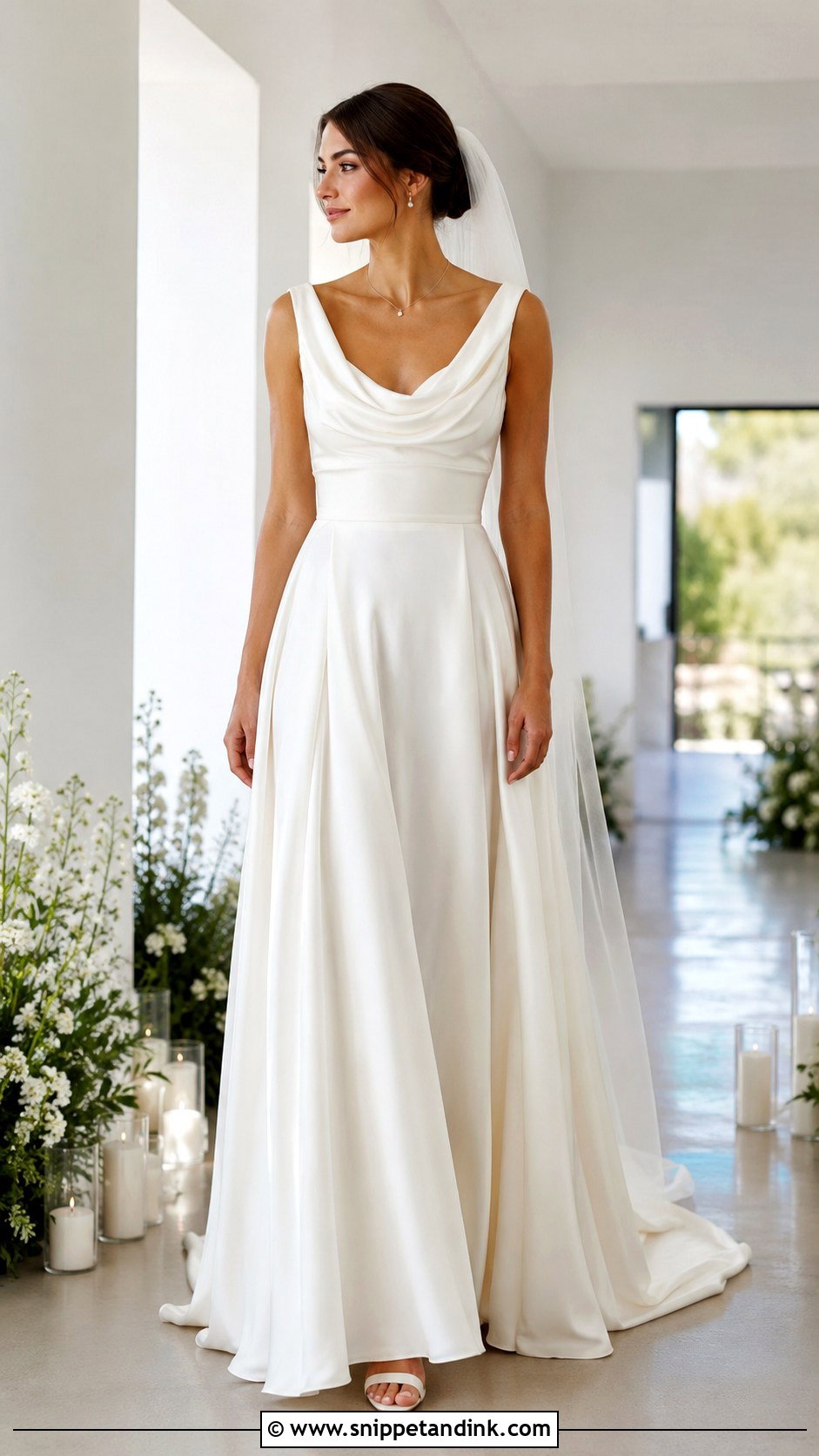
Draped fabric softens an angular shoulder line. The cowl should be narrow and fall vertically; a wide cowl that stretches shoulder to shoulder emphasizes width. Silk or satin drapes best. Pair it with an A-line skirt from a defined waist, and a side drape or a few waist pleats for lower-body dimension. Check the cowl from every angle at fittings, since it can gape when you lean forward. Minimal jewelry, a low bun and a plain veil keep it modern.

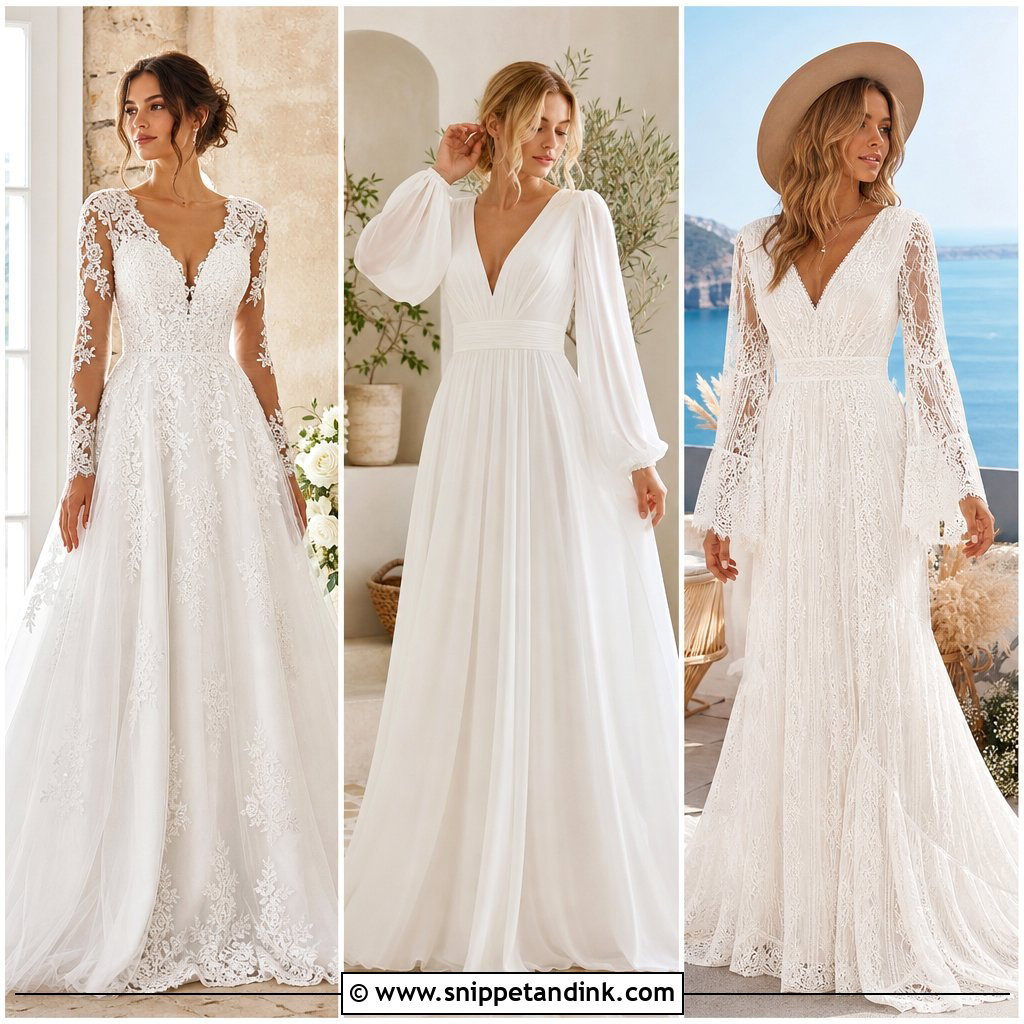
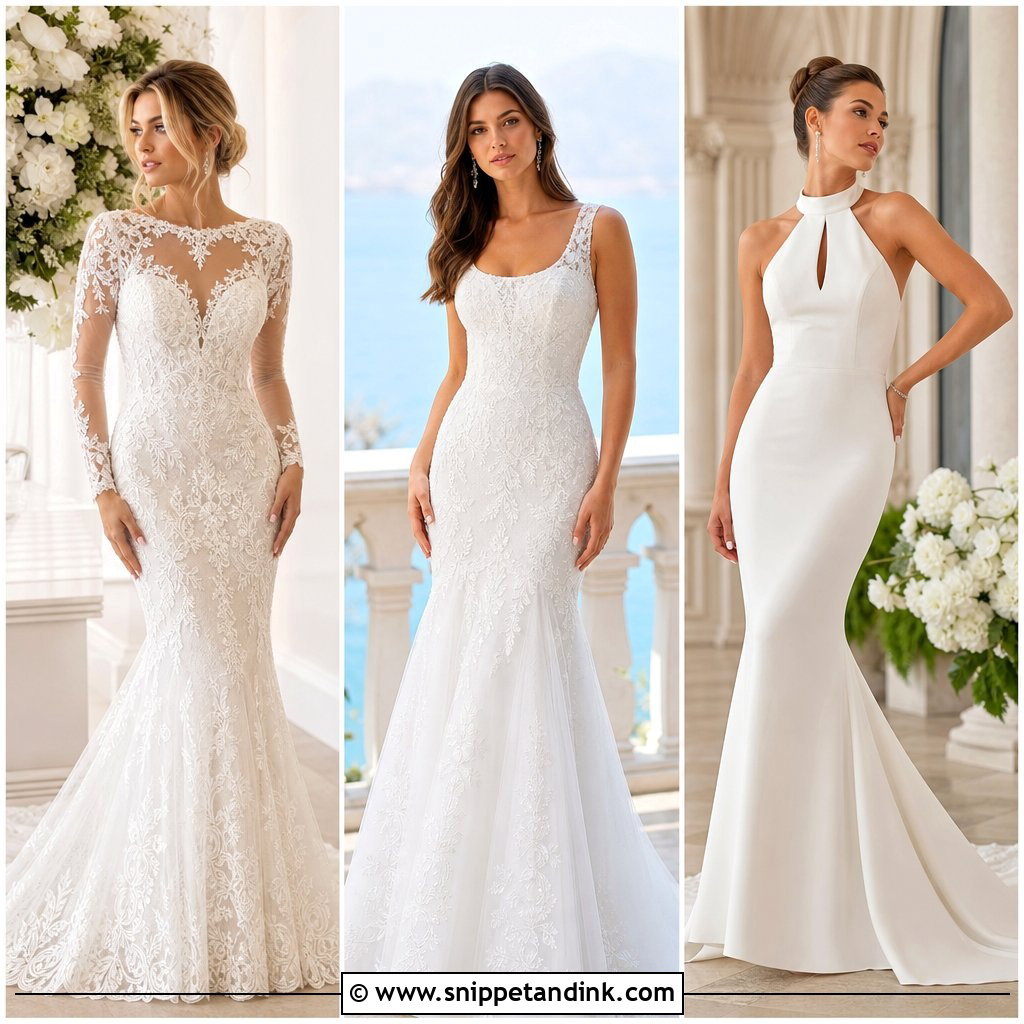
20. V-Neck Wedding Dress With Layered Skirt
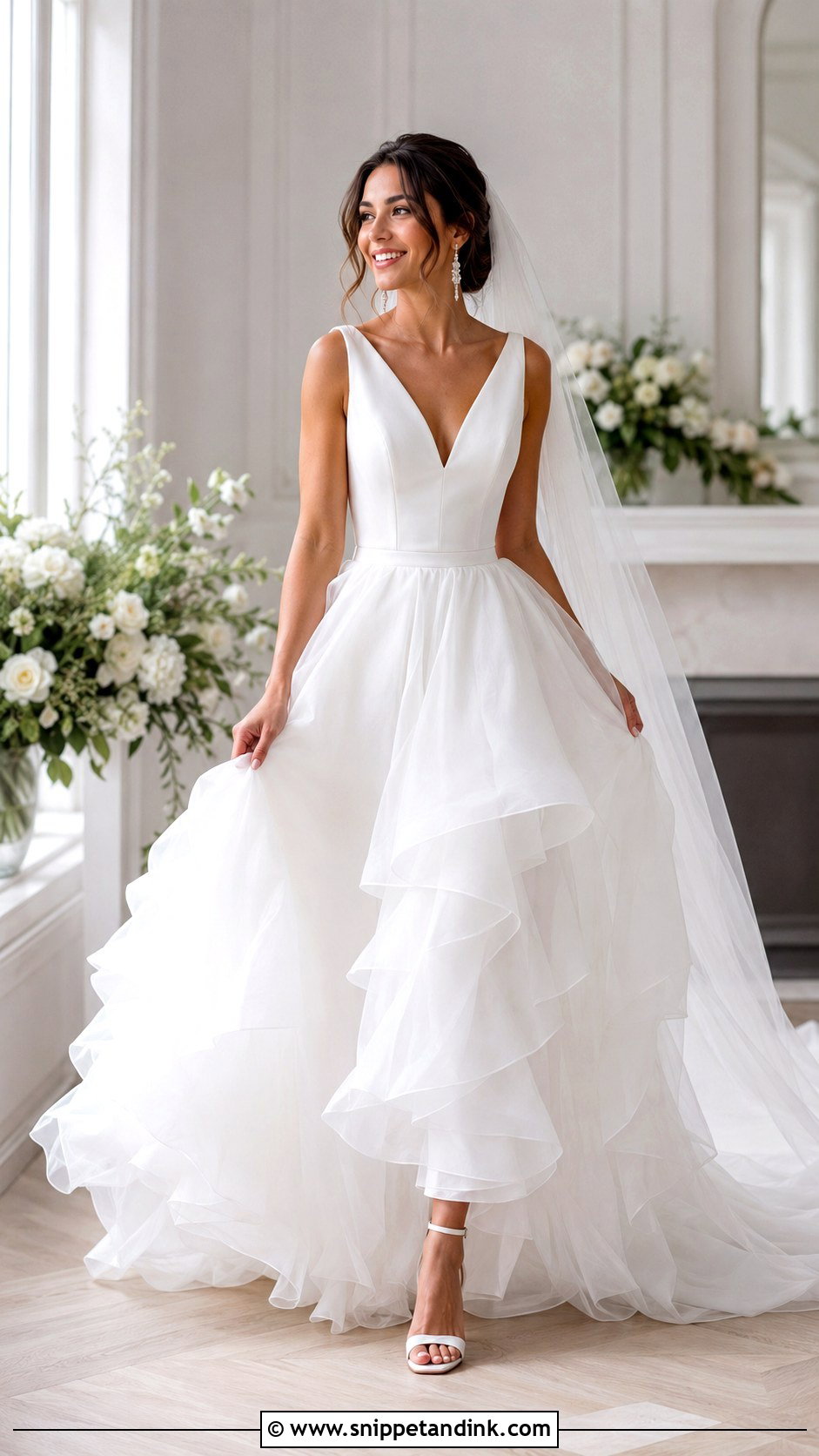
A V-neck combined with a layered skirt uses both tools at once: the neckline gives a vertical line and the tiers of tulle, organza or chiffon add width below the waist. Choose soft, graduated layers. Stiff horizontal ruffles look like bands and shorten the figure. Keep the top smooth and supportive. Simple heels and a waist-length veil finish it. It’s a practical choice when you want obvious volume without the weight of a full ball gown.
Veil, Hair and Bouquet Can Shift the Balance Too
The dress isn’t the only tool. The pieces around it move the eye as well, and they’re far easier to change late in the planning.
Veil
A long chapel or cathedral veil adds width and movement at the hem, which balances the shoulders from behind. A short, full blusher that stops at the shoulders does the opposite and adds width exactly where you have it.
Hair
Big, loose waves that end at the shoulder line add volume at your widest point. An updo, a low bun or hair that falls past the shoulder line keeps the upper body cleaner. A little height at the crown lengthens the whole silhouette.
Bouquet and posing
Hold the bouquet at hip level rather than at the chest, and choose a shape with some trailing length; both draw the eye down. In portraits, turning slightly sideways to the camera narrows the shoulders, and a photographer who shoots a lot of brides will usually guide you there without being asked.
Photograph Every Contender From the Side
No single body-shape rule decides which gown flatters you. Use these ideas as a starting point, then focus on fit, support, comfort and how you feel in the dress. V and curved necklines soften or lengthen the upper body; A-lines, pleats, overskirts and ball gowns add volume below the waist. At appointments, try several shapes and have someone photograph each from the front, side and back, since the mirror only shows one view. Sit, walk and lift your arms before you decide. Good alterations will finish what the right silhouette starts.
You'll Like These Ideas:



Leave a Reply