
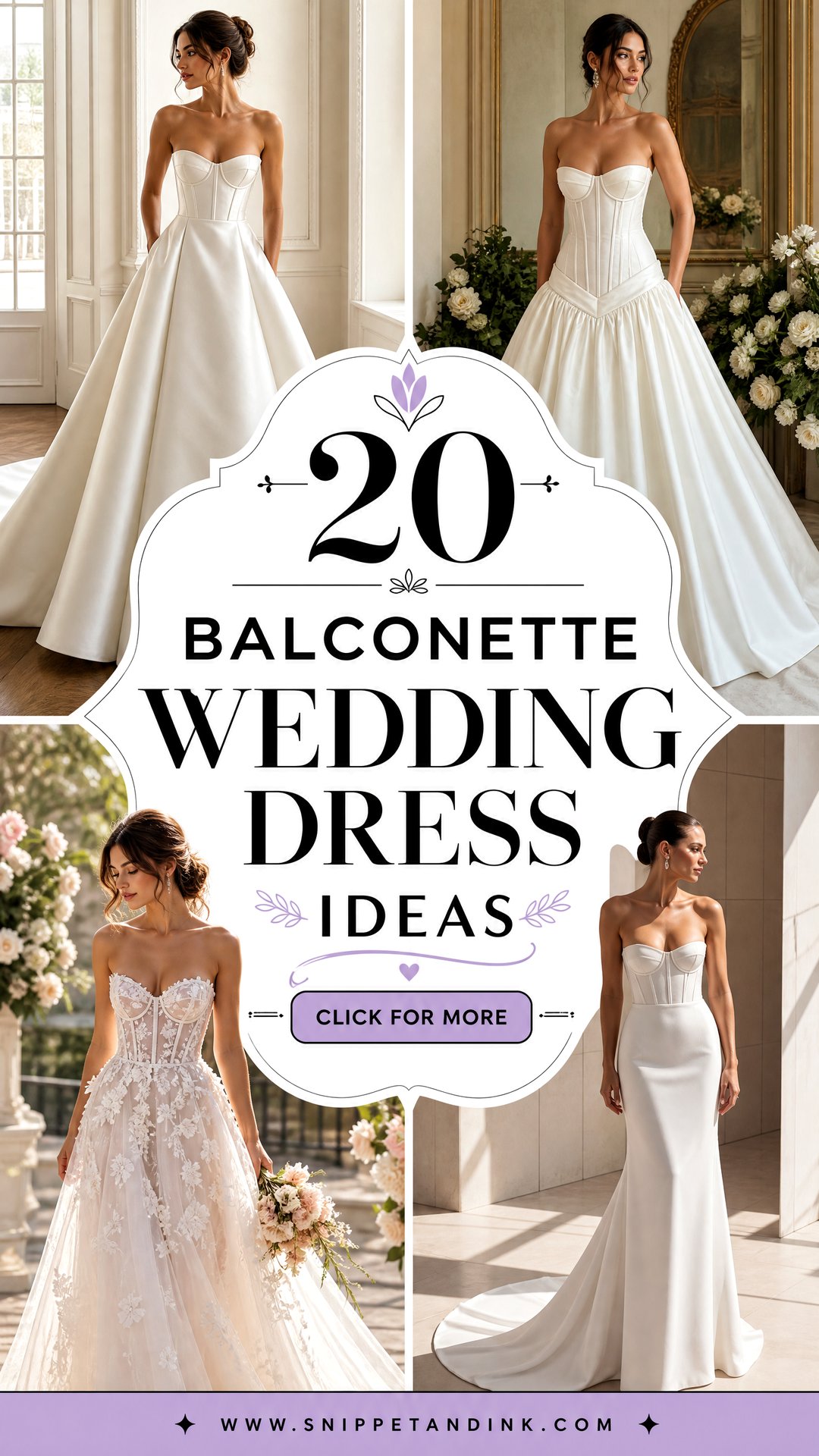
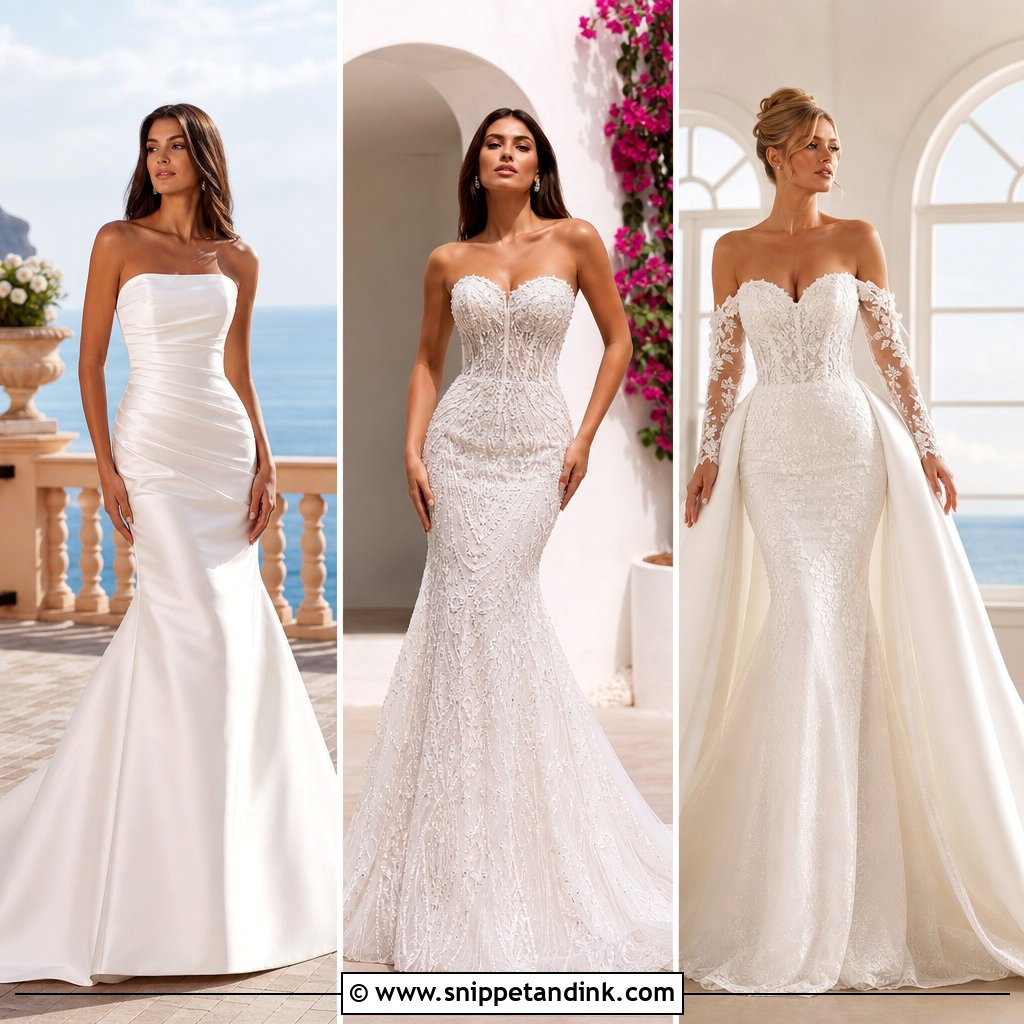
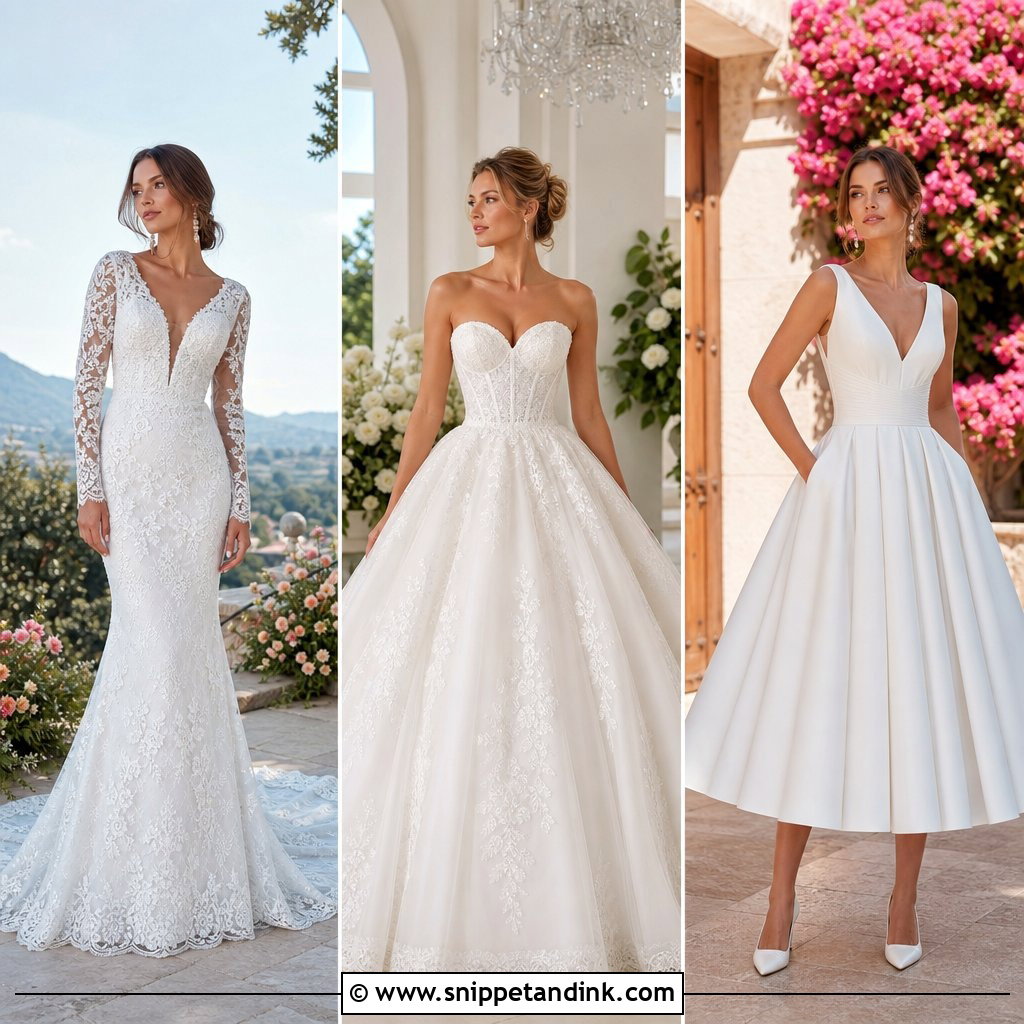
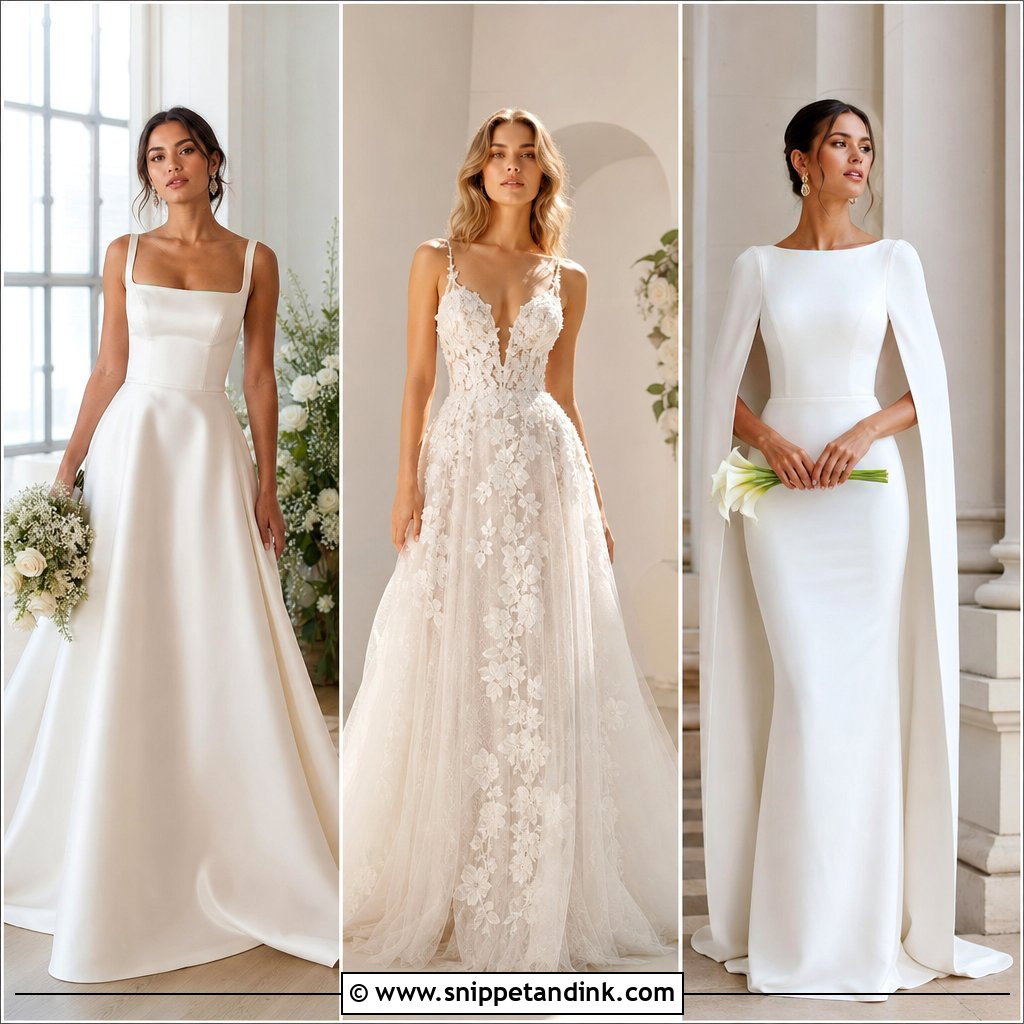
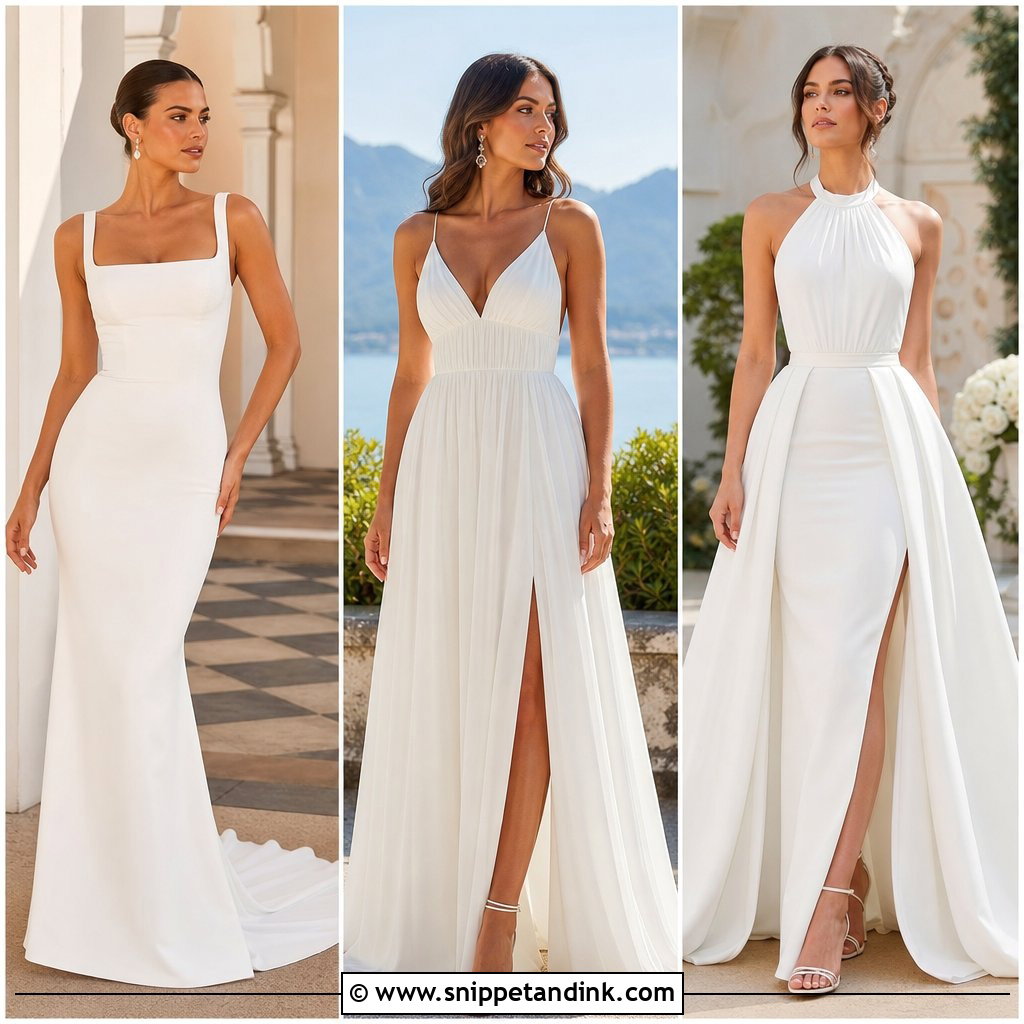
Balconette bodices are one of the most forgiving shapes I fit. The cups are cut low and fairly straight across the top, with the straps or strapless edge set wide, so the neckline lifts the bust and opens up the collarbones instead of plunging. That makes it a strong choice for a wide range of figures, as long as the inside of the dress is built properly. Below you’ll find twenty full bridal looks: classic ball gowns, sleek columns, corsets, floral lace and short dresses for the party, each with the veil, shoes and jewelry I’d put with it. Judge every one on its construction (cup placement, boning, fabric weight) as much as on the neckline, because alterations are what make a structured bodice feel secure.
Balconette, Sweetheart or Plunge? How the Cups Are Cut
Brides often confuse these three, and the difference matters for fit. A sweetheart neckline dips into a heart shape at the centre. A plunge drops deep between the cups. A balconette is cut lower and straighter across the top of the bust, with the cups coming up from underneath to lift rather than push together, and the straps set out toward the edge of the shoulders.
That construction suits more figures than people expect:
- Smaller busts get lift and shape without padding that looks obvious.
- Fuller busts are supported from below, and the straight edge avoids the spill-over a shallow sweetheart can cause.
- Narrow shoulders look broader because the line runs out wide.
- Very broad shoulders may prefer straps set slightly closer in, which a good seamstress can adjust.
The thing to watch is the gap at the top of the cup. If you can slide two fingers in when you lean forward, the cup is too big, and taking it in properly is a structural alteration, not a quick tuck.
1. Satin A-Line Balconette Wedding Dress
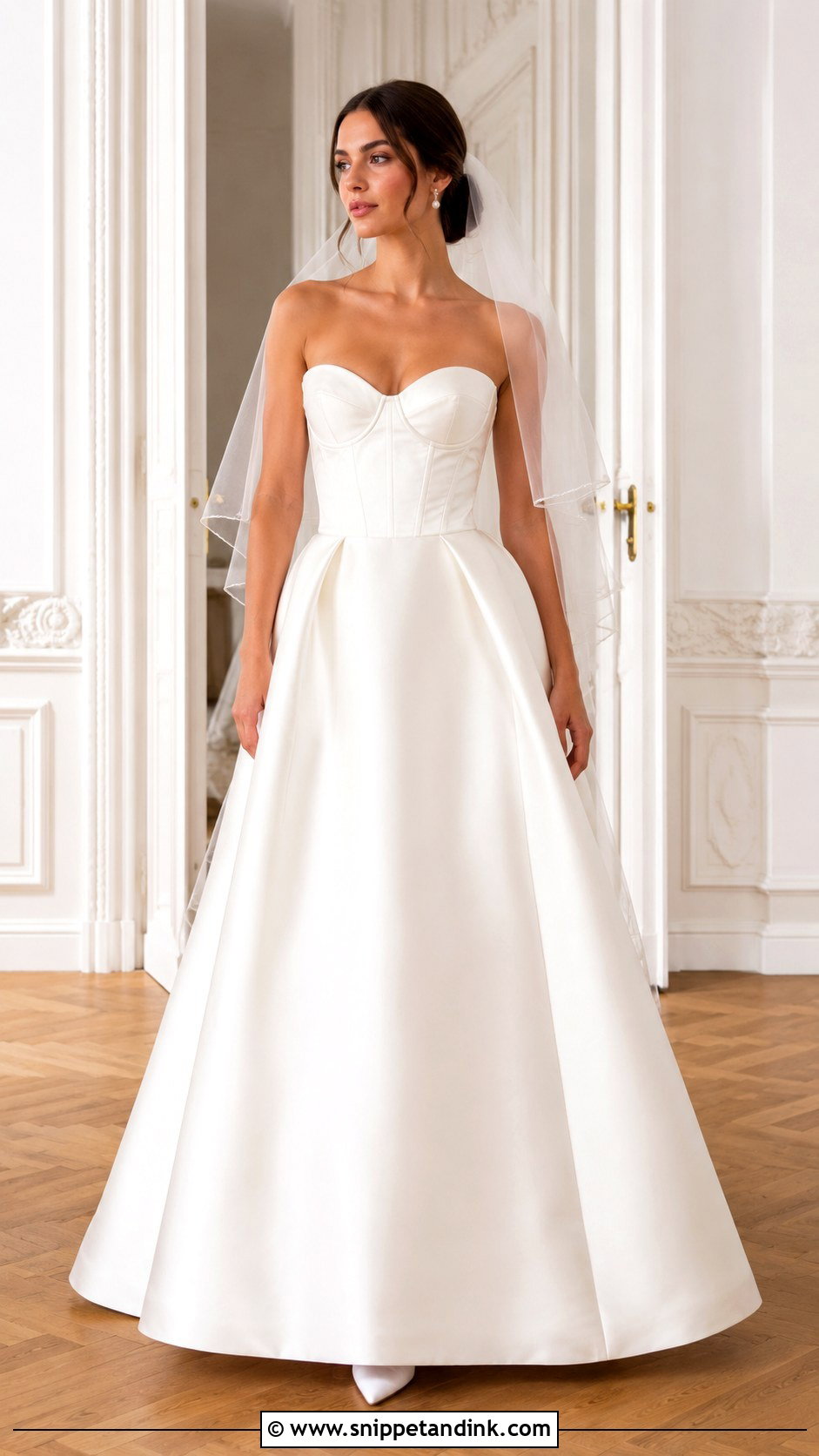
Satin and an A-line are the classic way in. A structured bodice with visible seams curves into the waist and then a smooth floor-length skirt, with just enough movement to feel bridal without bulk. Pointed ivory pumps, pearl drops, a fingertip veil with a satin edge and a compact bouquet of white roses keep it clean, and a low bun or smooth waves keep the neckline in view. With satin, I look at the cup seams first: if a cup is even slightly too big, satin wrinkles across the top edge and the light catches every fold. Sewn-in cups and light boning hold the shape.
2. Lace Ball Gown Balconette Wedding Dress
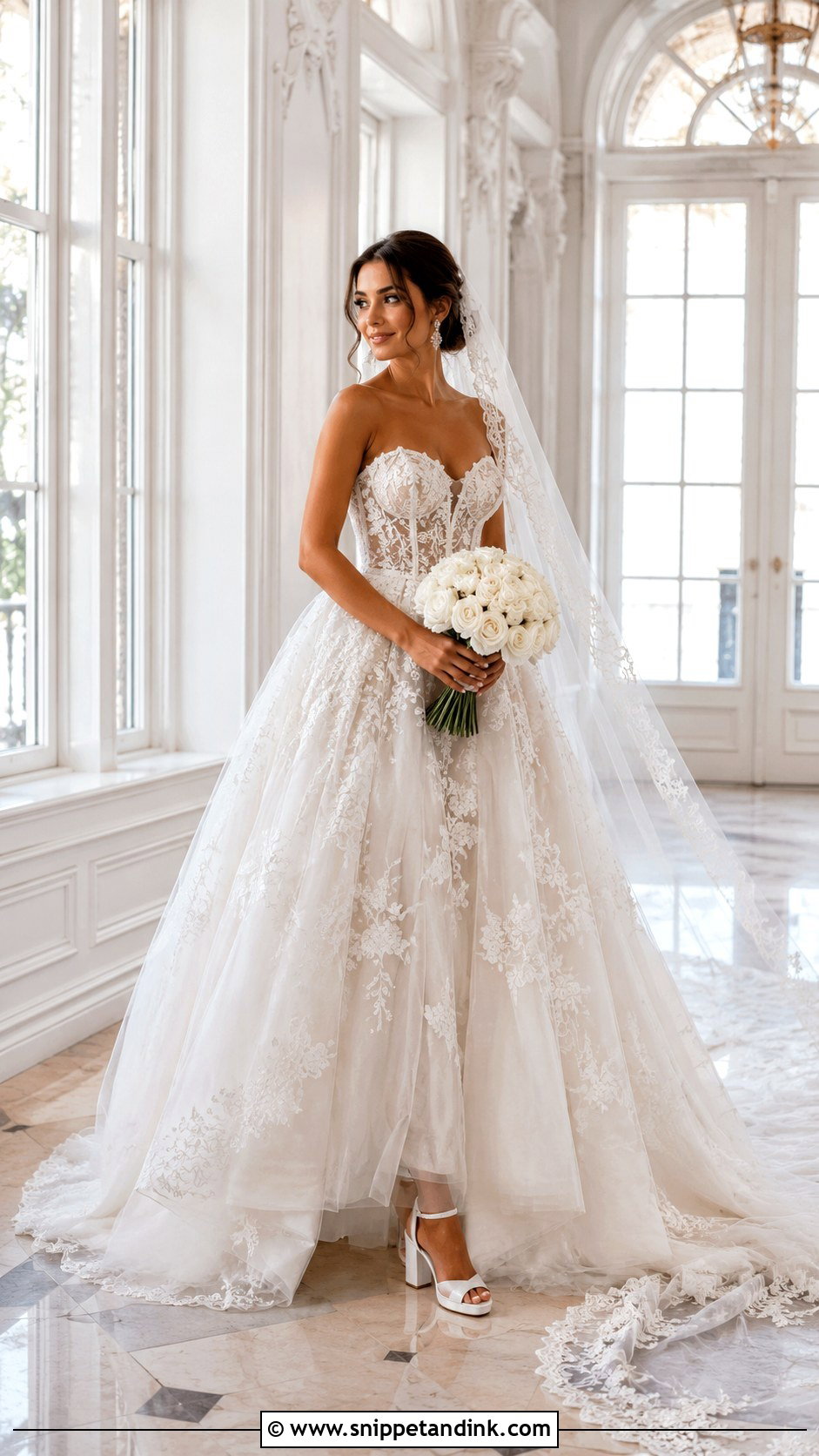
Floral lace over the bodice and a full tulle skirt beneath gives you romance with real structure. The appliqués should outline the cups and waist, and several light tulle layers produce volume that’s much easier to move in than a beaded skirt. A cathedral veil, crystal studs and satin block heels hidden under the hem suit it, with a classic updo so the bodice is the focus. If you want more coverage, a sheer illusion panel between the cups keeps the balconette outline. Sit, walk and raise your arms before signing off alterations; lace has little give, and a bodice that’s fine standing can dig in seated.
3. Basque Waist Balconette Wedding Dress
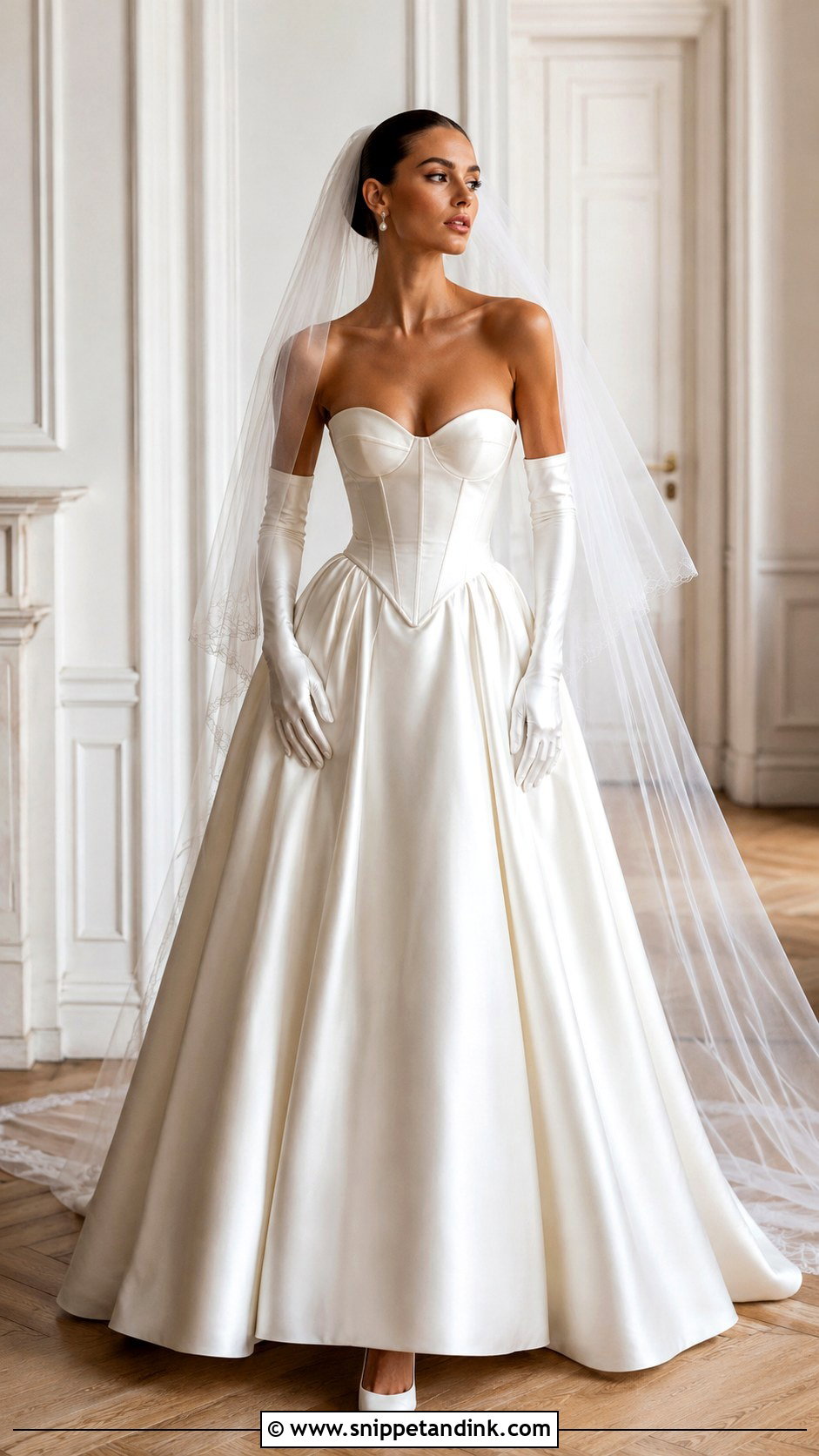
The pointed Basque waist dips below your natural waist into a V, which lengthens the torso before the skirt opens. Smooth satin keeps it minimal; embroidered tulle softens it. Pearl earrings, pointed pumps and a sheer cathedral veil without a heavy border work well. Long opera gloves add ceremony while balancing the open neckline. A sleek bun suits the sharp line. The point of that V has to sit exactly on your centre front. If it drifts, everyone notices, so I check it from the front and from a few steps back while the bride breathes in and out.
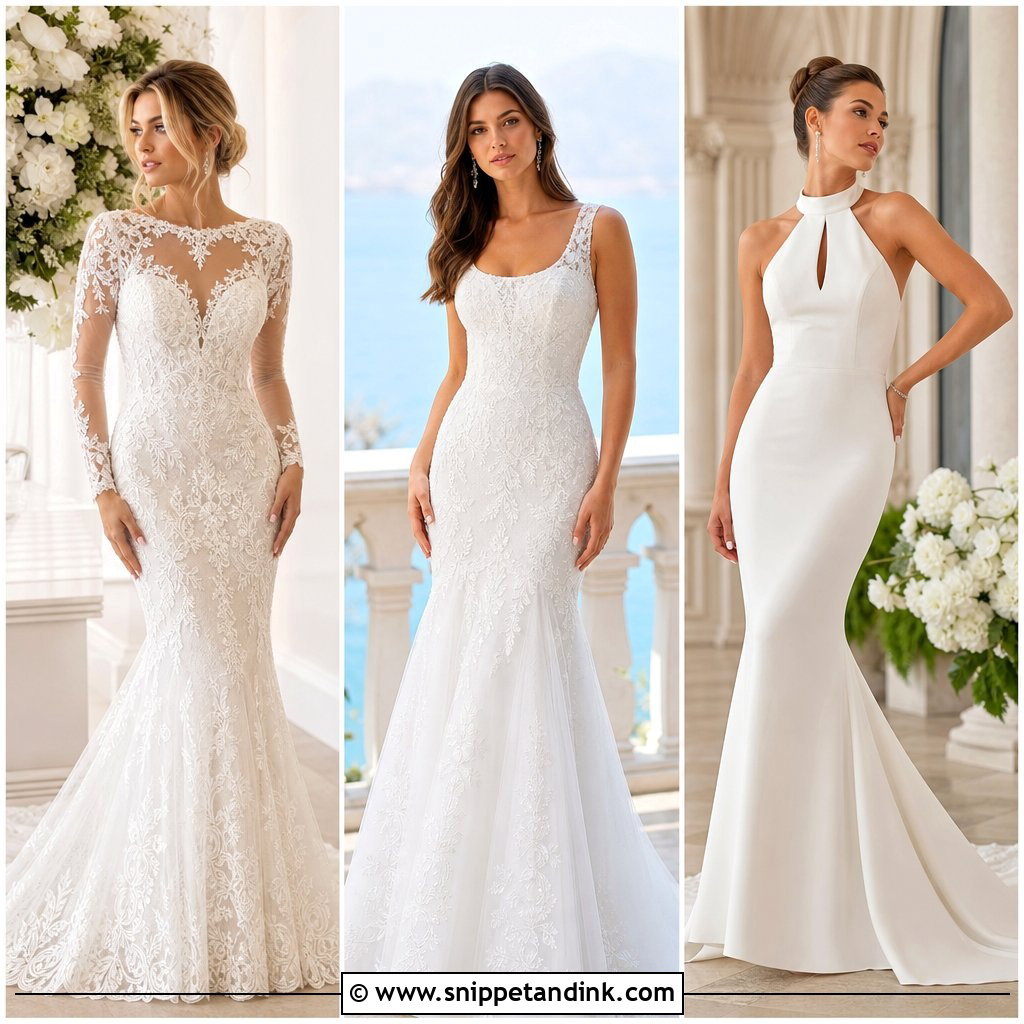
4. Crepe Mermaid Balconette Wedding Dress
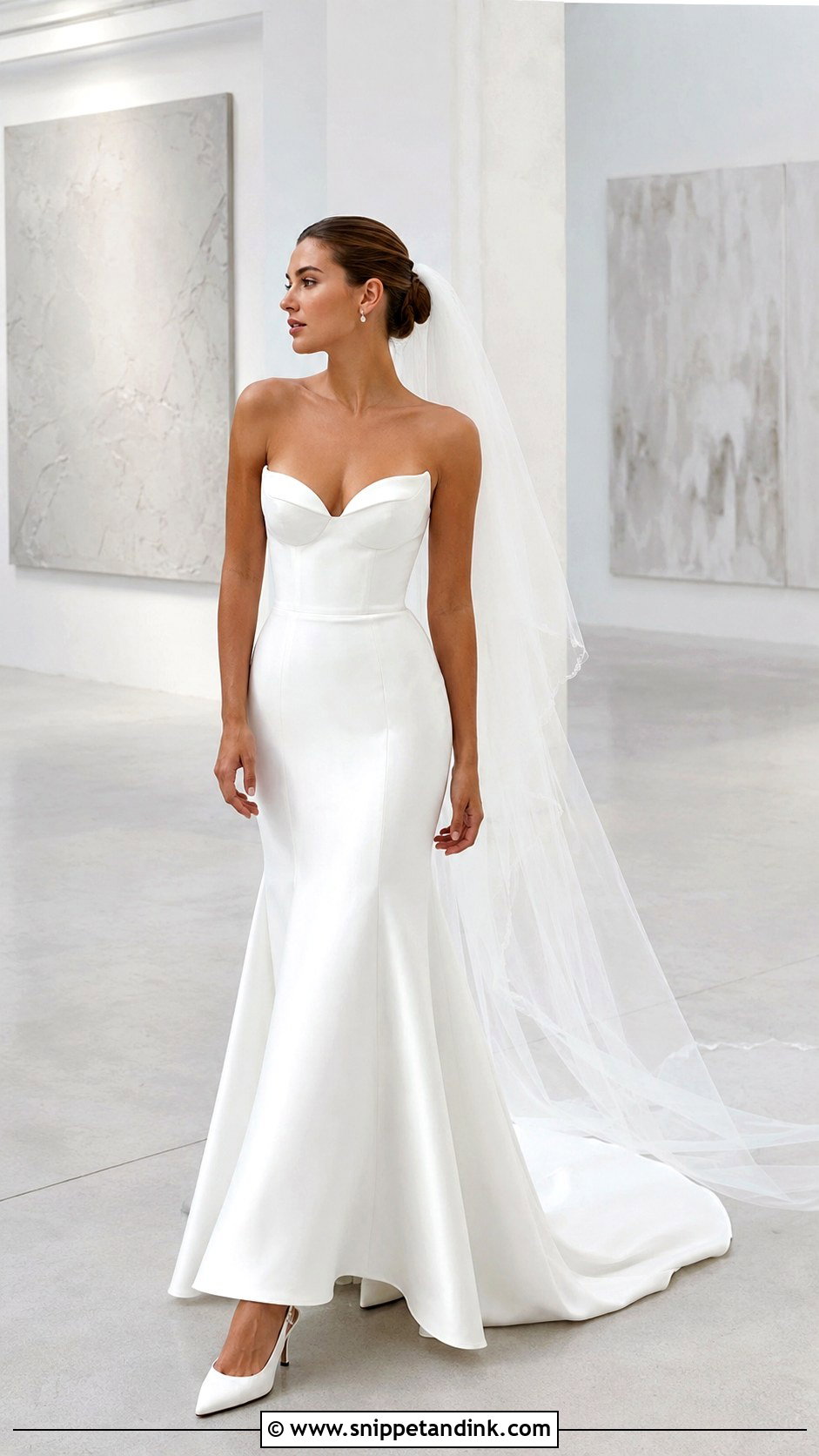
Matte crepe on a mermaid puts all the attention on cut. The balconette frames the shoulders, the skirt follows the waist and hips and flares near the knee. Pointed slingbacks, small diamond studs and a chapel veil with a raw edge keep it modern, with a smooth low bun. If you want to move more freely, choose stretch crepe and ask for the flare to start a little above the knee. Walk and sit at every fitting. A boned inner corset is what holds a strapless crepe neckline up, so you shouldn’t need straps or a separate bra.
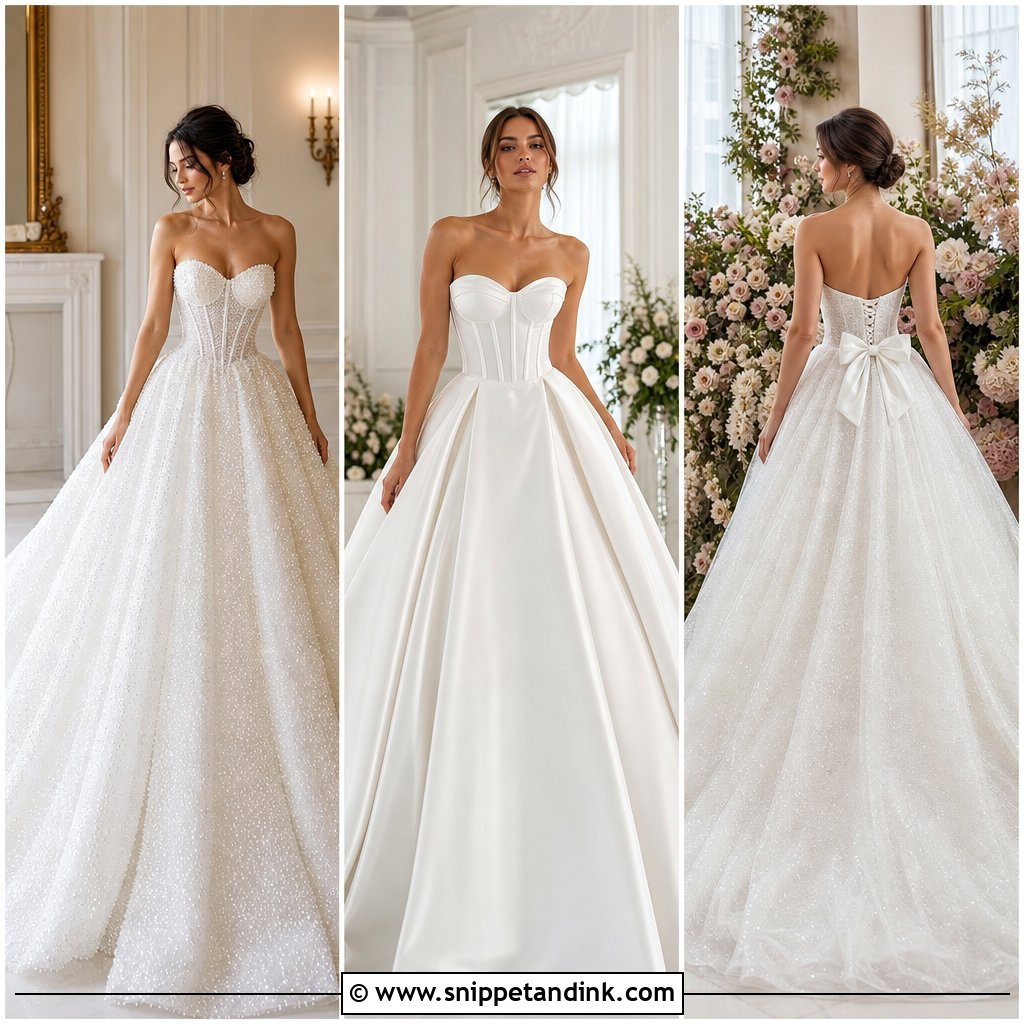
5. Mikado Balconette Ball Gown
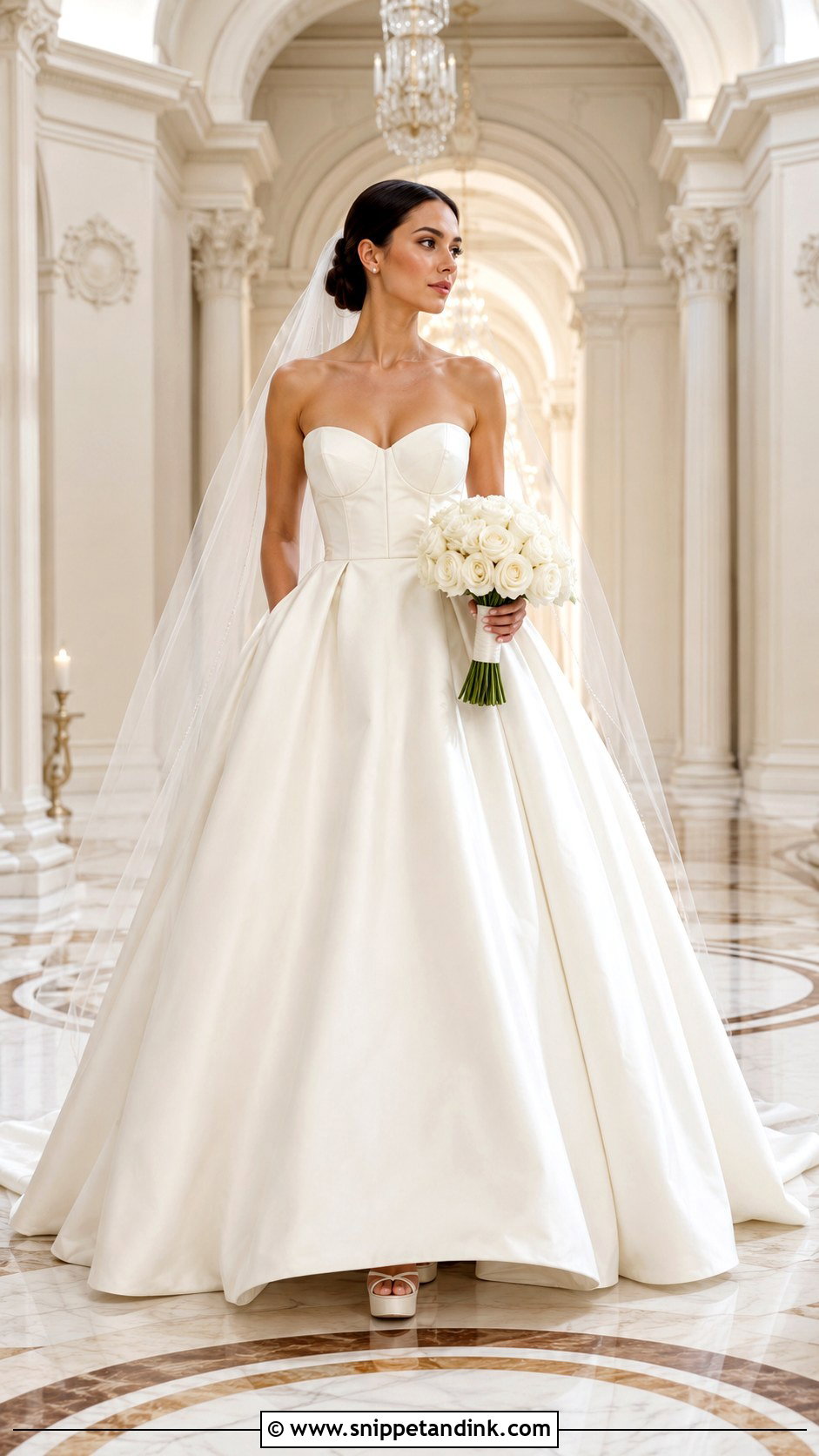
Mikado is stiff enough to stand on its own, which is why it suits a ball gown so well: the cups stay defined, seams look crisp, and the skirt keeps its volume without layers of petticoat. Look for a natural waist, deep pockets and covered buttons extending down the back. A plain cathedral veil, pearl studs, ivory platforms and a neat chignon keep it refined, softened by a white rose bouquet. Mikado’s weight makes the bustle a real engineering job. Ask the seamstress how many points she’ll use and have her show you, since a heavy skirt bustled at too few points sags by the second dance.
6. Drop Waist Balconette Wedding Dress
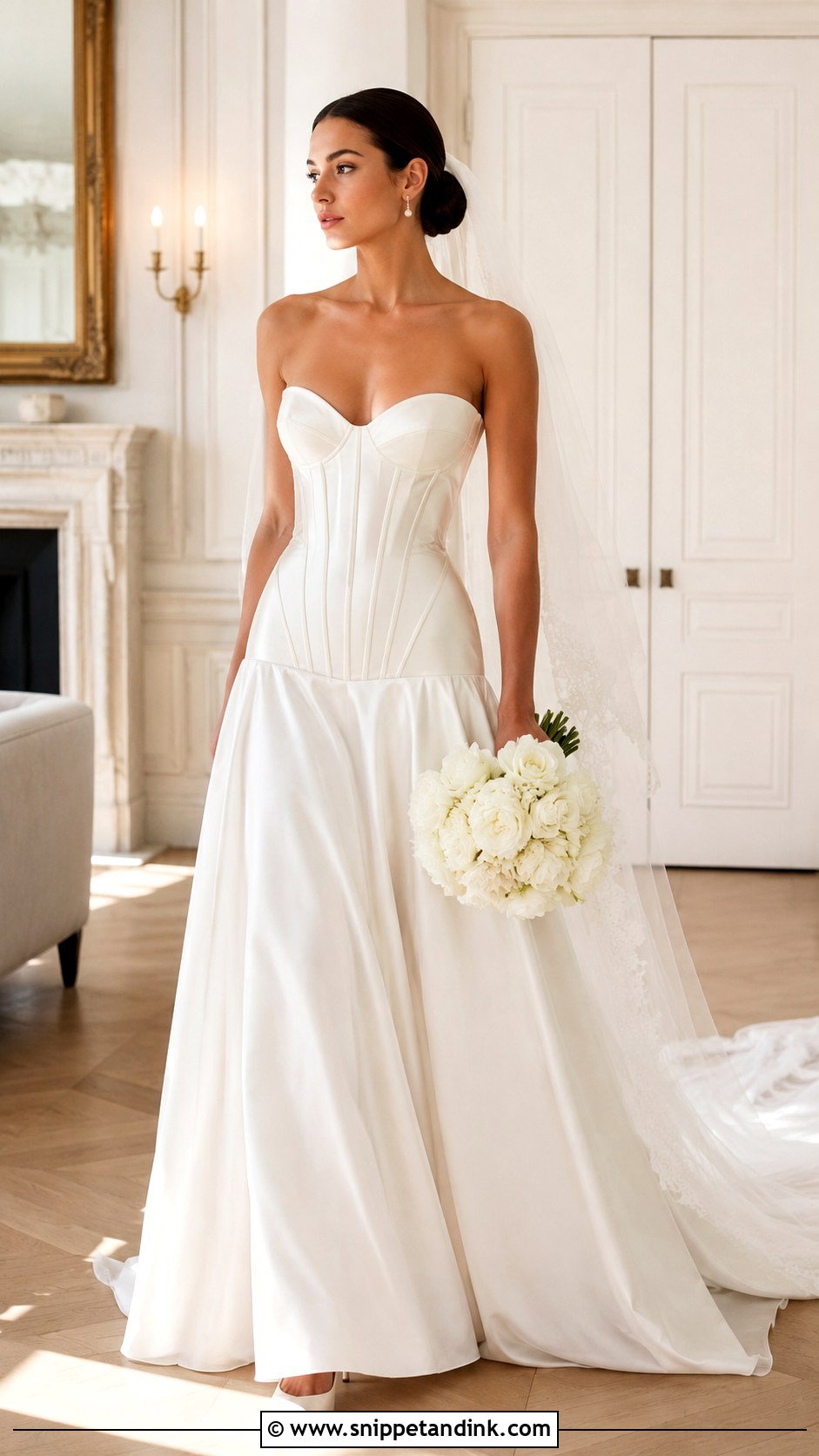
Vintage influence, long torso: the drop waist carries the bodice past your natural waist before a soft satin or tulle flare. Delicate earrings, pointed heels and a chapel veil under a low bun suit it, with a small structured bouquet that doesn’t hide the seam. It’s a natural fit for long-torsoed brides, and the waist can be raised for petite frames. The common problem is the extended bodice buckling at the hips when you sit. Flexible spiral boning, rather than rigid plastic, lets it bend with you and lie flat again.
7. Off-Shoulder Balconette Wedding Dress
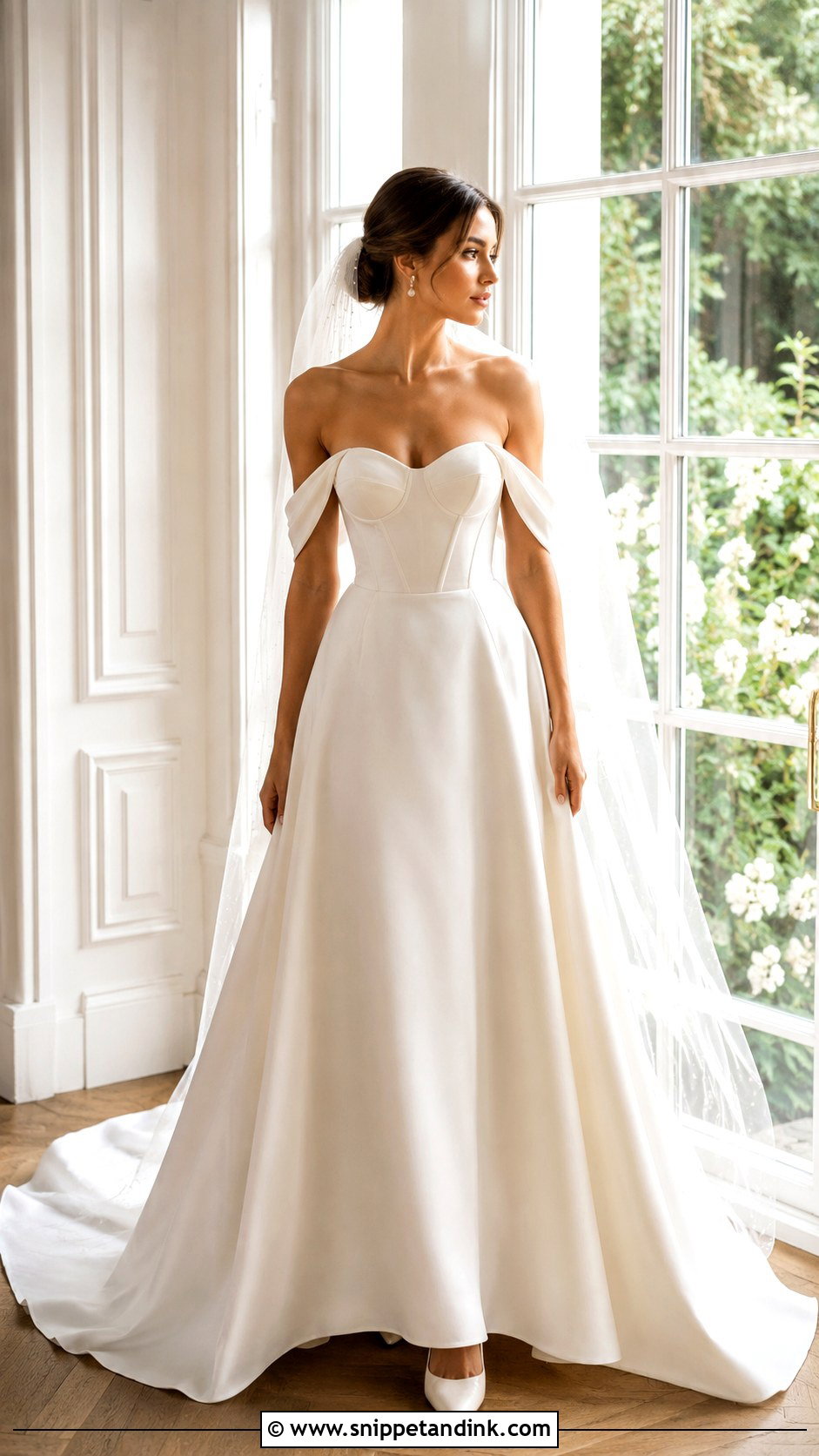
Drapes off the shoulder soften a balconette’s structure. Start with a fitted corset bodice and add detachable tulle or satin straps that curve around the upper arm. An A-line skirt, pearl drops, ivory pumps and a sheer fingertip veil work with a loose low bun and a few face-framing pieces. Detachable straps let you have a more covered ceremony look and remove them for the party. The placement needs care. Drapes set too low pin your arms to your sides, and if they’re too tight they pull the bodice down every time you hug someone.
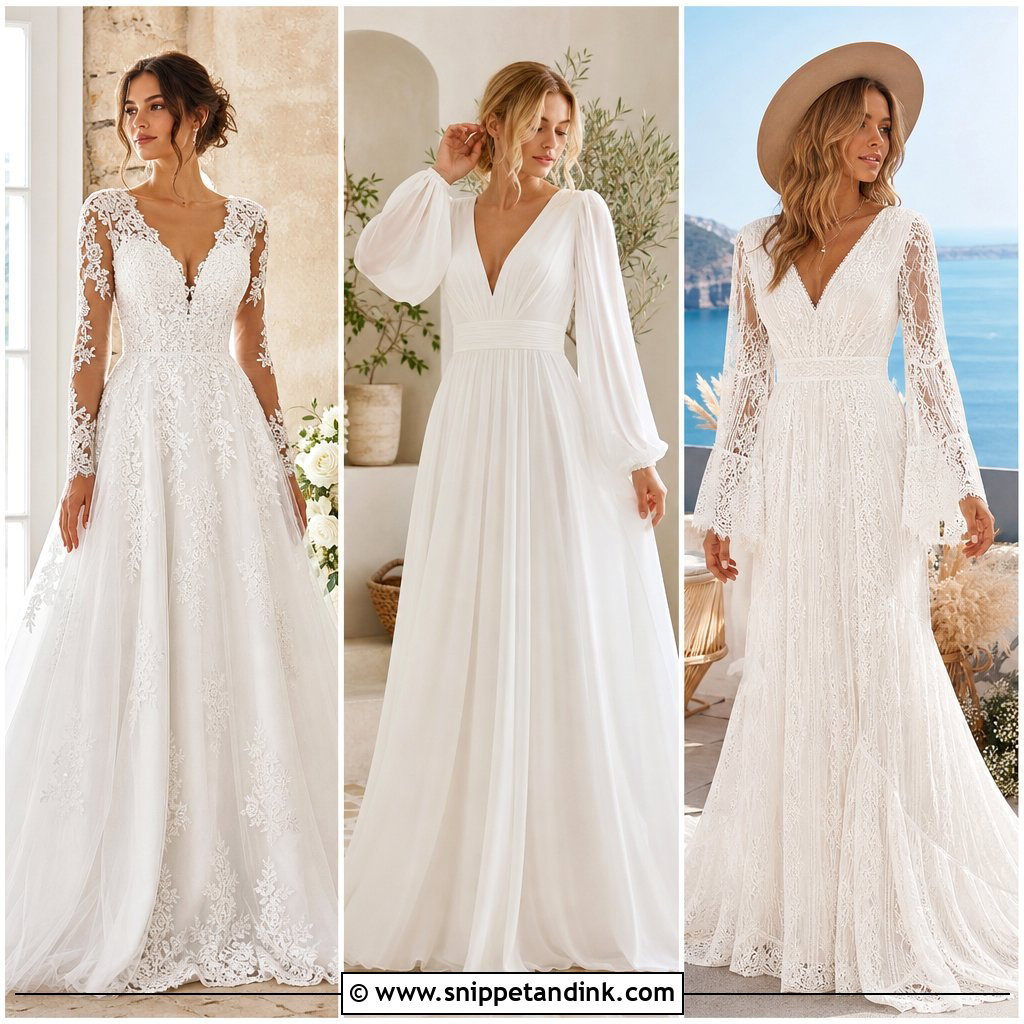
8. Long Sleeve Lace Balconette Wedding Dress
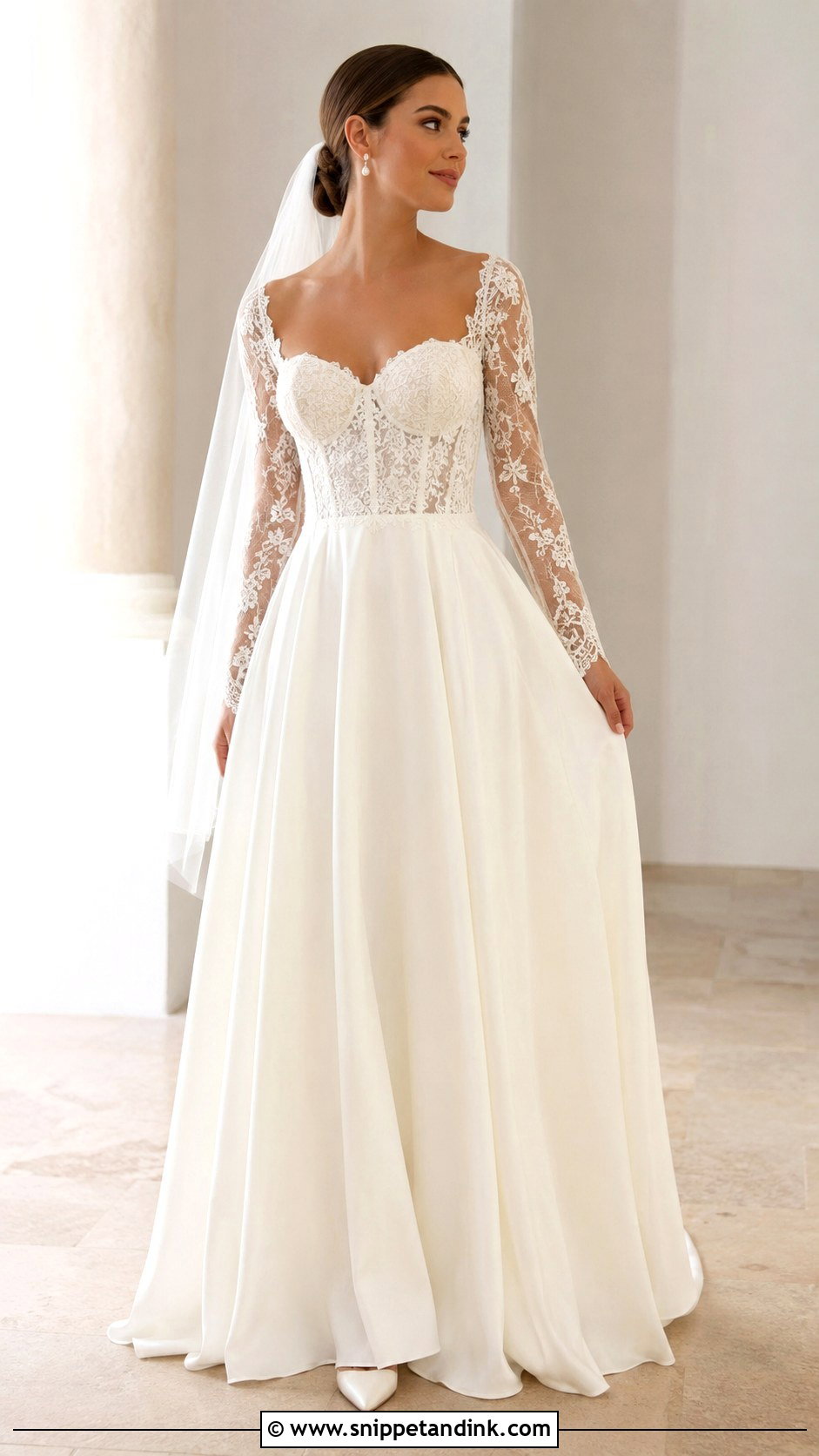
Long lace sleeves add coverage and softness to the structured cups. Sheer fitted sleeves with floral appliqués should meet the wide neckline neatly; an A-line skirt balances them, a fitted crepe skirt streamlines. Closed-toe satin pumps, pearl earrings and a simple veil keep the lace in charge, with a smooth bun or half-up style. A little stretch in the sleeve lace and room at the elbow make a huge difference to comfort. The cups can be lined for coverage while the sleeves stay sheer. When the lace motifs on neckline and sleeves line up, the dress looks custom rather than assembled.
9. Beaded Balconette Wedding Dress With Straps
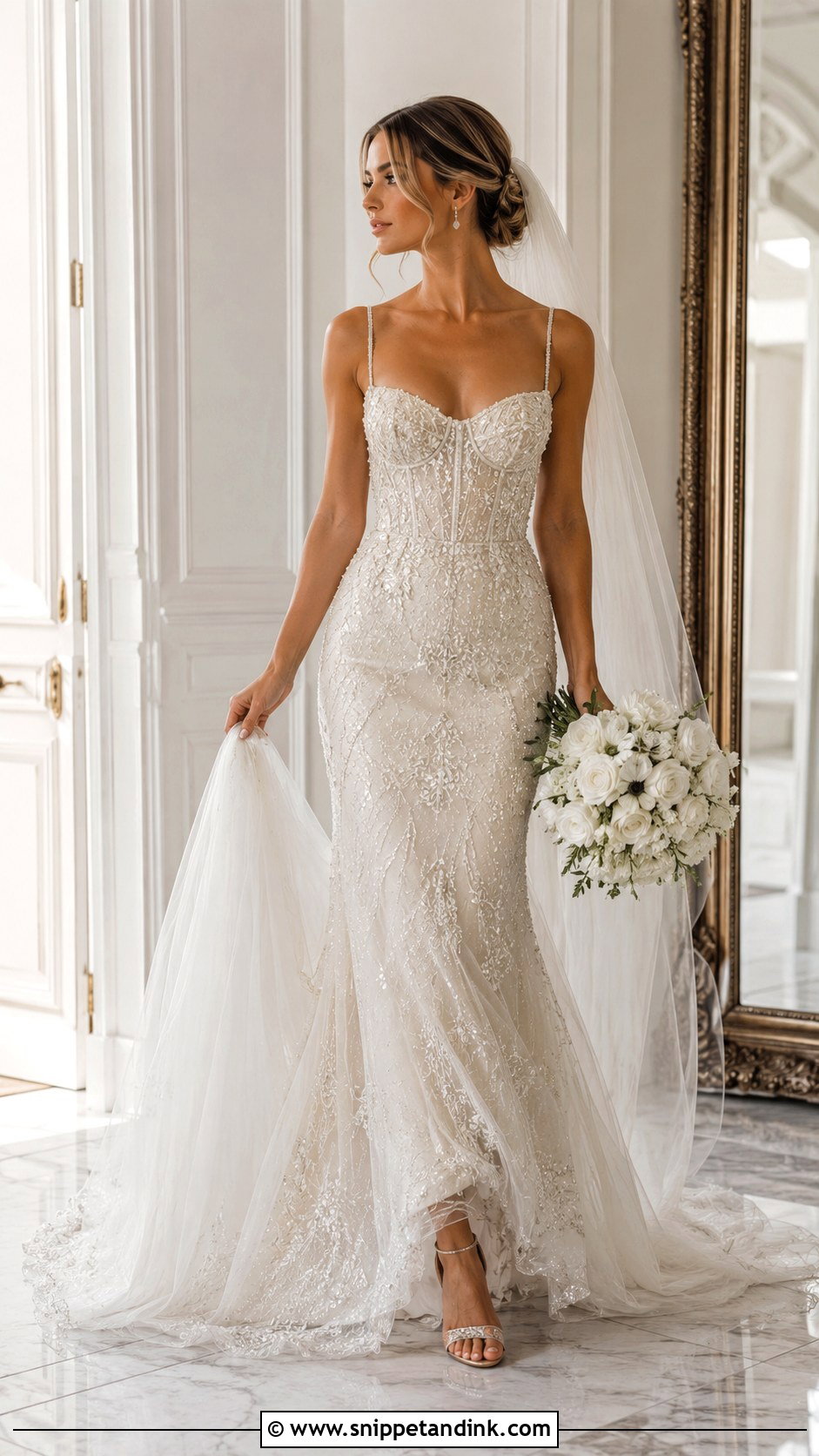
Thin straps make a beaded balconette feel secure without closing up the neckline. Narrow crystal, pearl or embroidered straps on a structured bodice, with a softly fitted or light tulle skirt, let the beading lead. Keep the rest simple: plain earrings, metallic ivory heels, an unembellished chapel veil and a clean bouquet of white flowers and greenery. Hair in a low bun or brushed behind the shoulders. Beaded straps are heavy for their width, so I ask for them to be reinforced on the inside and adjusted to the quarter inch, enough to steady the bodice without cutting into your shoulders.
10. Pearl Balconette Wedding Dress
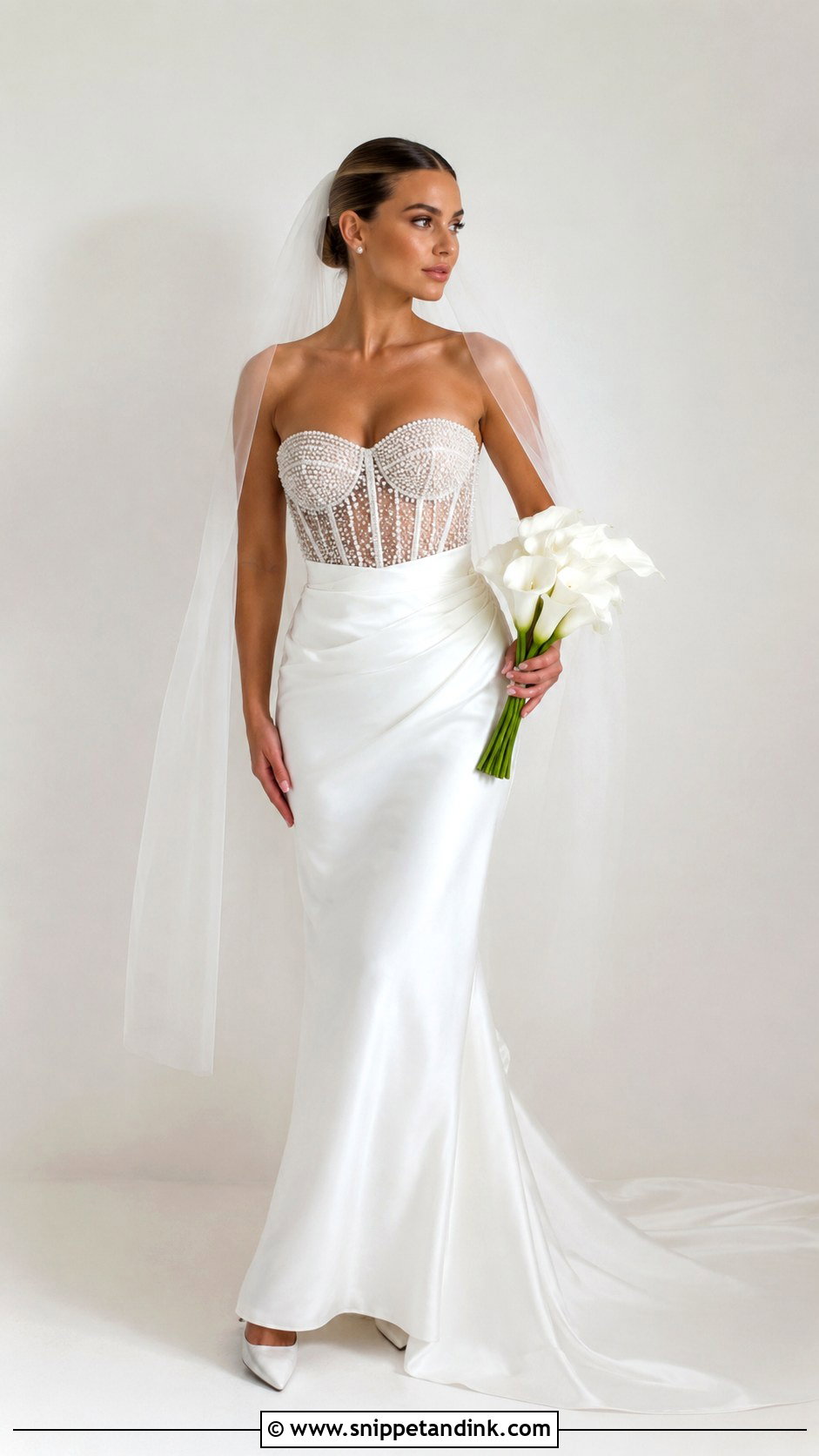
Pearls should follow the seams. Scattered across a sheer corset bodice along the cup lines and waist, they emphasize how the dress is built; dotted randomly, they look like an afterthought. A smooth satin skirt or soft tulle balances the texture. Pearl studs, satin pumps, a plain fingertip veil, a sleek bun and white calla lilies keep it modern. Make sure the inside of the bodice is lined behind the pearl work, since the backs of sewn pearls can scratch. A lighter scatter is more comfortable over a long day than a heavily encrusted bodice.
11. Floral Appliqué Balconette Wedding Dress
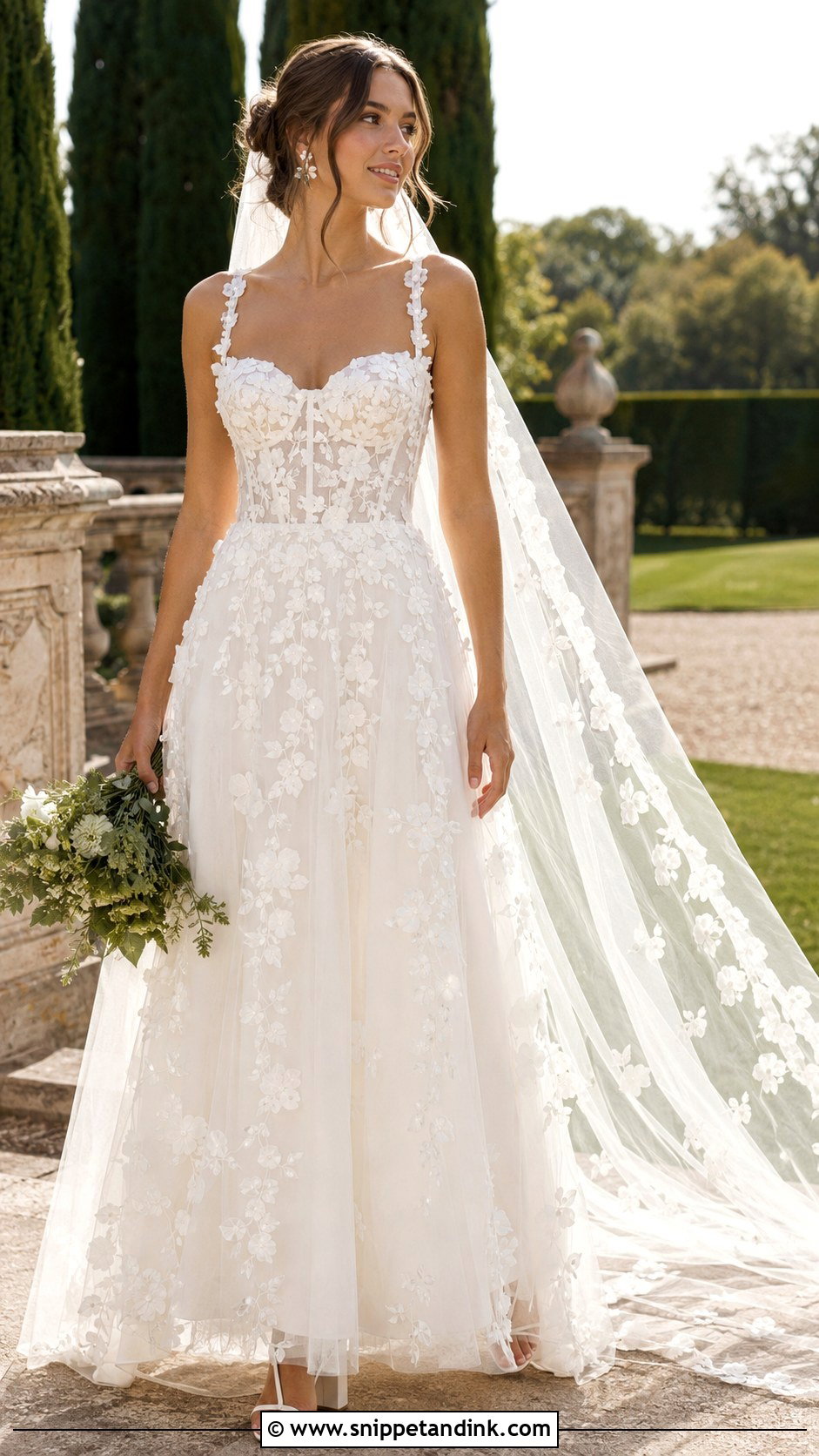
Raised flowers give a structured bodice a garden softness. Look for embroidered blooms around the cups, waist and upper skirt that thin out toward the hem, on an airy A-line that keeps them from looking heavy. Block-heel sandals, floral drops and a fingertip veil with a few matching motifs suit it, along with loose waves or a textured bun and a small bouquet that doesn’t hide the bodice. Run your fingers along the appliqué edges near your underarms and neckline at the fitting; raw edges there scratch with every movement and can be bound or trimmed.
12. Minimalist Column Balconette Wedding Dress
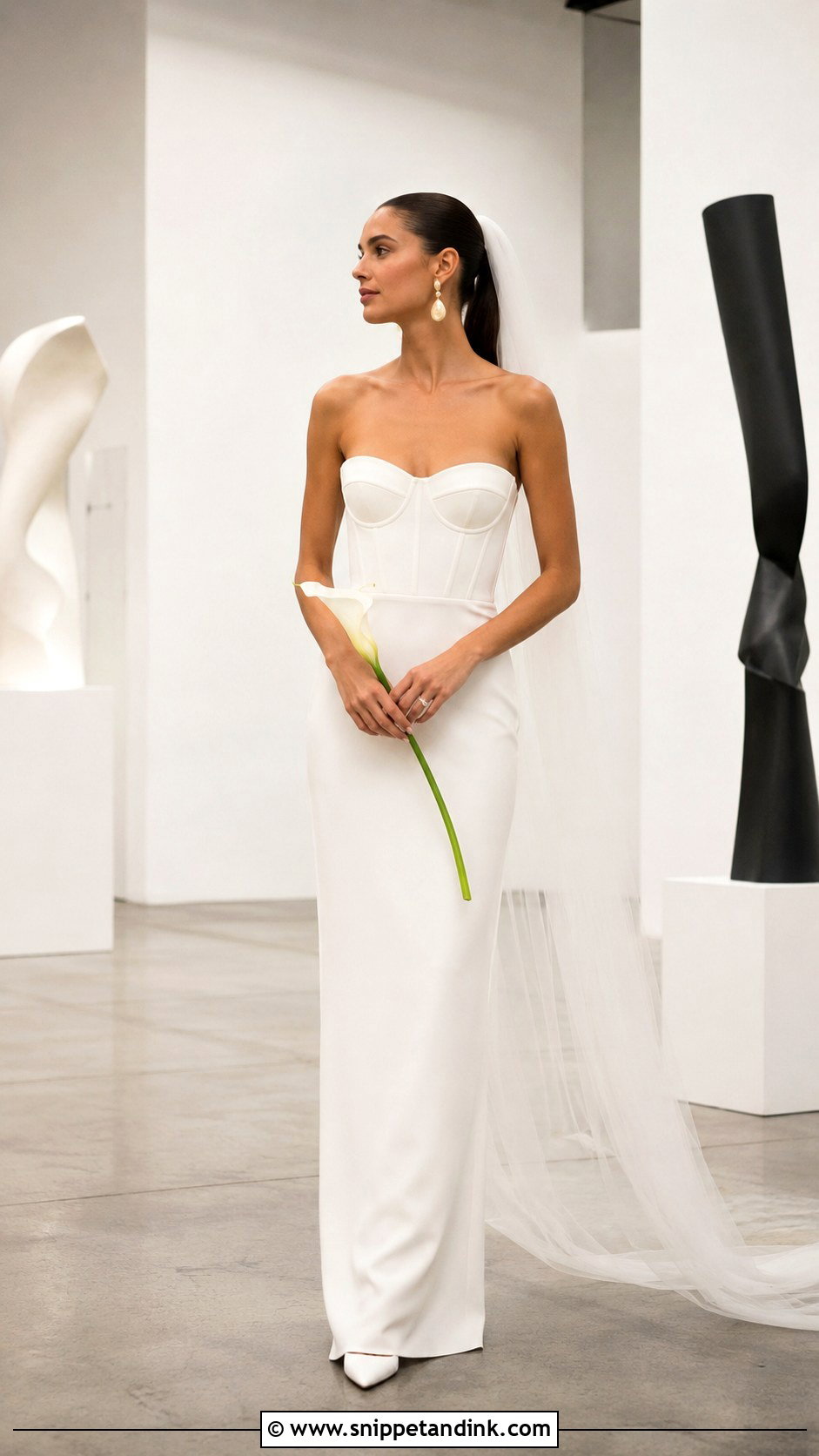
Stripped back to a column, the balconette neckline does all the talking. Matte crepe or heavy silk with precise cup seams, a fitted waist and a straight skirt close to the body is the formula. Pointed pumps, sculptural earrings, a narrow chapel veil and a smooth ponytail or centre-parted bun keep it current, with a single stem or a compact cluster of callas. Tailoring has to be exact because nothing hides a pull at the side seam. A stretch lining helps you move while the outer fabric stays smooth.
13. Corset Balconette Wedding Dress With Tulle Skirt
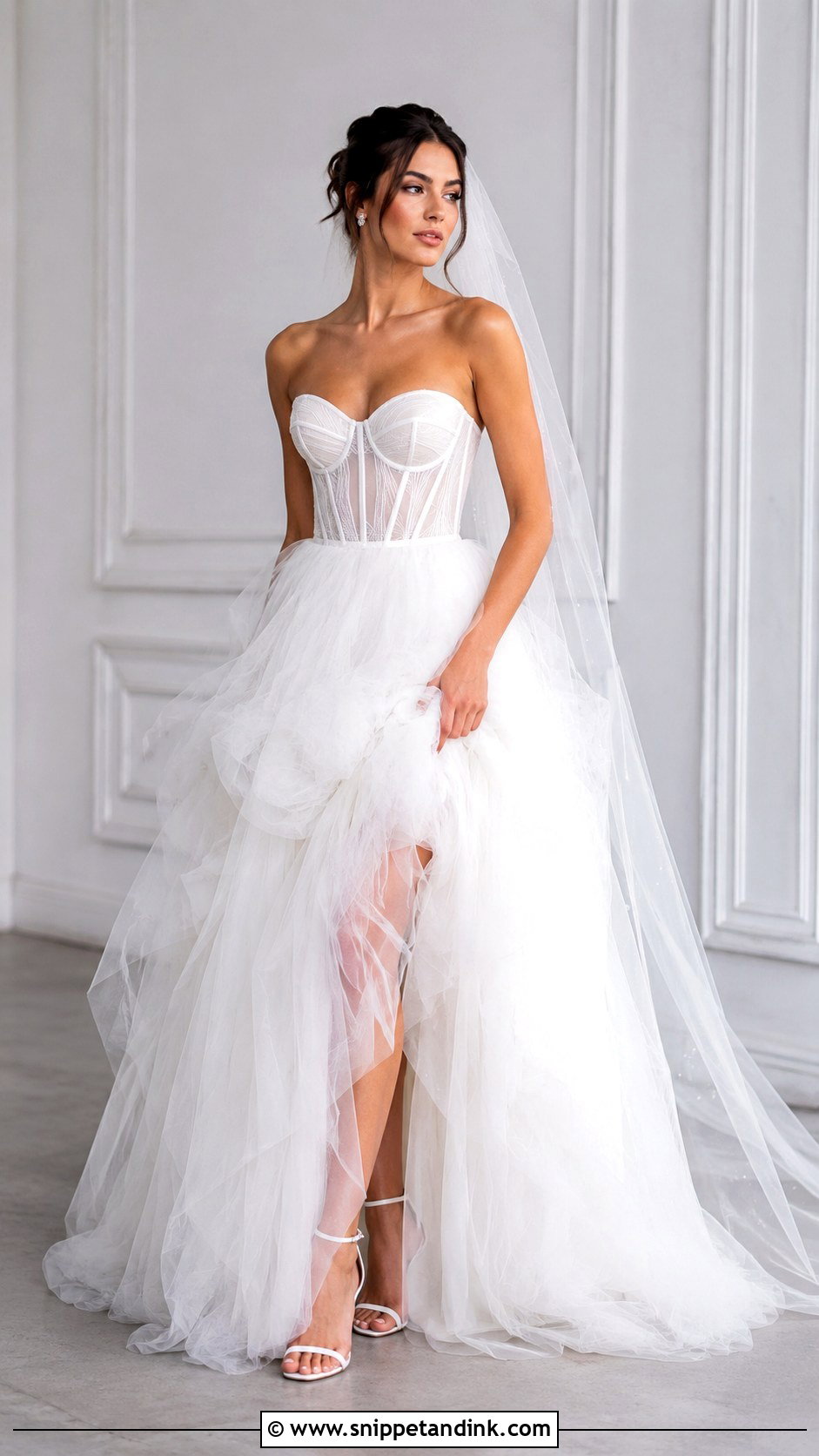
Corset and tulle is a classic pairing of hard and soft. The bodice shows its boning channels and defined cups, maybe with a slightly sheer waist; the skirt falls from the natural waist in several light layers. Satin heels, crystal studs, a long sheer veil and an understated updo let the corsetry show. If the bodice is transparent, ask for lining or appliqués where you want coverage. Most important, the waist tape and boning should carry the support, not the neckline edge. When the top edge is doing the work, it slips and presses into the bust within a couple of hours.
14. Balconette Wedding Dress With Detachable Overskirt
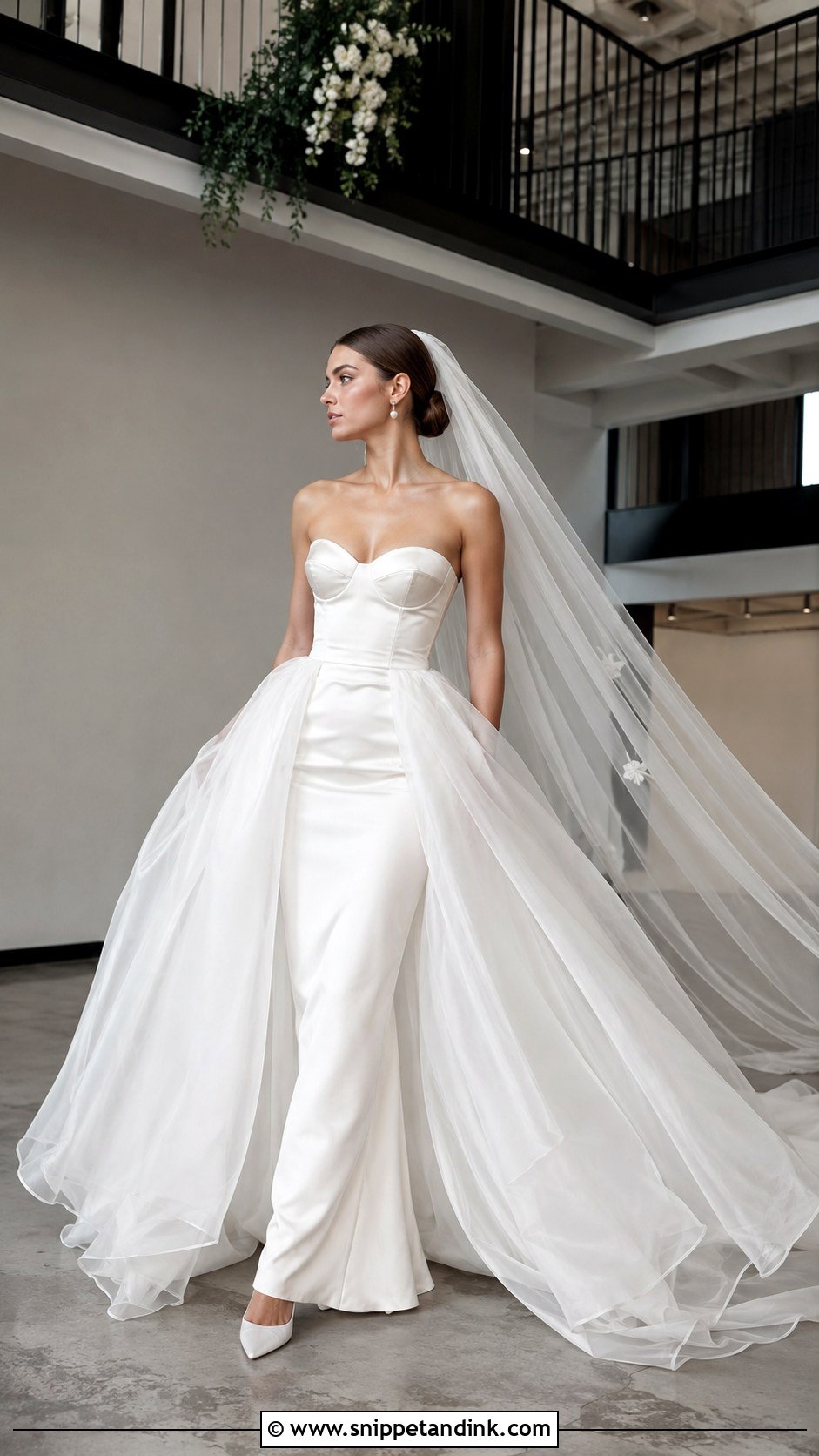
A detachable overskirt turns a fitted balconette column into a ball gown for the ceremony. Underneath, crepe or satin with a structured neckline and defined waist; on top, full tulle or organza. With the overskirt on, I’d go for a cathedral veil, pearl earrings and pointed pumps; once it’s off, statement earrings or a short veil freshen the look. The join should sit flat at the waist with no visible hooks. Practise taking it off and on, and teach one attendant to do it, so the change takes minutes rather than half the cocktail hour.
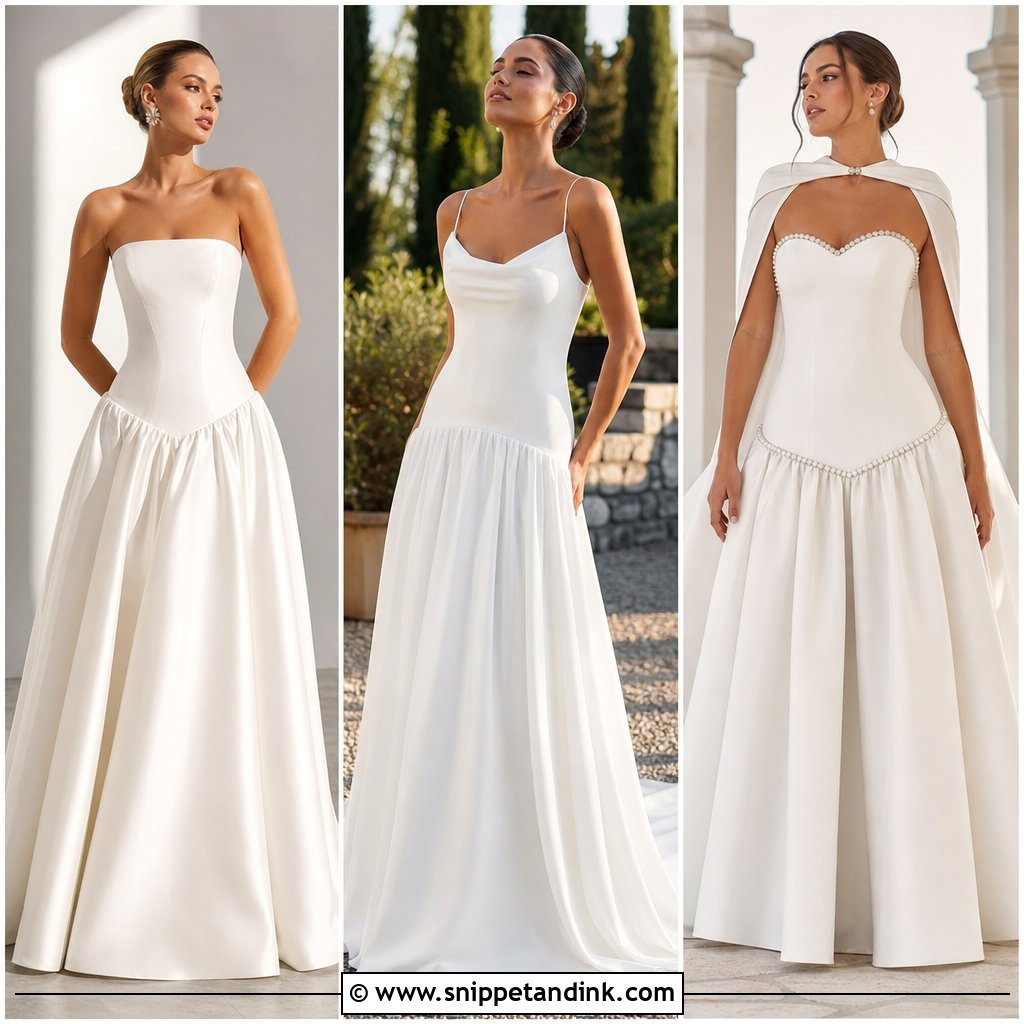


15. Balconette Wedding Dress With Detachable Sleeves
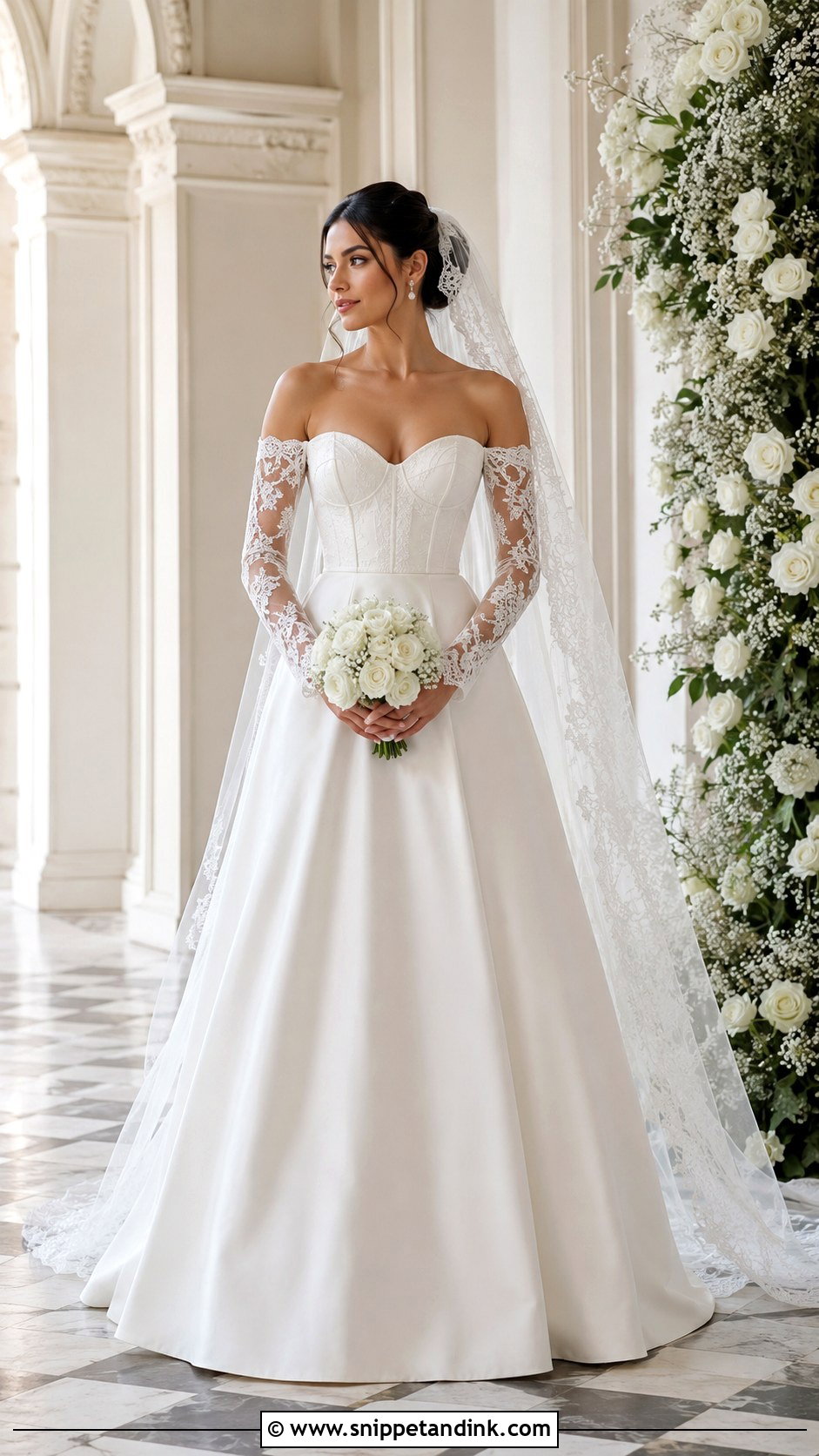
Sleeves you can remove change a dress’s mood without a second gown. A satin or lace A-line with a firm corset bodice takes fitted lace, puffed organza or off-shoulder drapes. Wear them with a long veil and closed-toe heels for the ceremony, then take them off to show the neckline at the party. Pearl earrings and a low bun work both ways. The attachment points should hide under appliqués or along the top edge, and the sleeves must never hang off the cups. Test them while holding your bouquet, since a bent elbow pulls on the attachment more than a straight arm.
16. Tea-Length Balconette Wedding Dress
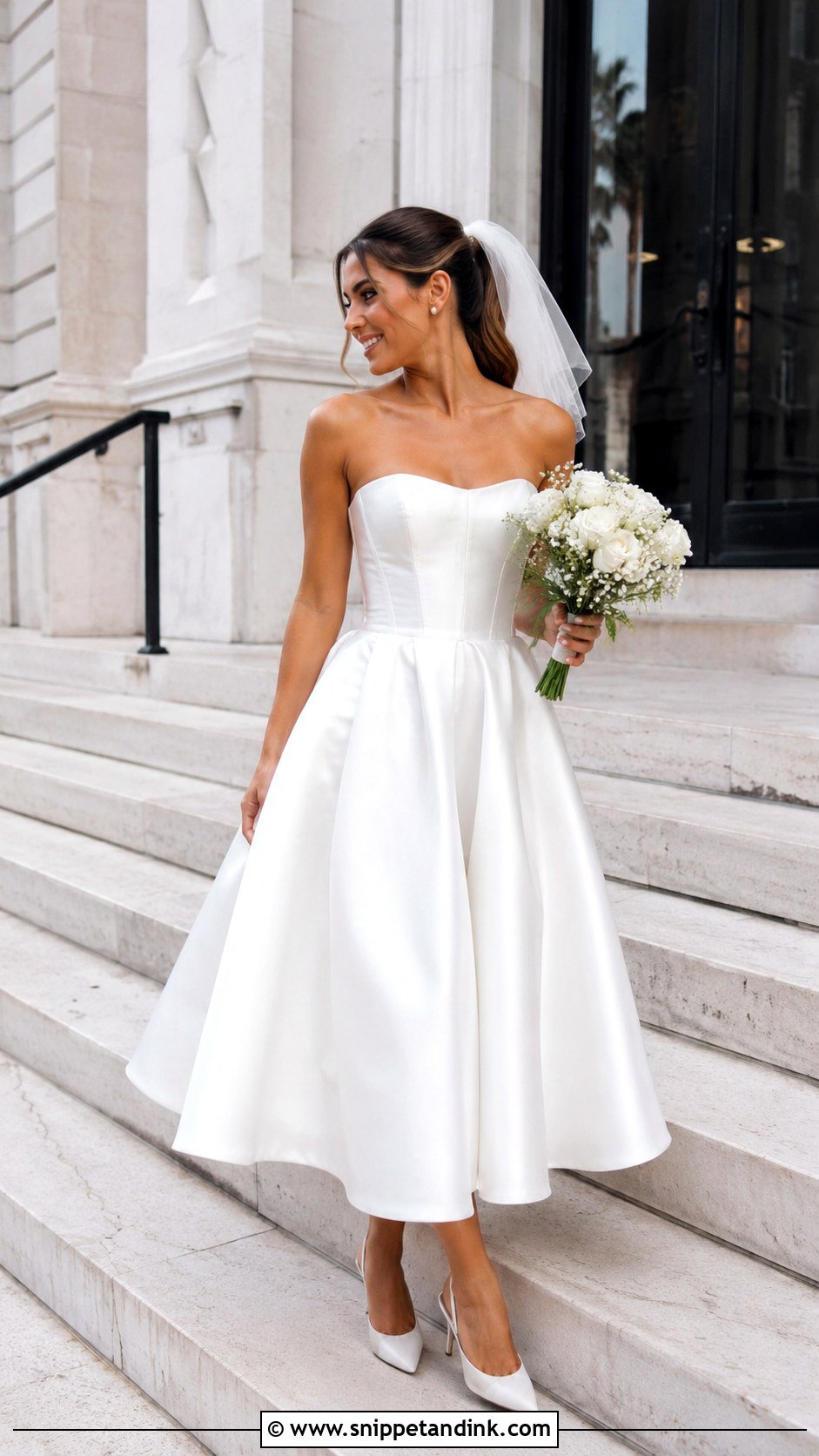
Shorter and full-skirted, the tea-length balconette is fun to wear and easy to dance in. A structured satin bodice and a skirt ending between knee and ankle put your shoes on display, so make them pointed slingbacks, embellished pumps or refined block heels. Pearl studs, a short veil and a compact bouquet finish it, with a waved bob, ponytail or neat bun suiting the retro feel. Pockets are worth asking for. Set the hem with the exact shoes, because at this length a half-inch difference shows. A good inner bodice means you won’t be hitching up the neckline all evening.
17. Balconette Mini Wedding Dress
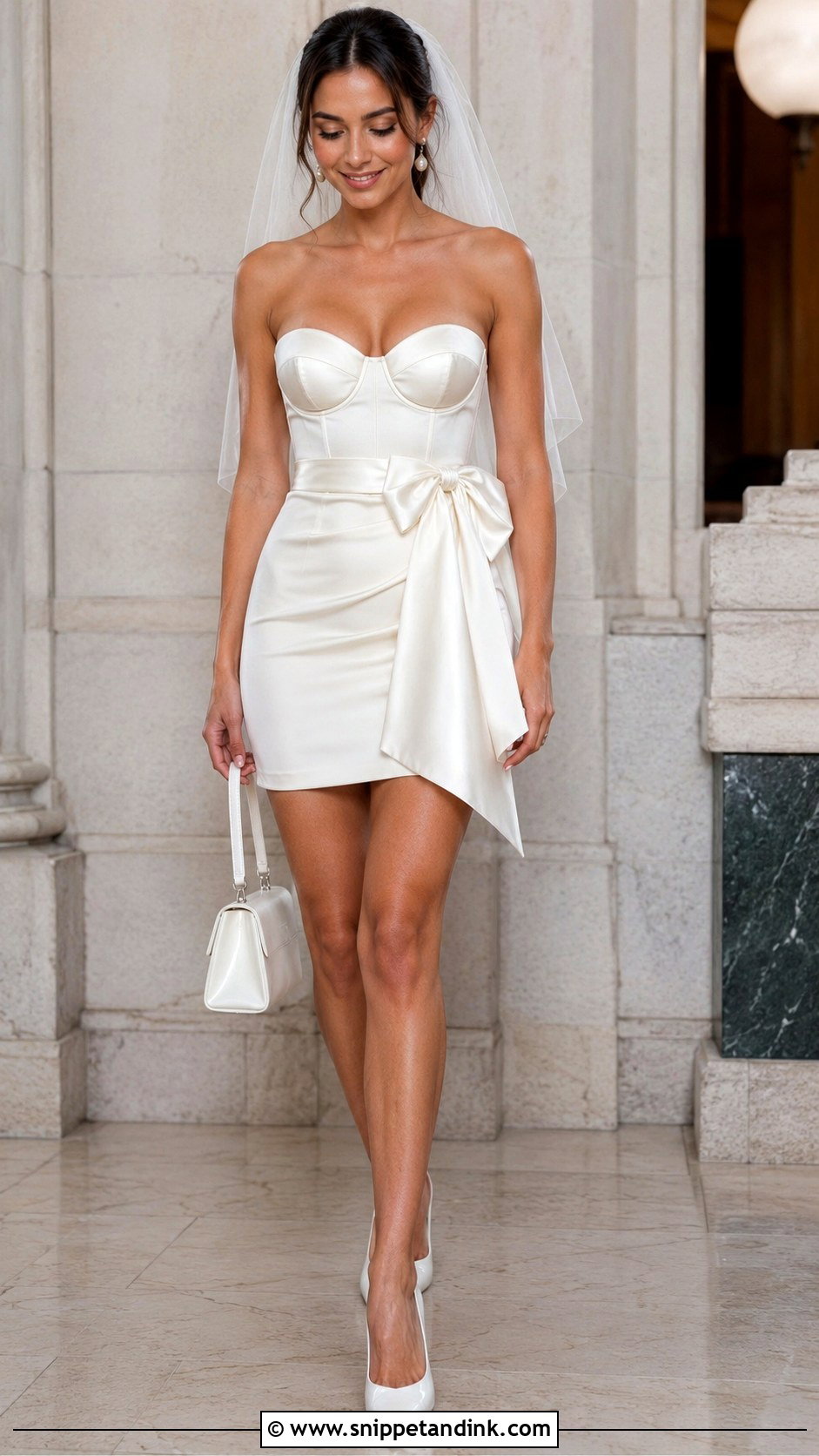
Civil ceremonies, receptions and exits all suit a balconette mini. A structured satin dress with a fitted waist and a straight, flared or draped skirt pairs with pointed pumps, slingbacks or platform sandals, plus a short veil, pearl earrings and a small top-handle bag. Wear a sleek bun or high ponytail. Very fitted minis ride up when you sit, so stretch lining and a pair of discreet shorts help. The bodice should be firm without pressing on your ribs; if you can’t take a full breath, ask for the side seams to be let out. Detachable sleeves or a bow add drama for photos.
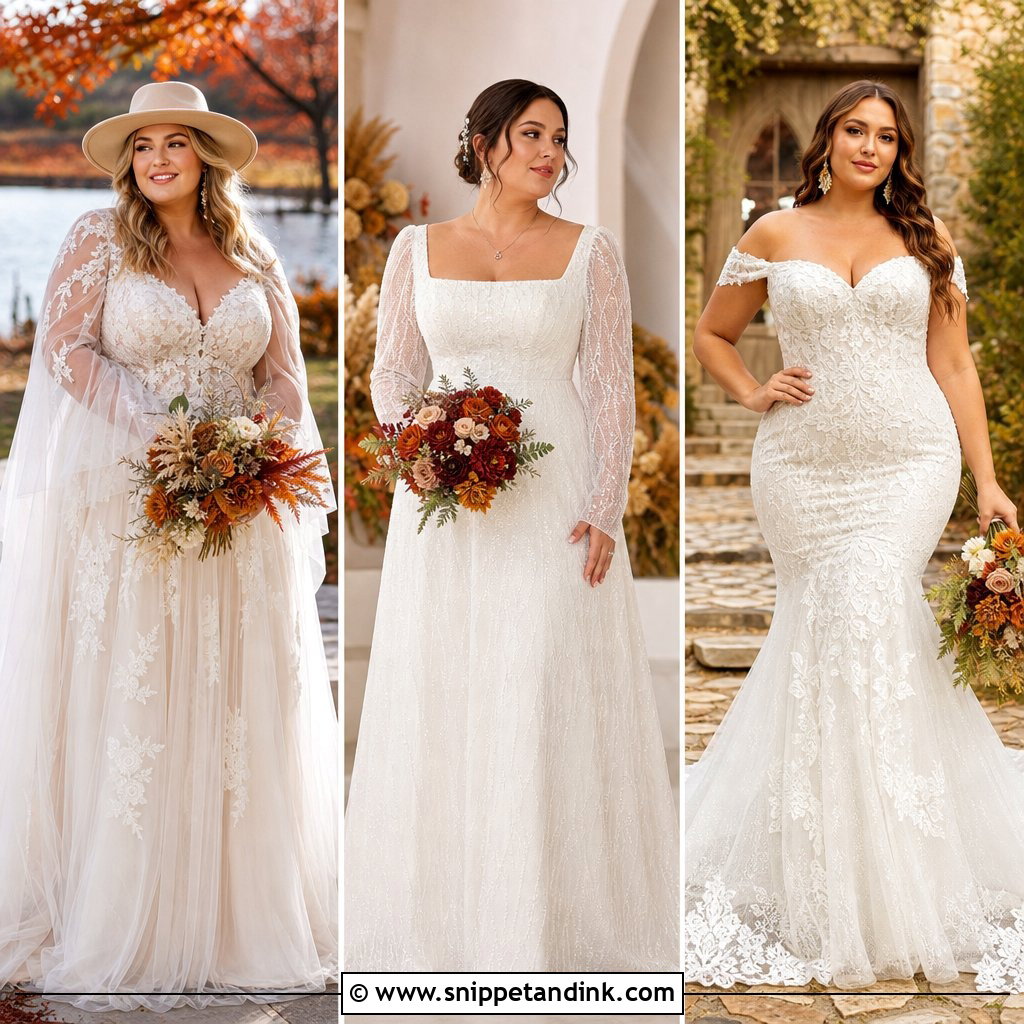
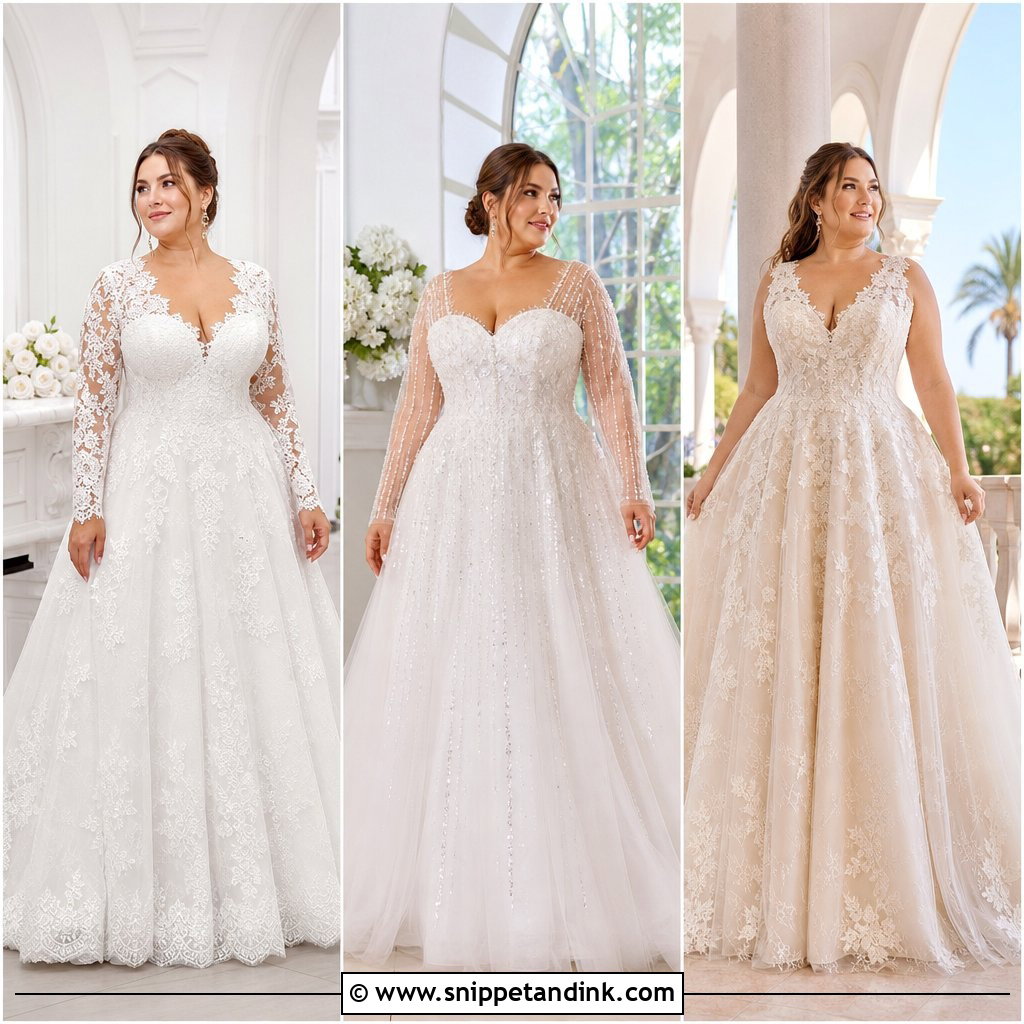
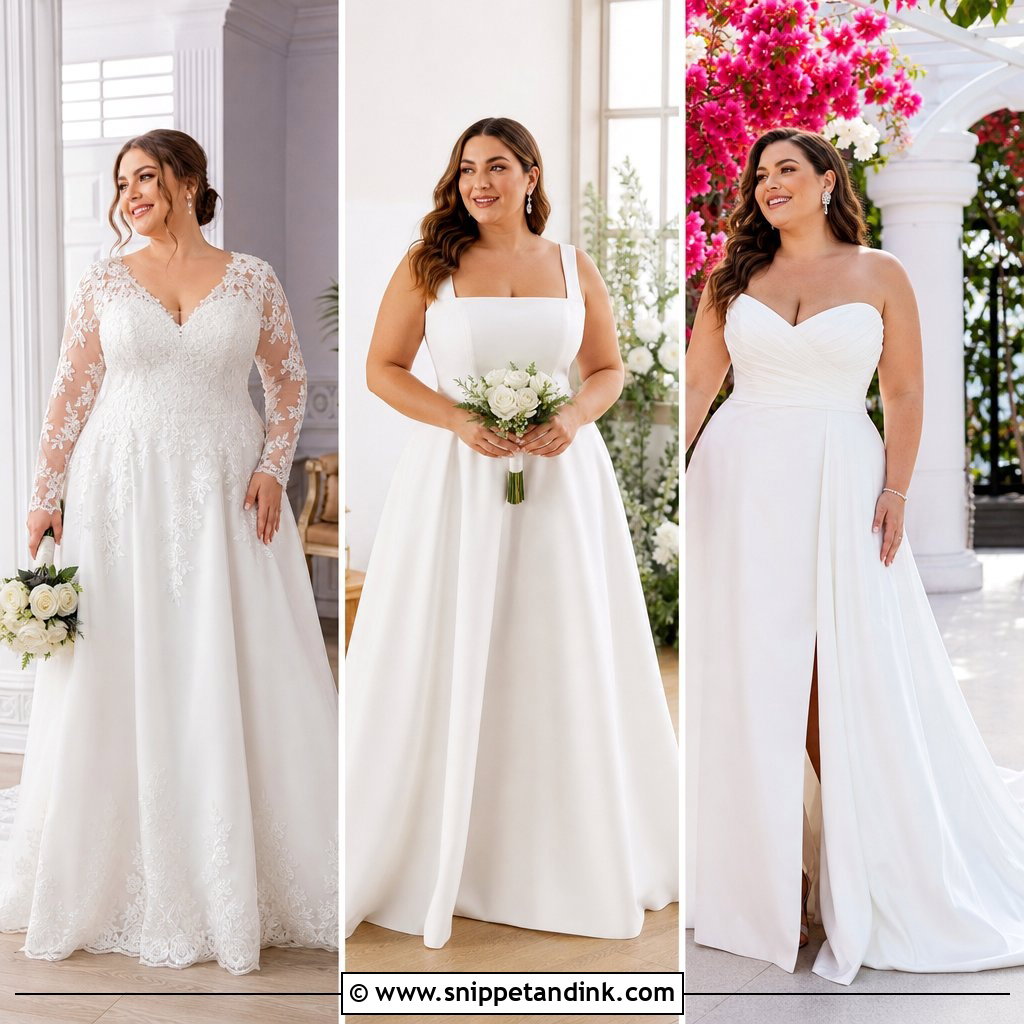
18. Plus-Size Balconette Wedding Dress
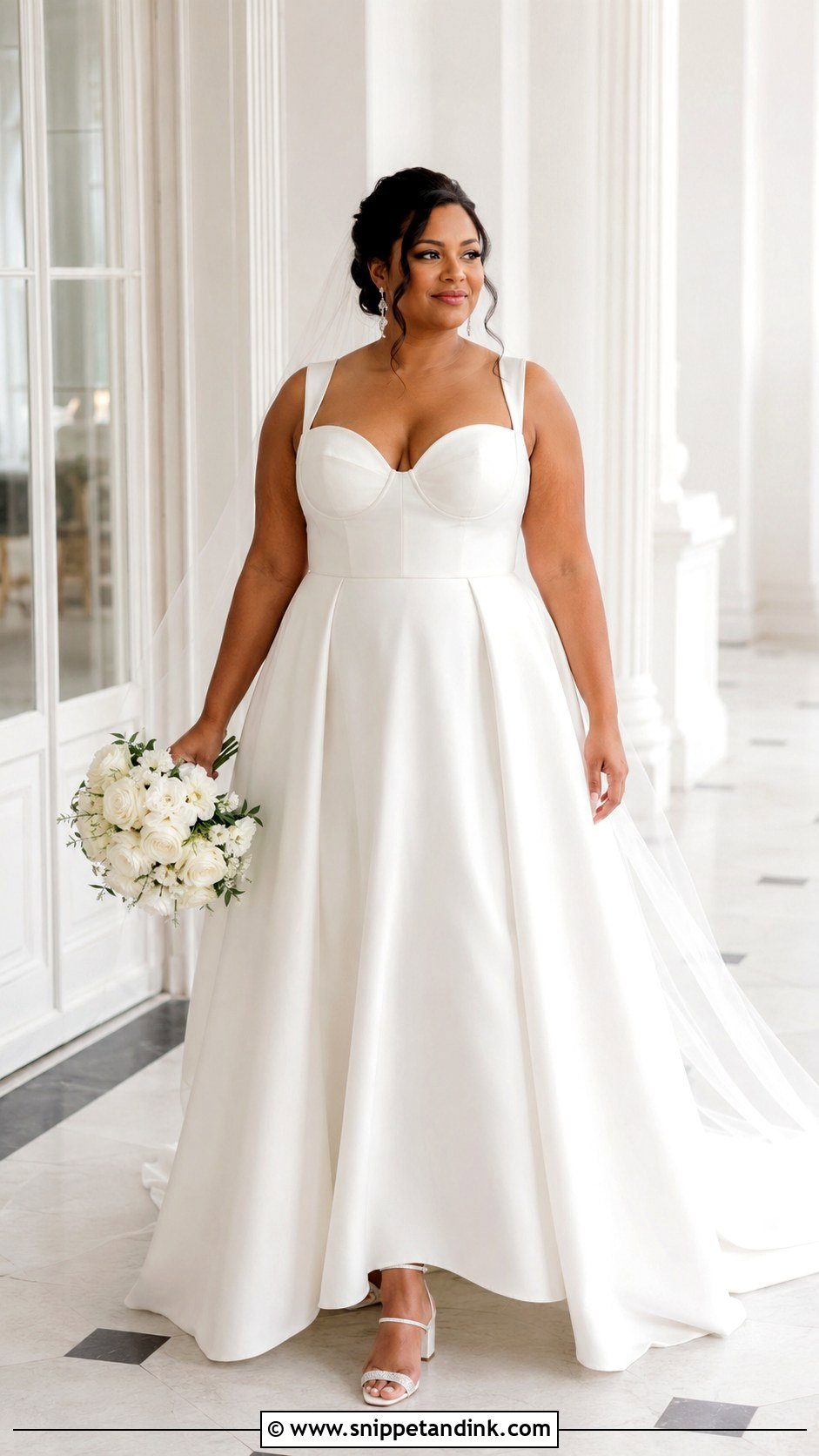
A properly engineered balconette offers real definition and support for plus-size brides, but it has to be engineered, not just decorated. Look for strong internal boning, correctly sized cups, wide-set straps and a secure back. Choose an A-line or fit-and-flare by how it feels. Block heels, drop earrings, a chapel veil under a soft updo and a structured bouquet complete it. Ask whether the sample you try uses the same construction as the size you’ll order, since cup depth and seam placement can change across sizes. Expect several fittings to perfect the neckline.
19. Petite Balconette A-Line Wedding Dress
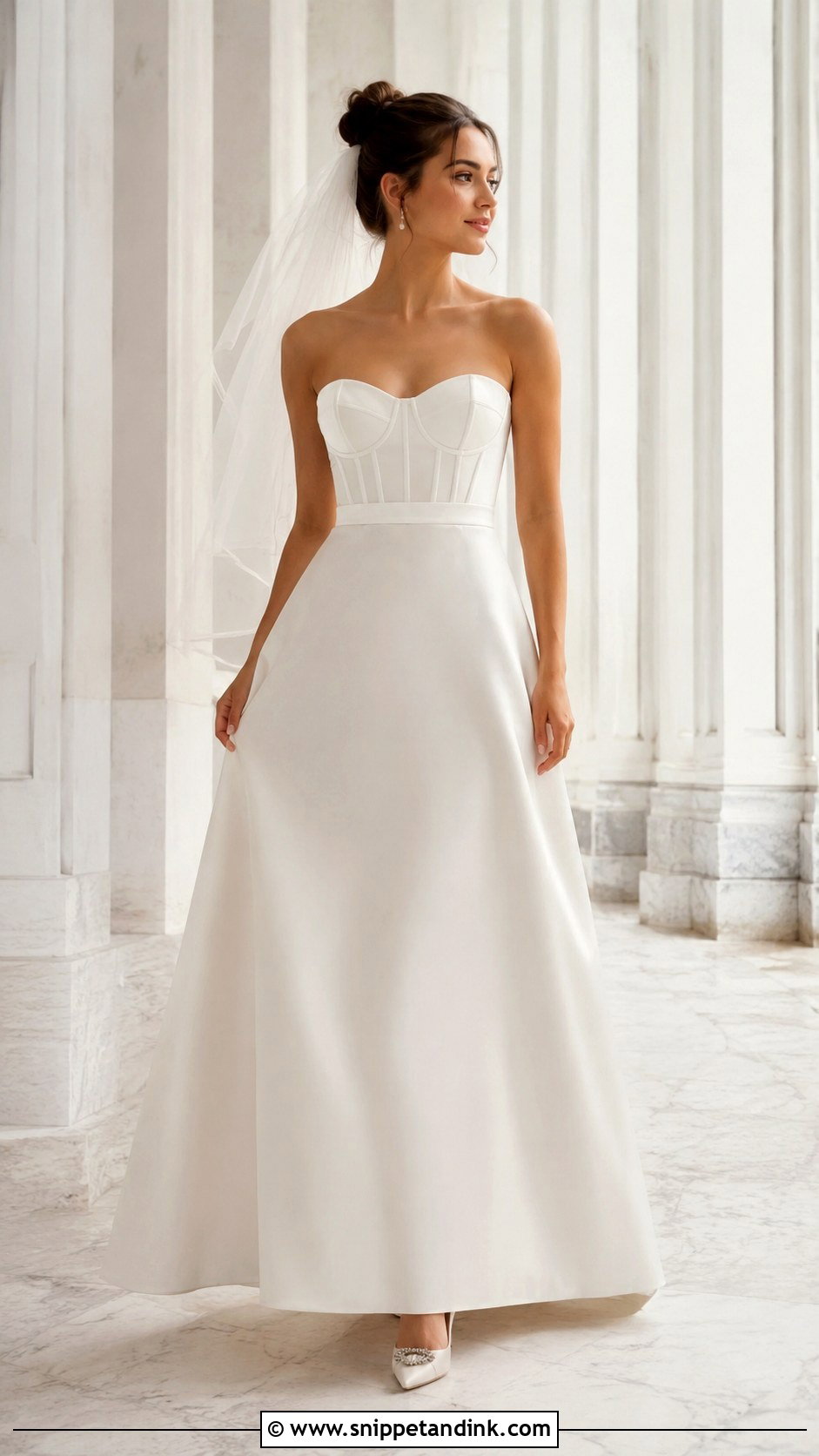
Petite brides get more length from a balconette A-line with a slightly raised waist, narrow skirt panels and vertical seams that lead the eye down. Light satin, crepe or soft tulle won’t swamp a smaller frame. Pointed heels, delicate earrings and a fingertip veil (not a very wide one) keep things in scale, and a high or low bun adds height. Skip oversized bows and dense appliqués that cut the line. Petite fitting means more than a shorter hem; the cups, waist, straps and boning often need moving up so each feature lands in the right place on your body.
20. Champagne Balconette Wedding Dress
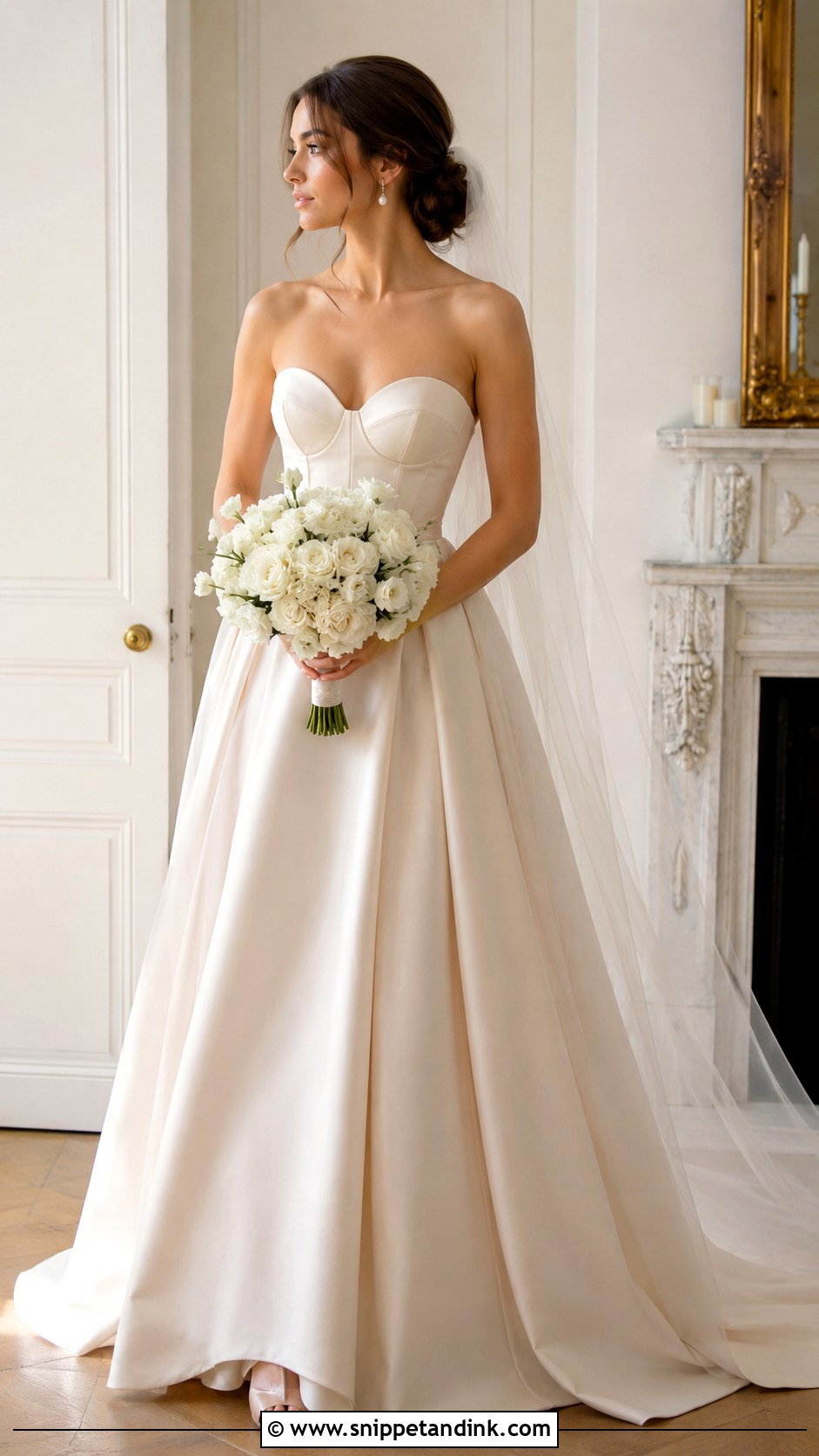
Champagne is a warm alternative to bright white and still reads as bridal. Satin gives a soft glow, lace over a champagne lining adds depth, and embroidered tulle feels romantic. The bodice can lead into an A-line, mermaid or full skirt depending on the venue. Ivory heels, antique-style pearl earrings and a veil in a matching tone keep everything in one colour family, with soft waves or a textured bun. Look at the fabric by a window and under indoor lights before deciding; some champagnes turn pinkish indoors and others go grey in shade.
Necklace Lengths That Work Above a Straight Cup Line
An open, horizontal neckline leaves a wide space between your jaw and the dress, and the length of your necklace decides how that space looks.
- A choker or a short collar sits high and suits long necks and strapless balconettes best.
- A necklace that rests on the collarbones, roughly 40 to 45 cm, follows the neckline’s line and is the most reliable choice.
- Pendants should end at least two fingers above the cup edge. One that lands on the seam looks like it’s caught there.
- With beaded straps or a busy bodice, skip the necklace and wear drop earrings instead.
Bring the jewelry to a fitting and try it with the dress on. A necklace that looked right against a T-shirt often sits too low once a structured bodice changes your posture.
Hair works with the necklace, not against it
Loose curls falling forward over the shoulders tangle with a fine chain and hide the neckline you chose the dress for. If you want a necklace, I’d keep the hair up or swept to one side and behind the shoulder. If you’d rather wear your hair down and full, let the collarbones stay bare and put the sparkle in your earrings or a comb instead.
How the Cups Should Feel at Your Last Fitting
A balconette works when the neckline, the construction and the accessories all point the same way. You’ve seen it on satin A-lines, lace ball gowns, mermaids, detachable pieces, short hems and a wide range of figures. By the last fitting, the cups should sit flat at the top edge with no gap when you lean forward, the boning shouldn’t dig when you sit, and you should be able to lift your arms without the bodice moving. Choose shoes, a veil, hair, jewelry and flowers that frame the neckline rather than hide it, and the dress will feel as supportive as it looks.
You'll Like These Ideas:



Leave a Reply