
A Nikah outfit has jobs most bridal wear never faces. You’ll sit on the floor or a low sofa for the ceremony, sign the nikahnama, keep your head covered while relatives lean in for hugs, and maybe walk into a mosque where modesty rules are set by someone else. So I dress Nikah brides from the dupatta and sleeves outward, then add the sparkle. The twenty outfits below run from white and pastel to deep traditional reds, from delicate chikankari to tissue, pearls and heavy zardozi. Each one comes with the dupatta, shoes and jewelry I’d pair with it, and the fit points I’d check at your last trial.
Coverage Rules Differ by Venue, So Ask First
Before I sketch any outfit for a Nikah, I ask where it’s taking place and who’s officiating. A mosque often has stricter expectations than a home or hall: full arm coverage, a closed neckline and hair fully covered, sometimes with shoes left at the door. Families also have their own customs, and an elder’s opinion on necklines can matter more than any trend. A quick message to the imam or the host family saves a last-minute safety pin solution.
Then I plan for the posture of the day. Many Nikah ceremonies are seated, sometimes on floor cushions, with the bride leaning forward to sign. That changes the brief:
- Skirts and shararas need enough volume to sit cross-legged without riding up.
- Sleeves should be cut with room at the elbow so you can lift your arm to sign.
- Necklines need a test while bending forward, not just standing in a mirror.
- Shoes matter less if they come off at the door, so spend the budget on the dupatta.
If the Nikah and the reception happen on the same day, I often suggest one base outfit with a removable layer, like a jacket or a second heavier dupatta, rather than a full change. Changing a lehenga in a venue bathroom eats an hour you’ll want for photos.
1. White Chikankari Nikah Lehenga
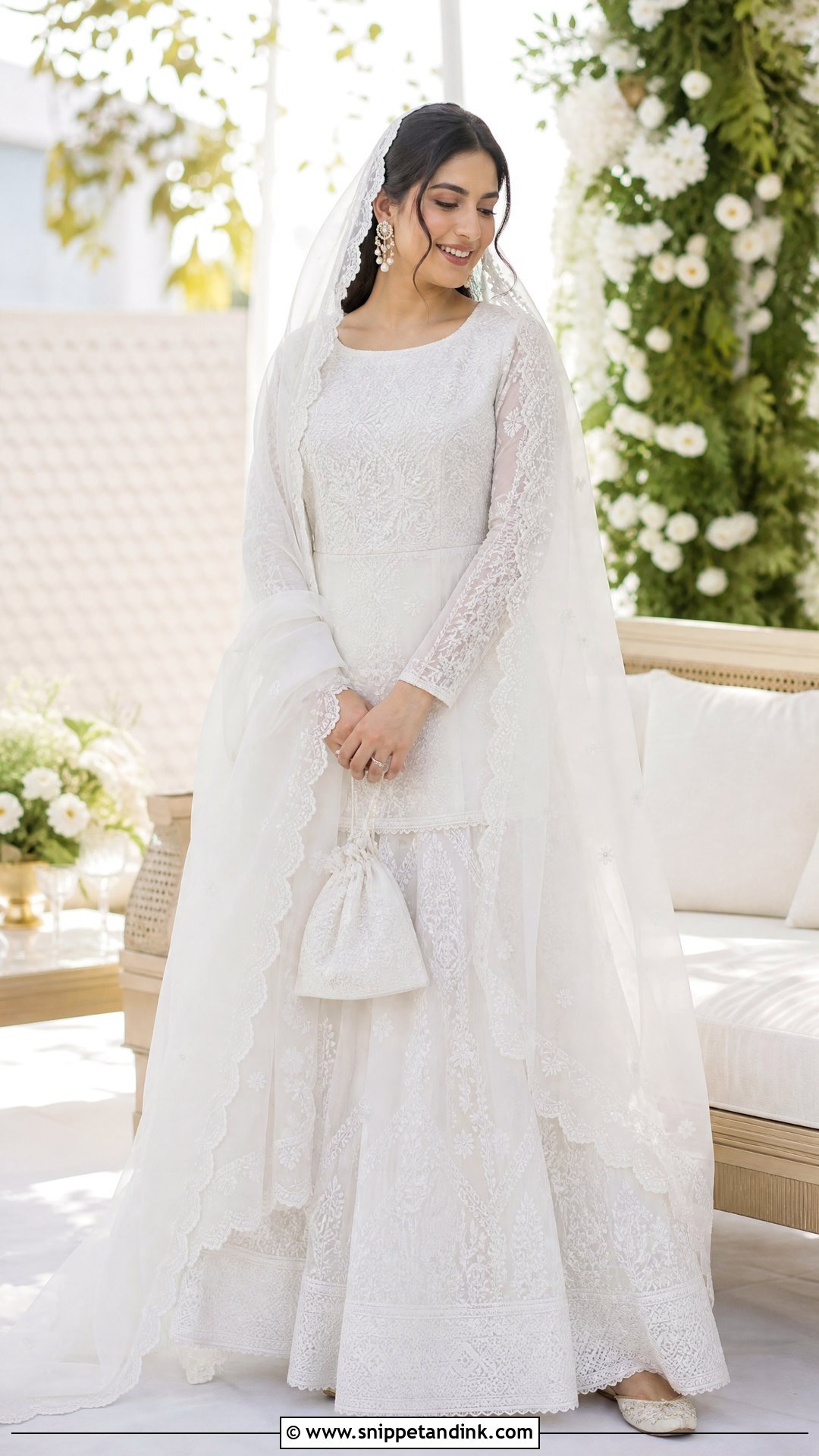
Chikankari is hand-embroidered on fine cotton or georgette, so a white chikankari lehenga is light enough for a hot afternoon ceremony. The thing to ask about is the lining. Shadow-work chikankari is semi-sheer by design, and an ivory lining stops the skirt reading as see-through in daylight. I’d keep the hem at the ankle so it doesn’t collect dust in a garden or courtyard. A long-sleeved blouse or short kurti, a scalloped organza dupatta, pearl drops and ivory juttis are all it needs. Fresh rosy makeup suits it far better than a heavy evening face.
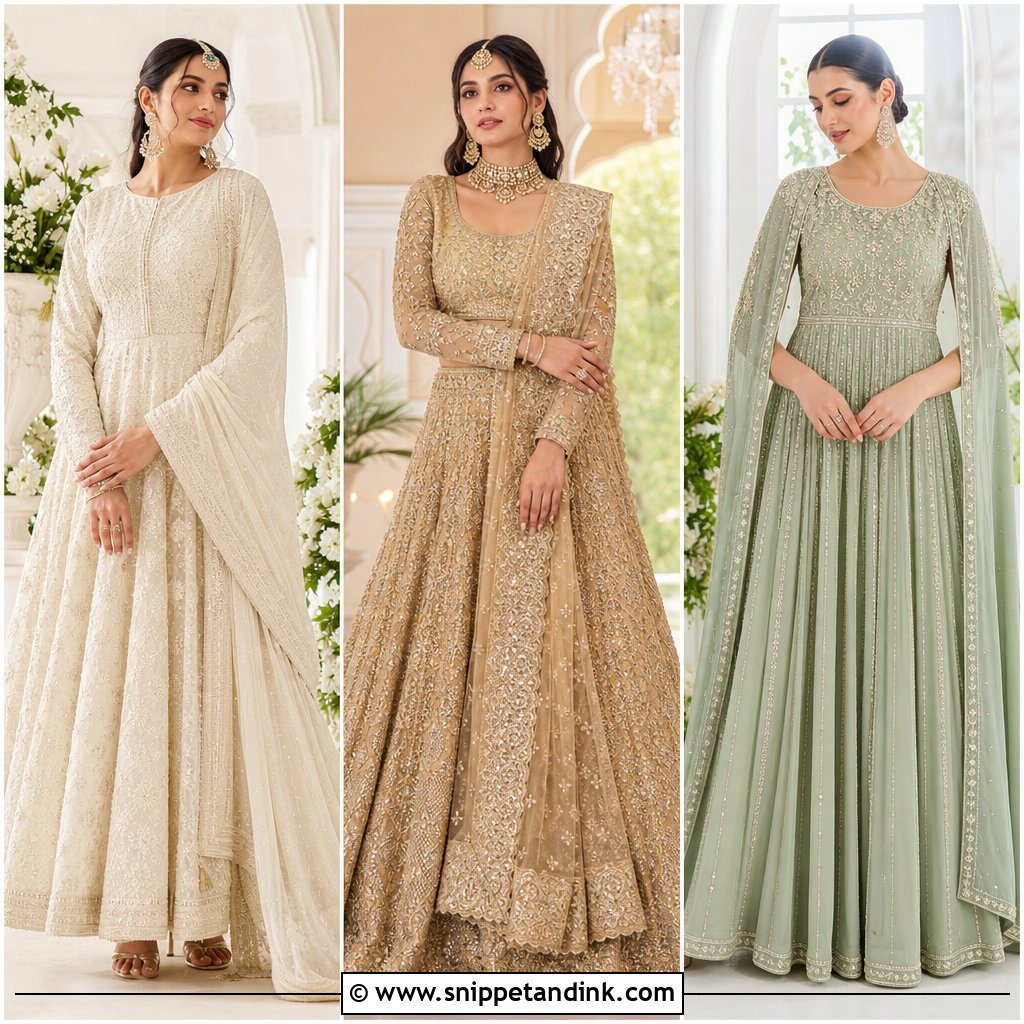
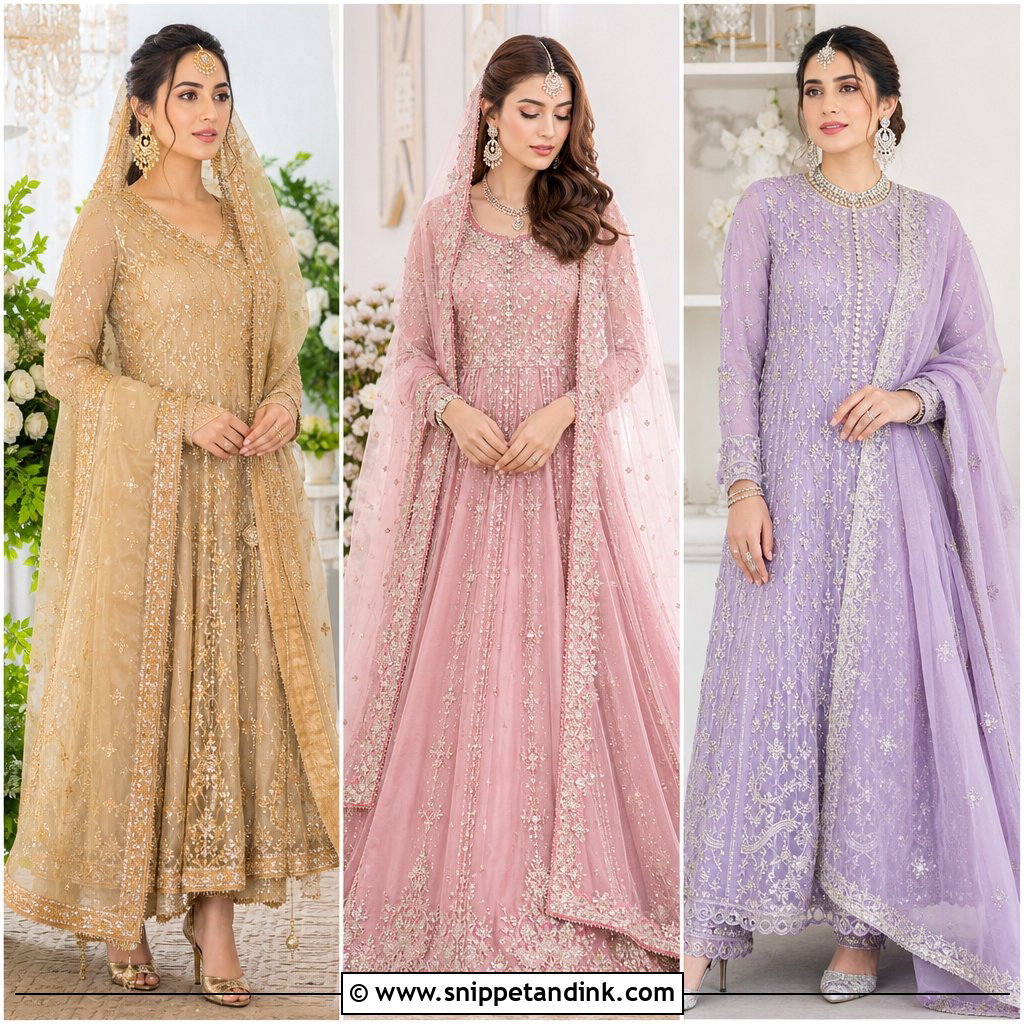
2. Ivory Anarkali Nikah Dress
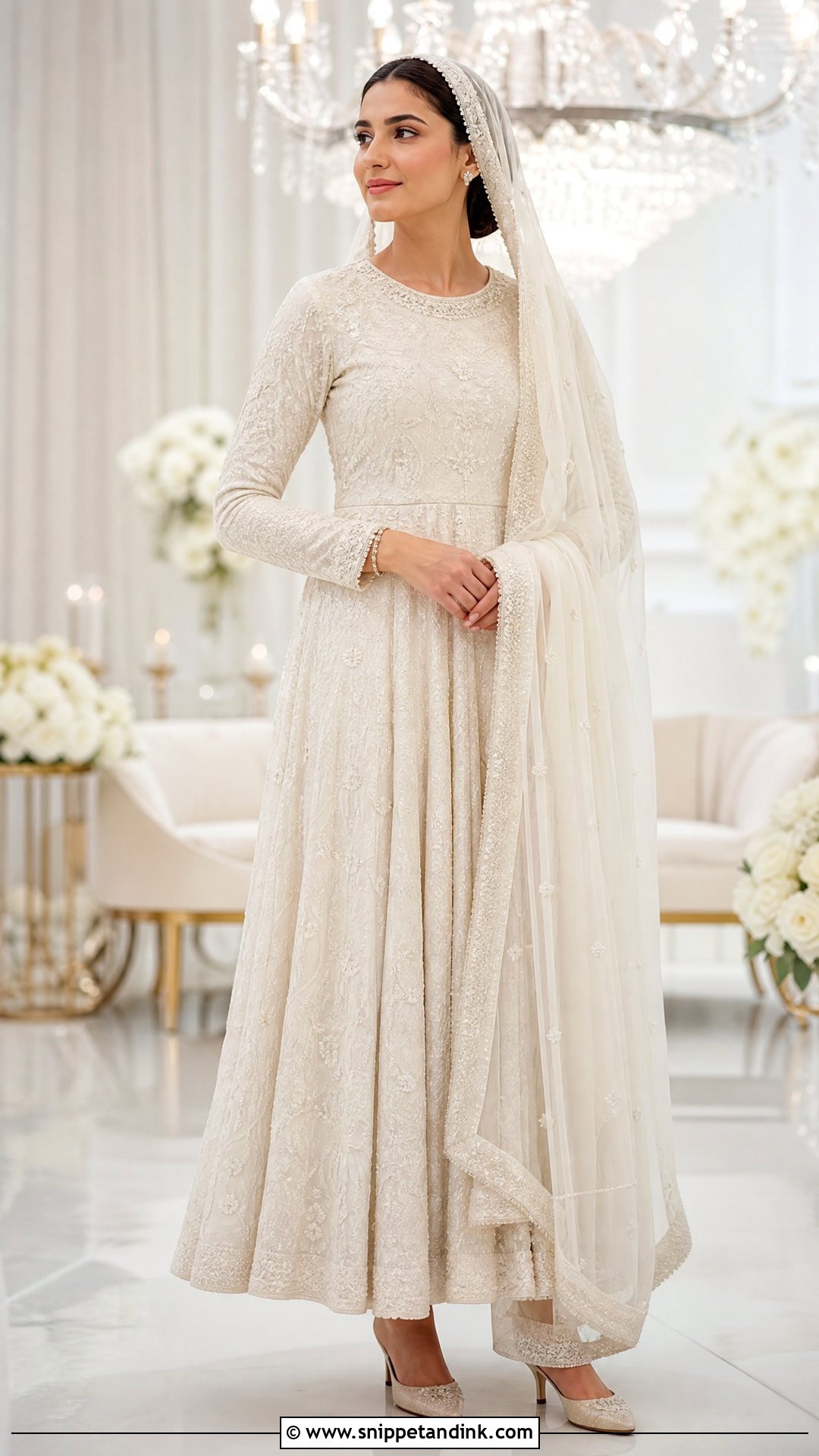
The Anarkali flare starts at the natural waist, which is why it’s so comfortable for sitting cross-legged during the ceremony; the skirt simply pools around you. Make sure the bodice fits snugly, though. A loose bodice slides down once the weight of the skirt pulls on it. Tonal resham or small pearl details keep it bridal without adding weight. Drape a chiffon dupatta over your head and anchor it at one shoulder. A low bun with a few loose strands sits neatly under the fabric, and champagne kitten heels get you through the walk to the stage.
3. Pearl Sharara Nikah Dress
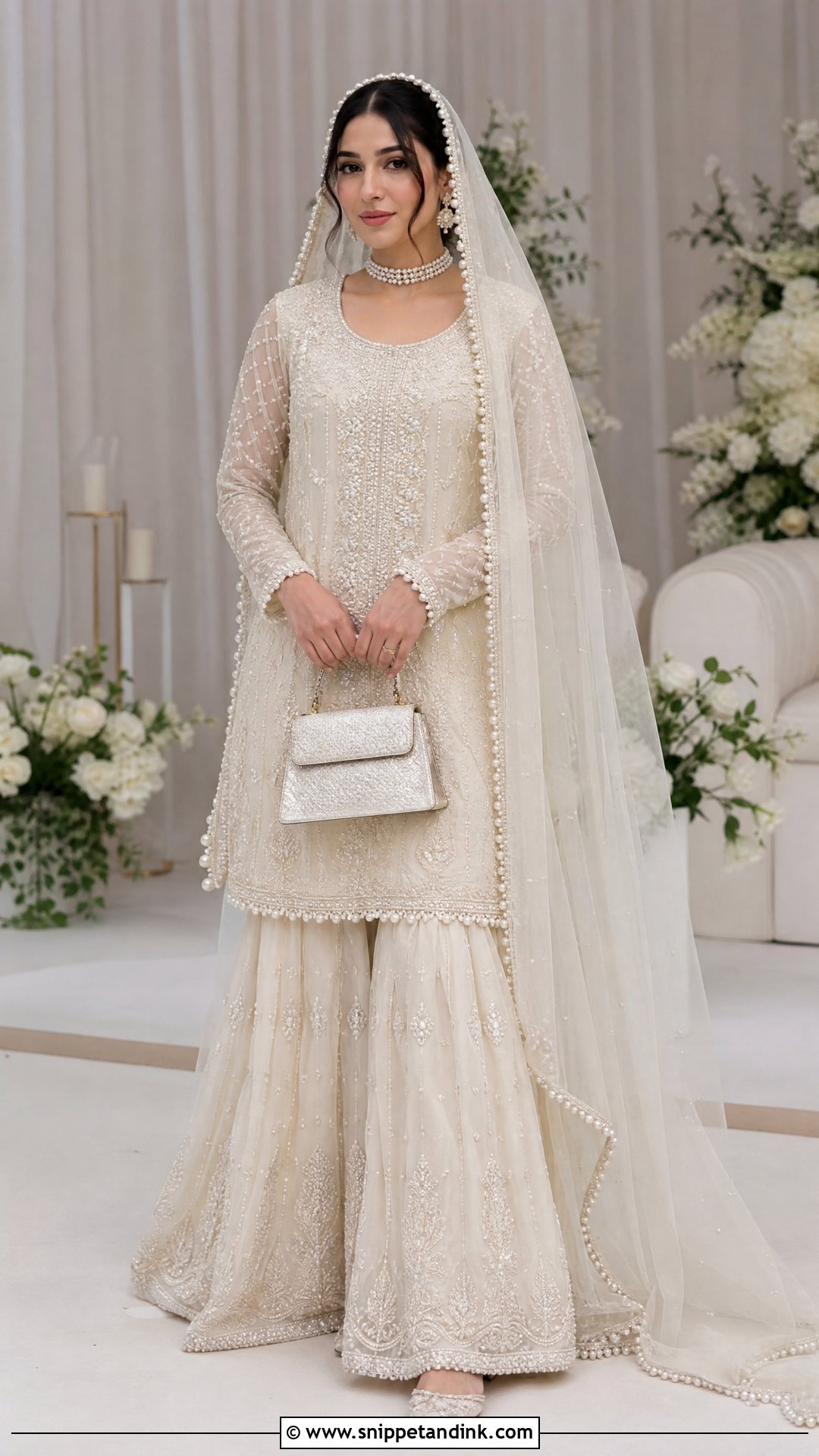
Pearl sharara sets are heavier than they look, since every bead adds weight at the hem. I’d ask the maker to keep the dense work around the knees and lower hem and leave the thighs lighter; that keeps the flare swinging rather than dragging. A long ivory shirt with scattered pearls, a pearl-edged sheer dupatta and pointed flats make a full outfit. Because the clothes already carry texture, I’d keep the makeup smooth and the bun centre-parted. It’s easy to sit in for signing papers and the long seated photos with family.
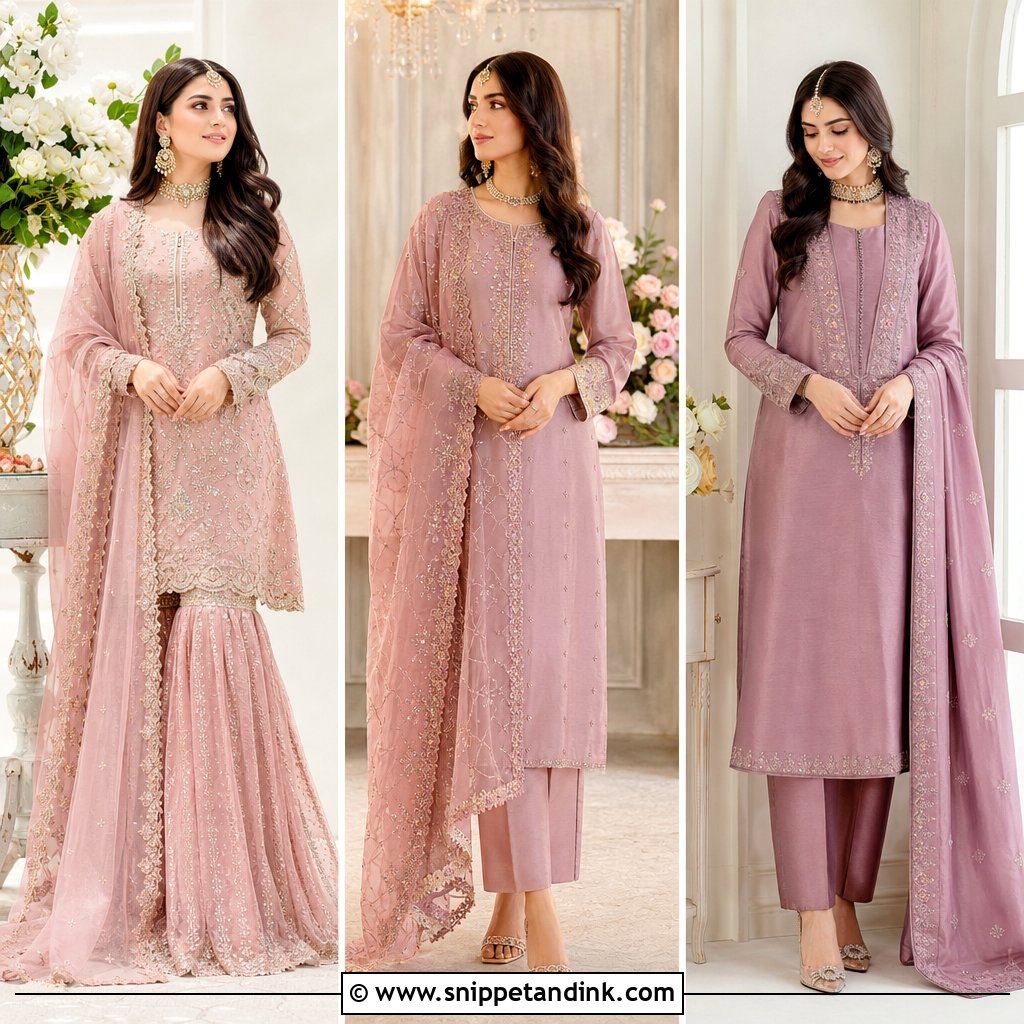
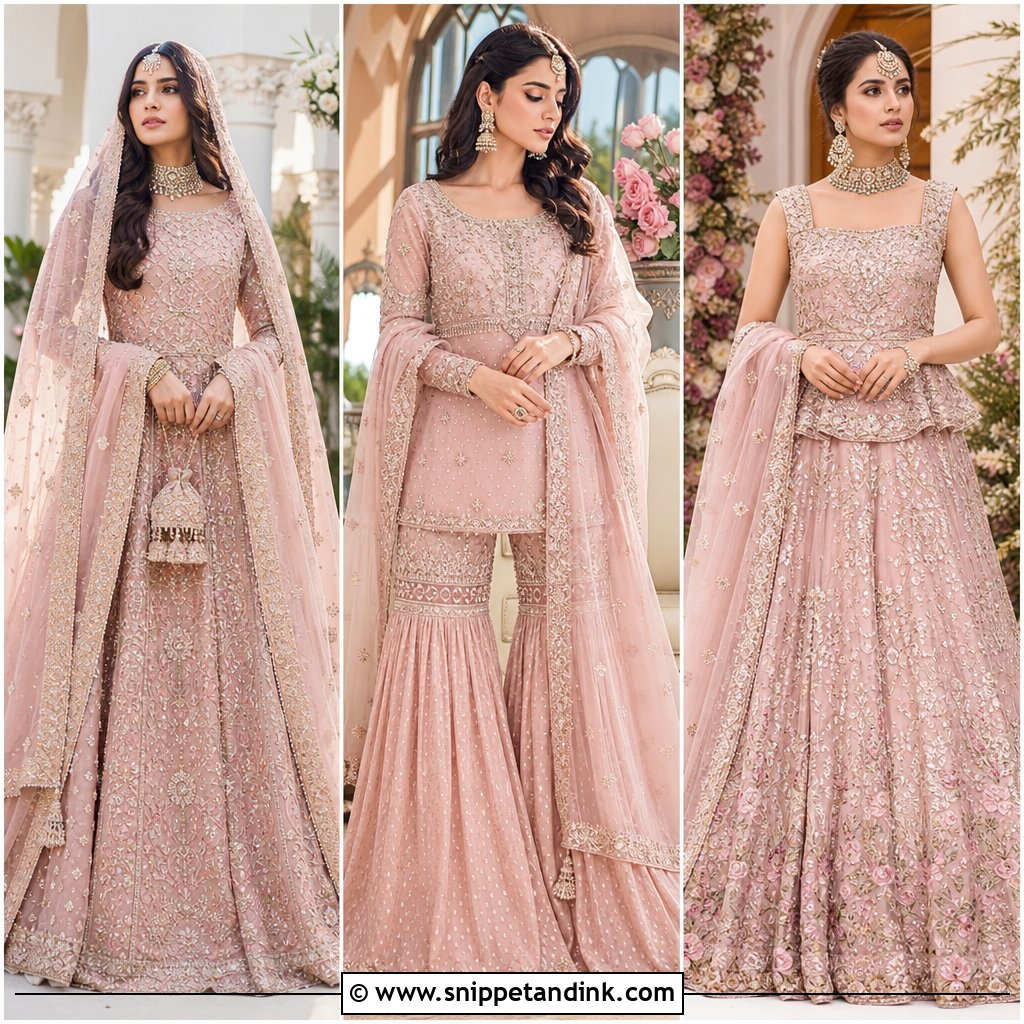
4. Pastel Pink Gharara Nikah Dress
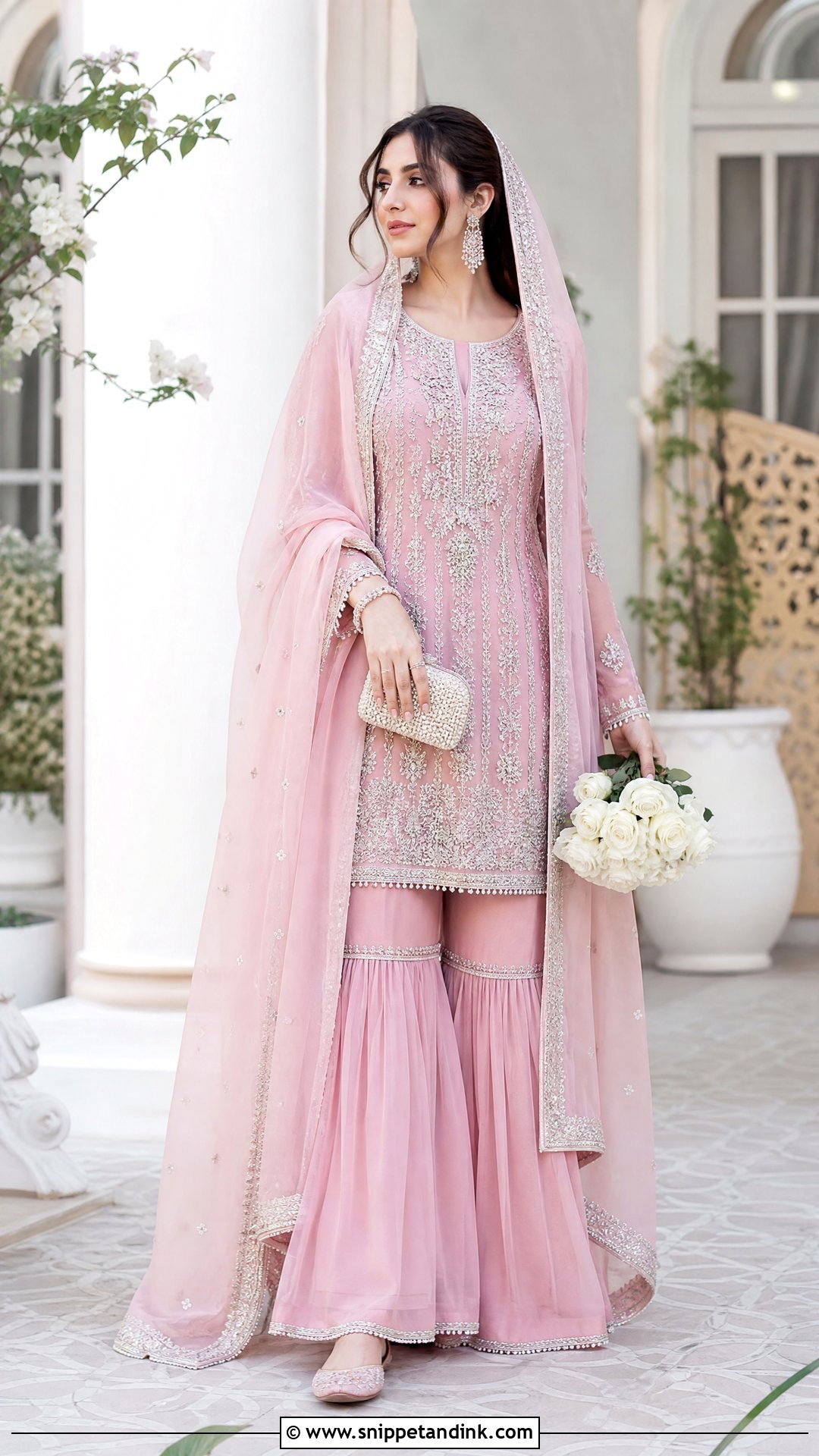
Pink softens a traditional gharara for a smaller ceremony at home or in a hall. The knee gathers are where a gharara lives or dies, so check that the joint sits right at your knee when you’re in your shoes; too high and it looks short, too low and you’ll trip on stairs. Silver embroidery on a knee-length kameez keeps it light. A pale pink organza dupatta falls evenly over both shoulders when you’re seated. White roses in hand give a little contrast.
5. Gold Tissue Nikah Lehenga
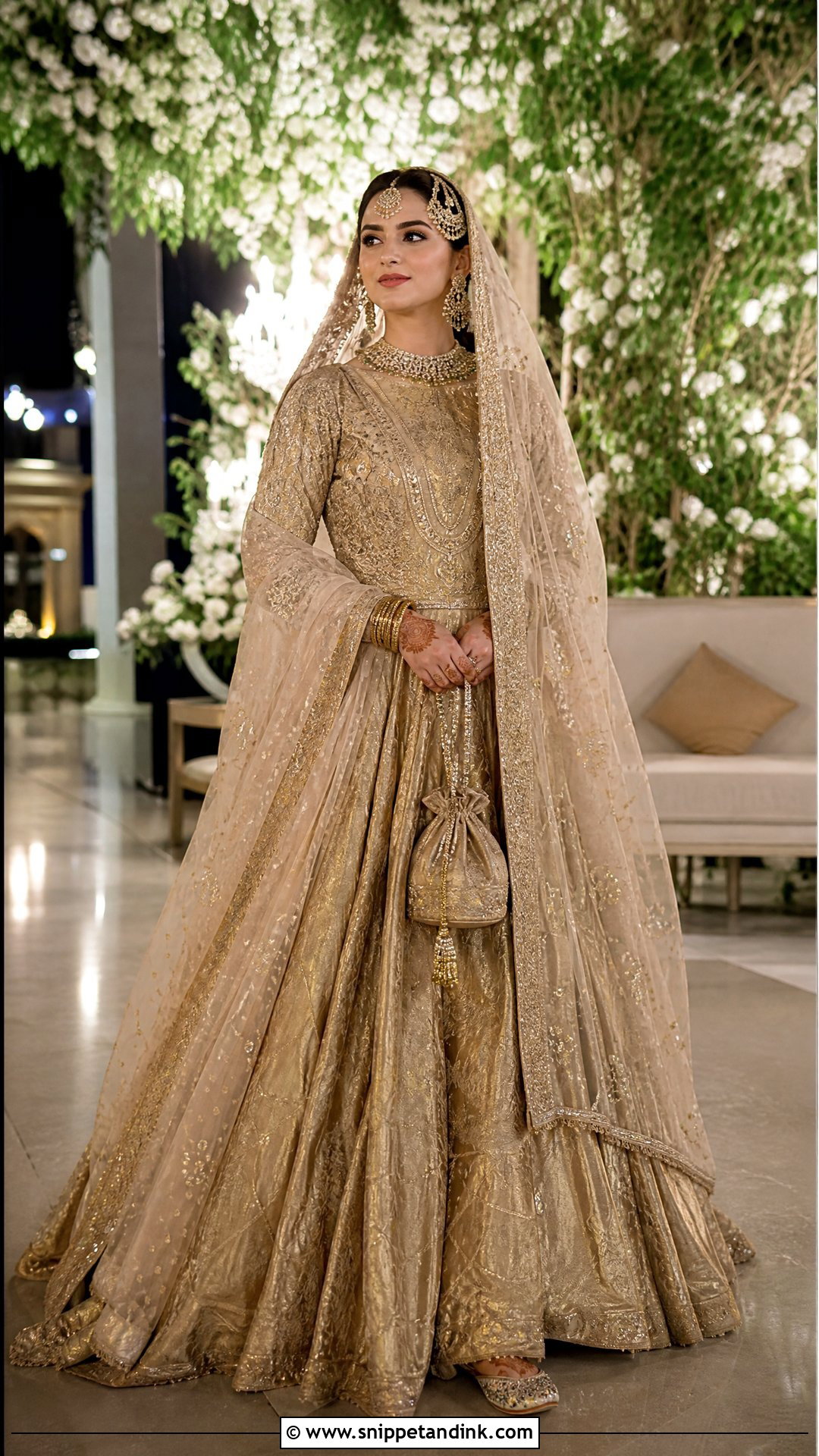
Gold tissue looks like metal and behaves like paper. It crushes, holds every crease and can’t really be steamed out once it’s set, so I always ask brides to transport a tissue lehenga flat or hanging, never folded tightly in a suitcase. Antique gold reads richer on camera than bright yellow gold, which can flare under hall lighting. Balance the shine with an ivory net dupatta, a higher-neck zardozi blouse and embroidered khussa. This is an evening outfit; in harsh midday sun, tissue can glare.
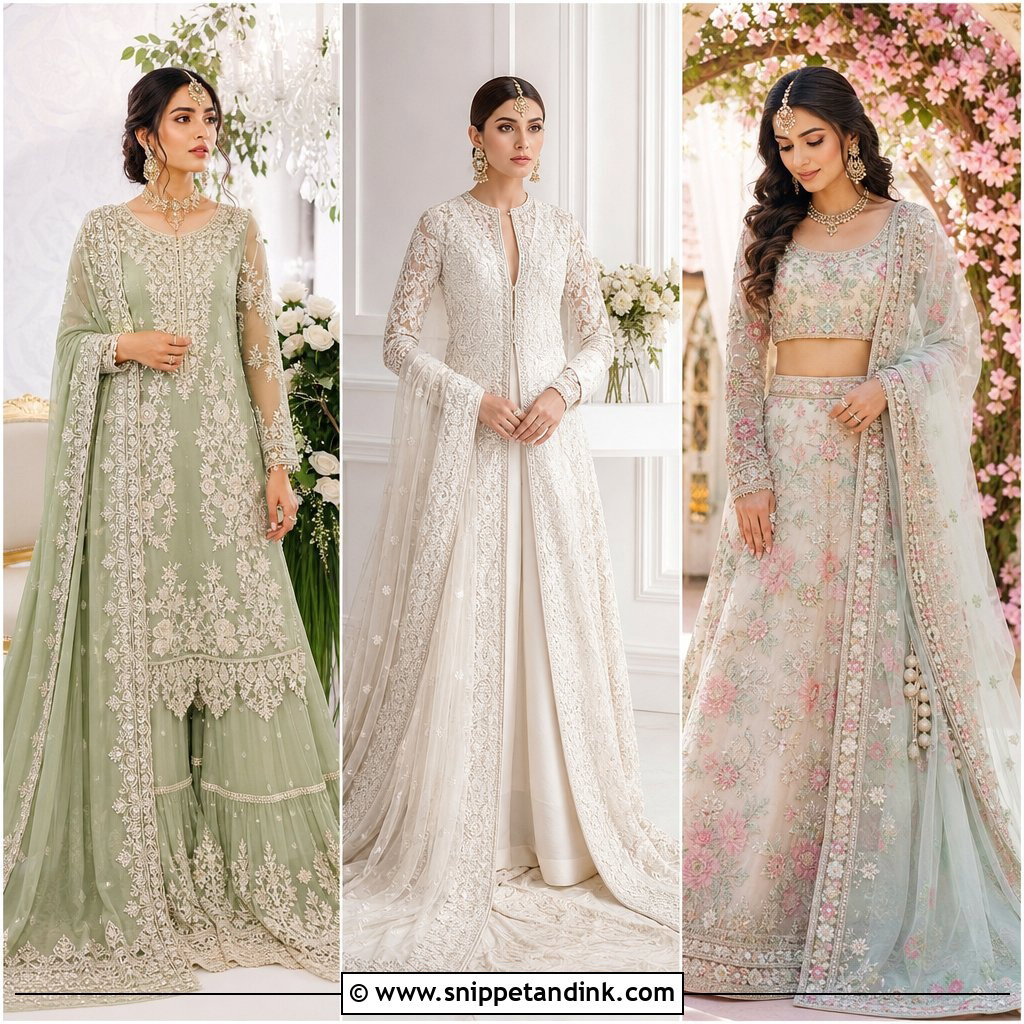
6. Sage Green Pishwas Nikah Dress
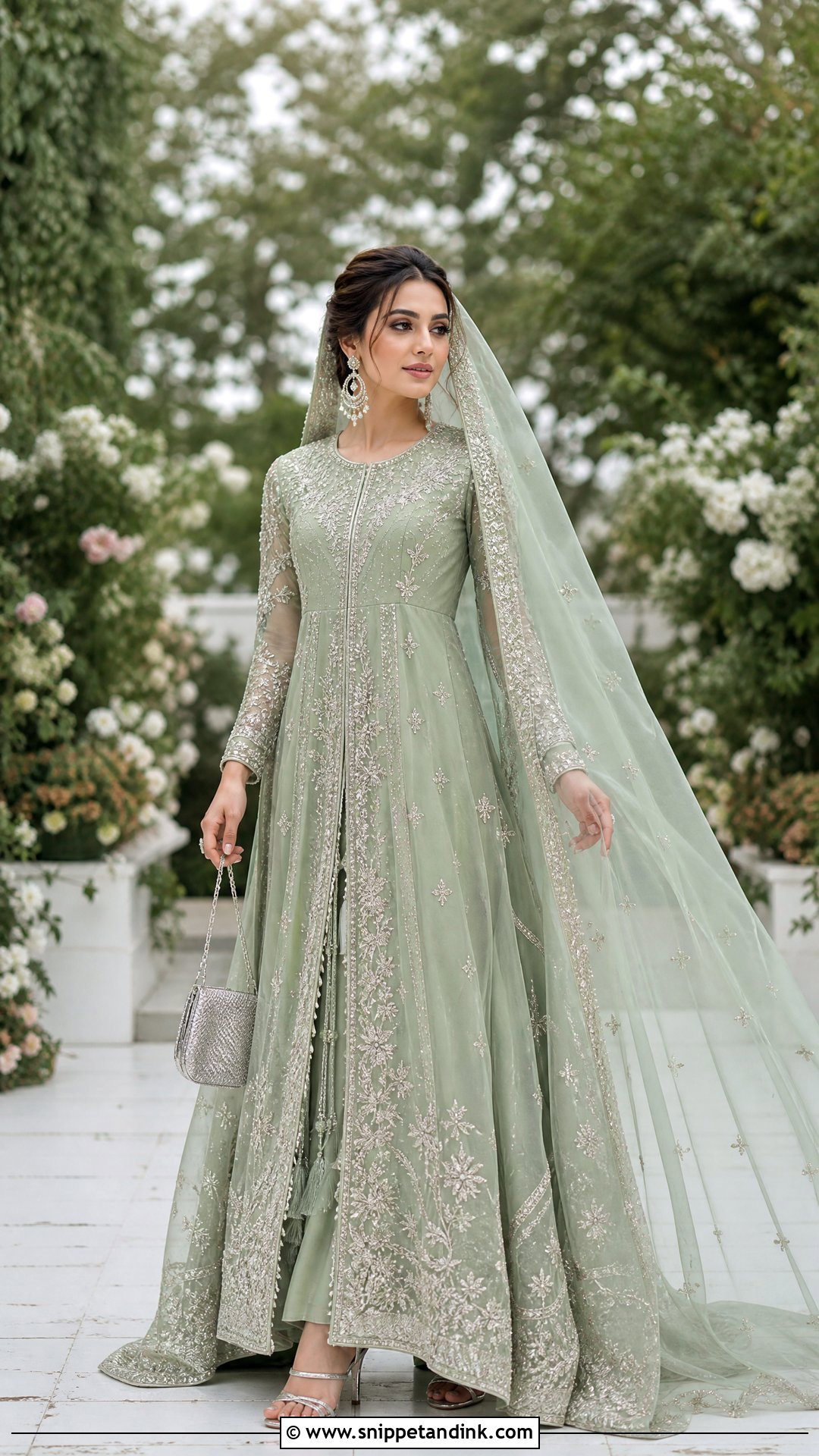
Sage green is a quiet choice that looks fresh against silver and pearls, and a floor-length pishwas gives it volume without a separate heavy skirt. I’d leave parts of the bodice and skirt plain so the silver work has room. The dupatta trick I use with long sleeves: drape it over the head, then pin one end lightly at the wrist so it stays put when you raise your hand to sign. Silver heels and a rosy nude lip finish it. It looks especially fresh in daylight and garden greenery.
7. Powder Blue Angrakha Nikah Dress
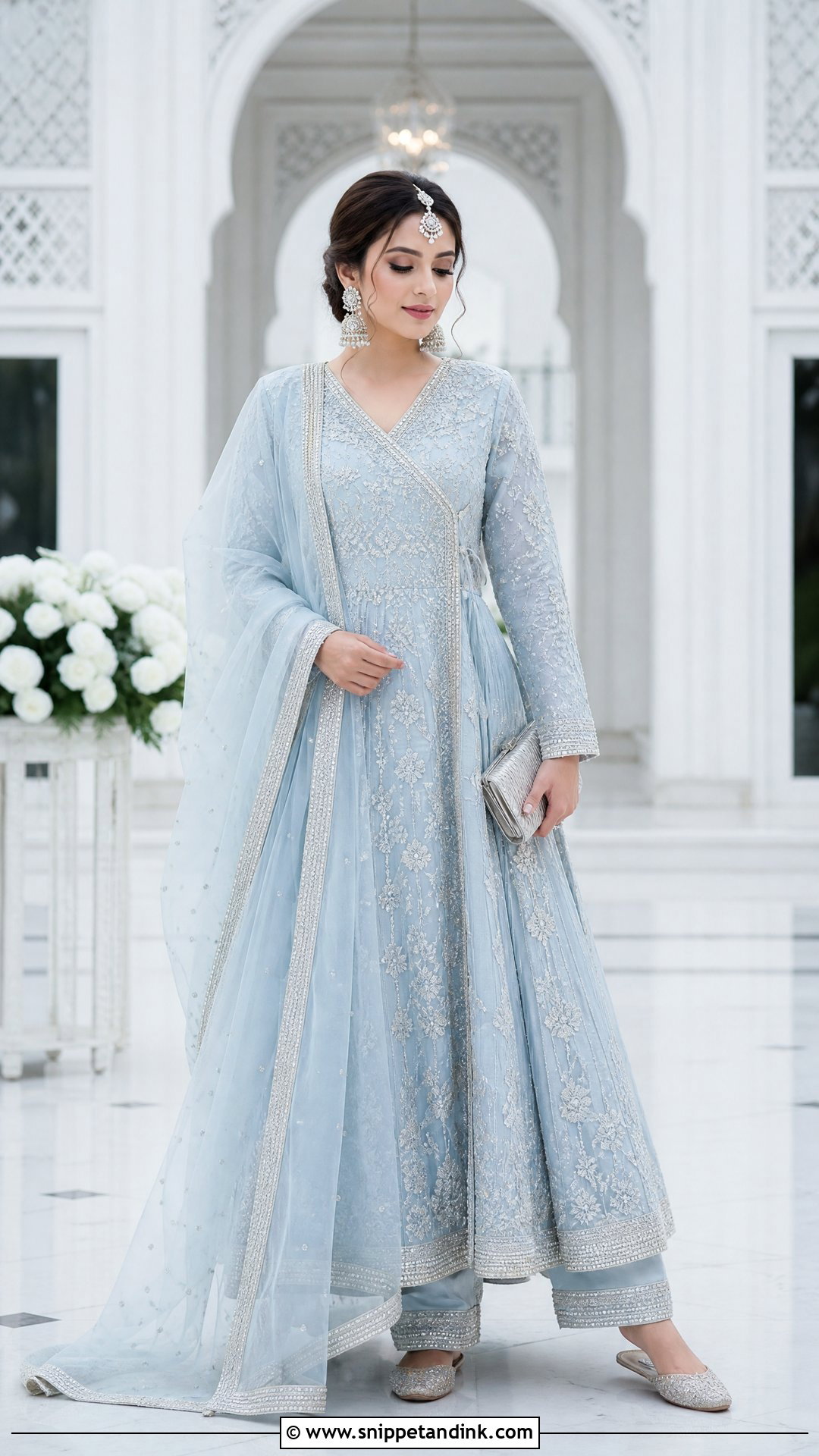
An angrakha’s overlapping front is what makes it distinctive, and also what makes it risky for a Nikah unless there’s an inner panel. Ask for one, since the wrap can shift open when you bend to greet elders. The waist tie with tassels keeps the shape relaxed. Wear straight trousers underneath and a silver-bordered organza dupatta. Powder blue is cool-toned, so I lean toward gray liner, crystal jhumkas and a pink lip rather than warm bronze, which can make the blue look dull.
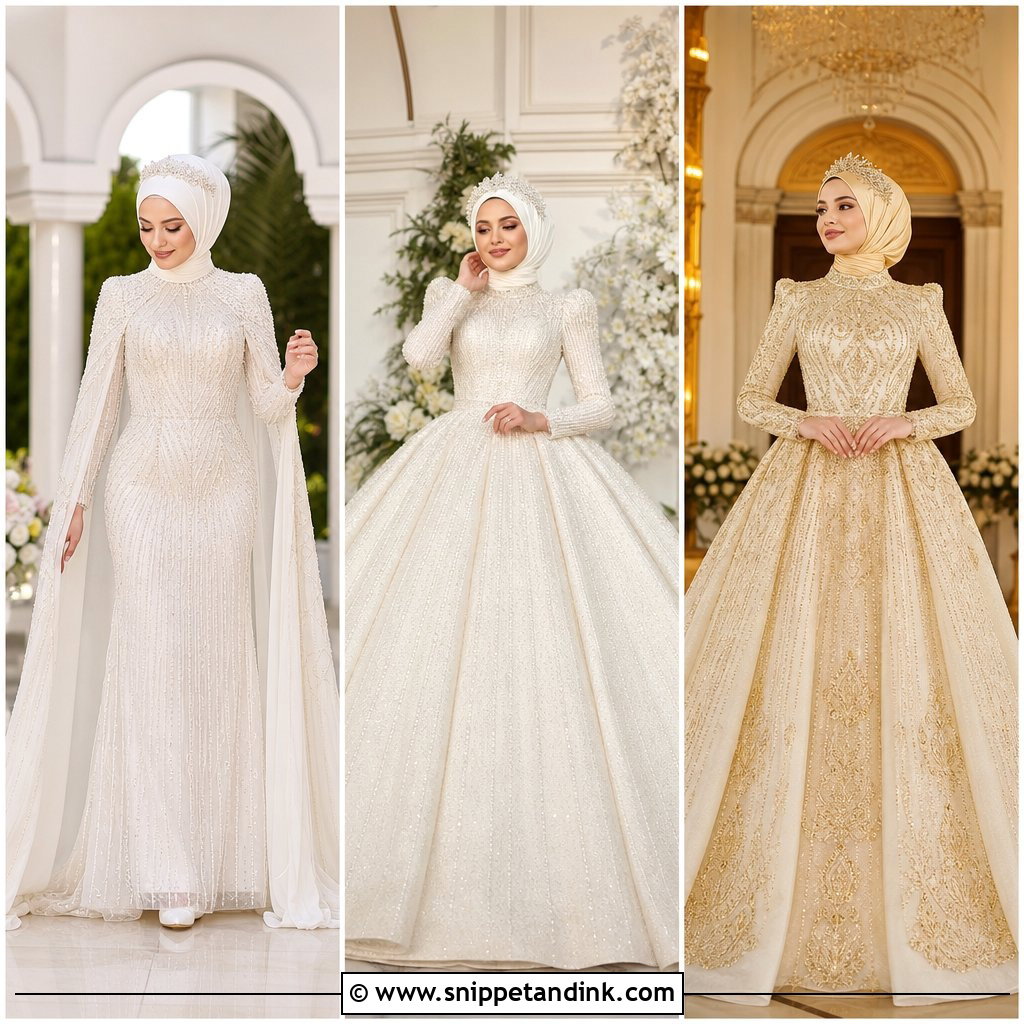
8. Champagne Nikah Bridal Gown
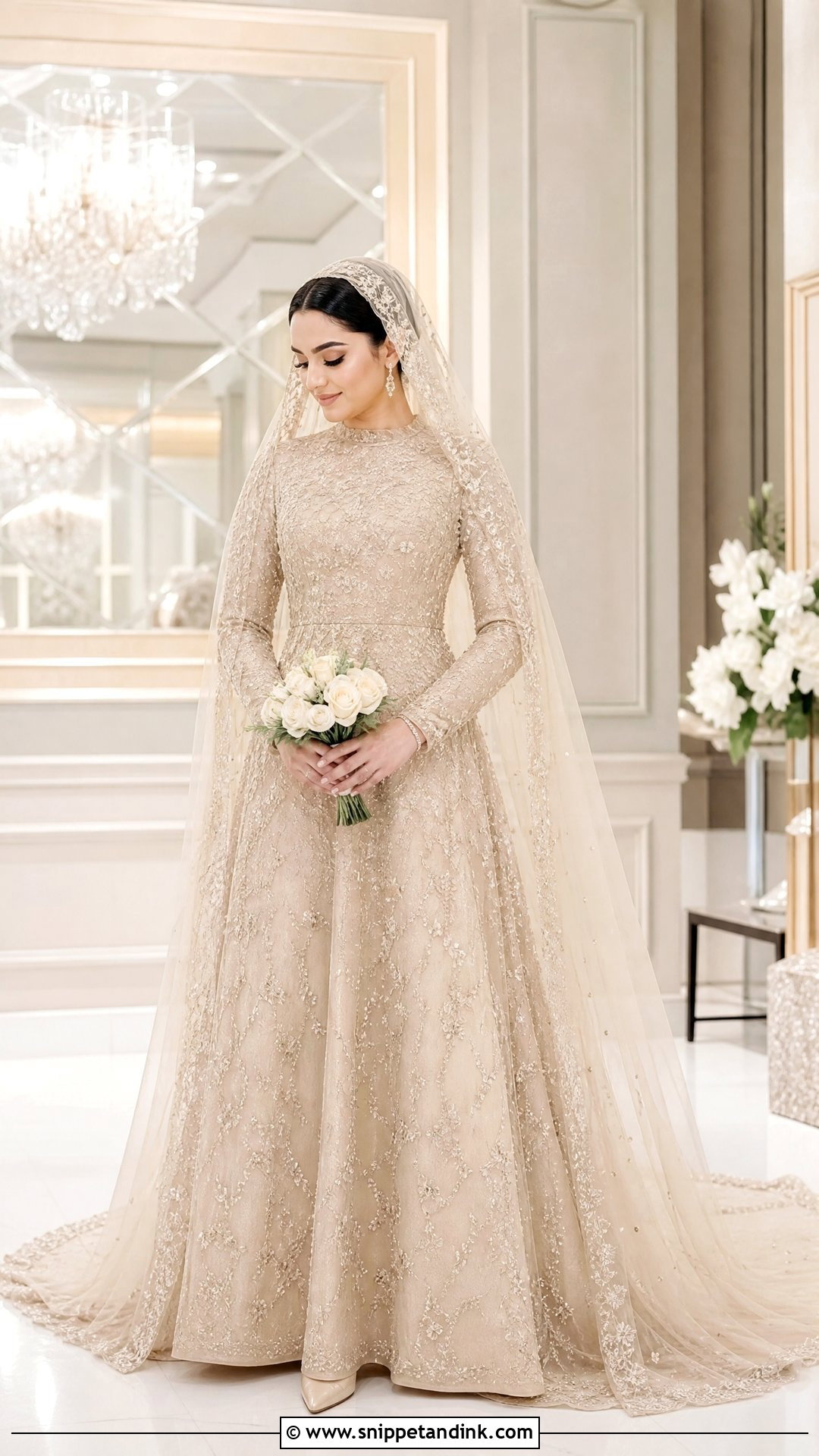
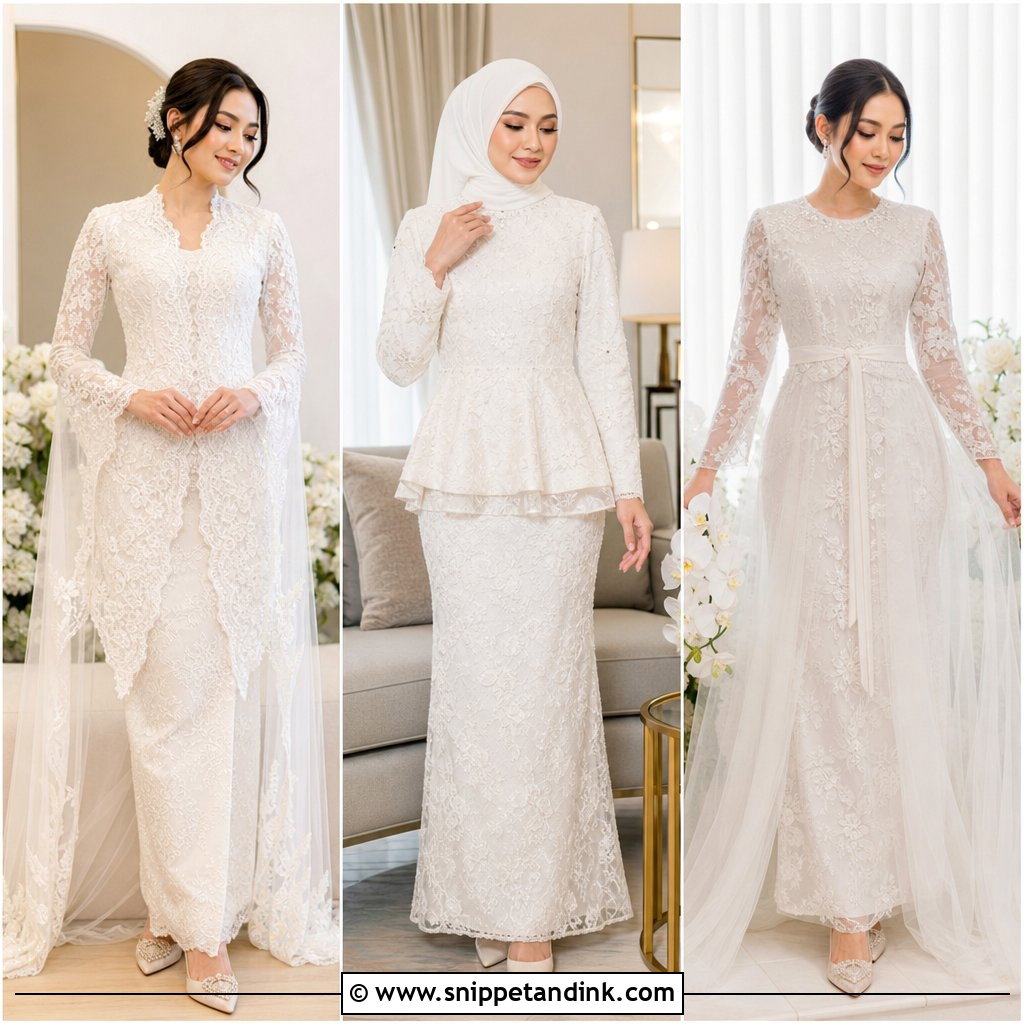
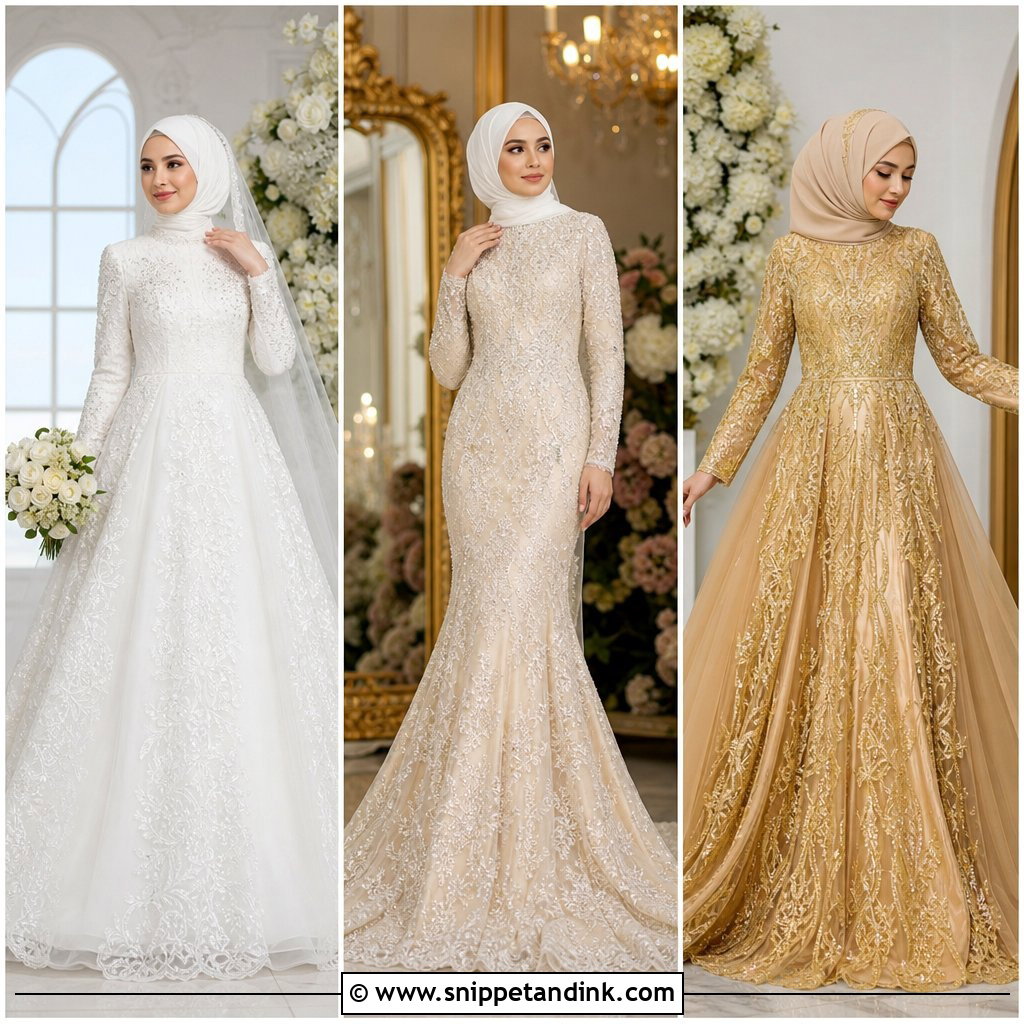
A champagne gown is the modern option, and a bateau or high neckline with long sleeves keeps it right for the ceremony. Embroidery that fades toward the hem stops the gown looking crowded. The detail I’d plan ahead is how the veil or dupatta anchors. A cathedral veil needs a firm low bun to grip; on silky hair, I’d add a few hidden pins in a crisscross before the comb goes in, or it slides back every time you turn. Pointed champagne pumps and a simple tennis bracelet keep the rest quiet.
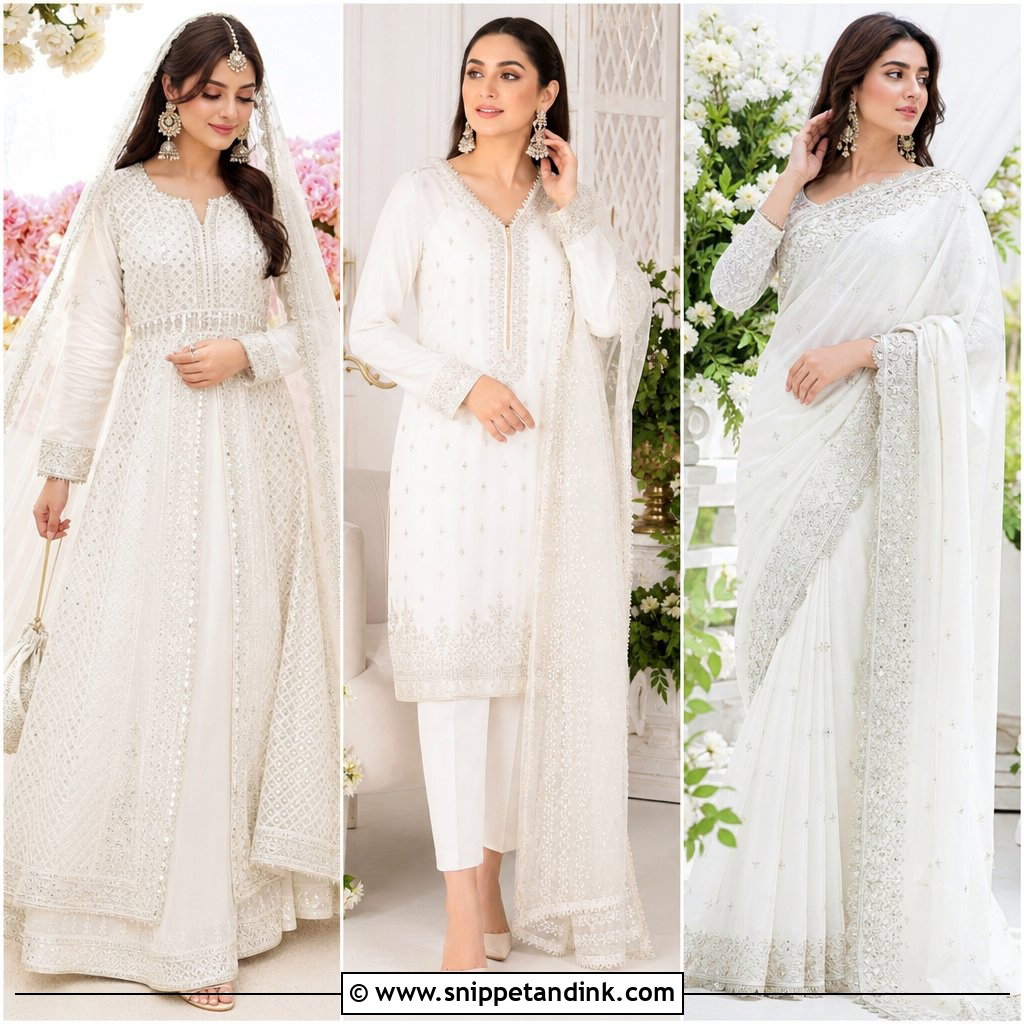
9. White Saree Nikah Dress
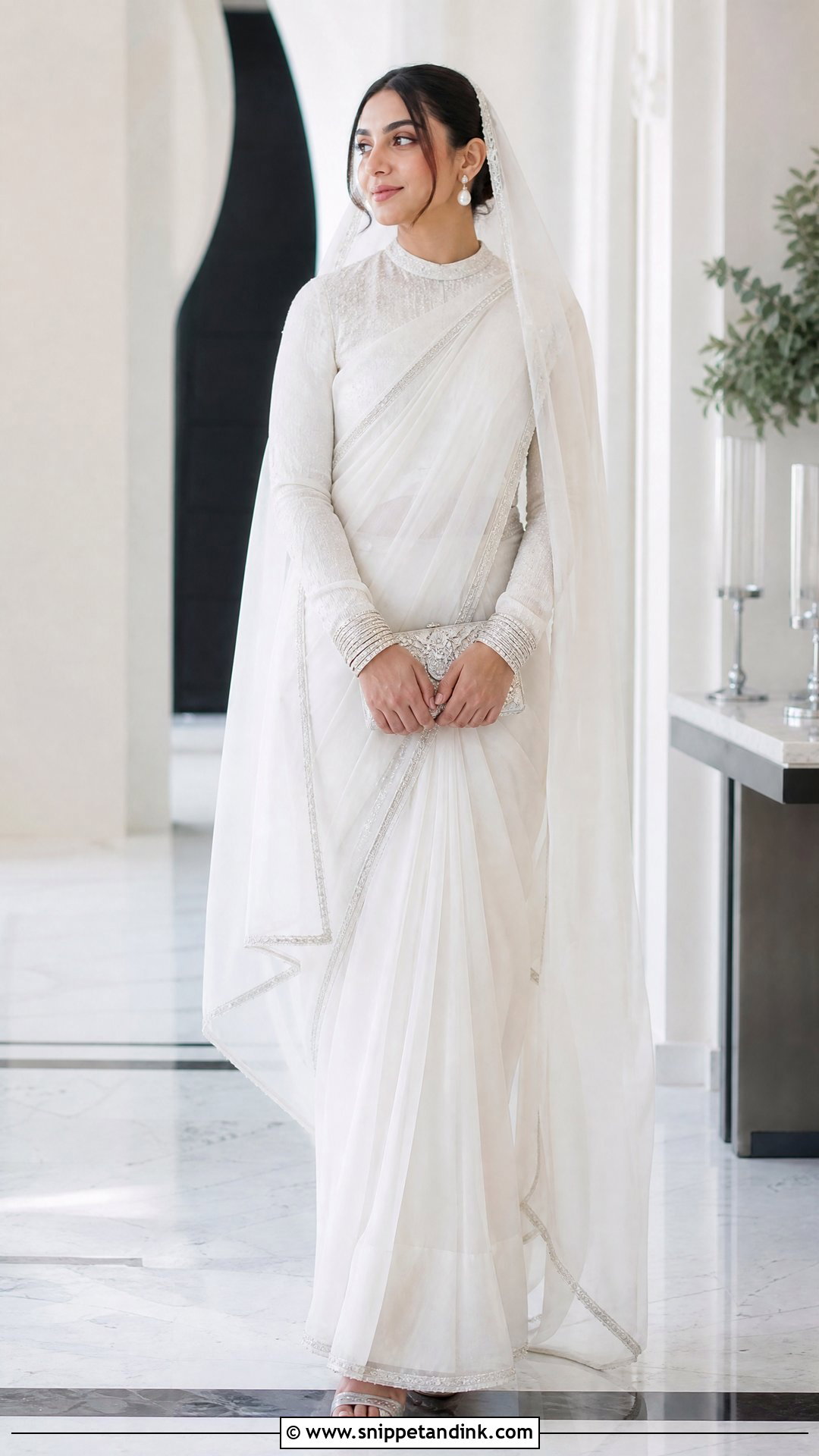
A white saree is graceful and also the outfit most likely to shift during a long ceremony. Silk holds pleats best; chiffon and organza need more pins. I’d have the pleats and shoulder drape fixed with hidden safety pins and, if you can, pre-pleated by the person who’ll drape you, so you’re not adjusting fabric while the vows are read. A fully lined long-sleeved blouse with a higher back keeps coverage. Use the pallu over the head or add a light veil. A smooth bun and classic liner finish it.
10. Ivory Peplum Sharara Nikah Dress
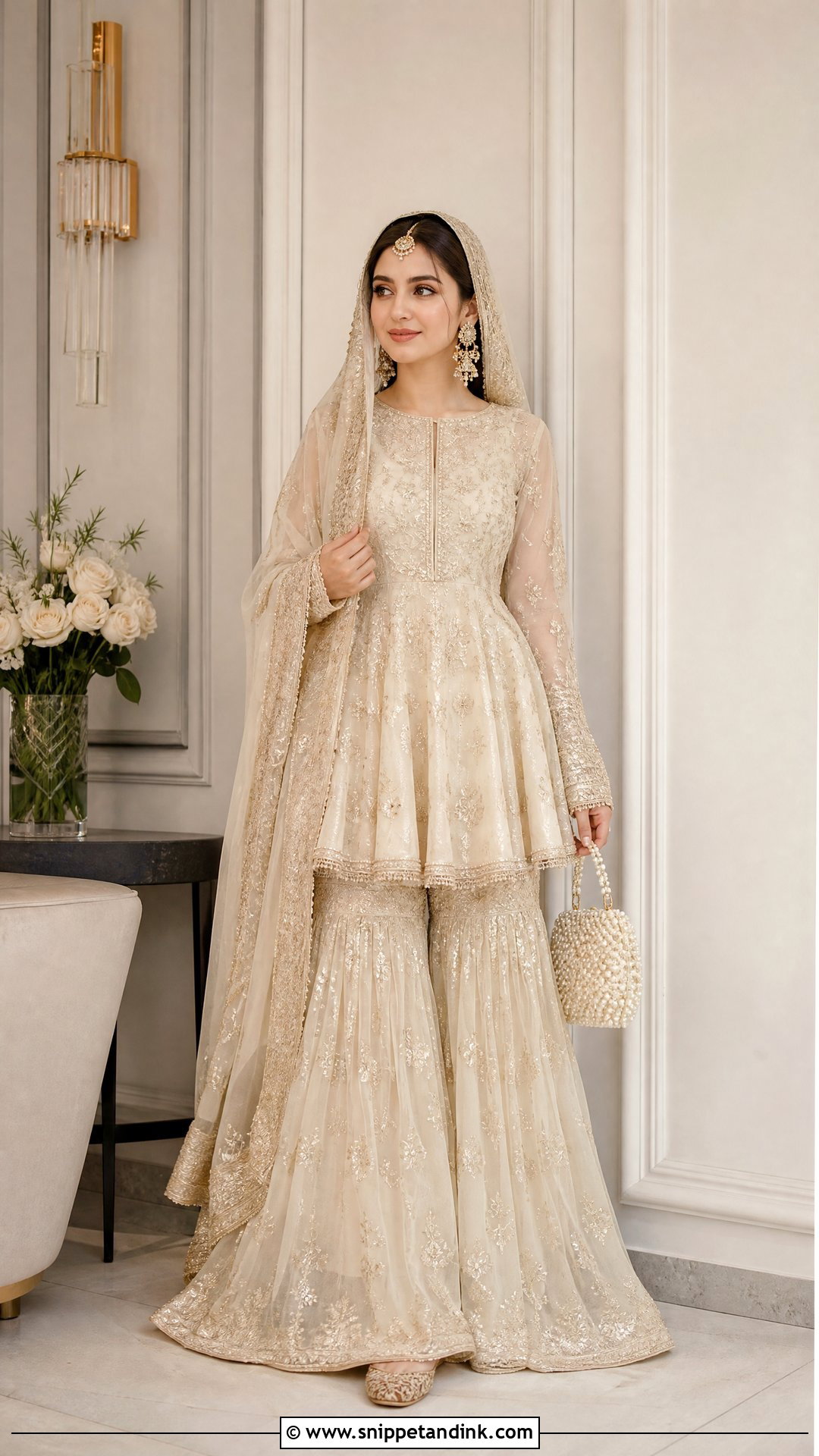
A longer peplum, ending at the upper thigh, is what makes this pairing modest. Short peplums ride up when you sit. Concentrate the embroidery at the waist and peplum hem and keep the sharara lighter so the outfit doesn’t get bottom-heavy. A blush or pale gold dupatta gives soft contrast. Embroidered juttis, chandelier earrings and a small tikka are plenty. I’d style hair in a controlled centre-part bun; loose waves under a peplum’s structure can look untidy by the end of the photos.
11. Blush Pink Nikah Shirt And Lehenga
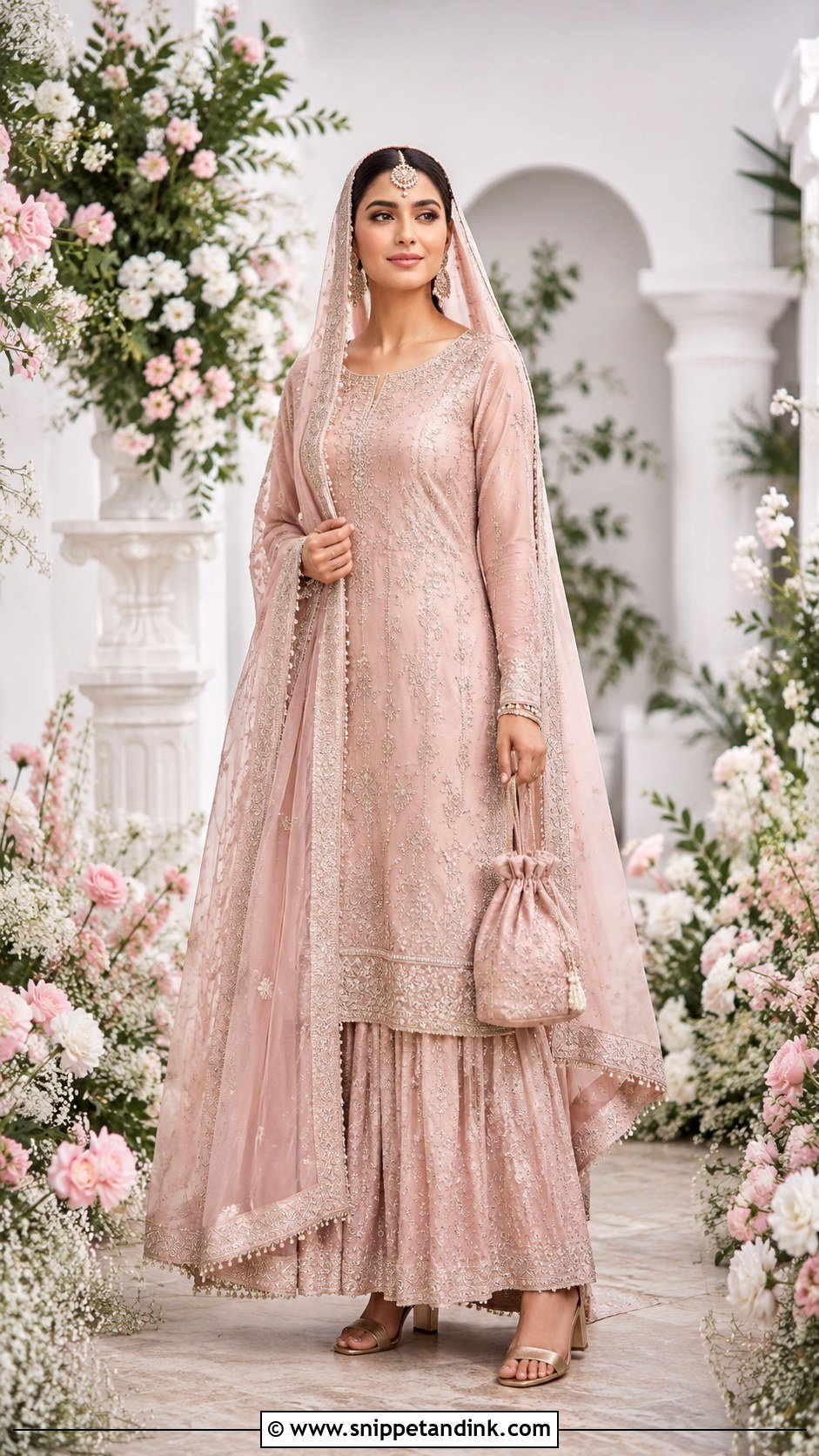
Vertical lines are the point of a long blush pink bridal shirt over a lehenga, and they flatter most heights. Choose calf or ankle length with side slits deep enough to show the lehenga border, since the slit is what keeps you mobile. Check the slits while seated on the floor; if they’re too short, the shirt pulls tight across the thighs. A sheer dupatta with small motifs works over the head and one shoulder. Hair can be soft waves or a low bun, depending on how much you’ll cover.
12. Silver Embroidered Nikah Maxi
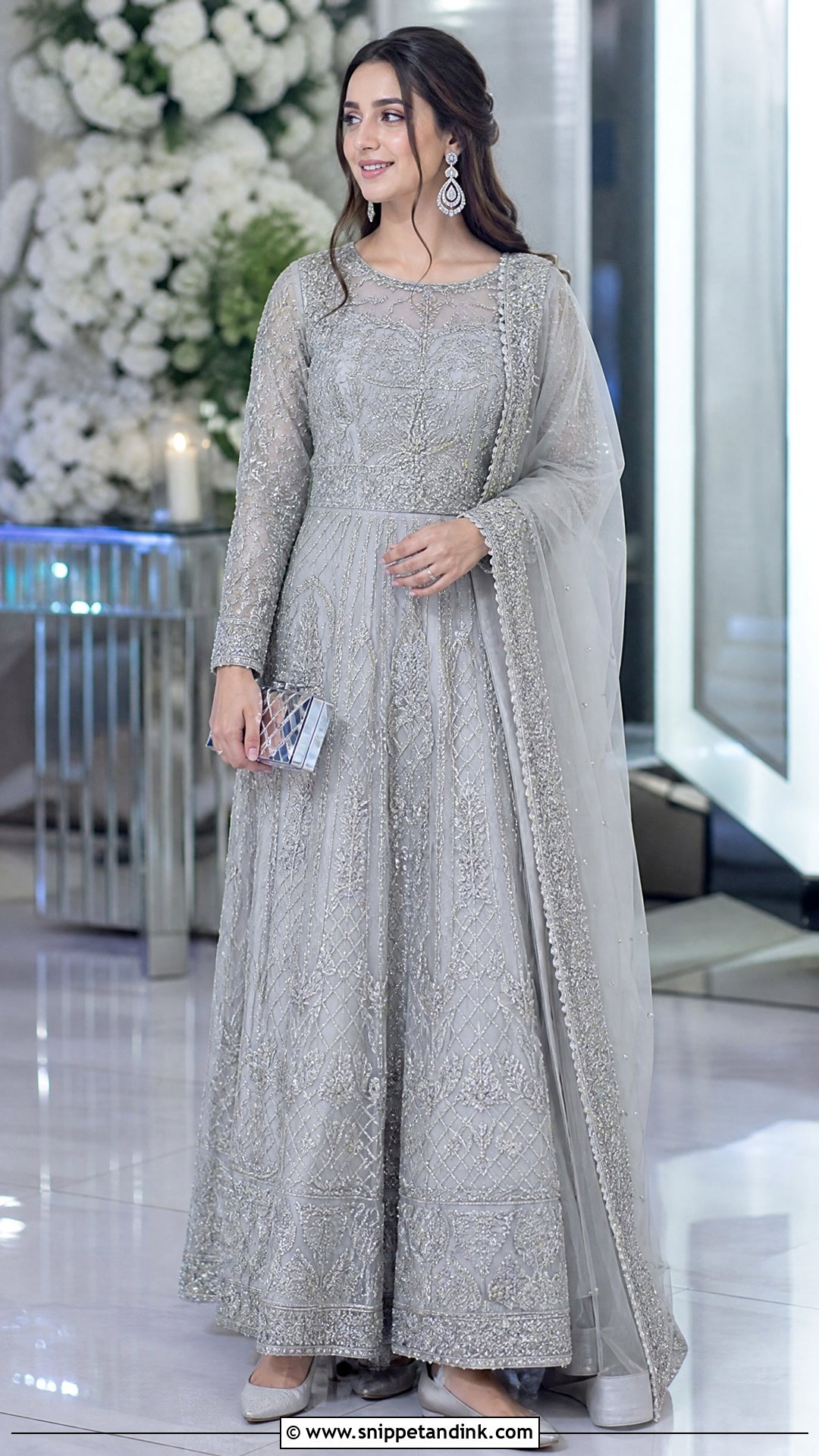
A silver-embroidered maxi gives sparkle in one layer. Dove gray and pale silver bases look more sophisticated than bright white with silver, which can look cold. An illusion neckline needs a skin-matched lining, so I’d check the shade against your skin in daylight; a mismatched lining shows as a pale patch in photos. A narrow crystal-bordered net dupatta is enough. Keep the updo smooth and the makeup glowing. This one shines under evening indoor light.
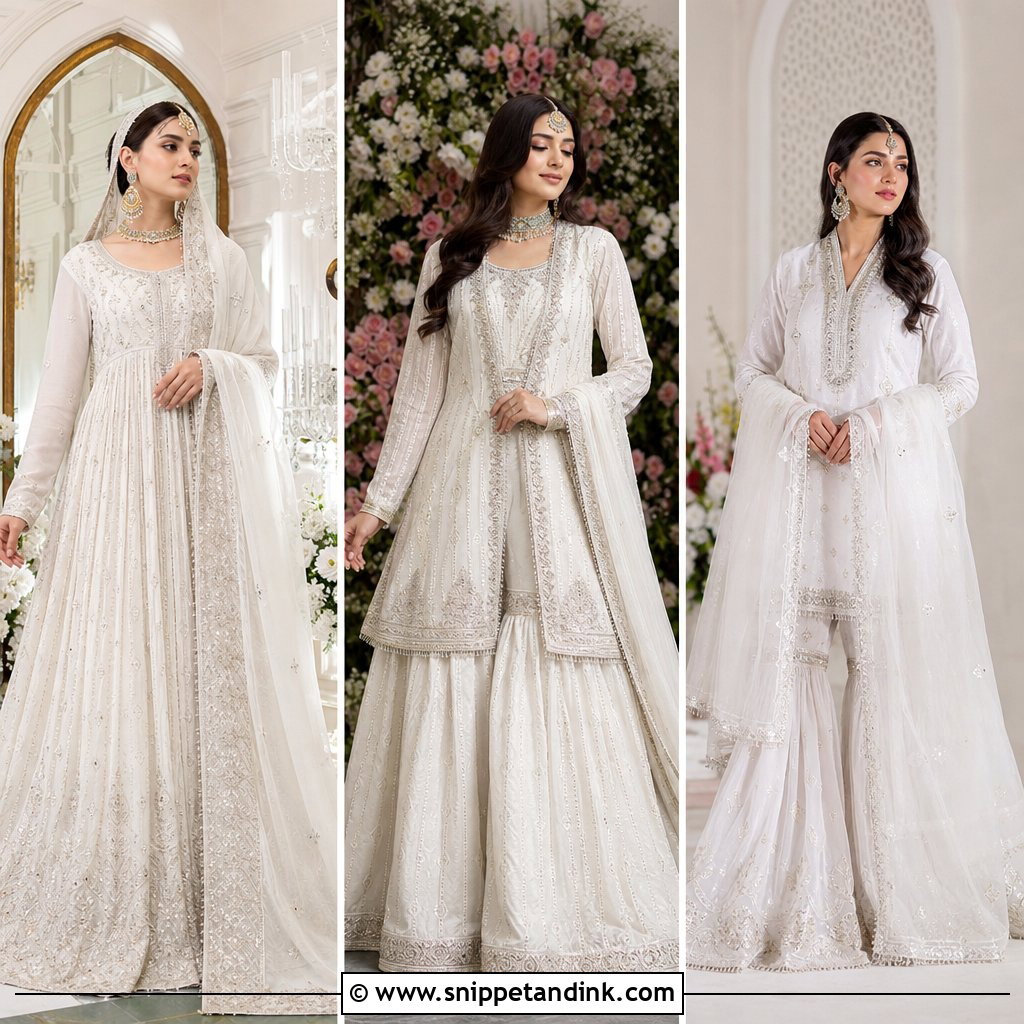
13. Minimal White Nikah Suit
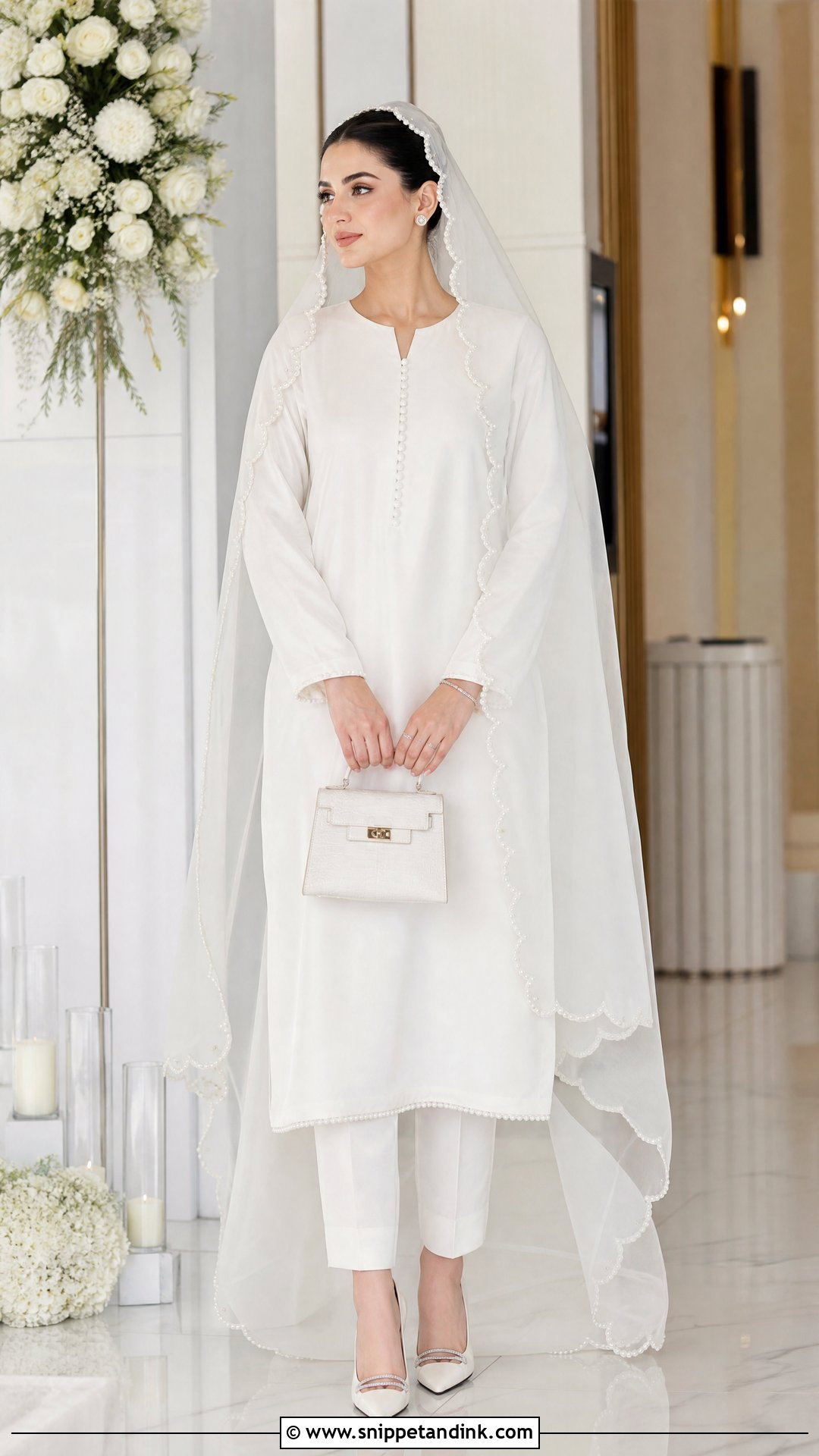
When there’s no heavy embroidery to hide behind, the cut and fabric are everything. A minimal white suit needs a long kameez that sits flat across the shoulders and doesn’t pull at the buttons, so I’d budget for a proper tailor even if the suit is ready-made. Straight or gently tapered trousers keep the line clean. Let the dupatta carry the bridal detail with scalloped organza or light pearls. Pearl studs, pointed white heels and a sleek bun finish it. It’s quiet, and that’s the appeal.
14. Floral Organza Nikah Lehenga
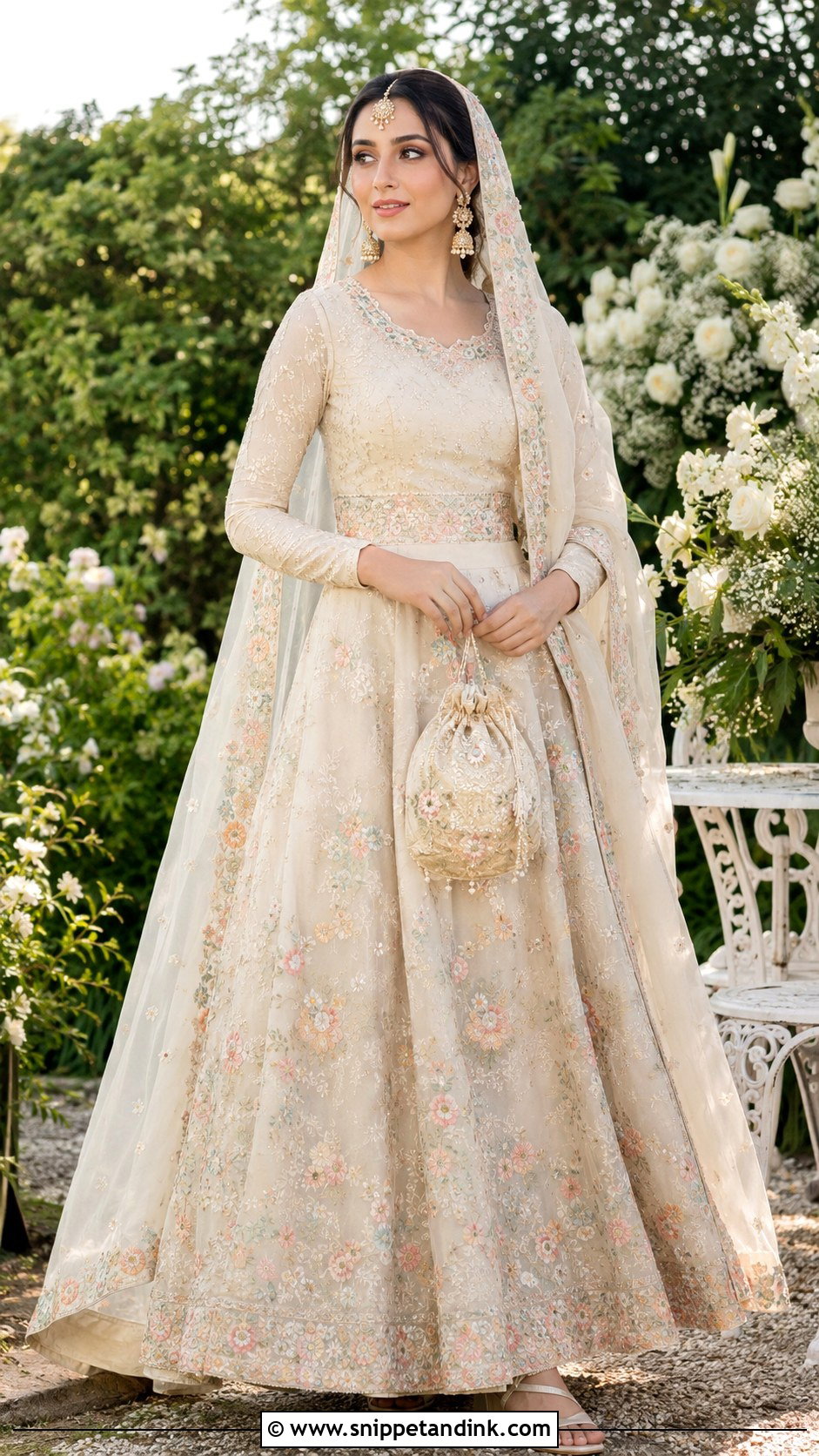
Organza with small floral embroidery has a crisp, airy feel that suits a daytime ceremony in a courtyard or garden. Keep the motifs small; big florals on stiff organza look like upholstery. Repeat the pattern on the blouse cuffs and neckline so the outfit reads as one. A plain organza dupatta with only a floral border stops it going overboard. If you want real flowers in a low bun, I’d use sturdy blooms like jasmine buds or small roses, since delicate petals wilt within hours in warm weather.
15. Velvet Nikah Bridal Dress
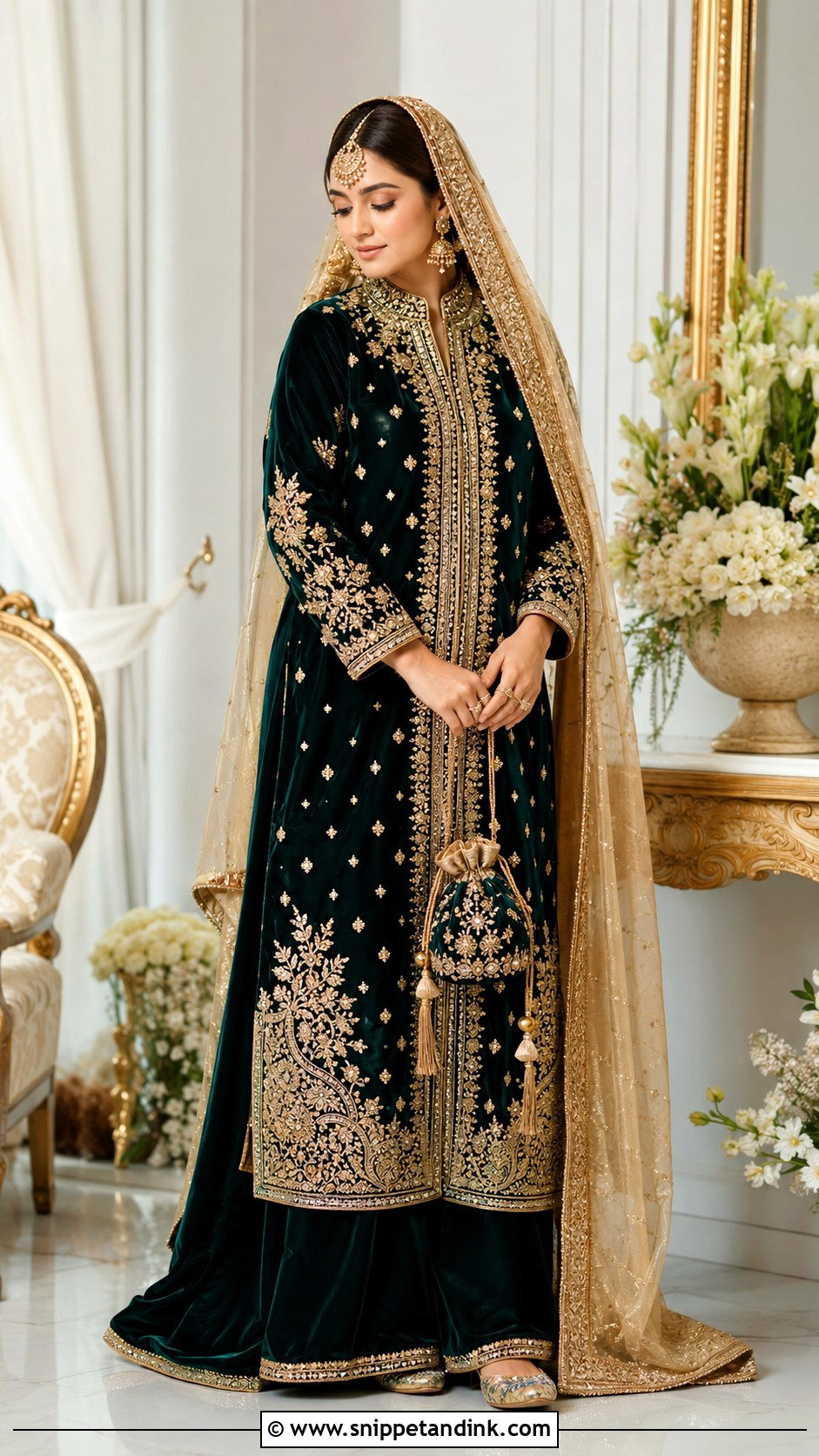
Velvet is the winter fabric, and it’s warm, so I’d only wear it in a cool season or a well air-conditioned hall. Pairing a velvet shirt with a lehenga or trousers in a lighter fabric keeps you from overheating and makes sitting easier. Emerald, burgundy and maroon carry gold embroidery best. Velvet crushes under pressure and keeps a mark where you’ve sat for long, so I’d ask for a slightly fuller cut through the hips. A gold tissue dupatta, jhumkas and khussa complete it.
16. Cape Sleeve Nikah Bridal Gown
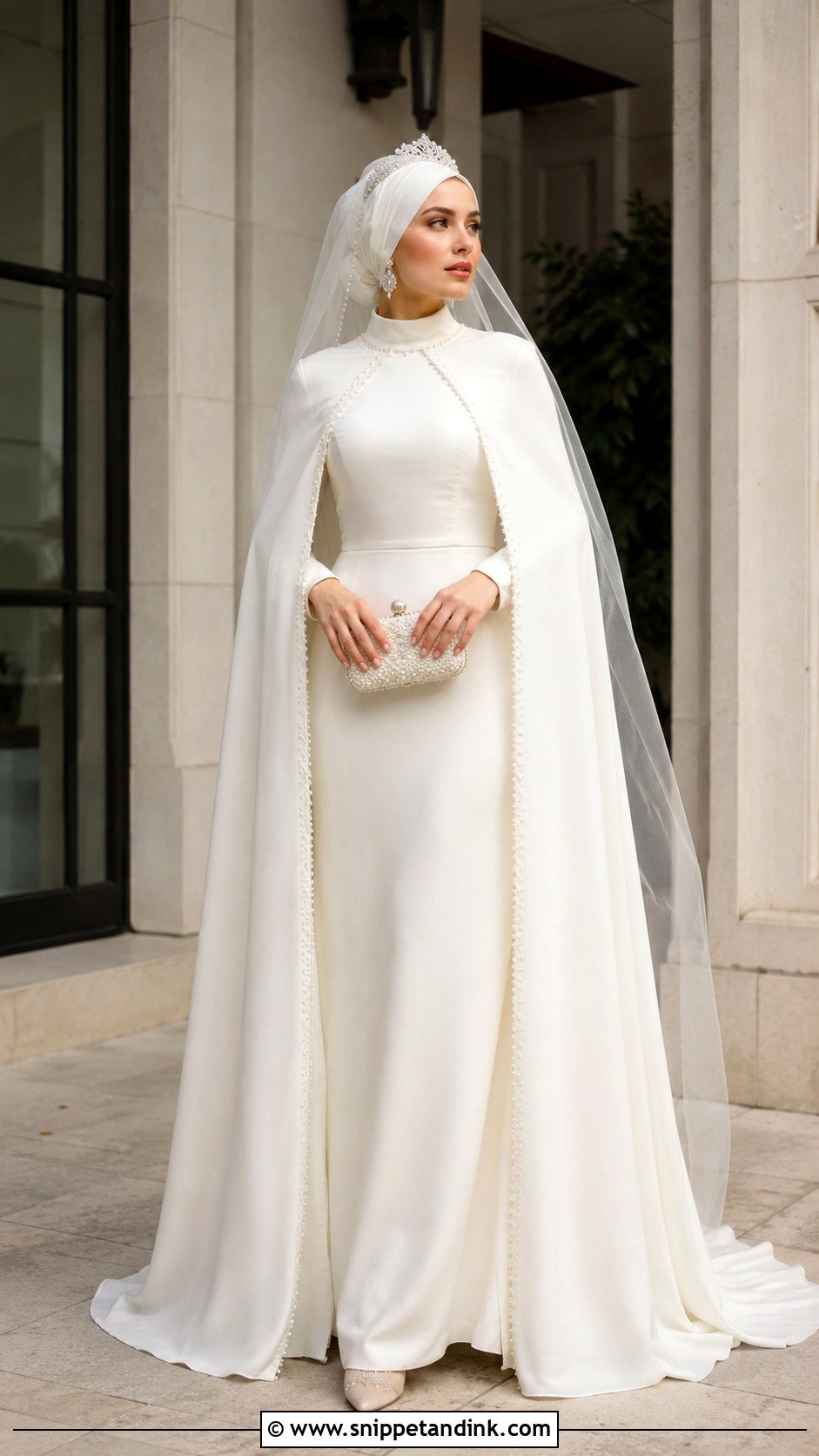
Cape sleeves give arm coverage without the weight of fitted sleeves, and they move nicely as you walk in. The layering is the tricky part. I place the veil or dupatta under the cape at the back rather than over it, otherwise you get three layers fighting at the shoulders. Fine pearl edging keeps the cape soft. Skip the necklace and keep hair in a low bun so the shoulder line stays clean. It photographs well from any angle, which matters for a ceremony where guests sit all around you.
17. High Neck Nikah Pishwas
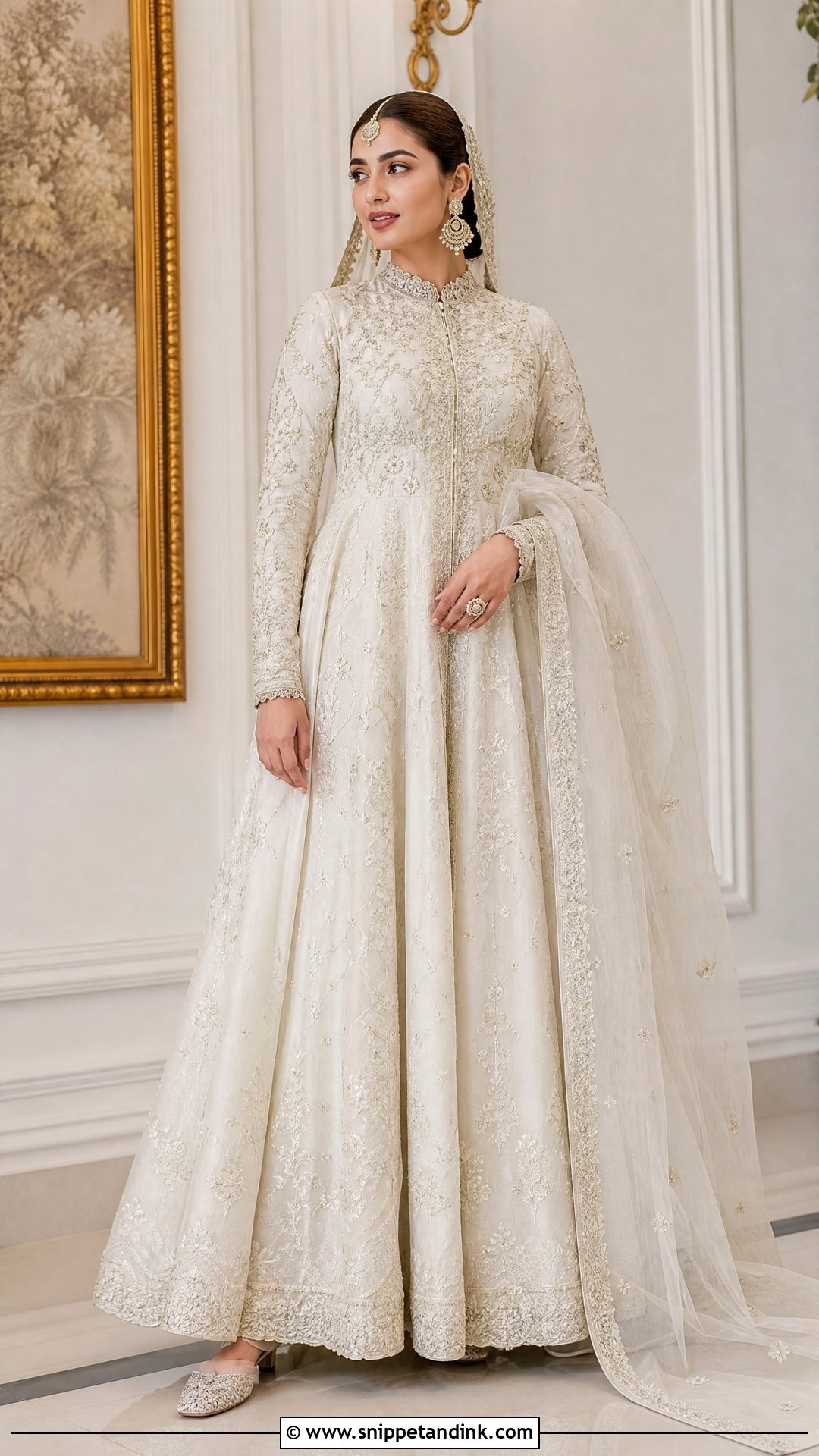
A high-neck pishwas solves the coverage question in one piece. With embroidery at the neck, a necklace only competes, so I’d swap it for statement earrings and a small tikka. The skirt needs a generous flare to move; ask for extra panels if you’re tall. An organza dupatta over the head and swept across one arm stays put better than one draped loosely over both shoulders. Low block heels or embellished flats are kinder on a long day. A centre-parted bun keeps it neat.
18. Bridal Jacket Nikah Lehenga
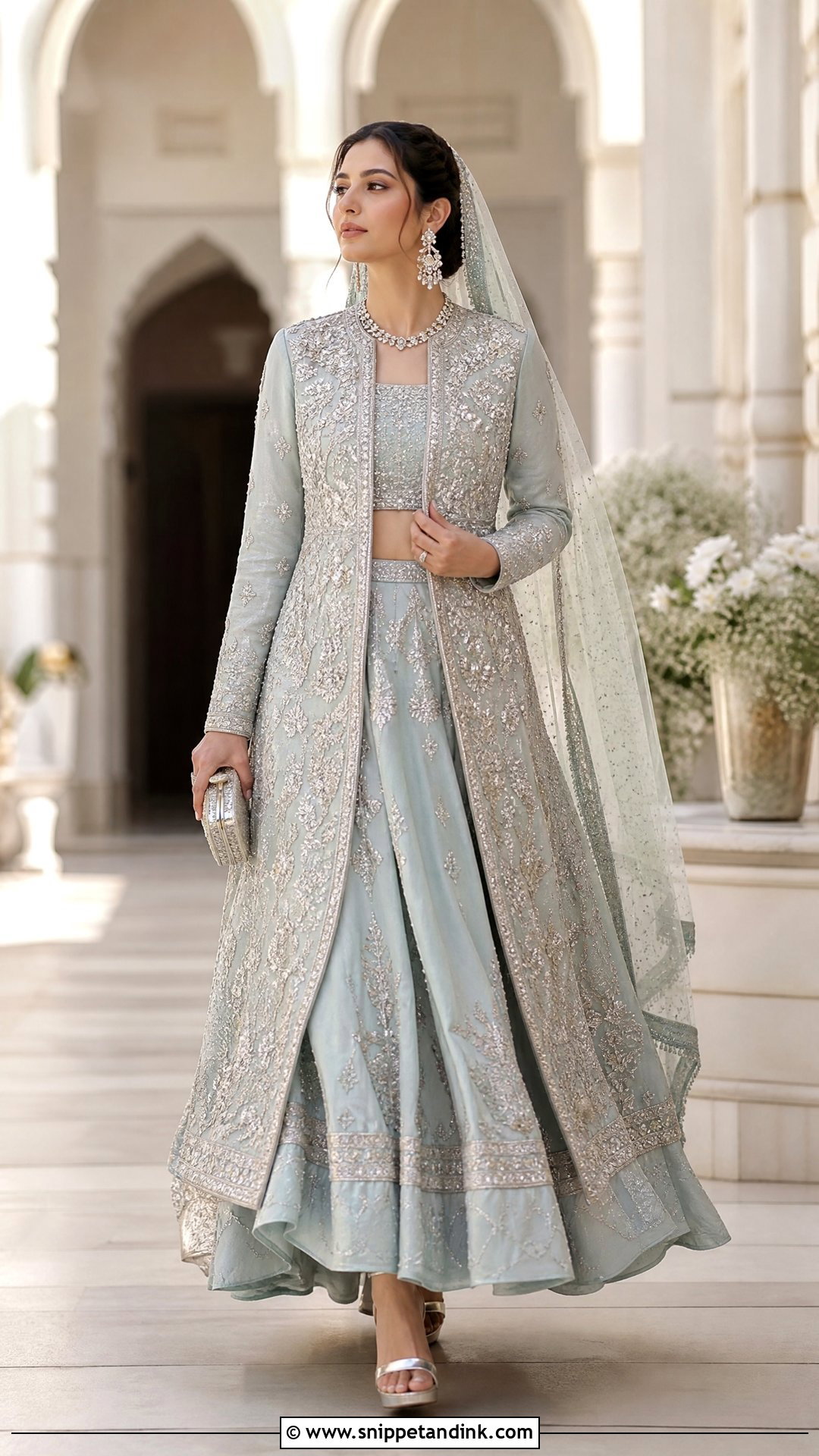
A long bridal jacket over a lehenga adds coverage you can take off for the reception, which is why I like it for brides with a long day. The jacket should close at the top and open below the waist so the skirt shows. A sleeveless inner blouse is fine underneath since the jacket covers the arms. Ivory with gold looks classic; pale blue or blush give soft color. Skip the heavy necklace if the jacket collar is ornate. Each piece can be worn again on its own later.
19. Modest Bridal Abaya Nikah Dress
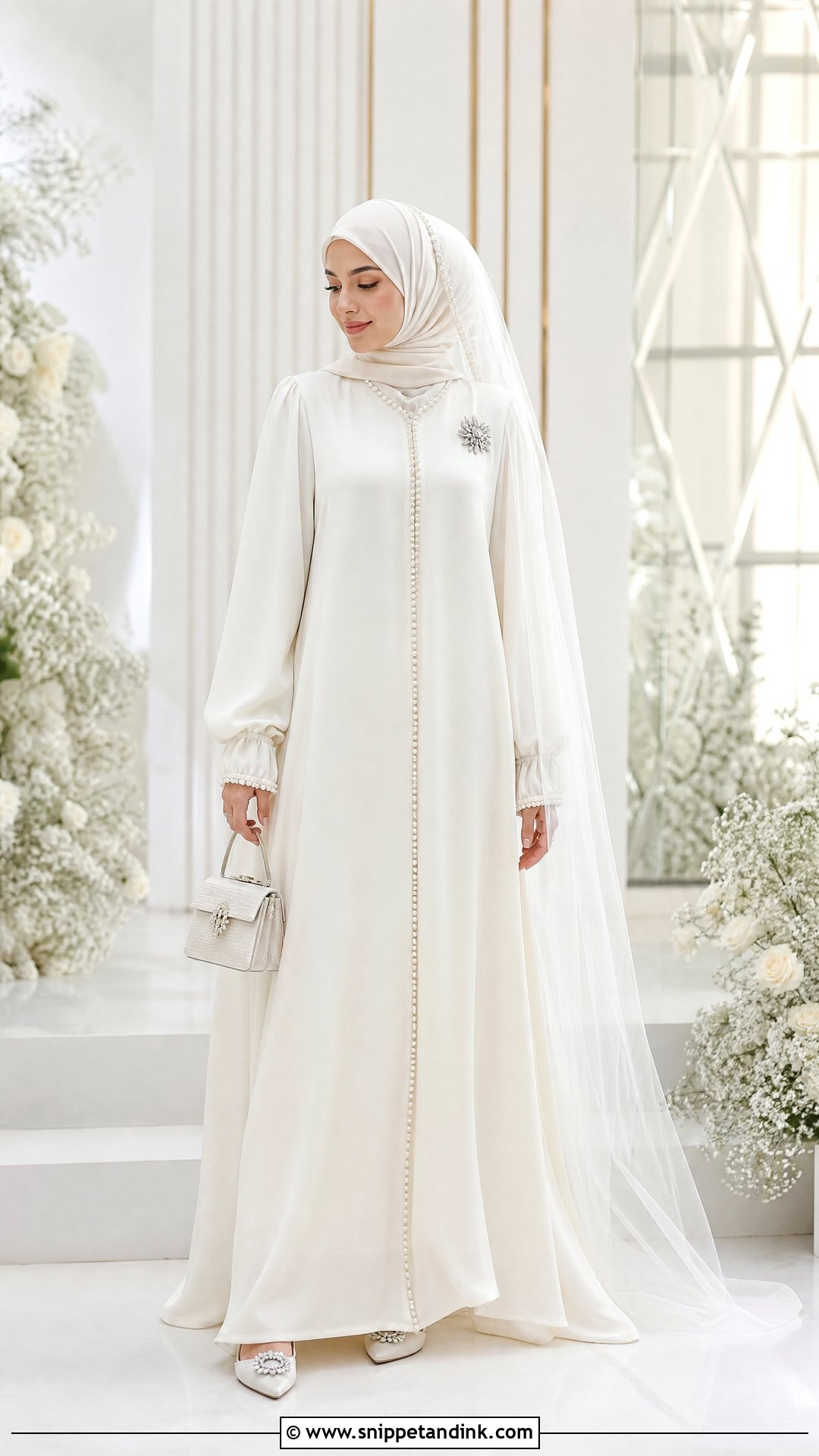
A bridal abaya gives the most generous coverage with the simplest shape. Crepe drapes and doesn’t cling; satin looks richer but shows creases, and chiffon needs a lining. I’d keep the decoration to pearl trims and tonal embroidery at the cuffs. Have the hijab and veil pinned under the headpiece by someone practiced, since a veil fastened only to the hijab fabric slips back. Get the hem professionally adjusted with the exact flats you’ll wear. A neat hijab and luminous skin are the finishing details.
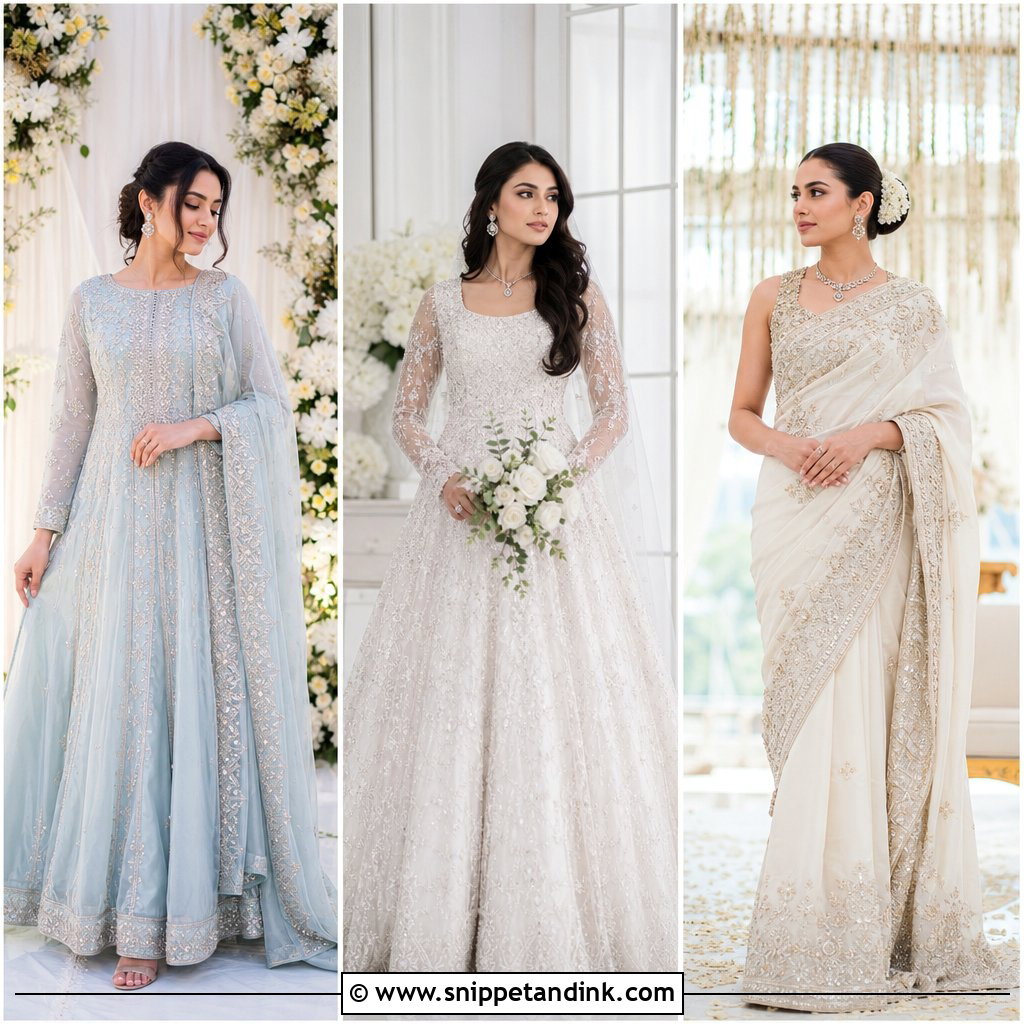
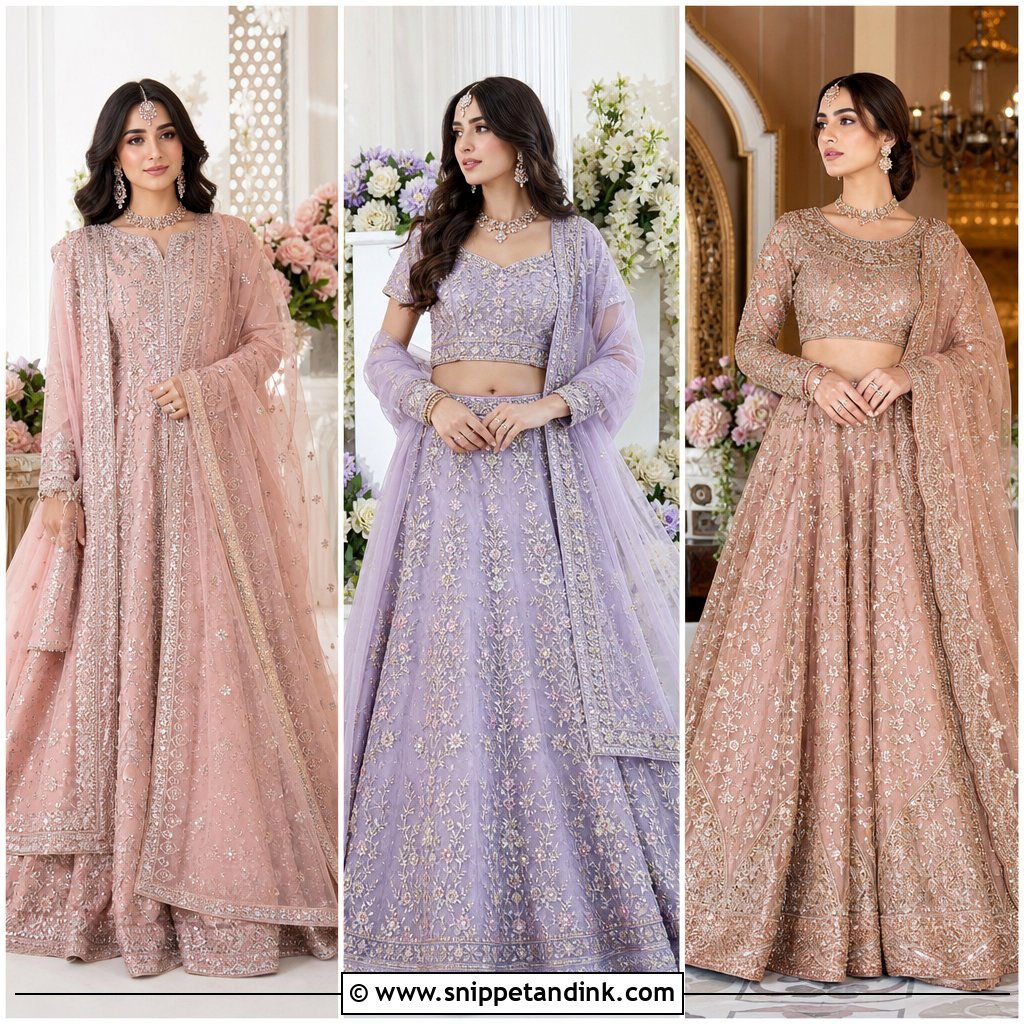
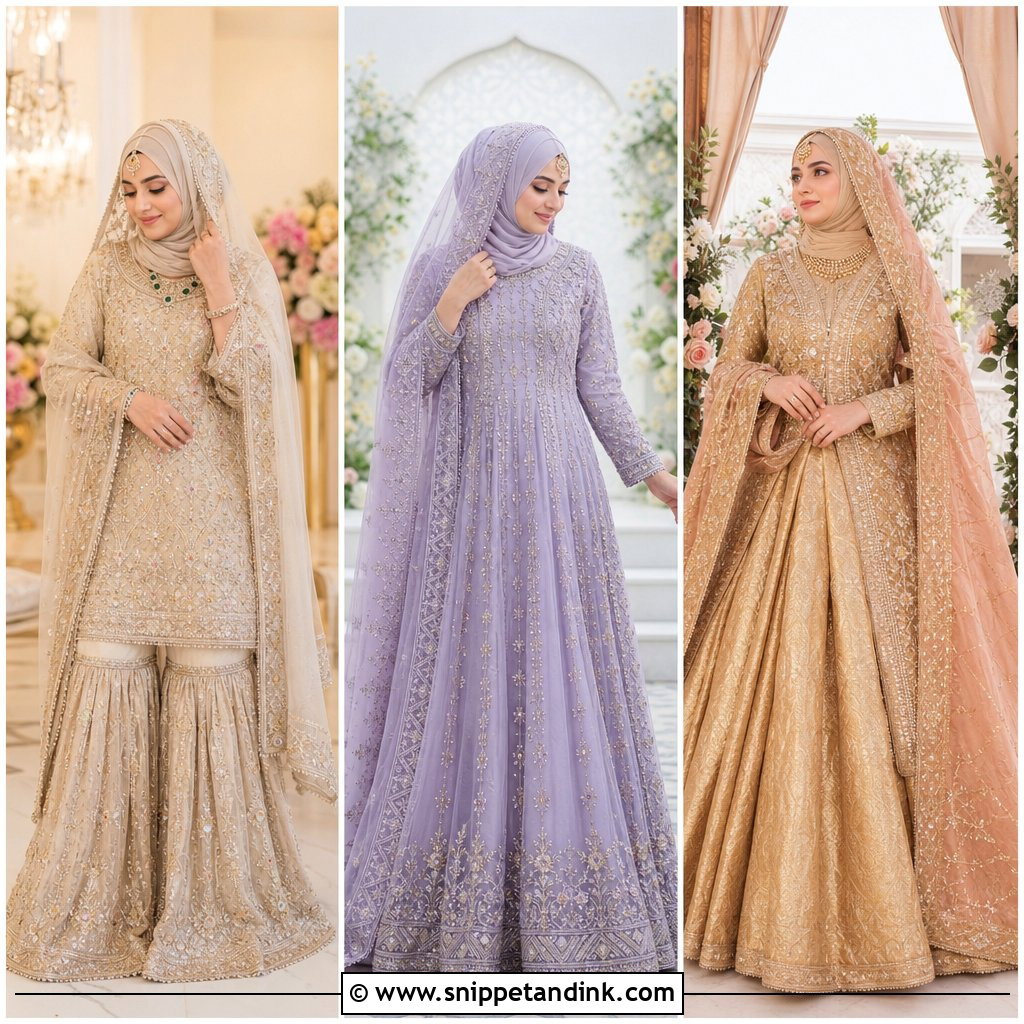
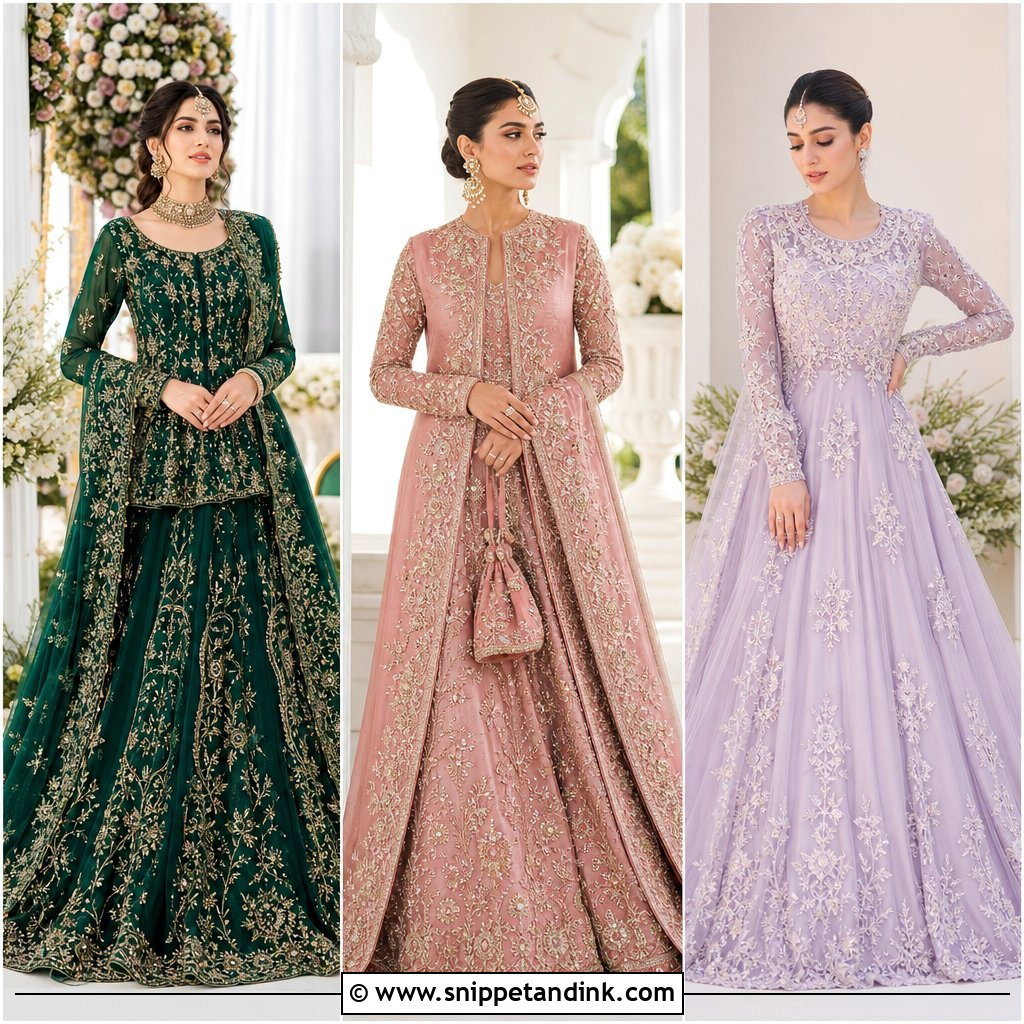
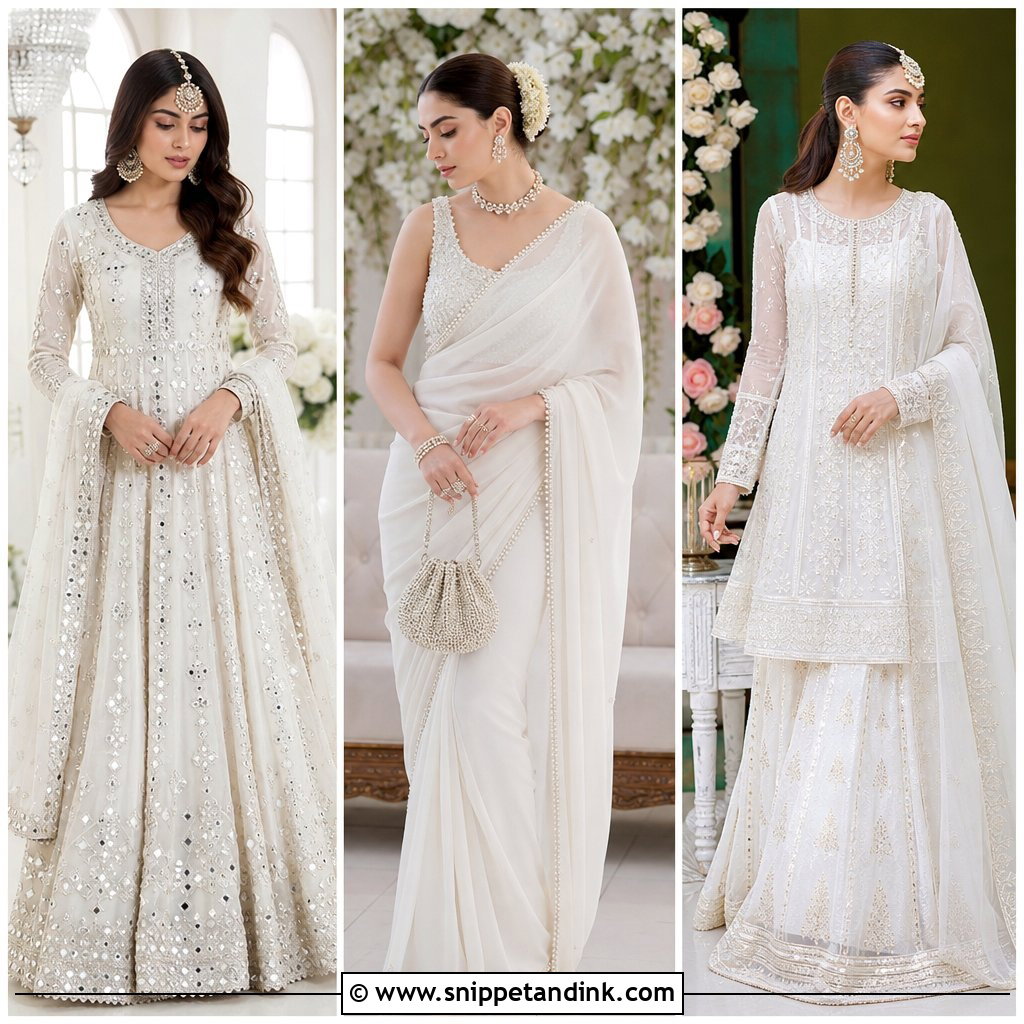
20. Red Nikah Bridal Lehenga
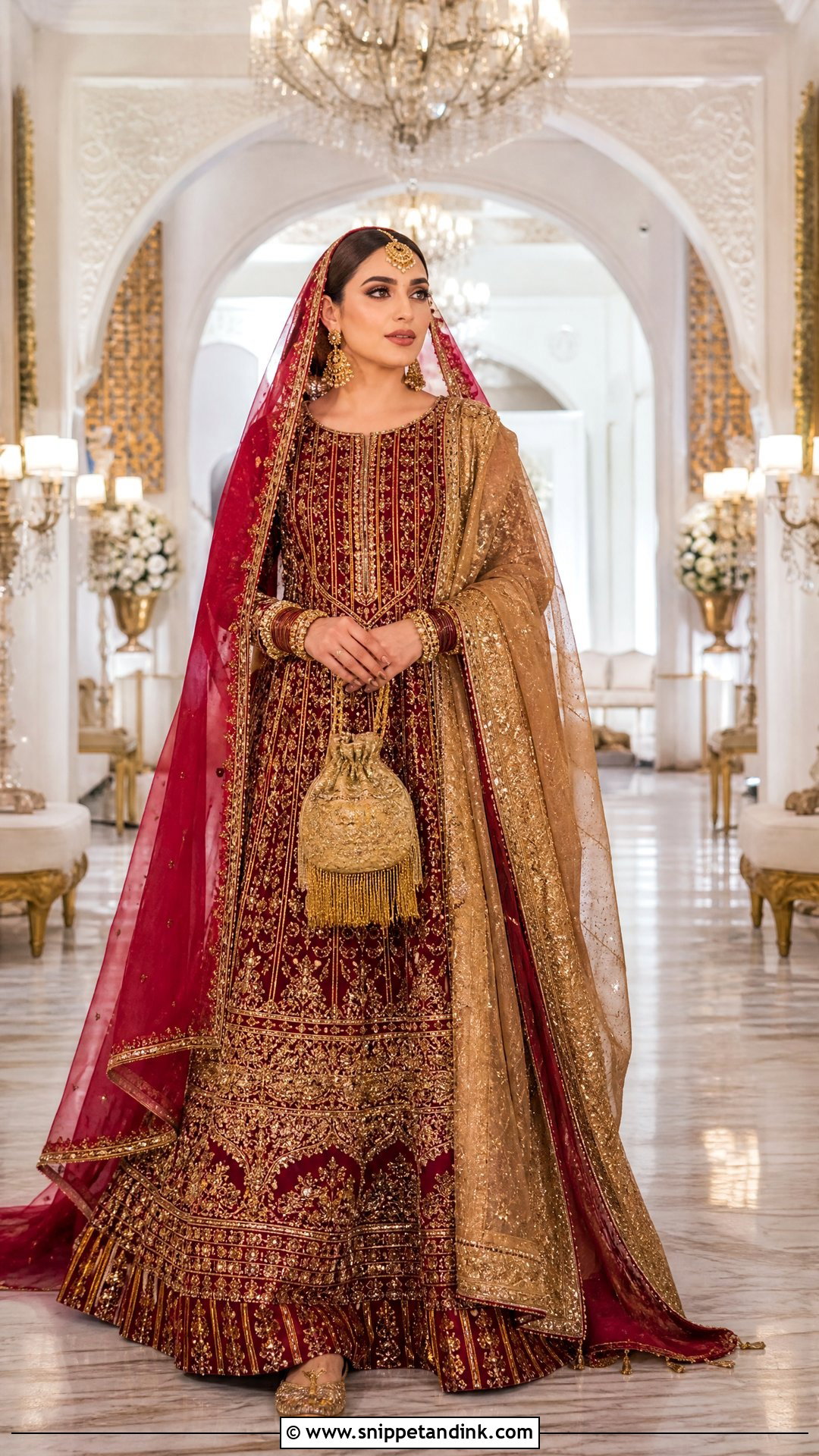
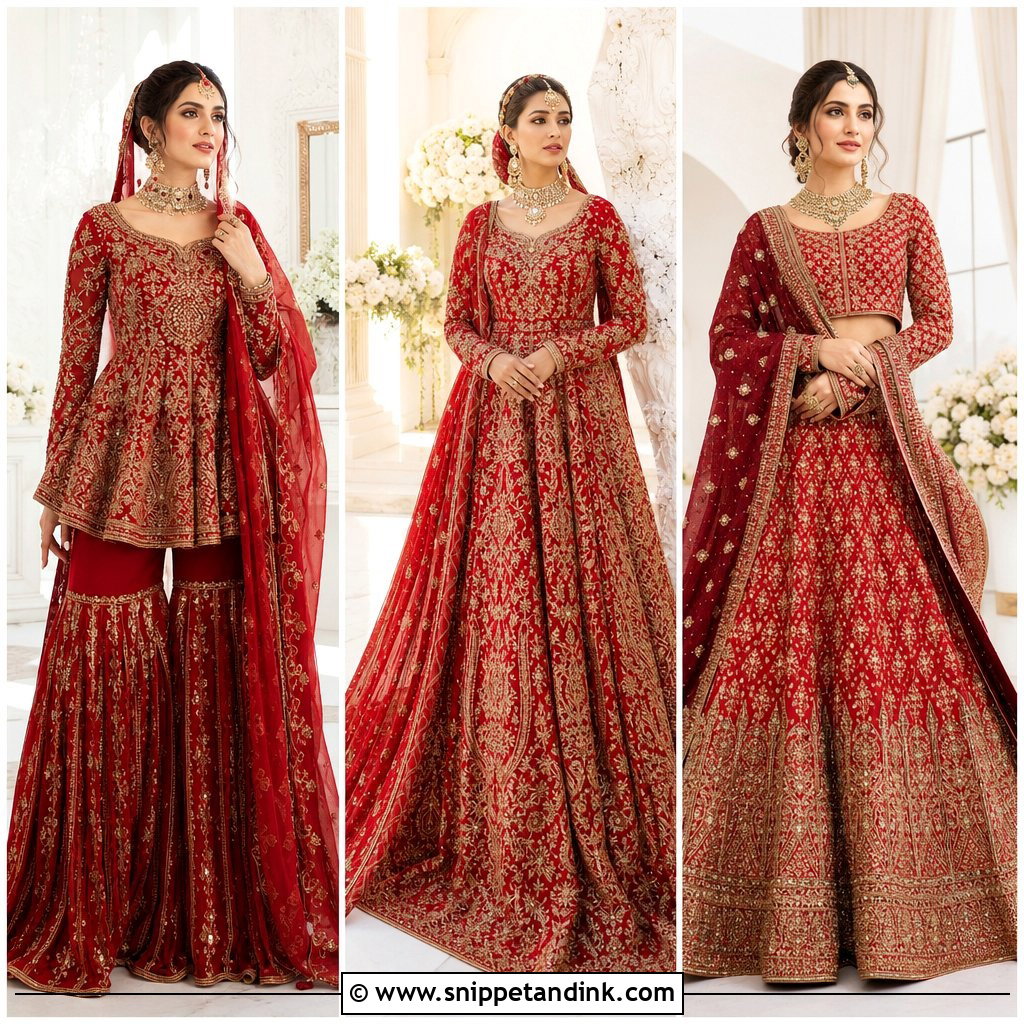
Red is the traditional South Asian bridal color, and the shade should match the setting: deeper ruby for evening and winter, brighter crimson for daylight. Pair the skirt with a full-sleeved blouse or a longer kameez featuring antique gold zardozi work. A double-dupatta setup works well: one over the head, a lighter gold one draped across the shoulder. Zardozi is heavy, so I’d do a full trial with jewelry and both dupattas on to check the weight on your shoulders. Defined liner and a neutral lip keep the red in charge.
Embroidered Bridal Wear Needs a Long Runway
Handwork like zardozi, chikankari and dense pearl beading is done by skilled embroiderers stitch by stitch, and good workshops book up ahead of wedding season. Lead times vary by maker, but heavily embroidered bridal pieces commonly take several months. I’d place the order as early as you can, then leave a few weeks at the end for alterations, because the fit usually needs adjusting once the embroidery adds weight.
Storing It Afterward
Metallic zari threads tarnish when they meet damp and the chemicals in some plastics. I wrap embroidered pieces in soft cotton or muslin, store them flat in a dry cupboard and refold them along different lines every few months so the creases don’t split the fabric. Keep perfume and deodorant away from the embroidery; spray before you dress, not after. Velvet and tissue should never be pressed with a hot iron, so if something needs refreshing, take it to a cleaner who handles bridal wear.
Wearing It Through the Ceremony With Ease
Your Nikah outfit should feel bridal and still let you sit, sign and greet family without fuss. Think about the venue, the season, how long you’ll be seated and how much movement the day involves. At the final fitting, wear everything at once: dupatta, shoes, jewelry and underlayers. That’s when slipping fabric, a heavy tikka or a hem that catches will show up, and there’s still time to fix them. Whatever color you land on, wearing it with ease is what people will remember.
You'll Like These Ideas:



Leave a Reply