
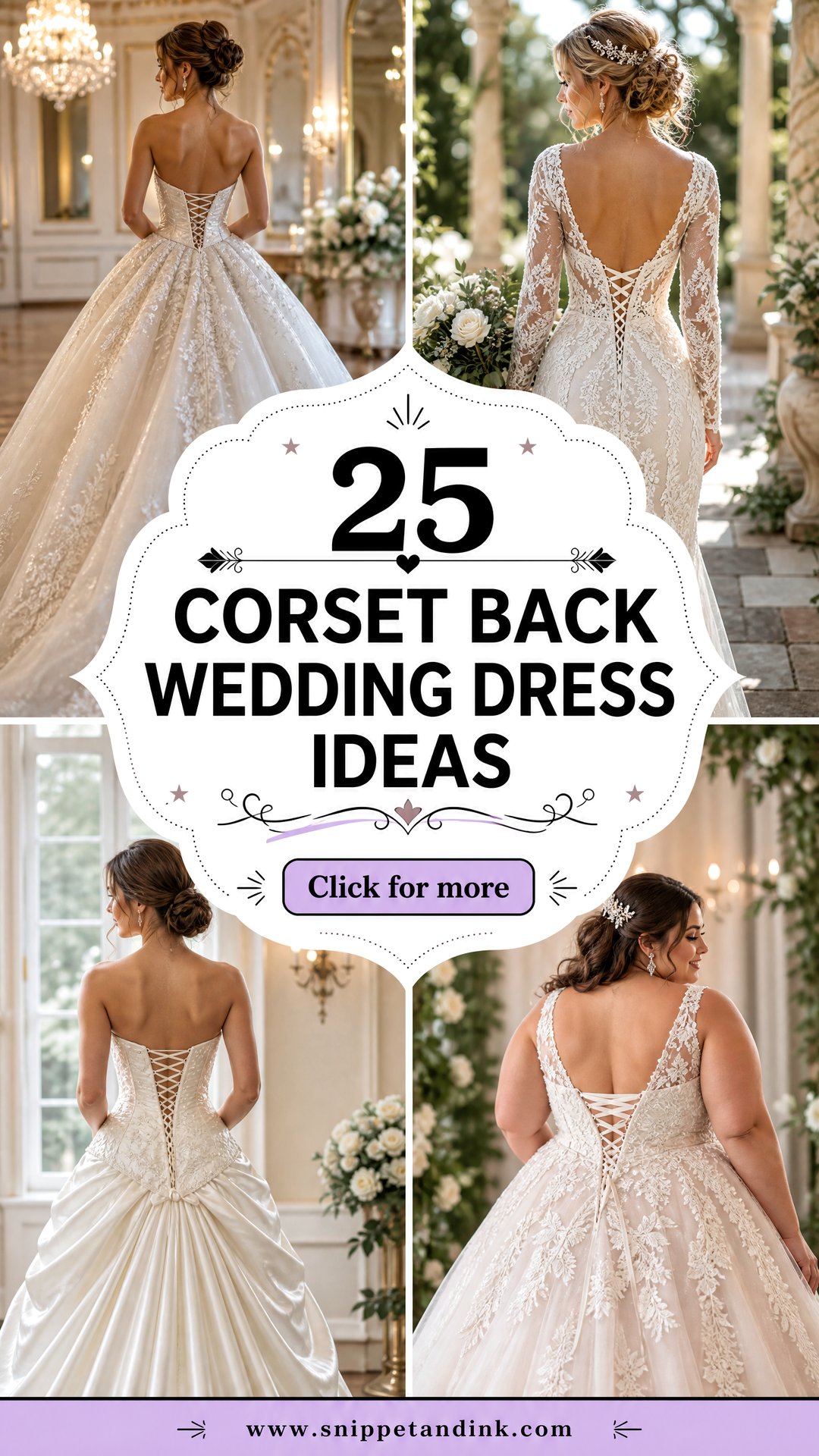
A laced back does two jobs at once. It shapes the waist, and it lets a gown be pulled in or eased out on the day, which a zip simply can’t do. I like it for that reason as much as for the view from the pews. It works on nearly every silhouette, from a soft A-line to a mermaid or a two-piece, and pairs naturally with visible corsetry, basque waists, layered lace and sculpted satin. Below are 25 versions, with the fit and comfort notes I give brides when they try each one.
Who Laces You In, and How Long Does It Take?
This is the question almost nobody asks at the boutique, and it causes more morning stress than any other part of the dress. A laced back can’t be done up by the bride. Someone has to thread or tighten the cord, and the first time is slow.
I teach one person at the final fitting, usually a mother, sister or maid of honour. The method I show is simple: stand tall with your shoulders relaxed, have them work from the top down, pulling each crossing snug before moving on, then even out the gap at the end so the two edges run parallel. Tuck the tails inside the back of the skirt rather than tying a big visible bow, unless the bow is part of the design.
- Allow a good twenty minutes the first time; with practice it gets much quicker.
- Ask whether the cord is ribbon or round cord. Ribbon twists as it runs through the loops and needs flattening as you go.
- Check the modesty panel behind the lacing lies flat and doesn’t fold over.
- Put a spare length of matching cord in the emergency kit in case one frays.
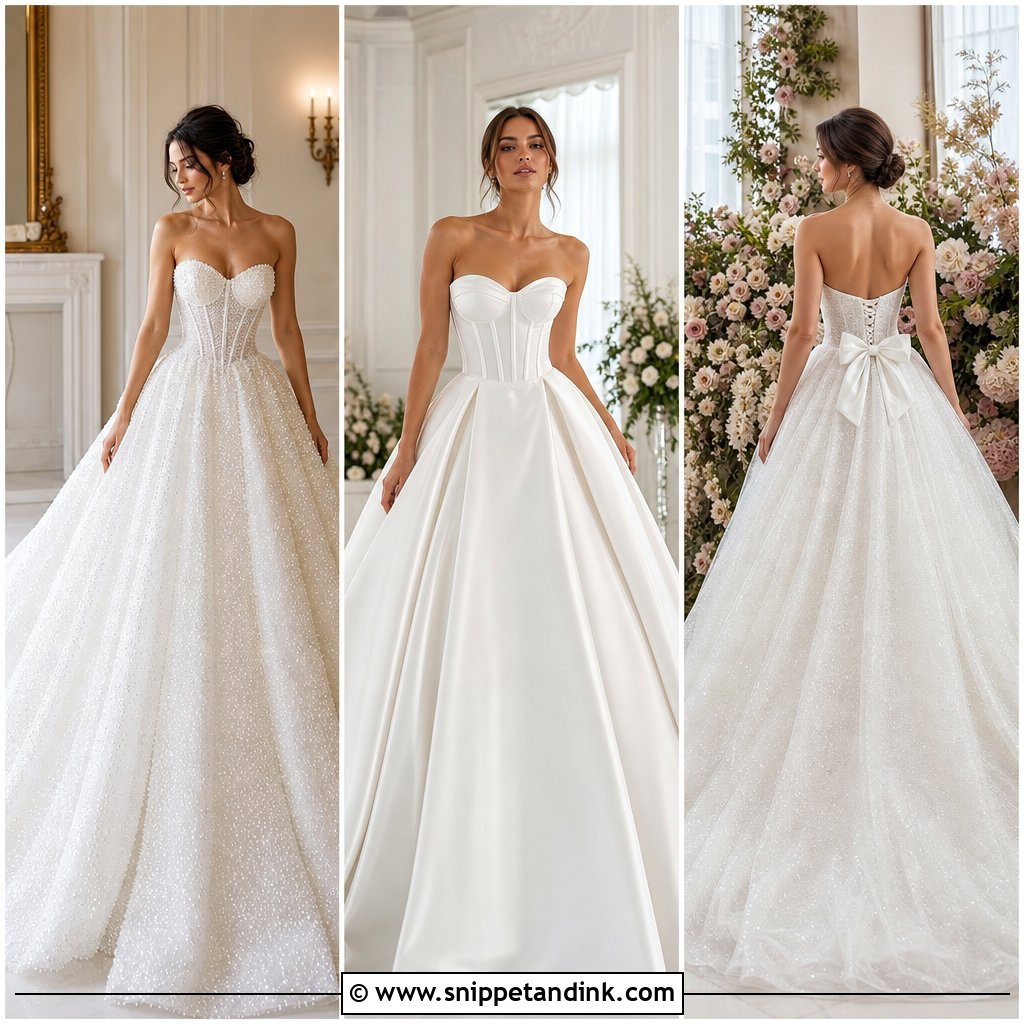
1. Corset Back Ball Gown Wedding Dress
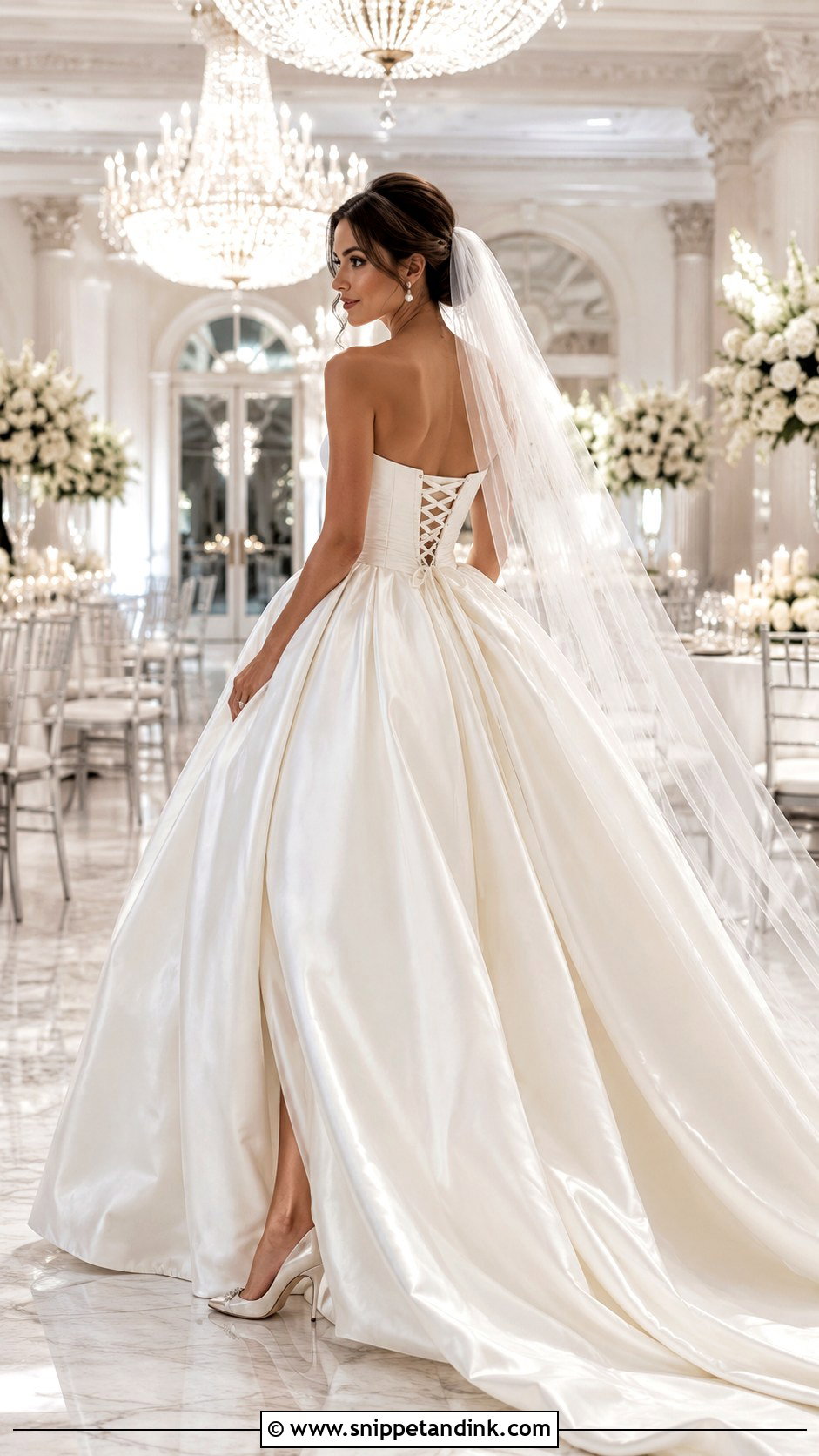
With a full skirt, a ball gown carries real weight, and that weight hangs from your waist. A laced back spreads the pull more evenly than a zip, which is why I find brides last longer in a corseted ball gown than a zipped one of the same size. Satin, mikado, organza and layered tulle all hold the shape. A plain strapless bodice with ribbon lacing keeps it clean; lace appliqué running down into the skirt makes it softer. It suits ballrooms and formal venues, and gives a timeless princess-inspired shape with proper structure underneath.
2. Corset Back A Line Wedding Dress
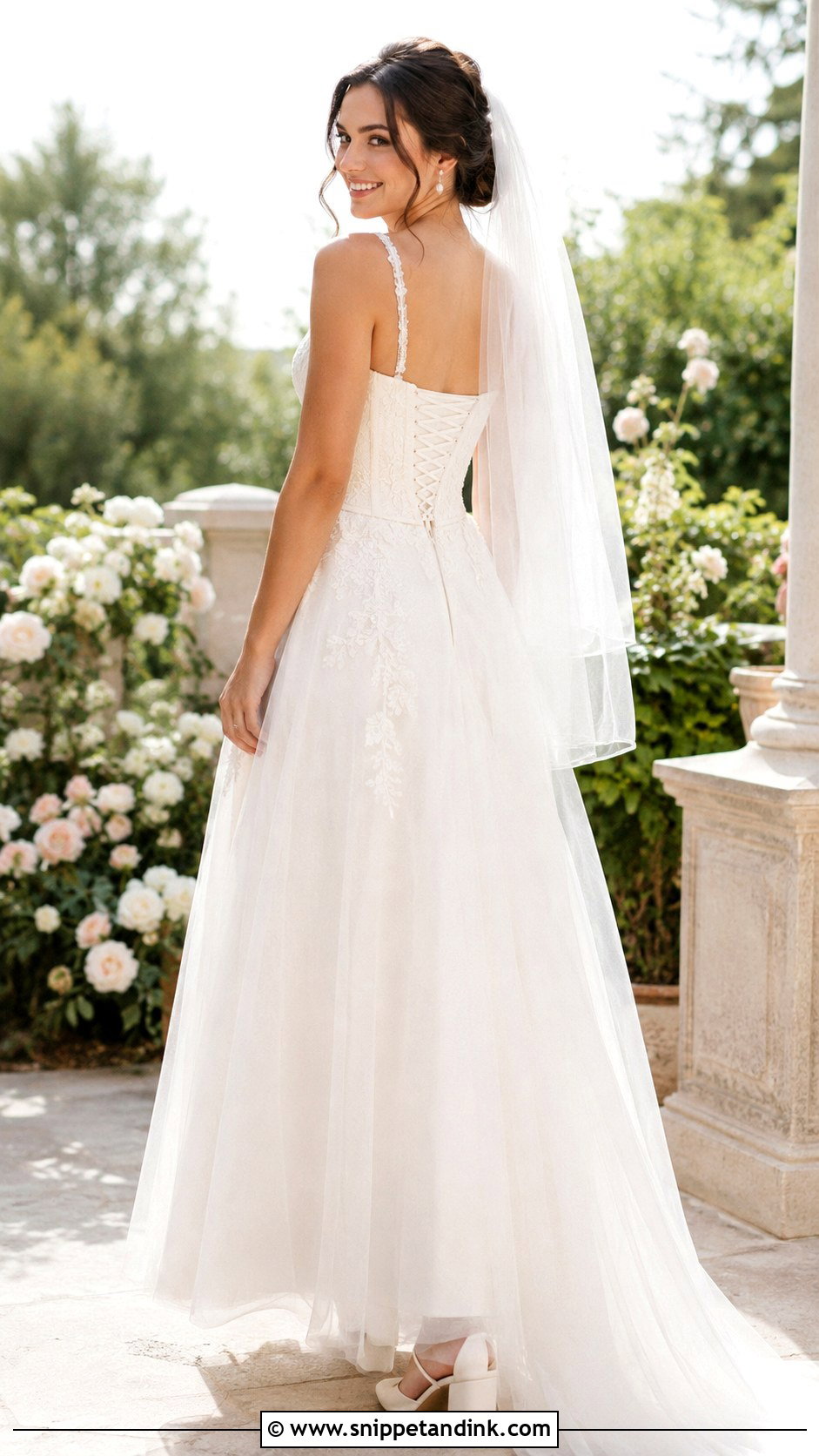
This is the shape I’d put most brides into first. The fitted bodice holds the waist and the skirt falls away from the hips without much weight, so you can stand through a long receiving line comfortably. The lacing also makes alterations simpler, since small changes in the waist can be absorbed by tightening rather than re-sewing a seam. Tulle reads soft, chiffon floats and satin looks tailored. Sweetheart, thin straps or off-the-shoulder sleeves all sit well on top.
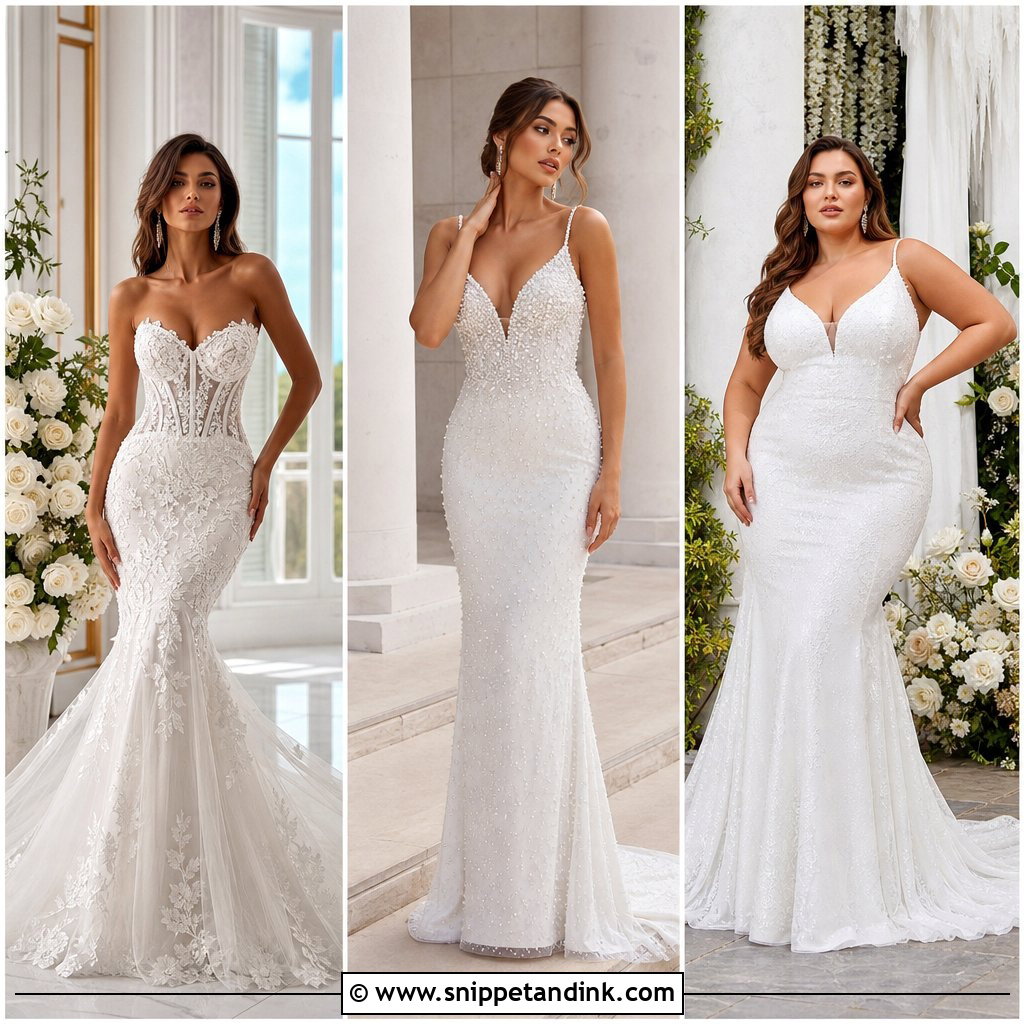
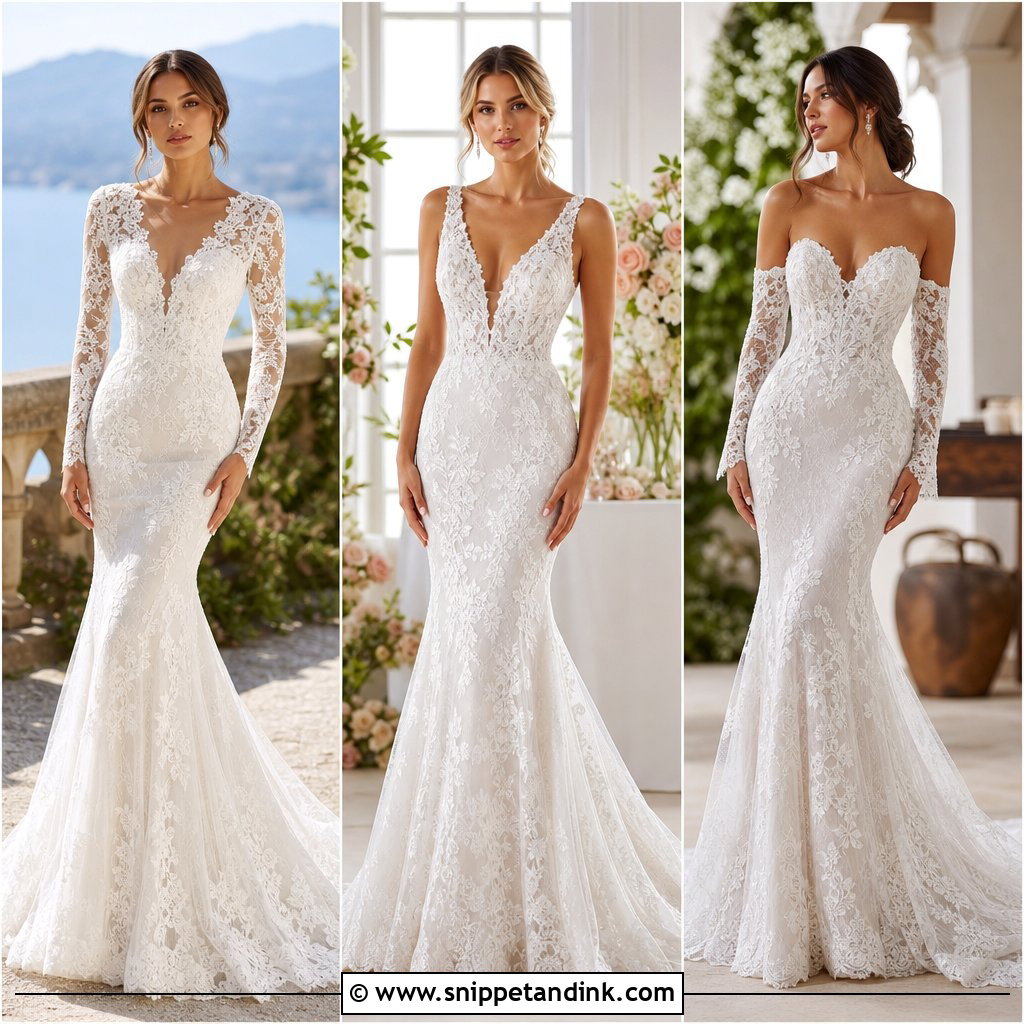
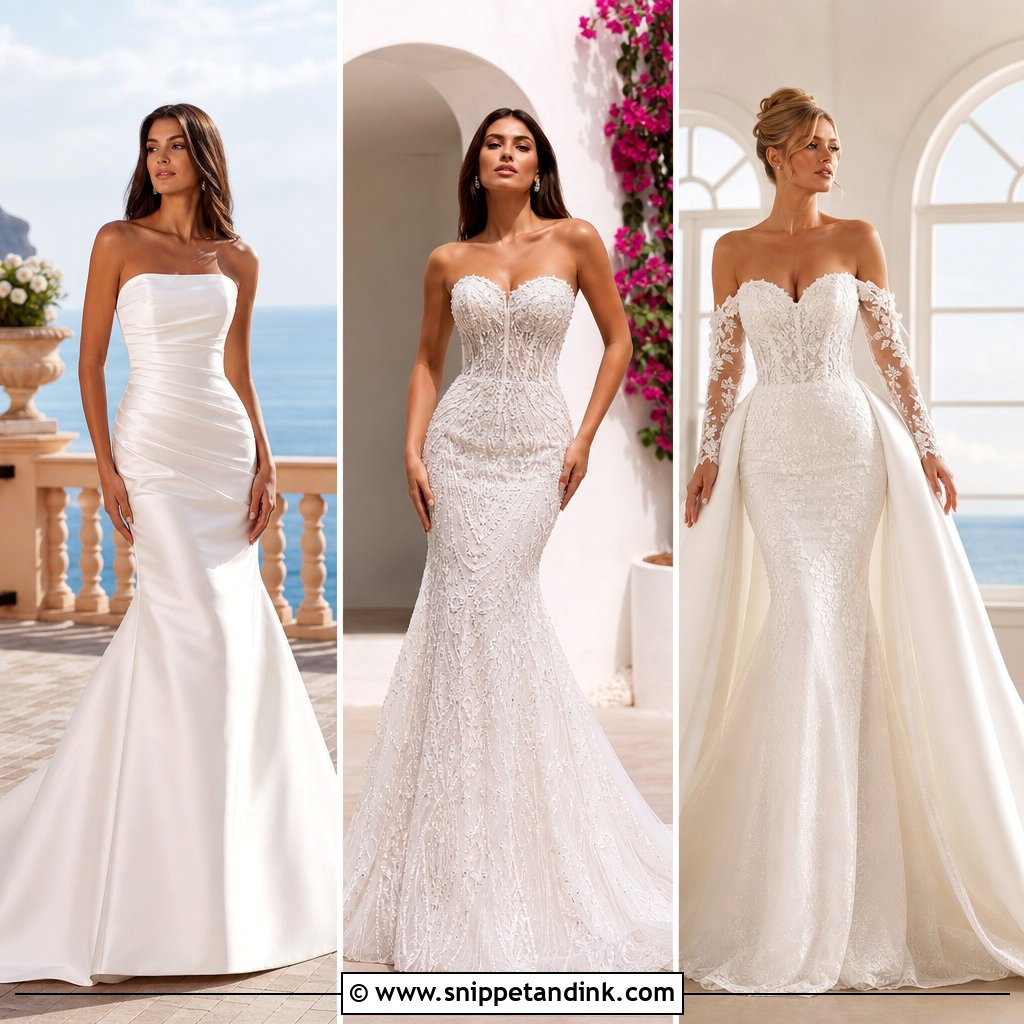
3. Corset Back Mermaid Wedding Dress
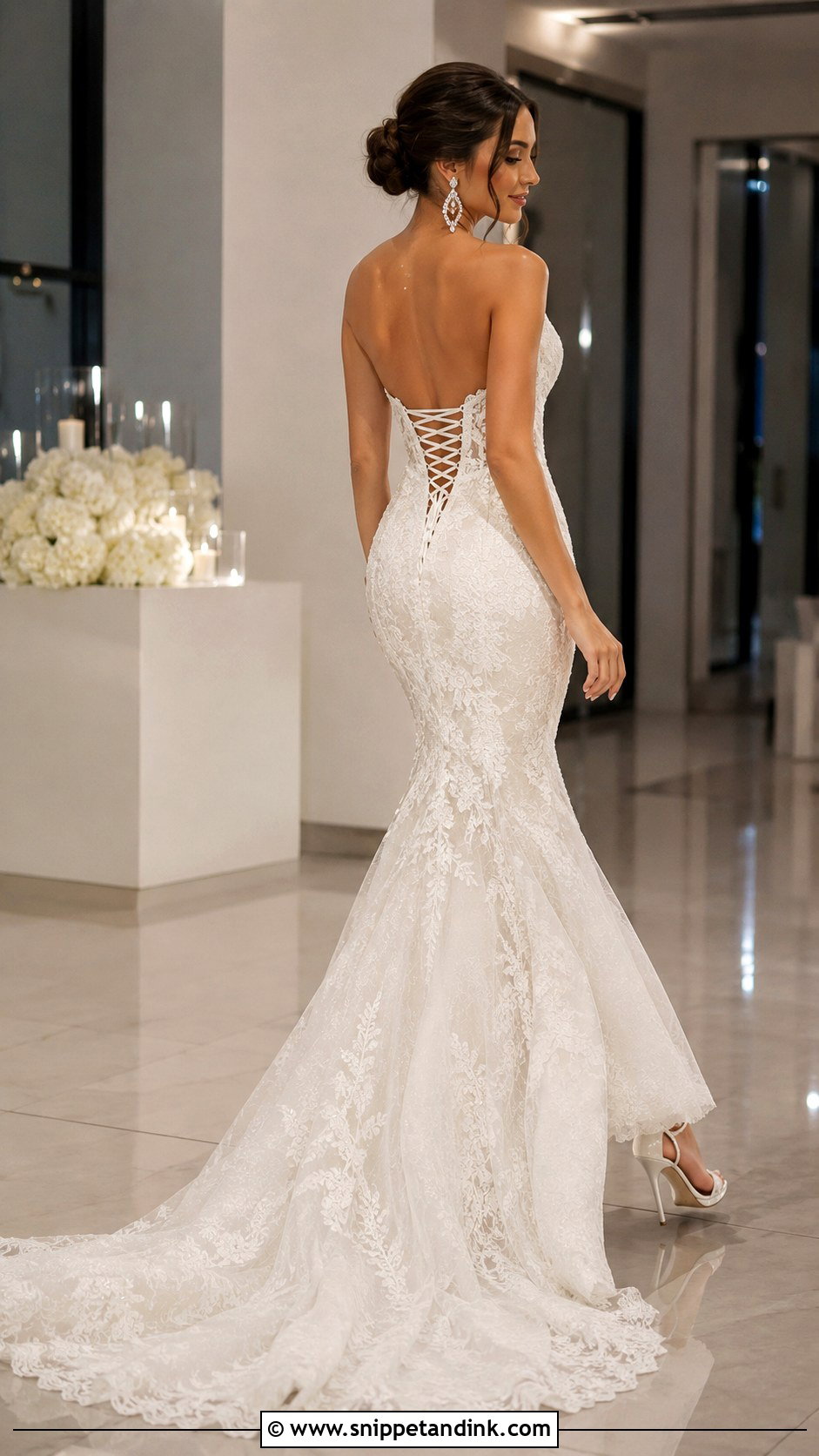
Mermaid gowns hug the body to the knee or just above it, then flare. That tight skirt is the thing to test, not the back. Walk across the fitting room, climb a step and sit on the edge of a chair; if the flare starts too high, you’ll shuffle all day. The laced back helps hold everything in place, especially over proper boning. Lace keeps it romantic and crepe or satin makes it sleek. A detachable overskirt for the ceremony is worth considering, and a simple veil keeps the shape the focus.
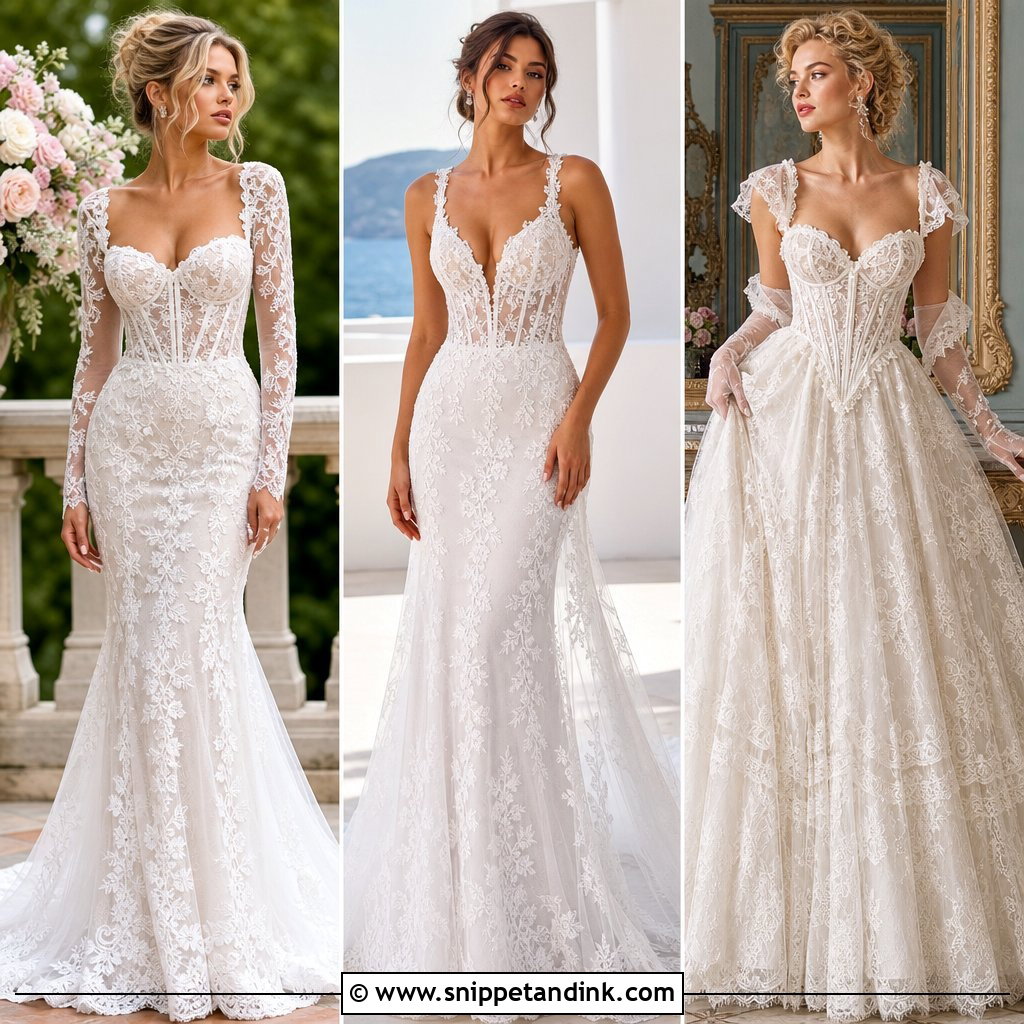
4. Corset Back Lace Wedding Dress
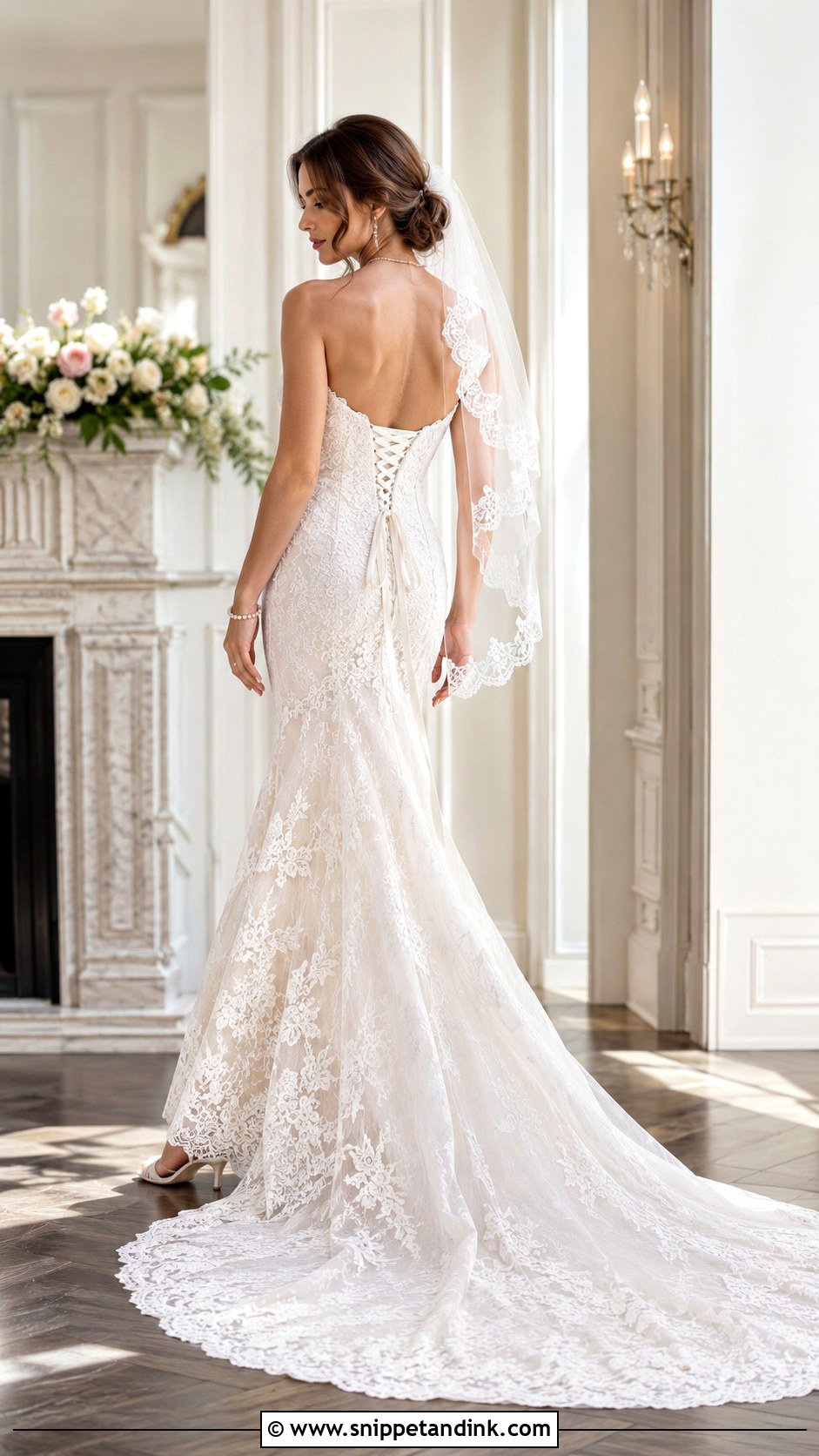
Lace softens the look of a laced back, and it also hides small irregularities in the lacing gap, which is a practical bonus. Allover lace feels traditional; appliqué placed along the bodice, waist and train reads more modern. I check one thing on lace corsets every time: where the lace meets the loops. If the scallops are cut cleanly around them, the back looks finished; if the loops sit on top of busy lace, it can look messy. A nude or ivory lining shows the pattern, and illusion straps or long sleeves add more detail.
5. Corset Back Satin Wedding Dress
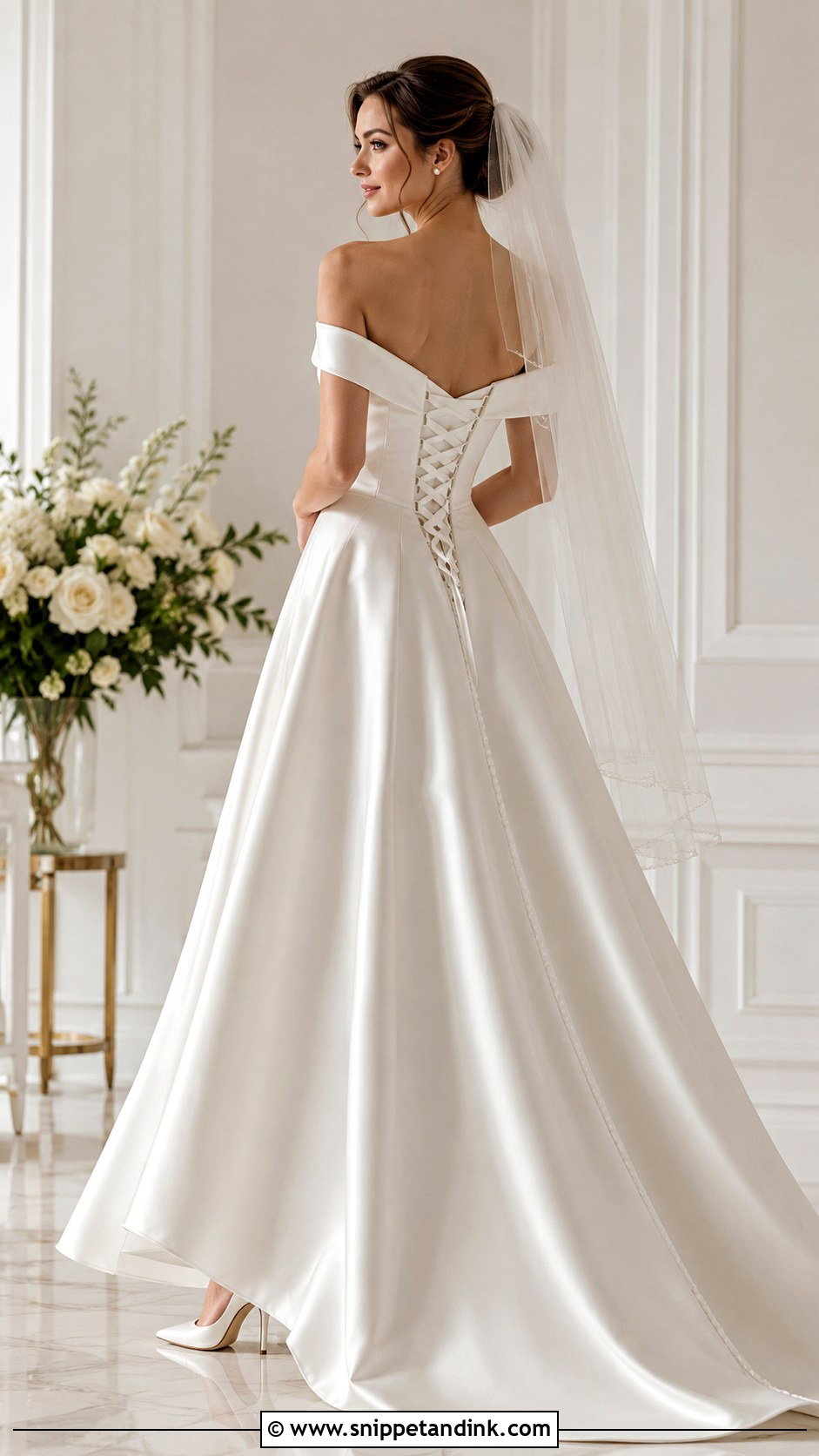
Satin shows construction more clearly than any other fabric. Every seam, every ripple where the lacing pulls unevenly, every place the bodice is slightly too tight will show. So good tailoring isn’t optional here; it’s the whole point. Done right, a satin corset back is clean and quietly dramatic. A ball gown in satin looks regal, an A-line looks refined, and a basque waist or folded neckline adds a modern note. Pearl earrings, a plain veil and simple heels are all it needs.
6. Corset Back Tulle Wedding Dress
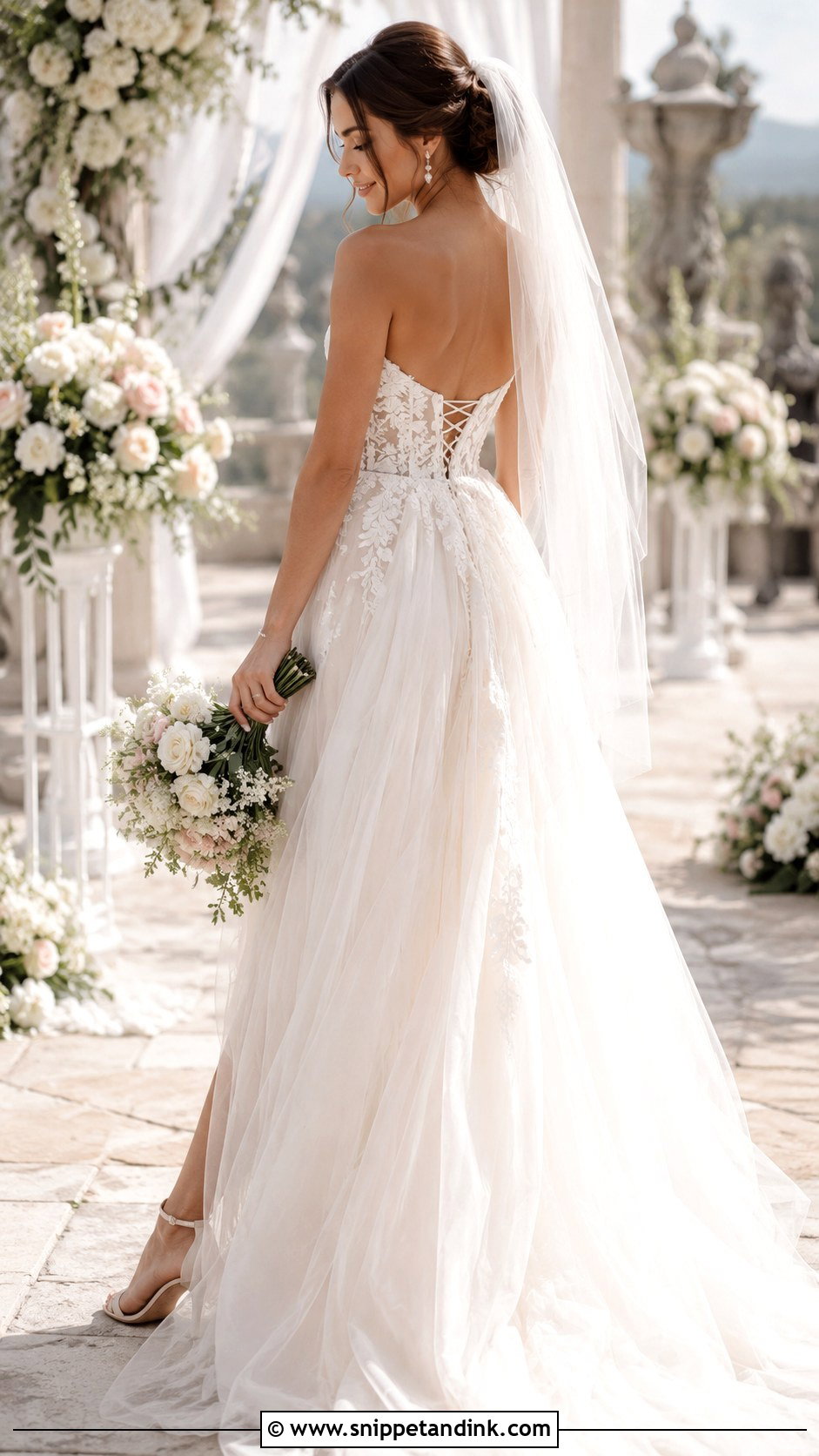
Tulle over a corset gives you the most contrast between structure and softness. The skirt can be full or fall lightly in an A-line. My concern with tulle bodices is the lining: a scratchy net against the skin under a tight corset becomes uncomfortable after a few hours, so I always ask about a soft lining layer. Floral appliqué, tiny pearls or scattered sparkle add depth. Outdoor ceremonies and garden venues suit it.
7. Corset Back Off Shoulder Wedding Dress
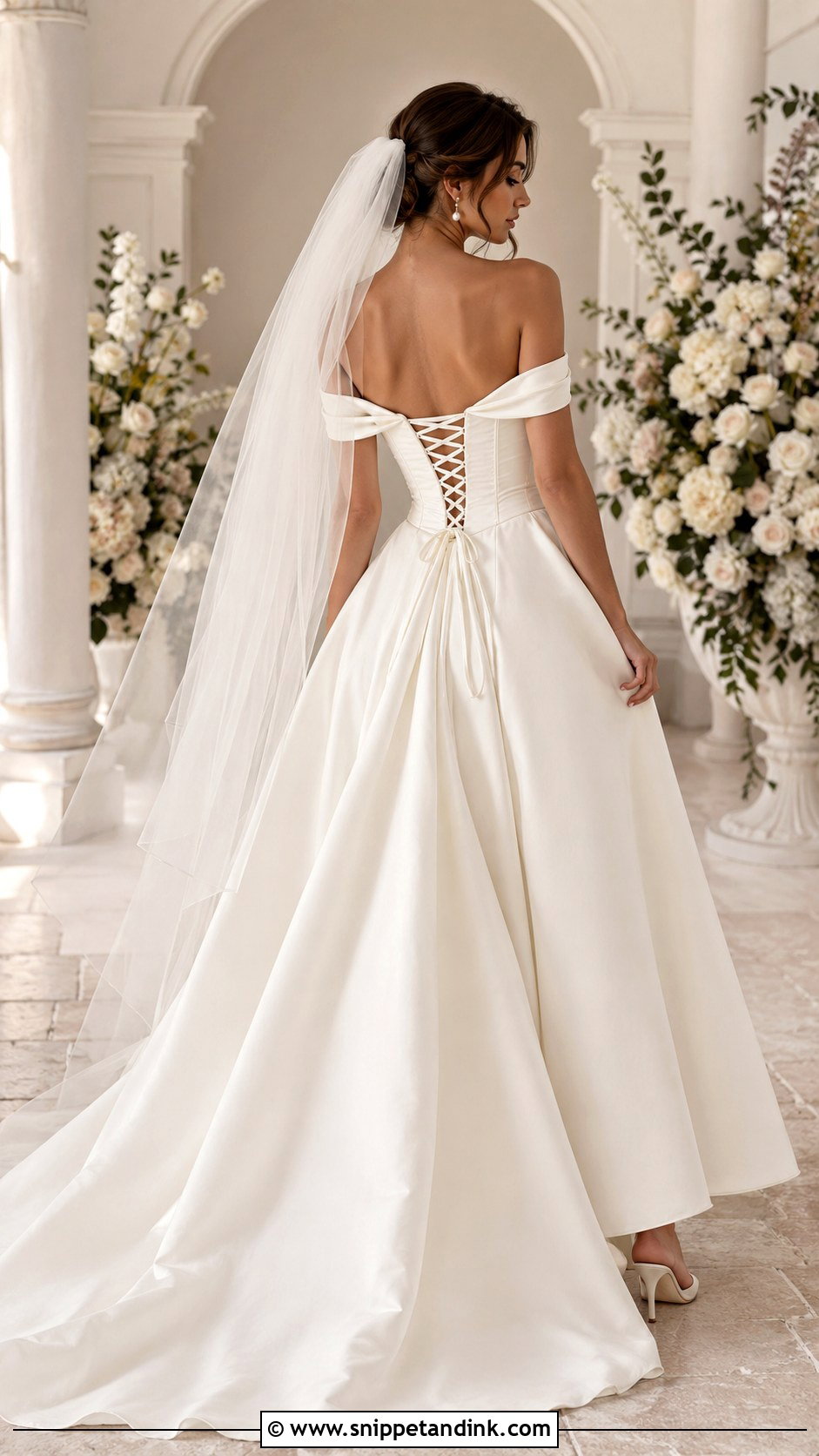
Off-shoulder sleeves put the collarbones on show while the laced back keeps the bodice snug enough to hold them in place. That snugness matters. If the bodice is loose, the sleeves ride up toward the shoulders. Lace or draped tulle sleeves feel romantic; satin bands look sculpted. The one test I insist on is reaching forward and hugging, since off-shoulder sleeves pin the upper arms more than brides expect. A low bun or soft waves keep both the neckline and the back visible.
8. Corset Back Strapless Wedding Dress
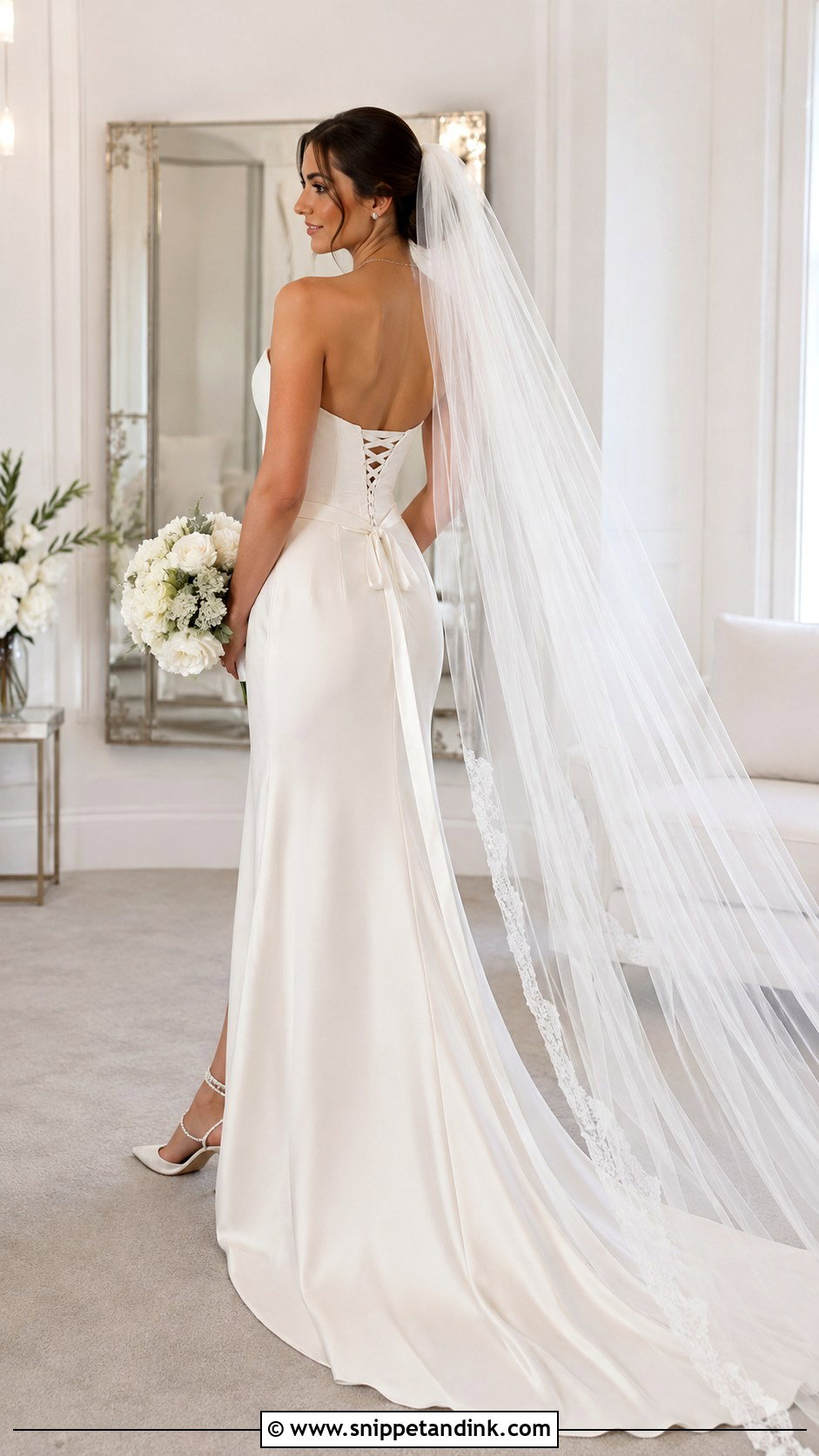
On a strapless gown the bodice carries everything, which is exactly where a laced back earns its keep. It can be pulled tight enough through the bust and ribs to stay put without hitching. Sweetheart, scoop, straight-across and cat-eye necklines all work. The classic version pairs satin or mikado with a full skirt, while lace or tulle feels softer. Without sleeves in the way, you have room for a statement veil, a fine necklace or gloves.
9. Corset Back Long Sleeve Wedding Dress
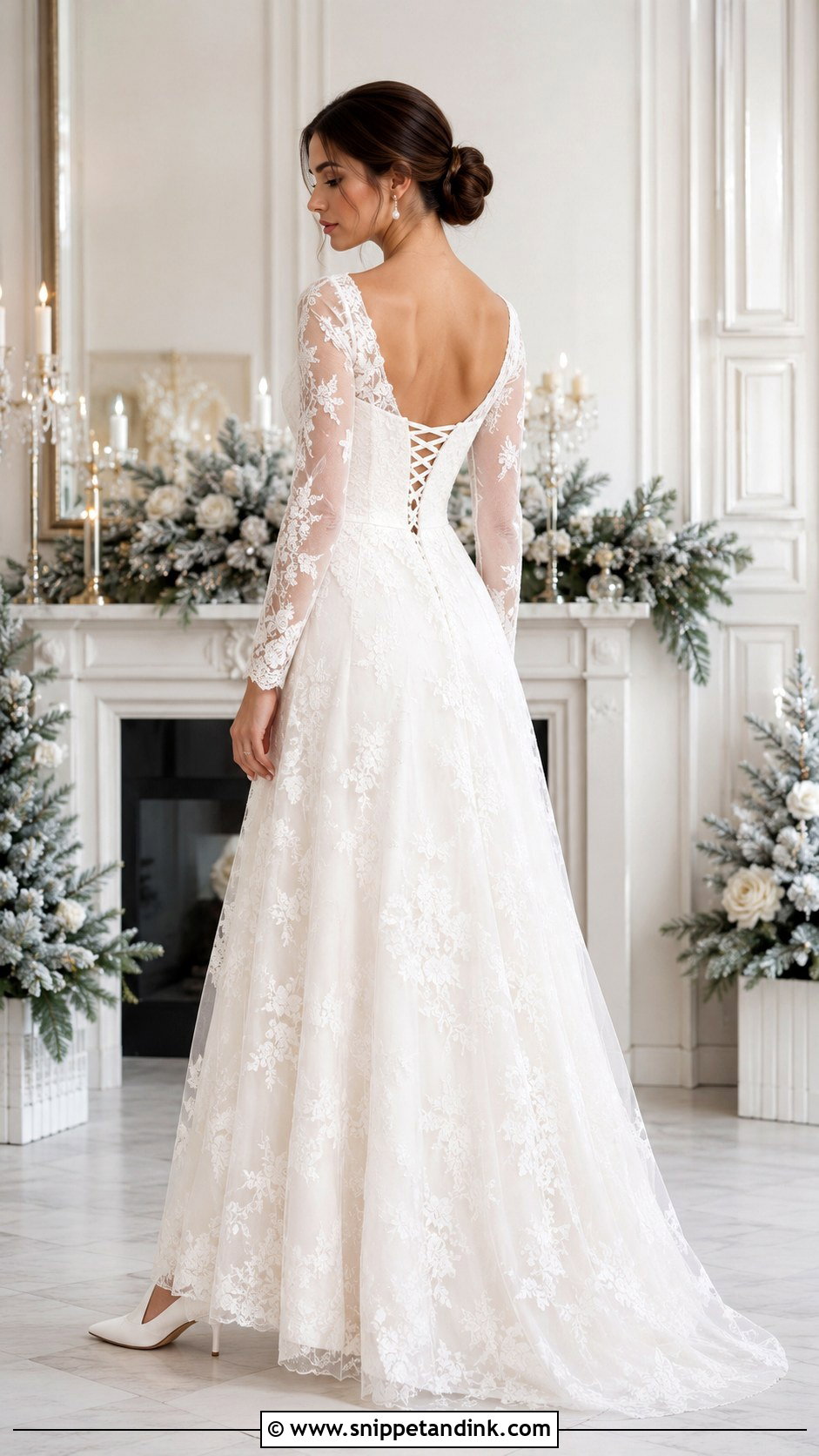
Long sleeves add fabric, and a laced waist stops all that fabric from looking bulky. Sleeves can be sheer lace, fitted crepe, tulle or satin depending on the season. I check the shoulder seam before anything else on sleeved corset gowns, because when the back is laced tight it pulls the shoulders backward and can restrict arm lift. A-line skirts, modest necklines and illusion bodices pair naturally. Clean, unembellished sleeves look modern; floral lace running from the cuff into the train looks more romantic.
10. Corset Back Basque Waist Wedding Dress
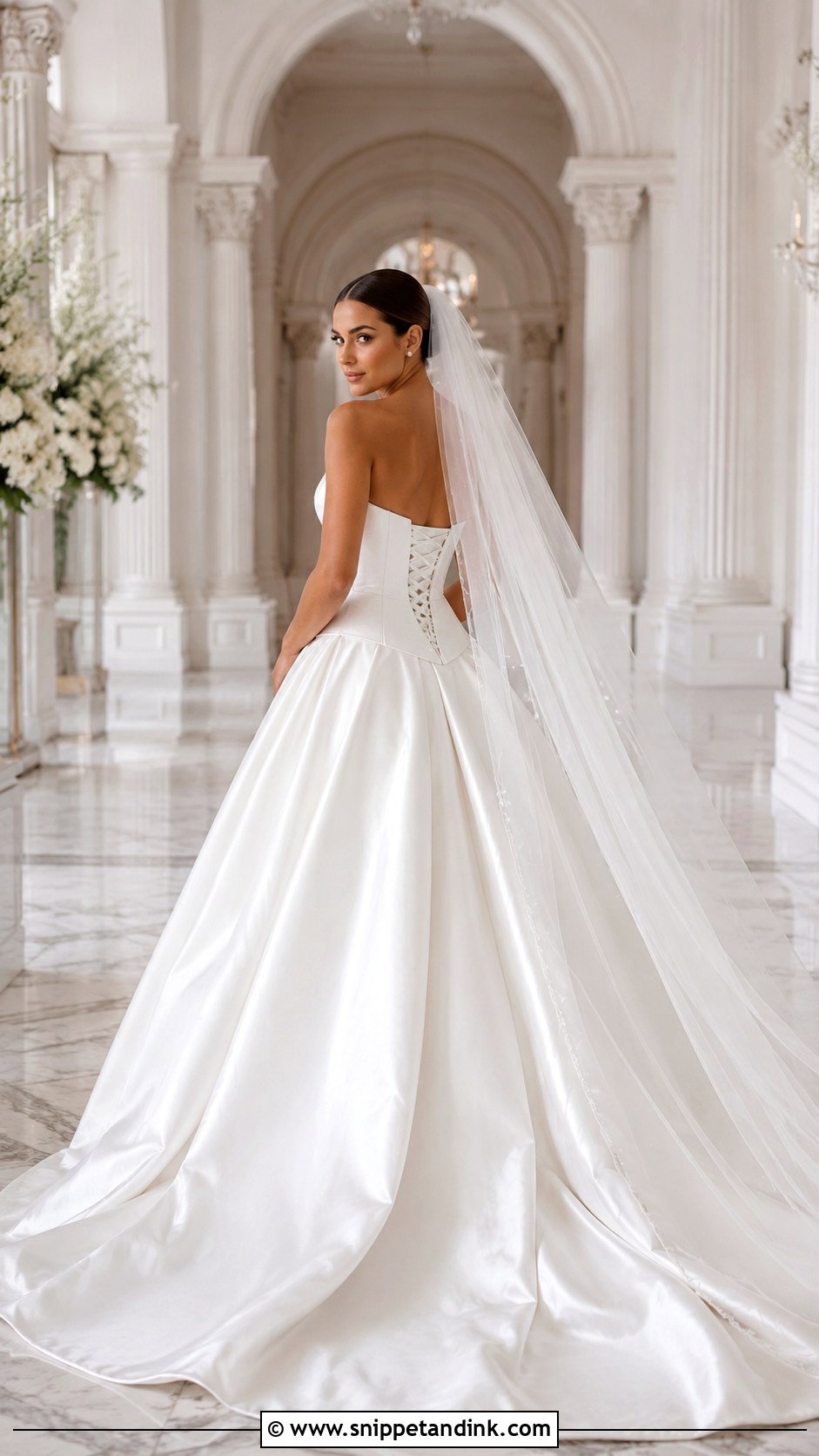
The basque waist dips into a V at the front, which lengthens the torso and makes a full skirt look even fuller. Combined with lacing, it’s one of the most flattering structures I fit. The point needs boning right to the tip, or it folds upward when you sit. Ball gown, A-line and full satin skirts all suit it, as do strapless or off-shoulder necklines. A clean satin version reads fashion-forward; lace appliqué along the bodice makes it gentler.
11. Corset Back Drop Waist Wedding Dress
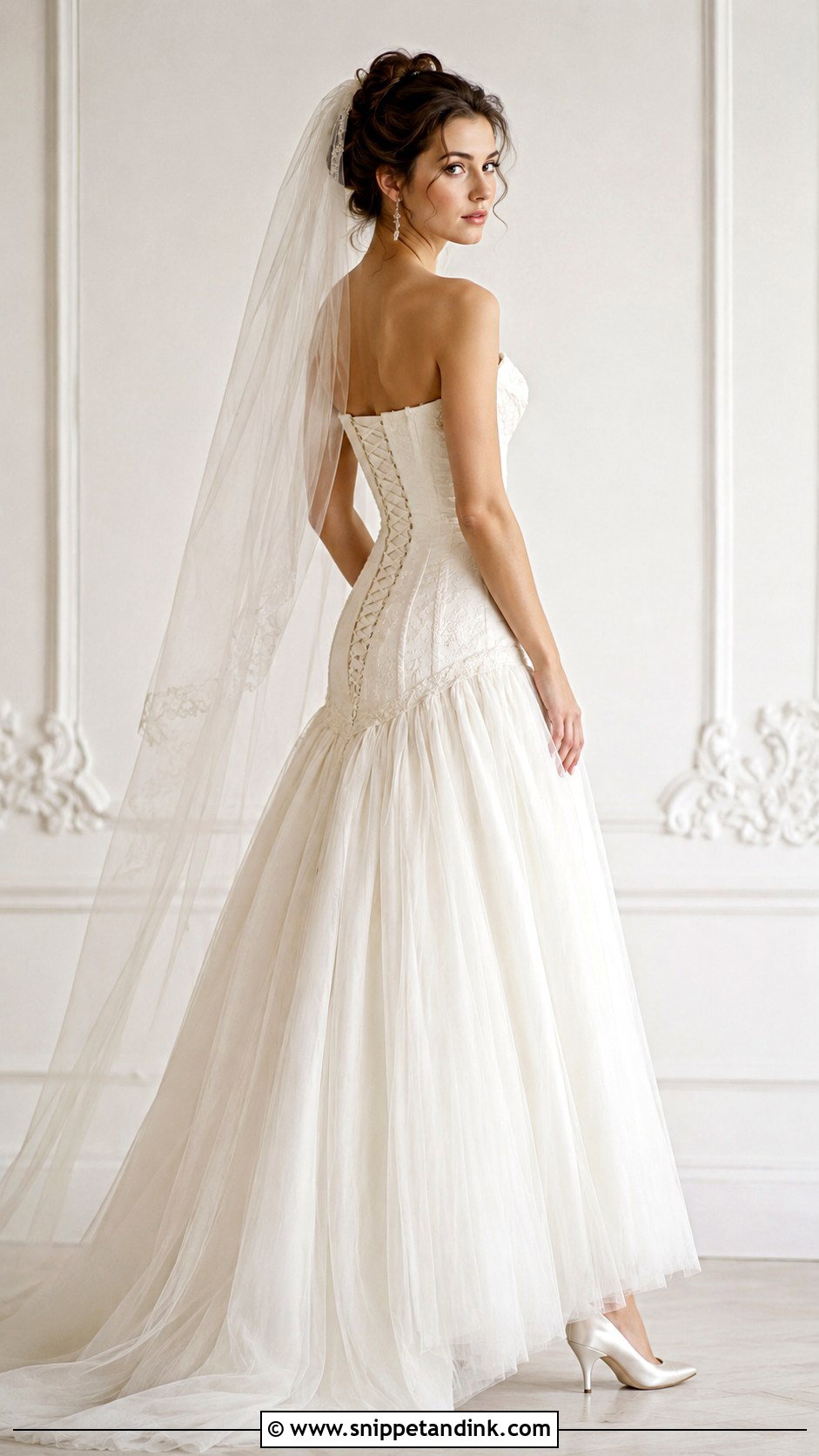
A drop waist extends the bodice below the natural waistline before the skirt begins, so the line runs longer and leaner. It’s very much a torso-length decision. On a long-waisted bride it looks elegant; on a short-waisted one, the seam can sit too low and shorten the legs. I always check it side-on in a three-way mirror. Fuller skirts, gathered tulle, satin and lace all work. Keep the skirt in proportion to the long bodice so the whole gown looks deliberate.
12. Corset Back Floral Wedding Dress
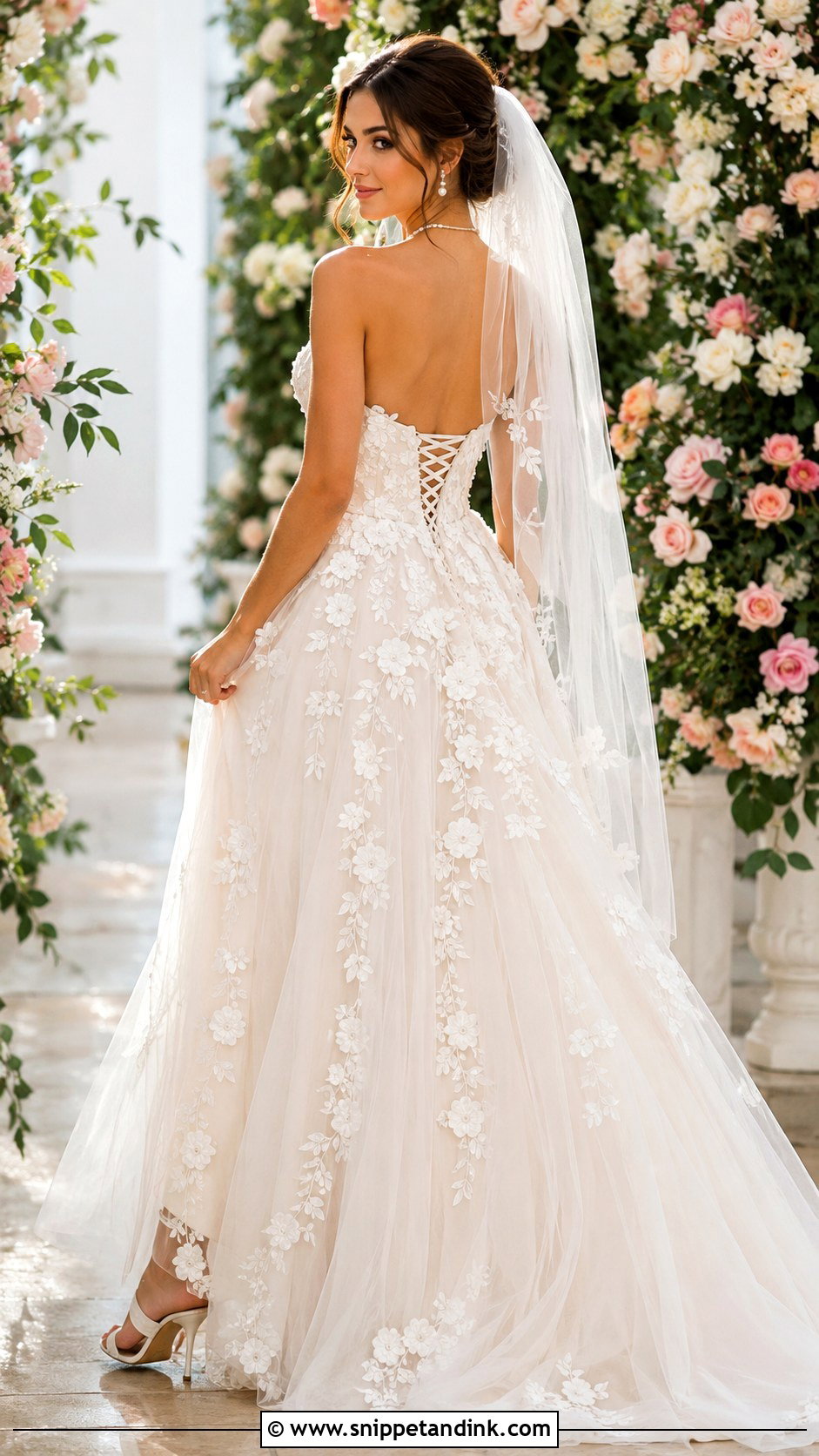
Floral work can be placed across the bodice, scattered through the skirt or gathered along the train. On a corset, flat lace flowers sit better near the lacing than raised 3D petals, which can get crushed by the cord or caught in it. I’d keep raised flowers to the skirt and train. Embroidered tulle, organza and lace all take florals well, in ivory or soft blush. Keep accessories simple so the flowers stay graceful.
13. Corset Back Beaded Wedding Dress
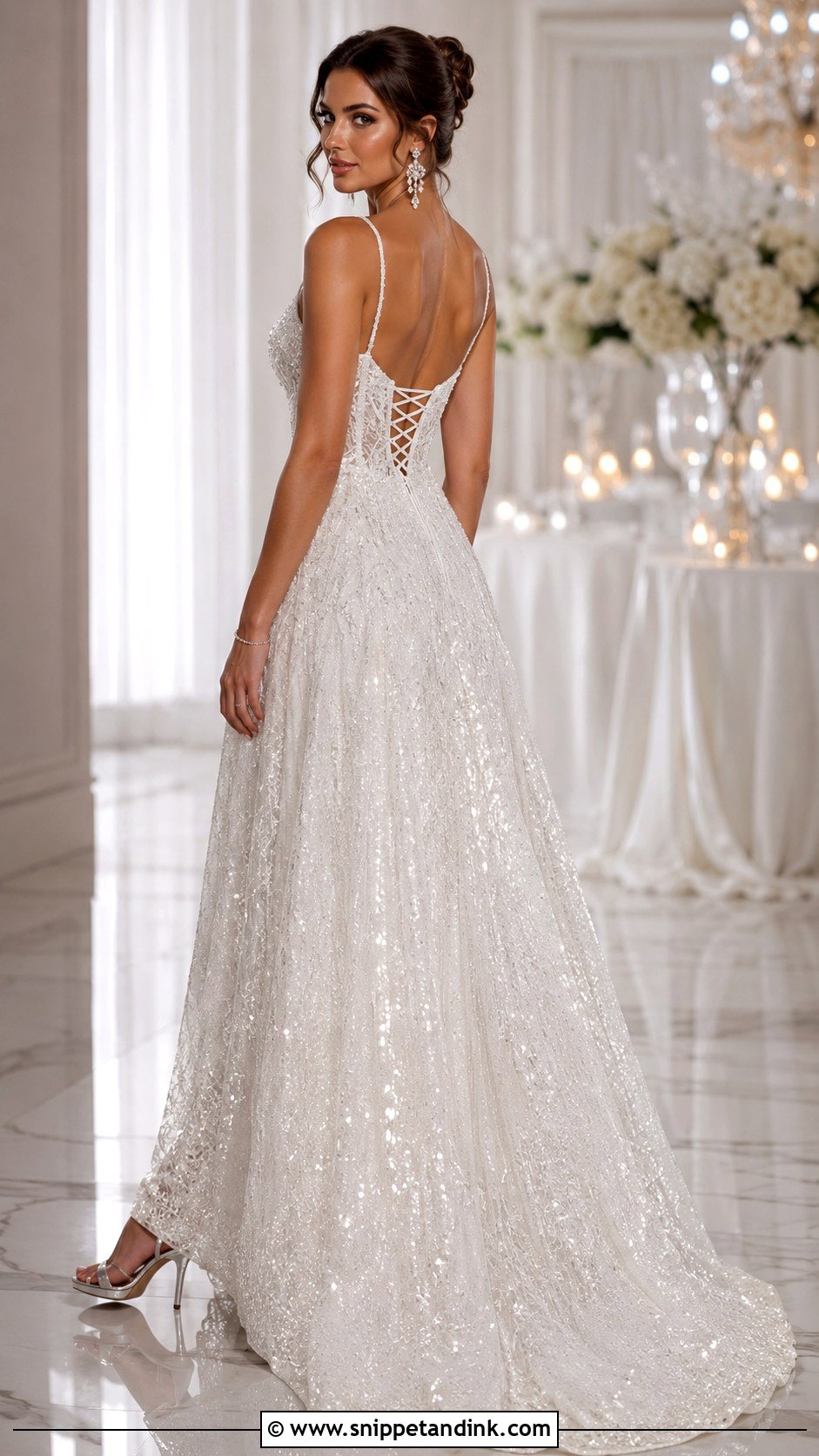
Beading brings shimmer to a structured bodice; it can outline the neckline, trace the boning, cover the bodice or trail into the skirt. Heavily beaded gowns are heavier than they look, which makes the support of a laced back genuinely useful. The practical worry is snagging. Beads close to the loops can catch the lacing cord every time it’s pulled, so ask for a clear margin around the back opening. Crystal earrings, metallic heels and a plain veil keep it refined.
14. Corset Back Simple Wedding Dress
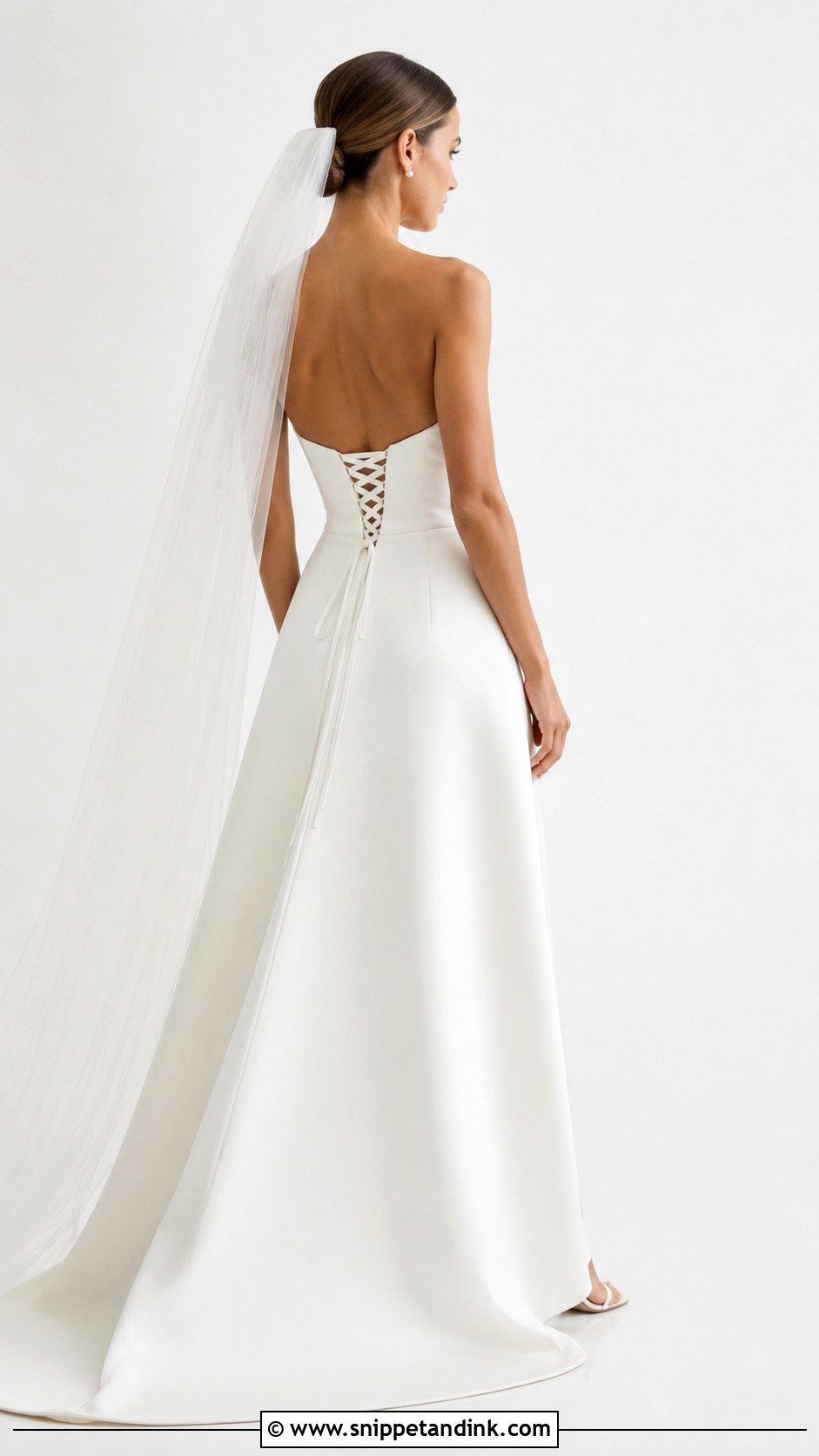
Without lace or sparkle, the laced back becomes the only detail, and it needs to be perfect. Even lacing, a modesty panel that doesn’t bunch and a clean top edge all matter more here. Satin, crepe and mikado are the strongest fabrics. A plain A-line is classic; a fitted crepe gown feels sleek. Add a long veil, pearl studs and polished heels, and this is the dress least likely to look dated in twenty years.
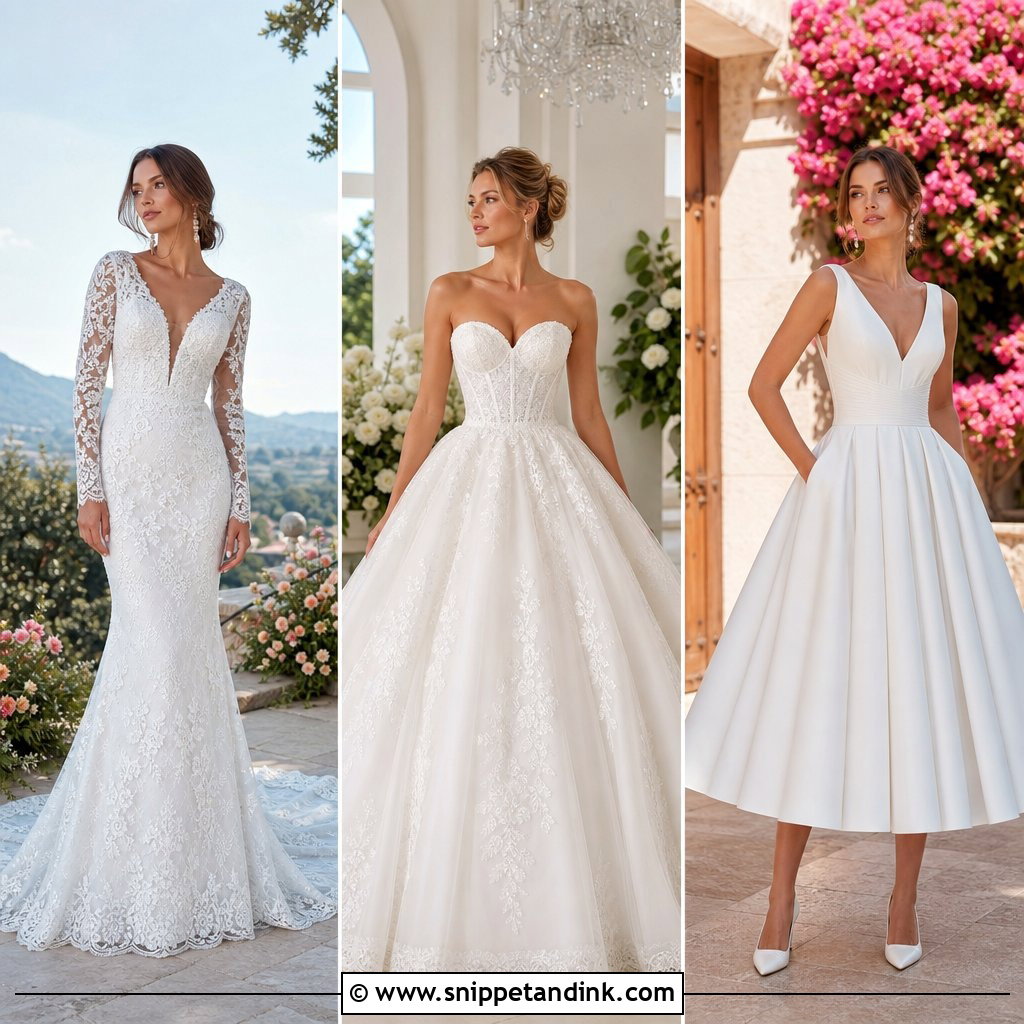
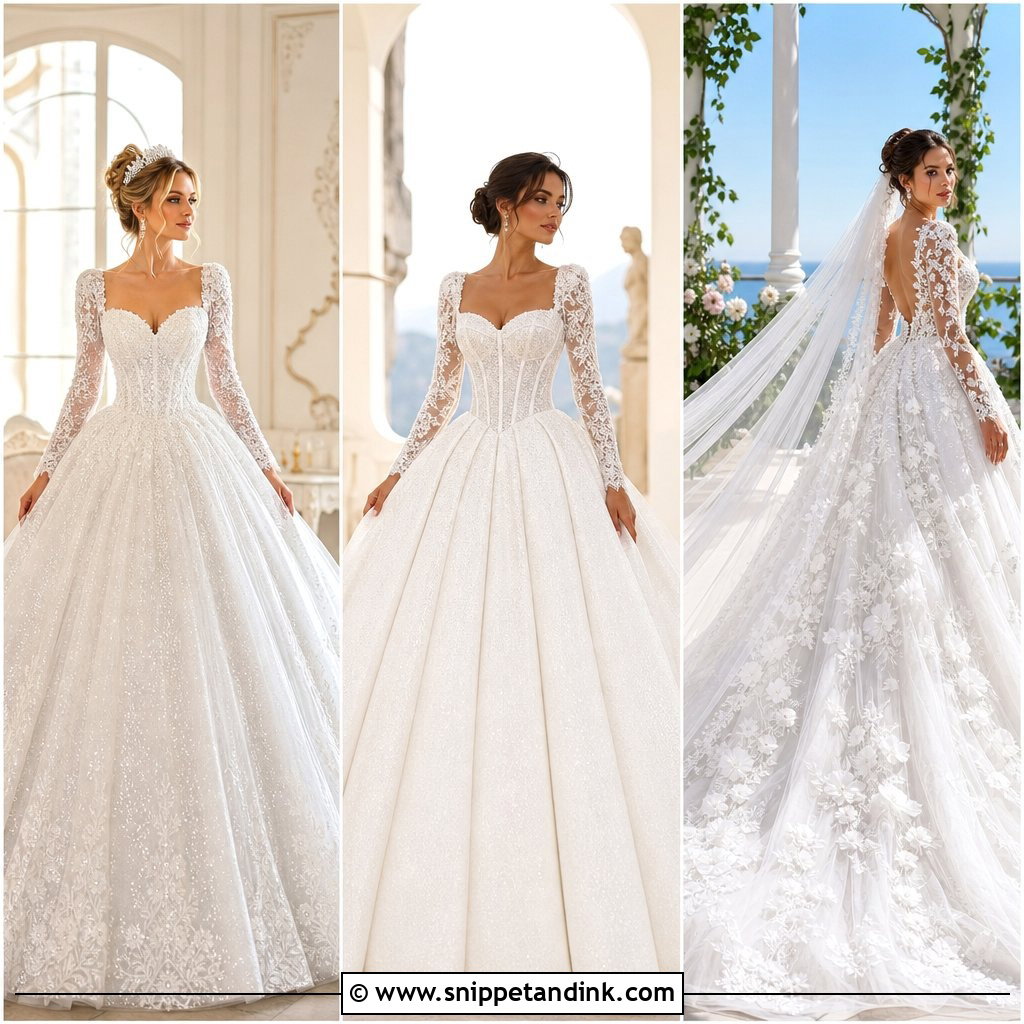
15. Corset Back Plus Size Wedding Dress
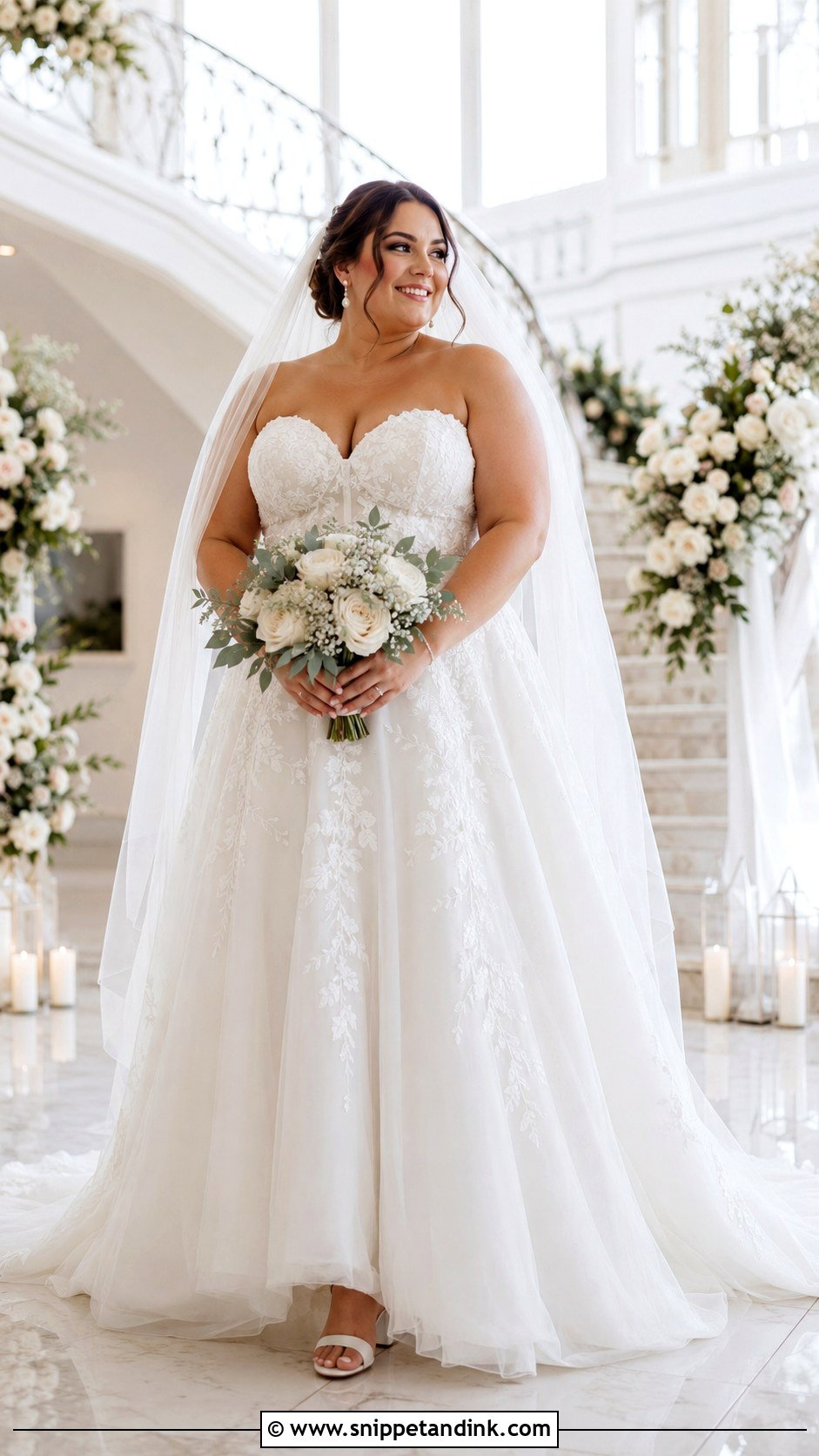
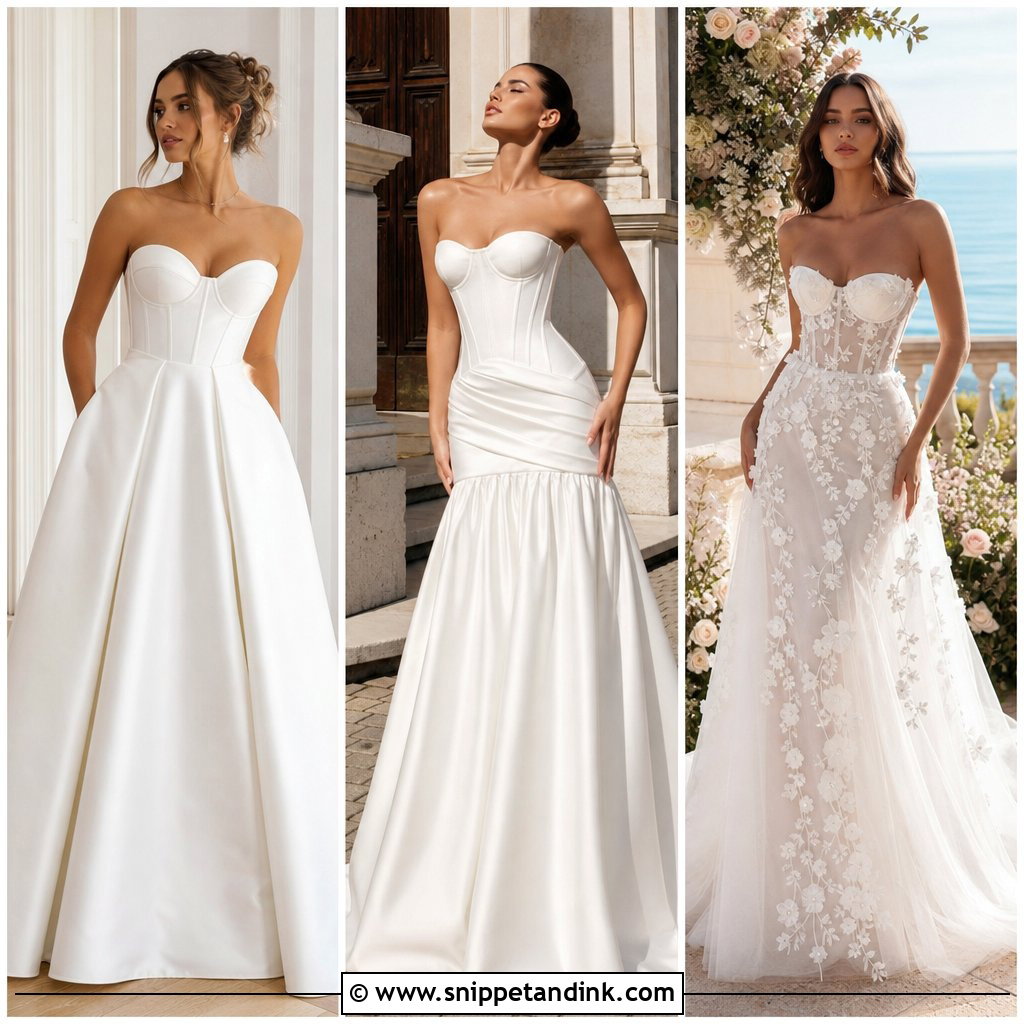
For many curvier brides, a laced back is the most comfortable closure available. It offers a more tailored fit through the waist and bust than a zip, which pulls in a straight line whether your body does or not. What I look for is strong boning, a supportive lining and a top edge that sits flat without digging into the back or underarms. A-line, ball gown and fit-and-flare all work. Wide straps or a sweetheart neckline add balance. The goal is to support the body properly, never to squeeze or hide it.
16. Corset Back Beach Wedding Dress
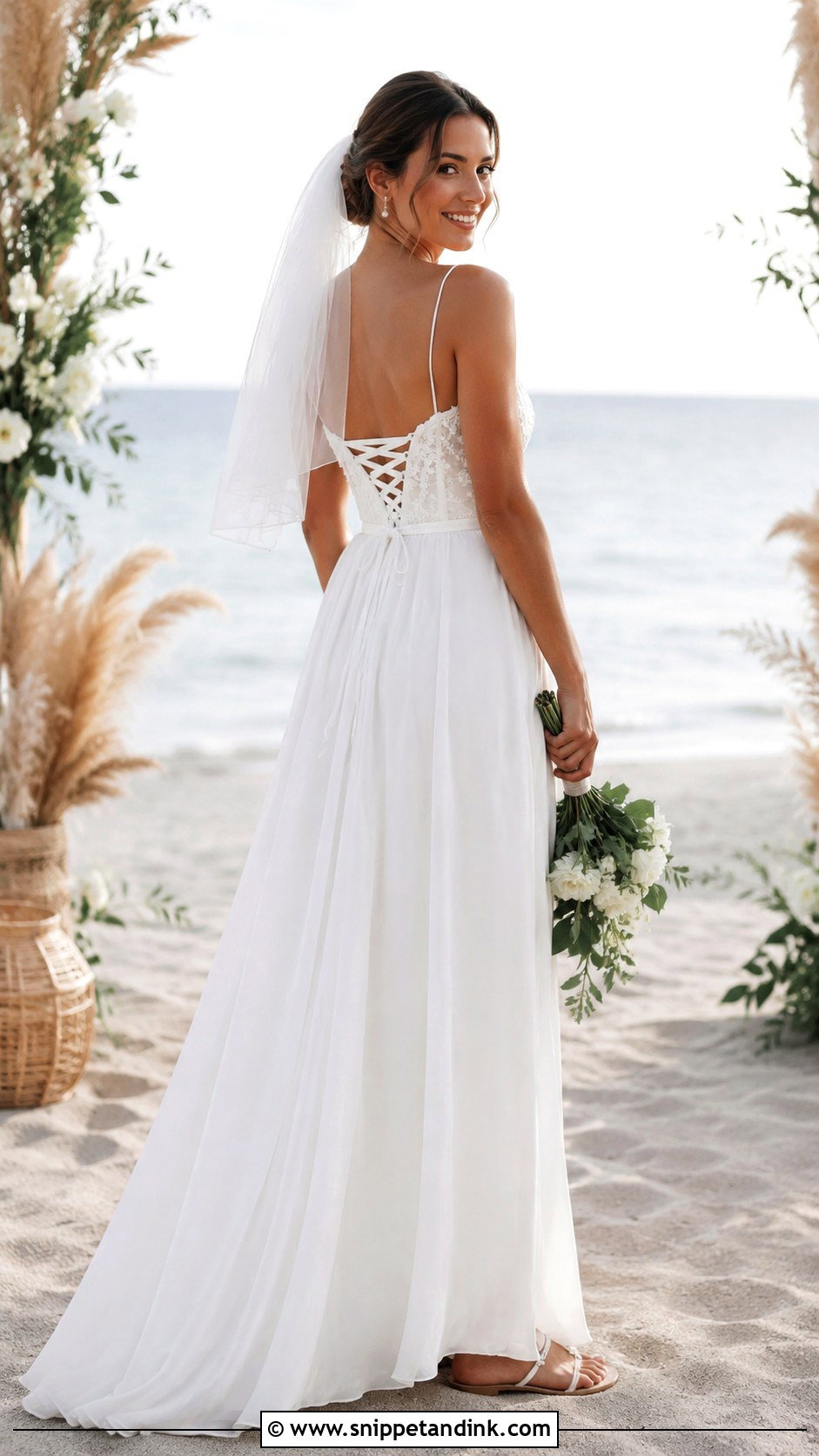
Sand, wind and heat change the brief. A beach gown needs lighter fabrics: soft chiffon, airy tulle, lightweight lace and flowy A-line skirts. The laced back adds shape without a heavy bodice and keeps the dress secure in a breeze. Skip thick satin if it’s hot, and lace slightly looser than you would indoors, because heat makes skin swell a little through the afternoon. Flat sandals or low block heels finish it, with a simple veil or hair piece.
17. Corset Back Boho Wedding Dress
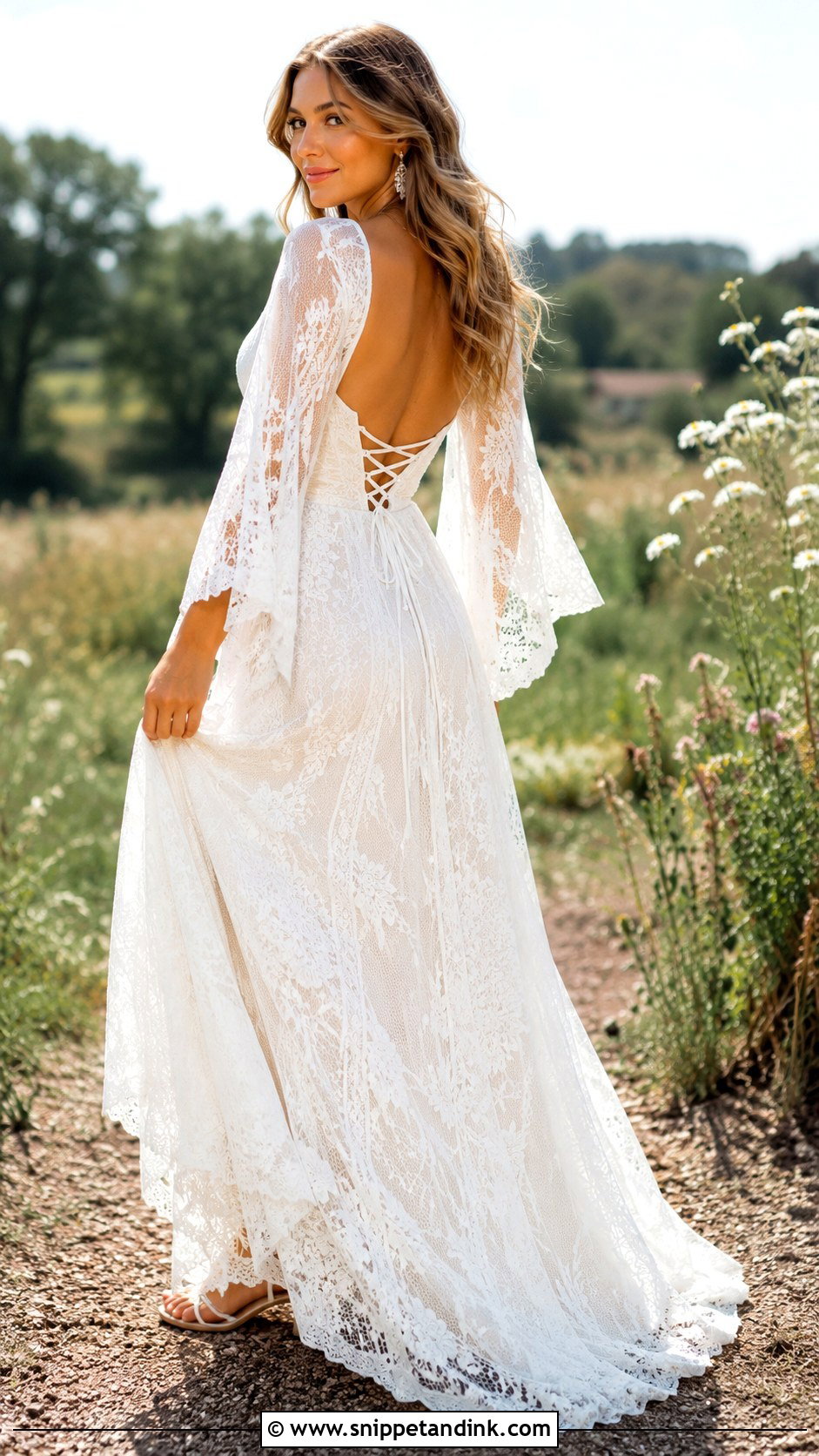
Boho and corsetry sound like opposites, but the lacing actually keeps a loose, flowing dress from looking shapeless. Soft lace, flowing sleeves, light skirts and natural-looking embroidery give the relaxed feel. A-line and sheath silhouettes move easily. Bell sleeves, square necklines and soft trains all suit it. Loose waves, delicate earrings and low heels or sandals keep the outfit easy, which makes it a natural fit for barns and outdoor venues.
18. Corset Back Vintage Wedding Dress
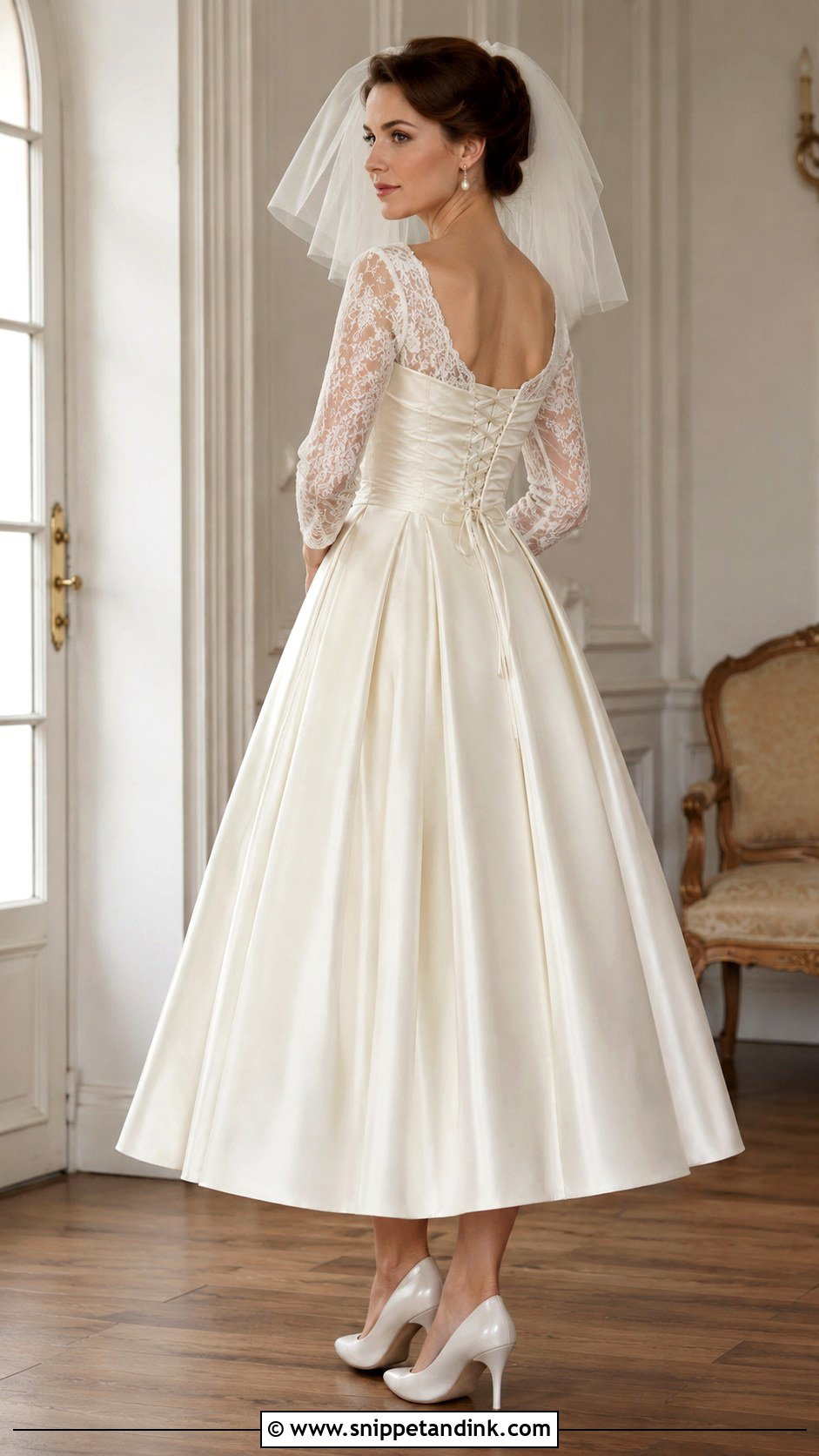
Vintage-inspired gowns can draw from lace sleeves, basque waists, full satin skirts and high necklines, but I’d use one or two era cues at most. Pile on too many and it reads as fancy dress. A laced back with a lace high neck feels classic; a satin corset with a full skirt leans old Hollywood. Soft ivory, an heirloom veil and pearls complete it, while modern lining and boning keep it comfortable in a way true period gowns rarely were.
19. Corset Back Two Piece Wedding Dress
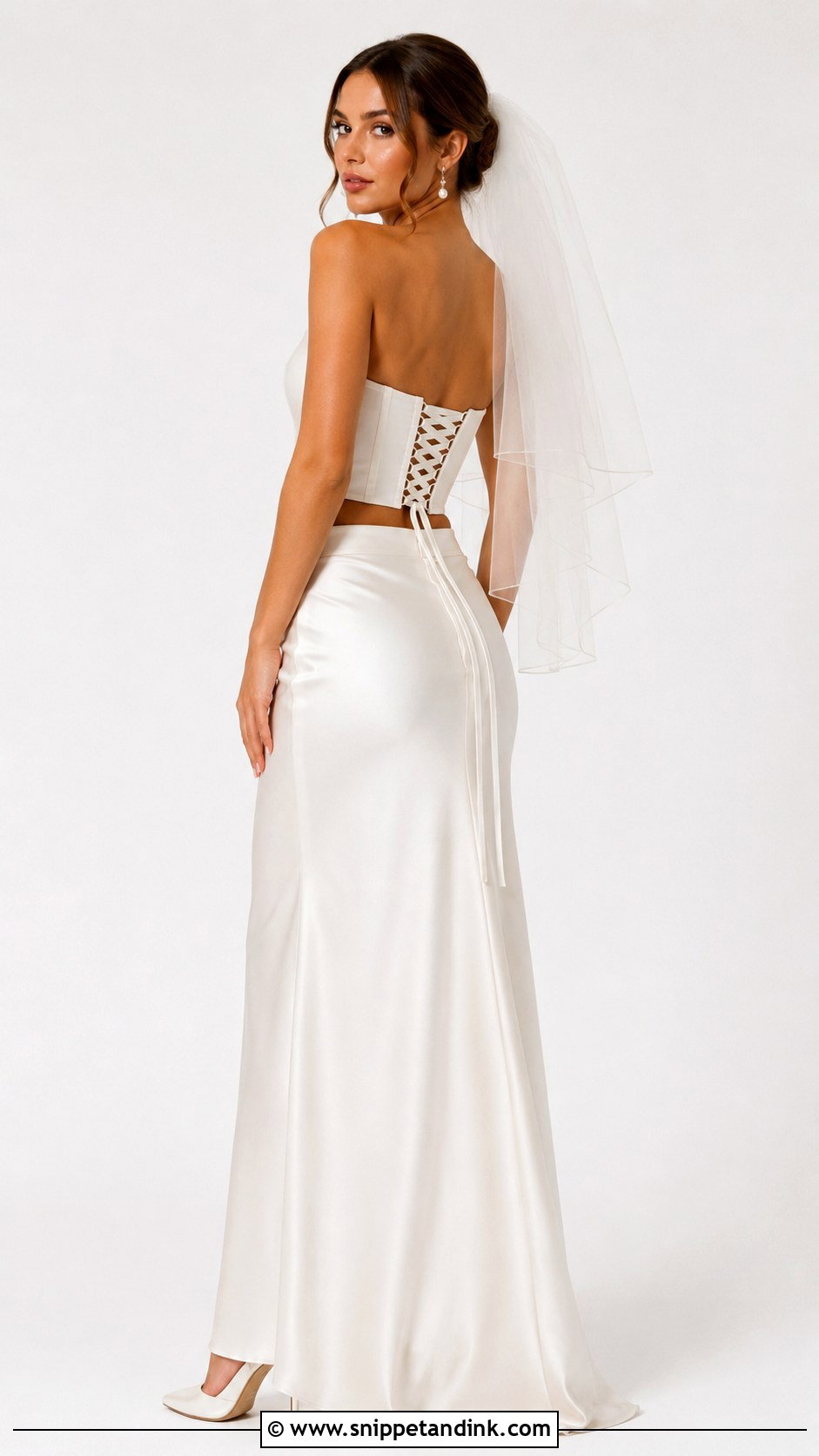
Two-piece sets give you freedom of movement and options. The corset top laces at the back; the skirt can be full, slim, pleated or softly draped. Matching the fabric keeps it bridal rather than fashion-shoot. A satin corset with a full skirt reads polished, while lace over chiffon reads romantic. The waist is the decision to make at the fitting: a small gap of skin, a high-waisted skirt or overlapping pieces. Sit down in each option before choosing, since a gap that looks tidy standing can widen when seated.
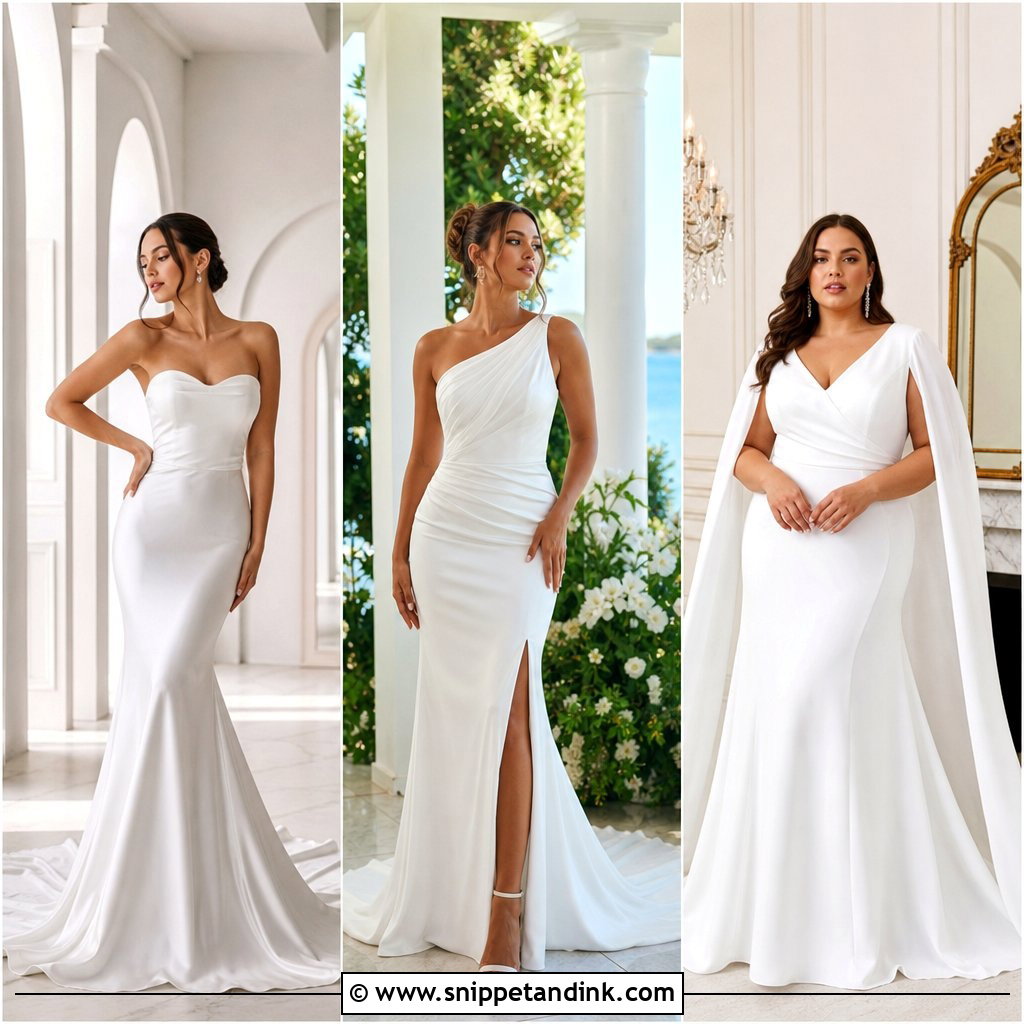
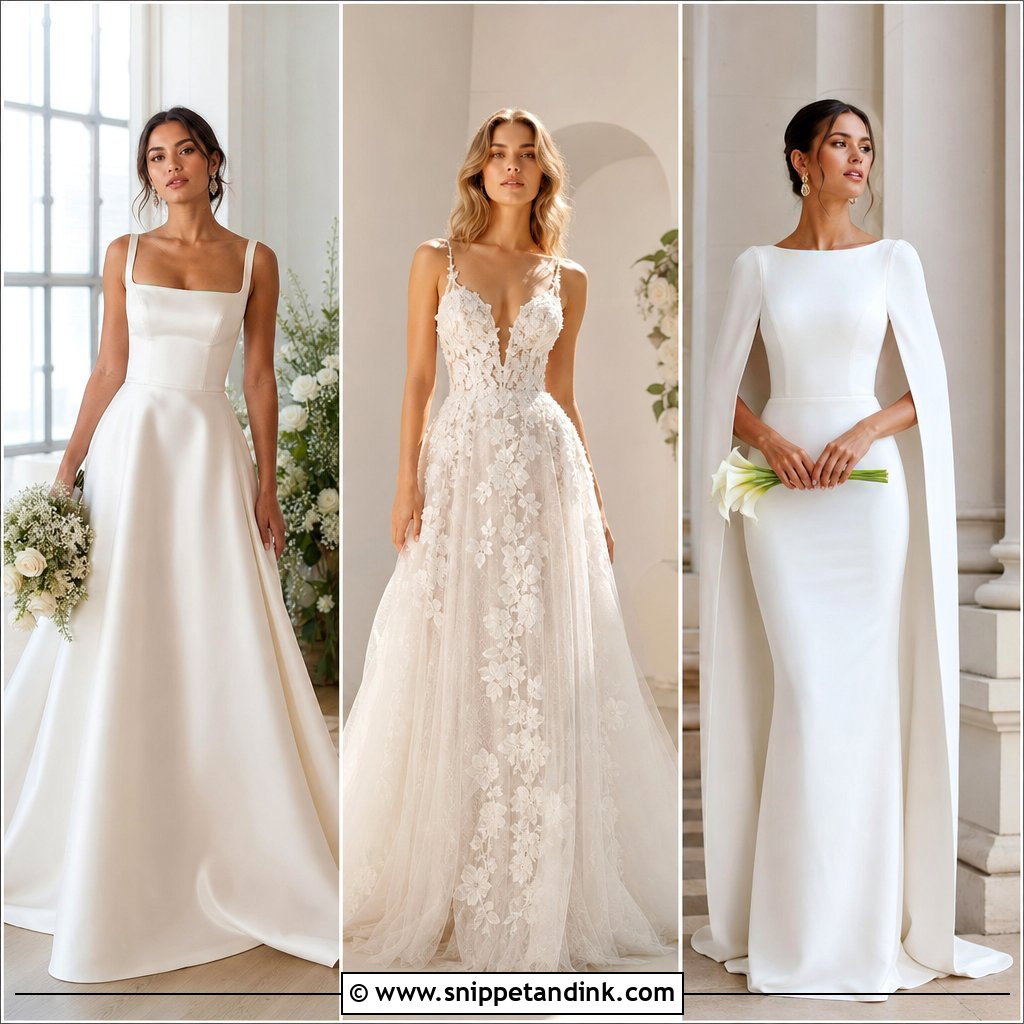
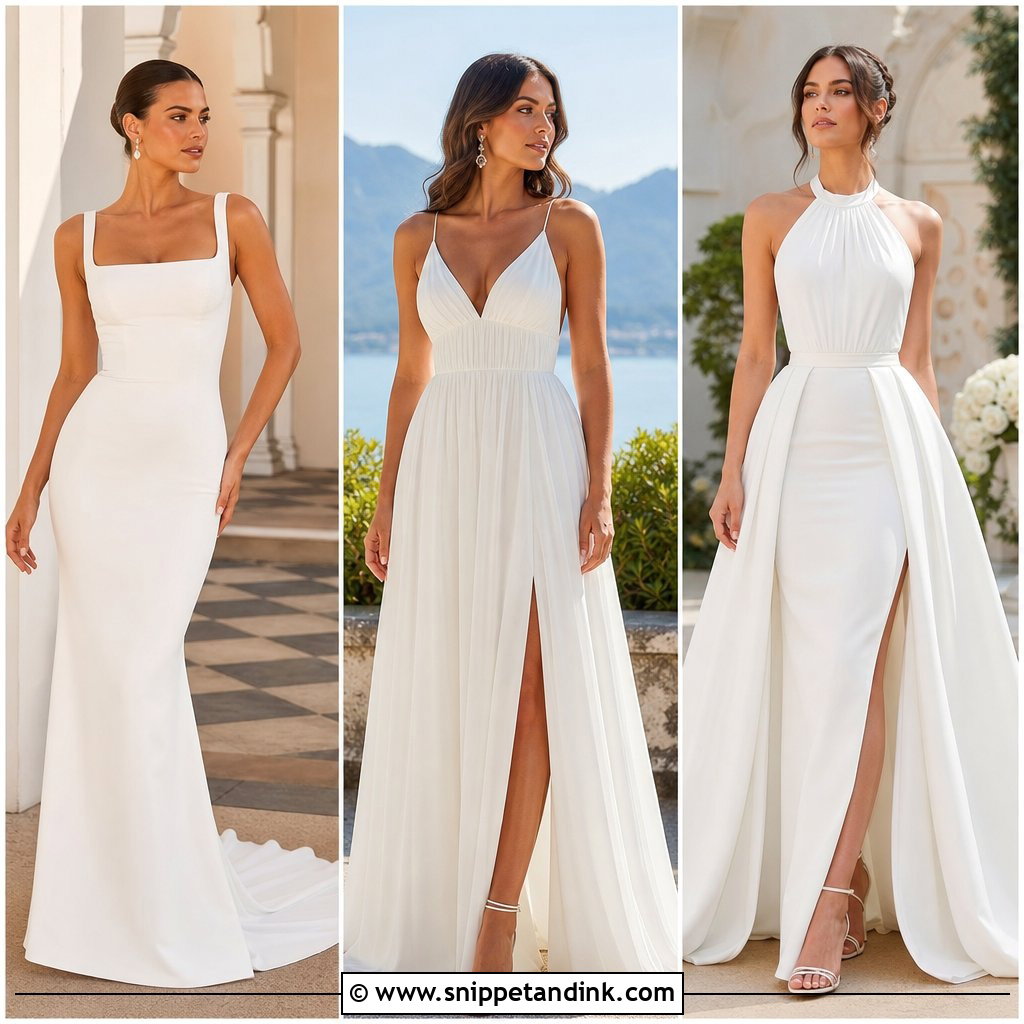
20. Corset Back Detachable Skirt Wedding Dress
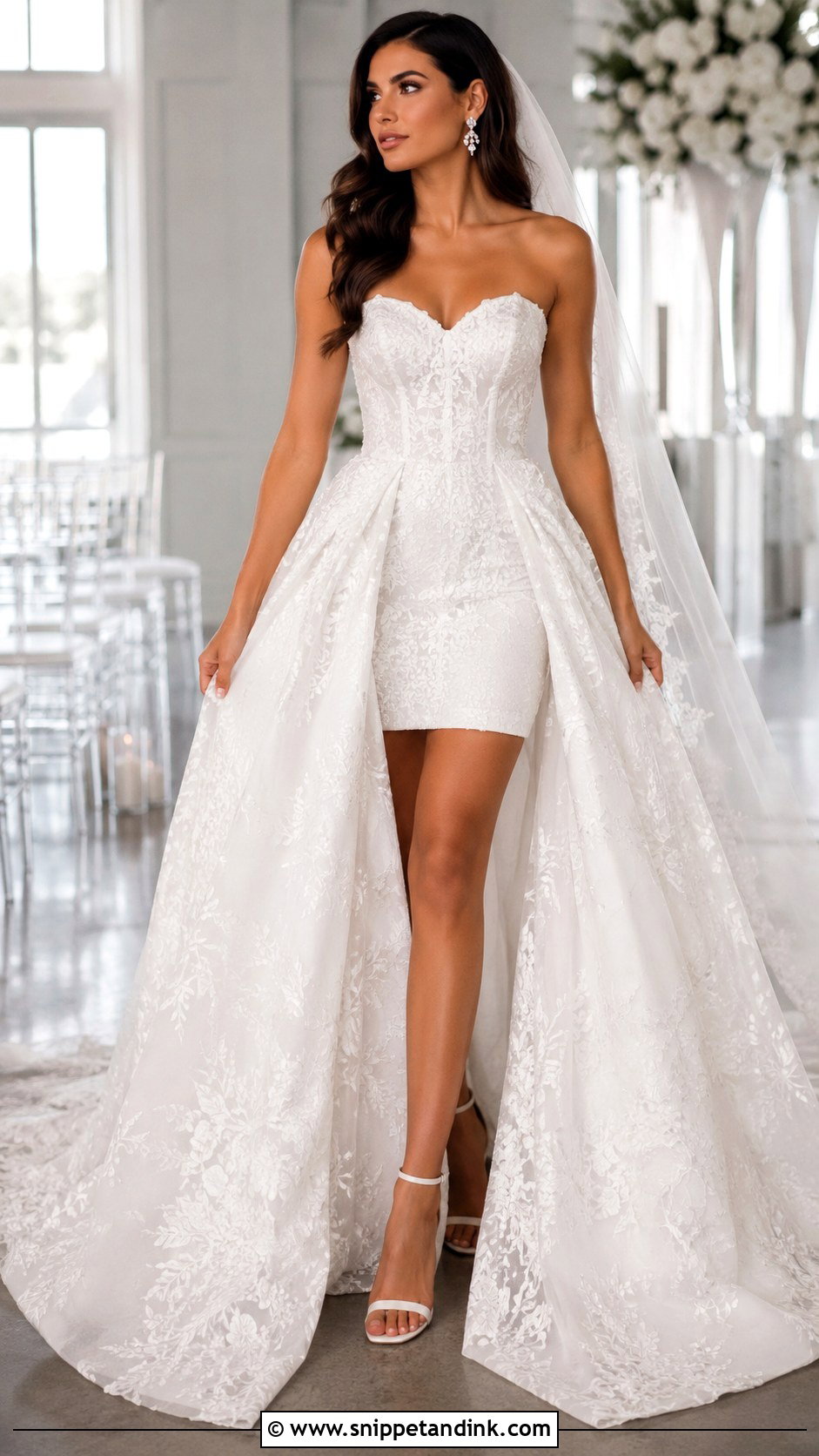
A detachable overskirt gives you a ceremony gown and a reception dress in one. Over the top, it creates a ball gown or A-line; underneath sits a slimmer mermaid, sheath or short dress. The laced back keeps both versions secure. What I check is the fastening. Hooks or buttons hidden under a waistband sit flat, while bulky snaps show through the outer skirt. Matching fabrics make the switch look natural; contrasting textures look more editorial.
21. Corset Back High Neck Wedding Dress
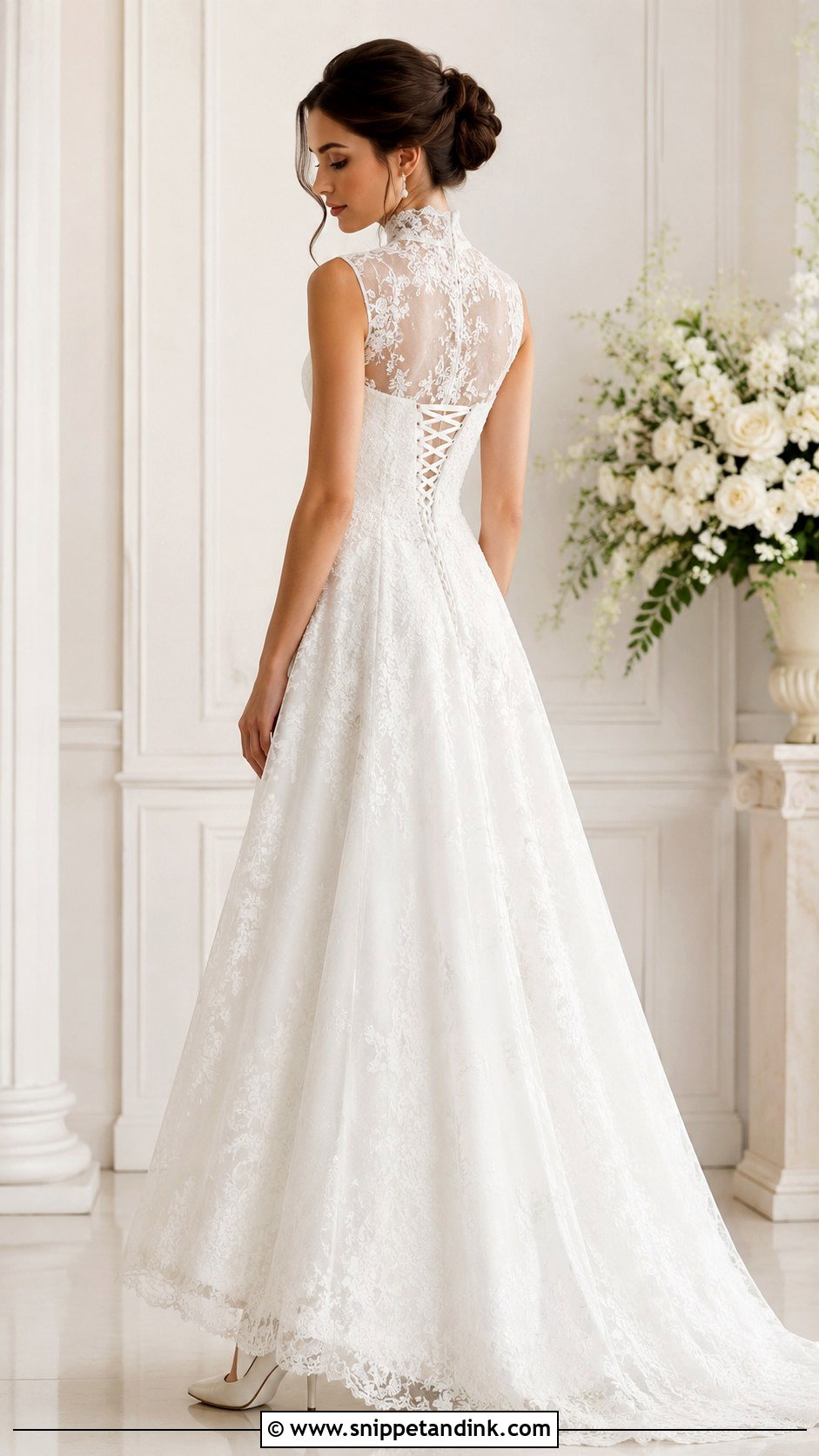
A high neckline draws the eye up, and a laced back adds interest behind, so the gown has two focal points that don’t compete. Sheer lace, illusion tulle and clean crepe all suit it. A fitted long sleeve works in cooler months, while a sleeveless high neck gown looks sleek in warm weather. Check the collar sits just under the jaw without rubbing. A soft A-line feels romantic, a sheath more modern, and an updo or swept-back hair shows the neckline.
22. Corset Back Square Neck Wedding Dress
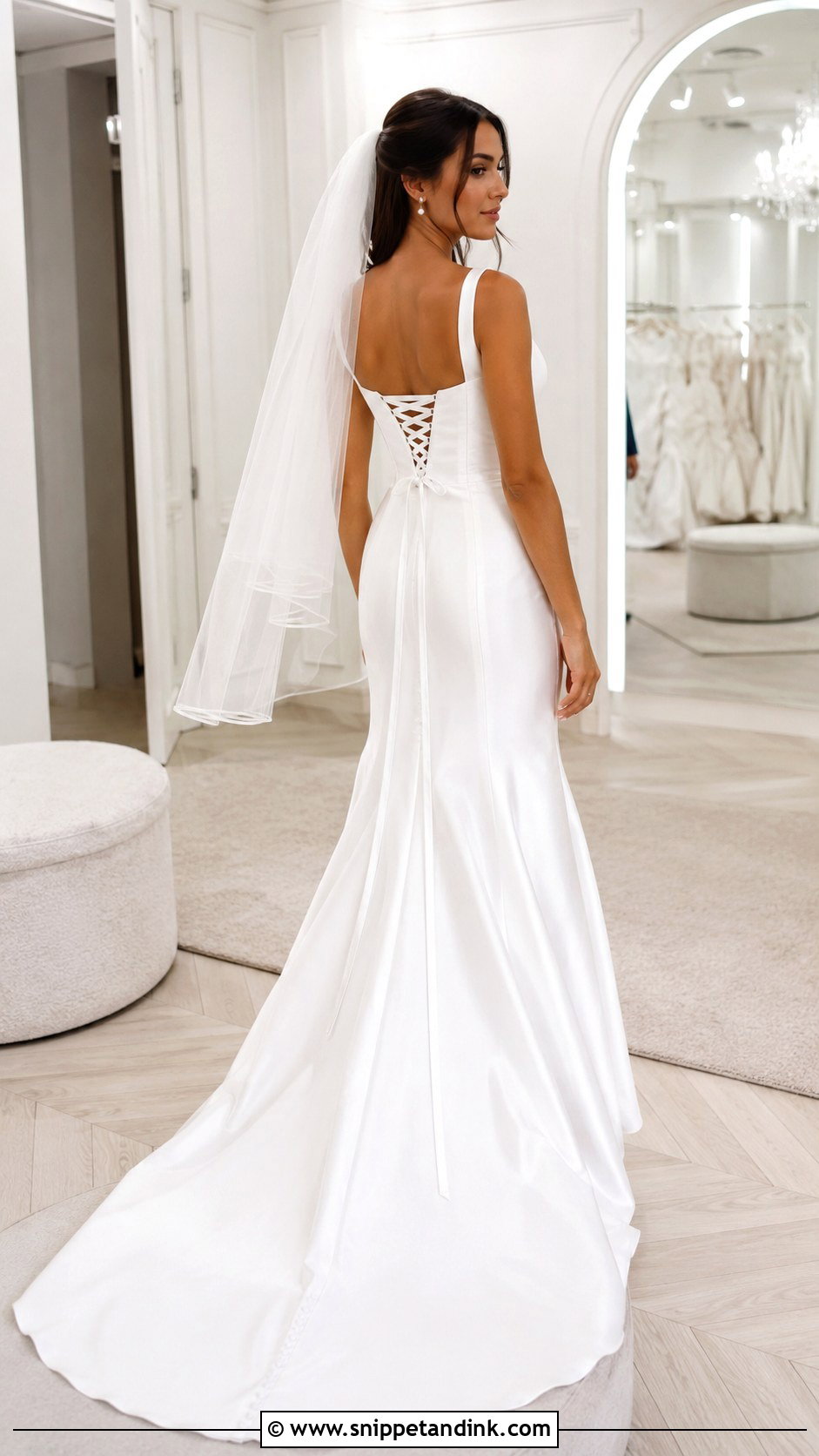
The square neckline frames the collarbones and gives a tailored, slightly vintage look. Strap width changes the feel a lot: wide straps add support and coverage, thin ones lighten it. I like square necks on brides with a smaller bust, because the straight edge doesn’t need cleavage to look finished. Satin A-lines, lace bodices and structured ball gowns all suit it. Smooth fabric reads modern; floral lace or pearls read romantic. A plain veil and sleek earrings are enough.
23. Corset Back Sweetheart Wedding Dress
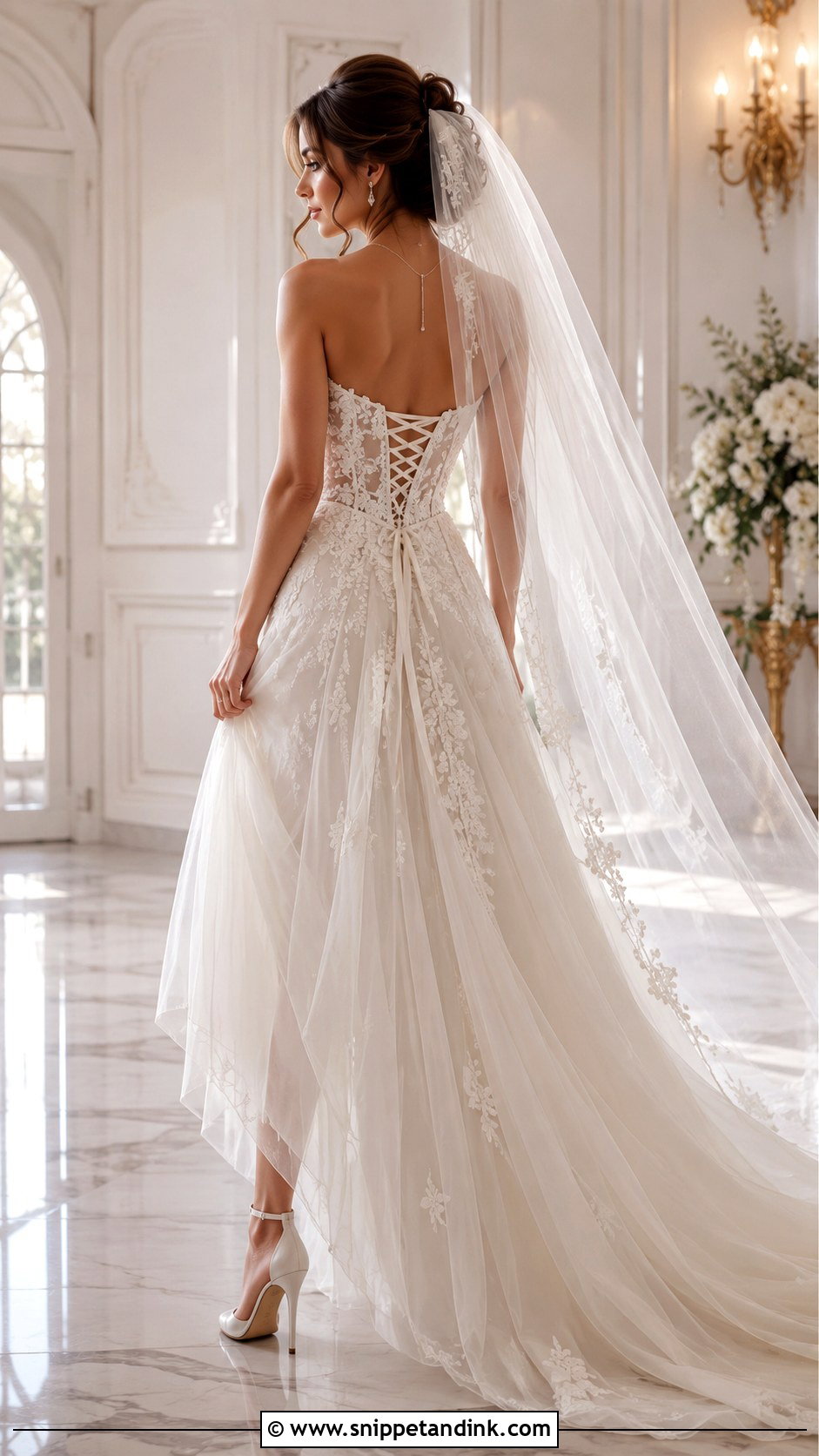
Sweetheart necklines are popular with corset backs for good reason: the curve softens a structured bodice. If you have a fuller bust, ask about internal boning and proper cup shaping, because a sweetheart without support tends to gape when you lean forward. Ball gown, A-line, mermaid and fit-and-flare all work. Lace or tulle feels traditional; satin or mikado looks polished. I place the veil comb lower on the head with this neckline so the line stays open.
24. Corset Back Fit And Flare Wedding Dress
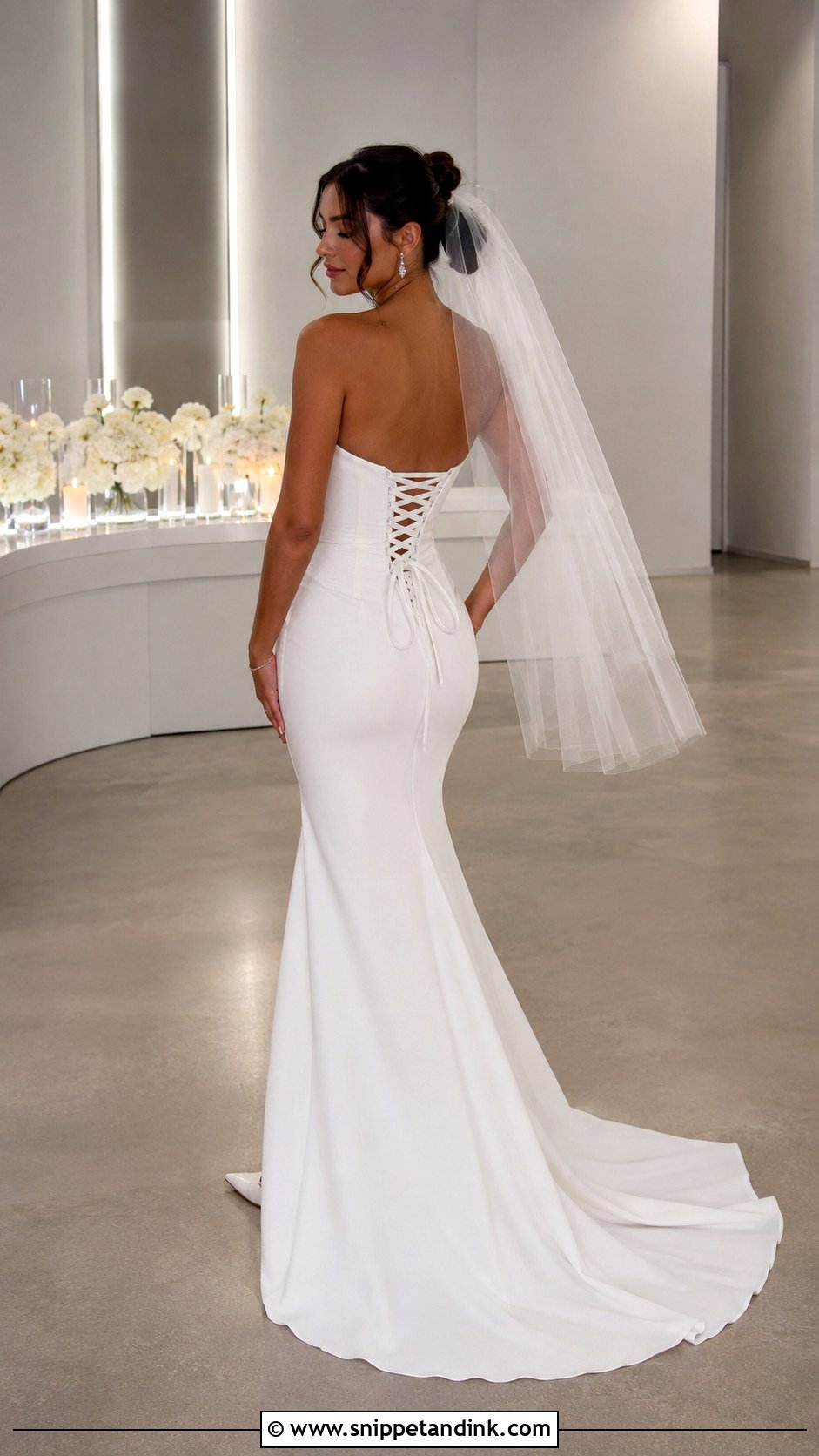
Fit and flare gives you shape without the commitment of a full mermaid. It hugs the bodice and hips, then opens gently through the lower skirt, so walking and dancing stay easy. Lace versions feel romantic; crepe versions look understated. I check where the flare starts on you, not on the sample, since a flare that begins too low makes stairs awkward. Stretch lining helps with comfort. Delicate jewelry and a medium-length veil balance it.
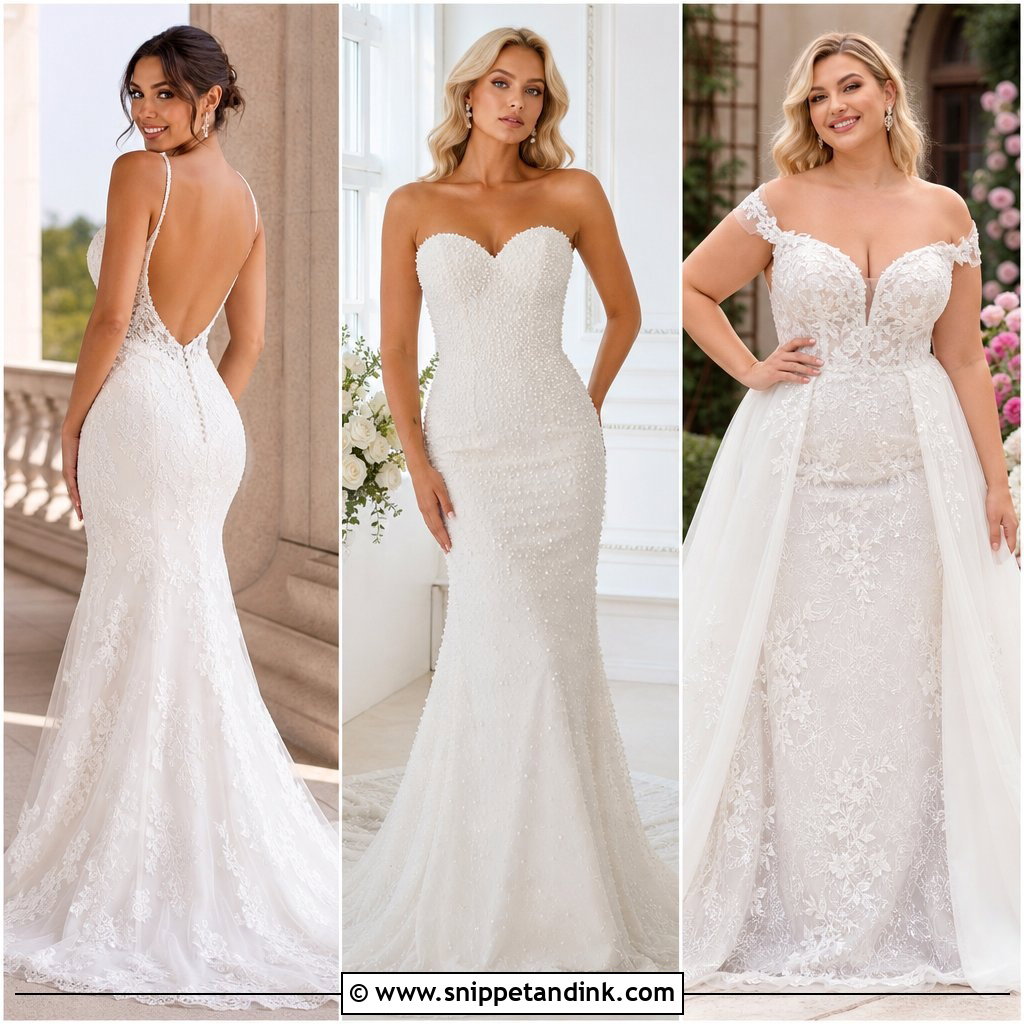


25. Corset Back Short Wedding Dress
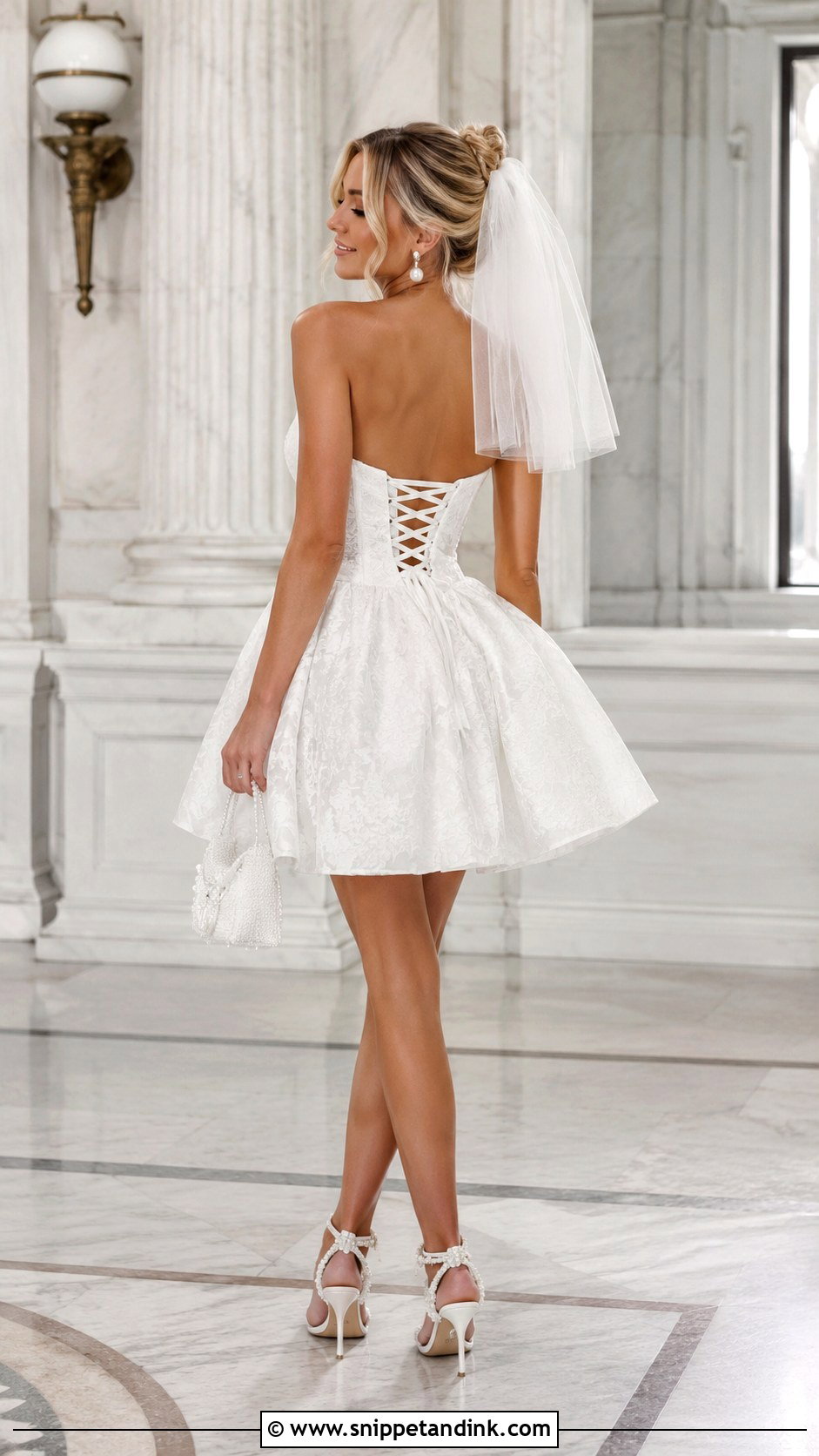
A short corseted dress works for a civil ceremony, a reception change, a bridal shower or an after-party. A mini with a corset bodice and full skirt feels youthful; a tea-length version leans vintage. Satin, lace, tulle and organza all work. With your legs on show, shoes become a big part of the look, whether that’s pointed pumps, embellished heels or flats. Add a bow, short veil or pearls to keep it bridal.
What Lacing Can Absorb, and What It Can’t
Brides often hear that a corset back means you don’t need to worry about weight changes before the wedding. That’s only partly true. Lacing takes in or lets out the waist and ribcage by a small amount, roughly the kind of change you get from bloating, nerves or a few weeks of busy planning. It does not change the cup size, the hip measurement or the length of the bodice, and a gap that is much wider at the top than the bottom tells me the dress was cut for a different shape.
I aim to finish fittings with the lacing gap even and fairly narrow, so there’s room to loosen a little after dinner and tighten a little if you lose weight from stress. If a seamstress tells you the gap will be several inches wide to make it fit, that’s a sign to alter the side seams instead. A wide gap shows the modesty panel and pulls the loops out of line.
One more thing: sit down at your last fitting with the lacing fully done up, then eat something small. If it’s still comfortable after ten minutes, it will hold up for the whole reception.
The Back View Guests Will Watch Through Your Vows
A laced back gives you something rare in bridal wear: a fit that can be adjusted on the morning itself. It shapes the waist, supports the bodice and makes the back as considered as the front, on almost any silhouette. Start with the shape you love, then let the venue, fabric and how much structure you’re comfortable in narrow it down. Try at least one laced gown and one zipped gown of the same style back to back; most brides feel the difference straight away.
You'll Like These Ideas:



Leave a Reply