
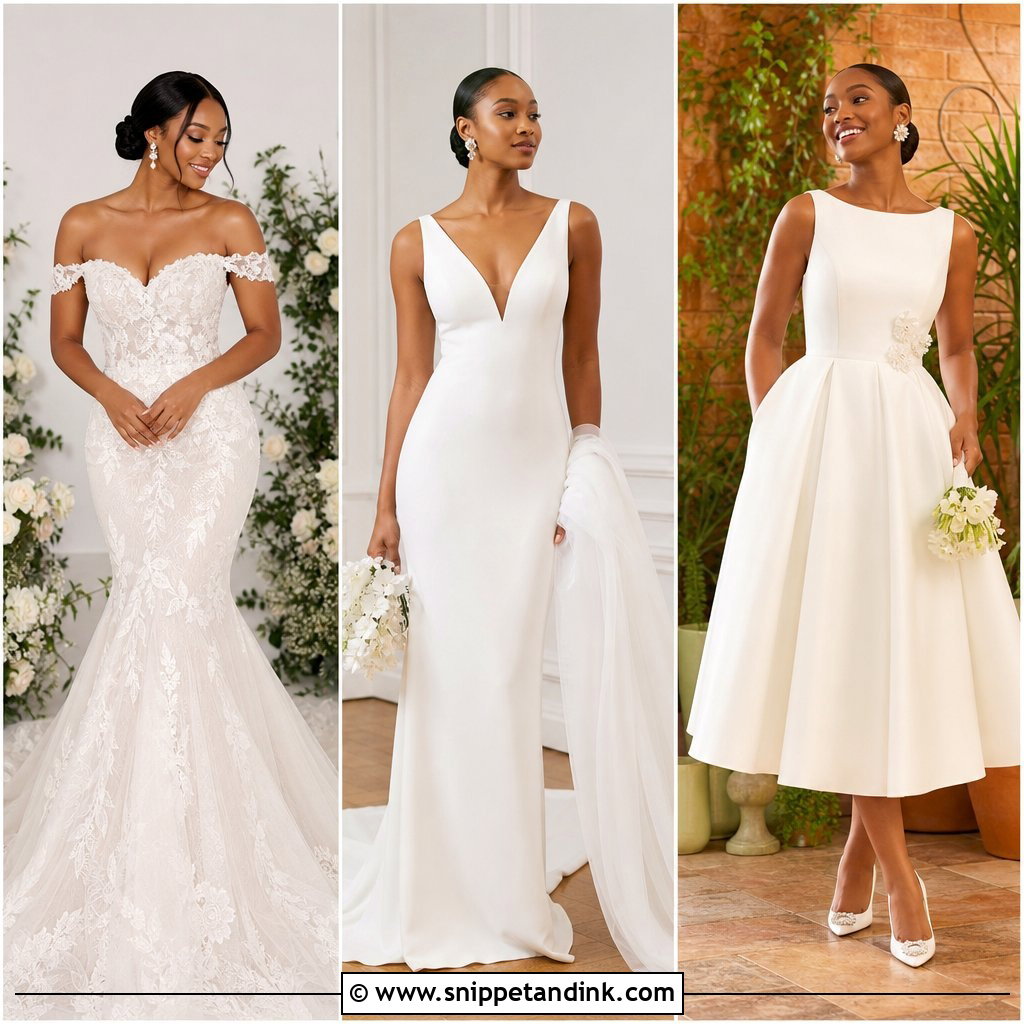
Scroll through bridal gowns for long enough and they all blur into one ivory shape. So I’ve grouped the newest dresses as complete looks instead: sleek city gowns, garden dresses, modern minis, reception changes and statement ball gowns. Designers are leaning on tailoring and structure more than sparkle right now, with basque and drop waists, bows, soft sheerness, detachable pieces and planned second outfits. Treat each one as something to try on rather than a verdict. The right dress depends on your venue, your body and how much you want to move.
A Made-to-Order Gown Runs on a Longer Clock Than You Think
Most of the gowns below are ordered, not taken home off the rail, and that changes your calendar. A designer gown is usually cut and sewn after you order it in your size, which commonly takes several months and can stretch further for heavy beading or custom changes. Alterations then need their own window on top.
- Start shopping roughly nine to twelve months out if you can. That leaves room for production delays without paying a rush fee.
- Order the size that fits your largest measurement. Taking a gown in is routine; letting it out often isn’t possible at all.
- Begin fittings about two to three months before the wedding and expect two or three appointments.
- Collect the dress a week or two ahead, steamed and bagged, with whoever has learned the bustle standing next to you.
Working to a shorter timeline? Ask about sample gowns, in-stock dresses, or ready-to-wear minis and separates. Many can go home the same day, and the money you don’t spend on rush production is better spent on a skilled tailor.
1. Minimalist Satin Bridal Dress
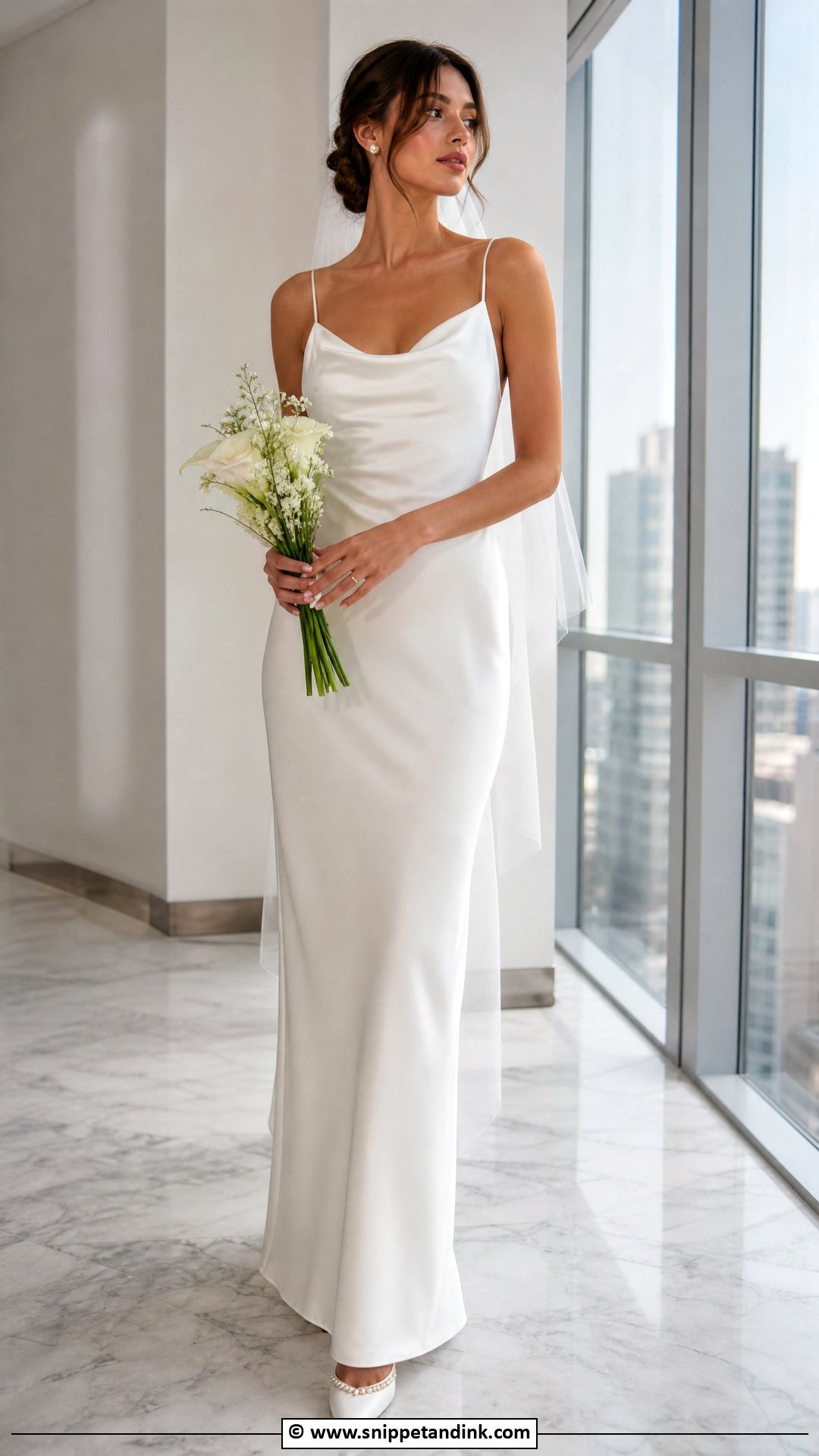
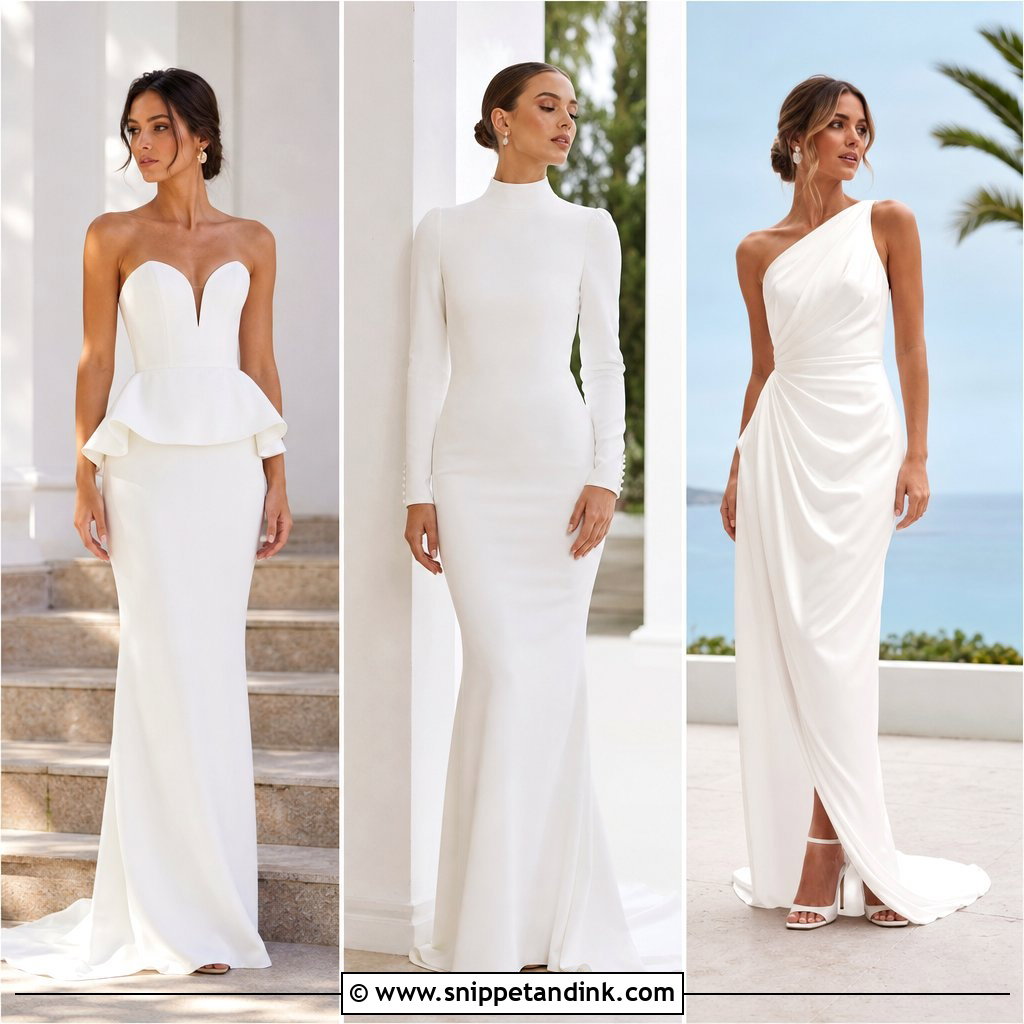
Plain satin is the hardest dress to wear well, because there’s nowhere for a poor fit to hide. A column with a soft cowl or barely-there straps needs a tailor who will chase every ripple at the hip. I also warn brides that satin creases wherever you sit; a heavier duchess or crepe-backed satin recovers far better than a thin, shiny one. Pointed white heels, a low bun, pearl studs and a slim bouquet keep it clean for city and hotel weddings. Go floor-length on the veil for ceremony drama, short if you want it modern.
2. Lace A Line Bridal Dress
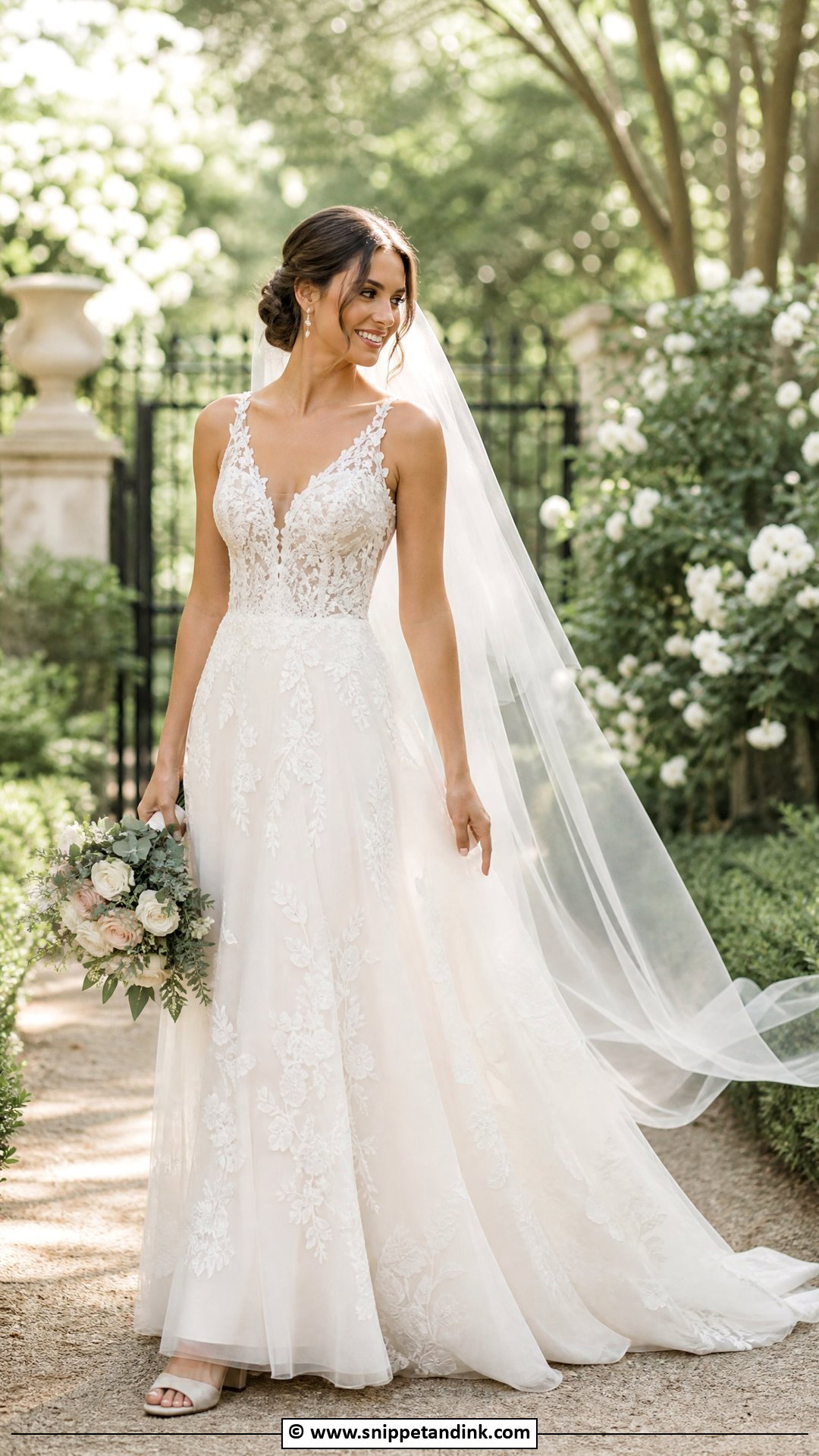
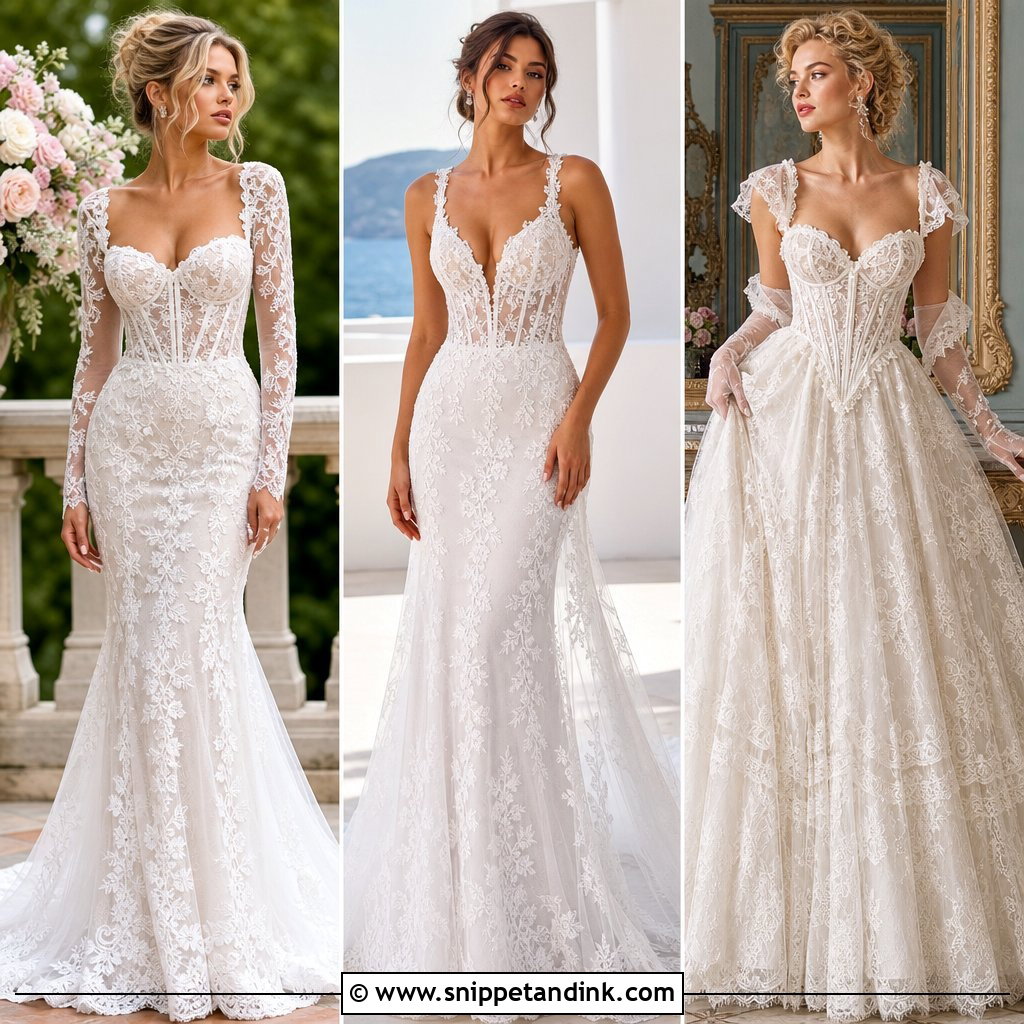
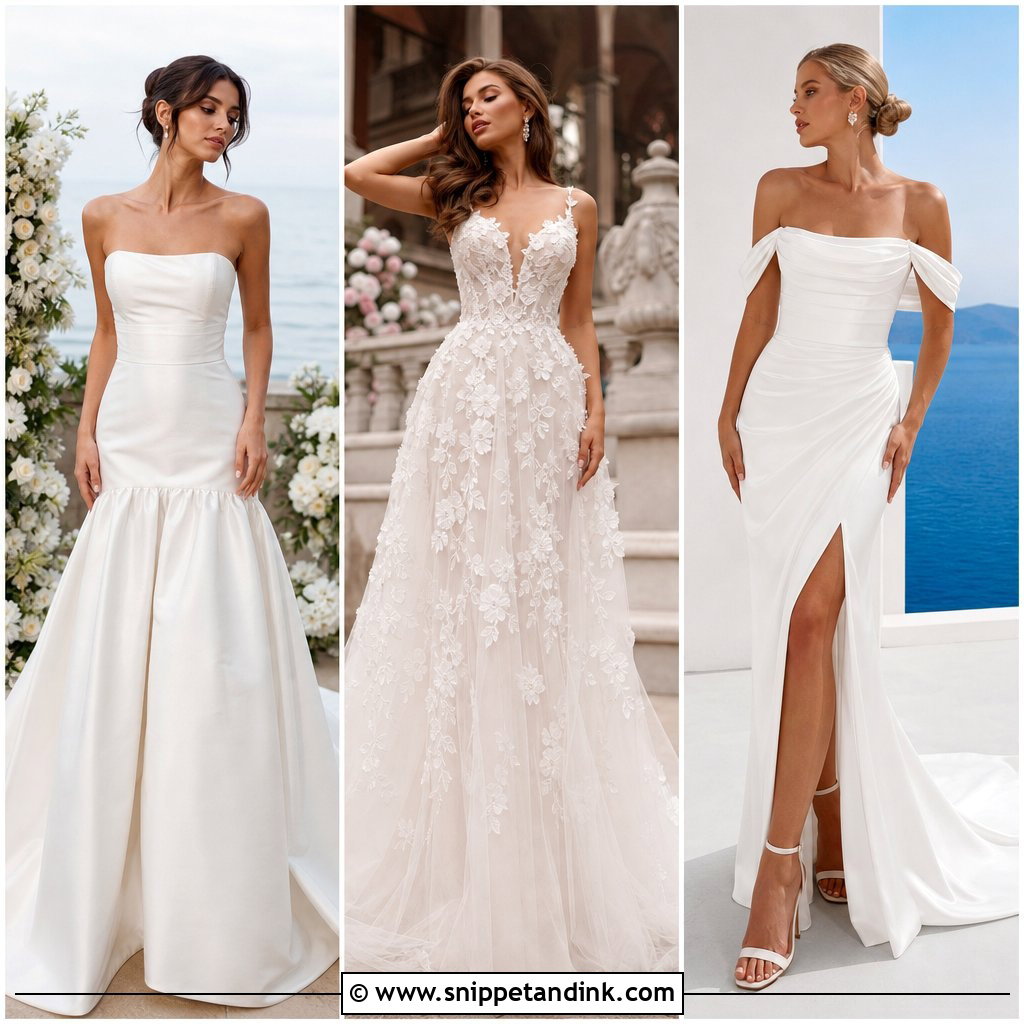
Most brides try a lace A-line first, and many stay there. The bodice sets the waist and the skirt clears the hips, which suits more figures than any other cut. In the fitting I look at whether the lace pattern lines up across the side seams: on a well-made gown the motifs continue, on a cheaper one they stop dead. Floral lace over tulle with a sweetheart or square neck, drop earrings and ivory block heels suit garden and estate venues. Keep the veil plain enough not to fight the lace.
3. Drop Waist Bridal Dress
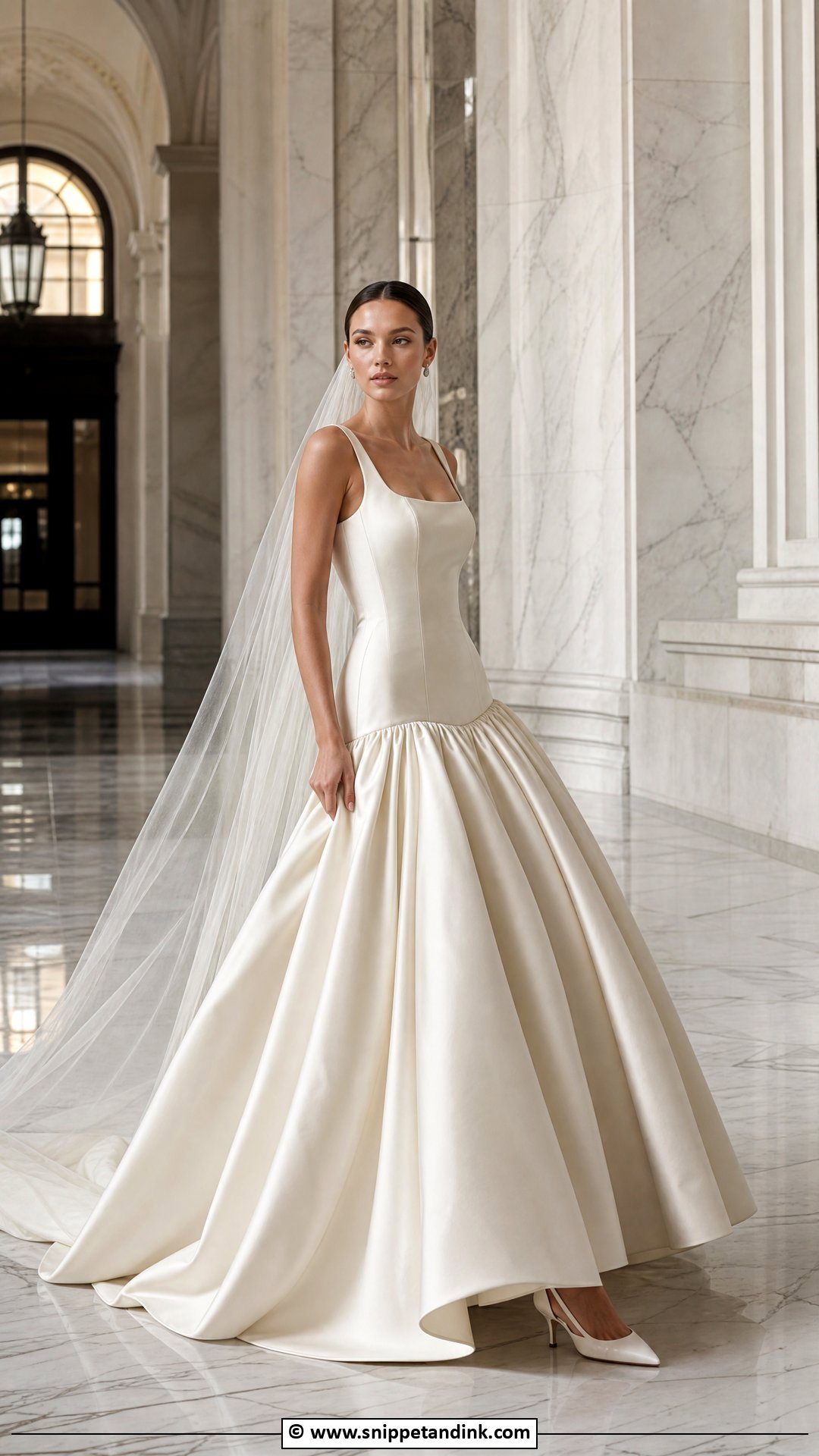
Here’s a silhouette that rewards a long torso. The bodice runs past the natural waist before the skirt opens, so it needs a fabric with body, such as mikado, taffeta or structured crepe, to hold that line. On a shorter torso it can visually cut the legs, and I’d test it beside a natural-waist gown before committing. Slingbacks, a sleek veil and plain diamond or pearl studs let the proportion do the talking in ballrooms, museums and large estates.
4. Basque Waist Bridal Dress
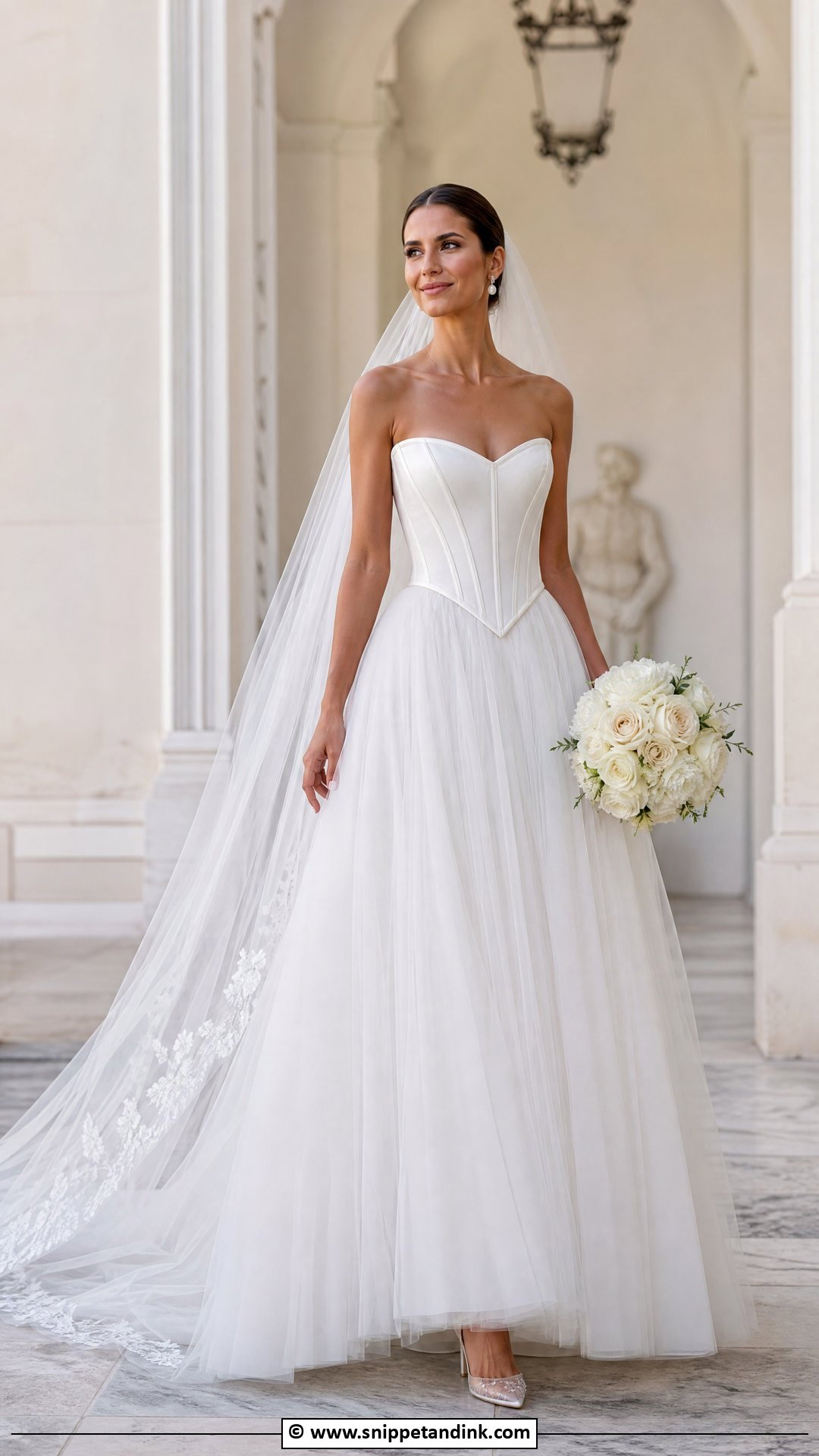
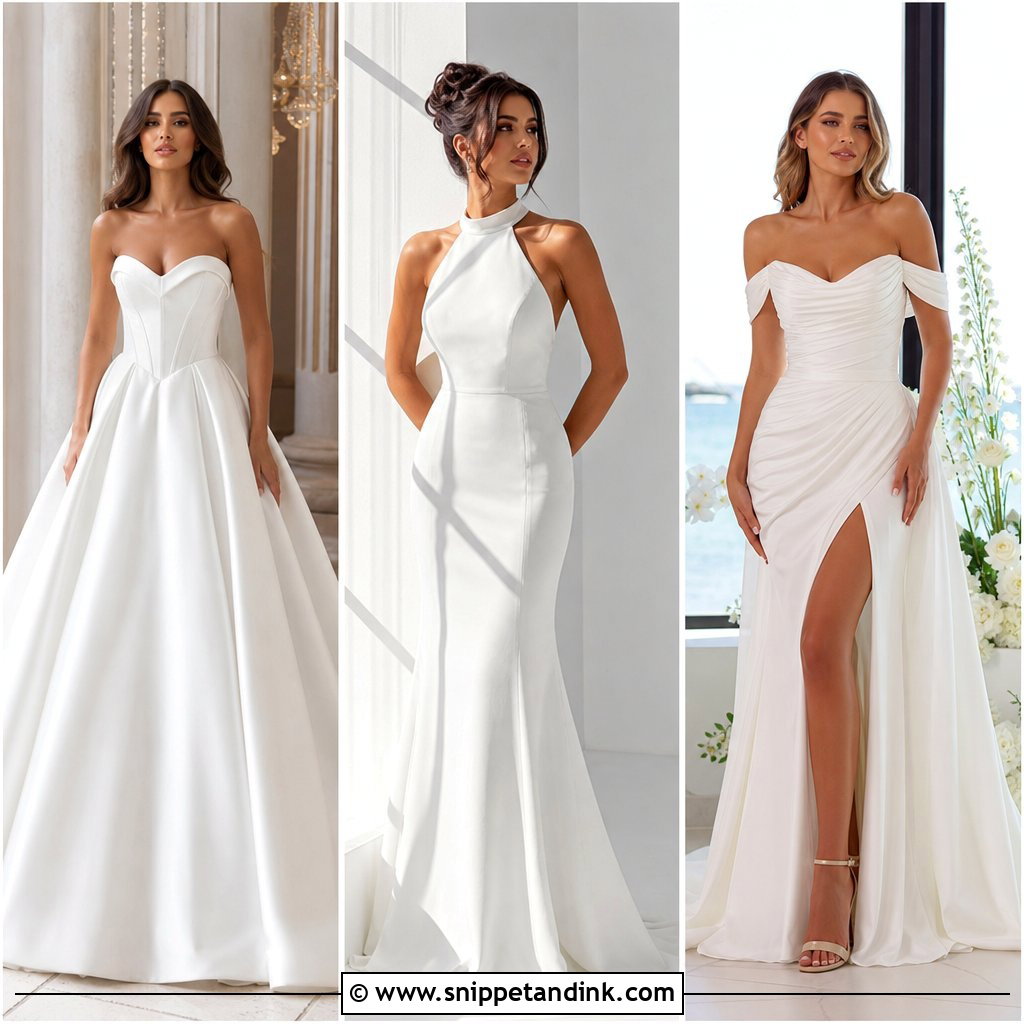
The basque waist dips to a point at the front, which lengthens the torso and narrows the waist. Paired with a full tulle skirt it reads princess; with a softer satin skirt it’s more restrained. My fitting check is the point itself. It should sit centered and flat, because a bodice even slightly too long buckles at the tip when you sit. Dainty heels, a cathedral veil and pearl earrings suit formal, traditional settings.
5. Off Shoulder Bridal Dress
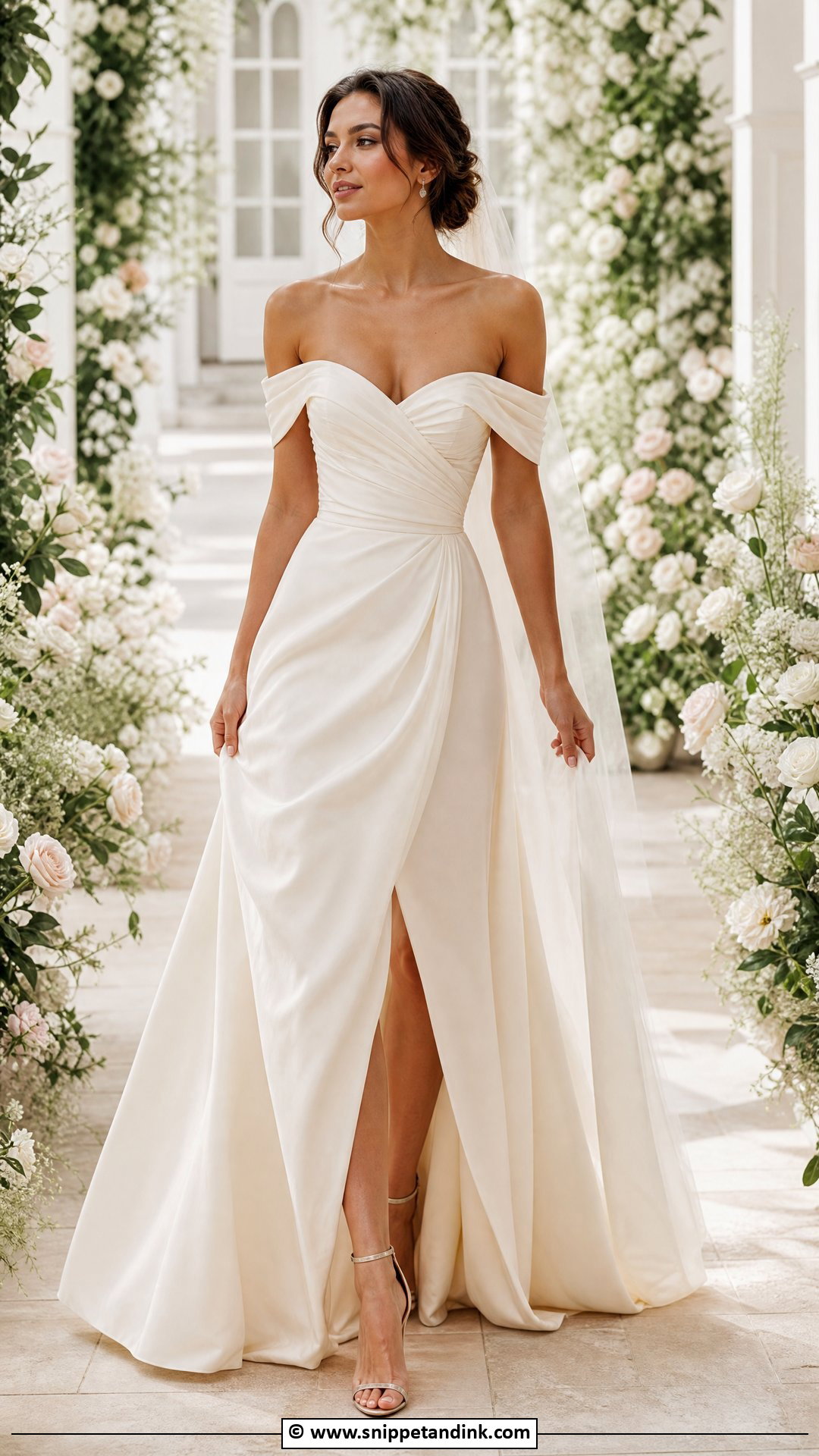
Off-shoulder bands are lovely to look at and tricky to dance in. Satin bands tend to slide down over the evening, so I ask for a silicone gripper strip sewn inside, and I have brides lift their arms during the fitting to see how far they can reach. A fitted bodice over an A-line skirt balances the wide neckline, while a mermaid adds drama. A smooth updo, small earrings and a veil attached behind the shoulders keep the neckline on show.
6. Square Neck Bridal Dress
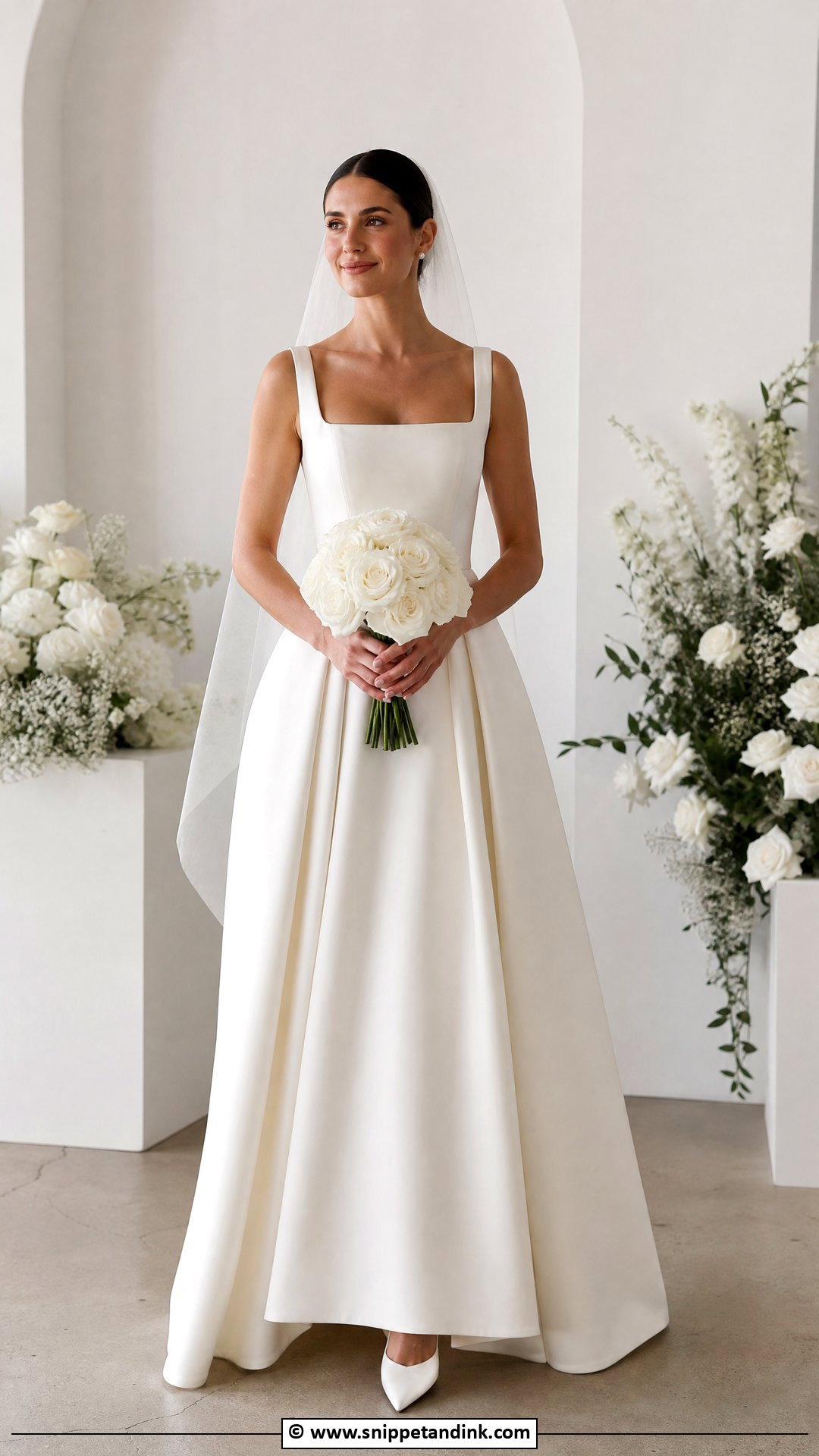
A square neckline gives the upper body some architecture without exposing much, and it works on satin columns, crepe sheaths, lace A-lines and full ball gowns alike. It’s also one of the few necklines that leaves room for a fine necklace. I check that the straps sit just inside the shoulder edge; too wide and they slip, too narrow and they dig. A smooth bun, pearl studs and low heels suit courthouse, garden or indoor ceremonies.
7. Cat Eye Neckline Bridal Dress
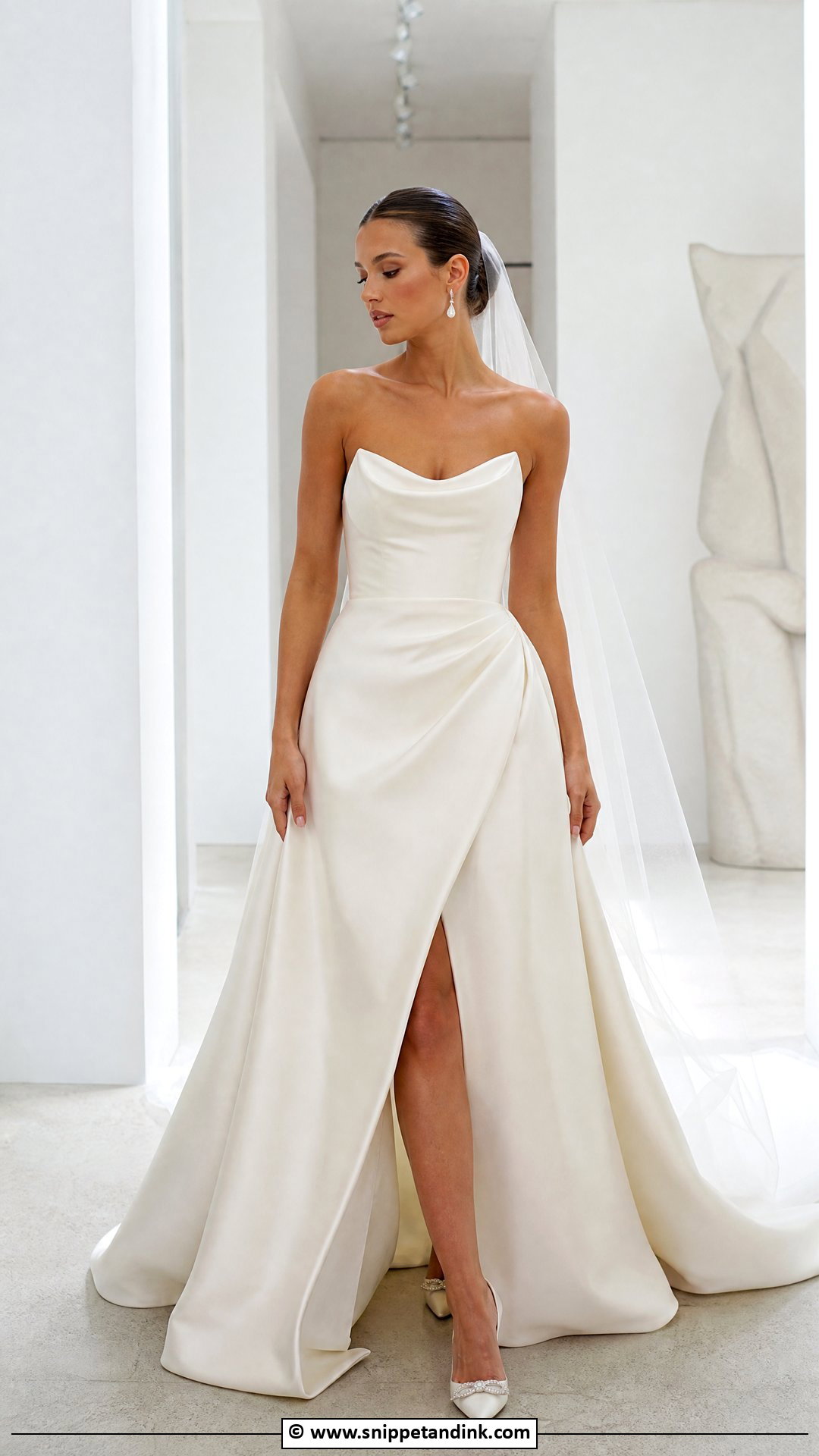
Cat-eye necklines curve upward at the outer edges, lifting the bust line in a way a straight strapless can’t. They look sharp on strapless satin, fitted crepe and structured ball gowns. The shape only holds with solid internal construction, though. Without boning and a good waist stay, those raised points fold inward by the time dinner is served. Simple earrings, a clean veil and pointed heels, and nothing else competing near the neckline.
8. Halter Neck Bridal Dress
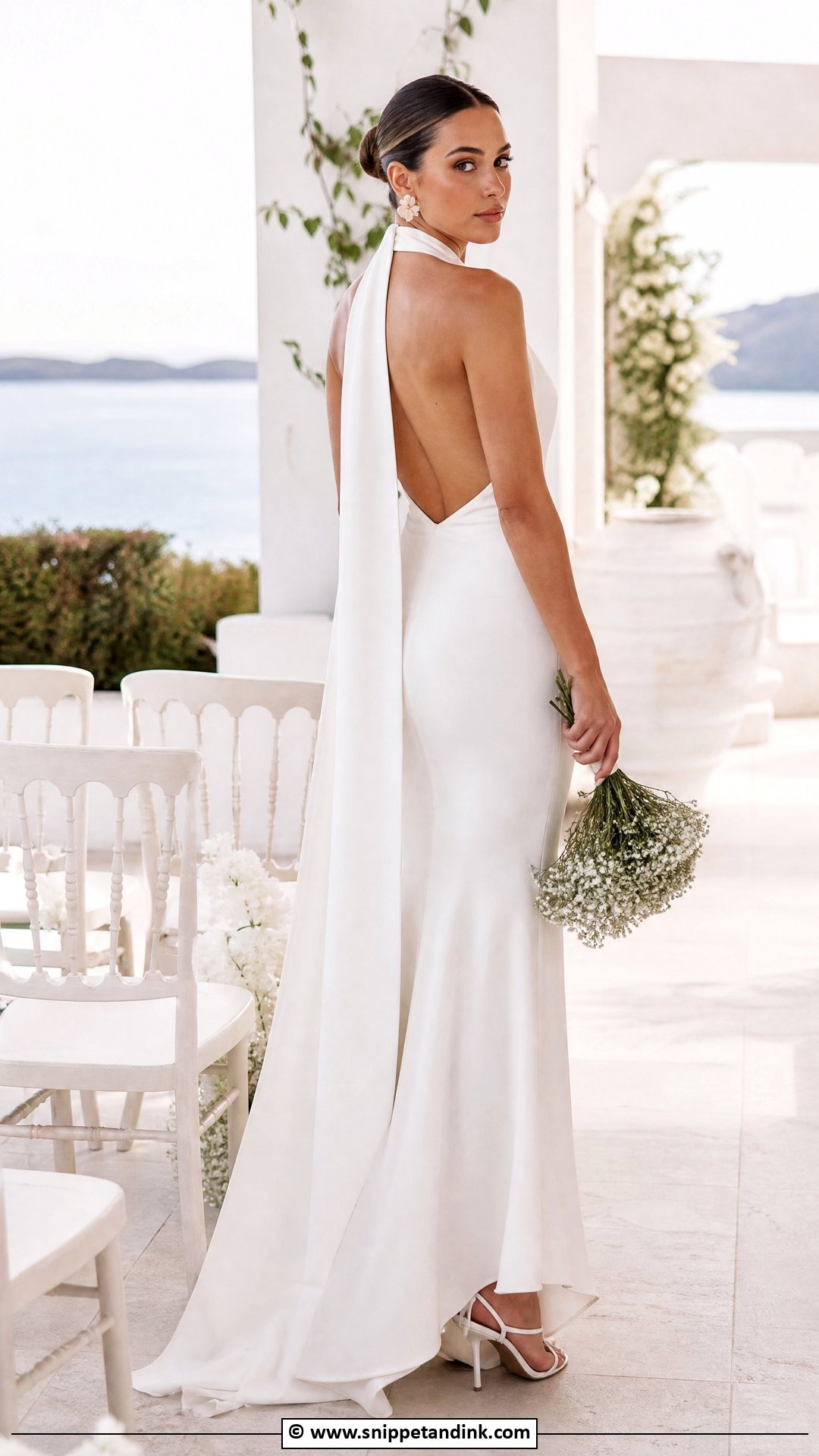
Halters put the focus on shoulders and face, and they’re cool to wear, which is why they turn up at so many summer and destination weddings. Test the neck strap properly. A halter carrying a heavy skirt pulls on the back of your neck within a couple of hours, so the bodice has to take that weight instead. Swept-back hair, statement earrings, strappy heels and a slim bouquet suit it; skip necklaces entirely. A low back pairs naturally with this cut.
9. Long Sleeve Lace Bridal Dress
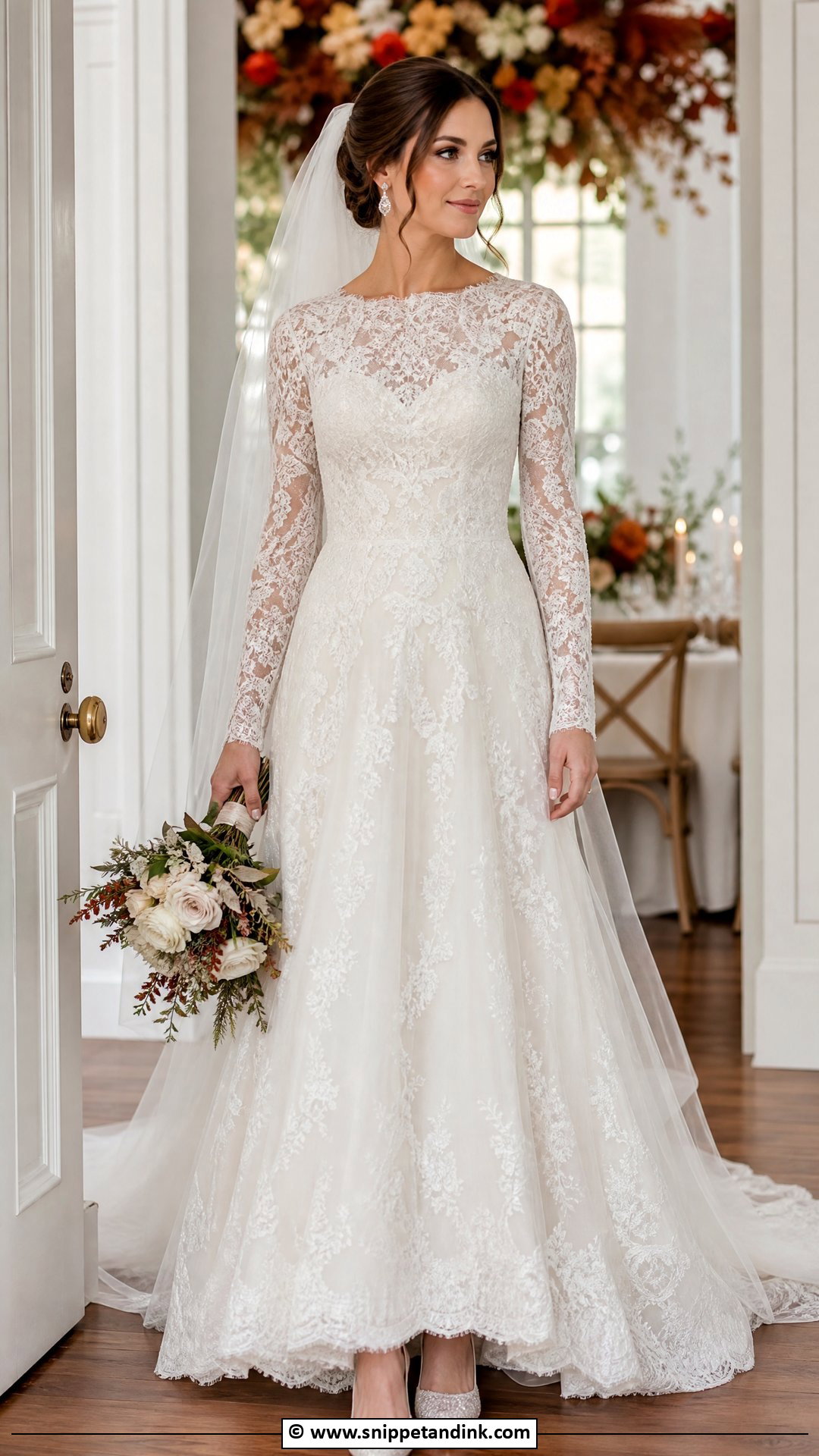
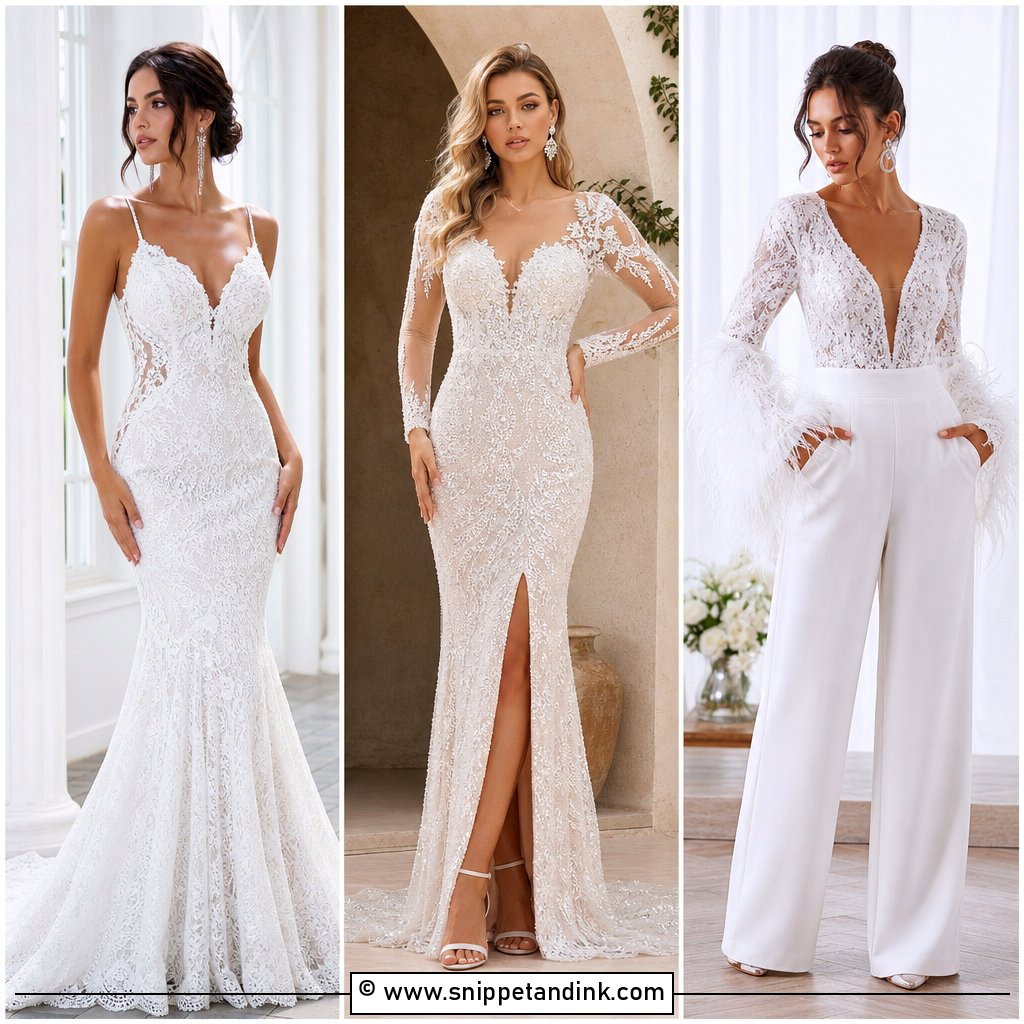
Sheer lace sleeves give coverage while still letting skin show through, which is why I suggest them to brides who want modesty without heaviness. A fitted bodice, gentle A-line skirt and scalloped edges keep it classic. Lighter lace makes the style workable in spring, while heavier corded lace belongs to fall and winter. I always have brides sit with their arms bent, since a sleeve that’s tight at the elbow becomes miserable by the toasts. Closed-toe heels, a simple veil and small earrings finish it.
10. Sheer Sleeve Bridal Dress
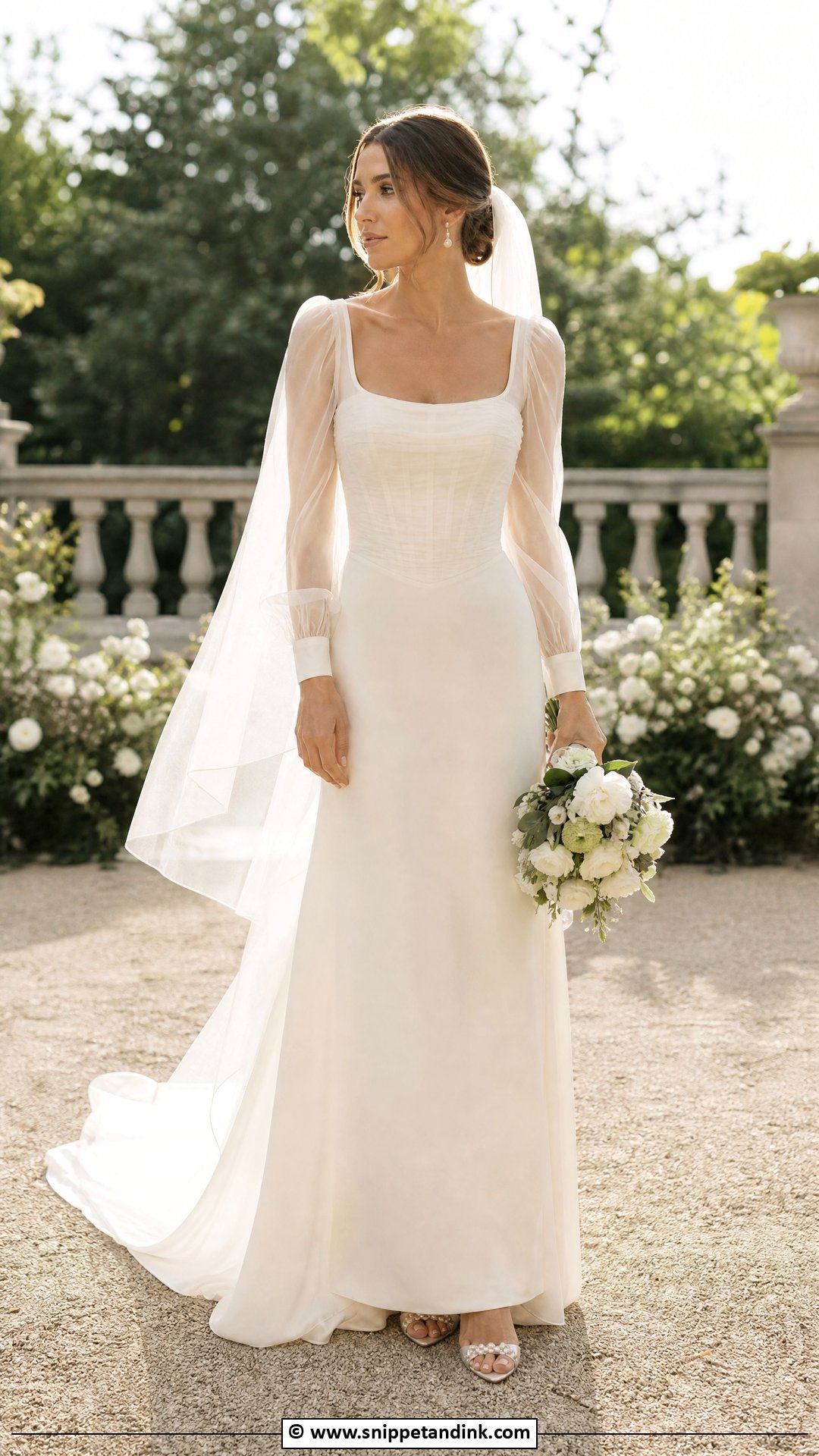
Plain tulle, dotted mesh, floral lace, light embroidery: sheer sleeves come in many forms, and all of them weigh almost nothing. That lightness is the point, a finished, covered look with none of the warmth. Watch the cuff. Tulle sleeves without a finished or elasticated wrist edge tend to creep up the forearm through the day. Pearl heels, a low bun and a fingertip veil suit bright venues and afternoon ceremonies.
11. Corset Bodice Bridal Dress
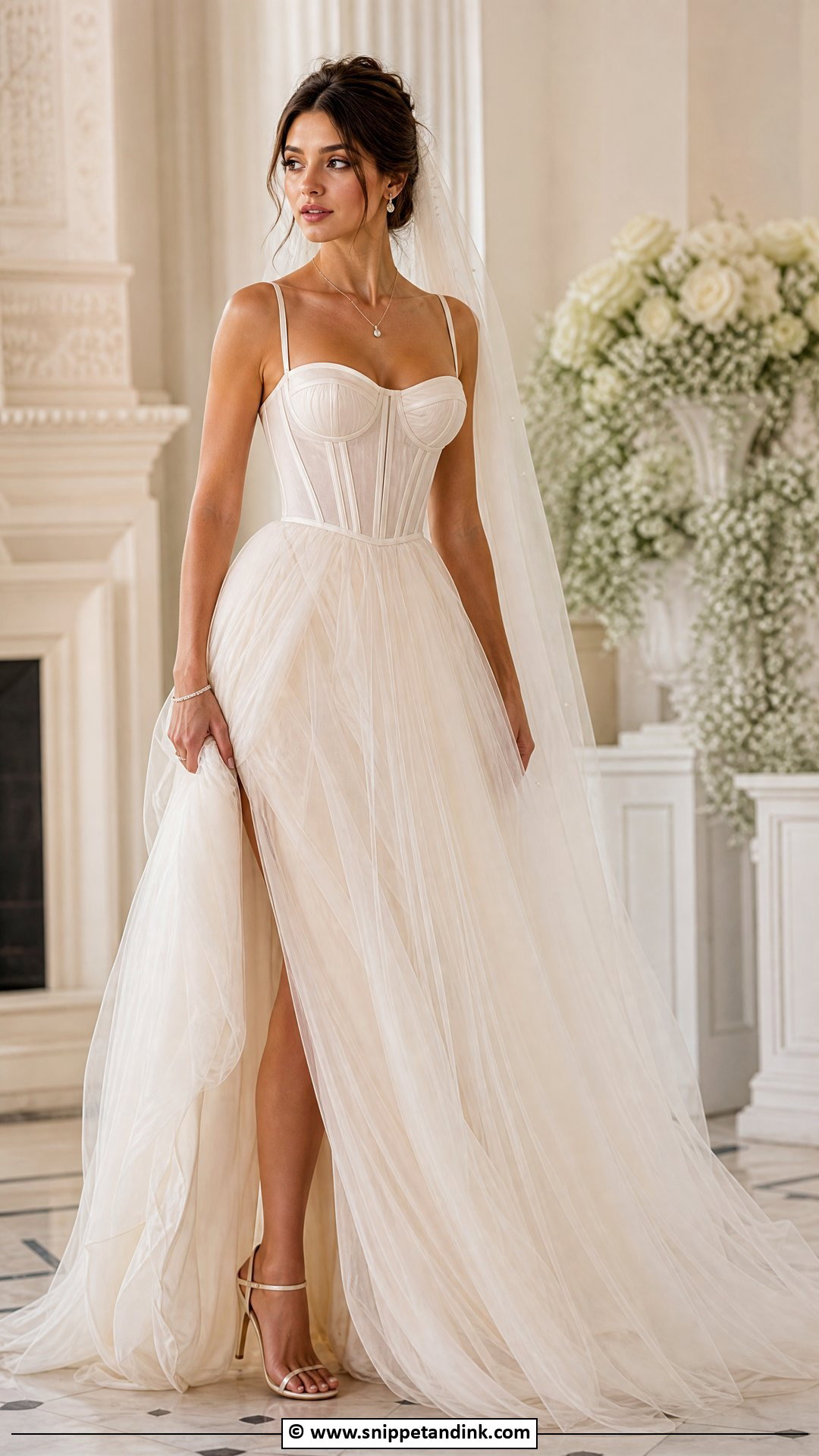
A corset bodice bridal dress creates shape and support, and modern versions look soft rather than stiff over tulle, satin or organza skirts. Exposed boning is fashion-led; hidden boning is classic. Whichever you choose, I judge comfort, not just the waistline. At the final fitting you should be able to breathe deeply, sit and reach forward for a glass. If you can’t, it’s too tight. Slingbacks, a simple veil and fine jewelry stop the outfit from getting crowded.
12. Ball Gown Bridal Dress
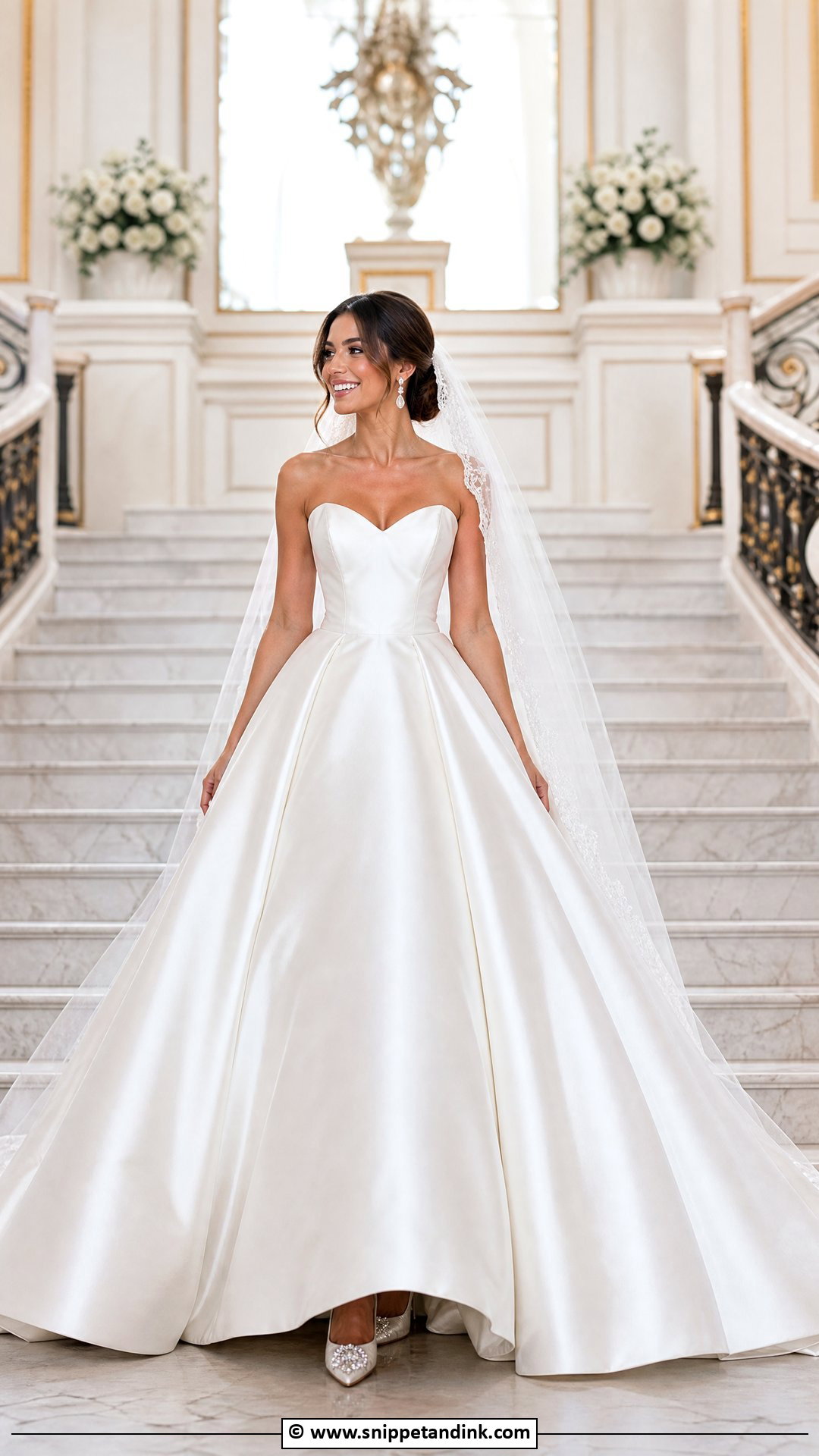
Ball gowns are about the entrance, and also about logistics. A full skirt needs space in the car, room in the bathroom and a person assigned to help with it. Satin reads royal, lace romantic, tulle soft. Practise walking forward and turning in the shop, because the hem catches under your toes if the skirt isn’t cut with enough clearance at the front. Pearl earrings, a long veil and comfortable heels hidden underneath suit ballrooms and estates, and refined hair keeps the volume in the dress.
13. Tulle Bridal Dress
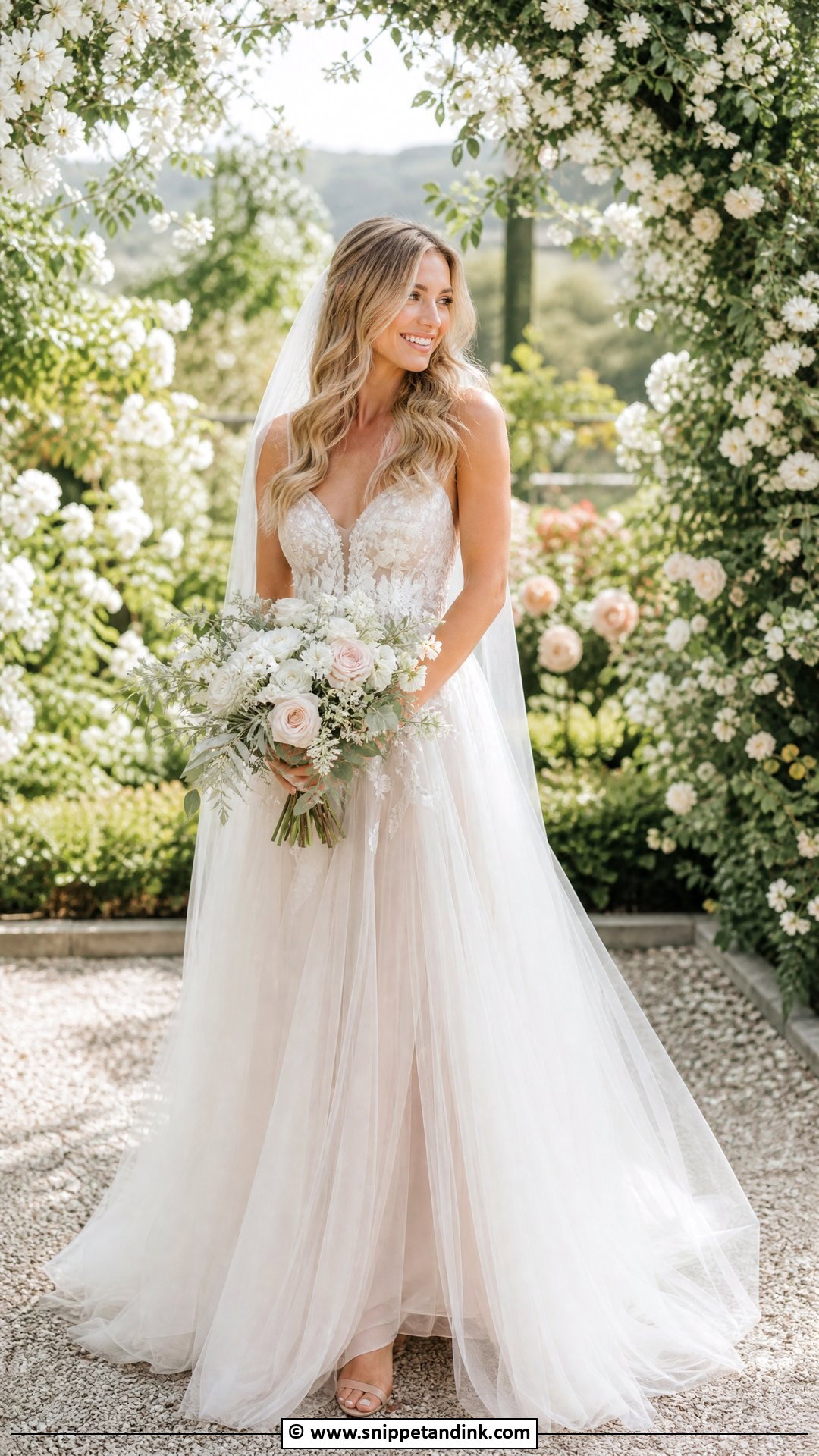
Layered tulle gives volume with very little weight, which is why it moves so well when you walk. It’s also delicate. Tulle snags on rough stone, shoe buckles and bouquet wire, and a torn layer usually has to be trimmed rather than mended. A simple A-line, a full princess skirt or a gown with scattered appliqué suits gardens and romantic indoor venues. Barely-there heels and soft waves keep it light, and clean bodice lines stop it looking dated.
14. Organza Bridal Dress
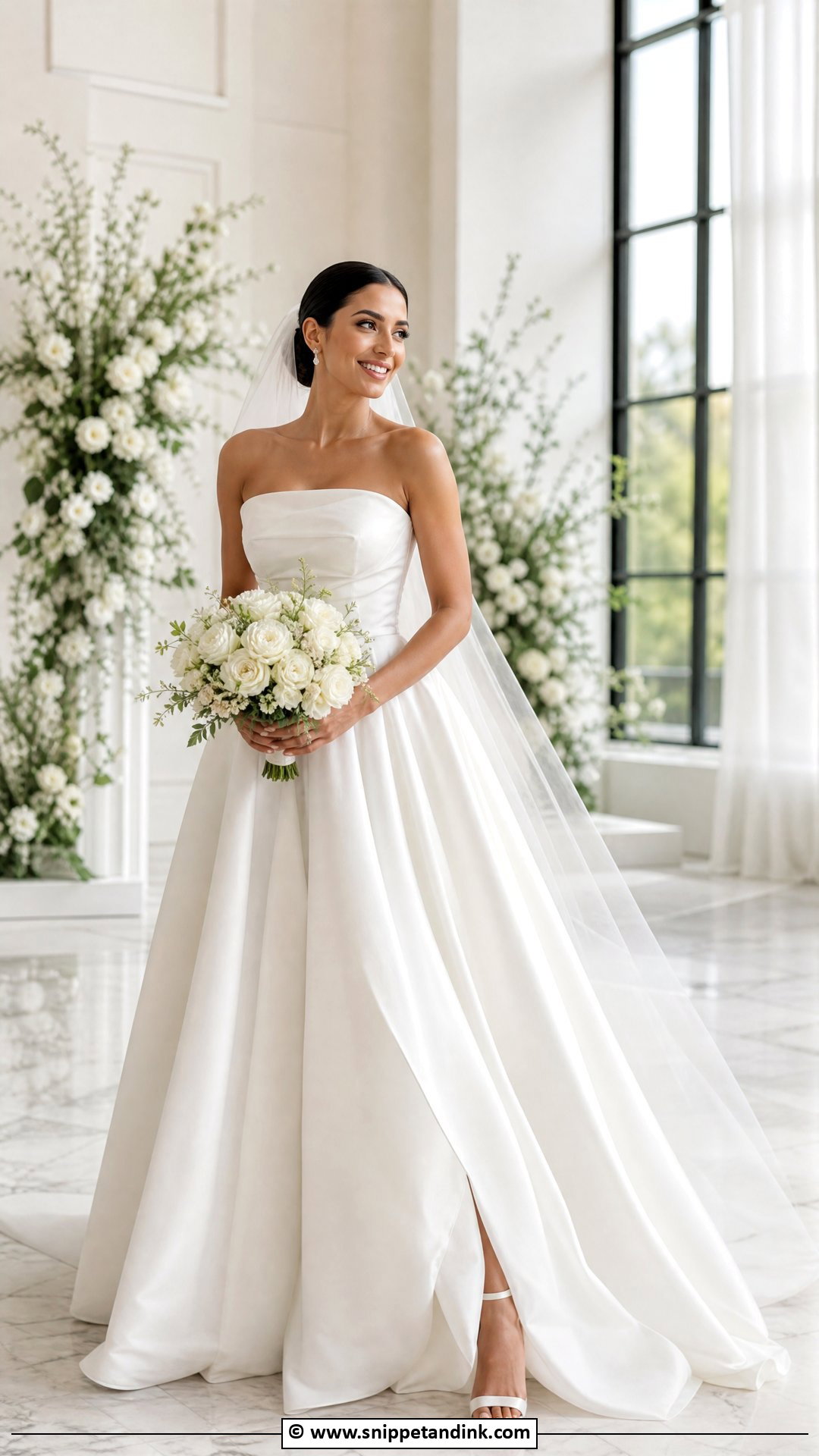
Organza is crisp and sheer, so it holds a sculpted shape while still letting light through. I like it for structured skirts and soft ruffles, balanced by a strapless or square bodice. Know that organza wrinkles sharply and shows every fold, so steaming on the morning of the wedding is non-negotiable; I carry a handheld steamer for exactly this fabric. Satin heels, a sleek veil and simple earrings suit spring and summer.
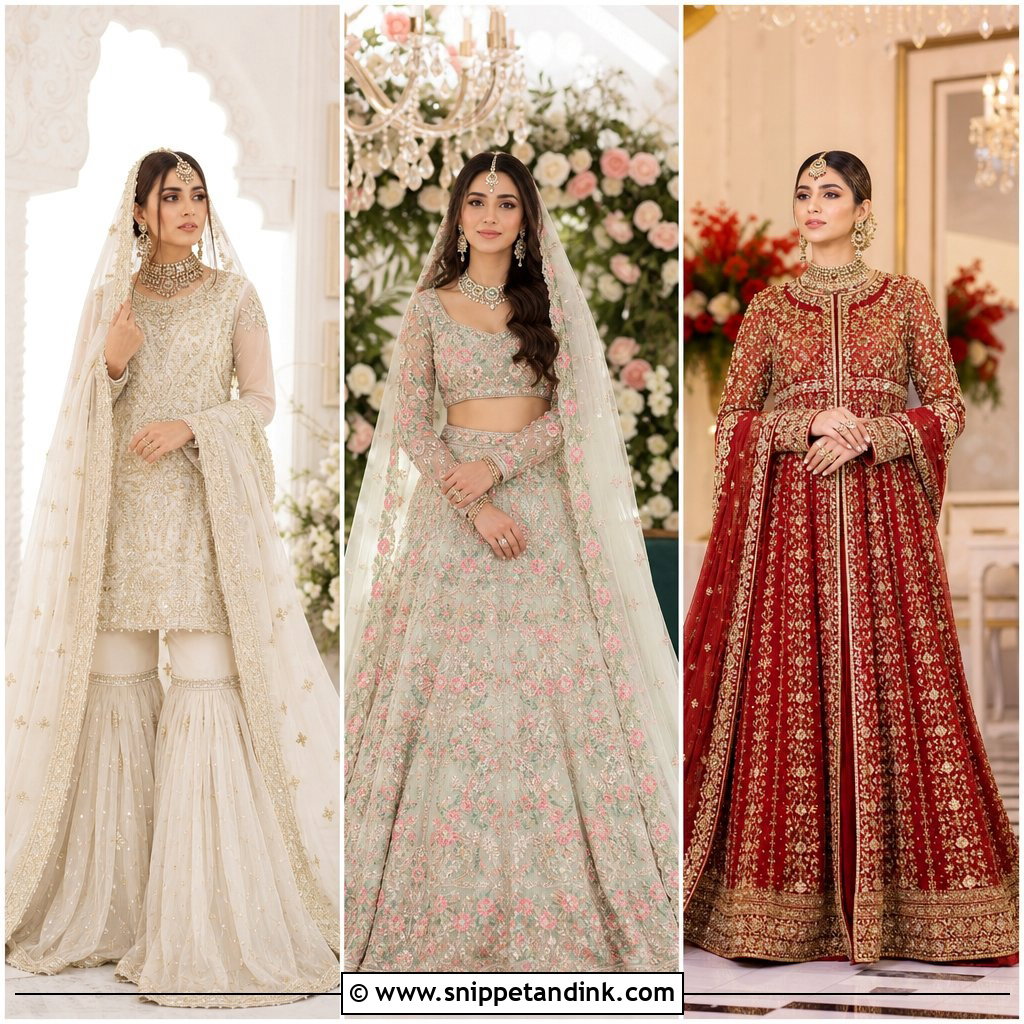
15. Crepe Column Bridal Dress
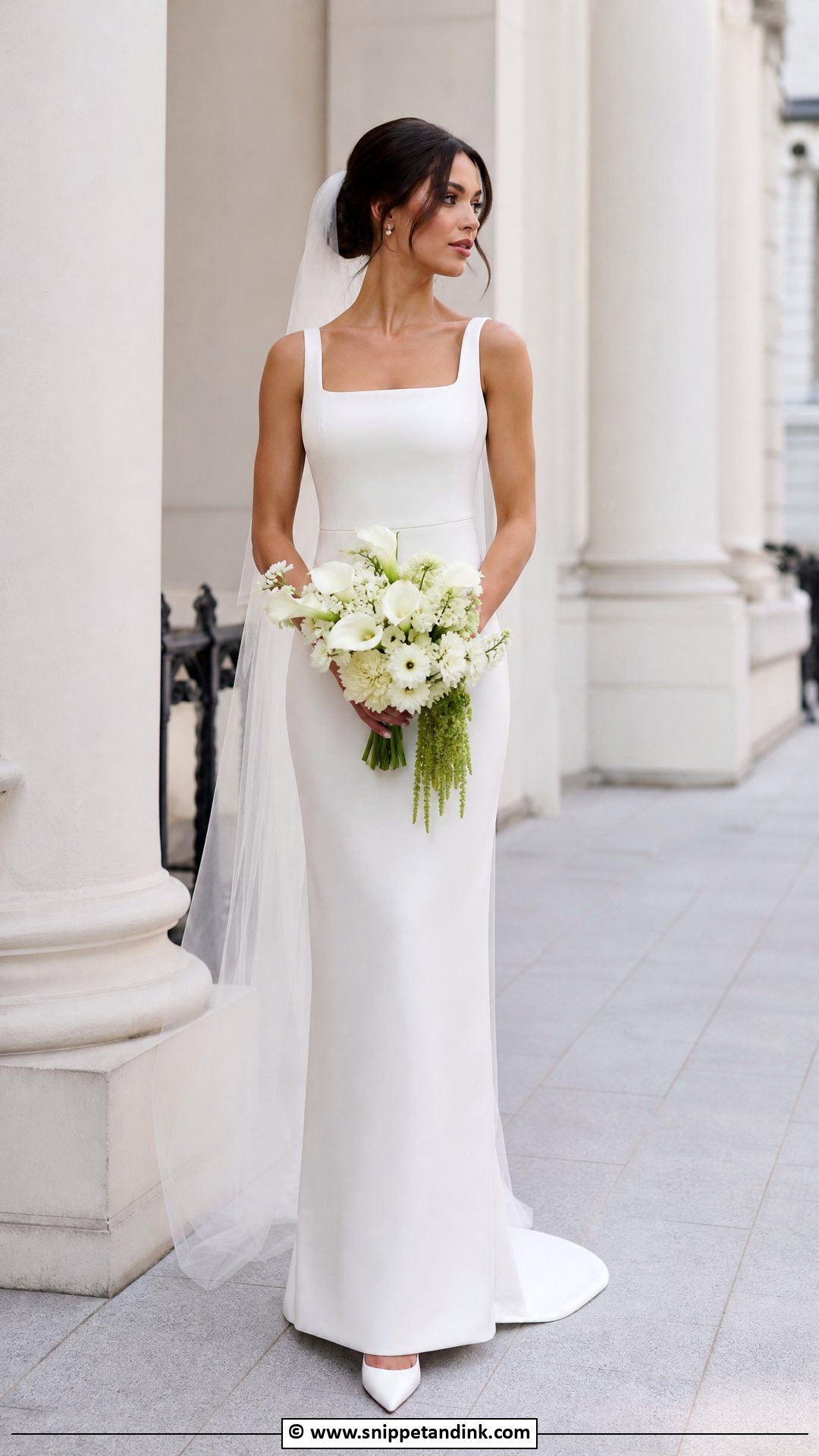
Crepe has enough weight to smooth the body and enough give to stay comfortable, which makes a crepe column the quiet choice for brides who like minimal fashion. Square, bateau and long-sleeved versions all work. The honest warning is that crepe shows underwear lines and every tailoring flaw, so wear smooth, bonded underwear to every fitting. Pointed heels, a structured bouquet and a long veil add contrast for city weddings and courthouse ceremonies. Posture shows in a column more than in any other shape.
16. Mermaid Bridal Dress
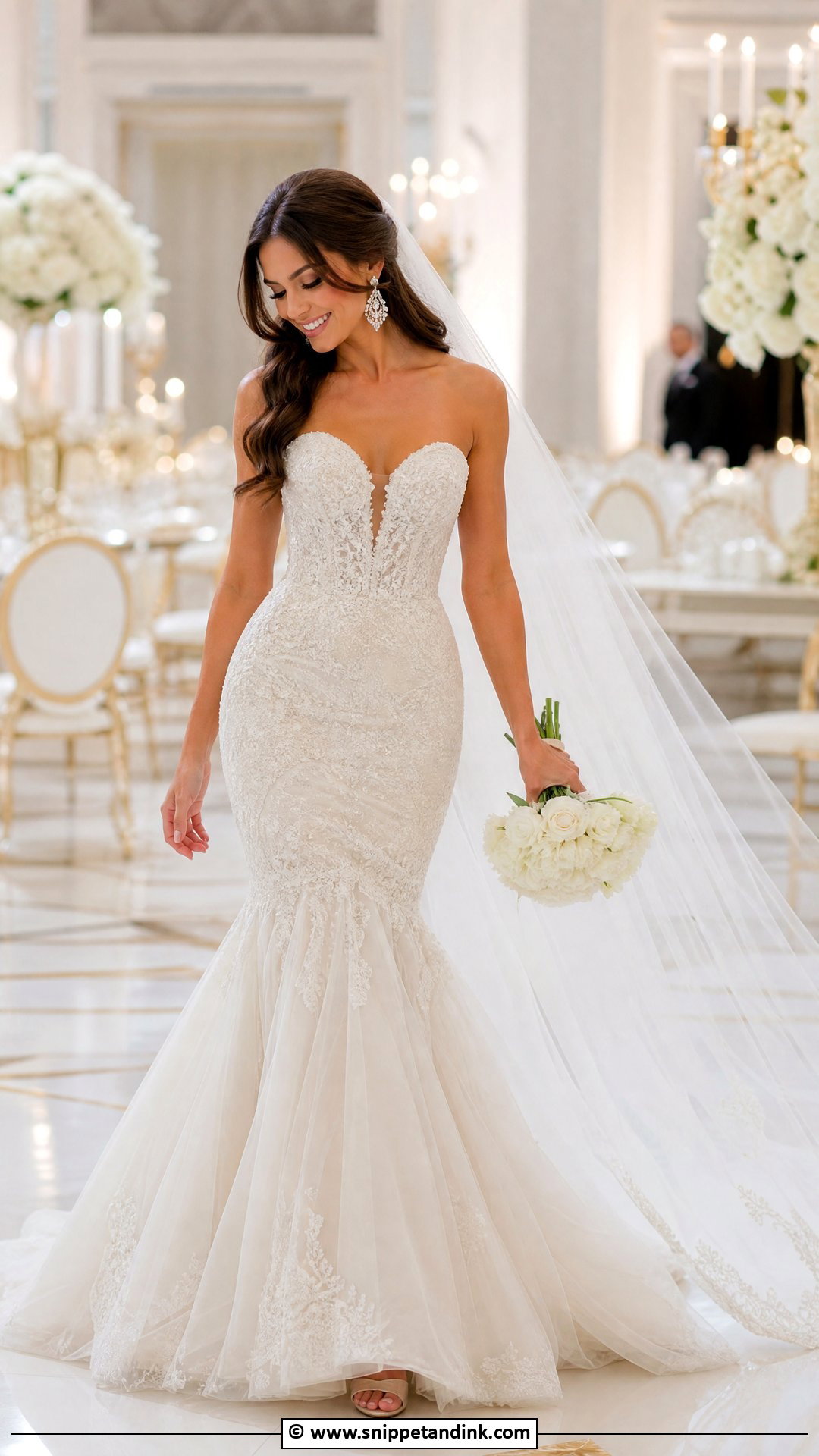
Mermaids grip through the bodice, waist and hips and flare at or below the knee. Lace softens them, satin adds shine, crepe keeps them clean. The fit has to be close without stopping you climbing steps, so I ask brides to walk up a stair in the fitting room before any final pinning. High heels balance the flare, earrings frame the face, and the bouquet should stay slim. Skip anything oversized; the shape already carries the look.
17. Fit And Flare Bridal Dress
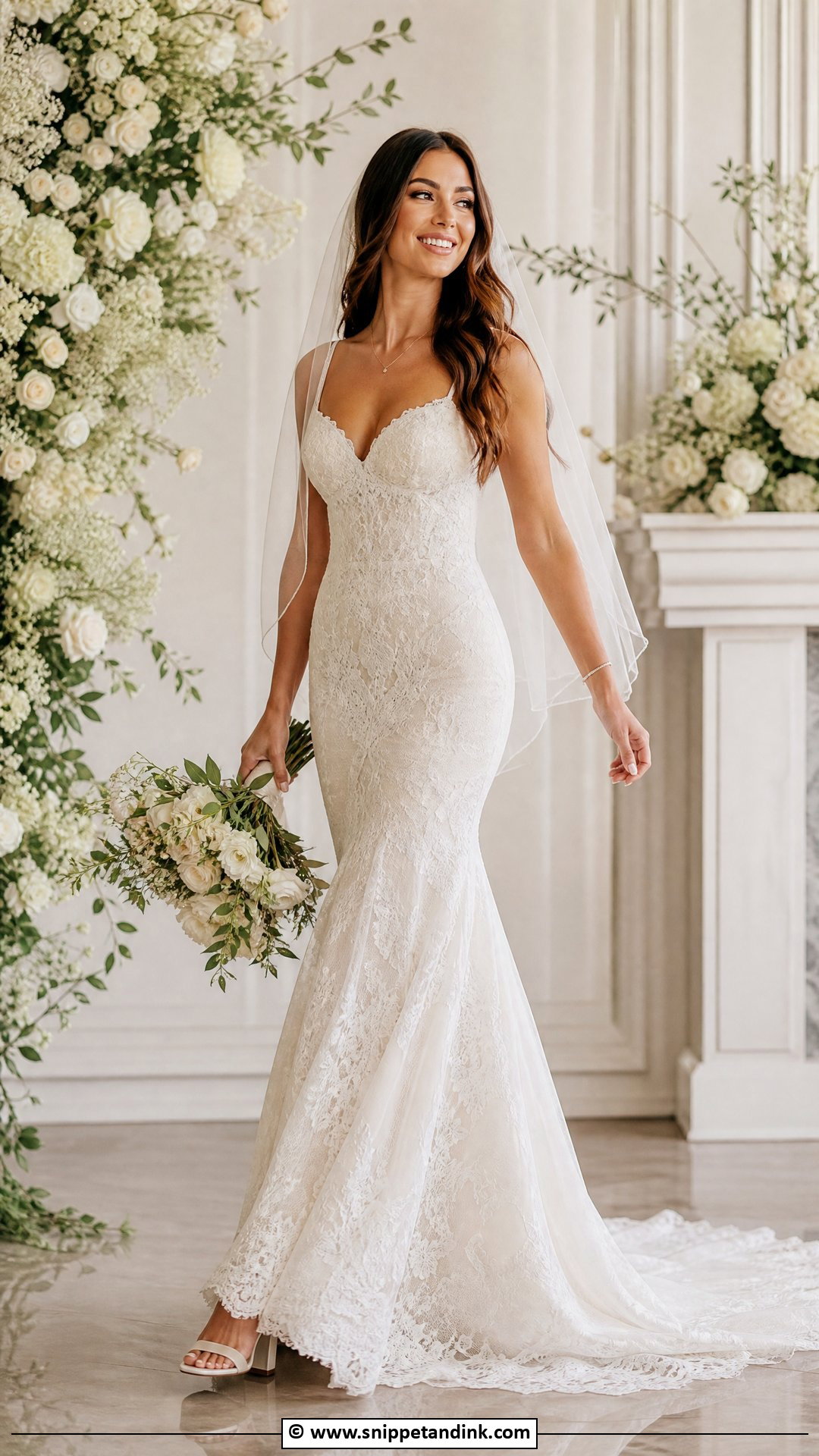
If a mermaid feels too restrictive, the fit and flare opens higher on the thigh, so you keep the curve and can still walk normally. Lace, crepe, satin or a mix all suit it. From the side, the skirt swings as you move, which reads well in candid shots. Block heels, a simple veil and soft waves keep it relaxed indoors or out.
18. Tea Length Bridal Dress
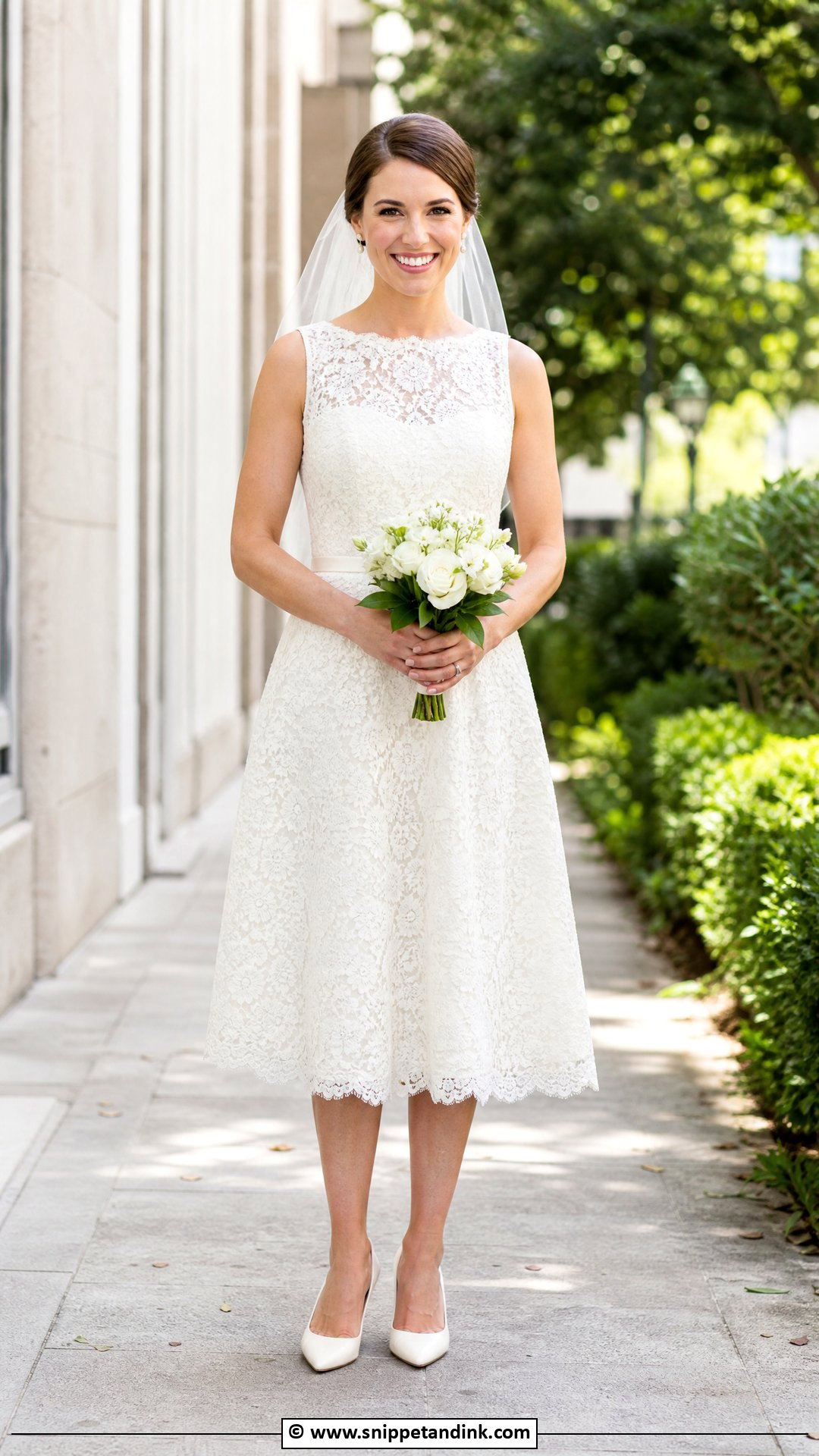
Tea length falls between knee and ankle, so your shoes become part of the outfit. It’s practical, too: you can walk, dance and climb steps without lifting a hem. Satin, lace or tulle keep it bridal. The thing I adjust most is hem height, which should land at the narrowest part of the calf. Pointed pumps, pearl earrings and a short veil or bow suit courthouse weddings, brunch receptions and second looks.
19. Short Bridal Dress
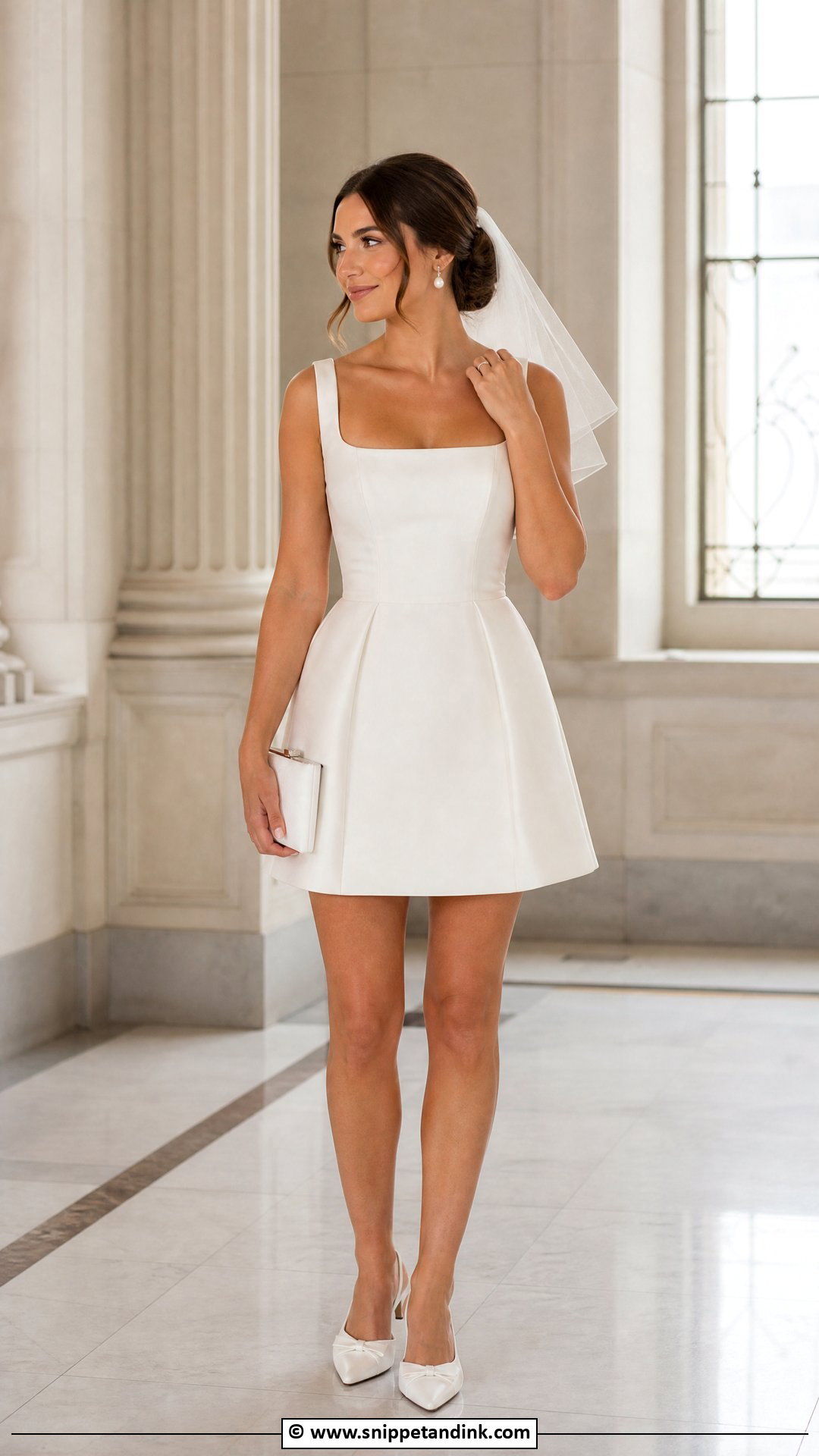
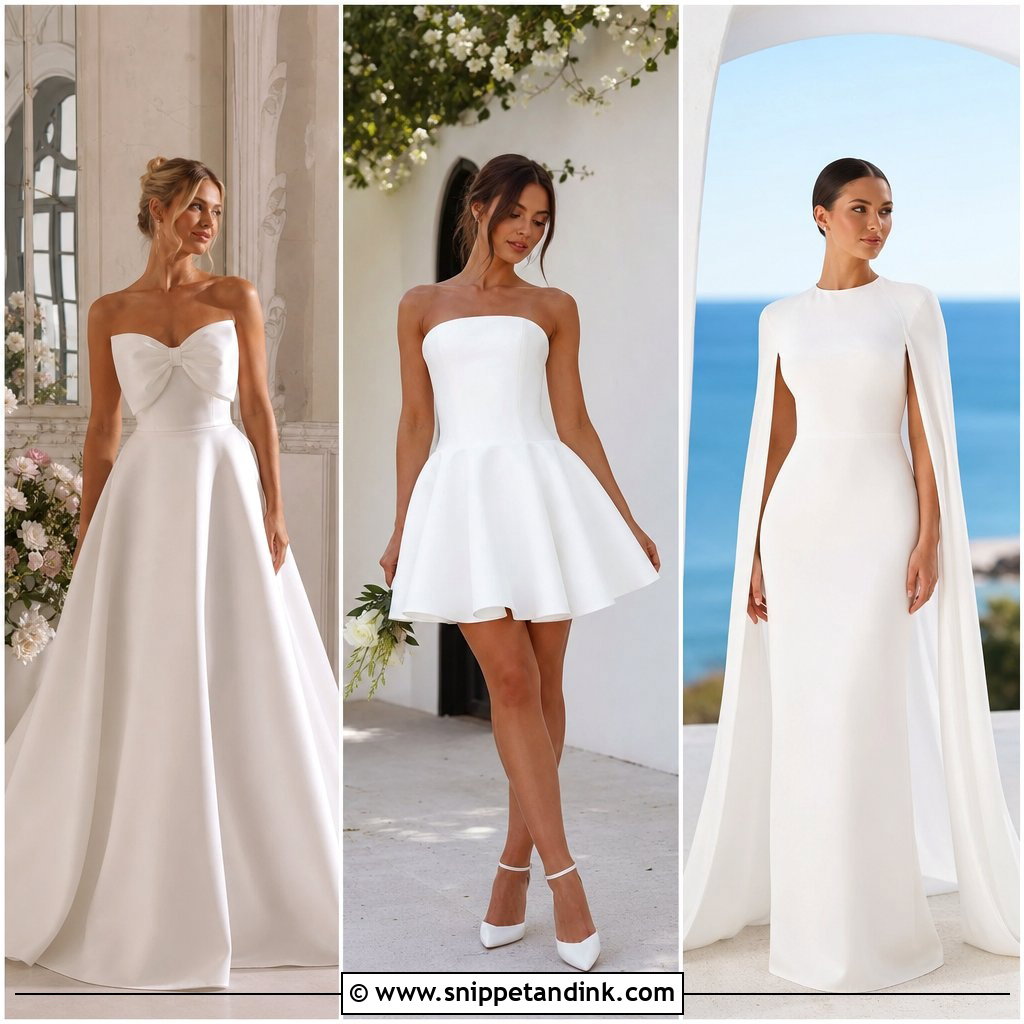
A short dress keeps a civil ceremony or reception change feeling light. A structured mini, lace shift, satin wrap or fitted dress with a bow all work. Fabric is what makes it read bridal rather than party, so I steer brides toward white satin, ivory crepe or lace and away from jersey. Low heels, a small veil, pearl earrings and a neat clutch complete it. At hot-weather and travel weddings it’s the easiest thing to wear.

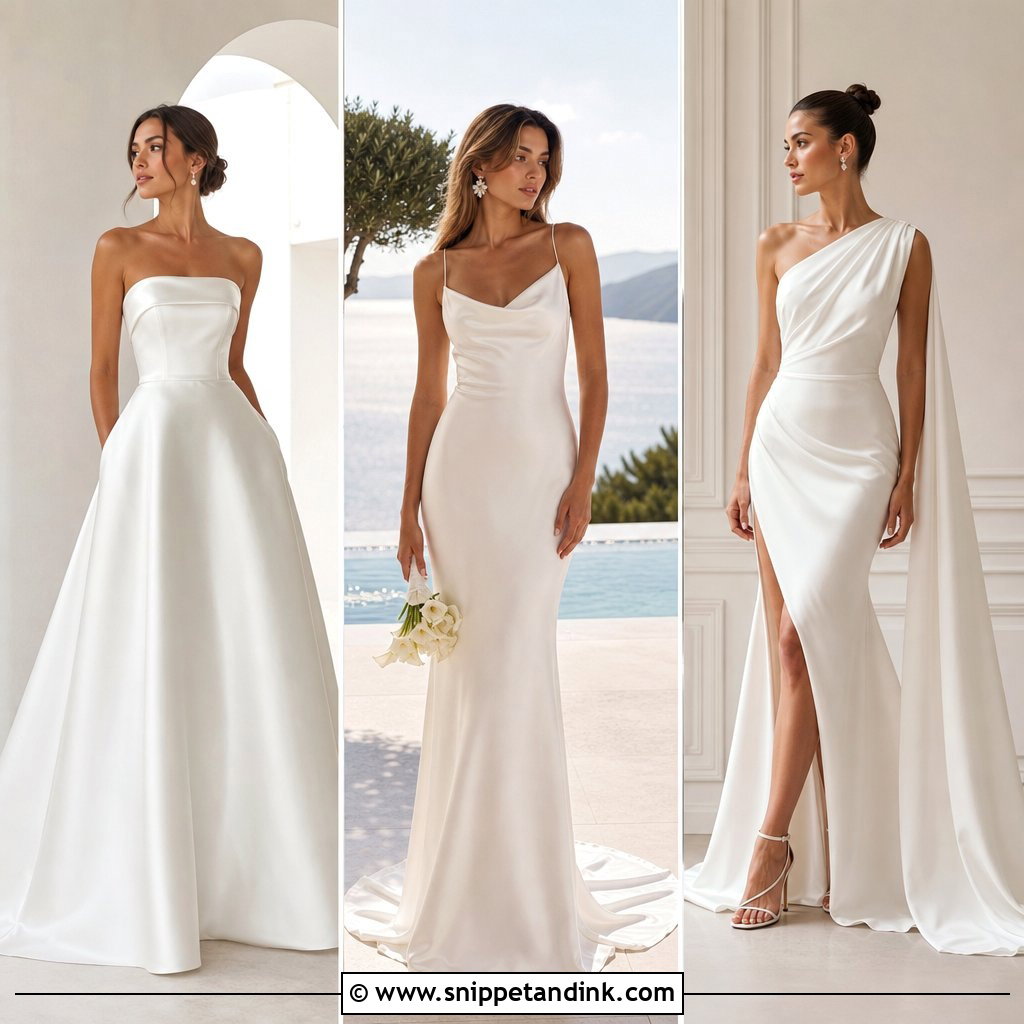
20. Bridal Mini Dress With Bow
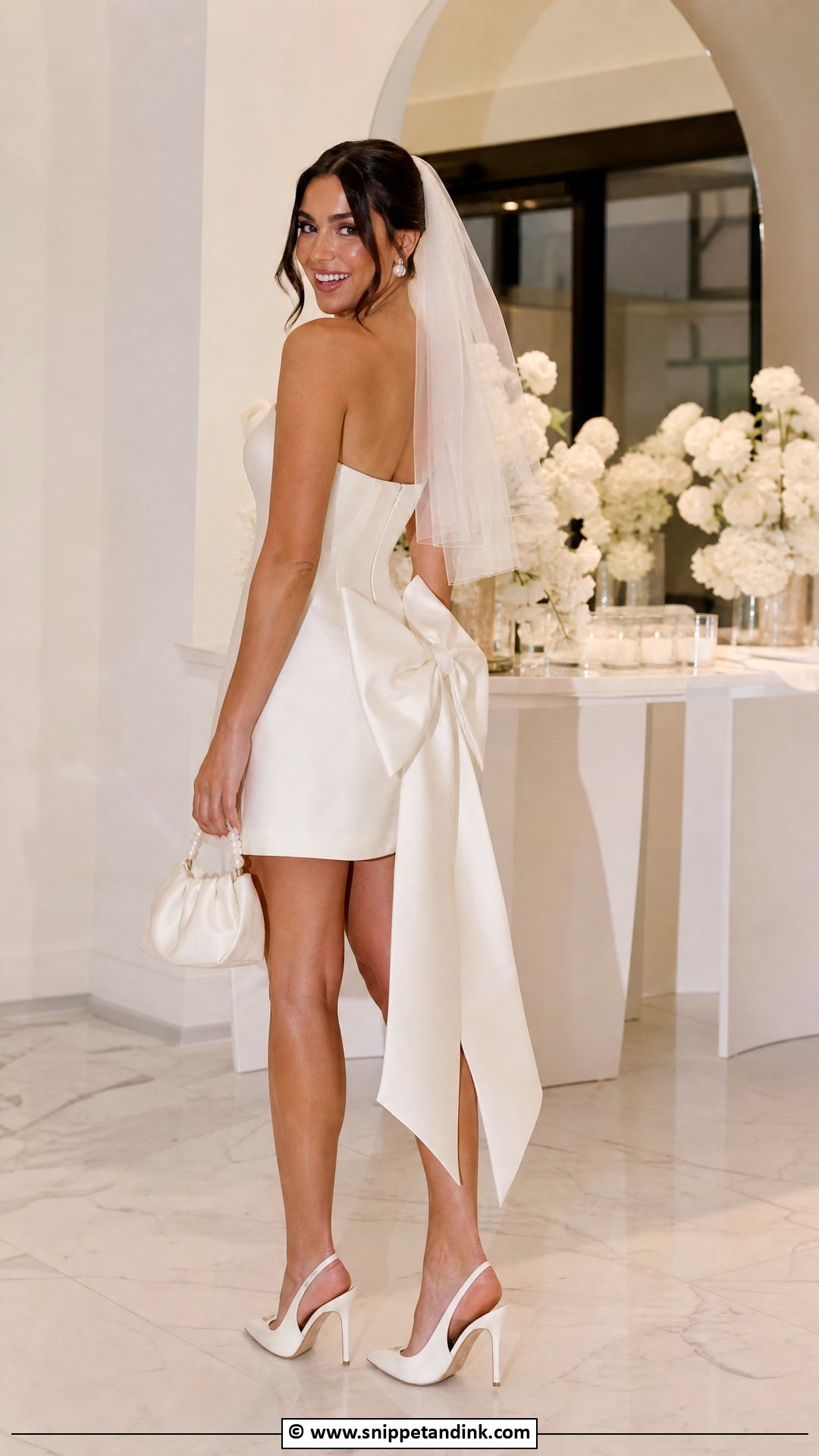
Bows are the detail of the moment, and placement changes the mood: a back bow reads sweet, a shoulder bow fashion-led, a waist bow classic. On a satin, mikado or crepe mini, I check that the bow is stiffened or interfaced, because a soft bow collapses flat within an hour. Add white heels and a small structured bag, and keep jewelry quiet so the bow leads. Reception dancing, courthouse weddings and showers all suit it.
21. Bridal Jumpsuit Outfit
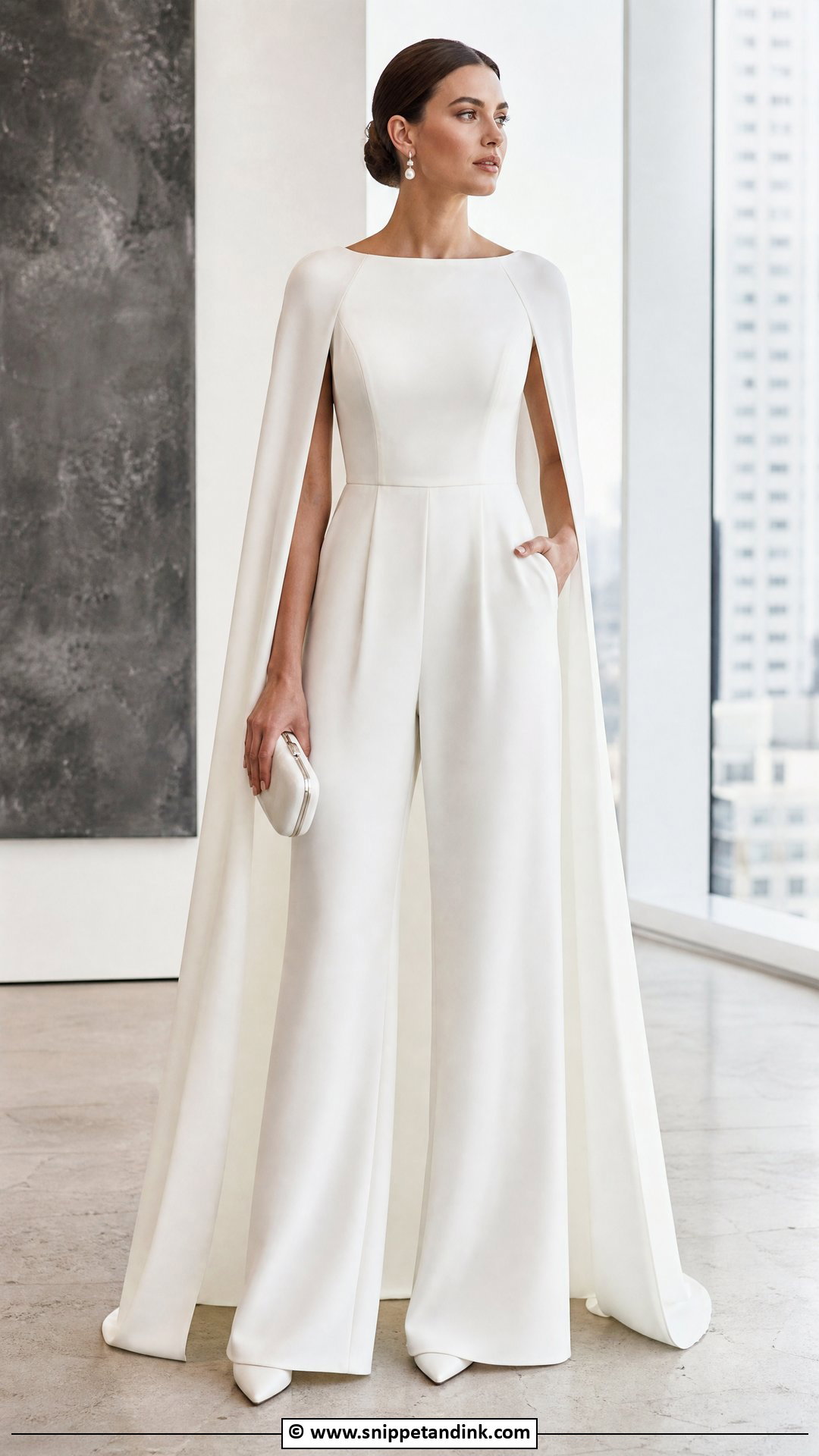
Jumpsuits suit brides who know a skirt won’t feel like them. Look for wide legs and a fitted bodice, perhaps with a cape overlay or lace sleeves to make it ceremonial. The tailoring point I fuss over is the rise: too short and it pulls every time you sit or bend, which is the most common jumpsuit complaint. Pointed heels that suit the wide hem, pearl earrings and a sleek clutch work for courthouse and city weddings. A short veil or cape adds drama without a skirt, and careful tailoring is what makes the whole thing look expensive.
22. Bridal Pantsuit Outfit
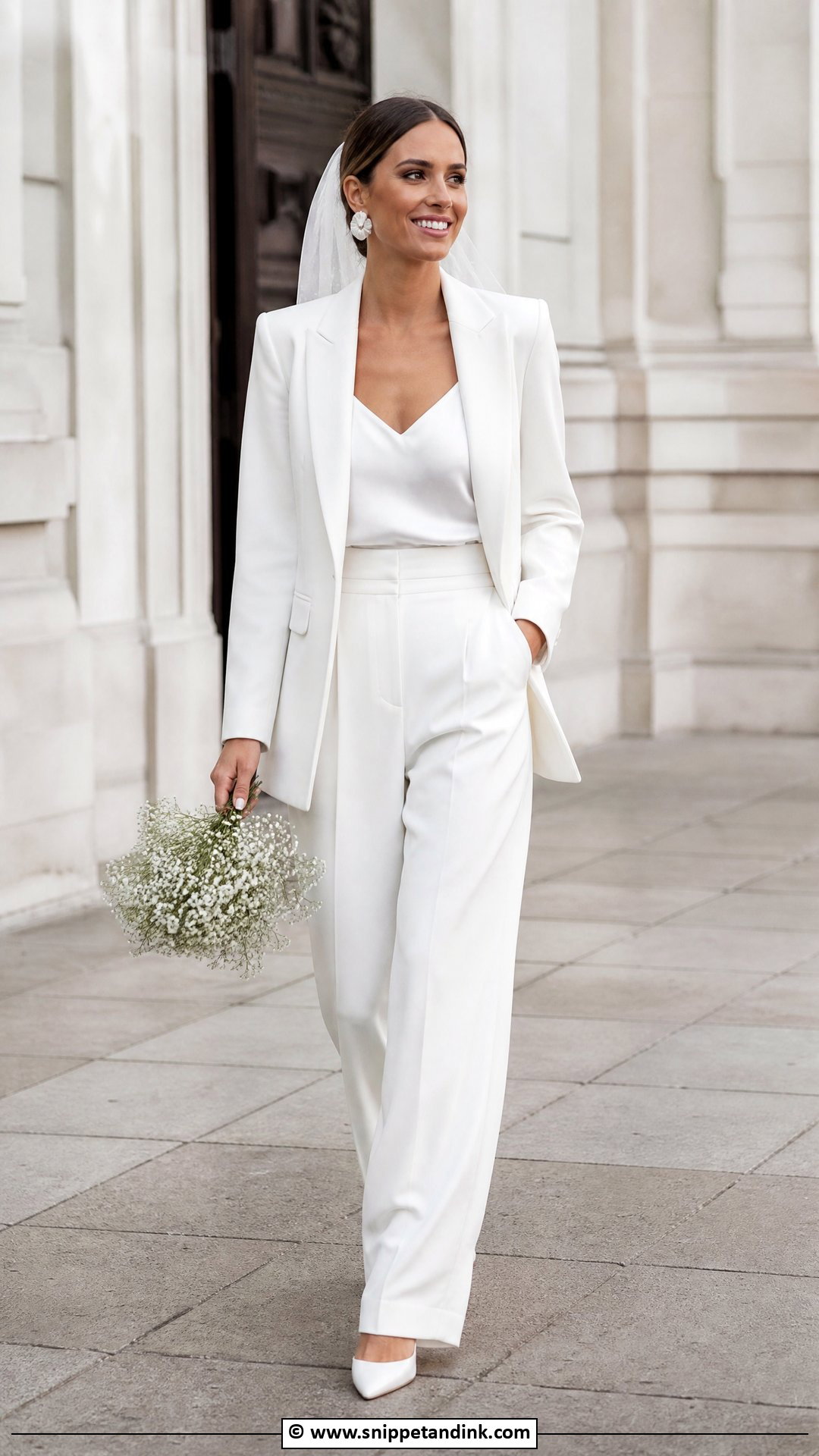
A white suit is sharp and modern: tailored blazer, wide-leg trousers, and a silk camisole or lace bodysuit underneath. It suits civil ceremonies, elopements and reception changes. Fit lives at the shoulders. A blazer that’s too wide there can’t really be fixed, so I buy for the shoulders and tailor everything else. Hem the trousers with your actual shoes. A veil softens the suit, a sleek bun keeps it neat, and bold earrings carry the jewelry.
23. Two Piece Bridal Dress
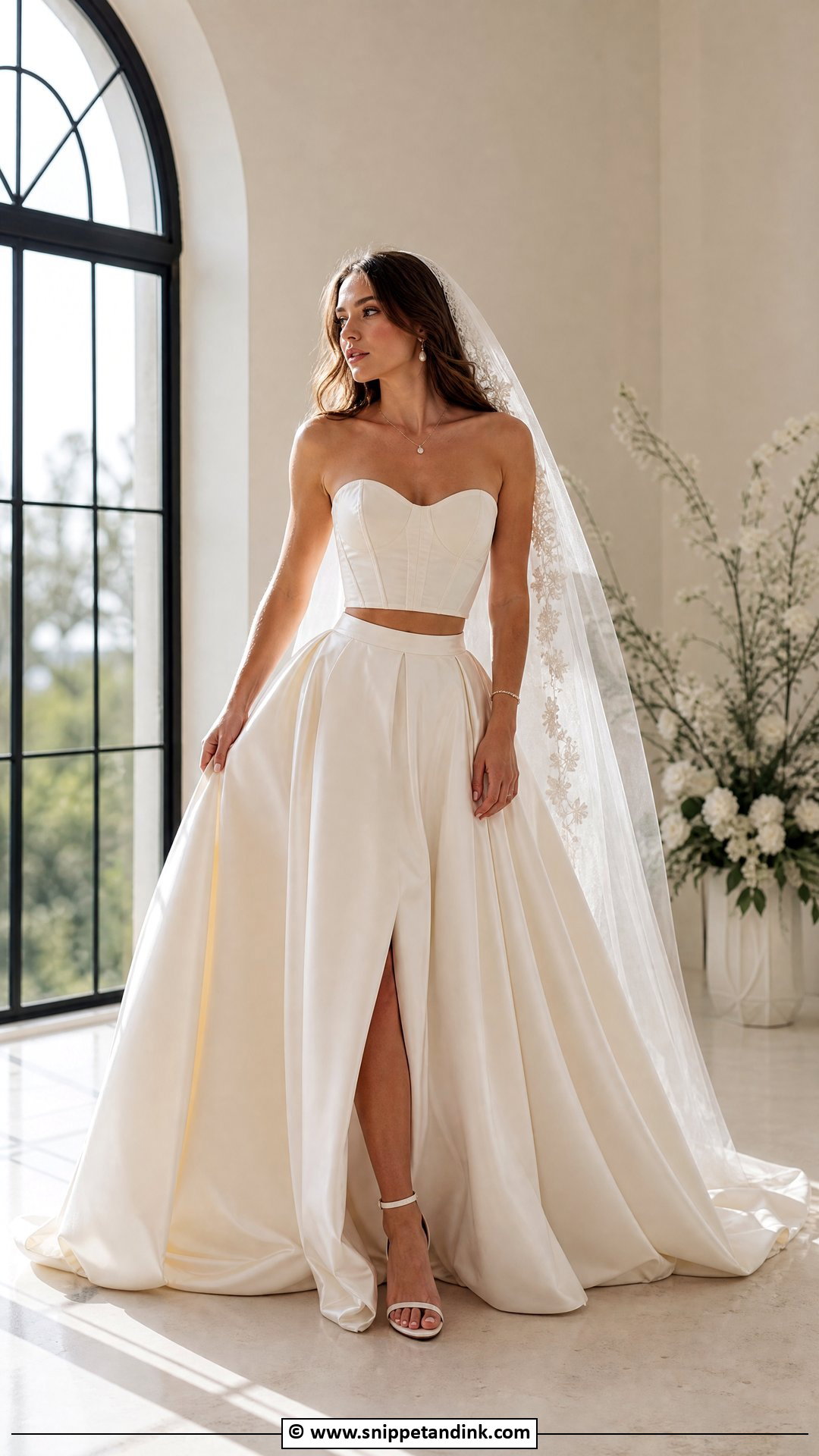
Separates let you mix a corset top with a full skirt, a lace crop with satin, or a structured bodice with a detachable overskirt. They appeal to creative brides who would rather assemble a look than buy a finished one. The pieces have to connect through color, texture or shape, and white is the tricky part: two whites from different makers rarely match, so I hold them together in daylight before anything is bought. Simple heels and refined jewelry keep it intentional.
24. Detachable Overskirt Bridal Dress
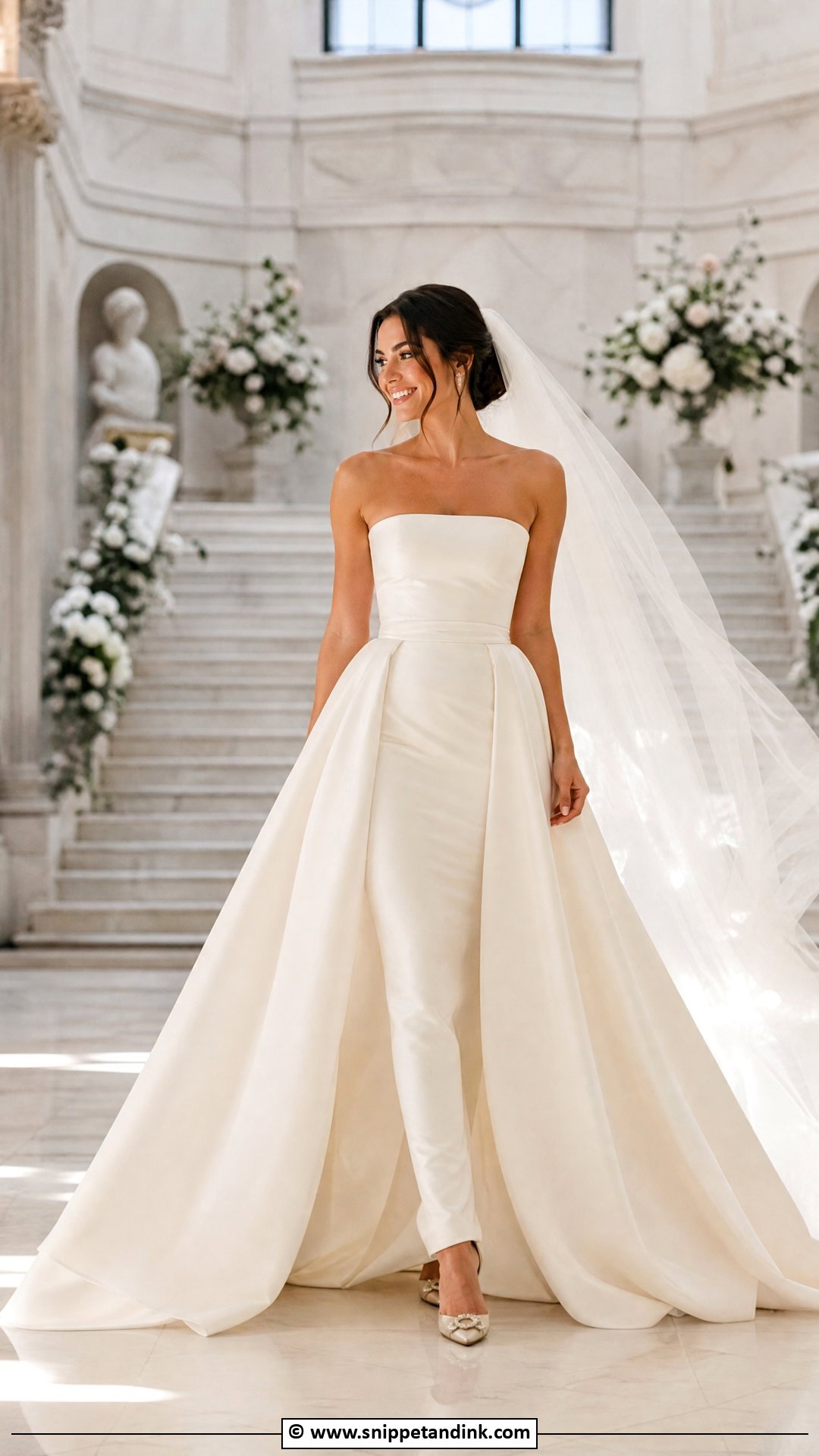
A detachable overskirt brings volume for the ceremony and comes off for a sleek reception silhouette. It works over fitted crepe, lace mermaids and satin columns. The join is everything. I ask for a hidden waistband with hooks and snaps so nothing gapes in photos, and for someone who has practised removing it. Elegant heels, a long veil and simple jewelry keep attention on the change in shape.


25. Convertible Bridal Dress
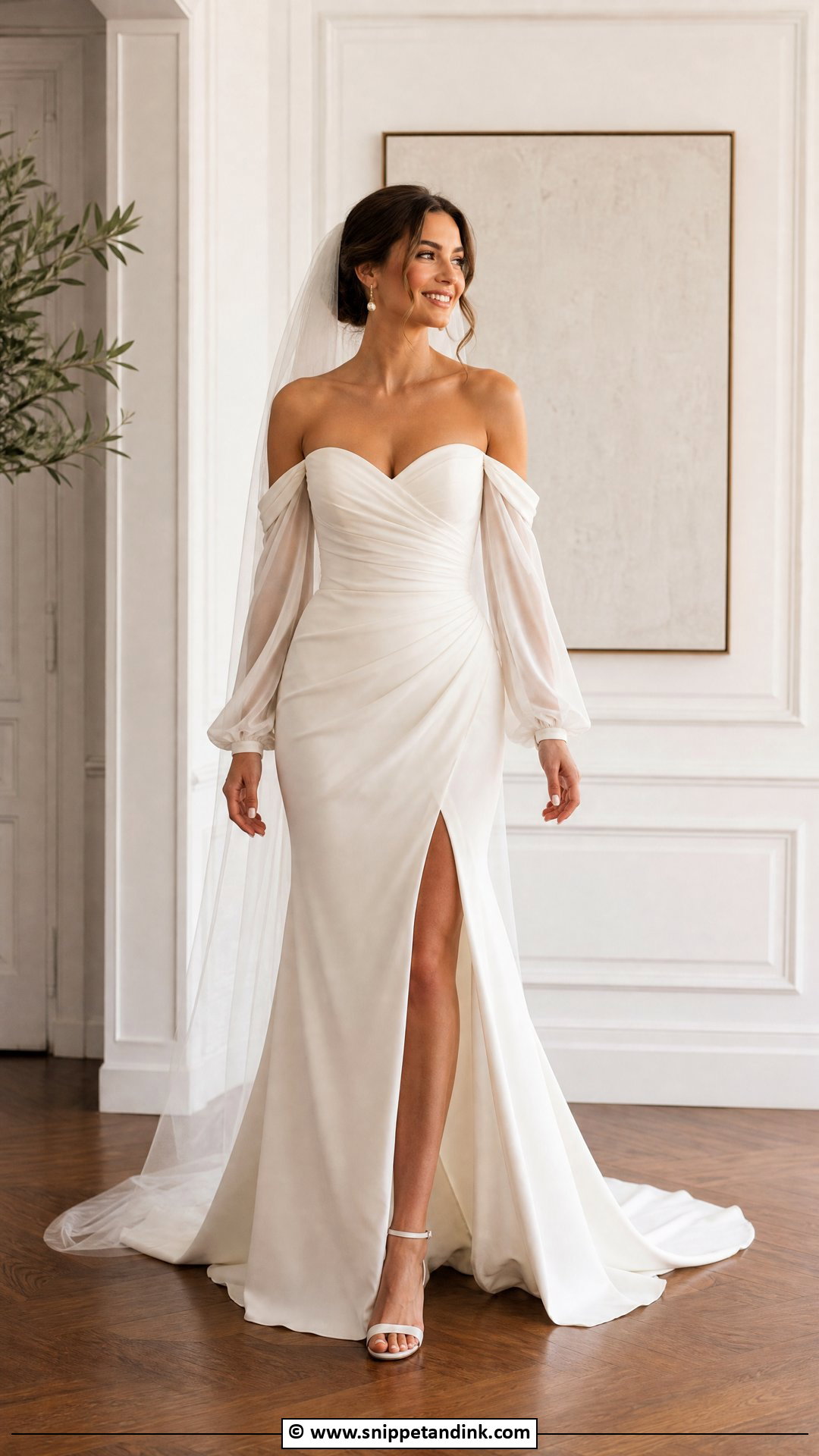
A convertible bridal dress may have removable sleeves, a detachable train, a changeable neckline or a skirt overlay. Start the ceremony in the fullest version and strip it back later. I like these for long days, but only with secure fastenings; a train held on by a couple of buttons will give way on the dance floor. Comfortable heels and lightweight earrings suit both versions.
26. Floral Applique Bridal Dress
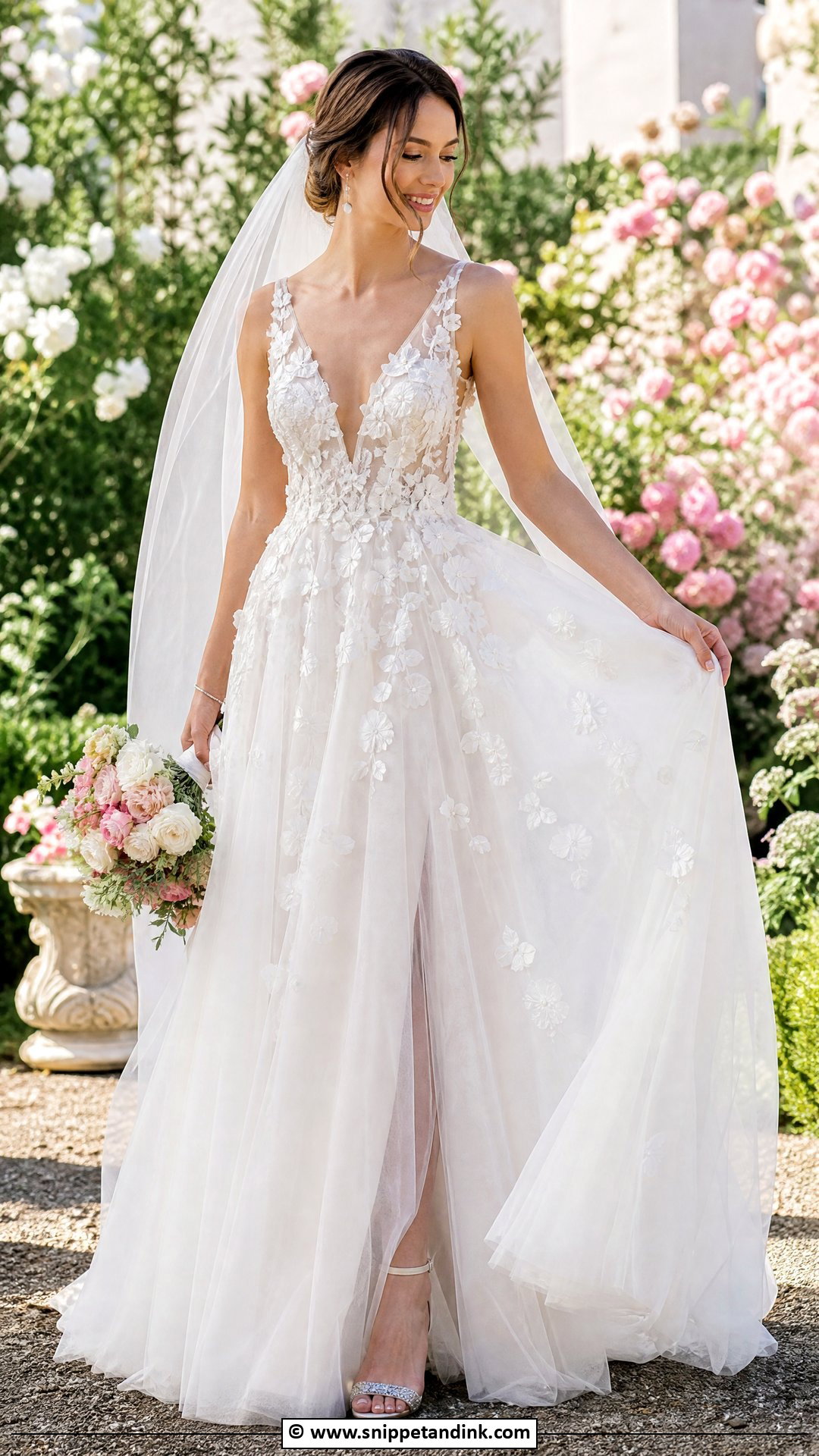
Appliqué flowers can be small and scattered, raised and three-dimensional, or layered over tulle and lace. A fitted bodice with a flowing skirt gives them room. I look for hand-stitched edges, since glued flowers peel where the skirt rubs against itself. Soft heels, simple earrings and a veil that doesn’t cover the bodice suit garden and spring ceremonies. Keep the bouquet simple so the gown’s texture stays visible.
27. Pearl Bridal Dress
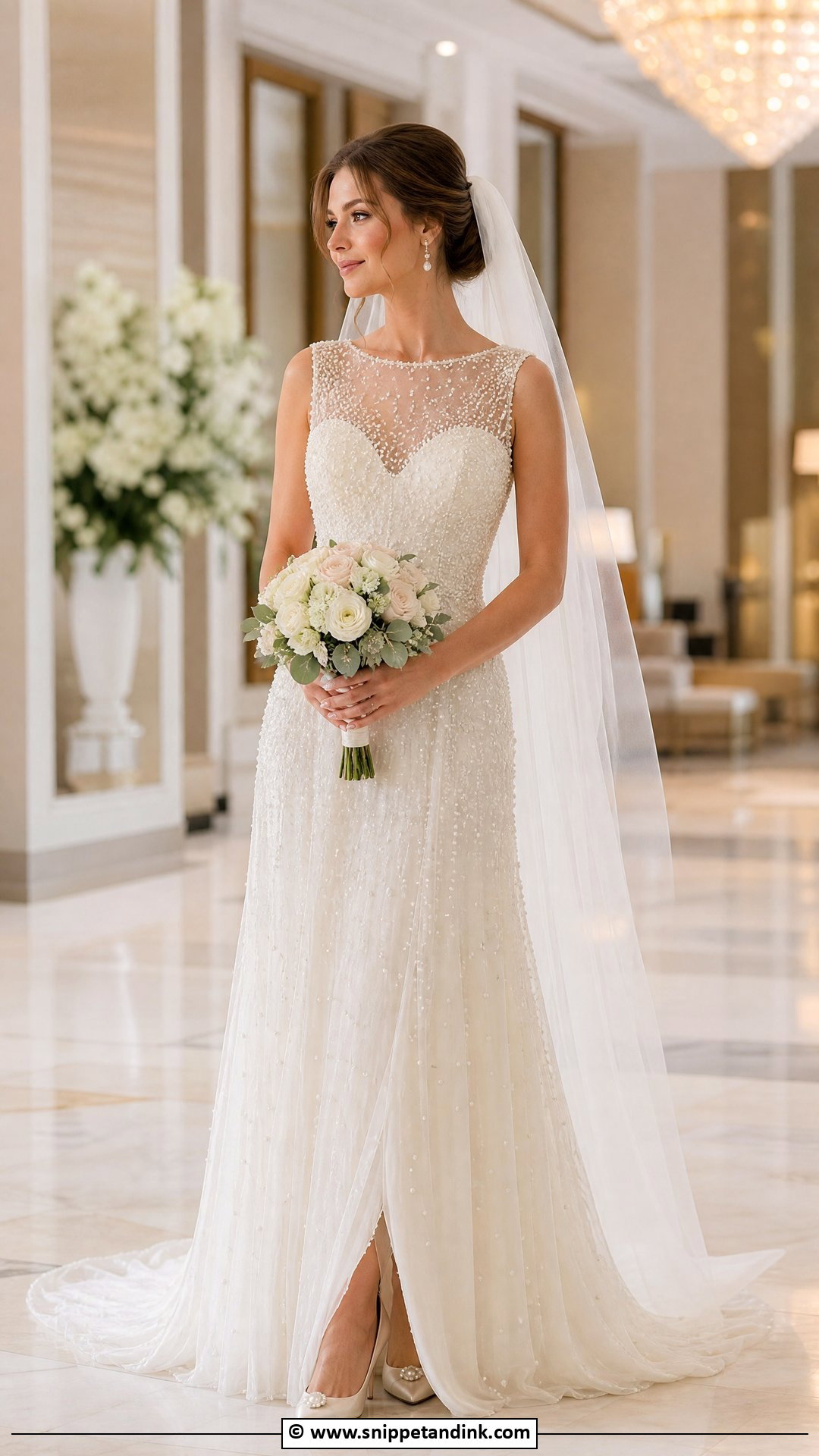
Pearls add soft light rather than glitter, whether scattered, on straps, as bodice accents or covering the whole gown. A clean silhouette stops them overwhelming you. A fully pearled bodice is heavy and can drag a thin strap off the shoulder, so I check how the straps are anchored. Pearl drop earrings, satin heels and a simple veil suit indoor ceremonies and evening receptions, and close-up portraits show the detail best. Coordinate rather than match.
28. Beaded Bridal Dress
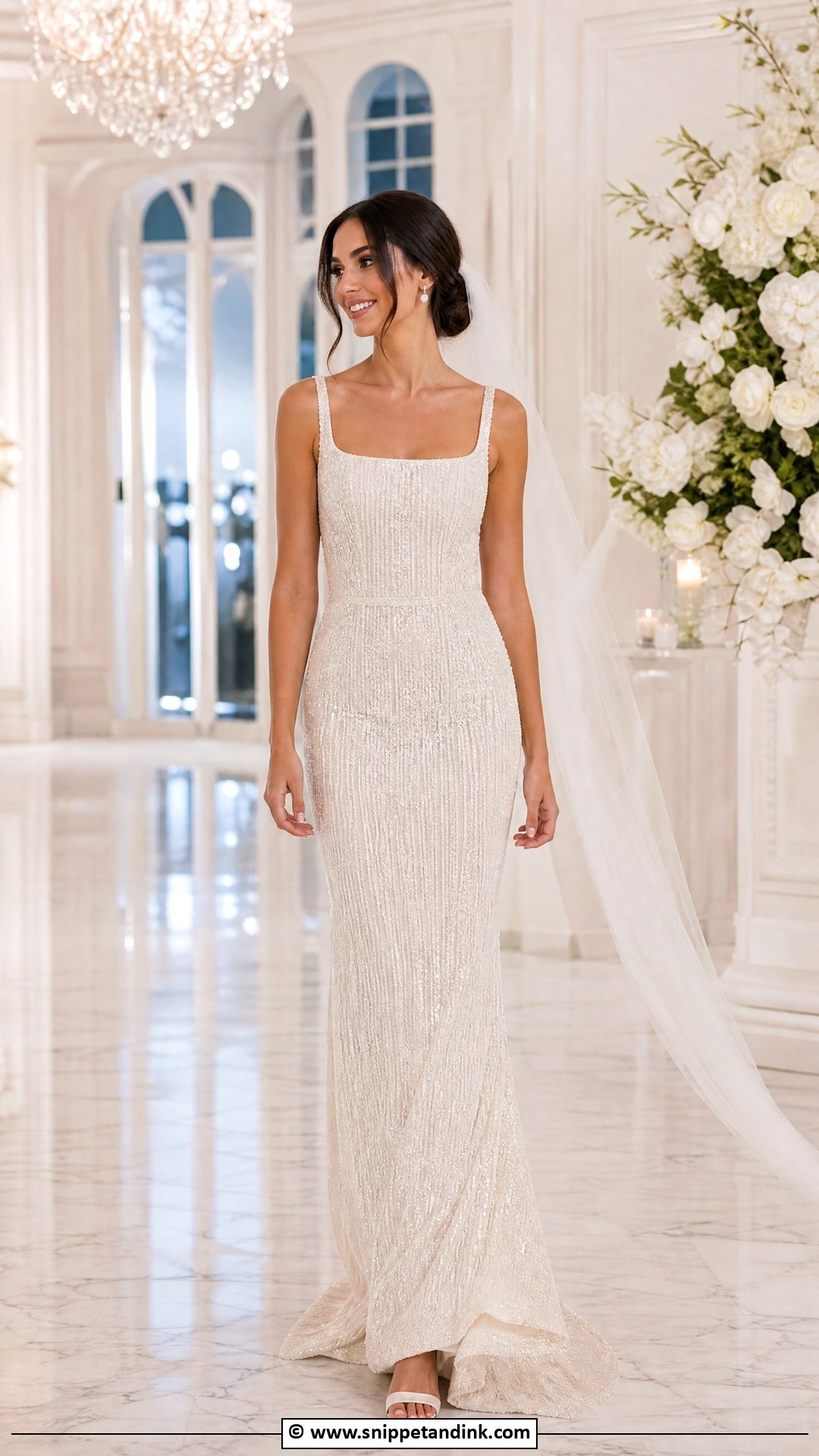
Beadwork ranges from a soft glow to full evening glamour, and a sheath, fit and flare or column keeps it sleek. Weight is one trade-off; sitting is another. Heavy beading on the back of a skirt scratches chairs and snags on everything it brushes. Ivory, pearl, silver and soft champagne beads read bridal rather than flashy. Minimal heels and a plain veil suit evening weddings and formal receptions.
29. High Neck Bridal Dress
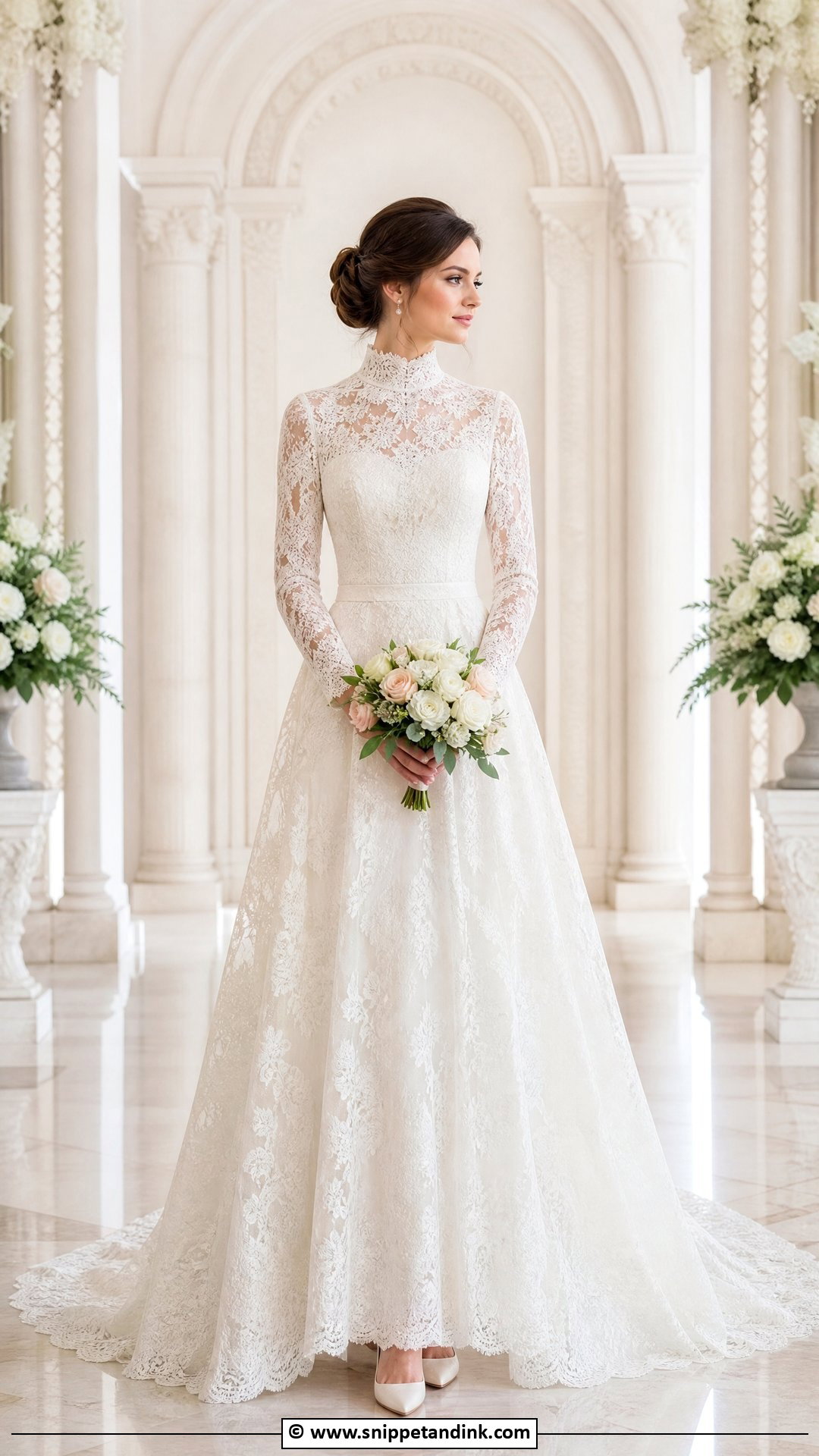
A covered neckline creates a long, refined line in lace, crepe, satin or sheer embroidery, and it can read vintage, modern or regal depending on fabric. In the mirror I check how the collar behaves when you look down, since a stiff high neck pokes the chin in every candid shot. An updo, small earrings and closed-toe heels suit formal ceremonies and cooler months. Sheer lace or illusion fabric around the neck and sleeves keeps it lighter.
30. Open Back Bridal Dress
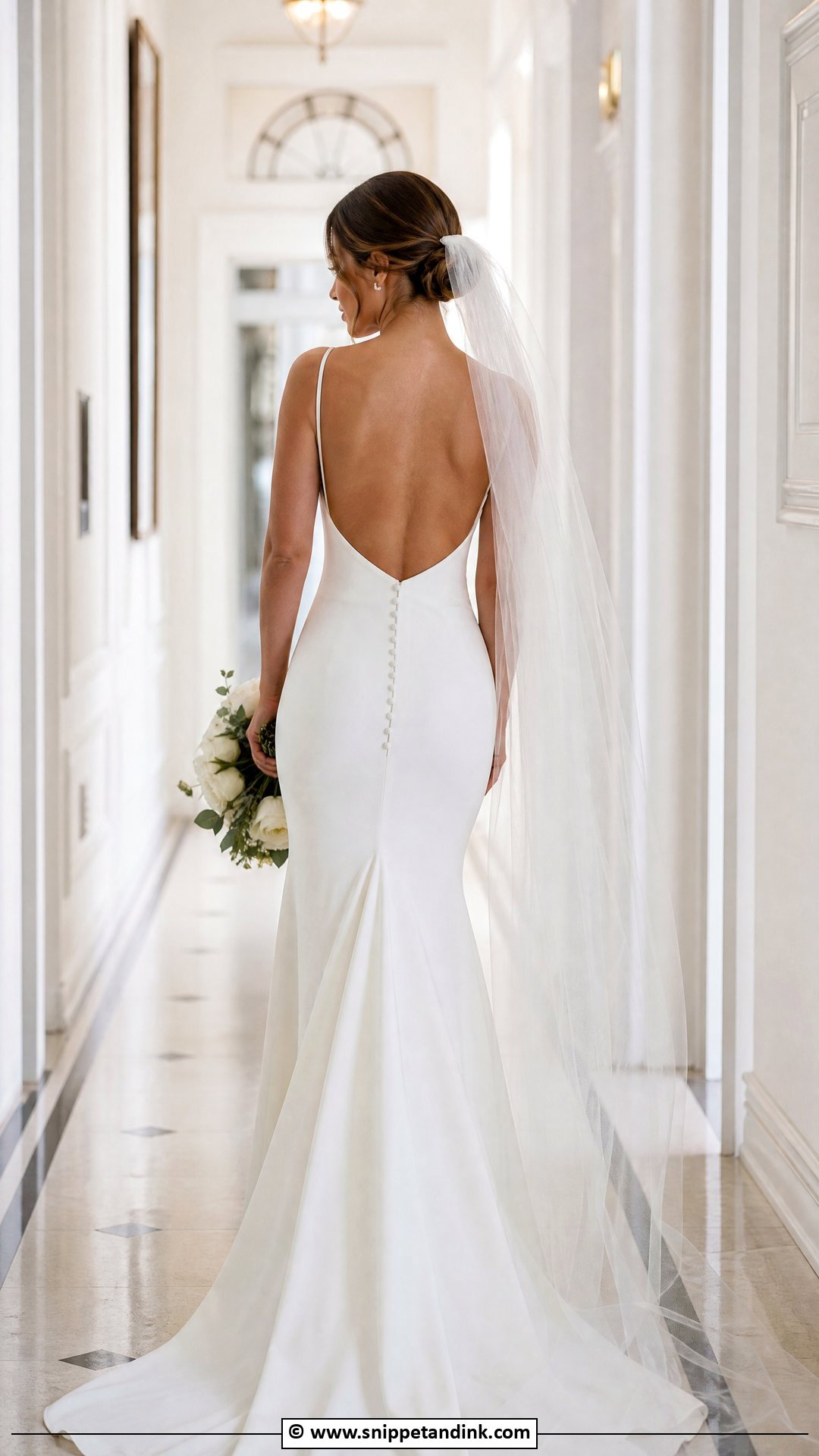
Guests see your back for most of the ceremony, so an open back earns its place. A minimal satin slip shape or a romantic lace version with buttons both work. Support is the real issue: with a low back there’s nowhere for a regular bra, so cups need sewing into the bodice and the fit across shoulders and waist has to be snug. An updo, delicate earrings and a veil set low keep the detail visible. Sort out undergarments early so nothing shows.
31. Slip Bridal Dress
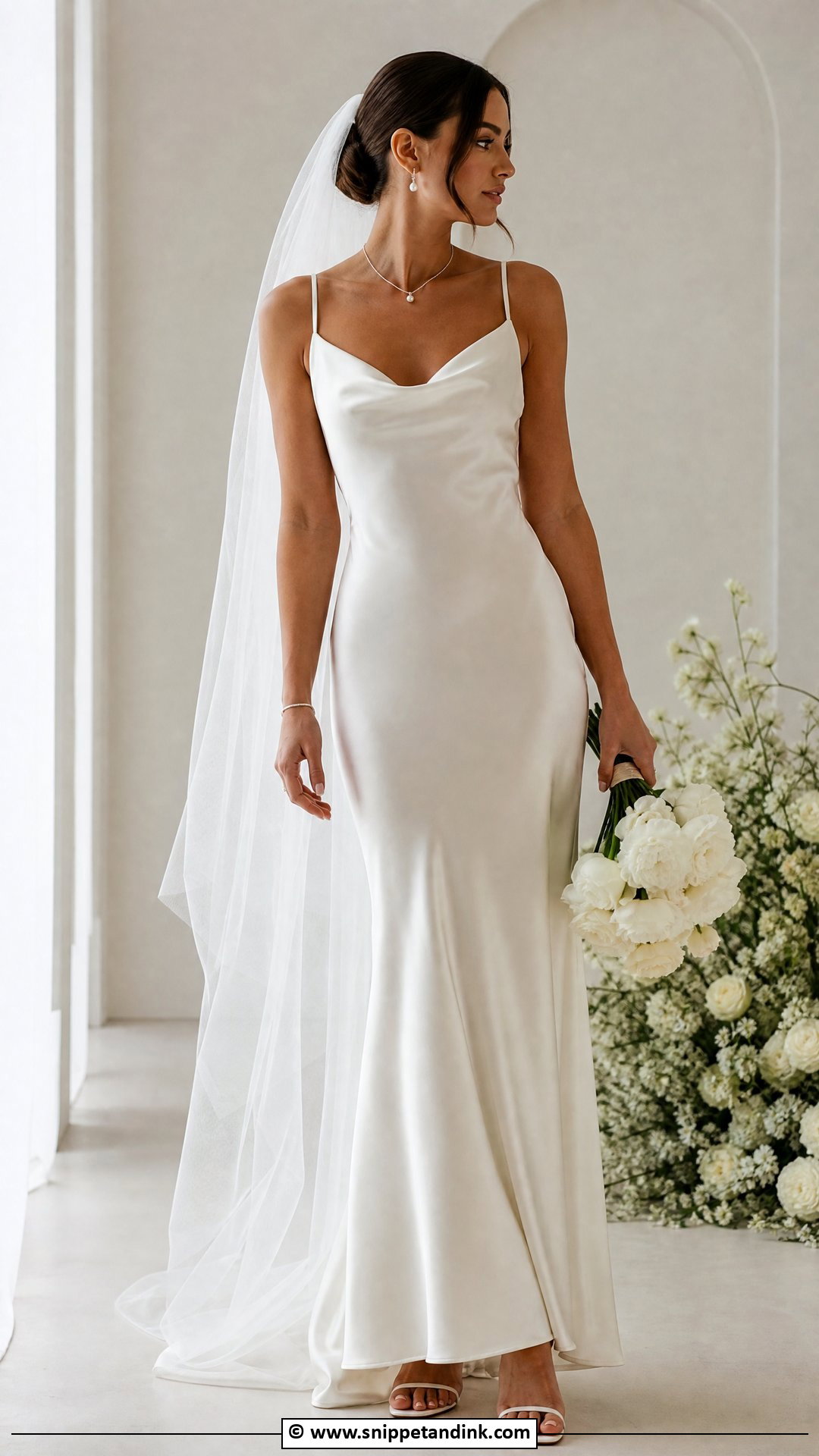
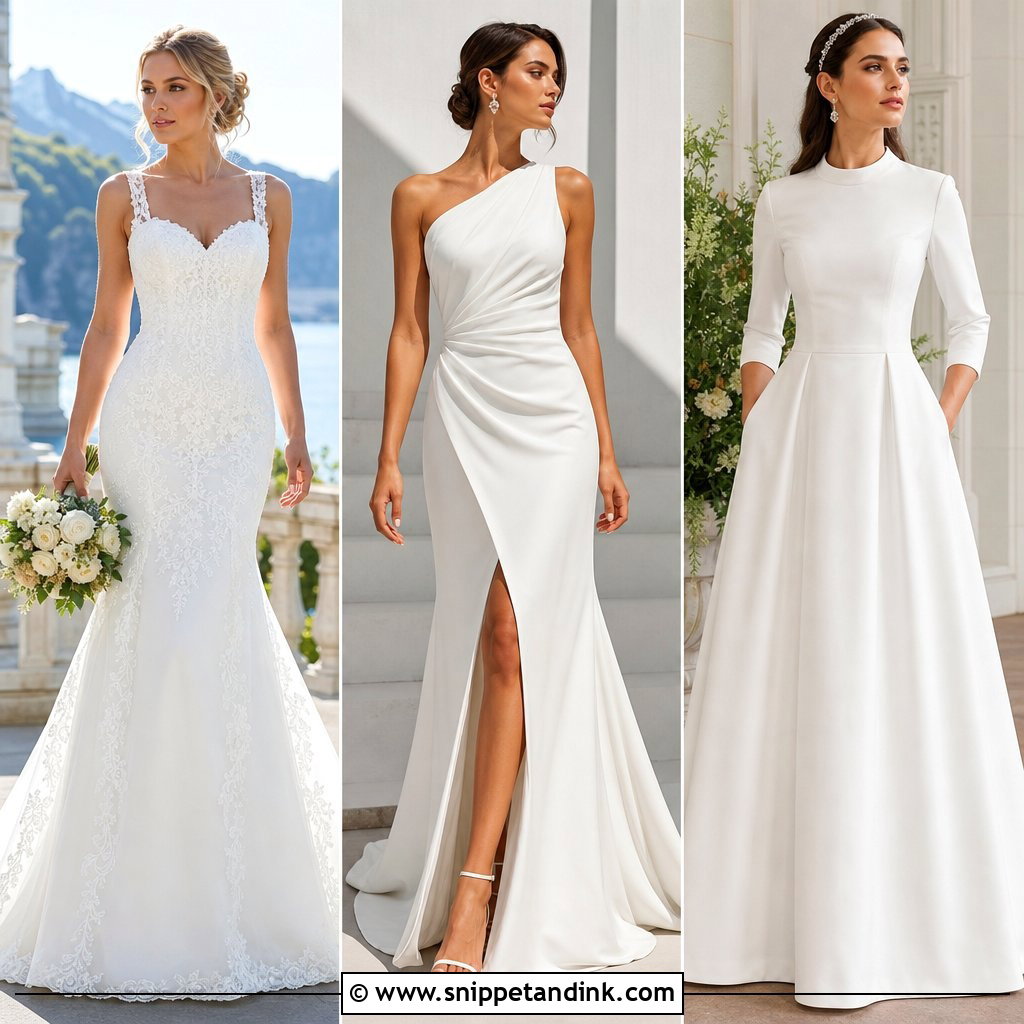
The slip dress comes from clean 1990s minimalism: satin or silk, slim straps, a bias cut that drapes over the body. It should skim, not cling. Bias-cut fabric drops slightly as it hangs, so a good seamstress lets the dress hang before hemming it. Strappy white heels, a low bun, fine pearl or diamond jewelry and a sheer veil suit beach, city and small celebrations. Fabric quality matters enormously here.
32. Asymmetrical Bridal Dress
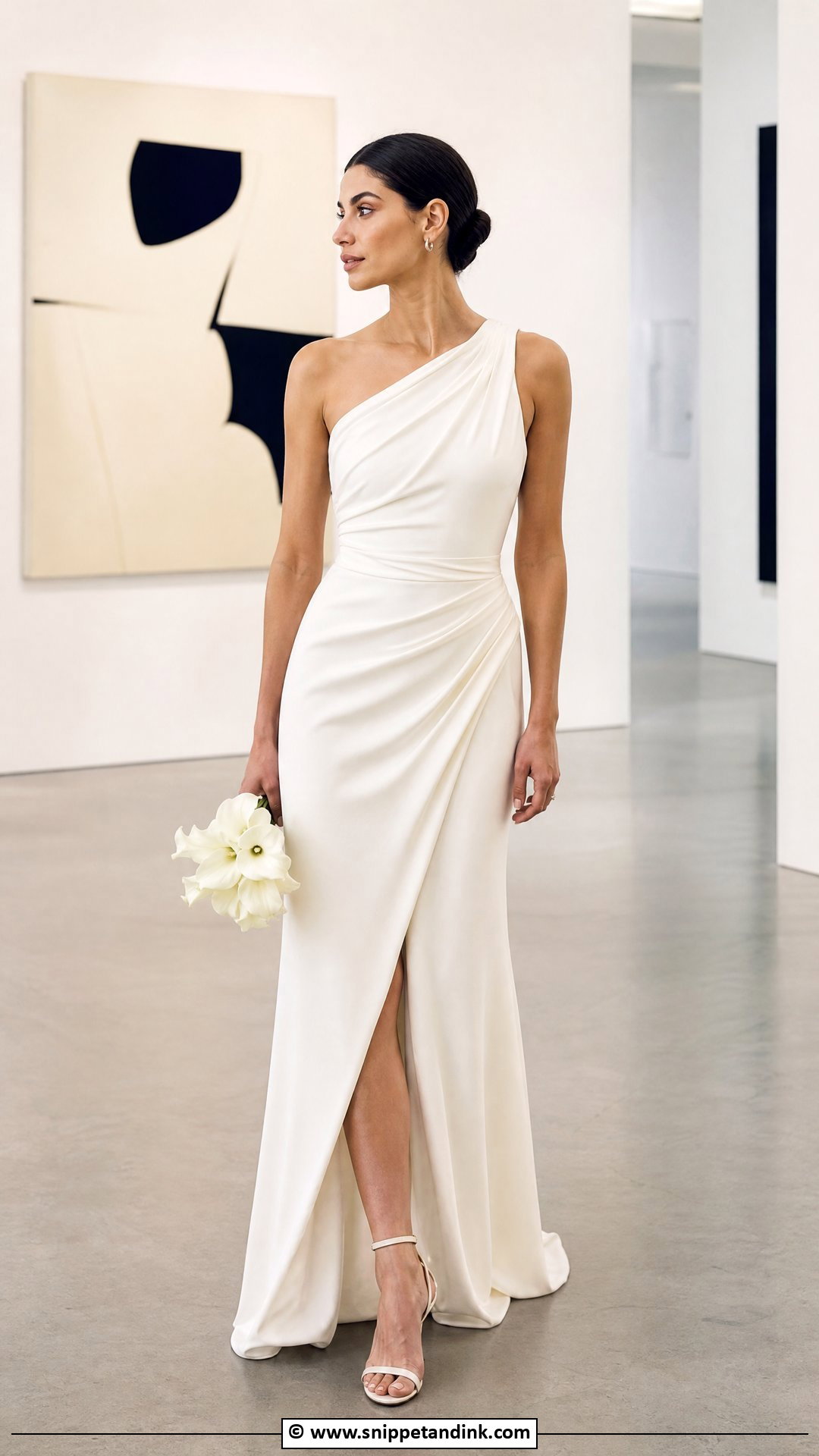
One-shoulder necklines, angled draping, uneven hems and sculpted side details give a gown interest without embellishment. Satin, crepe and organza hold these lines best. One-shoulder styles need a stay or grip inside the strap, otherwise the bodice slowly rotates toward the bare side. Sleek heels, pulled-back hair and minimal earrings suit galleries and city venues; the cut already moves the eye around.
33. Ruffle Bridal Dress
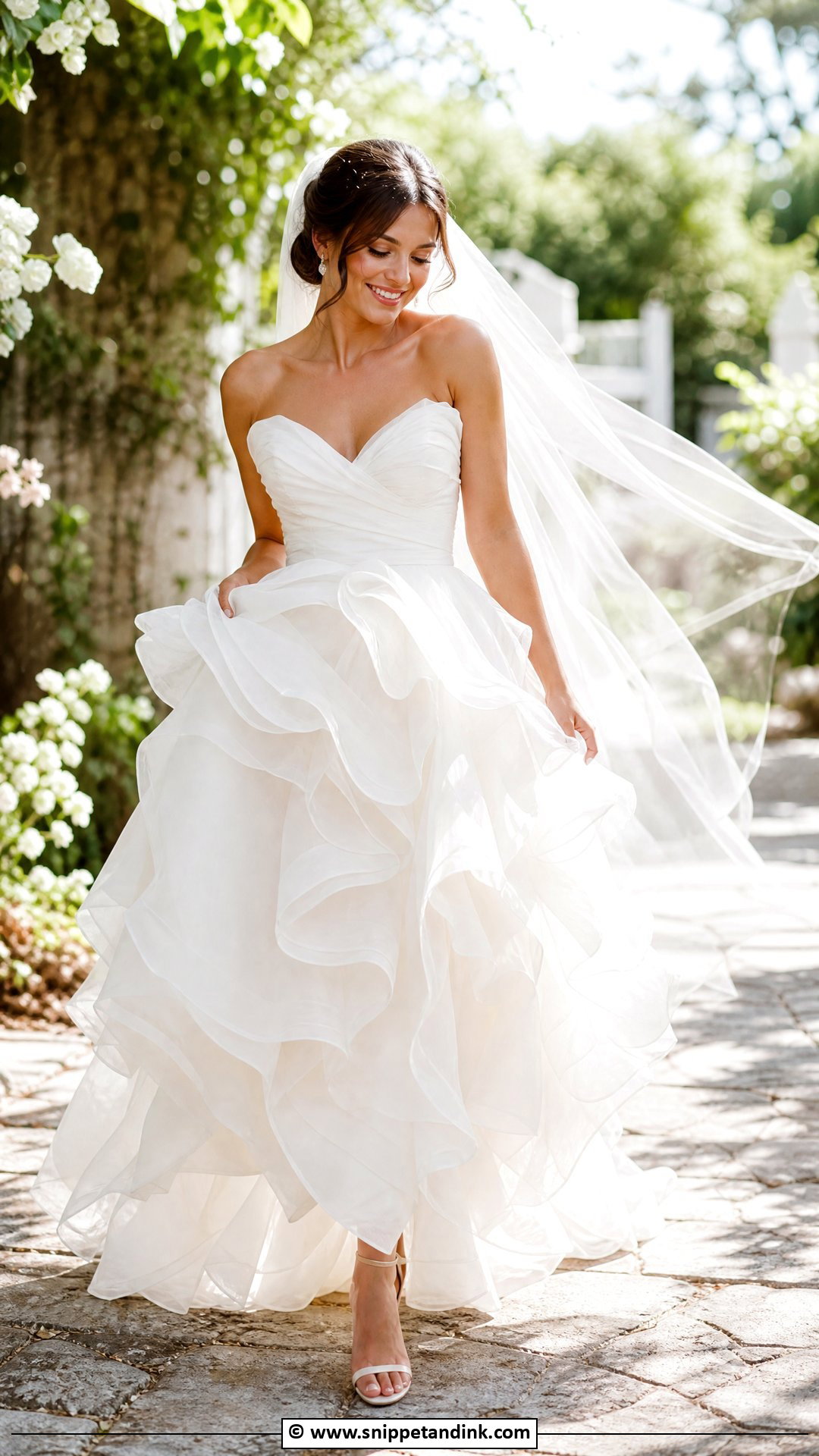
Ruffles add movement and depth: airy on tulle, structured on organza, or concentrated at the neckline. Pick one focal area, because ruffles everywhere turn busy fast. They also add bulk where they sit, so a ruffle at the hip widens the hip. Simple heels, small earrings and a clean veil suit outdoor ceremonies and gardens where the skirt has room to swing.
34. Champagne Bridal Dress
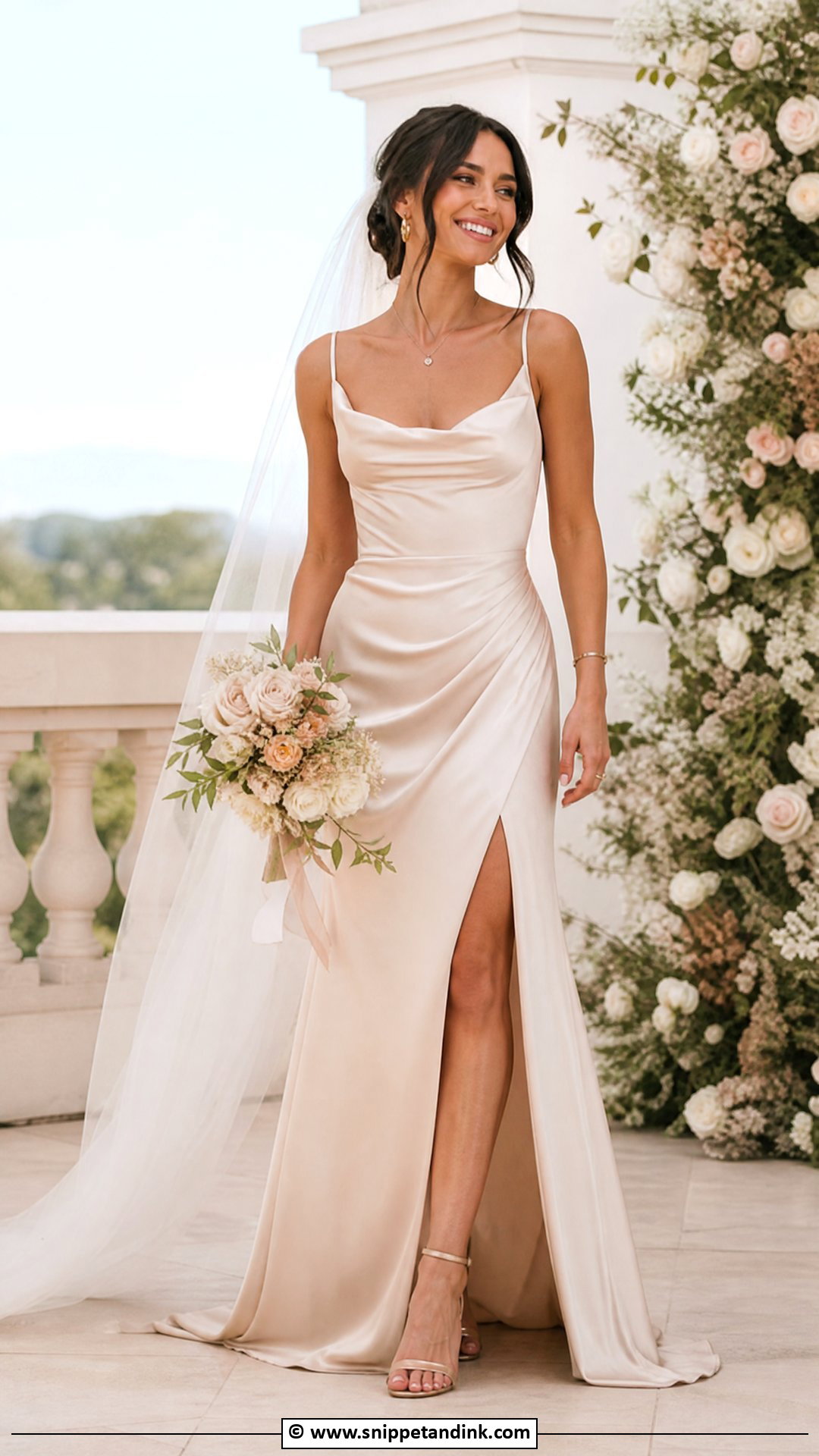
Champagne sits just warmer than ivory, and it’s often the answer for brides who find pure white too stark against their skin. In satin, tulle, lace or beading it softens nicely in natural light. I test it next to the bride’s face by a window, because some champagnes lean pink and others grey depending on the lining. Ivory or champagne heels, gold-toned jewelry and a matching or light ivory veil tie it together for outdoor and evening venues.
35. Blush Bridal Dress
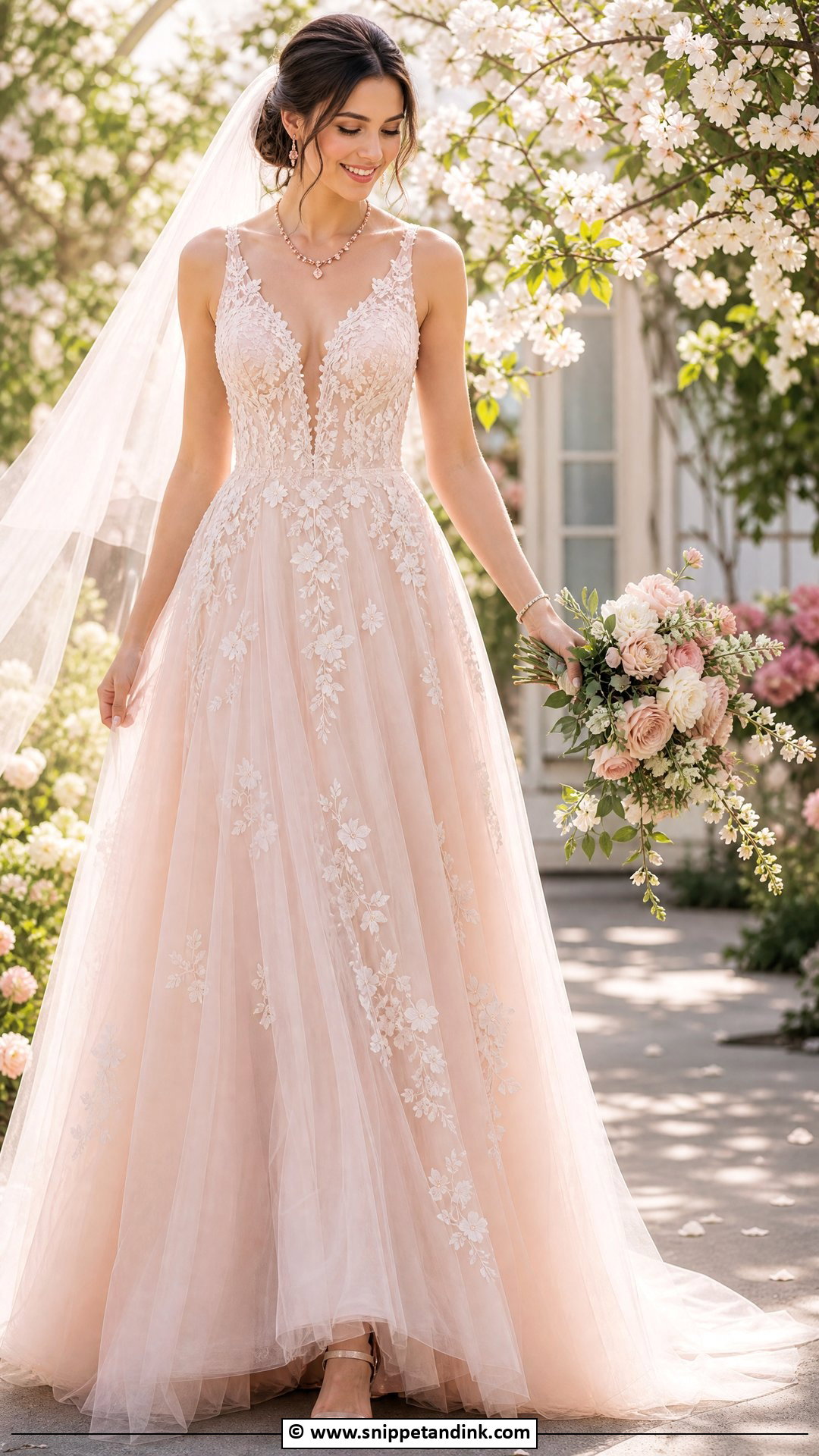
Blush gives a pale pink warmth that still reads bridal, especially in tulle, lace, chiffon or floral appliqué. An A-line keeps it classic and a fitted embellished version turns glamorous. My caution is makeup: strong pink on the cheeks next to a pink dress can look flushed, so I’d ask your artist to keep cheeks neutral or peach. Neutral heels, rose-gold jewelry and a light veil complete it for spring and garden weddings.
Planning a Second Look Without Missing Your Own Party
Several dresses here are built to change partway through the day, and the change takes more planning than brides expect. A full outfit swap eats more time than you’d guess once you count the walk to the room, the buttons, rehanging the gown and fixing your hair. Removing an overskirt or sleeves is quicker but still needs a second pair of hands.
How I’d set it up
- Change straight after dinner, before the dancing starts, so you miss nothing guests will remember.
- Put one person in charge of the gown. They carry the hanger, the garment bag and a clean sheet to lay it on.
- Plan the second hairstyle at your hair trial, since a tight updo built to hold a veil rarely suits a mini.
- Swap shoes and earrings along with the outfit. Small changes make the second look feel deliberate.
For detachable pieces, practise the removal at your final fitting with the person who will do it on the day, then have them try it once more without the seamstress watching. Hooks hidden under appliqué are easy to find in a bright fitting room and much harder at night in a dim hotel corridor.
Try On the Silhouette You Expect to Dislike
Bridal fashion now runs from minimalist satin and lace A-lines to jumpsuits, minis, overskirts, pearls, bows and soft color. Before booking appointments, think about your venue, the season, how much you’ll move and how many hours you’ll be dressed. Then try at least one silhouette you’re sure you won’t like; I’ve seen that dress win more often than brides expect. Tailoring, shoes, veil and hair change a gown far more than the hanger suggests, so judge the whole look rather than the dress alone.
You'll Like These Ideas:



Leave a Reply