
A wedding gown has to do two jobs at once: look like you in pictures you’ll keep for decades, and let you get through a long, emotional day. The gowns below mix classic shapes with the 2026 bridal trends I keep seeing in fitting rooms: drop waists, corset bodices, pearls, sleek satin, high necks, sculptural bows, raised florals and overskirts that come off for the party. Brides are also asking about comfort far earlier in the process, which I’m glad of. For each style, I’ve noted what I check when a bride tries it on, so you know what to look for before you fall in love.
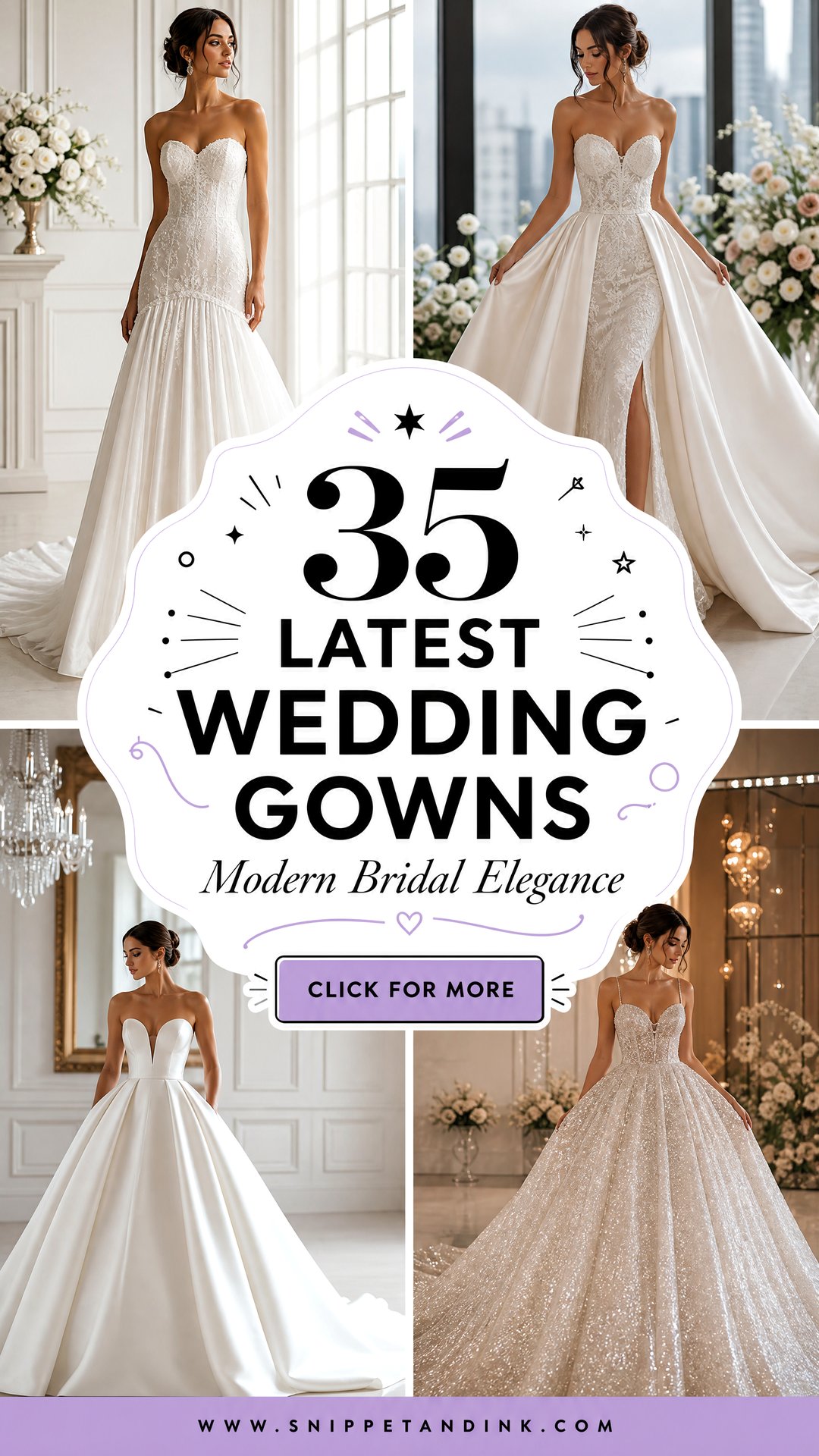
Sample Gowns Are Clipped, So Judge the Shape First
Most bridal shops carry each design as a single sample in one or two sizes, so the gown you try on is usually clipped at the back or left gaping. That’s normal. At a first appointment I ask brides to judge the silhouette, neckline and fabric, not whether it fits like a glove, because the real one will be made or altered to your measurements.
How I’d prepare for the appointment
- Wear smooth nude underwear and bring a strapless bra, so straps don’t distract from necklines.
- Bring shoes roughly the height you plan to wear; hems on samples are long.
- Keep the group small. Two people whose taste you trust give clearer feedback than six.
- Share your budget at the start, so you aren’t shown gowns you can’t buy.
- Photograph every gown from the front, side and back, then compare them the next day.
Try at least one shape you don’t expect to like. A mirror tells you more than a screen ever will, and the photos you take at the shop are what you’ll come back to when you’re deciding.
1. Satin A Line Wedding Gown
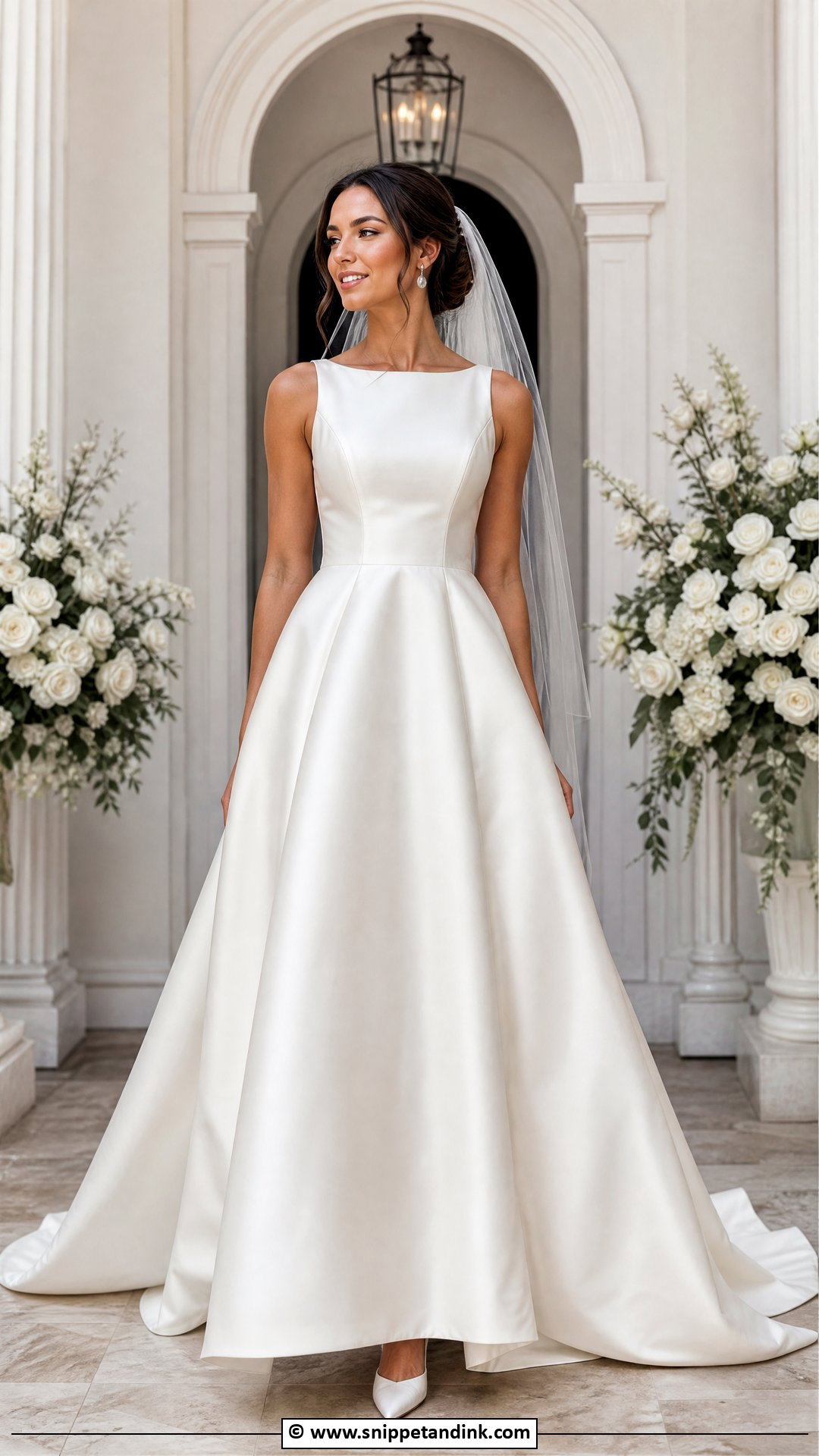
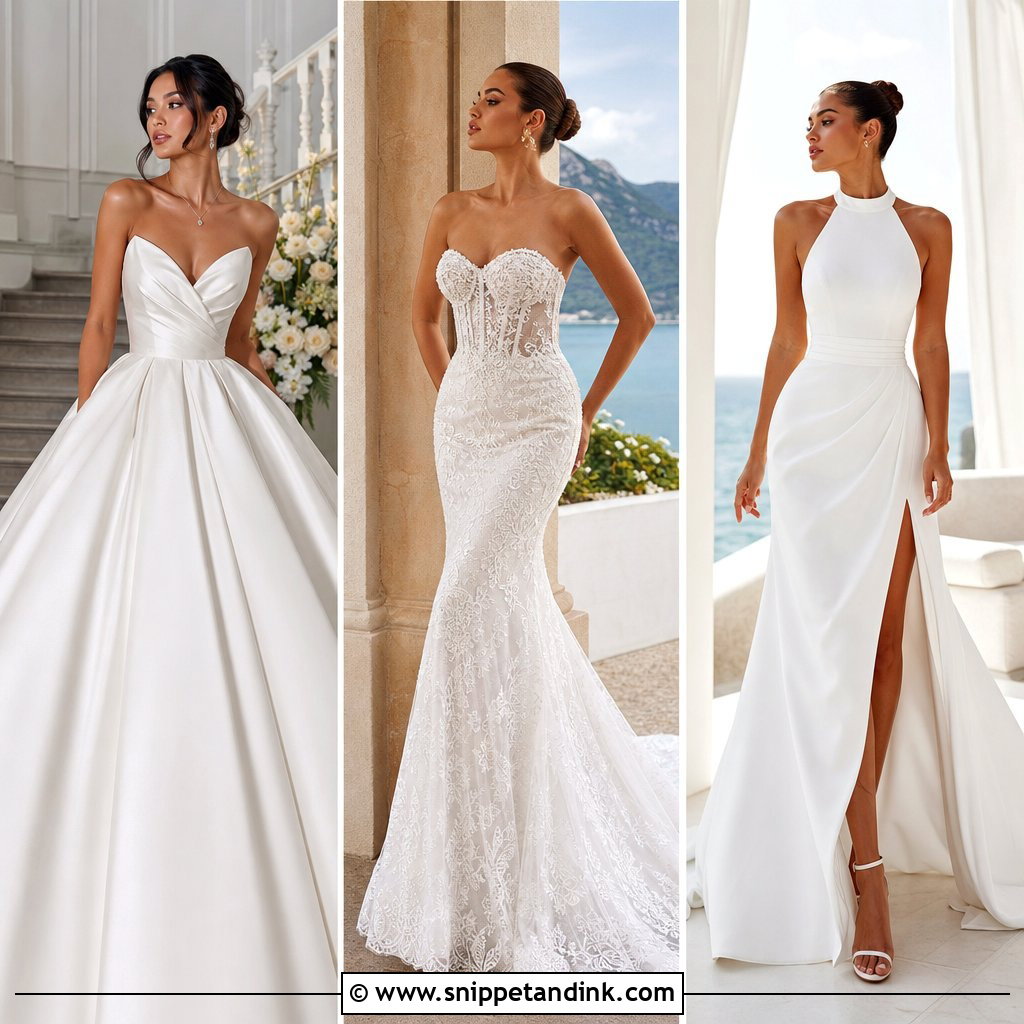
Satin A-lines are the gown I’d call reliable. The fabric glows without sparkle, and the skirt drops from a fitted waist, so it flatters a wide range of figures and suits hotels, gardens and halls alike. Quality shows in the seams. Run your hand along the bodice seams; on good satin they lie flat, on thin satin they pucker and catch the light in every photo. Pearl earrings, a low bun, pointed heels and a simple veil finish it, and it ages gracefully in an album.
2. Lace Ball Gown Wedding Dress
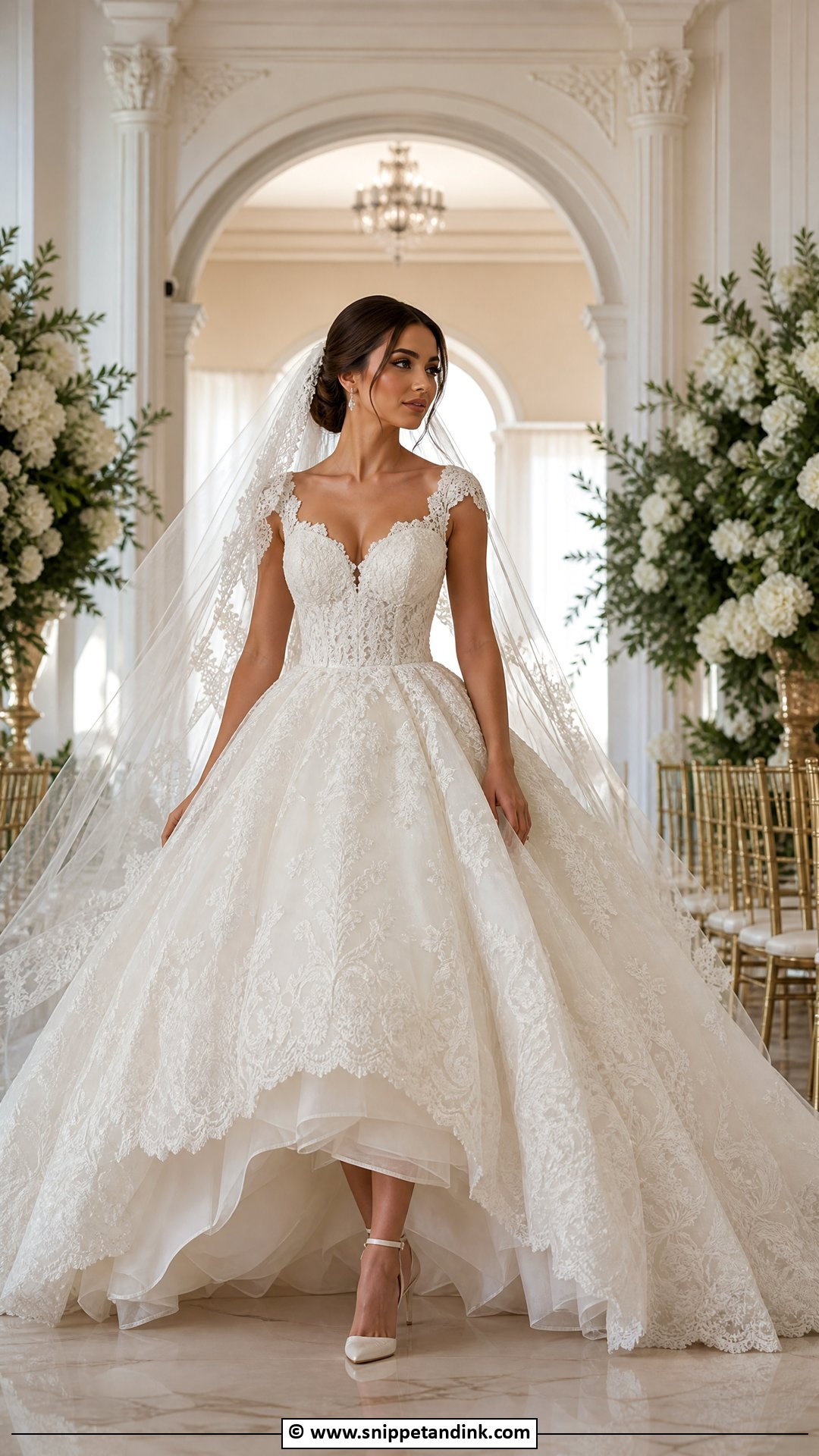
A lace ball gown wedding dress gives you volume and romance in one go, with the fitted bodice doing the shaping and the skirt doing the drama. Illusion sleeves, floral embroidery or a scalloped neckline add texture. I always ask how heavy the skirt is before a bride commits, because layered lace over a full petticoat can feel like carrying a toddler by the end of the evening. Grand indoor venues and estates give it room. A cathedral veil, delicate drops and satin heels are plenty.
3. Minimalist Crepe Wedding Gown
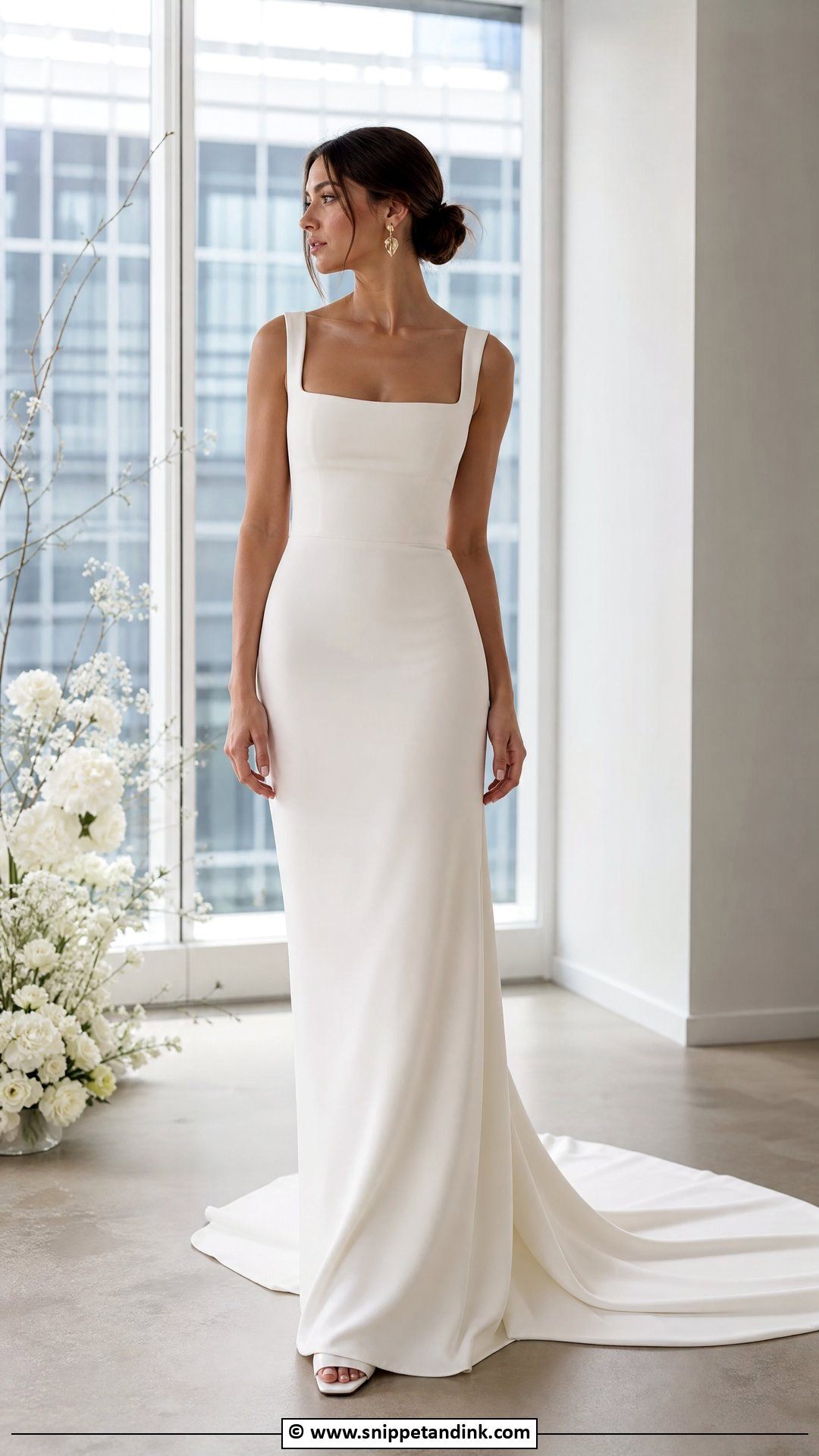
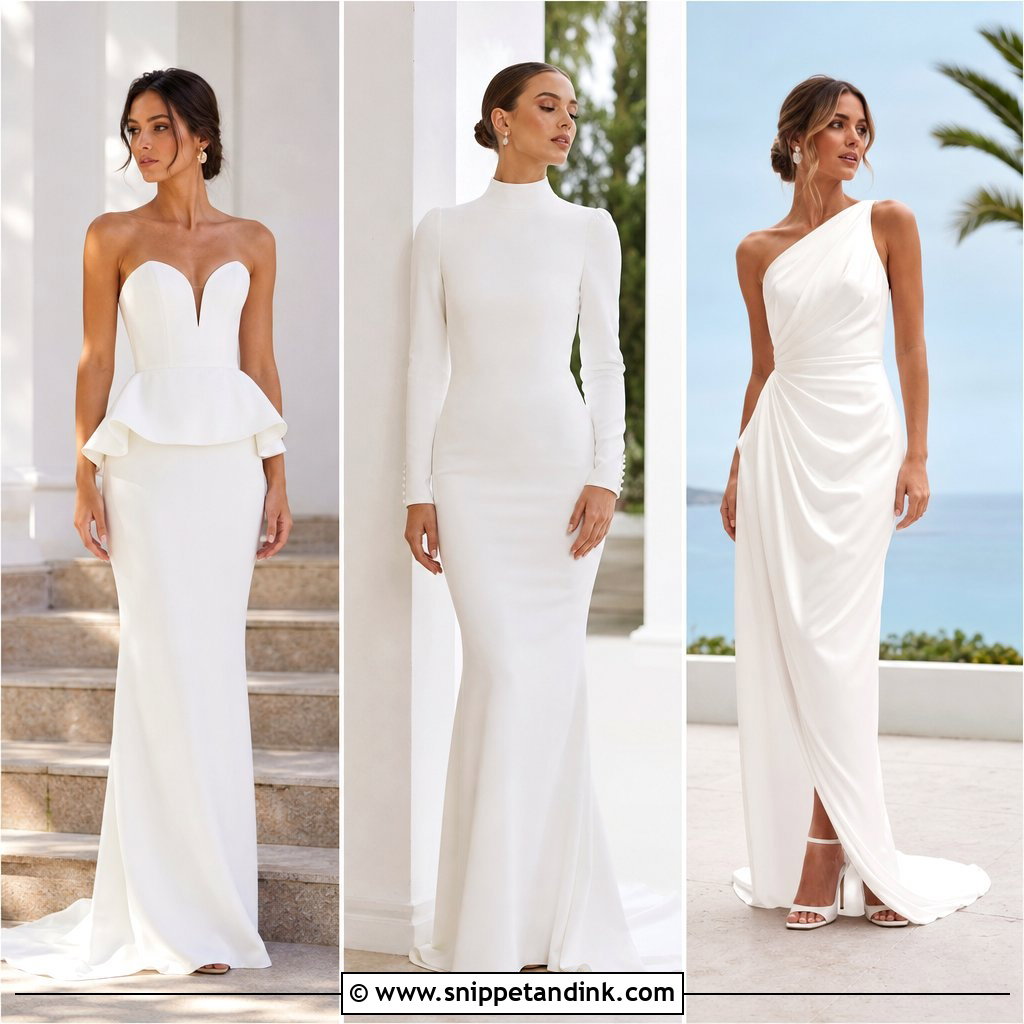
Clean lines and nothing to hide behind: that’s the crepe gown. Crepe has enough weight to smooth the body and a matte finish that reads modern. A square neck, long train or open back gives it one point of interest. Because it’s so plain, I spend the most fitting time on these, checking for drag lines at the hip and making sure the bride wears smooth, bonded underwear to every appointment. Sculptural earrings, a slick bun and simple white heels suit rooftops, courthouses and small receptions.
4. Drop Waist Wedding Gown
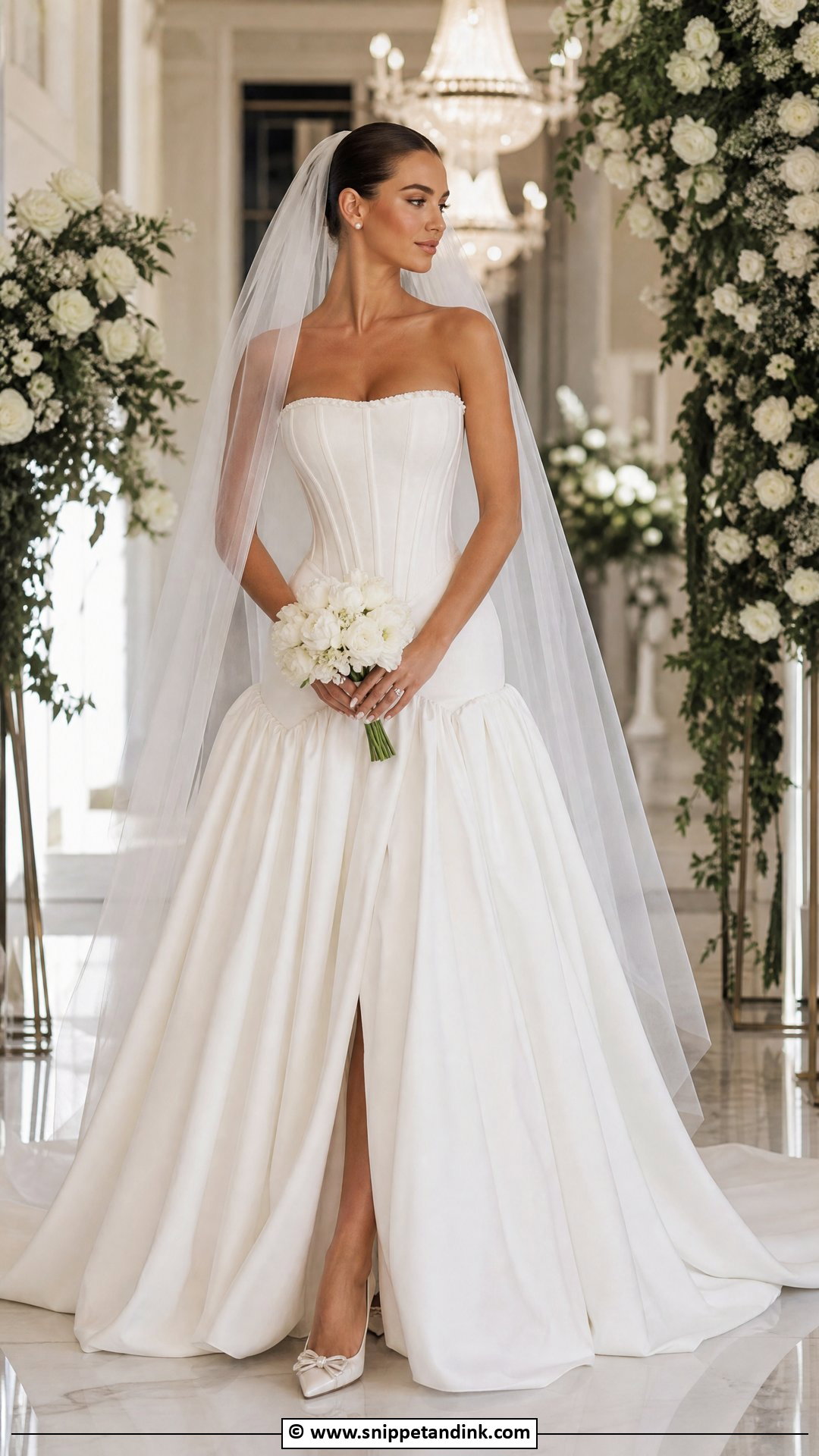
A drop waist wedding gown stretches the bodice past the natural waist before the skirt releases, which gives a long, elegant torso line. Tulle under a corseted drop waist feels soft; satin or mikado turns it sculptural. My honest caveat is proportion. On a petite or short-waisted bride the lowered seam can shorten the legs, so I’d test it against a natural-waist gown in the same session. Balance it with a graceful neckline, a simple veil, soft waves and refined heels.
5. Corset Bodice Wedding Dress
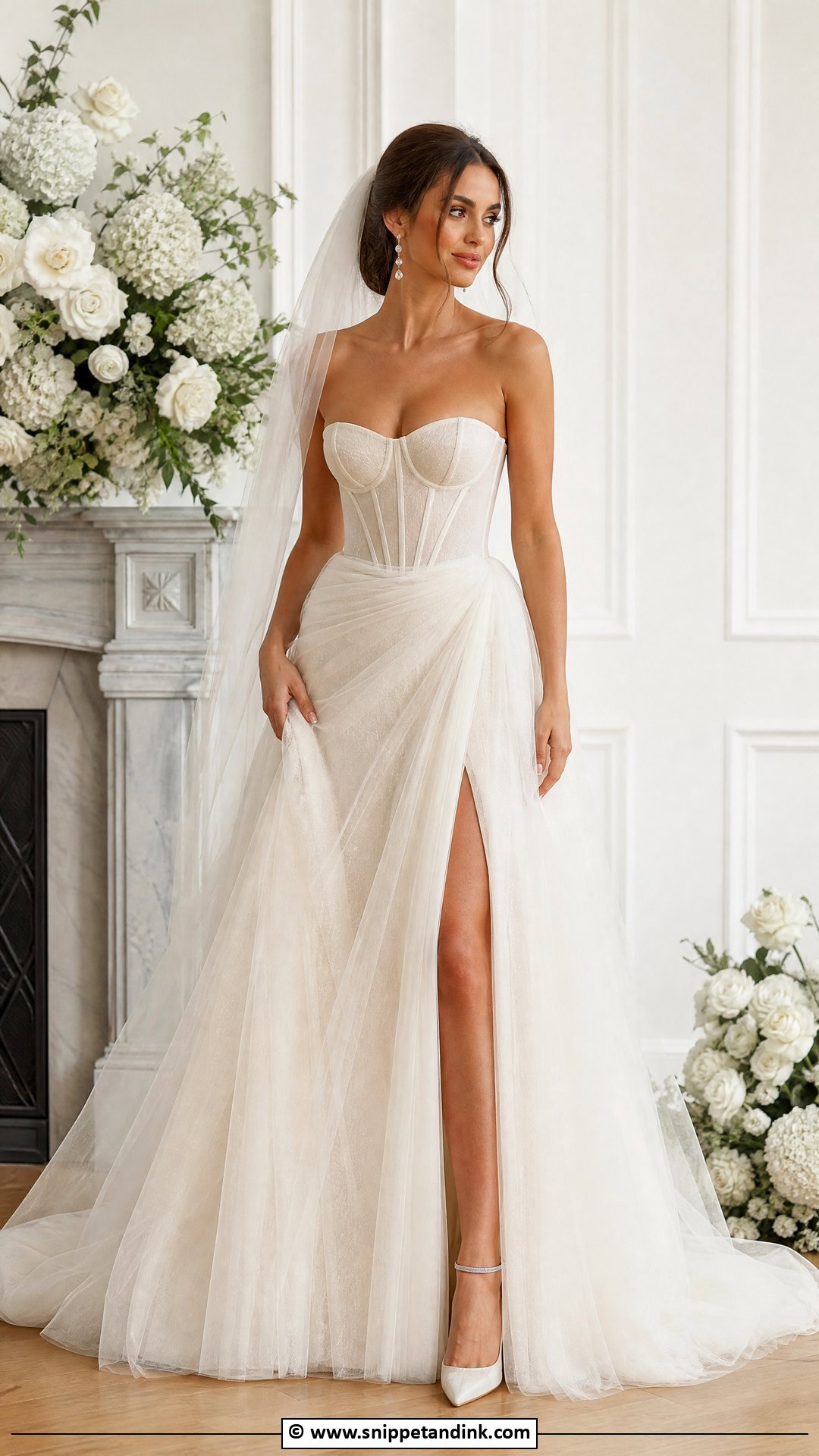
Corsetry has softened. Today’s boned bodices flex far more than the rigid versions of a few decades ago, so they can define the waist and still feel wearable through dinner. Exposed boning reads fashion; covered boning reads classic. Either one pairs with tulle, satin, lace or organza skirts. The fit at bust, waist and torso has to be exact, and I’d sit, breathe deeply and lean forward in it before saying yes. Dainty jewelry, a clean veil and heels that match the formality complete it.
6. High Neck Wedding Gown
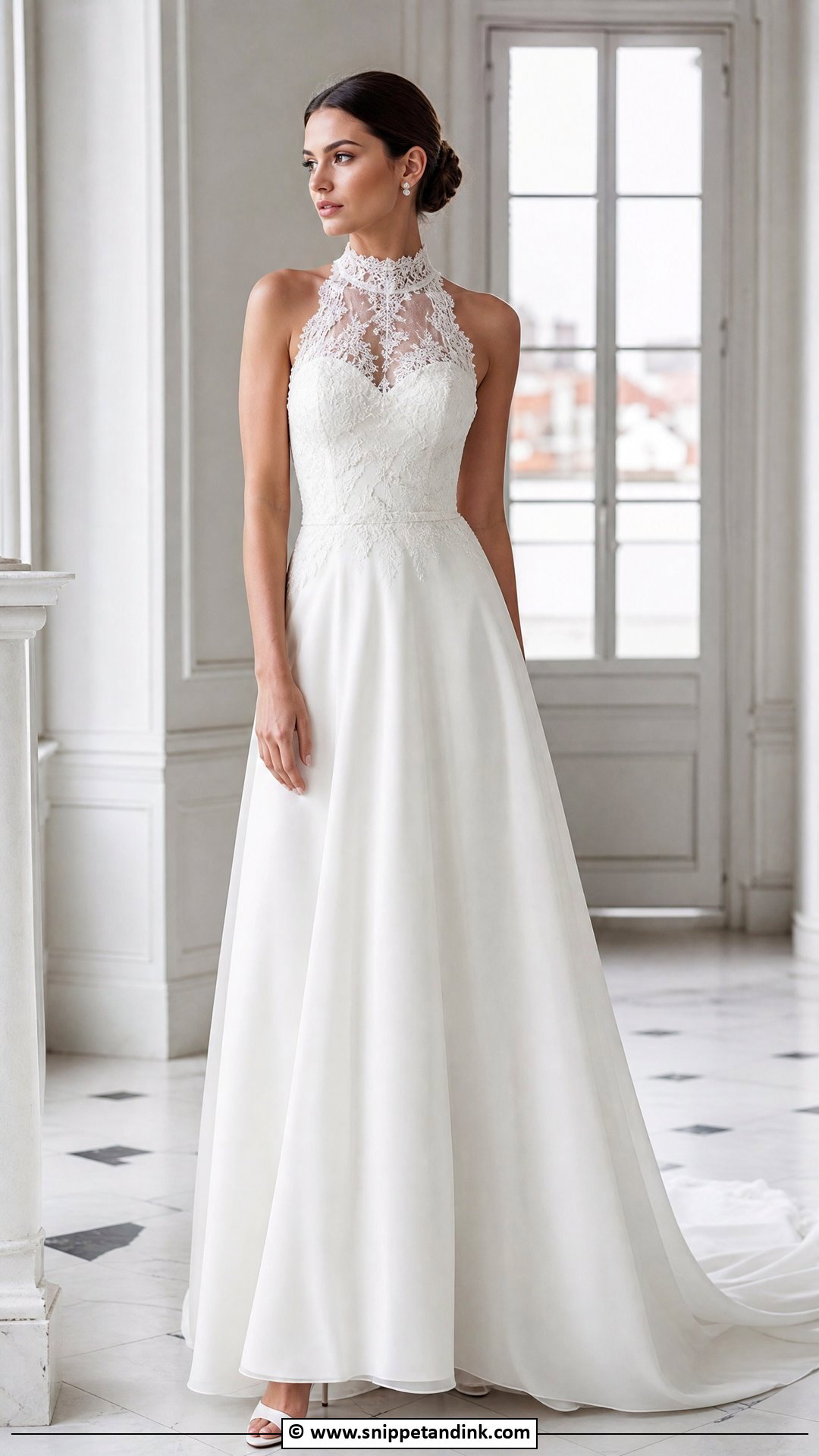
A high neckline is the alternative to strapless and plunging gowns, and it frames the face so the eye goes straight there. Lace, crepe, satin and sheer embroidery all suit it, and the cut can read modest, editorial or vintage. Balance the covered front with an open back, slim sleeves or a flowing skirt. Lightweight fabrics make it wearable even in summer. An updo shows it best, with pearl studs, a sleek bun and clean heels.
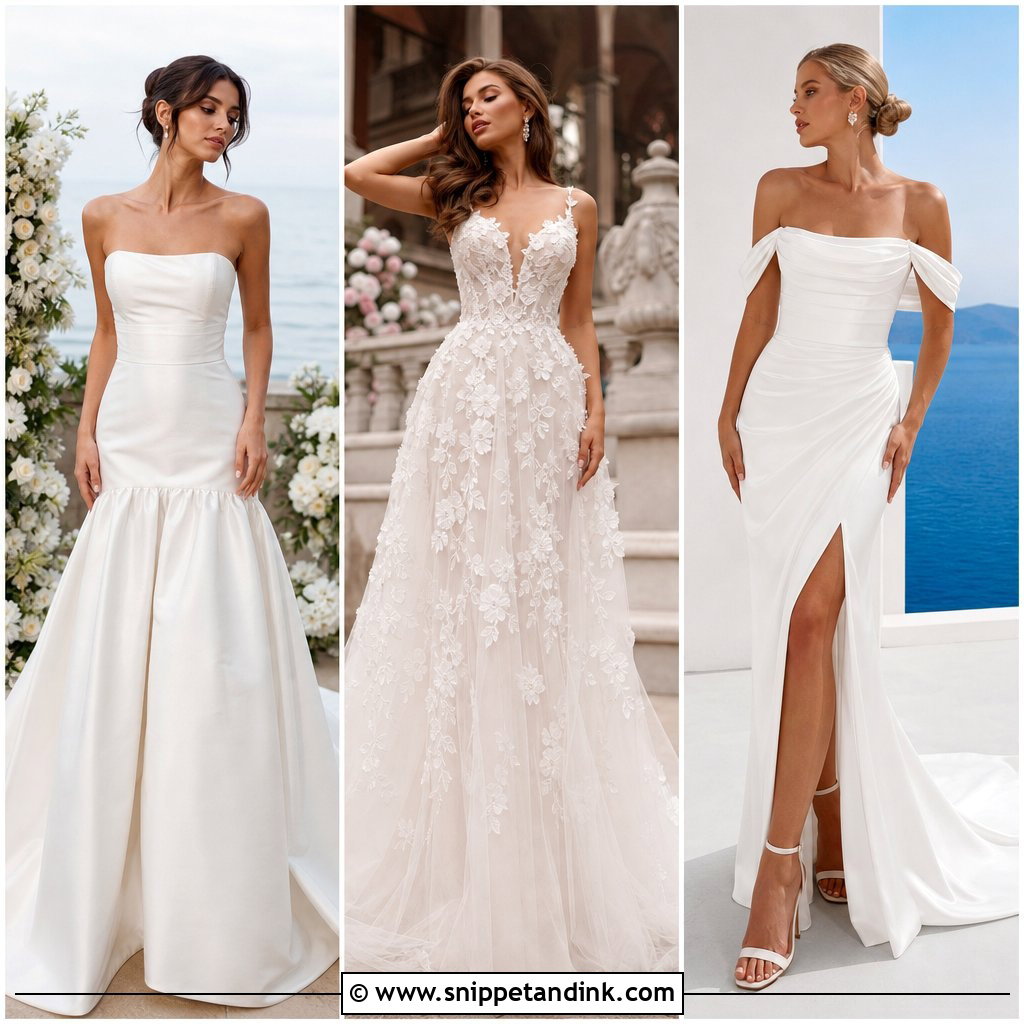
7. Off Shoulder Wedding Dress
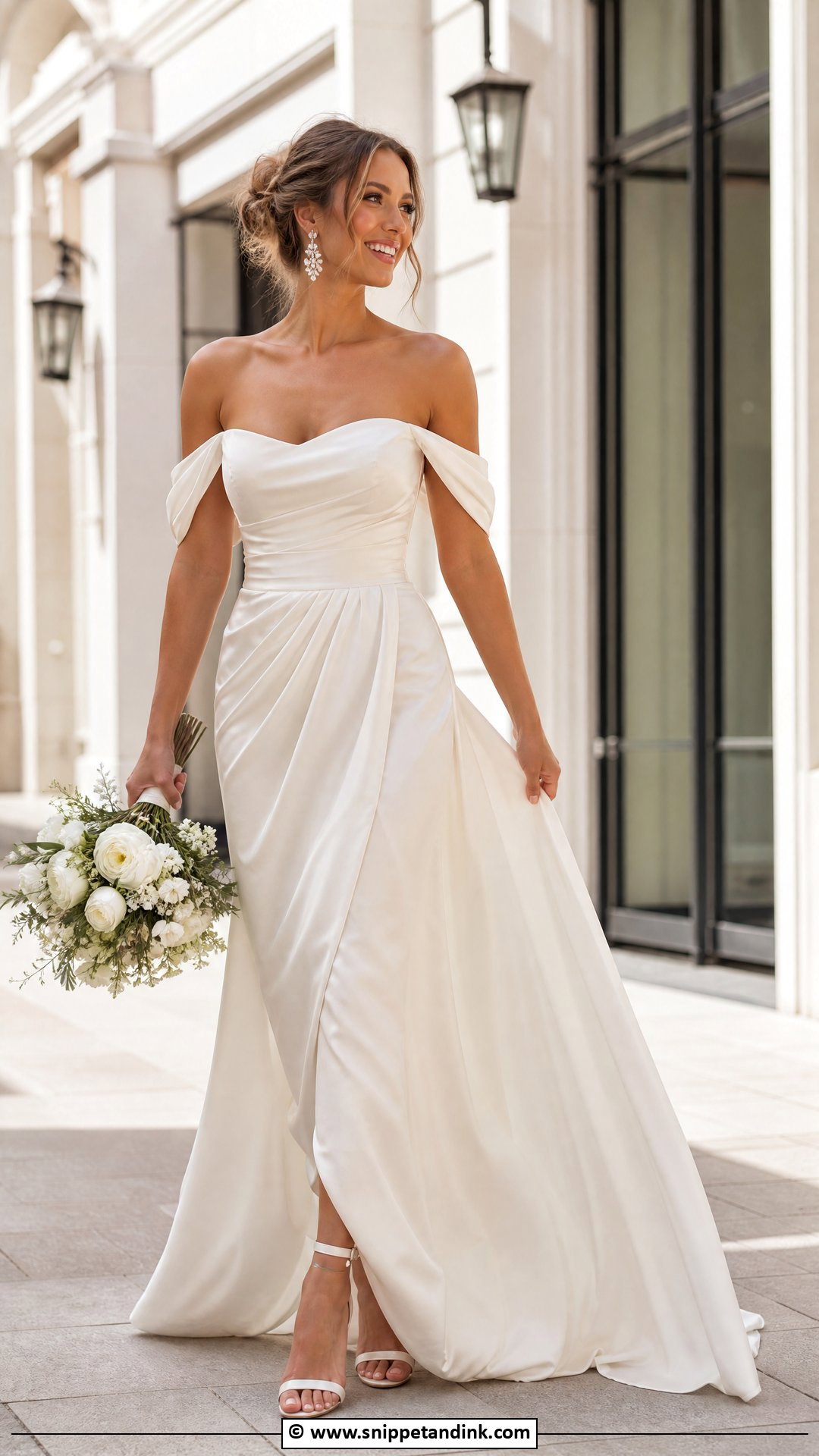
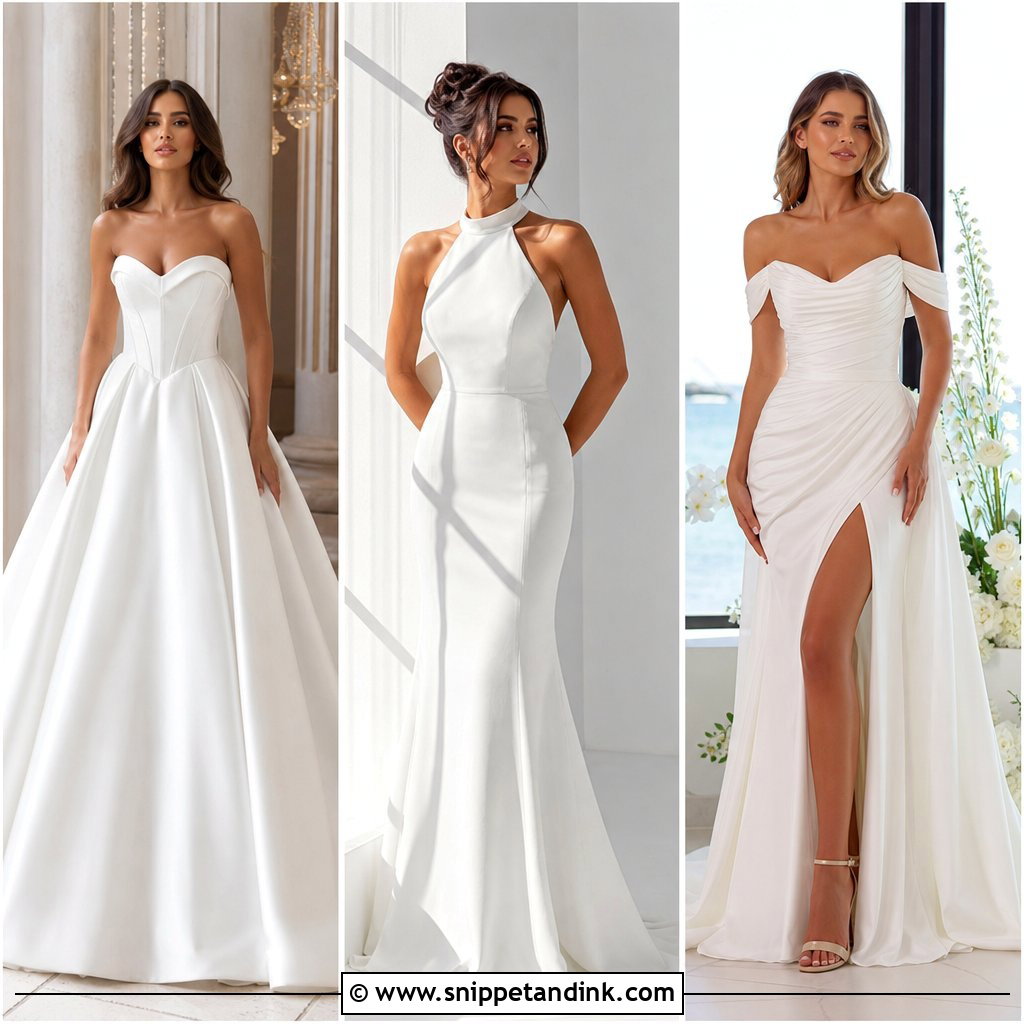
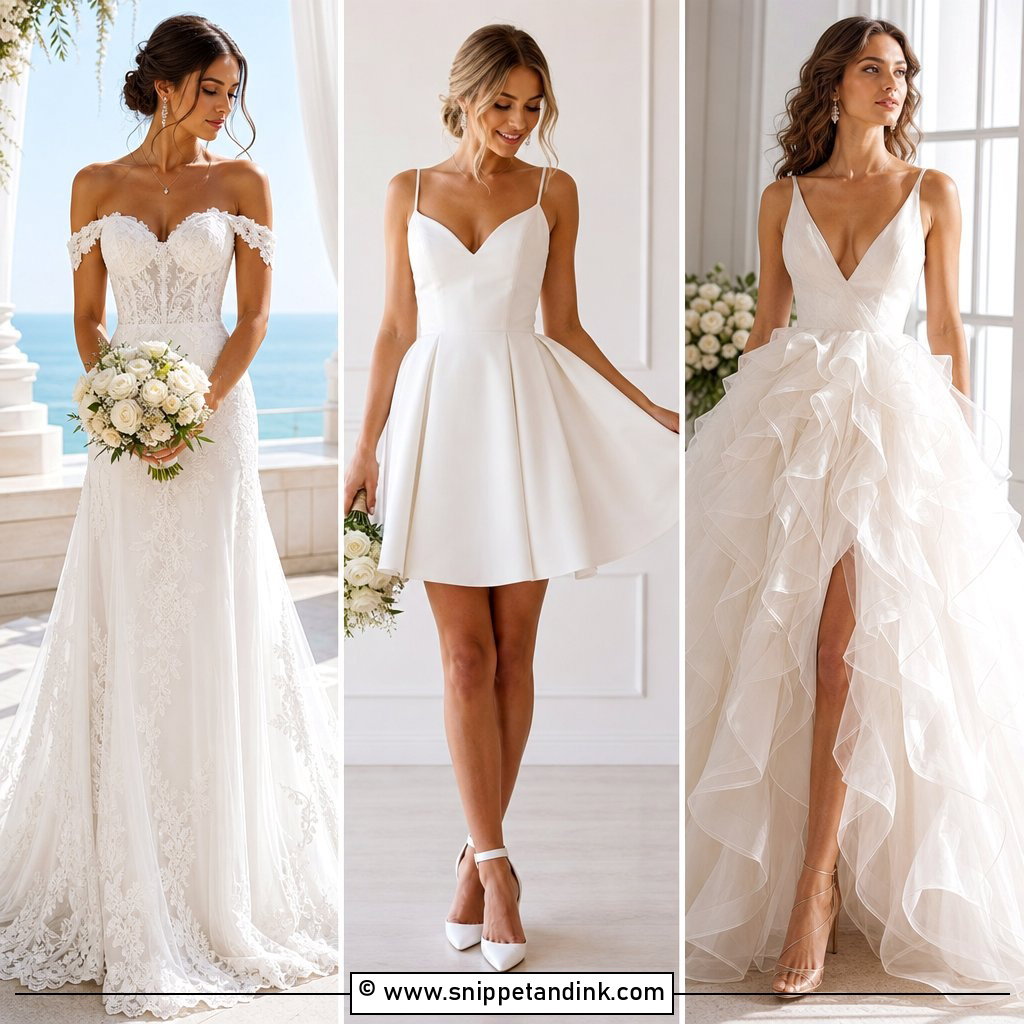
Off-shoulder necklines show the collarbones while covering more than a strapless gown. They pair with fitted mermaid skirts, soft A-lines or full ball gowns, and folded satin bands, lace sleeves or soft drapes across the arms keep them current. The front and side angles are where they shine in portraits. Raise your arms in the fitting room before deciding; the band across the upper arm limits how high you can reach. Skip the necklace, add statement earrings and a smooth veil.
8. Pearl Embellished Wedding Gown
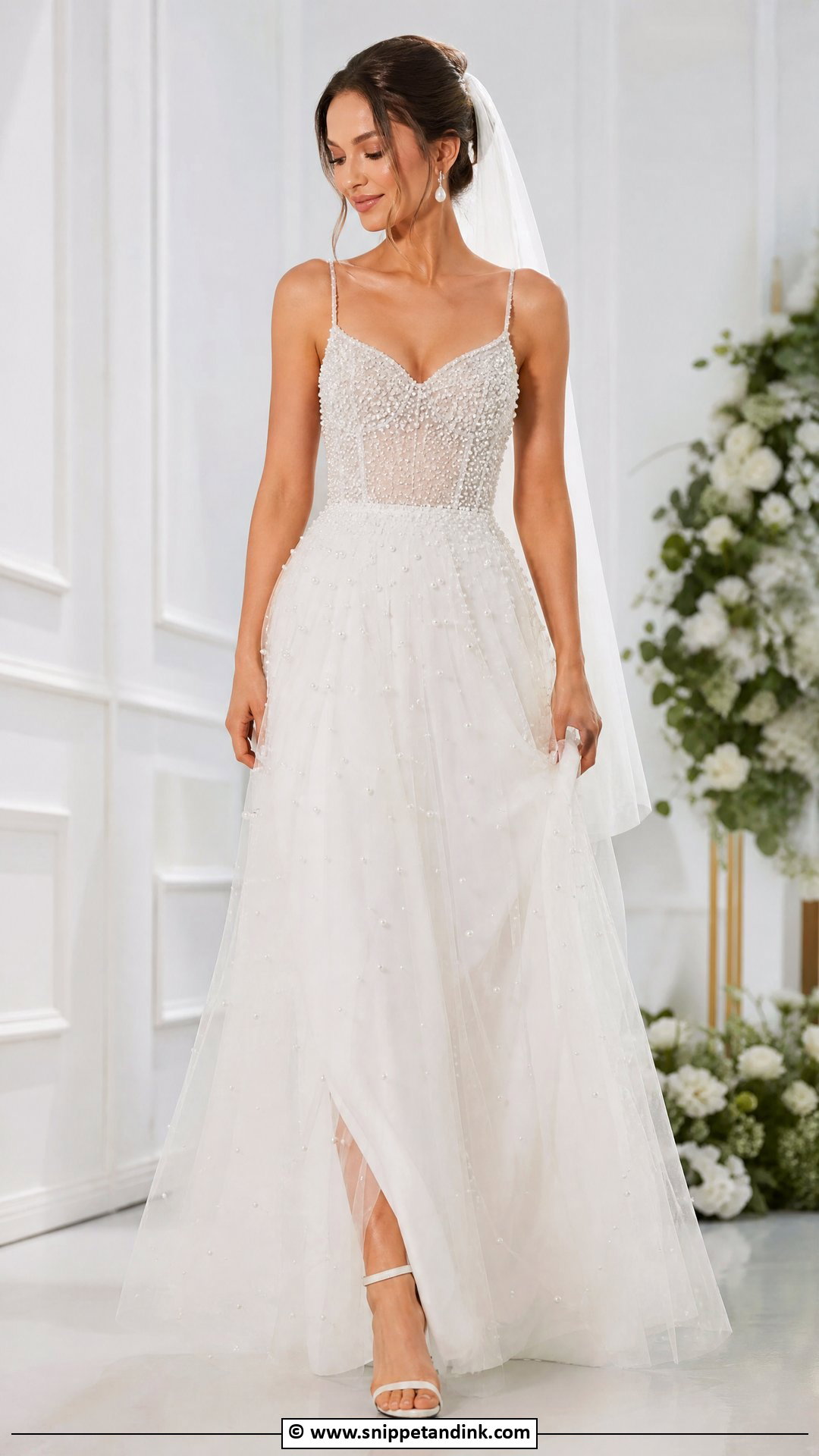
Pearls give a soft glow rather than glitter. They can trace the bodice, line the straps, scatter over tulle or run down the sleeves, and they look most current on simple silhouettes. I check how they’re attached before anything else, since stitched pearls survive steaming and hugging while glued ones can drop off. Evening receptions, ballrooms and city weddings suit them. Pearl studs, satin heels and a sheer veil are enough; more pearls only crowd it.
9. Floral Applique Wedding Dress
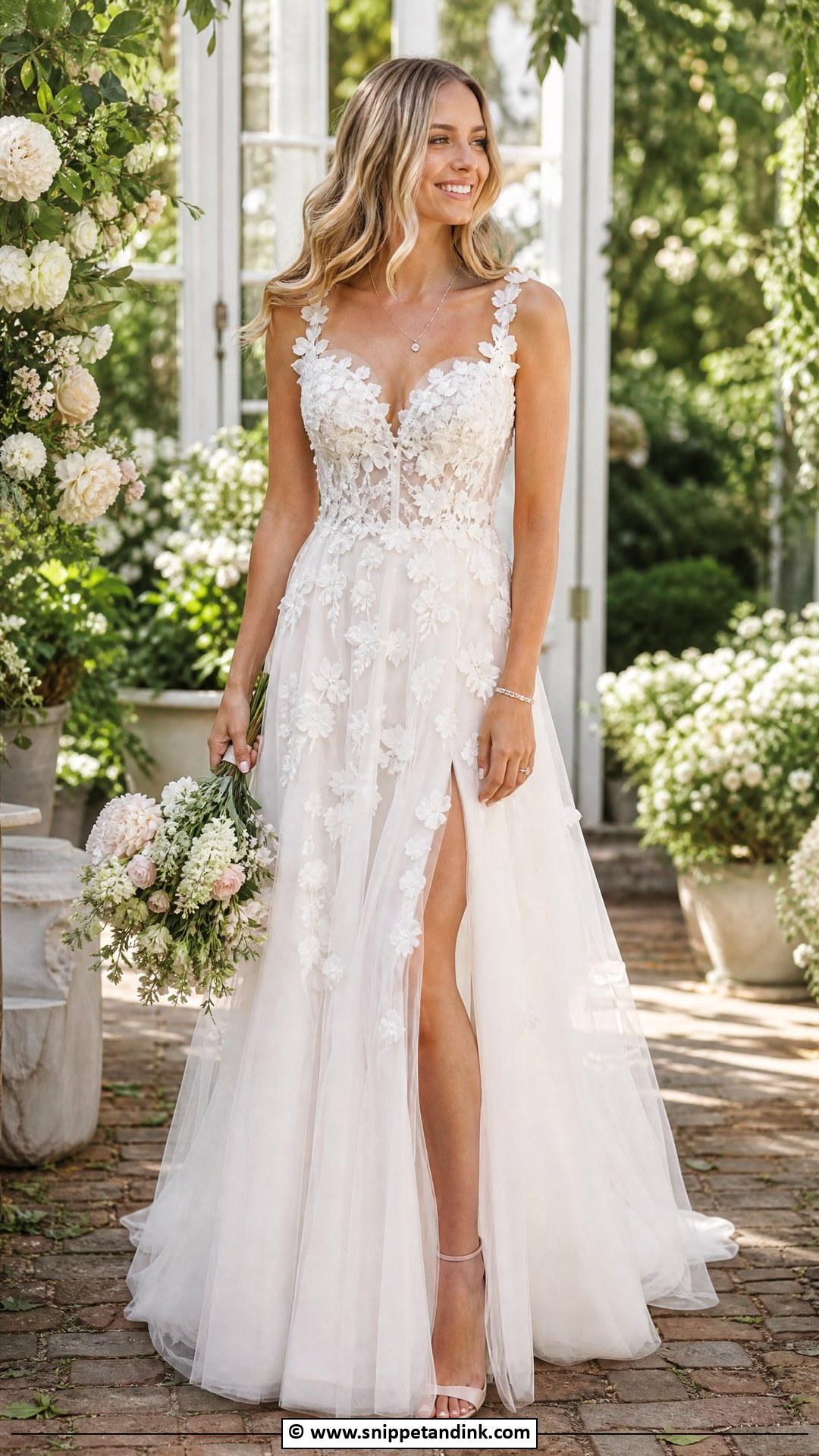
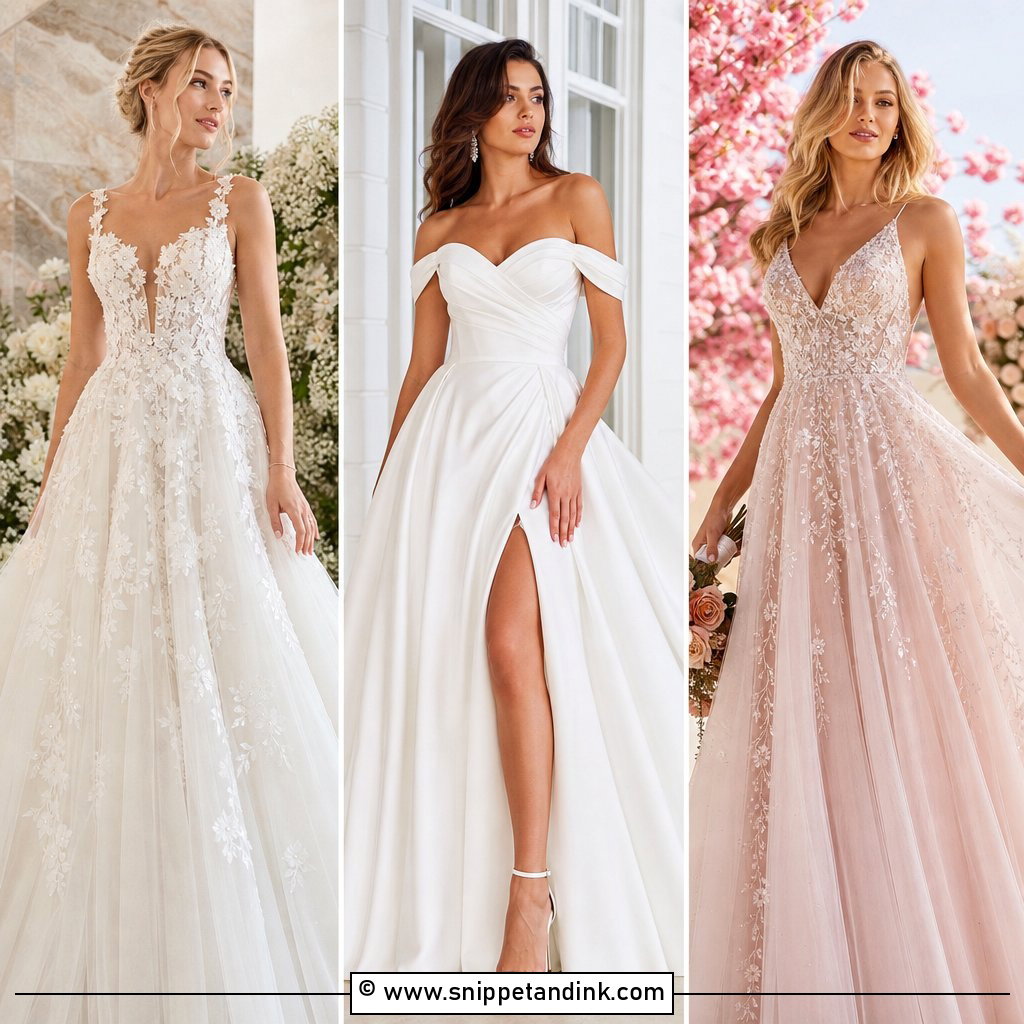
Raised flowers, embroidered petals and trailing vines give appliqué gowns dimension you notice up close. Small appliqués read subtle, oversized ones bold. Fitted, A-line and ball gown shapes all carry them. Outdoors they’re at home, especially in spring and summer, though I’d warn garden brides that loose petals snag on hedges and rose bushes. Ask for the outer edges to be tacked down. Soft makeup, loose waves and simple heels complete it.
10. Long Sleeve Lace Wedding Gown
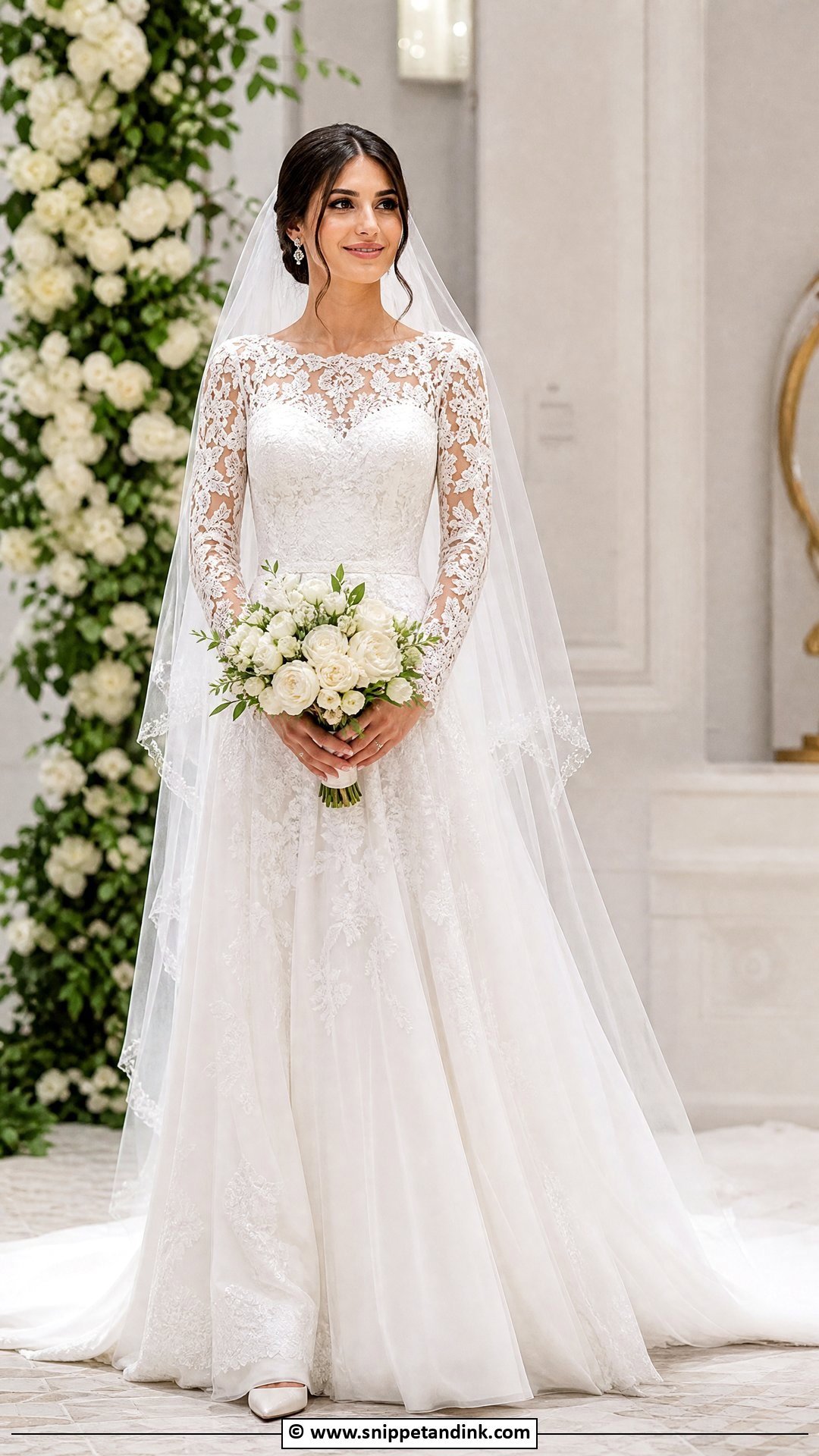
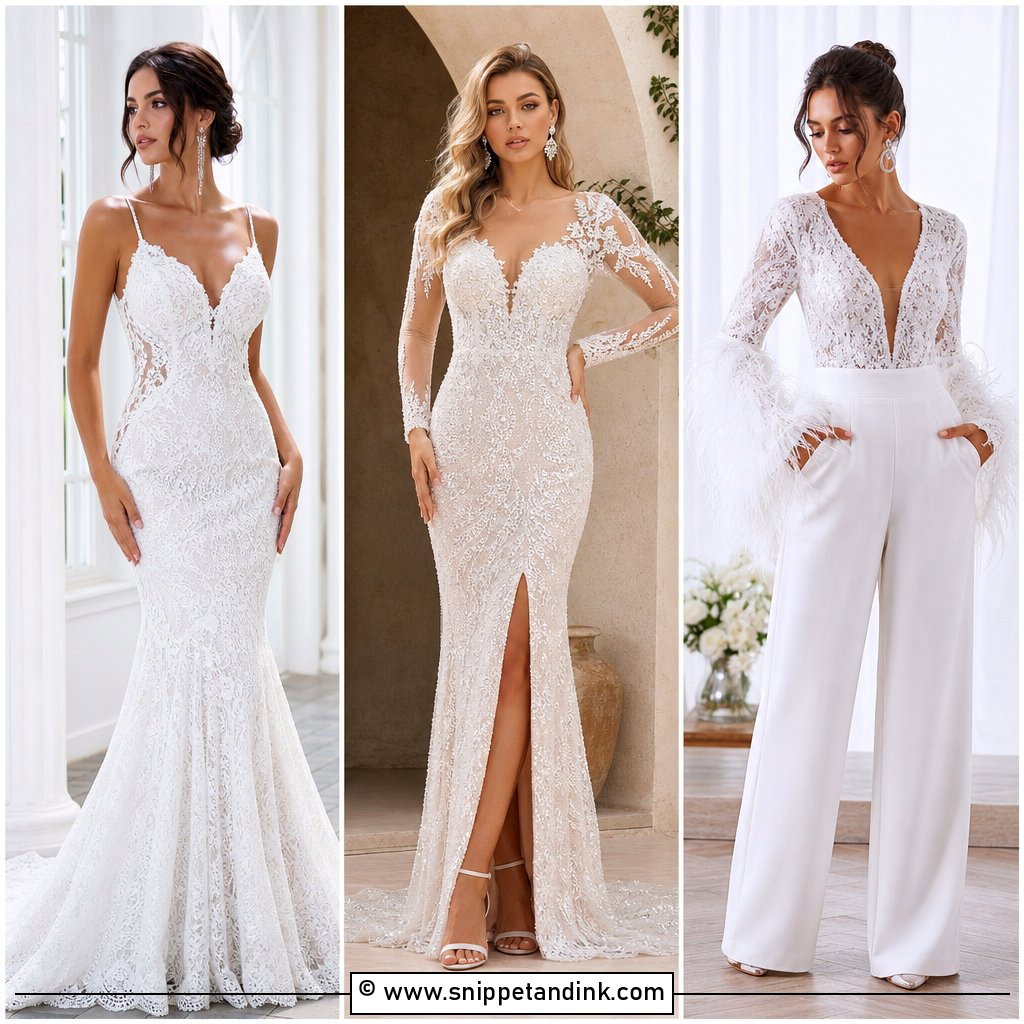
Long lace sleeves give coverage and still feel delicate. Sheer sleeves look light; lined ones feel more formal. The fit is everything here. Sleeves have to let you raise your arms without the bodice lifting, so the armhole should be cut high and close, and the cuff shouldn’t pull at the wrist when you hold your bouquet. A fitted bodice over a flowing skirt keeps the line balanced. Fingertip veil, small earrings and classic pumps.
11. Strapless Mikado Wedding Gown
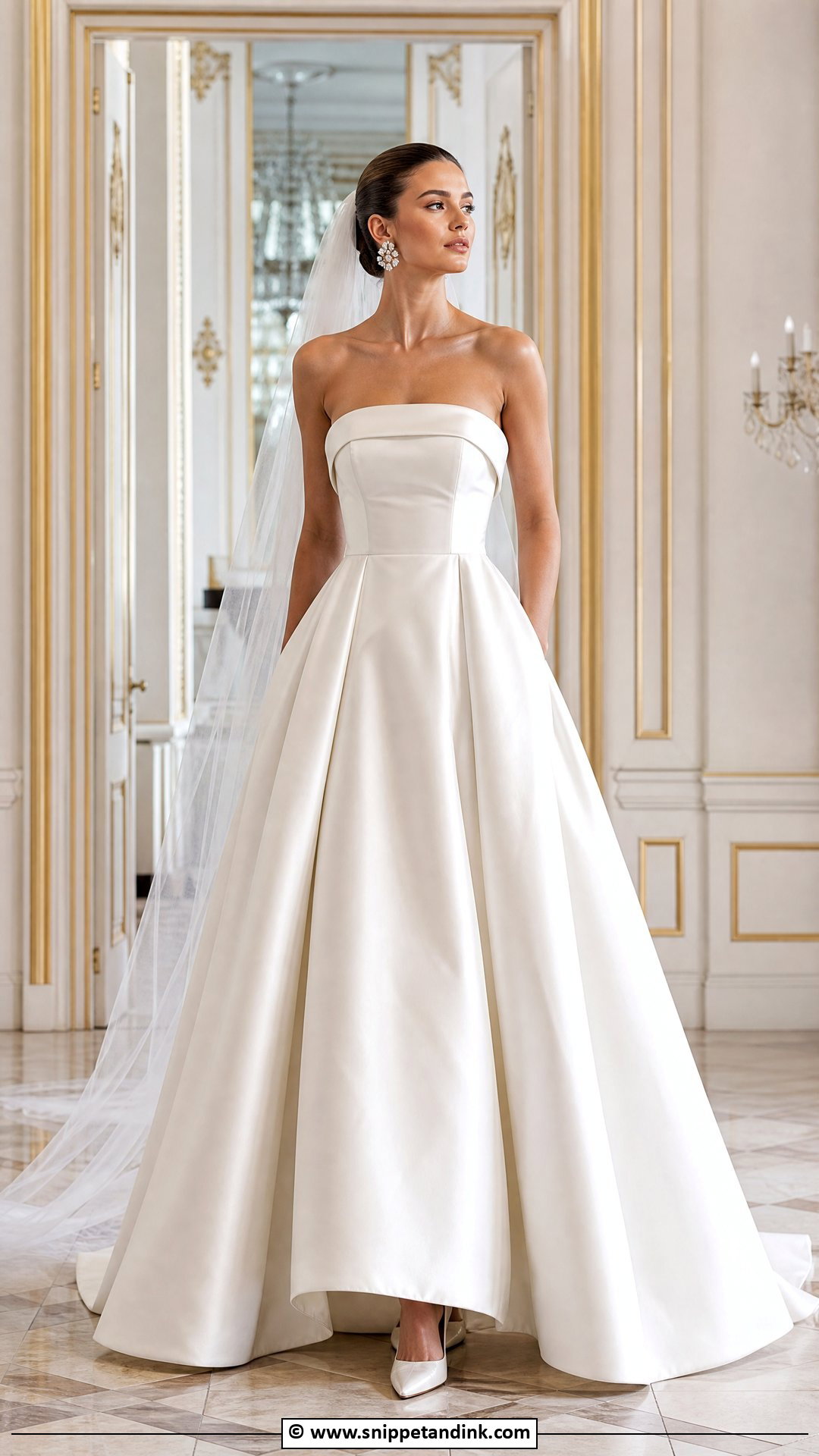
Mikado is a heavy silk or silk-blend with a subtle sheen and enough body to hold pleats and sculpted skirts. Strapless, it gives a crisp, architectural shape that suits formal venues and evening ceremonies, and it supports a statement veil well because the gown underneath is so clean. The bodice must stay put on its own, so I look for internal boning and a grip strip at the top edge. A sleek updo, bold earrings, satin heels and a structured bouquet keep it sharp.
12. Square Neck Wedding Dress
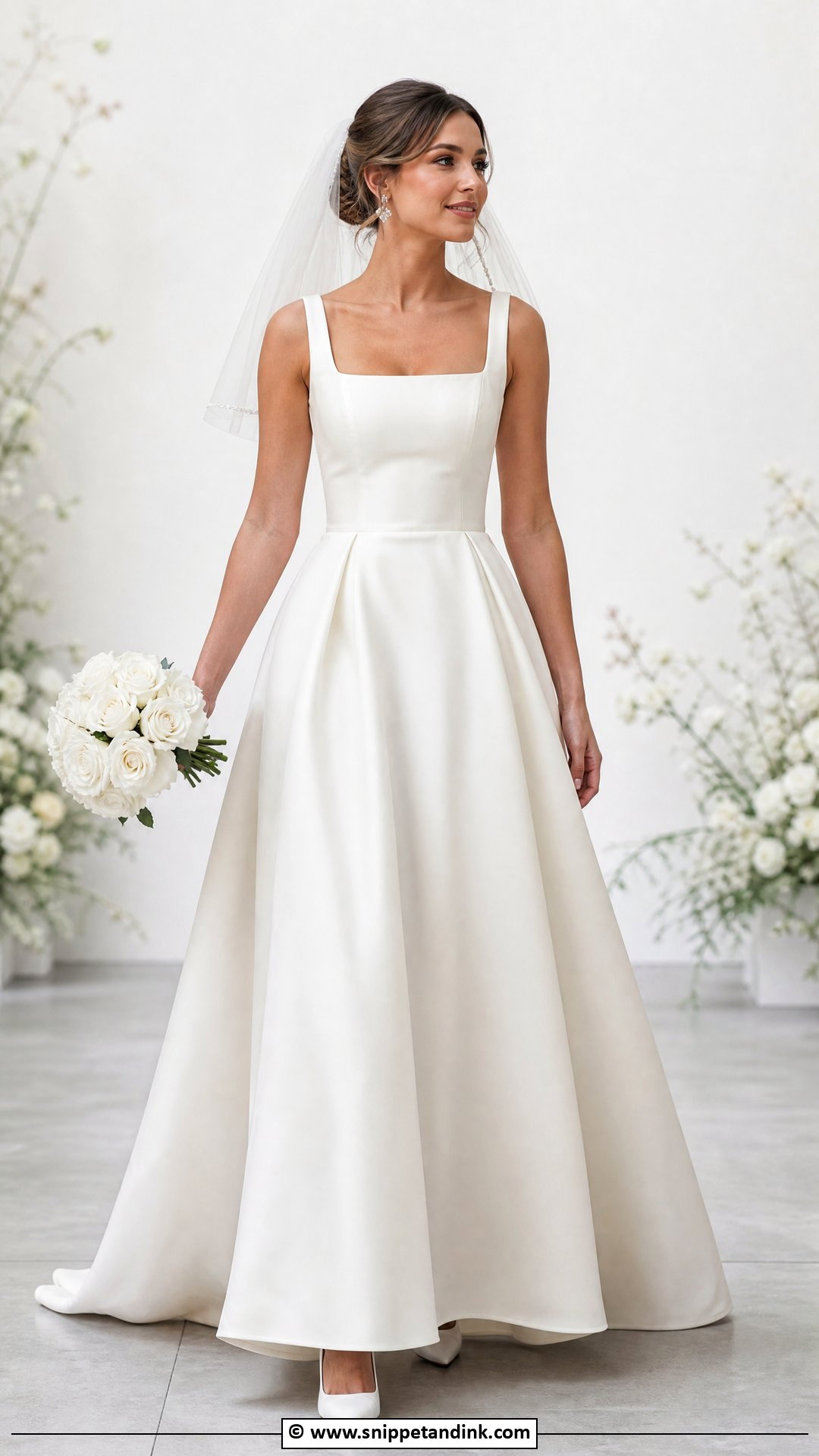
Square necks frame the collarbone and suit a wide range of bust sizes, which is why I suggest them so often. They appear on satin gowns, crepe sheaths, lace dresses and tulle skirts. Thin straps look delicate; wider ones support more and read classic. Brides who want simple without plain tend to land here. A low bun, short veil and elegant earrings finish it for indoor, outdoor, formal or relaxed settings.
13. Mermaid Wedding Gown
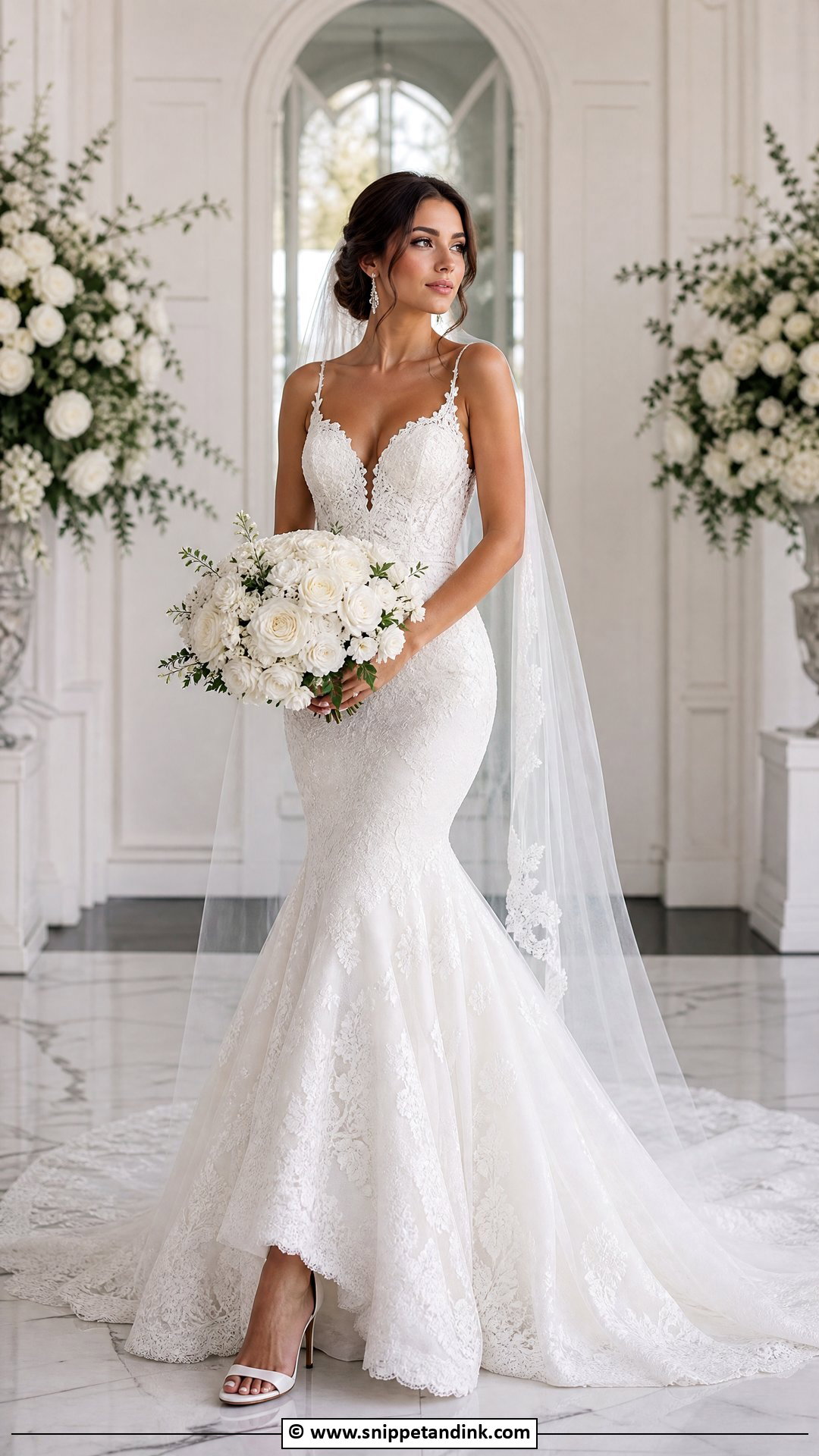
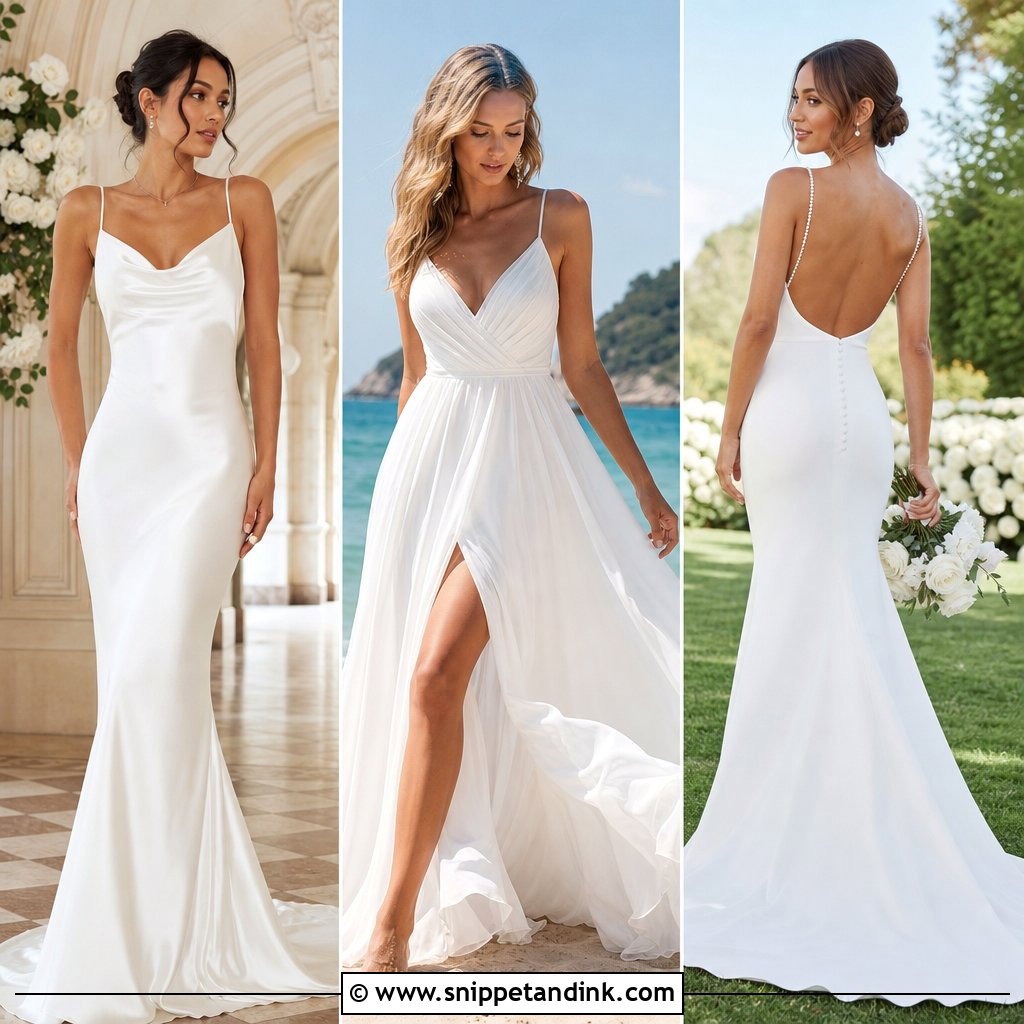
Mermaid gowns follow the body through bodice, waist and hips, then flare at or just below the knee, which gives the aisle walk real presence. Lace, crepe, satin and beaded fabric all work. My non-negotiable test: sit, walk up a step and do a small dance move at the fitting. If any of those feel like a struggle, the flare needs moving or the hips need easing. Supportive heels, a long veil and jewelry matched to the gown’s detail complete it.
14. Tulle Princess Wedding Dress
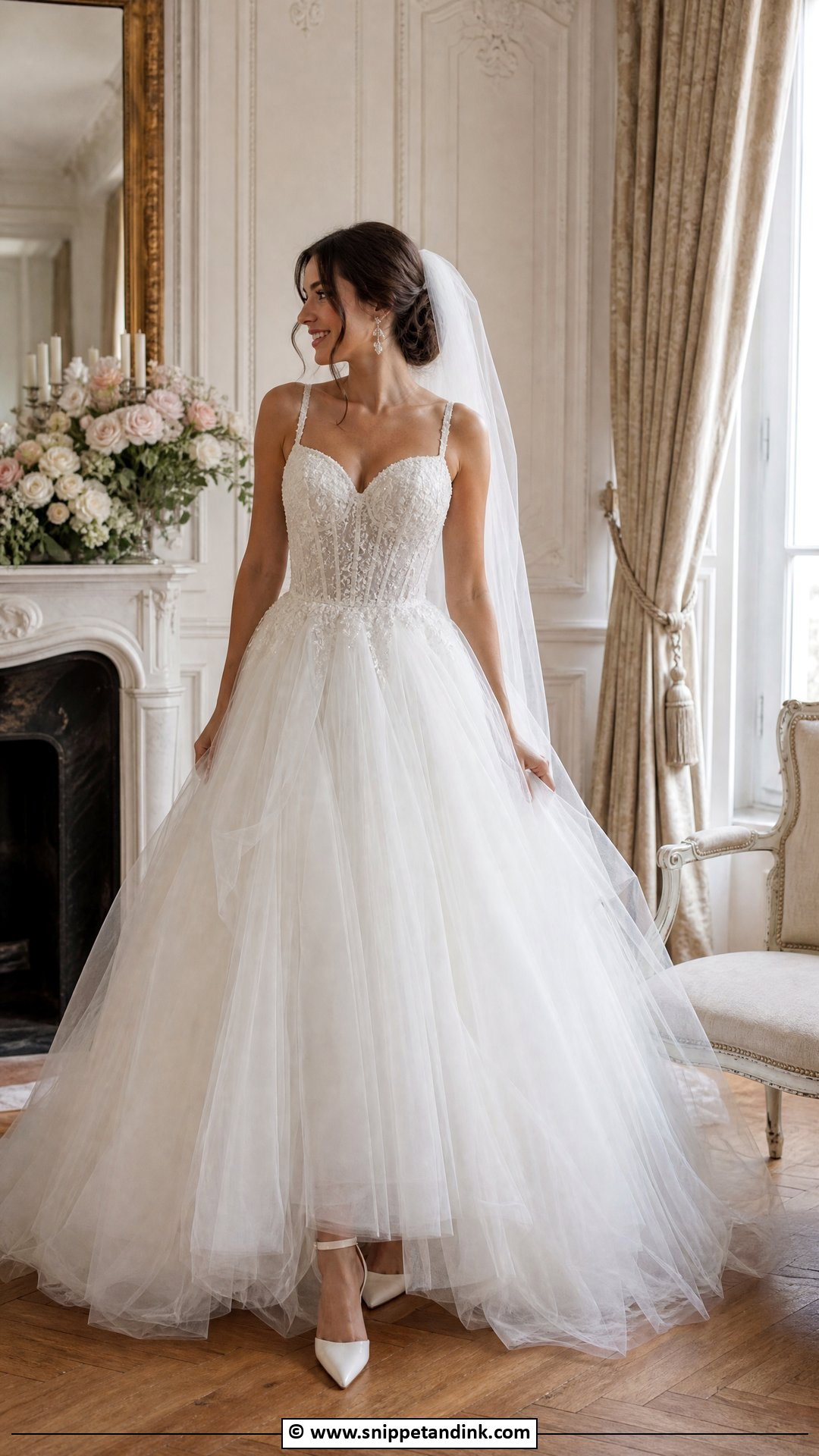
Tulle princess skirts float. Layer upon layer gives volume that’s lighter than satin or mikado, and the fitted bodice keeps the shape flattering. Estate gardens, romantic venues and formal celebrations suit them. To keep it from looking dated, choose a clean neckline, subtle sparkle or a modern corset bodice. Tulle snags on stone steps and bracelet clasps, so mind both on the day. Soft curls, delicate earrings, satin heels and a sheer veil are all it needs.
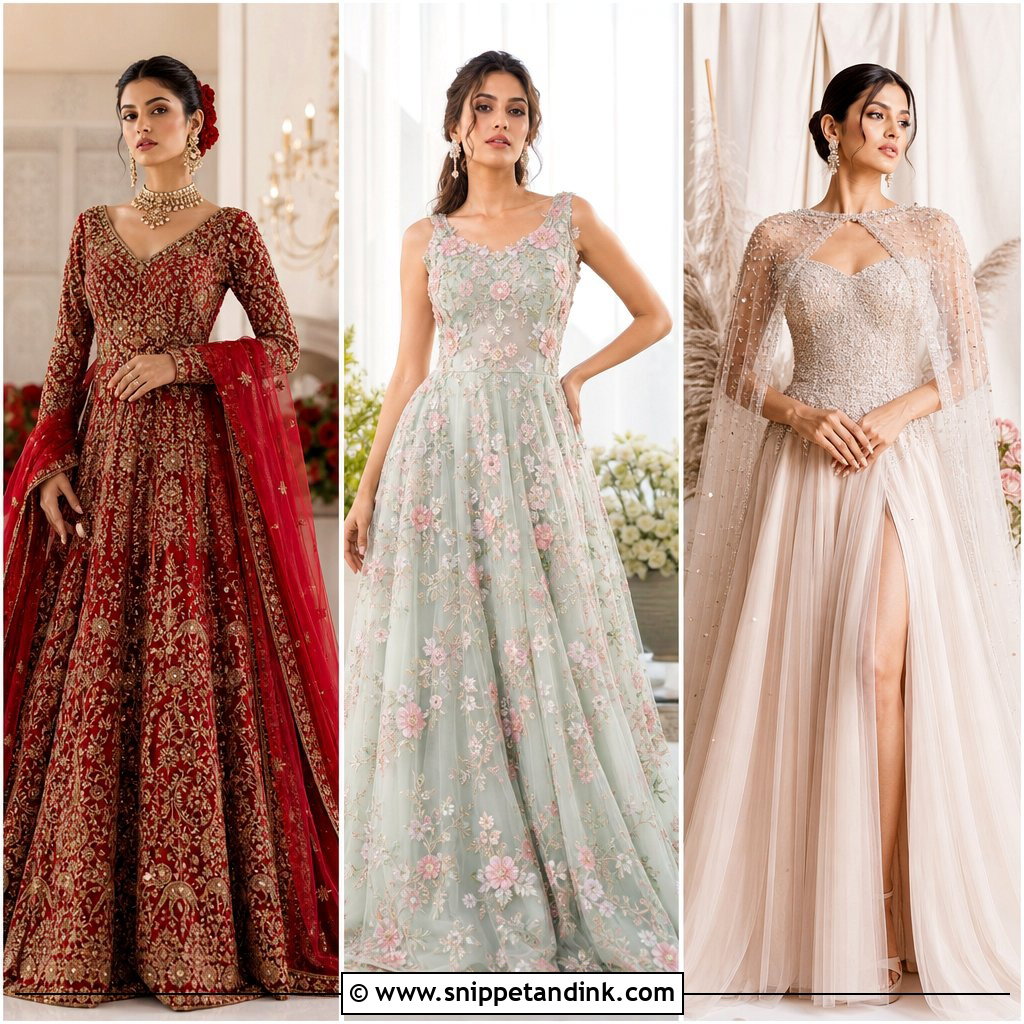
15. Beaded Sheath Wedding Gown
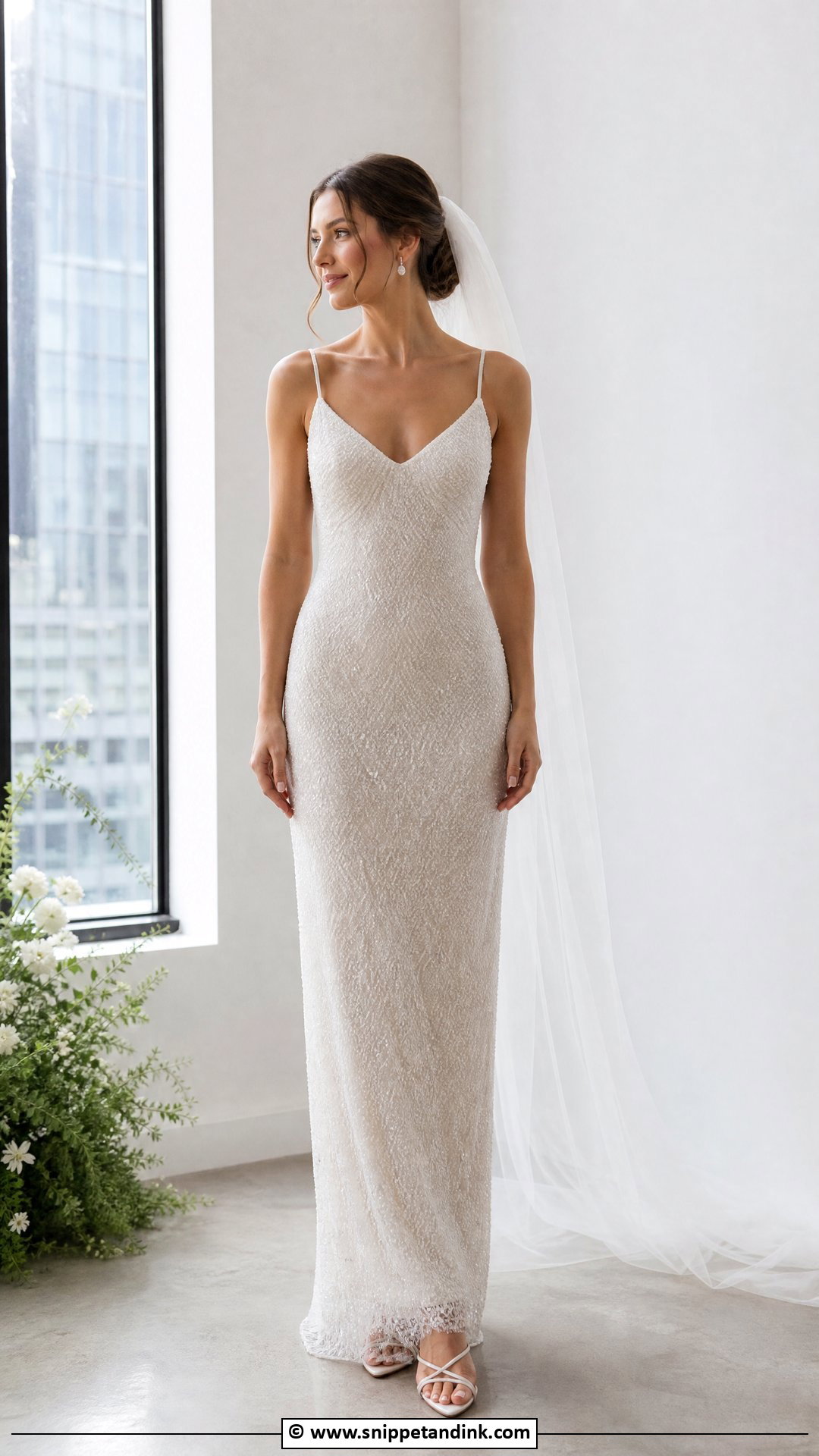
Beaded sheaths deliver shimmer in a slim line, without the volume of a ball gown or A-line. Beading adds light and movement, especially under evening lighting at city venues, galleries and resorts. Vertical bead lines lengthen, floral placement softens, and fine all-over beading reads glamorous. Beaded fabric is heavy and doesn’t stretch, so I’d sit in it to check the seat and side seams before the final alteration. Strappy heels, small earrings and a clean veil finish it.
16. Bow Back Wedding Dress
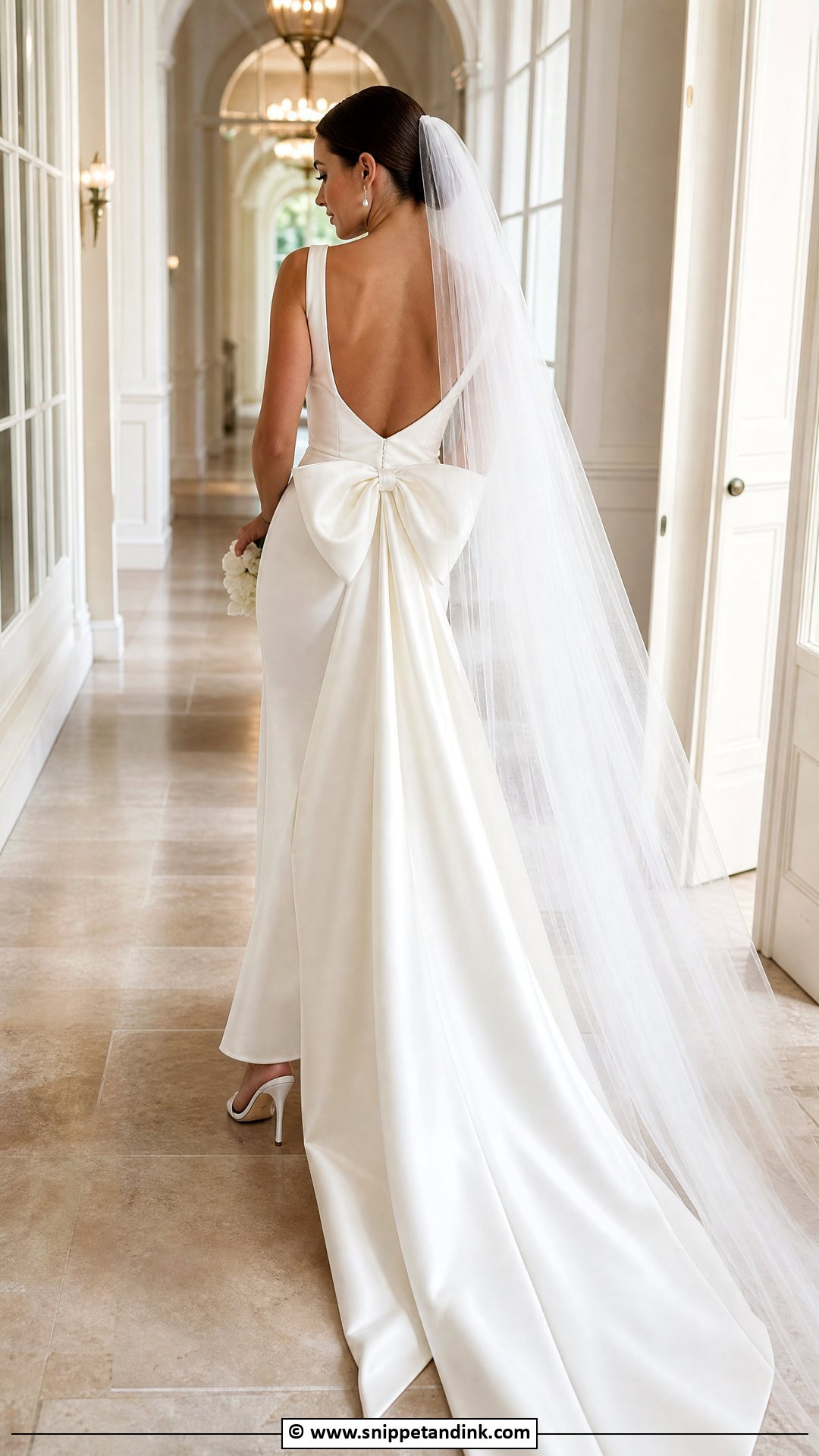
A bow at the back gives guests something to look at during the ceremony, when they mostly see you from behind. Oversized and dramatic, small and delicate, or tied from detachable panels, it works best on clean satin or mikado that holds its shape. I’d ask whether the bow is interfaced; an unstructured bow flattens after an hour of sitting. An updo or half-up style keeps it visible, with simple earrings, pointed heels and a plain veil that ends above or below the bow, not across it.
17. Basque Waist Wedding Gown
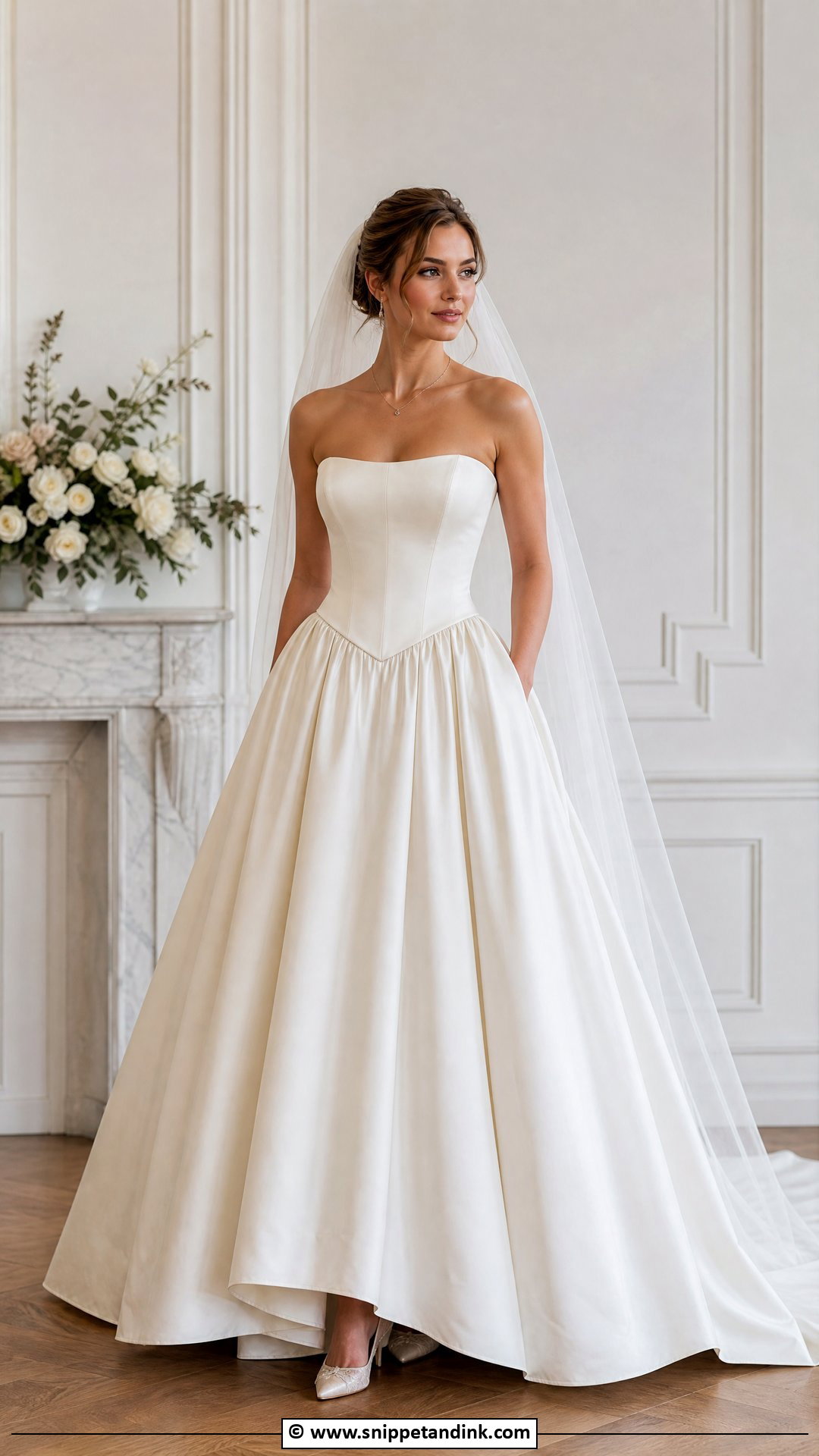
A basque waist dips into a point below the natural waist, which lengthens the torso and creates a gentle hourglass. Full skirts, lace bodices and structured satin all suit it. It has a historical feel that modern tailoring keeps fresh. The point has to sit centered and flat; if the bodice is even slightly long, it buckles when you sit. A sheer veil, delicate necklace and comfortable bridal heels complete it for a formal ceremony.
18. One Shoulder Wedding Dress
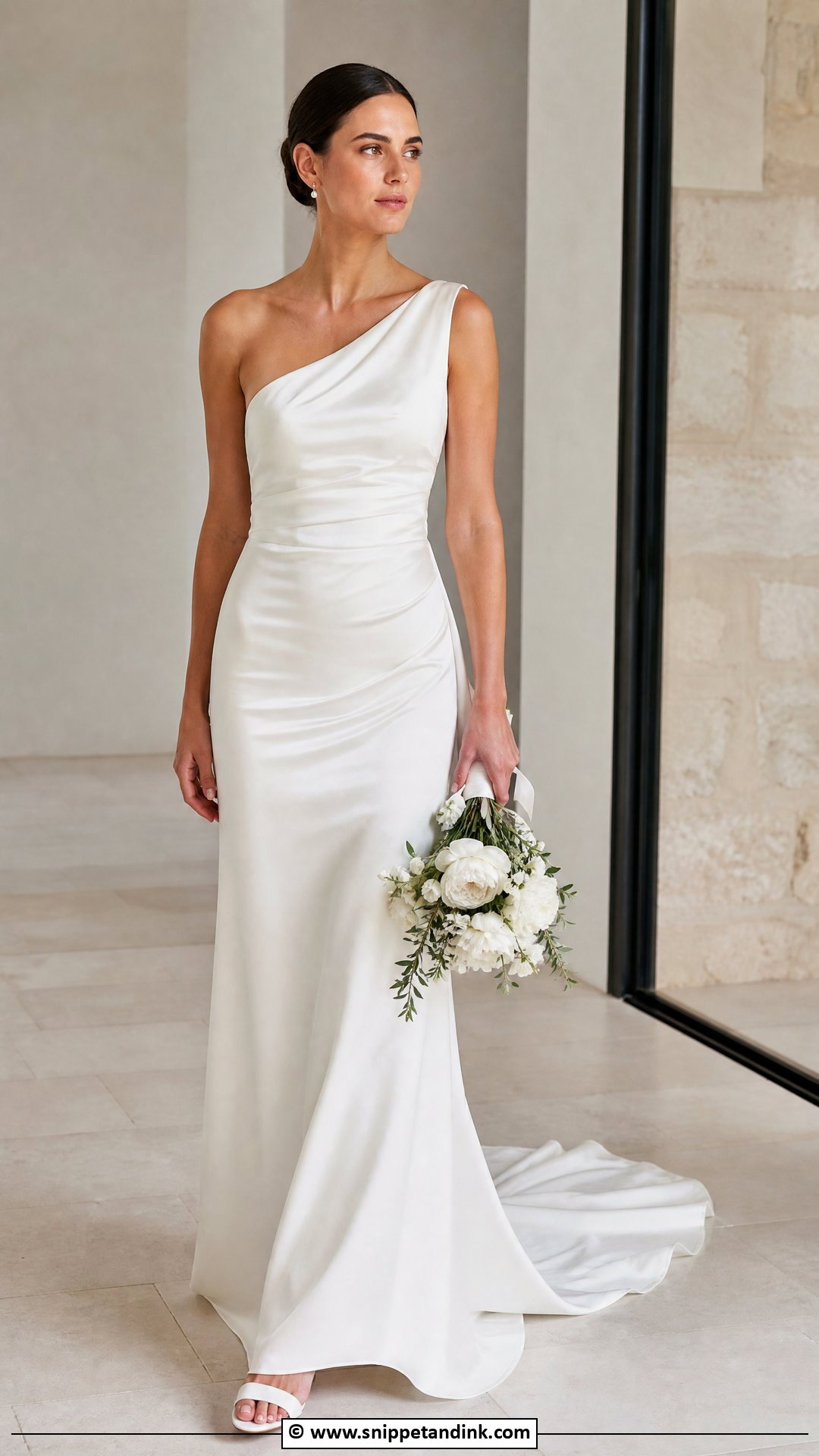
One-shoulder gowns bring asymmetry and draw the eye upward. Satin, crepe, chiffon and soft drapes all work, with a fitted skirt for sleekness or an A-line for movement. The strap needs an inner stay, or the bodice slowly rotates toward the bare side through the evening. Keep jewelry to one bold pair of earrings or plain studs, then add clean heels and smooth hair. Modern venues and destination ceremonies suit it best.
19. Detachable Overskirt Wedding Gown
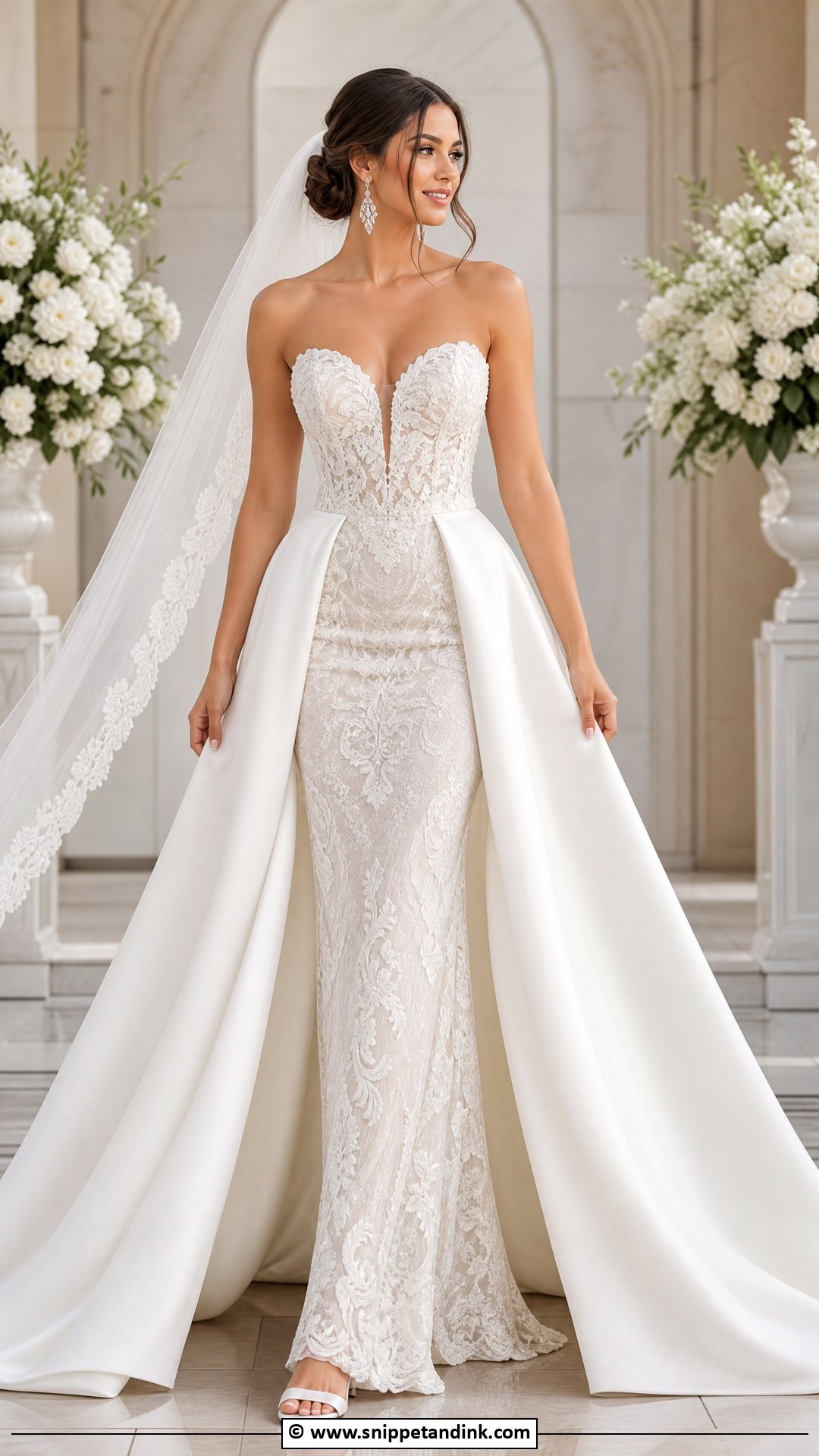
A detachable overskirt wedding gown gives you a full ceremony silhouette and a slimmer dress for dancing, without a change of outfit. Fitted crepe, lace sheaths and corset bodices all sit well underneath. The waistband join is where cheaper versions fail, so I look for a sturdy hidden band with hooks and snaps rather than a single zip. Long veil for the ceremony, statement earrings once the skirt comes off.



20. Short Reception Wedding Dress
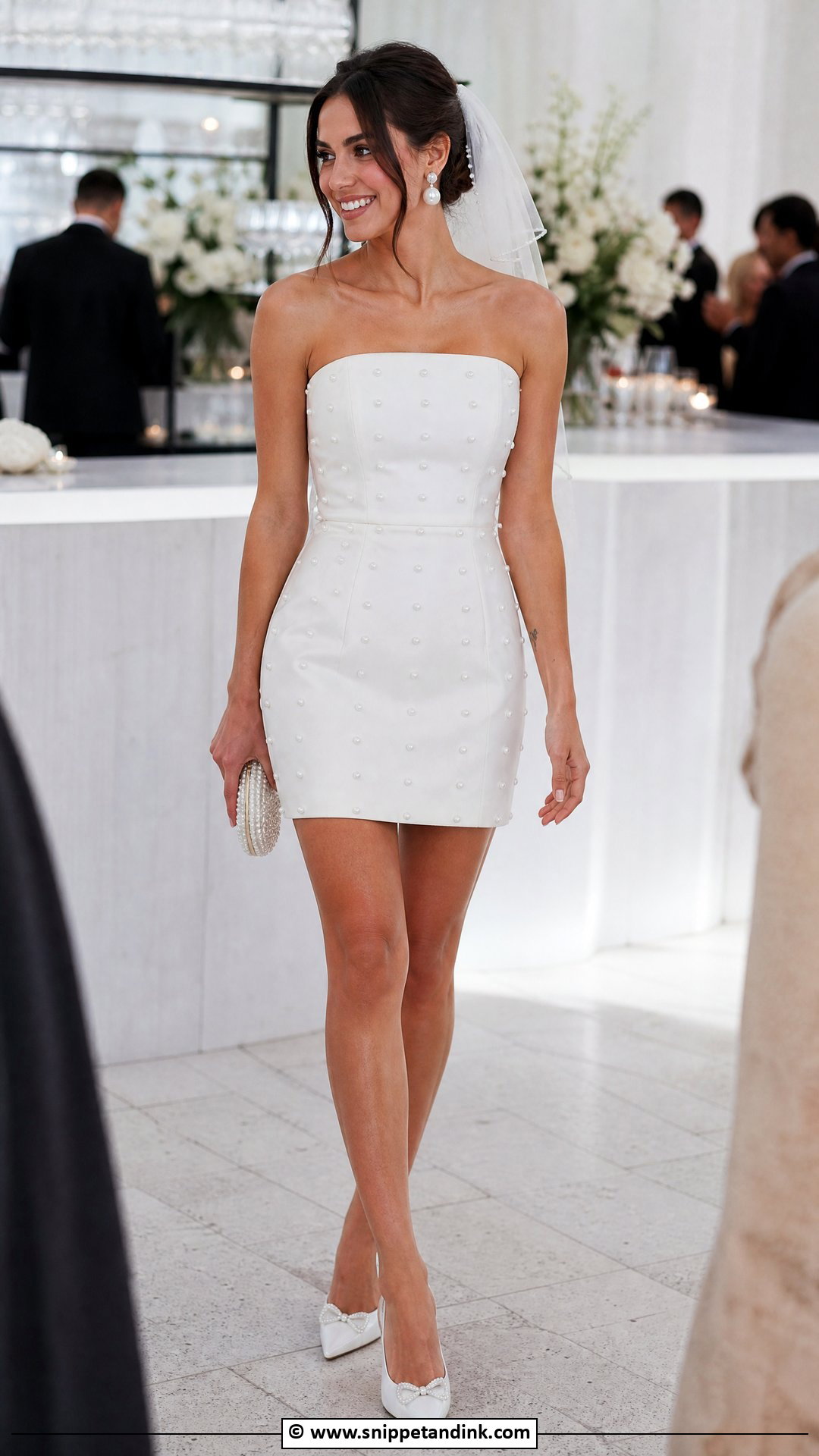
Short reception dresses are for dancing, greeting guests and moving freely after the formal part. A mini, tea-length gown or structured short dress with pearls, bows, lace or feathers all work. Keep it bridal with white or ivory fabric and accessories that link back to your main gown. I’d buy this one early and have it altered alongside the main dress, since last-minute reception dresses rarely fit as well. A short veil, pearl headband or sleek clutch completes it.
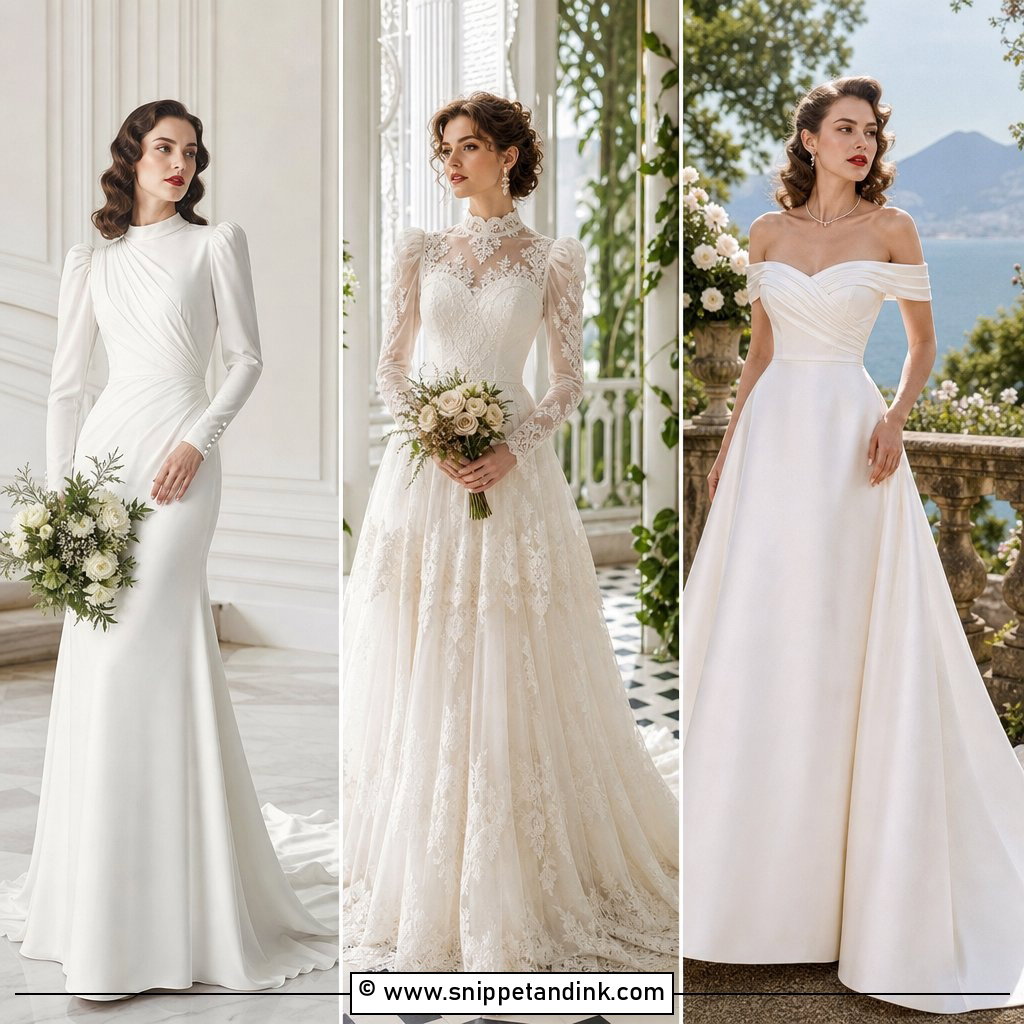
21. Vintage Inspired Wedding Gown
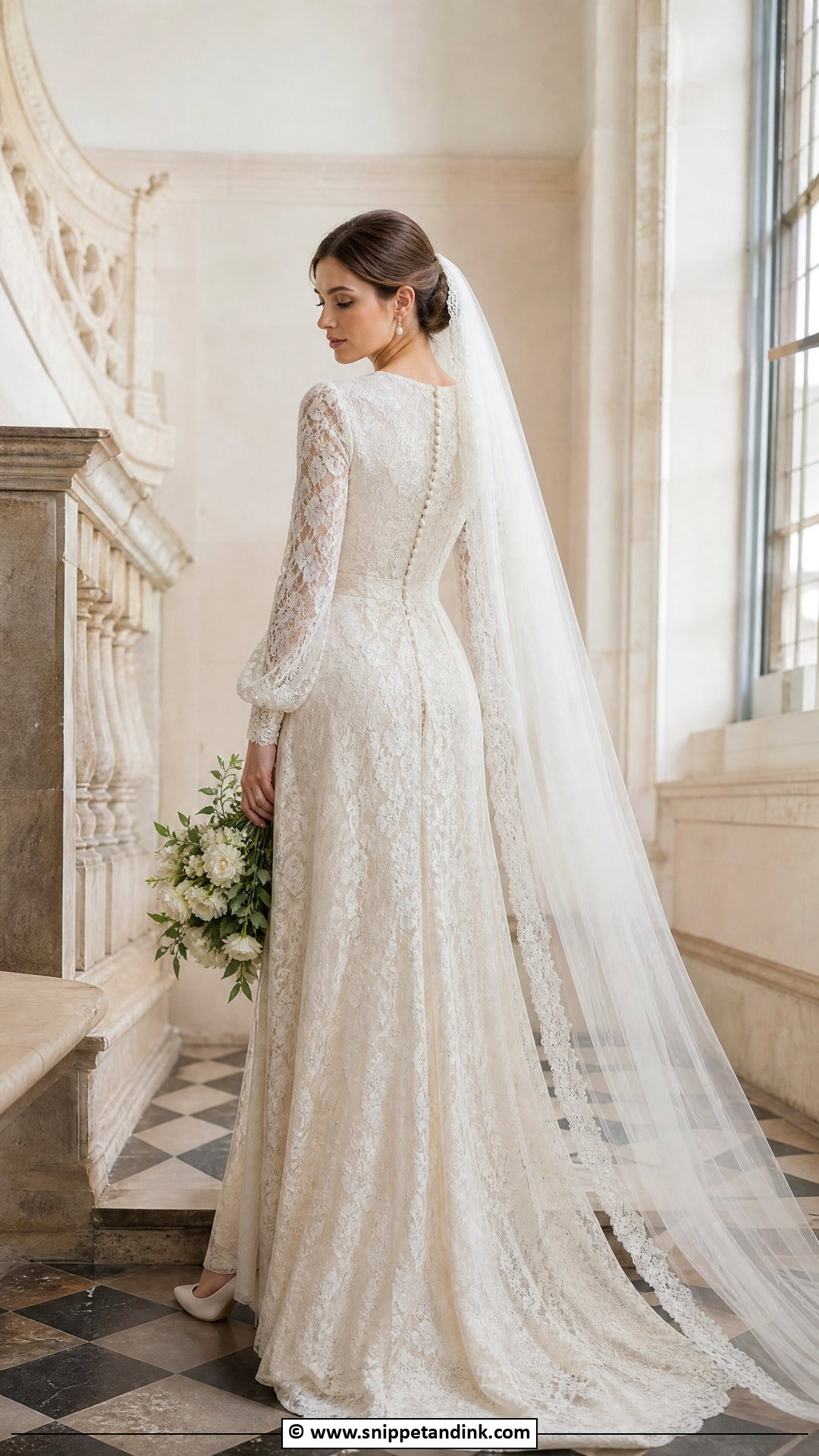
Vintage-inspired gowns borrow from the past: lace sleeves, satin slips, high necks, covered buttons, tea-length skirts or Art Deco beading. The trick is choosing the influence without the costume. One era detail, modern tailoring and clean hair keep it current. Historic venues and intimate ceremonies suit it. Pearl jewelry, soft waves and classic heels complete the look, and a family heirloom piece fits naturally here if you have one.
22. Satin Slip Wedding Dress
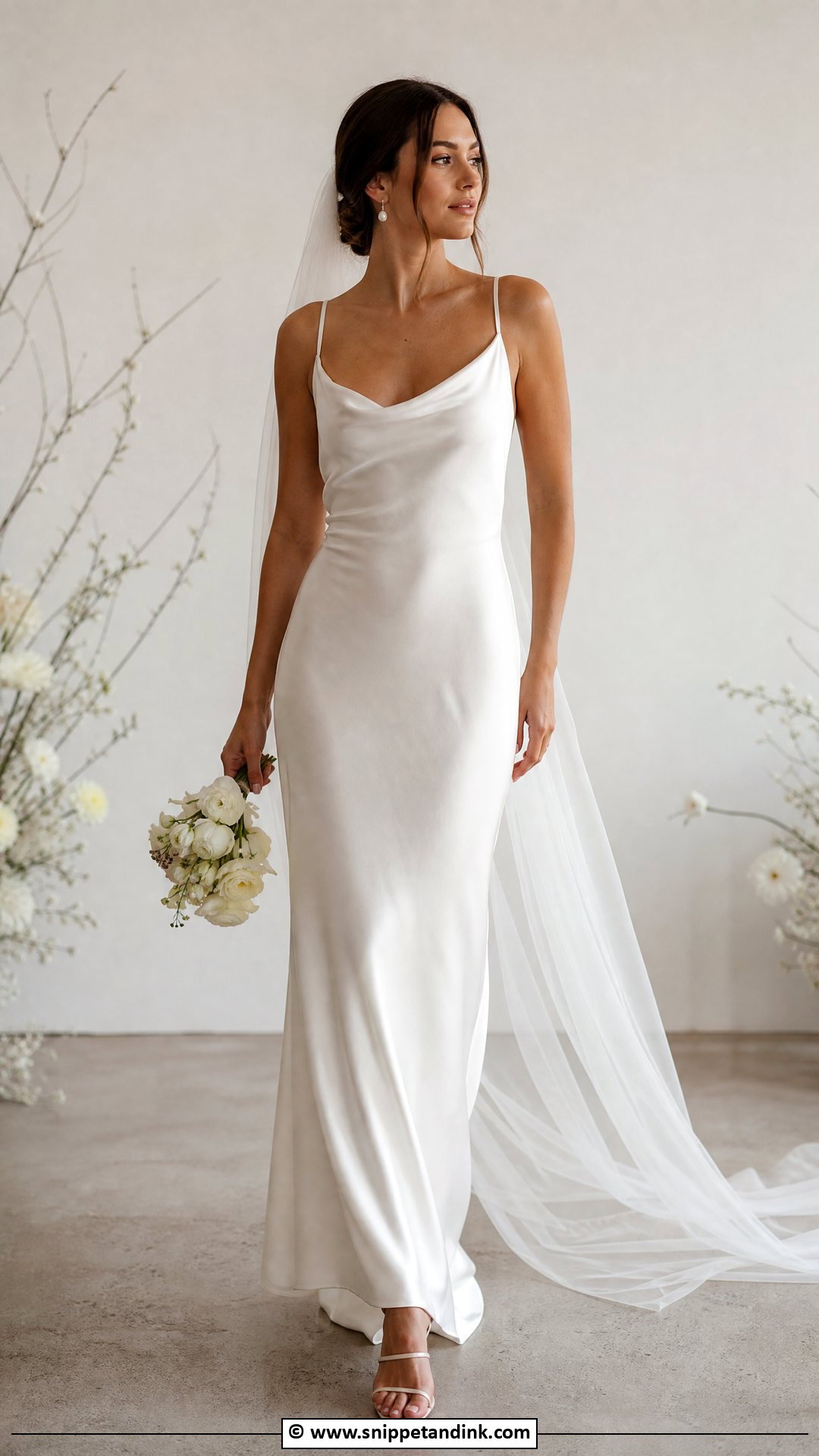
A satin slip skims the body in one clean line, with thin straps, a cowl neck or a low back softening it. Because it’s so minimal, fit and fabric quality decide everything: thin satin shows every bump and crease, so I push brides toward a heavier, matte-backed satin. Beach weddings, city ceremonies and warm-weather gatherings suit it. Strappy heels, a silk veil, pearl earrings and natural makeup keep the restraint going.
23. Ruffle Skirt Wedding Gown
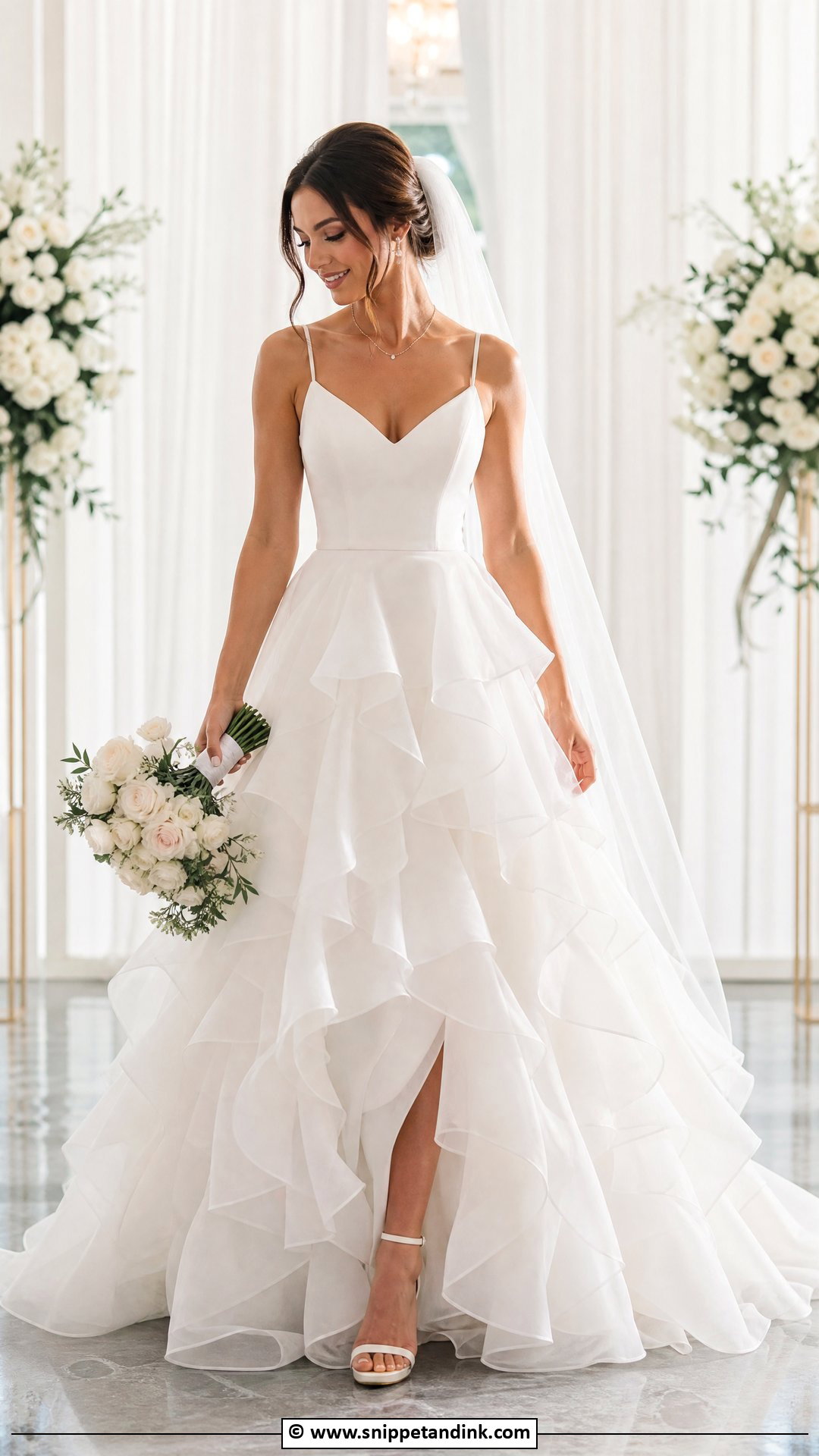
Ruffles bring movement and a bit of theater, whether soft and layered, bold and sculptural, or confined to the hem. Tulle, organza and chiffon move best. Keep the bodice simple so the skirt carries the impact. Ruffles add bulk wherever they sit, so I place the fullest tiers below the hip unless a bride wants extra volume there. Clean heels, understated jewelry and a veil that doesn’t compete with the skirt finish it.
24. Halter Neck Wedding Dress
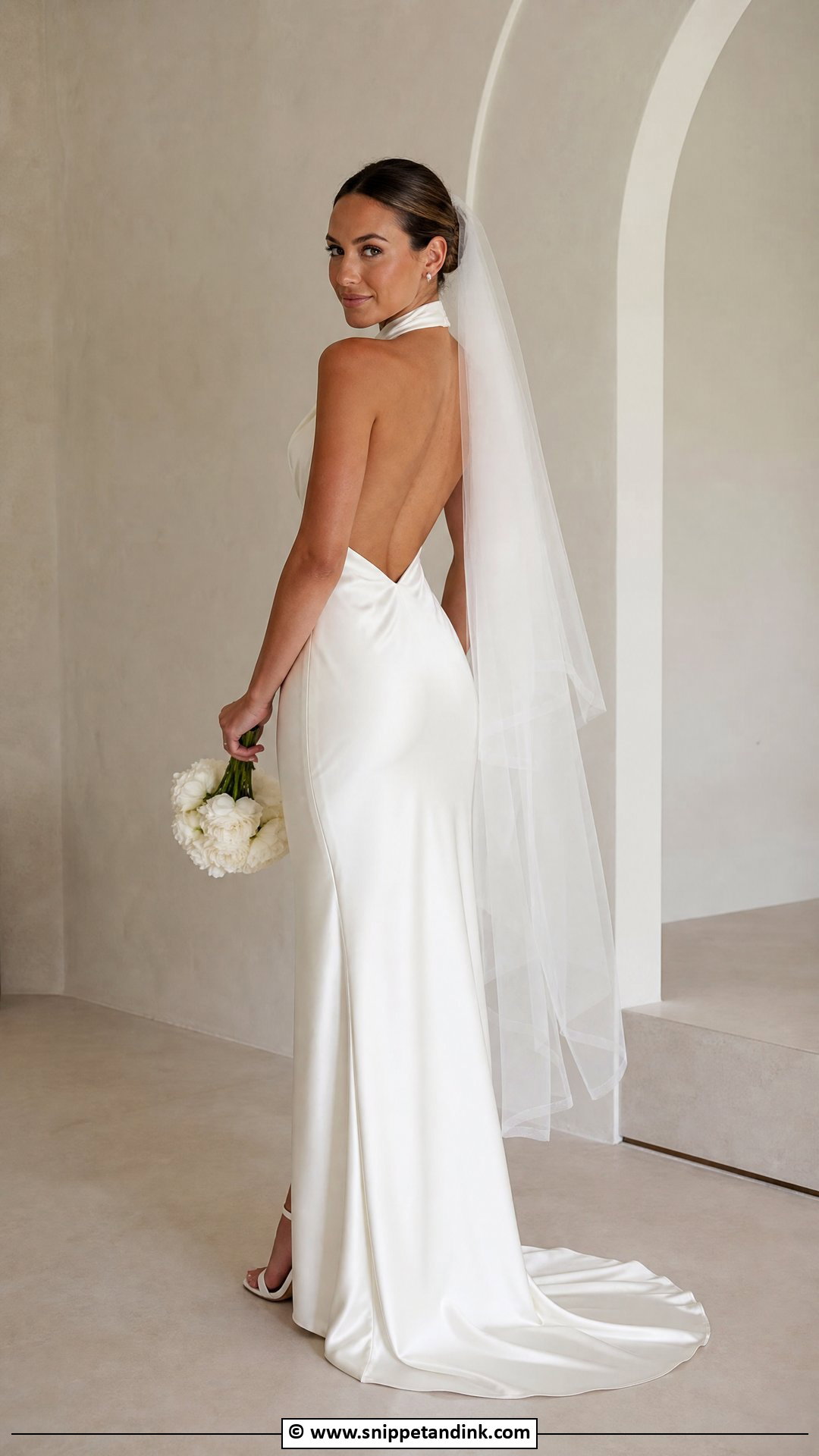
Halters give the upper body support without traditional straps and put the shoulders on show. Satin halters read polished, lace romantic, crepe minimal. A low back adds balance. Check how the neck strap feels after twenty minutes in the fitting room; if the skirt is heavy, the strap pulls on the back of the neck. Keep styling clean with an updo, small earrings and simple heels for city weddings, destination ceremonies and modern receptions.



25. Floral Lace Wedding Gown
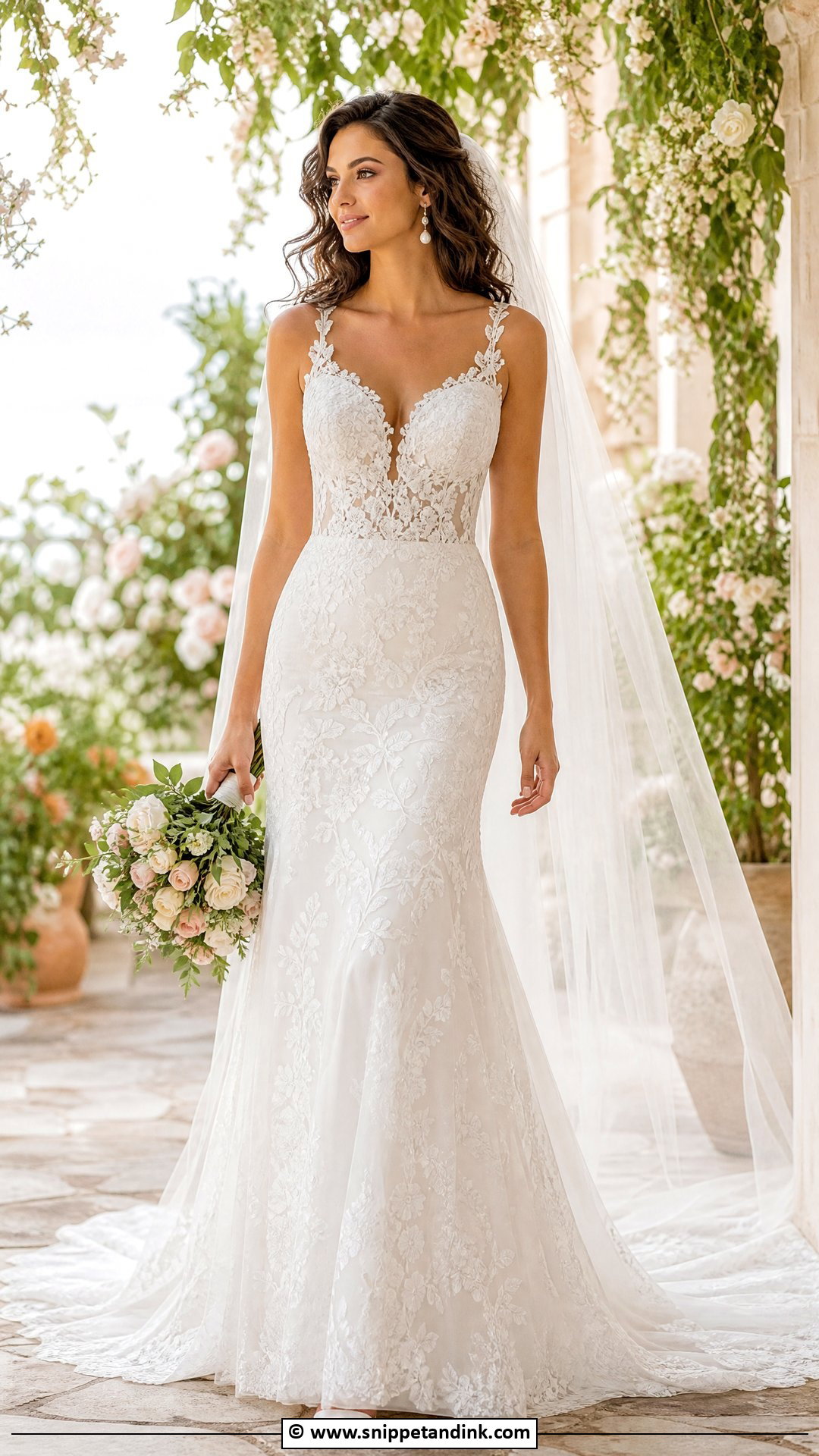
Floral lace stays relevant when the pattern and fit are modern. Large-scale motifs look fashion-led, small ones traditional. It works with sleeves, straps, strapless bodices and illusion necklines. The lining color matters more than brides expect: ivory lace over a nude lining makes the pattern pop, while the same lace over white almost disappears. Soft curls, pearl earrings and simple shoes suit outdoor venues and romantic indoor spaces.
26. Clean Ball Gown Wedding Dress
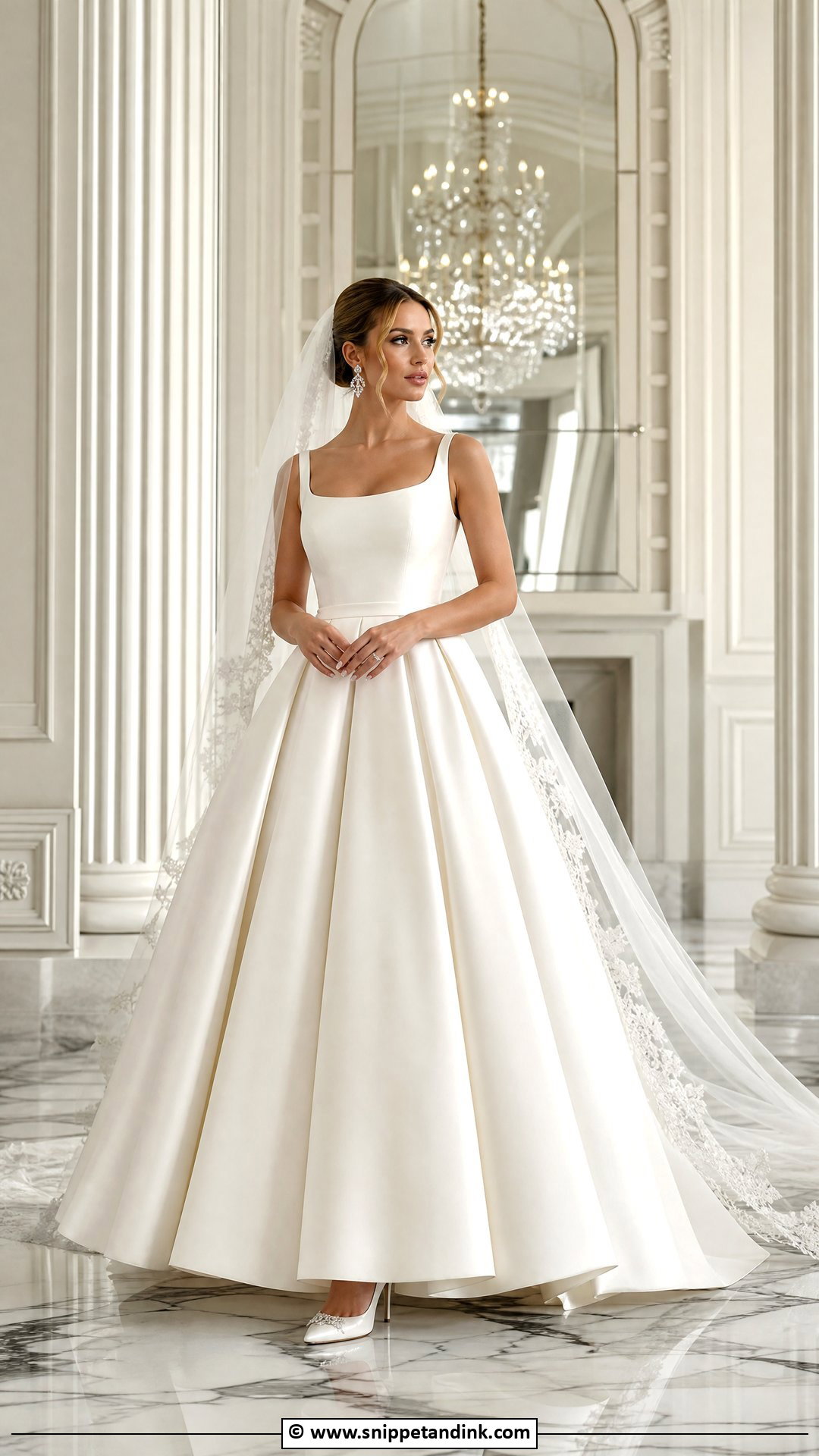
A clean ball gown relies on shape, fabric and proportion instead of lace or beading. Satin, mikado and faille hold volume and crisp lines. A fitted bodice, full skirt and long train make it formal, and grand venues let it fill the space. With no embellishment, every wrinkle shows, so steaming on the morning is essential. Add a plain cathedral veil, elegant earrings and polished heels. Simple, done well, can be the most dramatic choice in the room.
27. Plunging Neckline Wedding Gown
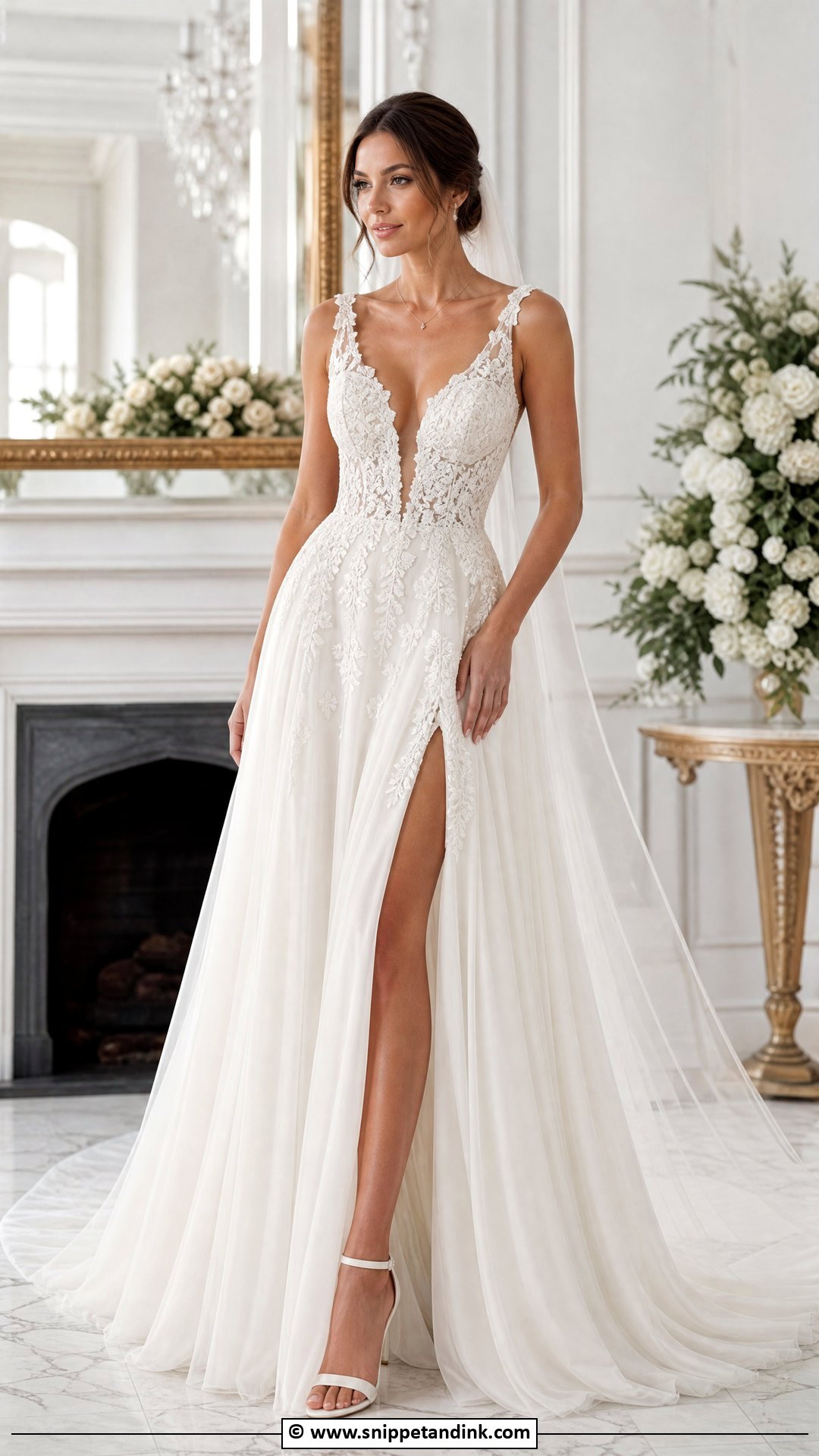
Plunging necklines need structure to look elegant rather than precarious. Illusion mesh, built-in cups and careful tailoring keep them secure, and lace, satin, crepe or tulle all work. Many brides balance the depth with a fuller skirt or long sleeves. I check the neckline seated and bending forward, since a plunge that’s perfect standing can gape the moment you lean in to sign the register. Minimal jewelry, a soft veil, sleek heels and refined hair complete it.
28. Embroidered Tulle Wedding Dress
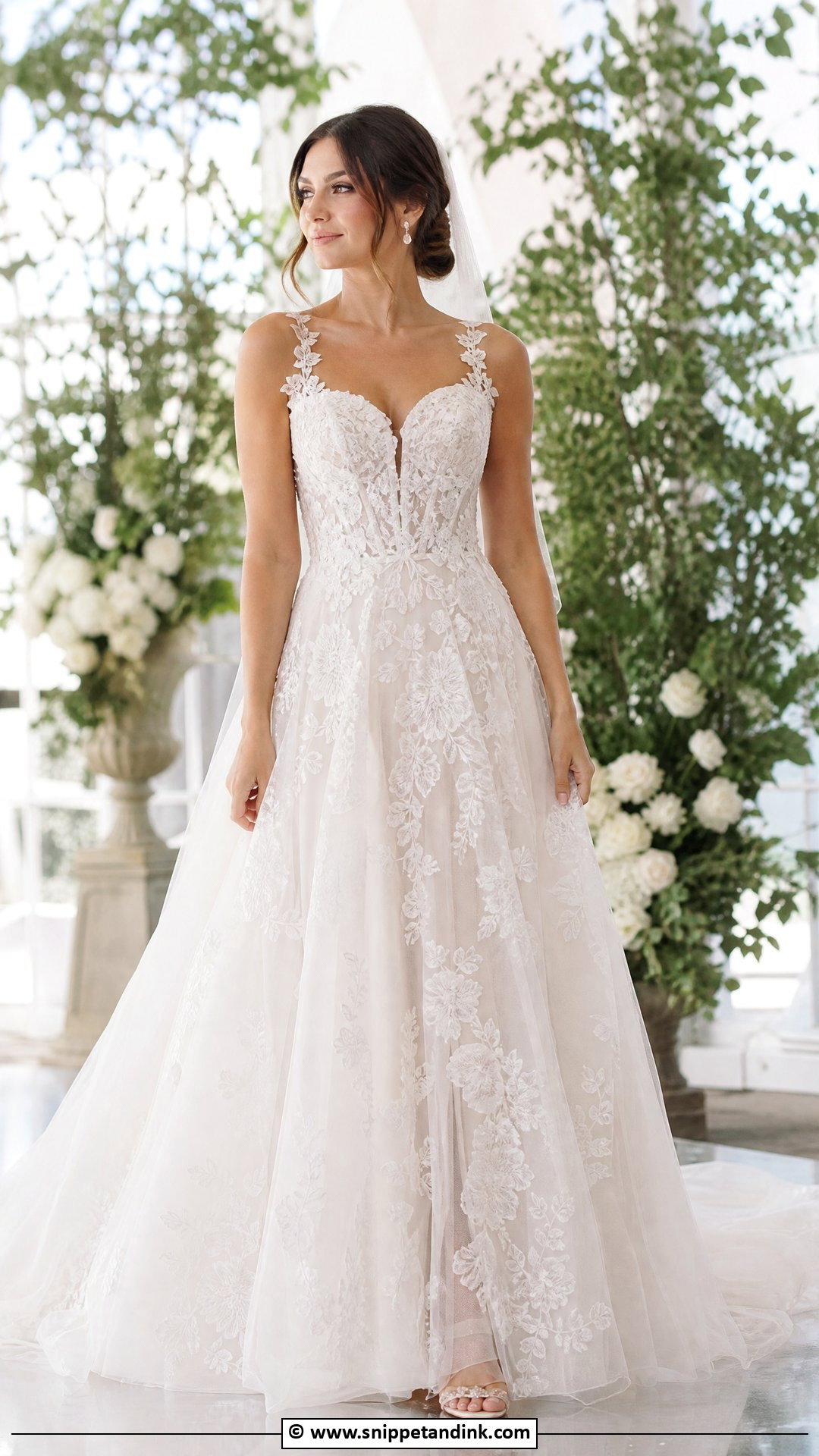
An embroidered tulle wedding dress feels light and artistic: the tulle gives air and the embroidery gives pattern. Florals, vines, stars and leaves make each one distinct. A fitted bodice and flowing skirt keep it easy to wear at garden venues and outdoor ceremonies. Choose accessories that echo the motif without repeating it. Embroidery on fine tulle can pucker if steamed too close, so I hold the steamer a hand’s width away. Soft earrings, sheer heels and a simple veil suit it.
29. Cap Sleeve Wedding Gown
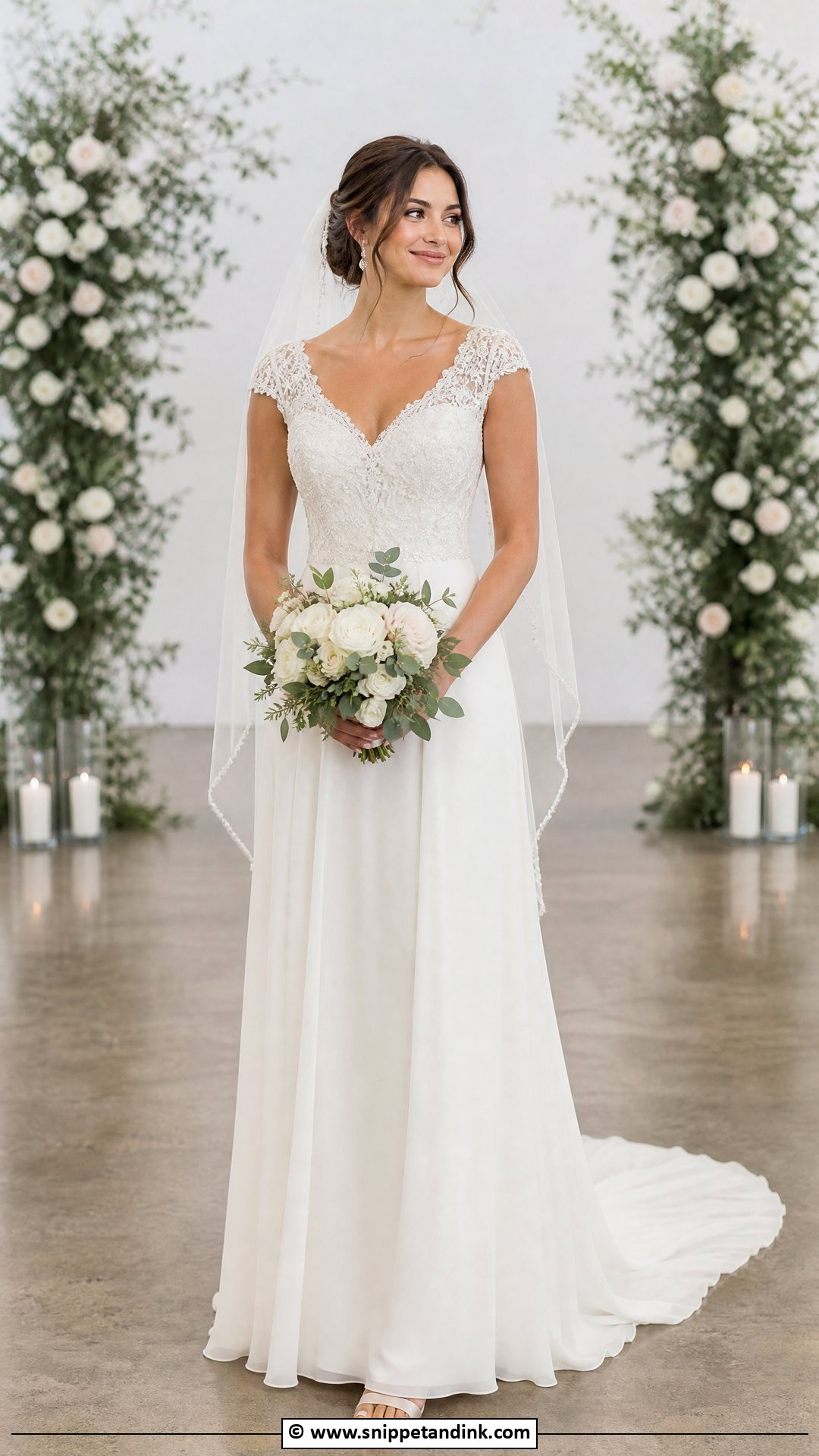
Cap sleeves frame the upper arm with light coverage and no restriction. Lace, satin, crepe and embroidered fabrics all suit them, and the neckline and skirt decide whether it reads classic, vintage or modern. The bodice has to fit cleanly through bust and waist, or the small sleeve looks like an afterthought. A soft updo, small earrings and comfortable heels carry it easily through ceremony, portraits and party.
30. Tiered Skirt Wedding Dress
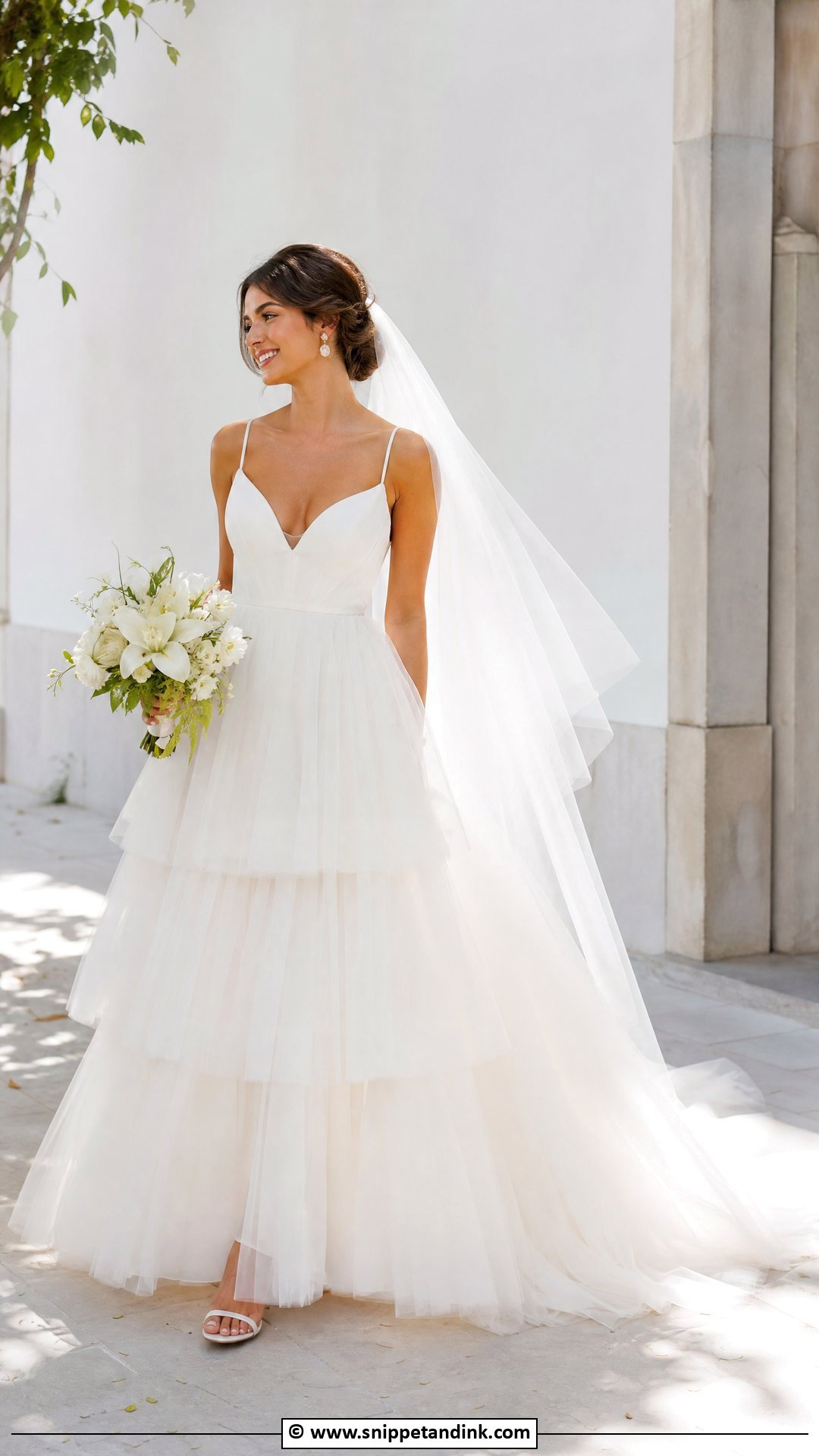
A tiered skirt wedding dress adds movement and shape more softly than a classic ball gown. Tulle tiers look romantic, organza ones more structured. A fitted bodice keeps the waist defined while the layers swing as you walk. Each tier adds a seam, and seams add weight, so I’d count the tiers and feel the skirt before ordering. Keep accessories simple: a sheer veil, pearl earrings and clean heels suit outdoor, destination and indoor celebrations.
31. Statement Sleeve Wedding Gown
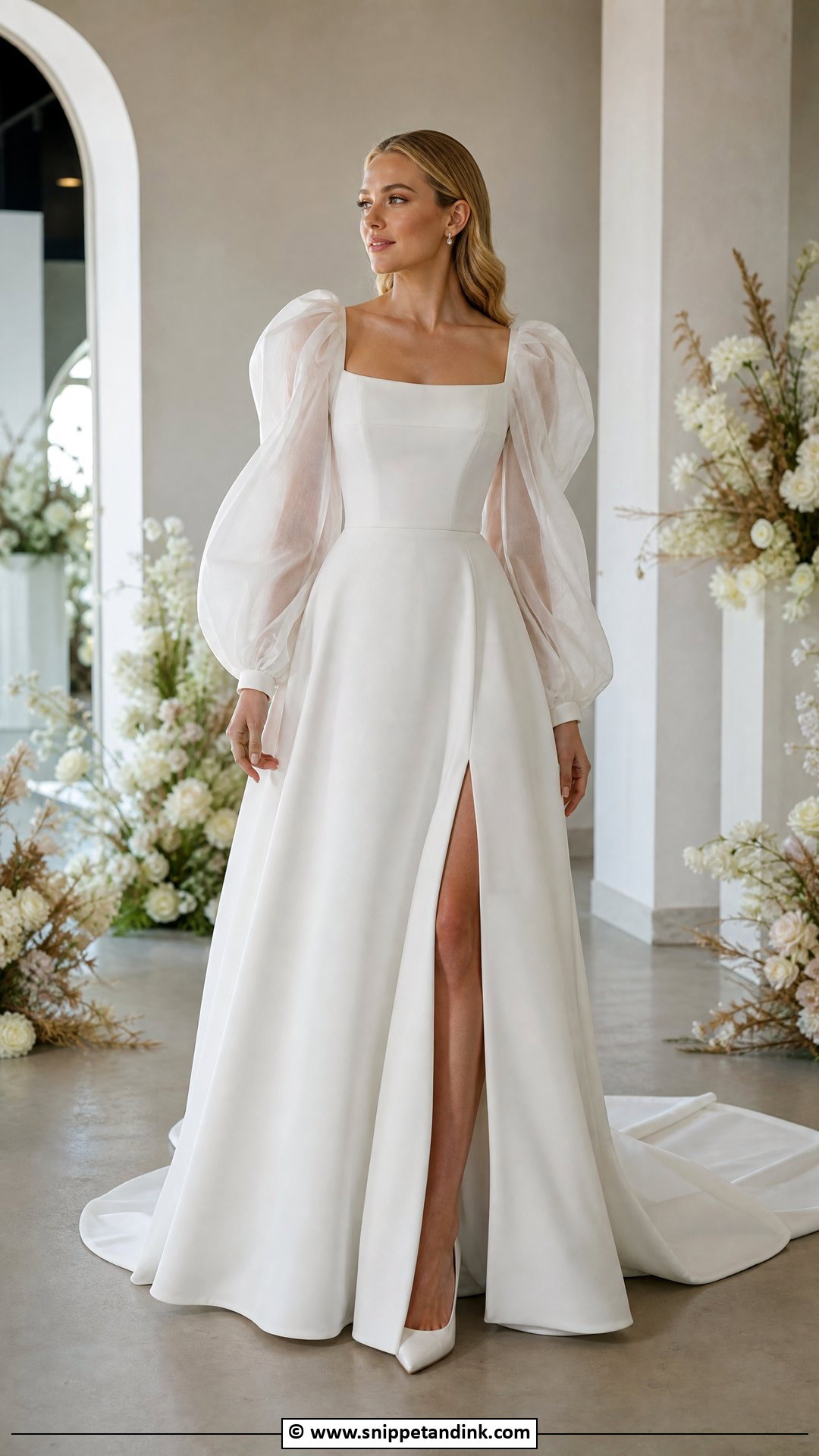
Statement sleeves bring drama through shape rather than sparkle: puff, bishop, fitted lace, detachable or sheer with embroidery. Keep the bodice and skirt simple so the sleeves lead. Detachable versions give you a covered ceremony look and bare arms later. Volume sleeves need room to move, so test hugging and holding a bouquet in them. An updo or tucked-back waves keeps the shape visible.
32. Asymmetric Draped Wedding Dress
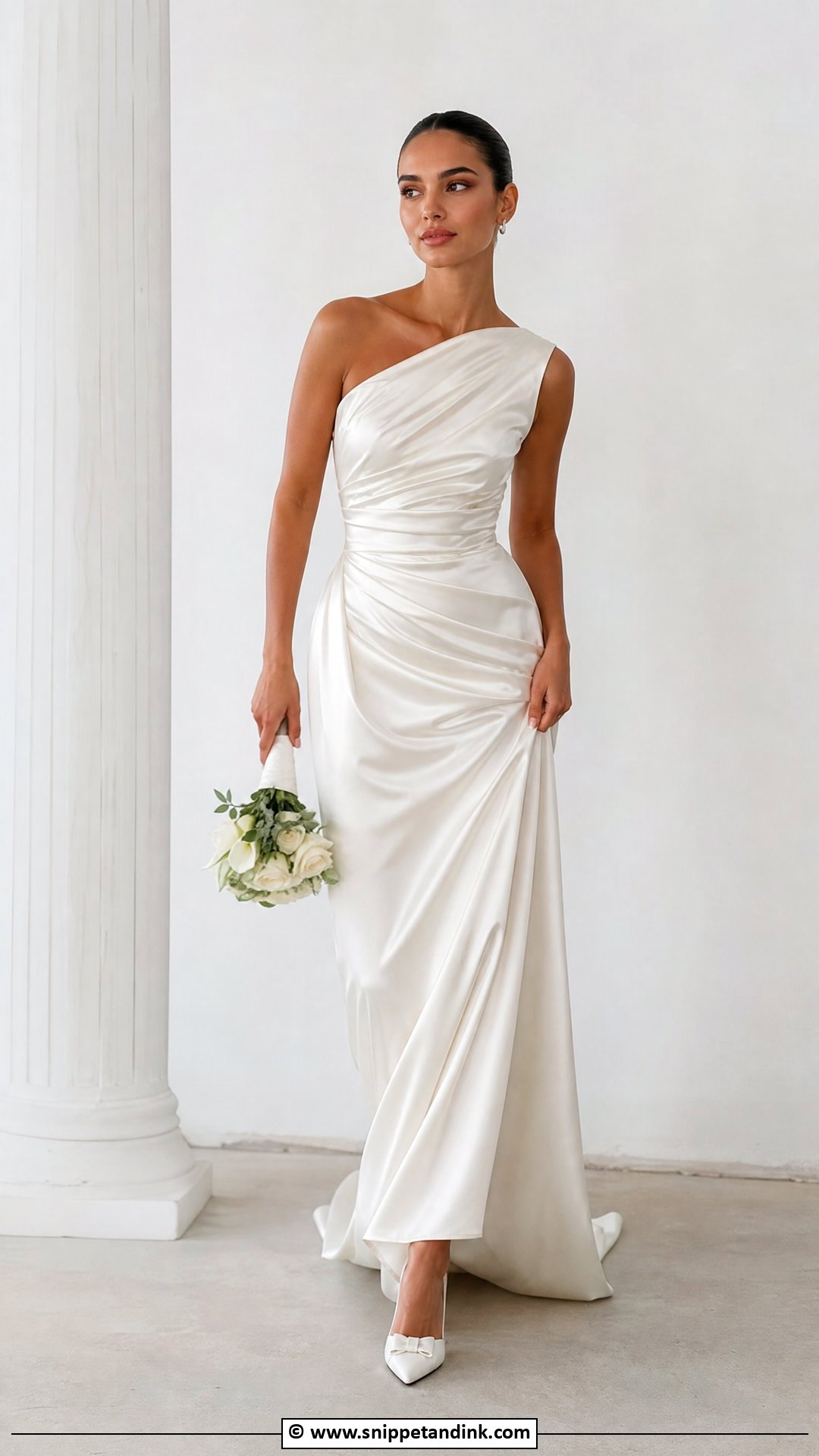
Draped asymmetric gowns wrap or gather across the body, creating movement and a flattering diagonal line. Satin, silk, crepe and fluid jersey fall best. Draping can define the waist, soften the hips or form a sculptural neckline. It looks artful but takes a skilled hand to alter, because changing one gathered seam shifts the whole drape, so choose a seamstress who has worked with draped gowns before. Pointed heels, smooth hair and small earrings keep it sleek.
33. Sparkle Wedding Gown
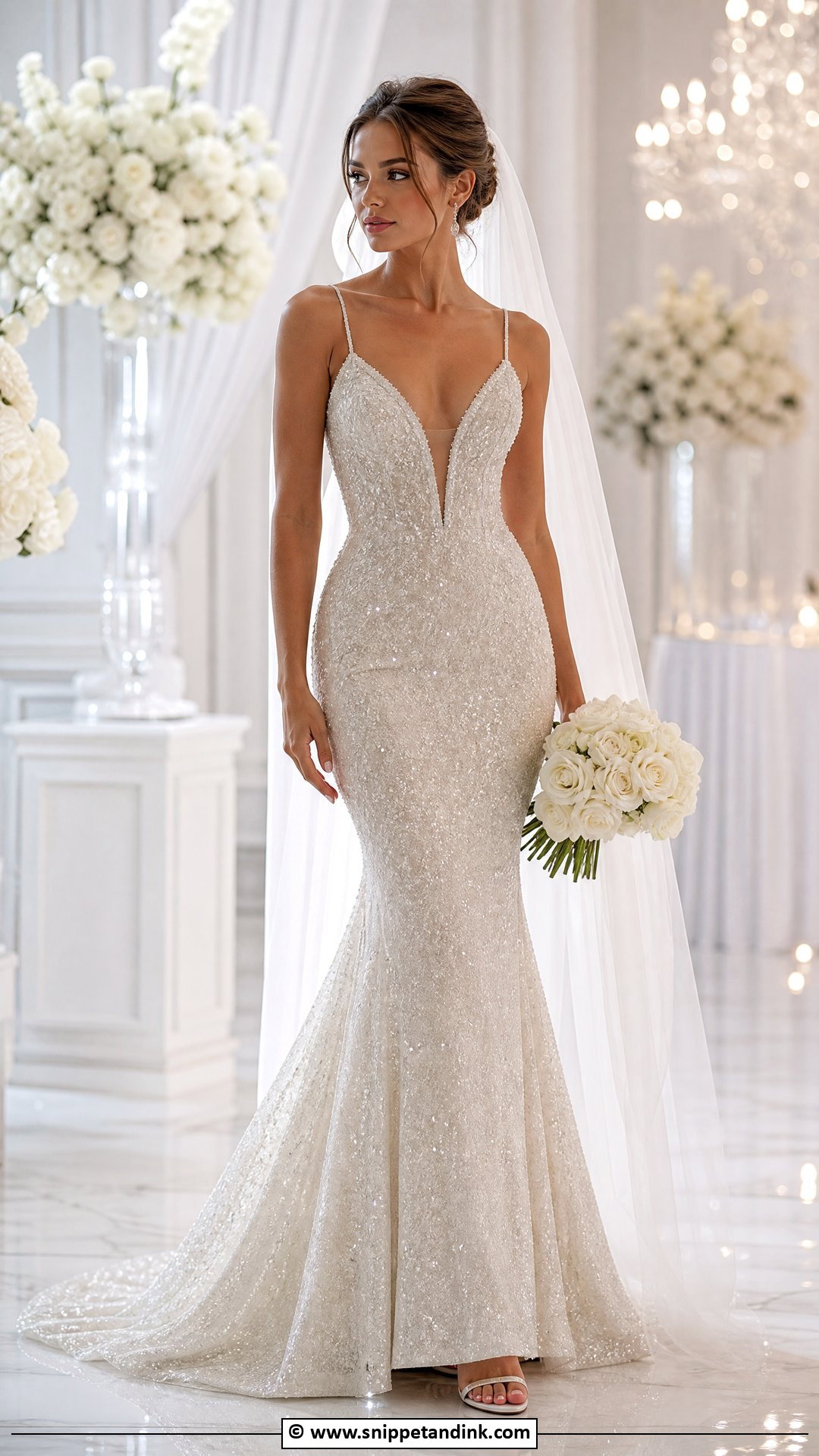
Sequins, crystal beading, glitter tulle and metallic thread all make a gown sparkle, and the best ones feel planned rather than overwhelming. Place it where it flatters: a beaded bodice, scattered shimmer on tulle, or vertical lines on a sheath. Evening celebrations and formal receptions show it off. Flash photography can turn heavy sequins into white hotspots, so mention the gown to your photographer before the day. Simple heels, a clean veil and minimal jewelry keep it balanced.
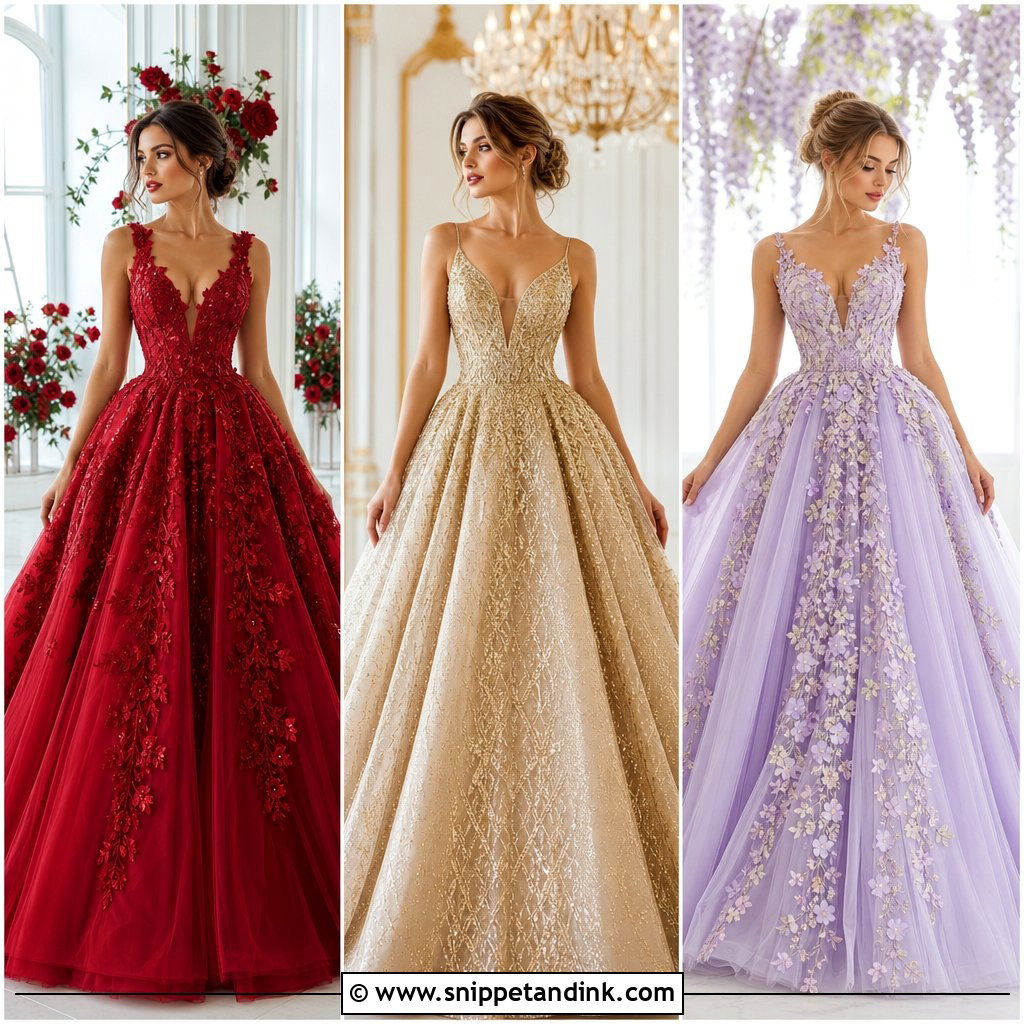
34. Colored Wedding Gown
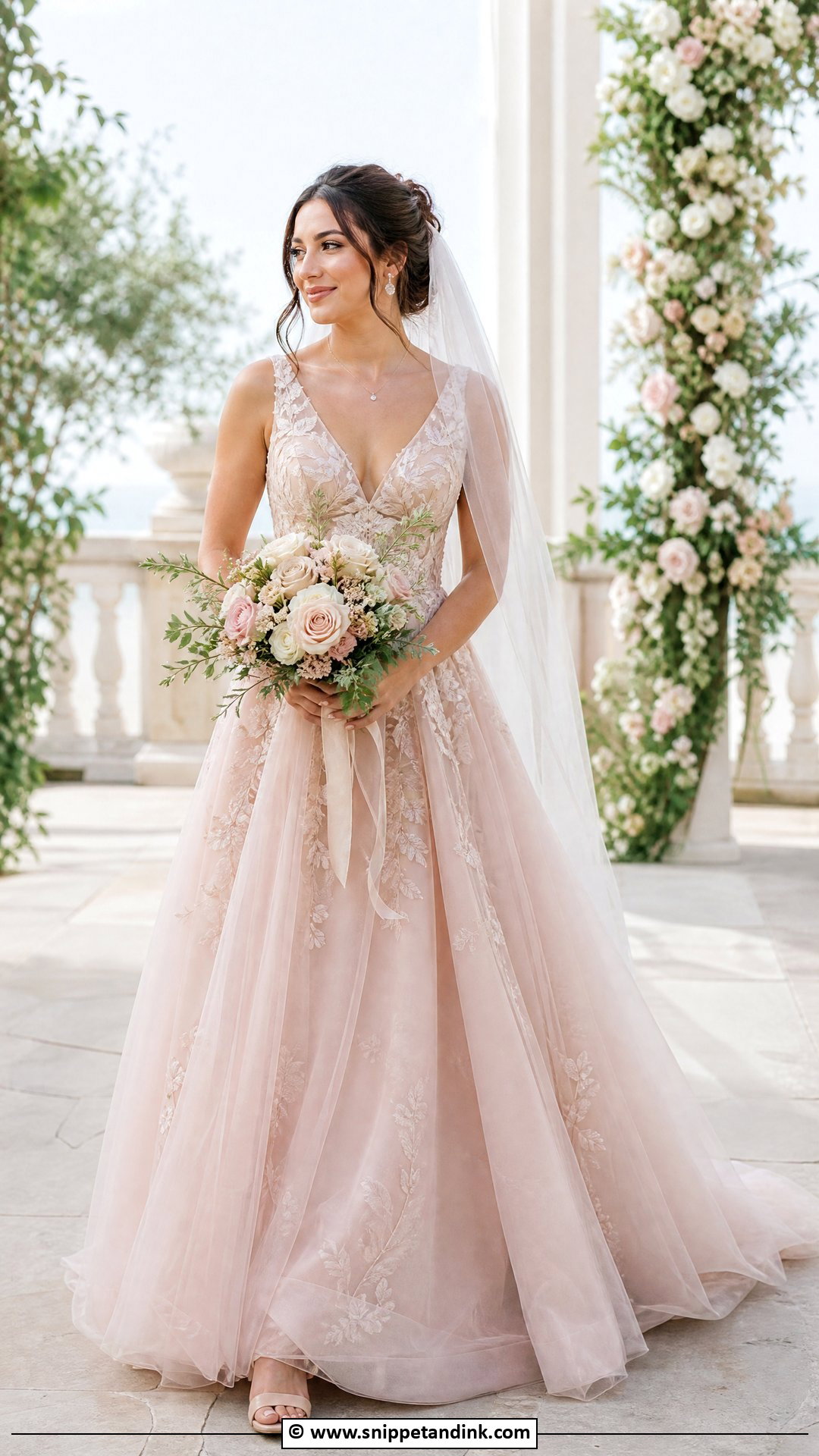
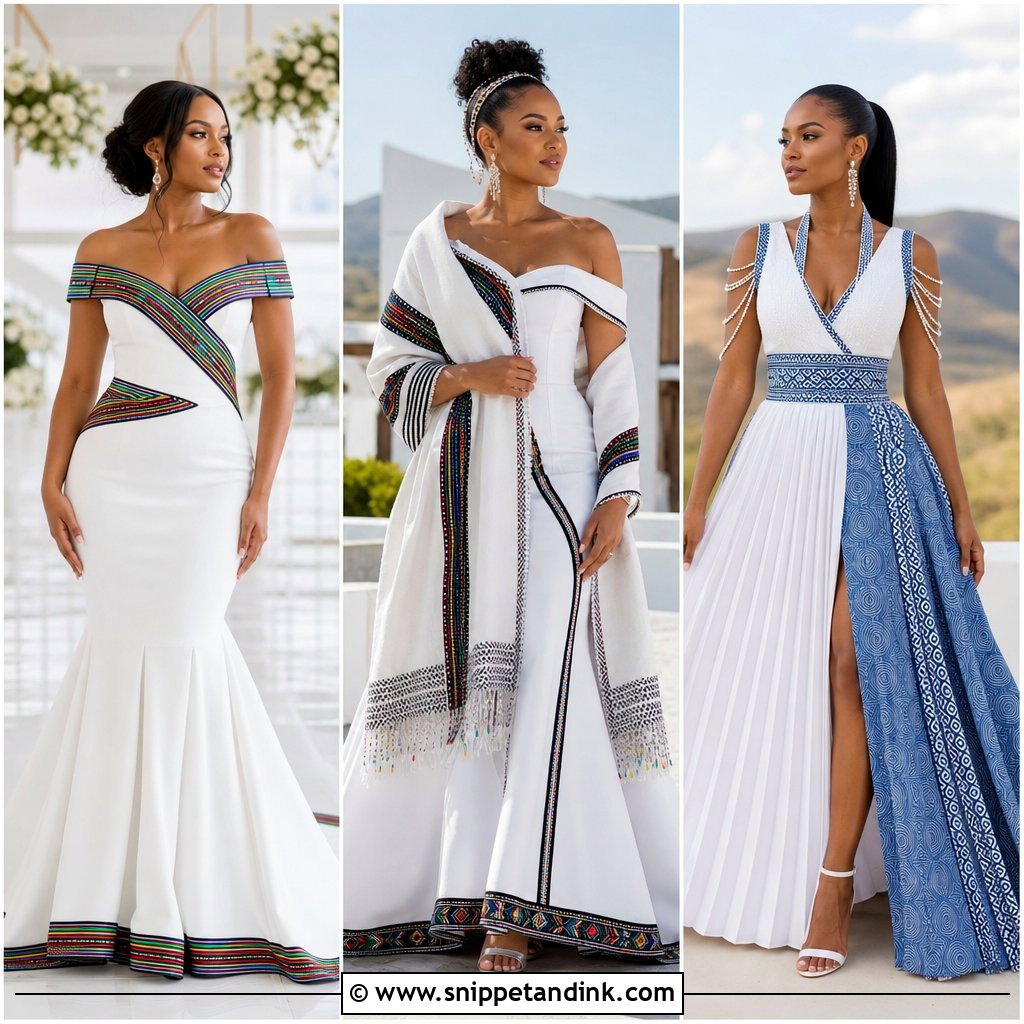
Color is for brides who don’t feel connected to bright white. Blush, champagne, pale blue, silver and warm ivory are the shades I’m asked for most, and they can come through the lining, embroidery, tulle layers or the whole fabric. Hold the swatch beside your face in daylight; the same champagne can look golden on one bride and grey on another. Keep accessories in a soft matching palette, with nude or metallic heels, delicate jewelry and a neutral veil.
35. Convertible Wedding Gown
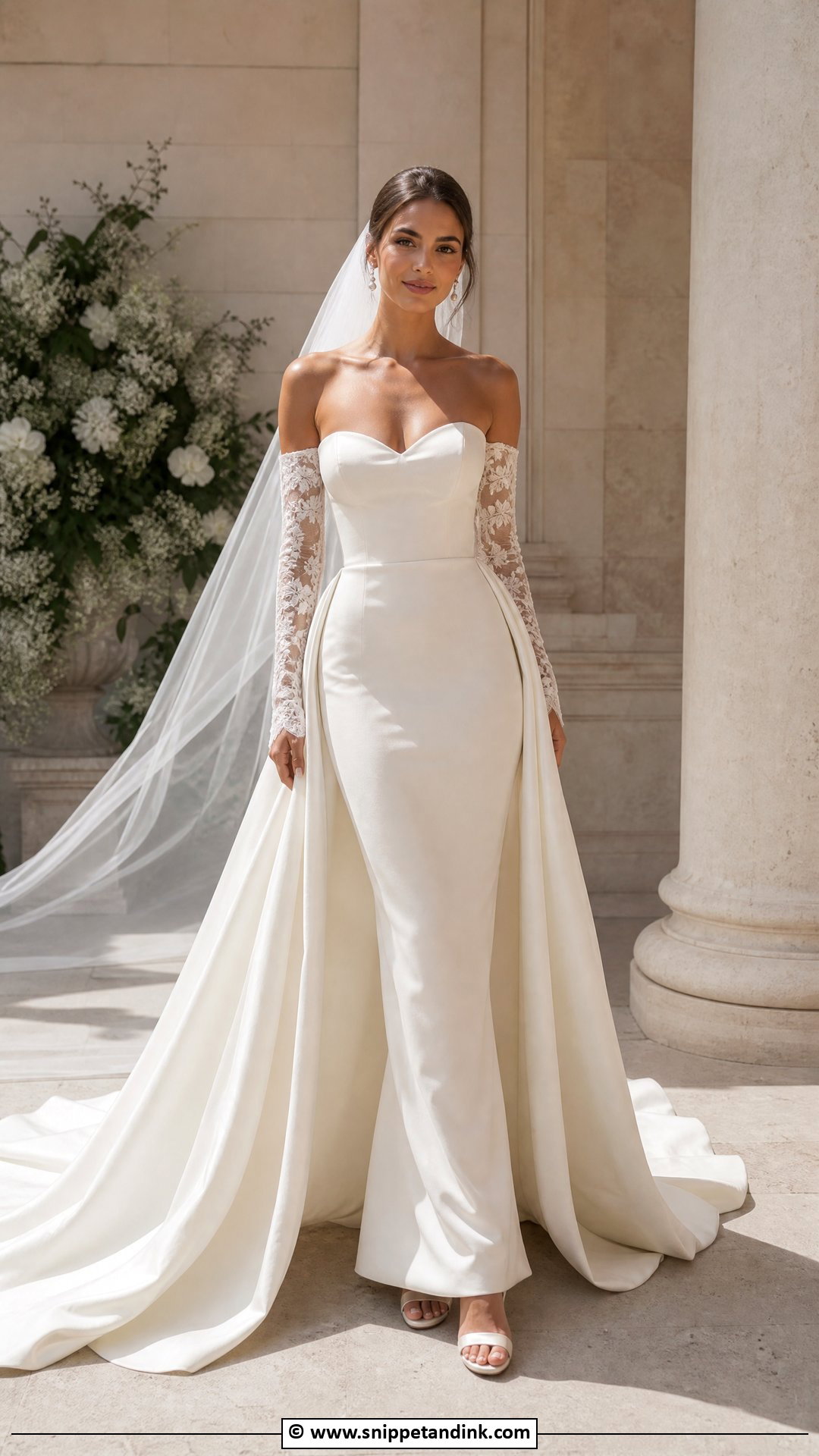
Convertible gowns may come with detachable sleeves, removable trains, overskirts, capes, straps or bows. The ceremony look can be formal and dramatic, and the reception version lighter. It’s a smart route to more than one bridal look without buying two dresses. Every removable piece has to attach cleanly and hold under strain, so walk, sit and move through a full fitting with each version on. Choose accessories that work for both.
Why Satin Shines and Crepe Goes Flat in Photos
Fabric behaves differently under a camera than in a mirror. Glossy satin reflects light, so it shows every crease and can flare into bright patches in direct sun or flash. Crepe and matte faille absorb light, which looks sleek and modern but needs the cut and fit to do the work, since there’s no sheen to add dimension. Lace and appliqué photograph well almost anywhere because the texture creates its own shadows.
Color matters just as much. Bright white can look slightly blue in shade and loses detail in strong sun, while ivory and soft white tend to look warmer and more natural on most skin. If you can, step outside the shop with the sample and take a few phone pictures in daylight and in shade. That quick test shows you how the gown will look in the photographs that last longest.
Finally, tell your photographer what you’re wearing. A bride in heavy sequins or high-shine satin benefits from softer, bounced light, and a good photographer will plan for it once they know.
Sit Down in It Before You Say Yes
Modern bridal fashion isn’t about one right shape. Some brides will feel most themselves in clean satin or plain crepe; others in lace, pearls, corsets, dramatic skirts or soft color. Whatever you try, give it the real-day test: sit, walk, lift your arms and hug someone. A gown should look good in photos, but it should also let you stay calm and present for every hour of your wedding.
You'll Like These Ideas:




Leave a Reply