
Gowns have found a permanent place at Indian weddings, mostly because they deliver the drama of a lehenga in one piece you can zip into. The shapes I’m seeing brides ask for are sculpted bodices, dimensional florals, ruffles, capes and saree drapes, carried out with zardozi, mirror work and Banarasi weaves. Timing still matters: deep reds and metallics belong to the evening, while floral pastels look right in daylight. Dressing as the bride, bridesmaid, or guest, you’ll find each look below comes with shoes, jewelry and a bag, plus the fit detail I’d check before buying.
Which Function Suits a Gown, and Where a Lehenga Still Wins
Over a multi-day wedding I map outfits to functions before anyone shops, and gowns fit some events far better than others. A cocktail night, reception or sangeet is natural gown territory: there’s a stage, dancing and evening light. Mehndi and haldi work too, in lighter fabrics, as long as you’re happy to keep the gown away from henna paste and turmeric.
The main ceremony is where I slow down. Many rituals involve sitting on the floor or low stools for a long stretch, walking around a fire or bending to touch elders’ feet. A fitted gown or corset makes all of that awkward, and a long train gets in the way. Some places of worship also expect covered heads and shoulders. For the ceremony, a lehenga, saree or Anarkali gown is usually easier, with a structured gown saved for the reception.
A quick rule of thumb I use
- Daytime and outdoors: tulle, organza, chikan or light silk in softer colours.
- Evening and indoors: velvet, sequins, metallics and deeper jewel tones.
- Lots of dancing: moderate flare, no train, secure straps.
- Floor seating or long rituals: a forgiving waist and a skirt you can fold under you.
1. Red Zardozi Bridal Gown
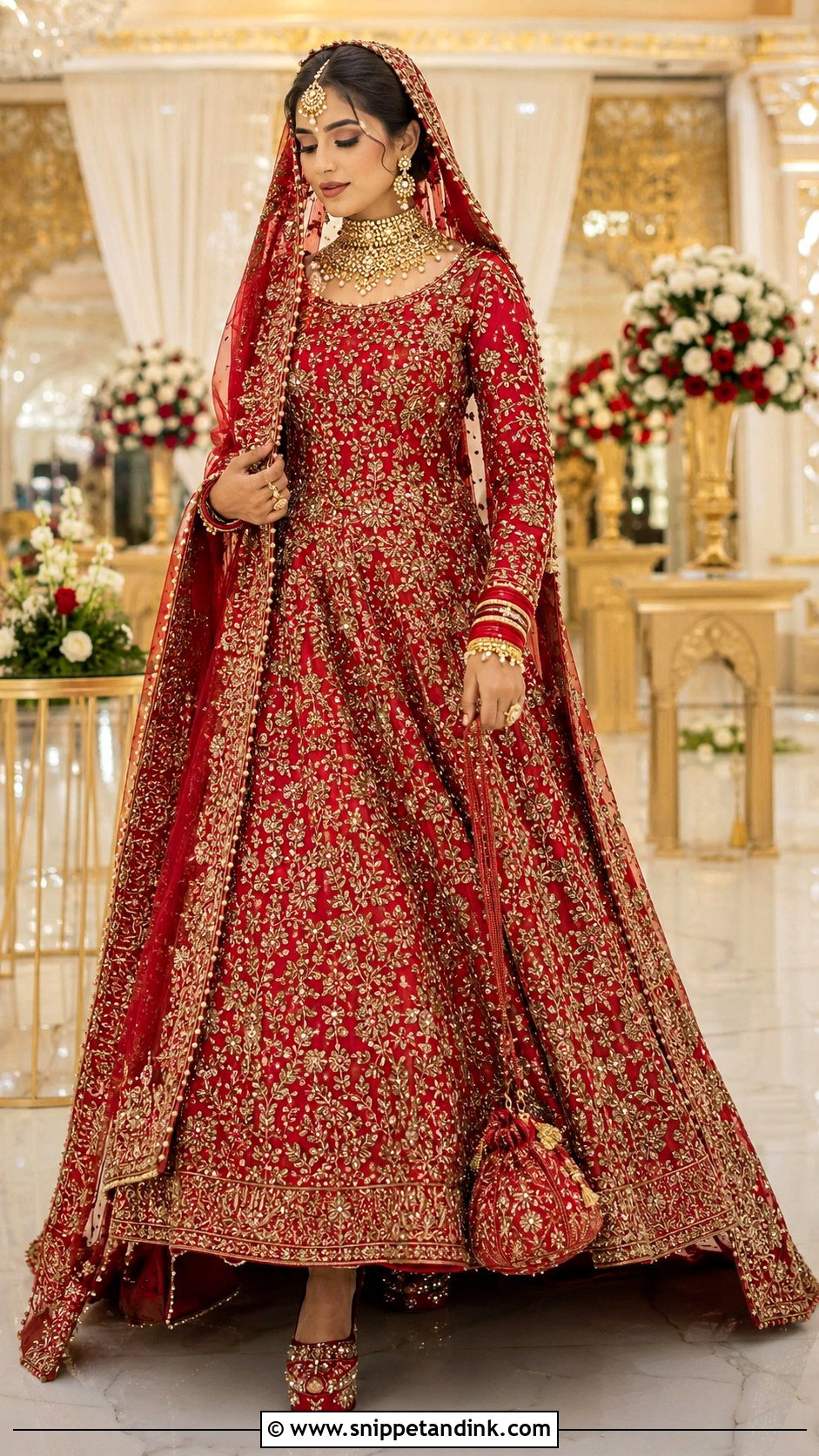
A red zardozi bridal gown gives you the colour and grandeur of a lehenga without a separate skirt, blouse and drawstring to manage. Gold handwork at the neckline, sleeves and hem with a structured waist is the classic version. Zardozi is heavy, so I always lift the gown at the shop: if it feels like a lot on the hanger, it’ll feel like more after six hours. A matching dupatta over one shoulder or lightly over the head, a Kundan choker and embroidered platforms. Keep makeup classic with a red lip.
2. Pastel Floral Embroidered Gown
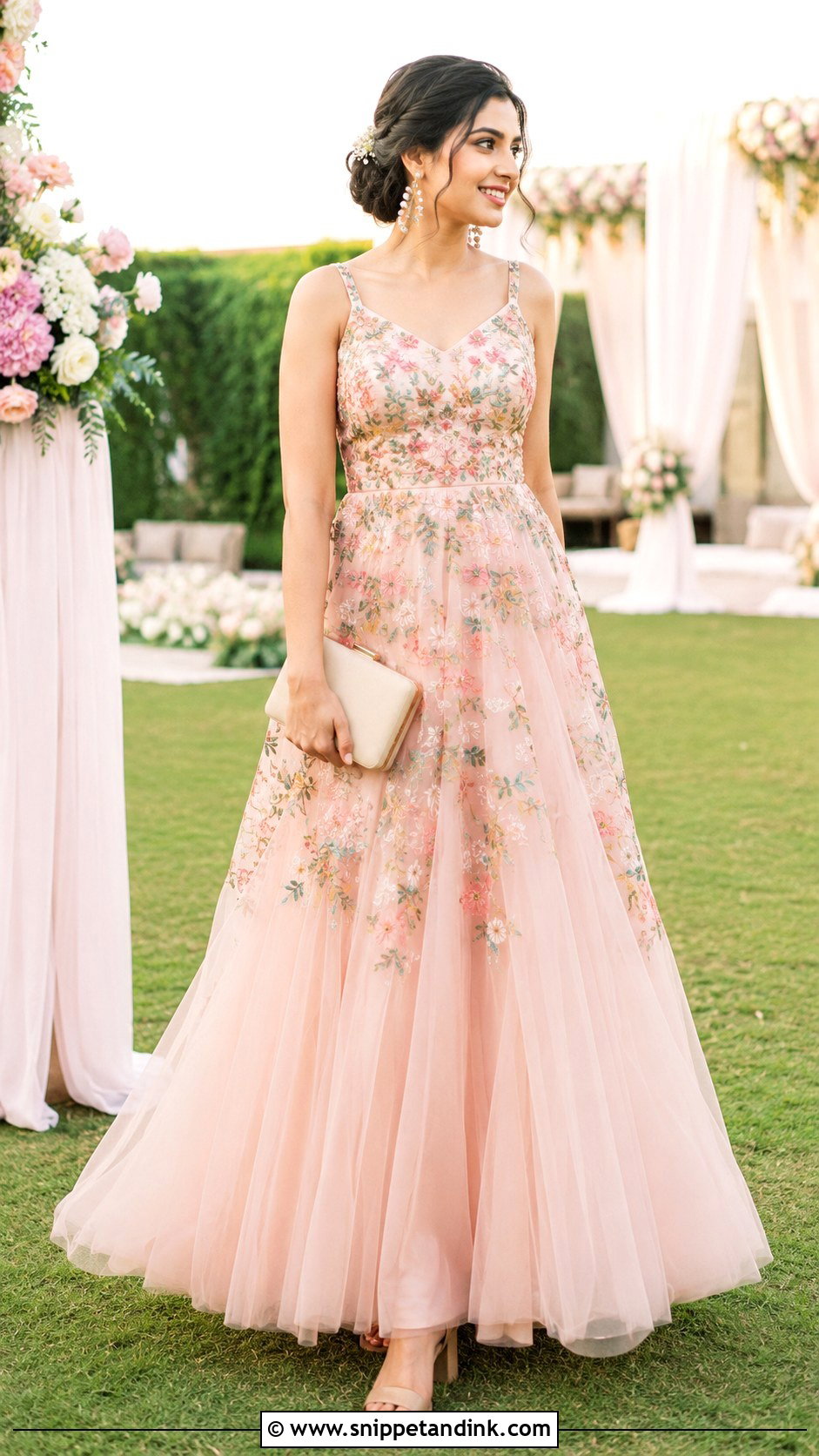
Pastel tulle with threadwork flowers is the daytime outfit I suggest most to bridesmaids and sisters. A fitted bodice over an A-line skirt, in blush or powder blue, with small sequins that catch sunlight rather than glare. Tulle snags easily on lawn chairs and bracelets, so choose smooth jewelry like pearl drops over anything with prongs. Champagne block heels won’t sink into grass. Soft waves or a low bun with floral pins.
3. Draped Saree Gown
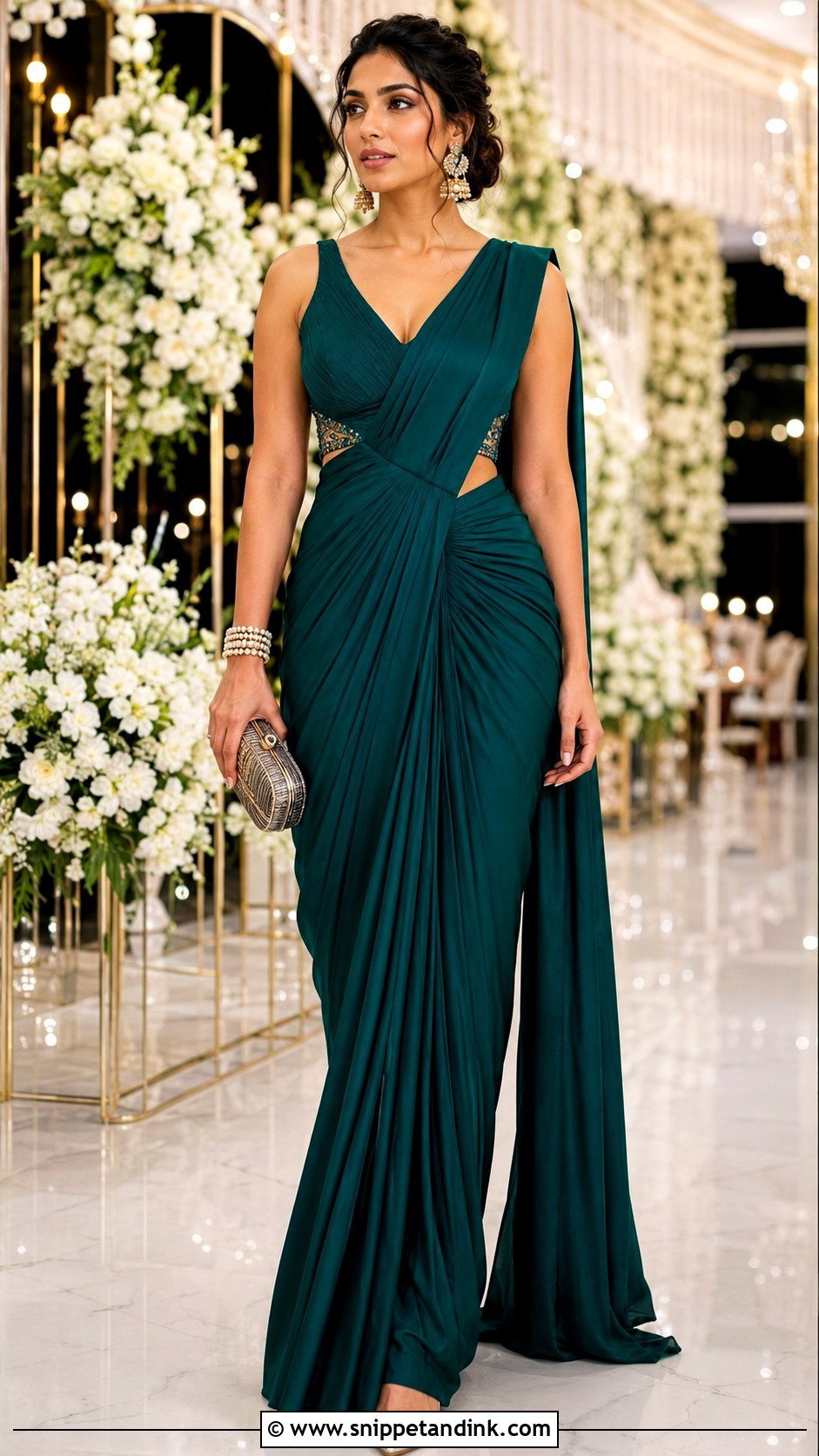
Saree gowns are for women who love the drape but not the pinning. The pleats are stitched at the waist and the pallu is attached, so you step in and you’re done. Emerald, wine or navy suit a reception. Even with the pallu attached, I’d still tack it at the shoulder with one small pin under the fold and secure it at the waist, because an attached pallu can still slide when you dance. Statement jhumkas and pointed metallic heels keep the rest simple.
4. Embellished Cape Gown
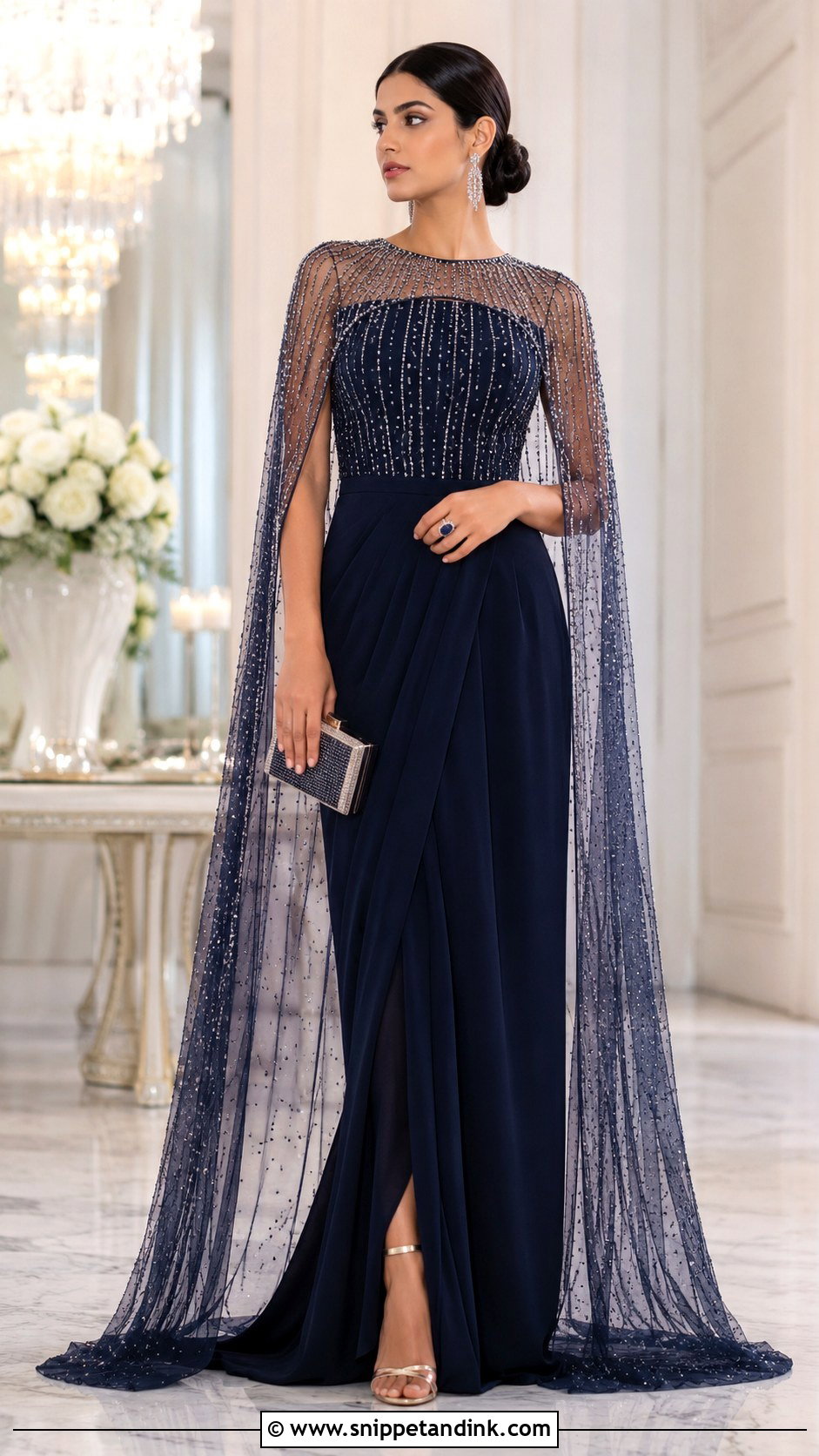
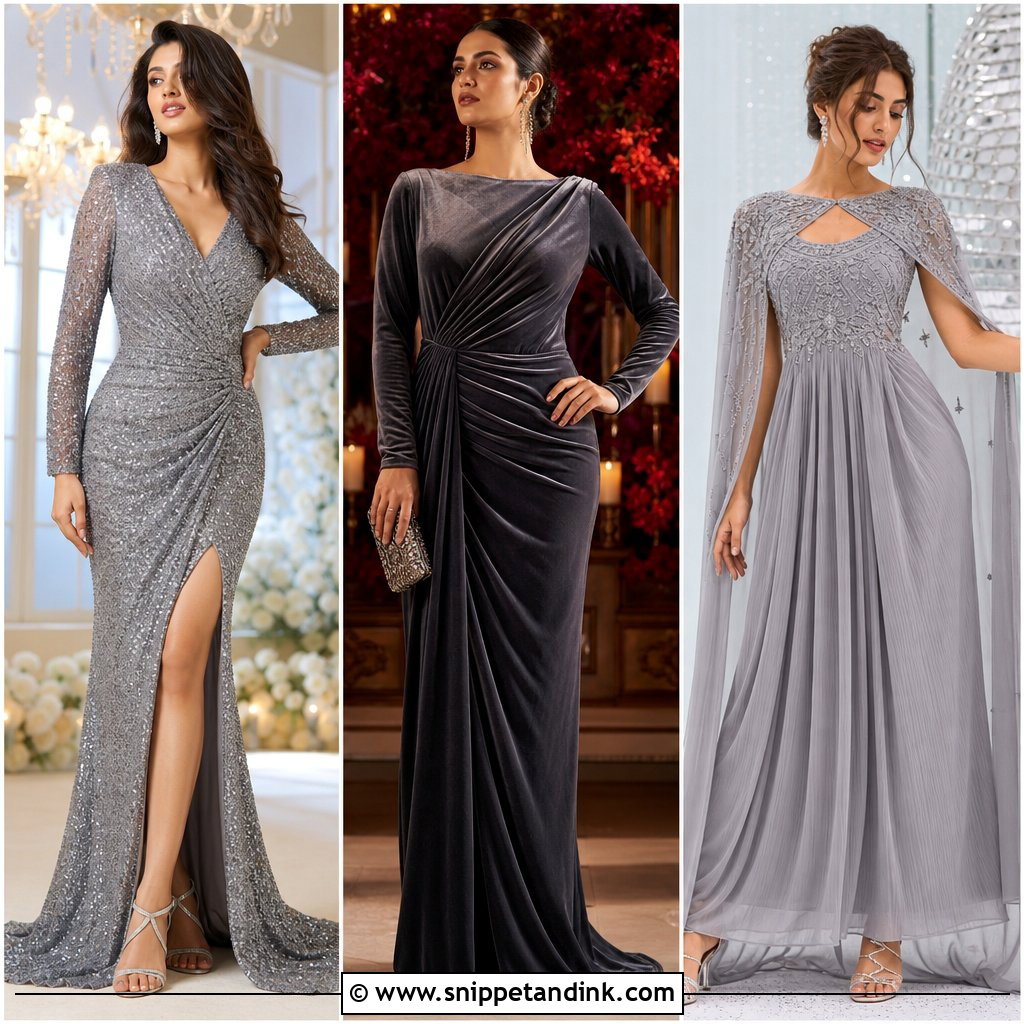
A sheer cape over a streamlined gown gives shoulder and arm coverage while looking dramatic, which makes it one of the best options for women who want both. Crystals, sequins or fine thread on the cape; the gown underneath can be plain. In navy, plum or champagne it suits an evening reception. Because the cape is the accessory, I’d keep jewelry to drop earrings and one ring. Wear the hair up. Loose hair tangles with cape embellishment surprisingly fast.
5. Corset Bodice Wedding Gown
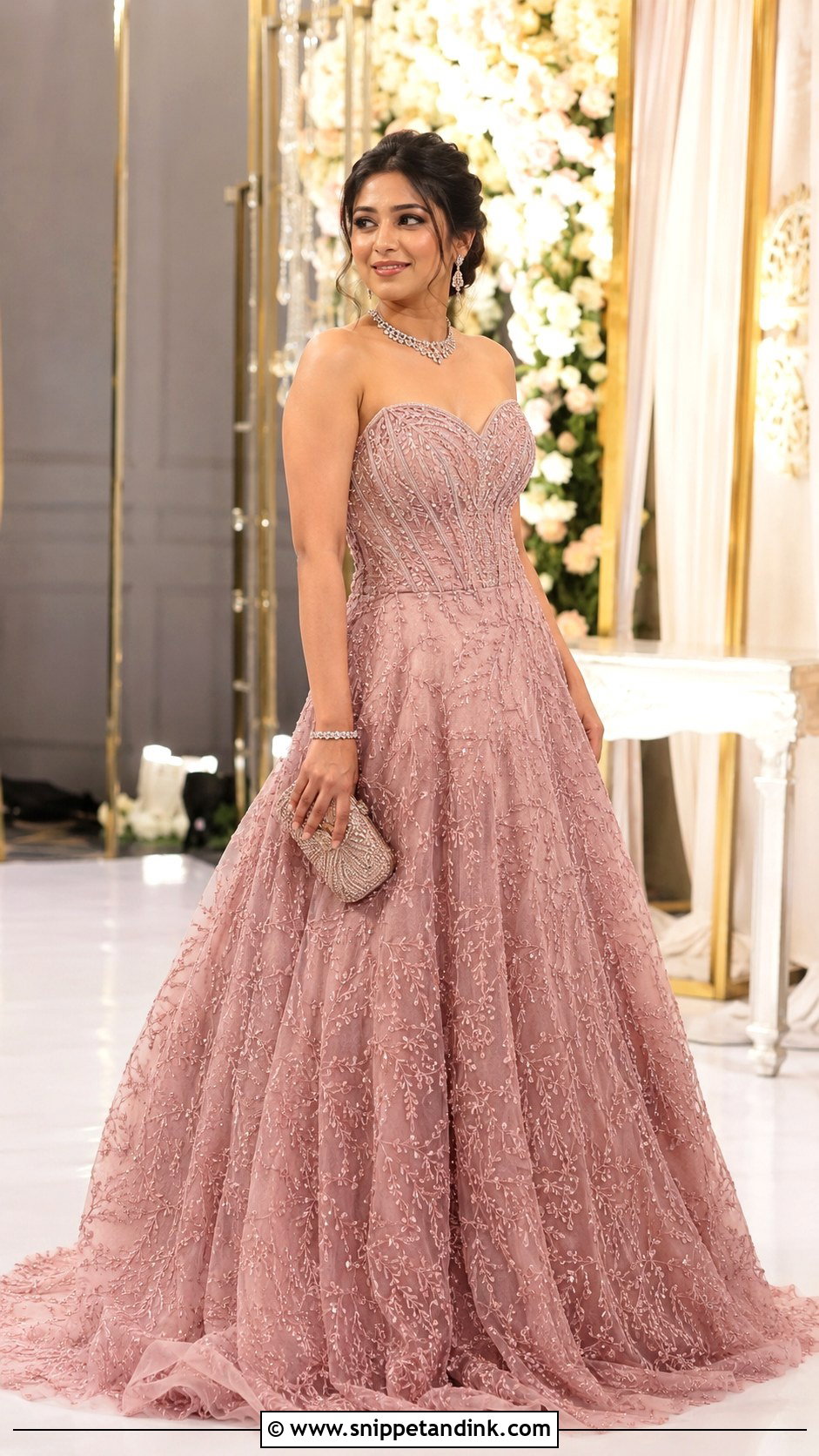
Visible corset panels look couture, and Indian versions soften them with floral embroidery, beads or zari. A full skirt balances the fitted top. Deep rose, ivory-gold and ruby are strong colour choices. My one non-negotiable is a fitting where you eat something and sit for twenty minutes, because a corset fitted on an empty stomach in the morning can feel very different at a dinner reception. A short necklace that follows the neckline and platform sandals hidden under the hem finish it.
6. Ruffled Organza Reception Gown
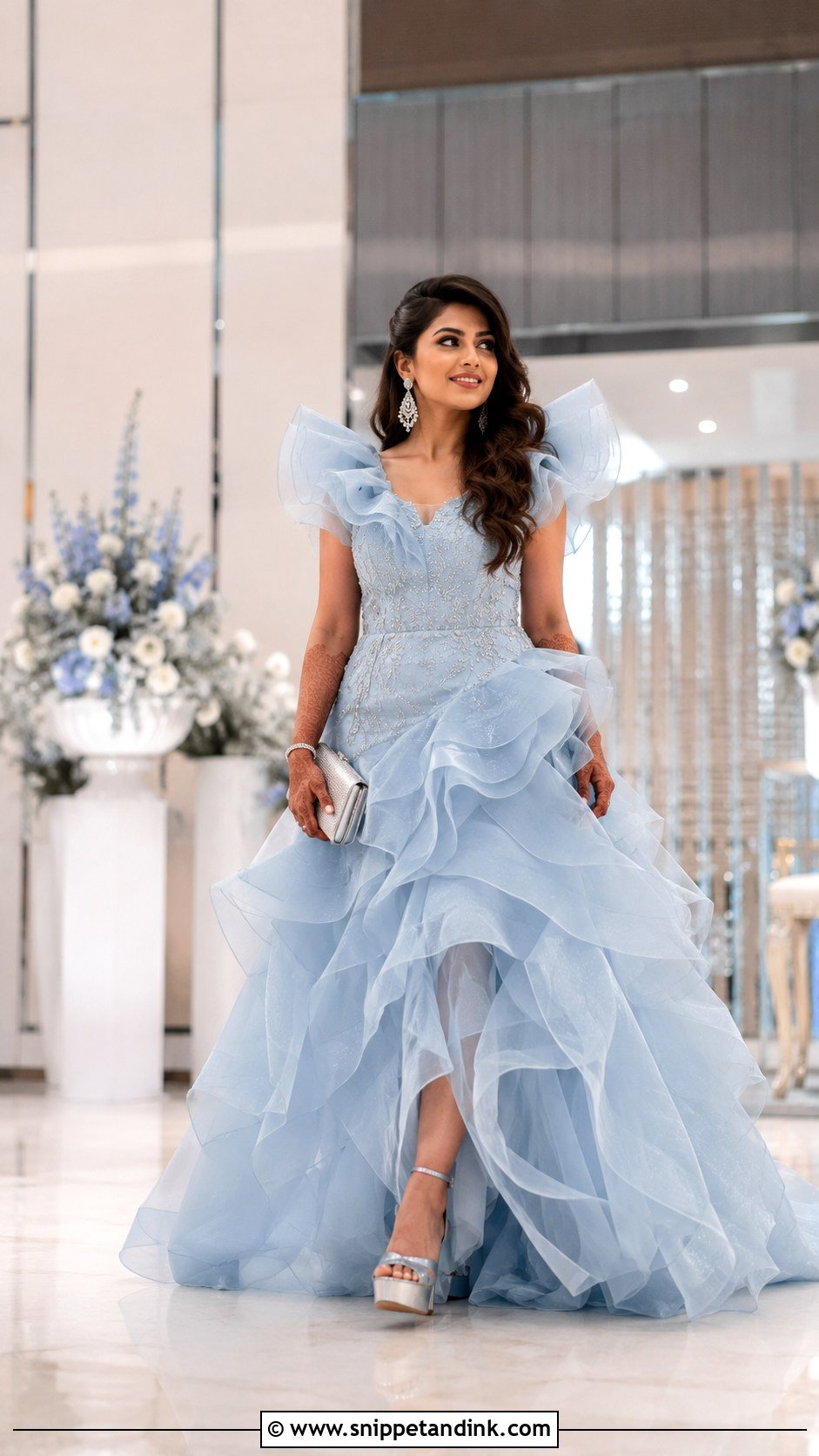
Organza ruffles give volume without weight, which is exactly what makes this a good reception entrance gown. I’d place the ruffles in one area, along a shoulder, the neckline or down the skirt, rather than all over. Ice blue, lilac and coral keep it fresh. An asymmetrical neckline wants hair swept to the opposite side; ruffles on both shoulders suit a neat bun. Skip the big necklace, which only crowds the top half. Organza creases sharply, so steam it on the day rather than packing it folded.
7. Velvet Gown For Winter Wedding
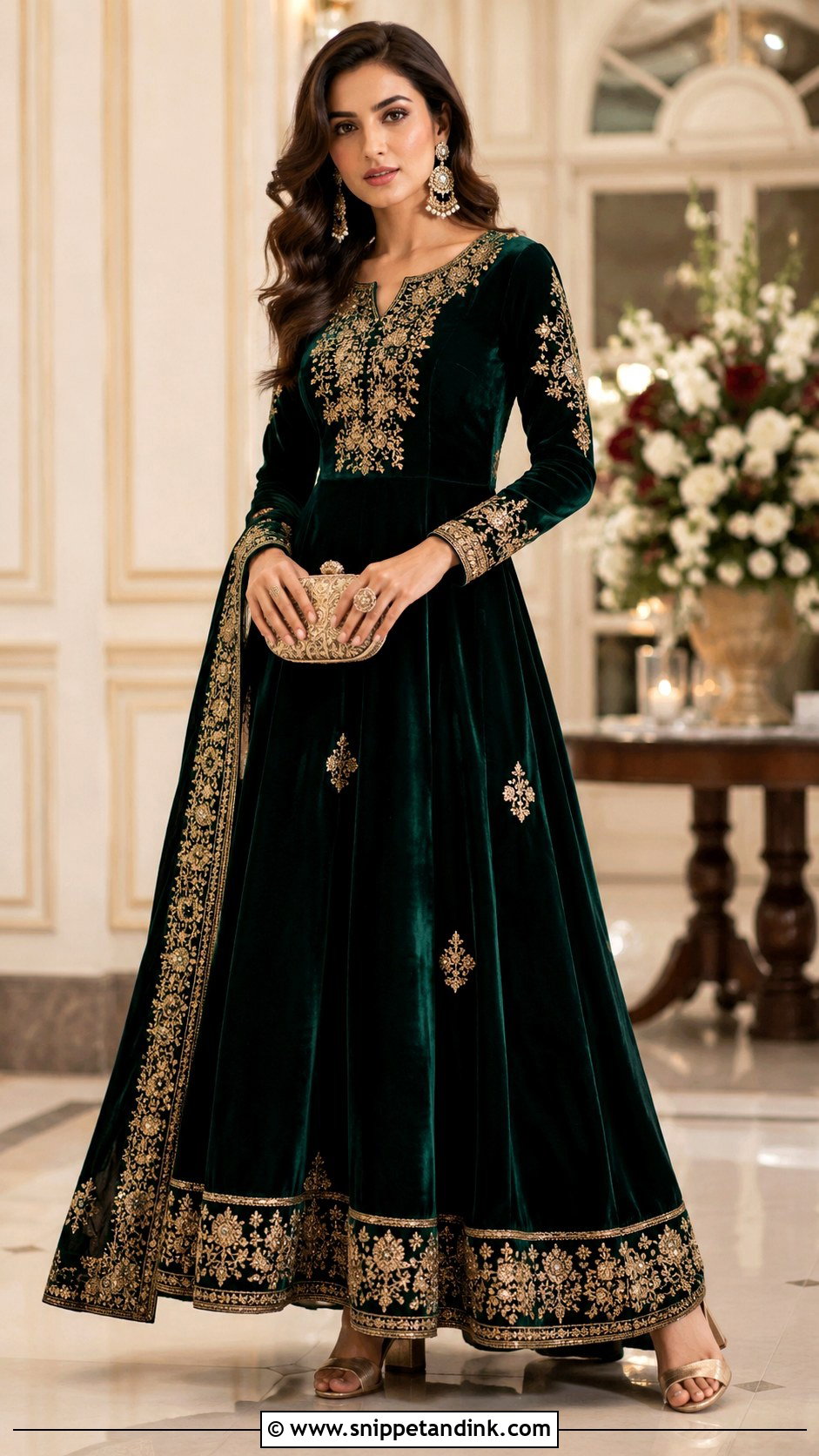
Velvet keeps you warm at a winter wedding, and long sleeves mean you won’t need a shawl over the outfit. Emerald, maroon or midnight blue with antique gold at the neckline, cuffs and waist. Velvet already reflects light in its pile, so I limit sequins on it; the embroidery and colour carry enough richness. Gold block heels look more balanced under heavy fabric than strappy sandals. The trade-off is heat: in a packed indoor hall, velvet gets warm quickly, so it suits outdoor winter events better than crowded ballrooms.
8. Anarkali Gown With Dupatta
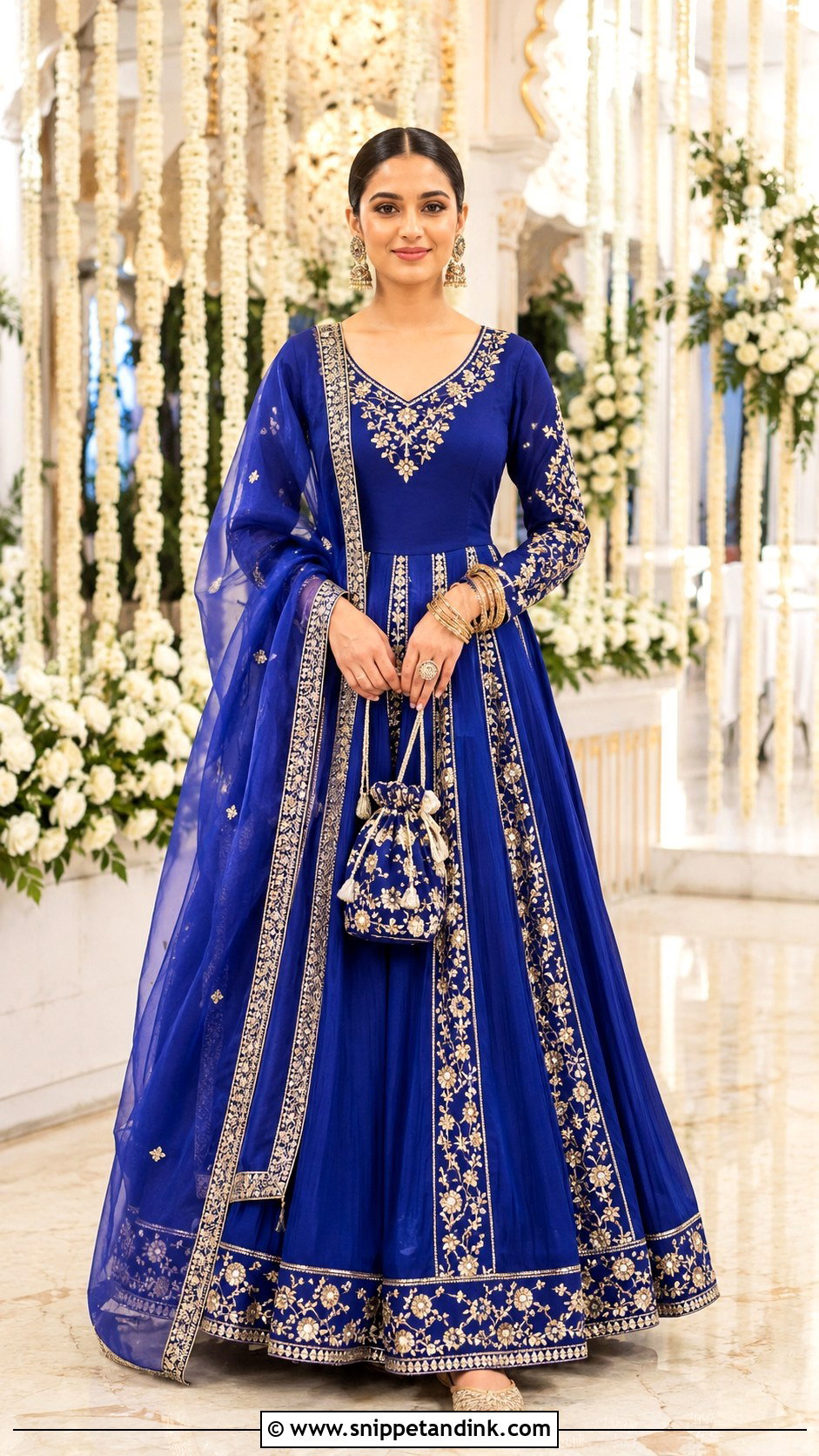
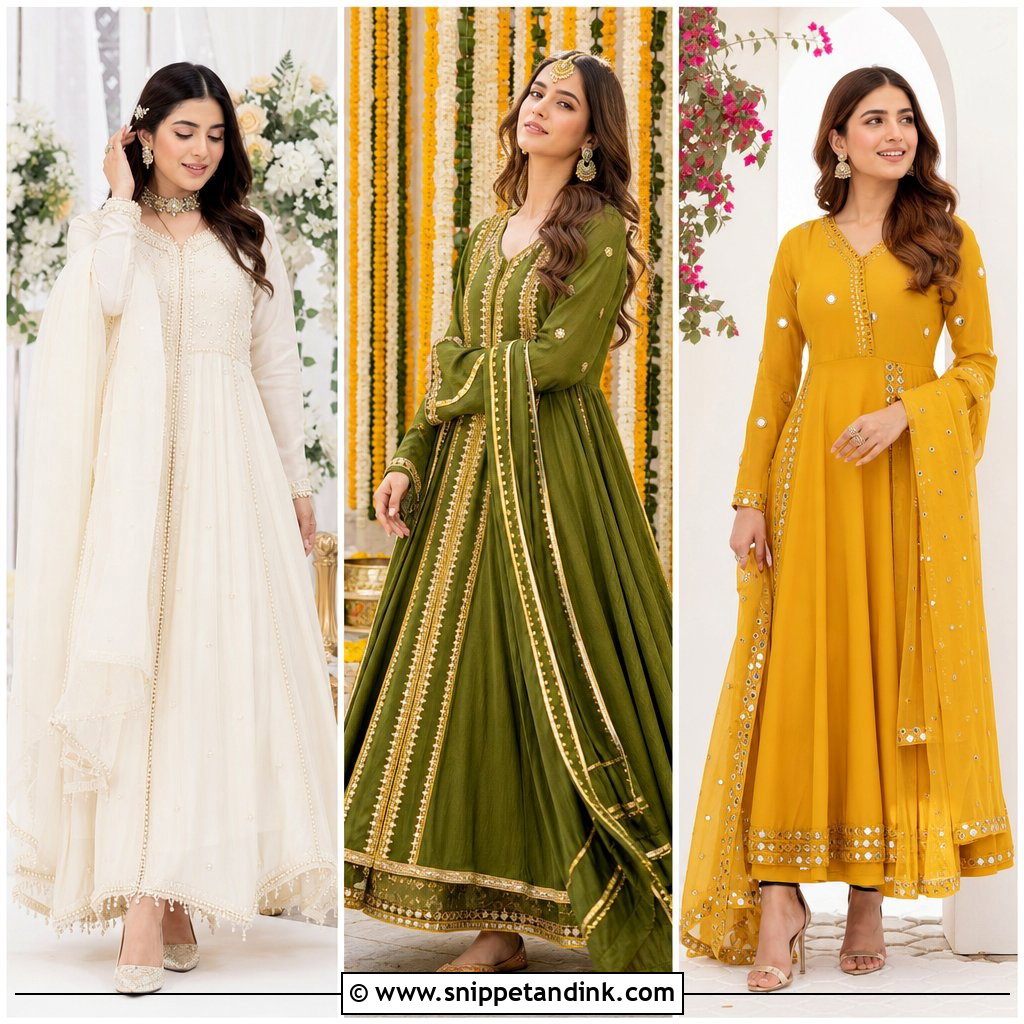
An Anarkali gown is the most adaptable shape in this list. A fitted yoke, a defined waist and a generous flare work across ages and body types, and the neckline, sleeve length, waist height and skirt volume can all be adjusted. Embroidered panels swing nicely when you walk. Pair it with a light organza or net dupatta that picks up one colour from the embroidery. Embroidered juttis are the long-day option. Where the waist seam sits is the fit point I’d check most carefully, since even a centimetre too high or low changes the proportions.
9. Mirror Work Sangeet Gown
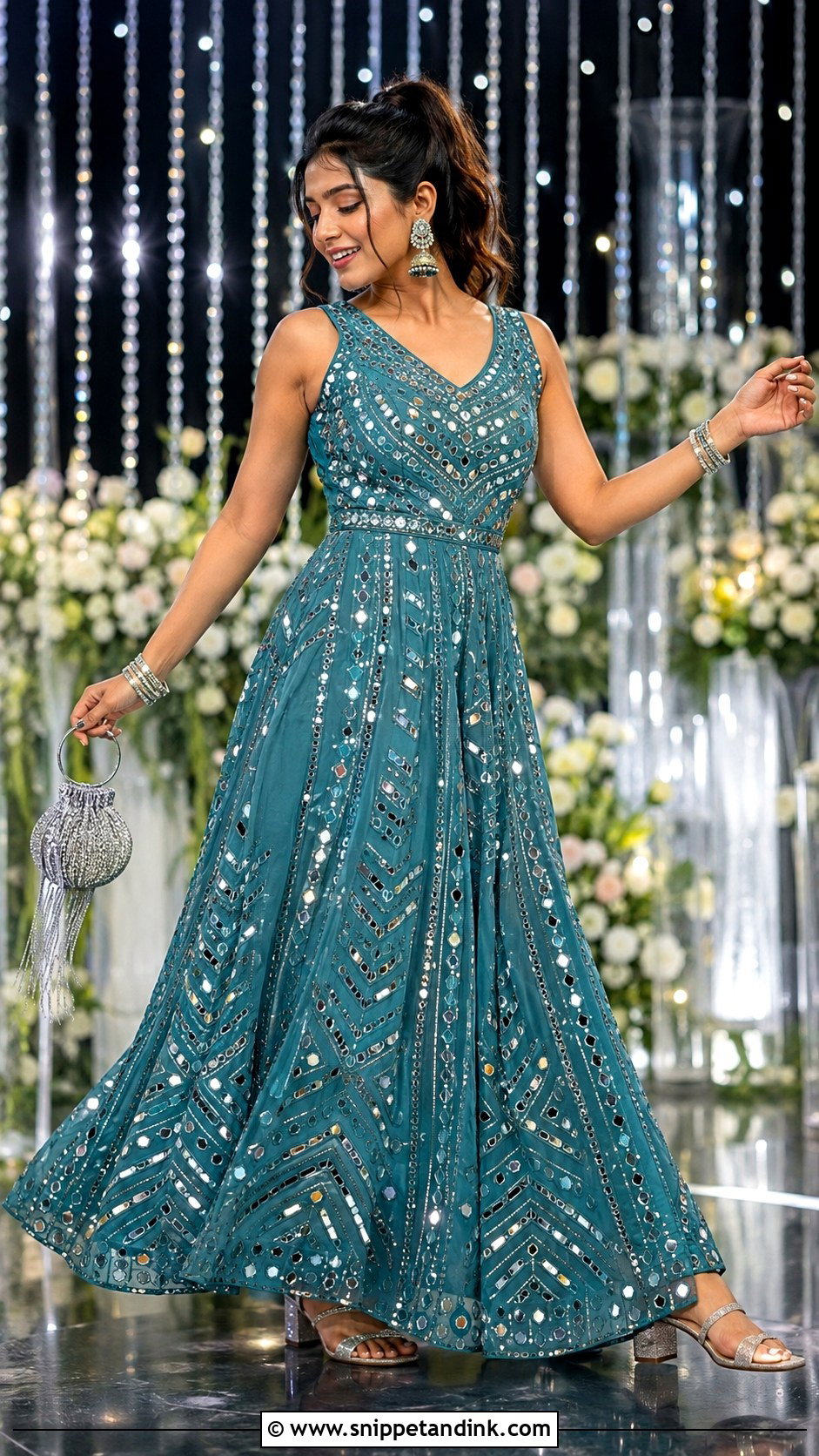
Mirrors throw light around a dance floor, so jewelry can stay small. A teal, fuchsia or royal blue base with mirrors set in clean geometric patterns, a fitted bodice and a moderate flare you can actually dance in. Before buying, I run a hand over the mirrors: each one should be firmly stitched with a smooth ring of thread around the edge, or it scratches your arms through a whole sangeet. Block heels or dressy flats, a wristlet instead of a clutch, and a braid or high ponytail to keep hair off the embellishment.
10. Champagne Sequin Gown
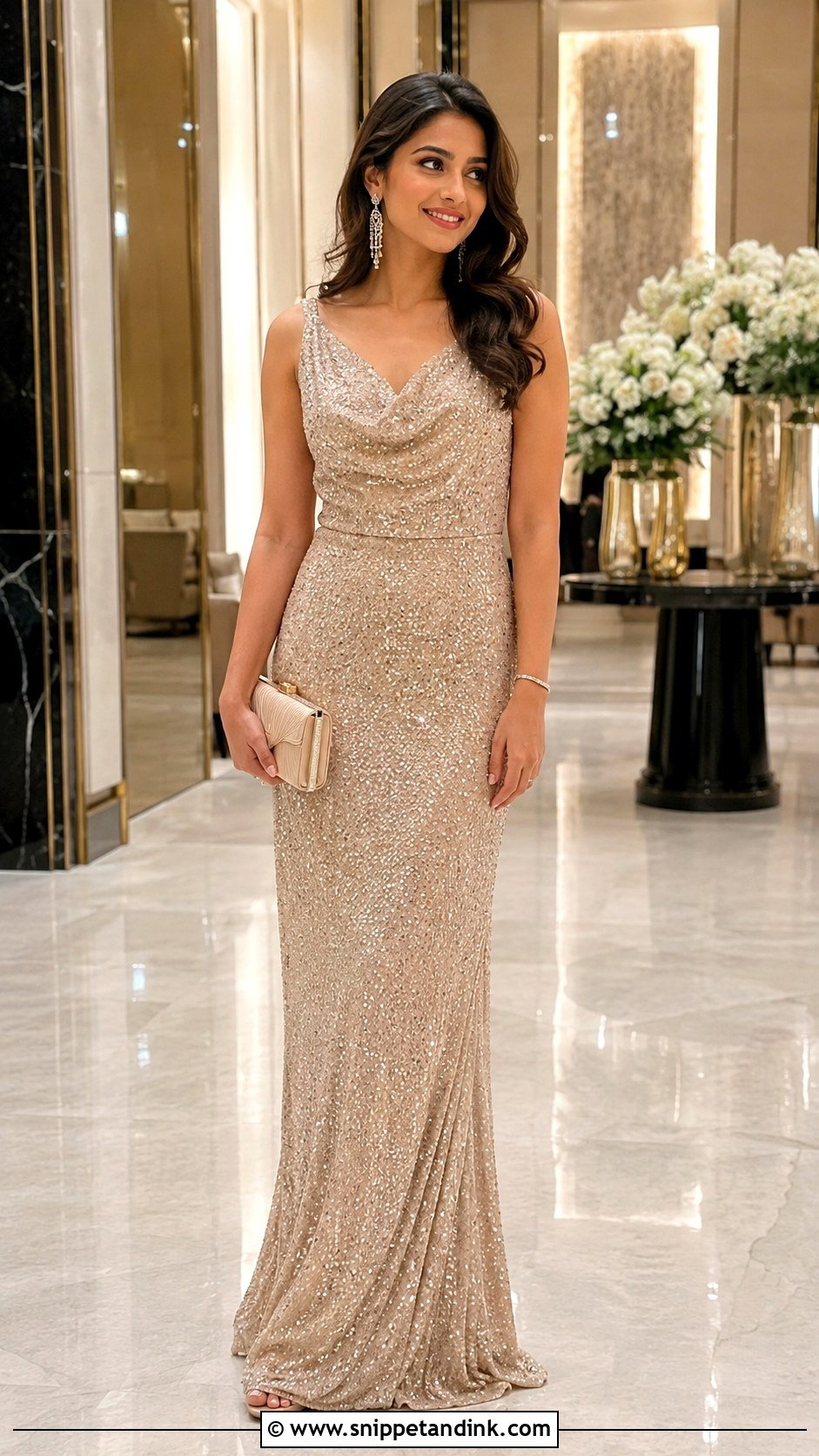
Mixed-tone sequins are what make a champagne gown look expensive. One flat metallic shade looks harsh under flash, while a blend of gold, nude and silver sequins reads softer. A V-neck or gently draped bodice with a straight or slightly flared skirt stops the sparkle overwhelming you. Skip the necklace if the bodice is fully covered; one bracelet or ring is enough. It makes a good second look for a bride and suits sisters and guests at a formal evening wedding.
11. One Shoulder Draped Gown
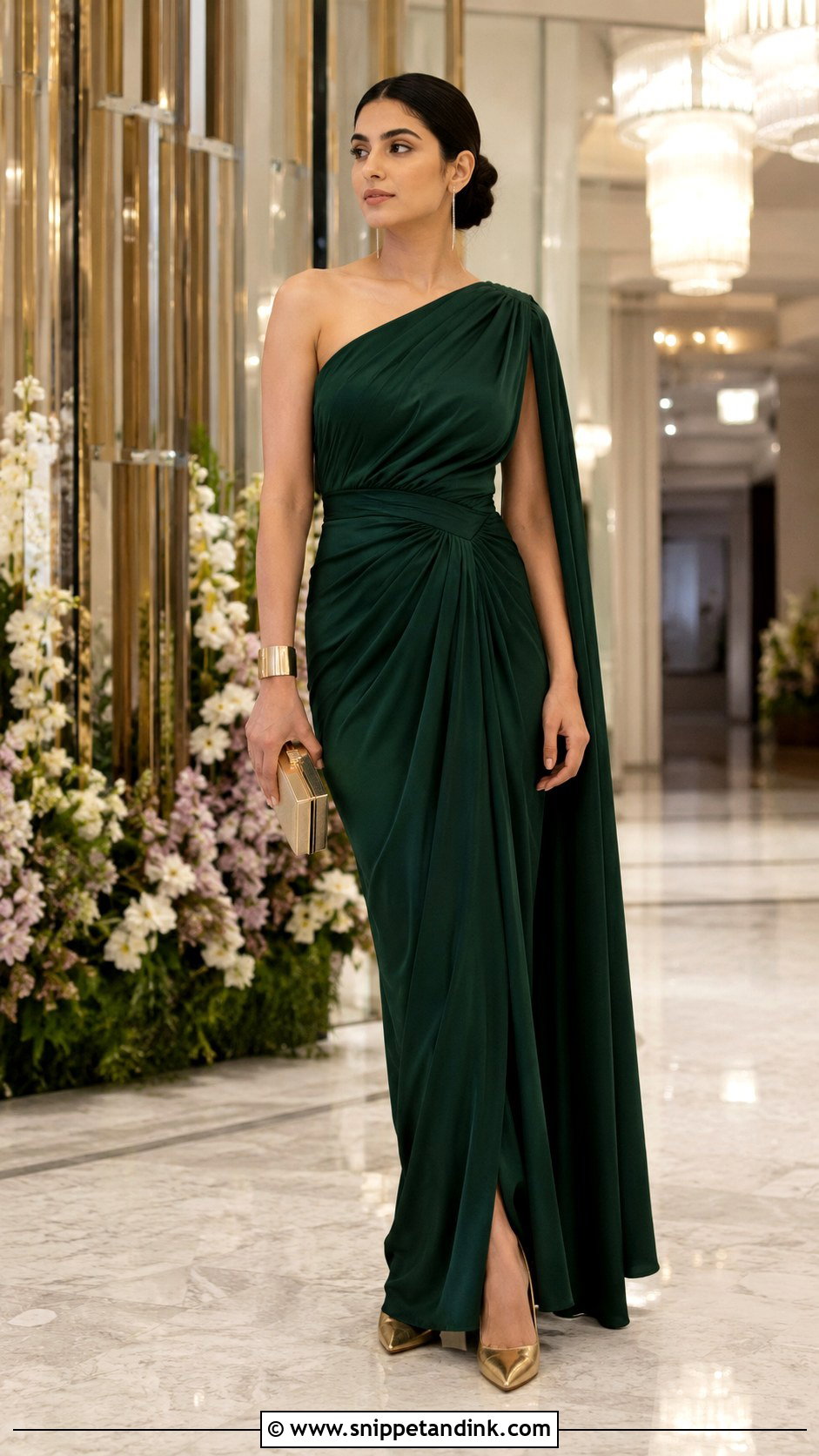
A one-shoulder drape with ruching at the waist is the sleek alternative to layered Indian outfits, and the drape works like a modern pallu. Deep red, forest green or sapphire give it depth. Pick earrings with the bare side in mind, and put a cuff on the bare arm. Light embroidery along the shoulder or waist links it to Indian wear. Check how much the drape moves in a fitting. If it slides off the shoulder when you raise your arm, ask for a hidden elastic or a snap underneath.
12. Peplum Trail Gown
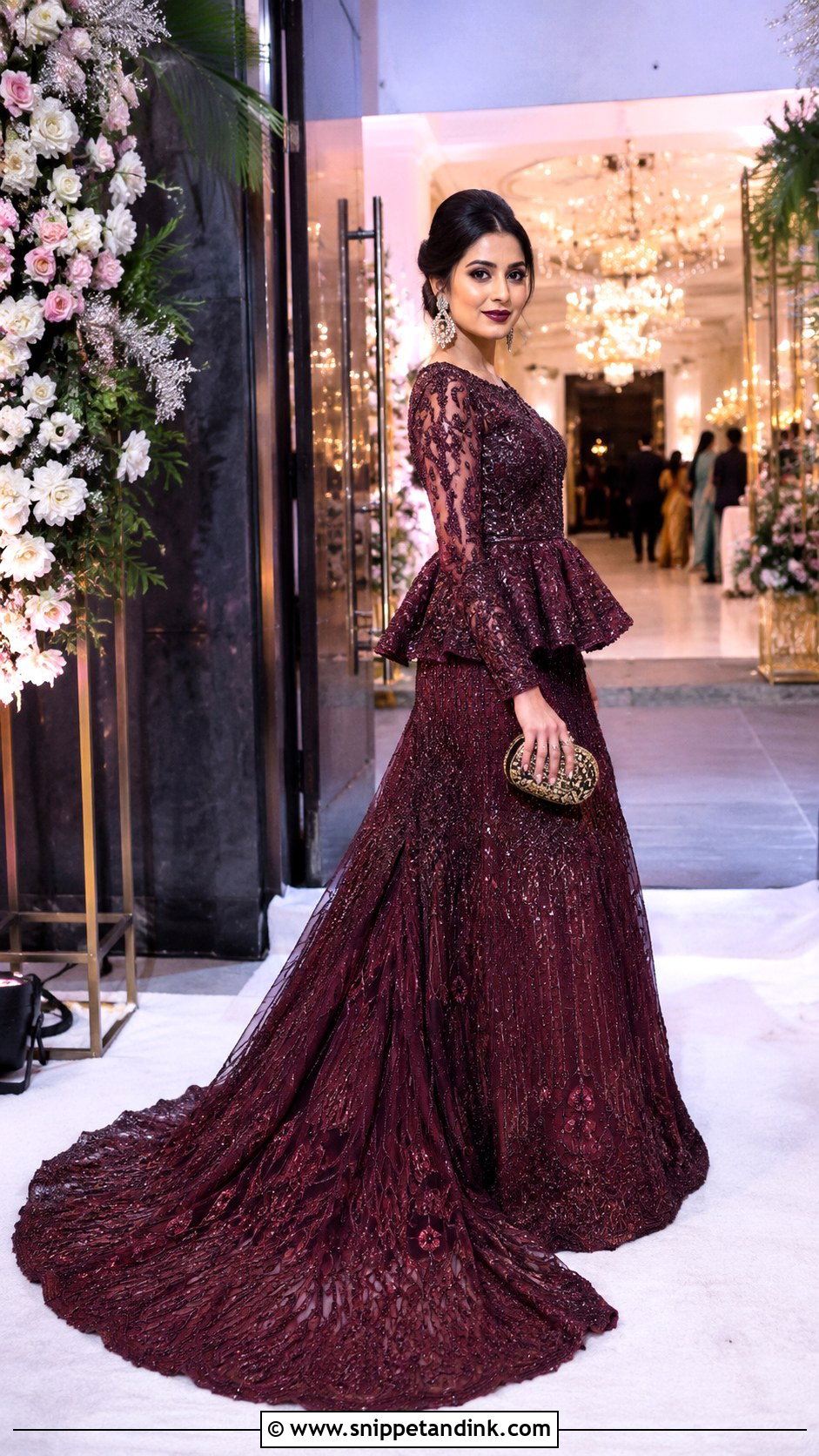
A peplum trail gown defines the waist and adds a train for the entrance. The peplum should lie flat over the hips; if it flares out too stiffly, it widens rather than defines. Rose gold, burgundy or antique silver with embroidery on the bodice and peplum edge. A detachable veil or shoulder drape adds ceremony, then comes off. Insist on a wrist loop or hidden bustle for the train before you leave the shop, because someone will step on an unbustled train within an hour.
13. Embroidered Jacket Gown
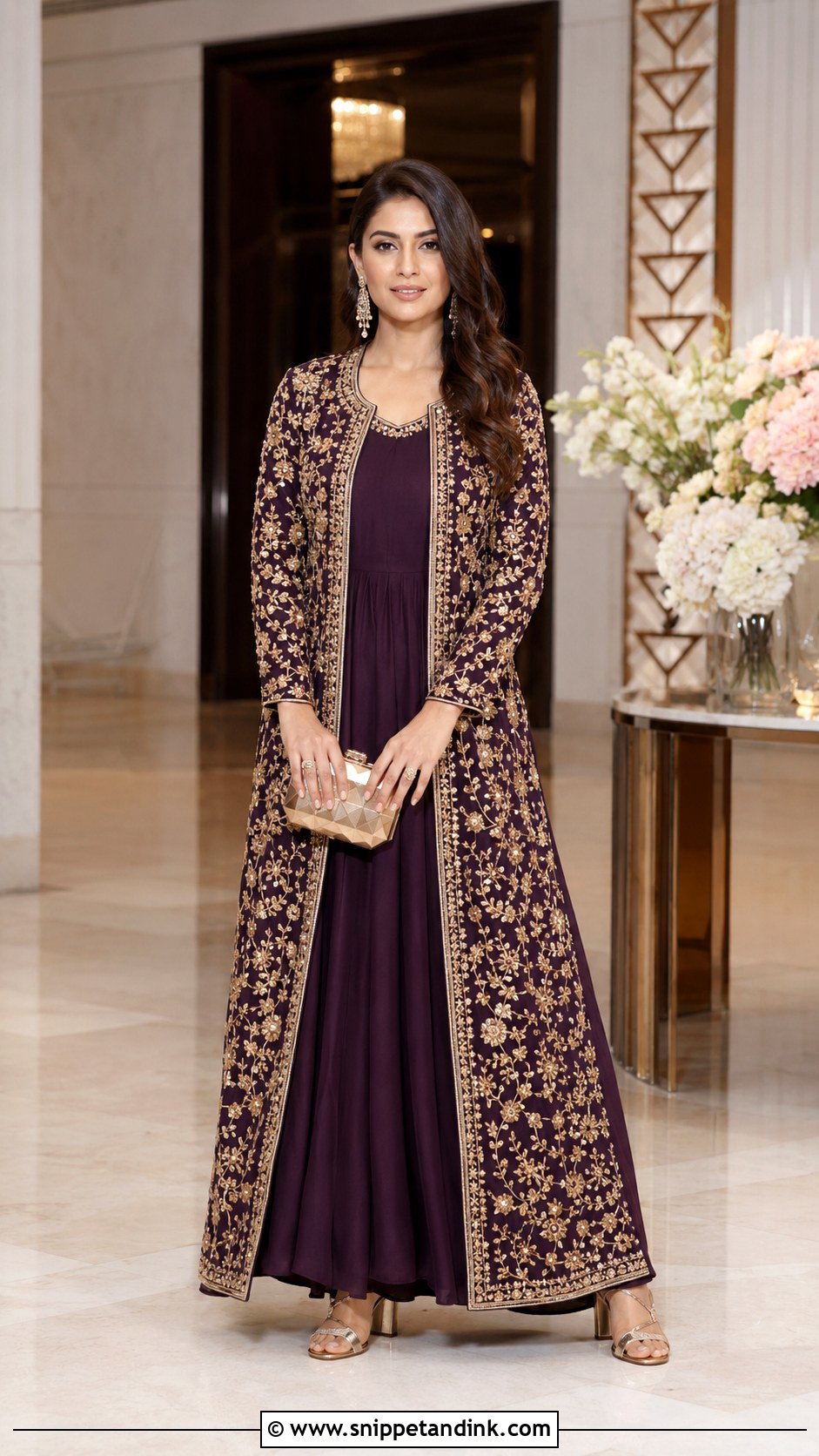
A plain floor-length gown under a long open jacket with zari, resham or sequins gives you coverage now and flexibility later. Monochrome lengthens the body; a contrasting jacket makes a stronger statement. Match the clutch to the gown rather than the jacket, so the embroidery stays the focus. This is the shape I recommend for venues where the temperature changes between an outdoor ceremony and an air-conditioned dinner, and for women who prefer covered arms and shoulders.
14. High Neck Royal Gown
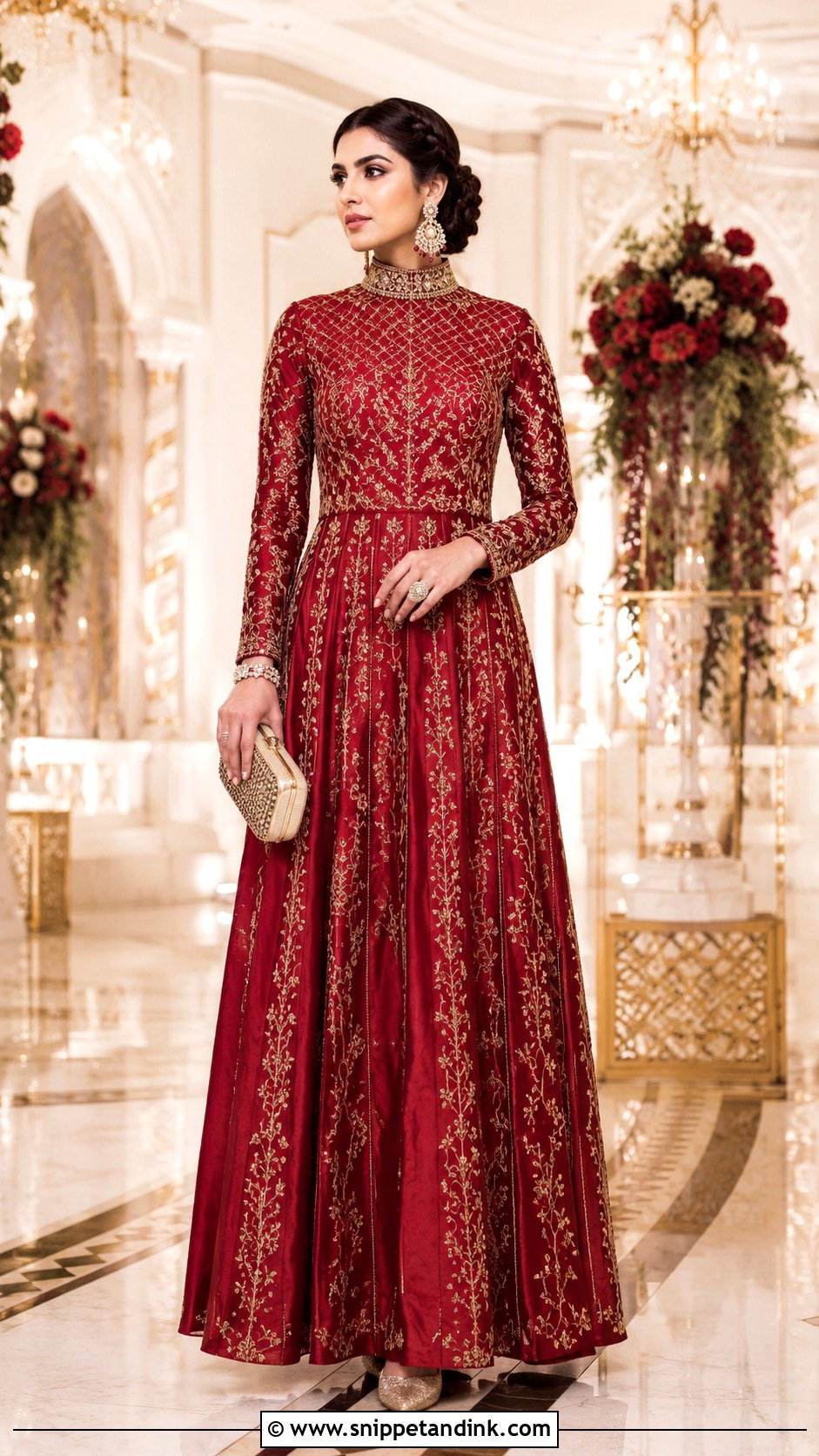
High necks look composed and royal, and they suit formal ceremonies and grand receptions. Fine embroidery around the collar, shoulders and cuffs, with a full but controlled skirt, in ruby, peacock blue or bottle green. No necklace with this one. Statement earrings, a bracelet and a ring are plenty. Before you commit, turn your head fully both ways and look down: a structured collar should let you do that without pressing into your throat. A high bun or braided knot shows off the collar.
15. Off Shoulder Floral Gown
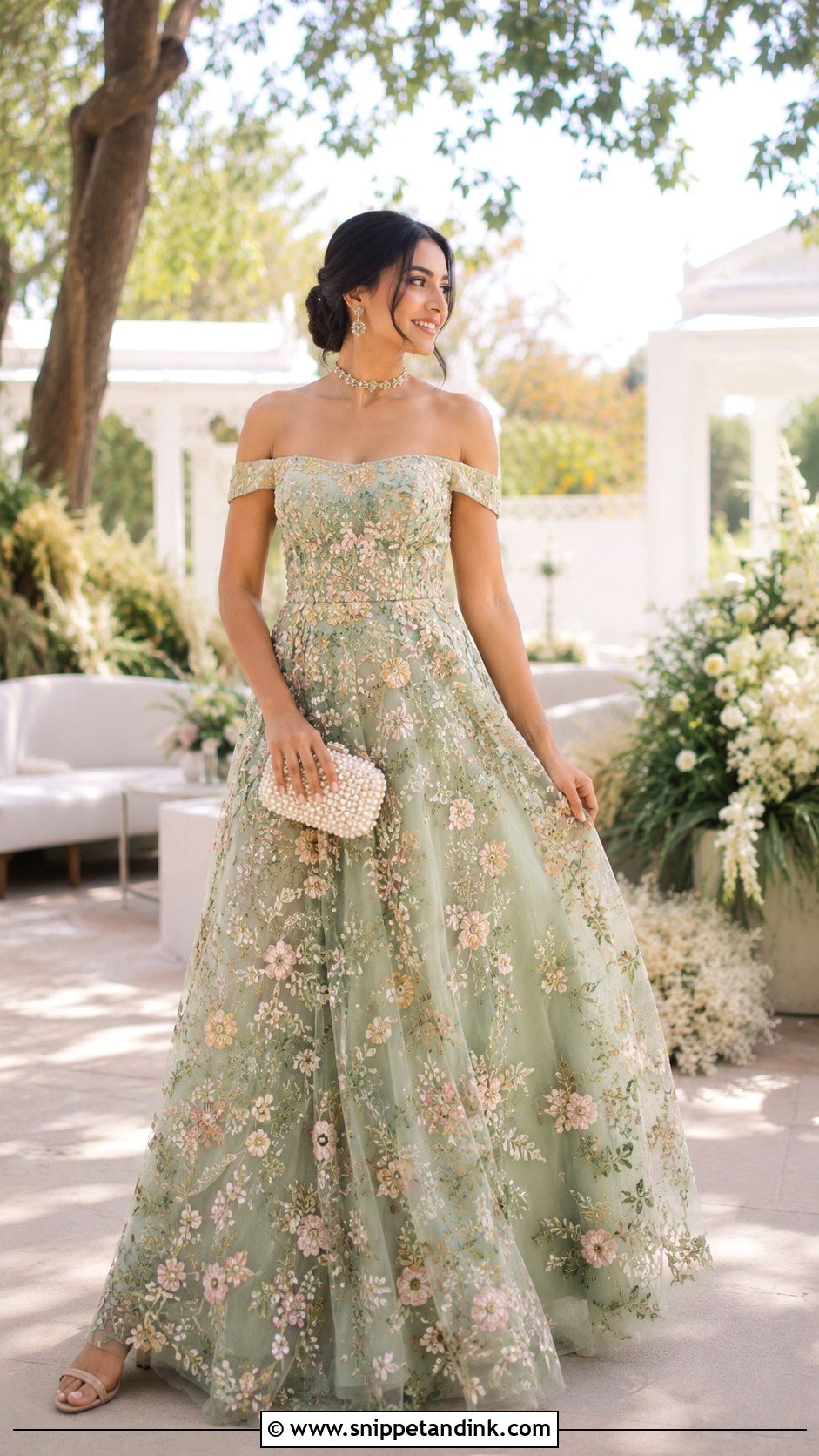
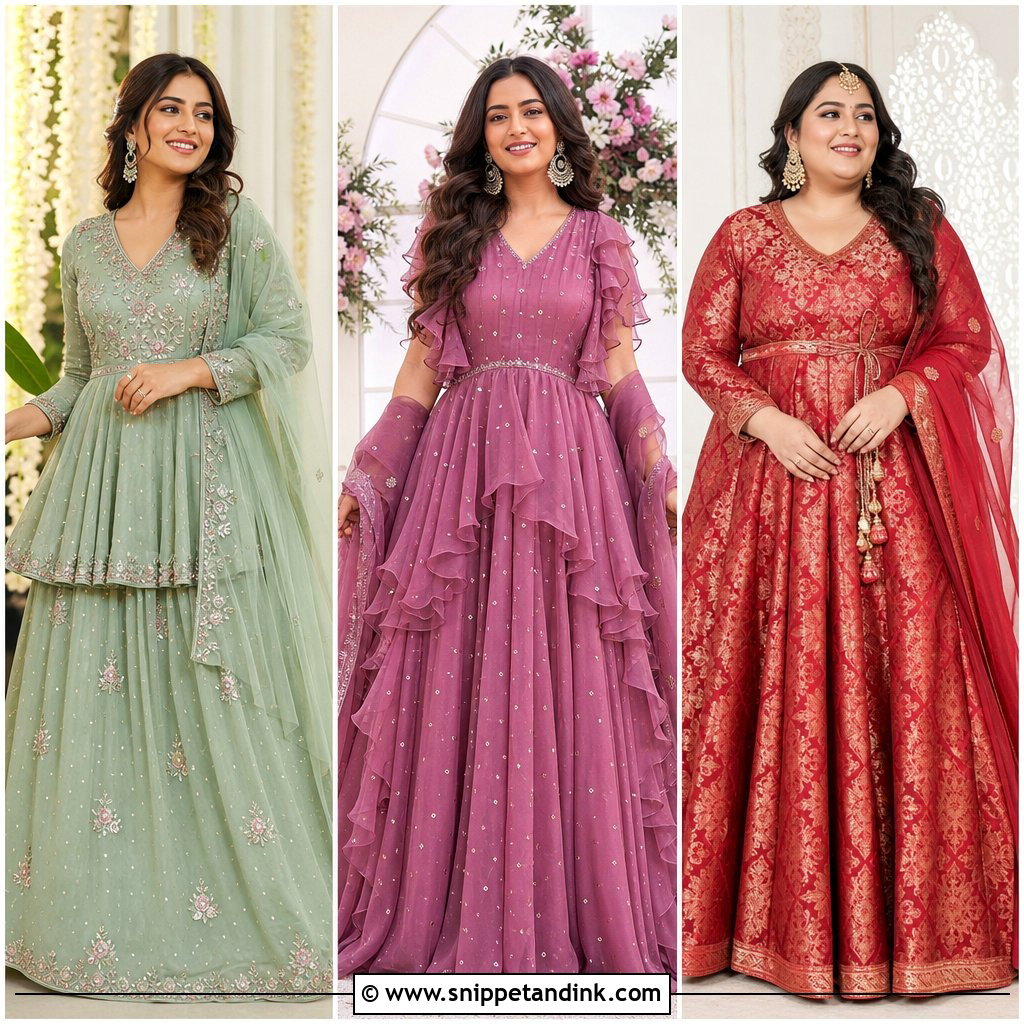
Off-shoulder florals feel romantic without being stiff, and in pastel pink, sage or peach they suit a daytime wedding, especially for bridesmaids and younger guests. The bodice must be properly supportive, since there’s nothing on the shoulders to hold it up. I’d ask for detachable straps as a backup for the dancing part of the evening. A delicate choker, block heels and a low bun with loose face-framing pieces. In deeper colours with heavier embroidery, the same shape becomes a bride’s reception gown.
16. Metallic Structured Gown
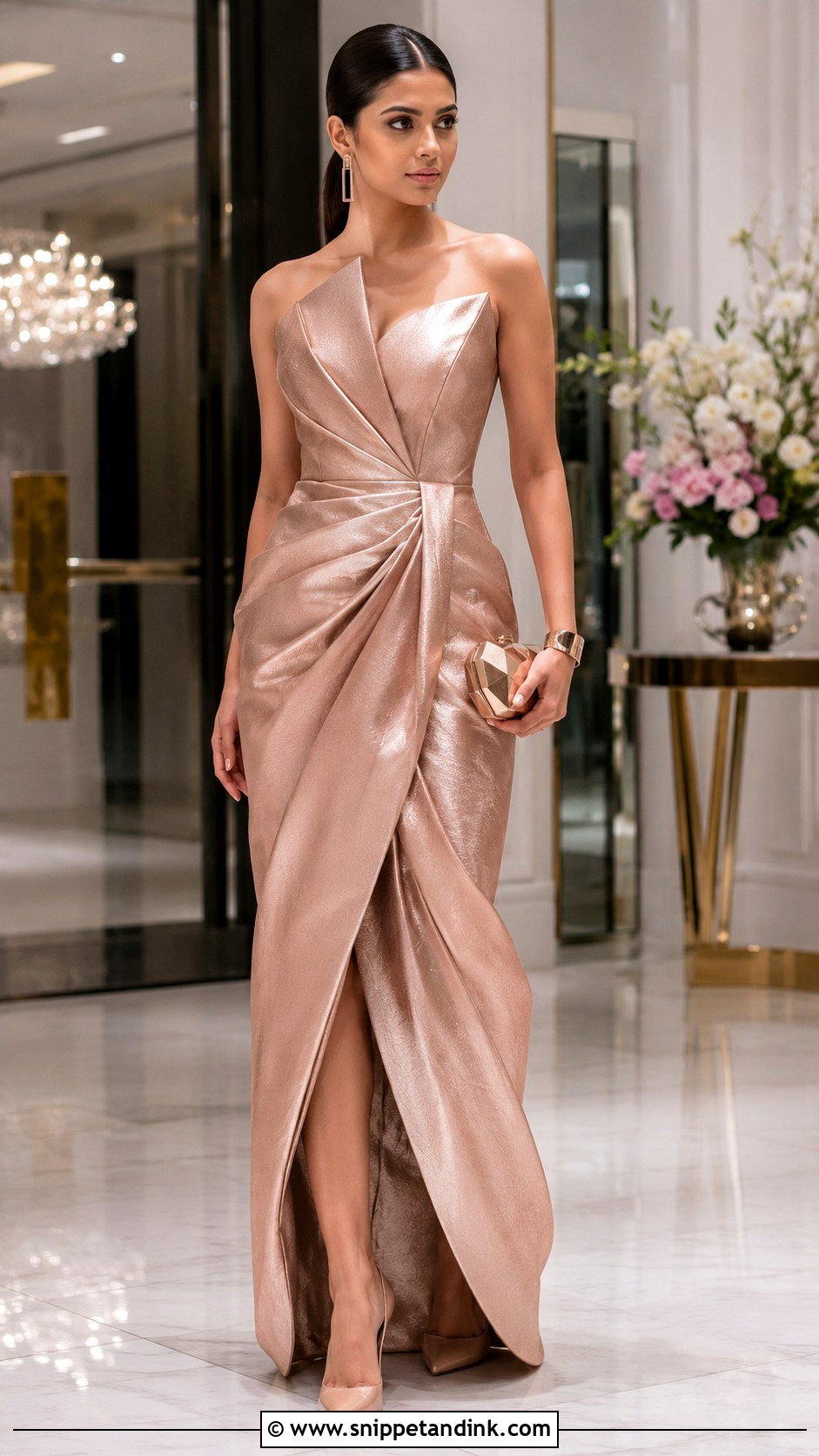
Metallic fabric does the work that embroidery usually does. Bronze, pewter or muted silver shaped into a defined bodice and an architectural skirt, with pleats or a sculpted shoulder for dimension. Choose plain metallic or neutral heels, never glittery ones that compete. Structured metallics show every pull line, so the fit through the waist needs to be precise. A sleek ponytail and soft eyes suit it. Save it for evening; daylight flattens the shine.
17. Banarasi Silk Fusion Gown
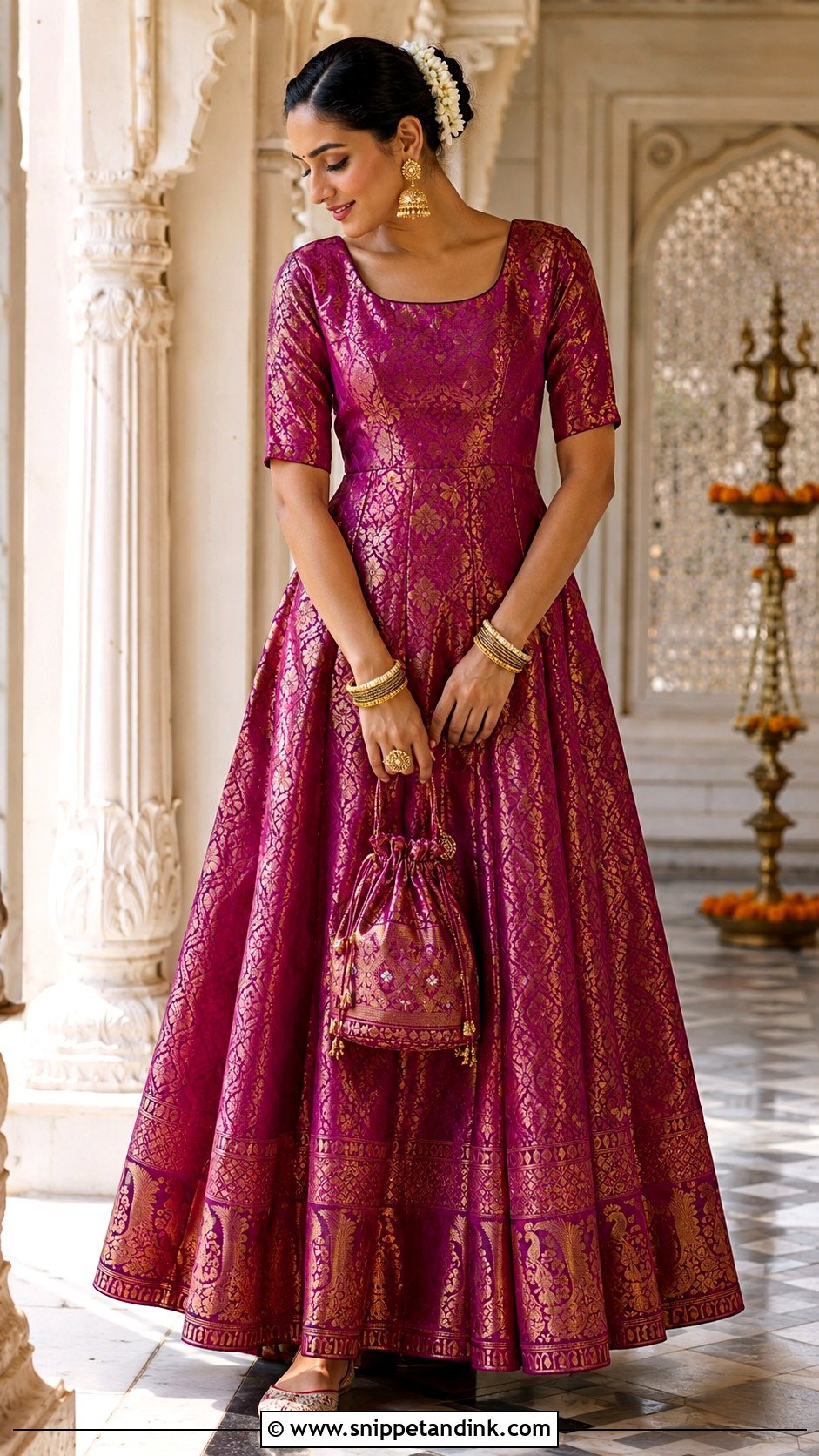
Banarasi silk in a gown keeps the weave front and centre: a brocade bodice, panelled skirt or a woven border placed to show off the motifs. Magenta, emerald or mustard with antique gold zari. Temple-style earrings, stacked bangles and a brocade potli suit it. The mistake I see is stones glued over the brocade, which hides the very pattern you’re paying for. Let the weave show. A neat braid or bun with understated hair jewelry finishes a guest look with real heritage.
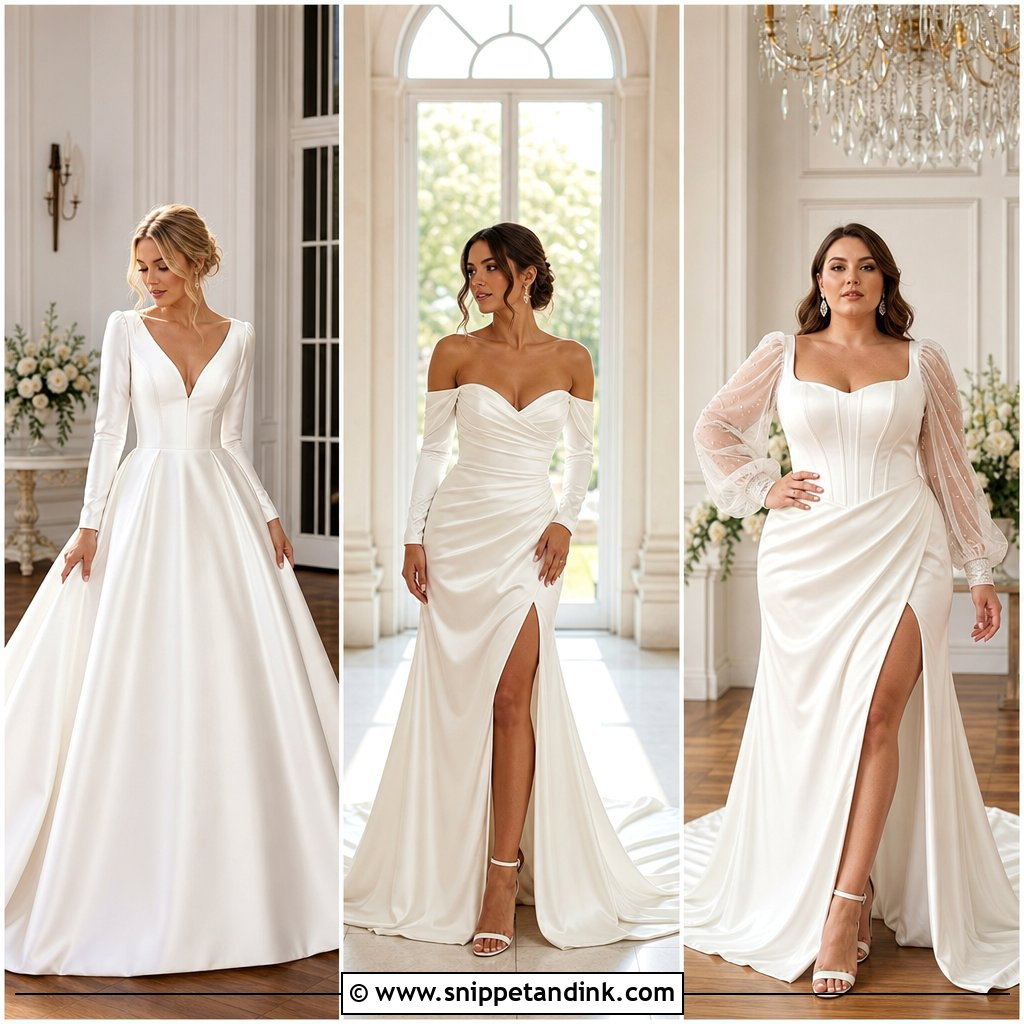
18. Pearl Embellished Ivory Gown
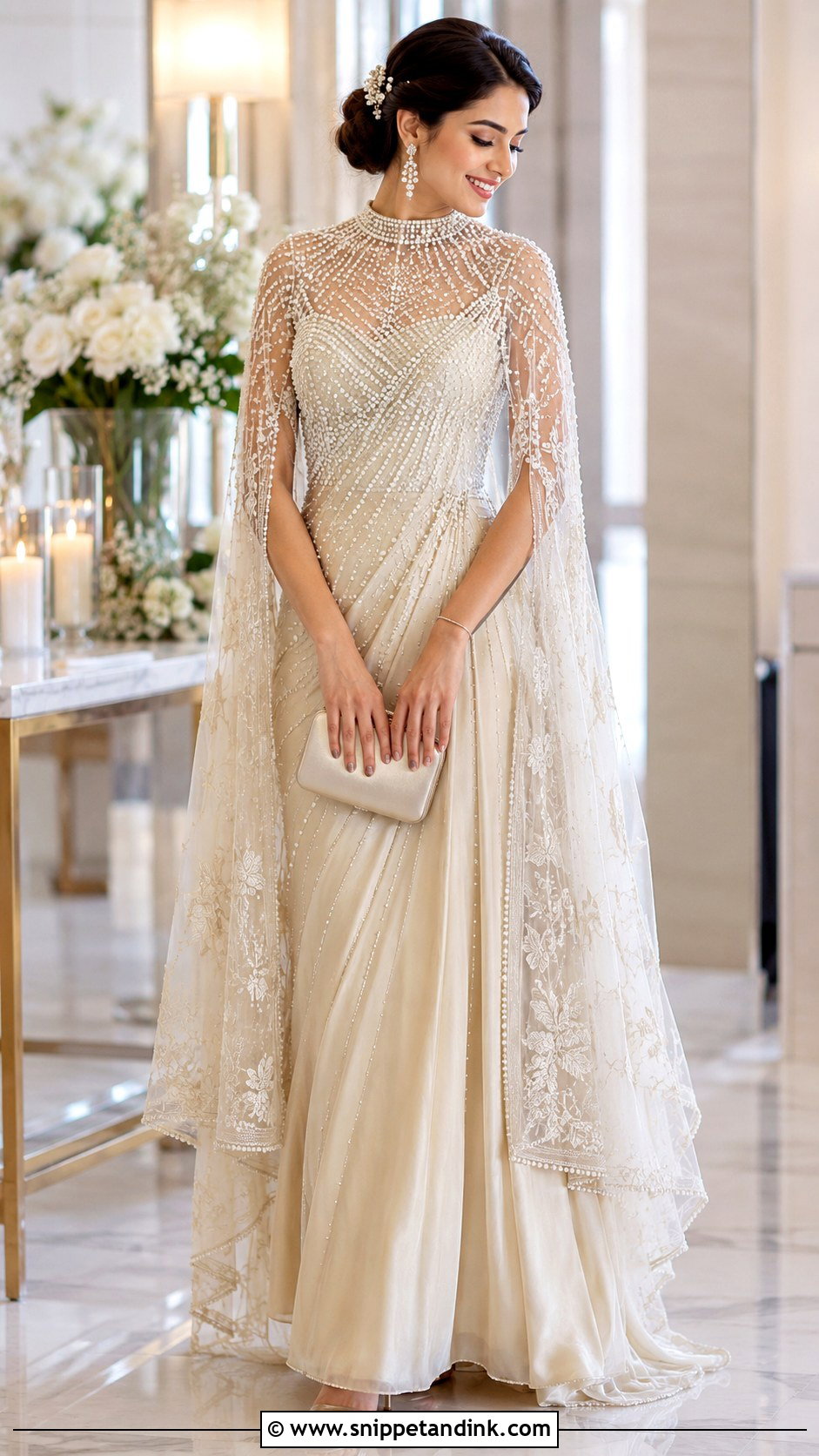
Ivory with pearls is the softer alternative to bold colour, but stark white looks grey and flat under warm venue lights. I’d choose a warm ivory, cream or pale champagne instead. Pearl clusters at the neckline, waist and sleeves add dimension. Nude heels keep the line uninterrupted. To make it read Indian, add a sheer embroidered cape or a light dupatta. It suits a reception or engagement, and in some families an all-white bridal look is avoided, so it’s worth checking before you choose it for the main event.
19. Ombre Tulle Wedding Gown
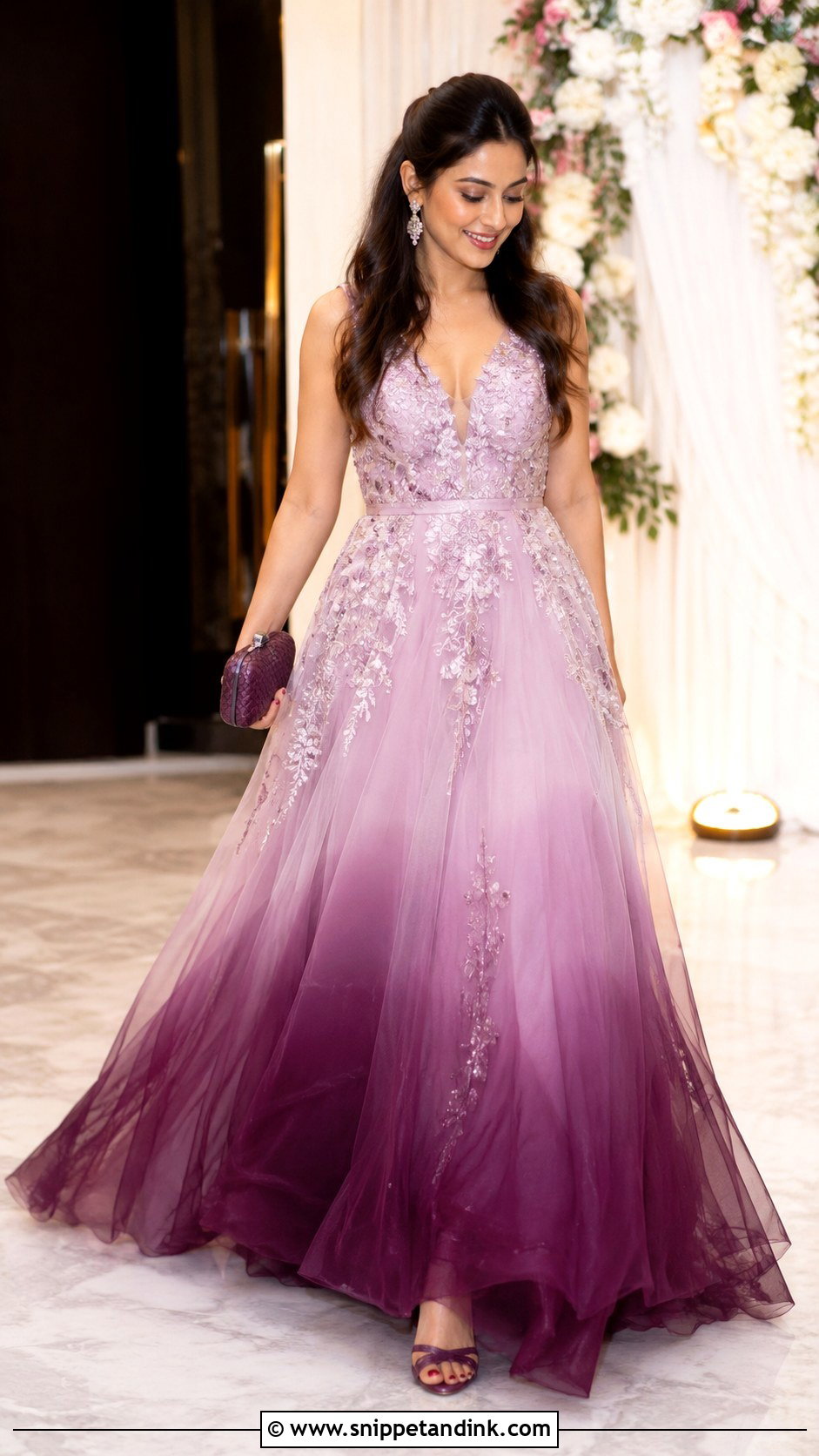
Ombre tulle moves colour from bodice to hem: blush to berry, lavender to plum, aqua to navy, peach to coral. Keep the top fitted and use several light tulle layers so the gradient shows as you move. Sequins or appliqués can follow the transition. Pick shoes in the lightest shade so the colour fades into them rather than stopping abruptly. Stage lighting at a sangeet or reception shows the gradient at its best; in harsh midday sun it can look flat.
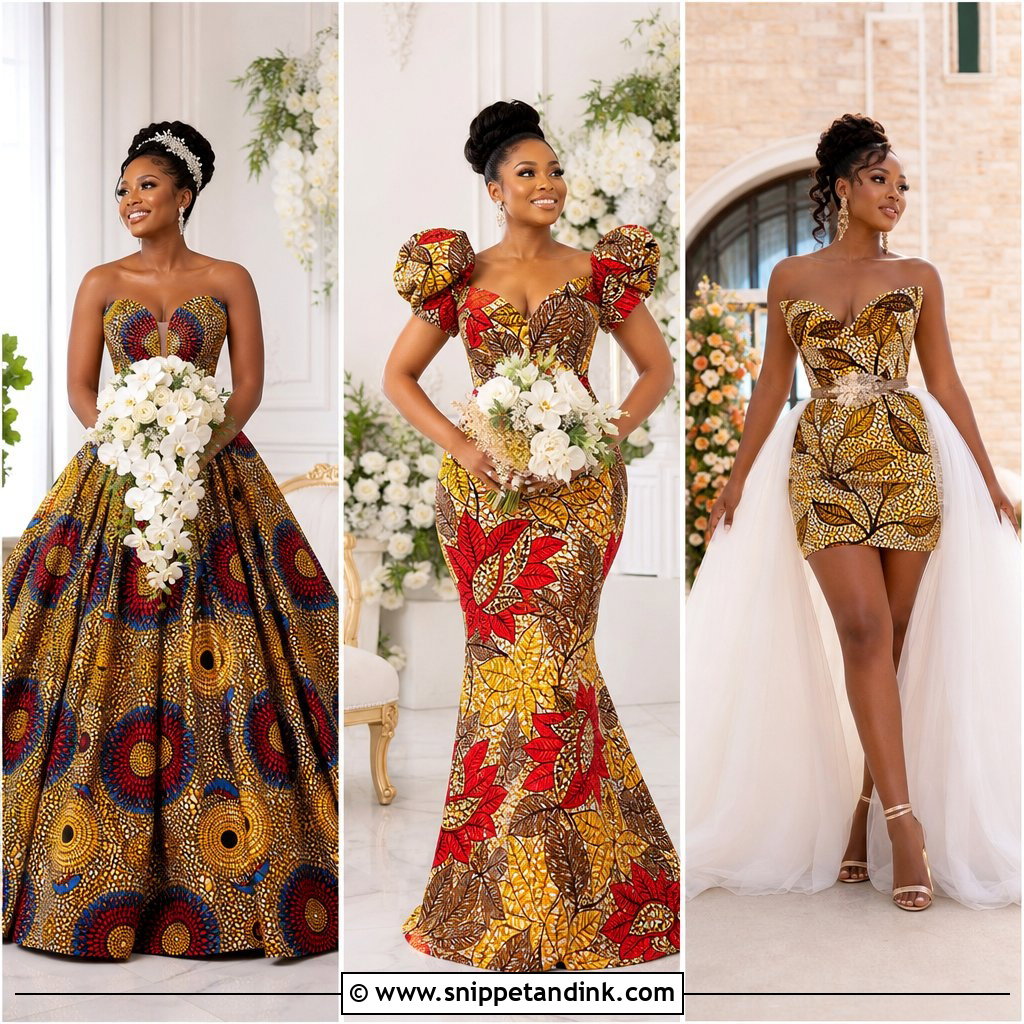

20. Satin Gown With Embroidered Cape
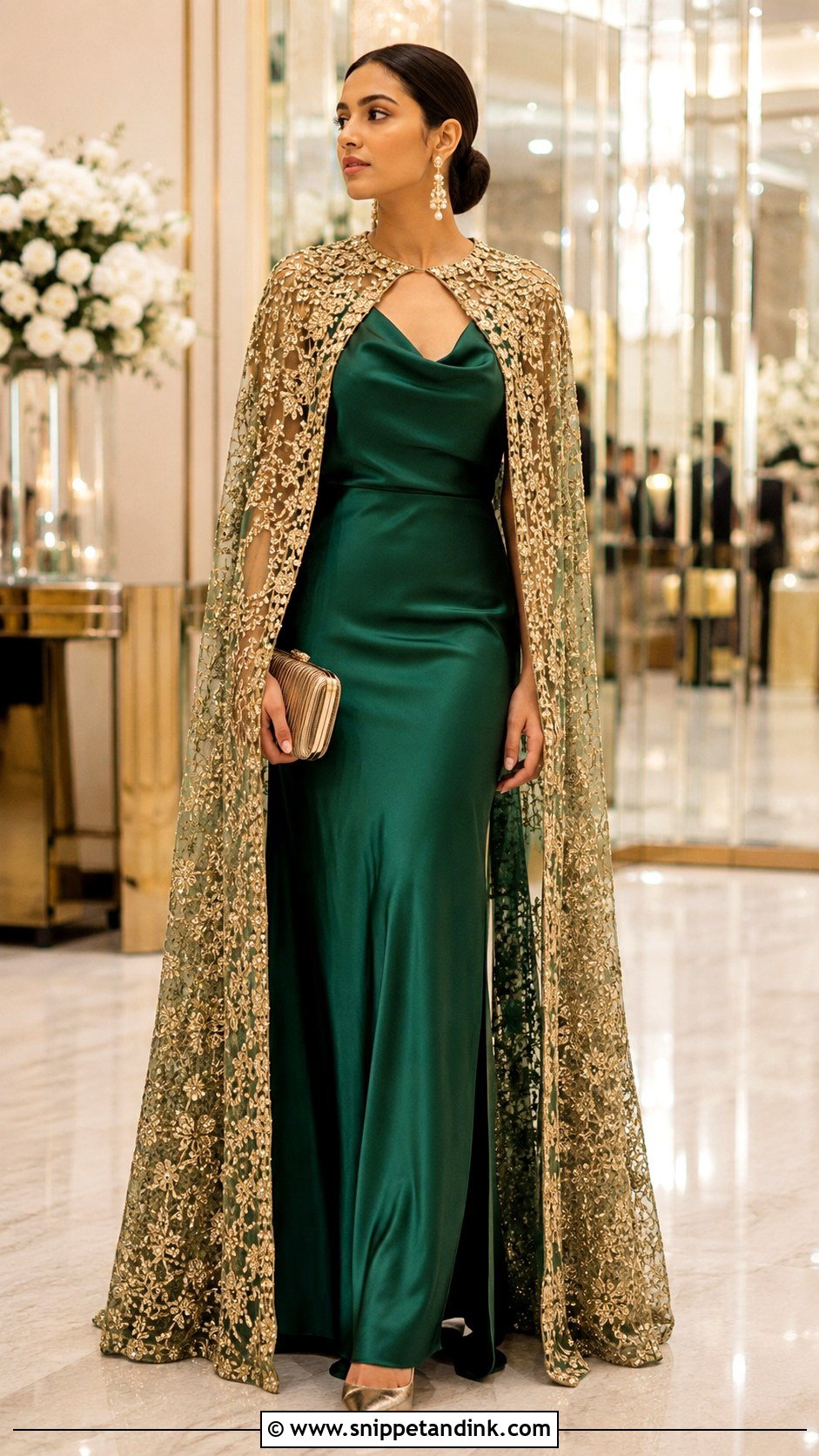
A clean satin gown with a detachable embroidered cape is my favourite two-in-one: the cape carries the zari, pearls or tonal flowers for the entrance, then comes off for dancing. The gown itself needs a clean neckline, a defined waist and a fluid skirt. Satin marks easily, so ask for the cape’s embroidery to be lined on the inside, which stops metallic threads from rubbing the gown at the shoulders. Pointed heels, drop earrings and a low bun complete it.
Garment Bags, Steamers and the Quick Change Before the Reception
Brides who wear a gown for one function and something else for another often underestimate the change. Getting out of a ceremony outfit, taking jewelry off, redoing hair and stepping into a corset or cape gown takes longer than people think, and I’d allow close to an hour if the schedule allows it. Someone who knows the fastenings should be in the room.
- Hang each outfit in its own breathable garment bag, with the shoes, jewelry and innerwear for that look bagged and labelled alongside it.
- Bring a handheld steamer. Organza, satin and tulle all crease in transit, and hotel irons scorch delicate fabric.
- For a destination wedding, carry the bridal outfit in the cabin if the airline allows it, rather than checking it.
- Pack a small kit with safety pins, double-sided fashion tape, a needle with matching thread and a few spare hooks.
- Hang heavy embroidered gowns by their inner loops, not the shoulders, so the weight doesn’t stretch the neckline.
Match the Gown to the Hour and the Venue
The right Indian wedding gown balances impact with comfort for the event you’re wearing it to. Red zardozi, Banarasi silk and Anarkali shapes bring traditional richness; corsets, metallics, ruffles and draping feel more contemporary; saree gowns and detachable capes sit in between. Think about the venue, the weather, the time of day and how many hours you’ll be in it. Sit, walk and raise your arms in it before you buy, then let the jewelry, shoes, hair and bag follow the gown’s level of detail.
You'll Like These Ideas:



Leave a Reply