
Blush buttercream, pearl piping and old-fashioned borders are some of my favorite things to make, because the whole look depends on hand work you can see from across the room. These cakes borrow from the overpiped bakery cakes of a few generations ago: Lambeth borders, heart shapes, ribbon bows, sugar roses and scalloped edges. Pale pink sits comfortably next to white, ivory, champagne, gold and deeper rose, so it rarely clashes with the rest of the room. Below are twenty versions, from a single sweetheart cake to a tall reception centerpiece, with what I’d tell you about each before you bring the picture to your own baker.
Why Blush Buttercream Turns Peach or Fades
Butter is yellow, so a buttercream made with real butter starts out ivory, not white. Add pink to that and you often get a warm peach rather than the cool blush in your photo. When I need a true pale pink, I whip the butter longer to lighten it, and sometimes add the smallest touch of violet to cancel the yellow before tinting.
Pink also behaves differently from other shades. It deepens as the frosting sits for an hour or two, so I mix it a step lighter than the target. And some pink colorings fade under strong sunlight or bright venue lights, which is why a cake displayed by a sunny window can look noticeably paler by the time it’s cut.
- Bring a fabric swatch or a paint chip to your tasting so the baker can match the actual shade.
- Ask whether they use an all-butter or a shortening-blend buttercream; the base color affects how the pink comes out.
- Ask for the cake table to be out of direct sun.
1. Light Pink Vintage Lambeth Wedding Cake
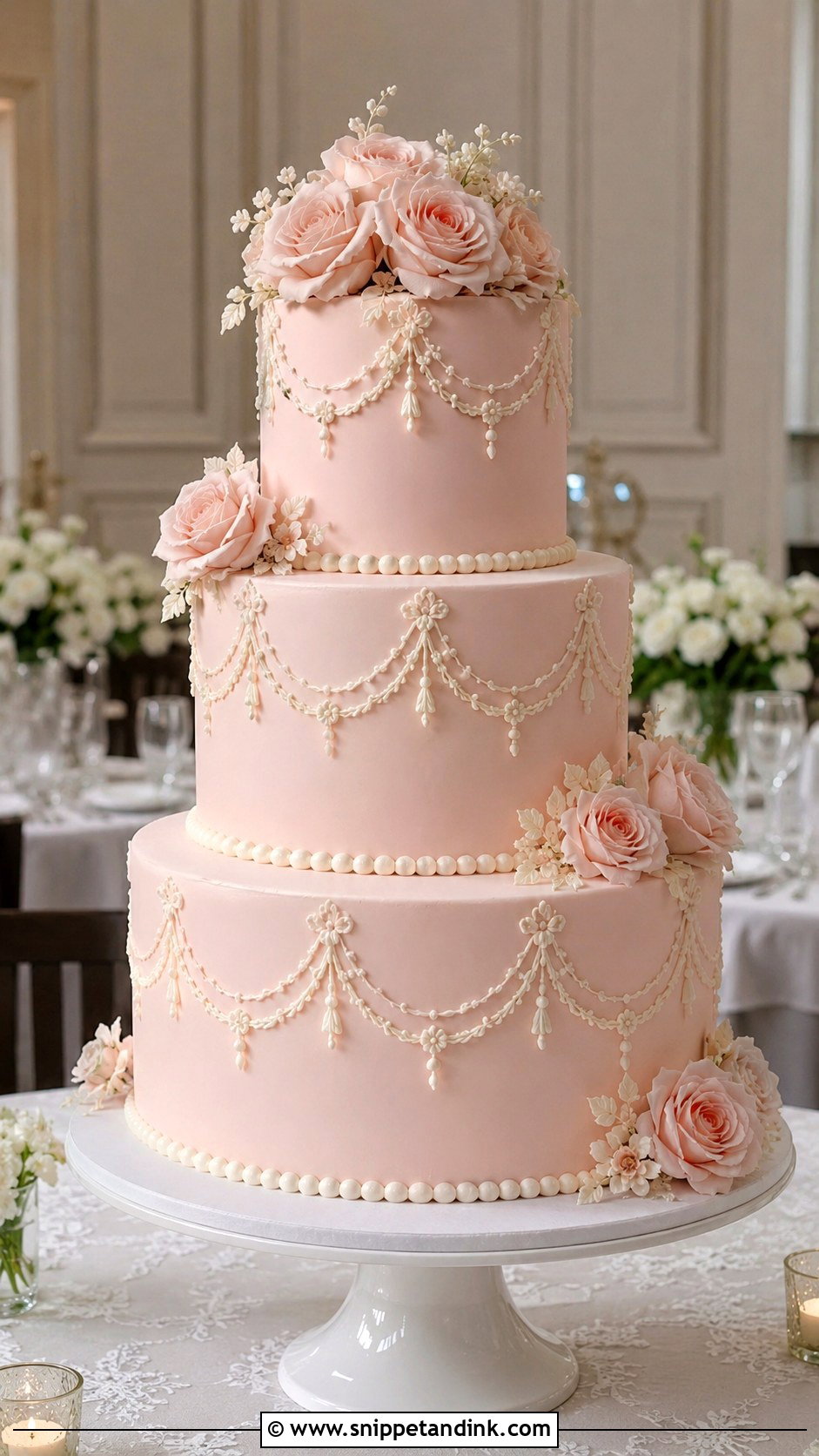
The Lambeth method is overpiping: border on top of border, so each layer of shells, drop strings and swags casts a small shadow on the one below. I pipe it over a blush buttercream base, using layered overpiping, shell borders in ivory or a slightly deeper pink so the relief shows in photos. Two or three tiers give the borders room to stack. The part people underestimate is time; a fully piped three-tier cake takes many hours of steady work, and the piping has to happen on the cake you’ll actually serve, not ahead. Finish with small pearls and a few tiny sugar roses rather than one large topper.
2. Light Pink Vintage Heart Wedding Cake
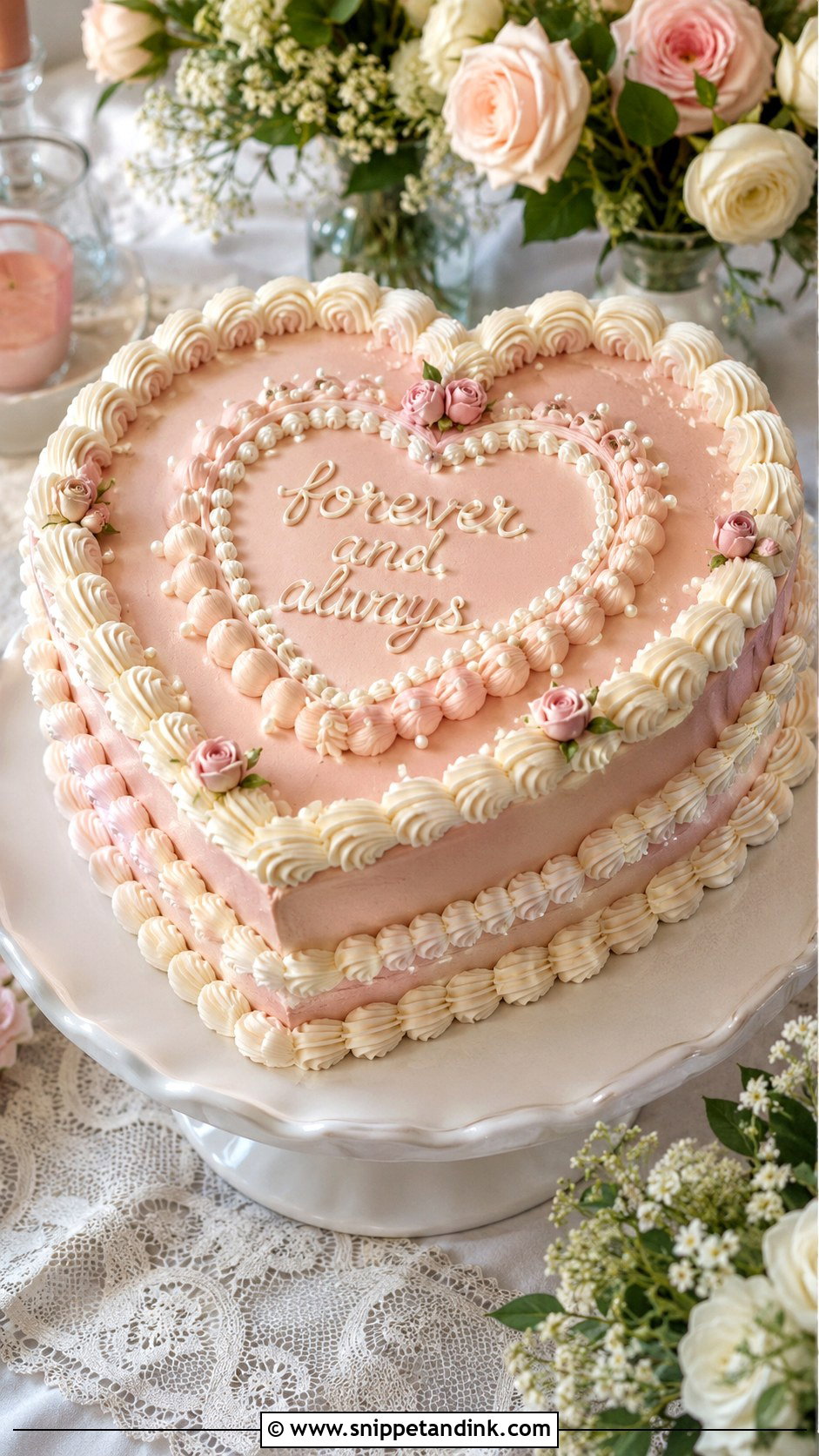
Heart cakes look nostalgic and sweet, and they’re harder to cover than they appear. The point at the bottom and the dip at the top are where buttercream tears or bulges, so I chill the cake firm before the final coat and pipe a thick scalloped border right over those two spots. Blush frosting all over with ivory piping around the edge makes the shape read clearly from a distance. Heart cakes suit sweetheart tables, elopements and small receptions; a piped message or a few rosebuds in the center is all the decoration it needs.
3. Light Pink Vintage Tiered Wedding Cake
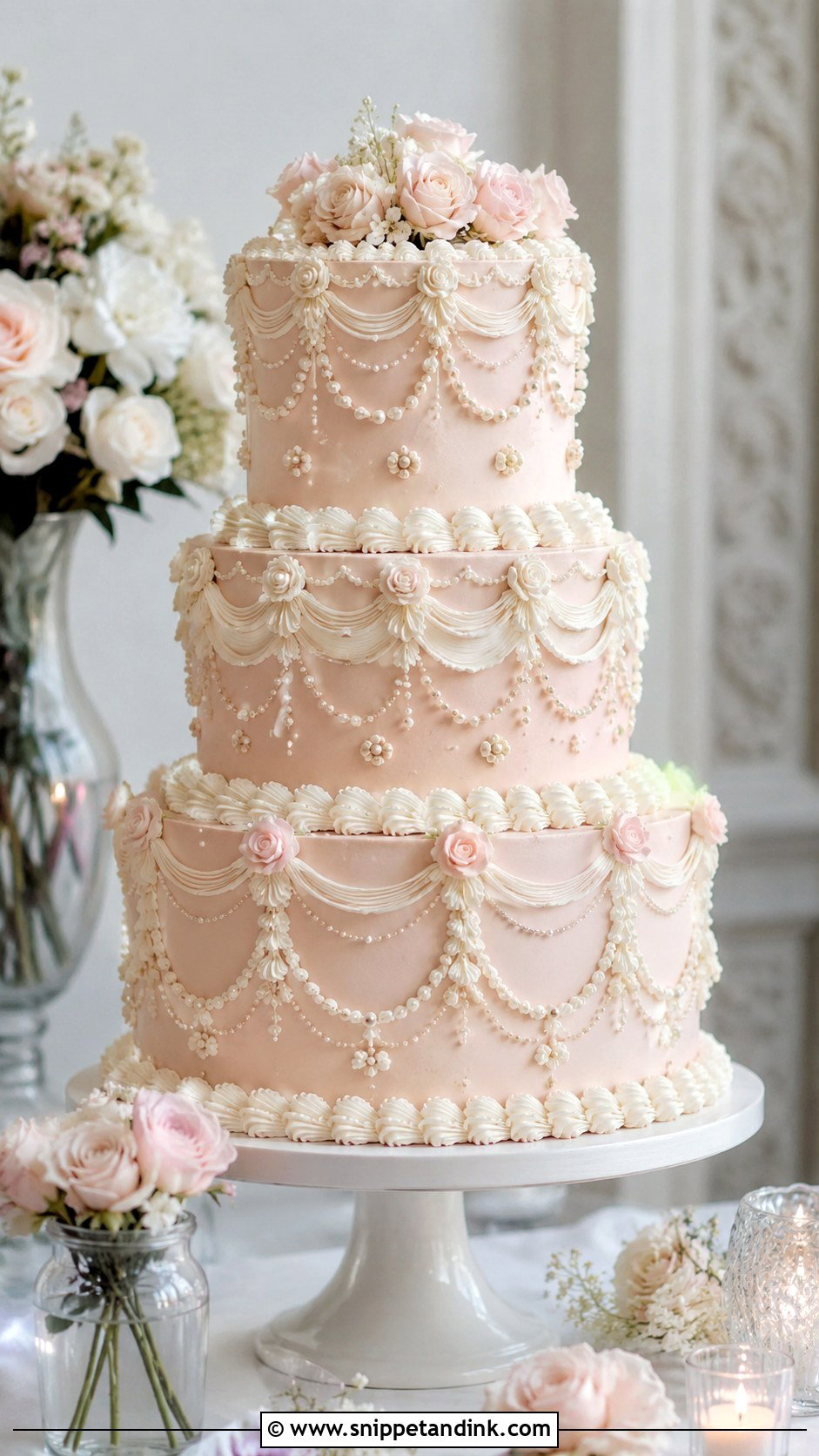
Tiers raise the stakes on proportion. I keep each tier’s piping to defined zones (a border at the top edge, a garland around the middle, a shell at the base) so the cake looks rich without every surface being busy. Smooth blush buttercream reads softer; fondant gives a sharper, more formal surface for piping. A three-tier cake feels formal, and a two-tier feels more personal. If you’re adding fresh garden roses, they need to be pesticide-free, and their stems should be wrapped or placed in picks so they never touch the cake directly.
4. Light Pink Vintage Pearl Wedding Cake
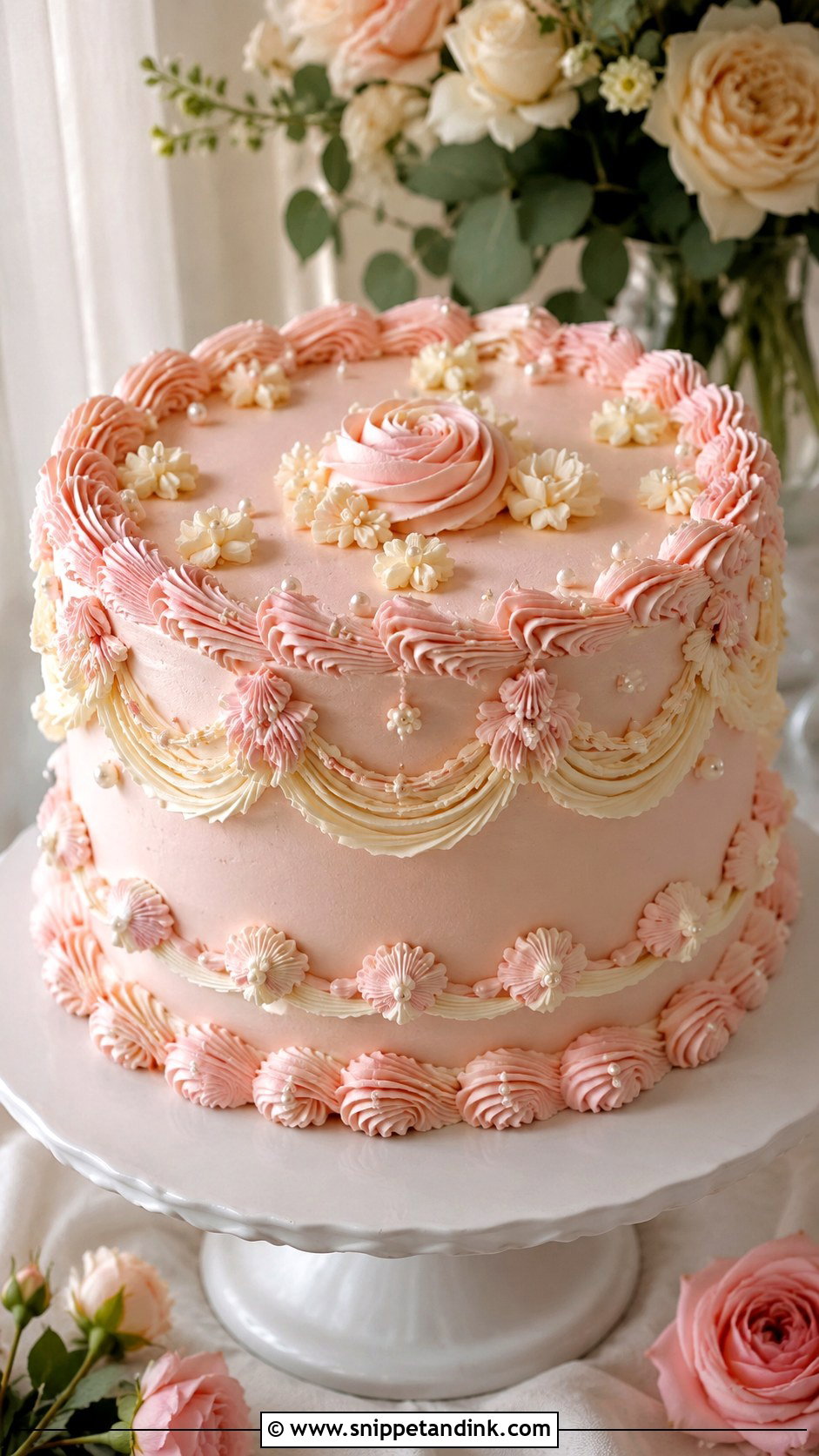
Edible pearls add polish, but placement decides whether they look deliberate or sprinkled on. I set them in rows along tier seams or inside the curve of each shell, pressing each one in while the piping is still soft so it stays put. A round two-tier cake with ivory Lambeth piping and pearl clusters at the swag points is a classic version. One practical warning: hard sugar pearls are tough to bite, so I keep them small, or use soft fondant pearls on the parts most likely to be served. They tie in neatly if your dress has pearl buttons or beading.
5. Light Pink Vintage Bow Wedding Cake
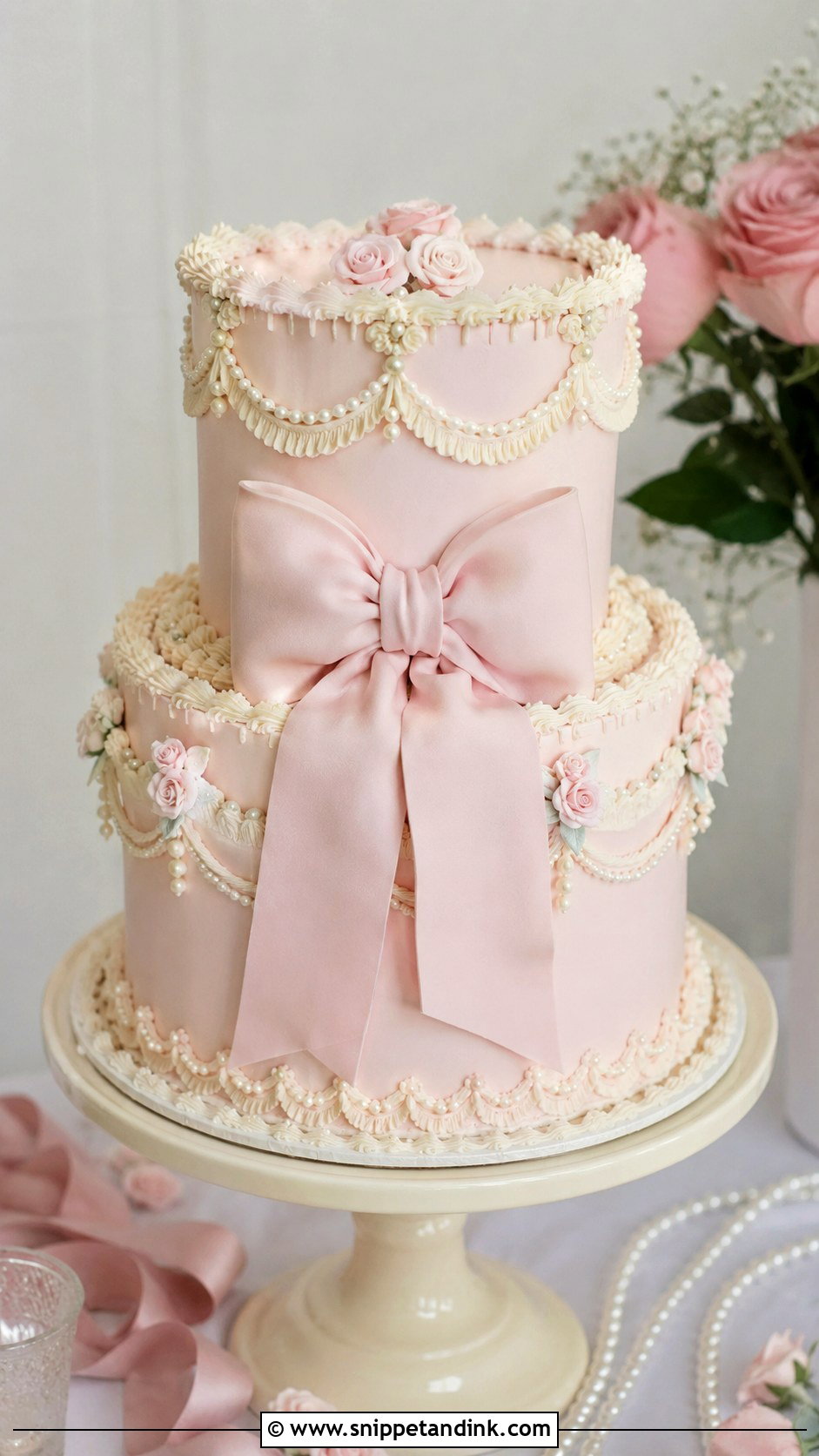
A bow can be real satin ribbon, fondant or piped buttercream. Real ribbon has to be lined first or the butter in the frosting will soak into the fabric and leave grease marks. Fondant bows hold the crispest shape; piped bows look softer and more handmade. I’d keep the bow ivory or a shade deeper than the cake rather than a bold contrast. One bow on the front of a two-tier cake is enough to give it character, especially with scalloped piping and a few pearls around it.
6. Light Pink Vintage Rose Wedding Cake
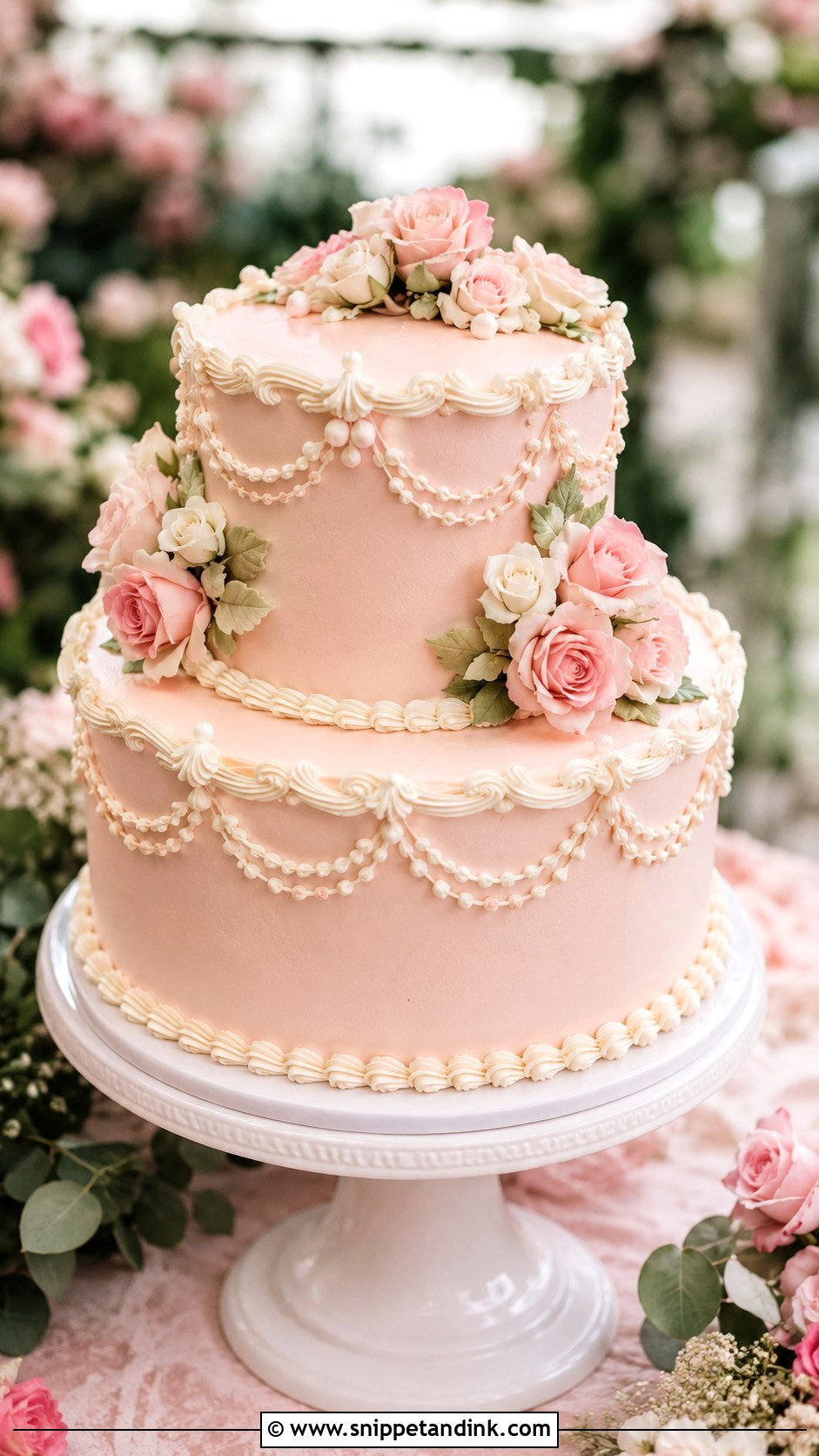
Roses are the natural partner for this palette, and the real decision is sugar or fresh. Sugar roses can be made weeks ahead, match the exact shade and never wilt, but they take time to make and add to the cost. Fresh garden roses look looser and more seasonal, and they need to come from a grower who doesn’t spray, with stems sealed before they go near the cake. I keep the roses in pale pink, cream and dusty rose, then add piped leaves, pearl borders and scalloped trim around them. Garden and spring receptions suit fresh roses best.
7. Light Pink Vintage Lace Wedding Cake
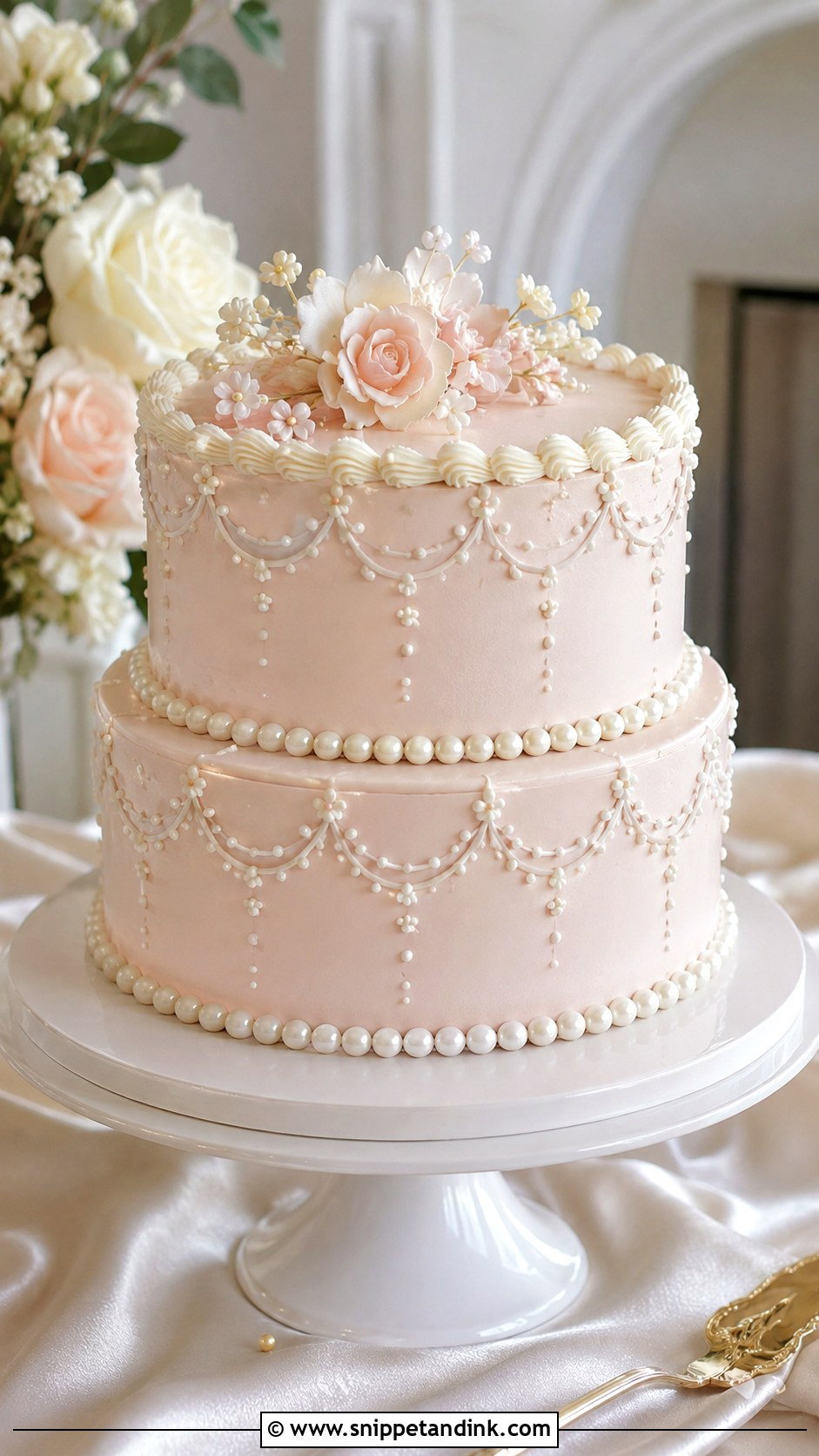
Lace on a cake can be piped by hand, cut from a lace mold in fondant, or stenciled over the frosting. Piped lace looks the most delicate and takes the longest. Molded lace is quicker and can be shaped from a photo of your gown’s pattern, which is a detail many brides love. I keep the lace in ivory or white against blush so the pattern reads clearly, and I add pearl edging, tiny sugar flowers sparingly. Taller two- or three-tier cakes show lace best, because it needs a smooth expanse to sit on.
8. Light Pink Vintage Buttercream Wedding Cake
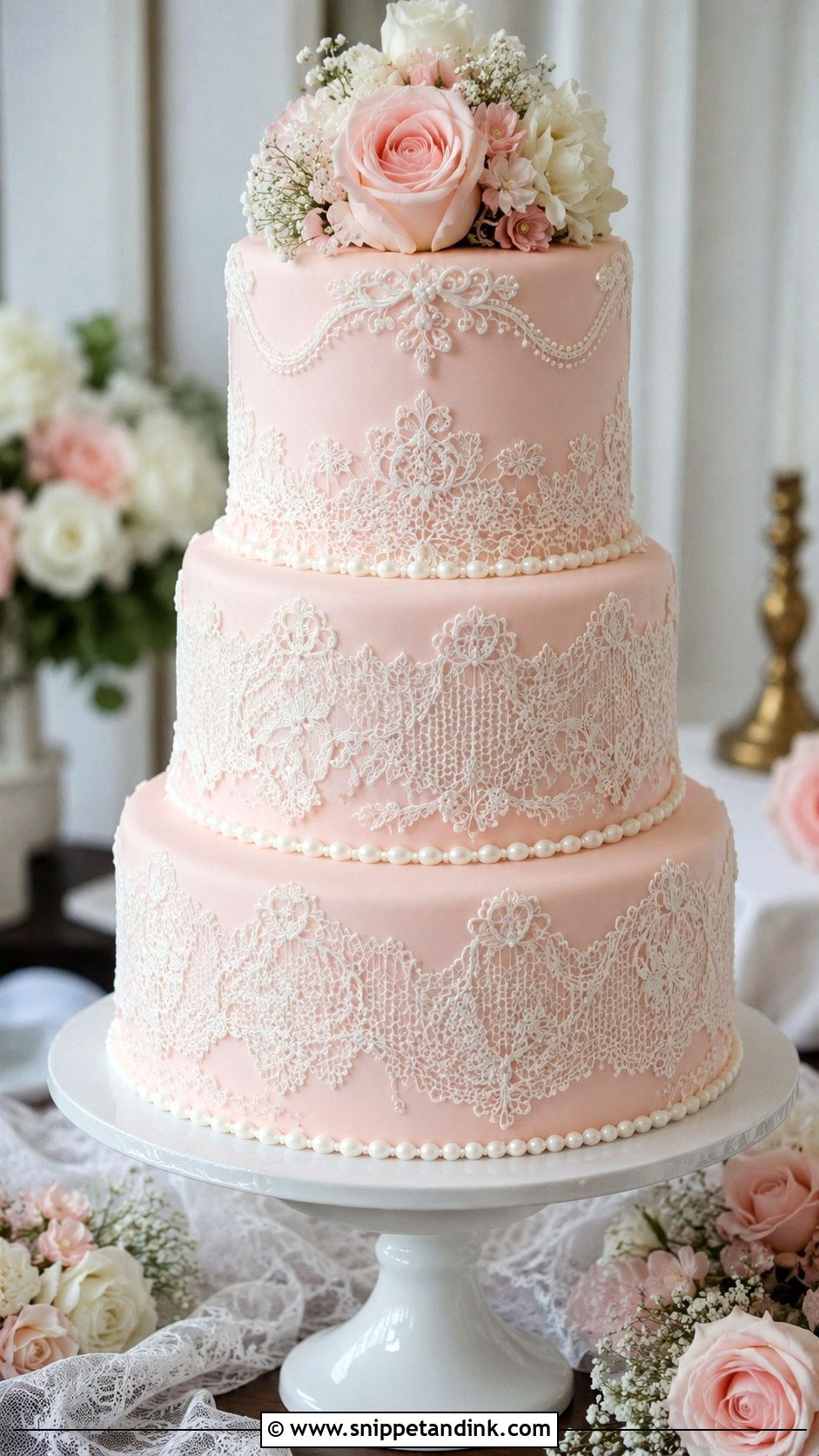
Buttercream is the medium vintage piping was made for: scallops, shells, rosettes and raised borders all keep their shape when the frosting is the right consistency. A light pink vintage buttercream wedding cake needs a warm blush, not a bright bubblegum, and I mix that shade in tiny amounts because pink deepens as the frosting sits. A single tier fully covered in Lambeth piping suits a small wedding. A taller version reads more formal. Pearl dots and a few piped flowers finish it.
9. Light Pink Vintage Ruffle Wedding Cake
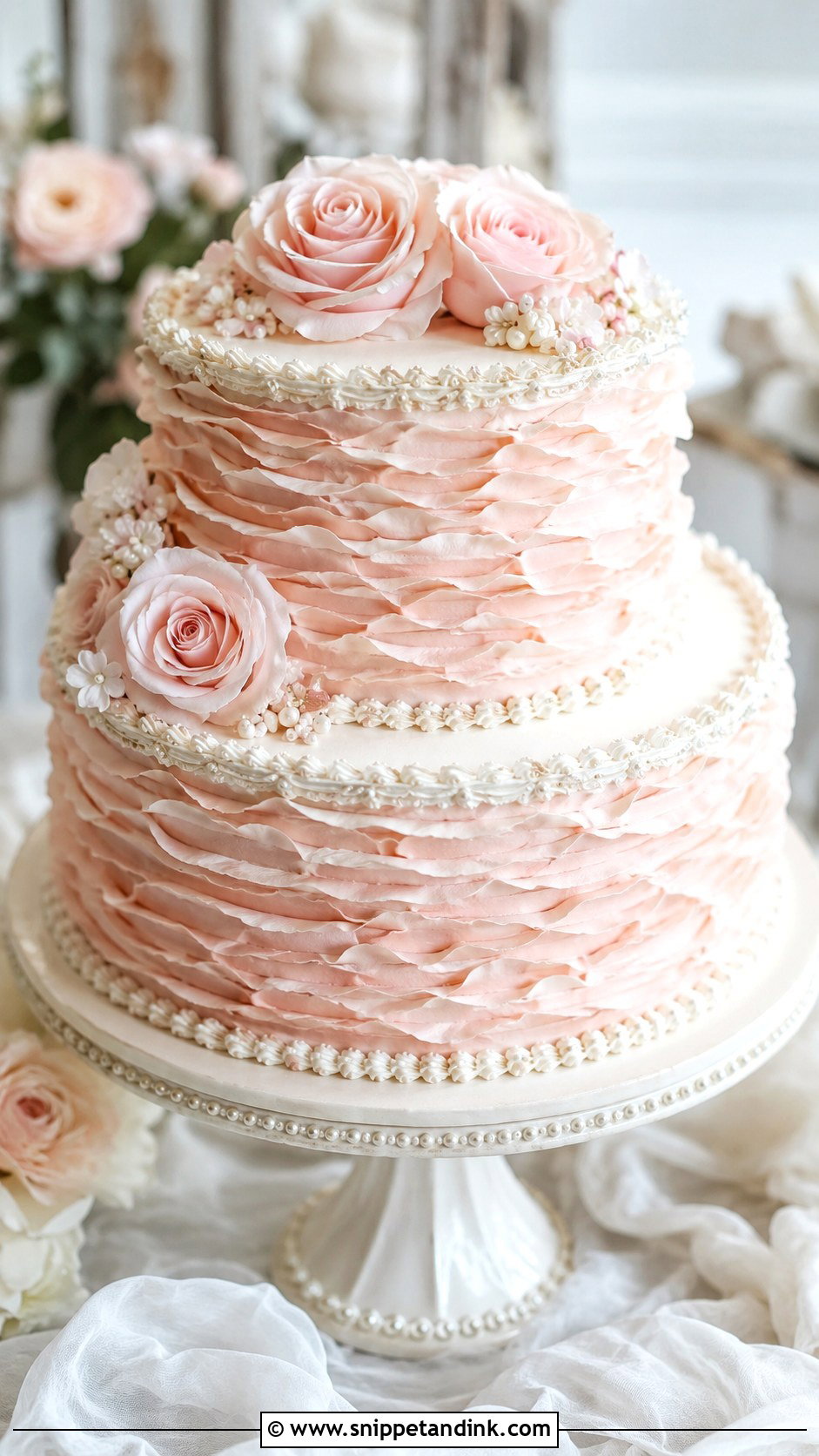
Ruffles add movement, and the technique is a petal tip held at an angle and wiggled as it travels around the tier. Buttercream ruffles look softer and more relaxed; fondant ruffles hold a sharper edge and stand up better in warm rooms. The thing that separates neat from messy is spacing, so I mark guide lines before piping and keep each row the same depth. Pearl borders and a couple of sugar roses keep it in the vintage family. It’s a good option if you want texture but don’t want the cake covered in flowers.
10. Light Pink Vintage Floral Wedding Cake
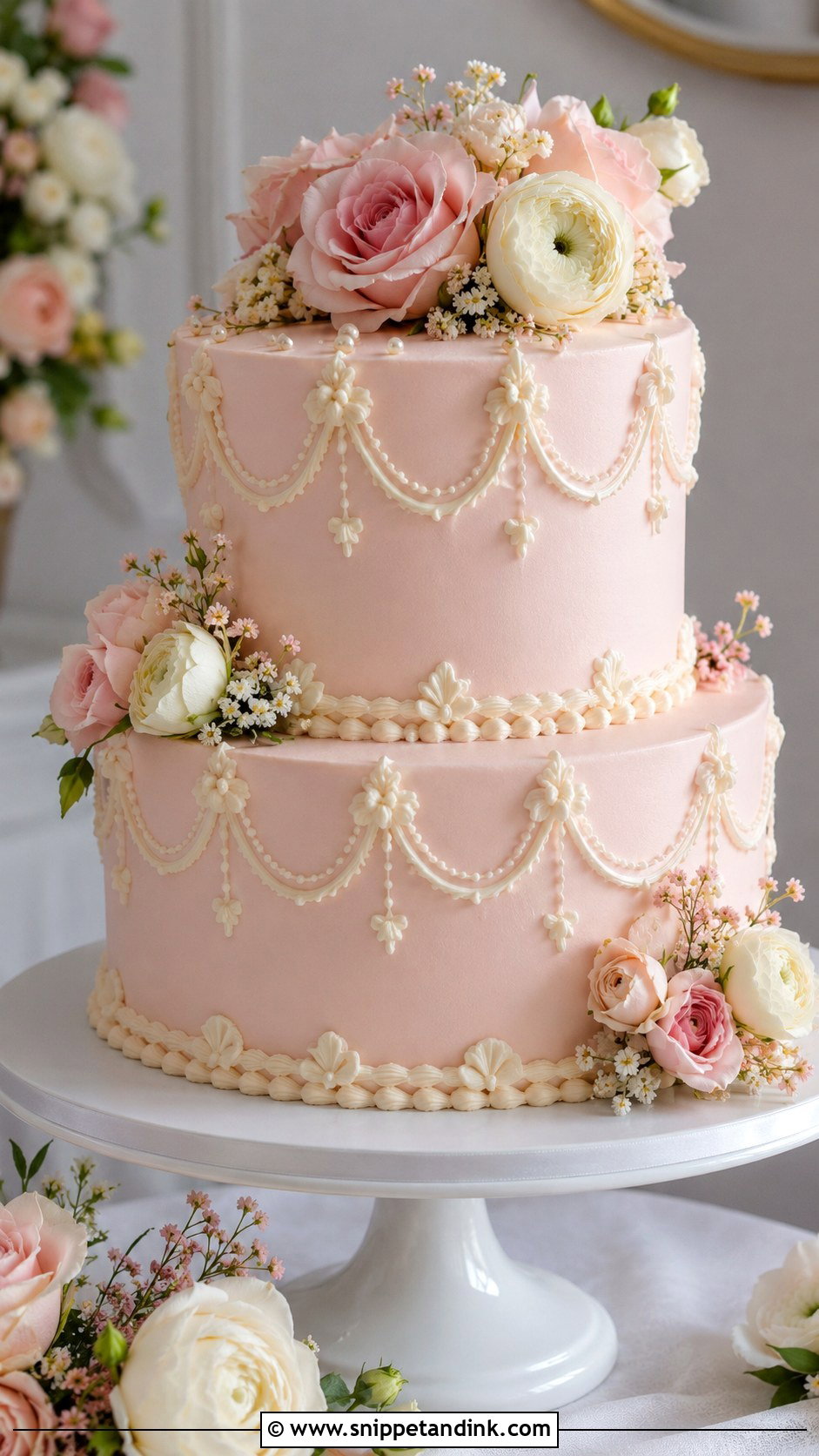
Florals are the easiest way to tie the cake to the rest of the day, since they can echo the bouquet and centerpieces. Over blush buttercream with ivory piping, I cluster flowers in pale pink, cream, peach or dusty rose: roses, peonies, ranunculus and sweet peas all suit this style. The mistake I see most is covering the piping with flowers. Leave open space so the borders still show; otherwise you’ve paid for hours of hand work nobody can see. A plain white cake stand keeps the attention on the cake.
11. Light Pink Vintage Cherry Wedding Cake
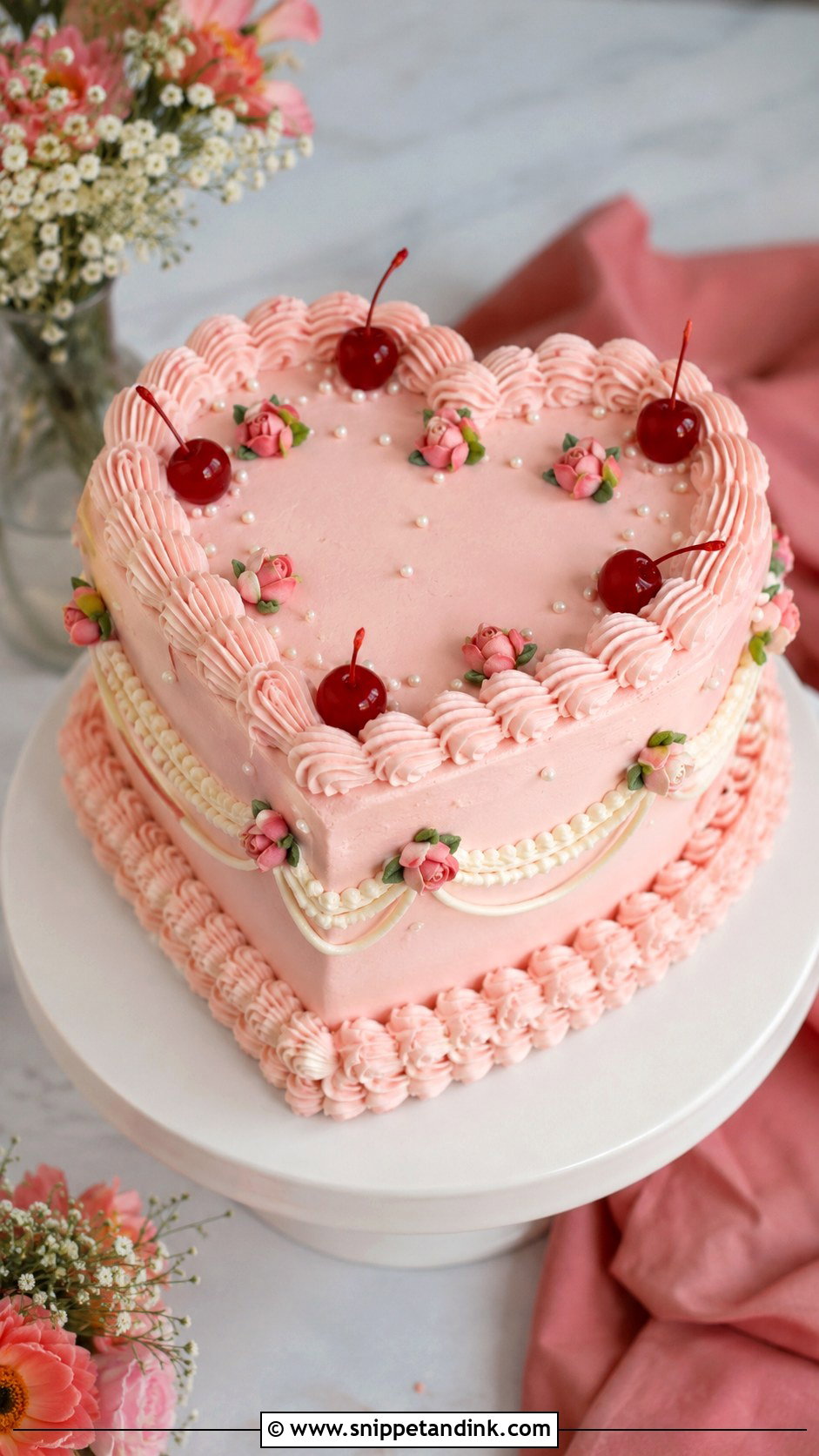
Cherries give the retro look a playful note. On a wedding cake I use them sparingly, a few small ones tucked between the swags of a blush heart or round cake with ivory piping and pearl dots. Fresh cherries can bleed red juice into pale frosting, so I’d use candied or sugar ones, or set fresh fruit on at the last moment. Keep the frosting smooth and the piping detailed and the red reads as a deliberate accent.
12. Light Pink Vintage Square Wedding Cake
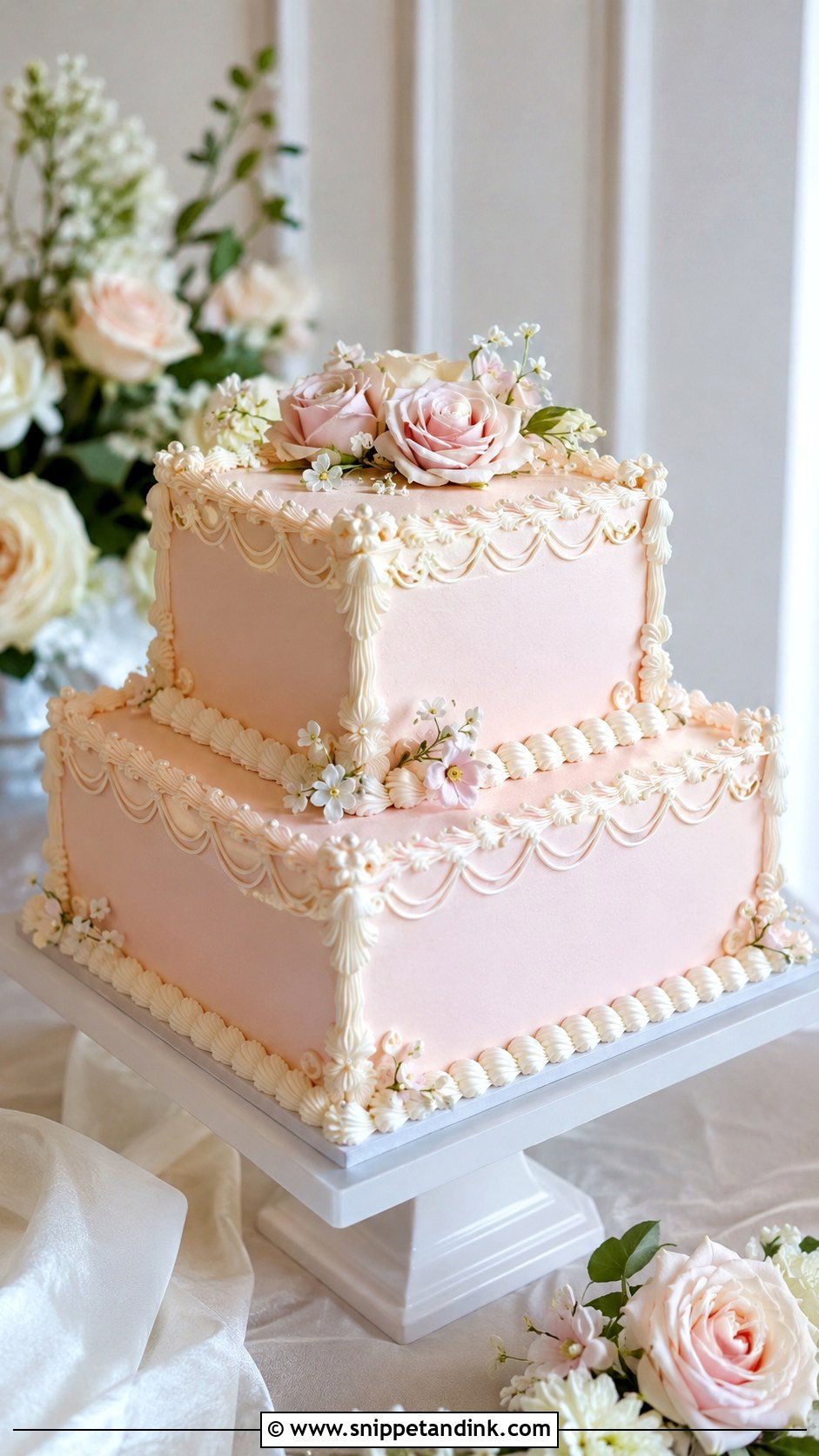
Square tiers are less common in vintage styling, which is exactly why they stand out. The crisp corners are the hard part: buttercream on a square cake has to be scraped very sharp, and piping has to turn each corner without a gap. I pipe ivory shells along each edge with small swags and a corner flourish where the sides meet. A stacked square cake looks formal; a single square tier looks more modern. It suits a couple who wants the vintage details on a structured, clean silhouette.
13. Light Pink Vintage Mini Wedding Cake
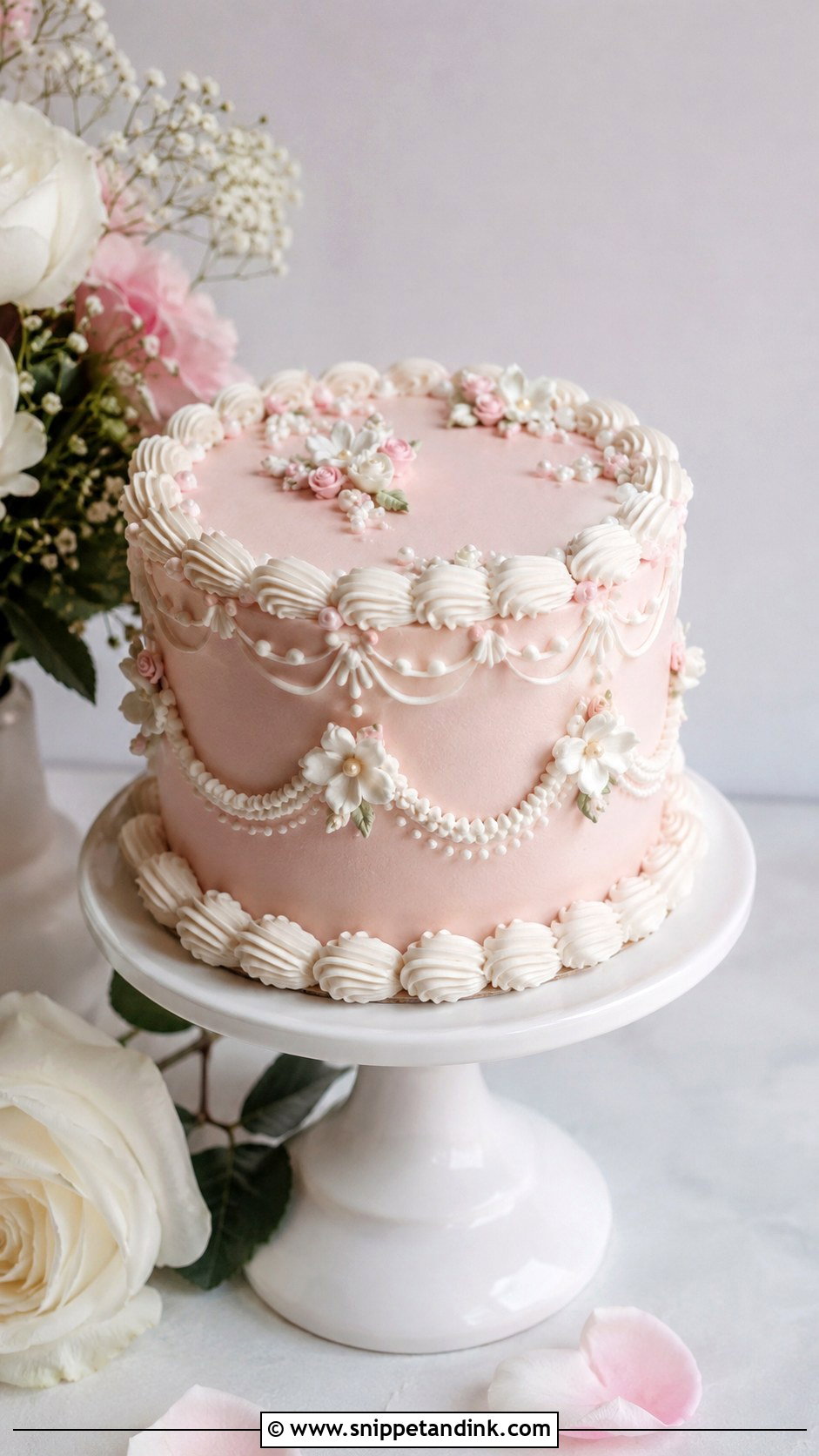
Mini cakes suit elopements, micro weddings or a cake just for the sweetheart table. The detail has to scale down with the cake, so I switch to smaller piping tips and smaller pearls; full-size borders on a six-inch cake look crowded. A single blush tier with Lambeth borders and a few sugar flowers is enough. Heart shapes look more romantic, round more classic. This also works if you’re serving a dessert table and still want a cake to cut.
14. Light Pink Vintage Tall Wedding Cake
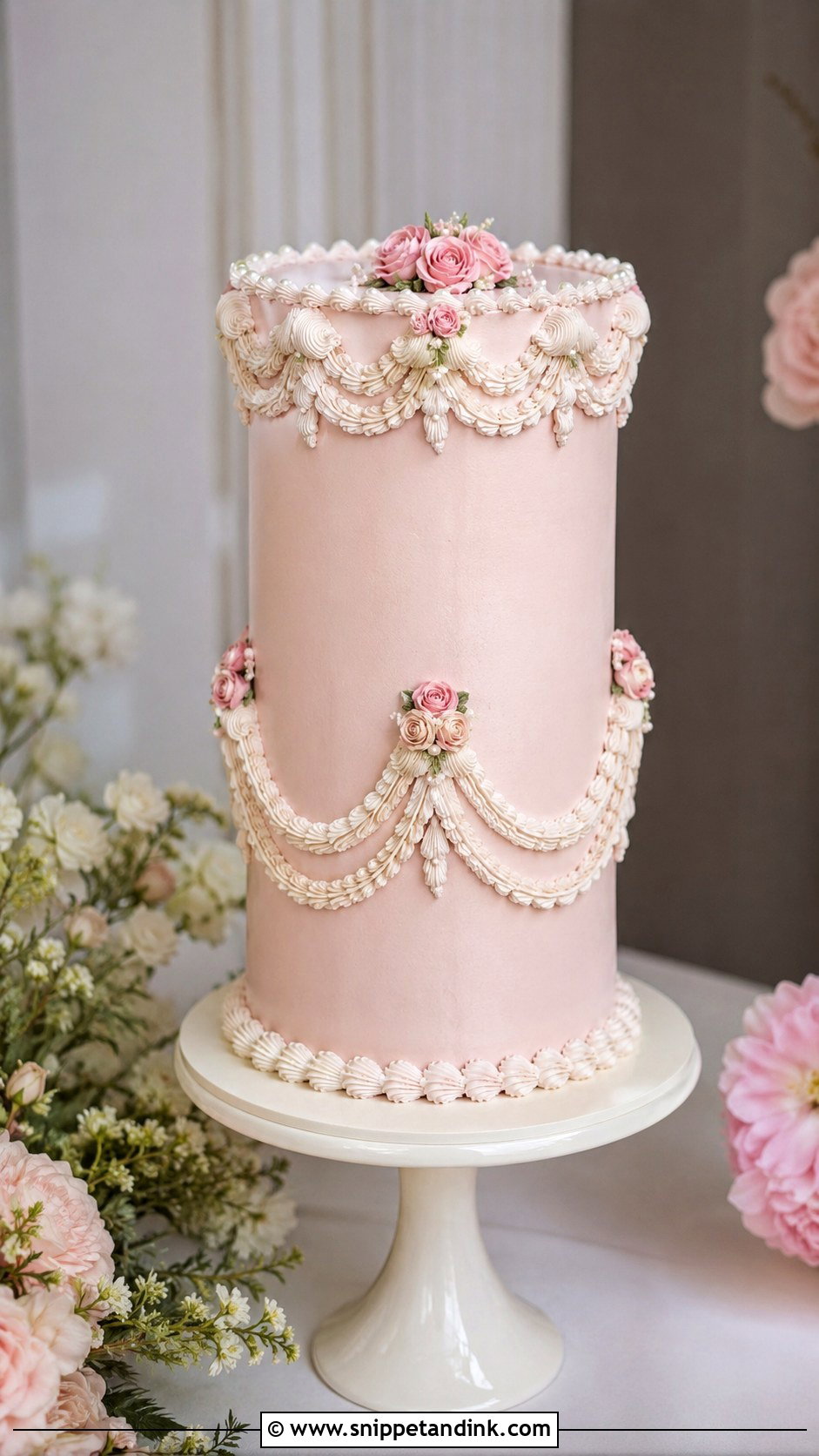
Height without extra tiers comes from a double-barrel tier, two cake layers stacked with internal supports so it reads as one tall cylinder. That height gives me room for dramatic piping, stacked borders and long swags. It also lifts nicely on a pedestal stand. Pale pink with ivory details keeps it soft, and a smooth band in the center leaves space for initials. The supports are not optional; without dowels or a center rod, a tall single tier can bulge or lean during the drive.


15. Light Pink Vintage Monogram Wedding Cake
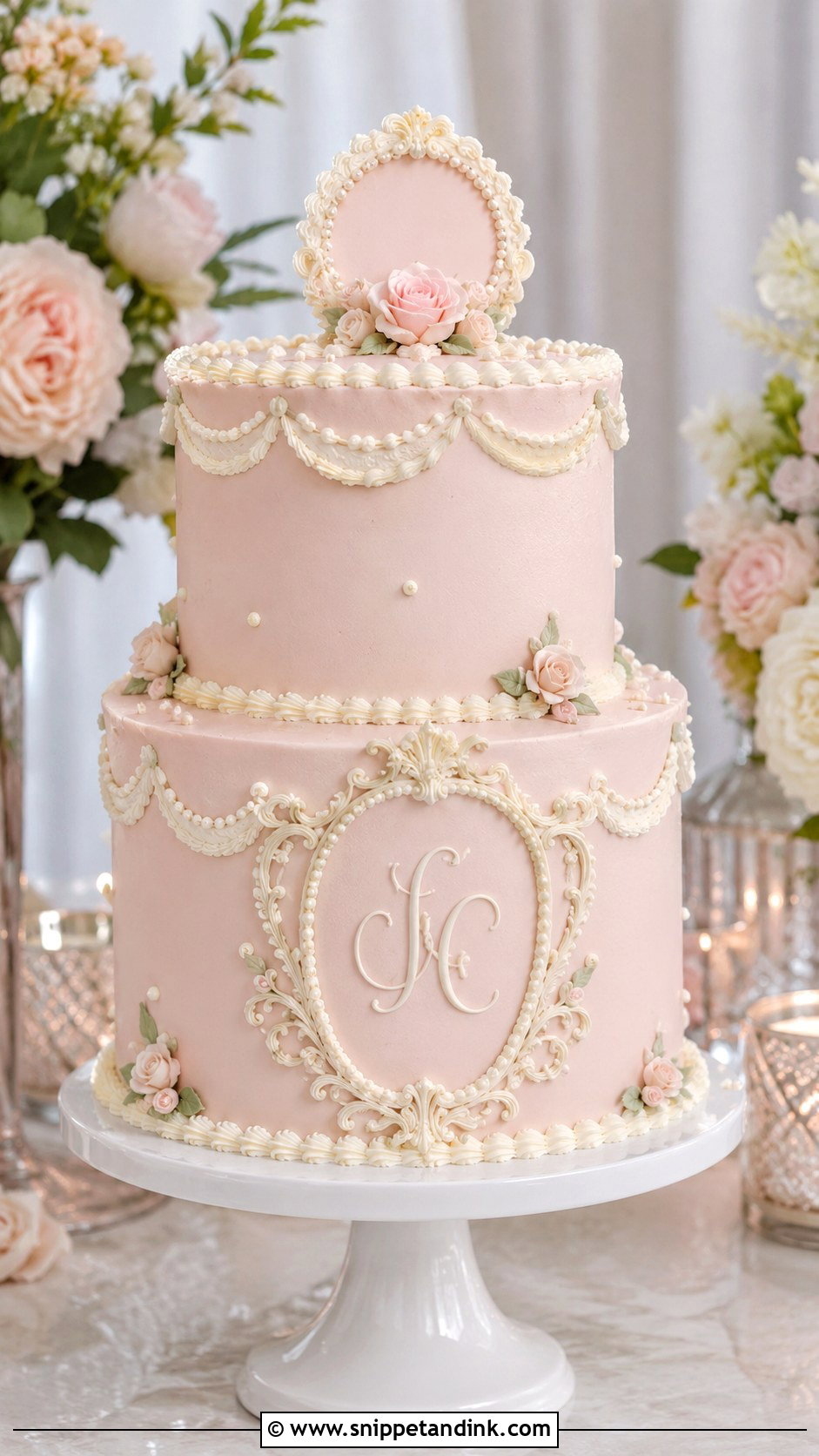
A monogram makes the cake personal, and it can be piped straight onto the tier, set on a small fondant plaque, or placed on top as a topper. Piping letters freehand on a curved surface is unforgiving, so I usually transfer the design first with a light imprint. Keep the letters simple enough to read from a few feet away. A blush base with ivory Lambeth piping frames the initials. On a two-tier cake, the monogram can sit on the front of either tier.
16. Light Pink Vintage Gold Wedding Cake
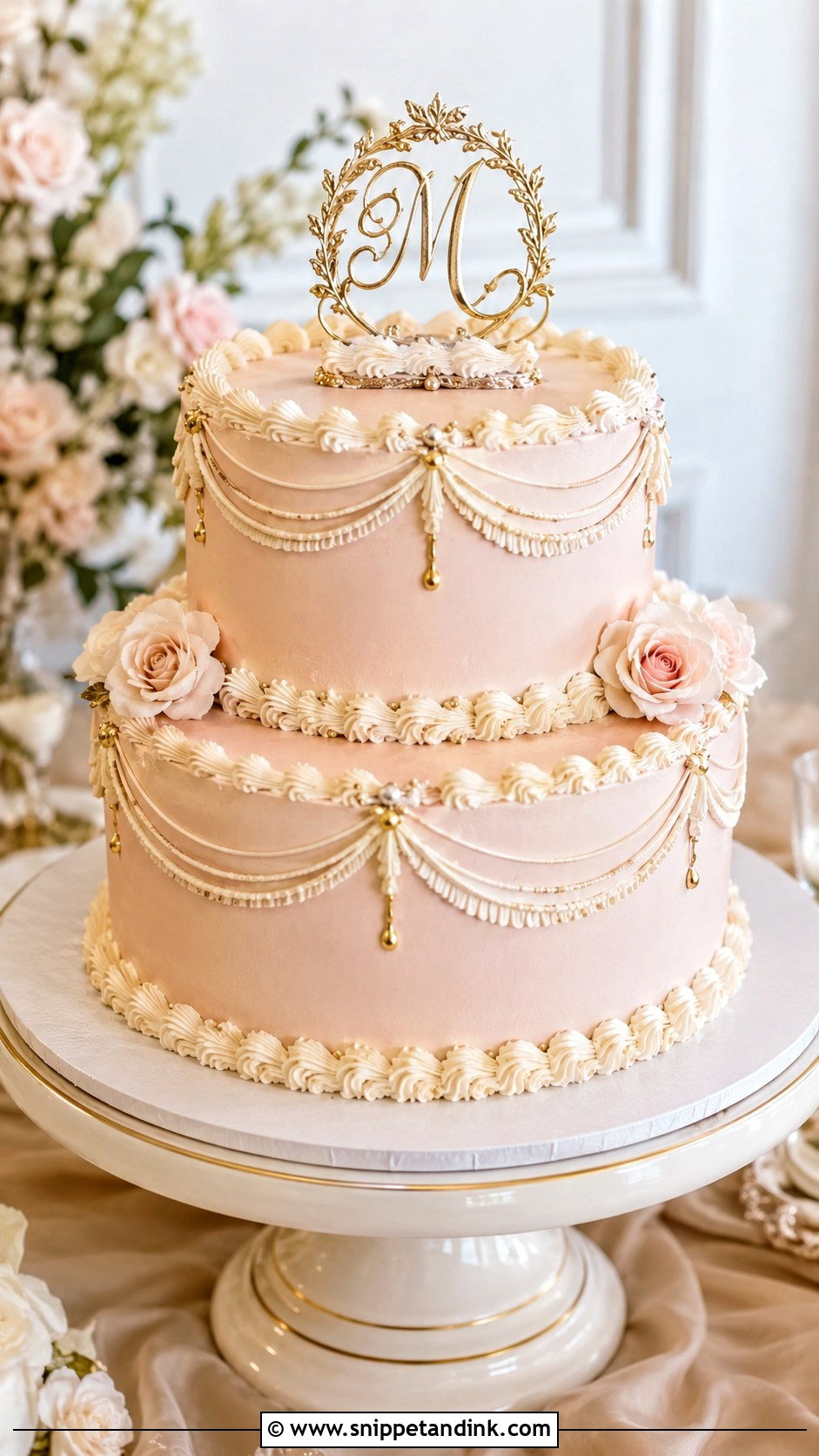
Gold works best as a highlight on blush, not a coating. I paint it onto the edges of borders, a few pearls or the tips of sugar petals, using edible metallic paint brushed on thinly so it looks warm instead of brassy. Ivory piping and scalloped borders carry the rest of the design. Formal ballroom receptions and champagne-and-ivory rooms suit this one. Ask your baker which gold they use; some lustre dusts are sold for decoration only, so make sure what goes on your cake is labeled edible.
17. Light Pink Vintage Oval Wedding Cake
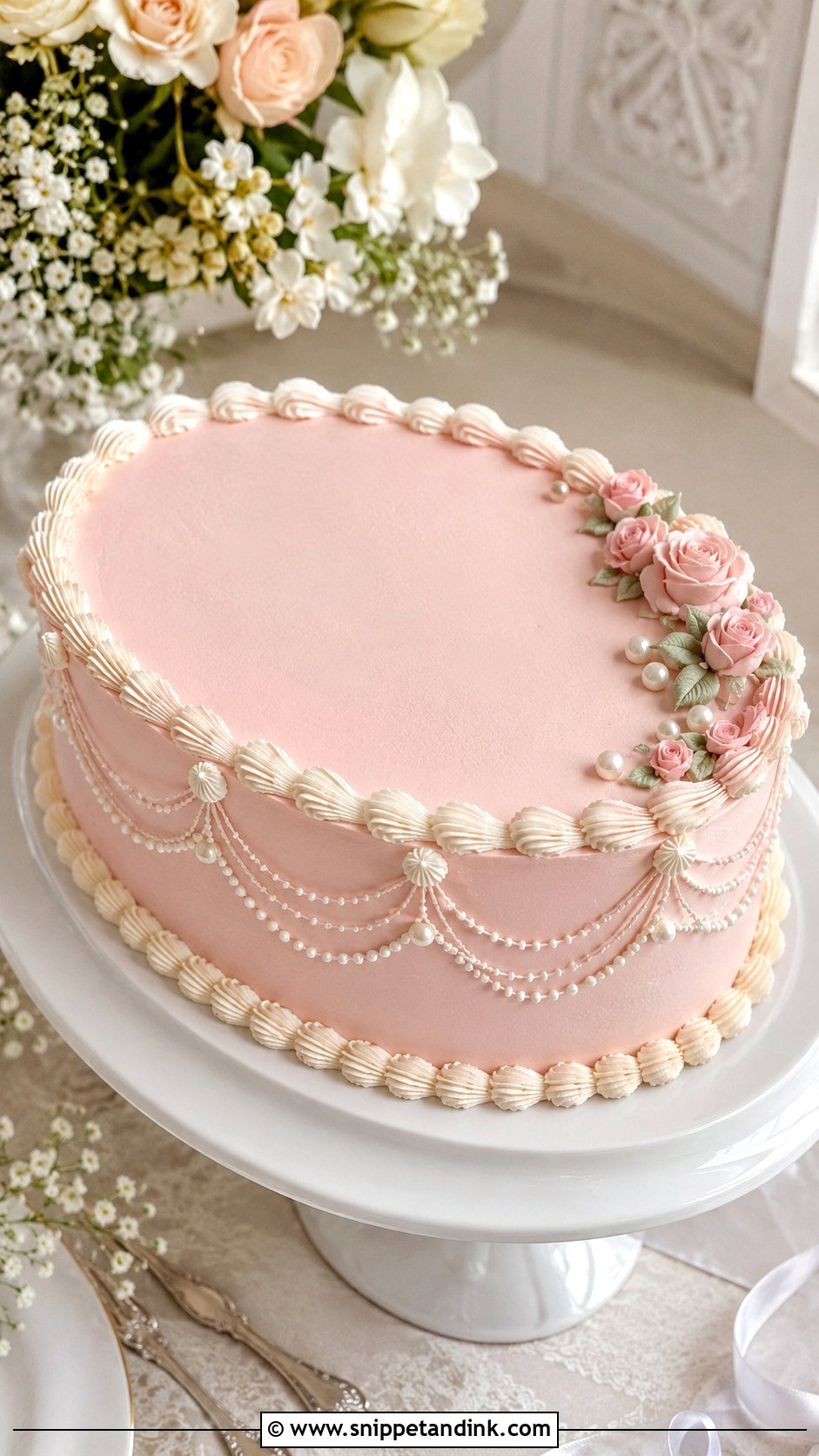
Oval tiers are a quiet way to make a cake look different from the usual round. The long curve suits flowing piped borders, and pale blush frosting with ivory shells, pearl dots and swags reads graceful on that shape. Ovals cut less predictably than rounds, so I’d let your baker work out portions from the pan size. A single oval tier makes a sweet centerpiece for a small wedding; it can also sit on top of a larger cake. A small cluster of roses at one end balances the shape.
18. Light Pink Vintage Cupcake Wedding Cake
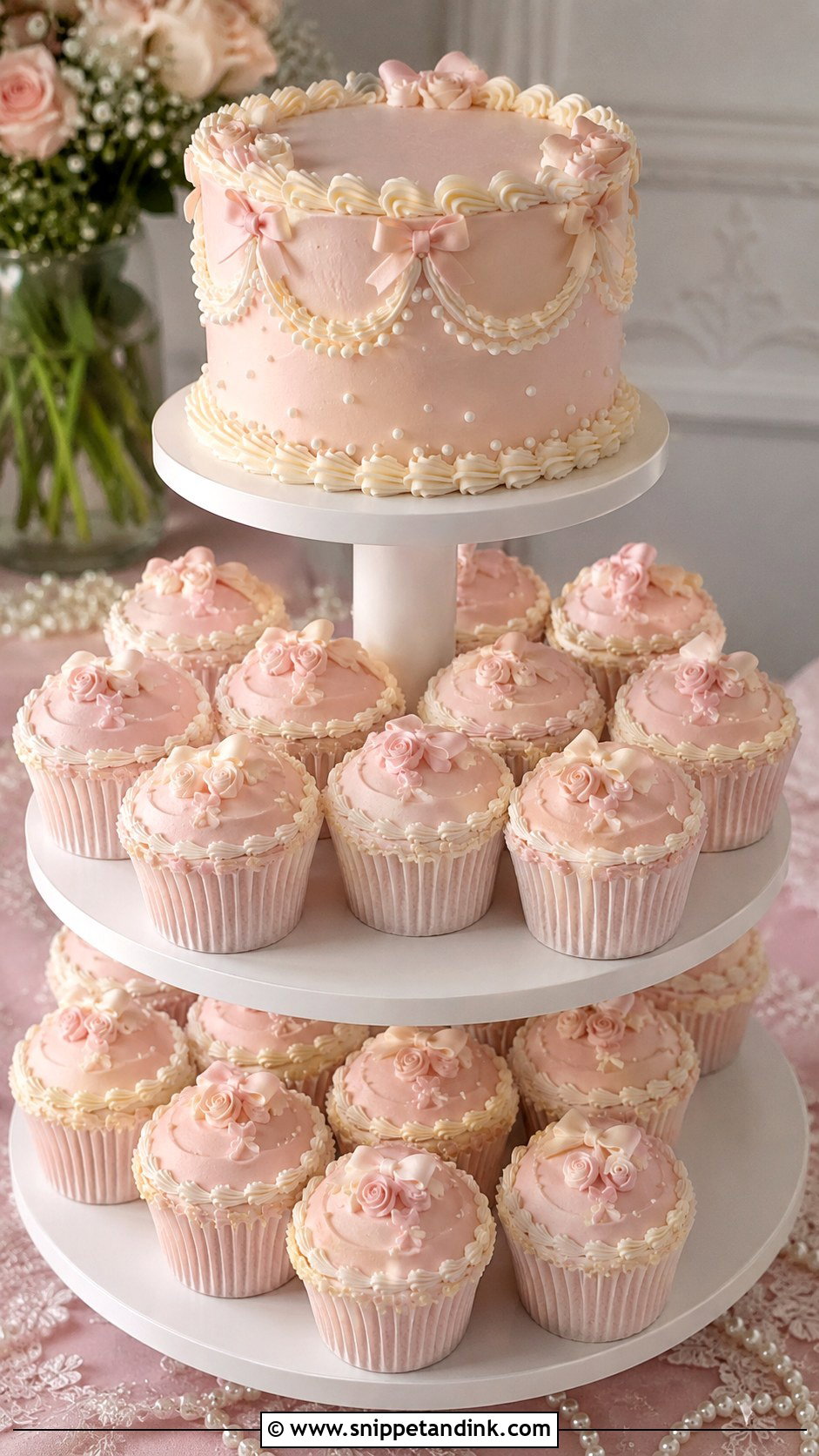
Cupcake towers solve the serving problem: no cutting, no plates waiting at the cake table. I put a small cutting cake at the top of the stand and surround it with matching blush vintage cupcakes, each piped with shells, pearls, a mini rose or a tiny bow. The top cake should use the same pink and the same piping so the stand reads as one design. Cupcakes dry out faster than a frosted tier, so they should be baked as close to the day as possible.
19. Light Pink Vintage Sheet Wedding Cake
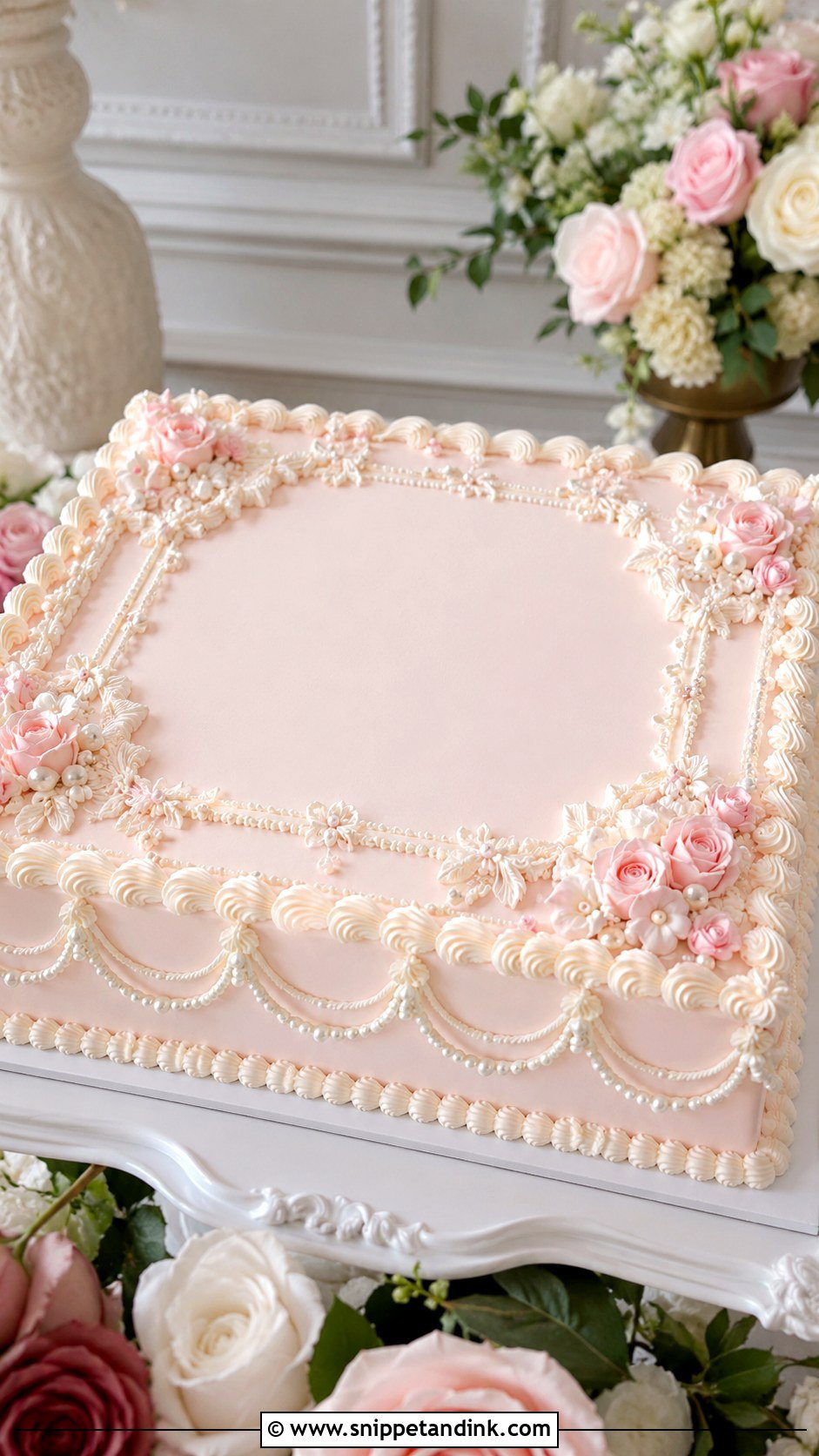
Sheet cakes are how many couples feed a crowd without paying for a huge display cake. They don’t have to look plain: a blush base takes ornate borders, piped corners, pearl dots and floral swags just as well. Many bakers make them as a kitchen cake that matches the display cake, then the venue slices it out of sight. If it’s going on the table, a decorative board and a ring of fresh flowers lift it. Piped initials or the date can go in the center.



20. Light Pink Vintage Two Tier Wedding Cake
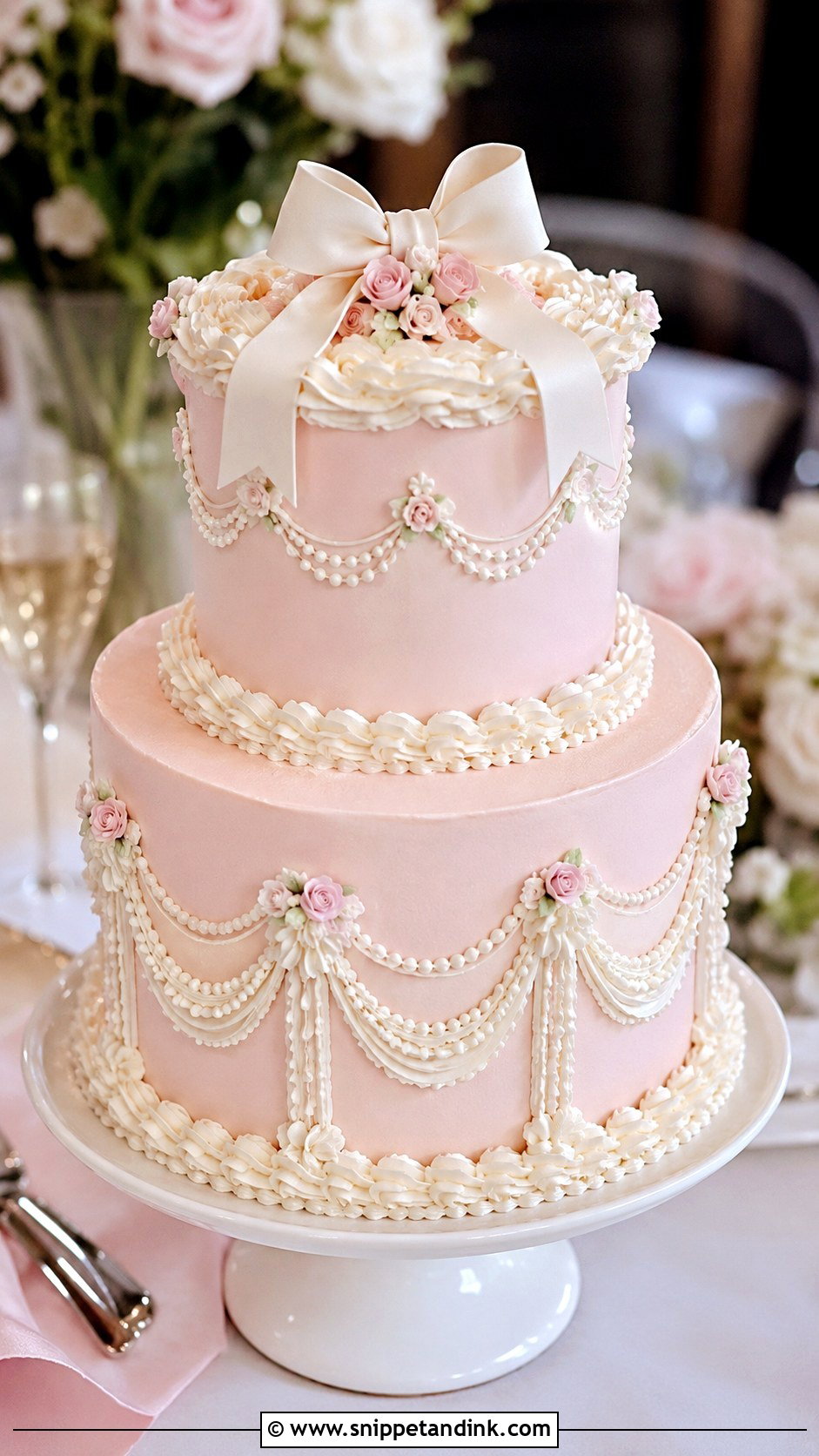
Two tiers give enough height for photos without the size of a large centerpiece, which is why I’d call a light pink vintage two tier wedding cake the most balanced choice here. I put the heavier swags and drop strings on the bottom tier and keep the top tier simpler, so the eye travels up. Blush frosting, ivory Lambeth piping, pearl borders and a few small roses are all it needs. Add one focal point if you want, like a bow, a floral topper or a monogram, but not all three.
Overpiped Borders in a Warm Room
Heavy Lambeth piping adds weight to every tier, and buttercream softens fast once a room gets warm. Above roughly 75 degrees Fahrenheit, swags start to droop and shell borders lose their crisp edges. Swiss meringue buttercream pipes beautifully but is the least heat-tolerant; crusting American buttercream holds detail better in summer, though it’s sweeter.
- For an outdoor or tented reception in summer, ask about piping the details in a firmer, heat-stable icing.
- Keep the cake indoors and cool until shortly before it’s needed, then set it up away from heaters, candles and stage lights.
- Tall and tiered cakes need internal dowels and a center support, especially with this much piping on them.
Lead Time and Delivery for a Hand-Piped Cake
A vintage cake is mostly labor, so it books up faster than a simply frosted one. I’d contact bakers three to six months out for a spring or summer wedding, and earlier if you’ve set your heart on a designer known for Lambeth work. Sugar flowers can be made weeks ahead; the piping happens in the last day or two.
Let your baker deliver and set it up if at all possible. Overpiped tiers are usually transported separately and stacked on site, because a fully assembled cake can shift on a single hard brake. If a border chips in transit, a good baker brings a piping bag of matching frosting and repairs it in minutes.
What to Show Your Baker From This List
Blush vintage cakes hold up well beyond a single trend, because the appeal is the hand piping rather than a fashionable color. The right version depends on your venue, your guest count and how formal the day is. A heart cake suits a small, sweet reception; a tiered Lambeth cake suits a ballroom. Pearls, bows, lace, roses, ruffles and monograms each change the mood without leaving the theme. When you save pictures for your baker, note the shape, the exact pink, the piping style and where the decorations sit, because those four things are what they’ll actually copy.
You'll Like These Ideas:








Leave a Reply