
The cakes couples still love in their photos twenty years later tend to share a few habits: a clean structure, a soft palette, a flavor people recognize and one detail that makes them look twice. That might be smooth buttercream with a few fresh blooms, a row of edible pearls, fine piping or a gently textured finish. None of these lean on a trend, so they sit comfortably in a ballroom, a barn or a garden. Below are twenty classic designs I make again and again, with notes on how each one holds up on the table and what I’d watch for when ordering it.
Sizing the Tiers to Your Guest List
The first question I ask isn’t about flowers, it’s about numbers. Wedding portions are cut smaller than party slices, usually about 1 inch by 2 inches and 4 inches tall, so a cake feeds more people than you’d expect from its size.
- A 6-inch round tier gives roughly 12 wedding portions.
- An 8-inch tier gives about 24.
- A 10-inch tier gives about 38.
- A 12-inch tier gives about 56.
So a classic 6, 8 and 10 inch three-tier cake serves around 74, and adding a 12-inch base takes it near 130. Most couples don’t need cake for every guest, because some won’t eat it and some will leave before it’s cut. If you want a tall cake for a small group, ask about one or two styrofoam dummy tiers decorated to match. If you want lots of cake without a huge display, a plain kitchen cake in the back can be cut alongside the real one.
1. White Buttercream Wedding Cake
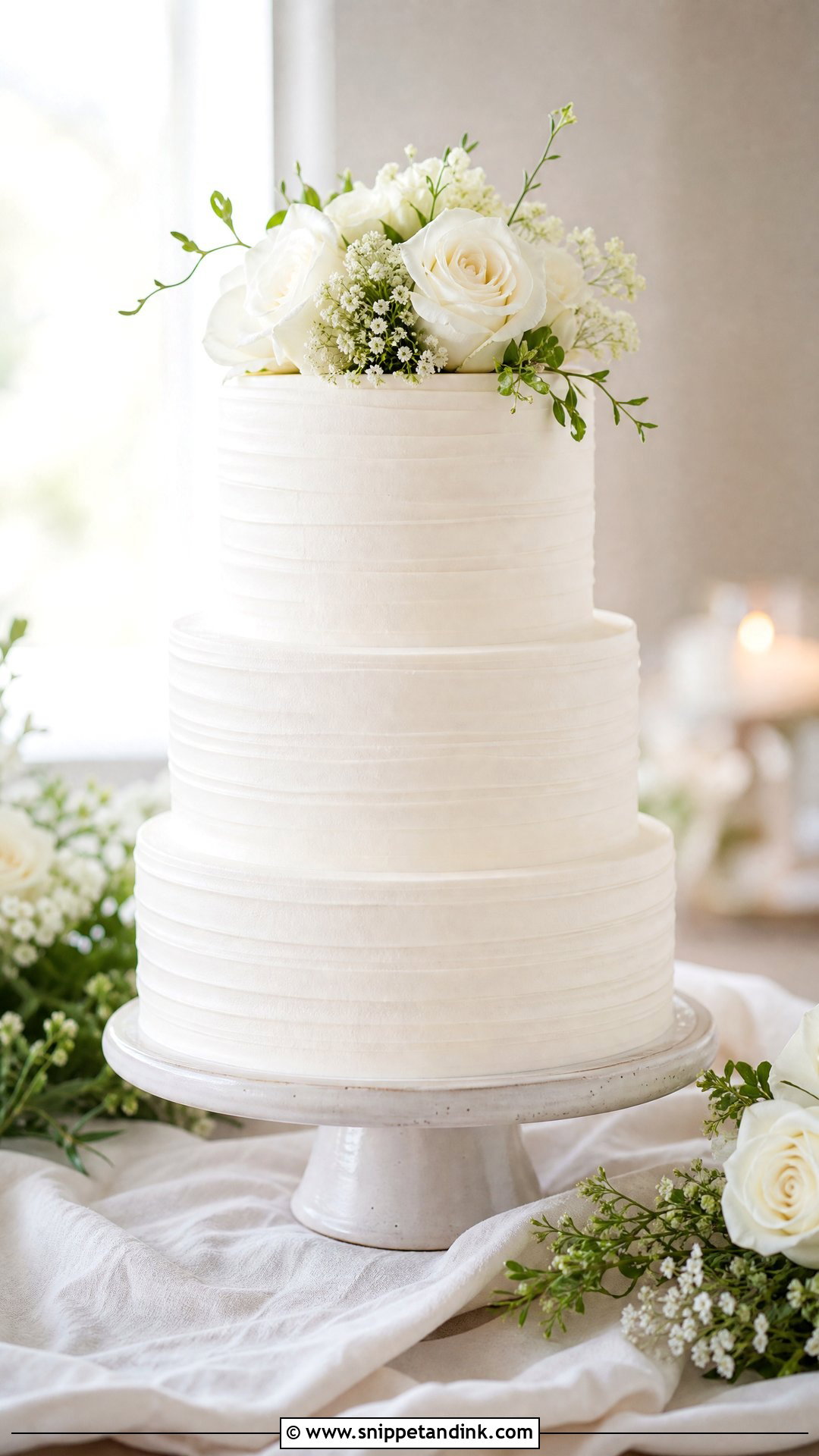
Plain white buttercream is the cake I’d defend to anyone who calls it boring. The finish carries the whole design, so the tiers need to be chilled, crumb-coated and smoothed with a hot scraper until the edges are sharp. Accents decide the mood: a few white roses or ranunculus make it feel garden-like, pearl piping or a satin ribbon makes it formal. Be aware that a pure white buttercream is made with shortening or bleached with a touch of violet; an all-butter frosting will always look slightly ivory. Inside, vanilla, almond, lemon or champagne sponge keeps it familiar.
2. Three Tier Wedding Cake
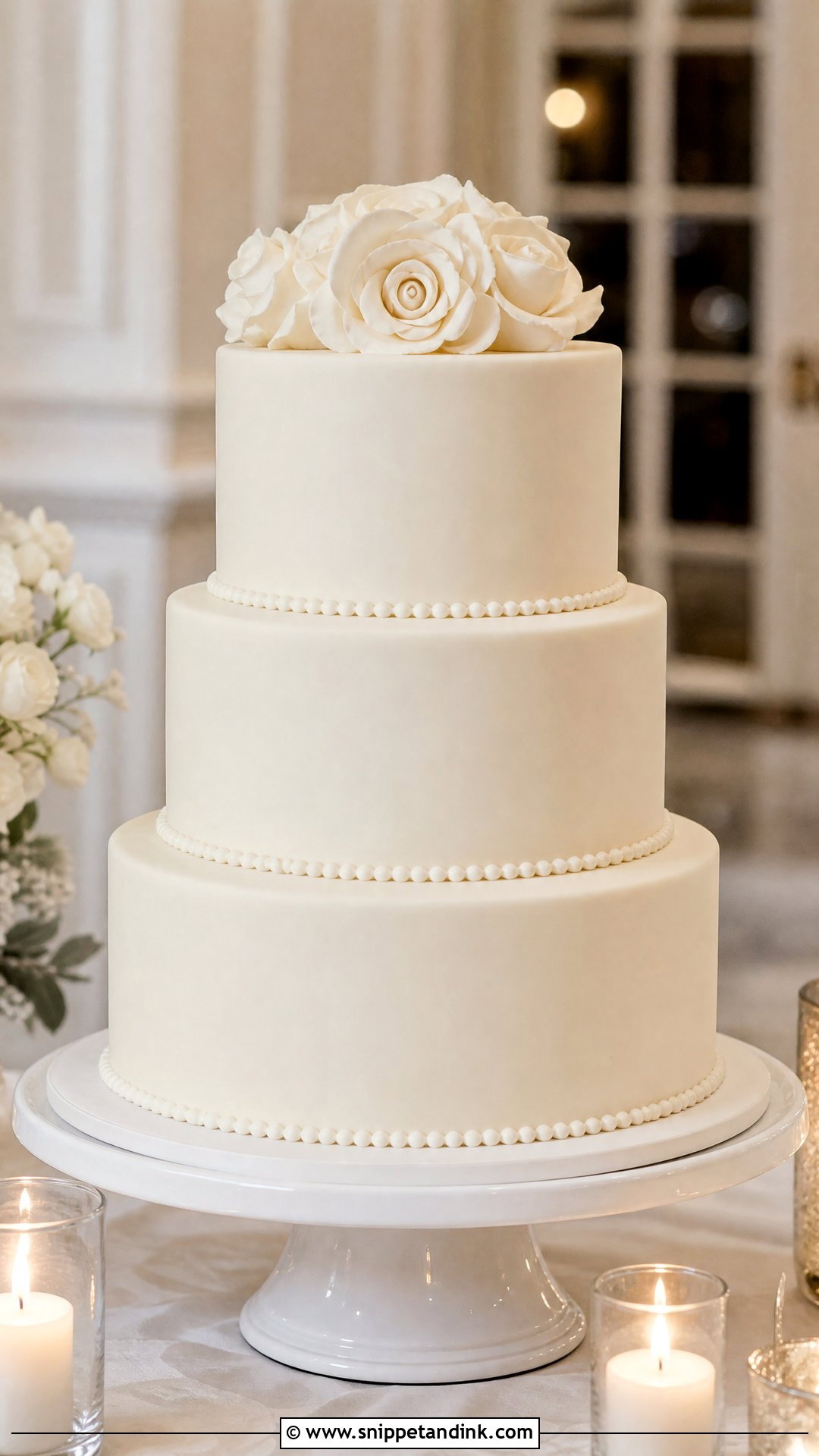
A three tier wedding cake is the proportion most people picture, and it suits receptions of roughly 70 to 100 guests depending on tier sizes. Every tier above the base sits on its own board, supported by dowels or straws pushed into the tier below, which is what stops the cake from sinking during the evening. Finish can be smooth buttercream, fondant or soft texture. For a formal room I keep it white with small sugar flowers; for a garden I add a light floral cascade; for a modern space, crisp edges and almost nothing else.
3. Wedding Cake With Fresh Flowers
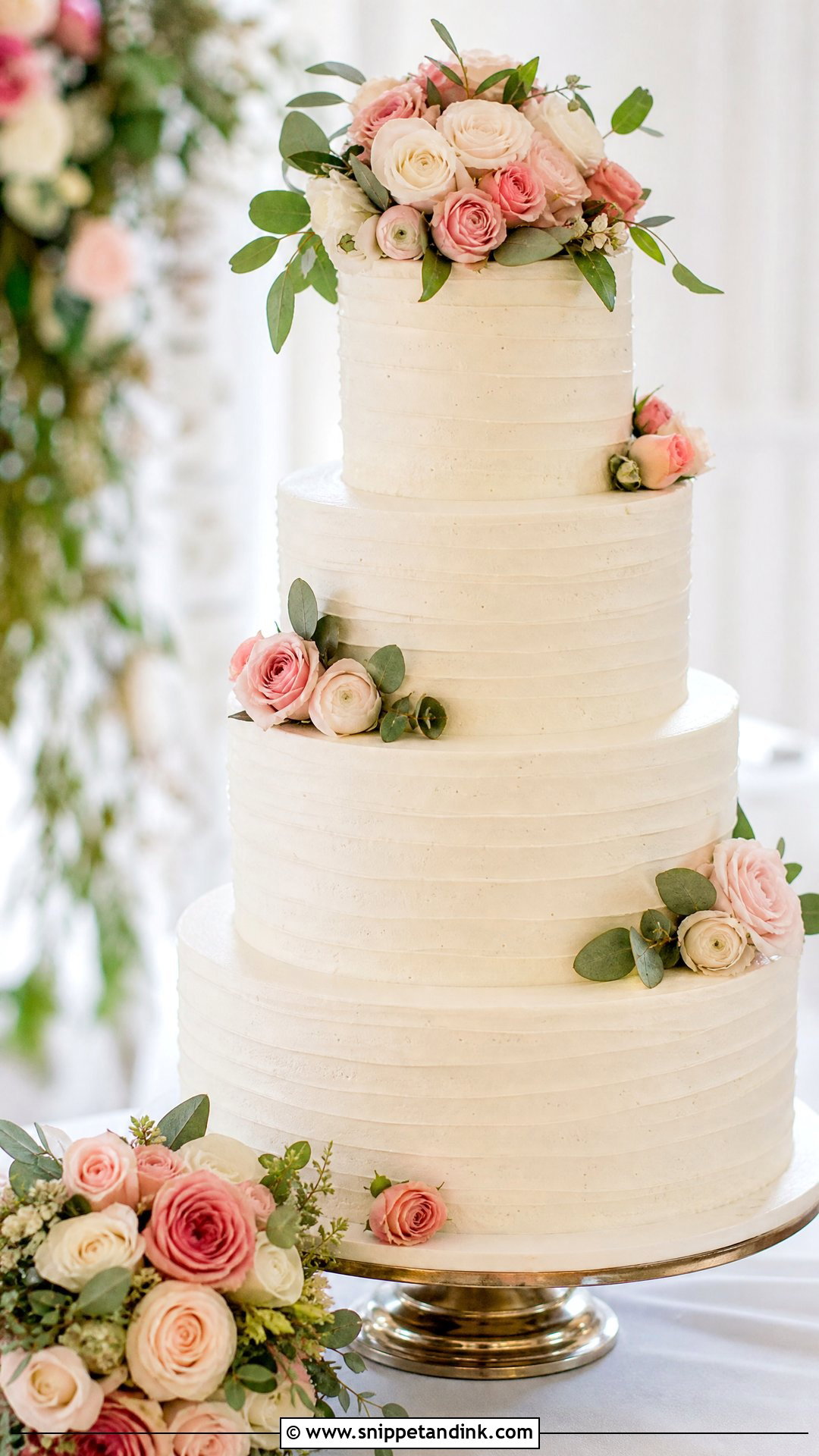
Flowers tie the cake to the bouquet and centerpieces better than any sugar work, but they need handling with care. I never push a raw stem into cake: stems get wrapped in floral tape or sit in food-safe picks, and the blooms should be grown without pesticides. Some popular wedding flowers, including hydrangea, sweet pea and lily of the valley, are toxic and should stay off anything people will eat. Roses, garden roses and ranunculus behave well. Use fewer than you think; a handful placed with care reads better than a crowded tier. It’s why floral wedding cakes never disappear.
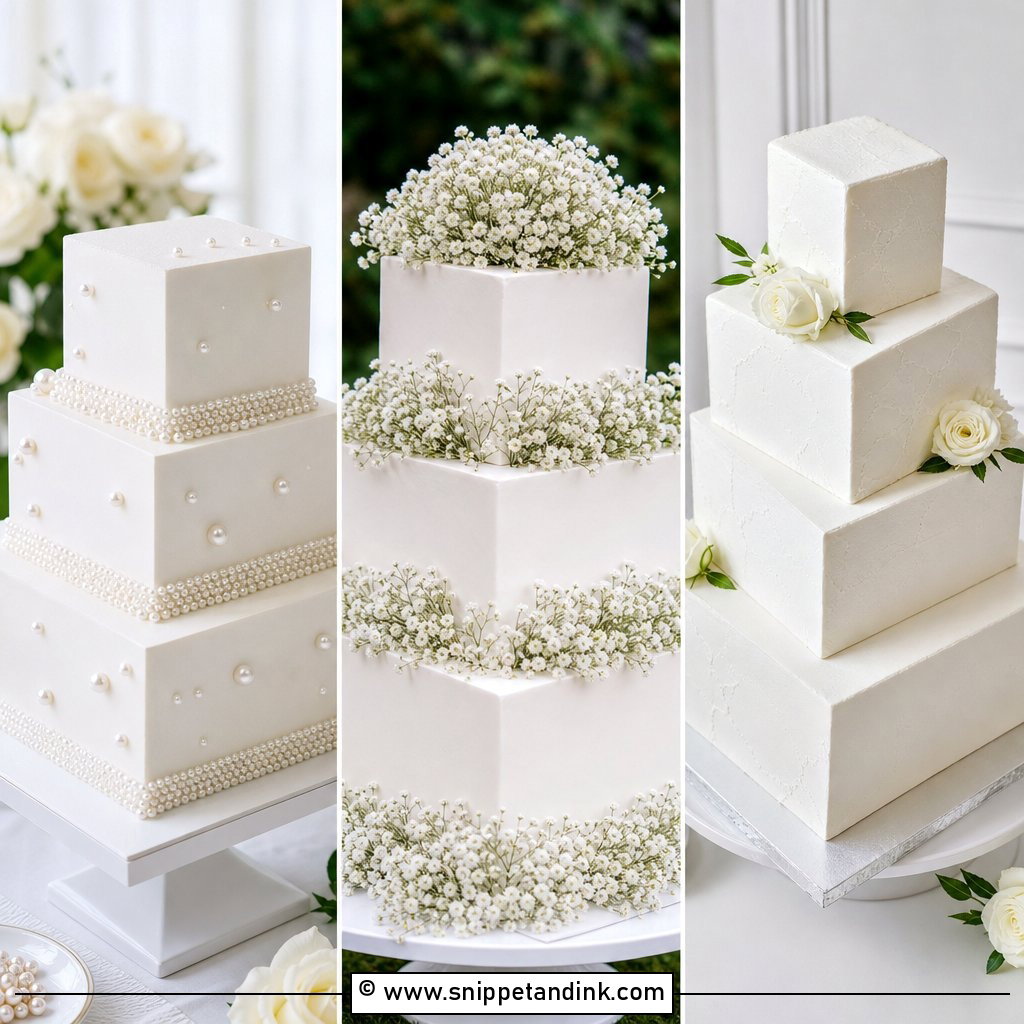
4. Pearl Wedding Cake
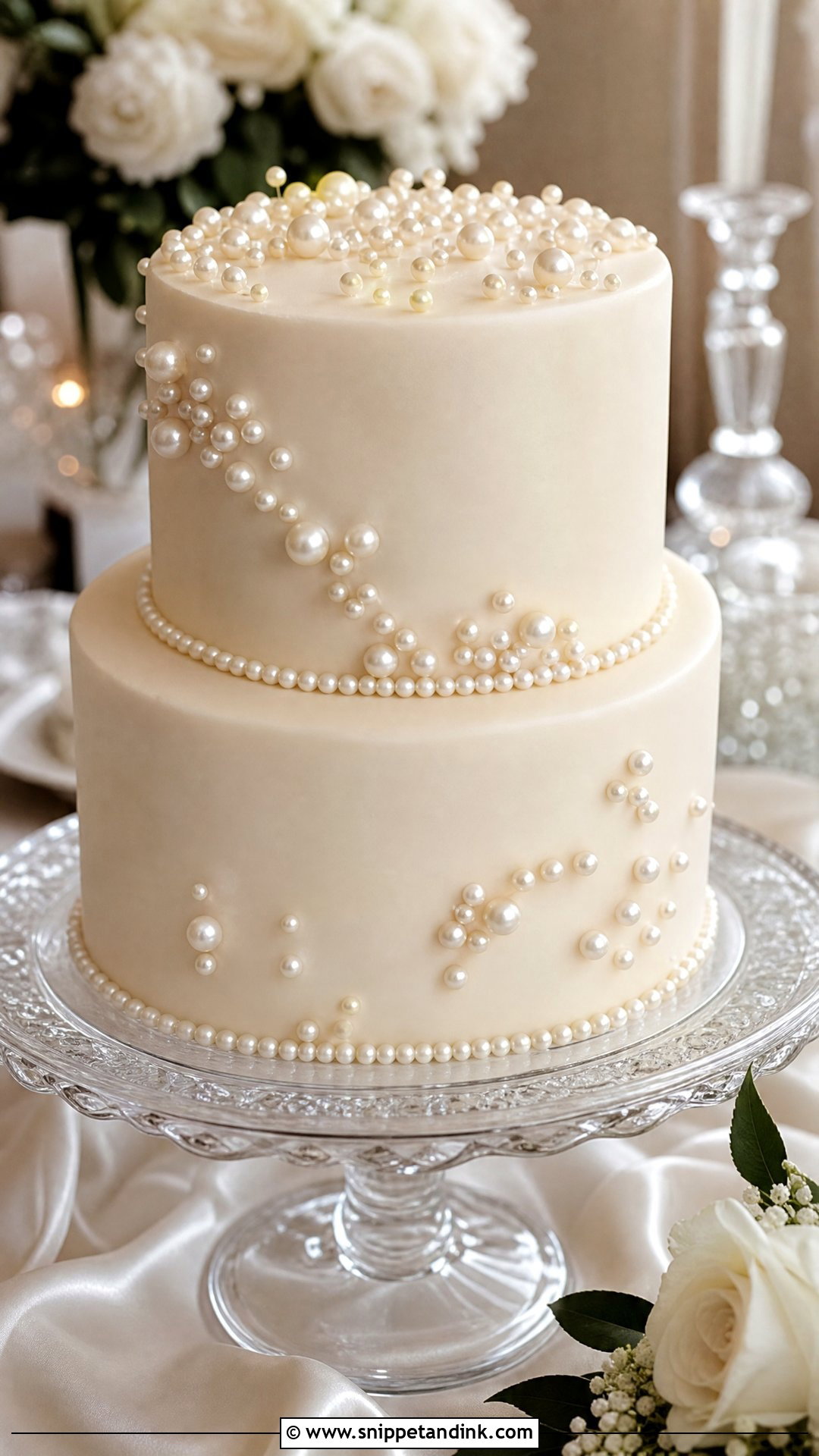
Pearls add texture without contrast, which is why they sit so well on white, ivory, blush and champagne tiers. I either scatter them lightly, set them in clean rows or ring them around the base of each tier like a necklace. The frosting must be smooth, because pearls exaggerate every bump next to them. One practical note: hard sugar pearls are crunchy and can be unpleasant to bite into, so I use fewer of them on the bottom tier that gets cut first, or switch to soft fondant pearls.
5. Vintage Lambeth Wedding Cake
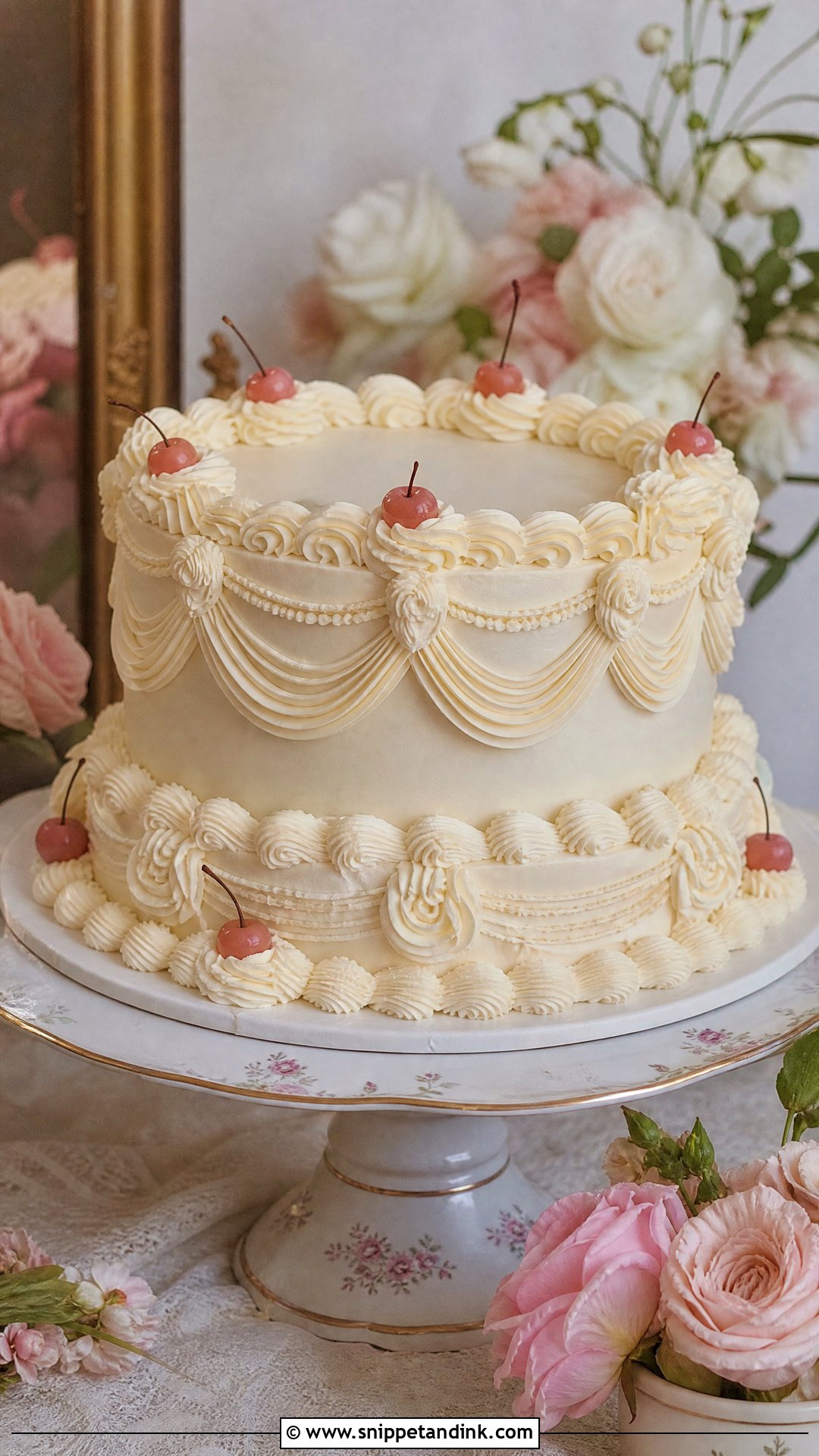
Lambeth piping is layered overpiping: shells, swags, scrolls and garlands built up in tiers of buttercream or royal icing until the cake looks almost carved. It’s slow work, and it’s also delicate, so I prefer an indoor venue and a short delivery distance for it. Gentle colors stop it from tipping into costume: ivory, white, blush, pale blue or cream. Heavy piping adds sweetness, so I balance it with less-sweet sponge like vanilla bean, almond or red velvet.
6. Fondant Wedding Cake
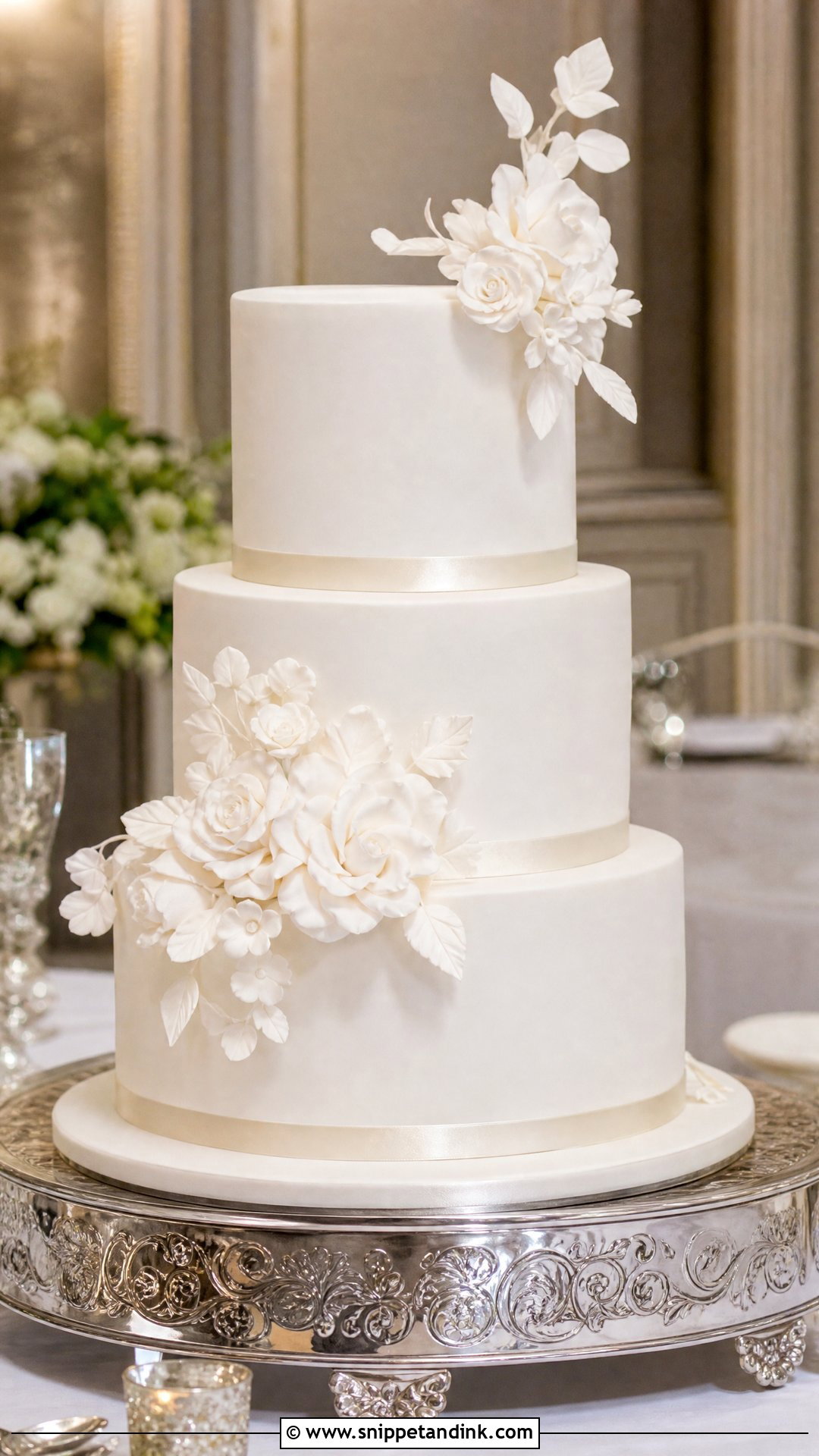
Fondant gives the crispest edges and the smoothest surface you can get, and it’s the best canvas for sugar flowers, embossed lace, hand painting or metallic leaf. It also protects the cake underneath from drying out, which matters for an outdoor display. Restraint keeps it timeless: white fondant with one floral accent or fine piping is enough. Plenty of guests peel fondant off, so I always put a proper layer of buttercream underneath for flavor, and I keep fondant cakes out of the fridge on the day because condensation makes the surface sticky and dull.
7. Semi Naked Wedding Cake
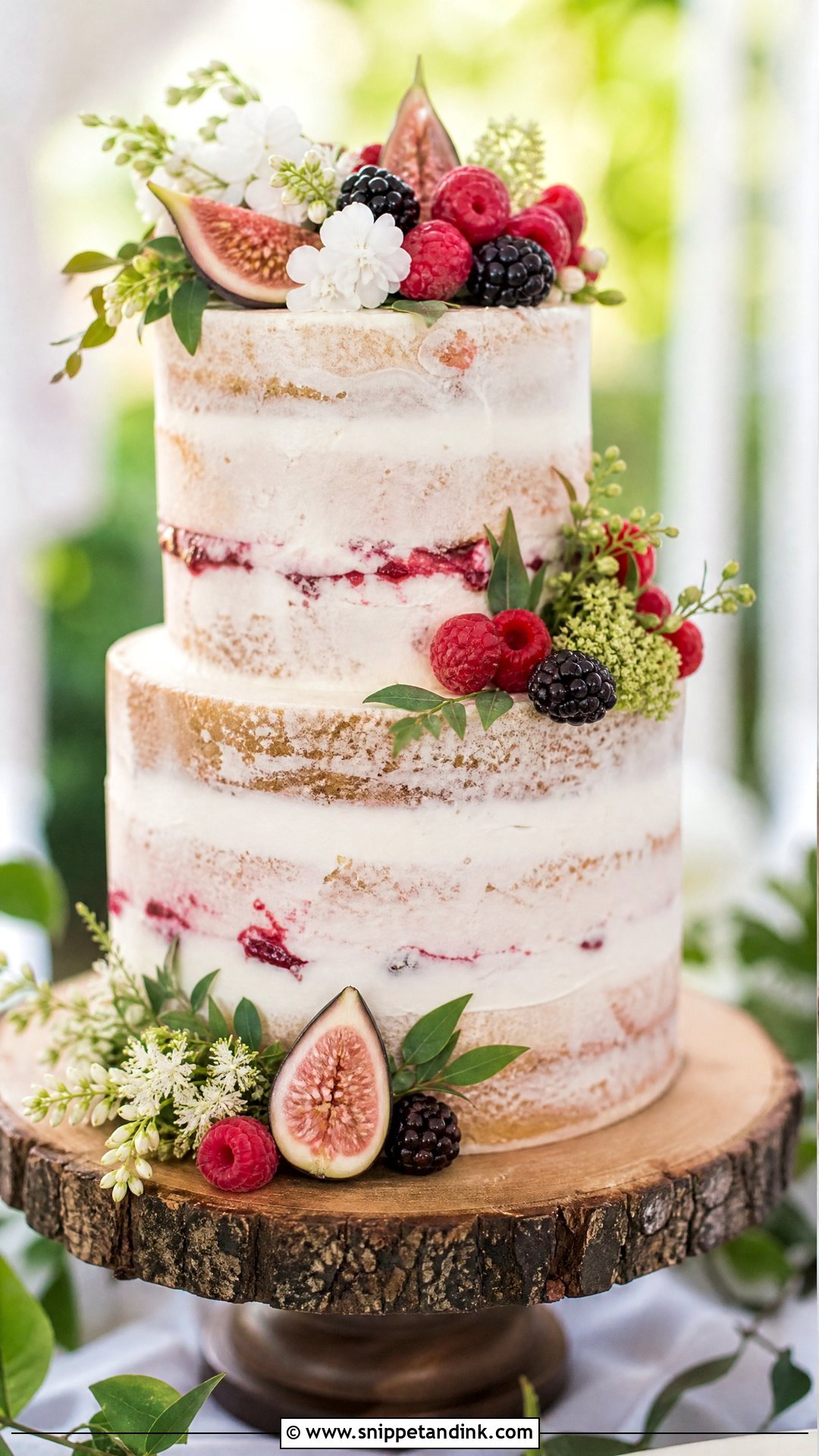
A semi naked wedding cake shows some of the sponge through a thin scraped coat of frosting. Because so much cake is exposed, it dries out faster than a fully frosted tier, so I don’t put it out hours before cutting, and I’d avoid it for a long outdoor display in dry heat. Fresh berries, figs, greenery or a dusting of icing sugar finish it. Neat matters: the scraping should be even all the way round. Pick flavors with visible layers, such as vanilla with raspberry or lemon with blueberry.
8. Floral Cascade Wedding Cake
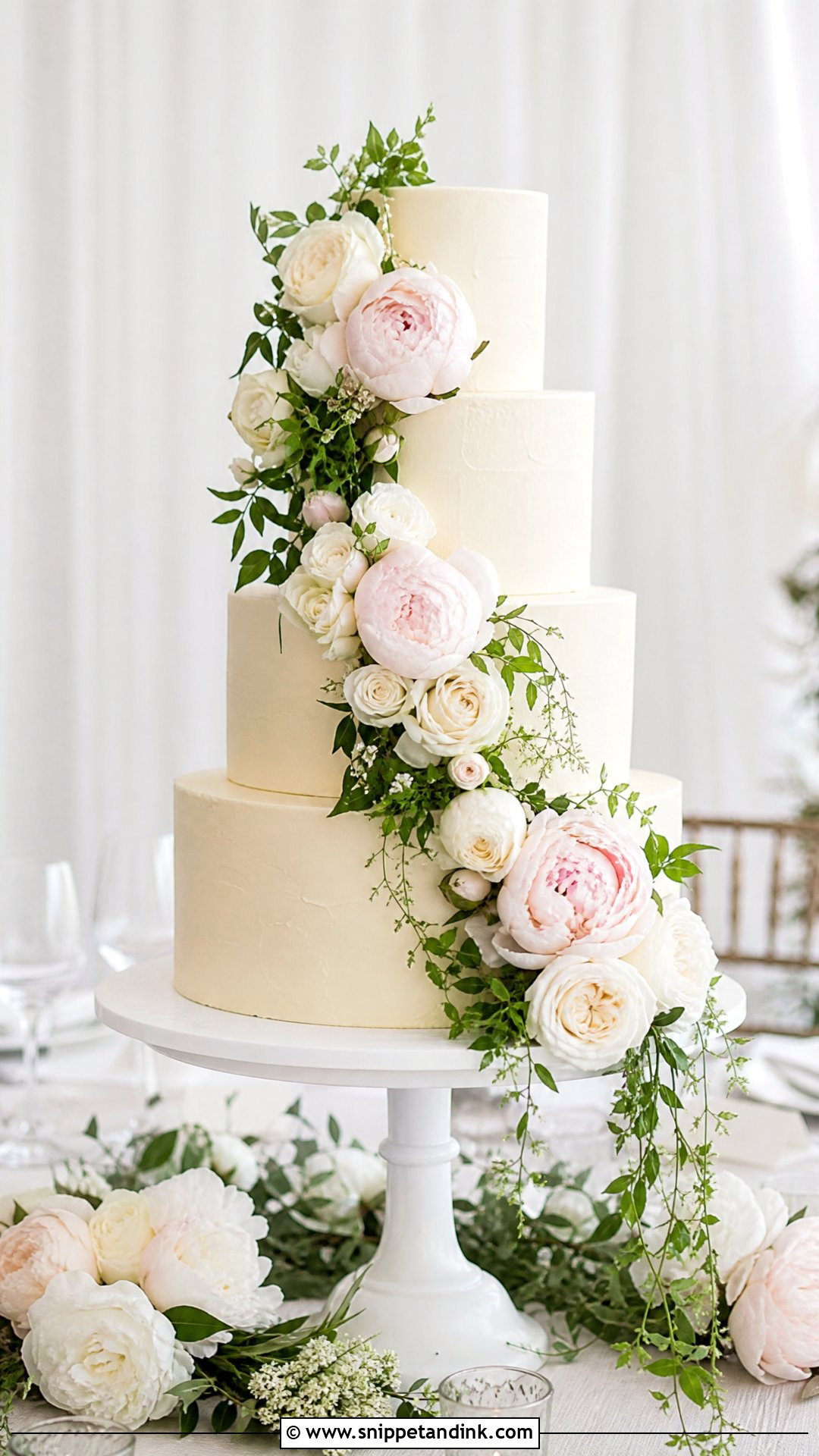
A cascade gives the cake movement, carrying the eye diagonally from top to base or down one side. I plan the cascade with the florist ahead of time and ask for the flowers to be wrapped and delivered separately so I can place them on site. Matching the palette matters most: white and blush are classic, soft peach or lavender add warmth. Keep the frosting clean so the flowers lead. A raised stand gives the cascade room to fall without touching the table.
9. Smooth Fondant Wedding Cake
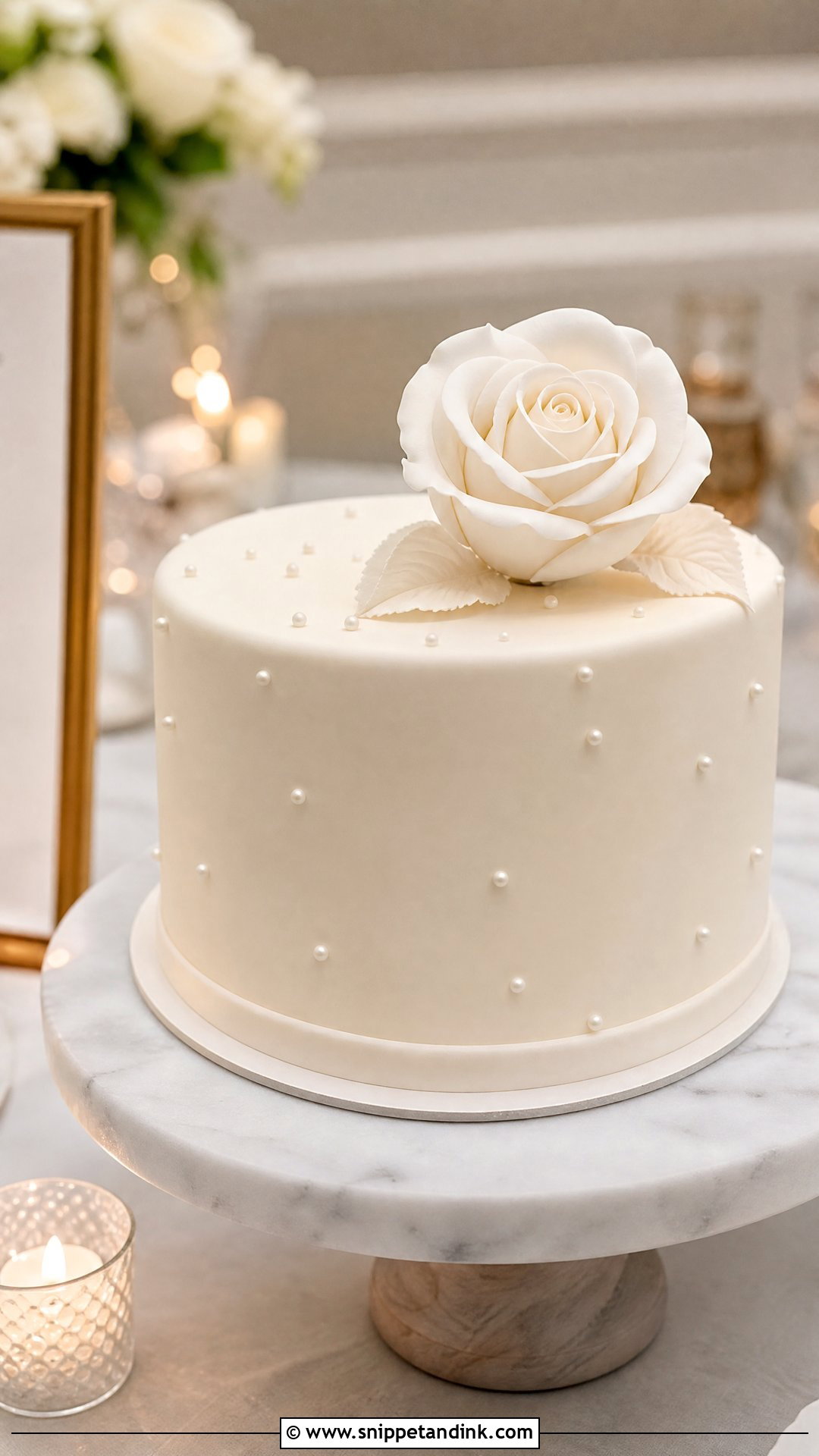
Smooth fondant at its most minimal is all about precision: straight sides, sharp tops and no visible seams. On cakes like this I spend more time on the ganache or buttercream under the fondant than on the fondant itself, because every flaw shows through. Finish with one or two refined accents, like sugar roses, edible pearls, lace appliqué or a thin ribbon at each tier base. Hotel ballrooms and black-tie evenings suit it. With a design this pared back, a slightly leaning tier is impossible to hide, so the board and dowel work has to be exact.
10. Buttercream Flower Wedding Cake
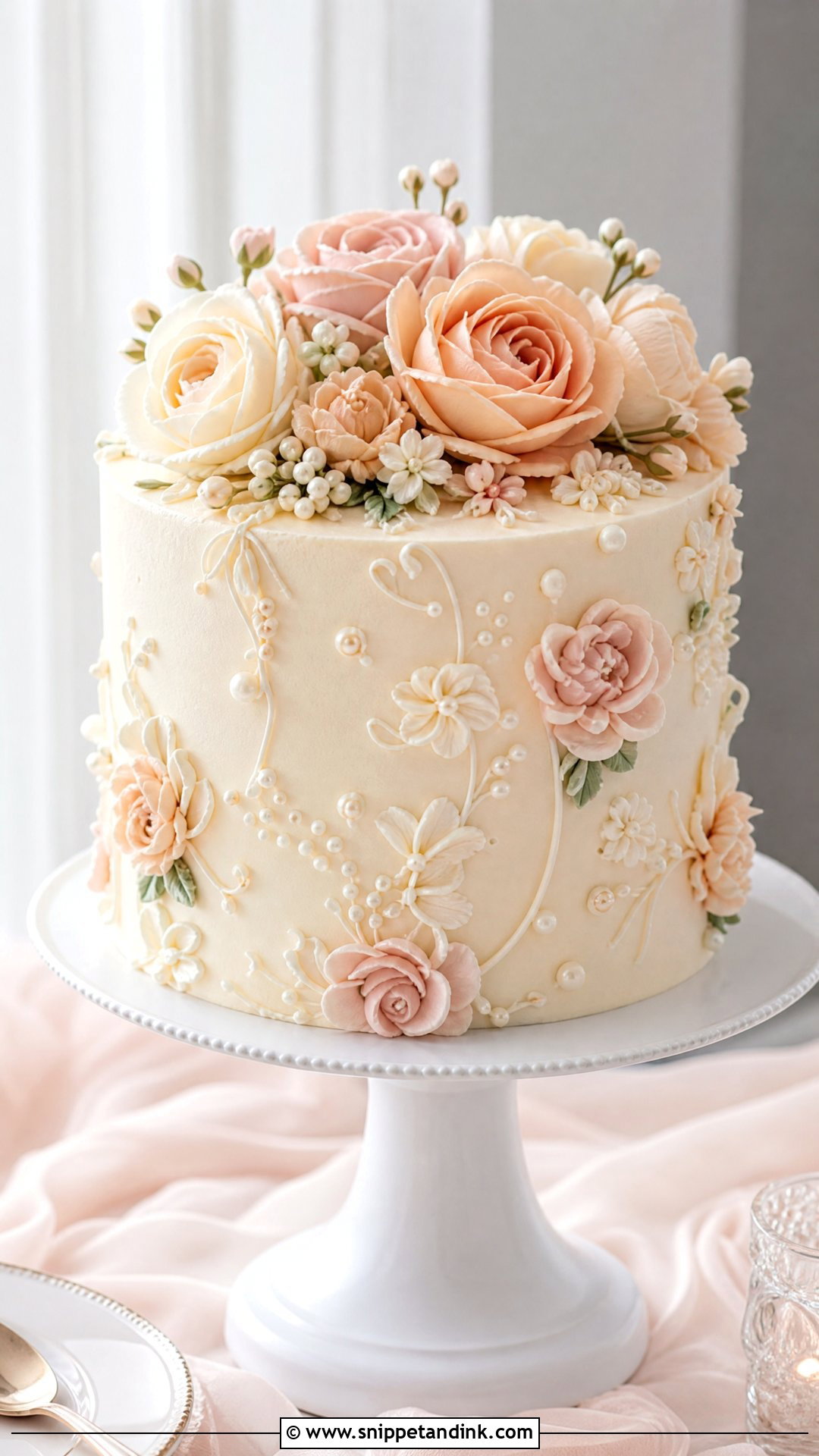
Piped buttercream flowers are completely edible and can be tinted to match your palette exactly. Roses, blossoms, peonies and tiny buds can circle the tiers or gather in clusters. The trade-off is heat: piped petals are soft and lose their crisp edges above about 25 degrees Celsius, so I’d only choose this for an air-conditioned room or a cool day. Muted shades like ivory, dusty rose and pale peach keep it classic.
11. Lace Wedding Cake
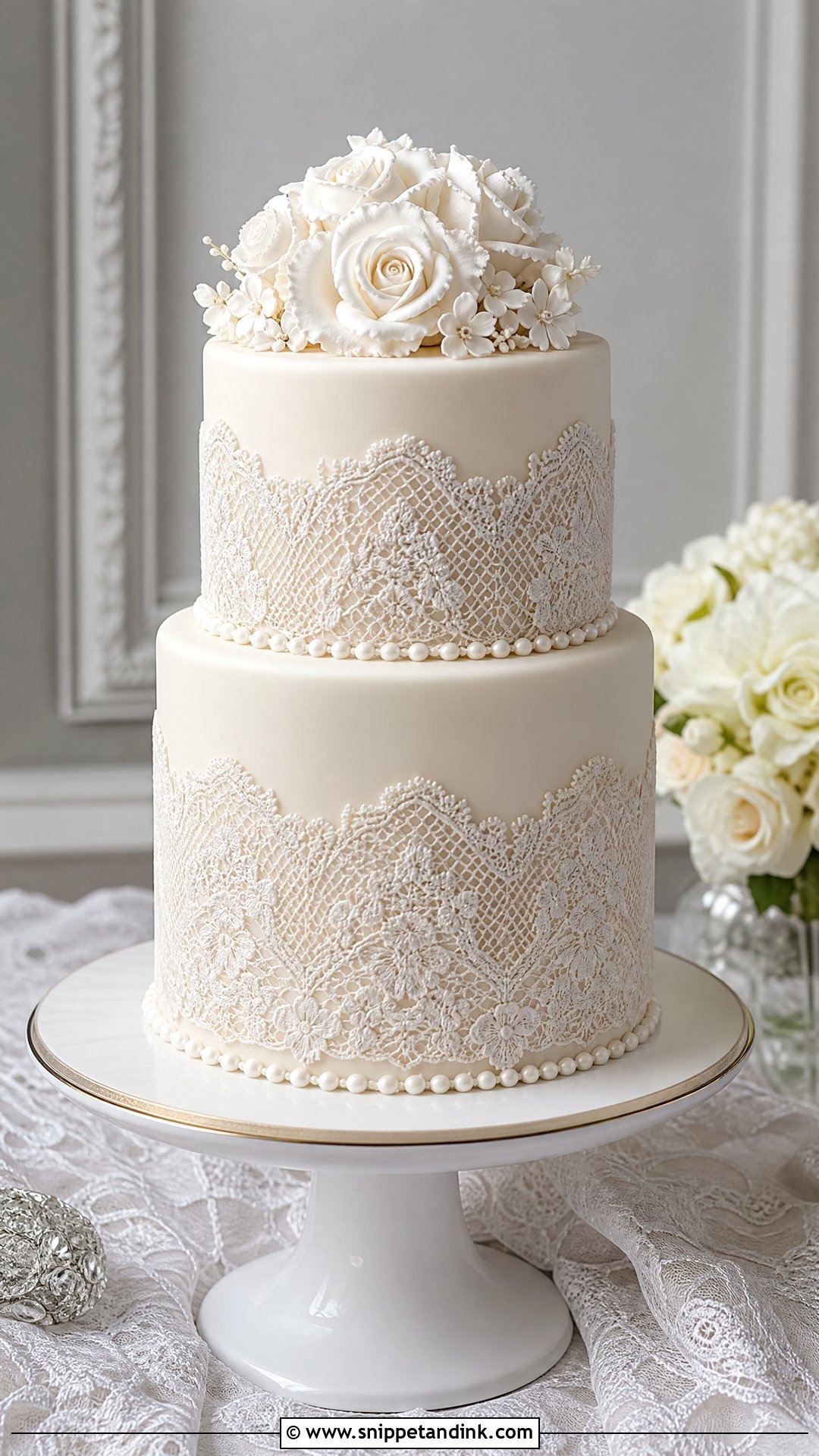
Lace on a cake can echo the gown, the veil or the invitations. I make it three ways: fine piping, fondant appliqué cut with a lace mold, or set edible lace sheets laid onto the tier. If you’re copying your dress, bring a fabric sample or a close photo and I’ll match the motif rather than the whole pattern. White and ivory let the texture show. Pair it with sugar flowers or pearls for more formality. Keep the pattern fine; heavy lace all over looks busy.
12. Gold Accent Wedding Cake
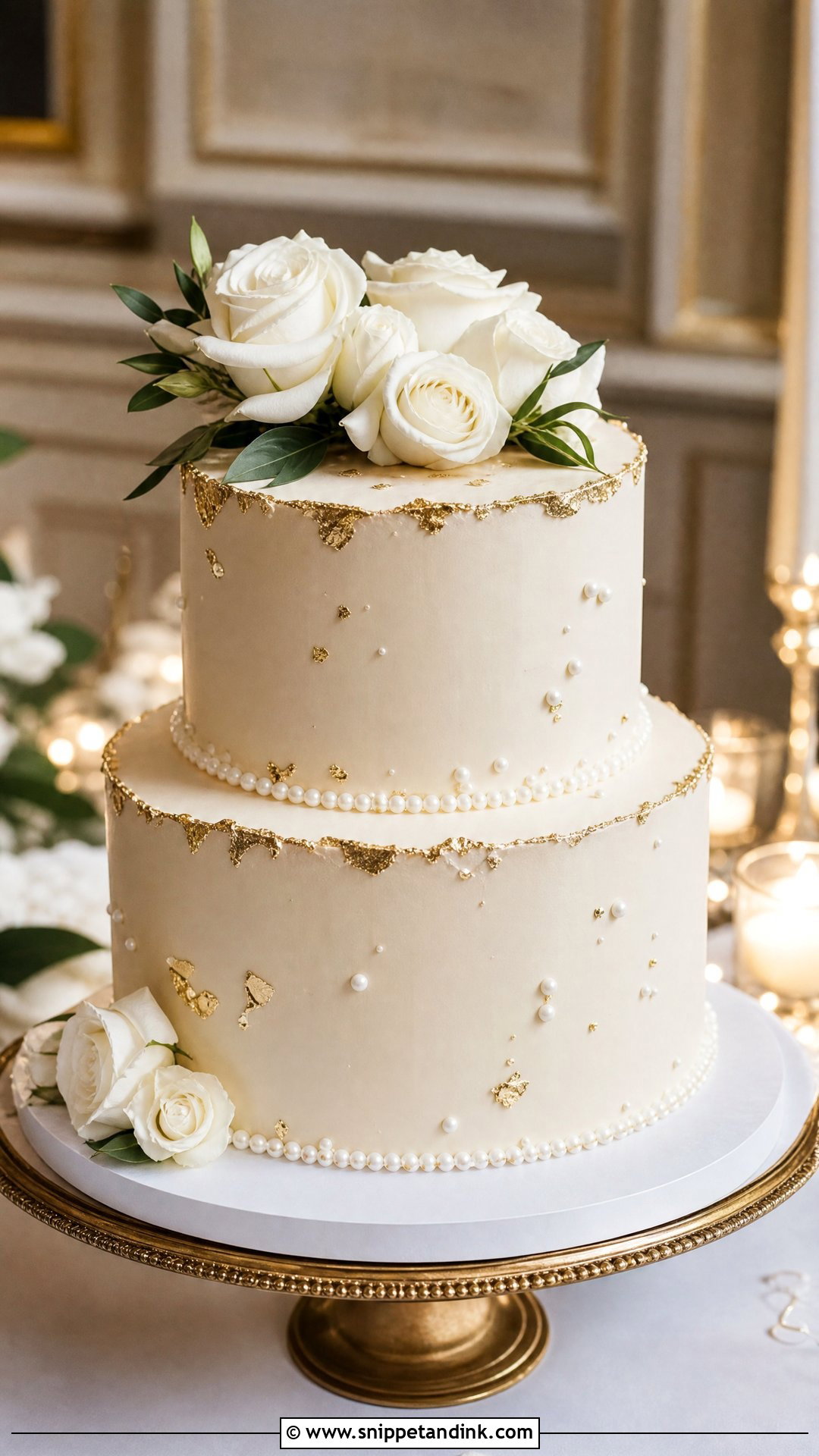
A gold accent wedding cake works when the gold is a detail, not the whole cake. I use thin painted edges, a few pieces of gold leaf, a small monogram or a narrow metallic band. Painted gold sits best on fondant or well-chilled buttercream, because on soft frosting it smears. Gold looks warm next to white, ivory, blush and champagne, and it really comes alive under candlelight. Ask your baker whether the gold is genuinely edible or only food-contact safe; the two are not the same, and the second should be removed before serving.
13. Square Wedding Cake
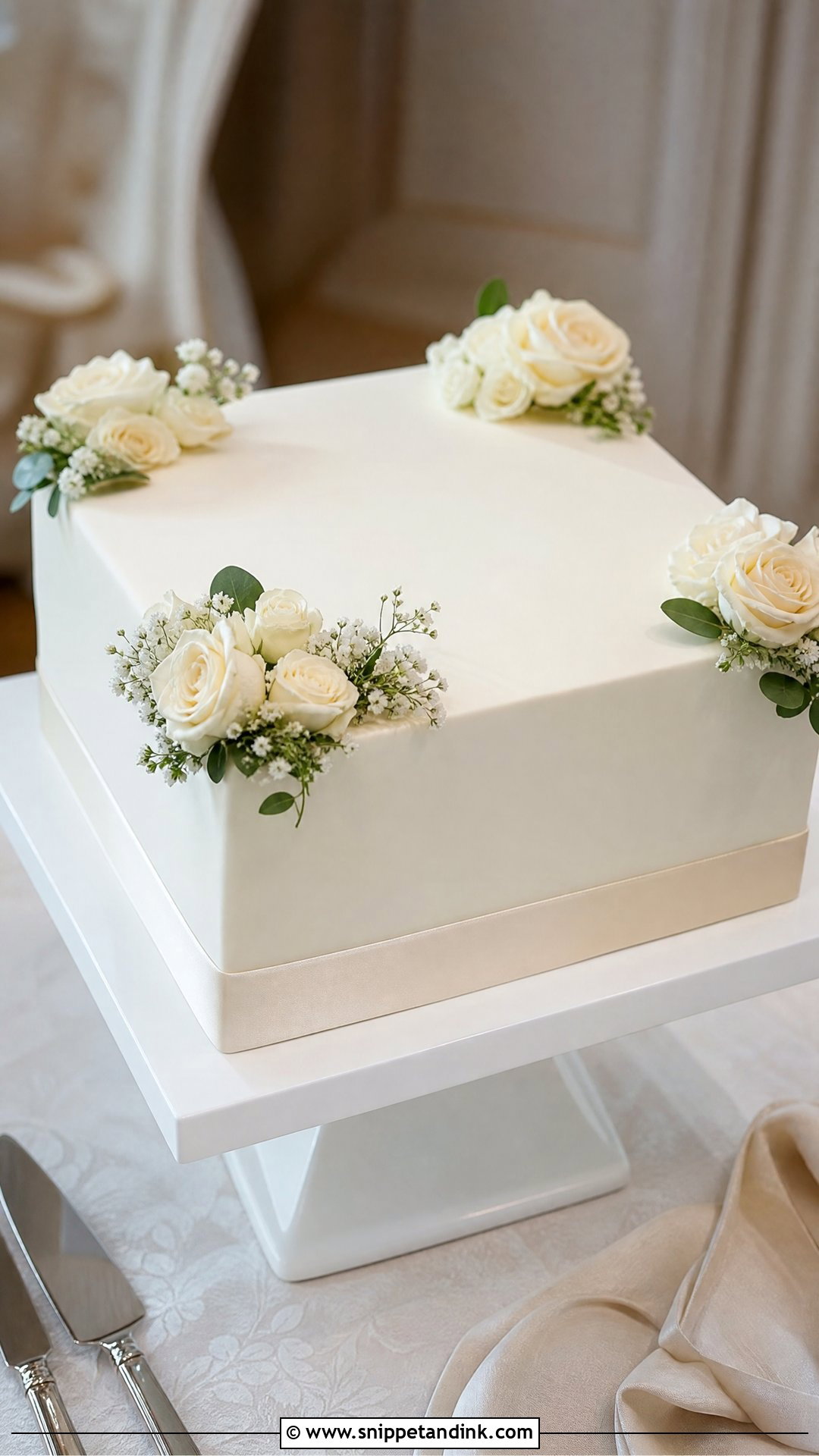
Square tiers feel tailored and a little more modern than round. They’re harder to finish, because every corner has to be sharp on all four sides, and they’re less forgiving of a wobbly table. Smooth fondant, crisp buttercream, ribbon borders, floral corners or fine piping all suit the shape. Soft flowers or light texture warm it up. A useful bonus: square tiers cut into neat, even portions with less waste than round.
14. Round Wedding Cake
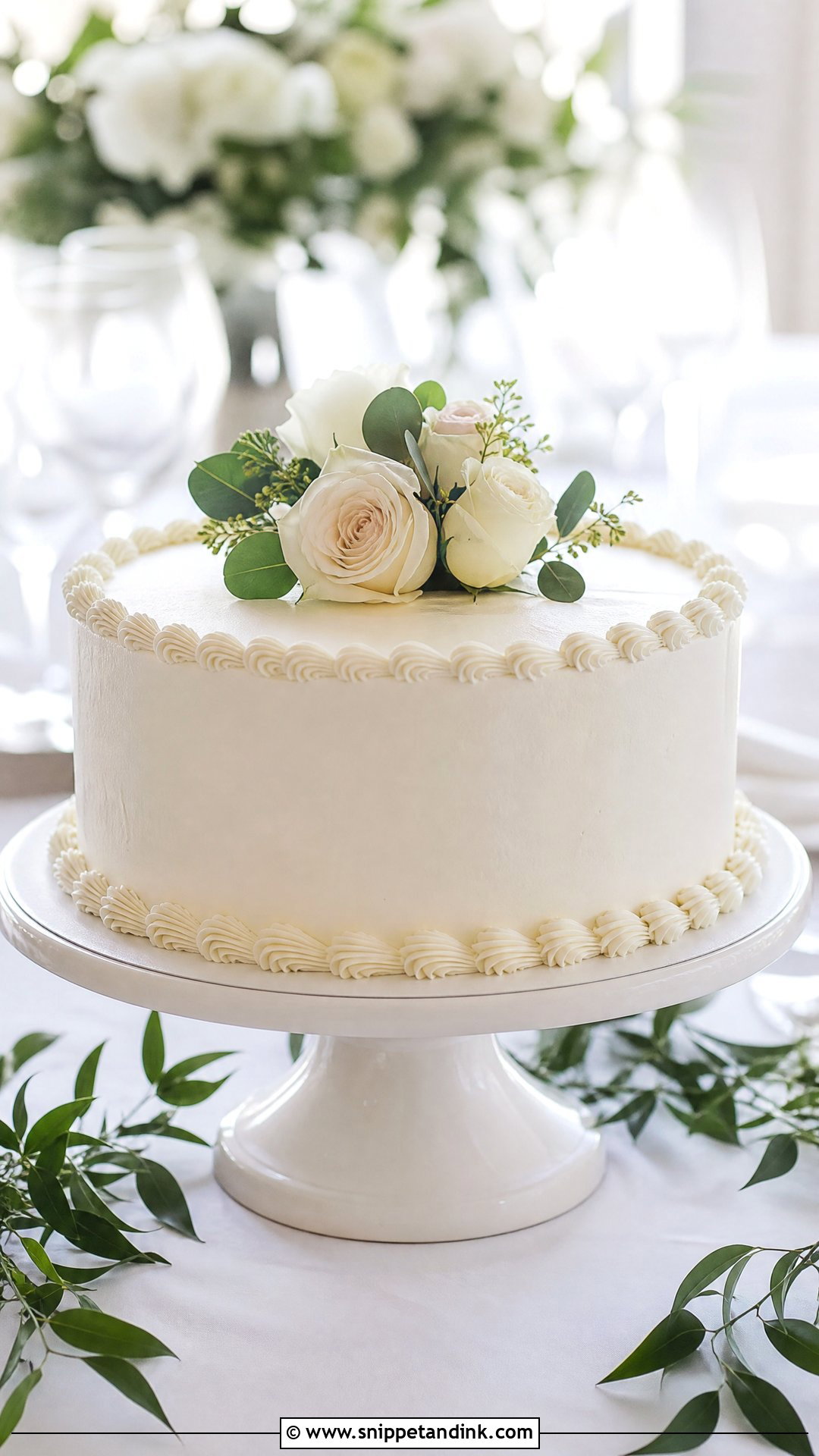
Round is the shape most people picture when they hear wedding cake, and it’s the easiest to style any way you like. Smooth and minimal, textured, flowered or piped, it looks finished from every angle, which helps when the table sits in the middle of the room. Round tiers also travel better than square, since there are no corners to chip. If you can’t decide, a round tiered cake in white or ivory is the one I’d point you to.

15. White Rose Wedding Cake
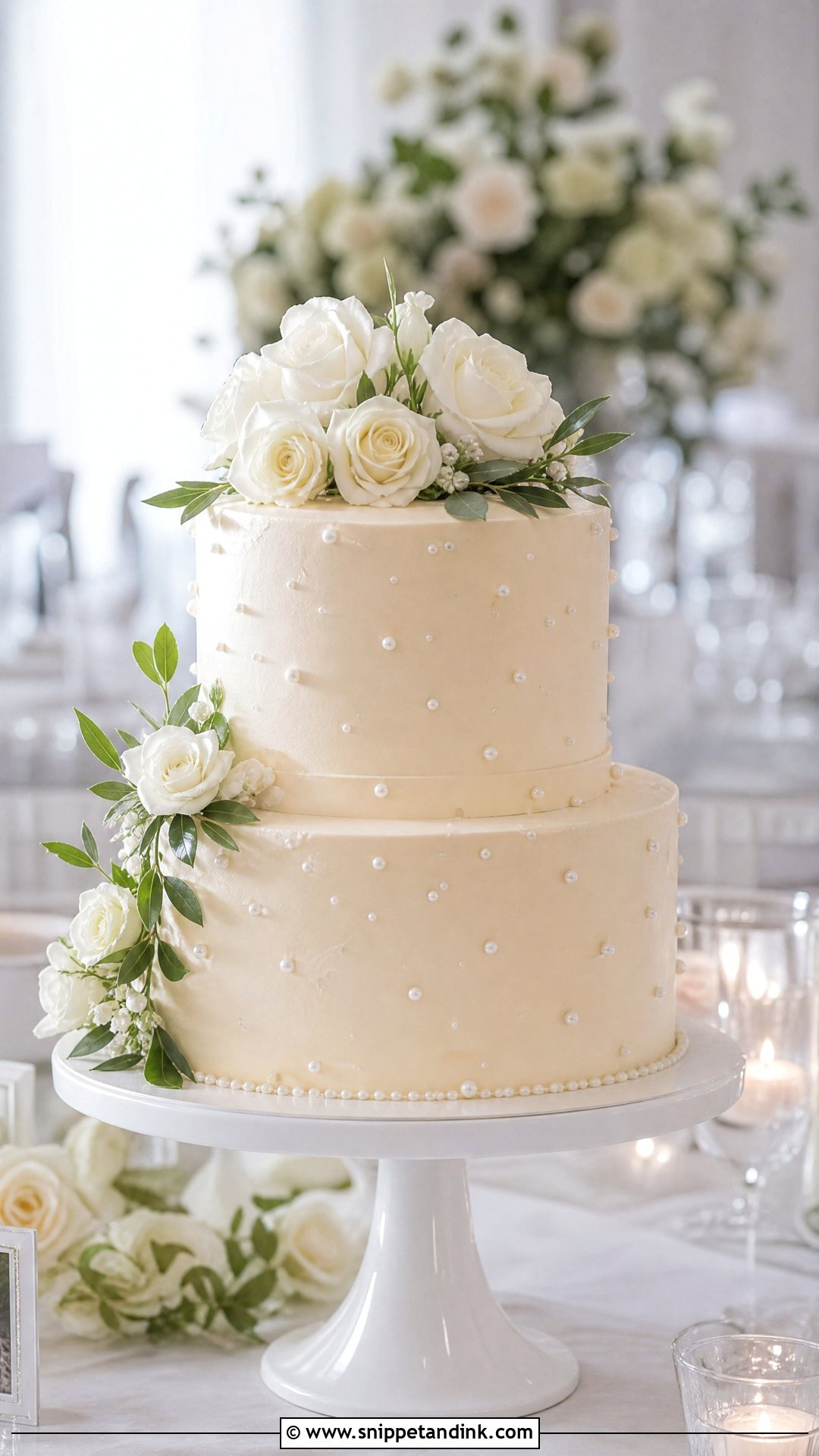
White roses on a white cake say wedding without any explanation. They can be fresh, sugar or piped, placed between tiers, gathered on one side or circled round the base. Fresh white roses bruise and brown at the edges quickly once handled, so if you go fresh, I place them as late as possible on site; sugar roses never wilt and can be kept. Ivory frosting, pearls and a little greenery round it out. White roses work in any season. Vanilla almond, lemon or champagne sponge keeps the inside just as classic.
16. Textured Buttercream Wedding Cake
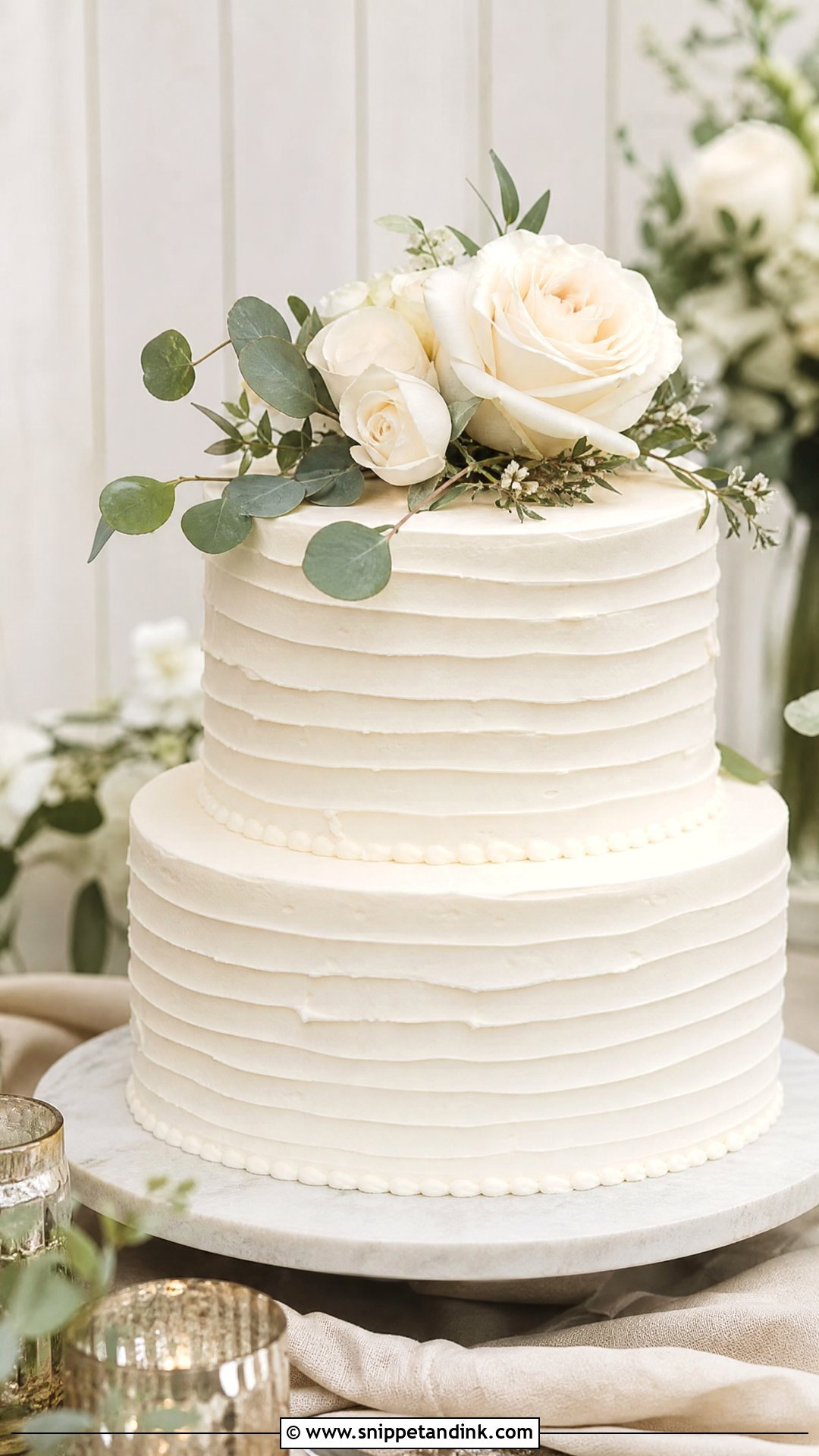
Texture gives a buttercream cake depth with no extra decoration: horizontal lines from a comb scraper, soft spatula swipes, stucco finish or gentle waves. It’s also the most forgiving finish I make, because texture hides the small marks a perfectly smooth cake would show, which makes it a smart choice for warm venues. It pairs with flowers, greenery, fruit, pearls or a simple topper. Keep the color neutral, white, ivory or soft beige, so it doesn’t date.
17. Single Tier Wedding Cake
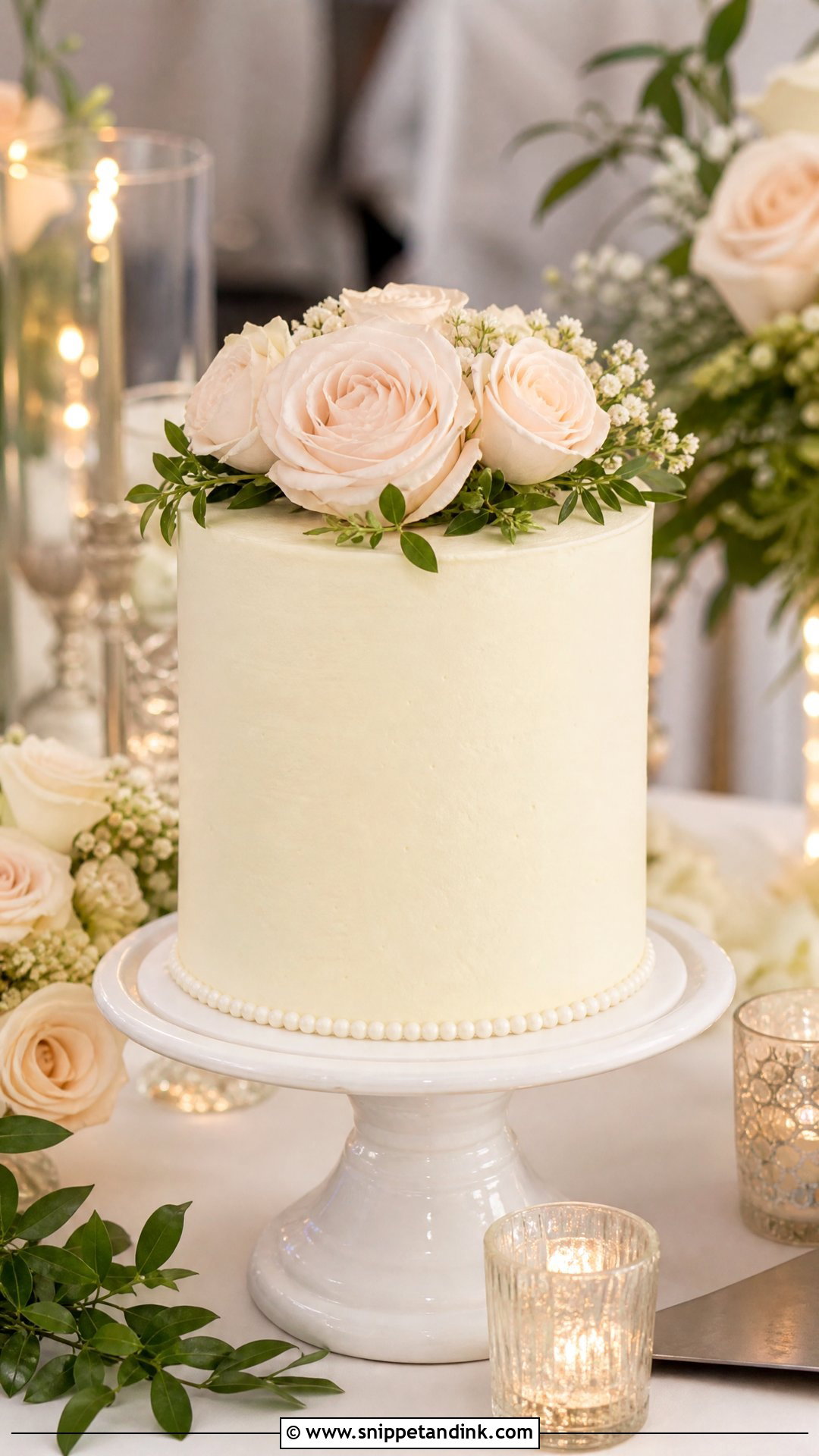
A single tier suits elopements, courthouse ceremonies, small receptions and couples serving other desserts alongside. I usually make it taller than a normal layer cake, around six inches high with four layers of sponge, so it looks like a proper wedding cake rather than a birthday cake. Smooth buttercream with flowers, pearls or vintage piping all work. Set it on a raised stand and style the table with candles or a few blooms. A small cake simply needs more height.
18. Four Tier Wedding Cake
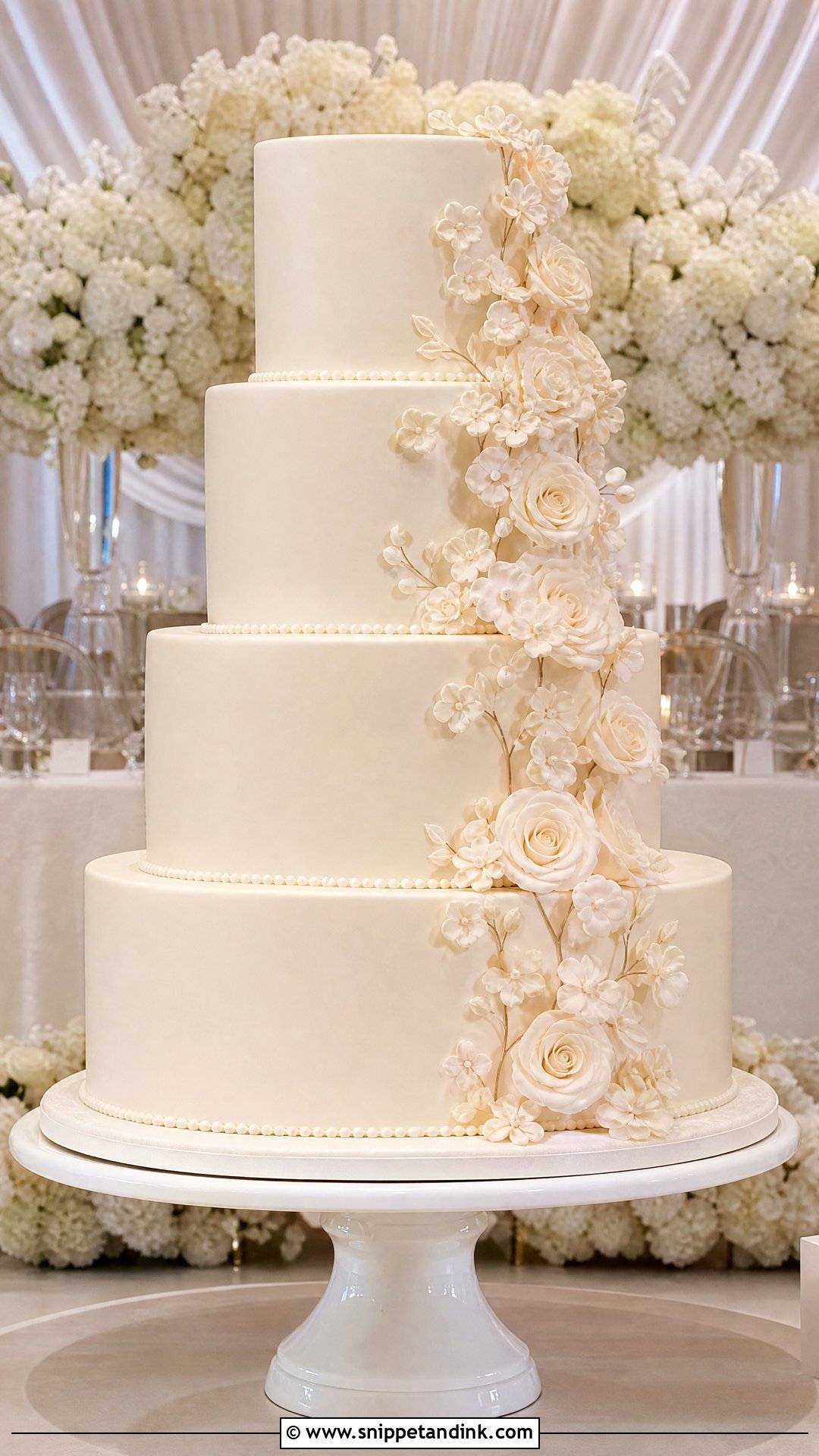
Four tiers give a reception a grand, traditional centerpiece. They’re built for larger guest lists and formal rooms where the table needs presence. A cake this tall is heavy, so it needs a central dowel through every tier as well as support dowels, and I always stack it at the venue, never in the van. Smooth ivory buttercream with a cascade, white fondant with pearls or soft texture with blooms all suit it. Since the height already makes the impact, keep the decoration calm.
19. Blush Wedding Cake
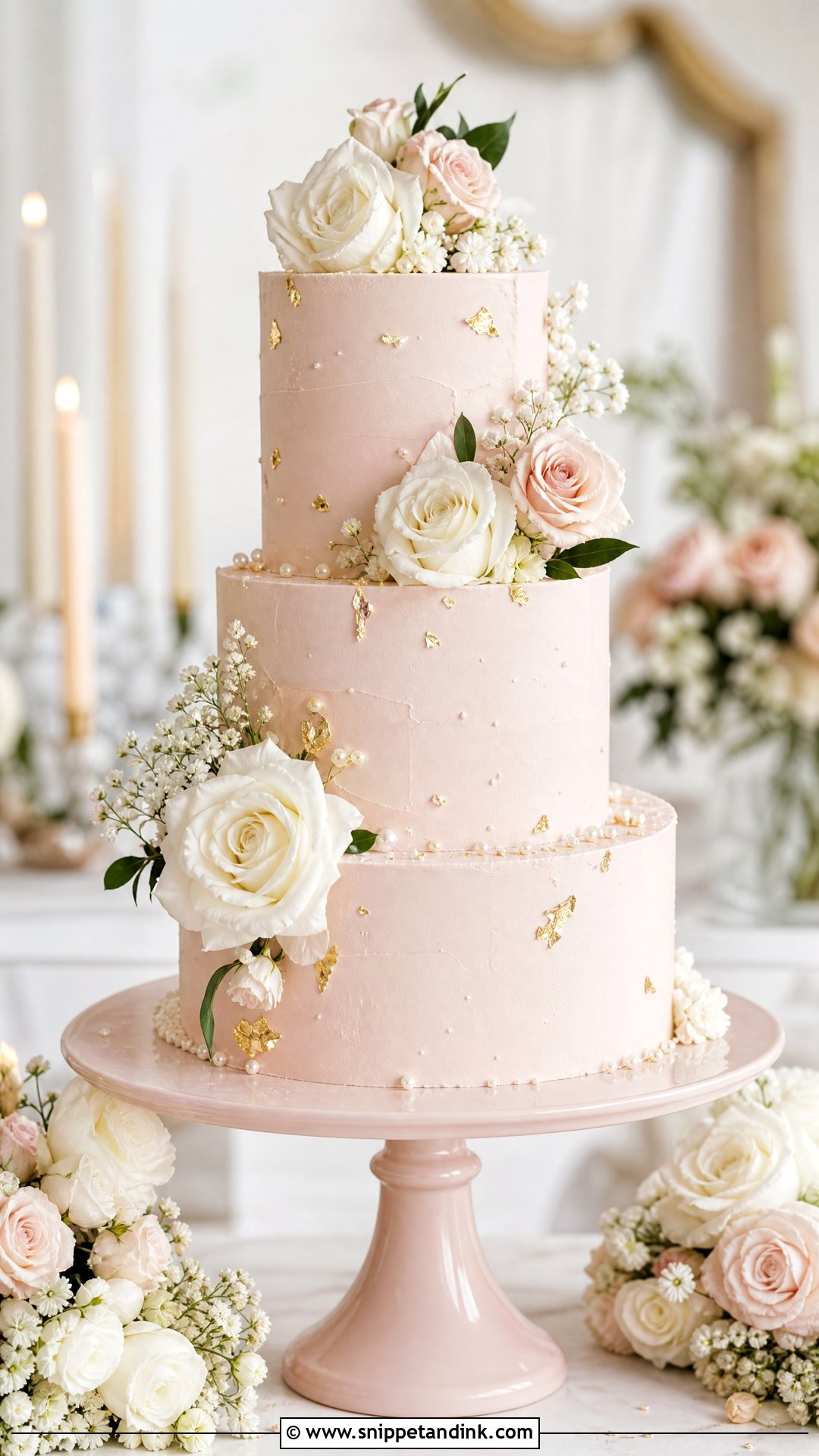
Blush adds warmth while staying gentle enough to age well, and it pairs easily with ivory flowers, gold, pearls and greenery. Use it across the whole cake or as an ombré on the lower tiers. Getting the exact shade is tricky, since pale pinks can fade in strong sunlight and look grey under cool LED lighting, so I always send a photo of a tinted sample in the venue’s light where possible. Smooth buttercream with delicate florals keeps it refined.

20. Sugar Flower Wedding Cake
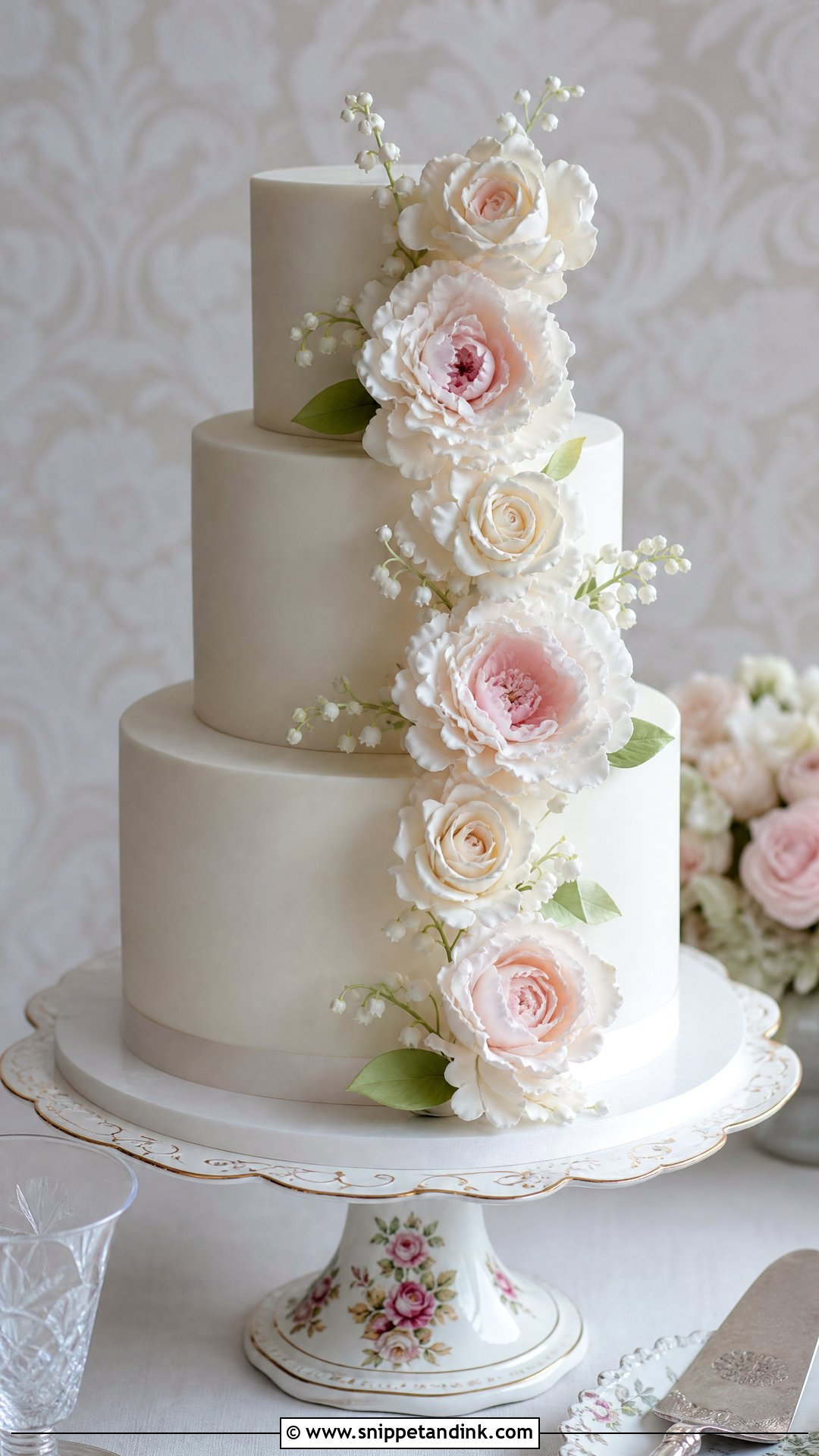
Sugar flowers are made petal by petal from gum paste, wired, dried and dusted with color, so they can match your exact palette and last as a keepsake. Roses, peonies, orchids, magnolias and lily of the valley can look remarkably real, and there’s no worry about toxicity or wilting. They take time, so order this design early; a large arrangement can take a decorator several days of drying. Set them against smooth fondant or buttercream so their detail shows.
Heat, Stacking and Where the Cake Table Goes
Most cake problems I’ve had to fix on the day came from the room, not the recipe. A few decisions made early prevent nearly all of them.
Temperature
Butter-based frostings soften quickly in heat. Ask the venue to keep the cake out of direct sun and away from heaters, the dance floor and kitchen doors. For a summer marquee, I’d suggest fondant or ganache under buttercream, or a cake that arrives as close to cutting time as possible. Moving a cake from a fridge into a warm humid room makes fondant sweat, so I let tiers come up to room temperature gently.
The table itself
It needs to be sturdy and level. A folding table that wobbles when someone brushes it is a real risk for a tall cake. Place it where guests can see it but won’t bump it, and agree who the venue’s contact will be when I arrive to set up, so the space is ready.
When to Taste, Confirm and Hand Over Final Numbers
- Reserve your baker six to nine months ahead for peak-season Saturdays; detailed sugar work fills diaries early.
- Have your tasting about three to four months out, once the venue and rough guest count are known.
- Confirm the design, flavors and flowers with your florist about six weeks before.
- Send final numbers, delivery time and the venue contact about two to three weeks before the wedding.
Proportion, Flavor and One Good Detail
A classic cake is not a plain one. It relies on balance and careful detail rather than anything loud. Smooth white buttercream, a cascade, pearls or vintage piping can all look fresh when the proportions and colors suit the room. Match the design to your venue, season and guest count, then go to your tasting with photos of what you like and questions about structure and portions. Get those right and the cake will look good on the table and taste just as good on the plate.
You'll Like These Ideas:













Leave a Reply